The 12 Creepiest Companies in Literature

By now it shouldn’t elicit a reaction at all, but sometimes I still feel a shiver of unsettled awe when my webpages populate with ads that are targeted at me. How does Google know that I’m interested in that? I wonder, even though I know perfectly well that the answer lies in algorithms and browsing history and the careful mining of data.

I know I’m not alone, which is why it’s not surprising that dystopian novels are seeing a resurgence of popularity. (Orwell’s 1984 became a best-seller again in January.) Who wouldn’t feel a little paranoid in the modern world? The news cycle offers weekly revelations about shady corporations, from car companies that purposely lie about their environmental safety standards to tech devices that can be used as evidence against us in court. Even the companies that are supposed to have revamped the work environment to focus on worker’s health and happiness are being exposed as toxic firms that serve up misogyny and racism along with free sparkling water.

Literature allows us the oddly satisfying experience of reading about companies that embody our worst fears, and perhaps even act as a kind of warning sign, like The Jungle for climate change or Internet privacy. Here are 12 novels that serve up the creepiest of corporations, from brain research facilities doing unauthorized surgeries to all-knowing data companies, and even a corporation so hell bent on profit that it destroys the earth as we know it.

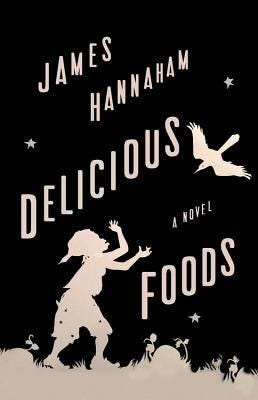
1. Delicious Foods in Delicious Foods by James Hannaham

Hannaham’s powerful second novel offers commentary on both the institution of slavery in the US and the companies that continue to practice a version of modern slavery, holding their “employees” in a vicious cycle of debt and depravity. Darlene is primed for the trap; a grief-wrought young widow who is self-medicating with drugs, she’s easily lured by an offer of work from a company called Delicious Foods. In reality, the company is the opposite of a piece of cake—Delicious Foods keeps its employees bound in virtual slavery by forcing them to preform hard labor in return for food, lodging, and drugs.

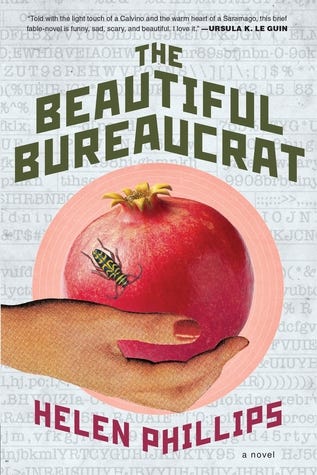
2. The Company in The Beautiful Bureaucrat by Helen Phillips

When Josephine takes a job at a generic, windowless office, tasked with entering endless strings of numbers into The Database, it all feels about as bland as bland can be. But Helen Philips takes all the mundane aspects of a workplace — the clacking of keyboards, lifeless rooms, and coworkers who pop up just when you’re slacking off— and exaggerates and tweaks them until you, and Josephine, feel a not unwarranted chill of dread.

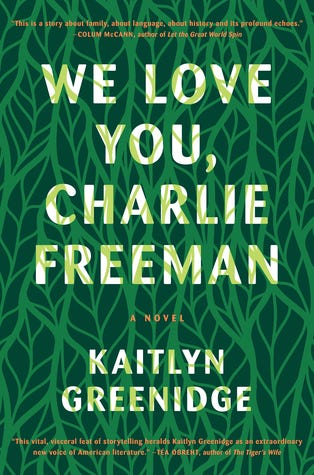
3. The Toneybee Institute for Ape Research in We Love You Charlie Freeman by Kaitlyn Greenidge

Greenidge’s awesome debut novel offers a literal, and very disturbing, take on institutional racism. The Toneybee Institute for Ape Research creeps out the Freeman family children at first encounter and it’s not hard to see why; the all-white staff puts the African-American Freeman family under constant video surveillance and treats them like specimens, though technically the subject of the study they’re participating in is the chimp they’re teaching to speak sign language.

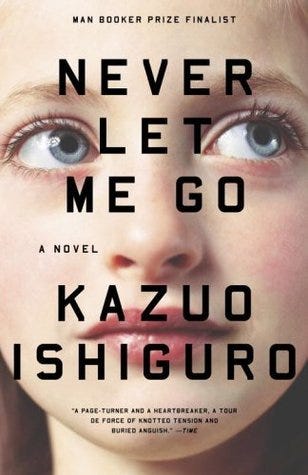
4. The Carers in Never Let Me Go by Kazuo Ishiguro

Just the name of Kathy’s job in Ishiguro’s Booker Prize-finalist sounds off-putting: she is a “carer” for “donors” who are on their way to being “complete” — i.e. dead. Ishiguro’s dystopian world is particularly bone-chilling in this regard: not only are the “donors” clones who have been raised to donate their organs in order to extend the lives of their original humans, but they are expected to care for their predecessors. This is a situation in which I would not suggest making friends at work.

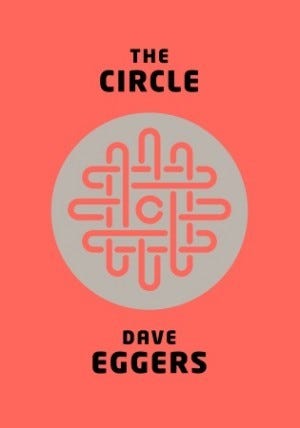
5. The Circle in The Circle by Dave Eggers

The Circle is the world’s most powerful internet company, based, where else, in California. The Circle is the not-so-subtle culmination of our worst fears about tech giants like Google and Facebook. It collects its users’ personal information — emails, bank accounts, social media, the works — and offers untold “transparency.” That’s tech speak for “we have all your information and you have no where to hide.”

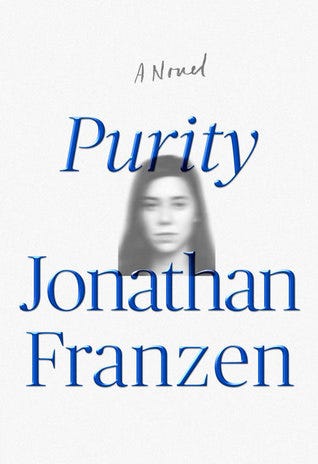
6. The Sunshine Project in Purity by Jonathan Franzen

Imagine Wikileaks run by a narcissistic German on the lam in Bolivia and you have The Sunshine Project, an organization that collects and trades secrets. Despite its obviously shady credentials, the Project easily draws in a young woman named Pip. Pip’s attraction to the organization seems like Franzen’s not so subtle warning/disgust at the vulnerability of young people who are struggling with student loans and the search for “self.”

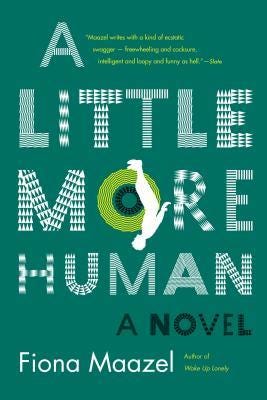
7. SCET in A Little More Human by Fiona Maazel

SCET is a family-run biotech research and rehabilitation center on Staten Island that helps Iraqi war veterans…oh, and it preforms experimental brain surgery. The extent of those experimental surgeries is part of the mystery at the heart of Maazel’s latest novel, but it’s never a good sign when you learn that the owner of the brain research center is himself is suffering from degenerative dementia and is hellbent on a cure.

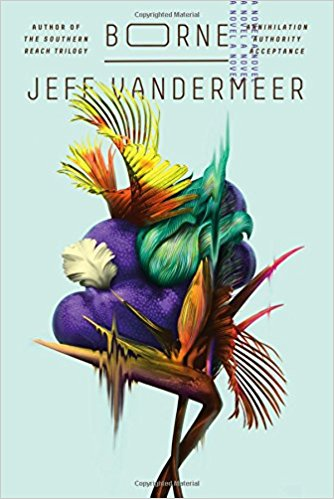
8. The Company in Borne by Jeff VanderMeer

Here is another capital C Company. This one’s actions don’t just threaten to end the world as we know it — they actually do it. The Company was a biotech firm whose sinister products, like the “Company moss,” a tool for corporate surveillance, have left the world (or what’s left of it after the climate apocalypse) a broken, scary place.

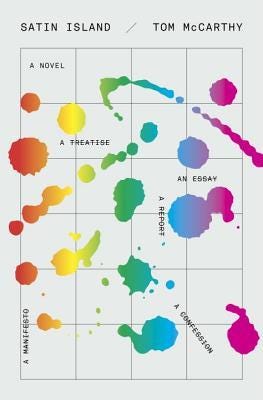
9. Unnamed London Consultancy Firm in Satin Island by Tom McCarthy

Satin Island is McCarthy’s take on big corporations and their data-focused, soulless strategies for success. A man called U is a consultant ethnographer who has been hired by a major London company to write “The Great Report,” an unspecified compendium of the age. The firm will use this report in its goal to help companies and governments, “elaborate and frame regenerative strategies,” “contextualize and nuance their services and products,” and “brand and rebrand themselves.” Like in his novel Remainder, McCarthy manages to make sterility, even vagueness, extremely unsettling.

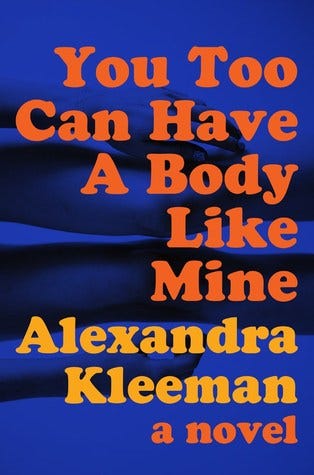
10. Kandy Kakes in You Too Can Have a Body like Mine

One of the major themes in Kleeman’s debut novel is food and the ways that corporate America gets us to buy, ingest, and regret eating it. The epitome of her criticism comes in the form of Kandy Kakes, a processed “food” made from three layers of “caramel,” “chocolate,” “Choco shrapnel,” and a “top-secret ‘Kandy Kore.’” Their mascot is Kandy Kat, a hybrid of Chester Cheetah and that squirrel from Ice Age who is forever trying, and violently failing, to get the acorn. The tagline of the one hundred percent chemically created snack is Real Stuff. Real Good. The scary part is that you wouldn’t be surprised if Hostess decided Kandy Kakes was a fabulous idea.

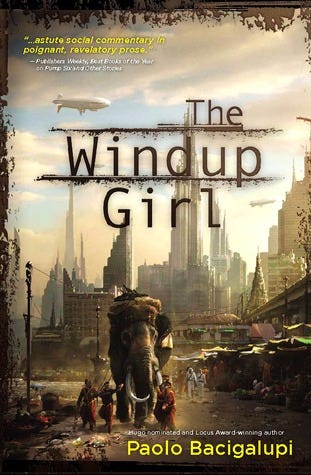
11. AgriGen in The Windup Girl by Paolo Bacigalupi

Bacigalupi’s award-winning debut novel takes place in a futuristic Thailand that has been devastated by environmental disaster. In this world, calories are king and AgriGen is one of the mega-corporations who provides them. It’s unsettling enough to envision a world where corporations are literally selling survival, but it doesn’t help that this company isn’t above bioterrorism, theft, or murder to control the market for its goods.

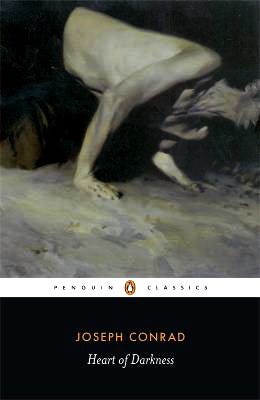
12. The Trading Company in The Heart of Darkness by Joseph Conrad

The trading company in Conrad’s 1899 novel appears at first to be a typical colonial enterprise, but that’s Conrad’s point: this story is about just how far the company, and colonialism, veers from any ethical standards. The tale is narrated by the Director of Companies, though it is really the story of a trader named Marlowe. As Marlow travels the Congo, he finds that the Company is a racist, violent machine which brutalizes the native populations — and his coworkers don’t bat an eye.

The Day Jobs of 9 Women Writers

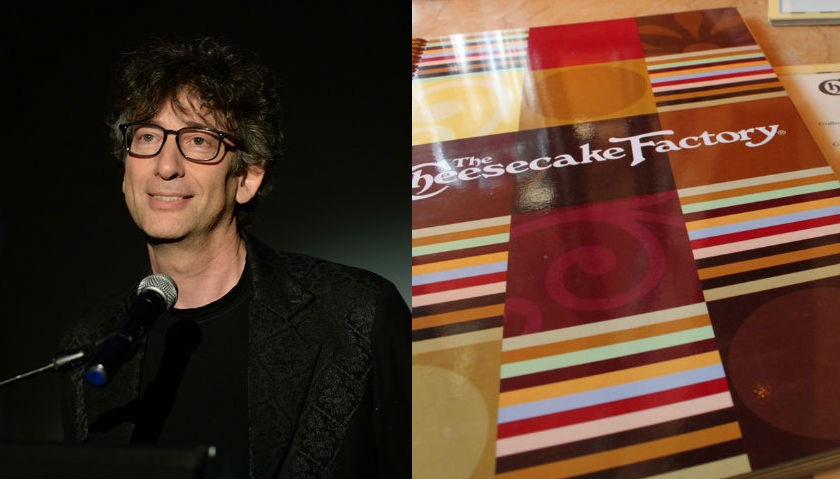
Neil Gaiman May Read the Cheesecake Factory Menu

And other news from the literary world

What do Neil Gaiman, Cheesecake Factory, book collecting, and the Russian Charles Bukowski have in common? They’re all part of the new Twin Peaks mythology…Nah, not really. But they are filling out today’s literary news.

A New “Twin Peaks” Book is Coming this Fall

Fans of Twin Peaks have even more to be excited about, as show co-creator Mark Frost has announced he’s set to publish a novel this fall titled Twin Peaks: The Final Dossier. Billed as a loose follow-up to his 2016 novel The Secret History of Twin Peaks, the book will help fill viewers in on what happened in their favorite whacko Pacific Northwest town in the 25 years between seasons. Commenting on his goals for the book, Frost said, “I wanted to frame [the search for hidden truths] in a setting that includes mysteries and secrets of all types and let the reader sort their way through it and see what they think.” Sounds like a plan. See you guys at the Black Lodge. Wait, is it the White one? Which one is better, remind me?

[Los Angeles Times/Michael Schaub]

Neil Gaiman May Dramatically Read the Entire Cheesecake Factory Menu

Writer Sara Benincasa has appealed to American Gods author Neil Gaiman to perform a dramatic reading of the entire Cheesecake Factory menu, so long as she can raise $500,000 for the charity of his choice. A bit out of left field? Sure, but Gaiman accepted the challenge, selecting the United Nations Refugee Agency as the beneficiary of Benincasa’s efforts. You can donate on their Crowd Wise page. For anyone who needs reminding, the Cheesecake Factory menu is really really really long and pretty intricate — think Norse mythology but with fettuccine alfredo and multi-thousand calorie appetizers.

[Huffington Post/Katherine Brooks]

New Prize for Female Book Collectors

The women behind Brooklyn’s Honey & Wax bookstore have announced a new prize aimed at young female book collectors. It’s open to anyone under 30, and the $1,000 award hopes to incentivize a new generation of women readers to participate in the rare books trade. So, have you been wondering who’s going to help you out with that burgeoning stash of early biology manuals authored by discredited continental medical men? Wonder no more! Apply here by July 17th.

Russian Poet to Run for Moscow Office

Russian poet and leftist political activist Kirill Medvedev has announced his candidacy for Municipal Deputy of Moscow’s Meshchansky District. Medvedev, a staunch anti-Putinist, gained recognition both in Russia and internationally for It’s No Good, his 2012 collection of poems and essays, as well as his Russian translations of Charles Bukowski. In recent years, he has forgone corporate printing and distribution of his work, preferring an anti-capitalist model. Medvedev’s full candidate statement can be read on his public Facebook page. Hopefully this news might inspire some American poets to make a return to politics (looking at you, presidential candidate Eileen Myles).

[Melville House/Ian Dreiblatt]

Expanding the Twin Peaks Universe

Curating a New Literary Canon

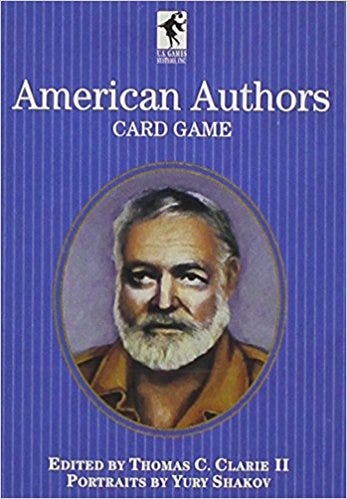
The Christmas I was eleven, I received, in my stocking, the 1988 edition of the American Authors Card Game. An update of the classic Game of Authors deck first introduced in 1861, it featured thirteen authors, one for each number (Robert Frost, for instance, was on the 5’s), each card showcasing a different work by that author. It was for this reason that two decades before I read Moby-Dick, I could have told you, with great confidence but no real understanding, that Herman Melville also wrote Billy Budd and Omoo and Typee.

The original 1861 edition included twelve white men and one white woman (Louisa Mae Alcott). My 1988 deck featured… one woman. This time it was Willa Cather, and she was, naturally, the queen. James Baldwin had joined the fray, but the remaining eleven authors were white and male. Being a kid, I thought nothing of this. I just figured Theodore Dreiser was someone important enough that any well-educated child ought to be able to rattle off four of his book titles.

Cut to ten years later, when I nearly broke up with a college boyfriend because he refused to acknowledge the ways canonization was wrapped up in cultural hegemony, a word I’d only learned within the previous six months. By twenty-one, this was a topic I’d passionately emote over when drunk.

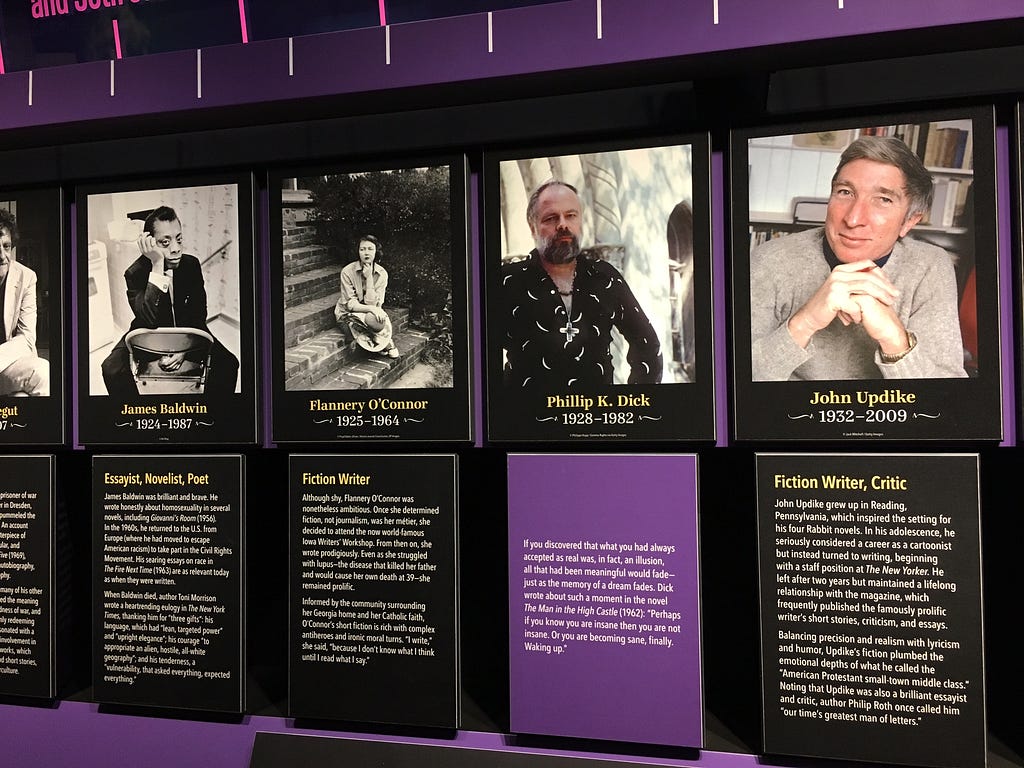
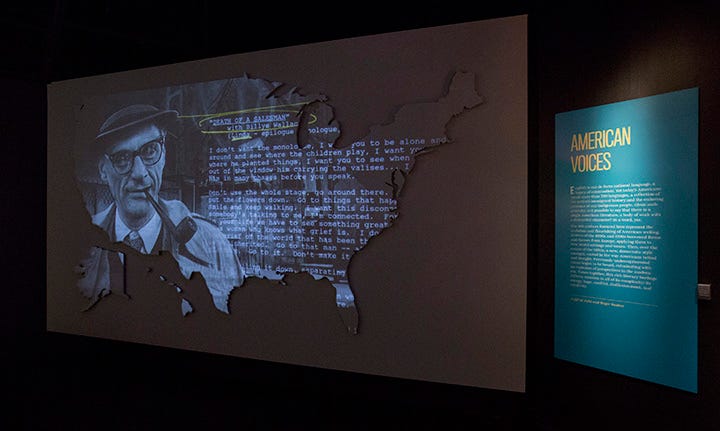
Walking through Chicago’s new American Writers Museum a week before it opened to the public, I felt like a cross between that eleven-year-old (wide-eyed, thirstily trying to absorb the canon, inspired by history) and that twenty-one-year-old (tallying up gender and race and queerness on the 100-author “American Voices” wall of fame and doing some quick math).

The museum’s creators faced an impossible task, the same one undertaken perennially by anthologists and English professors: How can we represent four hundred years of American literary history in a way that doesn’t reinforce the unfortunate hierarchies of those four hundred years?

How can we represent four hundred years of American literary history in a way that doesn’t reinforce the unfortunate hierarchies of those four hundred years?

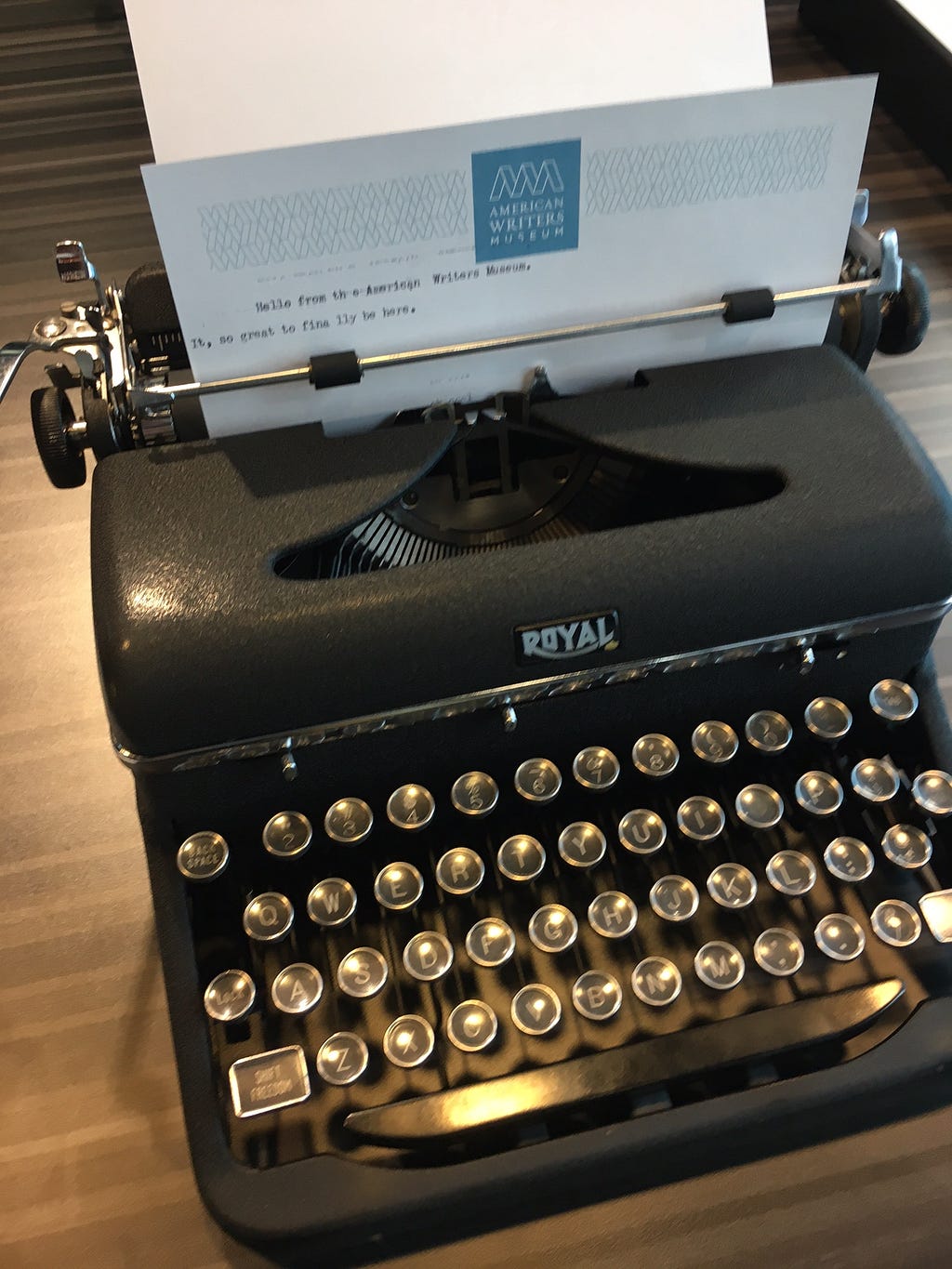
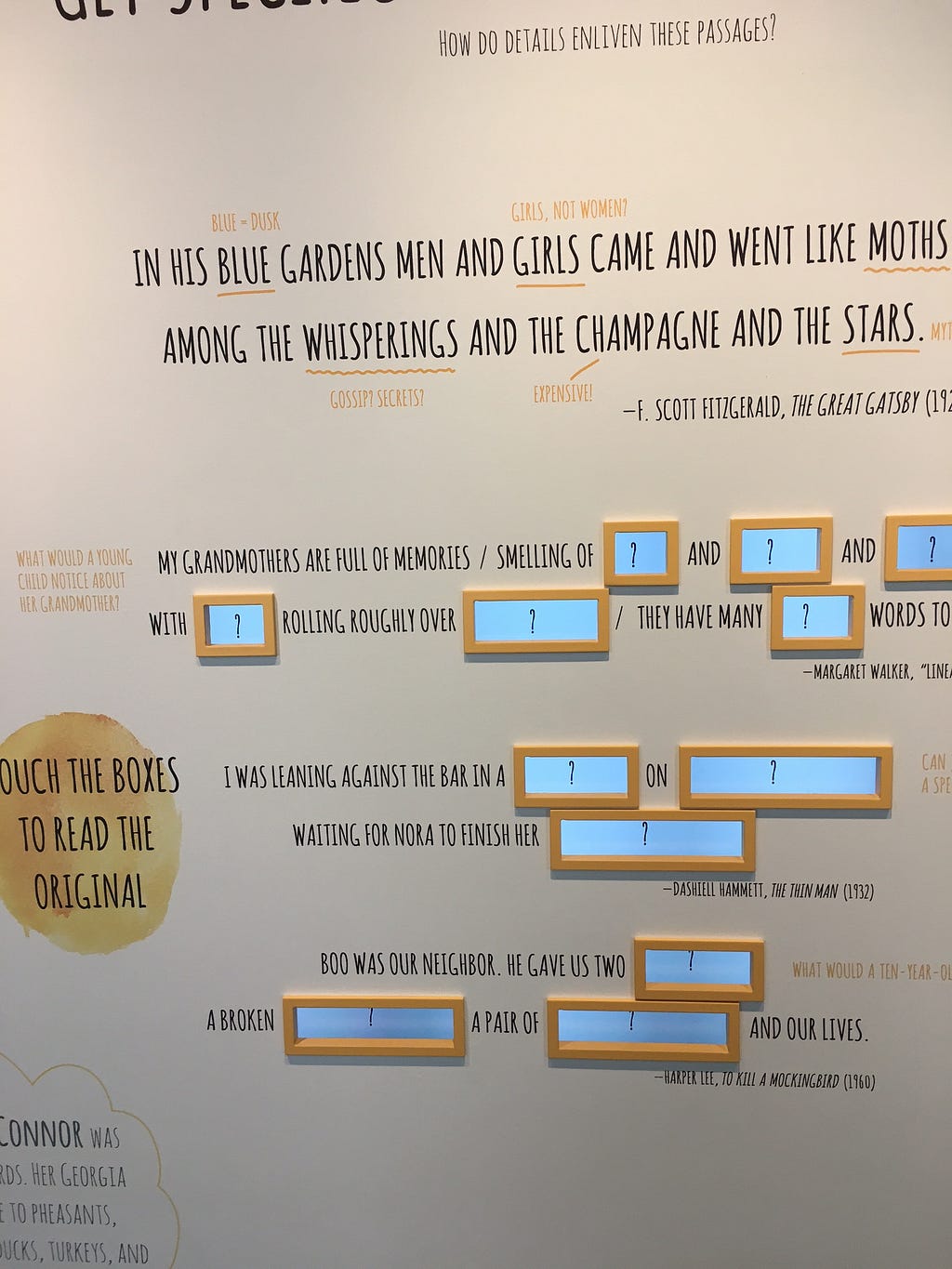
The museum itself, the only one of its kind in the country, is slick and sleek and exponentially more entertaining than you’d ever imagine a museum about people who sit in chairs all day could be. The second-floor space at 180 N. Michigan Ave. is appropriately lofty and quiet and gorgeous, with gallery spaces by Amaze Designs of Boston. Interactive games let users create poetry or compete to guess quotations or choose a quirky writing routine. Across from the author wall is a “Surprise Bookshelf” from which 100 small panels, each with the title of a different book or poem or song or movie, open to reveal photos, or play audio or video recordings, or (who can resist?) pump out scents. Elsewhere, there’s a hypnotic word waterfall in which quotes about America (not sappy ones, either!) reveal themselves in succession. You can take a Philip K. Dick-inspired test to figure out if you’re an android. Lest we get too modern, a charming bank of manual typewriters invites visitors to compose their own texts. A bit less charmingly, two kiosks let readers input data on their favorite books — data which is then mined not only by the museum but also by Goodreads (aka Amazon), who have loaned the museum the platform. (On the other hand, Amazon already knows when you’re out of toilet paper, so perhaps this is a benign violation.)

Photo: Rebecca Makkai

One of two temporary exhibits features the scroll on which Jack Kerouac feverishly wrote the original draft of On the Road. (Inspiring takeaway for visiting 11th graders: write high!) While I’m not a Kerouac fan, this is the kind of stuff that gets me: actual artifacts that real writers touched. I learned more about writing from studying a marked-up reading copy of one of Charles Dickens’ stories at the Dickens House Museum in London than I did from several writing workshops combined. In Sewanee, Tennessee, I once stared in awe for ten full minutes at Tennessee Williams’ toaster. His actual toaster! That he put his bread in every morning! My wish that the museum could include more objects like these might be selfish, but I don’t think I’m alone. Perhaps it would be too costly to acquire Hemingway’s fishing rod, but I can’t imagine Amy Tan would begrudge them the loan of an old mouse pad.

Perhaps it would be too costly to acquire Hemingway’s fishing rod, but I can’t imagine Amy Tan would begrudge them the loan of an old mouse pad.

I found the other temporary exhibit deeply confusing. You walk into a dimly-lit greenhouse-inspired space and make your way through some potted palms to listen to poems by W. S. Merwin, Ross Gay, and others. It has something to do with Merwin living in Hawaii and taking care of plants, and is meant to be an experience — one that’s never adequately explained. By the time I’d been whacked in the arms by three sharp palm fronds and stared in confusion at the ambient props — rubber boots, a roll of duct tape — I wasn’t as receptive a poetry absorber as I might have been. Was this Merwin’s actual duct tape, on loan? (If so, I take it all back.) Making one exhibit space educational and the other experiential is, though, a grand idea, and I have great hopes that in the future I’ll be able to walk through Richard Wright’s Chicago or lick Roald Dahl’s wallpaper.

Dungeons & Dragons & Communal Storytelling

I was involved in two different fundraisers for the museum during its seven-year planning phase, and although I lent my support to it as wholeheartedly as I’ll support anything literary in Chicago, I wasn’t the only one a bit baffled, early on, as to what this space was intended to be. “It’s not going to be a library,” we kept hearing, and then we’d be shown a picture of some shadowy figures looking at some shadowy banners. What’s emerged from all that vagueness is in fact specific, beautifully designed, and engaging — a place that, confusing palm room not withstanding, will easily absorb you for an afternoon. It’s a fitting addition to Chicago’s already spoiled-for-riches museum scene, and, as poet Anna Castillo put it during a talk the day I visited, it’s “a reminder that we [as Americans] are a literary people.”

It’s a fitting addition to Chicago’s already spoiled-for-riches museum scene, and, as poet Anna Castillo put it during a talk the day I visited, it’s “a reminder that we [as Americans] are a literary people.”

I’m left not wondering what it is anymore, but, on the simplest levels, who it’s for.

A younger child could enjoy a few parts of it — the children’s literature room (in which one panel describes E. B. White as a “20th century Thoreau” — a point on which my own kids, sorry to say, would be lost), and some of the interactive games — but given the adult bent of most of the literature on display, and given that a woman of average height had to ask me to open some of the top Surprise Library panels for her, on the whole it’s not designed for kids. (If your kid is an exceptionally tall Merwin fan, rest assured she’ll have a blast.)

Photo: Rebecca Makkai

Adults, on the other hand, are going to fall into two categories: those who already know this stuff, and those who don’t care. If you already know Edward Said’s Orientalism, and you open a panel to learn that he “transformed the study of cultural exchange and power,” which you probably also already knew, you’re going to be less than awed. If you’ve never heard of Farenheit 451, opening a panel to see a video of a burning book might not do much for you. The museum does contain an event hall, though, and the calendar of upcoming readings promises to bring a steady flow of literary adults through the space; my wildest dreams see this museum paralleling, for fiction, the superb programming that the Poetry Foundation has already brought to Chicago.

I believe the sweet spot for visitors is adolescence. The eighth-grader who wants to be a writer and will absorb whatever you tell her about who’s important and why. The sophomore English class with the energetic teacher who gets everyone to pick an author off the wall to present about for three minutes. The college Lit major who drags his girlfriend there to impress her (and himself) with how much he knows.

In other words: Eleven-year-old me would have eaten this place up. I’d have played the digital magnetic poetry game and typed on the typewriters and taken mental notes on the writers I didn’t know yet, long before I was capable of reading their work. Fifteen-year-old me would have gotten all emo over the recordings of Langston Hughes reading his own work.

Fifteen-year-old me would have gotten all emo over the recordings of Langston Hughes reading his own work.

Meanwhile, twenty-one-year-old me would have freaked the hell out over representation. Because here’s the thing: Of the 100 plaques on the author wall, only 28 are women. 18 are people of color. Granted, we’re dealing with centuries of history in which women and people of color were not necessarily granted literacy, let alone publication. Poor Phyllis Wheatley can only hold up so much sky.

Photo: Rebecca Makkai

The ratios are far better than those of my 1988 card game, but in an exhibit for which the only rule is that the authors be American and deceased, there are missed opportunities. The writers on that wall are presented chronologically, by year of birth — Oscar Hijuelos, born in 1951, is the last — and of the last ten authors on the wall, only one (Flannery O’Connor) is a woman. That proportion might have made sense for the 18th century — but for the more recent past, what gives? Why not Adrienne Rich? Why not Lucille Clifton?

That said, there are serious efforts toward inclusion — of genre and populism and style, as well as race and ethnicity. Hijuelos is preceded at the end by August Wilson and, before him, by the Native American writers Vine Deloria Jr. and James Welch.

And it’s hard to point to the authors who should go. Would I really argue that Kurt Vonnegut should be dropped in favor of Lorraine Hansberry? Well, maybe. Yes, actually.

It depends, again, who this space is for. If the idea is to curate — to present to the world, in some official capacity, the Most Important People in American Literary History — then the battle is unwinnable. There’s no way we’re all ever going to agree. We see certain writers as canonical because we were always told they were canonical. That old question: If you’d never heard of the Mona Lisa, would you truly pick it out of all the paintings in the Louvre to stand in front of and gawk at? It’s famous because it’s great, sure, but there are other great things in the Louvre. It’s mostly famous because it’s famous; canonization is a self-fulfilling prophecy.

If the idea is to curate — to present to the world, in some official capacity, the Most Important People in American Literary History — then the battle is unwinnable.

If, on the other hand, the idea of this museum is — as it seems to be — to inspire the next generation of writers, then why cling to someone like John Updike to the exclusion of, say, a single Asian-American author?

Of course it’s only the one wall that I’m harping on, and although I didn’t run the numbers, it’s possible that other portions of the museum do a better overall job with representation. (NB: Writers beyond the one hundred on the main wall are represented in the museum’s other exhibits and games; Asian-American authors are featured in the Surprise Library, for instance.) I don’t know that anyone could have done better than this at striking a balance between education and inspiration. But that wall is central, the first thing many visitors will see, and its very presence feels authoritative, definitive.

Ultimately, I’m thrilled that the museum is here — and you should be too — even as we should keep pushing and questioning what it is and what it’s saying. Just as we already do with anthologies — and just as the art world has been doing in regards to museum and gallery representation for decades. This space is, like American literature itself, a place to revel in and balk at and demand more from.

When my daughters are old enough, I’ll take them there and let them experience the unadulterated joy that comes with feeling you’re getting the important stuff, the quick download of all the culture you’ll need.

And then ten years later I’ll take them there again, and we’ll really talk.

Artificial Intelligence & Climate Change…in a Race to the End of the World

A few years ago, I might have said Zachary Mason’s vision of the future was grim, perhaps even dystopian. In 2017, it looks downright optimistic.

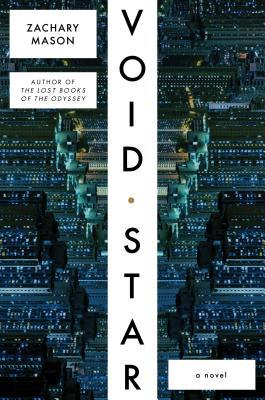
In his second novel, Void Star, climate change has re-landscaped the world, drones construct endless favelas, memory implants allow for perfect recall, and godlike AIs are responsible for most technological advances. The only problem with that last part — no one really knows what the AIs are thinking, or what they want.

Three characters start to figure it out: a professional AI whisperer (Irina), a Brazilian political scion (Thales), and a streetfighting autodidact who parkours across the San Francisco slums at night (Kern). They discover a frightening conspiracy that humankind may be powerless to stop.

Mason writes with the cold, poetic clarity of an AI himself, which makes sense considering he’s an expert in the field. Between writing Void Star and his first novel — the algorithmic riff on Homer, The Lost Books of the Odyssey — Mason works for a Silicon Valley startup. I recently spoke with him about the future, artificial intelligence, and non-Euclidean narratives.

Adam Morgan: Do you see the world of Void Star as a possible future or a probable future?

Zachary Mason: I guess everything has to be categorized as “possible,” but some parts seem more likely than others. I don’t think AI will go exactly the way it’s depicted in the book, but kind of like that. There have been major advances in AI applications, but right now it’s all basically pattern recognition. Actually understanding language and generating design — that doesn’t work yet. I suspect it will fairly soon, and then AIs will be writing most of the world’s software and industrial design. As far as runaway climate change, yes, it seems fairly likely. It’s hard to come to grips with that, emotionally, so people either freak out, become activists, or just pretend it’s not happening.

Adam Morgan: How did these three characters come to you?

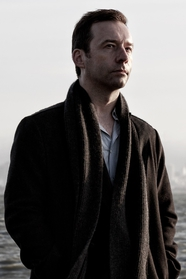
Author Zachary Mason. Photo by © Kai Parviainen

Zachary Mason: The book turned out weird and non-linear. I knew I wanted to do something like that, so I just sort of sat down and started writing the chapter where Kern is getting the Black Ships. The rest of his character came about because a friend of mine was talking about A River Runs Through It. She was saying, “Yeah, it’s about what happens if all you do is just fly fish, day in and day out, and how that shapes you.” That was the seed for Kern, who somehow became this Muay Thai guy living in the favelas who has a laptop with all culture of the last 50 years on it.

Then I read A River Runs Through It and it’s nothing like my friend said, so that’s interesting.

Adam Morgan: Interesting. Given your background, I assumed you would have started with Irina or with Thales, just because they’re closer to your fields of expertise in AI and computer science. In addition to those over-educated characters, why was it important to include Kern’s perspective?

Zachary Mason: Kern seems to be self-generated, which I think is really interesting. He owns one shirt and a laptop held together with tape that he found in a garbage dump. He manages to create a cellphone and it’s completely ridiculous, but also reflective of life in that eventually, everything anyone’s ever published or filmed will fit on your phone. You could find enough books to, in effect, get any degree you wanted online for free — but people don’t, which is kind of fascinating.

Adam Morgan: Have you spent a lot of time talking to AIs similar to the way Irina communicates with them in Void Star?

Zachary Mason: I’ve been studying artificial intelligence since I was 19, but I’ve wanted to do it since I was about seven.

The two great questions are: what’s the universe, and what’s the mind? That’s what I’m interested in and what I plan to go back to fairly soon. As far as whether what I do is like what Irina does, I’m very sorry to say that it is not. I would love that. I would do anything for that. But I don’t have super-cognitive abilities to talk to AIs, and there are no AIs to commune with, so there are two primary problems.

AI is a weird field. It’s about where physics was in 1500. If you look at what people thought about physics in 1500, some of them were onto something and some of them weren’t. Important men with large beards at major universities were studying the humors and other total nonsense. So AI is exciting right now because it’s fascinating and it’s hugely important and nobody really knows anything about it.

“AI is exciting right now because it’s fascinating and it’s hugely important and nobody really knows anything about it.”

Adam Morgan: Irina’s memory implant reminded me of that Black Mirror episode where people could rewatch every moment of their lives via contact lenses. Do you think that kind of technology is inevitable? Would you want an implant like that? Assuming it wasn’t being used for nefarious reasons by a renegade AI.

Zachary Mason: I think that would be really fascinating, but what that came from was, I’ve always been preoccupied with how experience slips away and how frustrating that can be. Like, you look at an object and there it is, and then you look away and immediately you can only barely reconstruct the shadow of an outline.

I remember being in third grade and freaking out about that, and just trying to force myself to pay more attention and try harder to remember. Obviously it didn’t work. But yeah, I think it would be really interesting for a time to feel more stable. I understand that people do have memories kind of like that. Except it’s often a torment to them…mostly because they can’t control it, so sometimes they have movies of their past running through their experience.

Adam Morgan: Does your computer science background impact your approach to writing at all, or are they completely separate fields in your head?

Zachary Mason: There’s only a tiny bit of overlap at the core of things. I don’t think computer science has much to say about writing. Things like math and physics tend to, because they’re all about aesthetics and patterns, and that’s what writing is about. There’s a clear sense of an elegant equation or theorem, and there’s also a clear sense of elegant and compact sentence. So that kind of feels the same to me, although I’d be a little hard pressed to unpack that and say why.

Adam Morgan: This book could not be more different from The Lost Books of the Odyssey. Was your writing process for this significantly different from your writing process with the last book?

Zachary Mason: Yes. On all sorts of levels. I wanted to do something different from The Lost Books, where everything was super compact and mythic, and it’s set in no time in particular — nominally it’s Homeric Greece, but there are all kinds of anachronisms.

With Void Star, I wanted to linger on the texture of consciousness, and also on the texture of the world. That was a lot of fun and it comes a little more naturally. Initially I wrote everything out of sequence. I started with Kern and the black ships and then I kept going because I was letting things come, and then I tried to find the pattern that united them all. That was really hard and it wasn’t necessarily clear that there was a pattern. I mean, I look at it now and go, “Of course. That seems fairly obvious.” But at the time it really wasn’t.

Adam Morgan: You said you first wanted to go into AI when you were seven. What was the impetus there? What was that inspired by?

Zachary Mason: What I remember is lying in bed and thinking how cool it would be to teach a computer to talk, and I imagined these immense mainframes and white-coated scientists — because if you’re a computer scientist, you wear a white coat and carry a clipboard. So this was my image of what that would be like. I’m not exactly sure where it came from. but the idea certainly stuck.

Getting into grad school was kind of a shock. I went early and I had a very naive and idealistic idea of what academia was like. I expected everybody to just be totally committed to the life of the mind and uncovering the computational character of cognition. But in reality, it was just some reasonably smart people who were professional publishers of papers. And it drove me crazy.

Adam Morgan: That sounds like my MFA experience.

A Story About Survivors Impersonating the Dead

“The Great Disaster”

by Alanna Schubach

He had never really thought about it, our science teacher said, until shortly after he turned thirty. One night, over dinner, his wife had looked at him strangely. Then she reached out and plucked a hair from his head. She stretched it over the dark surface of the table and he saw it was wiry and gray: his first.

The Great Disaster (Electric Literature’s Recommended Reading Book 262)

Shortly after that, he tripped and fell up the stairs on the way into the school building. His arms absorbed most of the impact, but his head struck pavement. At first it yielded nothing more than a goose egg on his forehead, but the next morning he awoke with a terrific stiffness in his neck.

Around the same time he began to notice that his hangovers had worsened. Not only was there the nausea, but also now a metaphysical component to his next-day suffering, a fog of despair that hung over all hours until evening. It was then, our science teacher said, that he finally realized what was coming. Of course, it had always been coming, but he hadn’t truly understood until that point.

But you children are already well-aware, our science teacher said. It’s unnatural to be aware from such a young age. And you will always be unnatural for it. But that can be a strength.

No one spoke to us like this before the Great Disaster. Before, if the principal, passing in the hallway, had overheard such a conversation, our science teacher would have been reprimanded.

Our science teacher had probably wanted to give these kinds of lectures even then, we thought, but held himself back. He studied philosophy in college. H., his niece, told us that he had a room in his home in which the walls were lined completely, floor to ceiling, with bookshelves full of books. H.’s parents had never enjoyed his brand of conversation, and he would harrumph and roll his eyes when they tried to discuss mortgages or celebrities or the best methods of removing cat hair from furniture. Now the science teacher was nearly bald. What was coming was getting closer.

This is how it was with the Great Disaster: some people it shattered, and some people it made more themselves.

K. had been out of town when the Great Disaster struck, K. and his entire immediate family. They had traveled south for some kind of reunion, cousins at the beach plunging into the waves, the adults clumped together on shore drinking and casting eyes oceanward. He hadn’t lost anyone. When we all talked about it, he felt like someone pausing outside a theater and overhearing from within a sudden burst of applause.

All of us, including the science teacher, had come from the junior high in the valley where water had overtaken the first floor. We had been transferred, after, to the junior high on the hill, dropped into desks beside strangers. The other students complained about upset seating arrangements, about the ignorance of their new lab partners, about having to repeat lessons for the sake of the unlucky arrivals, as though we hadn’t all been following the same national curriculum. We got their point. We didn’t want to be there either. We suspected the adults were afraid of the water returning and the mold was just an excuse. A superstitious, infantile fear. One night we went back to the valley investigate, which is how the zombie game began.

Inside our old school it was dark. Smashed glass, posters on the wall fluttering in the unexpected breeze. Once the posters had celebrated perseverance, condemned bullying, but now they didn’t say anything. It was damp, but not necessarily in a persistent way. It could have been from the rain that same afternoon. We had all made it; our parents were less attentive these days, less prone to nagging. We had been expecting a playland, the thrill of an institution once patrolled by adults, now liberated of them. We had imagined ourselves tearing through the maze-like corridors, upending the shoe lockers, kicking at the plum trees in the courtyard, spitting from the mezzanines down onto the lacquered surface of the gymnasium floor. But the school was dead, deader than before. It was filled with an oppressive grayness that drained us of energy.

Climbing the stairs to the second floor, which had been spared, we found that the things we had abandoned had become artifacts. We’d left behind our battered notebooks, our sweet-smelling erasers, our passed notes with their secrets folded within, sure they’d remain there for us, waiting. They lay still and preserved inside our desks, but they were no longer ours. We realized, when you touch a textbook or an orange, when you watch heavy curtains shoved away from windows with wind, dancing in air, when you fall asleep against your desk and dream it’s the deck of an old ship, shifting in the sea, you enliven these things, you transfer your energy to them, you give them meaning. The fantasy you had as a child that your toys came alive after you left them alone was wrong; it’s just the opposite.

The game began in the home ec. classroom, amid the dormant ranges, the spatulas and serving spoons asleep and rusting in their glass cabinets. The home ec. teacher still hadn’t been found; she’d stayed home that day to take care of her daughter, who had influenza. M. was rifling in the teacher’s private office, opening and closing drawers. At one point she leaned out into the classroom area and tossed a sheaf of papers in the air: recipes. Of all of us that first night in the school, M. seemed the least muted by the Great Disaster, the most defiant of the school’s hushed hallways. She’d been considered wild even before, and we’d always been too boring for her, but now that her two best girlfriends were dead, her options were limited. R. was staring at a recipe and idly reading aloud the ingredients for a custard when M. emerged, in the home ec. teacher’s apron.

Her mouth hung slack and her eyes were glazed. She shuffled forward, reaching unseeingly, her dangling hands knocking over a coffee mug from the home ec. teacher’s desk. She didn’t jump when it shattered. Instead, she crouched down stiffly, jabbed her fingers into the foul liquid that had spilled out, ancient coffee with curdled milk. She raised her fingers and stared at them, and fixed her face into an expression of dim disappointment.

“What is she doing?” H. whispered to R. She saw that it was a game, she understood that much. But she didn’t know the rules, and her cluelessness clawed at her.

M. had stuffed the bosom of the apron with something, we saw, to mimic the home ec. teacher’s unusually large breasts.

“Are you being Mrs. B.?” K asked.

M. groaned, stumbled toward him.

“Do you want us to make you this custard, Mrs. B.?” R. asked, holding the recipe aloft.

M. jerked her head toward him. Clarity seemed to swirl briefly in her eyes. Her lips parted. “Brrr,” she said. “Brains.”

Then we understood that she had brought the home ec. teacher back to us.

The hospital on the hill, near our new junior high, had served as an emergency shelter after the Great Disaster, and on one of the first nights when we were huddled, freezing and hungry, the chief physician told us that there had been warnings. If you broke down the components of the names for places in our region, they had meanings like Once Beneath Sea and Origin Of The Wave and Whirlpool’s Child. Our ancestors had named our towns, creeks, and beaches this way for a reason, but we had ignored them.

Most of the adults nodded quietly but R.’s father stood up. He circled the medicine-smelling waiting room, leaning in to the impassive faces of the crowd.

“My name means Pine Forest,” he said. “Does that mean I should have been a lumberjack?”

He turned to the physician. “Who is that speech supposed to help?”

The physician smiled a little, but her voice had no authority. “We all help each other,” she said.

Once, during an argument, our science teacher said his wife had called him “little tyrant.” Of course, she meant “little” in the sense of his tyranny being relatively small, in the grand scheme of historical monsters, but he had interpreted it as a dig at his stature. He had always been sensitive about his height, he said, and anytime he tried to assert his authority he had to contend with comparisons to Napoleon. It was a sore spot, in other words, and though he’d said plenty worse to her over the course of their marriage, and though she’d clarified that she had not been mocking his size, nor ever would she do anything so base as to ridicule a person, her husband and soul mate especially, for something he couldn’t help, he remained stung. Perhaps it stung because he was monstrous, perhaps his fixation on his height hid deeper trepidations about his character. The fight had taken place not long before the Great Disaster, and the Great Disaster had seemed to wash it, like so much else, away, and yet here was the hurt again, resurfacing. He’d not been freed of it at all.

There was a challenge in knowing which characteristics should survive into the second life. The woman who owned the dry cleaners, for instance, had had a way of confirming with our mothers every time she spoke: “Two blouses, yes? Dreadful weather, yes?” She had a face soft with wrinkles, and brittle, arthritic bones — she could hardly stand up straight enough to sift through the racks of clothing, swinging in their plastic wrapping, let alone run up the hill. H. tried to be the dry cleaning lady, creaking forward, dribbling from the corner of her mouth a little, murmuring, “Brains… yes?” But we didn’t like the yes, we didn’t agree that a tic so endearing would be preserved in the crossing. When we voiced our objections, H. sat down right on the cold floor of the music room (empty saxophone cases, a dark cluster of stringless violins) where we’d been playing the zombie game. She refused to participate for the rest of our session, just sat plopped there in silence, rolling over and over in her mind the vanished yes.

We were called from the classroom one by one to meet with someone: a counselor. He was tan, with a thick head of hair; he pulsed with vitality. He asked us if there was anything on our minds. If we were struggling with negativity. If we had any stress. If we had dark fantasies. What we did to cope with them.

We all said nothing, and he said nothing was interesting, too.

“No,” M. told him. “Nothing is nothing.”

We were returned to the classroom and our escort, the school nurse, chided us lightly for our lack of cooperation. We were reminded that we were supposed to all be in this together.

We told the science teacher what we were asked, and he smirked.

“I’d like to administer,” he said, “my own questionnaire. And you don’t have to answer it anywhere but in your minds.

“How firm,” he said, “is your grasp on reality? How do you know?

“Have you ever resented your parents for thrusting existence upon you?

“Do you have thoughts that seem to come from outside yourself?

“Do you sometimes feel as though you are watching yourself perform the actions of life from a distance?

“Have you ever looked at someone you’ve known for years and felt as though you’d never seen them before?”

M. scribbled furiously in her notebook during the questioning. R. slid K. a note: Will this be on the test? H. blinked a lot to hold back tears.

The science teacher scanned the room, and smiled. “Would you like me to tell you that your answers indicate you’ll be fine?”

We all nodded.

He shrugged. “But how should I know?”

Once summer came it was easier to see the shadow the Great Disaster had cast. Little bloomed in the valley, its flora puckered by saltwater, but the hills above were mockingly verdant. Bees went on thrumming in the bushes, cicadas thwocked their fat bodies against windows. In the scorched grass around the old junior high school we found fish skeletons.

The postmaster left town. The high school vice principal left town. Several of our classmates warned us they would not be back in school when the summer holidays were over. (“Their parents don’t want to live amid the ruins,” the science teacher said. “They don’t see it for the privilege it is.”) R.’s father was spending most nights at First Dream, a bar where men paid women to pour their whiskeys and light their cigarettes and listen to them talk ever-widening circles around the Great Disaster. K.’s mother had thrown K. out of his bedroom and converted it to a photo lab, where she restored the pictures she found flapping along the shoreline. Their owners would eventually turn up to reclaim them, she said. Over where he’d once slept swooped blotched images of grinning infants, cigar-smoking grandfathers, cats bathing in pools of light, all suspended from clothesline. He now had to room with his younger brother, who’d long been potty-trained but had suddenly begun wetting the bed again, and K. had to strip the sodden mattress in the middle of the night. A woman who worked at First Dream slit her throat.

“Does your father know her?” H. asked R. We were sitting in the old junior high school’s mezzanine, legs dangling over the edge. Even though our days were free, we continued to reserve our game for evening hours. Dark was beginning to set in, submerging the basketball court below in a pool of inky black. H. had heard the news from her uncle, the science teacher. He hadn’t told her directly — he didn’t really speak to her outside class, as though he wanted her to be no more than a student, and she was too timid to approach him herself — but she’d overheard him telling her parents during dinner one evening. They’d been sitting on the back porch, and H. had pressed her face against the screen door, its windy, metallic smell harsh in her nostrils.

“Well,” H. heard her mother say. “You have to wonder what kind of life brought her there, in the first place. It’s not a job for healthy people.”

“What’s a job for healthy people?” the science teacher asked.

“Yours, for one.”

The science teacher laughed at that.

R., reddening, said that his father had never mentioned the woman. But First Dream wasn’t such a terrible place, he added, no one there was bad, exactly. Just think of the name, he said, a reference to the custom of sharing with our families, at the breakfast table, our first dream of the New Year, the insights that the disclosures brought, the closeness. That’s what people were looking for.

“So she helped people,” M. said. The word sounded sharp, an arrow pointing toward hypocrisy. R. nodded, nervously. “So we should bring her back,” M. said.

We’d never resurrected someone we’d never seen before. The trick, we were learning, over the course of countless embodiments, was to highlight a particular trait of the dead, to let it glint here and there through the muddiness of all the zombie groaning and shuffling. We stood waiting in dread for M. to inhabit the fallen First Dream employee, to expose her, the men like R.’s father who visited her, as grotesques. There was something in her that was inexhaustible, a vessel that no matter how many times she overturned would be filled again.

But then H. stepped forward. She’d taken M.’s lipstick and drawn a red slash across her neck; she’d thrust her chest forward and made her bony body voluptuous. She made the familiar, moaning request for brains, but her voice had gone husky, infused with the dead woman’s yearning. What did we see? Not H. A stranger, whose flesh people had molded until she fit against them. She had a nature that she had kept hidden, and now no one would ever know about it but us. When H. returned, a little embarrassed, we all applauded.

There was something embarrassing about the zombie game, a bafflement that came with its conclusion, as we walked home reflecting on our disappearances. What were we doing? We still knew nothing about the people we had taken on. We hadn’t really disappeared.

When we returned from the summer holidays to our sparser classrooms, M. had a question for the science teacher.

“What did you mean,” she said, “when you said that it was a privilege to live in ruins?”

The science teacher paused. No one ever asked questions in his class. It was his realm, for his lectures, and it wasn’t clear, sometimes, how much he cared if we understood.

The pause extended into a silence so long that it stood on its own, just a silence, brought forth by nothing.“I want to know why the woman from First Dream cut her throat,” M. said.

It seemed he would ignore M.’s question, and we could feel another silence rolling out, but then he asked, “Do any of you have dreams about the Great Disaster?”

Everyone nodded.

The science teacher upturned his palms, inviting, to our surprise, a classroom discussion.

K. said he had dreamed of another surge of water, this time teeming with frog monsters, with concavities at the tops of their heads and mouthfuls of fangs for devouring the livers of children. H. had dreamed she was in a train car, shuttling through the farmland that bordered our town, only to reach a grove where each tree was strung with human hearts. R. dreamed that the phone rang in his house, and he heard his mother pick up and say, “Dead? Dead?” and he knew the news was about his father.

The science teacher nodded appreciatively. “Here’s mine,” he said, because that, of course, was what he had been waiting to tell us, what this whole exercise was for, but we didn’t mind, because we’d been waiting to hear.

He’d dreamed he was walking along a road in the dark, and at his feet was the dog he’d had as a child who had run off one day, through a back door left open. The dog’s vanishing had been a black mark on his youth, an inexplicable blot, because he had thought they’d had an understanding that they would grow up together. But now the dog had returned, and he looked just as the science teacher remembered, but in his travels he had learned how to talk.

The science teacher asked the dog if he had acquired great wisdom along his journey, and the dog said that depended.

The science teacher asked if he had seen terrible things, and the dog said who hadn’t.

The science teacher asked why terrible things happened, and the dog looked disappointed. He turned his head up and the science teacher could see the whites of his eyes gleaming in the dark, and he felt afraid.

The science teacher’s feet were starting to ache, and he asked the dog if he knew when they would reach the end of the road.

The dog said, surprised, End?

M. said, “How is that about the Great Disaster?”

The science teacher told her, “You can do better than that.”

The last time we played the zombie game was the time we were most completely absorbed. Self-consciousness was leached away until our characterizations were pure. We peopled the hallways of the old junior high, bringing forth one lost face after another, the waiter at the coffee shop, the drugstore cashier, the pasty, chubby classmate we’d all ignored, for fear of being tainted, made an outcast, too, as though through airborne contagion, the man we’d all noticed and suspected was homeless, who walked everywhere, long-haired, carrying a guitar case, who may very well have stepped directly into the water. We flipped through personas without pausing for recognition. We knew; that was enough. R. did not think of lying awake until the patch of sunlight widened across his closet door, of waiting until he heard the shudder of his father’s car engine when he pulled into the driveway. H. did not think of her parents on the back porch, of her mother’s blandness, turned into a weapon poised against the town’s despair. K. did not think of his weak-hearted brother, retreating into the safe, clammy warmth of toddlerhood. M. did not think of her friend, who she had last seen on a sunny, early spring day, as they coasted their bikes down the hill past the hospital, who had told M. she knew how it would be when they grew up: she would stay here, in the town, settle down and have a family and a quiet job, as a florist maybe, and M. would take off, she’d hike mountains or traverse far-flung cities, learn foreign tongues, open her mouth to exotic tastes. And then she’d come back, every couple years or so, to visit her friend and tell her what she’d seen. M. didn’t think about who she would tell now.

We were stopped not by exhaustion, but by the sun coming up. As it undimmed the classrooms we saw the school for what it was, not the secret warren of dark resurrection but a defunct building, a hall of nothing. Its dank smells refilled our noses. We remembered there were living people who waited for us.

As we walked home, a pair of headlights emerged through the early morning fog, which hung over the road like a gauze. Driving the lights was R.’s father, not sallow and perspiring from a long night at First Dream but alert, looking for him.

R. didn’t want to get into the car.

“You’re not in trouble,” his father told him, and gestured from the front seat, his arm slicing a welcoming arc through the air. R. wasn’t afraid of trouble. He didn’t want to get into the car because he found his father traitorous, his self-pitying retreat into smut mortifying. He had words prepared for a moment just like this one. But his father lingering there, trying to coax R. like a wayward family pet, made it suddenly impossible for R. to voice his long-planned speech. It seemed, instead, as though his father was mistaken, that he was the lost animal, and it was up to R. to bring him back.

Inside the car, his father asked R. if he’d heard the news.

It was the same at all our houses. We returned to find our mothers and fathers poised on couches, stumbling over each other as they grasped for delicacy in expressing their sympathy and their understanding, to express what must have been for them the millionth instance their condolences, this time for the loss of the science teacher.

The memorial was held at H.’s house. Her family formed a circle around the science teacher’s wife in an attempt to hold and console her, though they knew very well they wouldn’t. H. heard her mother say that the science teacher’s wife had been the one to find the body. So he was no longer the science teacher but the body. We were baffled by this, his joining the ranks of the shadow disaster, his faithless relinquishing of the role he’d persuaded us he would hold as long as we were willing to live as his students. We’d been more than willing. Hadn’t he known?

We couldn’t meet at the old junior high. Our parents were keeping a closer eye on us, afraid we might try to emulate the dead man who had been our science teacher. In this period of languishing there was no chance to give voice to our perplexity that a life could end this way, not enclosed by the swift grasp of nature or by the logical running down of time but by the abrupt exchange of “science teacher” for nothing.

At last, we were granted our own grief. The Great Disaster hadn’t allowed for that — the Great Disaster belonged to the grownups. One morning, K. entered his old room and tore down from the clothesline all the photographs, shred them to ribbons, and cast them out the window, bits of the ex-images wafting to the burnt grass below — a slice of smile, an excised eye. In the midst of a math lesson, perhaps loosed by the inanity of graphing x’s and y’s, M. threw what must have looked to everyone else like a fit, thrashing her body down the aisles, spitting and moaning, yanking at classmates’ hair. Who she had zombified we couldn’t say, but after that she was sentenced to private weekly meetings with the grinning counselor.

R. and H. had their own meetings. Something had sprouted between them that they couldn’t name, because it seemed so perverse — like a plant that they watered with blood. They kissed quickly behind the cafeteria while the rest of us rushed to fill our lunch trays, which was itself perverse, our bodies’ dumb need for maintenance.

But the body — why did the science teacher elect to become that, when he’d had such an attentive audience? We imagined that his wife had found, beneath the creaking his weight made, his unthinking dangling feet, a single shoe that had slipped off. It was one of the science teacher’s scuffed brown oxfords, and the inside of it was still warm.

And then there was another memorial, for the first anniversary of the Great Disaster. Why mark one year, we wondered, as though it were a discrete, solid thing, like a suitcase? Hadn’t the science teacher ever lectured on the nature of time? We tried to remember. He would have said it was slippery, surely. Think of how he spoke about aging, the sudden awareness of what was coming for him, though it had always been coming. Think of the hurt swooping back, the sting of his wife calling him a tyrant even after the intervening months, filled with far greater injuries as they were.

In the ceremony hall, the elementary school’s choir sang a song of remembrance, penned by their music teacher. It was meant to be somber, but their voices, high-pitched and earnest, hurled it upward into the realm of the saccharine. The chief physician made a speech, recalling the frantic crowds in the hallways of her hospital, imploring us to reflect on how far we’d come since then: on the restoration, both physical and emotional, that was well under way. The adults nodded and clapped, tears standing in their eyes. They looked mesmerized. Under their bovine gaze we four, from our respective corners of the hall, shared a realization: we could slip away.

We met in the lobby and silently filed out into the day, which was bright and cold; deep winter. The ground was doubly pummeled, first by saltwater, now by snow, and it crunched and squeaked beneath our feet. As we rounded the hill that sloped down toward the old junior high we caught view of the ocean beyond it.

Inside, with the sunlight streaming in through the school’s windows, it seemed unbelievable that this had ever been the staging area for a conjuring. The building’s abandonment remained clear — the dates on the calendars pinned to bulletin boards, the sheen of dust we could see coating the microphone into which the principal used to make his announcements — but the brightness had rendered it stubbornly municipal.

“We thought we should do something for the science teacher,” R. said. H. nodded.

“Like what?” K. said.

They shrugged — that was as far as they’d gotten.

M. said, “Can’t do anything now.”

It was as though she had erected a blockade, right there. With a withering remark, a roll of her eyes, M. could decide when we stopped and when we started. There was no going around — we had to think of something else.

“Should we play, then?” H. said. “One last time?”

It was against the rules, being the middle of the day. But it was that or face the great yawning inside ourselves, the understanding that this was how it was going to be: the inane memorials, the senseless groping of the townspeople as they tried to raise us amid ruins, the beaming counselors who told us nothing was something, all this unfurling before us interminably, and without the voice of the science teacher, who had told the truth.

Before M. could protest, we leapt into our characters, writhing against the mildewed walls, moaning. It was, admittedly, half-hearted. We were out of practice, self-conscious in the sunlight; none of us even looked particularly hungry for brains. M. watched, arms crossed, and we thought this was the final disappointment, all along we’d been barely keeping up with her and now she would finally be unable to ignore it, she’d be forced to find another group of friends.

But then M. shifted. She hunched her shoulders a little, as if on the defensive. Her nose, too, she pointed upward; she stroked her chin pensively.

“What we have here,” she began.

Of course, we recognized the voice.

“What we have here is a mockery of death,” she said. “But why shouldn’t we mock death? What else is more worth mocking, really?”

She gazed down at us. “Life is the Great Disaster,” she said. “You know that, right?” She had assumed his imperious air, but nevertheless she was M., a barely-teenage girl who still had her baby fat. So it had been with the science teacher, we could see now, his high-mindedness had been stretched painfully taut over something quivering and jellylike.

We all — insofar as we could, without betraying our characters — nodded.

“Still,” she said. “You want me to release you to your lives, don’t you?”

“Yes,” H. croaked, another violation — zombies have but one word in their vocabularies — but M. seemed unperturbed, and so we all joined in. “Yes,” we said.

M. shrugged, as though a bit disappointed. She leaned down and touched each of us on the crowns of our heads. One by one, we went limp. M. slid down to the floor with us, and we rolled onto our backs. We lay like that for a while, sprawled in the abandoned junior high school’s hallway, staring at the ceiling. It was spiderwebbed with cracks and looked like it might give way at any moment.

When we left it was still sunny. We hiked up the hill, which was crusted with snow. Beneath it was the destroyed grass, and beneath that, probably, were bodies lodged deep in the earth, the people who had lived in this town going back and back and back, and who from that day on would all stay dead.

10 Books for Country Goths

I was born and raised in a small, rural farm town, and was a queer punky goth teenager. So, I know what it’s like to simultaneously feel right at home, and yet, totally alien. But the country is ripe with all sorts of contradictions. It’s a place of natural abundance, but many country-folk are just scraping by. The country is peaceful, but it is also known for unregulated violence. The country is a place of extreme isolation, but it is also a place where anonymity is impossible. Everyone knows everyone else’s business. People who live in the country are thick. And if you’re an outsider coming in, you are made quickly aware that everyone knows, you’re not from around here, are you?

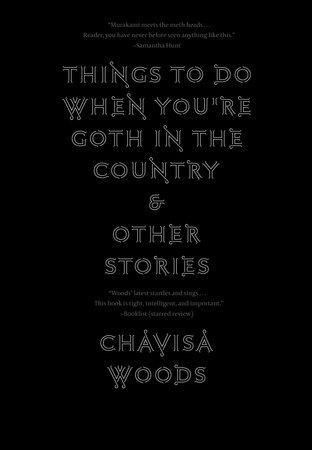
My most recent book, Things to Do When You’re Goth in the Country gives the reader a first-hand view of the lives of the rural working class and poor, and of the weirdos who find themselves somewhere they don’t belong, often, the places they were born.

Country people have lived in tight-knit clusters for generations, cut off, in many ways, from the rest of the world and from modern notions of what is and is not acceptable. Every severely rural village and hamlet has evolved in its own way, in isolation, and like the creatures of the Australian continent, who, cut off from the rest of the ecology of the planet, formed their own unique, seemingly alien genera, so the people of the countryside have evolved their own peculiar taxonomies. The peculiarities, at first, may not be visible to the prying eye of the out-of-town visitor. But if you stay too long, you are sure to discover the true nature of the place.

These are my favorite novels and short stories about the country. From the safety of your chair, you can stay a little too long in a place where the air smells sweet, and grass grows thick and green, and night is pitch dark, and the stars are bright white, but you can’t get a phone signal to save your life, and it’s hard to tell what people really mean, and when you walk into a bar, everyone stops for a minute, and turns and stares, to greet you? Is that what they are doing? Or is there something else going on?

1. A Feast of Snakes by Harry Crews

A Feast of Snakes, is my favorite book. If you like reading dark and brutal stories, this book has it all: grueling dog-fighting scenes, people gone mad from watching too much television, suicidal-wife-beating-down-and-out-high-school football stars freaking out in trailer parks, rapist cops, and cheerleaders who like getting fucked on top of snake pits. It all takes place around an annual rattlesnake-hunting-and-eating festival hosted by a small town in Georgia in the 1970s, and makes me glad, at least, I didn’t grow up there.

2. We Have Always Lived in the Castle by Shirley Jackson

We Have Always Lived in the Castle is class-war-driven literary horror — and it’s the best horror novel I have ever read. This book left me wondering if maybe rich people hate each other as much as we hate them. It’s about three people who live in an isolated mansion on the edge of a small town. The only one who ever leaves is the 18-year-old, Merricat Blackwood, who travels into town occasionally to gather the basic necessities for herself and her family, only to be jeered at by the townspeople and assaulted by their children. What is going on? Read it and find out.
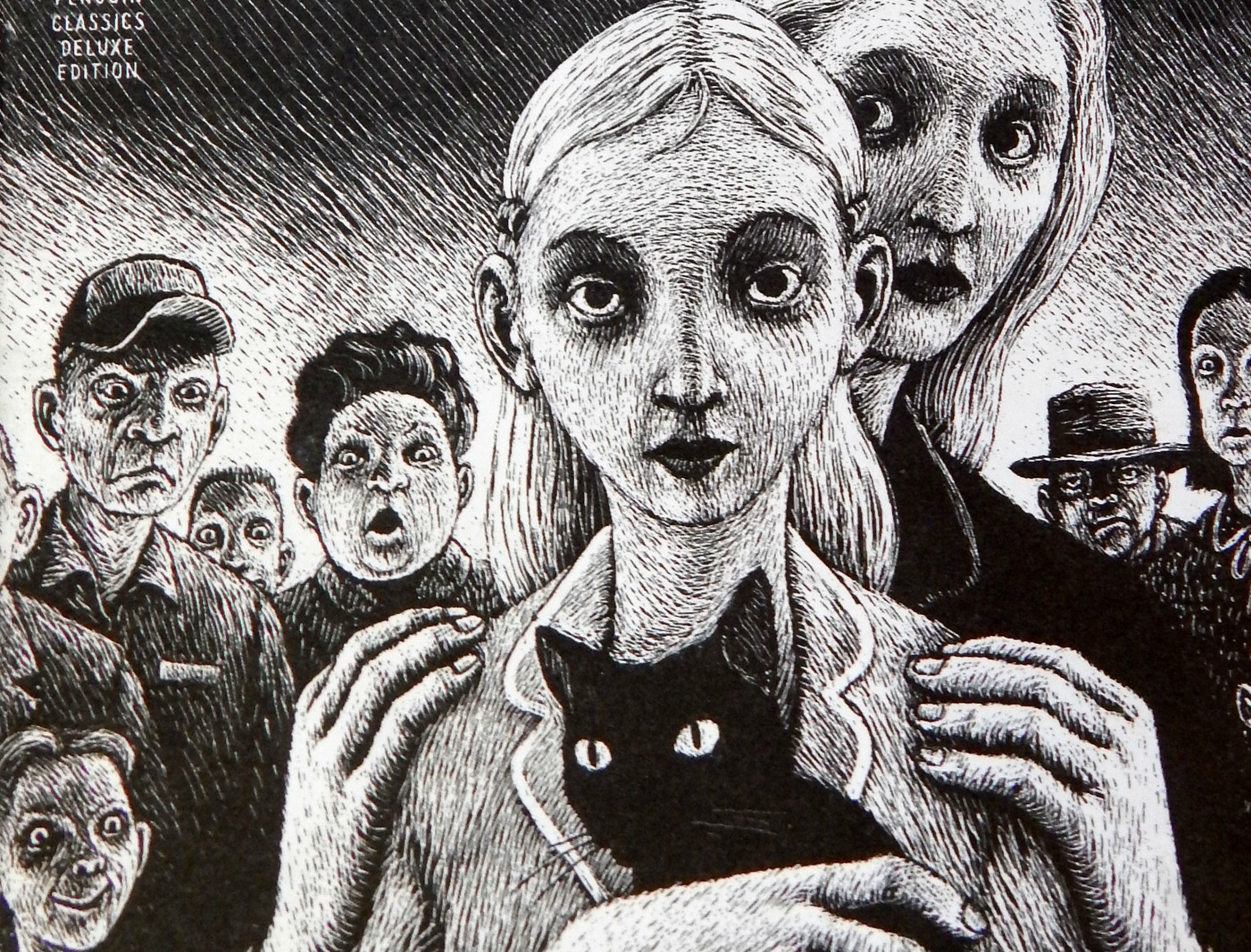
(The new edition with the cover illustration by Thomas Ott is a must-have for any armchair collector.)

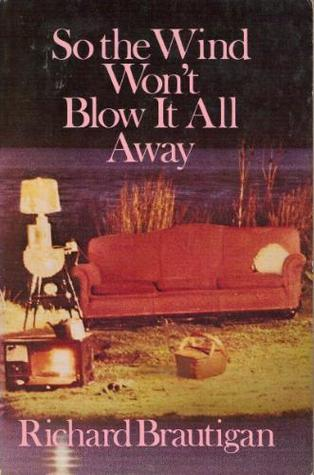
3. So the Wind Won’t Blow it All Away by Richard Brautigan

“I could see funerals in slow motion like old people waltzing in a movie.” This is a story about being a kid and being so poor you don’t even have a radio, and being so lonely your only friends are an undertaker’s daughter and some elderly alcoholics. And mostly, this is a story about multiple child-deaths and class shaming, and it’s the last thing Brautigan published before he ended his own life in 1984. If you like that sort of thing, read it. I loved it.

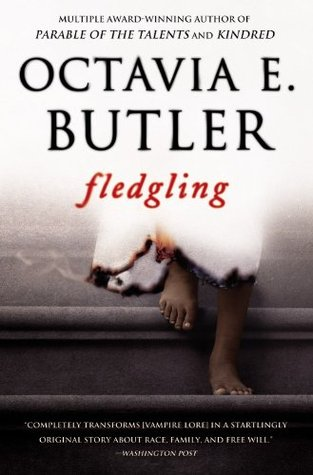
4. Fledgling by Octavia Butler

Fledgling is a sci-fi vampire novel, about a 53-year-old black vampire (Shori) who has the physical appearance of a 10-year-old, which makes for some very taboo sex scenes with her adult lovers. But sex isn’t the focus of this book. Shori is on a mission to avenge the murder of her family, who died at the hands of a group of white supremacist vampires. This book bears the hallmark of Octavia Butler’s signature style; thoughtful metaphors for political theory on race and class, packaged in the shimmering garb of a very, very awesome vampire story.

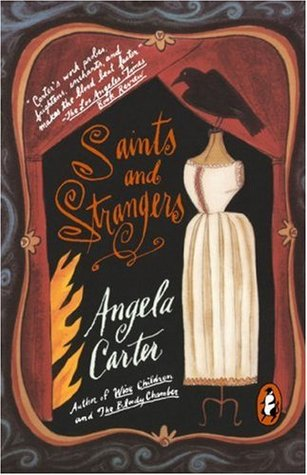
5 .The Fall River Ax Murders by Angela Carter

Found in the collection Saints and Strangers, The Fall River Ax Murders, is a doggedly-researched, highly poetic work of historical short fiction, detailing the little-known events leading up to, and the final brutal axe-murders, carried out by Lizzie Borden against the members of her household. Need I say more?

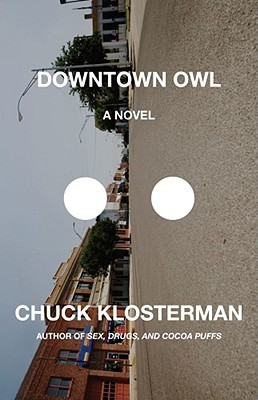
6. Downtown Owl by Chuck Klosterman

Downtown Owl is a lot of fun, until it kicks you in the face. Set in a small town in North Dakota, the character development is so meticulous, you feel like you’ve sat in the diner drinking coffee with the good ole’ boys, gossiped about the lecherous high school teacher, been rejected by the stoic and handsome bar-fly, and heard the town punks torturing a cat in the alley. This book places you face-to face with its characters, which is why, what Klosterman does at the end seems unforgivable, at first.

7. The Iguana by Anna Maria Ortese

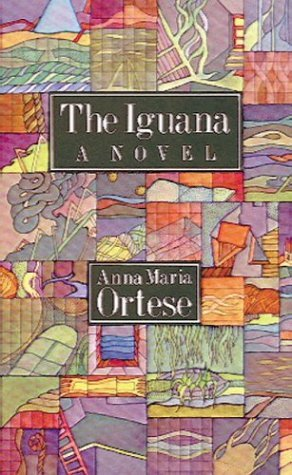
This surreal book follows a Count who becomes stranded on a forsaken farm on an island populated by noblemen. There, the Count falls in love with a very badly abused servant, who might be an iguana. This book is all about shifting. Perceptions shift with reality, which never gets in the way of an emotionally compelling story. Ortese takes the brutal treatment of the servant/iguana-woman and rends it with the desperate, guilty love of the Count, and leaves the pieces scattered, to be reimagined through her gorgeous language. American readers get a unique glimpse of an acclaimed Italian literary intellectual.

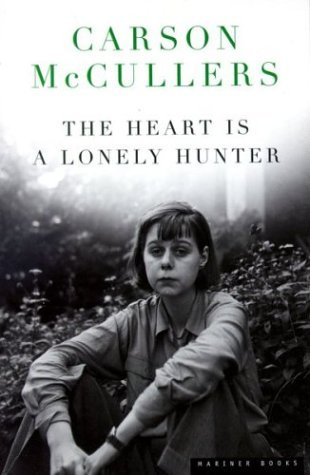
8. The Heart is a Lonely Hunter by Carson McCullers

Carson McCuller’s masterpiece, The Heart is a Lonely Hunter, is simply required reading. Most critics have focused on the relationship between the mute men who are “always together.” But the politically obsessive doctor and carnival worker’s relationship is what always slays me. McCullers has drawn a map of the most heart-wrenching pitfalls of attempting to cross racial barriers to fight a shared oppression. Full of queer undertones and Marxist overtones that frustrate even as they inspire, The Heart is a Lonely Hunter is a masterwork of 20th century American literature.

9. “The Enduring Chill” by Flannery O’Connor

The Enduring Chill is part of a collection infamous for killing off most of the main characters. But a worse fate awaits the young intellectual and failed playwright Asbury. Asbury is sick and has left New York City and returned home to die. It seems that’s the only reason he would ever come back to this horrible little farm-town full of such base and ignorant people. He’s sicker than his common and doting mother will accept, and he is going to die. He has penned a Kafkaesque deathbed letter, and he welcomes the reaper. Any day now. Really, any time.

(When I read this at 21, when I’d just moved to New York City, I liked the main character. Re-reading it in my thirties, I was stunned to see him as a horrible snob. This is also Stephen Colbert’s favorite O’Connor story, and I highly recommend his reading on Selected Shorts.)

10. Beloved by Toni Morrison

Beloved should be part of the curriculum in all U.S. high schools, that way, no teacher could ever tell their students what a couple of mine did: “Most slaves didn’t have it that bad. They were treated like members of the family.” Yeah, fuck that.
Beloved is often described as a horror novel. Don’t watch the movie. Read the book. Because where the movie lets the a ghost-baby carry the weight of the horror, the book deals with slavery as pure, blood-curdling, gut-wrenching horror, and the ghost-baby haunting is a sad (and yes, creepy) remnant of it. Set on the antebellum plantation Sweet Home, Beloved leaves no luscious foliage undescribed and never hesitates to dig the knife deeper and twist:

“And suddenly there was Sweet Home rolling, rolling, rolling out before her eyes, and although there was not a leaf on that farm that did not make her want to scream, it rolled itself out before her in shameless beauty. It never looked as terrible as it was and it made her wonder if hell was a pretty place too.”

Hollywood and the Postwar American Myth

In covering the rise of film in the early twentieth century and their effect on those growing up alongside it, the historian Robert Sklar wrote, “Are we not all members or offspring of that first rising generation of movie-made children whose critical emotional and cognitive experiences did in fact occur in movie theaters?” Sklar’s question, found in his 1975 book Movie-Made America, echoed a study written by Henry James Forman three decades before, appropriately titled Our Movie Made Children. Halfway through the century, the sense that cinema could influence its avid viewers wasn’t so much an anxiety as an established fact, especially considering its reach: by 1940, sixty million Americans — more than half the adult population of the United States — went to movie theaters each week. It’s no surprise then that with the arrival of World War II, coinciding with the height of Hollywood’s near-monopoly on American leisure time, those working in the Los Angeles backlots were called on to harness their influence in order to serve American interests.

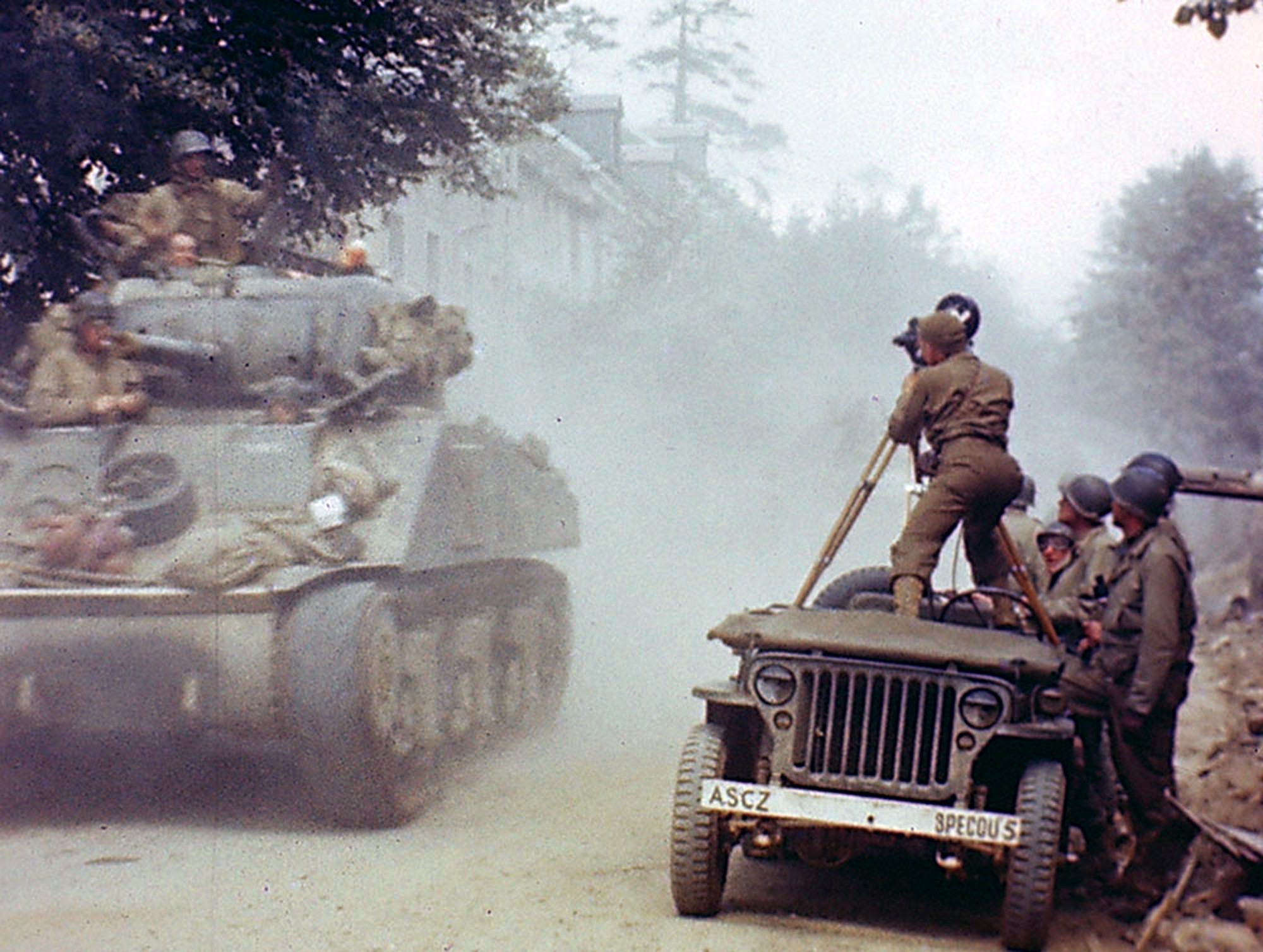
Mark Harris’ book, Five Came Back: A Story of Hollywood and the Second World War — now a Netflix docuseries — outlines how five golden-era Hollywood directors (George Stevens, Frank Capra, John Ford, William Wyler, and John Huston) came to play a decisive role in chronicling the war and, more critically, shaping public opinion about the U.S.’s involvement in it. “Filmmakers could not win the war,” Harris writes, “but Capra, Ford, Huston, Stevens, and Wyler had already shown that they could win the people.” As a result, World War II became the first conflict for which average Americans could see moving images of the battlefield in what must have seemed like real time. The newsreels which preceded each screening of that era gave as visceral a look at warfare as Americans had ever experienced.
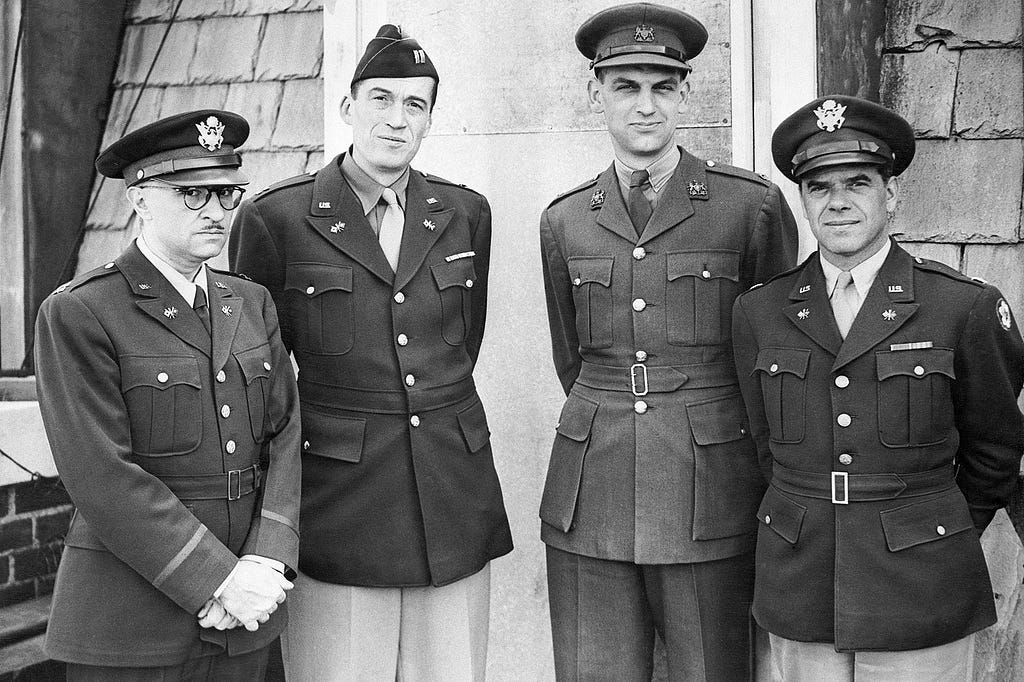
Captain John Huston (middle left) and Lt. Col. Frank Capra (far right)
But, as many of these directors soon learned, the line between filmmaking and propaganda was almost nonexistent. “All film,” including his own, Stevens noted years later, “is propaganda.”

In the Netflix adaptation of Five Came Back, Mexican director Guillermo del Toro describes why he so strongly responds to Frank Capra’s work, admitting that while watching he finds himself ceasing to think — so overwhelmed by the heart-tugging work of films like It’s a Wonderful Life that he cannot help but turn his mind off. This is of course the hallmark of an effective film, but, as Harris’s book and the Netflix series make clear, it comes with an accompanying danger — a danger for instance exemplified in a film like Leni Riefenstahl’s 1935 Triumph of the Will.

While the work that Stevens, Capra, Huston, Ford, and Wyler carried out for the War Department doesn’t fit squarely beside Riefenstahl’s Nazi-glorifying, Hitler-commissioned propaganda film, it was also not so comfortably far removed. The clashes which Five Came Back chronicles, between the seasoned Hollywood directors and the War Department, suggests the filmmakers’ awareness that the storytelling talent they brought to their military assignments functioned as a double-edged sword.

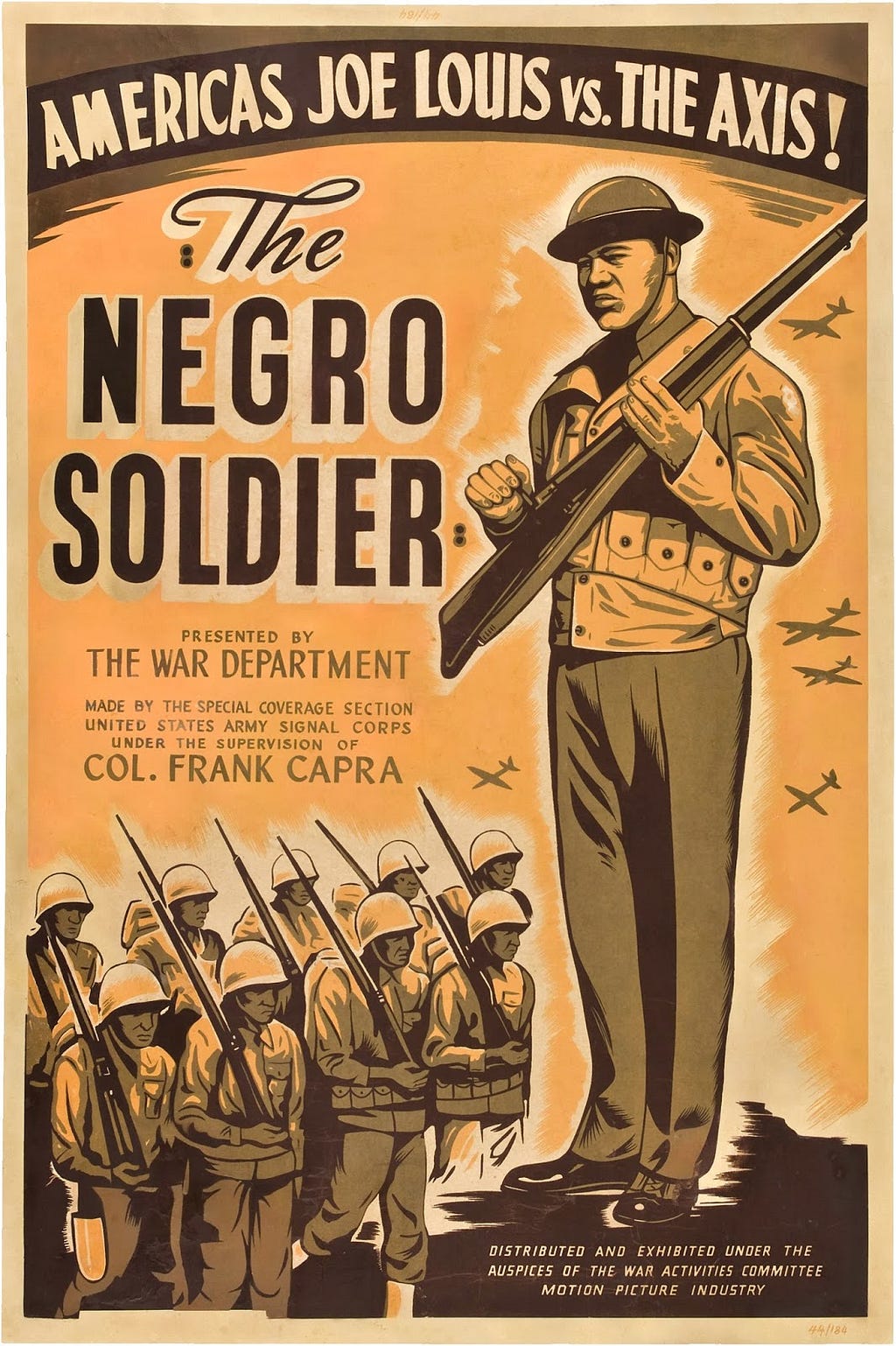
Projects such as The Negro Soldier, first dreamed up as recruitment tools to demonstrate the diverse roster of America’s enlisted men, also threatened to highlight the country’s fractured nature, something which the military couldn’t afford to lay bare. In its finished form The Negro Soldier, aimed at recruiting African-Americans to the war effort, earned favorable reviews from such black luminaries as Richard Wright and Langston Hughes. But as its writer Carlton Moss was aware, the film had been tailored to ignore certain realities, playing down the discrimination that continued to characterize life inside the segregated barracks. Similarly, the informational documentary Know the Enemy: Japan (directed by Capra) relied on cartoonishly racist images, reflecting the nation’s predominant anti-Japanese sentiment, which had spurred the internment camps where Japanese-American citizens were held until the end of the war.

At the other end of the spectrum was John Huston’s Let There Be Light. The 1946 documentary, which dealt openly with what is now termed post-traumatic stress disorder, was suppressed by the War Department for over thirty years. Its images — of soldiers scarred by what they witnessed in combat, and tenderly and empathetically shot by a director who was more associated with American masculine bravado — openly challenged the idea of exultant, victorious soldiers returning home from the war.

Postwar American myth-making happened at the movies. The same generation that was fed such patriotic studio-made calls to arms as Mrs. Miniver and Casablanca were simultaneously forced to reckon with the devastating images presented in documentaries like The Battle of Midway (1942), Prelude to War (1942) and The Battle of San Pietro (1945). The five directors highlighted in Five Came Back blurred the lines between fiction and documentary storytelling (most of the Battle of San Pietro, for example, was staged, as were a number of scenes in many of the newsreels the army made available during the war). In so doing they revealed an unavoidable truth: that Hollywood filmmaking was intimately tied with, and often times dependent on, a myopic vision of American exceptionalism.

As Fox News viewers are treated to footage of the Mother of All Bombs being dropped in Afghanistan, with Toby Keith’s “Courtesy of the Red, White and Blue (The Angry American)” playing in the background, there seems to be no better time to revisit that other historical moment when moving images were deployed towards political ends. The United States remains a country shaped by movies, a fact nowhere more apparent than in those early war films which sought, for better or worse, to frame the army, the war and its aftermath to Americans of an entire generation.

“Our films should tell the truth and not pat us on the back,” George Stevens said in 1946. Otherwise, he wondered, “isn’t there the slight chance that we might be revealing America as it is not? Would that be encouraging us in our own delusions about ourselves?”

Giving Us Back to Ourselves: Jeanette Winterson on War

Netflix Is Jumping on the Atwood Train

And more literary stories from around the web…

Jan Thus/Netflix

The literary world is off to a dystopia-heavy start to the week. From Atwood fever to the occupation of Century City to that booming dictionary-sanctioned thud that just sounded from your colleague’s office, here’s all the bookish news from around the web. Steel yourself — we still have four more days until that long weekend.

Jan Thus/Netflix

TV Can’t Get Enough of Margaret Atwood

The politically trying times we’re living in have given way to a dystopian renaissance of sorts, and Margaret Atwood’s novels are at the forefront of the literary and filmic movement. For the better part of a year, we eagerly awaited the arrival of The Handmaid’s Tale adaptation on Hulu, and since the first episode became available in April, the reviews have been widely positive. The New Yorker’s Emily Nussbaum applauded the series’ take on the 1985 novel for being “heavy-handed in the best way,” and portraying the grim social stratification of the fictional Gilead “through gorgeous tableaux of repression.” (Doesn’t that sound like a piece of artwork Trump would commission? Ah, yes. Can you place it right next to the Andrew Jackson?)

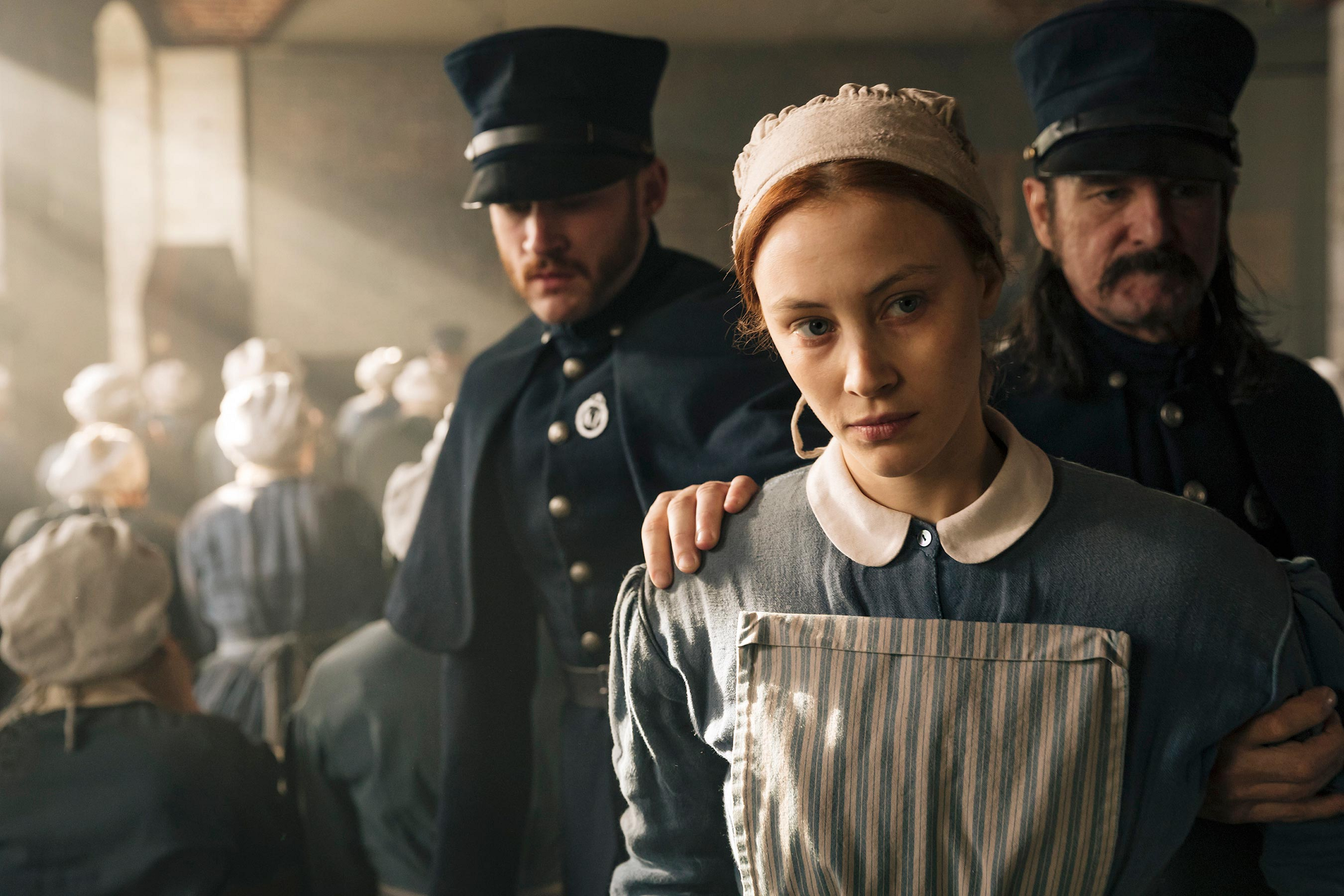
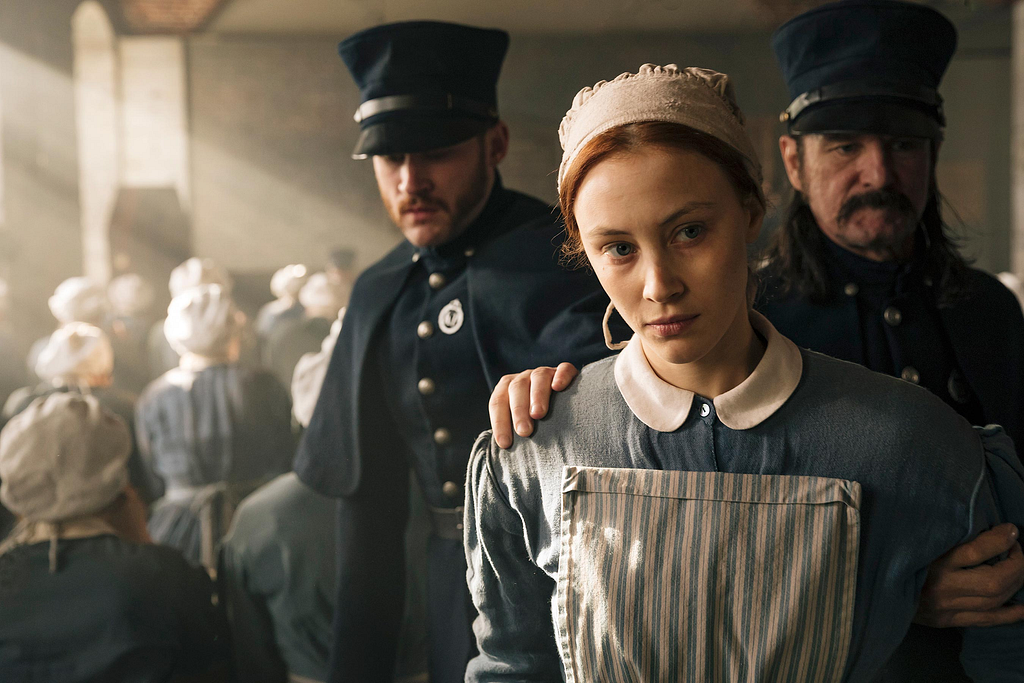
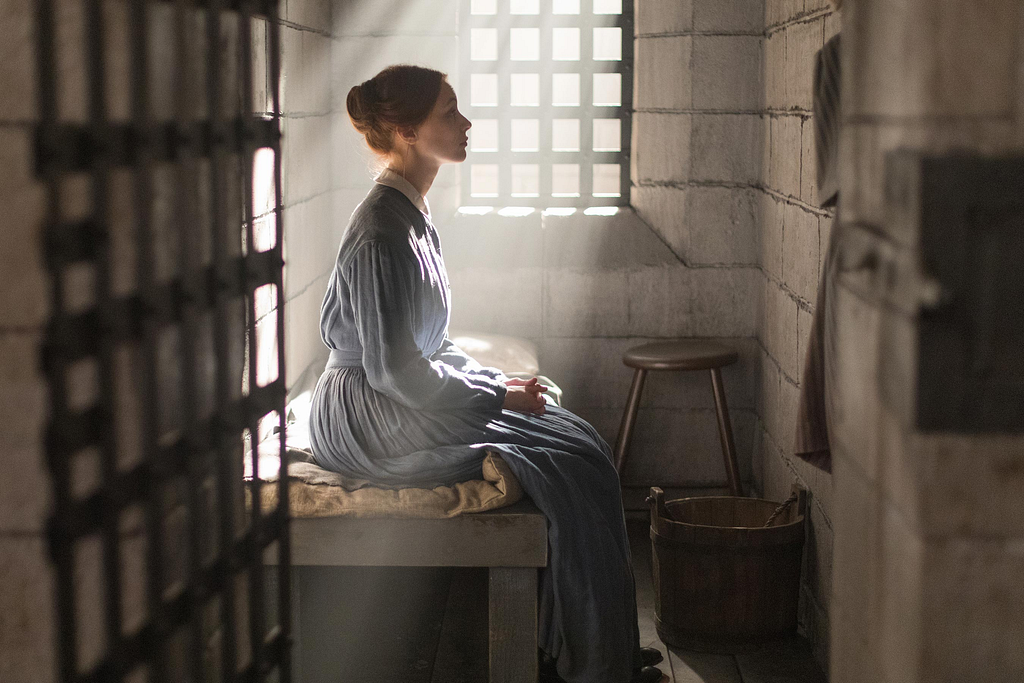
Well, turns out Netflix wants a piece of that pie. The streaming service is in the process of developing a miniseries based on Atwood’s 1996 historical fiction novel, Alias Grace. This past weekend saw the release of the first images from shooting. The story of Alias Grace concerns the conviction of the mid 18th-century Irish immigrant, Grace Marks, for killing her bosses. It will star Sarah Gadon, and the adaptation was written and produced by Sarah Polley. Big names are also collaborating on the project; Mary Harron, who previously worked on American Psycho, will be directing the series, and Oscar-winner, Anna Paquin, will be taking on the role of the housekeeper Morgan Montgomery.

[Salon, Matthew Rozsa]

Merriam Webster Adds the Internet Neologism “Headdesk” to Its Lexicon

What’s the word for when the crushing weight of existence bears down on your shoulders and forces your head to make repeated, banging contact with your cheaply shellacked Ikea desk? Oh yeah, headdesk!

Thanks to Merriam-Webster, perhaps the sassiest dictionary around, we now know how to properly label what many of us have been doing with mounting frequency since the election of our grammatically (and otherwise) challenged President. According to HuffPo, Merriam-Webster officially adopted the word headdesk after Trump misused AND misspelled the homonym “counsel/council” for the second time on Twitter. After several of their staff injured themselves to the point of concussion, they released this explanation for the origin of the one-up to facepalming.

[Huffington Post, Claire Fallon]

Image courtesy American Writers Museum

The American Writers Museum Opens in Chicago

If you’re a resident or happen to find yourself in the Windy City, check out the first ever American Writers Museum! Mashable says that the institution’s founder, Malcom Hagan, was inspired to create the gallery after visiting the Dublin Writers Museum. Hagan, a manufacturing executive and bibliophile, couldn’t understand why something similar didn’t exist in the U.S., so he took it upon himself to make a homage to our country’s literary tradition. The museum features 13 interactive exhibits, including, a Word Waterfall, high-tech fridge poetry, and more!

[Mashable, Chris Taylor]

The Amazon Bookstore Takeover Targets L.A.

In the last year, we’ve reported on Amazon’s brick-and-mortar expansion in NYC: this spring, the online retail mega-giant opened up a location in Columbus Circle, and this summer, another store opening looms in Herald Square, just around the corner from the Electric Lit offices. Last week, the company announced its newest plan to open up a physical store in a Century City mall located on the toney cross streets of Santa Monica Boulevard and Century Park West. It will be the first Amazon bookstore to open in Los Angeles, but given the company’s ambitious plans in the east and their domination of the pacific northwest, we can only imagine that several more locations will be coming soon.

I’m just going to leave this link to the Indie Bookstore Finder, here

[L.A. Times, Carolyn Kellogg]

How Do Writers Find Their Voice?

Soccer is a Den of ‘Marxist Iniquity’ in Hooper’s Revolution

During the 2015–16 Premier League season, more than £1 billion (or $1.24 billion) was spent by English soccer teams on buying new players. It was the first time the league had crossed this milestone, and if nothing else it marked the degree to which the UK’s national sport had become a big business like any other, with the league itself worth an annual £2.4 billion in tax alone. While such huge sums are no doubt an indication of the sheer popularity of soccer in Britain and elsewhere, they’re also an indication of how the injection of serious money has changed the game, now that football teams are owned by Russian oligarchs and oil-rich sheikhs, and now that even coaches who win the league one season are fired halfway through the next for an unprofitable spell of losses.

Such transformations — which have arguably mutated soccer into as much an advertisement for cold, hard capitalism as a testament to human excellence — are what Dennie Wendt spends a good portion of time dealing with in his debut novel, Hooper’s Revolution. Set in 1976, it charts middling footballer Danny Hooper as he makes a move from a no-hope team in the English Second Division to the American All-Star Soccer Association (AASSA), which is in the process of enticing ageing European and South American soccer stars in a bid to raise its profile. His transfer to Portland’s Rose City Revolution is a forced and grudging one, coming after a deliberate foul of his that leaves another player with a career-ending injury, yet it’s also of the highest importance. Because as he soon finds out — much to his shock — he was chosen not simply for his fearsome defensive prowess, but to foil a communist plot.

As he’s told by a British intelligence operative by the codename of “Three,” communists have taken advantage of the American indifference to soccer by infiltrating the AASSA and its roster of teams. “The whole league is a den of Marxist iniquity!” the agent informs him, adding that propagandists have furtively penetrated the league because, “if you want to send a message, and you want to reach the biggest audience possible, you send it through football.” Hence, Danny is sent by the Anglo-American intelligence community to join the league as a player and keep his eyes open for anything specific the communist infiltrators may be planning. In other words, his task is to ensure that the AASSA remains the preserve of capitalism and the ‘free world,’ and that its expansion by an assorted motley of moneyed expats isn’t hijacked by Soviets and various fellow travellers.

Sorry to Disrupt the Peace is Deeply Moving and Honest

On the one hand, this mise en scène sets Hooper’s Revolution up as an allegory for how popular sports such as soccer can act as Trojan horses for politics and ideology, especially if — as in the case of the New York Giganticos — teams are “owned by a free-spending Manhattan media conglomerate.” On the other, Danny’s sudden transition to the less prestigious American league provides the novel with its meaning on a personal level, showing how success often depends on us adjusting to the fact that it rarely arrives in the form we expected.

This comes out in Danny’s initial unhappiness about being moved across the Pond, where he has little choice but to play for a team who, according to its overweight star player, was “Shite. Utter rubbish,” and who in a pre-season exhibition match “accomplished almost nothing, maintained almost no possession, and mounted no threats” on their opponents’ goal. As the above lines indicate, much of the novel’s character and humor stems from watching Danny come to terms with playing for an almost buffoonish team, and with playing a sport in a country that needs to localize it heavily to find it even remotely interesting. For example, he learns from his coach, Graham Broome, that if games are tied after the usual 90 minutes of play, instead of ending with the sharing of one point each, the teams engage in a “Super Soccer Showdown,” in which they take “Sniper Shots” against each other from the halfway line. Not only are such alterations amusingly ludicrous, but they reveal how the book is as much about ‘glocalization’ and the difficulties of translating one culture into another as it as about the politics of sport.

However, in true triumph-out-of-adversity fashion, Hooper’s Revolution witnesses Danny as he gradually acclimatizes to his new environment, and as his team slowly improve their performances. Watching them as they scrape together wins against all the odds is surprisingly entertaining, and quite apart from anything the novel does say about the commercialisation of soccer, its biggest draw is undoubtedly the sheer color of the footballing milieu Wendt paints. Teams have ridiculous names like the Chicago Butchers and the Seattle Smithereens, players occasionally stagger onto the pitch blind-drunk, and the league histories given at various points are often hilariously funny. Indeed, by making the AASSA and its teams so flamboyantly ridiculous, it’s clear that the book is less a straight-up sports novel, and more of a fantasy one, insofar as it captures the larger-the-life nature of so much professional sport.

This fantastical element is most vividly encapsulated by the New York Giganticos. By far the league’s best team, they boast as their prized possession “The Pearl,” a thinly disguised avatar for Pelé (who did actually play for the New York Cosmos between 1975 and 1977). As great as Pelé undoubtedly was, he’s represented more as an outright magician or deity in the novel, performing such feats as being “credited with an assist on his own third goal after playing the ball off the crossbar and back to himself for a volley into the upper corner.” Given his status as “a benevolent being sent by even more benevolent gods for the betterment of football, and therefore for the betterment of the planet”, it will prove unsurprising to more astute readers that he becomes the target of the communists’ scheming, and that it winds up being Danny’s task to save him.

Ultimately, that communists think they can somehow further their interests by targeting the miracle-working Pearl is a manifestation of how the novel is less a realistic depiction of the soccer world and more a magically realist depiction of its power to captivate. Added to this, the implausibility of their machinations also reinforces the novel’s status as a metaphor for how football was very much a site on which certain politico-economic orders and value systems vied for cultural ascendency, at least in the sense that the pumping of money into football served to normalize big business and conspicuous consumption in the eyes of millions of fans. Of course, it would have been nice if Wendt had delved into this facet of his story a little deeper, yet nonetheless, in focusing on the wonders of soccer and on the personal struggles to adapt to the strange detours of fate, he’s written a novel that sports fans will be rooting for in the seasons to come.

Love, Lies, and Grocery Shopping in a Blizzard

The doctor looks at me and says — no fuss, no apology — that someone like me should never be pregnant. This medication, that complication: they keep on doing card tricks with your life, even when you’re doing better. I can’t decide whether to be relieved or devastated. What’s gone is not only the chance to have a baby but also the chance to decide whether or not I want a baby. So I say to my doctor, “Huh, that’s interesting.” Afterward the room is silent except for the crinkling of the exam table paper and the bubbling of the keyboard as the doctor finishes her notes.

I make my next appointment on my way out and sit alone in my car and glide through New Jersey toward the Newark brownstone where I live.

I think of the time when I lied and told a cashier at Meijer that I had a daughter. This was in Ann Arbor, during college, years ago. The years since seem to have come and gone without even taking off their coats. The cashier asked me if I had a sick kid at home when the ten bottles of Pedialyte I was buying wobbled down the conveyor belt, fluorescent against the night outside, little lies themselves. I said yes, and the cashier — I remember her hair was the color of the inside of a bitten almond — asked how old and I said eleven.

The lie emerged from my mouth sure of itself. But it was a ridiculous lie, the type of lie that would capsize you, the type of lie that makes people believe they know everything about you. I was only twenty-one, after all.

I was buying the Pedialyte for Octavia, who was my roommate, not my child, and her colon was full of bleeding ulcers. The Meijer was familiar to us, we’d been shopping there for years, but now Octavia was bedridden and in many ways I’d gotten used to doing everything with her, so it felt strange to wander the bright empty aisles alone.

Only one month earlier we’d decided, she and I, that it would be wise to go grocery shopping in a blizzard. This was before she got sick, before I got sick, before her father died and before mine did too. Back when writing was easier because I didn’t have anything to write about. Maybe the blizzard was telling us: stay home, girls, and let the world do its worst, but not yet to you. Instead we flew through the aisles, staticky with excitement because we loved this kind of daily danger back then, and beckoned it. By the time we were outside the wind was busy rearranging the world. The wheels of the cart tried to trample the snow drifts, those piles of uncarved marble looking bright and starved on the asphalt. She pulled the cart and I pushed. Our laughter was crinkle cut and captured by the wind, carried to the stars, which I seem to recall shining brightly, which is impossible, but still, that’s how I remember it: the constellations looking down on us through the white silk of the storm as though we were their only constituents, the two of us and our plastic bags that flapped in the wind like wild beating hearts.

Then we drove home on the icy roads and we were completely fine.

As I angle my car into its spot in Newark, a light precipitation falls. Somewhere between snow and rain. I kill the engine and sit in the car that ticks as it cools, surrounded by the quiet midday street. I should get on the train and go to work for the afternoon like I said I would, but I might call in. I want to call Octavia but she and I lost touch years ago. I’ve heard she’s better. I’ve heard she has a baby. I’ll probably cry in the shower later. There’s nothing wrong with crying in the shower sometimes, even when you’re in your thirties. Especially when you’re in your thirties.

Back then I’d been embarrassed of the lie. Now I think that it might have felt good to shock someone, to have, if only briefly, a secret life. It filled the parts of me I felt were empty. The cashier had stared at me when I said the made-up age — eleven — and the look in her eyes said she could do nothing for me but tell me how much I owed.