




According to a DJ on K92, Justin Bieber — a Canadian pop star and heartthrob who’s afraid of elevators and clowns and who once got an F in school but changed it to a B so he wouldn’t get in trouble — is taking a much-needed vacation in Hawaii, where he’ll stay at The Water Falling Estate: a mansion that sits at the edge of a promontory overlooking the Pacific. For $10,000 a night, you too can enjoy the amenities of The Water Falling Estate, which includes a rooftop helipad, a central Daytona 52-inch round pneumatic air-compression elevator that allows access to all floors of the main house, a basketball slash tennis court with stadium style seating for 450 spectators, and a trail leading to a naturally-occurring, three-tiered waterfall. According to Pinnacle List, which markets luxury real estate to affluent buyers and is likely correct in assuming that its potential customers prefer residences that “evoke an unforgettable experience of living life beyond the limits of ordinary luxury expectations,” the Water Falling Estate is available for purchase at the cost of 18.9 million dollars. I know this because — using the World Wide Web — I looked inside of it. Its interior appears to be made of mahogany and marble and looks a little as if it had originally been designed as the World’s Largest Funeral Home. Nothing about the phrase “Service Corporation International” suggests that it is — and it is — the world’s largest funeral home and cemetery conglomerate, which may be the reason it operates under the name “Dignity Memorial.” According to an article titled “Ten Companies that Control the Death Industry,” death in America generates over 15 billion dollars in revenue a year for companies that supply bereaved humans with flowers, stones, plaques, caskets, urns, crypts, and funeral home equipment. Though you may be familiar with the concept of “embalming a corpse,” did you know that the fluids drained from bodies are likely to enter your local public sewage systems? Grief management pioneer Erich Lindemann argued that bereavement can become complicated for those who never had the opportunity to view the body of a dead person they loved; this may have something to do with our country’s longstanding, if highly invasive, insistence on corpse preservation. As effective as modern-day embalming practices are in ensuring that cadavers remain “life-like,” bodies filled with formaldehyde will — like those preserved by ancient Egyptians, who believed souls would return to adequately preserved bodies — eventually deteriorate. The best and most environmentally responsible option for the disposal of dead bodies might involve alkaline hydrosis, during which the deceased is placed into a chamber of water and lye, and heated at a high pressure to 160 degrees — a process that results in green-brown liquid and porous, easily crushable bone fragments. The fluid is then discarded, and the remains pulverized using a Cremulator, a machine invented by a company called DFW Europe, one that separates ferro and non-ferro metals (that is, metals that contain appreciable amounts of iron and those that do not) while automatically filling an urn with the resultant “ash.” The home page of DFW Europe — which, as you might guess, has nothing to do with David Foster Wallace, the bandana-wearing, tobacco-chewing author of intellectually challenging literary fiction, who committed suicide by hanging himself from a patio rafter — features a photo of a series of three cremation furnaces: chunky, symmetrical, stylized blocks that look as if they might’ve been designed by avant-garde German architects; into one of these furnace chambers, an ivory casket appears to be in the process of entering the red-hot mouth of an incinerator. Humans are rarely pictured on DFW’s site, and when they do appear they look friendly and pleasantly engaged, as do the people on the company’s “Training/Course” page, who are wearing all black and enjoying tea while learning about the theory and practice of operating a cremation furnace, during which time the presenters will explore “the question of what is exactly meant by a calamity and how to deal with it responsibly.” I can’t be the only person on earth who hears the word “calamity” and thinks immediately of Calamity Jane, the American frontierswoman whose vices, according to one of her friends, “were the wide-open sins of a wide-open country — the sort that never carried a hurt.” Jane may not have been quite as daring as she claimed, and her exploits likely did not include the shooting of Indians; nonetheless, she made appearances in so-called “dime museums” across the United States. In 1892, Kohl and Middleton’s Globe Dime Museum, in which Calamity Jane was once featured, ran an advertisement in the Chicago Tribune that announced: FIRST TIME ON PUBLIC EXHIBITION, 6 PEOPLE TURNING TO STONE, LIVING PETRIFIED, FAMILY FROM IDAHO, THE GRANDFATHER OF THIS REMARKABLE FAMILY IS A SOLID MAN TURNED TO ROCK, HE HAS NOT BREATHED FOR 20 YEARS, SLUMBERING WITH THE GREAT MAJORITY. This beguiling caption was accompanied by a somewhat primitive cartoon of a group of smiling figures who appeared to be unable to bend their knees or elbows. If “slumbering with the great majority” rings at all familiar to your ears, it may have something to do with a section of a nine-part poem by Edward Young titled “Night-Thoughts,” which includes the following observation: “Life is the desert, life the solitude, death joins us to the great majority.” Such words might prove comforting to those who fear the unknown: everyone who has ever lived has emerged from it; to it everyone will return. Most of us, however, will remain, as ever, somewhat troubled — if not downright afraid — by the thought of our eventual demise, and because we will continue to seek solace where we can find it, we will be grateful when we turn on our radios and hear one of our country’s beloved pop stars crooning his most current hit, a tune that came to him on one of those nights when, after taking a single hit from a water pipe — a lungful of Jack Flash his bodyguard scored at a Denver marijuana dispensary, and which The Cannabist had described as “astounding in every way… flavor, yield and mind-body potency are virtually unparalleled” — the young man swam to the edge of the Water Falling Estate’s 25-meter Olympic-size infinity pool, noted the sound of distant waves crashing on the rocks below and the moonlight glimmering like a thousand knife blades upon the Pacific, said a prayer for all the blessings of his improbable — if admittedly ephemeral — existence, and began — without thinking too much or even at all about where he was going — to sing.
I, Borne

In early 2016, a twitter account called “Paperback Paradise” went viral by replacing the titles of cheesy paperback books (Nancy Drew, The Hardy Boys, etc.) with hilariously crude substitutes. Some of the cover art includes gems from the 60’s/70’s age of pulp science fiction, which practically begs for parody: Science fiction is always trying to predict the future, the artistic interpretations often become dated faster than books from any other genre. But as comical as theses covers are (my favorite is the one simply entitled, “Run Faster, you Bipedal Bitch”), do these parodies prove that some concepts are just too weird to be good? If your cover art features a vampire taking over a space station, a UFO shooting a pterodactyl in space with a laser, or a Grecian hero riding a giant Cat-man across a Martian landscape, does that mean that the text couldn’t possibly be emotionally complex or a rich exploration of the human condition?
“This novel is a stunning example of science fiction, but more than that, it is the most human book I’ve read in years.”
The answer is no. Just because the concept of a story is bizarre on the surface has no bearing on the quality within, and writers of genre fiction know this best. As proof, I submit to you Jeff VanderMeer’s Borne: A post-apocalyptic story of two scavengers, a shape-shifting tentacle monster, a magician, and a skyscraper-sized flying bear. This novel is a stunning example of science fiction, but more than that, it is the most human book I’ve read in years. This result is counter-intuitive to say the least, but when you lay out the factors that have borne Borne, it is easy to see why. Science Fiction does not have to be a vehicle for simple allegory and metaphor. At its best, sci-fi stories can be touching, profound, and shockingly beautiful, no matter how many eyes a person has.
VanderMeer and his partner, Ann, are without a doubt the de-facto experts of all things sci-fi — in 2016, they co-edited The Big Book of Science Fiction. This incredible tome not only features stories from famous authors, but a well-researched history of the genre and the people who helped create it. Along with an extensive writing career that spans decades, he’s also the author of the critically-acclaimed “Area X Trilogy,” comprised of the books Annihilation, Authority, and Acceptance. Under the title Annihilation, this trilogy is currently being adapted to film.
This considered, Borne has quite a bit to live up to, but don’t let that cloud your judgement before reading it. The fact is that Borne is a spectacular, meticulous, and gorgeous novel — much like the creature Borne itself, it is utterly complex and yet presented in relatable and riveting form. With Borne, VanderMeer capitalizes on his knowledge of biology to create his own mythos, beyond the common tropes of spaceships, laser guns, and talking robots. The world of Borne is one in which wounds are healed by worms inside your body, door locks are created from insects, self-protection comes from hand-held spiders, and you can wind down from a long day by swallowing some alcohol minnows, culled from the few sources of water not contaminated by chemical waste.
The First In Tiller’s Encircling Trilogy Doesn’t Disappoint
Rachel and Wick live in the Balcony Cliffs, an apartment stronghold they’ve created to protect themselves from the danger of a planet ruined by the rampant biotech experiments of the Company. They both have their strengths: Wick is a former scientist who worked with the Company, and has an intimate knowledge of the biotech that can help and harm them. Rachel is an experienced scavenger, able to pull useful food and supplies out from the wreckage of the world and set traps for the dangers that would try to follow her back. Together they have a semblance of a life, a relationship based on need and, after a time, trust.
Wick helps make ends meet by dealing memory beetles to the stricken remainders of the destroyed city, who love nothing more than to stick one in their ears and be flooded with the memories of someone else for a while. Always there is the danger of Mord, a giant bear created by the defunct Company before the world went to hell. He dominates the land and sky, destroying whatever he wishes, and becomes an omnipresent part of life for those who dwell in the city ruins.
Some people take it upon themselves to worship Mord as a god, but others, like Rachel and Wick, simply acknowledge him and grow somewhat accustomed to his presence. Rachel even takes it a step further, becoming comfortable enough to scavenge what she can from the shaggy fur of Mord, knowing where his blind spots are. It is during one of these scavenging missions that she discovers Borne, at that time a small pod tangled up in the hairy mass, an enigma ripe with possibility.
From the beginning, Rachel is protective of the strange pod, asking Wick to not take it apart when she returns. As the thing begins to grow and change, she gives it the name “Borne” taken from something Wick had told her about the creation of his infamous fish project at the Company: “He was born, but I had borne him.” Just listen to one of her initial descriptions of them —
“He had abandoned the sea-anemone shape in favor of resembling a large vase or a squid balanced on a flattened mantel. The aperture at the top had curled out and up on what I chose to interpret as a long neck, sprouting feathery filaments, which almost seemed like an affectation.”
Like a parent might do, Rachel is already assigning personality traits to Borne, even though he is physically the farthest thing from a human child. Soon Borne is able to speak, and after initial fear and skepticism, Rachel is soon teaching Borne everything she knows, about her own life and the world around them. Borne’s speech and curiosity grows exponentially, often resulting in stumbles in context and syntax. These mix-ups range from the humorous — one can just imagine a toddler in Borne’s place when it exclaims “Long mouse!” at a picture of a ferret — to odder things, like Borne claiming it “knows” the lizards it eats.
Wick is much more skeptical of the developing creature, pointing out the sinister things Rachel chooses to ignore, like the fact that it never excretes anything. As a former Company employee, Wick is distrustful of any biotech he doesn’t understand, particularly when the unprompted Borne begins to ask if it is a weapon. Rachel responds with a telling line, “You are a person, but like a person, you can be a weapon, too.” Despite all her affection and projected humanity toward Borne, she simultaneously recognizes that it is still a great unknown, one that seems to be growing (physically and mentally) without a very clear explanation.
Through Borne’s awkward adolescence, Rachel continues the mother-child dynamic, even when things begin to unravel. Borne soon surpasses the phase of “not knowing any better,” becomes evasive about his movements and behavior, and even moves into an apartment of his own. Paranoia rises with Wick, who believes Borne knows more about itself than it is telling, and confrontations erupt that mirror that of typical childhood drama. Borne continually surprises Rachel with his increased diction and emotional capacity, far more than he could have learned from the library at Balcony Cliffs.
“Okay,” Borne said, and his eyes formed a kind of reproachful smile. “I don’t always understand, Rachel. I love you, but I don’t understand.”
Pressures from outside begin to take their toll as well. A new force in the city, simply known as the Magician, is consolidating power and holding leverage over Wick through unknown means. Mord extends his rule over the city through the Mord Proxies, bears which are normal-sized, but incredibly fast and equipped with venomous claws and fangs. Mutated feral children, some equipped with emerald-green wasp eyes and other horrors, become bold and more organized in their attacks. Yet even as things get worse, in regards to Borne and the world around them, Rachel goes against her survivalist instinct and protects Borne from the fears of Wick and the new dangers. She does this because of what Borne has done for her, the light in her life which only an innocent mind could create —
“Borne didn’t know it was all deadly, poisonous, truly disgusting. Maybe it wasn’t, to him. Maybe he could have swum in that river and come out unscathed. Maybe, too, I realized right then in that moment that I’d begun to love him. Because he didn’t see the world like I saw the world.”
Couldn’t any parent, any human being, find even the hardest of hearts softened by this presence of innocence, and the peace that it brings them on a chaotic planet?
This is Science Fiction doing what it does best. VanderMeer has created a narrative familiar and close to the hearts of many — the struggles of parenthood — and enmeshed the reader emotionally in these characters, despite the weirdness of the premise. His master-stroke waits down the line, as he takes this amazing world he has built and manipulates it in gut-wrenching ways.
Borne makes the readers question their own relationships, the reality of trust, and the nature of family in a devastated world. Like a clever biotech creature, VanderMeer has lured you into a trap, one in which you are drawn to with floral, familiar scents and has left you utterly vulnerable. “I prefer the old betrayals, the kind based on trust,” Rachel quips toward the end of the book, within a climactic conclusion that confirms that the fault is truly not in our stars, but in ourselves.
VanderMeer has created an encompassing, original world, filled with concepts that are seemingly alien but disturbingly familiar, like the bizarre creatures of Wayne Barlowe’s Expedition. More importantly, Borne addresses questions we as a species will need to consider when the biological things we create start talking back to us: Things that can learn from us, but must experience life in very different ways. Simply put, Jeff VanderMeer is doing for biotech what Isaac Asimov did for artificial intelligence.
I have no doubt that Borne will be considered a giant of Science Fiction, alongside masterpieces like Dune, the Lilith’s Brood trilogy, and Childhood’s End. I believe that it is the duality of its nature that makes it special — it is fantastic and familiar, silly and mysterious, epic and down-to-earth. What’s more, it does not try to include these things in a haphazard way. The elements of Borne fit together perfectly, a strange little thing filled with wonder and secrecy, hinting at even more complexity just out of sight. Borne will dazzle you with its wonders and horrors, revealing itself as another piece of the puzzle, a reflection on the terror and beauty of being alive.
Jeff VanderMeer & Cory Doctorow Discuss the Future of Sci-Fi & the World

The First In Tiller’s Encircling Trilogy Doesn’t Disappoint
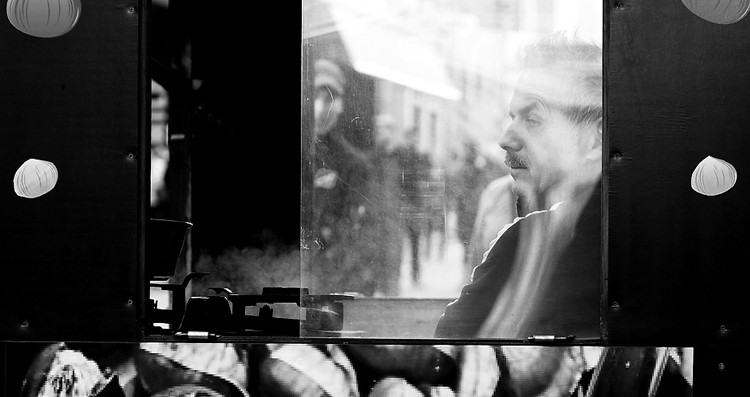
From the first pages, “Encircling” hits that tantalizing pace of a classic whodunit. For every question author Carl Frode Tiller answers, five more are posed, forcing the reader to tear through this Nordic thriller.
It’s partly the precision of the chapter titles: “Saltdalen, July 4th, 2006.” Or how the story oscillates very slightly around small windows of time. Or that the book is broken up into three successive perspectives, each of which is narrated in the first-person and then in a letter addressed to the same mysterious David character, who has lost his memory and needs friends to send their recollections to him in the hopes of his recovery.
The culmination of these skills is a dark narrative and exacting treatment that will have readers squirming from start to finish.
At times the story is intensely self-wrought, with whole paragraphs devoted to a character’s intentions, which are often not their subsequent actions. This inscrutability can make the dialogue feel halting, but also reflects the awkwardness of human interaction with an accuracy that most literature misses.
A Modern Novel for the Modern Condition
The gap between a character’s intent and what they actually communicate is largest with Jon, the first character that Tiller introduces. After being kicked out of his band, melancholy Jon heads back to his home-town of Namos to spend time with his mother. The difference between what Jon says or wants to say and how others perceive him is jarring; the reader sees a sweet thoughtful man who, to his family and friends, appears as a curmudgeon loser.
In addition to acting as an interesting form of exposition, this distance between fact and fiction becomes one of the biggest themes of this dark tale. Aside from the psychological implications, the methodical building on this theme until it crescendos in the final paragraph is tremendous and speaks to Tiller’s foresight as well as talent.
At times the prose drags with the weight this introspection, but moments of clarity are injected with Tiller’s specific descriptions, in in excepts like this —
“[H]e looked exactly as you would expect a laborer to look: big, burly and with a way of talking and acting that spoke of a strange innate blend of arrogance and inferiority complex.”
Next the reader is introduced to Arvid, David’s semi-estranged step-father who is dying alone in the cancer wing of a hospital. Arvid’s melancholy narrative paints a different picture of this absent loved one, remembering him as a lost young boy working to define himself against the stagnancy of small town life.
Although his portion is the shortest, it acts a bridge between David’s two best friends and lovers, who are the other narrators, providing a sounding board.
By the time we arrive at Silje’s tale, David is more of an enigma than ever. This trick is clever: the more we learn about this central character the less we know. Is he a tortured, closeted teenager stuck in a small town? Or a kind young boy who is upset about his mother remarrying? Or a straight Romeo who is saddled with a whiny, gay friend? David simultaneously appears to be whatever the other characters needed from him.
Paired with sinister hints at his dark personality, like his collection of small animal bones or knack for re-invention, David’s looming figure rises like a specter from the pages. His mysterious figure is clearly the heart of this tantalizing series.
The slow unraveling of truths makes every fact suspect to the reader, and this constant questioning of a truth both moves the plot forward and leaves the reader with an overwhelming sense of foreboding.
This gradual, slow and steady tension would be the ultimate tease if this weren’t the first book in a trilogy. And that would be one of the only critiques of the work: that it feels more like an introduction than a work of its own. To be sure, the final twist gave the tale enough heft to stand alone, but it feels thin compared to what seems to be coming down the pike.
And with a little luck and work from Graywolf Press, English readers won’t have to wait too long for the next in this electrifying series. This reviewer is counting down the days.
The Minds of Earth-Bound Astronauts

Spoiler alert: The Wanderers is a space exploration novel that never leaves Earth. That’s not really a spoiler, but the book’s cover art — and comparisons to The Martian — might give you the wrong impression. Luckily, the terrestrial nature of Meg Howrey’s latest novel makes it no less fascinating than fiction set among the stars. In fact, The Wanderers should be required reading for anyone interested in becoming an astronaut.
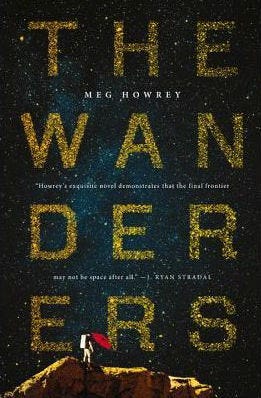
In the near-future, three astronauts train for the first manned mission to Mars by spending 17 grueling months in the Utah desert, trapped in claustrophobic copies of their space modules. Where The Martian focused on science, The Wanderers explores the human psychology of space travel — not just how it affects astronauts, but the toll it takes on their families as well.
Meg Howrey was a professional ballet dancer at the Joffrey Ballet and the City Ballet of Los Angeles before co-writing City of Dark Magic and City of Lost Dreams with Christina Lynch, under the pen name Magnus Flyte. I recently spoke with Howrey via email about space, Mars, writing from so many distinct points of view, and the future of NASA and private space exploration.
Adam Morgan: Why was it important for you to write about a training mission on earth, instead of an actual mission to Mars?
Meg Howrey: The inspiration for the book’s setting was an experiment I read about: a simulated Mars mission designed to study the physiological and psychological effects of long duration missions in space. At that point, I knew very little about space science so what really stuck me was the simulation aspect. Simulations are troubling and fascinating. Jean Baudrillard has suggested that part of our unease with them comes from the fear that, “Simulation…always leaves open to supposition that, above and beyond its object, law and order themselves might be nothing but simulation.” Along with law and order we might add “love” and “sense of self.” There’s also — in this case — the element of observation, and being tested and evaluated. All of this was territory I wanted to explore.
Morgan: What did your research process entail? Did you approach NASA or any private space companies for help?
Howrey: I was nervous about what I was doing and half-drowned myself in research for a while. I read. I practiced every form of note taking: the index card, the highlighter, the color-coded binder. I attended a one-week astronomy workshop for writers called Launch Pad, run out of the University of Wyoming. I toured some facilities and went to lectures and symposiums. After reading a lot of astronaut memoirs and interviews, I became too much on the side of the astronaut to want to conduct an interview with one myself, especially as I was decimating the privacy of my fictional astronauts. If I were an astronaut, I would not want to tell me anything either. After I finished the book, I asked two space scientists to vet for errors, and they couldn’t have been kinder or more generous.
Morgan: As a former ballet dancer, what drew you to astronauts? Would you ever volunteer for a trip to space?
Howrey: I thought I was venturing far, far out of my backyard when I started thinking about astronauts, but comparing the two professions is a fun experiment. Let’s see: dedication to precision, ability to withstand endless repetition, the presence of constant scrutiny, necessity of lifelong training, stoicism in the face of physical discomfort, much more time spent rehearsing than performing, permanent damage to the body, early retirement. Ballet dancers aren’t generally risking literal death when they step on stage, but they have a similar prayer: Please don’t let me f — k up. (Or whatever version of that you can print!) I wonder if ballet technique would be helpful for things like space walking, or negotiating different gravities? I volunteer to test this.
Morgan: Did you spend time in Utah to help with the book’s sense of place?
Howrey: The astronauts’ time in Utah is either spent inside their crafts, or, when they’re outside them, under significant virtual enhancement, so I stayed inside the simulation with them and worked mostly from photographs of Mars. I also made a lot of drawings of the interiors of Primitus and Red Dawn. But I wish I had gone to Utah. Also Mauna Loa, where they’ve a Mars analog mission program called HI-SEAS. Oh, and also, Devon Island, in the Canadian Arctic. Let’s add Mars while we’re at it.
Morgan: Writing from multiple perspectives — particularly when the points of view are so diverse — is a tall order. How did you find and maintain so many different voices?
Howrey: More than anything, writing convinces me that free will is an illusion. At a certain point, every character comes to feel inevitable and you don’t feel you are crafting them, it’s more a process of recognition and acknowledgement. For years the people of my book were my constant companions, and I’m still lonely for them. I can see that it’s a risk to divide a narrative seven ways, but it couldn’t have happened any other way. And every time I switched over, I felt such excitement. “Oh, HELEN.” “Oh, Luke, how ARE you?” I act everyone out while I’m writing, including accents and physical gestures. I write at home, so as to not frighten others.
“More than anything, writing convinces me that free will is an illusion.”
Morgan: Based on your research, are you more excited or apprehensive about the future of real-life space exploration in the next 20–30 years?
Howrey: Space science right now is wildly exciting, but given the current political climate, it’s hard not to be apprehensive about all possible futures. One thing to be noted about human missions to Mars, though, is that they’ll almost certainly require an international collaboration. It will have to be “Discovery First.” Scientists and artists tend to be very good at that, so that’s where I allow myself to hope.
Ted Wilson Reviews the World: My TV

★★★★☆ (4 out of 5)
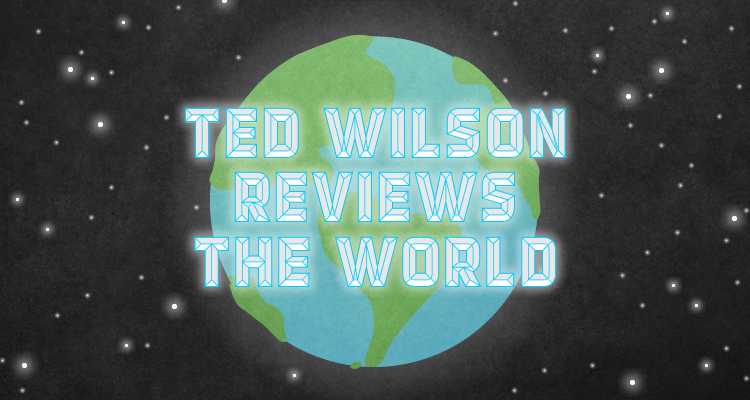
Hello, and welcome to my week-by-week review of the world. Today I am reviewing my TV.
After my traditional TV succumbed to the ravages of time and a mouse, I made a bold decision. Rather than replacing my TV with a fancy flat-screen or one of those tiny portables you see being used in places other than living rooms, I replaced my TV with a mirror. Now every show I watch stars me!
On the surface it may sound like a lot of work to produce entire episodes of television and perform them all in a mirror as my eyes watch. It’s much less passive than the typical TV viewing experience, but there are many upsides.
The most notable advantage to having a mirror for a TV is that I can watch literally any TV show at any time of day. That episode of Family Ties where Tom Hanks plays a pedophile? Yep! That episode of Family Ties where Alex P. Keaton mourns over a dead friend? Yep! That episode of Family Ties where Alex P. Keaton becomes addicted to speed? Yep! Or any episode of Family Matters.
It doesn’t matter if it’s an old show or a contemporary show, a classic episode or an episode that hasn’t aired. Last week I watched all 18 seasons of Game of Thrones. It was hard to act out a lot of the sex scenes alone, but not impossible.
If an actor passes away and the character has to be written out, no it doesn’t. I have complete creative control. Anything I want to have happen can and will. I don’t want to say it’s like being a God because honestly I don’t know what that’s like. It’s more like being Eddie Murphy.
Most of the shows I watch are commercial-free, although I do sometimes act out a commercial as well, for a more authentic experience. Unfortunately no one is paying for these commercials, but I’m certain they have to be worth something.
With pirated content being such a big deal these days, I worry I could be sued by copyright infringement. Please, please do not tell anyone about my amazing TV that gets all the channels and all the shows free of charge. And if you work for a television company, by reading these words you have legally agreed to not sue me.
The only downside to my TV is that every time I pass a mirror, suddenly the TV is on. I wish there was an off switch.
BEST FEATURE: The more TV I watch the better an actor I become.
WORST FEATURE: I was watching an episode of Friends and a man appeared in the window behind me. That was the worst episode of Friends ever.
Please join me next week when I’ll be reviewing spinach.
Late to the Party: Stephen King’s IT
More Thoughts about Worldbuilding and Food

Last month, I wrote an article about how I find the concept of “worldbuilding” to be overrated, which has generated a lot of discussion, some interesting responses, and a fair amount of angry tweets.
Since the article continues to be read and talked about, I want to expand and clarify a few points. If you aren’t interested in some meandering and possibly pedantic thoughts about craft and genre, you might want to click away now. However, if you want to argue with me about dwarves and aliens, let’s dive in!
Although before you do, please read my original essay:
Chopping Down One Tree in the Forest
Before I get into defending my arguments, the near perfect example of the attitude that baffles me came across my Twitter feed recently. It was RT’d as an essential thread “for worldbuilders” to read. It began:

Now I don’t know Ellis, and I’m not trying to single this tweet storm (or the author) as particularly egregious. I’m quoting them because I find them typical of the attitude that baffles me. You can read the whole thread here. Everything Ellis says is correct, if you assume realism is the goal of these shows and movies. But here’s the rub: there’s not a single remotely realistic thing about something like The 100! That show follows a group of teens sent back to earth after a nuclear war made the planet uninhabitable. Deer are mutated. Normal people die in seconds from the radiation. To pick one example of the absurdity of the show — the 100 teens are said to have “evolved” immunity to the nuclear radiation that instantly kills normal humans (some of whom live in a nuclear shelter and are the primary antagonists of one season)… after three generations! Needless to say, that’s a little quick for evolution.
Indeed, the fact that teenagers are wasteful instead of intelligently saving every scrap might be the single most realistic part of the entire show. Here’s the realistic worldbuilding version of The 100: the teens are sent to earth and all die quickly and painfully. The end.
When we critique a work (and there are plenty of reasons to critique The 100 or Waterworld), we need to do it on the terms of the work itself. Those terms aren’t always realism, scientific accuracy, or historical accuracy.
Against Worldbuilding, Not Against SF/F
Some readers assumed I was a snobby literary fiction author who hates genre fiction. I promise you this isn’t the case. My own story collection has zombies and Lovecraftian monsters. I count Bradbury, Atwood, Delaney, Ballard, Butler, and many other SF/F authors as among my all time favorites, and consider them every bit the match for my favorite so-called “literary” authors.
Here’s the realistic worldbuilding version of The 100: the teens are sent to earth and all die quickly and painfully. The end.
Nor do I think that worldbuilding fiction is inherently bad. There is a place for all kinds of narrative houses in the vast city of fiction! My argument is that worldbuilding is overrated and overused. That a concept that’s useful for certain kinds of fiction (such as epic second world fantasy or role-playing games that require clear rules for gamers to follow) is being inappropriately applied to all fiction genres. That expectations for worldbuilding in all genres have become a problem, causing readers (and critics) to focus on background details while missing the essential aspects of a story and leading to quick dismissals of different fictional modes.

Since I made the mistake of listing some literary counterpoints to worldbuilding, let me pick an unquestionably SF one here: William Gibson discussing game makers who wanted to turn Neuromancer into a board game:
“They set me down and questioned me about the world. They asked me where the food in the Sprawl comes from. I said I don’t know. I don’t even know what they eat. A lot of krill and shit. They looked at each other and said it’s not gameable. That was the end of it.
“The Peripheral is not gameable. It has a very high resolution surface. But it’s not hyperrealistic down into the bones of some imaginary world. I think that would be pointless. It would be like one of those non-existent Borgesian encyclopedias that describe everything about an imaginary place and all of it is self-contradictory.”
And a bit more forcefully, here is SF author M. John Harrison:
“Every moment of a science fiction story must represent the triumph of writing over worldbuilding.
“Worldbuilding is dull. Worldbuilding literalises the urge to invent. Worldbuilding gives an unnecessary permission for acts of writing (indeed, for acts of reading). Worldbuilding numbs the reader’s ability to fulfil their part of the bargain, because it believes that it has to do everything around here if anything is going to get done.
“Above all, worldbuilding is not technically necessary. It is the great clomping foot of nerdism. It is the attempt to exhaustively survey a place that isn’t there. A good writer would never try to do that, even with a place that is there.”
Do we need more terms for imagined worlds?
In my essay, I made a distinction between the common concept of worldbuilding (the idea that worlds should have clear rules the reader can understand, that authors should work out the realistic workings of their world beyond the scope of the story, and the idea that more details = better fiction) and what I called worldconjuring (evoking a world through thematic and resonant details without being overly concerned with whether the world could truly exist).
One common critique of the essay argued that worldconjuring was just a type of worldbuilding, a minimalist version that didn’t need its own term. It’s a fair argument. I’m not planning to write a non-fiction book on worldconjuring, and the term isn’t a hill I’m trying to die on.
That said, different terms are often necessary for things that exist on a spectrum. What’s the difference between a pebble, a rock, and a boulder? The size cutoff between those terms is largely arbitrary, and yet it’s still useful to distinguish a pebble from a boulder. So too, I think, is it useful to distinguish creating a world through thematically resonant details and expecting the reader to fill in the gaps, and trying to flesh out a “real” version of a fake world that explores how changes to the world would “really” affect it. This is more than semantics. From a creative point of view, I believe it affects how one writes.
What’s the difference between a pebble, a rock, and a boulder? The size cutoff between those terms is largely arbitrary, and yet it’s still useful to distinguish a pebble from a boulder.
Think of William Gibson again. Many SF readers, myself included, would consider the Sprawl trilogy to have one of the most memorable SF worlds… and yet, as he says above, Gibson rejects the idea of a hyperrealistic, fleshed-out world. Instead, Gibson created a future noir aesthetic that took tropes from hardboiled detective fiction and spun them into a futuristic setting. He did this by picking details, set pieces, and characters that fit the themes and atmosphere he wanted to create. A different writer who was focused on creating a realistic and fleshed-out world would have written an entirely different book. A version of Neuromancer built on modern principles of hyperrealistic worldbuilding wouldn’t necessarily be a bad novel. It might be great! But it would be a very different novel, which is why we need different terms and different ways of critically evaluating different types of fiction.

Literary people can write entire books on the different effects of 1st person voice or 3rd person voice, and fans have endless arguments about a dozen different SF subgenres. I think we could stand to have more than one term to describe the making of fictional realities.
Semantics Schemantics
A perfect example of why I think a term like worldconjuring is necessary can be seen in the rebuttal article Emily Temple wrote for Lit Hub. (Full disclosure: I know and like Temple IRL.) Unsurprisingly (it’s a rebuttal, after all), I take issue with most of what she says. For example I started my essay saying that that worldbuilding is used everywhere from universities to video game reviews as evidence that it was a term worth discussing, not to “clutch pearls” about fantasy terms being used in college classes. (As a professor, my syllabuses include Ursula K. Le Guin and Kurt Vonnegut!)
But Temple’s main argument is that worldbuilding means, well, any and everything. Let me quote her fully:
When I use the term worldbuilding with creative writing students, I use it to mean the existence of an internal logic, mood, or yes, set of descriptions that gives their work a sense of context — which may or may not be a spatial or historical context. For instance, I find the voice in Claire-Louise Bennett’s Pond to be as much a kind of worldbuilding as her descriptions of the landscape, because the world of the novel has so much to do with her mind. Michel mentions Kobo Abe’s The Woman in the Dunes as a novel that would be ruined by worldbuilding, and he’s right that it would be ruined by any more worldbuilding, but honestly Abe does a fairly thorough job of building the world of the hole, which is also the world of the novel. It’s a monotonous world, but it’s a complete one. This is only true if you subscribe to a wider definition of the term, of course.
Temple uses the term worldbuilding to encompass, as near as I can parse, every aspect of a story. If mood or voice are part of worldbuilding, then certainly characters (e.g., the archetypes of hardboiled fiction), plots (e.g., the quests in epic fantasy), setting, atmosphere, and everything else is as well. Is such a broad definition useful at all?
If I said a novel’s worldbuilding was faulty you’d know that the mechanics of the world weren’t properly thought out. If I said I wished a story had more worldbuilding, you’d know I wanted more details about how the fictional world works. With Temple’s definition, though, if I said the worldbuilding was faulty, I could be referring to anything from inconsistent narrative voice to a lack of atmosphere. What does it mean then to say Abe’s novel would be “be ruined by any more worldbuilding”? More voice would ruin it? More mood? If everything is worldbuilding, worldbuilding is always at its limit and is either simply good or bad but never less or more.
Immersions
Some readers said that worldbuilding creates a more immersive world, and helps the reader slide into the story easier. Different readers need and want different things, so this is surely true for some people.
For me, however, I’ll say that excessive worldbuilding tends to take me out of the story, because the worldbuilding is conveyed unrealistically and the focus on the worldbuilding details only highlights how impossible worldbuilding actually is. By “conveyed unrealistically,” I mean the painful exposition where characters explain their world to each other in a way that nobody would ever do in real life. If you simply tell me someone has X implausible SF weapon, I may go with it. If you spend 10 pages explaining the workings of X, I’m way more likely to be thinking about how the explanation doesn’t really make sense.
In my original thread, I noted how often fans poke holes in massive, worldbuilding works like Harry Potter, Lord of the Rings, or A Song of Ice and Fire. I also notice plenty of holes in the plot and worlds, and it’s hard not to think that they’re so glaring precisely because the works spend so much time worldbuilding. By contrast, Stephen King’s Dark Tower series — especially the first book, The Gunslinger — just throws crazy shit at you without stopping to pretend it could really work. I never stopped to wonder about the workings of The Gunslinger’s world, because King wasn’t asking me too.

Is Realistic Fantasy Worldbuilding Even Possible?
If you are writing near-future SF, you can, if you want, give a realistic picture of how our society might be changed by some technologies. You’re likely to be completely wrong — like the historical SF that obsessed over flying cars yet never imagined the internet— but you can do so in a logical way. When it comes to far future SF, or most fantasy, the picture is dicier.
Going back to A Song of Ice and Fire as an example, the worldbuilding problems in that series are countless, if you care to focus on them. As I noted in my first essay, a continent that gets pummeled with decades-long winters would not have the same flora and fauna as Western Europe. Hell, why are the characters eating any food items from earth? A different planet with a different evolutionary history would have entirely different creatures regardless of seasons.
But there are plenty of other problems too: the technological and political development gaps between Westeros and its near-neighbors in Essos are implausible, the entire raven communication system is bunk, the size of Westeros (roughly South America) wouldn’t allow for the political system it has or the troop movements described, it’s highly implausible that so many noble houses would have reigned in unbroken lines for thousands of years (especially when almost every noble house is on the brink of extinction after a few years in the books!). And on and on.
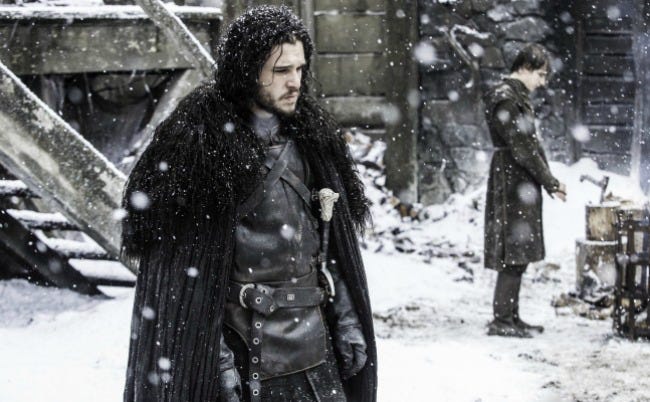
The problem is that even the slightest change to our world would cause countless ripple effects. Even if a writer could fully explore all of them, the book would simply be boring to read. It’s much easier to have Westeros be filled with wolves and ravens and lamprey pies, for both the writer and the reader.
My least favorite example of this is fantasy that imagines magical creatures living and influencing human history. Since the existence of tons of werewolves (or wizards or vampires or whatever) would drastically change cultures, historical events, and daily life, writers have to bend into logical pretzels to explain how these powerful beings have either (a) hidden themselves away so as not to influence the world (and when have those with power ever done that?), or (b) the authors rewrite history to make it so that the Nazis were really vampires or the witch trials killed real witches. This is both silly and somewhat morally offensive, witch-washing away the real human evil our species has done to itself.
There may be some hard SF works that worldbuild in a nearly complete and realistic way, but I’d submit that there’s essentially no popular work of SF or F that holds up to any real worldbuilding scrutiny: Star Wars, Dune, Game of Thrones, Lord of the Rings, Harry Potter, The Walking Dead, etc.
But none of this is to say I don’t like works about, say, werewolves. I do. Stories like Le Guin’s “A Wife’s Story” or Nathan Ballingrud’s “Wild Acre,” among countless others, tell great stories about traditional werewolves. They do so by telling the individual stories of a few characters, though, not by rebuilding our reality to include werewolves in life and history.

Whatever Works Is Whatever Works
I’ll end by saying that most of my focus here, and in the original essay, has been focused on the reading side of books: how fans and critics think and talk about literature. The writing side is a whole different question. People often complain that SF/F works are too stuffed with exposition and focus on the details of the world over the details of the characters or story. I think that can happen, and I do think the focus on worldbuilding encourages it.
But it is also certainly true that whatever works for a writer is the only thing that matters. Some writers may eschew thinking about the logic of their world entirely, others may need to write an encyclopedia of worldbuilding details before understanding what they are writing (even if few of those details make the final text). The process of writing a book is a whole separate thing from the process of evaluating one. If writing on napkins, creating fake languages, editing in a hot tub, drafting with urine on a snowbank, or anything else helps you make a great piece of fiction then go for it!
Build your worlds in whatever way works for you.
Discovering the Subconscious of Santiago Ramón y Cajal
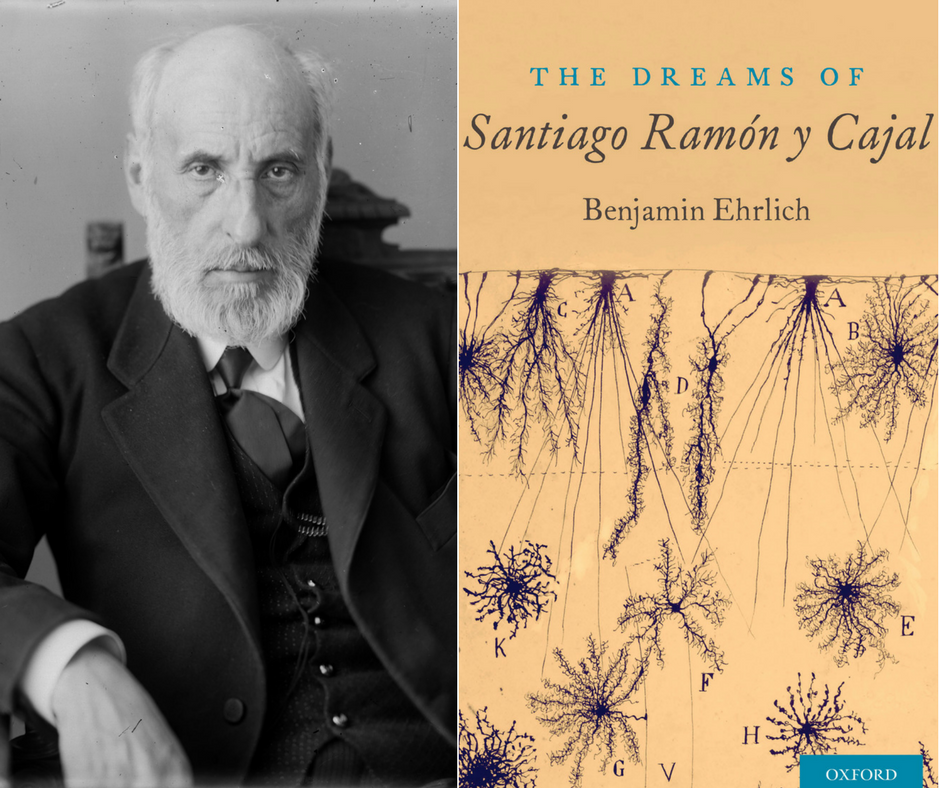
I am not a neurologist nor have I studied the intricacies of our nervous system in a way that would even come close to those who consider themselves neurology enthusiasts. Benjamin Ehrlich is one such enthusiast; having co-founded a blog entitled “The Beautiful Brain,” which focuses on dialogue between neuroscience, art and other fields of inquiry. Ehrlich’s most recent work is the first English translation of the dreams of Spanish born neuroscientist Santiago Ramón y Cajal, who discovered that the nervous system is made up of the individual cells we know today as neurons. By virtue of his work, Cajal is often referred to as the “father of modern neuroscience.” When I ask Ehrlich if he himself studied neurology I find that his expertise began at the same level as my own.
“I started investigating the sources of my mind after college. I studied Comparative Literature. I knew nothing about science. Then I had, for lack of a better term, a nervous breakdown. One doctor sketched a neuron for me on a cocktail napkin. It looked like a stupid cartoon. I coopted the theory of reductive materialism to identify some concrete object for me to blame. Modern neuroscience seems to believe that that the mind emerges from the brain. My life was in shambles, and so it had to be my brain’s fault.”
Ehrlich began engaging in conversation with two good friends who were studying neurology, often arguing about the nature of things. One of them turned him on to Cajal. He was mesmerized with Cajal not only as a neuroscientist but also as a person. Ehrlich checked out books from universities on Cajal and asked friends to do so when he no longer had access, sent blind e-mail inquires to leading Cajal scholars, listened to lectures on iTunes University and Academic Earth, met with top neuroscientists to pick their brain, and made flashcards to test the retention of his self-taught science course.
“His life and work are great gifts that I am continuously exploring,” Ehrlich tells me when we chat about the book.
Ehrlich’s work is divided into two parts and indulges neurology experts as well as stirs a curiosity in those, such as myself, who have a vague understanding of this branch of science. The Dreams of Santiago Ramón y Cajal is both a portrait of Cajal’s legacy as well as a testament to the beauty and vulnerability that occurs when our brain and body communicates.
Though Cajal’s legacy is monumental; he is lesser known than his pioneering counterparts such as Newton, Darwin, and Einstein. For those who are unfamiliar with Cajal, the first part of the book reads as a biography. Readers become acquainted with his life and work, which are heavily intertwined. Before Cajal, the brain was seen as a “continuous web” as opposed to the individual units known as neurons that Cajal discovered them to be through his use of the Golgi stain. He, as well as Golgi, received the Nobel Prize for his groundbreaking work on the structure of the nervous system in 1906.
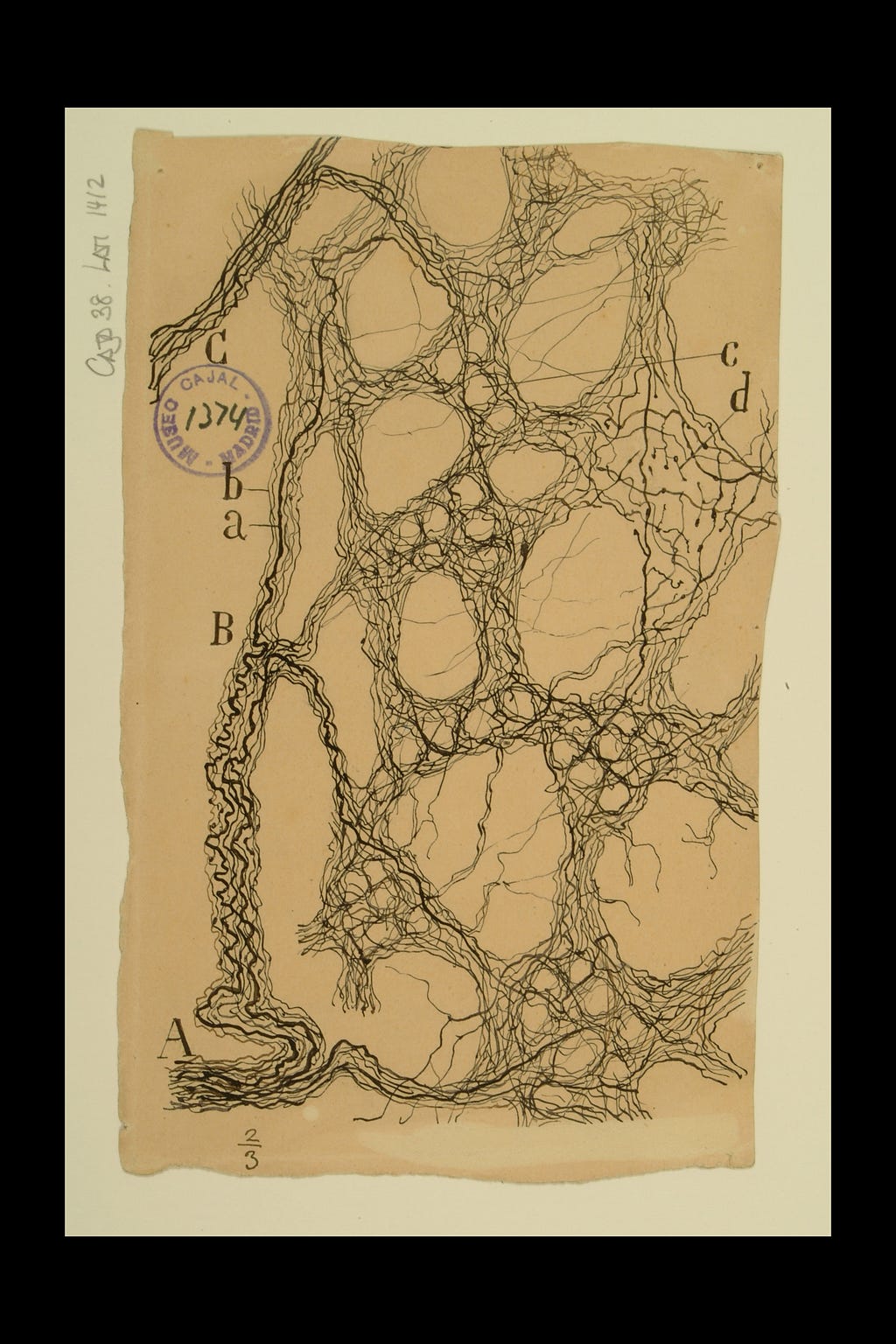
One of Cajal’s most interesting qualities was that he was a visual learner with an innate artistic ability. His initial desire was to become a professional artist. Cajal’s talent is evident in his sketches that Ehrlich has included in the book.
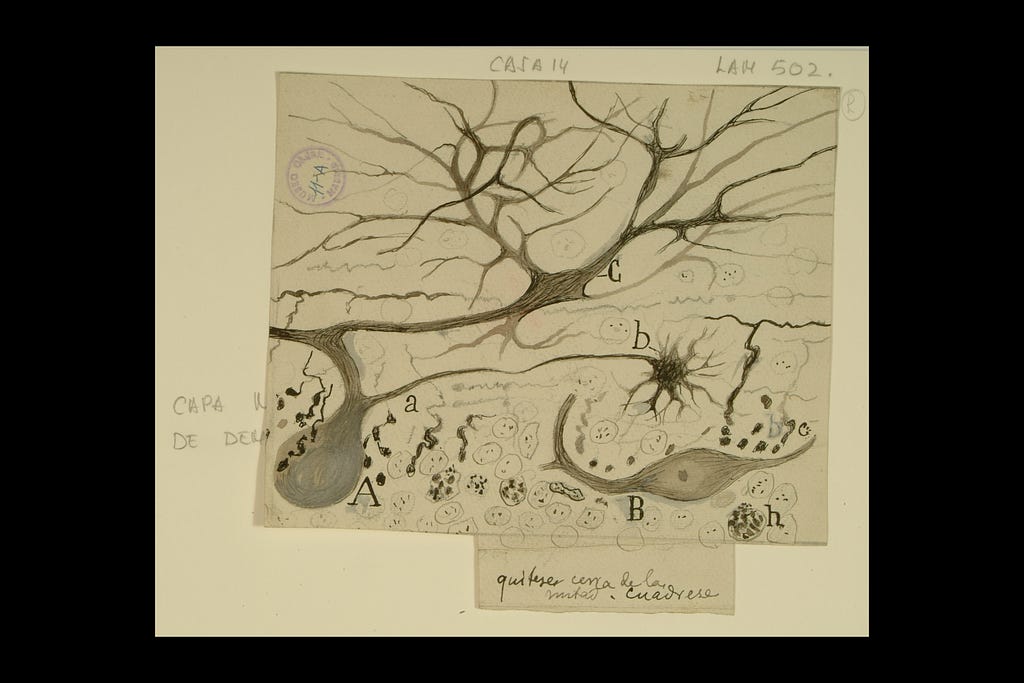
“The moment when I saw his drawings was like an awakening for me. They were intricate, fragile, and more astounding than I ever could have imagined. I thought about what Nabokov said about the “sob in the spine.” It was like my nervous system was speaking to me, like my neurons were finally recognizing themselves.”
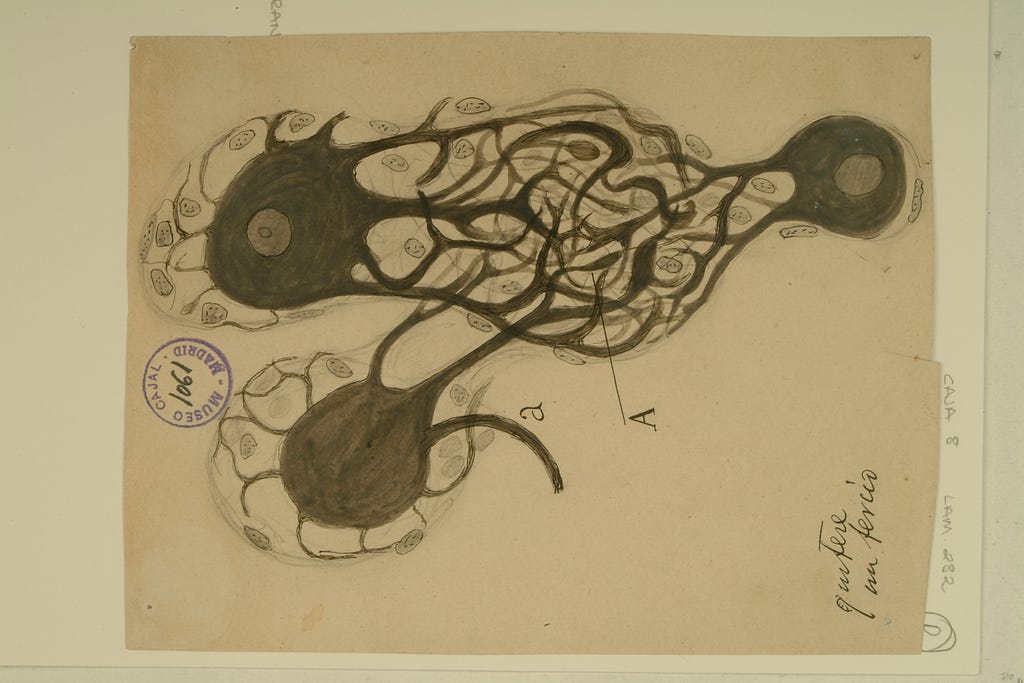
In fact, his medical artistry from what he discovered beneath the microscope is still used today in many textbooks. His father, Justo Ramón, a local surgeon, was less enthused by Cajal’s artistic inclinations. He expected Cajal to follow the same medical career path as he had.
“Cajal’s father treated Cajal’s artistic impulses as symptoms of psychological disease, which he tried time and again to eradicate,” Ehrlich writes.
He attempted to persuade his son to study medicine via numerous methods throughout Cajal’s life. Ramón would confiscate any artwork of the young Cajal and destroy it. He had also banned works of fiction in their household, the only type of reading Cajal was allowed to indulge in were medical books. However, Cajal was still an avid reader of fiction despite his father’s efforts. His mother would pass novels to him in secret and he also sought books outside of his home.
Double Take: Joan of Arc in a World of Endless War
Perhaps one of the most drastic attempts by Ramón to persuade his son to study medicine occurred when Cajal was sixteen years old. His father brought him to a local cemetery where they exhumed a corpse and Ramón demonstrated dissection. This experience successfully ignited an interest in anatomy within Cajal and he began to connect his love of art with science. He eventually enrolled in medical school. In a sense, Justo Ramón’s expectations for his son had been fulfilled however, when Cajal left his hometown of Zaragoza, he never returned to see his father.
The heart of the biography draws parallels between Cajal and Freud who were contemporaries. Freud’s theories fueled Cajal’s desire to begin recording his dream diary. Cajal began taking notes on his dreams at sixty-six and continued to do so for the next sixteen years. He recorded his dreams in opposition to Freud; his objective was to counter the theories of psychoanalysis, which he believed to be “collective lies.”
“Freud and Cajal are perfect complements. I thought of their relationship in terms of geometry. They were almost exact contemporaries. But their career arcs seem almost inverse and reciprocal to each other. Freud started as a neurobiologist (few people know about that phase), and Cajal started as an experimental psychologist (fewer people know about that phase). Each represents the foundation of a modern discipline — psychoanalysis and neurobiology — still vying, a century later, to define the nature of the human mind. I think that the biographies of these two men provide a lot of insight into their theories. It is impossible to separate the ideas from the human beings, in my opinion. The takeaway from this diary, for me, is that the two of them clearly needed each other. Cajal, with all of his unresolved issues with his father, might have benefitted from the analyst’s couch, while Freud, with his wilder and more speculative theories that departed from empirical fact, might have been wise to heed Cajal’s call for more scientific rigor and discipline.”
The last chapters of Part One give insight into the emotional aspects that Cajal has omitted in his dream records. Ehrlich fills in the blanks for us, of Cajal’s deteriorating health, his acute depression and reminds us of the things and people that Cajal loved. Around the time when Cajal started recording his dreams, his health had badly declined and he was advised by his doctors to stay indoors. A man who often found joy in nature was confined to his home for much of his old age. He withdrew from society, even declining to attend a ceremony celebrating Cajal’s legacy organized by the King of Spain.
“He was deeply wounded, and his was suffering was intense. That came through loudly and clearly. To some, Cajal is almost mythic. He propagated that image himself, from time to time. Despite Cajal’s best efforts, his vulnerability in this diary is everywhere. He notes his pain only glancingly, to insist that it isn’t painful. His wife dies, his health deteriorates, and his childhood trauma haunts him. It was and is an emotional document, signified by total absence of emotion.”
When I begin Part Two, Cajal’s translated book of dreams, I am reading his words with the knowledge that Ehrlich has provided me about Cajal’s disposition — how he pushes away emotion in an effort to seek logic. Ehrlich also notes that this practice may have also been done in an effort to salvage and protect his scientific mind in the wake of his ailing health. However, his seemingly stoic sentences carry more depth and struggle than one would initially think. He addresses dreams or rather nightmares that involve personal tragedies with a certain amount of distance. One dream in particular involves him seeing his dead wife and despite the love that Ehrlich has outlined in the first part of the book, Cajal makes no mention of the pain of missing her. In other dream entries, he concludes them with his own judgments with final notes such as “pure nonsense.”
When I discuss which of Cajal’s dreams had the biggest impact on Ehrlich he mentions another that involves family and loss, in which Cajal attempts to save his drowning daughter.
“The drowning dream sheds light on his suffering and that loss. That dream, which actually recurs once more, was all that I needed to read. It gave me a deeper respect for grief and how it might show up.”
Cajal never published this work and upon his death, left all his belongings & research to the university or his family but his dream diary was given specifically to his former student, psychiatrist José Germain Cebrián.
“If he wanted to destroy the work, because he felt that it did not succeed, because it was a weak rebuttal of Freud in the end, he could have tossed it into the fire himself. It is that old Kafka question. Then, to give it to someone else before he died, rather than publish it while alive, seems like he’s denying himself the ego gratification that spurred him to take up arms against Freud in the first place. Did he want it to be printed, or not? Did he want to be healed? That is the question.”
Germain, who ironically became an advocate of Freud, typed up the dreams, which had been written on loose notes and in the margins of magazines, into a proper manuscript. He held onto it after he fled Spain during Franco’s rise to power. His manuscript was recovered in 2013 and published in Spain in 2014.
Though Cajal recorded these dreams with the intention to test them against Freud’s theories, it is challenging not to interpret them through a Freudian lens. It’s hard to separate the man that we learn Cajal to be in Part One of the book from his subconscious we encounter in Part Two. This falls in line with Ehrlich’s motivation to bring a deeper understanding of Cajal’s legacy to readers as well as whom he was, and what he endured, as a person.
“I hope readers can be moved by the intimacy and vulnerability of the dream diary itself. It is challenging, in a way, because on the surface Cajal offers only the facts and not much emotion. Yet just behind the image that he is desperately trying to present, is all of this negative space, an ocean of sadness and longing. All that I wanted to do with my introduction was to help readers access this level by decoding some of the references and providing the necessary background. More than anything else, though, I want people to love and appreciate Cajal and his humanity, what he accomplished — which was incredible — and how.”
Escaping the Idea of Girl Power

Why isn’t there a genre dedicated to the coming-of-age stories of creatives, a bildungsroman for artists? There are certainly enough books to compile a canon — Sheila Heti’s How Should a Person Be, Rachel Kushner’s The Flamethrowers, Women by Chloe Caldwell, stories that explore the difficulty of finding your voice as an artist while becoming an adult capable of living an independent life. Joining the ranks is Dana Schwartz’s novel And We’re Off, about Nora, a young artist navigating a tense relationship with her mother while traveling Europe before a summer at an art colony in Scotland.
The book captures what it means to be an artist who also feels the growing pains that every young person experiences: finding your painting style alongside getting your feelings thrashed by terrible dudes, navigating the treacherous social waters of enclosed communities while trying to find artistic mentors and collaborators. Nora hilariously narrates both the sights of Europe and her ever present anxieties, while providing an astute snapshot of the intersections of art and internet culture. With her debut novel, Schwartz asks and answers the question: how do you convince the world, your family, and of course, yourself, that you are an artist?
Schwartz and I met in Lower Manhattan and discussed ambition, the struggles between parents and artistic children, and finding your voice.
Rebecca Schuh: I love that the book’s epigraph is the Sylvia Plath quote, “I was supposed to be having the time of my life,” it brought to mind how there’s this whole cultural idea of things that you “should” be enjoying — travel, school, relationships. How do you think that damages in the moment lived experience?
Dana Schwartz: With social media, we get fixated not just on having a good experience but being able to portray that experience. How could we have fun if the lighting wasn’t good enough for an Instagram? When you go on a big trip and it’s so exciting, you have these expectations for yourself, which are compounded by social media and making sure everyone knows what a great time you’re having. I think that there’s a challenge with actually having fun when you have set expectations for yourself that it’s a once in a lifetime opportunity.
RS: It’s interesting how that intermingles with the narrator’s artistic identity. She’s trying to have this experience, but she’s also trying to find herself as an artist. Can you speak to how you went through the process of finding your voice as a writer?
DS: For Nora a lot of the issue is she doesn’t think she’s a “real” artist because she mainly draws cartoons on Tumblr, she dismisses her own art and her own talent. For me there was this challenge — having written a YA book, my instinct was to diminish it — people would say “Wow, you wrote a book!” and I would reply “Well, it’s just YA.” I think that goes into this this cultural idea that young women’s stories are less serious. Everyone was surprised that Teen Vogue was writing amazing political stories. That’s also a reason that I use The Bell Jar as an epigraph, because that story became the exception — it was a story of a young woman that took on larger cultural significance. Nora’s journey is very much reflective of my own journey, this idea that you can be a young woman and do work that matters, and it doesn’t have to fit the conception of what serious art is. A young woman’s experience is allowed to have value.
“You can be a young woman and do work that matters, and it doesn’t have to fit the conception of what serious art is. A young woman’s experience is allowed to have value.”
RS: Relationships between teen girls and their mothers are historically fraught, and you really push it to the limit by putting Nora and her mother, Alice, together on this trip in close quarters. Why do you think that relationship continues to fascinate us?
DS: Specifically I was interested in the way that relationship hits a crux when someone is leaving for college. My mom and I had a difficult relationship right at that time, and because you’re at this weird no man’s land where the teenager feels like they’re more independent and becoming an adult, and pushing away as they want to leave, while the mom is having to reconcile losing their baby, and so that creates this tricky dynamic that I hadn’t seen written about elsewhere. Parents have expectations of what sort of job and career you’re going to go for, and the teenager is super anxious because they don’t know themselves what they want to do.

RS: You write a lot about the fear/disappointment that parents have with children who want to be artists. Can you speak to how that played out in your experience?
DS: I’ve been really lucky that my parents have been incredibly supportive of me, always. I was pre-med for most of college, so we definitely had a conversation my junior or senior year where I had to say, “I don’t wanna be a doctor anymore! Sike!” and they took it really well. Alice, Nora’s mother, knows an artistic path is fraught with disappointment, struggle, rejection, and challenge, and I think a parent wants to shelter their child from that. Alice is now experiencing being a single mother, and having to support herself, and sees the challenge in that — she wants her daughter to always be able to be independent. Hopefully she didn’t come across as some horrible harpie. It’s a leap of faith for both the child to willingly walk the gauntlet and choose their own path, and for a parent who loves them, to see their child go through suffering.
RS: You made it very clear that the narrator was well versed in painting and the arts, did you have any specific influences artistically growing up — how much of Nora’s influences were yours, and what of your life was different?
DS: I loved drawing and painting as a hobby when I was really young, but I am definitely not an artist. But I was lucky enough that when I graduated college and did my own European trip, I was traveling with a high school friend who was an art history major. I learned so much over my trip and I just shoehorned that into the book. I love fun facts, I love history. I was just glad that I could use this book to be an annoying know it all.
RS: Like a vessel for facts. That was one of the best things about traveling in Europe, there’s so many facts that you can just absorb. I feel like in New York it’s a similar thing, people love it, everyone wants to talk about The Power Broker.
DS: There’s so many pockets of history, and everything is more amazing with context.
RS: Absolutely. Nora’s grandfather is this famous painter, and I thought it was interesting how you were so able to clearly illustrate how she’s in his shadow, and how that affects her ambition, how did you put that to the page?
DS: Most people have some sort of privilege, and I think that acknowledging that privilege is really important, and not letting it diminish your worth as a human being is also important. No one in my life is a writer or has really taken an artistic path, but I’m empathetic, because I’ve been lucky and had a lot of advantages. In the book there’s the challenge, because Nora’s grandfather has the classic success, which is having your art be hung in a museum. No matter what sort of artist you want to be, you have to evaluate what you want your success to look like.
“No matter what sort of artist you want to be, you have to evaluate what you want your success to look like.”
RS: Was he based on any painter? Or did you come up with him?
DS: I came up with him, I think because I wanted him to be specific and successful but not the biggest deal,
RS: Right, not like “He’s Edward Hopper.”
DS: Exactly, and it was important that his success came later in life, to show that even if you are incredibly successful, it takes a long time to get there.
RS: I really loved how you captured young men and the sometimes trash things they do — how do you think that women accurately portraying their social experiences with men can help gender relations?
DS: I was tired of reading YA books where the main character fell in love with this perfect devoted man. The girl says, “I’m plain, I’m not special!” but this amazing adorable artistic athletic boy falls in love with her head over heels, and I didn’t have that experience growing up, so I was frustrated. And so, I hope that Callum, the love interest, that he comes across as kind of how teenage boys are, which is that they’re charming and flirtatious but by no means perfect. They’re just human beings and you can’t project your expectations onto someone, you can’t expect them to be your ideal vision.
RS: Yeah that’s a really good point, because vaulting them up to that prince level doesn’t help them and it doesn’t help you. I love how you place these little cultural nuggets throughout the book, my favorite was the tattooed man reading Joan Didion at the airport, it just made me laugh it was so on point. What place do you think current culture has in literature that will theoretically outlast the current moment?
DS: I thought about that a lot, since this novel definitely takes place in the present day, and I wondered, as I was writing it, if that diminished the work as a piece of art that’s going to last beyond it’s time. I just thought, I want to write a book that’s as true to my voice as I can, and that feels honest for a modern day heroine, and it felt weird to try to write a modern day seventeen year old who wasn’t making modern day cultural references, it felt disingenuous. It didn’t make sense to have a teenage artist who drew cartoons and not have them on Tumblr. That’s what she would do! And I thought, well I could make up a new thing, but that felt artificial to me.
RS: There’s a passage I wanted to discuss:
“We can come back!” my mom says, and I nod. But the truth is there are some places where you don’t quite belong yet. There’s no place here, in this bookstore that’s only open in the evenings, for Nora Parker-Holmes, the high school student from Evanston. I could walk inside, sure, but I’d be a tourist in every sense of the word. I’m not the me I need to be to belong in La Belle Hortense, and the realization fills me with a hollowness that I can’t quite describe.
It reminded me of this Meghan Daum essay, “Not What it Used to Be,” but she’s talking about that experience, the “not being there yet,” from the older perspective, looking back with nostalgia, and it was really interesting to compare those.
DS: What I was trying to capture in that moment is the way that people hold themselves back from life because you don’t feel like you deserve something yet. Like not wanting to buy nice clothes until you lose weight. The irony is, Nora does belong in that bookstore, she just has insecurities — she feels like she’s not fashionable enough, she’s not thin enough to enjoy it fully, but he fact of the matter is you would enjoy it fully if you choose to inhabit the experience. And so I hope a reader reads that critically, and thinks that they’ve felt that, and that you shouldn’t feel that way. You deserve all the happiness you want and waiting until you’re thin enough or pretty enough or old enough is just an excuse to hold yourself in stasis.
RS: That’s a really good perspective. The narrator, she has so much ambition, and there’s this bigger cultural conversation right now about women and ambition. What’s your piece on that? How can women navigate having a lot of ambition in a world that’s kind of like, nah, you shouldn’t have that.
DS: I fortunately never felt that you shouldn’t have ambition — I’m incredibly ambitious, I always have been. I think what women need to escape is this infantilization of girl power, which you see with the fearless girl on Wall Street. I think the message behind it is important, but it felt condescending. And that’s what I think girls need to escape, the idea of “girl power,” — let’s exist as women. Women need to escape this feeling that their ambition should be in a separate category from male ambition.
“Women need to escape this feeling that their ambition should be in a separate category from male ambition.”
RS: Sure, I feel especially since it’s such an old idea — when I hear girl power, I still think about the Spice Girls. And that was twenty years ago! The book is very funny, and you’re very funny on Twitter — where do you draw that conversational humor from? Is that how you talk with your friends? Is that how your brain works?
DS: I hope so! I think that with many funny people it comes form a place of deep insecurity — growing up I was never the hot girl, or the popular girl, and so if you want attention or validation you sort of have to be something else, so being funny online was the first way that I got attention from the world at all. I was on Twitter sort of just shouting into the void, and I got a little positive feedback, and then it’s something you practice.
RS: There was another passage I wanted to mention, where Callum is talking to Nora about people doing what they want to do. “You get to choose what you want to be. You don’t need skills you were born with or permission.”
It’s something really interesting to talk about with people who are following their dreams, following what you want to do. What was the fundamental thing that made you realize, “I’m going to do what I want to do.”
DS: I think it started with Guy in Your MFA the parody Twitter account — that I made it, and then I got a response from the outside world, and I got this feeling like oh, I did a thing, and people liked it, and then it got acknowledged in the world. And that sort of cause and effect motivated me to keep testing it. Like what if I tried to get an agent, what if I tried to write a book. And so I kept pushing it. I think you need that initial step — it’s really hard. I think that part of growing up and being successful is thinking, what’s stopping me, and what can I do to overcome it.
RS: And it goes back to the idea of not being there yet, what if you take away that veil and say “what if I just do it anyway.”
DS: Yeah, what if I just say I’m there? And something changes when you’re a writer, the day you say you’re a writer and just declare it to the world. I haven’t read The Secret, but that’s my version of The Secret right there — declare what you are and be it. There’s no one size fits all, everyone has something really incredibly personal holding them back from being the best they can be.
RS: The last line that stuck out to me is from the end, the letter from Nora’s grandfather, where he says “the world deserves to see how you see the world,” because that’s really what being an artist is about, putting your perspective of the world on whatever it be, the canvas, the page, the guitar.
DS: Everyone’s experience is valid, and people should put it out there. I think that the internet is really great in that it lets people do that.
RS: Right, a canvas for everyone.
DS: I think as I was writing, I was saying, a story about a normal suburban girl is valid. It’s interesting. She doesn’t save the world, she’s not dying of a rare disease, she’s not the first person to walk on Mars, she’s just a normal girl in high school, going to college, trying to figure out what she wants to do. And I want to say to the girls out there who are like that, your story is valid. You are enough, you’re interesting, no one sees the world the way you do.
10 Great Teens In Contemporary Fiction: A Reading List
Late to the Party: Stephen King’s IT
Editor’s Note: Late to the Party is a new Electric Literature series where we ask writers to read an author that, for some reason, they’ve never read.
PART 1: THE SHADOW BEFORE
Stephen King was the puppet master of my literary childhood, but I haven’t read a word he’s written. His heavy hardbacks lined the shelves of every adults’ room, even at our old family farmhouse in south Alabama, spines advertising King’s killer car, his killer dog, his killer… you know. King belonged to my parents, to my grandparents. I was a kid during the Goosebumps/Fear Street boom, so that brand of King-biting (but toothless) scare was marketed straight at me and fulfilled my need for anything labeled “horror.” And when I turned ten and ready for popular adult fiction, I grabbed Crichton instead. I grabbed Grisham. What was wrong with me? Fear, probably. I wasn’t ready for true horror.
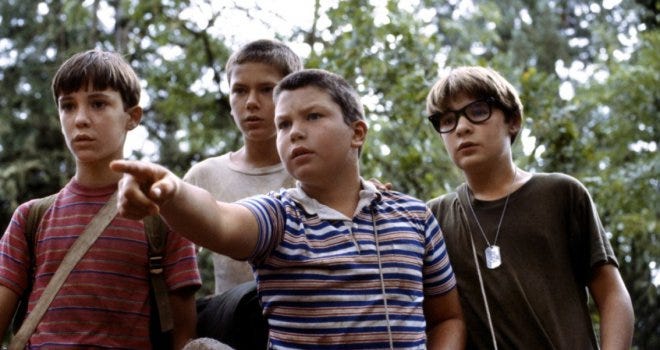
What I couldn’t avoid were the movie adaptations, mostly viewed late at night during slumber parties, through hands half-covering my eyes. Carrie, The Shining, Misery all became touchstones for understanding King’s oeuvre. His stories crept into my nightmares, and into my writing. But I only truly became an admirer when I watched 1986’s Stand by Me as a teenager. In contrast to The Goonies, it was naturalistic and profane, dark and resonant and obsessed with death, despite being set in a bygone era. I wanted more of this kind of King, and have no idea why I never watched the 1990 miniseries IT, or cracked the book itself, which promised a kid gang journey into a cosmic terrordome, the anti-Goonies.
IT: the most daunting of King’s work on those adult shelves, the largest book with the shortest title. The cover didn’t reveal what the monster was. I only found out later, during my Tim Curry phase, that there was even an evil clown. I get why a lot of people are afraid of clowns, but I’m not one of those people. For a solid two months of high school I was a straight-up Juggalo. I used to have visions that a clown was standing in the doorway of my childhood bedroom, but it was facing out, not in, protecting me.
And now the nostalgia market is pushing King back to the forefront of pop culture, if he ever left. IT is being remade as a feature film. The remake should have the Stranger Things audience on lock, and even stars one of those same child actors. Stranger Things itself is arguably the most blatant King rip-off since The Sandlot. So I feel obliged in this era of diminishing returns to go back to the source.
I bought IT. I’m going to marathon all 1,153 pages of IT. I have never been more excited to devour a famous novel. Send in the motherfucking clown.
PART 2: AN ARTERIAL SPRAY HOME COMPANION
Oh god I am so scared.
The opening chapter does a masterful job of situating me right in the center of little Georgie Denbrough’s world, laying out his small joys and his relatable fears in 1957, and then forcing me to experience his brutal murder first-hand. The child’s perspective warps the world, making it even more eerie and horrific when Pennywise the Dancing Clown appears in the storm drain. This is a virtuosic, “master of horror” set piece, and I can see why it’s the most iconic scene. After Georgie’s fatal encounter there’s a stirring meta-textual passage about the journey of his paper boat. I hold the full heft of IT in one hand and imagine the many, many child killings that are sure to follow. The spine breaks.
This book is huge and it’s clearly not about a killer clown. It’s about something much worse. The clown is the comforting element, the lure.
The second chapter starts what I’ve heard is a central trend in King’s writing: the subverted small-town pastoral. In zooming out to the wider world of Derry, Maine, and detailing the many angles of a mysterious hate crime in the “present”(mid-1980s), he immerses me in the mindset of local characters, propelling me along with them at the pace of Derry, learning its geography, history and quirks. Like Garrison Keillor’s Lake Wobegon but with mutilations.
This book is huge and it’s clearly not about a killer clown. It’s about something much worse.
If the initial terrors hadn’t frightened me away as a kid reader, the following hundred pages would most likely have been an impassable moat. These 1985 segments introduce a gang of Derry-bred adult professionals, Baby Boomers who’ve long left and long forgotten their horrific hometown. They each receive a triggering phone call from their long lost buddy Mike, who still lives in Derry. I would not have been into this when I was younger. I wasn’t afraid of clowns but I was afraid of adulthood, and the general depression here would have confirmed my fears, as would the domestic violence. King writes a whole chapter from the POV of Tom, the abusive misogynist husband of main character Beverly, which serves as a sadistic, effective complement to the fantastical. This is a good horror tactic, placing me squarely and exhaustively in a moment that turns demonic or fearful, awash in unpleasantness. But these early sections are also long and segmented, taking forever to arrive places, word-wise. There are a handful of unfortunate witticisms that King repeats twice, one at the expense of a large woman, another has a childless wife observing the drip from a faucet as “pregnant,” again, twice. As an adult reader I’m weighed down.
However, the tedium of these “getting the band back together” sections benefits the novel as a whole, because now I’m raring to return with them to Derry, to their childhood nightmare, as soon as possible. Doom be damned.
PART 3: THE GOOSEBUMPS SLOWLY MELTED AWAY
“My candle burns at both ends;
—Edna St. Vincent Millay
It will not last the night;
But ah, my foes, and oh, my friends-
It gives a lovely light!”
—Manfred Mann
“Do wah diddy diddy dum diddy do.”
^ King opens each of IT’s parts with a quote pairing like that. I have a soft spot for bloated, flawed masterpieces. I welcome these flourishes.
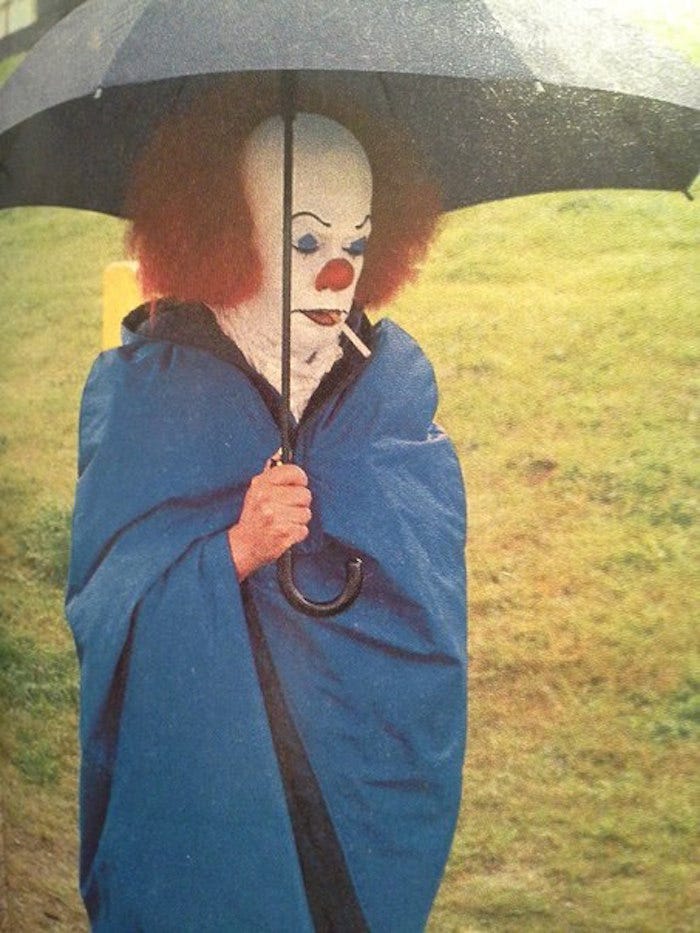
Once the story shifts to the summer of 1958, I’m all in. Here’s the demonic kid-world I was promised, and King’s is real as hell. And by real I mean categorically dangerous, full of dread. The Losers Club is a group of victimized youth, an ambitious squad of outcasts. Bill, Ben, Eddie, Richie, Stan, Beverly and Mike: seen as weak and vulnerable by adults (stutterer, fat, asthmatic, four-eyed, Jewish, female, and black), and terrorized by their sociopathic peers.
The monster in IT feeds on local kids (and possesses local adults) by manifesting as their fears. It’s a striking conceit for long-form horror, because every chapter shifts perspective, and in each kid’s perspective IT becomes the exact thing they fear: werewolves, gigantic birds, relatives both dead and living. Each new sequence is psychologically exhausting and I’m gripped.
Stan, the one character who commits suicide rather than face IT as an adult, is given this remarkable Lovecraftian passage after he encounters walking child corpses and Pennywise in a standpipe:
He wanted to tell them that there were worse things than being frightened. You could be frightened by things like almost having a car hit you while you were riding your bike or, before the Salk vaccine, getting polio. You could be frightened of that crazyman Khrushchev or of drowning if you went out over your head. You could be frightened of all those things and still function.
But those things in the Standpipe…
He wanted to tell them that those dead boys who had lurched and shambled their way down the spiral staircase had done something worse than frighten him: they had offended him.
Offended, yes. It was the only word he could think of, and if he used it they would laugh- they liked him, he knew that, and they had accepted him as one of them, but they would still laugh. All the same, there were things that were not supposed to be. They offended any sane person’s sense of order…
…You can live with fear, I think, Stan would have said if he could. Maybe not forever, but for a long, long time. It’s offense you maybe can’t live with, because it opens up a crack in your thinking.
The small triumphs of the Loser’s bonding peel away to the malicious weight of their imaginations, to fear itself, of life leaving. They share stories of trauma at the hands of IT, all harrowing, convincing bonding. Their outsider status and bookishness becomes a boon when they do library research and culturally appropriate ancient rituals to learn what IT could be and strategize IT’s destruction.
I’m also a sucker for narrative depths, so when IT is revealed to be a prehistoric inter-dimensional entity, hell-bent only on “feeding,” my reading pace accelerates. The adults reunite and tour the town, accessing their lost memories (as flashbacks), and the 1958/1985 simultaneity finds cohesion here, the trauma and repression of youth underscoring the plot.
An old co-worker of mine once told me that as a child he was part of a strange global phenomenon that occurred during the theatrical release of Steven Spielberg’s E.T.- The Extra Terrestrial: many kids, especially those around 8–11 years old, would immediately vomit upon exiting the theater. Because Spielberg had filmed E.T. from a child’s perspective, orchestrating the shots at main character Elliot’s height, those kids in the audience were experiencing acute motion sickness and withdrawal after the movie was over. This seems to be at play in IT as well: the adults have their visceral kid memories crashing in on them, pulled forward and backward in time, and I experience it alongside them, to nauseating effect.
HENRY: THE FIRST (AND ONLY) INTERLUDE
I have this book’s blood all over me.
IT’s subconscious influence is undeniable in the haunted childhood stories of my own books. The first part of my debut prominently features spiders and storm drains. Any writers exploring the horrors of childhood imagination, the nascent poison of reverie, are indebted to King, apparently even if they haven’t read him.
I appreciate his juvenile truths, especially in this all-but-thesis statement:
Kids were always almost getting killed. They dashed across streets without looking, they got horsing around in the lake and suddenly realized they had floated far past their depth on their rubber rafts and had to paddle back, they fell off monkey-bars on their asses and out of trees on their heads.
[…] kids were better at almost dying, and they were also better at incorporating the inexplicable into their lives. They believed implicitly in the invisible world. Miracles both bright and dark were to be taken into consideration, oh yes, most certainly, but they by no means stopped the world. A sudden upheaval of beauty or terror at ten did not preclude an extra cheesedog or two for lunch at noon.
But when you grew up, all that changed.
PART 4: INEDIBLE MUTANTS
“Why does a story have to be socio-anything? Politics… culture… history… aren’t those natural ingredients in any story, if it’s told well? I mean…” He looks around, sees hostile eyes, and realizes dimly that they see this as some sort of attack. Maybe it even is. They are thinking, he realizes, that maybe there is a sexist death merchant in their midst. “I mean… can’t you guys just let a story be a story?”
—Bill Denbrough (King’s closest fictional analogue here) in a college writing workshop
There’s this decaying Boomer ideology happening in mid-80s popular narrative art, also prevalent in the work of David Lynch. The idea that the small town idylls of white capitalism had an underpinning of supernatural decay, an original American “evil.” There’s a direct parallel here between the cosmic creature IT possessing “dogsbodys” and the envoys of the Black Lodge from Twin Peaks. Especially when Beverly is accosted and stalked by her abusive father/IT in a similar way to Laura Palmer’s assault by her father Leland/Killer Bob in Fire Walk With Me. The fundamental evil stands in for the systemic poison of masculinity and misogyny.

Whereas Lynchworld is largely whitewashed/race-avoiding, King is consistently frank about racism. There seem to be as many instances of the N-word in this book as there are in Huckleberry Finn. The word erupts from the world of Derry, and swarms Mike Hanlon, fictional author of the book’s interludes, town librarian and singular black man. His white supremacist bully screams the hate word at him in childhood and adulthood, while threatening his life, but Mike’s best buddy Richie also performs minstrelsy by way of his character impressions.
In King’s world, this racial violence is pivotal. Mike, who understands most deeply what it means to be a body at risk in the white town, from childhood on, is the one to bring everyone back together and remind them of their promise to vanquish evil. Supernatural horror becomes a Trojan horse for explorations of prevailing societal violence. The original evil lurks below the surface, in the sewers. In contrast to Stranger Thing’s upside-down, King’s subterranean/inter-dimensional evil has infected everything, consuming and spellbinding the town itself.
The vacillation of adult/kid experiences becomes symphonic in the later parts of the book, and the payoff is two climactic battles at once. The Losers are forced to remember how they beat IT in 1958 so they can destroy it in 1985. Because King has acclimated me to the childlike perspective, I’m flexible and open to the celestial ballet, the turtle-god, and all the other stretches that occur.
I’m also fully convinced that IT is an unfilmable novel. The prose manipulates, stunts and relies on the reader’s imagination to such an extent that any filmic image of the horrors would be somehow disappointing or wrong. There’s an impossible physicality to so many scenes, especially towards the finale. Only the cerebral act of reading seems sufficient to conjure these visions. This is the true test of a vital literary work.
And speaking of unfilmable:
PART 5: THAT
That scene.
It would be weird to not write about that scene.
PART 6: THE SINS OF AN ENDING
I was warned that King isn’t great with endings.
Although I was totally swept along through the showdown, I’ve got one final clown bone to pick: Why does the cosmic evil have to be gendered at the 11th hour? In a similar twist to the film Aliens, released earlier in the same year as IT, the adult Losers discover that their nemesis is not only female but has also reproduced and is surrounded by eggs primed to hatch. Although the broader horror of Aliens is egregiously built around fear of the female body/reproduction, there’s a synchronicity to that film’s ending because of Ripley’s parental connection with Newt, and the crucial fact that she’s a female protagonist.
In King’s book Beverly sits the fight out in order to clutch the fallen Eddie while the three remaining dudes chase IT (in giant spider form) to the nest, now allowed the ugly catharsis of screaming “bitch” as they decimate IT and IT’s spawn. I could almost make sense of, and potentially forgive, this unnecessary twist if IT’s feminine form was a reflection of the male Losers’ deep-rooted fear of female power, but the gender revelation occurs first to Audra, Bill’s wife, and then is somehow set in stone as the creature’s physiological truth.
That said I like how even though the Losers are victorious, Derry is all but destroyed in the wake of the battle. I like the line “Steven Spielberg eat your heart out.” I like how the book is over.
IT feels like an ultimate expression from King, unfettered and expansive. At the moment I feel exhausted by his authorial presence and can’t imagine having the desire to read more in the near future. But I’m certainly curious, what the hell is Carrie like?
EPILOGUE
“You can’t be careful on a skateboard, man.”
As I coasted downhill through the happy endings of IT this line kept rolling through my brain, spoken to adult Bill by a random boy he encounters. A perfect line, I thought, to use as a title for one of my essay sections. Terse, resonant, clever. Then King returns to this line again, and even uses it in the header for his own epilogue. He knows its value, dammit. I never knew until I looked up his personal life for this piece what a severe drug problem King had throughout the 80s. Whole books, like Bowie albums, written in hazes and then blacked out of memory. The forgetting. I understand. Maybe the real horror here is being a writer, to have so much grotesquery in your head that you have to constantly channel it onto the page and into the collective unconscious. This seems fundamental for King, the nature of the beast. It’s not a cushy, safe profession; it’s waiting around the corner of every day, under the cover of a notebook, waiting to consume you. You can’t be careful on a skateboard.
What’s New in the Book World?

KFC erotica, Amazon drama, and more
This week we’ve seen Amazon behaving like Amazon (read: mildly evil), Hillary Clinton speculative fiction, KFC published erotica, and JK Rowling got compared to the Kardashians. I’m at a loss on this one. Read up.

New Amazon Buy Button Program Draws Ire of Publishers, Authors
A new program from Amazon that allows third party book sellers to “win” buy buttons on book pages has caused a minor uproar in publishing circles. Basically, until now, when you bought a new book from Amazon, the copy sold came directly from Amazon, out of stock they had purchased from the publisher. The third party retailers — who are chosen based on price and delivery speed — haven’t acquired their copies from publishing houses, meaning their sales don’t pay writers royalty, count towards BookScan numbers, or help publishing houses. On top of that, the degree of “newness” in Amazon’s policy appears a little suspect, leaving room for used copies to slip in as well. Some people think this is just a part of a larger push by Amazon to force publishers to use their print-on-demand model.
If you're the sort who cares about books-and if you've heard of a nobody like me, you must!-buy your books at Powell's or your local.
[Publishers Weekly/Jim Milliot]
KFC just published a ridiculously raunchy and bizarre romance novella starring a Casanova Colonel Sanders
You read that right. In preparation for Mother’s Day, KFC published a romance novel called Tender Wings of Desire. The plot follows Lady Madeline Parker. While tending bar at a sailor’s watering whole, Madeline encounters a disguised Colonel Harlan Sanders. The two fall in love and begin a torrid affair. While this book is shockingly real, the fried chicken content seems disappointingly scarce.
[Business Insider/Kate Taylor]

New Curtis Sittenfeld novel will imagine Hillary Clinton’s life without Bill
The odd trend of Hillary Clinton speculative fiction has continued. Author Curtis Sittenfeld has just inked a book deal with Random House to publish an as-yet-untitled novel that tracks Hillary Rodham’s life after rejecting Bill’s proposal. This isn’t Sittenfeld’s first turn novelizing a first lady, she wrote 2008 bestseller American Wife about Laura Bush. As of yet, there’s no word on how the changes alters Hillary’s path. Perhaps, without the baggage of spousal relations, she had time to campaign in Wisconsin.
[The Guardian/Bonnie Malkin]

JK Rowling’s ego akin to Kim Kardashian’s, says Joanna Trollope
Writer Joanna Trollope has taken shots at JK Rowling (and Twitter), remarking, “Creating this mass following and tweeting several times a day is like wanting to be [the pop star] Cheryl or Kim Kardashian. Some writers like JK Rowling have this insatiable need and desire to be out there all the time, and that’s entirely driven by their ego.” While I think we can all admit JK Rowling’s Twitter isn’t that good, Trollope’s comments seem, at best, a bit out of touch. For her health, I hope no one makes Joanna aware that Alt-Lit was a thing.
[The Guardian/Nadia Khomami]
Milo Will Sue Simon & Schuster for $10 Million
