Milo Yiannopoulos profits from controversy, so it’s not surprising that he has revived the one surrounding his defunct book deal with Simon & Schuster. The alt-right activist slash internet troll announced his plans to sue the publishing house for $10 million dollars in retribution for canceling the deal to publish his memoir Dangerous.
In December, when Yiannopoulos secured a $250,000 advance from Simon & Schuster’s conservative imprint, Threshold Editions, the publisher’shuge advance and tacit approval of Yiannopolous’s hate speech caused an outcry, particularly among the literary community. S&S seemed to put an end to the controversial deal in February, when a tape surfaced of Yiannopolous trivializing pedophilia and questioning the “arbitrary and oppressive” age of consent. Shortly after the tape came to light, the publishing house dropped Yiannopolous, who also resigned from his position as an editor at Brietbart.
Now Yiannopolous is plotting his revenge. Thanks to a claimed 12 million dollar investment from unnamed backers, Yiannopolous has started his own media company, Milo, Inc., which he has described as “a fully tooled-up talent factory and management company dedicated to the destruction of political correctness and the progressive left.” In his official press release, Yiannopolous added that he plans to “make the lives of journalists, professors, politicians, feminists, Black Lives Matter activists, and other professional victims a living hell.”
Add publishing houses to that list. In addition to suing Simon & Schuster to “send them a message,” Yiannopolous is establishing his own press called Dangerous Books to promote titles by authors who “can’t get published.” He will be the debut author. Yiannopolous will self-publish Dangerous this summer and promote it while on his Troll Tour of American colleges.
I was driving north out of Caen when I noticed the machine gun pointed at me. It was late October, 2015. I’d come to northern France for research on World War II, so I pulled over for a closer look. The gun sat in a metal dugout with a seat for the soldier who would fire it. The barrel was twice as long as my arm, painted thickly yellow for visibility and to prevent rust. It was aimed at the oncoming traffic.
I lowered myself into the dugout and sighted down the barrel. A flood of commuters flowed by, while the oddball American observed from their faces that they considered him more out of place than a weapon from seventy years ago.
I lowered myself into the dugout and sighted down the barrel. A flood of commuters flowed by…
What does it mean to leave the instruments of war in place? What lesson might these artifacts teach us? In the next few days, I would receive bloody instruction. So, in fact, would the world.
I had come to Normandy to find my town. A hundred pages into a novel, I had stalled despite a clear plot line, not to mention a contract with a New York publisher to bring it out the following year. I had never lost momentum on a book before. But the prose in this one felt shallow, and I knew perfectly well why: It lacked a sufficient sense of its setting. Imagine Huck without his river.
Somewhere amid the hedgerows of northern France, there had to be the place where my imagined people had lived for four years under Nazi occupation, then survived the D-Day invasion. To tell their story, I needed to know where it had all happened, the precise location.
I had already done my homework. There are many excellent books about D-Day. The Eisenhower Center in New Orleans contains hundreds of oral histories from the invasion’s combatants. Films make the battlefield vivid: Saving Private Ryan, Band of Brothers, The Longest Day. I interviewed a survivor of Omaha Beach. I held all kinds of guns, trying to imagine running with them.
All of these sources, however compelling, contained a hole big enough to write a novel in: They were all from the warriors’ perspective. They lacked the experience of the French.
Caught in a crossfire between democracy and totalitarianism, between America’s juggernaut of can-do gung-ho and Germany’s ruthless defenses, French people were slaughtered in Normandy in numbers that exceeded the Allies and Nazis combined. Yet their story, in the English language at least, has gone untold. I could not do them justice, unless I stood in their setting and felt the rain on my face.
Friends teased me before I left for France: Good thing I was willing to suffer for my art. I laughed along. We did not know what was coming.
There are two ways to assess D-Day, both of which explain why an invasion in 1944 still matters today. The first measure is in blood. Roughly 5,200 Americans died during the 13 daylight hours of the initial invasion. That’s about 400 per hour.
Friends teased me before I left for France: Good thing I was willing to suffer for my art. I laughed along. We did not know what was coming.
During those same 13 hours, the number of French people who died was 11,800. About 850 an hour.
The second measure is the severity of the subsequent campaign. After Allied armies invaded Sicily on June 9, 1943, they did not take Rome until June 4, 1944 — nearly a year. But the Allies came ashore in Normandy on June 6, 1944, and freed Paris on August 25. The liberation of France required only 80 days.
The effect of this pace was the opposite of Sherman’s march to Georgia in the Civil War, in which the Yankee general took the time to burn everything as he passed. The Normandy campaign was so swift, Allied soldiers simply left the artifacts in place.
My machine gun, for example. But I felt the impact of history more tangibly the next morning, at Pointe du Hoc. In any other locale, the outcropping’s beauty alone would be a tourist attraction. A hundred-foot cliff rises from beaches on either side, the highest point for miles. With the English Channel sluicing gray sand below, the view was lovely in the low autumnal light.
But in 1944, that promontory held heavily armed German forces, and the cliff stood between the beaches known on June 6 as Utah and Omaha. Holding such high ground, with concrete pillboxes to shelter them, Nazi soldiers could fire down without risk. Any men who came ashore would be committing an act of elaborate suicide.
U.S. Army Rangers had other plans. Their mission was to throw up grappling hooks, climb those ropes, and overwhelm the German battlements. The first officer assigned to command the attack declared it impossible, certain death, and he was relieved of his responsibility. His replacement led 225 Rangers in an assault on the cliff soon after dawn.
Germans poured down machine gun fire. The Rangers kept climbing, even as fellow soldiers fell by the dozen from above. Yet eventually they reached the summit, swarmed the defenders, and captured the point. About 90 men survived.
The pillboxes stand today at the cliff’s edge, undecayed but for a skin of lichen. They look like gray concrete helmets, thirty feet across. I ran my hand along the rough surface, feeling pock marks where Ranger bullets had ricocheted. No one stopped me, or even took notice. The only constraints at the site, in fact, were fences to keep people from stumbling off the cliff.
They look like gray concrete helmets, thirty feet across. I ran my hand along the rough surface, feeling pock marks where Ranger bullets had ricocheted.
I turned to look east, across a lawn the size of a football field. It was marred by bomb craters, holes in the ground forty feet on a side and thirty feet deep. There were hundreds, now grown grassy, and no one had bothered to fill them in. I didn’t need to imagine what happened there. The landscape explained everything.
This was an unforgettable place, but as a location for my imaginary town it would not work. Despite the Rangers’ heroism, it said nothing about the French.
Other battle sites brought the same frustration. On Sword Beach, where the Scots came ashore, a bagpiper named Bill Millin had accompanied them, playing “Highland Laddie” to frighten the Germans and inspire his mates. Nearly half of the 1,400 Scottish commandos died in that assault, though somehow Millin survived. Just above the beach stands a bronze statue of a piper, kilt and all. It’s a striking image, but not French.
In Arromanches, a few hundred yards offshore lay a semicircle of metal hulks — remnants of the Allied effort to create a manmade harbor for resupplying troops. Any story the ruins tell does not concern the French, however, but the stubbornness of iron despite years of waves and tides.
At Juno Beach in Courseilles, where the Canadians landed, D-Day was memorialized in photographs mounted under glass and posted around the town. One that hung beside a building’s front door showed a line of soldiers on the march. They’d just made it ashore, and were now proceeding inland. That house in the photo’s background, with the unusual upper windows? It’s still standing, not a block away. The place is unchanged. And if a writer wanted to know what soldiers smelled there, invading at low tide, all he had to do was breathe.
I was getting closer.
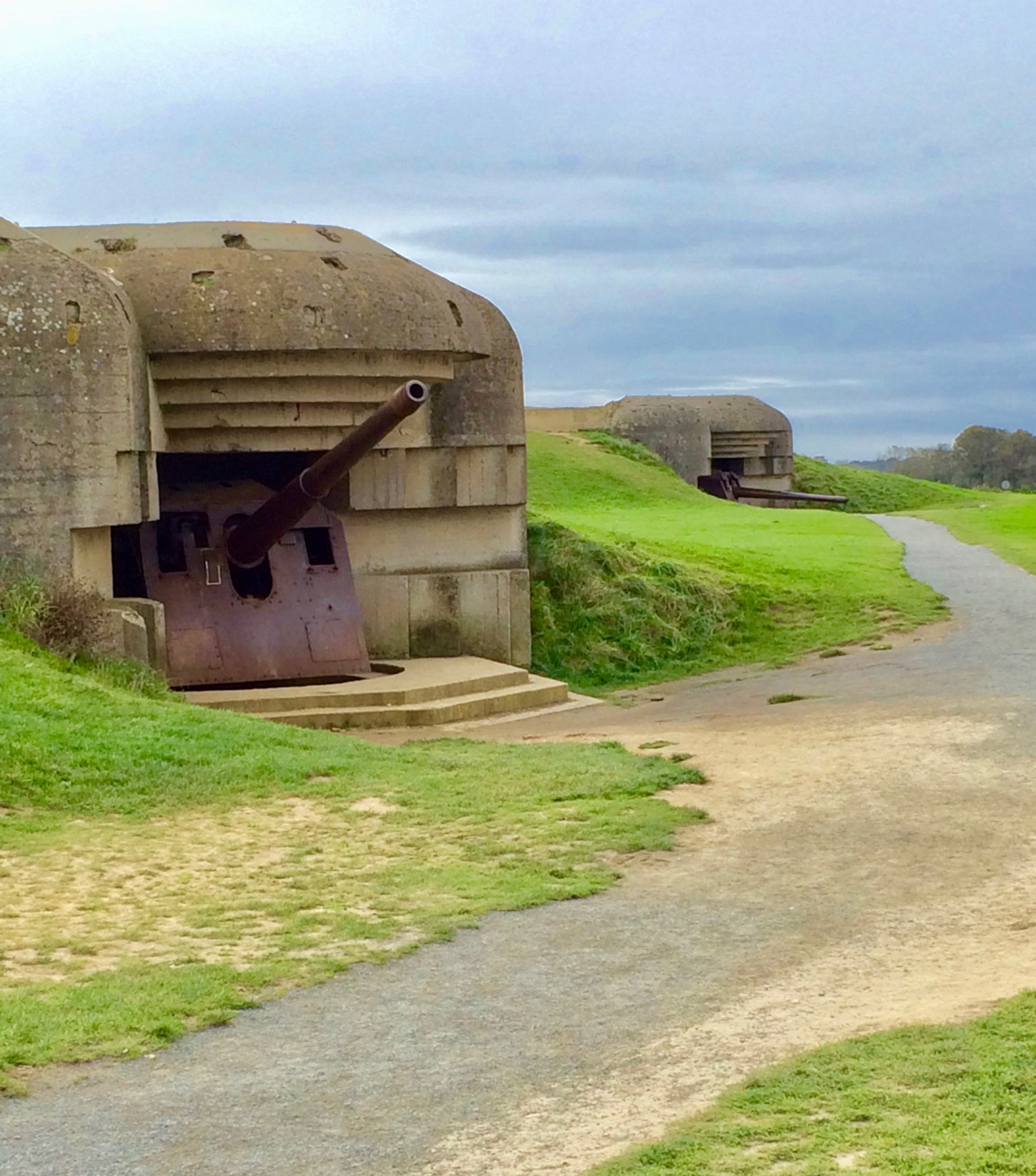
My next stop was Longues-sur-Mer. The Germans had built an especially effective gun battery there. It was a quiet place, winds gusting up the coast, a paved path through the grass. Following that path, however, brought me to a truly frightening weapon: a concrete and steel pillbox with room for a dozen soldiers, and the gun it took all twelve of them to operate. The machinery remained intact, as did a barrel easily thirty feet long.
Following that path brought me to a truly frightening weapon: a concrete and steel pillbox with room for a dozen soldiers, and the gun it took all twelve of them to operate.
Further along I saw three similar guns, identically massive. I knew from my reading that this battery had proved immensely capable, firing 170 rounds during D-Day, forcing ships to retreat, and in general presenting a mighty barrier. Though British shells damaged several of the guns, one continued firing until 7 that night. Today its barrel remains pointed high, as if aimed yet at some distant Allied ship.
Standing at the last giant gun, I could see how smart the set up was, how the casements had been arrayed to inflict damage in virtually all seaward directions. I placed my hand on the barrel, felt its surprising coldness, and realized the darkest lesson of warfare. I should have known sooner. But it took that battery, and its clever design, to teach me: War demands intelligence. It takes discipline, yes, and fanaticism, and patriotism, and many other qualities. But above all it requires brains. The deliberate, cold-blooded application of the human mind.
I was overwhelmed. I strode away from the sights, away from the sea, out of the historic area altogether.
From rocks to rifles, from gunpowder to the hydrogen bomb, few enterprises have been lavished with human creativity as much as our capacity to slaughter one another. The idea filled me with sadness. We are killers, we humans. When it comes to devising ways to end the lives of others, our minds are terribly good at it.
We are killers, we humans. When it comes to devising ways to end the lives of others, our minds are terribly good at it.
Eventually I stopped and looked around. I had come to the edge of an orchard. I live near an orchard at home, so I gazed on the trees with a familiar eye. They had already been harvested, not one apple left dangling. They were meticulously pruned, too; someone had shown dedicated husbandry to these trees for many years. And with a shiver of delight, I knew. Here, half a mile inland from the guns, this was where my town would stand.
I drew a mental map: the village square, the popular bakery, the steeple of St. Agnes-by-the-Sea. Also the German garrison, the mess tents, the stores of food and fuel guarded to prevent theft by starving locals. My villagers would not be warriors, though, nor members of the Resistance. They would be Yves the fisherman with a fine singing voice, Pierre the cowherd who constantly craved tobacco, Emma the baker with secret ways of feeding other villagers. They would be the kind of people who cared for their trees. And the intelligence of war would broil them alive. My poor people. I loved them already.
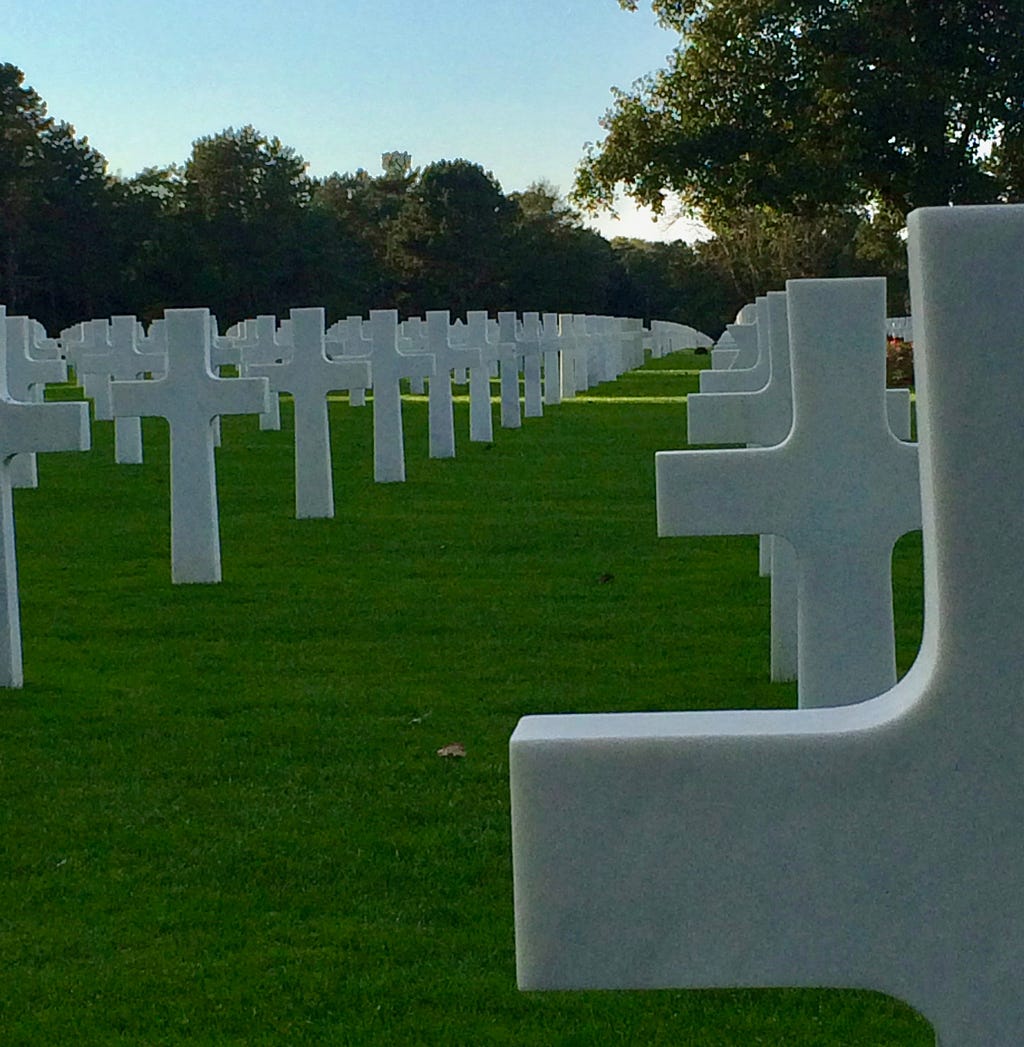
There was one more stop I needed to make, in Colleville-Sur-Mer. The place has a formal entryway, a flagpole, pillars around a statue. But the arresting image is not any of these objects. The sight that commands is of the crosses. No matter where you stand in the American cemetery of Normandy, they fall in a straight line, plain and white, and in sufficiently staggering number — 9,387 of them, on 172 acres — to silence anyone, to slow anyone’s walking.
Normandy American Cemetery and Memorial. Photo: Stephen Kiernan
I had already visited the Canadian cemetery, where maple leaves ornamented the markers. I’d seen the German graveyard too, its clusters of five small crosses, and the large burial mound in the center. Neither had prepared me for the impact of those long white rows, luminous in the seaside sun.
The American cemetery is as diverse as the nation it represents. At 1,213, Pennsylvania supplied more soldiers than any other state. There are Stars of David, hundreds of them. There are African-, Hispanic-, and Japanese-American soldiers. There are Native Americans, Navajo and Comanche, who were “code-talkers” — that is, whose language the enemy could neither translate nor decode. There are 307 graves of unknown soldiers, and a wall to memorialize 1,500 men still unaccounted for. There are three women.
It was difficult not to personalize the crosses as I read them. Not the names, but the ages. This one was 21, same as my son Will. The next was 19, same as my son Noah. My smart, beautiful, mischievous boys back home in the States, not in uniform but in college. So it continued down the row, Will and Noah, Will and Noah, all the way to the last white cross.
I reached the end, by the quiet sea, and had the day’s second realization. Despite having every imaginable background, motivation, and fear, these soldiers had served with valor by the thousands. If a mob has the power to reduce man’s capacity for reason, it also has the might to lift him to the highest aspirations of self-sacrifice.
If a mob has the power to reduce man’s capacity for reason, it also has the might to lift him to the highest aspirations of self-sacrifice.
What an idea. It felt nearly the opposite of what I had thought at the big German battery: We had changed. We had learned. The heroism of D-Day did not just defeat Nazism. It also was among the last marine invasions ever. After a few assaults in the Japanese islands, never again. Not once since 1945 have hundreds of thousands of young men rushed headlong into enemy fire.
That’s not all. Whatever you may think of the decision to drop atomic bombs on two Japanese cities, it is crucial to note that it has never happened again. In August of 1945 the American military possessed two more bombs, all built and ready, but it did not drop them. The devastation in Hiroshima and Nagasaki was so total, the world’s warriors learned a new form of restraint. Perhaps hope was possible. Perhaps our species was actually capable of evolving.
From behind, I heard the beginnings of a song. A recording of a trumpet, playing taps. It was 5 p.m. Descendants of a buried soldier came forward to assist the honor guard with lowering the flag. All of us visitors, spread here and there among the graves, walked toward that small ceremony as if responding to a shared internal command.
All of us visitors, spread here and there among the graves, walked toward that small ceremony as if responding to a shared internal command.
Over the following year I wrote my novel, The Baker’s Secret, without stalling again. I called my village Vergers, the French word for orchard. My characters displayed their own intelligence, a cunning by which they bartered, concealed, and shared, deceiving the occupying army while keeping as many of their fellow villagers alive as possible. Those who survived the invasion continued to care for their trees, and for one another, which I believe is a form of hope.
Before flying home, however, I spent a few days in Paris. It was November, the weather unusually mild. I stayed at a small hotel on the Rue Amelot, strolling to various museums or along the Seine. One day I chose the other direction, and after a few blocks noticed the maroon awning of a café called the Carillon. Well, well. The chapel belfry of the Catholic high school I attended had held a carillon — small bells of many pitches, played like a piano. A long forgotten memory returned to me, of leaving the gym after winter wrestling practice, my wet hair freezing, and hearing those bells chime in the early darkness. I decided to have lunch at the Carillon that day, and dinner on the night before I flew home. It was a pleasant place: small tables, good wines. I felt content, knowing the location of my town and the character of its people.
On Monday I flew home, ready to dive into the writing. The spell lasted four days.
On Friday afternoon, the news broke in the U.S. of terror attacks all over Paris. At a soccer game, a nightclub; 129 people were killed. I went online and saw the photos. The café where 12 people were gunned down as they ate dinner. The maroon awning. The Carillon.
I went online and saw the photos. The café where 12 people were gunned down as they ate dinner. The maroon awning. The Carillon.
If we do evolve, we troubled humans, is it not in learning new ways of peace. That was a fallacy I told myself, a manufactured comfort after seeing the colossal cost of D-Day. The Paris attack, and those pictures of bodies under white sheets among the Carillon’s overturned tables, forced me to admit the gritty reality. We are a murderous lot. Whether by friend or by foe, advances in brutality persist without pause. What was an arrow has become a drone. Today’s innovation is merely that the targets are unarmed. Tomorrow it will be something else.
But my mind cannot forget those trees behind the giant guns, tended with care for years and years, and I know that any novel of mine about the human race must contain hope. Even in wartime, people of humble circumstances ventured out into their orchards, bearing shears, pruning to maximize the harvest. May we remember them too, every time we bite into an apple.
In the beginning, everything was volcanoes. The whole planet populated by fire. You are one of these fires. No body, no skeleton of char underneath, only the vulnerability of fire. You burn for years until something happens. Life with gills, life with lungs, life with government, etc. These humans, you notice, are nothing like fire. If anything, they are the absence of. You start to like people, though you have no comprehension of human emotion. So, you get into politics. You start kissing babies, searing their small bodies into darkness. Every hand you shake becomes skeletal. Horrendous, you say, absolutely disgusting that this should happen, that people should be maimed from your body of fire. This will never happen again, no one will ever burn. With this promise, people love you, people salute you. You are given money and American flags. You start burning down schools. You are elected governor of Kansas. You are given babies to kiss, again, and you burn them to death, again. Sorry, you say. Never again. You keep killing. You burn the entire state until it look like a stew of bones. It looks like the graveyard you are. Re-election.
Birds
You can tell everything about a fowl’s body by how quickly it allows you to break its bones, tie the legs together, and wait for the flesh to tighten against the ribcage and darken. What I mean is, should there ever be an answer to poetry, and do we deserve one? To answer is to give it language, and can you? Remember that this has bones, a structure. At least, it did. I don’t expect an answer, even from myself. Should we underline the meaning, italic the silence? Breaking silence, we say, as if you could push your hand against nothing. I’ll tell you everything about silence, I promise. Do you want it to be this way? You can always change your answer. Every poem has an answer, some are just disappointing. But who am I to take the magic from this world, and you to take this world from me? Take the poem and press against the joint of the leg — do you feel it? Hear the bone buckle, the ligament tear towards your movement, your direction. Is this what you wanted? Hunger: this is how we find meaning. Why are your bones breaking? Tell me. Will they make me choke? Do you promise? What is the point of these questions? Tell me, why do I want it to stay this way? I’m sorry for asking. Tell me, who is the hunter, who is the beast, and who cares? I mean it. There isn’t enough weakness in poetry. Or too much, I don’t know.
Birds (Neutered)
You can tell everything about a fowl’s body by how quickly it allows you to break its bones, tie the legs together, and wait for the flesh to tighten against the ribcage and darken. Can you? Remember that this has bones, a structure. At least, it did. Should we underline the meaning or italic the silence? Breaking silence, we say, as if you could push your hand against nothing. I’ll tell you everything about silence. Every bird has a silence, some are just disappointing. But who you to take this bird from me, to snap its neck? Take the bird and press against the joint of the leg — do you hear it? Feel the bone buckle, the ligament tear in your hands. Is this what you wanted? Hunger: is this how we find meaning? Why are your bones breaking? Tell me. Will they make me choke? Why do I want it to stay this way? There isn’t enough weakness. Or too much, I don’t know. Tell me, who is the hunter, who is the beast, and who cares? I’m sorry for asking.
These days, in America, the famous feminist rallying cry from the 1960s “the personal is political” applies universally. In South Korea in the 1980s, when the country was ruled by military dictatorship, the adage applied to many college students fighting for free expression and democracy in the years following the infamous Gwangju massacre, when hundreds of protesters were fired upon and killed. In Jimin Han’s debut A Small Revolution, the personal is political in every scene of this fraught and swift tale that is at once a hostage crisis, a campus love triangle, and a protest novel.
The book begins with the threat of a bang, in a dorm room in Pennsylvania in the fall of 1985 where Yoona and three of her friends are trapped by a gunman. The armed young man is Yoona’s disturbed friend Lloyd, with whom she became close on a summer trip abroad to South Korea. When the police arrive, Lloyd demands to meet President Reagan and the presidents of South and North Korea, ostensibly to request that they arrange the release of Yoona’s first love Jaesung. Yoona believes Jaesung died in a car accident in South Korea. Lloyd, who claims to have been there the night of the accident, believes that Jaesung has been kidnapped by North Korean spies. During this hostage standoff, Lloyd vacillates between states of coherent desperation and full-blown insanity, an ambiguity that raises questions about what really happened on the fateful night of Jaesung’s disappearance.
Narrated in second-person by Yoona to Jaesung, the novel alternates between the standoff in Pennsylvania and flashbacks in South Korea. Yoona, Jaesung, and Lloyd get involved in new pro-democracy protests in Seoul, where they find themselves learning what a real revolution feels like.
We can only brace ourselves as clouds of yellow smoke rise. I hold my hands over my face. The stench of rotten eggs. I bury my face in my shirt. I’m knocked aside. And suddenly there is space and everyone is running. I drop my hands and nearly lose my balance when someone knocks into me. And then it’s as if someone has thrown handfuls of sand lit on fire into my eyes. “Don’t rub them,” your voice comes through the screams now, and every which way people are running. I crouch, just want to crouch down and wipe my eyes until they stop burning. But rubbing them makes them hurt more.
And then a bigger panic sets in. I look but can’t see my hands. And then I feel your hand pull mine along and someone takes my other hand. Your voice calls to me and then Lloyd’s joins in. I’m dragged to one side and then another and then forward.
Yoona is pulled in opposite directions metaphysically: on one side, by her love for Jaesung, and the other, by the political rage represented by Lloyd. The portrayal of the revolution that led to South Korea officially becoming a liberal democracy by 1987 has very real stakes, stakes that make our recent protests against the current administration look quaint. In the following passage, the three college students speak about martyrdom as matter-of-factly as American college students might speak about safe spaces.
“It’s a protest for the world to see,” you said, and I could tell you admired them for it. I felt nervous. It was warm in the restaurant, but a coldness clawed at me.
“They actually think this crazy dictator who’s already killed thousands of his own people gives two shits about kids wrapping themselves in kerosene-soaked sheets, setting themselves on fire, and jumping out of buildings? He’s laughing at them. Fewer people to deal with.” Lloyd’s voice was grim.
“At least they died for something,” you said in a quiet voice, looking calmly at him.
After Jaesung’s disappearance, Lloyd and Yoona try to continue their friendship, but cracks begin to show as the former turns increasingly possessive and unstable. It becomes clearer, though not definitive that the three friends may have been in a love triangle all along with Lloyd and Jaesung competing for Yoona’s affections. Perhaps Lloyd had something to do with Jaesung’s death. The mystery surrounding the night of Jaesung’s disappearance remains by-and-large unsolved, right up until the highly dramatic conclusion. The reliance on unclarified ambiguities left this reader wishing for more pages that might’ve further developed what these characters represented politically. The specifics of South Korea’s historical journey from dictatorship to democracy is also left mostly off the page, as the author chooses to focus this slim novel on the personal ties between the main characters, leaving this reader scrambling to Wikipedia to fill in the historical gaps.
There have been some wonderful and timely protest novels recently. The Heart Is a Muscle the Size of a Fist by Sunil Yapa comes to mind. And in the current political climate in America, there promises to be many more. Han’s entry into this burgeoning genre is a worthy and cinematic debut.
Middle school’s hard. I wasn’t sure I wanted to think about it again until I read Claudia Cortese’s impressive debut poetry collection, Wasp Queen. It follows the presumably fictional “Lucy” from childhood to early adolescence as she, like each of us, tries to figure it all out: how to be popular, how to feel beautiful, who loves her. Lucy struggles with weight as a beauty standard, with popularity.
I wish this book had been around for me to read in middle school (maybe high school, due to some of the language — though none of it is language foreign to a middle schooler). Its situations are true for most young girls at any time, despite references that date the work (Cyndi Lauper and the phrase “I’m all that and a bag of chips” make appearances).
She’s most girls, but Lucy is unique. Within the first poem, she takes on a life of her own: she “decks the tree in Barbie heads, watches snow cut the landscape, all those little white knives.” She isn’t just a metaphor, a stand-in for the author or the reader. Immediately, she feels like a real person. Sometimes, she’s reminiscent of John Berryman’s popular persona “Henry” — part of the poems themselves, the reason these poems seem so utterly honest.
Wasp Queen is essentially an exploration of girlhood and growing up. When Lucy, in the poem “Lucy Loves Their Dead Edges,” “fought and fucked her way to adulthood,” she takes on the violence of growing from girl to woman, the implicit sexuality that often comes with an act as simple as entering teenagehood. The idea reappears in the poem “Blue Glint in the Woodshed’s Skin.” Cortese writes, “If you peel Lucy’s skin, you won’t find // Christmas white… // you’ll see her terror, almost sexual… Cute’s / opposite or rather its essence.” That relationship between “almost sexual” terror and cuteness, between sexiness and cuteness, is a pull throughout Wasp Queen. When, Cortese may be asking, does the switch happen? For whom does it not happen?
This is a book full of beautifully told truths, essential knowledge to parents of young teenagers (girls especially), already inescapably known by girls themselves. Cortese writes in the fabulously, tellingly-titled poem “Lucy’s Guide to Surviving the First Day of 6th Grade in 1993 in an Ohio Town that Is 92.3% White, 3.8% Black, and 3.9% Other,” “The synonym for girl is dead opossum. Pretend you don’t know that.” Those kinds of images make these poems sing.
Particularly resonant is the poem “When Miss Johnstone.” It begins, bleeding from the title, “Says that Edna Pontellier walked into the ocean, let water close above her because it was her only escape from the Cult of Domesticity.” Lucy “wants to walk into the ocean before 9th period gym” and there’s a marked sense that even this young teenage girl Lucy already feels part of that “Cult of Domesticity,” or at least close to it, feeling it is some kind of inevitability for her.
Cortese gets that inevitability of confusingly domestic adolescence absolutely right. Much of this book is about body, physicality, and beauty. “There’s a tornado watch and the clouds look like cellulite,” she writes. And in the poem “Lucy Tilts the Mirror of the Cover-Girl Compact Between Her Legs:” “A part of her body doesn’t exist and then it does.” If nothing else in this book is, this moment is truly about growing up, as Lucy sees her own body, mid-book, finally, after everyone around her sees it.
There’s one more image I want to end on, from the poem “What Lucy’s World Feels Like.” Cortese begins it, “Lawnmower’s teethy jangle — / too pretty. Let me start again: drill // before anesthesia takes hold, nerve burn.” So let me start again: this book isn’t pretty. It is concerned with truth and reality. This is a book invested in all our stories, in growing up. It refuses to give us readers any consolation in its being easy, but gives us every sense that we’re in good company. With Cortese, we are.
Hello, and welcome to my week-by-week review of the world. Today I am reviewing the tap dancer in the subway.
★★★★☆ (4 out of 5)
Tap dancing is the art of dancing mainly with your feet while the rest of your body just sort of stands there with nothing else to do. It seems like it would be a good time to read a book or make some phone calls, but no tap dancer I’ve ever seen has done that.
You can tell a good tap dancer by the speed of the tap dancing or if the tap dancer is Gregory Hines. Those are the two greatest indicators of quality. Another indicator is if smoke begins billowing out from the shoes. I’ve never seen that outside of cartoons, but I’m not a physicist so who am I to say if that can happen.
The tap dancer in the subway was none of these things, but what she was was confident. It didn’t matter that people were actively avoiding her, or that tap dancing does not have broad appeal. This woman just kept on dancing.
One thing that set this woman apart from most tap dancers is that she was singing. Her voice wasn’t very good at all but I liked the lyrics to her song. It went like this.
Help
Help me
Won’t you help me please
The ants
Get them off me
Where did all these ants come from
Oh god oh god
This is a nightmare
Why won’t anyone help
Yeaauugghhh
It’s not a song I’m familiar with but I enjoyed it nonetheless. I’m always excited to learn new songs and this one got stuck in my head the whole day.
No one was giving this woman any money, so I decided to be the first just to get the ball rolling. I wrote her a check for 86 cents (the amount of change I had in my pocket but needed for the bus) and placed it near her while trying to stay out of the way.
As I boarded my train this woman was still at it — dancing and singing like her life depended on it. She must have really worked up a sweat because she started tearing off layers of clothing. She even kicked off her shoes which seemed really counterintuitive to me.
BEST FEATURE: Her vim and vigor! WORST FEATURE: She was wearing sneakers which made it pretty hard to hear the tap dancing.
Please join me next week when I’ll be reviewing a goose.
In college, I did my thesis on the French writer Michel Houellebecq, a polemic figure who provokes a love or hate reaction in his fellow countrymen. Houellebecq’s bestselling The Elementary Particles (hailed by The New York Times’ Michiko Kakutani as a “deeply repugnant read”) posits cloning as an escape hatch from bachelorhood; his first novel, Whatever, explores the financial value of the unattractive underclass. His novels are often bleak to the point of nihilism, misogynist, and morally insensitive, but they are also compassionate, ironic, and deeply smart, and it is the vulgarity of Houellebecq’s contradictions that makes him truly French. The country that gave us “Liberty, Equality, and Fraternity” was also the first country in Europe to ban the Islamic face veil. The France that produced the Lesbian coming-of-age drama, Blue is the Warmest Color also produced Le Pen.
In the final days of the French election — now a runoff between the centrist Emmanuel Macron and the Front National’s Marine Le Pen — here’s a selection of books that celebrate a diverse, complicated, and many-sided France.
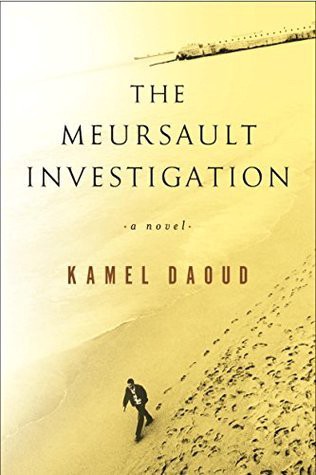
1. The Mersault Investigation, by Kamel Daoud
A stunning novel that grapples with Arab identity and the effects of colonialism in Algeria, Daoud gives a voice to the nameless Arab killed by Albert Camus’ fictional antihero, Mersault, in “The Stranger,” by reimagining the story from a grieving brother’s point of view.
2. Chanson Douce, by Leila Slimani
Dubbed the French “Gone Girl” and recipient of France’s top literary prize, The Goncourt, Moroccan-born Slimani’s harrowing second book about a killer nanny brings up difficult questions about culture and class.
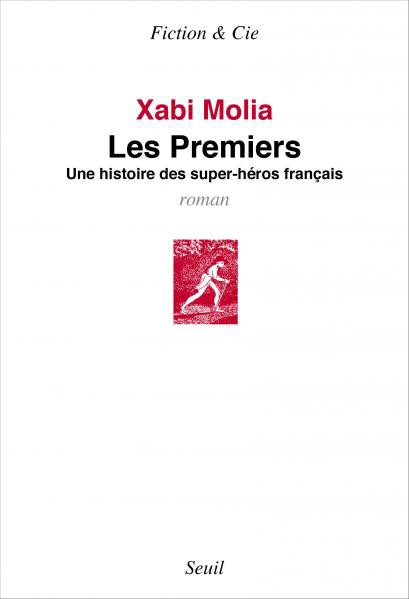
3. Les Premiers, by Xabi Molia
This satirical novel about superheroes in contemporary France is an irresistible send-up of the current climate in French politics and culture. (And don’t miss the author’s trenchant collection of poems written from the point of view of Nicolas Sarkozy, “Grandeur de S”.)
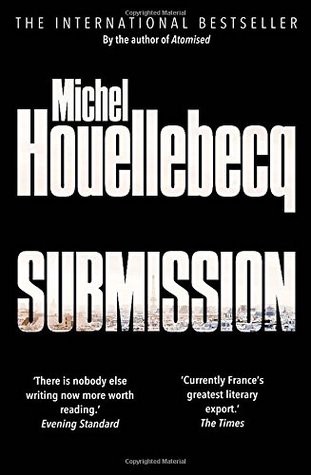
4. Submission, by Michel Houellebecq
It is 2022 and a new Islamic party has come to power in France. All women must wear the veil, polygamy is encouraged, and a middle-aged, pitiable lecturer is offered an impressive promotion if he converts.
5. The End of Eddy, by Edouard Louis
Widely hailed for its unflinching, yet sensitive portrayal of a man questioning his masculinity, this book about physical and psychological violence swept Europe with a Knausgårdian force.
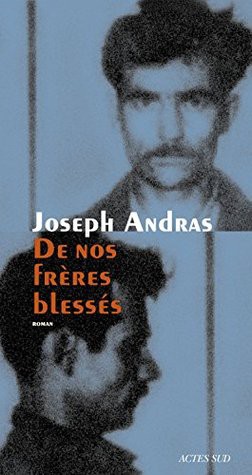
6. De Nos Frères Blessés, by Joseph Andras
Although he refused it because he feared the attention would distract him from his writing, Andras was nevertheless awarded the Goncourt in 2016, France’s highest literary prize, for this novel inspired by the true story of an anti-colonial communist executed during the Algerian war.
7. Hello, Sadness, by Francoise Sagan
An indulged teenager’s summer vacation on the French Riviera with her father and his mistress is ruined by the arrival of an intelligent, older rival for her father’s affection. This beloved book about a domestic ménage-à-trois couldn’t be more French.
Dating sites say that readers enjoy more of that good, good loving
Pro tip to all the singletons out there trying to find true love (or a satisfying hookup) on ruthless dating apps: readers make better lovers. Or, at least, they attract more suitors according to recent findings by the popular dating site eHarmony, as reported in The Guardian. Sure, the article doesn’t specifically refer to performance, but I think we can all use our imagination on that one. What eHarmony found was that men who say they read receive 19% more messages on the app, and ladies 3% more. (Okay, that disparity is probably another can of worms we should open at some point in the near future…) The site also made some disturbing findings with regard to specific titles. Apparently, women who say The Hunger Games is one of their favorite books see the most dramatic increase in attention from potential romantic partners. For men, the most alluring reading material is…“Richard Branson’s business books.” Hold up — what? Who, exactly, is on eHarmony again? It all sounds a little too Patrick Bateman-y, doesn’t it?
Anyway, reading is reading, I guess…This isn’t the first study to support the advantages, sexual or otherwise, of being a bookworm. The dating app My Bae also claims that its users are more successful at finding dates if they use reading tags, and science says that readers live longer, empirically giving them more time to perfect their technique. More studies have shown that frequent readers also score higher on empathy tests, the interpersonal reactivity index, and other exams of that nature. And guess what? The best way to boost your results is by reading literary fiction. (The RR archives can help with that, if you’re in the market.)
Honestly, I think John Waters sums it up best:
“If you go home with somebody, and they don’t have books, don’t fuck ‘em!”
Maybe a tad crass, but this is what natural selection looks like in 2017.
A year and a half ago, I hadn’t heard of Brian Catling — though I’ve found out since that the husband of one of my colleagues was a student of his. That’s kind of like finding out that your uncle was a lot cooler than you actually thought, and was listening to that indie band you just found out about a year before you even knew it existed.
Anyway, a year and a half ago, suddenly a bunch of my friends and writers I admired began talking about a book called The Vorrh. Jeff Vandermeer declared that it read like “a long lost classic of Decadent or Symbolist literature.” Terry Gilliam and Tom Waits both praised it, as did Michael Moorcock and Philip Pullman. Alan Moore liked it well enough to do an afterword for the audiobook, in which he called it “the current century’s landmark work of fantasy.” It came highly acclaimed. Which meant, of course, that I didn’t read it.
I have an issue with books that come highly acclaimed. Not books that have a certain acclaim, just those books which have a level of acclaim suspiciously high enough to make me worried that they won’t be able to live up to their hype. That’s due to reading too many highly acclaimed books that don’t live up to the hype (what I like to call the Franzen syndrome) and beginning to think that, well, maybe 50,000,000 Elvis fans can be wrong after all.
So I didn’t read The Vorrh when it came out in 2015. Instead, it wasn’t until November of 2016, visiting a bookstore in Austin, Texas, that I saw the book in person and picked it up, idly, out of curiosity, and read the first chapter. In it, a man’s lover has died and he does what any good husband would do: ritually dismembers her body as per her instructions so as to transform her into a bow whose arrows are meant to lead him into the heart of an ancient forest known as the Vorrh.
After that, I read The Vorrh very quickly. I found it quite different from any other fantastical novel I’d read. Raymond Roussel appears as a character. Indeed, it reads almost like an absurd symbolist take on the fantasy novel, with its fantasy assembled out of an entirely original constellation of creatures and objects, with the nature of the dilemma at the heart of it revealing itself only slowly. It is a subtle and accomplished book, one that progresses more by feel than by plot, a kind of poetic disaster zone that is as much a barbed commentary on colonization as it is a quest novel. But it’s a quest novel as well, with Peter Williams, the man who has repurposed his dead wife into a living bow, using her to shoot arrows to provide him a path into the mysterious forest. His lover belonged to a native tribe called the True People, and in some senses belongs to the forest: she knows the rituals and tokens needed to allow him to pass in safety and has passed her knowledge along to him. And yet Williams is also being hunted, pursued by another member of the True People, someone who intends to kill him. Add to that historical figures used as characters (photographer Edweard Muybridge, royal physician and possible Ripper William Gull), a Cyclops named Ishmael, child-rearing robots made of bakelite, cannibals, and all the eccentricities of a colonial city, and you get some sense of what The Vorrh is: a sort of elaborate ritual played in a serious way, and for keeps, one that succeeds in making the grounds for a contemporary fantastic from any scraps and remnants that Catling can find. The results are startling — stunning even — violent, and unforgettable.
#
The just-published second volume of The Vorrh, The Erstwhile, has many of the same strengths as the first volume, but suffers a little from being the middle book in the trilogy: it extends certain moments in the first volume, redirects and rechannels the vectors, continues certain characters along their arcs, and prepares possibilities for a final volume. It’s not the kind of second volume that can be read on its own, and is best read in close proximity to the first. Still, the language is fine, the situations interesting, and as with the first volume it is full of stunning moments.
If the first volume’s guiding spirits were Raymond Roussel and French symbolism, for The Erstwhile it’s William Blake and his fascination with his own peculiar version of angels. At the heart of this volume is a strange child, half-dead, half-alive. The existence of this child is the key to the vanishing of the strange ghostly workers who used to bring lumber out of the Vorrh, as a quest to find them led by our former Cyclops reveals. But even more central to this volume are the Erstwhile, angels who have been reduced to a deathlike state for failing to protect the Tree of Knowledge and who are slowly reawakened into a confused and heady state.
In addition to time spent both inside the Vorrh and in Essenwald (the colonial city on the edge of the Vorrh) parts of the volume take place in Germany and England, where some of the Erstwhile reside in hospitals, confused, taking on the characteristics of those around them, stretching the fabric of time and space, and occasionally burying themselves. They’re investigated primarily by Hector Schumann, a retired and ailing scholar, who, as he spends more and more time with the Erstwhile finds himself physically changing and not always sure who he is or even what century he lives in.
There’s also the Tarantino-worthy destruction of Ishmael’s expedition into the Vorrh, a deepening of the mystery around many of its characters, and the sense that one of the houses in town might open onto something truly disconcerting. Where The Vorrh offered several children growing up in unusual circumstances and coming into adulthood, here they’re grown and either are destroying their own lives or are being destroyed by others without their being able to prevent it. At his best, Catling is wonderfully grim, and we rapidly get the sense that, as in The Vorrh, very little will remain untarnished or untouched.
In Catling’s world, animism and mysticism, fantasy and science fiction, the real, the surreal, and the absurd all swirl and blend into something highly original and beautifully bizarre. If in The Vorrh, you had the impression of someone building with whatever materials came to hand, here you find Catling examining those gathered materials carefully, shaping and reshaping them as he makes sense of what exactly they can do. The Erstwhile is a less vertiginous book than The Vorrh, but it is more grounded. One can only hope that the final book of the trilogy will manage to synthesize what is best about these first two volumes and give us something just as startling and inexorable.
The Leftovers is easily the most profound, inventive, and ambitious show on television. It’s also unpredictable, surreal, and at times difficult to watch. The Damon Lindelof/Tom Perrotta creation explores the aftermath of the “Great Departure,” a mysterious, rapture-like disappearance of 2% of the world’s population. Watching Season 1 of The Leftovers requires a certain degree of emotional masochism. Those episodes, which loosely follow the plot of Perrotta’s novel, will make you ritually weep, and not in the enjoyable, sentimental This Is Us kind of way. Lesser writers would have stretched the source material out over several seasons, but The Leftovers writers concluded the first season where the novel ended. Their restraint has paid dividends: the show truly hits its stride after the action from Perrotta’s novel is spent. The Leftover’s creators somehow met the emotional exhaustion of their devoted viewers with creative inexhaustibility, and Season 2 picks up in an entirely new location, with new supporting characters, and fresh ideas. If it weren’t for this tremendous second season, The Leftovers might have been written off as sophisticated grief porn. Instead, it is poised to accomplish feats of narrative and stylistic risk-taking never-before seen on television. These writers are ambitious, crazed, and aren’t holding anything back. Three episodes into Season 3, I can only guess what this final season will bring. The apocalypse, probably, but unlike any that’s ever been done before.
The show is already a standalone classic, but there’s always the possibility of a deeper appreciation and understanding. Maybe you want to dive into a particularly provocative idea. Or maybe you just want to spend more time in Jarden, or Kevin’s afterlife hotel, or whatever-the-hell this version of Australia is going to turn out to be. Luckily, there’s a world of books out there waiting for you when Season 3 wraps. Here’s a reading list to help you further explore the themes and obsessions of The Leftovers after all the characters have disappeared.
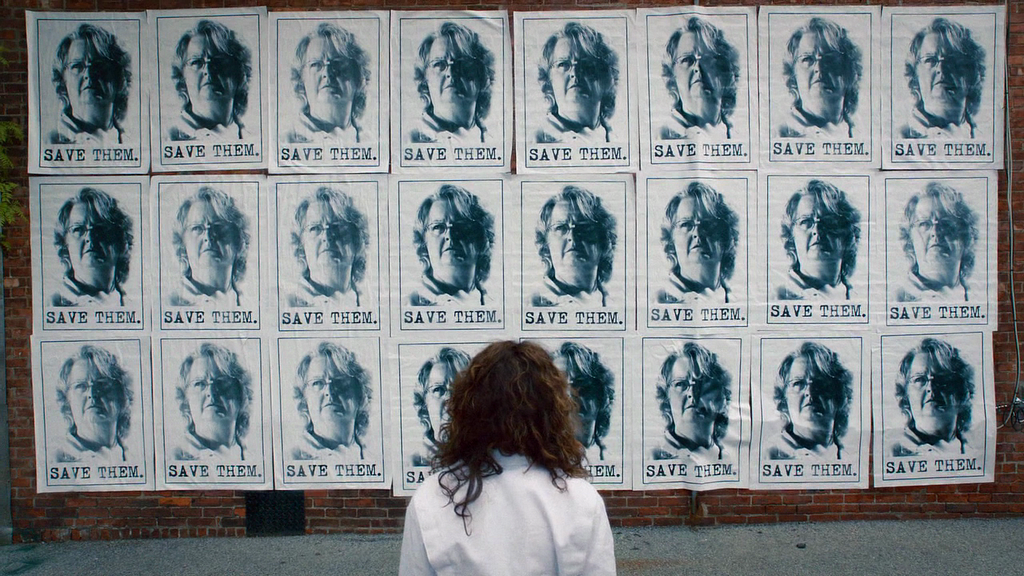
Post no bills? Tell it to the police chief. He’s the lunatic over on Oak Street.
Season One
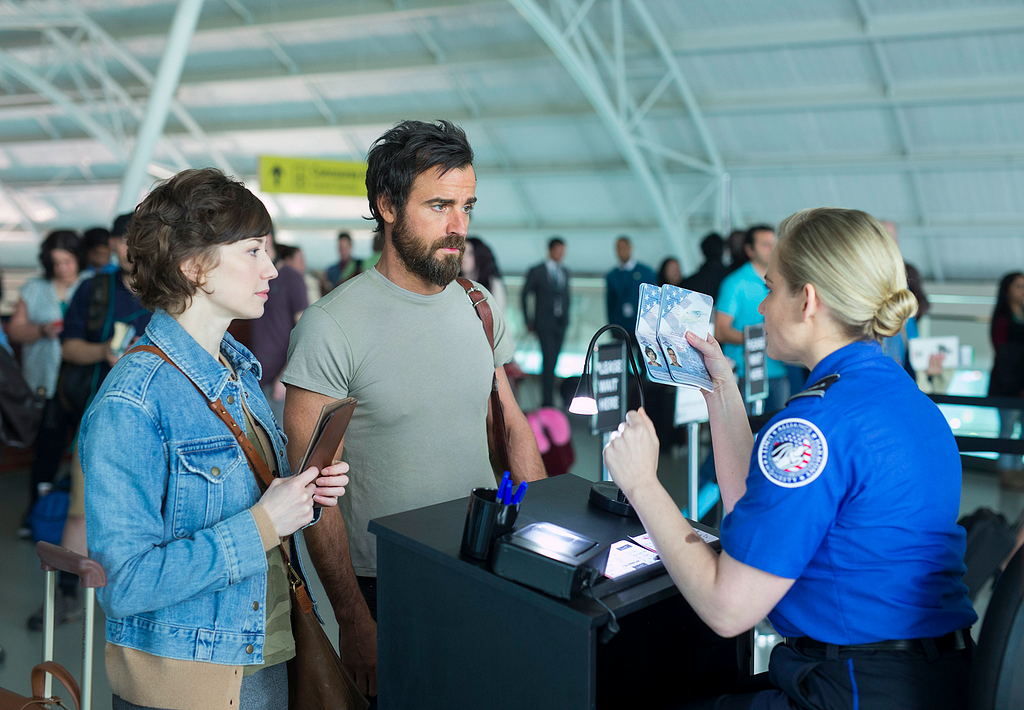
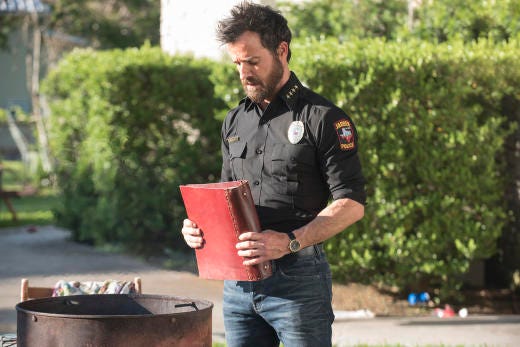
The first season of The Leftovers is an unrelenting investigation of grief and existential loneliness. Its central question is somewhere between speculative fiction and alternate history — how would the world’s population cope if a truly inexplicable tragedy occurred? Season 1 examines this question through the microcosm of Mapleton, New York, where Kevin Garvey (Justin Theroux) is police chief. Following the disappearance of her unborn child, his wife, Laurie (Amy Brenneman), has joined a cult called the Guilty Remnant, chain-smokers who dress in all-white and observe a vow of silence. The Guilty Remnant are self-proclaimed “living reminders” of the Great Departure. As police chief, Kevin is at odds with his wife, who, along with the rest of the G.R., is devoted to preventing the world’s remaining population from returning to normal life by creating chaos and pain.
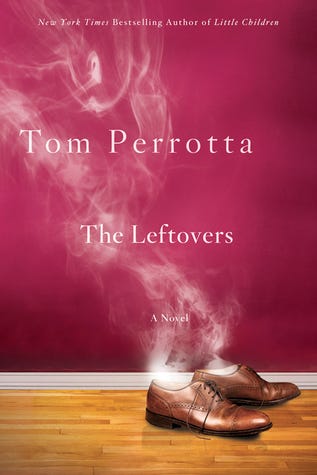
The Leftovers — Tom Perrotta
Aside from being enjoyable in its own right, The Leftovers is worth readingto see how Lindelof and Perrotta handled the adaptation. In the novel, Kevin Garvey is a retired businessman and runs for mayor of Mapleton after the Great Departure. In the show, he’s already police chief; a narrative alteration that transforms Kevin from a man who feels called to duty to one who has duty thrust upon him — the latter being a role much better suited for the rakish Justin Theroux.
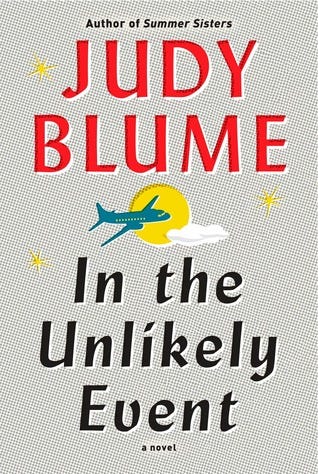
In The Unlikely Event — Judy Blume
Over the course of 58 days between December 1951 and February 1952, three planes crashed in Elizabeth, New Jersey, near the Newark Airport. Judy Blume’s first adult novel since Summer Sisters focuses on a small town’s reaction to this improbable tragedy. Although there was a mechanical explanation for each of the crashes (they were based on real incidents), their cumulative effect is almost supernatural.
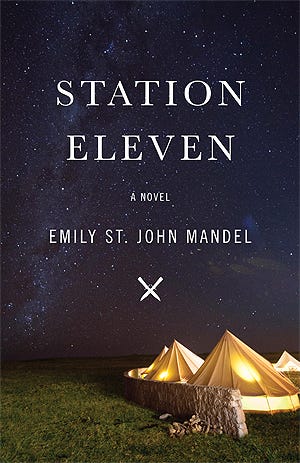
Station Eleven — Emily St. John Mandel
A flu pandemic has swept the globe, reducing the word’s population to almost nothing. The few survivors find meaning in unusual ways; some have joined a traveling Shakespeare troupe, others attempt to rebuild society inside an airport, while still others seek to fill the void of civilization by following a megalomaniacal prophet. As in The Leftovers, an apocalyptic event creates an emotional vacuums easily filled by cults and violence.
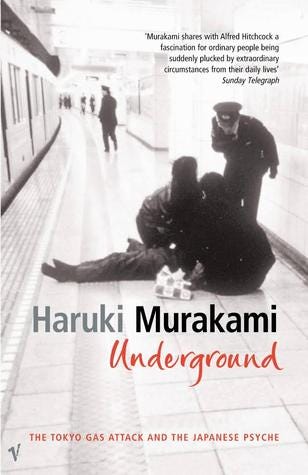
Underground — Haruki Murakami
In this powerful oral history, beloved Japanese novelist Haruki Murakami investigates the 1995 sarin gas attack on the Tokyo subway by the doomsday cult Aum Shinrikyo. The group never confessed, but Murakami was able to interview members of the cult as well as those affected by the attack. The “Subway Sarin Incident,” as it was known in Japanese media, bears some similarities to the large-scale action planned by the Guilty Remnant in that they are both violent, dogmatic performances designed to incite terror.
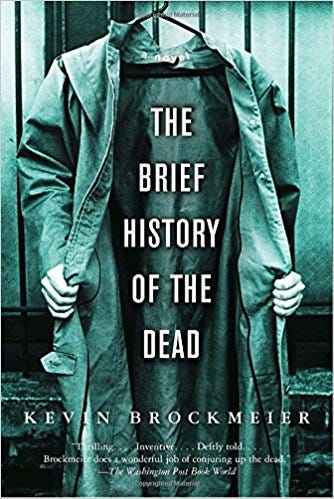
The Brief History of the Dead— Kevin Brockmeier
Brockmeier’s The Brief History of the Dead is like the photo negative of The Leftovers; the deceased reside in “the City” until they are forgotten by the living. It’s a functional purgatory, with jobs and a dedicated newspaper, but as life on earth is threatened by terrorist attacks and a super-virus, there are more people crowding the City and fewer and fewer to remember them.
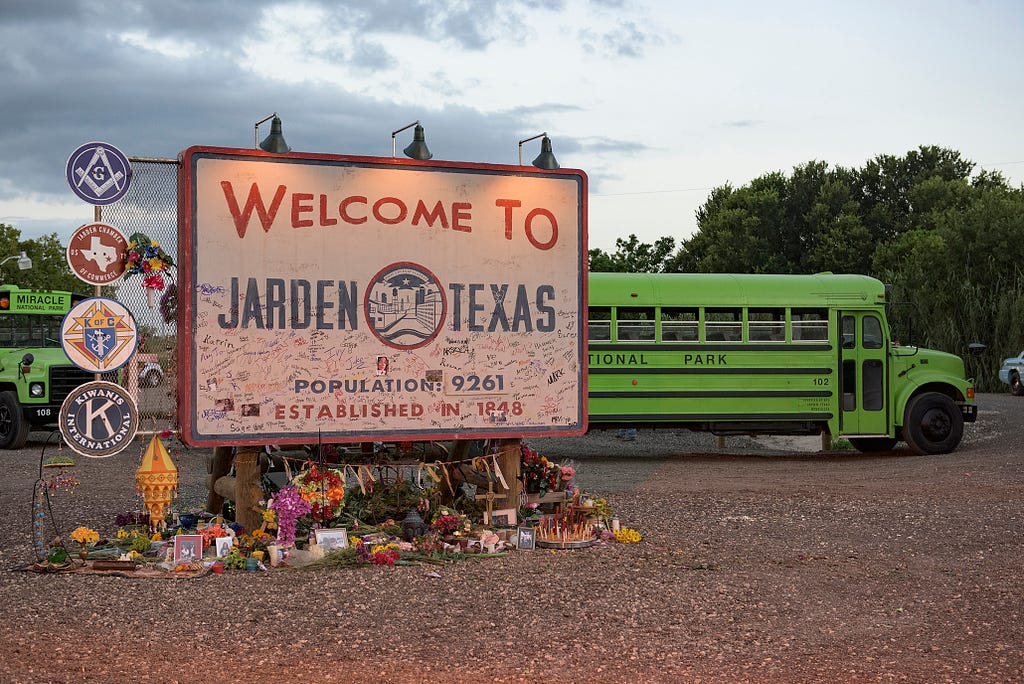
Welcome to Miracle. You got a pass?
Season Two
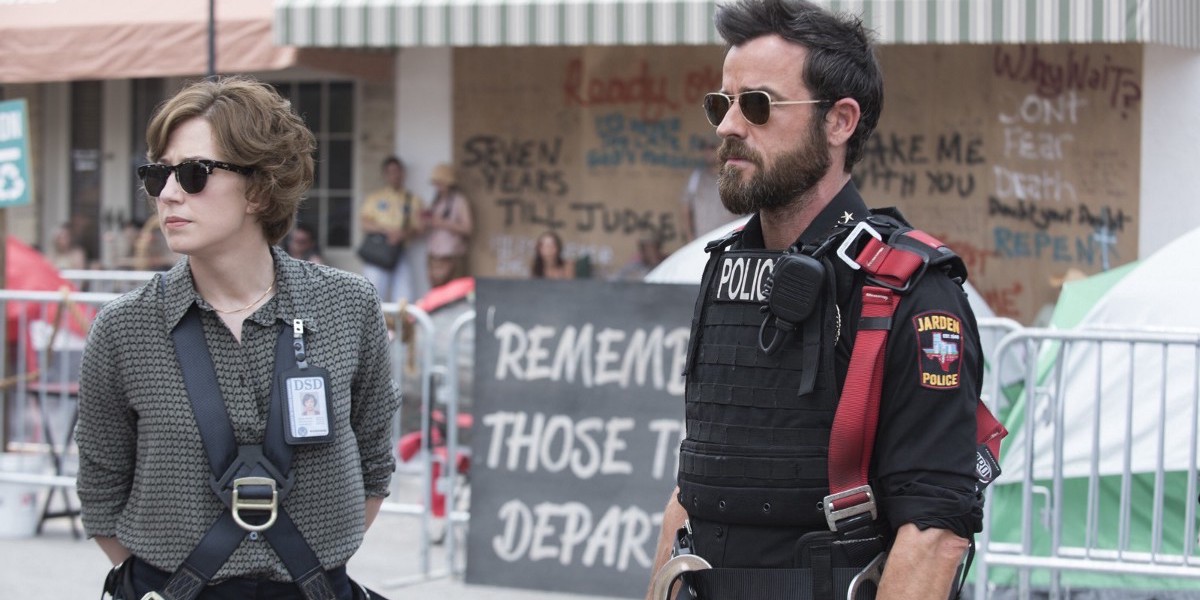
Season 2 of The Leftovers moves to Jarden, Texas, a small town also known as Miracle, where not a single person departed. Kevin’s new girlfriend, Nora Durst (Carrie Coon), uses the money she received in a settlement (from the departure of her husband and three children) to buy a home in Jarden. The town is accessible only to residents and tourists with a day pass, and pilgrims flock to the site to live in an encampment on the other side of a heavily guarded bridge. With this trip to Texas, the claustrophobia of the first season is blown apart. If Mapleton was a microcosm, Jarden is a market place. The Guilty Remnant don’t have much of a presence here (except in Kevin’s head), but there are hundreds of other belief systems to choose from and another hundred ways to profit off of those who want to believe.
The Garvey’s new house is next door to Erika and John Murphy (Regina King and John Carroll), both of whom are skeptical and skilled at taking advantage of newcomers. When their teenage daughter Evie and her friends go missing, the question of whether there has been a second departure (this one affecting Jarden) throws these characters into a turmoil that makes their problems in the first season look almost conventional.
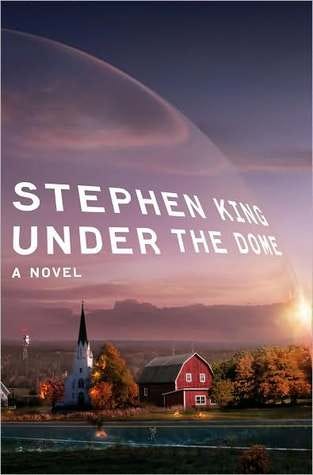
Under the Dome — Stephen King
When an invisible dome manifests around the small town of Chester’s Mill, Maine, the residents are trapped. The barrier is invisible yet palpable; its arrival causes planes to crash, cars to explode, and even the severing of a man’s hand. Like Jarden, Chester’s Mill is chosen for unknown reasons, and the resulting isolation amplifies the problems of its citizens.
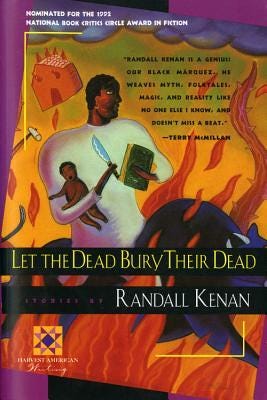
Let the Dead Bury Their Dead — Randall Kenan
Kenan’s Let the Dead Bury Their Dead is a collection of linked short stories that tells the history of Tims Creek, North Carolina through its residents. Tims Creek was founded by a runaway slave name Pharaoh, and the collection traces his story back to his African heritage. The Leftovers is similarly interested in Jarden’s origin story: Season 2 opens with a prologue depicting the neolithic humans who lived in the area. Let the Dead Bury Their Dead also explores themes of religion, the afterlife, race, sexuality, and identity, and the attendant conflicts in a small, Southern town.
Texas: the Great Theft — Carmen Boullosa
Carmen Boullosa’s Texas is a state for seekers, hustlers, the ambitious, the downtrodden, criminals, holy men, cowboys, natives, radicals and law men. It’s 1859 in the Rio Grande Valley — in Bruneville, an alternate Brownsville. All walks of life meet, and all manner of hell breaks loose in the struggle to claim the borderlands. Boullosa imbues it all with an intense humanity and a great passion for the improvisations and mechanisms of everyday life. This is a novel for anyone who sees the new age Babel sprouting up in the camp outside Jarden and thinks, ‘now there’s a place I want to know more about.’
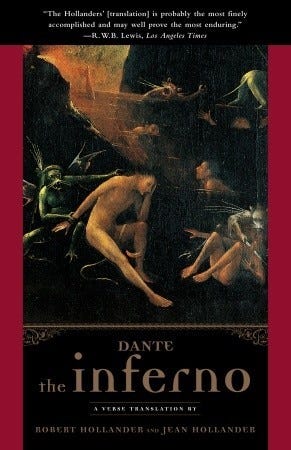
Inferno — Dante Alighieri
The reference point for season 2, episode 8 — aka “International Assassins,” aka the strangest, most audacious episode of The Leftovers to date — will come as no surprise. After all, Kevin is wandering around an afterlife hotel guided by his old pal Virgil. So go back to the classic source and wallow for a while in Dante’s mad cosmology of pain, punishment, love, humanity, and beatitude. Robert and Jean Hollander’s translation set a high bar for poetry and scholarship, but if you’re feeling like something different, check out Robert Pinsky’s new verse translation. Or, there’s always the classic Longfellow edition. You really can’t go wrong with La Divina Commedia #1.
Kevin & Nora, still a perfectly normal, well-adjusted couple. Nothing to see here.
Season Three
[If you haven’t started Season 3 yet, there are spoilers ahead…]
At first glance, it seems the characters have moved on from the violence that concluded Season 2. Kevin has become the police chief of Jarden, which has opened its gates to hordes of pilgrims anticipating the 7th anniversary of the Great Departure. He and Nora are living happily together, his daughter is in college nearby, and his son has joined him on the squad as a police officer.
And yet, there is trouble waiting in the wings. Erika and John have split following the death of their daughter, which occurred when the government bombed the Guilty Remnant. John has gotten together with Kevin’s ex-wife, Laurie, and together they run a fraudulent psychic practice. Lily, the baby Nora found on her doorstep at the end of Season 1, is no longer with the family. Nora has an unexplained broken arm. Kevin has developed a daily practice of suicide, duct-taping plastic bags around his head every morning and ripping them open just before he passes out.
The Guilty Remnant may be gone, but the characters themselves have become living reminders of the horrors that have transpired. People have not forgotten what happened in Jarden, nor have the writers: Kevin tried to drown himself and an earthquake drained the river. He drank poison, was dead and buried, and came back to life. After all of that, John shot him in the chest and still he did not die. When these events are followed to their logical end by devout Christians, the conclusion is that Kevin is the messiah. When they are followed to a logical end by Lindelof and Perrotta, as I have no doubt they will be, the result with be very different, but no less explosive.
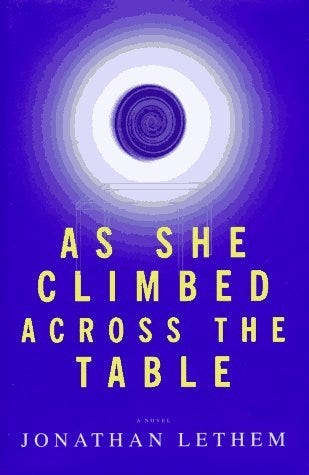
As She Climbed Across the Table — Jonthan Lethem
Based on the first three episodes of Season 3, Lethem’s novel about climbing into black holes against one’s better judgement might become relevant to The Leftovers finale. Will Nora Durst have her molecules blasted along with the dude from Perfect Strangers and “go through” to the land of the departed?
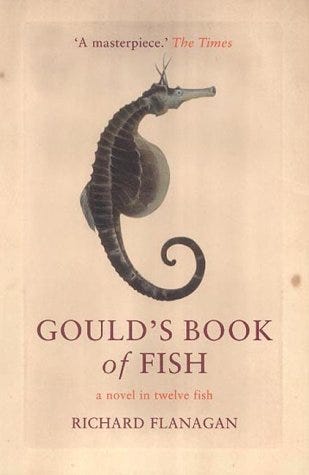
Gould’s Book of Fish — Richard Flanagan
So at this point in The Leftovers, we’re going to have do a bit of speculating about what, exactly, is going on in Australia, but if you’re in search of some guidance as to what the continent might look like during a period of great trauma and mystery, then Richard Flanagan’s your man. This is Van Dieman’s Land (now known as Tasmania) during the time of the penal colony. Billy Gould — convicted forger, painter of fish, reviser of history — offers up his own account of life on the island during this dark, bizarre period. If you think Lindelof, Perrotta and The Leftovers’ writers’ room have a knack for the morbid and wondrous, wait until you get a load of Flanagan.
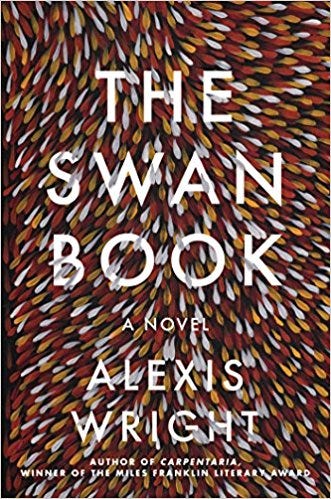
The Swan Book — Alexis Wright
Kevin Garvey Sr.’s adventures in the desert in the third episode, stealing the sacred songs of indigenous people to prevent a great flood, suggest that The Swan Book might be an appropriate read for Season 3. Wright’s futuristic novel is about an Aboriginal girl named Oblivia Ethelyne living in an Australia devastated by climate change. Wright blends elements of fairy tales and mythology with speculative fiction to create a world strange enough for any fan of The Leftovers, one Kevin Sr. may have even predicted.
The Book of Kevin — Matt Jamison, John Murphy, and Michael Murphy
The newest gospel written by Jarden’s very own devout residents is apparently already very influential in Australia, where other police chiefs named Kevin are bearing the brunt of Kevin Garvey’s location-specific immortality. But it’s about time, because, as Matt Jamison’s wife Mary put it, “the New Testament was getting old.”
Sign up for our newsletter to get submission announcements and stay on top of our best work.
YOUR INBOX IS LIT
Enjoy strange, diverting work from The Commuter on Mondays, absorbing fiction from Recommended Reading on Wednesdays, and a roundup of our best work of the week on Fridays. Personalize your subscription preferences here.