The Queer Erotics of Handholding in Literature

People always want to know how queer love functions, but that question feels unanswerable. If books have taught us anything, it’s that there’s no right way to love a body. I’ve had people ask how I know a woman wants me. They want some lesbian strategies, a set of documented rules. They ask: how did female friendship miraculously transform into love?

How should I know, I want to say, shrugging off the thing that might trap me. How should I know any of it? I’ve only ever really held hands once and look how that turned out.

‘She thought of people she had seen holding hands in movies, and why shouldn’t she and Carol?’

Patricia Highsmith’s The Price of Salt provides readers with countless glimpses of queer hands. The novel documents the burgeoning relationship between Therese, a young woman working at a department store, and the much older object of her affection, a soon-to-be divorcée named Carol. It’s a novel about two women falling in love. It’s the story of how queer attraction sometimes functions: in closeted spaces, coaxing emotions that are difficult to navigate. These liaisons, born in secret, are often fraught with anxiety. For lesbian relationships in the 1950’s, there are no rules for knowing what shouldn’t exist.

Much of Therese and Carol’s attraction is documented through touch. Hands crop up incessantly throughout The Price of Salt: they perform domestic duties and work unwanted day jobs, they pilot cars and open motel doors. More importantly, they’re viewed through the eyes of a woman looking for romantic signals. Therese watches Carol’s hands as they move and perform. Carol’s hands become the impetus for the erotic. As readers, we’re shown their significance through the lens of Therese. She watches Carol’s hands like she might watch a barometer. By viewing what the hands do, she’s able to ascertain what is wanted from her. Do the hands coax? Are they pushing Therese away; are they standoffish and flighty? A fundamental element of eroticism is the tension of what might be. We understand Therese’s longing as it pertains specifically to Carol’s hands.

In the novel, Therese wonders why she can’t achieve a simple moment of intimacy, the kind heterosexual couples achieve without having to overthink the act. Holding hands is considered a rite of passage for most people. Palms pressed together, fingers interlaced. It’s a sweet, uncomplicated way to move a relationship from friendship into something more.

For lesbian relationships in the 1950’s, there are no rules for knowing what shouldn’t exist.

“…why shouldn’t she and Carol?” muses Therese, who considers what it might mean to walk hand-in-hand with the person she loves. Handholding. It happens in movies and on the street, casually reaching for the hand of the person you want. People do it all the time.

But considering queer female sexuality, touching hands is illicit. For lesbians it often marks the entrance into what might happen next in an erotic sense. Queer women assess hands in terms of their readiness for sex: the length of someone’s fingernails, the strength in their grip. We look at hands to see if they’re up for intimacy. Our hands do the work of sexual organs.

What would happen if we touched, we wonder. What would happen if my hand found yours? What would come next?

Highsmith, a queer woman, knew this. In 1952, she had to write her novel under a pseudonym or risk tanking her career. There was no lesbian writing available for mass-market publication at that time. No place for queer female romance in the strictly heteronormative audiences that populated mainstream fiction.

We look at hands to see if they’re up for intimacy. Our hands do the work of sexual organs.

Publishers were unwilling to take on the novel. It was farmed out to a smaller house and ultimately picked up as pulp. The book’s cult following, mostly queer women, gained momentum over the past decade. The tender, anxious relationship that blossoms between Therese and Carol showcases the stress of coming out for women in a time period where they were expected to marry men and maintain households. Not so many years ago, the simple act of touching another woman’s hand meant you might have to give up everything you knew for love. Concerned with documenting that struggle, The Price of Salt turns handholding into a marker of queer rebellion.

The first time I held a girl’s hand, I thought about it so hard beforehand I made myself throw up. It was an anxiety so all-consuming that I puked three times. A rocketing kind of barf; the kind that made my guts want to exit my body, exorcist-style. My mother, normally someone who made me suck a thermometer for twenty minutes before she’d let me stay home, took one look at my face and called me in sick for school. Rolling around in my bed, I twisted the sheets and prayed something might give. Things I worried about:

How I’d reach for this girl. How she’d respond.

What my fingers would do. Would my thumb go on the outside? Inside?

Would my palms sweat? Would I tremble?

The first time I held a girl’s hand, I thought about it so hard beforehand I made myself throw up.

Most of all, I wanted to know where holding hands would eventually lead: because if I held her hand, my hand might then touch her wrist, her shoulder, and then her breast. We were very young and good friends and neither of us had dated before. There’d been no discussion of romance because neither of us was “that way.” Every step toward this new part of our relationship existed in how she brushed my hand when we passed a can of coke between us during choir practice. Every pass of the can left her fingers on mine until we were touching each other more than the soda. I liked the way she held the high notes. I drew caricatures of her face in my vocal scores. High A, high A: a beautiful second soprano who made the notes sound like clear, ringing bells. I was a first alto. Nobody cares about that vocal range.

I asked her to a movie, just the two of us. She said yes.

“This doesn’t mean anything,” she whispered as we sat in the darkened theater. I couldn’t watch the movie. I closed my eyes and thought about her hand. The webbing of her fingers pressed hard enough against my own to form a seal. “It doesn’t mean anything,” she repeated as she stroked the inside of my palm with her littlest finger.

Handholding is a trigger for the wider issues of the erotic. In The Price of Salt, Therese considers the action a relationship-defining event. Once the hands grip, there’s no turning back. It’s the line in the sand. The action changes the relationship into something denser; the pressure like smashing coal into a diamond.

‘It doesn’t mean anything,’ she repeated as she stroked the inside of my palm with her littlest finger.

I don’t like the dictionary definition for hands. It’s all metatarsals and bone fragments, so clinical it removes the movement from the parts. But what I do like of the definition comes from the secondary source. We’re told that a hand can be considered a personal possession; that to “hand” something means you have given someone an instance of control or supervision. The example provided:

left the matter in her hands

To leave matters in someone’s hands means they maintain autonomy over their actions and their desires. The Price of Salt repeatedly provides images of hands that chart the course of their owner’s lives. I read these sentences and think of the hands that have touched me, certainly, but mostly I think of my own hands and what they continue to do. Holding a beer, peeling the wet label from the bottle. My fingers scratching behind my dog’s ears. One long ago summer, I wet my palms with lake water when I went on a trip with that first girl I loved, the one who only acknowledged my presence when we were alone. When we swam, I held her buoyant above the drifting algae. Her body felt insubstantial and I gripped harder just to know she was present; just to know she was there with me. At that point in my life, queer hands were only allowed to touch when no one else was looking.

“This doesn’t mean anything,” that same girl said in the theater as she stroked my palm, but what she meant was:

It only means something to you because I won’t let it mean anything for me. If exposed to air and light, my hands will untangle themselves from yours.

Highsmith looks at hands in The Price of Salt as conduits for future intimacy. She showcases them as what-will-come. I often look at hands as objects of desire and self-ruination.

Control, supervision. The matter is left in my hands.

The movie version of Highsmith’s book, Carol, often puts the camera’s focus on character’s hands. Gauzy close-ups of Carol’s fingers as she smokes cigarettes. Hands caressing the soft, peachy fuzz of women’s faces. Fingering fabric and carting around purses, grasping at the straps. Holding onto drinks. Women are always clutching alcohol in these scenarios, as if to do the work they need to do, the hands must first be inebriated. Highsmith writes about hands in ways that suggest the erotic and the romantic, but as separate entities. Though the book has an unheard-of happy ending for its time, it’s also one of the first queer books I read where sex doesn’t necessarily mean love. For queer love to exist in much of literature, it must be shown in mortal agony. People want to see it born so they can watch it die.

For queer love to exist in much of literature, it must be shown in mortal agony. People want to see it born so they can watch it die.

In the grand tradition of lesbian novels, there’s always the reveal of the emotion and the quick killing off of one of the women. Lesbian love doesn’t often survive written scenarios or even many movie scenes. The Price of Salt is different. Highsmith allows for the pain of losing a straight, heteronormative life, but she leaves the two women intact at the end of it. In her novel, the erotic focuses less on romance and more on who’s in control of the relationship: “I feel I stand in a desert with my hands outstretched, and you are raining down upon me.”

Hands are used to mark instances of scarcity and plenty. They’re always reaching out; to touch something, anything, to embrace another person so they know they aren’t alone. Touch in these instances moors the characters in space and time.

The Price of Salt might use hands to mark discovery, but I use hands as warning signs. I keep them outstretched, like a person searching a darkened room. I want them as barricades. It would be nice to find things, sure, but I don’t want anything finding me.

…to obtain information about the texture of an object, people rub their fingertips across the object’s surface, and to obtain information about shape they trace the contour of the object with their fingertips. Conversely, in object manipulation there is precise motor control of the hands. The fact that individuals with numbed digits have great difficulty handling small objects even with full vision illustrates the importance of somatosensory information from the fingertips.

Encyclopedia of the Human Brain, Vol 2

In the span of a day I count 494 separate hands. This number is an instance of a single day. It’s a pastime I perform repeatedly; something I do without thought. I look at people’s hands and note them, checking them off. Everyone’s hands. As a librarian, I see patrons pick up books, palming library cards, clutching overdue receipts. Fingers flipping through pages. Rifling the newspapers. I watch the way people hold their belongings and shoulder their backpacks. I note the value they place in their things and the garbage they toss without thinking. I count hands the way someone might count sheep.

Though I shy away from friendly intimacy like hugging, but I’m fascinated by what fingers and thumbs and palms can do. Dexterity. Manipulation. The movement of our speech so often contained in the movement of our hands. Mine are birds when I speak, flapping until I ascend and reach the apex of my sentence. When I’m stressed, I move my fingers like they’re gears that power the momentum of my thoughts. Help me reach the point, I beg, as they open and fold and smack into each other.

Dexterity. Manipulation. The movement of our speech so often contained in the movement of our hands.

Highsmith wants the reader to know queerness in terms of the other. The other, in this instance, is anyone aside from the two women and their relationship. Their magnetized bodies are what draw us close to them as they draw close to each other. We want to know: why do they feel the way they feel? We want to know because no one understands these impulses. We want to know because our bodies want unknowable things and most of the time our brains can’t understand why.

We see the body here, broken up into parts. The eyes. The voice. Most of all the hands, which Highsmith uses for directional control. Touch is the thing that binds the characters. Touch is the thing that maps the body. In the novel, it’s a driving impulse. But we understand this as readers because we are that way ourselves. How do we react in moments of pain? Of fear? Of intense need? We stretch out our hands. We reach for the unreachable thing. We ache and want. We grasp.

‘You ask if I miss you. I think of your voice, your hands, and your eyes when you look straight into mine.’

It’s said that fingers contain some of the densest areas of nerve endings on the body. If I drink, I can numb my brain and also the sensitivity that comes from touch. How hard is it to orgasm after three beers. Four? Five beers in and my hands could be touching the smooth, warmed-over flesh of a melon. In those buzzed moments, every time I touch something I am touching it for the first time.

Could hands address the same issues over and over again without knowing? Do hands hold amnesia cupped in their palms? How else do we describe the illusion of seduction. Even when we’re touching ourselves, we’re inventing scenarios for our hands to chart. We imagine the hands as belonging to other people. We imagine those hands are capable of things far beyond their potential.

We can use our hands not only to manipulate the physical world, but also to perceive it. Using our hands to perceive the shape of an object often involves running the fingertips over the object’s surface. During such ‘active touch’, we obtain both geometric and force cues about the object’s shape: geometric cues are related to the path taken by the fingertips, and force cues to the contact forces exerted by the object on the fingertips. These cues are highly correlated, and it is difficult to determine the contribution of each to perception.

Nature, Vol 412, 26 July 2001

In the aptly named 2002 novel Fingersmith, Sarah Waters discusses queer hands in the same way Patricia Highsmith does. A work of historical fiction, Fingersmith is concerned with the lives of two women: Sue, an orphan who’s been sent to gain the trust of Maud, a wealthy heiress. Waters narrates from both female perspectives throughout her book. In the first instance, we’re given narrative from Sue, posing as a lady’s maid, who has set out to manipulate Maud. Sue eventually falls in love with Maud, much to her dismay. In the second part, we’re given the perspective of Maud, who’s got her own agenda. Both sections of the book deal with the improbabilities of love and honesty, and both scenarios demarcate what it’s like to discover something unexpected with your hands.

In Waters’ books, bodies discover love ahead of the conscious mind. But again, the bodies are the ones leading the charge. The characters bodies are often tools for the protagonists to enforce their will. They find love with their hands before their hearts are willing to acknowledge any kind of true intimacy. Sex is a power dynamic. Sex is ruled with the hands.

“Do you know how careful my love will make me? See here, look at my hands. Say there’s a cobweb spun between them. It’s my ambition. And at its centre there’s a spider, a color of a jewel. The spider is you. This is how I shall bear you — so gently, so carefully and without jar, you shall not know you are being taken.”

Waters makes these bodies open and accessible to the reader. Yet at the same time, their minds are closed. Both women seek ways to understand. They forsake each other, again and again, but their hands always do the most honest work. Even when they can’t admit they love each other, their hands say it for them.

Even when they can’t admit they love each other, their hands say it for them.

Their hands draw a pleasurable agony. It is the most understandable kind of pain.

I like hands the way I like knowing the exact right thing to say in a conversation. How they open and shut, how they fold into themselves and hide things. I want hands the way I want to know my own mind. I want them with a fierce, unknowable throbbing. Once very late at night, a friend asked what part I liked most of a body. We’d been talking about sex for hours and I’d spoken without flinching: orgasms, one-night stands, documenting our best sexual experiences and our worst.

What part do you prefer, that friend asked, and I replied:

“Hands.”

My voice was so unsteady I could hear the ache in it. I looked at that friend’s hands when I said it and swallowed hard. An entire night discussing sex and the red flush only crept up my neck when I thought about those parts that inevitably do all the touching. The part that precedes my brain; that shows all my want. The part I can’t hide from myself

Forget toolmaking, think fisticuffs. Did evolution shape our hands not for dexterity but to form fists so we could punch other people?

— New Scientist, 19 December 2012

In hands, power sometimes means violence.

Even when we’re touching ourselves, we’re inventing scenarios for our hands to chart. We imagine the hands as belonging to other people.

There is sex happening with hands in these narratives, certainly, but there’s also fraught emotion — a love that hinges on manic.

Unlike Highsmith, Waters’ novel looks at how two queer storylines might eventually intertwine to show how bodies function within the construct of aggression. There is sex happening with hands in these narratives, certainly, but there’s also fraught emotion — a love that hinges on manic. Too stressful to be dealt with outright, the sex and the intimacy become a kind of ownership. Revisiting that secondary definition of hands, we see the word control. What are the hands doing if not guiding the other into the role they wish them to play?

“…but when she saw me turn to her she reached and took my hand. She took it, not to be led by me, not to be comforted; only to hold it, because it was mine.”

Hands in traditional feminine roles perform “women’s work.” They guide the domestic. They’re the hands that carry babies, create meals, that clean and maintain households. Capable hands. As a person who grew up in a space where gender roles were rigidly enforced, I look to these domestic spots and wonder how to reimagine them. One way of doing that is in how I think about art outside of writing.

When I make things for friends, I use my two hands. I’ve sliced myself and blood has wet these created objects. Bits of me — my hair, flakes of my skin — inevitably embed in the work. Fragments of my body make their way from me, through the mail, and into the person’s home. My fingers ache when I’m done. It’s a reminder that I used the tenderest part of me to engineer something they open and touch. That part of me, that building part, will always be with them. Let my hands do the talking, I plead with these gifts.

It’s not unlike how I perform sexually. Just let me show you what these hands can do, I say.

As a perceptual organ, the hand has several advantages over the eye: the hand can effectively ‘see’ around corners and can directly detect object properties such as hardness, temperature and weight. During active touch, the perceptual and motor functions of the hand are tightly linked, and people tailor their hand movements to the information they wish to extract. Whereas ‘local’ information about the object, at the fingertip’s point of contact, can be extracted simply by touching the surface.

Nature, Vol 412, 26 July 2001

When I was young, I bought a hand strengthener from the dollar store because I wanted to be able to fend for myself. I was seventeen and my hands, dangling from my skinny, praying mantis frame, looked inordinately large for my body. The strengthener, I thought, would help me achieve some measure of control. I wanted to be the one someone turned to when they needed something.

Correction:

I wanted to be the one that women turned to when they needed their sodas opened. So I bought the hand strengthener and used it every night in my room, clenching down on it over and over again until my repetitions beat into the backdrop of the sad, lovelorn music that played on my stereo. I’d cut off all my hair that summer and bought men’s cargo pants. I wore a sweater vest and oxford brogues and my mother wouldn’t let me leave the house because she said I “looked to much like Ellen.”

The girl I first loved told me she liked my shoes and she liked my pants and her hair was longer than anyone I knew. When we held hands, finally, I took hers gently and tried not to crush her fingers with my own. My hands were strong enough by then I could’ve hurt her. I didn’t want to crush her. I wanted only to show tenderness.

“This means nothing,” she said in that movie theater, but I let my hands cradle hers like baby birds. It was important that I show the utmost delicacy. Tenderness was foreign to me. I wanted her to know I could love without hurting someone.

Therese thinks logistically in The Price of Salt about how her hands work in conjunction with Carol’s hands. She’s always at odds with them just as she’s always at odds with her own feelings. The characters emotions are so overwhelming that her body works against her mind’s wishes most of the time.

“Therese leaned closer toward it, looking down at her glass. She wanted to thrust the table aside and spring into her arms, to bury her nose in the green and gold scarf that was tied close about her neck. Once the backs of their hands brushed on the table, and Therese’s skin there felt separately alive now, and rather burning.”

Handholding with the girl I once loved made me feel like my skin was being slowly peeled from me. I remember that when we kissed it was something good — but it was handholding, that precursor to the other kinds of holding, that made my insides ache. Her hands and how they touched mine let me know how they might touch other parts of me. Those parts, alive with nerves and singing, singing, refused to let me forget what they could do.

Handholding with the girl I once loved made me feel like my skin was being slowly peeled from me.

Highsmith writes that Therese thinks about the desire to “thrust” and “spring” at Carol. The imagined actions are followed closely by the real action — the tender brushing of the backs of hands against a table. That bare contact is enough to send Therese into agony.

Hands function in Highsmith’s text as conduits. They are grappling objects, passing across each other’s skin only to alight the flesh with “burning.” Hands work frantically to conjoin bodies. Perhaps that’s the thing that brings the erotic to the forefront of the mind when we consider queer hands: the fact that they indicate what might happen next. Unlike most queer stories, which focus on bringing the hidden to light (coming out narratives), Highsmith and Waters’ hands are all about possibility. They’re already out. They’re actively seeking.

I love you, they say, but don’t hold too tight. Gently. Don’t crush me.

The woman who would not recognize me outside our theater-darkened handholding let me touch other places on her body. Understanding of my own frame hinges on a complex understanding of hers. Handholding. Heartholding. It was a body I knew under the scope of my palm.
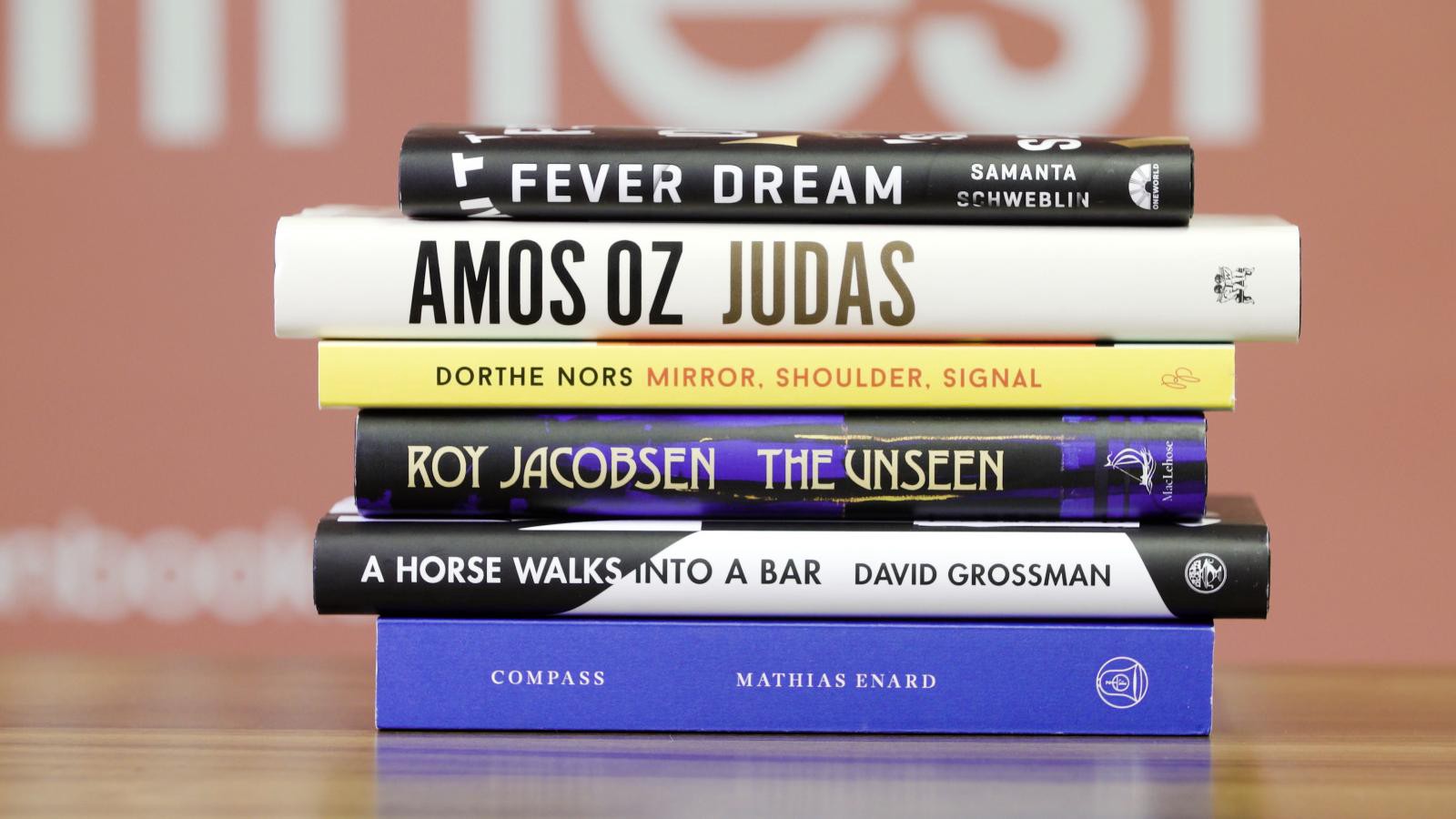
A Closer Look at the Man Booker International Prize Shortlist

Get to know the finalists before the winner is announced in June

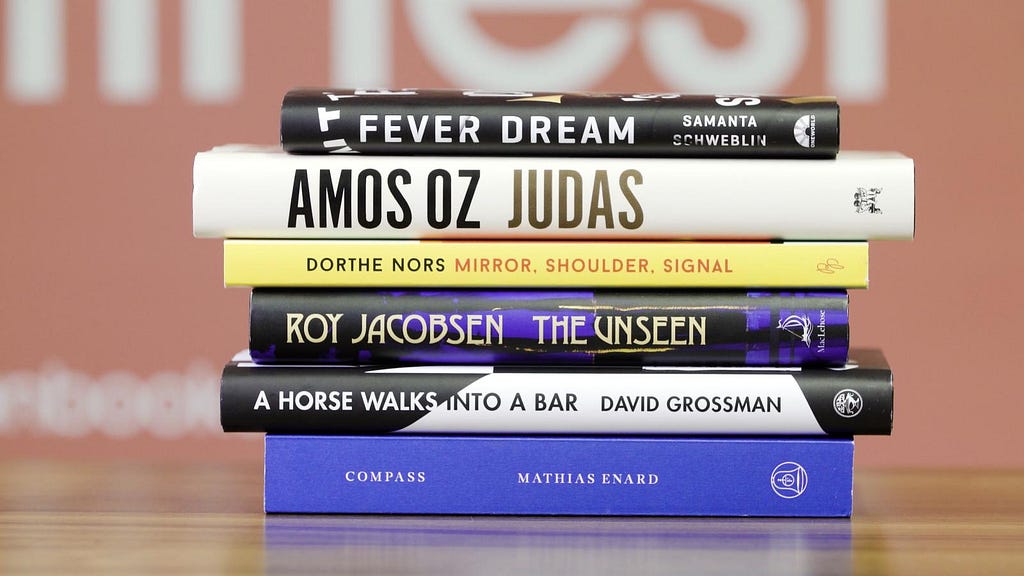
A stack of beautiful books.

Last week, the Man Booker International Prize officially released its shortlist for the 2017 award. This accolade focuses on exceptional literary work translated into English. The lucky winner receives a cash prize of £50,000 (about $64,000) — and this is one prize where the translator gets a cut, too!

In previous years, the international prize was based on a writer’s complete body of work. But 2016 marked the first year that authors and translators entered consideration on the basis of a specific book. Check back in here on June 14th when all of the Man Booker Prizes will be announced. But in the meantime, here’s a primer on the candidates and their work. That’s right — it’s time to get better acquainted with international literature in translation!

The 2017 Man Booker International Prize Shortlist

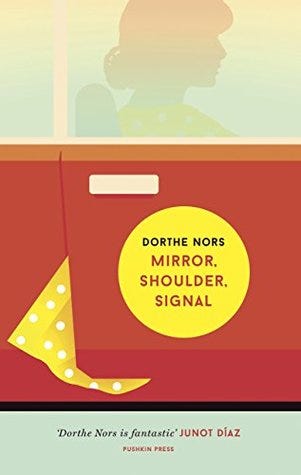
  • Dorthe Nors, Mirror, Shoulder, Signal (translated from Danish by Misha Hoekstra).

Nors has authored five novels, including the short story collection Karate Chop, which was welcomed with high critical praise, and was a favorite of Electric Lit’s Lincoln Michel in 2014. Nors is the recipient of a Danish Arts Agency’s ‘Three Year Grant’ for her “unusual and extraordinary talent.” You can find more of her work (translated by Misha Hoekstra) right here on Electric Lit:

A Wolf in Jutland: Dorthe Nors On The Writing Life In Denmark

  • Mathias Énard, Compass (translated from French by Charlotte Mandell)

The Washington Post hails Compass, Énard’s third novel to be translated into English, as more timely now than ever. (Mandell also translated Énard’s novels, Zone (2010) and Street of Thieves, (2014). Compass is a story about the complex historical relationships between the East and West, with a particular focus on the shared experience of music.

  • David Grossman, A Horse Walks Into a Bar (translated from Hebrew by Jessica Cohen).

It may not come as a surprise that a book named after the setup to an old joke is about a comic, but don’t be fooled, this Guardian review warns that A Horse Walks Into A Bar is neither “funny nor an easy read.” What Grossman may lack in levity is compensated fully by its truthfulness to the intersection of suffering and art. His 2014 genre-bending book, Falling Out of Time, was also translated by Jessica Cohen.

  • Roy Jacobsen, The Unseen (translated from Norwegian by Don Bartlett and Don Shaw)

The Unseen is a best-selling book in Norway about a fishing family living in Barrøy Island, which is perched off the northwestern coast of the mainland. Jacobsen has had an award-studded career. In 1989, he won the Norwegian Critics Prize for Literature for a collection of his short stories and he’s been nominated for the Nordic Council’s Literature Prize twice.

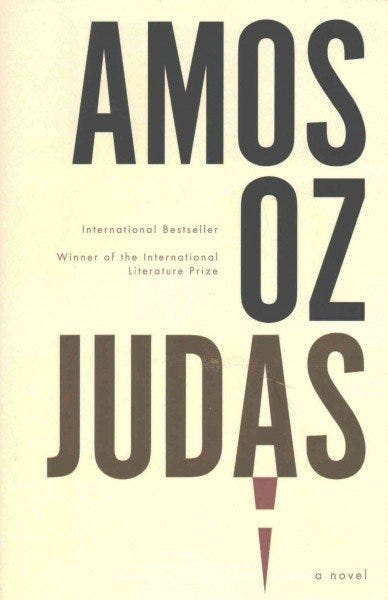
  • Amos Oz, Judas (translated from Hebrew by Nicholas de Lange)

Beloved Israeli writer Amos Oz’s latest work is a reimagining of the crucifixion story in which he asserts another version of history: “Judas was not a traitor but, in fact, the truest believer in Jesus’ divinity, more so than even Jesus himself.” According to the New York Times, Oz’s obsession with the story of the ultimate traitor began when he was eight and was called a traitor himself, for befriending a British occupying soldier in Jerusalem.

  • Samanta Schweblin’s, Fever Dream (translated from Spanish by Megan McDowell).

Tobias Carroll recently reviewed Schweblin’s Fever Dream in Electric Lit and came to the conclusion that it was aptly named, yet found it difficult to describe why. He proposed that it may be “the result of some unlikely literary mash-ups: an interrogation blended with a deathbed confession; Gene Wolfe’s sinister/pastoral Peace interwoven with Silvina Ocampo’s hallucinatory tales of class and obsession.” Read the full review here.

Or if you want to get a taste of Schweblin’s genius, read her short story “Birds in the Mouth” in Issue №12 of Electric Lit’s Recommended Reading:

“Birds in the Mouth” by Samanta Schweblin

So, there you have it: your 2017 Man Booker International shortlist. Time to get reading!

Are Video Games Meaningful?

Andrew Ervin’s Bit by Bit explores what video games mean for popular culture

“We can move up or down, left or right, or we can stand still until the ghosts come and kill us. That is free will. We cannot, however escape the maze entirely. Even the best players in the world will eventually find themselves chased down. That’s fate.”

In Bit by Bit: How Video Games Transformed Our World, author Andrew Ervin takes a journey both personal and pedagogical. He is as transfixed and mesmerized by what video games mean and what video games are as his nephews are obsessed with Minecraft or the legions of World of Warcraft players are possessed with the world of Azeroth. Between his personal reflection and his exhaustive interviews, he posits the question: are video games meaningful? Is the act of playing them more than just digitized conditioning? These are not rhetorical questions.

Ervin has his own answers but he wants the reader to draw their own conclusions, following the path games have taken to get to this point. Starting at the beginning. Where do video games “start?” It isn’t a question normally asked. To some, video games start whenever they first picked up a controller. To others, there’s a “Press Start to Begin.” I’m not sure the answer matters so much as the question.

Early in Bit by Bit, Ervin describes the genesis of video games: the analog computer game Tennis for Two. While this seems relatively cut and dry, he introduces unexpected uncertainty. Is Tennis for Two a video game? To start, it’s not a video, and the venue (an analog computer) is a different beast entirely from other gaming platforms. According to one of the (many) experts that Ervin interviews throughout Bit by Bit, Tennis for Two is “a quasi-computer game. It’s not something that you can plug into your TV or computer screen and run.”

These epistemological knots run throughout Bit by Bit. If it were a strict history of video games — Tennis for Two begat Pong begat Donkey Kong begat … Minecraft — this would be a far less interesting book. Alternatively, were it a biography-by-video game that focused more on Ervin’s own experiences as he plays Berserk, and Journey, it might lose some of that research-based credibility. By melding the two and asking tough ontological questions, Ervin transcends.

The Great 2017 Indie Press Preview

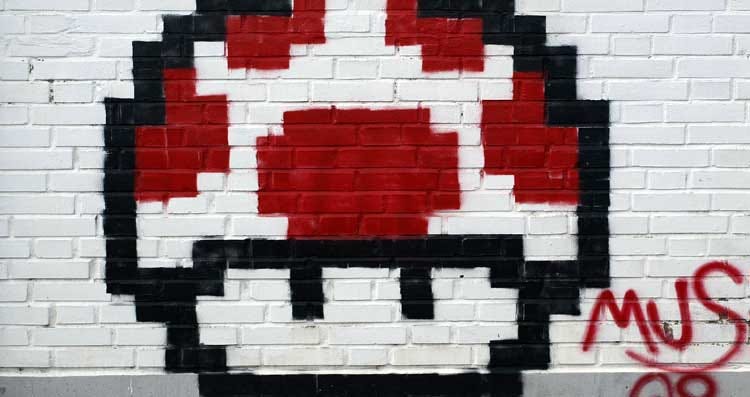
Many of his tougher questions bear thoughtful fruit. For example, while paraphrasing and translating a Belgian surrealist, Ervin investigates the nature of being through video games. “… Magritte painted the words, ‘Ceci n’est pas une pipe.’ This is not a pipe. Of course it’s not a pipe, not any more than a green sewer pipe in Super Mario Bros is a pipe: it’s a representation of a pipe made with oil paint or pixels.” Why is this comparison of Margritte to the Bros important? Well, how often do we play video games and take the actions on screen at face value? We press buttons and actions happen, but are we running or jumping or building or shooting? No, we’re directing data to interact with data and data-driven conclusions occur. There is no pipe, there is no spoon, there’s only us.

While these nature-of-being questions are intriguing, over time they can grow weary, as do the classical references: “They ran and jumped through a series of sewers like Jean Valjean, though harassed by turtles rather than by Javert.” It’s as if Ervin, knowing he’s writing about a form of entertainment that critics such as Roger Ebert misliked — “I remain convinced that in principle, video games cannot be art” — wants the readers to know that while he plays video games, he’s a smart dude (besides Les Miserables, there are copious references to Shakespeare, Moby Dick, and other “highbrow” entertainment). It’s clear throughout Bit by Bit that Andrew Ervin is a devoted and capable researcher, and a thoughtful, accomplished writer, these references can feel forced.

Needless references aside, I’m glad he’s so careful and thoughtful. Importantly, Ervin makes it a point to introduce as many view points from underrepresented populations as possible. There are many female critics, game developers and players interviewed and quoted in Bit by Bit. For a population that (by some measures) encompasses half of the gaming world, women are not mentioned or addressed enough. That Ervin made it a point is a step in the right direction.

It’s hard as a reader to know the entirety of an author’s journey with their book’s construction. Perhaps there are other reasons for the numerous philosophical, artistic and literary references and parallels. To a point, they’re highly enjoyable brain-engagers. As are Ervin’s own deeper suspicions about video games, such as Colossal Cave Adventure, “Options are limited; free will does not truly exist on the game’s world. I cannot drink stream or break dance” and Berserk, “Like existence itself, in Berserk there are no levels to attain, no loot, no real point other than inevitable death.”

Thankfully, Ervin doesn’t solely dwell on classic titles and gaming antiquity. Through his truncated, subjective (by design) tour of video games, he lingers on what he terms the Video Game Renaissance (the Super Nintendo, the PlayStation and the N64). While he himself left gaming at this period, “Even as the PS1 and N64 Renaissance brought video games into a new and glorious era, it disenfranchised a large number of casual gamers like me,” he also recognizes that this is the period that popularized and modernized the industry. He bemoans the fact that he gave up before achieving fluency.

It’s at this point that I most personally empathized with the author. While my disenfranchisement was not as total, I also ‘didn’t get’ the 3D revolution and sometimes feel wistful for a simpler time.

Near the conclusion of Bit by Bit, after Ervin’s re-entry into video games due to the wave of auteur games in the recent iteration of systems and technology, Ervin addresses the title. Have video games changed the world? To Ervin, the answer is evident. As he states, “Being subject to academic methodology is one sign that games have truly arrived.” That is one objective metric that gaming has entered the mainstream, that they’ve become, more than culturally important, part of culture itself. Interesting, but not necessarily convincing. It’s another section, where Ervin depicts the US Armed Forces’ comingling with video gaming (and a theme park devoted to shooting games and recruitment), that’s more pointed.

I wonder at the central tenet of Bit by Bit. Have video games changed the world? Or have they become assimilated into the cultural gestalt and thereby just another hobby? I’m not sure. While much of Bit by Bit is a fascinating and engrossing history, I’m not convinced that history alone amounts for much. But he makes so many thought-provoking points, asks so many excellent and difficult questions, that maybe he’ll convince you. Regardless of our conclusions, Bit by Bit is an engrossing and necessary read.

Let’s pause here so you can read for yourself. We can do that now:

“It’s easy to forget that save functionality did not always exist. Someone had to come along and invent it.”

The Nostalgia of the Neighborhood Hardware Store

The dog and I walk to the hardware store in the snow like that first winter in Chicago when we were still young and brave. We were one and 22 then. We are 12 and 33 now. We need keys for the new place where we’re starting our new life, and snow makes newness feel safe. We slide down the sidewalk with that old sense of promise, two girls against the world, the city a glistening pearl at our feet.

In front of the store, a crowd disperses as a truck slips and swerves away from the curb. Inside, the man at the counter wears a utilikilt. I say, “I need to copy this key,” and he says, “I was just helping those guys push their truck out and I ate it on the ice.” He rubs his right arm and winces while I stand there, stupid, key in hand. As usual, I missed the whole thing.

Another employee comes in from the snow and asks Utilikilt if he’s okay.

“I’ll be fine,” he says. He has a viking beard almost as orange as his vest.

“You fell down hard, man,” his coworker says.

“It’s not so bad,” he says. I think he should go to the hospital. I think he should wear pants.

While Utilikilt Viking cuts my keys with his remaining good arm, the dog and I roam the aisles looking at parts. I wouldn’t know what to do with most of them, but they’re soothing all the same. This nut fits that bolt; this joint threads with that pipe; intention and usefulness abound. In the housewares aisle, I pick up dish soap, the fancy kind, and picture wire, and hooks. The dog sniffs a box of rat poison on a low shelf until I notice and pull her away.

In the back of the store, a wall of toilet seats makes me cry. There are reasons, but how silly they sound: the way our old landlady had warned us about the toilet when we moved in, “I mean, I don’t know what you eat, but just in case.” The time we stood in the too-small bathroom of that too-precious house and named the fish on the shower curtain. How my new landlady is more nosy and less kind, and my new apartment has a bigger bathroom with a better toilet, and how I wish he could see the sink, the way it fits into an old wooden cabinet with plenty of room for two people’s things. How I had believed my days of going to a hardware store alone to fix up an apartment for just me and the dog were long gone. I sink to the floor beside a plunger display and the dog sticks her face in mine. “Sorry, kid,” I say. I want to scream obscenities until someone calls the police. I want to fill my arms with every kind of hammer and run down the street breaking windows and heads.

I read somewhere that the end of a significant romantic relationship affects the brain the same as death; grief is grief, no matter the cause. Some days, I envy the widowed and terminally ill, publicly praised for their bravery and strength. There is no honor for the heartbroken bereft. I am not brave or strong, I am merely surrounded by bathroom fixtures and alone. Cry me a whatever, woe the fuck is me.

“My girlfriend loves this soap,” says Partnered Utilikilt Viking as he bags my things. If he saw me by the toilet seats, he isn’t saying a word. This store is quite small.

“You should put the rat poison up higher,” I say. “Since you’re dog-friendly? It’s kind of unsafe.”

“I never would have thought of that,” he says. He still isn’t using his fallen-on arm.

He hands the dog a large biscuit, and me three identical keys, and I tell him he should go to urgent care.

“Yeah thanks,” he says, “You take care, too.”

Twelve in dog years is 84 in human, common wisdom says, but really it depends on the dog. The vet told me mine could live to be 16, which would be 112, which is very old, but still not enough. I think when the dog dies, I’ll die, too. I’ll be 37 then. It’s young, but people can understand that kind of giving up.

We walk out the doors into snow already turning to slush. Winter never lasts in this town, which should be some sort of relief, but imagine if snow stuck around long enough to count. Imagine if love never died, and neither did dogs, and winter did its job for once. We head towards our new home, two old girls against a world already starting to forget. The city is a riverstone, a comforting weight. It will pull us under if we let it, but we won’t, we can’t, we won’t.

Five Essays, by Josh Russell

Which Novelists Are Writing for TV in 2017?

From Fargo to American Gods, The Leftovers to Legion, find out which of your favorite shows are employing your favorite novelists

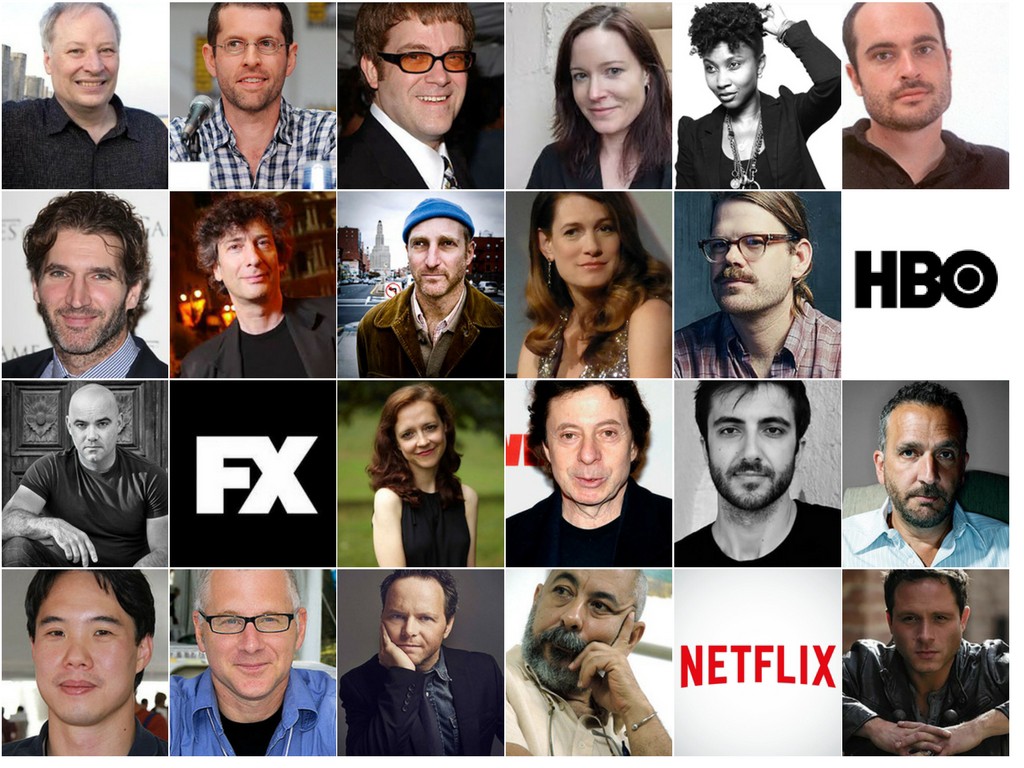
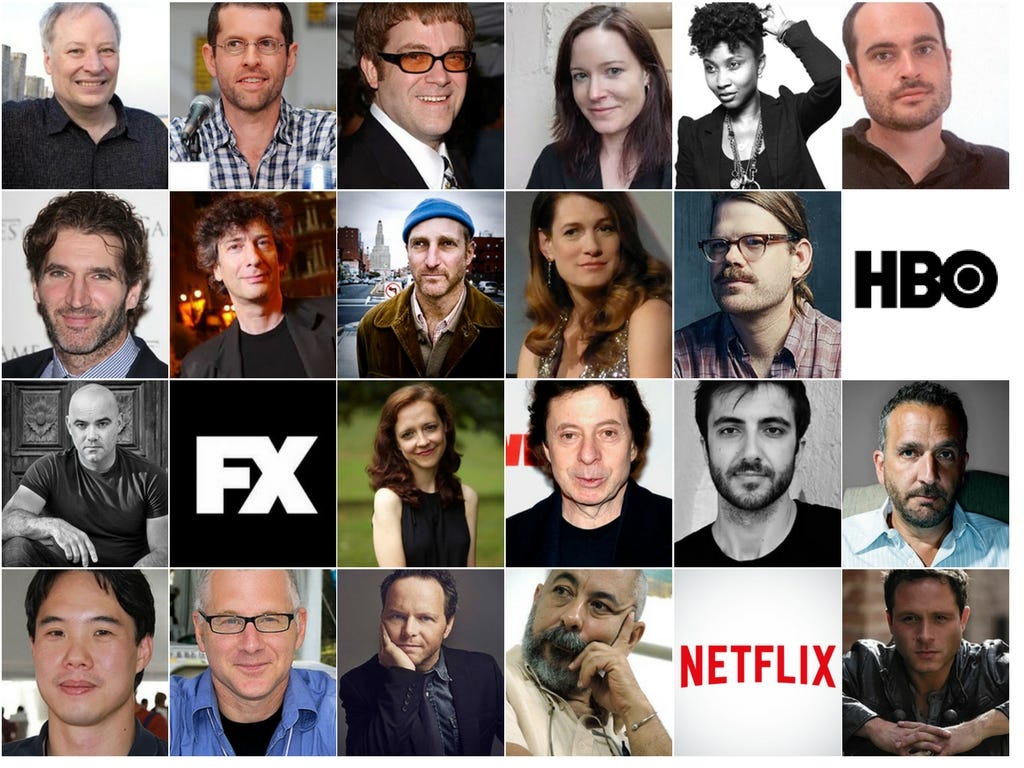
clockwise from top right, a whole lotta novelists

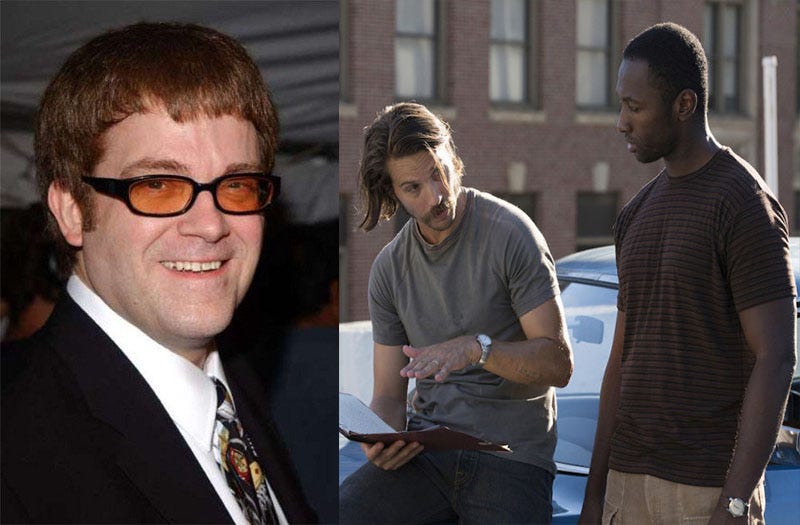
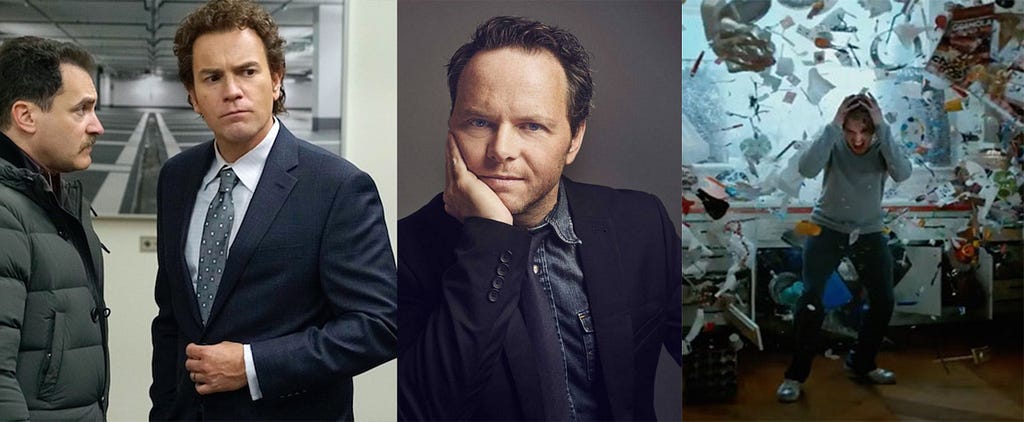
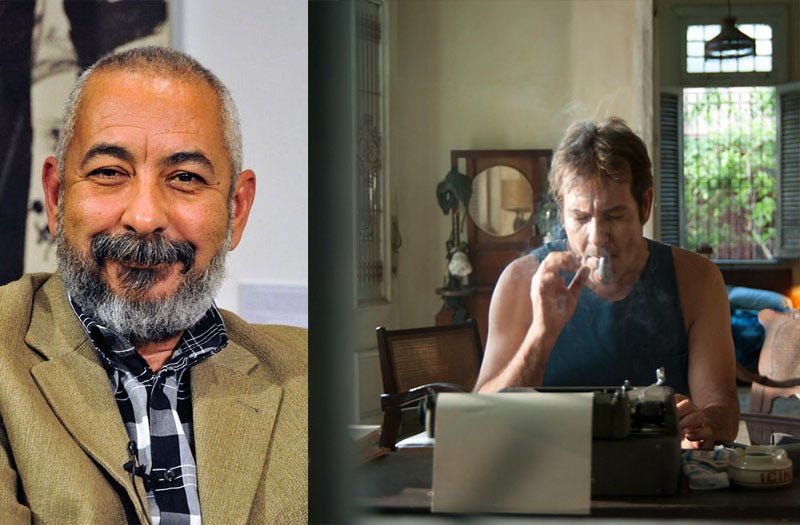
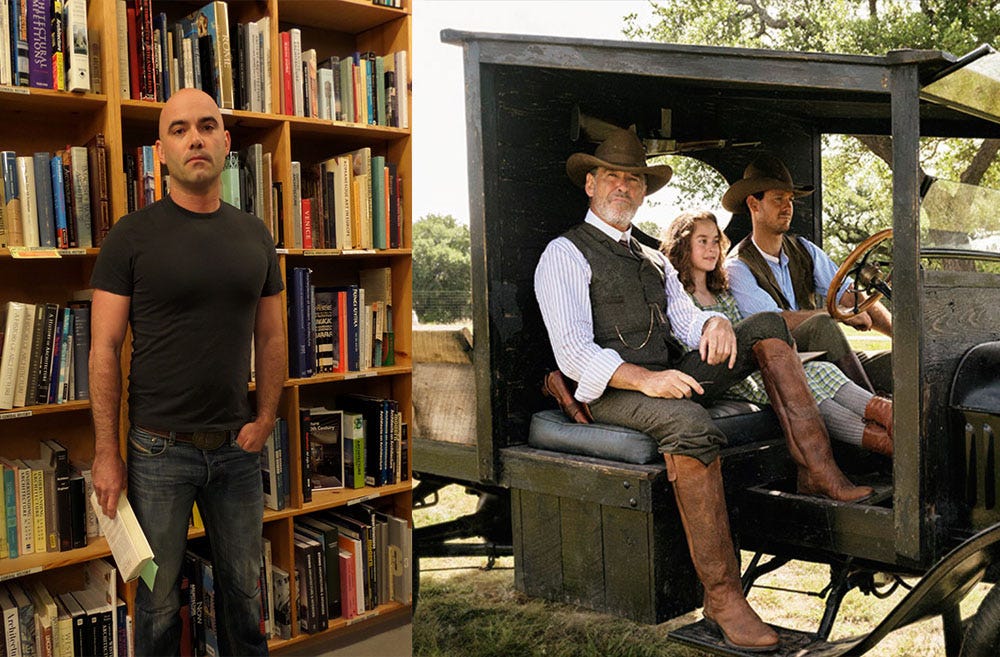
Maybe it’s the insatiable appetites of online behemoths Amazon and Netflix, gobbling up IP and talent like the studios of yesteryear. Maybe novel advances are down or ambition is up, or maybe it’s just been a cold string of winters in New York and hell, Los Angeles looks pretty damn good from that fourth-floor walk-up in Bed-Stuy. Whatever the reason, it seems like every year we do this list, there are more and more novelists making a go of it in TV-land. And this year the writers aren’t just hired hands for showrunner visionaries. Increasingly, novelists are coming to the fore, whether it’s Richard Price or Noah Hawley continuing a run of excellence, crime fiction legend Leonardo Padura trying his hand, or Philipp Meyer’s production company placing a Texas-sized gamble on a frontier epic for AMC. And it’s not just a boys’ club, either. (Although, let’s be frank here — it’s still mostly a (white) boys’ club, unfortunately.) This year, two of the brightest stars in crime fiction, Megan Abbott and Lisa Lutz, join the David Simon universe, while Gillian Flynn’s Sharp Objects looks to pick up where Big Little Lies left off, with another female-led mystery drama for HBO Sunday nights.

TV isn’t going to replace the novel anytime soon, but with barriers to entry dropping and audience demand for new content on the rise — and not just content, but well-crafted, narratively ambitious story—there’s no reason to think this is a passing trend. Now, at some point, yes, there’s a chance that the old-fashioned novel-writing industry will experience some significant brain drain, since TV is where the money and the audiences reside. But for the time being, let’s assume that a well-told story is a worthwhile thing no matter the form, and that the two media are actually somewhat simpatico and maybe even mutually-nourishing. Are you a fan of Westworld? Guess what? You’re gonna love the books of Charles Yu, one of the show’s writers. Or take the reverse. Are you a crime fiction devotee but every once in a while you’d like to put down the book and turn on the tube? Good news! Quarry and Four Seasons in Havana are every bit as good as you dreamed.

So, here’s our 2017 list of novelists and other literary types writing for TV. Have we missed some people? Almost certainly. Let us know and we’ll keep things up-to-date. Now let’s all give thanks for Ian McShane & Neil Gaiman.

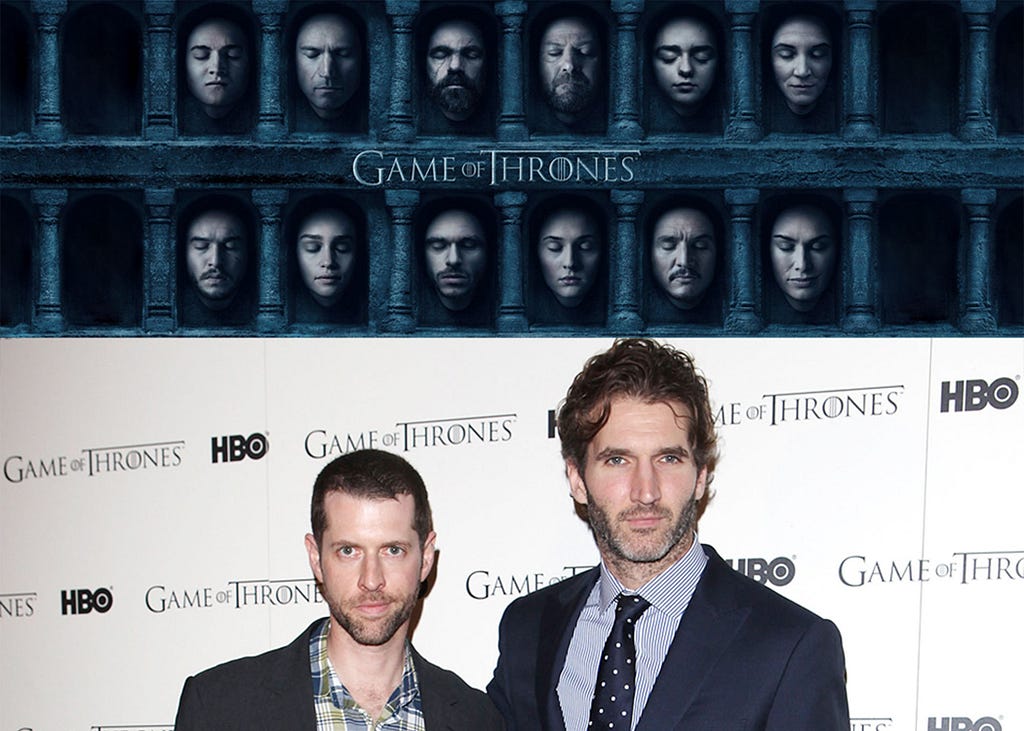
David Benioff & DB Weiss, Game of Thrones (HBO)

For two more glorious (slightly abbreviated) seasons, Benioff & Weiss will reign atop just about every list-icle and think piece about TV’s continued run of pop culture excellence. Why should this one be an exception? Benioff (author of The 25th Hour) and Weiss (author of Lucky Wander Boy) are still at the head of TV’s most beloved and critically-acclaimed show, and who knows, after it’s all done, maybe they’ll go back to their novelistic roots. In the meantime, here’s to another 16 episodes of what American Gods’ Ian McShane lovingly referred to as ‘the greatest literary adaptation of our time’…oh wait, no, he said it was a show about ‘tits and dragons.’ Our bad.

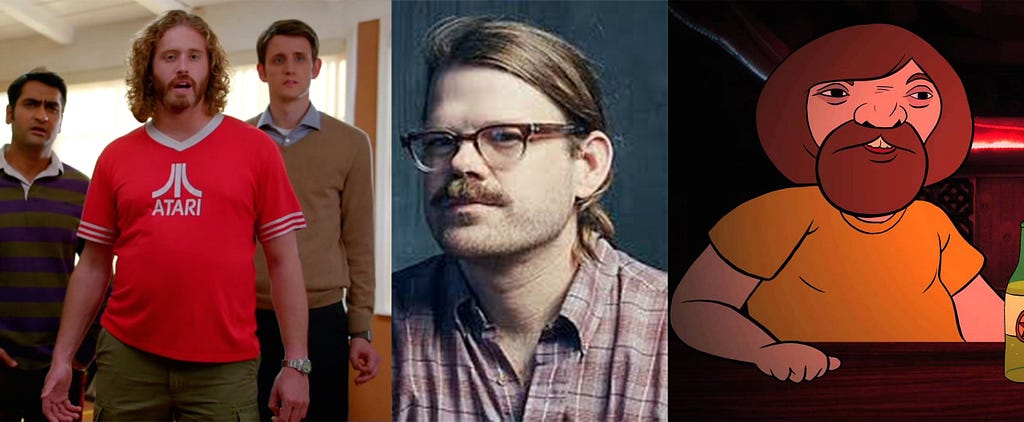
Carson Mell — Silicon Valley (HBO), Tarantula (TBS)

Mell is a longtime Electric Literature favorite — we even published the eBook of his brilliant Saguaro. Nowadays we enjoy his work on HBO’s hit comedy, Silicon Valley, where he serves as a story editor with several episode credits. And pretty soon his original creation — Tarantula, an animated series about an unlicensed tattoo artist in a residential hotel — will be on TBS. In short, Carson Mell is a lowdown crazy genius and we can’t get enough of his work.

Max Allan Collins — Quarry (Cinemax)

For a two-month stretch at the end of 2016, Cinemax’s Quarry had a perfectly legitimate claim to the title of best crime series on TV. At press time, the show’s cast and crew are still waiting for the go-ahead on a second season, but if Cinemax has any good sense (and given its Banshee track record, it would appear the network most likely does), it will quickly pony up while the gang is still together. Max Allan Collins, the author of the beloved series of Quarry novels (beloved might be the wrong word for material this dark, but you catch our meaning), published by Hard Case Crime, is on staff and deeply involved in the show, with writing credits on the teleplays for all eight episodes of the series. Collins is an incredibly prolific writer — we’re talking multiple novels, graphic novels, and comics each year — yet somehow Quarry seems to be gaining new life all the time.

Noah Hawley — Fargo, Legion (FX)

Noah Hawley is giving the late James Brown a run for the title of hardest working man in show business. In addition to publishing a new novel (Before the Fall), Hawley has also kept busy writing season 3 of the hit FX show, Fargo, and season 1 of the network’s new X-Men-universe pyschological thriller, Legion. All three projects have received critical acclaim, and Hawley shows no signs of letting up. Just as Fargo season 3 hits screens, Hawley is reportedly pushing for a quick turnaround on season 2 of Legion, aiming for a 10-episode arc set to air in spring 2018. FX seems entirely happy to oblige.

Leonardo Padura — Four Seasons in Havana (Netflix)

Netflix hasn’t given this limited series the push it deserves in the US market, but hidden away in the Spanish-language section of your account is a gem: Four Seasons in Havana. Leonardo Padura is an icon of Latin American crime fiction, with a voice and style all his own: gritty, sensual, learned, cynical in one breath, sentimental the next, all with a vast affection for Cuba and Cubans that permeates every page. Four Seasons in Havana adapts Padura’s most famous quartet — one book per episode (episodes run at about 90 minutes). The author created the series alongside his wife, the screenwriter Lucia López Col. They managed to film on location in Havana, and the show has some of the most poignant, rich cinematography you’ll find anywhere on TV. No word yet on whether Padura will be adpating more work for Netflix.

Philipp Meyer — The Son (AMC)

Meyer is directly involved in the adaptation of his 2013 novel, The Son, a multi-generation Texas epic that premiered this weekend (April 22nd) on AMC. According to a recent article in The New York Times, the author is on-set and even overseeing accent work and Comanche bow technique. (Pierce Brosnan praised Meyer for his “swagger” — pretty good notch in the belt right there.) The series is being produced by newcomer El Jefe, the company Meyer founded in 2014 along with old UT-MFA classmates Brian McGreevy and Lee Shipman. There’s a lot riding on the success of The Son — El Jefe is currently working on TV adaptations of Meyer’s American Rust, Wil Hylton’s Vanished, and Smith Henderson’s Fourth of July Creek. The company’s goal is to make sure even more novelists are able to stay involved in the screen adaptations of their work.

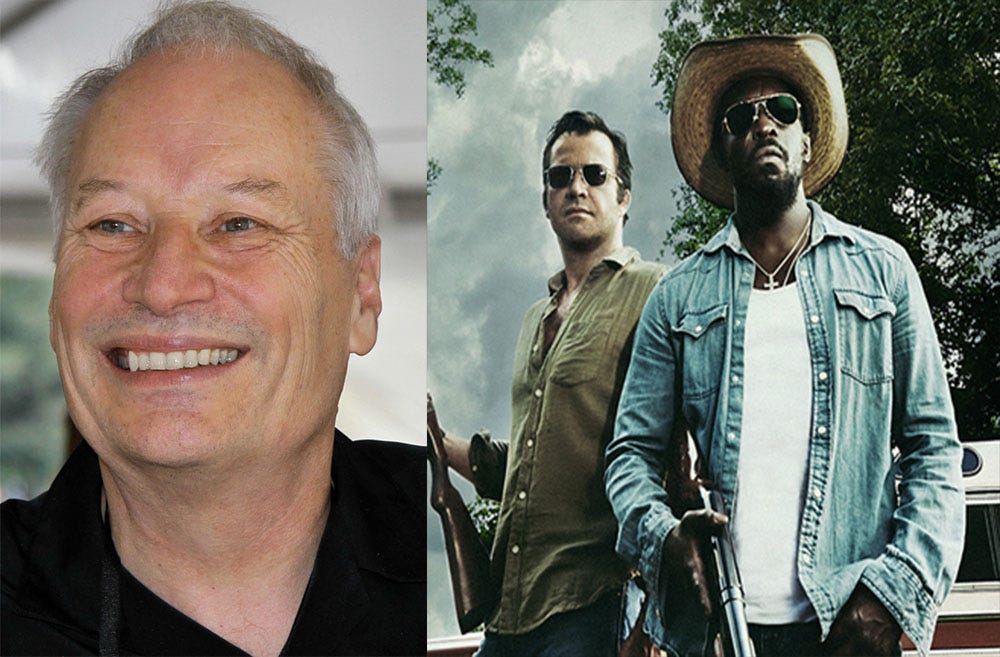
Joe Lansdale — Hap & Leonard (Sundance)

It warms the heart of crime fiction aficionados everywhere that Joe Lansdale’s Hap & Leonard has found a home on TV, and with a damn impressive cast, too — Michael Kenneth Williams, James Purefoy and Christina Hendricks. 2017 is still young, but we’ve already seen two Hap & Leonard novellas — Coco Butternut and Rusty Puppy — and the debut of season 2 of the Sundance series, based on Mucho Mojo. The show is helmed by Nick Damici and Jim Mickle, but Lansdale is a big presence — reviewing scripts, offering up ideas and notes, and even finding time to be on set during filming. His vision of East Texas is a distinct one, so it’s no wonder the showrunners have been eager to keep him involved in the adaptation.

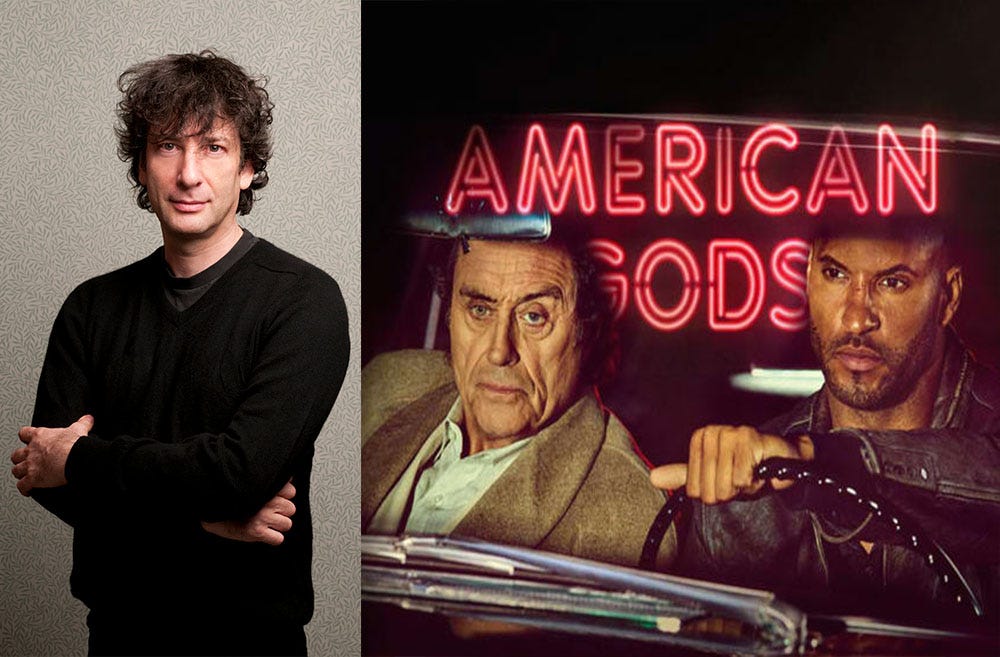
Neil Gaiman — American Gods (Starz)

Gaiman isn’t an fixture in the writers’ room on American Gods. He describes himself as “a kibitzy sort of executive producer. What I can do is read scripts, comment on them, give notes, talk to things in general terms.” The new show, set to premiere April 30th on Starz, is one of the most highly-anticipated programs of 2017 — thanks to the beloved source material, some badass poster work, and the presence of Ian McShane. Meanwhile, Gaiman is doing some teleplay writing of his own: he’s reportedly working on a 6-part limited series script for Good Omens, the fantasy novel Gaiman wrote in collaboration with the legendary Terry Pratchett. The adaptation was recently picked up by Amazon Studios and is on target for a 2018 release.

Which Books Are Coming to TV in 2017?

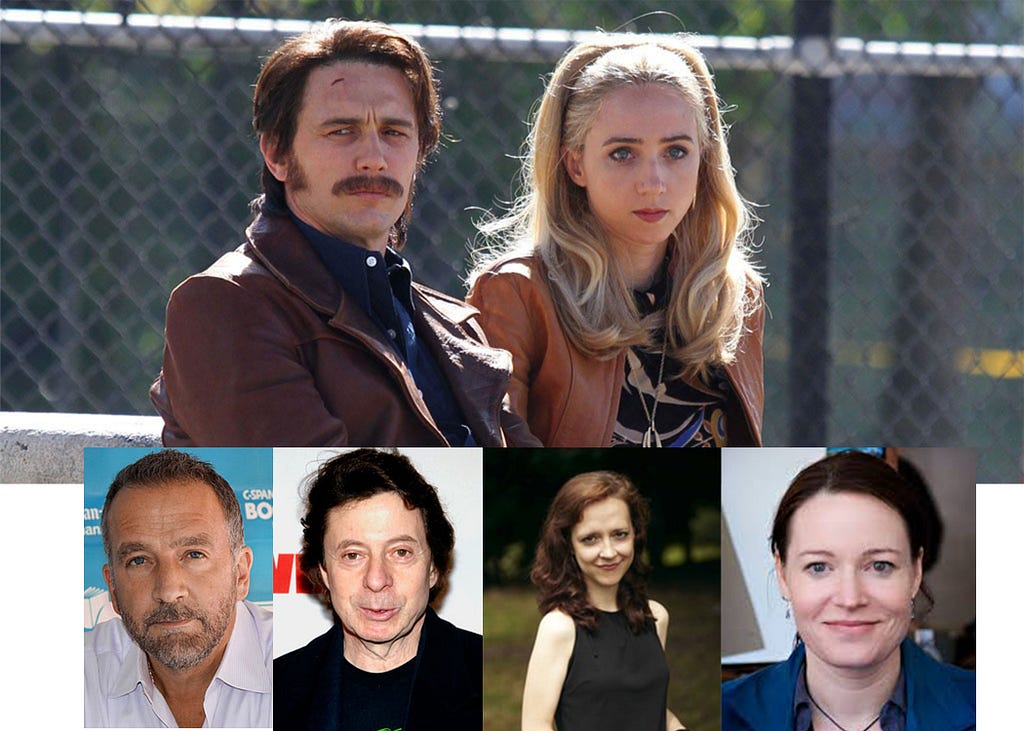
George Pelecanos, Richard Price, Megan Abbott & Lisa Lutz — The Deuce (HBO)

When it comes to novelist bona fides in TV writers’ rooms, The Deuce is in a class of its own. Going back to The Wire and Treme, David Simon has always had a knack for assembling literary talent. With The Deuce, he’s back to working with crime fiction icons George Pelecanos and Richard Price (now a TV heavyweight in his own right, after co-creating HBO’s 2016 hit The Night Of) and brought on board two of the reigning queens of literary noir: Megan Abbott (whose most recent novel, You Will Know Me, you can read about here) and Lisa Lutz (author of The Passengers and the Spellman series). The Deuce is shaping up to be one of the year’s most talked-about shows. It’s 1970’s NYC in all its seedy glory — a story about smut-peddlers, prostitutes and Times Square, starring James Franco and Maggie Gyllenhaal. HBO has said we can expect a 2017 premiere date; rest assured, Electric Lit is on it.

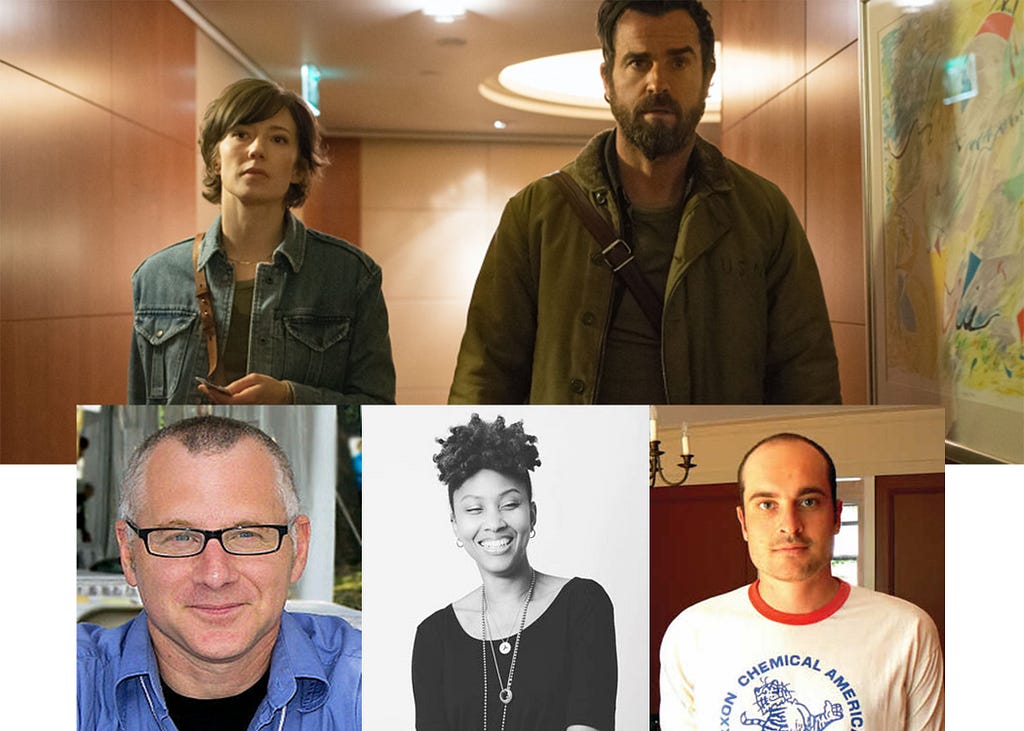
Tom Perrotta, Tamara P. Carter & Patrick Somerville — The Leftovers (HBO)

In addition to Tom Perrotta, who wrote the source material and co-created the TV adaptation along with Damon Lindelof, HBO’s The Leftovers has an impressive roster of fiction writers on-staff, including Tamara P. Carter (Lovestoned and Behind Those Eyes) and Patrick Somerville (The Cradle, This Bright River and two short story collections). Somerville was also recently signed to write The Maniac, Netflix’ upcoming half-hour prestige project, starring Jonah Hill and Emma Stone, with Cary Fukunaga slated to direct. The Leftovers, which has moved well beyond the action of Perrotta’s novel, just started its third and final season, Sunday nights on HBO.

Trouble and the Shadowy Deathblow

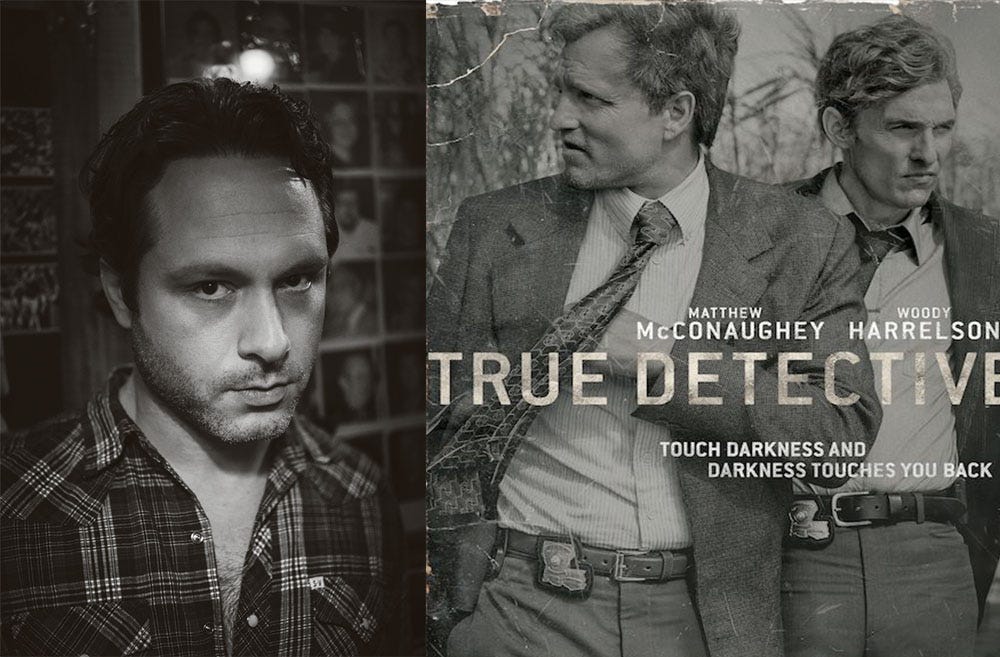
Nic Pizzolatto —True Detective…Season 3 (HBO)

You really thought Frank Semyon, a badass moustache and some Molly binanca could kill True Detective? Well, for a while it looked like you were right, but the new report is that none other than David Milch (HBO OG and, since we’re on the topic of novelists, former Robert Penn Warren protégé) is coming in to help Pizzolatto write a new season of the once-and-future king of TV crime fiction. Will Milch convince the author of Galveston to return to his Texas roots? Or will season 3 deliver on Pizzolatto’s old promise to write about “hard women, bad men and the secret occult history of the United States transportation system”? Couldn’t we get both of those things? And, please, if Milch does us this solid, could HBO throw him a couple bones and (1) jumpstart his long-gestating Faulkner adatations, and (2) give us the Deadwood movie we all deserve? Oh, and Pizoalatto is also supposedly developing a Perry Mason show for Robert Downey, Jr. (*mic drop*)

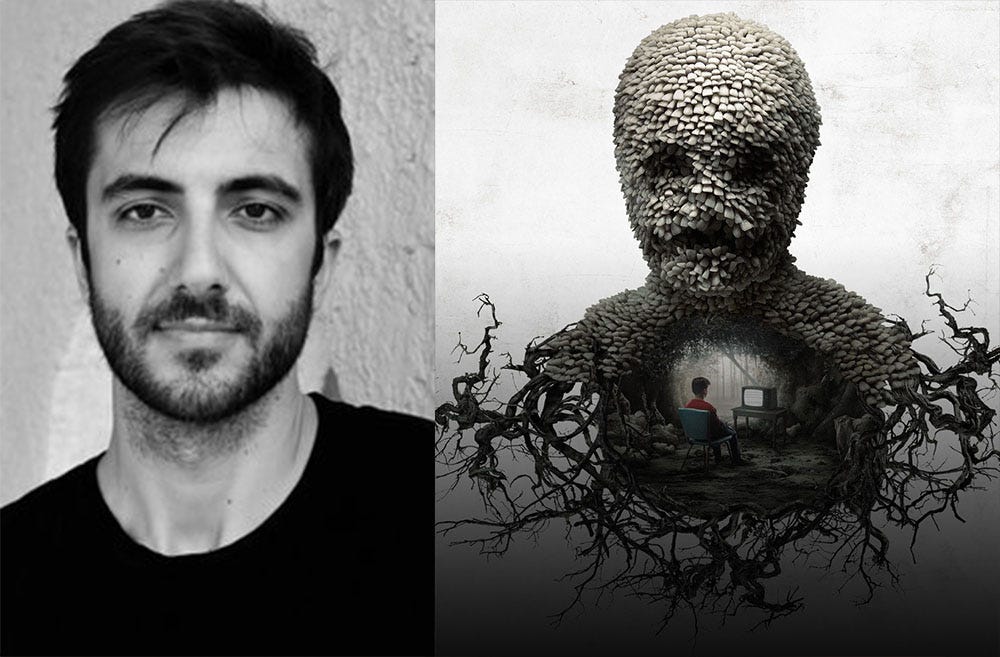
Nick Antosca — Channel Zero (Syfy)

Antosca, the author of Fires (2006), Midnight Picnic (2009), and The Girlfriend Game (2013) has been handed the keys to Syfy’s kingdom: Channel Zero, a horror anthology with episodes based on creepypastas. Antosca is the creator and showrunner, and with SyFy already committing to a second, third and fourth season, he’s going to be at full-writing-employment for quite some time. New episodes are slated for fall 2017.

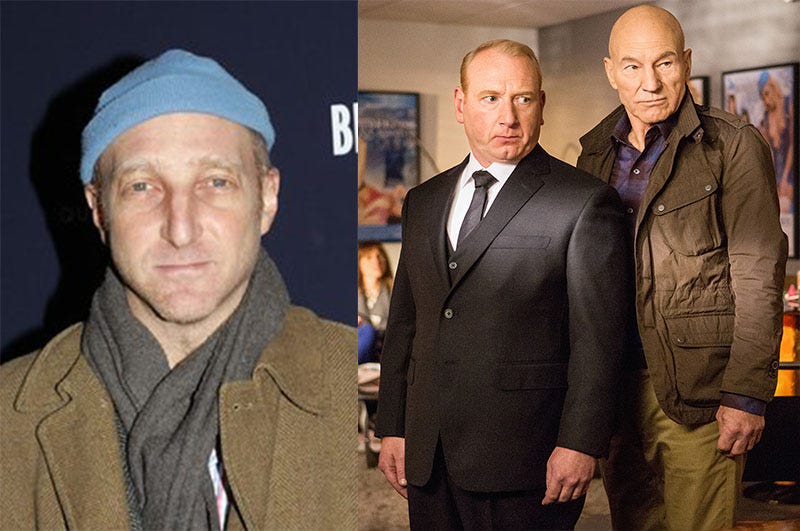
Jonathan Ames, World’s End (TBS), Blunt Talk (Starz)

Ames — the bard of Brooklyn, or one of them anyway — is now a TV veteran, with three seasons of Bored to Death and two seasons of Blunt Talk under his belt. His newest creation, World’s End, is signed up for a TBS pilot, with Ames at the helm and Hamish Linklater and Wanda Sykes set to star. The show’s about an English professor (obviously) leading a mental institution revolt (a little less obviously, but not that far outside Ames’ wheelhouse).

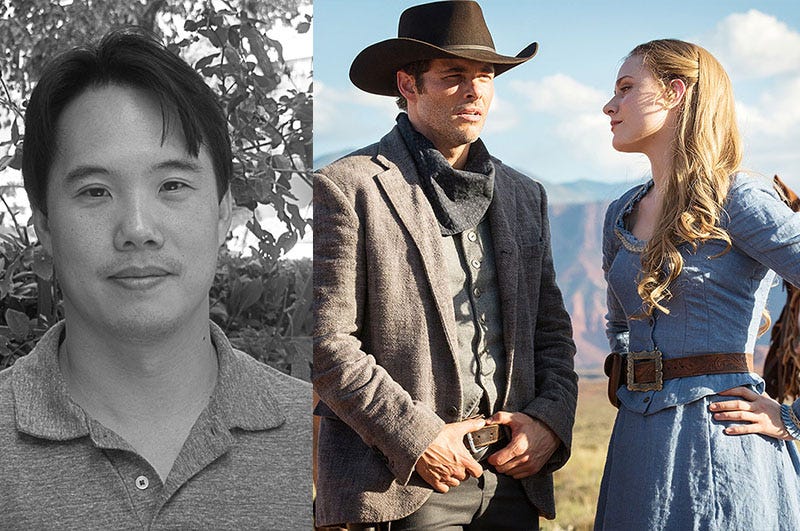
Charles Yu — Westworld (HBO)

Charles Yu, the author of How to Live Safely in a Science Fictional Universe, Third Class Superhero and Sorry Please Thank You is a bit of a polymath. Besides his gig writing fiction, Yu was also, until recently, serving as in-house counsel for the consumer electronics company, Belkin. But that was until Jonathan Nolan, Lisa Joy and HBO came calling, inviting Yu to join the Westworld writers’ room. Yu serves as a “story editor” for HBO’s high concept Sunday night mind-fuck; over the course of season 1 he earned three writing credits, so you’d have to expect he’ll be back for season 2 — Samurai World!

Gillian Flynn — Sharp Objects (HBO)

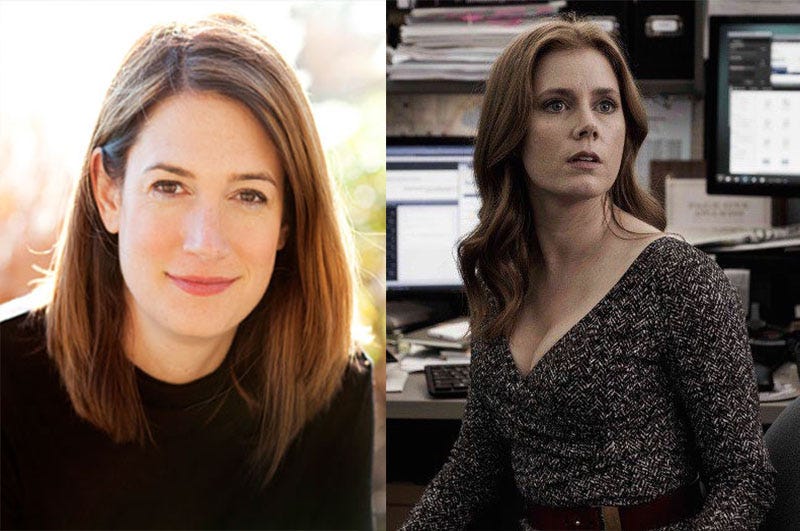
This long-awaited HBO series is finally coming together. A year after HBO first announced a straight-to-series order, filming on Sharp Objects has finally begun in Los Angeles. Amy Adams and Chris Messina will star, with Jean Marc Vallée directing, Marti Noxon serving as showrunner, and of course Gillian Flynn writing episodes (along with Noxon). The series adapts Flynn’s bestelling mystery novel. The story follows a journalist just out of a mental hospital who returns to her hometown to investigate a string of murders. After a series of rumored projects, Sharp Objects will be Flynn’s first script to hit screens since penning David Fincher’s 2014 Gone Girl film adaptation.

18 (More) Amazing Novels You Can Read in a Day

In ‘Exes,’ We Are What We’ve Lost

Max Winter’s debut is full of backwards, inside-out, and upside down pleasures

If I was to go about describing someone, I’d most likely list a few things that he or she is: short, bearded, kind, devious, a banker, slightly deranged, obsessed with antique armoires, very good at chess, sometimes bad at following directions, etc.

But if that someone is a character in Exes, the stunning debut novel by Max Winter, I would instead have to tell you what they are not. Or what they were, or what they’d lost, or what they are an ‘ex’ of, because Winter knows that often it is in our negative image that we can best understand one another and ourselves.

For instance, there’s Clay Blackall III, who isn’t really the novel’s protagonist, and who really shouldn’t be living in Twinrock, a hundred-year-old, seventeen-room summer cottage in Narragansett Bay. Once, Clay, like the cottage, was fairly well-off. Once he had a brother, Eli, recently deceased after his second car crash into the same house, and whose absence the entire novel revolves around. Clay, who feels his self split in two by the loss, retreats to the abandoned summer cottage, which belongs to the uncle of one of his brother’s exes, a girl named Alix, to try to make sense of it all by looking over the stories of people close to Eli.

“I spread them out,” he explains, “these exes, friends and neighbors. These stand-ins and one-night stands, body doubles and doubles.”

There’s Vince Vincent, an ex-actor, who looks exactly like Judge Reinhold and who almost got the part of Brad Hamilton in Fast Times at Ridgemont High. He now lives his life as not-Judge Reinhold, always acutely aware of the career he doesn’t have, except when he occasionally pretends to actually be Judge Reinhold, as he does when he spends the night with Alix, Eli’s ex.

Another ex of Alix’s is Rob Nolan, another ex-caretaker of Twinrock, who is also an ex-convict. Later we’ll hear from Cliff, who tries to help Rob become an ex-addict. There’s also an ex-high school class president, an ex-Jew, an ex-friend, an ex-foster father… but if this sounds at all exhausting, don’t be led astray.

The Dark Side of the Sunshine State

Winter handles the intricacies of each story masterfully, presenting us with genuinely moving portraits of those who have lost out or come up short. Each lends their own verse, and their own voice, to the unfolding story. Clay interjects between sections with his own footnoted observations.

Perhaps unsurprisingly the best of these vignettes belongs to Alix herself, who describes how Eli fell in love with her (he was her ex-teacher) as devastatingly as she later recounts watching him waste away before her eyes. She briefly ruminates on her ex-friend, Vivian, a performance artist in a women’s art collective called “Polyesther.” Tomboyish Alix says she prefers to think of herself as a garçon manqué, or a “failed boy.” The French, she explains, “can feel the presence of an absence like no one else.” They use the same word, she tells us, for “backwards, inside out, and upside down.”

Winter is a marvelous writer and Exes is a brilliant book, full of backwards, inside-out, and upside down pleasures. Reading his novel is like witnessing a slideshow made out of all the negatives. By which I mean, in the best possible way, that it is unlike anything you’ve ever read before. It’s so finely wrought, so playful, and so readable that you’ll somehow both savor it and speed right through to Clay’s final footnoted footnotes, where the book returns to his search for answers in grief once more.

Ted Wilson Reviews the World: Spaghetti

★★☆☆☆ (2 out of 5)

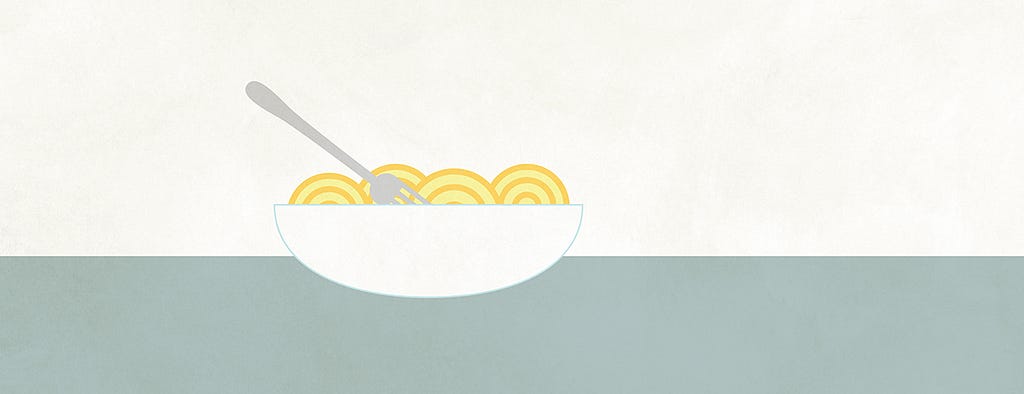
Hello, and welcome to my week-by-week review of the world. Today I am reviewing spaghetti.

Eating spaghetti is like eating a big plate of flavorless hair. I know this because I once ate a big plate of flavorless hair when a jokester presented it to me as spaghetti. The two are no different. That’s how I was able to eat all that hair without noticing.

But spaghetti doesn’t have to be used as spaghetti. If you take a cheese grater to dried spaghetti, it will turn into a flour-like powder which can be used to make other pastas, like rigatoni, macaroni, or others. Wet spaghetti can be squeezed into a ball in your hands and when dried it makes a pretty good paperweight.

Despite its transformative properties, most people just eat it as spaghetti. I recently went to an Italian restaurant to ask the customers what it is they liked so much about spaghetti. Unfortunately I couldn’t get past the maître d because I didn’t have a reservation.

I tried standing outside and mouthing my questions to customers through the window, but people kept turning away.

Given how cheap spaghetti is, it’s not so surprising people eat it. Price is a big factor in people’s diets. That’s how places like McDonald’s and Burger King survive. They make food so cheap that people are willing to forgive the flavor. If either of them started selling spaghetti they could really clean up!

But they’d also have a lot of messes to clean up because spaghetti is really easy to spill. Did you know that 36% of spilled meals are spaghetti? And that’s just in America. It’s probably a much higher percentage in Italy.

As much as I don’t care for spaghetti, I still eat it a lot because years ago I inherited a bunch from a cousin who passed away. He was a spaghetti collector. Some say hoarder but I say collector. It sounds less tragic that way, and I don’t want his life’s work to go to waste.

BEST FEATURE: It gives you an exaggerated sense of your own strength when you break a handful in half.
WORST FEATURE: It’s impossible to break in half a handful of wet spaghetti.

Please join me next week when I’ll be reviewing an alligator.

The Great 2017 Indie Press Preview

Beyond Voiceover: ‘Big Little Lies’ & Female Interiority on TV

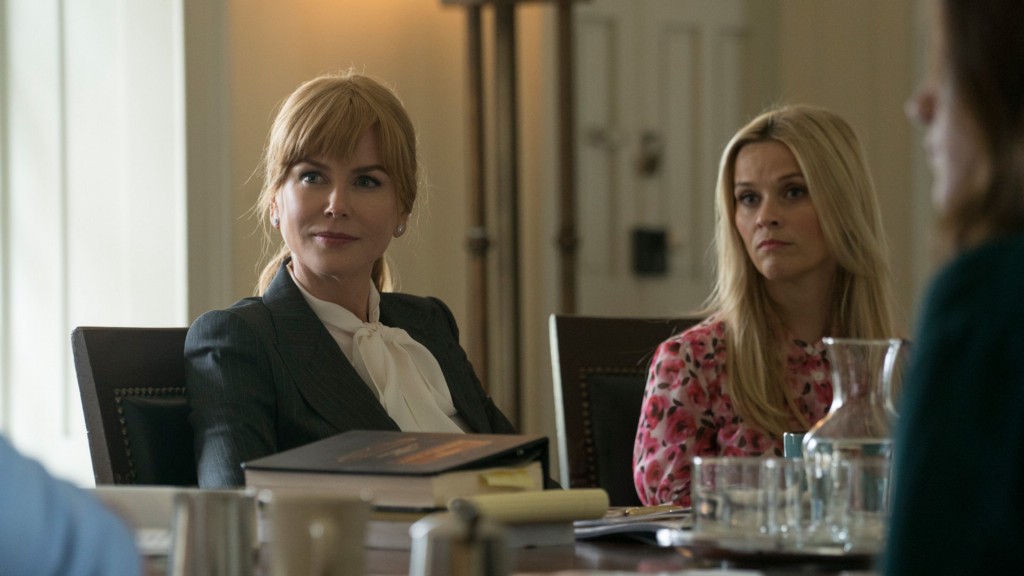
Big Little Lies opens with a crime scene. A school fundraising trivia night cheekily themed “Elvis and Audrey” has been marred by a tragedy. Police and ambulances are on the scene. Amidst bedazzled jumpsuits and Breakfast at Tiffany’s–lookalikes lies a body. Its identity is not revealed. Much as in Liane Moriarty’s novel of the same name, the recent David E. Kelley-penned and Jean-Marc Vallée-directed HBO miniseries is structured as a whodunnit, where the names of both the victim and culprit are left unspoiled, until the climactic final episode.

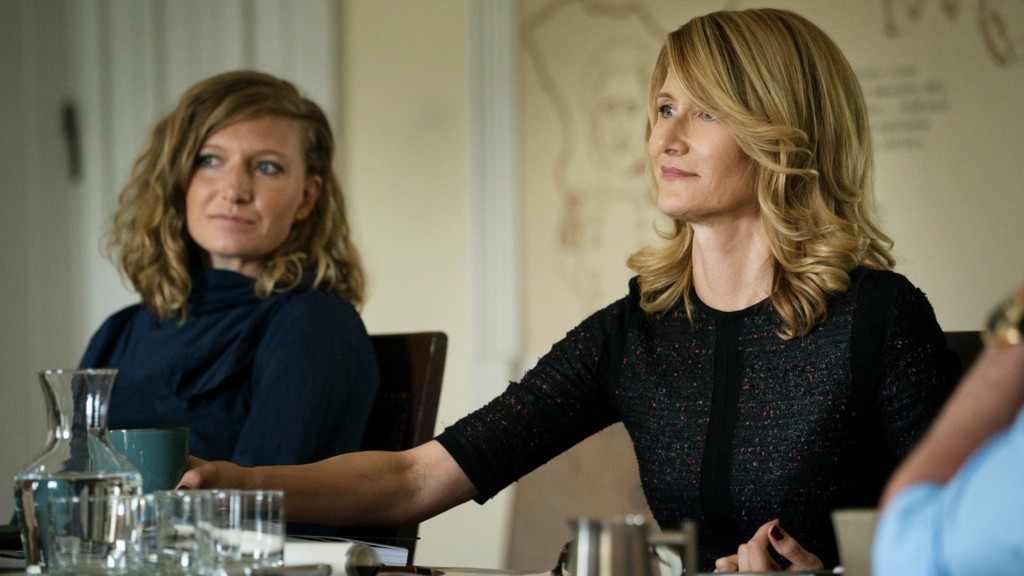
“It all goes back to the incident on orientation day,” we’re told by one of the witnesses being interviewed by the police. The incident at hand involves a young girl named Amabella (not Annabelle; it’s French, so her mother Renata, played by Laura Dern, says to everyone and no one in particular), who has been choked by one of her new classmates. Amabella points her accusatory finger to the newcomer in the area, Ziggy. His single mother Jane (Shailene Woodley) firmly believes that her sweet boy couldn’t have attacked anyone; he doesn’t lie. Gradually the school’s mothers take sides with one or the other. Madeline (Reese Witherspoon) — her young girl having taken a liking to Ziggy — stands by Jane, as does Celeste (Nicole Kidman), the mother of a pair of twins. The ensuing school politics end up having a ripple effect which, we’re led to believe, set the stage for the tragedy that strikes on trivia night.

Laura Dern (far right) as Renata Klein in ‘Big Little Lies’

Despite its genre trappings, which might cause you to mistake Big Little Lies for a kind of chick-lit murder mystery, Moriarty’s novel instead belongs among a long list of works which look to domestic spaces in order to flesh out and interrogate women’s inner lives. Moriarty’s use of free indirect discourse throughout the book allows her to shuttle between her three main characters — Jane, Madeline, and Celeste — giving voice to their lives of, not just quiet, but silenced desperation. While the incident at the school immediately frames the concerns of the novel around issues of gendered violence, the more access we’re given to these particular women’s stories the clearer it becomes that the novel’s interests lie in examining how domestic abuse comes to mark day to day life. What is often shamed and silenced instead becomes visible through her prose.

Take for example an early passage, which gives us access to Celeste’s view on her marriage to the dashing and doting Perry. Behind closed doors, and in frequent fits of rage, her husband lashes out and hits her — something she has come to understand as a flaw in their relationship, rather than as an indicator of a case of domestic violence. The narrator asks:

“How could they admit to a stranger what went on in their marriage? The shame of it. The ugliness of their behavior. They were a fine-looking couple. People had been telling them that for years. They were admired and envied. They had all the privileges in the world. Overseas travel. A beautiful home. It was ungracious and ungrateful of them to behave the way they did.”

These insights crucially advance the larger themes of the novel, concerned as it is, as the title suggests, with the kind of white lies which get away from us when left unchecked.

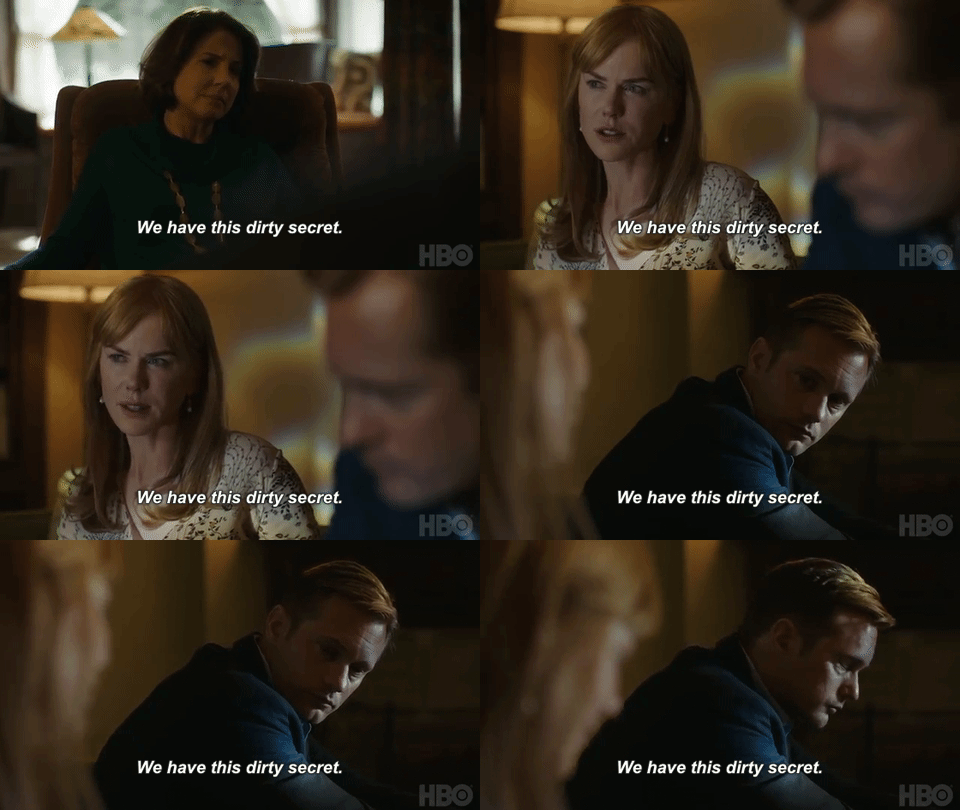
These inner monologues are not so easy to translate to the screen. They seem to more readily lend themselves to that most hackneyed and maligned of filmic tools, the voiceover. After all, voiceovers allow the viewer to literally “hear” a character’s innermost thoughts, unmistakably spelling them out. One can imagine a scene in HBO’s miniseries where a close-up of Nicole Kidman as Celeste would lead to a hesitant voiceover narration, announcing how and why her moneyed and beautiful character feels so conflicted about her marriage to Perry (played by Alexander Skarsgård). Thankfully we’ve been spared such an approach. Kelley and Vallée instead find a variety of ways to visualize the inner lives of these women, nudging us to map, onto the quiet fleeting glances and evasive gazes, newfound insights about what might really be going on behind their seemingly mirthful lives.

In the show’s first episode, Jane, soon after meeting both Madeline and Celeste, voices this very thought. It comes even as she’s enjoying the impromptu welcome coffee date which has made her and her son’s move to Monterey feel like the right choice. “I look at you and you’re so beautiful and you guys are just right,” she tells her new friends. “And for some reason that makes me feel wrong. I know it’s crazy. I know I sound crazy.” While Madeline purports to have no idea what she’s talking about, Celeste catches her eye, a clear acknowledgment that she knows only too well what Jane is getting at. This tension — of precious appearances which hide deeper insecurities, at risk of being revealed if one only let one’s guard down — is also at the heart of Moriarty’s novel. When Madeline first describes Celeste to Jane in the book she says that she is tall, beautiful, and often flustered. Right on cue Jane asks, “What’s she got to be flustered about if she’s tall and beautiful?” — a question the novel takes upon itself to gradually unpack, by letting us see just what it is that haunts these women’s everyday thoughts.

The more she has to deal with Renata and the school’s administration, with regards to the threat that her sweet Ziggy presumably poses, the more time Jane spends jogging all around Monterey (the setting of the novel is the fictional Australian seaside town of Pirriwee). The activity both soothes and overwhelms her: with her headphones plugged in these are moments when she can tune everything out and try to focus on self care, except for the pesky images of the ill-fated and violent one night stand that begat Ziggy which keep swirling up through her mind. Prior to confiding in Madeline about her fear that the violent streak she experienced in Ziggy’s biological father might have been passed down to her son, these jogging montages keenly connect Jane’s motherly concerns with the trauma she herself experienced in that nondescript hotel room. Placing us in Jane’s headspace, the quick-cut montages (a hazy image of the hotel room joined to a nightmarish jump off a cliff; a view of her Ziggy sleeping soundly collapsed with a faceless and threatening man choking her), often ending with a shot of her stranded in a smudged party dress in the middle of the beach, conjure up Jane’s anxieties without ever needing to spell them out too tidily.

Vallée is aided by his self-aware use of contemporary music, featuring, among others, Frank Ocean, Sade, and Sufjan Stevens. Most often associated with Madeline’s daughter — the precocious Chloe (Darby Camp), who plays DJ at home and in her mom’s car — the tracks punctuate and explicate the world of the women living in sunny Monterey. After Madeline fights with her eldest daughter from a previous marriage, and the teenage girl elects to move in with her dad, Chloe gifts her mom a song which captures exactly how she should be feeling: “See, I’ve been having me a real hard time, but it feels so nice to know I’m gonna be alright,” the Alabama Shakes sing, as Madeline sheds a tear. Small moments like these add to the sense that Big Little Lies is relying on an entire televisual vocabulary, to capture what Moriarty’s prose did in far blunter terms.

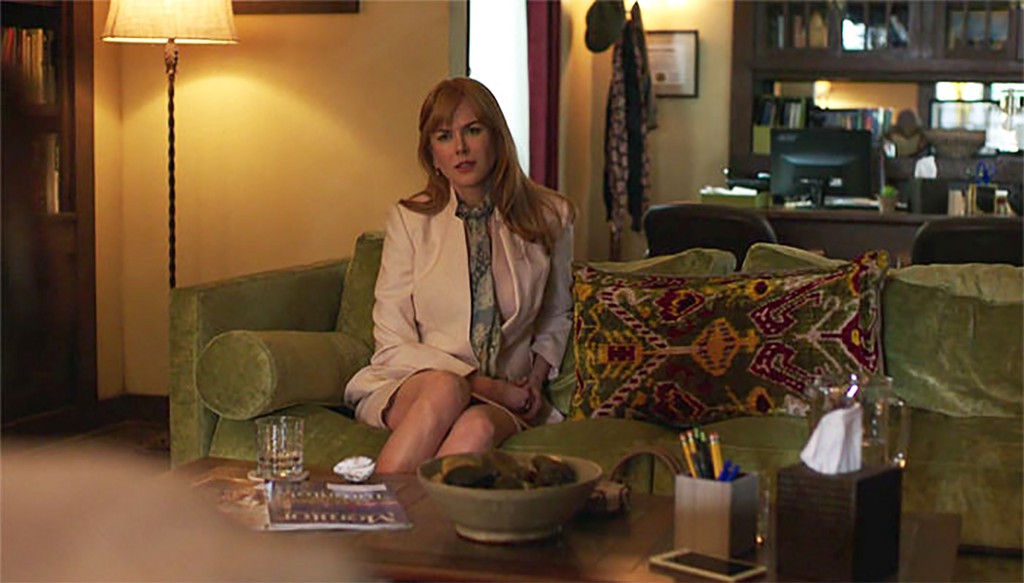
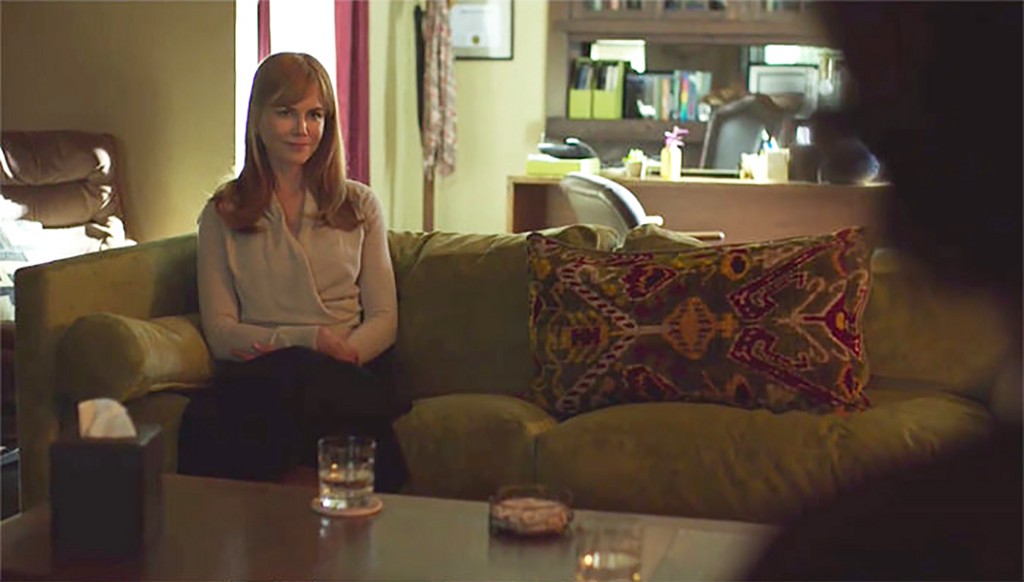
Similarly, in the way the novel allows its reader ready access to its characters’ interior consciousness, perhaps the TV adaptation’s most thrilling take on the book is in the scenes of Kidman’s Celeste visiting her therapist, Dr. Amanda Reisman (Robin Weigert). In Moriarty’s novel Celeste can barely muster up the courage to ask Perry to try couple’s therapy. She instead visits the sterile office of a counselor herself, one whose expertise happens to be in victims of domestic violence. Celeste appears to find the situation laughable — the incongruousness of a beautiful happily married woman seeking help from someone whose specialty is with people who are actually being abused by their spouses. The visit nevertheless triggers thoughts that eventually lead Celeste to reassess what is wrong with their relationship — or what might in fact be wrong with Perry. Though little actually gets said at the session, we are made privy to the acrobatic mental tricks Celeste plays out as she carefully divulges glimpses of the violence which often leaves her bruised (though never, of course, on her face). As Moriarty writes,

“each time she didn’t leave, she gave [Perry] tacit permission to do it again. She knew this. She was an educated woman with choices, places to go, family and friends who would gather around, lawyers who would represent her. She could go back to work and support herself. She wasn’t frightened that he’d kill her if she tried to leave. She wasn’t frightened that he’d take her children away from her.”

That certainty begins to falter, however, the more she is urged to share about her life at home.

Keenly aware of how crucial those moments of self-reflection are for the character of Celeste, the TV adaptation opts to expand on the role of the therapist in the show. They are perhaps the most electric scenes in the entire series, a perfect setup in which to explore the real-life perils of openly voicing one’s inner thoughts and fears. Vallée alternates between long takes of Kidman and Weigert, as they square off in terse exchanges that bristle precisely for what is clearly being left unsaid. The decision to frame Kidman in a medium shot — particularly during her first visit to Dr. Reisman’s office, when she brings Perry along — allows us to track Celeste’s numerous reservations about what is being shared in this seemingly safe space. We can see her tense up when Perry alludes to the violence that defines his anger and their subsequent lovemaking. By the time she returns to Dr. Reisman alone, the shot highlights Perry’s absence in the same frame, reminding us of his power over every word choice and pithy anecdote Celeste gives herself permission to share.

In those moments when Kidman tugs at her sleeves, unwittingly pulling attention to the bruises we know lie underneath, or half-decides to grab her handbag as if she were about to storm off, we glimpse the full range of Celeste’s inner conflict about opening up to Dr. Reisman. Every interaction becomes a minefield, and each reaction shot we get of Weigert ends up mirroring our own. More than just a meaty performance showcase for Kidman, these scenes achieve the well-meaning didacticism that Moriarty’s book espouses, teaching us how women’s shame about domestic abuse is so often apparent for anyone to read, if we only know what to look for.

The climax of both versions of Big Little Lies is in the revealed identities of the murderer and the victim. But by the time we find out who, how, and why they died, it’s clear that the investigation has served more as a frame through which to study the lives of these women. Peppered throughout Moriarty’s novel and the HBO series are testimonies from those in attendance at the school’s trivia night, who spare no thought before speaking openly about the bickering between Renata and Jane, the explosive marriage of Celeste and Perry, and Madeline’s ongoing problems with her ex-husband and daughter. The gossipy tone of these interjections may setup a hokey structure, but they remain key in establishing Big Little Lies as a narrative about deconstructing façades and looking behind picture-perfect-looking lives. “None of us see things how they are,” a character nonchalantly explains to her husband at one point in the show. “We see things as we are.” Big Little Lies thrills because it doesn’t just show us its characters, it lets us see the world as they are.

Hitler Was a Secret Junkie — but Does It Actually Matter?

An analytical look into Norman Ohler’s Blitzed

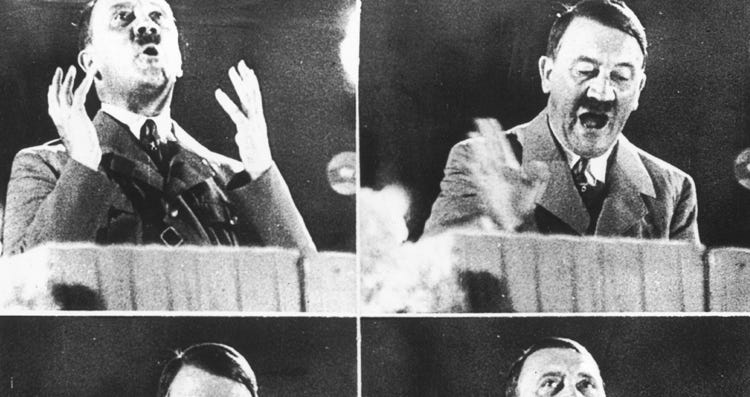
Adolf Hitler, the ruthless and inhuman German dictator that nearly murdered millions of people (ruined countless people’s lives and erased history through the decimation of European cities), was apparently on a drug cocktail of cocaine and opioids throughout World War II? Well, he was — and it’s the subject of Norman Ohler’s latest nonfiction book Blitzed. It’s always been a mystery as to why Hitler’s unrelenting, and often times, crazed manic optimism never seemed to dissipate as the war progressed, despite the fact that the Third Reich was losing the war they waged. And really, it’s not so hard to put the pieces together when you realize most of the Nazi party was drugged up and blitzed out.

The evidence is all there: in obscure letters, records, and diary entries of various Nazi party members, including Hitler’s personal doctor, Theo Morell — who treated Hitler up until 1945 when he was fired (Hitler finally seemed to “realize” Morell drugged him as a way to deal with his health issues). Ohler researched all of this in the German federal archives and other collections. According to Ohler, the drug was manufactured in ridiculous quantities, in 35m tablets — and claimed that average civilians Pervitin became a routine “grocery item.”

The book describes three phases of Hitler’s drug use administered solely by Morell: the first being high doses of vitamins, the second starting in 1941 with opiate usage, and the third starting in 1943 with heavy opiate usage.

Hitler, who bragged about being a celibate drug-free vegetarian (who refused to drink), initially started waging his war alongside propaganda that he would make Germany a drug-free state. Of course, this was far from the truth, especially considering with relationship with Eva Braun, who was hidden from the public for this reason. This bizarre duality — the false illumination of purity and the real life of grotesque psychopathy and excessive behaviors — showcase the hypocrisy of the Nazi party, as well as highlighting the fact that the war was not a war to “help” Germany or to be more pure, but merely a war on the Other (people who were Jewish, disabled, gay, etc).

Starting in 1941, as the war turned a rather dismal turn for Germany (thanks, Russia), Morell began giving Hitler opiates when he became sick for the first time. Between 1941 and 1944, his health declined — which has been noted significantly by historians, but it has been speculated to be the result of Parkinson’s Disease. Hitler may have suffered from the disease, as it appeared Morell did give him medication to treat it; however, his declining health could have also very well been a result of intense drug usage — and then withdrawal when he fired Morell in 1945.

A Perfect Introduction to a Genre Bending Master

But Hitler wasn’t the only one on drugs; so was the entire Nazi army. It all started in the mid-1930s when Berlin pharmaceutical company Temmler developed Pervitin, a methamphetamine, which we call crystal meth. The drug, which Ohler claimed, was used so widely and commonly that it became used to anything from depression to fatigue by the German civilian population, as realized by Professor Otto Ranke, who then started doing tests on German soldiers and realized it was the precise drug needed to win the war, as it reduces fear, need for sleep, and increases focus and attention.

This resulted, very quickly, in tablets of methamphetamine supposedly being given like candy to the troops regularly — two before an advance, and then another pill after 12 hours, and then so on and so forth. Basically, all of Germany was blitzed out — and clearly, the rest is history. In general, at the time, the Temmler factory made 833,000 pills a day. Apparently, even Leo Conti, the then-minister of health was concerned about Germany’s addiction — although nothing came of his worries.

While the drug use has never been so widely and publicly written about before, it’s also not necessarily the first book of its kind. While the information was indeed hard to find and coded in some of the documents (for instance, Morell, while writing lengthy daily entries about Hitler’s drug use, often obscured the language so if the entries were checked, it would be hard to know exactly what the drugs were), there is some controversy over how widespread the drug use was. While the New York Times, “Hitler biographer Ian Kershaw called it ‘a serious piece of scholarship,” other scholars believe that Ohler has overplayed the drug usage in a way that presents as false historical picture. Richard J Evans wrote in the Guardian as such, stating:

“Earlier historians have shown in detail the limited extent of Hitler’s drug abuse, while there are other books, notably Werner Pieper’s Nazis on Speed, which put the military employment of methamphetamine into perspective. Ohler’s skill as a novelist makes his book far more readable than these scholarly investigations, but it’s at the expense of truth and accuracy, and that’s too high a price to pay in such a historically sensitive area.”

It’s also crucial to note that Ohler, whose book is definitely fascinating, may also be misleading — and that could be dangerous especially in a time of political turmoil and growing public racism. For instance, in the book itself, Ohler said that he purposefully wrote with a “distorted perspective,” which as a reader, automatically questions his authority and intention. While I don’t think Ohler is anti-Semitic, I also do wonder about the outcome of this book and the intention of portraying a drugged-up Germany.

For example, this portrayal of a “blitzed” out Germany and Hitler could be seen as sympathetic, as it almost makes it seem like the German people and soldiers didn’t entirely know what they were doing — or were too preoccupied with getting their fix that an entire genocide seemed to be happening without much thought. While I’m not a moral police, that thought, or implication, has serious ramifications, especially for those who World War II wasn’t a direct affect in their families’ lives. As someone whose entire family served during World War II, and whose family has relatively recent immigrant roots, I also can’t help but question some of it, even though it is a fascinating part of history.

The bigger questions to raise are if Hitler’s and the Nazi party’s drug use actually matter? And should we allow it to matter? While Ohler did state that Hitler was the “master of his senses” and that he knew what he was doing, it also seems to present its own duality within the text itself that isn’t fully resolved or acknowledged enough — yes there was drug usage and yes, drugs do terrible things to our bodies as humans, but racist psychopaths who murder people are still morally responsible for their actions, regardless of what chemicals runs through their bodies. While Ohler says this, some of it remains ambiguous in a way that is unsettling, especially now.

How to Harness the Energy of Female Rage, Creative Destruction & the Cosmos

Lidia Yuknavitch and Sarah Gerard dive deep on artistic violence, Trump, rewarding male tantrums, and the fabric of time and space

NGC 7293, aka “The Helix Nebula.” (2012) Captured by the Galaxy Evolution Explorer, courtesy of NASA.

The first book I read by Lidia Yuknavitch was Dora: A Headcase. Though all of my friends were busy devouring her timeless, immediate-cult-classic memoir The Chronology of Water, it was Dora that first established Yuknavitch in my mind as a writer I needed to follow. It’s a reimagining of Freud’s most famous case study, set in present-day Seattle, with Ida (alter-ego: Dora) at the center. She’s an artistic, loud-mouthed, rule-breaking teenage girl who longs for intimacy — needless to say, I related to this. The book drips with sex and dark humor and sarcasm, and anger, and white-hot teenage girl rebellion. Most importantly, it’s told from Dora’s point of view. Like an atom bomb, it breaks apart an old story to bring new energy into it.

In The Book of Joan, released this month, Yuknavitch takes the story of Joan of Arc as her raw material. As with Dora, her reimagining frees the character of Joan from the constraints of her original version, and in doing so calls into question our received definitions of God, the body, womanhood, war — even what it means to be human. Yuknavitch describes the novel as a love story, but although it includes a romance, I suspect she’s using the term more broadly, to encompass of all of humanity, all life on earth, all possible life in the universe.

The setting is post-apocalyptic: split between Earth, decimated by world war, and CIEL, a sterile spacecraft hovering above the planet, where the remaining humans have defected. Earth’s surface is radioactive, unable to sustain anything more than the barest forms of life and a few human survivalists. Humans on CIEL have evolved into pale, sexless, hairless creatures burning stories into their skin — a reminder that our stories are what link us, bodily, to our past.

Like The Chronology of Water and her last novel, The Small Backs of Children, whose protagonists are an Easter European war orphan and the photographer who garners critical acclaim for her photograph of the girl, The Book of Joan is ferocious and indelible, grappling with what it means to love in the midst of violence; and how we transform fury, agony, and history into art. It is huge in its scope, moving seamlessly, quantumly, between dirt and cosmos, and through the wormholes of nonlinear time. I talked to Lidia via Skype about The Book of Joan, the current state of our world, and art-making as transformation.

Sarah Gerard: I was reading The Book of Joan this morning and thinking about how violence and tenderness are intermingled. What do we do with the tenderness we feel toward people who have hurt us?

Lidia Yuknavitch: They make a helix in ways that we don’t really know how to navigate. The pleasure/pain helix, or the violence/tenderness helix: we’re terrible at negotiating that, but they’re always intertwined. I’m always spouting off about how the beautiful and the brutal are next to each other, we just don’t like to admit it. I know you know what I mean because all of your characters have that quality, and that’s one of the reasons I love your work. I got interested in the idea of how anger and love are actually two sides of the same thing. But I don’t mean, like, “We should accept abuse into our lives.” I just mean that if we look at them as energies — and I don’t mean in the west coast “wu” way; I just mean in terms of physics — because that’s all we are: energy and matter — if we look at it as energy, we can ask better questions about what to do with it.

SG: Right now, my challenge as a writer is that I’m feeling a lot of anger and a lot of violence toward the world.

LY: Yes.

SG: At the same time, I’m trying to work through a very specific line of love and pain, that helix, in the form of a new novel. I don’t want to isolate this one story about love and pain, and yet I have to, because that’s the only way I can finish the story. It’s hard to negotiate. Rather, it’s hard to parse those feelings, because the story of the book seems to be constantly changing, as I navigate these feelings in my everyday. What’s important in the story seems to be constantly changing.

LY: In Joan, I tried to make a character who represents this thing we’re talking about. So she’s as connected to destruction as she is to creation, which is all I’ll say about that. I wanted to make this kind of troubling figure who’s carrying these contradictory impulses. And worse, I made her a woman! Gasp! Not supposed to do that, right?

SG: But what else could you do?

LY: Exactly. You used the word love a second ago. For me, The Book of Joan is a love story, except I had to, in my head, kind of let myself radically reinvent what we mean by a love story.

SG: Oh man, I was going to ask you about love! Can we try to define it today? This is so great.

LY: Yeah! I think I identify with your work because in your stories, and your characters, you’re often unearthing these bizarre forms of tenderness or love that people don’t usually acknowledge, but I see them very big, like you’re speaking my language. I get it.

SG: I’m thinking a lot about love these days. I’m seeing someone new, and loving in a completely new way.

LY: Yes!

SG: It’s freaking me out because I’m not used to it. I’ve never felt something so soft before. I don’t know what to do with all of this softness. I don’t really know how else to put that. In every other relationship that I’ve entered, in the beginning, I’ve built myself up for what was about to happen. You know? So, “This is probably going to go wrong. At some point, this is going to get ugly. I already see the warning signs, but I’m walking into the fire anyway because the fire is beautiful.”

LY: I know. It’s like there’s a pre-existing story, and so we all kind of gravitate toward it, because it’s what we know. Right? We’re going to have to, in our lives and in our art, really reinvent ourselves. Even listening to what you just said — that’s, like, the most beautiful thing I’ve heard in a decade.

Author Lidia Yuknavitch.

SG: How do you keep yourself tender on the inside when there’s so much hurt in the world?

LY: Oh, yeah. I guess this sounds a little smarmy and cliché, but I actually think our vulnerabilities are our strengths, and we’ve just fucked up so far by thinking that our strengths are these exterior shells of surviving this or that, or being able to fight and win. When really, our strength is stillness and the ability to stay open and vulnerable, which corresponds more to the natural world and even the cosmos. You know, a kind of quiet, a kind of stillness, a nothingness before a thing gets born. It’s actually not hard for me to continually try to embrace our vulnerabilities because embracing the show, quote-unquote, of our “fictional strength,” is starting to look absurd to me. It’s less and less hard for me to embrace vulnerability, because that other thing just looks stupid.

SG: Yes, it does.

LY: The zenith of that other thing is Trump.

SG: But it takes humility to live in the other way.

LY: It does.

SG: That’s the difficult thing, I think, because you make yourself vulnerable to attacks from the outside. It’s like in a relationship, when you admit that you’ve done something wrong and then take steps to change your behavior. The relationship needs to be a safe place wherein you can change your behavior and not face constant criticism.

LY: It’s hard to find the fellow mammal where you can let that be true. I mean, I struck out a whole bunch of times. This is my third marriage and it’s my seventh long-term relationship.

When you find it, it’s astonishing. If both of you will let the other continually recreate, that’s amazing.

SG: Then, also, on a public level, too. Thinking of somebody like Trump, who’s in the position of needing to change his behavior in a serious way. He’s very sensitive to the portrayals of himself in the media, and that constant criticism. And so, how does a man like Trump — I mean, it would be a radical act of humility for him to change his behavior at this point. What do you do if you’re Trump?

LY: I hate thinking of anyone as a lost cause because, I mean, I work with people in jails, and I’ve been in jail, and I work with rehabbers, and I’ve been the addict — so, I hate ever saying someone’s a lost cause. But talk about someone who missed developmental stages. He seems locked in that preteen space of: if I don’t get constant attention and reinforcement, I’m going to throw a tantrum.

SG: He’s just a constant tantrum.

LY: I guess I’m infantilizing him, but it’s a little bit true that he didn’t make it through the stages where you have to separate and individualize. I also think he’s just a classic narcissist. He doesn’t need us, except that he needs to be showered with praise.

SG: He’s the epitome of the toxic narcissist.

LY: Yeah, which we’ve all met.

SG: Are you finding that this presidency is affecting your work? Because it’s really confusing me. It’s making me feel all kinds of mixed-up.

LY: Can an answer be yes and no? I mean, because I started out as a writer who was agitated and who also tried to agitate with their writing, it’s not that different for me. I think what’s creeping in that is different is this feeling that more is at stake. I’ve always been pissed off. I’ve always felt like an outsider. But the threat now seems closer to our actual front doors, because it is. It used to be that I could sit down and, no matter what weird creative thing was coming out, I just chased it — like, “I don’t know what that is, but it looks interesting.” I find that now, when I sit down, it’s kind of somber. It’s sort of like, “I shall not write this silly thing.” So, that worries me a little bit, actually.

“I’ve always been pissed off. I’ve always felt like an outsider. But the threat now seems closer to our actual front doors…”

SG: It feels like you have less room to play.

LY: Yeah, and so I know to fight that. I know that’s not true, and I know it’s deadly to creativity, but I’m having a little bit of struggle there.

SG: I’m finding that it’s harder to forget that the outside world exists. I’m feeling really distracted.

LY: I agree with that, and maybe that’s a good thing for us right now. That other way, where you get to just be the artist alone in your imaginal, that’s beautiful, and I love it. Like I said the last time I saw you: I would stay there if I could — I could stay there. I love it. But maybe this is a good wrenching.

SG: I think it’s a good thing and a bad thing. I’m finding it a lot harder to create and to find time to create because — and this is just a matter of admitting that I am the creature that I am — what I need is solitude and silence, because I’m super sensitive, and I’m shy. That’s just who I am. But I also feel like there’s more at stake, so when I sit down to write, I’m less afraid to say the real thing, because there’s no time to waste.

LY: Oh yeah, I feel that too. It’s like, fuck it. There’s no other now.

SG: Exactly. What are you writing now?

LY: I feel like I’ve been editing for three years because I had those two books in a row, and you did, too. I feel like I’m in this weird editing mode that I don’t like. Do you feel that?

SG: I’m writing something new now — and I wrote and edited Sunshine State in a little over a year, right after Binary Star came out, so I feel like I’ve just jumped from one project into the next, into the next. I kind of rushed myself into writing the next thing right away because I didn’t want my ideas to expire. I also wanted to ride the wave of my first book.

LY: I have a fictional thing moving in the direction of a novel — it feels longform — coming out of me, and a kind of non-fictional thing. But for me, I don’t know what the form will be until it tells me, so I haven’t quite detected the form on either one of them. I just know the fiction one has a feral child in it, and the non-fiction one is definitely not traditional.

SG: How so? I feel like we’ve exploded tradition.

LY: Yeah, it’s not useful now, is it?

SG: It can be, in an experimental way, if you’re looking for the shape of something. It can be a place to start.

LY: True. Well, when you say it that way, I’m borrowing forms from the tradition but then I’m letting them become something else. I guess I’m a form junkie. Are you a form junkie?

SG: When I teach writing, so much of what I’m teaching is how to find your voice through form. Like, what does this form actually mean? How does it shape the story? How does it shape the meaning of the story? How can you best say the thing with this?

LY: One of the dangers for me is I love form so much that sometimes I stop caring about content. So I guess in these new things that are coming out of me, I’m kind of longing for content to show itself. There’s a kid in the center of one of them, which is not very surprising because I seem kind of obsessed with putting children in the center of things, but this kid is really interesting me because there’s no way to know it — because of what I’ve decided it is: it’s a creature.

SG: You can’t get inside it?

LY: I’m having to invent ways to get inside it that aren’t necessarily human. That’s why I use the word creature. It’s really fun, and I have no idea what I’m doing, and therefore I like it.

SG: But you know that it’s a child?

LY: I do.

SG: So what does the point of view of a child afford you as a writer?

LY: What I love about children is not children. I didn’t think I would have children, and I wasn’t the mom who really wanted them, and I didn’t feel the biological clock. I had a bad experience that was tragic and then a boy creature came out and he’s amazing, but I wasn’t in the maternal zone. But what I love about children is that they’re not finished forming, and so they’re like raw language in that way. They can be anything. I guess this is true of animals, too: They’re forming toward something we all know about and we all assume will turn out a certain way, but there’s always this chance they might not. And you get one that turns out really weird. I love that idea. They’re just this side of signification. You know, they’re entering signification, but they’re not quite there yet, and so they’re in this state of pure imagination, with all these drives. You have to show kids what good and bad, violence and passion are — you have to show them. What they come with is sort of berserk. When they’re really little, they’ll stick their finger in the plug, or they’ll poke the dead thing with the stick and then try to eat it. They’re really interesting.

“What I love about children is that they’re not finished forming, and so they’re like raw language in that way. They can be anything. I guess this is true of animals, too.”

SG: I feel like poking the dead thing with the stick is cool. If I were a mom, I’d be like, “Go ahead and find out what that is.”

LY: Totally. I’m probably the worst mother on the planet.

SG: No, you’re probably the best mother on the planet.

LY: Every single one of those instances, I was like, “Ah, cool!”

SG: Kids are fascinating. They have their own agency in a story. You never know what they’re going to do.

LY: The only reason I wanted to take it a step further by making it a feral child was so that I could know them even less. It’s probably a terrible idea. I took language away from this creature, and I took human behavior away from this creature, so how am I going to write that?

SG: It sounds like they’re working their way into the story, right? So the story has a direction then.

LY: That’s right. That’s right. And the story kind of has to come to them to make its meaning.

SG: Here’s the question I’m asking today about stories: how do you feel satisfied as a writer, or can you ever? The story that you’re writing isn’t necessarily the story that you emotionally need to be telling. Well, in a way it is — it’s like an emotional problem that you’re trying to solve, right? But the story has a life of its own, too, so the place where it ends up isn’t necessarily the place where you need it to go in order to completely answer this question within yourself.

LY: Always, yes.

SG: So, there’s the rest of this need hanging over. Do we just consider that the next story we tell? I guess,what I’m asking is, can we ever tell a complete story, a story that satisfies us completely?

LY: You hit on it profoundly. You start out in the motion of telling and then the story takes you somewhere different, and you can either rein it back in — which I think some writers do, and they’re my least favorite writers, to be honest with you — or you can follow it and let it become what it is. And then what’s left over, the residual, has brand new energy for other artistic production. I think that’s mesmerizing and exciting, and how you keep your own writing alive. I think you worded that perfectly and profoundly.

SG: Thanks, Lidia.

LY: You heard it here.

SG: Then there’s the thing about the way a story changes you. If our writing follows our own personal development, then by the time we reach the end of the story we’re somebody completely different.

LY: When you finished Binary Star were you different?

SG: Oh, yeah.

LY: When you finished Sunshine State were you different?

SG: Profoundly.

LY: Totally, completely agree.

Author Sarah Gerard. Photo by Levi Walton.

SG: It was like I had awoken from a dream. Sunshine State was all of these things I didn’t know I wanted to say, and here they are in 400 pages. I had no idea that was going to happen.

LY: I started thinking about it as…I collect snakeskins. In addition to having a hair fetish — because I have a collection of people’s hair — I started collecting snakeskins because they’re such metaphoric reminders that, after every book, you kind of shed the skin you didn’t know you don’t need anymore. You come out with this new skin, and it’s like everything is on the surface, and everything is new and it kind of hurts. But that skin that kept you, you don’t need it anymore. And then there it is, and you can look at it. It feels like that a little bit. Also, snakeskins are just cool looking.

SG: I collect seashells for a similar reason. Well, first of all because they’re like us: like the beautiful refuse of the world, of the ocean, of the thing we all come from.

LY: I see you put that in your work all the time. I see you put objects in there, and I see you put shells of things, you know, shells meaning more than one thing, and I see you marking the beauty of the detritus or the left. I’ve seen it in your work a lot, I love that feature.

SG: Thanks.

LY: I’m your biggest fan.

SG: This is a mutual admiration society meeting.

LY: Well, so what, ’cause the world fucking sucks, like hard. So what?

What Makes Florida So Florida?

SG: And yet there’s beauty, right?

LY: There is.

SG: So what’s the function of beauty then?

LY: That’s such a good question. Well, because I’m talking to you, we can agree that beauty can come from what other people might look at and call monstrous, or atrocious.

SG: Right.

LY: And so, I’m glad I’m talking to you about this question because I think that part of the function — I mean, I don’t know the answer, but I think part of the function of beauty is to remind us that being alive is more than just surviving or functioning. It’s dreaming and imagining, and probably if humans evolve — and it’s not looking positive right now, we may devolve — but if humans were to evolve we actually move farther towards the imaginal, or the dream, or the kind of space of creation, and away from just functional, and action, and physical success in the universe. So I think beauty has to do with that motion, but I could be full of shit.

SG: I think you’re right. I think it also shows us how the world can be more symmetrical, or balanced.

LY: All those times in Binary Star where you go to the cosmic, for me personally, they were huge moments of going from micro to macro. In terms of what it means to be alive.

SG: Yeah, you do that in The Book of Joan, too.

LY: Every moment of that just blew my mind. I love that so much, and when I teach that book I make everyone pause a long time to consider that. I turn the lights off and I show images of black holes and white dwarfs, like cosmic things that also kind of remind you of internal biology and the human eye, and stuff like that.

SG: Exactly. I was thinking about that when I was reading The Book of Joan, too. You just go from this cosmic field down into the dirt.

LY: I was really obsessed with the idea of the back-and-forth option of being.

SG: It’s built right into the plot. It’s the whole plot of the book.

LY: That’s right. Well, thank you for noticing. It’s a weird book. I think some people won’t see that.

SG: I say that whenever someone compliments Binary Star, too. I’m like, “Thanks, it’s a weird little book. I don’t know what I did there.”

LY: But it’s not like we don’t know they’re weird, right?

SG: That’s why they’re great. You and I, a couple of months ago, when we were having our last mutual admiration society meeting — we were talking about God and how we think about God, and because these books are so similar, I guess I wanted to ask you how you define that. I’m using “God” as a shorthand — but what is that to you?

LY: Well, I moved really far away from any theological definitions of that word, or any organized religion definitions of that word. I can still have respect for people who apply those definitions, but I’m not one of them anymore. For me, what has replaced the word has more to do with physics and space and science and stuff that is asking a similar question, like: Is consciousness bigger than we think it is? Does it move? Are we part of something larger than this ego meat-sack thing? Those are similar to theological questions. I just am uninterested in the belief system pack. I’m more interested in: What if we let go of old definitions of being and opened up to other possible definitions of being? So, that word [God] isn’t very useful to me anymore — just personally. There’s no less awe, there’s no less wonder. Even when I was talking to Miles last summer — we were outside at night, and he always does this, he busts out with a sentence that makes me think, “Where does this creature come from?”

SG: You!

LY: And he’s just looking up at the sky and he goes, “What kind of asshole would think things are less wondrous because you take God out of it?” And he was just looking at the night sky, and I’m like, “Dude, you are so awesome.”

SG: He hit on it exactly.

LY: I know! The sense of the sublime or the ineffable or the wondrous doesn’t go away because I took traditional notions of God out. It actually gets bigger.

SG: You know, I was raised in the New Thought Movement, where there is this big focus on transcending the limitations of our material selves and learning to heal ourselves with the power of our own minds. I love that, but I think I would kind of flip it on its head and say that we’re not transcending our material selves because our material selves are imperfect — we’re becoming more closely entwined with our material selves and thereby connecting ourselves to the matter of the whole universe.

LY: If we could open our understanding to the actual materiality of being, it would expand or shoot out —

SG: We could harness its energy.

LY: I concur, Professor Gerard. Totally, completely agree.

SG: I wonder how much we can actually do with our bodies. I think of myself as being very in tune with my body, you know, as somebody who has struggled against it a lot. I know exactly what it is, you know? I can’t say that I’m in tune with my body every day in an athletic sense, but I think a lot about what my body is doing, how it’s feeling, and its emotional state, and how emotions are physical, and how I’m carrying my emotions in my body. I think a lot about the power of my body, and I wonder what I could do if I harnessed it.

LY: I think we barely understand what we’re doing in these forms, and I don’t know if I’ll live to see us expand that understanding. But even when I see versions of it that are silly — on a plane recently, I watched Doctor Strange, which is a superhero movie. It’s absurd. It’s stupid. It has Benedict Cumberbatch in it. It’s ridiculous. But the thing that Tilda Swinton’s character does with her body in that movie, I’m like, “THAT!” It’s that!” It’s silly, but when I see versions of it I’m like, “Oh, someday we’re not going to laugh at this.”

SG: I think New Thought was onto something. I think the way they used hypnosis was very prescient. Learning to control our minds might be the first step.

LY: My mother was under hypnosis when I was born, so I agree with you. I’m fascinated by it and I know we have yet to figure the mind-potential thing out. Lots of neuroscientists and astrophysicists are getting closer to proving that there’s more here than we thought. I hope I’m here to see those — I hope I’m here. But I’ll be here, somewhere.

SG: Somewhere in the quantum universe.

LY: Yes. I planted so many quantum theory and string things in the Joan book — it made me so happy to write it.

SG: I wanted to talk to you about time-travel — time and space travel — because it’s so much a part of what you were doing in Joan. I don’t really know what the question is, though. I just think it’s so cool. Like, how do you think about time as a writer? It’s something that we manipulate, we open up. We also completely live in the past. We’re fascinated with the breadth and depth of time, and the capabilities of time. It’s the thing we can’t let go of. It’s our main obsession.

LY: Well, I don’t believe in linear time anymore and neither do physicists, which I know you know, but another thing I’ve been thinking about pretty hard lately is that narrative is quantum, and that’s a cool idea. Because narrative can move forward, backward, sideways, up, down. In the same ways we talk about new definitions of time. And so my question is, why are we writing stories the same way? We always have — and you’re not. One of the reasons I love your writing is your risking letting narrative be something besides linear. This thing you just said: as the tradition has given us storytelling and narrative as a way to recount the past — what if it’s quantum? That idea just blows my mind.

SG: I mean, it is, because a story dictates its own time. Because it comes from memory, from imagination, its associations are built into our neuroscience, and time isn’t linear inside your brain.

LY: No, or inside your body.

SG: No. Exactly, and so my other question had to do with time and memory, and how we record these things in our bodies. I figure that there are three different kinds of time that act on the body. There’s our perception of linear time: our lived experience, which leaves scars and sunspots and freckles. Then there are memories, which we carry around in our bodies, and these things are alive within us. Then there’s the story, and the story can be enlivening. It can make us physically stronger in the sense that we’re letting something go, or reinforcing something.

LY: Completely agree. I don’t know how it took this long for us to find each other.

SG: I know.

LY: Completely agree with you. So there’s another movie — I’m also a movie junkie. I can’t help it, I’m just afflicted…

SG: I am, too.

LY: There’s another movie that just came out recently called Arrival.

SG: I love that movie! Yes.

LY: My god!

“Fuck you guys — that’s how time is!”

SG: People are trashing on it. I’m like, “Fuck you guys — that’s how time is!”

LY: They’re idiots.

SG: I know. I’m like, “That’s what language is and that’s what time is, and UGH.”

LY: They’re idiots. Also, the aliens didn’t come here to kill us —

SG: Yeah, they came here to give us something.

LY: I know, it’s brilliant. It’s completely brilliant.

SG: That the key is storytelling? Perfect.

LY: And language. Completely great.

SG: I also have a huge crush on Amy Adams.

LY: Understandable. Actually, one of the reasons I love The OA is because I have a huge crush on Brit Marley. Basically we’re moving through life with girl crushes.

SG: I also think writers just fall in love easily. I feel like I’m always, not just looking for it, but falling for it. I can’t help it.

LY: And thank oceans we can fall like that. That word “fall” is so right.

SG: We were talking about time and Arrival

LY: Since I have no use for linear time anymore, I’m attracted to art that reflects back to us that there are many times and there are multi-verses. I’m going to spend the rest of my life being into that because I feel certain about it. I feel it is our next incarnation to understand being as moving and multiple, and that includes memory and language and bodies, and who we’re going to be next. I mean, it’s kind of interesting to me that we have this political crisis going on, because we’re having to confront the question, “Who do you want to be next?” in such acute terms. Out of this destruction can come reinvention and understanding. So, in some ways I feel kind of lucky to be around right now, even though things are poop.

SG: I feel grateful to be an artist right now.

LY: I guess that’s what I mean.

SG: We were talking about beauty earlier and how it kind of shows us the way, but I wonder if perfect beauty is possible — if unity is possible? And, if it’s not, are we just running in place? I don’t know.

LY: I don’t either. Although, I’m less and less attracted to figuring out the answer to that, and I’m more and more interested in just the movement of it. Like, less and less I care about, “Well is the answer beauty? And is there a beauty zenith?” And more and more I care about, “What if beauty is an energy?” And I don’t even know what I mean by that. What if it’s just the motion and we’ve been asking the wrong questions? And that being is just this endless expansion, contraction, motion-like breath? Kind of like the in-and-out of breathing. What if the whole cosmos is that breathing action and there’s no origin point and there’s no telos?

SG: Right, we’re letting go of the notion of time’s origin, its seeming linearity. I forgot, see? It’s easy to slip into it.

LY: Right? So on the page, we have to let go of the idea that there’s a beginning, a middle, and an end.

SG: But then how do you know if you’re asking the right questions?

LY: I don’t, but who cares?

SG: I just want to know if I’m living life right.

LY: Well, that I can’t help you with that, having fucked up so hard and so often and spectacularly, but I am the person who thinks our mistakes and errors are really portals.

SG: We have to keep reminding ourselves of that.

LY: Don’t worry, you will.

SG: Do you ever beat up on yourself still? I really try not to, but I do every day.

LY: Less and less. I also don’t love myself. I can’t follow that narrative, “If I could just love myself…” It’s just not my jam. I can’t do that. But, I beat myself up less and less because what a waste of energy. You know?

“I can’t follow that narrative, ‘If I could just love myself…’ It’s just not my jam. I can’t do that.”

SG: Yeah, it is. I think self-reflection is important, though. I think everybody can stand to engage in more of it. Every single person on earth.

LY: Agree.

SG: It’s important to admit when you’ve done something wrong —

LY: Agree.

SG: And then to kind of make the vow to improve yourself, you know?

LY: I agree with all of that, but then when we get stuck in a kind of self-as-center thing. We’re worried about how we are, how we look, how we behave, are we right or not? We’re forgetting that the better use of our energy is to help the person standing next to you.

SG: Yeah, it can become a really narcissistic cycle. Like, “I’m an idiot, I’m the worst, I’m X, Y, and Z.” It’s kind of —

LY: It’s putting yourself back at the center.

SG: Yeah and it’s not just self abusive, it’s kind of abusive to whoever happens to be around you and becomes responsible for holding you up, you know?

LY: Absolutely.

SG: Defending you against yourself. It’s really irritating.

LY: It is, isn’t it? So we don’t want to be that.

SG: No we don’t. I wanted to talk to you about male rage and what we do with that particular kind of energy.

LY: Well, male rage — I don’t know if you agree with this, but male rage, in American culture in particular, is sanctioned and rewarded in all its various forms. Even when male rage goes the berserk abusive way, the whole culture bends itself to make it okay and reward it anyway. So then, feminine, or whatever word we want to put in there — female rage — the only choice is to repress it and stamp it out. And the day that dynamic changes, we really will have a cultural shift. Because they’re energies we’ve been doing dunderheaded things with. So, I’m not among the people who thinks we should erase rage —

“In American culture in particular, is sanctioned and rewarded in all its various forms. Even when male rage goes the berserk abusive way, the whole culture bends itself to make it okay and reward it anyway.”

SG: No, I agree. I’m in favor of certain kinds of violence. You mentioned good violence and bad violence earlier —

LY: Yeah, yeah. I’m interested in redefining — or, you know, defining other uses for those energies. A lot. But our culture is built on male rage being powerful and something to harness, and reward, and sanction. Do we need more proof that that’s a terrible idea?

SG: It’s cloaked in romance.

LY: Oh god, yes.

SG: It’s like, exciting or enthralling — it’s thrilling when a man is raging. It’s portrayed as this beautiful power.

LY: That’s exactly it.

SG: And that’s kind of narcissistic too because I think the story we tell ourselves as women is that he won’t direct the energy towards us, and so we’ll be the special one. That rage is going to be used to protect us while it does violence to everyone else, but that’s never the case. It’s such a lie.

LY: It’s always been a false fiction. Ever since we invented rageful gods, like in the Old Testament, it’s always been a false fiction. We hang on to it cause we’re scared of being alive and we need a story that might protect us, and so we made this story up of the male protector who would wage war, but in our lived experiences with one another it’s just putrid. It just brings harm to all of us, and we’re going to have to kick it. We’re addicted to it, we’re addicted to the romance you just described, and if we don’t kick it we’re literally dead.

SG: The love that women share amongst ourselves is so healing. I’m really finding this in my life now.

LY: When I watched the Women’s March — I wasn’t at it, I was teaching a workshop because that’s my job — but I got this tiny hit of: “Oh my god, what if the love women are capable of could be a sanctioned energy? Could be a recognized energy, and not just be funneled into being wives, or mothers, or daughters.” I just had this flash of, “It’s coming.” Even though things look kind of grim right this second, things didn’t go how people expected, it felt like for a second, it’s coming.

SG: Yeah, well, both things are happening. We’re more deeply divided as Americans than we ever have been, but I also want to say that that isn’t true — it’s just more visible now than it ever has been.

LY: I think B. is truer, and I was actually trying to write in the Joan book that extreme destruction is also the cusp of extreme creation, and that those two also make a helix like when we first started this conversation. You have to recognize both in order for either to have any motion. I think it isn’t worse than ever. I think it’s more visible like you’re saying.

SG: Yeah, and I think it’s really exciting, this woman energy. I felt it that day. I was in DC, and it was just pouring out of everyone. Nobody even knew how many people were there — there was no way to tell how many people were there while it was going on, but there were so many of us that we couldn’t even move. We couldn’t even march.

LY: That’s beautiful.

SG: It was so wonderful, and I thought, “What if this love right now is just going to spill over and heal everything.”

LY: That’s what I mean. I felt it acutely, like, “It’s coming.” Like a wave. We’re pretty impatient, but I think it’s coming.

SG: I think writers are some of the most patient and impatient people in the world.

LY: Yeah.

SG: I feel such impatience with my own work because the messy middle stage can be really uncomfortable. You know? All those unresolved feelings. It’s hard to carry them around, and I get really impatient with the limitations of my own body, in creating the work. It’s hard to sit in one place for hours and hours every day.

LY: I know. It makes me drink more when I’m in the middle.

SG: Yeah, I smoke a lot of weed.

LY: Same thing. But it’s also sort of glorious because you’re right in the sweet of it — you’re in the flex of the muscle right then.

SG: And then you have to go on a date that night and you haven’t spoken a word aloud for twelve hours, and you’re the most awkward date on the planet. Like, you don’t know how to speak anymore.

LY: That’s awesome.

SG: It’s like my lips are sutured shut — combining into one. My mouth is just going to disappear one day. I’m glad that I’m a complete social moron, though. I wouldn’t have it any other way.

LY: I wouldn’t either. I don’t want to be another way, ever again. I like us. I like our little tribe.

Civic Memory, Feminist Future

SG: I like exploring all of the weird dark caves of myself. I like that this is the life I’ve made. It can be scary at times, especially when I’m flat broke. And sometimes I have to make compromises about what kind of work I’m doing. That’s painful, but it’s still a gift.

LY: It is and we’re going to experience fear and pain no matter what we do. It’s not like you ever get to avoid that. So, I’d rather be in the, like you’re saying, the weird little caves, and the peaks and valleys of artistic practice than some other way of being.

SG: I wanted to ask you something else about Joan. The sections when she’s looking for Leone are in the first-person. Why?

LY: Well, on the one hand you can’t inhabit the character of Joan of Arc and claim first person-ness because that’s absurd. So, when I moved into her subjectivity, I decided that I wouldn’t try and become Joan or make the Joan voice. The “I” wavers. She’s not secure in it. She doesn’t claim authority inside of it, and she breaks down, literally de-materializes, and so I decided to do that inside the “I” pronoun. Focus on her dematerialization, rather than try to claim the “I” of Joan of Arc.

SG: The story itself is a reimagining. The word “Joan” is already not perfectly signifying Joan of Arc.

LY: Right, I was pretty obsessed with dislocating her from history and theology, and even if that’s all I did, that’s great from my writer’s point of view, because the way that she’s lodged there makes her meanings kind of limited and shut down. So if all I did was just dislodge it a little bit, that’s enough for me as an artist. That’s what I wanted to do.

SG: That’s how you freed her energy.

LY: Yeah, that’s what I mean. Or in my head, anyway.

SG: A book has its own energy.

LY: Yes, and literature is alive.