A Little More Human is a dense, complicated, and funny novel. While some writers, like Rachel Cusk or Sarah Manguso, are finding ways to dispose of conventional plot altogether, Fiona Maazel’s plot barely stops.
Phil, a middle-ish aged man, blacks out. There is evidence that he assaulted a woman. His father, Doc, is suffering from dementia. Doc’s assistant, Ada, has to pay her mother’s astronomic medical bills and plans to steal money from Ben, Phil’s coworker and friend.
Phil and Ben work at an experimental medical biotech facility (founded by Doc and his late wife) that specializes in complicated procedures. One of these involves profoundly altering the brain activity of a patient known as Two-Way. Maazel uses Two-Way to literalize some of the theoretical questions that run throughout the book. It’s in Two-Way’s room that Phil considers the emotional implications of what he cannot be certain he did not do.
The stranger within was a literary concept. A Freudian concept — the unconscious. But now it was science. And now it was Phil. The stranger in his head who had begun to do things at odds with who he had thought himself to be — that stranger scared him to death.
We all have our limits, but A Little More Human explores the possibility that we don’t know them like we think we do. Maazel gives the reader less to hold on to with Ada, who doesn’t grapple with the distance from who she was in quite as direct of a way. Instead, we go back to before the novel’s beginning.
In law school, she’d often transcribed the logic of some heinous opinion — Rehnquist on abortion, guns, the Fourteenth Amendment, federalism — to see what it felt like to arrange words in this way. She thought it might help her to accommodate other points of view. She did not want to be an ideologue. But it never worked. Instead, she’d leave the practice feeling evicted from herself and disgusted by the state of her house on return.
Ada did not graduate law school, but there is no doubt she is nostalgic for a time when distance from her ideal praxis was an exercise. There is, of course, little room for principle in situations that are as dire as Ada’s mother’s is. When the family is selling everything of value, furniture and wedding rings included, in order to afford the necessary drugs, stealing a large amount of money from someone is, if not permissible, at least understandable.
Doc’s story, on the other hand, is more or less free from the type of moral politics that complicate Ada and Phil’s trajectories. His dementia is not a choice and his only option is to cope with it as best he can. What he grapples with, instead, is his wife’s passing. A few years prior to the book’s beginning, her car crashed into a pole and she died at the scene. There were no skid marks or any other indication that she had tried to stop, and Doc is still reckoning with what might have been a suicide, and his failure to prevent it. He recalls a romantic afternoon they’d spent at Ellis Island and the conversation they had afterward.
…she turned to him and said she wasn’t proud of the New World or her part in it. Just one of several self-benighting comments she’d made that summer or fall, such that he was able to see through to her less and less. Sometimes, when these thoughts piled up in Doc’s head, he conceded that suicide might well explain her death, and if he didn’t know why, it was because he hadn’t tried hard enough to find her in the dark.
His reflection is natural, and all the more heartbreaking due to his worsening intellectual position. As he begins to forget things, this process will be less and less available to him. His mourning is urgent because he does not know when he will lose the ability because of his lost memory.
All three of them begin to act with desperation, and the question that A Little More Human is essentially always asking is: are people more themselves when in a crisis or less? In other words: are we most ourselves when pushed to the brink? Or is our true self the person we are most of the time? Maazel, like any good novelist, refrains from offering a clear answer.
The structure of the book, however, may offer some clues. There are three sections: What Have I Done, What Do I Know, and What Can I Do. These are questions for the aftermath, which is where A Little More Human takes place. By the time the book starts, the things that send Phil, Ada, and Doc on their individual but intersecting paths are already in motion. Maazel knows it’s easy to be good when things are good. It might not be an expression of everyone’s truest self, but it’s what people do when things are bad that matters most.
For a while, I was seeing a guy who really liked David Foster Wallace. He once forced me to do cocaine by shoving it inside me during sex. He wasn’t the first man to recommend Wallace, but he’s the last whose suggestion I pretended to consider. So while I’ve never read a book by Wallace, I’m preemptively uninterested in your opinion about it.
These recommendations from men have never inspired me to read Wallace’s magnum opus, Infinite Jest, or his essays, or stories, or even to take the path of least resistance and see the Jason Segel movie about him. Said recommendations have, however, festered over such a long period that they’ve mutated into deeply felt opinions about Wallace himself: namely, that he was an overly self-aware genius who needed a better editor and that I’d hate his writing.
Wallace-recommending men are ubiquitous enough to be their own in-joke. New York Magazine notes that “Wallace, too, has become lit-bro shorthand…some women [treat] ‘loves DFW’ as synonymous with ‘is one of those motherfuckers’” (hi, it’s me). When conservative Supreme Court nominee Neil Gorsuch cited Wallace in a hearing, The New Republic asserted that “Wallace is the lingua franca of a certain subset of overeducated, usually wealthy, extremely self-serious (mostly) men.” Onion-esque news outlet Reductress clickbaited me perfectly with “Why I’m Waiting for The Right Man to Tell Me I Should Read ‘Infinite Jest.’” Wallace is on a list of books that literally all white men own.
Joking about this phenomenon, however, doesn’t make it stop.
Small, liberal arts colleges are spawning ground for Wallace fans; mine was no exception. The guys at my college — and this is not necessarily an attack on their characters — did many predictable things: played ultimate frisbee, rallied against multinational beverage corporations, listened to The Mountain Goats, and told me to read Infinite Jest.
The guys at my college did many predictable things: played ultimate frisbee, rallied against multinational beverage corporations, listened to The Mountain Goats, and told me to read Infinite Jest.
These guys persevere after graduation. A guy joked that you couldn’t live in Brooklyn unless you owned Infinite Jest. My longtime friend Nat told me Wallace’s writing was Faulkner-level good, Joyce-level good (“The Dead” is cool; I never got into Faulkner). A boyfriend lent me Consider the Lobster when I asked for non-fiction recs (I stopped reading after one essay). The cocaine guy.
But the first man to recommend Wallace to me was Robert Lanham, author of The Hipster Handbook, a caustic guide to early-2000s-Williamsburg-era culture that I picked up as a teenager in Virginia. I felt obliged to pay attention to a section titled “Hipster Literature: If You Haven’t Read These Works, At Least Pretend You Have,” where Infinite Jest appears between Haruki Murakami and Ben Marcus (the list is 93.5% male). “Actually, scratch this one,” Lanham concludes. “It’s too damn long. Hipsters just hear that it’s good. If they actually read it they’d see that Wallace is a poseur.” Despite this relatively sick burn, I wanted to know for myself. I wanted to become the right kind of person: savvy, culturally literate, respected by the metropolitan elite that might assume by default the cultural illiteracy of someone from Virginia.
For a long time, I’d respond to men’s Wallace recommendations with “he’s on my list,” or “I’ve been meaning to — totally.” And for a long time, I meant it. Now, thinking about becoming that kind of person makes me feel tired. This is how you become the right kind of person: if you’re not in a position of power, identify your oppressors — well-intentioned, oblivious, or otherwise — and love their art. This is why it’s hard to distinguish my reaction to Wallace from my reaction to patriarchy. This insistence that I read his work feels like yet another insistence that The Thing That’s Good Is The Thing Men Like.
Of course, I know female DFW fans. But when women have talked to me about Wallace, their commentary is usually “he’s funny,” or “I liked A Supposedly Fun Thing I’ll Never Do Again.” It has never been “Go read Infinite Jest,” or “You haven’t read any of his work?” It should also be noted that, upon hearing about this essay, male Wallace fans have specifically listed women they know who like Wallace — as if this invalidates my disinterest somehow.
The men in my life who love Wallace also love legions of stylistically similar male writers I’m not interested in (Pynchon, DeLillo, Barth). I began checking out of literary conversations with them altogether. Now, when getting into book discussions with a certain kind of man, I often say “I can’t read” as soon as possible. This is a pretty transparent defense mechanism, but it works for me, sort of.
Here’s the thing: I don’t doubt that Wallace is a genius. And it’s not that I believe there’s no value in self-indulgent works by men. It’s just that I’m not very interested in them. These men seem to think I’m saying the thing they love is bad, when really I’m just saying I don’t care about the thing they love.
Sure, some of this is personal preference, a desire for relatability in my fiction: I may not want to read a book about a sad white man, but many of my favorite books are about sad white women (The House of Mirth,White Oleander, The Yellow Wallpaper, The Torn Skirt). My issue with many self-indulgent works by white men (the ones I’ve read, the ones I’ve given up on, and the ones I’ve refused to try) is not that I think they’re evil or poorly written or even, necessarily, offensive (though plenty of them are), but that I can’t find any entry point — and nothing incentivizes me to find one except other men’s approval.
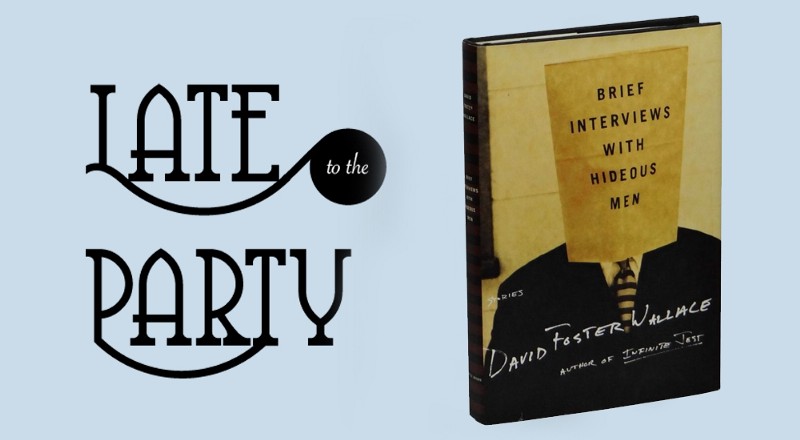
Now, the male editor of this website has asked me to read Brief Interviews with Hideous Men and write about it for money. This I can relate to.
Before I started, my boyfriend (who’s read everything Wallace has ever written, but has never recommended him to me) lifted the book off my bedside table. Flipping through, he laughed. “You’re going to hate this.”
Post-Reading Impressions
Reading these stories felt like being a tourist in the incubation tanks of other writers I know. I recognized narrative structures, stylistic idiosyncrasies, a detached anguish.
The book opens with a seventy-nine-word story called “A Radically Condensed History of Postindustrial Life.” The title’s attempt at humor through grandiosity instinctively annoyed me, but I related to the narrative: a pathetic interaction between three desperate people hoping to be liked. Who wouldn’t relate? We all want to be the right kind of person.
The first story to really stick with me was “The Depressed Person.” “Wallace writes depression the way Jason Molina sings it,” my friend Nat wrote to me in 2012. “Hits too close to home, but is absolutely riveting.” As a story, “The Depressed Person” is deeply claustrophobic: I’ve never read anything that made me feel as inextricably trapped inside depression’s bell jar, including The Bell Jar. I had to take many breaks while reading this thirty-two-page story to replenish my own levels of sanity. I’ve dealt with depression, though never major, and I’d go so far as to say that this story is perfectly executed. I did not enjoy the experience of reading it, but neither have I enjoyed the experience of being depressed.
I did not enjoy the experience of reading it, but neither have I enjoyed the experience of being depressed.
With regard to this particular collection, the praise I’ve most often heard is that it’s funny. “Octet” was the only story to make me laugh out loud, in part because I hated it at first. The story is structured as a series of pop quizzes written in the second person featuring morally questionable vignettes that leave the reader to decide characters’ culpability (among other things). This follows another tedious piece called “Datum Centurio,” which traces the etymological history of the word “date” through an insufferable series of definitions from a 2096 dictionary. I felt equally bored by “Octet” until, fifteen pages in, I arrived at “Pop Quiz 9” (actually the fifth quiz). It begins, “You are, unfortunately, a fiction writer. You are attempting a cycle of very short belletristic fiction pieces…So you do an eight-part cycle of these little mortise-and-tenon pieces. And it ends up a total fiasco. Five of the eight pieces don’t work at all — meaning they don’t interrogate or palpate what you want them to, plus are too contrived or too cartoonish or too annoying or all three — and you have to toss them out.” For the first and only time while reading this collection, I laughed out loud. There’s nothing like feeling superior to a piece of writing only to have its author acknowledge exactly what’s annoying about the work, apologize for it, apologize for apologizing for it, and funnel along through the remaining sixteen pages in an adorably overwrought trainwreck of meta commentary (but then, you have to admit that this probably exists to win over more cynical readers [hi, it’s me]). Wallace indicates that he, too, wants to be the right kind of person.
The main thing to talk about is the series of titular stories. There are four sets of “Brief Interviews with Hideous Men,” each following an unnamed female narrator as she interviews shitty dudes. The types of repulsive interviewees are deeply familiar: pickup artists, breakup artists, rape apologists, men who pontificate on what women “really” want.
Honestly, I don’t think there’s much point in my writing about the text — it’s been written about enough (if you’re looking for an intelligent essay by a woman who loves Wallace, Zadie Smith’s “Brief Interviews with Hideous Men: The Difficult Gifts of David Foster Wallace” is predictably wonderful). So I’m going to do one of the many things which, as a non-male writer, feels terrible, and I’m going to talk about my feelings.
It feels bad to read a book by a straight cis man about misogyny. It feels bad when this book contains some relatively graphic depictions of sexual assault. This is par for the course, when the course is reading books and the par is the Western canon. What feels worse is having this man’s work recommended to you, over and over, by men who have talked over you, talked down to you, coerced you into certain things, physically forced you into others, and devalued your opinion in ways too subtle to be worth explaining in an essay (as in the interviews, where the hideous men are the only characters we hear from). Either these Wallace-recommending men don’t realize that they’re the hideous men in question, or they think self-awareness is the best anyone could expect from them.
In the second iteration of “Brief Interviews,” one of the interviewees says, in explaining a rape victim’s revelation, “you can do anything to anybody or even to yourself if you want because who cares because what does it really matter because what are you anyway just this thing to shove a Jack Daniel’s bottle into, and who cares if it’s a bottle what difference does it make if it’s a dick or a fist or a plumber’s helper or this cane right here — what would it be like to be able to be like this?” The interview culminates in the subject saying to the unnamed female interviewer, “What if I did it to you? Right here? Raped you with a bottle? Do you think it’d make any difference? Why? What are you? How do you know? You don’t know shit.”
Wallace’s writing is effective in that it invokes both familiarity and repulsion. He knew what he was doing and did it very well. Many of the stories upset me. Many contained beautiful sentences. All were intelligent. I laughed once. But why have so many men been so insistent that I should read his work? What do they think Wallace has to teach me?
Why have so many men been so insistent that I should read his work? What do they think Wallace has to teach me?
Obviously work by women about sexual assault has received critical acclaim and attention (Morrison, Oates, Walker, to name a few). But men rarely recommend those books to me (excepting my dad, who gave me Morrison novels when I was a teenager), and as far as I can tell, men are far less likely to idolize those authors, aspire to their cultural status, or blatantly copy their stylistic idiosyncrasies. More mundanely, I’ve never heard a woman express shock or horror on hearing that a man has never read Beloved. It wouldn’t occur to most women to recommend books by women to men the way men recommend books by men to women.
I opened this essay with the cocaine story because exploiting my own physical experiences, especially sexual, establishes and theoretically validates my reflexive resentment toward Wallace (by way of his fans) before anyone has time to question me. It also encourages continued scrolling. Then I considered cutting the paragraph because I don’t necessarily want the internet to know that story. Now it does. Yet in either case, the choice was mine to make, and this is, of course, why it enrages me so much when men exploit women’s sexual suffering for Art.
It is enraging to have a straight man tell me a story about straight men telling stories to a woman about straight men acting like shitheads. I understand that this is the point of the text. I know. I understand that maybe other men wouldn’t absorb the message unless it was being told to them by another, probably smarter and better educated man. But then why do men keep recommending his work to me? BECAUSE I KNOW I KNOW I KNOW I KNOW I KNOW I KNOW I KNOW I KNOW I KNOW.
Let me condense Brief Interviews with Hideous Men to its most quintessential line: “Men mostly are shit, you’re right, heh heh.” Fine, Wallace: you’re right. Heh heh.
It’s one of our oldest stories: a return from the grave. As long as humanity is flesh-and-bone (until we upload to that great silicon cloud in the sky, that is), we’re going to challenge the old ashes-to-ashes adage and wonder whether there isn’t a chance of coming back for one more wondrous go.
What if the afterlife was just…more life? Priests aren’t the only ones who grapple with the question, and Easter isn’t the only time to dwell on it.
Throughout the ages, artists have imagined reversing the irreversible: a character, a beloved, a villain back from the dead. In literature, it’s one of the oldest devices around. A hero comes back, against the greatest odds of all, to save the day. But for every kingly lion or super wizard who breezily returns to life more powerful than before, our authors offer up a resurrection gone wrong: a decomposing corpse an embittered bride. And then sometimes life just carries on as it always has: the humdrum revival.
There’s no one vision of what it means to defy the Grim Reaper (Mot, Thanatos, King Yan, Mahweth, Azrail, Giltinė — an angel of many names). But what everyone seems to agree on is this: you can’t cross earthly boundaries without being irrevocably changed. Whether that’s a blessing or a curse depends on who’s doing the returning, and who’s doing the telling.
Here are eleven books that tackle that great question: could we come back?
(And for the record, yes, we understand this is a weird topic for a book list. That’s why we did it! No blasphemy intended. Hints of blaspheme, sure…)
1. Melquíades in One Hundred Years of Solitude, by Gabriel García Márquez
Melquíades the gypsy floats in and out of this epic novel like the ghost he eventually becomes — introducing new technology (magnets! ice!) and narrating the Buendía family’s story. Thanks to Garcia Marquez’ genius, it doesn’t sound that strange at all when Melquíades reports (in the flesh) that he died in the sands of Singapore, not from a giant squid attack as some had claimed. It’s all part of the magic added to that old literary stalwart, realism.
2. Herbert White in The Monkey’s Paw, by W.W. Jacobs
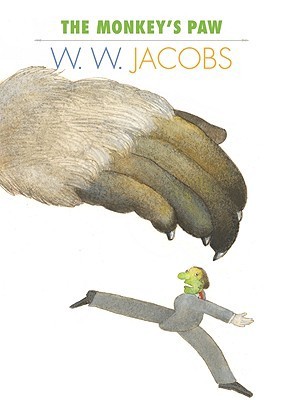
Published in England in 1902, this short story by W. W. Jacobs combines elements of the Arabian Nights with Kipling’s tales of the British Raj. The story is also an allegory for the old advice: “be careful what you wish for.” The White family is struggling to get by when they are visited by their friend Sergeant-Major Morris, who recently returned from serving with the British Army in India. Morris has a magical object in his possession: a wish-granting, mummified monkey’s paw that has caused him nothing but trouble. Mr. White invokes the paw despite Morris’ warnings, and when he wishes for 200 pounds to pay off his house, the money comes by way of a reparation payment from his son’s untimely death at the factory. Mrs. White then wishes her son back to life, but the corpse who shows up at the door is so disgusting and half-rotted that they have to use their last wish to…well, you’ll find out.
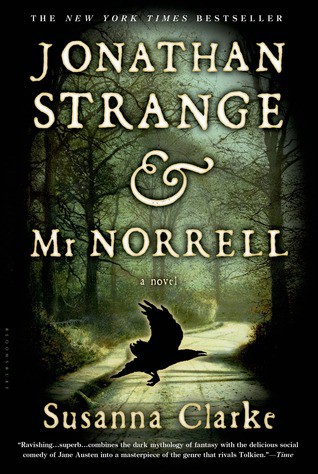
3. Emma Wintertowne in Jonathan Strange & Mr. Norrell, by Susanna Clarke
Susanna Clarke’s epic novel imagines an alternative history of England where magic is just another long-forgotten art like hieroglyphics. Mr. Norrell is on a quest to revive the practice of magic, but it quickly intensifies from fun spells like moving statues or conjuring ships out of fog. When Norrell agrees to resurrect the recently deceased Emma Wintertowne, she comes back without her finger and is slowly driven insane.
4. Aslan in The Lion, the Witch and the Wardrobe, by C.S. Lewis
Along with his friend J.R.R. Tolkien, C.S. Lewis was a proud and well-known Christian, so it’s not that surprising that the king of Narnia is often read as an allegory for Jesus Christ. Aslan is a noble leader who sacrifices himself to save Edmund, an innocent. The morning after the White Witch kills Aslan, his giant lion body rises from the dead and he vanquishes his enemy.
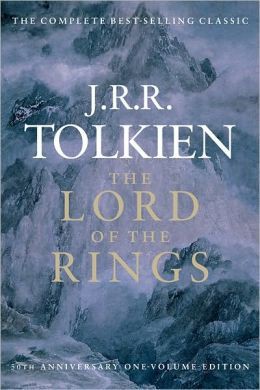
5. Gandolf in The Lord of the Rings, by J.R.R. Tolkien
Tolkien also included a major resurrection in his famous series. In The Lord of the Rings, the wizard Gandalf dies on Zirak Zigil, only to come back to life as the even more powerful Gandalf the White. Thanks to Tolkien and Lewis, this trope — an important-and-wise character dies, then comes back to life — is now firmly-entrenched in the fantasy writer’s bag of tricks. Perhaps too much so.
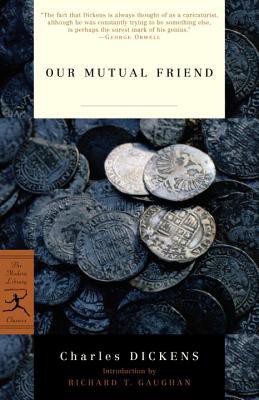
6. John Harmon in Our Mutual Friend, by Charles Dickens
Dickens’ last novel employs the old plot device of “resurrecting” a character who never actually died. In this case, a young man named John Harmon pretends to have drowned in the Thames so that he can gather more intel on his sudden inheritance and the man who accepts the money in his place — one adorably named, Mr. Boffins.
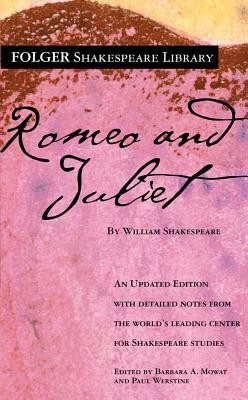
7. Juliet in Romeo & Juliet, by William Shakespeare
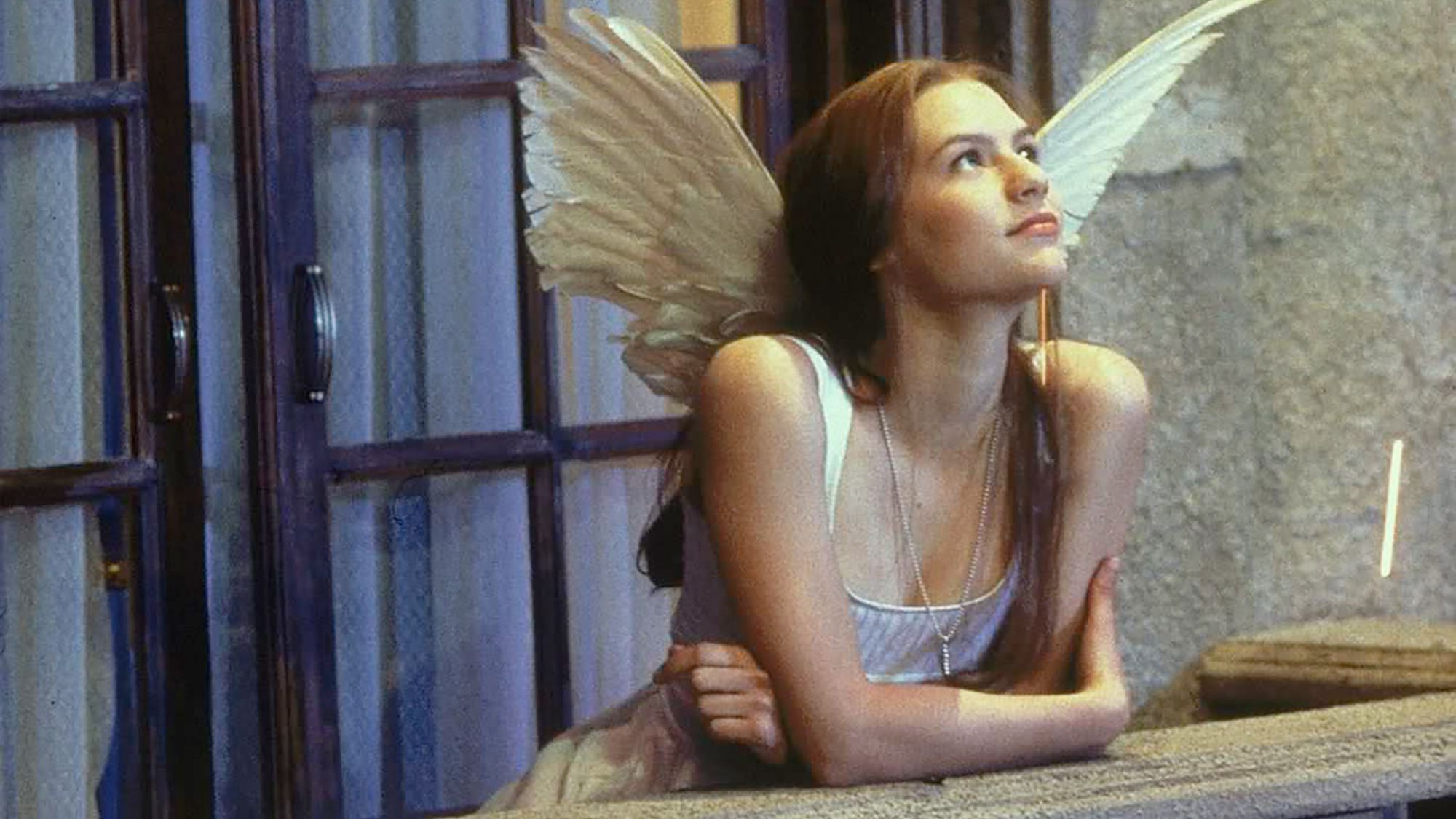
In Romeo & Juliet, Shakespeare also makes use of the false death, but to much more devastating effect. After Juliet imbibes a liquid which makes her appear dead, she’s laid in the Capulet family crypt. Romeo doesn’t get the message that she’s only pretending, so he drinks a vial of poison to be with her. When Juliet wakes up to find Romeo dying, she stabs herself with his knife. Life before cell phones could be brutal.
8. Harry Potter in Harry Potter and the Deathly Hallows, by J.K. Rowling
During the ultimate showdown between Harry Potter and Lord Voldemort, Harry is injured and sent to limbo, which looks like a ghostly version of King’s Cross Station. Rowling has said that she wanted Harry to be forced to choose between life and death. Harry chooses life because he’s a hero and because really, who wants to be stuck in a train station for eternity?
9. Ligeia/Rowena in “Ligeia,” by Edgar Allan Poe
Poe published this haunting story in 1838. The story’s narrator is crushed when his beloved first wife, Ligeia, dies. He’s only partially recovered, in part thanks to using opium, when he marries his second wife, the blue-eyed Lady Rowena Trevanion of Tremaine. One night Rowena is struck down by illness. When her corpse rises from her deathbed and walks into the middle of the room, the narrator realizes she has come back to life as his first wife Ligeia. That’s where the story ends, though we might assume the postscript is that the narrator, too, dies, from overdosing on opium at his wife’s bedside.
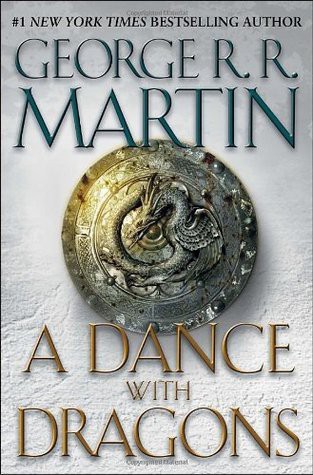
10. Jon Snow in A Dance with Dragons / (presumably) The Winds of Winter, by George R.R. Martin
As it stands, HBO’s “Game of Thrones” series has outpaced George R.R. Martin’s published novels. Martin killed off his hero, Jon Snow, in 2011, but he hasn’t yet published the next book in the series. However, Martin has confirmed that the general conclusions of his books will match the television show, meaning we can safely assume that the next installment of A Song of Ice and Fire will include Jon Snow coming back to life and kicking some traitorous Night’s Watch hide.
11. Aunt Bernie in Sea Oak, by George Saunders
Published in Saunders’ short story collection Pastoralia, this funny, weird, gory story is about consumerism and poverty in America — and more literally about a male stripper whose once-optimistic aunt comes back from the dead. Aunt Bernie’ s reanimated corpse is bitter yet determined to help her nephew prostitute himself into financial security and out of their crumbling apartment.
From Kathleen Collins to John Crowley, here are the books our staff is currently enjoying
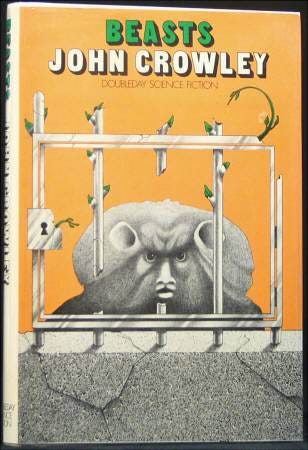
Beasts by John Crowley
I read a short John Crowley book published in 1976 called Beasts. Despite its brevity, it contains an awful lot, more than can be covered in this short paragraph. I suspect that in light of recent discussion pieces I’ll get in trouble for making this claim, but I would say it’s a dystopic, speculative novel that slips between sci-fi and fantasy. It considers a future U.S. after it has been divided into various territories. The country is controlled by a thinly veiled dictatorship, but in the outlying territories, there are various communist enclaves and eco settlements. Scientists have recently developed a genetically modified species known as leos that crosses humans with lions. That species is now fighting for its rights and survival from human hunters. There is one character, Reynard, who is a cross between a fox and a human, but he’s the only one and is, unlike the leos, very powerful with a high position in the government. For the most part, Beasts follows three main characters: a leo called Painter who’s on a vengeance mission, Reynard, and a falconer who leaves his bird tower for a job as caretaker to the ruler’s children. As you might imagine, there are a lot of ideas being tossed around, and sometimes the writing feels that way: a salad of genre tropes. At other times, though, the writing is beautiful and the scenes distilling. And considering the book was written in the ’70s, there are moments that feel prescient. I’m excited to read some of Crowley’s more recent and developed work.
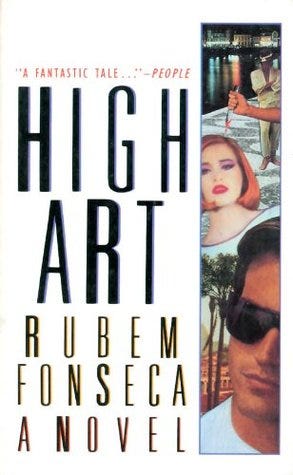
As reported in my last update, I’m digging into more from Rubem Fonseca. This time it’s High Art, which so far reads like Cortázar by way of Raymond Chandler and ends the first chapter on the excellent line, rendered in English: “At times I have interpreted events and behavior. Am I not a lawyer professionally accustomed to the practice of hermeneutics?” Until further notice, I will continue reading Rubem Fonseca and only Rubem Fonseca.
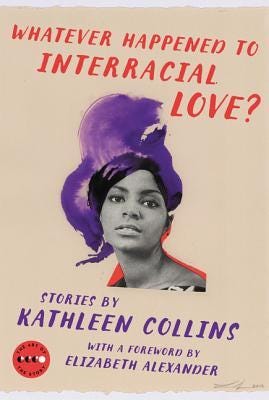
I’m reading Whatever Happened to Interracial Love? by Kathleen Collins. The story behind this collection is fascinating and heartrending tale of under-recognized black female genius. Collins’s only feature film “Losing Ground” (1984) was “rediscovered” in 2015 and given its first official release at Lincoln Center, soon to be followed by this collection of story stories, written the decade before. The New Yorker describes it as, “a multidimensional revelation whose invisibility until now is as grievous a loss to literature as the near-disappearance of Losing Ground has been to the world of movies.”
The stories themselves are even more remarkable, each experimenting with different voices and styles. How’s this for an opening gambit: “I had an uncle who cried himself to sleep. Yes, it’s quite a true story and it ended badly. That is to say, one night he cried himself to death.”
I was recently lamenting with a colleague how white the MFA short story cannon is, with Cheever, O’Connor, Carver, and Munro as its patron saints. Whatever Happened to Interracial Love? was written during the MFA workshop heyday, and serves as a reminder that should be obvious, but is unfortunately still very much needed: that the whiteness of the short story cannon is not for lack of extraordinary writing by people of color. Kathleen Collins died of breast cancer at 46. If there’s an upside to her stories being posthumously published, albeit a small one, it’s that the stories benefit from being, presumably, untouched by an editor, who would have tried to turn them into something more traditional. They are deceptively humble; often short but never slight, and totally original.
Already established as a poet with two published collections, Brian Blanchfield dives into the world of lyric prose with Proxies: Essays Near Knowing {a reckoning}. Part memoir and part intellectual discourse, this project draws on the writer’s academic background to enrich a web of deeply personal stories spanning from early childhood to the time of the essay collection’s composition.
What makes Proxies unique is that the source material is strictly memory-only: any information or references — whether a line from a poem or findings from a study once featured on NPR — must be something Blanchfield remembered in the writing process, without the aid of a search engine. The final essay, “Correction,” sets straight some of the details from the previous twenty-four.
In his preface, “[A Note],” Blanchfield lays out the productive constraints: that the essays will be “unresearched… analytic but nonacademic” and that he will “stay with the subject until it gives into an area of personal uneasiness, a site of vulnerability, and keep unpacking from there.” He refers to Montaigne asking his bookshelves the question, “Que sais-je?” (“what do I know?”) and decides that it “seems like a good start.”
Each essay unpacks a chosen topic — e.g. “On Foot Washing”; “On Confoundedness”; “On Peripersonal Space” — and each contains this refrain as its subtitle: Permitting Shame, Error and Guilt, Myself the Single Source. Blanchfield is cracking open the lyric essay while also cracking open himself; half-remembered knowledge mingles with half-remembered lived experiences, and gradually, the poet himself emerges.
By queering the essay form in this way, Blanchfield also constructs a new way of looking at his own identities, where “self” and “other” are perpetually braiding into each other in a radical vulnerability. This vulnerability sometimes emerges in subtle ways, as in the essay “On Housesitting” —
Housesitting, like playing house, is identity rehearsal — practice, of course. For what? You’re writing a future into a present, you’re writing an other there onto the self here, and quote yourself back to yourself.
The displaced self, as house sitter, experiences a simultaneous gain and loss of control. I won’t spoil his anecdotes of housesitting mishaps.
In other moments, the braiding of “self” and “other” produces an unsubtle vulnerability, piercing and dangerous. The essay “On Frottage” reflects on Blanchfield’s coming of age as a gay man during the height of the AIDS crisis — “I never had a sex life without having a status” — and being part of the younger generation of gay men who, because of HIV risk and stigma, shunned the older generation and often exclusively explored non-penetrative sex. He writes, “What did we solve (a metaphysics, a phobia?) each time we made our mutuality exterior? We met each other there.” When HIV status is such a critical aspect of developing selfhood, interiority and exteriority take on whole new meanings. “On Frottage” is one of the most memorable and moving pieces in the collection.
In the framework of Proxies, selfhood and identity are inextricably linked with memory and knowledge. Several other essays further explore queer identity through this lens, veering away from known narratives of “identity politics” in favor of a queer selfhood that centers relationships and vulnerability rather than structures of oppression. (Blanchfield’s relative privilege as a white member of the queer community grants him the ability to de-center oppression in his narrative; the failure to address this nuance is perhaps one of his shortcomings.)
The essay “On Containment” threads through different forms of this approach, wandering from place to place in the way lyric essays often do. First, we encounter a threat to literal bodily containment — a childhood memory of Blanchfield’s own exposed jawbone after a severe dog bite (vulnerability is wound-ability, after all); then, taking a step back, a meditation on the threshold of unbearable tickling —
It’s my recollection that the Winicottian psychologist and essayist Adam Phillips himself extrapolates broadly from his analysis of tickling; but, if not, the generality I have found so insightful is mine: beyond any fear is a great circumambient fear — a terror — that one will be insufficiently able to hold the fear. That if the stimulus is present and ongoing, unchecked, one might fall apart, come to pieces, in her faculties disintegrate. In sustained tickling we know (we learned) there exists an outer lip or membrane between the simpler immediate excitement of fear and the shameful and complete loss of bodily control and mental composure…
Then, from the topic of tickling, Blanchfield drifts into another kind of containment: the containment of one’s sexuality, always initially “secret” in a world that assumes heterosexuality unless told otherwise. But instead of the self being trapped inside of the secret (as with the common dialectic of “in the closet”/“out of the closet”) he makes another move, flipping the traditional narrative on its head —
Early on you have a secret. It is almost as if the secret is there before you. You are ever in relation to it; you are its container, and because by definition the one imperative is that you cannot share the secret — perhaps you develop the understanding that no one in your small world may be entrusted with the knowledge of what’s inside you — you become, through and through, a holding environment for the secret.
When Blanchfield takes the imagery of being “in the closet” and turns it literally inside-out, the relationship of the self to the outside world looks radically different.
The passages quoted above already provide an impression of the overall tone: a conversational intimacy intersects with a deeply analytical backbone. Blanchfield’s introductory claim to being “nonacademic” might be a stretch — anyone who frames his essays by quoting Montaigne in the original French can’t place his work entirely outside of academia. Though the essays are accessible for the most part, they do require a willingness on the part of the reader to interact with certain “Ivory Tower” greats, both canonical and obscure. He demonstrates a self-awareness of this quality in “On Confoundedness”: “One might even say [I am known as] a poet’s poet. Though less baffling the stronger I grow as a writer, my work is not especially welcoming to the uninitiated and one can feel excluded there…”
In Proxies, the self absorbs everything it touches. For a well-read person like Blanchfield, it seems that pulling from the likes of Sophocles and Barthes comes as naturally as drawing on his own childhood memories. Like his peer Maggie Nelson, he manages to integrate source material — from King Lear to Hart Crane — in a way that usually feels organic. In this endeavor, his “internet off” writing restriction may have been more beneficial than restrictive.
But why Proxies? Let’s return to Blanchfield’s preface:
A proxy in one sense is a position: a stand-in, an agent, an avatar, a functionary […] In sciences I think proxy additionally expresses a kind of concession to imprecision, a failure. It’s the word for a subject you choose to study to produce data that can approximate the data you’d get from the actual, desired subject, if it were not prohibitively hard to apprehend.
In a way, these twenty-four essays — and the twenty-fifth essay of corrections and amendments — are proxies for the self, the “desired subject” (or, sometimes, object) that cannot be directly examined or defined. Like the imperfect memories that circumscribe it, the individual self-as-writer must always be beholden to the changes of time. That’s part of what makes memoirs so interesting to read: memory becomes a character in itself, unfolding through the writing process. Here, Blanchfield’s memory-only restriction focalizes his own conceit, where memory serves as the foundation for the essays as well as the self. And, like many writers, the core of his memoir ends up being — surprise! — about writing and living as a writer.
The age of “fake news” has ushered in a new need to interrogate the different meanings of truth and truthfulness, and nonfiction writing outside the realm of journalism still has a role to play. The genre of “creative nonfiction” occupies a fascinating and ever-changing position in today’s literary culture; Blanchfield’s essays, simultaneously genuine and flawed, stand in as proxies for the examination of a genuine and flawed self. Like Tim O’Brien’s The Things They Carried, this collection demands a reader who can question different modes of truth and storytelling. Identity, memory, and trauma are never straightforward.
In “On Withdrawal,” Blanchfield begins by discussing his preference for facing backwards on trains. He writes, “I like the illusion of being drawn from the present into the future […] I have my eye on what I’ve left.” This “illusion” is fitting for the experience of reading his essays: the sensation of looking into the past yet being drawn ever forwards.
Hello, and welcome to my week-by-week review of the world. Today I am reviewing orchestra conductors.
If you’ve ever been to an orchestra, or seen one in a cartoon, you’ve probably wondered who that guy is rudely standing with his back to the audience, waving his arms, and blocking your view of the musicians. He’s the conductor. Sometimes he’s a she, but very rarely. Men make up a disproportionately large number of existing conductors.
A lot of people wonder what conductors actually do. The truth is, no one really knows. Musicians can still play the music without a conductor, and frankly it seems like a distraction to have someone standing in front of you and waving their arms wildly, vying for your attention. “Hey look at me, look at me!” It’s a bit desperate.
I don’t begrudge the conductors having jobs. Everyone needs a job even if it’s just busy work, like a crossing guard or a doula. I just wish the conductors could do their job off to the side so I could see all the musicians.
And musicians shouldn’t be obligated to look at the conductor. It should be an optional thing. If they want to look at someone gesticulating wildly, there’s one over on the side of the stage. If not, go on about your business playing beautiful music.
Orchestra conductors should not to be confused with train conductors, who only wave their arms when they’re trying to warn someone to get out of the way of the train. If you ever see that happening, look down to make sure you’re not standing on train tracks.
I plan to get a job as a conductor, and for my first performance — right when it’s time for me to start waving my arms around — I’ll instead whip out a tiny folding chair from underneath my tuxedo, sit down, and let the orchestra do their thing while I sit back and watch from the best seat in the house with no one blocking my view.
BEST FEATURE: They wear tuxedos. WORST FEATURE: They don’t even sing. If you’re going to stand in front of a bunch of musicians on a stage you should be singing.
Please join me next week when I’ll be reviewing botox.
Patrick Yumi Cottrell’s Sorry to Disturb the Peace introduces readers to Helen Moran, a woman who, upon learning of her adopted brother’s suicide, returns to her adoptive parent’s home to investigate the causes. With grim humor, Cottrell writes toward and around the experience of alienation — from identity, family, and society — and the unsolvable mystery of another person’s consciousness. When Cottrell’s singular character calls herself Sister Reliability, but proves to be anything but, it underscores the cognitive dissonance between what a first person narrator says and believes and what a reader understands.
Over email Cottrell and I talked about the allure of first person point of view, perceptions of mental illness, and the authorial choices she made in writing this novel.
Author Patrick Yumi Cottrell
Adalena Kavanagh: Your novel is in the first person, and though your protagonist gives herself the task of investigating her adoptive brother’s suicide, we learn much more about her interiority than the brother’s life and death. Why tell this story in first person? What is it about that perspective that you’re drawn to as a reader and writer?
Patrick Yumi Cottrell: I think first person narratives are seductive and neurotic. Writing this book was like being trapped inside a person’s mind. It was uncomfortable at times, but also necessary for this particular story. In a lot of ways, I didn’t know what I was doing. I figured it out as I wrote. The voice was my priority. I wanted it to flow easily, like a river going down the side of a mountain.
I don’t know why, but it’s always been difficult for me to write in third person. I like figuring out the particular texture and fabric of a narrator’s voice. For some reason, I associate third person with control and manipulation. I’m probably wrong about this, but that’s my sense at the moment.
Kavanagh: To press you a little bit, why was it necessary to tell this story in first person?
Cottrell: It was necessary in the sense that I wanted to follow this very particular voice that had arisen out of the confusion and murk of my life. The voice sounded strong to me. I wanted to follow it to see where it would go.
Kavanagh: Did any specific event or piece of art inspire you in crafting the voice? I ask because I can pinpoint certain ah-ha moments that completely change the trajectory of a piece. I like hearing those stories.
Cottrell: What inspired this book was not reading contemporary fiction for a couple years. And working full-time in Manhattan. And riding the F train into Manhattan at 5 in the morning. And walking around the West Village. I wouldn’t say there was one event or piece of art, but rather an accumulation of experiences. One piece of art that I do remember from the time of writing the book is the Sugar Sphinx by Kara Walker.
Kavanagh: You mentioned associating the third person perspective with “control and manipulation.” Do you mean omniscience? If so, I can see what you mean. That said, because your narrator is first person we’re forced to figure out how reliable she is (in as far as any person with varying degrees of self-awareness and self delusions can be said to be “reliable”). It took a while for me to understand that Helen is very straightforward, but her sense of reality might be compromised. You tease out some of the questions about Helen’s mental state without making clear what her mental state is. Why leave it open ended?
Cottrell: I think the word compromised assumes there’s some kind of truth that has been distorted. We all do that. Who is truly reliable? What is Truth? The thing is, I don’t think Helen is schizophrenic or bipolar. That’s something her brother writes about her, but how reliable is he? I don’t think anyone’s mental state as diagnosed by the DSM is pertinent to this story. I could have deleted that line about schizophrenia or whatever, but in the end, my editor and I made the choice to keep it, because it seems like something the brother would say. He enjoys throwing out suggestive crumbs as clues, but the crumbs don’t always lead anywhere. He’s an enigma. I believe Helen and her brother are both sane people, and resourceful in terms of how they deal with the world.
Kavanagh: Did you have any blocks while writing this?
Cottrell: I didn’t have any writing blocks, but I did take long periods of time away from the book. I was teaching at a charter school and that took up countless hours and days.
Also, I think at some point, I went down the wrong path for the book, and I had to delete a third of it. Or maybe it was half. Looking back, I don’t see this as an obstruction, but rather a moment of good fortune disguised as a crisis. That moment of uncertainty was clarifying in a way. I wasn’t sure I would be able to finish this book. I didn’t feel confident about it. But I knew I wanted to try.
Kavanagh: Would you mind expanding a bit on what the wrong path was?
Cottrell: I was writing more directly about Helen’s past experiences in New York City, for example, doing drugs in New York City with the troubled young people, but it was way too trippy and druggy, like a car filled with weed smoke and ecstasy and teenagers. This went on for a hundred pages. Writing those parts, I felt like I was on drugs, tripping. The narrative became unsteady, and I needed to bring it back to a place where Helen had more authority in terms of what she was saying. The drug section was too ephemeral. It wasn’t working at all. It was a dead end.
Kavanagh: I was struck by the narrator’s choice of referring to her adoptive parents and her adoptive brother as “adoptive.” This reminds the reader that the family dynamic is almost always influenced by the act of adoption. Was this conscious? If so, why?
Cottrell: It’s something that came about naturally. It’s part of her delivery. A few people have commented on it, like, “Oh she never lets you forget that she’s adopted.” That seems fine to me. Why should she let the reader forget she’s adopted? The repetition of the “adoptive” qualifier signals not only an estrangement from her family, but also an estrangement from her circumstances of existing in the world as a Korean adoptee.
Why should she let the reader forget she’s adopted?
Kavanagh: I found her references to her adoption both self-conscious but completely understandable (and maybe inevitable). I’m sure there are adoptees who don’t feel any sense of self-consciousness around adoption but I imagine it would be nearly impossible to forget, especially for transnational adoptees adopted into families of a different race.
At one point the narrator recalls a conversation she has with her adoptive brother (adopted from Korea, like the narrator, by white parents). They both talk about wanting to be white, and then the narrator says:
“We were nothing less than disappointed about being Asian and very ungrateful about being brought into this country, a country neither of us had asked to come into, and neither of us identified as Asian, we never checked the Asian box. If someone asked us our nationality, we usually said, adopted.”
This struck me as the core of the book, both for Helen and her adopted brother. It’s also a unique take on race, which for obvious reasons, people have much invested in, as self-identification, but also because in America it so often affects how you are seen, and treated. But in this passage you highlight that the internal parts of the experience of race are often cultural and situational. For two Asians raised by white Midwesterners who don’t make any accommodations for their adopted children’s birth culture, in place of the cultural experience of race, instead they have the experience of adoption.
I guess this resonated with me because if people asked me my race saying “mixed” feels most accurate, both as self-identification and as experience. I’ve talked to different mixed/and or biracial Asian writers and I was struck by their common determination not to write mixed/biracial characters because they feared their fiction being read as autobiographical. (I’m not sure why I was surprised to hear this — but I always figured that if someone thought my fiction was autobiographical that was their problem, not mine.)
As a Korean adoptee (and forgive me, I am not reducing you to those two identifiers) did you ever fear your novel would be seen as autobiographical? If so, how did you get beyond that? And if not, why not?
Cottrell: I never had that fear, strangely enough. I will say I dislike psychological and psychoanalytic interpretations, often those readings say more about the reader than anything in the book. There are elements of the book that overlap with my life in obvious ways, for example, as you point out, I am a Korean adoptee writing about other Korean adoptees, but the book is a work of imagination. Events, characters, places, etc. are all shaped and constructed deliberately. Reading is a private and subjective experience. If people read the book a particular way, that’s none of my business.
Kavanagh: By psychological and psychoanalytic interpretations do you mean psychological and psychoanalytic interpretations of the text or of the author (and her intentions) through the text? I think they’re two different things. I object to a psychoanalytic interpretation of an author through her text but I probably read text with a psychoanalytic lens — I’m interested in why people do what they do, and though flawed, I do think psychology can give us a way in.
So if not those critical lenses, (of text, and or author through text) which do you prefer to read through and be read through?
Cottrell: I mean psychological or psychoanalytic interpretations that dismiss the narrator as simply crazy, schizophrenic, bipolar, etc. I haven’t given much thought to those types of interpretations being applied to the author. I like readings that assume the death of the author (for example, deconstructive). The other way the book can be read is under a tree, or in a park, or in the midst of an argument with a loved one, or in the Walgreen’s parking lot.
Kavanagh: Helen sets out to solve the mystery of her adopted brother’s suicide and as much as you can ever understand such a personal decision, she does come to an understanding. What felt different for me as a reader was the fact that in many first person narratives (and in novels in general) we expect the narrator to come to a better understanding about their own interiority and life but you almost completely sidestep the epiphany model! She even says “If someone asked me to describe myself, I would say I was the adoptive sister who missed her adoptive brother’s funeral.” She doesn’t tell us how the experience has changed her, but she does reach a final acceptance of her brother’s suicide. The reader gets inside her head and comes to a fairly deep understanding of the narrator but the narrator herself lacks a certain sense of self-awareness, which strikes me as uncommon for a first person voice (it would be easy for a writer to unintentionally write a first person who is too self-aware).
Was Helen’s lack of self-awareness a conscious decision? And if so, did you have any models in mind?
Cottrell: I thought her confidence and lack of self-awareness was funny. I wouldn’t say it was a conscious decision, but that it came about naturally because of the person she is and her circumstances that could be considered destablizing. I like how she doesn’t question her actions. She feels strongly about what she’s doing. Many confident people lack self-awareness. Then there are the people who are very confident because they’re actually good at what they do, like Russell Westbrook or Ottessa Moshfegh. So it all depends.
Kavanagh: What are a few of your favorite first person novels or characters? What about them resonates with you or influenced your writing?
Cottrell: I like Lolita by Vladimir Nabokov. Humbert Humbert is such a monster, he ruins Lolita’s life, his self-awareness is only in service of himself, and he’s quite cruel, yet he can be charming, intelligent, and he seduces the reader into seeing things from his point of view, no matter how fucked up it is or distorted. Lolita is a work of cold genius. No one can touch it.
Kavanagh: Lastly, I want you to imagine a book not yet written but one that you desperately want to read. What is it? What does it do?
Cottrell: I want to read a book by Jesse Ball that channels W.G. Sebald. The fabric of this imaginary book would be incredibly fine and light. It would change me upon reading it.
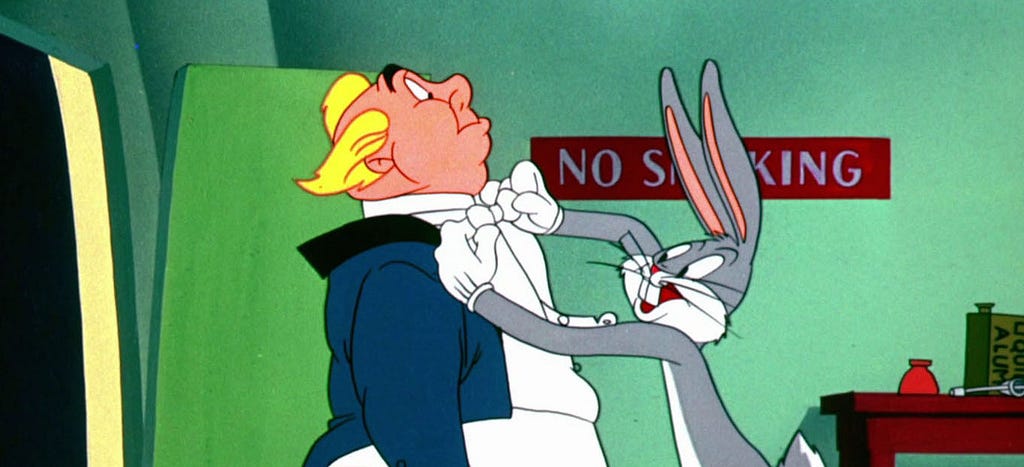
Easter is almost here, which means that children across the world will be hiding in their bedrooms, trembling in fear of the grotesquely large Easter Bunny — a frightening mythological monster as large as a man with hind legs able to crush human bones like matchsticks. This weird creature is said to stalk around houses, secreting “eggs” from its quasi-mammalian glands in hiding places for unlucky children to find.
Or something like that. It’s been a while since I went to church.
In any event, in anticipation of the Easter Bunny’s visit here are five of the most disturbing stories about bunnies:
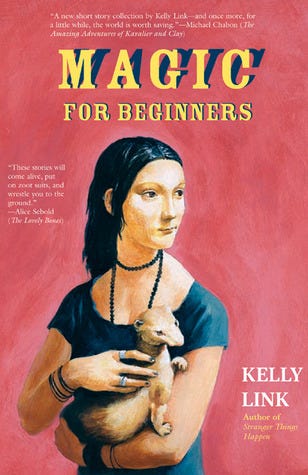
“Stone Animals” by Kelly Link
Kelly Link’s wonderfully creepy short story “Stone Animals” isn’t just the best horror story about rabbits, it’s one of the best horror stories I’ve ever read period. (We published the story in Electric Lit’s Recommended Reading, which you can read here if you are a member.) The story centers around a family that moves out of the city into a house where everything is somehow a little off. The small disturbances grow more and more bizarre, and most of them center around rabbits that appear on the lawn:
In the other bed, Tilly was dreaming about rabbits. When she’d come home from school, she and Carleton had seen rabbits, sitting on the lawn as if they had kept watch over the house all the time that Tilly had been gone. In her dream they were still there.
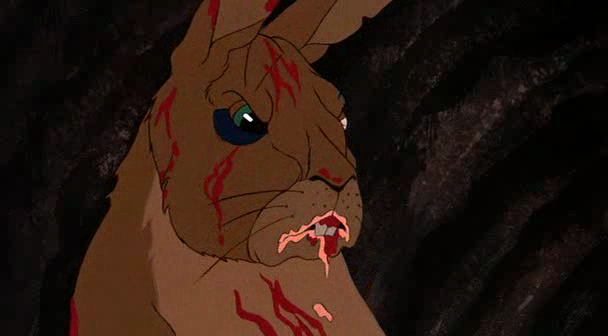
General Woundwort in the animated adaptation
Watership Down by Richard Adams
Watership Down is probably the best-loved novel about rabbits, and for good reason. The adventure story is moving and filled with wonder, readable for children and adults alike. The story follows rabbits in a warren who are dying out without any female does. They end up struggling against a brutal militaristic rabbit warren run by a dictator bunny named General Woundwort. While hardly a horror story overall, there are plenty of frightening moments with Woundwort and his army.
At that moment, in the sunset on Watership Down, there was offered to General Woundwort the opportunity to show whether he was really the leader of vision and genius which he believed himself to be, or whether he was no more than a tyrant with the courage and cunning of a pirate. For one beat of his pulse the lame rabbit’s idea shone clearly before him. He grasped it and realized what it meant. The next, he had pushed it away from him.
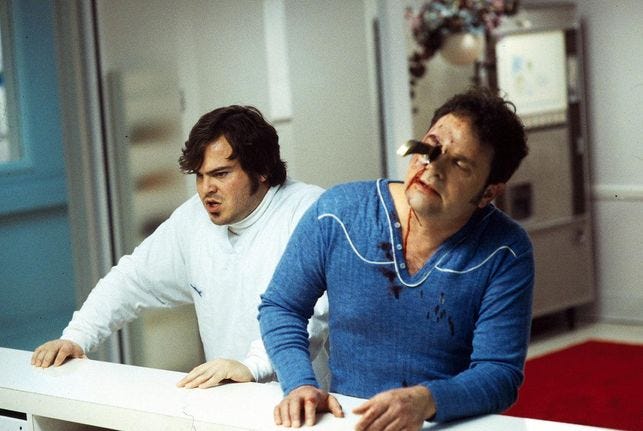
From the film adaptation of Jesus’ Son
“Emergency” by Denis Johnson
Denis Johnson’s hallucinatory short novel-in-stories, Jesus’ Son, contains more memorable moments than most writers can fit into a career. It’s hard to say any of the stories stand out — they are simply all that good — but if push came to shove “Emergency” is probably the best. In that story, which features a man coming to a hospital with a knife in his eye (played by Denis Johnson himself in the film version), the narrator Fuckhead and fellow addict Georgie find a dead rabbit and slice it open, only to find it was pregnant:
Georgie came back to my side of the truck with his shirtfront stretched out in front of him as if he were carrying apples in it, or some such, but they were, in fact, slimy miniature bunnies.
Like most things that enter Fuckhead’s life, these slimy bunnies don’t make it out okay.
“Letter to a Young Lady in Paris” by Julio Cortázar
Rabbits are normally cute and furry, but not when you are vomiting them magically out of your mouth. In Cortázar’s bizarre and beautiful story, “Letter to a Young Lady in Paris,” a man writes to the woman he is house-sitting for while he vomits up rabbits:
When I think i’m about to vomit a rabbit I put two fingers down my throat like an open set of tongs, and I wait until I can feel the warm hair rising like the fizz of an alka-seltzer.
Despite the premise, this is not a whimsical story in the least. Like much of Cortázar’s work, it’s philosophical and ends on a dark note.
(I love this story so much that I once wrote a sequel where a rabbit vomits up tiny men.)
Alice’s Adventures in Wonderland by Lewis Carroll
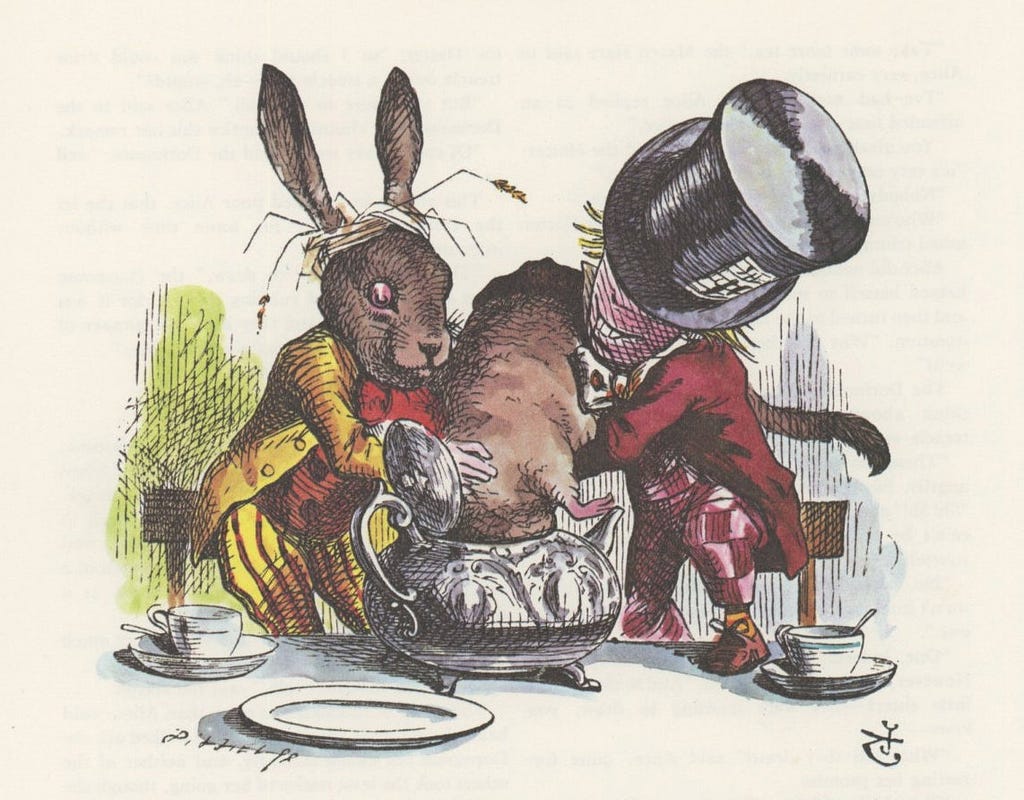
While the White Rabbit who leads Alice down the hole is the most famous bunny in Wonderland, he’s no match for the March Hare when it comes to the disturbing (or disturbed). The March Hare always thinks it is tea time because his friend the Mad Hatter “murdered the time” in a song:
The March Hare took the watch and looked at it gloomily: then he dipped it into his cup of tea, and looked at it again: but he could think of nothing better to say than his first remark, “It was the best butter, you know.”
One of the things that writing teachers, and, increasingly, literary journal guidelines, warn writers against is this: Don’t, they say, ever, they say, write a story or novel about a writer. Worse, they say, is a story or novel about a writer writing about writing. The best stories and novels often break the rules, though, and this is the case with the original, astute debut novel, Oola, by Brittany Newell.
Newell is, frustratingly to this mid-twenties writer, only 21 and graduating from Stanford this spring. It’s also frustrating to know that many, if not all reviews, will mention this fact and possibly focus on it. It’s a shame, because whatever her age, Newell’s insight, intelligence, and prose are all clearly prodigious, which is obvious in her creation of this book, which is both subtle and outrageous, wonderfully readable yet philosophically challenging.
The novel opens with a short prologue chapter, followed by an odd scene, which Newell’s blog (she is a “drag queen” and performance artist who goes by the name Ratty St. John when not writing brilliant novels) suggests may be somewhat autobiographical (I only mention this because I was struck by how bizarre and specific the image in this scene was, and knowing there may be some personal experience with it allows me to feel that image all the deeper for its likely accuracy). In this scene, which takes up the whole of the second chapter, narrator Leif and titular Oola have made up a game. They gather in the living room of the house they’re house-sitting, wearing bits of clothing belonging to the house’s usual occupants. “Then, when she felt moved to, Oola would put a pair of nylon stockings on her head.” Quickly it becomes clear that the pantyhose are on Oola’s face:
Through the stretched fabric, her features were blurred, as if a left-hander had been penciling her, smudging the last stroke as he made the next. Her eyelashes were crimped, her nose squished, her mouth forced open, her cheeks Botoxed back.
Then Leif also wears the stockings, and they take turns until it turns light outside and the game stops with some embarrassment.
This scene, so early in the book, before we really know who Leif is, who Oola is, or what their relationship is, serves two purposes: one, it shows us these characters’ ability to act very, very weirdly, to enjoy it, and to be self-aware about their oddity. Two, it demonstrates a theme that will be present through the book: the blurring of the self, the other, and the perception of that difference.
In terms of plot, the book is quite simple. Leif is a WASP with wealthy parents who have wealthy friends who go out of town and need house-sitters, a perfect situation for Leif, who is traveling around Europe in an attempt to be a writer. Or maybe more accurately, he is attempting to become a writer through the tried and true method of being very privileged and traveling a lot and hoping that worldliness will lead to wisdom. Oola is a conservatory dropout, a pianist taking time off to wander around Europe and sow her wild oats (some more). The two meet, have amazing chemistry, start traveling together, sleeping together, and as far as we can tell, falling madly, deeply, truly in love with each other. Eventually, they end up in Big Sur, California, indefinitely living in a cabin belonging to a relative of Leif’s who’s gone, also indefinitely, into hospice care.
In Big Sur, Leif’s project, alluded to earlier in the book and which has clearly been developing in his mind for some time, starts in earnest. Leif is attempting to write a book about Oola — maybe and maybe not the book readers have in hand; it’s never made 100% clear whether we are reading Leif’s thoughts, his notes, or the finished product of his labors. Oola, by the way, has consented to this project, a fact that Leif sees as excusing everything he goes on to do. Her consent is in the first pages of the book, as if in order to prove it beyond a shadow of a doubt; but her consent is flippant and flimsy, not the “firm and enthusiastic yes” we’re taught in consent workshops. On page 3 of the book, when the couple is climbing into bed to go to sleep, Leif announces that he is thinking of a new project in which Oola will either be the main character or the person on whom the main character will be based. The extent of Oola’s consent is this: “Me? Well, fuck, I’d read it. Guaranteed five-star rating. I turned the light out last night, by the way. So scoot, fatty.” I’d say that’s a half-hearted consent at best, but Leif takes it firmly, enthusiastically, and quite too far.
In order to write the book about Oola, Leif is determined first to know his subject inside-out. He watches her closely from the very beginning of their — for lack of a better, more precise word — relationship. In Europe, he goes so far as to begin tallying the various ways men look at Oola, creating a point system and scale on which he places everything from casual glances to leers and beyond. She notices the fact that he’s watching how others watch her and gets frustrated by it. She, a tall blond American woman who knows, because she has always been told, that she is both beautiful and desireable, is well aware of how men look at her. Women in general are aware of this, and especially those who society has deemed particularly attractive. They have no choice by to notice, and learn to ignore, the male gaze. Leif, however, whom Newell imbues with a truly believable liberal male mindset (he apologizes for using the term “Indian summer” despite its un-PC-ness, for example) is paying attention to this phenomenon for the first time in his life in a concrete rather than abstract way.
But Leif doesn’t stop at watching those whose gazes eat up his beloved Oola. In Big Sur, he collects her orange peels, her toenail clippings, the hair caught in the shower drain. He learns to identify the names of the shades of makeup Oola wears, the fabrics her clothing is made of, the gestures she makes in each of her moods. He goes further, into a territory that is so rife with interpretive possibilities that the mind reels at trying to tally them all, but to discuss this in particular would be to ruin a big part of what the book’s climax is about, which I cannot, in good faith, bring myself to do.
In looser terms, it’s worth commenting on the themes Newell seems to be exploring in the book as a whole. One theme is love, the kind of love that can either destroy the self or the loved one, and sometimes both at the same time. It is the kind of love that is violent in its need to possess, even if the actions are not aggressive in the physical sense of harming another person — they are aggressive in the denial of personhood and selfhood to another human being instead. Another theme is male privilege, and how men, even in their deepest devotion, even enlightened, always have more power than even the most beautiful, goddess-like woman. Newell seems to be questioning that very notion of female beauty, how it can utterly destroy a person even though it gives her a kind of power and social cachet; beauty is so commodified, so absolutely beloved and worshipped in our society, that it can erase the person inside the meat suit that is her body. There is also a tricky and rather extensive and complex conversation about gender and gender performativity that is likely to emerge from many readings.
On a slightly personal note: I started this piece by mentioning how writers are supposed to never write about writers or writers writing; Newell, in breaking this unholy rule, besides writing a brilliant book, has also written some of the most resonant writerly truisms I’ve read in a long time. One such, that is so true as to make me want to weep with gratitude that someone has written it, is that “writers have a natural terror of the afternoon… This terror is least defined in the morning, when the world is hushed and manageable, the body limp and emptied, while the night at least promises morning’s return. The afternoon, on the other hand, is an armpit. One never knows what to do with it. Is it funny or neutral or a little bit sexy? It never feels quite right.”
The afternoon is indeed an armpit, and Britanny Newell’s prose is full of such witty moments that will make even the most skeptical reader yearn to love Leif — and, as mentioned, love can be very, very dangerous in Oola.
DON’T MISS OUT
Sign up for our newsletter to get submission announcements and stay on top of our best work.
YOUR INBOX IS LIT
Enjoy strange, diverting work from The Commuter on Mondays, absorbing fiction from Recommended Reading on Wednesdays, and a roundup of our best work of the week on Fridays. Personalize your subscription preferences here.
















![(Soldier, sitting outside of the jungle, eating their McDonalds.) And if you go, you go for breakfast, you're likely to [avoid] the really "interesting" characters.](https://electricliterature.com/wp-content/uploads/2017/04/1*y1AuTzgce8nAw2HWQHntuw.gif)