9 Memorable Visions of Alternate Today

There’s something both unsettling and compelling about a story set in a slightly different version of the present day. It’s that sense of things being inherently altered, which makes even the most familiar elements ever-so-slightly — or more than slightly — alien. Whether a present is altered due to a historical divergence (a cataclysm that didn’t occur in our world; a war that had a very different outcome) or involves a property of the universe being somehow shifted, the narrative possibilities are nearly endless.

Some writers can really run with that complicated idea — the future history of an altered past. The title story of Kim Stanley Robinson’s Remaking History is set in the near future of a timeline where the late 20th century unfolded slightly differently, while Jonathan Hickman and Nick Dragotta’s comic East of West is set in a surreal future America where the Civil War took a very different direction, leaving the United States fragmented into multiple nations.

Here’s a glimpse into nine books that offer visions of today as different from one another as they are from the world in which we presently reside.

1. Alexis M. Smith, Marrow Island

Though the story it tells is a realistic and naturalistic one, Alexis M. Smith’s Marrow Island is set in a world where history took a different turn. Specifically, a massive earthquake struck the Pacific Northwest a few decades before the events of this novel, subtly reshaping the landscape. The event creates a looming tragedy in the lives of many characters, adding a sense of unpredictability to the book. This is a world in which stunning landscapes can turn on the characters at any moment, and stopping to savor the scenery might be fatal.

2. Michael Cisco, Animal Money

Michael Cisco’s sprawling, hallucinatory novel Animal Money offers a subtly different take on our world. In Cisco’s funhouse mirror of contemporary society, economists engage in borderline-religious rituals, animals engage in complex economic behavior, and weird conspiracies abound. It’s a book where our society’s obsession with financial transactions and theories has been mutated into something more fundamental and strange; the blend of the familiar and the alien makes this a gripping, haunting read.

3. Nisi Shawl, Everfair

In the altered history of Nisi Shawl’s novel Everfair, a new nation emerges in central Africa, where the atrocities committed by the Belgian government in our world never occured. The result is a visionary new timeline in which political idealism, bold technology, and a disparate group of characters converge. Admittedly, the bulk of Everfair is set in the early 20th century, but Shawl opens the book with a dramatis personae that includes dates of birth and death for several major characters, the latter frequently occurring later in the century. It suggests that there are more stories to tell in this world–and that Shawl’s worldbuilding extends further along in this new timeline.

4. Steve Erickson, Shadowbahn

Parallel timelines have shown up in a number of Steve Erickson’s novels, including Arc d’X and Tours of the Black Clock. They also figure into Shadowbahn, which opens with the World Trade Center reappearing in South Dakota and slowly moves from the intimate to the elegiac to the bizarre. One of the book’s characters is Elvis Presley’s stillborn twin Jesse — who ends up moving through an altered version of musical history, becoming a sort of proto-Lester Bangs figure along the way. Like everything Erickson writes, Shadowbahn dizzingly grapples with a host of grand themes.

5. Kim Stanley Robinson, The Gold Coast

The books in Kim Stanley Robinson’s Three Californias trilogy offer three very different takes on possible futures for Orange County. (At least a near- future at the time they were written, in the mid-to-late 1980s; the shadow of the Cold War hangs over The Wild Shore.) The Gold Coast is set in a technologically advanced, morally corrupt society; on the first page, a reference is made to several characters “cruising in autopia” in varying degrees of intoxication.

6. Salman Rushdie, The Ground Beneath Her Feet

In The Ground Beneath Her Feet, Salman Rushdie brings together several decades’ worth of rock and roll history with a riff (pun definitely intended) on the story of Orpheus and Eurydice. But the backdrop before which the events of this book unfold is also a slightly different world than our own, with different fates for a number of prominent cultural and political figures, and different names or genders for others. What seems like an arbitrary choice turns out to have a much greater significance as the novel reaches its ending, and its mythic overtones and scale turn out to be vast indeed.

7. Kingsley Amis, The Alteration

Much of Kingsley Amis’s fiction is situated firmly in the realm of the realistic and comic, but his departures resulted in some of his most memorable work. This is definitely the case with The Alteration, set in a world where the Protestant Reformation never happened, giving Catholicism a much greater role in the world’s affairs, and a more significant impact on the lives of the populace. The title refers to castration, a procedure that the book’s central character — a talented young singer — may be forced to undergo.

8. Jonathan Lethem, Chronic City

Chronic City offers a detailed glimpse of a New York City that doesn’t quite match up with the five boroughs we know today. There are strange alterations to the city’s topography, a bizarre fog that enshrouds lower Manhattan, and a massive tiger prowling the Upper East Side. Throughout the novel, Lethem blends heartfelt emotional moments with descriptions of a world that’s not quite our own. The result is both disorienting and powerfully resonant.

9. Ken Grimwood, Replay

The concept of Ken Grimwood’s 1986 novel Replay is grand indeed: at the moment of his death, its protagonist finds himself waking up decades earlier in his body, but with all of the knowledge he’s accumulated of what is now the future. This motif continues throughout the novel and, at times, he uses this information to alter history in intriguing ways — including a subplot involving innovative film technology. It’s an emotionally draining tour through several different versions of recent history, toggling between broader cultural changes and instances where the changes happen on the

scale of a single life.

18 (More) Amazing Novels You Can Read in a Day

My Brother and Me at the World’s Largest Gathering of Twins

The official kick-off to Twins Days, a festival celebrating twin-dom, is a wiener roast held at Twinsburg High School in the aptly named town of Twinsburg, Ohio. Next to moon bounces and corn-hole boards, an out-of-place jazz trio performs to a crowd of no one. The parking lot is full; inside, it’s packed. We’re wearing identical blue denim button-downs, boat shoes, and pink shorts. Framed together in the dim glow of our Super 8 motel room mirror an hour or so earlier, we’d laughed uncomfortably: this was, after all, the first time since kindergarten we’d dressed exactly alike, when we both wore Old Navy overalls and tried to switch places, only to get caught just as lunch was being served.

Of course, this whole twin interchangeability trope has been a reliable pop culture staple since Shakespeare. From a young age, the cultural powers that be have implied that there are really only a few ways to be a twin: you can either look alike, act alike, and so essentially live your life as the same person (see: the creepy twins from The Shining, Fred and George Weasley, and those twin girls in college romps who are always fodder for fantastical threesomes that flagrantly ignore societal norms re: incest); you can look alike and have — at least on the surface — diametrically opposite personalities (see: The Parent Trap, Comedy of Errors, Romulus and Remus, and the criminally underrated last gasp of Mary-Kate and Ashley, New York Minute)¹; or you can just be evil.

And yet, something about the endeavor has always repelled us. Those of you (Mom; and moms, in general) who assume that dressing up in the same clothes is somehow a natural thing to do, or that it feels at all right — well, you’re wrong. Dressing up in the same clothes — playing up one’s identicalness — accomplishes the opposite. Which is to say: It makes you feel like you’re someone else entirely. Or, more precisely, like no one at all. When you look in the mirror and see someone else exactly like you, and you also know that that person has the same DNA, it’s such that you really can’t even stand to look at the other one; for a moment it’s like you’re literally canceling each other out of the world. A part of you wants to disappear, is disappearing, as the pre-existing conception of your individual self departs from a reality that’s much more intent on grouping you together than allowing you to remain apart.

Dressing up in the same clothes — playing up one’s identicalness — accomplishes the opposite. It makes you feel like you’re someone else entirely.

What’s even eerier at the festival, though, is that everyone else inside the school is also dressed identically. The windows are letting in sunlight and people are sweating as all the so-called “multiples” mingle and scarf down hot dogs. The place has that sour milk and old French fry scent of hot cafeteria and kid, and it’s packed with twins of all ages and sizes and races: old lady twins, urbanite twins, Hello Kitty twins, Emo twins, middle-aged white twins and middle-aged black twins, obese twins and skinny twins and tall, dolled-up, high-heeled twins, who run around in a frantic and ultimately futile effort to snap selfies of themselves with every other set present. There is a premium on attire, and people dress in clothes from generic and kitsch, to garish and theatrical.

The authors at Twin Days

We see girls with matching tiaras, black guys in matching Batman shirts, one girl with a shirt that says “copy,” and her sister wearing one that says “paste.” It’s a real family-oriented event, and we look at each other with this feeling like we don’t belong, that in some way we’re just a bit too cool — a bit too individualistic, perhaps — for this sort of thing. To the uninitiated, it feels undeniably freakshow-ish, and also bizarrely post-everything: the only label here is twin.

We can’t find a seat, so we go into the hallway and lean up against the high school sports trophy cases. The twins we’d met in the registration line had been in a Johnsonville bratwurst commercial; they also became the first of many heterosexual male twins to unsubtly suggest that having your twin with you this weekend will get you laid. (Spoiler: it doesn’t.)

We eat our complimentary hot dogs and look at each other with a familiarly adolescent cocktail of feelings — apprehension, insecurity, anxiety, discomfort — and are saved only by a girl, who, in passing, notices that our nametags read Sam and Joe.

“Are you named Sam and Joe?” she asks.

We look up in unison. “Yes.”

She pulls two other boys aside. “They’re also named Sam and Joe.”

Other Sam and Joe, as we would come to call them, are 16-year-old twins from Buffalo, New York. They’re wearing matching checkered blue-and-black Target-grade button-downs and sporting the same pubescent shadow of a mustache, beaming from ear to ear. It’s clear they fucking love Twins Days — it’s their sixth year.

“Who’s A and who’s B?” one of them asks us. We don’t know what this means. “Who’s older? Older twins are As.”

Turns out that both Joes are As and both Sams are Bs, which is a 50 percent chance but still pretty amazing. At first, it seems too great of a simplification to reduce our relationship to A and B, but the festival as a whole seems to shrug off nuance in favor of the sort of generalizations most people entertain about twins, many of which we come to find disconcertingly accurate. Nowadays, naturally, it’s impossible to tell whether or not those generalizations — As are Leaders; Bs are Followers; “Joe’s a douche”; “Sam’s nice” — are the results of a narrative drummed into us since childhood by all manner of non-twin persons, ill-equipped to perceive nuance in identicals, or the biological ramifications of emerging first/second from the womb.²

We start talking with Other Sam and Joe and a group of girls they’re friends with. For a moment we forget that they’re all 16, our little brother’s age. We ask them candidly if this is the whole festival. They tell us we have to go to the Bertram hotel — there’s a party there on Friday and Saturday night that goes until two in the morning.

“Is there alcohol?” we ask, doe-eyed.

“Yes,” they say. Someone comes up and asks if they can take our picture. Weirdly, many people here want to take your photo but don’t necessarily even want to be in it. Twins, we realize, rank right up there with cats dressed as humans in terms of photographic potential. We acknowledge this is a slippery slope, yet there’s also a celebrity aspect to it that isn’t wholly unappealing. Needless to say, we feel cool again.

Twins, we realize, rank right up there with cats dressed as humans in terms of photographic potential.

At 7pm, the welcome ceremony begins in the gym. We all sit in the bleachers. Below, there are tables set up with a panoply of lame raffle items — items like a men’s hygiene set, which is just a nice basket with deodorant in it. Though there’s some pomp, the entire endeavor is beside the point.

We quickly gather that everyone either seems to know each other or want to know each other. Their sincerity is palpable, excessive to the point of obsequiousness. “Winsome” is a word that comes to mind in reference to practically all the girls we meet. No one entertains irony, even as they crown this year’s Royal Court — a group of twins who, through some combination of essay submissions to an unidentifiable committee and past Twins Days experience, are selected to be Princes and Princesses and Kings and Queens. The MC of the entire charade is a shrew-y, overenthusiastic mother of former Princes, who excitedly announces that for the 40th Annual Twins Days, all former royalty will ride in procession during tomorrow’s parade.³

Between a scholarship announcement and an in-joke regarding the MC’s womb, we lose interest in the ceremony, and so decide to walk to a nearby bar and grill to get a little bit more food and pre-game for the Bertram.

At present, we’re intrigued about the whole concept, but skeptical. An ignorant part of us still clings to this notion that we’re somehow better or smarter than all these other buffoons dressing alike and getting excited about baskets of ornately wrapped Old Spice. Dressing alike in particular seems gimmicky, gauche and, if we’re being honest, anti-intellectual. It’s sort of like enjoying pop country music, which we’re confident nobody would like if they only knew better.

Dressing alike in particular seems gimmicky, gauche and, if we’re being honest, anti-intellectual.

Twinsburg itself, we notice, is a blue-collar amalgam of cardboard cut-out homes and trailer parks. The town bowls us over with normalcy, its homey-ness so extreme as to be almost alienating. Though maybe the alienation is self-inflicted, a byproduct of realizing we’re no happier than these people, and in fact sadder for being incapable of simply enjoying the festival for what it is.

“It’s weird that Twins Days celebrates sameness,” one of us says, “when our whole lives up to this point, we’ve sort of made a point to try as hard as possible to be seen as independent people. People that are super alike, sure, but independent, you know?”

“It’s, dare I say, anti-American.”

We go on, joking that people in Twinsburg are likely sick of twins. “Fuck, those freaks again?”

Which turns out to be the opposite of the truth. Locals are really into twins, and super nice about it. At the Rush Hour Bar and Grille, we’re treated like minor celebrities.

Outside in a gated patio, we are greeted by three middle-aged people who, at 8pm, are already slurring their words. There’s a second grade teacher and a quiet man who is presumably her boyfriend. She keeps telling us how excited she is. “This is for you,” she keeps saying, presumably of the festival. The other guy is a drunk and graying character with a Tom Selleck mustache and gravelly voice. He’s loud and excited for us as well; he has his feet up on a chair, and insists on buying us one more saccharine $4 Long Island Iced Tea.

When the couple leaves, we learn that Ohio Tom Selleck flew planes in Vietnam, and that he’d been a professor of nuclear physics but is now unable to find a job. “I’m too old and white,” he says with a melancholy smile. He keeps repeating our names, “Joe and Sam,” as if in awe of them. Eventually, he goes inside the bar, buys us each another drink, and then drives home.

The neighborhood he lives in is called Reminderville, and on the way to the Bertram that night we actually pass through it, the headlights of our Uber driver’s car spilling briefly onto a wooden sign bearing its name. We both agree there is something poetic about this name and that Ohio Tom Selleck lives there, though we can’t exactly put our finger on what it is.

Proper Young Ladies: Writing My Mother’s Shakespeare Essay

The Bertram is technically in Aurora, Ohio, a small suburb near Twinsburg. We’re staying about a half-hour away, and our failure to obtain proper hotel accommodations only adds to its lore. From the outside, the place is giant, looming larger against the night sky because of how utterly empty its immediate environs are. Once inside, however, you feel as if you’re only experiencing a fragment of it, and wonder where the rest of it is.

We enter an expansive, well-lit hall. People don’t sit as much as buzz around each other in pairs, posing for photos, hugging, chatting, drinking. The experience is such that it becomes quickly unimaginable that there could be any non-twin guests staying at the hotel, or that there might be other people there who aren’t downstairs in the lobby or in the ballroom; it’s as if the masterminds behind the Bertram hotel (and they are undoubtedly masterminds) decided that in order to maximize their twin guests’ experience, they had to ensure no non-twins were present.

In the ballroom, two hipster-ish twins mirror each other’s moves with uncanny precision. Quadruplet 8-year-old girls weave so seamlessly through the crowd as to create an illusory effect that there is in fact an infinite stream of them, rather than just four. When “Bye Bye Bye” comes on, at least five pairs of twins break out into what looks like a fully choreographed dance, though whether it’s been planned or is simply a function of so many identical twins dancing to the same song is impossible to discern.

Early in the night, we ask two 40-ish male twins from New Jersey if they ever bring their spouses.

“Oh, no,” they say. “Never.”

They’re dressed in matching gray-and-white striped Polos. Their voices are nasally, shoulders hunched. Draped over one of them is a woman with bangs and a big nose. She’s like a cartoon version of Edie Falco as Carmela Soprano, disguised in a teal top and orange spray tan.

“This weekend is just for us,” they continue. “What happens in Twinsburg, stays in Twinsburg.”

This will become a common refrain, especially among the older men and women. After they shout at us, “Virgins! Virgins!” they regale us with the beauty of Twins Days and tell us we’ll be back for years. It seems like everyone except us has been here six, ten, twenty years in a row. Some kids near our age, we learn, have been coming since they were born. It’s not hard to imagine the four of these twins — the New Jersey dads and their Carmela-like floozies — meeting on this same weekend in August, once a year for twenty years, aging gradually but immeasurably, hooking up despite the tossed-aside vicissitudes of Back Home.

We talk to a man with a goatee who, like many others, encourages us to go get pussy. We talk to women who tell us they were sitting behind us at the Royal Court ceremony. We meet a pair of 21-year-old twins from Long Island who go to NYU, and for a moment we think, oh, ok, we’ve found our best friends. But we lose them. When we mention the parade that starts at 9am the next morning, almost everyone says, “I didn’t make it my first year either.” 

We get down to the business of trying to talk to twin girls. Though we both have girlfriends, the Vegas-esque maxim echoes somewhere in the far recesses of our brains, and never once do we consider revealing that fact. We lose one pair of blondes to a photo-op with the quadruplets. We drop a set from Mississippi because they’re very shy and also totally uninterested. A short distance away, we spy a pair of twin girls in black tank tops and turquoise skirts. They look cute. We approach. One of us says, “Are you guys twins?” 

Near the end of the night, we approach three people standing hesitantly by one of the thresholds to the ballroom. They’re noticeably awkward. We can tell right away that they’re not twins, and discover that they’re an indie band from New York who’d heard about the festival and drove down to shoot their music video here. The song, they tell us, is about loneliness — they figure twins never feel alone. When we ask what other bands they sound like, they say, “The Beatles.” Only walking away do we stop to think that they’re either insanely cocky or else this is the type of thing a person says to someone they think has never listened to music before.

The song, they tell us, is about loneliness — they figure twins never feel alone.

The entire party, we conclude, is a wonderful cross between a Bar Mitzvah reception and a summer camp social, replete with gelled up hair, Axe body spray, B.O., excessive photo-taking, a shitty DJ, moms, dads, and a conga line. Being more than a little buzzed in this magisterial, middle-of-nowhere hotel strips away whatever skepticism we had earlier regarding the whole festival as one big freakshow. Only around other sets of twins do we feel free to indulge in the narrative of twin-dom that so many have expected from us. In years prior, this might have bruised our precious notions of individuality. But the Bertram is different: for one weekend each year, packed exclusively with twins, it’s this beautiful thing made more beautiful by virtue of not being watched.

We miss the parade.

For a moment around 9am, we actually wake up and joke that we should go over there, even though we’re so obviously not going. It’s too early for parades, and we’re too hung over. We chalk it up to being Twins Days virgins.

We only second-guess it because we’d gone into this weekend with the idea that we’d write about it and now we’d missed an integral aspect of the whole shebang. Not to mention, when we go to leave for this Jewish deli Saturday morning, it appears one of us had lost one of the disposable cameras we’d purchased at a CVS the day before.¹⁰

Twins Days (the actual festival part) is only slightly better than the wiener roast, and pales in comparison to the Bertram. Other than a designated research area for studies pertaining to twins and a tent where look-a-like contests take place, the festival is at a loss for how to reify a celebration of twins into any twin-specific activities. Instead, there persists the staples of any other small-town summer festival: beer tents and food booths, vendors selling dog tags and henna tattoos and other souvenir knick-knacks of no apparent relation to multiples. There’s a Veteran of Foreign Wars booth that isn’t really selling anything or asking for anything, it’s just there, and shitty carnival rides that are present more out of an obligation to the idea of a “festival” than any practical or entertainment-related purpose. It’s safe to say Twins Days is content to rest on the sui generis of the twins themselves, who, despite this being a public event, seem to make up a majority of festivalgoers.

Other than a designated research area for studies pertaining to twins and a tent where look-a-like contests take place, the festival is at a loss for how to reify a celebration of twins into any twin-specific activities.

Just walking around, we see twins in matching Pittsburgh Pirates jerseys, twins in matching Minnesota Twins jerseys, and a pair of 90-year-old twins in Cleveland Indian jerseys, one of whom is carrying what appears to be the world’s first camera. There’s also a pair of redheaded triplets from Australia in matching soccer jerseys who get a whole lot of attention. Though outfits range from the quotidian to the costume-ish, emphasis seems to be placed on the latter: part of the parade thing, we realize, is that people dress alike in some sort of punny costume.

Welcome to the Monkey House: Teaching the 2016 Election in a Literature Course

Our boys, Other Sam and Joe, are dressed in Flintstone outfits, and on the back of their cardboard car-looking construction they carry on their shoulders is a painted-on note that reads, “The Twinstones.” There are twins carrying around a ball and chain, and a pair of 12-year-old girl twins performing a synchronized baton routine that we try and fail to Snapchat. There are a group of people dressed in Amish garb with no discernable twins in the bunch. We can’t tell if it’s a costume or not, and have no idea why they’re there, because all they seem to do is sit at a picnic bench and then walk a little ways away, only to return to the picnic bench as if stuck in their very own Reminderville loop. We notice a similar methodology to the Army contingent of Twins Days, all of whom amble around their Humvees waiting for people to come over to take photos, though it’s unclear whether they’re here because they’re twins or simply because they’re in the Army, which we suppose is a good enough reason to hang out pretty much anywhere in the world nowadays.

At about 4pm, we head over to the look-alike contest. Behind the main stage, there’s an area where we line up with other identical twin males ages 17–26. We meet a pair — Anthony and Nick — who look a lot like California surfer dudes, though they turn out to be from Kentucky. They have a lot of tattoos, and when we ask what they are they just name different sea creatures. That’s the whole tattoo scheme. There doesn’t appear to be any meaning behind it.

Soon, we’re moving from the staging area to the bleachers on the stage. There are a surprising number of people in the crowd. We sit next to Anthony and Nick.¹¹ The dudes in front of us are these overweight twins in cowboy hats and blue button-down shirts; they act like they’ve been here before. Word on the street is they were on the VH1 show Twinning. There’s a tacit agreement that being on this show is the apotheosis of being a twin. Everyone on the bleachers looks around at each other and is sort of like, “No, you guys look so much more alike than us,” and in response we all go, “Nah, you guys look way more alike,” and it becomes apparent that no one thinks that they themselves look the most identical.

Word on the street is they were on the VH1 show Twinning. There’s a tacit agreement that being on this show is the apotheosis of being a twin.

The judging period consists of all of us standing up looking straight, then to the side, then at each other. The last pose is definitely the weirdest, and no one can really maintain eye contact for too long without laughing. Out of the corner of our eyes we spy the head judge, a prim woman with pristine posture. What makes her qualified to judge a look-alike contest is a mystery no one seems willing to explore.

Her authority is unquestionable. We all look in her eyes, and though she’s got a smile on her face, you can tell she’s taking this operation very seriously, and consults with two other older women while placing her hand over her mouth. We’ve all got our little nametags with our little twin number on them, and she has us all stand up to face her again. She names the top three, who will go on to be judged center stage. Anthony and Nick advance, despite the fact that Anthony (or maybe it’s Nick) has a broken wrist. Everyone else gets participation ribbons.

We end up spending most of the festival at the research tents in a concerted effort to recoup some of the money we lost on our record-breaking Uber ride home ($109.64) the previous evening. There’s a slightly disconcerting nature to the researchers, some of whom approach us with nothing short of slavish prurience. We are normal people, yet we feel special here, but not for anything in particular; we haven’t done anything, we just are, and there’s an irony in being singularly valuable for being exactly the same. A contrarian truth prevails in Twinsburg, wherein the age-old American mantra encouraging you to Be Yourself becomes subservient to the culturally-reinforced mantra re: twins encouraging you to Be The Same. Oddly enough, to really celebrate the uniqueness of being a twin, you must embrace the aspects of your actual individual self that are in fact the least unique.

We haven’t done anything, we just are, and there’s irony in being singularly valuable for being exactly the same.

Under one tent, we take a mind-bogglingly dumb test where a guy from Syracuse is handing out questionnaires hoping to find out whether political orientation is genetic. We spit in these saliva tubes for a taste and smell test, after which we receive 25 dollars in cold hard cash. We spend way too long in line doing tests for face and audio recognition software, where researchers are using twins’ alikeness to hone their technology’s precision.

While waiting, we talk to two bored twins from Cleveland in black dresses. We bond with them over our Jewishness, and get the sense that their mother would like to see the four of us betrothed. We miss the group photo taking place in the field nearby. We’ve taken enough photos. We’re surprised to hear that a slew of people have been going here for years and have yet to go to the Bertram. This leads us to believe there are two types of Twins Days goers: the Bertram people and the people who actually go to the festival to go to the festival. We feel like we belong firmly to the former camp, and sort of look down upon those who are in the latter as we did those kids in high school who never once touched a drop of alcohol, and so who we felt were always passively judging us.

Bertram, take two.

We’ve pre-gamed in our hotel room with Red Bull and vodka. Our Lyft driver’s as white and wiry as a skinhead, but his hair is dyed bright red. He tells us he moved to Cleveland because there were more opportunities there than in the small Pennsylvania town where he grew up. When we tell him where we’re going, he alternates between saying, “Can you get me in?” and, “If this thing is a bust, you gotta hit Fourth Street. The women there…”

Ten minutes into the ride, we ask if we can smoke cigarettes in his car. He says we can smoke anything we want. We say, dang, we didn’t bring any pot, only to have him pull out a bowl from his glove compartment and pass it back to us saying, “It’s fully loaded.” If the ethereal soul of the Bertram descended from the heavens and possessed a person, you may very well get someone like this guy, plus his twin.

We run into our boys from Long Island immediately upon entering the ballroom. They’re wasted. Normally, you’d have to be grandfathered in to procure a precious room at the Bertram, but they’d lucked into one because some other, more Bertram-appropriate twins they knew bailed last second. They say with some shame that they passed out early the night before. “Let’s go up to our room and take shots,” one of them says. They like us after all.

We go up to their suite and out the window is this majestic-looking pool. The Bertram, we think to ourselves, continues to surprise. The Long Island twins tell us it’s their fourth time getting drunk today, and a wave of regret ripples through our guts: it seems like if you stay at the Bertram, it’s all Bertram party, all the fucking time. Yet again, these guys are all over the place — they remind us of us when we didn’t know how to drink effectively. In their luggage are chocolate chip cookies baked by their mommy. They keep knocking on the person’s door across from theirs; it’s dark inside, and two people emerge, a girl and a guy, neither of whom can find their twin. “We’re watching Mulan,” the girl says, ostensibly confused as to why they are watching Mulan.

“Have you seen my brother?” the guy asks with desperation in his voice. It’s the first sign of any twin canoodling, and it doesn’t look pretty.¹²

We make it downstairs with the Long Island twins, who, at this point, look pretty wobbly. More than four times we hear that this is the fourth time they’ve been drunk today. We can tell they are not long for this world, this paradisaical Bertram. They fist pump their way onto the dance floor, where we find Anthony and Nick being ogled by a circle of what appears to be high school girls.

Nearby, the fat cowboy twins from VH1’s Twinning are, to our great surprise, talking with the gorgeous #1 twins we’d laid eyes upon earlier in the day at the beer garden. These girls are so far out of these guys’ leagues, yet being twins at Twins Days has a leveling effect. Attractiveness seems judged not by how good looking you are, but how much you look like your twin. After a few minutes of standing around not dancing with the high school contingent, we leave Anthony and Nick and the dudes from Long Island, and step outside for a cigarette.

Whereupon we meet a middle-aged woman who’s here with her fraternal twin sister. They’ve brought their daughters, who are posing as fraternal twins. They don’t look alike but neither do their moms, who are, now that we come to think about it, the first pair of fraternals we’ve talked to. The girls are fun though, and their moms are too, and they all want to dance and drink alcohol, and they’re not in high school, all of which is a real plus. So even though it seems kind of wrong, for much of the rest of the night, we’re based at the back of the dance floor with this crew of posers, who probably feel energized for having taken a pair of identicals over to their side.

After slow dancing with the fake twins, the lights come up and we go outside to find a ride back to our hotel.¹³

The next morning, we pack our things and check out. We stop again at the Jewish deli across the street, where the same curmudgeonly owner directs us to our table. There’s no need to get sentimental, or remark on how this may be the longest amount of time we’ve spent together just us. We don’t have to talk at all, actually, as is often the case when we’re by ourselves, when almost anything we can say can just as easily go unsaid.¹⁴

There’s no need to get sentimental, or remark on how this may be the longest amount of time we’ve spent together just us.

A few days later, we learn that of the 27 photos from our remaining disposable camera, only eight or so are developable, and even those are shrouded in a grey nostalgic hue — no doubt the result of neglecting to hit the flash button in the mystical dark of the Bertram. And while our photographic ineptitude might be a letdown to our family and friends, we don’t really care. Maybe it’s better we keep those memories fluid, anyway — bouncing back and forth between us, gaining mass — content knowing that, one day soon, we can put them in writing.

1. JOE: I had — and will continue to have — dibs on Ashley, should our childhood fantasy wherein we meet and marry the Olsen twins pan out.

2. JOE: The narrative drummed into us since childhood began, of course, with our mother, who ascribed my emerging from the womb first and with more pounds on me as evidence of some fetal maleficence towards Sam.

SAM: Have you noticed that Joe has written the first two footnotes? Typical A behavior.

3. JOE: While Sam was in the bathroom, they also brought up a twin whose brother had recently passed away. Somehow the guy manages to give a speech and keep it together. There’s a collective shuffling going on throughout, and it’s kind of like being at a party and someone brings up that statistically, half the people here will get cancer. Like, gosh, I feel fucking horrible, but I’m sort of, you know, angry that you’re making me feel this horrible when I didn’t do anything to you. Imagining your twin dying is probably the worst thing ever.

SAM: Evidently, Joe failed to mention this to me, and I’m just reading about it now. I too often imagine what it would be like if Joe died, and it’s true, I’d be really sad. But it pales in comparison to my imagining of the inverse scenario wherein I die and Joe’s still alive. For some reason, the prospect of Joe feeling sad about me being dead makes me more sad than the prospect of Joe being dead, which is totally batshit confusing.

4. JOE: Sitting in the bathroom stall later, he walked in and, while urinating, drawled, “Joe and Sam…” to which I chuckled awkwardly and clenched.

5. SAM: I end up spewing a projection onto Ohio Tom Selleck’s plight, wherein a meta-aspect of living in Reminderville is that it serves as a constant reminder that, ugh, yes, you’re living in Reminderville.

6. SAM: I suspect there’s an honorable aspect to missing the parade. It’s the Twins Days equivalent of getting too drunk to actually attend Prom, opting instead to fuck in your car.

7. JOE: I think this pickup line works on multiple levels: obviously they’re twins, duh. But also, this is a question twins are asked all the time, so now it’s an inside joke. (Other questions twins are always asked: Do you feel each other’s pain? When you look in the mirror, do you ever forget which one you are? Are your penises the same size? Answers: No. No. Probably.) Sam and I have tried various twin-related pickup lines over the years, mostly in France, when we studied abroad together. There was one where, when, say, Sam was talking to a girl, I would come up and act as if we had just met for the first time, and we would stage a reunion of long lost twins. This one never really proved effective, in large part due to the fact that, even if the premise worked, our French, especially at nightclubs, was too poor to communicate the bit.

8. JOE: The supposition about loneliness was even more off base. I remember leaving for New Orleans to go to college without Sam, and feeling the freedom that comes, perhaps, with having no idea who you are. There was a loneliness involved, but it was a thrilling sort of loneliness in that it was a first — the first time that I would be known as “Joe” independent of “Joe and Sam.” I took the opportunity to try and differentiate myself from Sam in college — I joined a frat, acted in plays, drunkenly experienced New Orleans culture. And yet, I still intuitively think that if Sam wanted to, he could do anything I could do just as well. When he visited for Mardi Gras that first spring and had to hang out with my friends alone while I attended to fraternity duties, they all told me that, “It was no different than having you around.” It was a nice sentiment, but cemented in me this idea that by virtue of having an identical twin, I would never be able to be my own wholly unique person. And there’s a particular loneliness in that, too.

SAM: I don’t necessarily think they were wrong when they said twins are less alone. Still, they were missing the point. We may feel less alone (after all, it is comforting to know there’s another you out there), but another sensation persists, perhaps more potent than loneliness, which can only be described as a deficiency: by being one half of, I am less than whole. So while, yes, we always have one another, this lack of loneliness — or viewing ourselves in relation to each other, as metaphors of one another — is directly responsible for a lack of identity. This isn’t to say being a twin is better or worse, easier or harder, than not being a twin — I only suggest that having another someone who is genetically the same as you is not as simple as a non-twin may think.

9. SAM: Despite always writing our own stuff — fiction, essays, criticism, etc. — we’ve always found ourselves attacking identical themes/issues/melancholic female love interests from different angles at the same time. It’s really the closest we’ve ever come to achieving quote-unquote “twin telepathy.” Later, of course, in the process of writing this essay, we’ll realize that the act of us writing — and our twinhood, generally — is just one shared transcript upon which we can project our own individual voices: a way in which we can function both as one (as a brotherly unit) and one (as individuals).

JOE: So meta it hurts.

10. JOE: It was Sam. Sam had it in a bag, along with some wristbands we got at registration that had some unknown utility, plus the Twins Days program. Sam is careless about these things. He’s a B after all.

SAM: It might have been Joe. Whatever. The disposable camera thing was a stupid idea, anyway — Joe’s ill-advised attempt to rebel against the Document Everything ethos of modern day social media in favor of capturing only a select few photos. Truth is, I was more distracted by urges to take photos with a disposable camera (out of some sort of misguided obligation) than I would’ve been had we just used our regular old iPhone 4s. This just goes to show how much more susceptible Joe is to ersatz totems of purity/artistic truth than I am.

JOE: It was 30% ersatz-totem-of-purity/artistic-truth susceptibility (classic Sam phrase there) and 70% my girlfriend persuading me it would be a good idea. A few weeks earlier, she had taken a remarkable picture of me on the beach, the coloring of which was pretty damn close to an authentic totem of artistic purity. It was the optical equivalent of jeans you’d actually ripped yourself but were indistinguishable from ripped jeans sold at Abercrombie.

SAM: Is that a simulacrum?

JOE: Fuck off.

11. JOE: It’s this weird thing where I’m sitting next to Sam, who’s sitting next to Anthony, who’s sitting next to Nick, who’s sitting next to another twin, who, of course, is sitting next to his twin. So Sam and Anthony start talking and I’m trying my best to join their conversation, while Nick, not knowing what else to do, strikes up a conversation with the guy sitting next to him. Then I see that that guy’s twin is trying to get into the conversation just like I am.

SAM: This typifies many conversations we have throughout the festival, and really throws a wrench in our unfounded mathematical theory that declared four as some divine number for any and all twin-related conversation.

12. JOE: Kind of odd that this is the first instance, no?

SAM: Sure, but it only adds to the myth of the Bertram, which, in my mind, contains myriad corners couples can steal away to do hand-stuff.

13. SAM: In the Uber, I confess to Joe my severe shame when Other Joe, hope brimming in his eyes, yelled from across the room, much too loudly and also somehow in a voice only I could hear, “You get any?” and I was forced to respond by shaking my head and mouthing, “No.” This was the nadir of the trip, and perhaps my entire life.

14. JOE: As my then-girlfriend astutely observed, “You don’t so much finish each other’s sentences as much as you really don’t have to start sentences at all.”

SAM: Shout out to Joe’s then-girlfriend.

Neruda & Paterson: Notes on the Contemporary Poetic Film

Pablo Larraín’s Neruda and Jim Jarmusch’s Paterson are both films about poetry. This much is obvious from reading a description of their plots. The former follows the famed Chilean poet as he becomes embroiled in his country’s muddled politics, while the latter centers on an amateur poet living and working in New Jersey. But Larraín and Jarmusch have gone further, turning each of their films into a poetic portrait of its subject, ones which not only give access to the inner lives of these creative individuals, but that also breathe poetry itself. Both of them are, in the most literal sense, poetic films.

While describing them as such will surely call to mind a work of experimental non-narrative or something from Terrence Malick’s filmography, Neruda and Paterson take their cues not from the lyric, but from the modernist moment which they go to great lengths to evoke. In his neo-noir ode to Pablo Neruda, for example, Larraín opts to introduce us to the poet in a bathroom. Our first encounter with him is not as the more familiar and beloved romantic writer whose verses have delighted readers over the years, but as a senator, butting heads with his colleagues over his communist and anti-American views. As played by Luis Gnecco, Neruda seems to delight in these petty confrontations, seeing them as yet another excuse to voice his concerns about the postwar state of his country, and a chance to flex his wit against the stuffy politicians who mock and fear him in equal measure.

That he puts down opponents with gusto after peeing and washing his hands in a communal restroom in a government building is an almost incidental detail, but it frames the Chilean poet as someone tied to his body and — by extension — to the country’s body politic. By the time we see him regaling a group of partygoers at his estate, with a booming declamation of his most famous poem (“Puedo escribir los versos más tristes esta noche…”/ “Tonight I can write the saddest lines…”), and the voiceover narration informs us that all eyes and all lips are on him (“They want to kiss him. Sleep with him,” we are told), it becomes apparent why this big-bellied political and poetic provocateur is such an enduring icon, and why Larraín’s film has rightly been described as an anti-biopic.

Luis Gnecco and Mercedes Morán in ‘Neruda’ (2016)

Where most other films bearing such an iconic name might tread carefully in portraying its protagonist’s self-aggrandizing personality and prickly politics, at the risk of tarnishing their lustrous legacy, Neruda instead adopts a darkly comic tone, signaling that it doesn’t take itself too seriously — the better, perhaps, to embody a Nerudian sensibility. This is nowhere more evident than in its choice of narrator. That job goes to the character Oscar Peluchonneau (played by Gael García Bernal), a policeman who — with a dashing smirk and a dapper fedora — enters the film to assist in finding Neruda, after the poet and senator has gone into hiding. “This is where I come in,” he informs us in voiceover, as we watch him enter a government building. His plainspokenness soon gives way to more playful and literate turns of phrase: “I come from the blank page. I come for my black ink. This is where the cop enters — full of life, chest filled with air.”

Gael García Bernal as Oscar Peluchonneau in ‘Neruda’

It’s Peluchonneau who serves as our verbose guide throughout the film. With every near-miss encounter he has with Neruda (who rejoices in being mythified as an elusive and wanted man-on-the-run), Peluchonneau is presented as a character to be mocked, a bumbling Inspector Clouseau-like figure, standing in for the hollowness of the political authority Neruda and his ilk are fighting against. He may also be, as the film posits towards the end, entirely a figment of Neruda’s own imagination.

If Neruda feels like a refraction of the Chilean poet’s sensibility filtered through a Borgesian labyrinth of a plot, Jarmusch’s Paterson, on the other hand, is as clean and straightforward as the poetry of its fictional namesake. Paterson’s premise, which sounds rather precious when distilled, concerns a bus driver named Paterson (played by Adam Driver) who lives and works in his hometown of Paterson, New Jersey. Aware of the poetic history this setting carries, Jarmusch has crafted a film which evokes the modernist sensibility of William Carlos Williams (who wrote a five-book epic poem on the town) and Allen Ginsberg (who grew up there), among others. In the film’s eyes, Driver’s daydreaming bus operator is their latest heir. Here are the opening lines of the first poem by him (“Love Poem”) that we’re made privy to:

We have plenty of matches in our house
We keep them on hand always.
Currently our favorite brand is Ohio Blue Tip
Though we used to prefer Diamond brand.

Paterson’s poetry, like that of his idols (which include Frank O’Hara, as evinced by the copy of Lunch Poems he keeps on hand), registers the everydayness of his life, a fact which the film in its own construction seems keen to highlight. Take how Jarmusch stages Paterson coming up with his Ohio Blue Tip matches poem. Following the amateur poet catching sight of the matchbox in his kitchen, we see him as he walks to work, lost in internal reflection, the lines of the poem slowly coming to him. Driver meanwhile offers a voiceover, which gives us a glimpse into the character’s artistic process. In these moments — which are repeated several times throughout the film — his voice is always tentative, as if he’s coming up with the lines on the spot, carefully weighing the impact of each word on the line as a whole. Thus we hear him take unexpected pauses, sounding out individual words as he writes them down in his notebook.

In depicting these moments of inspiration the film eschews its own naturalism, rushing instead to echo the feeling of Paterson’s poetic inspiration. When he sits down on a bench to finish his Blue Tip poem, for example, Jarmusch overlays images in the present of the nearby waterfall with a close-up from the past of the box of matches, as if seeing it through his mind’s eye as Paterson writes about it. And when the poet’s own handwriting etches itself onto the screen, the frame completely merges the poetry being written with the moment that inspired it.

The film itself obeys the very artistic tenets that Paterson’s poetry evidently subscribes to. Jarmusch segments Paterson’s structure into eight stanza-like parts, each one following a day in the protagonist’s life. These adhere to the rigidity of his daily routine: here he is waking up next to his girlfriend (Golshifteh Farahani) every morning, looking at his watch. Here he is jotting down verses while on his bus, before exchanging pleasantries with his supervisor. Here he is walking his dog late at night and stopping at a local bar for a single beer. Paterson’s script gives its storytelling a recursive rhythm, making the slight variations in the daily routine all the more momentous, like a landscape just waiting to be mined for inspiration.

It’s not often that poetry takes center stage in a film; even less so that it blends effortlessly with a film’s formal presentation. Perhaps what makes these two modern takes on artistic inspiration so refreshing is their conviction that poetry is intimately tied to the mundanity of lived experience, specifically that of working people. It is both an unassuming proposition, and one which nevertheless feels, in its way, rather radical.

Hecho En Venezuela: The Private Poetics of Narrative, Memory, and Lies

Ted Wilson Reviews the World: Scott Bayo

★☆☆☆☆ (1 out of 5)

Hello, and welcome to my week-by-week review of the world. Today I am reviewing Scott Bayo.

The name Scott Bayo is a name you’re probably pretty sure you think sounds familiar. That’s because he played Fonzie’s sidekick Tchotchke in the hit series Happy Days. He later played an orphan whose adopted family abandoned him and gave him to another family in the show Charles in Charge, which was less of a hit because Fonzie never appeared. People loved Fonzie.

After falling off the radar for several decades, Scott was allowed by Fonzie to have a cameo appearance in the groundbreaking show Arrested Development. Just as things seemed to be going good for Scott, his career really jumped the shark.

He began garnering attention by voicing his admiration for a severely mentally ill man named Donald Trump. A lot of people gave Scott flak, but I have to admire someone who is humble enough to believe he is beneath the mentally ill.

Overall, Scott Bayo’s career has been as sparse and inconsistent as the facial hair sprinkled across his face. I don’t know what he’s spent most of his life doing. His life has been kind of like the universe. It’s mostly just an empty mystery.

Photo of Scott Bayo by Scott Bayo.

In his youth he was handsome for a boy with no lips, but now he’s just okay. That happens to a lot of people with or without lips, especially the ones who don’t get plastic surgery. I would hate to see what I would look like if I’d never gotten any plastic surgery.

I can’t really remember what Scott’s voice sounds like or what kinds of expressions he can make. Probably all the normal ones like anyone else. All I can really remember is that Fonzie was really nice to him. I love Fonzie.

BEST FEATURE: His beautiful feathered hair.
WORST FEATURE: The heartbreak I feel when I look at him.

Please join me next week when I’ll be reviewing mud.

TED WILSON REVIEWS THE WORLD: THE WRITING JOB I TURNED DOWN

12 Irish-Americans to Read on St. Patrick’s

St. Patrick’s Day is traditionally a feast to celebrate the arrival of Christianity in Ireland, though today people living, well, just about anywhere can confirm it’s also a secular event celebrated with parades, pints and a scramble for green clothing. There’s a reason Irish culture resonates globally (and no, it’s not just as an excuse to drink): there are people of Irish descent in almost every corner of the globe. The Irish Diaspora is huge. An estimated 80 million people worldwide claim Irish descent, with 35 million living in the United States alone. Irish is the second-most common ancestry among Americans, behind German, and it often jumps to first place along the Eastern seaboard.

Yet the idea of celebrating Irish culture is relatively new in America. Irish-Americans have long faced discrimination from the WASP power brokers, whether it was the anti-Catholic legislation of the “Know Nothing” party or the proverbial signs that once warned job applicants “no Irish need apply.”

These days, the US readily champions the contributions of Irish immigrants and their descendants. And perhaps in no sector have the contributions been greater than in the arts. Literature, in particular, has been enriched by Irish-American writers, with some of our greatest novelists, poets and short story authors claiming an Irish connection. And since St. Patrick’s Day has been elevated to new heights on this side of the Atlantic, we thought, rather than the traditional list of Irish authors, how about a toast to Irish-Americans?

Whether you’re one of the millions who claim Irish ancestry or you just want to read a good book, here are 12 Irish-American authors for St. Patrick’s Day.

1. Alice McDermott

Born into an Irish Catholic family in Brooklyn in 1953, Alice McDermott is known for atmospheric novels like the National Book Award-winning Charming Billy (1997) — the elegiac story of a man who slowly drinks himself to death after losing his first love. McDermott plumbed her family legacy to capture the Irish-American community of 1930s Brooklyn. As she told the New Yorker, “the sensibility, and much of the language, belongs to my parents’ generation.”

2. J.P. Donleavy

Donleavy was born and raised in New York City, but it wasn’t until after he moved to his parents’ home country to study at Trinity College Dublin that he penned his most famous work, The Ginger Man (1955). The novel, which was published by Grove, the same press that would bring out Lolita that same year, was banned upon publication in both the US and Ireland because of the racy, debaucherous activity of its protagonist, Sebastian Dangerfield.

3. Mary McCarthy

The author of The Group generally avoided writing about her experience growing up in a strict Irish-American household, but she did allow one notable exception: her memoir, Memories of a Catholic Girlhood. Just as in her novels, McCarthy skewered ideologies and practices she disapproved of, and many in the Irish-American community weren’t happy with the results. After excerpts were published in The New Yorker, the publication received a flood of outraged letters from Irish-Americans who felt like she’d portrayed them too harshly.

4. Matthew Thomas

Thomas broke onto the literary scene in 2014 with his debut novel, We Are Not Ourselves, about an Irish-American girl named Eileen Tumulty who is trying to achieve “the American dream” in New York City after World War II. Thomas, whose grandparents are from Cavan and Galway and who took step dancing classes as a kid, has no plans to stop writing about his heritage. He told Irish America,“I think I’ll end up writing about the Irish a lot, I have so much respect and admiration for the Irish in New York. There’s such an unbelievable amount of vitality. Even several generations in they retain this identity.”

5. Pete Hamill

Hamill is the oldest of seven children born to two Catholic immigrants from Belfast, Northern Ireland. A reporter, memoirist, and fiction writer, he is the author of 10 novels and over 100 short stories. Many of his works, such as Snow in August, take place in the immigrant enclaves of his childhood. Hamill was friends with another famous Irish-American, Robert Kennedy, and his essay for the Village Voice about witnessing his friend’s assassination is worth a read.

10 Hidden Gems of Irish Literature

6. John O’Hara

Born into a wealthy family in 1905, John O’Hara was more advantaged than most Irish-Americans at the turn of the century. Yet the prevailing prejudice against the Irish meant that the WASP-y Pensylvania town where the O’Haras lived in excluded them from society. These childhood experiences spurred him to write novels like Appointment in Samarra and Butterfield 8, which explore America’s insidious class divisions and artificial social mores.

7. Colum McCann

McCann grew up in Dublin but moved to New York in 1986, at the age of twenty-one, and now holds dual citizenship. (Are we stretching things here? So be it. Embrace the holiday spirit.) His 2009 novel, Let The Great World Spin, won the National Book Award for Fiction. The story weaves together various narratives, from a Catholic priest to a prostitute on trial, all set against the backdrop of New York City in a summer during the Vietnam War.

8. Tana French

French is also a dual Irish-American citizen, though she followed the opposite route from McCann’s: born in Vermont, she’s lived in Dublin since attending college at Trinity in the 1990s. She honored her adopted city by making it the setting for her award-winning Dublin Murder Squad series, in which she elevates suspenseful police procedurals with astute social commentary about post-crash Ireland.

9. Peter Quinn

Quinn’s website, NewYorkPaddy.com, tells you all you need to know about how proud this author is of his Irish-American heritage. It’s a pride he put to good use in his novel The Banished Children of Eve, which won the 1995 American Book Award. In the novel, Quinn looks at New York City’s fraught immigration history by bringing to life the tulmultous week of the Draft Riots of 1863.

10. Kathleen Donohoe

The Irish have a long-standing presence in America’s fire-fighting forces, as Kathleen Donohoe knows well. She used her own experience growing up in a family of fire-fighters as inspiration for her debut novel Ashes of Fiery Weather. The novel spans six generations of Irish-American women, from those who fled the Great Famine to those who faced 9/11.

11. Frank McCourt

Angela’s Ashes, Frank McCourt’s lyrical, moving, and funny memoir, reads more like a novel than a work of non-fiction. As he describes his journey from Brooklyn to Limerick and back to Manhattan, McCourt confirms the struggles that were characteristic of the Irish-American story without trading on the cliches that helped to keep his people down.

12. Eileen Battersby

You might be surprised to learn that the chief literary critic for the Irish Times is an American from sunny California. But Eileen Battersby has doubled down on the Irish half of her Irish-American heritage, having permanently settled in County Meath. The author of two books of non-fiction completed her first novel in 2016; Teethmarks on My Tongue is a coming-of-age story about a precocious yet emotionally isolated young girl who sees her mother shot and killed on the street.

The Man Booker International Prize Long List Is Out

Check out the 2017 “Man Booker International Dozen”

The thirteen finalists for the Man Booker International Prize have been announced. Amos Oz and Yan Lianke headline a list that includes writers from countries around the world including Argentina, Israel, Albania, and France.

The International Prize is awarded to a fiction book translated into English and published in the United Kingdom. The winning author and translator each will win £25,000. Nick Barley, director of the Edinburgh International Book Festival, chaired the panel of five judges who whittled down an initial group of 126 books to the final 13.

The six book shortlist will be out April 20th and the winner will be released on June 14th. To learn more about the prize and judging process, check out the Man Book press release here.

And here is the full long list:

Author (nationality), Translator, Title (imprint)

  • Mathias Enard (France), Charlotte Mandell, Compass (Fitzcarraldo Editions)
  • Wioletta Greg (Poland), Eliza Marciniak, Swallowing Mercury (Portobello Books)
  • David Grossman (Israel), Jessica Cohen, A Horse Walks Into a Bar (Jonathan Cape)
  • Stefan Hertmans (Belgium), David McKay, War and Turpentine (Harvill Secker)
  • Roy Jacobsen (Norway), Don Bartlett, Don Shaw, The Unseen (Maclehose)
  • Ismail Kadare (Albania), John Hodgson, The Traitor’s Niche (Harvill Secker)
  • Jon Kalman Stefansson (Iceland), Phil Roughton, Fish Have No Feet (Maclehose)
  • Yan Lianke (China), Carlos Rojas, The Explosion Chronicles (Chatto & Windus)
  • Alain Mabanckou (France), Helen Stevenson, Black Moses (Serpent’s Tail)
  • Clemens Meyer (Germany), Katy Derbyshire, Bricks and Mortar (Fitzcarraldo Editions)
  • Dorthe Nors (Denmark), Misha Hoekstra, Mirror, Shoulder, Signal (Pushkin Press) (Read our interview with Nors here)
  • Amos Oz (Israel), Nicholas de Lange, Judas (Chatto & Windus)
  • Samanta Schweblin (Argentina), Megan McDowell, Fever Dream (Oneworld) (Read our review of Fever Dream here and a short story by Schweblin in Recommended Reading here.)

Midweek Links from Around the Web (March 16th)

Spring Is ‘Americanah’ Season in NYC

The city selects Chimamanda Ngozi Adichie’s novel about Nigerian immigrants for its inaugural “One Book, One New York” program

Life in the big city can be lonely and isolating, and yes, it often seems all but impossible to start up a conversation with a neighbor who’s been living across the hall for five years, never mind your fellow straphangers or that stranger in the coffee shop. But what if we were all reading the same book? And I’m sorry, William H. Macy, but what if that book wasn’t A Tree Grows in Brooklyn? Today, “One Book, One New York” — the book club spearheaded by the Mayor’s Office and Buzzfeed Books, billed as “the largest community reading program in the country” — announced that after tallying up almost 50,000 votes, it was ready to name the book all of NYC will soon be reading:

Americanah, by Chimamanda Ngozi Adichie

The novel tells the story of Ifemelu and Obinze, two young Nigerians who get out from under the thumb of military rule — Ifemelu to New York City and academia, Obinze to London and the limbo of undocumented immigrants. Later in life, they reunite in their homeland. For the rest, you’ll need to get to your local bookstore or library branch. (Penguin Random House is donating copies; Scribd is offering a free audio book.)

10 Books on the American Immigrant Experience

Americanah was first released by Anchor Books (Knopf) in 2014. It won the National Book Critics Circle Award for Fiction that year and was named a top-10 book of the year by The New York Times. In a video released by “One Book, One New York,” Chimamanda Ngozi Adichietold told the city what it meant that her book had been selected as Gotham’s inaugural read.

And in case you’re worried that this is going to be like that book club where everyone sort of reads a few chapters and then forgets about the book as soon as the wine comes out, don’t be. This is only the start of a season of events dedicated to Americanah and the conversation it’s sure to inspire. Along with the book selection, “One Book, One New York” released a calendar of events, including readings, festival events, salons, meet-ups, movie screenings and a grande finale at the New York Public Library.

The runners-up in the competition were Between the World and Me by Ta-Neshi Coates, The Brief Wondrous Life of Oscar Wao by Junot Díaz, A Tree Grows in Brooklyn by Betty Smith, and The Sellout by Paul Beatty. The celebrity nominators were Larry Wilmore, Giancarlo Esposito, Bebe Neuwirth (who nominated the winner), Danielle Brooks, and William H. Macy, the star of the 2007 film, Wild Hogs.

When you’re done with Americanah, why not read all the nominees?

Gary Lutz is a Master

Gary Lutz has made it perfectly clear that the sentence is where words go to feast or famine. The sentence is the great morality of his style, constructed from a vision so perfect that nothing else in the story matters. His sentences are the singular reason to read his work.

“You don’t make Marlon Brando learn his lines, you don’t make Slayer play clean guitar parts, and you don’t make Gary Lutz write a plot.”

Lutz’s newest book, Assisted Living, is really short. This is great if you’re like me and couldn’t get through his previous book, Divorcer, despite liking the increased prickliness and instant-by-instant success of whatever it is happens when Lutz twists words around into a certain order.

Really, if you’ve been following Lutz’s career thus far, you’ll notice little change in the quality of work. He still has a need to sum up an entire length of existence for the sake of scope or melodrama. In this book alone there’s,Life had harshened on her dearly, and All life aspires toward the sureness of erasure, you say? and literally twenty other times the word “life” appears in nestled alongside various forms of distorted syntax or verbiage.

He also still eschews narrative in favor of how those great sentences sound and feel next to one another. When he writes, “So, true: She was somewhere there in the physical hooey that went with being human. The love itself she could laugh off,” our takeaway is exactly what he’d planned on it being: the assonance of “hooey” and “human” in the first sentence and “love” and “laugh” in the second. That leads to comparison within each respective sentence and then friction as those two sets of “content words” (Lutz’s phrase, not mine) either expand or cancel each other out sitting alongside one another, depending on how you look at it.

He’s doing his tricks. Again, nothing new, but not because he’s any sort of old dog. He’s known forever how he wants to write, and he’s done it yet again. Assisted Living isn’t a trotting out of the same show as always, the last season of The Office or the newest Led Zeppelin remasters. It’s the writer who does something better than everyone else yet again demonstrating why it continues to be true.

From “Nothing Clarion Came of Her, Either” —

In a marriage, the deathly custom goes, you have to choose sides — yours or your spouse’s. My side had all the wobbliness on it, the debt forgivenness, the gastrointestinal meds that came with printouts saying: “IF YOU MISS A DOSE. . . .”

Her side had backbone in the penmanship, dollars dulling in CDs. Everything had finishes on it. Her parents came over to pamper our furniture, spoiling it rotten with pillows that foamily remembered how they’d taken every jab of my elbows.

People usually couldn’t place me, but certain cushions always could.

I would have anywise settled for any old chain of events, other than morning revoking the night before, the night before revoking the day, and the day no horn of plenty, either.

Though I know Lutz makes his stories by constructing workon one end and having a fully-realized style once it’s complete, reading Lutz’s work still feels like a sort of magic. His stories are craft over creation to the point where the craft becomes the creation.

He has a spark of invention, but it isn’t a flow of words or momentum as much as it’s a pointed reconceptualization of both language and thought. It’s classical music, not jazz.

That being said, these stories shouldn’t work. They’re just information dumps about children and exes and parents. It’s not quite verbal porn or masturbation, but it is a sort of dark, linguistic circus. It’s like every story is a mental transcript of a person with nothing but time to let each and every word overwhelm the senses.

All of these stories work, but “You Are Logged In As Marie” is the clear winner of this new tetralogy. More importantly, it’s the most successful of his latter-day, increasingly grumpy work. It’s a solid third of this brief chapbook, but it’s been wisely “Hempelized” into short sections, some spaces in which to breathe and parse out thoughts about the aforementioned topics (“an ex only if we let ex equal extinct.”). It’s almost scenic at points, which is incredible considering that Lutz is the sort of writer who once spent about 500 words talking pointedly about a single Sam Lipsyte sentence with no context to the story whatsoever.

From “You Are Logged In As Marie” —

This later one came to me not quite figured out. She looked hurriedly lovely enough at first.

She was a day-shift aide at a nursing home and would return to me with dental floss of all colors threaded thoughtfully through her hair. A resident had done it, she’d say. She would not want to wash it out just yet.

“Things don’t always have to be miracles,” she’d say.

Like most of some kind, she had lived and loved spottily, with lonesome turns of mind and an unsporting heart.

I took my messes and eases with her, but she turned out to be a lot like the others, the pharmaceuts, the vasalvagals.

Sign-offs for e-mails shifted downward from “Best” to “Take care” to “Best to take care.”

Weeks would warp themselves away from the year.

To an inquirer, I described the apartment as three sickrooms, kitchen, and bath.

The neutral duplicity in his work — that is, a strictly observable density and a heartfelt disconnect all at once — and the idea of an assumed narrative don’t necessarily lend themselves well to longer stories. Assisted Living has only a bit of that slog going on, points where the verbosity and obtuse grammar just steamroll any comprehension no matter how short the section — or story itself — may be. On the whole, however, this is Lutz’s tightest, most enjoyable whole work since Partial List of People to Bleach.

I read slowly, I reread, and I took little breaks. For a 37 page book. Reading it wasn’t work, but I was expected to bring something to the table. It wasn’t a free meal, nor should it be. Like with anything else related to Lutz, happiness is earned and never guaranteed.

Moments are the takeaway. I won’t forget many of the ticks throughout Lutz’s career — a man searching the carpet for a pubic hair in “Home, School, Office” or the professor with colitis in “Slops” talking about shitting on campus — and there are more here in this book that will come to me time and again when my days briefly twitch as they do for these characters.

Or, as Lutz himself might say it: My life has become momentary, but what have the moments become?

Why Wouldn’t You Be a Feminist?

Historical Fiction with a Global Sensibility

This week, the writer and broadcaster Kanishk Tharoor published Swimmer Among the Stars (FSG, 2017), his debut collection of short stories. Tharoor is the presenter of “Museum of Lost Objects,” a BBC radio series on cultural destruction in Iraq and Syria. His nonfiction has appeared in The New York Times, The Guardian, and elsewhere.

You can open Swimmer to any page and find a sentence worth quoting, a scenario worth remembering. Though the stories span the Battle of Magnesia, in which Rome defeated the Seleucid Empire, to a dystopian future in which the United Nations has been chased to a near-Earth orbit, Tharoor wears his erudition lightly, privileging poetry over political messaging. Lush, playful, and intoxicated by history, the book stuck with me long after I closed it.

I sat down with Tharoor to talk about his process and the historical episodes that inspired him.

David Busis: Tell me about the genesis of this collection.

Kanishk Tharoor: It is a collection of short stories that’s been accumulated over a long period of time. I wrote the oldest story, “Loss of Muzaffar,” when I was eighteen. The pieces often have very separate points of origin, but when I had a certain number of short stories that I liked, and when I put them together and sifted some out, it became clear to me that they were united by a tone and, I don’t want to say a melancholy, but an unsentimental and cold-eyed look at the way things are lost and recovered in the world.

DB: If you wrote the first story when you were eighteen, and you’re in your early thirties now, did you change as a writer in the course of composing the book?

KT: I think so. The vast majority of these stories were written recently, in the last five years or so. I did an MFA, for our sins, and I think that made me slightly more restrained as a writer. I have a better sense of tone and control. But I do feel that I’m still learning and growing.

DB: What’s the most recent story?

KT: The stories about Alexander the Great, under the title “The Mirrors of Iskandar.”

DB: I don’t have a large sample size, but to me, one of the differences between “Loss of Muzaffar” and the Alexander stories is that you got more sly. The Alexander stories are really funny.

KT: I’m glad to hear that, and I hope it’s true, but it’s also because the material from which I was drawing those stories — even though we think of it as stony-faced old history — is hilarious. There’s a lot of freedom and a lot of license in the way I reimagine them, but each one of them is based on something I actually read — an Oghuz Turkic version of an Alexander story, or an Armenian version or whatever. These old texts have more of a satirical, ludicrous, modern sensibility than we might imagine when thinking about panegyrics to ancient autocrats. So I think I was channeling that too, but yeah, I was bound to be more earnest and breathless as an eighteen-year-old than I am now.

DB: You’re not trying to kill us with poetry anymore.

KT: (Laughs.) But I am drawn to lyrical writing. If you put a gun to my head and said Faulkner or Hemingway, it would be Faulkner every day. I’ve been forced to think about this a bit, because I’ve been talking about my book in India, and I’ve often been asked, “What is the point of writing in the modern age?” And as a vehicle of delivering narrative, fiction is limited compared to so many other mediums, but one of the things that makes it unique is the possibility of experiencing good lyrical prose. I don’t want to kill you with poetry — I don’t think I could anyway — but I can’t imagine a time when I’d be a terribly austere writer.

DB: The times you came closest to killing me with poetry in a good way are your endings. I love the last sentence of the book: “Drunk under the aurora one night, the communications officer and the first mate go out onto the frozen deck and dance like lovers from another country.” I like how you make a leap. You’re not trying to wrap everything up. It feels a little counter-intuitive. Maybe you can talk to me about how you found a way to shut these stories down.

KT: I wrestle with endings. I’m sure everyone does. I think that sentence that you read was somewhere closer to the middle of the story in an earlier version. You asked about how I changed as a writer, and one of the ways I’ve changed is becoming slightly more, I don’t want to say evasive, but slightly better with my endings. A good ending isn’t necessarily a rounded completion. It’s something that brings you to a rest but opens a door.

“A good ending isn’t necessarily a rounded completion. It’s something that brings you to a rest but opens a door.”

DB: Let’s go back to “What’s the point of writing in these modern days?” Do you consider yourself a political writer?

KT: If I were in college I’d say, “All writing is political.” I guess I still kind of believe that. I’m an essayist, journalist, and occasional broadcaster in my other life where I am writing very overtly about political and cultural issues. These pieces of fiction may not be intervening in a contemporary policy debate, but I do think every piece in my collection is exploring what we could call a political issue, whether it’s notions of identity, notions of power relations, or ways of seeing in the world.

DB: “Portrait with Coal Fire” felt the closest to being reducible to a message. I was wondering when I read that, and when I read “A United Nations in Space,” if you started with a message or if you found a message later.

KT: I don’t know if there was a specific message for “A United Nations in Space.” I grew up in a United Nations family, so I enjoyed playing with that material. The story was sparked by the news a few years ago that the Libyan parliament was meeting on a Greek luxury car ferry off the coast of Libya in the Mediterranean. They were trying to administer the affairs of Libya on this slightly preposterous vessel full of Greek bow-tied waiters. I found that image at once comic and tragic, a Kapuściński-esque commentary on the political world. I took it to its logical extreme, and I imagined a similar United Nations General Assembly stuck in near-Earth orbit because it’s been chased from the planet. I don’t know if there’s a particular message I wanted to ram home there, I suppose the message is a little embedded in the conceit. I just wanted to make a world. With “Portrait with Coal Fire,” this is a bit literal, but I did see this photograph in a magazine, so it had a very clear source, and I suppose there is something more telegraphed about the main relationship I explore, between the photographer and his subject. But I think it’s still worth dramatizing. And the way I ended, I’m not necessarily trying to draw some triumphal anti-colonial line.

DB: You hit us with poetry again. “Phytoplankton, Nebula, Carbon, Tuna.” I love that ending. Speaking of poetry — your stories have amazing details, but they also have a poetic vagueness. In the title story, you withhold the name of the dying language and the characters. Tell me about your use of vagueness, and the decision to hold back proper nouns.

KT: I’m not the first writer to do that — lots of writers do — but I think my aversion to naming things came in part from a hope that if you were reading these stories in the English language, no matter where you were and how you were in the world, you’d be equally estranged and equally able to find something familiar. I didn’t want to privilege people in a particular place. That wasn’t necessarily a conscious decision; it just came out in the way I wrote these stories.

How to Have Fun Destroying Yourself: An Interview with Tony Tulathimutte, Author of Private Citizens

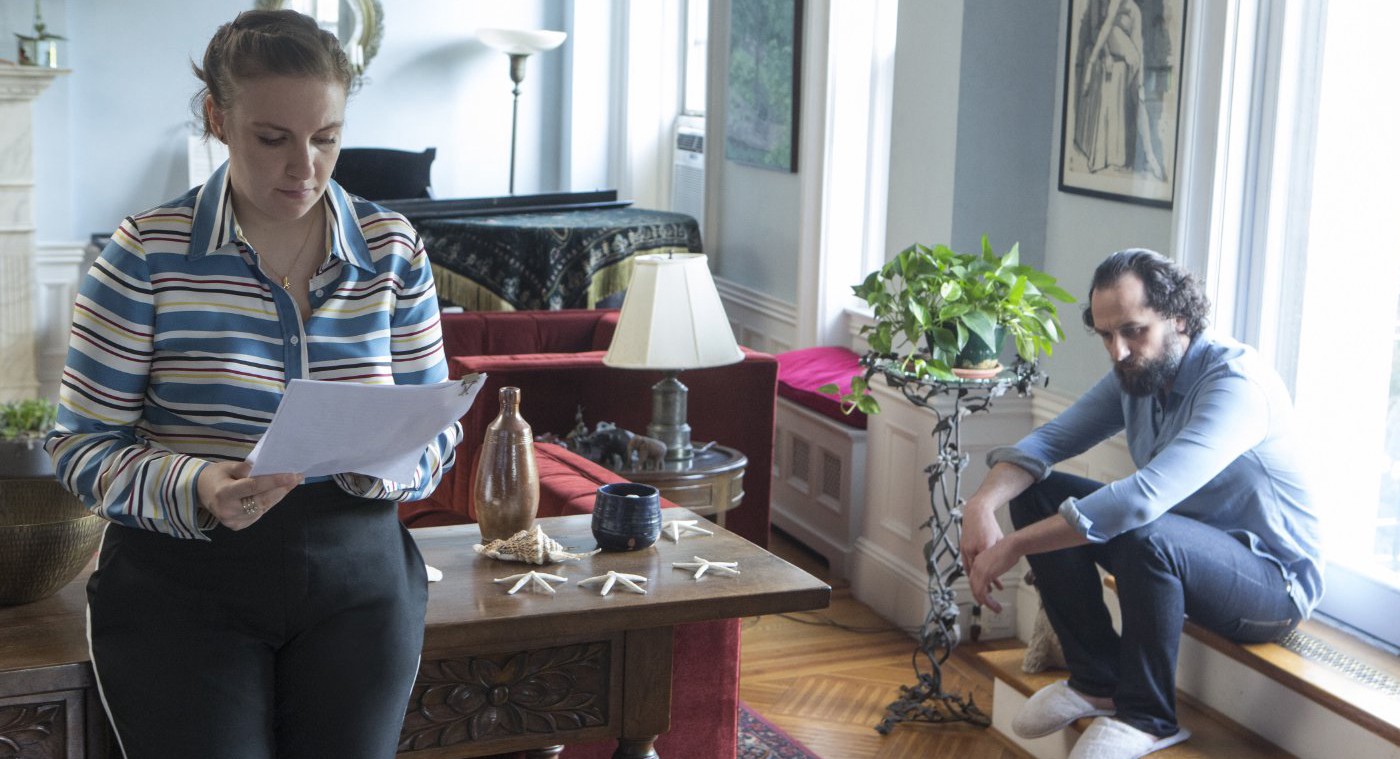
DB: What do you hope that you leave your reader with?

KT: First and foremost, I want people to experience a sense of wonder, but I don’t mean that in a starry-eyed way. A wonder that lifts off the page and is directed at the world in a meaningful way, because these stories may be whimsical sometimes, they may be, on occasion — though rarely, I feel — fantastical, but they’re about the world. There are of course political issues tucked into the book. There’s stuff about refugees, there’s stuff about displacement, there’s stuff about destruction and war. There’s stuff about climate change. I don’t necessarily hope that people will come away feeling motivated for action. But if people think about those real world themes in a more concerted or even slightly different way, that would be good too. And also, I just want people to enjoy the prose.

DB: Which story gave you the most trouble?

KT: I have to confess that I’m a fairly directed writer when it comes to short stories — the novel I’m working on is a different matter! When I struggle, I just go back to the top and try again or discard. I’m suspicious of the stories that I’m really having difficulty with. In my limited experience, the best writing is writing that I’m enjoying. I probably struggled with the oldest story, “The Loss of Muzaffar,” the story I wrote when I was eighteen. It now feels a bit remote to me. It was the first real aspirational short story that I’d ever written, and the experience of writing it at that young age was full of uncertainty and a kind of stress, which I don’t know if I have so much now. I’m not some kind of grizzled artisan yet; I’m not a blacksmith, so muscled and used to doing what he does in a routine way. But I think Salman Rushdie said that if carpenters aren’t allowed to have carpenter’s block, writers aren’t allowed to have writer’s block. Writing is always some form of struggle, but I don’t experience the process as struggle. I try to be industrious; I try to muscle through things.

“Writing is always some form of struggle, but I don’t experience the process as struggle. I try to be industrious; I try to muscle through things.”

DB: Do you know where you’re going before the end?

KT: Sometimes. I’m writing a novel now, so it’s a totally different question for that, but with stories, I do my best thinking as I write. Sometimes the purpose of writing a story is to figure out why I had an image or conceit in the first place. I find that as I’m writing a novel, I can’t afford to be so loose. There is much more premeditation, scaffolding, and so forth.

DB: My strategy with a novel is to outline it and then immediately throw out the entire outline when I start writing.

KT: That has happened to me over the last couple years in so many ways.

DB: It’s obsolete as soon as you type a word.

KT: You can say you’ve been working on a novel for a few years or whatever, but the truth is that what you were working on a couple years ago and what you’re working on now, in my experience, is so 180 degrees different that it’s not even worth calling it the same book.

DB: Totally. Going back to the genesis of the book — tell me the origin of “Elephant at Sea.”

KT: That’s based on a real story that was told to my brother and me by a family friend who worked in the Indian Foreign Service. A Moroccan princess actually asked an Indian ambassador for an elephant. He submitted the request, and predictably, the gears of Indian bureaucracy moved slowly, so only many years later is the elephant actually shipped off. It gets to Morocco at a time when the princess (A) has completely forgotten asking for it and (B) is not interested, and then it’s sent to Casablanca, and the Moroccans didn’t really have a means to transport it from Casablanca to Rabat, so it was walked along this partly coastal road. I loved the story as a kid, and then years later, in 2007, I went to Morocco and I remembered the story as I traveled around the country. But what was amazing was last year, at my book launch in Delhi, there was this lovely woman in the audience who revealed that she was the daughter of the Indian ambassador in Morocco at the time this all happened. She brought a picture of her sitting next to the Moroccan princess. She was incredibly moved by the story. She said that I described this world in a way that she understood, and that I described her father and his mannerisms in a way that was like her father, even though I had completely invented those details. I made it all up, and she was still very affected. There was also a man from the Cochin Port Trust who brought a photo that he says is in the museum of the Cochin Port Trust of that elephant being lifted into the boat to be sent to Morocco. I said in my story that it was taken from Cochin. I had not corroborated these details, I just imagined them. It was really remarkable to take something out of my imagination with some very meager basis in reality and put it out into the world, and then see it come back to me in real life.
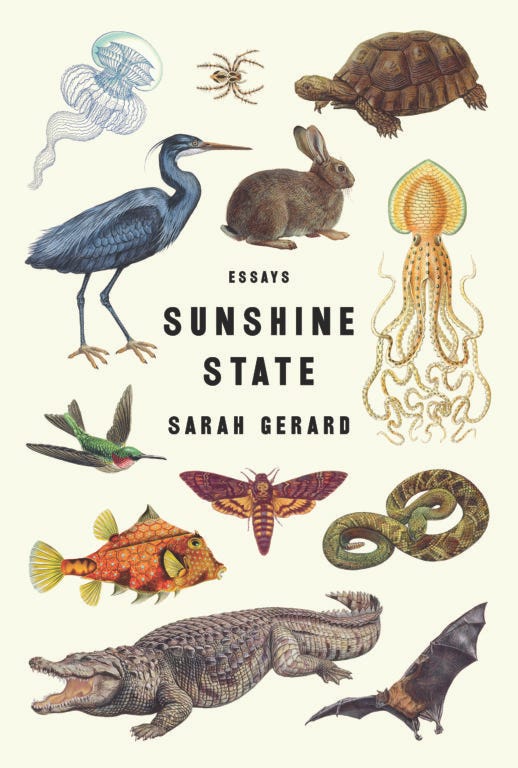
DB: That’s amazing. You write from all of these lovely little anecdotes that I imagine you hoarding and mulling over. Are you afraid of spoiling them when you’re out with your friends? Are you like, I want to tell this entertaining story but I don’t want to ruin it?

KT: I don’t know about that, but I’m always a sponge for these kinds of anecdotes, both from the present and from the past. I am interested in unlikely connections. We have this idea that in our modernity, the world is becoming a tighter place and barriers are falling and we’re going to get to know each other. Obviously, in the Trump age, there’s a new wrinkle to that narrative. But I’ve always felt that we privilege our modern moment too much. A story like “Letters Home” explores the ways in which there have always been these astonishing links between disparate peoples and places, and these, dare I say, cosmopolitan ways of looking at the world, before we imagine that we were cosmopolitan. So I enjoyed writing about Sogdian traders in ancient China, or Polish soldiers fighting alongside Haitians in their revolution. Those are the kinds of stories that I often pick up and hoard.