Why Wouldn’t You Be a Feminist?

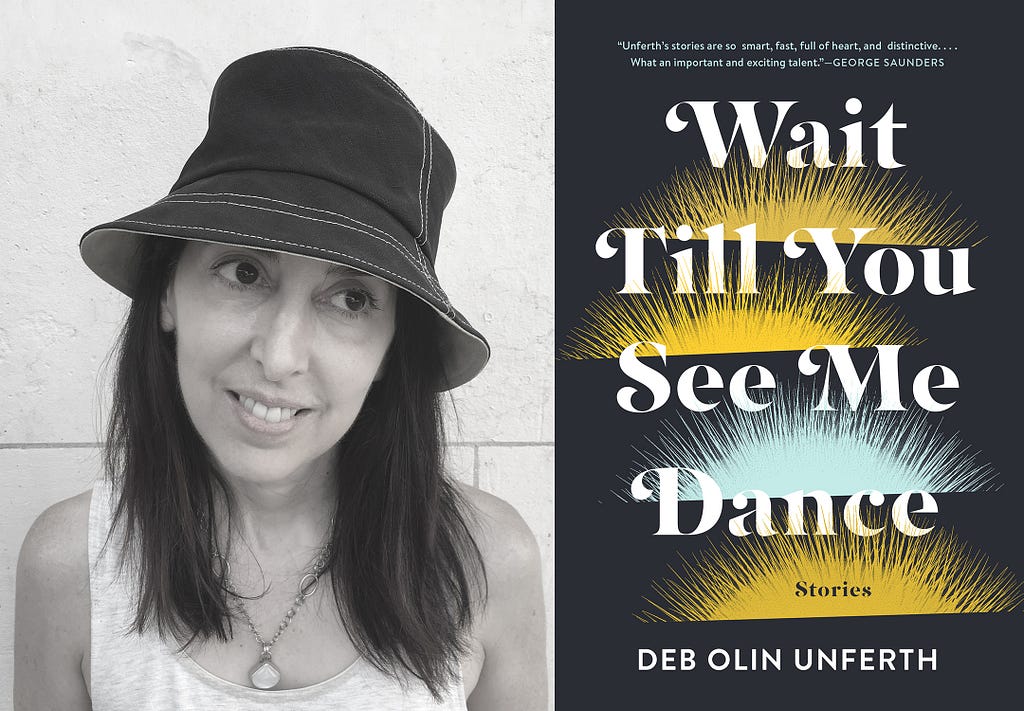
Jessa Crispin has a label problem. It might be an external one, borne of an editor’s decision to title her book Why I Am Not a Feminist: A Feminist Manifesto. But in choosing to use such a title, her book is set up to be a contradiction on two counts. For Crispin is a de facto feminist, and though the complication of her argument allows for an ironic wink (slash marketing ploy) in the title, the slight volume lacks the clarity or call to action of a manifesto. Crispin, a notorious contrarian who founded Bookslut, where many a writer (myself included) got her start, presents a loop of circular logic; while some of the writer’s essays on similar material have been clearer and more forthright, the manifesto suffers for want of a through line.

Crispin’s manifesto first takes aim at the label of feminist, but also directs its ire at those who would disown it. The general tone, in Crispin’s writing of the manifesto, is one of free-floating exasperation at the misinterpretation of the feminist cause and feminist intentions. Crispin is wounded by this perceived confusion, and writes a hearty defense of second-wave feminists like Dworkin and MacKinnon; she offers her strongest critiques when going after capitalism, celebrity, and self-help culture. But much of Why I Am Not a Feminist suffers from a lack of grounding in external references or specific examples of what she’s critiquing. Whereas Crispin’s other work in essays is direct and specific, Feminist offers something less consistent.

In the epigraph to Why I Am Not a Feminist, Crispin quotes E.M. Cioran: “A book should open old wounds, even inflict new ones. A book should be danger.” Crispin is no stranger to embracing risk. She shook the literary world with her 2016 Vulture interview with Boris Kachka, declaring both that she was shuttering Bookslut and that she just didn’t “find American literature interesting.” She said:

“I find MFA culture terrible. Everyone is super-cheerful because they’re trying to sell you something, and I find it really repulsive. There seems to be less and less underground. And what it’s replaced by is this very professional, shiny, happy plastic version of literature.”

But the author worked for decades prior to distinguish herself from mainstream literary culture, celebrating disparate and non-commercial viewpoints with Bookslut, Spolia, and her previously published work. Her editorial influence is distinct: Bookslut celebrated books on the literary fringes: those from indie publishers and small presses, as well as reviews of all stripes. Crispin’s essays on feminist issues took direct aim at both her contemporaries and historical feminist writers. It is significant, then, that Crispin’s manifesto leans heavily on generalizations and not the evidence-based rhetoric of her typical takedown. It could have been much stronger.

Why I Am Not a Feminist relies the most on abstraction where it is the most angry, in its first third. While nothing about Crispin’s anger rings false, the author’s depictions of slights against the feminist cause, of how feminism has been co-opted in order to broaden its appeal, rely heavily on vague pronouns and passive voice without attribution. In the introduction, she says:

Somewhere along the way to female liberation, it was decided that the most effective method was for feminism to become universal. But instead of shaping a world and a philosophy that would become attractive to the masses, a world based on fairness and community and exchange, it was feminism itself that would have to be rebranded and re-marketed for contemporary men and women.

They forgot that for something to be universally accepted, it must become as banal, as non-threatening and ineffective as possible. Hence the pose. People don’t like change, and so feminism must be as close to the status quo — with minor modifications — in order to recruit large numbers.

In other words, it has to become entirely pointless.

Who decided? Who are the “they” and “people?” Why not mention any specific authors or their work? While Crispin is ostensibly outlining a valid point, it’s one she doesn’t come back to with support, and this is support the reader craves. Consider also that she discusses how:

The most prominent feminist writers right now have twisted themselves in knots trying to distance themselves from their predecessors, willfully misrepresenting the work of women like Andrea Dworkin and Catherine MacKinnon and denying any association therewith. Dworkin’s ‘weaponized shame,’ Laurie Penny wrote in a column at New Statesman without explaining how she has come to sum up Dworkin’s belief system as such, ‘has no place in any feminism I subscribe to.’

And yet, Crispin fails to name check any contemporary feminist writers except Penny, and offers no specific critique of how either Penny or these other writers “distance themselves” or “misrepresent the work” of feminists who came before. In a manifesto that positions itself in the title as the contrarian view to the mainstream feminist label, Crispin’s unsupported critique of her contemporaries seems like an oversight, and one that wouldn’t be so glaring if she hadn’t enumerated it in her introduction. Since she mentions the historical influence of Dworkin, MacKinnon, Millett and others, one wonders why she omitted her contemporaries. In contrast to the well-referenced and illuminating work she did in her 2015 essay, “Wounded Women,” at The Boston Review (in response to the #yesallwomen campaign and Leslie Jamison’s work on gendered pain in The Empathy Exams), Crispin’s argument about the current movement evaporates. Is it true that the feminist cause has been sanitized so it can be made palatable to a larger group of people? Perhaps. But Crispin tries to prove it with ire in lieu of evidence.

Why I Am Not a Feminist is at its most thoughtful when it is tackling specific issues. “It’s easier to think about the power you don’t have,” Crispin writes, “than to think about how you are wielding the power you do have.” Her critique of capitalism and how women use money in order to ameliorate the gendered differences in a sexist society are both valuable and illuminating. She writes that once women find themselves in positions of power, they often abandon the feminist ideals they held in order to get there, or abandon thoughts of helping other women. They also often have to adopt typically male roles. “In order to succeed in a patriarchal world,” she writes, “we took on the role of patriarchs ourselves. In order to win in this world, we had to exhibit the characteristics the patriarchal world values and discard what it does not.” Crispin offers a particularly enlightening critique of the publishing industry and the way that white women have come to dominate from the inside. Though previously male ideas of taste were used to keep women out of publishing, those same systems now ostracize and marginalize women of color and people in the LGBTQ community. When Crispin is specific, her words land. She makes it clear that it is easy for the oppressed to become the oppressor, and she calls to women to fight from outside the system so that they don’t adopt the values of a patriarchal society themselves.

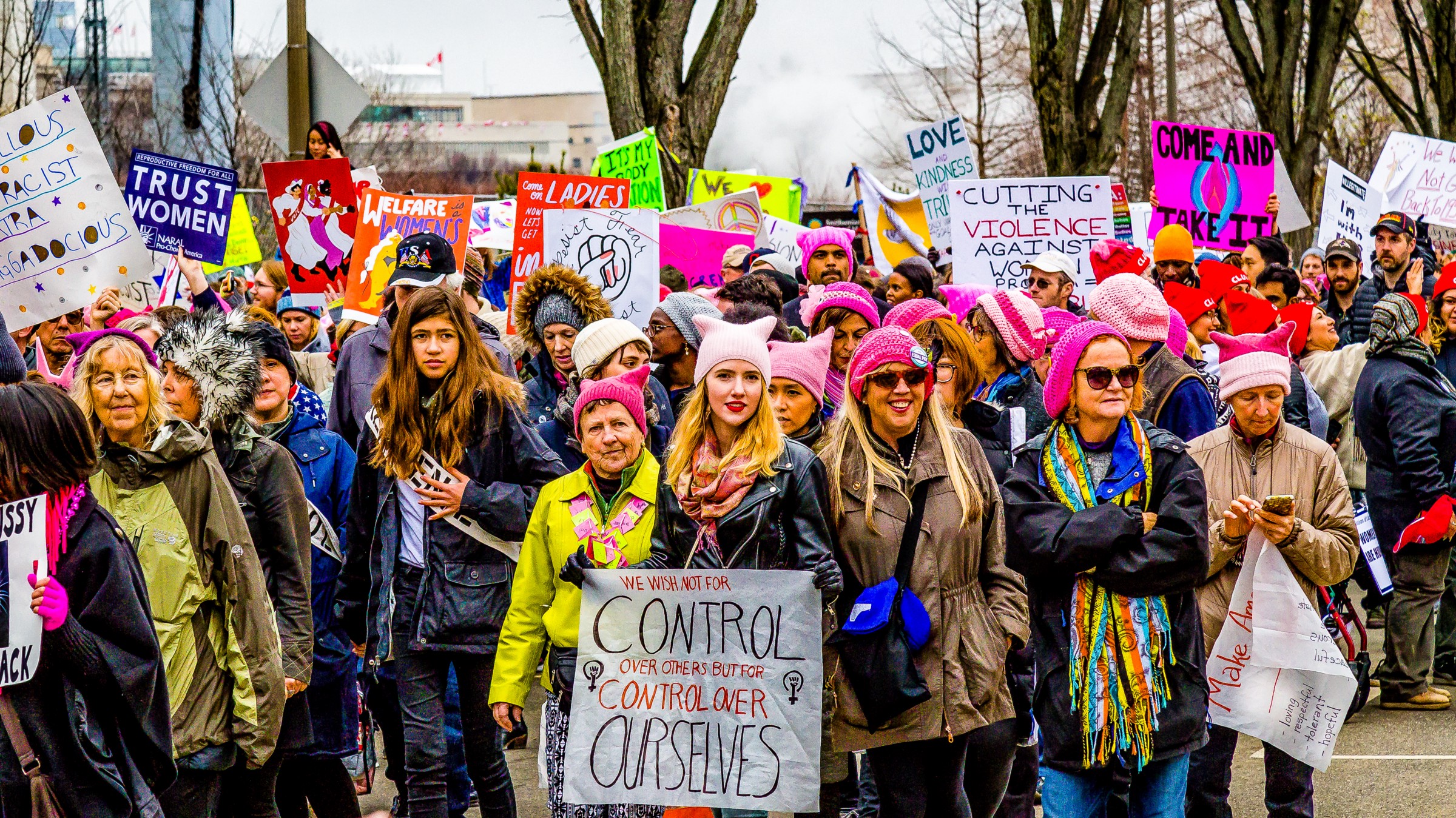
Crispin sums up the troubles that plagued the planning of the recent Women’s March (though her manuscript was surely completed prior to the event, it takes on more weight in light of the explosion of protests following the inauguration) and the difficulty the contemporary women’s movement has as it attempts to center its message. She condemns the desire of some feminists to sanitize the ideals of the movement, or to “rescue” women from their own Muslim heritage, in an approximation of the male role of rescuer. But her sharpest words are about what she calls “choice feminism.” “This is the belief,” she says

[T]hat no matter what a woman chooses… she is making a feminist choice, just from the act of choosing anything […] So simply by choosing anything at all, you are bucking the patriarchy and acting like a feminist […] No debate, no consideration, no discomfort required.

Crispin calls repeatedly for radical, fringe-based feminism. She argues against feminism in its homogenized form. She calls for women to gather at the edges of society in order to form new systems that are no longer based on patriarchal ideals.

What is troubling about Crispin’s arguments is that they can resemble the same logic she critiques. Though she ends her book by saying, “You are not doing feminism wrong,” her manifesto argues against that idea. She criticizes the online feminist community for not allowing nuance, for disallowing debate and a “space for writers to work out complicated ideas in public,” but she narrowly defines parameters by which a woman may call herself a feminist. Labeling continues to be a problem, and since Crispin doesn’t offer a cogent alternative to the feminist label, she is stuck debating against what the label can represent.

Crispin is right; there are those who would take up the feminist moniker — or any label of any cause, really — and use it without thought or without the proper research. But it’s impossible to arbitrate thoughtfulness, and at times Crispin does. As the author circles into the very thing she critiques, it becomes clear that the problem is the messiness of people; the democratization of anger is imperfect because people are imperfect. Crispin vacillates between allowing people their imperfection and demanding that feminists exhibit a higher standard. If, perhaps, she offered a way forward or a more cohesive outline for the future, this wouldn’t matter so much.

“We must lay claim to the culture,” Crispin writes, “occupy it.” She argues for feminism that wounds. Feminism that doesn’t devalue men, but also doesn’t ask for male validation. Crispin argues for the establishment of new systems that are independent of the old systems that were built upon patriarchal and sexist ideals. The problem is that she doesn’t offer much in the way of a specific call to action. How might this be accomplished?

Where do Crispin’s words fall in line with other feminist writers who she perceives as misinterpreting the historical feminist cause and the ideals of the feminist movement as it moves forward from here? These questions would be easier to answer if Why I Am Not a Feminist was more specific in its debate, more grounded in reference to what Crispin rages against. She is not manifestly clear.

“Paradise,” poems by Andy Stallings

Paradise

Mud cuts the burn. And
where the quiet lake has left
permanent ripples in shale,
direct your sensation to the
granule and weep. I walked
her the long way home, with
hopes to meet the elderly
sisters who smelled of
fermented flowers, and
passed out vials of tincture
on Halloween. Her departure
was unexpected, also,
unspecified. We had a banker
in common, felt kinship
beside the private pool.
At the edge of perception,
I measured movement, and
put memory to a test of
selection bias. Wherever the
birds weren’t, settled up my
debts. When you say interest,
what do you really mean.

Paradise

The small birds we call
sparrows move slowly across
the plot of sandy ground
where a house used to be,
almost in formation, though
given to impulsive flights out
to the side, or ahead, or
upward. For an annotation, I
wrote the whole poem down.
The anchor swayed, or so it
seemed. Does one really think
of others, and here I don’t
describe anyone’s altruism.
There is childhood, one of
language’s many plumb
topicals. And what brings you
here to my face today, what
pre-condition concludes, or
extends, or inaugurates, with
my glance. Exhaustion in the
profile. Response is infinite.

Paradise

Had anyone from the 1980s
seen her standing by that
chair waiting for the table to
be cleared of its beignets and
sugar, they’d have turned her
photograph into an album
cover. But who could gather
every cigarette butt flicked
away on even one block of
one city. By extension,
biography. Every morning he
lifts the wire basket from the
tub of hot oil just as the grate
on the storefront opens, just
as someone sweeps the
sidewalk up, just as dawn
“puts on its rosebush” and a
man lets his horses run in the
gentle surf. But who doesn’t
change lives. Whirl of noise,
suave screaming void.
Nothing sweet’s still coming.

Paradise

You learn to throw the punch
by taking it. My size of your
poise. I tell her that, yes,
there are times when one must
be quiet, that people die
sometimes from not keeping
quiet, and I’m not proud, but
she’s quiet then, and sleeps.
Is there any sentence that
doesn’t in context flourish, as
any person passing makes the
mirror a frame. Minute after
minute of heat we share.
Bothered grass, wild grain.
There was so much that
filtered through the years,
the tone and shape of a story,
the voice of the person telling
the story, the way the road
curved as he grew ill along it,
the villa where the hill
opened into the valley, the
valley stretching to the sea
under all that sunlight, into
all those centuries, and she
sat on an ancient low stone
wall eating an ice cream bar,
Magnum Double Caramel,
and smiled.

Paradise

But how often does the
janitor answer the joke.
Fingers pressed to the
weakest points, she split
the board to crack the
conversation. Lovely the
granite stair, though I won’t
speak for you. But in
photographs, he’s stunned.
Three stripes define the
forehead, a chest full of
spiders or bugs, the scratched
sky, suicide of a friend.
Swarming insects distill the
grave’s impermanence into
an image. A chewy mouth. I
don’t know what the sticky
substance is.

Paradise

The man called himself “Old
Blue Eyes,” and ran a local
taxi service by that name, but
in the General Store he
operated, no other store for
miles around, the milk was
often sour, and he said no
child should enter the store
and leave without a gift,
which he held to, giving my
daughter a small jewel, a
clicking pen, and some paper,
and it was in this manner that
he meant to build a loyal
customer base that would
mature sometime after he’d
died, and the General Store
closed. Singular, derived of
multiple sources. Then in
closer proximity to absence.
A soft horse. Bitter farmer.
What isn’t terrifying about
childhood.

Paradise

Once extricated, we didn’t
know how to say stop. The
film ran on an infinite loop,
and showed a high aerial
view of a vehicle circling an
abandoned oval racing track
in the California desert, but
at times the perspective
flipped to the vehicle’s
passenger side, the camera
pointed directly at passing
vertigo. It ran just eight
minutes, but I felt discrete
and eternal. Nothing but
passing sentences, they might
come from anywhere. I’m
lifted into arrival, brought
lunch to rot on the sidewalk,
made myself a devastating
drink. All this laughter,
a sensation like being
swallowed. On the other
hand, I’m falling asleep
as I write this.

Paradise

As for sexual pleasure, it lies
entirely in the other’s
pleasure, arched and beyond
control, which surprised me,
as when a friend’s book was
published and I wasn’t
jealous at all. A lingering
sense of wild holes in the field
next door. And the ocean
a pair of blue directions, a
watery blue lineation. From
Antonioni’s films, I recall
only Monica Vitti’s face as
she stares out over volcanic
rocks, then vanishes. I’m
imagining only exteriors,
while interiors throttle the
visible. Another time, they’d
knocked on the palazzo’s wall
at night and someone had let
down a key. Cleft or cleaved.
Skin transmits a feeling of
perforation.

Stuck in the Middle With You: On Reservoir Dogs and the Soundtrack to Savagery

The images catalogued forever in my consciousness from Quentin Tarantino’s first hit film, Reservoir Dogs (1992) queue up whenever I happen to find myself thinking about severed ears, torture, or, more frequently, when I hear a particular song. With little effort I can conjure up the scene. Rookie cop Marvin Nash (Kirk Baltz) duct taped to a chair, wounds blooming from his face while Michael Madsen, or Mr. Blonde, beats him. He sputters and spits, snot and blood running from his nose as he swears to knowing nothing about their jewelry store heist being a setup. Marvin’s got children for god’s sake! Unfortunately Mr. Blonde doesn’t care whether he knows or not. He just wants to torture Nash, and he tells him this, tells him that he is going to hurt him because he just likes hurting people. Marvin Nash is crying for his life, and you’re thinking about his children at home, his wife waiting for him to return.

Mr. Blonde, a cigarette dangling from his lips, pulls a straight razor from his boot — what kind of psychopath carries a straight razor in his boot? — and you feel certain that something very, very bad is going to happen. Something grisly and memorable. “Do you ever listen to K-Billy’s Super Sounds of the 70’s,” Blonde asks as he turns on the radio, twisting the knob to find his station. “It’s my personal favorite.”

It’s then that we hear the first bouncy notes of the song by Stealers Wheel, “Stuck in the Middle With You,” and its lyrics (“I don’t know why I came here tonight / I got the feeling that something ain’t right”), as if the music were saying what you’re thinking. Blonde struts across the warehouse floor like a rooster, the razor in his hand. He dances and shuffles. Two red stripes of blood stream down from Marvin’s nose, painting the silver tape. He’s breathing heavily, and grunting beneath the gag. As the music plays Blonde dances toward Marvin, comically shuffling and wielding the blade like a brush. He slashes him across the cheek, then grabs his face, studying his work.

With his back to the camera Blonde sits down on Marvin’s lap, almost as if he’s going to kiss or hold him. Instead he reaches over the rookie officer’s head. We see Blonde’s back, the arching arm, the razor, the reach. And then the camera turns away, gazing above to a doorway where the words “Watch Your Head” have been spray painted.

Kirk Baltz and Michael Madsen in ‘Reservoir Dogs’

The camera returns as Blonde stands holding up the severed ear and looking at it, pinched between his fingers. “Hello? Hello?” he waggles the ear around, talking into it. The song meanwhile continues to fill the warehouse space, rising up like a breath — and then fades into an exhalation, a brief respite, as Blonde makes his way outside to retrieve a can of gasoline from his car. The music dies out behind the closed door. You hear the sound of children playing, somewhere in the distance, hopefully far away.

The music swells again as Blonde reenters the warehouse. It’s as if the song only exists in this room, a product of this particular, horrible moment. To this day I cannot hear that song without seeing the warehouse, Blonde dancing, and helpless Marvin Nash taped to the chair. Tarantino has admitted in interviews that the song came first, before anything else. As if “Stuck in the Middle With You” were the obvious musical accompaniment to torture.

We are capable of imagining and even of desiring to hurt. At least that, if not actually capable of enacting hurt, too. That is why the movie, and this scene in particular, succeeds: because it implicates you, as a witness, in the violence.

Joyce Carol Oates once said of a young Mike Tyson, “…he has the power to galvanize crowds as if awakening in them the instinct not merely for raw aggression and the mysterious will to do hurt that resides, for better or worse, in the human soul, but for suggesting the incontestable justice of such an instinct… ”[1]

This scene is the Mike Tyson of movie scenes. It forces us to imagine Marvin’s suffering, to view the almost pornographic hole in the side of his head, making us want to hurt and torture Mr. Blonde in turn. Even more troubling, the scene convinces us of the “incontestable justice” of that desire. Tarantino lets us feel the creeping horror, the suspense, and finally the release, the ecstatic exhalation when Mr. Blonde is suddenly shot dead by Mr. Orange (Tim Roth), who’s been slowly bleeding out all this time, forgotten in the background. When it happens, you realize that a vengeance has been done, that you wanted it done.

Tim Roth as Mr. Orange

Of course our reprieve is a brief one, a momentary satisfaction of our baser instincts that passes quickly, like all adrenaline rushes. After Blonde is dead the music, a folk-pop imitation of Bob Dylan, continues to play — here I am, stuck in the middle with you — looping on in your thoughts like a television jingle. That song amplifies the savagery of the scene precisely because of its incongruity, its essential wrongness. Those images don’t fit the sound. They bounce off of it, to stand in even starker relief.

The song has since become infamous, inextricably linked to this moment. For those who still recall the grisly images, and the sight of Mr. Blonde dancing with a straight razor, I imagine they must feel the same pull of gravity as I do, the same moral weight, dragging them back to that warehouse.

There is a single story we all know about the painter Vincent Van Gogh, the tortured artist who cut off part of his own ear and then mailed it to a lover. It seems to persist as a kind of parable, a lesson or a warning, perhaps a story of mythic or of aberrant love. But if, like me, you were raised in the cultural crucible of the 70s and 80s, there is as much if not more gravity in the haunting specter of the ear cradled in a bed of grass in David Lynch’s 1986 movie Blue Velvet, or of Mr. Blonde senselessly removing one of Marvin Nash’s ears, or Mike Tyson biting off Evander Holyfield’s, as is in this old chestnut of Van Gogh’s self-mutilation. The story has changed, lost some of its force, but the power in the act itself remains.

In everyday life we don’t think much about our ears or pay much attention to the ears of others. Although, as this scene from Reservoir Dogs reveals, ears have a greater signifying potential as objects, as metonyms for bodies themselves. We forget that sound, presented in utero, was our first experience of the outside world. We forget the ear until confronted — suddenly, violently — by its absence. We forget Van Gogh, but we remember Tarantino.

I myself have a difficult time forgetting, however, primarily because I have seen a necklace of ears, like a string of dried apples, kept as a trophy at the top of an underwear drawer.

“You wanna touch ‘em,” my childhood friend asked me one day. We were alone at his house, standing in front of his father’s dresser, the top drawer pulled partway open.

“No,” I said. I asked him to put them back.

He went on to say that his father had cut the ears off numerous Vietnamese soldiers, men whom he’d killed in combat. He had kept the necklace as a reminder. I tried to picture the man, the father with all his secrets, standing there at the end of a long day, opening the drawer and taking out the ears, rubbing his fingers over them, worrying them until they softened and bent to his touch.

As a child growing up in the 70s, the Vietnam War mostly seemed to be a knot of secrets that the fathers of other boys brought back with them. Fathers who didn’t talk much about how it was twisting them up, although perhaps they didn’t have the words. The large part of my understanding came from books, television, and movies. But when I saw that necklace of ears, I faced for the first time the actual reality of that war, and the prospect it suggested of savagery and of torture.

I recoiled from the drawer, and walked alone down the hall. I didn’t want to see anymore — I didn’t want to believe.

My father had avoided the draft, his number never actually called. It took that day at my friend’s house for me to feel that I was part of an entire generation raised by men who had done terrible things, men who’d killed and mutilated others, for reasons they couldn’t or wouldn’t articulate. Not my father, but other men, who would go on to become football coaches, attorneys, bricklayers, ditch diggers, Boy Scout leaders, school teachers, professors, writers…

By the time “Stuck in the Middle with You” had topped out at number six on the Billboard charts in 1973, the Vietnam War was already beginning to wind down. On January 27 of that year the Paris Peace Accords were signed, thus signaling the United States’ retreat from the country’s most costly engagement — financially, morally, and psychologically — since the Civil War.

My friend told me once that his father had been nicknamed “The Preacher” by his platoon in Vietnam. In all the times I’d spent at their house I had barely heard the man speak a word, so I never quite knew whether this nickname was meant ironically or in earnest. I was assured in any case that he’d been an outspoken leader, often dispensing advice to the younger men and boys, and also that he had carried the biggest, heaviest gun — the M-60 — all by himself.

I was already afraid of him before then, but something definitely shifted that day. A new kind of fear arose in me, a fear of the future, for all of us. Seeing what was in that drawer gave me a vision, a truth I would carry forever, a ghost of our collective past that would continue to haunt me, and return again some twenty years later as I watched Mr. Blonde carve up Marvin Nash on the movie screen. The world had changed, and pop culture possessed the power to capture this change, the new leap in our associative thinking. It was no longer Van Gogh, with his quaintly distressing tale of psychotic love, that sprung to mind anymore. Not after Mr. Blonde and Marvin Nash, not after Tarantino. There was only and always now this savage act of violence, and that jarring song, throughout it all, bouncing incessantly in the background.

[1] From Joyce Carol Oates’s essay, “On Mike Tyson,” from her collection of essays, “On Boxing,” Ecco Press, 1994.

Kerry Washington is Bringing Brit Bennett’s ‘The Mothers’ to the Big Screen

The hit literary debut is about to take Hollywood by storm

Kerry Washington & Brit Bennett

Ever since Brit Bennett’s stunning debut, The Mothers (Riverhead) came out in October, the book has been a fixture in trains, coffee shops and on park benches. It may have seemed like just about everyone you knew, or wanted to know, was reading it. The novel earned bestseller status, critical praise and a bevy of prizes and ‘best-of-year’ nods. Recently, you may have found yourself eagerly flipping through its pages, or maybe just staring across an aisle into that mesmerizing cover — a stain glass swirl of silhouette and lush color — thinking, “I wonder how long before somebody makes that a movie?”

Wonder no more. Last night, Warner Bros. announced it had acquired movie rights to The Mothers, with Kerry Washington’s production company, Simpson Street, at the helm. Washington —the star of Scandal, and a burgeoning Hollywood powerhouse, having notched her first production with last year’s Emmy- and Golden Globe-winning HBO movie, Confirmation — will serve as producer. In case that doesn’t give you enough comfort that the project is in the right hands, Bennett herself has been named an executive producer. Go ahead, you now have permission to get excited.

While you’re at it, you may also want to begin preparing emotionally. The Mothers — book, movie, hell the radio play if they want to go that route — packs a wallop. Set in Southern California, the story takes on suicide, faith, abortion, regret, friendship, romance — just about every big sensation and experience you can think of. At the center of it is Nadia Turner, a grieving teen who gets involved with a pastor’s son, gets pregnant, and finds herself confronted with choices that will change the course of her life. The novel follows Nadia into adulthood, still grappling with the decisions she’s made.

You can read an excerpt on Electric Literature’s Recommended Reading:

Nadia by Brit Bennett

And when you’re done, why not check out the interview, too?

Brit Bennett on Family, Religion, and Upending Expectations of Black Narratives

The principals took to social media last night to express their excitement:

Okay, readers and movie buffs, commence assembling your dream cast.

How America’s Checkered Past Is Being Turned into Compelling Children’s Books

A picture book about the atomic bomb? A middle-school book about our first presidents and the people they owned? A fast-paced account of Daniel Ellsberg and the Pentagon Papers for young teenagers?

While Donald Trump and his administration play loose with facts and figures, a substantial number of authors and illustrators are presenting American history to students in all of its gory, complicated, and fascinating glory. Akin to the golden age of realistic YA fiction that began in the early 1970s, this approach to American history veers away from what we might wish had happened to focus on what actually happened. These books grapple with volatile issues that have shaken the country for hundreds of years — among them the displacement of American Indians, the mistreatment of women, minorities, and immigrants, and governmental malfeasance — and emerge on the other side with an idealism that is energizing as well as critical and questioning.

These books grapple with volatile issues that have shaken the country for hundreds of years…and emerge on the other side with an idealism that is energizing as well as critical and questioning.

In this effort to captivate and enlighten, these books have cultural allies, most visibly Hamilton, the theatrical phenomenon that has blown the dust off of Founding Father debates and has welcomed thousands of public school students in New York City with subsidized $10 tickets. Like Hamilton, these books celebrate America’s great constitutional principles while acknowledging human flaws and conflicting perspectives.

One of last year’s most compelling books for children, Kenneth C. Davis’s In the Shadow of Liberty, focuses on a basic American hypocrisy. As Davis puts it, “conceived in liberty . . . the country was also born in shackles.” Written for middle-grade students, the book documents for young readers what life was like for those who were owned by early American presidents. Although Davis describes events of two centuries ago, he effectively signals their longstanding relevance. He wants the next generation to be made aware of how white-supremacist views affected colonial society and continue to this day.

In addition to explaining how central slavery was to the United States in its earliest years, Davis recounts how five individuals — William Lee, Ona Judge, Isaac Granger, Paul Jennings, and Alfred Jackson — were involved, involuntarily, in the lives of George Washington, Thomas Jefferson, James Madison and Andrew Jackson. For instance, young readers go beyond the usual storyline about Washington’s victory at Yorktown and find out that one of the first things Washington did after the battle was to capture enslaved people who had escaped from Mount Vernon. One of Davis’s next books will examine American Indians — “alongside slavery,” he says, “perhaps the most contentious and horrific chapter in American history.”

Young readers go beyond the usual storyline about Washington’s victory at Yorktown and find out that one of the first things Washington did after the battle was to capture enslaved people who had escaped from Mount Vernon.

Teaching about the less glorious episodes of the United States story has often come up against opposition. In one famous instance, the current Housing and Urban Development Secretary Ben Carson declared that 2014’s revised Advanced Placement American history curriculum was so “anti-American” it would inspire students “to sign up for ISIS.” That’s certainly the opposite of what Davis and likeminded authors have set out to achieve. And it runs counter to what they have experienced with young readers. Says author Marc Aronson, “It’s such a fearful image — that we would lose our kids entirely if we don’t provide this lacquered image of our past.”

Unless they are being very effectively sheltered, children and teenagers know about all sorts of human fallibility among public figures, and it makes sense to show the complexities of history early and often. Carole Boston Weatherford has written more than thirty books, mostly about African-American historical figures, and says, “We have to teach our kids the whole story. We need to understand each other’s experiences.”

Weatherford recently wrote Voice of Freedom, a picture book about Fannie Lou Hamer, who became a leading light in the 1960s civil rights movement. Born poor in the Mississippi Delta, Hamer was unaware she had the right to vote until she was in her forties. Says Weatherford, Kids can gain inspiration from her because she was such an unlikely heroine. . . Her life shows that we need to know more. The more you know, the more you can advocate — not only for yourself but for your family, for your community, and for your fellow citizens in the world.”

Voice of Freedom describes not only Fannie Lou Hamer’s hard-earned victories but also the injustice, grief and physical pain she experienced. Ekua Holmes’ vibrant collages depict Hamer’s loving family relationships as well as her brutal beating in prison. “I don’t censor the truth or talk down to children,” says Weatherford. “I know they will ask the right questions.” She remembers discussing one of her previous books, about the segregated lunch counters in the South, with children in North Carolina: “One of the boys in the audience said, “Who made that stupid rule?” And that is the reaction I expect kids to have. The next challenge is to keep infusing that into our culture.”

“One of the boys in the audience said, “Who made that stupid rule?” And that is the reaction I expect kids to have. The next challenge is to keep infusing that into our culture.”

Other picture-book authors have also found engaging ways to handle difficult topics. How difficult? Last month’s picture-book releases include one about lynching (Strange Fruit: Billie Holiday and the Power of a Protest Song) and another about the American development of the atomic bomb. The Secret Project features stunning illustrations by children’s book legend Jeanette Winter and a spare, powerful text by her son, Jonah Winter. Says the younger Winter, “The book is intended for very young readers. But it is by no means intended as a bedtime story. I see no reason why every nonfiction picture book has to have a happy ending. Why not encourage children to think? Or to learn about the parts of their cultural history which are not so virtuous? If we keep whitewashing the ignominious chapters of our history, then basically we are continuing to create successive generations of adults who don’t really know or care about the dangers, for instance, of nuclear proliferation.”

The Secret Project features stunning illustrations by children’s book legend Jeanette Winter

Steve Sheinkin, another author who labors to produce a nuanced, richly researched view of American history, started out as a textbook writer. The work soon frustrated him since he wasn’t allowed to include the full stories of figures like Benedict Arnold. The editors told him to describe Arnold as a traitor and leave it at that. “And I thought,” he says now, “that is what’s wrong with how we teach history. Number one, we’re wasting a good story and making it boring. Number two, that’s not how it was. This guy was a hero and a villain.”

Sheinkin abandoned textbooks for narrative nonfiction, going on to write gripping books on such topics as Benedict Arnold, America’s quest to create the atomic bomb (Bomb), a dismaying miscarriage of justice during World War II (The Port Chicago 50), and a Vietnam War whistle-blower. In this last book, Most Dangerous: Daniel Ellsberg and the Secret History of the Vietnam War, Sheinkin explains in thriller-like fashion how a dedicated cold warrior turned against the war and leaked classified documents, leading to a landmark First Amendment decision by the Supreme Court in 1971. Sheinkin’s new book, Undefeated: Jim Thorpe and the Carlisle Indian School Football Team, not only tells a rousing sports story but also discusses some of the government’s shameful actions concerning American Indians.

“Number one, we’re wasting a good story and making it boring. Number two, that’s not how it was. [Arnold] was a hero and a villain.”

Just as Sheinkin invigorates his historical narratives with elements of mysteries and detective stories, other children’s-book authors and illustrators are examining America’s controversial legacies with the help of startling artwork. There is a long tradition of innovative illustration in children’s literature, and now there’s a growing urgency to depict the conflicts of the past more truthfully.

A milestone in the graphic-novel field, the March trilogy turns a personal account of the civil rights movement into a complex and fascinating portrait of brave men and women battling white supremacists. Written by Congressman John Lewis and Andrew Aydin, with dynamic black-and-white artwork by Nate Powell, the books include acts of brutal racism but also reveal the divisions and tensions within the movement. Examining two natural disasters that involved some failures of governance, author/illustrator Don Brown has created two stark and beautiful books, Drowned City: New Orleans and Hurricane Katrina and The Great American Dust Bowl, that impart personal stories alongside dismal facts.

The March trilogy turns a personal account of the civil rights movement into a complex and fascinating portrait of brave men and women battling white supremacists.

Other authors — and of course the publishers who produce their books — have deftly incorporated archival photographs into their histories. The text and images of Albert Marrin’s Flesh and Blood So Cheap, which focuses on the 1911 Triangle Fire, work together to take readers back to a time before strong labor regulations. For her lucid, meticulously researched chronicles, such as last year’s This Land Is Your Land, Linda Barrett Osborne has used old photos and documents from the Library of Congress to make distant events immediate and affecting. Says Tonya Bolden, the author of Emancipation Proclamation and many other books, “young people can be quite fascinated by history and quite engaged . . . when you help them understand that history is the context of their lives.”

Often focusing on American history, these authors also take opportunities to show young readers that America is part of a global community and global history. Marc Aronson is currently working with author Susan Campbell Bartoletti on a nonfiction anthology about 1968 that will examine the unrest that occurred all over the world that year. Aronson has also written two books with his wife, Marina Budhos, that explain the interconnectedness of the planet and its people. Sugar Changed the World tells a story spanning thousands of years about how the sugar trade has been intertwined with slavery and science. Their forthcoming book, Eyes of the World, chronicles how Robert Capa and Gerda Taro helped invent modern photojournalism, which transmits the news of the planet to those who are interested.

Undertaken well before the bewildering presidential campaign of 2016, these eye-opening books for children speak to the struggles the nation faces on a number of fronts. Amid fake news and bizarre misreadings of history, the books offer needed correctives and honest inquiry to the next generation. At the risk of appearing to disparage Donald Trump and his appointees, their capacity to absorb lessons from history, and their leadership abilities, a quotation that’s often attributed to Frederick Douglass seems appropriate: “It is easier to build strong children than to repair broken men.”

A longer list of the author’s recommended reading can be found here:

30 Books That Show We’re In a Golden Age of American History for Kids

30 Books That Show We’re In a Golden Age of American History for Kids

Don’t miss Abby Nolan’s in-depth exploration of this topic in her essay, How America’s Checkered Past Is Being Turned into Compelling Children’s Books.

Almost Astronauts: 13 Women Who Dared to Dream, Tanya Lee Stone (Candlewick, Ages 10 and up)

Breakthrough: How Three People Saved “Blue Babies” and Changed Medicine Forever, Jim Murphy (Clarion, Ages 10 to 12)

Claudette Colvin: Twice Toward Justice, Phillip Hoose (Square Fish, Ages 12 and up)

Courage Has No Color: The True Story of the Triple Nickles, Tanya Lee Stone (Candlewick, Ages 10 and up)

Drowned City: Hurricane Katrina & New Orleans, Don Brown (Houghton Mifflin Harcourt, Ages 12 and up)

Emancipation Proclamation: Lincoln and the Dawn of Liberty, Tonya Bolden (Abrams Books for Young Readers, Ages 10 to 14)

Fannie Never Flinched: One Woman’s Courage in the Struggle for American Labor Union Rights, Mary Cronk Farrell (Abrams, Ages 10 to 14)

Flesh and Blood So Cheap: The Triangle Fire and Its Legacy, Albert Marrin (Knopf Books for Young Readers, Ages 12 and up)

The Great American Dust Bowl, Don Brown (Houghton Mifflin, Ages 12 and up)

I Dissent: Ruth Bader Ginsberg Makes Her Mark, Debbie Levy and Elizabeth Baddeley (Simon & Schuster, Ages 5 to 8)

Ida M. Tarbell: The Woman Who Challenged Big Business — And Won!, Emily Arnold McCully (Clarion, Ages 12 and up)

In the Shadow of Liberty: The Hidden History of Slavery, Four Presidents and Five Black Lives, Kenneth C. Davis (Henry Holt, Ages 10 and up)

March (Books One, Two and Three), John Lewis, Andrew Aydin and Nate Powell (Top Shelf, Ages 13 and up)

The March Against Fear: The Last Great Walk of the Civil Rights Movement and the Emergence of Black Power, Ann Bausum (National Geographic, Ages 12 and up)

Master of Deceit: J. Edgar Hoover and American in the Age of Lies, Marc Aronson (Candlewick, Ages 14 and up)

Most Dangerous: Daniel Ellsberg and the Secret History of the Vietnam War, Steve Sheinkin (Roaring Brook, Ages 10 to 14)

The Port Chicago 50: Disaster, Mutiny and the Fight for Civil Rights, Steve Sheinkin (Roaring Brook, Ages 10 to 14)

Pure Grit: How American World War II Nurses Survived Battle and Prison Camp in the Pacific, Mary Cronk Farrell (Abrams, Ages 13 and up)

Rad American Women A–Z: Rebels, Trailblazers, and Visionaries Who Shaped Our History . . . and Our Future!, Kate Schatz and Miriam Klein Stahl (City Lights, Ages 10 and up)

The Secret Project, Jonah Winter and Jeanette Winter (Beach Lane, Ages 5 to 8)

Separate Is Never Equal: Sylvia Mendez & Her Family’s Fight for Desegregation, Duncan Tonatiuh (Abrams, Ages 6 to 9)

Sit-In: How Four Friends Stood Up By Sitting Down, Andrea Davis Pinkney and Brian Pinkney (Little, Brown and Company, Ages 6 to 9)

Strange Fruit: Billie Holiday and the Power of a Protest Song, Gary Golio and Charlotte Riley-Webb (Millbrook, Ages 8 to 10)

Strike!: The Farm Workers’ Fight for Their Rights, Larry Dane Brimner (Calkins Creek, Ages 10 and up)

Sugar Changed the World: A Story of Magic, Spice, Slavery, Freedom and Science, Marc Aronson and Marina Budhos (Clarion, Ages 12 and up)

They Called Themselves the KKK: The Birth of an American Terrorist Group Susan Campbell Bartoletti (Houghton Mifflin, Ages 12 and up)

This Land Is Our Land: A History of American Immigration Linda Barrett Osborne (Abrams, Ages 12 and up)

Undefeated: Jim Thorpe and the Carlisle Indian School Football Team, Steve Sheinkin (Roaring Brook, Ages 10 to 14)

Uprooted: The Japanese American Experience During World War II, Albert Marrin (Knopf Books for Young Readers, Ages 12 to 17)

Voice of Freedom: Fannie Lou Hamer, Spirit of the Civil Rights Movement, Carole Boston Weatherford and Ekua Holmes (Candlewick, Ages 5 to 8)

Ted Wilson Reviews the World: Ice Cream Headaches

☆☆☆☆☆ (0 out of 5)

Hello, and welcome to my week-by-week review of the world. Today I am reviewing ice cream headaches.

Roughly ten times a day I will randomly spin around as fast as I can to see if anyone is looking at me. About three out of ten times someone is. All that spinning makes me dizzy and gives me a headache, but not nearly as big of a headache as when I eat ice cream too quickly.

If you’ve ever been so consumed by the thought of consuming ice cream that when you get it you just can’t stop, you’ve probably had to stop because of the debilitating pain. This is the result of what I believe are ice crystals forming between your brain cells, and your brain begging for relief.

The first recorded ice cream headache occurred about five minutes after ice cream was invented. Yet still to this day, with centuries of ice cream headaches to learn from, people still can’t help themselves.

I’m not going to say that people who get ice cream headaches kill themselves, but I’m also not going to say they don’t. I’ll let you look at the statistics and decide for yourself: 100% of people who have committed suicide have also at some point in their life had an ice cream headache. Think about it.

There are a few methods for how to deal with an ice cream headache.

  1. The most obvious is to distract yourself from the pain by creating an even greater pain, such as punching yourself in the face or slipping your fingers in between the steps of a moving escalator.
  2. Some people enjoy pain and find it arousing. Perhaps you can learn to be one of these people. Your ice cream headache might turn into an ice cream orgasm.
  3. Personally I prefer to scream at the top of my lungs to drown out the pain for even just a split second.

If you‘re ever walking past someone with an ice cream headache, and they fall to the ground and grab your ankles begging for you to kill them, don’t say no right away.

BEST FEATURE: Once the headache ends there’s a bunch more ice cream waiting to be eaten!
WORST FEATURE: Sometimes the headaches get so bad they make my eyes bleed. I don’t mind, but it can really scare strangers.
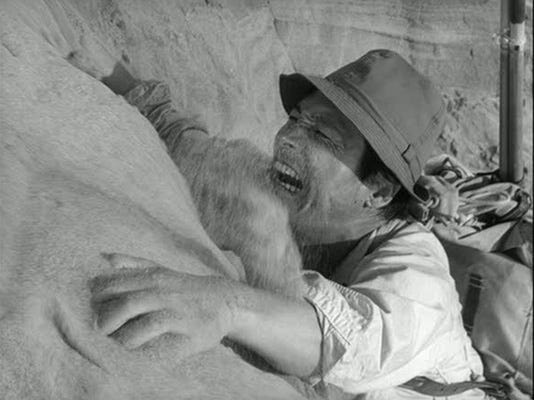
Please join me next week when I’ll be reviewing Vladimir Putin.

Elena Ferrante’s Neapolitan Novels One Step Closer to Your TV

The series gained a director and a release date

For just over a year, fans of Elena Ferrante’s wildly popular Neapolitan novels have been living with the tantalizing news that the books would soon be adapted for the screen. Details, however, have been few and far between. Until now. Late yesterday, The New York Times reported that the series now has a director — Saverio Costanzo, the writer/director of Hungry Hearts (2014) and The Solitude of Prime Numbers (2010) — and is slated for a 2018 premiere.

Costanzo will adapt the four novels — My Brilliant Friend, The Story of a New Name, Those Who Leave and Those Who Stay and The Story of the Lost Child — as a thirty-two part series. The show will be co-produced by Fandango and Wildside, an Italian company which co-produced Paolo Sorrentino’s HBO series, “The Young Pope.” The first season will cover My Brilliant Friend in eight 50-minute episodes.

The series will undoubtedly increase Ferrante’s already large audience and will likely reignite interest in the author’s true identity (as well as the controversy surrounding investigative journalist Claudio Gatti’s exposé in NYRB last year). Those who support Ferrante’s wish for anonymity will be happy that the series’ director has made his position on the issue clear, telling the Times, “It’s her literary reality that counts. I’m one of those people who don’t care who she is.” Ferrante — whoever she is — has agreed to help Costanzo write the screenplay. Their discourse will take place via email.

The series will be filmed in Italy and in Italian, hopefully more proof that the production doesn’t intend to sacrifice the novels’ authenticity on the altar of Hollywood’s expectations. As popular as the series has become worldwide, and as much as it tackles universal themes — childhood, poverty, gender dynamics, friendship, among others — it is just as specifically a story about two girls growing up in a ghetto in Naples after World War II.

Like most great literary works, Ferrante’s prose will be a challenge to capture on screen. Yet this project could see a happier ending than most. In an interview in The Paris Review, Ferrante said, “The greater the attention to the sentence, the more laboriously the story flows. The state of grace comes when the writing is entirely at the service of the story.” Ferrante’s prose isn’t entirely at the service of the story — it’s much too well written—but it does eschew the kind of self-conciousness that makes some writing impossible to translate visually. In the Neapolitan novels, the sentences are always working for Elena. Her interiority is reflected in what she observes, or how she speaks, and the nuanced dialogue is another reason to film in Italian — native speakers will appreciate what can be conveyed by switching between Neapolitan dialect and ‘proper’ Italian, between formal and informal pronouns.

From a plot perspective, the Neapolitan novels have a lot to work with. They’re rich with emotional stakes, romantic longing, unexpected fates, and violent encounters. The books follow an unusually large cast of recurring characters, and the settings and costumes should be fantastic.

Something is always lost when a book is adapted for the screen, but like many BBC productions of Dickens or Austen, the Wildside version of the Neapolitan novels has the potential to be great.

The Disastrous Things Desire Makes Us Do

At first, the Southern evangelical setting of April Ayers Lawson’s debut collection of short stories, Virgin and Other Stories, might seem a strange fit with the questions of sex and desire that are ubiquitous throughout the book. Unlike other writers who focus on American Christianity — Marilynne Robinson, Flannery O’Connor, Hanna Pylväinen, etc. — Lawson does not use faith and doubt as the main source of motivation for her characters. In spite of the fact that the characters attend Christian colleges, are homeschooled, and attend weekly church services, thoughts of God or discussions of theology are largely absent.

Instead, the characters in these stories spend prodigious thought and energy contemplating and anticipating sex. Some try to overcome past sexual traumas. Others wonder if they are being cheated on, and, instead, end up being cheaters. A few learn how to masturbate to images in stolen library books. Throughout these stories, Lawson repeatedly returns to the same questions: How is desire created, and why do we desire what we desire?

Very little actual sex takes place. When it does, it’s either much worse than expected, a repetition of a past trauma, or just a plain letdown. “I guess that’s it, then,” Sheila says to her husband Jake in “Virgin,” after finally having sex for the first time, months after their wedding night. “Sex. I mean, it’s fun… It just feels so… physical… I expected a spiritual element.”

Lawson zeroes in on moments when desire is odd or inappropriate. “Virgin,” the first story in the collection, begins with the line, “Jake hadn’t meant to stare at her breasts, but there they were, absurdly beautiful, almost glowing above the plunging neckline of the faded blue dress.” These breasts belong to Rachel, a woman who is not Jake’s wife, a woman who has gone through a double mastectomy. “What did they have inside them,” Jake wonders, “saline or silicone? And how did these feel, respectively?” Jake thinks Rachel may have noticed him staring at her breasts, which worries him since she must have “extraordinarily complicated feelings” about her breasts. But its Jake’s own “extraordinarily complicated feelings” that Lawson highlights — his attraction to Rachel; his fascination with her body; his frustration with his sexual relationship with his wife that, ultimately, leads to projection and self-delusion.

In “The Way You Must Play Always,” 13-year-old Gretchen first gets caught kissing her 16-year-old cousin, then, shortly after, with her hand in the bathrobe of her piano teacher’s brother, a grown man who spends his days in his bedroom reading and smoking pot, recovering from a brain tumor. Lawson captures Gretchen’s early adolescent yearning, which is mixed with an all-encompassing summer boredom that leads her to stop caring about the consequences of her actions. With both of her parents at work everyday, Gretchen sleeps well into the afternoon. Her only source of amusement is strolling through her lonely neighborhood. Lawson, with a hypnotizing lyricism, explains how this boredom is as important a component of Gretchen’s desire as anything else: “And so the sleeping late and sweaty walks and quiet desire melted into a thick, heady dream.” In a dream, nothing matters. Nothing is inappropriate.

But the odd and disastrous things desire causes us to do have real life effects. In the final two stories, decisions rooted in confusion and desire lead to moments of violent epiphany — climaxes that, more than the particularities of character or setting, truly do seem influenced by Flannery O’Connor. These are the most engaging and affecting stories in the collection, where the style, setting, and theme come together to form something unsettling and complex.

“Vulnerability,” which is almost novella-length, in particular indicates Lawson’s substantial talent. The abuse in the story is made even more unnerving through the character’s focalization. The character’s point of view makes us privy to her complicated desires, which are not eradicated by the violence she suffers. Before the harrowing ending of the story, the narrator contemplates her desire for a famous gallery owner:

And frankly by then I’d decided to sleep with you as an act of compassion. Poor thing — that night, I’d never seen anyone who so needed to be fucked. You were the kind of sad person who’d become so numb he didn’t even know what sadness was anymore, who thought he was fine because he couldn’t even remember being happy, and I wanted to help you…Happy. I saw I was making you happy. I had forgotten what it was like to make someone happy.

Lawson, again, severs desire from actual sex here. Because the narrator’s desire is more complex than something purely physical, because it is rooted in compassion, in wanting to make other people happy because of the immense sadness that surrounds her, the traumatic sex she is subjected to does not affect her in the way one might assume. Her compassion, her desire to make his life better, is not incompatible with the man’s abusive actions, because she sees these actions as rooted in his own miserable history. This is an intricate and realistic portrait of abuse, illustrating how empathy can curdle into something sour when directed at the wrong person.

Contrasted with the unsatisfying and distressing sex in the book are the characters’ relationships with high art. Each story features at least one character who is an artist, generally either classical musicians or painters. It is in art that the characters find the convergence of sensuality and spirituality they seek. In fact, both Connor in “The Negative Effects of Homeschooling” and the narrator of “Vulnerability” steal art books from the library to which they then masturbate, an act they find more satisfying and pleasurable than their physical contact with other people in the stories.

Lawson’s prose becomes effervescent when she describes characters’ relationships with high art. In “The Negative Effects of Homeschooling,” Conner thinks of his mother’s mink coat:

“Its fur was white and shot with umber streaks. The streaks turned lighter at their edges, broken up with white like streaks of dry-brushed watercolor.”

He recounts how he’s stolen a book of Andrew Wyeth watercolors and —

committed acts of passion while staring at the book The Helga Pictures…and all the desire and shame and the layers of desire, of which I’ve only recently become aware — Wyeth’s desire for Helga, my desire for Helga, my desire for Wyeth’s desire for Helga — had warped my brain, so that my imagination tried to turn half the things I saw into his paintings.

Lawson, like Conner, wants to tease out the “layers of desire” we always feel, and the characters in the book are often quite conscious of the way they can manipulate, or are manipulated by, the desires of others. Art becomes the only way for these characters to find any true or satisfying pleasure. The “acts of passion” Conner later tries to enact with an actual person — a girl from his church — curb his desire for her, rather than energizing his imagination, as happens with his relationship to Wyeth’s watercolors.

Would the characters, then, be better off dropping sex altogether? Should they sublimate their desire into their art? Or would trying to ignore their desires just cause the desires to grow even stronger, leading to even greater disasters?

There is no answer. The book, instead, is an extended meditation on these questions. These questions and themes, of course, are not new. Since at least the 19th century — think Tolstoy, Flaubert, and Stendhal — desire, and its reverberating effects, has occupied the minds of fiction writers. Lawson injects life into these questions through the specificity of her setting and the careful attention she pays to language. Virgin and Other Stories is a redolent, troubling read, both emotionally penetrating and intellectually probing.

Jami Attenberg Has It All Mapped Out

After thirty-odd years of living in New York City, I don’t often miss my subway stop, even if I’m reading the most engrossing, page-turning mystery. But I did just a few weeks ago while reading Jami Attenberg’s latest novel, All Grown Up. I tell this to Attenberg as we sit down to chat at a Brooklyn bistro, and she seems both pleased and, a longtime New Yorker herself, suspect as to my navigational abilities.

Image result for all grown up attenberg
Buy the book

All Grown Up is the story of a woman named Andrea Bern who drops out of art school in Chicago, moves to New York, and takes a dead-end job at an advertising agency. Through a series of linked but not linear chapters, we learn about Andrea’s junkie father and activist mother, her friends and her sexual encounters. However, a plot summary can’t capture what the book achieves. All Grown Up examines a process, the experience of becoming an “adult” in a world that oscillates between offering women equality and imposing outdated expectations. The novel’s sentences also propel you forward, each into the next until — and this is the Attenberg special — one stops you short with its dead-on accuracy. “Everyone should know their strength and that’s mine,” she tells me. “I’ll rework a sentence a hundred times to get that big moment.”

I spoke with Attenberg about creating a conversation with the reader, why her book is distinctly female, and how she mapped out the process of “growing up.”

Carrie Mullins: All Grown Up isn’t told chronologically. Did you write the beginning chapter first or did you start somewhere else and then find your way into the story?

Jami Attenberg: I had the story cycle of all the Indigo chapters first, and I wrote that long before I decided to write the book. It was about a friend watching a friend get married and have a baby and her marriage have trouble — I was just sort of watching these two characters interact with each other. Then I was sort of like, well that’s enough of that that. I came back to it about a year later when I was ready to tackle what else was going on. I wasn’t really interested in writing a “single person in the city” kind of book, and I figured out a different way to approach it. It’s not in linear order because that’s not what I was trying to accomplish. It has a memoiristic feel and I wanted to have the character be in conversation with the reader. She’s telling you everything you need to know about her life. If you made a top ten list of the most important things from your life, it wouldn’t necessarily be in the order they happened. The things that started popping up were just as I saw them mattering to her, and then there was some of me playing author and moving things around to create suspense or give information as it was needed.

CM: It’s funny you say that about the Indigo cycle because I felt like so many parts worked as their own standalone short stories. One of my favorite chapters — “Girl” — comes to mind. But I think when you layer the chapters on top of each other, you get something in a novel that you can’t really achieve from a short story.

JA: That’s right. They are all sort of their own short stories but at some point I had to bend them so that they were in service of a bigger story. By moving details over to this chapter or not giving all the information, I had to make that decision: is this a short story collection or is this a novel?

CM: I’m glad you went with the novel. I feel like everyone is writing short stories right now.

JA: Ha well, not me, sadly. I really think I’m a novelist more than I’m a short story writer. Some parts of the book could live on their own more than others. I have several story cycles within it, certain structures within it — like if a chapter is named after a girl it means one thing and if it’s got a different kind of title it means a different thing. I have a little map of it in my head, why everything is the way that it is.

CM: This is kind of strange, but I kept thinking it when I was reading. Have you thought about what the book would have been like if the protagonist was a male?

JA: It’s not strange but I’ll answer in two ways. One is that sometimes I go and talk to high schools — I don’t do it enough but I love it when I do — and for The Middlesteins one of the kids asked me what my book would have been like if Edie [one of the book’s protagonists] was a man. And I was like, that’s such a great question that I hadn’t considered, and it would have been a totally different book.

There is no way this book could have existed if Andrea was a man because a man doesn’t experience the same kind of pressures as a woman does in these particular ways. Nobody would give them the same kind of shit. She doesn’t get shit about not wanting babies, she’s just not a baby person, but she does get shit for not getting married or settling down.

“There is no way this book could have existed if Andrea was a man because a man doesn’t experience the same kind of pressures as a woman does in these particular ways. Nobody would give them the same kind of shit.”

CM: She also doesn’t get shit for giving up her dream of being an artist. She just abandons it and nobody seems to question that. Being single though, that bothers them.

JA: People don’t want the answers, they don’t want to hear the answer about why she’s not an artist anymore. She doesn’t really want to unpack it either. As for marriage — for almost every person in the book who’s in a love relationship, their partner isn’t helping them at all. That’s half the point of the book. She doesn’t know what to do to be a grownup, but they don’t know what to do to be a grownup either. They’ve done all the things that are supposed to make them “grown up” but that doesn’t mean that you are one. It just means you did these things.

CM: This book felt really refreshing.

JA: Yeah, I just didn’t see this character represented at all. I didn’t see anyone like her and I thought it would be helpful for people to see this character. She knows what she wants. She doesn’t know how to be happy, but she’s dispensed with a lot of the milestones.

CM: From a technical point of view, how do you write about the process of growing up?

JA: I literally made a list of everything that makes you who you are, and what was important to her. What happened with her dad? Why did she drop out of art school? What’s going on with her living space? I went through all of that and I created a little universe around her. I also read a lot of memoirs. I was reading The Argonauts and Patti Smith’s M Train and I read Chelsea Girls by Eileen Myles. They’re all written in different ways, but I saw what was important to all of them, and I watched the way that they talked to the reader because I wasn’t interested in treating this like it was a novel.

CM: That’s interesting because memoirs are freer from the confines of the plot devices we expect from novels. You don’t need the same hook.

JA: Yes. Because it’s all true. So I wanted it to feel all true, that was my strategy. There are moments where Andrea just talks to the reader. I’ve done that before here and there in my novels, where I sort of break that wall and talk to the reader. I feel like I’m in conversation with my audience, not necessarily in the first draft, but eventually I get to that point where I want them to know that I know they’re there.

CM: Everyone’s time is so limited now, especially for reading. When you’re having that conversation, is any part of you thinking about that, or the pressure to keep them engaged?

JA: Oh absolutely. I mean this is the shortest book I’ve ever written. I definitely thought when I was writing this about the way that people read now. I thought, you better give them all the information that they need up front. You better write it so that it feels super fucking important and urgent. So whenever someone tells me they read this in a day or I missed my subway stop, then I succeeded. I want them to be consumed and decide that it’s worth it. Our world is exploding right now. I don’t know if this will make you feel better, but maybe it will, just the act of reading and being consumed by something other than reality. It’s a genuine distraction, which means a lot.