Signs that you are watching a feel-good movie: a long sequence in which the protagonist opens up the shop where they work; they insert the key in the lock, roll up the blinds, flip the hanging open/closed sign. A tinkling bell announces the arrival of a customer who, by contrast, alerts us to the protagonist’s ennui––whether a klepto who places a books down his pants (Notting Hill), rude customers (My Big Fat Greek Wedding), or an old woman who one-ups the protagonist with talk of her internet sex life (You’ve Got Mail). Further signs: the protagonist attends a lightly comedic Lamaze class; running jokes which involve the mailman, or old men using “modern” technology.
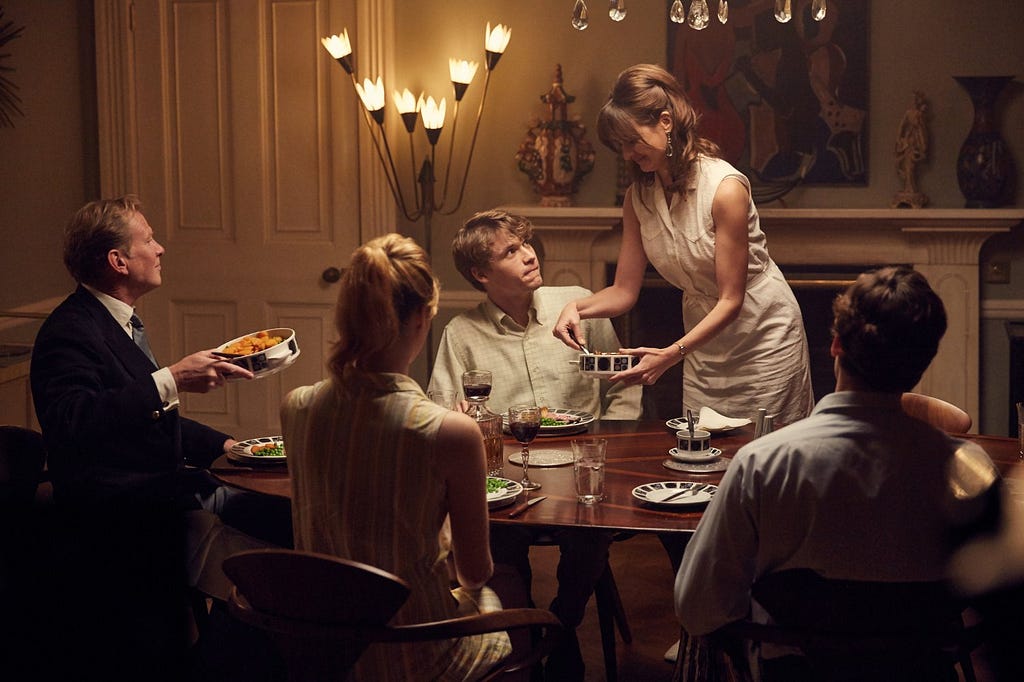
Jim Broadbent and Michelle Dockery in ‘The Sense of an Ending’
Julian Barnes’ 2011 Booker Prize-winning novel The Sense of An Endingfeatured none of the scenes listed above. Its 2017 adaptation to film, written by playwright Nick Payne and directed by Ritesh Batra (The Lunchbox), contains every one of them.
Barnes’ novel is the story of middle-aged, middle class British man Tony Webster. Tony narrates his story in two parts. One focuses on Tony’s school years, beginning with his friendship with the enigmatic Adrian Finn, the new student at his all-boys boarding school. Adrian is cool, angsty, and smart; he reads Ted Hughes and comes from a broken home. He offers his teachers pseudo-intellectual justifications for not answering their questions (“I can’t know what it is that I don’t know. That’s philosophically self-evident”). Once at university, the second key character in Tony’s life appears: Veronica Ford, who, like Adrian, is alluringly inscrutable and elusive. Tony endures an awkward weekend at the Ford family’s home, including a steamy breakfast with Veronica’s sexually-charged mother. Before long Veronica dumps Tony and begins to date Adrian, a heart-stomping betrayal that threatens to confirm Tony’s misgivings about his own, prosaic nature.
Billy Howle as young Tony and Emily Mortimer as Mrs. Ford
The second part of Tony’s narration opens with a riddle. Veronica’s mother has now died, and has bequeathed the middle-aged Tony with Adrian’s diary. In both the film and novel the diary serves as the story’s hook: why did Mrs. Ford leave it to him? Why did she have it in the first place? And, what information does it contain about Adrian? These questions lead to greater thematic questions about memory and the consequences of seeing life through our own myopic worldview.
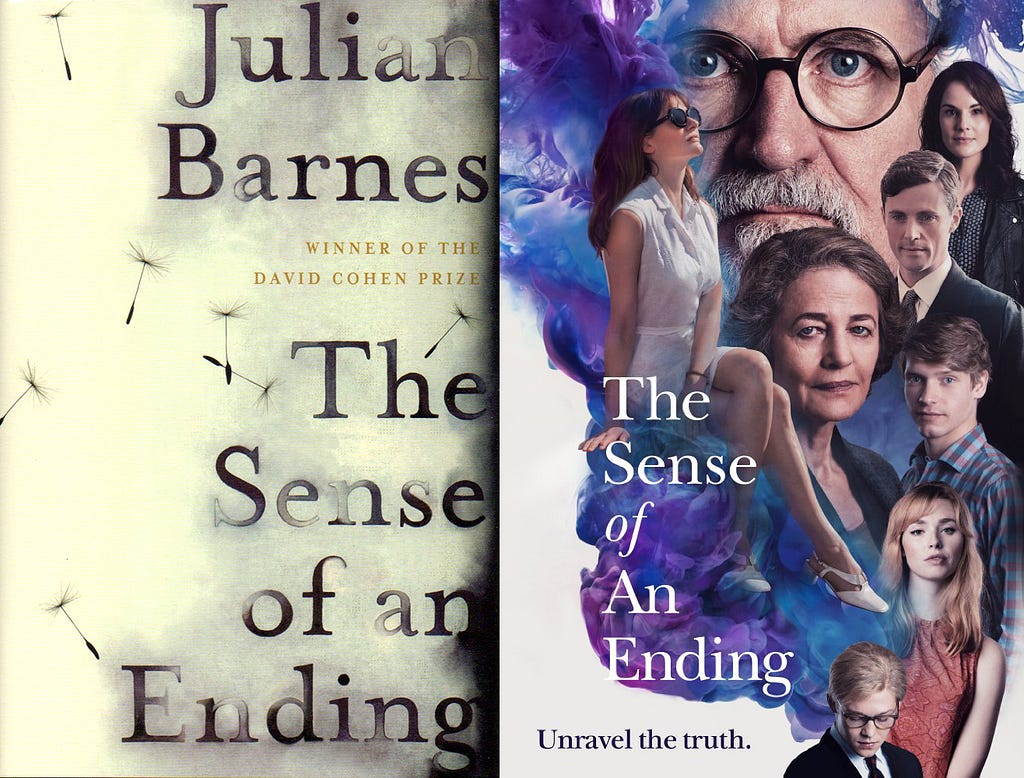
The film features some amazing British actors — Jim Broadbent as the older Tony, Harriet Walter as his ex-wife Margaret, Charlotte Rampling as present-day Veronica, Michelle Dockery as Tony’s daughter, and Emily Mortimer as Mrs. Ford. It seems like a missed opportunity not to use the engaging (and Oscar-winning) Broadbent to explore an unlikeable and narcissistic character. He instead plays Tony as one of your eccentric, luddite uncles. Rampling, at 71, remains electric, and manages to embody the person we imagine Veronica would become. But it is Harriet Walter as Margaret whose performance helps rescue the film––which makes it all the more ridiculous that hers is the only major character not featured on the promotional poster.
Book cover (left) and film poster (right)
This is how the movie deals with explaining Tony’s past: Tony sits down with his ex-wife over pasta and wine and regales her with old stories. This scenario happens not once, but twice. Giving us a “plausible” reason for why Tony would be telling someone his backstory ends up feeling more artificial than if we were suddenly sucked into the vortex of the past. Walter, as his ex-wife, helps to mediate this stiff play-like format, in her subtle depiction of Margaret. Thanks to her we ultimately believe that these are two people with a complex past, divorced but still intimate. She can expose Tony’s bias without sounding like the plot device which, in these moments, she is.
Broadbent and Walter
A screenplay never contains every scene out of a book, nor does it follow its plot to the letter, and so it makes a certain kind of sense that the movie The Sense of an Ending combines the book’s two-part structure into one cohesive arc––this way the audience is intrigued by the mystery of the diary from the outset, and Tony’s “present” remains our fixed point in time. Still, I was stunned to find the essential character of Adrian practically cut from the film. This presents a problem from a technical point of view: without knowing much about Adrian, the story’s big twist––and it’s meant to be a doozy––doesn’t really make much sense. And yet, what bothered me more (likely because I had read the book, and unlike my co-moviegoer wasn’t left wondering what had just happened) was Batra’s choice to recast the novel as a conventional romance story about a boy and his first girlfriend. In the book it is his relationship with Adrian, not Veronica, that Tony mourns when he learns about the diary. Focusing on Tony’s romantic relationship with Veronica dismisses how important our platonic teenage relationships are, how much we invest in them, and how much they shape our identities.
The decision to minimize Adrian’s role in the film is all the more incomprehensible given the glut of other scenes he added (see: list above). In fact, the movie contains so much original material that it’s basically an entirely new story, that of the redemption of Tony Webster, a bumbling old man who receives a strange bequeathment which ultimately causes him to realize how selfish he’s been, especially with regards to his treatment of his ex-wife and his daughter. Here is one particularly telling sample of that extra material: in the novel Tony briefly mentions that his somewhat-estranged daughter is married with two children. In the film, the entire narrative arc is structured around his daughter’s fraught pregnancy; she is an unmarried 36-year-old who has chosen to have a baby sans father. Her baby’s delivery, with Tony standing at her shoulder as she pushes — literally and finally “there” for his daughter — is one of the film’s emotional highs. But why take a novel already stuffed with emotional stakes — two suicides, multiple broken hearts, forty-year secrets, unwanted babies, festering regrets––and add to it this new plot device?
I can only point to the text, to the sentences themselves. Julian Barnes is easy to read; his language is straightforward and unfussy. He doesn’t load up on adjectives or run sentences on for pages to mirror his character’s emotions. Perhaps the absence of dark, taut, or twisted language misled the movie team, and they read Tony as a conventional old British man (the way he invites the mailman in for coffee in the film certainly suggests this). Barnes excels at subtlety; his Tony’s regrets are slow burning, shrouded in fake candor. Or maybe Hollywood simply doesn’t accept unhappy endings.
Because the novel isn’t happy. Its ending does not uplift the reader, as the final lines suggest: “There is accumulation. There is responsibility. And beyond that, there is unrest. There is great unrest.” Yes, there is a revelation––Tony realizes he has deluded himself about his life, that he’s been indulgent and simply told himself the version of history which made him feel better about himself. This kind of a realization is a personal triumph, but sometimes, maybe oftentimes, it’s a small one, fruitless except for the inherent goodness of realizing the truth. That’s why Tony never actually reads the diary he receives — it’s moot, he can no longer change how he behaved towards Adrian or Veronica; there can be no satisfactory end to their story. There can just be an end.
A book’s perilous journey across borders and out from the dark
The struggle to publish a manuscript is an arduous one for just about any writer, but it’s doubtful any literary underdog tale can compete with the implausible escape and publication of The Accusation: Forbidden Stories from Inside North Korea, a new book whose perilous journey out of North Korea has emerged in the international press over the last week.
The book consists of seven stories spanning a six-year time frame, with the first story taking place in December 1989, and the last one in December 1995, following Kim Il-sung’s death. Each narrative explores the diverse ways in which North Korean citizens have been stripped of basic freedoms. The collection’s overarching theme is the fear individuals experience knowing tomorrow could be the day a fatal accusation is made against them.
So far, we only know a few things about the author, who writes under the pseudonym, Bandi, which in Korean means “firefly” — a fitting epithet considering the incendiary implications of the stories, which also serve the purpose of authentically illuminating the frightening conditions of the modern day slavery taking place within the DPRK. According to an afterword by Kim Seong-dong, included in the US release, The Accusation was written by a former (or possibly current) member of the Chosun Writers’ League Central Committee, North Korea’s state sanctioned writers’ group, which is tasked with generating propaganda for government-owned publications. CNN reports that Bandi originally planned to smuggle the document out of the country via a relative who had arranged to flee, but fortunately that plan didn’t go through. The relative was detained on the Chinese side of the border; if she had been caught carrying the manuscript she likely would have been sent back to North Korea to face imprisonment or execution. Instead, the Chinese soldiers reportedly demanded a bribe. During negotiations, she was able to contact Do Hee-yun, a representative of the Citizen’s Coalition for the Human Rights of North Korean Refugees, and was eventually bailed out. She later told Do about her relative’s manuscript, and Do organized a delicate handover when one of his most trusted Chinese friends was visiting family in the same town where Bandi happens to live. The friend was able to hide the manuscript inside The Selected Works of Kim Il-sung and bring the 750 pages back to South Korea.
Do said in an interview with VICE, “I see this as a book that can make the people who are hanging on in North Korea realize, just as we do in the international community, that they are living as slaves, and give them strength and courage to stand up for change.”
Bandi identifies with this fear on the most personal level, which is why he chose not to defect himself.
On March 30th, Do was joined by the book’s agent, Barbara Zitwer, and several other international publishers for a reading of The Accusation at the Korean Demilitarized Zone, which stands between North and South Korea.
You can now find the book in stores or online from its publisher, Grove Atlantic.
Symbolic reading of ‘The Accusation’ at the Korean Demilitarized Zone
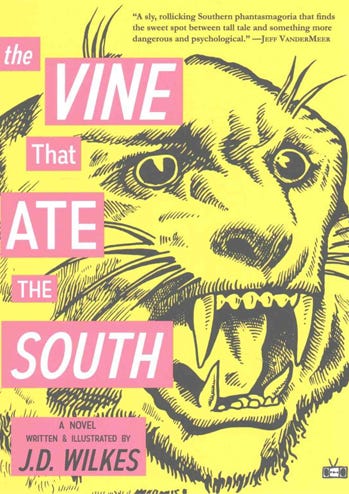
A journey into the woods in search of self-knowledge — or simply a reclamation of lost wonder — The Vine That Ate the South is one tall tale. Digging deep into the mythology of the South, J. D. Wilkes’s novel follows the unnamed narrator and his friend, Carver Canute, into the haunted western Kentucky forest known as The Deadenin’ where they seek out an urban rural legend: an elderly couple swallowed by a runaway strain of kudzu plant which has mounted them aloft in a ghastly ongoing display.
Along the way, they encounter any number of backwoods oddities, but can these match up with the bits of rumors and imagination with which they regale each other? In the South, Wilkes suggests, it doesn’t matter. Telling tales of doubtful truthfulness is a way of life in Marshall County, Kentucky even as there are also great real-life wonders to be found there. As such, Vine is one long tall tale built up of any number of smaller ones and where the fibbing leaves off and objective reality begins remains a moot point since as the narrator reminds us, “Collecting folktales and courting ghosts is just another way for the rural-lonely to stay sane.”
In this particular rural setting, there is no one lonelier than our narrator whose father, having died under mysterious circumstances when the narrator was a boy, has left him isolated and unsure of his manhood. Now in his 30s, he retains lingering daddy issues. “Between [my mom’s] smothering and [my dad’s] absence,” he tells us, “I was, and still am, lost when it comes to being a young man.” This lack of manly guidance has especially hurt him in his specific environment, a Southern rural town that has certain traditional standards of masculinity. As such, the narrator led a sheltered childhood in which he sought perpetual solitude and which has made him ill-fit in his world. This sense of inadequacy has continued into his adult life, fueled by the loss of his girlfriend to his arch-rival, the boorish Stoney Kingston.
Wilkes’s book is chock full of vivid, hallucinatory bits, odd moments of humor, and haunted environments, with the forest itself a classic moody setting, but the book gets its real charge from its complex consideration of the narrator’s views on manhood and the South — the two being intimately related. Throughout the novel, the narrator simultaneously bemoans his own truncated manhood (with the bear-like Carver as his foil) and delivers jeremiads about the diminished state of his home region. He dates this latter decline to 1927 when, he says, agrarianism began to give way to employment in “the System.”
The result is that “the old homestead ways of life have ceased” and, “along with it, many a manly conquest has followed suit, replaced with virtual adventure, overstuffed furniture, air-conditioning, and TV dinners” and on, into the internet age. The narrator, interestingly, never seems to question the assumption that the type of masculinity that he craves is a false goal, preferring to lament the circumstances that have made him, by this standard, inadequate and have done the same to Southern society in general.
His journey to the woods, then, is a double journey into manhood. One of his goals in going is to even the score with Stoney Kingston — who claims that he has already seen the kudzu couple — and to win back his girl. Another is to dig deep into the region he calls home and, by so doing, uncover the past since, as he is well aware, “In every nook and cranny, in any direction on God’s green earth, there is history to be learned”. In western Kentucky, in particular, this history is fraught and the narrator is quick to acknowledge the horrors of Native American genocide and slavery.
He also finds nobility in this past, particularly when set against the present day. For example, late in his journey, he notes the “barn-quilts adorn[ing] the old folks’ outbuildings. Perhaps they use these hex symbols to ward off the evil spirits of Gen-X sloth and Baby Boomer decadence. They were, after all, nailed there by ‘The Greatest Generation.” By pinpointing a generation that existed well after slavery and well before recent loathed age groups, the narrator finds a safe spot in the past to idealize. “What they had,” he continues, “was a life packed with hard-earned meaning, a life more in keeping with the Bronze Age than with this new so-called ‘information age.’”
This disconnect from his present time on both the personal and generational level provides the narrative with a certain tension that raises Wilkes’s book above the level of a simple entertaining trip into a folksy fantastical setting. The narrator’s confusion over how exactly he fits in with his immediate world (which extends to his complicated relationship with that other absent father, God), marks him as a flawed and compelling figure. If Wilkes himself sometimes seems caught up in that same confusion, confirming rather than questioning some of his narrator’s less constructive notions, then he at least understands the complexity of the question. In his novel, the South comes across as sufficiently haunted: by God, by slavery, and, not least, by the ghosts, literal and figurative, of a region with a very tangled history.
Seat number 2E was designated the Papal Seat, so I vacuumed it three times with the thin nozzle to get out all the pretzel dust. Sat down and tested the seatbelt, made sure there wasn’t any gum wedged in the buckle. I stowed the belt extender in the crew basket overhead — the Pope wears about seven smocks, and from what I’d seen on TV, he was going to need the extra slack.
Sheila dumped all the magazines from coach. It’s just press corps back there, and if they didn’t bring their own reading material, tough. Fuel economy comes first. Underneath, Hank loaded the hold with gifts and jewels and holy wooden thrones. Eva prepped the lavatory, stocked a box of wet wipes, and taped over the smoke detector real tight.
I stashed the Marlboro Reds behind the top lip of the lav mirror, loose, as instructed in the printout from headquarters, and a Bic lighter, yellow. Also, under the sink, a gown: full length and flame retardant. That white must be impossible to wear.
We worried the Pope’s one remaining lung would collapse on our flight — a sudden shock of turbulence while he dragged, a panicky jostle, a fall, and a counter-edge to the diaphragm. We hoped he’d be smart enough to sit on the closed lid of the john when he lit up, and we even rigged a seatbelt. Cooper changed out the blue water with clear formula because even if the lid’s shut, rough air can do horrible things. Last, we taped a sign to the door, POPE ONLY, his chapel, pulpit, confessional. We tested code words and settled on the Red Room.
The Pope arrived half an hour ahead of schedule, clasping hands on the tarmac, squeezing desperately. His wrists trembled as he fielded requests and apologies from politicians, then, with an aide on each elbow, he trudged up the stairs to the plane. He blessed the captain, co-pilot, and flight engineer with heavy grunted words, saying pray for me, pray for me. I led him to his seat.
We slammed to full power down the runway, but the plane felt like it had a plow on the front. Somehow we got the wheels up 30 feet before the end of the tarmac, and the captain blinked the no smoking sign six times — prepare to ditch. My training kicked in all wrong, and I remembered a story from the workbook, a flight from Bolivia to Switzerland where the finance minister loaded a bunch of gold bars and didn’t tell the crew. That’s going to be us.
I looked front and back to make sure everyone was buckled in, and caught a flop of white out of the corner of my eye. The Pope was dragging himself up the aisle and into the Red Room. Nobody dared to yell Back in your seat. The turbines were screaming, we were pulling hard to try to catch some help from the jet stream. Then a carpet of smoke rolled out from under the lav door, and the engines started to mellow. Finally, over Greenland, the pilots eased into the usual speed at the usual cruise. I ventured to the Red Room and knocked. He answered Pray for me.
He was still in there when we approached Rome. I had to get him back to his seat, but now he didn’t answer. I keyed open the lav and found him crumpled on the floor, white robes tar-stained and ashy, three cigarettes in his mouth. Then he jumped to life, brushed himself bleach-clean with a swipe of the hand, and floated back down the aisle. I buckled his belt, no extender needed. He pulled me close and coughed thank you, and I heard the weight returning and knew why he asks us to pray.
In 2013, law enforcement officers caught up with a mysterious burglar who had plagued the residents of North Pond, in central Maine, for over a quarter of a century. The man they arrested, Christopher Knight, was clean-shaven, neatly dressed and polite. At first he was reluctant to speak, but when pressed, he confirmed what many had believed to be a myth — a bogeyman or a folk hero, depending on your attitude toward modern-day society, not to mention whether you were one of the many hundreds of homeowners victimized by the so-called “North Pond Hermit.”
Christopher Knight told officers that he’d been camping in the woods of central Maine, without any human contact or active support, for over twenty-seven years.
It began as an impulse. One day, driving home after a long trip south, Knight pulled over to the side of the road, parked his car and went into the woods with no intention of ever returning to civilization. He found a clearing near North Pond and set up camp. He built no fires and left no tracks. Drinking water was easy to collect. The waste, he buried. On moonless nights before the arrival of snow, he left camp and broke into cabins, raided for supplies, then let himself back out again.
After the arrest, Knight’s story was national news, a curiosity at the end of the six-thirty broadcast. One of those watching was the journalist, Michael Finkel.
Like many others, Finkel wrote to Knight, who was in jail awaiting trial on buglary charges. In that first letter, Finkel wished Knight well and attached a few magazine articles. The odds that the Long Pond Hermit would write back were exceedingly slim, but Finkel remembers believing a response would come. He avoids using words like “fate,” but that, more or less, is how it felt. His interest was sincere and profound. And whether through fate or some other mechanism, remarkable stories seem to find their way into Finkel’s orbit.
In 2002, after having been drummed out of The New York Times following the revelation that he had conflated the stories of several figures in a cover article on the slave trade in modern-day Africa, Finkel learned about Christian Luongo, an Oregon man who had killed his wife and children and fled to Mexico, where it turned out he was living under an assumed identity — journalist Michael Finkel’s identity, to be exact. Finkel went to meet with Luongo and eventually wrote about their shared experience in True Story, a true crime ‘memoir’ that waslater made into a movie.
For his latest work, Finkel found himself once again, notebook in hand, entering a prison during visiting hours, hoping to learn what he could from a man whose actions very nearly defy all comprehension.
After receiving a response from Knight, Finkel decided to go to Maine to meet him in the flesh. Very cautiously, Knight began to reveal his story. Meanwhile, Finkel spoke with relatives and locals, read widely in the literature of hermitage, and went into the woods of Maine himself.
Out of this came The Stranger in the Woods, an utterly captivating story that brings readers into close contact with the world’s “last true hermit” and wrestles with profound questions about society, why we seek it out, and what happens when one of us wishes to be removed from it.
Last week, Finkel passed through Brooklyn for the book’s release, and I had the opportunity to ask him a few questions about the enduring appeal of hermits, burglary as a lifestyle, and how Finkel’s own fall from grace sparked an interest in criminals.
Michael Finkel, author of ‘The Stranger in the Woods’
Dwyer Murphy: There’s a passage in The Stranger in the Woods where you sum up Christopher Knight’s situation and come to a striking conclusion: “[H]e persisted a total of twenty-seven years while speaking a total of one word and never touching anyone else. Christopher Knight, you could argue, is the most solitary known person in all of human history.” So, was he the most solitary person? How did you sort out the contenders?
Michael Finkel: Well, I fell into the rabbit hole of hermit literature, which is tremendously broad, starting with Tao Te Ching, going past Walden into today. I kept trying to figure out who was more secluded than Chris Knight. I must have read a hundred books, a thousand articles, plus I hired a full time researcher. No stone was left unturned. And in the end, I couldn’t find a single example of another human being in all of history who spent twenty-seven years alone. Someone always snuck up on these people, or brought them food, or there was communication of some kind. For Chris Knight, there is an asterisk: he stole, and he once encountered a group of hikers who said hello. But in terms of pure and complete seclusion, he was the ultimate. Right here in the 21st century, in the age of Facebook, with seven billion people crowding the planet, we have the most secluded known person who ever lived. I’m staking my claim to that. I’m confident it’s true.
“Right here in the 21st century, in the age of Facebook, with seven billion people crowding the planet, we have the most secluded known person who ever lived.”
Murphy: It seems like Knight’s story had a special grip on you. I’ll admit it had a hold on me, too. Maybe there’s a whole subset of the population just clamoring for stories about hermits.
Finkel: I love hanging out with my friends, and I can go to Burning Man for a week, but I also really crave solitude. Years before this story, I went to India for a ten-day silent retreat. You might think it would be boring, but it wasn’t. It was terrible, crazily difficult, and it just scared the shit out of me.
Going into yourself is unnerving. We almost never do it. And I was so frightened by this ten-day retreat, I never did it again. But that experience was in my mind when I first heard about Christopher Knight. I thought: he went to the very depths of it. I wanted to pick his brain. So I reached out to him. People ask me now if I was shocked that he wrote back. After all, he’d been contacted by hundreds of other journalists. But really, I wasn’t. I was maybe a little surprised. But the truth is, I thought he would write me back, because my curiosity wasn’t prurient in any way. It was genuine.
Murphy: I wanted to talk a little about Chris Knight’s woodsmanship. You write about the way he moved in the woods, how easy and expert he was at navigating the harshest conditions. That ability seems central to his story. I was wondering if you could try to put this into context for me. How does he compare to say, an experienced camper or a skilled hunter?
Finkel: There are some aspects of this story where, if I tell you the truth, it’s just going to sound ridiculous. But I’m going to tell you the truth. Now, I’m a decent woodsman, like a minor league ballplayer. But let’s take as an example Sergeant Terry Hughes, the officer who arrested Chris Knight. Terry Hughes is an amazing woodsman. He can move through the forest better than anyone you or I will ever meet. On the night of the arrest, Hughes followed Chris Knight through the woods for forty-five minutes, on the way to see his camp. Chris walked out front and the officers followed behind. Now Hughes and those officers are the only human beings to witness Chris Knight moving through the woods. I interviewed Hughes about it — I have a two-minute video that I sometimes like to show — and you can see it on Hughes’ face. Describing Chris’ movements, he was beside himself. He was in a state of shock, just remembering it.
I try to think of comparisons for Chris. I could say he moved like a cat and left no footprints; or I could talk about Usain Bolt, if Bolt was winning the hundred-meter dash by five seconds. This guy, Chris Knight, in the woods he was like a God. He could move in a way nobody else can even imagine moving. It sounds so hyperbolic, but I’m just telling you the way it is. It’s a phenomenon.
That’s why I don’t really think the comparison to Chris McCandless [from Into the Wild] is fair. Chris McCandless died after six months in the wild. Chris Knight walked out healthy as a rock after twenty-seven years.
Knight had a ridiculous brain. Sometimes I felt taunted by his brainpower. He said he didn’t have a photographic memory, but he could quote from any of a thousand books. He had a Library of Congress in his head. He could also fix electrical and automotive and plumbing. He understood thermodynamics and theoretical physics and could talk basic gardening and hunting and fishing. He was too smart for this world. If you study hermits throughout history, you find out that’s not an unusual thing. Isaac Newton basically invented physics, but he never had any friends and died celibate. There’s such a thing as being too smart.
Murphy: One of the most memorable parts of the story is Chris Knight’s camp: this little clearing in the woods where he spent most of his time for twenty-seven years, where no one ever found him, even though they were looking pretty intensely. You describe it vividly:
“[T]wenty feet on each side, with ideally flat ground cleared of stones and situated on a slight rise that allowed just enough breeze to keep the mosquitoes away but not so much as to cause severe windchill in winter. It felt to me as if a cube of forest had disappeared.”
Even so, I had a hard time imagining this space, or rather, I spent a lot of time imagining it, but I have no idea whether my image of it is close to life. It feels almost apocryphal. Do you remember your first time entering the camp?
Finkel: Everyone seemed to have a point of disbelief when it came to Chris Knight. For the people around North Pond, there were a few questions they would get hung up on: how do he go twenty-seven years without a fire, without a doctor? Or how did he survive the Ice Storm of 1998? How does a guy not talk for twenty-seven years and then speak so eloquently?
My point of disbelief was this: how do you live on a piece of private property with three hundred houses around and nobody finds you for a quarter of a century? I couldn’t get my head around it. Until I went to those woods. It took about fifteen minutes for me to figure out how it was possible. Those woods — man, I’ve lived twenty-something years in Montana. I spend a lot of time in the woods. But around that pond, I couldn’t walk. It wasn’t just that there was no trail. The trees were all wove together and there were massive boulders everywhere coated with slick moss. I’ve never seen nastier woods. Imagine a brillo pad the size of Manhattan. And then…You find this site.
His camp — honestly I thought I might never find it. I knew where it was, but only within a couple football fields. I was on the verge of giving up, and then I found these weird rocks with an opening between them. It looked like an optical illusion. You could only see the opening from certain angles. I’ll never forget walking through it for the first time. Right now, I’m sitting on this couch in Brooklyn, and I crave being there. I don’t like terms like magical, but it was magical. If you have any cravings for peace and solitude, this was everything you could ever want. It was cleared out. Overhead, branches formed natural trellises. You were in the middle of a dense forest, and yet you were in a room and it felt secure. I ended up spending five nights there, by myself. Each time, I didn’t want to leave. It’s an incredible little spot. I’d be sorry for the homeowner, but I feel like everyone in the world should spend an hour there.
Murphy: There’s one thorny issue that complicates the romance around Chris Knight. He stole. He broke into homes and took what he needed, not just a few times, but thousands of times. It was part of his lifestyle. How do you think the public view of him might have been different if he’d survived by hunting and fishing?
Finkel: If Chris Knight had hunted and fished for his food on public land up in northern Alaska, I don’t know if I would have written the book. He’d be too clear a hero. I found the thieving and the moral murkiness riveting. I would read someone else’s book about Chris Knight the pure hero, but I wouldn’t write it myself. To me, if the book is successful, you’ll consider how you feel about Chris Knight and your own life and your own choices and the things you’re willing to do. You can’t call the man purely evil or purely angelic, and where you put him on that scale says a lot about you. Probably more than it says about Chris.
“You can’t call the man purely evil or purely angelic, and where you put him on that scale says a lot about you. Probably more than it says about Chris.”
Murphy: You mentioned before the points of disbelief people have in hearing Knight’s story. Are there points of belief, too? Was there something you heard from him that convinced you, no matter how implausible the story sounded, he was telling you the truth?
Finkel: He was telling me about the moment when he was parked in the woods and was about to take the most radical leap a human can make — he was going to walk away, leave civilization. And in the middle of this story, our time expired. Visiting hours were over. The next visit, I rewound things a bit, I said, okay, you were parked in your car in the woods and you tossed your keys in the center console. He asked, ‘did I say tossed my keys?’ I checked my notes: he had. He said, ‘I would like to change that. It’s an exaggeration. I placed them.’ He was about to leave the world for twenty-seven years, but he thought it was an exaggeration to say that he’d tossed the keys. I thought, man he must be telling me the truth.
Believe me, I tried hard to overturn his story. I never could. From the outset, he assured me he was either going to tell me the truth or not tell me anything at all.
Murphy: I want to ask you about building rapport in the incredibly strange context of jailhouse visiting hours. In the process of researching and writing your last book, True Story, you spent time with Christian Luongo, a man accused of killing his wife and children (and who posed as you when he was a fugitive in Mexico). In The Stranger in the Woods, you’re getting sporadic time with a hermit who’s just come out of twenty-seven years of solitude. I’m not trying to compare the two men, necessarily, but the situations presented some of the same difficulties for you, the journalist.
Finkel: Obviously you know about my crack up with The New York Times fifteen years ago. It changed me. It made me a better journalist, I think. I was someone who’d fucked up, like everyone else in the world. That humbles you. After being busted for a journalistic crime, I got attracted to real criminals. Now, when I reach out to someone who’s made craven errors, I’m not on my high horse. I’m not trying to hide my humanity, my mistakes from anyone. And bizarrely, the reaction to that has been respect — respect that I’m open about my flaws. I don’t mean to say that I’m using it as some kind of chess move. It’s more organic than that. I just talk to other people who’ve acted criminally, and I’m a mess-up, too.
“After being busted for a journalistic crime, I got attracted to real criminals.”
Murphy: Aside from responding to your letter, Knight never explicitly encouraged you to take on this project. But was there a change in your relationship as time went on, something that told you he was willing to open up?
Finkel: So the question is basically: how do you feel about disturbing a guy who didn’t want to be disturbed? I’ve thought about that a lot. I was never morally clear about it. I’m not just some pit-bull journalist. I’m a human being. I reached out in the gentlest way possible: a letter in the mail. Chris got hundreds of letters and ignored almost all of them. With me, he chose to respond. Now, I also went to the jail, which I was nervous about it. It seemed a little morally murky. But he could always decline my visits. He said no to other people, but he took every one of my visits. And in the very end, he said to me, ‘You’re my Boswell.’ I was extremely grateful to hear that. He was basically saying, you write my story. He asked for nothing in return, no money, nothing more than that I leave him alone. Hopefully everyone else will leave him alone, too. I took that extremely seriously. I didn’t write a single sentence for Chris Knight. He had no editorial control. I just wanted to honor the story and to do it as well as it could possibly be done.
Murphy: Do you think people will leave him alone? Or is there a risk this book ignites curiosity and drives people to make some sort of pilgrimage, the way some still visit the site where McCandless died?
Finkel: I hope he doesn’t get a single visitor. Chris and I didn’t discuss this thoroughly. But I think I understand his reasoning. In addition to the other things he’s quite adept at, he’s adept at game theory. He saw the press requests. He knew he was going to be hounded for the rest of his life. I believe he figured the best way to regain a modicum of privacy would be to tell his story to one person. It’s kind of odd. He told me exactly what he wanted to tell me. I asked for more, but there’s no way to talk an intelligent guy — who’s been silent for twenty-seven years — into speaking. He’d just say I don’t want to talk about that, and it was on to the next subject. I think he considered this book to be a fence, or a shield: I’ve told my story, I have nothing more to say, don’t bother me now. I really hope that’s the case. I’ll be dismayed if anybody reads this book and goes up there and looks for him. How could you come to that conclusion?
“I believe he figured the best way to regain a modicum of privacy would be to tell his story to one person.”
Murphy: Well, if he does inspire some sort of following, he’s in the right part of the country. I thought abut J.D. Salinger, how he lived all those years in that town in New Hampshire, and when people went looking for him, locals would offer up misdirection, send them on a wild goose chase. They were protective of his privacy.
Finkel: You know, that’s a lovely comparison. There might be the stray person who goes looking for him, but you’re right, Chris Knight is living in the ideal spot for someone who wants to be private. He’s been out of the woods going on four years, and really he hasn’t been bothered. People have stuck their business cards in his mailbox, and I’d say that’s too much, but in terms of being bothered, that’s not too bad. And also, when I was worrying about invading Chris’ privacy, Terry Hughes, the officer who arrested, him, mentioned something I found helpful. He said, ‘Mike that man committed a thousand felonies, breaking into all those houses. He sort of deserves to have someone bug him a bit.’
Murphy: At one point after Knight was released from jail, you went to visit him, and he said something that convinced you he was going to commit suicide. That really seemed to unnerve you, and you went to his relatives, a therapist. This question may sound a bit callous, or indelicate, but reading that section of the book, I found myself wondering, why were you determined to prevent that suicide? I had some trouble understanding that. Maybe it’s just me, though.
Finkel: Chris told me he was planning a specific suicide, and I believed him fully. It wasn’t that I was determined to prevent it. But I had to think, what do I do with this information? Holy shit. Am I supposed to stop him? Am I supposed to let him do it? I felt like I had been handed something explosive, a bomb, and I didn’t know whether to let it go off or to try and defuse it. This had never happened to me before, not in my career, not in my life. What would you do if your friend told you he was going to kill himself in the morning? Do you go to the police? Do you try to stop him? There’s no handbook for that situation.
Murphy: One final thing. I’m wondering, since writing this book, have you found yourself changed — your relationship to solitude? To the woods?
Finkel: It warped my sense of time. I spent three years writing a hundred and ninety pages. I still had reality and bills to pay, but I didn’t care. Time floated weirdly for Chris Knight, and it seemed to do the same for me. I was working on this as a magazine story before it was a book, and at some point, Chris said to me, ‘How about we take a break and you can come back in a couple years?’ He was dead serious. And I thought it was a great idea. But I also had a deadline in four weeks.
One more thing changed. This is going to sound like a cliché…I have three little kids. I’m always late to shit. There’s traffic and the kids are fighting and I have six text messages coming in and I’m listening to fucking news about Trump. Twice a day I think: it’s not Chris Knight who’s crazy, it’s the rest of us.
When you hear the name “Frankenstein,” you probably think of a giant green monster. But in Mary Wollstonecraft’s original novel, Freaky Frankenstein, the title refers to Dr. Frankenstein, who created the undead creature. Confusingly, the monster in the book is also named Frankenstein. Thus the technical name for the monster is Frankenstein’s Frankenstein.
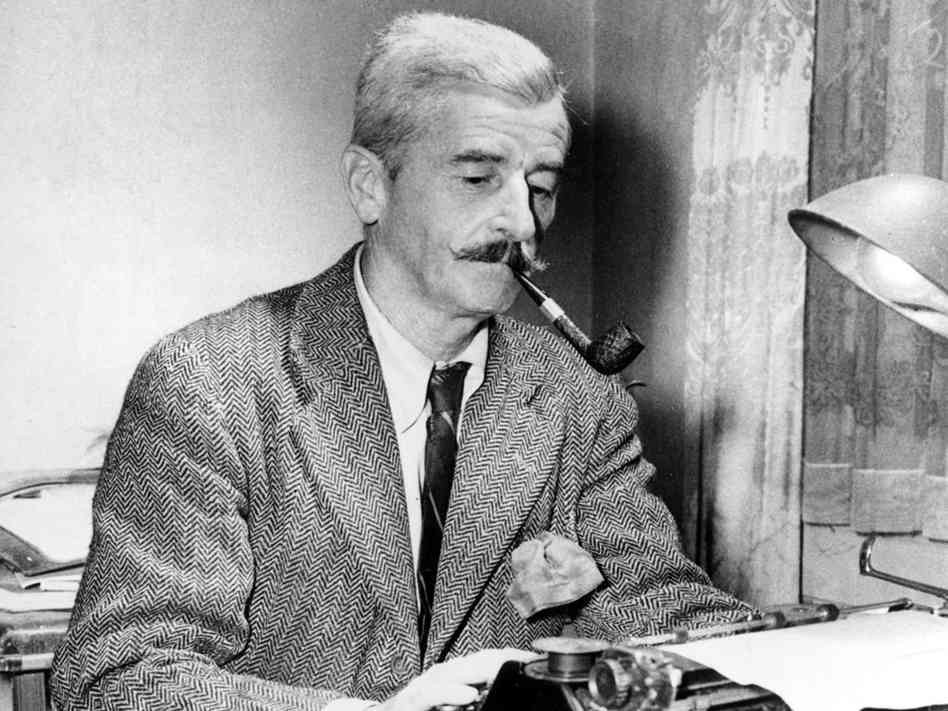
“Oops!” — William Faulkner
As I Lay Dying was Originally Titled As I Laid Dying
Until the manuscript was turned into the publisher, William Faulkner’s Southern Gothic epic featured a glaring typo in the title. Faulkner, a self-described “grammar Nazi” was so embarrassed that he went on a four-year bender. He later died fighting actual Nazis in World War II.
A rare first edition
The First Edition of Of Mice and Men Was Tiny!
Literally! John Steinbeck wanted his 1937 masterpiece to be published in both man-sized and mice-sized format. (However, the mouse edition was quickly discontinued due to poor sales.)
“The umbrella trees eat purple limes”
Gabriel Garcia Márquez Developed “Magical Realism” from a Surprising Source
The author of 100 Years of Solitude and Love in the Time of Cholera brilliantly created surreal worlds by combining surprising ideas. How? Poetry. Refrigerator magnet poetry, specifically. “They have these little magnets on the back and you can just move them around and make up weird sentences,” Márquez once told an interviewer from The Paris Review. “That’s how I developed magical realism. Like look at this, ‘The umbrella trees eat purple limes’! That’s crazy. I’ll put that in my next novel.”
Fatten up first
To Kill a Mockingbird Had a Sequel
No, we’re not talking about the “lost” draft published as Go Set a Watchmen in 2015. Harper Lee’s one and only novel was followed up with a nonfiction sequel. Like To Kill a Mockingbird, Lee intended her second book to be “instructional and informative.” It was titled To Grill a Mockingbird and consisted of recipes for seasoning and preparing mockingbird delicacies. Yum!
not taken roads
Robert Frost’s “The Road Not Taken” Doesn’t Mean What You Think it Does
Frost’s classic poem about a guy in the woods on a road is taught in schools across the world. But what does it mean? There are many interpretations, but according to the poet himself, the poem isn’t about blazing your own path or about how little things change your life. Frost, a famous advocate for infrastructure improvement, wrote the poem to convince the US Congress to increase funding for road paving. In the poem’s original epigraph, Frost wrote, “We can put an astronaut on the moon / How come the government can’t fill these damn potholes?!”
Men never change
Lord of the RingsWas Inspired by a Household Argument
When J.R.R. Tolkien was a struggling author, his girlfriend at the time was impatient to get married. Allegedly, she told him, “if you like it then you should put a ring on it.” Tolkien, who had already purchased several other rings as presents that year, loudly shouted “What am I, the lord of the rings?” The rest is history.
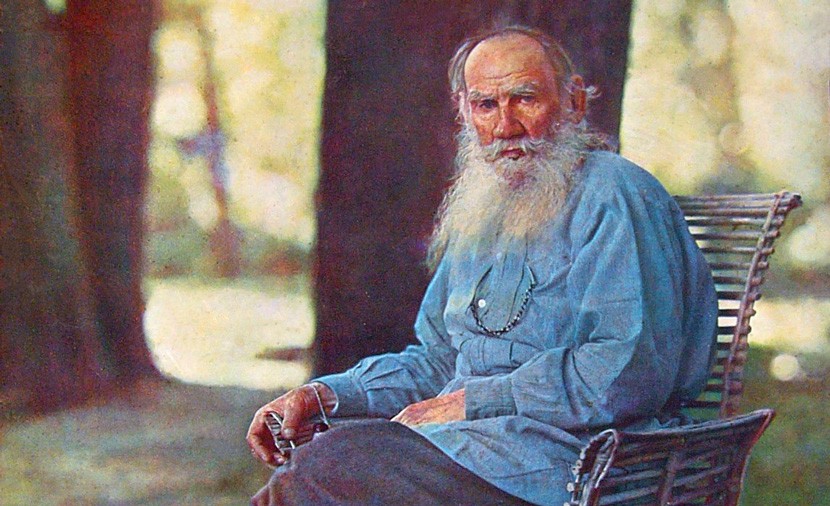
“What is good for? A lot!” — Leo Tolstoy on war
War and Peace Has a Hidden Message
Count Leo Tolstoy’s epic asks the question, which is better, war or peace? In fact, early drafts of the manuscript contain Tolstoy’s answer on the final page: war.
“A well-fed writer is a happy writer” — Cormac McCarthy
Cormac McCarthy Has a Unique (and Tasty) Writing Process
The famously reclusive McCarthy doesn’t talk much about his writing habits, but what he has said is fascinating. In an interview with Oprah Winfrey, McCarthy remarked: “I do most of my writing at breakfast. I name the eggs and pieces of toast and bacon after my characters, then I have them dance around on the plate while I do funny voices for each of them. Whatever character I eat last becomes the protagonist of the novel.”
We’re psyched to kickoff the one month countdown until the premiere of American Gods on Starzby sharing with you the recently released opening credits. As with any Bryan Fuller show (throwback to Hannibal and Pushing Daisies), there’s the expectation that he’s going to mess with your mind, and this latest neon-crazed, trippy teaser assures us that Fuller is in no threat of losing his touch.
The series is based on Neil Gaiman’s novel of the same name American Gods, and it follows the protagonist Shadow Moon after he is released from prison just days after his beloved wife dies in a mysterious car crash with his best friend. On the way home, an odd man who calls himself Mr. Wednesday propositions him to work as his bodyguard, driver, and errand boy. Pretty soon Shadow Moon discovers that he’s caught in the cross-hairs of “an epic war for the very soul of America,” and that mythology is far more connected to reality than he had previously believed.
Get crackin’ on the novel if this kind of story piques your interest! It’ll be worth it, if only for the opportunity to triumphantly tweet that it’s so much better than the show (even though we have to admit, it’s shaping up to look pretty dang awesome).
If you want to get even more acquainted with the characters, take a look at the awesome cast posters below!
Jeremy Robert Johnson’s Entropy in Bloom opens with an introduction by Brian Evenson in which he warns readers that the collection they are about to read could possible alter them in profound ways. The introduction is fitting for a plethora of reasons, but two of them deserve to be mentioned here. The first one is that Evenson introducing Johnson’s biggest release to date is the equivalent of a literary passing of the proverbial torch; one of the best living American writers welcoming someone into the club and letting readers know how he earned his membership. The second reason is that the opening paragraph mentions author Stephen Graham Jones. Along with Johnson and Evenson, Jones complete an (un)holy trinity of the most creative, wildly entertaining, most genre-bending voices in contemporary literature, and everything that follows proves that Entropy in Bloom is an instant classic, a carefully curated manifesto whose main goal is to tell the world one of the brightest stars in indie lit is now too brilliant to remain hidden.
Entropy in Bloom contains fifteen short stories that are arguably the best produced by Johnson since the beginning of his career and one previously unpublished novella, “The Sleep of Judges,” which would be worth the price of admission even if it was being published alone. The narratives are a mix of horror, crime, bizarro, sci-fi, and literary fiction, and all those genre appear mixed each other in different stories. The selection is superb because it offers a look at the larger themes that have crisscrossed Johnson’s oeuvre since his first publication while also offering readers tales that have either been option for film, won awards, been translated, or actually been turned into award-winning short films, which is the case with “When Susurrus Stirs.” Loss, fear, revenge, desire, paranoia, the apocalypse, body horror, the impact of drugs on the human psyche are all elements of cohesion that make Entropy in Bloom a strong collection that lets readers know they are reading the work of a consummate storyteller with a knack for words and a deep understanding of the darkest recesses of human nature.
There are no throwaway tales in this collection, but discussing them all would lead to a too-long, uninteresting review that would keep readers from discovering some of the gems that lie within the pages of Entropy in Bloom. However, there are some narratives that deserve special attention. The first one is “When Susurrus Stirs,” a tale that uses an intelligent parasite to explore identity while never ceasing to be an outstanding story that pushes the boundaries between literary fiction and body horror:
“He doesn’t speak to me as an individual; I can feel that in his voice as it creeps through my nervous system and vibrates my tympanic membrane from the inside. The idea of “self” is impossible to him. When he speaks to me as “You” I can tell he’s addressing our whole species, every last human representing a potential host.”
Other exceptional stories include “Persistence Hunting,” which explores loneliness and desire through a regular man who becomes a thief in such a way that it ends up being one of the best crime short stories of the decade; “The Gravity of Benham Falls,” which manages to somehow make the classic ghost story something new and exciting; “Dissociative Skills,” a story about mental illness and self-harm that is as gory as it touching and opens with a line that captures darkness like few others: “Curt Lawson felt like a surgeon right up to moment he snorted the horse tranquilizer”; and “A Flood of Harriers,” where fear and revenge collide in the ruins of a man’s shattered sense of masculinity after a wild time doing psychedelic drugs at a festival right after an attack by some Native Americans:
“My body is in the grasp of tremors, shaking to this rhythm that was never mine. The sun drifts behind a mountainous ridge and dusk floats down, spreading gray light across the Sheenetz River. I can see the rest stop. My pulse is the sound of long dead tribesmen calling down the flood.”
Those same feelings of paranoia and inadequacy are also present in “The Sleep of Judges,” the crowning jewel of this collection. In this novella, a man is forced to deal with crippling fear and a shattered sense of masculinity after burglars break into his house while he and his family are away and take some of their priciest possessions and mess with a family photo. With his wife and daughter safe in her parents’ house, the man tackles the project of walking through the property with a cop, securing the house, cleaning up after the robbers, and dealing with the insurance. Unfortunately, the burglars seem to want more than his earthly possessions.
What follows is a tense, atmospheric, gripping narrative with a Lovecraftian touch that quickly spirals into a surreal nightmare of deadly proportions. Between the neighbor’s warnings, what the man finds inside his house, the strange cop that showed up at his door, the mysterious house in the neighborhood that is occupied by bizarre people no one knows, and the sounds he hears coming from outside his house, “The Sleep of Judges” is as creepy as anything else Johnson has written and as strange, touching, and smart as readers have come to expect from him.
After the success of Skullcrack City, Johnsons’s previous novel, Entropy in Bloom feels more like the next logical step than an impressive but unexpected outing. Johnson has been the writer other great authors talk about (he’s been praised by Chuck Palahniuk, Laird Barron, Ben Loory, and John Skipp, among others) for a long time, and this collection should turn him into the writer everyone is talking about. These fifteen stories and one novella show a powerful imagination, a great talent for storytelling, writing chops that allow him to tackle any genre, and a flowing, dynamic voice that, if Johnson were a singer, would extend to an impressive eight octaves.
Hello, and welcome to my week-by-week review of the world. Today I am reviewing the color purple.
There’s no denying that the color purple is the least liked color in the spectrum. Technically mustard brown is less appealing, but it’s used so infrequently that it doesn’t receive the same quantity of hatred as purple.
Some people still insist on using purple, and that’s usually a good litmus test for their sanity. According to a poll 90% of people who like purple are sociopaths.
Anytime I accidentally get locked in the library overnight, I find myself free to do a lot more research for my reviews, and this was one of those times. I started with the book The Color Purple, starring Whoopi Goldberg. This book was a moving tale that in no way helped me understand the color purple.
But why research something that I know in my gut to be true? Think of all the things in your life that are purple. Now imagine your life without them. You probably just smiled a little, or even possibly orgasmed.
Five years ago when I reviewed purple nurples I found them to be just the worst. Is it a coincidence that something with purple in the name is so unpleasant? Not when you look at the evidence.
Purple grapes can be turned into wine, which can cause alcoholism. Purple crayons can be stabbed into someone’s eyeball, by accident or intentionally. Purple flowers sound harmless enough, right? Wrong. You’re wrong. Imagine leaning in to smell a purple flower and a bee comes out and stings you in the nose. Or even worse, it flies into your nose and stings you on the interior of your lungs. Thanks, purple.
I’ve only ever found one purple thing that isn’t horrible, and that is Ronald McDonald’s friend and/or pet Grimace. He’s always friendly and promotes unconventional body shapes. He never defecates and has no genitals. Up close he appears to be warm and soft. I love Grimace, but he can’t change my mind about purple.
BEST FEATURE: n/a WORST FEATURE: I saw a woman get her purple scarf stuck in the door of a taxi and she was dragged/strangled to death.
Please join me next week when I’ll be reviewing Uncle Sam.
Sign up for our newsletter to get submission announcements and stay on top of our best work.
YOUR INBOX IS LIT
Enjoy strange, diverting work from The Commuter on Mondays, absorbing fiction from Recommended Reading on Wednesdays, and a roundup of our best work of the week on Fridays. Personalize your subscription preferences here.