It’s time to re-stock your shelves, fire up the old cable (or streaming device of your choice) and settle in for another copacetic year of books on TV.
Peak TV’s appetite for established “IP” is borderline insatiable, so there’s a decent chance that by around 2020, FX and Amazon Prime will be battling over the rights to your middle-school diary entries, but for the time being big names and big books still dominate the small screen adaptation racket.
2016 saw some notable successes. FX hit paydirt with Ryan Murphy’s take on Jeffrey Toobin’s Ride of His Life: The People v. O.J. Simpson. With any luck AMC will keep working through the John Le Carré oeuvre after its success with The Night Manager. Luke Cage added to a complex and socially relevant Marvel/Netflix universe, and AMC’s Preacher was one of the strangest and most enjoyable things on television. Failure might not be the right word for Fox’s Neil Gaiman adaptation (Lucifer) or Hulu’s foray into Stephen King-land (11.22.63), though you’d be hard-pressed to find many people singing the praises of those particular shows. In any case, that’s all old news.
2017 is here. With it comes a new crop of shows ripped-from-the-endsheets.
This year we’ll see more Neil Gaiman and more smart comic book stories, but don’t worry, there’s going to be something for everyone: the kids, the crime fanatics, the vampire devotees, the historical fiction nuts, the book-ish liberals wondering what’s become of their country, and the Ian McShane lover residing in all of us. Is 2017 going to redeem the year that just passed? No, almost certainly things will get worse. But the marriage of good books and good television holds strong. High quality, thoughtful entertainment is a daily event now, and dammit, even the bookish people need their opiates.
So, here they are, TV’s most anticipated literary adaptations for 2017.
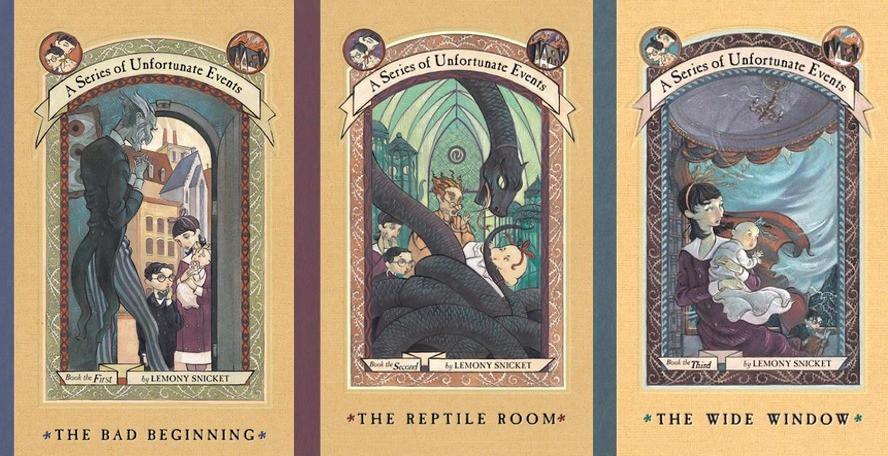
1. A Series of Unfortunate Events (Netflix)
Premiere — January 13, 2017
Did the world need more from Lemony Snicket? (long pause…) In any case, Netflix has been trumpeting their newest adaptation for quite some time, and while the unfortunately twee trailer struggles to hold any kind of interest over the course of its 2 1/2 minute run time, Neil Patrick Harris looks like he’s having fun, doesn’t he? The man has charm and charisma, there’s no denying it. So, maybe tune in next week? The show might have some early-Burton, recent-Wes Anderson upside, if that’s your cup of tea.
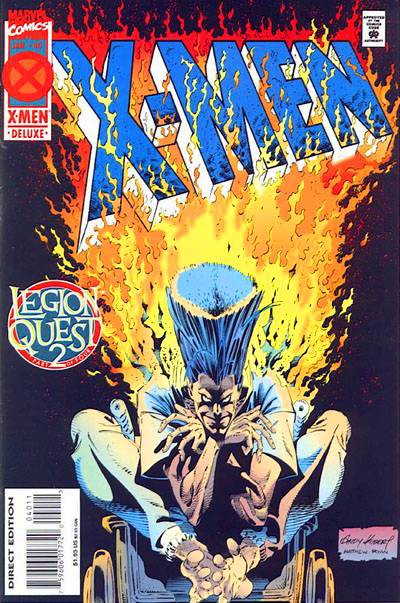
2. Legion (FX)
Premiere — February 8, 2017
After a well-received screening at New York Comic Con back in October, Legion is one of the most eagerly-anticipated shows on the calendar. For those suffering superhero fatigue, yes, we know it’s part of the Marvel universe (the show’s exact placement vis-à-vis X-Men is still unclear), but there’s reason for optimism. First, Legion has long been one of Marvel’s most complex characters — the mutant son of Prof. Charles Xavier (no word yet whether this plot strand will be adopted by the show), Legion suffers from various mental health conditions. Different aspects of his (very eccentric) personality control his many, many superpowers. Second, and even more important here , Noah Hawley, creator of FX’s Fargo, is at the helm. That means 2017 will see Legion, a new season of Fargo, and the continued success of Hawley’s most recent 400-page novel, Before the Fall. The man is cut from a different cloth. Dan Stevens — aka Cousin Matthew — is set to star in the show’s title role. Legion promises to be smarter and — this is key — weirder than any comic book adaptation we’ve seen in quite some time.
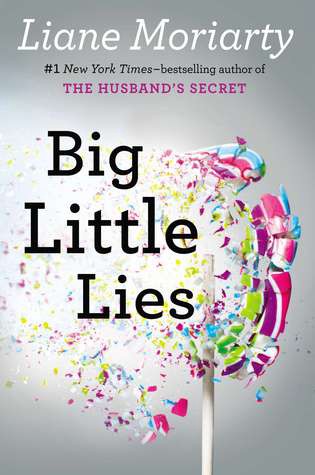
3. Big Little Lies (HBO)
Premiere Date — February 19, 2017
Liane Moriarty’s story of female friendship, cheating, bullying and seaside murder was a breakout hit in 2014, and in 2017 it promises to be the most pedigreed production on television. Created by David E. Kelley (of Picket Fences fame, and probably other stuff…) and directed by Wild’s Jean-Marc Vallée, HBO’s newest limited series has a hell of an impressive cast, too, with Reese Witherspoon, Nicole Kidman and Shailene Woodley at the top of the sheet and Alexander Skarsgård, Laura Dern, Adam Scott, and Zoë Kravitz right behind them. The premiere is only weeks away now. Steel yourselves.
4. The Handmaid’s Tale (Hulu)
Premiere Date — April 26, 2017
Margaret Atwood’s dystopian classic The Handmaid’s Tale was already enjoying a resurgence in the pop culture thanks to the rise of Donald Trump and a wretched brand of American fascism. In 2017, the story is coming to Hulu in a 10-episode series starring Elizabeth Moss, Samira Wiley and Joseph Fiennes. The story is set in a near-future New England fallen under the thumb of a misogynist theocracy that has overthrown the U.S. political order. The show’s premiere is set for April, and all signs point to a high quality product, possibly the star Hulu has been waiting for, but let’s be frank: there’s no way it can outdo the 1990 movie poster, a work of art in its own right, featuring Natasha Richardson, Faye Dunaway, and Aidan Quinn.
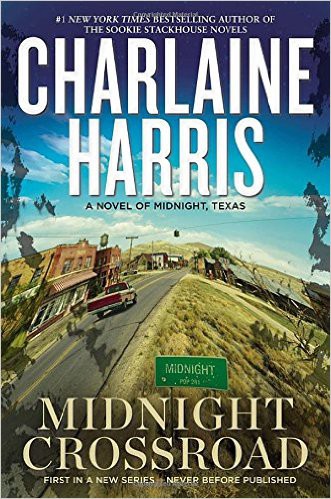
5. Midnight, Texas (NBC)
Premiere Date — April 30, 2017
Author Charlaine Harris is back with another hot-and-steamy supernatural series for all those True Blood fans jonesing aftewr a fix since the finale in 2014. This time it’s Internet-beloved Quebecer François Arnaud filling the lead role as the spectacularly named “Manfred Bernardo,” a medium who moves to Midnight, Texas, where all manner of vampires and other (vaguely erotic) creatures are running wild and in need of a hero. Who knows, NBC did a pretty decent job with Grimm, but let’s be honest — we’d all be a lot more excited about this show if it were on, say, Netflix, instead of broadcast.
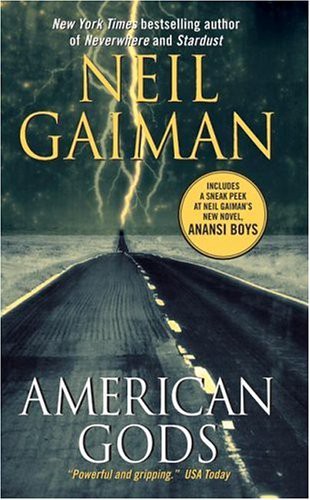
6. American Gods (Starz)
Premiere Date — “early” 2017
Neil Gaiman’s American Gods, rumored to be in pre-production almost since the book’s release in 2001, is finally coming to our screens in 2017, and damn if the trailer doesn’t look promising. Here’s the basic story: Shadow Moon, a recently widowed ex-con is recruited by a mysterious con-man who turns out to be a Norse god gathering up all the old deities hiding in plain sight in modern America. Not bad, huh? With Ricky Whittle and prestige-drama-icon Ian McShane playing the leads and a couple of sure hands running show (Bryan Fuller and Michael Green), American Gods has break-out potential. Add this program to the lineup of Outlander and The Girlfriend Experience, and 2017 might just be the year you get a Starz password of your own.
7. Sharp Objects (HBO)
Premiere Date —TBA 2017
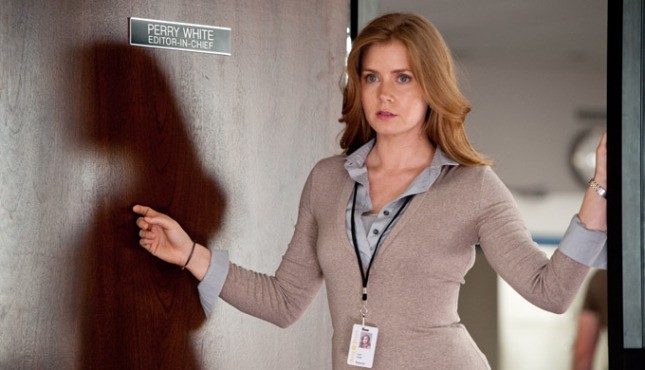
Here’s what you need to know about Sharp Objects: it’s going to be on HBO; thriller superstar Gillian Flynn wrote it (the book and the show); UnReal’s Marti Noxon is signed on as showrunner; and Amy Adams — queen of the prestige literary adaptation — is set to star as a reporter fresh out of the pysch ward and returned to her hometown to investigate the murder of two girls. This is shaping up to be the year women took over hard drama at HBO.
8. The Terror (AMC)
Premiere Date — TBA 2017
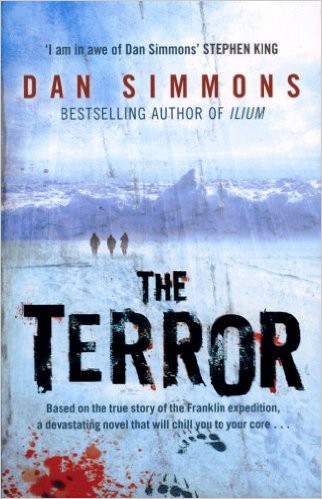
AMC’s newest one hour stalking-monsters program is adapted from Dan Simmons’ 2007 novel, which imagined life within Captain Sir John Franklin’s doomed expedition across the Arctic, in search of a Northwest Passage. The HMS Erebus and HMS Terror were locked into the ice near King William Island in 1845 and the crew was never heard from again. (A little inconveniently for AMC, the HMS Terror was found in September at the bottom of the Arctic Bay. All 129 crew members are believed to have died.) Simmons’ version of the story was never purely fact-based, though. In the novel, and the AMC show, a mysterious monster trails the expedition across the ice. The usual — in-fighting, betrayal, cannibalism — ensues. Tobias Menzies and Jared Harris star. No word yet on the premiere date.
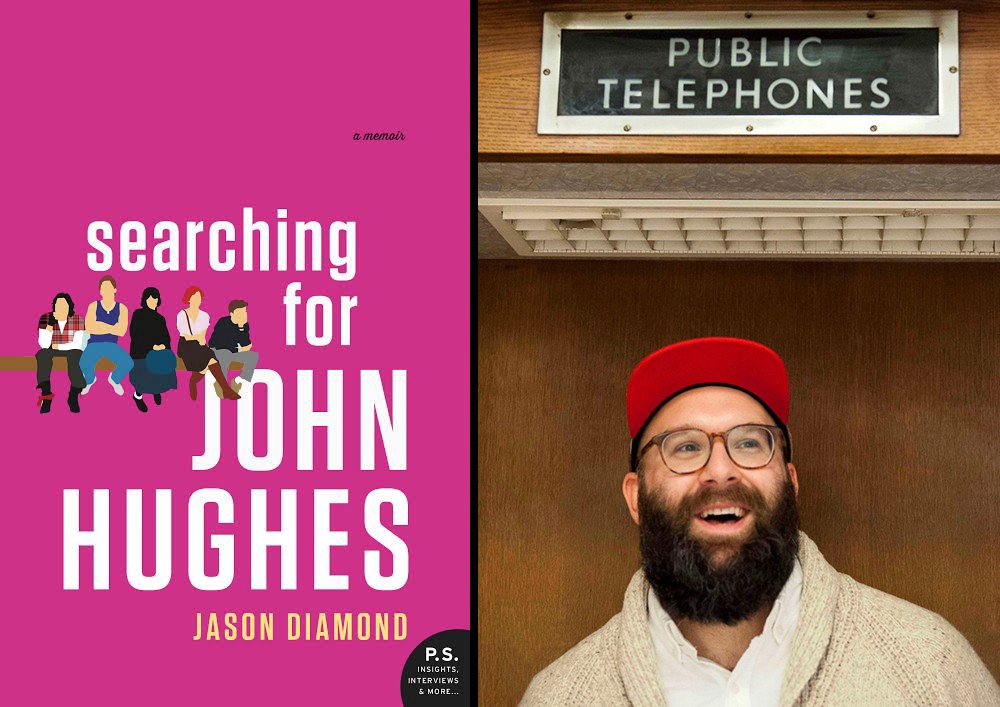
The first John Hughes movie I remember seeing is probably Home Alone, but given that I was born in 1983, the same year Mr. Mom hit theaters, and the fact that I have three older siblings, there’s a good chance his films were a backdrop to much of my childhood. Of course, I am not alone in this or Jason Diamond’s stunning memoir, Searching for John Hughes wouldn’t exist.
Personally, while I find Hughes’ films entertaining (my favorite being Ferris Bueller’s Day Off), I’ve never thought of him as a touchstone for my cinematic proclivities. Recently we introduced our eight year old son to Home Alone and that was the first time I’ve watched a Hughes film in more than a decade. That said, when I first heard about Diamond’s memoir I was excited. Though I don’t remember much about the 80's (the grunge years were more aligned with my early memories of childhood), I find myself nostalgic for the decade. Another byproduct of having older siblings, I’m sure.
I was instantly glad I picked up Searching for John Hughes. It was evident from the start that the book was more than just a reverie. Diamond has created a memoir that makes you, the reader, one of his closest friends. He is intimate and vulnerable, yet he keeps his humor and optimism. It is a trick all the more impressive given Diamond’s turbulent adolescence and nomadic early adulthood. With John Hughes to guide him and the backdrops of Chicago and New York to provide a counterpoint of stability, Diamond brings readers into his efforts to create both an homage to Hughes and a niche for himself as a writer. I found myself inspired at every turn, impressed by the balancing act and the precision with which he creates beauty out of struggle and a love for the films of an 80’s auteur.
Ryan W. Bradley: I believe celebrities — from athletes to movie stars — are the modern equivalent of mythological pantheons. I think our connections to celebrity go beyond entertainment. In ancient cultures myths were a way of understanding what we had no basis for understanding. Do you feel that way about your connection to Hughes’ films, and pop culture at large? What has your connection to his films helped you understand?
Jason Diamond: Oh yeah, for sure. I tend to interact with celebrities and famous people somewhat frequently in my line of work these days, and I’m still taken aback when I see them in person for the first time. They’re not the person on that little electric picture box in my living room anymore. It takes a few seconds to adjust.
As for the Hughes films, it’s pretty simple: they were filmed in the part of the Chicagoland area I grew up in. That, and I was first exposed to them by teens around the time films like Sixteen Candles and Pretty in Pink were released, so it sort of felt like they were letting me into their cool world. I’d watch those movies and think, “Ah, so this is what life is going to be like one day. Not bad.”
Bradley: That connection led you to a really interesting journey as a writer, from the effort of writing a biography of Hughes to eventually writing a memoir informed by that endeavor. The framing seems natural, and there was a sense that even early on you were drifting that way, even if you didn’t notice it at the time. Was it difficult to switch gears and let yourself be the focus?
Diamond: I’m glad you think that. I felt like it was a really weird idea, but people have been telling me it makes sense. I really wanted the book to be about failure, embracing the things that seem like huge screw ups and wastes of time, but in the end make us who we are. I also wanted to look at myself and frame those years spent trying to write the biography as some cross between Larry David and Don Quixote or Ignatius J. Reilly. Some guy so obsessed with this one goal that he doesn’t see how silly or shitty he’s being. I thought that was a funny idea.
In terms of switching focus, I don’t think it was that difficult. I’d toyed with the idea of writing a book of essays about growing up so I went back and looked at those notes and outlines, and sort of thought about how if I’m going to write a book about myself and my obsession with these movies, I need to write it in such a way that anything I write about my life somehow connects back to his films. I’ve read too many memoirs where it’s supposed to be about the writer and X, but you don’t get much about X. Since his films had such a profound impact on me, I really needed to make sure I could connect any life event back to his movies and what they’ve meant to me over the years.
What sort of took me by surprise is how much all of the books I’ve read and loved kinda came back to help me in certain ways. Like I’d think “How would Didion say this” or “How would Waugh frame this scene.” Obviously I never came close to writing like those people, but it showed me just how much obsessively reading throughout my life has helped me as a writer. Like little parts, maybe a sentence or two, I’d call up those books and writers and they really helped.
Bradley: For many people the hardest part about writing memoir is including the people around them, that worry about how family and friends will feel about what they’ve written. You don’t necessarily have relationships with the people who come out the worst in your book, but I imagine there was still some anxiety about putting that on the page. Although even when you had the right to be negative you didn’t dwell on it. There’s a lot of hope in the book. How much of that balance was conscious and did it help alleviate any potential worries about what you were making public?
Diamond: Weirdly enough, the anxiety didn’t pop up while I was writing it. I feel pretty free when I’m writing, like it’s my own thing even though I’m writing about real people and events. I think after it came out, when the first of many friends was like, “I never knew all this stuff,” and another said I made them cry, that was a weird feeling. It made me a little anxious. I didn’t really think much of how the book might affect people.
I’m a pretty hopeful person for the most part, and being anything other than that in the book would have been dishonest. Being hopeful and also incredibly stubborn helped me get through some difficult times, and I feel like that mix comes out in the book. I was ultimately able to see that I want things to turn out good in the end, no matter how silly that might seem. Looking at it that way, more than anything, helped alleviate any fears I may have developed along the way. Like I was happy in the end that I presented my story in a way that says things can suck but things can also get better. It’s so easy to lose sight of that in our day to day, and as a writer, it’s our job to present the truths of an often sad and ugly world, I recognize that. But I’m also a fan of the beauty and the little glimmers of goodness you see from time to time.
“It’s our job to present the truths of an often sad and ugly world, I recognize that. But I’m also a fan of the beauty and the little glimmers of goodness…”
Bradley: That was really present in the book. I got the feeling that I wasn’t just learning about your life, but also hearing your voice. As someone who has written bits and pieces of a memoir over the last few years, I find I get really hung up on that part, on the voice that I present. I try to tell myself I can write it the way I write fiction, but still find it difficult to do. You had obviously written fiction and nonfiction for years, but how much did you pay attention to the style of the narrative? Did it take experimenting with your voice to find the fit for the material?
Diamond: Actually, it’s a funny thing, but I write so much that I really just sat down with my outline, my ideas of what I wanted to do and where I wanted to do it, and let it come out organically. One thing I noticed that I found really interesting was that things I consider influences would pop up as I was writing, certain writers or books I’ve read, I’d notice little faint traces of influence here and there. Also, as somebody who writes and edits for a living, I found it really interesting to just sit with one thing for a long time instead of an essay that I write and edit in a week or two that’s 2000 words. Trying to maintain the one clear voice was something I was worried about, but as I kept writing I realized it was pretty easy for me to do since I was writing mostly about myself. I’m not so sure I’d be able to do that if I was writing fiction, or at least it would take me a lot of time and editing to accomplish it.
Bradley: You mention your work as an editor, which is a skill set and art form that is very different from writing. Was there any particular editorial advice you’ve given other writers that you made a point of keeping in mind with your own work?
Diamond: For longer stuff, I tend to tell them not to go back and edit while they’re writing. I know every writer tends to do things differently, but nine times out of ten when a writer comes to me and says they’re stuck on something, I’ll ask if they’re editing as they write and they usually say yes.
Another trick, one that I really had to stick to, is being able to walk away. I can write and write and write all day, but you do hit a wall, and you need to walk away, go for a walk, read a book, anything.
Bradley: That’s interesting. I have talked to so many writers who either edit as they go or start a writing session by editing the previous session’s output (which I am guilty of as well). The walking away makes perfect sense to me. I’m always surprised by writers who are super consistent in their routine. I can’t make myself write, I have to actually want to do it or it’s going to be a case of me feeling like I’m doing homework, which I barely did when I was in school. Sometimes that means doing something — anything — else.
You tell a lot of stories in the book and they span a large portion of your life. Were there stories you wanted to tell but had to hold out of the project because they didn’t fit within the framework and theme of the book? Do you have more personal stories you are looking to tell in a subsequent memoir?
Diamond: Yeah, I sort of wanted to write more about fucking up as a teen, but I think I’ll save that all for the next thing. I think I was trying to connect my life with those movies so much, and since Hughes is connected with teen films, I had to have some of my own teenage life in there. But when I was sketching things out, I kept thinking how funny or weird certain experiences I had were. I’d love to write about them somehow. I learned a lot about restraint before I wrote this book and I’m glad I did. Learning not to squeeze every little thing in and also being able to let go of certain ideas or paragraphs or passages. I had to do a lot of that.
The book world reacted with dismay to reports yesterday that Milo Yiannopoulos — a leading white nationalist, Breitbart staffer and one of the Internet’s loudest, nastiest trolls — had secured a $250,000 advance on a book to be published by the Simon & Schuster imprint, Threshold Editions.
Threshold described its new title in a press release: “Dangerous will be a book on free speech by the outspoken and controversial gay British writer and editor at Breitbart News who describes himself as ‘the most fabulous supervillain on the internet.’” Yiannopoulos is most famous for championing abhorrent far-right views on the Internet and being kicked off Twitter after leading a harassment campaign against Ghostbusters’ Leslie Jones.
The book world recoiled at the news. Carolyn Kellog, Book Editor for the Los Angeles Times tweeted: “If you approved a $250K book deal for the troll promoting racist, sexist views so extreme he got thrown off this platform — we need to talk.” She also asked authors who had received $5K-$25K advances from big publishers to reach out to her. Saeed Jones, BuzzFeedNews’ Executive Editor, Culture and author of a forthcoming book set to be released by Simon & Schuster, lamented his new affiliation and reminded social media followers that “The publishing industry as of this year is 79% white. Being racist is quite profitable.” Author Danielle Henderson, who also has a book forthcoming from Simon & Schuster, tweeted: “I’m looking at my @simonschuster contract, and unfortunately there’s no clause for ‘what if we decide to publish a white nationalist.’” She invited the publisher to contact her regarding the state of their relationship.
According to The Hollywood Reporter, which had an exclusive on the story, Yiannopoulos said: “I met with top execs at Simon & Schuster earlier in the year and spent half an hour trying to shock them with lewd jokes and outrageous opinions. I thought they were going to have me escorted from the building — but instead they offered me a wheelbarrow full of money.”
At The New Republic, Alex Shephard wondered whether the move to get in bed with Milo Yiannopoulos might ultimately cost Simon & Schuster more than the $250,000 advance currently dominating headlines.
Threshold’s history and mission are described on the website: “Threshold Editions was founded in 2006 with a mission to ‘provide a forum for the creative people, bedrock principles, and innovative ideas of contemporary conservatism’ and to chronicle the historic reforms those people and principles would bring.” Its other recent titles include Glenn Beck’s Liars, more junk from Beck, some Trump propaganda and Oliver North’s thrillers.
Yiannopoulos’ book, titled Dangerous, will be rushed out in March and has ridden the wave of publicity into the top-5 on Amazon’s bestseller list.
I did a selfish thing. I’m a graduate student in Comparative Literature and I needed to come up with a class to teach. Winter semester. 14 weeks. What I wanted more than anything, though, was an excuse to enlist the hungry undergraduate minds at my fancy elite university to help me figure out the 2016 presidential election. So that’s what I did.
I called it “‘Welcome to the Monkey House’: How Politics Becomes a Reality Show.” The monkey house part I stole from a Kurt Vonnegut story. It felt appropriate, and I didn’t think he’d mind. It had the feel of a class you’d see on a college campus. In Political Science, probably — maybe History. Twice as many students as the course could accommodate showed up to the first day of class. And while all of them were clearly fired up about the topic, many of them had the same question: why the hell was this being taught in a literature department? It was a valid question. And I want to try to answer it now.
There was a more obvious path we could have taken: we could have focused on the politics of literature — plays, stories, novels, creative nonfiction dealing with or intervening in heavy political issues. Instead, though, I wanted to focus on the literature of politics. “What we’re gonna do,” I told my students, “is read politics with the same kinds of critical tools we use to analyze literature.”
We could have focused on the politics of literature. But I wanted to focus on the literature of politics.
There was one novel on the syllabus (it was by Kurt Vonnegut, which only seemed fair). For the most part, though, the primary material we analyzed included things like: the trial of Sacco and Vanzetti, Eisenhower’s farewell address, images of protests in the ’60s, political attack ads, Reagan’s Berlin Wall speech (and a Captain America comic in which Reagan turns into a snake monster), the Colbert Report, news reports of 9/11. And Donald Trump. We talked about Trump a lot.
What does it mean to read politics like we read literature? Why bother? To start, politics in America tries hard to make itself literary. “Every candidate has a story,” I told my students. “Those stories are very carefully crafted to create specific effects. And the candidate has teams of people coming up with ways to edit their life and turn them into the protagonist in a plot we can all recognize. They all do it. Every candidate has a story.”
“And every movement has one,” a student piped in.
“Yup,” I said.
“And every country, really.”
“Yup.”
One could argue that politics itself is a battle over stories — which ones get told and how, and what gets left out. But this is just the beginning. Because, once a person starts to see how much their understanding of politics is controlled by powerful storytellers — candidates, journalists, speech writers, history textbooks, movies, national monuments — they start to get more suspicious. It’s like noticing a scratch on the lenses of glasses they didn’t even know they were wearing. They start asking different questions. They start thinking like a reader.
One could argue that politics itself is a battle over stories — which ones get told and how, and what gets left out.
In one sense, students know this already. They’re aware that every news source connecting them to what’s going on in the world is going to have some kind of bias. And it’s pretty easy to connect this to the question most of them remember from their high school literature classes: how “reliable” is the narrator? The biases of unreliable narrators (newscasters, candidates, uncles) may be glaringly obvious. But often they’re much harder to see, especially in narratives that claim to be objective. They’re often hidden in the details, in the language used, in specific word choices, in the things a narrator chooses to emphasize and the things she chooses to leave out, in tone, etc. To get at that stuff requires what literature scholars call “close reading.”
Students are pretty much always taught that the main goal of reading literature is to find out what the story “means.” This is a metaphor for that. Such and such character represents X. While reading for this kind of symbolism can be fun, it’s much more important to ask: how does literature work? To read the literature of politics, one has to move beyond asking what literature means and ask what it does.
To read the literature of politics, one has to move beyond asking what literature means and ask what it does.
Analyzing what literature means isn’t inherently a bad thing. But if that’s as far as things go, literature becomes a museum exhibit students can look at from behind glass. A book and its “meaning” exist on their own, like a historical artifact with a description on the panel next to it. Analyzing how literature works, though, removes the glass. It makes the individual reader part of the exhibit, and the exhibit part of the reader’s world. I’ve stopped asking my students what they think this or that passage means. They get much more animated when I ask how this or that thing made them feel, how it changed the way they think, how it affected them and why. These, I told them, are exactly the kinds of questions people following the election need to ask.
To read literature is to be transformed, however slightly, through language. The millions of particles that make up a person are readjusted; they come out as something, even microscopically, different than what they were going in. The words on the page hot-wire new feelings to old memories, they challenge “common knowledge,” they connect people as they are to visions of what might be, or what might have been, they let people see through skulls other than their own. They let people imagine worlds that don’t yet exist, and reimagine ones that do. This is the power of language itself as one of the basic chemicals of our cultural life. Even one word on a dumb billboard, for example, can make me feel enormous things. Perhaps what we call literature is just better at harnessing this power, concentrating it. But so is politics.
To read literature is to be transformed, however slightly, through language.
The language of politics matters immensely. Not just because of all the things it could “mean,” but because of what it can do. Language is largely how people experience the political world. Politicians say stuff, newscasters talk about it, journalists and bloggers write about it, people discuss it — these language games shape our very perception of politics. In his book Constructing the Political Spectacle, political scientist Murray Edelman writes, “It is language about political events, not the events in any other sense, that people experience… political language is political reality.”
Like literature, political speeches are drafted and redrafted. Teams of people argue over the right adjective or verb. Because the words matter. The narrative matters. Narratives help people make sense of the garbage heap that is piling up every second of every day. There’s always too much. Citizen-consumers who have less and less time to sort through everything themselves rely on others to explain what the main plot points are, who the key characters are, what the conflict is, what resolution should be hoped for, etc. A nation of readers needs narrators to structure the flow of information in ways that inform but also entertain, that keep their attention. But a nation of close readers questions the power of influence those narratives have.
A nation of close readers questions the power of influence those narratives have.
What is being left out of these narratives, and why? Which characters are being painted as the protagonists/antagonists? What is the perspective (who is speaking?) and who is the intended audience? Where does the plot start/end, and how does that affect the story itself? (Stories of the evolution of ISIS, for example, or the nature of Russian military aggression in Eastern Europe today vary wildly depending on who is doing the telling and where they start the story. And who is listening). Lastly, how is language being specifically used to manipulate the audience? Because every narrative manipulates (or at least tries to). The ones that pretend they don’t are the ones people should be suspicious of.
Here’s a simple example: many candidates during this election season tried to fit their life story into the “underdog” narrative. Donald Trump, Bernie Sanders, Ted Cruz (even, yes, Hillary Clinton) would downplay momentum and repeat phrases like “They counted us out, but…” or “Who would have believed that…?” The implication was that each candidate and his/her supporters had overcome some big obstacle “against all odds” (Trump’s “victory tour” is already an ongoing masturbatory exercise in this kind of narrative manipulation). Such rhetorical conventions feel painfully familiar and obvious, because they work. But why? Why is this so much more appealing to audiences than, say, proclaiming, “Everyone expected us to win, and we DID!”? This is a very literary question.
Americans love the underdog narrative, which is at least as old as David and Goliath (and thus carries a whole lot of religious/existential baggage). It’s also carved into the origin story of America itself: Puritans were outcasts facing unbearable odds in a new, harsh land (including the “savage” natives they all but eradicated); America’s revolutionary forefathers were schoolteachers and scrappy farmers facing a gargantuan empire; so on. From the beginning, the American identity fused itself with the underdog narrative. There’s a righteousness and good feeling that comes with the narrative, “proof through the night that our flag was still there.” And when candidates paint themselves as the underdogs they are deliberately trying to associate themselves with that righteousness, that good feeling. It gives all the pleasure of triumph without the guilt of being the bully.
There’s a righteousness and good feeling that comes with the underdog narrative, “proof through the night that our flag was still there.”
To understand how these kinds of narratives workinvolves more than analyzing the ways that political language — speeches, textbooks, songs, etc. — structure reality to fit into such narratives. That’s part of the job, but it mostly focuses on the ones crafting the message (i.e. the “author”). To focus on the “reader’” involves analyzing how and why people respond (or don’t respond) to that message, how and why certain narratives make people feel/think/act certain ways. Narratives manipulate, but they only succeed under the right conditions. If people don’t identify with the elements of a story, they won’t allow themselves to be manipulated by it. The only way to make sense of this election is to read closely for the emotions, the hopes and anxieties, the prejudices and values that prop up the narratives Americans buy into and politicians use — to understand how and why the narratives work.
I’ve said the same about Donald Trump. People who chalked up Trump’s political success only to his supporters’ ignorance and bigotry were missing all the conditions (cultural, personal, economic) that made so many people more receptive to the narrative he was peddling. To quote Murray Edelman again, “The human mind readily rationalizes any political position in a way that will be persuasive for an audience that wants to be convinced.” It’s an obvious point, but so many commentators seem to overlook how Trump’s narrative of national humiliation, domestic chaos, “political correctness,” free trade disasters, and the need for an “outsider” to fix the Washington establishment struck a chord in people who saw something in it they could identify with for complex reasons. They “wanted to be convinced.”
The ills, fractures, and power struggles this election brought to the surface aren’t going to go away. And it’s necessary to teach them in literature classes. To read them closely, even when it’s tremendously uncomfortable, and discuss them productively requires that people respond to the lives and perspectives of others with true empathy, openness, and appreciation for complexity. People have reasons for believing the things they do. And when others don’t see that, when they reduce people to simplistic things (“racists,” “losers,” “whiners,” etc.), it makes it easier for them to hate one another. This is the kind of tendency literature fights against.
The ills, fractures, and power struggles this election brought to the surface aren’t going to go away. And it’s necessary to teach them in literature classes.
This doesn’t mean that empathy and understanding will solve everything — this is just where the work begins. Nor does it mean that all world-views and narratives, especially those that pose a clear physical and existential threat to others, should be treated equally. This is about teaching students the real-world, no-bullshit value of exercising the critical understanding and narrative analysis they learn in literature courses.
Especially since the invention of television, as time and deep attention have become increasingly rare and the most entertaining stuff gets the most airtime, politics in America has driven itself away from complexity. It relies more and more on reducing unbearably complicated realities to spectacular content and pre-packaged narratives that people recognize. The scariest time for American politics was probably after the collapse of the Soviet Union — suddenly the great villain, the competitor that had given U.S. “progress” meaning, was gone. Suddenly America had fewer narrative tricks to justify its worldwide military-industrial complex. But, true to form, American politics found ways to fit new realities into old plots. When George W. Bush declared “war on terror,” he created the basis for the most successful political story-telling franchise in existence: an episodic, world-historical narrative in which the U.S. could be the perpetual hero fighting a villain that could never be completely killed.
Students can learn to see the narratives that influence them and how to open those narratives up to different interpretations.
The point is not to excuse terrorism, of course; it’s to understand how narratives work and the real political consequences they have. Narratives tell people how to see reality, how to see themselves, what to sympathize with, what’s important, which people/characters to hate, which values are worth fighting for, even killing for, so on. Politicians craft narratives to justify things that would be unjustifiable otherwise. Newscasters reproduce narratives that stoke anxieties and make people fear their fellow citizens but, nonetheless, keep them watching attentively. “In our time,” George Orwell wrote, “political speech and writing are largely the defense of the indefensible.”
But close readers can deconstruct these narratives. Word by word, brick by brick. Students can learn there are other options. They can learn how to see the narratives that influence them and how to open those narratives up to different interpretations and craft alternate endings. They can become better equipped to connect to other people with radically different lives and to explore the hard complexities of a world that changes drastically when looked at from different angles, when told through different narratives. They can find a way out of the monkey house. And literature can help get them there.
Hello, and welcome to my week-by-week review of the world. Today I am reviewing 2016.
I’ve been alive for a long time and I have to say 2016 is my favorite year so far. In fairness to some of the other years, I can’t remember them that well because they were so long ago. It’s sad how much of one’s life is forgotten.
There were a lot of great moments this year, from Britain gaining independence from the European Union to Josh Duggar being cured of his desire to molest people.
But what’s foremost on our minds this week is the recent string of celebrity deaths. Have you ever noticed how celebrities die together? So do elderly couples, twins, and even strangers. When one stranger dies, another dies almost instantly. It’s spooky.
While all the celebrity deaths were certainly sad, the bright side is those celebrities got to become celebrities. And if that wasn’t enough, now they’ve moved on to whatever they think the next stage of life is, which is usually much better than regular life.
As a Jehovah’s Witness, Prince died hoping to beone of the 144,000 allowed into Heaven. If Heaven isn’t full already, I think he had a good chance of getting in. Much better than the odds of someone without a ticket trying to get into a Prince concert.
Selfishly, I miss some of the celebrities who passed, especially Gene Wilder and Anton Yelchin. They both had such a gentle and kind manner about them. It was nice to be reminded that people like that still exist.
The newest President of the United States was elected this year, and while I’m personally not a fan of electing people suffering from severe mental illnesses into office, many voters disagree. The good news is these voters are now so filled with enthusiasm to see their candidate elected, that their joy and cheer is bound to spread across the nation!
Scientists discovered a new species of octopus which they are calling a ghost octopus. This is exciting news for people who like ghosts, and exciting news for the ghost octopus population. It must be lonely to be an undiscovered species on this planet — living among 7.5 billion humans and none of them even knowing you exist. Congratulations and welcome to our consciousness, ghost octopi!
One great thing that happened this year is I got a new car. I already had one but wanted to challenge myself by learning to drive two at once. It’s both a physical and mental challenge.
The best solution I could find — while not perfect — is to put one car in neutral and push it with the other car. If I need to turn, I pull to the side of the empty car as it’s coasting and nudge it gently. To stop, I pull in front of that car and let it smash against my rear bumper. I plan to buy a third car to see how far I can take this.
There were a few more wonderful things that probably happened this year but I have no proof of: 1. An orphan was adopted and given a puppy. 2. A thief successfully stole the iPhone she needed to feed her family. 3. You loved someone even if they didn’t know it or love you back.
BEST FEATURE: Pretty sure I saw a UFO. May have been a lightning bug. Pretty neat either way. WORST FEATURE: Westworld.
Please join me next week when I’ll be reviewing 2015.
The worlds of Game of Thrones, Watership Down & Star Wars are united in grief, while the fantasy master wishes 2016 away.
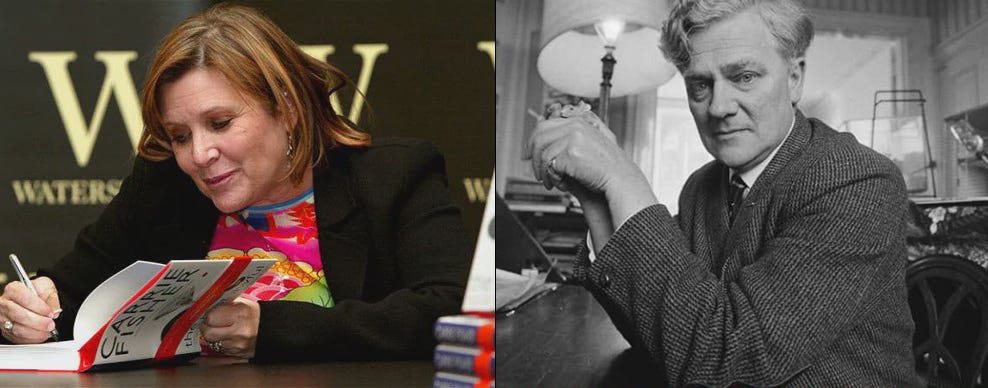
It’s often said that nothing brings a community together quite like tragedy, and the old adage holds true for writers. 2016 has been fraught with the loss of artists of all stripes, beginning with the death of the enigmatic literary legend, Harper Lee in February. Shortly after, Alan Rickman, the half-blood prince of the Harry Potter franchise, lost his battle with pancreatic cancer. Now, in the final week of what has popularly been deemed the worst year in recent memory, the world is collectively mourning the latest creative casualty, beloved Star Wars princess, Carrie Fisher.
George R.R. Martin, a titan in the realm of fantasy authors, took to his blog to express his heartfelt grief:
There is not much I can say about the death of Carrie Fisher that a thousand other people have not said already. She was way too young. A bright, beautiful, talented actress, and a strong, witty, outspoken woman. Princess Leia will live as long as STAR WARS does… probably forever…
Along with her extraordinary talent for acting, Fisher will also be remembered for her touch with the written word. Throughout her career she penned several scripts, along with five novels, and three memoirs.
In his post, Martin likewise lamented the recent loss of another literary great, Richard Adams. The author of the classic adventure novel, Watership Down, passed away at 96. Martin wrote:
Adams was not ‘one of us,’ in the sense that he was never a convention-goer or part of our genre fantasy community, which may be why he was never honored with a life achievement award by the World Fantasy Convention. Nonetheless, he deserved one.
He regrets that now he will never have an opportunity to meet Adams, whom he admired greatly.
While we wish it were under happier circumstances, it is moving to see the unification of the fantasy worlds of Game of Thrones, Star Wars, and Watership Down in Martin’s blurb. No matter what 2017 may bring, writers will have to continue to stick together and fight against the power.
László Krasznahorkai writes the kinds of books you need to be in the mood to read. Once labeled the “Hungarian master of the apocalypse” by Susan Sontag, the title has stuck as a kind of badge of honor, reprinted on cover after cover of the English translations of his novels. For the uninitiated, a “Krasznahorkai book” is almost universally choked with despair and poverty and alcohol and grime, from his magnum opus Satantango to his 2015 Man Booker International Prize-winner, War and War.
By comparison, Krasznahorkai’s newest releases in English, The Last Wolf (translated by George Szirtes)and Herman (translated by John Batki), are basically binge-reads, both not even clocking 100 pages in length. Even the label “novella,” as publisher New Directions is calling them, feels like a misnomer — in length, The Last Wolf and Herman could have practically fit in as vignettes in Krasznahorkai’s Seibo There Below. But readers sighing in relief over the publication of the first “digestible” Krasznahorkais ought to be forewarned: both books are a journey, yet neither is a walk in the park.
The Last Wolf is just one sentence long, but it is a mammoth, labyrinthine sentence, encompassing both the breathless monologue of a once-famous author and the interjected actions and questions of the bartender, to whom the narrator is relaying his adventure. The whole ordeal began quite mistakenly, the author explains, when he received an invitation to Extremadura, Spain, from a mysterious and nameless foundation, which insisted he memorialize their lifeless Eden in writing. “…He knew that the whole place, Extremadura, was outside of the world,” Krasznahorkai writes, “because extre means outside, out of, you get it?”
If you do, it might be the last clear signpost you get. In this “mercilessly barren, flat place,” the author finally decides to write about the last wolf to be killed in Extremadura, although it is a task easier said than done:
“…it was south of the River Duero in 1983 that the last wolf had perished” and it might have been the unusual tone of the sentence that stuck in his memory, since scientists didn’t tend to write quite so poetically in articles of this sort, did they? didn’t tend to talk in terms like “the last wolf…”
What is a “last wolf, “anyway? As a game warden explains, the lobos actually died one by one, with the penultimate — a pregnant female — being smashed by a car, as she was too heavy with pups to run across the road.
While the image has an almost Biblical weight — “…he could remember it clearly, could see that young she-wolf as clear as if it were yesterday, her guts spilled, her crushed belly with the dead cub inside it…” — The Last Wolf is maddeningly indecipherable, with even its conclusion a dangling, unfinished mystery. “What is most disquieting and, in a way, most melancholy, is that the wolf is not a symbol for anything,” Chrstine Smallwood writes for Harper’s. Instead, the story is finger-trap for the analytic mind, a sort of maze with no way out: You end up chasing your own tail looking for meaning, around and around, right up until the final, and only, period.
Herman is thematically The Last Wolf’s twin, although the novella itself is a pair of stories — “The Game Warden” and “The Death of a Craft.” Both halves concern the hunter, Herman, who sets off into the woods to destroy the park’s last “noxious beasts,” only to seemingly go mad, turning his traps on the people he’d promised to protect:
“The first sporadic cases of broken legs did not cause the hospital to notify the proper authorities, until in early February law enforcement got wind of rumors being retailed far and wide about the nocturnal depredations of a maniac at large among the residences of peaceful citizens, or possibly it was some kids to young to realize the gravity of their acts. The investigation soon established that the culprit or culprits were using standard, if extremely dangerous steel-jawed traps, placed in front of the homes of unwary people with the most perverse cunning and inexhaustible inventiveness, superbly camouflaged so that a person leaving the house in the morning was bound to step in it.”
In the first version of the tale, Herman ultimately becomes the quarry of the townspeople; in the second, amorous aristocrats set aside their canoodling to search for the fabled madman-hunter, only for Herman to vanish without a trace. It is an unsettling pairing of accounts, as the two don’t quite match up in detail, and once again leave the reader searching for hidden meaning where perhaps there is none.
The Last Wolf and Herman take no time at all to read. But each novella is like the literary equivalent of a Rubik’s cube: unintimidating when held in the hand, and yet somehow impossible to get straight once you start trying. Don’t underestimate the pair; they might look flimsy enough to finish during a long commute but they’ll haunt you — or perhaps hunt you — long after the final full-stop has been left behind.
2. Everything You Wanted to Know about Book Sales (But Were Afraid to Ask)
Electric Literature editor-in-chief Lincoln Michel breaks down the hows, whats, and whys of book selling, and challenges some myths about book selling with hard data.
3. 12 Things I Noticed While Reading Every Short Story Published in 2014–15
Electric Literature contributing editor Kelly Luce explains what she learned reading for the O. Henry Prize anthology, and decides that “For a form whose death is continually prophesied, the story is doing pretty damn well.”
6. Let’s Get to Work: Practical Ways for Writers and Teachers to Get Involved Right Now
In the wake of the 2016 election, Electric Literature contributing editor Anu Jindal looks at resources and organizations that writers can get involved with to help make the world a better place.
A man missing an arm and part of his jaw knocks on the door. He smells like a brewery and claims he’s a family relation. That’s how the story “Related” begins. It’s under 500 words. Or consider “Oriole,” which opens, “My father’s hands fit around my throat” and lays bare what’s going on at home in under 1,000 words. These stories feature hookups and breakups, substance abuse, and violence so casual it’s as natural as jagged breathing.
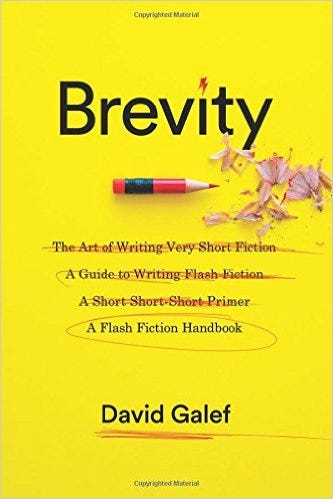
This is the work of Len Kuntz, sui generis even in the gonzo world of flash fiction, and he’s published a lot of stories to prove it. When David Galef, a fiction writer and critic, set out to write Brevity: A Flash Fiction Handbook (Columbia University Press), this was the kind of material he was searching for: visceral as a gut-punch but with a real narrative to pursue, a turn in someone’s life encapsulated in a couple of pages. Flash fiction is ubiquitous these days, but it can still turn up something new, like a small miracle. We recently asked Kuntz and Galef to chat about the world and the art of flash fiction: where the form stands, where it’s headed, whether brevity can be pushed further, and which were their favorite one-line stories of the year.
David Galef: Flash fiction is all over the place, from classrooms to the web, in contests and in anthologies. You’ve published a slew of work in this genre. Got an opinion on what’s new in the field?
Len Kuntz: There are certainly new zines popping up every week and just as many going defunct. Micro fiction, as well as Twitter fiction, was a recent development, but they’ve been around for some time now. What’s new are the emerging writers, the fresh voices, and there’s a plethora of them online.
Galef: I agree. I don’t see any way to push the vanishing point beyond 140 characters, two- or one-sentence pieces, and that sort of thing. But I do wonder about hybrid forms, combining text and image or — well, we should really insert a YouTube video link here. How would you describe the kind of flash fiction you write, and how has your work evolved?
Kuntz: When I started out, I had no idea what I was doing. Most of the things I was reading with regard to flash were quite odd, bordering on bizarro fiction, or else they were pretty experimental, where the narrative came in second to the language. I tried mimicking that, with a little success, but really when I caught my stride was when I learned how to wind a tight plot point into the piece. In almost all of my writing, someone is in trouble, or else they’re wounded or will soon be wounded. One of the guys in my writing group says I torture my characters better than anyone he knows. I suppose that’s true. If you can get the reader to care about the character, then the reader really becomes invested in what happens to the character when things go wrong, when they struggle. I guess I’ve evolved to where I no longer apologize for writing things with a dark bent. I go for the emotional tug. My readers might not be smiling when they’re done with a piece of mine, but hopefully they come away having their heart shook, if even just a little.
Galef: I like a sum-up of your work I read recently about how no one does damaged-kid stories as well as you. I don’t mean to be reductive, but it’s something you do really well in an amazingly small space. I see it in The Dark Sunshine and also in I’m Not Supposed to Be Here and Neither Are You. That’s one main reason I included you in Brevity: A Flash Fiction Handbook.
Kuntz: Thank you for the kind words about my writing. It’s true that I mostly write about damaged people. But I’ve come to say that I write about people wrestling with their problems. It’s vague enough yet interesting enough that people remain somewhat interested. And I’m happy to be in that handbook.
Galef: Of course, the handbook is an attempt to cram as many different ways of looking at flash fiction as possible into a fairly slim volume. So I’m curious as to your thoughts on the limits of the form. What can’t you do in flash fiction?
Kuntz: Obviously length is a limit, but other than that, I don’t think there are any rules per se. As a fiction editor at Literary Orphans, I get a lot of submissions that lack complexity, that don’t tell a story. Many people think all that’s required of flash fiction is that it be short. But it can’t just be a description of something or a sketch. What I look for is rich language or a fresh voice. And I want to feel a connection to the story and characters. The writing needs to evoke some kind of emotion, and that can be anything — grief, shock, humor. At the end of the piece, I want to have a sense of “Wow.”
Galef: But sometimes that comes from a sheer lyric burst. Is there anything about flash fiction that frustrates you? What would you like to see done differently, or more frequently with the form?
Kuntz: Personally, I’d like to see more mystery in a lot of the pieces I see. By mystery, I mean endings that aren’t always tidy and obvious. When it’s done intentionally by the author, I think it’s wonderful to have several different readers come to opposite conclusions. Much of Bob Dylan’s catalog does this. I have long, drawn out conversations about Tangled Up in Blue, Visions of Johanna, and many others. Each of us debating the true meanings of those songs is adamant that their version is correct. If nothing else, this sort of nebulous work reinvigorates passions about it.
Galef:But one incontrovertible aspect of Dylan’s lyrics is that they tell us stories. I feel as you do about some of what’s out there: there should be some kind of narrative drive, or else why call it flash fiction? And I also like verbal verve, and I’m therefore a bit nonplused when I read a piece that’s wasteful with language. Ezra Pound once looked at one of Louis Zukofsky’s poems and said something like “I see you’ve used 64 words when you could get by with 49.” But a lot of the old page limits have sort of disappeared with the web. Tell me, how has the internet changed flash fiction?
Kuntz: Certainly the internet has hastened the popularity of flash. There are literally hundreds of online magazines that cater to the form. Many only publish flash. So it’s created this incredible universe where there’s always fiction to read at the click of a mouse. On the flip side, it’s opened up the publishing stream for writers looking to place their work. One other added dimension is the ability to learn from other writers and also to see where they are being published.
Galef: I see a lot more communication and commerce among readers and writers, what some sites call user-provided content. That’s fine as long as it doesn’t get too incestuous. And I do mourn the passing of the old general reader, who had no artistic aspirations and simply loved to read.
Kuntz: It’s interesting you bring up the word incestuous. Cliques definitely exist in the writing world, in publishing, etc. There are boys’ and girls’ clubs that, while they don’t overtly say it, nevertheless make it clear that admission is only meant for a certain type of person they favor, and most times I don’t think it’s about the art that person produces. And it can get incestuous, because we’re all in the same ocean, maybe on different boats, but we run up against each other. For instance, I’m and editor and writer, so invariably I’ll submit to a house where I know the editor. The reverse happens, as well. It’s difficult to reject a friend, but I still do it if I don’t think the work matches our aesthetic or if it’s not good work. I hope they do the same for me, and for the most part, I do think that’s been the case.
Galef: With all those boats bumping about on the ocean, as you note, how does anyone get anywhere. In fact, what’s the future of the form? Saturation?
Kuntz: I don’t know if flash has peaked, but it sure proliferated just as the internet was becoming a vessel that everyone used. Short attention spans helped flash, as well. It’s also difficult to stick with a longish story — say 4,000 words — when you’re reading it onscreen. But to the point of saturation, I don’t think so. In my opinion, flash is here to stay in the same way that hip hop is. It might evolve, but it’s not going anywhere. My only worry is about the quality of the work. I see a lot of average or less-than-average work being published. That’s subjective, obviously, yet a great piece is unquestionably good, and sometimes I wonder if publishers aren’t just trying to scrounge up enough stories to fill an issue. Knowing many publishers, I can tell you this happens far more than it should, and so there’s a settling that occurs. The bar gets lowered, and if that continues to happen on a grander scale, the reader might eventually be turned off. If there’s a saturation having to do with the form, I’d say it has to do with the amount of magazines and zines there are without any distinct aesthetic. It’s like having 40 car rental places to choose from that are all essentially the same. Or, like in my small town of Snohomish, WA, where we have over 30 banks that all provide the same service: why do we need 30 banks that — other than their logo — are indistinguishable?
Galef: Not much to do about proliferation going hand in hand with lowered standards. It happens in making widgets, and it happens in making stories. More breeds more, and “they can’t all be gems,” as they used to say. But we can hope for some classy sites that — what’s the verb nowadays? — curate well. A lot depends on the iron whim of the editor. And since you’re in the business of continually selecting what other people will eventually read, who are some of your favorite flash fiction authors, and why?
Kuntz: This is always a difficult question to answer because I must have well over a hundred. But there’s a book that came out from Unknown Press called RIFT, which is a masterwork in the area of flash. It’s by Robert Vaughan and Kathy Fish. Throughout the book, they have alternating pieces, and each one is riveting in its own way. We get all the best things flash has to offer: lush language, pathos, quirk, surprises, wonderful phrasing, unique characters, spot-on dialogue, and so much more. I defy anyone to read this book and not be blown away. Even for the novice just breaking into the craft, RIFT is tool box and a manual for how to write flash that sings.
Galef: I’ll have to check it out. One of my favorite collections is still the original volume of Sudden Fiction that came out in 1986, edited by Robert Shapard and James Thomas, billed as “American Short-Short Stories.” It’s got Grace Paley, Barry Hannah, Donald Barthelme, John Cheever, Roy Blount, Jr., John Updike, Langston Hughes, Tobias Wolff, T. C. Boyle, Bernard Malamud, Jayne Anne Phillips, Lydia Davis, George Garrett, Joyce Carol Oates, Tennessee Williams . . . and I could go on.
Kuntz: I have Sudden Fiction on the shelf right behind me. It was one of the first books I bought when I started learning about flash and just writing in general. It’s a wonderful book, as is The Rose Metal Press Field Guide to Writing Flash Fiction. There are so many others that don’t necessarily have to do with flash but are still so inspirational and educational for aspiring writers: Bird By Bird — Anne Lamott; Writing Down The Bones — Natalie Goldberg; That Triggering Town — Richard Hugo. When I first starting studying the craft, I probably read and marked up close to 100 books about writing. It was invaluable. I highly recommend that to anyone starting out, or really, anyone who considers themself a writer. I still go back to many of the volumes, and invariably I find new nuggets here and there.
Galef: There certainly are a lot of books on writing fiction out there, and in flash fiction, a growing number of anthologies.
Kuntz: But here’s an issue: If flash fiction has gained so much popularity, why hasn’t that translated into higher sales of flash collections?
Galef: This is a tantalizing question, but one that also bedevils short story writers. Practitioners and readers of short material are always being told that novels sell and short story collections don’t. Editors often acquire a short story collection with the understanding that the author’s next book by the press will be a novel. The funny thing is that, back in the golden age of the short story, say the 1920s to the 1950s, with magazines such as Collier’s and The Saturday Evening Post, authors like F. Scott Fitzgerald would bankroll their novels by selling enough short stories to allow them to produce a long manuscript. But that hasn’t been true for many decades. Maybe the larger question is why the American reading public, what’s left of it, prefers novels. Blame the American aesthetic (and business model) of bigger is better?
Kuntz: It is a paradox. Even as late as the 1980’s most magazines published short stories — Playboy, Esquire, Ms., Redbook, etc. They’ve since stopped, and yet, at least in my circles, short fiction abounds. I think if the artists themselves felt a stronger sense of supporting the work, it would help turn the tide at least some. Most writers are limited financially, yet buying a dozen or so collections a year couldn’t be that big a burden. A writer friend of mine said this a while back, and I’ve found it so true: “I always laugh when a friend says they don’t have $15 to buy my book, but then their next sentence is, ‘Do you want to go grab a few drinks?’” What’s more important, a latte every day, or supporting the art community that you’re a part of? A related issue for flash fiction is that anyone thinks they’re capable of writing a piece, when it might just be a statement or sketch as opposed to a fully formed idea.
Galef: True, very. I’ve published two children’s picture books, and the same idea holds there: a lot of people think they can put together a kid’s book, have someone else illustrate it, and voila! The unstated assumption is that it’s short, so how difficult can it be? That’s valid insofar as it’s easier to rig up a piece of flash fiction than it is to put a novel to bed, but even the shortest story should have some kind of narrative drive, as well as a beginning, middle, and end — something to give it body and shape. That said, a lot of fiction exists in sketches, rants, dialogues, and so forth. It’s hard to pin down what flash ought to be without thinking of some talented exception.
Kuntz: I agree that it’s hard to pin down. I do think, however, that it ought to be able to stand alone, and stand out on its own merit and still have a sense of wholeness. The proverbial micro attributed to Hemingway — “For sale: baby shoes, never worn” — does just that in only six words. Here are a couple of other examples I found in Dime Show Review, which just came out in print:
“Bare toes on rotted linoleum. Roaches scurry.” ‘Mommy I’m hungry.’” — “Rooms-$7 A Night,” by Jayne Martin
“Sitting outside the home. Junkie mother’s four hours late, again.” — “I Wait,” by Daniel Green
“The computer displays images, among them my death mask.” — “Images,” by Clyde Liffey
“She beat me again for my own good. It wasn’t.” — “Tough Love,” by Paul Beckman
“Waking on bloody sheets — Bells toll. I’m twelve, refusing marriage.” — “Warrior Caste,” by Claire Lawrence
“Finally he met her, but the ring said: Too late.” — “The One,” by Rebecca Long
I think these are all good examples of the very shortest fiction that still tells a complete story while also packing a wallop.
Galef: It is kind of amazing what a talented writer can accomplish in just ten words. I read flash fiction before it had that label, in work like Aesop’s fables, Boccaccio’s Decameron, and Biblical parables. But those texts are rather stylized. The first time I read a tiny, realistic story with a twist at the end was in a collection featuring MacKinlay Cantor’s “A Man Who Had No Eyes,” about an exchange between two former factory workers who meet on the street. I was amazed at how much character and incident was packed into just over 1,000 words. It’s still an old-fashioned crowd-pleaser, though a bit dated for a slam crowd. As I read more of what was out there, my reaction for the stuff that worked was the same: Look at what that writer can do in such a small space! These days I like a lot of the material on Ben White’s nanoism site. It’s like a world opening, then another, then another.
Kuntz: Yes, but I wonder whether flash fiction writers get as much credit, as say, traditional short story writers, and if not, will they ever?
Galef: Too many critics consciously or unconsciously equate bulk with importance. We talk about the Great American Novel, not Great American Flash Fiction. The traditional-length short story is somewhere in between. The few flash fictioneers who get credit, like Hemingway, made their reputation in regulation-length stories and novels. I’m not sure that’s ever going to change much.
Kuntz: Yet Alice Munro recently won the Nobel Prize and George Saunders the National Book Award. Both won for short fiction, and while it’s not flash, it does seem as if there’s a new appreciation for brevity in writing. Certainly a lot of people are reading and writing it. I’m still holding out hope that flash fiction writers will soon get their due.
About the Authors
David Galef has published over a dozen books, including the novels Flesh and How to Cope with Suburban Stress (one of Kirkus’sBest 30 Books in 2006) and My Date with Neanderthal Woman (winner of Dzanc Books’ inaugural short-story collection award). His latest book is Brevity: A Flash Fiction Handbook, from Columbia University Press. He directs the creative writing program at Montclair State University.
Len Kuntz is the author of over 1,000 pieces of flash fiction published in places ranging from PANK to Word Riot and Eunoia Review. Len Kuntz’s two collections are The Dark Sunshine (Connotations Press) and I’m Not Supposed to Be Here and Neither Are You (Unknown Press). He’s also the fiction editor at Literary Orphans.
Every morning I walked four miles and counted my footsteps in my sandals. It was one hundred and fifty steps to the end of my street, another nine hundred after turning right, and some six thousand down a larger road until this village became the next, according to a green reflective welcome sign announcing the elevation, 1,300, and the population, 7,000, written in bold white numerals and likely not including people like me, immigrants.
At the sign I turned around, reversed my steps home, and wondered how the town I never entered had such a round number for its population when it had no way to adjust the total, unlike I who could shorten or lengthen my steps to reach a particular number, which I did for the pleasure of it. Maybe life in that place was such that its residents were born and died with perfect symmetry, to suffocate grief with joy, and joy with grief. Such symmetry did not exist in my home country. In India death was jagged and everywhere, like scrap metal.
For eight years, since 1982, I had lived in my son’s home in a small village in this new country, America. My son hated when I called it a village, but that was what it was, a village. Everyone knew everyone, at least the whites, and everyone said hello to everyone, at least the whites. Those who walked eyed me carefully every morning because I was foreign. They were people who had cars but chose to walk, and they had never known any other way of life.
“If it is a village,” my son liked to say sometimes at dinner with his mischievous grin, “show me the cows.”
“Not every village has cows,” I said.
“Only the rich ones?” He laughed as if he had never heard himself say it. Being the youngest son had made him childish long past the age for it. The quality seemed to charm his wife and daughter, at least, who indulged the old joke. They were always ready to laugh, a quality I found unsettling.
“Do you know,” my son turned to his daughter, “that your grandfather lived in a village very far away, on the other side of the Earth, and built his own house with his bare hands and with very little money?”
She did know because he had said it before, but she pretended not to know, or perhaps she did not remember. She was only eight years old so it was possible she had no interest in remembering facts about the elderly. It was true I built my home but so did many others then. Because we had to live in what we built our houses were small and careful, not like my son’s home, with weak wood walls and too many windows. He liked to count the money I never had when he was young because it made him prouder of what he had accomplished. He was an engineer, aerospace. His brother was a doctor in our home country. I had been a math teacher, not a very lucrative profession but one respected by all, except, I often suspected, my wife.
“Is it true baba?” the child asked. She rubbed my oversized knuckles. Her soft touch still made me wince.
“Yes, yes, it is true. With these hands.” I held them up and hoped she believed me. To me they were indeed the same hands that built a home. I had to squint, and remember the current year, to see them as they were now, gnarled and spotted like banyan tree roots.
“Wow,” she said.
“Yes, wow,” I repeated. It was one good thing the English had invented, the word wow.
“We had the four of us in one bedroom, though sometimes it felt like five people, it was so crowded,” my son said.
“And more wow,” I said, “many people when building a home, if they made a mistake, had their hands cut straight off.”
I made a chopping motion and landed on her wrist as I had many times before to make her giggle and worry at the same time.
“Dangerous work,” I said. “Hard work. This, your baba did. And still I have my hands.”
“Is that why you have this scar?” she rubbed an old wound with her little thumb.
“Yes,” I said. “Yes, an accident. Accidents do happen.”
“All right, you have said enough,” my son’s wife said, worrying about the child’s fears.
“I’m fine,” the girl said. Another wonderful local expression. To grow up in an American village, I thought every time I looked at her, is to always be fine.
After dinner, I did one more walk in my son’s front hallway, lined with pictures of the girl growing older, up and down thirty times, fifteen steps each direction. My granddaughter learned to count this way, walking with me in the hallway after dinner, though she otherwise learns not from me but from her television.
Counting made it easy to forget what you were doing especially if you had to count as high as I did. And even at my advanced age, it had become too easy to count to thirteen thousand and two hundred in this language. So I stopped starting from zero, and instead counted the steps of a week or a month or a pair of sandals, which gave me the added challenge of remembering numbers from the day or the walk before, not just the moment before. I counted the bites of food I ate and how many times I chewed. I counted until I fell asleep each night. I counted the number of minutes the girl watched television and the number of times her mother stirred a pot of lentils even though there was no need to stir, the pots here did not burn. Counting was simple, grim, bound by clear rules. This was how I filled my mind until I met Patty.
“Patty, like a hamburger?” I said.
“Well, no, silly, it’s short for Patricia.”
At least this silliness made her laugh. Patty or Patricia told me most of what there was to learn about her the first day we met, even though she only walked with me from step one hundred and eighty-five until step twenty-five hundred and thirty-one, less than two kilometers. It was difficult to count with her next to me, talking. She was a tall blond American, and the only person who had ever said more than hello to me during my walks. We met as we turned together from my son’s street — she must have lived on the opposite side — to the intersecting road. She waved at me with a long and excited arm as if I were an old friend. For a moment, I wished that we were old friends, wished that it were even possible, that we were not divided by decades and a hemisphere, for the pleasure of having met her when I was young.
“I live in a little house just down the road,” she said. “My husband passed so it’s me and my boy Milton, my sweet problem child. He is eighteen and has absolutely no inclination to get a job or a girlfriend or anything. If I ever dare have a date, which is near impossible in this little town because all the men are either married or too young or dead, my Milton goes wild with envy and slams all the doors he can think to open and when he is not slamming doors the boy’s poor eyeballs are just glued to the television screen. I leave to take the bus to the hospital — I am a nurse for gentlemen and women much older than you — and eight or twelve hours later depending on the day, I come back and there he remains, without having moved an inch, except maybe for school but I don’t even know for sure that he goes, the poor boy.”
The conversation about this Milton brought us from the corner of my son’s street and the road intersecting it to very near the large crosstown way.
“And you? What is your story? What brings you to our lovely little town?” she asked.
“My story,” I said.
“Yes. All about you.”
“There is no story. I am here living with my son and his wife and daughter. My other son lives in my home country, India. My own wife is gone for many years now,” I said.
“I am so sorry to hear that, how terrible,” she said.
“Oh, it is quite all right,” I said. “Now she is, I suppose, at rest, as you say. What is it? Rest in peace? Life was hard for her.”
“Hard enough that she would prefer to be dead?”
I stared at her, stunned at the shameless question. This Patty had no right to speak as she wished and yet she must have believed she did. Americans and their freedom of speech. It turned them all to idiots. But it was then I noticed her eyes, like lapis set in ivory. I had never had the opportunity to peer at such length into blue eyes. She looked the way Americans like to depict angels, white, pink, blonde and blue.
“So why did you leave?” Patty said, looking away from my gaze. “Was it because she passed on?”
“It was not that. I went on living there for some time. But when I retired from teaching mathematics I thought I would spend some time here with my youngest son,” I said. It was a lie. My other son had kept me at his home, had grown tired of me, and had decided it was my younger son’s turn even if it required me to move here, even though I had no desire to die in this country in one of its perfect hospitals, even if it came with a Patty. I wondered how many men had expired with Patty at their sides.
“That was a very efficient telling, I’m sure,” she said.
“Do you walk each morning?” I asked in an effort to talk about something more appropriate.
“Well ordinarily I sneak out very early before Milton wakes up so I can make him breakfast when I come back, but the boy sleeps later and later. In any case, no, I haven’t walked for very long. There are things I used to do in the morning like garden and jog and play tennis but these things grow difficult for old knees don’t they?”
“Your knees don’t seem very old,” I said. They were in jean shorts, pale white, with a few blond hairs on the dimpled caps. Their slight fat made the knees appear to smile.
She laughed, showing all her strong white teeth, and only then did I realize I had said something I should not have said.
“Well don’t frown like that,” she said. “It’s just fine to ask, I’m not one of those sensitive women. I am forty-five. But my knees are ninety.”
“I am seventy,” I said, smiling with no teeth, as I preferred. I worried that sweat might start rolling down my bald head. She was only forty-five. Something had aged her face beyond that, but she was still beautiful. She had pink lipstick but nothing else on her face, and it made her blue veins appear bluer under her pale skin.
“Seventy, well isn’t that something,” she said.
“Is it something?” I rubbed my old gray chin. It was sharp once, indeed, before my skin went so slack.
“You don’t seem that age is all,” she said.
“Seventy years young, yes?” I said. “That is what they say, Americans?”
“Isn’t that the truth? Years young. You see actual young people like my boy and they act like they’re older than we are. They don’t walk or even move much. I think the last time Milton really moved was when some toast I was making got caught in the coils and lit on fire and the smoke alarm was blaring — woo-oooo, woo-oooo, woo-oooo — and that boy ran faster than I’d ever seen, whoosh, out the door in his boxers. I think he ran further than you or I have ever walked on our morning walks. He has always been scared of things, well, for all his years.”
I smiled at the sidewalk and wondered when was the last time I had run for any reason. I could not recall.
“I walk four miles a day, at the least,” I said.
“Four miles all alone? My goodness. With no walking shoes just those old sandals?”
“Yes,” I said. I hadn’t realized my sandals were old. They had not yet traveled even three hundred thousand steps. “It is no problem. In my country I had no car and in fact never rode in one until I came from the airport to my son’s home.”
“Goodness,” she said.
“Yes,” I said. “So I walk everywhere and I count my steps when I walk. But today, I have not counted.”
“Because Chatty Cathy here won’t quit.”
“Who is Cathy?”
She laughed in her loud way again and raised an arm to wipe sweat from her hairline, careless of showing me her underarms yellowing her white sleeveless shirt. There was not a single stub of hair that I could see, just rosy whiteness.
“It’s an expression,” she said. “Listen I gotta get back to my boy and I sure can’t keep up with you. Are you really seventy?”
“My knees are thirty-five,” I said.
“Well of course they are,” she said through her thrilling laugh.
In the evening I asked my son and his wife at dinner if they knew a woman Patty or Patricia with son Milton. The wife thought she knew maybe a Sally and a Pauline but no Patty. My son knew only the neighbors on the two sides of his house because those were the ones he saw getting into their cars for work each morning and with whom he had to have negotiations about fencing. My granddaughter knew only the parents of her friends.
“Madhu and Raj are Sunita’s mom and dad,” she said. “Justin has no dad but he does have a mom but I don’t know her name. Jackie has a dad George and her mom is Melanie. Jackie’s real name is Jacqueline but she goes by Jackie because shorter names are cooler.”
“Yes,” I said. “This is why Patricia goes by Patty. But sometimes she calls herself Chatty Cathy.”
“You seem to know her quite well,” my son said.
“But none of you knows Patty. How is it so? She lives across the road here,” I said.
“I told you it is no village,” my son said. “We only know the neighbors and the people like us, the foreigners.”
My son scowled, an ugly expression I never managed to force off his face when he was a boy.
“I know people,” the daughter said.
“Quiet, child,” the wife said. “Let them talk.”
“Where did you meet this Miss Patty?” my son said.
“Right here on the road. She is walking like me,” I said. “She lives alone with her son.”
“No husband?” my son said.
“It’s always good to have friends,” the wife said. “I know, it took me years to find them in this place.”
“Friends are not family,” my son said. Since taking me into his home, he enjoyed discussing the importance of family, though when he was growing up, all he wanted was to leave us, and he did. “Family is why we are here. What have friends done for you?”
“They have been with me when you are at work all day and night,” his wife said. “They talk to me when all you do is sit before the television.”
“We are not friends. She is just a woman,” I said.
“Just a woman,” my son said. “There is no such creature.”
“Ch-ch-ch,” said his wife. It was her timid way of signaling dismay.
“I don’t think he should — ” my son said.
“It’s fine,” she said. “He needs more to do than watch her.”
“I don’t need anyone to watch me,” the girl said. “I’m eight years old.”
“You do need someone, child,” his wife said. “This is why your baba is here. So you can spend time together.”
I said nothing and continued to eat. Whenever they talked of spending time with me it sounded like talk of a boring family vacation — only pleasing for its impermanence. After counting the last of my mouthfuls, I stood to walk. The girl joined me, as she sometimes still did, keeping count. I put a hand on her head as we walked. She had several adults who might watch her, neighbors and friends of the wife, official hired helpers, the school itself. But instead I watched her. Everyone seemed to believe that I needed an occupation, even if that occupation was tending to a small child, like a woman, to ease into my dotage. They seemed not to notice that I was active, awake to the world, gifted with good eyes and ears and young knees.
The girl walked home from school every day with that backpack nearly the size of her entire body, filled with the fat textbooks that children here use. Although the girl and I did not speak very much beyond hellos and a story here or there, I was watchful and restless until she arrived from school and when she did, I sliced a green apple and salted it for her and went to take a nap until dinner. For a time I tried to help her with schoolwork, but for some reason, she found me unhelpful, or perhaps unkind. It surprised me how little a child of her age knew of math. Between the end of my morning walk and her arrival from school, there was very little to do but read my old prayer books, repair their brown paper covers, or sleep.
It would be a lie to say I did not think of Patty instead of falling asleep to numbers that night, my downward count, as I usually did. Chatty Cathy. That was a hard thing to say for me. The hard T sound and those sharp As were unfamiliar to my tongue. Chatty Cathy, I practiced, whispering into the dark below the speeding ceiling fan. My son chose not to use the air conditioning. To save energy, he said, but really he wanted to save money.
Patty. Patricia. Twenty-three hundred forty-six steps, a wonderful number, we took together. A woman like her should have many friends. I wondered why she was alone and why she would decide to talk to me.
The following morning I walked the one hundred and fifty steps until the end of my son’s street and then crossed the road, thirty new steps, instead of turning. Nearly twenty-four hours had passed since Patty, or some fifteen hundred minutes. I was not counting. It was only an approximation.
There were other directions to walk though most looked the same as the rest, trees rooted every ten feet along the smooth white sidewalks that rarely carried litter of any kind, or even an ant. I preferred the large roadway, slightly dirtier, with the cars flying past. It gave me a sense of life.
The houses on the other side of the road were exactly like the houses on my son’s side of the road except smaller, with no second floor. But like my son’s side, this block had what my son told me was called tract housing, in which every third or fourth house was the same but the families in each put up small markers of difference like a hoop and board for basketball or a rose garden. There were many of what my son called “lawn ornaments” even though they were not ornamental at all but rather like children’s toys, plastic and garish. My son himself had only one ornament, a small American flag planted in the ground, as if his quarter-acre of land were a colonial outpost and he the administrator.
I tried to occupy myself until the emergence of Patty from one of the houses, though I could not anticipate which one, could not know even whether she would walk today. It was the correct hour for her to begin her walk if she was precise, as I was, about when to walk and when to return home. But time must have been different for her. I walked around the block, counting the houses, fifteen, then the cars, thirty-seven including five vans and three trucks, then the ornaments, fifty-two, because one house had forty-one alone, those long pink birds. I made another round, moving newspapers from driveways to front steps. I wondered if the families inside these houses could see me, and whether I alarmed them. I was old now, however, and probably not alarming to anyone. I had passed to the stage of being a nuisance at worst, even though I could still shout with a bull’s voice and throw my fist at a nose. I believed I could, in any case.
“Hello my new friend, are you waiting for me?” She was standing across the street. I could not tell from which house she had come. “Well, I overslept right through my alarm and the snooze. And really, what are you doing with those newspapers? That is so sweet of you to bring them in.”
“Good morning Patty,” I said.
“Good morning yourself and please forgive me but I have forgotten your name,” she said. “My mind is aging fast, you know.”
“You may call me Ram,” I said. She misremembered. I had never given a woman my first name, not once in my life.
“How do you spell that, R-A-H-M, like the Jewish name?”
“R-A-M but sounds like Rahm.”
“Well hello Ram. Now don’t you want to count this morning? Or can I walk with you?” She was already walking with me before she finished asking. She began to tell me about Milton having what she called a “meltdown” the night before. She refused to speak further about it, so I ignored it as well. I did not think she could manage silence about any subject, and I was correct. She began to tell me what happened.
“He wants to go driving across the country with his friend Luis in a big van that Luis bought for eight hundred dollars off some addict who lives on the far side of our big highway, the one south by a mile or two of here. And I know that boy is an addict because I know what that looks like from my work as a nurse and I just don’t know why Luis or any decent person would give a poor boy like that any money because you know where it’s going. So I said, no, Milton, you may not go riding across this beautiful country of ours in that hunk of junk — which by the way is now in my driveway — no matter that I did it when I was a young woman. But that was with my husband in a good car, a Camaro, and we were honeymooning.”
“Honeymooning,” I repeated. It was one of the top words in the English language by my estimation. Hunk of junk was also good. I wondered what a Camaro was.
“Yes, I know, not very romantic but my husband wanted to see the country and I went along with him, story of my life,” she said. “So Milton explodes, punches a hole right through my new white cabinets and slams the front door so hard that the house shakes right down to its foundation. So he went off who knows where to do who knows what and came back lord knows when at night. So you see, Ram, I have not slept a wink, I was so worried about that poor boy and I was so certain that he had just up and left in that likely stolen vehicle that will break down the moment they hit desert or a mountain road and then what’ll they do? But he came back at least, for now. That’s the type of boy he is, Ram, he’s not as bad as his friends and he does need me.”
“My son is good except for silly jokes he likes to make,” I said. “He had a brother who was perhaps more like Milton. A boy who did as he pleased, even when he should have obeyed. But he died very young.”
“Oh no. How?” she said. Her round face was gentler when she was sad. All of her skin appeared to droop at once.
“Disease,” I said.
“Oh, how awful. Cancer? Childhood cancer is just a terrible thing. It’s why I can’t stand to work in the pediatric ward.”
“Malaria,” I said. The shame that it was malaria felt almost as grave as the disease itself. “It was not deserved.”
“It never is, I should know,” she said. “Good gracious.”
I was not sure why she should know, or what. She was so buoyant. A soap bubble of a person. The sun was hitting our shoulders hard, and hers were so red, I thought I could simply cover them with my arm, perhaps, and hold her. I could. I could. She would let me then, it only took the mention of the death of my son. My wife never loved me again after his death. Why shouldn’t I win another woman from it? Disgusting thoughts.
“In my country, in those days, the disease was very common, especially for children,” I said. “You feel the pain of loss, yes. But in the midst of so much loss, you realize how small your own is. You do not struggle. I still have two living children. And they live well. One here. One in my home country, which is not like it was when I was a man. It is safer. Cleaner. Stronger. Like a Western place almost.”
“That is really something Ram,” Patty said. “That is just not how people think here. People feel their suffering like they’re the only ones.”
She was crying suddenly. This was certainly the moment I could, even should, hold her.
“Oh I’m sorry,” Patty said. “It just makes me think of Tony. My husband.”
“How has he died?” I asked. Something was churning in me, the thought of my dead son, my dead wife, and now this dead man, encroaching on my continuing life. Seventy, and unlike him, I would make seventy-one, would I not?
“A car accident,” she said. “Ages ago. Years and years. In the middle of the night. Slammed right into one of these stupid trees on our sidewalks.”
I did not know what to say, so I said, “My wife never cried in front of me, even when our son died. She simply went on living.”
“She must have been quite a woman,” she said, I hoped with envy.
“Yes, yes. She was strong,” I said. “She died of a cancer of the brain when my American son, his name is Nikhil, was the same age as Milton. Nikhil was always weak. Born weak, and his mother coddled him and loved only him. The love she had for me, for her older son, for her dead son — it all went to Nikhil and spoiled him. I think the reason he keeps me in his home, other than that it is required of him, is to be close to her again.”
“You’re here because he loves you,” she said.
I smiled. Americans loved love and hated the things that were actually meaningful, like duty.
“He keeps me because he must,” I said. “Everyone wishes I had died long ago.”
“Oh, hush,” she said, attempting a return to her usual gaiety. “You simply must be glad to be alive on this beautiful sunny day. Right? Otherwise you would be holed up in the dark, like my Milton.”
I waited for the child with particular restlessness that afternoon. There were things I said to Patty that I had never said to anyone. It was like what happens in a movie for a man and a woman, they talk to excess and somehow they become close and happy, except for me it felt painful, like a bloodletting. When a child dies he should stay dead. But after I mentioned him to Patty once, there he was, alive again. I could summon from memory, still: his date of birth, his birth weight — four-point-three kilos, strong from birth, my son — his date of death, his age upon death, nineteen hundred and seventy days. He had little time to become more than the sum of these figures. And my living others never seemed enough. My youngest son, the American, bore most of the weight of his absence. The punishments that I otherwise would have divided between two misbehaving bodies were his alone.
When my granddaughter arrived I had reason to put away my old thoughts. I handed the girl her salted sliced apple and sat down next to her. She stopped eating and stared at me.
“You can have your nap time now,” she said, as if she were the one babysitting me.
“I will sleep soon,” I said. “First I will sit with you.”
“Okay,” she said.
“Okay,” I repeated in her intonation. She smiled.
“Baba?” she said. I didn’t like when she asked one-word questions, but I did not correct her.
“What is it, child?”
“Are you friends with that lady? You know, Miss Patty?”
“Why do you ask?” I said. My loose skin was still capable of tightening across my chest.
“Mom and Dad were talking about it.”
“Oh? And? What were they saying?” I wanted to appear simply curious rather than anxious to know. I smiled and put my hand on her black hair still hot from the sun. I took her final slice of apple and she glared at me.
“That was mine,” she said.
“I’m hungry too,” I said.
“So get your own,”
She was not supposed to talk back or start sentences with a so. None of my children, living or dead, had so many demands, and such comfort with plenty.
“Well? What were they talking about Patty? ” I asked.
She forgot about the apple. “I don’t think I’m supposed to say,” she said but continued anyway. “Mom thinks it’s cute.”
“Oh?” I felt the heat of shame The idea that I could be called the same word as this little girl. It was a failure of the language and more so of manners.
“Mm-hmm,” she said. “And I think it’s cool you have a friend.”
“Yes, yes,” I said. “And what does your father think?”
The girl shook her head.
“I’ll give you the answers on your math homework,” I said. I felt hotter by the minute from shame.
“Really?”
“Yes, really, now speak.”
“He says everyone will laugh at you,” she said. “Because you’re old? And she’s young and she’s from here and you’re not. He says there are rules.”
“Well I am too old for rules,” I said.
“Baba, you’re never too old for rules.”
“This is a free country, that is what your dad is always saying,” I said.
“There’s one more thing,” she said. She leaned in closer to me and put one small hand on my arm, as if protecting me from something. “Dad says her husband died drunk driving and that’s really sad. You’re not supposed to drink and drive.”
“All right, that’s enough,” I said. That Patty, so happy, so light, had experienced such tragedy seemed impossible, but could a child invent adult tragedy? I regretted that she spoke of Patty at all, and that her mother did too, her mother who would have had no marriage were it not for me allowing her to marry my son. I regretted still more my desperate urge to know.
“You’re the one who asked,” she said, as if she knew what I was thinking. Already a woman, this child. She pulled a piece of paper from her backpack. It was ten problems involving adding simple fractions. I could finish it in a minute or less, of course.
“And? What do you say?” I said.
“Thanks, Baba,” she said, and went to turn on the television. Her face slackened happily at the sight of the cartoon ducks she loved. I did the math in telltale pen because I was angry at her satisfied look. If the teacher questioned who did her homework, she would be in deserved trouble.
The next morning I walked to Patty’s block again, five minutes later than the prior morning, so I had time only to move a few newspapers to doorsteps before she emerged from the home, the one with the dingiest of vans in the driveway. Her home was a dusty blue single-story with white trim with two flags — one American and one flowered, for no country. There was a wild bush of pink flowers, a row of violets, a swinging bench with yellow seat cushions, and an old basketball hoop over the garage door. I let myself imagine it said something about her, as was the intent of these American gestures.
“Hello Ram!” she said. “Milton has come to meet you.”
I could barely see him even as I crossed the street to her. He stood in the safe darkness of the front entry, dressed in black, blond hair covering his eyes. I did not want to shake his hand but that was what she seemed to expect. I thrust my arm from the heat of the front step into the air-conditioned space he occupied. His hands were cold and damp.
“Hey man,” he said, shaking hair from his eyes. They were a paler blue than Patty’s, and I realized he must take after the dead husband. In that moment I managed to envy both men, however stupid a feeling it was. “Thanks for hanging out with my mom.”
“It is no need for thanks,” I said. Even if Patty had told him to say it, he seemed sincere. They must have reached some agreement over the desired car trip.
“Ram, I’d like to take you on a new walk. I have my good shoes on,” she gestured to gleaming white walking shoes, “and I’m ready. There actually are hidden little places in this town, trails lined with old trees and crawling vines. It’s why I came here and not the next town or the next one because otherwise, what’s the difference? I don’t know how much traveling you have done in this county but I can save you the trouble because it’s all the same, except for this town and its little trails for walking, which you like so very much.”
“It is a time-pass,” I said. We waved goodbye to Milton and began.
“Pastime, you mean?”
I shook my head. “I know this word. A pastime is something to enjoy. A time-pass is something you do because there is nothing else to do.”
“Well you sure know how to flatter a girl,” she said, laughing.
I reddened and stayed silent for some time. There was likely something an American man would know to do or say, but I did not know it. I felt my skin tighten again. It was not nerves. It was something for her.
Within four thousand northward steps we turned onto a dirt path that was, as Patty promised, lacking the precision of the sidewalks. In the patched dark beneath the leafy trees, my head stopped burning from sun, and no sweat dripped down my sides. Patty’s skin revealed its pinkness in that light. She was wearing a sleeveless shirt again, through which I could see a white undergarment. Women’s things were always lying around my son’s house, or drying on lines in the yard where his wife hung them, so I was somewhat accustomed to the sight of them, though not on a body, not for some time. I stared at my feet to have something else to look at and counted steps while Patty spoke of various uninteresting things, the history of the town and its trails, until she came back to her constant subject.
“I thought Milton could learn to like fresh air on these trails, especially after his father died, a boy needs nature, activity, something to help him grow up,” she said. “For a while he had a job and helped me with our finances, which are not in the best shape since Tony died, or even before that, since he lost his job, but just when I thought Milton was getting grown and right and happy again he turned into who he is today.”
“What happened to him?” I asked.
“Oh, I don’t know. Adolescence.” Her voice had a hard edge that I had not heard in it before.
“And what is it that happened to your husband? I have forgotten,” I said, though of course she had never told me what caused the accident. I did not want to be the only one of us airing old sorrow. I was still looking at my sandals and counting steps but I could feel her staring at me and then finally her soft hand on my shoulder, turning me to face her. It was the first time she had ever touched me, and I wished it were a kinder touch.
“What have you heard?” she said. Her voice had a new quality that I didn’t like in her, the whimpering rage of a wounded little animal. It was enough to confirm the girl’s story.
“I should not have asked. Please forgive me, Patty,” I said.
“He was drinking,” she said. “I couldn’t stop him.”
It was the shortest story she had ever told me. I tried to create the look of sympathy on my face that she could summon so easily. But I had difficulty finding a feeling for this husband, especially because of the alcohol. In my country we did not ask for sorrows. We had enough given to us.
“I am sorry, Patty,” I said. Americans always expect this word, sorry. What kind of culture makes a casual and common word for this feeling?
“You’re lucky. I would go through it all again if Tony could just die of malaria, anything where you get to say goodbye.”
“Malaria is not an easy death, Patty,” I said. “To watch life slowly leave a body is a hideous thing.”
“You’re right, you’re right,” she said. “And of course there’s no malaria here. It’s a pity. If your son had been born here, he would still be alive.”
“Patty.” Her refusal to move her eyes from my face was unnerving, and I felt an old and electrifying rage. Women were not supposed to stare at men. Women were not supposed to pity the dead sons of men they barely knew. But why would buoyant American Patty know that or have any respect for me or for my past? Here she was, begging me, daring me to say and do something to her.
I thought suddenly of my wife, pleading through her strong gritting teeth for me to lie with her on her deathbed, her eyes locked on mine like Patty’s were now, with that womanly animal look. I refused my wife quietly and sternly. The doctor nodded his approval. The nurse turned her back and her shoulders shook. The other patients in the long ward carried on with their separate miseries. How could I have embraced her? That would be a sign of my own weakness. I had to let her scream alone.
“Patty,” I said. I put my arms on her shoulders. She was hot below my hands. I could feel the thick straps of her undergarment beneath her flimsy white shirt. She was crying now, her tears mixing with her sweat. I imagined their salt taste. I wished, briefly, that we had simply walked along the highway, hands clasped behind our backs, not touching, as usual. I did not know what to do with my hands here. They did not want to leave her body. She was closer and closer until our lips met. Hers felt sticky, like a pastry, and mine were paper dry. Then, her hands were on my chest.
This was what it was to be in America, I realized. I had known no woman but my wife in all my years, not even a village girl in my youth, though I tried with one, once, I even remember her name and her age. I tried and failed. But here in America there are willing women for old men and dark godless paths to take, to which the women will bring you, and a society that shrugs at everything because it has everything. I was right. There need not be rules in a place like this, not with a lonely woman like this, and here I had been simply whiling my last days quietly away, waiting for my death.
I pushed my lips hard onto hers, broke through the wall of her teeth with my tongue, pressed my fingers into her shoulders first and then underneath her clothes. Her hands had surprising strength against my body. The feeling of touching her went from my mouth to my heart; blood pumped hotly to every inch of my skin, and I thought I felt the old heat between my legs. My wife had been dead twenty years. The enormity of that span of time, without this, made me clutch Patty harder until I thought it time to push us both to the dirt, no matter my old knotted hands, my brittle body, it still had its power.
We were on the ground when I felt a prick. With sensation everywhere in my barely familiar body I could not tell where the pain was. It was a bug bite, a stone jutting from the earth, the pinch of guilt perhaps. No. I felt the pain spread. It was her teeth biting into my tongue. My mouth filled with the heavy iron taste of my blood. I realized her hands were not holding me — had not been holding me — but rather were pushing me away. I took my hands off her and rolled onto my back.
“This is disgusting,” she said. “You’re disgusting.”
She dared to run on her old knees, simply to be free of me. I lied on the shameful spot of dirt. When the sun began to arc down I finally stood again and walked home. It was useless to count. Nothing could move my mind from her.
I refused to walk from then onward. This caused a commotion with my son and his family. They spoke openly of my imminent death without asking why I suddenly spent my days shut in my room. I would not have told them, in any case. Instead I simply yelled at them to send me back home because I did not want to die in America.
“Here they will freeze me and put me in a box on a plane,” I said. “With crates of lawn ornaments and suitcases full of T-shirts.”
I saw the wife smother a laugh, which I did not think to be inappropriate. Death can be funny, particularly when belated and slow. But my son frowned, and my granddaughter avoided us all. Children know better than adults how to fear death.
“I will talk to my brother,” my son said. “We will find you a home.”
“You have been waiting to send me back at first possibility,” I said. “As if I am a defective shipment. Not your father.”
“You have just said you want to leave. You hate it here,” he said. “All you do is sleep and talk about how strange America is.”
“I have long known it, since the day I arrived. A strange and awful place pretending to be wonderful,” I said, the closest I came to saying anything at all about Patty. “I cannot die here.”
“That I do not control,” my son said. “Death comes everywhere.”
I cried when he said it, and my tears silenced everyone.
In bed for most of the hours of the day, I could feel my muscles slacken and my bones lock in place. I prayed for my mind to calm its hectic function. But staying in a room alone will tax any mind, old or young. I watched the fan make its circles and pretended I was a boy again, pulling a rope to make the fan sway for my parents because I was the youngest and that was my duty. We had no lights then, no water except from a far-off well. I lifted my old arm up in bed and made the same gesture, pull, pull, pull to make the fan move and I eventually convinced myself that the mechanism of this grand plastic American ceiling fan was the very same as the fan of my childhood. Let me breathe, I begged the fan, let me breathe the young air again.
But kinder thoughts like these were rare. My mind held steadfast to her, to Patty. A ridiculous, ridiculously named woman with an addict husband and surely an addict or miscreant son. She was the shameful one, not I. She was the one who should never have come here and never have spoken to me. I was an old man with no ill wishes or deeds in the world, ready for death. I burned the bodies of my son and my wife, watched them return to the elements, and kept in fair health despite my years and my means. She was the one who had lived a dishonorable life. She came to me. If she hadn’t come to me, I would simply have kept counting, up and up, every gesture, until my gestures grew fewer and fewer, my steps shortened and then stopped, my breath gone in one final guiltless exhalation.
Nights were unbearable. I woke up choking on my own sweat, or so it seemed. The heat made it feel like my home country, like my marriage bed but missing one body, the body I used so heavily from that first night onward, desperate to erase my youth and its unsuccessful seduction. My wife had her long thick hair, her beautiful walk, her perfect teeth. Did they bite like Patty’s? I do not recall. I only recall how they reminded me of a dead man’s bones, they were so white and thick below her pink gums. The gums blackened before she died. Yes, death was everywhere, as my son said.
My poor granddaughter was the only one who came to me during the night, when I cried. She slept in the room next to mine, our heads separated only by a thin wall through which she could hear everything, every wild word I mumbled in sleep, every confession, and of course, the sobs. She held my old hand until I quieted down, already possessed of the capacity all women have to care for a man no matter how terrible he is. As far as I could tell, she never told her parents about my crying. It wouldn’t have mattered. Part of aging, I supposed, was to become very intimate with humiliation.
On a rainy morning, because rain was rare, I found the strength to rise from bed. My bones creaked and I felt a slight pain in my temples. The staircase was difficult, but I managed it.
My son stopped eating and his eyes gaped. His wife raced to serve me orange juice and buttered toast. My granddaughter smiled and jumped up and down in her seat.
“Does this mean I don’t have to go to daycare?” she said.
“Your baba still needs rest. But we are so glad he is up. Aren’t we?” the wife said.
“I am going for a walk,” I said. I was desperate to see her. Patty. She would not walk in the rain. I could find her at home, with Milton. I could say I was sorry and then promise to never bother her again. This was all I wanted.
“You can’t walk. You haven’t stood up in weeks except to bathe. Sometimes not even then,” my son said.
“I am only walking a short way.”
“It is slippery,” the wife said.
“I can walk with him,” said the girl.
“You are not walking to that woman — ”
Before my son could finish speaking I pounded my fist on the table, upsetting my juice. The girl began to whimper.
“I am your father and as yet I am still alive,” I said. “And your mother is long dead. And I can do as I wish.”
“You,” he said, almost shaking with rage. “Your ignorance. First of her wishes, then of her pain. You think her headaches came for no reason? You ignored them for years.”
“You are the one who left her for this country. Is it any wonder she died so soon after?” I said, shocking even myself. I had never said such things.
“She died because you refused to help her,” my son was wailing now, my poor son.
“There was nothing I could do. And there is nothing I can do now,” I said as firmly as I could even though, for the first time in decades, his boyishness did not bother me but instead seemed sensible. It was a protest against me and my refusal to die.
“You will not go to that woman,” he said.
“Nothing I can do now, my son. She is dead,” I stood and attempted to kiss his head. He jerked away.
“Go,” he said. “And when you return, we will find a place for you in your country. You can die alone in a dirty hospital surrounded by misery. As she did.”
“Don’t speak to your father this way,” the wife said, stroking the crying child’s hair.
“It is all right,” I said. “It is deserved.”
There was silence. I put my dishes in the sink, which I had never done before because the wife always did it and which I hoped served as proof of my fitness of body and mind. I took the large black umbrella my son kept by the front door. It was only drizzling outside and I soon felt ridiculous carrying it. That feeling deepened when I found myself on Patty’s doorstep, heart madly trying to escape my chest. When I knocked, the door opened, but it wasn’t her.
“Hello, Milton,” I said.
“Oh, hey,” he said. He put his hand out dumbly. We had already shaken hands. I did not realize I would have to do it at every instance. The walk was indeed a terrible idea. My feet and knees ached. I needed to sit down.
“Is Patty here?” I said.
“Um, no,” he said. I couldn’t tell if he was lying because his hair was too long to see his eyes. He was perhaps fourteen centimeters taller than I was and he looked very young for his age.
“Can I come in?”
“Uh, sorry, man, I don’t think so.”
My stomach churned in horror. She must have told him what I did, or some version of it. Americans say whatever they want, even to children who have no business knowing what women endure. Inside, the house was entirely dark, save for a television screen on which two men were boxing. The camera focused on the blood each drew from the other’s teeth.
“I can wait for her?” I said, attempting to walk around him and trying not to think of the taste of blood in my own mouth weeks ago. “You need not be troubled. You continue to watch television.”
He stepped forward so that he filled the frame of the door. He crossed his arms. He looked unaccustomed to firmness.
“Sorry man,” he said. “Can’t.”
“Just a few moments with her?” I said.
“Look, I don’t care if you guys hang, even if you’re way older, whatever, right? It’s been ages since Dad and I’m sure you know what he was like in the end. It’s been like eight years, you know?”
I tried to smile. The young know nothing of time. He was a lot like her, to tell me something meaningful too soon. “Thank you,” I said, and added a lie. “She speaks well of you.”
He rolled his eyes. “Whatever. I just remind her of him. But I’m not like him. I’m not so bad.”
I smiled, and inched closer to the door. What did it mean to be not so bad to a boy like him? I could see the wallpaper behind him, pale green with yellow flowers, and the cold grey tile below his sock feet. There was an old photo of three blonds, all smiling in the way Americans do in photos, as if there was nothing grotesque about displaying a long gone moment of happiness.
“May I, perhaps, have a cup of tea? It is raining. I am cold, you know, my bones are quite — ” I said.
“Sorry. I was saying all that to say, you know, I get it, but she’s being how she is, so. You still can’t come in,” he said, shutting the door gently.
This was the story of the next several mornings, during which the rain did not cease, and my own son refused to speak to me, except to say the plans were almost done, that soon I would go.
I did not know exactly what I would say to Patty if ever she agreed to see me, but I continued knocking on her door, chatting briefly with Milton, and then heeding Milton’s request that I depart. Soon, I did not have to knock. Milton came to the door to pick up the newspaper, and usually I was already there with the paper in my hand. On a day of particularly terrible rain, I deliberately left my son’s umbrella at home so that I arrived at the door of Milton with old teeth clattering and woolen clothes soaked. The boy had some sense and let me inside.
“Jesus, man, fine, just stay to dry off but then you are gone,” he said. “And so am I.”
“You are traveling with your friend Luis?” Inside, the television was on, muted, and men were riding small motorbikes over hills of dirt.
“So she told you.” Milton left me in the front entryway with the old photo as if I too were an artifact. He moved jerkily, his body young but tortured, from darkened living room to kitchen, putting books and snacks into a large rucksack. He wrapped several small clear bottles, perhaps medicine, in socks, then transferred them to his bag. I sat on the sofa without being invited. It sunk beneath me like an old mattress. Next to it were stacks of newspapers, the ones I brought to the door each day, still unwrapped and unread.
“But Milton, it is dangerous,” I said. “The road. The old car.”
“Whatever man. She’s the one who freaks out about me driving since,” he said. “And listen, you gotta leave before she comes out here. She’s on edge lately.”
“On edge?” This was a new expression.
“She doesn’t say shit to me except when she’s begging me to stay or telling me how awful I am and how I’m just like dad.”
“Shit to you,” I said. The words were like mud in my mouth. I wondered if, to Patty, my shame was meaningless compared to any minor action of Milton’s.
“I’m out in like five minutes, dude,” he said. “Hope you’re dried off enough. Not like it matters I guess. It’s still raining.”
“Shame on you,” I said.
I heard him stop moving. He stood between me and the television. The room was dark except for that glow, silent except for the music called rock coming from somewhere. I stood up, the sofa squeaking to be free of me, and walked until I was just a few feet away from him.
“What did you say?” Milton said. This was a child who knew rage, clearly learned from his father. I could see it now, slowly replacing his pallor.
“She is alone. She is your mother. And you wish to leave her. Shame on you.” It was a phrase I learned from television. It was useful in America, where no one seemed ashamed inherently. You had to heap it on them, as you would a blessing.
“Shame on me? Oh you and she are perfect for each other,” he said. “You people can do no fucking wrong. But everyone else….”
“You can’t leave her. She needs you.”
“What, now you’re gonna try to stop me? Some fucking knight she found herself. A grandpa who can barely move.”
He finally looked directly at me when he said these words, and leaned closer to add a sense of threat. He held his arms too far from his body, like an ape. The impudence. My teeth hurt when I clenched my jaw but I kept it that way. The space behind my eyes was hot with quickened blood. I thought I tasted metal again. I would show him how to treat an elder. His own drunk father evidently never had. I curled my right hand into a fist as well as I could despite my knob knuckles and shot it toward his chin. The chin was too far away when I started, and further away it moved after I swung. My body followed my arm.
“Hey man, shit, relax.”
I heard him say it, and I saw him reach both ape arms toward my shoulders and hold them. He was steadying me. It was the cruelest thing he could have done. I jerked back, a mistake, the ground shifted so my feet were no longer planted and instead it was my head on something sharp, my back on the ground, my bones reminding me they were old by burning at the impact, cracking maybe, turning to dust, maybe. And then my heart, squeezing like a vise.
“Fuck. Fucking shit. Fuck.”
Blond hair hung above my eyes. I imagined it was Patty’s. But I saw Milton and his wet, frightened, pale little boy face. I saw the motorcycles rolling along, the muscled fans cheering, full of the happy stupidity of America, and I heard Milton say something about his dead father and now another dead guy not his fault, not his fault. But of whom was he speaking?
Where was Patty, I wondered? Where was she walking without me? And then, there she was, it was her hair I saw above me and her pale blue eyes. I murmured her name, or attempted it, I stroked her cheek, or attempted it. I waited for her embrace, waited with the sweet certainty that it would come. There was her ragged blond head above me and the hair shorter and finer than I remembered, the eyes paler blue, the face younger and like a boy’s.
But why was she crying? If it was for me, wasn’t it premature? Was I dying? The warmth was enveloping me. My head felt a kilometer deep and my feet felt as if they were walking on air. I counted the steps like I did down my son’s hallway, my sweet grandchild at my side, the wife nearby, my son nearby, but the steps and the numbers bled into one another. I asked Patty to hold me, begged her and begged her as my wife had begged me, and unlike my poor dead wife, I received it, the embrace, love. Oh, thank you, Patty, my American love, my only love, perhaps. And then the blond hair was gone and there were heavy running feet that were not mine, and then a motor. Above me I saw a ceiling fan swaying slowly as it used to do when I was a boy pulling a string to make it move, slow enough to count the turns so long as I could remember the numbers three, four, five, slow enough to seem lazy, as if slowed by the wet heat of that land, my home.
DON’T MISS OUT
Sign up for our newsletter to get submission announcements and stay on top of our best work.
YOUR INBOX IS LIT
Enjoy strange, diverting work from The Commuter on Mondays, absorbing fiction from Recommended Reading on Wednesdays, and a roundup of our best work of the week on Fridays. Personalize your subscription preferences here.