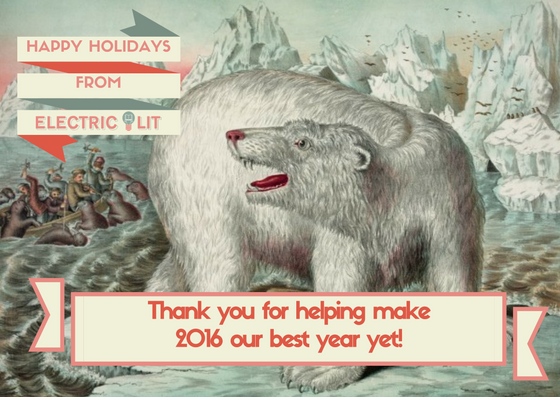
2016 has been an exciting year for Electric Lit, and we couldn’t have done it without you!
We’re holding a membership drive during the month of December, and we want to take the opportunity to thank you, our devoted members who need no recruiting. As a small token of our gratitude, we’re offering a special members only discount to everything in our Etsy store — including our new card game, Papercuts — for all your holiday shopping needs! Just enter the code ELECTRICIAN for 20% off at checkout from now until the end of 2017.
If you misplace any of the information above, you can always check the membership benefits page, and, to be sure you’re satisfied with your membership, we invite you to email editors@electricliterature with questions, suggestions, and concerns throughout the year.
The best experiences of reading literature are incredibly intimate, and yet, as an online publisher, our audiences can sometimes feel distant. Your membership crosses that distance; we know we can count on you to appreciate great literature, and that makes the work we do worthwhile. So, thank you!
With best wishes for the holidays,
Halimah Marcus Executive Director, Electric Literature
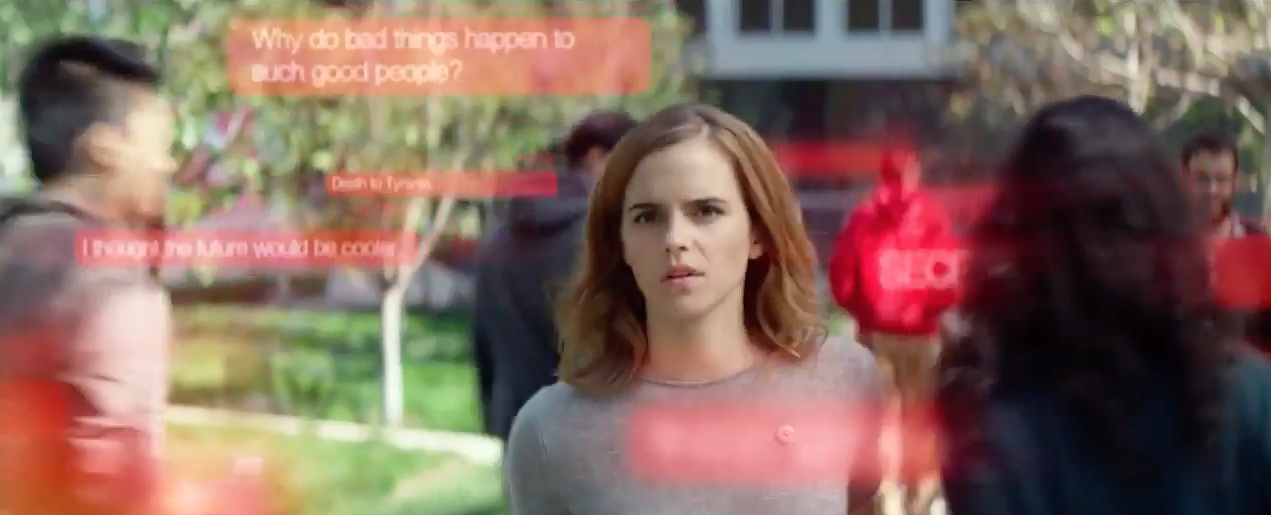
Emma Watson, Tom Hanks, and John Boyega will star in the tech-dystopia film
“Knowing is good. Knowing everything is better.” At least, that’s what Eamon Bailey (Tom Hanks playing a Steve Jobs tech baron type) thinks in the first trailer to The Circle. The dystopian film about a world where social media has run amuck and people share every single thing thanks to tiny cameras is based on a 2013 Dave Eggers novel of the same title. If you are a fan of the TV show Black Mirror, then this trailer might get you excited for the film’s release next April.
My best friend growing up was Bart. Bart had an aunt who owned a convenience store, and at this store, among other things, you could buy comic books. The thing with comic books and magazines generally is that people thumb through them more often than they buy them; as fresh stock cycles in, the old unsold titles must relinquish their places on the spinning racks. In the world of publishing, retailers can return unsold comic books to their distributors for credit; but instead of shipping the whole comic back, which can become weighty and costly, they simply tear off the covers and send those for the distributor to tally and tick in their ledgers. The rest of the then-stripped comics are supposed to be destroyed, trashed, or incinerated in four-color flame.
Bart’s aunt didn’t destroy them. Instead she gave them to her nephew. Not in dribs and drabs, either: she threw them in a box and when she happened to visit, presented him with this box. It contained upwards of a hundred issues. I remember that first meeting with the box, descending from the South Jersey summer into the coolness of his paneled basement, finding Bart sitting like an Indian chief before a mound of pulp. It took us a good couple of days to comb through it all, and more days after that when the heat stifled and we sank with relief into the shag carpet of his cellar boy-cave.
It took us a good couple of days to comb through it all, and more days after that when the heat stifled and we sank with relief into the shag carpet of his cellar boy-cave.
The box eventually migrated under the basement stairs. Then finally when I was over — which was every day Bart wasn’t at my house — he announced his mom had had enough, that the comics would meet their inescapable fate: she was throwing them out. I was told I could take whatever I wanted. In a kind of mild panic I grabbed a bunch, an amount equal to the number I could carry one-handed while riding a BMX bike. I think I had to stop more than once to pick up issues I dropped on the asphalt.
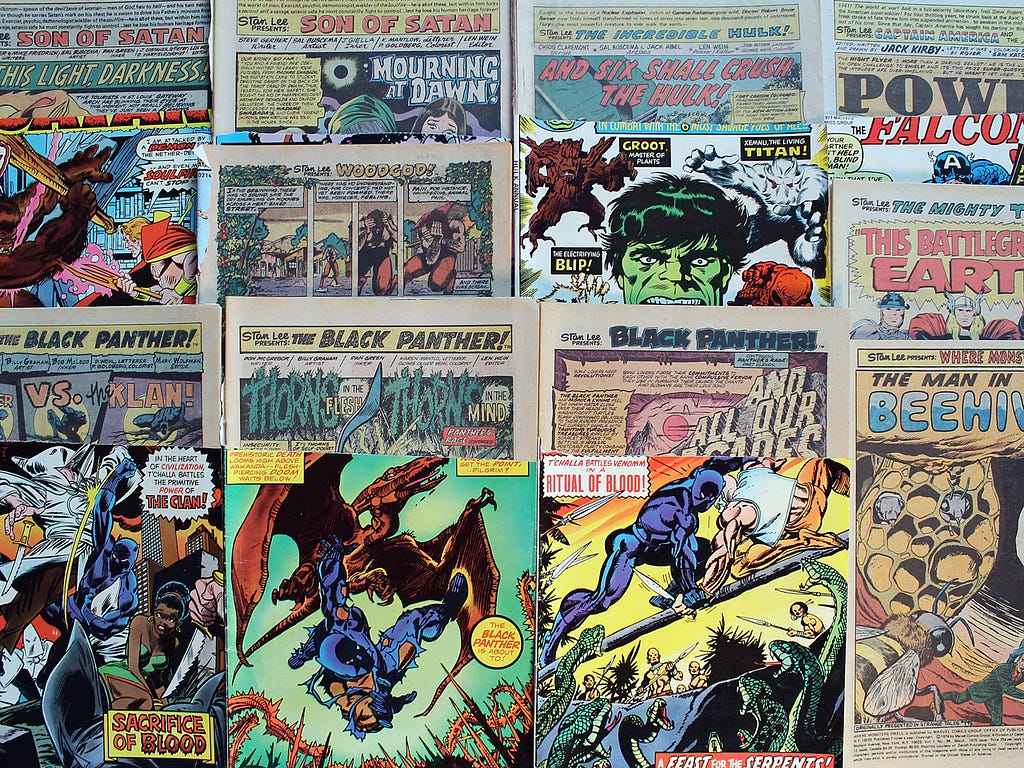
I still have them. None are top-shelf; keep in mind they were the titles that had gone unsold at the store: there was no Batman, no Avengers. Bart’s serendipitous library consisted uniformly of B-listers. An issue where Hulk fights Groot. The origin of a genetically created satyr called Woodgod. And three issues of Jungle Action, featuring the superhero Black Panther. All of them worthless to collectors because they’re missing the top halves of their covers, dating from 1975 and ’76, a couple of years old by the time we tore through them. Bart’s aunt had been working on that box for a while.
Two of those issues — Jungle Action 15 and 16 — particularly fascinated me. They’re part of a greater story arc called “Panther’s Rage.” The writer, Don McGregor, is credited with inventing the form; prior to this, cliffhangers in comics were common but stories rarely lasted more than two or three issues. “Panther’s Rage” spanned an entire thirteen issues — but because Jungle Action was bimonthly, the storyline took two years beginning to end. I pored over those issues like a Benedictine over scripture. Black Panther is ambushed and tied to thorn bushes to die. He escapes and rides a pterodactyl to his high-tech palace. There’s a bizarre goblin creature and various deformed villains working for a master villain named Killmonger, seen only briefly. None of it made a lick of sense. I spent hours trying to unravel the story, piecing together clues from individual panels, from the characters and their dialogue, trying to reassemble an Australopithecus from a jawbone and a tooth.
I pored over those issues like a Benedictine over scripture.
I had to wait close to thirty-five years to figure out what the hell was going on when, this past October, Marvel reprinted “Panther’s Rage” in a 400-page omnibus. The book also includes McGregor’s subsequent storyline “Black Panther vs. the Klan” and the hero’s 1966 origin in Fantastic Four. Black Panther is a hero in the Bruce Wayne or Tony Stark mold, a super-wealthy bachelor who uses science and athleticism to pound on bad guys. There are no secret identities — everyone knows who BP is: he’s T’Challa, the king of the African nation Wakanda, which is a mix of grass huts, deep jungle, and 1970s futurism.
Attention to Black Panther often focuses on the black. At a fiftieth-anniversary panel featuring McGregor, current BP writer Ta-Nehisi Coates, and others at this year’s New York Comic-Con, a recurring point made by both panelists and audience members was the impression a black superhero of Panther’s caliber — a main character, not a sidekick; a king and a scientist — had on them as young black kids. “It was just fun to see someone, I know this gonna sound a little cliché, that looked like me,” said the actor James Iglehart. Strange then that a white kid from the suburbs would become so enamored by that world, and specifically the land of Wakanda where the cast of “Panther’s Rage” is, with very few exceptions, monolithically complexioned.
Stabs have been made at black utopias over the centuries; like regular old utopias, most didn’t last. In 1826 Frances Wright founded Nashoba, Tennessee as a manifestation that a peaceful transition for blacks from slavery to freedom in the south was possible; four years later she threw in the towel and transported the town’s population en masse to Haiti, where slavery was outlawed. More than one attempt was made to forge towns for freed slaves after the Civil War, including in the Pine Barrens. Soul City was contemporaneous with McGregor’s Panther run, a planned community in rural North Carolina that couldn’t escape the racism just beyond the town line. Liberia, utopian in the sense that it was a planned settlement, is not without problems.
Stabs have been made at black utopias over the centuries; like regular old utopias, most didn’t last.
Wakanda resonated with me more than the geography of most comics, set as they were in New York and Gotham and Metropolis. Black Panther leaped through trees and dove off waterfalls and wrestled megafauna. Cities were largely foreign to my experience; our town perched on the periphery between Philadelphia in one direction, orchards and blueberry fields and the Pine Barrens in the other. My mom hated Philly so we never visited, twenty minutes away. Bart once described our childhood afternoons as either climbing trees or not climbing trees. We soaked our sneakers in bogs and streams chasing turtles and frogs.
My dad is an industrial engineer, now retired, and a lifelong member of the World Future Society. They’re a group of practical science-fictionists, visionaries who extrapolate present technology into Nostradamic tomorrows. Dad would often leave copies of their magazine The Futurist laying around the house, chock full of conceptual art depicting artificial islands and elevated forests deep among the next century’s concrete and glass landscapes. The WFS conceived seasteading before a single libertarian foundered on the reefs of Minerva, they imagined the High Line while locomotives still rumbled over New Yorkers’ heads. And sod-roofed houses, half-buried under earth and grass to keep their interior temperatures stable — I distinctly remember the sod-roofed houses.
Dad would often leave copies of their magazine The Futurist laying around the house, chock full of conceptual art depicting artificial islands and elevated forests deep among the next century’s concrete and glass landscapes.
I grew up in a house with solar panels. My dad still lives there and the panels still work. During the 70s he taught a course at the community college on solar power. Sometimes my mom was working or something and he would take me to the class where I would sit in the back and read or putter at some home-made board game of mine. Years later, with fresh interest in renewables everywhere, I asked him why he stopped teaching it. He told me enrollment dropped to the point where there were barely any students. “Once the oil crisis ended, interest died away,” he said.
Among the jungle and lost valleys full of dinosaurs of Wakanda, Black Panther lived in an ultra-modern palace of sliding Star Trek portals and African folk art. Located outside the palace was the source of this technology, an enormous meteorite composed of an alien metal called vibranium, exclusive to Wakanda. By selling off small amounts of the metal, Panther funded his flying cars and laser weapons with the goal of protecting his citizenry from invaders. In Black Panther’s origin story, we learn the palace cannot be seen by the Fantastic Four from the air because it is disguised beneath the jungle canopy; when the Four land and inevitably battle Panther (only later to work together, natch) among the Jack Kirby gizmos and inexplicable tech, it’s impossible to tell if they’re inside or out. Are they under a dome? There are no smokestacks or emissions, and lights and generators hum away without explanation, making Wakanda more than a black utopia: it’s an eco-topia that just so happens to be run by black people.
This month Marvel will debut a new comic, World of Wakanda, a spin-off of Coates’s run on Black Panther. Both titles, just like McGregor’s “Panther’s Rage” forty years ago, deal with political instability and the difficulties of maintaining a monarchy, no matter how high-tech, in the modern world. Throughout “Panther’s Rage,” T’Challa endures criticism from his lieutenants bordering on the seditious while putting down a coup orchestrated by Killmonger — he can’t catch a break. Wakanda, steely and green, is no Eden. Perhaps the Blade Runner future of Lagos imagined by artist Lekan Jeyifo is a more relevant vision than 1970s Wakanda, omitting any attempt at perfection with its dapper gents among satellite dishes and traffic congested by concept cars. Enthralling, engrossing. And imperfect.
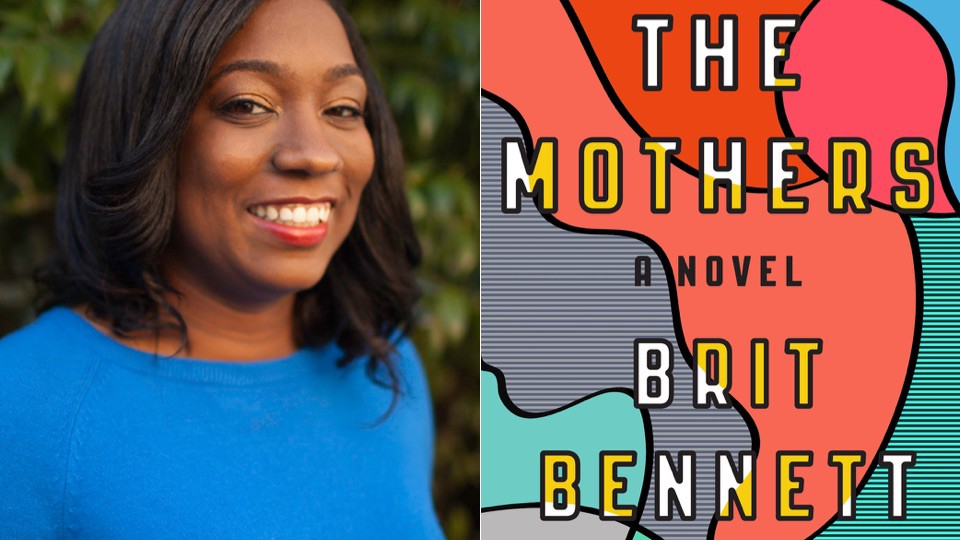
Brit Bennett is the author of The Mothers, a debut novel about the coming-of-age of Nadia, a young African American woman growing up in a Southern California beach town. Bennett, who until recently had gained prominence for her essays, has just been named one of the National Book Foundation’s 5 under 35, a recognition of the best rising stars in American literature. Jacqueline Woodson, who selected Bennett for the honor, said to the LA Times: “I was truly struck by Brit’s ability to tell such a compelling and thoughtful story about community, the complexities of friendship, marriage, choices. The Mothers gives the world a glimpse into lives that are both everyday ordinary and, through Brit’s mastery, startlingly extraordinary.” Bennett lives in Los Angeles and is currently touring the US. I spoke to her on the phone on the eve of the book’s release.
Marta Bausells: How did you find out you had been selected as one of the 5 under 35? Were you surprised?
Brit Bennett: Yes, very. I was aware that the award existed, and writers I admired had been honoured, but I never expected this to happen. I have a few coffee shops I like to go to during week, and as I was working there I just saw an unknown number calling me from New York, and the first time I actually missed the call, but fortunately they called right back!
Bausells: The two main characters in The Mothers are teenagers who are growing up with absent mothers. What was the inspiration for that?
Bennett: I was drawn to the idea of this unlikely friendship between these two girls who, on the surface, you wouldn’t think would really get along, but they’re bonded by this lack of their mothers. I’m fortunate that both my parents are still alive, but losing my parents has always been a fear and it’s still something that stresses me out, particularly the idea of losing my mother and the idea of trying to grow up as a young girl without your mother there to help you. So I think those characters and their relationship originated from some of the anxiety I felt as a young girl.
Bausells: The novel starts with an abortion, which is present throughout the narrative. This experience is missing in many stories about young women in our culture, even though it’s a daily experience for many of them. Why did you decide to put it front and centre?
Bennett: Originally, Nadia and her abortion were a secret that was hovering in the background of the story. She was a minor character and, over time, as I worked on the book, I realised she was actually the engine that was driving the story forward; everything was hinging on this decision that she had made. So I decided to move her to the forefront. It’s not any type of a spoiler, it’s a plot point that is stated in the first couple of pages. Ultimately, I decided that if I was going to write about this, I didn’t want to hedge or make it this thing that was going to be swept under the rug.
Bausells: Have you been surprised by all the attention the abortion has received?
Bennett: Yes, I’ve been surprised that people are reacting so strongly to it and interested by that aspect of the book. It wasn’t an emotional decision for me to include it. I knew from the beginning that she wasn’t going to keep this baby, so it wasn’t something I really debated. But most people have responded with a degree of complexity and nuance that’s often missing from our political debates about abortion. They’re responding to the fact that these characters — who are human, and who are reacting in complicated, emotional ways — did it, and people have been very empathetic towards that, however they feel politically about abortion.
Bausells: The novel starts with Nadia coming to grips with her mother’s suicide, and she later decides to have the abortion. Her friend, Aubrey, also has an absent mother and will make a decision regarding a pregnancy. How did you conceive of a parallel between these two generations of women, between the girls’ motherlessness and their decisions over their bodies and potential children?
Bennett: For Nadia, I always knew that she wouldn’t have a mother. Originally her mother died when she was a lot younger, but as I worked on the book I realised that those decisions needed to be pushed closer together in time, her losing her mother and her getting pregnant, deciding not to be a mother. Because I thought the way that that reverberates off each other was interesting, the idea that you’ve just lost your mother in this very sad, confusing and tragic way, and you’re thinking “I’m not ready to be somebody’s mother.” I think at that point she really is looking for someone to take care of her, she’s not in any position to take care of somebody else.
Similarly, with Aubrey, having this really rough childhood and this very complicated relationship with her mother, and her mother not protecting her in a way that she should have, definitely affects the way that she thinks about the possibility of having a child and what her relationship to that child could be. This was something that came about a little later, but I realised that, generationally, we inherit these things from our parents, whether we realise it or not.
Bausells: The Mothers centers on these two girls’ relationship, and it’s a beautiful and precise portrayal of female friendship — with all its glory and drama, love and treason. Where did you draw that from?
Bennett: A lot of it is drawing from idea of being a young woman and thinking how important my friendships with my female friends are at this point in my life, and particularly when I was younger and in high school. Friendships, particularly friendships among women, are often trivialised and considered less important than the romantic relationship, which is supposed to be the real center of your life. But that’s never been true in my life. And it was something that I wanted to explore: the intimacy of friendship, and the way it can be source of love but also source of betrayal. The idea of having a falling out with my best friend is, in a lot of ways, more devastating than the idea of going through some type of romantic breakup.
Bausells: The story is narrated by this gossipy voice of wisdom, one of “the mothers” of the church who watch the story unfold. How did that come about?
Bennett: It happened by accident and pretty organically. I had written the whole book in the third person, with a gossipy tone — actually, the first sentence of the novel has been the same for years: “We didn’t believe when we first heard because you know how church folk can gossip.” Towards the end of writing it, I decided to play around with it and see what would happen if I actually located that voice, the Greek chorus of church mothers, as the ones who are observing what’s going on in the community, and narrating and commenting. I had a lot of fun writing that, and channeling the voice of these older women whose comments, judgements and indictments of younger people I’m used to receiving.
I’m the youngest person in my family, so I’m used to being the eavesdropper when older people are talking around me. I realize I have a lot closer connections to older people than I do to younger people. I don’t have children in my life, but I feel very comfortable sitting with a group of 60- or 70-year old women talking. Those voices came from thinking about these things I’ve grown up hearing, about life, and about men, religion, and what type of woman I should be.
Bausells: Where would you like to see the book placed in the culture? There seems to be a lot of attention to the fact that it’s about black characters, even though that’s not the focus of the story.
Bennett: Ultimately, my biggest dream for the book was for people to read it and connect with it. I love being able to go and talk to people, and to have people telling me they were moved by the book, particularly a lot of young women who have been reaching out to me about it. Young women who’ve had abortions who are just glad to see that experience represented in a non-judgemental way. So I’m grateful for that.
The two questions I get asked the most about the book are about abortion and about race, which is interesting.I don’t mind having those conversations, because I wrote about black characters who are engaging with ideas of race. It’s on the page, so it doesn’t bother me that people are reading that. But it’s a little surprising to me. I’m reading The Wangs vs. the World right now, about an Asian American family — and this is just the background of these characters, these are the terms of the work, in the same way that The Mothers is a book about family, and religion. It’s a book about black characters, but I think there’s a way in which people are reacting to the characters — and their not conforming to what is expected — which has been very telling of what people think or expect about black narratives.
I’ve lived my life in a lot of very white spaces. I know black lawyers; black doctors, black people who live in inner cities; who live in rural areas; but also black people who live in suburbs…and I went to Stanford, I remember meeting black kids who were friends with the Obamas!The gamut of all types of people from different classes and backgrounds, all types of people — black people are as diverse as any group of people, which should go without saying! But it’s becoming increasingly clear to me that that’s shocking or surprising to people in a way that I just didn’t think it was.
Black people are as diverse as any group of people, which should go without saying!
Bausells: I guess it’s the classic thing of taking whiteness as universal, and whenever a story features non-white characters, assuming it is about race, when no one would ever talk about The Mothers being about race if your characters were white.
Bennett: Exactly. It’s a book whose characters have racialized experiences and perceptions, but their major conflicts are not racism. There could have been any race of girl who finds herself in that situation, but I think it matters that Nadia’s black because she’s aware of stereotypes, she’s aware of expectation, so that affects her thought process and affects her emotions, but it doesn’t affect the plot in and of itself. Which I think is often how life is. I just wanted to write a novel that would show the lives of ordinary black people and their problems, and show these characters and these communities in ways that would be complicated and interesting.
Bausells: In your nonfiction, you have written essays on police violence and systemic injustice (like that Jezebel piece that led you to your agent). You’ve talked about feeling ambivalent about your professional success happening among profound suffering.
Bennett: After I wrote that piece, I just felt like I didn’t know what else I had to really say about this. I respect the people who are out there exerting the emotional energy and the creative energy to write in this moment, and I don’t want to feel like I’m sort throwing in the towel, but I also reached a point where I was like: I don’t know what else I have to say besides saying that black lives matter and that this is wrong and there should be accountability. Who am I writing for, who am I trying to convince of this? If you’re someone who’s not convinced by watching a video of someone being shot, why would my essay convince you?
If you’re someone who’s not convinced by watching a video of someone being shot, why would my essay convince you?
I don’t know, it could just be where I am right now. It’s something that I’ve been really thinking about, wanting to spend my emotional energy and my creative energy towards something that feels fruitful … And not screaming until I’m blue in the face that black lives matter to people who are unwilling to accept that black people should deserve full humanity and full freedom.
My ambivalence came from the fact that this Jezebel piece that was this great professional moment for me happened among this deep personal sadness about what was going on in the news. Also, there’s a way in which I think we feel like we have to constantly make black pain visible so that it’s real. It’s like no one will believe that police violence is a problem unless they see a video. And we’re going watch this video of a black person being gunned down over and over and over again, and that’s the only way, maybe, you might believe that this is a systemic issue. I just realised I didn’t want to necessarily participate in that, in this idea that I have to make black pain visible so that white people feel it or they realise that it’s real. I don’t know, I’m not saying never. I only want to write things that I feel are important or necessary, if I feel like I have something new and interesting to say, so that moment might pop up, but I sure hope it’s not because another black person is killed.
Bausells: What moves you, besides writing?
Bennett: My life is very boring! This is as exciting as it gets. I try to find things that are not word-related to do, because I spend so much time with words. I’m not writing or reading, I do really like TV — I’m almost overwhelmed by how much good TV is on right now and I’m really excited about a lot of fall TV — and I’ve been thinking about this idea of black narratives again. I recently watched Atlanta and then I followed it with Insecure — and again, they’re just contemporary stories, regular black people, regular problems, different parts of the country, different communities, different stuff happening with class — and it was just such a cool thing to watch shows with black-to-black conversations and all of these just characters who are complicated and flawed. But the fact that that was a moment I noticed is sad! It’s a sad state of media, because I’d never think that if I was watching a show with white characters. There’s something very exciting about what a lot of black artists are doing right now.
Bausells: What’s next?
Bennett: I’m currently halfway through the first draft of my next novel. It’s about a pair of sisters who get separated and one is trying to find the other. It begins in Louisiana. I still have to figure out what it is … I have no idea where it’s going to go.
It’s hard to think of a book about books without calling to mind Walter Benjamin’s famous essay Unpacking My Library, in which the author states that “(t)o renew the old world — that is the collector’s deepest desire.” It’s as if Benjamin was thinking of Peter Orner’s newest.
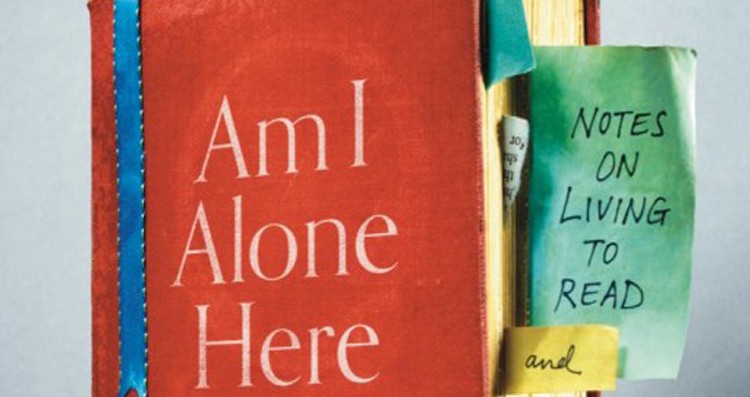
In Am I Alone Here?, a somber, joyous contradiction of a second book, Peter Orner spends a lot of time in his garage, alone, surrounded by books. He reads, he thinks, he writes what he describes as ekphrasis — “art that attempts to describe other art.” Orner lavishes praise on his favorite short stories (and the occasional novel), the equivalent of a mixtape from a friend complete with exhaustive liner notes. But beyond loving criticism at the fore — sometimes hidden, often right on the surface — is a narrative of loss, regret, solitude. Observations tied to literature transcend to life in general; life shrinks from grandiose to garage-sized. The easy trap is trying to categorize the book to better understand it. A better strategy is to read, sift through the clues, and sit with them. In doing so, Orner’s work becomes all the more meaningful: things are not simple or easily tied up, but with thought and care, we can come together and help one another even if, as Benjamin suggests, the new world isn’t as palpable as the old.
Peter Orner is often quick to define Am I Alone Here by stating what it’s not. He meditates on his past and hunts for this or that volume in his garage library to reinforce some point, a needed ballast following the loss of his remote father and the dissolution of his marriage:
“Often, I’m less prone to having an actual experience than I am to relating what I’m experiencing to something, anything I’ve read. It’s as if I don’t quite exist in real time.”
He doesn’t have experiences, but approximations of them, informed by what he’s read. The lack of connection he feels with the outside world results in retreat, a need to find solace in books. Yet despite his many references, this is no simple memoir, or even a book of literary criticism — it’s an “anti-manifesto,” lacking the rigid structure that can be found especially in works of fiction, the novels and short stories he so adores.
But in reading Am I Alone Here, we quickly find that Orner contradicts himself — and cleverly. In addition to discussing his deep love of the volumes that surround him, the introduction ruminates on the death of Orner’s father and the unraveling of his marriage, prepping readers for these topics to recur, woven into the fabric of his essays on books and authors. But as part one begins — titled “Sometimes I Believe We Are Being Tested” — the second essay contains no mention of authors or books at all, instead focusing on a distant uncle who once frequented family gatherings but didn’t disappear so much as fade from view. After this brief digression, Orner resumes his discussion of books and authors, each containing a few koan-like lines, unlearned meditations.
The placement of the uncle essay’s importance becomes apparent during a discussion Eudora Welty. Orner posits that “The Burning,” the second story in Welty’s collection The Bride Of the Innisfallen, is her favorite, and an example of a theory of Orner’s invention he claims extends to all collections, all authors: the most well-known stories are placed first in anthologies; favorites are placed second. A second story “comes closest to failure, and so the writer loves it all the more.” Each of the three main portions of Am I Alone Here? is so structured — talk of books falls to the side in favor of discussing his family. Positioning such essays in a collection that primarily revolves around books may seem an odd choice — especially when he draws overt attention to them by their placement, and discussion thereof — but he’s trying, at least. Too often, Orner says, “we can’t show what love feels like without embarrassment, so we avoid the attempt altogether.” Despite the fact that he feels like his bookless reminiscences teeter on the brink of failure, he’s working, processing, which makes him feel alive even as the work he produces is vulnerable.
It would be easy to see Orner’s contradiction as cleverness for its own sake. This isn’t the reason, though, that he denies a structure then goers out of his way to reveal one. As he mentions in one of his essays, “reading well, in my lonesome garage view, requires reading with generosity.” Throughout, the level of thought and care he heaps on his favorites demonstrates this generosity. To balance the equation, Orner expects a similar level of care from us, the readers — everything in his book is intentional, as the placement of his family-centric chapters demonstrate. By reading generously, by taking the time to consider the reasoning behind his statements and placements, Orner is attempting to duplicate the connection he feels to the books in his library, and the solace they provide. In reading generously, we pass the test in section one’s title.
The book’s title provides an additional clue to Orner’s method and purpose. In an essay about writers who disappear into exile, Orner says “the impulse to spread any and all news about oneself far and wide…has become soul-crushing. It makes me want to retreat to the garage with my… books and unfinished physical manuscripts. But maybe the fact is, I’m not all that good at being myself. Am I alone here?” With tweets and social media posts about writing threatening to supplant the writing itself, photos and hashtags become the aforementioned approximation of experience. Giving up and giving in to the din reduces the work down to soundbites, with clicks and hits supplanting the experience of reading. Orner knows this, burrowed deep in his garage.
But like the contradiction inherent in Orner’s ‘lack’ of structure, time and again the author cries out for connection. After the death of Colombian author Alvaro Mutis, Orner is despondent in his isolation: “Aren’t we perpetually, one way or another, trying to solve loneliness? The loneliness we feel? The loneliness we know is coming?” Books are a balm, another contradiction: we spend time buried in them, which is both time with someone — the author — and time alone, away from everyone. Orner reads in his garage, feeling deep connections with authors who themselves felt terribly isolated and detached.
The sorts of losses Orner has felt leave him pining for some sort of connection, some solution to the loneliness that he feels. Yet the quick fixes and easy solutions provided by the internet leave him feeling cold. So it’s reading and writing, with all of their snares and pitfalls, which sustain him, even as he takes risks. Not everything he writes he writes will be successful, but “the failure of certain stories to say what they are trying to say is the source of their inexplicable force.” It’s the clawing, the attempt to articulate what can’t easily be said that’s worth something. It’s tempting to give up, to curl into a ball, but this isn’t what our departed loved ones would want. They’d want us to go on rather than withdraw (thus drawing attention to ourselves):
“At some point, much as we talk a big game about needing to go it alone, we can’t help but be pulled to the window, to the noise and to the voices.”
This, then, is the crux. We can’t do it alone, even though we sometimes wish that we can, say that we can. Orner states that author Mavis Gallant “understood that mostly what we humans do is daydream, that while we’re going about the business of our lives in one direction, we’re daydreaming it away in another.” Life is inconsistent, a big contradiction. Why should a book about life — and death — be any different?
The kind of careful reading prized by Orner reinforces all this. As he says early on, “If we can’t overcome (losses) ourselves, the very least we can do is recognize that we aren’t the only ones out here trying to get by.” By thinking, analyzing –by caring — we can keep trying to get by. Together. As Orner states, “sometimes we need, in whatever way we can muster, to share out burdens. And a reader, a stranger — you reading this — somehow you make the weight a little easier to carry.” It might not sound like much, but it’s something different than a retreat, or Benjamin’s renewal of the old. It’s an insistence that we forge on.
Karl is cold. His blanket slid off onto the floor and he’s not wearing pants or a shirt, only underwear. Sammy the cat is curled up on the far arm of the davenport, within striking distance of Karl’s feet. Sammy sometimes attacks feet. Karl is pleased to see he’s wearing boots, Red Wing Irish Setters from the looks of them, laces tied in big loopy bows, though he’s less sure why he has no pants or shirt. These boots had been his father’s. As a child, he and his sister Dee would pull them out from under the workbench in the garage. They were so large and heavy, it was all Karl could do to shuffle around the concrete in them, but Dee, two years older and much bigger, wrapped the laces around her ankles so she could walk without stepping out of them. Sometimes she’d get in the boots and he’d stand on the tops of her feet — they both fit easily — and she’d walk him through the house, around the back yard, down the road to the bluff’s edge overlooking the lake. If it was chilly out, she’d open her coat and zip the both of them inside.
His wife Marci looms above him. “Karl, you know I don’t allow boots on the couch.”
“Tell that to him,” Karl says, meaning the cat.
“Where are your pants?” Marci says. “It’s embarrassing.”
You’re embarrassing, Karl thinks.
“Shut up,” he says, meaning something else.
“Karl?”
“You don’t know shit.”
“Don’t say that, Karl.” Her tone is calm, practiced, that of a technician to a troubled customer. It sets him flush, prickly.
“Less than nothing.”
“Don’t say that, Karl.”
He finds a bottle half full of Buffalo Trace Kentucky bourbon on the top shelf of his work bench, he was certain he’d drank it and wonders if maybe he was using it to store something else. He takes a sip, then another, then another, still unsure if it’s whiskey or some other liquid. He’s gotten used to how complicated everything seems now, how even when he’s sure he’s making sense, people treat him the way Marci does — gingerly, like a child. He’s heard her use the word dementia, always whispered, like it’s a secret. He doesn’t care what Marci thinks she knows, he knows things too. He finds a basketball in a thick white cotton bag, the ball clean and smooth and still properly inflated though it’s been 10 years since he stopped playing. His wife likes to tell this story, she seems to take special delight in it. How he’d been playing in his regular 65-and-over three-on-three game, how little Jimmy Rodriguez had the gall to post him up, Jimmy all of 5’7″ and Karl a full nine inches taller, and how Karl used his strength to push Jimmy away from the basket and how Jimmy snapped his head back (to clear space, Karl believes. Out of pure meanness, Marci says), smashing Karl’s nose, causing bleeding into his brain, a single simple action that changed their lives forever.
Or so she claims.
They’ve stopped at a rest area in Kansas, just a flat spot in the grass with a picnic table and a small grove of trees. Otherwise, corn in every direction, fully grown but still green. Karl finds it suffocating, stuck in the back seat with his two remaining sisters, driving through an endless green tunnel. It’s 1936 and they have everything they own in their 1933 Oldsmobile. They’re moving from Indiana to California to start anew because Karl’s mother and father can’t bear living in the same house, the same town, the same state without her. On the edge of a corn field in Kansas, Karl sees what isn’t possible. He sees her, his sister Dee, his best friend in the world, dead three months, standing on the edge of the corn, wearing the same white shorts with a black stripe she’d worn for three summers. The shorts are tight on her, the edges press into her skin. She smiles at him, then she runs and he follows, corn stalks slapping at his face.
Branches against the windshield, slap slap, Karl’s Jeep Grand Cherokee rolls to the bottom of a shallow depression, coming to rest against a juniper bush. He understands something is wrong, his Jeep shouldn’t be here, but he’s not sure how it happened or how to fix it. This happens to him now, he’ll find all the doors to the house open for no reason or the bath running until it overflows or the cat squatting right in the middle of the kitchen and letting loose like Karl isn’t standing two feet away. He opens the door, engine running. Why would they plant trees so close to the supermarket parking lot? And why did Marci take off and leave him with a strange man who keeps leaning over him. His long beard tickles Karl’s bare knee. Karl has his left foot on the ground.
“Now your right.” The man’s voice. He’s clean-shaven, it’s not a beard tickling him but the man’s shirt tail. This makes Karl feel better, like he’s figuring things out. “Your right, sir,” the man says.
Karl puts his right foot on the ground.
“Wait, no, leave your left foot out.”
He puts his left foot on the ground.
“Sir, no…sir…”
Yesterday, he got up at dawn and found coyote tracks in the snow outside his bedroom window, worn through to the red New Mexico dirt, and he imagined coyotes coming together to watch him sleep. Last week, men in brightly colored wool coats appeared in his back yard, waking him from a nap. They drank coffee from an aluminum thermos and pointed here and there and laughed like he wasn’t in plain sight in his own bed with bright sunlight stretching across his bare legs. “Left foot to the ground first,” one said. “Right foot next.”
“Left foot first,” the other agreed.
He is standing in his bedroom at his chest of drawers, there’s a smell in the air. Are the piñon forests around Santa Fe burning again? His wife Marci is quiet in the living room, a good sign, except he’s also holding a pistol — the Colt .45 semi-automatic — my pistol, he thinks, and then laughs because he’s standing in his bedroom holding his pistol. HIS PISTOL.
He raises the barrel to his nose. Recently fired. His father used to pick up spent shotgun shells in the field and sniff them, passing them to Karl. “Fired earlier this morning,” he might say. Or, “Last winter.” Marci chooses this moment to enter, sees the gun at his nose, and screams. Silly woman. She thinks he means himself harm and he wants to tell her about his father and the smell of a freshly fired shotgun shell and how he taught his son, their son Pete, the same thing, but now is not the time and she’s not screaming at him exactly but at the spot in the floor where the round went in, a small black circle in the white carpet. Of course she’s over-reacting, what exactly does she think happens when you fire a .45 caliber round into the floor anyway? You get a hole, you get a powder mark.
He wakes to breathing; the shallow panting of a dog? He’s on the couch in the dark. Marci snores in the bedroom. A coyote sits outside the patio doors, looking in. Just a thin sheet of glass between Karl and the animal. He sits up, left foot first, then right, and turns on the table lamp. Sammy the cat is on the back of the couch, eyes blinking in the light, purring. Karl’s .45 is in the bedroom and no good can come from waking his wife. He lumbers down the hall to the spare room where he keeps his .357 single action revolver in a gunfighter-type leather holster and belt hanging from a hook inside the closet. He straps it on and ties down the leather lace just above his knee to keep the holster from flopping about. The leather is cool on his skin. Only then does he realize he’s in his underwear. He knows he should put on pants but they’re in the bedroom. Instead, he pulls on the heaviest coat in the closet, a medium weight Carhartt, and slips out the side door.
The air is crisp, the snow squeaks underfoot. The boots are excellent luck. It turns out he had a plan from the start, wearing these boots all day, there was a reason. He wishes Marci was awake to see he isn’t quite as doddering as she imagines, then laughs and laughs because of how ridiculous he would look to her. A grown man outside in the bitter cold in his underwear, wearing a holster with a fully loaded pistol.
A pack of coyotes in full bloodlust kicks up, howling and barking and yapping, but far away. It still has the power to chill the blood, being outside with nothing between him and animals on the hunt. Karl slowly pulls the revolver, thumb on the hammer. He shines the flashlight out across the valley. His father had taught him this, how to catch an animal’s eyes with a light in the dark. They hunted frogs at night on country roads after a rain with a flashlight and a net, looking for shining eyes in the weeds along the roadside. He walks straight until he hits what appears to be a set of fresh coyote tracks. He follows them with the flashlight, stopping every few feet to listen.
Karl pulls to the side of Cerrillos Road because a square of sky has ignited into a fiery red, a rain squall less than a mile wide hanging above the swath of aspens on the side of the mountain, the lowering sun catching it just right. He gets out, leans over the hood, pinches the storm between his thumb and his forefinger, an entire section of the world in his hands, and as he watches, the color slowly leaks away.
It’s December — are you in the mood for some mind-expanding sci-fi?
Let’s say you’ve seen the film Arrival–or you’re a fan of Ted Chiang’s short story “Story of Your Life,” from which it’s adapted. (Or maybe both.) And you might be clamoring for more stories that push similar buttons, narratively and thematically speaking. In other words, the headiness of high concepts blended with the inherent tension that comes when humans encounter a civilization that is, in some fundamental way, alien to them.
The works on this list offer a diverse array of takes on these fascinating interactions. Most fall into the category of first contact stories, while a few offer interesting variations on the concept. All of them grapple with grand ideas: what makes us human? What makes us intelligent? And to what extent must we change in order to interact with a different form of life?
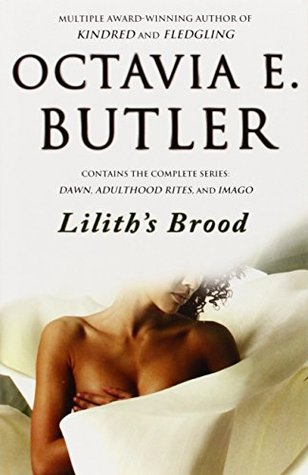
1. Lilith’s Brood, byOctavia E. Butler,
In Octavia E. Butler’s Lilith’s Brood (first published as the Xenogenesis trilogy), humanity encounters an alien race known as the Oankali, who offer the prospect of peace and improvements to the Earth–but also hope to reproduce with humans in order to create a new species. Butler examines grand questions in this work and explores both the societal and the personal effects of this encounter and the changes that it promises.
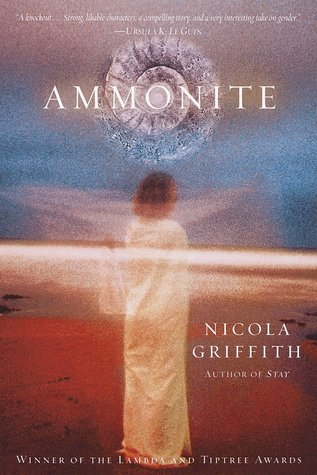
2. Ammonite, byNicola Griffith,
In Nicola Griffith’s Ammonite, humanity has begun to colonize distant planets. Protagonist Marghe Taishan journeys to Grenchstom’s Planet, where a virus apparently wiped out the last attempt at a colony, only to find that a civilization has developed there. The implications of this discovery, and the planet’s effects on the humans who call it home, make for a book that both deals with humanity’s evolution and the conflicts that evolution can cause.
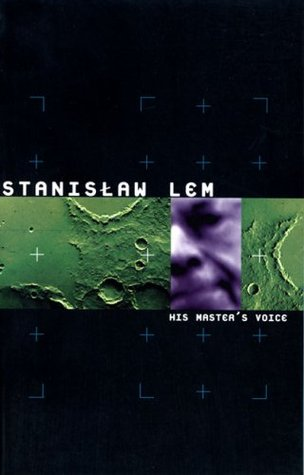
3. His Master’s Voice, by Stanisław Lem,
In this heady volume from Solaris author Stanisław Lem, narrator Peter Hogarth is one of a group of scientists living in a remote complex and attempting to determine the origin and nature of a message beamed across the universe. Is it information from a distant civilization, a communication that’s metaphysical in nature, or something utterly beyond human comprehension? Intense theory meets bold philosophical speculation in this narrative, leaving the reader with a series of haunting ambiguities.
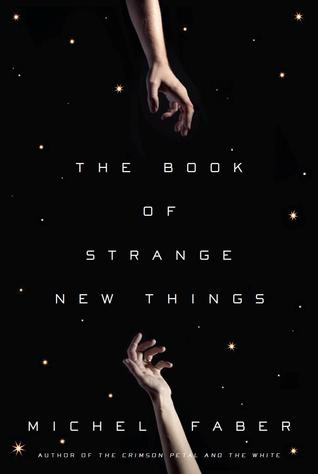
4. The Book of Strange New Things, by Michel Faber
The philosophical aspects of alien contact take on a heightened dimension in The Book of Strange New Things, as its protagonist is a missionary sent to a distant planet to talk with a group of aliens who have expressed abundant curiosity about Christianity. Faber doesn’t shy away from the larger implications of this inquiry and keeps his aliens fundamentally alien, paving the way for a thought-provoking novel of ideas.
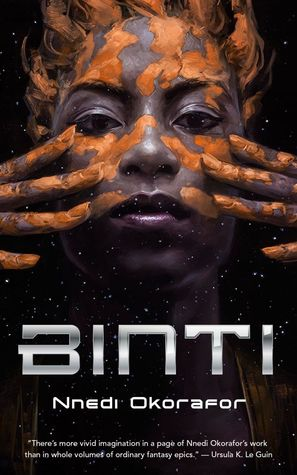
5. Binti, by Nnedi Okorafor
The future depicted in Nnedi Okorafor’s award-winning novella Binti is one in which humanity has made contact with a host of alien civilizations. As the book opens, the title character is about to leave Earth to study at a university far from her (and our) planet. But soon, she finds herself in contact with a group of dangerous aliens, a precarious situation with a solution that hearkens back to Binti’s time on earth and some long-buried history.
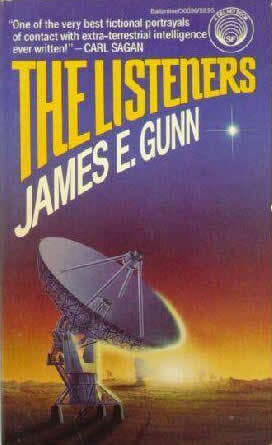
6. The Listeners, by James Gunn
Set in the near future and proceeding forward in time, The Listeners grapples with questions of science, faith, and technology. In it, humans receive a transmission from a distant star, and must grapple with the implications of it–both the existence of an extraterrestrial civilization and the civilization’s motivations for contact. The book’s historical scope also allows Gunn to show how this knowledge might alter humanity over a span of several decades.
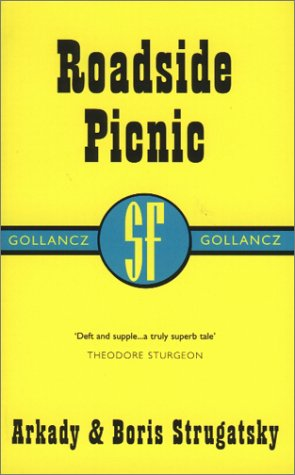
7. Roadside Picnic, by Arkady and Boris Strugatsky
What if contact with extraterrestrials took place and altered parts of our world so drastically we were no longer able to comprehend them, boggling minds and pointing out our own cosmic insignificance? Roadside Picnic (loosely adapted on film as Stalker) explores the more unsettling side of this archetypal science fiction scenario: rather than a landmark moment for two civilizations, humanity’s first encounter with aliens might be a non-event for one of the parties.
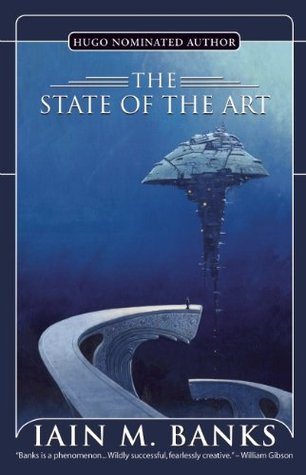
8. The State of the Art, by Iain M. Banks
Though the galaxy-spanning narratives in the late Iain M. Banks’s Culture novels are largely far removed from more familiar earthly settings, Banks still engaged with ethical and societal questions that are deeply resonant with contemporary audiences. The setting of the Culture novels is vast, and encompasses a host of different species. In the title story of this collection, representatives of this highly advanced civilization debate the merits and drawbacks of making contact with one planet: Earth.
They could join the Oxford English Dictionaries’ pick of “post-truth”
Earlier in November, we reported on the Oxford English Dictionaries’ selection of ‘“post-truth” as the international word of the year. This week, more dictionaries are following suit in the annual tradition, and much like the OED, their picks reflect the grim reality of 2016.
On Monday, Dictionary.com announced “xenophobia” as its chosen word. The site defines xenophobia as “fear or hatred of foreigners, people from different cultures, or strangers,” or the, “fear or dislike of the customs, dress, etc., of people who are culturally different from oneself.” The decision to make xenophobia the word of the year is due in part to the deluge of the searches it received, but also because of the term’s mounting cultural relevance. There was a noticeable spike in lookups during the summer months around Brexit, and the mass interest also happened to coincide with President Obama’s June 29th address to the Canadian Parliament, in which he condemned the xenophobic rhetoric of our future President.
Dictionary.com had former US Secretary of Labor, Robert Reich, breakdown their 2016 Word of the Year in the video below:
If that’s not sad enough, The Guardian reports Merriam-Webster is making a final plea to its users to stop fascism from becoming its word of the year.
'Fascism' is still our #1 lookup. # of lookups = how we choose our Word of the Year. There's still time to look something else up.
Unlike Dictionary.com, Merriam-Webster chooses its word of the year solely based on the number of lookups, and as it stands, fascism is the top search. They’ve proposed that everyone take some time out of their day to search “flummadiddle” on their site, which means “nonsense.”
In the opening scene of Mila Jaroniec’s debut novel, Plastic Vodka Bottle Sleepover, an unnamed protagonist traverses a fly-infested kitchen to retrieve a bottle of Sobieski from her fridge. After scrolling through pictures of Courtney Love, she ends up drunkenly and impulsively purchasing a plane ticket to Austin, Texas to see her ex girlfriend Sloan. In the next scene she arrives at security still riding the last of the previous nights inebriation, but is soon met with dread and nausea. What will she say to Sloan? Should she buy her a bottle of perfume at the duty free shop? This state of limbo is segmented by memories of their tumultuous relationship as well as recollections of childhood. One thing that is constant throughout the book is Jaroniec’s unflinching tenderness for the dissolution and grunge of New York City, and the broken down people who inhabit it.
The narrator expresses a marked affection for local NYC haunts like The Kiln, an “underground shithole” which is simultaneously “a special and holy place.” The narrator is attracted to corrosion despite the belief that intimacy reduces a person to a “human wiffle ball of rotten love.” The narrator also deliciously and repulsively describes dating post-heartbreak as “stretching something fresh bred in a Petri dish over the frayed hole of a dead thing in full bloom of decay.” She is drawn to Sloan but her first impression of her is unflattering, at first noting muscle hiding under “a languorous layer of fat.” She also notices her hands, which are “small and squat, thick-knuckled, with short stubby fingers that looked like they used to be longer but someone had broken them and shaved the tips off a third of the way through. Action hands…not poetry hands.” The book is comprised of vignettes in which the narrator and Sloan simultaneously enable each other’s substance abuse while dreaming of a future together with children, or at least more “serious” jobs.
This New York centric queer addiction chronicle can be likened to Eileen Myles’s Chelsea Girls, in which memories of old lovers and NYC bars are segmented by flashbacks of the narrator’s frequently volatile childhood and adolescence. Where Myles’s flashbacks are of her alcoholic father and Catholic upbringing, PVBS’s narrator directly addresses her mysterious and absent older brother. In both narratives, the reader is led to infer that the narrator’s adult dysfunction is rooted in childhood trauma and experience. Both pieces also feature sex scenes that teeter between sexy and grotesque, and play with the lines between repulsion, pain, and ecstasy. Jaroniec references another master of the lesbian addiction narrative, Michelle Tea. The narrator is ecstatic to go to a film rendition of Tea’s 2000 novel Valencia with a flakey romantic interest. When her date bails halfway through the show, the narrator, in true Michelle Tea fashion, gets drunk and goes to a queer orgy. She wakes up sober in a pile of anonymous bodies and treks home alone.
Although PVBS is in some ways a love story, much of the book is about isolation in the thick of intimacy. The narrator describes many of her sexual encounters, including her affair with Morgan, as carnal and lonely. The brief encounter with Morgan is merely an attempt to get warm before the solitary act of, “zipping back up into our respective worlds.” As with the grime of the city, she has an appreciation and affinity for this type of detachment and removal. When she describes her philosophy on one-night, she says that she:
“…always preferred going down on girls to just about anything else. Half was just the experience of it, my tongue inside a girl’s cunt, the taste of it sharp and humid-sweet, but the other was the fact that it let me off the hook from doing anything else — looking them in the eye, saying the right thing at the right time, doing anything that could be meaningful at all. I’d plant my face between their legs and become my mouth, tidal blood and reverberating moans, and connected that way I would disappear. The intimacy paradox: as physically close as you can get to someone, drinking from their center, while being a million miles away. I know this because I always feel intensely, irrevocably alone on the receiving end, my head remote and solitary on the sweaty pillow, in a completely different orbit than the person whose face is stuck between my legs, working her ass off to make me come.”
The end of the novel leaves us where we began: in the airport. Where at the beginning we are imbued with a sense of momentum and excitement, we are ultimately left with the image of a stale and sad airport. The narrator takes a twisted solace in this dingy place. She is engrossed speculating about the desires and motivations of a woman crunching into a heavily fried chicken nugget, and flirts with a woman at the airport bar. At the very end of the book, she alludes to the idea that she wishes she could permanently inhabit this limbo just as Tom Hanks’s character did in the 2004 film, The Terminal.
“[C]onstant throughout the book is Jaroniec’s unflinching tenderness for the dissolution and grunge of New York City, and the broken down people who inhabit it.”
Our narrator is in constant transition. The very structure of the book shows unwillingness to land, to settle on a single time period, narrative, or person. The narrator attempts to crystalize her relationships in a series of moments despite the fact that these moments are in the past, and Sloan has moved on and lives in another state with another woman. The narrator’s mental state, much like the airport she finds herself in, represents a constructed stasis in between two separate and distinctive realities.
Hello, and welcome to my week-by-week review of the world. Today I am reviewing Crunch Fitness.
I recently joined a gym near my home called Crunch Fitness. If you’re an elementary school student and have never experienced an adult gym, this one is a lot different from what you’d expect. There are no springboards or dodgeballs. No ropes to climb or team captains waiting to pick you last. At this gym you are all alone, unless your personal trainer is with you.
Whenever I’m feeling bad about the way I look, nothing perks me up like going to Crunch Fitness. At first it perks me down because everyone there looks so much better than me and I know I would never have a chance to date any of the women there — unless there is something very wrong with them, or I am the victim of a prank.
But eventually I become so overwhelmed with pity for myself that it turns to a numbness, and the next thing I know I can no longer feel fear, shame, or indignity. All I can feel is the pride I have for being brave enough to wear a tank top that shows the side of my breasts.
It’s good that I can feel so free about my body because people sure like to look at each other a lot at this gym. Sometimes I can feel someone staring at my butt, but I’m too busy staring at someone else’s to care. Then we’re all staring like a human centipede of butt oglers. One time I started staring at my own butt in the mirror not realizing it was my own, and I have to say I liked what I saw.
Cheers!
One of the things I don’t like about Crunch Fitness is the awful odor in the locker room. In many cases I’ve discovered the scent to be my own, but sometimes I can trace it to a locked locker. I don’t know what’s in there. It may be an old salad or something. I’ve mentioned it to the management but they tell me they don’t sell salads, so who knows.
I met a nice guy one day who I asked to spot me, but he said he was just there to use the showers, not work out. I asked him if he would reconsider because my windpipe was being crushed but by the time I got the words out he had struck up a conversation with a young woman and they were exchanging phone numbers.
Overall I enjoyed my time at Crunch Fitness. It made me feel better about myself in ways I didn’t know I felt bad about myself.
BEST FEATURE: Almost unlimited free water from the bathroom sink. WORST FEATURE: There are a lot of rules that can get you banned.
Please join me next week when I’ll be reviewing Alan Thicke.
DON’T MISS OUT
Sign up for our newsletter to get submission announcements and stay on top of our best work.
YOUR INBOX IS LIT
Enjoy strange, diverting work from The Commuter on Mondays, absorbing fiction from Recommended Reading on Wednesdays, and a roundup of our best work of the week on Fridays. Personalize your subscription preferences here.