Get in the (Mini)Van

The path of the writer is not generally associated with happiness and fulfillment, yet a new batch of keyboard-clicking hopefuls is always around the corner, with dreams that center on creating new work and expecting it to lead to just such a place. It behooves both the budding and experienced writer to reasonably look at their chances at such a life. For every Rowling, Franzen, and Strayed, there are tens of thousands — maybe hundreds of thousands — of wordsmiths stuck at some level of the game far below their expectations. It might not be too late to shake the habit and become a CPA, or get Microsoft certified.

Adam O’Fallon Price portrays writers on both ends of this continuum in his debut novel The Grand Tour. First, Richard Lazar is a middle-age novelist who, five books into a failed career, finds himself with an unlikely hit, a memoir of his time as a serviceman during the Vietnam War. This success has prompted press accolades and a national book tour, but it feels too little too late for Richard, who can’t quite summon enough sobriety and political correctness to play the game. Price best renders Richard’s state through the eyes of the people around him. “At [Richard’s] once-a-decade checkup, in March, the doctor frowned at him over the report on the clipboard — an exhaustive detail of Richard’s bad habits and inadequacies — and asked what he thought the life expectancy was for a fifty-three-year-old, one-hundred-pounds-overweight drinker.” Richard spends the novel trying to fight his way out of his malaise, and reader empathy sways along with him as he battles for both literary and personal redemption. “What did he need?” Price writes. “To mark the moment, to celebrate, to hear a sincere word of congratulations. For the tree of his present success to not fall silently in the woods of his past failure.” It’s Richard’s missteps and insensitivities that frequently make others cover their ears.

On the opposite end of the writer continuum is Vance, a nineteen-year-old fringe college student with an absent father, sick mother, and novel manuscript he hopes someday will lead to a life worth living. Vance — who considers Richard a literary hero — offers to drive the ersatz memoirist on his book tour. It’s a bold step for the young man, who struggles to connect with anything that doesn’t exist between perfect-bound pages. Price writes of Vance after he witnesses an accident involving a young woman, which unwittingly leads to the woman kissing him:

“Why, he wondered, thinking for the hundredth time about the car hitting her and her small, crumpled body rising as though lifted by invisible wires; the glint in her eyes as she looked at him; the funny sweet smell or taste, he wasn’t sure which, that emanated from her as they kissed. Why now, why her? This line of questioning always ended with a shrug, a tug, and a shudder, another damp tissue thrown in the plastic trash under the sick.”

His chauffeuring of Richard is Vance’s attempt at a deeper engagement with the world, which might be the best — or perhaps only — gift the older writer has for him.

Price also includes passages from Richard’s memoir in the novel, and these unfold naturally as the twosome travels from reading to reading. The memoir is a first-person account of the uncertain transformations brought about by war, written by a world-weary former infantryman at some remove from his fighting days. “Though we were young, most of us were not dumb or naive enough to pretend we knew how we’d respond in a real battle. That was why we imagined it and talked about it at great length — we were trying on the clothes of a soldier the way a child tries on a father’s suit. We hoped we were up for it and feared we weren’t.” Being a soldier was only the first of many roles Richard had difficulty accommodating, to go with husband, father, author, and mentor to Vance.

Despite probing deeply into the pairs’ struggles, the writer in The Grand Tour who offers the most promise for the nascent scribe is Price himself. He has constructed a story with the immediacy of a good script, and with metaphors that operate with sterling efficiency. For example, when Vance meets Richard’s daughter Cindy: “Vance came forward and stuck out his hand, as though he were presenting her with a piece of questionable fruit for her perusal.” At Richard’s San Francisco book event: “The reading … took place in the Mission District, in an event space, so called — an open warehouse that looked like the kind of place in the movies where someone gets shot in the back of the head by someone they trust.” Or when Richard, in an attempt to stay on the wagon, orders a water at a bar: “An unrestrained ripple of loathing lapped across the broad lake of the bartender’s face.” These tropes function as a sort of writerly redemption to offset Richard’s cynicism and Vance’s credulity. Price seems to be hinting that there’s a third way for the writer, one that leads to certain satisfactions through an engagement with craft, supplying even a small audience with compelling insights it didn’t know existed a mere sentence before.

Over the course of a career, every experienced writer is faced by someone — usually more than one — doe-eyed with the idea of putting words to paper. It’s tempting to want to impart that the life isn’t necessarily what one imagines for it, but it’s also wise to remember that the practice comes with its own rewards. Some of them are featured prominently in The Grand Tour, where Price’s finely hewn characters and deft language act to counterbalance his more extreme author portraits.

There just might be hope for us after all.

Ted Wilson Reviews the World: Email

★★★☆☆ (3 out of 5)

Hello, and welcome to my week-by-week review of the world. Today I am reviewing email.

Do you have email? Most people do. Here’s a tip: It’s pronounced like ‘female’ not like ‘uhmail’ as I had been pronouncing it for the past seven years. It’s pretty embarrassing that no one corrected me sooner.

Email is the perfect solution for anyone who forgets to mail a letter in time. Like if your friend only has a few days left to live and you forget to mail him a letter with a check for the $65.13 you owe him. Instead, you can send an email with a photo of the check, and then you can write, “You’ve meant so much to me and I’m going to miss you. Sorry I didn’t get this check to you in time. ”

Another great thing you can do with email is to email yourself from a fake account when you’re lonely — as if a stranger is reaching out to you. You can do that with a letter too, but by the time the letter arrives the loneliness may have subsided, and then a letter you wrote to yourself will come across as a desperately pathetic act that sends you into a downward spiral of self-pity. Email doesn’t do that.

Probably my favorite thing about email is how you can print them out just as if they were letters. Some emails have messages warning against this, suggesting that saving trees is more important saving memories. But are trees really more important than memories? It depends on the memory.

For all its advantages, there are also some big drawbacks. For instance, did you know email was probably invented by the Russians as a way to dismantle America’s infrastructure beginning with the postal service? And we’ve fallen right into their trap.

Email is driving the postal service out of business, leaving thousands of employees forced to find new careers as U-Tube stars or startup CEOs. I’m assuming, as these are the hottest new jobs.

Every time I send an email I feel a little tinge of guilt, knowing that I’ve played my part in the destruction of America. But that doesn’t stop me from using my email. What does stop me is when the library is closed, or if I lose the email window and can’t find it again. One time someone else at the library found my email window and emailed swear words to all of my friends.

BEST FEATURE: Obama sends me emails.
WORST FEATURE: A man emailed me about a business opportunity and it didn’t work out as I had hoped. Now I’m selling magazine subscriptions and if I don’t sell enough in time he will own my house. You can contact me if you’d like to receive The New Yorker or PCWorld in your mailbox on a regular basis.

Please join me next week when I’ll be reviewing Brangelina.

Meet the 6 Writers Who Just Won MacArthur “Genius” Grants

Maggie Nelson and Claudia Rankine are among the 2016 Fellows

Yesterday the MacArthur Foundation announced the fellows selected for the class of 2016. Among the 23 “geniuses,” are five writers who have been honored for their accomplishments in their respective crafts. Each winner will receive $625,000, which will be presented to them over the course of five years. They can spend the money however they choose, but there’s no doubt these master writers will use it to fund their work.

1. Branden Jacobs-Jenkins

Playwright

New York, NY

Branden Jacob-Jenkins’s plays are highly acclaimed for creating new worlds in which his characters deal with contemporary topics like “identity, family, class, and race.”

2. Maggie Nelson

Writer

Faculty School of Critical Studies at California Institute of the Arts

Valencia, CA

Nelson is known in the literary community for her boundary breaking non-fiction work. Her books include The Red Parts, The Art of Cruelty, Bluets, and The Argonauts. Nelson told Newsweek, “I am beside myself with gratitude and incredulity for the award,” and, “I have no doubt that I will be able to focus more on my writing in the years to come, for which I am very grateful.”

Read Electric Lit’s review of Nelson’s The Argonauts and The Red Parts.

3. Claudia Rankine

Poet

Professor at Yale University, New Haven, CT

Claudia Rankine became a national icon with the 2014 release of her book, Citizen. She is hailed as one of the finest poets of our time. In her works she tackles issues of social justice and race relations in the United States.

Read our response to Rankine’s Citizen, here.

4. Lauren Redniss

Artist and Writer

Assistant Professor of Illustration at School of Art, Media, and Technology, Parson, NY

Redniss combines visual and literary forms in her work. The MacArthur Foundation believes “Redniss’s unique approach to visual storytelling enriches the ways in which stories can be conveyed, experienced, and understood.”

5. Sarah Stillman

Long-form Journalist

New York, New York

Sarah Stillman is a writer for the New Yorker. Stillman reports on issues that are often ignored by popular culture. Throughout her career she has covered stories related to “the perils faced by young police informants, and the kidnapping of undocumented children at the U.S.-Mexico border.

6. Gene Luen Yang

Graphic Novelist

San Jose, CA

Yang wrote most of his comics while working as a high school computer science teacher. A lot of Yang’s work deals with the issues surrounding the Chinese-American experience, and he is one of the forefront authors introducing diverse characters in children’s reading.

Check out the full list of geniuses in vocations ranging from bioengineering to jewelry making, here. Congrats to all the winners!

Hail Oblivion! The Apocalypse Book that Wasn’t

According to the mighty gods of Wikipedia, Novi Sad is an old, Serbian port-town that is located squarely on the banks of the Danube River. It was once an epicenter of culture, which earned it the nickname the Serbian Athens. How relevant or revelatory any of that information may be is up for considerable debate. That is to say, it’s pretty unclear (highly unlikely?) if the eastern European city of Novi Sad is the actual setting for Jeff Jackson’s phenomenal follow up and, in some ways, companion piece to 2013’s Mira Corpora. But that initial uncertainty and questioning of reality is important, if not integral to the world that Jackson is culling to the surface.

“Jackson paints a vivid and immersive portrait of a world on the brink.”

Novi Sad continues in much of the same tradition of Mira Corpora and Jackson’s short story, The Dying of the Deads (whose setting, Monrovia, is another real city in Liberia, though certainly not the setting for that piece). In many respects, all these pieces are cleaved from the same dark crystal and woven from the same dreamcloak.

The backdrop for Novi Sad is the end times, although the year is a bit vague. There is no evidence of the internet or cell phone or any of the culture of those devices and the world seems to have returned to a more primal state.

The ensuing Armageddon seems difficult to cope with for everyone except our main character, Jeff, who seems to have been on the run since he was a kid and, therefore, whose life was almost certainly already in a constant state of upheaval.

Of the group of scrappy survivors he has found himself with by untold means, we know that he has been alone and homeless long enough to see through the politics and semantics of group leader, Hank’s, diatribes of survival. The reader can almost sense that perhaps Jeff is using the group for refuge and doesn’t buy into the ideology.

Jackson paints a vivid and immersive portrait of a world on the brink, or over the brink, or so similar to our own that we must use words like that to distance ourselves from it. This is a world where “even the feral kids have famished from the streets, replaced by dogs prowling in loose packs, scrounging for half-digested scraps.”

Make no mistake, Jackson is showing us the Future of Now. He is gazing, as Ballard did, five minutes into the future to show us a world where the news grows increasingly bizarre with each passing day, where world leaders’ hunch in underground bunkers and bankers perch on window ledges as they cling to money. In short, he is showing us our future.

Jeff and his band of survivors aim to seal themselves off from this fucked world by making an abandoned hotel their shelter. They toast to the end times, “Hail Oblivion!” — and are then left to wait, something they are perhaps less than prepared for. They drink, they watch television, they take drugs, they play stupid games. They are us. We are them.

Jackson’s background as a playwright is ever-present in the book, in Hank’s grand language and gesturing, in the surreal and grand bombed-out setting of the abandoned hotel, in the arrangement of portable generators and gas cans gathered in the courtyard. This is particularly impressive considering the world of Novi Sad is almost entirely insular; whether it is within the hotel or the perspective of Jeff, who views conversation as “a sub-species of misunderstanding”. In many ways, the walls of Jeff’s body are akin to the walls of the hotel, both a protective and safe refuge from the world outside.

Like most good stories about a group of people who follow a charismatic leader, there is an inevitable mutiny. This one, however, is interrupted by the cataclysmic disaster they have all been waiting for.

Jackson’s end of the world is much like Eliot’s –there is no bang. In Jackson’s words, it ends mid-sentence. It leaves us feeling unsatisfied and without the cathartic bloodletting we’ve been taught to expect and, as a result, it makes me wonder, are we living through the end days now? If our world was ending, would we even know it? Would we even notice?

Part two begins with our crew looking for Hank. The world has come and gone but not much seems to have changed for our characters, save for the loss of their leader.

Their days mostly rotate around trips to the pier where the fishermen use their nets to bring in stray bodies from the river instead of fish or crabs. Jeff and his cohorts hope to see Hank’s body pulled up as some sort of closure so they can all move on. But that citing never comes.

Part two is intentionally aimless. The world has ended, but how can one look at it with anything other than a sort of indifference since our characters have survived? I suppose whether it is indifference or a defiance to move on is unclear, but to our characters that still live in the hotel and desperately are waiting for the return of a leader who will never come, what’s the difference?

With Hank gone, they must find strength inward; something not all the characters are particularly good at. One finally leaves the hotel after his idea to burn it down was met with laughter. Jeff tells us that in hindsight, he didn’t think the idea was all that crazy; he was just too preoccupied with some vague notion of loyalty to someone or something that he couldn’t quite place.

In short, this aimless afterworld leaves our characters desperate and lost. Without an apocalypse to prepare for or a leader to guide them, they seem unsure how to grapple with being survivors.

Part three flashes forward. Jeff is now alone in the hotel, his friends all gone- some dead, some split. Jeff is hanging up the clothes of his lost friends on the clothesline of the roof and allows the wind to fill their shape. At first he tells us he does it as a signal, but quickly he and the reader understand the ritual resembles more of a séance than a signpost, as it appears to be some desperate or sad attempt to conjure the presence of his lost friends.

The sadness and beauty of this moment hangs for just a second before Jeff quickly finds himself caught up in a proverbial comedy of errors. When Hank’s old flame shows up drugged out of her mind and mistakes Jeff for Hank, he plays along. Jeff isn’t even aware he is dressed in Hanks clothes and the ease with which he plays along becomes a fascinating and telling trait about the character from whose perspective we get much of the book.

“Make no mistake, Jackson is showing us the Future of Now.”

What seems to start out as playful soon escalates when Jeff follows the girl to a party on the other side of town. He gets his ass kicked but still manages to go back home with the girl, despite the array of pills they have each taken. Soon he realizes he cannot sustain the charade and leaves. He is not Hank and he could never be, and the revelations that have led to that understanding cannot be changed.

The appendix is truly fascinating and one of my favorite parts of the book. Jeff addresses the reader directly and describes photographs of the motley crew we have come to know; only the photographs are all blacked out. it’s a brilliant and beautiful section because each photograph tell us something about the character, how they are posing, where the photo was taken, but instead of showing it to us, Jeff, the character for whom language often seems to fall short, explains it to us.

The entire book is brilliantly illustrated by artist and Kiddiepunk founder, Michael Salerno. The images are hauntingly beautiful — decaying buildings, teenagers with their eyes scratched out. Packaged together, this book acts as a sort of found object that is so cohesive and singular that at times it almost appears to be breathing.

Like all of Jackson’s work, Novi Sad is a truly singular and profound experience. It firmly roots you in the familiar while simultaneously transporting you to a soft, light-blue dream space. Much like the work of Lynch or even Harmony Korine, Jackson’s world is one that, despite all logic, you know must be true, not because it looks true, but because it feels true.

Jane Alison on Desire, Ovid & Miami Beach

The back-cover copy of Jane Alison’s Nine Island (Catapult, 2016) identifies it as “an intimate autobiographical novel,” which seems both exactly right and entirely inadequate. The book — which tells the tale of a recently-divorced translator of Latin who’s reassessing her life from the vantage of a high-rise apartment in the Venetian Islands of Biscayne Bay — is as candid, contemplative, hilarious, and affecting as that description would lead one to hope. It’s also quite a bit stranger than one might expect, in the best possible sense: allusive and elusive, it conflates its narrator’s restless mind and its louche, peculiar setting to produce an effect that’s vibrant, slippery, erotically charged, and slightly menacing.

Born in Australia, raised in the United States and elsewhere, Jane is the author of three previous novels and a memoir about her complex upbringing, as well as the compiler and translator of Change Me: Stories of Sexual Transformation from Ovid. (Here I should mention that Jane was also my MFA thesis advisor at Queens University of Charlotte, North Carolina.) She was kind enough to avail herself of the wi-fi on a northbound Amtrak train to answer my questions about process, influences, classical studies, rock music, and a certain punctuation mark perhaps best left to experts.

Martin Seay: Although new fans will have no trouble enjoying it on its own, Nine Island is a particular treat for those of us who are familiar with your earlier books, in that it draws together a number of elements that appear in them. Its autobiographical content, for instance, recalls your memoir The Sisters Antipodes. The concern with human responsibility toward a fragile natural world that’s so central to Natives and Exotics has a supporting role here. Even the book’s narrative circumstances — a play of conflicting desires set against the tropical backdrop of Miami Beach’s Venetian Islands — bring to mind the (Italian) Venetian episodes of The Marriage of the Sea. And then of course there’s Ovid, about whom more later. In a novel that’s (at least in part) about a writer taking stock of her circumstances, these intertextual backward looks seem entirely fitting, but they got me wondering: where did Nine Island begin? The finished book can be characterized as many things; which one was it first?

Jane Alison: It began five years ago in a moment of fantasy-while-walking. I was walking the Venetian Islands one evening, thinking of Ovid (whose sexual stories I was translating), when I passed a modernist bungalow I coveted that had been empty and for sale for several years, and thought about the hundreds of times I used to walk by the house or the dorm room of a boy or man I craved, and suddenly, just as I passed the empty house, a tall, striking man appeared in the doorway. This created an instant Vox-esque fantasy: me, the man, a flirty exchanging involving “woman” in different languages, me stepping into the house, door shutting, ah. I actually stood still on the road, seeing a novel open up before me. Something about a woman who walks and fantasizes, a woman involved only with old men, dead men, far men, gone men, and the ultimate old dead far man, Ovid. It took another year or two for the other parts of the novel to appear, though, the more substantive parts about women’s bodies + desire + time, something I tried to work out through the figure of the hourglass pool that the narrator swims in every morning.

MS: Nine Island is a work of fiction, but (as I mentioned above) much of it is obviously autobiographical, and it doesn’t drop a ton of hints about exactly where reminiscence and confession are supplanted by pure invention. (In fact, it employs some classic anonymity-granting devices — e.g. the naming of several characters, including the narrator J, by their first initials only, as well as the use of evocative nicknames for the men in J’s life — that bolster the impression that what we’re reading is more reported than invented.) While I will not ask how factual Nine Island actually is — as doing so seems unsporting and obtuse — I am curious about how you came to conceive of it as fiction, and how you wrote it to operate as such.

Or, to approach this another way: I recently came across Deborah Eisenberg’s review of the reissue of Magda Szabó’s The Door, a novel that’s narrated by what seems to be a minimally-fictionalized version of Szabó herself. Eisenberg writes that despite its autobiographical content, The Door is “unmistakably a work of fiction, with fiction’s allusive and ambiguous purposes and effects;” I thought that was nicely put, and probably applicable to Nine Island as well. Are there aspects of it that you consider essentially fictional?

JA: Deborah Eisenberg has put that beautifully (and The Door is a wonderful novel). I’m one of many writers hoping that soon an era will dawn in which literature will either drop the current names for itself or find the right ones (see Geoff Dyer’s essay in the Guardian). Fiction = name for content; nonfiction = name for what it is not; poetry = name for form. Not Linnean distinctions. I will be in a bind now trying to say what is essentially fictional about Nine Island, having thrown out those names; I made a stab at conflating the categories by calling the book a “nonfiction novel.” But how about this: its fictionality or “made-up-ness” lies more in form than content, with willful mixing of Ovidian re-makes, faux-chemical equations, bits of pure brain-junk like counting . . . Yet similar or more extravagant moves happen in Bruce Chatwin’s books or Michael Ondaatje’s Running in the Family or Anne Carson’s NOX or Maggie Nelson’s Argonauts, which are more likely to be called “nonfiction” — so, sorry, it looks like I can’t say what is essentially fictional here . . . A certain freedom might be part of it, going back to Eisenberg’s “allusive and ambiguous purposes and effects.” A verbal gesture can be made to set the mind making associations, wheeling into the sky. But in any case: fiction comes from Latin fingere: to touch, handle, stroke; to form, fashion, frame, shape, mould, model, make. In all of these senses is the notion of material being handled, something that already exists, whether it’s wax or clay or memory or life being lived or thought about right now.

MS: I’m surprisingly satisfied by that answer! The book’s maneuvers in the space between confession and invention are also in keeping with a major element of the plot: J is a translator working on tales from Ovid’s Metamorphoses, and Nine Island itself seems artfully suspended at the midpoint of metamorphosis from lived experience into fiction. While I think a concern with myth — and more generally with transformations and enchantments of various sorts — is evident in just about all of your work, it’s worth noting that your engagement with Ovid has been particularly longstanding. In Nine Island, J associates her youthful discovery of Ovid with the beginning of her romantic life and its attendant complications; his works become a lens through which she interprets the novel’s events. Your writing in Change Me and The Sisters Antipodes suggests that this is drawn directly from your own experience.

Rather than having you paraphrase material that’s rendered so vividly in the novel, I’d like to go a different direction and ask you to talk about Ovid as an influence on your life as a writer. Do you feel that reading his work affected your decision to begin writing fiction? A more general question: your undergraduate academic background is in classical studies, and I recall you making the case for classics as being competitive with (or superior to!) the ubiquitous English-lit degree as academic preparation for creative writers. Do you mind revisiting that subject here, with particular reference to your own work?

JA: Actually, reading Ovid at nineteen sent me straight to drawing. I didn’t think of writing fiction for almost a decade after first reading Ovid, and it happened only then because I was trying to illustrate Apuleius’ story of Amor and Psyche and decided to rewrite it; from then on I stopped drawing and wrote. But two immediate points re classics: in my grad seminar at UVA now we’re looking at excursions in narrative, in particular at texts that resist the “dramatic arc.” First we looked at the king of dramatic arcs, Oedipus, and really appreciated its stern form. Then we found so many other things to take from it beyond the dramatic arc: the super-compressed timeline and space, for instance; shifts among speeds even in a purely spoken — not narrated — work; perforations in space via dialogue; countless new possibilities for a “chorus;” etc. And on Ovid: aside from the perfection and strangeness and truth of his stories in Metamorphoses, one of the ruling sensations in reading that book is the tension between stasis and change. Narrative exists in the flux between them, which he not only shows hundreds of times but makes the very subject of his great work.

(Have attached an Ovid drawing from those days, gruesome and youthful as it is. Wish I still had a copy of the Nassau Lit that published it and a few others, because one was printed back-to-back with a poem by David Duchovny.)

MS: While Ovid is the writer whom you’ve most obviously invited to join you in the pages of Nine Island, I also kept imagining the novel exchanging knowing winks with a few works from eras nearer to our own: Renata Adler’s Speedboat in its anxious humor; Anne Carson’s Autobiography of Red in its fresh and elegant use of myth. About a third of the way in — as I took note of the tropical setting, the proliferation of sinister and conspiring characters, and the persistent atmosphere of deferred eroticism and sexual menace — it occurred to me that I might be reading a rather ingenious riff on a gothic novel, with an aging Miami high-rise standing in for a crumbling castle in the Pyrenees and the figure of the ingénue supplanted by that of a woman in middle age. Were there other works or other writers that were helpful inspirations or navigational aids as you were composing Nine Island?

JA: Yes, to Speedboat, although even more to Mary Robison’s Why Did I Ever and Marie Redonnet’s Hôtel Splendid. Also, yes to various works by Anne Carson (who first taught me Ovid), including The Beauty of the Husband and Eros the Bittersweet. But nothing gothic, I think . . . Much as I’d like to claim that piece of ingeniousness, I think it’s yours. A starting point was William Gass’s In the Heart of the Heart of the Country and, through it, “Sailing to Byzantium.” Also favorites like David Markson’s Wittgenstein’s Mistress and Murray Bail’s Eucalyptus, and hard not to have Jean Rhys in mind, or Edna O’Brien, or, in a very different way, Nicholson Baker — the fantasies and madcap parsings. Plus some rock-and-rollers like Chrissie Hynde, Marianne Faithfull, the Clash, Iggy Pop (“Platonic”). I was thinking of paintings, too, Annunciations and repentant Magdalenes especially.

(Actually, Hôtel Splendid might be your riff on a gothic novel.)

MS: I don’t know Hôtel Splendid; I’ll check it out. But, wait, rewind: how in the hell did I not know that you studied with Anne Carson at Princeton? This seems like a significant lapse on my part (and also like information that it’s possible to make too much of, so I’ll fight that urge) but it also leads me to another question. You have a diverse and distinguished career as an educator, one that includes traditional university classrooms, at least one low-residency MFA program, workshops at Bread Loaf and in Switzerland, and your current position as Director of Creative Writing at the University of Virginia, surely among the most highly-regarded such programs in the country. Is the process of teaching writing difficult to square with your own practice as a writer? Aside from the obvious merits (money) and demerits (time), has it been helpful and/or burdensome to divide your attention between these two related pursuits? Are there teachers or educational experiences that have been important to you that you’d care to say more about?

JA: I doubt that Anne Carson remembers me from one semester in 1981, but she and her course affected me powerfully. (I think she was working on Eros the Bittersweet at the time.) Ten years after Princeton (years spent working spottily as an illustrator, freelance editor, editorial manager, proposal- and speechwriter), I had great writer-teachers at Columbia: Mary Gordon above all, Richard Locke, Robert Towers, Carole Maso. It’s amazing how often, when I’m teaching, my mind goes straight to how they did it as a test to make sure I’m on the right track. As for my own teaching, I spend half my time anxious about it and the other half utterly energized. Working with exceptionally smart, talented students is good for the mind. It’s stimulating and crucial to see what they’re reading, what new angles on literature they’re taking: how they’re pushing at the edges of this enterprise.

MS: To pick up a couple of threads from earlier: I’m very intrigued by the decade you spent as an illustrator prior to becoming a writer — and also by the idea that the switch to writing was initially just a strategy for continuing a particular project, which suggests that these methods are broadly applicable to the same ends. Would you say that illustration still informs your writing process, and if so, how?

Similarly, I’m interested in your citation of rock music as an influence on Nine Island. For many artists, I suppose, it’s helpful to be receptive to approaches and influences that have little formal relationship to their ultimate medium. (I once heard the composer John Corigliano say that he’ll sometimes draw a piece in colored pencil before he writes any music for it.) The proto- and post-punk artists you mentioned above seem like a great fit for the book’s tone and mood, but I’m curious about how they found their way in, and how you think of them as functioning.

JA: I did only a little illustrating. Just wasn’t and am not very good. But I still draw sometimes because color pencil on paper is so pleasing. I do think of color in writing, though, as well as lighting, chiaroscuro, the visual composition of a moment, etc.: the visual arts have informed the narrative arts just as much as music has over the centuries. And on music: well, those songs are in my head all the time. Hardly an evening passes when I don’t hear David Bowie (“Time and again I tell myself I’ll stay clean tonight”) or Iggy Pop (“Immoderation seems to suit her best / but then I turn around and she’s very delicate”) or Chrissie Hynde (“Anger and lust . . . my senses running amok”). Partly the words are stuck in a brain-groove, but partly (I think) they’re telling me something. And then there’s the pure sexiness. Their words are in my character’s mind just as much as words of Ovid or her mother or her friends K or N are — all the same texture. Plus they add a soundtrack to the whole, I think, another layer for free.

MS: A question that most of us despise, but that I, with apologies, will ask anyway: what’s next? I recall that after Natives and Exotics came out in 2005 you were contemplating a nonfiction sequel of sorts about Scottish plant-hunters in Australia circa 1800; is that something that’s still taking shape?

JA: Nope: that project turned into the memoir I wrote about my doubled, half-Australian family, The Sisters Antipodes. I was trying to write about tropical exotics transplanted in the north — palms and tree-ferns taken to Scotland — but a friend (Robert Polito) suggested I make the narrative more personal. So I added a layer about little Australian girls being transplanted in North America, and their story nudged the plants off the page. I still love that material, though, so who knows. I have two projects now. One I’ve worked on a long time and am overhauling: a (possibly “nonfiction”) novel about Le Corbusier’s obsession with Eileen Gray and her house on the French Mediterranean. The other is a book-length essay about using patterning and other design elements in narrative, like coloration and striping — but above all, about finding structural forms other than the arc. Spiral, escalator, panopticon, chain, fractal: lots of ways to build a narrative.

MS: One last thing: an assertion I cannot resist making. You use exclamation points often, and you do so more effectively than any other writer I can think of. It seems as if your prose should be bubbling over like a hastily-opened bottle of tonic water as a result, but that’s never the case: it’s always sharp, elegant, exquisitely controlled, and frequently very moving. I can only think to attribute this to your extremely well-crafted sentences, but that explanation seems insufficient. How do you do it? Have you always done this?

JA: Thank you, and so funny you’ve asked this. A brilliant grad student just this past week gave a presentation on exclamation marks in Nicholson Baker’s Mezzanine: what they signify tonally, whether they’re ironic or sincere. I was going for a sort of dark mania with mine. The exclamations were meant to show a giddy fending off of horror. Writing in the first person about a character quite like me was hard: whenever she was earnest or self-conscious she repelled me. Exclamation marks (and avoiding personal pronouns) tore a shell off her, which somehow made it easier.

Emerging Writer Happy Hour

The Author’s Guild, America’s oldest and largest writers’ organization, is partnering with Electric Literature to celebrate the launch of their new Emerging Writer Membership.

Open to all writers looking to actively publish their work, the membership will help you navigate the complicated literary scene by providing necessary information and facilitating communal connections.

Please join us on October 7 in Brooklyn for complimentary drinks and snacks, and the chance to mingle with our wonderful hosts, as well as writers, agents, editors, and Authors Guild members.

The evening is hosted by:

Kathleen Alcott, author of Infinite Home
Megan Lynch, Editorial Director, Ecco (HarperCollins Publishers)
Kirby Kim, Literary Agent, Janklow & Nesbit Associates
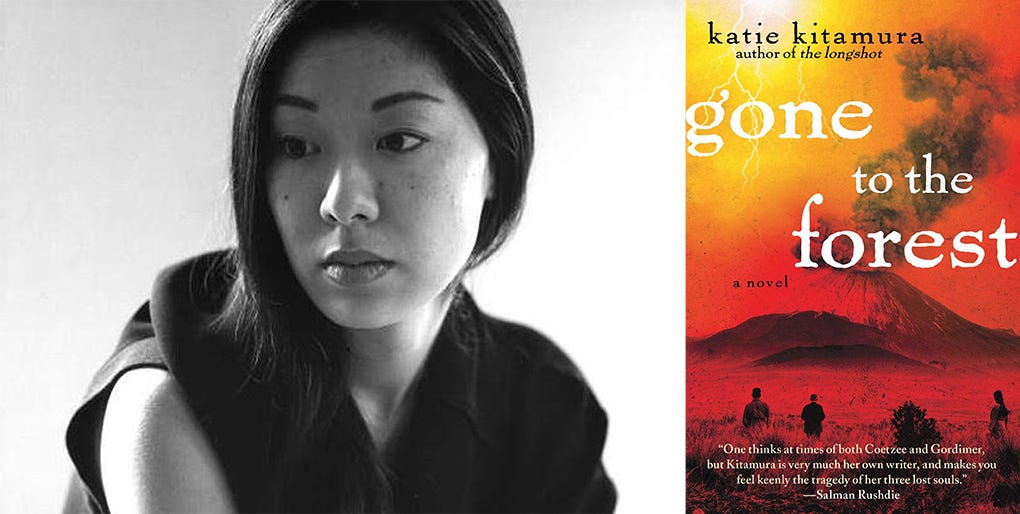
Katie Kitamura, author of Gone to the Forest

Emerging Writer Happy Hour
Presented by the Authors Guild and Electric Literature
Friday, October 7, 6 to 8PM
Powerhouse
28 Adams Street, Brooklyn NY

RSVPs are appreciated: RSVP@authorsguild.org

Left: Katie Kitamura and her novel Gone to the Forest. Right: Megan Lynch of Ecco.
Left: Kirby Kim of Janklow and Nesbit. Right: Kathleen Alcott and her novel Infinite Home

Cracking the Code to Bestsellers?

Stanford Researchers may have the answer to why books sell

In an attempt to streamline the creative process, publisher and English PhD Jody Archer and Stanford Literary Lab co-founder Matthew L. Jockers are using data analytics to figure out what makes books sell. Utilizing a team of “reading” research computers, they’ve cataloged 5,000 titles published over the last thirty years. The machines — which are programmed to track characters, plot points, sentence structures, and word usages, among other factors — have been sorting through the texts, cross referencing and compiling the common traits of literary blockbusters.

With the recently released The Bestseller Code, Archer and Jockers are finally presenting their findings. The book, despite its non-algorithmic gestation, presents some intriguing, even marketable, claims. A few surprising tidbits:

  • sex, apparently, doesn’t sell like “human closeness”
  • dogs are far superior to cats
  • the best protagonists use the verb “need,” a lot.
  • ditto for “want” — the people need want

The computers’ favorite book? Dave Eggars’ 2013 techno-thriller The Circle, which surprisingly outranked more standard contenders like Gone Girl and 50 Shades of Grey Although, it is worth noting, the algorithm is only 80% accurate according to Wired’s recent reporting.

Wired also noted that a host of analytic approaches have recently seeped into publising. One, Jellybook, a British startup, provides data driven promotional forecasts based on the reading habits of their trial groups, who receive digital versions of texts modified with Java Script to track their exact reading habits — when people read, for how long, and even which chapters kill a book’s momentum. In a shocking turn of events, their preliminary findings report that readers abandon novels before the halfway mark the vast majority of the time. (Previously, that phenomenon had only been ascribed to Gravity’s Rainbow.)

For its part, the literary community has responded to news of Archer and Jockers’ findings with customary aplomb, providing biting commentary on these soulless capitalist enterprises. After all, curation is the enemy of surprise. Agent Katherine Flynn commented on the matter to Wired in particularly poetic fashion, musing, “the beautiful thing about books, unlike refrigerators…is that sometimes you pick up a book.” Nowadays, in these trying digital times, that’s the type of perspective we all could use more of.

Yes, Writing Is a Job (Even if it Doesn’t Pay Well)

Writing is hard. It’s hard to do, hard to sell if you do it, hard to find readers if you do sell, and hard to earn a living wage off of even if you find readers. But writing is work. Work deserves pay. Writing is, in short, a job.

That may seem obvious, but the point needs to be repeated now and then because there are lots of forces that would like you to think writing isn’t a job. Sometimes those forces are corporations who try to convince you to give away your work for “exposure.” Other times they take the form of well-meaning writers who are trying to give some “real talk” about the writing life. Today’s example is Ester Bloom in The Billfold with a piece titled “You Can’t Make A Living As A Writer Because Being a Writer Isn’t a Job”:

Kafka, Dickens, Nabokov — they all had day jobs. Novelists have day jobs! Roxane Gay, who is busy and accomplished enough to be several people, still has a day job. Writers have day jobs because being a writer isn’t a job. Writing is a thing you can do if you like it! It’s a thing you might get paid for, now and again, if you’re good at it! But it’s not a job.

Bloom goes on to say that maybe writing can be a part of a job “doing the kind of un-fun, unsexy kind of arranging words that pays the bills: content marketing, for example, or corporate communications.” There are a few points that should be made here. The first is that many people do make a living writing. In addition to all the people doing the “un-fun” writing work, there are TV writers, film screenplay writers, newspaper journalists, and even full-time novelists who earn their living writing. All of those gigs are hard to get, but they certainly do exist and many people have them. So Bloom is factually wrong from the start. A second point is that it’s a little dishonest to say that famous writers like Dickens and Nabokov had day jobs and point to jobs they had before they were famous writers. Those writers did not write as quirky side hobbies. Their whole lives were built around writing, and when they were selling enough to write full time they did. (Kafka, of course, barely published during his lifetime and died young and mostly unknown. Writing is a hard life, even for geniuses.)

The fact that writing is hard and there are many hobbyists doesn’t mean it isn’t a job either. It is very hard to be a professional athlete or a head chef, and many people practice sports or cooking as hobbies. But we would not pretend an NBA player or a head chef doesn’t have a job.

The more important point is that something can be a job even if it doesn’t pay you as much as you wish it would. Many literary writers today work as professors, editors, or book publicists while also earning income from writing. Many lucky authors who could live entirely off of their writing still work a part-time or even full-time job for extra money (because the Baby Boomers destroyed the global economy and shit is fucking tough out there). Still, earning 50% of your income teaching and 50% of your income freelance writing doesn’t mean that one or the other “isn’t a job” or is something you should approach with the attitude that you only “might get paid for, now and again.”

Even if writing only makes up a tiny fraction of your income, it can still be a job and should be treated as such. Or, at the very least, if your writing is generating money for other people — publishers, magazines, corporate entities — then you should be getting paid too.

My point is not to pounce on Bloom here. There is a real problem with the attitude that writing and other art forms are just hobbies or passions that the creators shouldn’t expect to get paid for. That’s exactly what allows artists to be exploited. Companies prey on the attitude that art is just a fun side thing. Corporations love the idea that “exposure” is all they should have to pay artists with. It is the very idea that writing isn’t a job that makes it not a job!

And the attitude really does affect how the publishing economy shakes out. As an example, here’s a dirty little secret I’ve learned from the publishing world: literary magazines and publishers normally pay visual artists more than writers. That’s right, even though 99% of the people buying a copy of The Miscellaneous Slush Pieces Quarterly are doing so to read the writing, the handful of reprinted photographs or paintings probably cost more money than the stories. Why? Because visual artists and designers don’t give their work away for free! Publishers know they have to pay more to get good art, so they pay more.

In fact, this is true among writers as well. As a fiction writer, I have a foot in the genre world and a foot in the literary world. I’ve published in both worlds and know many editors and writers in both. The genre world typically pays more, when you compare work in equivalent size magazines. Why? Because the genre world has a very strong ethos about paying writers. Magazines are designated “professional” or “semi-professional” based on pay rates, and memberships in professional organizations are based on having published in paying markets. This attitude shapes how the genre world operates.

I’m not saying you should never work for free. I’ve published many, many pieces for free. Sometimes exposure is worth it, and sometimes the money just isn’t there. If you are writing weird poems on a friend’s Tumblr page that only a handful of people will read, you can’t expect to be paid because there is no money being made. But if you are writing for, say, a big website that gets massive traffic, you should absolutely demand to be paid.

Plus, if we treat writing as something that can only be done as a side hobby, then we will only have writers who can afford a side hobby.

To be fair to Bloom, she was responding to an essay by the writer Merritt Tierce in which she lamented promptly going broke despite publishing an acclaimed novel. I’ve met Tierce before, and we published a rave review of the book here. Tierce is a great fiction writer, but it is true — as Bloom and many others have pointed out — that she comes off as a bit naïve in her essay. Tierce quit her job before her book came out, expecting to live on her advance and her husband’s income, and then years later, having failed to produce a second book, learned she couldn’t live as a writer and got another job. Writing is a job, but, well, you have to do it to get paid. No one can live as a book writer not writing books.

And to be fair to Tierce, most people can’t make a living writing fiction period. Most writers do need a second job or a day job. Sometimes that’s another writing job (magazine non-fiction writing say), sometimes that is a writing-related job like teaching, and sometimes that’s something else entirely. It is true that the literary world can be very naïve about money, and the MFA world doesn’t give writers the clearest picture of how hard writing can be.

Tierce also says she’d gladly accept a mere 40k a year to write books without another job. 40k is more than the median income of a single earner in the US, so hardly a noble sacrifice. But there is middle ground between wide-eyed idealism about how all fiction writers should be paid a handsome wage, and exploitation-enabling cynicism about how writing should never be seen as something you can earn real money from.

No matter how many “death of the novel” think pieces are published each year, people still pay — in dollars or eyeballs — to read writing every day. If your writing is getting read, you should expect to be paid, even if it isn’t enough to live off, entirely; hell, even if it isn’t enough to pay your bar tab as you weep over your tiny royalty statement.

Writing is a job, but will only remain one if we treat it as such.

10 Books on the American Immigrant Experience

In my first couple of years in America, I mostly read books about Africans living in Africa — I was homesick and wanted to return to my homeland of Cameroon as often as I could through these books. Over the years though, thanks to time and friendships that offered me a new sense of home, my homesickness diminished and I came to accept my status as an immigrant living in America. I moved away from reading primarily about people and places that felt familiar and began reading books about all humans, regardless of where they lived. With this openness, I discovered new worlds of literature, including literature about immigrants like myself who had left their homelands for one reason or another, to create a new life in a new country.

The books below are by eight authors with roots in eight different countries, telling stories about immigrants in America. While the books explore a myriad of issues including love and family, hope and despair, culture and identity, they also paint a portrait of the joys and travails of the American immigrant experience. — Imbolo Mbue, author of Behold the Dreamers.

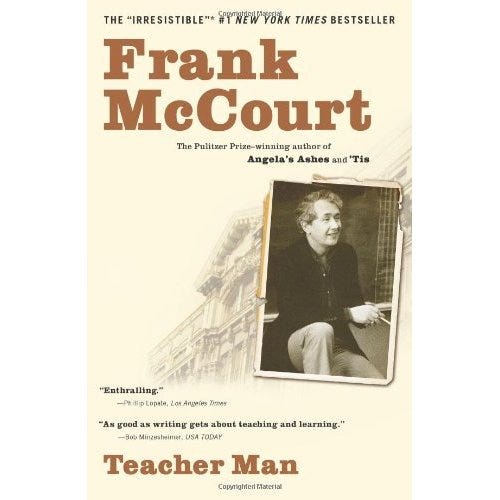
1–3. Angela’s Ashes, Tis & Teacher Man by Frank McCourt

Frank McCourt’s trilogy chronicles his life from his birth in New York City to Irish immigrant parents to his childhood of poverty in Ireland and his eventual return to New York City, where he lived as a young Irish immigrant who eventually became a teacher and author. His is a story about poverty and resilience, the bonds of family, and the promise of a better life in America.

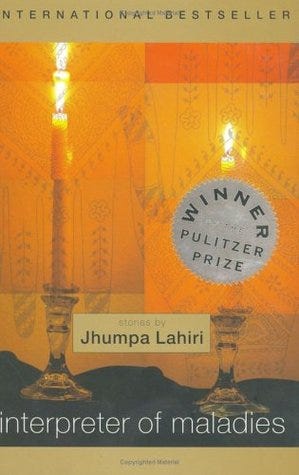
4. Interpreter of Maladies by Jhumpa Lahiri

This short story collection is about Indians and Indian Americans seeking love and all things desirable. While all the stories aren’t set in America — some are set in India — those that are, like “The Third and Final Continent,” depict characters living at the intersection of India and America.

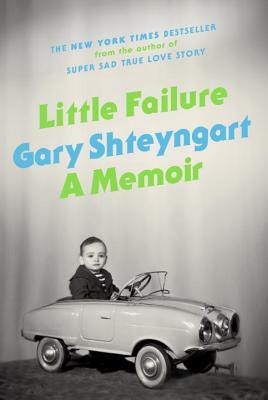
5. Little Failure by Gary Shtenygart

In this memoir, novelist Gary Shteyngart writes with humor about his family’s immigration from Russia to America. An only child, Shteyngart and his parents grapple with finding themselves and understanding each other in the strange land they’ve made their new home.

6. Americanah by Chimamanda Ngozi Adichie

In Chimamanda Ngozie Adichie’s novel, Ifemelu, a young Nigerian woman, arrives in America to attend college and confronts the realities of being a black person in America. While navigating a quest for love and identity, she maintains a blog where she writes about topics like the racial hierarchy in America, Barack and Michelle Obama, and an embrace of her newfound blackness.

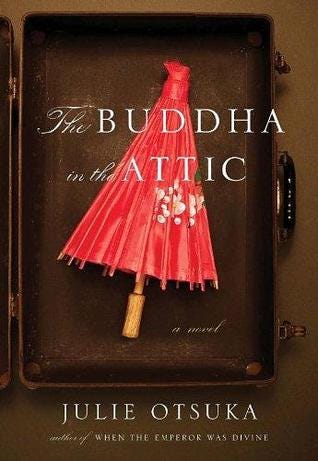
7. The Buddha in the Attic by Julie Otsuka

This story, told in a lyrical first person plural voice, is about Japanese picture brides who migrate to the US to meet their husbands. The women speak of their marriages to men they barely know, their interactions with Americans they encounter in their daily lives, their raising of American-born children who grow up to be different from them in many ways, and the ways in which their lives changed after the attack on Pearl Harbor.

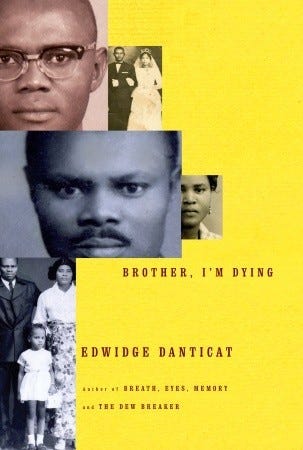
8. Brother I’m Dying by Edwidge Danticat

Moving between Haiti and America, Edwidge Danticat’s memoir is about her parent’s migration from Haiti to New York, leaving her and her brother with an aunt and uncle. She and her brother eventually join her parents in New York and her uncle, attempting to escape a volatile situation in Haiti, comes face to face with the underbelly of the American immigration system.

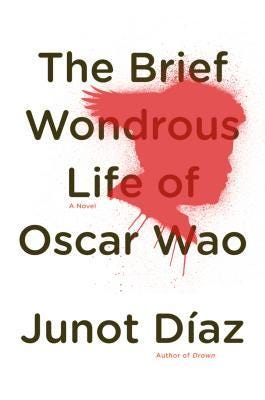
9. The Brief Wondrous Life of Oscar Wao by Junot Díaz

Junot Díaz’s Pulitzer-prize winning novel is a multi-generational story which explores not only the American immigrant experience but also the weight of history, Dominican culture, family, identity, and the quest for love and desperations of an overweight boy nicknamed Oscar Wao.

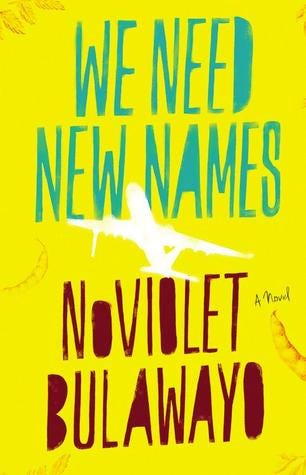
10. We Need New Names by NoViolet Bulawayo

In NoViolet Bulawayo’s debut novel, a young girl named Darling leaves behind a childhood of poverty in Zimbabwe to live with an aunt in Detroit. There, she encounters a life which while not defined by the kind of utter poverty she’d grown up with in Zimbabwe, is nonetheless full of its share of challenges.

About the Author

Photo by Kiriko Sano

Imbolo Mbue is the author of Behold the Dreamers, her first novel. She’s a native of Limbe, Cameroon. She holds a B.S. from Rutgers University and an M.A. from Columbia University. A resident of the United States for over a decade, she lives in New York City.

X by Brian Evenson

I shall begin this written record by reporting the substance of our last conversation — which was not only the last conversation I had with Horak, but the last I had with anyone, or ever expect to have. Perhaps the last conversation that any two humans will have, if he and I can be said to both qualify as human. There is apparently some debate on that score. Or would be if he had not abandoned me. Was some debate, I should say.

I did not know how to make the machine function properly, and did not know either how to shut it off — it was not me who suspended him within the machine in the first place. The instructions for the operation of the machine were to be found in a sector that proved to be decayed, the data irretrievable. Nor did I know the sequence or the code, and my slow muddlings got me nowhere. In the end, seeing my own time ticking away with nothing resolved, I decided drastic measures were justified.

How long has it been since a person left the warren and how long did he survive? I had asked the monitor earlier, before all this. I knew the answer to this question: the last of us to leave the warren had left 140 days ago — I wanted to see if the monitor knew this fact or if this portion of the data was also corrupted. The last of us to leave was named Wollem, a name chosen for him by the pair who had come before him, Vigus and Vagus. When they neared the end of their lives they had themselves imprinted within the monitor and then set about constructing Wollem. They had hoped to make a pair, as had always been done before, but there was so little material that out of prudence they opted to make only one, so that he in turn could make another one, so there might be at least a little more time given to us before a final end. 140 days ago, Wollem left in search of more material, knowing he would die in the process. But, with luck, he would die only after returning with sufficient material for others to be formed and for us to persist a while longer.

He did not return.

To my question, the monitor responded: Query, what do you mean by person?

I thought about this a long time and then asked, “What do you mean by person?”

It responded, Bipedal, an individual thought process enmeshed in a body, procreated through the fertilization of an ovum by a sperm and its subsequent development in a womb.

“Only the first criterion is relevant.”

With this definitional clarification, it said, this sort of “person” left 140 days ago. He did not return. It is not known how long he survived. This is not a question for which there is sufficient data to provide an answer.

“Is it likely he survived?”

It is not likely.

“And if all three criteria are considered relevant?” I asked.

By these criteria it has been seventy-one years, eleven months, six days, and twenty one hours since a person left the warren. He still survives and has been carefully preserved.

But I intended to start differently. I allowed myself to get distracted. Since I learned most things in a way that I have come to feel would not be considered normal for those who might read this record, my sense of balance and order is sometimes far from perfect. At times I become confused about the order in which things should be told. Parts of me know things that other parts do not, and sometimes I both know a thing and do not know it, or part of me knows something is true and another part knows it is not true and there is nothing to allow me to negotiate between the two. The monitor can help if I ask the right questions, but in many circumstances it just adds another layer of confusion so that whatever is being choked or stifled is even more so.

“He still survives?” I asked.

Yes, said the monitor.

“Does he have a name?”

Yes. Horak.

“He has been preserved?” I asked. “On an impression?”

Not on an impression. Being preserved on an impression is not the same thing as being alive. His body has been physically stored and his mind along with it.

“Show me where.”

It showed me a schematic. Horak was, in fact, quite close. Perhaps through some of the tunnels of the warren that had been filled he could be reached, I thought at first, but then another self within me stirred, opened its pale eye and said, No, on the surface.

“Is he outside?” I asked myself.

He is in a facility. Don’t you remember?

“No,” I said.

I do, it said. I said.

“Is the facility at — ” eye after eye opened within me as I groped for a word, finally found it, “ — ground level?”

Yes.

“And he’s still alive?” I asked, amazed.

Some of the sectors pertaining to the proper use of a suit had been corrupted, but not all of them. As a result, I had some information and some noise, and needed only to determine what was information and what was noise, and then determine which parts of me I should ignore and which I should listen to. Could I survive at ground level? Yes, it was clear, but not for long. Longer if I was wearing a suit, but even then not long. How long was not long? The answer to this question was unclear, and querying the monitor did little good. No sensors currently accessible at ground level, it indicated, and then seemed to consider the matter closed.

After Wollem had formed me and made it possible for me to communicate, and then imbued me with the further quickening that made me a receptacle for the selves that had come before me, he told me: My purpose is complete. Now I go in search of help. I am almost certain that I remember him saying this. And that after saying it he drew a suit up around his body, sealed it, and left the warren.

After he departed, I lay there on my tablature, for how long I do not know. I was trying to translate the vast amount of damaged and partial information that had been poured into my mind into some sort of rational order, into something useful. I could see, in vivid detail, the means by which a finger could be made to flex and move — I understood the electrical impulse that would best bring this about, but seemed unable to manifest it. I do not know how long I lay spread on the tablature, trying to move a single finger. And then, suddenly, I did manage a pulse of electricity and the finger moved. But when I examined what I had in my head again I saw the simple movement of a finger had burnt a line there, a minuscule thread, hardly noticeable, unless you happened to be looking for it, unless you happened to be looking very closely because you needed something very specific and saw the way that the line split that thing in two and even obliterated the slightest portion of it. And then I understood that everything I said, everything I did, would do damage to whatever was already contained within me, that there was hardly enough space in my head for all the various selves, let alone their memories, let alone my own.

What did I do? For a long time I did not move, waiting to see if what I held within my head would congeal in some way, become resistant or formalized or…I don’t know. I could see how the information that was there was part of different strata, that what I had thought upon waking was just one being was in fact many layered one atop the other, that I was the partial record of all those who had come before me. These I began to peel off, divide up, and put to sleep, so that I could keep them straight and, if possible, safe.

But in the end I could only do so much of this. In the end, I had no choice but to move another finger.

Wollem came back into the room wearing a suit, prepared to leave, to go to ground level. Or rather, no, that was not what it felt like at the time. I am not sure this is my true memory or instead the memory of an earlier self. At the time, whether my memory or another’s, what it felt like was this: Wollem left the room. He was gone for a time. I struggled to move a finger and began to rearrange the architecture of my mind. And then a figure, bipedal but featureless, made of vulcanized cloth, with a head made of a bulb of steel and tempered glass, entered the room and spoke in a tinny voice. The figure waved once and then was gone. It was only later that I stumbled upon a sector on the monitor that told me this was a man wearing a suit. This man must have been, so I deduced since there was nobody else, Wollem.

I rummaged through the warren until I found a suit that reminded me of that suit I had seen, and then I forced my body into it. There were cracks and splits in it, a rent in the stomach, the fabric stained around it by what looked like rust. Doesn’t matter if there are holes, part of me that was still awake thought, you’re dead anyway if you go outside.

But I opened up each pale eye within me and inquired until I found enough to tell me to rummage some more, and then I tried to close all the eyes again at once, to seal each back — for their own good, for their safety. Each is already crisscrossed with darkness and scars and damage, and awakening them seems only to damage them worse, so better to keep them asleep.

I rummaged until I found a rusted can of sealant — though the rust on the can was of a somewhat different color than that on the lips of the tear in the suit. Perhaps merely a difference in material. I shook it and sprayed it. When it came out and I positioned it correctly, it bubbled and filled the cracks and splits and sealed the lips of the rent not only to one another but to my skin beneath, so thoroughly that to remove it later I had to take a knife to my belly and separate a strip of skin from my body.

Wollem told me: “I was taught by Vigus and Vagus in a different way than you will be. Some things were imprinted, but only the most basic of things and with gaps between. The ability to chew and swallow, the ability to walk and crawl, the basics of language. Then Vigus and Vagus took turns instructing me. Once they were gone, I learned from the monitor.

“But the monitor is not what it was. Whole sectors are damaged. Vigus’s personality is still preserved, but Vagus’s is so damaged that if he were to be brought back he would be mad. For years we fooled ourselves into thinking we could preserve ourselves in such fashion, and be reconstituted later when someone came to relieve us. But no one is coming. No one ever will come, unless it will be someone who means us harm.”

And yet, even knowing this, even believing this as he did, once he had imprinted me not just with simple gestures and abilities but with the surviving personalities of our expedition, Wollem could not stop himself from going out to look for someone or something to save us.

There are times when I look back at this writing and do not recognize what I have written. There are moments, whole pages even, which are written in my hand, to be sure, but which I have no memory of writing. When I awake I sometimes find myself deep in the warren before the writing desk, with the charcoal grasped tight in my hand and no memory of how I arrived there.

I am writing this on paper even though such writing is a forgotten art. I am writing on paper because I have seen the way that the sectors of the monitor and other recording devices can become corrupted and whole selves, as a result, are lost. I am trying to leave behind a record that will survive. Apparently, judging from the passages that I do not remember but which are nonetheless written, I am not the only part of me writing this.

I do not have an earliest memory. All the memories came at once, an overlay of a dozen different personalities and all the memories going along with them. Or at least some of the memories — there is not enough room and each new memory I make, each new thing I do, ends up sacrificing memories that came before. Each moment I live snuffs out a little more of the lives of the others within me.

Wollem meant well. When he discovered what was happening within the monitor, the fact that the majority of personalities imprinted within the monitor had grown corrupt with time, he did not know what else to do. He could have let each recorded personality lapse: could have waited until, one after another, they either grew corrupt or until the monitor or the tablature broke down sufficiently so as to make organic reinscription of these personalities possible. Instead, having one last source of material at his disposal, he formed me, and then, within me, formed everyone who remained.

And yet, Wollem did not inscribe his own personality. He did not reproduce himself either on the monitor or, organically, within my brain, along with the dozen or so others. Why? Was it merely an oversight on his part? Was it because he knew there were already too many within me? Or was it selfishness, a very real desire to let his flesh and self die together, to keep his self to himself?

Suit affixed, heart pounding, I squirreled my way along the edges of the warren and came to the first seal. This was much farther than I had ever gone before. I removed the seal and ignored the warning sirens. I had salvaged a piece of rebar from the failed portion of the warren, the damaged portion, and positioned it to keep the seal open, just in case it was inclined to slide closed while I was gone or in case, despite the damage the warren had undergone, there was some mechanism that would, after a certain amount of time had passed, draw the seal closed.

I climbed the ladder, slowly, putting one foot over the other as I had been taught to do. As I did so, I felt several pairs of eyes within my head flicker open, awakened by a movement that was familiar to them, from their own climbs to the surface many years before. The strangeness of that: the feeling that you, or rather I, are at once dreaming and remembering and simultaneously doing something as if for the first time. That terrible rapid construction of the world around you, but not as a new world: instead, as a world already known, already seen. At the top of the ladder was a second seal. I had not known I would encounter it until my hand reached out in the dim and touched it, but once touched it sprang forth fully formed. A set of eyes within my head opened, but another set opened wider, and I climbed down the ladder and found a second piece of rebar and then climbed back up again.

It was difficult to force open this second seal. I had to pound on it with the piece of rebar and as I did so, flakes of rust sifted slowly down around me and adhered to my faceplate, mottling my vision. At first I thought it was not going to open for me, and then a voice from a self within me directed me how to brace the rebar and use it as a lever and by so doing slowly force the seal open. Even then the seal did not give until, abruptly, it did and I lost my hold and dropped the bar clattering down the shaft and almost tumbled down myself.

Light, the shock of it, more searing and intense than anything I’d ever seen. Then, blind, I was up and through the seal and on the surface, up and running now, all the eyes of the selves I harbor in my head open now and the mouths attached to them counting a measured cadence, one one thousand, two one thousand, three one thousand, and on and on, the numbers growing, the heads within my head growing anxious and me myself anxious along with them. How much time, in the suit, did I have before I would be poisoned and die? And then I had scampered across the bare, damaged ground and was at the seal of the facility, wondering with a sinking feeling if I should have brought another piece of rebar. I stumbled into the wall and applied the palm of my glove to the pressure pad and, unexpectedly, the door slid open and I tumbled into a solitary room.

Within, it was the same as the warren — the same, rather as the furthest walls of the warren, without the modifications that we had developed over the years. So much so that I became quickly convinced that this was part of the warren or once had been.

The storage unit occupied the center of the room, humming slightly, cables running up into the ceiling. It was as tall as my chest and twice as thick as a man, rooted solidly in the floor. Inside was a figure, human or nearly so. Crystals of ice were in his hair and he was frozen.

“Monitor,” I asked the room at large, “are you here as well?”

There was no answer. I looked for a monitor port but there was no port, so perhaps this had never been part of the warren after all.

The eyes within my head had stopped rolling now, had begun to calm, lids growing heavy, even beginning, in some cases, to drowse. I reached up to remove the helmet from my suit, making the motions exaggerated and definite, and though several stirred within me, when they became cognizant of what I was about to do and where I was, they lulled again. This, coupled with the green light now burning above the door, I took as an indication that it was safe, that I could breath and not die.

As I have said, parts of me are damaged, and so are the records we have that are stored in the monitor. I know more than most who came before me, but they had the advantage of having access to memories recorded outside of themselves, in the monitor. With those systems working, they could in an instant learn things that I cannot and never will. For me, memory is not only at times flawed and corrupted but also overlapped and confused, one personality hiding parts of another, blending too, so that the selves within my head sometimes seem many-headed and monstrous or deformed and impossible to comprehend.

I kept touching parts of the storage machine, thinking that the gestures would reveal something to me, would awaken someone within me, a self that would know what to do.

But nothing happened.

I took my suit off — or would have if I had not fused it to my skin while sealing the rip. I wriggled my arms free and let the suit hang around my waist, tugging at my belly. Hands freed, I touched the controls and the pad of the storage unit with my bare fingers, thinking it might respond to my touch or my heat, but it did not respond at all.

For nearly a day I was there, trying to make something happen. Nothing happened. At last, in frustration, nothing accomplished, I donned the suit again, opened the seal, and made a mad dash back to the warren.
“Monitor,” I asked, immediately upon my return. “When did the last person go out and when did he return?”
Query: what do you mean by person? It asked.

“As before. Bipedal,” I said. “None of the other qualifications.”

The last person to go out went out fourteen hours and forty-six minutes ago. He returned eight minutes ago. You are that person.

“Monitor,” I asked, “is the storage facility that keeps Horak part of the warren?”

Query: What do you mean by warren? it asked.

“This place,” I said. “What you see all around you.”

For a long moment the monitor did not respond, and I thought that it had at last reached its point of exhaustion. Everything is running down, dying. Perhaps the monitor will not outlast you, I thought. Perhaps before you die you will lose even that small consolation.

And then the monitor said, No. It is on the surface. This place is not on the surface.

“The warren,” I said.

If you call it that.

“But were they once connected?” I persisted.

Everything was once connected, responded the monitor. Everything still is.

I called up all the files related to storage. There was nothing that could be seen, nothing that could be read, nothing more than a few bits and pieces of code, a fragmented, damaged hodgepodge that told me nothing.

I could tell you how I tried to awaken him and how it all failed. But I have not even succeeded in telling you what I planned to begin with and there is no point, or little point, in pushing that goal even farther away on the horizon by stacking more and more up in front of it. No, it is enough to say that I, or we if you prefer, failed. We could not start the mechanism to unstore this Horak. It had been done before, I knew it had been done, but there was no record of it anywhere, not even fragments. It was as if this part of our history had been wiped deliberately and mercilessly away.

Is there a reason for this? an awakening part of me wondered. Do I really know what I am getting into?

I knew something of this Horak from my earlier conversation with the monitor. He apparently was not constructed but rather procreated through the fertilization of an ovum by a sperm and its subsequent development in a womb. He was, according to the monitor, an individual thought process enmeshed solitarily within a body. It is thought, at least by some residing within me, that unlike us he could not be hurt by being outside. There were some within me who felt he was not human, though others argued that he was a true human, a first human, whom we all had been set to emulate. Others still thought he had once been human but had, due to circumstances, changed.

What was true and what was rumor it was difficult to say: it is impossible for me to be objective about the opinions of all the selves contained within me, for I hear not only their words but feel along with them the weight of their conviction.

Better to be cautious, to wait and see if I can figure a way to awaken him, and if I cannot, perhaps I can convince myself that it is better not to awaken him at all.

And so, knowing all this, believing all this, I removed the suit and tore my strip of flesh off along with it, then bandaged my belly, ate, and fell asleep, trusting that tomorrow was another day, that tomorrow anything could happen.