X by Brian Evenson

I shall begin this written record by reporting the substance of our last conversation — which was not only the last conversation I had with Horak, but the last I had with anyone, or ever expect to have. Perhaps the last conversation that any two humans will have, if he and I can be said to both qualify as human. There is apparently some debate on that score. Or would be if he had not abandoned me. Was some debate, I should say.

I did not know how to make the machine function properly, and did not know either how to shut it off — it was not me who suspended him within the machine in the first place. The instructions for the operation of the machine were to be found in a sector that proved to be decayed, the data irretrievable. Nor did I know the sequence or the code, and my slow muddlings got me nowhere. In the end, seeing my own time ticking away with nothing resolved, I decided drastic measures were justified.

How long has it been since a person left the warren and how long did he survive? I had asked the monitor earlier, before all this. I knew the answer to this question: the last of us to leave the warren had left 140 days ago — I wanted to see if the monitor knew this fact or if this portion of the data was also corrupted. The last of us to leave was named Wollem, a name chosen for him by the pair who had come before him, Vigus and Vagus. When they neared the end of their lives they had themselves imprinted within the monitor and then set about constructing Wollem. They had hoped to make a pair, as had always been done before, but there was so little material that out of prudence they opted to make only one, so that he in turn could make another one, so there might be at least a little more time given to us before a final end. 140 days ago, Wollem left in search of more material, knowing he would die in the process. But, with luck, he would die only after returning with sufficient material for others to be formed and for us to persist a while longer.

He did not return.

To my question, the monitor responded: Query, what do you mean by person?

I thought about this a long time and then asked, “What do you mean by person?”

It responded, Bipedal, an individual thought process enmeshed in a body, procreated through the fertilization of an ovum by a sperm and its subsequent development in a womb.

“Only the first criterion is relevant.”

With this definitional clarification, it said, this sort of “person” left 140 days ago. He did not return. It is not known how long he survived. This is not a question for which there is sufficient data to provide an answer.

“Is it likely he survived?”

It is not likely.

“And if all three criteria are considered relevant?” I asked.

By these criteria it has been seventy-one years, eleven months, six days, and twenty one hours since a person left the warren. He still survives and has been carefully preserved.

But I intended to start differently. I allowed myself to get distracted. Since I learned most things in a way that I have come to feel would not be considered normal for those who might read this record, my sense of balance and order is sometimes far from perfect. At times I become confused about the order in which things should be told. Parts of me know things that other parts do not, and sometimes I both know a thing and do not know it, or part of me knows something is true and another part knows it is not true and there is nothing to allow me to negotiate between the two. The monitor can help if I ask the right questions, but in many circumstances it just adds another layer of confusion so that whatever is being choked or stifled is even more so.

“He still survives?” I asked.

Yes, said the monitor.

“Does he have a name?”

Yes. Horak.

“He has been preserved?” I asked. “On an impression?”

Not on an impression. Being preserved on an impression is not the same thing as being alive. His body has been physically stored and his mind along with it.

“Show me where.”

It showed me a schematic. Horak was, in fact, quite close. Perhaps through some of the tunnels of the warren that had been filled he could be reached, I thought at first, but then another self within me stirred, opened its pale eye and said, No, on the surface.

“Is he outside?” I asked myself.

He is in a facility. Don’t you remember?

“No,” I said.

I do, it said. I said.

“Is the facility at — ” eye after eye opened within me as I groped for a word, finally found it, “ — ground level?”

Yes.

“And he’s still alive?” I asked, amazed.

Some of the sectors pertaining to the proper use of a suit had been corrupted, but not all of them. As a result, I had some information and some noise, and needed only to determine what was information and what was noise, and then determine which parts of me I should ignore and which I should listen to. Could I survive at ground level? Yes, it was clear, but not for long. Longer if I was wearing a suit, but even then not long. How long was not long? The answer to this question was unclear, and querying the monitor did little good. No sensors currently accessible at ground level, it indicated, and then seemed to consider the matter closed.

After Wollem had formed me and made it possible for me to communicate, and then imbued me with the further quickening that made me a receptacle for the selves that had come before me, he told me: My purpose is complete. Now I go in search of help. I am almost certain that I remember him saying this. And that after saying it he drew a suit up around his body, sealed it, and left the warren.

After he departed, I lay there on my tablature, for how long I do not know. I was trying to translate the vast amount of damaged and partial information that had been poured into my mind into some sort of rational order, into something useful. I could see, in vivid detail, the means by which a finger could be made to flex and move — I understood the electrical impulse that would best bring this about, but seemed unable to manifest it. I do not know how long I lay spread on the tablature, trying to move a single finger. And then, suddenly, I did manage a pulse of electricity and the finger moved. But when I examined what I had in my head again I saw the simple movement of a finger had burnt a line there, a minuscule thread, hardly noticeable, unless you happened to be looking for it, unless you happened to be looking very closely because you needed something very specific and saw the way that the line split that thing in two and even obliterated the slightest portion of it. And then I understood that everything I said, everything I did, would do damage to whatever was already contained within me, that there was hardly enough space in my head for all the various selves, let alone their memories, let alone my own.

What did I do? For a long time I did not move, waiting to see if what I held within my head would congeal in some way, become resistant or formalized or…I don’t know. I could see how the information that was there was part of different strata, that what I had thought upon waking was just one being was in fact many layered one atop the other, that I was the partial record of all those who had come before me. These I began to peel off, divide up, and put to sleep, so that I could keep them straight and, if possible, safe.

But in the end I could only do so much of this. In the end, I had no choice but to move another finger.

Wollem came back into the room wearing a suit, prepared to leave, to go to ground level. Or rather, no, that was not what it felt like at the time. I am not sure this is my true memory or instead the memory of an earlier self. At the time, whether my memory or another’s, what it felt like was this: Wollem left the room. He was gone for a time. I struggled to move a finger and began to rearrange the architecture of my mind. And then a figure, bipedal but featureless, made of vulcanized cloth, with a head made of a bulb of steel and tempered glass, entered the room and spoke in a tinny voice. The figure waved once and then was gone. It was only later that I stumbled upon a sector on the monitor that told me this was a man wearing a suit. This man must have been, so I deduced since there was nobody else, Wollem.

I rummaged through the warren until I found a suit that reminded me of that suit I had seen, and then I forced my body into it. There were cracks and splits in it, a rent in the stomach, the fabric stained around it by what looked like rust. Doesn’t matter if there are holes, part of me that was still awake thought, you’re dead anyway if you go outside.

But I opened up each pale eye within me and inquired until I found enough to tell me to rummage some more, and then I tried to close all the eyes again at once, to seal each back — for their own good, for their safety. Each is already crisscrossed with darkness and scars and damage, and awakening them seems only to damage them worse, so better to keep them asleep.

I rummaged until I found a rusted can of sealant — though the rust on the can was of a somewhat different color than that on the lips of the tear in the suit. Perhaps merely a difference in material. I shook it and sprayed it. When it came out and I positioned it correctly, it bubbled and filled the cracks and splits and sealed the lips of the rent not only to one another but to my skin beneath, so thoroughly that to remove it later I had to take a knife to my belly and separate a strip of skin from my body.

Wollem told me: “I was taught by Vigus and Vagus in a different way than you will be. Some things were imprinted, but only the most basic of things and with gaps between. The ability to chew and swallow, the ability to walk and crawl, the basics of language. Then Vigus and Vagus took turns instructing me. Once they were gone, I learned from the monitor.

“But the monitor is not what it was. Whole sectors are damaged. Vigus’s personality is still preserved, but Vagus’s is so damaged that if he were to be brought back he would be mad. For years we fooled ourselves into thinking we could preserve ourselves in such fashion, and be reconstituted later when someone came to relieve us. But no one is coming. No one ever will come, unless it will be someone who means us harm.”

And yet, even knowing this, even believing this as he did, once he had imprinted me not just with simple gestures and abilities but with the surviving personalities of our expedition, Wollem could not stop himself from going out to look for someone or something to save us.

There are times when I look back at this writing and do not recognize what I have written. There are moments, whole pages even, which are written in my hand, to be sure, but which I have no memory of writing. When I awake I sometimes find myself deep in the warren before the writing desk, with the charcoal grasped tight in my hand and no memory of how I arrived there.

I am writing this on paper even though such writing is a forgotten art. I am writing on paper because I have seen the way that the sectors of the monitor and other recording devices can become corrupted and whole selves, as a result, are lost. I am trying to leave behind a record that will survive. Apparently, judging from the passages that I do not remember but which are nonetheless written, I am not the only part of me writing this.

I do not have an earliest memory. All the memories came at once, an overlay of a dozen different personalities and all the memories going along with them. Or at least some of the memories — there is not enough room and each new memory I make, each new thing I do, ends up sacrificing memories that came before. Each moment I live snuffs out a little more of the lives of the others within me.

Wollem meant well. When he discovered what was happening within the monitor, the fact that the majority of personalities imprinted within the monitor had grown corrupt with time, he did not know what else to do. He could have let each recorded personality lapse: could have waited until, one after another, they either grew corrupt or until the monitor or the tablature broke down sufficiently so as to make organic reinscription of these personalities possible. Instead, having one last source of material at his disposal, he formed me, and then, within me, formed everyone who remained.

And yet, Wollem did not inscribe his own personality. He did not reproduce himself either on the monitor or, organically, within my brain, along with the dozen or so others. Why? Was it merely an oversight on his part? Was it because he knew there were already too many within me? Or was it selfishness, a very real desire to let his flesh and self die together, to keep his self to himself?

Suit affixed, heart pounding, I squirreled my way along the edges of the warren and came to the first seal. This was much farther than I had ever gone before. I removed the seal and ignored the warning sirens. I had salvaged a piece of rebar from the failed portion of the warren, the damaged portion, and positioned it to keep the seal open, just in case it was inclined to slide closed while I was gone or in case, despite the damage the warren had undergone, there was some mechanism that would, after a certain amount of time had passed, draw the seal closed.

I climbed the ladder, slowly, putting one foot over the other as I had been taught to do. As I did so, I felt several pairs of eyes within my head flicker open, awakened by a movement that was familiar to them, from their own climbs to the surface many years before. The strangeness of that: the feeling that you, or rather I, are at once dreaming and remembering and simultaneously doing something as if for the first time. That terrible rapid construction of the world around you, but not as a new world: instead, as a world already known, already seen. At the top of the ladder was a second seal. I had not known I would encounter it until my hand reached out in the dim and touched it, but once touched it sprang forth fully formed. A set of eyes within my head opened, but another set opened wider, and I climbed down the ladder and found a second piece of rebar and then climbed back up again.

It was difficult to force open this second seal. I had to pound on it with the piece of rebar and as I did so, flakes of rust sifted slowly down around me and adhered to my faceplate, mottling my vision. At first I thought it was not going to open for me, and then a voice from a self within me directed me how to brace the rebar and use it as a lever and by so doing slowly force the seal open. Even then the seal did not give until, abruptly, it did and I lost my hold and dropped the bar clattering down the shaft and almost tumbled down myself.

Light, the shock of it, more searing and intense than anything I’d ever seen. Then, blind, I was up and through the seal and on the surface, up and running now, all the eyes of the selves I harbor in my head open now and the mouths attached to them counting a measured cadence, one one thousand, two one thousand, three one thousand, and on and on, the numbers growing, the heads within my head growing anxious and me myself anxious along with them. How much time, in the suit, did I have before I would be poisoned and die? And then I had scampered across the bare, damaged ground and was at the seal of the facility, wondering with a sinking feeling if I should have brought another piece of rebar. I stumbled into the wall and applied the palm of my glove to the pressure pad and, unexpectedly, the door slid open and I tumbled into a solitary room.

Within, it was the same as the warren — the same, rather as the furthest walls of the warren, without the modifications that we had developed over the years. So much so that I became quickly convinced that this was part of the warren or once had been.

The storage unit occupied the center of the room, humming slightly, cables running up into the ceiling. It was as tall as my chest and twice as thick as a man, rooted solidly in the floor. Inside was a figure, human or nearly so. Crystals of ice were in his hair and he was frozen.

“Monitor,” I asked the room at large, “are you here as well?”

There was no answer. I looked for a monitor port but there was no port, so perhaps this had never been part of the warren after all.

The eyes within my head had stopped rolling now, had begun to calm, lids growing heavy, even beginning, in some cases, to drowse. I reached up to remove the helmet from my suit, making the motions exaggerated and definite, and though several stirred within me, when they became cognizant of what I was about to do and where I was, they lulled again. This, coupled with the green light now burning above the door, I took as an indication that it was safe, that I could breath and not die.

As I have said, parts of me are damaged, and so are the records we have that are stored in the monitor. I know more than most who came before me, but they had the advantage of having access to memories recorded outside of themselves, in the monitor. With those systems working, they could in an instant learn things that I cannot and never will. For me, memory is not only at times flawed and corrupted but also overlapped and confused, one personality hiding parts of another, blending too, so that the selves within my head sometimes seem many-headed and monstrous or deformed and impossible to comprehend.

I kept touching parts of the storage machine, thinking that the gestures would reveal something to me, would awaken someone within me, a self that would know what to do.

But nothing happened.

I took my suit off — or would have if I had not fused it to my skin while sealing the rip. I wriggled my arms free and let the suit hang around my waist, tugging at my belly. Hands freed, I touched the controls and the pad of the storage unit with my bare fingers, thinking it might respond to my touch or my heat, but it did not respond at all.

For nearly a day I was there, trying to make something happen. Nothing happened. At last, in frustration, nothing accomplished, I donned the suit again, opened the seal, and made a mad dash back to the warren.

“Monitor,” I asked, immediately upon my return. “When did the last person go out and when did he return?”

Query: what do you mean by person? It asked.

“As before. Bipedal,” I said. “None of the other qualifications.”

The last person to go out went out fourteen hours and forty-six minutes ago. He returned eight minutes ago. You are that person.

“Monitor,” I asked, “is the storage facility that keeps Horak part of the warren?”

Query: What do you mean by warren? it asked.

“This place,” I said. “What you see all around you.”

For a long moment the monitor did not respond, and I thought that it had at last reached its point of exhaustion. Everything is running down, dying. Perhaps the monitor will not outlast you, I thought. Perhaps before you die you will lose even that small consolation.

And then the monitor said, No. It is on the surface. This place is not on the surface.

“The warren,” I said.

If you call it that.

“But were they once connected?” I persisted.

Everything was once connected, responded the monitor. Everything still is.

I called up all the files related to storage. There was nothing that could be seen, nothing that could be read, nothing more than a few bits and pieces of code, a fragmented, damaged hodgepodge that told me nothing.

I could tell you how I tried to awaken him and how it all failed. But I have not even succeeded in telling you what I planned to begin with and there is no point, or little point, in pushing that goal even farther away on the horizon by stacking more and more up in front of it. No, it is enough to say that I, or we if you prefer, failed. We could not start the mechanism to unstore this Horak. It had been done before, I knew it had been done, but there was no record of it anywhere, not even fragments. It was as if this part of our history had been wiped deliberately and mercilessly away.

Is there a reason for this? an awakening part of me wondered. Do I really know what I am getting into?

I knew something of this Horak from my earlier conversation with the monitor. He apparently was not constructed but rather procreated through the fertilization of an ovum by a sperm and its subsequent development in a womb. He was, according to the monitor, an individual thought process enmeshed solitarily within a body. It is thought, at least by some residing within me, that unlike us he could not be hurt by being outside. There were some within me who felt he was not human, though others argued that he was a true human, a first human, whom we all had been set to emulate. Others still thought he had once been human but had, due to circumstances, changed.

What was true and what was rumor it was difficult to say: it is impossible for me to be objective about the opinions of all the selves contained within me, for I hear not only their words but feel along with them the weight of their conviction.

Better to be cautious, to wait and see if I can figure a way to awaken him, and if I cannot, perhaps I can convince myself that it is better not to awaken him at all.

And so, knowing all this, believing all this, I removed the suit and tore my strip of flesh off along with it, then bandaged my belly, ate, and fell asleep, trusting that tomorrow was another day, that tomorrow anything could happen.

Marisa Silver on Fables, Torture and Reading the Obituaries

Marisa Silver’s latest novel is a stylistic departure from her previous work. In Little Nothing, the award-winning author (Mary Coin, The God of War) writes a fable steeped in archetype and magic. Pavla, a dwarf born to elderly parents, in a nameless, Eastern European town, is both an object of derision and fascination; like many women today, Pavla’s worth becomes tied to her form. When Pavla’s parents have her stretched by a local healer, the girl undergoes the first of several transformations. Each transformation takes Pavla further into a world of tricksters, criminals and beasts. Silver’s work allows us to consider the frequency of violence perpetrated against the female body. I had the pleasure of interviewing her by email while she began her book tour for Little Nothing. We discussed her story’s unusual origin, the freedom of writing as a wolf, and the questions this novel allowed her to pose.

Heather Scott Partington: What was the genesis of Little Nothing? How did it change from the original idea?

Marisa Silver: I’m an avid reader of the obits. A few years ago, I read about a man who, until his death, was one of the last remaining Munchkins from the “Wizard of Oz.” Tucked in among the usual details about accomplishments and the relatives he left behind was this: when he was a boy, his parents tried to have him stretched. I was, needless to say, curious, and my curiosity led me to begin to imagine the story of a young girl, born a dwarf, who undergoes this same ersatz “therapy” but with very different results. Early on, I knew that the girl in the story would change form in radical ways and that the story would take place over a lifetime. That’s what I started with. It’s hard to say the story changed from the original conception, because I had no conceit beyond that first impulse. I was not certain where I was headed, or even what her transformations would be or how they would be enacted. I just wrote my way through, inventing the story’s inner logic as I went.

Stories for me always begin with questions and some of the questions I asked myself were these: what were the implications of this kind of torture not only for her and her sense of her identity and her safety, but for the people who enacted such violence on her. I began to think about what all this had to do with the female body and how it is treated in society, why it is the subject of so much fear and violence. And I asked myself how it is that people survive a life of being hunted, both literally and metaphorically.

A novel exists in two worlds simultaneously: the one bounded by the time of the intrinsic narrative and the one in which the author lives. Around the time I was working on the book, two hundred Chibok schoolgirls were kidnapped by Boko Haram in Nigeria. In Kabul, an Afghan woman was stoned to death after having been accused of committing adultery. In so many parts of the world women don’t control their bodies. I was thinking about these realities at the same time that I was constructing the narrative of Pavla, and while her story exists on its own and is guided by the events and characters that occur only in the world I imagined, it is also a response to the contemporary and very real world I live in, where bodies, in particular women’s bodies, are subjected to great acts of cruelty.

HSP: You write in the tradition of fairy tales, grotesques, and fables. But Little Nothing presents a challenge to those predictable patterns of storytelling. Why were you inspired to tell Pavla’s tale in this specific way? Did the genre present challenges, or did it give you freedom?

MS: What interests me about fairy tales is the disjunction between the narrative style, which is usually unadorned, frank, and without overt psychological nuance, and the fact that the tales incorporate wild leaps between the real and the fantastic. There is something in that dissonance that enables the stories to speak to our most primal sense of ourselves. It seems counterintuitive that something so unadorned and lacking in associative image and lyricism should have such power. I was also interested in the way that, in a fable, the border between the real and the surreal is so porous. We find ourselves traveling back and a forth across that line between what we understand to be true and what we are willing to believe could be true if we were to strip away our skepticism and entertain a world that is not limited by scientific reality. One of the great pleasures of fiction is entering an invented space and believing that characters conjured simply out of words on paper can move and speak and react. The fairy tale takes this one step further, begging us to believe in the patently unbelievable. And even if we say we don’t believe that a toad can turn into a prince, in some metaphorical way, we really do.

HSP: Pavla undergoes several transformations in the book, at one point realizing she has become “wholly unfamiliar to herself.” As I read Little Nothing, I realized how much of our perception of character is tied to a sense of that character’s physical form. Little Nothing pushes the reader to think of form as something as illusory as structure. Pavla’s transformations make clear delineations of change in the story, but it becomes apparent that she is more than her physical form, just as a story is more than its imagined structure. Did that idea come as you developed her (sometimes) animal nature, or did it arise out of a larger conception of how humans tend to tie identity to form?

MS: It’s interesting that you talk about structure that way because I am a big believer that a story’s structure should not be arbitrary but that it should suggest something about a character’s lived experience, and that it ought to be in conversation with the overall meaning of a piece. I thought of the structure of the novel as an unpeeling. The story keeps being constructed and then it falls away, exposing another story beneath it. You unpeel and unpeel until finally there is nothing, a state the character finds herself in as well.

Once I wrote the scene where the character is stretched, I began to understand more about the way the book was engaging with the idea of identity and physicality, how the two are and are not related. Obviously, we all change over a lifetime. Some change is natural. We mature physically and emotionally. But some of the change is asserted on us by family, by circumstance, by the institutions that control us. I wrote about these ideas in an exaggerated way, through the mechanism of fable, using the uncanny in order to reflect the real.

Having said that, I do not write with meaning in mind. I focus on characters and on creating emotionally accurate moments and behaviors and language for those characters as they find their way through the plot. Given the sorts of metamorphoses I was going to embrace, and given the time and place of the books telling, the language and feel of the fable felt tonally right.

HSP: Similar to Pavla’s relationship to physical form (and the “rules” — if we can call them that — of how characters change from one form to another), her relationship to time becomes flexible, and inspires us as reader to challenge our own assumptions about what we think we can take for certain within the story. Were you (or are you) inspired by any other works of literature that do this kind of undermining of the reader’s expectations?

MS: I’m probably only interested in literature that, in some way, undermines expectations! I’m not sure what other reason there might be to write a novel but to use form to shape experience in such a way that what is unseen is brought to light. The challenge is to find a way to expose and explore the unexpected while still keeping the reader in a state of belief. The work is to find the associations of images and language that crack open fixed expectations so that the reader sees more deeply into an experience. One of the writers I read while working on the novel was Agota Kristof. She wrote a trilogy of novels, The Notebook, The Proof, and The Third Lie. Told in spare, nearly uninflected prose, these allegorical novels about war and repression read like the darkest and most disturbing of fairytales. And yet their resonance to the real is vivid and inescapable. You cannot finish these books without seeing anew something you felt you understood about the way in which war disfigures the morality of even the most innocent.

Time is a big preoccupation of Little Nothing in the way it is both linear and circular. Time never really passes, or becomes past. What is happening is still happening within us and somewhere out in the distant universe. In order to imagine a world in which a character can change form in radical ways, one in which unnatural, or supernatural things occur, it felt like both time and space had to be considered as malleable. In some sense, Pavla becomes, finally, time.

Time never really passes, or becomes past. What is happening is still happening within us and somewhere out in the distant universe.

HSP: Why did you use a nameless country, but such familiar archetypes of place? Did this evolve for you as you worked on the novel, or was it always intended to be in an open kind of setting that would draw on the reader’s familiarity with this kind of old story?

MS: Having written stories and novels that could be put in the general category of realism, it took some work for me to let go of trying to root the novel in a particular historical moment. But whenever I did, defining a country or giving a name to a village, or making the war in the novel a specific and actual one, the novel lost its character. The book seemed to live in an unnamed village somewhere in Eastern Europe sometime in the early part of the twentieth century in the same way that fables exist in these indeterminate times and places. There is a subtle change in the novel as we move from a pre-industrial, agrarian world into modernity. The action moves from the countryside to a city, and although the city is not named, its markers are much more specific.

HSP: Pavla’s mother, Agáta, says, “‘We make up the sense of things after they happen… We tell stories. This happened because of that. We string things together one by one so that it seems like there’s a reason to it all. But there is no reason. The most unbelievable things can happen and you have no idea why.’” How was it different to work on this story — or perhaps I should say, this kind of story — compared to your other novels? I’m thinking of your previous novel, Mary Coin, specifically, which existed in a realist world and was based on the Migrant Mother photograph. I wondered if this idea of storytelling to make sense of things held true for both books. What are the threads that pull your work together?

MS: When I finished Mary Coin, a book steeped in reality, I declared (to myself — I’m not sure anyone else was listening) — that my next novel would be wholly imaginative. Up until the writing of Little Nothing, the impetus for my stories always came from social realities either in the present or the past. It felt like a necessary departure for me to move into a purely imaginative space, necessary in order for me to flex some different aesthetic muscles. I have the feeling the obituary and the detail of the stretching captured my attention precisely because I was not looking to the world around me or to the historical record for inspiration. I wanted something that would take me away from all that, and that detail, which, even though it was real for that very real man, seemed the stuff of fable, captured my attention. It was a challenge to look at reality through the lens of the surreal, to make these big leaps into the impossible. But the foundational issues were the same for me in this novel as in anything else I’ve written. I had to invent palpable characters. I had to create action that unearthed their natures while moving the plot forward in compelling ways. Once I entered my very odd world, nothing really felt that unusual at all.

The lines you quote in your question really do speak to what connects my work in the sense that I am not interested in answering questions. I’m interested in asking them, and in exploring their various implications. To me, a novel is an opening, not a shutting down. At the end of the book, I want the reader to come away feeling like the world did not get smaller and more manageable, but that it got bigger and even more unruly.

I am not interested in answering questions. I’m interested in asking them.

HSP: I love that you wrote, “A wolf is its own term.” It felt like you stretched into a different state of narrative with that section. What was it like to write from the perspective of a wolf? How did you approach it?

MS: The exciting aspect of this section of the book for me was to write from the point of view of an animal while maintaining a sense that this animal might be a being we have already met. So, while I tried to write with some degree of accuracy about the life of a wolf and a wolf pack, and while I tried not to anthropomorphize the animals, I still had to suggest, somehow, that this wolf was, or at least might be, a character we recognize. So a lot of it was finding the right narrative distance for that section, trying to write about a wolf as a physical presence more than an emotional one. It was quite liberating to think of a character, in this case, the wolf, as being wholly motivated by instinct and the body.

This section of the book also marks the moment when Danilo takes over the narrative for a while. So seeing the wolves through his eyes allowed me to invest in them emotionally in a way that I might not have been able to do were I only allowed to describe the wolves from the wolves’ point of view.

HSP: What’s the best thing you’ve read recently?

MS: I’ve been doing some re-reading recently and I just finished Baldwin’s Giovanni’s Room. I love that book. The complicated war of emotions packed into a single, beautifully rendered sentence — thrilling.

HSP: What are you working on now?

MS: I’m doing what I normally do between projects. I wander around, read things, look at things, wait for the image or the idea or the overheard sentence that makes me ask myself a new set of questions.

Forgotten Woman: The life of Misuzu Kaneko

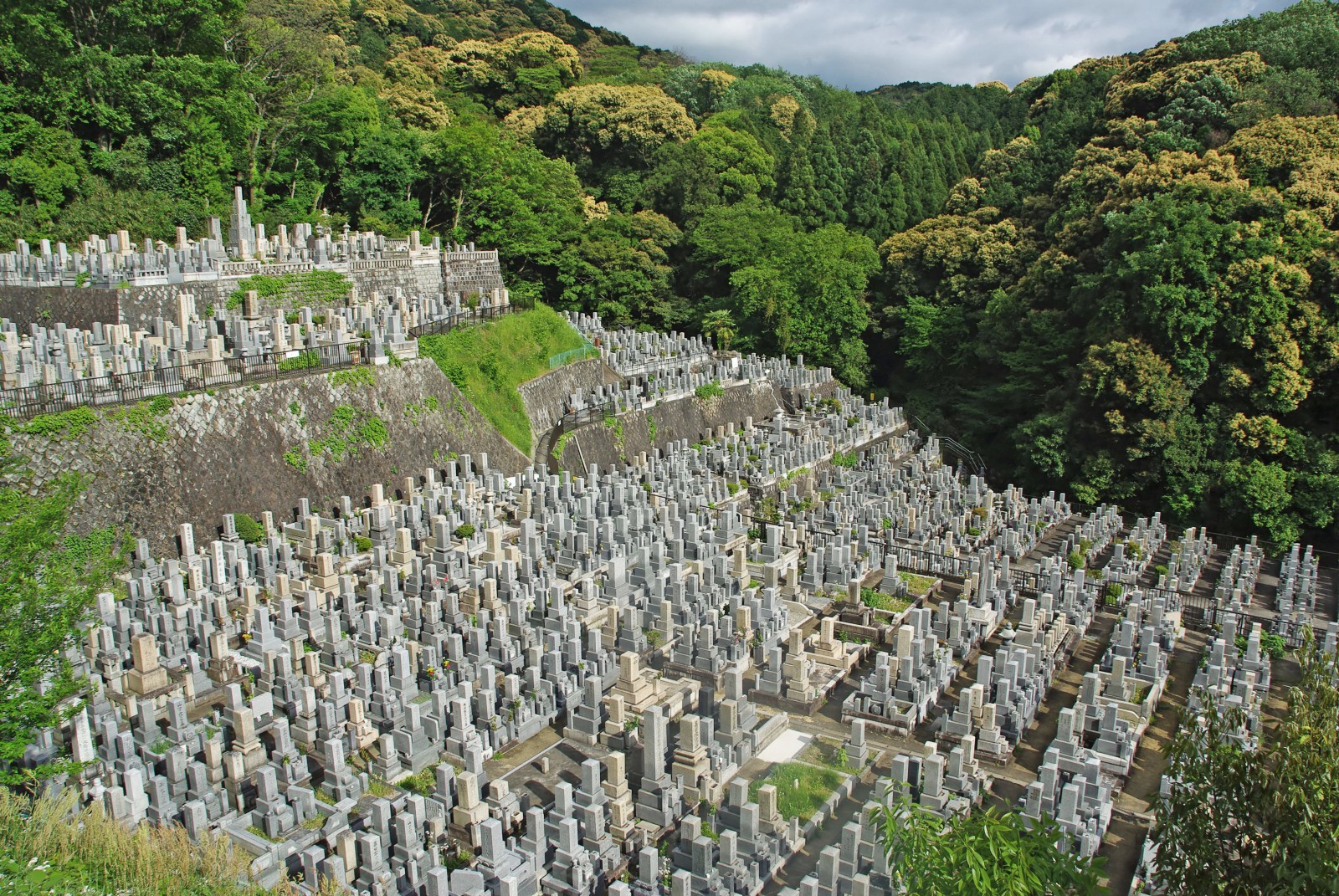
In the Higashi Otani cemetery built on a hillside in Kyoto, there is a small gravestone near the stairs that my aunt Michiko and I always pass on our way upwards to my grandparents’ grave. Weathered and untended in a crowd of closely packed stones on terraced ledges, it is easily overlooked. Chiseled on its front is the name of a woman, Sakurai Satoe.

I’ve always wondered who this woman was, Michiko would say. She’d noticed the stone forty years ago, when her mother was interred there. It was distinctive for a few reasons — one, the stone was small and perched near the stairs where passersby could see it if they were attentive; two, the stone was not part of a family group and contained only the gently incised name of a woman; and three, that name was evocative and poetic. Sakurai means ‘well of cherries’ and Satoe means ‘place in the countryside.’

She’d noticed the stone forty years ago, when her mother was interred there.

The woman was likely unmarried. Michiko imagined she worked as a geisha in the city. Kyoto, after all, is famous for these female entertainers whose artistry and elegance is world-renowned. When I lived in Japan in the eighties, I sometimes caught sight of a geisha or maiko in the narrow cobblestone alleyways of Pontocho, and wondered about their mysterious lives deep in the heart of the city. Only the well-heeled and privileged could afford the services of geisha. Perhaps Sakurai Satoe’s death was commemorated by a lover or another ‘sister.’

I’d been to this cemetery only a few times. My interest had been piqued by my grandfather’s mention of it in his memoir, which I translated with Michiko in 2007.

At first, I didn’t pay much attention to Michiko’s remarks about this solitary woman’s grave, but on our most recent visit, we noticed something odd about the gravestone. Looped around its base with string was a white laminated sign stating that the stone would be removed in the near future as there had been no indication of its being tended. It was likely whomever had been paying the annual fees to the graveyard administrators had stopped doing so. I knew the fee was nominal; my aunt and her siblings continued to pay for their parents’ gravesite.

Looped around its base with string was a white laminated sign stating that the stone would be removed in the near future as there had been no indication of its being tended.

On this occasion, Michiko and I, along with my fourteen-year-old daughter, had just returned from Michiko’s youngest daughter’s wedding in Tokyo. Michiko had brought with her the floral tribute bouquet that had been given to her and her husband by the couple. She thought it would be fitting to bring these flowers to our maternal ancestor.

My daughter was far less excited about visiting her great-grandparents’ grave than going to a wedding. She quietly tagged along as we mounted the stairs with our flowers and water for the vases. When we stopped in front of the grave stone of the single woman, Michiko explained the sign to my daughter. She shrugged and said, “If you’re no longer remembered, you’re no longer living. They’ve got to make room for others, don’t they?

She shrugged and said, “If you’re no longer remembered, you’re no longer living. They’ve got to make room for others, don’t they?

It was a startling comment. My daughter spotted more of the signs dotting the terraced plots. It seemed the graveyard authorities were cleaning house by taking stock of their neglected dead. Making room for others.

How was it that the last evidence of one’s life could be so easily removed? Would this be the last time I would see this stone? Then Michiko noticed something on the sign. The date for the stone’s removal had come and gone. My daughter suggested we put some flowers into the vases to give the workers pause. Plucking two pink roses from the tribute bouquet, we set one on either side of the stone as if to say, this woman, Sakurai Satoe, has not been forgotten after all. Not by us, at least.

In the spring of 1923, a young woman working in her uncle’s bookstore in the coastal city of Shimonoseki in Yamaguchi prefecture sent some poems she’d written to a few children’s magazines in Tokyo. She had a rather common given name, Teru, but being well-read and of a somewhat fanciful nature, she conceived of a pen name: Misuzu. The name was derived from the word ‘misuzukari’ which means the ‘reaping of bamboo grasses’ and was a classical allusion used in ancient Japanese poetry.

She had a rather common given name, Teru, but being well-read and of a somewhat fanciful nature, she conceived of a pen name: Misuzu.

The selection of a pen name by this talented young woman would both ensure and obfuscate the woman’s identity from the point of utter obscurity to nationwide fame decades after her death. Like Sakurai Satoe’s gently carved name on the gravestone, Misuzu Kaneko’s name would appear like a cipher as the author of a few noteworthy poems found in children’s magazines of the period with little else as evidence of her life until its re-discovery decades later by literary scholar, Setsuo Yazaki.

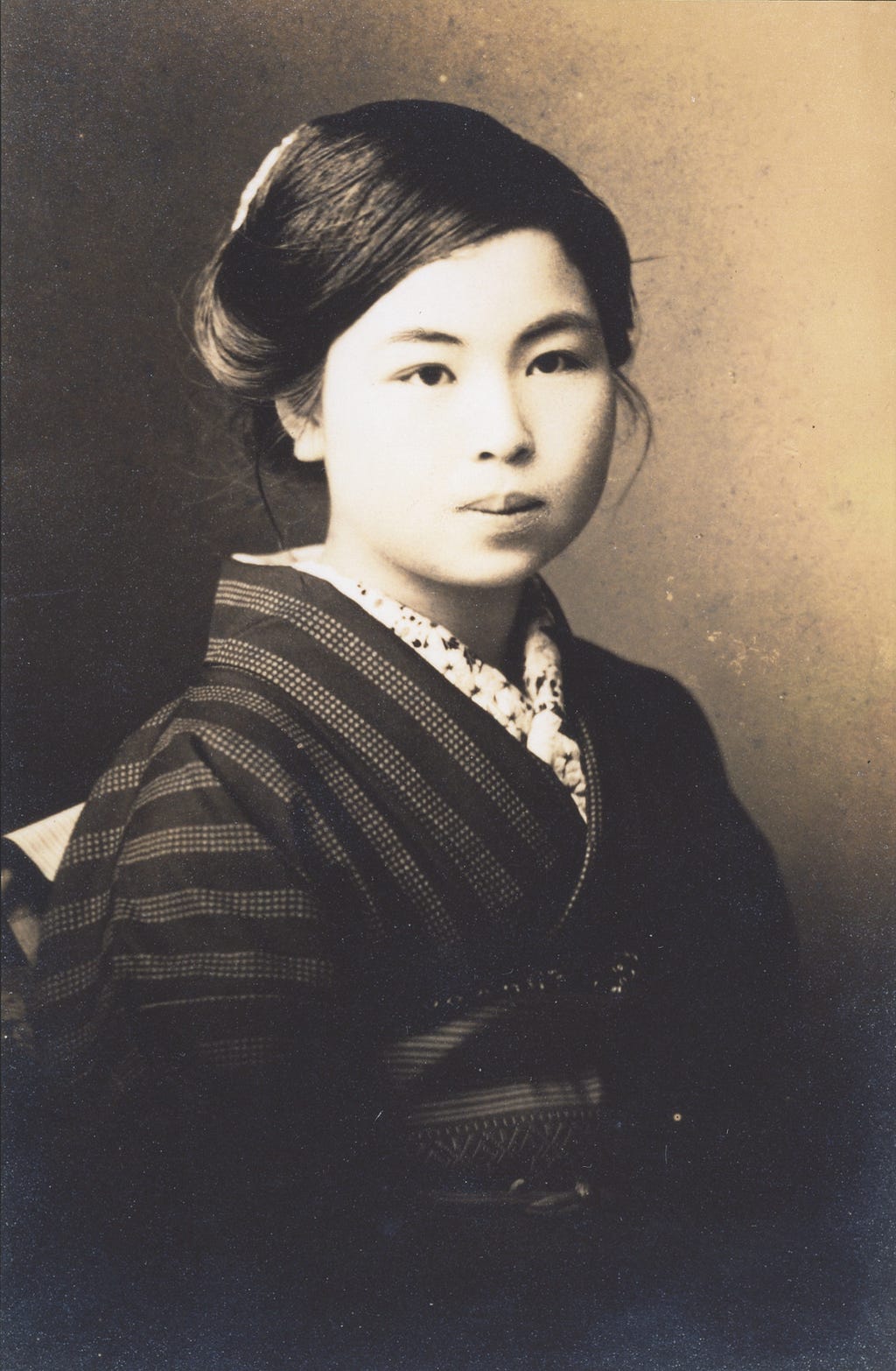
Courtesy of Preservation Association of Misuzu Kaneko’s Work

Misuzu was just twenty when she sent out her poems, the age when the Japanese celebrate entry into adulthood. Only a few months earlier, she had been living with her grandmother and older brother in the nearby town of Senzaki where she had grown up in a family bookstore run by her widowed mother, Michi. Her father, a bookstore manager, had died overseas in China when Misuzu was three. Since his widow Michi was saddled with the care of three young children (Misuzu was the middle child), the youngest boy whose name was Masasuke, was adopted out to Michi’s younger sister, Fuji, and her sister’s husband Matsuzo Ueyama at the age of one. Matsuzo was the owner of all the bookstores in the family. He and Fuji had no children and were happy to adopt the young Masasuke, whom they hoped would carry on the family business. Around the time Misuzu turned sixteen, her aunt Fuji died, and Misuzu’s mother went to the city to remarry her sister’s husband, Matsuzo. Misuzu remained behind so that she could finish her schooling — namely, high school, which was unusual for a girl of her time to complete — before being called to work in Shimonoseki at her Uncle Matsuzo’s bookstore.

Reunited with her mother, and working independently in the familiar environment of the bookstore, Misuzu was truly happy.

It was in this heady atmosphere of the city — Shimonoseki was a bustling gateway to China and Korea at the time — where Misuzu began writing in earnest while minding a small branch store of the family chain on her own. Reunited with her mother, and working independently in the familiar environment of the bookstore, Misuzu was truly happy. The acceptance on the first try, of five of her poems by four magazines in the faraway urbane capital of the country was quite an accomplishment for the young woman. In particular, Misuzu had garnered the attention of the sophisticated literary editor, Yaso Saijo, who believed he had discovered a new and rising talent. On publication, Misuzu soon received fan mail, and letters of admiration were quickly printed up by the magazine’s editorial.

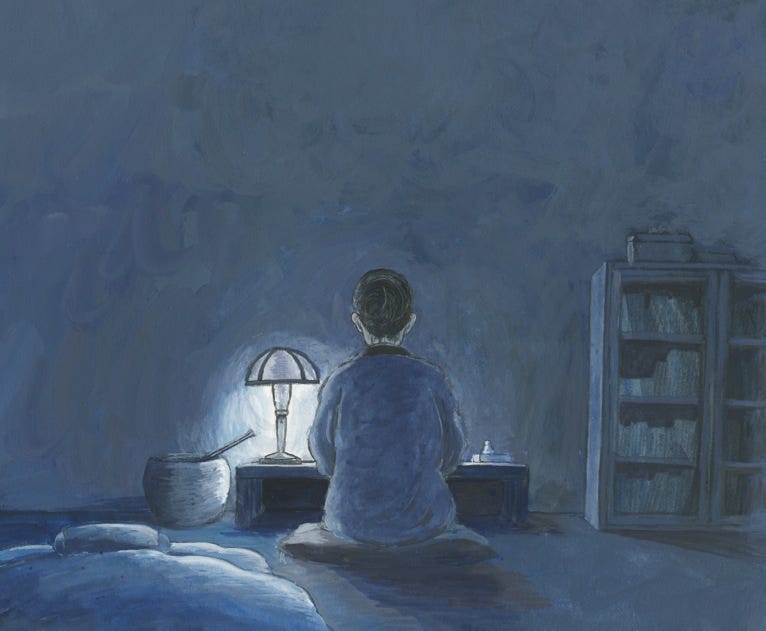
Misuzu at her desk. Illustration by Toshikado Hajiri

Children’s magazines were fashionable in the Taisho era of the 1920s in Japan; they frequently published the work of some of the best literary talent in the country at the time. Writing for children was not seen as beneath writing for adults, rather it was seen as an outlet for the kind of creativity and innocence children were perceived as inherently possessing. Do-shin was the word used to describe a child’s innocent heart to which do-wa (children’s stories) and do-yo (children’s poetry) could speak. Everyone who had been a child had at one time possessed ‘do-shin’ and could therefore experience again through do-wa and do-yo that state of innocence, purity and curiosity that was the essence of a child-like consciousness.

Writing for children was not seen as below that for adults; rather it was seen as an outlet for the kind of creativity and innocence children were perceived as inherently possessing.

Talented musicians, poets, and artists of the time were exploring this avenue of expression with enthusiasm. Misuzu, herself, a product of the changing times — well-educated and raised in a bookstore by a conscientious single mother — found herself among an admiring milieu of like-minded artists who appreciated her poetry. Masasuke, Misuzu’s younger brother, was also enthusiastic and musically gifted. Since they had grown up together (as ‘cousins’ — Masasuke did not know he was Misuzu’s brother) the two often collaborated with one another. Masasuke, being younger, was impressed by Misuzu’s achievements and was inspired by her writing. Not long after Misuzu moved to Shimonoseki, Masasuke went to Tokyo to get training in the book trade, during which time he continued composing music for children. One of his compositions was published in the children’s magazine Akai Tori in April, 1924. Misuzu was excited to hear this news and encouraged him.

In the meantime, a man named Keiki Miyamoto began working in the family bookstore. Misuzu’s uncle Matsuzo kept his eye on the young employee as a possible match for Misuzu for he was becoming increasingly worried that his adopted son, Masasuke was falling in love with Misuzu. How aware Misuzu was of her uncle’s plans are unknown; she was perhaps, in some ways, oblivious, focused as she was on her writing career.

She had joined a children’s writing group in the absence of editor Yaso Saijo, who had gone to France but who had been a great advocate of talented new writers like herself, and she also started assembling a personal collection of poems called Rokanshu (A Collection of Precious Stones). The journal was organized in monthly chapters. Notably, the first poem selected was a translation of Christina Rosetti’s “The Lowest Place,” which she caught glimpse of in an expensive edition sold at her bookstore (which, ironically, she could not afford) but could copy from by daintily lifting up its cover and jotting the words down in her notebook:

The Lowest Place

Give me the lowest place: not that I dare

Ask for that lowest place, but Thou hast died

That I might live and share

Thy glory by Thy side.

Give me the lowest place: or if for me

That lowest place too high, make one more low

Where I may sit and see

My God and love Thee so.

I quote the poem here as an example of Misuzu’s wide reading, one which shows her attraction to a religious work that extols humility. Another significant factor in Misuzu making this selection was that Yaso Saijo had already translated Rosetti into Japanese before, and had compared Misuzu to her. Misuzu, being a conscientious reader would likely have read anything he’d written or translated in appreciation of his literary sensibilities.

In the summer of 1925 , Misuzu’s best friend Hohoyo Tanabe died suddenly; this was deeply distressing to Misuzu. Hohoyo had returned to Senzaki from Korea where she had been living with her husband, to attend her ailing mother. While looking after her, she fell ill herself and died. She was pregnant with her first child who perished with her. Hohoyo and Misuzu were close and shared a love of poetry. Misuzu had dedicated her first collection of poems Kowareta Piano — “A Broken Piano” to her. And Hohoyo herself had recently published in Akai Tori. While in the midst of Misuzu’s mourning, Matsuzo finalized his arrangements for her marriage to Miyamoto to which obedient Misuzu complied. The wedding was to occur in Shimonoseki the following February.

On hearing of these plans, Masasuke felt uneasy. He made a special trip out to Senzaki where Misuzu was staying that winter to dissuade Misuzu from agreeing to this match. He also had to confirm the unsettling feelings he had for her. Was it true that she was his sister and not his cousin as he presumed all along? Earlier he had learned of his adoption by seeing his army draft papers, but now it dawned on him that Misuzu’s mother might well be his own, making Misuzu his sister. He needed to confirm this to be sure.

He also had to confirm the unsettling feelings he had for her. Was it true that she was his sister and not his cousin as he presumed all along?

Misuzu admitted to Masasuke that in fact, she was his sister. Having settled that, Masasuke then began to express his feelings of opposition towards loveless, arranged marriages. “Well, fine then,” he said. “It’s okay if you get married. But isn’t there anyone else who you love? If there is, why don’t you marry that person?” Misuzu’s oblique response was, “That person is the one wearing black clothes and holding a long scythe.” She was making a reference to the Grim Reaper. The comment would turn out to be prescient.

Clearly, Misuzu was not looking forward to the arrangement, but rather, was resigned to it. She knew she was of marriageable age, and was aware of her mother’s concern that if she didn’t marry soon, she would not find anyone. Misuzu also wanted to respect the wishes of her uncle Matsuzo; not agreeing to the arrangement would put her mother in an awkward position with him, something Misuzu did not want to risk. Besides these reasons, it is also possible Misuzu considered Masasuke’s artistic ambitions. Even though he was expected to take over the family bookstore, Misuzu wanted him to be free of his responsibility for it; if Misuzu married Miyamoto and things went well with Miyamoto working in the business, Masasuke could pursue his dreams as a composer without worrying about the future of the bookstore.

“Well, fine then,” he said. “It’s okay if you get married. But isn’t there anyone else who you love? If there is, why don’t you marry that person?”

In an age when arranged marriages were the norm, Misuzu took the conventional route for unselfish and compassionate reasons. Thinking of the needs of others in the strict and gendered hierarchy of obligations and responsibilities of women to men, and young to old, Misuzu did what she felt was right for everyone but herself. No one could have imagined just how badly this union would turn out to be until it was too late. Miyamoto turned out to be a disaster; he was a frequenter of brothels, had been involved in unsavoury business practices as a stockbroker, and had even tried killing himself with a prostitute in a double suicide attempt at which only he survived. If there was any love to be had in him for a woman, it would certainly not be for the bookish young niece his employer had arranged for him to marry. No, this was a marriage of convenience, securing his position in a place of well-regarded and reputable employment.

The couple started their life in the second floor of the bookstore in Shimonoseki in February of 1926. At first, Misuzu tried hard to be a good and dutiful wife. Her earnest, child-like optimism is made evident here in her much-loved poem “To Like It All.”

To Like It All

I want to like everything — 

onions, tomatoes, fish — 
I want to like them all.

Everything my mother makes
for our meals.

I want to like everyone — 

doctors, crows — 
all of them, too.

Everything and everyone in the world
God has made.

Not long after her wedding in February, Misuzu’s poetry experienced a resurgence in popularity and she was published several times in the following months throughout the spring. Later on, in July of that year, Misuzu’s poems Tairyo (The Big Catch) and Osakana (Fish) were chosen for the acclaimed annual Nihon Doyo Shu (A Collection of Japanese Children’s Poems) edited by members of the preeminent professional organization of children’s poetry writers, Doyo Shijin-kai, several of whom were well known writers of the age such as Toson Shimazaki, Izumi Kyoka, the editor Yaso Saijo, and Akiko Yosano. Later, an invitation was extended to Misuzu to join the group, making her only the second woman admitted into the association after the well established Yosano, who was now in her forties.

Meanwhile, trouble was brewing between the men in the bookstore. Masasuke and Miyamoto did not work well together. After an argument with Miyamoto over business practices, Masasuke abruptly left Shimonoseki to join Misuzu who was in Senzaki on an errand. Matsuzo believed Miyamoto had driven his beloved son Masasuke out of the business and confronted him. When Misuzu returned to the bookstore, she tried to mediate between her brother, uncle and her husband, by calmly advocating for Miyamoto. The result of this intervention, however, made things worse. Miyamoto became haughty and arrogant, to the point of brazenness; he invited the women he’d been seeing on the side to visit him openly at the bookstore. This was the final straw for Matsuzo. It was now evident that he had chosen the wrong marriage partner for his niece. He proposed to Misuzu that she divorce him at once, but it was too late. Misuzu was pregnant.

He proposed to Misuzu that she divorce him at once, but it was too late. Misuzu was pregnant.

Miyamoto was fired. He left with the intent to start his own business elsewhere, and even though her uncle told her she could remain at the bookstore, the pregnant Misuzu decided to accompany her husband. On November 14, 1926 Misuzu gave birth to a girl whom she named Fusae. By that time, Miyamoto’s new business venture was failing and there was again strain in the marriage.

The following summer, editor Yaso Saijo was going through Shimonoseki enroute to Kyushu; he arranged to meet Misuzu at the train station. The dapper, well-heeled cosmopolitan editor was startled to see a disheveled young woman dressed in dull cotton kimono with an infant strapped to her back. The gentle soft-spoken woman said, “I’ve come over the mountains just so I could meet you in person. Now I will be going back over the mountain again to go home.” This would be the only time Yaso Saijo would set eyes on the poet whose work he admired so much.

The dapper, well-heeled cosmopolitan editor was startled to see a disheveled young woman dressed in dull cotton kimono with an infant strapped to her back.

In the fall of 1927, the family moved again this time because of financial difficulties to Kyushu to where Miyamoto’s parents lived. The stay was short; they returned to Shimonoseki within a couple months, this time for Miyamoto to start a grocery business. By the end of the year, Misuzu had contracted gonorrhea from her philandering husband.

In early spring, poet Tadao Shimada came to visit Misuzu at one of the family’s branch bookstores in the new fashionable department store in Shimonoseki. Misuzu demurred; she was ill, bedridden in fact, and she did not want Shimada to see her in her current condition. Moreover, her husband had expressly forbidden her to write any poetry or correspond with her brother, colleagues, editors or fans. When her alma mater high school requested a contribution for their newsletter, Misuzu sadly wrote back:

The wings of my imagination which soared as high as the sun have now been clipped. All that is left is one foolish mother. I remain a bookworm who only knows the world that exists in books and makes no effort to understand the outside world. My sole happiness lies in playing with my child and in opening books.

Misuzu decided to compile a complete manuscript of her poems to give to Yaso Saijo and Masasuke. Despite her being ill, however, Miyamoto moved the family again — their fourth move in two years, and the second in eight months. Misuzu wrote of her fatigue to her mother that September; she could barely undertake even the slightest of house chores without having to recover for days afterwards. Ashamed, she told no one of her disease. In those days, without antibiotics, treatment was not effective. Despite this, or perhaps even because of the illness, Misuzu did manage to complete her manuscript at the end of October 1929. Even as she completed her goal, however, there was a weariness in her tone as expressed in this poem:

Personal Note After Finishing my Manuscript of Poems

It’s done

It’s done —

My little book of poems.

Not to say I’m proud,

but my heart does not dance,

and I feel lonely.

Now summer is over

And with autumn too, about to end,

I pick up my needle and work on a cloth,

feeling empty.

To whom will I show this book?

Even I feel it lacks something.

How lonely!

Without even climbing the heights

have I come back —

the mountain peaks shrouded in clouds.

But still, even knowing this,

have I stayed up late into the autumn night

writing intently under the lamp.

What shall I write tomorrow?

Ah, how lonely!

By early 1930, the weakened Misuzu now separated from Miyamoto, was living with her daughter, Fusae at her mother and uncle’s place where her mother could help with the child’s care. Unbeknownst to Misuzu, Miyamoto had gone to Tokyo. The couple’s divorce was finalized in 1930 but Miyamoto insisted on getting custody of their daughter as was his right under the law, knowing full well that Misuzu would refuse. By threatening to claim custody of the child, he planned to extort money from the family. He wrote to Misuzu that he would come for Fusae on March 10.

The day before his expected arrival, Misuzu went to get a final portrait of herself at the Miyoshi Photo Studio in Shimonoseki. On her way home, she bought a package of sakura-mochi, a favorite family treat made of sweet bean paste and sticky rice wrapped in a salted cherry leaf. She shared it with her daughter, and then lovingly bathed her before putting her to bed. Her mother noted nothing unusual in Misuzu’s behaviour that night; her last words to her mother were about Fusae: “She looks so cute when she’s asleep.”

Her mother noted nothing unusual in Misuzu’s behaviour that night; her last words to her mother were about Fusae: “She looks so cute when she’s asleep.”

That night, Misuzu wrote three wills — one for her husband, one for her mother, and one for her brother. The three documents no longer exist so it is difficult to corroborate what was written, but witnesses say, she urged her husband to give up his custody of Fusae to her mother who was the only person she could trust for her child’s upbringing. She wanted Fusae to have a ‘rich spirit’ rather than to be provided for only materially. She then apologized to her mother for being a poor wife who could not prevent her husband’s infidelities, and to her brother, she gave words of encouragement to pursue his dreams as an artist in Tokyo representing their family.

After she wrote the wills, she took an overdose of the sedative, Calmotin, a common drug used by writers for committing suicide, and died on March 10, 1930 at the age of twenty-six.

From then on, the poet Misuzu Kaneko was completely forgotten.

It was in the mid-sixties when poet and literary scholar Setsuo Yazaki was perusing some old children’s magazines in the library that he encountered Misuzu Kaneko’s poem “Big Catch.”

Big Catch

At sunrise, glorious sunrise

it’s a big catch!

A big catch of sardines!

On the beach, it’s like a festival

but in the sea, they will hold funerals

for the ten thousands of dead.

Yazaki was struck by the poem. Who was this poet who could empathize with even the fish in the sea? When he went to investigate, he could find little information about her. Misuzu was a pen name, and ‘Kaneko’ was the maiden surname of the poet. And although he could trace the poet back to city of Shimonoseki from where she submitted her poems, the bookstore where she worked was no longer in existence. Still, Yazaki persisted in his search. In 1982, he got a lucky break — the poet’s brother, Masasuke was alive and in his seventies. He presented Yazaki with some photos and three battered pocket diaries containing 512 poems, most of which were unpublished.

At the time of Yazaki’s discovery, he serendipitously met up with a colleague who would later head up a publishing company called JULA Publishing Bureau. Founded in 1982, JULA was the publishing arm of the Japan Children’s Literature Institute. Yazaki gave over all the work he had recovered to the press for publication. JULA published a six-volume set of all the poems as well as Yazaki’s biography of the poet, The Life of Children’s Poet Misuzu Kaneko — a meticulously researched work that is an authoritative and seminal account of the poet’s short life that many have consulted, myself included.

Once released into the world, Misuzu’s poetry quickly gained popularity in Japan, so much so that there is now a museum dedicated to her memory in her hometown of Senzaki. Not only have there been books published, but films have been made about her life as well as music composed to her poetry. In 2011, Misuzu’s poem “Are You An Echo?” received nation wide attention when it was aired on TV during the tsunami-earthquake crisis.

In 2011, Misuzu’s poem “Are You An Echo?” received nation wide attention when it was aired on TV during the tsunami-earthquake crisis.

My own encounter with Misuzu’s poetry began in 2010 when I was working as a blog contributor and reviewer for the now defunct multicultural children’s literature website, PaperTigers. I was instantly gripped by Misuzu’s work. She was extraordinarily perceptive and her viewpoint on the world of living things was unique, unlike anything I’d read before in children’s poetry in English.

At the time of my discovery of Misuzu Kaneko’s poetry, there were only two books of her work translated into English — D.P. Dutcher’s Something Nice and Midori Yoshida’s Rainbows on Eyelashes. Both were published by JULA. Although the books were competent translations of Misuzu’s most famous poems, they left me wanting more. So I decided to sharpen my skills at translating Japanese poetry acquired during my research scholarship days in Tokyo in the late 80’s to reveal more of this woman’s poetic treasure in English. I enlisted the aid of my Aunt Michiko, who had helped me translate her father’s (my late grandfather’s) memoir into English. Michiko wanted to improve her English by delving into more of Misuzu’s work through the act of translation. We set up an impromptu arrangement over e-mail, with Michiko selecting poems she liked from the six-volume set of Misuzu Kaneko’s poetry she had taken out of the library and sending them to me with an initial draft of a simplified English translation. I would read the translation and compare it to the original, and then tweak the English to make it read better for a native English reading audience.

This process of translation, although slow, was always delightful.

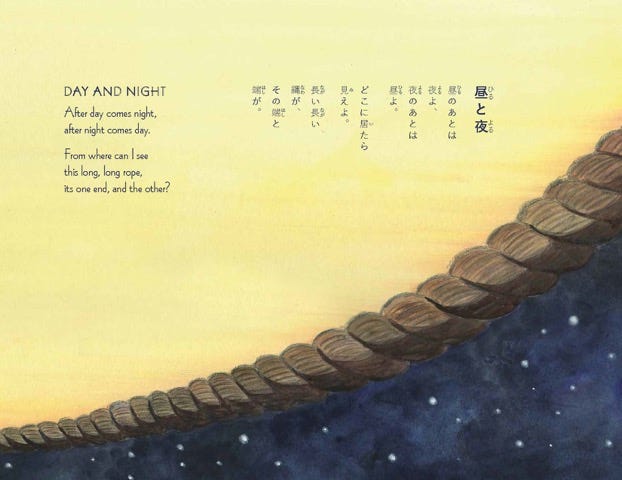
This process of translation, although slow, was always delightful. Time after time, with each poem translated, Michiko and I would be startled anew into another dimension of Misuzu’s imagination. For example, in one poem she personifies Last Year as a ship quietly leaving the harbor; in another poem, she offers words of comfort to a carp in a pond gazing enviously at carp streamers in the sky. Misuzu had a great capacity for empathy and compassion for all living creatures. And her attentive and watchful gaze often went to the unattended or the invisible. She noticed things other people didn’t and pondered them. Moreover, she was curious. In another poem, she contemplates the nature of time by reflecting on how night and day follow one another like a rope. For me, reading Misuzu sometimes felt like reading Blake. Her poetry was simple enough Japanese for a child (or a non-Japanese foreigner) to read, but only in translating it did I experience the depth and breadth of her unique vision.

Illustration by Toshikado Hajiri

Like Sakurai Satoe of the neglected gravestone, Misuzu Kaneko was nearly forgotten. But would that have mattered to her really? It seemed to me she wrote poetry for the sheer pleasure of it and that her success, at least initially, came as a surprise to her. I felt as if Misuzu wrote purely, and by purely, I mean without the trace of a self-conscious egotism. She wrote with the kind of innocent abandon I wish I could have again as a poet. Selfless and without guile, attentive but uncloying, she wrote poems about the world without the weight of its meaninglessness burdening every syllable. She embodied that perfection of the poetic ‘I’ that observes and becomes the thing it observes in compassion and harmony with it.

She embodied that perfection of the poetic ‘I’ that observes and becomes the thing it observes in compassion and harmony with it.

This is not to say Misuzu was unambitious with her work. Even as she was ill, itinerant with a philandering husband, and a mother of a young child, she steadfastly continued through extreme conditions to produce a final manuscript of her work to give to those who had appreciated her poetry the most — editor Yaso Saijo and her brother, Masasuke. She was grateful to them and probably believed she owed it to them to give them all of the work she had composed thus far in her short life. And when she finally completed this task, no doubt at some cost to her health, she turned joyfully at hand to record the words of her three year old daughter in a book she called Nankindama, or “Glass Beads.” Misuzu was a poet through and through, a woman besotted with words and their power to express her deepest feelings of love, compassion and gratitude. She wrote, not so much to be remembered, as to not forget how delightful and wondrous the world could be for a child, and that is why her poetry is so celebrated in Japan today.

(Endnote: The biographical material on Misuzu Kaneko was written in consultation of Setsuo Yazaki’s biography Doyo Shijin Kaneko Misuzu no Shogai (The Life of Children’s Poet Misuzu Kaneko) published by JULA Shuppan, 1993 and Elizabeth Keith’s Masters Thesis (2002) for the University of Hawaii entitled Kaneko Misuzu and The Development of Children’s Literature in Taisho Japan.)

Read more about Are You an Echo? The Lost Poetry of Misuzu Kaneko, published by Chin Music Press.

Writer Risks Life to Save Life’s Work

A cautionary tale that reminds us all to back up our work

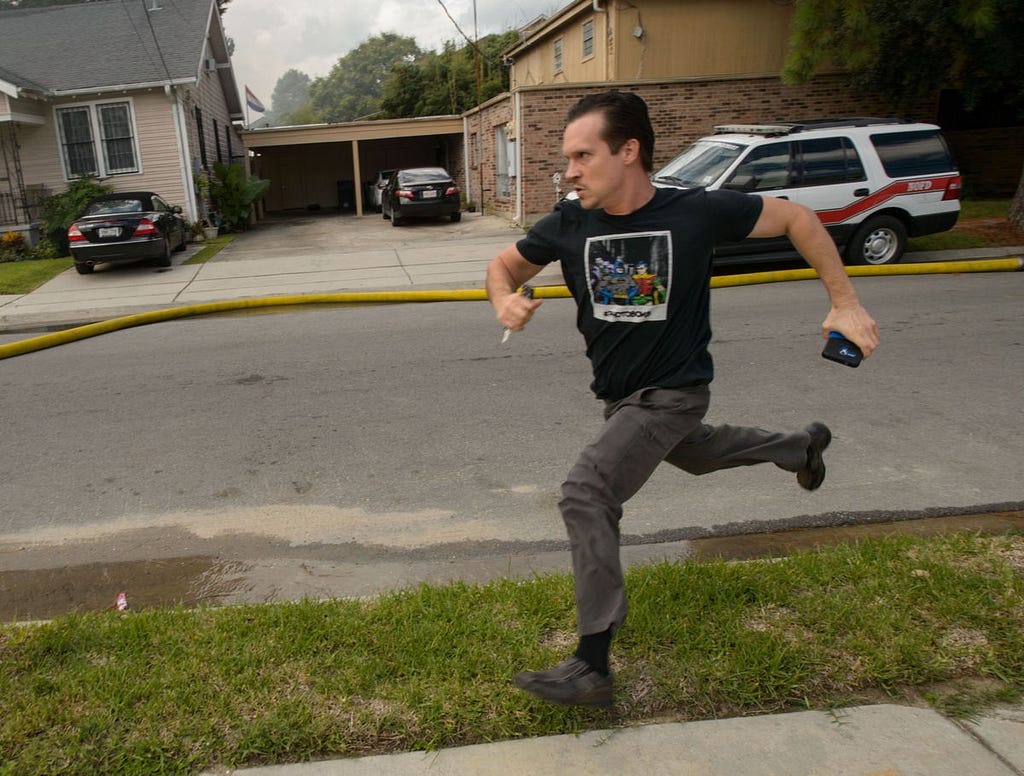
Gideon Hodge en route to save laptop. Apparently not a reinactment. This and other dramatic photographs by Matthew Hinton, available at the New Orleans Advocate.

In the digital age, despite differences in creed, color, and craft, all writers share one practice in common: backing up their work. Since most modern authors write on a laptop, they are particularly sensitive to the risk of losing all of their hard work in a nightmarish moment of bad luck. All it takes is one hard drive crash. Or in Gideon Hodge’s case, a raging fire.

Last week, Hodge who writes plays and novels, found himself running into his burning down home to save his laptop, which contained the entirety of his life’s work. When his fiancée called to tell him the terrible news, he instantly thought of the lone copies of two completed novels which he had not backed up elsewhere. He darted past firefighters who tried to dissuade him from entering what was essentially a death trap. Fortunately he and his laptop made it out unscathed. Everything else in the couple’s home was charred.

According to the New Orleans Advocate, Hodge didn’t think twice about putting himself in harm’s way for his art. He said, “Despite my better sense, I just ran inside and grabbed it. I didn’t think to be scared.”

Sometimes it takes a traumatic wakeup call to remind a writer the importance of backing up their work. As for Hodge, he plans on investing in multiple external hard drives to store outside of his home, just in case lightning strikes twice.

Who Will Win the Nobel Prize? Place Your Bets!

Everyone knows that it’s almost impossible to make money writing fiction, but that doesn’t mean you can’t make money betting on other people’s writing. The Nobel Prize in Literature will be announced in early October, and if you think you know who will win you can place your bets today.

According to sports betting side Ladbrokes, the favorites to win are Haruki Murakami, Ngugi Wa Thiong’o, and Philip Roth. However, Murakami and Roth have been topping the betting odds list for years and neither have won, suggesting the odds probably reflect the fame of those authors more than their actual chances of winning. (Similarly, Bob Dylan’s actual odds are certainly far lower than 50/1). It seems likely that Murakami is a bit too popular for the Nobel, and Roth, who is now retired, probably missed his chance. Thiong’o and Adunis seem like safer bets, but the Nobel doesn’t like to be predictable. Last year, Svetlana Alexievich won, making her the first non-fiction writer to win in a half century.

My own pick for a darkhorse candidate who might return good money: Hungarian novelist László Krasznahorkai.

Nobel Prize in Literature Odds at Ladbrokes

Haruki Murakami: 5/1

Ngugi Wa Thiong’o: 7/1

Philip Roth: 8/1

Ismail Kadare: 16/1

Joyce Carol Oates: 16/1

Jon Fosse: 20/1

Adunis: 25/1

Peter Handke: 25/1

Peter Nadas: 25/1

Amos Oz: 25/1

Ko Un: 25/1

John Banville: 33/1

Adam Zagajewski: 33/1

Antonio Lobo Antunes: 33/1

Juan Marse: 33/1

Kjell Askildsen: 33/1

Doris Kareva: 33/1

Javier Marias: 25/1

Claudio Magris: 33/1

No Exit

Books and stories are a form of escapism for many of us. We read to go away from our current lives, or to learn about people who are vastly different from us, or to be swept up by language, or — well, a list of reasons we read would be endless. But escapism is definitely there, whether it’s something we seek or only a byproduct. The stories in Alexandra Kleeman’s new collection, Intimations, both distressingly and beautifully convey a different message: there is no escape.

In the opening story, “Fairy Tale,” for example, the narrator is dropped into somewhere unknown, mid-scene, mid-dinner. Sitting at a table with the narrator are her parents and an unfamiliar man (I am assuming the narrator is female only because of context clues but in truth, her gender, and that of several of the other narrators, is indeterminate). She desperately tries to figure out what’s going on:

I was looking at all of the things and trying to notice connections between them. Why this table, why now? Why these things and not others?

More men appear later, all apparently past boyfriends or lovers, and a suitor begins chasing the narrator with a kitchen knife, with the declared aim of murdering her. When he catches up to her, she knows it’s time to start running again but it’s unclear if she does. There is a sense of the story ending with the narrator stuck inside it, perpetually on the brink of death. And somehow, terribly, she implies early on that it may be her own fault:

The whole situation felt as unreal as something could while also feeling sorely, mortally dangerous. It seemed to draw strength from my speech, as in: the more I spoke within it, accepting its premises, the more I spoke into it without screaming at it, the more it made me whoever this position demanded.

That dwelling within a situation’s rules and accepting them makes the situation real is entirely apt. It describes not only the characters in these strange and often upsetting stories but also the way a reader sinks into them. “Fairy Tale” itself can serve as a metaphor for various things: a series of abusive relationships, a feeling of displacement within one’s own life, alienation from decisions made in the past, and more. But in relation to the other stories in the collection, this is secondary to the feeling of inescapability.

Another story, “A Brief History of Weather” which is actually the longest story in the book (and which it must be said, though Kleeman may be tired of the comparison, is extremely reminiscent of Ben Marcus’s The Age of Wire and String) is even more literal. Though the story is woven around concepts that seem to redefine natural laws, it is, essentially, about a house that is locked and shut tight and impossible to leave. It is a house whose essence is repelling weather, keeping any and all weather, fair or foul, out. Its isolation is maddening enough for the partial narrator to invent a sister for herself so that she has a companion. Though in some ways the most closed off of the stories, it is also the only one that gives a momentary escape at the end, one which after the story’s own closeness is a vast relief.

In the collection’s title story, the narrator finds herself in a place without doors, and her introduction to the story is a vivid reminder of how important doorways are, whether physical or metaphorical:

I was trying to think of all the different things I liked about doors. Their size, their heft, the sense that they were made for bodies to pass through them freely. The way they put holes in spaces in which you would otherwise be trapped forever, looking for some way in or out. All of the best moments in my life had been preceded by entering or exiting a door, or maybe just having a door waiting there in the background, offering the possibility of escape. They were the only thinks I could think of that were truly reversible: no clear beginning or ending, passing endlessly through a series of midpoints and temporary stops. They were beautiful in this revocability, flexible and soft.

If this definition of doorways holds true to the collection, then each of the stories takes place between doorways — the opening page and the ending one — but those doorways are only open to us, the readers, whereas the characters are locked into their limited house of the pages provided. One could argue that any short story — any text, really — is like this, but Kleeman’s Intimations draws attention to this whereas most short stories don’t. She manages to both draw us entirely into her fiction and keep us at a distance, as spectators glancing through a window or walking through the stories like ghosts able to walk through walls.

Another theme that many of the stories share is an examination of relationships: the ones we get stuck in and remain inside of, the ones we choose to leave yet can’t, and the ones we lose but don’t ever truly escape. And in all of them, the feeling of trauma — something we can deal with in a variety of ways but which never really goes away, and which, in other words, we remain trapped inside of, to some degree or other, forever — is pervasive. In “Jellyfish,” one of three stories featuring a woman named Karen, the only mention of it comes up: “she had always believed that a person without trauma was dangerous in some way, untested.” Indeed, Kleeman puts her characters through the ringer in various forms of traumatic situations, from being jailed in a house (there is more than one story about this) to being stuck inside an unfamiliar and dangerously alien situation (ditto) to almost losing a baby to the apocalypse.

With eight of the twelve stories previously published, the collection is bookended by previously published stories — “Fairy Tale” appeared in The Paris Review and “You, Disappearing” appeared in Guernica — which is an odd choice for an editor to make as often readers come into collections expecting new stories by the author, especially one with a much-beloved novel out already (You Too Can Have A Body Like Mine came out in the summer of 2015). But in looking back at the stories, the choice of arrangement strengthens the overall feeling of encasement that the stories bring up.

Love Blind

In the achromat’s fantasy they’re wearing unitards. This is because they want to live in a world where wearing unitards is something that can be done at all times and in absolutely every conceivable situation, including bar mitzvahs and funerals. The colour doesn’t matter. They have achromatopsia, which means it’s like they’re perpetually living in a 1950’s futuristic television show, and life is only slightly less sexist, racist and classist than it is now. At least that’s how someone put it to them one time in a smoky bar just after last call right before they asked the achromat to go home with them for some hanky-panky, which the achromat, of course, absolutely did.

The achromat is at present in love with a tetrachromat. They want that tetrachromat in an incredibly bad, and probably emotionally unhealthy way. The achromat feels like this thing, be it love or a reasonable facsimile, is meant to be. This, their unrequited romance, and FYI completely unacknowledged on the tetrachromat’s side, has been sparked by how they see the world differently, literally, than other people. This, the achromat feels and knows, is a very flimsy premise for a relationship, but nonetheless they can’t help themselves.

The achromat and the tetrachromat met when some scientists thought it would be scientifically advantageous to study them, so they paid the achromat and the tetrachromat with money from a prestigious university that neither the achromat nor the tetrachromat could ever afford to attend to do some tests. They spent several hours over the following couple of weeks sitting and waiting in a sanitized room accompanied by a soundtrack of whirling fans, rattling pipes and an experimental, avant-garde orchestra of blue bottle flies sizzling their wings on the overhead fluorescent lighting.

The tetrachromat was already seated in the waiting room wearing a short-sleeved white button-up shirt and a Star Wars bow tie when the achromat walked in on that first day. They greeted each other then the tetrachromat began to rummage through their bag. The achromat found the tetrachromat attractive and immediately became aroused. They contemplated sitting on the tetrachromat’s lap and running their tongue over their face, starting from the tetrachomat’s jaw-line, up along their cheek to their forehead, and finishing by licking their eyeballs. Instead, because society deems this unacceptable behaviour to enact upon a complete stranger — and a slightly bizarre way of initiating communication — the achromat sat down in an empty chair and began to rummage through their own bag. They both coincidentally pulled out Etgar Keret books, which sparked a conversation.

That first day, the day they met, the tetrachromat told the achromat as they were leaving, after having little pads stuck to their heads and being repeatedly asked what they saw while medium-sized computers went beep-beep-beep, that they loved the achromat’s colours, that they hadn’t seen such colours before. It seemed insensitive of the tetrachromat to say. The achromat wondered if the tetrachromat lacked social skills. Nonetheless, it was almost unarguably clear that the tetrachromat said what they said flirtatiously.

Regardless of the possible lack of social skills on the tetrachromat’s part, and the slight shimmering of doubt that the tetrachromat had said anything flirtatiously, the achromat fantasized about the tetrachromat wearing a very teensy-tiny unitard that left nothing to the imagination except potential pubic hair colouring, but since they can’t really make out anything other than shades of grey that didn’t matter either. It’s just a fetish of the achromat’s, these teensy-tiny unitards. The achromat is also obsessed with little tracks of fine hair, visible or not, doesn’t matter, that run vertically down past the navel. The mythical, magical treasure trail, which, as far as they’re concerned, leads to the gold at the end of the rainbow — this expression loses a bit of ka-chow for the achromat since to them a rainbow merely looks like a striped “C” that’s had too much to drink and has fallen on its face. Anyways, because in the achromat’s fantasy they themselves are also wearing a unitard, they feel like a cross between Kate Bush and Freddie Mercury, and because the achromat feels like them they don’t feel like themselves, thus they can put their mouth all over the tetrachromat without fear of rejection. The achromat feels confident that they’ll do things to the tetrachromat that no one has ever done before.

When they meet again in real life at a pizza place on a treelined, cobblestoned street, after the scientific tests have finished chewing them up and spitting them out as a series of numerical and statistical observations, they kiss each other on both cheeks and hug because they’re somewhere in Europe and that’s what one does when in Rome. (Note: They’re, in fact, not in Rome.) The achromat wants to wrap the smell of the tetrachromat’s skin all over themselves, like a child curling up in their favourite fuzzy blanket, so they hold the embrace a bit too uncomfortably long for the tetrachromat’s liking. The tetrachromat breaks away, confirming the previous sentences’ validity and says, “Do you know Keret’s Unzipped?”

The achromat knows Keret’s Unzipped. In it, a person finds a zipper in their partner’s mouth, unzips it and finds a different partner inside then leaves the first partner near the bin to presumably rot. This makes the achromat start to feel unhinged because they suspect that this is not a favourable reference with which to start a conversation that the achromat had been hoping would end with their face nuzzled in wispy, downy tuffs of navel hair. The achromat can tell that the tetrachromat wants to say more, and that saying more will not lead to the achromat ever witnessing the tetrachromat in a teensy-tiny unitard ceremoniously sashaying in a precoital fashion.

“I feel like I’d just want to unzip you and leave you behind the garbage even if one day I think that might be a mistake,” says the tetrachromat.

The achromat’s ears start to burn, which means that they have presumably gone red, which is something that the achromat was told was not desirable. Basically, they were told, it was akin to taking a feeling out of a rucksack and putting it on a sign that has an arrow pointing at oneself and waving it around for everyone else to see. The bubblings of a desire to rip the zipper from tetrachromat’s jacket and strangle them with it prick the achromat’s consciousness. Rationally they understand that this seems to be an inappropriate amount of rage.

“I love your colours,” the tetrachromat says, “but it’s not enough.”

A series of questions, concerns, queries dart through the achromat’s mind like, Enough for what? What did the tetrachromat think they wanted? Are they expecting me to pay for their coffee? Regardless of the belief the achromat held split seconds earlier that they were madly, deeply, eternally, and passionately in love with the tetrachromat, or at least foresaw an above-average romp with them, the achromat feels now like that was simply a different character in this story. That Keret had written it from right to left then scratched it all out as though it never happened. The achromat frantically tries to write it from wrong to right, and makes a mental note to write Keret a letter giving them shit for this, even though they realize that this is ridiculous.

The achromat concludes that sharing a chromosome deficiency and a particular affinity for a certain author seems like it’s not enough to create a love to endure eternity anyways and not even enough to materialize a fantasy involving teensy-tiny unitards, and wispy, downy navel hair.

The achromat momentarily forgets all about the tetrachromat, who’s still sitting across from them, so the tetrachromat stands up to leave, a little annoyed with being ignored, thus snapping the achromat back to reality. The tetrachromat pulls their shirt up and scratches their belly. The achromat imagines a fine, alluring hair trail leading to the pot of what the achromat now deems as rusted, mouldy, dirty, useless gold. The achromat closes their eyes and everything goes black. When they open them again the teensy-tiny unitard fantasy is floating lazily out the open door with the tetrachromat, and the achromat can’t help but wondering if things would have worked out if the tetrachromat had been a deuteranope instead.

The Spaceship in the Backyard

Nostalgia for the very recent past is as annoying as it is comforting. Reiterations of Ghostbusters, Teenage Mutant Ninja Turtles, The X-Files, L.A. Law, Hey Arnold!, etc., etc., offer little more than pleasant familiarity to audiences and lucrative returns to investors. The recent popularity of Netflix’s Stranger Things — a pastiche of Spielbergian tropes and eighties references so precise as to resemble fan fiction, not of any particular intellectual property but of an entire era — is a testament to the power and popularity of remembering things not as they actually were but as they looked on television. Aside from the eighties-kid pandering of Ernest Cline, this trend has largely eluded contemporary literature, probably for the better. And though it is set in 1994 — the year of such era-defining phenomena as “The Rachel” hairdo, Kurt Cobain’s suicide, and the release of Pulp Fiction — Margaret Wappler’s debut novel, Neon Green, does not coast on easy nostalgia. Rather, it employs its nineties milieu toward aims infinitely more insightful and subtle than mere pastiche. Under Wappler’s scrutinizing authorial eye, 1994 is a specific and very real moment in time, not a nexus for a litany of obvious cultural touchstones. With evocative detail and restraint her novel depicts life in the nineties as it was actually lived — that is, with the slight addition of spaceships from Jupiter.

Neon Green follows the Allens, a nuclear family living in the Chicago suburb of Prairie Park, in the months after winning a government-sponsored contest to house a flying saucer in their backyard. Patriarch Ernest, an environmental activist, becomes concerned when he discovers the ship intermittently spewing green sludge onto his lawn; he then commences a legal battle against the organization responsible for the contest, New World Enterprises, that calls into question the compatibility of his moral idealism and his loyalty to his family. His wife Cynthia, who has compromised her idealism for the comfort and security provided by her work as an environmental lawyer, is too preoccupied to be overly concerned with the saucer, especially once she is diagnosed with breast cancer. Meanwhile their teenage daughter Alison and her older brother Gabe struggle against the strictures of adolescence and suburbia, only occasionally distracted by yet another one of their father’s environmentalist tirades or the green glow through their bedroom windows of the saucer’s “light show.”

One of Wappler’s deftest authorial moves is to resist symbolizing the spaceship. It is not an abstract manifestation of the Allens’ psychic torment, nor an allegorical mechanism demonstrating the corrupting effect of technology. It is a true and imposing physical object:

[I]t appeared to be little more than old airplane parts repurposed into a saucer. The same sharkskin metal bolted together. The material sturdy and impenetrable but also weathered. In some places, the surface buckled a bit or was scratched. The legs…looked like standard tubing from a hardware store, though with a silkier sheen.

And so it serves as a worthy antagonist for Ernest, and although no inhabitants are ever spotted through its darkened opaque windows, the ship takes on a character all its own, with a distinct narrative arc. The relationship between it and each of the Allens evolves throughout the novel; at different points in the narrative and through different characters’ eyes, the saucer is antagonistic, nurturing, pathetic, wounded, and always about as mysterious and unknowable as any human being.

Thankfully Wappler’s skillful close-third narration allows access to each of the four Allens’ interior lives. Alison in particular is powerfully rendered. Neither unrealistically precocious nor naïve, she is bright but melancholy, observant but lacking the experience to put words to her every feeling. She serves as the conduit for many of the novel’s most striking observations of both Midwestern life and young adulthood. “What a bunch of man-bots they were,” she remarks about the distracted way her father and brother go through the motions Christmas morning despite the grave prognosis of her mother’s illness. Elsewhere, in one unexpectedly haunting passage, Wappler captures exactly the combination of boredom and contentment that defined the pre-Internet afterschool hours:

On school nights, between 7 and 11, Gave and Alison’s world shrank to the confines of their home, and the options for amusement dwindled as well: watch TV, listen to music, play videogames, talk to their parents, talk on the phone. At some point, Alison would usually draw for a while in her room. Sometimes, Gabe would read, lately about the Vietnam War. He was glad he wasn’t eighteen in 1968 but oddly jealous, too. Everything seemed so meaningful back then.

Gabe’s thought suggests he views his own life as relatively meaninglessness, underscoring the desire for independence that grows in him throughout the novel. Moreover, Cynthia doesn’t allow herself to be defined by her cancer and neither does Wappler, who bestows upon her the nuance to be alternately brave, self-pitying, furious, and resigned — not just by her health problems but by her husband Ernest and his monomaniacal pursuit of self-serving justice.

And as well drawn as each Allen is, it is Ernest who functions as the novel’s focal point and whose growth is the most fraught and dramatic. He could have easily been a collection of quirks or a simple mouthpiece for the novel’s eco-critical themes, but Wappler’s narration is far too curious and compassionate to let his nuances go underexplored. In Ernest lies the exigence for Neon Green’s 1994 setting; the time period marks a turning point between the post-sixties political earnestness that fuels Ernest and the irony and disaffection he sees in his children that will come to define the decade ahead. Moreover, his tendency to let his idealism undermine his own comfort is the source of the novel’s most affecting comedy and tragedy. When we first meet Ernest he is in the midst of disrupting his own birthday barbeque celebration to clean up an insignificant lighter fluid spill:

Of course he knew that mopping up the spill would probably do nothing, that it was an infinitesimal smidgen in the grand scheme of things, but his fight was no less important when it was symbolic.

That Ernest possesses some self-awareness of his skewed sense of priorities but remains laser-focused on the cause is both noble and deeply, frustratingly sad. Like Harry Crews, an author with a similar penchant for grounding outlandish premises with complex and humane characterizations, Wappler does not flinch at the ugliness and pettiness that underlies her characters’ eccentricities.

And as alone in their own heads as the Allens frequently are, Neon Green’s structure, tracking in hyper-focus the family over the course of a few months, is the ideal form for showcasing the wit and compassion Wappler brings to her clear-eyed examinations of familial and social structures. By the novel’s conclusion, which without giving too much away is as note-perfect as any in recent memory, the hard-won growth of each of the core characters has been rendered with total candor. Even Ernest’s development from idealist to fatalist somehow reads as progress.

All in all, Neon Green hits a lot of familiar beats one expects from the “family drama” novel. What makes it flourish, however, is not so much the grounded wackiness of its sprinklings of sci-fi but rather its sensitive handling of its characters, which is never less than absolutely truthful. As Alison muses that regardless of “her family, her friends, who she thought she knew, there was only herself in the end to connect with, and only so much of herself to access at any given time,” the reader is thankful for the intimacy with which Wappler has shared her own characters.

Ted Wilson Reviews the World: The Greatest Generation

★★★★☆ (4 out of 5)

Hello, and welcome to my week-by-week review of the world. Today I am reviewing the Greatest Generation.

If I asked you what the greatest generation is, you would probably say millennials because they do seem quite popular. If you’re not a millennial yourself, you probably want to be one. I know I do. I’d love to be one if only to turn the clock back a few decades. There are so many things I haven’t done. Like make love in a helicopter.

Anyway, you’re wrong. The greatest generation is in fact a podcast called The Greatest Generation. The hosts of the show, Alvin and Blen, discuss episodes of the out-of-this-world sci-fi series Star Trek: The Next Generation.

Each episode of the podcast focuses on a single episode of the TV series. As a listener, this is a great way to learn about a show I never had the chance to watch when it aired almost 30 years ago. For the hosts of the show, this format may prove flawed — when the TV series runs out of episodes, so do Alvin and Blen. Then they’ll be out of jobs.

I like the hosts of the show a lot. They seem like two fun, friendly guys who are probably good huggers. But everyone has their secrets and I’m sure these guys do too. Perhaps one of them accidentally took a life when he was younger. He and a friend were just play-fighting but then the next thing you know someone falls off a bale of hay and their neck is all twisted up and things can never be the same.

Or maybe one of the hosts simply has a fetish for licking fruit at the supermarket and then putting it back. I don’t know what secrets these guys have and I don’t want to know. I prefer that they remain as voices coming out of the library computer. I don’t ever want to meet either of them.

If you enjoy listening to strangers speak, this show is for you! It’s like overhearing a conversation at the mall food court that is so compelling you stick around even though you finished your shake. (The show also accepts cash donations for people who like to pay to listen to strangers speak.)

I’m considering starting my own podcast where I review each episode of The Greatest Generation. I don’t have a podcast partner so I would have to record myself talking to myself, which would take twice as long as a normal podcast. Plus I don’t have any recording equipment and I’m generally not the strongest with technology, so it seems like there are a lot of obstacles in my way. Never mind. I’m not going to do it.

BEST FEATURE: The hosts have a side gig helping to support the memory of WWII veterans.
WORST FEATURE: I can’t see any of the things described on the show. Maybe they can improve that somehow. If they invent a new type of podcast with pictures they could really have something on their hands.

Please join me next week when I’ll be reviewing Clorox.

Here Is the 2016 National Book Award Fiction Longlist!

The longlist for the prestigious National Book Award in fiction was just announced, and the ten novels are an eclectic and interesting mix. The favorite will likely be Colson Whitehead’s best-selling The Underground Railroad, an Oprah pick and perhaps the most talked about literary novel of the year. But alongside established authors like Whitehead and Adam Haslett, the longlist includes a debut novels by Garth Greenwell as well as several under-the-radar but excellent novels. (The longlist sadly does not include any small press or short story collections this year though.)

Here’s the full list. Congrats to all the authors!