Ted Wilson Reviews the World: Noma

★★★★☆ (4 out of 5)

Hello, and welcome to my week-by-week review of the world. Today I am reviewing Noma.

The city of Copenhagen is home to Noma, one of the world’s fanciest restaurants. Don’t get confused by the sign outside which looks a lot like it says “’Nomo,” and then walk right past the place like I did. I ended up wandering around the neighborhood for a couple of hours, and got so hungry I had to stop and eat dinner somewhere else beforehand.

Upon entering Noma, the entire staff was waiting to greet me, like a surprise birthday party but without any cake or balloons. Or presents. Sad, because it was actually my birthday. Frankly, I was a little creeped out to know that they had been watching me from afar and knew when I would walk in. What if I had picked my nose while they were watching me? Not that I ever do that.

Despite being fancy, there is no need to dress up at Noma. One customer was wearing salmon colored shorts with a wrinkled button down shirt, as if he had just woken up on a yacht. He made me feel out of place in my tuxedo.

The food at Noma is some of the most delicious and complex I’ve ever tasted. Much better than anything I could make at home, unless I lived in the Noma kitchen. I asked and they said no, but were extremely polite about it. Everyone was so warm and accommodating — like how your family would treat you if they found out you had a terminal illness but you didn’t know it yet.

The whole experience was unparalleled, but I couldn’t help get a little melancholy. Each plate was a serving of death. Dead plants and dead animals. Dead stillborn babies (fruits). Plate after plate of delicious, thoughtful, carefully crafted death. It reminded me that one day I’ll end up on a plate being served to Earth as she swallows me up. I ran to the bathroom so I could cry.

When I finally left I noticed a newly built footbridge just outside that crosses the river. I only wish I had spotted it sooner because then I wouldn’t have started undressing in preparation for my swim. A woman and her son spotted me wearing nothing more than my underwear and a cummerbund. It was hard to explain.

BEST FEATURE: One of the chefs named Rene told me he liked my smile.
WORST FEATURE: Some of the celebrities I saw were Wolf Blitzer and Judd Hirsch, neither of whom I care for.

Please join me next week when I’ll be reviewing Miracle-Gro.

The Price: A Queer Daughter of a Queer Mother

I am doomed to die an ugly death or at least to be separated from my partner, probably violently. So is my queer mother and my partner and my cousin and many of my friends. We are all doomed, it seems, because this is the only story American media tells about queer women. In fact, after the recent death of a popular lesbian character on the TV show, The 100, Autostraddle even created a list of the 156 (and counting) queer women on TV alone who have died, usually violently. If you believe this story, which is really the only story, queer women like me have no future. It seems we are doomed to the same future we’ve been marching and protesting and just living our lives against for so long. And the past is denied to us as well.

If you believe this story, which is really the only story, queer women like me have no future.

Maybe that’s why I’ve locked onto Patricia Highsmith’s The Price of Salt, which has re-entered the popular imagination via last year’s film adaptation, Carol. Because The Price of Salt is one of the only windows into the queer past for most of us that doesn’t end with the proscribed tragedy. It’s one of the only records of history we, as queer women, have that isn’t another dead end. It is still one of the only narratives we have about that supposed golden age so many conservative politicians want us to return to, a time when segregation was legal and being queer wasn’t, when being a (middle class, white) woman meant staying at home and rearing children while the men went to work. Or this is the (false) narrative of that time we’ve been sold by films and books. The Price of Salt gives us a rare glimpse of an alternate past that existed inside and beside that popular story manufactured by Hollywood. And that other past we get a glimpse of in The Price of Salt gives us at least the chance to rewrite the future for ourselves and a different past.

My story (and my mother’s) starts with photographs of the past: my parents’ wedding. These are are elegant black and white images like stills from a 1950s movie full of glittering, glamorous promise, but if you look carefully you can see that something isn’t right. After my parents divorce, I would bring out their wedding album looking for something about them that wasn’t about after but before. I was probably looking for clues to the disaster of their divorce, but I didn’t understand it that way at the time. Maybe I thought, in the naive way of seven-year-olds, that seeing these photos of their beginning would inspire in my parents a reunion and everything would go back to the way it had been. But all I learned was that these photos made Dad smile painfully and sometimes cry, made Mom angry (and probably sad) in that tight-lipped turning-away way of hers.

We’ve been taught to think of the tragic in women, its evidence, as beauty.

In those gorgeous wedding photos, my mother looked so tired and drawn, feverish, her smiles forced and cheerless even though she looks beautiful still. Maybe that’s why she looks so beautiful and I never questioned it: we’ve been taught to think of the tragic in women, its evidence, as beauty. My father told me long before they divorced and even after that Mom had been sick the night before the wedding and that was why she looked so raw.

It took twenty years before my mother would tell my girlfriend, my partner, the truth: She was in love with her maid of honor who had begged her to run away to San Fransisco and graduate school where they could be together. They spent that last night together crying because my mother chose the only route she understood, the one expected, and married my father. In her world in that time (and as Gabrielle Bellot points out in her essay, “The True Price of Salt: On the Book that Became ‘Carol’”, still in our world, our time) this was the only path to a happy, middle class life, which was the only life possible. Following her heart was a path that lead only to depravity and darkness. Everyone knew that tragic story.

I didn’t read The Price of Salt until I was in my late twenties even though it sat on my mother and her partner’s book shelves along with Adrienne Rich, Vita Sackville-West, Audre Lorde’s poetry, and, of course, Rubyfruit Jungle. Their bookshelf became a sort of do-not-read, anti-recommendation shelf for me. These books were queer and I wasn’t; I couldn’t be because I was nothing like them, so I drew a circle around these books that lasted even through most of my undergraduate life at Vassar. So I didn’t understand how radical The Price of Salt was, how strange and fabulist it is in parts, how hallucinatory and real. I didn’t know how revelatory a book could be to a life lived trying so hard to be normal. But the script of my life isn’t what you’re assuming either. My mother didn’t leave my father for another woman and my father was not in any way Harge. At any moment he could have taken my brother and I from our mother and her partner (this is still a reality for many children of LGBTQ parents), but he didn’t. And my mother loved him. When she realized she was in love with him after twelve years of marriage, she decided to be brutally honest and tell him the truth about her wedding night. She felt that he deserved that. But some truths are best left buried. This one (and probably other factors I haven’t been told, will never know because my POV is limited) broke their marriage. And them. And us.

I didn’t know how revelatory a book could be to a life lived trying so hard to be normal.

Andrew Wilson’s biography of Highsmith, Beautiful Shadow: A Life of Patricia Highsmith, reveals that she wrote The Price of Salt at a time when she was undergoing therapy to prepare her for a normal, heterosexual marriage. The Price of Salt was her own escape fantasy, based on a woman she saw while working at a department store much like the store where Therese worked in the book and film, the woman, much like Carol. And Highsmith wrote them a ‘happy’ ending, which was unheard of at the time, and as Gabrielle Bellot points out and anyone who watches TV and movies knows, is still an incredible rarity. Lesbians in popular film, books, and TV still don’t end up getting the girl and the happy ending; they are more likely to end up raped and murdered. This is the story that our culture and its media has written for us as the script of our lives, a cautionary tale. See what happens when you live outside the heteronormative lines? It’s not pretty. But The Price of Salt is. Breathtakingly so. It is everything we hope for even while the threats (Harge, the gun in the glove compartment, the private investigator) hover always at the edge of vision, the edge of our lives, menacing, always ready to explode into violence.

My partner and I met in college, but she was a year ahead of me because I was forced to take a year off after high school for financial reasons. It took me some time to come out of denial, during which she, the best friend, waited patiently while I went through the motions of falling for different guys who never turned out to be exactly right even though they were wonderful people. I was following the same script as my mother thinking it was somehow rebellious. Thinking I could never be like her, the woman who ruined her marriage, who, despite her advanced degree, lived in near-poverty with another woman, both of them such an embarrassment to my teenage self that I could barely stand to look at them. That was not my story. I would live the life she had failed to live and be a success. That was what I told myself and caused a great deal of pain to me and my partner, my mother, and those men as well. I tried to kill myself my freshman year, but told myself it was strictly chemical, no ‘real’ reason for it. My partner was the one who talked me down and tried, without saying as much, to tell me how my life was also hers and to take care with it.

I wish I could say that I read The Price of Salt at a time when I needed it, my ‘formative’ years that were really about unforming, but I didn’t read it until after. After I was queer. But I still needed it even then. This lone affirmation in the face of an entire world trying to negate us, erase us. An alternative to the standard narrative, printed and read by thousands of others. Like magic. Before the internet, this was its own net(work) connecting us through this story and its difference, the difference of its readers bringing it into the world with every word read and silently shared.

I was following the same script as my mother thinking it was somehow rebellious.

I’m often told how much easier it must have been for me having a queer mother and in some ways I guess it was. I didn’t have to fear being thrown out or abused because of my sexuality. All I had to fear was the ‘I told you so’ looks and remarks from them and all of my friends. But when your parents don’t fit the normal script or image of family, you work hard to distance yourself from them. Or I did. When your mother is as far off the norm as mine was, that distance becomes so large you can no longer see that it’s there. And I saw firsthand what this life meant, the stress and toll of it, on every minute of every day.

My mother chose not to talk to me about the fact that she was queer, thinking it was better to put it off until I was older even though she was living, we were living, with another woman, her partner. I found out the hard way. A mean girl who was friends with my best friend used the word ‘lezzie’ at soccer practice to describe someone she didn’t like and they all made faces as if this was the worst possible thing they could imagine. I had no idea what the word meant so she explained it to me with obvious delight and I can still hear her voice years later: “A lezzie is a woman who sleeps with other women.” They all made puking noises as I thought of my mother and her partner in their bed, sleeping, me trying to wake them up without making it too obvious, so they would make pancakes. Then the horrifying realization that my mother and her partner were monsters and my best friend had spent the night so many times, she must have known, but she never made the connection.

To them it was an abstract, a monstrous possibility that lived outside their world; to me it was a terrifying reality and I began at that moment to lie. Not only did I lie to my friends about my mother, but I created a silence at home that extended to everything from displays of affection (not allowed in my presence) to my soccer games and school functions, which they were no longer allowed to attend. I was a tyrant, punishing them not just for their queerness, but for lying to me, and for leaving me so unprepared for and vulnerable to the hatred that fills the world. I was the tyrannical director, writer, set designer forcing my own family to follow the script, to live in a world that couldn’t hold them. I told myself without telling myself that I was nothing like them. I was normal and they weren’t. I would never be like them. And because they felt guilt and shame about who they were and for making my life more difficult, they accepted it. And I became that mean girl I hated.

All of this because there was no other narrative but the one presented by that clueless mean girl who got that story from everything around her whispering and shouting it all the time or simply erasing us so that we didn’t exist at all except as monstrous mythological villains like werewolves or demons. I wish, like so many people, that I could have my childhood back. That I could live it without shame and guilt, without shaming my mother and her partner. It’s more complicated than this, of course (it always is). None of this would have been possible if my mother were the type of person who was open with her feelings, who talked about things. But she wasn’t. She isn’t. She learned early in a southern Methodist family full of secrets to keep her ‘perversion’ to herself. In fact, lesbianism was so taboo, so unspoken, she had no idea that all the making out she and her high school ‘girlfriends’ were doing (practicing for boys) was in any way wrong until her mother cornered her and asked her if she was ‘like that.’ When my mother asked what she meant, all my grandmother could think to say was that ‘girls like that’ touched each other’s breasts. My clueless, incredibly popular teenaged mom was so confused she said no, because they hadn’t done that. She hadn’t even understood that as a possibility.

These powerful men are letting us know by writing laws on bodies, that no body is safe from their gaze, their control and intrusion.

Re-reading The Price of Salt, I realized that on my first reading I had missed so much — joy, humor, the strange, almost hallucinatory descriptions, stunning writing — because I was so worried, terrified that the tragic ending our culture promises was waiting for them both. I skipped over entire scenes, just to make sure they survived. I was sure they as a couple or as Carol and Therese would not, could not survive this book, this love story. There are so many guns on the mantle in this book — the check, the letter, the actual gun in Carol’s suitcase, Therese and Carol’s illegal relationship, the long, low-speed car chase of the road trip — Highsmith plays on the very real heteronormative narrative limits to create this sickening dread without any real ‘action’ taking place. It’s difficult to remember when reading this intimate relationship novel that Highsmith is a writer famous and popular for her thrillers, until you understand how she played with these threats and the way they would and should operate in a different narrative. There’s no high-speed chase and the gun never goes off, but the letter does and it does as much if not more damage. Even though it was written by a wishful, naive Therese, that letter explodes Carol’s life. And the ever-absent Rindy’s.

That’s not to say that action and danger aren’t present in the book. Carol and Therese are constantly watched and surveilled by men — boyfriends, family, friends, the maid acting as an agent of Harge, private investigators. When they finally consummate their romance in a hotel room, Carol and Therese are spied on and recorded by the private investigator hired by Harge through a hotel room wall in a scene that has a disturbing contemporary mirror in the Erin Andrews trial. So there’s no tragic ending, the gun doesn’t go off, but as so many women and LGBTQ people still experience, there’s no end to the surveillance, the constant intrusion or threat of intrusion into their lives, which is its own insidious violence.

Think of the current cultural storm over bathroom laws, which have only ever been about cis-het men policing the bodies of women and non-binary people in what was once a relatively safe space. These powerful men are letting us know by writing laws on bodies, that no place, no body is safe from their gaze, their control and intrusion. That they can enter any space, control any body, in the name of keeping women safe.

This time, re-reading The Price of Salt, I thought of one of the many endings in the book, that girl losing her mother and all of my childhood fear that I would lose mine. Because that was the other unspoken story that always murmured under my denials: because of who my mother was, who she loved, they could take me from her at any time. If my father had been a different person, he could have easily gotten custody of both me and my brother. And he wanted custody badly, he just wasn’t anything like Harge. He was absolutely gorgeous and brilliant and broken and decent. He never fit the ideal of toxic masculinity and he suffered for it. He showed his love and affection frequently. It shouldn’t have to come down to my father’s decency, his love for us that was stronger than his need for revenge, but it did. It did.

But for my mother, it could never be that woman she denied on her wedding night and she was never again truly happy in love.

Rindy, that fictional child Carol lost because she refused to lie, because she refused to fulfill the tragic narrative and denounce her love for Therese, lost her mother and the possibility of another story herself. She was only a threat and a pawn to be used by Harge and his family to bend Carol to their heteronormative will, away from the happy ending. There is Rindy (and me, always me) moving away, manipulated by those around her, by the men and the patriarchal system that controls the narrative. Rindy’s story is my story. And then there is me again, Therese, finding the thing she didn’t even know existed and falling, falling away from everything she is told told to want. Away from the things that are supposed to be safe. Then there is Carol, my mother in another reality and somewhat in this one, beautiful and troubled, finding herself and her story with a younger woman, risking and losing everything for it. But for my mother, it could never be that woman she denied on her wedding night for the normal story and she was never again truly happy in love. Her love story had already had its tragic end and we were living in the aftermath.

Watching Carol was revelatory in different ways. The differences between the film and the book were the first things I noticed, the first things I criticized. Of course. It wasn’t my book anymore; Carol is its own separate, parallel universe. The translation from book to screen is never lossless, and with a book like The Price of Salt which relies so heavily on style, characterization, and sentence-level writing to tell a story that really barely moves despite all the travel, the loss was inevitable. But Todd Haynes, Blanchett, and Rooney as well as the entire crew of Carol create something new, a hybrid world, and a story that moves to a similar ending along different lines. This difference is probably because the story in the novel centered on Therese. In the novel, everything we knew about Carol was filtered through Therese’s naive, desperate, lovesick gaze, including Harge who barely appears, acting instead through agents (private investigators, lawyers, Rindy). But with an actor like Cate Blanchett in the role, it was always going to become Carol’s movie, and I think it suffers a bit for it. Because now we see too much of Harge. Instead of one more male presence circling Carol and Therese who are at the center of the story, Harge becomes more human, and sympathetic, a character in his own right. In the novel we don’t see the confrontation in the lawyer’s office that, in the film, leaves Harge looking more human, and worthy of our sympathy despite the fact that he’s taken their daughter from Carol and put her (and Therese and Abbey and his own daughter) through hell. He deserves no sympathy, but as moviegoers, we’ve been trained to look through the faults of male characters to see the pain beneath, and Harge is no exception.

In the novel, we know all about Therese, her tragic childhood, the orphanage, her drive and desire to succeed in set design, her stilted, bittersweet relationship with Richard, but the film barely scratches the surface of Therese’s world, focusing instead on Carol and her relationships. It’s Carol’s world and Harge, as the villain, is centered in a way that he wasn’t in the novel, pushing Therese to the margins. The book is Therese’s world; the film is Carol’s, and, to a certain extent, the audience’s.

Todd Haynes described the recurring theme of viewing Carol and Therese and their world through windows in an interview at rogerebert.com:

“It’s sort of about what we’re doing as viewers watching a movie. That looking is … we’re supposed to be invisible watching movies in the dark, anonymous, [the] camera is hidden, all of the apparatus is hidden. And we’re pretending that this thing is just happening by itself. But in fact, all of the machinery of looking is informing what we’re looking at. And so when stories and characters are looking at each other, or at things, or as in “Carol” — when the things being looked at are seen through windows and window panes and glass that’s dirty — the act of looking, and even the act of a camera looking is suggestive in that.”

I like things like that. I like making you think about … the thing that we’re not really supposed to think about, and yet all of our power comes from the act of looking, and what we project onto what we see.” I understand what Haynes is doing and that he is commenting on the omnipresent male gaze that is the real violence in Carol, but this reverses the novel’s perspective, which is Therese’s. It reverses the queer woman’s perspective, her only power. Todd Haynes, in making us aware of the male gaze, centers it, and Harge. Therese becomes the object of the gaze rather than the subject and the center she is in the book.

This reverses the novel’s perspective, which is Therese’s. It reverses the queer woman’s perspective, her only power.

I do wish that Carol had kept Therese’s occupation as an ambitious, hard-working set designer rather than a casual photographer who sort of falls into a job at The Times via a male friend, although I understand why they didn’t. In a film, photography can act as a more direct analogy for the process of filming itself. It’s also more immediately accessible in terms of the film viewer and acts as a visual stand-in for Therese’s obsession with Carol. But set design was such a brilliant choice for Therese. Alone with a script or play in her own decrepit apartment, creating idealized rooms (designed for men, always for men) that no one would ever live in. Rooms and worlds that were only ever for a backdrop where people would act out lines from a memorized script day after day. I could see my younger self in that role: redesigning our lives, our house to fit the script and the director’s (always men) interpretation of the story. Maybe that was always my role.

I can say that I was lucky. The man in our life, my mother’s life, was not Harge, but the rest of the story (the media, TV, books) is one dominated by invisible, threatening men and their omnipresent gaze. From the bosses who used my mother’s sexuality and her need to hide it to threaten and harass her, to keep her out of stable professions like teaching, to the medical school that refused to admit my mother despite her high MCAT scores because they felt she should stay home with her children, to the rich pedophile who used our poverty and outsiderness to (almost successfully) groom my younger brother, to the teachers and advisors who tried to keep me in my place despite my test scores and grades. Patriarchy is not just the invisible system of oppression, it is individual men (and women) who carry out its violence, its daily micro-aggressions to ensure that women (and other men) stick to the script. With all the advances we’ve made in terms of LGBTQ rights, it’s difficult to remember that in most states, including Kentucky where I grew up and now live, it’s perfectly legal to fire someone because they’re not cis-gendered and/or straight. It’s legal to deny us housing as well. More threats, more silent violences that could explode our lives at any moment.

I’ve written fan fiction for shows that didn’t include me, because it’s a way to write ourselves back in using the characters and worlds that exclude us.

The Price of Salt was a fantasy Patricia Highsmith wrote for herself, a sort of fanfiction for her own life, her own lovers, real and imagined, at a time when she was undergoing therapy to rid herself of this potentially lethal love. I bring up fan fiction because I’ve written it myself for shows and worlds that didn’t include me, because it’s a way that those of us who live lives outside the norm to write ourselves back in using the characters and worlds that exclude us. Highsmith took that narrative, her own (it’s never her/our own), and re-imagined it, wrote herself and all of us back into the story, wrote us all, if not a perfectly happy ending, at least one with the possibility of some happiness.

In my reimagined, rewritten life for my mother, in that other universe so close to ours, she and the love of her life are driving on those same highways all the way to San Fransisco and I am fading. Or maybe I’m not. I believed for so long that those were the only two possibilities, the only possible universes: the one that results in me and the one where my mother lived the life she didn’t even know she could dream of. Now I can finally believe that both and all are possible and maybe I am living that other life, the one she believed to be a literal dead end. I’ve lived the happy ending, am still living it with all of its difficulties and discrimination and thanks to Highsmith, I know that I’m not just living but writing that happy ending and the world with it, along with my partner, our friends and family, every difficult, terrible, beautiful day.

Labor Day: 11 Lousy Jobs in Literature

When Herman Melville published “Bartleby, the Scrivener: A Story of Wall Street” in 1853, he created a lasting portrayal of the mindless drugery and paper pushing that occurs in a white-collar office place (in Bartelby’s case, a law office). Bartleby’s resistance to making copies and other boring tasks is not only still relevant, it’s at the core of the growing genre of office-based dramas. In the universal yet fundamentally bizarre microcosm of an office —because really, you’ve voluntarily sequestered yourself in a room with a random assortment of people — the intrigues, romances, and conflicts are inflated.

At the DMV or the dentist, we acknowledge that no one would be there unless they had to be; in the workplace, it’s an open secret, by turns dark and hilarious. TV and film mine the workplace all the time, but this Labor Day, why not pick up a novel to fill The Office-shaped hole in your life?

The books on this list range from a tale of a failing alligator theme park in southern Florida to a satire of corporate America (but seriously, where does all the tasteless cantaloupe come from?), from office jobs to manual labor.

Each one should make you feel a little bit better about returning to your job after the long weekend, with summer finished and a long dark winter ahead.

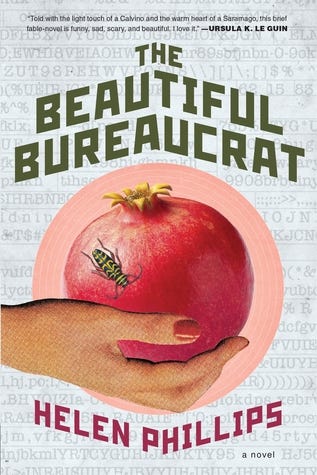
1. The Beautiful Bureaucrat by Helen Phillips

Josephine Newbury has a mind-numbing job: she compares paper files to a computer database and updates the latter if there are any inconsistencies. Not only does she repeat this simple task ad nauseam but, in an Orwellian twist, the files are meaningless strings of numbers, her boss is known only as “The Person with Bad Breath,” and her office is a windowless, blank room hidden away inside a building labeled with the letters A and Z. Phillips’ novel is chilling mix of the dystopian and the familiar, ultimately asking questions about humanity and rising above easy office satire.

2. The Circle by Dave Eggers

It was inevitable that Silicon Valley, the poster child for a new worker-friendly environment, would come crashing off its pedestal. This has happened both in real life (see: misogynistic culture, profitless companies) and with fictional satires like HBO’s Silicon Valley. It’s not surprising that Dave Eggers would take a shot at big tech. His tenth novel follows the recent college grad Mae Holland as she begins work at The Circle, a powerful technology company run by the “Three Wise Men.” After falling for the perks of working there (free snacks, happy hour), Mae learns the troubling truth: the company’s surveillance technology will lead to increased government control and possibly even a totalitarian state. It’s a warning to tech geeks everywhere: in the future, the only thing we’ll be free of is gluten.

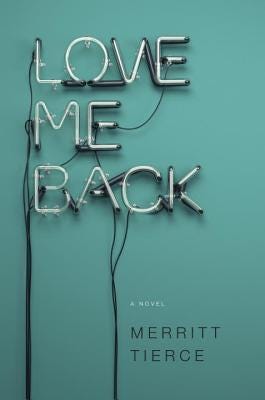
3. Love Me Back by Merritt Tierce

Tierce’s debut novel follows Marie, a self-destructive young woman working at a series of restaurants in Texas. Her waitressing experience is one long high, a chaotic frenzy of orders taken between drug hits and casual sexual encounters. Despite Marie’s somewhat sadistic enjoyment of the job, Tierce shows the brutal realities of the service industry, which can be exhausting, demeaning, and more than a little frustrating when you’re paid less than minimum wage to serve hundred dollar steaks.

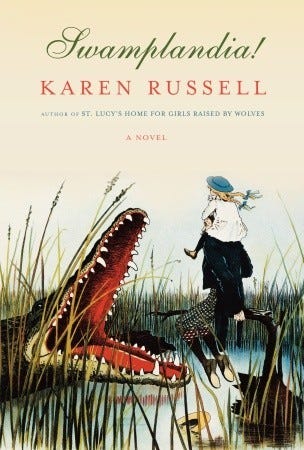
4. Swamplandia! by Karen Russell

The titular Swamplandia in this Pulitzer Prize-nominated novel is a run-down alligator theme park on a remote island off the southern Florida coast. Ava Bigtree is a thirteen-year-old on a mission to help save her family’s park — and her family itself — from complete collapse. But no amount of alligator wresting is able to pull Swamplandia out of a descent into its eery, watery environs. You know your business is bad when you lose customers to a rival park called “The World of Darkness.”

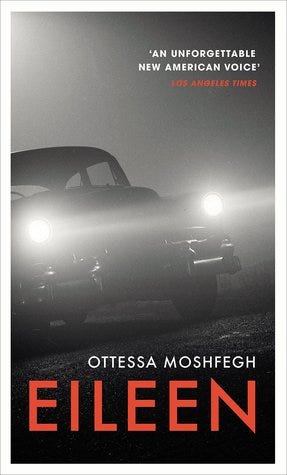
5. Eileen by Ottessa Moshfegh

Almost no one has a great job at the age of twenty-four but for Eileen, working as an underpaid public relations assistant or junior editor would be a dream. And dream she does, of moving to New York and leaving her job as a secretary who’s paid fifty-seven dollars a week to work at a private juvenile correctional facility for teenage boys in the middle of blue-collar Massachusetts.

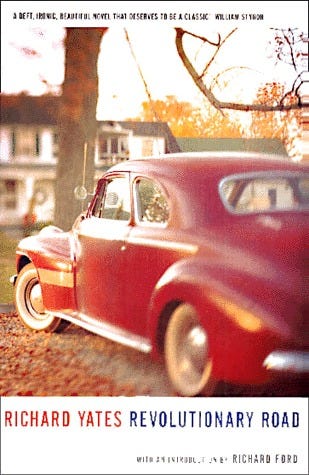
6. Revolutionary Road by Richard Yates

Long before Mad Men, Richard Yates took on the dark side of the “American Dream” of two kids, a car, and a house in the suburbs. Frank Wheeler appears to have it all; he works at Knox Business Machines, commuting to New York City from his home in suburban Connecticut. His wife, April, was an aspiring actress before she became a housewife and mother of two. Yet both Wheelers feel trapped in their vacuous life and yearn for more. When April suggests moving to Paris to become artists, it’s Frank who can’t commit. Like so many other Americans, he’s in the grip of the job he hates, alternatively despising it and being enthralled by the idea of success.

7. Personal Days by Ed Park

Ed Park riffs on the Frank Wheeler paradox of modern life: you fear getting laid off from a job you hate. The novel follows workers at a failing ad agency in New York City who have survived one round of layoffs only to find themselves anticipating the next. The book mines today’s workplace culture. The three section headings are pulled from technology — “Can’t Undo,” “Replace All,” “Revert to Saved” — and the environment is relatable to anyone who’s worked in a modern office: drinking with your colleagues, regretting drinking with your colleagues, self-Googling, and the merits of various Starbucks.

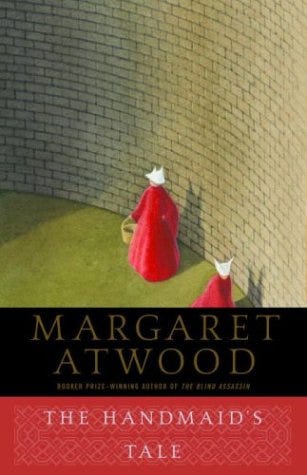
8. The Handmaid’s Tale by Margaret Atwood

As bad as your job may be, it can’t be worse than being a handmaid in Atwood’s Republic of Gilead, a male dominated, theocratic military dictatorship that replaces the United States of America. Offred is one such handmaid, and her job is to be a professional womb. She must procreate with her commander (Fred, hence her name Of-fred) and provide babies for an increasingly sterile society.

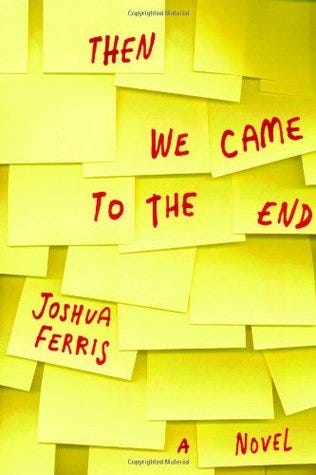
9. Then We Came to the End by Joshua Ferris

On the lower rungs of the corporate ladder, workers are often encouraged to be part of a team — a useful, anonymous part. Ferris emphasizes this groupthink environment by writing his novel about a failing Chicago advertising agency in the first person plural. The narrators of this darkly comedic book all are trying to avoid the layoffs which are ravaging the company. At the same time, they suffer from an intense boredom that not even free bagels can improve.

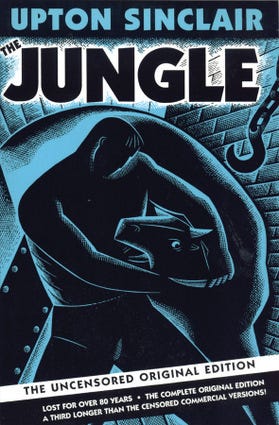
10. The Jungle by Upton Sinclair

Written in 1906, Sinclair’s novel is the original workplace horror story, all the more frightening given that it was based on Sinclair’s actual observations at a Chicago meat packing plant. The book follows Jurgis Rudkus, a Lithuanian immigrant struggling to survive in the slums of Chicago. He works at a meatpacking plant so foul and unsanitary that after the novel came out an outraged American public called for, and received, reforms to the meat packing industry. But it’s not just Jurgis who suffers — everyone in his family must take an appalling, low wage job. Yet instead of earning a decent living, his wife is raped, his family is evicted, and his nephew is trapped in a factory and eaten alive by rats.

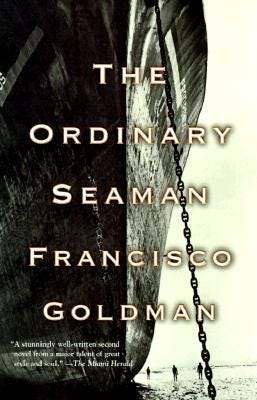
11. The Ordinary Seaman by Francisco Goldman

Undocumented immigrants undoubtedly face the worst working conditions in this country. Unprotected and at the mercy of their employers, they risk exploitation in the hope of a better life. This is the premise of Goldman’s second novel: sixteen men from Central America are lured onto a ship with the promise of work, only to find themselves trapped on the dilapidated, unsanitary freighter for six months while it stays docked in Brooklyn. Eventually Esteban, a 19-year-old veteran of the war in Nicaragua, escapes the ship and tries to make a new life for himself in the city.

The Supply and Demand of War

For those hoping Roy Scranton’s new novel War Porn might be a quick beach read to round out the summer reading list, a serious warning is in order: “Abandon all hope, ye who enter here.” Like Dante and Virgil before that, Roy Scranton writes to show you his vision of hell. Hell is a terrifying place, and any accurate description will — by necessity — disturb and frighten. Perhaps it’s no surprise then that Roy Scranton’s novel War Porn took nearly a decade to see the light of day, with years going by in which Scranton couldn’t get an agent to read it.

Scranton spent a short stint in the US Army as a junior enlisted troop, doing a lone deployment to Iraq in the relatively early days of the war. It was during his time in service that Scranton began writing War Porn. After Scranton left the Army, he finished his undergrad and a master’s degree before going to Princeton for his PhD. Among a long list of other accomplishments, he co-edited the short story collection Fire and Forget with veteran-author Matt Gallagher and authored the book Learning to Die in the Anthropocene: Reflections on the End of a Civilization. Throughout the journey, he refused to give up on his novel manuscript. Scranton’s vision and perseverance finally paid off. The novel is now available from Soho Press.

“[War Porn raises] interesting questions about the nature of those who demand and those who supply.”

War Porn tells a broad story of our conflict in Iraq through a narrow political lens by connecting three seemingly disparate threads. Scranton’s connections between the storylines are tight and significant, making the overall plotting of the novel a compelling and veritable achievement. War Porn doesn’t break any new ground with its political statements or in bringing war’s ugliness to light, but it does raise interesting questions about the nature of those who demand and those who supply; those who watch, and those who put on the show.

One thread follows Wilson, a junior enlisted soldier running patrols in the early days of the Iraq wars. Wilson’s chief conflict is against his own view of his place in the Army, for his inflated self-image of himself as an intellectual and a poet doesn’t change the fact that he’s nothing more than a grunt following orders in an unjust war — just like the crude soldiers cracking racist and sexist jokes next to him. He drifts through his tour with contempt for both the invaders and the invaded. When his unit rounds up several military-aged males and goes through a bureaucratic maze to finally land them at a prison compound, Wilson’s crime is not so much that he turns over innocent Iraqis for eventual brutalization, it’s that his self-involved cynicism keeps him from even caring.

The most accomplished thread follows Professor Qasim al-Zabadi, an intellectual working at a Baghdad university as the United States invades Iraq. His wife is already living with family in Baqubah, but al-Zabadi is torn between maintaining his career prospects, maintaining his honor, maintaining the integrity of his family, or maintaining the illusion that he has any control over any of them. The choices he agonizes over are ultimately meaningless to his fate, as al-Zabadi’s victimhood is predetermined by deceitful liars who would betray him and indiscriminate soldiers who don’t care whether he is a combatant or not.

The final thread has at its center the anti-hero Corporal Aaron Stojanowski, who accompanies his date to a backyard barbecue attended by young civilian professionals. Sto, as his battle buddies called him, is recently returned from an Iraq deployment where he served as a guard at a military detainment camp reminiscent of Abu Ghraib — the torture, humiliation, and photography of victims included. Hosting the party is Matt, an insecure software developer begging to know what it was really like “over there.” All too happy to oblige, Sto pulls out a thumbdrive to show Matt the eponymous pictures he brought back from Iraq. During his braggadocios presentation, Sto continually minimizes his role in the torture by repeating the chorus that he was simply holding the camera and — of course — just following orders.

“War porn […] is an element of depraved lust, a twisted desire to live vicariously, or in the context of war veterans, to re-live vicariously.”

War porn, in general, is the colloquial phrase well-known in military circles that encompasses forms of media depicting the most provocative and extreme depictions of violence, gore, and brutality wrought by combat, which — according to the novel’s jacket copy — are “viewed voyeuristically or for emotional gratification.” Inherent in the term is an element of depraved lust, a twisted desire to live vicariously, or in the context of war veterans, to re-live vicariously.

Through the narrow lens of Stojanowski’s war porn, the threads all connect to reveal that Wilson is as responsible for al-Zabadi’s victimhood as Stojanowksi, the broader implication being that it’s not just Wilson who’s responsible, but the civilians at the backyard barbecue are responsible; the American public is responsible; the author himself is responsible. In so far as Matt seeks to live vicariously through Sto’s stories and images, he wants to be Sto — the powerful embodiment of American violence — and Matt’s girlfriend desperately wants to be with Sto.

The resulting sequence of events and the explicit descriptions that follow should disturb any reader with a conscience. Some might make the case that Scranton’s novel is literary and literal — rather than metaphorical — war porn. However, literature is not a zero sum game; in the hands of a gifted writer — and Scranton is a gifted writer — a phrase can be both metaphor and not.

“[T]he explicit descriptions [will] disturb any reader with a conscience.”

Roy Scranton seems to be a fascinating paradox, as do many veteran-writers, people who have the hearts of both warriors and poets, many militant in our opposition to war, yet writing our words with blood-stained hands as we try desperately with Lady Macbeth to find that which will wash out the damned spot. Scranton, for one, has made somewhat of a name for himself by excoriating the work of other war writers, modern colleagues included, with prominent essays in The New York Times and Los Angeles Review of Books. His willingness to play the provocateur has produced lively debate throughout the mil-vet writing blogosphere — see, e.g., here, here, and here — and the debate is not new.

He takes particular issue with those who might claim a more authentic knowledge of war by virtue of their actual experiences fighting in a war. If Scranton’s piece in The New York Times is to be taken literally, the experiential knowledge gap between those who have seen combat and those who have not is no different than the experiential knowledge gap between those who have worked making coffee and those who have not. The real gap for Scranton is found “between our subconscious belief that righteous violence can redeem us, even ennoble us, and the chastening truth that violence debases and corrupts.”

I don’t necessarily disagree with him, but it’s hard not to notice that Scranton’s chastening truth is one grasped and revealed through the lens of his personal experience watching Baghdad burn. Adding to the seeming incongruity, War Porn features glowing blurbs from big-name authors like Ben Fountain, Phil Klay, and E.L. Doctorow, all extolling the authority of the narrative and its fidelity to truth, while Soho Press publicity materials all make sure to point out that Scranton is himself a war veteran. As a result, Scranton’s apparent position on claims of authority-through-experience presents a glaring contradiction that stands in opposition to the way in which he’s built his own career and reputation as a writer. Though his writing and scholarship are impressive independently of his experience, the authority of his “chastening truth” about war and his work’s reception rest largely on his personal experience carrying a rifle in a war.

“Roy Scranton [is a] fascinating paradox.”

Nevertheless, I believe it’s important to read with the presumption of intentionality, meaning we should presume the author crafted each section, every chapter, and every sentence with purposeful and articulable reasons. I believe it’s also essential to read with generosity, meaning that if the author’s purpose is not immediately clear, our first assumption should not be that the author unwittingly failed in achieving his purpose; instead, we can and should choose to believe that our own blind spots keep us from recognizing what the author intended. If a glaring contradiction presents itself, the presumption of intentionality and the spirit of generosity would suggest that the author presents that contradiction with purpose, perhaps to provoke thought and prompt questions and incite the exploration of ideas. The easiest but least fruitful presumption would be that the author hypocritically claims the authority to reveal some ultimate truth the rest of us can’t see.

What does it mean, then, for Scranton to be — in the words of E.L. Doctorow — a “truth-telling war writer?” Around the time Fire and Forget was published, Scranton claimed War Porn was “a story about our desire for war stories, and what that desire might cost.” The irony of Scranton’s work — dramatic irony as opposed to the fashionable hipster irony — is that it derides America’s demand for violence and war stories while being all too willing to serve as the supply channel for the same.

I don’t mean to imply that Scranton’s work is in any way hypocritical. To the contrary, with War Porn — as with many of his essays — Scranton seems to be making an earnest effort to acknowledge his own sins in the war on terror, repent, and then advance his truth with the zeal of an evangelist blinded on the road to Damascus — that truth being that the apathetic American public should likewise acknowledge its own complicity in furthering the violence that spans the globe and leaves trails of victims we’d rather not see. Then after acknowledging its complicity, that same public should go and do likewise; i.e., repent and sin no more.

“[T]he embodiment of American violence and imperialism victimizes the very people who facilitated and craved that which ultimately ruins them.”

As the supplier of the chastening truth about war, Scranton graphically depicts both violence and rape. Such intent coupled with Scranton’s skill equals results that should shock the conscience of any empathetic reader, let alone those who have never been inoculated through personal witness to war. If Scranton set out to write a story about our desire for war stories and what that desire might cost, it’s hard to say he didn’t accomplish exactly that. Given everything leading to the War Porn’s disturbing climax, it should be no surprise when the embodiment of American violence and imperialism victimizes the very people who facilitated and craved that which ultimately ruins them.

Scranton’s method of evangelism asserts that what so shocks and abhors you, dear reader, is the very thing being carried out in your name on a daily basis. These victims, dear reader, are your victims, because they are the product of American violence that you, dear reader, are complicit in promulgating. In deploying the shock and awe technique in his narrative, Scranton evinces a certain hope — namely, that our slumbering public will wake up to our descent into hell and ask as Virgil did, “What power hath wrought such dread iniquity?”

The reception to War Porn will likely be polarizing. For anyone who picks up War Porn to fill their desire for war stories, Scranton has made absolutely sure that no reader makes it to the end without paying the price. Like the few Americans who have seen war and its true costs, readers will not be able to unsee what Scranton labored so long to show them. The brutal imagery sticks around, provokes thought, and more importantly, provokes the question: “What am I going to do about it?”

We Need the Alternate Realities Living Inside Girls of Color from Brooklyn

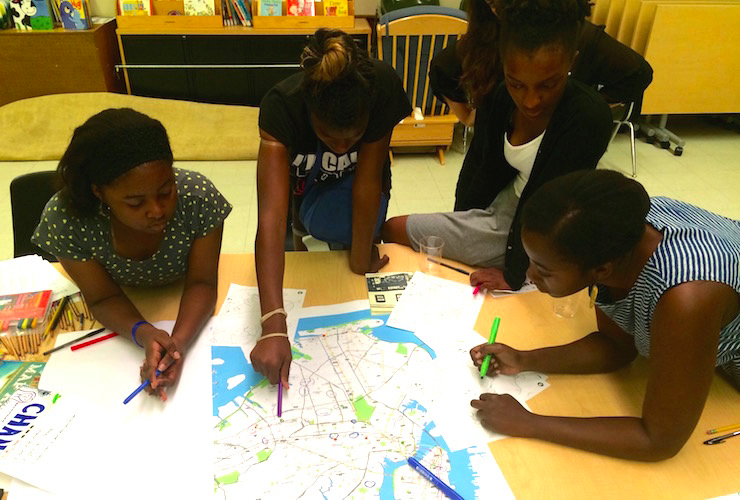
One of the highlights of my summer was getting to visit the Octavia Project in Brooklyn, New York, and getting a chance to meet the students and talk to the founders of this unique program for 13–18 year-old girls from Brooklyn. Named after Octavia Butler, the Octavia Project uses girls’ passion in science fiction, fantasy, fan-fiction, and gaming to teach them skills in science, technology, art, and writing, equipping them with skills to dream and build new futures for themselves and their communities.

Their mission statement notes that “Workshops tap into emotional connection and personal expression while building 21st century skills. Art and writing workshops integrate science and tech, focusing on creativity, innovation, communication, and critical thinking, while exploring programming, engineering, and digital and media literacy.”

I had time to catch up with Chana Porter, co-founder of the Octavia Project, during this summer’s session, and asked her some questions about the program. Porter is a writer and teacher living in Brooklyn. Her plays and performance pieces have been developed or produced at Cloud City, 3LD, Rattlestick Playwright’s Theatre, Cherry Lane, The Invisible Dog, Primary Stages, Movement Research, PS122, and The White Bear in London. She is currently writing a series of science fiction novels, Post Human Classics. Up Next: Phantasmagoria, Let Us Seek Death! at La Mama Experimental Theatre Club October 20th-November 6th.

Jeff VanderMeer: How are science and science fiction related, in your opinion?

Chana Porter: At every point in history, we collectively agree to the rules of our world, both social and scientific. Science fiction gives the writer permission to think outside of the assumptions of our given reality. “What If?” conjures another possibility into being, like the creation of a parallel universe. What if the world were different? What if our essential agreements around “This is the way things have always been” were shifted, corroded, exploded, remade?

Science fiction can also be a beautiful way to get people interested in science. Octavia Butler says that her writing brought with it an interest in astronomy. Additionally, her Xenogenesis trilogy is enriched by principles of genetics and biology. The rules of wizardry in Ursula Le Guin’s A Wizard of Earthsea are developed around physical principles of matter and energy. Nnedi Okorafor’s Binti takes the ancient astronomical tool the astrolabe and turns it into a powerful device connected to mind and body. Compelling science fiction stories start with science we are familiar with, and then extend into science that is alien, unfamiliar, or not yet possible. For some people, especially young people, these stories can be gateways into fields of scientific/sociological study they didn’t know existed.

VanderMeer: How do you use science fiction as part of the Octavia Project?

Porter: Meghan McNamara, a science teacher and dear friend, saw the opportunity to teach science and tech skills through SF/F writing workshops I was leading with teen girls. Over the course of the month at the Octavia Project, teen girls from Brooklyn write SF/F stories that are enriched by interdisciplinary projects. A SF story is transformed into a text-based computer game. The girls learn simple coding while building the game based around their story. The computer game is a branching narrative, and this changes the way the author has been thinking about her story. So she keeps writing, incorporating the new ideas she gleaned from the computer game project.

The next day, a professional woman architect comes to teach the basics of 3-D modeling. The girl builds a cityscape from her imaginary world. Then we take it back to the page. Building her city has changed the way she thinks about her story. Every project is connected back to storytelling at the Octavia Project. The girl designs clothes and tools from her world, then uses basic circuitry and principles of electrical engineering to create wearable electronics based on her design. This causes her to think about how tools function in her story. She takes it back to the page.

This summer our theme at the Octavia Project is “200 Years in the Future” — we chose this theme for a few reasons. First, it pushes our participants to think about what they want their futures and the futures of their communities to look like. We’re asking them a question “What do you want the future to be like?” and then we’re helping them build the skills to create the answer. While most people agree that scientific discoveries can make the world a better place to live in, we created the Octavia Project to help address the imbalance around who gets to benefit from current and future technologies.

While most people agree that scientific discoveries can make the world a better place to live in, we created the Octavia Project to help address the imbalance around who gets to benefit from current and future technologies.

Along with our theme, this summer we’re learning about the evolution of life on Earth. We are looking at how plants and animals have evolved to where they are today, and then we’re imagining what these plants and animals might be like hundreds of years from now. We’re asking how has life on Earth changed and what conditions or events have made it change.

Courtesy of Octavia Project

VanderMeer: What draws you personally to science fiction and what are some of your favorite stories or novels?

Porter: I was 19 years old when I discovered Octavia Butler in a library. I had already read most of the major guys, Asimov, Bradbury, Heinlein. I picked up Dawn because I liked the sound of her name. Dawn exploded my assumptions. It asked, what if the essential things about our human identities were changed: how we meet, mate, breed, and co-habitat? Octavia’s exploration of intimacy and human sexuality through human-alien symbiotic relationships gave me permission to think about the malleable nature of identity. I got older and found Samuel Delany, Joanna Russ, Rachel Pollack, China Miéville, Marge Piercy, Dorothy Byrant. Nnedi Okorafor, N.K. Jemisin, Victor Lavalle, Ann Leckie, Monica Byrne. Their “What ifs” allow me to think more expansively, critically, and creatively about our current moment.

VanderMeer: How does storytelling in the fictional realm help in conveying nonfictional information or weaving a narrative related to nonfiction?

Porter: Last summer, we showed a video of Bree Newsome taking down the Confederate Flag. The touchstone of the conversation that followed was Katniss Everdeen of The Hunger Games. The cultural phenomenon of this series had given us a way to talk about media representation, protest, and the power of symbols that we could connect to Bree Newsome’s bold direct action. It was an amazing tool to talk about a charged current event.

We use SF/F at the Octavia Project as a means to question the assumptions of our current reality. We ask, what if your world didn’t have prisons? How would people solve their problems and keep each other safe? How are children raised in your imaginary society? How does the community rally around its most vulnerable citizens? Through SF/F, we are able to talk about disability, about race, about queerness, about gender roles and expectations, all the while growing complex and divergent possibilities for our future on this planet.

We ask, what if your world didn’t have prisons? How would people solve their problems and keep each other safe? How are children raised in your imaginary society? How does the community rally around its most vulnerable citizens?

VanderMeer: Is there anything you’d like to add about the Octavia Project that’s relevant to the future of science fiction?

Porter: I’ve been a playwright for a dozen years. Three years ago, I started writing a SF novel and was struck by how much personal discipline it takes to see that process all the way through. I’m privileged to have a wide, supportive network rooting for my success and loads of education. And it’s still so hard.

Until young women are given the space and support to commit their words to the page, their would-be novels will permanently languish in the purgatory of good ideas. And our world will be poorer for it.

If we truly believe in the radical, transformational power of science fiction, we need to make sure that people from underserved communities, often bearing the brunt of the disparity in our country, are given the space and support to unleash their visions and their voices on our world.

Because we desperately need their visions of alternative futures if the world is going to change for the better. We need the alternate realities living inside girls of color from Brooklyn.

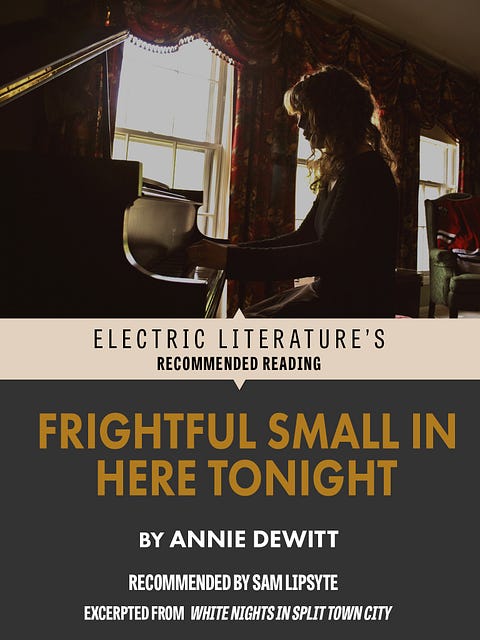
Frightful Small In Here Tonight by Annie DeWitt

Callie kept a frozen chicken in the cupboard over the sink. The mass of flesh was stacked on the pile of china next to the whiskey and the boxes of bullion. She kept a styrofoam tray wedged between the plate and the bird to catch the runoff from the thaw. It took a day for a bird like that to shed all its ice.

The evening after the bonfire at the butte, Callie had invited us to a meal. Birdie and me and Father with her husband, The Little Wrestler, and their three young brutes.

It was late in the afternoon by the time we arrived. The previous night was still heavy on us. I could tell Father felt it too. “You look tired, Jeanie,” he said as we got out of the car. “Why do you look so tired?”

When we arrived we gathered around the little table in the kitchen and watched Callie prepare the meat. Never has a woman performed such surgery. The way she massaged that carcass you would’ve thought she was trying to resuscitate some old heart. After each of the cuts was slick with dressing she floured both sides with a grainy cornmeal.

“Test the fryer for me, baby,” Callie said to me, motioning toward the pan once she had one breast good and white on both sides. “Toss a little water in with your fingers and see if it sizzles.”

We were there under the auspice that Father knew something about pipes. There was a clog in her disposal. Callie said she thought one of her boys had stuck an action figure in there again. “They’re trying to replicate war,” she’d said when we’d come in motioning toward the battlefield in the living room. Apparently the disposal gave a good mangling to the leg.

“What do you make of my handiwork?” Callie’s husband said to Father as he came into to the kitchen. “I was just under there myself a few days ago.”

“A fine job,” Father said where he lay on his back with his head under her sink. “I’ve never been much good with my hands. Just thought I’d lend an eye to it while you were out.”

“Don’t they teach you professor types which way to turn a screw in law school?” the husband said.

“Rick’s an engineer, Dan,” Callie said looking down at Father as he pulled himself out from under the cabinet.

“That explains why he’s fixing my drain pipe,” the husband said.

He laughed then. “Next time she’ll bring in a damn preacher to teach our sons to shoot hoops. If you need me I’ll be out in the yard with the animals.”

Dan let the screen door go behind him as he made his way out back and into the yard. It slammed a little on its hinges. The spring was still tight.

“Why don’t you put all that away now, Rick,” Callie said gently. “I’ll get you a clean towel.”

“I suppose it would be good to freshen up,” Father said, brushing his hands against his knees as he righted himself in the tight space of the kitchen, ducking so as to avoid the low-hanging lamp.

“Let them golden,” Callie said. She handed me an old plastic spatula and motioned toward the chicken where it popped and fizzled in the pan. Father followed her down the hall toward the bathroom off the kitchen.

I watched Dan through the window over the sink as he made his way into the yard. There wasn’t much anger in him. He had a flatfooted way of walking that betrayed a low center of gravity. According to Otto, the old farmer who lived across our road, Dan had been a wrestler. Callie had met him while he was out on the circuit. Otto had raised her as a child when she’d gotten into some trouble she couldn’t get out of. “Back then she would follow anything around with a Harley and a helmet,” Otto said. “First it was the rock bands, then the bikers. Eventually she landed with a crew of wrestlers who frequented the bar where she worked. Dan was a little man. It was all she could do to show herself off to him.”

The way Dan shot hoops now with his sons you could tell Callie had taken so much of the lay out of him. He had that short guy’s way of aiming high such that the ball bounced off the backboard and rebounded on the front rim before meeting the hoop. He tossed one after another like this. I’d seen carpenters nail a board with more energy. Maybe Dan was a bird lover after all.

Their house was a one-story ranch. It sat a good way back from the road on a plot of land next to the commuter highway. An old swing-set floundered in the front yard. One of the swings was broken. They’d strung it up short with the chain. In back there was a tool shed which they’d turned into a barn where they kept a few chickens and a small brown cow. In front of the barn they’d poured a square of blacktop. At the end of it stood an old basketball hoop. Several dirt bikes were parked in the knoll under the tree next to the little barn.

My sister Birdie was out there on the blacktop with Dan and his sons.

“You get too close to the thing,” Dan yelled as the largest of the boys landed under the hoop, bending backward and hurling the ball over his shoulder with a clumsy underhand. While the boys shot around, Dan took Birdie up on his shoulders. Every third throw he’d walk her over to the hoop and let her shoot. Birdie reached for the rim like she wanted to hang for a minute. One of the older boys came over and lifted Birdie up under the arms until she was standing on his shoulders. He stood under the hoop while she lunged for the rim. She made the catch and hung like that for several seconds, pumping her legs every now and again.

Down the hall Father ran the water in the bathroom. As the faucet clicked off, Callie called out to him. “I’m in here if you need a towel.” Father followed her voice in his flatfooted shuffle. I could hear him lumber into the hallway and down the hall a few strides. He paused and then turned. I waited for a few minutes, listening to the chicken fry. The flesh was still pink in the middle and good way away from being cooked through. I put the lid on it and slipped down the hall after Father.

Father had left the door to the bathroom slightly ajar. The window above the toilet was shaded by the yellowing lace of a curtain covered in a layer of dust. The bathroom itself was from another era. Thick yellow and black tiles lined the backsplash. The linoleum around the sink was worn away and brown in patches. A room spray glowed a sea sick green where it was plugged into the wall. The muted blue acrylic of the shower stall — clearly a recent addition — shone in contrast to the faded 70’s veneer. Around the mouth of the tub lay an assortment of plastic action figures. A single naked Barbie hung upside down from a string around the spigot over tub. I wondered which of Callie’s young brutes played with the doll in his bath.

I flattened myself against the wall and peeked around the corner. Through the doorway to the bedroom, I saw Father standing at the foot of the bed. Callie was bent over, rifling through the top drawer of her dresser. Father watched her in the mirror, admiring her cleavage. “I thought I had an extra towel in here,” she said. As she slid the drawer closed, Callie turned around to face him and tugged at the string of her dress. The dress fell open, revealing the flat tan of her stomach where I had seen her rub oil so many times those mornings she sunbathed on Otto’s lawn. I watched as Callie’s lithe form moved across the room toward Father as though in slow motion. I waited for him to stop her.

When Callie was just in front of him, inches from his face, she stood with her feet shoulder width apart. She reached for Father’s hand, moving it up to her shoulder, pausing for a moment to trace the outline of her breast. I watched as she slid the strap of her bra down the curve of her arm. The rosacea on Father’s forehead flared as it often did under stress. Callie eased her way into him and pushed him back on the bed.

As their bodies met the mattress, the waterbed gave way beneath them. The movement seemed to momentarily revive Father. He put one hand on Callie’s chest and pushed her slightly away from him. With the other he reached behind the small of his back. “There’s something underneath us,” he said. From behind his back Father produced a plastic action figure. The toy was missing a limb. Father held it in front of his face. “I told those boys not to play in my bed,” Callie said. “No harm done,” Father said placing the toy under the lamp on the nightstand beside a bottle of antacids. Beside the bottle sat a book which read The Dance of Anger and an empty wine glass stained red at the bottom.

“I’ll just wait for you in the kitchen, then,” Father said. “I’ll check on the chicken.”

“Wait,” Callie said.

I slipped away from the door and tiptoed down the hall.

The chicken was burnt and slightly charcoaled on one side. “Something smells mighty good in here,” I heard Father’s voice call out.

As he came up behind me, Father put his arm around my shoulder as though to steady himself. “Good girl, Jeannie,” he said. “I can always count on you to take up the slack in a pinch.”

As Callie came into the kitchen, I felt Father stiffen. “Let me at least set the table,” he said picking up a stack of plates. Callie reached for her pack of Marlboro Reds on the table where she’d left them next to the chopping board. She picked up the pack and flicked the top of her nail several times against the bottom as though to tamp something down. “It’s your call,” she said.

As Father disappeared into the dining room with the plates, Callie turned toward the stove. “Dinners on,” she yelled casually to the boys out the window over my shoulder. As Callie exhaled a long deep drag of smoke, Birdie let go of the hoop where she hung. It was Dan who inevitably made the catch, cradling Birdie in his arms as he walked toward the house. In the light of the flood, the two looked triumphant. Birdie’s blonde ringlets spread out over his shoulder. Her hair gleamed against the red flannel of Dan’s shirt.

“Who’s ready for some bird?” Father said as Dan and the boys came into the kitchen from outside, drying his hands on the side of his pants.

We ate in the dining room, a small square set of oak erected in an alcove off the kitchen. The walls were papered in a faded pink floral. The floor was carpeted in a worn orange shag. Save the vintage chandelier Callie had erected over the table, the room had the feel of having once been something else, a nursery perhaps.

“Yes to everything,” Father was saying, “That’s the problem with kids these days. They’ve never been told no.”

Father was telling Dan about his trials with the Steelhead brothers who lived at the end of our road. Lately they’d been calling the house at night and hanging up the phone. Liden was onto Fender and I about the magazines we’d been stealing.

“Oh, I don’t know,” Dan said. “Boys will be boys. If you burn too much of the fist into them they turn into a pack of wailing sissy’s. And there’s nothing I hate more than a sissy.”

“Right,” Father said crossing and uncrossing his legs. “Well I suppose it’s different. I’m surrounded by a house full of girls.”

“Lucky man,” Dan said, smiling at Father. “I suppose there’s always room for another in the mix. Isn’t that what you’re up to here.”

“You’re insufferable,” Callie said to her husband under her breath. She looked proud of herself. Her cheeks flared a little under the bone.

“When’s the last time someone said no to you, Rick?” Dan said to Father.

After dinner, we all went out into the yard to feed the yearling. The cow was waiting for us at the gate near the shed. They’d set him loose in a small run which they’d patched up out of an old white slat board fence and patches of chicken wire.

“Sturdy little fellow,” Father said, holding Birdie up over the fence so that she could reach him.

“The way that thing is growing, we should have steaks by fall,” Dan said.

On the way home Father was silent.

“He used to be a wrestler,” I said after a while. We were sailing down the big hill on Merriam then past the farmhouses in the center of town.

“Reach into the glove compartment,” Father said. “Give me one of those cigars.” He didn’t hesitate to light one as he drove.

When we got back to the house Father settled into the couch in front of the news. “I’m going over to Otto’s to check on the Sheik,” I said.

“What time is it now?” Father said looking out over the porch at the amount of light left in the sky. “Alright, so long as Otto’s over there in the barn mucking the stalls. Be back before bed. And take the flashlight with you so I can watch out the window when you cross the road.”

Light blasted through the stalls that lined the front of Otto’s barn. It reminded me of an old movie theatre, each window screening a different run. I ran toward the barn, flashing the light once behind me so Father could see. It was good to be free of all that.

When I came in, Wilson, Otto’s son, was raking the hay out of the aisle. People said Wilson was slow. Mother always said “he’d been touched by something.”

“Hi Wilson,” I said. “It’s just me. It’s just Jean.” Wilson looked up from his raking and focused on me for a minute.

“I went to camp today,” he said. The way he was standing there, belly over the belt, his chest all puffed out, I could tell that today was a proud day for him. It was odd to see such an old man look so young again. He was bald and fat and graying. No less than forty in the light, the way the shadows clung to his face. And yet standing there in the aisle in that moment, his cheeks looked like a six year old’s the first time he hits his first solid ball over the diamond. A good wind comes in from the outfield and brings some color to the face.

“Was she pretty?” I said.

“Yes,” he said. “Daddy’s proud of me. I went to camp and I met a red head. A pretty girl.”

“Your Daddy’s always proud,” I said.

“You’re pretty too, Jeannie,” he said. “Daddy says I like the pretty girls.”

“There’s few things I’m less wrong about then women,” Otto said. I hadn’t seen the old man standing there at the far end of the barn. He must’ve been in the tack room when I came in settling the evening’s chores. I knew him to go there occasionally when the feed was on and the horses were settled for the night. I’d walked in on him one evening sitting at the draftsman desk he’d bought for His Helene back in the days when his wife still kept the books for the riding lessons which they ran out of the barn.

Otto’s face that night had that drawn, wan look that accompanies sleeplessness and other privacies of the mind. I went to him out of pity.

“Tell the story again, old boy,” he said to Wilson as I snuck up under Otto’s armpit, wrapping one arm around his waist.

“What story?” Wilson said.

“The one about getting chased,” Otto said, draping his arm over my shoulder with some confidence.

Otto’s body was fit for a man of his age. It had that taut tension that comes from the inhalation of a parent thrilling over witnessing some act of their child’s bravery.

“I went to visit the red head in her cabin today,” Wilson said.

“And who caught you, son?” Otto said, egging him on.

“The counselor,” Wilson said. “He chased me out with a broom.”

“And what did you tell him when he chased you?”

“I told him my Daddy said I like the pretty girls.”

“That a way, son,” Otto said. “You old bastard you. You’re just like your old man.”

I looked up at the light in Otto’s eyes. Something was rising in them, some old glory which he’d once thought fondly of and now recalled. They were laughing. The pride was rising up.

“That was a good one,” Wilson said.

“It sure was,” Otto said. “I’m proud of you. You might be ugly as shit but at least you’re still chasing tail.”

The two were laughing together then. There was something in the way Otto laughed, his body doubled over, leaning forward toward his son standing in the thin light down the hall, that made me realize that this was something he’d been deprived of for a long while, the ability to look forward to connecting with his son one day as a man. He glimpsed that for a moment. It felt damn good. They both felt damn good.

“The counselor said he thought he wanted to rape her,” Otto said between breaths. He was laughing so hard now he seemed almost to be sobbing. “I got a call this morning. Can you imagine. That dim wit actually thought my son had enough man in him to rape that girl.”

Wilson took his father laughing as a sign of encouragement.

“Rake a girl,” he said. “My Daddy says I’m gonna rake a girl.”

Wilson took the rake in his arms and started spinning with it. He almost looked light on his toes, like someone had dropped a harness around his belly, lifting him up toward the rafters and lending him some grace and spin.

“Maybe I’ll rake you, Jeanie,” he said. “You’re a pretty girl too.”

Otto was chuckling all the way to the house. His arm was heavy on my shoulder as we walked. After all that laughing, he seemed to have given up on something of the evening. I looked at the stars over top of us and thought of Wilson dancing in the barn and the sight of the power lines over Bluecreek. I thought about asking Otto what Wilson had meant by all that in the barn.

“Back to work now, son,” he’d eventually said to Wilson when he got the air in his chest again. “That’s enough of that.”

“Will you be alright then?” I said to Otto.

“Right as rain,” Otto said. “Why don’t you come in for a minute and see if you can make that old piano play again.”

The piano was a small upright Otto kept in the backroom near the porch. The top of it resembled a bench from another era, a resting place where all the old faces still sat around and kept watch on the day. It was lined with frames and trinkets, things from an age when his wife, His Helene, had still been working her hand and saying her say over her two boys. The collection had the feel old albums do when you put all the best moments together despite the shit faces and gap teeth.

I started in on a sonata, quietly and without much breath at first. But then with a good bit more confidence as I went. There was a seriousness about Otto which I respected enough to employ. His was not a soul easily turned over.

I looked over my shoulder at one point while I played. Otto was sitting in the recliner. A peacefulness had invaded his face.

I hadn’t seen His Helene in the other room watching. She was sitting in her wheelchair with her feet in a bedpan. Here you are, she seemed to say, a bit of my letting go.

There I was, all these trinkets of hers, and her husband’s eyes, boring into me. By the time I got to the final movement I knew something of her inner life. I tried to tell it just as I heard it. Strong faithful chords. Easy on the flutes and the runs. I wanted so badly to splay the notes in her good conscience.

“You’ve been lonely then too,” His Helene said from the other room, when I had finished.

I went to her then, kneeling down at her feet and putting my arms on her legs. I tried to be rough with her when I could to remind her that she was still a woman.

“Do you want to go for a stroll, Helene?” I said.

“Sure do, darlin,” she said. “It’s frightful small in here tonight.”

We bundled her in the old fur we found in the front closet and all Otto’s gear, her throat every bit covered. On her head we put the old coon hat Otto wore riding in the winter. Wilson donated his glasses to shield her eyes. “We can’t let the wind take those, now can we,” Otto said affixing them to her face. “There’s no natural tears left.”

It was true. I’d put the drops in. What water His Helene had left in her had congregated in her feet. They were bulbous and bloated. The doctor said next it would move to her heart. That’s what would take her. That one big rush of her own stream.

She took her grapes with her. I put them in a small blue bowl which I wedged on her lap. In a panic His Helene liked to feel a frozen grape on her tongue. The nurse had shown me how to place it.

Otto took the flashlight. Together we rolled her out into the night. He’d built a ramp off the back porch which she’d used to wheel herself out to the barn when she’d still had some strength in her arms.

“Take her around front,” Otto said. “I want to show my wife off one last time even if there’s no one to see her.”

You could tell it took too much out of him to push. He wanted to run alongside and watch the fear being lifted from her face. I broke into a steady jog after we cleared the drive. The shadow of the branches overhead splayed out on her lap. I watched them move over her as we ran. I wanted to get her heart going for him.

“Go, go, go,” His Helene said.

After a few laps, Otto sat on the porch and held the light for us. We made a few more runs in front of the houses. I wondered if Father was watching as we passed. I wondered if someday I wouldn’t be doing this with him too.

When we feared the cold would take her, we took her in. As we undressed her, His Helene started to panic. She could feel the gravity shifting. The water in her feet had begun its migration.

Otto went for her box of shots in the freezer. Some high altitude sedative. That kind of devil had to be kept fresh. Once the needle was under the skin, His Helene looked peaceful. We laid her out on the pullout in the front room. She slept on the ground floor of the house now. Otto feared she’d fall down the stairs. The other night she had managed to push herself out of her bed and take a few steps. After that she’d crashed into the bookcase. Otto found her on the floor struggling to lift her face out of the carpet. She’d fought him off kicking and wailing.

“You’ll suffocate yourself,” he’d said.

“Who says I’ll let you kill me like this,” she’d said.

Otto wouldn’t get a night nurse. He said people wait for everyone to leave a room before they die. “Sometimes,” he said, “I pace the house just to give her room to slip off.”

Once His Helene was quiet we went out onto the front porch to get some air. Outside there was a weightiness between us. I stood next to Otto on the mat that lined the front door looking out at the road.

“What do you do,” he said, “when there’s almost no one left.”

The way he took me in his arms, pulling the small of my waist into his belt, I felt the sudden surging up of all the ways I’d wanted to be needed. I saw Mother in Father’s arms that morning they’d danced next to the drain board in the kitchen. I saw Callie push Father into her bed. And too, I saw everything of His Helene. I tilted my head back. He was careful with my lips.

Afterward, Otto took my face in his hands and turned it sideways examining my profile under the gloomy spin of what was left of the porch light.

“You have a long nose,” he said.

“It belongs to my mother,” I said.

“It’s good to know what belongs where,” he said.

End

Planes Flying over a Monster: The Writing Life in Mexico City

We’ve asked our favorite international authors to write about literary communities and cultures around the globe. Their essays make up Electric Literature’s The Writing Life Around the World series. This month’s installment is by the Mexican writer, Daniel Saldaña París. His novel, Among Strange Victims, was recently released in the U.S. by Coffee House Press.

I get so close to the airplane window that my face is almost touching it. We’re flying over the city. I play at identifying the buildings: the World Trade Center, formerly known as the Hotel de México; the Torre Latinoamericana in the distance, marking the border of the Centro Histórico; the Reforma 222 shopping mall, which a few years ago, before I emigrated to Canada, I would pass every day on my way to my job as an editor.

I haven’t been in Mexico City for twelve months, and all I can think is that it’s horrible, and I love it. This contradiction is perfectly common; all of us chilangos have felt it at one time or another when spotting the monster from afar. I think of all the times I’ve seen the infinite ocean — of city streets, gray houses and dirty avenues — spread itself at my feet as I sat on a plane. Every time I’ve landed in Mexico, I’ve felt this same mixture of repulsion and enchantment, this movement of attraction and rejection.

This dual impulse was felt, too, by Efraín Huerta, who in 1944 published his “Declaración de amor” (“Declaration of Love,” namely to Mexico City) in a book that also contained one of the most beautiful and dead-on texts ever written about Mexico City, “Declaración de odio” (“Declaration of Hatred”). I sometimes read the second poem aloud, exulted, as a way of recalling my roots: “We declare our hatred for you perfected by the force / of feeling you more immense each day, / more bland every hour, more violent every line.”

Ten years ago exactly I landed at Mexico City’s Benito Juárez International, the airport we’re approaching now. I was returning from Madrid after four years in Spain. I was a young poet, aged 21, and had a grant from the Mexican government to write my first book. I had never lived in the city as an adult, but a fireproof arrogance — characteristic of young poets — made me trust blindly in the future.

It was October 2006, and I settled into a small apartment in the Colonia Roma district, which back then wasn’t so ridiculously gentrified.

To enter my block, a precinct of plants and caged parakeets, you had to pass between a synagogue and a piano repair shop. The soundtrack of my life during those years was a strange mix of Jewish music and atonal experiments, like a John Zorn composition arising spontaneously from the streets. An odd architectural whim had left the short hallway between my living room, bedroom and kitchen open to the sky — roofless — and so when it rained I got wet just moving from one room to another.

I had very few belongings: an orchid taken from my mother’s house, a handful of poetry books and a cafetera italiana — a moka pot. I lived on quesadillas, sex and canned beer. I’d sit in a little wooden chair in my roofless hallway, facing my orchid, and write poems on an old laptop. I knew no one; no one knew me. The Distrito Federal (which in the meantime is no longer called the Distrito Federal) was a cluster of possibilities.

Before long I got to know some other poets through the grant I had. I danced with them and fought with them, I loved them, I got drunk with them, we traded insults. The things that young poets in any city do — and that, paradoxically, make them feel unique. I felt unique listening to the piano tuner’s imperfect notes as I danced in the roofless hallway of my little apartment, in my indoor rain.

I’ve spent two weeks in Mexico City since that landing at Benito Juárez International — since the moment when I thought, like Efraín Huerta, that I love and hate this city. Two weeks of going out every day, of coming back at dawn, drunk on electric light and intensity, smog and tequila. Two weeks in the strange parenthesis that is this visit to my birthplace after a year living abroad.

Jorge, Benjamín and I are lying on the roof terrace, watching the sky and talking. Every once in a while the noise of an airplane interrupts our conversation. The district we’re in, Colonia Narvarte, lies under the traffic pattern of Benito Juárez Airport. With increasing frequency after two in the afternoon, hundreds of commercial flights describe an elegant curve over Benjamín’s house before taking aim at one of the ancient airport’s two runways. (It has always amazed me that the names of those runways should be 5L/23R and 5R/23L, as if we weren’t capable of recognizing that there are precisely two of them, and therefore they might as well be called One and Two.)

Three hours ago, Benjamín, Jorge and I each dropped half a dose of LSD. Now, immersed in the hallucinatory lucidity of the drug, we’re conversing with a certain lethargy, interrupted from time to time by the noise of the turbines above us. It’s a Sunday, resplendent and slow. It must be three or four in the afternoon.

Every time the sound of turbines cuts the sky in half, Benjamín, Jorge and I fall silent and watch and listen with all the power of our attention. The plane pokes its nose into our field of vision from the far left, which I imagine corresponds to north, and from there it glides smoothly to the far right, like a hot knife through a block of butter. For a few seconds after the plane is no longer visible from where we lie, its noise echoes. The LSD intensifies the Doppler effect, and I know all three of us — Benjamín, Jorge and I — are thinking of just that: how the sound of an airplane reveals, in an almost scientific way, the curvature of the planet and the exact size of the atmosphere above us.

A little more than a year ago, just before emigrating to Canada, I somewhat unexpectedly took on the leading role in a movie being filmed in Mexico City. I say it was unexpected because I’m not an actor, and I had never worked in the film industry before. But I agreed to act in the movie because I thought it might be an interesting experience — and because I needed the money. Of the two months the business lasted in total, four days’ shooting took place in Colonia Narvarte some ten streets from Benjamín’s house, where I’m lying on the roof terrace and watching the sky. The planes passing overhead during filming were a torture for the sound engineer, who each time lost important moments of a dialogue that was more or less improvised and unrepeatable. Knowing the problems this would create for the editing process, I got into the habit of shutting up whenever an airplane went by. As soon as I’d sense the hoarse sound of turbines in the distance, I’d pause, more or less naturally, and not resume the dialogue until the noise had died away. The upshot was that the director ended up filming takes of up to seventeen minutes without a cut — to the great irritation of most of the crew, who were accustomed to working in a more conservative and expeditious style. This experience made me extremely sensitive to the planes over Mexico City, planes I had been ignoring with relative success for thirty years. Ever since then I’ve been unable to hold a conversation in Mexico City without pausing, however briefly, at the sound of an approaching plane.

Mexico City, Matthew Tichenor, 2009,

I don’t know where I got the cockeyed notion that I might write for a living, but it’s an impractical one to say the least. Nobody writes for a living in Mexico. Or rather some people do, but those are people I don’t know and ultimately have no interest at all in knowing. To live comfortably as a writer in Mexico, you need to have a lot of opinions about soccer and politics — in a very shallow sense of the word politics, you can be sure. The rest of us Mexican writers spend our time sending pitiful e-mails soliciting work or applying for grants, when we’re not laboring obscene hours at jobs somehow related to writing.

I didn’t know any of this when I came to live in the city exactly ten years ago, eager to express in innocent verses my squalid vision of the world while listening to the music of the synagogue and the piano tuner. Back then I believed, with ridiculous fervor, that I would be the glorious exception to the norm. I’d devote myself to writing, and from my roofless hallway in Colonia Roma, I’d gradually conquer the world. Instead I ended up working ten- and eleven-hour days for a magazine, a publishing house, a festival, an independent movie.

Writing in Mexico City is like holding a conversation when you’re under the takeoff and landing path of the city’s airplanes: you have to shut up sometimes, to let the noise take over everything, to let the sky split in two before picking up where you left off. From 2006 to 2015 I tried to be a writer in Mexico City. The sky split in two many, many times during those years.

At first I survived on grants. Now, in Mexico there are grants for young writers which require them to attend workshops led by their senior colleagues. These older writers are, barring some exceptions, people whose only merit is having gotten old. Literature in Mexico is a gerontocracy. The old are praised for surviving to another birthday; the young are regarded with suspicion and treated with contempt. And the workshops, in general, are places where all the edges are filed off a piece of writing, where a text is homogenized until it loses all capacity to wound or bewilder. For three years I lived off grants of this kind, confronting the workshop system with hyperbolic obstinacy.

Literature in Mexico is a gerontocracy. The old are praised for surviving to another birthday; the young are regarded with suspicion and treated with contempt.

But all grants must come to an end — it’s a law of physics. When I started working as an editor at a literary magazine, I thought that it wasn’t such a bad thing to be doing, all things considered. I could write a little during the slowest week, right after an issue had been put to bed. I could request a piece from any writer who interested me. Imagine, they were paying me to read poetry — not a bad gig overall. But this illusion was short-lived: the magazine was (and still is) a nest of vipers. Editing each issue was like dancing with hyenas. Writers close to political power dividing up an imaginary prestige and macerating in the mediocrity of a prose that aspired at best to pallid efficiency. They weren’t all like that, but most were. The editor-in-chief, a well-known liberal, turned against me because I had dared to address him as “tú” rather than “usted” — my damned Montessori education. So finally I left.

Those years weren’t all bad, though. I married a beautiful, intelligent woman, and we moved together to Colonia Narvarte, directly under the landing path of the airplanes. The recurrent sound of turbines became the new soundtrack of my existence, replacing the music of the synagogue and the piano tuner.

Little by little everything got twisted, my vice and my violence stoked by the hypertrophic city. I observed the growth of my alcoholism with tenderness, as others watch the maturation of a child. I became irritable, prone to excesses of wrath. I wrote a novel in the dead hours of my devastation. And then the sky split in two. I got divorced. I lost all faith in what I was doing. I had to stay silent for a time, listening to the passing airplanes.

It’s very easy to idealize Mexico City. To paint it as a tourist destination for fans of Roberto Bolaño. To present its hippest neighborhoods as epitomes of a cosmopolitanism that hasn’t turned its back on tradition. All that is complete bullshit. Aside from the three or four neighborhoods where the emerging middle class lives, Mexico City is essentially ugly. You have to embrace that ugliness, to find its charm without betraying it. You have to listen to Witold Gombrowicz, who praised the grimy immaturity of Buenos Aires — the vileness of the slums — over the brightly lit, pseudo-European boulevards.

Typical Mexico City is not the combination of blue and sienna of the Frida Kahlo house in Coyoacán but the unpainted gray and exposed rebar of the ocean of houses that spreads around Calzada Ignacio Zaragoza as you leave town headed for Puebla. It’s a city where there are hair salons and pet stores that make payoffs to the drug cartels in order to dye gray hairs and sell hamsters. Women can’t dress the way they like or take public transportation without having their asses grabbed. There are zones of extreme poverty next to office buildings where the CEOs arrive in helicopters. There are daily protests because the government can’t fathom why people are so intent on having decent jobs. There are whole neighborhoods that go without water for days. There are windy afternoons when a pungent stench of garbage blows in from the east. Every time it rains, the whole city floods and the storm drains spew shit. Every now and then a dismembered corpse appears in some sector of the city, or a body dangling from a bridge. There are human trafficking rings that hold captive dozens of teenagers and prostitute them with the connivance of the police. There are hundreds of SUVs filled with armed bodyguards who control the population by violence and with total impunity. There are millionaires, in some neighborhoods, who pay considerable bribes to the right public official in order to have the air traffic over the city rerouted so that the noise won’t disturb them when they’re watching American TV series in their home theaters.

I’m madly in love with Mexico City, crisscrossed as it is by low-flying planes, which I sometimes imagine dropping bombs.

Calzada Ignacio Zaragoza, Yenuan Iesus, 2006.

In August 2015 I emigrated to Montreal because I could no longer write in Mexico City. That wasn’t the only reason, of course, but it’s the one I choose to tell about. It’s impossible to find the time to write if you’re working nine or ten hours a day, and given the state of the Mexican economy, it’s impossible to survive if you’re not working nine or ten hours a day. In this context, writers from well-off families have more opportunities. Of course, in comparison to the country as a whole, I wasn’t bad off, even if I did come from a solidly middle-class family of university professors and not one of businessmen. Female writers who come from rural areas and write in indigenous languages are condemned to a marginality infinitely greater than mine. I’m white, male, relatively heterosexual and a capitalino — a capital-dweller — in a country that’s racist, criminally poor and covered with unmarked mass graves.

In the Monstrous City there always seem to be more important things to do — anything but write a book! There are parties that can’t wait. There are art exhibitions where a section of the museum gets blown up. There are demonstrations which you ought to join in protesting the disappearance of dozens of people. People abducted by a UFO, perhaps, or more likely massacred by the state in collusion with the narcos. And in the dead hours there are friendships and absurd plans that end up winning me over, uprooting the idea of spending the next five hours in front of a computer. (The plan, for example, of watching the sky from a roof terrace in Colonia Narvarte at three or four in the afternoon on a Sunday, three hours after ingesting half a dose of LSD.)

Writing in Mexico City, for me, was hardly ever writing.

Writing in Mexico City, for me, was hardly ever writing. Letting weeks pass without adding a single paragraph to the novel. Typing up commissioned pieces in two and a half hours before heading out to interminable dinners that degenerated into karaoke. Walking at dawn in search of a taxi. Listening to the airplanes overhead and thinking of the novel that I wasn’t writing, that I might never write.

Nowhere have I felt so part of a community as in Mexico City. But every community has its dark underside. Noise, constant and deaf, like an airplane that’s always passing and never passes, hangs over Mexico City and forces me to stay silent. And every so often this dark certainty, like the shadow of an airplane, flies over my spirit: literature is incompatible with literary people.

The effect of the LSD is fading. The afternoon too. There’s a rose color at the edge of the sky and an impossible orange in a few of the clouds. “It’s the drug,” I think, but it’s also the chromatic spectrum of the air pollutants, which can convert Mexico City into one of Akira Kurosawa’s Dreams. There are fewer airplanes now, but the three of us have stopped talking anyway. Sundays in Colonia Narvarte have always struck me as cruelly melancholic.

I say goodbye to Benjamín and Jorge and set off on my final walk home. But then I remember that my home is 3,000 miles away, and so I walk aimlessly, through empty streets, until night falls.

About the Author

Daniel Saldaña París is an essayist, poet and novelist whose work has been translated into English, French, and Swedish and anthologized, most recently in Mexico20: New Voices, Old Traditions, published in the UK by Pushkin Press. Among Strange Victims is his first novel to appear in the US. He lives in Montreal.

About the Translator

Philip K. Zimmerman is a writer and a translator from Spanish and German. Born in Madrid, he was raised in Upstate New York. His work has been included in the Berlin International Literature Festival and the New York International Fringe Festival, and he recently completed a translation of Helene and Wolfgang Beltracchi’s autobiography, Selbstporträt (Self-Portrait). He lives in Munich, Germany.

A String Between Two Tin Cans

I sat in my car and waited to talk with the dead. I was early. A storm was coming and I watched the clouds darken in the rearview, the leaves on the trees an electric green against the slate sky. Mourning doves cooed, and as I rolled down the window, closed my eyes and breathed to calm my nerves, I felt like I was in my grandparents’ yard in West Texas — something about the smell and the sounds and the mood — but it was just a moment, nothing more, and I was back in Austin off Slaughter Lane. Back in an ordinary neighborhood with houses built in 1980s-style with tan vinyl siding and limestone, a little rundown. The streets have names like Chisholm Trail and Cattleman Court, Independence Road and Texas Oaks Drive. The medium lives in a small house at the end of the street, and I wonder if her neighbors know that she hosts séances inside.

The medium lives in a small house at the end of the street, and I wonder if her neighbors know that she hosts séances inside.

My family believes in ghosts. My mother goes to readings, would tape the Montel Williams show whenever Sylvia Browne was coming on — her inclinations part of a bigger thread that involves nights in a dead woman’s house, superstitions, unexplained lights on country roads, and the presence of my late uncle, whose calling card is dimes in unexpected places. For me, the paranormal has always been more of a fascination — I can’t say I believe in ghosts. I’m skeptical. But I do believe in haunting, as a state of mind, as pattern making, as meaning making, as an action, as part of living with grief. As an act of faith, even.

Waiting for the medium.

Before I have a chance to knock (or a chance to turn and run), a dark-haired woman opens the door and says, “I thought I heard you coming.” Her name is Thumper. She’s wearing a muumuu and is barefoot, and as I start to introduce myself she hugs me. I follow her inside and she stops to adjust the thermostat. “The temperature fluctuates like crazy in this house — go figure!”

Every family has a mythology. Questioning mine feels like a threshold: after this I’m in or I’m out. If I go to the medium and nothing happens, I worry I’ll feel disconnected. But what if I go and I’m moved, am a believer? Wondering if I will have the courage to let go of my skepticism scares me even more, I think.

My cousin is who referred me to Thumper. She consults with Thumper on past selves — once my cousin settles relationship issues from another life she can overcome present day bladder infections, or something like that. Thumper’s business is called The Angelic Way and her website lists house cleansings, naming rituals, shadow healings, and licensed marriage officiant under “services.” Her Yelp page is a mixed bag: one woman claims Thumper saved her life, another woman wrote Thumper told her she had a poltergeist, turns out she was actually having epileptic seizures.

Her Yelp page is a mixed bag: one woman claims Thumper saved her life, another woman wrote Thumper told her she had a poltergeist, turns out she was actually having epileptic seizures.

I’m unsure what to expect during my session. Beforehand I wrote a note to my late uncle and grandfather asking them to show up. It’s them I miss and want to hear from. And because I write about them often, memories of them haunting me in more ways than one, I feel like I need a kind of reassurance. To verify their identity, I’ll need specific clues that no one else would know but them. My mom went to see a medium several years ago and said my grandfather told her to make sure Kay can get in. Kay is the nickname of my grandparents’ neighbor, and at the time, my Nana was falling a lot, and Kay, who had been given a house key, was able to pick Nana up off the floor. A stranger couldn’t have known that, my mom always says. When I told her I was going to the séance with Thumper, she warned me that my uncle is not as vocal as my grandfather. “Mark doesn’t like to talk,” she sighed. “But maybe he will for you.”

In the moments after Mark died my mom found a single shiny dime on his bedside table. She swears the dime wasn’t there before, that it simply appeared. Since then she’s found dimes in random places like windowsills or in my dad’s pants pockets — my dad, who never carries change because he hates the jingle, the weight. Once, I found a single dime in each of my shoes. The day I moved into my first apartment I found one by itself on the empty closet shelf. The first time I went over to my fiancé’s house I counted four dimes, no other coins, on his coffee table. I realize that, subconsciously anyway, I was looking for dimes in those moments. I was looking for a sign. But their discovery didn’t, still doesn’t, feel unsatisfying. Like my mother, I obsessively draw lines between the dots in the constellation of dimes.

I was looking for a sign. But their discovery didn’t, still doesn’t, feel unsatisfying.

Dimes seem apt because Mark was one for trinkets. His bachelor pad in Houston was full of knickknacks, haphazardly arranged amidst the chaos of dog bowls, broken furniture and beer cans. At Christmas we were always waiting for Mark to arrive — always late, our patience thin from delaying the festivities. He’d then stay up through the night drinking, start a bonfire, and then leave first thing in the morning. I remember how he’d open just one or two of his gifts and leave the others wrapped, taking them back to Houston to open, a treat for later. But what I remember most about him at Christmases were his gifts to me: a wooden cowboy statuette, a chipped but pretty vase, a real alligator head from the bayou that both fascinated and frightened me, a four foot tall plastic giraffe, toenail clippers, a box of raisins. Now, the dimes don’t scare me — I think of them as another one of his odd gifts.

Thumper’s house smells like incense. Less predictably, the hallway she leads me down seems like that of any family home, a high school senior portrait of her son hanging alongside landscape paintings. The session room is small and dark. She closes the door behind us and I get the sense that this is a little girl’s old bedroom — the door and the moldings are stenciled with pink and purple stars and moons. There is a golden Brahma statue that has been bedazzled with rainbow glitter. I sit on a black futon matted with dog hair while Thumper sets her phone timer for one hour, tapping loudly with her claw-like acrylics. Something about Thumper — her tiny frame, or her overbite making her look like she is perpetually holding back a smile — puts me at ease. She explains how she’ll write notes as we go and speak whatever comes through from the other side.

There is a golden Brahma statue that has been bedazzled with rainbow glitter.

Thumper sits, hand over her heart. “Spirit is telling me to look into your eyes, your big brown eyes.”

I try to keep eye contact without giggling. I feel like I’m in one of those mockumentary movies and this is a skit. She nods as if in conversation, gesturing, pausing for a response I can’t hear.

“I know her eyes are lovely. But, what are you wanting me to see?” she says. I blush — it’s too warm and Thumper’s still staring at me.

“This is a soft, feminine presence. She’s shy, so I’m going to have one of my people help,” she says, breaks eye contact and dramatically waves one of her arms in the air, like she’s motioning someone over. She believes the presence in the room is my great aunt, my paternal grandmother’s sister.

“Did she have eyes like yours? That seems to be her signal of recognition.”

I shake my head. I never met my great aunt and can’t verify. Can’t ask about it, either. My paternal grandmother is named Mary Magdalene and sent all eleven of her kids to parochial school — me telling her about the séance would upset her almost as much as when she learned my mom is a Democrat. My grandmother believes in archangels and that if babies die before they’re baptized they’ll go to limbo — so, why not ghosts? Is it that big of a stretch from believing her sister went to heaven? It all seems kind of arbitrary. But also kind of connected.

When my mom went to her séance several years ago, the medium gave her a message from a late friend, her hairdresser when she lived in West Texas. The message was “tell Helen I’m alright.” And so next time my mom was visiting her parents she dutifully stopped in to see her friend’s mother, Helen. When my mom relayed the message, Helen’s face shriveled. “No thank you. I’m a Christian,” Helen said, closing the door. But for me, going to church and believing in past lives had always seemed related. In fact, my mom would go to her séances with friends from our church. She didn’t have a Catholic or religious upbringing like my dad did — maybe that’s why I got a mix of both worlds growing up — but I’d like to think it’s because the two camps are not so exclusive. Believing in heaven and believing in ghosts are both exercises in faith. A faith in the unknown.

“I’m sensing your great aunt is not who you really want to talk to,” Thumper says after a lull.

“I was hoping to communicate with my mom’s side,” I say and tell her about my grandfather and Mark. She writes their names down, concentrating on my grandfather first. Almost immediately she starts nodding and chuckling to herself, scribbling notes.

“Your grandfather says, You say jump, I say how high?

Hard to explain, but totally something he would say.

“Was he in the military?”

I nod.

“He says, You want my permission, well you got it.

Thumper continues talking or interpreting but I can’t hear my heart is drumming so loud. There is no way she could have read the letter I wrote in my notebook on my desk. No way she could have known that this was the signal I’d been waiting for. Tears sting my eyes. Thumper hands me a tissue.

There is no way she could have read the letter I wrote in my notebook on my desk. No way she could have known that this was the signal I’d been waiting for.

“Sorry. I just wanted to hear that,” I say, pressing the tissue to my face, embarrassed I’ve let my guard down.

“My darling, it’s ok. May I ask what you wanted his permission for?”

“I want to write about his life, but I feel like a voyeur.”

“You got your answer,” Thumper says, and looks off. “He’s a funny man. He thinks you should write with a picture of him on your desk. For inspiration.”

I laugh.

“What you’re writing…it’s a tribute of sorts. He says he’s humbled.” I’m sure my tears egg her on, but still. I feel a lock opening in my chest.

Flannery O’Connor wrote in her essay, “The Nature and Aim of Fiction,” “The type of mind that can understand good fiction is not necessarily the educated mind, but it is at all times the kind of mind that is willing to have its sense of mystery deepened by contact with reality, and its sense of reality deepened by contact with mystery.”

The “mystery” in her fiction is probably referring to grace in the Catholic sense, but I see mystery applying to fiction broadly — not just in the enjoyment of fiction, but in the process of writing it. I feel like the more true to life I write, the more mystery there is. At the heart of every character, at the seat of their greatest fears and desires, are the eternal, universal questions about life and death: the questions no one has the answers to. Being open to surprises and ambiguity makes fiction interesting, like life.

The act of writing requires faith in the unknown.

Maybe my writing about my grandfather is a sappy tribute. It’s cathartic, for sure, also frustrating. But that’s the reason I write: to bear witness to the events, places, and people of the past that haunt me. The questions I’m asking have answers I might never arrive at. But maybe I’ll get close. The act of writing requires faith in the unknown.

Thumper circles Mark’s name with her purple pen. A horsefly is in the room with us, dumbly knocking against the windowpanes and buzzing around Thumper’s head. She doesn’t flinch. It circles but neither of us acknowledges it. Finally, Thumper speaks.

“I called on your grandfather to pull him through. I’m getting the word surprise. Was Mark an unplanned pregnancy? Or did he die young? Before your grandfather?”

“The latter,” I say.

She hovers one hand over Mark’s name and the other gestures in a come hither fashion. “There were things he didn’t get to do. Not dark regrets, but a kind of feeling when he died, like, oh crap I could have done more things. Was he planning on taking a trip?”

I shrugged. Didn’t think of it during the session, but it’s true Mark didn’t change. He taught at the same middle school that he and my mother attended in Houston, and lived a couple streets down from their childhood home. He never married. I remember what my mom and aunt discovered when they cleaned out Mark’s house, like that he’d wanted to go on a cruise to Mexico that summer, a colorful travel brochure under a refrigerator magnet. In the closet my mom found hoards of still-wrapped Christmas presents.

Thumper lowers her voice. “Mark’s hesitant. He says I don’t want to talk about it.”

If there is an afterlife, people probably don’t act much differently there than they did on earth, I reason.

When I was ten or eleven, Mark came to visit us out in California for a few weeks during the summer. In the years we lived out West, that trip was the only time we could get him to come stay. He was sober then, his face thinned out, his speech clear and his hands steady. My little sister and I convinced him to get a “summer cut” like our dog and shave his head. One weekend we took a trip to June Lake. I remember us standing on the beach, shivering in our swimsuits as the wind came off the glacial water. The lake was sapphire. So pretty I had to splash in it. I dipped my toes and screamed with pain and delight. Mark dared my sister and I to dive. I told him if we did, he would also have to go under. Thinking we would chicken out, he agreed.

For a moment my heart stopped and when I surfaced and sucked air it was like being born again.

The cold took my breath, a hard thwack in the chest. For a moment my heart stopped and when I surfaced and sucked air it was like being born again. Mark dove in and yelled, shocked as my sister and I. He was happy then, surely. We were. As everyone was drying off and getting back in the car our teeth chattered and our bodies shook with life.

The summer I was seventeen we watched Mark die. His skin was swollen and jaundiced and there were bags of fluids hanging from poles around his ICU bed at St. Luke’s. Tubes up his nose, tubes snaking into his arms. The last time I touched him he was cold and unresponsive. He stunk. And to this day the smell of unwashed skin and disinfectants — the smell of hospitals — makes me gag. After that summer, I couldn’t stand the sight of blood or broken skin. The sight of wounded bodies, physical reminders that we’re flesh, made me dizzy. Death is ugly, if the physical fact is all there is.

Some of us seek answers. For me, yearning is the powerful part of grief, more painful than sadness. My parents think that Mark relapsed that summer, and realizing he wasn’t capable of certain things anymore — like that trip to Mexico — he decided to take the drinking to its peak, to push himself over the cliff, and by the time he realized people would be hurt by his fall, it was too late. My Nana thinks something must have happened to Mark at the school where he taught. It was a neighborhood with a gang problem so bad that there had been a murder on campus. He saw a kid stab another in the temple with a screwdriver, held the wounded boy as he died. A drive-by had happened outside his house, his wall dotted with three neat bullet holes. A few weeks ago, Nana and I were talking on the phone, and she mentioned Mark’s best friend, Steve, who’d sent her flowers for Mother’s Day.

“I want to ask Steve about what was going on with Mark. I think, something must have happened at school again, to make him so sad. But I can’t ask him. Just can’t.”

“I’m not sure knowing what happened changes anything,” I said. Maybe Nana was afraid to know the truth. But nearly ten years after his death, she still yearns for answers.

“I talk to him and your Pawpaw everyday. Everyday. My dogs must think I’m crazy,” she said.

Before I went to see Thumper I did some reading on the paranormal. One of the more interesting articles I found, in The Atlantic, was about ghosts, schizophrenia and consciousness. The article described how Swiss researchers found that when sensorimotor signals get confused in areas of the brain that deal with self-awareness, movement and spatial orientation, we experience a “feeling of presence.” The researchers were able to simulate this sensation in a lab with robots. It basically revealed that our brain doesn’t always understand what our bodies are doing, or even that they are actually our bodies. In other words, the ghost is you.

Our brain doesn’t always understand what our bodies are doing, or even that they are actually our bodies. In other words, the ghost is you.

I told my mom about the article and she replied that it was interesting, but doesn’t explain all of the things she’s seen and felt. She told me that to think haunting is solely a brain malfunction rings false. “What causes the signals to cross in a non-schizophrenic brain, anyway? Maybe a ghost,” she laughed.

My session with Thumper is winding down. Nothing comes through from Mark, so she reads my energy. She hovers her hand over the sheet of paper and says, “Your people want you to know you’re never alone.”

And when she says this I feel warm, also sad — I don’t want her to snip what feels like the string between two tin cans.

“If you are worried and in need of guidance, call on your grandfather. Just talk to him,” she says and reaches to rub my shoulder. But isn’t that what everyone wants to hear? That they’re not alone? I can’t ignore the obvious. What Thumper says is generic, accurate for any person who self-soothes by seeking out her services.

But isn’t that what everyone wants to hear? That they’re not alone?

The skeptical me can discredit Thumper. But I can’t fault her for embracing the mystery in the reality and the reality in the mystery, to paraphrase O’Connor. As a writer and reader of fiction, I can’t. I can’t fault her for trying to make others believe in something bigger, to manipulate them into feeling connected. But fiction is a lie by definition. Thumper claims to be telling the truth. The distinction between fiction and faith is huge. Yet, in their telling of truths and lies, both writers and mediums, at their core, are trying to make meaning. Writers and mediums take raw details — our trinkets and our tics — link them and imbue them with purpose. For me, such storytelling is as essential as breathing.

I heard my Nana talk to ghosts over Thanksgiving five or six years ago. I was on break for the holiday, staying with the rest of my family at my aunt’s house. Even though it is crowded, all of us want to stay under the same roof. I share a pull out couch with my sister and my Nana. We act like it’s a nuisance to sleep three people to a bed, but I secretly enjoy being cocooned in blankets and wedged tight between them — it’s safer there.

In the middle of the night I’m woken up thinking Nana is asking me a question, but she’s sleep talking. Her eyes are closed and she lies flat on her back. In the dim bluish light I can see the lines and veins on her delicate skin. I’m often afraid if I squeeze her too hard I’ll bruise her. A tuft of downy hair blows across her forehead as the ceiling fan clicks. She’s mumbling low and I can’t quite make out what she says. She kind of sighs, like she’s shared an inside joke. In her sleep she speaks to him and I wonder if in her dreams he replies.

I wanted to open my mouth and say I love you. I’ll see you on the other side.

Sign up for our eNewsletter

Electric Literature’s eNewsletter

Get the best of Electric Literature every week, including:

  • Strange and diverting flash fiction, poetry, graphic, and experimental narrative from The Commuter on Mondays
  • Short stories from Recommended Reading on Wednesdays
  • Friday round-up of the best articles of the week, including essays, book recommendations, and author interviews
  • Announcements about job opportunities, open submissions, our events series, special discounts, and more

Free Reads on the NYC Subway

Subway Reads offers up free literature timed to your commute.

NYC subway, 1973. By Erik Calonius

The underground literary scene in New York City will now be a little easier to find. This weekend, the New York Transit Authority, in partnership with Penguin Random House, launched Subway Reads, a new program designed to promote Wi-Fi accessible MTA stations (175 and counting) and to liven up commuters’ rides with some good reading. Anyone with a phone or a tablet and a subway ride ahead of them can now download a short story or book excerpt timed to last the length of their commute (10-, 20-, or 30- minute reads). The (free) service is available for the next eight weeks via the Subway Reads site. And in case you were wondering, yes, as a matter of fact, we looked through the selections, and we have a few recommendations…

From the 10-minute reads

An journey of the mind: On the Move, Oliver Sacks

A raucous commute: Super Sad Love Story, Gary Shteyngart

Dystopian theatrics: Station Eleven, Emily St. John Mandel

From the 20-minute reads

The one everyone’s talking about: Underground Railroad, Colson Whitehead

An NYC flâneur: Open City, Teju Cole

Tales of the Bowery: Up in the Old Hotel, Joseph Mitchell

From the 30-minute reads

A wizardly bildungsroman: The Magicians, Lev Grossman

The best of Brooklyn: Bright Lines, Tanwi Nandini Islam

Office revolt: The Assistants, Camille Perri

Don’t worry, if you can’t finish in the allotted time, you’ll keep the download to finish later. Sadly, we can’t do anything about the looming L train disaster.