Popular Music, the full-length debut from poet Kelly Schirmann, is a love song to both the harsh beauty of the natural world and the seductive allure of technology. It’s about an unfortunate, life-long romantic relationship with America. And perhaps most of all, it’s about the daily failures that come from trying to capture it all.
Over the past few years, the Portland, Oregon-based poet has been a force — putting out two collaborative collections with poet Tyler Brewington, heading up a label of poetry recordings, releasing music and visual art, and publishing her poems in countless journals. But Popular Music, recently released on Black Ocean, is her first solo outing and is, thematically as well as structurally, an ambitious one.
Contained within Popular Music are two poem cycles, three philosophical personal essays, and one long-form poem. These six sections all look at, in one way or another, how we as humans try to wrap our words and voices around the world we live in. We make art, we write poems, we sing songs, we tell stories to our friends. And we repeatedly fail in capturing the whole, but repeatedly succeed in capturing a piece of it. “We make a practice/of attempting to describe water,” Schirmann writes, “We photograph a mountain/but it never really turns out”.
While documenting her own failure to capture, Schirmann manages to sum up a universal confusion.
“I can’t tell if I’m stupid/or if Earth is a joke I don’t get”
She considers how to live in a world that is painful just as often as its joyous, a world where happiness is bought and sold. “There’s a balm that soothes me/but it has since been discontinued”.
Schirmann, perhaps like many poets, is an idealist trying to participate in the modern world. And she’s in constant battle with the contradictory desires that arise from trying to have both the culture’s idea of success and the idealist’s simple existence. She asserts the mantra, “Better Me, please do not internalize/the fear that people pass off as sensibility” while admitting that “When you seek love above all else/the world will reward you with no money”. It’s the highly-relatable vacillation of a person who’s pulled by high ideals as much as common sense, whose visions of the future are pessimistic as often as they’re optimistic.
Popular Music is also, loosely, about pop music. How pop music helps us in this quest to capture the complex beauty of the outside and inner worlds. “Most of the time the way we feel doesn’t have a corresponding word,” Schirmann writes in one of the book’s essay sections, “It takes a whole clump of them, set to a rhythm, coming out of a specific mouth, to make themselves understood.”
Schirmann sees pop music as connected to, and a larger metaphor for, everything. How do we create or maintain empathy for a world of people coming from different places and experiences? We sing along, of course. “If I sing along, I am approximating the act of this [songwriter’s] discovery in my own body”.
“Schirmann’s poems are about as close as poems get to pop songs without falling off a Billy Collins cliff.”
And pop music, for better or worse, takes some of the pressure off. The exhausting task of trying to find words for the infinite combinations of complex feelings is eased by being able to subscribe to someone else’s words — words accessibly bottled within catchy melodies. “We let ourselves into their vision, relieved of the responsibility of creating our own.”
While she writes about pop songs, she also creates pop songs. Or at least their poem equivalent. Schirmann’s poems are about as close as poems get to pop songs without falling off a Billy Collins cliff. They have lines you want stuck in your head, moments where you can’t help but sing along.
“Life can’t be that hard/if this many people are alive”
“Behind the people I love/are the people they failed at loving”
“Image will replace speech/& then convince speech/that this is language’s fault”
“Technology is boring/but not as boring/as our addiction to technology”
Many of the catchiest, most addicting moments of the book come when Schirmann explores pop music’s reigning theme: How it feels to be in love. “When you have love/you zip yourself inside it like a tent,” she writes, “You watch everything outside the tent/smear itself together seamlessly”.
She distills love’s selective memory (“No one talks about the number of times/they’ve said to a near-stranger/I’ve never felt this way about anyone”), its etiquette (“There will never be an appropriate context/to explain to the person you love/that in many ways/they are better off without you”), and its disbelief in still being part of the mundanity (“To be in Real Love/& still, to have to exchange/money for food, two to three times a day”).
I idealize a taut collection of poems; a no-filler, thematically interlinked, unquestionable whole; like a perfect album. Popular Music is not that. Popular Music is loose and ambling, wandering in the woods; unsure of what it’s looking for, but knowing that — whatever it is — it’s out there somewhere. While there are brief moments where this seems clumsy, where its philosophizing borders on stoner revelation, the book also wouldn’t work as a taut collection. It’s about discovery and the inherent failure that comes with discovery, and Schirmann’s roller coaster of contradictory discoveries creates an essential narrative. In short: Popular Music’s overload is a thematic necessity. It’s not perfect and it’s not supposed to be.
You’ve been at Bread Loaf Writer’s Workshop for a week now. You’ve almost gotten used to the overwhelming din in the dining room, doors slamming all night in the dorm, scores of new people, the hectic schedule of workshops, craft classes, readings, authors’ and agents’ and editors’ panels. You’ve settled in. You’re taking it all in stride. Then one night you’re part of a conversation that throws you off balance.
You’re eating dinner with your roommate and another woman. All three of you are white and upper middle class. All three of you are mothers with grown children. Your roommate is Jewish and you think the other woman is too, but you can’t remember whether she told you so. Six months later, you can’t remember very much about the two women. All you can remember is your moment of shocked surprise.
Before you can say how moving you found the essay, your dinner companion lowers her voice to say in a confidential tone, “I just didn’t think it was appropriate. That’s their problem.”
That afternoon there’s been a reading, one of many. An African American writer read a poignant, affecting essay about his regret over not being there while his daughter was growing up. Before you can say how moving you found the essay, your dinner companion lowers her voice to say in a confidential tone, “I just didn’t think it was appropriate. I mean really. That’s their problem, and it’s a big problem for them, but we shouldn’t have to hear about it. They’re the ones who need to hear it, not us.”
Did she really just say that? Your heart beats faster. You have trouble catching your breath.
Your first thought, almost irrelevant, is that you expected better of writers, though why writers should be more enlightened than any other citizens you don’t know. You just expected it. Maybe you expected better of someone who’s obviously well educated. And of someone who’s probably experienced sexism, and possibly anti-Semitism as well.
An ugly chasm yawns. No longer “we writers.” A different “us” and “them.”
Six months after Bread Loaf, re-reading Claudia Rankine’s Citizen: An American Lyric for a class you’re going to teach, you find words for your mixed feelings at that moment. “What did you say?” Rankine asks. “Is she really saying that? Is he really saying that?” Or rather Rankine’s “you” asks herself, himself, our selves. “Did I hear what I think I heard? Did that just come out of my mouth, his mouth, your mouth?”
You felt it, even when it wasn’t directed at you.
Could you call this a microaggression when the victim of the comment wasn’t present? You felt it, even when it wasn’t directed at you. Your body shut down for a moment, your brain went into overdrive, you were at a loss for words.
What are the effects of racist microaggressions on absent bodies, present bodies? On his body, her body, your body, our bodies?
Our body politic?
You’ve designed your winter quarter course on Ethnic American Women’s Literature, photocopied your syllabus, but you still don’t know what you’re doing on the first day. Usually you ask the students to read something short in class and discuss it, but you haven’t found the right text for this year’s group of books, which will include Rankine’s Citizen. Maybe you’ll just go over the syllabus and send them on their way. And then the morning of the first class you read Nicole Chung’s “What Goes Through Your Mind: On Nice Parties and Casual Racism” in The Toast. There’s no time to order copies from the university Copy Center, so you slip into the literary magazine office, shoving aside boxes of supplies and old files, and make copies on the English department’s small photocopy machine. You’re not really supposed to be doing twenty-five copies of a multi-page handout on this machine, but you decide it’s worth breaking the rules.
Chung writes about a casually racist comment from a visitor at a family dinner, and what goes through her mind at the moment when she has to decide how to respond. It’s an interesting, well-written essay. It will be good preparation for reading Rankine later.
A memory from long ago, when you were living somewhere else in California. You’re having dinner with your college friend’s sister, a Brown-educated blue blood. She’s married to a techie, also a Brown grad, and they used to live in San Diego but have moved to Boston. They’ve rented an enormous RV for a vacation on the West Coast, and have stopped by for the night.
“I never liked San Diego,” she tells you. Then she lowers her voice as if someone might overhear, though you’re eating at a picnic table in your sheltered back yard. “There were too many Mexicans.”
Apparently your Mexican-American husband sitting right there next to you is invisible.
Apparently your Mexican-American husband sitting right there next to you is invisible. Or was that one of those backhanded compliments, an unvoiced “I can say this because I don’t really think of you as Mexican”?
It’s dark outside and the darkness has heightened your senses. You smell the fragrance of the roses lining the patio. Hear the crickets chirping. You watch the candle guttering and wonder if you should go inside to get another one.
“People say things like that all the time,” your husband says later. “I spend my whole life just waiting for someone to make a comment about Mexicans. Hoping they won’t. Knowing it’s bound to happen again sooner or later.”
Chung is at a large holiday dinner at her in-laws’ when the conversation turns to the new TV show Fresh Off the Boat. A visitor she doesn’t know says to her, “Do people ever tell you that you look just like everyone on that show?” Chung stares.
“This question strikes me as so bizarre,” Chung writes, “so beside the point, that at first I think I’ve misheard. ‘Excuse me?’ I wait for her to clarify, change course. She repeats her question. She appears to be perfectly serious. ‘You must get this a lot,’ she adds, when I don’t immediately respond. Oh? Oh. Yes, people often tell me that I look just like ‘everyone’ on a television show, even though most of them aren’t women. Or my age. Sure. That happens all the time.”
Yes, people often tell me that I look just like “everyone” on a television show, even though most of them aren’t women. Or my age.
She doesn’t say that. She’s not sure what to say. Has everyone heard? Will she ruin her in-laws’ dinner party if she speaks up? Embarrass the white people? Does she want to speak up in front of her children, when they don’t seem to have noticed? A week later she’s still running through the “same agonizing, silent calculus,” all of the variables affecting her hypothetical responses.
Your husband comes home from the supermarket, where he ran into a colleague from the university where you both teach. You’re unpacking groceries together. “Every time I see him,” your husband tells you, “every time, he puts on this big greeting. Esteban, he says, loud, looking around for approval, because he’s down with it, and then he throws some Spanish my way, though I barely speak Spanish. So okay, that’s what he does. I’m used to it. But some time I’d like to say, That’s. Not. My. Fucking. Name.”
Your students like Chung’s essay. They talk about recent representations of ethnic groups on TV. They talk about casual racism. “People say stuff like that all the time, I mean all the time,” a student says. “You just get used to it. ‘You don’t really sound black,’ they’ll say. Or, ‘Wow, you’re good in math for an African American.’ ‘I guess you got that scholarship because you’re, you know. Lucky you.’”
Lots of heads nodding. They’ve heard it too. There are more students of color in the room than white students. Everyone’s talking to each other. They all know what this is about.
When you read Citizen later in the quarter, they all understand Rankine. A student brings up the term “racist microaggressions” before you do. There are ways in which your students teach your classes. Over the years, they’ve taught you as much as you’ve taught them.
You don’t just get used to it, Rankine says. Memories are stored in the body until there’s no more room to store them.
“How to care for the injured body, / the kind of body that can’t hold / the content it is living?”
Later in the quarter you’re going to talk about two very different uses of the second person, in Rankine’s book and in Jamaica Kincaid’s angry diatribe against tourists and slave-owning imperialists, A Small Place. Despite the title, Chung writes “What Goes Through Your Mind” in the first person. She uses “we” and “our” late in the essay to refer to fellow people of color. Her only “you” addresses the reader of the essay. “Everyone likes to believe they would be the one to stand up for someone or call out racism in a crowd,” Chung says. “But not only am I not always that person, under a variety of circumstances you probably wouldn’t be, either.”
The tone of the essay is markedly non-confrontational, the “you” is subtle. You conclude it could be all of these groups, which is not the same as appealing to a “universal” audience.
You and the students talk about that. Who’s her implied audience? Other people of color who’ve been subject to remarks like the visitor’s? Other people of color who’ve witnessed remarks like the visitor’s? White people who’ve witnessed remarks like the visitor’s? Chung refers to “well-meaning liberals and white allies” at the dinner party, “in other words, people who don’t see me as a chink, a robot or a walking stereotype; people who know and genuinely care about me as an individual.” White people who’ve made remarks like the visitor’s? Chung imagines that the woman’s “slight was likely unintentional, not a deliberate means of putting me in my place.”
The tone of the essay is markedly non-confrontational, the “you” is subtle. You conclude it could be all of these groups, which is not the same as appealing to a “universal” audience. Depending on their positioning and past experience, each reader will take something else away.
At a Bread Loaf craft class on beginnings in nonfiction, you heard the opening page of the dinner companion’s memoir about her anorexic daughter. As she made her comments at dinner, you wondered whether she imagined her own audience as universal, and the African-American essayist’s as limited by race. Or whether she imagined her audience as confined to affluent, middle-aged women with anorexic, overachieving daughters. Probably not.
What did you say? None of this.
There was a lot going through your mind all at once in the Bread Loaf dining room. You remember confusedly thinking about audience, and whether the whole point of reading is to learn about people and places and experiences unlike your own. And thinking the opposite. That absentee fathers are a fairly universal phenomenon in the United States, where 50% of marriages end in divorce, and many readers would be familiar with the writer’s experiences and identify with his feelings. Did the woman at the dinner table say absentee fathers, or did you fill that in? You were thinking that a woman of her generation, your generation, might have been remembering the largely discredited and certainly outdated Moynihan report when she considered absentee fathers an African American problem. You were thinking that was no excuse. You were thinking that the essay wasn’t intended to “teach” anybody anything. That art doesn’t teach.
What did you say? None of this.
Later you reconsider your premise that art doesn’t teach. The African-American writer’s essay wasn’t didactic. It wasn’t issue-centered. It was an emotional account of personal experience. But of course art can teach. Chung’s essay teaches, Rankine’s Citizen teaches, if making readers aware is a kind of teaching, and it is. After showing how the accumulation of racist microaggressions can produce a meltdown like Serena Williams’ at the 2009 Women’s Open Final, Rankine ends the book with her own experience in a parking lot by the courts where she plays tennis. She’s sitting in her car, “waiting … for time to pass.” (Will these times pass?) A woman parks facing her, and when she sees Rankine sitting in the car, chooses to move her car to another spot in the lot.
“Did you win?” her husband asks her later. But she didn’t play, she explains. “It wasn’t a match, I say. It was a lesson.”
For your discussion of Citizen, you hand out Tony Hoagland’s poem about Venus Williams (“that big black girl from Alabama, / cornrowed hair and Zulu bangles on her arms, / some outrageous name like Vondella Aphrodite”), along with Rankine’s lecture about the poem at the 2011 AWP conference for writers. Hoagland’s speaker in “The Change” (is this really a persona poem, the speaker not Hoagland?) chooses to identify with Venus’s white European opponent in the match on the airport TV:
because she was one of my kind, my tribe
with her pale eyes and thin lips
and because the black girl was so big
and so black,
so unintimidated,
hitting the ball like she was driving the Emancipation Proclamation
down Abraham Lincoln’s throat,
like she wasn’t asking anyone’s permission.
The poem wasn’t meant for you, he told Rankine, when she questioned the racial politics of the poem. It was meant for white people.
“Did he mean it was for white people to see themselves and their thinking?” Rankine asked her audience at AWP in 2011. “He did not say that. He said it was for white people.”
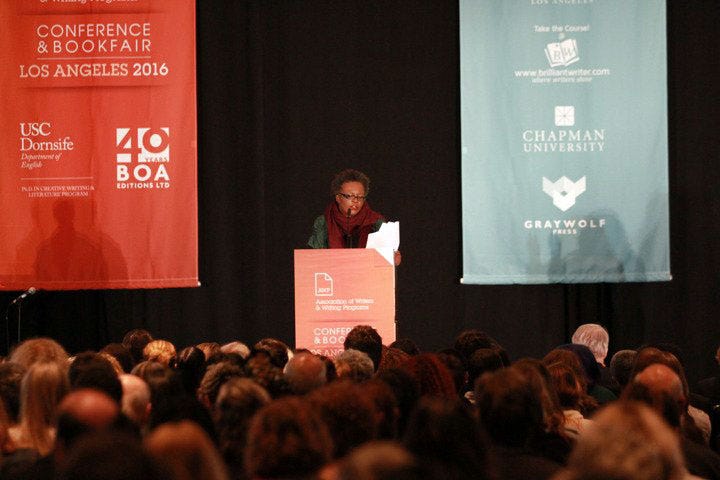
Claudia Rankine speaks at the 2016 AWP conference in Los Angeles
One thing is clear. Hoagland’s speaker is intimidated by the black tennis player, so large that “the little pink judge / had to climb up on a box / to put the ribbon on her neck.” He’s witnessed a profound change in society, and feels cowed and ambivalent. “She’s an empowered woman,” a white male in your class says. “An empowered black woman. He’s afraid of that.”
Citizen haunts you, as it’s meant to haunt all of us. Your memory of the conversation at Bread Loaf keeps returning to haunt you. There was so much noise in the dining room. A Babel of voices. It was hard to hear your neighbor, much less anyone else. The woman leaned forward and half whispered. Was it because she didn’t want the African-American author of the essay, or one of his friends, to overhear? Or because she knew what she was saying could be considered racist? Or knew that it was racist? Was it a “just between us” comment intended only for white people? She seemed to assume that all three of us, white middle-aged women, would agree. She imagined that all three of us shared some unspoken secret accord.
What did you say?
You could have said that to her. Just asked, “What did you say?” Maybe in a neutral tone. Or with a hint of mild remonstration. Or open disbelief. Or challenge. “Even if our options aren’t stellar when we’re hit with ‘casual racism’ in a space we once thought safe,” Chung observes, “we can and do make some sort of choice every time — to inform or ignore, challenge or absolve.”
You could have said that to her. Just asked, “What did you say?” Maybe in a neutral tone. Or with a hint of mild remonstration. Or open disbelief. Or challenge.
What did you say?
You didn’t nod. You didn’t agree. You didn’t disagree. You didn’t say anything.
Was it shock, or dismay, or misplaced politeness, or cowardice, or confusion that kept you quiet? You can acknowledge now what you already knew then, at least when you turned the conversation over in your mind as you left the dining room. By remaining at the table you became more than a witness. You became a participant, albeit a silent participant.
It wasn’t dark yet when you walked back to your room. The Bread Loaf campus was bathed in the golden light that precedes sunset. The air was fresh, and smelled of newly cut grass. Someone was playing a guitar under a green, leafy tree and writers were already assembling outside the auditorium for that night’s reading.
Vanessa Mártir, a writer you know through Facebook, is attending the winter Tin House writers’ workshop and posts an account of her experience on her blog. She remarks on how few writers of color there are at the workshop. She’s annoyed and defensive when another student is put off by the Spanish in her essay. (I picture a white middle-aged woman. I picture the woman at Bread Loaf in fact.) She talks about the encouragement of Dorothy Allison, and of Lacy Johnson, her white teacher. She tells a story about Claudia Rankine that Lacy Johnson told them.
“Lacy said she’s been trying to make up for her silence at that moment ever since.”
“Lacy Johnson was in the room with her then professor Claudia Rankine when an invited tenured white male professor (she never named him but if you know anything about what happened at AWP back in 2011, you know it was Tony Hoagland) was taken to task for his clearly racist poetry, specifically his 2002 poem ‘The Change.’ Lacy said he started screaming as soon as the word racist was uttered. He yelled at his junior colleague, Claudia Rankine, telling her she didn’t need to understand his poem because it was ‘for white people.’ He told a student to ‘shut up’ and didn’t stop yelling until he left the room. Lacy confessed she said nothing. She stood there, in horror, as this tenured white professor yelled, wielding his privilege in the way that he knew he could. When Tony finally stormed out, the only other African American in the room, a student, turned to Lacy, who apparently claimed herself an ally then, and yelled, ‘Where the fuck were you? Where. The. Fuck. Were. You?’ Lacy said she’s been trying to make up for her silence at that moment ever since.”
Rankine will be reading this quarter at a nearby private college. You list the reading on the syllabus, and encourage your students to go. A friend of yours, a Chicana with a BA from your university and an MFA from the private college, tells you that they cancelled the informal reading group of staff and faculty that was going to meet in advance of Rankine’s reading to talk about the book. “We don’t have the words…” was what someone explained, as if all of them would understand that.
You’re surprised. You’re sure your students won’t be at a loss for words when they read Rankine. And they aren’t.
A memory surfaces. You’re a brand new, thirty-something junior faculty member. The composition textbook you’re using in Advanced Expository Writing includes Brent Staples’ “‘Just Walk On By’: A Black Man Ponders His Power to Alter Public Space.” What could be more relevant to these mostly urban students who’ve lived all the roles in the essay? You even have a cop taking the class. You know you should teach Staples’ essay. It’s insightful, beautifully written, beautifully structured. But you’re terrified. You have no idea what it will be like to talk about race in a diverse classroom.
You have no idea what it will be like to talk about race in a diverse classroom.
It’s been over twenty years. You can’t remember now why you were so terrified. Maybe because you didn’t want to set yourself up as an expert about something the students knew more about than you. Maybe because you weren’t used to talking about race. You’ve learned that you don’t have to be that kind of expert to teach a text, that exchanges in the classroom are more genuine when you don’t have the answers to all your questions. You don’t remember what it was like to teach the essay for the first time. In the end you taught the essay many times. The dialogue in your classes, which included many African Americans and Latinos, was always productive. You considered tone and diction. You considered audience. You compared the essay to Staples’ very different account of encounters on the street in his memoir Parallel Time. Students wrote good analyses of the essay.
The comments in the classroom from students of color stay with you.
“Women cross the street when they see you. You get used to it. You kind of understand it. Oakland’s not safe.”
“I can’t tell you how many times I’ve been stopped by the cops. One time they had me spread-eagled on the ground in front of the BART station because I’d pulled into the No Parking zone to drop off a friend. I started crying I was so scared. People were walking by. Nobody did nothing.”
“So I’m on my way home from work, and I’m tired, you know. I wear heels at work and my feet are hurting. And I’m walking up the stairs at the BART and I brush against this woman and she grabs her purse away like I’m about to steal it. Shit, I just wanted to go home, same as her.”
You’re in the bedroom, both folding laundry, when you ask your husband if he remembers the visitor’s comment about too many Mexicans in San Diego.
“I remember,” he says. “I remember you got mad at me later.”
“About what?”
“You said you couldn’t be friends with her because I felt uncomfortable around her.”
You don’t remember this at all. Did you really say that?
“The body has memory,” Rankine writes. “You can’t put the past behind you. It’s buried in you; it’s turned your flesh into its own cupboard.”
What you’ve said or done and forgotten. What you’ve said or done and never forgotten. What you’ve overheard. What’s been said to you. To him.
His memories, your memories, our memories.
Her mouth, your mouth, my mouth.
Even though you didn’t say it. Even though the woman’s reaction to the African-American father’s essay about his daughter wasn’t your reaction at all. Even though you’ve taught for years at a public university where students of color are in the majority, and you’ve heard so many stories. Even though you teach ethnic American literature, and you’ve read so many stories. Even though you grew up Irish American with a chip on your shoulder about ethnicity and class. Even though.
Even though you grew up Irish American with a chip on your shoulder about ethnicity and class. Even though.
You’re white, you’re privileged, you’ve probably been similarly obtuse in other situations. After all, the white woman at Bread Loaf believed you’d sympathize. Probably believes you shared her opinion, if she thinks about it at all.
What did you say?
Something you’ve never forgotten, and you’re sure your husband hasn’t either.
The time your brother, drunk, remarked to your husband on the phone: “You know how Dad feels about Jackie marrying a Mexican. He wanted an Ivy League brain surgeon or something.” Later your husband said, his tone bitter, “You can graduate from an Ivy League university, but you’re still just a Mexican.” You didn’t know what to say. Racism is part of your family’s dysfunction. Yeah, that’s what your father thinks. Your brother too. He’s white, he didn’t finish college, he’s a Midwest Republican, you’re pretty sure he’s voting Tea Party these days.
What do you say to your son about his grandfather, his uncle?
You’ve been thinking about white liberal guilt, and how guilt might not be a bad thing as long as it’s not all about the white liberal. A start to dialogue, not a monologue. An agent for change. White liberal guilt can be an acknowledgment: I’m implicated. But often it’s the opposite — a defensive disclaimer and expression of wounded feelings: I’m a helpless representative of something I’m an exception to. Maybe self-pity and self-congratulation are always features of white liberal guilt.
White liberal guilt can be an acknowledgment: I’m implicated. But often it’s the opposite — a defensive disclaimer and expression of wounded feelings: I’m a helpless representative of something I’m an exception to.
In his widely circulated lay sermon after nine African Americans were massacred in a Charleston church, John Metta spoke of his reluctance to open interracial dialogue in the face of white people’s sensitivity to charges of racism. He told white churchgoers that “people are dying not because individuals are racist, but because individuals are helping support a racist system by wanting to protect their own non-racist self beliefs.” White liberals are more invested in proclaiming their own “individual and personal goodness” than admitting the pernicious effects of systemic racism.
“I’m going to try to speak kindly,” Metta says in “I, Racist,” “but that’s gonna be hard. Because it’s getting harder and harder for me to think about the protection of White people’s feelings when White people don’t seem to care at all about the loss of so many Black lives.”
“I don’t know how to end what doesn’t have an ending,” Rankine says. Will there be an ending? So much history. So many buried memories. So many buried bodies. Citizen includes elegies for Trayvon Martin. The victims of Hurricane Katrina. James Craig Anderson. Mark Duggan. Jordan Russell Davis. The names in the headlines continue to mount.
Citizen was published before Michael Brown was killed in Ferguson, before the deaths of hundreds more. (According to The Guardian’s ongoing site “The Counted,” 294 black men were killed by the police in 2015, 128 and counting in 2016 when Philando Castile and Alton Sterling were killed.) In an article in the New York Times, Rankine quoted the mother of a black son after the shootings in Charleston: “The condition of black life is one of mourning.”
“For her,” Rankine wrote, “mourning lived in real time inside her and her son’s reality: At any moment she might lose her reason for living. Though the white liberal imagination likes to feel temporarily bad about black suffering, there really is no mode of empathy that can replicate the daily strain of knowing that as a black person you can be killed for simply being black.”
What if you Good Samaritans were to speak up before the victim’s body was “beaten and bloody”? he asked. What if you didn’t wait until it was “so obvious”?
Metta reminded his listeners of their shared responsibility in the face of injustice. “Speak up. Don’t let it slide. Don’t stand watching in silence,” he told the all white congregation at his church in Washington State. What if you Good Samaritans were to speak up before the victim’s body was “beaten and bloody”? he asked. What if you didn’t wait until it was “so obvious”? What if you were to recognize racism as systemic and not individual, and acknowledge that “White people, every single one of you, are complicit in this racism because you benefit directly from it”?
Rankine ends with that early morning tennis lesson, a sunrise that is “slow and cloudy, dragging the light in, but barely.” She almost approaches the woman in the other car, but she’s in a hurry to get to her lesson, she doesn’t. Her readers are left with an ambiguous “lesson” (Who’s teaching whom? What have we learned?), a conversation with a white woman that doesn’t happen, and faint glimmers of dawn.
The close of Citizen raises the question of beginnings, however small and uncertain. Maybe you begin by reconsidering a brief conversation at Bread Loaf, because it still bothers you.
What did you say?
Maybe you begin by asking yourself this: Where. The. Fuck. Were. You?
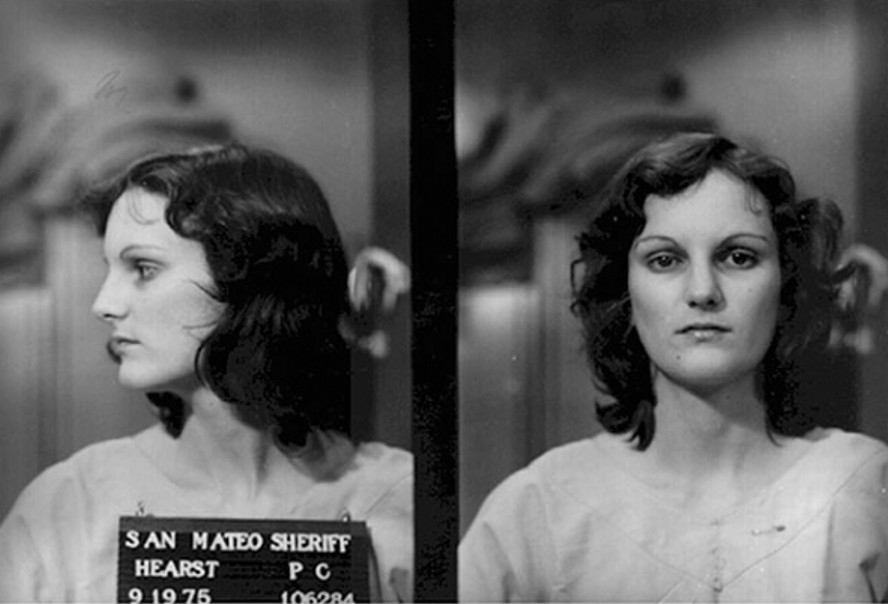
On February 4, 1974, Patty Hearst — a Berkeley student and scion to one of the country’s most storied families — was kidnapped by a group calling itself the Symbionese Liberation Army. The SLA was a radical leftist cadre led by an ex-con named Donald DeFreeze. Even by the standards of the day, it was a ragtag outfit with muddled goals and beliefs. At best, its ranks counted eight or nine committed guerrillas, but their dedication to violence and politically charged mayhem was beyond question. Just three months before, SLA members had assassinated one of the Bay Area’s most respected figures, Marcus Foster, the superintendent of the Oakland school system. The SLA was well armed and supremely paranoid. After the Hearst kidnapping, the FBI mobilized the biggest manhunt in the agency’s history, and the country tuned in for daily updates. What followed was one of the strangest episodes in American history. Depending on whose version of events you believe, Patty Hearst was either the SLA’s captive — bound, raped, brutalized, and forced to participate in violent bank robberies — or she was Tania, the radical convert taking up arms for the cause, a card-carrying SLA revolutionary.
American Heiress, the new book by Jeffrey Toobin, shines a light on this remarkable controversy, examining the politics of the 1970’s left, the rise of the conservatism under California governor Ronald Reagan, and the new era of live television reporting and celebrity magazines. Most of all, Toobin breaks down what was happening inside the SLA’s powder keg world and tries to answer the pivotal question: what was Patty Hearst really thinking?
Twenty years ago, Toobin — the former prosecutor, now a staff writer for The New Yorker and a legal analyst for CNN — made his name covering another bellwether moment of the modern culture: the OJ Simpson trial. His reporting provided the definitive account of that trial-of-the-century, and would later form the basis of the hit FX show The People versus OJ Simpson.
With the Patty Hearst scandal, Toobin is back in his element: crime, passion, politics and an assemblage of world-class legal talent amidst a media frenzy.
I spoke with Toobin about the SLA, the days when bombings were everyday occurrences in the US, the surging popularity of true crime stories, and how the Patty Hearst scandal defined one era and paved the way for another.
Dwyer Murphy: Let’s start by talking about the cultural atmosphere in the Bay Area in the 1970’s. The ’60s are over and the social fabric is deteriorating. New radical groups are popping up around the Bay. You dubbed this period an “evil parody” of the dreams of the decade before.
Jeffrey Toobin: This culture had two formative events from the 1960’s: the free speech movement from Berkeley and the Summer of Love in San Francisco. Both of those were born of idealism and politically and socially progressive ideas. By 1974, everything had curdled. The middle class kids had, by and large, fled the counter culture, because the draft had ended and the immediate threat to them was gone. The people who were left were the dead-enders. No one was more dead-end than the handful who turned into the Symbionese Liberation Army.
Murphy: Where would you place the SLA in relation to some of the well-known radical groups of the time? Say, the Weather Underground or the Black Panthers.
Jeffrey Toobin: The SLA was tiny. Even broadly defined, you’re talking about a dozen people. It was a fragment of a fragment. The SLA was distinguished by the utter incoherence of its goals. The absence of goals, really. They called themselves revolutionaries, but they didn’t even know why they kidnapped Patty Hearst, much less what should be done about American society. They kidnapped her and there was this vague idea about trading her for the accused killers of the murdered superintendent of the Oakland school system, Marcus Foster, but the SLA didn’t even explicitly ask for a trade. Spur of the moment, they came up with the idea of feeding the poor of California, and to their astonishment, Patty’s father, Randy Hearst, tried to meet that demand. He put together a food drive. It was a predictably chaotic exercise, but they got a lot of food out the door. Once the food giveaway started, though, the SLA leader, Donald DeFreeze — General Cinque — got bored. He had no clear idea of what to do next. It was only through this bizarre transformation of Patty Hears that the SLA started robbing banks.
Murphy: Terrorism and political violence were seen so differently then. That changed later, especially after 9/11, but at the time, terrorism was — for lack of a better word — commonplace. It’s hard to get your head around now. You cite some interesting statistics in the book. In September 1975, when Patricia was arrested, you note that there had been “fifty bombings in California alone.” This was a part of everyday life, and people weren’t all that outraged.
Jeffrey Toobin: Can you imagine what my colleagues in cable news would do with this story today? With the number of bombings that were going on at the time? Yes, it’s true that most of the bombings were after hours and not designed to kill people, but some did kill people. And bombs are bombs. It astonished me how violent the radical the left was in the 1970’s. I was shocked, looking at the FBI numbers. And then you had events like the zebra killings in San Francisco, where this splinter group of Black Muslims just decided to kill and torture random white people. I had heard of the Zodiac Killer, of course, but I didn’t know anything about the zebra killings.
Can you imagine what my colleagues in cable news would do with this story today? With the number of bombings that were going on at the time?
Murphy: How do you think the media would cover it today? The Hearst story, I mean.
Jeffrey Toobin: You have crime and celebrity and mystery and sex and race. Talk about a toxic brew that’s irresistible to journalists.
Murphy: Let’s get into the question of sex and the role it played in the SLA. Pretty much everyone in the group was sleeping with everyone else. That was an important tenet. But then there’s also the issue of what happened to Patty. As a captive, she was forced to have sex with some of the SLA men — raped. Later, there were questions about her relationships within the group. It’s an incredibly thorny subject, and the way it was handled at trial seems so distinctly of the period.
Jeffrey Toobin: Ideas about rape and consent have evolved so much since the early ’70s. At that time a man could not be convicted of rape unless the woman physically resisted and tried to fight him off. Think about how crazy and obsolete that view of rape is. And so I wanted to tread with great care on this subject, because it’s very fraught politically, and I wasn’t there. I had to reconstruct events as best I could. It turned out there was a lot of source material on that subject, including from the survivors of the SLA, and Patricia’s book and testimony. Also sex was, in many respects, the turning point of her trial. There was a disclosure that she kept a necklace — Old McMonkey investigators thought it was called — given to her by Willy Wolfe. The jury took that to be proof that Patricia was in fact in love with Willy Wolfe, and not his victim.
As to the group’s dynamics, sexual roundelay was a big part of the SLA’s existence. Trying to sort what happened and what it all meant was difficult. There are several places in the book where I simply say ‘it’s unclear what the precise dimensions of these relationships were.’ I think it’s important to confess when the evidence is ambiguous.
Murphy: Race also played an interesting role in the group’s formation. Most of the SLA members were white, but they believed in black power, and so they followed a black man, Donald DeFreeze, whose politics and temperament were erratic, to say the least.
Jeffrey Toobin: I thought that was fascinating. It was an illustration of how clueless these white kids were. They thought being in prison gave people like DeFreeze a certain wisdom that others just didn’t have. And really that dynamic is where this whole book began. I did a piece for The New Yorker about a gang in Baltimore that took over a jail, and from there I got interested in the Black Guerrilla Family, which was founded by George Jackson in the late ’60s in Soledad prison, in California. During that period, prisons were political hotbeds, and sources of revolutionary foment. It’s so different than what you have today. That really made a strong impression on me.
Murphy: Something that struck me about the public reaction to the Hearst kidnapping — and the time she spent on the run with the SLA — is that a lot of people seemed to think all this was, almost, fun. I’m thinking of one figure in particular: Tom Matthews. When Patty and the Harrises were fleeing police in LA, they found this random high school kid with a car and essentially kidnapped him for the day. Later he testified that he wasn’t scared at all, that he was having a good time. It was a lark. He seems, in a way, like a stand-in for a big portion of the country and how they viewed the Hearst kidnapping.
Jeffrey Toobin: Good ol’ Tom Matthews…Look, like all the best stories there were elements of comedy and tragedy interwoven into the Hearst story. You have this group that murdered Marcus Foster and Myrna Opsahl, the teller who was killed in the course of the SLA’s third bank robbery. Those actions were beyond horrendous. But then you have other victims, like Tom Matthews, whose only concern was about getting back in time for his high school baseball game. It was a mixed bag of the sinister and the comic. The same thing resonated for me with the OJ experience. The OJ Simpson case was ultimately about the vicious murder of two human beings. I tried never to forget that when I was writing about the case, but then there was also hilarious stuff that happened during that case, and you can’t pretend that’s not also true.
Murphy: Where do you place these events in the development of modern celebrity culture? Your OJ book made a compelling argument about that case giving birth to certain strands of contemporary society. What about Patty Hearst?
Jeffrey Toobin: The Hearst story was much more of a pivot point into the modern world. You saw hints of what society and the media would become. With OJ, the transformation had already taken place. We already had a full-fledged celebrity culture, and so the coverage was in place. The thing about Hearst that struck me was how small the news media was at the time. You had newspapers, news magazines, three half-hour evening news shows, and one morning news show, The Today Show. Good Morning America was created in 1975, as this story was happening. There was no cable news, no Internet, no social media. This was their idea of a big story in those days. But by today’s standards it was practically happening in privacy. Back then, in order to illustrate how much publicity this story was getting, people would say, ‘she was on the cover of Newsweek seven times.’ Today people would ask what’s Newsweek? What’s a cover? It shows you of much how the world has changed.
Murphy: We’re having a true crime moment right now, between Serial, Making a Murderer, The Jinx, The People versus OJ Simpson, and also, maybe, your new book. Do you have a theory as to why this is taking hold of imaginations now?
Jeffrey Toobin: Murder never goes out of style. Crime never goes out of style. The merger of celebrity and crime is always going to be big. There’s an appetite for mystery, and in a world of closed narrative — where all the answers are known — people want something that’s more open. The appeal of Making a Murderer and especially Serial is that you have to try to figure it out yourself. You’re not told what the answer is. The appeal of the Hearst story is similar in that there are these open questions. Was she really a terrorist? Or was she forced to do what she did? That’s a hard question. And that’s the focus of the book. I expect that not everyone will come to the same conclusions I did.
Murder never goes out of style. Crime never goes out of style.
Murphy: The post-hippie violent left is also experiencing a surge in interest, it seems. Between the Manson Family and Patty Hearst, there are quite a few books, TV shows and movies in the works. This new book of yours is already being for the screen, I believe. What is it about that period that’s resonating today?
Jeffrey Toobin: I think people suspect today that society is resting on a shaky foundation, and that whether it’s school shooters, or terrorists, there’s craziness and evil not too far below the surface. And in the ’60s and ’70s there were evil people in our midst.
“Lost are we, and are only so far punished,” Dante writes in Canto IV of the first part of his epic poem The Divine Comedy, “That without hope we live on in desire.”
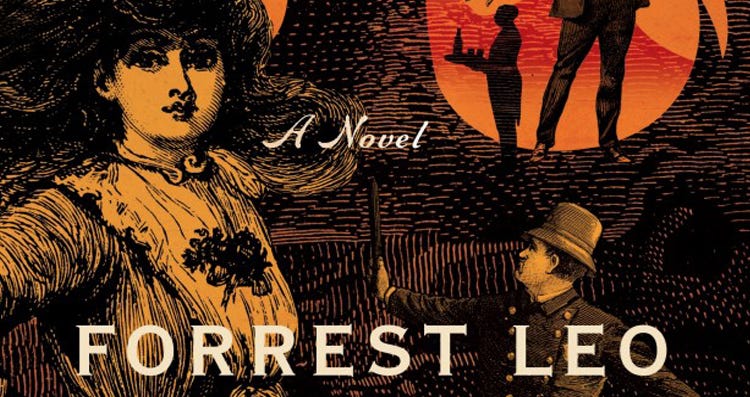
In his debut novel The Gentleman, Forrest Leo crafts a story that hinges on these Dantean elements of confusion, punishment, and romantic longing. Lionel Savage, the narrator and protagonist, accidentally sells his wife Vivien to the devil and embarks on a strange and comical journey through Victorian London to get her back. He relays his trials and travels in the form of a memoir, executed and edited by Hubert Lancaster (a cousin of Savage’s missing wife), who provides footnoted commentary throughout.
“Leo has a whimsical gift: he has given Dante a key place in The Gentleman — as Satan’s gardener.”
Such double-sided narration — through both Savage’s first-hand account and Hubert’s numerous annotations — wedges a kind of distraction into the story, as the two voices often diverge. “Lost are we” comes to mind as an adequate description of the readers’ (and characters’) experiences. And in Dante’s world, being lost means being deeply susceptible to waywardness and despair. Romantic desire becomes unquestionable, as it does for Savage: his one ungovernable aspect, untouchable by the instruments of hell. Dante wields an uncanny ability to characterize and represent change as it manifests in people. Leo, presumably a long-time student of Dante, knows this better than anyone. He employs Dante’s same sense of mutability and unpredictability. And like his predecessor, Leo has a whimsical gift: he has given Dante a key place in The Gentleman — as Satan’s gardener.
One of the novel’s prevailing questions is what makes a man a gentleman, as Hubert suggests at the beginning that it is for the reader to decide whether “Mr. Savage is deserving of that epithet.” The clearest and most helpful definition emerges from Dante’s own writing, in which he argues that a gentleman must have an abito eligente, an elective habit, which compels him to make the reasoned choice, the choice of the mean between two extremes. Steady temperament, then, makes a gentleman.
Leo’s play on this definition is one of many great ironies. Lionel Savage, his young poet hero, is anything but steady. In fact, in the epigraph that opens the book, Savage admits that he drinks his tea “in one great gulp” and casts about with a “griping eye.” He is indulgent, he brags about his fame, and, above all, he uses “thirst” as a directive. In many ways, Leo’s opposing idea of a gentleman speaks to his carefulness as a reader, for Dante also writes that the gentleman is a man whose “soul” must “grace adorn” and “in itself enjoy.” This underlying Epicurean sense — that the truly happy and noble man enjoys his being and is not, in essence, beholden to temperateness — is what Leo takes and makes his own.
“In many ways, Leo’s opposing idea of a gentleman speaks to his carefulness as a reader.”
And so his characters are rich with personality and eccentricity. There is an inventor who uses da Vinci’s helicopter prototype to build a “flying aircraft” and become a “mariner of the air.” Savage’s sister Lizzie lets her promiscuousness become a point of feminist power. Ashley Lancaster (Vivien’s brother), the famous globetrotter and explorer, cannot have a civilized conversation with a woman. Then, of course, the devil himself lives in a “cottage” in “Essex Grove,” his personal moniker for Hell.
Leo brings these wild characters to life with charm, wit, and pomp, and he builds a fully realized — if not a little wacky — Victorian London teeming with adventure and mystery. It is worth noting that Leo was born not in England, but in Alaska and grew up using a dogsled to get to the nearest road. In a 2012 interview about his play Friend of the Devil, which is the basis for The Gentleman, Leo says that without electricity, he and his family relied on reading and telling stories, and he would often listen to his dad work at the typewriter. It is easy to picture this environment: a young Leo listening to, learning from, and experimenting with the stories that captivated him. The circumstances of his upbringing gave him the gift of pure imagination.
And yet, so much of the novel’s great appeal comes from the hilariously realistic way in which it depicts the quirkiness of writers, the idiosyncratic relationships between them, and the painstaking work of their editors. Savage has blown his fortune on books. At a dinner party, he judges the other writers by the “mangled offspring” of their work, even though he is frequently told — by his family, nonetheless — that his own work dull. He has an inflated sense of importance (“If this does not make sense to you, you are not a poet”), he resists constructive criticism, and he procrastinates and stalls against deadlines. Meanwhile, Hubert clashes with much of Savage’s writing, often disagreeing with him and asserting his disapproval of certain remarks.
“So much of the novel’s great appeal comes from the hilariously realistic way in which it depicts the quirkiness of writers, the idiosyncratic relationships between them, and the painstaking work of their editors.”
Leo’s powerful realism is perfectly illustrated late in the novel, on a page that is grossly overwritten, when a pun is stated very obviously and Savage has to “shudder” at its “double entendre,” or when he needlessly notes that “Lizzie is more persuasive than a loaded gun” right after she concludes a tirade. Moments like these can sound amateurish and overwrought, but here they are not evidence of any weakness in Leo’s writing; rather, they demonstrate the opposite — such overwriting is a symptom of Savage’s own shortcomings as a writer and thus makes him appear all the more real.
In fact, Leo’s characters are so self-contradictory and wavering that at points his grasp of them becomes suspect (or seems to). Savage reflects that he has never considered “what happens in other people’s heads” and then later claims that “faces and demeanors are to [him] an open book. [He] knows of no man more adept at reading other people.” Similarly, after railing against his “age of morality” that he does not “deem good,” Savage complains about the existence of “society men” who enjoy “muddlement” and “affairs of passion.”
If this general self-contradiction was not framed in the context of Dante, it would blow a hole through the novel’s core and deflate the rest. But Leo is smarter than that. Because he has made the mutability of the heart and mind his central theme, his characters can and do contain multitudes. Savage says it best: “When there is nothing that is level, then there can be nothing that is not level.”
Balance, at least in this sense, requires a bit of juggling. A bit of recalibration. If Don Quixote was thrust into the realm of Dante and undertook all of Dante’s grueling tasks, and if this misadventure was written in the chaotic and unconventional style of Tristram Shandy, then the resulting work would greatly resemble The Gentleman. Leo’s novel can be read as the light-hearted romantic journey of a few family members through old London. It can be read as the strange English fantasy of an Alaskan. Or, as Savage suggests, it can be read as something greater, something aspiring to fabled literary heights, “a comical epic, but with serious and indeed existential undertones.” Sometimes the best thing to do is stay lost.
J.K. Rowling, George R.R. Martin, Stephen King — rolling in it.
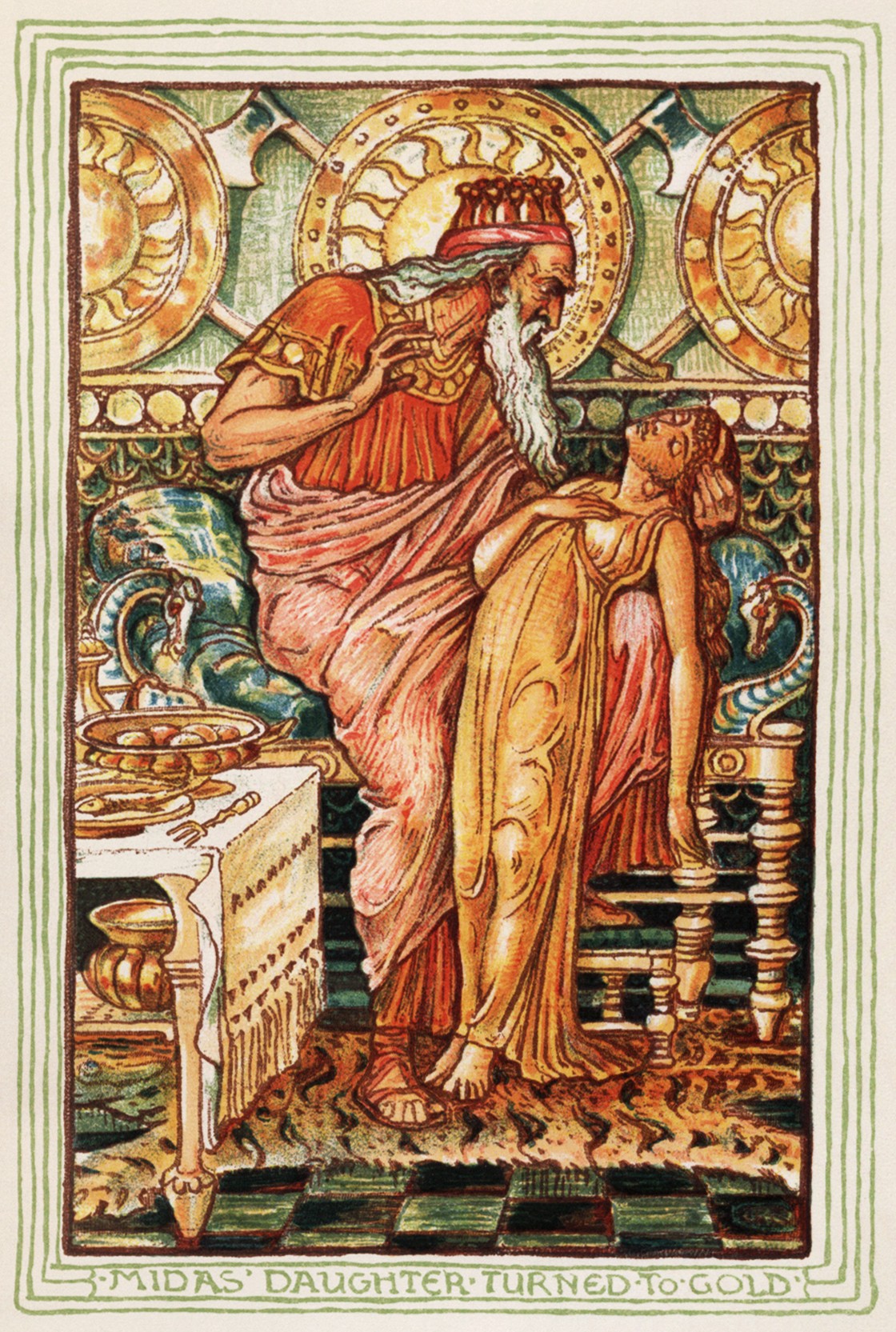
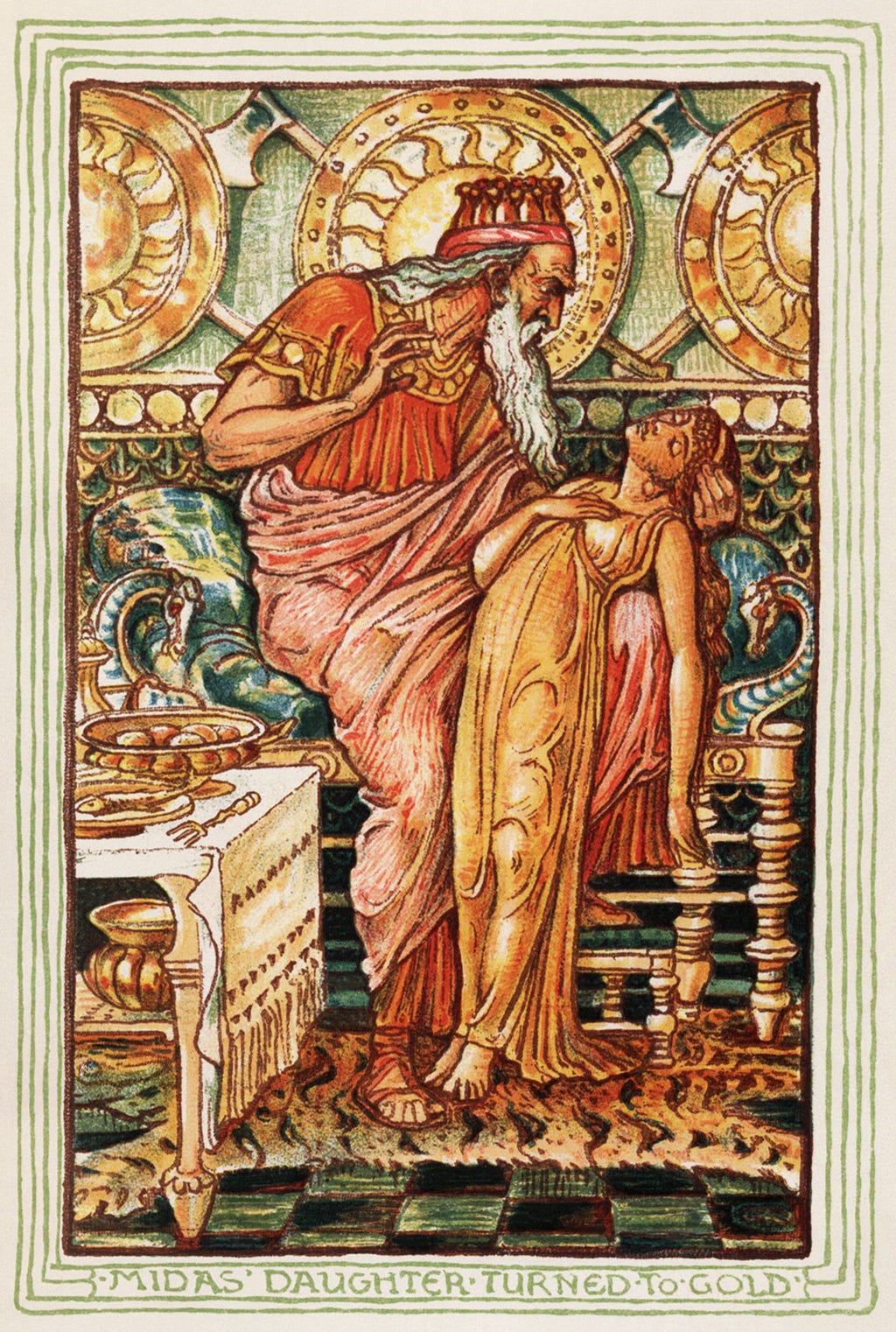
King Midas: everything he touched turned to gold (including his daughter, and probably his books)
Good news — there’s (some) money in literature after all! Forbes has releasedits annual list of the world’s highest paid authors. This probably won’t come as a great surprise, but the list is topped by James Patterson and rounded out by a few more obscure authors whom you may or may not have heard of, such as Stephen King, George R.R. Martin and one J.K. Rowling.
According to The Guardian, the list is calculated using “official book sales figures and analysis from experts.” Patterson who’s put out an average of nearly eleven books a year for the past decade and has been described as an “industry unto himself” is far and away the highest earner, listed at $95m. The runner-up — children’s author James Kinney — comes in at a (comparatively) paltry $19.5m, almost five times less than Patterson.
What becomes clear after quickly perusing the twelve names is that multi-media only helps book sales. As Natalie Robehmed of Forbes states: “the written word isn’t dead — although television and movie adaptations often help drive sales.” The word “often” however seems unnecessary here. Every single author on the list has had either, or both, television and movie adaptations made of their works, except for Paula Hawkins who has an adaptation starring Emily Blunt due to hit the silver screen in October.
Hawkins is also notable as the only newcomer to the list. Her bestselling novel The Girl On The Train — consistently compared to Gone Girl and The Girl with The Dragon Tattoo — vaulted her all the way up to #9 at a reported $10m, just above George R.R. Martin who earned a pre-taxed $9.5m in book sales.
The 2016 Summer Olympics start in Rio this Friday, August 6th. Its scope is massive: 10,500 athletes from 206 countries will participate in 28 events from track to boxing to rowing. Despite real issues surrounding doping, security, Zika, and toxic ocean water, despite naysaying from friends who’d rather be watching The Night Of, despite the hokey broadcast TV coverage, the Olympics are exciting. These athletes have trained for years — years! They’ve given up friends and hobbies and junk food. They are, quite literally, battling the best in the world to win. That makes for a pretty compelling spectacle.
So in the spirit of the Games, here are 18 books about the Summer Olympic sports. Admittedly, there isn’t a book for every sport (sorry, rhythmic gymnastics) and the sports are more central in some books than others, but it’s a long four years between Olympics for fans of archery, and these should help pass the time.
What goes through the mind of a man biking the 137-kilometer Tour de Mont Aigoual? The Rider lets you know, following one man’s consciousness as he cycles the French route on a hot day in 1977. The novel started as a cult classic in Holland but its English translation has made it a must-read for cyclists over the world.
In this slim, forceful debut novel, Javier, a young Dominican prostitute, is taken in by Marcel, a boisterous Cuban man who’s in charge of a legion of New York City’s street coffee vendors. To entice Javier to stay with him, Marcel enlists his brother Oscar to train Javier in the art of boxing. Before Javier can get in the ring for his first fight, Marcel is found murdered, throwing Oscar and Javier together in unexpected ways.
Horseback riding is not exactly an egalitarian sport, which is what makes the setup of Mary Gaitskill’s novel so intriguing. Velveteen Vargas is a Fresh Air Fund kid sent from Brooklyn to live with an artsy-academic couple in Upstate New York. Velveteen is introduced to the local stables, where she develops a transformative relationship with Fugly Girl, one of the mares.
You train five hours a day, six days a week for most of your life. Then, one day, it’s over. Leanne Shapton had this experience. She trained for the Olympic trials in swimming but quit while in high school. Swimming Studies is an investigation into the “insular, clammy, circumscribed and largely underexposed” sport of competitive swimming.
If the Olympics seem stressful, think about the pressure to win the Hunger Games. Katniss Everdeen’s weapon of choice in this cinematic death match is an old school bow-and-arrow. A useful choice as it also catches her dinner.
In the titular story of this collection, Smith, a poor teenager from Nottingham, is convicted of petty crimes and sent to a grim reform school for boys. Smith turns to long distance running as a mental escape, and when he attracts the notice of the cross country team, running becomes a possibility for literal escape as well.
How did Diego de la Vega become the masked crusader El Zorro? Allende imagines the origin story of the iconic, swashbuckling hero. And if there is one thing that Zorro does well, it’s fence.
There is a healthy range of non-fiction soccer books, from fan memoirs like Nick Hornby’s excellent Fever Pitchto data-driven insights à la Soccernomics. Add to that shelf this collection of essays by Mexican author (and past EL contributor) Juan Villoro: part tribute, part critique, these are thoughtful meditations on the world’s most popular sport.
The protagonist of this mystery series is John Rain — né Junichi Fujiwara — a half-Japanese, half-American ex-CIA agent turned freelance assassin who offers a special service: assassinations that appear to be death by natural causes. Rain is big into the marital arts, especially judo, for which he trained at the Kodokan Institute, the headquarters of the global judo community.
The rowing team at the elite Fenton School is no joke: a spot on the winning team guarantees the oarsmen admission to Harvard. Rob Carrey and the rest of rowing team must grapple with these intense pressures and expectations, and as one might imagine, it leads to nowhere good.
Set in the fictional northern English town of Primstone, this novel follows Arthur Machin’s attempts to make it as a Rugby League player. As for many of the kids on this list, rugby isn’t just a sport for Machin, it’s a way out of his grey, dead-end existence.
If you’ve ever seen an entire shelf of books by Patrick O’Brian at the bookstore and wondered where it all started, here is your answer. This is the first of the 20-book series about Jack Aubrey, a commander of the Royal Navy and his naval surgeon Stephen Maturin during the Napoleonic Wars. If you think sailing a Sunfish is hard, try a 19th century frigate.
Italian artist Caravaggio plays Spanish poet Francisco de Quevedo in a tennis match using a ball made from the hair of the beheaded Anne Boleyn. This isn’t a dream you had after eating too late at night, it’s Enrigue’s totally original, unusual, thought-provoking novel.
T.S. Garp is interested in wrestling, sex, and writing (not necessarily in that order.) This novel follows Garp as he comes of age, tries to become a writer, marries the wrestling coach’s daughter, and struggles with his mother’s mounting fame as a super-feminist.
It’s a twisted sort of fable: in golf-obsessed Northern Scotland, Gary Irvine, a formally unremarkable 30-something computer hacker, is hit on the head with a golf ball and wakes up with the golf-swing of a pro. A dream come true, except he has also developed Tourette’s syndrome, his wife is cheating on him, and there’s no getting around the fact that golf can drive even the most accomplished player insane.
This novel, shortlisted for the Booker Prize, follows the adventures of two Hungarian basketball player, Pataki and Gyuri, as they travel the Communist-opressed country in the 1950s.
Coming-of-age stories are awkward enough, then Howard Jacobson went and added table tennis. Oliver Walzer is growing up in Manchester in the 1950s, yearning for success in his table tennis club and the reciprocated romantic interest of his fellow ping pong player, Lorna Peachly.
We got to the border late. Too late to cross, they told us. Well, not exactly. But the Afghans would not let us in because it was their dinnertime, and then they would have their coffee and a smoke, and probably even if we bribed them they wouldn’t check us through. We would have to spend the rest of the night in the patch of no-man’s-land in the desert, and if they got angry at us for some reason — because we had disturbed their dinner or disturbed their coffee or their smoke — they might not let us in at all. We would have to go back and that might not be possible because the Iranians were very sensitive about accepting people back that the Afghans had rejected. We could understand, certainly.
I looked at James. He looked at me. We decided to stay. The border guard smiled. He should not have, not with those black broken teeth that showed when he did, but who can control mirth? He told us that, conveniently enough, there was a hotel and restaurant just a furlong away with everything we could possibly need. James, of course, needed nothing, having been dead for some time. I liked him that way. He was just as handsome as when he was alive, which was amazing when you considered that terrible car crash. James didn’t even resent that people paid money to see the wreck.
He had heard that they had rigged it up so that it smoked all the time, as though the crash had just happened, and this made people very excited. They felt like they were right there. There were plans to preserve his body and maybe have it thrown across the seat in such a way that you could see his face, which was perfectly fine, not a scratch. The studio discussed messing it up a bit — some blood here, a cut there. One of the studio executives even suggested that they might remove an eye. That would really fascinate the crowd, he said (Jimmy did have such beautiful blue eyes). But in the end they thought it was too much trouble and went with just the smashed-up car.
Well, was I glad. First off, I never would have met James, and second, if I had, he would have been a mess, and as much as I’m in love with his personality, it’s his physical being that gets me, especially those beautiful blue eyes. He never explained to me how he got to Teheran. We found each other across the street from the Amir Kabir in a coffee shop where they served that thick sweet coffee and tea in little glass cups. I had been sitting in there alone when he came in. I knew who he was right off. He sat down next to me. He said he didn’t know why.
The first thing I said to him was, “You’re James Dean, aren’t you?”
He had looked at me like I was crazy. “Are you crazy?” he’d said. “Do you know how long James Dean has been dead?”
“Maybe,” I’d said. “Maybe not.”
“But he died in that terrible car crash. The Porsche, remember?”
“I remember.”
“Anyway, what would James Dean be doing here in Teheran?”
I’d shrugged. “What do I know? You should know. You’re James Dean.”
It had been his turn to shrug. We shared a pot of tea and left together. He had this great hotel room and we stayed there until our visas were ready to run out and we had to move on.
So there we were at the border. The name on James’s passport was Kevin Muldooney. Of course, he couldn’t travel under his own name. I understood that. The first time I saw his passport, he started to say something about the name, but I’d put a finger to his lips. I didn’t want to know anything. After all, some things you just don’t question. His name didn’t matter. I knew who he was.
The border hotel was cooler than I expected. James had different expectations. It was complicated. We were more than a generation apart even though we were both twenty-four. (There is definitely an advantage to dying young, never ever having to grow old.) And don’t forget, he was a movie star.
There were a lot of other travelers at the hotel. French, Dutch, German, even a couple of guys from South America . . . Argentina, I think it was. One of them was old but really well built and handsome and tan. He was half-naked even though the desert was so cold at night. He was wearing leather pants and had on some kind of feather-and-bead necklace with a matching headband. He was telling a story of getting beat up in Turkey and his friend Paco had a black eye and cuts on his nose, as if to back up the story. I heard something about Pamplona and Hemingway and I went “Wow” like the rest of the travelers who could understand English, but whispered to James that I wanted to get out of there.
The next morning, we went to the coffee shop and tried to find out about the bus to the border, but no one could tell us anything. Everyone was sitting around drinking tea and coffee and smoking huge standing water pipes.
“Now what?” I said to James.
“Hey, what do we care?” he said. “Cool out. When a bus shows up, we’ll leave.”
“But we’re on the edge of no-man’s-land. We could be here forever.”
James shrugged, leaned over, and gave me a kiss. I could see one of the Iranians watching us. Sometimes they cut holes in the walls or peered through the keyhole or just put their ear up against the door of the room where we slept. They thought we were all insatiable sexual animals and they wanted us desperately but were afraid to ask.
So the morning passed, and everyone started ordering lunch. I’d cooled out like James said. He was holding my hand under the table when this European man came into the café. He stuck out like a sore thumb. He was tall and very blond, very white. I thought he was in his sixties, but it was hard to tell. We were all so young that everyone who wasn’t as young as we were looked very old. I remember how dignified he was. His hair was short and smooth and parted to one side, and he wore a suit, an expensive European suit, with a tie and gold cuff links. He came right over to our table and sat down.
“Please,” he said, “I need your help.”
He looked from me to James and back again. He leaned over the table. I was worried that a sleeve of that beautiful suit would go into one of the empty cups of coffee and be stained forever by the sticky syrup at the bottom of the cup, but it didn’t. He leaned even closer, put his face next to ours, and folded his hands on the table.
“Will you help me?” he said.
“Who are you?”
“Shhh.” He had an accent . . . Scandinavian, I thought, and I was right.
“I’m with the Swedish Embassy in Kabul.”
“Great, maybe you can get us out of here and across the border. We got here last night and . . .”
James put a toothpick in his mouth and sat back, real slumped, like he always did for his publicity photos. God, was I in love. I forgot all about the Swedish diplomat and just concentrated on James.
“I’m trying to save a girl, an American girl.”
James was quiet and so was I, but James was watching the Swede. I was watching James, his beautiful blue eyes, his beautiful face, his beautiful hair. I was wondering how he got his hair to stay like that all the way out here in the desert. His hair looked exactly like it did in all his photos.
“I have to convince the authorities to let this girl go, or she’ll spend the rest of her life in the insane asylum. Have you any idea what an insane asylum is like in Afghanistan?”
James held my hand against the muscle in his thigh.
“Imagine a dark pit dug into the ground,” the Swede said.
“That’s it?”
“That’s it . . . and a bucket to do your business and the food, they throw it down at you — maggoty pieces of bread and lamb fat that dogs have chewed on.” The Swede closed his eyes. “That poor girl.” He opened his eyes. “She’s from Connecticut.”
“Oh, my God,” I said. “What can we do?”
“You can save her.”
“How?”
“I can’t go into details here. It’s not safe. You have to trust me.” His blue eyes bored into James’s blue eyes. “Will you help me? Will you come?”
“Of course I will,” I said, jumping up, upsetting a teapot. The Swede caught it before it could shatter, but not before the tea spilled out over the table. I remember watching the puddle of tea form on the table when I heard the Swede say, “Not you . . . him.”
“Why just him?” I said. The lamb kebab I’d had for lunch went sour in my stomach.
“Because he’s James Dean,” the Swede whispered. “They’ll listen to him.”
“I don’t know,” I said. “I don’t like it. We’ve been together since . . .”
The Swede ignored me. He put his hand, a very big hand with pink nails, on James’s shoulder. “Will you come? Will you save the American girl?”
James stood up, took his comb out of his hip pocket, and ran it through his hair. “Let’s go,” he said.
“James . . .”
“I’ll be back in no time, sweetheart. Be cool.”
I waved goodbye, but he didn’t see me. The Swede had an arm around his shoulders; it was almost an embrace. “I’ll wait right here,” I said. “I’ll be right here waiting.”
When I walked to the door of the café and looked out into the desert, I saw a black Volvo in the distance. I sat in the coffee shop until it was dark and they made me leave. I went back to the hotel. It was empty now because everyone else had somehow found the bus to the border. More travelers arrived the next night, caught in the wheel of no-man’s-land — Afghanistan closed, nice hotel, nice restaurant, you spend the night — and I sat with them in the café until they, too, caught the bus to the border.
The manager at the hotel tried to convince me to share my room because there were so many travelers coming through, all trying to beat the summer season when typhoid and cholera would close the border, but I said I was waiting for James, and he’d be back in no time, and then he wouldn’t have a place to stay.
A month passed before I left the border hotel. The Iranians were starting to look at me funny. Even the boy who cleaned my room and watched me through the keyhole said it was time for me to go. There was talk that I was working for SAVAK. I didn’t want to disappear in no-man’s-land.
Before I left, I went into the café and asked everyone about the Swedish diplomat and the American girl from Connecticut being held prisoner in an Afghan insane asylum. News traveled fast on the road. There were people in the café coming from both directions across the border, and I’d hoped someone might tell me something.
“He left in a black Volvo. He took James Dean with him,” I said.
“Who?”
“James Dean. Jimmy. Jimmy Dean. You know. Rebel Without a Cause. Natalie Wood. Giant. The Porsche. ‘Die young and leave a beautiful corpse.’”
“Far out . . . James Dean . . .,” someone said. The smoke from the water pipes was so thick I could hardly see who was talking.
“You’re crazy, man,” I heard a voice say. “James Dean? He’s dead.”
“He’s not,” I told him. “He’s just missing.”
“I remember a girl, in Erzurum, in Turkey. She got off the bus and walked into the mountains, and no one ever saw her again.”
“Cool,” from the crowd.
“I heard about her. She was a French teacher from New Jersey.”
“Wow!” from the crowd.
I took the bus to the border and asked about James and the Swede and the American girl as I passed through Herat and Kandahar and Kabul, and over the Khyber Pass into Peshawar and Rawalpindi. I even went to the Swedish Embassy when I got to New Delhi. I spoke to a tall blond man who said Sweden had no embassy in Afghanistan, and he was sorry about my boyfriend, but, after all, did we think we could go traipsing around the world with no money and no purpose and expect our embassies to bail us out when we got into trouble?
“No,” I said. “Of course not, but you have to understand. This is not just my boyfriend. This is James Dean.”
He got me a chair and a glass of water. “I think you should know,” he said very gently. “James Dean is dead.”
I sipped the water. My mouth was dry. “I know,” I told him. “I hate to believe it, but you’re probably right.”
“I was blown away by it… ‘Blown away’ is an often-used expression, but with this book it was to the point of sometimes putting it down and saying, ‘I can’t read anymore. I don’t want to turn the page. I want to know what happens, but I don’t want to know what happens.’”
Oprah was in fact so floored by the power of the novel, that she selected it as the latest inclusion for her Book Club 2.0, making it only the fifth selection since 2.0 launched in 2012 following the end of her talk show.
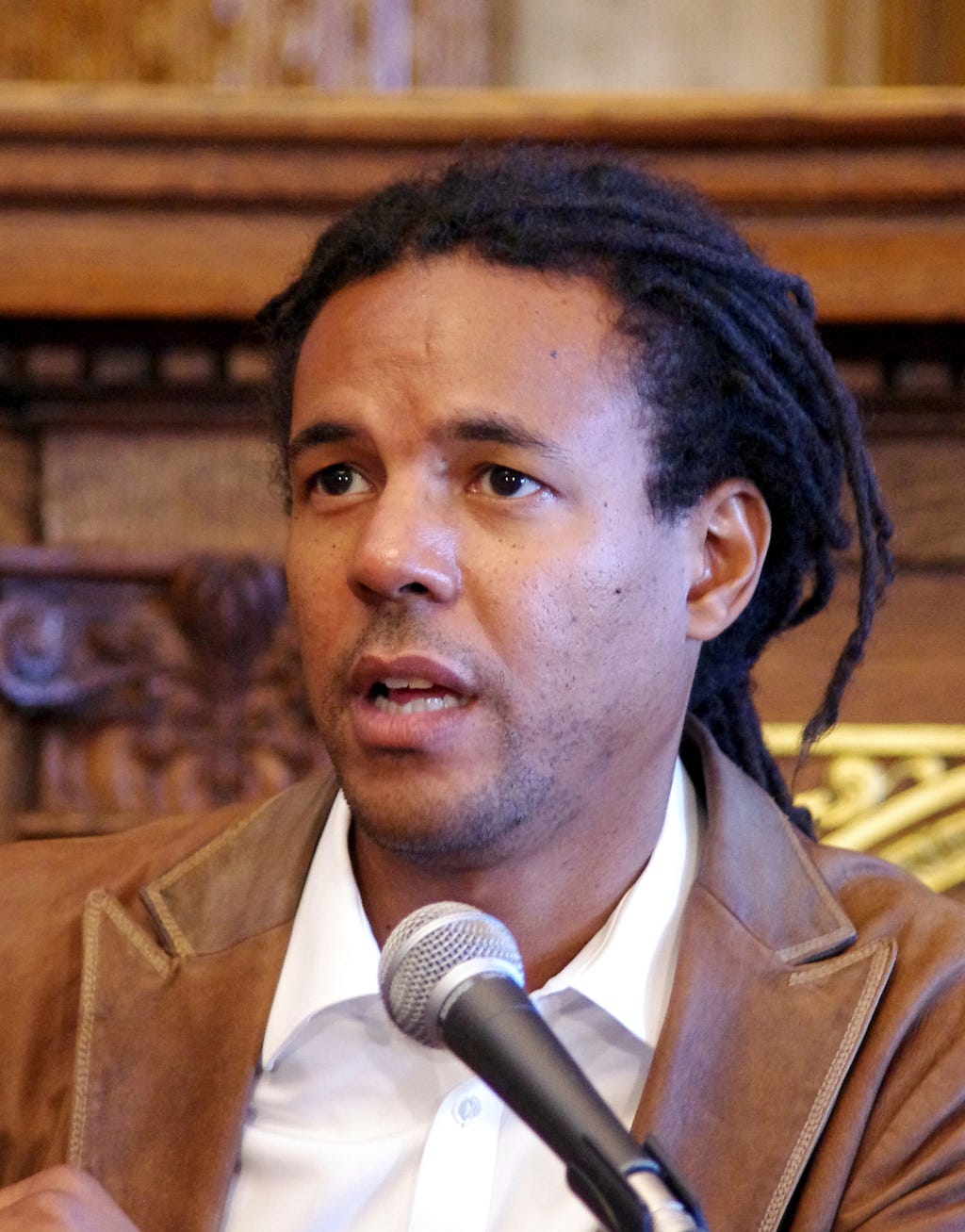
Colson Whitehead speaking at an event
This announcement has, with immediate effect, altered the sales-trajectory of Whitehead’s novel: Doubleday, the book’s publisher, moved up the release of the novel from September 13th to today! According to the imprint’s twitter account, they’re fairly and rightfully happy, to say the least:
“Man, we love you guys. The Underground Railroad is now trending on Twitter and we’re just over here giddy that the book is finally here!”
The Chicago Tribune has reported that Doubleday, with news of Oprah’s announcement, has also increased the first printing from 75,000 to a whopping 200,000. Though Oprah has acknowledged diminished subsequent sales Club picks since the days of her TV show, today’s news should leave no doubt that the Oprah Effect can still take root. As she says, “I’m an exposure agent, trying to get the word out.”
In addition to what will surely prove to be wide popular acclaim, the book has also captured some very high critical marks out of the gate. Michiko Kakutani — a seemingly inexhaustible and often times notably harsh critic — penned a beautiful review of the book for The New York Times, introducing it as:
a potent, almost hallucinatory novel that leaves the reader with a devastating understanding of the terrible human costs of slavery… One of the remarkable things about this novel is how Mr. Whitehead found an elastic voice that accommodates both brute realism and fable-like allegory…a voice that enables him to convey the historical horrors of slavery with raw, shocking power.
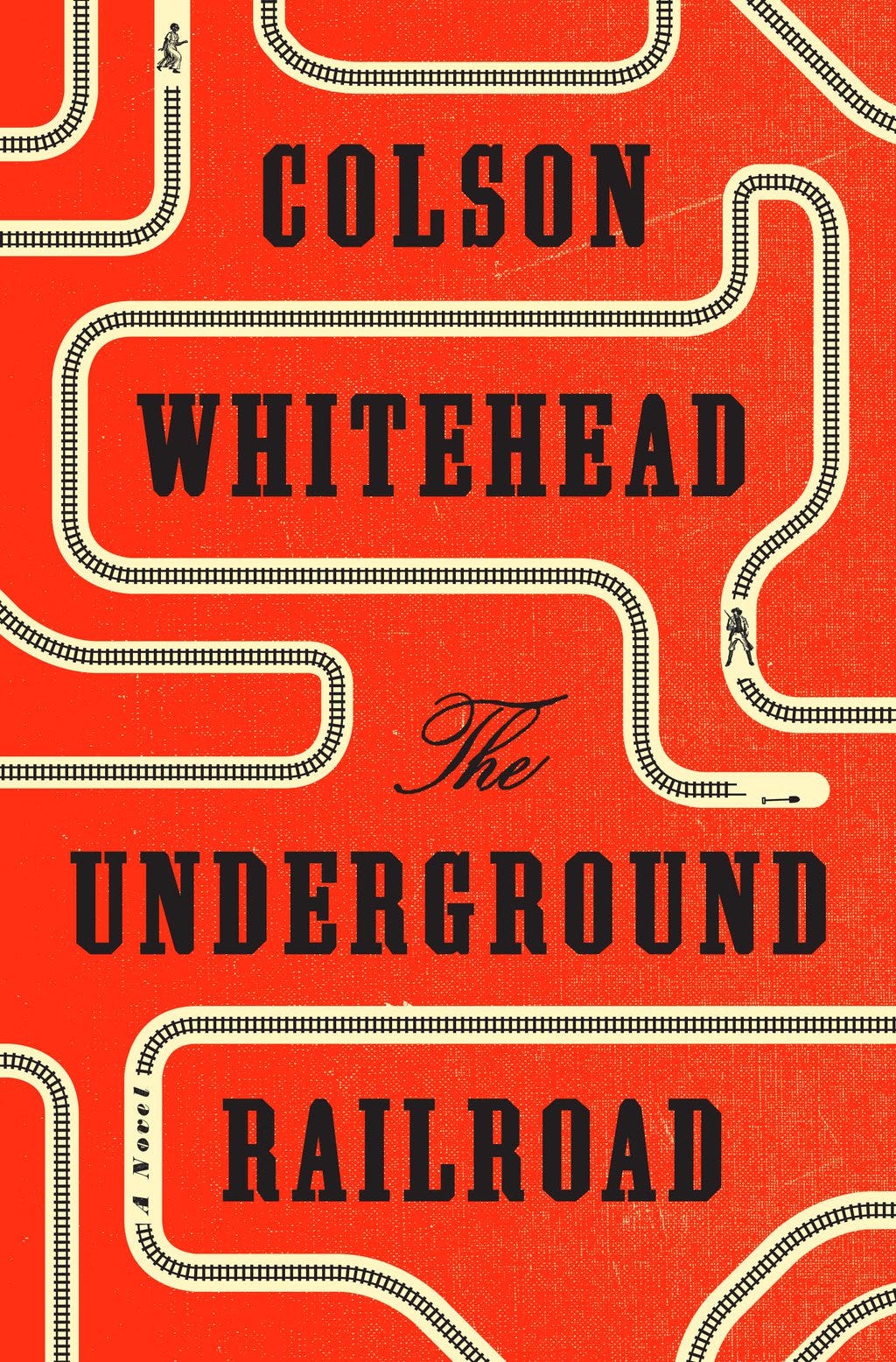
The novel follows Cora, a slave fleeing a Georgia plantation where she was born and a plantation from which her own mother had already escaped. Perhaps the most well-known aspect of the novel pre-publication is the book’s transformation of “the underground railroad”, from a moniker for the network of activists who helped slaves escape the South, to a literalized physical locomotive.
I think it is safe to say that Oprah has selected one of the best, if not one of the most important, books of this year to add to her well-respected Book Club List.
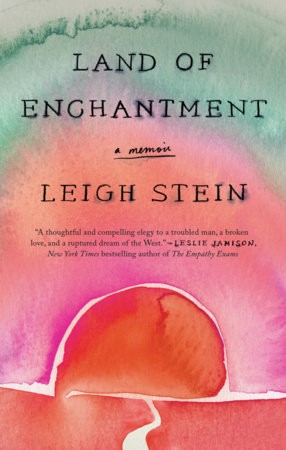
Leigh Stein’s memoir The Land of Enchantment (out August 2, from Plume), opens with Stein finding out that her ex-boyfriend Jason was killed in a motorcycle accident. What unfolds is a heartfelt examination of an abusive relationship. Stein met Jason in 2007 and the two moved to New Mexico, the so-called “land of enchantment,” soon after. Once in New Mexico, Stein struggled with depression while Jason turned violent and volatile. Her memoir is told in chapters that alternate between years (mostly 2007 and 2011, but going as far back as 1998 and as close to the present as 2014). It’s a book about how Stein is haunted by the memory of Jason, long after their relationship is over, but it’s also a book about mental health, sharing on the Internet, and what it means to love someone who is bad for you.
I met up with Stein over tea in SoHo. We talked about writing a memoir while young, LiveJournal, and sentimentality.
Michelle King: First off, how did this book start?
Leigh Stein: Well, back in 2012, Mira Ptacin, who ran the Freerange Nonfiction series, asked me if I would read an essay for the series. I didn’t consider myself a nonfiction writer, but I wrote this essay that was about Jason’s death and my college classmate Julian, who I write about in the book, and read it at this nonfiction series at Pianos. The bar was so crowded and noisy that people were leaving and demanding their money back. I was the last reader of the night. It was deadly silent when I went, and then when I finished all these women came up to my crying. One young woman said her best friend had just died and she couldn’t stop looking at her Facebook page. She said I was the only person who could understand. That’s when I was like, “Is this essay a book?” I hadn’t considered it until that moment, when I got that response. That essay was the seed. For a year or maybe two years, I said I was writing a book about online grief. That’s what I thought I was writing a book about. Finally, I saw that my relationship with Jason was at the center of it.
King: How did that realization come to be?
Stein: I think it was just getting the feedback from workshop. In your mind, you’re like, I’m writing this, and then other people read it and they’re like, “Actually, you’re writing this other thing.”
King: The book bounces around in time. You open with Jason’s death. We go as early as 1998, when you’re 13, then we go as late as 2014. The majority of the book is 2011 and 2007. How did you decide on this non-linear structure?
Stein: I started writing in 2012. The 2011 stuff was still fresh enough that it seemed like that could be a framework. This is something I always talk about in my Catapult class. This question of “Why would you start by giving it all away?” It doesn’t matter if you learn right away that Jason died. I think in memoir, the reader isn’t dying to know what happened, but what does it mean and what are the implications of it happening.
King: You quote your diary a few different times in the book. I’d love to hear a bit about the self-research you had to do for this book, including reading diaries.
Stein: Memoirists get a lot of shit about how they’re making things up. I love how Mary Karr says that if something is very emotional, it sears in your memory. I remember the most dramatic moments of my life so vividly, but I might not remember what I had for breakfast last week, because it’s not important and it wasn’t emotional. But what I did for [this book] was I wrote everything from memory and then later I would go back and check or find more details. One interesting thing that happened is that, when I tell people what my book is about — if I say I was in an abusive relationship — they always ask “Was he physical?” And, to me, that isn’t the most important part, but to them it is. They want to know how bad it was. They want to imagine it. In the book, there are two times he was physical, times I remember. But when I was doing my research, I went back and read my LiveJournal — which I have since made hidden — and I found this whole scene of him slapping me in the face, and I don’t remember it at all. I have no memory of it, even though I can read the scene in my own writing. I thought, Do I put this in the book? When I don’t remember it? It was so weird. I didn’t put it in the book.
King: I think your book shows a different side of abusive relationships than we’re used to seeing in films and in TV or reading in books. I think people ask those kind of questions like “Well, was he physical” because feel like they need to declare if it was bad enough.
Stein: Yeah. Exactly.
King: But that’s so far from the point.
Stein: Right.
King: Early in the book, you ask what it means to miss someone like Jason, to have ever loved someone like Jason. Was that one of the questions you were trying to answers when you set out to write this book?
Stein: Yeah. Even I had an idea of what kind of women would be in a relationship like that. What kind of women would stay with someone like that, who treated her like that? That was that other kind of women. That wasn’t like me. I was so smart. The whole time, I thought, I’m so smart. I know exactly what’s going on. I know how to get out of it when I want to. I love him. I’m in control. In hindsight, it’s so clear to me that it was a kind of addiction. I was willing to sacrifice anything to have those flashes of high. I’ve never had that with anyone else. I thought that’s what love was. I hope a lot of women see themselves in my story and realize they don’t have to be ashamed.
In hindsight, it’s so clear to me that it was a kind of addiction…I thought that’s what love was.
When I started writing the book, I thought, I am writing a story that never happened to anyone else, because I am so special and Jason was so special. By the time I finished it, I realized it was the story of so many women. I don’t think I’m alone in this, even though I started off feeling I was alone.
King: I was reading your New York Times piece about being a young memoirist. You mention that, to people who criticize your age, it wouldn’t occur to them that maybe you specifically want your early-30s perspective on what happened. I’m curious about why it was it so important for you to write this book now, with this perspective.
Stein: There’s something about just confessing honestly and having the reader be like, “Me, too!” without the wisdom of some future version of the writer being like, “Well, what I wish I’d known…” I just didn’t want that in this memoir. When I was finishing the book, I was working on the final pages and was like, “Oh my god. Do I have to get married?” Like, what’s an arc for a young woman in a book? You get married and you have a baby. There’s this trajectory, and I was like, well, what if I can just have this defining experience and come out of it and not replace him with another man or fulfill myself by having a child?
King: That’s still an arc! Probably because I’m young, but I never even think to criticize someone on their age. Like, you can still write about this topic when you’re older…
Stein: Well, that’s the joke among memoirist, right? You can write the same book every 10 years.
King: Right, right. Something that was super unique to me about this book was the role the Internet played in grief. It’s something I haven’t really seen written about in grief memoirs. Can you talk about your process in writing about the internet and its link to grief?
Stein: I grew up on the internet. I’ve been online since I was like 10 years old. It’s just where I live. I don’t like this false duality that there’s internet and then there’s real life. There internet is my real life. It’s where I spend my time, it’s where I talk to my friends, it’s where I make friends. I don’t read a lot about that. I feel like we need more books about the internet — about falling in love online, about making friends online, about breaking up online.
King: I think your book might be the first literary mention of LiveJournal —
Stein: [Laughs] I love LiveJournal! LiveJournal is this little clique. When I say it, other women in the room will light up and be like, “LiveJournal? We’re talking about LiveJournal?” You didn’t know who anybody really was. It was this special time.
King: Totally. I was such a LiveJournal freak. I described LiveJournal recently as the wild west of the internet. Like, there were no rules.
Stein: Yes! You had to follow the right people to find the cool, other people to follow. You could make it private. Your mom and dad weren’t on there. Your aunt wasn’t awkwardly commenting on things. It was a place for young people.
King: Yeah, absolutely. And then it just kind of died…
Stein: Yeah. I think at some point I switched to Blogspot to be more mature. [Laughs] Be more professional at, like, 20. Maybe I just sensed LiveJournal was dying.
King: I had a writing teacher once say to me, “Beware of sentimentality” and now I have that hanging above my desk. Something that impressed me about the book is that it’s such an emotional topic but it doesn’t veer into sentimental or mawkish territory. Is that something that comes naturally to you?
Stein: I like the advice, “The hotter the emotion, the cooler the prose.” And, yeah, I do think that comes really natural to me. The more I can keep it to the facts, the more I’m letting the reader bring their emotion, rather than telling them what to feel. But I also always hear Jason’s voice, that I make a big deal out of everything. He’s still in the back of my head.
“The hotter the emotion, the cooler the prose.”
King: So, when you were writing this book, you heard his voice in the back of your head?
Stein: Yeah. And I still do now. I’m such a different person than I was when I was with him. I feel so much stronger and more independent and more clear on who I am, but when I get challenged about my story, it’s just like he’s saying it to me. It’s like he’s back. I can hear him saying, “Why did you write a book about this? I can’t believe you wrote a whole book about this. Why do you always play the victim?” But, at the same time, he was very proud of me and my writing career. He was one of the first people to take me seriously as a writer.
King: That’s invaluable, especially before you’ve published anything.
Stein: Right. It’s very confusing to be in a situation where he’s your one champion and your worst critic.
King: Was it important to you when writing the book to show those good times?
Stein: That was extremely important to me. I don’t think he’s the villain and I’m the good girl. I really resisted writing that narrative.
King: Let’s talk a bit about the title of the book. The Land of Enchantment is a nickname for New Mexico, but it definitely seems like there’s a second meaning going on.
Stein: Yeah. I definitely think it’s a metaphor for our relationship. My relationship with Jason was like an an isolated kingdom and Jason and I were the only people who understood it. When he died, I was left alone with that. When he was alive, the people on the perimeter — my family and my friends — I always had to figure out what I told them, what I didn’t tell them. I couldn’t explain how good it was sometimes. I never told them the worst. Nobody else could see it from the inside. They couldn’t get in the walls of the kingdom.
King: On your Tumblr, you wrote about considering getting a tattoo after Jason died and then you write, “Ultimately I didn’t get a tattoo. I’m writing a book instead.” How did writing a book serve the same purpose?
Stein: I had that in the book at first and then a teacher was like, “Yeah, you can’t write about being a writer. You have to cut that out.” I really wanted a tattoo after Jason died. It just felt like, this was a foundational experience in my life, that not many people knew about me. Then I felt like I had to be able to write the book to talk about it.
King: Did writing this book give you a different outlook on the relationship
Stein: Yes. I hadn’t connected all the dots. When I started writing, if you had said, “Was it an abusive relationship?” I would have been like, “No. It was complicated.” But I read the proof of the book — I mean, I read the book in full — and I was like, “Oh, it all makes sense now.” I finally put it together for myself.
DON’T MISS OUT
Sign up for our newsletter to get submission announcements and stay on top of our best work.
YOUR INBOX IS LIT
Enjoy strange, diverting work from The Commuter on Mondays, absorbing fiction from Recommended Reading on Wednesdays, and a roundup of our best work of the week on Fridays. Personalize your subscription preferences here.