Keep Culture Weird: 10 Eerie & Monstrous Books for Fans of Netflix’s Stranger Things

With its analog sensibility and Spielbergian visual cues, Netflix’s Stranger Things telegraphs its influences upfront, and part of the show’s success derives from our recognition of the 1980’s textures of Close Encounters or the first bars of Joy Division drifting over a montage of the Indiana-based Byers family mourning the disappearance of 12-year-old Will. Over the last two weeks, fans looking for a little distraction from the Republican and Democratic National Conventions have pointed point out how glasses-goddess Barb’s look is borrowed from Martha Plimpton’s in The Goonies or how teenage science experiment Eleven is frequently seen strapped into the headset from Flight of the Navigator, but the show’s literary lineage is slightly less obvious. But it’s easily done: it’s Stephen King. Even the show’s logo looks like the embossed titles of the self-described “literary equivalent of a Big Mac and Fries” and an honest list of the show’s bookish content would begin with King’s novella The Body (where a rag-tag group of children go in search of the corpse of a missing boy), go on to It (where a rag-tag group of children go in search of a shape-shifting clown), and wrap up with The Tommyknockers (an awful-even-by-King standard novel where a rag-tag group of adults look for a child kidnapped by aliens).

But, but, but…The delight of the show comes less from the light trappings of weird fiction and more from the strong whiff of suburban malaise and children on the cusp of an adulthood that’s just as forbidding as the Lovecraftian monster in the woods. This is the where real literature lives, and below are a list of non-Stephen King titles recommended to readers looking to extend their trespass into the yearning, haunted territory of Stranger Things. These books boast supernatural netherworlds, lost children, and suburban horror, guaranteed no killer clowns in sight.

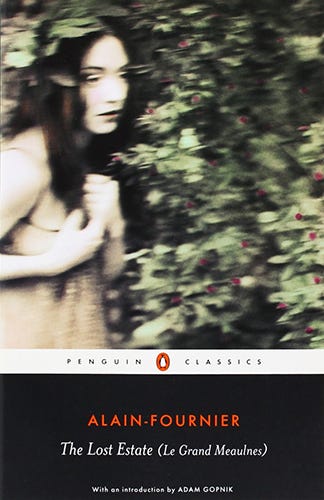
1. The Lost Estate

by Alan-Fournier

Published in 1913 under its French title Le Grand Meaulnes and also translated as The Wanderer, Alan-Fournier’s only book is a classic of childhood straying into a realm of mystery, to which the young protagonists spend their lives trying to return. The bare bones of Stranger Things is here in full: a disappeared youth, a mysterious newcomer, and the onset of the heart’s desire before it can even be known as such. It is also one of the greatest books in the world and a must for anyone trying to come to terms with nostalgia despite its famous warning that “It is better to forget everything.”

2. “The White People”

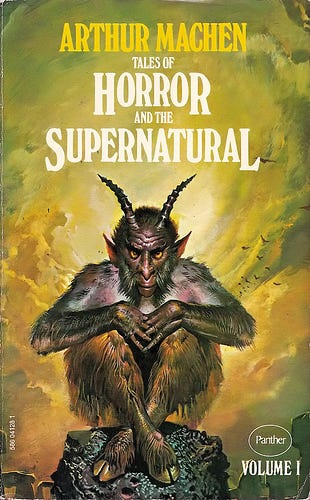
by Arthur Machen

Another book that owes more than a little to the 80s — the 1880’s, that is — Machen’s wonderful early Twentieth Century short story “The White People” is foundational weird fiction that inspired H.P. Lovecraft, but is a much more naturalistic venture into places unknown. Like Eleven in Stranger Things, the story revolves around a young girl who can enter a parallel realm that is equal parts psychedelic outlandishness and a metaphor for the separate domains of children and adults.

3. A Wrinkle in Time

by Madeleine L’Engle

Of course! No list of childhood confronting the bizarre could neglect L’Engle’s classic novel of a family of misfits who travel into a dark planet in the Fifth Dimension. Again, like Stranger Things, we have science-fiction trappings like the space-folding Tesseract which make more sense of the bizarre world of adolescence than all that Where the Wild Things Grow/John Knowles required-reading pap could ever dream.

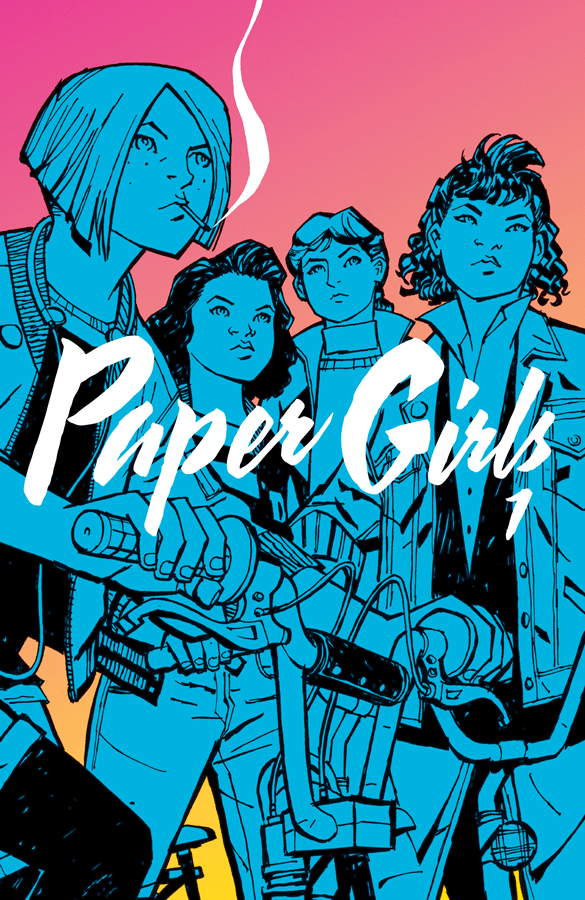
4. Paper Girls

by Brian K. Vaughan

The recent Paper Girls graphic novel collects an ongoing series stunningly similar to Stranger Things with one notable departure: the BMX bike-riding foursome that leaves the 1980’s for a pocket universe outside of time and space are all girls. It’s probably too early to call, but Vaughan, who wrote the acclaimed Y: The Last Man and Saga comic, has proved so far adept at capturing the wonder for bygone technologies (the titular girls are newspaper delivery professionals), just as Stranger Things films landline phones and ginormous walkie-talkies like objects out of time.

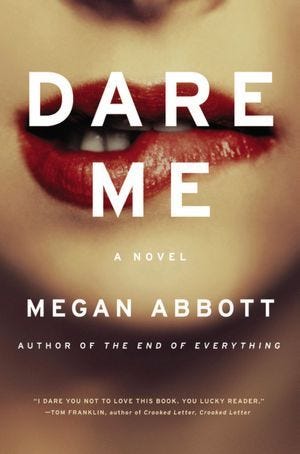
5. Dare Me

by Megan Abbott

Some critics have pointed out how amoral the teens of Stranger Things behave in the aftermath of Will’s disappearance, perhaps forgetting that teenagers are evil, desperate creatures. Abbott’s Dare Me captures a parentless world of insidious cheerleaders willing to go to enormous extremes for sex, power, and amusement. 16 year-old Addy, her Machiavellian best friend Beth, and their possibly murderous coach are a rejoinder to the sparkly carefree depiction of cool teenagers. Remember Weetzie Bat? This is Meansie Bat.

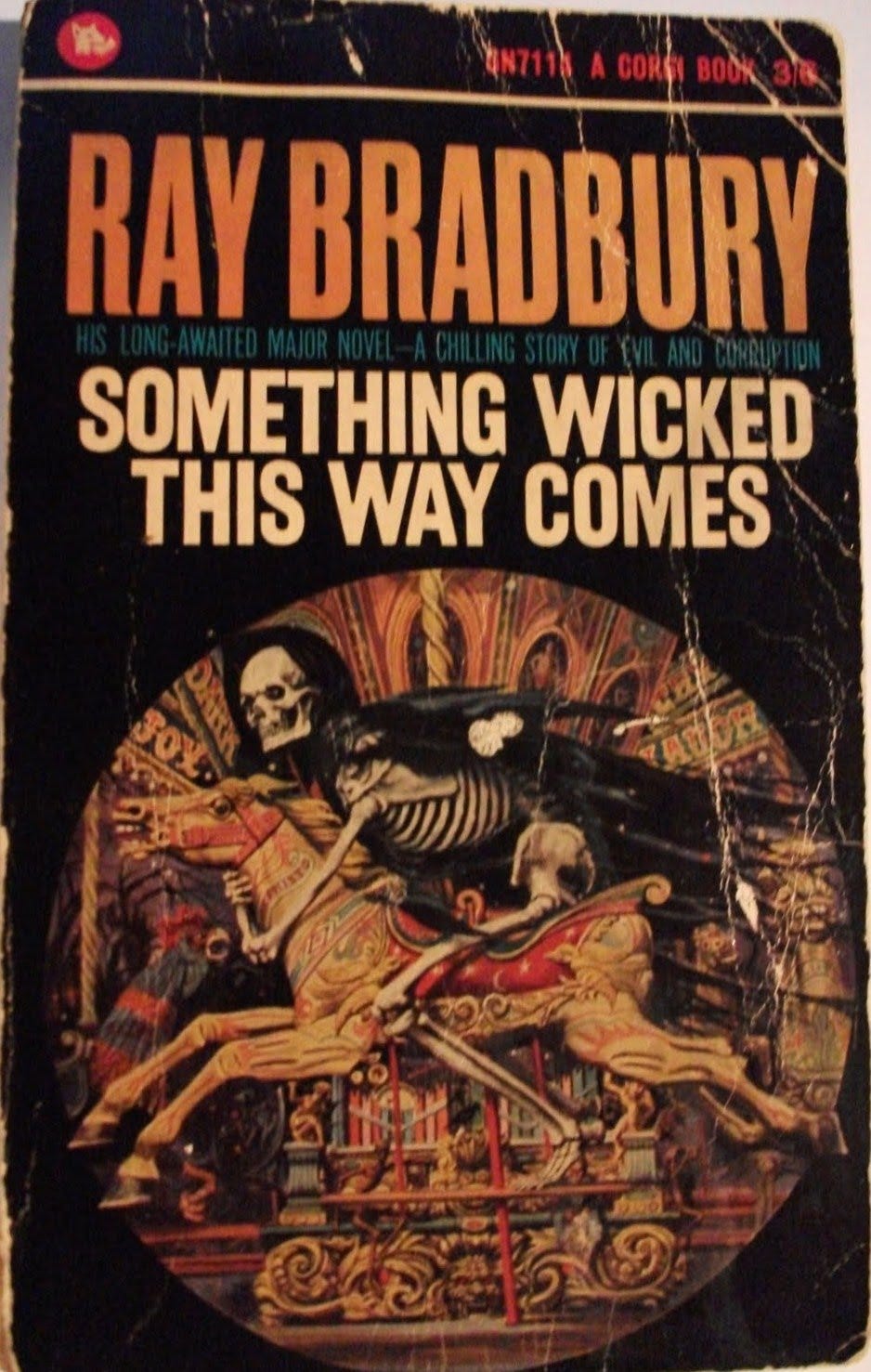
6. Something Wicked This Way Comes

by Ray Bradbury

Why is this terrifying, atmospheric book given to children? Why is the Disney adaptation PG? Because children used to be made of stronger stuff, clearly, and we weren’t afraid of a twilight carnival that rolls into town, intruding into childhood with a knowledge of mortality that comes at an evil price. Stranger Things has a monster out of nightmares that drags you to an invisible hive; but Something Wicker is still the standard because its darkness is all too visible.

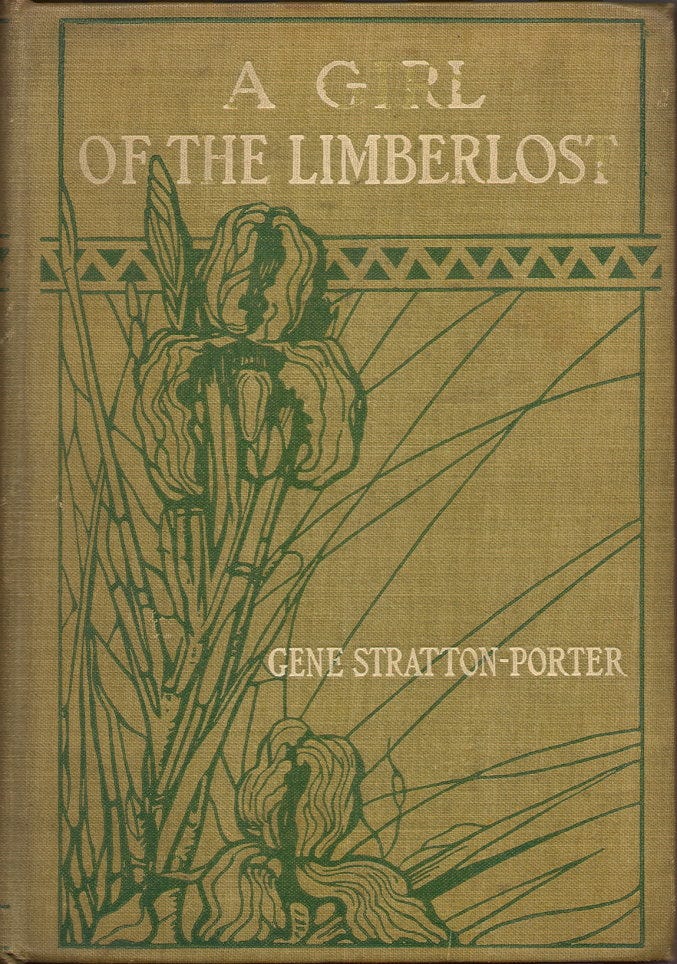
7. A Girl of the Limberlost

by Gene Stratton-Porter

One of the stranger things about Stranger Things is that it’s set in Indiana; non-Hoosiers might be surprised to discover that the Crossroads of America has a totally unique literary tradition that includes the Nineteenth Century classic A Hoosier Schoolmaster, Carol Shieds’ Pulitzer Prize-winning The Stone Diaries and, especially, Stratton-Porter’s A Girl of the Limberlost, a moody teenage romance set in and around the Limberlost Swamp.

8. 03

by Jean-Christophe Valtat

A marvel of prose, translated in 2010 by Mitzi Angel, 03 traces a single thought by an adolescent piecing together the world through glimpses, bits of philosophy, and, especially, the lyrics of Joy Division and The Smiths. This slim novel seems to have little in common with Valtat’s ensuing steampunk trilogy The Mysteries of New Venice, but Valtat’s imagination is the rare one that can take us back to the mysteries of youth in a single evocative note, just as Stranger Things dresses its horror story in the familiar strains of New Order and Echo & the Bunnymen that were the companions of many a searching, lost adolescent.

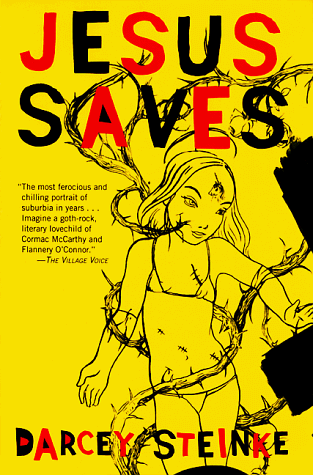
9. Jesus Saves

by Darcey Steinke

Like Stranger Things, Steinke’s novel has the disappearance of a child at its heart, as a town struggles to find faith after the kidnapping of little Sandy Patrick; but unlike Stranger Things, the monsters here are human, as Sandy drifts into a fantasy world that superimposes itself over a suburban hell that is darker than anything in Dante.

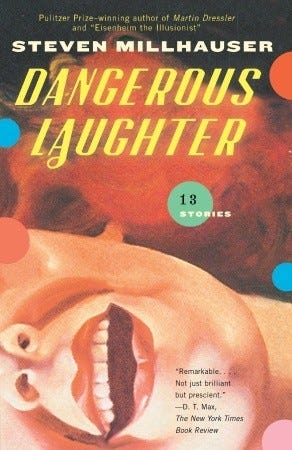
10. Dangerous Laughter

by Steven Millhauser

Stranger Things is Millhauser all over; he is the Borges of Americana and almost any of his books could fit the bill, from the brooding Portrait of a Romantic to the suburban fantasia of Enchanted Night. But Dangerous Laughter is a good place to dig in, featuring two of my favorite Millhauser stories, “The Room in the Attic” and “The Disappearance of Elaine Coleman,” both of which give form to what is missing from our memories of childhood, a terror of the world that is more terrible because we cannot name it and the adult world pretends to have forgotten.

German Airline Allows Passengers to Fly with Extra Books

The Buch an Bord scheme permits one more kg of carry-on weight for books

A stack of books sporting stylish shades

You really don’t want to pay the extra luggage fee. None of us want that, but you especially. It’s summer and hot and you’re sweating at the airport. You’re one pound over the carry-on limit, and now you must expose the innards of your hand luggage to what feels like the unforgiving eyes of the entire world while you frantically search for something to take out, to reposition — for something to save you. This is quite the bind. You must make a decision: toss the recently-purchased moisturizer in the trash, or place that new DeLillo hardcover in your brother’s luggage, where it will undoubtedly bend and crease and take on that sweaty gym-shoes smell so vintage-him you won’t have time to explain your grievances to the TSA officer. How cruel.

To avoid this sort of scenario, Vorsicht! Buch (a marketing initiative of the German book trade) has come up with an ingenious plot: the Buch an Bord (Book on Board) campaign. Teaming up with Condor Airlines, the scheme is designed for the holiday season. Essentially, each passenger is allowed an extra kg of carry-on weight so as to be able to fit that recent Man Booker finalist or dystopian YA trilogy in their luggage.

How then to certify that the extra weight allowance will be used specifically for books? According to Alexander Skipis, managing director of the German Booksellers and Publishers Association, “All the 5,000 bookstores in Germany were equipped with the campaign stickers and the bigger part of them are participating.” Once you have the sticker, you are allowed the extra weight. Simple enough.

Perhaps even more importantly, the new offer not only helps passengers at the airport, but it helps better the relationship between local bookstores and new/returning customers.

The most notable downside of this news, however, is that it underscores the absence of American airlines’ bookish concerns. Until we have something like this, I suppose my new DeLillo hardcovers will continue to carry the rancid odor of weeks-long sneaker sweat.

How to Be a Modern-Day Martyr

Having read an extremely weird and wonderful story by Zachary Tyler Vickers’ that appeared in Hobart, and having interviewed him about said story, I thought I knew what to expect from his book, which came out at the end of May, 2016 from Indiana University Press. But Congratulations on Your Martyrdom! surprised me, in the same way that David Foster Wallace’s work surprised me when I first started reading it in earnest.

When encountering Wallace for the first time, it’s often through an excerpt or one of his cleverer short stories that are more digestible in undergrad writing courses. That is, the story or excerpt is likely good, even excellent, but it doesn’t convey the breadth and depth of what Wallace does in his work. Similar to encountering one story by George Saunders rather than reading a whole bunch of it, you may come away knowing that the author is very clever, intelligent, and has heart, but you won’t quite see the empathy that resonates within the lives of the often concept-driven story.

The stories in Congratulations on Your Martyrdom! are linked by space and time: they all take place in a small town that is struck by a tornado that has changed everyone and everything to some extent. Almost every story mentions another landmark occasion in the town — the time a boy jumped off the cliffs of the make-out area known, fittingly, as The Spot, and died. This is a small town that has a collective memory for such events, and the people who live there exist only in relation to one another. There is no story that includes a character who is entirely, 100% alone, because small town life simply doesn’t allow for it — and nor does Vickers (there is a story titled “Everything in Relation to Everything Else,” just to prove my point).

“Zachary Tyler Vickers’ work feels like a mix of Saunders and Wallace.”

Zachary Tyler Vickers’ work feels like a mix of Saunders (who blurbed the book and was a teacher at one point according to the acknowledgements) and Wallace (whom I know Vickers admires as we spoke about him at length) — but it is also entirely Vickers’ own. The qualities he shares with the Saunders and Wallace are a subtle and rather tragic humor, a sense of despairing hope or hopeful despair, and a fullness of empathy that is masked by intelligence so that one could skim the surface of these stories and enjoy them without seeing it if one were so disposed.

The language of the stories is impeccable, crisp and neat and tight, without superfluity, which is one of the ways skilled writers of a certain type allow, consciously or un-, the emotionality of their work to hide in plain sight. For example, take the first story, “Disfigured Paper Animals,” in which a Build-A-Bear-type shop begins using carcasses of real animals instead of the synthetic kind. The narrator of the story is the man who brings the stuffed animals to life with “Magical Foam Organs” and a stuffing hose dubbed the “Umbilical Cord” and sews them shut. He has overlarge hands, swollen and strange, and they haunt him.

Grammie described my hands as the manifestations of impure thoughts. But before the cobwebs, she mentioned it was genetic, gathering enough lucidity to recount Pop’s hands as fleshy oven mitts. He and Ma died in a plane crash. Pop was piloting. They were honeymooning. I was infantile. Grammie was babysitting. Sometimes I wonder if the plane crashed because of Pop’s inability to grip the controls.

The resonance of the sounds these sentences make — manifestations of impure thoughts; Pop was piloting — almost allow the reader to lose sight of the tragedy being described.

The stories aren’t in chronological order, but they share things that serve as clues to timeline, like the relation of each story to the tornado, to other characters, or to the kids who are always playing a game of Wiffle ball. In the single one where we get to experience the tornado, “Tornadic,” it serves only as an ending spot rather than as the point of the story. The point of the story also isn’t that the narrator’s ex-girlfriend keeps waking up with paper-cuts on her body in odd places and strange shapes, as haunting an image as that is. No, the point of the story, and of most of the others, is the loneliness of the narrator and how he deals with it.

Loneliness, in other words, is the martyrdom as I see it. The collection’s title is so brazen that it seems angry, as if telling off the characters in its own stories who aren’t doing enough to save themselves, to pull themselves up by whatever bootstraps they have and get to a happier place in life, whether that’s by pursuing a woman, getting over a death or five, or securing a better job. But these characters aren’t capable of what they wish they were capable of. Their martyrdom is in accepting their fates or in going against them but usually in a bit of a wrongheaded way.

“Vickers’ characters [are] deeply human, humane, yearning for love or satisfaction or recognition.”

In other words, they’re human. Vickers’ characters, like Saunders’ and Wallace’s, are — despite high concept moments, despite the humor inserted into their lives, despite the clever language their writer encases them in — deeply human, humane, yearning for love or satisfaction or recognition. They want to be seen. There’s a part of me that wants to reach into the pages of each story and stroke their faces while they sleep and tell them: you are seen. You are heard. But they live their lives unaware, which makes them so uniquely tragic.

In the penultimate story in the collection, “Tighter, Goodbye,” Vickers brings all these qualities together in a fantastic way:

The wreck during the ’92 snowstorm left Snapmare aphasic. Words jumble, linger at the tip of his randomly inarticulate tongue. Ma and Pa carpooled to heaven. Life insurance remedied little. Snapmare nine-to-fives at the KwikStop, clerking beside his freckled crush, Polly. He’s training to become the professional wrestling tag team partner of his buddy Nimrod. Wants Polly to be his redheaded ringside diva, hear her cheering him on from just outside the ropes. The scar on his head is an intimidating accessory, the difference between one heartbeat and the next. The difference being everything.

Snapmare, his sister Tiff, his buddy Nimrod, and his crush Polly are all tragic characters in this story, which ends in what is either elation or tragedy, depending on how you decide to read it. It hovers there, in between, leading to the next, and final, story, which deals with the woman beyond Tiff’s wall who listens to crying and game-shows and who is the grandmother of the dead boy who jumped from The Spot all those years ago.

The final stories in the collection own up to the theme of the whole — loneliness, connection, a desire to escape the former and reach the latter even if it’s by extreme measures of desperation — and as such make you want to start the whole thing over again and read the stories with eyes fresh with tears and a heart welling with the tight indescribable emotion that is the love for fictional characters who become so real you want to save them from themselves.

Maryse Meijer’s Romance under Patriarchy

Maryse Meijer shreds readers’ hearts and souls in her debut collection Heartbreaker. Her characters are lonely, obsessive, and sometimes otherworldly. In the title story a high school student named Natalie molests a mentally handicapped boy. In “The Daddy” a woman hires a younger man on Craigslist to play her doting father. In “Love, Lucy,” the antichrist emerges on Earth in the form of a little girl. “The Cheat” involves an actual fox that seduces a teenage girl with junk food at a Christian weight loss camp. The rest of the stories also unmask humanity’s worst creatures so that every instance feels dangerous and leaves you with images that are impossible to forget.

A friend introduced me to Maryse in front of a taco truck in Los Angeles during the AWP conference. We hitched a ride to a party and spent the night chatting about our mutual love of California, Chicago, and writing. In person Maryse is anything but mean or weird or dark, like the people she produces in her work. She is kind, smart, and charismatic. She currently lives with her husband and daughter in Chicago, which is where she was when I called her months later for this interview about Heartbreaker.

Home by Maryse Meijer

Andrea Arnold: While dark, your stories are unique and memorable. I found myself relating every little detail back to my fiancé. Where do your characters come from?

Maryse Meijer: They certainly don’t come from my life, thank god [Laughs]. They’re mostly inspired, honestly, by other people’s art. I’ll listen to a song or watch a movie or read a book or look at a painting and I’ll think, I want to make something like that, I want to re-create the feeling that this scene or melody made me feel…and out of that comes these people and scenarios. It’s rare that I think of an idea and sit down to write it out. It really all comes from wanting to capture a feeling that I get from something someone else has made.

Arnold: How do you perceive someone like Kathleen in The Daddy? Who is she to you?

Meijer: She’s someone whom everyone else sees as just a nobody. But she has this secret life and in it she’s everything, she’s important, she’s powerful and desirable and loved. Going on to this site and hooking up with this other guy is her way of proving that she’s someone.

Arnold: Love, Lucy and Whole Life Ahead are almost genre fiction. One is seemingly about a werewolf-esque little girl and the other is about the undead. What genre do you consider your stories to be?

Meijer: That question didn’t come up for me until the book was being reviewed and people mentioned these stories as having “gothic” or “fantasy” elements. Often the stories are read as metaphors, but most of the time I’m being literal — for example, Love, Lucy is about the antichrist, and for me that’s what she really is.

“Weird fiction” is a genre, so maybe we should all just stand under that umbrella and call it a day.

If you take things literally, you’re usually considered a genre writer, but all of genre fiction works powerfully on a metaphorical level, too, of course, so I don’t know what the distinction is and I don’t particularly care. People like Kelly Link and Helen Philips and George Saunders and Amelia Grey are doing all kinds of weird things….and “weird fiction” is a genre, so maybe we should all just stand under that umbrella and call it a day.

Arnold: You play with perspective. In the opening story, “Home,” a girl asks to be taken. The relationship that ensues is puzzling because the reader doesn’t know if it’s the man or the woman who is the abuser, if either of them are. Did you mean for readers to almost look at that story in a fun home mirror so that the interpretation is different for everyone?

Meijer: One thing I noticed when putting this collection together with my agent was that most of the gender roles are reversed or another kind of role is reversed, and power dynamics shift in unexpected ways. In “Home,” the girl is in a situation where she’s almost a hostage, but at the same time she’s insisting on that role, while the guy is trying to get rid of her. It’s unclear who wants what and the ambiguity of the situation is what makes it feel, to me, so threatening.

I think a lot of the stories operate on this idea of a power reversal. What’s interesting to me is that in the reviews a lot of the people are applauding the female characters as champions of feminism. They are out there doing what they want to do. Which is curious to me because I think none of these characters are making wise choices. [Laughs] One of the ideas I was trying to get out was that romance under patriarchy, no matter what gender you are, is always going to be a little fucked up. Our notions of romance are influenced by shitty patriarchal notions of what love is. So I don’t see the reversal when it takes place in the story as necessarily a positive thing. It’s just another way to look at the same problem.

Arnold: In “Fugue” the roles are also reversed. Three boys consider threatening a girl, but instead she becomes an attacker of sorts. It’s such a violent story, but a fantasy many girls might have. Do you ever come to stories in that way, like by thinking, What would I do if only I had this special power?

Meijer: This is one of the few stories that has a real-life inspiration. My husband and I used to drive a lot cross-country, and we would stop at these twenty-four hour truck stops in the middle of the night. There would always be these young girls working by themselves in these convenience stores. Which seemed crazy to me. I thought for a long time about writing a story about one of these girls, about what would happen — what I imagine does happen — if a group of boys try to take advantage of the situation. We all know what could happen — she can go with those guys and something bad can happen to her, but that’s not quite the story I wanted to tell. So the story takes a different turn, but it’s still not exactly a happy ending. She has power in that particular instance, but in the bigger scheme of things she’s a damaged person using that damage as a weapon.

Arnold: You start out with damaged souls. I can’t stop thinking of the story “Stones.” I have to ask, why stones? Why not some other device? It’s like Fifty Shades of Grey but not.

Meijer: [Laughs] I think that should be the tagline of the book. It’s like Fifty Shades of Grey but not! Why the stones? I don’t have a good answer to that — the stones (which are used as a kind of fetish object) appeared and I kept them in because they felt right. I suppose they could be a metaphor of some kind, but, again, to me they serve a literal function. I leave the interpretation up to the reader.

Arnold: What is most remarkable to me is that you pull it off. Which one of these stories is your favorite?

Meijer: “Home,” which I wrote eight years ago, was the first story that I wrote that made me feel like, this is a story that I would want to read. I have a twin sister, and when we were young we had a hard time finding the kind of stories that wanted to read, so we made up our own. We still do that today. We have our paracosm, as they call it, like the Bronte family did, and we make up all sorts of crazy stuff together. She’s the person I write for. She’s the one who told me I had to be a writer. She said, “I’m going to be a scientist, you’re going to be a writer, and we’re going to take over the world.” She’s the boss.

Arnold: What is your writing background?

Meijer: I was writing pretty seriously when I was younger — I can’t remember a time when I wasn’t making stories. I took writing classes as an undergrad, and got my MFA, which was not the best experience. There was a very pronounced aesthetic at work there, which I found very traditional — it was all about Alice Munro, William Trevor, the great Chekhovian tradition. People kept saying to me, “You don’t know why anyone is doing what they’re doing, so you don’t really have a story.”

A lot of writers are really caught up in the psychology of characters and I couldn’t care less about psychology.

They wanted backstory. I was told to write this long essay on motivation. [Laughs] I was not very successful. They kept insisting I explain my work, which I refused to do because it just didn’t interest me. A lot of writers are really caught up in the psychology of characters and I couldn’t care less about psychology. I’m more interested in showing what people do than in telling anyone why they’re doing it. But maybe that goes back to being inspired by atmospheres, feelings, images, trying to pull narrative out of that, to get a feeling across rather than an explanation for that feeling, the explanation for a particular action. The action already has meaning when placed in context…and it’s the context a writer has to get right, and there are so many ways to do that.

Arnold: Did you have a writing mentor?

Meijer: There were so many supportive adults in my life when I was a young person, people who treated me as if I was creating stuff that was really worthwhile, who took me absolutely seriously. People who didn’t just pat me on the head. I had an eighth grade teacher who let me write during class whenever I wanted — he showed such respect for me, gave me so much encouragement. He saw how important writing was to me and he gave me the space to do it. And I had a high school English teacher who said I was a better writer than he was — in a world where young people are always treated as if they are “becoming” something, as if they are apprentices, never masters, this was a really profound thing to hear. And then I got my MFA and people told me that I was “too young” to know what I wanted to do, how I wanted to write…that was my first real experience of being treated as a child — in graduate school! But it can be good to meet resistance, to get some pushback — you can learn a lot in a defensive position, because you have to really know where you stand, what you stand for.

All artists should have a twin!

I was lucky, too, in that I had my sister always telling me not to give a shit about what anyone says. [Laughs] All artists should have a twin! All humans should have a twin, really, because a twin gets you. Your ideal audience is the person you were born with and so no matter what, there’s this one person, at least, who so totally supports you, it doesn’t matter so much if everyone thinks you’re making total crap. Your twin is a built in cheerleader, support system, editor, fan base. It’s a pretty good deal!

Arnold: Have you ever written a story about twins?

Meijer: No! I get asked that a lot. When I think about writing about a twin or a child — I have a daughter — I can’t imagine it! It’s almost too sacred a topic. [Laughs]

Arnold: Did you submit these stories to lit mags, and if so what kind of feedback did you receive? I’m wondering if editors were afraid to pursue them.

Meijer: Very little feedback. I probably made five hundred submissions over the years…. I was pretty diligent about getting out there. But before this book was sold I had only published seven or eight times. And it’s still true that 99.9% of the time when I submit I get a form rejection. I think that’s fairly normal for anyone, no matter what kind of work you’re doing. I know my work isn’t the most mainstream, and that might limit it, but there are tons of places doing experimental stuff…the fact is every market gets thousands of submissions a month and the slush pile is unavoidable. Most of the time you don’t know why you’re getting rejected because it’s all very impersonal. You just have to keep your chin up and press on and just do the work. And hope you get lucky.

Arnold: How is the Chicago writing scene?

Meijer: We have a couple of great homegrown presses, Featherproof and Curbside Splendor, who are putting out a lot of fresh voices (Featherproof discovered Amelia Gray and Lindsay Hunter, who are now with FSG), and there are tons of first-rate independent bookstores here packing people into events every day of the week…we’re home to several lit mags, poetry slams, book fairs…all proof that book culture is alive and well, even thriving.

Arnold: What are you working on next?

Meijer: I’m revising a first novel and working on a second collection. The novel takes place in LA. It’s about a girl that works at a taxidermist shop and she meets this guy in a morgue, who may or may not be dead, and she’s convinced she’s brought him back to life. Trouble ensues.

Meijer: Is the next collection also dark?

Meijer: It’s worse! [Laughs] But that’s a good thing, right?

Jessica Winter Skewers the Modern Workplace

I’ve been reading Jessica Winter’s writing practically since she started publishing. Back in the late ’90s and early aughts, we were both editing and writing at The Village Voice. She produced a seemingly endless stream of reviews and features — on film and books, mostly — that were reliably brilliant, whether it was a meditation on Russell Crowe or a look at a forgotten literary oddity of the 1950s (Nigel Dennis’s Cards of Identity). Her surname was almost too perfect, given the wintry clarity of her sentences. Elegant braininess! What couldn’t she write?

Jessica eventually did editorial stints at O and Time, while also contributing to a variety of publications, including Bookforum. Now an editor at Slate, where she frequently writes on politics and culture, Jessica has published her debut novel, Break in Case of Emergency, which is at once marvelously inventive and aimed straight for the heart. Just read the first few pages, and you’ll see that rare first-time fiction writer who knows exactly what she’s doing, one keenly observed sentence after another.

Jen is trying to find her footing in her early 30s, in the belly of the beast (aka New York City) — navigating work and art, longing to start a family, After a stint of unemployment, she finds a job at LIFt, a purportedly women-centric charitable foundation-cum-vanity project run by the gloriously named Leora Infinitas — a wholly original creation that nevertheless might remind readers of, say, Gwyneth Paltrow crossed with Arianna Huffington. Jen’s title is Communications Manager and Co-Director, Special Projects, a title she shares with a colleague: “Neither of them could have always stated with certainty which projects they were intended to manage, officiate, or codirect, or which qualities made any particular project special.”

Break in Case of Emergency is one special project — a precise mix of the absurd and the heartfelt. I caught up with Jessica via Gchat recently, a fun exchange in which, inexplicably, chunks of some of my questions appeared with lines struck through them. It occurred to me later that this was a detail that could have appeared in her novel, which among many things is a lovely contribution to the field of workplace literature.

Ed Park: We were colleagues long ago, working at the same newspaper, The Village Voice, often in the happy situation of editing each other’s pieces. If you don’t mind my saying, I’ve been a fan of your journalism basically since your first film reviews started appearing. “Who is this Jessica Winter?” I wondered, before I put a name to a face. There’s a precision in the thinking and a hotness to the prose — perhaps one demands the other — that I’ve always found exciting. Now you’ve written a novel, Break in Case of Emergency, which has those same virtues, on a bigger scale — and a magical something else as well. I’d love to know about the origins of the book, and any challenges or pleasures you discovered in turning your hand to fiction.

Jessica Winter: Ed, you are so kind! I remember that on my first day at the Voice, someone said to me, almost as if they were letting me in on a delicious secret, that “Ed Park is the funniest, smartest person here.” And I thought, well, I need to investigate this Ed Park fellow immediately. And they were right!

Park: That was actually me saying it, in disguise.

Winter: I was in my mid-thirties before it ever seriously occurred to me to write fiction. One of the nice things that happens when you’ve been writing and publishing nonfiction for a while is that, inevitably, these lovely people known as agents start asking you out for lunch to talk over ideas for books. That’s the expectation for your next step: “You’ve written all these articles; now you write a book!” I was always halfway decent at coming up with ideas for articles but really, really terrible at coming up with ideas for books — the two skills don’t necessarily have much to do with each other. A piece of advice that I kept getting was: “Whatever book you write, make sure it’s the kind of book you yourself would read and enjoy. You’re going to live with this book for years, so you have to be the ideal audience for it.” The truth is, whenever I have free time to devour books, those books are novels. So that’s how the seed got planted: “Why have I never tried to write one of these things that I love reading so much?”

I had two overlapping ideas for a novel rattling around in my head for a long time. One was a parody of a celebrity charitable foundation, specifically one that located itself inside the feminist-empowerment industrial complex. It felt like endlessly rich terrain, and I hadn’t seen it explored in a satisfying way elsewhere. The other idea was to explore the experience of infertility and early pregnancy in a workplace, specifically one that wasn’t especially sympathetic to people having bodies and lives outside of the office, and one where a kind of blind fealty to “openness” and “authenticity” would mean that an employee with reproductive health issues — or any health issues, really — wouldn’t necessarily be granted space or privacy.

At first I would just jot down little musings and vignettes and snippets of dialogue in spare moments and send them to myself in Gmail. It was the most haphazard way of starting a book.

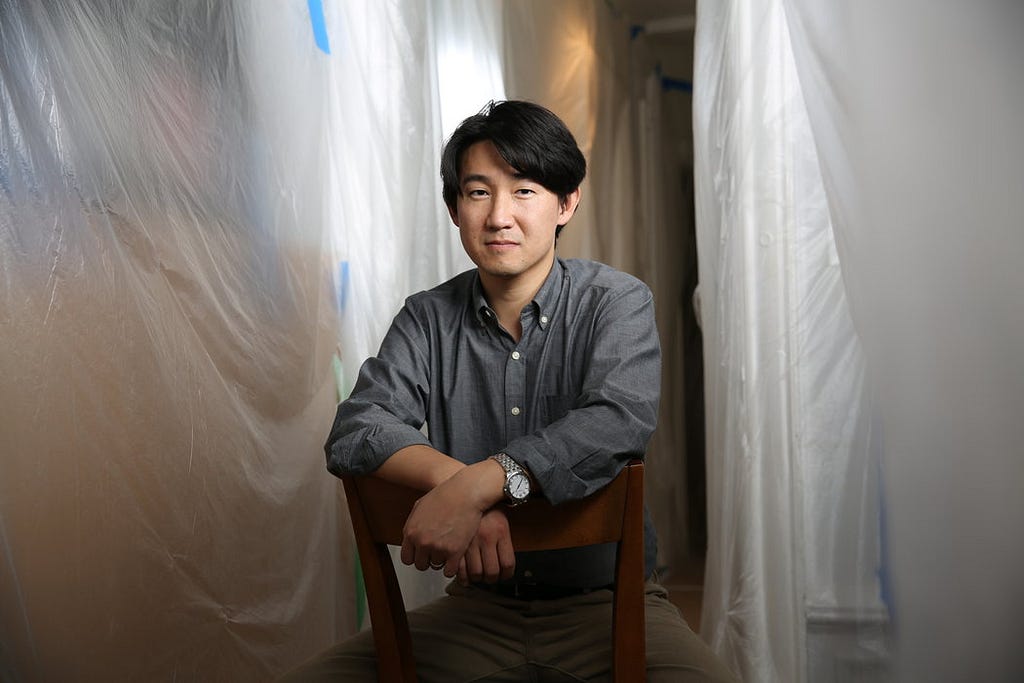
Author and Editor Ed Park

Park: I do that, too — email myself musings, character ideas, particularly inspired puns. And then they’ll pile up and get pushed further down the inbox, so mostly I don’t see them till I’m searching for something else entirely and then that message pops up.

Winter: Yes! I didn’t even really have a decent search-word or folder system worked out. It’s altogether possible that I have a scene or line of dialogue or half-baked theme buried in Gmail somewhere that I sent to myself and forgot about.

But gradually all those little scraps started to cohere, and I was devoting more and more time to making them come together, and the whole experience became addictive. When I’m writing a reported piece or an essay, I tend to love doing the research but hate the writing part, and I’ll do most anything to avoid it or procrastinate. But with this, I found myself itching to get back to it all the time, because the writing part of it was pleasurable in a way that I’d never really experienced before — maybe because it was such a new experience of writing.

Park: Break in Case of Emergency is so deftly way-we-live-now, and I do see that as the engine of the story. But what knocked me out, particularly at the beginning, was the sheer joy of the prose. Your articles can be very funny, but I loved the humor here — the sheer invention on display. Obviously we get into deep emotional territory as the book goes on, but I felt that the book comes out of the gate with this heightened take on reality, the sort of inspired satire that I love. The humor is situational but also resides on the language level — in the naming of things, and then going where the name takes you.

Winter: Well, we should say that BICOE is deeply, openly indebted to two office satires: one is Sam Lipsyte’s The Ask, and the other is your own Personal Days. If the reader of BICOE is a fan of either of these books, she will find Easter-egg homages to both books in mine. One of the many things I loved about Personal Days was how you captured office lingo, both in terms of bureaucracy and the kinds of excruciating formal emails you have to write to your boss at times, but also in terms of how office lingo can be a glue that helps colleagues bond with each other. Close colleagues can develop inside jokes and wordplay that becomes like the language of twins, and the way you translated that language and that intimacy for your reader was magical and hilarious and eventually quite moving. That pure delight in language is one of the ways office-mates keep each other going, and I loved that Personal Days celebrated that at the same time that it portrayed cubicle life as often bleak and existentially gnawing.

Park: Jen’s work situation is hilarious and cringe-inducing, but we also understand why Jen is there — coming off a spell of unemployment — and that a big part of her “real” self has been denied for years. Jen’s a talented artist, but lacks the ambition that her friend Pam has. The title of the novel, Break in Case of Emergency, is also the name of the central art installation in the book, which you bring vividly to life. Were Jen and Pam artists from the beginning, in terms of your conception of the story? And though you wrote extensively on film — a visual medium! — early in your career, I wonder how being married to an artist [the graphic designer and photographer Adrian Kinloch] might have shaped your thinking and writing around the subject.

Winter: Yes, I saw Jen and Pam as artists from the start. One of the things that interested me about Jen is that she felt caught between two designs for how to live, each of which she sees exemplified in her two best friends, whom she idealizes. Meg appears to Jen as a perfect straight-world figure, with the beautiful family and the worthy job. And Pam appears to Jen as a perfect rejection of that world, with her crazy installations and her starving-artist boyfriend and her threadbare apartment-slash-gallery space and her apparent lack of interest in money or marriage or having children or any number of other conventional expectations. So Jen does lack Pam’s ambition, but I think her bigger problem is that she lacks Pam’s or Meg’s sense of self, their sense of purpose and identity.

If you’re going to write a book that has photography and graphic design and art in it, I highly recommend being married to a photographer and graphic designer with a fine arts degree. Adrian helped me hone a lot of the passages where we see Jen or Pam at work in the studio, and his final-year project at art college in England was inspiration for some of Pam’s work. An early reader of the book read the passages about Pam’s senior thesis show and said, “No undergrad art department would ever let a student get away with this” and I said, “Oh, I can think of one!”

Park: The first two letters of the name aside, how much of your own experience of New York City have you mapped onto Jen? Would you ever consider writing a novel set somewhere else?

Winter: It took me an embarrassingly long time, and I mean years, before I figured out that many, many people in my industry and related and overlapping industries in New York City — media, book publishing, nonprofit work — don’t live on what they make from those jobs; a disproportionate number of them have family money, a trust fund, an aunt who bought them an apartment, or a spouse in a higher-paying field. If Jen and I have some traits in common — and we do — one was a long-lasting naïveté about how a lot of bills really get paid in New York City, and a general sense at that age of being completely out of our depths when it came to money and how to relate to it and talk about it. As for setting, my next novel takes place in a different city, albeit one that I’ve also lived in and know very well, so I’m probably taking the “write what you know” cliché a little too far at this point.

Park: I’m an old man now —

Winter: And I’m an old woman!

Park: — but I can remember that feeling of figuring it out. Maybe it happens in every city, but New York is the extreme example. And this reminds me that we’re both originally from Buffalo — same state, but as far away as you can get from New York City, pretty much. It plays into my next novel a little.

Winter: Mine, too! And of course you edited Buffalo Noir, which is a brilliant compendium of the city’s seamiest nooks and crannies. People from Buffalo tend to feel a little sheepish about their town, or a lot sheepish, because people not from Buffalo think of snow 10 months a year and four Super Bowl losses. Did you see the OJ documentary?

Park: I saw the first part on TV and was stunned. I’m ancient enough to remember OJ playing for the Bills — why am I talking about my age so much? — and having a poster of him on my wall.

Winter: It’s an astonishing, brilliant documentary. At one point one of Simpson’s former Bills teammates likens Buffalo to Siberia, and the film basically takes him at his word. I guess I can understand why a Californian would feel that way. But Buffalo is historically and architecturally fascinating — there’s so much to mine. And the summers are so nice! I wonder if part of the problem is just the name. The city as lumbering, hirsute beast.

Park: But it’s also mysterious, Jessica — because nobody knows how it got the name! Speaking of names, Jen and Meg and Pam have plain, minimal monikers, but nearly everyone else in BICOE has something sparklingly weird or fabulous to their names, Leora Infinitas being the apotheosis here. It reminded me of Perpetua in Bridget Jones’s Diary — a minor character, I think, but the name will never be forgotten. Pynchon’s names also come to mind. Maybe I can just ask: Where did that come from? Was it like John Lennon being delivered the name “The Beatles — with an a” via a flaming pie or whatever?

Winter: I honestly don’t remember how I came up with it. And I don’t know what came first: LEORA INFINITAS FOUNDATION or its anagram, ADROIT FELON IS IN A FOUNTAIN. But I do remember wanting very badly for her to sound like a character from Infinite Jest, which is one of my all-time favorite novels. That was my starting point — something that could aspire to be even in the same zip code as a name like Avril Incandenza, née Mondragon.

Coming up with names for secondary characters is so fun that it can be a form of procrastination…

I said earlier that I didn’t procrastinate much on this book, but I think that coming up with names for secondary characters is so fun that it can be a form of procrastination or avoidance — you know you have a really difficult transition or structural change to make, so you just keep coming up with silly names for characters who don’t exist yet.

I think I gave Jen and Jim and Meg and Pam relatively simple, generic names — my given name, too, is quite generic — because, on an intuitive level, I wanted as much as possible for the reader to assess them through their words and actions and through Jen’s own skewed perception of them. You might notice that there’s little or no physical description of them. There’s a passage in which Jen notices that Pam has lost a lot of weight that I agonized over and kept deleting and restoring, because even though the passage was important and necessary, I didn’t even want to disclose to the reader that Pam was thin. I kept it in, but overall I really wanted to leave it up to the reader to decide what they looked like, and I suppose having a common three-letter name helped keep that space blank. This is another place where Personal Days is an influence, I think. This is a spoiler, but your final passage, when your narrator reveals his ethnic background, creates a heart-flutter of a moment that has always stuck with me, both on an emotional and a technical level.

Park: I’m glad you liked it — it was unplanned and then very planned, in the moment of writing.

To give a character a name like Leora Infinitas is to announce something about the novel’s world — to announce its fictive nature, even though of course there are unusual names floating around IRL all the time. And then — to take us to the end — you have a great last line that I think can quote here without elaborating on the context: “I am ready to destroy my life.” It knocked me out. What am I saying? Maybe just that many of my favorite books do this — they are authored into being, shaped out of scraps of the real world and the lived life but quite definitely “signed” by the writer, and then, in the end, that world between the covers must cease to be.

Winter: I wrote that line first: “I am ready to destroy my life.” I knew from the very beginning that that was the end of this book, even if I didn’t entirely know how I was going to get there. And then I wrote the first scene of BICOE. I did the exact same thing with the book I’m writing now: I wrote the last scene — the last line — first, and then the opening scene. There’s something about having those bookends in place from the start that makes me feel safe and contained.

I wanted to ask you a question, Ed. When you are writing and you get stuck, do you ever dip into books that you really love to get unstuck? Or is that too scary, like “Ugh, they are so good, I give up!” I ask because I was surprised to find myself doing this in writing BICOE and it really helped me as opposed to being discouraging. I read James Salter’s Light Years while I was revising, and on one level it was completely terrifying, but on the other it left me with this very practical, can-do kind of feeling, like, “Welp, off to Salter-ize all my sentences!”

Rachel Kushner’s The Flamethrowers had a similar effect. I was totally thrown about how to do a scene between Pam and Jen that I knew I needed, and I read the first 30 pages of The Flamethrowers and thought, “I will never be able to write like this; however, I now feel ready to tackle this scene.” I’m curious about how you relate to other books when you are deep into your own novels and stories.

Park: Ha! That is a useful verb: to Salterize. For me it’s generally Portisizing or Wodehousing (to the extent that’s even possible). I’ve definitely had that feeling of “Oh I give up!,” but generally the books I go to are old standbys — it’s not so much that I’ll try to imitate, but maybe the spirit of that book will flow through me. Anthony Powell’s Afternoon Men is another inspirational text.

Winter: I live in futile hope of ever Wodehousing anything. Maybe in a WhatsApp someday. Wodehouse would have been so adept with bitmoji.

Park: The other thing I’ll do is read something that has nothing to do with what I’m writing — something “minor,” something not even remotely literature. Yesterday I leafed through a book of chess openings, written with a lot of zest. I’ve also been rummaging through UFO literature, thanks to a friend who collects it. I love reading transcripts, people talking about what they saw or what they thought they saw. Anyway, I’m going to go do some Winterizing now.

Winter: Your kids are both really into chess, right?

Park: Yes, they like chess. They trounce me.

Winter: I read mostly board books to my daughter, who’s not yet 2, and one of them is this kind of shockingly retrogressive Mother Goose book that we inherited from somewhere-or-other that completely freaks me out and has already wormed its way into my next book. I wrote a whole scene around it. But now I have to go Park-ify that passage, come to think of it.

Midweek Links: Literary Links from Around the Web (July 27th)

The 2016 Man Booker Longlist is here, and includes some pretty great books

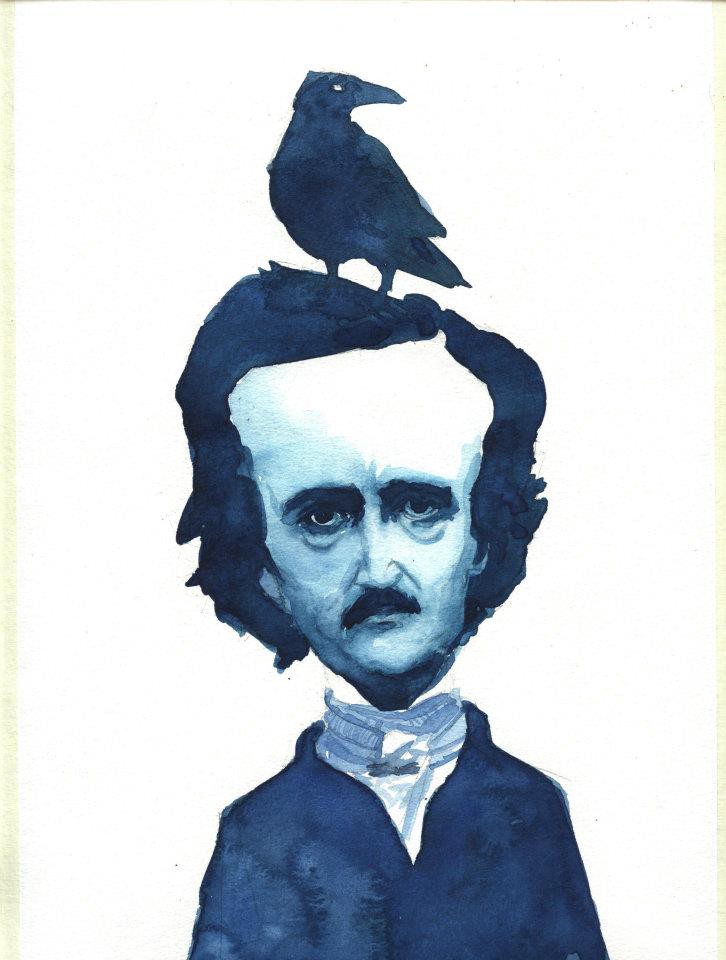
A look at the fascinating life and death of Edgar Allan Poe

A look at the early works of Haruki Murakami

Viet Thanh Nguyen on how winning the Pulitzer changed the value of his book

Alex Garland talks about his adaptation of Jeff VanderMeer’s Annihilation

50 reasons why you should read Joy Williams’s 99 Stories of God

On the melancholy in Hungarian literature

The New Yorker wants to know why Google erased Dennis Cooper’s blog

A guy named Hemingway won the annual Hemingway look-alike contest

A woman designer talks about gendered book covers

Here Is the 2016 Man Booker Prize Longlist

The “Man Booker Dozen” includes Ottessa Moshfegh and J.M. Coetzee, among others

This year’s Man Booker Prize Longlist is indeed, as the 2016 chair of judges Amanda Foreman states, “one to be relished.” The novels, novelists, and even the presses/publishers behind the works are wholly varied. J.M. Coetzee, what one can consider a veteran in this competition as the only double-winner, is included alongside four debut novelists: Ottessa Moshfegh (Eileen), Wyl Wenmuir (The Many), Virginia Reeves (Work Like Any Other), and David Means (Hystopia). There are five books from independent presses, two from Simon & Schuster’s Scribner UK imprint, and six from imprints under the auspices of Penguin Random House. Of the independent presses, one may be a bit more widely familiar: Oneworld gained huge notoriety last year as the publisher of Marlon James’s 2015 Man Booker Prize-Winning powerhouse A Brief History of Seven Killings.

In any event, it is refreshing to see such multi-layered diversity in this year’s nominations. Remember, it was not so long ago that the competition was notably more limited. Without further ado:

Author (nationality) — Title (imprint)

Paul Beatty (US) — The Sellout (Oneworld)

J.M. Coetzee (South African-Australian) — The Schooldays of Jesus (Harvill Secker)

A.L. Kennedy (UK) — Serious Sweet (Jonathan Cape)

Deborah Levy (UK) — Hot Milk (Hamish Hamilton)

Graeme Macrae Burnet (UK) — His Bloody Project (Contraband)

Ian McGuire (UK) — The North Water (Scribner UK)

David Means (US) — Hystopia (Faber & Faber)

The Junction

Wyl Menmuir (UK) –The Many (Salt)

Ottessa Moshfegh (US) — Eileen (Jonathan Cape)

McGlue (Excerpt)

Virginia Reeves (US) — Work Like Any Other (Scribner UK)

Elizabeth Strout (US) — My Name Is Lucy Barton (Viking)

David Szalay (Canada-UK) — All That Man Is (Jonathan Cape)

Madeleine Thien (Canada) — Do Not Say We Have Nothing (Granta Books)

Pay Me by Zdravka Evtimova

Theo watched the thin, long thread of a woman. The more he studied her face, the more he suspected she was not all there. The most amazing thing about her was her appetite. She constantly ate. They called her Maria; damn it, such a beautiful name and such a big mouth. She worked part-time at the local library, washed staircases and mowed the lawns in front of the wealthy men’s villas, using an electric mower as loud as a gun. She cleaned the important ladies’ houses, gave baths to the old women from the small town. Theo had heard rumors she was saving up to pay for her tuition at the local college.

She was different a fortnight ago. He caught glimpses of her, a cup of coffee in hand, staring at a lanky slovenly character. The man worked for Theo, repaired lathes and cutting machines, constantly complaining: too much dust, too hot, almost no money. Theo fired him.

Theo was intrigued by her; it was her big mouth that fascinated him. He was building a dyers’ workshop in town, and he hired her to clean the place. It was hard to believe how rapidly her hands moved, her fingertips neon signs glimmering intoxicatingly before his eyes. He underpaid her and she did not protest, didn’t even bother to count the money. Her eyes on his face, she asked, “Can I pick the wild sorrels around the dyers’ workshop?”

“Yes. You can,” Theo said. “But you’ll pay me five leva for my sorrels, as a matter of fact, ten leva.”

She didn’t respond to that, didn’t invite him to go drown himself.

She had turned around as if he was not there. Even worse, he stood nearby, a manure heap at her feet: nothing more, nothing less. Well, he was Theo, the man who owned half the houses in town, all fertile fields, and he had opened a dyers’ workshop.

“Hey. Wait,” Theo shouted. Her blouse intrigued him. He knew she’d bought it for fifty cents from his second-hand shop. The thing was too big for her, but her back looked very active in it, a snake twisting and turning within the confines of the huge hems. So far no man or woman had dared to turn their back on Theo.

“Nobody has introduced you to me,” her big mouth said. “I don’t see any reason why you should call me ‘hay.’ One should glance at a manure heap for fear that he might step in it. She trampled on his shadow, and her back, already a grown-up snake, retreated into the fog.

He saw her floundering in those enormous dresses from his second-hand shop, a green back on her back. At times she rummaged inside it, her fingers surprisingly thin and nimble, extracting nettles or sorrels, dock leaves and lettuces. She grazed on them. She stuffed sorrels in her mouth, munching, plucking another handful, then another.

Theo pursued a new hobby: he shadowed her. He watched her walking away from the library in a new one-leva dress from his second- to twenty-second hand shop; squatting by the stone wall, pulling and plucking nettles; pushing them into her green bag, then chewing raw dark-green leaves. A week passed, the sorrels grew coarse and hard, and she plucked horseradish, then goose-foot. He saw her picking grasses, masticating, chewing the cud until the first strawberries were ripe. Then she did not carry the green bag on her back; she clutched a crate with strawberries instead, gobbling fruit like thunder. His neighbors said she worked well, cleaned for many families, washed the sick, talked to old women from the village for hours on end, dug their gardens, weeded flowerbeds, and planted green beans or peppers. They gave her strawberries. She didn’t want money. She looked around all the time as if she was searching for somebody.

Then the cherries were ripe.

That grumbling character she’d been staring at had vanished without a trace. Theo had a nagging doubt in the back of his mind: Maria started gorging on green leaves the day the shabby blighter beat it for some unknown place.

Theo owned the cherry orchard; he’d bought it dirt cheap, then he built huge walls that encircled the land and the trees. Nettles sprouted in the shadows which she, a stick in a bleached dress, picked and wolfed day and night.

“I want you to pick cherries,” Theo said one day as Maria thrust a bunch of nettles into her green bag. “Twenty leva per day plus all fruit you can eat.”

On the following day she came in a T-shirt from his shop, shorts from his shop, her thin legs a pair of nails driven in her threadbare shoes which, he was sure, pinched her feet terribly. He hid behind the wall and watched. In the course of two hours Maria had not stopped eating; her lips turned bluish with cherry juice, and he was convinced she wouldn’t do the job he’d hired her for. He was wrong. At a certain point, her fingers plunged into the foliage and her body stuck to the branches like resin. In the afternoon, Theo couldn’t believe his eyes when he saw thirty crates of the cherries she’d picked.

“I’ll pay you,” he said.

She didn’t look up.

“You said ‘all the fruit you can eat.’” Her eyes were on her old shoes. “We agreed.”

“We did,” he said.

“I’ll eat now,” she said.

Theo sat in the shadow as she squatted on her heels, grabbed at a crate of cherries and ate, ate, ate as if she were a plant louse, a silkworm, her endless throat about to guzzle the whole orchard, the tree roots, the stones, the leaves, and the clouds above them. She chewed for an hour, then chewed more. Her mouth was black with the cherries, and her hands and elbows were crimson. Without warning, she jumped to her feet, vigorous, strong, as if she had just caught a glimpse of the orchard. She was a tapeworm that had pumped a ton of fruit into her flat belly. Theo thought, now I know. When the lanky character, dark like dried mud, hung around town, Maria didn’t rummage for food; a cup of coffee was about all she’d had for breakfast.

“Pay me,” she said.

He gave her fifteen leva.

“Give me five leva more,” she said.

“You gobbled a load of my fruit.”

“We cut a deal. Twenty leva per day and all I can eat.”

“You ate too much,” he said. “Come again tomorrow.”

When Theo checked the orchard on the following day, he found her in another cherry tree, her mouth already black, her hands, forearms, and elbows red. He could see no cherries in the trees she had climbed yesterday.… No crates full of cherries in sight.

“How much have you munched so far?” he asked.

Maria didn’t say anything. In the evening, the same thing happened all over again: the cherry tree picked full and clean, the crates neatly arranged by the trunk, and she, glued like a caterpillar to the leaves of another tree, was eating slowly, quietly, obstinately, lost in thought as if solving an equation in nuclear physics.

He paid her ten leva.

On the following day, he found Maria in the largest tree. The sun had just regained its power in the sky, a dash of rays followed by the stupendous full stop of the summer day. When did she clamber up that tree? Had she used a torch to illuminate the cherries, or had she slept up on a big branch? Her mouth was purple, her forearms glowered, blue up to the elbows, and the cherry stones she had spat on the ground glittered like pearls. She was scrawny, a knife stuck in the bough. In the evening, the full crates waited for him, neatly arranged in two parallel rows. Again, she ignored Theo as he stood under the tree inspecting her work. Without warning, her shabby dress slipped down from the branch, crept to the crates and the thing started all over again. She ate, ate, ate as if she was about to devour the night and the dark road, the potholes on it, the old rusty boneshakers, the gray houses in the village, the donkeys tied with chains to metal stakes. He gave her five leva. Maria didn’t say anything as she turned the snake of her back on him and went away, a firefly in the muggy air, a shaving razor that had learned to walk. She had cut him, and he didn’t know where the wound was. He remembered that a month, maybe two months ago, her eyes carved the street, pushed him and hurried, then gave in, meek and tractable, swimming to that repulsive character’s face.

“I ask you to dinner,” Theo told her. He hadn’t intended to ask her anything.

“Tomorrow,” she said.

Her voice, full of stones, hit him in the face.

All of the cherries were already ripe. He paid the women from the nearby villages: they had worked hard, and there was nothing to pick anymore. He fired a worker if she’d snapped a branch, so the orchard was stronger and more beautiful than ever. All clouds and blackbirds flew somewhere else.

In the evening, after the windows of the library darkened, Maria showed up at his door, in the endless dress from his shop, in the same dusty dented shoes that pinched her. Theo had the feeling his stinking warehouse with the sacks of threadbare clothes was advancing on him. She had not bothered to put on makeup, no nail polish. His presence failed to impress her — Theo wasn’t even a manure heap. He was nothing.

“Will you pay for the dinner?” Maria asked.

“Yes.”

“No matter how much I eat?”

“That’s correct.”

The waitress came, a pretty girl Theo had spent a couple of unimpressive nights with.

“Trout with walnuts,” ordered the shaving razor with a big mouth. “Turkey chops with honey, tomato salad, baked peppers, grilled chicken, fish, rye bread, wheat bread, cream salad, ice cream, apple pie, yogurt with almonds and honey for dessert, and some chocolates.”

Theo listened to her, staring, rubbing his ears. They itched.

Then she — very slowly — started to eat: the tomato salad, the turkey chop, the rye bread, fish and almonds, yogurt, the grilled chicken, the ice cream. She didn’t look at him, not once, didn’t glance at the waitress, the couple of unimpressive nights, who was gaping at her awe-struck, terrified. Maria ate on, sipping at the yogurt with honey, then bit into the turkey chop, and the moment the plate in front of her was empty, she pushed it away. She did not talk to Theo, she ignored him; he was a bone of the trout she had just spat out. She ate beautifully, her hands flashing, a needle embroidering flowers on a baby’s scarf in the dusk. The air turned into a tapestry of flames in the wake of her fingers.

After the last plate in front of her was empty, she carefully rubbed her fingers with the napkin and asked, “What do you want from me now?”

“You know what.”

She stood up. He had no idea what she was going to do, turn the snake in her back and the endless dress on him or… he could not imagine what waited behind her or. He didn’t need to know. She started for his house. Young and old gasped for air, praising Theo’s castle, the exquisite white bird, perched on the hill, surrounded on all sides with vineyards, grapes and wild foliage, a magnificent alley and marble benches in the shadows. She walked by his side, paying no attention to him, and that was odd. Theo had spent uninspiring nights with girls from the town, girls whose nationality he didn’t bother to establish. None of them had kept mum like this one. He had fired the dark grumbling blighter; he disappeared, had dried up like a muddy puddle that time erased from the sidewalk. It was on the day he was gone when Maria bought her green back for twenty-five cents from Theo’s notorious shop.

…She took off her twentieth-hand enormous dress, oblivious to everything around her as if she was in her cluttered room or was about to dive into a muddy pool in the river.

The second they finished, she got off the bed, made no fuss, did not dillydally or smoke. She slipped on the huge sleeves, like a noose on her arms, and left. The night was memorable. Indeed it was; the darkness a memory of the shaving razor that had cut him into two halves, her thin hands stitching together a Theo he didn’t know. The warm midnight and her enormous dress made his head spin. On the following day, he went to the library. Maria sat at a battered desk, the green bag full of sorrels and a crate with raspberries like sentinels at her feet, her nose buried in a book. She looked up and said, “What can I do for you?”

The nightfall in her eyes said she had never met him, and she didn’t have an enormous dress that had flowed with her strawberry skin into a little pool at his feet. The indifferent corners of her mouth had forgotten that her hands had sewn something with invisible stitches under his skin and Theo could not extricate himself from it.

“I ask you to dinner tonight.”

This time she ordered mackerel with walnuts, veal stew, cream salad, potato salad, nettle soup, chicken soup, baked peppers, ice cream, chocolates, a pork chop, and an apple pie. The dinner was over and she didn’t wait for him to lead the way to his room. Her dress was of a different color, dusty brown, enormous, hanging like a bleached tatter on the thin rope of her body. His second-hand shop offered the same garments in several shades of brown. The thing slid from her shoulders and parachuted into his territory, landing on the floor. She bent down, touched the shabby fabric and carefully folded it. She hadn’t put on knickers, he saw. Maria stood in front of him, her glowing fish-skin a glowworm in the dusk. The night was so memorable he couldn’t make out if it was a night or a day, a Sunday or a Tuesday, January or July. He went to sleep, and she stood up, dragged on her gown and left, not bothering to look back.

He could not drink his coffee in the corning, did not eat his breakfast. He ran to the library, but it was still closed. He hurried to the small house where he’d been told Maria lived. She was not there. He saw her in the street, the green bag slung over her shoulder, the gigantic dress spilling out a mudslide at her toes.

“I ask you to dinner,” he said.

As usual, she said nothing.

Theo stared at her scraggy neck. Her hands turned the air into sewing cotton and needles; her feet burned the steps he hoped her worn-out shoes would make towards him. She had picked blueberries somewhere and her mouth was purple, her hands glowed red — was it strawberries she’d eaten?

…Theo sat at a small table in the restaurant and the girl with the two unimpressive nights made efforts to talk to him. He consulted his watch, the evening slowly thickened into complete darkness, slow heat for hopeless old men, hot hours. He got up and the girl with her two insignificant nights asked him where he’d go. Did he want her to accompany him? Theo did not answer.

Maria did not show up.

In the morning, she was not in the library. He did not find her in the small house where she lived. Her green bag, full of sorrels and nettles a week ago, lay on the threshold, folded neatly, empty.

Theo felt hungry. His stomach twitched inside him. He ate two smoked veal sandwiches and drank two cartons of milk. His hunger grew. His appetite hit him, he wanted to eat, to devour, to absorb food quickly in large amounts. Maria had gone. Maria’s eyes had run dry. His bones ached from hunger. He ran to the warehouse. The crates were stored there. He bent down, stuffed strawberries into his mouth, gulped them down. He ate. He swallowed fruit, stems and leaves. They had no taste. Maria. After an hour or perhaps two, he accidentally looked up at small stained mirror nailed to the wall.

His hands and forearms were purplish-red, soiled with strawberry pips. A scarlet-brown crust of dried strawberry juice had plastered his nose, lips, and chin.

Maria.

“Orange Is the New Black” Actress to Play Moira in “The Handmaid’s Tale” Adaptation

Samira Wiley will co-star in Hulu’s adaptation of the Margaret Atwood classic

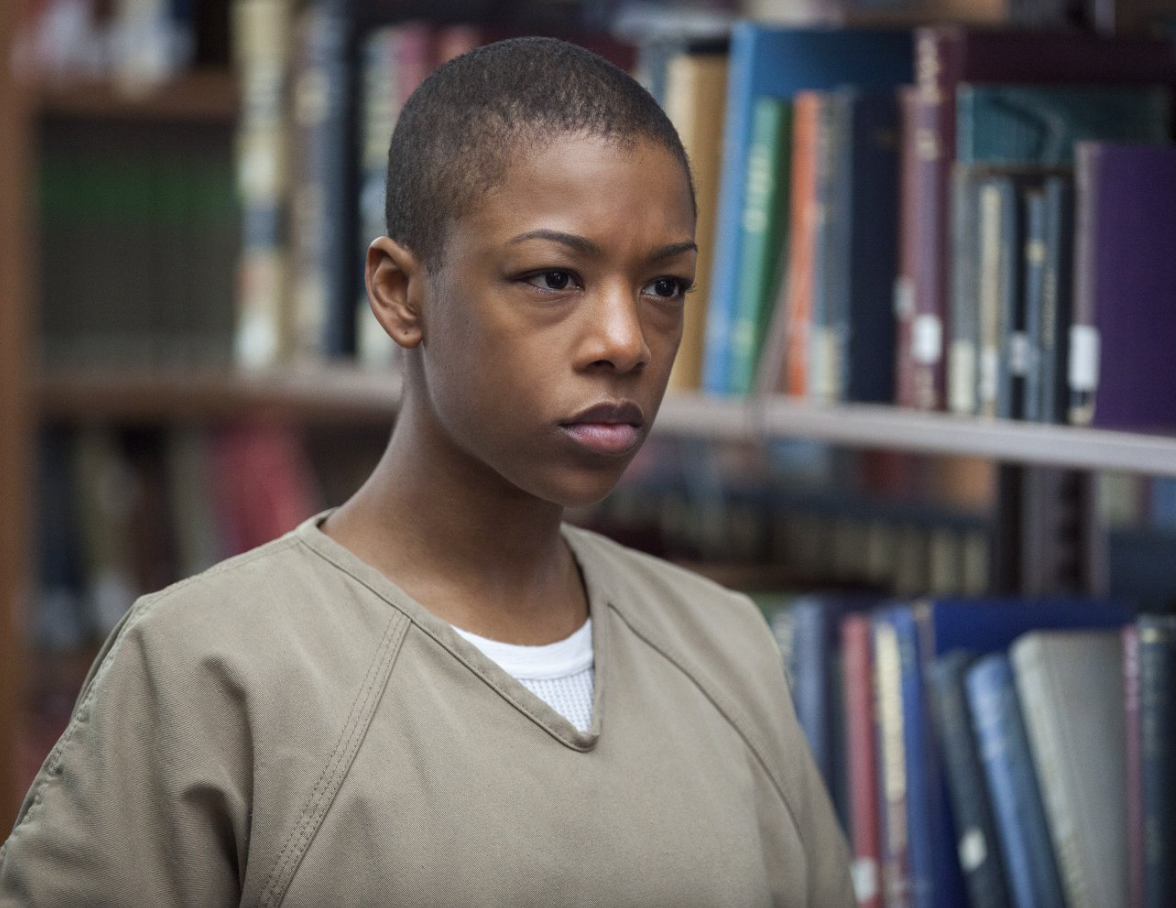
Samira Wiley as Poussey Washington

TV shows or movies differ from literature in the sense that characters can no longer be just themselves. Characters are a collaboration between an actor and fiction. They become physical, embodied, visual — meaning the actor goes on after a character perishes. Orange Is the New Black fans will be painfully familiar with this.

Samira Wiley will go on, and in fact her star in Hollywood is rising fast. According to The Hollywood Reporter, she is joining the team that will be adapting Margaret Atwood’s beloved speculative fiction novel The Handmaid’s Tale into a 10-episode Hulu series.

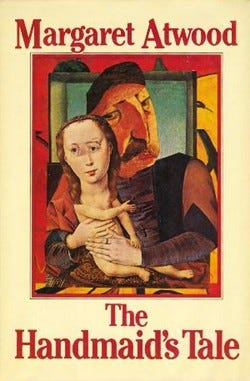
First edition copy

The 1985 book is set in the not-so-distant future in the newly formed Puritanical, totalitarian state known as Gilead. Gilead is a frightening dystopia plagued by environmental problems, which have rendered a good amount of the population (mainly women, though also men) infertile. With this backdrop, the religious fanatics who control Gilead seize upon the few fertile women left. They treat them as state property. Thusly, the story’s protagonist is named “Offred”, or “Of Fred,” the Commander to whom she’s been assigned as a handmaid. What drives her is not only survival in this grim reality, but the search for her daughter whom she lost during the rise of the state of Gilead. Wiley will come into the story as Moira, Offred’s best friend from college. In the delirium of the novel, it is Moira’s presence which acts as a bridge between Offred’s past (pre-Gilead) and her present; she is part of Offred’s protection against the anonymizing force of the state.

It has previously been reported that Mad Men’s Elisabeth Moss will play the lead. Among a bevy of producers, Margaret Atwood will also reportedly be a consulting producer. For Orange Is the New Black fans, the only downside of this news is that they will have to wait until 2017 to see Ms. Wiley in this role. In the meantime, they can catch her on FXX’s critically acclaimed show You’re the Worst which returns for season three on August 31st.

Canaries

Past the lip of the water, past those first shallow crests, we walk the canoe until our next step finds us wet to the waist. Even with the clouds obscuring what was supposed to be a harvest moon, there’s no way to hide ourselves, and the canoe, and the long line it draws in the sand behind us. But the beach is empty. We struggle ourselves into the vessel, which might be a kayak.

Harun and I, we’re no swimmers, certainly not canoers or kayakers. Just kids, just bored, except I suppose neither of those things is true. I turned twenty-five a month ago and he’s been twenty-five for years now, and we have so much waiting for us at the house, an old grandfather clock that needs servicing and a leaking roof and the stovetop I’ve left on. I imagine the whole thing burning down, after someone rescues baby Moshe, of course.

Maybe the person who rescues Moshe will have been wanting a baby her whole life, or his, and that want simply hasn’t been realized yet. Maybe that person will know exactly what to do with a baby who will only nurse if his father tells him a story, who yells his little mouth off like a siren if the story ends a second before he’s finished feeding, a baby who can only sleep if you hold him close to your chest while staring vacantly at a wall, a baby who can sense if you’ve opened a book or blown a kiss to your husband or turned on the ever-muted television, who curdles the air with his screaming until you give him back your undivided fretting.

We were meticulous with our planning, Harun and I. We took turns visiting and calling the local station with peevish complaints. We made note of which officers were endlessly patient with us, didn’t raise their voices or hang up, came quickly when asked. Posing as repairmen, we contacted their spouses’ offices to get their home telephone numbers, and when the moment was right we called those officers directly with the tip — something isn’t right at 115 Roebling, please come quick — before deserting our child and dragging the canoe out to the water.

If only we knew how to use it. Harun holds the boat still, but with the rocking and my legs all wet I can barely flop myself in. Once I’m finally at the helm Harun clambers up and we tip over, twice. Eventually he gets in first while I hold the canoe steady, then grabs me by the armpits to pull me aboard. We’re clumsy, the two of us, but we manage. We dig our oars into the sand to push off.

The ocean is not particularly kind. The salt will burn your eyes and nose, and you will gulp mouthfuls of brackish water for no reason. Paddling forward, we find ourselves soaked in brine. I don’t mind it at first. I love salt; I think I might have a sodium deficiency, the way I love salt. When we went to restaurants, back before Moshe, and they brought out fresh bread with a tiny bowl of that flaky maldon, I’d sneak pinchfuls onto my tongue while no one was looking. By no one I mean the waiters or other patrons, because of course Harun knows my habits. He would laugh at me in a way that let me laugh too. Occasionally he took a pinch himself, I think just to make me feel less strange.

But here in the sea, Harun is spitting a lot to get that salt taste out of his mouth. I ask if he’s alright and I think he nods, but I can’t see because it’s night, and also because he’s behind me. Clouds still curtain the sky. I turn in my seat, and Harun has on this face like he’s not thinking about a single thing, or like he’s thinking about a very specific thing that has nothing to do with this moment, maybe who will make it to the basketball finals, or what sort of art he’d like to hang in the living room that we’ve abandoned on shore.

Hey, I say.

My baby startles easy. In this case I mean Harun, which I know I shouldn’t. I should mean Moshe, especially now that we’ve left him behind, but to be honest my baby has always been Harun, and Moshe was just a way to get to the parts of Harun I missed: the first words and the first fall off a bicycle and the diagnosis of sadness each of us have embraced as part of the family.

Harun says Hi, like he forgot I was sitting right in front of him on this floating contraption, then looks around at the boat like he forgot we’d stolen it, and then at the sea around him, remembering.

Look, I say, pointing behind us. We’ve left behind the rocks we were nervous about being dashed against, and the lifeguard’s highchair, and the rest of the shore. I imagine that I see our little house swarming with pulsing red and blue lights in the distance, but of course I don’t.

Harun nods, stoic. Almost there.

We row farther, until our palms chafe. I set my oar in front of me and lean back.

Careful, Harun says, but he scooches forward to wrap his arms around my shoulders and rest his chin on the flattish top of my head. We’re looking up at the clouds, willing them to part. Why do they call it a harvest moon? I ask again. He has told me on dry land, but the reason we’ve come all this way is so that dry land won’t count.

When the full moon looks extra full, that’s a harvest moon.

The clouds move aside as if we had only needed to ask. She is surprising, the moon. Robust, like when my body was all soft buttery stomach filled with Moshe. Not the milky white I was expecting, either. Yellowish, but pale, like an egg custard.

But why do they call it that?

Harun doesn’t answer, so I swivel again. I see that same hazy look, but I’m in this boat for a different one. The night before we married he put his hands on either side of my face and told me I was his family, that we were everything we needed right here, the two of us. That’s the look I’m here for, the look I’d put the salt back in the sea for.

I put my hands on either side of his face. Tell me a story, I say. Why is the moon yellow tonight?

Harun un-swivels me, leans me back against his chest, pushes the straps off my shoulders and kisses each hollow of my collarbone twice. He speaks in his nursing story voice:

One night every month, all the canaries in the world flock together and fly up to the full moon. Whether it’s gravity, nature, instinct, or love, they can’t resist her pull. Most months, the moon turns them away because she knows she doesn’t have enough room, that she can’t support them all. But every so often, on nights like tonight when she’s feeling strong, she takes a deep breath and swells her big body, and when the canaries come to her she hugs them so close she fills herself up with their ruffled yellow feathers.


The point of Harun’s chin on my head itches but I don’t move. I know my weight on his chest is a burden, and soon we will need to shift positions to lie more comfortably. We let our oars sink into the water, watch the moon as she drifts our boat this way and that, sitting up in the sky, big with love.