The Stories We Tell About Rape Culture Matter

I once broke down in a gender studies class while watching a video of Tori Amos performing the song “Me and a Gun.” I’d heard the song dozens, maybe hundreds of times — it would not be an exaggeration to say I was one of Those Tori Girls in high school. What made this time different was that the night before, one of my closest friends had told me about her own rape, which happened near our college campus shortly after we met. Like the personal incident Tori Amos sings about in low, punishing a cappella, it had involved a stranger and a weapon — the kind of rape that’s supposed to be vanishingly rare.

Sometimes I wonder, though. My friend didn’t report hers; she just survived it.

As the lyrics soared into a wail, my eyes filled with tears and my stomach heaved. I stood and left the room.

I hadn’t been assaulted, so my response felt inappropriate, hopelessly beside the point.

I hadn’t been assaulted, so my response felt inappropriate, hopelessly beside the point. It was not until a few years ago, when I started providing on-call volunteer hospital advocacy for recent victims of sexual assault, that I learned the name for this type of response. “Secondary trauma” describes the experience of those who have been in recent contact with a traumatized person, and for whatever reason — perhaps over-identification with that person, whom they feel powerless to help — has taken on secondary symptoms.

Secondary trauma is certainly not the same as firsthand trauma, but, if not dealt with through self-care and good boundaries, it can cause some wear and tear. That time, I cried it out in the bathroom and returned to class. And everything was fine.

Sort of. For me, anyway.


One thing I learned from my year of sitting in on forensic exams, aka “rape kits” — a job I quit after only a year because I couldn’t process the secondary trauma and was getting sick — is that stories matter.

Stories provide context. The context for that Tori Amos meltdown was a college class in which rape was acknowledged to be more than just an isolated incident that happens to unfortunate women over there, but rather something that invisibly surrounds us, affecting both men and women. It was understood, in that class, that rape is something every woman must spend her whole life navigating, if not through her own personal experiences, then through the friends and family who tell her about their experiences. The first time a close friend told me she had been raped, I was in sixth grade. (So was the friend, but it had happened the summer before.) The second time was in seventh grade. And so on. In between these careful revelations, which, as a kid, I was completely unable to take in, were the dozens of silences of those who didn’t tell — at least, not me.

For women, navigating the thing we call rape culture involves an ongoing balance of fear and denial. The fear is only logical, if you do the math. The denial is so linked to self-preservation that it is not at all unusual for it to persist in the aftermath of assault. In my advocacy work, I stopped feeling surprised when a description of nonconsensual intercourse during which the assailant choked the victim was followed by the words, “But he’s really a nice guy” or “I don’t want him to get in trouble for this” or “Does that really count as rape?” (With his hands around her throat, she couldn’t say “no.”)

I stopped feeling surprised when a description of nonconsensual intercourse during which the assailant choked the victim was followed by ‘But he’s really a nice guy.’

Although the term “rape culture” had not yet been popularized back in 1998 or so, this was a class where the term would likely have been taken seriously, which is why, after all, we were watching that Tori Amos video in the first place. I felt embarrassed about my visceral response, but not ashamed; because of context, I knew that the response was normal. This helped.

When I think of the trigger warning debates on campuses — first, I breathe a sigh of relief that I no longer teach undergraduates. But then I think back to that moment of being triggered when I was an undergraduate myself. I remember what I learned in that moment about what was and wasn’t normal, what was and wasn’t okay. What was acknowledged, in that moment, that usually goes unacknowledged: that we are all survivors of rape culture, until we aren’t.

In the courtyard of the dormitory where I lived at the time stood a statue of Diana the huntress. As campus legend had it, her bow was drawn for the men peeping into the windows of the all-women’s dorm across the way. I think about that statue, and about Ovid’s Metamorphoses, so beautiful and wise and funny and also kind of a rape parade; about Shakespeare’s Titus Andronicus; and, of course, about Samuel Richardson’s Clarissa. And I realize that what I’m describing here isn’t a list of books I’d like to see banned from the classroom; in fact, it is a list of my favorite books. It also a solid bit of evidence that Western culture is rape culture. Or, to put it another way: rape culture is just culture-culture. If only there were a trigger warning big enough for that.


Fun fact: each sexual assault forensic exam begins with a questionnaire. A specially trained forensic nurse carefully reads dozens of yes-or-no and short-answer questions out loud to the victim, almost like a test. First come a lot of weirdly specific questions not even the forensics nurses understand — the questions about bowel movements always seemed to confuse the victims most — and then the nurse covers the details of the assault itself, going over every potential word and deed, limb and orifice, in such granular and close-up detail that the assault hardly makes sense at all.

At the very end of the questionnaire, the victim is finally asked to tell her story from start to finish, in her own words, while the nurse types up the story on a laptop.

At the very end of the questionnaire, the grand finale as it were, the victim is finally asked to tell her story from start to finish, in her own words, while the nurse types up the story on a laptop. This is the first chance some victims have had to tell the whole story straight through, uninterrupted, in their own words.

Between the questionnaire version of events and the narrative version, the story changes, not so much in its details, but in its emotional valence. Details shared dispassionately during the clinical question-answer session seemed suddenly to strike survivors differently when contextualized by everyday activities — eating dinner, getting off work, dropping a kid at daycare, going home to feed the dog — or by an everyday relationship with the perpetrator — their mutual friends, what he texted her earlier that night, the movie they were going to watch this weekend. There was a moment I witnessed again and again, a black hole that opened up in the middle of the story, as the survivor’s bodily response to her own words suddenly seemed to overtake the words themselves, spilling into tears. From the outside, it looked like a moment of reliving what it felt like to be robbed of agency, forcibly, by another person, sometimes a person trusted or even loved.

There was a moment I witnessed again and again, as the survivor’s bodily response to her own words suddenly seemed to overtake the words themselves, spilling into tears.

After the story is told, and before the physical part of the exam begins (the whole exam, including questionnaire, usually takes from two to four hours), the nurse turns the laptop around and asks the survivor to read her own dictated story back through carefully, making changes or corrections until the story seems right. On my watch, survivors never cried reading over these narratives spoken just a moment earlier from the heart of powerlessness. Instead, they got an intense look of concentration on their faces, sometimes even satisfaction. They would nod, as if to say, There it is, outside me now. The story. A story that once had happened to them; now a story they had told, and had control over.

From the outside, this moment looks like a tiny moment of agency.

As a culture, we are terrible at imagining that agency and victimhood can co-exist. Agency is the capacity of an individual to make choices. If there was a choice, we say — a choice to fight harder, a choice to scream louder, a choice to report, a choice to go to the emergency room afterward — then there cannot have been victimhood. If there wasn’t a choice — he had a weapon, or said he had a weapon, or wrapped his fist around my throat, or told me he would ruin my life if I told — there cannot have been agency.

Among the more interesting side effects of this difficulty reconciling agency and victimhood was a novel.

Make that the novel.


No one ever tells you that the novel started with rape, but it did. Several thousand pages of it.

Samuel Richardson’s epistolary novel Pamela, or, Virtue Rewarded (1740), sometimes called the first English novel, is a prolonged tale of sexual harassment in which, for several hundred pages, the hired servant Pamela fights off her employer Mr. B.’s unwanted advances. Mr. B. isolates, imprisons, and repeatedly assaults Pamela, who tells her story in letters home to her parents until Mr. B. intercepts them, after which she turns to journal writing. Eventually, worn down by her impregnable virtue, Mr. B proposes, and lucky Pamela wins the prize. The humble maid marries the wealthy landowner, and the two live happily ever after.

There was no ‘self-determined badass’ option in a world where women were legally limited in the ways they could own and inherit property.

If modern readers are horrified that Pamela married her would-be rapist, it’s wise to keep in mind that subtitle — Virtue Rewarded — and the fact that rewards for feminine virtue were in short supply at the time, limited to either a secure marriage or a saintly death. As I used to remind my students, there was no “self-determined badass” option in a world where women were legally limited in the ways they could own and inherit property; where they were themselves considered a special sort of property, in fact, legal appendages of fathers or husbands. That is why significant exceptions to the marriage-or-death rule from the era, such as Daniel DeFoe’s Moll Flanders, tend to be about female criminals, for whom virtue is not a concern. So difficult to out-think was this marriage-or-death model that fifty years later one of the most brilliant English writers ever to hold a pen, Jane Austen, would still find herself confined to it. Austen’s dazzlingly nuanced expansion of the palette of women’s potential virtues is all the proof you need that she was not so much a miniaturist as an inventor of worlds.

At any rate, back in the 1740s, Richardson’s readers were just as horrified by Pamela’s marriage as we are today, but for very different reasons. The reward of marrying out of class — a would-be rapist, sure, but a gentleman rapist — was considered by many too great for a chambermaid, so great that it cast suspicion on Pamela’s motives, and, by extension, her virtue. Richardson’s ribald contemporary, the novelist Henry Fielding, now the most famous of the anti-Pamelists, eventually rewrote Pamela as a farce in which a common slut of the servant class pretends virtue in order to manipulate a foolish man. (In Shamela, Fielding helpfully provides Mr. B’s full name, which Richardson had left blank: it’s Mr. Booby.)

Rewards for feminine virtue were in short supply at the time, limited to either a secure marriage or a saintly death.

Appalled by this response to Pamela but presumably pleased by its sales figures, Richardson did what any sensitive novelist who had unwittingly stumbled into rape culture would do: he tried again, but this time he switched the reward from secure marriage to saintly death. His follow-up novel, Clarissa, or the History of A Young Lady, also written in letters and diaries, is longer by approximately a zillion pages (I love every one of them) and rhetorically masterful. It features an even more virtuous and unassailable heroine — one who starts out richer, so that her motives cannot be questioned — holds out longer, against a bolder and smarter villain — is abducted, psychologically tortured — drugged to unconsciousness — finally, raped. When she realizes what has happened, Clarissa Harlowe goes mad and dies a saintly death (ding!), bequeathing her possessions to the poor, wringing deathbed conversions out of miscreants, and ascending to heaven in a casket that also functions as a sermon for the illiterate.

Richardson, bless his heart, thought this would work. Ask an eighteenth-century specialist if it did back then. All I know is that when I was reading academic criticism on Clarissa in 2005, it was still considered acceptable, even delightfully roguish, to adopt the position that Clarissa was, in one way or another, “asking for it.”

Together, Pamela and Clarissa represent Richardson’s fundamental misunderstanding of rape culture. He mistook women for human beings at a time when it was illegal for them to be. That’s an endearing mistake you won’t catch Austen making — not out loud, anyway — not so the men can hear. But Richardson’s mistake was a fertile one. Out of his strenuous attempts to give us a sense of Clarissa as a human being with agency who nevertheless had no control over her own violation came one of the greatest triumphs of literature in English — Clarissa’s very soul — the agency she exerts from inside the depths of powerlessness and madness simply by continuing to write.

Rape culture is still with us, but so is Clarissa, a novel that breaks and renews itself over thousands of pages, unfurling a rich interiority that the novel, in its psychological form at least, continues to this day to chart.


Perhaps it was this sensation of living and reading in a post-Clarissa world that attuned me to the importance of another form-breaking novel that happened to be on the bestseller list when I first started reviewing books three years ago, and shortly after I had begun working on my first novel Good as Gone.

I speak, of course, of Gillian Flynn’s 2012 novel Gone Girl. As a book critic, you could say I came up in a post-Gone Girl world; based on the think-pieces and the publishing boom in woman-written psychological thrillers, from which I have very much benefitted, we’re still living in one.

Female narcissism, the attention-seeking behavior we ascribe to women who speak out against their abusers, was invented because women can now vote and work for a living.

Gone Girl generates endless discourse because, much like Pamela and Clarissa, it functions as a kind of Magic Eye for its contemporary readers. The dual protagonists, nice-guy Nick and his super-villain wife Amy, are locked in a battle of wills fueled by, on his part, self-confessed misogyny, and on her part, that bugaboo of false rape charges: female narcissism.

Female narcissism, the attention-seeking behavior we ascribe to women who speak out against their abusers, was invented because women can now vote, own property, and work for a living. It is of course still possible to accuse a raped woman of having entrapped her rapist for the sake of a pay-off, but far less plausible. There are now easier ways for a clever woman to make a dollar. Anyway, being raped is not nearly the lucrative gig people seem to think it is. But rape culture is nothing if not adaptable. There must be a reason so many women claim to have been raped or assaulted, and that reason cannot have anything to do with the fact that until relatively recently women were chattel who could be legally raped by the men who “owned” them; it can’t be that Western culture, which we teach in universities and reproduce in books and film and TV with scant attention to what it shows men about women or women about themselves, is rape culture, which is just culture-culture. It can’t be that.

So, cue George Will, who in 2014 explained that the rape epidemic in universities is a mere phantom of female narcissism, calling sexual victimization a “coveted status that confers privileges” to young women.

Speaking as a former volunteer advocate, I can only assume he meant the privileges of sitting in a cold hospital exam room for three hours in the middle of the night while you are poked and prodded and scraped without lubricant because it might corrupt the evidence; followed by the privilege of receiving an astronomical hospital bill a couple of weeks later because the medical costs associated with the emergency room aren’t covered by the State’s Attorney’s office; followed by the privilege of having your evidence kit get dusty on a storeroom shelf for years at a time, untouched. Those privileges.

One thing Gone Girl shows is just how extreme the female narcissism hypothesis has to be to make any sense at all.

At any rate, one thing Gone Girl shows is just how extreme the female narcissism hypothesis has to be in order to make any sense at all. More than just a run-of-the-mill narcissist, Amazing Amy is an actual sociopath, willing to endure any amount of seeming self-erasure to exact revenge on Nick, whom she’s framing for her murder.

Yet if there’s something truly addictive about Gone Girl, something exhilarating (and I believe there is), I would argue that the secret of it lies not so much in Amy’s exaggerated narcissism as it does in the form-breaking moment when Amy’s victimhood narrative flip-flops, as if by magic, into a victimizer narrative; when the diary we’ve been reading as truth is suddenly revealed to be a fake, produced by Amy for the sole purpose of implicating her husband in her presumed murder. Amazing Amy is above all a writer, expertly abusing the power of story to exploit our, and the characters’, endless appetite for narratives about beautiful young women being abused and killed. It’s Pamela’s mea culpa, Clarissa’s confession.

Revenge fantasies are, among other things, a time-honored way of restoring a sense of agency to victims.

But it doesn’t end there. In the tradition of Patricia Highsmith, Gillian Flynn is an equal opportunity misanthrope. As the book wears on, Nick, suspected of murdering his wife, behaves and thinks more and more like a stereotypical abuser. Not only does he fantasize about choking Amy in increasingly disturbing detail, but he also exhibits the kind of behavior that research shows is often co-morbid with abuse and assault, blaming all the women in his life for his problems, from the female detective working his case to his lover to his beloved sister Margo. Moreover, by the end of the book, Amy herself has become the very real victim of violent crimes, including kidnapping, imprisonment, and sexual coercion at the hands of her old high-school flame Desi. This is hardly the glorious reward George Will would lead us to expect for such a successful manipulation of victimhood.

Revenge fantasies are, among other things, a time-honored way of restoring a sense of agency to victims. Gone Girl expertly dismantles that pathway by internalizing the split between those who default to believing stories of rape, and those who default to believing they are all elaborate lies.


There is a language at the heart of powerlessness, and in that language of trauma, Julie always speaks the truth.

My novel, Good as Gone, is about a rape victim who lies. When I started writing her point-of-view chapters, all I knew about her was that she lied, and that made it hard to access her interiority for a long time. All of the other characters, whose storylines move forward in the present tense, had given themselves up to me so easily; Julie, whose story moves backward, into past trauma, resisted.

Some have called Julie an “unreliable narrator” in the vein of Gone Girl’s Amy, but that’s not exactly right. The stories Julie tells may be false, but her narration is a true reflection of her experience. There is a language at the heart of powerlessness, and in that language, the language of trauma, Julie always speaks the truth. I learned that language in volunteering for sexual assault victims in the emergency department. I didn’t use their words, or their stories. But the language they taught me has helped me bear witness. Which is all, sometimes, you can do.
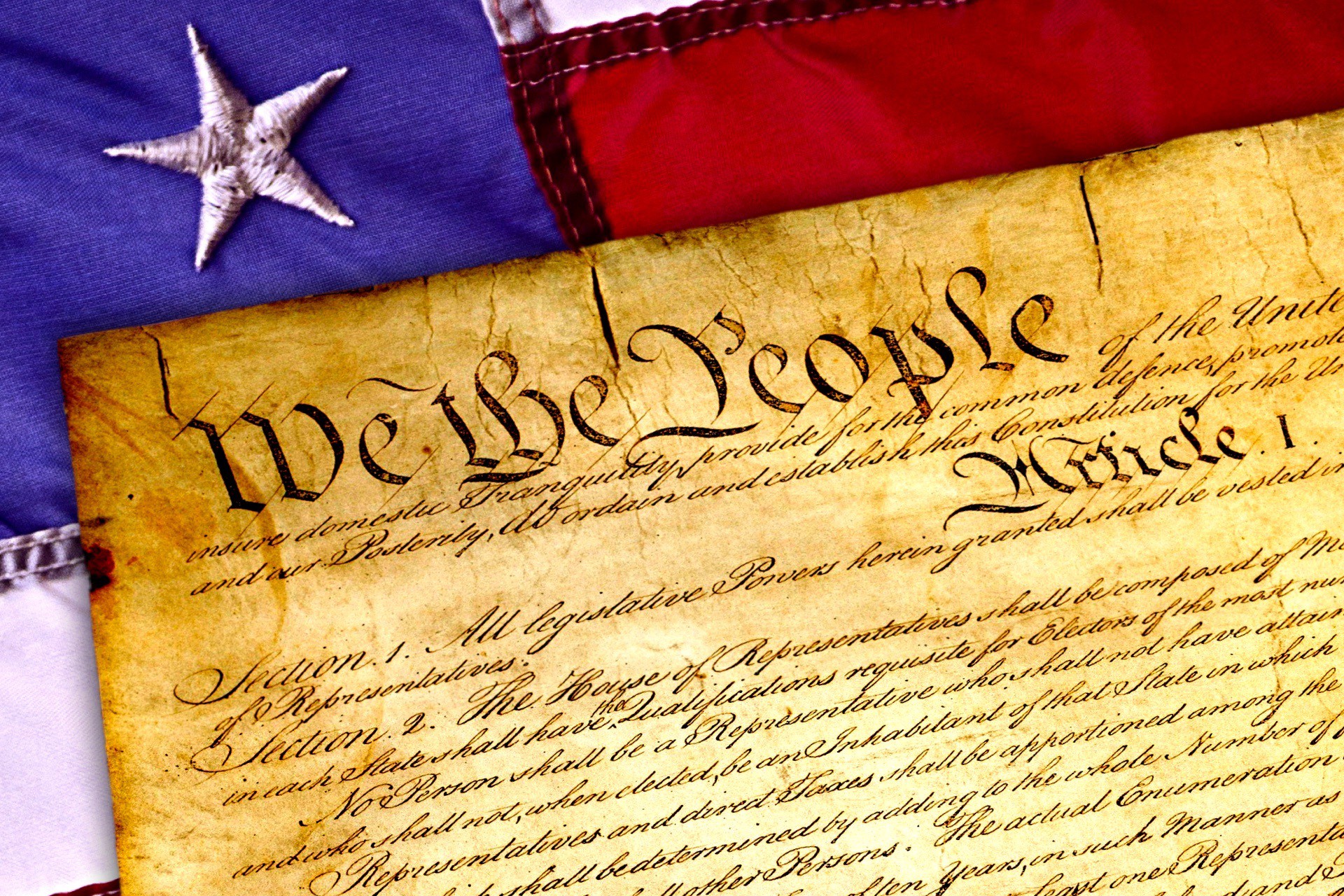
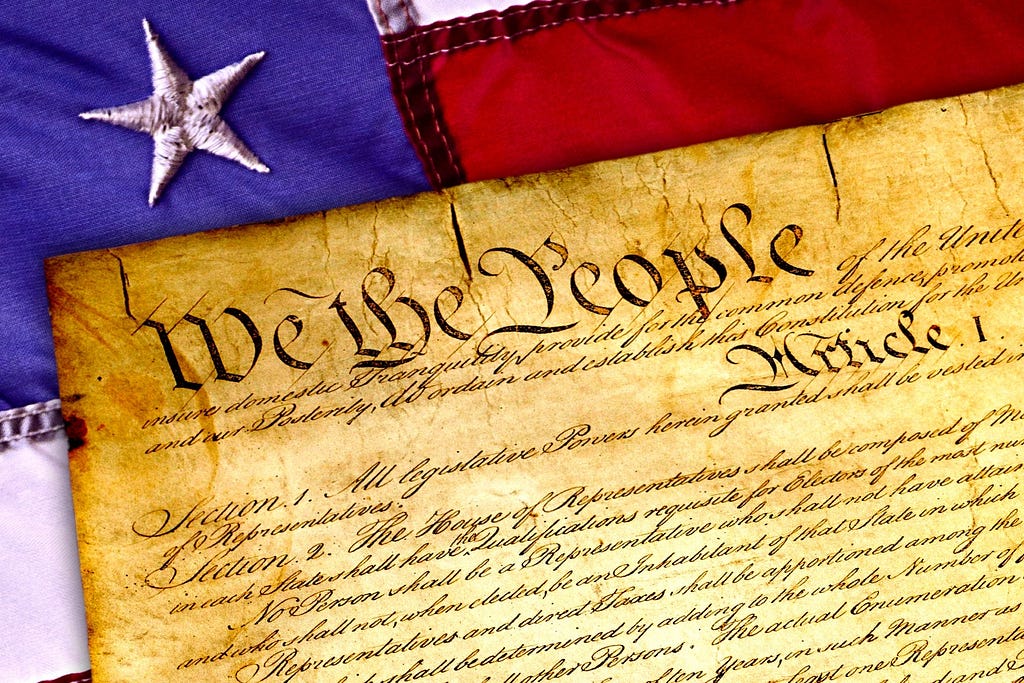
U.S. Constitution Becomes Bestseller after Khizr Khan’s DNC Speech

A 52-Page version of the U.S. Constitution has become an overnight bestseller

There are no years like election years, and there has been no election year like this year. The prevalence of politics has invaded almost every arena of daily life, and the world of publishing has certainly not been immune to this phenomenon.

As many have reported, the emotional height of last week’s DNC may have been the moment Khizr Khan — the father of slain U.S. Army Captain Humayun S.M. Khan — reached into a pocket in the left side of his blazer and pulled out a slim copy of our nation’s Constitution. Holding the navy blue pamphlet in the air, he stared down the camera and spoke to the man who’s previously suggested banning Muslims from immigrating to the U.S. should he win our land’s highest office: “I will gladly lend you my copy [of the Constitution]. In this document, look for the words ‘liberty’ and ‘equal protection of law.’”

According to The LA Times, this simple yet indescribably powerful moment at the DNC has sent the American public scrambling to get their hands on copies of pocket-sized U.S. Constitutions:

“As of Monday morning, a 52-page, pamphlet sized version of the document was the No.2 bestselling book on Amazon, second only to the newly released “Harry Potter and the Cursed Child.”

Okay, nothing was going to top the new Harry Potter. It’s not like the Constitution is the sequel to a massive fantasy franchise. And yet, 240 years after its composition, there is still something fresh, something evergreen in that opening declaration: “We the people of the United States, in order to form a more perfect Union…”

Do Androids Submit to Electric Lit Mags? A New Journal Publishes Poems by Computers

It only takes a Google search to find all the famous minds who’ve expressed — in different languages, disparate times and places, in varying humanist, religious, political, and aesthetic manners — the idea that poetry may be the closest we come to an articulation of the human soul. Well, move aside humans! According to tor.com, poetry is now under the robotically steady quill of artificial intelligence: “humans are writing algorithms that can imitate the kind of poetry we usually stand in awe of, and curating them for a new online literary magazine.”

That “new online literary magazine” is CuratedAI and, as it states in its bio, is “A literary magazine written by machines, for people,” featuring both prose and poetry, all generated by artificial intelligence.

The creator of this (frighteningly? excitingly?) postmodern adventure, Karmel Allison, is a software engineer and data scientist who also writes poetry. She spoke with Popular Science to explain what she finds really intriguing about this project.

“The reading is more in the reader than the writer, obviously. You can talk about what the creator was trained on, or how the creator works, but not the creator’s intent — maybe the algorithm writer’s intent, but it’s a step removed, which is more fun for the reader, I think.”

I don’t necessarily imagine this is what Roland Barthes had in mind when he famously posited “The Death of the Author.” Nevertheless, CuratedAI is a fascinating project, arming a writing-entity with a dictional corpus in excess of 190,000 words (for comparison, Shakespeare used ~33,000).

Reading the poetry on the website is an immensely strange and unique experience. Take the poem “Seaward” for instance, whose final five lines follow:

i do
love i feel my breath is on me
the world
is the time that may have made a smile as she can sleep in her hands so
that her love would come as when she had to live with a look of laughter

Thus the poem ends and the reader’s eyes move to the “author’s” bio:

Deep Gimble I is a proof-of-concept Recurrent Neural Net, minimally trained on public domain poetry and seeded with a single word.

A startling transition, indeed. What’s more, the algorithm — possibly and ingeniously steeping itself in Faulknerian literary tradition with the uncapitalized self-referential “i” — appears to have an acute sense of poetics, such as consonance and sound (e.g., the stream of S- and L-sounds).

I’m unsure of the grander implications of this news; in any case, if you have an AI keen on creative expression, CuratedAI is open for submissions.

The Pleasure in Drowning on a Carousel

Most of us with any real dating experience have heard this little gem of wisdom: Trust is the most important thing in a relationship. It’s too bad that Nick and Phoebe Maguire, the husband and wife at the center of Joe McGinniss Jr.’s Carousel Court, aren’t most people because they needed to hear those words — no seriously, they really needed to hear them.

When we meet Nick and Phoebe, they are in Boston, struggling to achieve their tiny version of the American Dream. They hear news of the booming housing market in Southern California, so, with the possibilities of success buzzing in their ears, they agree to head West. Nick has a new job lined up. Phoebe can finally escape her past — an affair and a drug-related accident involving the couple’s son, Jackson.

They’ll have a new start; everything will be great.

If only it could be that easy. Nick, on the day before leaving for California, finds out that his promised job has caved. Still, they go. There’s more bad news: their new house isn’t exactly like they’d imagined: “And there’s the house. Bigger than it should be. It’s not on fire, though Nick wishes briefly it were, because what it is, is worse. It’s underwater, sinking fast, has the three of them by the ankles, and isn’t letting go.” The underwater house becomes the grand metaphor that exists throughout Carousel Court. The Maguires are sinking.

Quickly, the married pair adjusts to their new living conditions, and their lives go back to how they were before the move. Nick burns through their money after concocting an idea to flip all of the drowned houses in the neighborhood, and Phoebe, unable to escape drugs, alcohol, or her lustful feelings for her ex, returns back to her old habits.

As the worlds that Nick and Phoebe live in drift apart, their relationship crumbles. Nick is only “playing the role of concerned, engaged husband,” and Phoebe can’t even stand to touch the man she married: “Nick takes Phoebe’s hand, which surprises her. She checks, but he’s not looking at her. His skin feels callused, and he has a piece of moleskin wrapped around the meaty part below the pinkie where he cut himself at work. She likes it when he takes her hand at unexpected times. She usually feels tension release. Not tonight, though. Not lately.”

Their feelings escalate into something more than dislike. The two turn on one another in vicious form. When Nick asks Phoebe if she’s cooking dinner, he quickly adds in a follow-up question: “Are you planning to poison me?” Later, he asks her, “Do you trust me?” Her reply is bitter, and coldly direct, saying, “Of course not.” The cruelness continues, as McGinnis gives Nick more vicious lines:

“You’re a nightmare.”

“Can’t stand to be around you. Violent sick inside to share the same space.”

Carousel Court is a gritty, raw novel that will have readers recalling the icy relationships found in Gillian Flynn’s Gone Girl and Adam Ross’ Mr. Peanut. McGinniss’ work is built on layers of tension and dark turns that, at times, surpass the twisted works of his contemporaries.

Technology and addiction take center stage in Carousel Court. Nick and Phoebe both send secret texts while the other is in the same room. It’s as if one is tempting the other to ask — to check. Phoebe craves her emails almost as much as she does her Klonopin. She puts herself and her son at danger on multiple occasions because she can’t live any other way. She’s consumed. Nick’s consumed. They’re both overloaded in the hyperactive society in which they live.

The intensity of Carousel Court reaches a point where the novel could easily be labeled as a work of horror. In one particularly frightening scene that recalls a Revelation-worthy plague, Phoebe stands in a field and cicadas encircle her. They scream. But she appears at ease — possibly even comforted.

McGinniss deserves a lot of credit for handling the darkness so well. He never seems to overdo it. When he gets close to the edge, he adds in just the right amount of humor. Phoebe begins a text exchange with Nick:

“I think somebody’s dead and floating in the pool.”

“??”

“Sorry. Autocorrect. Something’s dead.”

“Saw that. Will fish it out when I get home.”

They are so far gone from happiness (and even relative normalcy) that a possible dead corpse in their pool gets nothing more than a few question marks. I couldn’t help but laugh. But then I cried.

I cried because what else can you do when you realize that a person — or a marriage — has drowned right in front of you?

“All Our Suffering Matters”

Let’s just state the obvious right off of the bat: writing a novel is hard. Publishing a novel is harder. Especially when you’re an unknown entity. However, if a writer is as much of a wordsmith as Swan Huntley, they’re bound to find success. We Could Be Beautiful (Doubleday, 2016) the debut novel by Huntley, is a intricately woven story about wealth, love, and trust.

The novel blends high literacy with a breezy, but suspenseful style that will please a wide range of readers. While the book is quite interesting and cannot be recommended enough, what is more intriguing about the author is her insights into what it takes to go from an unpublished writer to all of a sudden releasing an eagerly awaited debut.

I spoke with Swan less than 24 hours before her book was published about perseverance, her days as a Manhattan nanny, and accepting editors’ advice.

Adam Vitcavage: How are things going?

Swan Huntley: Well, there’s a lot of anticipation; I can tell you that.

Vitcavage: That’s actually what I’m interested in discussing. But let’s just talk about who you were before you become “Swan Huntley, author of We Could Be Beautiful.” You were a nanny?

Huntley: I was a nanny.

Vitcavage: Was that before your MFA, during, or after?

Huntley: It was after my MFA. I was working as a nanny and living in a commune in Fort Greene, much like the commune in the book where the nanny lives.

Vitcavage: While you were in your MFA, you weren’t working on this then?

Huntley: No. I was writing a different book. We would go to these talks and lectures and people would tell these stories about having to write seven novels before they finally got one published, and I was so adamant that I was not going to be one of those. I was certain this was the book that was going to work out. Then that is exactly what ended up happening.

The book that I ended up writing for my thesis at Columbia was read by my readers and they said it was good and that I should send it out. So I sent it out and everybody said the same thing: [the book had] interesting characters, but nothing was really happening. Then I wrote a second book and sent that out. I got a little bit closer that time. Somebody said they would be interested in working with me and we had coffee and he suggested some changes that I thought were sound and so after that coffee date, I thought I had made it. I had a moment walking down 5th Avenue where I thought this was it.

Then I made those changes and I didn’t hear from him. When I finally heard, basically, we did not begin a relationship. So this is actually the third book I wrote.

Vitcavage: So as for the timeline of all of this: you finish your MFA in what year?

Huntley: Technically 2012. It was two years of coursework and then I took a year to do my thesis.

Vitcavage: How long had passed by the time you had that coffee meeting?

Huntley: I don’t remember. It was probably sometime in 2014. I can’t really remember. But I write pretty fast; I’ve learned that about my process.

Vitcavage: When did you start working on We Could Be Beautiful?

Huntley: The idea came about because I was working as a nanny in SoHo for a family and I was leaving the job after seven months. I was leaving a little toddler that I had spent so much time with. We had really long days with this little person, so I ended up writing her a letter that she could read in the future telling her about our time together.

Then I started thinking it would be a really interesting idea for a novel. If a letter like that contained stakes in the present. I set up the task of trying to figure out what those stakes might be.

A couple of days later I went to Ragdale, which is a residency outside of Chicago, and I started writing it there.

Vitcavage: I read your piece in Salon about your days as a nanny. Obviously you dealt with these type of wealthy Manhattanites, but was there any more research conducted?

Huntley: I didn’t research. It was mostly my life experience. What interested me so much about that job was how we, the help — the nannies and the housekeepers — were so quick to dismiss our boss’ pain. “You’re rich, you’re not allowed to suffer” was kind of the mentality. If she was having a bad day it was almost as if we wanted to say, “go get a facial or see a therapist.” We were very unforgiving because we lived in a hole in deep Brooklyn. We didn’t feel sorry.

That was really interesting to me. I think all our suffering matters, whoever we are. I started thinking how lonely that must be. That’s a theme that is addressed in the first couple of pages.

Vitcavage: And do you feel it’s important, as a female author, to explore what it means to really be a woman in today’s society. Did your other books also have strong female lead characters?

Huntley: They did. What was really an important moment for me in grad school was when I discovered writing in the first person was really what worked for me. I am always interested in the space between what the character is seeing and what the readers are seeing. The moments we can see around the characters are so much fun to write.

Vitcavage: On top of writing this complicated and empowered female lead, how did you go about building such intriguing tension?

Huntley: I don’t know if it was conscious. I wrote what I felt, honestly. Of course I went back and added aspects as well. I was just in the moment. This was my first test of building tension because it’s the first time I really wrote anything with a structure. The MFA program didn’t necessarily teach me about creating structure. The model is really useful for short stories because that’s what you had time for. Not to blame my MFA program; it just took me a while to learn it for myself.

Vitcavage: Were there any specific notes you remember getting from your editor? Anything you were adamant against but it was for the best?

Huntley: Every editor, maybe except for one, said the same thing. They told me the ending was — they just said no on the ending. Across the board: no. I ended up talking to my editor now about why. Because my initial response was “screw you guys, I am not rewriting this.” The ending was really dark. I came from an MFA program that valued dark and idiosyncratic stories. Darkness seemed to have more value than commercialism in the program, let’s say.

I didn’t want editors to put out my dark flame. But that was for two days and then I talked to my editor and we discussed in detail why [I had to change the ending]. What really clinched it for me was that the original ending, psychologically, wouldn’t make sense. It was not something a character would do.

So yeah, my editor’s huge note was simply to change the end. I did that and I am so glad I did now. I couldn’t even imagine having the other ending now. It would have been a mistake.

Vitcavage: Now that the book is being released, have you been getting any feedback from people you know or strangers on the internet?

Huntley: I told myself early on that I wasn’t going to read any reviews. I told my agent to tell me if anything important happened, but that I didn’t want [reviews] in my head. Whenever I used to read interviews with authors who said that, I didn’t believe them, but I understand it now. I tried it, but quickly failed. (laughs) Now I haven’t read everything, but I read some stuff online that ranged from esteemed reviewers to a random person I don’t know with no last name. This is very new to me. I’m not sure if I will continue to read reviews.

Vitcavage: Since you said your process is quick: are you already working on the next novel?

Huntley: I already wrote my next novel. It is called The Goddesses and it is set in Hawaii. It’s about a young women who befriends a yoga teacher and the selfish nature of selfless acts.

Vitcavage: How was that writing process compared to your debut? More stress because you had to follow a novel up, or less stress because it was more of you already did it so you can do it again?

Huntley: I wanted to finish it before this one came out and before the reviews got in my head. Everyone has always told me to start working on the next thing as soon as possible. I’ve been very wary about the noise getting into my head. It’s such a weird feeling because I’ve been in my writer cave for so long and nobody cared what I wrote until now.

Vitcavage: Where are you at in the post-production process?

Huntley: We’re editing it right now and I don’t think there is a publication date with it.

Vitcavage: Are you already onto writing the next one?

Huntley: I am!

Vitcavage: And I’m assuming it’s too early to talk about?

Huntley: I will say it’s written from a man’s perspective. We’ll see if I can write men well.

Vitcavage: I think women know men better than men know men. So I think you’re safe.

Huntley: Maybe. We’ll see.

Vitcavage: I’m going to let you go to enjoy the last few hours before your book is unleashed on the world. But I wanted to ask if you had any advice for someone who wants to be where you are: less than a day away from a debut novel being published.

Huntley: Just keep going. It’s been helpful for me to organize my life where I put writing first. Choose a lifestyle that allows your to write and surround yourself with people who are really supportive.

Tell Me About the Wolf

The Gunnywolf at Midcareer

The Gunnywolf wants a nom de guerre,
a cape. Something to set him apart.
He’s been working as a Celtic fiddler
for thirty years now. Half wolf
half fish, he writes on his blog,
up to sixty laps a day in the pool.
Can really feel the difference in his lungs.
He’s out of the woods now
living back east, near his folks.
I remember the smell of him
in our rented house. Up the stairs
late at night after a show, into the back
where my mother was. After her
he went to France and taught the zither.
Before he left he drove me home
in his paper-filled car. He liked to drive
with his knees. My friend was in the back
and as we passed the city jail
the wolf was telling a story
that kept going about how everyone
had loved his encore. Christmas
his big time. He liked to fold himself
into small spaces, he loved
a crowd. Our hatchback
slid across four lanes
and the cars around us made room.
We unspooled as he sang it back to us.
Near the center barrier my friend called out
and he swerved us back
and told me I’d never make it, never
find what it takes to make real art
because to do that you need to let
your little coffee cup life go — the car
was full of cups and he smashed them
one by one against the windshield,
the windows, the wheel.

Entering

On PBS the mockingbirds
live in a gated community.
Inside the compound a spiraling hall
and then the little door
behind which the eggs are hidden.
Five thousand beaksful of mud
quarried out and hardened into concrete.
Not even the rain can harm it now.
Along the meadow, sheep and green,
real estate the narrator wants.
The mockingbird nest sits on a fence post
and soon enough the black and brown
neighbors sidle up. Everybody wants
what you’ve built. They want it
more than you. These cowbirds
are patient, they wait along the fence
until the mockingbirds are hungry enough
to leave the nest. Or until the mockingbirds
are not paying attention. Into the nest
a cowbird darts, and within seconds
she’s laid her egg there among the others.
Back out and into the sheepy field.
Her fertility a circus trick, a marvel,
a burden the taxpayers bear. In Baltimore
the mayor called the looters thugs
and then took it back, no one is a thug.
Here is the video of the mother who beat her child
until he dropped what he had taken.
The mockingbird returns and sees the new egg,
drops it onto cold grass. The voice doesn’t say
how she is later punished. How the cowbird
returns to break each egg against the fence.
I was home for a visit last week
when the National Guard took over.
Their tanks cracked our streets
and tangled in streetlights. Not all streets
were wide enough to hold them. Shut it down,
everyone said, shut it down. I took my daughter
to the rally but no one was there. The police
had taken over a payday loan place
and they pretended not to know
where the crowd had gathered.
I could see into the hive
but could not make sense of their words.
The sergeant came out with a billy club
strapped to his leg. This isn’t
my home anymore. I can explain
what was done to Freddie Gray
in the back of the van but not why.
In my Baltimore I was a child.
Oreo, they said if you sat together.
Reverse Oreo. The bathroom stall
kicked open. So many cowbirds
along the fence. When do they sleep?
They appear tireless, always in groups, frightening
newcomers. What does it cost
to be left alone? Sometimes the mockingbird
raises the cowbird chick. It hatches early,
the narrator warns, it grows too big.

Inversion

The beach was black from our fires.
Christmas Eve, my daughter hung upside down
from my arms and shook.
I thought at first it was a joke.
How does an animal so large hide in the woods?
And then she shook again.
How many stones did the wolf swallow?
Not enough. The sand
is black from our fires.
We swaddled our girl
with hospital wire. It was cold.
Some of the rooms had trees.
Those were the families we were afraid of,
and the black-stitched bears
a bunch of third-graders gave out
with pictures of heaven and messages like
No Matter What. When we returned home
the fog was so thick we could barely see the yard.
Geese banged on the lid of our house.
For a few weeks I had two daughters.
Gauze and theater, hospital gown
in the dress-up bin. Finally one daughter
swallowed the other.
Tell me about the wolf, she said.
The song didn’t make any sense.
I have one daughter now
but her shadow doesn’t always
line up. What is it
to make a child sing.
What animal is it.

Donald J. Trump Makes Book Blurbs Great Again

Karl Ove Knausgård’s My Struggle

I know it’s obvious to say it, but this book has the best words. Just the best.

I know it’s obvious to say it, but this book has the best words. Just the best. This guy knew what he was doing when he wrote this book. I don’t know how to spell his last name. Karl. Karl did a great job, just a tremendous job with all these words. There are a lot of words, too, which is great. More words is like more money — it’s a very good thing. Unlike Karl, so many of the losers out there don’t have a clue. They don’t know what they want to write, and they get sidetracked. Don’t do that. People should be more like Karl. Nothing distracts him.

Jonathan Franzen’s Freedom

If you don’t like Freedom, you’re a loser.

Books like this are what make America the freest country in the world. We’re just so free. It’s really great how free we are. And Jonathan, you know, I think Jonathan is a great guy, really great, very smart guy. I call him Genius Jon. But a lot of people, you know, a lot of people don’t like him. And I don’t think that’s fair. I told Jonathan, I said, these people are jealous of you. It’s sad! They should be trying to be more like him. It’s really pathetic, actually, because Jon is the freest guy I know. Look, the fact of the matter is this — and I’m definitely right about this, I’m very right. If you don’t like Freedom, you’re a loser.

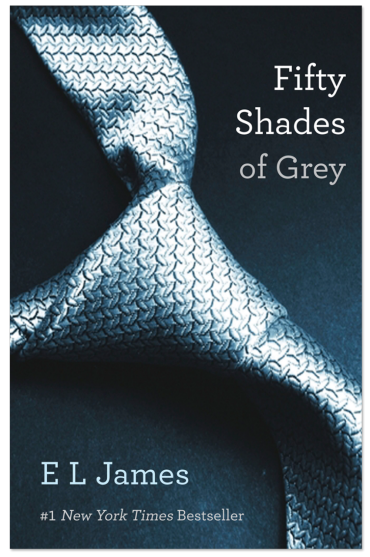
E. L. James’ Fifty Shades of Grey

It’s about a rich man getting what he wants. That’s the story of America.

This is a great book. It is just really great. It might be the best book, I really think that. It’s about a rich man getting what he wants. That’s the story of America. Some people don’t agree with that, they want to change the story of America. It’s really sad what they want to do to this country. Changing America is just so wrong. We have certain values in this country. We have at least fifty, I’ll tell you that. I know what I’m talking about, because I have a lot of values. Probably the most of anyone I know. People listen to me. They know I only get behind things that are really, really good. Like this book. I have a reputation for being right, you know. I make people very excited. Everyone likes a winner.

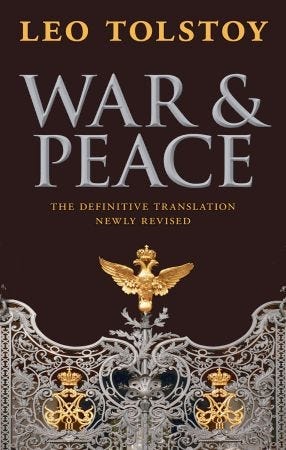
Leo Tolstoy’s War and Peace

I liked the war parts the most, but peace was fine. It was fine.

I liked the war parts the most, but peace was fine. It was fine. This book shows you how tough the Russians are. They’re so tough. But remember, our military is tougher. Undeniably the toughest fighting force in the history of the entire universe. Every book should try to be as tough as our military. This book is like that. It is one tough book. I respect people who are tough, like me. No one ever crosses me, because they know I’ll get even. I tell everyone to get even. That’s real advice, it’s real life advice. It feels good to attack people. And when other people see you doing it, they’ll respect you. You’ll get so much respect. Everyone on earth respects me. People know that if they mess with me, they’re in for a big fight, like a war.

Jordan Belfort’s The Wolf of Wall Street

I could see all of the pictures in my head. I like to see myself as the main character in the books I read.

I’m richer than Jordan, but he did good. What they did to him in the media, it was so wrong. He worked so hard, and they hated him for it. It’s pathetic what they did to him. Who wouldn’t want to be this guy? I had such a fun time reading this book. It really spoke to me. I could see all of the pictures in my head. I like to see myself as the main character in the books I read. I’m really rich in real life, so I like books about rich people. I can see myself there, just like that, super easy. Like watching a movie. Why wouldn’t you think of yourself as anything else but rich? I’m rich because who else was my father going to give money to? Charity? He wanted me to be successful, and look at me. I am really rich. I love being rich. Jordan gets that, and his book about boats and wolves gets that too.

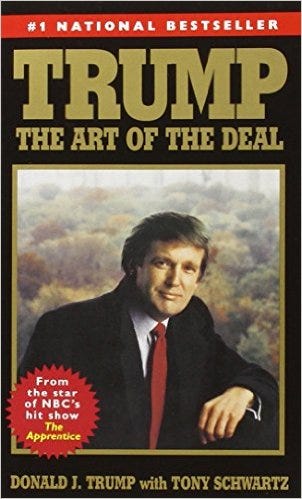
Donald J. Trump’s Trump: The Art of the Deal

It’s a great cover. You see it and you just want to buy ten copies. That is how business works.

Look, art is a con. The best painters, drawers, whatever, they’re better at selling stuff than making stuff. They have to be, because who wants to buy art? Don’t get me wrong, I’m better than all of them. I’m a hell of a promoter. I bought a bunch of art in the ’80s, a whole building of it, actually. That was a great deal for those artists. And instead of donating it to a museum, I just turned the whole lot into Trump Tower. Art is real estate, and real estate is transformative. Writers get this. You’ve got to have a nice face or no one will care about your, whatever it is you’re doing. Look at the cover of this book. It’s a great cover. You see it and you just want to buy ten copies. That is how business works. You see something, you want something. Then you buy the thing. You should buy this book.

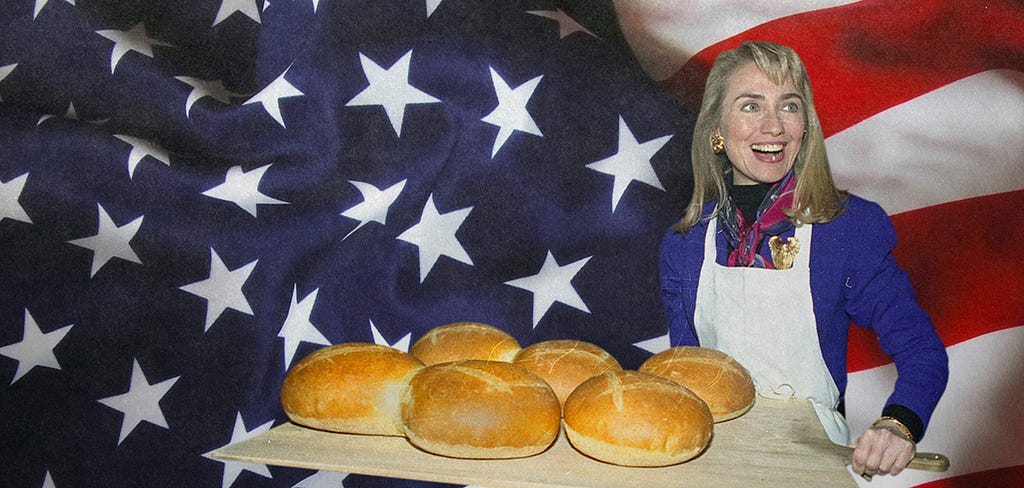
Ted Wilson Reviews the World: Hillary Clinton

★★★★☆ (4 out of 5)

Many people know Hillary Clinton as the former First Lady and former Secretary of State. After last night, a new generation will know her as the first woman to be nominated for President and as Donald Trump’s greatest enemy, after himself.

Everything Donald says makes him sound so afraid of her, but aren’t we always most afraid of the things we don’t understand? Not to imply that Donald doesn’t understand women. After having been married so many times, how could he not? What I suspect Donald is having trouble understanding is how he truly feels about Hillary. She’s a smart, powerful, accomplished woman. Just like Donald. For a man who loves himself so much, how could he not love someone who is so similar?

Hillary probably wouldn’t be interested though. Ever since her husband cheated on her, I suspect she may be too hurt to even consider another relationship. Some people thought she should have dumped her husband, but being able to forgive someone takes a lot of strength and courage. If she could have made a forgiveness album like Beyoncé did, it would have been harder to criticize Hillary for her difficult emotional decision.

(On a side note, why aren’t Beyoncé concerts called Beyoncerts?)

Hillary sure is busy, and that’s probably my biggest misgiving. When I ran for President in 2012 I was busy campaigning but I still had time to watch movies and take naps and do some gardening. For a candidate who had only one real competitor, Hillary didn’t need to work so hard. Hopefully now that she’s received the nomination she’ll take it easy on herself.

A Democrat friend of mine says he won’t vote for Hillary because she’s corrupt and he wants to make a statement. I’m no fan of corruption in government either, but it’s sort of like being fed up with corn syrup in Sour Patch Kids when you’re lost in the desert and it’s all you have to eat. It’s not really the time to complain, especially not when we have the chance to see a woman become President.

I’ve wanted to see a woman become President for so long that I actually voted for Newt Gingrich one year, because I thought that was a woman’s name. I’m still not entirely sure Newt isn’t a woman, even after seeing pictures of him/her.

BEST FEATURE: In college Hillary could bench over 200 lbs.
WORST FEATURE: I saw her at the beach once and she has a mole on her back I worry could be malignant.

Please join me next week when I’ll be reviewing applesauce.

Apocalypse Could Be Soon but Don’t Give Up Hope

The year is 2020, the not too distant future — one in which we can unfortunately completely believe. At the opening of The Sunlight Pilgrims the polar ice caps are melting and the banks are wrecking the economies of Europe. The deaths of both his mother Vivienne and grandmother Gunn within six months of one another have left Dylan MacRae facing the imminent repossession of his home, a tiny art-house cinema in central London called Babylon. His mother has left him one thing apart from unpaid bills:

“… when he got back from the crematorium he found an envelope containing the deeds for a caravan 578.3 miles away, with a pink Post-it note and her scrawl: Bought for cash — no record in any of our accounts. Mum x”

Dylan heads north, taking his mum and his grandma’s ashes back to Scotland, their homeland. His new home is one of a row of silver, bullet-shaped dwellings in a caravan park in a place called Clachan Fells, surrounded by vast mountains and star-filled skies. He falls asleep watching scenes of environmental protesters on the TV and wakes at 5am to the noise of one of his neighbors hoovering the lane, and the sight of her reaching up to polish the moon. A man accustomed to an unconventional lifestyle is not perturbed by such apparently strange behavior.

Thus begins the relationship between Dylan and the moon-polisher, Constance, and her twelve-year-old child Stella. In Dylan and Stella’s first conversation she tells him that her mother isn’t normal and he says that his wasn’t either. What, one may ask, is normal anyway? This story does not attempt to answer the question; rather it shows how, with an open heart, people can accept one another for who they are. And it isn’t simple.

Stella has, as an old woman who appears one day in their lane says, “two spirits”. She was born a boy, Cael, but thirteen months before “the girl that wore his body got up and told everyone to quit calling her by the wrong pronoun.” She wants to fit in and it isn’t easy. Boys she grew up with have physically attacked her. Her father, a taxidermist called Alistair who has an on-off relationship with her mother, sends her boy’s clothes and refuses to call her Stella. She wants a second kiss from a boy called Lewis. Or does she? Dylan understands about being born in the wrong body, because he comes from a race of giants. Or does he?

“Myths are stories that help us make sense of the world(s) in which we live.”

There isn’t a strict division between myth and truth. Myths are stories that help us make sense of the world(s) in which we live. Dylan’s mother liked to say he was “a child created by a fallen angel and a mortal woman”, but the fallen angel was a man from Hebden Bridge with whom she had a one-night stand. In The Sunlight Pilgrims Jenni Fagan paints a vivid picture of how people find diverse ways of getting through difficult circumstances: Constance is a survivalist, who lives off her wits and collects old furniture from rubbish tips to turn into “shabby-shit”; Stella uses the internet to connect with other trans-teens and see girls like her who have a penis; Dylan finds that the skills of distilling gin which he learned from his mother stand him in good stead as a money-earner as the cold intensifies over the winter. Lacing the story with gentle (and occasionally black) humor, Jenni Fagan creates remarkable, rounded and wholly believable characters. They all have a bit of craziness about them and are all the more normal and wonderful for that.

In her debut novel, The Panopticon, Jenni Fagan created the wonderfully feisty teenager Anais Hendricks, battling with a system which cannot cope with her wildness. Stella Fairbairn is made in the same mold of determined individuality, battling with doctors reluctant to prescribe her hormone-blockers. She and Dylan have more in common than is at first apparent, including knowledge of the sunlight pilgrims, monks from the islands further north who drink energy from the sun. Stella learns about them from the old woman who tells her she has two spirits.

“You can drink light right down into your chromosomes, then in the darkest minutes of winter, when there is a total absence of it, you will glow and glow and glow.”

Dylan had heard the same from his grandma, and this shared knowledge of the myth/truth draws him and Stella closer to one another. Dylan and Constance become close too, in this darkening, freezing winter, and not just for comfort, though that is an element of it. When they lie together in the glow of a three-bar electric fire as the snow continues to fall outside, Dylan feels that “there is an ordinariness to their strange.” Later, when they’re sitting out on the caravan roof watching the aurora swirl purple and green in the sky, he reflects on his life:

“… and this — the best seat in the house to watch the universe unfold, with a woman he loves, and a kid he loves too and a neighbour who is affable and a tin box for home — is as good as it gets.”

The scenery of the land and sky in Clachan Fells are major characters in this story. There are magical phenomena associated with the cold — parhelia or ‘sun dogs’, where there appear to be three suns in the sky; and penitentes, rows of snow figures high on the mountains which seem to be marching towards the sun. And up above when daylight recedes, early in these northern climes, is the so-bright canopy of the stars and planets. There is also the transformatory nature of the snow which blankets the land, and the light upon it which at moments turns everything gold. Both Stella and Dylan go alone up the mountains to address their fears and grief respectively in the vastness of nature. And at the end they and Constance, stir-crazy from being inside for weeks, go out together and scatter Gunn’s ashes towards the penitentes, enabling Dylan to feel, at last, lighter.

“The Sunlight Pilgrims is a story about light and darkness, the essential co-existence of the two.”

Fear and majesty sit side by side in this freezing winter. Out to sea an iceberg has drifted much too far south, putting Clachan Fells onto the international news alongside all the other dramas of this time. Up in the mountains magnificent stags and birds of prey survive against the odds. The Sunlight Pilgrims is a story, not a polemic, but is more than just an entertainment. As they look out from the harbor on the creaking majesty of the ice creations, Constance says to Dylan in a moment of candor:

“Sometimes you get a minute where it all seems worth it: all the stress, the struggling, life, death, all the shit in between. You see something like this and it all becomes sharper — oh yeah, you remember, this is it, this is it!”

The Sunlight Pilgrims is a story about light and darkness, the essential co-existence of the two, the life-force which drives us on into the light and its transforming power even when everything appears to be stacked against us. It is also about the spectrum of light, the different colors which it produces and the wide range of ways in which we can live. It is a beautiful story which itself illuminates, and perhaps above all it illuminates the importance of respecting difference.

Electric Literature Is Seeking Editorial Interns for Fall 2016

Do you love literature and writing? Are you looking for an entry into the New York literary world? Consider joining the Electric Literature team! Electric Literature’s volunteer internships introduce undergraduate and graduate students and emerging writers to digital publishing and the New York literary scene. Because we are a small, not-for-profit publisher, we provide unique opportunities for professional development and resume-building. All volunteer interns are paid for writing published on electricliterature.com, usually one to three pieces per week.

As an Electric Literature volunteer, you are encouraged to become involved in any aspect of our work that interests you. Sure, you’ll go to the post-office, but you’ll also do things like contribute to editorial decisions, interview authors, write articles, and attend literary events.

Responsibilities:

  • Read submissions and participate in editorial discussions
  • Comb the web and social media for breaking literary news
  • Copy edit and proof read
  • Contribute content to electricliterature.com
  • Interview Recommended Reading authors
  • Staff events
  • Select images to pair with articles
  • Transcribe interviews
  • Maintain book reviews database and other databases as needed
  • Manage order fulfillment from online store
  • Other administrative duties as needed

Skills:

  • Knowledge of Twitter, Tumblr, Medium, and social media platforms
  • Basic understanding of Photoshop
  • Firm grasp of grammar and spelling, with a sharp attention to detail

The ideal candidate:

  • Has an educational background in literature or creative writing
  • Writes clearly and with personality
  • Participates in the contemporary literary scene
  • Regularly reads literary magazines and literary websites (including but not limited to Recommended Reading, Okey-Panky, and electricliterature.com)
  • Believes strongly in the Electric Literature mission: To amplify the power of storytelling through digital innovation
  • Is hard working, pays great attention to detail, and can work independently

This is a volunteer position (10–20 hours/week) located in the Flatiron district of Manhattan. Candidates must be able to come to the offices at least 2 days a week. Although this is an unpaid volunteer internship, interns will be paid for writing content for electricliterature.com, which they will have the opportunity to do regularly. We are happy to work with universities and MFA programs to provide course credit, though you do not need to be a student to apply. This 3 month position start at the end of August (exact dates are flexible).

Since writing for the website is an integral part of the internship, please include a sample “scuttlebutt” post (150 to 300 words) about a recent literary topic with your application. Feel free to put your personality into the post. You can see examples of recent scuttlebutts here. Please also include 3 sample 140-character tweets for three different stories or articles published on our site (9 tweets total).

To apply, please send the sample post, cover letter, and resume to editors@electricliterature.com by August 12th.