Pay Me by Zdravka Evtimova

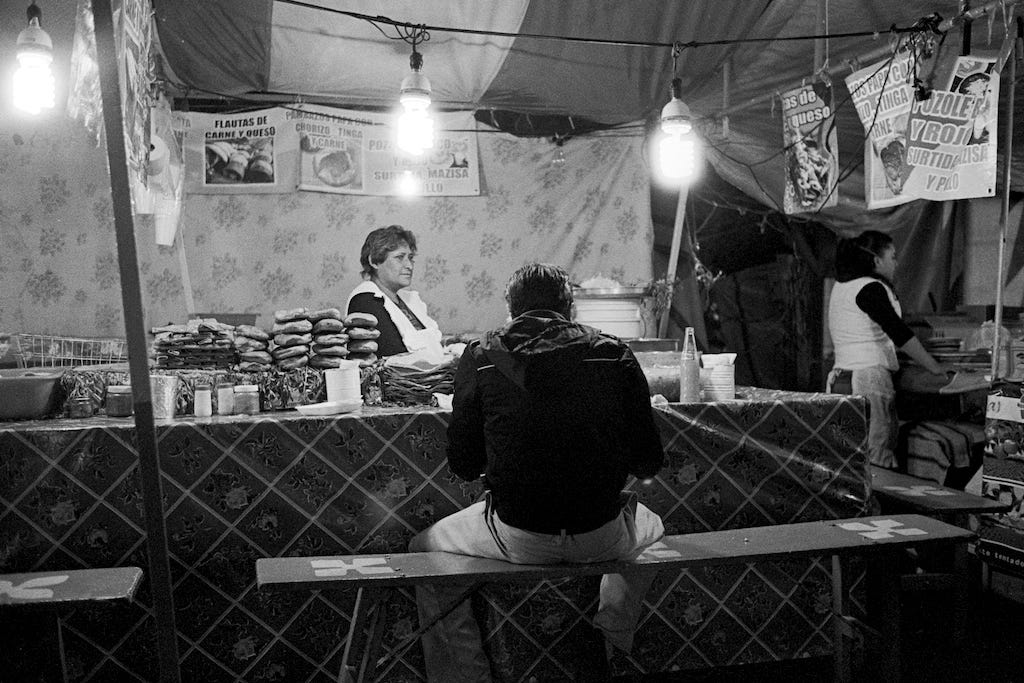
Theo watched the thin, long thread of a woman. The more he studied her face, the more he suspected she was not all there. The most amazing thing about her was her appetite. She constantly ate. They called her Maria; damn it, such a beautiful name and such a big mouth. She worked part-time at the local library, washed staircases and mowed the lawns in front of the wealthy men’s villas, using an electric mower as loud as a gun. She cleaned the important ladies’ houses, gave baths to the old women from the small town. Theo had heard rumors she was saving up to pay for her tuition at the local college.

She was different a fortnight ago. He caught glimpses of her, a cup of coffee in hand, staring at a lanky slovenly character. The man worked for Theo, repaired lathes and cutting machines, constantly complaining: too much dust, too hot, almost no money. Theo fired him.

Theo was intrigued by her; it was her big mouth that fascinated him. He was building a dyers’ workshop in town, and he hired her to clean the place. It was hard to believe how rapidly her hands moved, her fingertips neon signs glimmering intoxicatingly before his eyes. He underpaid her and she did not protest, didn’t even bother to count the money. Her eyes on his face, she asked, “Can I pick the wild sorrels around the dyers’ workshop?”

“Yes. You can,” Theo said. “But you’ll pay me five leva for my sorrels, as a matter of fact, ten leva.”

She didn’t respond to that, didn’t invite him to go drown himself.

She had turned around as if he was not there. Even worse, he stood nearby, a manure heap at her feet: nothing more, nothing less. Well, he was Theo, the man who owned half the houses in town, all fertile fields, and he had opened a dyers’ workshop.

“Hey. Wait,” Theo shouted. Her blouse intrigued him. He knew she’d bought it for fifty cents from his second-hand shop. The thing was too big for her, but her back looked very active in it, a snake twisting and turning within the confines of the huge hems. So far no man or woman had dared to turn their back on Theo.

“Nobody has introduced you to me,” her big mouth said. “I don’t see any reason why you should call me ‘hay.’ One should glance at a manure heap for fear that he might step in it. She trampled on his shadow, and her back, already a grown-up snake, retreated into the fog.

He saw her floundering in those enormous dresses from his second-hand shop, a green back on her back. At times she rummaged inside it, her fingers surprisingly thin and nimble, extracting nettles or sorrels, dock leaves and lettuces. She grazed on them. She stuffed sorrels in her mouth, munching, plucking another handful, then another.

Theo pursued a new hobby: he shadowed her. He watched her walking away from the library in a new one-leva dress from his second- to twenty-second hand shop; squatting by the stone wall, pulling and plucking nettles; pushing them into her green bag, then chewing raw dark-green leaves. A week passed, the sorrels grew coarse and hard, and she plucked horseradish, then goose-foot. He saw her picking grasses, masticating, chewing the cud until the first strawberries were ripe. Then she did not carry the green bag on her back; she clutched a crate with strawberries instead, gobbling fruit like thunder. His neighbors said she worked well, cleaned for many families, washed the sick, talked to old women from the village for hours on end, dug their gardens, weeded flowerbeds, and planted green beans or peppers. They gave her strawberries. She didn’t want money. She looked around all the time as if she was searching for somebody.

Then the cherries were ripe.

That grumbling character she’d been staring at had vanished without a trace. Theo had a nagging doubt in the back of his mind: Maria started gorging on green leaves the day the shabby blighter beat it for some unknown place.

Theo owned the cherry orchard; he’d bought it dirt cheap, then he built huge walls that encircled the land and the trees. Nettles sprouted in the shadows which she, a stick in a bleached dress, picked and wolfed day and night.

“I want you to pick cherries,” Theo said one day as Maria thrust a bunch of nettles into her green bag. “Twenty leva per day plus all fruit you can eat.”

On the following day she came in a T-shirt from his shop, shorts from his shop, her thin legs a pair of nails driven in her threadbare shoes which, he was sure, pinched her feet terribly. He hid behind the wall and watched. In the course of two hours Maria had not stopped eating; her lips turned bluish with cherry juice, and he was convinced she wouldn’t do the job he’d hired her for. He was wrong. At a certain point, her fingers plunged into the foliage and her body stuck to the branches like resin. In the afternoon, Theo couldn’t believe his eyes when he saw thirty crates of the cherries she’d picked.

“I’ll pay you,” he said.

She didn’t look up.

“You said ‘all the fruit you can eat.’” Her eyes were on her old shoes. “We agreed.”

“We did,” he said.

“I’ll eat now,” she said.

Theo sat in the shadow as she squatted on her heels, grabbed at a crate of cherries and ate, ate, ate as if she were a plant louse, a silkworm, her endless throat about to guzzle the whole orchard, the tree roots, the stones, the leaves, and the clouds above them. She chewed for an hour, then chewed more. Her mouth was black with the cherries, and her hands and elbows were crimson. Without warning, she jumped to her feet, vigorous, strong, as if she had just caught a glimpse of the orchard. She was a tapeworm that had pumped a ton of fruit into her flat belly. Theo thought, now I know. When the lanky character, dark like dried mud, hung around town, Maria didn’t rummage for food; a cup of coffee was about all she’d had for breakfast.

“Pay me,” she said.

He gave her fifteen leva.

“Give me five leva more,” she said.

“You gobbled a load of my fruit.”

“We cut a deal. Twenty leva per day and all I can eat.”

“You ate too much,” he said. “Come again tomorrow.”

When Theo checked the orchard on the following day, he found her in another cherry tree, her mouth already black, her hands, forearms, and elbows red. He could see no cherries in the trees she had climbed yesterday.… No crates full of cherries in sight.

“How much have you munched so far?” he asked.

Maria didn’t say anything. In the evening, the same thing happened all over again: the cherry tree picked full and clean, the crates neatly arranged by the trunk, and she, glued like a caterpillar to the leaves of another tree, was eating slowly, quietly, obstinately, lost in thought as if solving an equation in nuclear physics.

He paid her ten leva.

On the following day, he found Maria in the largest tree. The sun had just regained its power in the sky, a dash of rays followed by the stupendous full stop of the summer day. When did she clamber up that tree? Had she used a torch to illuminate the cherries, or had she slept up on a big branch? Her mouth was purple, her forearms glowered, blue up to the elbows, and the cherry stones she had spat on the ground glittered like pearls. She was scrawny, a knife stuck in the bough. In the evening, the full crates waited for him, neatly arranged in two parallel rows. Again, she ignored Theo as he stood under the tree inspecting her work. Without warning, her shabby dress slipped down from the branch, crept to the crates and the thing started all over again. She ate, ate, ate as if she was about to devour the night and the dark road, the potholes on it, the old rusty boneshakers, the gray houses in the village, the donkeys tied with chains to metal stakes. He gave her five leva. Maria didn’t say anything as she turned the snake of her back on him and went away, a firefly in the muggy air, a shaving razor that had learned to walk. She had cut him, and he didn’t know where the wound was. He remembered that a month, maybe two months ago, her eyes carved the street, pushed him and hurried, then gave in, meek and tractable, swimming to that repulsive character’s face.

“I ask you to dinner,” Theo told her. He hadn’t intended to ask her anything.

“Tomorrow,” she said.

Her voice, full of stones, hit him in the face.

All of the cherries were already ripe. He paid the women from the nearby villages: they had worked hard, and there was nothing to pick anymore. He fired a worker if she’d snapped a branch, so the orchard was stronger and more beautiful than ever. All clouds and blackbirds flew somewhere else.

In the evening, after the windows of the library darkened, Maria showed up at his door, in the endless dress from his shop, in the same dusty dented shoes that pinched her. Theo had the feeling his stinking warehouse with the sacks of threadbare clothes was advancing on him. She had not bothered to put on makeup, no nail polish. His presence failed to impress her — Theo wasn’t even a manure heap. He was nothing.

“Will you pay for the dinner?” Maria asked.

“Yes.”

“No matter how much I eat?”

“That’s correct.”

The waitress came, a pretty girl Theo had spent a couple of unimpressive nights with.

“Trout with walnuts,” ordered the shaving razor with a big mouth. “Turkey chops with honey, tomato salad, baked peppers, grilled chicken, fish, rye bread, wheat bread, cream salad, ice cream, apple pie, yogurt with almonds and honey for dessert, and some chocolates.”

Theo listened to her, staring, rubbing his ears. They itched.

Then she — very slowly — started to eat: the tomato salad, the turkey chop, the rye bread, fish and almonds, yogurt, the grilled chicken, the ice cream. She didn’t look at him, not once, didn’t glance at the waitress, the couple of unimpressive nights, who was gaping at her awe-struck, terrified. Maria ate on, sipping at the yogurt with honey, then bit into the turkey chop, and the moment the plate in front of her was empty, she pushed it away. She did not talk to Theo, she ignored him; he was a bone of the trout she had just spat out. She ate beautifully, her hands flashing, a needle embroidering flowers on a baby’s scarf in the dusk. The air turned into a tapestry of flames in the wake of her fingers.

After the last plate in front of her was empty, she carefully rubbed her fingers with the napkin and asked, “What do you want from me now?”

“You know what.”

She stood up. He had no idea what she was going to do, turn the snake in her back and the endless dress on him or… he could not imagine what waited behind her or. He didn’t need to know. She started for his house. Young and old gasped for air, praising Theo’s castle, the exquisite white bird, perched on the hill, surrounded on all sides with vineyards, grapes and wild foliage, a magnificent alley and marble benches in the shadows. She walked by his side, paying no attention to him, and that was odd. Theo had spent uninspiring nights with girls from the town, girls whose nationality he didn’t bother to establish. None of them had kept mum like this one. He had fired the dark grumbling blighter; he disappeared, had dried up like a muddy puddle that time erased from the sidewalk. It was on the day he was gone when Maria bought her green back for twenty-five cents from Theo’s notorious shop.

…She took off her twentieth-hand enormous dress, oblivious to everything around her as if she was in her cluttered room or was about to dive into a muddy pool in the river.

The second they finished, she got off the bed, made no fuss, did not dillydally or smoke. She slipped on the huge sleeves, like a noose on her arms, and left. The night was memorable. Indeed it was; the darkness a memory of the shaving razor that had cut him into two halves, her thin hands stitching together a Theo he didn’t know. The warm midnight and her enormous dress made his head spin. On the following day, he went to the library. Maria sat at a battered desk, the green bag full of sorrels and a crate with raspberries like sentinels at her feet, her nose buried in a book. She looked up and said, “What can I do for you?”

The nightfall in her eyes said she had never met him, and she didn’t have an enormous dress that had flowed with her strawberry skin into a little pool at his feet. The indifferent corners of her mouth had forgotten that her hands had sewn something with invisible stitches under his skin and Theo could not extricate himself from it.

“I ask you to dinner tonight.”

This time she ordered mackerel with walnuts, veal stew, cream salad, potato salad, nettle soup, chicken soup, baked peppers, ice cream, chocolates, a pork chop, and an apple pie. The dinner was over and she didn’t wait for him to lead the way to his room. Her dress was of a different color, dusty brown, enormous, hanging like a bleached tatter on the thin rope of her body. His second-hand shop offered the same garments in several shades of brown. The thing slid from her shoulders and parachuted into his territory, landing on the floor. She bent down, touched the shabby fabric and carefully folded it. She hadn’t put on knickers, he saw. Maria stood in front of him, her glowing fish-skin a glowworm in the dusk. The night was so memorable he couldn’t make out if it was a night or a day, a Sunday or a Tuesday, January or July. He went to sleep, and she stood up, dragged on her gown and left, not bothering to look back.

He could not drink his coffee in the corning, did not eat his breakfast. He ran to the library, but it was still closed. He hurried to the small house where he’d been told Maria lived. She was not there. He saw her in the street, the green bag slung over her shoulder, the gigantic dress spilling out a mudslide at her toes.

“I ask you to dinner,” he said.

As usual, she said nothing.

Theo stared at her scraggy neck. Her hands turned the air into sewing cotton and needles; her feet burned the steps he hoped her worn-out shoes would make towards him. She had picked blueberries somewhere and her mouth was purple, her hands glowed red — was it strawberries she’d eaten?

…Theo sat at a small table in the restaurant and the girl with the two unimpressive nights made efforts to talk to him. He consulted his watch, the evening slowly thickened into complete darkness, slow heat for hopeless old men, hot hours. He got up and the girl with her two insignificant nights asked him where he’d go. Did he want her to accompany him? Theo did not answer.

Maria did not show up.

In the morning, she was not in the library. He did not find her in the small house where she lived. Her green bag, full of sorrels and nettles a week ago, lay on the threshold, folded neatly, empty.

Theo felt hungry. His stomach twitched inside him. He ate two smoked veal sandwiches and drank two cartons of milk. His hunger grew. His appetite hit him, he wanted to eat, to devour, to absorb food quickly in large amounts. Maria had gone. Maria’s eyes had run dry. His bones ached from hunger. He ran to the warehouse. The crates were stored there. He bent down, stuffed strawberries into his mouth, gulped them down. He ate. He swallowed fruit, stems and leaves. They had no taste. Maria. After an hour or perhaps two, he accidentally looked up at small stained mirror nailed to the wall.

His hands and forearms were purplish-red, soiled with strawberry pips. A scarlet-brown crust of dried strawberry juice had plastered his nose, lips, and chin.

Maria.

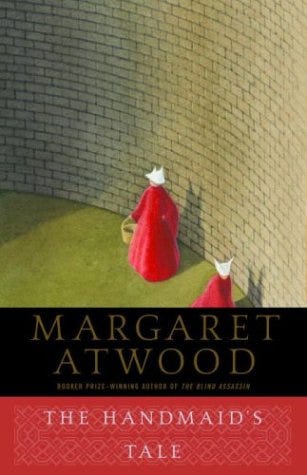
“Orange Is the New Black” Actress to Play Moira in “The Handmaid’s Tale” Adaptation

Samira Wiley will co-star in Hulu’s adaptation of the Margaret Atwood classic

Samira Wiley as Poussey Washington

TV shows or movies differ from literature in the sense that characters can no longer be just themselves. Characters are a collaboration between an actor and fiction. They become physical, embodied, visual — meaning the actor goes on after a character perishes. Orange Is the New Black fans will be painfully familiar with this.

Samira Wiley will go on, and in fact her star in Hollywood is rising fast. According to The Hollywood Reporter, she is joining the team that will be adapting Margaret Atwood’s beloved speculative fiction novel The Handmaid’s Tale into a 10-episode Hulu series.

First edition copy

The 1985 book is set in the not-so-distant future in the newly formed Puritanical, totalitarian state known as Gilead. Gilead is a frightening dystopia plagued by environmental problems, which have rendered a good amount of the population (mainly women, though also men) infertile. With this backdrop, the religious fanatics who control Gilead seize upon the few fertile women left. They treat them as state property. Thusly, the story’s protagonist is named “Offred”, or “Of Fred,” the Commander to whom she’s been assigned as a handmaid. What drives her is not only survival in this grim reality, but the search for her daughter whom she lost during the rise of the state of Gilead. Wiley will come into the story as Moira, Offred’s best friend from college. In the delirium of the novel, it is Moira’s presence which acts as a bridge between Offred’s past (pre-Gilead) and her present; she is part of Offred’s protection against the anonymizing force of the state.

It has previously been reported that Mad Men’s Elisabeth Moss will play the lead. Among a bevy of producers, Margaret Atwood will also reportedly be a consulting producer. For Orange Is the New Black fans, the only downside of this news is that they will have to wait until 2017 to see Ms. Wiley in this role. In the meantime, they can catch her on FXX’s critically acclaimed show You’re the Worst which returns for season three on August 31st.

Canaries

Past the lip of the water, past those first shallow crests, we walk the canoe until our next step finds us wet to the waist. Even with the clouds obscuring what was supposed to be a harvest moon, there’s no way to hide ourselves, and the canoe, and the long line it draws in the sand behind us. But the beach is empty. We struggle ourselves into the vessel, which might be a kayak.

Harun and I, we’re no swimmers, certainly not canoers or kayakers. Just kids, just bored, except I suppose neither of those things is true. I turned twenty-five a month ago and he’s been twenty-five for years now, and we have so much waiting for us at the house, an old grandfather clock that needs servicing and a leaking roof and the stovetop I’ve left on. I imagine the whole thing burning down, after someone rescues baby Moshe, of course.

Maybe the person who rescues Moshe will have been wanting a baby her whole life, or his, and that want simply hasn’t been realized yet. Maybe that person will know exactly what to do with a baby who will only nurse if his father tells him a story, who yells his little mouth off like a siren if the story ends a second before he’s finished feeding, a baby who can only sleep if you hold him close to your chest while staring vacantly at a wall, a baby who can sense if you’ve opened a book or blown a kiss to your husband or turned on the ever-muted television, who curdles the air with his screaming until you give him back your undivided fretting.

We were meticulous with our planning, Harun and I. We took turns visiting and calling the local station with peevish complaints. We made note of which officers were endlessly patient with us, didn’t raise their voices or hang up, came quickly when asked. Posing as repairmen, we contacted their spouses’ offices to get their home telephone numbers, and when the moment was right we called those officers directly with the tip — something isn’t right at 115 Roebling, please come quick — before deserting our child and dragging the canoe out to the water.

If only we knew how to use it. Harun holds the boat still, but with the rocking and my legs all wet I can barely flop myself in. Once I’m finally at the helm Harun clambers up and we tip over, twice. Eventually he gets in first while I hold the canoe steady, then grabs me by the armpits to pull me aboard. We’re clumsy, the two of us, but we manage. We dig our oars into the sand to push off.

The ocean is not particularly kind. The salt will burn your eyes and nose, and you will gulp mouthfuls of brackish water for no reason. Paddling forward, we find ourselves soaked in brine. I don’t mind it at first. I love salt; I think I might have a sodium deficiency, the way I love salt. When we went to restaurants, back before Moshe, and they brought out fresh bread with a tiny bowl of that flaky maldon, I’d sneak pinchfuls onto my tongue while no one was looking. By no one I mean the waiters or other patrons, because of course Harun knows my habits. He would laugh at me in a way that let me laugh too. Occasionally he took a pinch himself, I think just to make me feel less strange.

But here in the sea, Harun is spitting a lot to get that salt taste out of his mouth. I ask if he’s alright and I think he nods, but I can’t see because it’s night, and also because he’s behind me. Clouds still curtain the sky. I turn in my seat, and Harun has on this face like he’s not thinking about a single thing, or like he’s thinking about a very specific thing that has nothing to do with this moment, maybe who will make it to the basketball finals, or what sort of art he’d like to hang in the living room that we’ve abandoned on shore.

Hey, I say.

My baby startles easy. In this case I mean Harun, which I know I shouldn’t. I should mean Moshe, especially now that we’ve left him behind, but to be honest my baby has always been Harun, and Moshe was just a way to get to the parts of Harun I missed: the first words and the first fall off a bicycle and the diagnosis of sadness each of us have embraced as part of the family.

Harun says Hi, like he forgot I was sitting right in front of him on this floating contraption, then looks around at the boat like he forgot we’d stolen it, and then at the sea around him, remembering.

Look, I say, pointing behind us. We’ve left behind the rocks we were nervous about being dashed against, and the lifeguard’s highchair, and the rest of the shore. I imagine that I see our little house swarming with pulsing red and blue lights in the distance, but of course I don’t.

Harun nods, stoic. Almost there.

We row farther, until our palms chafe. I set my oar in front of me and lean back.

Careful, Harun says, but he scooches forward to wrap his arms around my shoulders and rest his chin on the flattish top of my head. We’re looking up at the clouds, willing them to part. Why do they call it a harvest moon? I ask again. He has told me on dry land, but the reason we’ve come all this way is so that dry land won’t count.

When the full moon looks extra full, that’s a harvest moon.

The clouds move aside as if we had only needed to ask. She is surprising, the moon. Robust, like when my body was all soft buttery stomach filled with Moshe. Not the milky white I was expecting, either. Yellowish, but pale, like an egg custard.

But why do they call it that?

Harun doesn’t answer, so I swivel again. I see that same hazy look, but I’m in this boat for a different one. The night before we married he put his hands on either side of my face and told me I was his family, that we were everything we needed right here, the two of us. That’s the look I’m here for, the look I’d put the salt back in the sea for.

I put my hands on either side of his face. Tell me a story, I say. Why is the moon yellow tonight?

Harun un-swivels me, leans me back against his chest, pushes the straps off my shoulders and kisses each hollow of my collarbone twice. He speaks in his nursing story voice:

One night every month, all the canaries in the world flock together and fly up to the full moon. Whether it’s gravity, nature, instinct, or love, they can’t resist her pull. Most months, the moon turns them away because she knows she doesn’t have enough room, that she can’t support them all. But every so often, on nights like tonight when she’s feeling strong, she takes a deep breath and swells her big body, and when the canaries come to her she hugs them so close she fills herself up with their ruffled yellow feathers.


The point of Harun’s chin on my head itches but I don’t move. I know my weight on his chest is a burden, and soon we will need to shift positions to lie more comfortably. We let our oars sink into the water, watch the moon as she drifts our boat this way and that, sitting up in the sky, big with love.

Best Words, Best Order: On Love and Language

Some enchanted evening, you see a strange word across a crowded room. It looks different from all the other words; it beckons and glows, it exerts such a powerful magnetism that you are drawn like a murmurous fly to Keats’s “coming musk rose, full of dewy wine” in the ode where he feels so happy listening to a nightingale that he thinks about getting drunk, killing himself, and other poetic pursuits.

Those first encounters with language, for a writer, are as powerful as confronting Michelangelo’s Pietà might be for a budding young artist who previously knew only the lineaments of the molded plastic baby Jesus and kneeling cows in the Christmas crèche dug out yearly from a cardboard box in the basement in Trenton, New Jersey.

For me, discovering the spelling of bologna was one such revelatory moment.

For me, discovering the spelling of bologna was one such revelatory moment. I was familiar with the thing itself, but not until I saw the word written on a blackboard one Friday in the fourth grade did I appreciate its power. I was instantly hurled into tumultuous confusion about the true nature of reality. How could this ordinary cold cut, pinkish and slippery, trapped between slices of Wonder Bread, slathered with mayonnaise, wrapped in wax paper, and lifted from my Barbie lunchbox each day at school beside the swing set, have such an odd, exotic spelling? Why was there such an enormous distance between the word as it sounded and the way it was actually written? Clearly there were deeper truths than I realized lurking beneath not only language, but existence itself. The routine, mundane occurrences of my nine-year-old world — these were mere appearances, mere shadows on the wall of my bedroom. My human perception was clearly limited. The substance of life might be scarier and wilder than I had imagined. I went around all week with bologna in my head and with a new sense of anticipation and dread for the next Friday’s spelling and vocabulary list.

But the word that truly rocked my world — a word that made bologna seem like mere Spam — was one that I encountered in a poem the following year. The verse, a simple a-a-b-a quatrain, was written in black Magic Marker on a yellow cement wall in the courtyard of my elementary school. The young bard had written:

Her beauty lies

Between her thighs

And that’s what makes

My libido rise.

I had no idea what libido meant, but I more or less understood the writer’s intent. Libido! Maybe it was significant that, like bologna, it was a three-syllable word, with that stress, that lift, in the middle. An amphibrach, like inferno, or Dorito. A Latin word. Foreign, exotic, and in the end — as I discovered, once I got to a dictionary — dirty. It meant sex, desire, excitation. Now the poem itself took hold of me, an intoxicating mix of filth and erudition. It had all the qualities of a great work of literature: paradox, Eros, and the fitting of form to content. The first three lines followed a strict pattern of iambic dimeter. And then the departure, the final line opening into the power of metric substitution, the triple foot of an anapest pouring forth and overflowing its iambic container. The poem met Coleridge’s definition of “the best words in the best order.” It impressed itself indelibly into memory; once read, it could not be forgotten. I was haunted by the poem, and wondered who the author was. A boy, I was sure — possibly an older man, a sixth-grader. He had stood at that wall; he no doubt stood now somewhere nearby — the tetherball court, or the jungle gym. I burned to find him, a bad boy who understood the subtleties of metrics and knew big words. Who had a libido.

It had all the qualities of a great work of literature: paradox, Eros, and the fitting of form to content.

I didn’t ever find him. Not in the fifth grade, or in the sixth, when a boy and I crawled into an empty refrigerator box at the back of the classroom — our science project was to construct a spaceship — and made out instead of drawing the control panel. All we had done in there was glue up a picture of some galaxy and stick our tongues in each other’s mouths and try not to make any sound that would get us hauled out to drill fractions. He was a good kisser, but when we broke up he wrote a note to a friend that read, “Kim is a pigheaded slob.” His language was crude and unrefined, as well as imprecise. The note lacked rhythm, had no surprising metaphor, and its idea was insufficiently developed; it dealt in clichéd generalities (pigheadededness, slobdom) and might have referred to any number of girls named Kim rather than the unique, special eleven-year-old who had allowed his cretinous tongue to slither over her own.

He was the kind of boy I would fall for again and again in the coming years, adorable and unsuitable, ordinary as the dirt in that church in New Mexico that is supposed to heal broken legs and hearts but is really dug up from the hill behind the church and not miraculous at all, which anyone will freely tell you, but people still make pilgrimages and leave their crutches and dog tags hanging there. The guys I fell for rode motorcycles and flew small airplanes and played in bands, and wondered why writers — the writers they knew personally, i.e., me — had to go into things so much. For a while, we would be completely happy together. Then we would grow bored with each other, a circumstance they didn’t seem to mind as much as I did. To a man, they married soon after we broke up, except for the one who might be homeless by now.

He was brilliant and perfect, except for one little thing: he did not make my libido rise.

Then there was the other kind — the kind I did not have to warn not to say “fuck” when we went to lunch at Hamburger Hamlet with my mother. Fuck was not a word this man had befriended. But he knew about the roots of jazz or Hindu philosophy or the French Revolution. He admired my poetry; he loved poetry. He understood how Derrida subverted Plato’s classical concept of mimesis — there was nothing to be imitated. When he said “hymen,” he meant unsettling Heidegger’s concept of synthesis, not to mention Levi-Strauss’s Hegelian notion of the third element that mediates between the two members of a binary opposition. I hope you’re still with me here. He was brilliant and perfect, except for one little thing: he did not make my libido rise.

All my life, since seeing that perfectly placed word, printed in capital letters, I have looked for the one to whom I can say, “Come to me. Call me your little whore and then quote Nietzsche. Tie me up and slap me around and pee on me and then explicate The Waste Land, granting its status as a seminal work with vast influence on twentieth-century literature without praising it as the impetus for a bunch of postmodern hooey no one can understand. Tell me we’re staying in tonight and whip us up some pan-fried bay scallops and saffron pasta with parsley and garlic, and maybe some white corn cakes with caviar. Let the champagne cork blast loose like a rocket ship and shatter the kitchen light and foam run down your arm while the shards fly. I’ll lick the foam while you translate those cuneiform tablets you collected on your last expedition. Dedicate your book and the rest of your carnal life to me, and I’ll do the same.”

Come to me. Call me your little whore and then quote Nietzsche. Tie me up and slap me around and pee on me and then explicate The Waste Land.

Don’t anyone tell me he’s not out there, that the perfect admixture of head and heart is a romantic alchemist’s fantasy, impossible to achieve. As far as I’m concerned, that’s a bunch of bologna. I know he exists. I know.

And listen: If you went to McNab Elementary in Pompano Beach, Florida, and once wrote a poem on a wall, there is someone who wants to meet you.

[From BUKOWSKI IN A SUNDRESS: Confessions from a Writing Life by Kim Addonizio, published by Penguin Books, an imprint of Penguin Publishing Group, a division of Penguin Random House LLC. Copyright © 2016 by Kim Addonizio.]

Liz Moore’s Family of the Future

One of my great joys in life is a well-plotted literary novel. I’m talking about a book that’s shameless about its twists and turns, a book that loves a big reveal, a book with Secrets and Backstories and Subplots — and high-level language to match. I love Marilynne Robinson as much as the next girl, and I’m down for a Valeria Luiselli meta-novel any day, but there’s a special place in my heart for a literary writer who, when given the options of language, character, and plot, says, Yes, please.

Enter Liz Moore. I had to kick off our interview by telling her all the questions I wasn’t going to ask because I didn’t want to spoil the plot of her new novel, The Unseen World (WW Norton & Co, 2016). Lucky for me, that left us plenty to talk about: fathers and daughters, Catholic schools, memory loss, 1980s chatbots, writing about science when you’re not a scientist, and much more. I promise, we didn’t give anything away.

Lily Meyer: Did you always know who the narrator would be?

Liz Moore: No, I didn’t. I experimented a lot with point of view. In early drafts it was in the first person, in the voice of [twelve-year-old protagonist] Ada. I discovered that the book just felt better when I was writing in the third person.

Lily Meyer: So what’s your drafting process like? Are there a lot of false starts, or do you write all the way through?

Liz Moore: I never write all the way through. A lot of my early work on the book is incredibly problematic; I’m starting and stopping, not writing a complete story with an arc. There are a lot of failed attempts, and I piece them together one by one until I arrive at something that resembles a complete first draft, but I have hundreds of attempts before that. They aren’t wastes, because the character work goes into the first real draft, and because I need to figure out what doesn’t work many, many times before I figure out what does work.

Lily Meyer: What elements of those initial attempts have made it into The Unseen World?

Liz Moore: The characters of Ada and David, her father. I had a sense of them as people right from the beginning. Every other element of the book has changed dramatically. David was a physicist at first, not a computer scientist; Ada was older than she is in this draft, and I spent more time in her adulthood. But I always knew that they were a pair, and that it would be a novel about a father and daughter.

Lily Meyer: Where did you get that?

Liz Moore: My father is a physicist. I spent a lot of time around him, hearing him talk about his work, and around his colleagues, and sometimes at his lab, though nowhere near Ada’s daily routine of going with her father to his lab. I became intrigued by the idea of writing about the experience of a child who’s really gifted at science, because I wasn’t. I was much more interested in reading and writing, and so the book let me explore what it would have been like to be really strong in what my father was always strong in.

Lily Meyer: How much did you have to learn about computer science?

Liz Moore: A lot. I was interested in computers as a kid, but computers weren’t that interesting. Early personal computers were pretty basic. But I was still interested in spending time on them, and played around with early computer games like Space Quest. I chatted with ELIZA, which was an early chatbot program and which became the grain of inspiration for ELIXIR, the computer program that functions as another character in the book.

Lily Meyer: Tell me more about talking to ELIZA!

Liz Moore: My father needed computers at home for his work, so we always had them — Macs, always — which was relatively uncommon. On those computers, certain programs came pre-loaded, and ELIZA was one. Like ELIXIR, ELIZA was designed to act like a therapist. It searched keywords in what you said and then asked general questions, so if you said anything about your mother, ELIZA would say, “Tell me more about your family.”

I was kind of a loner as a kid, so there was something satisfying about talking to a computer program…

Even as a young kid, it was obvious to me that this was its mechanism, but I felt strangely compelled to talk to it. I wanted to talk to it. I was kind of a loner as a kid, so there was something satisfying about talking to a computer program that would ask me questions about myself. That experience inserted itself into the novel, where there’s a computer program that’s much more advanced. ELIXIR is a combination of ELIZA and a program called CYC, which is an ongoing self-teaching computer project.

Lily Meyer: Speaking of self-teaching, David home-schools Ada for a long time, but once he begins to lose his memory, she goes to Catholic school at Queen of Angels. How does Catholicism play into this book for you?

Liz Moore: I grew up in Framingham, outside Boston, and most of my friends grew up very culturally Catholic. The parochial-school element comes out of growing up in the Boston area and having so many friends and acquaintances who practiced Catholicism and who were part of what felt to me like very warm, very loving families. So when Ada moves in with David’s colleague Liston and goes to parochial school with Liston’s sons, that’s tied up in a sense of family for me, more than faith.

I should also note that I spoke with people who grew up in Savin Hill, the neighborhood in Dorchester where Ada lives, and that’s just where characters like Ada and the Liston boys would have gone to school. Everybody in Savin Hill went to Catholic school.

Lily Meyer: When you were doing research interviews for The Unseen World, how did you explain the book you were writing?

Liz Moore: I was very nervous every time I was speaking to someone who’s in computer science. I have multiple hang-ups about my own perceived lack of scientific ability, and have ever since I was a kid. Fortunately, I found people who were genuinely kind about it, and interested when I explained my goal in writing the book, which was not to be perfectly scientifically accurate but to construct a story that borrowed from reality but was also somewhat speculative and could move into places that don’t exist yet. I tried to tell them that I was willing to include inaccuracies for the sake of plot.

I almost always described the book as the story of a father and daughter who both work in computer science. The father’s mind begins to fail, and at the same time, it becomes clear that he’s been dishonest about his past. The daughter has to work for the rest of her life to figure out who he was and why he lied. That’s the very short summation I gave.

Lily Meyer: How do you explain the book to yourself?

Liz Moore: It’s about possibilities for what the future could look like, and it’s about family — and sort of about my family — and it’s about outsiders, and adolescence, and hero worship. I’m naming its themes, I guess.

Lily Meyer: Speaking of family, has your father read the book yet? What does he think?

Liz Moore: He read a first draft of it, and this past weekend he finished the final version. He likes it! He certainly had a lot of notes on the first draft about all the things I’d gotten wrong, the language I used for computers and labs, and that was really helpful. I was nervous that he would see himself too much in the character of the father, because in almost every way as people, they’re quite different. It was only the grain of having a scientist father that began the book for me.

Lily Meyer: When you’re writing and editing, who do you show your work to, and when?

Liz Moore: I’m extremely secretive. Usually I show my work to nobody at all until I have a complete draft. This is the first book that I sold based on a partial manuscript, so I did show it to my agent and editor, but I’ve never done that before. My editor purchased it, but then I didn’t show her any more till I had a complete draft. I don’t show friends or my husband anything until I feel like it’s as good as I can make it. If I know it’s not really good yet, I don’t feel like it would be helpful to show anyone. They’d be telling me things that I already know. I want to bang my head into a wall until I feel like it’s good and then have someone else tell me what’s not good about it.

Lily Meyer: What does banging your head against a wall look like for you?

Liz Moore: The only constant is disconnecting from all technology for a set number of hours and seeing what happens. That’s the only way I can ever have breakthroughs. If a book isn’t going well, that’s when it’s hardest to work on it, so I will sit in front of my computer with the Freedom program enabled and leave my phone behind and force myself to either write — I’ll open up a new document so that psychologically I’m not committing too much to the draft — or just think. I sit and stare at the blank screen and try to work through a problem.

I hate that part. A lot of times I feel like I’m doomed and it’s not going to work, like I’ve written myself into too much of the corner and there’s no way out, or I started with a faulty premise and it’s just not going to work. That thought is almost always there. And then eventually something just clicks. It usually involves a huge amount of work on what I’ve already written, but I know that that’s the answer and the work will be productive.

Lily Meyer: How do you protect yourself from that feeling that you’ve written yourself into a corner?

Liz Moore: At this point the only comfort that I have is that it happens with every book. Now that I’ve written three books, on number four, I can say to myself, “This is part of the process.” With The Unseen World, I could remember, “Okay, you felt just as bad with the first two books.” That’s the way I can convince myself to keep going.

Lily Meyer: How do you protect the brain space you need for writing from all of the rest of life?

Liz Moore: It’s incredibly important to me to read. If I don’t read, I have a hard time writing. So I need to assign myself reading time the same way I assign myself writing time. I have a very full teaching schedule — I’m an associate professor at Holy Family — which is a job that I love, but a job that requires a lot of work. And I just had a baby in late May, so for the first time this fall not only am I going to balancing teaching and writing, but I’ll be balancing teaching, writing, and parenthood. I don’t know what it’ll be like. It’s going to be a huge change.

Hemingway Wins Hemingway Look-Alike Contest

Dave Hemingway (no relation) Took Home Top “Papa” Honors in Florida

The Crowning Moment

It goes without saying, but I will say it anyway: the greatest event America has to offer during the month of July is the “Papa” Hemingway Look-Alike Contest in Key West, Florida. Running for an incredible 36 years, the contest — which looks more like a festival — takes place over the final three days of the island’s annual “Hemingway Days,” and it is set up by the Hemingway Look-Alike Society (HLAS). If you’re thinking what I first thought, there is no need to fret, the society’s “about” page quickly dispels your worries: “The Hemingway Look-Alike Society is much more than a bunch of ‘portly gray bearded old men.’”

With that being said, “a bunch of portly gray bearded old men” did indeed compete for the grand prize, and, according to The Guardian, for the first time in the contest’s history a man named Hemingway came out on top. Dave Hemingway of Macon, North Carolina and who is of no relation to the author, finally lifted the triumphant bust of “Papa” Hemingway after seven previous appearances in the contest. According to the man himself, what put him over the top this time was the choice of an authentically Hemingway-esque wool, cream-colored turtleneck.

“Even though this sweater is really hot, it was part of my strategy…And I think it worked out really well.” Though, Hemingway was quick to add that he shares traits aside from physical likeness with the illustriously rambunctious author: “I like women. I like having a good time. I do feel like Ernest because I’m in the town he lived in so many years.”

I wonder what the author would think of such an event: his favorite island annually populated by varyingly believable doppelgangers for a sweltering weekend in July. Who knows — but it certainly sounds more like science fiction than a Nick Adams story.

The annual contest is hosted at Sloppy Joe’s, one of the author’s favorite bars in the area.

On Meeting Mickey at a Party

In Mickey, a novella from Chelsea Martin, a portrait of a narrator is painted as someone lost, swimming in the midst of a curiously unfulfilling life. As in her other book, Even Though I Don’t Miss You, there is a backdrop of modern convenience and an exploration of its ironically negative effect on our interpersonal relationships. The beginning of the book depicts the narrator dumping the titular Mickey at a party, where we will come to realize that in our heroine’s thought process, marks the natural beginning of the relationship. Throughout the book, Mickey is brought up again and again as examples of an ideal, both as a person and a period of time. It seems strange that the narrator should initiate the break-up, but it is only the first example of the incredible lengths that she will go to in order to keep emotional control over her life.

“Mickey is brought up again and again as examples of an ideal, both as a person and a period of time.”

By her own account, we follow her through a series of sexual flings, stripped of any possibility for emotional attachment. This habit of alienation, a desperate attempt at sterile emotional control, is repeated for friends, co-workers, and her mother. All the while, she narrates the story with sound-bite musings evoking the nihilistic depth of Fernando Pessoa, specifically their ironic leanings to a personality deeply entrenched in both self-loathing and narcissism. Martin’s approach to narration on this subject, where the young woman simultaneously realizes both the logic and ill-logic of her behaviors, is where the novella finds its purpose. The narrator recognizes that she is a sort of emotional Schrodinger’s Cat, constantly trapped in a state of death and un-death, knowing and not-knowing, being okay while being absolutely not okay.

She lives a quasi-artistic life, in that she often talks about possibilities for art projects, attending art school and having friends who work as artists, but the reader isn’t shown any concrete evidence of her work. Martin uses this as a platform for some brilliant commentary on the sometimes-hypocritical, often-incestuous ‘art scene’ which could just as easily be ascribed to the world of literary politics with few minor changes. The predictable nature of ‘creatives’ is lampooned in her series of ‘Untitled’ one-liners:

“Untitled #2: I’M TERRIFIED THAT DEEP DOWN INSIDE I’M NOT THAT INTERESTING AND I’M TERRIFIED THAT EVERYONE ALREADY KNOWS.”

“Untitled #7: I AM SURE THAT ONE DAY I WILL BE A GREAT ARTIST. I’LL BE SO SUCCESSFUL THAT YOU’LL BE AFRAID TO TALK TO ME. AND I’LL STILL BE AFRAID TO TALK TO YOU, TOO.”

But even these satirical phrases hide a much deeper hurt, a history of self-sabotage and lack of inspiration she all but admits to later in the book. She struggles in a life where artistic merit can’t provide the needed existential purpose it seems to be giving everyone else, or can’t fake it as well as they can. Instead, it cruelly dangles (what she considers to be) the illusion of fulfillment and success before her. “Anything can be humiliating,” she writes, “but sometimes I think making art is a uniquely humiliating experience. For your work to be successful, it has to possess or imply original thought (which is impossible), intelligence (which is dependent on the intelligence of other people and therefore, uncontrollable), or visual appeal (which is pointless and stupid and demeaning).” The terrible truth behind lines like this is that they speak to an unspoken pain: a realization that any sort of success or even catharsis that the narrator could experience is so unreal that she has abandoned it to the realm of fantasy.

The underlying story may be the loss of the narrator’s job and subsequent slow dive into poverty, but she only observes this process with a Lispector-like detachment, saving emotional outbursts for existential matters. She seems to be present only in the moment and leaves thoughts of the future to odd daydreams that function as metaphors for her actions and the sometimes-convoluted reasons behind them. There are many moments in which her logic isn’t convoluted, but the process of arriving at it is. “But it was in Courtney’s best interest to believe that I was not a truly selfish asshole,” she writes after deliberately missing her friend’s gallery opening. “Because the implications that such a belief would have about Courtney’s self-worth (seeing as how she spent so much time with me, chose to live with me, etc.) were too terrible for someone like her to face.”

“The underlying story may be the loss of the narrator’s job and subsequent slow dive into poverty, but she only observes this process with a Lispector-like detachment.”

In the course of the story, the narrator desperately tries to reconnect with her estranged Mother. Her Mother is only described few a few phrases as absent, domineering, nurturing or vapid, depending on the narrator’s mood. Scenes from the past are usually set in the context of which boyfriend her Mother was seeing at the time, where it is implied that that particular status determined her mood and personality. “The cashier could blame my Mom for that one. My Mom had tried to instill in me an overeager politeness to strangers and her gross boyfriends. I rebelled against it, having nothing much else to rebel against.” If that is the case, the narrator’s relationship with Mickey can be viewed as a learned echo of behavior from years of observations of her single parent.

Much of the ink spilled about her Mother leads the reader to believe that they are more similar than they think. If that’s true, the clash of similar egos is simply too much for either of them to bear. In fact, it seems like the effort to reconnect is made on her part out of spite rather than seeking an emotional reunion. The Mother initiating the communication cut-off creates a vacuum of control in the narrator’s life, one she must fill by finding a way to have the last word. It is in the search for her Mother and the scenarios she posits to understand her life that channel the intellectual absurdity of Vonnegut, like this comparison of an adult child to a detached arm. “I can imagine wanting to disown the arm, overconfident and argumentative about its decisions, constantly making you feel old and foolish when you ask simple questions about its life.”

Like the narrator, Mickey can be described in a myriad of contradictory terms. It’s funny, tragic, relatable, fantastic, dark but also, in its own unique way, weirdly hopeful. It is a reflection of its time, where social media boils emotional output down to the bare nerve and can fray our ‘IRL’ connection with our fellow humans. It gives us exactly what appeals to our id in shows like Girls and media like Twitter: our thoughts ultra-brief but devastating, our narrators as amorphous stand-ins for the author, the reader, or someone else in between. Chelsea Martin is the kind of author that has her finger on the pulse of this style of writing. She does so with a precision that shows real, learned technique, an ability to satirize with deeper meaning. As the latest brave bard to document a particular moment in time, it is not her job to make you like it or hate it — only to report, to the best of her abilities.

Donald Ray Pollock’s Gothic Hillbilly Noir

Donald Ray Pollock has had what you might call an unconventional route to literary success. Born in the deliciously named backwater, now ghost town, of Knockemstiff, Ohio, the formerly hard-drinking Pollock worked in the nearby Mead paper mill (whose owners paid for four trips to rehab, the last of which stuck) as a laborer and dump truck driver until the age of 45, when he decided to turn his attention to writing. Since then Pollock’s unique brand of “hillbilly gothic” — bursting at the seams with unhinged misfits engaged in lurid violence, with a healthy dose of black humor thrown in for good measure — has earned him a slew of awards including the PEN/Robert Bingham W. Prize for debut fiction and Grand Prix de Litterature Policiere, as well as a prestigious Guggenheim fellowship. Not bad for a late bloomer.

His new novel, The Heavenly Table (Doubleday, 2016), ostensibly tells the story of the Jewett brothers — three dirt-poor siblings who set out across Ohio in 1917 on an ill-thought out but surprisingly effective spree of bank robbery and general mayhem — and their interaction with a well-meaning farmer named Ellsworth whose no-account son has recently abandoned the family to, his father suspects, join up with the large WWI-prepping army camp on the edge of town. More than that, though, the novel is a sprawling ensemble picaresque, where dozens of ne’er-do-wells of every stripe and deviancy orbit one another against the backdrop of war-prompted modernization and the growing mythos of the Jewetts.

I caught up with Pollock over email earlier this month.

Dan Sheehan: You worked for many years at a paper mill not far from your hometown. Did the desire to write creep up on you gradually throughout that period or did you wake up one day hungry for a change?

Donald Ray Pollock: I’d always been a reader, and for many, many years, writers had been my “heroes,” so to speak, much like other people admire sports figures or TV reality stars or billionaires, but, like most of them, I never had the confidence to think that I could actually be one myself. Then, when I was forty-five, my father retired from the mill and I imagined myself doing that twenty years down the road — putting away the work boots and heading for the TV — and I decided I wanted to try to do something else. By the time I was fifty, I’d published maybe six or seven stories, and I quit the mill and went to grad school at The Ohio State University.

Sheehan: Was that transition a difficult one?

Pollock: Yes, mostly because I didn’t have any idea about what I was doing. Though I had an English degree by that time, thanks to a program the paper mill sponsored for employees who wanted to further their education, I hadn’t taken any creative writing courses, and I didn’t know any writers personally. But I did have discipline, or maybe stubbornness is a better word, and I just kept hacking away at it. The first story I published was written maybe two years after I started.

Sheehan: Who were your influences before you started writing?

Pollock: The principal ones were probably Breece D’J Pancake, Earl Thompson, Hemingway (at least the short stories), Denis Johnson, Flannery O’Connor, Harry Crews, and William Gay. I have always loved the way Southern writers deal with place, religion, violence, and offbeat characters.

Sheehan: With the success of Knockemstiff and The Devil All the Time [Pollock’s debut short story collection and novel], were you ever tempted to leave Ohio and move to New York, as so many writers tend to do these days?

Pollock: Never. Though I don’t mind visiting a big city, just for a change of pace or whatever, I could never live in one. Too crowded, too noisy, too many people. I’m a complete dud at what is called “networking;” and because I don’t drink anymore, socializing or parties can sometimes be downright painful for me after an hour or two, so there really wouldn’t be any reason to do it. Also, I’d think that living in a place like NYC would be way too expensive for most writers.

Sheehan: The Heavenly Table is your third book set in Ohio. What is it about that landscape and its people that draws you back time and again in your fiction?

Pollock: Frankly, it’s really the only place I know well enough to write about. Of course, I imagine that would be the same for, say, someone who has lived in, say, Brooklyn or Seattle all their life.

Sheehan: Your books are peopled by an incredible rogue’s gallery of dark characters: serial killers, torturers, outlaws, rapists, thieves — pretty much every type of misfit imaginable. Is the imagined world of villains and anti-heroes just an inherently more fertile one for you, or do you draw from real life when looking for the seeds of these characters?

Pollock: No, I draw almost exclusively from my imagination. Some criticize my work for being too violent, but sixty-four people were shot in Chicago last weekend. Five cops killed by a sniper three nights ago in Texas. ISIS beheads little children to make a point. As I’ve said many times, I can pick up a newspaper from anywhere in the world and find a story that is worse than the ones I make up.

Sheehan: Amid the carnage, there’s a wonderful humor to the book, in particular whenever a character finds himself face to face with an aspect of modernity he hadn’t been aware of — be it motor cars, indoor toilets, or maps of the world. Before reading it, I would have never thought of the Midwest in 1917 as being a particularly suitable setting for a comic novel.

Pollock: I’m not sure the location or the year really matters when it comes to humor, or at least black humor. I read in an essay by Joseph Epstein that the Jews, at least the ones lucky enough to survive a while, told jokes in the extermination camps, which makes sense to me because, other than prayer, what other way did they have to take alleviate their suffering? I’m sure that what I think is funny falls flat with a lot of readers, but still, some do get it, and that reassures me that I hit the mark, at least once in a while.

Sheehan: The sheer number of characters into whose minds we’re transported in this novel is staggering. One minute we’re with the Jewett brothers watching a plane fly low overhead, and the next we’re in the cockpit learning about the vindictive playboy pilot who attempts to gun them down. As soon as the brothers rob their first bank, we spend a few subsequent pages with a hen-pecked clerk only too happy to use them as an excuse for months of disappearing cash. We also drop in on an evil saloon keeper, a brother bouncer, a mystical hermit, and a well-endowed sanitation worker to name but a few. Why did you decide to employ this more complex structure?

Pollock: I’m a very messy writer; and though I can, I guess, tell a story, I’m terrible at explaining how the story comes about. I didn’t outline the novel or plan it out. I just kept writing and different characters appeared. Some I kept and some I cast aside. Then I had to figure out how to fit them into the narrative.

Sheehan: Is there an idea or a story you’ve been mulling over that you just haven’t figured out how to get down on paper yet?

Pollock: Yes, the one I’m working on now, a novel set in 1959 called Rainsboro. But I know if I just go out to the shed every day and try, eventually it will begin to take shape.

Ted Wilson Reviews the World: Singapore

★★★☆☆ (3 out of 5)

Hello, and welcome to my week-by-week review of the world. Today I am reviewing Singapore.

The first thing you’ll notice when stepping off the boat you accidentally took to Singapore is the heat and humidity combining forces to make you feel as if your soul is being extracted through your pores.

If you’ve brought a towel, the sweat almost becomes manageable, but the towel will quickly become so soaked that it’s too heavy to carry along with your luggage and you’ll be forced to abandon it.

When you reach immigration, they will find the fountain of sweat running down your face to be a suspicious sign that you may be trafficking in drugs or guns or gums.

(They say you’re not allowed to chew gum or spit in Singapore, but this is untrue. There is a secret spitting and gum chewing club that meets late at night where everyone just sits around spitting on the floor and chewing gum. It’s gross but so are many of the things I do when I’m alone. This is just a group of people unafraid to be gross in front of others.)

Taxis are the best way to get around Singapore, provided the taxi driver feels like going where you want them to go. I had many taxi drivers who said they wouldn’t take me to my destination. I said, “Take me wherever you’re going then.” I had a lot of adventures that way.

If you get stuck walking and need to cross the street, good luck with that. Crossing the street is some sort of Escher-like puzzle where you spend ten minutes walking in circles looking for the crosswalk only to discover there isn’t one. That’s when a sign directs you to an underground walkway that leads you into a mall, and then a mall within that mall. And the next thing you know you haven’t seen daylight in several hours because you found a great deal on yoga pants.

Singapore’s iconic Merlion spits what I assume to be the collected sweat of Singapore’s citizens.

All of the heat and malls and the built-up saliva surplus in your mouth are easily forgotten if you get to eat a bowl of Katong laksa. A round little man made it for me and he was instantly my best friend, although I do not think he felt the same toward me. But the laksa made me so happy I didn’t care that it was an unrequited best friendship.

Best of all, Singapore is a great hub to quickly travel to any of the neighboring countries. Or if you don’t care for any of the nearby countries, you can always just drive to Africa, assuming you can make your way through the Middle East.

BEST FEATURE: The aforementioned Katong laksa. It’s like a bowl of heaven, but you can eat it. An edible heaven. You can almost taste God.
WORST FEATURE: There are homeless cats everywhere.

Please join me next week when I’ll be reviewing a squash.