A String Between Two Tin Cans

I sat in my car and waited to talk with the dead. I was early. A storm was coming and I watched the clouds darken in the rearview, the leaves on the trees an electric green against the slate sky. Mourning doves cooed, and as I rolled down the window, closed my eyes and breathed to calm my nerves, I felt like I was in my grandparents’ yard in West Texas — something about the smell and the sounds and the mood — but it was just a moment, nothing more, and I was back in Austin off Slaughter Lane. Back in an ordinary neighborhood with houses built in 1980s-style with tan vinyl siding and limestone, a little rundown. The streets have names like Chisholm Trail and Cattleman Court, Independence Road and Texas Oaks Drive. The medium lives in a small house at the end of the street, and I wonder if her neighbors know that she hosts séances inside.

The medium lives in a small house at the end of the street, and I wonder if her neighbors know that she hosts séances inside.

My family believes in ghosts. My mother goes to readings, would tape the Montel Williams show whenever Sylvia Browne was coming on — her inclinations part of a bigger thread that involves nights in a dead woman’s house, superstitions, unexplained lights on country roads, and the presence of my late uncle, whose calling card is dimes in unexpected places. For me, the paranormal has always been more of a fascination — I can’t say I believe in ghosts. I’m skeptical. But I do believe in haunting, as a state of mind, as pattern making, as meaning making, as an action, as part of living with grief. As an act of faith, even.

Waiting for the medium.

Before I have a chance to knock (or a chance to turn and run), a dark-haired woman opens the door and says, “I thought I heard you coming.” Her name is Thumper. She’s wearing a muumuu and is barefoot, and as I start to introduce myself she hugs me. I follow her inside and she stops to adjust the thermostat. “The temperature fluctuates like crazy in this house — go figure!”

Every family has a mythology. Questioning mine feels like a threshold: after this I’m in or I’m out. If I go to the medium and nothing happens, I worry I’ll feel disconnected. But what if I go and I’m moved, am a believer? Wondering if I will have the courage to let go of my skepticism scares me even more, I think.

My cousin is who referred me to Thumper. She consults with Thumper on past selves — once my cousin settles relationship issues from another life she can overcome present day bladder infections, or something like that. Thumper’s business is called The Angelic Way and her website lists house cleansings, naming rituals, shadow healings, and licensed marriage officiant under “services.” Her Yelp page is a mixed bag: one woman claims Thumper saved her life, another woman wrote Thumper told her she had a poltergeist, turns out she was actually having epileptic seizures.

Her Yelp page is a mixed bag: one woman claims Thumper saved her life, another woman wrote Thumper told her she had a poltergeist, turns out she was actually having epileptic seizures.

I’m unsure what to expect during my session. Beforehand I wrote a note to my late uncle and grandfather asking them to show up. It’s them I miss and want to hear from. And because I write about them often, memories of them haunting me in more ways than one, I feel like I need a kind of reassurance. To verify their identity, I’ll need specific clues that no one else would know but them. My mom went to see a medium several years ago and said my grandfather told her to make sure Kay can get in. Kay is the nickname of my grandparents’ neighbor, and at the time, my Nana was falling a lot, and Kay, who had been given a house key, was able to pick Nana up off the floor. A stranger couldn’t have known that, my mom always says. When I told her I was going to the séance with Thumper, she warned me that my uncle is not as vocal as my grandfather. “Mark doesn’t like to talk,” she sighed. “But maybe he will for you.”

In the moments after Mark died my mom found a single shiny dime on his bedside table. She swears the dime wasn’t there before, that it simply appeared. Since then she’s found dimes in random places like windowsills or in my dad’s pants pockets — my dad, who never carries change because he hates the jingle, the weight. Once, I found a single dime in each of my shoes. The day I moved into my first apartment I found one by itself on the empty closet shelf. The first time I went over to my fiancé’s house I counted four dimes, no other coins, on his coffee table. I realize that, subconsciously anyway, I was looking for dimes in those moments. I was looking for a sign. But their discovery didn’t, still doesn’t, feel unsatisfying. Like my mother, I obsessively draw lines between the dots in the constellation of dimes.

I was looking for a sign. But their discovery didn’t, still doesn’t, feel unsatisfying.

Dimes seem apt because Mark was one for trinkets. His bachelor pad in Houston was full of knickknacks, haphazardly arranged amidst the chaos of dog bowls, broken furniture and beer cans. At Christmas we were always waiting for Mark to arrive — always late, our patience thin from delaying the festivities. He’d then stay up through the night drinking, start a bonfire, and then leave first thing in the morning. I remember how he’d open just one or two of his gifts and leave the others wrapped, taking them back to Houston to open, a treat for later. But what I remember most about him at Christmases were his gifts to me: a wooden cowboy statuette, a chipped but pretty vase, a real alligator head from the bayou that both fascinated and frightened me, a four foot tall plastic giraffe, toenail clippers, a box of raisins. Now, the dimes don’t scare me — I think of them as another one of his odd gifts.

Thumper’s house smells like incense. Less predictably, the hallway she leads me down seems like that of any family home, a high school senior portrait of her son hanging alongside landscape paintings. The session room is small and dark. She closes the door behind us and I get the sense that this is a little girl’s old bedroom — the door and the moldings are stenciled with pink and purple stars and moons. There is a golden Brahma statue that has been bedazzled with rainbow glitter. I sit on a black futon matted with dog hair while Thumper sets her phone timer for one hour, tapping loudly with her claw-like acrylics. Something about Thumper — her tiny frame, or her overbite making her look like she is perpetually holding back a smile — puts me at ease. She explains how she’ll write notes as we go and speak whatever comes through from the other side.

There is a golden Brahma statue that has been bedazzled with rainbow glitter.

Thumper sits, hand over her heart. “Spirit is telling me to look into your eyes, your big brown eyes.”

I try to keep eye contact without giggling. I feel like I’m in one of those mockumentary movies and this is a skit. She nods as if in conversation, gesturing, pausing for a response I can’t hear.

“I know her eyes are lovely. But, what are you wanting me to see?” she says. I blush — it’s too warm and Thumper’s still staring at me.

“This is a soft, feminine presence. She’s shy, so I’m going to have one of my people help,” she says, breaks eye contact and dramatically waves one of her arms in the air, like she’s motioning someone over. She believes the presence in the room is my great aunt, my paternal grandmother’s sister.

“Did she have eyes like yours? That seems to be her signal of recognition.”

I shake my head. I never met my great aunt and can’t verify. Can’t ask about it, either. My paternal grandmother is named Mary Magdalene and sent all eleven of her kids to parochial school — me telling her about the séance would upset her almost as much as when she learned my mom is a Democrat. My grandmother believes in archangels and that if babies die before they’re baptized they’ll go to limbo — so, why not ghosts? Is it that big of a stretch from believing her sister went to heaven? It all seems kind of arbitrary. But also kind of connected.

When my mom went to her séance several years ago, the medium gave her a message from a late friend, her hairdresser when she lived in West Texas. The message was “tell Helen I’m alright.” And so next time my mom was visiting her parents she dutifully stopped in to see her friend’s mother, Helen. When my mom relayed the message, Helen’s face shriveled. “No thank you. I’m a Christian,” Helen said, closing the door. But for me, going to church and believing in past lives had always seemed related. In fact, my mom would go to her séances with friends from our church. She didn’t have a Catholic or religious upbringing like my dad did — maybe that’s why I got a mix of both worlds growing up — but I’d like to think it’s because the two camps are not so exclusive. Believing in heaven and believing in ghosts are both exercises in faith. A faith in the unknown.

“I’m sensing your great aunt is not who you really want to talk to,” Thumper says after a lull.

“I was hoping to communicate with my mom’s side,” I say and tell her about my grandfather and Mark. She writes their names down, concentrating on my grandfather first. Almost immediately she starts nodding and chuckling to herself, scribbling notes.

“Your grandfather says, You say jump, I say how high?

Hard to explain, but totally something he would say.

“Was he in the military?”

I nod.

“He says, You want my permission, well you got it.

Thumper continues talking or interpreting but I can’t hear my heart is drumming so loud. There is no way she could have read the letter I wrote in my notebook on my desk. No way she could have known that this was the signal I’d been waiting for. Tears sting my eyes. Thumper hands me a tissue.

There is no way she could have read the letter I wrote in my notebook on my desk. No way she could have known that this was the signal I’d been waiting for.

“Sorry. I just wanted to hear that,” I say, pressing the tissue to my face, embarrassed I’ve let my guard down.

“My darling, it’s ok. May I ask what you wanted his permission for?”

“I want to write about his life, but I feel like a voyeur.”

“You got your answer,” Thumper says, and looks off. “He’s a funny man. He thinks you should write with a picture of him on your desk. For inspiration.”

I laugh.

“What you’re writing…it’s a tribute of sorts. He says he’s humbled.” I’m sure my tears egg her on, but still. I feel a lock opening in my chest.

Flannery O’Connor wrote in her essay, “The Nature and Aim of Fiction,” “The type of mind that can understand good fiction is not necessarily the educated mind, but it is at all times the kind of mind that is willing to have its sense of mystery deepened by contact with reality, and its sense of reality deepened by contact with mystery.”

The “mystery” in her fiction is probably referring to grace in the Catholic sense, but I see mystery applying to fiction broadly — not just in the enjoyment of fiction, but in the process of writing it. I feel like the more true to life I write, the more mystery there is. At the heart of every character, at the seat of their greatest fears and desires, are the eternal, universal questions about life and death: the questions no one has the answers to. Being open to surprises and ambiguity makes fiction interesting, like life.

The act of writing requires faith in the unknown.

Maybe my writing about my grandfather is a sappy tribute. It’s cathartic, for sure, also frustrating. But that’s the reason I write: to bear witness to the events, places, and people of the past that haunt me. The questions I’m asking have answers I might never arrive at. But maybe I’ll get close. The act of writing requires faith in the unknown.

Thumper circles Mark’s name with her purple pen. A horsefly is in the room with us, dumbly knocking against the windowpanes and buzzing around Thumper’s head. She doesn’t flinch. It circles but neither of us acknowledges it. Finally, Thumper speaks.

“I called on your grandfather to pull him through. I’m getting the word surprise. Was Mark an unplanned pregnancy? Or did he die young? Before your grandfather?”

“The latter,” I say.

She hovers one hand over Mark’s name and the other gestures in a come hither fashion. “There were things he didn’t get to do. Not dark regrets, but a kind of feeling when he died, like, oh crap I could have done more things. Was he planning on taking a trip?”

I shrugged. Didn’t think of it during the session, but it’s true Mark didn’t change. He taught at the same middle school that he and my mother attended in Houston, and lived a couple streets down from their childhood home. He never married. I remember what my mom and aunt discovered when they cleaned out Mark’s house, like that he’d wanted to go on a cruise to Mexico that summer, a colorful travel brochure under a refrigerator magnet. In the closet my mom found hoards of still-wrapped Christmas presents.

Thumper lowers her voice. “Mark’s hesitant. He says I don’t want to talk about it.”

If there is an afterlife, people probably don’t act much differently there than they did on earth, I reason.

When I was ten or eleven, Mark came to visit us out in California for a few weeks during the summer. In the years we lived out West, that trip was the only time we could get him to come stay. He was sober then, his face thinned out, his speech clear and his hands steady. My little sister and I convinced him to get a “summer cut” like our dog and shave his head. One weekend we took a trip to June Lake. I remember us standing on the beach, shivering in our swimsuits as the wind came off the glacial water. The lake was sapphire. So pretty I had to splash in it. I dipped my toes and screamed with pain and delight. Mark dared my sister and I to dive. I told him if we did, he would also have to go under. Thinking we would chicken out, he agreed.

For a moment my heart stopped and when I surfaced and sucked air it was like being born again.

The cold took my breath, a hard thwack in the chest. For a moment my heart stopped and when I surfaced and sucked air it was like being born again. Mark dove in and yelled, shocked as my sister and I. He was happy then, surely. We were. As everyone was drying off and getting back in the car our teeth chattered and our bodies shook with life.

The summer I was seventeen we watched Mark die. His skin was swollen and jaundiced and there were bags of fluids hanging from poles around his ICU bed at St. Luke’s. Tubes up his nose, tubes snaking into his arms. The last time I touched him he was cold and unresponsive. He stunk. And to this day the smell of unwashed skin and disinfectants — the smell of hospitals — makes me gag. After that summer, I couldn’t stand the sight of blood or broken skin. The sight of wounded bodies, physical reminders that we’re flesh, made me dizzy. Death is ugly, if the physical fact is all there is.

Some of us seek answers. For me, yearning is the powerful part of grief, more painful than sadness. My parents think that Mark relapsed that summer, and realizing he wasn’t capable of certain things anymore — like that trip to Mexico — he decided to take the drinking to its peak, to push himself over the cliff, and by the time he realized people would be hurt by his fall, it was too late. My Nana thinks something must have happened to Mark at the school where he taught. It was a neighborhood with a gang problem so bad that there had been a murder on campus. He saw a kid stab another in the temple with a screwdriver, held the wounded boy as he died. A drive-by had happened outside his house, his wall dotted with three neat bullet holes. A few weeks ago, Nana and I were talking on the phone, and she mentioned Mark’s best friend, Steve, who’d sent her flowers for Mother’s Day.

“I want to ask Steve about what was going on with Mark. I think, something must have happened at school again, to make him so sad. But I can’t ask him. Just can’t.”

“I’m not sure knowing what happened changes anything,” I said. Maybe Nana was afraid to know the truth. But nearly ten years after his death, she still yearns for answers.

“I talk to him and your Pawpaw everyday. Everyday. My dogs must think I’m crazy,” she said.

Before I went to see Thumper I did some reading on the paranormal. One of the more interesting articles I found, in The Atlantic, was about ghosts, schizophrenia and consciousness. The article described how Swiss researchers found that when sensorimotor signals get confused in areas of the brain that deal with self-awareness, movement and spatial orientation, we experience a “feeling of presence.” The researchers were able to simulate this sensation in a lab with robots. It basically revealed that our brain doesn’t always understand what our bodies are doing, or even that they are actually our bodies. In other words, the ghost is you.

Our brain doesn’t always understand what our bodies are doing, or even that they are actually our bodies. In other words, the ghost is you.

I told my mom about the article and she replied that it was interesting, but doesn’t explain all of the things she’s seen and felt. She told me that to think haunting is solely a brain malfunction rings false. “What causes the signals to cross in a non-schizophrenic brain, anyway? Maybe a ghost,” she laughed.

My session with Thumper is winding down. Nothing comes through from Mark, so she reads my energy. She hovers her hand over the sheet of paper and says, “Your people want you to know you’re never alone.”

And when she says this I feel warm, also sad — I don’t want her to snip what feels like the string between two tin cans.

“If you are worried and in need of guidance, call on your grandfather. Just talk to him,” she says and reaches to rub my shoulder. But isn’t that what everyone wants to hear? That they’re not alone? I can’t ignore the obvious. What Thumper says is generic, accurate for any person who self-soothes by seeking out her services.

But isn’t that what everyone wants to hear? That they’re not alone?

The skeptical me can discredit Thumper. But I can’t fault her for embracing the mystery in the reality and the reality in the mystery, to paraphrase O’Connor. As a writer and reader of fiction, I can’t. I can’t fault her for trying to make others believe in something bigger, to manipulate them into feeling connected. But fiction is a lie by definition. Thumper claims to be telling the truth. The distinction between fiction and faith is huge. Yet, in their telling of truths and lies, both writers and mediums, at their core, are trying to make meaning. Writers and mediums take raw details — our trinkets and our tics — link them and imbue them with purpose. For me, such storytelling is as essential as breathing.

I heard my Nana talk to ghosts over Thanksgiving five or six years ago. I was on break for the holiday, staying with the rest of my family at my aunt’s house. Even though it is crowded, all of us want to stay under the same roof. I share a pull out couch with my sister and my Nana. We act like it’s a nuisance to sleep three people to a bed, but I secretly enjoy being cocooned in blankets and wedged tight between them — it’s safer there.

In the middle of the night I’m woken up thinking Nana is asking me a question, but she’s sleep talking. Her eyes are closed and she lies flat on her back. In the dim bluish light I can see the lines and veins on her delicate skin. I’m often afraid if I squeeze her too hard I’ll bruise her. A tuft of downy hair blows across her forehead as the ceiling fan clicks. She’s mumbling low and I can’t quite make out what she says. She kind of sighs, like she’s shared an inside joke. In her sleep she speaks to him and I wonder if in her dreams he replies.

I wanted to open my mouth and say I love you. I’ll see you on the other side.

Sign up for our eNewsletter

Electric Literature’s eNewsletter

Get the best of Electric Literature every week, including:

  • Strange and diverting flash fiction, poetry, graphic, and experimental narrative from The Commuter on Mondays
  • Short stories from Recommended Reading on Wednesdays
  • Friday round-up of the best articles of the week, including essays, book recommendations, and author interviews
  • Announcements about job opportunities, open submissions, our events series, special discounts, and more

Free Reads on the NYC Subway

Subway Reads offers up free literature timed to your commute.

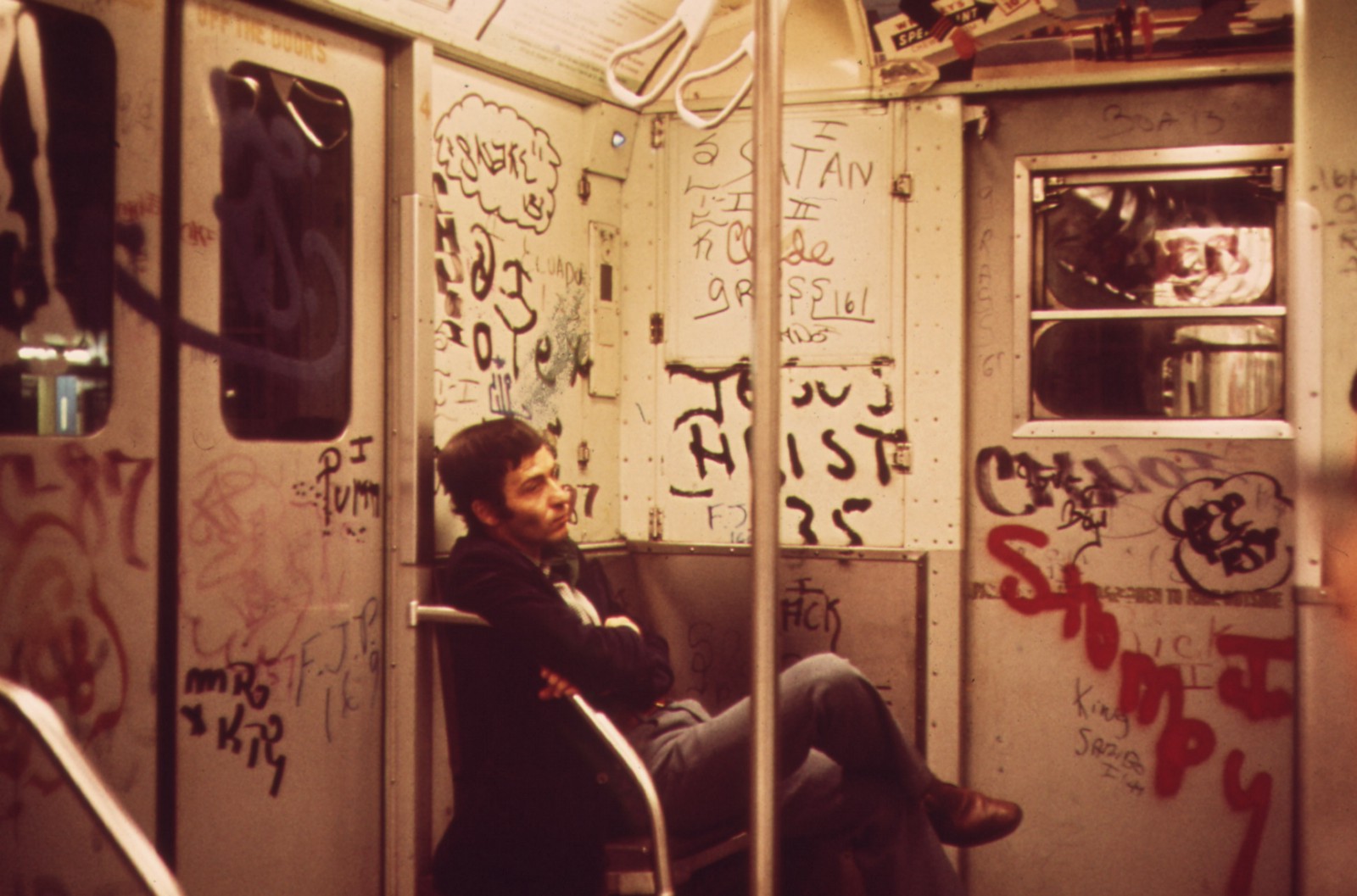
NYC subway, 1973. By Erik Calonius

The underground literary scene in New York City will now be a little easier to find. This weekend, the New York Transit Authority, in partnership with Penguin Random House, launched Subway Reads, a new program designed to promote Wi-Fi accessible MTA stations (175 and counting) and to liven up commuters’ rides with some good reading. Anyone with a phone or a tablet and a subway ride ahead of them can now download a short story or book excerpt timed to last the length of their commute (10-, 20-, or 30- minute reads). The (free) service is available for the next eight weeks via the Subway Reads site. And in case you were wondering, yes, as a matter of fact, we looked through the selections, and we have a few recommendations…

From the 10-minute reads

An journey of the mind: On the Move, Oliver Sacks

A raucous commute: Super Sad Love Story, Gary Shteyngart

Dystopian theatrics: Station Eleven, Emily St. John Mandel

From the 20-minute reads

The one everyone’s talking about: Underground Railroad, Colson Whitehead

An NYC flâneur: Open City, Teju Cole

Tales of the Bowery: Up in the Old Hotel, Joseph Mitchell

From the 30-minute reads

A wizardly bildungsroman: The Magicians, Lev Grossman

The best of Brooklyn: Bright Lines, Tanwi Nandini Islam

Office revolt: The Assistants, Camille Perri

Don’t worry, if you can’t finish in the allotted time, you’ll keep the download to finish later. Sadly, we can’t do anything about the looming L train disaster.

Like a Buster Keaton Movie or a Time Bomb

About six months ago, writing in the New York Review of Books, Norman Rush wrapped up his appraisal of The Dream of My Return by Horacio Castellanos Moya with a quiet imperative: “Five novels as well as five collections of short stories by Horacio Castellanos Moya have not yet been translated into English. They should be.”

Mr. Rush’s figures are already out of date — slightly, and happily. Available for the first time in English (translated by Lee Klein) but originally published in 1997, Revulsion: Thomas Bernhard in San Salvador was Castellanos Moya’s breakthrough in the Spanish-speaking world.

Revulsion is a pastiche, written in the style of the Austrian author Thomas Bernhard, one of the most important German-language writers of the postwar era. Bernhard’s books include Correction and Extinction, novels that seem to have been written by someone whose mind is as agile as his mouth is foaming. His work is largely a response to Austria’s complicity with the atrocities of Nazism, just as Castellanos Moya’s work is largely a response to the atrocities of the Salvadoran Civil War.

Revulsion, which channels the ranting Austrian author’s famous hatred of his homeland, earned Castellanos Moya accolades as well as death threats. And in El Salvador, saying you’ll kill a writer is a serious matter; the specter of Roque Dalton, a highly regarded Salvadoran poet as well as a leftist revolutionary who was assassinated by his (probably paranoid) allies, haunts Revulsion. Edgardo Vega, the narrator, describes the murder as “proof that the disgrace in which these people live contaminates even their best minds with ideological fanaticism.” This serves as a fair summation of Vega’s indictment of El Salvador as a whole.

Vega, at the novel’s beginning, tells “Moya” that he has returned to San Salvador for his mother’s funeral. Vega’s prized possession is his Canadian passport, and he has spent nearly two decades abroad. He hates El Salvador; his body rejects it like a failed organ transplant (Vega’s gastrointestinal maladies are a reliable source of humor throughout the book). One of the only places he can tolerate is his favorite bar, “the only place in San Salvador,” he says,

where I can drink and do nothing else for a couple of hours, between five and seven in the evening, for only a couple of hours, after seven this place becomes unbearable, it’s the most unbearable place in existence thanks to rock groups…

Vega meets “Moya” here and rants at him for the full two hours, denouncing El Salvador and railing against the Salvadorans, who he sees as ignoramuses (“human stupidity has no limits, particularly in this country”) with a predisposition toward violence (“they were the most sinister people I’ve ever seen in my life, Moya, four psychopaths with crime and torture stamped on their faces…”). Though Vega reserves special scorn for his family, especially his brother, everything about El Salvador disgusts him, even pupusas, the beloved national dish:

[T]hese people have dull palates, Moya, only someone with a totally dull palate would consider those repugnant fatty tortillas stuffed with chicharrón somehow edible, said Vega, someone like me with a healthy palate must endlessly refuse to eat such greasy nastiness, I once refused in such a way that my brother suddenly understood I wasn’t joking, I wasn’t going to eat those repugnant pupusas and perhaps this was the first altercation we had, in Balboa Park he began to reproach my ingratitude and what he called my lack of patriotism. You can imagine, Moya, as if I considered patriotism a virtue, as I I weren’t completely sure that patriotism is one of many stupidities invented by politicians, as if patriotism had anything to do with these fatty tortillas stuffed with chicharrón that always destroy my intestines, that exacerbate my nervous colitis, said Vega.

In the manner of Bernhard, Revulsion consists of one unbroken paragraph, sentences that all run together; it’s a madman’s soliloquy, interrupted only by the occasional “said Vega,” a daub of authorial distance.

You’ve got to get yourself out of here Moya, set sail, relocate to a country that exists, it’s the only way you’ll write something worthwhile, instead of your famished little stories they publish and applaud you for, that’s good for nothing, Moya, pure provincial groveling, you need to write something worth it, and here you won’t do it, I’m sure. I’ve already told you: this place is at odds with art and any manifestation of the spirit; its only vocation is commerce and business, which is why everyone wants to be a business administrator, to better manage their commercial and business dealings, this is why everyone bows at the feet of the military, because they learned to be effective businessmen and establish business connections with them from the beginning thanks to the war, said Vega.

Vega talks in loops, repeating variations of the same phrase. (He must be quoted at length to give any sense of the style.) One of the consequences of a rant is that it often makes the ranter look as bad as what he’s ranting against. Vega spends as much time bemoaning El Salvador’s lack of refinement and good taste as he does their death squads. His indictment of his country becomes, in part, an indictment of himself.

The brutality of the Salvadoran civil war (Castellanos Moya’s first memory is of a bomb exploding on his grandfather’s porch) fuels Revulsion’s outflowing of paranoia and disgust. But literature should not be so simple; Castellanos Moya has called Revulsion a “shock, a discharge of frustration,” but also “an exercise in style.” Revulsion is quite funny, actually, in a dark, droll way. In confronting tragedy, Castellanos Moya wrote toward comedy. Towing the line between horror and laughter is where he most like Thomas Bernhard. The final twenty pages or so, where Vega describes a night where he goes to “get fucked up” with his brother and his brother’s friend and subsequently loses his passport, is a slapstick pièce de résistance.

Where Revulsion is least like a Bernhard novel is its lyrical energy, but you can’t fault an imitator for failing to live up to the imitated; a copy of something is always diminished, a little. The novel is perhaps not a perfect pastiche, then, at least in translation (as I know barely enough Spanish to order in restaurants, and zero German, I can only compare translations). Revulsion is is an early exercise of an interesting writer. Castellanos Moya completists won’t want to miss it, and neither will Bernhard-heads, but those unfamiliar with either writer might be better served by one of their great novels, such as The Dream of My Return or Extinction.

Having said that, weighing in under 90 pages, Revulsion: Thomas Bernhard in San Salvador is too short — and too funny, and too weird, and too angry — to be a waste of time.

Because We Were Starving

The Game

But say the two of us in a domino game a hold hard-end,
I working with you, my Pardy-P, but you, you playing cut throat.
I turn over the second-to-last bone and expose
the hard key, rising, I slap the bone on the table. Call double blank.
The dart of your tongue to tap, your top lip is a sharp tell.
The serpent, pleased with this sacrifice.

The man you have passed, leg jumps and threatens the board that
we all here balancing. My hand resting against ply has rattled more than
the ‘L’ of bones. Dotless, the sky shifts above us. The goat-eye moon
shifts from player to player. You rock back. The stars have not been shuffled
in their orbit. The Milky Way is still here, beautiful gash —

We could have given them 6 love. Make them get up and go home.
Winning; this taste sprung in my mouth, cheek grazing the udder.
They could have scattered, left us with our knees pressed together,
keeping the plate of bones from falling, our necks strained in the
observation of stars.

But say the one who was after me swallowed the pass,
turned over hand, let go of her single play, shuffled
the constellation. Knew — 
To win, I should have blocked the game.

The Bet

Because we were starving, we hunted through the cupboards,
fetched a pot, filled the pot with water and bet marbles to see
who could drink the most. On a count of three, we filled our
beakers, filled our mouths, gulped faster, faster than we could
pour. Our chins dripped. Drenched, the water ran down our necks,
soaked our t-shirts, ran down our knuckles to our elbows. I looked
at Howie; face fat as a fish, his pouty lips taking in more and more.
We could have drowned, the two of us soaked down to our navy
blue socks, as we bailed the water ’til the pot ran dry.

In a yard, two staggered like sailors, and meowed as their bellies
slopped around in floppy clothes, and felt so sickly-round, they
could have been mistaken for being with young. They hugged each other
and zig-zagged to the back porch where they capsized and sunned and slept
and slept on the terrazzo tile, marble and pacific. I wish they could have
saved one another at some point, or other.

Ted Wilson Reviews the World: A Fingerprint

★☆☆☆☆ (1 out of 5)

Hello, and welcome to my week-by-week review of the world. Today I am reviewing a fingerprint.

Everybody has them. Well almost everybody. They’re called fingerprints and they’re nature’s way of ensuring that only guilty people are sentenced for crimes they’ve committed. Other than that, I’m not sure what the point of a fingerprint is.

While looking out my living room window to see if the mail was coming (it wasn’t), I noticed a fingerprint on the glass. To most people this would not be an unusual sight — glass is known for collecting fingerprints. However, I knew for a fact that I hadn’t touched this window in years. Not since I’d gotten a newer window that’s much more fun to touch. You’re welcome to come over and touch each of them for comparison. You’ll see exactly what I’m talking about.

After painstakingly comparing this fingerprint to all of my own, I determined there was no match. So I contacted everyone who had ever been in my house, or who I suspected wanted to come into my house, like the paperboy who once longingly looked at my couch from the doorway and said, “I like your couch.”

Out of 126 people, only seven obliged and sent their fingerprints. None of those proved to be a match either.

I hated myself for ever noticing the fingerprint in the first place. So much so that I tried to just stop looking at things altogether. Most of the time I would just keep my eyes closed. I still had to look at some things, like stairs and money, but I would try and look as quickly as possible.

I considered the possibility that like many other parts of my body, my fingerprints are changing with age. No one ever checks for that. My ears have gotten bigger and I have more wrinkles, but can my fingerprints sag? A dentist I know said that’s not how fingerprints work, but she’s a dentist. It wasn’t a question about teeth.

I made a copy of the suspicious fingerprint and mailed it to the police and asked them to look into it for me when they had the time. I guess they haven’t had the time yet.

That’s when I decide to take matters into my own hands and just wipe the fingerprint away. I knew that I might be destroying evidence, but I just couldn’t take it anymore. If you’re the one who left the fingerprint on my window, please don’t ever contact me. I don’t want to hear about it, I just want this left in the past.

BEST FEATURE: I’ll have to get back to you on this one.
WORST FEATURE: It ruined my life for a few weeks.

Please join me next week when I’ll be reviewing Shelley Duvall’s duvet.

Santiago Gamboa’s Consular Affairs

Every now and again a literary novel brings you such pleasure, you can’t help but look at the others that have come across your desk or nightstand or e-reader recently — perfectly serviceable, well-intentioned books — and feel a little resentful. Why couldn’t they have been more fun? Would it have been so terrible to bring in a gin-swilling detective? How about a murder, or at the very least some intrigue in a foreign capital? As it turns out, there’s no reason at all why a novel of the highest quality, packed with insight and subtlety and crafted in an ambitious style, shouldn’t also be thrilling, and even a little bawdy. Or anyway that was the feeling I had after finishing Night Prayers, the latest book from the Colombian writer, Santiago Gamboa.

Gamboa is the author of eight novels, two of which have now been translated into English and released in the US by Europa (Night Prayers, along with Necropolis). Gamboa’s work is a part of the novela negra tradition — noir, as it’s practiced in Spain and Latin America — but not the hard-boiled variety. His ‘detectives’ tend to be literary figures or diplomats or both. (Gamboa served for a time as Colombia’s cultural attaché in New Delhi.) They travel to conferences or consular missions and find themselves ensnared in a web of organized crime, sex, drugs, political corruption, guerrillas, paramilitaries and a few more-or-less innocent romantics.

In Night Prayers, Gamboa tells the story of Manuel and Juana, siblings from a modest family in Bogotá who get involved with an international drugs-and-prostitution ring. One ends up in a Bangkok prison, the other in a yakuza brothel, and so the Colombian consul — Gamboa’s avatar — is summoned to stave off the scheduled execution. The story is as dark as it sounds and much stranger, with demons taking over the narration from time to time and a niggling sense of corruption that infects even the most innocent scenes. This is international noir of the most ambitious kind. Add Gamboa to the ranks of Javier Marías, Patrick Modiano, and Juan Gabriel Vásquez.

I met Gamboa briefly when he was in downtown New York for the release of Night Prayers. It was a hurried introduction, and we agreed to chat further by email, once he had returned home to Colombia. With the help of a translator (Philip K. Zimmerman) and a few drinks (bourbon on my end; actually I have no idea whether Gamboa enjoyed a drink as he responded, or whether he drinks at all, or perhaps that’s only his narrator’s indulgence), we discussed lonely cities, la novela negra, and diplomats as detectives.

Dwyer Murphy: I thought we could start by talking about cities. In particular Bangkok and Bogotá, which are at the heart of your new novel, Night Prayers. Did you find some affinity between those two places? In the story, they’re linked in a few pretty chilling ways: the drug trade, organized crime, sex trafficking. But was there something about the character of those two cities that bonded them in your mind?

Santiago Gamboa: Cities are the classic setting for novels because cities are where strangers live and meet. There’s an air of anonymity and solitude that upsets some people, and things happen that may be memorable. Sometimes strange encounters, but also crimes and injustices. Literature almost always deals with anomalous situations. For me, Bogotá and Bangkok are opposite cities. I was born in Bogotá, I grew up there and spent my adolescence there; Bangkok I’ve only been to three times, and I have no ties with it. But when I evoke them, both cities give me an unsettling feeling of solitude. Bogotá with its familiar, gesticulating people, Bangkok with its curious urban rituals. Also, when I think of them, I always picture them raining.

Murphy: Are you comfortable with your novels being read as crime fiction? Many of the elements are there — a transgression, an investigation, copious drinking, a journey across the underbelly. But then again there are also concerns one wouldn’t normally find in crime fiction, at least not in the U.S. — matters of diplomacy and political ideology, for example. In Night Prayers, Manuel, from his prison cell in Bangkok, is adamant about this being a love story, not a crime story.

Gamboa: I suppose in our times the novel has gained sufficient freedom to cross genre borders and break with all models, which is also the way the contemporary novel is adapting to a fragmentary and chaotic reality. That’s the kind of book I like to read: a book that can contain, for example, essay, biographical chronicle, mystery novel and romance novel in the same pages.

Most novels that are simply noir seem predictable to me because the protagonists generally make mistakes that the reader wouldn’t make. That’s why I prefer to write novels that contain more, and that above all have memorable characters. But it doesn’t bother me that my books are seen as noir novels, on the contrary. The novela negra factor ensures that the reader keeps reading and becomes more and more immersed. As long as he doesn’t wake up, you can tell him whatever you want to.

Murphy: Can you tell me a little about your professional life outside writing? I understand you served as cultural attaché. I won’t ask you to clarify all the distinctions between you and your narrator, who is a diplomat working in consular affairs and is also a well-known Colombian novelist, a friend of several other authors readers may recognize. Horacio Castellanos Moya, for example, shows up in Tokyo for a few pages, tags along to a bar, then disappears into the night. It’s all quite dizzying for the reader. Anyway, you were a diplomat? You write journalism?

Gamboa: Yes, I was a diplomat, and I write a little journalism. My narrator does resemble me quite a bit, and I ought to confess that he’s something of an alter ego. But he’s more of a loner than I am, and a lot more daring; his personality is introverted, intense. Sometimes I’ll sit alone in a café or bar and try to pretend I am that character. At times I can pull it off quite well. I like to interrogate my own life through him, although that’s something most readers don’t see and don’t have any reason to. It’s above all a creative limitation: I wouldn’t be capable of writing a novel with a principal narrator who does something completely unfamiliar to me, because I don’t think I’d be able to find his voice. And that’s what I care about most: the characters and their voices.

Murphy: How did it first come to you that a consul would make for a good noir hero?

Gamboa: Years ago, when I read Lowry’s Under the Volcano, I understood that the consul is a romantic figure. I felt it again in the novels of Graham Greene and Marguerite Duras, especially the stories that take place in Southeast Asia or Africa. The image of the consul as someone transplanted into a strange world, a world he never fully understands but where he’s called upon to be strong and provide relief to others. The consul is there to listen to the people who are searching for that relief; he represents a certain order that the characters have lost. And so despite being nothing more than a man, the consul represents a hope, and even if he doesn’t share in it himself, he can engender that hope in others, much in the way one can transmit certain diseases without showing symptoms.

The consul is there to listen to the people who are searching for that relief; he represents a certain order that the characters have lost.

Murphy: You — and many of your characters — grew up during a period of armed conflict in Colombia. The tangle of political sympathies and corruption and infighting are an important backdrop for your work. Is the cease-fire between the government and FARC a watershed moment? Do you foresee it affecting the kinds of stories you may tell in the future? Forgive me if those questions betray a lack of understanding of the situation.

Gamboa: I think that a writer is always writing, in a lateral way, about his own country and about himself, even if his fictions are set in the Roman Empire. Colombia was and continues to be my first universe, and as a result, all the other ones I know have been in some way interpreted and assimilated through it. It’s normal for me, as a writer who grew up in that reality, to be more sensitive to the type of story that involves the problems of my country.

In one of the narrations in my next novel, I look at Colombia under the effects of the peace process, and the truth is it looks like a patient who’s been suffering from schizophrenia and has finally been given psychiatric drugs: it smiles and appears calm, but it has a faraway look in its eye and its smile is disturbing. It will take some time for normalcy to reestablish itself.

Bogotá and Bangkok

Murphy: As a Colombian writer publishing internationally, do you find yourself struggling against the ghost of García Márquez? Or is there some other Latin American writer whose oversized reputation intrudes on you and your contemporaries?

Gamboa: Well, that’s inevitable. García Márquez was the most universal author of the twentieth century, and he was Colombian. So it’s normal that in many parts of the world, when they find out I’m Colombian, they search for some affinity in our books, but the truth is they don’t find it. Sometimes they feel frustrated, but my world is very remote from his. I was born in Bogotá, a city 8,600 feet above sea level, a city where it rained every day and everyone appeared to be offended. When I got to know the Caribbean I was seventeen years old, and it scared me: the people embraced in the streets, shouted when they talked and laughed incessantly; they wore bright colors and shoes without socks. It looked like a Cuban movie. That was the world of García Márquez, so radically distinct from my own.

Murphy: In Night Prayers, you use several different perspectives to tell the story. We have the consul investigating the mystery. Manuel telling his life story. Juana telling hers. A demonic voice that interrupts from time to time with, for example, a history of gin. How did those voices arrive to you? Did the stories meld together naturally or was that something you had to impose on them later?

Gamboa: Writing novels is one of the great enigmas in my life. It’s difficult to explain a method, but what I do know is that I need characters who will talk to me about their lives as they would to a friend or to their confessor, or as a prisoner sentenced to death might do the night before his execution. Telling a story in order to be saved and as a form of resistance. Every character has a story, but that story may become two stories or three. And so the situations proliferate, because life will always be much more complex than literature. That’s why I don’t like books intended to be merely entertaining. If you don’t attempt to explore the darkest and most profound aspects of the human condition, then you’re at best a “content creator,” not a real writer. And as far as the voices of Intra-Neta are concerned, those came to me in a rather surrealist way: as if it was necessary to disrupt a certain rational order in the book. An Argentine journalist once told me that in her opinion Intra-Neta was Juana’s voice a few years later. I think that’s an interesting hypothesis.

I need characters who will talk to me about their lives as they would to a friend or to their confessor, or as a prisoner sentenced to death might do the night before his execution.

Murphy: You recently came to the U.S. to launch Night Prayers. Have you noticed anything different about the way your work is read and received in the U.S., versus other countries, or versus Colombia?

Gamboa: I was in New York for only a very short time, but I saw that some who read and appreciate my work in the United States are people I’d like quite well if I met them in a private context, people I might invite out for a drink. The same thing happens to me in other countries where they read my books. In fact I’d go so far as to say that two of my readers could become good friends no matter what countries they were from. But I can’t prove that — it’s just a hunch.

— Translated from the Spanish by Philip K. Zimmerman

Too Rich, Too Phony, Too Successful

Literary ambition is so rarely rewarded in any tangible way that another writer’s seemingly meteoric and facile success can be incredibly painful, much as we struggling writers may remind ourselves that others’ achievements have no bearing on our own potential, that life is not a contest, that we should be grateful that anyone’s art is rewarded at all, etc., etc. With seasonal regularity a select few writers emerge in a deluge of barely earned hype that engenders excitement, resentment, and innumerable “writer’s envy” think-pieces. (I’d consider Curtis Sittenfeld’s “Too Young, Too Pretty, Too Successful” the ur-text of this genre — in the internet age, least; Harold Bloom could point probably you to some Shakespearean ephemera in which he slags off Christopher Marlowe.)

Along with the praise, influence, and seven-figure advances these prodigies reap comes intense scrutiny that reveals, more often than not, apparent privilege. These writers — heretofore unknown — arrive not just fully formed brilliant storytellers; they are also young, extraordinarily educated, rich, connected, and photogenic. From our limited vantage point, their success appears to be not at all hard-won. Of course we know nothing of their struggles. Countless network teen dramas have shown us that even the young, rich, and beautiful cry and bleed. Still, it’s not out of line to assume a gilded status would relieve many a struggling writer of their more immediate — read: financial — struggles; for these golden boys and girls, the luxury to try and fail without financial consequences seems to negate failure altogether.

At heart of Dylan Hicks’ novel Amateurs is one such wunderkind: Archer Bondarenko, heir to multiple fortunes, most notably the spoils of his stepfather’s sex toy business, and a burgeoning novelist/essayist of modest success but snowballing renown. He is the center around which the novel’s disparate characters pivot: Sara Crennel, a driftless MFA graduate who finds an uneasy sense of direction and security by ghostwriting nearly all of Archer’s work, including e-mails to his publisher and agent; John Anderson, a self-styled artisanal bike builder and Sara’s onetime boyfriend; Lucas Pope, a fellow student from Sara’s “second-tier” MFA program who carries a torch for Archer’s fiancé Gemma; and Archer’s cousin Karyn Bondarenko, a young mother who has long abandoned her aspirations to act but who has been lately dabbling in playwriting. The novel alternates between two timelines: one that dips into the characters’ lives circa 2004–2009 and the days surrounding their convergence at Archer’s 2011 wedding.

That set-up may be a tough sell to some readers, as it was to me. In synopsis Amateurs resembles a mediocre indie dramedy of the sub-Stillman/Baumbach mold: white, mostly twenty-something, mostly well-educated but underemployed members of the creative class while away their post-collegiate years with urbane chatter and tentative stabs at both artistic fulfillment and adulthood. These are the kinds of characters who describe their mundane day job by referencing “Keats’s negative capability,” who publish essays in “influential journal[s] out of New York,” who write plays inspired by esoteric acid-folk groups. But Hicks is too astute an observer of quarter-life ennui, too precise and empathetic a chronicler of his characters’ very real anxieties to write Amateurs off so easily.

This isn’t just a book featuring pretentious, privileged people; it is a book about privilege, about pretension. By dint of being born in America, each of Hicks’ characters is relatively privileged. But some are more privileged than others. And so they face the frustration, as do we all, that their entitlement doesn’t entitle them to everything they want. Even Archer’s limitless well of money doesn’t avail him of the talent or discipline to be the writer he pretends to be.

The novel shifts point of view frequently, with Hicks’ masterful free indirect narration affording nearly all of the core characters unexpected depth and anguish. For instance, Lucas, whom Karyn — and the reader — initially regards as a freeloading slacker, reveals himself to be thoughtful and charming in a relatable, practiced way; in an introductory chat he strategizes the progress of small talk:

“He had so far asked two questions about her job. His goal in situations like this was five; he sometimes pictured hash marks in his head.”

Depicted with true-to-life awkwardness and under the specter of mutual doubt, the relationship that burgeons between the two wounded but resilient loners is the novel’s emotional cornerstone. Likewise, there’s something quaint and tragic about John’s fastidious mania for dressing well even though, as the live-in caretaker for Sara’s father George, he has no discernible social life. A formerly close friend of Archer who resents Archer’s easy life station, John falls into sartorial refinery perhaps as meek appropriation of his friend’s privilege.

Tellingly, Archer is the rare figure whose point of view Hicks leaves inaccessible. As a result, his motivations for playing at authorship remain mysterious, even to Sara. Is he merely a bored dilettante? A sociopathically ruthless intellectual wannabe? An unremarkable thinker ashamed of his own limitations but who yearns for prestige? Aspiring writers likely may find Sara’s own motivations for going along with Archer’s scheme perplexing to the point of fury. How could she let him take all the credit for her work? However, when the specifics of their arrangement are eventually revealed, it all becomes clear. Early in the novel, Sara refers to her level of financial security as “safety-net money, not write-your-novel money.” Not only does Archer pay her much more than any sane publishing house would, his connections relieve her of the grind and anxiety that comes with aspiration. As Archer’s uncredited ghostwriter, she accesses a privilege that would be unattainable to her even if she had succeeded on her own terms.

Amateurs might sound like a satire of the publishing industry but Hicks usually harnesses his vitriol and insight to comment instead on human foibles and contemporary mores. Hicks has a way with efficient, lacerating description: John’s scumbag brother is “the kind of guy who blows marijuana smoke into the mouths of dogs.” Lucas dresses “like a semifamous cartoonist, or someone who would recognize a semifamous cartoonist.” Archer in casual wear resembles a guy “trying out for Yo La Tengo” and a kid “delivering the Sacramento Bee in 1966.” Hicks can be tender, too, as when he describes through Karyn a facial tic that is “as endearing as missed belt loop,” or when he nails John’s mournfulness over a particular type of relationship that festers in late young adulthood, those that survive largely on convenience and routine:

[I]t seemed to John that Archer was trying to maintain their friendship in the most efficient way possible, often building plans around mundane things he was going to do anyway. But then, maybe that two-birds-with-one-tone approach had always held sway; maybe in the past Archer would have gone from restaurant to gallery to bar to party whether John was with him or not.

Most impressively, Amateurs captures the intricacies of social exchange in a screen-dominated culture. Without being showy about it, the novel explores the way social media and technology interweaves itself through “real” lives and relationships, highlighting the common though unhealthy belief that more knowledge equals less anxiety. On their first meeting, Lucas and Karyn stumblingly reveal that they have thoroughly vetted each other on Facebook; while that seems like it would accelerate their intimacy, it has the opposite effect when Lucas realizes he looked up the wrong Karyn Bondarenko. Elsewhere, Hicks juxtaposes the thought process that goes into composing a text with the text itself:

“His text had come through on her lunch break. Could they, he had wondered, get together, maybe tonight, to talk about her play? She considered responding with caveats: she wasn’t interested in lengthy, if any discussion of her private play, nor was she up for cooking dinner. In the end that seemed overwrought. She wrote, “Sure, drop by at 8.”

As Amateurs nears its end, the generally meandering novel suddenly takes off full-blast, as Hicks throws in a pregnancy, a wedding, a scandal, and a sudden declaration of love. But it reads as the inevitable boiling over of tensions that have simmered from chapter one rather than a conciliatory swerve into plot. The last act ramp-up is the natural path toward confrontations and resolutions that the novel has earned, the characters deserve, and the reader has yearned for.

Ultimately Hicks cares more about his characters than making a statement about capital-P Publishing, but what Amateurs does have to say about Publishing can be summed up by the back matter page that (I presume) appears in every Coffee House Press title that reads simply, “LITERATURE is not the same thing as PUBLISHING.” Hicks couldn’t ask for a more suitable epigraph.

A Portrait of the Artist as a Bingo Worker

I worked bingo nights at the Trafford Polish Club Mondays and Wednesdays. I was 17 and my grandmother Ethel ran the kitchen. Ethel was bad-tempered and polka-loving, 230 pounds in a housedress and slippers.

“I don’t need to impress anybody,” Ethel said. “I don’t gussy up.”

Ethel shouted misery and joy, nothing in between. I’d been working for her since I was 12. None of Ethel’s seven other grandchildren would even consider it, such was the abuse, but I was proud of my endurance. I knew I wanted to be a writer, and I thought of Ethel and her bingo cronies as characters. I liked characters. I liked money, too. I spent it on clothes and books and music, things my parents called extras.

None of Ethel’s seven other grandchildren would even consider it, such was the abuse, but I was proud of my endurance.

I was partial to black velvet knickers and fedoras I’d find at Goodwill, outfits I imagined Hemingway’s Lady Brett would wear in a Paris cafe.

“I don’t know where you came from,” Ethel said about my get-ups, about me.

I didn’t know, either, and I liked that. I was adopted and artsy, the ultimate teenage outsider in my working-class Pittsburgh family, constantly in a book. I called Emily Dickinson Emily and Walt Whitman Walt, which was also my father’s name. This only confused Ethel more.

“Walt says I am large and contain multitudes,” I said and Ethel said, “Lay off the ice cream then.”

I spent most of my bingo money at Walden Books in Monroeville Mall, where one day I stumbled upon Rod McKuen, a sap poet and songwriter, in the bargain bin. McKuen’s critically-bashed Listen to the Warm matched my own bashed-up heart. He seemed like a gateway, a one-way flight to Paris, but a year or so later, I’d go to college on scholarship and meet my first live poet, a man named X.J., who asked about my influences.

“I’ve read everything Rod McKuen has written,” I said. “I love Rod McKuen.”

“Rod McKuen,” X.J.said, “is tripe.”

X.J. had a big literary laugh, the kind that fills up hair follicles and makes people look away. I looked at his shoes. They looked expensive, like his scarf, like his initials, those two clanking cufflinks.

He was right, of course, but what did I know? Aside from hardback classics, poetry was hard to come by in Trafford. There was no Internet back in the 1980s. My family thought reading was a disease.

People like us, Ethel and me, working people, weren’t supposed to be writers.

X.J. confirmed what Ethel believed all along. People like us, Ethel and me, working people, weren’t supposed to be writers. To want to be a writer or an artist was a prideful thing, a willful thing. To want to be a writer was something only people who lived in New York or L.A. — people who could afford expensive shoes and scarves, people who, from the time they were fetuses, could sort good art from bad — should imagine for themselves.

“A place for everyone and everyone in a place,” Ethel said.

Ethel said, “Just who do you think you are?”

At 17, I wasn’t sure of any of this yet. I just had a feeling. Still, I liked Rod McKuen because he translated Jacques Brel’s “Le Moribund” into “Seasons in the Sun,” a song about dying young I played on repeat. I liked that McKuen looked like a writer in his sweaters and berets and that he was adopted, like me. He wrote a memoir about finding his birthfather and critics didn’t hate it too much. I snagged it from Walden’s and sneak-read it in Ethel’s Polish Club kitchen.

“You’re going to ruin your eyes,” Ethel said when she caught me reading. “You’ll get ideas.”

“Idle hands are devil’s playthings,” Ethel would say.

Then she’d hand me a bag of cheeseballs to fry.

Because we were family, Ethel paid me what she felt like, depending, but there were tips and everything was cash, wads of ones that, on a good night, made me feel stripper-rich.

I could pocket bills, but a lot of the senior citizens at bingo tipped in change and Ethel made me put the coins in a jar she tallied every night. She called change-tips “found money.”

Because we were family, Ethel paid me what she felt like.

Found money, Ethel claimed, was lucky and meant to be shared. She traded it for instant bingo tickets, the kind where you pull the paper flaps back to see if they spell out “Bingo” or the message “Sorry You Are Not An Instant Winner.”

Ethel and I were supposed to split the tickets and winnings 50/50, though I don’t remember ever agreeing to that. I think when Ethel hit she kept it secret. I’d win a dollar here or there but never enough to make back what was in the jar.

“You weren’t born lucky like me,” Ethel said more than once.

“Family is more important than money,” Ethel said as she doled my pay from her apron pocket. “Family is more important than anything. Remember that.”

And so I didn’t count my money until I got home, where I closed my bedroom door and spread it out on my bed and sorted it into piles and tried not to do the math when I knew my grandmother shorted me.

“Be grateful,” Ethel said. “People like you are never satisfied.”

I wasn’t satisfied, but most days I worked hard. I was raised to believe in work and family and I wanted my grandmother to love me even though I was adopted and uppity, Ethel’s word, and not family in the sense she invoked it.

“Your mother couldn’t have children of her own, so we got you,” Ethel said about my arrival in her life.

Ethel and her hard work make the local paper.

Ethel — old-school, first-generation American — believed in blood. I believed I could win her over anyway. I was used to the way she hit me with the wooden spoon she kept near the stove, the way she chased me around the Polish Club kitchen and pulled my long blonde hair. I figured we were close enough to be cruel to one another. It’s easy, maybe, to mistake cruelty for honesty and honesty for love.

It’s easy, maybe, to mistake cruelty for honesty and honesty for love.

“Who is not a love seeker?” Rod McKuen said, but for adopted people like him and me, people who grew up thinking of family as something that could be nulled and voided, something that could turn on us and send us back to whatever lost place we came from, so much depended upon being loveable, loved.

And so I tried to please my grandmother. I didn’t complain much. I started leaving my fedoras and knickers at home and wore jeans and flannels instead. I hid my books under the prep table and didn’t talk about my writer dreams. I was okay with the smell of grease and fish and with cleaning up whatever mess Ethel made.

I tolerated my grandmother’s creepy habit of eyeing up my boobs to see if they were growing. I turned when she made me turn left, then right, so she could get a good look.

“You been letting boys play with those?” she said until I curled into myself like one of the ingrown toenails I’d clip from Ethel’s feet because she couldn’t bend down to reach them herself.

Safe sex, Ethel said, meant never letting a boy get on top of you. Safe sex, Ethel said, meant staying away from boys, period.

At 17, I didn’t have a steady boyfriend and the few dates I’d gone on weren’t promising. I somehow decided boys found it irresistible when girls went to sleep on them. I’m not sure how I decided this — from Rod McKuen poems maybe, or romantic movies where the camera zooms in on a beautiful girl sleeping, then cuts to a boy who looks lovestruck and tucks a blanket to her chin, then watches her all night long.

I somehow decided boys found it irresistible when girls went to sleep on them.

And so I made a habit of resting my head on boys’ shoulders and pretending to sleep. I learned I could pretend-sleep anywhere. I zonked out on boys at school musicals, one Homecoming Dance and one Sadie Hawkins. I pretended to sleep on a boy at a basketball game once, which was difficult with the buzzer going off and all. I was shocked when boys I slept on didn’t call again.

I didn’t tell Ethel any of this because she seemed obsessed with talking about sex regardless and had been like that long before I knew her. For years, my mother, Ethel’s daughter, thought girls got pregnant if boys’ tongues went into their mouths.

My mother grew up to become a nurse. My mother believed in science. When I asked how she ever bought the idea of spit-sperm, she said, “Your grandmother is not someone to argue with.”

“They’re only out for one thing,” Ethel said about boys.

Ethel said, “That’s how you happened, probably.”

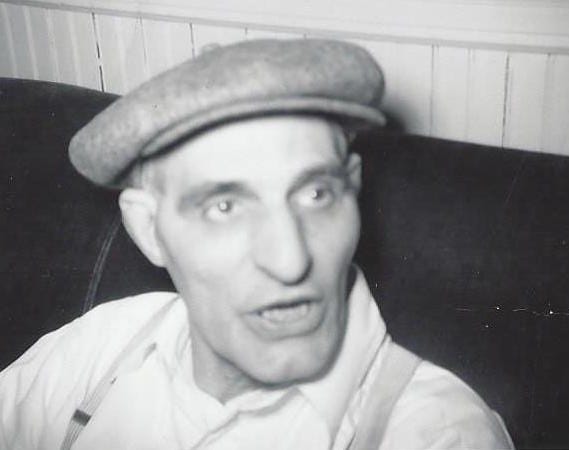
I never knew Ethel’s husband, my grandfather. He died the year before my parents adopted me. He was an orphan, too. I’ve seen pictures — a tall thin man with dark eyes. He looked sad, though he had style in his suspenders and newsboy cap. His orphan story was different than mine — his mother dropped him off at an orphanage when he was 10 because she couldn’t afford him anymore.

“No shame in that,” Ethel said.

Ethel had grown up poor, a product of the Depression. My grandfather had been born legitimate, with both a mother and father he knew.

There was no shame in being poor. The shame was sex.

“Some women don’t know how to keep their legs closed,” Ethel said.

The shame was in not knowing one’s place.

“You think you’re too good to get your hands dirty,” Ethel said, even though my hands always seemed coated in grease and flour.

In pictures, my grandfather looked plowed over by the world. I imagined all the years he spent with Ethel, that wall of sound.

My grandfather.

“It’s a shame he died before you came,” Ethel said.

She said, “Maybe he would have known what to make of you.”

I wouldn’t read much into Ethel’s behavior toward me for a long time. I didn’t think how adoption was probably a complicated problem for her. I didn’t wonder what was underneath her insistence that, if he’d lived, maybe my grandfather would have loved me. I didn’t wonder why my reading and writing bothered her so much.

I wouldn’t read much into Ethel’s behavior toward me for a long time. I didn’t wonder why my reading and writing bothered her so much.

Later, when Ethel died, my mother would find boxes filled with photographs Ethel had taken, artful shots of amusement parks and strangers hanging out on porches, black-and-white shots of clouds and skeletal trees.

“These aren’t even people we know,” my mother will say. “Why would she take all these pictures of people she didn’t know?”

My grandmother, the photographer, the artist. She hid her work in boxes and a hope chest. She hid her work in boxes her daughter would throw away.

“A place for everyone and everyone in her place,” Ethel said.

Even a meteor of a woman like Ethel has a nemesis, or at least a foil. For Ethel, it was Fanny. Next to my grandmother, Fanny looked like a toy person, something made of pipe cleaners and worn-out felt.

“Old Piss and Moan,” Ethel named Fanny.

Every Wednesday, Fanny came to bingo and ordered her usual, fried fish sandwich, half a bun.

“And blot it good,” Fanny would say, meaning she wanted the grease from the fish sopped with a paper towel before I served it to her.

“That Fanny gets my goat,” Ethel said, her face turning red as the roses on her housedress. “She can go to hell.”

Why Ethel was so furious with Fanny, I didn’t know. Maybe there was history, maybe not. Maybe some friends hated each other. Maybe family did. Me, the orphan, the would-be writer, I was inside and outside of things. I was still sorting everything and nothing out.

Ethel and Fanny were neighbors. Ethel lived in a yellow house with two windows on the second floor and a white porch awning that made the house look like a duck. Fanny lived in a lopsided white box that seemed about to collapse down the ragged hill it was built on. The houses, like the women themselves, seemed like something from cartoons. Ethel — the spastic quacking duck. Fanny — some sad thing a wolf started to blow down.

Ethel used her capacity for joy as a weapon.

Fanny complained. About everything. Ethel used her capacity for joy as a weapon. She’d crank up Frankie Yankovic’s “Beer Barrel Polka” in the kitchen and do a little two-step from the stove to the fryer and back.

“That’s noise pollution,” Fanny said about Ethel’s music. “I can’t hear them call the numbers over that racket.”

“Drop dead already,” Ethel said, and turned the music up more.

I didn’t mind Fanny. Of all the characters at the bingo, she was my favorite. I thought I knew something about sadness. I was drawn to it like a mirror. If Ethel believed in blood, I believed in the bonds between strangers.

“I want to narrow the gap of strangeness and alienation,” Rod McKuen said about his purpose in the world.

“Here, let me help,” I’d say and step to Fanny with my order pad in hand.

“I don’t know how you can stand her,” Ethel said. She said it like a challenge, like she was testing something, my loyalty maybe.

“You people are trying to kill me,” Fanny said, and she meant Ethel and me and everyone else.

I didn’t know how old Fanny was, but unhappiness carved her face and hands into canyons, things that take centuries to form.

“Give me one good thing to smile about,” she said.

I tried. To make Fanny happy would be a triumph. It would mean I was a good person worthy of love. I liked to tell stories and create joy in other people, and I liked the power of that, the proof that I had something to offer the world. I wanted the world to say it was true.

“Who do you think you are?” Ethel said.

I told Fanny funny stories from the news, some neighborhood gossip. I shared the latest good-luck bingo trick I’d overheard. It usually involved a troll doll or a prayer to some obscure saint who specialized in gamblers and other lost souls.

To make Fanny happy would be a triumph. It would mean I was a good person worthy of love.

Lately I saw a lot of St. Expeditus on glass candles and necklaces. Sometimes he was brunette, sometimes blonde, sometimes bald with an empty bowl balanced on his head. No one was sure he’d been a real martyr. His backstory was fishy — Roman soldier martyred in Turkey, beheaded, set on fire, fed to lions, tossed in the sea. One story went, the devil came to Expeditus disguised as a crow and tried to delay the would-be saint’s conversion to Christianity. The crow cawed “tomorrow tomorrow” over and over. Expeditus, in a hurry to save his soul, shouted “no, today today” and stomped the crow to death.

I told Fanny that story.

I said, “Expeditus. Expedite. Clever.”

I said, “He’s the go-to guy if you’re desperate.”

I said, “You have to run something in the newspaper for it to work.”

Fanny looked like she needed to spit.

She said, “Everybody has a gimmick.”

About me, she said, “They see you coming.”

“Leave it be,” my grandmother said. “Misery is as misery does.”

“That Fanny,” my grandmother said. “She loves to hang on her cross.”

Every Wednesday, Ethel pretended Fanny wasn’t standing in the Polish Club kitchen, ragged wallet out, demanding Ethel serve her. Every Wednesday, Fanny inched closer to Ethel, two planets bent on collision, until I put myself between them and took Fanny as my responsibility. I wrote down her order, every word, even though her order was always the same. Fanny watched me write. She made sure I got it right.

“And blot it good,” Fanny said. “Write that.”

“All yours,” Ethel said when she saw Fanny coming.

My grandmother would bow a little and say, “Be my guest.”

One Wednesday, Fanny came in. Her dyed black hair curled like a raccoon on her head. Every week she seemed a little shorter and this day the top of her head hit where my boobs would have been if I had them, if boys really had been doing the job Ethel believed they were born to do.

Her eyes, as usual, were red and runny, like she was allergic to the world, like she spent most of her downtime weeping.

I had to stoop to look at Fanny. Her eyes, as usual, were red and runny, like she was allergic to the world, like she spent most of her downtime weeping. But today there was something charged about her, too. She looked alive. She shifted from side to side, like she was revving up. She ordered her fish, half a bun. Then she added. “And you stop pussyfooting around.”

She said, “You know I can’t have the grease.”

She said, “You two are in cahoots. I’m onto you.”

I must have somehow botched the grease-blotting and Fanny thought I’d screwed her over. I was therefore responsible for a week’s worth of burping and indigestion and all the unhappiness in Fanny’s world.

Or it was more than that.

It was probably more than that.

I didn’t know anything about Fanny’s life, not really. I didn’t know if she’d ever been married, if she had kids, if she did have kids where they were and so on. I didn’t know what music she may have liked beyond polka noise pollution or what the inside of her sad little house looked like or if she had cereal in her cupboard or what toothpaste she used or if her teeth were mostly her own.

She may have had doilies on her tables.

Her house may have smelled like lemons.

I didn’t know and I didn’t care, not really.

Empathy, like writing, can be about kindness or it can be an aggressive act, both. To assume to know things about strangers without really knowing them is a kind of violence, I think. It’s using other people as stand-ins. It comes across as something selfless, when it can be just the opposite. I’ve done it both ways. I might be doing it both ways now.

Empathy, like writing, can be about kindness or it can be an aggressive act, both.

“The light in me recognizes the light in you,” the Buddhists say. “Namaste.”

I don’t think the Buddhists have a word for shared darkness.

“When you assume you make an ass out of you and not me,” Ethel, who liked to mix metaphors, said.

I knew I was sad. I didn’t know if I was sad because I’d been born that way or because I’d been dropped into Ethel’s family and didn’t fit there. I didn’t know if I could fix myself with words or if I could bend to match the world that had taken me in. I didn’t know how much it might hurt to do that.

Better to practice on Fanny, her sadness.

If Fanny fell, I would still be standing.

St. Expeditus, help us.

St. Expeditus, get us the hell out of here.

“I’m on it,” I said about Fanny’s fish, and turned back to the fryer.

I spent the night lying on my pink-shag rug, my head wedged between two stereo speakers. I played “Seasons in the Sun” over and over and pondered how to get out of Trafford, this rusted mill town with its rigged bingo jackpots and a creek so polluted it turned everything it touched — rocks, tree roots, skin — orange.

Trafford — home to churches and funeral homes and dive bars with clever names like Warden’s Bar and The Fiddle Inn.

“Get it?” Ethel said. “You fiddle in and stumble out.”

Trafford — home to my grandmother and Fanny and me.

“Anyone lived in a pretty how town,” e.e. wrote.

“I’m nobody,” Emily wrote. “Who are you?”

Sometimes I still think about my Uncle Milton, the retired banker, who died alone in his house in Braddock. I was young when he died, maybe 10 or so. He was my dad’s brother. I saw him at funerals, the occasional Christmas. He wore nice suits and smelled clean.

Uncle Milton was a bachelor. He loved money and the stocks and had a subscription to The Wall Street Journal, which my father said was expensive and something only a jackass like Milton would spend good money on.

Uncle Milton was dead for over a week before anyone noticed. The Wall Street Journals piled up on his porch. The mailman called the police to check it out.

Uncle Milton was dead for over a week before anyone noticed.

I’d been in Uncle Milton’s house a few times. It was dark, the furniture heavy and expensive looking, the curtains heavy and expensive looking. A gold-framed picture of Jesus’s sacred heart hung on the wall. In the picture, Jesus’s chest was split open. He held his heart in one hand. The heart was on fire. The heart was crowned with thorns. His other hand made the sign of peace, two fingers together, pointing up.

“All that money and he dies alone like that,” my father said about his brother. “Who did he think he was?”

“Do you know who you have in this world?” my father would ask.

Most times he’d let the question hang like that, a blank to fill in.

If you want St. Expeditus’ help, you must present him with an offering.

Pound cake, for instance.

Back at the fryer, I worked Fanny’s fish as she stood by.

I made a big deal out of lifting it from the hot grease and letting it drip. I put it on a paper plate and let it rest. I took paper towels, a wad of them. I blotted. I blotted again. I blotted again.

There is so little we can do for one another in this world.

Fanny watched. I could feel her watching. Over on the stove, a pot of hot dogs boiled down. I tried not to think of Fanny like that, withered and curling into herself, the smell of hot-dog water on her breath.

In the background, I could feel Ethel watching too. I knew if I turned she would look disgusted. I knew she’d have her hands on her hips.

I tried not to think of Fanny like that, withered and curling into herself, the smell of hot-dog water on her breath.

“Pain in my ass,” she said under her breath, and then, louder, “That Fanny is a pain in mine.”

I turned.

I looked at her to say, Fanny likes to hang on her cross so let her hang.

My grandmother’s laugh ricocheted around the room like a bullet.

“Get it Fanny?” she said. “You’re a pain in my ass.”

She said, “Fanny is a pain in my fanny.”

Then my grandmother slapped her own huge ass. She held a pose, an index finger to her lips like “oops.” The flesh underneath Ethel’s housedress quaked.

Fanny looked like she might cry.

“It’s okay,” I said. “It’s done.”

I hurried things up. I tucked the fish onto its bun and handed it over. Fanny inspected it. She pulled it close, then held it at arm’s length, then close again.

“All right then,” she said. She tipped me a quarter.

This was 1982. A quarter could buy a phone call or some gum and Fanny could pretend she didn’t know but she did. I could tell by the way she gave it to me, like she was pinching my palm, like she hoped maybe the quarter would turn into a razor and make me bleed a little, like she knew all this time I was taking things from her and so I couldn’t have her money too.

This made my grandmother laugh louder.

“Cheap is as cheap does,” Ethel said as Fanny waddled off, holding the fish on the paper plate in front of her with both hands, like it was something holy, an offering on fire.

I’m not sure why I felt betrayed, but I did.

“Sometimes I think people were meant to be strangers,” Rod McKuen said.

I put Fanny’s quarter into Ethel’s found money jar.

Where I fit in the world, I didn’t know.

Saint Expedite, help me. Do this for me. Be quick.

As Fanny made her way out to the hall, I could hear her talking to everyone and no one. She said no one knew how she suffered. She said she couldn’t bear it. She said if she wasn’t careful, the grease would keep her up all night.

She said it was about her heart, which of course it was.

“The Sunburn Also Rises” and Other #SummerBooks to Read at the Beach

The best groaner puns from literary twitter

It’s hot. You are stuck inside at the office while outside children eat ice cream and teens tan in the park. All you want to be doing is reading a book at the beach. Well, we can’t help you there, but literary Twitter did compile some pretty good summer book puns today after Barnes & Noble’s account started up the hashtag. Here were our favorites: