A Small Town and the Ghosts That Haunt Its People

If abandoned sugar beet factories and rusty grain elevators are obvious signs of post industrial decay, then the fictional town of Lions, Colorado, is doomed. But in her second novel, Bonnie Nadzam is not interested in linear narratives that start in abundance and end in ruin. Rather, the story of Lions is as much about its ghosts as the ghost town it has become. Chapters sway back and forth like alfalfa in the hot Lions breeze, alternating between the town’s goings-on and its legends. We meet the Walker family — John, his wife Georgianna, their son Gordon — and just as quickly lose John, who dies suddenly. For the rest of the book, Georgie and Gordon die slow deaths of their own.

Moments before he dies, John gives his son a list of instructions. He requests his son to follow them, but does not compel him to. Gordon neither agrees nor refuses, but in the quiet of the hospital room something shatters in Gordon’s mind; it is the first time his father has asked him for help. Readers aren’t surprised, therefore, by Gordon’s silent compliance with his father’s demands, even if the other characters wonder what he’s up to each time he sets off in his late father’s blue Silverado, and returns days later, shaggier and skinnier. Perhaps it has to do with Lamar Boggs, or Lucy Greaves, or Honora Strong, whose ghosts are as local to the town as Boyd’s bar and May’s diner. Perhaps Gordon’s secret trips have to do with something else. Whatever the reason, only one character is desperate to figure it out.

Leigh Ransom, May’s daughter, grew up next door to Gordon and the Walkers. The two children inevitably fall in love and plan a life together far, far away from Lions. Leigh dreams of college, restaurants, fashion, a family (one boy, one girl) — all of it with Gordon. Yet she knows as well as her mother and the rest of the town that the Walkers are different, and that building a future with one may not be possible outside of this town, so rooted are they to the land. For all her whims of luxury, Leigh knows that Gordon, like his father, is a detached man. The word “need” perplexes him, just as John, whose reputation as a welder has spread far beyond Lions, rarely accepts money for his painstaking work. John consistently engineers elegant solutions out of scrap material, and Gordon skips out on regular kid activities to cut metal with deadly precision. Both provoke wonder and suspicion among their peers; John’s clients come from all over the state, and Gordon’s classmates tease him from outside the shed. But neither looks up from their activities or discusses any other way to fill their time. In a town of unbearable heat — “flat as hell’s basement and empty as the boundless sky above it” — father and son toil daily in the shop dressed in wool, to avoid electrocuting themselves. Because for a Walker, not dying is reason enough to work.

So when Gordon travels north out of Lions to continue his late father’s secret errand, in the opposite direction of Leigh’s college dreams, Leigh knows she is losing him. But how to stop loving him after years of their own private rituals and visions for the future? As Gordon spends more time away, Leigh feels him more intensely in her heart “an old song in a haunted place, a flare of heat in her chest, a key that fitted a door.” He is her own, her only wooly-skinned protection against sure death.

Yet Gordon’s responsibility, given to him by his father moments before he dies, transcends a mother’s worry, a girlfriend’s love, a college-enhanced future. As he eventually explains to Leigh, “Insofar as Lions was a place of air and light and rock, he was not so much driving out of town as he was driving deeper into it, beneath it, say, or within it. It felt like a dropping down, not a driving away.” That same air and light and rock are apparent when Gordon drives: checking “the road ahead, the rearview, then the side mirror, shifting his gaze in a triangle of points, he’d see a shadow racing around, just ahead of his vision, like an intuition that’s there, and gone.”

Like her descriptive sentences, Nadzam’s dialogue sings, it’s so smooth. She scripts a conversation between hardened old farmers slowly drinking Coors Light at the one bar in town just as easily as she captures the delirious babble of a grieving widow with her life-long neighbor. She expertly provides the tall, reticent stranger with as many hand gestures as words, and she extends beyond technical talk and into philosophy whenever John and Gordon speak about their work in the shop:

“You’re not operating from a belief system, Gordon,” he said. “You’re working with a successive approximation of facts. Work with what you know. And what you don’t know, don’t guess.”

“Ok.”

“Don’t tell yourself a story about it.”

“I wasn’t.”

“Make your own observations. Don’t take my word for it — or anybody else’s.”

But Nadzam’s strength isn’t merely possessing words that roll off the tongue. She also has a knack for building her sleepy, sleepless, rustic, neglected town out of a trifecta of color, pattern, and movement. Like the book’s cover, Lions is suffused with blue. Everything is blue: grass, a spruce tree, the moon, dishrags, jeans, fields of new wheat, the walls of the bar, Georgie’s checkered curtains in windows all over town, thin tea towels blowing on a clothesline, veiny hands, ashes, snow, Gordon’s flannel shirt, chimney smoke at dusk, Gordon’s mug in the shop, eyes. The sky is “aching blue,” and later “a perfect heartache blue.” And this is just one color, one layer of a complex concoction.

Similarly, everything in this overheated town is dancing: weeds stretch from front doors to the ditch, curses ripen, and little flowers spread “like pink smoke over the grass.” In her interview with the Center for Fiction after her first novel Lamb, she says, “If life were a sentence, you might say I’ve been looking for the fresh verb.” Indeed, it appears that she has found her verbs and her adjectives with this strange town named Lions:

From the slight inclination of the plain, it must have appeared a shipwreck awash in grass — the old splintered homesteads half sunk in dirt, the small crush of lights in the distance from the diner and the bar where anyone still surviving had gathered together to ride out the coming night.

Nadzam has written the story of a town ill-befitting of its majestic name set under an angry sun and surrounded by malnourished grass and alfalfa. There is one diner, one gas station — the second went out of business — and one bar, and the few residents who gather at these establishments have lived as much in their homes as they have in their neighbors’. But in spite of the dreary hay-colored landscape, John, Gordon, Leigh — even the tall stranger — are rainbows of emotion, ambition, imagination. What else do they have if not their stories, even if those stories are borne of spirits and ghosts waiting in the tall grass, ready to pounce?

Spooky Violins: On Discovering Another Poet’s Plagiarism

[Due to the sensitive nature of this essay, I have removed the names of the poets, the university, the titles of poems and books, as well as the content of the cited poems. In other words, all poems in this essay are creations of the author, not the actual work in question.]

It is sleeting outside, the last day of the semester. It is a Friday, it is December. A Kleenex box, some hot tea. I am a little under the weather, so I’m staying in tonight, finally reading those books I’ve accumulated and craved. Mostly poetry found on Amazon’s “Recommended For You” list. Which one, which one? The blue one, the one with the soft cover, image of a woman in a tub, a wedding veil streaming over her.

I take medicine, make my tongue sour with cough drops. Undergrads pass my apartment, amazingly bare-legged in this weather. I heard it’s a snow emergency. A text from John, he wants to go on a movie date tomorrow, and I’m really into these poems:

My grief is always naked, it knows my old ghost.

I spend Sunday gazing at expired milk.

Outside, the rack and maple branch.

I could put this book on my Reading List, for my Master’s thesis. Maybe I could, it’s so good. And then, a feeling like déjà vu.

And the crickets hum,

playing their spooky violins.

I have read this before, haven’t I? So familiar, on the tip of my tongue now.

And I want to be so good,

want everyone to like my party dress.

I have read this before, I know. But how could that be? This book was only released last month. Did I read these poems in a magazine, maybe somewhere online? And then — ah ha.

A snowfall over my roof, over this small Midwestern town, all hushed. I rifle through my papers from the semester — the final portfolio drafts from our graduate poetry class.

I listen to bugs play

their spooky violins.

Oh god, oh no.

And you want to be so good

want them to like your dress

want to go back home.

Kelsey’s poems, my comments all over the page: “I love these images, so haunting and unusual.” I read the rest of the book and the portfolio, side by side. They’re everywhere, the images plucked and tweaked, almost identical in structure, tone, voice. At 5 am, I force myself to sleep, leave the lamps on all night.

* * *

A conversation on Facebook chat, the following morning:

Kels! this is crazy! I just read this book by — — — — — — — — and she has all these images that feel similar to yours! have you heard of her? if not, this book is super cool, you should check it out!

The benefit of the doubt. Perhaps there is an explanation — maybe it was a writing prompt. Yes, an experiment, borrowing from other sources to compose poems? As the day ticked onward, no reply. John took me to the movies, but I couldn’t concentrate, hardly touched the popcorn. An incantation: she knows, she knows, she knows I know.

An incantation: she knows, she knows, she knows I know.

That night, still no message. Surely, it can’t be that bad, right? The longer I wait for messages, for anything, the more my hands shake up, paranoia running across me. A sinking feeling. I block Kelsey on Facebook, on email, block her number on my phone. She knows I know, oh god, I want her gone, please disappear.

* * *

Kelsey, in a black babydoll dress, in septum piercing, in long eyelashes, her blush and cigarettes. Kelsey, blue hair, gray hair, black hair, always fragrant, always parsley and incense, tattoo of The High Priestess on her arm. It was her favorite tarot card and it was mine. Kelsey, the most talented writer in our class, the coolest girl I knew. Kelsey with oxblood Doc Martens, Kelsey with a chapbook press, with a poetry tour in the spring, with MFA applications out, these haunting poems inside. Just last month, she gave me a belated birthday gift — a small notebook she had hand-sewn, on the cover an image of two hands clasped. It’s a symbol of our friendship, she said. We’ll always be writing friends, long after we’re done here.

* * *

A few weeks after, I took myself home to Michigan, eight pounds lighter from illness and stress. I had lost my appetite, really. For those weeks, very little appealed to me. It was like recovering from a break-up, and in a sense, it was a break-up, the severing of a relationship. I was betrayed, yes betrayal was the word. I enlisted the help of another girl in the workshop, showed her my evidence, and we found the rest of it. We spent three days collecting, plugging Kelsey’s poems into Google, looking for the next clue. The images were thieved from everywhere — published books and magazines, mostly from young, up-and-coming poets that you probably wouldn’t find unless you were really looking, like we were. The final document of evidence was fifteen pages long. Nine different poets plagiarized in bits and chunks, images that I had once found so poignant, so unique, the magic gone now. I was horrified and I was proud. She almost tricked me, almost.

I enlisted the help of another girl in the workshop, showed her my evidence, and we found the rest of it.

We sent the email on a Monday morning, the evidence attached, sent it only to our workshop leader, although we wanted to tell everyone we knew. We were asked not to speak about it until after “the hearing,” which would take place in January when the semester resumed. I did tell my boyfriend, John and I told my family — we gossiped amongst each other and theorized what would become of Kelsey. I had my own ideas: Kelsey should be expelled from the Master’s program and excommunicated from all social circles. This is what I believed. It seemed fitting for the gravity of her crimes, her deceitfulness, her duplicity. Nothing had seemed amiss that semester, nothing “off” in her behavior. The Kelsey I knew, girl sitting across from me in a coffee shop, girl spending the night on my couch, girl with the velvet skirts and warmth, always thoughtful, bold, cool as hell. Henceforth, she was not to be trusted, everything false false false.

* * *

Email excerpt:

We regret to inform you of an unfortunate discovery made with regard to Kelsey’s work this semester. Attached is a document that highlights the similarities between Kelsey’s poetry and work by the poet

— — — — — — as well as poems written by — — — — — — , — — — — — — -, — — — — — — , — — — — — — , — — — — — — , — — — — — — , — — — — — — , and — — — — — — .

The closeness of the paraphrasing, in terms of syntax and content, as well as the extensiveness of the paraphrasing, leads us to believe that this is a case of plagiarism. It is an understood trust that all work submitted for the workshop is original or acknowledges credit where it is due. We feel Kelsey has breached this trust.

* * *

A September — almost a year later after the Kelsey incident — in Bloomington, Indiana. A poetry slam, a girl at the microphone with bracelets, high cheek bones, a lipstick one shade too dark. I’m sipping on a beer, a little thrill in my body, everything glimmering with newness, having just moved here. The girl begins performing. She does it so well, articulating each syllable, a momentum in her voice, everyone is snapping and going mmhmmm.

Again, a feeling like déjà vu. Something about her images, something too close for comfort. “A letter to my future daughter” — isn’t that what she called this piece? I know of a poem, a spoken word poem in fact, a poem so similar in its title, framework, cadence, it’s uncanny. The girl wins second place and a Barnes & Noble Gift Card. I can’t not say something. She has to know, she has to know I know. Surrounded by admirers, I make my way to this girl, tap her skinny shoulder, say as sweetly as possible: “I loved your poem! Have you heard of “ — — — — — -” by — — — — — — ? I think you would really like her work.”

She grins, mauve lipstick and a trilling laugh. “Oh yes, I adore — — — — — — -! She is such an inspiration! I kept thinking about her when I wrote that last poem, she was just stuck in my head.”

* * *

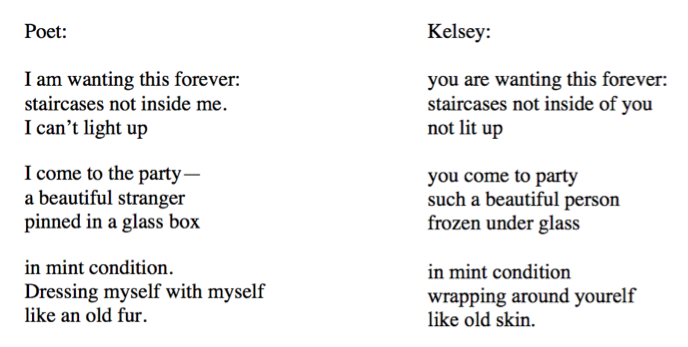
Evidence Excerpt:

* * *

When is it plagiarism, when is it homage? Especially in creative writing, I get tripped up on this distinction. A trick for writer’s block: write an imitation, steal moves, learn by mimicry. For my own poem-writing, I turn to other texts all the time. I pull language, take a word I like, sometimes fragments of phrases and twist them. I get inspired, I want to model after poems I fell madly for.

But how much do I really “make it my own?” When have I changed it enough that the poem is now in my possession, my creative and intellectual property? One of my students recently noted, “You can do anything in poetry, can’t you?” I answered yes, but qualified the statement: “As long as you don’t appropriate without acknowledgment.” Certainly, there are ways to acknowledge, maybe include a footnote or put beneath the title: “after [insert poet’s name].What is the best way to do this? What are the rules exactly? Where is “the line?” Was what Kelsey did so wrong?

* * *

Kelsey was allowed to stay and complete her degree. To me, this punishment did not seem sufficient, not at all, and I felt a great injustice had been done.

I relished telling everyone what had happened, this juicy gossip I revealed behind closed office doors and at the local bar. Framing myself as the hero, quiet and suffering, so selfless, so brave for “doing the right thing.” At first, my peers were disturbed by the situation. What made Kelsey think that was okay?

I relished telling everyone what had happened, this juicy gossip I revealed behind closed office doors and at the local bar.

But in the following months, most everyone forgot their anger. They conceded that Kelsey’s punishment was harsh enough. When we would go out for drinks, no one wanted to discuss it anymore — a tired topic. Old acquaintances began avoiding me, or so I thought, maybe they were too caught up in their thesis projects or job hunting or their relationships. But to me, ironically, I felt I was the “trouble-maker” now, making trouble because I could not forgive Kelsey, refused to move on.

And so she remained, a phantom, still sitting in my classes, now at the other end of the seminar table, not in the chair next to me. I pretended she was invisible, avoided speaking to her, blocked her entirely from my field of vision. I wanted to shame Kelsey, to the point where she would realize that she didn’t belong here, that she would decide to remove herself and vanish, just like that — poof.

I suppose, too, I avoided Kelsey because I was frightened of her, of what lurked there under the eyes. Surely she knew, from the Facebook message I had sent back in December, she must know that I was the one turned her in. And I grew panicked because Kelsey could be volatile, or so I had heard. I’d never seen her hurt anyone, but at parties I didn’t attend, she would drink too much, get upset, throw a punch. One time, or so she told me, during a party, she wandered into the woods behind her house, drunkenly tripped on a tree root and she fell, got scratched up on the way down. When I fell, I decided not to get up. I lay on my back and waited for someone to come find me. It felt like I was gone for hours. It got very cold outside and no one came. I got very angry — I can’t explain why.

Surely she knew, from the Facebook message I had sent back in December, she must know that I was the one turned her in.

She didn’t go into detail about what happened when she returned to the house, just that something violent had happened and “her roommates could not allow her to stay” that night. So I gave her tea and my couch for comfort. I couldn’t envision what she had done, certainly nothing that bad.

Now that I was her enemy, I expected a confrontation. She would stop me in the hallway, demand why I would do this to her. I imagined myself with a black eye. In office hours, I explained this concern to my advisor and she looked at me baffled, nearly giggling. “What? No, I don’t think Kelsey’s going to hurt you!?” Of course, the Kelsey I knew wouldn’t harm me, of course. But I didn’t really know her to begin with, did I? I made John walk with me to class, shielding myself with his tallness and muscle. Yet despite my precautions, Kelsey said and did nothing to me, only sat there, limp and sullen, in a daze.

* * *

Here, it is October in Indiana, the sky all gloom and pearly. The maples are looking especially autumnal, leaves blustering over the road. I am in a coffee shop, blogging about my poetry — publication news, trends I’m noticing in my work. A spike in my stats, my blog has gotten twenty-four views today — unusually high. The attention makes me flattered and uneasy at the same time. I change my settings, turn the site to “private.”

Suppose someone finds my blog and plagiarizes my writing?

Suppose I Google my own work and discover it in a magazine under another name? Suppose Kelsey is the one looking at my words?

Suppose she seeks revenge on me by stealing them?

Suppose she tweaks the poems, actually makes the writing better?

* * *

Yes, she stayed on like an old bruise that lingers. And worst of all, she proved herself to be capable of writing decent poetry (seemingly) without plagiarizing. Each week, after she passed her poem around the seminar table, I would go home, pull up a chair at my desk, and immediately start typing lines into Google. I refused to be fooled again, yet I found nothing. The poems, while they lacked the power that used to grip me, they were still beautiful and striking:

a blouse fell

from the sky

and i unstitched

the stitches

sometimes i nightmare

i turn everything off

every switch inside

and you, how you always

roll your eyes at me.

A flush of envy: how is she still able to write like this? I thought I had ruined her prospects at becoming a poet, ruined with that F on her transcript. But the girl could still write and write well. I no longer wanted her in my field, not one bit. Kelsey, the imposter, nemesis, a threat.

* * *

The moment of meeting. I sit next to her during orientation. She immediately sticks out her hand. “Hello, I’m Kelsey. I look forward to working with you.” So formal, maybe too formal? Artificial even? At a party later in the week, at her house: ginger beer, lentil soup, a record spinning, dim rooms and candle wax, so many faces to learn.

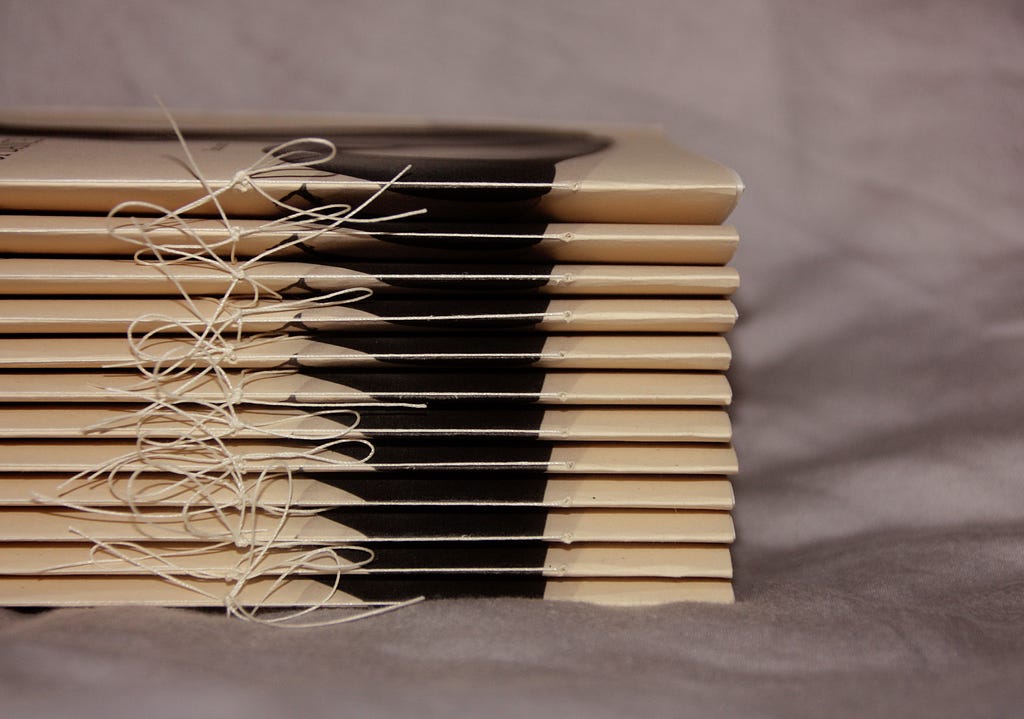
“You’re here!” Kelsey makes her way past bodies, a drink in hand. “I have a gift for you!” Following her to the bedroom and she gathers a bundle of chapbooks — paper that feels so good in your hands, saddle-stitch edge, stamped cover. I had never seen a chapbook in my life.

“You made these?” I ask, in awe, slightly tipsy. “These are for me?” How wonderful. I read them all that night before bed, keep them in my nightstand. Kelsey, the idol, the coolest girl I know, girl who knows so much more than I.

* * *

An acceptance letter from last week:

Thanks so much for sending us your poems! We would like to publish them!
Would you let us know if the poems are still available, and if so, send us a bio? Feel free to include links to where your work can be found online!

I browse through the archives of this magazine, a publication I have long admired. Feeling pleased with myself, I envision my own name printed here. Instead, her name arises — Kelsey in a back issue from the previous winter. Reading the poems, poems I knew from our classes together, I feel disgust rising in my belly. I consider sending an email back to the magazine: Did you know that you published the work of a plagiarist? I know I won’t actually do it, but the thought gives me satisfaction. Why do I still want to punish her? Haven’t I done enough?

* * *

Kelsey, reading a poem at the microphone, she growls and whispers, each word fully embodied, she is visceral. Kelsey, our birthdays a week apart. Kelsey in all black, Kelsey alone on the walk home. Why did she do it? I Google “plagiarism” and “poetry” together, just to see what would come up.

I consider sending an email back to the magazine: Did you know that you published the work of a plagiarist?

One of the first results is an essay, “Word Theft” by Ruth Graham, on the Poetry Foundation website. Graham notes recent cases of plagiarism in the poetry world — where poets such as Christian Ward, CJ Allen, Andrew Slattery were accused of stealing from newer poets as well as big names like Sylvia Plath and Emily Dickinson. These were cases where the plagiarists defended their work as “creative appropriation,” where repurposing was an “essential part” of their processes. Graham acknowledges that, of course, “writing is a dance that involves imitation, inspiration, and originality.” However, while “approaches to borrowing and attribution have shifted over time,” Graham asserts ultimately that “wholesale copying has never been kosher.” She also considers the question of why plagiarism occurs to begin with: “There’s never a satisfying answer, but there are at least lots of guesses, often somewhat at odds with each other: laziness or panic, narcissism or low self-esteem, ambition or deliberate self-sabotage.” Which was it? Which one, which one? Maybe all, maybe none?

In my search results, another essay: “Poetry Has A Plagiarism Problem” by Katy Evans-Bush, in which she questions why poets in particular would plagiarize, since with a career in poetry, “you’re not going to get famous, and you’re really not going to get rich.” Where is the gain when the stealing won’t pay off? Evans-Bush claims that, perhaps, plagiarism is really an issue of identity. When plagiarists present work that is not theirs, they are, essentially, not representing themselves. A disassociation, a splicing of the self. The girl I knew loved poetry, devoted her life to the practice of it, she wanted to write books and perform all over the country. She would never tarnish that love for anything.

* * *

Another poem of mine is accepted for publication, and upon acceptance, I suddenly recall: I wrote this poem in response to another, didn’t I? Which poem was that? What did I mimic exactly? I remember feeling stuck when I sat down to write it. Sometimes, I turn to an online text generator that offers scraps of poems, a starting place for writers. I imitated the anaphora, yes that was it, but how closely did I imitate? The content is totally different, but is the structure too similar? Maybe I could still change it? In a panic, I return to the text generator, search the archives for that poem, search for almost an hour, but no luck. My poem is published. I feel proud and I feel paranoid, half-expecting an angry email in my inbox, an accusation, a finger pointing my way: false false false.

* * *

This time of year, I always manage to become ill, late in the fall, when the night comes on early, smelling of cold and woodsmoke and spice, just on the hinge of snow. This time of year, I fall into illness and have trouble getting out. Last night, a fever dream:

I am sitting in a rocking chair, in a sequined dress, surrounded by every person I’ve been estranged from. They are waltzing around me and though we don’t speak directly to each other, I can tell they are glad and glad that I’m here, in my good dress, at the center of the room. The past is behind us, they seem to say, with their cocktails raised. And there she is, in dark velvet and warmth, a sincere laughter.

In the morning, I half-believe this really happened, I check my phone — her number still erased. There has been no forgiveness in the night. I go to her Instagram, I look on from afar, just to see how she’s doing. A childhood photo — Kelsey in buck-teeth, elfish nose and ears. A photo of her boyfriend, a trip to Kentucky. Photo of a dead monarch butterfly, wings orange and tattered on the sidewalk. Kelsey’s caption: “same here.” I tuck the phone under my pillow. I take medicine, make my tongue sour with cough drops.

* * *

Our workshop leader theorized that Kelsey had been stealing for a while, maybe all the way back to her application for the program. We tried looking for traces in her earlier work, from the previous semesters, but no dice. It’s possible she was lifting from chapbooks, from small presses, hand-stitched and unique items, poems not readily found online. I won’t probably ever know for sure — that bridge is burnt to a crisp.

Our workshop leader theorized that Kelsey had been stealing for a while, maybe all the way back to her application for the program.

And I still ask: why? Was Kelsey “stressed out?” Could she not “cope” with her classes, did she feel “intimidated” and that’s why she resorted to stealing words? No, that’s not right. In fact, she told me often how ineffective she found workshop. She was just waiting to finish her degree and be done with that place. She said these things to me on her back porch, as we sipped rum & cokes, talking gossip, talking MFA applications and what we were reading, all semester long. I saw what she meant — I couldn’t agree more. Kelsey was arguably the strongest poet in our bunch — her writing sharp and vibrant, that fierce sense of self. Perhaps her plagiarism was an act of rebellion, a “screw-you” to the program and that tiny Midwestern town. Maybe she wanted to see what she could get away with, to see how thirsty we were for her talent, how adoration made us oblivious.

* * *

She’s there now, finishing her last semester, serving out her punishment, in that place she scorned and so looked forward to leaving. In this sense, perhaps, the punishment was fitting — she could not get out, was forced to linger. Perhaps, now, this is the closest I will ever be to her. I live two hours away and there are days when I long to see her and days when I am terrified, imagining if she showed up here. Kelsey with her scratches from the wood, Kelsey in a fever dream, Kelsey at my doorstep with a peace offering, a notebook with two hands clasped in friendship, Kelsey with her spooky violins.

* * *

A July afternoon, a house where she lives. Before the book, blue with a soft cover, a woman’s face veiled. Before the ah ha moment, the email. Before, when Kelsey was a girl asleep on my couch, girl with blue hair, gray hair, black hair, always thoughtful, bold, cool as hell.

She is gone for the weekend, she asked me to come check on the house, left me with the key and a tight hug. Her roommates are home for the summer, so it’s just me, echoing as I step into the foyer. I feed the cat, I test the locks, I wander upstairs to Kelsey’s bedroom.

Although I know the room is vacant, I knock on the door anyway, a habit. Inside, a maple leaf pinned to the wall, a lighter, a photo of Kelsey with hibiscus in her hair, also records and notebooks, chapbooks in messy stacks, a writing desk, an old bouquet. I open her closet — there’s velvet and the Doc Martens, thrift-store sweaters, leggings, party dresses. I run my hands over the clothes — mmmm pretty.

A creak in the room, a rattle at the window glass. I turn my gaze to the mirror, full-length and speckled. I watch myself, being where I shouldn’t. It is electric, to be in her presence, girl that haunts, girl I want to become, to imitate, to steal from her — a little magic for my keeping.

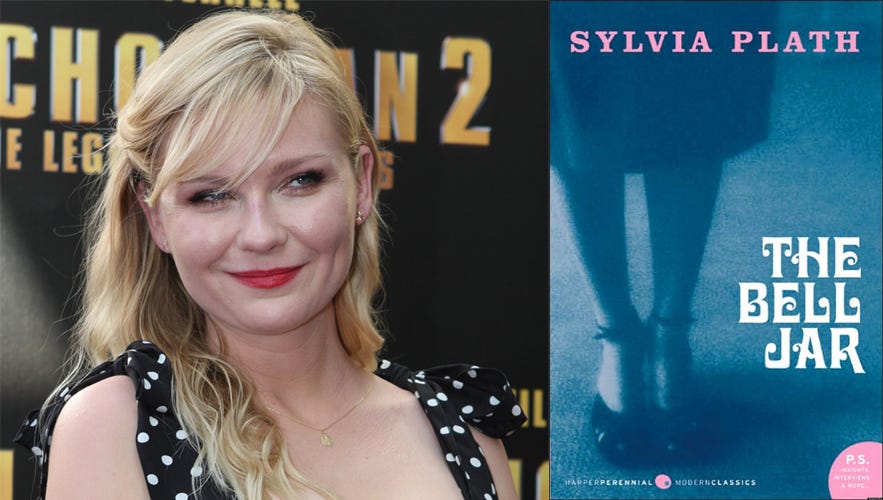
Kirsten Dunst to Make Directorial Debut with Adaptation of The Bell Jar

The “Fargo” Actress Has Enlisted Dakota Fanning as Esther Greenwood

Of contemporary literary greats who’ve had their works (or lives) transposed for the big screen, Sylvia Plath has been comparatively unexplored. Aside from a 1979 adaptation of her most famous novel and the 2003 biopic Sylvia, The Bell Jar author has not been, nor have her works been, the subject of a movie. This is set to change with news, according to The Huffington Post, that Kirsten Dunst will head an adaptation of The Bell Jar as her feature-film directorial debut. Esther Greenwood, the book’s protagonist, will reportedly be played by Dakota Fanning. Greenwood is a young Bostonian who lands an NYC internship at a women’s magazine before moving back home and falling into a deep depression.

Tragic similarities between the author’s life and that of Esther Greenwood have long been drawn by critic and fan alike. In this way, it will certainly be difficult for the movie to replicate that experience of reading The Bell Jar: simultaneously suppressing, and taking heed of, the whispers of autobiographical veracity while following Esther. Perhaps it will help to know that Dunst already has experience with unique transposition of grief, depression, and melancholy to the silver screen: she starred in Lars von Trier’s strange and generally well-received film Melancholia.

I hope for the best, but maybe Plath has been avoided in adaptation for good reason. After all, if the movie was to get it wrong, she did once warn: “Out of the ash / I rise with my red hair / And I eat men like air.”

Chuck Klosterman Goes to the Future, Looks Back

Sometime in my very early 20s there was a trend in a certain kind of “documentary” show, on channels like Animal Planet, the Discovery Channel, and (most bizarrely) the History Channel, all premised on predicting a personless future. These shows — The World Without Us, The Future is Wild, Life After People, and Aftermath: Population Zero — particularly delighted in imagining the destruction of everything we currently hold dear (how, exactly, would the Golden Gate Bridge crash into its ocean-bay perimeter, and might it crush any CGI whales along the way?). I’ll confess that I rarely watched any of them, but I did sustain a two-month-long relationship with an art school grad/bakery employee whose conversations, as I recall, almost exclusively consisted of him giving summaries to some of the episodes. I actually enjoyed his episode recaps (more than a few which featured old white scientists seemingly salivating at the thought that their research, on the accelerating rate of corrugated steel decay for instance, might land them on television) — not because of anything in the shows themselves, but for the underlying idea that our planet, once it had gotten rid of us, could come to exist under the control of, say, sentient forest-dwelling squids. There have always been those obsessed with trying to foresee the future, but in those days in particular it seemed as if the culture was experiencing a moment of reckoning. Chalk it up to the image of the Towers falling on September 11th, or a gradually dawning awareness of our global environmental impact. Whatever it was, it appears that the cultural critic Chuck Klosterman is ready for us to experience another time-displacing reckoning.

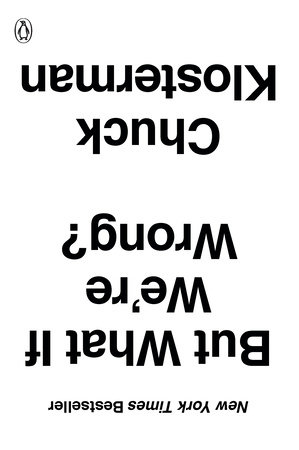
But What If We're Wrong? by Chuck Klosterman

His new work of non-fiction, But What If We’re Wrong?, approaches predictions of the future from an anthropocentric stance. The book’s subtitle — Thinking About the Present As If It Were the Past — gives a hint to Klosterman’s wide-ranging analysis, in which he considers how future generations might look at ideas that are in vogue or simply unquestioned in our present. As Klosterman himself observes, while no one would quibble with his premise in the abstract (Do you agree there are things our culture highly esteems today that in two hundred years will barely be remembered? Umm, of course), the trouble really begins when we turn and consider the specific. What if the subject we’re talking about is Philip Roth? Or football? Or the U.S. Constitution?

“I just want people to internalize the core premise: that the history of ideas is the history of people being wrong.”

The idea of changing tides — of delayed appreciation on the one hand, or eventual obsolescence on the other — can be consoling and terrifying in equal parts. It took seventy years and a World War for Moby-Dick to be canonized, much less widely read. There may be ten writers in the present time who are household names (three of whom make a living off of their writing alone). Is it a comfort or a mind-numbingly bleak proposition to consider that in three hundred years there will be exactly one writer — probably even just one book — held up as the crowning example of what our culture in these late stages of the American empire had to offer? “Like all writers,” Klosterman confessed in a recent email interview, “I would like to be remembered after I die. But I know that won’t happen.” Even so, Klosterman acknowledges that it will happen for someone. And in his book, he has a lot of fun guessing who.

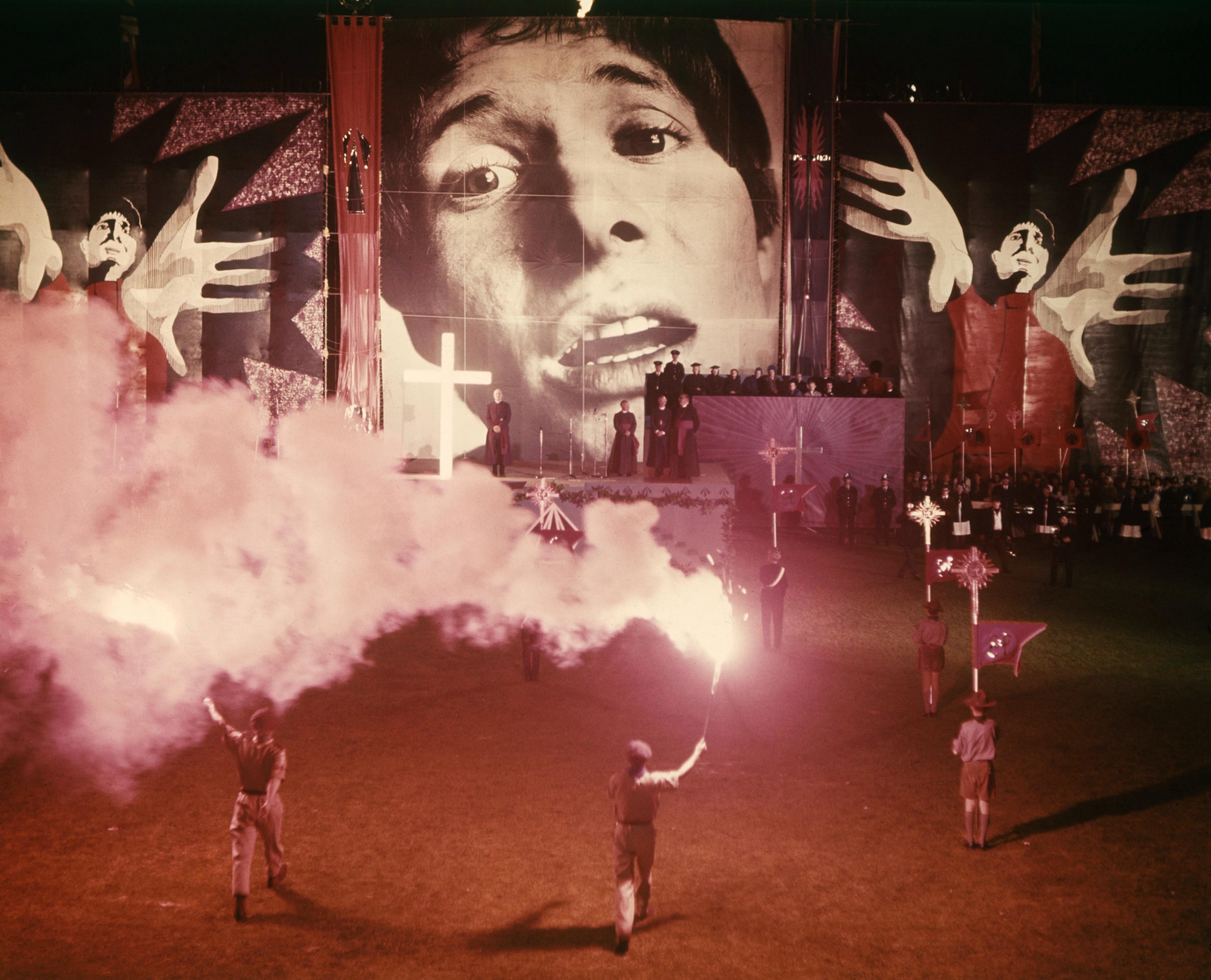
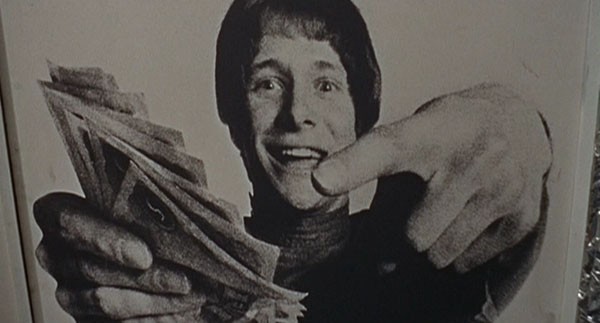
A pop star in the future. Paul Jones as Stephen Shorter in ‘Privilege’

“I see this book as a way for someone to think about an abstract cultural problem within the limited window of 288 accessible pages, since most sensible people aren’t in a position to spend eighteen months wondering how yet-to-be born humans in some distant future will perceive the age we happen to be living through,” the author summarized. So how does Klosterman go about positioning himself “in some distant future,” looking back at our present? By consulting with a wide array of authorities — from Junot Diaz to Richard Linklater to Neil deGrasse Tyson (only Jennifer Egan and Jonathan Franzen turned him down) — admitting to his biases, and venturing a few guesses as to what these future consumers of culture might have chosen to keep around (Chuck Berry. Lit mags on the dark web that we don’t yet even know about. No sports, but maybe video games — though it must be said that Pokémon Go had not been launched at the time of the book’s publication).

But he also grounds his arguments with a degree of humility and cautious thinking — as much as one can be cautious about predicting the tastes of people whose great-great-grandparents are one hundred and fifty years from being born. In the end, as he writes, “I just want people to internalize the core premise: that the history of ideas is the history of people being wrong.”

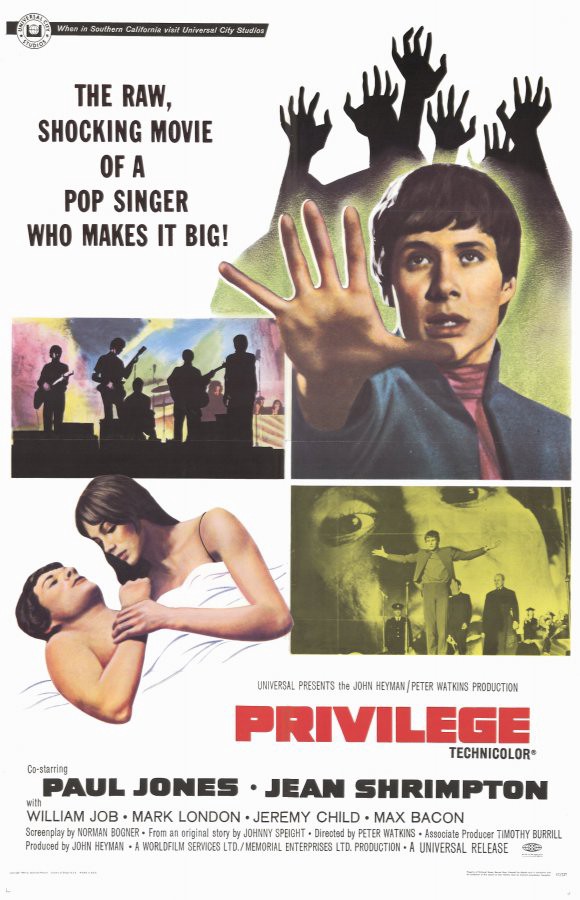
During a talk following a recent screening of Peter Watkins’ dystopic cult British film Privilege (1967) — put on by the Film Society of Lincoln Center as part of their regular author- and film-paired Print Screen series — I had the chance to hear Klosterman apply his premise to a complementary work not included in his book. “It’s a film which, when it was made, was set in the future­,” Klosterman stated, “but that future is now our past.”

‘Privilege’ theatrical release poster (1967)

Steven Shorter, Privilege’s protagonist pop star (played by Manfred Mann singer Paul Jones), is locked in a cage, handcuffed, and beaten by the police — all while managing to warble out a tune. He is used by his dystopian government as a tool of control; the violent frenzy that ensues in the audience functions as a directed release, under the assumption that these energies will be prevented from taking on a political bent. The hysteria, the passionate anguish of his fans, brought to my mind another traumatic Brexit, which sent shock waves across the internet — that of Zayn Malik from the band One Direction. What Watkins’ film failed to predict was that our current investment in celebrity is one we take on voluntarily, rather than being an insidious plot hatched by an oppressive and authoritarian government. And while Steven is given what we assume to be a happy ending (his enforced celebrity, and presumably his physical abuse, end after a particularly un-managed acceptance speech), the film does not explicitly show us this. Instead, a narrated voice-over ominously informs us that after only a short while no one longer remembers Steven’s name, as if this cultural oblivion, rather than the physical beatings he endured, were the real horror.

Something commercially popular and critically panned might one day come to acquire unforeseen significance in the future. Meanings will change.

Klosterman, who has himself written a profile or two on a pop star, reflected during the post-screening Q&A that it was Britney Spears whom he felt most resembled the film’s protagonist, in terms of the lack of agency and control she appears to have had over her own career. Could he see a future in which a fascist government used a figure thusly? If so, he said, his money would be on the sports stars, with their dependence on live audiences, and perhaps also their willingness to become spokespersons for the highest bidder.

Paul Jones in ‘Privilege’

In the end, any guess we are educated enough to make is probably wrong simply because we’re able guess it. Just as likely, he argues, something commercially popular and critically panned might one day come to acquire unforeseen significance in the future. Meanings will change. Klosterman points out that The Matrix originally seemed revelatory for its technological and stoner-philosophical ideas. Its relevance now — as the portrayal of an emergent, awakening true identity and casting off of a false reality — comes from a contemporary reading of the film as a metaphor for the transitioning transgender experience. Is there a possible future waiting for us in which the only music from our time that still has currency turns out to be Britney Spears? Of course there is. And for all we know now, those listening in the future might have a very good, totally persuasive reason as to why.

Check out the Film Society of Lincoln Center’s schedule for future Print Screen author-curated screenings.

Jade Sharma’s Problems Are Other People. Also Heroin.

By the final third of Jade Sharma’s first novel Problems, Maya has lost her barely-there bookstore job, her husband Peter, her lover Ogden, and whatever control she had over her heroin habit. When Peter tells her he is leaving, she snorts two bags in front of him. “I told him I would kill myself, because no one was allowed to just leave someone like that. He didn’t respond. Was I actually going to have to kill myself to prove a point?”

She starts turning tricks for dope money. “People said women who did this kind of thing had no self-respect. I had no idea what that meant, because I got off on doing it […] When they handed me cash, I felt like a champ.”

Not much later she overdoses and is placed in a psych ward.

Problems is a novel about an over-educated member of the upper-middle class (or maybe just upper class? When her dad dies, she inherits a quarter-million dollars) and therapy comes up a lot. Maya tells a story about her mother throwing away her grade-school art project while sticking her brother’s A test onto the fridge. “A concise little story that played well in therapy.” At another point, Maya interrupts a scene and jumps forward to a therapy session where she explains to her therapist why she thinks she behaved the way she did, and how she felt about it.

She has reasons to complain. Insufferable people surround her. The longest stretch of the novel details a trip to her husband Peter’s childhood home for Thanksgiving. His parents are too thrifty and too religious and yell at Maya when she makes them watch a romantic comedy with sex in it. Peter is awful in his own way. “He would wake up early, go for a run, do sit-ups as he watched The Colbert Report.”

Maya has problems besides heroin but they never resolve in the way her addiction does. Binging and purging, a bad relationship with her MS-afflicted mother, a bad relationship with most people: Sharma smartly treats these as things to endure rather than as things to address.

The book skirts with equating the act of writing with redemption (Maya is in either an MFA or some kind of English grad program). I get wary when a character in a drug story has a talent that goes to waste. More chances for the story to get maudlin. Elizabeth, also an addict, tells Maya, “But you can write, you have a place you can put everything. I don’t know where to put things. You can make something out of all the ugliness.” Granted it’s a character talking, one who also says things like, “We can still get discovered, you know? We’re still young.” And Maya argues she doesn’t identify as a writer anymore. Still, by the end of the book she is sober and up all night writing poetry.

Maya is an intelligent, opinionated, insecure, hilarious personality. Her life is unstable in such a way that all the author has to do is pull one string (have Peter leave) to make her whole existence unravel. Finally Maya has no one left who isn’t an addict except her former lover Ogden. Barely. He emails from across the country. “Maybe it was easier for him to share stuff with me because I no longer matter.” He suggests she rent out her living room for extra money. Pretty soon: “I’m living with a person who has his shit together, and I go back to school. I never make the decision to clean up but change happens in these small ways.” A happy ending doesn’t seem right so let’s say Problems doesn’t wholly have one. Maya rebuilds her life but she isn’t there for it; in the final pages the narration switches to second-person present-tense. Not the first time Maya disappears from her own story, but it is the last.

Paula Whyman on Motherhood, Linked Stories & The Inherent Humor of Sex Scenes

What are the moments that matter to a person, and how do they have a ripple effect on who that person becomes? In Paula Whyman’s linked short story collection, You May See A Stranger, the author focuses on one woman as she moves through different phases of her life. Miranda Weber is a compelling character, one who is equally capable of knowing what she wants and, as she gets older, trying to move past personal disappointments. I recently had the opportunity to interview Paula in front of a live audience at Book Culture for her New York City launch. After the conversation, Paula answered the same questions again via email.

Michele Filgate: Did you set out to write a linked short story collection?

Paula Whyman: When the first story in the book, “Driver’s Education,” was published by The Hudson Review about 10 years ago, I visited a high school in Harlem through THR’s writers-in-schools program. The students were eager to know more about the girl in the story. What happened next for her? I’d had no plans to write more about her, but I filed that question away. Then, a few years ago, I noticed I was writing stories that could be about the same woman at different times in her life. I decided to approach it intentionally. I had a residency at Yaddo coming, and I spent it working only on stories about this girl. I wrote drafts of two stories that ended up in the book. After that, I devoted myself to the project. As I wrote more stories, the book evolved; I’d initially planned to have different people narrate the stories, but as I went along, writing them all in Miranda’s voice seemed compelling. I never set out to write a novel about Miranda; I always intended to tell her story in this way, dropping into her life at these liminal moments.

Filgate: And I love how you do that! You follow Miranda Weber from adolescence to middle age. Was one time of life harder to write about than the other?

Whyman: The time when Miranda has young children, perhaps because those years can be such a blur. One tends to be, necessarily, more outward-focused. There’s not as much time or energy for introspection. Part of what I examine in that period is the anxiety that something bad is going to happen to your kids, and you can’t protect them. I think that concern is shared by most parents.

Filgate: Some of the stories are written in the first person and others in third. Was that a deliberate decision?

Whyman: Yes, it was. Two of the stories set when Miranda has school-age kids are written in the third person. In those stories, I sense that Miranda is distanced from herself, grappling with the partial loss of self that occurs, temporarily I think, when one has children. I’m not sure she handles it in the best way… I wish she were more focused on her daughter, for instance, in “Self Report.” She’s flawed, but I hope in a way that makes her human.

Filgate: Absolutely. She’s a very believable character. What does it take to make Miranda happy? Is happiness possible?

Whyman: Is happiness possible for anyone? I think we’re most satisfied when we’re meaningfully engaged. Miranda needs to use her better judgment, for one thing — and I think by the end there’s hope that she’s moving in a more positive direction. She’s also underemployed; she’s a “content provider” for at least part of the book. That isn’t supposed to be an inside joke. Well, it’s sort of a joke.

Filgate: You write a lot about threats from the outside world. I’m thinking particularly of “Threat Potential,” where one of Miranda’s children wanders off on vacation at an ancient ruins in Mexico, but then later on one of her kids is injured at the vacation home. Or “Bad Side In,” where Miranda wants to build a fence around her house to ward off criminals. Do you think the threats in her life are more internal than external?

Whyman: Many of the external threats Miranda obsesses over are remote possibilities and also beyond her control. But, living in DC can feel like living in a “target” city. During 9/11, the anthrax attacks, and the sniper attacks, there was a pervasive feeling of fear around town. Especially during the sniper attacks, because they were so random, that wasn’t entirely unreasonable. It went on for weeks. People were shot coming out of school, pumping gas — people were literally hiding behind their cars while they pumped gas. I remember being out on the soccer field with one of my kids, and all the parents were scared. We didn’t know if we should refuse to let it change our behavior, if we should set that example, or if we should keep the kids indoors until it all passed.

As far as internal threats, later in life, Miranda has a lot of regrets. Although she’s experienced some indisputably major life events, if she could separate herself from them, “get past them,” she’d be better off emotionally. She needs to deal with her guilt. Her powers of denial are applied to the wrong things.

Filgate: One of the themes in your book is the desire for a neat resolution — but unfortunately, that isn’t how life usually goes. At one point you write “It was resolution I wanted, the kind that was only possible in stories.” But it’s ironic you write that, since even in your stories, the resolutions are sometimes not what Miranda wants. Her decisions have consequences — whether it’s choosing the wrong guy or not getting the job she wants. What do you think would be her ideal resolution?

Whyman: As much as Miranda insists she wants resolution, her own life repeatedly demonstrates the impossibility of that goal. Nothing’s as resolving as death, right? But no one sees that as an acceptable resolution. Who are we to expect resolution? Everything keeps going. I hope that’s conveyed by the circular nature of these stories.

Filgate: I want to talk about motherhood in your book. In “Transfigured Night,” Miranda’s husband says to her: “Only selfish people don’t want children.” She’s ambivalent, in that moment, after having an abortion earlier in the book. I feel like we don’t see a ton of fictional characters who aren’t in this black or white category of yes or no to having kids. Was it difficult to write about this aspect of Miranda? Because (spoiler) she does become a mother, and one of the things I absolutely love about this book is she isn’t defined by being a mom.

Whyman: If there’s a dearth of ambivalent mothers in fiction, maybe it arises from a reluctance among parents, especially mothers, to admit they ever experienced doubt about having children, as if this will somehow make them look bad or damage their kids. To me, this is almost delusional. Show me someone who never had doubts, and I’ll show you someone who is utterly unprepared for the reality of raising kids.

If there’s a dearth of ambivalent mothers in fiction, maybe it arises from a reluctance among parents, especially mothers, to admit they ever experienced doubt about having children

Then again, I think all parents are unprepared. For some reason we apply this romanticized polarization — you do or you don’t, you want, or you don’t want to enter into this lifelong contract of deep love and deep responsibility. Shouldn’t people think about that and have at least a moment of doubt about their ability to undertake it? Shouldn’t it be okay to say you’re not sure? If fiction is going to reflect the reality, I think it needs to allow for that uncertainty. Being a parent is an awesome, amazing thing, and difficult to do well. You learn on the job. When you screw up, you’re making mistakes with humans. Talk about a daunting prospect. My kids are teenagers, and I’m still learning. Luckily, they forgive me my imperfections!

Filgate: There’s a moment in “Threat Potential” when Miranda sees her daughter fully living in the moment, and you write that the mother “remembered a time when she’d been that way, when the ordinary world seemed packed with unexpected sources of delight.” Do you think Miranda lives vicariously through her children?

Whyman: Miranda has regret and maybe even sadness about her youth. I think she sees a second chance in her daughter. In that story, her daughter is brave and exuberant and hopeful in a different way than Miranda ever was, as far as we know. Watching her daughter pierces some of Miranda’s denial and points up her regret. Miranda, like most adults, knows what it’s like to have her options closed off. Her fierce protectiveness of her daughter seems tied in with this; her daughter’s at a stage when everything is still possible for her.

Filgate: The jacket copy describes Miranda as a “hot mess,” but I don’t see her that way. I see her as a full-dimensional, real woman. Who are some of your favorite female fictional characters, and did any of them inspire you as you were working on this book?

Whyman: I’m glad you see her that way! My favorite female protagonists are Isabel Archer in Portrait of a Lady; the tragic figure Lily Bart in The House of Mirth; Dorothea Brooke in Middlemarch; the young (I think unnamed) narrator in Alice McDermott’s That Night; Claudia Hampton in Moon Tiger — I could go on, but probably you see the pattern. I think Miranda owes a lot to Isabel Archer, whose lack of experience and impetuousness lead to bad decisions to which she stubbornly adheres. That’s an oversimplification, but there are commonalities. None of it’s intentional, just that these are stories I’ve read many times, and they’ve seeped into my unconscious. This is the kind of character I’m drawn to, so it makes sense that I would attempt to create a female protagonist somewhat in that image.

Filgate: Are you done with Miranda, or could you see yourself writing another book about her?

Whyman: Hard to say. After all, years ago, I thought I was done with her after writing one story! I’m devoted to a novel right now, a very different story. I won’t say never, though. Never say never… Meanwhile, there is one more Miranda story out there, published in McSweeney’s Quarterly #48. It takes place ten years after the end of the book. We had good reasons for not including it in the collection, but it’s one way I was thinking about going, regarding her future. In fact, it’s being recorded by Audible for an audio anthology of McSweeney’s stories.

Filgate: I love that Blake Bailey describes you as “a somewhat more erotic Lorrie Moore.” I think that’s the perfect description. Let’s talk about writing about sex. How difficult is it? What are the challenges?

Whyman: I’d like that quote on a T-shirt. I admit I don’t find it too difficult to write a sexy scene. To me, it seems tougher to move someone across a room than across a sofa. I automatically use humor in sex scenes, because to me, those situations are often naturally funny; that’s just how I think.

I admit I don’t find it too difficult to write a sexy scene. To me, it seems tougher to move someone across a room than across a sofa.

I ask myself the same questions I’d ask about anything a character is doing in a story: Is this how she would behave in this particular situation? Also: What’s important here? What does the reader need to see and understand? Less is more. Sometimes I think when writers approach a sex scene, there’s a tendency to become hyperaware and wake oneself out of the dream state that’s necessary to write. Instead, you’re going, Sex Scene Alert!! Be eloquent! Get serious! Describe body parts! Tab A into Slot B, here we go! I think we need to relax a little.

Filgate: In an interview with Largehearted Boy, you talked about dealing with a sudden hearing loss in one ear. Your hearing is now back to normal, but during that difficult time you realized music is crucial to your writing process — even though you don’t listen while writing. Why is music so important to you, and how has it influenced your work?

Whyman: That problem was a complete surprise to me. I was unable to write for three months, until my hearing returned to normal. Music not only sounded wrong, but it was painful at times. The high pitches were like an attack on my eardrums.

When I’m not writing, when I’m running, for instance, I’m often listening to music. My mind wanders, and I write in my head. The trance state induced by music encourages my process, the daydreaming that’s required for writing fiction. Radiohead is great for that… But so is anything, while I’m running. The steady motion of running paired with the rhythm of the music, heartbeat, breathing — it all comes together to get me into the right frame for letting my imagination go. I can run for blocks and not recall anything about how I got from point A to point B. Probably I should stay out of traffic at times like that…

Filgate: I saw on your website that a music theater piece of “Transfigured Night” is in development with the composer Scott Wheeler. Tell us about that!

Whyman: Scott’s a MacDowell Colony and Yaddo alum — we know each other through MacDowell. He read my stories and came to me about doing this project. I feel incredibly privileged to be working with him. He recently finished a song cycle in collaboration with the poet Paul Muldoon; it premiered in New York in May. Scott told me the only other fiction writer he ever collaborated with was William Maxwell.

The story “Transfigured Night” is set during the early days of Miranda’s marriage. A large part of it takes place at the symphony. The title is a music piece, a symphony by Schoenberg, which is thematically resonant. I’m adapting the text, which will be spoken, not sung, and Scott is writing the music. The music piece will be more dreamlike, less straight realism, than the original story. That’s often what happens when you tell part of a story through music. But also, there’s a dreamlike aspect to the original story that we’d like to develop.

We met recently with our director and playwright friend Austin Pendleton, who advised us on possible theaters to workshop the piece and suggested a couple of actors for the role of Miranda. I’m curious to know which actors readers might imagine as Miranda!

Filgate: Where do your story ideas come from? And what is your writing process like?

Whyman: I might begin with a sentence that occurs to me based on something I overheard (I encourage writers to eavesdrop!) or witnessed, or a tiny aspect of something I experienced, though just as often, it’s more like free-association. A phrase will pop into my head devoid of any origin that I can identify. By the time I’m done writing a story, often I can’t even identify what the original impulse was. So much of this process is unconscious. I start with a phrase — I ask who’s saying this, or who is this about? In the case of these stories, because I was writing stories that followed Miranda through time, I started with a kernel like that, but then I had an intention, like, let’s see what happens when Miranda hangs out with a guy she can only be friends with…

I used to think I had frequent bouts of writer’s block, but it turned out it was an actual stage in my work. I write like mad on a draft, reach the middle-ish part, and stall in a big way, no idea where to go next. I stop and flail around for days…or weeks… I get very grouchy during that time, feel like I’ll never get going again. And then — if I were a cartoon, you’d see a light bulb pop up above my head. Oh yeah, of course, that’s what happens. Once I make it through that stall-out, it’s as if it never occurred.

I need the just-right ending, too; those closing lines are crucial. Some stories fizzle out, and I’m strict with myself about that. When I stop trying too hard to think about a specific problem in a story, that’s usually when the solution comes. I’ve had to accept that uncertainty is in fact a good thing, that flailing is part of my process.

About Paula Whyman and Michele Filgate

Paula Whyman’s writing has appeared in McSweeney’s Quarterly, Ploughshares, Virginia Quarterly Review, The Washington Post, The Rumpus, and on NPR’s All Things Considered. She is a member of The MacDowell Colony Fellows Executive Committee. A music theater piece, “Transfigured Night,” based on a story in this collection, is in development with composer Scott Wheeler. A native of Washington, DC, she now lives in Maryland.

Michele Filgate is a contributing editor at Literary Hub and VP/Awards for the National Book Critics Circle. She teaches creative nonfiction for The Sackett Street Writers’ Workshop and Catapult and curates a quarterly series on women writers called Red Ink. Brooklyn Magazine recently selected her as one of the “100 Most Influential People in Brooklyn Culture.”

Midweek Links: Literary Links from Around the Web (July 20th)

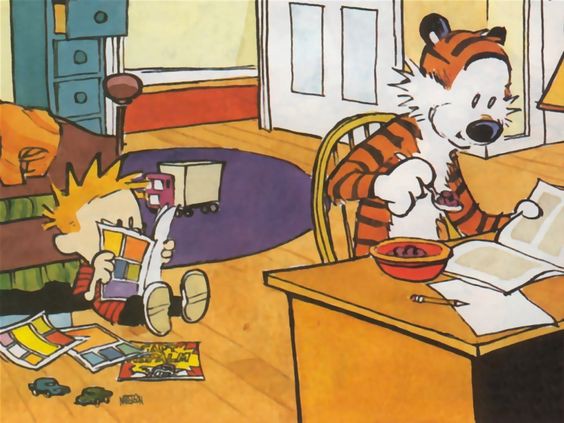
Should Calvin & Hobbes be considered great literature? (Spoiler: Yes!)

Twitter had a lot of fun with Melania Trump’s overt plagiarism (which the Trump team finally admitted to today)

The Atlantic celebrates great American indie presses like Graywolf, Coffee House, and Tin House.

Joy Williams talks about human cruetly, how to write a short story, and her new book Ninety-Nine Stories of God

Luke B. Goebel on writing and mental health

Tor recommends recent genre-bending books (including one by Okey-Panky editor J. Robert Lennon)

You probably want to read this new SF story from Alice Sola Kim

We’ve heard about food deserts, but low-income areas are often book deserts too

Interview with horror author Stephen Graham Jones

Attn fantasy fans: a new Earthsea omnibus will contain a new story from Ursula K. Le Guin

The Phases: Love, Loss, and Magic the Gathering

Untap

At the beginning of their turn, Magic: the Gathering players “untap” the resources available to them on the battlefield by rotating their cards so they are all vertical. This represents replenishment — the Magic player can draw power from the land, can issue new commands to their summoned monsters, can re-wield the artifacts at their disposal. What is old is new, what is used becomes unused.

April in New York is like living in a pissed off armpit. The air is thick, made vicious from the smells clawing up through heat after months of hibernating beneath snow. There’s too much friction — people bump into and brush against each other, bodies peel off bodies and subway seats like old registration stickers on car windows. There is not enough iced coffee, there is never enough iced coffee.

I was doing fine. My shit was, I am proud to say, finally together.

But April 21st of 2012 was a great day for me. After years of barely skidding by on Trader Joes broccoli and chicken cutlets and the couches of friends and kind strangers, I was doing fine. My shit was, I am proud to say, finally together. I had a “real job,” one that promised career-growth and steady paychecks and to keep most of my soul intact. I was writing, but not trying to publish, my typical modus operandi. I had a girlfriend I loved and who loved me back and, praise be, we actually lived together in a massive Bronx apartment with a living room the size of three Williamsburg bedrooms put together.

And for once there was money in my wallet and safe in my bank account.

Not a lot of money. But New York has two version of making it: a place in a Manhattan high rise, or not having to hustle anymore. I didn’t need to pick up shifts barbacking at The Charleston in order to pay for groceries or my cellphone bill, didn’t need to lean hard on my bartender buddies in order to afford a night out, didn’t have to scour the “free in New York” message boards for something affordable to do. My clothes were top-shelf Target and GAP Factory Outlet chic. All signs were pointing to Happily Ever After.

My clothes were top-shelf Target and GAP Factory Outlet chic. All signs were pointing to Happily Ever After.

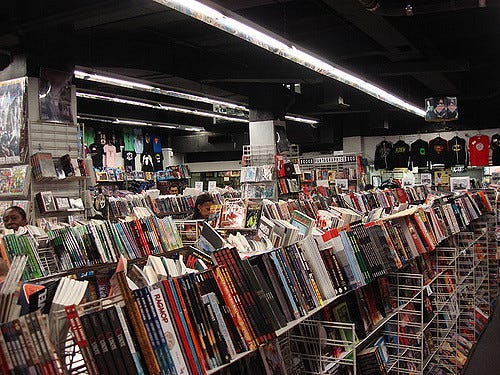
I’d been eyeing the comic shop — Magnum Comics and Cards — for a few weeks. Growing up, my family co-owned a Houston comic store and, as a result of spending many afternoons in one, comic shops have always possessed a nostalgic appeal to me. The smell of ink-saturated paper, the thick-as-humidity silences interrupted by nerd quarrels or unfortunate music, the figurines collecting dust in display cases, the racks of ever-marked-down t-shirts, all of it tinged with sour, barely-concealed body odor. I love it.

So, for the first time in years, I walked into a comic store. I perused the shelves, peered at the items in the glass cases, and smiled at the disgruntled, long- and oily-haired male cashier. I skimmed the Dungeons and Dragons manuals, flipped through a few trade paperbacks, and finally decided to buy a pack of cards from my favorite game in high school: Magic: the Gathering, a collectible card game where players use decks made from fantasy-themed cards to pretend to be wizards beating the shit out of each other.

Maybe it’s OK to be geeky again, I thought. Maybe it’s time to accept this is who I’ve always been. Maybe it was a mistake discarding the things I loved growing up in order to make room for who I thought I was going to become as a New Yorker.

Maybe I was, and always would be, a nerd.

My mom died the next day.

Upkeep

During their upkeep, players must pay for any costs required by cards on the battlefield. Failure to do so could result in those cards being discarded or, in some rare instances, the player can simply lose the game. Everything has a cost, even stasis.

Mom always liked that I was a nerd. She bought me comics and art supplies on impulse, would listen as I described the plotlines to whatever DrangonLance or Forgotten Realms or Wheel of Time book I was reading, adored my illustrations of dragons and dragonfly-winged pixies. She loved buying me Magic cards, loved watching as I opened the packs of cards and told her which cards would be going into the deck I was playing at the time. She relished in the fact that I’d usually open something valuable in the packs she picked out, that, even if she didn’t “get it,” she was a critical part of the thing I loved the most.

She bought me comics and art supplies on impulse, would listen as I described the plotlines to whatever DrangonLance or Forgotten Realms or Wheel of Time book I was reading.

In my eulogy, I told this story from childhood: my friends and I were playing outside. Mom stepped onto the driveway and raised her hand like she was grabbing a rope made of air. She pulled it down and, even though the sun was shining, a torrential rain began pummeling us. In the short run across the street and into the safety of the garage, we ended up completely soaked. Mom went inside, and the rain stopped.

I finished by saying Mom showed me that magic, real magic, really exists.

After the funeral, my brother and I went to her apartment. While poking around, we discovered an entire closet filled with Barbie dolls. Boxes and boxes of them, unopened, untouched, stacked on top of each other like those “plugged in” humans Neo discovers when he first exits the Matrix. I’d always known she liked signature Barbie dolls, but the depth of her interest and the breadth of her collection surprised us both. It was then it hit me there were parts of her life I’d never know.

It was then it hit me there were parts of her life I’d never know.

We join fantasy football leagues. We collect Beanie Babies, or sneakers, or ticket stubs to concerts. We bird watch, we take bus tours through celebrity neighborhoods, we refresh Bachelorette message boards every few hours (or minutes). Some of us jam brooms between our legs and play Quidditch. Some of us collect bones. But maybe all of us are, in our own way, nerds.

So why don’t we embrace it?

After Mom died, I took inventory of my life. I had a job, sure, but the goal was to be a writer, not tinker with Excel spreadsheets and purchase orders. I’d spent years writing poetry, trying to figure out my voice. I studied prose poetry, tilted toward narrative poetry, and then dove full-on into confessional poetry. Poetry had always been where I’d had my most success: being a finalist in middle school competitions, competing at a national reading in high school, getting published in undergrad, being selected as a featured reader in my MFA program’s poetry festival.

But was I really writing what I wanted to write?

After Mom’s death this question would continue to plague me.

Did I even want to be a poet?

Main Phase 1

During their first Main Phase, players may cast spells, summon monsters or artifacts, or add a land to the battlefield. Players spend their resources to gain “board advantage,” to amass more resources than their opponent. Sometimes players use up all their resources and obtain “inevitability,” a pathway to win the game. Sometimes players can’t do anything and pass their turn. Sometimes players can do a lot of things but, in the scope of the game, nothing happens, nothing changes, and they still lose. Sometimes action and inaction are the same.

In the summer of 2012 Twenty Sided Store was the hallmark destination for Brooklyn’s Magic scene. Located a few blocks from the Lorimer stop on the L train, in the shadow of the Brooklyn-Queens Expressway, it was the home base to New York City’s most competitive Magic: the Gathering players… at least, that’s what I gleaned from Googling “Magic Tournament New York” and skimming their webpage.

In the summer of 2012 Twenty Sided Store was the hallmark destination for Brooklyn’s Magic scene.

I was there for a “prerelease” tournament — a type of tournament where players build decks solely with the cards they open from a set that has yet to be formally released. As I waited for the store to open, I watched the other players milling about on the sidewalk. I wasn’t sure what to expect — my gamer friends in Brooklyn were all very attractive women and men and, usually, very tattooed. These guys (they were all dudes) looked… normal… like background actors filling a crowded bar or a university hallway.

I’m normally a gregarious person, but I found myself closed off. I didn’t know how the game had changed in the ten years since I’d played it. I didn’t know if I’d be any good, if I could build a deck right, if I’d even have fun. I wasn’t even sure why I was there — I’d only bought a single pack a few weeks ago. I hadn’t even unpacked my bags from my trip to Texas for the funeral. Playing through the tournament (winning twice and losing twice) I didn’t feel like I belonged. My mom was dead and I was playing Magic: the Gathering? Was this, then, how the world worked?

My mom was dead and I was playing Magic: the Gathering? Was this, then, how the world worked?

Not long after this, I won a runner-up grant in a YA contemporary novel competition. I’d been waxing about whether I should keep working on poetry or not, and decided that this was a sign. I dropped poetry entirely to write prose. The grant money paid for most of a sleek MacBook Pro, and as soon as it came in the mail and I skinned it of its plastic packaging, I began writing the novel. The dream was to finish it within a year, to get an agent and become an Author with a capital A.

Except the words wouldn’t stick.

My writing process dissolved. Where I could normally crank out pages and pages of material, hack it to bits like a lumberjack on bath salts in editing, and end up with something distilled, something finished, I now found myself staring at blank pages, filling them, deleting them, then filling them again and deleting them again. The story swirled inside my head. The protagonist’s voice was so clear I swore we had conversations in my dreams. I knew the character arcs, knew where they would fall and where they would triumph. The climactic ending where the protagonist throws it all away was snapshot-clear in my mind.

I just couldn’t figure out how to put it all on the page.

In a bid to force the story out of me, I joined the masses of writers cranking out novels in November for National Novel Writing Month. I joined NaNoWriMo’s message boards, posting problems, soaked up encouragements, and I managed to eke out about twenty-five thousand words in a month.

But reading it out loud it felt like speaking through ash. I was spending all my resources, all my energy trying to write this “contemporary” novel.

Yet the pages always reverted to white.

Combat

In the combat phase, players declare which (if any) of their summoned creatures attack, and their opponent declares which (if any) of their creatures block. Creatures exchange damage and, if they receive lethal damage, are placed in their controller’s graveyard. Creatures that are unblocked deal damage to their controller’s opponent, reducing the opponent’s life total. A player is defeated when their life total reaches 0. Combat is both about reaching your opponent, and depletion. It is violent, and intimate, and rare is the game that ends without it.

I never let Mom read much of what I wrote. It was an act of self-preservation — she had a Ph.D. in English, and would often forego following the plot of a story or the thrust of a poem to highlight minute grammatical errors when all I wanted to know was whether my writing sucked or not. Later, I didn’t want her to read my work because it was so personal, and so much of it was about her: her decline into prescription pill abuse, the ways in which I’d discover her passed out on the floor after I came home from school, the terror and anxiety of watching her drunkenly careen off into the night in her Texas-sized truck.

I wanted to write something sobering. I wanted to rip apart the past, stitch it into something tragic and beautiful, and give it to her.

What I’d always wanted was a piece Mom couldn’t pick apart, something she could look at and say was good, and true, and raw. I wanted to write something sobering. I wanted to rip apart the past, stitch it into something tragic and beautiful, and give it to her.

I’d been attacking the page to get through to her.

But with her gone, what was the point?

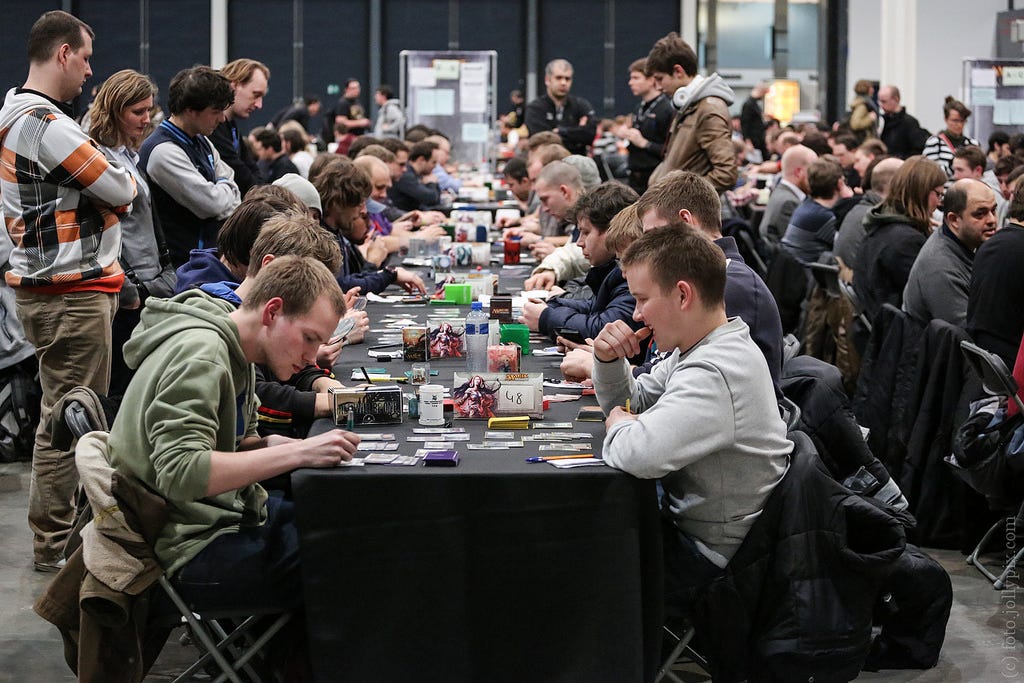
I didn’t linger on this. I discovered my coworker also played Magic, and together we found a new shop opening in midtown called Montasy Comics. A couple days a week we’d head over to an unmarked door beside a discount women’s shoe store, wait to be buzzed in, and take a narrow set of stairs up to a modestly-sized comic book shop that had sacrificed half of its floor space to gaming tables and, inexplicably, wouldn’t let you use the bathroom before 7:00pm. Instead of pointing my energy at the page, I focused it on playing inordinate amounts of Magic: the Gathering. I’d crack packs at midnight over Kati rolls; I’d debate deck construction with a friend on the One Train as it chuffed through Harlem; I’d play over pints until the bar kicked me and my coworker out to start their Big Beautiful Women night.

I went from a weak player just returning to the game to a semi-competitive player in the New York scene. Within a few months, I was able to reach the late rounds of one of the largest type of competitive events around: a Grand Prix, where thousands of players gathered to compete in a two-day event.

I went from a weak player just returning to the game to a semi-competitive player in the New York scene.

I also began meeting other Magic players in New York — regular guys with normal day jobs that just happened to also like a game about pretending to be a wizard. It’s one of the great things about Magic, anybody can play it. That goth bartender? She just took down a major tournament. That bearded guy in a Dragon Ball Z shirt with body odor that can wilt lilies? He’s been playing since the nineties. Those two gay guys in chambray shirts and jeans? At home they settle arguments by playing with 100-card decks. That Goldman and Sachs lawyer? She exclusively plays vampire decks.

It wasn’t long until I began regularly playing with a few guys, and then a few more, until I found myself as a central member in one of the largest groups of Magic players in New York City.

I wasn’t writing at all, which was a relief. It meant I wasn’t struggling to write.

Main Phase 2

There is a second Main Phase following combat. It functions similarly to the first Main Phase, except that, in the event resources were exchanged during combat, the player potentially has a whole new battlefield to review, to analyze, to fill. The losses during combat inform the player what spells they should cast. The gone helps prioritize the new.

In the year after Mom died, I got engaged, and my brother had a daughter. I grappled with this, with the inevitable “goes on” part of life, with how my life appeared to be suddenly split between the moments where I’d forget Mom was gone and the moments her memory would suddenly appear before me, triggered by a smell, someone’s braying laugh, a stranger with a similar pooka twinkle in their eye.

I learned that’s the thing about death — the person’s gone, but they leave behind this ghost-limb twinge, this ephemeral nagging that says they’re not all gone. My Mom’s shade haunted the strangest of places: the reflection of a bug-smeared windshield (she wanted to write a picture book called “SPLAT”), the jagged scrawl of a birthday card discovered in the bottom of a desk drawer, in how I would, inexplicably, think of her every time the M72 bus I took to work nosed through Central Park and slipped under one of the park’s low bridges.

That’s the thing about death — the person’s gone, but they leave behind this ghost-limb twinge, this ephemeral nagging that says they’re not all gone.

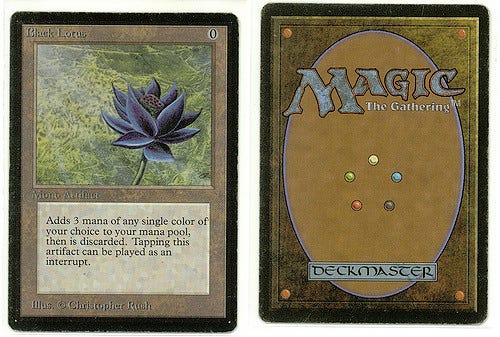
By 2014 I was playing even more Magic. Previously, I’d competed in tournaments where you get the packs at the store and build your decks with whatever random assortment of cards you opened. But after a year of intense playing and trading cards, I had enough of a collection I could compete in tournaments with cards I owned. It wasn’t long until I was playing almost every format Magic has to offer, save for the one that uses some of the game’s oldest cards in decks that cost as much as homes on Tiny House Hunters.

Black Lotus, considered the rarest Magic: The Gathering card

Magic had become my new writing. I’d spend more time studying decks than reading, brewing decks than drafting outlines, watching tournaments online than editing pages. Here was a simple, creative outlet: the content already existed as cards, my sole responsibility was to figure out the best combinations of cards to put into decks, and then to have fun.

But then an old friend and roommate from my MFA program called me up. Why don’t we start writing again? he said. He proposed that we become accountability partners — ensuring we wrote a certain number of pages a week. (We chose, arbitrarily, 7.) It wouldn’t have to be part of a greater work, it wouldn’t have to be anything better than gibberish. We would just need to start writing again, with an audience of one in mind, and then we’d talk about it on the phone.

I said sure.

I was years past trying to write my YA novel. In fact, I was years past trying to write anything new. I had this idea, though, a sort of dystopian parody that sounded mediocre whenever I explained it.

But it was a start.

And it came with the exact amount of expectations I needed to write again:

None.

End Step

During the End Step, players cast spells in preparation for the upcoming turn — casting instantaneous effects that, even if they don’t always win the game outright, set up the game for a player to potentially win. While there isn’t always an action a player can take during the End Step, there is a sense of preparation. The ending is a way to acknowledge the start of something new.

I wrote Petr into existence: a young man whose life is turned upside down after the government kidnaps him on his way to purchase a baguette. His kidnappers drive him to a warehouse, strap him to a chair, and leave him alone in the dark.

He waits.

And then he waits some more.

And then he waits some more.

After a few months of writing inordinately long descriptions of what it’s like to sit in a chair, I went back and rewrote the waiting.

And then I rewrote it again.

My writing partner said my writing was good, but, after months of going back and forth over new pages, old pages, rewritten pages, he flat out said the story wasn’t going anywhere because nothing happens. It’s just page after page of a guy, sitting in a chair in the dark, waiting. He, literally, wasn’t going anywhere.

It’s just page after page of a guy, sitting in a chair in the dark, waiting. He, literally, wasn’t going anywhere.

There isn’t a way to make sitting in a chair interesting for 60 pages, he said.

OK, I thought. So I wrote the beginning of the story, expanded upon the part before the kidnapping.

But Petr always ended up right back where I started: he’s kidnapped, he’s chair-strapped. He waits.

Magic: the Gathering is a skill-intensive game. But like any intricate game, you rarely find anyone’s naturally good at it. You have to practice. You have to put in your time, your reps. You have to play a deck until it almost comes alive, until you know its behaviors, its tendencies, its preferred matches. You have to sit in a chair and do your time and work it until it’s right.

And as wrote and rewrote and re-rewrote, I realized that’s where Magic and writing intersect. Ass in the chair, figuring shit out. Doing reps until it’s just right.

Grieving, too, is like this. It’s a weight that never lessens, but you live, you do your reps, and it goes from a weight dragging you down to a weight you sometimes forget you’re carrying.

Petr’s story, I realized, begins when he gets up out of the chair. After I wrote that scene, of Petr standing, weak-kneed and stumbling toward the stale light of a late winter afternoon, I dropped the manuscript entirely. I was so focused on a story about stasis, of being tied down, of being unable to move forward, that when I finally broke away from a theme of petrification I discovered I never had much of a story to begin with.

Grieving, too, is like this. It’s a weight that never lessens, but you live, you do your reps, and it goes from a weight dragging you down to a weight you sometimes forget you’re carrying.

I also realized I had other things I wanted to work on — had been preparing to work on — without realizing it. Writing a terrible dystopian parody was still writing, was still getting in some reps.

My mother was gone. But my life wasn’t waiting for me to live it. I’d gotten married, moved to Philadelphia, had a kid, started a new job.

It was time for me to get out of the damn chair.

I was time to start really writing again.

Cleanup

In the Cleanup Step, players who have too many cards in hand discard down to their starting hand size. Damage done to creatures is healed. If the End Step is the resolution of the turn, the Cleanup Step is the space between the end of a turn and the beginning of the next turn — the “before” before the beginning, so the beginning may begin.

I don’t play Magic much anymore.

I mean, sure, I still play in a few tournaments here and there, still talk to my New York gaming group via an obnoxiously addicting email chain (Go Team Vents!). But it’s a hobby now, a thing I do in those rare instances where my interests and my free time align. There’s no urgency to my play style, no internal imperative cajoling me to win. When I play it’s for fun, and it’s made me a better player overall.

There’s a picture on my fridge of my mom wearing a black jumpsuit beneath a mustard blazer. She’s got this mischievous smile, this look aimed at the camera that dares the cameraman to try and be as happy as her. I look at it every day, sometimes just to smile and admire her style, sometimes to see if there are traces of her in my daughter’s face.

I’m working on another novel now, about superheroes, and superheroes failing. I’m also writing poetry again, but not about the South, or mothers, or much (if anything) familial. I’m using the fantasy tropes I grew up with, the comic books, the werewolves, the vampires and other horror stuff I loved as a kid and rediscovered as an adult.

Maybe I’ll have a finished manuscript soon.

10 Authors with Tattoos Inspired by Their Own Books

Rob Hart, author of New Yorked

After I sold my first novel, I knew I wanted a tattoo to mark the occasion. And I knew I wanted something from the book. Not too literal, but still identifiable. I spent a lot of time thinking about it. Like with the best tattoo ideas, this one just hit me out of the clear blue.

The protagonist in New Yorked, Ash McKenna, is an amateur private investigator and native New Yorker who carries a weaponized umbrella. “NYed” is how I took to abbreviating the book in notes to my agent and publisher. I like the Sailor Jerry style—that if you don’t know it’s a book, it looks like it could have been pulled off the wall of a tattoo parlor.

Throughout the process of putting pencil to paper and then needle to skin, I got to thinking about authors who’ve gotten tattoos to mark a publishing milestone, like signing a contract or publishing a book. I know a few, but I went looking for some more.

Books and tattoos have a lot in common. Both are intimate — and sometimes painful — acts. They’re addictive, in that you finish one and immediately ache for the head rush of another.

And they’re both a story you tell, but there’s a story they tell about you, too.

Delilah S. Dawson, author of Wake of Vultures (writing as Lila Bowen)

This is the first time I’ve ever gotten the tattoo *before* the book sold. Wake of Vultures is like Buffy the Vampire Slayer meets Lonesome Dove, a book about flipping tables and following your heart even when it’s hard, and the ink was part of the serendipity that took it from idea to book. And, yes, the book cover was in part inspired by the tattoo — vulture feathers.

Joe Clifford, author of Lamentation

The sleeve commemorated a major change in my life, which involved getting two books published, Lamentation and December Boys. It also marked my children being born, my new life, and my recovery from heroin addiction. In short, I get tattoos to mark major life moments, and when I turned fucking forty, my life took off. All these things happened at once. The tattoo, a bio-mechanical design, is based on the conceptual artwork pioneered by HR Giger. For me, it represents a metamorphosis, part man, part machine, an evolution into something better. It also, conveniently, covered up an ex-wife’s name, who I met while a junkie.

Steph Post, author of A Tree Born Crooked

The title of A Tree Born Crooked comes from a lyric in the Tom Waits’ song “How’s It Gonna End,” but the meaning, for me and in the novel, is a positive one. We can’t change the hand we’ve been dealt in life, but the important thing is to embrace who we are and keep moving, keep living, keep breathing, keep kicking ass. Every day. Even if you’re a tree born crooked. You may never grow straight, but at least you’ll keep growing. And at the end of the day, that’s all that matters.

Chris Holm, author of Dead Harvest

I got this tattoo shortly after I signed my first book deal, for Dead Harvest and its follow-up, The Wrong Goodbye. The tattoo is as much an admonition as a celebration, intended to inoculate against the temptation to play it safe. And as someone who’s of the opinion one should never blame the tools for the failings of the craftsman, it amuses me that I’ve got an adverb permanently inked into my skin; they get a bad rap, but they’re utile when properly deployed.

Brian Panowich, author of Bull Mountain

In 2014 I sold my first novel to the biggest publishing house in the world. I was literally ripped out of obscurity by a man who believed in a rural fireman from Georgia who liked to think he could write, and given a gift I never dreamed possible. It was a gift I’ll never forget, so I gave that blessing my entire back. My buddy Robert Twilley designed and inscribed BULL MOUNTAIN from shoulder to shoulder over the course of four three-hour sessions. That piece isn’t up front and center like my old man, or impossible to cover up like the name of the great love of my life, but it fills me with a pride words can express like that pint of screaming blue and black ink swirling under my skin.

Todd Robinson, author of Rough Trade

I’ve been a guy who’s gone from cautionary tale to a source of inspiration for struggling writers. For two books, I’ve gone through five agents and five publishers. My characters are bouncers, the same as I once was. The sentiment belongs to them as much as I need to see it every now and again.

Wally Rudolph, author of Four Corners

The “God’s Work” arm banger is a reference to my first novel, Four Corners, where the black-hearted, single father, coke-head, Ben Shenk, accidentally cuts his hand open with a table saw while daydreaming about racing to cut off his own father’s head in ancient Greece. The book is about family.

“Ben had been taking blood thinners and a crapshoot from the medicine cabinet back home. I call that God’s work. It’ll never heal.”

Melissa F. Olson, author of Boundary Crossed

I’d wanted a new tattoo for a long time, but was waiting until I found something really meaningful. In my novel Boundary Crossed, the main character Lex ends up getting griffin tattoos on her forearms because the griffin symbolizes a protector or guardian. That novel received a lot more attention than any of my other books, which ended up truly changing my life financially and professionally. It seemed fitting that I should commemorate the book with a griffin of my own.

Joshua Mohr, author of Some Things that Meant the World to Me

I got this Rhonda tattoo on my wrist for the protagonist of my first novel. I thought it would be this cool conversation piece, but when someone asked, “Who’s Rhonda?” and I said, “He’s this guy I made up,” people seemed to back away from me.

Colleen by Odie Lindsey

Land

Colleen lay awake the nights, staring at the popcorn-textured ceiling. Her bedroom window was propped open by a box fan, its draft blowing out against the thick Mississippi air. She smoked in slow, labored sighs, a glass ashtray on her tummy as she sprawled on her old twin bed. Now twenty-two, she’d gone from high school straight to Basic Training and AIT, then on to deployment, before circling right back to that rural, postwar starter home, and to her childhood bedroom, a chorus of graduation tassel and sapphire-paneled basketball trophy, her parents biting back the demand that she smoke outside.

She’d get her own place soon. A job and whatever. Sometime.

She could picture the desert, barren and pocked by missile char. Fighter jets rented the vast gray horizon, cracking the sound barrier, shredding the calls to prayer. She had watched them deliver payload on the beige city in the distance, a city almost shorelike against a gulf of sand, and with minarets capped in turquoise. From her platoon’s staging area she saw the explosions, and the tufted clouds that rose silently afterward. At distance, it took several seconds before the concussions of the blasts had arrived to buckle her knees; the space between visual and physical was like being stuck in a riptide, a schism of cause and effect. Colleen could not get over this dead interval. She was terrified of it, but more than anything wanted to find it again. To somehow crawl inside.

The beige city in the distance. The goat herd that wandered onto the edge of the formation. Their bellies distended, their hip bones propping hide. Gray and black goats with stringy beards. Their shepherd, a lanky teenage boy in a beige caftan, wielded a dry reed. His face was smooth and feminine. One troop had laughed about the goats acting like stray dogs, trotting in a pack, starving, their dusted tongues bobbing from the sides of their mouths. Their shrill bleats and neck bells. Starving and trotting toward the soldiers.

Colleen and the platoon had loitered in the sand, having exited the vehicles despite orders to stay put, to remain on the outskirts and wait. They were heavy with equipment, tactical armor to tempered steel plate; their sweat was quickly shed to the oven-dry air. The guys pissed at the back bumper, and cut up, and listened for the order to engage the city. Now and again they’d seen the small, muted blooms of smoke rise from a frag grenade or IED.

They had spot-welded scrap metal to the floorboard of the Hummers. They had not live-fired their A4s. They were staged at distance from the action, on the periphery, waiting. And the goats had charged at them for food. And pop-op-op, brass casings hit the sand. They dropped half of the herd within seconds, and then Colleen and Van Dorn and the rest of the squad had held the shepherd kid back at gunpoint, his face a squall of Why?

This was early in the tour. They still held indoctrinations of faith, honor, manhood, love, remorse, reunion, memorial. Yet after the episode, the simple killing of goats, Colleen had sensed something sensational about herself, about all of them: They were free. Of obligation, code, or history.

Of land. Day upon day, staring into the void of sand, surrounded by it, coated in it, the talc-like granules circulating in her lungs, deposited, expelled, she was divorced from her lifelong relationship to land: how it had defined her, and her parents, and even how earth itself had been defined by others before she was even born. How the passing down or manipulation of soil determined both who you were and what you weren’t.

Yet looking across the desert, ridiculous in its capacity, all direction marred by only what was temporary, truck to tent to trailerlike CHU barracks, to the drift, even, of landmass, the dissolution of history by wind, Colleen understood that for the first time she was rendered landless — but with total authority. There was nothing to accumulate, to pay down, to pass on. No demarcation, save sand and rock and horizon, and the ability to navigate it at will.

The void was lawless, and gorgeous with opportunity. They were able in theory and by firepower to traverse the space as deemed fit.

It was strange to her that the majority of her unit still stoked the narratives that they felt relied upon them: the things they owned or could potentially own; the foods they had always eaten, or the women and kids who depended on them. The talk was not of transcendence, but of combat pay and mortgages and church; of the predetermined highways that would guide their new, postwar pickups. They yammered about GI Bills and VA loans, and the fixed-rate rewards of making it home in one piece.

Again, this was early on. By the end of the tour most of them didn’t care if they ever redeployed.

One morning, a few months into that first tour, Colleen had requisitioned a Deuce-and-a-Half truck, then veered off of the asphalt two-lane and into the gut of the desert, alone, carving the sand, fishtailing wildly. She looped the vehicle a time or two, marking great quarter-mile circles, and then cut deeper into the expanse, weaving in snakelike curls. Her vision and hands forged new pathways with the wheel; her tires left ruts where none had rutted. She ran out of gas in the middle of everything, and then watched the sand-drift devour her tracks. She was scared. Thrilled. She wriggled out of her clunky, ill-fitting body armor, and she squatted and pissed in the sand. Laughed so hard that she teetered onto her backside — and then laughed even louder, and applauded for nobody.

The roads, she thought now, as she stared at that popcorn ceiling. “The land,” she whispered as she looked to her pink bedroom walls.

She got out of bed, and tiptoed across the room. Chewed on her thumbnail and looked out the window, to the moonlit pines that walled the edge of the property. In memory, she again heard the bleating of the goats, the hobbles, the pop-op-op. She remembered the balance of the herd trotting over their dead.

They had given the kid a wad of USD for the damage, joked, “Get along, now, little haji.” When he had continued to protest they waved him back with rifle barrels. Corporal Van Dorn then razor-wired a nanny to the hood of the Humvee.

Picturing Van Dorn made her eyes well. Colleen shuddered, and wiped her palms against her cheeks, and then rocked on her heels to try and strangle his memory — though she knew this would never, ever happen. She smoked another cigarette, and stared at the lighter. She flicked it and flicked it, then hurled it across the room.

Cried, Beat Each Other

She had come home on a chartered United 777, landing at Fort Bragg after a stopover in Ireland, a layover at an airport terminal full of whiskey kiosks, and with windows that showcased a green landscape shined by rain. It was the loveliest place she’d ever seen — a judgment aided by the daze of jet lag, and the lens of the Occidental: lipstick, skirts, 3-D movie ads. Colleen, swollen with optimism, swore she would return to Ireland one day . . . if she could remember the name of the town.

Stepping onto the tarmac back at Bragg, she felt nothing, save annoyed. Everyone else’s lovers and wives kept bumping into her. They carried handhelds and placards, and children who wagged tiny American flags. They knocked her about, not even an “Excuse me,” as she cut across the steaming black asphalt, looking for recognition.

Her mother stood in back of the melee, in Dress Barn denim, crying. Colleen walked up and accepted a too-long hug, and was told that her daddy wasn’t there because of work, because the fields back home were snowing in cotton.

“Of course,” Colleen said. She wondered, though, if maybe her mother, Janette, hadn’t encouraged this arrangement. Or, conversely, if her father hadn’t tempered his own desire, in order to let the two vets share their moment.

Janette hugged her several more times, and then returned to the crusty, base-side motel when Colleen’s unit was beckoned to their barracks. She told Colleen that she was going to stay for however long it took to finish things up. That they would drive back to Mississippi together. Janette then insisted that Colleen name the food she had missed the most, and Colleen couldn’t really think of anything, because missing food was a frivolity that had vanished months before, when the actual missing of anything could no longer be satisfied by shit concept or dream. When pushed, Colleen threw out that the catfish plate from Cracker Barrel would be awesome, thanks, and Janette said she’d bring one back ASAP.

The subsequent communion, a to-go catfish dinner on a weather-beaten picnic bench, soggy batter and Sysco-esque bins of tartar sauce, was meant to bridge a lifelong rift. The squeak of plastic fork on Styrofoam, the straw-suck of sweet tea and the sticky glaze on fried apples brought the brokering of her mother’s own National Guard deployment, Operation Desert Storm, 1991.

“You know, Mama, you never talked about your mobilization,” Colleen said.

Janette glanced up and smirked, then stabbed at her fried okra. “Well. You were a toddler when I was called up. Too young to understand what — ”

“I could feel it, though. After you came home. Always.”

“That’s dramatic,” Janette said, rolling her eyes. “Hell, Colleen, my greatest regret is that I joined the Guard even though I was plannin’ for a family. That I spent a year of my life gone. I cried every single day over there, then smothered you with hugs when I got back.”

Colleen said nothing.

“What?” Janette asked.

“Only two times I remember you even talkin’ ’bout the war, Mama. One was the screaming match you and Daddy had after you refused to attend church in uniform for Veterans Day. Two, when you gave me your campaign service medal after we lost at regionals, seventh grade.”

“You were so good at basketball. Why didn’t you pick it back up in high school?”

“You said I was your hero,” Colleen continued. “And Mama, you pinning that medal on my chest was awesome. But, like, that was it. That was all.”

“Well. Just try and — ”

“I still feel shut out by the silence. The specter. The feeling that Daddy and me was holding you back. Were keeping you held — ”

“Hey!” Janette barked. She stared at Colleen, then reached over and patted her hand. “There was just nothin’ I could have told you about war. Nothin’ I could say. You know that now, right?”

Colleen stared at her lap.

“Wadn’t about you, babe,” Janette said, then opened the Styrofoam boat that housed their dessert. “You know that now.”

They moved on to commentary about double-fudge cake.

Two days later, Colleen told Janette to go on home, that out-processing was going to be another week of standing in line, of hearing tests and head evals, of forms and formations and who knows what else. Her mother assured her that it was no problem to wait, and asked Colleen if she wanted to talk.

“Naw. I’m good,” Colleen said. “Promise.”

They left it at that. Janette hit the road.

That night, Colleen and her squad went to the base PX, and bought handles of whiskey and tequila. Within an hour the guys were pissing on the hedges outside the white clapboard barracks, and, jokingly, on each other. Two guys from the motor pool beat each other to pieces, then got up and hugged, and cried, and pushed their foreheads together, blood smearing, then clacked their bottles and swapped I-love-you’s, and everyone else called them dick-lickers. Colleen and her cohort had laughed at this spectacle, because they needed to laugh, and more so to hug and kiss, and even more so to demolish each other, to make sure the hugging and kissing didn’t spread.

The lot of them then decided to go into town and lay waste some whores.

The club in Fayetteville had been loud, smoky, nameless. Beneath the drench of knockoff perfume was an air of mop water and puke. Uniformed were everywhere: drunk, loud, immortal. They were immune, still, to the bill cycles and family reunions, parent-teacher meetings, gas prices and cuckoldry that would quickly re-latch and debilitate.

Colleen sat at a small lacquered table while her squad members embarked with various shades and shapes of women, in and out of tiny, makeshift rooms partitioned by floor-to-ceiling curtains. They’d laughed at her as they left her alone; “So sue me,” they’d say, and then ask her to wish them luck. She did. The whores periodically came around to Colleen, and asked her to buy them a round. She did. The women hung around long enough to brag about their ability to make anyone happy — wink, wink — and Colleen grinned and was flushed, and looked to the table but said nothing. The women moved on. She sat alone and stared around the room, and drank. And drank.

At some point a couple of way-gone roughnecks, Airborne, arm in arm and staggering toward the door, stopped at her table. They stared down at her, their heads keeled to the side like confused dogs. Seconds later they burst into laughter, one falling to his knees in hysterics while the other giggled through an apology. “Really. We’re sooo glad you’re here,” he said. “Like . . . hoo-ah, sister!”

Colleen betrayed no expression. The roughnecks laughed harder at this, their rage and amusement so clear on their skin, their combat so real through their diaphanous skin. They laughed at her until a grizzled first sergeant came out of nowhere and shoved them out the door — deaf to Colleen’s protests that they be left the fuck alone; she didn’t need any son of a bitch looking after her.

During the brigade’s final day of out-processing, she informed her CO that she would no longer drill when they got back to Mississippi. She told him to transfer her, no questions, to Inactive Ready Reserve (IRR), whereby she was no longer responsible for any Army anything, save waiting on word of her honorable discharge and VA bene fits. He agreed to this. The CO had heard rumor of what happened between Colleen and Van Dorn back in theater. He’d heard enough to know that things would be simpler without her.

She signed a handful of forms and the war was done. She got on the bus back to Pitchlynn, Mississippi.

At Night

Some months after redeployment, Colleen was in a dark room traced by the odor of sweat and cologne, and maybe semen. She and the boy kissed a little and then she broke off laughing. The red glow of alarm clock digits spread across the white dorm refrigerator, which she opened in order to take another beer. The boy leaned in and bit her neck as she gulped. His hands then slid over her, grappling her breasts, and she wobbled over and rested against what she guessed was a large padded recliner. A La-Z-Boy like her father’s, situated across from a television, as was his. The beer can on her lips, the boy’s lips on her neck, she stared at the slip of white hallway light at the bottom of the door, and she thought about her CHU trailer at forward ops, about the hairline fissure of light that had poured over the tall concrete barriers outside, and into a crack between the corrugated metal wall and corrugated housing of the air-conditioning. She remembered being lodged in that trailer, hour after hour, ordered to wait, to stand down, practicing Arabic commands while aiming her M16A4 into the mirror — La! Ogif, shithead! — listening to small-arms re and to the men mobilizing outside, packed in too tight to pace, too tight to scream, the fracture of light was salvation, a way out.

The boy turned her and walked her backwards, until her calves hit the edge of the bed. “Hold up, grunt,” she said, teetering. She drained the beer and dropped the can on the linoleum. She giggled, then pulled him onto the mattress. His breath was a fashioning of alcohol and smoke and fading spearmint gum, and his fingers fumbled to unfasten her bra. She guessed he wasn’t more than three years younger, probably less than two. Yet he moved with the inept, throaty greed of a fifteen-year-old. Colleen refused to let this bother her, mostly, and finally reached back and popped the bra clasp for him. He said nasty things and she ignored him, wanting only another beer. His t-shirt came over his head, and then hers the same. He clenched her dog tags for a second, without recognition. She stared at that strip of white hallway light and tried to remember how she’d picked him up. She marked the smell of unwashed sheets; the feel of a handed-down comforter sent from home. He moved on top of her, nearly muzzling her with his mouth, his hips and penis grinding into her. She reciprocated to a point, the puddle growing inside, aching, her body soon wetting his fingers.

She’d spent that morning at the Veterans Administration Outpatient Clinic, Pitchlynn, Mississippi. It was her first time visiting the converted Motel 6, and she had since determined it her last.

Under the clinic’s gum-colored portico, two passenger vans had idled, waiting to shuttle the fucked-ups to the big VA hospital in Memphis. The van’s civilian drivers had cut their conversation in order to ogle Colleen’s approach. Her eyes hit her feet as she stepped past them and through the sliding doors.

Coughs, wheezes, wheelchairs on commercial carpet. Beyond the reception desk, middle-aged and old men loitered in clumps, reeking of body musk and tobacco. Synthetic-blend jeans and nylon jackets, insignia on black baseball caps, had memorialized their service.

An hour later she’d been lying to — no, corroborating with — the VA claims investigator — who grilled her for one, tiny complication of her tour. Physical or mental trauma. Anything they could claim.

“Surely there’s somethin’ you can hang your hat on,” he’d prodded, his wiry steel hair and pilled black turtleneck. “Some kinda pain worth anything?” His paneled office wall featured a poster of a Stryker vehicle. A plastic ficus tree was wedged in one corner, its leaves muted by dust.

(A Stryker, Colleen remembered. Bodies on bench seats, crammed and jostling, the wheels crunching landscape, the lull of engine strain and the rhythmic clash of gears. Your helmet clacks the armored panels behind you. Clacks the helmets of the troops sitting on either side. Heavy with web gear, mask, Kevlar, weapon; the air-conditioning always out, the cooling vests not worth shit, you can’t believe the constriction, the hour after hour in 125 degrees. In 130, 150, gulping water, so much water; everyone but you can piss without removing body armor. Banging along, pressed against each other, their cock tips dropped into empty Gatorade bottles, sweating, unable to do anything but listen to the chatter of the driver and the M2 operator, trying to dodge the cube of sun blaze from the open hatches above. Sweat and gears, and the trembling need to piss, the consideration of pissing in your BDU pants, terrorized by shame but having to piss so bad you buckle in contraction, so bad you can feel the first blossom of tract infection, and you pray for the strength just to wet yourself. All of this alongside the constant, practical concern about what faceless object will kill you. Not if, not when, but what.)
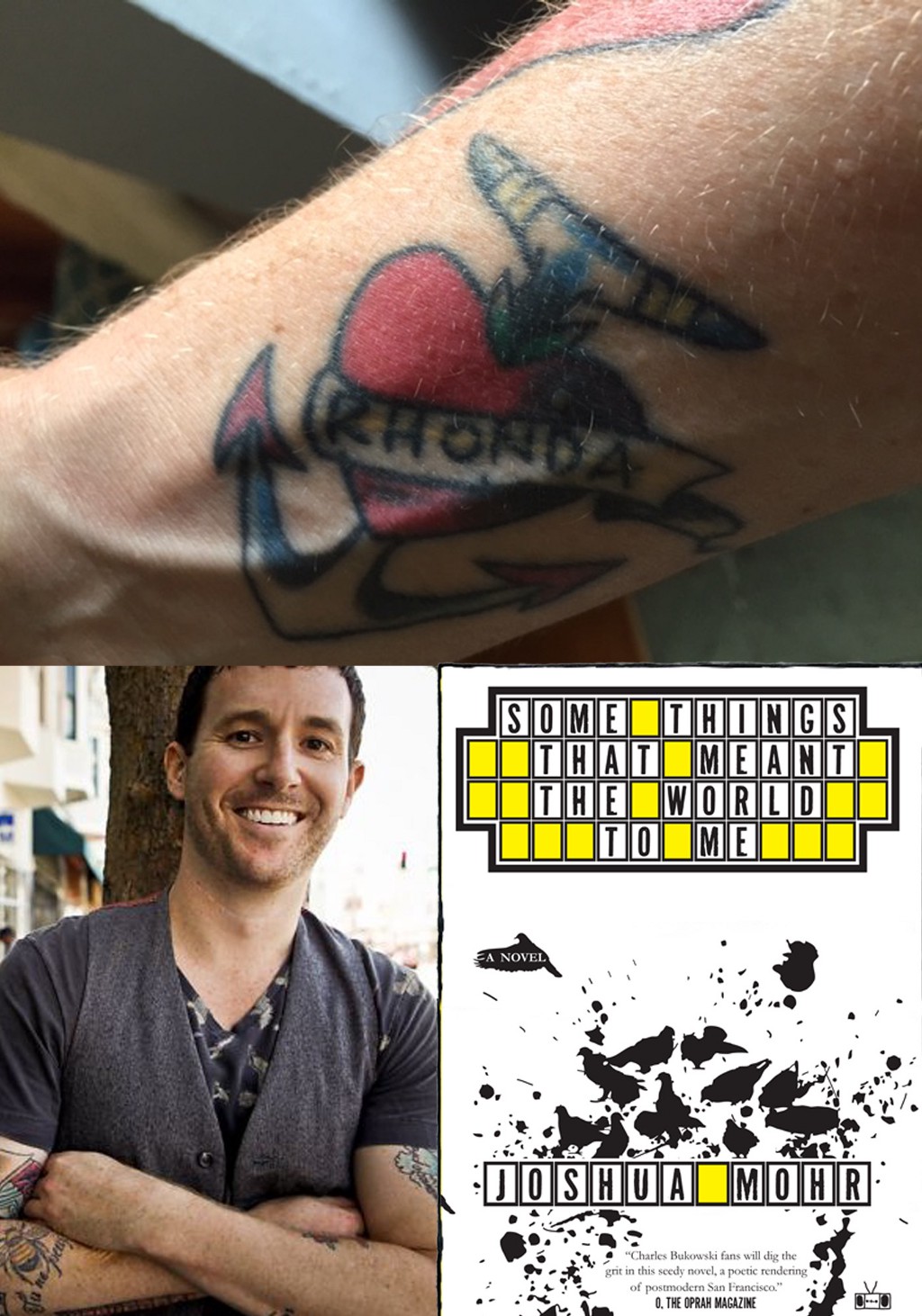
“Think, girl,” the man had ordered. “Let’s get paid.”

“I,” she had whispered.

He cocked an eyebrow.

“The, um. Warts?”

“Gotta speak up.”

“Plantar warts?” she’d asked. “My feet are still screwed up from them boots.”

“Warts!” The investigator laughed into his lap. “We can work with this. Now, if we was talkin’ Vietnam, hell, it’d just be part of the deal. But today?” His pen slashed at the appropriate form. “Warts it is.”

She had come to the VA seeking counseling. Someone to talk to. Someone who could explain and then exorcise her compulsion to hurt, to trash herself, to do whatever she could to get back to the elating brink of trauma; to random, visceral, adrenalized trauma.

But you couldn’t just walk into the walk-in clinic. You had to go through the process like everyone else: intake paperwork, biomed overview, financial evaluation, wait; benefits categorization, primary physician assignment, claims screening, wait. Instead of seeing a shrink, or even a nurse prac scripting SSRIs, Colleen wasted half the day being humiliated for her postwar weakness . . . then shamed into filing for a payout over warts.

Leaving the claims investigator’s office, she’d been dispatched to give blood and urine, meeting the requisite demand of a physical before her claim could be filed with the federal government, perhaps as an action against the federal government, in part because the Feds gave out unnecessary handouts. This was Mississippi, of course.

Meanwhile: wait.

The men who sat around her in the VA clinic lobby were black and white, using canes or in wheelchairs, their pajama pants legs tied in a knot. Elderly wives in cheap wigs sat beside them. The Weather Channel beamed from a wall-mounted television.

They stared at her. She sat in a row-bound chair, adjusting her legs, her ass and her everything, until the clerk finally called her number. He gave her a plastic cup, and pointed to the unisex restrooms. She went inside, noting the chrome handrails by the toilet, her nose sorting the communal bodily smells. Read the posted instructions on how to give a sample: WASH HANDS THOROUGHLY BEFORE TOUCHING PENIS. PULL BACK FORESKIN IF APPLICABLE. URINATE FOR 3–4 SECONDS INTO TOILET. DO NOT TOUCH PENIS TO INTERIOR OF CONTAINER. FILL CONTAINER BETWEEN 1⁄4 AND 1⁄2 FULL OF URINE FOR DOCTOR.

She pissed on her fingers and knew she’d contaminated things. Wiped herself off and tugged her panties up, and then stared into the mirror until the urge to cry had passed. She returned to the clerk, placing the sealed urine cup on a Tupperware cake tray at the edge of his desk. He ordered her to wait, said they’d call her in an hour or so for the blood draw.

“No worries,” Colleen responded, and marched out the sliding doors. She drove to the string of cheap bars near the campus.

Cast in the seam of hallway light beneath the dorm door, she flipped herself from under the boy. They peeled their clothes off, and she mounted his thin frame. She positioned his erection behind her; he struggled to place it inside.

“No,” she ordered.

“Condom?” he asked.

“Christ, no.”

She moved her pelvis in a slow, circular rhythm, her hands palming his hairless and slightly muscled chest. She pegged him a high school sideliner, only recently divorced from dreams of further athletic pursuit. He groaned and again tried to penetrate. “No,” she repeated, moving atop him, circular and fluid. She reached between her legs for a few seconds, then used her self-slicked hand to cradle him outside of her body; she rocked up and down, his penis gliding between her buttocks and wetted palm. Slipping against each other, he so desperate to enter, she so intent on rupturing this need, so insistent on receiving the pleasure, the puddle, as generated by only exterior heat. His cock lodged tight between her hand and buttocks, Colleen bucked back slightly so that her vagina remoistened him, her hand stroking him as she rode up and down. Her climax began in waves that radiated outward, downward, inward as she grasped him, the tide of elation moving her to spasm; her pelvis backing into him, her gasps her kneaded breasts her hand sliding faster, up and down and up and . . . The tickling warmth on her back as the boy came in an apex of deprivation.

He gulped like a child. She shushed him and gripped his involuntary pulses.

Buried in the darkness was the sound of a tiny gear. Colleen knew exactly what it was. Because every troop seemed to have taken the same shots: Vehicle, sand, mortar fire; helicopter, sunset, the Coke logo in Arabic. Interiors of CHU barracks, blast scenes, bloated dead goats and hajis . . . as frequently cut by the automatic shutter closure of a dead lithium battery. The tiny rev of a camera gear. Click.

(She had no idea that war and campus were conjoined by a love of slut-shaming.)

She got one good punch in before he covered his face, and another few about his neck before he threw her to the floor. She was silent as she got up, focused on finding the device in the pitch-dark. She kicked open the small refrigerator, using the light to check the closet. He called her a white-trash bitch, and considered forcing her into the hallway, where she’d be poised for ridicule by the brothers. His eye closing from the punch, he instead covered himself with the comforter.

She found the camera hidden in bunched clothes atop a hamper. She threw it against the wall, splintering the darkness with the scatter of plastic shrapnel. He cursed again as she grabbed her clothes and stormed out. She ducked into the men’s hallway bathroom, dressing inside a filthy stall — her bra and panties and one sock absent — then marched back into the hallway, toward the exit. When the boy’s face peered out from behind the metal door she kicked it into him, and he howled in pain. She flew down a flight of stairs and through a large front room, a space defined by worn leather couches, by crest-like insignia and Greek letters on the wall. On a large flat-screen television, SportsCenter chattered away for no one. She marched out of the house, between the white columns and onto the front walkway. She did not know the campus, and was unsure of how far it was back to the bar, and her car. She had not remembered to grab the memory card. She marched past the genteel university buildings, wondering how many more nights out she could take. Headlights passed over her, those of SUVs mostly, stuffed with drunken, privileged kids, kids that were her age give or take, a few of them teasing her clumsy stride. Her footfalls were hobbled by plantar warts. Her shirt clung to her back.

VFW

Colleen pulled into the oyster-shell parking lot of the VFW, then killed the engine. Buried by moonless night, she sat and listened to the snap of the flags in the hot breeze, American, POW, state flag with stars and bars, and to the clank of the metal fastener and guide rope against the aluminum pole. She lit a Misty.

The building looked more like a machine shop than a clubhouse: blue corrugated exterior and white metal door. A quartet of pickup trucks dotted the lot, and a trace of country music seeped from inside the canteen. She had passed the hall all her life and never paid it any mind. But she couldn’t do another night at an in-town bar, in Pitchlynn or even Oxford or Tupelo. Another morning coughing up phlegm, reeking of stranger.

She wore her desert boots and a denim miniskirt. She paused as she reached the building, took a deep breath and pulled the door open. Stepped into the tight room of damp, orangey light. The walls were adorned by dime-store trinkets and bumper stickers, guide-on pennants and cardboard crosses of Malta. Walking toward the bar, she watched herself in the large mirror on the wall behind it. She saw a handful of good ole boys with beat faces, whose VFW caps lay at on the bar by their drinks. There were black plastic ashtrays and a small television in the corner. Fox News, muted. A thick drift of smoke.

They stared and waited for her to ask for directions, or maybe to ask for her boyfriend. One of the men, Vietnam-era, bit the side of his lips. The bartender, tall and gray-bearded (also Vietnam, or maybe Desert Storm), nodded at her. The few elderly men, Vietnams, maybe even a Korea, looked to the television, or into their drinks.

“Help you, ma’am?” the bartended asked.

“Wouldn’t mind a drink.”

“Uh-huh,” he said. He looked to his colleagues, as if wanting someone else to reply. “Um, darlin’, I don’t mean to be unkind. But you know we’s a private club, right?”

“Yeah,” she said. “I know.”

“Well.”

“Well?” she asked.

“Guess you’re a vet?”

She nodded.

He lit a cigarette. “We appreciate that. And we glad to have ye. But the thing is, you have to join up. Not just qualify, see?”

“Didn’t know that part,” Colleen said. She nodded, and started to turn back to the door.

“Hell, Edwin,” one of the men said. “Give her a goddamn drink. She’s earned it.”

The bartender pinched at his ear. “Sure. Yeah. But after tonight, you’ll have to apply, okay? Ain’t some social club. You’ll, uh, have to apply.”

She pulled a stool from the bar, ordered a Jack on ice. The room was mostly quiet. One of the men looked at her. “Desert?”

“Yup.”

The men talked of the coming harvest, of Southeastern Conference football. They smoked religiously, the exhalation clouding a string of red Christmas lights that ran along the bar shelves. Colleen ordered another drink, then another. She chimed in on their conversations of farm equipment, and cursed harder and with more flourish than their wives or mothers or daughters. With whiskey-watered eyes and rounded consonants, they found that the binding link between all was the stinging legacy of plantar warts — a recognition that had them all guffawing. Someone suggested Colleen might like to apply to found a Ladies’ Auxiliary. She figured that she was qualified to join any VFW post — Ladies’ Auxiliary or not — and considered stating this. But she also gauged intent, and let it slide, Thank you, and then ordered a round for the house. The men raised their glasses.

Beyond the drift of the recorded pedal steel rose the sound of car wheels skidding outside, and the thump of bass from a loud stereo.

“Aw, hell,” the bartender said. “Here comes our newbie.” The men snickered. The Maybe Korea paid his tab, noting that he was gonna get out before it got too wild. His body just couldn’t take it no more.

“Y’all still got all that crazy in you,” he said to Colleen. “Still don’t know how to be home.”

She smiled and shrugged her shoulders.

Corporal Van Dorn walked into the bar, desert boots on the floor, a boisterous How-dee! to all in attendance. She turned to face him and he froze for a second, before breaking into grin.

“No way,” he said. “Thirty-fuckin’-eight? Whatchoo doin’ here, girlfriend?”

Colleen turned back to the mirror. Van Dorn walked over, sat at the opposite end of the bar, slapping one of the men on the back. “What damned cat dragged ole Three-Eight into this joint?” he asked. “She’s a sight for soreness!”

“She ain’t no thirty-eight years old,” the bartender responded, handing Van Dorn a Bud Light. “Looks about twenty to me. I mean twenty-one!”

“Naw.” Van Dorn snickered. “It’s a joke we have. Right, Three-Eight?”

“Sure,” Colleen said.

“Thirty-eight is the MOS job number for Civil Affairs,” Van Dorn explained. “Desk jockeys. Now, y’all geezers don’t recall that because you never had to consider chicks. Army puts most of the girls in Three-Eight to keep ’em safe and shit.”

“So you’s Civil Affairs?” one of the men asked her.

“No.”

“Just a joke.” Van Dorn snickered. “Right, Three-Eight?”

Colleen turned up her drink, and nodded for another. She lit a cigarette, the flame of the lighter quivering. A couple of the men asked Van Dorn how he was, and he held court as he blustered and bragged. They tolerated this, because storytelling — his or anyone’s — cued up the opportunity to indulge their own tales, to again revisit their trauma.

So the men did just that, they ran a story cycle, memory to memory, barstool to barstool, and on down to Colleen.

Van Dorn snatched the silence from her. “I tell you one thing y’all ain’t never seen, and that’s a woman in full web and chem gear, middle of a combat zone, tryin’ to cop a squat!” he bellowed, and some of the others chuckled in response. “Hey, Three-Eight? You remember th — ”

“You so interested in stories, why don’t you go on ahead and tell ’em?” Colleen asked.

“How’s that, girl?”

“Go on, hero,” she said. “Tell ’em about us. ’Bout you and me, and what we done.”

“Huh-oh!” One of the old vets snickered. They turned to Van Dorn, eyebrows cocked in wait for steamy detail.

“Hell, Three-Eight,” Van Dorn said. “Nothin’ to tell.”

Colleen sucked her cigarette, and watched the flash are in the mirror. She slid one hand to her lap. She could picture the cubes of sunlight through the small APC inlets. Could almost feel the weight of his torso, heavy, his body pinning her against the vehicle’s padded bench seat, his hands cuffing her wrists.

“Come on, stud, tell it!” she barked.

“Whoa, girl,” the bartender said. “I think maybe it’s time we — ”

“I said there ain’t nothin’ to tell, Three-Eight,” Van Dorn fired back. “Nothing in the world I can tell these men about war that they ain’t already lived. I mean, look around you.”

The bartender continued, “I think our new friend has had a bit too — ”

“Who do you think these men are?” Van Dorn asked. “What don’t you think they know? Hell. You think they don’t know killing? They know killing. You think they don’t know heartbreak? Terror? Torture? What on earth am I gonna tell them?”

Her eyes watered, so she stabbed her fingernails into her palm.

“Shit,” Van Dorn continued. “You know what, though? I guess I could tell ’em what it is to have to stare at a blood spot on the ass of your fellow troop ’cause she’s up and run out of Tampax. Remember that, Three-Eight? Huh? Guess I could talk about having to stare at stupid brown roots growing out of dye-blond hair. About having to negotiate combat while flanked by someone verifiably weaker than you.”

“Anything else?” she asked.

“Woman with hairy legs? They prolly don’t know about that. That the kind of thing you want me to talk about?”

After it had happened, she’d been unable to confide in anyone. She had walked around camp bowlegged for days, wearing no undergarments. When she could no longer stand the pain of mobility, Colleen had claimed flu to get off of rotation, then stayed on her cot for most of a week. She did not eat much, and she was silent, and she swabbed herself with aloe vera sunburn gel.

Staring at Van Dorn, she still couldn’t understand why.

“Was I the first?” she asked. “Or did you burn other girls?”

He looked at her as if she were crazy. “Like I said, girl. Nothin’ there.”

The men jostled around on their stools. One motioned for another drink.

Colleen lifted her glass. “Okay, I’ll get you started. So we’re in the Stryker vehicle, just you and me. And I don’t know about you, Van Dorn, but the fact that you were supposed to, well, babysit me ’cause I wasn’t supposed to engage in combat was a bummer. Pissed me off, bad. Still does.”

“True, that,” Van Dorn said. “I was — ”

“Shhh. Hold on, I’m settin’ the scene here!” Colleen waved him down, and a couple of the men chuckled. “It was kind of a blur, all so fast. ’Cause I tell you what, Van Dorn, when you pounce, you’re quick, man.”

He sipped his beer.

“Oh, and y’all, that vehicle stank.” Colleen looked at Van Dorn. “You smell sour, dude. And your chin? I can still feel your stubble scraping my neck — ugh. And, let’s see . . . Oh. The screams. My screams in that goddamned Stryker were intense, right? Couldn’t even hear the firefight. Couldn’t hear nothin’ but me screaming. Hell, I even wanted me to shut up!”

The bartender cleared his throat to try and break the story up.

“And my god, your erection!” Colleen said. “Now, there’s a short story these men haven’t heard. Your erection, still in your pants, pokin’ all up against me while you pinned me down. I mean, one minute you’re one of us; the next, your little pecker is jabbin’ all over me!” Colleen forced a laugh. “You wanna take it from here?”

Van Dorn stared at her.

Colleen rolled her eyes. “Okay, be a chickenshit.” She continued, as if setting up a joke. “So, boys, he’s pinning me down, right? He smells like a sow and his boner’s poking all over creation. And somehow, despite everything I’m still, like, Okay, here it comes. We all know what’s up. This troop is gonna do his biz. Gonna rip my pants off, and then his down, and then he’ll spit on his fingers and la dee dah, whatever, right? I’m thinkin’, like, Let’s get it over with, Stinky.

“Sorry, gal,” the bartender said. “This isn’t the type of — ”

“But this crazy mother didn’t even unbuckle his pants! Shit, y’all, he just shoved his hands down my panties and, no kidding, um . . .” She blinked back tears for a second, then caught herself. “I mean, I thought an IED blast had seared us from beneath the vehicle! It burned somethin’ awful down there! I flopped like a fish on a bank. Flailed so hard I threw him off of me. And guess what?”

Nobody answered.

“This perv had a Zippo lighter in his hand. You believe that?”

Nothing.

Colleen snickered, sniffled. “Yeah. Like, he didn’t even wanna rape me. He just wanted me on fire.”

(Afterwards, she’d pushed her BDU pants down to her knees, and peeled off the rayon panties that had melted to her pubic hair. When she wailed like an animal, Van Dorn screamed for her to shut up, saying, “Jesus, I’s just fuckin’ around.” The air in the vehicle was clotted with the smell of singed hair and flesh.

Colleen had lain on her back, on the bench seat, rocking, bawling. She’d been confused when Van Dorn gently handed her a bottle of water, then stared as she doused the blisters. “Just fuckin’ around,” he’d repeated. Gripping the corrugated black plastic of his rifle barrel, he began to bang the butt of the weapon against the Stryker’s metal floor, ordering: “You” — bang — “calm” — bang — “the” — bang — “hell” — bang — “down” — bang. “Now!” In the silence that followed, he smoothed her hair with his fingers, muttered, “I barely even flicked.”)

Through the bar’s smoke and neon, Colleen stared at him. She wished to god she’d had the old Browning .22 her father taught her to shoot with. She’d inhale, hold her breath, line up, squeeze. Squeeze, squeeze, squeeze. Center mass, as the Army commanded. She figured Van Dorn might even laugh when he saw the .22. Might hold up a hand and charge her, convinced of his ability to absorb the rounds in his palm. All the better, she thought. All the better he forget the kinship between her Browning’s 5.6mm bullet and the 5.56mm round of the carbines slung in theater. Forget that the U.S. military chose the minuscule 5.56 round for a reason; forget that instead of a fist-sized cavity left by an AK-47, that counter to any Cold War profundity, the sole intention of the 5.56mm round is to ricochet: off the bones, sinews, spine. Forget that you can in fact shoot a man in the legs, or the ulna, and the round may well bounce all the way into the abdomen, shredding muscle and artery. She’d give it all to him, center mass just as trained, secure in the pinball-like reflection of the bullets inside his rib cage.

“That about right?” she asked him. “Anything I forgot?”

Van Dorn looked to the mirror behind the bar. The men turned their eyes from his reflection.

“What I thought,” Colleen said. “Anyhow. I’ll just let you get back to tellin’ these boys what a badass you are.”

She fumbled in her skirt pocket for her keys and some money.

“Hey?” the bartender asked, startling her. “You good?”

“Well,” she said, pausing to consider. “I’m better.” She threw a $20 on the bar, got up and walked to the door.

“Come see me,” the bartender called out. “If you need to talk or somethin’.”

Within a minute Colleen was stomping the gas pedal, kicking up a hail of oyster shells as she peeled onto the county road. She was drunk, and the car drifted across the yellow centerline now and then. No matter; she was heading deep into the countryside, nowhere near anything, let alone a cop. The clean night air pushed like a river against the mildewed odor of the Cavalier. The tires squealed as she took a curve, and her headlights ashed over vast fields of row crops, cotton and soybean and corn, and the end- less steel trusses of center-pivot irrigation arms. She was not Civil Affairs. It didn’t matter what her job was, anyway. She held an intimate knowledge of every weapon at the company’s disposal. She could break down and clean and refit and reassemble any standard-issue rifle — SDM, A4, M16/AR-15, M203 — any of it, faster than anyone in the battalion. M60 and .50-cal. “What the?” She pounded the wheel as the tears came, then gunned the accelerator, the car lilting as she hit the dips in the road.

Her life was pinned between Highways 7 and 15. It always had been; whether as a child riding to town with her father, or on the middle school bus, or while tooling around with handsy high school boys. Her homeland had been carved up before Colleen was even born. Driveway to asphalt, highway to interstate then back again, she ran on a track forged by someone else, by men; a map, a guidance system, a grid, thrusting her from point to point, repeat, repeat, the cycle punctured only by trauma.

She whipped the Cavalier off the road at full throttle, thrusting into farmland, nearly rolling the vehicle. The tires threw gravel, then dirt, and then the windshield was gummed with plant life. Young corn stalks lashed the window frames, their row spacing a drumroll, their shorn silks and tassels, confetti. She then steered the vehicle into wide arcs and curls, exactly as she had in the desert.

As the car shaved the crops, its engine near redline, Colleen knew that nobody had ever forged that particular pathway, in that particular way. She laughed at the landlessness of it all, at her authority in motion, and then yelled out in glory with the choir of snapped stalks . . . until the Chevy smacked dead into the irrigation tower and her face cracked the steering wheel.

Blood streaked her chin as she processed the pain. She listened for fighter jets, or the bleating of goats, her muscles locked in anticipation of a blast concussion.

When nothing came to engage, Colleen let go of her fear. She lay her head on the wheel as her body went slack. Her consciousness drained out to the wobble of gooseneck pipe that spanned the quarter-mile sprinkler truss.

She wasn’t dead. She was twenty-two years old, and very much alive.