“Sappho at the Edge of the Bayou” in If Birds Gather Your Hair for Nesting by Anna Journey
In “New Genres: Domestic Fabulism or Kansas with a Difference,” published in Electric Literature in 2014, Amber Sparks defines fabulism as “often interchangeable with magical realism… [it] incorporates fantastical elements within a realistic setting — distinguishing it from fantasy, in which an entirely created world (with constructed rules and systems) is born.” Her definition of “domestic fabulism” is that it takes the elements of fabulism — the animals that talk, the weather that wills itself into being, the people who can fly — and pulls them in tight, bringing them home. Domestic fabulism uses elements like a magnifying glass, or rather, a funhouse mirror.
I’m fascinated by the way in which women’s literature has always drifted into the mythological yet always returns us to the kitchen table.
As a reader, I’m drawn to this mirror. I’m fascinated by the way in which women’s literature has always drifted into the mythological yet always returns us to the kitchen table. Certain poems possess this quality more than others. To pick a few from the past six years: Anna Journey’s “Sappho on the Edge of the Bayou” from If Birds Gather Your Hair for Nesting, 2009; Kelly Whiddon’s “Riverbodies” from The House Began to Pitch, 2012; and Ansel Elkins’s “The Girl with Antlers” from Blue Yodel, 2015.
Before discovering Amber Sparks’s definition of “domestic fabulism,” I referred to the magical elements in these poems as “surreal.” I turned to blogger Shanna Dixon’s writing on contemporary Southern women poets. In her March 15, 2013 entry, Dixon begins:
The psychology of the Southern mind incorporates both realism and surrealism. While the subjects and characters within poetry are often depicted stark realism, the settings and surroundings often draw from surrealistic imagery, offering psychological insight into themes through a character’s surroundings.
The Southern mind takes the familiar setting — the domestic — and infuses it with magical, mythical elements, as in Journey’s poem: the “rust/ coppering down the fine/ edges of everything.” And what is “everything”? The specific images and themes that recur in the work of Journey, Whiddon, and Elkins include danger, mosquitoes, alligators, kudzu, the dead, cemeteries, trees, kitchens, ritual, family, alcohol, and water, seemingly ever-present in the Southern landscape. But these characteristics are not limited to the Southern experience. In much of contemporary women’s literature, mythical elements appear in the domestic sphere: we may be given elements of a kitchen, perhaps, but the scene may slip into a cemetery or river. Anything may wash up.
Aunt Ella is a tough cookie. She can handle the floods and cook a meal. And when you think you’ll get some honey, she gives us hot sauce instead.
Sparks believes that “folk tales gave birth to domestic fabulism,” that “immersion, an exploration of self and situation — of the dread that lives and lurks at home, where we cannot escape it.” So is the shift in the subject matter itself, or the way it’s addressed? Maybe the dread has always been there, but domestic fabulism allows the poet a new approach to letting it slip into the story. Kelly Whiddon’s “Riverbodies” begins by mythologizing the speaker’s aunt who “lives at the river’s edge” as a witch might. We’re immediately thrown into a sort of fairy tale, especially in the second line which demonstrates a natural disaster/phenomenon that may be the crux of a fairy tale, but it brings us back into the domestic sphere: “and when waters rise, she wades through her kitchen,/ skirts the snakes, and makes her breakfast of oatmeal/ and tabasco.” The wordplay and enjambment create humor, darkness, and ultimately a witchiness. Aunt Ella is a tough cookie. She can handle the floods and cook a meal. She’s not afraid of snakes. And when you think you’ll get some honey, she gives us hot sauce instead; a distinctly Southern detail.
She’s fantastic. Phantasmic. A fairytale witch who, almost mystically, has “seen everything/ that floats by and remembers it all.” Whiddon finds a way to use litany to overwhelm the reader with the images of these “treasures:” “tires and fishing poles, clothing/ and boat gear… …a chopstick, a condom, a soggy chapter/ on the art of blowing glass.” These are not treasures. This is junk. But by framing the items this way and calling them treasures, she’s keeping us in the surreal. In this world, maybe these are treasures. For this witch, maybe they’re important, even.
The real turn comes in the third stanza with an ominous leap: “Once she found a body/ under the bridge.” Here, we remember we are in the 21st century. This is contemporary and there is a real darkness. Murders aren’t caused by poisoned apples.
However, Whiddon shifts us again into a different context, describing how Aunt Ella remembers the body, the “arm’s position/ lying over the eyes like some third rate Scarlet,” a reference to Scarlett O’Hara of Gone with the Wind. So we see a different South, a dramatic action pertaining to the “Southern belle” trope, but a little rustier, “third rate.”
This is contemporary and there is a real darkness. Murders aren’t caused by poisoned apples.
The end of the poem comes like the worst ending: “it was all a dream.” In this case, we’re brought back to the moment our poem began despite its allusions to another world: “They’re all gone now, even the dead girl — not there to note/ that [Aunt Ella] sits at the edge of a river and sees all that is washed up.” Past and present conjoined for the duration of the poem.
How other than domestic fabulism could women tell these stories; how can writers accurately portray this climate — the intense heat, oppressiveness of heat and culture and history? According to R. T. Smith in “Thriving on Buck & Wing,” the afterword of a special issue of Shenandoah from 2000, “Poets who have a song and a story, a history and a language etched into the land are likely to have a vision which includes the idea of a poem as a ceremony.” So these are poems of ritual and celebration, observance and procedure, even performance, to an extent. These poems resonate off the page, where the fabulist elements can copper up the history and vision and turn ceremony into myth, into legends grounded in everyday actions.
The title of Anna Journey’s “Sappho at the Edge of the Bayou” says it all. We’re given scene and context. A historical figure — Sappho, Greek lyric poet whose work survives in fragments — is placed in the contemporary south. Her name evokes poetry, goddesses, and music. The poem itself begins with a jazz band, at a wedding, but it’s Journey’s language that gives the scene so much more:
Coughed up the jazz band’s brass throats,
weddings are a hollow music
pressed thickly around curls
of the wrought-iron gate,
the cast-solid magnolia.
The metaphors congeal, become as thick as the humidity and we’re so close to it, we can’t focus on any one image but rather feel it all at once: that Southern climate. But our speaker can. By line 5, she shifts into a sort of distanced, authoritative voice claiming, “There is rust/ coppering down the fine/ edges of everything here.” The images within this poem include water, family, superstition, mythology, and birds. We see all that’s broken down and we see it as beautiful. Ultimately, that’s what the fantastic, surreal, fabulist can do at its best.
We see all that’s broken down and we see it as beautiful. Ultimately, that’s what the fantastic, surreal, fabulist can do at its best.
Domestic fabulism “simultaneously distorts and reveals the true nature of the home, the family, the place of belonging or in many cases, not belonging at all,” writes Sparks. Whiddon builds a world in which Aunt Ella does belong. Ansel Elkins’s “The Girl with Antlers,” however, may never find that place. In this poem, we see the fantastic from a domestic viewpoint. The fabulous and fabulist girl with antlers is raised by “a terrified midwife” who named her “Monster.” Because we have such domestic grounding, we accept that our narrator is naturally a human born with antlers, and Elkins’s tone works is informative rather than exploitive. Like “Riverbodies,” this poem is a celebration of women and story. Our narrator, adopted by a woman and taken to “her mountain home/ high at the end of an abandoned logging road” reads aloud “myths of the Greeks/ while the woodstove roared.” Two women bond while exploring the mythic in a domestic setting. Elkins pushes the domestic fabulous further, beginning the third section:
The woman was worried when I would not wear dresses.
I walked naked through the woods.
She hung the wash from my head
on hot summer days when I sat in the sun to read.
It’s a perfectly natural, domestic fantasy. As Sparks says, “domestic fabulism takes the elements of fabulism — the animals that talk, the weather that wills itself into being, the people who can fly — and pulls them in tight, bringing them home.” She doesn’t belong, yet she is home. Women’s literature has found a way to not only create that home but to lay out a welcome mat for the reader, then invite them to the porch for a cold drink.
About her poem, Elkins says, “the mystery of [antler-girl’s] existence inspires uncertainty and terror, and as a result she is deemed monstrous and rejected at birth.” Many women can relate to this character, this poem, this feeling of rejection. It’s an example of how domestic fabulism can offer a way for us to deal with fears, unknowns, and fear of the unknown inside of a familiar place.
Many women can relate to this character, this poem, this feeling of rejection.
There’s a lack of comfort in seeing the darker sides of our lives up close, but there’s also thrill and joy in the fantasy. Domestic fabulism lets us re-experience our customary surroundings in an alien way. Sparks says, “…there is no place like home, but these domestic fabulisms help us mirror home so carefully we’re sure to see and shudder at the slowly spreading cracks.” And those cracks are the rust that’s breaking down what we know, returning us to water, coppering down the fine edges — slowly, yes — but beautifully. In this we find transformation. What we know — the domestic — becomes darker, more broken, and we find an indescribable truth in its surreality. Like Antler-Girl and Elkins, we as readers find power in “dwelling fully in the magic and mystery of [these] strange, wild, weird-and-wonderfully-made sel[ves].”
I don’t think I ever decided to be a writer. I mean, it wasn’t really something I thought about, at least not the way I always dreamed of becoming a musician. When I was ten years old I was an amazing guitar player, but I got stuck, and now I play the guitar like a ten-year-old.
Why Don’t You Write Me, Simon & Garfunkel
Drivin’, The Kinks
Too Much on My Mind, The Kinks
Spanish Rose, Van Morrison
Por amarte, Los Prisioneros
I’m not an envious reader. When I’m truly loving a book, I don’t feel I would have liked to write it, I just remain a lighthearted fan. I would like to say the same thing happens to me with music, but that’s not always true — there are certain songs that awaken a specific kind of envy in me. I’m not talking about my favorite songs, necessarily, but rather certain songs that make me think how much better it would be to be up there on the stage and not here in front of the screen. Sometimes when I’m listening to these songs I find myself daydreaming that I’m the one playing and singing them and having lots of fun doing it. (I’m not saying I don’t like being a writer. I’m not saying I do.)
6. Necesito poder respirar, Jorge González
7. Zamba del arriero, Nutria N.N
8. Como eran las cosas, Babasónicos
9. Rompecabezas, Colombina Parra
10. Virginia, Os Mutantes
Here is a ludicrously brief selection of the probably endless list of songs I would love to have written and performed. You’ll see that they are not necessarily the so called best songs from each artist. Some of my favourite artists are here, but there are many others I listen to all the time — David Bowie, Leonard Cohen, Nick Drake, Beck and Violeta Parra to name a few — who aren’t listed here. If I chose “Why Don’t You Write Me” instead of so many other, better Simon & Garfunkel tunes, it’s just because whenever I listen to it I feel that joyful kind of frustration. “I Am a Rock” is certainly one of the songs of my life, but the deep emotion I experience every time I listen to it is quite different from what happens when I picture myself as the unsophisticated guy who pleads “Why don’t you write me/ I’m out in the jungle/ I’m hungry to hear you.”
Now that I think about it, I realize I picked up some covers, which probably means I am not only wishing I was the one who made those songs but also the one who remade them.
16. Ballata dell’amore cieco, Fabrizio de André
17. Gracia, Gepe
18. Antártica, Leo Quinteros
19. Any Day Now (My Beautiful Bird), Chuck Jackson
20. Shake Sugaree, Elizabeth Cotten
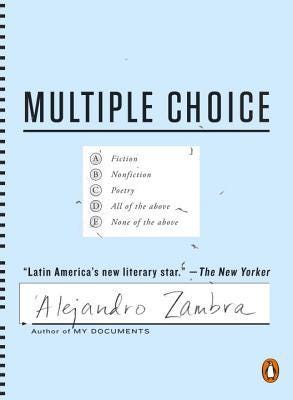
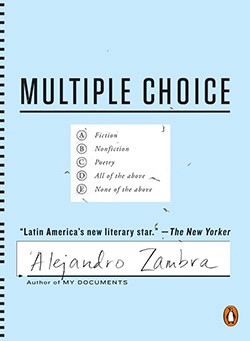
I know this playlist was supposed to somehow relate to my new book, Multiple Choice, but I don’t want to translate it into songs. That would feel like betraying it. So I thought I would choose the songs I was listening to when I wrote it, but that was three years ago and honestly I don’t really remember what was I listening to at that time.
Of course, I could always lie.
Okay, I will: these were exactly the songs I was listening to when I wrote Multiple Choice.
About the Author
Alejandro Zambra is the author of Multiple Choice, My Documents, Ways of Going Home, The Private Lives of Trees, and Bonsai. His stories have appeared in the New Yorker, the Paris Review, Harper’s, Tin House, and McSweeney’s.
A Rare Story Will Appear in the Omnibus Edition of Le Guin’s Epic Fantasy Series
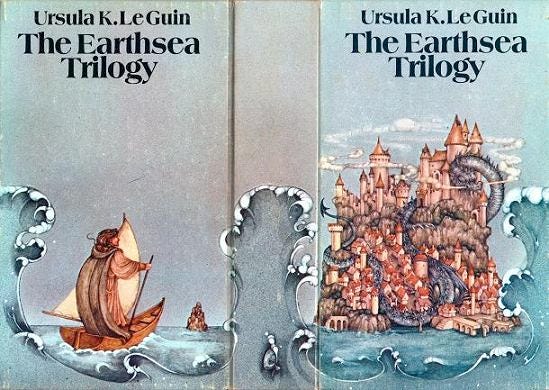
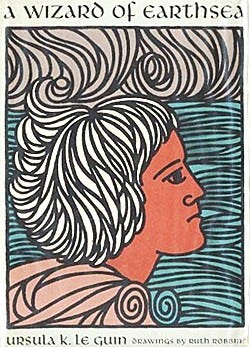
All along, Ursula K. Le Guin has thought of Earthsea as simply “a single story from beginning to end.” And that’s what she will have published in the fall of 2018 to mark the 50th anniversary of the publication of A Wizard of Earthsea: an omnibus edition of the Earthsea fantasy series, entitled The Books of Earthsea. The book will also be illustrated by one of the world’s foremost fantasy artists, Charles Vess. Even more exciting for fans, the omnibus edition will feature a previously obscure Earthsea story.
According to The Guardian, the enormous volume will include the sequence’s first novel (originally published in 1968) A Wizard of Earthsea in addition to the novels The Tombs of Atuan, The Farthest Shore, Tehanu, Tales from Earthsea, and The Other Wind, as well as the stories, “The Word of Unbinding,” “The Rule of Names,” and the newest addition “The Daughter of Odren.”
Readers may be unacquainted with “The Daughter of Odren” considering it was published two years ago and only as an ebook. The story is set in the familiar world of Earthsea, and in an Odyssean key, focuses on a daughter — Weed — awaiting the return of her father, Lord Garnet. According to a blurb on fantasticfiction.com, “Odren” is “a hauntingly beautiful tale of betrayal and revenge.” With the publication of the all-in-one Earthsea, it will be the first time “Odren” appears in print.
The project is set to be published in the US by Saga Press, which is an imprint of Simon & Schuster. If we need a reminder of the masterpieces that Le Guin has churned out in this fantasy series for just about 50 years now, we can turn to David Mitchell. Writing for The Guardian, the Cloud Atlas author spoke of the magic and inspiration he’d found in reading Ged’s, or Sparrowhawk’s (the eponymous wizard of A Wizard of Earthsea), tale: “Other magicians and witches also lived on my boyhood bookshelf, but even at 10 years old I sensed that these belonged to a lesser order…I yearned to do to other people what A Wizard of Earthsea had just done to me — even if I couldn’t articulate exactly what that was.”
All things considered, it seems the only downside of this wonderful undertaking is that we will have to wait two years and change for its release. Ample time for the series to once again be read and reread and reread and reread…
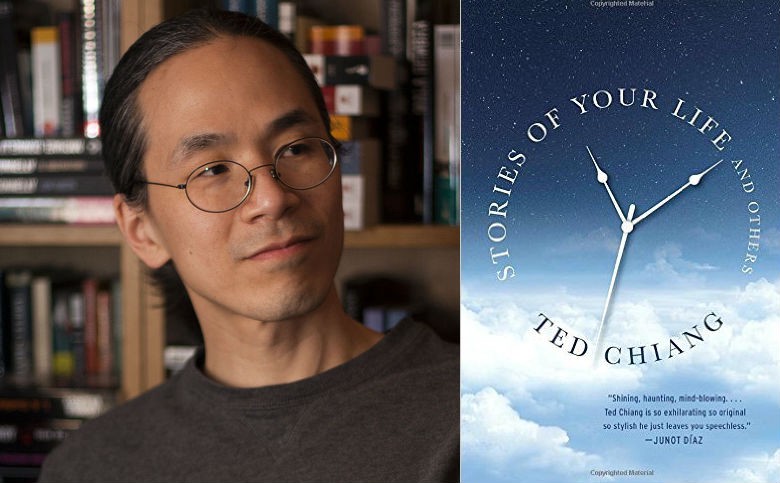
Within the world of science fiction, Ted Chiang is legendary. He’s won four Nebula awards, four Hugo awards, and a staggering number of other honors, all for a body of work numbering about fifteen stories. This is especially remarkable for a genre forged in the pulps, where top writers still regularly publish a raft of short stories and a novel or two yearly. But Chiang’s work is worth the wait. Each story is a carefully considered, masterfully constructed, profoundly moving, and occasionally dangerous machine. He manages to capture the human drama behind philosophical questions, in clear and spare prose that seduces with its simplicity. No matter the genre, he’s one of the best and most dedicated short story writers working today.
Chiang was born in 1967 in Port Jefferson, New York, and received a computer science degree from Brown University. He had been submitting to science fiction magazines since he was in high school, and after he attended the Clarion workshop in 1989, he sold his first story to the legendary Omni. That story, “Tower of Babylon,” also won him his first Nebula award, kicking off his remarkable career. His collection Stories of Your Life and Others, originally published in 2002, has just been re-released by Vintage. The title story is currently being adapted into the film Arrival starring Jeremy Renner and Amy Adams. In other words, if you want to be in on the secret of Chiang’s fiction, now is the time.
I met Ted over a decade ago, when I attended the Clarion West workshop in Seattle. At numerous science fiction conventions and workshops since, I’ve gotten to know him as a thoughtful, ambitious, and endlessly curious writer, as well as a good friend. What I’m saying is, if you’re sitting in a hotel lobby at 1 a.m. and want to debate the nature of language, Ted is always game. He and I spoke over several rounds of email this June.
Meghan McCarron: You published the first story in this collection in 1990, and the collection as a whole was first issued in 2002. Collectively, these stories have won 4 Nebula awards, a Sturgeon Award and a Hugo (and you’ve won even more awards since). What’s it like to look back over your work, and your career from the vantage of 2016?
Ted Chiang: The first thing that strikes me is the change in the status of science fiction over the last twenty-five years. Back when I first started publishing, science fiction was still very much a marginalized genre, and the word “genre” itself had a pejorative connotation. I remember trying to get into a creative-writing class in college and hearing the professor announce that she wasn’t interested in students who wanted to write science fiction or any other genre fiction because the department’s goal was to encourage original writing. The idea that contemporary realistic fiction might itself be a genre was pretty much unthinkable then.
Obviously, there are still plenty of people who dismiss science fiction out of hand nowadays, but there are also plenty of people who pay little attention to the question of genre when looking for fiction to read. Now there are college classes devoted to science fiction; a writer like Nalo Hopkinson can be a professor in creative writing solely because of her work as a science fiction and fantasy author. I didn’t really expect to see such things in my lifetime.
So when I look back on my career, it’s sort of like being a polka musician for a while and then seeing polka music become cool. (To polka fans who are offended at the suggestion that polka is uncool, I apologize.) When I first entered the field, I did so with the expectation that I could only ever reach a niche readership. Now it seems like there’s the potential to reach a more general audience.
McCarron: How do you think your writing has changed over that period? Has your writing been impacted by the growing popularity of science fiction?
Chiang: I don’t know if I’m qualified to say how my writing has changed; that’s probably a judgment for others to make. I haven’t deliberately tried to make my work more accessible to readers who aren’t familiar with science fiction. I do think more general readers have become acquainted with certain reading protocols that were formerly the province of readers of speculative fiction; for example, in the past a lot of people would have been baffled by stories that take place in a world like ours but with a different history than ours, but now that’s pretty standard fare. Readers are more skilled at figuring out the background setting of a story even when it’s not laid out at the beginning, and I’m probably benefiting from that.
McCarron: You and I were recently discussing that we struggle to imagine what we would be like if we had been born in a pre-literate culture, since written words are so embedded in our consciousness. You’ve mentioned in other interviews that Asimov was your first inspiration to write science fiction. But what drew you to reading and writing, period? What’s your relationship with them now?
Chiang: It’s interesting to think about how profoundly we’re a product of the culture we’re raised in, even to the level of our modes of cognition. We’d all like to think there’s something essential about us as individuals that would persist no matter where or when we were born, but so many of the pursuits that define us are entirely culture-specific. Music seems to be found in all cultures, so maybe a musician would be drawn to music no matter what form it took in the culture she was born into, but what would I be drawn to in a culture without the written word? I doubt I’d be a storyteller, because oral storytelling is all about performance and I’m not a performer.
As for what drew me to reading, I was a voracious reader as a child, but there was a period in elementary school when I was more interested in nonfiction than in fiction. I remember reading stacks of books about animals in general and reptiles in particular. I also liked books about strange phenomena, like Bigfoot and the Loch Ness Monster. I recall that in the fourth grade, when we were reading From the Mixed-Up Files of Mrs. Basil E. Frankweiler in class, I was also reading In the Wake of Sea Serpents by Bernard Heuvelmans on my own. Wow, I haven’t thought about that book in years. I suppose that was how I satisfied my appetite for strangeness before I discovered science fiction.
Nowadays, I’m distressed to say that my relationship to reading is changing. I’m absolutely still a reader, but I know that my attention span is shorter now because of the internet. The critic Katherine Hayles has proposed a distinction between the “deep attention” used when reading a difficult novel and the “hyper attention” used when switching between many different tasks, and I imagine most of us have felt ourselves shifting from the former to the latter. I wish I were able to stop it.
McCarron: That a shortening attention span is a problem for you is both fascinating and mildly terrifying, because as a writer you’re not active on social media. Where do you spend your time online? Do you see any positives to spending time there?
Chiang: I think the internet has an impact even apart from social media simply because of the way it’s changed our expectations of how often we should expect updates on anything. In the past you got general news every day, but for the latest updates in a specific field you were interested in, you got a magazine once a week or, more likely, once a month. Nowadays you can keep a bunch of browser tabs open on various websites that are being updated on an hourly basis, so you get accustomed to regularly switching tabs and reloading those pages to see what’s new. And of course the articles online are usually shorter than articles in print, so your reading habits adapt. Everyone always had a threshold at which we’d say, “This looks like an interesting article, but it’s kind of long; I’ll save it to read later”; I think the more time we spend online, the lower that threshold becomes.
I’m not sure what the positives of spending time online are, if by “positives” we mean “actually good for you” rather than just “seductive or fun.” I suppose getting frequent news updates makes us feel more connected, either to the world as a whole or to a particular community. I’m conflicted; part of me is definitely technophilic, and as a science-fiction writer it probably also behooves me to have some awareness of internet culture. But I wish I were better at using the internet as a vast library without also using it as a wall of TV screens all tuned to different channels.
McCarron: Your writing process is very distinct, and (from the outside anyway) seems highly systematic. You spend part of the year on freelance technical writing, and part of the year on a short story. I know you tend to do a lot of research, and always write the story’s ending first. What’s your process of composing and revision like? Do you write very differently when you do technical writing?
Chiang: The way it usually works is that I have an idea that I’ve been turning over in my head for a long time: for example, the idea of a world where everyone is engaged in lifelogging. I think about different possible stories set in such a world; I can usually come up with a bunch of starting points, but I don’t know where those would go. It’s only when I come up with an ending that I can actually begin writing; I need to have my destination in mind. I don’t have the whole story worked out in detail, but I have a general sense of what needs to happen. Sometimes I’m able to borrow elements from the other starting points that previously seemed like dead ends to me, although not always. And of course, things evolve over the course of actually writing out the story.
Technical writing is radically different from fiction writing for me; the only thing they have in common is that they draw on the sentence-creation part of my brain. I’m not sure that technical writing has had a direct impact on my fiction, but I think the impulse that originally drew me to technical writing is also one that underlies my fiction, and that is a desire to explain an idea clearly. I think there’s something beautiful about a good explanation; reading one isn’t just useful, it can be pleasurable, too.
McCarron: Relatedly, you tend to bring drafts of your stories to the Sycamore Hill workshop in North Carolina (a peer workshop run by Richard Butner which I’ve also attended). What role do workshops play in your writing process? Your larger writing life?
Chiang: I like to get feedback on my stories before I submit them for publication, and at Sycamore Hill I can get feedback from a lot of smart readers all at once. And of course, spending a week doing nothing but talking to other writers is terrific. Unlike a lot of writers, though, I don’t find workshops useful for motivating me to write by giving me a deadline by which to finish something. On the occasions that I have hurried to finish a story in order to have something to bring to a workshop, the need to meet the deadline caused me to make bad decisions with regards to the story, and I wound up spending more time fixing those mistakes. So now I sometimes decline an invitation to a workshop if I think it would force me to unduly rush the writing process.
McCarron: In addition to Sycamore Hill’s peer-review model, you’ve also experienced the Clarion workshop as a student, and you’ve recently begun teaching there as well. What was your experience as a student? As a teacher?
Chiang: Attending Clarion was a life-changing experience for me. Before Clarion, I hadn’t known anyone who wanted to write science fiction; I barely knew anyone who even read science fiction. Suddenly I was surrounded by people who had read the books I’d read and wanted to talk about the ideas I wanted to talk about. Within days I felt closer to them than to people I’d known through four years of college. I was familiar with science fiction as a literary genre, but Clarion was my introduction to science fiction as a community of people, and it’s hard to fully describe the impact of that.
I recently came back from my second stint teaching at Clarion; it was exhausting, but I had a great time. The caliber of students in recent years has been very impressive, far higher than when I attended, and I’m not sure what the explanation is. Part of it might be that Clarion is better known now and so gets more applicants than it used to, but it also seems that there’s a much greater interest in writing in general nowadays. Even ignoring the explosion in MFA programs, there are lots of classes available online or locally, so people are more likely to have had some experience in writing before attending Clarion.
McCarron: “Story of Your Life” concerns a linguist’s personal transformation in the process of learning an alien language, and now the story is being made into a movie. What has it been like seeing the story transformed into the alien language of film?
Chiang: That’s a good way to put it! Film really is an alien language. Or at least it’s a language that I have some fluency in as a listener, but one that I don’t speak at all. I’ve always been aware of this at some level, but I was definitely reminded of it when I was first approached about the adaptation of “Story of Your Life,” because it’s not a story that I would have ever pitched to be made into a film. And this ties in with what we were saying about how deeply the written word is embedded in our consciousnesses. Because when a story idea crystallizes in my mind, what I’m thinking about are sentences. I assume that if I were a screenwriter, I’d be picturing scenes, and it makes me wonder about how deep are the differences between these two modes of storytelling.
The process of adapting a book for film is also mysterious to me. In particular I’m thinking of the differences between the movie L.A. Confidential and the James Ellroy novel it was based on. I read the novel after seeing the movie, and was really surprised by it. The plot of the movie is fairly complicated, but it’s nothing compared to the vast, sprawling conspiracy in the novel. If I had read the novel first, I would have said it was impossible to adapt into a movie. But what the screenwriters did was take the protagonists of the novel and construct a completely new plot in which those characters could play the same basic roles. The resulting movie is faithful to the spirit of the novel even though it’s radically unfaithful to the text. That’s an approach that would never have occurred to me; I think I’d be too reverent of the original to adapt anything to film.
And then there’s the whole industrial-production side of movies. Based on the tiny bit of the process that I’ve become aware of, making a movie seems like trying to plan the invasion of Normandy and creating a piece of art at the same time. It’s kind of a miracle that any movie turns out well, given the logistical nightmare that’s required to make one. The process for the “Story of Your Life” adaptation has been relatively smooth, I think; not fast — it’s been five years since I was first contacted — but there haven’t been too many cooks involved. It seems like the project has managed to avoid the typical Hollywood disasters you hear about. I’m looking forward to seeing it.
McCarron: Are any of your other stories under option? Or do you have any stories you’d especially like to see interpreted by another medium?
Chiang: I have a couple others stories that have been optioned, but they’re still in the early stages of the development process so it’d be premature to talk about them.
Some years ago I was approached by a director who wanted permission to pitch a cable TV series based on my story “Hell Is the Absence of God.” Again this is not something that would ever have occurred to me, since the story seemed too relentlessly downbeat to ever appeal to a wide audience. But he envisioned a series that focused on people wrestling with questions of faith as they dealt with the repercussions of angelic visitations on their lives, and after some conversations he won me over; it sounded like a series I wanted to watch. The director pitched his idea to a network and they were interested enough to have him to write a pilot script, but eventually they got nervous about the religion angle and decided to pass. The window of opportunity for a TV series of that sort might have closed now that The Leftovers has aired, but I would still be interested in seeing the story adapted into a visual medium.
McCarron: You often describe your work as concerned with philosophical questions, or as a means of exploring scientific ideas or alternate histories. But that obscures how human your characters are. Often a great deal of the tension in your work comes from characters who are self-centered, aggressive, or cruel, and the resolution is often an epiphany resulting in moral growth or peace. Do you see your writing as also possessing a moral dimension?
Chiang: I don’t set out to teach any moral lessons with my fiction, but I also don’t like writing about characters who are, shall we say, doomed. What I’m thinking of are the James Ellroy novels I’ve read (maybe because I mentioned him when answering your earlier question). He often has a protagonist who’s on a path toward self-destruction, but has a moment where he sees an opportunity to redeem himself, and then decides not to take it; he heads toward his doom with full deliberation. I’m not sure I could write a story like that; I can take some of that as a reader, or as a watcher of television, but I doubt I could live in that head space for the time needed to write a story like that myself. I prefer to write about characters who seek redemption when it’s available.
And I suppose that, if abstract philosophical questions were the only thing I was interested in, I’d probably write some form of non-fiction, like speculative essays. But I think philosophical questions are most interesting when they have significant consequences for a person’s life.
McCarron: How do you go about imagining a character who might embody or inhabit the questions you’re concerned with in your stories? You accomplish the uncanny feat of pairing a massive, seemingly unsolvable human question with a specific human perfectly situated to grapple with it.
Chiang: I don’t have a specific procedure that I can describe, but your question does make me think of an idea that I heard from the critic John Clute: the notion that certain scenarios are easily storyable, meaning suited to being told as a story, while others are not. I remember once having a conversation with him during which he noted that climate change, as a topic, was not very storyable. I was inclined to agree, but felt that a lot of ideas don’t seem storyable until someone actually does it. There’s a Greg Egan story called “Luminous” in which the consistency of mathematics has become such a high-stakes matter that the protagonist is on the run from assassins because of it. So I suppose one of the things that interests me as a writer is finding ways to make philosophical questions storyable.
McCarron: Your work has primarily been published in science fiction magazines up until now, though I’d argue your influences run the gamut from Asimov to Borges. What literary tradition do you see yourself in? What contemporary writers do you admire?
Chiang: I definitely see myself as working within the science fiction tradition. Asimov was a huge influence on me when I was young — I read all of his work when I was in junior high and high school — but I wouldn’t say my current writing is very much like his. I didn’t read much Borges until after college, and I’m kind of glad I didn’t; if I had read more of his work earlier, I might have given up on writing out of the conviction that there was no point in trying to do anything in his wake. I’d say it was in college that my writing matured, after I started reading writers like John Crowley and Gene Wolfe. In particular I have to call out Edward Bryant; he’s not well known, but of all the writers I’ve mentioned, I think his work shows the clearest influence on my own.
As for writers of contemporary fiction, let me mention some stories I admire: “Ralph the Duck” by Frederick Busch; “You’re Ugly, Too” by Lorrie Moore; “Men Under Water” by Ralph Lombreglia; “The Bear Came Over the Mountain” by Alice Munro; “Memory Wall” by Anthony Doerr; “Archangel” by Andrea Barrett; and “Medium Tough” by Craig Davidson.
McCarron: Many of these stories concern, on some level, the collision of different cultures or types of consciousness. You also have a significant international following. Has it been particularly interesting to you as a writer to see your stories translated and read by people with different cultural perspectives?
Chiang: I’m fascinated by the question of why a given writer’s work is popular in certain countries but not in others. It’s tempting to look for some generalizations about, say, what Japanese readers like or what German readers dislike, but there are so many different factors at play that I don’t think anyone can say much with real certainty. I have wondered if the fact that my work isn’t steeped in the nuances of American culture makes it easier for readers outside of America to relate to it. On the other hand, lots of very culture-specific novels have been immensely popular in translation, so that hypothesis probably doesn’t hold water. I am conscious of my good fortune to be someone who writes in English, because English works are so often translated into other languages; if I were writing in Swedish, for example, it’s likely no one outside of Sweden would have ever read my work.
McCarron: At some point in every interview with you, the interviewer points out that you’re not particularly prolific. The story under that story, it seems to me, is of your extraordinary grit as a writer. You’ve been submitting work since you were in high school, and fought through years of rejection, and then grappled with the shock of success. And I know writing is something you describe as “hard.” How do you keep going? What’s your advice for people who work slowly?
Chiang: There’s a passage in Annie Dillard’s The Writing Life where she’s telling her neighbor that she hates writing and would rather do anything else, and her neighbor says, “That’s like a guy who works in a factory all day, and hates it.” Writing is so difficult for me that I have often wondered whether I’m actually suited for it, and I’ve had experiences with the publishing industry that made me quit writing for years. But I keep coming back to it because, I suppose, writing is an essential part of who I am. As for advice to slow writers, I’d say that writing is not a race. This isn’t a situation where only the most prolific writers get an audience; publish your story when you’re ready, and it will find readers.
The second annual Genre Ball to support Electric Literature is Friday, October 28 at Ace Hotel New York, and we’re looking for someone to help plan the party! Electric Literature is a 501(c)3 non-profit and the Genre Ball is our most important fundraiser. Mary Gaitskill, Donna Tartt, Alexander Chee, and Michael Cunningham were among the literary stars who attended last year’s event, along with hundreds of costumed revelers.
This is great opportunity for an avid reader who keeps up with contemporary literature, has an interest in a career in event planning, programming, fundraising, or nonprofit management, and has held internships or entry level positions in a related field.
This is a temporary, part-time position for September and October with opportunities for continued employment as an Events and Development Assistant, contingent on fundraising success. The Events Assistant will be paid on an hourly basis and will work primarily with the Executive Director.
Availability Requirements:
The time commitment is 10 hours a week in September and up to 20 hours a week in October, with the potential for longer hours the week of the event
All candidates must be able to work from our Manhattan office at least once a week in September and October, and be available from 10am until midnight on Friday, October 28
Responsibilities:
Maintain a guest list and correspond with guests
Reach out to potential sponsors
Act as the primary contact person for day-of logistics, including set-up and clean-up
Help recruit and supervise volunteers
Assist in creating and maintaining a project budget
Assist in developing and executing promotional and outreach campaigns
Conduct event follow-up with guests, vendors, and sponsors
Qualifications and Characteristics:
At least 6 months of event planning and/or programming experience
Energetic, outgoing, and friendly
A creative, DIY attitude, and a willingness to make the most of limited resources
Organized and pragmatic
Calm under pressure and able to work efficiently under tight deadlines
Hands on and helpful; willing to do everything from taking the trash out to greeting guests
To apply, please send a cover letter and resume to editors [at] electricliterature.com, attn: Halimah Marcus by August 1, 2016.
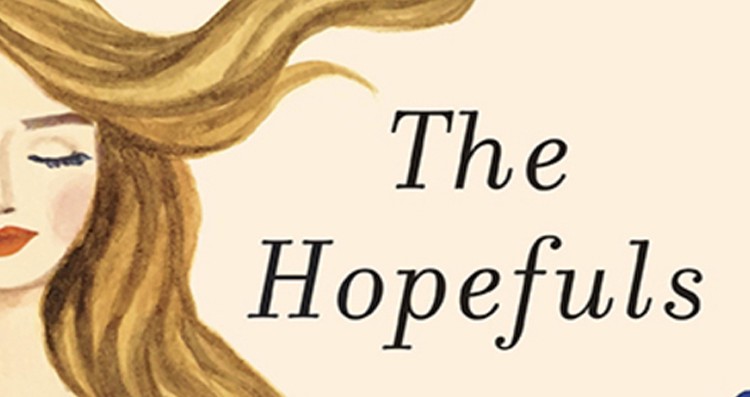
“Change We Can Believe In.” This was the slogan of Barack Obama’s 2008 presidential campaign. People were truly hopeful about a better future. They — we, I — sought that imagined, idyllic world. With Obama’s energy, our country possessed a continuous feeling of excitement, and it seemed as if anything was possible. Jennifer Close captures all of these sentiments in her timely, Obama-era romp, The Hopefuls.
With The Hopefuls, Close constructs a novel about Matt and Beth, two newlywed millennials who are trying to make life work.
Matt is a political newbie, with a dream to rise as quickly as he can in the cutthroat city of DC. He, though, isn’t like a lot of the political people who surround him. Beth says of her husband, “He didn’t like to gossip or talk behind people’s backs.” He joins the Obama campaign in a relatively low-key role and works as hard as he can to rise in the ranks. Beth, like her husband, is also different from her new neighbors in the nation’s capital, but not in the same ways. Whereas Matt is known around town as the nice guy, Beth, a Wisconsin transplant who also lived in NYC, isn’t really known (or liked) at all. She admits about herself, “Sometimes, it’s just hard to be happy for other people.” She’s also quick to criticize those political people who surround her:
“All of the people there reminded me of high school student council members, the ones who fought for pizza lunches and dance themes with great passion. They were all so eager. (And borderline annoying.)”
Matt and Beth slowly begin to adjust to DC living. Matt falls in love with politics, and the magic surrounding the Obama campaign engulfs him. He feels as if he’s found his calling. Beth, on the other hand, is a writer, and the only job she can find is working for a trashy, gossip site. For Beth, the move is problematic.
While Matt is away having grand adventures on the campaign trail, Beth stays at home and thinks about how much she hates DC. From the traffic to the heat, she cannot deal with the nation’s capital. Finally, Beth’s salvation arrives in the form of Jimmy and Ashleigh Dillon, another young, newly married couple. Jimmy is severely handsome and charismatic, and Ashleigh is perfect in nearly every way. They are the kind of change that Beth can surely believe in.
And believe in them, she and Matt do. The two couples become close friends. Jimmy and Matt work together. Ashleigh and Beth spend countless hours shopping, eating, and gossiping. They become inseparable. And then, problems arise. Jimmy’s power rises quickly in the political world, leaving Matt behind. Ashleigh becomes simply too much for Beth to keep up with. The rest of Close’s novel follows whether Matt and Beth can survive the changing landscape around them and if they can, in fact, remain the hopefuls?
“The Hopefuls captures the competition and ambition of today’s political environment.”
Close’s novel carries a deceptively light tone. Yes, it’s a comedy, and yes, it’s a relationship novel, but it’s so timely and so wonderfully realized that The Hopefuls isn’t just those things. It’s too good — too important — to be relegated as a work of genre.
The Hopefuls captures the competition and ambition of today’s political environment, and that tension builds as the novel progresses. Close writes with a heightened awareness of how rooted the very nature of political struggle is within our very national identity.
Close makes some rather stark observations about our political figures. Beth asks important questions about them: “Why did some people like Hillary so much more when she cried? Why is it that Obama sings and it’s amazing, but Mitt Romney sings and looks like a nightmare you’d have about a wax figure come to life? And why, in God’s green earth, could Sarah Palin wink and talk about pigs and somehow make everyone around her forget that she’d basically admitted she didn’t read?” Here, she’s funny, but she’s also speaking a certain truth that often goes unsaid because it’s considered, perhaps, too private — too untouchable.
“The Hopefuls also examines personal relationships, specifically marriage and young, co-ed friendships.”
How do the two coincide? Can they even? Matt and Beth need the Dillons to survive as separate, thriving individuals in DC. Beth even, rather frighteningly, admits, “Maybe we needed the Dillons to be happy.”
The extent to which Matt and Beth (don’t) know each other is on full display throughout The Hopefuls. They spend their time together by either constantly complaining or dreaming about the future. There is little focus on the now — how to live and grow as a loving, married couple. What Close captures in these moments is a growingly familiar feeling of millennial discontentment.
As The Hopefuls wraps up, it’s time for Obama’s second campaign to launch. “Forward,” the people say this time, and that’s the phrase Matt and Beth must remember. Forward they will go — because they are hopeful.
Over two weeks ago, Dennis Cooper’s longstanding blog, The Weaklings, disappeared into thin air. One would want to visualize it as disappearing into the mist, or smoke. The truth is he opened up his computer and simply couldn’t access his account on Google. His Gmail and blog on Google’s Blogger platform were totally gone. All he (or we) could see is the sentence:
“Sorry, the blog at denniscooper-theweakling.sblogspot.com has been removed. This address is not available for new blogs.”
Like it never existed. And to this moment, this is the only message from Google regarding the disappearance and perhaps the loss of Dennis Cooper’s work on his blog.
I have been reading the blog on a daily basis for the past ten years or so. Not only did his blog exist, but many writers and artists were attached to reading his daily thoughts on all varieties of culture —be it film, literature, or music — all perceived through the eyes of Dennis Cooper. There are certain individuals, such as Dennis, who are sign-posts for those who share a taste, or at the very least, an interest in the experimental arts. He has a sixth sense, with respect to others who are doing new and fascinating work in creative mediums.
On this blog, we were invited to make comments, not only about the contents of the blog, but also to Cooper, regarding his work, or taste in music, literature, and cinema. For a long time, his blog was a popular destination for those who write or read the kind of experimental literature that is not always “Publisher’s Weekly friendly.” The sex and violence in Cooper’s work are often disturbing, but never taken for granted, and always commenting on the culture from which they arise. In a way, visiting and reading his blog is like going to a classroom with a brilliant teacher, except here the teacher listened to his students and their their thoughts were equally weighted. Putting it mildly, there are zillions of blogs, but there is only one like the Weaklings.
Many artists have benefited from Cooper’s creative work and in-turn, having their work on his blog. That his blog has been zapped out, is an act of cruelty, not only to Dennis Cooper, who has had ten years of his creative work vanish, but also to his readers, who often contribute to this website.
Google, Facebook, Twitter, and Instagram: We, the public, are invited to participate in these platforms for free, but alas, we have to give them something back. If not our souls exactly, at least our personal information. It’s a pact made with a digital Satan. Most of us feel that the work we upload on these platforms belong to us, but perhaps that is not the case at all. They don’t use the “material” for their purposes. They really don’t have any respect for the content that the viewers and users bring to that platform. They clearly understand the need for “content” to attract attention, and yet it is still their platform that we live in.
I grant them that Google is a private company, yet one hopes that as an internet-landlord, they will give you good reason if they terminate your lease. My feelings are multifaceted:
For one, I’m a huge fan of Cooper’s work as a writer, and his blog is an incredible portal to his mind. And again, as viewers and participants, we were allowed to show our work on his canvas.
Now all that work is seemly gone with no explanation whatsoever. As someone that also has a blog on Google’s platform, I’m concerned that Google might do the same, deleting my work when I least suspect. One’s work could simply cease to exist. I think any writer or artist that uses either Facebook, Google, or any other platform would feel the same. It sends a chilling message that technology giants can stomp on your work just for the sole reason that they can.
To sign the petition to restore Dennis Cooper’s blog and email, click here.
For further updates on the issue of Dennis Cooper’s blog — go to Dennis Cooper’s Facebook page.
The clock ticks louder when you’re waiting. You are sitting on a chair in the principal’s office waiting for the woman with oval glasses to walk in. You know she will destroy you, but you never know just how much.
“I see you’re back.” That smile of hers appears from the side of her lips. Her eyes look giant behind the glasses.
“Hello, Ma’am.” You stand up to show respect. She seizes that respect because respect based on fear is the only kind of respect she can squeeze out of people. You start the begging process.
“Ma’am, I know last year didn’t go so well, but I promise to be good this year. I just can’t handle being in any other school.” You can’t handle the small, old rooms of that school either. It’s one of the best schools in town, yet still near the bottom of your list of all the schools in the world, still a prison where teachers are soldiers practicing how to execute.
“You have to sign a contract.” Her smile fades and she looks you in the eye, enjoying the fear rooting from your toes and crawling its way up to your eyes.
You begin to shake on the inside. She’s playing her cards well, but you will sign anything. After spending a month in a public school, you realized that you couldn’t endure a place where students are kept like sheep in pens. This is the only school you can survive in.
“You have to sign a contract stating that your grades won’t go below B.”
You can do that. You can do that.
“And that you will attend every field trip.” And with that, your life in that tiny office takes a break. Field trips, the weekly visits you pay to the shrine, are your worst enemy.
When she says that, something inside you explodes and manages to find a way out.
“I will not go to the shrine.I will not be your puppet. Your damn education system, your office, the way you talk — it’s all a pathetic mess… I will not sign your damn contract.”
When she says that, something inside you explodes and manages to find a way out, but you immediately push it back by a deep breath.
“Yes, Ma’am.” You sign the contract. You are now enrolled.
In a week there’s an event coming up. “Field Trip to Shrine this Friday at 2.”
You’ll do it, you have to go, you have promised. In the morning the world starts spinning around your head, and you want an earthquake to kill you, a tsunami, anything. But the school bus comes and you go to school, still alive. For once you think if you sit with the principal and talk to her like any other human being with feelings, she may understand.
“Ma’am, I know I promised, but something horrible happens to me in shrines, and I’m not religious, and I have had OCD for a long time. I can’t help it, please, I beg of you, let me stay here.”
“Get on the bus,” she says, and so you do. The shrine is downtown. You squeeze your knee with your hand and stare at the floor of the bus because you don’t want to see anything else. You lock some air in your lungs, stomp your feet on the ground twelve times. The bus stops.
The students get off the bus and you are hesitant but you’re forcing yourself to take one step after the other. You reach the steps of the bus and you climb down staring at your shoes because you don’t want to look at anything else or it will make your OCD erupt and take you to the edge of death. You’re going to have to look at the shrine at some point. You’ll be surrounded by the shrine and not even your feet will be sanitary enough to save you from sinking.
You jump off the bus and from there on you will breathe only when you have to: when you feel dizzy and the corners of your eyes start going black and you feel like the world is slowly fading away. But don’t let it be a big breath. If it’s a big breath then you have to exhale hard, and push all the air out of your lungs. You take a small breath, then wait to feel dizzy again, and repeat the process until you’re out of there. Also, don’t breathe while looking at anything other than the sky, or your shoes and hands. Also, don’t exhale if there’s the image of anything or anyone you care about. Those are the rules of your OCD world. There are many rules, though, and many come with exceptions, and all have a punishment if broken. There is a way to erase the wrong action once you have done it, but the process is hard and painful, so you avoid breaking the rules unless you absolutely have to.
You are never sure why certain places and people trigger your OCD. But it may have something to do with protection. Protecting yourself and most importantly your loved ones from sorrow and anything abnormal. Because it is abnormal to you, the way old men and women gather around the shrine of whatever Imam is buried there. They lay on the ground, holding on to the bars around the shrine, and cry. Maybe it’s not abnormal, though. Maybe it’s not as ugly in reality as it is in your head. But you were raised a non-Muslim in a Muslim theocracy. It isn’t abnormal for you to see them that way because unlike them, you are forced to be there.
You sit there in the shrine, already with a migraine from a lack of oxygen. Your body is stiff, and you don’t bite your nails because even the air of such a place makes your hands filthy. Instead, you pick your fingernails and stare at the one spot that is empty of people. You are already planning your shower as soon as you get home, and have already stopped swallowing your saliva.
The speaker starts telling the same stories as all the others do about The Prophet, how great he is, how much you all love him, how those who don’t wear hijab will be hung from their hair in hell, and of course how to be God’s good human. But you have never appreciated being forced into Heaven. You have never believed in anything other than not believing in Islam. You have never belonged. The whole time he’s reading the Quran you’re thinking about outside where you can see the sky. You have always associated freedom and survival with the sky. Someday, you will get on an airplane and fade into the clouds. You don’t know what is behind the clouds, but it has to be something so green, like a golf course.
The speaker finishes the reading and it’s lunchtime. They have brought the meals to the shrine. The kids are in line, getting food, then finding a spot next to their friend and eating. You look at your hands and see that your pinky is covered in blood. You have scratched the skin off without realizing it. You stand in the corner and melt into yourself. The principal passes you and asks if you’re having lunch. You nod, letting her know that you are not going to eat in there. She suddenly sees your bloody finger.
“Oh my god, what happened?”
“Nothing,” you say, and that’s when, for the first time, she sees you. Big purple bags under your eyes, your pale skin, your bloody finger, and your uncomfortable body standing where it doesn’t belong. She doesn’t say anything, and gives you a hug. You want the hug to be over. But as she puts her arm around you, she whispers in your ear, “It will be over soon.” Your eyes immediately water up, because someone has acknowledged how much pain you’re in. She hands you a tissue and you wrap it around your pinky.
Lunch ends and you head home. You haven’t swallowed your saliva in a while and it feels like you have a jawbreaker in your mouth. Your lips are dry and cracked, but you don’t feel the pain anymore. You get home, take off your shoes and socks at the door, and head to the big trashcan to throw your clothes away. Your parents don’t ask any questions because this isn’t your first time coming back from a shrine. You head to the bathroom. Not the bathroom you usually use, because you don’t want to get it dirty. You pick up your special tool for these situations: the merciless pumice. You cover it with soap and start washing your body. After a short time your skin is bleeding. You spend two hours in the shower, in agony under the hot water. Your breathing gains speed and everything in front of you goes blurry and you feel like you’re going to pass out. You stop showering and go into your bedroom. Your skin is red and scratched, your eyes and nose hurt from the soap, and your migraine has increased so that it feels like a new type of illness.
You lay on your bed listening to some song in English, staring out the window. Tears run down your eyes but you don’t call it crying. You’re too ill and tired to cry. You fall asleep and when you wake up you feel a lot better until you remember why you were feeling bad in the first place. You take pills that you don’t even know what to call because all you remember is the psychiatrist prescribing them to you for depression, stress, OCD. You don’t come out of your house for four days, trying to find something to live for. When recovery time is over, you speak once more to people like the normal person you wish you were. You let them know there is nothing to be afraid of, because although you have not stopped screaming in your sleep for the past few days, you won’t hurt anyone. You look at your scratched, ill figure with pride, knowing you did as you promised.
When you’re a fan of someone’s writing, or feel connected to it, you always hope that you will like the writer in person. I liked Alejandro Zambra a lot. He was funny and loquacious, an easy person to interview. He ate a cookie and got crumbs in his hair.
We decided to leave the coffee shop so he could smoke. But there were too many children in the park next door. We saw a public school with a bench outside, and thought that would be a fitting place to talk about the repressiveness of school, a theme in his new book, Multiple Choice. Some mothers on a nearby bench asked if we were parents of any children in the school. We were not, we admitted. They told us we had to leave.
“We don’t look like parents,” said Zambra.
How had Multiple Choice come about? Zambra had thrown out the first fifty pages of a more traditional novel he was trying to write about 1993. The process had been making him feel like a “fucking author,” like he was writing a book he should be writing. I knew what he meant. Anything that felt like a “should” was death to the mysterious thing that makes writing good. The answer lay in finding a form that would allow the story to be told spontaneously. For Zambra, the form came from the Chilean Academic Aptitude Test, a standardized test he’d taken in 1993. At the time, the CAAT determined the futures of Chilean high school students, and caused a great deal of stress to teenagers. Zambra had structured his book like the verbal sections of the test, with headings like “Sentence Order” and “Reading Comprehension.”
“At first,” he said, “writing the questions was pure parody and joy, like imitating voices of people, but later I understood it also as making fun of myself and trying to find out how those structures stayed inside me.”
Zambra added that one could read Multiple Choice without prior knowledge of literary genres, and that he hoped the book would reach people who hadn’t had a literary education.
Writers who grow up under dictatorship have a true interest in democratizing literature, I noted. Writers who grow up under democracy have a true interest in remaining snotheads.
I kept pushing the question of how agents or publishers let him get away with such a low page count (Zambra’s novels are poetic and self-contained, minimalist in that they convey a lot of emotion with only a few details), but Zambra hadn’t had an agent at first and insisted that the Chilean literary world isn’t as market-oriented as the North American one. Zambra’s first novel, the recursive and heartbreaking Bonsai, came out of his interest in bonsai, how they needed to be tended, but also restricted. They were a little creepy, we decided. Zambra said the voices in Bonsai started to come to him as he wrote, that he wasn’t even thinking of the book as a novel.
I wasn’t exactly listening. I held my phone between us to record his answers while we walked to a bookstore. We sat on a bench outside the store and nobody bothered us because we looked like writers. At least Zambra did. Zambra had started out writing poetry, was “raised as a poet.” His first poems were “highly compressed stories, written in free verse.” I told him I liked Chilean poetry. I especially liked “the guy who wrote the poems about Claudia” and “the guy who lived on the beach.”
“Bertoni,” he said, “Claudio Bertoni. Maybe it’s the same guy writing poems about himself. Which he does.”
“My memory is kind of bad,” I said.
“Nicanor Parra lives on the beach, too. He’s going to be a hundred and two soon.”
“You like Parra?”
“A lot. He and Gabriela Mistral and Gonzalo Millán and Enrique Lihn are…”
“That’s the guy who wrote about Claudia, Enrique Lihn.”
“Oh yes! I wouldn’t identify him that way, but yes. Your memory is not bad.”
He mentioned Emily Dickinson, too, and I nodded even though I can never remember any of her poems besides “There’s a certain slant of light…” We talked about his excellent English translator Megan McDowell, and what it was like living in the U.S. for a year (Zambra had just finished a year-long fellowship at the New York Public Library). I asked how it affected him to speak a different language than the one he was raised with.
“It’s funny, I think at first I stupidly tried to be someone else. Making yourself up in a different light, it’s a great opportunity. Do you speak Spanish?”
“Only in the present tense.”
We talked more about Multiple Choice. He showed me a question in the Sentence Completion section that was a famous quote from Pinochet that I hadn’t realized was a famous quote from Pinochet. The section also had a quote from the New Testament that I hadn’t realized was a quote from the New Testament. How could I understand Chilean literature if I hadn’t been exposed to the hypocrisy of its dictator? How could I understand any literature if I had never read the New Testament?
I will get home and transcribe these notes, I thought. I will learn more about Pinochet and Jesus. I will nap. But when I got home, I realized that I hadn’t pressed “save” on the hour-long voice memo I had recorded of us talking. I had been so caught up in the moment, in the present tense, that I had forgotten to be mindfulabout technology. And now it was gone. This felt very Latin American, like it raised unanswerable questions about memory and loss, disappearance, erasure, but mostly it felt like a giant pain in the ass. It turns out that I only remembered what I’d said, that I’d talked a lot about my ex-boyfriend, also Chilean, very much alive, but gone to me. Actually, the ex was still my friend. He’d written a few questions for Zambra, better questions than mine, questions about “the literature of the children” (Chileans who’d been kids during the dictatorship) and the author’s thoughts about the relationship between books and film. I hadn’t gotten to those questions. I had asked some okay questions and Zambra had given me poetic answers that I’d never be able to recreate.
Pinochet on parade, 1982.
All I remembered was that he’d talked about housesitting. He’d quoted Ezra Pound. He told me a joke about the narcissism of writers and I’d missed the punch line because I’d been thinking about myself. I remembered that the sky had started out clear, then clouded over. Zambra had bought my book in the bookstore. Zambra had finished my green tea.
“I should be interviewing you,” he said. We’re all trying to be humble, I thought. I’ve been interviewed a lot this past month, and I always ask the interviewer if they write fiction. (They always do.)
“You should ask me the questions you hate being asked in interviews,” Zambra had said before the interview started. “As revenge on those interviewing you.”
“What do you hate?” I asked.
“Ask me what is autobiographical, about the line between fiction and nonfiction.”
We chuckled. The interview is a silly form, I thought, until the interview I had recorded was gone. Then I realized that the interview is a wonderful form. Writers, who spend a lot of time perfecting what they present to the world, get to chat about themselves and their work. The interviewer, if she’s lucky, gets to go home and type up somebody else’s words. The magazine runs a piece. Now I had to write something postmodern, an interview without an interview, a story Alejandro Zambra was born to write, but that I would probably bungle. I cried to my new boyfriend on the phone.
“Just write down what you remember,” he said. “Do it before you forget.”
“I don’t want to write anything down. I want to press play and write down what Zambra said.”
“That’s no longer a possibility,” he said.
I went on Apple’s discussion boards. People had lost 48 minutes, 25 minutes, their children’s recitals, recordings they desperately wanted back. If the person recording had only pressed pause and then closed the app without pressing save, she was screwed. The boards were unequivocal about this. I thought about Nixon. 18 minutes. My iPhone had failed me, had failed literature. I could email Zambra questions, or meet with him again, but the spontaneity of the initial conversation couldn’t be recreated. Maybe nobody should record conversations, I thought. Maybe they’re supposed to be fleeting. Maybe in capturing a moment between two people, we destroy the moment’s essence.
I didn’t believe this at all. I thought about the Buddhists who spend years making sand art, then sweep it away. I’ve always felt bad for those guys. I photograph sunsets. I back up my files. I use the Cloud, an external hard drive, Google Docs, DropBox. I haven’t lost much, at least not documents. Emily Dickinson may have had a poem about losing things. No, it’s Elizabeth Bishop. It’s the poem they make you explicate in school, sometimes on standardized tests.
The author thinks losing things is:
a) a disaster b) no disaster c) fine, as long as you have a good memory d) a glitch Apple should fix in the next generation of iPhone
Bishop’s next to Zambra on my bookshelf, where fiction ends and poetry begins.
“Crying is one of the great pleasures of moviegoing.”
So Manohla Dargis reminded her readers in her New York Times review of Stephen Daldry’s Extremely Loud and Incredibly Close, the 2011 screen adaptation of the novel by Jonathan Safran Foer. Dargis, however, was quick to add a caveat: “[B]ut tears can be cheap.” In this economic taxonomy of emotions, tears evidently become valued when they demand one to expend a certain amount of effort. Cheap tears, on the other hand, are symptomatic of feelings that have been “unearned.”
Those were the kind of tears, according to Dargis, at the heart of the movie based on Safran Foer’s so-called “Sept 11 book.” Daldry’s film was kitsch, merely exploiting the atmosphere of emotions surrounding the events and aftermath of 9/11, and trying to “make us feel good, even virtuous, simply about feeling. And, yes, you may cry,” she added, “but when tears are milked as they are here, the truer response should be rage.” The use of the passive voice in her final damning sentence is indicative of what we associate with “cheap sentimentality,” that feeling of losing control over one’s emotional responses, usually against one’s better judgment. The tears are “milked” as if by force, despite our awareness that we are being manipulated (another charge which Dargis levels against Daldry’s film). Cheap sentimentality needles at us for the very fact that it robs us of our agency. Then again, the distinction between sentimentality and its bargain-priced counterpart is policed less through an intrinsic differentiation between them than by the arbitrary limits that are carved around them. Cheap or otherwise, “sentimental” remains a coded putdown in the contemporary vernacular, invoking as it does gendered ways of both reading and being.
Thomas Horn and Viola Davis in ‘Extremely Loud and Incredibly Close’
“Did they cry?”
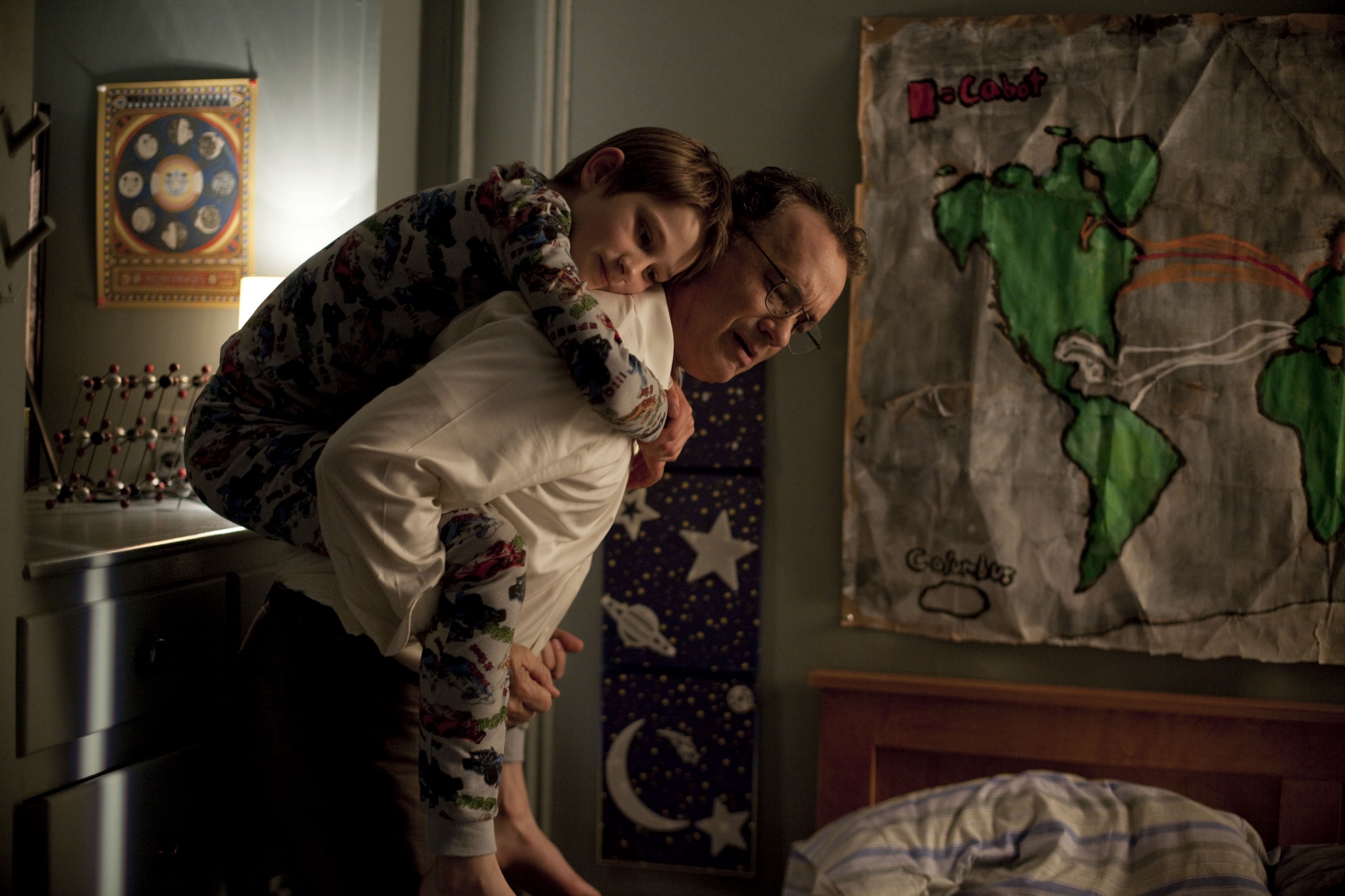
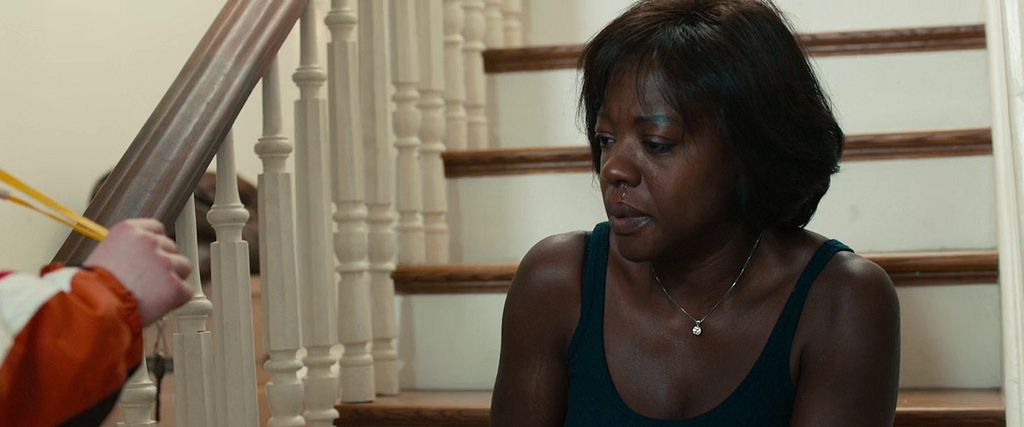
Oskar Schell (Thomas Horn), retracing what he believes to be his late father’s (Tom Hanks) last “reconnaissance expedition,” has found himself in a house in Fort Greene, Brooklyn. He’s visiting Abby Black (Viola Davis), the first on his list of possible New York-residing Blacks who may hold some knowledge as to what the key he found among his father’s belongings might open. The surname “Black” is the only clue he has to go on — and the only thing he believes still tethers him to his father, who died, as he tells us, “on the worst day.” This is no deterrent for eleven-year-old Oskar, an “amateur entomologist, Francophile, archeologist, computer consultant, pacifist, inventor,” as his business cards read. Once he explains his reason for knocking on Abby’s door she reluctantly lets him in, his awkward charm so endearing that she allows herself to be interrupted on what we later learn is the day her marriage has finally fallen apart. We are allowed brief glimpses of her husband, on the phone, before he exits without addressing his recently ex-wife.
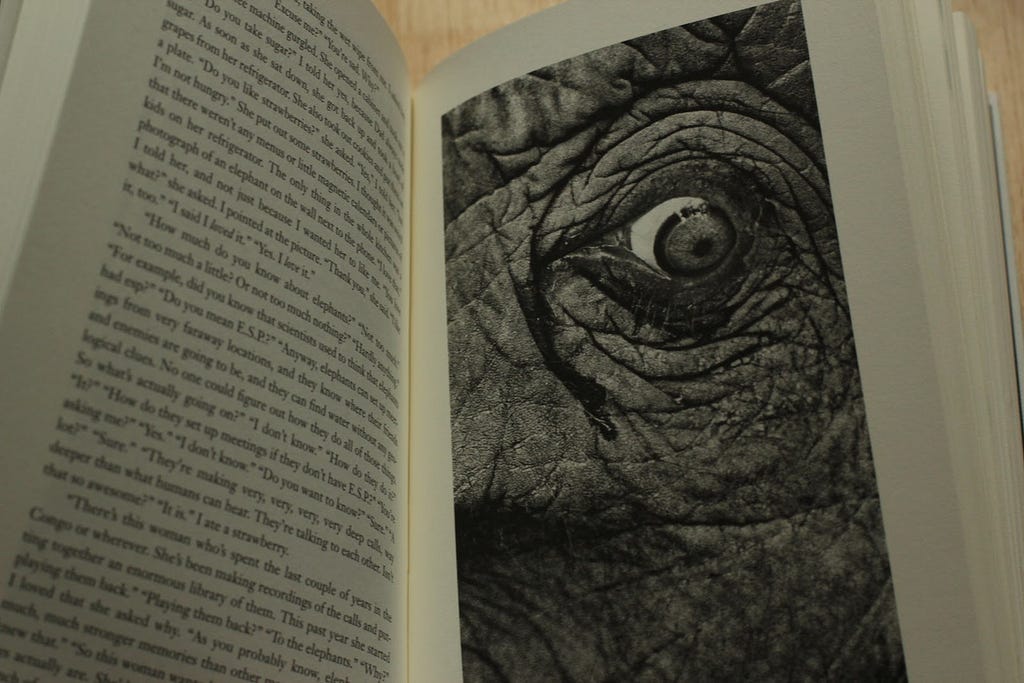
Oskar points to a postcard lying in one of the many packed boxes littering her hallway, and tells her that he likes the image: a close-up of an elephant’s eye. When he describes how a pachyderm researcher played old tapes with the calls of now-deceased elephants back to their families, Abby muses: “Did they cry?”
Image from Safran Foer’s novel
In the film, as in the book, Oskar dismisses the question out of hand. “Only humans can cry tears,” he says. Abby looks at the postcard once more, countering that the elephant in the picture appears to be crying. Oskar has an answer handy: “It looks like it, but it was probably manipulated in Photoshop.” In the novel, as if on cue, Abby “started to cry tears.” For those unfamiliar with Safran Foer’s narrator, the phrase is indicative of Oskar’s literal-minded descriptive language. What else would she have cried if not tears?
The postcard is cheap sentimentality at its most blatant — a vision of a heightened reality, at once depicting and hoping to elicit tears. The paragraphs that follow grant us insight into the thoughts of this eleven-year-old in the face of an unselfconscious, tear-streaked show of emotion:
Then she started to cry tears. I thought, I’m the one who’s supposed to cry. “Don’t cry,” I told her. “Why not?” she asked. “Because,” I told her. “Because what?” she asked. Since I didn’t know why she was crying I couldn’t think of a reason. Was she crying about the elephants? Or something else I’d said? Or the desperate person in the other room? Or something that I didn’t know about?
His immediate reaction is telling: after all, Oskar is the one who lost his father on 9/11. His grief, he suggests, should have primacy. In its place his probing questions (after he tries, unsuccessfully, to police Abby’s emotional condition while in his intrusive presence) speak to Safran Foer’s uncanny ability to have his narrator’s earnestness mirror our own codified and constricted social interactions. If only Oskar knew why Abby was crying, he might be able to offer a valid reason for his imperative that she not cry. This episode hits at the center of most criticisms of sentimentality (such as Dargis’s): once you’ve seen the manipulation and understood why you’ve been made to cry, you should be able to refrain from indulging in it.
Viola Davis as Abby Black
In his adaptation, Daldry makes this connection — between the elephant image and Abby’s tears — all the more revealing. Viola Davis portrays Abby as a woman very clearly on the verge of tears. They are right on the surface, waiting to be deployed at the slightest nudge. Which explains why, after an innocuous close-up of the front of the postcard, she appears to instantly break down, as though triggered. It is also the very reason that we, as knowing audience members, are expected to detest the sentimental, the mawkish, tawdry, mushy, schmaltzy, saccharine, and cloying, for being too easy: rather than exploring the great depths of emotions they are merely skimmed, the elicited outpouring well beyond the scale of the circumstance that brought it about. Nothing in the scene, either in Safran Foer’s text or Daldry’s film, can describe the immensity and complexity of the marital discord being signified. Both opt instead to merely index it, through the evidence of Black’s emotional distress.
I must admit that Dargis’s critique of the film irked me at the time. Not because I disagreed with her outright, but perhaps because she vocalized something I’d struggled with while reading Safran Foer’s novel (which had often moved me to tears, usually in conspicuously public places where the sudden gush felt all the more inappropriate and shameful) and likewise while watching Daldry’s adaptation of it (sitting in the darkness, unable to contain the sobs that kept rising up at key points in the film). Not that I begrudged having been brought to tears (as perhaps Dargis and many others did). What I actually begrudged was my instinctual — and, let’s face it, intellectual — desire to disown them. Couldn’t I, after all, see the manipulative strings above and all around me? The twinkling score and picture-perfect casting, the implausible plot, the melodramatic climaxes? Hadn’t I been trained to read closely and coldly, to arm myself with critical skills such that I could parse how easily this post-9/11 fable-parable was merely a collection of clichés clicking neatly into place?
Oskar at a 9/11 memorial wall, from ‘Extremely Loud and Incredibly Close’
Perhaps. Yet I felt protective of my tears which, in hindsight, did not seem to have been unearned, easy, or cheap. Or if they were cheap then I didn’t care. What cheap sentimentality can do is to short-circuit our connection to the depths of our emotions, precisely by making us feel that they are closer to the surface than we’re perhaps comfortable with. In instances where the emotional manipulation is so obvious — as I will admit it is in Extremely Loud and Incredibly Close — our tears can feel like they have less to do with the narrative at hand than with things deep inside or even wholly outside ourselves. Do I cry alongside Oskar because I, too, lost my father at a young age? Or because I’m encouraged to think back to the trauma, which many of us experienced, seeing the towers fall on our television screens? Is the political here collapsed into the personal in ways both brazen and craven? Aren’t my tears (for Oskar, for myself, for the film) merely a working of the complicated emotional knots that these self-serious issues gave rise to in the first place?
Sandra Bullock as Oskar’s mother, Linda Schell
Ultimately, these questions remain intellectual exercises. They have yet to stop me from becoming a blubbering mess when Oskar and his mother (Sandra Bullock) engage in a melodramatic shouting and crying match at the kitchen sink, that ends in the heartbreaking moment when he tells her, with wounded assuredness, “I wish it were you.” When a film milks your tears, the critical discussion should turn to what this effect on the audience (or even the audience’s need for it) might indicate. I will admit, the total emotional surrender that such sentimental texts encourage can be terrifying (or ‘enraging,’ in Dargis’s summation). But there is value in losing oneself to them, to wallowing in their shallow emotional registers. Especially those that beckon you, from their title alone, to inch closer, while also warning of the deafening blow they’re about to let loose.
DON’T MISS OUT
Sign up for our newsletter to get submission announcements and stay on top of our best work.
YOUR INBOX IS LIT
Enjoy strange, diverting work from The Commuter on Mondays, absorbing fiction from Recommended Reading on Wednesdays, and a roundup of our best work of the week on Fridays. Personalize your subscription preferences here.