The Center for Fiction has announced the long list for the 2016 First Novel Prize. The winner of the prize will receive $10,000. Previous winners include Junot Díaz for The Brief Wondrous Life of Oscar Wao (Riverhead/Penguin), Ben Fountain for Billy Lynn’s Long Halftime Walk (Ecco/HarperCollins), and most recently, Viet Thanh Nguyen for The Sympathizer (Grove Press).This year’s list is:
The Alaskan Laundry by Brendan Jones (Mariner Books)
All Joe Knight by Kevin Morris (Grove Press)
Another Place You’ve Never Been by Rebecca Kauffman (Soft Skull Press)
As Close to Us as Breathing by Elizabeth Poliner (Lee Boudreaux Books)
The Castle Cross the Magnet Carter by Kia Corthron (Seven Stories Press)
Days ago an interviewer asked me how Delores — one of the main characters in my debut novel, Here Comes the Sun — could be so cruel and unapologetic in how she treats her daughters, Margot and Thandi. It wasn’t the first time I’ve heard the question. The same question was posed in front of an audience of librarians in Chicago a month earlier. Had I listened closely, I might have heard the rapid blinking of eyes in the pause before I answered. Faces were drawn into contemplative lines as each person seemed intent on knowing how a mother could relay to her daughter that no one loves a black girl, a black body. Not even herself. Truth is Delores loves her daughters so much that she will be the first to break them.
As I reflect on the recent killings of Alton Sterling and Philando Castile — the latter who was shot and killed inside his car; his girlfriend Diamond Reynold’s four-year-old daughter bearing witness — I grapple with the loss of the cloak of protection we have as children called innocence. For black children, innocence is snatched away too soon, a brutal initiation into a frigid world.
Innocence, like freedom, is a privilege.
In his memoir, Between the World and Me, Ta-Nehisi Coates ruminates over the loss of his son’s innocence as his son becomes more aware of racial inequalities in his own country. He laments, “I write to you in your fifteenth year. I am writing you because this was the year you saw Eric Garner choked to death for selling cigarettes…”
Innocence, like freedom, is a privilege.
Many black parents tell black children to strive; to seize opportunities that will enable upward mobility. However, they also give their children a poison capable of eroding black children’s innocence. They tell them to be twice as good; that there is no room for failure or mistakes. What settles at the base of their throats is the weighted truth that inevitably begins with, “No matter how hard…” It’s understandable that parents would rather have this poison — this “No matter how hard you try; you will never be seen as equal” — settle at the base of their throats or get lodged like a calcified stone in the left side of their chest than to see the healthy light dim in their children’s eyes. Had this poison been exchanged in every kiss goodnight, every night-time prayer, perhaps black children would be more guarded; our hopes and dreams placed in the hands of a god we’re told will have mercy. But we can’t have mercy. Not with history constantly chasing us and pulling us under, yanking us out of our dreams and into the mouths of hatred.
In Jamaica, my mother and grandmother taught me and my siblings to say “God willing” whenever we uttered future plans since no day is promised. I’ve been using this term more and more lately with everything that has been going on — from the recent Orlando shooting and last year’s massacre at the AME church in South Carolina to Sandra Bland, Mike Brown, Eric Garner, and more. I once resented the term, “God willing,” always shrugging my shoulders at my grandmother, though she was a woman who knew defeat like the life lines in the middle of her hand.
When we consider the social atmosphere thick with violence, racism, sexism, classism, xenophobia, and homophobia, we begin to understand that our parents’ warnings are for our own survival. But at what cost? Those moments of suspended play are unforgettable given the traumatizing way in which our innocence was snatched. They become indelible memories of bliss marred by looming shadows of reality. Something as simple as overhearing the news reports or catching a glimpse of worry creasing our parents’ faces could trigger the first blow. Some of us were called in after a game of soccer, the lone ball left to the elements outside, partially deflated, as our mother or father or grandparent — finally finding the courage to explain what we saw or heard — lowered their voices, which would forever resonate within us. Some of us were in the middle of playing dress-up, barely standing upright in high heels — a testament that we were way too small to walk in our mothers’ shoes much less carry the weight of her burdens. In James Baldwin’s story, Sonny’s Blues, this sentiment is apparent as the narrator recalls the moment in his childhood when he lost his innocence:
[My mother] would be sitting on the sofa. And my father would be sitting on the easy chair, not far from her. And the living room would be filled with church folks and relatives. There they sit in chairs, all around in the living room, and the night is creeping up outside, but nobody knows it yet…for a moment nobody is talking, but every face looks darkening like the sky outside…Everyone is looking at something a child can’t see. For a minute they have forgotten the children…the darkness in the faces frightens the child obscurely…something deep and watchful in the child knows…And when light fills the room, the child is left with darkness.
In Toni Morrison’s Beloved, the protagonist Sethe kills her baby girl by slitting her throat with a cutlass before the slave owners could get to her. Seth explains, “My love was too thick…I felt what [slavery] felt like and nobody walking or stretched out is going to make you feel it too.” If that’s not mercy, then I don’t know what mercy is. As gruesome as this act may seem, it is the very same act performed over and over again by black parents each time they have to sit and disclose to their children that the world hates them for the color of their skin. That they will never be seen as equal to their white playmates on the playground. That the neighbor might call the police if they ever sneak in the window after curfew. Or, god forbid, leave the house in a hoody to buy skittles and a soda at the corner store.
It goes without saying that black parents and parents of black children see the world their children exist in as a dubious one. In order to control their circumstances, they use caution. Some — like my character Delores — use cruelty. They each have the same goal: to protect.
In Jamaica my mother and grandmother used flogging as a way to discipline me and my siblings. Not out of hate but out of love twisted with fear — fear that if they didn’t do it, society’s punishment for bad behavior would be worse. And though flogging is rooted in the bloodied history of slavery, my guardians saw it as redeeming.
It goes without saying that black parents and parents of black children see the world their children exist in as a dubious one.
Truth is, there is nothing parents can do. There is nothing black parents can do to protect their children and their children’s innocence. Diamond Reynold’s four-year-old daughter can attest to this as she watched Philando Castile take his last breath. The scene, in her eyes, will forever be painted red, the sound a resonating firecracker — like those fireworks, fleet and bright, during the fourth of July weekend — the last time she would ever see her step-father-to-be’s smile, the sun and moon in his eyes. Even as her distraught mother leaned in to wake him up, blood soaked and lifeless, the little girl already knew he was gone. Something — that inkling one gets when innocence no longer masks the sharp edge of reality — nudged her; and she in turn comforted her mother.
The breaking of innocence should not only be black parents’ responsibility. It should be the responsibility of white parents as well. At what point should white children be made aware of their privilege? Their innocence might not be as mangled as that of black children within the context of racism, but a conversation would surely save a life someday.
At what point should white children be made aware of their privilege?
Currently, the black body count is building, mounting into an insurmountable pile. Claudia Rankine illustrates this best in her book Citizen, documenting an ever growing list of names of black men and black women killed by the police. Surely black parents aren’t wrong for trying their very best to preserve the hopes and dreams and innocence of their children. But what good does it do when we hide the truth? We have lost too many dreamers that way. A black child cannot afford to be fooled. Delores knew this in Here Comes the Sun. She knew that her daughters would not fare well in a society that despises them. Diamond Reynold’s four-year-old daughter now knows that no one loves a black girl enough to spare her innocence.
The Novella Was Completed on the Eve of the 2003 Invasion
This December, if you’re in the UK and decide to do a little holiday shopping at your favorite local bookstore, you may very well come across one particularly shocking author in the new fiction section: Saddam Hussein.
Believe it or not, the former Iraqi dictator and war criminal wrote fiction, often under the pen name “the author.” The last of his known works — a novella alternately translated as Begone, Demons and Get Out, You Damned One — is set to be published in English this December by indie UK press Hesperus, which specializes in translated and out-of-print works. (The press gained notoriety last year for failing to pay royalties to Jonas Jonasson.)
According to The Guardian, Hussein’s novella “focuses on a tribe living by the Euphrates river 1,500 years ago which ousts an invading force.” A spokesperson for Hesperus subsequently described it as “a mix between Game of Thrones and the UK House of Cards-style fiction.”
In the past, Hussein’s work has not been received kindly by critics. In 2005, Hassan M. Fattah, a New York Times correspondent, described his novella as “a forgettable piece of pulp.” A 2011 Guardian review of another one of Hussein’s titles, Zabiba and the King, concluded: “Some critics have suggested that Zabiba and the King was ghostwritten. I doubt that: it is so poorly structured and dull that it has the whiff of dictatorial authenticity.”
The new book will be come out this December in order to “mark the 10th anniversary of [Hussein’s] execution.” So, if you’re looking for the strangest, most chilling stocking stuffer imaginable for that book lover in your life…
Kristen Radtke illustrates five women writers whose work explores setting in powerful ways
Portraits by Kristen Radtke
While literature has long been prized for its ability to transport us, there are certain narratives that are rooted so firmly in specific places that setting becomes as much a character as the people who inhabit those places. There are the classic examples: F. Scott Fitzgerald’s gilded West Egg, Steinbeck’s depression-era Monterey, and Joyce’s Dublin; and contemporary favorites like Teju Cole’s New York in Open City, Richard McGuire’s graphic novel Here (which visually tells the story of a single corner of a room over hundreds of thousands of years), and pretty much anything Joan Didion has ever written. From the contrived paradise of a Jamaican resort to a volatile arctic tundra, here are five new books by emerging women writers who’ve exquisitely captured the intricacies, beauty, and complications of their settings. Most compellingly, they explore the emotional and psychological landscape of the spaces their narrators and characters occupy.
— Kristen Radtke
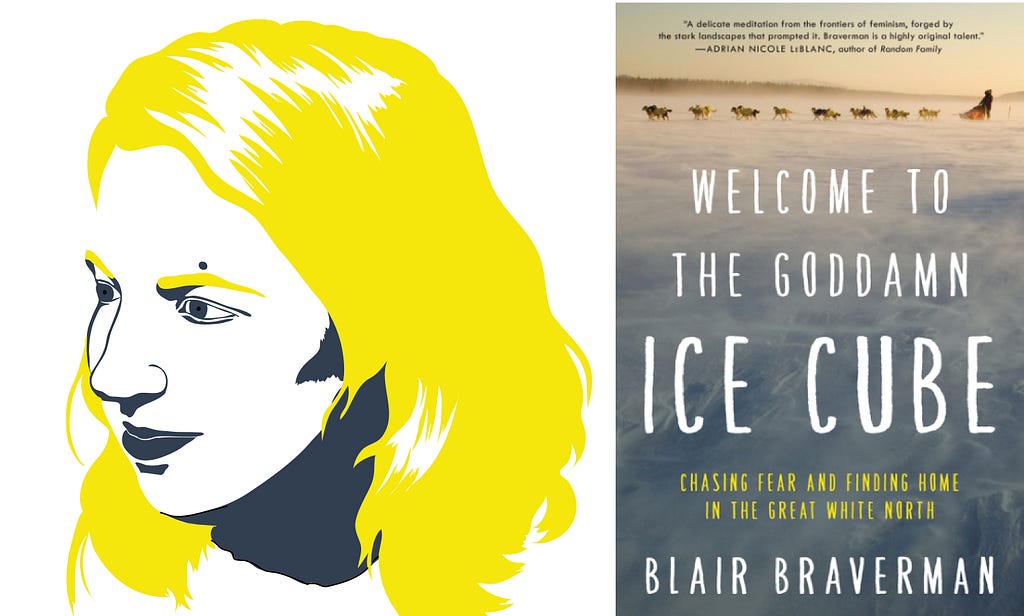
1. Blair Braverman, Welcome to the Goddamn Ice Cube
Blair Braverman’s compulsively-readable memoir Welcome to the Goddamn Ice Cube moves between her time spent as a high school exchange student in Norway, bullishly determined to adopt a new language and culture as her own, and the life she builds over the next decade in the north. Braverman draws characters with precision and tenderness, from the stubborn owner of the village general store, whom she slowly befriends, to the ailing man who makes furious and cutting verbal advances while she warms herself by the bonfire. Braverman’s debut beautifully portrays what it’s like to be a woman in an unwelcoming climate.
2. Nicole Dennis-Benn, Here Comes the Sun
Rivaling Walker’s Celie and Tolstoy’s Anna, Nicole Dennis-Benn has created in her debut novel an exquisitely-realized cast of heroines. From Margot, who services white male tourists after-hours at an upscale Jamaican hotel standing fortresslike over the cracked, aging streets of River Bank, to her younger sister Thandi who endures skin-lightening chemical rubs and a body wrapped tightly in plastic wrap beneath the anxiety of an education Margot pays for, Here Comes the Sun is rooted deeply in the sacrifices these women make — or can’t make — for each other.
3. Anna Noyes, Goodnight, Beautiful Women
The central events of Goodnight, Beautiful Women are often catastrophic or extreme, but the real heart of these stories is Anna Noyes’s achingly rendered murky-blue New England landscape. From a suicide to a failing marriage to a confused sexual awakening, her character’s reactions to trauma are deeply internal yet somehow detached, as if they’re watching a world unfold around them that they can’t quite access. It seems Noyes knows everything about these women, and they’re staged within a dreamlike-turned-nightmarish Northeast with tactile precision.
4. Leigh Stein, The Land of Enchantment
Leigh Stein’s third book, The Land of Enchantment, is an intimate and often intensely vulnerable examination of what it means to love, leave, and mourn an abusive person. Stein’s memoir is principally concerned with the struggle to reclaim a sense of self and ownership over a place — in this case, New Mexico, the state she and her now-deceased ex-boyfriend shared, and after which the book is titled. Stein’s narrative is most compelling when it confronts head-on the ambiguity between grief, indifference, and relief, and forsakes redemption for an ultimately more painful exploration.
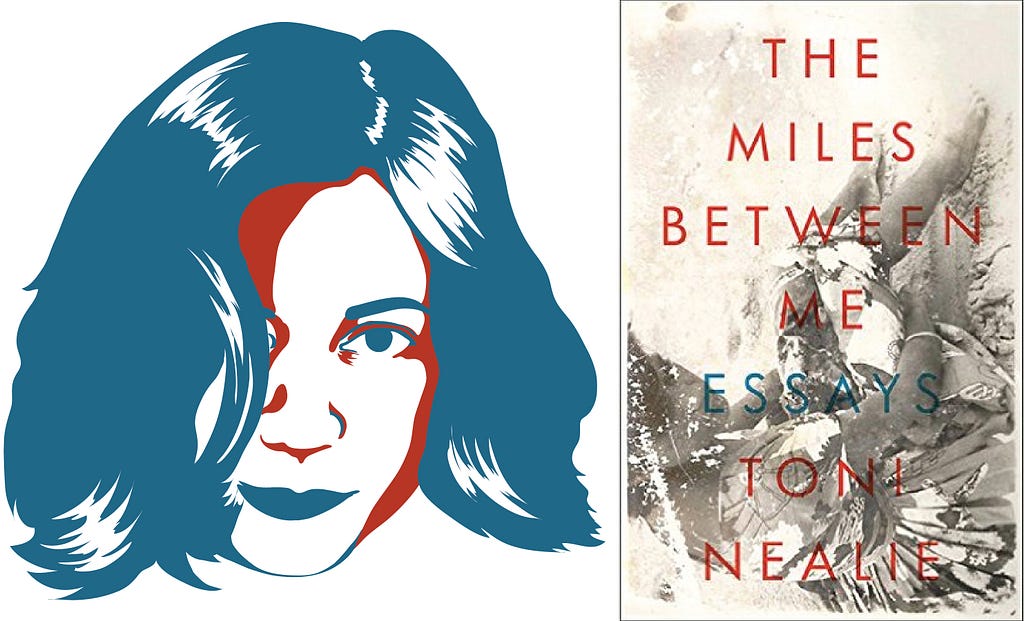
5. Toni Nealie, The Miles Between Me
“Why do we still call the South Pacific down and Europe up?” Toni Nealie asks early in her essay collection The Miles Between Me, and it’s a question that lends itself to her examination of how desperately one may try to chart a life in limited (or even arbitrary) terms. These essays are concerned not only with place, but also the roles we play within those spaces, and what it means to be defined — or to define oneself — as “an other.”
About the Author
Kristen Radtke is a writer and illustrator based in Brooklyn. Her graphic memoir, Imagine Wanting Only This, is forthcoming from Pantheon Books.She is the managing editor of Sarabande Books and the film & video editor of TriQuarterly magazine. She has an MFA from the University of Iowa’s Nonfiction Writing Program. Find her on Twitter @kristenradtke.
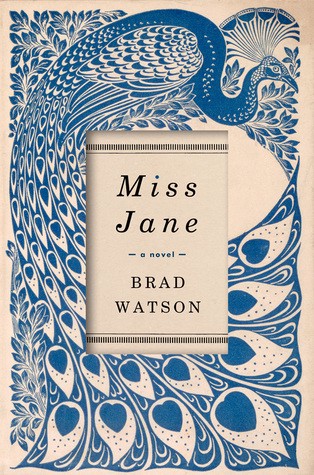
I first read Brad Watson’s debut Last Days of the Dog-Men while riding in a screaming box (the DC Metro), wearing an outlet mall tie. The book, full of men and women at the end of their tether, was a welcome counterpoint to the scene at hand, with long musical lines of prose that were just as lush and image-rich as the hot green Mississippi they described. A shining book. I was happy to open the newly-released Miss Jane (W.W. Norton & Co, 2016) and find the qualities I’ve long admired in Watson’s work. The novel is the story of Miss Jane Chisolm, “born in rural, early-twentieth century Mississippi with a genital birth defect that would stand in the way of the central ‘uses’ for a woman in that time and place — namely, sex and marriage,” according to the jacket copy. The novel traces her long life on the margins of that society, where neighbors whisper about her condition but never speak of it directly. In that silence she cultivates — is forced to cultivate? — a rich inner life.
The central paradox, for me, is that Miss Jane is surrounded by the fecund, sexualized natural world of her parents’ farm, a pageant of birth and death, as when she discovers a tomato worm eating her best plant in this stunning passage: “The worm’s fat, segmented body was studded with the rows of pure white cocoons that had grown from wasp eggs laid under its skin. They looked like embedded teardrop pearls or beautiful tiny onion bulbs growing out of its bright green skin. Inside the cocoons, wasp larvae sucked away the worm’s soft tissue as casually as a child drawing malt through a straw. The worm seemed entirely unperturbed. No doubt a tomato worm is born expecting this particular method of slow death, a part of the pattern of its making somehow, something its brain or nerve center, whatever it has, is naturally conditioned to recognize and accept. Just as a person hardly registers, until near the end, the long slow decadence of death.”
In addition to Miss Jane, Brad Watson is also the author of the novel The Heaven of Mercury, a finalist for the National Book Award, and two collections of stories: Last Days of the Dog-Men, winner of the Sue Kaufman Award for First Fiction from the American Academy of Arts & Letters, and Aliens in the Prime of Their Lives, a finalist for the PEN/Faulkner Award. His short fiction has appeared in The New Yorker, Granta, Oxford American, and Ecotone, among other journals. A two-time winner of the O. Henry Award, he teaches creative writing at the University of Wyoming.
— Matthew Neill Null
Matthew Neill Null: As a fellow product of rural WASPs, I still struggle to understand why we were so tight-lipped about sex — like Miss Jane, my first inkling came from seeing animals fuck, a common farm occurrence, though you got hushed for pointing it out. I would guess that many people of Miss Jane’s era, both male and female, would describe her as “chaste” (their compliment) or “barren” (their pejorative), but she has an erotic inner life, she masturbates, she fantasizes, she falls in love. I love that balance of external silence and internal symphony. Could you speak to this aspect of creating the character? Was it there in the first draft, or did it develop over time?
Brad Watson: My introduction was my neighborhood’s alpha dog, a big collie named Lonesome, and a tiny little mutt named Honey. He curled over that little dog in a way that was fascinating and obscene. All the lesser dogs stood around them in a circle, watching mournfully, and all the children stood around behind the dogs, in some state of enrapture, I suppose.
This book went through more than the usual number of drafts. I began with a dual story, first-person of a man in the present, who tells the story of his great-aunt, Jane. There was something in that guy’s narration, his story, but it did not belong in Miss Jane. Truth is, I was afraid I wouldn’t be able to fully imagine this character, Jane Chisolm, so I was looking for a prop of some kind. Cowardice never gets a novel written.
Cowardice never gets a novel written.
Everything that’s in the novel developed over time. Everyone says first and even early drafts are awful, but the problem with mine, this time, was just how far off the mark they were, how far they fell short of realizing the character Jane. I had to keep turning it on again, recycling my imagination, layering things in (even while I kept throwing a lot out). It was like a very slowly developing photographic world and person. I’d re-read a scene, a moment, and try, like a painter I suppose is the better analogy, to add just the thing that would make it richer, more real in the mind. She, Jane, was very hard for me to get at. A life and mind hard for me to imagine. And so it just required a lot of patience and tenacity, a willingness to start over more times than you’d like.
MNN: Jane is partly inspired by your great-aunt’s medical condition. I’m curious, did your family speak openly about this? Or did you have to piece it together? You mentioned doing an incredible amount of urological detective work.
BW: No one still living knew anything specific about the nature of my aunt’s condition beyond her incontinence. And then, before the real Jane died (one of my clues to work with was that Great-Aunt Jane lived a long and, under the circumstances, healthy life, from 1888–1975), my mom’s sister got it out of her that she had just one opening — for everything, it seemed. But you’re right in assuming that they really just didn’t talk about it. In those days, especially among Southerners, especially among Southern country folk, you did not talk about such private matters. It would have been disrespectful. They loved Aunt Jane and were not ashamed of her, nor was she apparently ashamed of herself — though I wondered how much of that was the family’s tendency toward stoicism.
I talked to my great-aunt’s oldest surviving nephew, who was by then old and in bad shape (and, ironically, in Depends and a tee shirt, in a trailer home under which two dogs were shaking the whole dwelling with their blissfully ironic humping) and all he could say was, Well, yes, Aunt Jane had a problem. I could find no medical records (they destroy them after a certain number of years, or used to, anyway). The nursing home she’d lived her last years in was gone. I combed through Dr. Hugh Young’s pioneering 1937 book, Genital Abnormalities, Hermaphrodism & Related Adrenal Diseases, a 600-plus-page tome with all hundreds of images of bodies and body parts and genital abnormality close-ups and drawings of dissections and surgeries and logs, etc., but nothing seemed to echo my aunt’s condition. It possibly sounded like “vaginal agenesis with cloacal anomaly.” That did not work out. There were other conditions with a single opening, but they involved complications that my aunt seemed not to have suffered. It was a long process of considering various conditions and discounting them before I finally saw something on “persistent cloaca.” Very little research on it for the longest time because of its rareness: something like one in 20,000–25,000 births. So Young probably had not even seen a case of it. I found it on the web, and given that a) there is incontinence, hard to repair, and b) it is possible to endure it without a constant infection(s), and c) there was no real ability to repair the condition surgically until several years after my aunt died, I thought, “This must be it.” The one urologist I got to talk to me didn’t know anything about it, said I’d need to talk to a pediatric urologist. I talked instead to a student’s father, an OB-GYN, an energetic guy who often collaborates with various colleagues in surgery, and he knew about it, and confirmed some things I wasn’t sure about, being an amateur net-surfer pretty confused, by that time, over the incredible variety of ways the urological system can go awry from the “normal” in the process of bodily formation. I could not really imagine Jane’s story until I could be reasonably certain of what her condition was. And that’s just one reason it took me a long time to figure out what, in the end, is a pretty simple book. Other things I knew that helped imagine a fictional Jane were the real Jane’s extremely thin physique — which helped me to imagine the parts about her habit of starving and dehydrating herself in order to be “safe” in public — and a tidbit an older cousin gave me late in the game: Jane took to wearing several petticoats beneath her skirts, and a little bit of perfume, in what was no doubt a futile effort to disguise the scent of a urological “accident.” And my mother remembered that, as children, they had giggled because Aunt Jane “squeaked when she walked,” because she had to wear rubber undergarments over her diapers.
Why the hell did I decide to write this book? I was fascinated by my great-aunt’s “secret.”
Why the hell did I decide to write this book? I was fascinated by my great-aunt’s “secret.” And, I thought, no one else is going to write it. She must have lived an extraordinary life (she did get out, and often traveled by bus to see her siblings and nieces and nephews who’d moved to east Texas), and she was very much on the verge of being forgotten. She was a family legend, a mysterious one, and — I thought — a noble character. That’s how I got caught up in the idea of writing a novel about her. I didn’t know what I was getting into.
MNN: I’ve always admired that, in a world obsessed with “likeable” characters, you aren’t afraid to write about scoundrels. Miss Jane’s father is a taciturn drinker, and her mother is a scold and a bit “flighty” as we’d say in West Virginia, but my favorite is her older sister Grace, who is sexually malevolent in such a marvelous way. Without giving away too much of the book, I will say she uses sex as a bargaining chip, all while throwing it in the face of a sister who is denied access to the erotic world that is such a part of the human experience. So Brad, do you have any practical advice for those of us who want to write about scoundrels? What do you tell your rising talents out in Wyoming?
BW: One of the difficulties I faced as a newspaper reporter (beyond the fact that my professional competence was minimal — I wrote well, but had little real training as a journalist) was the degree of empathy I carried into any story involving people who appeared to be crooks or scoundrels. I didn’t like the idea of ruining someone’s life if I couldn’t be one hundred and ten percent sure of my case. Of course, some people were so obviously (not at all subjective, there, right?) slime-balls that it felt good to uncover their misbehavior or criminal activity. But other people were apparently just people who screwed up, made a mistake, a poor judgment, or reacted to a situation improperly out of fear or incomprehension. I had newsroom colleagues who were ready to nail anyone who got into trouble. There was an uncomfortable level of self-righteousness, in some cases, it seemed to me. Unlike them, I had not come roaring into journalism with a beat-up copy of All the President’s Men bound over my heart with duct tape. I had come from a frigging MFA program in creative writing, for Christ sake. Writing fiction, in terms of dealing with your characters, is all about empathy. All about figuring out this or that person’s humanity, her or his human-ness. A scoundrel in fiction had better be just as interesting if not more interesting than the good folks. A scoundrel might believe she has very good reason for her actions. She or he had better be a complex character who can’t be summed up in the simple language of good versus evil. If you don’t understand that, you should be writing propaganda for some extremist group or another. You shouldn’t be writing fiction. You shouldn’t be your newspaper’s crime reporter. A writer friend has said that the notion of a writer loving or even liking her characters is ridiculous. It’s not at all about them being likeable or loveable. It’s about whether or not they’re interesting. So, in short, your scoundrels should be among your most interesting characters. They, like inherently good people, face the greatest risk of being oversimplified, two-dimensional, unrealistic, sentimental, or laughably sinister creatures.
MNN: You have an epigraph from the phenomenal Swedish writer Lars Gustafsson, and I feel I detect a strain of Gustafsson in here, particularly in the opening pages, which are just this phenomenal willing up of a world — a corrective to anyone who thinks exposition hinders narrative. I’m thinking of this passage: “You would not think someone so afflicted would or could be cheerful, not prone to melancholy or the miseries. Early on she acquired ways of dealing with her life, with life in general. And as she grew older it became evident that she feared almost nothing — perhaps only horses and something she couldn’t quite name, a strange presence of danger not quite or not really a part of the world.” You make a statement, then qualify it, with “perhaps only horses” and similar emendations, like you’re going back to darn a stitch. Her inner life is given nuance, complication. Out of curiosity, I went back to your 1996 debut, Last Days of the Dog-Men, and found the different style I remembered: these swaggering, musical, image-rich sentences that remind me of Barry Hannah (who said of your work, “Only the Irish geniuses wrote like this,” a blurb to beat all blurbs), with more of a focus on the outside world. While the old music is still here in Miss Jane, there’s more of a meditative quality to your prose, exploring the inner emotional topography of your characters. Do you see this evolution yourself? Or am I making it up?
BW: First, I suppose you can get away with expository writing in something that is, effectively, a prologue. So I took advantage.
I re-read that amazing short story by Lars Gustafsson [“Greatness Strikes Where It Pleases” from Stories of Happy People]more than once while I was working on Miss Jane, hoping to capture at least something like the cool wonder and patience that works so powerfully for Gustafsson there and in other works of his. I thought it appropriate, also, to study that story for the way in which Gustafsson manages to write about a character who is essentially inaccessible to most (if not all) of us — a great, beautiful mystery of a human being who eventually finds his own version of greatness. Of course my character is not nearly so closed off from the world, from “reality” as most of us know it, as is the boy-then-man in “Greatness.” But it served as much-needed inspiration, in that I tried to learn from his ability to get at that deeply profound sense of (in his case) inarticulate wonder.
As for the prose in this book — yes, I did not want to write a book that indulged so much in stylistic flourishes as my previous work (although I’d already begun to draw back from that a bit in Aliens in the Prime of Their Lives). Not only was I a little tired of that voice, that self-indulgent fun, I also did not think it appropriate for this story. I thought Jane should be center-stage, and that the language should only support her, not embellish her. I wanted whatever strangeness there is there to come from Jane’s condition, her awareness of it, not from forcing the language. At one point, my editor (and my agent) said I was holding back too much, so I loosened up a bit. But I was cautious, even then. I didn’t want to muck up the reader’s sense of Jane. I wanted there to be as clean a sense of her on the page as possible.
MNN: Much of the book hinges on Jane’s lifelong friendship with Dr. Thompson, the traveling country doctor who delivered her and discovered her condition, a bond perhaps informed by his own status as an outsider in that place as a highly-educated and childless widower. Could you talk about the genesis of that character? While reading the novel, I kept thinking of William Carlos Williams’s fabulous and overlooked story “Old Doc Rivers,” about a drug-addicted country doctor of great skill and great unpredictability, so I was pleasantly surprised to see you mention that story in the acknowledgements.
BW: In earlier drafts he was different, physically and temperamentally. In fact, he was a lot more like Old Doc Rivers than now. I can’t recall when I read the Williams story but it was early-on enough that Thompson had a more rascally side and leaned more heavily on the cocaine and drink than the man he turned out to be. I wanted Dr. Thompson to be kind of romantically mysterious, I guess — and handsome in a refined sort of way — and started to work on another figure in my head. Since I’d once met Dr. E.O. Wilson, and was so in awe of him, admiring him as a person as well as a scientist and writer, he (or my impression of him from c. 1988 and his public persona) found his way into being a kind of very basic model for my doctor. So you can see there was quite a transformation from the original portly, bearded, rather boisterous figure into the more genial man with a sly sense of humor and a great capacity for empathy and love for his fellow human beings — as well as birds, especially his peacocks.
MNN: You’re a master of writing hell-raising children. I’m not only thinking of Grace Chisolm, but of the roving brothers in stories like “Eykelboom” and “Vacuum,” which first appeared in the New Yorker. Were you a hell-raising child? Or do you have them? I sense hard-won knowledge.
BW: It’s funny, because when I was the age of the boys in those two stories, I was “the good boy,” just like the middle brother in the stories. But in the South when and where I grew up, being timid (as a boy) was suspect, as if you might not be “all boy.” My older brother was an anti-authority hell-raiser from the get-go, and my younger brother was plain trouble. And there I was, the middle brother, a goody-goody. My older brother teased me about it. Others teased me. I very much admired tough kids, and wanted to be one. So, I determined to change, to get tough, to transform myself from the pale, timid weakling into something else. I did it with a vengeance, first with honest sports, and soon enough with cars, alcohol, violence, trouble with the police (arrests) — being an all-around wanna-be-asshole who secretly had a good heart. Being sensitive was not safe. So, yeah, I ended up married between junior and senior years of high school, out on my own with a family. It was an extended rebellion that did not end well, although all is well enough with that, now. That is to say, we all survived it. But I deal with the effects or consequences, even now, and enough said on that.
MNN: Could you imagine your aunt reading this book?
BW: First, I don’t know if my great-aunt was a reader, or not. Although I suspect, for some reason, that she was not much of one. Maybe that’s because most people on that side of my family, in the generation before mine, were not big readers as far as I know. Second, given her time and place (Mississippi, 1888–1975 — my Jane Chisolm was born later, in 1915), what and where she came from, it might’ve horrified her. But I like to think that whatever is left of her in the world, physical or metaphysical, would absorb it now in the spirit it was intended. A song of praise and admiration — and of wonder, as well.
About the Interviewer
Matthew Neill Null is a writer from West Virginia, a graduate of the Iowa Writers’ Workshop, and a winner of the O. Henry Award, the Mary McCarthy Prize, and the Joseph Brodsky Rome Prize from the American Academy of Arts and Letters. He is author of the novel Honey from the Lion (Lookout Books) and the story collection Allegheny Front (Sarabande). Next year he’ll be in residence at the American Academy in Rome.
Summoning the literary spirits of Salinger, Alcott, and Twain, Jesse Ball, in his sixth and best novel, How to Set a Fire and Why, creates a literary figure who stands as one of the great angst-ridden and misfit teenagers in contemporary American literature. She is callous and destructive. She is loving and sentimental. She’s a contradiction of impossibilities, simultaneously exploding with boldness and hiding in fear. While she could just as easily be referred to as Holden Jo Finn, Ball names his mesmerizingly misanthropic protagonist Lucia Stanton.
Lucia Stanton is not a good person. Wait, I take that back. The truth is that Lucia actually is a fairly decent human being. She just has an odd way in presenting herself. When readers first encounter Lucia, it’s inside her high school’s principal’s office. Yes, Lucia is that girl. The reason she’s there: she tried to kill the school’s “little prince basketball hero” because he touched her dead dad’s zippo lighter. What Ball quickly informs his readers of is that Lucia, before stabbing her pompous classmate in the neck with a pencil, cautioned him: “Don’t touch this lighter or I will kill you.” Is it really bad that she attempts to follow through on her threat?
Lucia is a teenager teetering on the edge of a cliff that oversees two vastly different valleys.
Lucia’s not the kind of girl who can join the everyday teenage brigade and simply “hang out.” She’s too adult for such trivial nonsense. And Lucia certainly isn’t the kind of person to become entangled in the addicting, fantastical world of teenage consumerism. In fact, she’s rather immune to any ploys of materialism. She only really cares about her lighter, licorice, and books. Lucia is a teenager teetering on the edge of a cliff that oversees two vastly different valleys — one of total destruction and the other of learned responsibility. Like I said, she’s a contradiction.
Much of Ball’s novel’s plot unfolds around Lucia trying to find something — anything really — in which she can invest her time and energy. With a dead father, a mother who is so emotionally and mentally damaged that she can’t remember her daughter, an aunt who is failing to recover from a stroke, and zero friends, Lucia is totally lost until she stumbles across her ultimate savior: an arsonist club.
Lucia, the “quiet person who minds her own business,” finds her calling in the destruction that fire promises: “With this little lick of flame in your pocket, with this little gift of Prometheus, you can reduce everyone to a sort of grim equality.” She discovers personal satisfaction in the deluded fantasy of destroying those around her who deem themselves as superiors. This is a girl whose top rule is not to do things that she isn’t proud of. Confidently, she enters her new world determined to right the wrongs she’s witnessed.
With a renewed interest in life and a promise of connecting with others through fire, Lucia gradually finds her path. And her new trail seems possibly even more troubling than when she was totally directionless. Lucia declares philosophical wisdom: “We’re just not permanent at all, not the way we want to be” and “You should believe in inevitable things. Anything else is frippery.” She prepares a pamphlet about how to set fires for others like her — those lost and seeking a way to connect. At least for now, Lucia, nihilistically, believes that her way is the right one.
We can fade into Lucia’s life and see her struggling, but we are never in one scene long enough to truly get angry with her or to give up on her.
Ball constructs How to Set a Fire and Why in short chapters that rarely exceed a couple of pages. This segmented orchestration allows readers to fall into Lucia’s world, but it also prevents us from seeing too much of it. We can fade into Lucia’s life and see her struggling, but we are never in one scene long enough to truly get angry with her or to give up on her.
Ball’s portrait of a helplessly reckless teenager is beautiful to behold. Amidst all of her fury and her detachment to reality, Lucia maintains a likeability that can’t fade. Perhaps it is her will to survive for herself — and really only herself. Maybe it’s her ordinary (and tragic) luck. It could even be her deep down and hidden sentimentally toward her father’s lighter. Why it is that we can’t help but want Lucia to succeed lies in the sole, meticulous hands of Ball, who gives his icy protagonist a dimensionality that transcends teenage angst or even new adult curiosity.
There’s a feeling of defeat in How to Set a Fire and Why that feels oddly comforting. It serves as a reminder that life isn’t always good, and the future might be worse than the present. Lucia admits, “When I thing about what my future holds, it is a bit like looking into the sun. I flinch away, or I don’t and my eyes get burned down a bit, like candles, and then I can’t see for a while.” And there’s always another fire on the horizon.
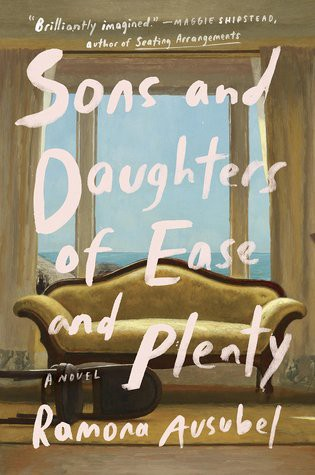
In Ramona Ausubel’s new novel, Sons and Daughters of Ease and Plenty (Riverhead, 2016) a family of great wealth is splintered by the sudden loss of their riches. Each character is whisked away on an adventure of sorts, an excursion that tests and grapples with the reality of love after the reality of money has vanished. The narrative toggles back and forth between Edgar, Fern, and their three children, creating a tapestry of a family stretched, torn, and pulled taut.
Early in the novel, Edgar wonders about how his feelings are perceived by those without money. “As if his feelings were purchased and not true,” he thinks. When reading Ausubel, one is overcome by the emotional truth of her prose, the tenderness with which she conceives her characters and their world, however far away it might be from our own. There is nothing purchased or borrowed in these pages, only people and their human desires deeply felt. The only embarrassment of riches to be found is in the sentences themselves.
Hilary Leichter: Many of your short stories, and your first novel, No One Is Here Except All of Us, are rooted in a fabulist, fantastic tradition. They are propelled by a magical kind of thinking. What was it like writing this realist novel? Does your approach change based on the world you are trying to create?
Ramona Ausubel: So far I’ve always set out with each new piece of writing without expectations, as much as possible. If something magical makes the story bigger or truer or more interesting, then it goes in, but if I can get closer to the heart in a more realistic world then that’s where I stay. My main feeling is that the world we live in is incredibly weird, almost unbelievably so, and that any strange thing I add is simply an amplification of what’s already there. I did want to push the edges a bit in the new novel — there’s a giant and a lot of bad decisions made in their own kind of magical thinking — but I found more friction this time by staying within the bounds of reality.
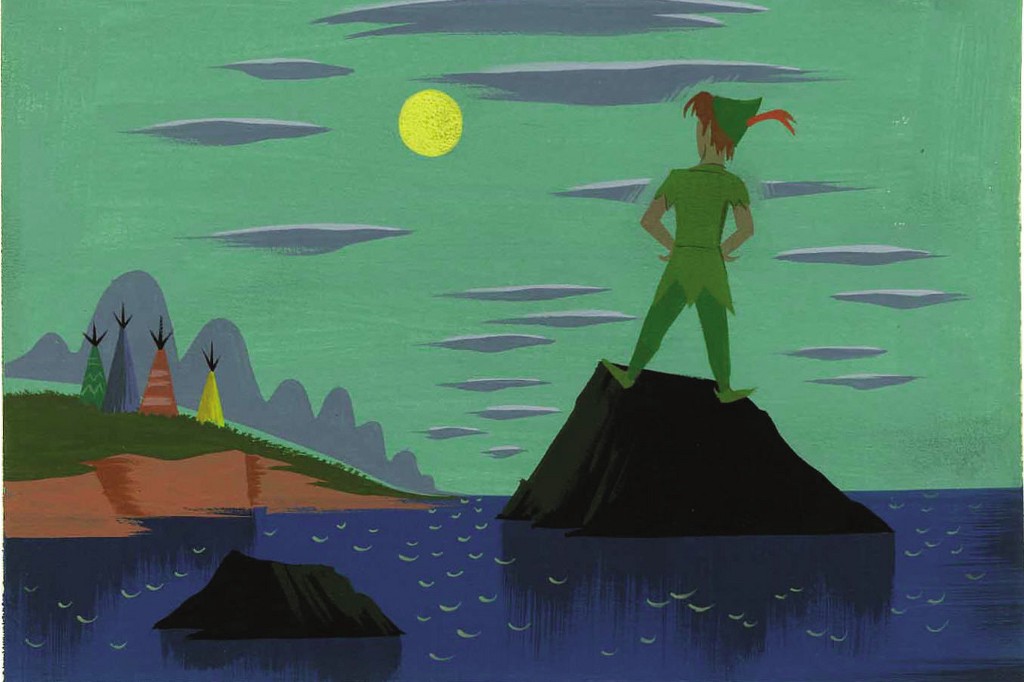
Leichter: Some of my favorite sections of the book were with Fern and Edgar’s children, Cricket and her two younger twin brothers. For various reasons and plot turns, they are left to their own devices, and they build a fantasy of their own making. Cricket becomes a sort of Wendy and Peter Pan amalgam, and they even play-act Native American prairie life in a way that echoes the problematic portrayal of Tigerlily in Neverland. Wendy, Michael, and John had money, too. Even Oliver and Orphan Annie end up rich. What’s the connection between childhood imagination, or fantasy, and wealth?
Ausubel: I thought about this a lot while writing. So many of the books I loved as a kid were about orphans (it’s hard to go on any truly great adventures if parents are around!). There’s this clash between the “civilized” adult world and the wild, free, and sometimes dangerous kid world. Part of what makes the children free is that they don’t have all that stuff — the kids in Sons and Daughters move into their backyard where they have only the resources they need and not more. Fern and Edgar too have gone off on possession-less journeys, as if the self — whether young or grown — can’t be discovered within the walls of a structured and stocked American life.
Neverland is made to be left.
And of course, it’s all fantasy. That American dream is fantasy, but so is the stripping of that. The kids rely on a completely invented idea of Native Americans, built to represent a life in opposition to what they experience and built for the pleasure of visiting that imagined land and also so that when they return to their own life they find it full of comfort and safety. Neverland is made to be left.
Leichter: Much of the book is a beautiful reflection on motherhood as it relates to personhood, to art, to existing as a sole entity and also in relation to another being. Fern’s mother Evelyn is a sculptor, and in these pages motherhood is also a sort of chipping away, as much as it is a filling up. The mothers in the book have varied levels of success when it comes to figuring out a solution, an answer. Is there an answer?
Ausubel: I wish there was an answer! I began this book with several knots, from the idea of money to the idea of motherhood (and gender expectations in general) to the freedom and fear of childhood. One of the parts of the process that I most loved was trying to represent the complication of each of these ideas differently across a number of different characters. In my own experience of motherhood I have felt most of what the characters feel — elation, entrapment, unnameable joy, deep exhaustion. Motherhood is, as I suppose most kind of love also are, a study in contradiction and heartwork. I am so grateful that my job includes space to think and write about this vast experience. It helps to name these things.
Leichter: I love that word — heartwork! Would you describe writing a novel as heartwork, too? Or does it involve a different muscle?
Ausubel: Oh, that’s the muscle all right. Obviously the brain is handy and much required but it can also get in the way. Learning to write for me was all about building instincts so that I can feel when I’m getting what works. No one can say, “The third paragraph in a story about a woman artist needs to be short and send a hard punch.” It’s something I know by feel. In all the drafts of re-reading, I come to new understandings of the texture and depth of what I’m trying to do and know a little more each time how to press the piece onward. I also think about an interview with Marlon James where he says the best writing advice he ever received was to “risk sentimentality.” Especially when I’m working in a highly stylized story, it’s not just my heartwork that matters but the characters’. If no one is feeling, then we have to go for a walk and find a new way in.
Leichter: The narrative toggles back and forth in time, but the entirety of the book takes place before and during 1976. How did you go about choosing an era, and what was it like writing a period piece?
Ausubel: I knew I wanted the book to be set mid-century, somewhere in the space after the strictures of the 1950s but also out of the thick of the unleashed 1960s. I wanted the presence of that unleashing, but not to be right in it, and then of course I wanted the hangover as the revolution fades and everyone ages and looks up to see that a lot of things have changed and a lot of things have stayed the same.
I wanted the hangover as the revolution fades and everyone ages and looks up to see that a lot of things have changed
Leichter: Tracing the money of Fern and Edgar’s families becomes a kind of access point for some of the ugliest parts of American history. What kind of research went into the book, and did you have real families in mind when you were creating these particular characters?
Ausubel: I come from a family (on one side) that was once very wealthy and high on the caste system but slowly became less and less wealthy, and by the time I came along the riches were gone. I grew up with the tattered old silk dresses from grand European voyages that included huge leather trunk and porters and first class everything. I had all these stories of a life that felt both fantastically cool, and also in the stories was generation after generation of depression and, as time went on, more and more questions about the origins of the money (great sums aren’t built from kindness and justice). I wanted to write toward the idea that every life is a life of want. That there is no such thing as an easy existence. That every inheritance has a shadow.
Leichter: “Every life is a life of want” is a such a great motto for writing fiction! Your characters have so much longing, even when they have difficulty articulating what it is exactly that they are longing for. I’m also thinking of your short story “Tributaries,” where falling in love causes people to sprout extra hands. I think that desire is such a difficult and important emotion to put on the page. How do you set about creating characters with lives of want?
Ausubel: Desire is the center of everything. We want because we are lonely, regretful, hopeful. We want because we don’t feel at home in our bodies or our lives. Want is this pivot point between whatever happened before that we’re trying to move away from or closer to and the question of whether we’ll get there. I have a four-year-old son and when he gets really upset about something he can’t have (usually ice cream or to sleep with some beloved object with a lot of sharp edges) none of my motherly logic calms him down but if I say, “Do you wish you could just curl up with that dangerous garbage truck and dream next to it the whole night through?” he softens right away. Desire is powerful even if it doesn’t make any sense. Everybody deserves to wish the wish.
Leichter: Fern talks about struggling to make a single friend, always feeling too much different or too much the same as everyone around her. Many of the characters are constantly code-switching or flat out fictionalizing as a way to connect. Edgar wants to pretend himself into a different origin story, and Mrs. Nolan invents a Native American heritage for herself. Cricket plays at being a mother, and an orphan. Fern participates in a mock wedding, and the wedding becomes a door for an escape, a mock marriage. Identity is problematized. Are we all just playing at being ourselves, at being someone else? Is it just an attempt to connect, to belong, or is it more fraught than that?
Ausubel: We are all always inventing everything and the mix includes an awful lot of fiction. Part of this is because we are not creatures of pure logic. We feel, we are emotional beings and this is always with us and I’d argue that it drives our storytelling more even than the facts and figures. We draw borders, let in or keep out immigrants, marry, make babies, build whole lives (real lives, concrete and measurable lives) based on the stories we tell ourselves and each other. And as we go through our lives I think we’re always looking for signs and doorways to the next thing. We are looking for the story and we’re very hungry for it and a lot of times we might be willing to go farther into fiction than we might like to admit. Miss Nolan is stealing and mangling something that doesn’t belong to her, and it’s both innocent and not at all. We’ve seen a few of these stories in the news this year of people claiming a heritage that isn’t their own and while these are more extreme examples, I think we’re all in stories of our own making and stories that have been told for generation and handed down to us and that these are both the best part of our nature and the worst. We are freed and entrapped by our own storytelling.
I recently received an email from a literary agent who read my work online and was compelled to reach out. Excited, I sent her some of my best work to read: a story from my story collection in-progress and the first chapter of a novel. She responded with an enthusiastic yes.
I’m concerned, however, that my style (lyrical language) and preferred literary sub-genre (magical realism) is not “on trend” these days. In fact, a very famous Latina novelist told me that “magical realism has been done” and to focus on more contemporary forms of writing.
Although I haven’t let her words deter me from writing what I love and feel most inspired to write, they have called into question the kind of fiction readers are craving these days. I realize contemporary writers like Karen Russell and Haruki Murakami have put their own spin on the magical realism form, but I’m still concerned that because my writing has a more cultural, historical-flashback, language-oriented feel to it, it might not be well received by readers looking for something more current to read.
Sincerely,
21st Century Magical Realist
Dear Magical Realist,
I recently attended a panel on dystopian fiction where one of the speakers was a YA literary agent who represents authors working in this style (a la The Hunger Games, Divergent, etc.). Someone in the audience asked her if she was still looking for dystopian YA novels, and she said no — by the time readers recognize a trend in the market, agents are already bored of it and looking for the next thing. They don’t want to be behind the trend, they want to be ahead of it.
Given how long it takes to write a book, find a publisher, and then see it into production — generally a number of years, even just in the latter stages — it is not realistic to attempt to be “on trend” during the writing process. Trends move fast, and writing, editing, and publishing do not. For all you know, by the time your story collection and novel are finished and published, magical realism will be all the rage.
As for the advice you got from the famous Latina novelist, I have to disagree. Magical realism “has been done,” yes, but so has everything else. Dystopia has been done. Vampires have been done. Suburban malaise has been done. They will be done again. Any genre becomes contemporary when contemporary writers do it. Further, I wouldn’t even say that magic realism is dated outside of America; when I read contemporary fiction in translation I’m often struck by how commonly elements of magical realism are present. YA and genre fiction aside, American “literary fiction” is pretty staunchly wedded to realism, but realism is so pervasive you could hardly call it a trend.
So, my advice to you is, forget about writing toward current publishing trends or for the readers who rabidly follow them. You should do what you do well and I’m sure you’ll find your audience (readers like your agent).
Dear Blunt Instrument,
I miss when poetry collections were just that — really good poems linked by the fact that they were written by the same poet. Will those kinds of collections ever come back in style? Are publishers just looking for linked/project-based books these days?
Thanks,
E
Dear E,
I’m not sure I agree that they’ve ever gone out of style. It seems to me that the poetry books put out by both large and academic presses tend to mostly be unlinked collections of poems; these also tend to be the books that win big prizes. I see the “project-based” poetry book trend as mostly confined to small presses.
I also see it as a somewhat false distinction; poems written by the same poet around the same time and intentionally grouped together tend to be linked in terms of style, form, and theme or subject matter, and whether you view those poems as unlinked or as a project is often a matter of perspective, not to mention marketing.
As above, as ever, I’d advise you not to worry about perceived trends in the market. Write good poems, find your audience, and let your future publisher worry about whether or not they qualify as a project.
It would be easy to characterize Charles Bock’s Alice and Oliver as just another cancer novel. The book is inspired by Bock’s late wife, Diana Joy Colbert, who battled AML (acute myeloid leukemia) in her thirties. She underwent two stem cell transplants and passed away two-and-a-half years after diagnosis. As a stem cell transplant patient myself (twenty-one months later, I still hesitate to even consider uttering the word “survivor”), I was tempted to read Alice and Oliver as a detailed chronicle of the rigors of enduring one of the most harrowing and risky medical procedures in existence — just to connect with someone else who went through it.
As such a chronicle, Bock’s novel does not disappoint. Much like in the finest, recent cancer memoirs (Paul Kalanithi’s When Breath Becomes Air or Mortality by Christopher Hitchens), one can clearly imagine the experience of terminal cancer. Bock captures how you can feel dropped into an ocean of new clinical vocabulary, each word carrying life-and-death stakes. With every indignity faced by Alice (the fictive version of Bock’s late wife), I relived my own experience: each failed needle-prick into a collapsed vein, each performance of what Alice humorously refers to as “ass gymnastics” when providing those all-too-frequent stool and urine samples.
Bock also painstakingly renders our American healthcare system in all its logic-free anti-glory. You might ask yourself whether the daily hellscape of legalese, faxed letters, and maddening conversations with hospital bureaucrats is even worse than dying from cancer.
“As a stem cell transplant patient myself, I was tempted to read Alice and Oliver as a detailed chronicle of the rigors of enduring one of the most harrowing and risky medical procedures in existence.”
The novel is weaker, however, in its depiction of Alice and Oliver as individuals. A super mom with a fondness for Eastern religion and a passion for fashion, when we first see Alice, she is “rocking knee high boots” with her infant daughter strapped to her chest. Oliver is a computer programmer and entrepreneur with a short fuse who can’t stop observing how cool and gritty the Meatpacking District used to be. Both come close to being Manhatttanite clichés: well-educated, creative, and most notably, privileged.
Though facing serious misfortune, Alice and Oliver often seem oblivious of their level of entitlement. The fictional Whitman Hospital on York Avenue between East 67th and 68th Street is a thinly-veiled stand-in for the place I was lucky enough to receive my transplant: Memorial Sloan Kettering, the top cancer center in the country, maybe even the world. During an especially trying night in the hospital, Alice tries “to inhabit her best self” by asking each nurse assistant “to say her name,” so she can make “comic guesses as to the origin countries of their accents,” without any awareness of her condescension. She’s not above disobeying doctor’s orders or throwing a tantrum when she discovers she can’t see her child during treatment, even after her doctor explains that the germs any child under eleven might bring into the hospital could kill her and other severely immunocompromised patients.
In Oliver’s eyes, Dr. Bhakti, an Indian woman, is always saying or doing something insensitive, like daring to touch her hair while Oliver’s wife has to endure chemo-caused baldness. In a dispute over medical bills, Oliver agitates the hospital’s African-American account payable clerk to the point her English breaks down:
“My job, I make sure the hospital gets paid for the services it provide, okay? That ain’t me, that’s policy. If you need, we got all kinds of financial aid and payments options to our patients.”
No one in the book calls Alice and Oliver out on their difficult behavior, and neither character seems particularly bothered by the fact that every annoying person on their grim journey happens to be a person of color, while everyone helpful is white, leaving us to wonder whether these unsettling character notes are intentional.
As a novel about marriage, Alice and Oliver is at its most successful. Bock paints how marriage can help these two flawed individuals transcend their own limitations in a time of crisis. Together, as a couple, Alice and Oliver are warm, their rituals endearingly specific. They meet at a coding party in the late-eighties, and a twenty-seven year-old Alice nicknames Oliver “Bushytop” and loses “a fight against his oncoming smile.” She’s drawn to him because he’s “unlike everyone in the fashion world,” and gives “off a hetero vibe,” and is “not in any way uncute.” Years later, when facing their toughest moments in the hospital, they call each other “favorito.” In this astounding scene, a ravaged Alice tries to provide Oliver, whose life has been subsumed by caretaking responsibilities, some sexual relief:
Enveloping him, her mouth was warm, wet. His shoulders hunched and he let out an involuntary high sound; his head leaned back and he shut his eyes; his right hand went onto the back of her head. Oliver felt the barren desert of her skin. The air in the room warmer, her breaths coming at shorter intervals. She went at him, gallant and resolute, going faster, her eyes shut, cheeks pulsing.
But he was not close.
He was careful in lifting her off him, and he brought her to his face, and kissed her with all the tenderness in him, and on her lips tasted his own heat and salt.
Oliver pulled Alice’s bird-frail body to him. He took her face into his shoulder, caressed the back of her head, and laughed, amazed, holding her to him.
She was sobbing by now, and her sobs continued for a time, their force increasing, sending her body into racked, great heaves.
“Favorito,” he said. “Favorito.”
The scene is easily the best in the book — one of the more fraught and complicated portraits of the conjugal in recent memory. In the powerful and suspenseful final section of the novel, after multiple rounds of chemo, a bedridden Alice finally gets her desperately needed transplant, but the doctors are unsure if her frail body will survive the cure. In those make-or-break days, Bock hops between points-of-view, from Alice’s first-person journal entries to Oliver’s third-person perspective, then to all-too-short sections in the heads of Alice’s doctors and nurses — the people on the front lines of battling cancer for their patients. This break from the structure of the rest of the book creates a dramatic urgency that raises, for the reader, the possibility that Alice Culvert’s fate might differ from Diana Colbert’s.
Anyone — whether they’ve been through leukemia or whether they like Alice and Oliver or not — will empathize with the devastation that both the disease and its potential cure can cause. Bock’s fictive paean to his wife’s endurance reminds us that cancer leaves behind significant psychic trauma for both the survivors and those who are survived.
DON’T MISS OUT
Sign up for our newsletter to get submission announcements and stay on top of our best work.
YOUR INBOX IS LIT
Enjoy strange, diverting work from The Commuter on Mondays, absorbing fiction from Recommended Reading on Wednesdays, and a roundup of our best work of the week on Fridays. Personalize your subscription preferences here.