At the end of my first in-home visit as a hospice volunteer, the elderly wife of my “client” thanked me profusely and, having asked where I lived, offered me gas money.
“Oh, no, I can’t do that!” I exclaimed with jovial horror. I was forty-two years old and hadn’t negotiated gas money since nights of joyriding and under-age drinking with my high school friends.
“Are you sure?” she asked, making surprisingly earnest eye contact. She was an elfin woman with white hair cut like a boy’s, combed in a side part.
The pained expression on her face told me the problem: my help felt like a handout; she did not want a handout.
I told her I was sure. After the stern instructions on refusing gifts and money I’d received in my hospice training, I considered any compensation from a client’s family as a cross between payola and elder abuse. There are moments when, for mysterious reasons, I don integrity like a chastity belt, and this was one of them.
I was a hospice volunteer for roughly one year. I’d like to say my motives for volunteering were entirely virtuous and uncomplicated, but I can now admit this was not the case. Between extended fits of childrearing, my mother had been an RN, and then, after she retired, she was a volunteer hospice nurse for another fifteen years until she became too old to drive. Her whole life has seemed dedicated to serving others, including raising ten children. She acted as if some formal service was a life obligation.
I’d like to say my motives for volunteering were entirely virtuous and uncomplicated, but I can now admit this was not the case.
I felt the pull of this idea, the sheer lapsed-Catholic guilt of it, and I also sensed that serving others, especially in a charged context like hospice, was not a simple thing. I wanted to serve and I also wanted to reflect on what it meant to serve. Since I was a fiction writer, this reflection would take the form of a story. I planned to become a hospice volunteer at an outfit that provided in-home care, do good, and get some cold hard insightful facts for a novel I was considering.
My first assignment was providing respite for three to four hours, once a week, for the aforementioned elfin woman, whose husband was dying from C.O.P.D. I sat with the man. We watched TV together. He liked hunting and fishing programs. Meanwhile, his wife ran errands, had lunch with a friend, escaped her death watch.
I didn’t find myself counting the minutes until her return; instead, I immersed myself in the incredible tedium. I tried to pinpoint the best way to describe one of the sounds his oxygen machine made — cymbals clashing under two feet of water. I made conversation. I asked him simple questions that took him five minutes to answer. He told me about farming, about how calves were born feet first with their heads between their legs. If she was having trouble, you spoke softly to the mother cow, so she wouldn’t get up, and then you grabbed the forelegs of the calf and pulled. I logged this information. You never know when a well-rendered lifestock birth will provoke an epiphany or two. When it was time for lunch, I’d fetch him a bottle of Ensure, or a mushy pulled pork sandwich, or just an illicit ice cream bar.
His wife’s gratitude was intense and unsettling. I hadn’t counted on her being affected by my presence. I assumed I would simply do my job and go unremarked upon as a person. But after that first offer of gas money, there were other awkward parting scenes in which she inquired in great detail about my family, praised my character, gave me a stuffed rabbit for my daughter, and, yes, continued to offer me cash for gas. I told her I was on sabbatical from teaching, that I had plenty of time. My weakness with the rabbit only steeled my resistance to the money, which always seemed to pain her. Once, when she was laying it on too thick, I baldly said, “No, I’m not really a good person.” She didn’t seem to hear this.
Once, when she was laying it on too thick, I baldly said, “No, I’m not really a good person.”
I was plagued by some of my not-so-great moments as a person, and, also, increasingly by the “research,” the selfishness, it was now clear, that had landed me in this place. The more she praised my altruism, the more clearly I saw its absence.
During training, we had been given a poem written by a veteran volunteer called “A 23rd Psalm for Volunteers.” The poem’s speaker says that volunteer work “maketh me to forget the self/in remembering others,” and the poem concludes, “The light of my candle of service/shall flow in my heart forever.”
I wasn’t exactly feeling this. Still, I did try to rationalize what I was doing: maybe being altruistic and selfish at the same time was actually a good way to live, making sure sacrifice doesn’t go too far? My mother’s near-perfect altruism inspired in me significant awe and admiration but also noteworthy amounts of terror and depression. And isn’t every fiction writer guilty of turning anecdotes and relationships into material? Wasn’t that actually our duty? Clearly, this was a rare win-win situation because I was helping someone and getting inspiration for my book. Besides, the man wanted a male hospice volunteer, and we were a scarce breed. Some other poor sap would have had to do extra volunteering if I weren’t there to share the load.
But in the end, despite my rationalizations, I could never entirely shake a corrosive sense of false pretenses: I was secretly using my client and his wife in their hour of greatest vulnerability. On top of this, the opiate of my ambition inured me to the pain all around me. The Titanic was sinking and I had a one-man submersible idling portside. I had convinced the hospice to give me months of training, to let me join a close-knit volunteer family that I knew I would desert, totally unscathed by loss, when my sabbatical was over.
The Titanic was sinking and I had a one-man submersible idling portside.
These thoughts added another layer of awkwardness to our recurring tussles over gas money. Finally, one afternoon, she broke me: I did accept a five spot. I was willing to try to make her feel better by behaving worse, finally bringing my actions more in line with my inner self.
I went to his funeral, nodded politely at her invitation to go to lunch some time. I didn’t follow-up right away, wondering whether that would just be extending the subterfuge, and soon I was back to teaching and too busy to think about it much. I sent her a Christmas card. I couldn’t help noticing that she never sent one back. Maybe she finally came to the realization that I never truly “glowed with the knowledge/of my service.” Instead, I exploited that “knowledge” in my novel.
Still, “A 23rd Psalm for Volunteers” said it best after all: “Surely the rewards of my job/far exceed what I have given.” So what if my sense of my character had taken another hit? I had sold my novel. And honestly, there had been some good in helping others; there had been some good in writing about it.
Hello, and welcome to my week-by-week review of the world. Today I am reviewing gravity waves.
I was so happy to hear the recent announcement that scientists found gravity waves. Not because I care about gravity waves, but because I care about the scientists. They’ve been looking for gravity waves forever and up until recently had found absolutely nothing. Can you imagine devoting your entire life to something you might never find proof of?
That’s why science and religion are so similar. There’s a lot of crossing your fingers and hoping this thing you devoted your life to is real.
Every day those scientists would clock in hoping for gravity waves, and at the end of the day they’d clock out with nothing having changed. Only to do the exact same thing the next day. Again and again. I felt such relief for them when the announcement was made, knowing they could finally go back home to their families or televisions and not feel like failures.
Now that they found the waves, I guess their jobs are over. Or do they now get paid a fee for each wave they find? I have no idea how scientists make money.
One person already found a way to make money off the waves. His name is Bruce. He’ll tell you he has some gravity waves in the trunk of his Prius, but he doesn’t. It’s just a jar of water with some glitter in it. And when your credit card bill arrives, Bruce will have charged you way more than what you agreed to.
If you want to see some gravity waves yourself, don’t bother. They’re so small that even a pretty good microscope can’t see them. I looked in my backyard, the fridge, my skin — basically everywhere. Nothing.
It would be nice of the scientists to at least take a picture of some waves so everyone else could see. Honestly it seems kind of selfish of them now that I think about it. I guess spending your life obsessed with something can drive you crazy once you finally get it. Just like any treasure hunter.
BEST FEATURE: I have no idea because I’ve never seen them! WORST FEATURE: How hard they are to see!
Please join me next week when I’ll be reviewing Wade Boggs.
Dealing with the legacy of H.P. Lovecraft in uncanny fiction is rarely pleasant. Though he wasn’t the first person to write cosmic horror, he’s arguably its best-known practitioner. Both indirectly and through the Cthulhu mythos that he established, a milieu in which numerous other writers have worked in the decades since his death, he looms large in a certain strain of literary history. He was also a tremendous racist, to an extent that’s impossible to shake when reading much of his work. Lovecraft’s influence on generations of writers that followed (and his own skills at creating a still-terrifying cosmology) makes him difficult to ignore, but the odious sentiments expressed in many of his stories go far beyond the “cringeworthy” description sometimes applied to fiction where the handling of race has, to put it mildly, not aged well.
Handling Lovecraft in the present day can be tricky. After a number of writers expressed displeasure with the fact that the World Fantasy Awards used Lovecraft’s face as the model for the awards themselves, a move away from said image is taking place. Sofia Samatar, winner of the World Fantasy Award for her novel A Stranger in Olondria, addressed some of these questions in a post following her win in the fall of 2014. “This is not about reading an author but about using that person’s image to represent an international award honoring the work of the imagination,” she wrote as part of a larger piece that neatly makes its case.
All of this makes Victor LaValle’s novella The Ballad of Black Tom that much more intriguing. On one hand, it’s a straightforward story of a young man getting caught up in occult struggles in 1920s New York. But it’s also a commentary on Lovecraft and race–and, by the end, takes on an even larger scope in the context of American history and literature. There are cosmic horrors aplenty to be found here, to be sure, but that’s far from the complete scope of this work.
As the novella opens, Charles Thomas Tester is a young man living with his ailing father and traversing New York City in the 1920s, to all appearances a musician, but actually enmeshed in a host of activities, some of them touching on the city’s supernatural underworld. He crosses paths with a wealthy eccentric named Robert Suydam, who has a penchant for locations with impossible geography. Observing all of this is a police officer named Malone, who becomes convinced that something larger is at play here. If some of the characters’ names sound familiar, that’s intentional–LaValle is riffing here on Lovecraft’s “The Horror at Red Hook,” a modern re-read of which was headlined “Lovecraft’s Most Bigoted Story, No Really.”
In invoking a supernaturally-tinged Jazz Age New York and its secret clubs, mystic tomes, and mysterious societies, LaValle has opened the door to a beguilingly pulpy universe. At the same time, there are much more contemporary echoes to be found in here, particularly in the fate met by one of the book’s most sympathetic characters. Tester himself is goes through an evolution over the course of the book, and LaValle’s decision to shift the central viewpoint to another character halfway through ups the sense of mystery considerable.
In telling how Tester enters a world of supernatural horror after encountering the all-too-realistic horrors that can be wreaked by armed bigots who kill with impunity, LaValle presents a discomfiting juxtaposition. Institutional racism and white supremacy are monstrous systems that beget more monstrousness; late in this novel, LaValle quotes from another work of fiction that wrestled with the horrors of America’s history of racism and the terrifying acts that those horrors can prompt. It’s an impressive touch, and one which expands the scope of The Ballad of Black Tom even more.
The dedication of LaValle’s book speaks volumes: “To H.P. Lovecraft, with all my conflicted feelings.” Whether The Ballad of Black Tom is approached as a straightforward tale of horror in the early 20th century or as a metafictional commentary on Lovecraft’s own storytelling choices and racism, it succeeds. It also stands as proof that the process of engaging with the conflicted feelings that the work of Lovecraft can prompt can lead to rewarding, emotionally compelling writing of its own.
Over the past few years, we have seen some extraordinary new voices emerge in the field of video-game criticism. The brilliant work of thinkers like Anita Sarkeesian (of the Feminist Frequency video series) and Nick Montfort (an MIT scholar of digital humanities and a poet) have contributed in wonderful ways to the ways we think about and play games. Tom Bissell’s superb 2010 book Extra Lives: Why Video Games Matter is one that everyone who writes about games will have to reckon with. Believe me, I know: I’m currently writing a book about video games and aesthetics — and my journey from noob to boss.
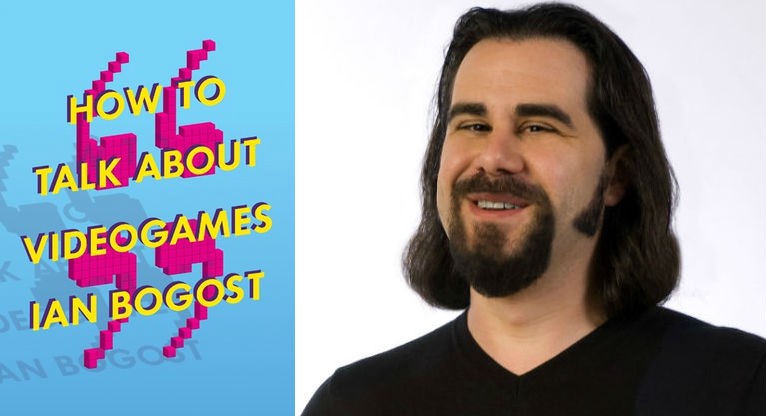
Another critic who has made my own work immeasurably more difficult and more pleasurable is Ian Bogost, professor of interactive computing and the Ivan Allen College Distinguished Chair in Media Studies at the Georgia Institute of Technology. His latest book is a collection of essays, How to Talk About Videogames (University of Minnesota Press). It has already proven indispensable to those of us interested in how video games have become such a vital artistic medium. Bogost very generously answered a few questions via email in January and February.
Andrew Ervin: You’ve written that video games “insert themselves into our lives, weaving within and between our daily practices, both structuring and disrupting them. They induce feelings and emotions in us, just as art of music or fiction might do. But then, these games also extend well beyond the usual payloads of those other media, into frustration, anguish, physical exhaustion, and addictive desperation.” Putting aside for a moment the fact that I’ve experienced all of those things with literature as well as with video games, what is it that video games can accomplish that those other media cannot?
Ian Bogost: I’m not sure we need to apply binary gating to the problem. It’s true that television or movies can produce compulsion and anguish as much as joy and distraction. But games are different in that they often, and perhaps always, include some of the yin and some of the yang. The key word in the excerpt you picked out is “usually.” The process and the experience are important to games, and that’s less true of television and the like.
AE: Do you distinguish between video games and computer games?
IB: The short answer is that it doesn’t matter anymore, not really. I like “video game” or even just “videogame” because it feels like a unitary and solid concept, and a populist one too. A candidate term to reach escape velocity the way “movies” did. But the more technical, historical answer is that “video games” were games that oriented principally toward televisions for display, while computer games were games oriented toward general purpose microcomputers for operation.
Back when Pong and the Magnavox Odyssey and the Atari 2600 were made (1971–76), games were designed explicitly so that they’d work with the cathode ray tube (CRT) television, or else with random-scan or XY displays, which are more like oscilloscopes (Asteroids is an example). Early “computer games” mostly ran on minicomputers like the PDP, although sometimes those games were also “video games” — Spacewar used the PDP-1’s XY display. In these early days, “video games” referred to television and arcade games. But then, with the rise of consumer microcomputers like the Apple ][ and the Commodore 64 and the ZX Spectrum and so forth, “computer games” arose to distinguish the slower, longer experience of PC games from the twitchiness of coin-op and home play.
So, in short, they are mostly historical terms, but the distinctions between aesthetics still persist, even if the television and the computer have become less distinct as well.
AE: Even the most casual gamers and non-gamers could recognize some of Shigeru Miyamoto’s creations. What is it that makes so many of his games so iconic?
IB: This is going to sound truculent, but: iconicity. That’s it. What makes Mickey Mouse iconic? The Eiffel Tower? These figures are representative symbols of their host subjects — Disney (or animation), Paris, and, for Miyamoto’s games, videogames. Especially Mario.
It’s easy to say that Mario became iconic because there was something fundamentally great about the early Miyamoto games that featured him. But there sort of wasn’t!
It’s easy to say that Mario became iconic because there was something fundamentally great about the early Miyamoto games that featured him. But there sort of wasn’t! Donkey Kong was the star of Donkey Kong, even if the player controlled “Jumpman,” who eventually became Mario. Do you remember how miserable it was to control Jumpman? Like steering a pinewood derby car. Mario Bros. (not Super) was weird and sort of alienating, and the whole premise of these plumbers overcome by turtles felt utterly alien in the apparent contextless context of some kind of underground sewer. By Super Mario Bros., of course, things began to look up. Just manipulating Mario (or Luigi. Poor Luigi.) was pleasurable. Forget the game. Just the character’s responsiveness, what Steve Swink calls its “game feel.” It was a delight to play Super Mario Bros., even if you never got anywhere.
And that’s what gets us out of the tautology. Miyamoto’s games became iconic because they didn’t require that you play them. Mario, Zelda, Wii Sports, etc. You could, of course, and deeply. Or you could dabble, and just doing that was fine too. Or you could not play at all, and just bathe in the iconicity of the characters, particularly after they became synonymous with Nintendo.
AE: Why should non-gamers care about games? What are they missing?
IB: Oh, they probably shouldn’t. Or they needn’t, anyway. I’m pretty well done with advocating for games as some special savior medium that will supplant and overcome all others. Will toasters ever become the dominant household appliance? Who cares. They’re excellent at browning bread.
But there is also a deep profundity in mechanism, in numbers, in gears turning and meshing with one another. And games embrace that paradox.
But, to be more earnest: if games are part art, and part appliance as I argue, then non-gamers should care about games because they tend to focus on the “art” more than the “appliance” generally speaking. Gamers are right to laud the specialness of operating devices and machinery that do things more than they express ideas or evoke emotional responses. Which isn’t to say that “non-gamers” aren’t also right that representation and sentiment are good and worthwhile. But there is also a deep profundity in mechanism, in numbers, in gears turning and meshing with one another. And games embrace that paradox.
AE: To what extent have persistent-world video games, in which some stand-in for me continues to exist in a virtual space while I’m logged off, changed or augmented what it means to be human? I haven’t been on World of Warcraft in ages, though I plan to do so soon, and yet I know that my primary toon still exists on the Nordrassil server.
IB: Richard Bartle, the creator of MUD, one of the very earliest (text-based) multi-user game experiences, has said that virtual worlds and MMOGs and their ilk are less like forms of entertainment and more places. You go to the bar or the club or the zoo or the park or the big box store, and then you interact with all sorts of people, things, creatures. Many different experiences are possible. So just as the bar or the zoo still exists when you leave it, so the World of Warcraft shard or the Habbo room or the League of Legends match does as well. Bartle’s right: it doesn’t make much sense to compare WoW to Super Mario Bros. WoW is more like Walmart.
This is another example of why I think games are as much like appliances as art, which is one of the premises. They are things you use to do other things, no less than toasters, even if once there, they also take on the aesthetics of more familiar entertainment.
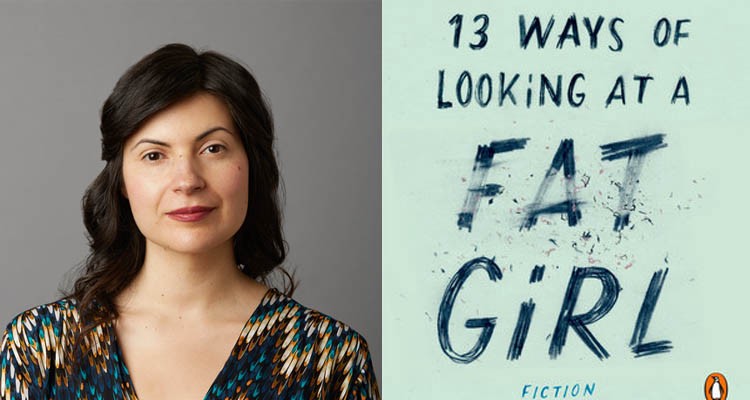
“If That’s All There Is” is featured in Electric Literature’s Recommended Reading with an introduction from Laura Van Den Berg. Mona Awad’s debut collection, 13 Ways of Looking at a Fat Girl, will be is now available from Penguin Books.
Melissa Ragsdale: This book is very much about how a woman perceives herself and how the outside world perceives her. Often we talk about the “male gaze,” but Lizzie is constantly aware of many other gazes too. For instance, in the taxi scene, we see her torn between reacting for Archibald and being polite to the taxi driver. How did you approach gaze while writing?
Mona Awad: I think that’s a large part of the reason I chose the title 13 Ways of Looking at a Fat Girl. It seemed like a very appropriate way of approaching the story of a woman whose self-perception and whose body image is really informed by not by one gaze but a number of gazes, male and female, real and imagined. So much of Lizzie’s struggle is bound up in how she sees herself and how she imagines others see her. It was very important to me that Lizzie’s struggle not be bound to any one gaze. That moment in the cab with Archibald is just such a moment when gaze is about want. Imagining what others want and trying to be that for them. It’s exhausting. It’s disorienting. And you can really lose yourself. For this character, throughout the novel, that’s the impending danger.
MR: In “If That’s All There Is,” we see Lizzie develop a fascination with Archibald, despite the fact that she doesn’t particularly enjoy him (sexually or otherwise). What draws Lizzie to Archibald?
MA: It was important to me to explore how body image can distort our sense of our own worth as humans. We all want to be attractive and Lizzie is drawn to Archibald because he sees her that way. The danger however, is that she doesn’t value herself to begin with, so when he begins to treat her poorly, it doesn’t matter. She clings to him all the same, in part because she is clinging to the part of his gaze that sees her fondly. It doesn’t even matter that it’s destructive. There is something too, I think, in Lizzie, of the masochist.
MR: Mel has a presence throughout the book and Lizzie’s life, though it waxes and wanes throughout. In this story we see her in close quarters with Lizzie as her roommate, often painted in a place of judgement. For instance, Lizzie adjusts how she refers to Archibald in front of Mel, only adding “sort of” after “boyfriend” when Mel is within earshot. How does their dynamic feed into Lizzie’s personality?
MA: I think Lizzie’s relationship to Mel is important throughout the book. Lizzie is embarrassed by Archibald, knows on one level, that he isn’t good for her. But she proceeds anyway, and it’s embarrassing to acknowledge, especially to her best friend. It’s a guilty secret she’s ashamed to admit. I think we do adjust our reality for other people.
MR: Each of these stories zeroes in on a specific moment from Lizzie’s life, and we see her character bloom in new ways with every piece. How did you find these particular moments to explore?
MA: I wanted to really complicate all the ways in which fatness or body image affects our lives and our relationships: with lovers, sex, food, friends, family, clothing, and always, inevitably with ourselves. I also wanted to document how those dynamics change or don’t depending on our size or how we see ourselves in relation to others. So I chose moments/encounters that really illustrated this. I knew I needed an encounter with a thin friend when Lizzie is fat. I knew I needed one with a fatter friend when Lizzie is thin.
MR: This book explores identity, self-esteem, and body image, all hot-button issues in today’s society. Lizzie is constantly aware of her weight, and we see how her awareness and anxiety affect her life. In your eyes, is this behavior specific to Lizzie or is it a more pervasive tendency? Does this book have a message?
MA: I’d like to say it isn’t pervasive, and perhaps I’m too close to the situation because I’ve been exploring this subject for a while, but when I overhear conversations between women at bars, restaurants, in change rooms, I think it’s even more pervasive than I initially even thought.
In terms of a message, I think my hope is that it provides what a story or song provides, for people to feel a sense of connection, for people to feel less alone. I wrote Lizzie with as much honesty as I could in the hopes that I would provide that sort of connection for the reader. I think what I wanted above all was for women and men who are struggling with these issues, not to feel alone.
***
Mona Awad received her MFA in fiction from Brown University. Her work has appeared in McSweeney’s, The Walrus, Joyland, Post Road, St. Petersburg Review, and many other journals. She is currently pursuing a PhD in creative writing and English literature at the University of Denver.
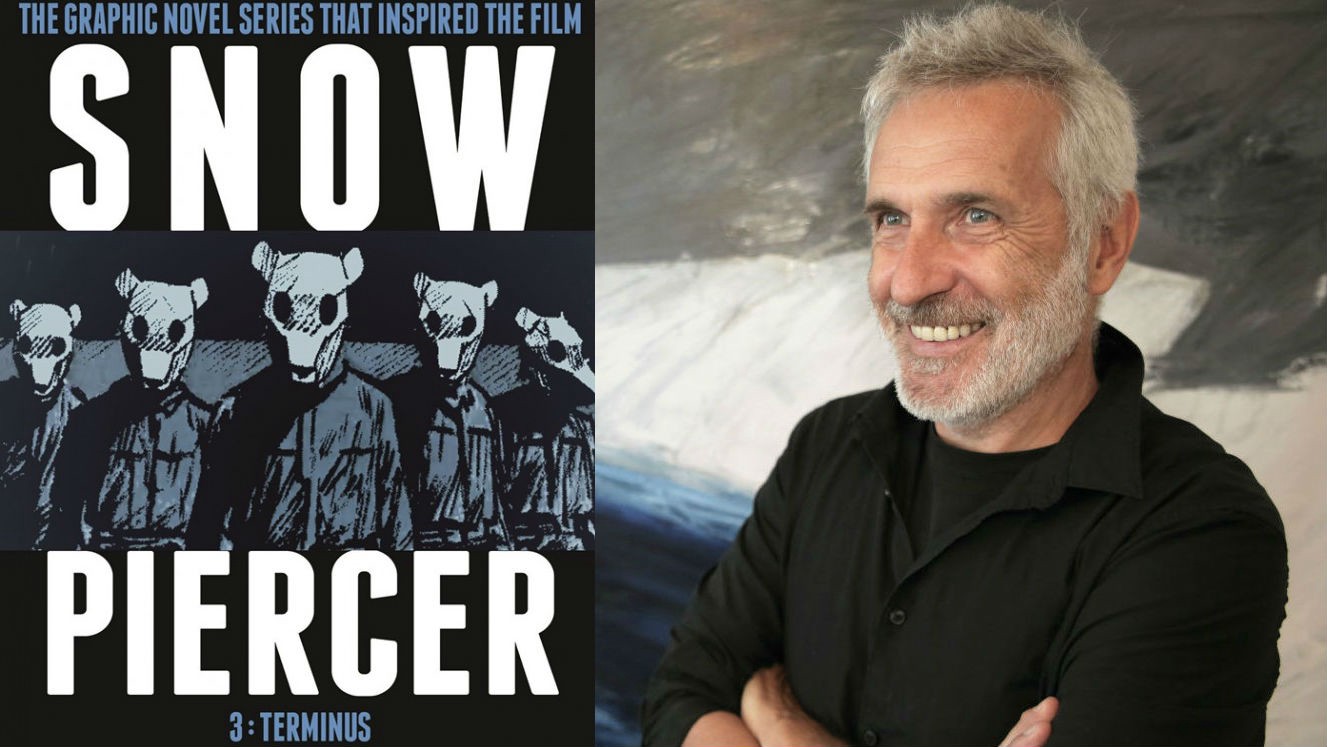
“Across the white immensity of an eternal winter, from one end of the frozen planet to the other, there travels a train that never stops. This is the Snowpiercer, one thousand and one carriages long.”
These are the first chilling words of the cult comic book Snowpiercer, written in 1982 by Jacques Lob and illustrated by artist Jean-Marc Rochette. Largely unknown at the time, Snowpiercer is now an international success. Unfortunately, Jacques Lob would not get to see his creation find the worldwide audience it has today due to his passing in 1990. But the train never stops, and Lob’s imagination traveled on. In addition to a film adaptation, his vision would inspire a further two sequels beginning with Snowpiercer 2: The Explorers, written by Benjamin Legrand, and continuing with the current book Snowpiercer 3: Terminus, written by Oliver Bocquet; both illustrated by co-creator Jean-Marc Rochette.
In Snowpiercer 3: Terminus mankind continues its struggle for survival inside the confined environment of the train until a strange musical signal leads the passengers literally off-track and into the unknown. For the first time in the series, humanity escapes its closed quarters, but enters what could be a fate worse than the train itself.
I had the pleasure of speaking with both Bocquet and Rochette on the collaborative relationship specific to comic book storytelling, the cost of immortality, and finding optimism amidst heartbreak. For readers who do not want plot points revealed I have flagged my final questions with a (SPOILER ALERT). Volumes 1 & 2 of Snowpiercer are available through Titan Comics; the third volume came out in stores last week.
Matthew Laiosa: A French comic book gets turned into a Korean movie with an almost all English-speaking cast. How has Snowpiercer managed to breach its own borders and what is it about the story that unifies these cultures together?
Jean-Marc Rochette: I think it’s the simplicity of Jacques Lob’s story that makes it universal. It can be pitched in a few words, and these few words sum up the whole story of mankind. The last survivors on earth are locked in a train that goes on forever, and society goes on too, as it has always done, through violence, inequality, and lies.
Olivier Bocquet: I think it’s a universal story because it’s like Noah’s Ark. It’s a story that’s told in almost every human culture. A big flood, people surviving, and a boat. This is not a flood, but it’s almost like one, and it’s not a boat, but it’s a train. It captures your imagination instantly. There are very few stories that are that strong and that simple. Jacques Lob did a great job because I think in a hundred years from now somebody else will do another Snowpiercer. It’s a story that will last because it’s not just about different cultures; it’s about different eras of mankind.
ML: In our cinematic world filled with remakes, reboots, and sequels there is a strange cultural demand for nostalgia. Even though Terminus is itself a sequel, you act against every expectation and immediately move the story outside of the train. Instead of repeating the past, you push the story forward. Was this something you set out to do?
JMR: The desire to make the sequel came step-by-step, and more specifically image-by-image. And the first image that came to me was an abseiling in a frozen elevator shaft. This vision made me think of a descent to hell. The image of the dog opening the gates of hell came to me pretty quick. It is of course Cerberus. And since I was describing hell, I tried to imagine a human and contemporary hell, which leads to visions of Chernobyl, of transhumanism, and everything that, to me, turns mankind away from the sane relation man should have with nature. At that point, I met Olivier and I think he immediately subscribed to that vision of hell. He brought with him his own fears, and his narrative talent, of course.
ML: Was it difficult to enter Jean-Marc Rochette’s pre-defined vision, or were your collective aims immediately synchronized?
OB: The story he wanted to tell was rough enough to put everything I wanted in, so it wasn’t hard to go into his universe because it wasn’t a closed one. He had visual ideas of scenes with themes that mattered to him, but I could do whatever I wanted in that. I think I would have had more difficulty if he wasn’t there. If someone came to me and said, we’re going to do another Snowpiercer with another artist and you will write the story, then we would have been forced to mimic what Jean-Marc and Jacques Lob already accomplished in 1982. But Jean-Marc is a man of his era. He grows with the world, and he doesn’t want to tell the story the same way he would have thirty years ago.
ML: Would you say that you challenged each other to do better work than one artist could do alone?
OB: When I first saw Jean-Marc, it was in the documentary film Transperceneige, From the Blank Page to the Black Screen by Jésus Castro on the blu-ray of Snowpiercer. He said he didn’t want to do comics anymore unless he finds a great script, and when he met me he said, ‘I don’t want to make just another comic book. I want to make the best one ever.’ And that’s quite a challenge, but I like it. Each time I came to see him with pages of script with something hard to visualize we wouldn’t say that can’t be done so let’s do something else. It was more like that can’t be done, but it is interesting so that is why we are going to do it.
ML: What were some of the scenes under discussion?
OB: The one that I remember most is when one of the characters is trapped in a prison drawer like you would find in a morgue. It’s fourteen pages of a man alone in the dark without moving and it had to be drawn. It was an important thing because it’s the moment when the character becomes a hero by going through an ordeal that a regular person would fail. We spent a whole day trying to figure out how to make that scene work so that the reader would feel the time passing, the suffering, the despair, the slow sinking into madness… with just a guy in a drawer. But when he eventually gets out of it, we wanted the reader to be in shock, just as the character is. When we finally nailed it, when we looked at Jean-Marc’s storyboard, we were both exhausted and happy. We had the feeling that we had done something that was beyond our expectations. Now, maybe it was just us two. We are not the readers, only the storytellers. We don’t know how readers will perceive that scene, or any scene in the book. But while making that book, we were always trying to go out of our comfort zone.
ML: In this episode of Snowpiercer we are introduced to the subterranean utopian theme park of Future Land. The best science fiction is often a reflection of our own society, so what aspects or our present were you most excited to include in this oddball future?
…in the end, if you live forever under the shadow of a nuclear plant, aren’t you already in hell?
JMR: To me there are two major themes in this book. The first one is life under the grip of atomic energy. I’m French, and France is the most nuclearized country in the world. I am also a native of the Rhône-Alpes region, which is the densest place on earth regarding the number of nuclear plants. This energy is the most perfect form of human alienation. We are dependent on and slaves of this dragon, this dangerous dragon that never dies and spits radioactive fire. In the town of Lyon, the biggest nuclear plant is called… Phoenix. I drew my inspiration from real photos of Chernobyl children to show the results of this radioactivity on our DNA: a production of nightmare monsters. The second theme is of course all the current attempts of genetic manipulations, the transhumanism that denies death. It denies death, but in the end, if you live forever under the shadow of a nuclear plant, aren’t you already in hell?
ML: For those not familiar with the concept of transhumanism, could you give a brief definition?
OB: It’s about enhancing humanity. You can be more than human. You can add microchips under the skin to do what you can with a smart phone, but you will do it with your brain. You could even replace your whole body and eventually stop dying. And that’s what transhumanism is all about. It’s the ultimate goal.
ML: If we our headed towards an earthly immortality what must we live without?
OB: You would probably have to stop making children. That’s a big sacrifice.
ML: And the logical progression of children being gone is the death of new ideas.
If people never die you never get fresh ideas.
OB: Yeah! I read an article a few days ago saying the death of great scientists makes science go faster because while the old ones are here, young ones can’t express themselves. If people never die you never get fresh ideas. You just work with the same old ideas. Plus, I think in a world without children we will lose our hope and joy. Kids are unconditional love. You ask every parent and they will say that they are willing to give their life for their kid. That has a real true meaning. If mankind doesn’t make kids anymore and you are just born to live forever, then what’s the meaning of your life?
ML: You’ll lose the idea of sacrificing yourself for anything. You’re only goal will be self-preservation.
OB: That’s very well put.
ML: Claustrophobia plays a large part in Snowpiercer. There is the obvious physical claustrophobia of the train, in addition to the passengers’ psychological claustrophobia regarding the unknown future. How does one best represent a character’s internal struggle in a visual medium?
JMR: The secret is the acting of the characters. That’s the most important. I consider my characters as real actors, so accordingly I ask them to play in the right key, kind of like on stage! Of course, the composition of the panels, the montage and the lighting are also very important, much like in a movie. And eventually, all this is intensified by the emotional power of the stroke, its energy, and that is very specific to the field of drawing.
ML: At one point in the story we discover a group of physically deformed painters. Do you think an artist, musician, writer, etc. must be ‘abnormal’ in some way in order to best express them self?
…maybe the deeper the wound is, the deeper the work is too.
JMR: Yes, I think you need to have something wounded. And maybe the deeper the wound is, the deeper the work is too. But I’m an incorrigible romantic…
ML: There seems to be a trend since the late 80’s for comic book characters to exist in the ‘real world.’ One thing I love about Snowpiercer is the theatrical and expressionistic tone in both the film and the book. It’s almost like a fairytale. Are you more drawn towards stories of realism or expressionism and why?
JMR: German expressionism was always a big influence for me, and strangely it just so happens that I now live in Berlin. I was influenced by Otto Dix, George Grosz, Max Beckmann and others; but also by Goya. I love the way they dramatize tragedy. Comics are a perfect medium for injecting dramatic caricature into a story. It suits me.
OB: I think a good story is like a symbol. In France, books and movies are more realistic, and there is no room for exaggeration. I think these stories are more efficient at saying what they want to say, but American movies have characters who are a little more over the top, and I think that is also a good way to tell stories. I clearly like it best. For example, in Little Miss Sunshine you step out of the cinema and you say that was a very cool movie about real human beings, but if you look at every character they are all crazy. Only put together are they like normal people.
ML: Something that continually boggles my mind is how something can become ‘mainstream’ decades after its inception. Marvel superheroes and Games of Thrones have never been bigger, and I know Snowpiercer is not on the same level, but it does seem more popular now than it ever was when it was first released. Why do you think that is?
JMR:Snowpiercer’s notoriety today cannot even be compared to what it was before Bong Joon-ho’s film. Because of him, it went from an almost forgotten French graphic novel to a cult book known in the entire world. To me, it’s a true miracle…
Geeks and nerds have won.
OB: Geeks and nerds have won. Anybody who was buying Star Wars toys and not opening the box in 1978 was a crazy person, but now they’re rich. And I don’t know how it happened, but I think it’s because of the Internet. I think all these people who were a little funny could all of a sudden express themselves and people realized they were serious, and there was a very large number of them. But it’s not all good because now Hollywood is making movies for them only. The new Star Wars is only fan service. They are getting what they want to see, which is the same movie again. To me it’s not interesting at all, but it makes tons of money, so on some level they must be right. But it’s a level I don’t care about.
ML: In the U.S. it is common for a comic book series to have the same author with many transitioning artists, but I am not familiar with a series with a single artist and three different writers. How have you maintained artistic control throughout the years?
JMR: Indeed it doesn’t happen a lot in France either. It all started with Jacques Lob’s death, and with my desire to relive the story. I had to look for new writers. I’m not a writer myself, but I know what I want to tell, just like a movie director. The hard part is to find the good writer, the one that will want to tell the same story as me. With Olivier, the partnership was perfect. I’m a former mountaineer, so I’ll use the metaphor of climbers roped together: there wasn’t any leader, but two companions completing each other, one better on the ice, the other better on the rock!
ML: You may have been the only artist on the series, but each book looks completely different. Volume 1: The Escape has an extremely precise aesthetic, Volume 2: The Explorers uses a more painterly technique, and Volume 3: Terminus has a sketch-like spontaneity. Was this due to your natural evolution as an artist or was there a specific intention behind each distinct look?
JMR: It was very subconscious. I’m a very free man and above all I didn’t have any external constraint, so I just did what I felt was right. I was confident that this freedom would not be prejudicial to the story. On the contrary it would add something libertarian, anarchist everywhere, including the form. It is, I think, the trademark of the story itself.
ML: In recent years your work appears to have been focused more in fine art painting. Was there any reason you took a break from comics, and what made you want to return?
I paint like people used to paint in my valley 30,000 years ago…
JMR: Painting is to me the most perfect form of image, like poetry is the most perfect form of narrative. Comics gave me the amazing privilege of being able to paint without having to sell my paintings. I paint like people used to paint in my valley 30,000 years ago — I live part time in Ardèche, near the Grotte de Chauvet, where you can see stunning prehistoric art. But I always come back to the comics, like an old couple that cannot live apart…
ML: I immediately associate European comics with the 46–62 page hard backed album format typical of Blueberry or Tintin. Comparatively Terminus is huge! Are more European comics adopting a longer format and for any particular reason?
I don’t think a story should be tied to a country…A good story is a good story.
OB: We read a lot of American and Japanese comics, and we are becoming used to seeing longer stories. Up until now people were ok with waiting one year to see the next episode of a 46-page story. Now we don’t want that. We want more to read, and we want it cheaper because each album is 10–20 euro, and we only have 46-pages to read once a year or once every two years, so that doesn’t really work anymore. Also, the artists and writers want to tell more interesting stories and we want the space to do them in. Currently graphic novels are selling well everywhere, even though traditional French comics do not. Marjane Satrapi’s Persepolis which helped to start the craze for graphic novels, is French, so we should be doing more of that. I don’t think a story should be tied to a country. Everybody should be able to read anything from anywhere without knowing where it comes from. A good story is a good story.
ML: (SPOILER ALERT) One would not call Terminus a story of optimism, but by contrast this episode ends with the most potential for a future. Was there an intentional shift from pessimism to optimism?
JMR: The ending also came to me step-by-step. My first option was that only the leading couple would succeed in escaping this hellish place. They wanted to get out and be able to die in the cold, alone but free, facing the world’s beauty. Then, in the course of the discussions I had with Olivier, some hope arose, probably because of him. And in the end, only the hero dies, but with the most beautiful death: very old, voluntarily putting an end to his life by exposure, in the arms of his beloved wife that tells him a story full of flowers and spring. The flowers do eventually appear in the last panel, but one can wonder: when do they appear? At the moment of the hero’s death, or 100,000 years later? How optimistic are we, exactly?
OB: I’m an optimistic person, and I think killing everybody is an easy way out. I don’t subscribe to the idea that when a story is over and everyone is dead that it will give people so much to think about. I believe that’s lazy. I think the easy way to end the story is to blow up the nuclear plant, and I think almost everybody would have done that so that’s why I didn’t want to do it. I think it’s a fraud to tell people that a story has no hope in the end. Is that because you don’t have any more ideas? You don’t have better ideas? When I found the idea of the woman telling her dying husband what he wanted to hear, even if it’s not true, I thought it was heartbreaking. I thought it was beautiful. And I thought it was even more beautiful that it could eventually be true. She wasn’t really lying. She was hoping. She was giving hope to a dying man. And that hope is something I can’t take away from people at the end of a heartbreak like Terminus.
Seven a.m. at the public pool, making good on his promise. Exercise, exercise! Well, he was exercising. Doing as his daughter advised. Around him were splashes, shouts. The clunky suck of wet feet walking. Shoulder-deep in water a thought came unrequested: Why not try a dive?
It had been a long time since his diving days. Confidence gets thin. He couldn’t picture himself doing the somersaults of old, but neither did he feel he belonged in the shallow end over there with the loose-skinned oldies, discussing Terry Connor and cancer. These men were the work of a half-hearted taxidermist; age had emptied them out. Five breathless lengths he’d spent trying to keep up with his daughter. It dampened a guy’s esteem to be panting after just five lengths. He hauled himself out of the pool and joined the queue for the tower, a line of lean boys waiting for a dive.
Wearing swimming trunks rescued from his thirties he was a magnet for their smirks. Fair enough. It was nice to be a magnet for something. There was a time when his stomach was a thing of alien precision. Crunches, kettlebell windmills, prone plank. Would any of these kids believe it? Why were they even awake at this hour? He thought the lady over there might be a teacher of some sort. Overhead a body fell through the air.
The high-dive platform was a long grey tongue stretching out from the top of the tower. Ten meters. Three stories high. A near-vertical metal ladder was the only way up. He stood in line and tried to look bored. Freya swam to the edge of the pool and watched him, head bobbing, a beautiful person he’d made. In response he extended his spine, puffed out his chest, becoming father-shaped. She continued swimming. Touching the wall, turning, breaking away. All of her freedom unthinking. Last night’s ale was thudding in his head, squashing fine memories of mozzarella.
When it was his turn to climb, each rung felt cold and hard under his feet. He took two rest stops to let out his smoker’s cough. Above him the grubby glass ceiling, September clouds breaking up beyond it, sunlight restless on tiles. There used to be a second pool next door where the women had to go. A few years ago they floored it over for badminton. Up high you could hear the dull pop-pop of the shuttlecock, the scribble-squeak of fast-moving shoes. Blinking, he clambered to stand.
That first look around: such a shot of eerie beauty. It took him straight into his past. Chlorine gave the air up here a hazy uncrackable quality, everything a chemical blue. The only higher creature was a seagull relaxing in the rafters. Trapped and relaxed: it made no sense to Moose.
The kid in front of him had loosely knitted limbs, that slouchy bellboy way of making youth seem like a secret, and when he reached the end of the platform he pulled a pair of red goggles over his mop of dark hair and turned and said, “Do you think my watch will make it? This says, like, ten meters resistant.”
“Should be OK.”
“Yeah?”
“Yeah.”
As Red Goggles retied the cords of his shorts Moose inevitably gave in to the impulse to look down. He was surprised to find himself beginning to reel — arms out for balance, take a breath. With slow caution he glanced again. A number of colored floats and armbands down there now. The landlord of the Cricketers flirting with a hefty lady. Freya standing on the tiled lip of the pool, arms crossed. This was a place of echoes and the achievement of private targets. If someone’s foot touched your foot, they apologized profusely.
It was supposed to be only two at a time up here but with Red Goggles hesitating, trembling, a new person arrived on the platform. He was a squat Coke can of a man on whom a desperately stretched swimming cap sat. The first thing he did was explain he didn’t have all day. Then he looked around, his knees seemed to go soft, and with a shudder and a muttered “fuck” he took the ladder back down. When Moose stopped smiling it occurred to him to do the same. Pride before a fall.
Red Goggles was finally primed to jump. “Fear does not exist in this dojo!” he cried, and with that announcement he cannonballed out of sight. He wailed all the way down and the impact, when it came, was closer to a crash than a splash. Sparks of water flew up. The surface healed.
The way the warm platform eats up the evidence of your presence. The way it shrinks your footprints to the size of a child’s, then an animal’s, then a nothing. The water was a tiny cool blue sheet that seemed, in these moments, to want to break your smallest bones. His heart was beating light and fast and a shift of cloud threw half the pool into shadow.
On the tip of the platform were two dusky oval shapes formed by all the feet that had gone before. He settled his soles on these ovals, blinked to stop the walls turning. He did his first high dive at the age of twelve, looking at his own awkward knees and rubbing his sweaty palms against his stomach, his father cheering him on from below. His father who seemed to come alive when watching his son succeed, a man usually so carefully contained within himself, shy and jokey and perhaps a little bitter, sharp features that made his moods look worse than they were.
Hurl yourself into the soundless blue or take the ladder back down. No-no-no and yes-yes-yes.
Oh, fuck it. Always was an over-thinker.
He was only forty-five and there was nothing much wrong with his muscles and Moose now found the arrogance to bounce, to ask the air for eloquence, just like he used to do over and over when competing at a meet. As his feet began to leave the platform he knew he was getting only half the push he used to get but he was up now, up, blood hurtling through his body — the friction of travel in his teeth.
Yes, he thought. This is what it’s like.
Loosely bound to the room around him now, held by no ties at all, everything hushed and hesitant as it is before an accident. He tucked into a somersault, drew his knees into his chest, fingertips touching shins. Sky. Tiles. The whole gleaming ceiling of this old public pool. Colors bled into one another as a second somersault came. Through his knees a flash of water as he tumbled towards the tank. Fast now. The wind-rush. Steady.
Spotting the ceiling for the final time he moved from tuck to open pike. His body thinned as he arced down into the pool with the beauty — the overdetermination — of a dream. Forty miles an hour. Back straight and toes together. Hands angled to make a hole he could climb inside. For a moment he was Louganis, gunning for gold, an odd hovering perspective on himself. The water opened without protest. The warm green world took his weight.
Advice from his old coach Wally came to mind. Bending your back underwater gets your shins to vertical. Spreading your arms stops air bubbles breaking upward. Heart beating quick in the deep, feeling himself starting to smile, water creeping in through his lips as he awarded himself a 7 out of 10.
Moose lingered beneath the surface a little longer than necessary, enjoying the leggy shadows and livid pools of light. He broke into the sharper air, drew breath. Blurred shapes became precise. The lifeguard seemed to be clapping and the boy next to Red Goggles cried “Skill!”
Poolside he stood tall, water streaming from his body, the bones in his chest on fire.
“Show-off,” Freya said.
“Sportsman,” he replied, panting.
“Big splash.”
“Untrue.”
“No water left in the pool.”
He risked a glance at the tank and saw that it was full. He told her she wasn’t a very supportive daughter. In response she touched a throbbing vein in his shoulder. “Huh,” she said, very thoughtfully. There were moments when love burned up in his throat and he didn’t quite know how to move.
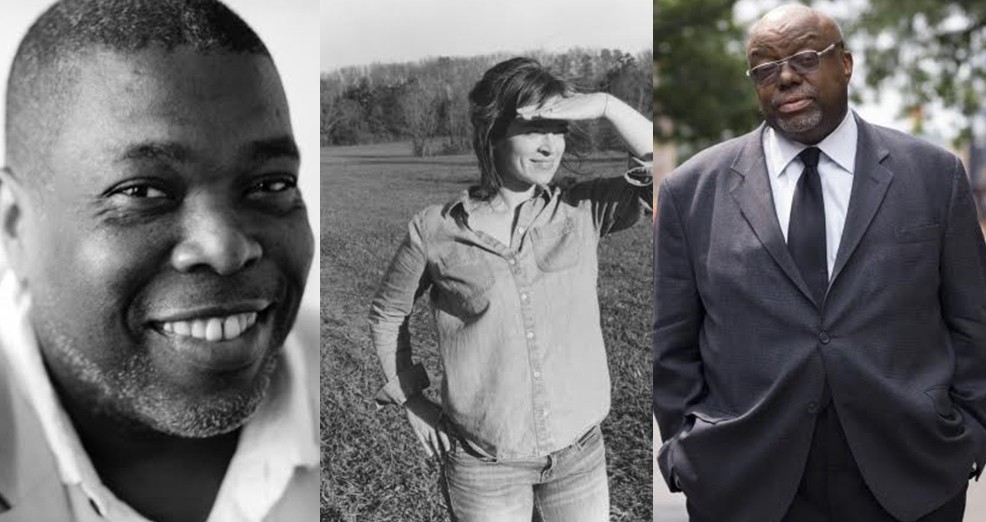
The recipients of this year’s prize in fiction are British author Tessa Hadley, two-time Orange Prize finalist and author of Clever Girl and The Past; Southern writer C.E. Morgan, author of All the Living and The Sport of Kings, and Indian writer and poet Jerry Pinto, author of Em and the Big Hoom.
The winners for drama are Branden Jacobs-Jenkins, Hannah Moscovitch, and Abbie Spallen. Hilton Als, Stanley Crouch, and Helen Garner won the prize for non-fiction.
The Windham-Campbell Prize, which began in 2013, is one of the most lucrative literary awards in the world. Each of the nine writers will receive $150,000 from the estate of writer Donald Windham.
The prize is judged anonymously and doesn’t accept nominations, so the winners weren’t aware that they were being considered until they received a phone call from Michael Kelleher, the program’s director.
As Kelleher posted on Twitter: “Best part of my job @WindhamCampbell is calling 9 unsuspecting writers out of the blue [with] news they’ve won $150,000. I feel like [Ed] McMahon.”
The prize came so out-of-the-blue that one of the winners almost missed it all together. When Canadian playwright Hannah Moscovitch heard the voicemail letting her know she’d won, she thought it was a scam. “I thought it was ‘Congratulations, you’ve won a cruise to Florida if you pay $200,’” she told the Globe and Mail. “I nearly didn’t listen to the actual voicemail.”
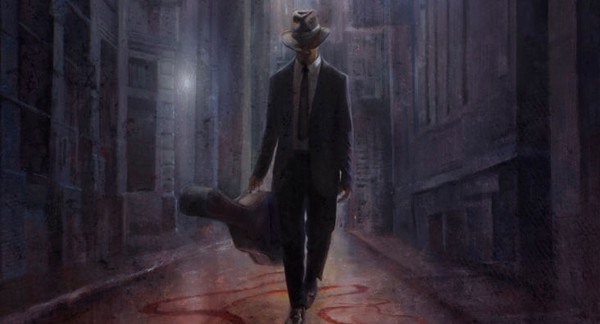
Stephen King is one of the most frequently-adapted authors alive, but fans have long been waiting for an adaptation to his epic genre-bending series The Dark Tower. Well, it finally seems to be happening, and this morning Stephen King tweeted that stars Idris Elba and Matthew McConaughey are attached in the lead roles:
It's official: The man in black fled across the desert and the gunslinger followed. #DarkTowerMovie @McConaughey@IdrisElba
The film version of The Dark Tower will be directed and co-written by the Danish director Nikolaj Arcel. At Entertainment Weekly, King commented on the long journey the books have taken to adaptation:
“The thing is, it’s been a looong trip from the books to the film,” King says, putting it right in context: “When you think about it, I started these stories as a senior in college, sitting in a little sh-tty cabin beside the river in Maine, and finally this thing is actually in pre-production now.” He laughs. “I’m delighted, and I’m a little bit surprised.”
DON’T MISS OUT
Sign up for our newsletter to get submission announcements and stay on top of our best work.
YOUR INBOX IS LIT
Enjoy strange, diverting work from The Commuter on Mondays, absorbing fiction from Recommended Reading on Wednesdays, and a roundup of our best work of the week on Fridays. Personalize your subscription preferences here.