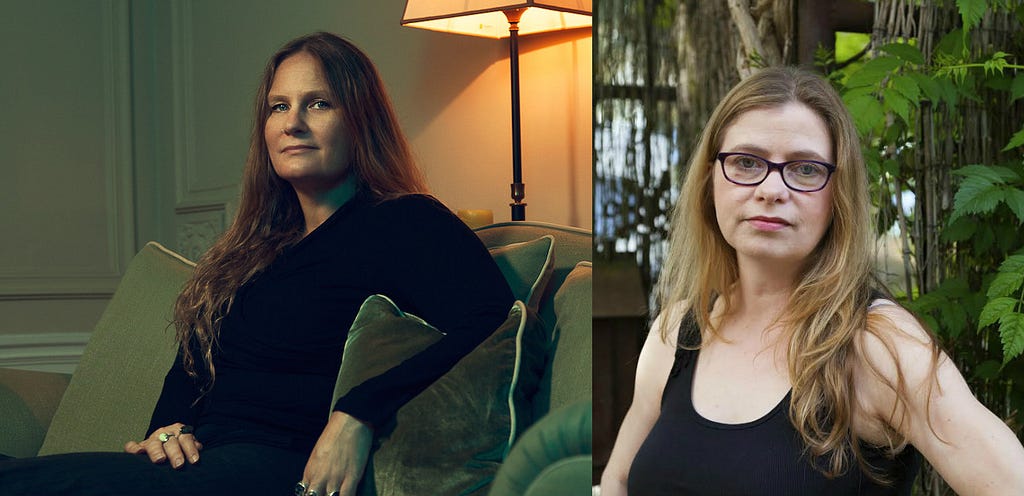
The Body Problematic: A Conversation Between Lidia Yuknavitch & Anakana Schofield

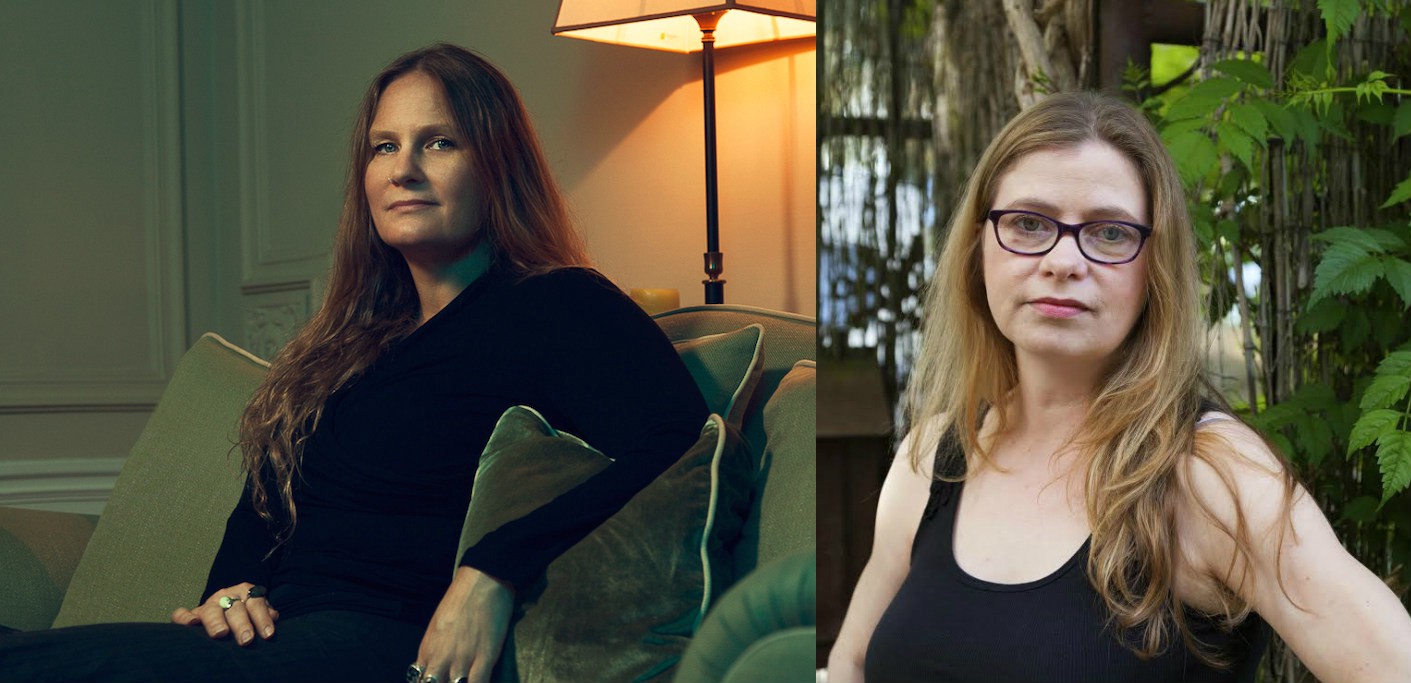
by Lidia Yuknavitch

Anakana Schofield

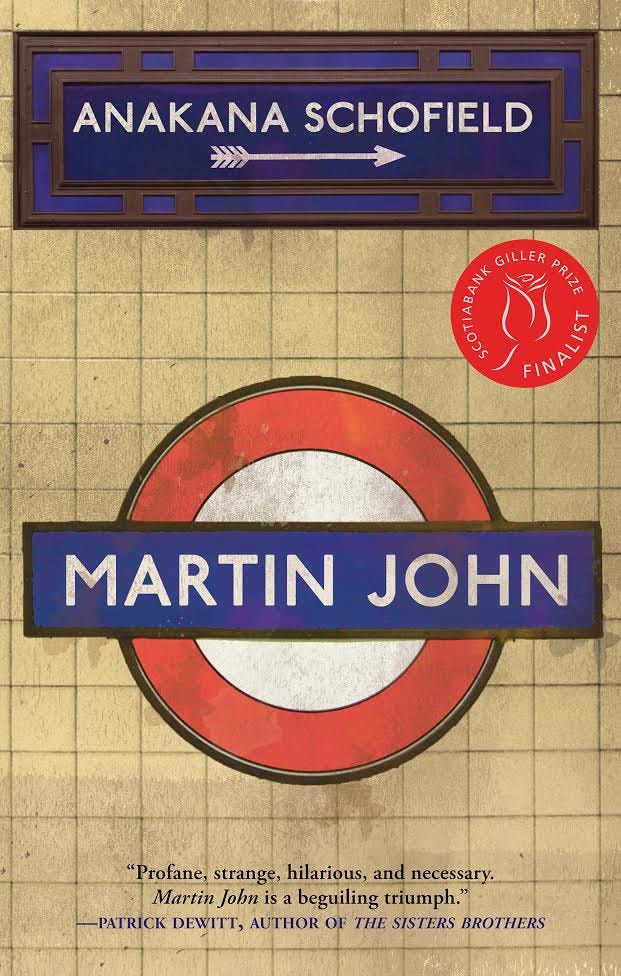
Anakana Schofield’s second novel, Martin John (Biblioasis, 2015), was described by Eimear McBride in the New York Times as, “Deploying some serious literary gumption … Schofield’s frequently hilarious, and distinctly modernist, linguistic games are always gainfully employed in the uneasy, indelicate task of placing her reader nose to nose with the humanity of a sex offender — and a sex offender’s mother.” It was recently shortlisted for the Giller Prize (Canada’s Booker Prize). Martin John explores the cyclical nature and actions of a simple minded molester and his demented relationship with his mother and surroundings. The novel is a loudly acclaimed, unique work that challenges literary form. Here Lidia Yuknavitch (author of the celebrated 2015 novel, The Small Backs of Children) and Anakana Schofield have a chat. (Note — the text includes all conversational interjections and marginalia).

Lidia Yuknavitch: When I first met you at Wordstock here in Portland, you took my breath away. We were both speaking on a panel about writing and the body. When you read your excerpt I couldn’t breathe. I was both smitten and I felt that thing I long to feel but rarely do: kindred. Your attention to formal investigations as equal in intensity to content investigations tickled me. I remain loyal as a dog to you and your work, and Martin John is a triumph.

Anakana Schofield: Firstly thank you Lidia for taking precious time to do this. Ever since our sex panel in Portland in 2012 the idea of a literature of the body that talks to and from the body or explores its complexities has been humming for me. I will also never forget your RED HOT reading & being the nun in residence sat beside you.

LY: Martin John has a difficult character at its center. But inside that “difficulty” I find something of all of us — before we trick ourselves into believing that we are good citizens…and he is rendered in bits and pieces of a self, almost as if he is never fully resolved, as in this example of his point of view that is, like so many moments, stunning to me: “Coats can drift. Open. That’s what coats are like. That’s what women like, open coats and a quick face full of him. He likes it too. He likes what they like.” His troubled point of view troubles the reader too, because we keep having to ask disturbing questions about him. Are the questions we have about him really about us?

AS: They are and they are not.

They are questions about us because Martin John is among us.

Martin John is one of us.

We’d rather settle on the more comfortable idea that sexual deviants are some distant aberration over THERE. Far from us.

He’s the product of a society that has deep psychosexual problems and that’s the collective us. Principally we need to deal with him and it’s easier not to deal with him. We’d rather settle on the more comfortable idea that sexual deviants are some distant aberration over THERE. Far from us. On another planet we don’t understand. But sexual deviants are not some distant aberration. They are beside us on the bus, at the kitchen table etc. This is partly why the narrative is in and of his groin and his groin-mind if you like and I am pretty relentless on the reader. Fiction is the place to posit difficult questions and scenarios. It’s not social science or qualitative research. It doesn’t rely on absolutes. You invent. You paint. You ponder. The reader joins you and completes that cycle or takes new departures from it.

It was vital the form of the novel be the content of the novel and reflect that impulse we have to look away, to deflect on the difficult questions. Certainly as a writer it would be easier not to paste this onto the page. But novels must become what they need to become and the novel will not do that if you turn your gaze away from that which is disturbing to you and to it.

In the passage you quote (and thank you for such kind words) I am working with syntax, with syncopation, to evoke his audacious and delusionary notions, to make what he’s about to do palatable in his mind. To thwart any dwindling moral reluctance he may feel to perhaps not do it. Since that’s always an option for men in these circumstances. An urge doesn’t need to be delivered or acted upon. It can be self-thwarted. But I had to “mount” his mind basically in order to plough him down onto the page. Almost like a form of literary tilling. Turning over that filthy soil. Get underneath him, so he will open his coat and display his uninvited cock. Persuaded, of course, that every woman wants a face full of him.

But I would question whether he is wholly us. Since there are many among us who do not ride about on public transit with their uninvited cocks publicly displayed and/or prod them into the back of some innocent subway passenger, disproportionately, if not always, a woman.

LY: A reader could argue, in fact I’ll risk it, I’ll argue, that Martin John is exactly what his society made him. As the reader struggles to ascertain if he is a sexual predator or simply quite mentally disturbed or both, his body in relation to other bodies keeps haunting me. His body was perpetually spit out from all the institutions and social organizations that might have made a difference in his subjectivity. And the bodies of women are written over with his violence. How important are bodies in this novel?

AS: Bodies are vital in this novel. The novel begins in the body or the “body problematic” and the body throughout is like some form of physical echolalia. It’s as you suggest, Martin John uses his physical body (sometimes literally, sometimes just the sight of it) as a weapon against the world, specifically against women in the world, even against himself. What is it about the male body that it is so readily used as a weapon of violence against the female body (and male body, but in this novel my focus is mainly on women)? These were philosophical starting points. I suppose they were answers to walking on the streets and riding buses and transit for the past umpteen years and pondering.

There is inverted female resistance in this novel. It’s deliberately not shouty and obvious because I don’t write with or to foist an agenda. Didacticism doesn’t interest me. (It did when I was younger, but fear no more the heat of the sun I grew out of it)

In the novel when Martin John thumps the young girl vaginally, later as a woman she finds strength in the fact that he did not get a direct hit. He only managed to hit her through fabric. It’s a small but vital detail. Also, at one point as a teenager he flashes a young girl on the street and he fails to elicit attention from her in the way he’d expected and he’s angry, depressed and puzzled as to why it hasn’t worked. Another woman on the subway grabs him by the throat and she’s framed with his line “he didn’t think women could do that”.

Nobody knows what to do with men like Martin John. They won’t stop until they are stopped. A compulsion is a compulsion. He is both a predator and mentally disturbed and made further anxious by his mother’s response or inability to respond appropriately to his demonstrated deviance. His mam is ill equipped to respond. She’s ashamed. She covers up his abuse. She sacrifices the young girls and women to her love for him. I kept asking myself throughout the writing questions like is it reasonable to imagine a mother might love her child to the point of sacrificing the welfare of another person’s child? How do you know whom you will give birth to? How will you know how to respond if your child is disturbed? We aren’t trained in these things. And if fear and stigma surrounds you would it be simpler to deny what’s happening.

We live with inexplicable urges to harm and do harm. We live with the results of that harm. It festers, ferments, repeats.

I return to the body even in the way his mother ultimately determines is her only option for dealing with him. (The Chair) and then his defiance against her and his own body with the kettle … and as I am typing all this out I think Oh Good Christ what have I written and how did I ever come up or contemplate such darkness?! But that’s who we are, that’s how we live, this is what we live with and have lived with and will continue to live with. We live with inexplicable urges to harm and do harm. We live with the results of that harm. It festers, ferments, repeats. It’s all very circular. Hence the loop throughout this novel: The repeat. The refrain. The chorus. The return. The form unrolls. The novel is hermetic only responding unto itself within itself.

CAN YOU TELL ME MORE ABOUT YOUR RELATIONSHIP TO THE BODY IN YOUR WORK, LIDIA?

LY: WHY YES, I CAN (ha).

I think in my work I am endlessly exploring the idea that the body is both a site of meaning-making, a real epistemological place, as well as a metaphor for all experience. So the idea of a single character with a unified subjectivity and heroic journey has always confounded me, since I understand the body as a raging territory fraught with ecstasies and drives and wonders and terrors — an actual state of matter.

I meant to undo the novel with bodies.

So in my most recent novel, for instance, The Small Backs of Children, I lead with the body. The physical and emotional intensities of each so-called character ARE the content. Those physical and emotional intensities don’t obey traditional narrative rules, so the forms on the page had to be reinvented by and through actual bodies. The body of a girl. The bodies of straight women and lesbian women and bisexual women and men. I denied the story a main character, a unified subjectivity, a sit still and move through time and space singular body and replaced that tradition with fragmented and multiple subjectivities and bodies. I meant to undo the novel with bodies. Ha.

We both seem to be insistent on heightening the form to render certain kinds of content. I am endlessly interested in experiences that cause a crisis in representation — particularly physical and emotional intensities that render us speechless. Can you talk a little bit about your formal choices or interests?

AS: I am interested in form and language. Form as content. Language as form. Syntax as form. Martin John was predicated entirely on a loop. The loop reflects the cycle of abuse, the cycle of re-offense, the cyclical nature of his obsessive thoughts, the cyclical nature of his mother appeasing herself over his behaviour and hoping it will stop and not interrupting it and on and on. Hence in this novel I took form right into the syntax of the sentence, the sentences loop, they are circular. I deploy 5 refrains that weave throughout the novel and we return to them again and again. After I’d published Martin John it did occur to me one day while boiling the kettle that the form may have been subconsciously influenced by the liturgical response in Mass and since the church has also been a site of much abuse that wouldn’t be such an unreasonable starting place.

The circle is also an interesting form to touch on complicity and I try to do this by folding the reader in and out of the narrative a few times by addressing them with a direct question or prod.

I really want to know more about your decision to ditch on any single narrator in The Small Backs of Children. Are there writers who have influenced this in your work?

There are infinite ways to make characters and stories. I don’t know why we pretend otherwise.

LY: Yup that’s what I was yammering about a minute ago…I took as my alternative literary history/canon Virginia Woolf, Doris Lessing, Marguerite Duras, Helen Cixous. Also Bakhtin’s idea of heteroglossia and the carnivalesque. Also Brecht. Because duh, PERFORMING our physical and emotional intensities. And a book that marked me forever with its over 63 characters — Leslie Marmon Silko’s Almanac of the Dead. I took as true that there is no such thing as a singular coherent unified subjectivity, that all stories “resolve” through a multiplicity of voices and experiences, even though we have culturally legitimized and fetishized the “mono” voice of the hero or main character. What a crock. Ha. I fragmented the sacred “voice” of the hero and replaced it with a variety of voices, none more or less than others. Characters still emerged with stories to tell. There are infinite ways to make characters and stories. I don’t know why we pretend otherwise. Well I mean I do know why, the market, but I wish we could agitate consumer culture enough to wake up.

You don’t have to agree with me on this, but, as a writer of tricky material I remain daunted at times by the large number of entertaining and safe books that are dominating the market just now. When I say “safe,” I mean easily accessible, likable characters, escapist happy-go-lucky, transparent language (meaning no language engagement what-so-ever). Do you consider yourself to be a writer who agitates that market-driven norm, or do you just do what you do and try not to think about it? I think of myself as a direct action literary agitator. More and more. And I think of you as a comrade in this regard. Do you mean your writing to agitate?

AS: This is a curious question. I like the way it commences because I actually think this is a problem for women and women writers — this ridiculous insistence we must agree with each other. We mustn’t! Or it isn’t compulsory! In actual fact in this case I agree heartily with you. These are very conservative and risk averse times in publishing and often consequently on the page. Market forces are shaping our reading and readers should be suspicious of this and in my view reject it. The readers should send a steaming message back to the market of do not underestimate me.

I don’t want to find myself in fiction. I am curious about what the novel might become rather than what I know it already to be.

I do what I do. I don’t consciously agitate, but I do interrogate. I am too inherently curious and perplexed by mankind not to. My starting point is always form and language; that’s where I want to provoke. There’s a particular expectation of narrative fiction that I’ll never provide. It’s its own bland welcome mat. I don’t want to be warm and welcoming necessarily in my work. I’m not interested in creating a novel that mounts in traditional paragraphs that comprise heapy description. I’m not interested in novels that promise to authenticate and replicate a verifiable place or personhood. I don’t want to find myself in fiction. I am curious about what the novel might become rather than what I know it already to be. But I am a probably a weirdo and I recognize that the rest of the world may not share my literary peculiarities. That said it’s worked out pretty well so far for my first two novels, I am getting to talk to you! I’ve travelled a great deal with my work to festivals and it’s been warmly embraced critically.

“I think of myself as a direct action literary agitator. More and more.” You write in your question above… I’ve sat on a panel with you and seen that room stuffed with people who’ve come only to listen to you and whatever about the agitator, I’d describe you as a literary life force! You also have an exceptional ability to encourage and facilitate other writers to agitate and activate.

You do invoke and frame this agitation directly early on in The Small Backs of Children when you write: “What is the story of a self? What is a chronology? The history of a life? Which story should I tell to make a narrator etc. You, or your character The Writer more accurately, also swiftly dismiss or declared your suspicion of narrators and their unreliability for us. “I don’t trust narrators. They’re chickenshits.”

I’d be interest to understand more about this near Brechtian type address. You take out the holy ghost of Virginia Woolf swifto too!

(I HAVE MOVED THIS QUESTION UP A BIT ABOVE)

LY: (YES I SAW THAT and ANSWERED ALSO I ADORE YOU)

AS: I mean you lay out your terms very early for your reader. You deconstruct them. Curiously for me you echo or call back to The Chronology of Water. It’s interesting to see this blending or conflation of the works. Is or was this conscious?

LY: Hugely. I mean for the two books to form, deform, and reform certain material that exists in both. I’ve become uninterested in the question I get asked so often: “What is the difference between fiction and nonfiction?” I am far more interested in the question: “How are they each deforming and reforming one another, endlessly?”

AS: Also I notice how you deploy what I’ll call “abruption” this combination of “interruption” and “abrupt” in your work. Do you want the reader to never know that the terrain is safe? The terrain can shift?

LY: I LOVE THIS WORD YOU MADE!!!! Yes, “abruption.” Mostly this formal strategy fascinates me because I don’t believe in linear time. Luckily science has my back on this one — time as an arrow is no longer accepted in physics. I think we live through micro-intensities — beginnings and endings that happen rapidly and intensely all the time.

Too, I think the intensity of an image or sound or smell or other corporeal system shock can sometimes stand in for a novel’s worth of storytelling. It has that weight for me. And I’m a HUGE fan of Willem de Koonig’s quote: “Content is a glimpse of something. It is very tiny, content.” I love the idea that “flashes” of intensity are as important as linear long traditional narratives. I love how one intense physical memory for Proust birthed VOLUMES. Ha.

Do you think women writers face a different set of literary challenges than their male counterparts? YOU DO NOT HAVE TO GO HERE IF YOU DO NOT WANT TO. but if you decide to, i’ll go with you…ha.

Let the work speak. Speak about the work of women writers. Be interested in other writers’ work. Write about reading. Do not submit biographic confessionals to support or qualify your work’s right to exist.

AS: Yes I do. I think women writers need to resist what’s becoming a chronic pattern/exercise of over analysing the process of writing to the detriment of talking about the actual work. Let the work speak. Speak about the work of women writers. Be interested in other writers’ work. Write about reading. Do not submit biographic confessionals to support or qualify your work’s right to exist. Male writers don’t do this nearly as automatically as women writers seem to. There’s a real danger in the extensive reading of How I Write type essays rather than the actual novels the person has written! I think young and emerging women writers are caving in too readily to the confessional (often style less) as the only means to establish a publishing platform. It’s not. But that said market forces are demanding this of women writers and shaping such gestures as the only means to sell books. Social media will bounce such stuff about to a collective nodding for 28 hours, so it’s instant affirmation, which is understandably rewarding for any isolated writer. My feeling is: don’t supply it. Stop talking about the writing life, stop supplying and bolstering this economy/business of writing which has usurped the real business and preoccupations of reading and thoughtful discourse on literature.

I do think that there’s a requirement that women somehow owe an additional explanation about why they write what they write, if the content is risqué or dark, whereby my male colleagues would be asked about the work rather than to qualify on why they wrote it. Rightly or wrong, my sense is that this why question is usually a prurient inquiry that will only be satisfied, again, by some personal nugget or confessional.

There are other challenges. Opinionated women are often perceived as unattractive and punished professionally if men (and women perhaps?) with power object to them but these kinds of uptight limited minds are gradually falling off the planet and will continue to, so this erosion is helpful. There’s clear sexism in the programming of panels. There are still men who do not want to share intellectual space equally with women, but women are busy sharing intellectual space generously with each other and to be honest such dullards are a dying species anyway so they can fuck right off would be my feeling. The younger generations seem remarkable in comparison. I look at my son’s generation; they are sizeably more tolerant and inclusive in every possible direction.

Finally women should stop expecting to agree with each other and resorting to “you are with us or with the terrorists” type rhetoric, when they do not hear what they determine to be the only possible female consensus on x or y or p issue.

At base though, whatever your gender, it’s very hard to write well and you have to be ruthless in that work and make it the best it can become. Don’t settle too soon. Demand more from it. Read endlessly, do your life’s work and whatever the outcome no matter, because once you are six feet under your pages will remain above the earth and can still be read. This is my thinking on literary endeavours.

I recommend all women writers surround themselves with smart women and participate in such working relationships.

I couldn’t survive without my close intellectual female cohort in the various time zones they all live in. My confidants are important in informing my thinking and development. We support each other, we read each other’s work, we place value on each other’s critical insights and we exchange non-stop on reading and on what we are reading. I recommend all women writers surround themselves with smart women and participate in such working relationships. Of course I have male literary confidants who are utterly splendid and generous and with whom I talk daily. But honestly it’s the women who make me feel like I can do this work when I feel like I may never be able pull it off. They have practically raised me from the dead and defibrillated me in my lowest and gloomiest and most hopeless of hours and I’ve no doubt will continue to. I owe them everything and will leave this planet with such a trail of debt it would take two further lifetimes to settle it.

WHAT DO YOU THINK THE PARTICULAR CHALLENGES ARE?

I know you are heavily invested in community and would be curious to learn in your work as a teacher what do you observe to be the challenges for women writers?

(I lead a pretty sedate and isolated writing life and I am part tortoise so I don’t know if my understanding is entirely trustworthy or informed.)

LY: HEY I’M NOT SURE I SHOULD SAY ANYTHING ELSE HERE BECAUSE WHAT YOU WROTE IN THAT ANSWER SUMS UP SO MUCH OF THE NUANCE…I LOVE YOUR ANSWER???

Although he’s a pervert, or deranged, or a sexual predator who commits violent acts, I laughed out loud and hard many times while reading Martin John. Is there something wrong with me, or is part of your intention to transform the bile in our throats at the horror of his actions into laughter we can’t help?

I just think humour is critical to literary work. There’s nothing more strangling than the hum of earnestness.

AS: In the very dark there’s always light. I just think humour is critical to literary work. There’s nothing more strangling than the hum of earnestness. I can understand angry people, I can understand frustrated people, disappointed people but one thing I will never understand is humourless people. People who survive horrible situations and very challenging daily lives often do so thanks to humour.

Coffee House Press to Publish Work from Writers of Color on Coffee Sleeves

by Melissa Ragsdale

There is perhaps no greater pairing than a good book and a warm drink, and Coffee House Press knows it. In their forthcoming Coffee Sleeve Conversations project, the indie publisher plans to print and distribute over 10,000 coffee sleeves with writing from local St. Paul writers of color.

The project aims to foster literary conversations and particularly to allow people who aren’t regular readers to make connections with the writers of color in the community. Local poet and activist Tish Jones has been hired to curate and solicit selections for coffee sleeve publication, sourcing both poetry and prose. Writing will additionally be accepted through an online call for submissions. Keeping in line with Coffee House Press’ established publishing practices, the project will publish both established and debut authors.

Coffee Sleeve Conversations was made possible through a grant from the Knight Foundation’s Knight Arts Challenge. The project is part of Coffee House Press’s ongoing Books in Action programming, which is dedicated to encouraging reader/writer interaction beyond the page. Other Books in Action projects have included writers’ residencies, the creation of public reading rooms, and the Ring Ring Poetry project, in which poems are written for specific locations and accessed by telephone.

Coffee Sleeve Conversations is not the first marriage of literature and food-packaging. For instance, Chipotle has been publishing new work on their cups and bags via the “Cultivating Thought” Author Series, which currently features writing from Jonathan Franzen, Colson Whitehead, and Lois Lowry, among other well-known voices. While the Coffee Sleeve Conversations project focuses on promoting writers of color, both initiatives share a drive to integrate literary thought into everyday life.

“We believe fervently that art, in all forms, is a part of daily experience,” said Coffee House Press Managing Director Caroline Casey. “Part of what we’ve done in our Books in Action programming…is to create new literary experiences for people that aren’t reading. It makes that everyday presence of art and literature visible, as well as the artists. Artmaking is a particularly human occupation. It deserves celebrating in small and big ways.”

“The Earth Drank Greedily in the Summer” — Read a New Essay by Matt Jones

ESSAY: SLOW BURN, BY MATT JONES

The earth drank greedily in the summer. This was Houston, Texas, and for weeks at a time the air wrinkled in heat shimmer as if the entire atmosphere had been piped out of the backend of a jet plane. I sat in my garage waiting for the weather to change and when the sky finally did give up some rain, the bayous behind my house swelled and overflowed. The earth guzzled and grew sick and heaved up everything it had swallowed into its tunnels and muddy shores.

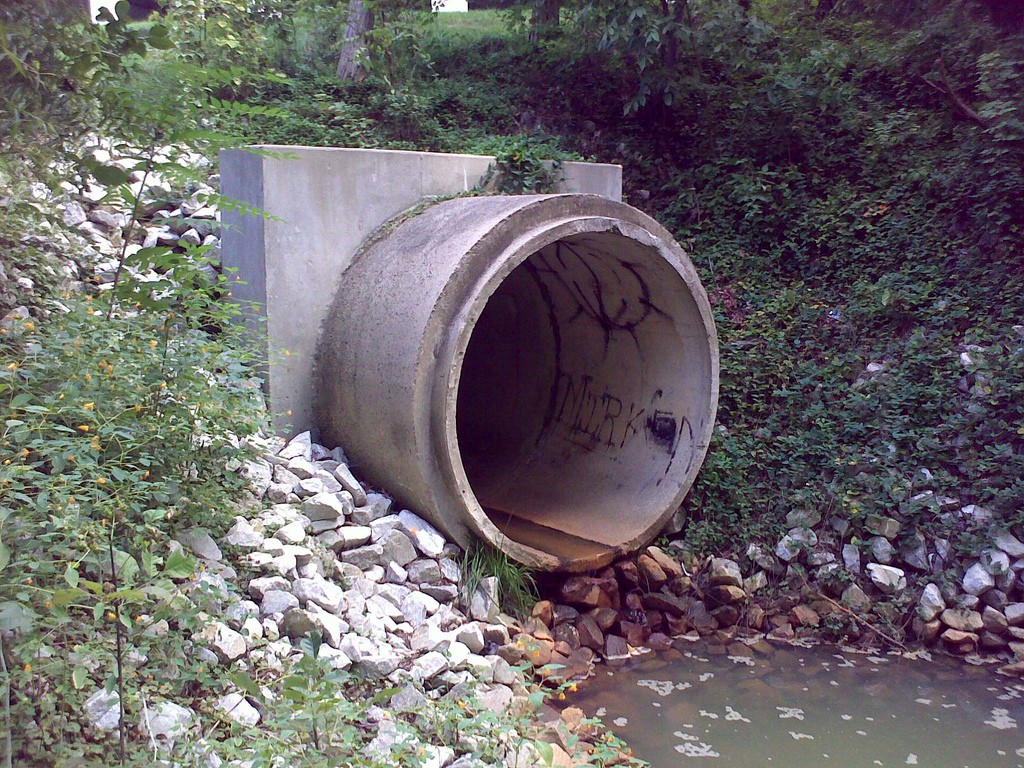
At the mouth of the drainage tunnel just beyond my backyard, Jeffrey and I once unearthed a wallet after the water settled. We carried it back to my garage, each a hand on it, each guessing at whether its weight was made up more of mud or money. Jeffrey was lank with ears set perpendicular to his head. I was softer, shorter. My skin absorbed the pink of sunset so I glowed rosy even into the night.

The first thing we did with the wallet was set it in the open sun of the driveway to bake it hard and dry. After that, Jeffrey shifted it to my father’s worktable and set himself to dissecting the innards. He used flathead screwdrivers to pry apart the leather, Popsicle sticks to jimmy each fold. We couldn’t really see anything inside the wallet, but we thought we could. Summer was one distant mirage after another. Through the haze and the distance, there was always possibility. When I took my nail to the wallet and scraped, flecks of dirt came away to reveal the tarnished green of paper money.

As the afternoon went on, the sun dropped lower in the sky and worked its rays into the open mouth of the garage. I tried my hand at the cracked leather, but everything was fused together. We sipped sodas and talked about how we would spend the money, whatever money there might be. Jeffrey wanted cigarettes and Hustlers. I knew I wanted to be taller, less soft.

The great thing about being twelve was that you could look at yourself in the mirror and see anyone you wanted. Potential was always on the horizon as long as you never moved toward it. At that age, Jeffrey and I both suffered under the constant delusion of heat stroke and hallucination, the kind that bends waves of light dancing at the end of the driveway into plumes of smoke and nude women. In that wallet, there was money and in that money, there were things that each of us wanted. I’d never owned a wallet, so I was willing to just stick it in my back pocket at that point, mummified leather and all, and go on pretending.

Eventually, though, we got the money out. A solid mass of hardened and flaky mud, the cash itself was entombed in a hyper-delicate state, flaking into dust upon exposure like a vampire in the sun. Jeffrey filled up a ten-gallon bucket with hose water and when the bucket was halfway full, he tossed the brick of cash in and it sank down to the bottom lightly. I agitated the water with a yardstick and slowly the dirt came off, fleck by fleck, the money made more visible as the water turned itself murkier and browner.

I kept stirring and that once-hardened brick of money swelled and softened, occasionally surfacing in a grimy spiral. When Jeffrey tried to grab hold, it threatened to dissolve like tissue paper. So we just watched it there at the bottom of the bucket. I do remember the way it looked before breaking apart.

How We Are Haunted, How We Are Cured: Demon Camp by Jennifer Percy

by Antonia Crane

The complex mental, emotional and psychiatric effect of war on veterans has always been fundamentally mysterious to society. According to Dave Phillips, a reporter for the New York Times, “Of about 1,200 Marines who deployed (with the 2/7 in 2008), at least 13 have killed themselves, two while on active duty, the rest after they left the military. The resulting suicide rate for the group is nearly four times the rate for young male veterans as a whole and 14 times that for all Americans.” Another article reported a huge increase of military personnel and combat veteran suicides since 2009 “even as the United States military has withdrawn from Iraq and stepped up efforts to provide mental health, drug and alcohol, and financial counseling services.”

As a daughter of a Vietnam Veteran, I have often wondered if post-war trauma begins with the odd solitude of that specific, unholy experience of war: violence, near death and personal loss that sets one apart from his fellows, making re-entry unfathomable along with a burning desire for redemption, forgiveness, deliverance.

I wonder if Dave Morris is right when he writes in his astute memoir, “A Biography of Post-Traumatic Stress Disorder” that “PTSD is the failure of our culture to encourage people to seek wisdom on their loss and adversity and to consider trauma in anyway other than a narrow medical context.”

Many writers have written important, profound narratives that echo the specific haunting and deep need for post-war healing in a non medical context and yet, the cause of PTSD and its remedies remains unclear. A few of my favorite stories about PTSD include: Kurt Vonnegut’s’ Slaughterhouse Five, Tim O’Brien’s The Things They Carried, and Mac McClellan’s Irritable Hearts: A PTSD Love Story.

“Demon Camp,” a nonfiction narrative by Jen Percy not only grapples with the complexity of the PTSD condition with searing clarity but approaches the topic of non Western therapeutic healing with candid, observant humor and gobs of heart.

With admirable journalistic precision and restraint, Percy profiles an alternative trauma therapy group that performs exorcisms on veterans for 199 dollars in a Pentecostal church located in Portal Georgia, where it is believed that “the thread between life and death is thin.” The religious organization promised to rid Caleb, an army veteran who lost several friends in a 2005 helicopter crash in Afghanistan — of what he believed was a “the destroyer demon” — a ghost of his buddy with Alice and Wonderland tattoos following him around.

But “Demon Camp” is not a book about going to church and finding God and having a Messiah wipe away the blood, the screaming or the dead buddies of possessed soldiers.

It’s a book in which Caleb, her primary subject, seeks a holy cure after he suffers bouts of nightmares and nearly shoots himself in his own truck while quarreling with his girlfriend, Katie. It’s also a book about the seeking itself and the ways in which vets in particular feel haunted. “Demon Camp” promises the impossibility of “deliverance” after all.

Percy shows us there’s no easy fix. Yet American culture has financial investment in the so-called “easy fix”: fast solutions to complex problems — problems we may never completely solve. While PTSD is not an infection to treat or and illness exactly, it may have physical symptoms like audio hallucinations and depression. Hysterical blindness. Malaise.

We have no language for audiovisual hallucinations as a result of flash backs that won’t cause loved ones to dial 9–11.

In “Demon Camp” we follow Caleb as he sees the dead in the form of a dark thing and out of ideas as to how to get rid of it. The math of deliverance for him is quite sound: Having a tussle with a horned demon=another way of ridding himself of a psychic burden too terrible to bear.

Caleb was not an easy sell. He was skeptical of religion and of the bible. He knew logically that he had PSTD, like someone knows what weight they listed on their driver’s license. He also believed that he could see the future and he believed in a hierarchy of angels:

“They (angels) have ranks just like the military has ranks. It’s hard to tell the difference at first, but over time you learn.”

In a military structure, this ideology makes perfect sense. A person takes orders and carries them out at any cost along with his buddies; so joining a group with a built-in family dynamic with a leader promising a solution that would give power to his extreme helplessness was comforting. It was not only an opportunity for extreme forgiveness, but also a chance to help others like him.

Caleb believed that “deliverance” could change how people thought about PSTD and he wanted to rebuild his life, but more than anything, perhaps, he sought to process the experiences of war: the savage killing in which he played a part.

After hearing Caleb being followed by the destroyer demon, Percy writes, “Because Caleb said these things could transfer, and because these things are not limited to war, I started to wonder if it was following me.”

We follow Percy following Caleb who is being followed.

In essence, we are haunted by association.

While writing “Demon Camp,” Percy became deeply entrenched in the group’s culture, living with the group and observing them in Portal, Georgia for over six years. During that time, she agreed to also go through the exorcism herself after being told she had a demon and the leader told her and the rest of the group that the pink love mist that came in the room was Jesus:

“He wants to pour his love on you. Let him woo you. Jesus is going to be your greatest romance.”

Throughout “Demon Camp,” Percy catches the haunting like a sore throat, hunting demons alongside Caleb and the others. By the end of the book, Caleb was no longer associated with the deliverance church at all.

Percy’s empathy for Caleb’s suffering and seeking, redemption and peace were the haunting that we are left with and although we may never entirely relieve ourselves of our harrowing ghosts or traumatic experiences with pink mist or screaming rituals, Percy’s tale of earnest redemption and one man’s deep desire to do so made me think differently about PTSD and the seeking itself.

The Most Popular Electric Literature Articles of 2015

We like to ring in the new year taking a look at the last here at Electric Literature. Here were are most popular articles published in 2015:

Headertest-360x240

1) Speak Up!: A Graphic Account of Roxane Gay and Erica Jong’s Uncomfortable Conversation by MariNaomi

BluntInstrument_ElectricLit_small-360x240

2) Should White Men Stop Writing? The Blunt Instrument on Publishing and Privilege by Elisa Gabbert

literary podcasts

3) Eight Excellent Literary Podcasts for Your Morning Commute by Jessica Gross

literary novels

4) INFOGRAPHIC: How To Name Your Big Important Novel by Lincoln Michel and Nadxieli Nieto

books and likes

5) When Popular Fiction Isn’t Popular: Genre, Literary, and the Myths of Popularity by Lincoln Michel

True detective dialogue

6) True Detective’s Lessons on How Not to Write Dialogue by Lincoln Michel

Wonder Boys film

7) Writing On Screen: Why Do Writing Students Love Such Terrible Mentors? by Lee Schnelbach

The Exorcist film

8) That Thing: A True Story Based on The Exorcist by Adam Sturtevant

Neal Stephenson

9) The People Who Survive, an interview with Neal Stephenson, author of Seveneves by Steven Paulson

franzen, roth

10) What Women Can Learn From Reading Sexist Male Writers by Sigal Samuel

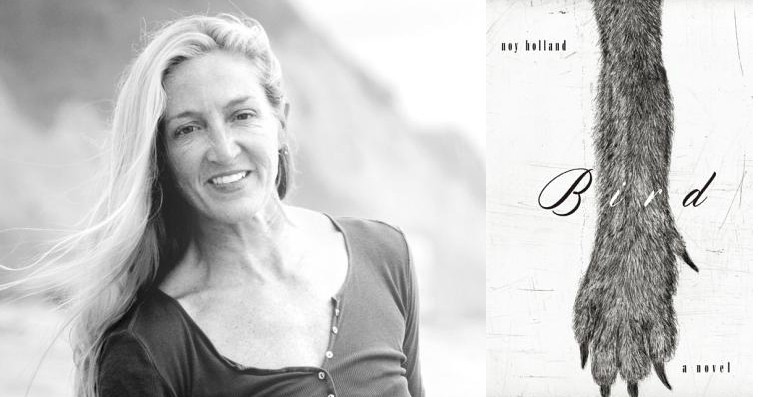
Unworded Intensities: An Interview With Noy Holland, Author Of Bird

When one reads voraciously, there are many books — books of high quality, even — that tend to blur the more one reads past them. One can remember certain moments, one can map out something like a sketch of the plot, perhaps one can even remember the names of characters (though, in my experience, those are often the first to go), but rarely can one reenter the experience of the book in question, reenter that initial experience of reading. This is perhaps why we — or, at least, I — reread favorite books time and time again, chasing the framework of feeling they enacted on us when we first read them. I read Noy Holland’s Bird in August, and it is no hyperbole to say that it has stayed with me — present in my mind and in my heart — every day since. You wouldn’t have to press me to the wall for me to call it my favorite novel of the year or to argue that it’s one of the most accomplished novels to surface in quite some time. What Holland does with language is simply nothing short of a miracle. And the series of sensations that language gives rise to in the reader are deeply complex and unforgettable. It is a novel I feel I understand and a novel I feel understood by. From my first read — and there have been a few more since — it has occupied a space among my favorite books ever written: Joy Williams’s State of Grace, Joan Didion’s Play it as it Lays, Mary Robison’s Why Did I Ever. And what Bird shares in common with these masterpieces of fiction is that it risks everything in language, it holds no emotion — no matter how ugly or contradictory — back, and, to borrow from Rilke, it causes the reader to rethink and readmit “the relation to another as something alive.”

It was an honor to speak with Noy Holland about the book via email.

Vincent Scarpa: Though it’s easy to miss as a reader — as we’re so often jumping in and out of present tense, and as we’re given an in-depth portrait of Bird’s past life with Mickey, her former lover — the novel actually only spans the course of one day in real time. In setting out to write the novel, did you have that idea for a framework in mind — that the reader would be invited into Bird’s present life for only a day? It’s one of many things that struck me as staggering about the novel: both the way in which so much is contained in such a small space of time, and the idea presented to us as readers as we reach the end that this onslaught of longing, regret, and wreck is every day for Bird. It totalizes her life, a life we’re experiencing only one day of.

Noy Holland: The truth, regrettable and not, is that I set out knowing next to nothing. Set out, arguably, with a tantalizing lack. I spent years picking away at this book before the day came where I said, Ah hah. Or, really: duh. The first duh was to recognize that I was indeed writing a novel, and the second was to see the frame — the limits of action but not of perception. The prospect of passing only a day with Bird seemed so obvious once I’d decided it; the invitation had been there all along, in my pages and in books I admire. I think, too, that years of writing short stories may have made me more inclined to want the density and strictness the choice implied. I wanted stillness. Bird can’t go far. I wrote her into that house with a baby and debilitating fears and a body still wrecked some from childbirth. And her boy will come home, and she will be there. Because no matter the mess she can be and has been, she will be there. She’s devoted. She has made that bed and she will lie in it. The day itself is turbulent — an onslaught, as you say. The night’s unrest and dreaming have made the old mess and want flare.

VS: I was totally dropped-jaw from page to page as I took in the language of Bird, which is absolutely stunning and felt absolutely new. Not since Eimear McBride’s A Girl is a Half-Formed Thing have I found the language of a novel to be so miraculous, so captivating as to be a machine of meaning-making and a kind of character in and of itself. The sentences captured so precisely for me what I imagined Bird’s interior landscape to be: this rushing river, fast and unyielding, in which Bird finds herself daily swept up in its rapids. I’m wondering if in the process of drafting the novel the language came out more or less as it appears on the page now — in this rush, this careening prose — or if there was some amount of polishing or chiseling that took place in revision to really carve out what Bird’s voice, and what the narrative voice that carries her through the novel, read and sound like. Because it really did appear — infuriatingly and envy-inducingly — effortless.

NH: Ha! Very much labored-over, I’m afraid. Effortful and wasteful and slow. I’m grateful for all the nice things you just said and I’m glad the effort is somewhat hidden. Weirdly, I started the book by speaking into a micro-cassette — not an iPod, they didn’t exist yet — on my long, pretty, country-road commute to work. I had small children myself and a full-time job and I seized what time and mind I could. One effect of this was that my sentences got long and somewhat ornate. Only a handful of those sentences survived intact once my reductive tendencies took hold. I found the beginning of the book in the middle, months or maybe years after that initial burst. I found I wanted to begin in the past — let it take precedence over the present. I wanted the past to be more luminous, more clamorous, more demanding than the present. I wanted it to strip the luster from the present, and for that luster to at last return.

VS: I have a friend who uses the terms pregret and premorse. In reading Bird, in which all of the things Bird longs for, all of the things she regrets, have already happened, I still felt an urge — perhaps because of the way you play with time, the way you move us as a reader in and out of Bird’s past — to use my friend’s terms, to feel as though Bird is pregretting, premorseful. You write, “Can’t last. Couldn’t last. Nature of things…Wanting so mostly rarely withstands the presence of the thing we want,” and I found that to be a kind of thesis to the novel, as well as a sort of hook upon which I could hang these aforementioned thoughts. Have I said anything with enough clarity here as to spark something for you?

To stand up and live through something, to withstand the presence of the thing we want, is reckless and thrilling and heroic, and very quickly it is something like work.

NH: I honestly don’t have the vocabulary to talk about this, not in the deepening way it warrants. I know I’ve felt it, feel it — the premonition of loss before I’ve set forth. Between grief and nothing I hope always to choose grief — I am borrowing, I think, from Faulkner here. The grief needn’t be grand or dramatic, just the simple grief of the almost right word. The persistence of failure. Fail better. Yes. To write a story, to set down the words, is destructive. It is never enough. It makes of something fluid something static. To stand up and live through something, to withstand the presence of the thing we want, is reckless and thrilling and heroic, and very quickly it is something like work. Yes? We can only in an instant be answered. But that instant, whoo boy, that ecstasy — this is what we work and live for. In my view, it’s what we get of God.

VS: I’d be very interested to hear you talk about what you see as Suzie’s function in the novel. We only come to know her through her manic, often hysterical phone conversations with Bird, and yet she feels essential to the novel, like something might become dislodged without her presence, however peripheral it may be, in the narrative.

NH: Suzie is a free range human, anti-domestic, a feminist, I suppose. She does what women seldom do — she takes what she wants when she wants it. She lives alone and for herself and men come and go, and boys if she wants, and women. She has no compass, arguably, and she’s disloyal. Solitary. Outside the fold. I suppose the arrangement of words that Suzie is is on the page to keep the message flashing: no whinging. We have choices. Our one little chance to be alive — and it is ours to shape. I wanted to say this and at once qualify it, restrict it, as chance and circumstance do. That’s why Suzie never gets to show up in Bird’s kitchen — she phones in. She is elsewhere, free to move. Do I mean to say that Suzie is freer than Bird, free as a bird, happy? No. Yes and no. Suzie is a set of possibilities Bird has decided against.

VS: One of the sentences that just broke my heart wide open — and potential spoilers ahead, I suppose — occurs in the memory of when Mickey comes to Bird’s hospital bed after she’s given birth. They’re contemplating their failed relationship and this question is posed: “Was can’t last what made it bearable or can?” It seemed to be such a masterful distillation of what the previous 150 pages were trying to ask, to investigate. It reminded me, too, of a line from a singer-songwriter friend of mine, Susan Werner, who sings, “Passion’s always half-impossibility.” What about this dichotomy, about this doomed-to-fail, it’ll-end-in-tears dynamic in some relationships, was compelling and generative to you? What did you want to tease out of it, close up in it?

We love stupidly, falsely, pretend to love, pretend not to. It’s all conditional, but nobody knows the conditions, not even the ones we claim.

NH: I can’t talk about this book without contradicting myself. I just made my we-have-choices speech and I’m about to take it back. We do, we don’t. Can last, can’t last. We choose what we want in the moment of wanting and as soon as we touch it, whatever it is, whoever, it begins to change, it eludes us. Experience is endlessly mutable. We change one another, are changed by one another, but we don’t know how or really why. We love stupidly, falsely, pretend to love, pretend not to. It’s all conditional, but nobody knows the conditions, not even the ones we claim. We say successful marriage, failed relationship, but this is partial, a closing in. We want to name it. Honor it with a name, kill it with a name. We’re so utterly conflicted. And we are quick to call brevity failure — the six-month marriage a failure, but who’s to say, really, when six minutes can change our lives? Seconds. Failed relationship? I wouldn’t say so. In some ways, I mean to say that Mickey and Bird save one another — they are abundantly, recklessly giving. They hoard nothing. Mickey saved Bird. And to save himself, he left her. Which means can last and can’t are interchangeable — because isn’t Mickey, in the dreamy, careening deprivation of Bird’s day, isn’t he lasting still? Aren’t they?

VS: I’d be remiss not to mention the exquisite way you write sex in this novel. I don’t think I’ve ever read anything quite like it. I see in my own writing various strategies of dodging the sex scene itself — the lights being turned out in one sentence, a space break, and then it’s morning and they’re naked in bed! — but you really do, as Joy Williams says, “write to the need.” I wonder if you ever felt anything like hesitation in doing so — not the hesitation of including sex in a novel, of course, but rather a hesitation or a nervousness in writing it, in rendering it, in finding the exact right language to hold all the nuances and contradictions — the brutality and the beauty — implicit and inherent in the act.

NH: Honestly, it’s the cerebral, the want to say something smart, that makes me nervous quickest. I’m at home in the body and at ease among much of what can be said about it. I’m someone who stays in the room. Sex is difficult to write, but what isn’t? Sickness is difficult. Childbirth. These are mostly unworded intensities. The sounds that leave people in childbirth or sex are a vowelly mash — gorilla, coyote, whale. We belong to the rest of what lives. The distinction between humans blurs in sex, and in any extreme, sex included, between humans and other animals. It’s sort of terrifying but it’s also wondrous. We make contact. Surrender. The sex of this novel is surrender, it’s prayer, a violent, obliterating drug, reifying and deadly. Bird and Mickey walk into deep water together and they find they have to swim for their lives. Their struggle isn’t with one another so much but each with their own unreliable want to be alive.

Women get a good deal of practice submitting to what is, witnessing the body unadorned.

The flux of the body is generative for me, it’s all through my work. This is among the ways I’m grateful to be a woman. A woman’s body is always reminding her that something beyond, and bigger, is happening. We feel the flux. We can’t help it. Women get a good deal of practice submitting to what is, witnessing the body unadorned. Procreation gives us one choice: Hey, little one, I’ll share my body with you and you can feed on me as you must. What could be more humbling? The animal imperatives of the male are to overpower and acquire. To take and to keep. We can resist this and argue against it — can, I think, and should — but we are leaning into a wind that’s been blowing for thousands of years.

Gender, class, race, who’s responsible for what, who’s to blame, who’s obliged, the social contract, identity — these stubborn and animating differences fall away for Bird and Mickey. All moot. “The world shrinks to become them.” They are governed by sensation, by appetite. It’s not a moral state; it’s unencumbered and transitory and rare. Together they invite the sensation of loss, unboundedness, the perilous orgasmic state that blurs the frontier between death and living.

A book makes its own demands. Or: a person makes a book that makes its own demands. Timidity or nervousness or squeamishness about the body were entirely at odds with the demands of this book. So I tried to be brave and write through.

TED WILSON REVIEWS THE WORLD: 10 THINGS OF 2015

Hello, and welcome to my week-by-week review of the world. Today I am reviewing ten things of 2015.

Hotline Bling ★★★★☆
I hear this phrase a lot but I’ll be honest, I have no idea what it means or what it references. I know what a hotline is, and I know that Bling is the search website I use when I can’t log onto Goggle.com but these two words together are meaningless. It’s a catchy phrase. Sometimes when I pass a young person, I’ll say, “hotline bling.” It always makes them smile and laugh. And point at me. And pull out their cellphones and ask me to say it again while they videotape me.

Jeb Bush ★☆☆☆☆
Poor Jeb Bush. He looks perpetually sad. I suppose I would too if everyone liked Ted Cruz better than they like me. If I ever meet Jeb Bush, I’m going to give him a long hug. He’ll resist at first, struggle slightly, then give in and begin sobbing. I’ll bring an extra shirt because mine will be drenched with his tears and mucus. Poor Jeb.

Go Set a Watchman ★★☆☆☆
The sequel to the very popular Watchmen comic book by Alan Moore, this one proved to be very controversial. Although I did not get a chance to read it for myself, I heard a lot of people talking about it. Apparently one of the characters turns out to be racist. For me this would be no big deal, because I always assume all characters are racist. That way I’m not surprised when they are, because these days it seems like everyone is.

Dry Mouth ★☆☆☆☆
2015 was the year of dry mouth. You probably had it. I had it. Everyone who has a mouth had it. But why? None of the scientists I’ve asked have an answer. It could be climate change or it could be a new direction for human evolution. More and more, as people start swallowing their food without chewing, saliva becomes unnecessary. It makes kissing pretty awful and anti-climactic though. Or so I hear. I didn’t kiss anyone in 2015.

Bill Cosby ★★★☆☆
Someone told me Bill Cosby passed away this year. So sad to see him go. At least now all the Bill Cosby memorabilia collectors are excited to see how valuable their collections are!

The I-Phone ★☆☆☆☆
Apple keeps making newer and newer I-Phones. It’s like they just can’t get it right the first time. Or the second. Or the third. They’re up to their sixth attempt I think. After that many tries, why do people keep buying them? Every few months Apple says, “Sorry guys, forget the phone you have. Here’s the real phone we meant to make.” It’s embarrassing.

Murder ★☆☆☆☆
There sure was a lot of murder in 2015. There’s a lot of murder every year, but it seemed to be a big highlight this year. Everyone except the people doing it seem to agree it’s pretty awful, but we kept talking about it. I guess that’s what the murderers wanted, probably more than the murdering. It really bummed me out.

Star Wars ★★★★☆
I got a ticket to Star Wars but as I was about to enter, a young girl kicked me down and took it. So I got a ticket to see Black Mass. As a Boston resident, I was excited to see Johnny Depp’s depiction of mobster Whitey Bulger. True to form, Depp continued his tradition of playing a living cartoon character amidst a world of humans. He is the Roger Rabbit of the real world. I loved Roger Rabbit. Why hasn’t he done more movies?

The Moon ★★★☆☆
No one seemed to really say anything about the moon this year.

David the Butterfly ★★★☆☆
This year they discovered a new butterfly and named it after David Attenborough. I’m guessing they only found one of this butterfly, otherwise it would be strange to name multiple butterflies David. How could you ever tell them apart? If David the Butterfly is anything like David the human, it can walk upright.

Please join me next year when I’ll be reviewing everything.

Mack!

by Colin Winnette

Our friend Jim’s lucky to be alive, and I told my son and my wife as much at dinner.

“I visited Jim in the hospital and I told him he was lucky to be alive,” I said. I was excited to get the story out and talking faster than usual.

“Swallow,” said my wife. “Chew and swallow.”

I did so then wiped my chin with a flourish.

“I visited Jim in the hospital,” I said, slowing it down with a little bit of exaggeration, “and I told him how lucky he was to be alive.”

“What did he say?” said my wife.

“That he wished the Lord would take him.”

My son laughed.

“It isn’t funny,” said my wife.

“She’s right,” I said. “It isn’t funny.”

“It’s just dumb,” said my son. “There’s no God.”

“Probably,” I said, “but what do you know about it? That man’s lost an arm to infection. He’s lost a daughter and a dog. And now he’s been closer to the afterlife than anyone at this table, and if he wants to say there’s a Lord and that he wants to join him at the great pearly gate, then let him. You can’t just laugh at a man in that situation.”

Everyone was quiet then. I had delivered something like knowledge and I hadn’t even meant to do it when I started out.

“You know what else?” I said.

“What?” said my wife.

“Jean from down the street is killing herself.”

“How’s that?” said my wife.

“She’s ignoring the doctors and letting her diabetes run wild.”

“She’s had a very hard life,” said my wife.

“Who hasn’t?” I said.

“Seriously,” said my son.

“Well, you haven’t, Jack,” I said. “You don’t know it, but you haven’t.”

“Yes, I have,” said Jack.

“I think I would know just a little more about it than you,” I said.

“You’d know more about me than me?” said Jack.

He was getting quick in an admirable way. He was much brighter than I was at his age.

“Damn, you’re so much brighter than I was at your age,” I told him. “You wouldn’t believe it, but you’re two, three times smarter than I was at your age. Maybe even older.”

“I believe it,” said Jack.

“Ha!” I said. “Just like the TV,” I said. “You should be a writer.”

“He wants to be a singer,” said my wife.

Jack didn’t say anything.

“Well, even better,” I said. “You could make real money doing that. Jack, we believe in you and support you one hundred percent! Life is good and full of promising opportunities.”

I stamped my foot and tossed a roll in the air. It landed in the bowl of potatoes.

“Ha!” I said.

“I get beat up,” said Jack.

“Boys get beat up!” I said.

“You didn’t get beat up,” said my wife.

“I was lucky!” I said. “Or unlucky. It might have done me some good. Jack, do you think it’s doing you good?”

“No,” he said. “It hurts.”

“Well, goddamn it then,” I said. “I’ll talk to your teachers and get it all straightened out.”

“No,” said Jack. “Don’t.”

“Well, what should I do then?” I said.

“Nothing,” said Jack. “It’s just the way things have to be.”

“Now that’s a pity party, Jack. Sitting there and feeling so sorry for yourself. Let’s rat on these punks and get them locked up. Or at the very least transferred. You have to stand up for yourself.”

“I have to learn to fight,” said Jack.

“Even better,” I said. “A fighting singer! You’ll be like… no one before you. Steven Seagal meets… Stephen Sondheim! We’ll be mega-rich.”

I was just fooling around with him, but the whole thing was getting me excited.

“I’ll sign you up for karate,” I said.

No one was paying much attention to me then. Jack was pressing his potato into thin rows using the back of his fork. My wife was pouring more iced tea. No one was getting excited in the right way.

“Or you can take him in the backyard and show him how to throw a punch or two after dinner,” said my wife.

“Okay,” I said. “I’ll take Jack into the yard and show him some punches and he’ll be a real expert the next time two loaves of bread come looking to make a sandwich.”

Jack cracked a grin but didn’t say a word.

“Then I’ll hop in the car come morning and head to Dallas first thing. I’ll be back for supper.”

“You’ll what?”

“Drive to Dallas and be back by supper,” I said, splitting a fresh roll.

“Why?”

“Because all the good record stores are in Dallas and it’s the time of the month that I like to buy records.”

“You say that every month and it’s always at a different time. I’ve been keeping track just so I could say so and not have you make me second guess myself.”

“I’m trying to live life and stay happy and true to myself,” I said. “I’m trying to keep everyone fed and clothed and keep myself sane. I’m even pushing for a little something more around here. Elation, maybe. Something worth singing about.” I winked at Jack. “Something worth celebrating. Let’s live the life, not just a life.”

I was hamming it up then. I was sort of tap dancing around the room. I’m not any good at that kind of movement, but I think they were getting the point.

“Well, what about work?” she said.

“I’m being spontaneous,” I said. “I’m taking the day off, breathing some life into these old domestic coals.”

“That’s well and good,” said my wife, “but it’s not sensible or responsible.”

My wife is really something special. She’s a smart, special lady, and I goddamn love her to the max.

My wife works at a hospital. She is a very skilled nurse but she does not like people. She does not like when people stop her in the hallway and ask her for pillows, or for more juice, or if she can turn up the heat. She is always on her way somewhere more important and when people interrupt her it throws everything off. Also, if she is not their nurse, there’s no way of knowing what their situation is and how she can or should help. She tells me all of this stuff while I wash the dishes and she does satellite work, wiping things down and putting this and that away, which is how we do it almost every night.

“You’re beautiful, babe!” I told her. And I meant it. She is top notch.

“I’m also very smart,” she said, “but I’m not good with people.”

It’s true. She’s got a temper. She does not always think of the right words. Neither do I, but that doesn’t slow me down much. My trick is: I work around them. If something’s not coming to mind, I think of a different way to say it. If you don’t slow down and hem and haw, no one knows the difference.

“You hem and haw a bit, honey,” I said. “That’s the only problem. You’re smart as a pinstripe suit, babe, and I love you.”

“I love you too,” she said, because we have a good relationship and we love each other.

After that I took my son out back and showed him how to throw a punch.

“You do it like this,” I said, and I showed him.

He wasn’t very good at it, at first.

I told him as much, and I showed him again.

He was a little better then, and then he got a lot better.

“Great work,” I said.

“Anything else?” he said.

“Yes. It’s going to hurt like hell the first time you do it,” I said. “I can’t teach you how to not make it hurt. It’s just going to hurt until you figure out how to land your fist in a way that works for you. Also, try not to hit anyone in the eyes or testicles. I’m all for you boys rough-housing and standing up for yourselves, but if you permanently damage someone, break a bone or a testicle, you’re going to have to live with that for the rest of your life. Happens all the time, too. Fighting’s no good,” I said.

He seemed happy enough and I had him high five me because I love that kid.

I woke up the next morning before anyone else was up and I took the keys out of the key dish and left without breakfast.

It was a beautiful day. Some people don’t like highways. Me, I like highways. I like looking out and seeing the hills and some cows and some tiny little fences. I like the power lines too. They’re not as bad as everyone says. They kind of lope along then perk up. They’re sort of incredible when you slow down and think about it. All that information moving from city to city. All that electricity. It can get a man all jazzed up and make him want to sing. I put some music on. I tapped my fingers on whatever would hold still long enough to get tapped.

There was a fly in the car and I just let him buzz.

The music cut out and a man started talking about the Lord. It tickled me because of our talking about Jim just the night before, so I listened. It’s all so much nonsense and carrying on, but that boy could really get after it. He was excitable and excited. You could hear the audience in the background, getting worked up into a fury. You could hear some of them shouting and some of them singing. Hallelujah.

I needed gas so I pulled over. This is a common problem when borrowing the wife’s car. She doesn’t take this kind of thing into account. She goes on about responsibility, but does not know the discrete pleasure of pulling into your driveway with a full tank at the end of the day. That’s a guarantee that you’re prepared for whatever may come to pass. That’s a special kind of satisfaction.

There was no one coming out to pump the gas, so I hopped out and did it myself. I’m a man who gets things done and I was in a hurry. Then I reached into my back pocket and boom. No wallet. Classic stuff. Classic me. Grabbed the keys and my glasses and left the wallet on the sill. Jack was probably digging through it for singles right about now. I was more than halfway to Dallas; it didn’t make sense to turn around. I put away the pump and climbed back into the station wagon. Then the guy came out. He was waving something and hollering for me to stop, but I drove on. They probably had cameras. They’d probably mail a bill. Let them mail a bill. That suddenly seemed like a perfectly reasonable way to take care of business and I got to wondering about why most businesses didn’t just do it that way. Do it like a toll bridge. Take a photo then send a bill.

I drove on and changed the preacher into some jazz. I don’t like jazz. Or, more precisely, I don’t like a jazz song. I like the sounds and some of the little parts they work up into there, but I can’t listen to it for very long. I’ve got my records coded and organized in a real specific way. Every album in the world has some real good parts and some not so good parts, so I mark up each of the ones I buy according to what’s good and what’s not so good. Then, when I listen, I can arrange things so all I hear is good part after good part after good part. Hot damn if that isn’t a fine way to listen to music. Pure frosting. Anyway, I changed the station after a bit and found some more good stuff to listen to. Everything was beautiful, outside and in.

My cellphone started ringing and I ignored it. I am a responsible driver. A big black bird was hanging low and still at the side of the road. How do they even do that? Just sit there all still like that, without moving forward much or moving backward much. It must be something to do with the wind. It’s beyond me.

I could see the buildings. That’s where I was headed. Right to the middle of those buildings that shot up and reflected everything on the horizon for miles. There’s one with a restaurant way at the top and it rotates so you can see the whole city from your seat.

When my phone finally stopped ringing I turned off the radio and listened to the sound of the car breaking the highway air. It was roaring along like the blood in your ears. I’ll be damned if I wasn’t ten minutes out of Dallas.

My girlfriend’s building is enormous. She’s on the eighth floor. She inherited the place after her aunt killed herself. The woman took some pills and drank a bottle of something then drove out to the lake in the dead of winter. It’s amazing she made it all that way — the lake is not a short drive from where she lived. She walked into the lake and drowned. Her husband was trying to leave her because she was depressed all of the time. She had lived a hard life. My girlfriend blames him for what her aunt did. I don’t blame him at all, but I understand why my girlfriend does. She needs to blame him. Her aunt’s best friend blames the doctors. Her mother? Blames God. So there’s that. Anyway, that’s how my girlfriend landed this nice apartment on the eighth floor of an enormous building. She’s very generous with that story. She gave me the full report on the day we met. She’s not at the top of the building, but it’s still a hell of a view. I feel special just to know her.

She’s got a valet too, and he hasn’t given me so much as a smirk when dealing with the station wagon. That’s just Dallas for you. Nobody in Dallas is a snob except for people who move there from out of town. At least that’s the way it seems. You show me a snob with a Dallas accent and I’ll eat my hat.

When I arrived, the doorman greeted me like I was an old friend. It was just one of those days.

“Hi,” he said, and I gave him a high five. I was in an incredibly good mood. There’s really no explaining it. Maybe it’s putting in a little extra time with Jack before coming here, or maybe it’s that my wife was such a good sport about the station wagon. No car means she’s walking to the bus and then taking the shuttle to work. It’s not a perfect arrangement, but it’s manageable.

“Allow me to phone ahead,” said the concierge.

“No, no,” I said, and I gave him a big smile.

“It’s no problem, sir,” he said, but I kept moving.

We were a legitimate couple and I could stop in whenever I liked, announced or no. She would be pleased. She would be thrilled. She would be ecstatic. My mood would spill over into hers and maybe we would make a real nice night of it.

She did not open the door but stepped into the hallway when I knocked.

I hugged her.

“What are you doing here?”

“Baby!” I said.

“It’s not a good time,” she said.

“Why?”

“We need to talk about something major,” she said.

“Anything!” I said.

She didn’t say anything. She touched her big toe to the point of a red diamond patterned into the hallway’s carpet.

“Let’s maybe go to dinner later and talk about it at dinner,” she said. “I’ll call you.”

“Why?” I said.

“Just because,” she said.

“No,” I said. “I was in a fine mood but now I’m anxious and getting upset.”

“Lower your voice,” she said.

“Tell me true,” I said.

“At dinner,” she said.

“No,” I said. “That doesn’t make sense.”

She flinched and I tried to give her a look that said, “Why’d you do that?” but she was looking down.

“I’m pregnant,” she said.

“You’re a liar,” I said.

“I am not,” she said.

I thought about it a moment.

“Well, we’ve got to kill it,” I said.

Then the door opened and a man stepped out. He was a fat man. I was much better looking than him, in general, but also much healthier looking and less tired and old.

“Who is this fat, old, tired man?” I said.

“Excuse me?” he said. “I’m a polite fellow and I’ve come out to protect my lady.”

Like his piss was all flower petals and beeswax.

“Your lady?!” I said.

“Lower your voice,” she said. “Let’s talk about it at dinner,” she said.

“This is my girlfriend,” I said.

“Your girlfriend?” she said.

“You are wearing a wedding band,” said the man.

“What’s a tired, fat old man know about it?” I said.

“Is this your boyfriend?” he said to her.

“Yes,” I said.

She shook her head.

I can’t say I blame her. She was in a tough spot.

“We’d like you to leave,” said the man, looking to my girlfriend who was looking anxious and then relieved when he looked at her and then anxious when she looked at me.

“Why did you look so relieved when he looked at you?” I said.

Neither of them said anything.

“Why did you look like that?” I said.

“You had better leave, friend,” said the man.

“I am not your friend,” I said.

“You had better leave regardless,” he said.

“No,” I said, “no, no, no, no, no.”

“Leave or I will escort you down,” he said.

“No,” I said.

“You better step inside, honey,” he said.

And she started to, so I said, “She is not your honey, fat old tired man, she is carrying my child. She is my girlfriend and the mother of my soon-to-be daughter.”

“Is that true?” he said.

She looked extraordinarily sad.

“I don’t know if it’s a girl,” she said. “And I only just met him.”

“Well, goddamn it,” he said. “But you’ve slept with this man?”

She nodded. She held up a finger.

“Are you leaving me?” he said.

She was still a moment. Then she shook her head.

“Are you leaving me?” I said.

I looked past the look she gave me and saw her heart, that she was still holding something for me there.

I started to calm down and then the fat old man said, “Lower your voice.”

“Lower your goddamn tone, you hog,” I said.

That shut him up. He went red.

“Am I the father?” he said.

“I don’t know,” she said. “I think so.”

“Oh goddamn it,” said the man.

“I am the father,” I said. “Have you seen my cock? Have you smelled my come? I am the father of every goddamn child in this whole metroplex. I am a beast, a hound, the United States Postal Service of Pregnancy, delivering children to every home with a numbered or lettered address. I am endlessly replenishing the youth of this earth. I am your father, and his father, and his father, and his father.” I slapped the walls on either side of me every time I said his father.

“You need to calm down,” said the man.

“We can find out who the father is,” she said.

“Are there more men than me and him?” said the man.

I lost it then. I cursed and rattled and shook the foundation of the building. I removed my shirt. I slapped the red burns of my palms into my chest and stomach.

Then the old man was pushing me.

“I’ve had enough,” he said.

So I calmed down.

“We’ve got to kill it,” I said.

“You’re not going to do anything,” he said. “Other than leave.”

“We already talked about it,” I said.

“Is that true?” he said.

She shook her head.

“I don’t want to kill it,” she said.

“And so you won’t,” he said. “I love you, dear, and I will support you in whatever decision you make.”

“It’s not your decision,” I said.

“Nor is it yours,” he said. He gripped me by the skin of my shoulder.

“If your seed is as weak as your grip,” I said, “there’s no question at all who the father is.”

He landed several punches before she was at his side and pulling him off me. I swung but nothing connected. I was bleeding and blinded from the blood. My glasses were all smashed and worthless. My whole brain was screaming with the pain of a fist to the nose. You can’t recover from that quickly, no matter how bad you want to. I started yelling and he raised his fists again so I quieted down.

“You son of a bitch this was supposed to go well,” I said.

“Well, you’re a god damned lunatic,” he said, “and I am trying to be civil.”

She was shushing him.

“I am trying to be civil, dear. I am trying.” Like he was the ghost of a southern gentleman.

She kept on.

I was gripping my face and trying to recover. I had a plan to plow into him. To plunge into his sore, sagging belly and take the bear down. That’s what he was. A big stupid bear. Declawed, losing teeth. Of course she wanted him to be the father. He smelled rich. He had oily hands. He had white hair and a gold tooth that was visible when he raised his voice. He was Dallas tan, gold with pink undertones.

“You stupid old bear,” I said. “You smashed my glasses. You stupid old worthless forest creature, circling around for a crotch to die in. You rat. You dog.”

“Am I rat, bear, or dog?” he bellowed. “Make up your mind, philanderer! You hayseed.”

“You’re a belt buckle,” I hollered.

She was holding his arms and standing behind him as if he were a weapon.

“I’m broke,” I said. “You broke my glasses. How am I supposed to get home? You’ve murdered me.”

He looked to her for only a moment before looking back at me.

“If it’s money you want,” he said, and he broke free of her grip to remove his wallet and started showering the carpet between us with twenties. “Here,” he said. “Here. Here. Here.”

“Stop,” she said.

“So now you can go,” he said.

“I won’t,” I said. “She’s carrying my child.”

“I’m not,” she said.

“You don’t know that,” I said.

“You’re a lunatic and not fit to be a father regardless,” he said. He put away his wallet.

“You’re dumb as a heel,” I said. “You don’t know anything about anyone. I have a beautiful boy named Jack and I taught him how to hit harder than you, you outbreak. That woman will take you for everything you’ve got and abandon you without so much as a phone call. She’s got no love in her heart for anyone other than herself. She doesn’t know what devotion means. I am a devoted father and a husband and I am full of love, you handkerchief.”

“You are full of shit,” he said, just like in a movie. He began to slowly roll up his sleeves, too, just like in a movie. “This woman has been through more than anyone should ever have to live through in one lifetime. She could speak for herself on the subject, but I get the feeling it would be wasted breath on a psychotic like yourself. We’d like you to leave and we’d like you not to concern yourself with the future of this child. It is not your child. She is not your girlfriend. This child has nothing to do with you.”

“I came here for a nice time with the woman I love,” I said, though I didn’t entirely mean it.

“I only just met you,” she said. “I…”

She wasn’t looking up.

“I want you to hear that now,” he said, “and say it back to me.”

“Look up,” I said.

“Not that,” he said.

“Look up and tell me what he just said,” I said. “Say all the stuff that he’s saying you’d say,” I said.

“She doesn’t have to,” he said.

“You don’t need to… concern yourself with this,” she said.

“Look up,” I said.

She looked up. There was nothing there for me.

“You don’t need to concern yourself with this,” she said. “I’m sorry. It’s just got nothing to do with you. I don’t know who you are. I don’t know how this happened. I hope you can understand that.”

“So now you can go,” he said.

The concierge and valet were pretty good at hiding their reactions to my face. The concierge asked if I needed a towel and the valet brought up the station wagon and kept it running while I wiped off a bit. I was headed home and it was hardly afternoon. I used some of the hallway money to buy a pricey sub at a little sandwich shop next to the record store. It was like eating a sponge. But I knew it wasn’t the sandwich’s fault. You can’t taste a sandwich when you’ve just been hit in the nose. These sandwiches are normally great sandwiches.

I didn’t put much thought into the records I bought, but I knew they were good. I’d read about them. It was a real stinger to hear all I’d heard, and to be bleeding like I was. It’s true we hadn’t known each other long, but we’d known each other well. We’d ate lobster and stayed up late drinking champagne. I’d put my finger in her ass — not in a gross way but in a tender kind of exploratory way. She didn’t have any smell at all. She dropped a champagne glass over the balcony and it shattered and nobody got hurt. It was just this little smacking sound that was there for us and nobody else in the world.

I drove on and didn’t look out the windows much except for straight ahead. I didn’t turn on the radio. I didn’t tap my fingers. I could hear the edges of the paper bag that held the records jerking around in the wind in the back seat. I spotted the gas station coming up, so I exited and pulled up to the pumps. No one was coming to pump for me, so I backed up and drove over the hose again. Then I did it again. And again. Finally the old timer from before came out and I handed him what was left of the fat man’s twenties.

“That’s more than enough for a tank,” he said.

“It’s fine,” I said.

“They’re covered in blood,” he said.

“I’m bleeding,” I said.

“I guess you are,” he said.

“Do you remember me from before?” I said.

He didn’t.

I drove on and felt terrible. I got back into town and drove around some more. Everyone was at work. All the kids were at school. My wife was off being a nurse, getting someone a pillow or some juice, drawing some blood or holding her fingers to a wound or doing something more important. In an hour or two Jack would be out of school and I could be there waiting for him when he got home. I felt like I was about to pop so I pulled over somewhere and put on a sad song and cried for a little bit, but it hurt so damn much that I had to quit. Never get hit in the face, if you can avoid it.

Finally, I drove home and parked and pulled myself over to the steps leading up to the house and waited. Jack was late getting home, but not by much. He was all red faced and shitty-looking.

“What the hell?” I said.

“What the hell yourself, Dad?” he said.

“Oh yeah,” I said, wiping my nose.

“What happened?”

“I was in a fight,” I said.

“Oh,” he said. He sat next to me on the step. “Me too.”

“Did you win?” I said.

He didn’t say anything.

“It’s okay,” I said, and I was real fucking sweet about it.

He shook his head.

“Did you?”

“Yeah,” I said. “But it was messy.”

“I hit him, though,” he said. “I got him good.”

“Oh yeah?”

“Yeah.” He smiled.

“Did it hurt?” I said.

“Yeah,” he said. “It really hurt.”

“Well, hot damn,” I said, “if I wasn’t right about that.”

Metaphor Over Metaphysics: An Interview With Jeremy Sorese, Creator Of Curveball

Jeremy Sorese, the creator of BOOM’s Steven Universe Series, just finished a bi-coastal book tour for his graphic novel Curveball (Nobrow Press 2015). This debut chronicles unrequited love amidst the dissolution of a futuristic society, in which citizens can barely brew a cup of coffee without the aid of robot butlers. The plot smacks, however, of 21st century romance: agony over text exchanges on a souped-up Google Glass-esque device, for example. Sorese captures the unspectacular side of a breakup: the lingering, unsexy, weep-all-day-under-the-covers part. A tumultuous sci fi society of explosions and burning cities takes a back seat to quiet emotional catastrophe.

Sorese took some time out of his busy tour schedule, during which he got stuck on a Greyhound for thirteen hours due to a mudslide, to chat about his new creation.

Liz von Klemperer: How’s the tour going? Have you had any interesting reactions to the book?

Jeremy Sorese: The tour was really really lovely. After having spent so much of the last year feeling cooped up getting the book done in time, having the flexibility, the freedom, to leave my real life behind me and disappear for two weeks was wonderful. The stress of being an artist, especially one who makes a living with their work, can be exhausting (especially when you consider how lucky you are to get to do that and want to be as grateful as possible), so to have the only goal for each day to be just see whatever you can and meet whoever you can was nourishing.

On the second day of my tour, while visiting San Francisco, I was walking through Golden Gate Park on my way to the De Young museum and someone stopped to tell me how much they had loved my book. They found a copy in a book store and, after a quick internet search, found my plethora of selfies while looking into more of my work. It was a startling moment for me, a reminder of just how easily the internet allows us to make connections but also a reminder about the power of making work, the benefits of continuously putting yourself out there, not to try and make quote unquote important work but rather to help you connect with the people in your life, open yourself up to be known a little more intimately than we are in our daily lives.

LvK: This is your first full-length graphic novel (congrats!) What sorts of unexpected challenges did you encounter? Can you take us through a typical day of creating Curveball?

JS: Having spent so long creating Curveball, a little over four and a half years, many of the sections of the book had largely different feelings, tones, having been drawn at various times in my life, which had to be smoothed out while I was inking the pages over the past year. Like the different strata of a rock formation, the book is definitely a testament to the amount of growth I’ve done as a person in my early twenties. I haven’t looked through the book since I first received final copies back in October, but only with that quick glance, each section of the book felt so tied to certain times, places, people I’ve known that seeing it all as one object, a book, was strange for me.

Jeremy Sorese

Making peace with the book I made has been the biggest challenge for me. Nobrow was only involved with the creation of the book for the last year and a half. Up until that point, it had been all me, slowly chipping away at this mountain I was climbing. There was a lot of comfort in that, steadily working on something that I didn’t know would ever see the light of day. It’s nice to endlessly tweak something, it’ll always be perfect when it doesn’t exist. So seeing the blemishes, the different geologic ages, has been important for me to accept, because this will be how every book I make will ultimately feel. The enjoyment is in the creation, not the completion.

LvK: At first glance, Curveball seems to be set in a dystopia in which human reliance on machines leads to the ultimate destruction of a city. In an interview with The Comics Journal, however, you say that the setting is utopian. Can you expand on this?

JS: Science fiction, especially mainstream blockbuster science fiction, approaches the worlds their well publicized characters occupy as these horrific oppressive worlds that the characters, and by extension ourselves, can see as a problem worth overthrowing. Of course burning books is bad. Of course having teenagers kill one another for sport is bad. Of course having sentient robots take over the world is bad. We, as viewers, get to feel pretty good about ourselves after seeing the good guys save the day.

With Curveball I tried to make a world that felt optimistic, hopeful, but also delusional, the same way that my life living here in the United States often feels. We ignore so much to try and let ourselves be happy, putting our needs and wants over the greater good to dizzying effect. Unlike science fiction that hinges on a big reveal to show the digression of society (Soylent Green being people for example) I wanted something that never had that moment of discovery. The book begins in the same way it ends, the society is largely unchanged, things will continue on without much of a difference.

Personally I think what we consider Dystopian is fairly Utopian in terms of being a world with easy answers. Our world is too complicated, too intricately balanced to say that oh, of course, the solution to everything is this or that.

Dystopian and utopian have to go hand in hand, there has to be that contrast. Personally I think what we consider Dystopian is fairly Utopian in terms of being a world with easy answers. Our world is too complicated, too intricately balanced to say that oh, of course, the solution to everything is this or that. Curveball is all about putting on a brave face, muscling through the tough times without letting yourself see the awfulness just below the surface. A utopian city built on top of a dystopian landfill.

LvK: Your characters and robots have a rapport, and their behavior often mirrors each other. For example, the concept of a “snap,” in which an excess of energy accumulates and creates an explosion, mimics Avery’s agonizing fixation with Christophe. Can you tell me about the theme of human machine interconnectedness, as well as “snap” as a metaphor for the human psyche?

JS: Science fiction authors have always bothered me in their insistence to show off just how smart they think they are, how well thought out their worlds are which often means sacrificing plot and character in lieu of something closer to a history textbook. With Curveball, I wanted science fiction that felt human and livable, something closer to metaphor rather than metaphysics.

Truthfully I was more inspired by magical realism than science fiction which, once I realized the parallels between the two genres, it became infinitely more exciting to pull from than the more expected science fiction tropes. Authors like Gabriel Garcia Marquez and even George Saunders use their story tricks to help bridge the gap between larger metaphorical ideas and the world the story takes places in and really emphasize that the way we lead our lives and talk about them, stems from the worlds we inhabit as much as who we are as people. It’s using ‘magic’ less as an imaginary anthropological study and more of a visualization of metaphor, to help redefine meaning which can often be subjective from reader to reader.

What I love about science fiction is that you have to talk about the world surrounding your story. Its easy to forget that politics matter, especially when you are a gay man and everything you make is political, and science fiction is becoming a nice system to work within as a way to check my privilege and my often narrow world view. Science fiction looks to the incredible feats of oh so far away worlds to find excitement (well, at least bad sci fi does) when the fabric of our own worlds are so unknowable, so complicated that looking at them critically easily falls into the category of “science fiction” without much of a leap.

Jeremy Sorese

LvK: Much of the book centers around Avery’s lingering heartbreak. They barely come into direct contact with Christophe, the object of their affection, and all pining is done through technology: a coded letter, a mixtape, and old texts. What about this particular stage of romance was compelling to you? Can you comment on the role of technology in modern grief?

JS: When I first started the book I was less interested in telling a kind of story and more content talking about the relationships in my life, capturing feelings I knew all too well. I think in more mainstream media, there is a focus on a more traditional kind of heartbreak, which often feels very heteronormative in how it places a lot of importance on sex and commitment and marriage. Heartbreak that is sad because there was a conclusion never met, a Happily Ever After that came up short.

Only through doing a lot of growing up while making this book have I realized that the idea of normalcy we see in media is completely arbitrary. Curveball is a deeply personal book for me, an experience I lived through and wanted to talk about but always felt burdened by because it didn’t align with the kinds of heartbreak I was seeing in media. Apologizing for your feelings, having to explain why something meant what it did to you should never be a coping mechanism.

We’re all just desperate to be loved and known and recognized for who we are.

Modern grief and technology is a really interesting topic to me, one that I have barely begun to scratch the surface of but hopefully will address more in the future. One of the big influences on Curveball was Pride and Prejudice and how so much of that narrative centers around letter writing. With Curveball, I wanted that same feeling in the narrative, to really focus on the awful wait we experience while pining for someone. I suspect grief and longing and feelings and how we express them haven’t changed throughout the ages despite what older people claim about the next generation. We’re all just desperate to be loved and known and recognized for who we are.

LvK: The protagonist, Avery, uses they/them pronouns. Speaking from personal experience, writing gender queer/gender fluid characters can be a challenge, as using accurate pronouns often subverts conventional grammar. Was this an obstacle for you? If so, how and how did you approach it? What advice do you have for writers/creators who want to write gender queer/fluid characters?

JS: The decision to give Avery non-binary pronouns was as much a decision to help redefine their character as well as call myself out on my clumsiness to recognize the lives of others outside of my own experience. The number of times I’ve put my foot in my mouth over they/them pronouns, not just in their use but in my own inability to recognize them in casual conversation has been a personal problem which I hoped to remedy by forcing myself to confront it in my work.

…it felt right to have Avery be sexless, to take back something of their own life from the scrutiny and questions love often brings out of other people.

The way in which I drew Avery, even giving them a gender neutral name without realizing, was something I had been skirting around for most of the project without coming to a decisive conclusion. Coming out of the closet felt so dramatic when it happened in my life, acknowledging not only my body and its wants but also specifying other bodies, other needs. I felt exposed, for lack of a better term. So for me, when constructing this narrative that already felt so personal, so intimate, it felt right to have Avery be sexless, to take back something of their own life from the scrutiny and questions love often brings out of other people.

For me, looking to the future and the projects I’d like to one day tackle, I’m really hoping to push myself further in thinking critically about tropes we assume to be ‘true’. I count myself very lucky to be surrounded by so many incredibly talented and smart folks who constantly remind me of how much is still left to be accomplished. At one point, the seemingly never-ending list of societal oppressions and problematic ideas we as creators need to maneuver around felt impossible but as I’ve grown into a role where this conscientiousness feels more comfortable, I am continuously excited to be challenged by the world around me. I am at a loss for the way in which life opens up to reveal something you could’ve never have imagined, whether that be a person or a way in which they think or view the world around them. As a creator, this is what’s exciting to me. To see the world and honor it the best way I know how.