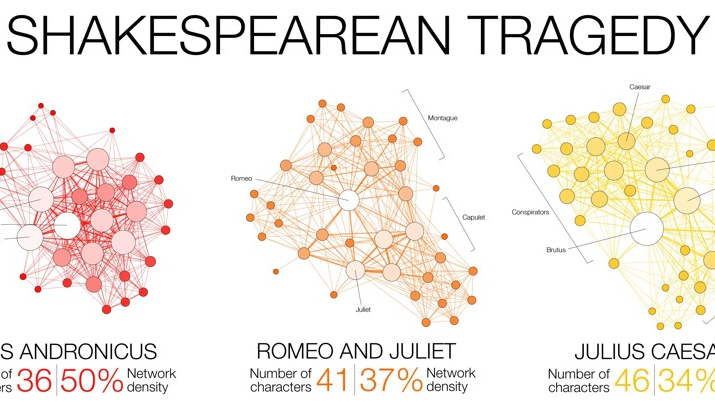
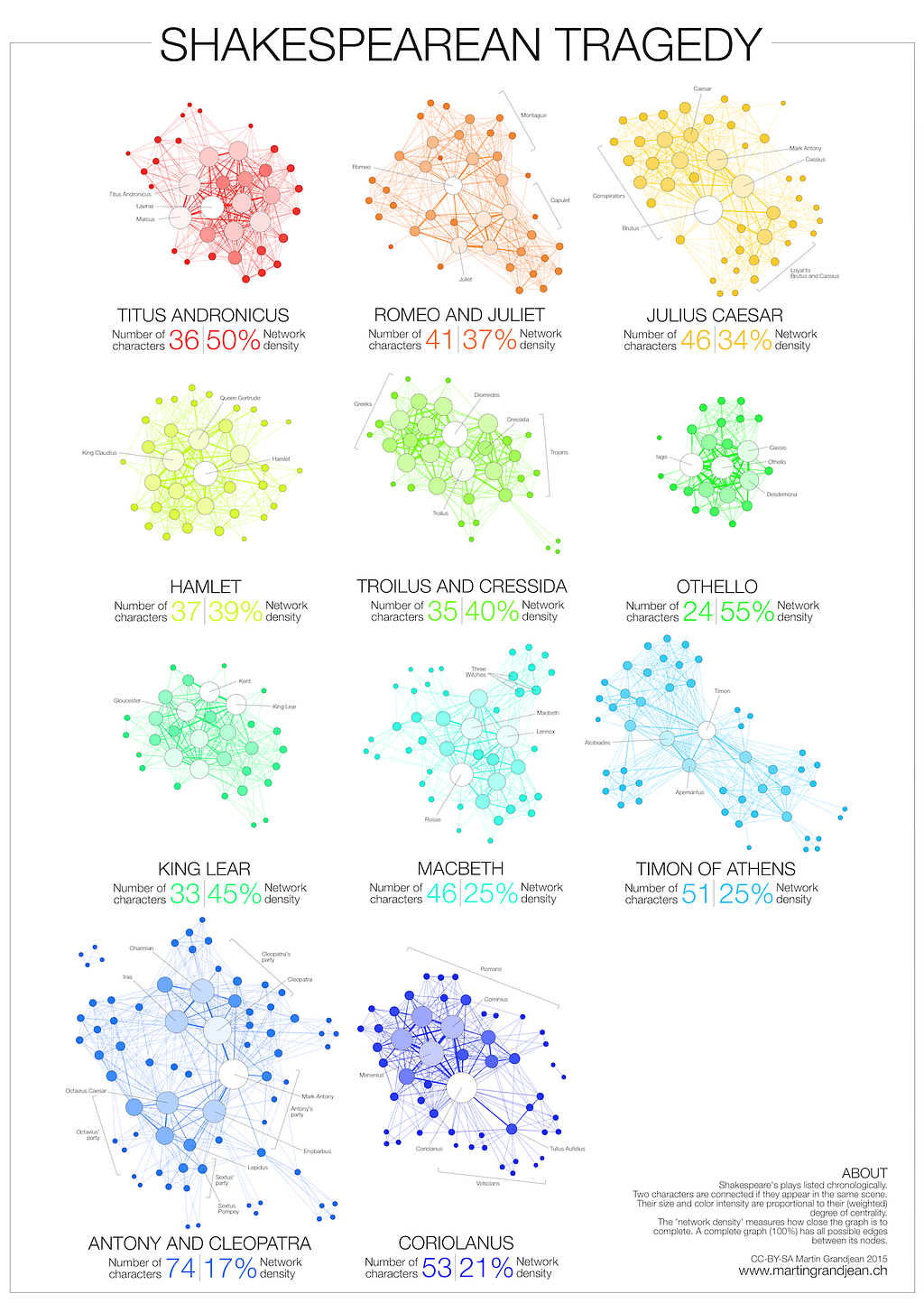
Are you a Shakespeare fan? This infographic lets you investigate his tragedies by looking at his character interactions. Are they closely connected or isolated? Do all his plays have similar structure and density? Find out below. The infographic was created by data research analyst and designer Martin Grandjean.
Hello, and welcome to my week-by-week review of the world. Today I am reviewing my bodyguard.
With all these people attacking other people with guns these days, it seems like no one is safe anymore. That’s why I decided to get a bodyguard.
The bodyguard business is booming and rates have skyrocketed, but can you really put a price on a life? People hiring assassins seem to think so but I disagree. That’s why I took out a loan to keep myself alive.
Banks don’t give out loans for bodyguards, but I met a man on Craigslist who offers personal loans for just about any of life’s problems. Coincidentally, he also moonlights as a bodyguard, so he was able to pay himself directly, while I could repay the loan in easy installments with minimal interest. I’ve never been very good with math so it was great to have someone who could provide both muscle and brains.
It wasn’t soon before his role expanded to include other duties, such as handling my finances and taking my car out multiple times a day to test it and make sure it was running properly. He was proving himself an invaluable part of my life.
I say “he” because he never told me his name. In the bodyguard world, it’s important to keep an appropriate amount of emotional distance. This reduces the emotional pain for the protectee if the bodyguard should ever be killed. Unfortunately his plan didn’t work — I couldn’t help but feel protective of him. It was unavoidable. We all saw this happen in that Kevin Costner movie, The Guardian.
That’s why I hired a bodyguard to protect my bodyguard. Then, another one for that one, and so on, until I hired so many I couldn’t remember who was protecting who. I figured if something happened, certainly someone would be there to stop it.
I appointed my bodyguard/financial advisor as Head Bodyguard, which may have gone to his head, because he fell in love with six different bodyguards. The heart wants what it wants, and I can’t fault him for that, but things got messy for everyone. So many hearts were broken. No matter how many bodyguards you have, none of them can protect the heart.
My bodyguard killed his heart by driving off a cliff with my car. I’ll never forget him, whoever he was.
I had to replace him, so I bought a bodyguard from the ex-con who works at my gas station. My bodyguard is one that leaves me completely emotionally detached — a Colt CM901 assault rifle. Now no one will ever be able to hurt me.
BEST FEATURE: His eyes. He had beautiful eyes. WORST FEATURE: After he passed away, I had to hire an accountant to look over my finances. It turns out my bodyguard wasn’t very good at math after all.
Please join me next week when I’ll be reviewing My Bodyguard (the movie, not the guy I just reviewed here).
At the time, the decision to award Sholokhov the prize was already controversial, as the author had criticized the Academy’s selection of Boris Pasternak in 1958, and many believed the award had been given to Sholokhov as “an attempt to counterbalance ill-feelings towards the Nobel.” Additionally, Sholokhov has been accused of plagiarizing And Quiet Flows the Don, notably including a public accusation from Alexandr Solzhenitsyn and other writers shortly after Sholokhov received the Nobel Prize. But now, the newly released archives have revealed that the selection of Sholokhov was, in fact, unanimous among the committee.
This new information (released fifty years later as per the practices of the Swedish Academy) gives us an interesting lens on history. As many modern literary prizes are often preempted by the timed-release of long lists and short lists, the Nobel prize is one of the few in which the decision-making process is kept relatively under wraps.
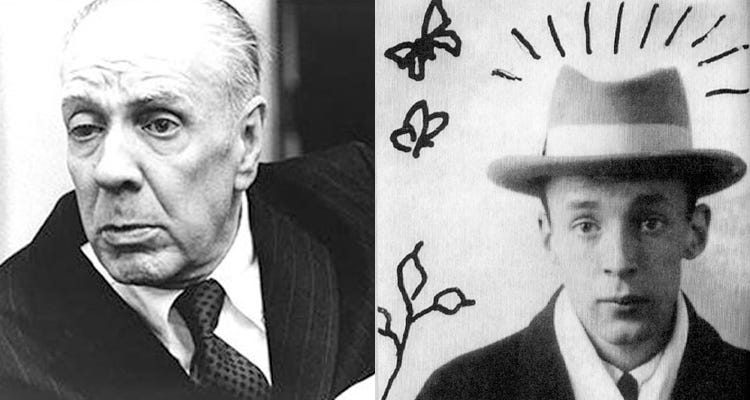
While some of the writers on the newly-released list (such as Beckett and Neruda) would go on to win the prize in the years to come, others never won the prize. On the subject, Borges once remarked: “Not granting me the Nobel prize has become a Scandinavian tradition; since I was born they have not been granting it to me.” Little did he know, he had come very close to receiving it after all.
Did you know that the incalculable number of stories in existence — which were created in every culture and in countless forms and styles — are all merely versions of the same exact four (or seven or twenty-three or two) basic stories? Or, if you are to believe a recent Atlantic article, merely remixes of the one primal story?
In “All Stories Are the Same,” TV producer John Yorke is the latest critic to try and reduce art to some secret and simple answer. Anyone who has studied storytelling has been subjected over and over again to this kind of useless analysis. There are exactly seven basic plots to all fiction. Actually, all stories are either a) Man vs. Nature, b) Man vs. Man, or c) Man vs. Self (or else a bunch of other Man vs. things). All stories involve either a stranger coming to town or else a man going on a journey. All stories are essentially Man vs. Stranger in Town vs. Freytag’s Pyramid. And so on and so forth.
These self-congratulatory attempts to reduce art to formula rarely tell us anything useful about stories. These formulas don’t tell us how stories function or how different narratives affect readers. They don’t tell us how great stories were written or what meanings the works can produce. Instead, these essentialist structures are parlor tricks that exploit the need for all mysteries to have simple explanations. But what the critic is invariably doing is generalizing to the point of nonsense. In Yorke’s essay, he begins by listing three basic story types, then declaring they are all actually the same. Here is his first basic formula:
A dangerous monster threatens a community. One man takes it on himself to kill the beast and restore happiness to the kingdom.
This summary alone is already very general, but not enough for Yorke’s purposes. When he starts to list his examples of the stories that fit this type (The Thing, Jurassic Park, The Shining, “every episode” of CSI, Psycho, Erin Brockovich), it becomes apparent that he wants to abstract each and every element of those two sentences to the point of absurdity. The word “kingdom” now means literally any number of people from one to the entire planet. The term “restore happiness” means “overcomes something even if no happiness is restored.” The “one man” brave enough to fight evil can mean two, ten, twenty, or even every character in the narrative. “Monster” can mean any antagonist. Hell, “monster” can mean almost anything at all: “The monster can be fire in The Towering Inferno, an upturned boat in The Poseidon Adventure.”
Rather than the story of a lone hero standing up to an inhuman monster to save his community, this “basic story” has been reduced to “some people struggle with something dangerous.” Wow, what an insight.
Yorke says, “though superficially dissimilar, the skeletons of each are identical,” but he is exactly wrong. These stories are drastically different in tone, style, message, structure, and everything else, and are only “identical” on the most superficial level. Yorke has zoomed out until the elephant and SUV each appear as a single grey pixel, then declared them essentially the same.
It isn’t so much that Yorke or is wrong, but that he is merely saying nothing. Yes, you can abstract and generalize until everything is the same. But does that tell us anything? All fruits are really the same, just edible plant matter. All objects on earth are made from a few basic atoms. Everything in the universe is just energy. Yada yada. But at least understanding atoms or plant matter teach us important things about biology and physics. The abstraction of story to a few simple models tells us nothing. Sure, I can say The Metamorphosis and Moby-Dick are both stories about men struggling with animals, but does this give you any kind of insight into either work?
Instead, these models are the literary criticism version of astrology. Two humans with completely different life experiences, genes, histories, and personalities are lumped together through a couple vague generalities. (Horoscope generalities are so vague that almost everyone will think they apply to them, regardless of birth date.)
This is why I find it frustrating how often discussions of literary genres devolve into claims they are all the same. “Oh, magical realism is just normal fantasy written by Latin Americans!” is the kind of thing that sounds superficially smart, but offers no insight into the different techniques, intentions, influences, and effects of Marquez and Tolkien.
It can be really frustrating debating this stuff, because there’s no threshold for when they abandon the pretense that two stories are the same. There is no argumentative methodology. Individual details can be embraced or abandoned as evidence without any alteration to the fundamental argument. You never get to a non-negotiable difference. If a key difference is pointed out, people just hop to the other foot to talk about how the stories are really alike. There’s no consistency in the level of evidence that’s necessary to claim that two stories are the same, or that one is the remix or another. It’s the classic problem of non-falsifiability: arguments that cannot be disproven have no value.
In his piece, Yorke acknowledges that a bazillion other people have done what he is doing, but he says his system is unique cause he is the only one who asks “why.” Yorke’s Atlantic piece doesn’t really go into the why, you’ll have to buy his book for that, but I think what Yorke and similar story model pushers forget to ask is: so what? What use does the single story model serve?
If these models don’t teach us any useful ways to interpret stories, do they teach us interesting ways to create them? In his piece, Yorke quotes three actual writers, the writer-filmmakers Guillermo Del Toro, David Hare, and Charlie Kaufman. All three are say that story models are pointless, reductive, and unhelpful. Yorke brings them up to scoff at them, saying they all “protest too much” and then declaring that all their work is actually just remixes of classic forms… without even a single sentence of elaboration or evidence. What is telling is not that you can come up with an abstract model like “stuff happens to people” to lump their work together, but that Del Toro, Hare, and Kaufman all find such thinking to be utterly useless to the writer. All three are great writers and filmmakers. Their award-winning work is interesting and often boundary pushing, and I’d hazard to guess it is that way precisely because they avoid the simple formulas and models that critics like Yorke come up with. In my own experience, writers I’ve known who’ve clutched the formula writing advice books closet to their chest always produced the stalest, most uninteresting work. They focused far too much on how their work could be similar to other work rather than how it could be different.
And this is the ultimate problem. Whether or not you can create a couple generalized models and be “right” is pointless if those models don’t actually help readers understand and appreciate art, nor help creators create new and interesting work. Criticism should be helping us have a deeper and more nuanced view of art, not a more simplistic and shallow one. I’ve always found that the most useful and insightful way to look at fiction is to study its spectacular diversity. Stories can illicit every human emotion, can take place in any location real or imagined, and can use any structure you can think of. This near-limitless expanse is not something we should obscure with vague generates; it is the very thing we should celebrate and embrace.
Please elaborate on what perfunctory “novelness” is.
@postitbreakup
Hi Postit,
I’m sure you’ve heard the idea that “literary fiction” is just another genre, like science fiction or romance, as opposed to, as some would have it, “better fiction.” Let’s just say for the sake of argument that it is — what features distinguish literary fiction from other genres? Often people say that literary fiction foregrounds language over plot, but that’s not always the case. (For example, I don’t think of Kazuo Ishiguro’s writing as particularly “languagey.”) To my mind, one of the main reasons we call something “literary” is because you can talk about what it’s “about” without recounting the plot.
What I meant by the above tweets was that first novels often have an overabundance of “aboutness.” In other words, they are straining too much towards the “literary”; the theme is more salient than any other element of the novel. You know when people say of a book, “The setting is almost another character”? I dislike this formulation, but the point is clear: The setting looms large. In these extra-novel-y novels I’m talking about, the theme looms large. Too large.
Teju Cole once said, “A good novel shouldn’t have a point.” His own novel Open City illustrates this beautifully — I can’t boil it down to one or two abstractions; it’s about too many things. In the past couple of years I’ve read a few novels (or started and abandoned, as the case may be) that felt very top-down in their construction, as though the author decided what the point of the book was first, and then wrote it. I don’t care if authors do this, but as a reader, I want to feel like I’m discovering what the book is about as I read it; I don’t want to know from page one (or worse, sooner — sometimes all the blurbs and epigraphs make it clear what a book is about before you even start it).
In his review of Fates & Furies by Lauren Groff, James Wood wrote, “I’m unafraid to host a big spoiler party — a novel that can be truly ‘spoiled’ by the summary of its plot is a novel that was already spoiled by that plot.” I don’t love knowing the plot of a novel ahead of time, but in terms of “spoiler alerts,” I’d rather know the plot than all the themes. And if every blurber and reviewer is able to pinpoint the same one or two themes and package it up for you, the novel probably isn’t as interesting or complex as it should be.
*
Dear Blunt Instrument,
I was down in New Orleans recently talking with a writer friend. She writes short stories. When I asked her what a story should do, she told me: a story should entertain, either that, or give your reader a punch in a soft little place. Do you think it’s more important to entertain your reader or to punch them?
Thanks.
Best, Jacob
Hi Jacob,
You’re asking a pretty big question here: Essentially, what is fiction for? And while we’re at it, what is art for?
In a nutshell, I think the purpose of art is to make meaning. That leaves room for lots of different kinds of fiction to make different kinds of meaning. If you ask me (you did), the best art makes more than one kind of meaning. So there is no need to limit a story’s purpose to either “entertainment” or “punching.”
But let’s unpack those terms a little bit. We tend to equate entertainment with amusement: just a little light-hearted fun. But “entertain” also means to hold or maintain (as in the phrase “entertain the idea”) — and if a story holds your attention, it’s entertaining you, even if it’s not TV-fun. Entertainment can be highly intellectual or emotionally harrowing.
Your friend’s remark about “punching the reader in a soft little place” (this phrasing, incidentally, makes me squeamish; “soft little place” is hitting me the way “moist” hits others) seems to speak to something else. They’re suggesting that a story should hurt in some way, perhaps making you sad or shocking you out of complacency. This reminds me of the idea that art should “comfort the disturbed and disturb the comfortable.” This quote has never felt quite right to me, in part because it assumes a neat binary between who is disturbed and who is comfortable, in part because it oversimplifies the complex experience of art. (Interestingly, the quote was originally about newspapers, not art.)
I am often entertained by art without being comforted. Art can be both funny and disturbing. In short, neither writers nor readers have to choose. Stories can do anything they want, and should try to do as much as they can.
Editor’s note: This article is sponsored by Patreon. The sponsor did not have any editorial input into the article’s content.
Who hasn’t dreamed, now and again, of finding a patron? The unexpected inheritance. A generous mentor. The mysterious stranger who breezes into town, spots some potential, and loosens the proverbial pursestrings. Writers certainly aren’t immune to wishful thinking of that variety, bootstraps be damned. The patron is a timeless literary device, perfect for inciting action, stoking ambition, offering guidance, or foisting a character into strange surroundings. Novels are about transformations, aren’t they? A good patron mainlines the stuff. Or maybe there are just a lot of writers out there checking email on the hour, hoping against hope for word from the Medicis and MacArthurs of the world…
Since we’re still in the new year, gift-giving, life-changing spirit, we thought we’d make a list honoring the notable patrons in (not of) fiction. In no particular order, except for the reigning champ, yer man of the marshes, here they are, the ten great patrons in fiction.
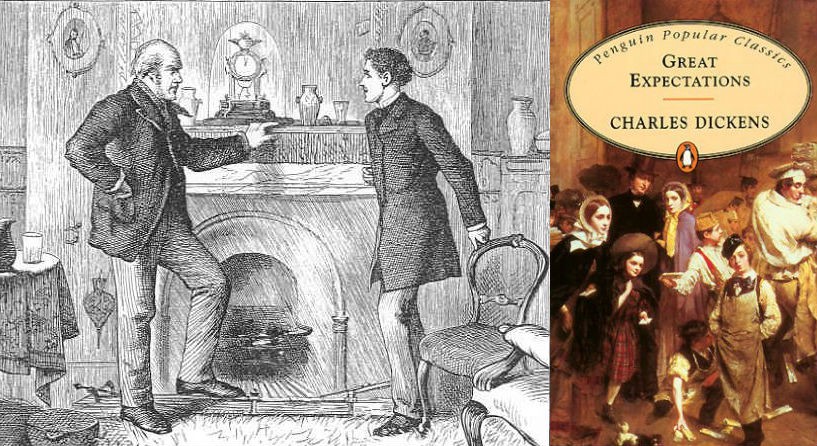
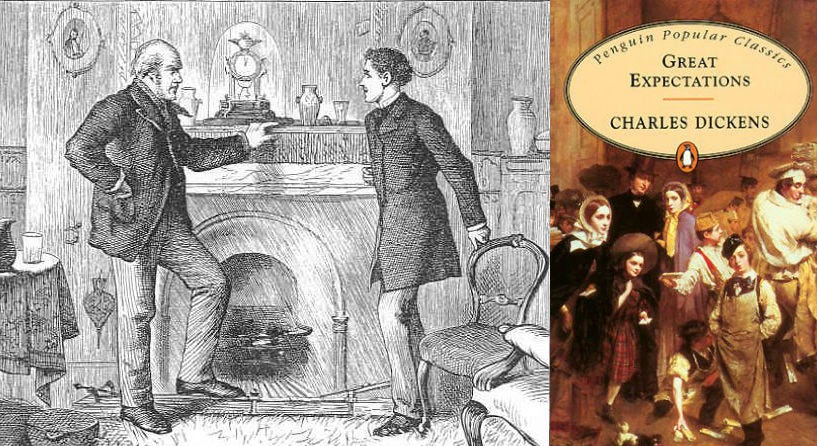
1. Magwitch, Great Expectations
Abel Magwitch: the terrible engine of Dickens’ classic tale of ambition and comeuppance. Mrs. Joe Gargery brought up Pip by hand, but it was Magwitch who fashioned the boy’s future. From his first appearance, Magwitch electrifies: “A fearful man, all in coarse gray, with a great iron on his leg. A man with no hat, and with broken shoes, and with an old rag tied round his head. A man who had been soaked in water, and smothered in mud, and lamed by stones, and cut by flints, and stung by nettles, and torn by briars; who limped, and shivered, and glared, and growled; and whose teeth chattered in his head as he seized me by the chin.” Who better to make Pip into a proper gentleman?
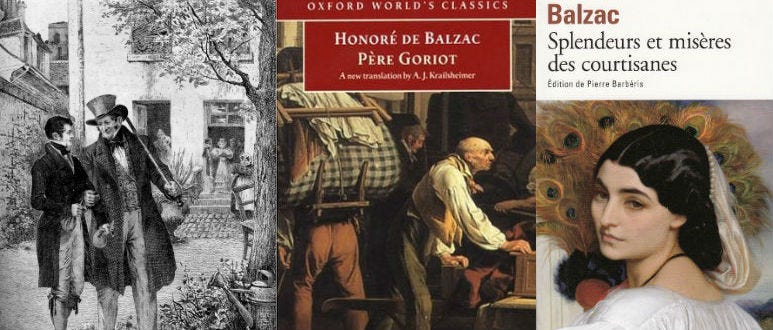
2. Jacques Collin (aka Abbé Carlos Herrera, aka Vautrin), La Comédie humaine
The man wears many guises in Balzac’s volumes, but he’s always around to offer a young striver some advice (usually of the whispering devil sort). Arguably his greatest role was as the Abbé Carlos Herrera in Splendeurs et Misères des Courtisanes. Yes, his intentions as patron were ultimately sinister, but there’s no denying his love for Lucien de Rubempré, or the intensity of his suffering when Lucien meets his fate at La Force.
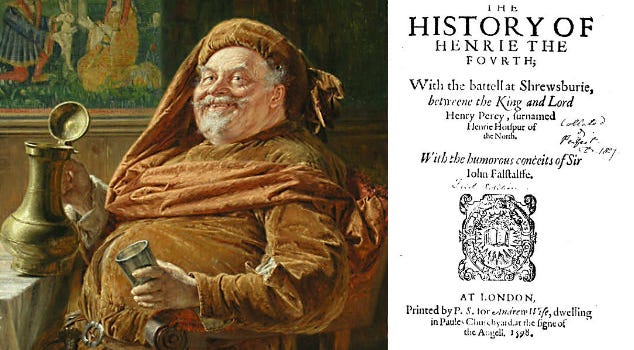
3. Falstaff, Henry IV, Parts I & II
The patronage ladder goes both ways. What is Sir John Falstaff, if not a patron? Wasn’t it Falstaff — old Jack, sweet Jack — who showed Prince Hal the ways of the public house, who taught the young man to hustle and debauch and how to stay on the right side of Mistress Quickly? A patron through and through. Kind Jack. Valiant Jack.
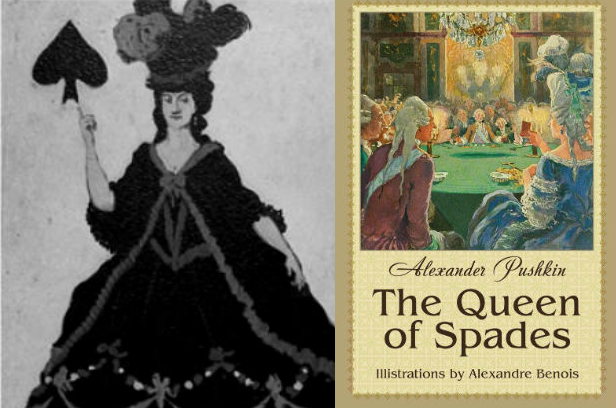
4. The Countess, “The Queen of Spades”
Pushkin’s Countess is no ordinary patron (though she does have a ward). Her bequest is a magic combination of faro cards: three, seven, ace. Played in succession, they guarantee a sure fortune, or, in the case of young Hermann, a trip to the insane asylum.
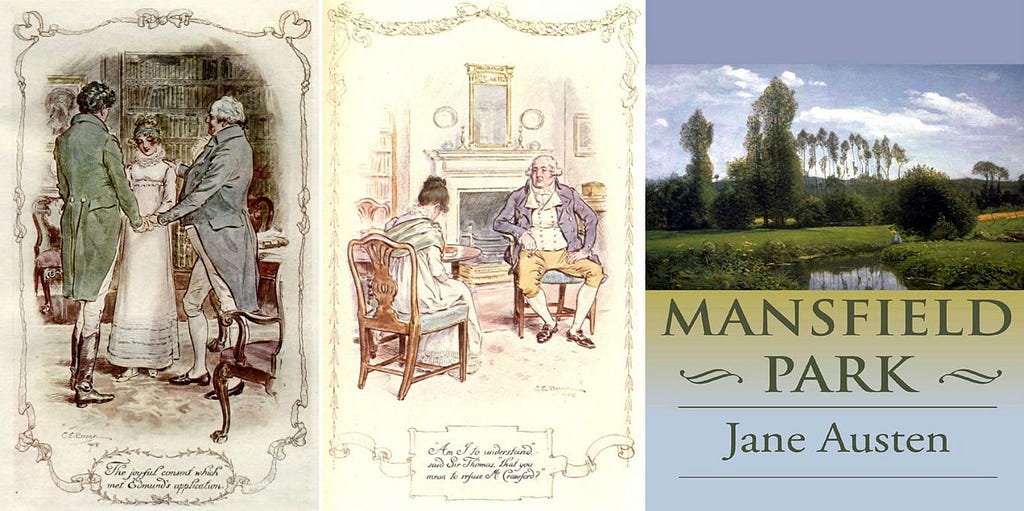
5. Sir Thomas Bertram, Mansfield Park
Austen’s Sir Thomas is oft-absent, oft-misguided, and sometimes a prick. Nonetheless, he takes Fanny into his household and eventually comes to see she’s the best among them, and so endorses her choice of husband. Not a bad record, all in all.
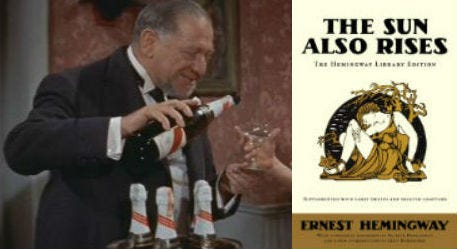
6. Count Mippipopolous, The Sun Also Rises
The Count fills one of the primary duties of any expat patron worth his salt: he’s always buying champagne. He’s also flush with cash, has a dubious title, sponsors somebody named Zizi, will show you his scars, and enjoys watching young people dance. And he offers Lady Brett and Jake some excellent tips: “This wine is too good for toast-drinking, my dear. You don’t want to mix emotions up with a wine like that. You lose the taste.”
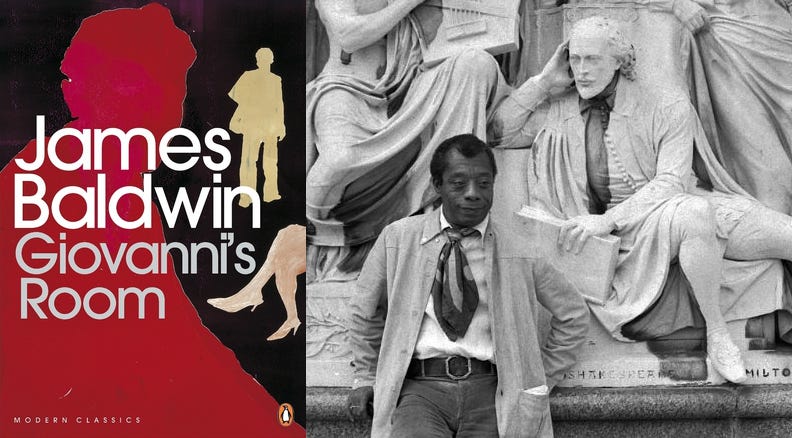
7. Jacques, Giovanni’s Room
Another older man in Paris who enjoys the company of youth. Baldwin’s Jacques is the one both David and Giovanni go to for money, shelter, and guidance. Like many patrons, he’s cynical with a romantic streak. Over oysters in les Halles, he delivers this pivotal advice: “Love him…love him and let him love you. Do you think anything else under heaven really matters?”
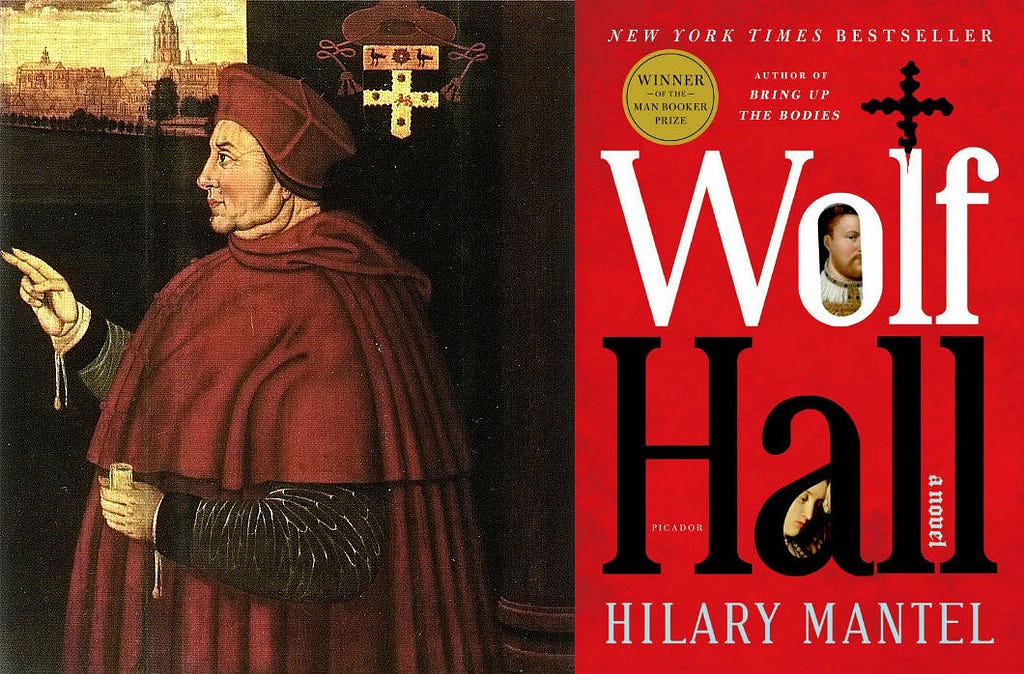
8. Cardinal Thomas Wolsey, Wolf Hall
Perhaps more than any other figure, Wolsey is responsible for shaping the giant at the center of Hilary Mantel’s trilogy. Cromwell comes up with the Cardinal, witnesses the ignominy, and lets his mentor’s example inspire and guide his own ascendance.
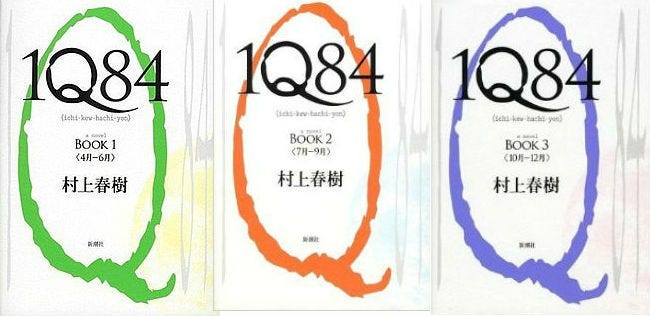
9. The Dowager, IQ84
Shizue Ogata, aka the Dowager, resident of the Willow House, owner of a shelter. Yes, she promotes and pays for assassination, but the targets are perpetrators of domestic abuse, beaters of women and children, so she still fits the bill.
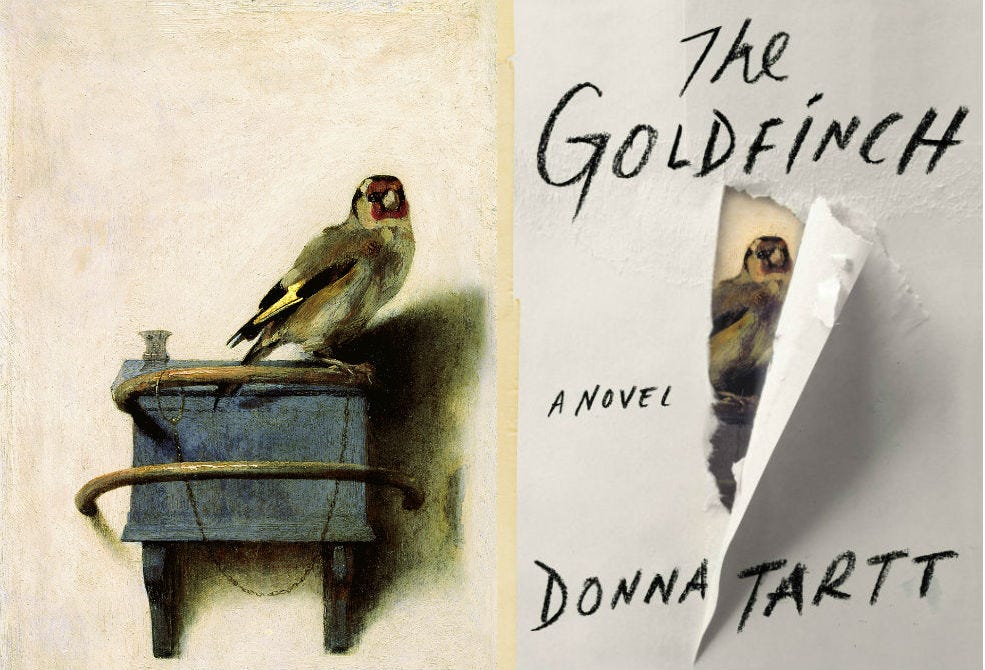
10. James Hobart, The Goldfinch
How many reviews, essays and think-pieces described Donna Tartt’s 2013 opus as ‘Dickensian’? It’s fitting, then, that she should embrace one of the master’s favorite devices. James Wood described Hobart, who takes Theo into his home and his business, as “Magwitch without the criminal record.”
Honorable Mention: every other Dickens patron (how many? dozens? hundreds?), including especially Betsey Trotwood, John Jarndyce, Mr. Brownlow, and Mr. Clennam’s uncle; all the maiden aunts and rich relations who glide through Edith Wharton’s world; García Márquez’ patriarch, José Arcadio Buendía; and Dan Cody, who welcomed young Jay Gatsby on board.
About the Sponsor: This post is sponsored by Patreon, today’s literary patron. Patreon is a crowd-funding platform that empowers a new generation of creators to make a living from their passion and hard work, through reader support. Each month, Patreon’s community of creators receives over $4.2 million in support from over 300,000 patrons.
Memoir is unique for its ability to help us see into lives; often, though, the premise of writing about an experience allows the writer to set off on a journey that she wouldn’t undertake otherwise. Such is the case in Sarah Einstein’s memoir, Mot, in which the author journeys across state lines to visit a friend in his homelessness. Einstein meets Mot, the man who gives his name to her book, in a center for homeless people where she works. He comes to her just as her work in the center is wearing her down: encounters with angry, mentally unstable individuals in an over-stressed system have left her bereft of energy and patience. Mot offers friendship and an escape from the world of the center, but due to his unstable hold on the world (Mot is plagued by a multitude of voices and personalities in his head) Einstein’s link to him is tenuous at best. This award-winning memoir blends a realistic view of life in social work with a narrative fragmented by Mot’s disjointed thoughts. Einstein creates structure with words to hold up an experience when life was failing. The tension in her work between fragmented and linear energies illuminates an unusual friendship.
“[M]y fascination with Mot is not romantic,” she tells us early on, “It’s a remnant of my disappointed desire to change the world and my stubborn belief that one person can do so.” Einstein’s friendship with Mot is platonic, yet he takes her away from her marriage. Scotti, her husband, is also mired in the fatiguing type of work Sarah does, and she wonders (often) if the two were never meant to marry in the first place. “I worry that both Scotti and I understand ourselves through the things we do for other people, that we don’t know how to find meaning in the relationship we have with each other,” she says. What Mot provides is an outlet for Einstein that allows her to feel like she’s actually making a difference — her marriage has fallen apart and she leaves her job at the center. She needs Mot. Whether or not she actually does help, whether or not she can save him or even offer him respite from his illness is an important question she asks herself throughout the work.
Einstein’s writing is self-aware. She seems to know how she’ll be perceived, even as she is undertaking her journey to be with Mot.
I’m dirty. Tired. Bedraggled. It occurs to me that maybe I don’t just look crazy. That I’m a middle-aged housewife come to play at homelessness with a man who believes dead gods live in his throat and who molested his sister, and that this may well mean that I am crazy.
This is important. Einstein allows herself to ask taboo questions — is it crazy, as she says, to try to fight against mental illness itself, against a difficult system? The constant nature of her desire to fight for Mot — to fight to get through to him, even when it seems hopeless — embodies a microcosmic example of the system as a whole. It’s broken, and yet we need people to stay in its brokenness to help us serve each other.
The author’s fear drives the narrative, making Mot (like Mot) unpredictable, and intriguing. Mot is unstable, and even his moments of lucidity are punctuated by Einstein’s fear that she will mess up, that she will make a mistake with him that can’t be undone. When he reveals bits of his troubled childhood, she has to reject her feelings of anxiety, which she knows are a barrier to helping him. She says, “My fear will never totally go away, but the friendship will survive it.” Still, she presses on, relying on “a dangerous kind of hope.” Since Einstein’s actions seem to surprise her, and since she often acts against her own interests, Mot is uneasy yet compelling reading.
What shines, here, is Einstein’s solid prose. The author has a firm grasp of her own emotions, which allows her to veer off with Mot’s unintentional broken thoughts. This is a book that portrays illness in all of its sad disrepair. Just as everything is going well, Mot will stray from their relationship, or lash out at Einstein, believing the paranoid voices that tell him she’s out to get him. Einstein often doesn’t know to respond to Mot, but she steers her narrative along steadily. In one such case, she says,
The mixture of illness and pragmatism makes my head spin. I don’t know what’s happening. It has been weeks since his delusions were so vivid, so directive. I play along, though I suspect it’s the wrong thing to do. But I’ve lost my leverage, having squandered it on a silly plan to try to trick his illness into forgetting the tension of the last week […] Perhaps our friendship isn’t broken beyond repair.
Mot is ever hopeful, but tinged with a longing for a better system, for more energy, or for a better solution to homelessness, abuse, and mental illness. Even as Einstein realizes that her life with her husband, Scotti is “delineated by other people’s emergencies”, she is unable to tear herself from Mot. Mot’s is a life outside of ordinary ideas about “normal”, and Einstein’s memoir is able to break from traditional ideas about structure, or meaning in writing. Mot’s splintered thoughts as recorded by Einstein are raw and hard to read, yet the mystery surrounding his illness and way of life — and how Einstein has recorded him — make clear why the author abandoned her own life to follow him. She makes it clear that some questions are worth asking even if we know we won’t receive answers.
Though Einstein’s memoir purports to be about a short time in her life that she devoted to Mot, it eventually becomes about the pursuit of her own hopes, the limitations on hope and the human spirit. “Like [Mot],” the author says, “I know that it may only be myself I’m trying to outrun.”
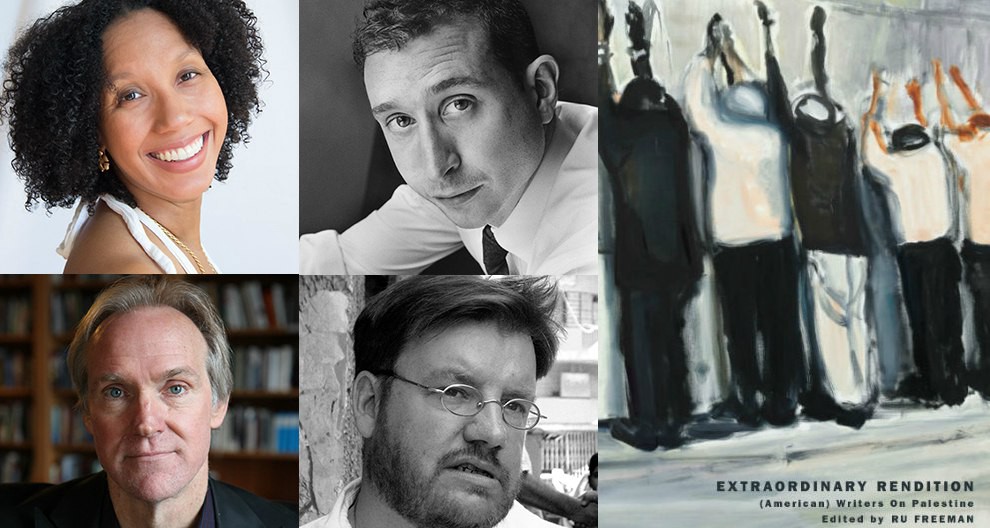
Last month, OR Books released Extraordinary Rendition: (American) Writers on Palestine. The anthology, edited by the novelist Ru Freeman, includes contributions from a host of esteemed writers, including George Saunders, Colum McCann, Nathalie Handal, Teju Cole, and Claire Messud. In Freeman’s introduction, she writes that she was inspired by a tradition of anthologies that asked authors to lend their voices to the important conflicts of the day: first, Nancy Cunard and W. H. Auden’s Authors Take Sides on the Spanish Civil War (Left Review, 1937), then, thirty years later, Simon and Schuster’s, Authors Take Sides on Vietnam (Peter Owen, 1967). “In 2014,” Freeman writes, believing that it was no longer possible “to take no side,” she asked “for a simple show of hands. Who might speak for Palestine?”
On the book’s release, Freeman and several of the collection’s sixty-five contributors met in New York City at the Center for Fiction to discuss the project and to read from their work. While the standing-room crowd filed into the Center, I sat down with Tiphanie Yannique, Sinan Antoon, Tom Sleigh, and Jason Schneiderman to discuss their contributions to the anthology, the urgency of continuing the tradition of literary activism, and the difficulties of writing about complex and ongoing political issues.
Dwyer Murphy: Discussing Palestine poses so many difficult issues, but it seems to me that for writers, in particular, there’s one very fundamental difficulty: the words themselves. Deciding which name to call a town, a community, a people, or how to describe an historical event, what was done and to whom — those are important, politically charged decisions. How daunting is it to write when the words themselves are so controversial?
Sinan Antoon: I have to say, I have a problem with the way the word “controversial” is used in this country. ‘Controversial’ is usually code for something that needs to be believed in silence. A lot about this conflict is not controversial, even in Israel itself. But in this country, we have a different ceiling for certain debates and discussions. I don’t think this topic is controversial. Rather, it’s urgent and necessary.
Maybe it’s old-fashioned to believe, but as writers and as citizens, we have a responsibility.
Another thing I would point out is this myth that’s prevalent amongst our peers. They think, “Well, I’m a writer, but I’m not political.” As far as I’m concerned, there is power everywhere in the world, so everything is political in various degrees. Maybe it’s old-fashioned to believe, but as writers and as citizens, we have a responsibility. We’re representing the world and representing it in a certain way. I don’t believe in this myth of neutrality.
Tiphanie Yanique: Neutrality is its own stance, of course.
Sinan Antoon: Yes. A political stance.
Tiphanie Yanique: Still, I know a number of people were anxious about contributing to this anthology and maybe chose not to. It’s one thing to have a conversation about this with your friends, where you’re bitching about how you feel and being honest about things. It’s a whole other thing to put it in writing. There’s more pressure to say something definitive when you’re writing, and your words may be recalled years later. You may even be quoted. Your actual choice of words becomes so key. And I think writers — especially writers — are afraid of that.
That said, I agree with you, Sinan: whenever you write, you write politics. Even if you say to yourself, “I’m not going to write about policy,” or “I’m not going to write about race or gender,” that in itself is a political stance.
So this pretense, of not being political, is nice and self-protective, but it’s bullshit.
As a fiction writer, whenever you have characters, your characters have bodies, races, genitalia, sexual preferences. That automatically puts politics on the table. So this pretense, of not being political, is nice and self-protective, but it’s bullshit.
Tom Sleigh: I’ll answer differently because, well, you ask about terminology. I’ve done a lot of journalism in Lebanon and Syria and Iraq and also, most recently, in Libya. I find that when you’re moving from town to town, all you need to do is say the word “Nakba,” for example, which in Arabic means “catastrophe” and also refers to the 1948 expulsion, which the Israelis call the War of Independence. There’s this vast web of claims and counterclaims.
When you’re writing about this region, I think what you have to do is realize that you’re stepping into an incredibly complicated, super nuanced situation. For me, at least, I want to do everything I can to have the most fine-grained understanding of what it is I’m saying, and also to be very upfront about what it is I don’t know.
Dwyer Murphy: Jason, your contribution looks at the ways in which we don’t talk about the conflict, how the conversation sometimes seems impossible.
Jason Schneiderman: Well, this is more consequential than most other conflicts. Just a few years ago, there was the kerfuffle with Tony Kushner and CUNY over his views on Israel. Decades ago, it was other prominent writers. As an American Jew, raised with a Jewish education, it can feel like Israel and the Holocaust are the primary things that define what it is to be Jewish. And that doesn’t work anymore. There has been, I think, over the past decade or two, an effort to redefine Jewishness, because the old definitions just don’t work anymore.
…the vast majority of the conversations I’ve heard about this subject have refused to acknowledge the humanity of the other side
But the vast majority of the conversations I’ve heard about this subject have refused to acknowledge the humanity of the other side. My rabbi goes to Israel every year and gives a report to the synagogue. The report offers a complicated understanding of what’s going on: the people, the checkpoints, etc. And basically the responses to the report fall into two categories: “I can never join your synagogue because you’re supporting our enemies,” and “Israel is a colonial project and has no right to exist.”
I’ve found it’s very difficult to speak from somewhere between those two positions.
And so my essay is about not wanting to speak about the conflict, because the conversation feels so un-nuanced. It feels almost useless.
Sinan Antoon: What you’re describing — the stark difference between those positions — is the problem with Zionism. (And I’ve learned more about Zionism’s problems from American Jewish intellectuals than from any other group.) Saying that Israel is a colonial state doesn’t also mean denying the humanity of Israelis. Critiquing the structure of the Israeli state doesn’t also mean denying that it has a right to exist. This is a problem for a lot of Americans. Perhaps because this country, in its formation, has —
Tiphanie Yanique: A very similar legacy.
Sinan Antoon: — an identical legacy. With Native Americans. With African Americans. For example, a lot of the activists from Black Lives Matter traveled to Palestine. And a lot of the Palestinian activists came to this country. They feel they have a lot in common: in their struggles, in the silence around the issue, in the erasure they face. That says something. We should be able to recognize that a colonial settler state, like this state and like Israel, has committed injustices against its population. Unless we recognize what that means and what are the costs and the traumas, nothing will change.
Tiphanie Yanique: That brings to mind an article that was published by an anthropology association here in the US comparing the language used to describe the Palestine-Israel conflict with the language used to describe what was happening in South Africa during the apartheid era. We tend to think, “Oh South Africa is done. We knew what was the right thing was there. If I had been around I would have been on the right side of history.” We all think that. But, according to the study, the language is exactly the same kind, in some cases, sentence-for-sentence. The justifications used to explain why it was okay to oppress Africans in South Africa is the same language being used to explain why it’s okay oppress — I’ll use the word oppress — Palestinians in Palestine. When you see the language side-by-side, it’s not that complex. We look at our history, and it’s pretty simple to know what is injustice and what is not.
Sinan Antoon: We have, both in American and in Israel, a continuous shock and an expression of innocence: we are post-racial, post-Zionist. Well, of course, if you’re at the top of society, and you have all the privileges, and land is appropriated and you can live on it with taxpayer money coming from the United States, of course it’s post-Zionist. But not for the victims of the project — those in the West Bank and in Gaza, but also the Palestinians inside Israel who live, for all intents and purposes, like second-class citizens, and whose land is still being appropriated for settlements as we speak. The excerpt I translated is from a novel by a Palestinian living inside Israel who sees the country disappearing. It’s not finished. This is happening still.
Dwyer Murphy: We’ve been talking about an obligation to speak out, but there’s also the question of who has the right to speak. For an outsider — or at any rate, one who is neither Palestinian nor Israeli — there’s always the question of authority. Someone will come along and ask, basically, who do you think you are? Is that something that you had to grapple with in deciding whether and how to contribute to the anthology?
Sinan Antoon: This is not about writing scholarship or history. This is fiction and poetry. On so many other issues in the world, American writers have no qualms about pontificating and legislating and telling people what to do. But when it comes to this, Palestine, they refuse. It’s not about lack of knowledge. It’s about a certain taboo because of geopolitics, and because of internal politics here in America. You don’t have to be Palestinian to write about that. We are American citizens. For 65 years, our government has subsidized the Israeli occupation. We have a responsibility. I do not want my taxpayer money funding bulldozers and tanks that decimate and kill people. That’s very simple. That’s not controversial, and it doesn’t require a lot of knowledge. It’s actually quite simple.
…you look at the shell casings of the 2006 bomb, and it’s damn clear that it was made in the United States. These things aren’t that distant to Americans.
Tom Sleigh: On that point, my essay in the anthology is about Quneitra, in the Golan Heights, where there was a massacre in 1996 and another in 2006. I use the word “massacre” by the way. Talk about a contested word, although I don’t know how else you’d call dropping a bomb — artillery shell — on a UN compound where civilians are gathered. And of course, you look at the shell casings of the 2006 bomb, and it’s damn clear that it was made in the United States. These things aren’t that distant to Americans.
Tiphanie Yanique: But I think it feels distant to a lot of people, especially those who claim, “I don’t know enough about this.” That’s supposedly why they’re unable to take a stance. They say, “This has been going on for a thousand years. Since the Bible! I’m not Israeli, I’m not Palestinian, I’m not even part of that world. I don’t have the right to write about this, I don’t have the right to have an opinion about this.”
And when you do voice your opinion, there will be folks disagreeing with you who will automatically respond, “You don’t know enough about this. You’re not a part of this history and therefore you can’t contribute.”
Sinan Antoon: This conflict is 120 years old, but in America we always hear this idea that it’s thousands of years old, it’s about religion. That’s a recipe for continuous disaster. The conflict is about land. In the sixties and seventies, it wasn’t about Islam. It was about Marxism and land: who has the land, who took away the land, who lost the land, and compensation for the lost land.
Tiphanie Yanique: Once the issue is framed as religion, you have to be super sensitive, which allows you to have no opinion and to remove yourself from the debate.
Our fears keep us from taking a stance. And that fear comes from concrete privilege. It is a privilege to not have have an opinion.
As a woman color, I’m sensitive to this. People in power — men, white men, or even white women — have made too many swath-like judgments from the outside. And I think there’s a fear — as liberals, as progressives, especially if we’re coming from the majority space — that we can’t have an opinion on people who are Other to us. We’re scared to have an opinion and perhaps be oppressive simply by taking a stance. And the result is often that we allow disaster and unfairness and catastrophe and incredible injustices to occur, because we’re afraid that we might seem to be racist or homophobic or anti-Islam or anti-Semitic. Our fears keep us from taking a stance. And that fear comes from concrete privilege. It is a privilege to not have have an opinion. It is a privilege to know injustice is occurring and to continue on your merry way.
Dwyer Murphy: I’d like to discuss a figure, Mahmoud Darwish, who looms over much of the work in this book. I expect many American readers won’t be familiar with his poetry, yet it seems, in reading these poems and essays and stories, that it’s almost impossible to approach the region and the conflict, from a literary perspective, without coming to some understanding of Darwish and his influence.
Sinan Antoon: He’s one of the most important poets of the last fifty years, not because of politics but because of form and innovation. Just looking at his life, we see the issues that won’t go away. He was born in a village at Galilee. At age six, his village was destroyed by the Israeli army, and he was forced to go to Lebanon, as a refugee. When he came back from Lebanon to his country, Israeli law designated these returnees as present absentees — it didn’t recognize them. So he lived in a village next to his old village, which was now destroyed. He lived with the ruins of his previous life. This was in a period when Palestinians were not recognized. Golda Meir said in the Times that there were no Palestinians. So, much of Darwish’s early poetry was very nationalist. For a society that was displaced, without a state, that poetry was very important. It anchored a collective identity.
So much of this discourse is about erasure.
But then what’s really fascinating about Darwish is that after he became a national poet, mythologizing the land and becoming himself a myth, he deconstructed his own myths. And in that deconstruction, he prepared the nation to begin to understand its problems. In 1967 he wrote a poem to his friend Shlomo Sand, the Israeli scholar, who was going to fight in the ’67 war. It’s an amazing poem — a poem addressed to the enemy, his friend. And yet, in the 1990s, when a leftist minister introduced a bill to the Knesset that would have brought Darwish’s work into Israeli schools, the bill was refused. They said Israel was not ready for Mr. Darwish’s poetry. So much of this discourse is about erasure.
Tom Sleigh: There’s one poem that I think is particularly interesting in this context, called “Murdered and Unknown.” It’s a really strange poem, because it doesn’t do any of the things you think it’s going to do. It’s a conversation, either in the self or between two people. There’s a lot of grass imagery. It’s all brown grass — this ain’t Walt Whitman with his regenerative grass that’s going to unify everybody; it’s dead, brown grass on the roadside. And there are these two voices. One voice says, “I am the victim.” And the other says, “No, I alone am the victim. “ So you have this strange moment in a lyric poem, which is clearly both memorializing and satirizing the collective wound. That seems to me a really powerful, interesting place to approach these problems from. That’s one of the things I like about Darwish. He crystallizes a certain kind of complexity of thought.
Sinan Antoon: He humanizes the enemy.
Tom Sleigh: Absolutely.
Dwyer Murphy: The book is titled Extraordinary Rendition: (American) Writers on Palestine. Without knowing each of your nationalities and identities, I wonder if any of you were reluctant to take on that role of “American writer,” or to be seen as speaking on behalf of Americans?
What do you do when you love a set of ideals that has become a nation, when you know the narrative occludes suffering?
Jason Schneiderman: The “American” part wasn’t complicated for me. In fact, it felt extremely parallel, because of the questions we’re asking: What do you do with a beautiful dream that’s built out of a nightmare? What do you do when you love a set of ideals that has become a nation, when you know the narrative occludes suffering? How do you bring those things together? For me, those questions make up the central crisis of being a United States citizen.
Tiphanie Yanique: I found the “American” part fascinating. I don’t think I totally recognized that that’s what we were being asked to participate in. I’m from the Virgin Islands, and we are effectively a colony of the United States. When I came to the US for college, I realized that while I was carrying an American passport and was an American citizen, culturally I was immigrating to my own country. This place was incredibly foreign, and I was treated as a foreigner.
In the piece I wrote for the anthology, I use some of that personal history. I make it very clear that I’m writing from a place called St. Thomas, St. Croix, St. John. These places, and my upbringing, become metaphors, which I use to talk about the conflict.
My biography is very complex. My parents weren’t married. My grandparents weren’t either. One part of my family is very wealthy, very established, and another part, the part that I’m from, is poor and less established. I was effectively a bastard twice over, for two generations. I found myself often ending up in spaces where my right to belong was called into question. “Who you belong to again? Oooooh.. Shhhhhh.” I was the secret, outside child. So I used that to talk about the conflict.
But the “American” title gave me pause, because I often do not identify as an American writer, although the world sometimes tells me “Oh, by the way, you’re an American writer,” or, “No, you’re not an American writer.” In the US, if anyone knows who the hell I am, they know me as a fiction writer. In the Caribbean, if anyone knows who the hell I am, they know me as a poet. I relate to people with separate identities. So it gave me pause, that American title. But it also allowed me to talk more effectively about what I wanted to discuss — issues of bastardization and colonialism. .
In terms of being an American, there’s not a whole lot of nuance that’s available with that term and the way in which it plays in other countries.
Tom Sleigh: One of the most interesting, and shocking and terrifying things about going to Lebanon was discovering that people there (or in Libya or Syria) say, “Well, American policy and Israeli policy are identical. There is no difference.” The assumption is, you’re American, you must agree with this policy. You can say whatever you want, but the fact of the matter is, it’s a widespread perception. That’s not just from policy-wonk people, but from everyone I talked to, top to bottom. They said, “Yeah, of course, everybody knows that.” In terms of being an American, there’s not a whole lot of nuance that’s available with that term and the way in which it plays in other countries. That’s one reason why a book like this is, I think, so important. If it’s read in other countries, other people might see it and think, “Oh, well, these people aren’t as stupid, or as united, as I thought they were.”
Sinan Antoon: I was born in Iraq, to an Iraqi father and an American mother, and lived there for twenty-three years. Before 9/11 and before the wars, I was struck that in the region, people always differentiated between government and peoples. It struck me, when I came to this country, that people here often say “we,” meaning 350 million people, Congress, the President… Before the “us” and “them” and the Bush years and all of that, there was more nuance in Iraq and in the region because people knew that you didn’t represent your government. I would say, sarcastically, that one advantage of living in a non-democracy is that you realize something: there are the people, and then there is the regime. But here people say “we.” It’s uncritical and very problematic. That’s why a book like this one is important. If you say “we,” and you think “we,” and you think that the “we” includes the government, then you’re responsible for what is done in the name of the “we.”
Or you say, “Not in my name.” There isn’t much we can do, but at least we can say, “That doesn’t represent me. The government doesn’t represent me.”
Ru Freeman and contributors, including Tess Gallagher, Peter Mountford, and Alice Rothchild, will read from and discuss Extraordinary Rendition: (American) Writers on Palestine tonight (January 7th) at Elliot Bay Books in Seattle.
The renowned Angoulême International Comics Festival has received major backlash after failing to nominate a single female creator for their Grand Prix lifetime achievement award. In a statement that did not make matters any better, Frank Bondoux, one of the festival’s organizers, defended the selection to Le Monde:
When you look at the prize-winners, you see that the artists on it have a certain maturity and are of a certain age. Unfortunately, there are not many women in the history of comics. That’s just reality. If you go to the Louvre, you will also find few feminine artists.
Now, after several of the 30 male nominees dropped out in protest, the festival has agreed to add women to their list of nominations. Before they did, however, several of the nominees released statements and tweeted their discontent with the festival. Riaf Sattouf listed a number of female cartoonists he would gladly cede his place to on Facebook, including Rumiko Takahashi, Julie Doucet, Anouk Ricard, Marjane Satrapi and Catherine Meurisse. American nominee, Daniel Clowes called it “a totally meaningless ‘honor’.” The other men who withdrew in protest are Joann Sfar, Milo Manara, Etienne Davodeau, Pierre Christin, Chris Ware, Christophe Blaine and Charles Burns.
This is not the first time the festival has neglected to celebrate the work of female comic book artists, in their 43-year history, only one woman. Florence Cestac, has won the Grand Prix. It was the Women in Comics Collective Against Sexism that called for the boycott, saying: “It all comes back to the disastrous glass ceiling we’re tolerated but never allowed top billing.” American comics creator Jessica Abel introduced the boycott to English speakers on Facebook, with her own translation of their statement, read it here.
Sign up for our newsletter to get submission announcements and stay on top of our best work.
YOUR INBOX IS LIT
Enjoy absorbing fiction from Recommended Reading on Mondays, strange, diverting work from The Commuter on Wednesdays, and a roundup of our best work of the week on Fridays. Personalize your subscription preferences here.