The Broadcaster & The Writer in America

Stephen Colbert returned to the airwaves on September 8th. Stephen Colbert is a broadcaster. David Letterman was a broadcaster. There are great journalists who have also learned what it means to be a broadcaster and be a host. (Think about Jorge Ramos interviewing Carlos Salinas de Gortari or Edward R. Murrow’s dispatches from London, let alone Hemingway’s or Gabriel Garcia Marquez’s respective careers in journalism. (Hemingway’s take on Mussolini remains a favorite.))

But Colbert and Letterman aren’t “writers,” per se, and it’s slightly surreal that this ends up being the obvious point that needs to be reemphasized. (When Salman Rushdie was recently describing how he ended up getting to the point of writing a song for U2 to Jimmy Fallon, Jimmy Fallon said, “That’s so deep, man.” Thanks, Jimmy.)
But in lieu of the (perhaps particularly American? (Despite publishing statistics?) Partially Italian? A little bit Brazilian?) anxiety that looks at the world and comes to the conclusion that — as Lee Siegel did — the news has overtaken literature (which I’ve written about previously) or that Joyce would be working at Google were he alive today (let alone the now years-old, multi-tentacled fretting that’s marked Tim Parks’s writing about writing (though my inner editor is tempted to dismiss this as being my version of something like this), it’s worth considering two things — what it means to be a “broadcaster,” and what writers have done in considering what it means to be a broadcaster, and how — in articulating what it means to be a broadcaster today (think of this twinned with this) — we can appreciate what it means to be a writer today (and vice versa.)
In “Host,” David Foster Wallace described a man whose eyes off-air “are usually flat and unhappy” and “alight … with passionate conviction” once they return to broadcast, and how — once on air — we’re dealing with an emotional landscape that trades in “anger, outrage, indignation, fear, despair, disgust, contempt, and a certain kind of apocalyptic glee” created by a man who “has one on-air job, and that is to be stimulating.”

In “E Unibus Pluram,” he writes about how “the result is that a majority of fiction writers, born watchers, tend to dislike being objects of people’s attention”; that — “if we want to know what American normality is, we can watch television”; and that — unfortunately — “we receive unconscious reinforcement of the deep thesis that the most significant quality of truly alive persons is watchableness, and that genuine human worth is not just identical with but rooted in the phenomenon of watching.”

In “My Appearance,” David Letterman is invoked as a force of nature, whereas — per the narrator in the story — “The man has freckles. He used to be a local weatherman. He’s witty. So am I.”

Now what do those three pieces tell us? (That we should read more Barthelme, for one? Or take a tour through David Carr’s archives? (And why did he have to go?)) And what has changed since DFW articulated some of what he articulated? Well — for one — Tahrir Square arrived like the imagistic inverse of a monk burning outside the Pentagon during the Vietnam War and spread hope with quick, quick dispatch across the globe. American satire moved to punch a hole in the political class and the political class tried to re-appropriate satire’s voice (which means that the next logical step is probably something like this.) Roxane Gay arrived. Ta-Nehisi Coates arrived. Twitter went from being a curiosity to a way to be a little bit faster than traditional news wires to a way to organize protests and demonstrations (Occupy Wall Street, Gezi, Hong Kong, Black Lives Matter, Bring Back Our Girls, Je Suis Charlie, et al.) to a way for others to become famous in those contexts to a way to relentlessly harass women for years to a way to humiliate lives because of a single bad joke to ways to transmit and care for refugees fleeing across multiple countries, fleeing fast and far from Bashar al-Assad, Daesch, and others burning a whole country to the ground. (Small wonder that the NSA sees the potential of such power in aspiring to have a handle on such an excess of digital information.)

The capacity and breadth of broadcasting has expanded, but broadcasting itself — as an idea — still feels remarkably capable of being shrunk to size and dismissed. Everyone may talk about Mr. Robot, The Wire, Downton Abbey or whatever with cyclic regularity, but the fact remains that the United States publishes a lot of new books every year — I’ve seen numbers that put it anywhere between 300,000 and a million. And now that cord cutters are the dominant norm, I’d argue that there’s a window of opportunity for people to define television to themselves in a way that you wouldn’t expect — beyond the kind of articulations made at the MacTaggart Lectures — given that television’s continual presence is so good at keeping someone on the judgmental back foot. (Look at this interview between Jon Stewart and Craig Ferguson in 2005, for instance. They could have been saying the same thing today, but the process of ‘feeding the beast’ keeps our understanding of being a broadcaster fluid.)

And writers are still writing, one going so far as to spend a month ensconced at The Seattle Public Library. “Within the first hour,” Gabriella Denise Frank wrote over at The Rumpus, “I realized that I would have to push myself in order to work under the eyes of the same strangers I hoped to inspire. I would have to endure people reading my unformed thoughts before I deleted and rewrote them again, sensing the cast of their unspoken scrutiny.”

And the fact that this balance between our expectation of writers and broadcasters fluctuates so — think of the historical dimension, too, where audiences grew silent because of the expectations partly put upon them by Haydn, Rossini, Beethoven, and others — means that this is not necessarily a particularly intransigent problem. It’s not even an intransigent problem now, globally, as — if you want to look past the experiential level in Paris — you can look at this paper from Gisèle Sapiro, which argues fairly well against the notion of the ‘death’ of French literature as seen from an American perspective. (French literature is alive and well and out there. We’re just not translating it well enough. Or even look to Héctor Hoyos’s Beyond Bolaño to get a sense of how the ‘global Latin American Novel’ is moving in a global context.)
But I think that all this talk partly comes down to the way in which we define our space to ourselves in this country — from notions of rewilding to urban studies to the developmental impacts of technology on children, Michel De Certeau, and beyond. When I first flew up from London to Glasgow in February of this year, I couldn’t get over the fact that it only took about an hour. It’s the length of a flight from Boston to New York, or — if the pilot’s pushing it a little bit — DC. And I was going over an entire country, filled with cities I already knew a fair amount about. And yet — for all the ways in which we choose how to engage in our space — think of post-sex selfies, midnight shift photos sent Instagram’s way, radios left on at the beach, the hovering question as to whether or not Arcade Fire or St. Vincent sufficiently described a certain shade of technological anxiety the way Neil Portman described ‘Amusing Ourselves To Death’ — Montana still remains Montana. You can drive through New Hampshire in pursuit of Presidential candidates and still be stunned at the landscape you see. You can log off the internet for a day, come back on at the end of it, and be absolutely bewildered at the turn everything seems to have taken.

All this activity may leave writers feeling like their work lacks sufficient dexterity, or that they somehow aren’t adapting well enough to the technology of the moment, that they have to pull off big circus-sized ‘tricks,’ or that — like Wallace — the natural appreciation of a certain lack of attention puts them at a storytelling disadvantage of sorts — a disadvantage that people like Colbert and others can capitalize upon — but it shouldn’t. Just because what you write in a notebook isn’t the literal size of the space around you — be it the Grand Canyon, the Mississippi River, the streets of San Francisco or the tattooed greenery of the Pacific Northwest — just because writing isn’t an actual car stereo blaring down a highway, a Mardi Gras parade filling the French Quarter, or the Chicago River turning green as can be come St. Patrick’s Day doesn’t mean that what you write isn’t capable of filling that space, of meeting that space in its own particular method, its own particular way, and its own particular time.

Anatomy of a Discovery: How a Literary Magazine Editor Finds New Writers

I sometimes hear publishing new writers talked about as if it were an occult art. Tea leaves consulted. Sand art made. A voice in the dark. But it’s not that hard to find very good new writers. You just have to listen to people. There are agents who seem to constantly have good new voices, magazines which have a record of publishing them, cities where they seem to develop and read in public, and, of course, teachers and writing programs around which they seem to cluster. Just as tornadoes hit the plains and avalanches happen in winter, spend enough time in these spaces and soon enough something miraculous will walk into view.

Spend enough time in these spaces and soon enough something miraculous will walk into view.

The exciting thing about these stakeouts is you never know exactly what shape the writer will come in. It might be someone like Claire Vaye Watkins, who walked up to the Granta booth in the basement of the Chicago Hilton during AWP in 2008, looking like a goth girl with a hangover, standing next to Christopher Coake, saying nothing, while Chris is saying, trust me, man, just trust me, ask her to do something. And then a week later she unreels the most gorgeous essay about growing up in the west and having to dream up her family, much as the west is dreamed up, because her father had died before she was born and all she had left of him was the media coverage that had burst into view when he renounced The Family, of which he was a member. Claire’s first novel is coming out next week, Gold Fame Citrus, and every bit of its terrifying genius, its lyrically specific grasp of the West — how it is a place built on a mirage of water — can be found in that tiny little 600 word piece she wrote for Granta on a whim because a guy standing on the other side of a table said have a whack at it.

That’s all editors do sometimes. Read the slush. Tell the ones we meet to try. Listen to a writer’s supporters. So when Nathan Englander says, I have this student named Phil Klay, he’s the real deal, I listen, and when Lan Samantha Chang nudged me after a visit to Iowa and mentioned the writer who’d just given me stories — Chinelo Okparanta — I made sure to read them on the flight back to New York. Somewhere over Pennsylvania my hands started to sweat: here was a real talent. Someone who knew how often the press of love had to find small spaces. Her stories were patient and wise, as if they were written by a woman in her 80s who had condensed all her experience into 12 key narratives. Chinelo’s first novel is also out right now, and it’s the kind of book that should have come with a cold compress kit. It’s sad and sensual and full of heat.

Somewhere over Pennsylvania my hands started to sweat: here was a real talent.

But if there were one source of high pressure in the past decade, a real Tornado alley, it would have to be Hunter College, which Peter Carey and Colum McCann have taken from a school people worked hard to get into and did well with, to one of the most important weather systems in the country. The list of exciting writers who have come out of that program since they took over is comically long, from Maria Venegas to Vanessa Manko and Samantha Kristia Smith, Alex Gilvarry and Bill Cheng, Jason Porter, the aforementioned Phil Klay, Tennessee Jones, Scott Cheshire, Lauren Holmes, Jeffrey Rotter. On and on it goes. When I worked at Granta and came back to the city I’d go to an event and there they’d all be, like some sort of strange motorcycle gang, moving as a pack, listening keenly to whomever it was reading, and then wondering where to go to next on their choppers.

Great storytellers. That’s what seems to unite the writers who emerged from that program, and I can see why. Peter and Colum have huge, forceful, sometimes overwhelming personalities, but also the spooky ability to disappear in their own books, to narrate with observational intelligence rather than the self. McCann runs a clinic in this erasure in his new story collection, “Thirteen Ways of Looking.” It seems to be the ethos of that school. So when Colum started mentioning a writer to me in 2008 or 2009 named Fatin Abbas, speaking with his body he was so excited — that’s the tell — saying she was going to be big, but she’d take time, I set a timer in my head and kept asking. Every six, nine months, I’d talk to Colum and then, eventually, Fatin herself, who showed up at a few Granta events, but would disappear for months if not years to work on her novel.

One of the strange things one experiences as an editor is the stop-gap impression of books being written. How a face or email address or thought of a person will bloom into view and then disappear, all while this immense amount of effort and lifting is being done in the dark, alone. I thought in fact with Fatin the trail had actually gone cold, but suddenly she wrote back quickly last fall, sent some pages. Two chapters in fact. Those first few moments of reading a writer’s work you’ve been chasing are so electrifying. You don’t read slowly, or at least I don’t: I read paragraphs at a time after the first one starts off well. There’s a kind of dilation of the pupil. With this big eye I read very quickly and as more and more pitfalls are avoided, and the prose takes on that forceful inevitable quality, I read even faster, I’m racing to the end. Only to begin again, read slowly, find out if in fact I was just tricked.

Those first few moments of reading a writer’s work you’ve been chasing are so electrifying.

With Fatin, there was no trick, just an extraordinary stillness and poise. There was a scene: we were in a small village town in Sudan that had been raided by rebels on and off over the previous weeks. There was a house boy, a documentary filmmaker, and several other people, all of whom are brought together by the appearance of a dead body one day, so charred and burned it is hard to ascertain its identity and more keenly, as a result, where it should be buried. Fatin, who had seemed so shy in person and on email, was not at all shy on the page. She moves swiftly in and out of four or five different characters points of view like it was nothing, like it was what she was for. It reminded me instantly of the narrative poise of Chimamanda Adichie in “Half of a Yellow Sun,” the way her steady hand with interior lives allows her to take a big wide angle shot of her country with the whole tale.

There is around 18,000 words of Fatin Abbas’ manuscript in the first issue of Freeman’s. The only longer piece is Lydia Davis’ 24,000 word essay about learning Norwegian without a dictionary by reading Dag Solstad’s notoriously difficult Telemark novel. It is one of the first issue’s main pillars. It’s there because it’s great, but it’s also there because I feel like literary journals exist for these discoveries. It’s what keeps them alive and more importantly, it’s what unites them with their readers, who come to our pages looking for something. Even if it’s not the writer being introduced that a reader finds, the vibration of discovery — and here I will sound oeiji board-ish — rubs off on everything around it. It’s the sound any good editor is listening for when they’re sitting there in the dark, watching for movement in the bushes.

Talking to NBA Legend Kareem Abdul-Jabbar About His Sherlock Holmes Novel

Though it seems we’ve had a storm of Sherlock Holmes pastiches in the post-Cumberbatch world, the fact is that the literary tradition of writing your own novel or short story set in the universe of 221B Baker Street has been happening for decades, if not nearly a century. From Neil Gaiman to Lyndsay Faye to Michael Chabon to Anthony Horowitz to Star Trek II director, Nicholas Meyer, plenty of people you’ve heard of and love have adventured into this rich fictional universe.

And now, add a NBA Hall-of-Famer onto that list, because Kareem Abdul-Jabbar has also busted into the world of Holmes. But wait! His book is not about the Holmes you might be thinking of! Sherlock’s older brother Mycroft Holmes is the title and the subject of Abdul-Jabbar’s novel, and the story is something of a prequel to the canonical Doyle tales loved by so many. I got the chance recently to correspond with this legend about his new novel. Here, Kareem Abdul-Jabbar describes his collaborative process with co-writer Anna Waterhouse, his passion for history, and how this Holmes might have a connection to…Marlon Brando?

Ryan Britt: I’ve read you’ve always been a huge fan of the Sir Arthur Conan Doyle Sherlock Holmes stories. It’s even in your bio for this book that you incorporated a kind of Holmesian method of deduction into your early strategies for playing in the NBA. How did all that enthusiasm for these stories lead you to this novel? What’s the leap between fan of these stories and novelist?

Kareem Abdul-Jabbar: My manager, Deborah Morales, has been hearing about Mycroft Holmes for so long that she finally said “You have to do it.” Anna Waterhouse, my co-writer, worked with me on my award-winning documentary, “On the Shoulders of Giants,” and I knew we could work well together. Her background is screenwriting, so I knew both the dialogue and the setting would be right. I had a story in mind: we fleshed it out, and that was that. The leap between fan and novelist is a whole lot more work.

My manager, Deborah Morales, has been hearing about Mycroft Holmes for so long that she finally said “You have to do it.”

Britt: The historical detail in this book is extraordinary. Short of time-travel, can you describe your research process?

Abdul-Jabbar: I’m passionate about history. I’m particularly fond of the Victorian era, because it was a time when one superpower (Britannia) ruled the waves — and therefore the world. We wanted to be sure that readers felt, heard and even smelled what it was like to live back then. But we also wanted to make sure those descriptions never interfered with plot. That was a tightrope walk, frankly. We left more out than we put in. So I’d say we had a good two months of intense research before we even began the prologue. Most was just hitting the books, but more than some was serendipity. One fact would lead to another that was just as necessary, only later on in the novel. Thankfully, we stayed organized.

Britt: Now, as the title clearly gives away, this novel centers on Mycroft Holmes — the brother of Sherlock — as a young man. But Mycroft is in or mentioned in four of the original stories. We know he’s supposed to be just as smart as Sherlock, if not smarter, but other details are scarce. Did you feel as though you were inventing your own character here?

Abdul-Jabbar: We don’t feel we invented him, no. Because of my respect for ACD, we made a conscious effort to make him plausibly Doyle’s Mycroft Holmes as a very young man. In other words, we took all the written characteristics (or what little there is) into consideration, and we posited the rest. It’s been interesting to hear the results from those who’ve read the book. A few (thankfully, very few so far) think he is “nothing like” Mycroft would have been at that age, while most readers, including devotees of ACD, have been quite kind and even complimentary about what we’ve done with “their” Mycroft Holmes.

Because of my respect for ACD, we made a conscious effort to make him plausibly Doyle’s Mycroft Holmes as a very young man.

Britt: Right for the start Mycroft’s athleticism and physical prowess are on display. Did you feel like you got to write a sort of buffer, more badass Sherlock Holmes?

Abdul-Jabbar: No, I think Robert Downey Jr. has cornered the market on that. More seriously, though, Mycroft is not “Detective Number Two.” He’s not “the game’s afoot!” Junior. He’s an entirely different character with different motivations. While Sherlock has to wait until a crime happens, and then go after the bad guy(s), Mycroft is much more interested in preventing larger-scale crimes before they happen. He’s already more of a Machiavelli, and will become even more so, if we’re given the chance to keep writing about him.

As for buff and badass: because Doyle depicts Mycroft, in his mid-forties, as overweight and sedentary, we wanted to see if we could get to him before life (tragedies and gravity) had their way. In other words, there’s young Marlon Brando and there’s old Marlon Brando. We thought to write about young Marlon Brando.

Britt: The character of Cyrus Douglas seems to be of your own creation. Did you consciously create him as a kind of Watson-analog?

Abdul-Jabbar: Anna and I knew that Mycroft would need a confidante. But we didn’t want him to be just a guy who asks the questions so that the plot can be explained to the audience. We wanted someone who was fully his own man. So we made him older than Mycroft (Douglas is 40, Holmes is 23) and black, specifically because Mycroft Holmes has been rather sheltered and has never lived anywhere but England. We wanted to match him up with someone worldly, and with a whole different set of experiences. We also wanted a character who could be the moral center. Cyrus Douglas fit the bill.

Britt: Mycroft being in love is central to this novel. This seems like a tricky move in writing about the traditionally cold and intellectual Holmes boys. Without ruining anything for those who haven’t read it; how does Mycroft being in love with Georgiana impact this calculating, logical, reasoning machine?

Abdul-Jabbar: It impacts him in the way that it would impact anyone experiencing his first big love. It messes with the synapses. The brain takes a back seat to the emotions. Otherwise known as a blind spot.

It impacts him in the way that it would impact anyone experiencing his first big love…The brain takes a back seat to the emotions.

Britt: There’s been countless film and television versions of these adventures, but not a lot where the ethnicity of Sherlock Holmes or his friends has been changed from the source material. (Lucy Liu’s Watson on Elementary is an obvious exception.) However, there are of course, black versions of Holmes and Watson in other media; the graphic novel Watson & Holmes by Karl Bollers and Rick Leonardi is a good example. If something like Watson & Holmes were adapted to film or TV would you want to play someone? Maybe Mycroft?

Abdul-Jabbar: I would never turn down a part that sounds like fun, and of course that sounds like fun. But I’m a purist, in that I do think the middle-aged Mycroft Holmes should bear at least a passing resemblance to the way Arthur Conan-Doyle described him. And that wouldn’t be me.

Mycroft Holmes is out now from Titan Books.

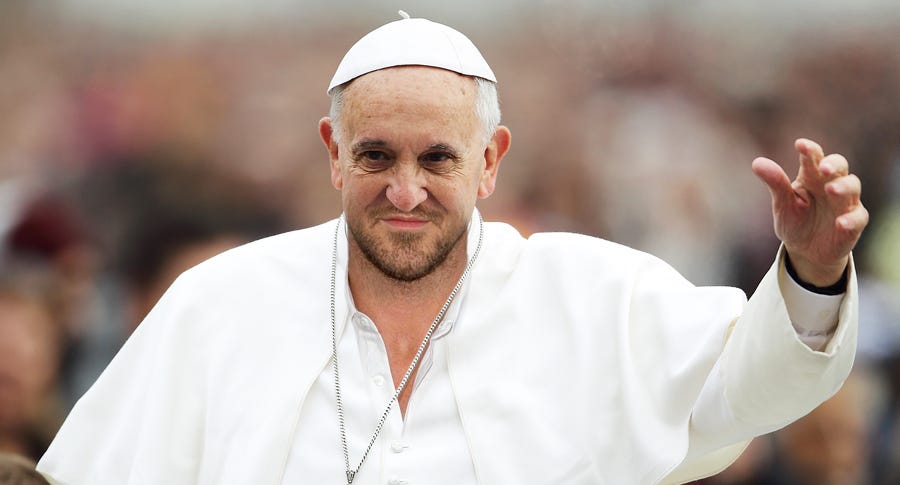
TED WILSON REVIEWS THE WORLD: POPE FRANCIS

★★★★☆

I wonder who would win in an arm wrestling match between the Pope and the Dali Lama. At first I thought the Pope, because the Dali Lama would not desire to win. But the Dali Lama is always showing off his biceps and they look pretty good for a reincarnated guy. The Pope always has a big, flowing robe on. What’s he hiding under there? You never see him in bike shorts and a tank top. Without seeing the Pope’s physique, I guess it’s a mystery who would win, just like the mystery of which one of their Gods is the real one.

Frankly, the Pope’s outfit seems outdated. It’s never the wrong time to rebrand yourself and the Pope could look at least a little more trendy. Maybe a new hat with a logo on it done in a graffiti artist style. Not Banksy though, because he just traces photographs and that’s not very creative.

At the very least the Pope should grow a beard. Those are very fashionable right now. A lot of religions encourage hair growth, and I saw a priest with a mustache once so I don’t think there are any rules specifically prohibiting it.

The Pope with the casual stubble, and unbuttoned robe of Ryan Reynolds.

The Pope with the casual stubble, and unbuttoned robe of Ryan Gosling.

What I like most about the Pope is how nice he is. I think of myself as a pretty nice guy and the Pope is even nicer than me. Everyone has their breaking point though. For me it’s when someone talks during a movie. I’ll really sush that person. I wonder what it is for the Pope. Maybe if someone dog-ears a bible.

One day the Pope will get replaced, most likely when he dies. That’s usually what does it. People will want a new Pope though, just like when a pet dies and you’re sad but then eventually you get a replacement pet. I expect the Pope will be liked even ore posthumously, also much like a pet.

If I was the Pope I would move out of the Vatican because I don’t like people knowing where I live. That’s why I switched the letters around on my mailbox to read “Wilsno.” That’s also probably why I haven’t gotten any mail in several weeks. (If you’ve written to me and I didn’t reply, please call me at (617) 379–2576.)

If you manage to see the Pope while he’s here, try to get a selfie with him. He has a beautiful smile and seems quite agreeable.

BEST FEATURE: Limitless compassion.
WORST FEATURE: Those hats.

Please join me next week when I’ll be reviewing hogwash.

McDonalds UK to give away Roald Dahl booklets with Happy Meals

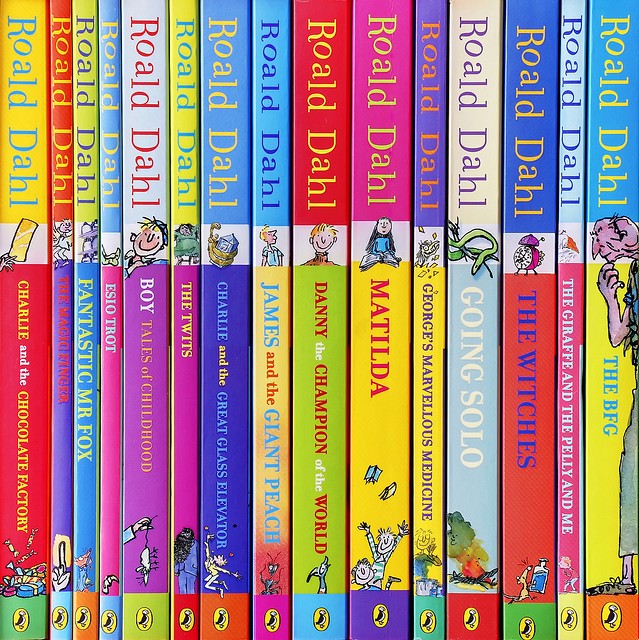
Every McDonald’s in the UK will be giving away booklets featuring excerpts from Roald Dahl’s books with their Happy Meals. 14 million books have been produced for the six week event, which begins on Wednesday, September 23.

In 2013, The UK’s National Literacy Trust and McDonald’s partnered up to create the project “Happy Readers,” meant to provide young diners with reading tips. Earlier Happy Meal offers include vouchers for free downloads of e-books, as a part of a collaboration with Kobo, in the spring of 2014.

Back in 2013, Lisa Rootes, who is the head of partnerships at the National Literacy Trust, said: “We are delighted to be working with McDonald’s to give families access to quality, affordable books and spread the joy of reading. Reading for enjoyment can enrich children and young people’s lives beyond the classroom and give them vital skills for the rest of their lives.”

The Roald Dahl giveaway project is their latest idea, also in collaboration with Penguin Random House and the Roald Dahl Literary Estate. The booklets have titles such as “Roald Dahl’s Extraordinary Friends,” “Roald Dahl’s Fantastic Families,” and “Roald Dahl’s Beastly Creatures,” among others.

Over the next six weeks, many young readers visiting McDonald’s might get a chance to own their very first book, and for those who get the taste for more, McDonald’s will be giving away vouchers to buy two additional booklets for £1.

Steve Hill, head of marketing at McDonald’s UK, said: “Dads like me grew up on the magic of Roald Dahl and his extraordinary characters. Finding time for families to have fun together is all part of a trip to McDonald’s, so I’m thrilled we’re able to introduce the likes of Matilda, James and his Giant Peach and the wonderfully ludicrous Twits to a new generation of readers.”

Comedian Amy Schumer Lands Whopping $8–10 Million Book Deal

by Melissa Ragsdale

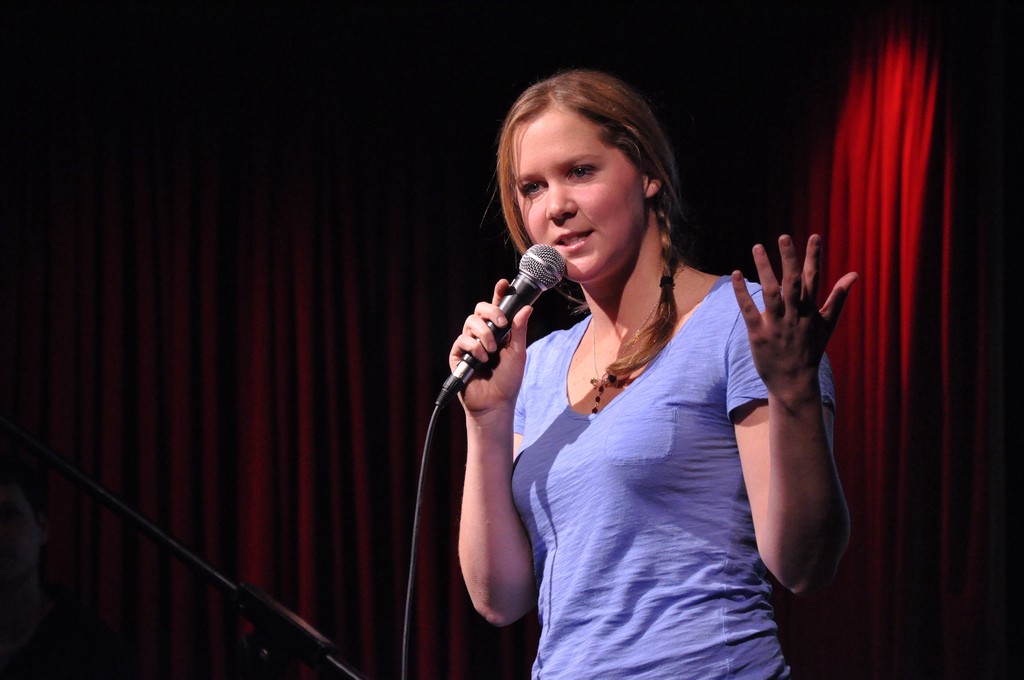
Fresh off her Emmy win, Amy Schumer has reportedly signed a book deal with Gallery Books worth nearly 10 million dollars. This advance is astounding even when compared to similar titles. In 2012, the world was shocked when Lena Dunham’s hit book, Not That Kind of Girl, sold for $3.7 million dollars. Aziz Ansari’s recent book Modern Romance sold for $3.5 million. Tina Fey comes relatively close to Schumer’s level, having sold Bossypants for $6 million.

In addition to the book deal, Schumer’s Inside Amy Schumer won both an Emmy and a Peabody this year, her movie Trainwreck was a box-office success and she’s about to be the first female comedian to headline Madison Square Garden. Schumer is known for her fun and fearless personality, and her ability to tell it how it is.

The book’s working title is The Girl with the Lower Back Tattoo. It will feature personal and observational stories about Schumer’s childhood and will be published in late 2016.

Photo via 92YTribeca

Of Love and Lies: Bad Sex by Clancy Martin

We all do it, and we do it all the time. I bet you’ve thought about it very recently, at least. Talking about it makes a lot of people uncomfortable, but really it’s nothing worth being ashamed of… most of the time. You do it because it enhances the quality of your life, but if you’re reckless, if you’re immoderate, it’ll ruin you. And here’s the hard dark fact: It’s so prodigiously addictive that it underpins every relationship you have ever had, every single one, especially the romantic kind. It’s always there, in all your interactions with all other people, lurking in the penumbra of every word you speak, whether you like it or not — whether you know it or not.

Lying. This is Clancy Martin’s great subject, our harmless fibs and elaborate fabrications, and what might result from this sort of moral corrosion.

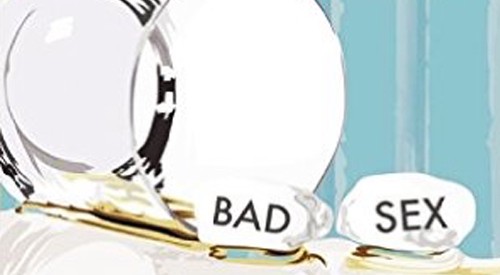
Martin — whose daytime gig is as a philosophy professor at the University of Missouri — might be America’s preeminent surveyor of deception, charting all its ecstatic peaks and ethical cliffs. He’s a consistently limpid, agile writer whose philosophical essays throw light on the nature of dissimulation in all its forms, and whose memoirs reveal him to be an expert practitioner of lying himself. But Martin’s confessional nonfiction, while captivating in an insalubrious way, often reads as more self-aggrandizing than self-examining, and his essayistic nonfiction, while thoughtful, loses the vivacity that distinguishes the rest of Martin’s writing, his lurid recounting of flimflammery, dipsomania, and sexual adventures. It is in Martin’s best work — his novels — where he uses the freedom fiction gives to most complicatedly conjoin his metaphysics of lying with his physics of it. His soul-sucker of a debut, How to Sell, was a bleak and funny coming-of-age tale, a semiautobiographical jewelry industry exposé, and one of the sleaziest books you can come across that seriously engages with the work of Kant and Aristotle. It is perceptive, delectably profane, and damn difficult to put down. Bad Sex is his second novel. It’s even better than the first.

At a glance, Bad Sex’s structure looks somewhat simplistic: sixty-six staccato chapters, no more than a couple pages apiece. Martin’s language throughout is straightforward and unaffected, seemingly averse to lyricism, somewhere between In Our Time and Shoplifting from American Apparel. The back cover promises a “loosely autobiographical” novel — i.e., a novel. In fact, it’s very old school at its essence, a classic shopping-and-fucking novel (emphasis on the latter). Adultery tales of this sort have been around just about as long as the novel form itself.

Our narrator, Brett, is a wife nearing middle age, an absent stepmother, a recovering — and relapsing — alcoholic, a procrastinating writer, and, like all of us, a liar. Just as Martin’s terse writing seems like it might owe a debt to Hemingway, his main character’s name recalls another drunken, mannishly-named expatriate, the ravenous Brett Ashley from The Sun Also Rises, now sans Papa’s icky chauvinism. The book is Brett’s account of a yearlong tryst in Central America with her husband’s banker. She narrates mostly in a linear fashion, but dotted throughout are brief moments of temporal liquidity that gesture toward a life larger than just a fling.

Excerpts of Bad Sex have been floating around for a while, here at Electric Literature’s Recommended Reading, over at Tao Lin’s Muumuu House, and in the pages of a slick edition of The Milan Review. It had been going by the title Travels in Central America, and I first suspected, cynically, that this new name was purely a Tyrant Books marketing hook. They’re known for pushing literature that’s a little darker, a little edgier (and sometimes, as in the case of Atticus Lish’s Preparation for the Next Life or Eugene Martin’s Firework, a lot better) than the mainstream. But in fact Bad Sex is a much superior title.

The sex depicted is not bad in the conventional sense of the term. It’s not low quality; rather, it is violent, exhibitionistic, surreptitious, and in one brief, icily frank instance, it is rape. At its best, the sex in Bad Sex is self-destructive. Much of the time it is plainly immoral. This is meaningful, as Martin has said before, in a 2009 interview on KCRW’s bookworm, that he believes the writer is “a moral figure in the public life.” Martin’s no busybody, not a finger-wagger, but he does engage meaningfully with moral questions. Why do we lie? How do we lie?

Martin, with Brett as his vehicle, uses Bad Sex to not merely to dish on a scandal (though there’s no shortage of dishing, the pleasures of which are not to be ignored), but also to reflect on the antinomic nature of romance:

But then I sensed the need, again, for pretense, if I wanted to be attractive to him, if I wanted to be loved in return.

Before Cancun I had told him that everything would be alright with me, again, if I could swim in the ocean with him and see the sun on his skin. When I was sober, this seemed both impossible and true.

I said, “Do you know the most beautiful thing about this flower?”

“You told me but say it again.”

“It has so many petals that it can’t open unless ants chew through the casing.”

The illusions we depended on about love and each other were necessary to keep us going.

Brett emphasizes that lies form the bedrock of relationships. Love is a good thing, but it is fundamentally tainted by deception and self-deception, which are love’s necessary (if not sufficient) conditions.

You cannot love unless you lie.

But it’s the truth — whatever that may be — that Brett longs for. “I drink,” Brett tells us,I hurt myself and the people around me, and then I write,” and after that you start to see all those little chapters as the frayed bits of what’s left of her life, and you start to suspect that the writing is affectless because she is too emotionally sapped — or too honest, finally — to effect an affect. Her writing, in its unsparing honesty, is Brett’s method of accounting her moral debts.

Then again, Bad Sex is fiction, and it’s significant that we’re clued into the book’s “loosely autobiographical” nature. Autobiography doesn’t tell us the truth in the strictest sense. The author, no matter how fast he runs in the opposite direction of bias’ appearance, the subjectivity of his point-of-view is inescapable. But what autobiography lacks in truth-telling, it makes up for in honesty. Brett’s drunken recollections are honest in their haziness; her self-examination is honest in its self-doubt. “The truth is, I don’t know why I said it, Brett says. But Brett is, significantly, not a real person. She is a facade created by Clancy Martin. Her achievement in honesty is Martin’s achievement in dissemblance. Bad Sex is a book about deception, and, in its proudly “loose” relationship with reality, in how it conceals its philosophical concerns by prioritizing sordid gossip, in its very nature as a work of fiction, Bad Sex is an act of deception itself. Is it the same sort of deception that Martin/Brett talks about throughout the book, the kind that helps facilitate a human connection — this time between Martin and his readers? Or is it smokescreen to conceal the actual events of Martin’s life?

I’m not sure, to be honest. It might be both, but that might be a cheap answer on my part. What I do know is that Bad Sex gives us a familiar story told in commonplace language, presenting itself as nothing more than good, seedy escapism. Yet Martin manages to elegantly imbue his simple little book with complex insights and layers of meaning. That is the novel’s chief pleasure: knowing it should be so bad, but finding it so, so good.

Bad Sex

by Clancy Martin

Powells.com

Crossing The Border: An Interview With David Payne, Author Of Barefoot to Avalon

David Payne is known for his five novels, Back to Wando Passo, Gravesend Light, Ruin Creek, Early from the Dance and Confessions of a Taoist On Wall Street. He knows his way around fiction. His first book, Confessions of a Taoist On Wall Street, received the Houghton Mifflin Literary Fellowship Award, whose previous winners include Robert Penn Warren, Phillip Roth and Robert Stone. Several of Payne’s novels deal with attempting to return home after a long absence and to reintegrate into the community.

In his latest book, a memoir, Barefoot to Avalon (Atlantic Monthly Press 2015), Payne makes the journey home to explore his place in his family and to make sense of a history that is rife with alcoholism, suicide and mental illness. He lays bare the secrets, rivalries, and negotiations that make up family life. The story is told through the prism of Payne’s relationship with his brother, George A., who suffered from manic depression.

Payne and I talked about his evolution from fiction writer to memoirist, the nature of intimacy, and what books should do for readers.

EBM: How did writing novels prepare you for taking on memoir in Barefoot to Avalon?

Over time, I’ve become a little more aware of where the metaphors come from in myself and a little better able to manipulate them toward conscious ends.

DP: My first novel, Confessions of a Taoist On Wall Street, was about a Taoist monk who grows up in a monastery in China practicing esoteric qigong and later comes to New York looking for his American father, a combat aviator who had been in China during WWII. That protagonist’s experiences were so remote from mine that I didn’t see the book as autobiographical in any meaningful way. Now? A character who searches through the world, crossing oceans and wildernesses in search of a father he never really finds, who consoles himself with esoteric practice — think writing — now seems deeply autobiographical, not literally, of course, but in a metaphoric sense. To be honest, I’m not sure fiction is ever fully fictional or that we can ever not write about ourselves, even if we want to. Even Luke Skywalker dueling Darth Vader on the Death Star a long time ago in a galaxy far, far away, is and has to be a representation of the conflicts in George Lucas’s unconscious. I think that holds for everything we take as “make believe.” Over time, I’ve become a little more aware of where the metaphors come from in myself and a little better able to manipulate them toward conscious ends. Book by book, I’ve come closer to the border between fiction and non-fiction, and it seems inevitable that I’d eventually cross over.

EBM: You once said about writing fiction that the characters were like having a ventriloquist dummy on your lap and you spoke through them. What prompted you to finally move the dummy off your lap?

DP: The dummy is finally a way of maintaining plausible deniability, of the ventriloquist/comedian — me, that is — speaking the deepest, darkest, hardest truths he knows without being held fully accountable. ‘Hey, the dummy said it, not me.’ I’m not interested in that kind of distancing anymore. I’d rather say, ‘This is what I think, this is what I feel, this is what I believe. Here it is. What do you think?’

EBM: What elements do your fiction and memoir share? How do they differ in terms of their creation?

DP: Both are narrative acts. Both involve storytelling, characterization, description, setting. Novels tend to have plots; memoirs tend not to. Plots make things easier in a way. The gun that appears in Act I implies the firing of the gun in Act II. The engine that drives a memoir isn’t necessarily implied or obvious. Each is unique and must arise organically out of the material itself. That makes it harder and more interesting, or interesting in a different way.

EL: I’d like to discuss your apprenticeship as a writer. What aspect of it — education, teaching, reading, writing groups, mentors — was most instrumental in you finding your voice?

DP: My very first creative writing teacher in my very first creative writing course — this was Robert Kirkpatrick at UNC in 1973 — gave our class an assignment: Write a letter that says the thing you most need to say and could never say to the person you most need to say it to and could never say it to. To this day, it remains the most powerful creative writing exercise I’ve ever done and probably the most important pedagogical experience I had during my education. In Kirkpatrick’s class, we didn’t read the letters aloud. When I assign it to my students now, we do. I read them my letter first, send them off to write their own, and then invite those who wish to share to share. Most do. Invariably the tone of the room changes; it becomes like church. Often, there are tears. When people are honest and go deep, it’s inevitably the areas of hurt and fear and shame they’ve felt most isolated by that resonate most powerfully with others, who have similar stories of their own. It’s a way of getting to the material that I think Kafka means when he says, “we need the books that affect us like a disaster, that grieve us deeply, like the death of someone we loved more than ourselves, like being banished into forests far from everyone, like a suicide.” In a way, Barefoot to Avalon is what my letter has turned into after forty years.

EBM: Can you tell me about your choice to tell your life story through the prism of your relationship with your brother George A.?

DP: It wasn’t really a choice. I was sitting in a Hampton Inn in Pawleys Island in 2006, having just finished Back to Wando Passo and not knowing what my next book would be, and a voice inside me said, “It’s time to write about George A.,” my brother. That instant I knew my next book had been assigned. All my books have come to me like lightning flashes in that way. One minute I’m wandering around at loose ends, the next the strike comes and I’m off on the next voyage — three years, five years, in the case of Barefoot to Avalon, eight. Though I didn’t consciously choose the subject matter, the story of my brother and his illness was a door that opened into deep places inside me and our whole family, offering a way into the big questions, Who Am I and Who Were We.

EBM: The book is very candid about your life experiences and includes stories about sexual relationships, abortion, suicide, alcoholism and mental illness. What did you do to stay honest and avoid self-censorship?

My own view is that our private lives, the life of the individual and the family, is still largely terra incognita.

DP: Of course, there’s fear and shame around these subjects and around family secrets in general, but there’s also a kind of guild pride among writers about being brave and candid in confronting them, and a sense of the importance of confronting them. Emerson said, ‘The way to write is to throw your body at the mark when your arrows are spent,’ and I think writers — and many readers, too — admire writers who throw their bodies at the mark. I certainly admire them. My own view is that our private lives, the life of the individual and the family, is still largely terra incognita. Much of what matters most in human life occurs there and yet heavy taboos still exist around exposing it. Those taboos no doubt served a purpose once upon a time, but I think they’ve outlived it now, and it’s up to artists to speak up. Murray Bowen, who founded Family Therapy said: “As families move from the compartmentalized, less mature world of secrets and foibles which they assume they are keeping under cover, and into the world of permitting their private lives to be more open and a possible example for others to follow, they grow up a little each day.” I agree with that.

EBM: Your mother was reluctant at first for you to tell this story. What advice do you have for other memoirists about maintaining family relationships while offering an honest accounting of their experience?

The only thing that was under my control was to tell the truth as well as I could understand it and to try to hit myself harder than I hit anybody else.

DP: I think being intimate — whether with someone in your life or as a writer on the page — involves the risk of rejection and loss. When I set out to write this book, my mother said she believed it was exploitative, and for three years we remained at odds. After she read the first draft, she wrote me a beautiful letter that said, “On reflection, I came to understand that no matter what you wrote, you would be kind and fair and compassionate. And you also said ‘it is my life too,’ which made a strong point for your need and right to write what you remember as truth… All of my little secrets are not really that life shaking and on the final take, do not matter that much, so what I feared has simply gone away.” I’m extremely glad and grateful that she came around, but I would have written — was writing — the book anyway, and whether she came around or didn’t was never under my control. The only thing that was under my control was to tell the truth as well as I could understand it and to try to hit myself harder than I hit anybody else.

EBM: What was the most challenging aspect of writing this book and how did you overcome it?

DP: There were many, but mission creep was one. The level of scrutiny I turned on myself and my brother I wanted to turn on all areas of my life, including my then marriage and my parenting, to present a kind ethnography of a Self, sort of like what Knausgaard is doing in MY STRUGGLE. In fact, I did that — that’s one reason the book took eight years to complete. At one point, the manuscript was 950 pages and around 350,000 words. My agent, Tina Bennett, and I discussed the possibility of publishing in installments that readers might read the way you watch, say, The Sopranos. Tina, however, always maintained that the brother material had greater depth and emotional density, and I trusted her and listened to her and eventually came to believe she was right. So I gave up the Knausgaard/Sopranos idea and aimed for something more like, say, The Godfather, as short and as perfectly distilled as I could make it.

EBM: You use the iceberg metaphor in the book in reference to emotional depth and darkness that lies below the surface in people and relationships. You also reference a race, both the literal race between you and your brother to the pier in Avalon and the figurative one to succeed. Can you tell me about how metaphor functions, not only in a literary way, but psychologically to help us make sense of the world?

The metaphor, in a sense, knew more about me and about my relationship with my brother than I knew about myself or us…

DP: Let me take your second example, the race. As I mentioned before, in 2006 I was at the Hampton Inn in Pawleys Island, SC, when I heard a voice whisper, “It’s time to write about George A.” I knew I had my general subject, but what about George A.? What, specifically? The first thing that came to mind was a memory from the summer of 1975. I’m 20 years old, a sophomore at UNC, George A.’s 17. We’re at our family place on the Outer Banks. George A.’s going back to boarding school and wants to try out for the varsity football team. To make the cut, he has to run a sub-6-minute mile. I’m a distance runner in those days, so George A. asks if he can train with me. Every day we do a four-mile run, two miles down to Avalon Pier in Kitty Hawk and two miles back. Most days, I pace him to the Pier and halfway home, and then I fly, leaving him to finish up alone. But one day, when I kick and start to pull away, he kicks, too. I cut a glance at him. He gives me a strained smile, drops his head and hauls. It’s on. I give it everything I have, and in the final twenty yards, he walks away. When I reach the finish, there he is, panting, hands on knees, trying not to show his glee. Thirty-one years later, when I decide I’m going to write a brother book, this is the first memory that surfaces, the first scene I write. (Now it’s in Chapter 4.) What I find interesting and relevant to your question is that it was at least a year and maybe two or three before I realized this was more than just a specific scene about a specific race we ran one summer; it was a metaphor for our whole lives as brothers, a lifelong race we ran that had love and camaraderie and esprit de corps and mutual assistance in it, together with ferocious competition and the will to win. I didn’t choose the metaphor or craft those meanings into it; it came to me from some place beyond my conscious awareness and intention with the meanings already baked in. The metaphor, in a sense, knew more about me and about my relationship with my brother than I knew about myself or us, and my job as a writer was to pay attention to it until it revealed its hidden truth. By paying attention, I came to a better understanding of my relationship with my brother, got a through-line for my book, and, eventually, a title.

EBM: What can you tell me about the research you did for this book? How did you handle challenges like recalling conversations?

DP: Apart from verifying dates and time lines and speaking to family members to compare their memories to mine, I did very little research. Conversations are as I remember them. I don’t pretend to verbatim recollection — frankly, I distrust anyone who does — and that’s why, in dialogue, I eschewed quotation marks in favor of dashes.

EBM: You grapple with issues of expectation and how we idealize family relationships and end the book with your decision to stay sober and thoughts on the necessity of each generation to bear witness to the realities of family life, however imperfect. A realist’s happy ending?

I don’t claim this book is noble — it may seem ignoble to some — but I do think it was a deed.

DP: When I began this book in 2006, I was an alcoholic whose drinking was off the rails; I was in an unhappy marriage; I was an indifferent father. By the time I ended it in 2014, I was eight years sober; I’d worked hard to save my marriage, failed and ended it; I’d found a new love and become a committed father. Not all of that came out of writing, certainly — much came out of therapy — but the writing and the therapy were two prongs of a sustained act of self-investigation and confrontation that I undertook, not because I was brave but because I was desperate to change and didn’t know how else to go about it. Thoreau said, “Writing may be either the record of a deed or a deed. It is nobler when it is a deed.” I don’t claim this book is noble — it may seem ignoble to some — but I do think it was a deed. I didn’t know if my deed would lead to change; there were times I feared it might produce insight without change. I also feared that what I wrote might be boring and irrelevant to others, like reading transcripts of another person’s therapy. But I remembered the letter I first wrote in Kirkpatrick’s class, the powerful effect it had on me, I remembered all the letters my students had written and bravely shared over the years, I recalled the sense of being ushered together in a kind of church, and I wrote in the hope that I might bring readers into that space with me.

9 Novels About Social Media Identities

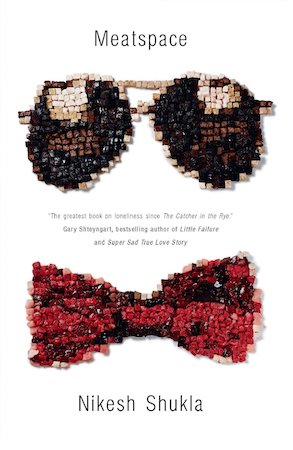
I wrote Meatspace, a book about the frailties of social media identities when they bleed into real life and the confusion that comes with over-familiarity online and how it breeds contempt for our offline relationships, because I became obsessed with who we really are if we’re spending our entire lives taking the best photos of ourselves, turning our stories into the most tweetable quips and sharing our best selves.

What if this isn’t how things actually are? What is that doing to our brain chemistry? Our relationships?

People asked me afterwards if I worried that a book about social media would date at all. I said that sure, the references might date, but the story—the one of identity, confusion and loneliness—is pretty timeless. People still study Jane Austen. And her books are filled with letters. Dracula is collated diaries, letters, journals, and articles. How outdated are all of these?

Here are ten novels that ooze social media. Because, even if you’re not a heavy Twitter user or Instagrammer, you can’t ignore their prominence in the way we live. And it’s not all bad.

The Circle by Dave Eggers

The Circle by Dave Eggers

On the one hand, this is a terrifying body snatchers-style techno horror about a cult masquerading as a bunch of do-gooders wanting to improve the world. On the other, it’s an allegory for how the very ethos of Silicon Valley, of the constant broadcast, of zero privacy = consummate accountability, may be founded on a field of shit.

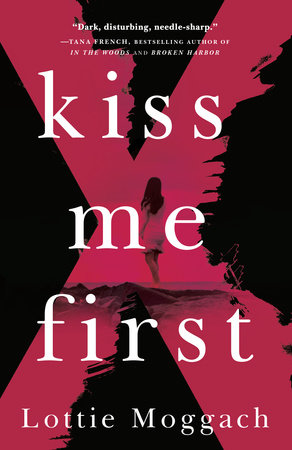
Kiss Me First by Lottie Moggach

Kiss Me First by Lottie Moggach

Another terrifying look into the murky world of being someone else online. Kiss Me First is a well-paced thriller about identity and pretending to be other people.

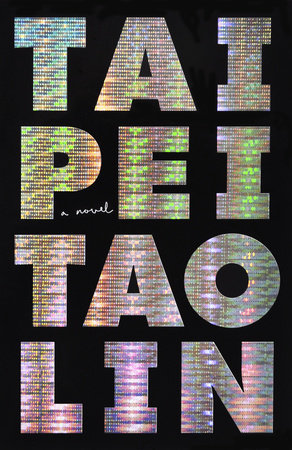
Taipei by Tao Lin

Taipei by Tao Lin

Tao Lin is perhaps one of the authors best at integrating the act of clicking, swiping, zoning out, absorbing content, typing, reading with disdain, ennui, and the very turgid functional nature of the internet into his terse prose. Few writers are able to do this as seamlessly as him.

Eleven by David Llewellyn

A book that exists as a series of print-outs of emails — funny, and illuminating in that they become the collected narrative of a series of unreliable narrators, which makes you realise what often doesn’t get said in our electronic communications, and how tone and nuance, left at the door, can lead to utter chaos.

NW by Zadie Smith

NW by Zadie Smith

It’s specifically in the section about Keisha Brown that we get to see how easily social media, and the internet, can turn us into active participants. When everything is a click away, it becomes an anonymous thrill to pretend to be other people and live other lives entirely separate to your own.

No Harm Can Come to a Good Man by James Smythe

The way seeded content arrives before us is all based on intricate algorithms, tracking what we do, say, see, what our friends do, say, see and trying to create a picture of who we are and what we’ll be easily susceptible to. No Harm manages to turn this algorithm culture on its head and show that while the numbers may not lie, they may not be able to compete against humanity.

Book of Numbers by Joshua Cohen

The Book of Numbers by Joshua Cohen

Even more meta than Meatspace, Joshua Cohen writes of Joshua Cohen who is sent to write about Joshua Cohen, the CEO of a Google-esque search engine called Tetration. What happens next is a meandering exploration of the internet and of immortality.

Friendship by Emily Gould

Friendship is a funny and painfully real dissection of friendship when it’s put to the test by the staples of city-living — rent, ambition, lack of ambition, boozing, and sex. All the good stuff. Gould is excellent at weaving into the text, without it being clunky, interactions between our two main heroes that happen over email, text, social media, and blogs, and it feels real. Now. How our friendships really unfold. Not with a heart-on-the-table pub chat at 1 a.m. But with a carelessly worded hastily sent electronic communication.

To Rise Again at a Decent Hour by Joshua Ferris

Another Joshua, another bloke (why do we care about social media so much, man?), Ferris writes a bizarre shaggy dog story about the internet and identity, about spirituality, dentistry, and mediocrity. Cutting through all of this is his inventive humor and sideways plot tangents.