I’ve had a lot of questions swirling since I decided to leave the MFA program I was at back in late November. Since I was a sophomore in college, all I ever really wanted to do was read and write. I didn’t really know where this passion came from, since, as a kid, I was a football-playing, church-going type of person who didn’t care at all about books. Once I got bit, though, that was all I seemed to care about.
That said, getting into the MFA seemed sort of like a dream. Something I really built up in my mind, which in retrospect couldn’t possibly have lived up to the hype. After sort of being away from the whole literary world for half a year, I’ve been able to see things clearer, and a few things really stick out to me about my experience that I’d love to get your thoughts on.
1) The literary community: One thing I really dealt with was taking seriously the literary community I had around me. To be honest, so much of what we were doing in the classroom seemed a bit overwrought and unnecessary. Like, much of the discussion about poetry seemed to be a great thing to us, but really useless in its larger context. Maybe this is just me being young and naive, but what is the true function of the literary community? How should it operate — both in the classroom and in the world — and what good can come from us truly investing in it? I know some of these answers will be obvious, but I also have a feeling there will be some answers I’m not quite expecting.
2) How to get back on one’s feet: Since I left the program, I’ve had to find a balance between my work life and my writing life. I have had to deal with leaving my ideal world of reading/writing all day, and have been forced to balance the daily grind of a job with writing, which is what I really want to do. I think my biggest fear is that, in leaving the MFA (ungracefully) at a young age, I’ve sort of squandered any chance I had at being able to truly give myself to my writing. I know this is a circumstantial thing, but how should one deal with the feeling that they sort of gave up on themselves and their dreams? What advice would you give to someone who is still young, but also feels like they sold out in this way? What hope is left for the one who quit, but still wants to pursue that thing they gave up on?
This is some of what I’ve been dealing with for the past year. In my mind, these things are connected, and once made whole again, might help me to become the writer I’ve always wanted to be.
— Trip
Trip,
I’ll start with your first question, which I think stems from a misunderstanding of what “community” is. Your MFA classmates are not necessarily your community. (I’m reminded of Junot Diaz’s essay about the whiteness of his program at Cornell, “MFA vs. POC.” They were definitely not his community.) Getting into an MFA program can be an excellent way of finding a writing community, but it’s not an instant community.
Remember your freshman year in college, how you probably made a few friends right away, but they weren’t necessarily still your friends by the time you graduated? When you’re meeting a lot of people at once (moving to a new city or starting a new job, for example), it can take a little while to find your people, the ones you really connect with, feel close to, and want to know better. The same is true with an MFA, and it’s entirely possible that you left the program before you had the chance to find the community that would have made your experience more worthwhile. (I don’t say this to make you feel guilty about leaving; I’m sure there were other factors at play, including cost.)
Further, I’ll say that the frustrating, “overwrought and unnecessary” nonsense that inevitably goes on in workshops is part of the point. A big part of the education of a writer is figuring out what you do and do not care about — including what kinds of readers are helpful to your editing/revision process, what kinds of critiques motivate you, what forms and techniques are interesting and generative and worth trying and what kinds are a waste of time, what kinds of writers you admire and want to emulate, and so on. (And if you intend to teach after getting your degree, it can also help you figure out what kind of workshop you want to run.) It’s actually helpful to be exposed to viewpoints you totally disagree with; most likely, not all of them are wrong. And by the time you finish an MFA, you have a more developed sense of what is worth your effort and attention as a writer and what is simply irrelevant bullshit. (That said, if your MFA experience is nothing but bullshit, quitting is a valid solution.)
But getting back to the idea of community and its function. I wrote about this in my first column, but allow me to reiterate: Your writing community serves an amazing dual function — they are friends who also help your career. (You’re helping them too, so it’s not parasitic.) They help your career both indirectly (through encouragement and friendly competition) and directly (by passing on opportunities and potentially even publishing you). But don’t underestimate the friendship part: A community gives you people to borrow books from, go to readings with, and talk to when you’re feeling discouraged. Seeing other writers get discouraged too will make you feel less alone. If you didn’t find a community at your program, I urge you to keep looking. Feeling part of an online community is almost (arguably just) as good. Writing can be very isolating without it.
Now let’s look at the second part of your question. You feel that you squandered an opportunity to read and write all day. Don’t beat yourself up about this. Quitting your program does not mean that you have given up on writing. You can always enter another program — but regardless, an MFA gives you two to three years tops of dedicated reading and writing time. Chances are slim that your degree will land you a job that allows you to make a living through writing (at least not the kind of writing you’re passionate about). It’s not long before you have to contend with the same struggle you face now: Finding time and energy to read and write on top of a full-time job. Excepting a very few especially lucky/wealthy people, every writer I know has the same struggle.
Again: you 100% do not need an MFA to count as a writer. All you have to do to be a writer is write. So how do you get back to writing? I’ll recommend two different approaches to striking a work-life/writing-life balance. I believe one of these can work for you, but which one works best will depend on your writing/working personality.
The first approach is driven by structure: Build regular writing and reading time into your schedule and stick to it, like it’s a regular appointment. I know a poet (with a full-time communications job and two kids) who gets up at 5:30 every weekday morning and spends an hour on poetry. This poet usually starts the hour by reading, and eventually does some writing. Maybe your writing hour takes place in the evenings, or it’s just 20 minutes a day, or a four-hour block on Saturday mornings. It doesn’t matter, so long as it becomes a habit. The advantage to this method is that, over time, you’re getting something done, plain and simple. Even if you have bad days or miss a few “appointments,” you won’t suddenly find that months have gone by during which you’ve written nothing because you “couldn’t find the time.” Aside from giving you material, this approach also trains you to take your writing seriously. You will feel like a writer because you’ll be writing. (Important to note, however, that just because you’re writing every day doesn’t mean you need to publish everything you write.)
As an addendum, you can help the structured approach along if you try to find a form that suits your structure. The fictional poet who narrates Nicholson Baker’s The Anthologist starts a poem by thinking about the best moment of his day. This sounds cheesy, but I kind of love it. (Conversely you could start with the worst moment of your day?) When I took a job as a copywriter for a software company about six years ago, I found that, because I was writing prose all day, I had difficulty “thinking” in poetic lines. So I started writing a book of prose instead. I consciously chose a form that fit the pattern of my days.
The second approach is driven by urgency: Find the thing you want to write so much you don’t even have to schedule time for it. I have another friend, a novelist, who said he solved the problem of “writer’s block” by abandoning the high-minded projects he felt he should be working on and started writing the novel he desperately wanted to write. Suddenly he couldn’t wait to get home from his job to work on his novel. Previously, he had had to schedule time for writing and it still felt like a slog. I take a similar approach to reading — I surround myself with books (mostly from the library) and abandon them freely. If I force myself to finish a book just because I’ve started it, I’ll find something to do other than reading, but if I only read what I really want to read, when I want to read it, I’ll make time for reading almost every day.
In closing: I have found that it’s very tricky to change your outlook by force of will. Almost no one can just decide, “I’m going to stop feeling like a sellout and start feeling good about writing.” The best way to change how you feel is to change what you do. Figure out what, and who, makes you feel good about writing, then strategically carve out more time for doing those things and being with those people.
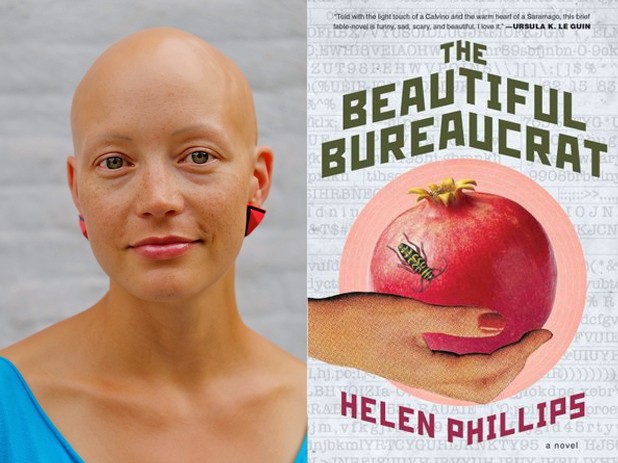
Helen Phillips’ novel The Beautiful Bureaucrat is excerpted in this week’s issue of Recommended Reading. In the interview below, Phillips discusses her influences, her writing process, and the construction of a good sex scene.
Katie Barasch: The Beautiful Bureaucrat is filled with wordplay. Even naming your characters Joseph and Josephine is, in a sense, a kind of word play. Is the wordplay just for fun, or does it have a larger purpose?
Helen Phillips: Wordplay is fun (I’ve always been a sucker for puns and other linguistic coincidences), and in everything I write I’m interested in playing with language, but in The Beautiful Bureaucrat, the wordplay does serve a larger purpose. As Elliott Holt put it in her eloquent introduction to the excerpt from the book recently published by Electric Literature, Joseph and Josephine’s “connection is built on language: they construct their own world with words. Everything around them is unsteady … so it is language they depend on.” Their wordplay is a source of power for them as they grapple with an unknown city. And then, toward the end of the book, it becomes clear that the wordplay is critical to the plot, but now I’m verging into spoiler territory, so I’ll leave it at that.
Barasch: In addition to your story collection And Yet They Were Happy, you wrote a young adult novel called Here Where the Sunbeams Are Green. Did the experience of writing for a younger audience help or inform your approach to writing The Beautiful Bureaucrat? Do you see any hardline differences between the proclivities of children and adult readers?
Phillips: With And Yet They Were Happy (an inter-genre collection comprised entirely of two-page stories), I was largely focused on image, language, metaphor, surreality. With Here Where the Sunbeams Are Green (an adventure story for middle-grade readers), I wanted to create a dynamic mystery plot with a clear arc and well-developed characters. In writing The Beautiful Bureaucrat, I attempted to do all of the above, pulling on skills honed while I was writing each of my previous books; they both served as training for this one. I think children and adults alike respond to a wide range of emotions and events, but I do feel more at liberty to include certain non-sequiturs when writing for adults.
Barasch: You’ve recently been compared to writers such as Aimee Bender, Franz Kafka, and Haruki Murakami. Did these authors influence you while you wrote? What did you read while working on this novel?
Phillips: Franz Kafka and Haruki Murakami were very much on my mind as I was writing. The list goes on: Shirley Jackson, Italo Calvino, Margaret Atwood, Jorge Luis Borges, Kurt Vonnegut, Kelly Link. And in addition to these creators of alternate worlds, I was also thinking about the precision and condensation of language, so Lydia Davis, Amy Hempel, Maggie Nelson.
Barasch: The claustrophobia of a big city is powerfully rendered in your novel. How important is your own location in your writing process? Did moving from Colorado to New York affect your writing in any significant way?
Phillips: Though the city in the book goes unnamed, it does grow from my own experience living in Brooklyn. I hope that it reads as a sort of dark ode to city life, to its moments of bleakness and its moments of beauty. Location colors everything for me, both in terms of my life and my writing. I could never have written this book without having lived in an urban place for a long period of time, without being permeated by the shadows and brilliance of New York City.
Barasch: In an article for New Republic, Jeet Heer writes: “In good fiction, sex is most effective when integrated with the larger goal of the book: with plot, tone, and character development.” I was impressed by the sex scene between Joseph and Josephine in this excerpt — it was intense and multi-layered, and funny or chilling, depending on who you ask. How do you decide when to “fade to black,” so to speak, and what to make explicit?
Phillips: Compelling sex scenes in fiction are not that easy to come by; some of my favorites are in Zadie Smith’s On Beauty. The sex scenes in The Beautiful Bureaucrat are critical to the plot, and also to the exploration of Joseph and Josephine’s new marital tensions. For the excerpt published by Electric Literature, we actually had to cut one sex scene (we feared, perhaps unnecessarily, that two sex scenes might have been a bit much for such a short selection from the book), so there’s a “fade to black” moment partway through the excerpt that is not a “fade to black” in the book itself. I generally tend more toward the explicit than the fade out — if you’re going to do it, go all the way.
Helen Phillips is the recipient of a Rona Jaffe Foundation Writer’s Award and the Italo Calvino Prize, among others. Her collection And Yet They Were Happy was named a notable book by the Story Prize, and her work has been featured on PRI’s Selected Shorts, and in Tin House, BOMB, and The New York Times. An assistant professor of creative writing at Brooklyn College, she lives in Brooklyn with her husband and children.
Hello, and welcome to my week-by-week review of the world. Today I am reviewing Fant4stic.
There’s a new movie out called Fant4stic. I didn’t know how to pronounce the name, so when I bought my ticket I wrote the title on a piece of paper and handed it to the woman at the box office. She must have thought I was mute because she gave me my ticket without saying a word.
A lot of movies these days like to stick numbers into the name, like Leprechaun: Back 2 Tha Hood and 12 Years a Slave. They should have called this movie F4nt45t1c to show everyone how it’s really done. That seems like a missed opportunity.
Fant4stic hasn’t gotten very good reviews and I’m not sure why. I liked it a lot! The characters are unlike anything you’ve seen before, if you’ve never seen any of the three other Fantastic Four films they made.
One is a guy made out of rocks, but he’s not a statue like you would expect.
There’s a female character who is invisible. I know Hollywood doesn’t like to pay women as much as they pay men, but this just goes to show how they’re trying to change. They easily could have paid her nothing since you don’t even need an actress who you can’t see, but they didn’t do that. Good job, Hollywood!
Another character is a super smart guy made of rubber or whatever but he’s played by that kid from Whiplash. It’s sad to see the Whiplash kid has already been typecast as a student genius. He’ll only be able to play that role a few more years before he’s too old.
My least favorite character is the guy made of fire. He reminded me too much of the time I watched a man immolate himself in protest. It was horrible. Every time Fire-man came on screen I started sobbing and shaking uncontrollably. I guess that’s a testament to how good the special effects were.
Unfortunately I had to leave the film early to go buy some toothpaste but I’ll bet the ending was pretty good. If I ever get around to seeing it I’ll update my review. Keep refreshing the page every few minutes just in case.
BEST FEATURE: I can’t wait for the sequel, F4nt45t1c24ev4! WORST FEATURE: Chet Hanks, best known for his work in Bratz, doesn’t get enough lines.
Please join me next week when I’ll be reviewing a bowl of soup.
Ritualistic book burning has always been a grim aspect of our history — the Nazi book burning in 1933 comes immediately to mind — and yet, even now, this awful method of censorship and oppression persists in the United States and around the globe.
According to The Denver Post, Dan Wisdom awoke earlier this week to the charred remains of his Little Free Library, which formerly occupied the corner of Colorado Boulevard and E. 7th Avenue in Denver, Colorado. Wisdom and his 9-year-old daughter were perplexed by the burning, which was caused by a mysterious arsonist in the middle of the night.
Since its inception in 2009, The Little Free Library has been a charming and effective way to promote literacy and celebrate a universal love for books and storytelling. The concept is a simple exchange: take a book, leave a book. Todd Bol co-founded the nonprofit, which has since expanded to include 30,000 book exchanges around the world.
And yet, somehow, this occurrence in Denver is not the first time a Little Free Library has been targeted for vandalism. Book exchanges in Texas (including Victoria and Dallas) as well as Minneapolis, MN were destroyed by fire recently. It’s a disturbing trend — one can only hope that it won’t gain any more steam.
In Denver, book-loving passerby and residents have already offered to help rebuild and restock the Little Free Library.
Interested in finding a Little Free Library near you, or perhaps creating one? The nonprofit’s website provides all the answers.
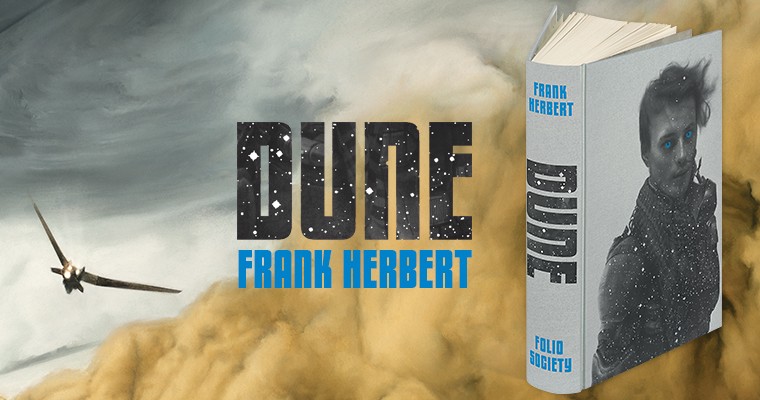
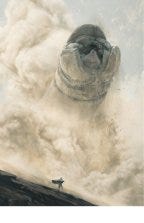
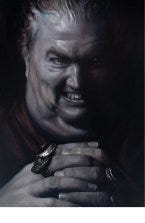
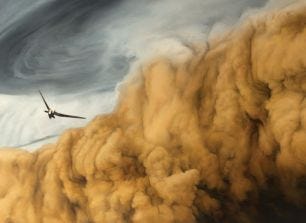
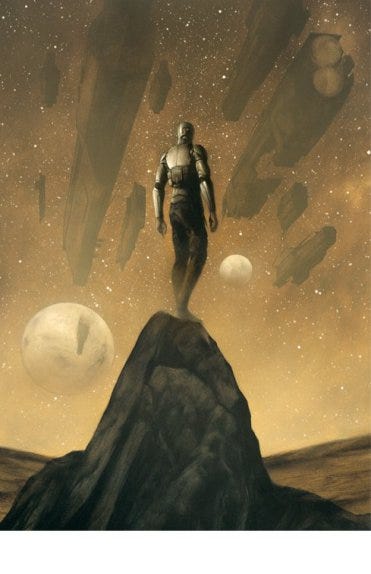
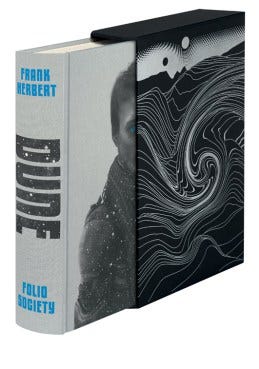
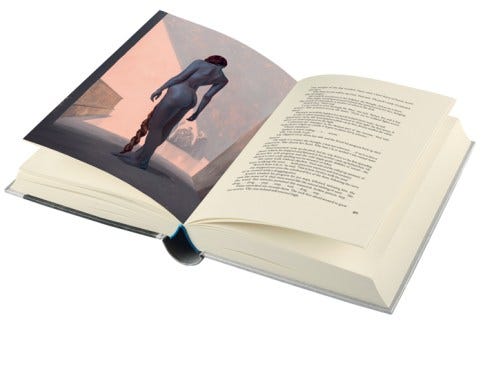
Happy birthday, dear Dune. Frank Herbert’s beloved sci-fi epic turned 50 this year, and the Folio Society has celebrated by publishing a stunning new edition featuring painted illustrations by Sam Weber.
Winner of the 1966 Hugo and Nebula awards, Dune is a futuristic tale of noble houses grappling for control of a hostile planet — called Dune — which happens to contain the universe’s only repository of a highly valuable spice. It has been called a masterwork of science fiction, a spiritual brother to The Lord of the Rings, a sine qua non for Star Wars, and, lately, “a paradigmatic fantasy of the Age of Aquarius.”
William T. Vollmann’s new novel, The Dying Grass, might be the longest volume ever published about the 1877 Nez Perce Indian War — it is certainly the longest work of fiction. However, for a novel, Vollmann’s book is uncommonly authoritative and well researched. In The Dying Grass, Vollmann uses the vehicle of fiction to immerse his readers in the history more effectively than any amount of straightforward journalistic reportage ever could. Vollmann does not depart from historical record so much as he alchemizes it into a fever dream. These are the late years of the Indian wars, and by bringing them to life, Vollmann vividly recreates some of the darkest moments of American history.
The Dying Grass is the fifth book in Vollmann’s Seven Dreams series — a seven volume cycle of novels examining the conflicts between the Native Americans and the European colonizers. The series began with The Ice Shirt (1990), which dealt with the Norse discovery of America. Each consecutive book in the series has moved readers slightly closer to the present day. The Dying Grass positions itself at a critical junction of American history: between pioneer times and the industrial era. Following the classic Western-genre tradition, The Dying Grass is a kind of elegy to the Old West and to traditional Native American culture.
The Dying Grass is an accurate and finely detailed account of the five month Nez Perce War: the war in which the Nez Perce war chiefs: Joseph, Looking-Glass and Toohoolhoolzote, through a series of brilliant military decisions, outmaneuvered, confounded and held at bay General Oliver O. Howard and his much larger U.S. military force. These Nez Perce leaders, Chief Joseph the most famous of the three, led less than a thousand Indians — mostly women and children — on a 1,200-mile fighting retreat across what is now Montana, Idaho and parts of Wyoming. This chase gives Vollmann’s book structure and urgency. It is not a meandering collection of researched details with a fictional plot imposed; rather, it is a tightly structured novel of pursuit, full of reluctant heroes, each, by turns, the hunter and the hunted.
It is difficult to describe The Dying Grass without describing the way Vollmann arranges words on the page. While the plot is simple, the structure is unique and complex. Each chapter contains a chorus of divergent voices, which the reader must navigate in order to make sense of the narrative. Characters and locations shift without warning, often in the middle of a conversation. Rarely will dialogue be tagged; breaks are only indicated by a section’s indentation. Some half-finished conversations resolve later in the chapter, while others do not. Some pages contain so many differently indented sections that the text sits on the page more like the stanzas of some modernist poem than a novel. Certain pages resemble games of Tetris gone horribly wrong.
This might seem edgy or experimental to some readers, but there is nothing flashy about the way Vollmann constructs his narrative. In this case, the tool seems to have been inspired by the task. Vollmann needs this structure to demonstrate the breaks between voices, and he needs the breaks between voices to submerge the reader in each scene. This small innovation saves him the trouble of constantly needing to introduce characters, tag dialog and set scenes. The final effect is completely immersive. Vollmann gives the reader enough information to continue on the journey, but not so much as to distract attention from the scene.
Because of the way Vollmann structures his chapters, readers have access to nearly two hundred characters’ thoughts, feelings, private conversations, dreams and memories, unified only by date and place. The Dying Grass is the story of a hard journey shared by all of Vollmann’s characters: friend and enemy alike. Nearly all of the information, events and actions of the book are filtered through a character’s point of view, and though it is not always clear whose, one feels surrounded by the story’s action. We follow both real and fictional characters on both sides of the conflict; we inhabit warriors as they kill and as they are killed; we freeze and starve with the elderly, the children and other non-combatants; we jockey with the West Point brass safely encamped behind the skirmish lines; we endure weeks of mind numbing travel; we shoot our worn out horses so that our enemies cannot make further use of them.
If this style were transposed into to a shorter work, it likely would not function. These half developed conversations, unfinished thoughts and daily minutia would frustrate most readers if taken in a small dose — and even in this long narrative, it took me nearly a hundred pages to acclimate to the book’s style. Any one of these points of view alone could furnish a short novel, but because of The Dying Grass’s bigness, the final effect is fresh, lifelike and complete — it is, indeed, a fully inhabitable dream — more a lived experience than a long book.
And yes, it is a long book. And like all long books, it is tedious in places. Around the 600-page mark, The Dying Grass feels oceanic and nearly unnavigable. Unlike many long novels, there are very few tangential sections not directly related to the plot — no 100 page essays about whaling, for example, or digressive histories about the battle of Waterloo or Alcoholics Anonymous to give the reader a respite from the repetition of the novel’s relentless structure. The book is fully character-based. It is a single, long and exhausting chase, which takes a huge toll on each character, and as a reader, one feels the characters’ exhaustion palpably.
The time necessary to tackle a book of this length, in itself, builds a kind of empathetic bridge between text and reader. Anyone familiar with long novels will recognize this version of Stockholm Syndrome — because you have been imprisoned by the book for so long, you become loyal to it. You begin to forget that other books even exist. At 1,356 pages, roughly each mile of the Nez Perce fighting retreat receives a full page of coverage. There are moments where the very experience of reading The Dying Grass parallels that forced march through the untamed West: the cold, the hunger and the thirst endured by both the Nez Perce and the American soldiers, paralleled by intellectual forced march a reader must take to reach the books final 200 pages of endnotes.
Reading The Dying Grass is a powerful and visceral experience. Most of us know about the destruction of the Native American tribes, and intellectually, most people will agree that it was a tragic blunder of American policy, but it has been a long time since I was able to emotionally connect to the disaster of it. The genocide of the Native American Indians is such a difficult concept to swallow, that it is rare to be reminded in a way that feels genuinely moving and not somehow trite or preachy. Vollmann achieves this by sticking to the facts and by moving slowly. The book is powerfully neutral, grounded in ambivalence toward both the Nez Perce and the American soldiers. Both sides perpetuate good and evil here, both sides are deeply sympathetic, and while this is certainly a political story, because Vollmann writes without a clear position or agenda, it works.
In The Dying Grass, Vollmann gives us a difficult book well worth the effort. He manages to seamlessly wed a historian’s eye for researched detail with a fiction writer’s ability to inhabit character and place. By welding these disciplines together, Vollmann manages to bring his readers the best of both worlds. This is a significant novel that returns to us an often forgotten story from the late years of the Indian Wars. It resurrects a part of our American cultural memory that many of us have forgotten. It probably won’t make a great beach read, but it might be the most important book you read this year.
Ah, literature — filled with words, and among them, words to live by. Thanks to myprint247 for providing conclusive evidence that Hallmark’s got nothing on the canon.
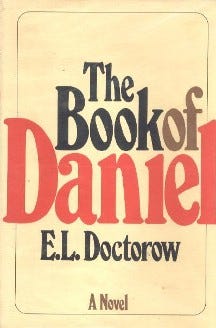
Colin Winnette admires the writer Joshua Mohr, so he asked him to suggest a book that they might talk about. Josh Mohr picked The Book of Daniel by E.L. Doctorow. Winnette and Mohr met in San Francisco’s Mission District to discuss the book over coffee and pie.
One week after the conversation, Doctorow died of lung cancer. It was a tragic loss. This conversation is now both a celebration and a memorial to a great American talent. He lives on in his work and in the conversations that happen around it.
CW: Let’s start with a brief synopsis, just to ground people who haven’t read the book or, possibly, even heard of it. Can you describe the book in 3 to 4 sentences?
JM: Well, this isn’t a tidy book, something easy to summarize. It’s an (re)-imagining of the Rosenberg children, whose parents were executed by the US government for being found guilty of treason. The eponymous Daniel is their now twenty-something man-boy, trying to sift through their history and make sense of all the anger and confusion and shame thrumming through his life. Of course, it’s also about 100 other things, but that’s the unifying action that allows all the other crazy narrative threads to satellite around it.
CW: How did this book first come into your life? What’s your relationship to it today? Why did you want to talk about it today?
Every rule you’re taught in an MFA program, Doctorow breaks.
JM: It’s sort of embarrassing. I didn’t know about this book until I was in graduate school and I took a class called Architecture of the Novel. I think I felt the way a lot of people feel when they’re in graduate programs, that you’re in some sort of homogeneity machine that’s taking the cool idiosyncrasies that make you all different, and jamming you into one ‘beige against the machine thing’ that we’ve all read a thousand times. This was the book where I saw somebody breaking the rules, in the subversive transgressive sense. Every rule you’re taught in an MFA program, Doctorow breaks. It’s glorious, you know, and it’s why so many people don’t like the book. But that’s how I want to communicate with my audience. I’ve never written a book like [Book of]Daniel, because I don’t think anybody else could write a book like [Book of]Daniel. Doctorow is the only person who could write that book. But this was the book that gave me the mantra I’ve used in everything I’ve written since: “Your imagination is as unique as your fingerprint. Write the story that only you could write.” I mean, I teach now, that’s what I tell my graduate students all the time. Fuck what other people do. I’ve read Toni Morrison, I’ve read Irvine Welsh, I’ve read Amy Hempel. I haven’t read you. So do the thing that only you can do. Doctorow taught me that.
CW: How was it initially received? Do you know?
JM: Critically, it did pretty well. The NYT gave it a good review. But I taught this book a couple years ago so I had to do some research on it and people are so mean about it because they think it’s too pretentious or it’s too arcane. But the nimble pyrotechnics of its point of view, it’s never just Doctorow jerking off.
It’s always there to serve character, which makes Doctorow such a good writer. Everything is in the service of humanizing Daniel. And it’s not an easy task to take a damaged sadist like Daniel and find the empathy. I think a lot of people are just like ‘I don’t want to occupy that mindset.’ But if you actually give it a chance and let the book work its magic on you, there’s so much heart in that story.
CW: What part of the magic worked on you first? Which of the broken rules stood out on your first read?
JM: The first thing that dawned on me — because it happens in the first paragraph — is the oscillation he’s doing between first and third person. It can be off-putting at first but then you realize that there are narrative triggers. Doctorow has rules set up for Daniel. He’s in the first person when he’s cerebral in the library, but when he’s about to dislocate into what might be considered bad behavior or things he’s embarrassed of or things he needs distance from, he switches to third person as a defense mechanism. Like he’s going to burn his wife or when he’s throwing his kid up in the air. Daniel has a moral compass, he knows the things he’s doing are wrong. He just can’t help himself.
CW: And hecommunicates that formally.
JM: That’s the thing, when you have a damaged — I wouldn’t call Daniel stoic — but he’s not the sort of person to blubber to the reader consciously. He does some blubbering he’s not aware of, but you have to figure out a way to be earnest as the author, to render that on the page so you’re being true to who this person is. It would’ve read totally false if Daniel blamed this consciously on his mommy and daddy. There’s dissonance there so that the reader can figure out things Daniel himself isn’t self-aware. He can remain at a distance while the reader picks up clues along the way. We know things that Daniel doesn’t know about himself. You hear people talk about how the first person is so immediate, and maybe it is, but the thing is if we do our job right in the third person it can be even more immediate, because we can see things the narrator doesn’t. This of course isn’t a strict third person, it is Daniel behind the scenes, but he’s giving himself permission to occupy himself in a way that he never would have been able to do with the first person, because he would’ve called that sort of self-reflection masturbatory.
CW: So you’ve got third person, first person —
JM: — Even second person is in there!
CW: — And then there are those chunks of information that he’s obviously read in something else or heard somewhere and he’s just reporting them. It’s all “Daniel,” but each voice gets at something different, and they all work together to paint a more detailed and vivid version of the story than he could do from any one perspective… Even if it’s all still ultimately…one perspective. Doctorow is communicating things to us about Daniel through Daniel’s failure to tell his story in the way that he desires to. Daniel is supposedly writing his thesis, but if he actually turned this in…
JM: That’s the big sleight of hand, that’s what makes this book such a towering achievement. He’s able to create this sense of dramatic irony and yet it stays emotional. When people criticize the American post moderns, especially this era, you know, that it’s all head and no heart, like all the [Donald] Barthelme stuff — [how] it’s impeccably written, it’s super smart but it doesn’t engage you in its big bloody human heart way. This is meta-fiction but it’s emotional meta-fiction and the fact that he’s able to do that, to involve you in such an emotionally devastating way, is just such a work of art.
CW: There’s also this thing with meta-fictional works that read like critiques, or attacks on narrative or realist fiction. A sort of disassembling or devolution. This isn’t that. If anything, it’s about the possibilities of narrative fiction. How you can work within its limits to make something totally new. Which demonstrates a real knowledge of what it is about narrative fiction that compels and engages readers. What do you think? When the narrative is forced into a different point of view or a thread is broken, is Doctorow showing us the limits of this kind of fiction, or Daniel’s limits as a writer?
JM: I’m not sure if I’d be able to differentiate between those two things. There’s a telling scene toward the end, when he’s getting ready to talk about his parents being executed. There’s a lot of direct address in the book and I think the direct address works really, really well, but there’s one paragraph or beginning of a paragraph in the book where he says, “Oh you don’t think I can do the electrocutions? You don’t think I can do this? You don’t think?” He’s been getting up the courage to talk about it, and we’ve been getting up the courage to hear him talk about it, and it’s an amazing liberating moment for him to finally purge this pain — I’m sorry for the alliteration — he’s been carrying around for years and years and Doctorow is smart enough to know our past will stay animated as long as we’ll keep it alive. When I was in rehab one of the counselors blew my mind one day when he said to me: “You’re the only person who cares about your sob story. Even your spouse, your siblings, nobody really cares except you. Just let it go.” What he said sounds so simple and yet it was this total catharsis for me. I was like: Oh wait, I can stop that. And Doctorow does a similar thing here. Daniel has created an antagonist for his family’s story the whole time. There’s a “bad guy” in the book, and Daniel conjures this passion to finally go confront the monster, and the monster doesn’t even know what he did anymore. He’s this old man with dementia, and he has no ability to know what Daniel is talking about. And he’s been carrying around this fucking rage. And Doctorow sets the scene in Disneyland. It’s the perfect backdrop. The way it’s rendered, I don’t remember the exact page but the way I remember is that there’s a thirty or forty page essay about America, kind of using Disneyland as a framing device, before we actually get to the Alzheimer’s patient who doesn’t remember that he was a key player in the execution of Daniel’s parents.
CW: He’s just there, riding the teacups on an endless loop.
JM: It’s so brilliant.
CW: Talk to me about Disneyland. That was one of the most compelling scenes in the book for me. It was ludicrous, and everything you said about it was brilliant.
JM: What resonated with you that he said?
CW: Specifically, there’s a moment where being in Disneyland sends Daniel off on a tangent about cartoons and animation. He says, “A study today of the products of the animated cartoon industry of the twenties, thirties and forties would yield the following theology: 1. People are animals. 2. The body is mortal and subject to incredible pain. 3. Life is antagonistic to the living. 4. The flesh can be sawed, crushed, frozen, stretched, burned, bombed, and plucked for music. 5. The dumb are abused by the smart and the smart destroyed by their own cunning. 6. The small are tortured by the large and the large destroyed by their own momentum. 7. We are able to walk on air, but only as long as our illusion supports us.”
JM: Each of those rules is emblematic of the journey we just watched Daniel go on. He had to tell us about the electrocutions and he had to go confront the monster. And then the last thing he has to do is leave the library. I think that’s a really important thing, too. It’s not this trivial ending: that there’s a revolution happening outside, he has to leave, get out of the library. The story’s over, he has to stop writing this book. If left to his own devices, I think he’d still be sitting there
CW: By the end Daniel hasn’t resolved everything. It’s messy. Even going to confront the monster is such a confounding scene because in that moment Daniel is equal parts terrifying and harmless and vulnerable and angry and sad. He wants to side with the daughter of this man and also blame her and her family. He hates her and wants to love her at the same time. You also see her fluctuate in how she feels about him, back and forth between being afraid of him and pitying him and caring for him.
I’m so glad Doctorow isn’t one of those writers that cops out at the end. It starts off in the human slop and we end in the human slop.
JM: No doubt. There’s also that really tender gesture that comes after Daniel has worked himself up into the froth — this is going to be the moment where he finally tells Freddy Krueger off, and he walks up to him and Krueger says “Danny” and gives him this gesture of affection, reaches over and touches his hair. It’s beautiful and so plangent at the same time, because a part of us wants him to have this moment. There’s suddenly the thought that he might have this moment to heal — but Doctorow’s not interested in easy answers. Great literature is never going to provide that fucking Lifetime Channel moment, you know what I mean? It’s going to be more complicated than that. I’m so glad Doctorow isn’t one of those writers that cops out at the end. It starts off in the human slop and we end in the human slop. There’s some resolution, of course, it’s a satisfying journey, but it certainly isn’t like, ‘Daniel’s fine now.’ I don’t think anyone would read this and think, ‘I want that guy to babysit my kids!’ Things are not super bueno but there’s the suggestion that there might be the opportunity to change on his horizon. I don’t know that he’s taken it yet but he’s young. He’s in his 20s still. There’s the idea that if he’s able to get that anger under control, he can do a better job than his sister did at taking care of himself. He won’t fall into that trap. The sister tries to kill herself and finally does. It couldn’t have just been a suicide — we needed the attempt first to really set up a pattern of damage, because even though Daniel hasn’t slashed his wrists, it wouldn’t have surprised you, after what he’s been through, if he had harmed himself. He’s so cruel to everyone around him. Why should he be pardoned? He seems like the last person to give himself clemency. But by the end of the story — at least in my interpretation of it — there’s the suggestion he might heal and I think that’s beautiful… Because if he stays in the library it’s a different ending, but the idea that he puts the pencil down and goes out to interact with what’s actually happening now rather than spinning his wheels in the mud of the past.
CW: He’s making a decision that’s based on the present rather than the past. He credits his sister as being better than him, or admirable for her ability to take action and follow through with what she wants. Then when she ultimately what she wants is to die, she takes that action. She follows through. Daniel is very different from her and much more confused about what he wants and what it means to get what he wants.
JM: One of his sister Susan’s mantras throughout the book is ‘they’re still fucking us.” That leads her to end her life. If you’re going to live, you have to allow people to continue to fuck you. At a certain point, everyone has had hardship. Everyone has a sob story. Are you going to let it have clout or are you going to decide — ‘it sucks that this happened, but what about tomorrow?’ It doesn’t have to have that much prowess. I mentioned Freddy Krueger earlier and I actually think the ending of the first Nightmare on Elm Street is so profoundly beautiful.
CW: Where the mom gets sucked through the window?
JM: Not that one. The scene before that, where he’s trying to kill the principal character Nancy and she says, “I take back every scream I ever gave you.” He tries to slash her but it goes right through her. She has taken his power away by not believing in him anymore. Doctorow is doing a similar thing here.
CW: Sidebar on that one: that’s the way that Wes Craven wanted to end it but the studio said ‘no, we need a sequel’ so they made him tack that extra last moment on.
JM: What happens? A convertible drives up…
CW: And all her friends are still alive, she gets in the car, the car cover is the colors of Freddy’s sweater, then his striped sweater arm pulls Nancy’s mom from the front porch and back into the house through the window —
JM: That was my prized hipster possession when I was in high school, a striped Nightmare on Elm Street sweater, and these terrible dreadlocks.
CW: You had dreadlocks?
JM: Twice! Normally people make the dreaded Caucasian dreadlocks mistake once, but not me, I rocked that twice!
CW: Okay sorry. Doctorow. The backdrop is radicalism. Daniel’s parents were 1940s radicals, left-wing activists, or socialists —
JM: Or spies!
CW: Or spies, potentially. And Daniel and his sister Susan are involved in the 60s counterculture, that new breed of activism. I agree that Doctorow is saying that part of life is accepting the fact that things are never easy, “part of living is continuing to be fucked,” but all the characters are deeply invested in trying to change the world. And I don’t think he’s…mocking them.
I always believe that a book is in suspended animation until a reader is generous enough to bring it to life with her imagination.
JM: One of the strengths of the book is Doctorow resists the urge to editorialize very often. It would be easy to turn this into a didactic book. One of the strengths of all the activism is that Daniel’s stepfather represents a certain style of activism, Daniel represents a certain style of activism, and so does Susan. Because they’re all fully embodied, smart folks they can have these really involved cerebral discussions. Then the reader gets to make her own determinations about who is right and who is wrong. Or maybe cherry pick: I like this detail of Susan, and this detail of Daniel. But of course it would be very informed by whatever zeitgeist you’re reading the book in. If you’re reading it during the Vietnam War or the oil embargo it’s different than reading it in Bush’s America, or Obama’s. I always believe that a book is in suspended animation until a reader is generous enough to bring it to life with her imagination. Some of that is because we bring our own system of experiences to it, and certainly the era we live in is going to really charge how we’re reading a political text like this.
CW: There are so many angles from which to approach the book. And, the be totally honest, this was my first time even hearing of it —
JM: Did you dig it?
CW: I loved it! Until now, I had this misinformed idea of what Doctorow was, and I just ignored him. But this book did a similar thing for me that it did for you back in grad school — it reminded me of how you can service a story or an idea by setting your own rules, or fucking around with those already in place.
I want to write like my audience is brilliant the same way Doctorow does with this book.
JM: I’m such a huge advocate of the knowledge transfer. No one ever creates art in a vacuum. We’re always pulling things from our floorboards: not even just books, [also] movies, music, what we’re hearing on the streets, all these sorts of things. We need people to tell us: ‘don’t be stodgy, don’t hold hands.’ This is a really demanding book. When people complain about it, what I’m hearing from them on a subtext level, [is] ‘this book asks me to work too hard.’ And I love authors that tell me ‘I think you’re up for the challenge.’ Like Pale Fire. These are some of my favorite books because the author thinks that I’m smart. I can do the job of a reader rather than needing to have my food pureed for me. I need those reminders every once in a while. It makes me look at my own work, like: am I being too much of a hand-holder here? And I modulate accordingly. There are certain books I go back to to make sure I stay brave in my decision making: Book of Daniel would be one, Lithium for Medea would be another, Pale Fire would be another one. Works of art that have had an influence on me, not on my work directly but just informing the kind of writer I want to be. I want to write like my audience is brilliant the same way Doctorow does with this book.
CW: In a weird way it’s a very internet age book because it’s so scattered and multiple in its approach. If you don’t like his first person account here in a little while, you’ll be in an entirely different place. It doesn’t just stick you in a line of thought or one way of playing with language. It’s all over the place, but it all adds up to something that’s emotional, meaningful, thoughtful, and challenging. But when you’re reading it, there are all kinds of reprieves from the moments of harshness or difficulty.
JM: There’s the passage where he goes into the grandmother’s point of view and I can just hear an editor saying to a younger writer: “this doesn’t belong.” It must be so difficult because, on the one hand, we all want wise editors and we want to follow what they’re saying to us, but sometimes these un-sanded edges are what make books great. They don’t always have to be slick and lacquered and cohesive. Sometimes it’s the mistakes — or however you want to qualify them — that make a work stand out as a vibrant and unique work of art. That’s one of the things I love about this book: I love that it has a lot of problems. I love Ken Kesey’s Sometimes a Great Notion. That’s a book that’s got tons of problems. But the fucking cojones he’s putting on the page scene after scene after scene — it’s amazing. I still think he should be more famous for that than [One Flew Over the] Cuckoo’s Nest. But if Kesey had taken the time to make his female characters as inhabited as his male characters, I think Sometimes A Great Notion would be one of the best books ever written.
CW: What do you think of how Doctorow handles his female characters? Are they given short shrift?Susan is a really compelling character but she’s compelling largely through her interactions with Daniel and is ultimately made inanimate, imprisoned, sedated, suicidal. Daniel’s wife Phyllis is subject to Daniel, in a lot of ways a punching bag for his sadism, and the mom has this great noble moment at the end when she’s seen as so much stronger than her husband in certain ways — but even then she’s an idealized mother figure, endlessly loving and endlessly upright. Whereas Daniel gets to be good and bad. He gets his own autonomy and his own messiness. It’s his story one hundred percent.
JM: I think his wife Phyllis certainly bears the brunt of that because she’s paying the consequences for his relationship with his mother and how his mother was treated and how his sexuality was awakened, but I think the mother is a pretty well-rounded character. She’s able to have her complexities. We never know for certain whether she’s a traitor and yet I root for her the entire time. She’s strong and smart and loving, and she might also be this really treacherous presence. I like those kinds of inconsistencies because if humans are consistent about one thing, it’s being inconsistent. And Susan, too, has her complexities — especially their disagreements about how they should handle the foundation and their activism. I like all that stuff. I agree that it would’ve been interesting, would’ve made the book a little bit more ‘2015’ if Phyllis had been more rounded out. But I think the immediate family got a pretty good rounding.
CW: Either way, Doctorow pulls it off because we’re living in Daniel’s mind. We’re seeing those characters exclusively through the way he thinks about them. So it’s bound to be a little lop-sided. It’s another one of those things that Doctorow expects us put together ourselves, not something Daniel is necessarily going to give us.
JM: There’s no doubt that he’s a misogynist. No one would ever argue that he’s not a misogynist. And if that’s going to be the lens through which we’re seeing things, it’s up to us to dig through the subterfuge. To really see this clue here, or that clue there. It almost becomes a jigsaw puzzle. I guess characterization is always like a jigsaw puzzle, but now we’re dealing with an unreliable narrator who’s not intentionally lying, but certainly lying along the way. We all do that to a certain extent. So now it puts some extra onus on the audience to then say like: “Well I learned this about the mom on page 49 and I need to remember this because now on page 87 I’m learning something else and I need to put all these things together.” The mom is angry in a really interesting way where she wasn’t necessarily able to express it publicly back in the day. She was expressing it privately in the home. The father was a little bit softer. If they were spies, you have to imagine that she was making the decisions. But we don’t know that part of the story. It’d be a whole different book if we did.
CW: I think it’d be a book I’d be less interested in.
If I can incite a negative reaction I’ll always take that as a victory.
JM: Yes! You might start with a subset of questions at the beginning of a novel and hopefully at the end you’re going to have a different subset of questions. These initial ones have been addressed but it’s okay to have late questions. Everything doesn’t have to be dialed in during the duration of the narrative. I think Doctorow does a very deft job of that, giving us enough of that to think we’ve gone on a complete satiated journey but still there are still things to talk about. If you did this book in a book group, reactions would be all over the place. When I go and talk to book clubs, I love that stuff. Some people like a book of mine, and some people hate a book of mine. I’ll always take that over just ambivalence. If someone says “oh yeah I read that book, it was fine” — that breaks my heart. If I can incite a negative reaction I’ll always take that as a victory. Maybe that’s just some sort of literary bulletproof vest we have to wear in order to do what we do. Basically when we publish a book we cut out our heart and hold it out to someone and say ‘make fun of me’ and they do. And in order for us to continue to do something like that we have to have these sorts of partitions; otherwise it’ll be too painful to take that stuff on and take that stuff in.
CW: When you presented this book to your classes —
JM: They hated it! I will never teach a book that I love again.
CW: Really?
JM: I’ll teach a book that I like. But I love this book, and I’ll never subject myself to cursory dismissals. But the ones that read it cohesively, smartly — if they didn’t dig it, I’m fine with that. But the ones who said: “oh, he’s a pig” — that should start a conversation, that shouldn’t end a conversation. But the fact that they’re shutting down a galaxy just because they don’t like the guy’s programming?! This book is about why he’s programmed that way. Our government executed his parents. His parents are considered to be the biggest traitors, probably, in US history. That’s a fascinating topic. It’s based on a real family, but only in as much as there were traitors and they had children, but Doctorow stopped the parallels there and allowed his imagination to take over. I don’t think I would’ve been as interested in it if it was like “In Cold Blood.” I love that he allowed himself to use history as a framing device and then dislocate it from that and allow his imagination to go crazy.
CW: It’s a fascinating crime — I kept asking myself reading this book: do I care if someone’s a traitor? And if I do, why, and how much?
JM: And are we in 2015 capable of understanding what that would’ve meant — to sell nuclear secrets to the Russians back in the 1940s? I don’t think I really understand the authority of that. Maybe in an abstract sense I do, but not in any visceral real sense.
CW: Now nukes are everywhere. It’s something we just have to live with.
JM: For sure. This is pre-all that stuff. We could hoard the bomb then. That’s very odd.
CW: That’s the thing about the book — not really knowing anything about the 1940s or 1960s leftist activism, not really knowing anything about the particular situation that sparked the book, or Doctorow or much about politics at all, I still found it to be a very rewarding book to read. It’s somehow still exciting and surprising and moving. Its concerns are big and small, and he handles the variety with such a light, almost playful touch.
JM: The thing that I really learned from an author standpoint with this book was that as a reader, I love variance and I love to be a little bit off balance. That’s one of the lessons I took away from this book — when you go from chapter 3 to chapter 4, you have no idea what’s coming next. There is a present action, but you have no idea where you’re going to be in space-time, or who’s going to be narrating, or what’s going to be the point of view. All these things are balls that Doctorow is juggling like chainsaws. It could’ve gone so splendidly wrong, and yet he found a way to make it this complete authentic journey. I think about that all the time if I’m being too predictable with how I’m doling out back-story or flashbacks or present action. Am I being too prescriptive with that? We can do anything on the page as long as we do it right. That sounds glib but I love that it always comes back down to us. Being willing to brew our coffee, sit in the chair, do the work. This book proves that you can do anything as long as you do your job right.
CW: What does it mean to do it right?
I always want there to be the opportunity for me to fall on my fucking face.
JM: That’s the cool thing. Each new project is telling you its own rules. I just had a new book come out called All This Life. And nothing I’d done before this prepared me to write this book. The canvas was still blank. It had its own unique system of challenges. It took me more time to revise this one than it had ones in the past. And I’m glad it’s not getting easier. I would quit writing if I were like, “Oh cool, I’ve cracked that novel thing!” Fuck that. I want it to remain as hard as it can be because hopefully, as we become better writers on a project-by-project basis, we’re trying things that are harder and harder. We’re stringing our artistic high wire at a more dire altitude. I always want there to be the opportunity for me to fall on my fucking face. I think that’s important in my work. I remember hearing Vanessa Veselka ask another author: “How willing to fail are you?” I love that question. If we’re not willing to fall on our face we’re not pushing ourselves. If we’re not pushing ourselves, who cares? I can’t think of a better example of that mindset than the Book of Daniel.
Joshua Mohr’s new book, All This Life, is out now, from Soft Skull Press.
Colin Winnette’s new book, Haints Stay, is out now, from Two Dollar Radio.
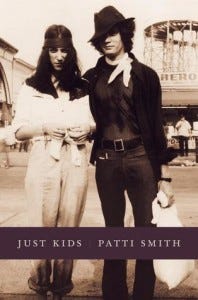
In 2010, rock icon Patti Smith ignited the literary scene with her memoir Just Kids — an artistic bildungsroman that focused on Smith’s relationship with the photographer Robert Mapplethorpe during the sixties and seventies. By 2011, Just Kids had won the nonfiction National Book Award and been named a New York Times bestseller. And now Smith’s story will take shape again, in the form of a limited-run series on Showtime.
“A limited series on Showtime will allow us to explore the characters more deeply, enabling us to develop stories beyond the book and allow a measure of unorthodox presentation,” says Smith. “The medium of a television limited series offers narrative freedom and a chance to expand upon the themes of the book.”
One hopes that Smith’s encounters with Janis Joplin and William Burroughs — described in the book — will be among the anecdotes tapped for adaption.
The premiere date for the show has not yet been set, nor have leads been cast. Fans looking to get their Smith fix in the near future should set their sights on the sequel to Just Kids — M Train, slated for release on October 6.
Signing off with thanks to all who have participated in our discussions of fiction writing today. I want to leave you with this thought: I think we are facing a new era of censorship, in the name of political correctness. There are forces at work in the book world that want to control fiction writing in terms of who “has a right” to write about what. Some even advocate the out and out censorship of older works using words we now deem wholly unacceptable. Some are critical of novels involving rape. Some argue that white novelists have no right to write about people of color; and Christians should not write novels involving Jews or topics involving Jews. I think all this is dangerous. I think we have to stand up for the freedom of fiction writers to write what they want to write, no matter how offensive it might be to some one else. We must stand up for fiction as a place where transgressive behavior and ideas can be explored. We must stand up for freedom in the arts. I think we have to be willing to stand up for the despised. It is always a matter of personal choice whether one buys or reads a book. No one can make you do it. But internet campaigns to destroy authors accused of inappropriate subject matter or attitudes are dangerous to us all. That’s my take on it. Ignore what you find offensive. Or talk about it in a substantive way. But don’t set out to censor it, or destroy the career of the offending author. Comments welcome. I will see you tomorrow.
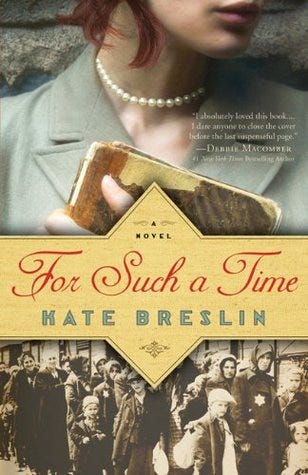
Want to see the new censorship in action? Want to witness an internet lynch mob going after its target? Check out the Amazon review site for this novel and read the one star reviews. Note how many have been posted since August 4th.
In the comments, Rice said that she had not read the novel and was only opposed to the internet mob’s tactics.
Sign up for our newsletter to get submission announcements and stay on top of our best work.
YOUR INBOX IS LIT
Enjoy strange, diverting work from The Commuter on Mondays, absorbing fiction from Recommended Reading on Wednesdays, and a roundup of our best work of the week on Fridays. Personalize your subscription preferences here.