TED WILSON REVIEWS THE WORLD: GLOBAL WARMING

★★★☆☆

Hello, and welcome to my week-by-week review of the world. Today I am reviewing global warming.

Is the world getting hotter? Some say yes, some say no. Others say the world is flat and rests on the back of a turtle, so if things are getting hotter it’s the turtle’s fault. The one thing we can all agree on is that no one knows the true answer and never will.

Scientists should probably start asking old people like myself, because we’ve been around the longest and know what temperatures were like many decades ago. Personally, I believe in global warming and I believe it is caused by humans. I figured this out by using common sense.

Before man, the only things heating up the earth were volcanoes and lightning. Now we have so many manmade things that make heat. Just a couple off the top of my head include cigarettes and soup. So if you care about the earth and want to save it, eat cold soup and eat your cigarettes. But that is only a temporary solution.

The real culprit to global warming is all the open windows. When you open your window, even if it’s just to let a bee out, heat will escape from your home into the atmosphere. With all the open windows in the world this can really add up!

While I will always believe the manufacturing of windows that can open should be outlawed, I know that will never happen because of window lobbyists. That’s why I think we need to reframe the way we think of global warming. It doesn’t have to be a bad thing! No one is going to need a coat anymore. Think of all the money you’re going to save on coats. And ice cream sales are going to skyrocket. Invest in ice cream now and you’ll be rich in 50 years time.

What excites me most about global warming are all the things we’re going to find underneath all the snow when it melts. There will be everything from lost sets of keys to well-preserved archaeological discoveries. It will be an exciting, sweaty time!

BEST FEATURE: Once the planet finishes warming up, everyone will stop arguing about whether it’s warming up or not.
WORST FEATURE: When I get sweaty it soaks through the waistband of my dungarees and ruins my belt and billfold.

Please join me next week when I’ll be reviewing Fla-Vor-Ice.

Don’t Love Your Characters; See Them: An Interview with Kathleen Alcott

Kathleen Alcott’s upcoming novel, Infinite Home, is excerpted in the newest issue of Recommended Reading. In the interview below, Alcott shares her thoughts on the book, and on her writing process.

Emma Adler: Infinite Home focuses on the non-biological family formed by an eccentric group of tenants. Your first novel, The Dangers of Proximal Alphabets, also focused on a non-biological family, and asked what drives people to forge familial ties outside of the family of origin. Is this topic is of particular interest to you? Why?

Kathleen Alcott: I find it interesting that this term and ones like it — “non-biological family” “unconventional family” — have come up so much for people describing my work, because it’s not one I’ve put forth, specifically. But my upbringing and young adult life was one long meditation on the nature of family, I suppose. Growing up in Northern California, I often lived with people who were not my family, friends of my mothers and their children, and I was urged both to rely on them and be accountable to them as I would my own blood. Something about this stuck with me, that we could chose closeness and intimacy like that, that these sort of atypical contracts of love were possible. But also, I lost both my parents by my early twenties, and that emphasized for me the obdurate distinction that exists in the real world between friends and family. Even the closest friend or partner cannot tell you how you looked on the day you were born, and sometimes that is very much what we need to be told. Creating and nurturing lasting connection between two people who come from different corners of culture and experience is an elaborate dance, and never as easy as saying, “I choose you, and we’re family now.” The blueprint for devotion has to be redrawn almost constantly.

Adler: The excerpt from Infinite Home published in Recommended Reading contains a wealth of different settings. In thirty pages, we go from an apartment building in Brooklyn, to a McDonalds, to library, to a hippie commune. One thing I was struck by, reading the excerpt, was how you manage to create a very strong sense of place for all of these settings, despite the relatively brief time we spend in each of them. Is this something that you feel comes naturally to you?

Alcott: I have a memory that is very much image-based. Maybe this makes me sound like a lunatic, but I sort of consider it a secret power, that I can be in line at the deli and suddenly be very much confronted by a very clear image of a place I was once, can conjure the texture of the t-shirts people I loved wore, the color of the kitchen tile, the particular type of tree. Sometimes this happens in the middle of something important, unprompted, and at the point I have to just yield to my memory, see what it’s trying to show me. I tend to attach to these sort of environmental details, and so sitting down and writing a fictional (or non-fictional) place, I’m “seeing” in the same way.

Adler: The excerpt focuses on one tenant from the apartment building, Thomas. But in fact, Infinite Home is an ensemble piece that, written in a close-third-person, frequently shifts which character it is “close” to. Do you find it difficult to shuttle between multiple protagonists? Did you develop a particular fondness for one character, or do you love all of your proverbial children about equally?

Alcott: I find the parent/child to author/character analogy a little problematic — my role as a novelist is not first to love my characters but to see them. Because my novels are very much character-driven, my job requires a lot of doubling back, exploring one assumption about a character’s behavior and uncovering an unexpected impetus, adjusting their vocal-physical presence and interior life given new information. That being said, I did find myself writing different sections depending on my own internal pitch. For instance, when I felt burdened by the modern world, I wrote Adeleine, who surrounds herself with antiquated things; when I felt like my agency in my personal life was compromised by grief, I wrote Thomas, whose life has been redefined by a stroke.

Adler: One of the most intriguing set pieces in the excerpt is the commune that Edith’s daughter, Jenny/Song, escapes to, and which is distinguished by the fact that its residents only use speech for one hour each day. Is this based on something from real life? How much research went into figuring out this part of the novel? Are you now on expert on California’s remote ascetic communities (if this is indeed a thing)?

Alcott: I did plenty of research for Infinite Home — about William’s Syndrome, and synchronous fireflies, and the pathology of agoraphobia, among other things — but the commune featured in the book came purely from my mind. One incredible feature of Northern California culture, to me, is the priority given to reinvention. Anyone is allowed and encouraged, at any time, to redefine themselves, to align with this credo or that, and the institutions that inspire a following — are often relatively new, often without historical precedent. Someone I knew was always attending a workshop on communication through ceramics, or escaping into the mountains to walk across coals, or going on a silence hike, or eating only ginger, or learning Qi Gong. On a more specific note, I was thinking about the push of many of the communes/programs/fads. It’s always a step back to the “authentic self,” always an attempt to carve down our identities to their simplest parts, to harvest inner fulfillment and in so doing need less from the external world. In meditation the most difficult part for many people is transferring the placidity of their practice to the rest of the world; yes, you can notice your thoughts and accept them with peace while you’re sitting on a pillow breathing deeply, but can you do that when you’re interacting with the rest of the world, with the sounds of ambulances and with the stack of bills and with the repetitive conflicts that make up close relationships. I created a community that dealt with this issue literally, that attempted to make life pure by reducing the clutter of spoken communication, to effect an ultra-awareness by asking its members to be alone with their thoughts for most of their lives. If a community like this exists somewhere, and if they have the internet and they’re reading this, I’m waiting for my invitation. I’m very happy to be alone with quiet, and also I’m a damn good cook.

Bursting with Light: Tender Data by Monica McClure

Monica McClure’s Tender Data is an irreverent, glittering show of femininity. McClure’s poetry is confrontational. It’s funny, and sad. It’s grounded in the ins and outs of womanhood and all its absurdity. Words tumble from the mouths of McClure’s speakers in rapid succession: desire, the flexibility of language, and the futility of conception blend easily together in her poems, each bursting with light. Tender Data is a syntactical and thematic delight; even in dark moments, McClure draws our eye to the singular beauty of the human experience.

McClure’s speakers are conflicted, often wanting to chase after life while they simultaneously try to end it. The Plan B pill and abortion are recurring motifs, underscoring her speakers’ trepidations about their own existence. Many of McClure’s women want to be in the world and of it while simultaneously outside of the mainstream. In “Luxe Interiority” the speaker says, “I think I would like to be a part of culture/ while remaining without,” and this sentiment is not unique to one poem. McClure’s women don’t see themselves as being defined by any external labels or descriptors. Though the tone of the poems varies, there’s a consistent disdain for forced meaning.

Tender Data is witty and conversational. McClure’s women are angry, lost, and aggravated. “If someone says poetess,” the speaker of “Flashdancers” tells us, “I am going to scream and chop/ a hobby horse to pieces with an axe.” But the voices in McClure’s poetry don’t just rant; often they point out the difficult dichotomy and untenable existence that is being a woman. In “Beauty School Dropout”, the speaker tells us, hauntingly, “To be a woman is to know how to starve.”

Midway through the book, there is a shift in tone and in language. McClure layers her observations of pop culture and the female experience with challenges to cultural norms. As the poet adds this depth, her poems also increase in length, culminating in prose poetry that’s structurally different — more open and loose — than the short lines of the opening poems. Early in the collection she tells us, “I reject a language manipulated by folklore,” and the progression of McClure’s poetry comes to reveal her dissatisfaction with both form and convention. Tender Data is artfully ordered to demonstrate a kind of thematic unspooling that matches structure, and McClure’s work is bookended by Emily Raw’s photographs of the female form.

“All modes of desire are simulated,” McClure’s speaker tells us in the opening poem, “Blue Angel”. This establishes McClure’s work itself as a simulation of that desire, and whether she’s taking on the full catalog of 2000s pop culture in “Jacking” or building “an altar/ to the saint of lost ephemera,” McClure endows her women with an intoxicating mix of recklessness and sensitivity. Tender Data is strikingly honest, imaginatively assembled, and incredibly accessible. This is the kind of poetry that removes any assumptions of pretense, and thus gets closest to communicating the sloppiness of human sentiment. “I don’t want to be an incubator for meaning,” McClure says, yet her carefully chosen language allows us to feel what we don’t have to interpret.

Tender Data

by Monica Mcclure

Powells.com

A Tradition of Risk-Taking: Talking with ZYZZYVA’s Laura Cogan About Thirty Years in Print on the…

Long a paragon of the West Coast lit scene, this year ZYZZYVA celebrates its thirtieth year in print, and does so with a star-studded anniversary issue. We spoke to the journal’s editor Laura Cogan about where it’s going, where it’s been, and how to navigate the tongue-tied.

Jake Zucker: Congratulations on your thirtieth birthday. I know you have the dynamite anniversary issue out now, but what else do you guys have planned as celebration? What’s going on on your end of the continent?

Laura Cogan: Thank you, Jake! As you can imagine, we’re honored and thrilled to shepherd this prestigious organization through its 30th anniversary year. It’s rare for an independent journal to survive this long; perhaps rare for any arts organization to do so. And it’s poignant to celebrate this anniversary in San Francisco in 2015, at the nexus of so much transition, so much change, and in the midst of such tremendous pressure on the cultural life of this city. San Francisco is at the center of technological innovation and investment; it has also been, historically, a place of innovation and daring in its arts scene. So while the environment is in some ways very challenging, we do also feel that the need for organizations and publishers like ZYZZYVA in San Francisco is as essential as ever. And for readers across the country, and across the world, our vantage point is an interesting one.

We’re planning to celebrate the anniversary throughout the year, with special elements in each issue. Our upcoming Fall issue (due out in September) features cover art and an interior portfolio of work by a tremendous Bay Area artist, the late Jay DeFeo. The pieces featured are exquisite and rarely seen works by a major contemporary artist, and we’re also publishing a meditative essay on her artwork by emerging writer, Andrew David King. That dynamic mix of acclaimed and emerging talent is fairly representative of what the journal strives for in general, I’d say. The issue also features fiction by Anthony Marra, David L. Ulin, April Ayers Lawson, and Glen David Gold — among others. And in Winter we’ll have artwork by Paul Madonna (who is designing cover art especially for the issue) and fiction from Dagoberto Gilb, as well as some wonderful new works in translation. As always, we’re keeping up a busy schedule of events throughout the year, too.

JZ: You spoke of the relationship between ZYZZYVA and the city of San Francisco, and, indeed, your journal’s stated mission explicitly evokes the region in which you publish. For example, the journal’s slogan is “A San Francisco Journal of Arts & Letters,” and the ZYZZYVA website says the journal publishes work of “a distinctly San Francisco perspective.” What is that perspective? And has it changed over the journal’s long history?

LC: It’s an evolving relationship. When the journal was founded in 1985, the mission was to publish West Coast authors exclusively. The idea was to serve as a kind of counterweight against any East Coast bias in publishing, because while the West has always been rich with writing talent, the majority of publishing activity has been, of course, based on the East Coast. As a result, there was (and perhaps, to a lesser degree, there still is) a sense that if you’re doing work at a large geographic remove from the heart of the industry, you may be at some disadvantage in getting the attention of publishers, editors, reviewers. That has all changed somewhat. For one thing, there is more publishing activity here than there used to be; for another, some of that geographic distance may be collapsed by the ease of communications. And people move — many don’t stay anchored in one place for their entire lives. So for all of those reasons, Oscar [Villalon] and I opened up the journal to writers living and working anywhere in the world.

Yet the journal’s roots and presence in San Francisco inevitably inform the editorial viewpoint in many ways, because the choices we make are of course influenced by the immediate concerns of the community around us. So for example, we’ve published a considerable amount of poetry and art that evidence simmering concerns about the environment and California’s drought; fiction and non-fiction about the drug war in Mexico; and, organically, a great deal of literature that addresses national concerns from a Western setting — everything from fiction about the mortgage meltdown in a Southern California development, to nonfiction about serving as a juror in San Francisco, or the shifting idea of the border and its implications for immigration reform. And just as San Francisco is a cosmopolitan city that embraces so many cultures from around the world, the journal is also inclusive. We’re publishing writers from New York, Italy, Mexico, and always looking for those voices from beyond our backyard.

JZ: Anniversaries are an occasion (or excuse!) to look back. What would you say have been the highlights of ZYZZYVA history — both within and beyond your tenure at the journal?

LC: It really is a perfect occasion for reflection. To my mind, ZYZZYVA’s tradition of risk-taking is one of its defining characteristics. It’s a publication that, for years, has risked publishing challenging material, has invested in emerging writers, and has shrugged off the pressures of fads. The journal has always welcomed previously unpublished authors, and showcases their work alongside contemporary masters. This model asks a lot of the reader, but, we hope, also affords her great rewards for her time. So our long-time readers have had the opportunity of discovering Haruki Murakami, Jim Gavin, Po Bronson, and F.X. Toole in these pages. They’ve found early works by Sherman Alexie and Jane Hirshfield, artwork from Richard Misrach. Those are hi-lights from earlier years, and part of the defining legacy of the journal.

And that spirit of risk-taking is something Oscar and I have sought to sustain in our tenure, too — and expand upon. We introduce new writers to our audience as often as possible — writers such as Daniel Tovrov and Monique Wentzel, both of whom were published for the first time in Issue No.99, and whose talent we believe in strongly. We also offer a place for established authors to stretch out and try something new. We’ve published fiction by playwright Octavio Solis, nonfiction by Edie Meidav and Glen David Gold, poetry by John Freeman. In recent issues, we’ve had the pleasure of bringing our readers short stories by many acclaimed authors new to the journal, people like Eric Puchner, Hector Tobar [ed. — Tobar’s “Secret Stream” was featured on Recommended Reading, Issue 163, recommended by ZYZZYVA] and Elizabeth Spencer. And while fiction and poetry remain the bulk of each issue, Oscar and I have also really delighted in expanding the journal’s nonfiction offerings, recently publishing a vibrant diversity of essays by Rebecca Solnit, Katie Crouch, John Gibler, and Julie Chinitz, among others.

Lastly, I’d note one more hi-light of recent years: the events program we’ve built. We’re now producing, hosting, or co-hosting nearly two dozen events every year. They range from readings in bookstores and galleries, to panels and informal mixers. These events have created such a terrific sense of community around the journal. Writing and reading are fundamentally solitary activities, but there’s a hunger for opportunities to meet in the same room with others who are similarly invested in these endeavors, to share ideas, to hear an author reading their words, to ask questions. It’s been rewarding to see the events flourish.

JZ: As an editor, are there schools of writing that you’re particularly interested in representing in ZYZZYVA? What gets you excited? And are there trends that turn you off?

LC: I’m excited when I find a story that captures something essential about contemporary life, fiction that somehow breaks through the buzzing surface of this incredibly noisy mode of modern life, and finds (or creates) something meaningful amid all that chaos. Fiction which, even if it may not suggest any answers, offers that wonderful satisfaction of articulating one of the fundamental questions, or stresses, or tragedies, or absurdities, of contemporary life; or brings vividly to the page something about our shared cultural past — work which, hopefully, also casts some illuminating light on the present. This is what I’m looking for, much more so than representing any school of thought or school of writing. I’m not inclined toward the purely personal, confessional mode; for our purposes, even personal essays need to look beyond themselves, to offer layers of meaning and resonance beyond a straight-ahead reporting of a personal experience, no matter how meaningful that experience was for the writer. Happily, there’s a wealth of great, serious work being done, and in a variety of styles and voices.

JZ: Lastly, I have to ask: what’s the worst you’ve ever heard someone butcher the journal’s name?

LC: Oh, we’ve heard every imaginable variation (or so I think). I take the approach of someone greeting a traveler from a distant land, a tourist attempting to speak in a language foreign to them: I’m respectful of any good-faith attempt at pronunciation, and understand it’s not an obvious or easy word to pronounce. We’ve certainly heard plenty of people venture the beginning of a guess aloud and then trail off in a rising inflection, which comes out something like, “Zyzzzz…?” But really, once you’ve hear it spoken aloud once it’s quite simple, and sort of rolls off the tongue.

Laura Cogan photographed by Alix Klingenberg

July Fiction Prompts Culled from the News

Each month we gather some news headlines that are strange enough to be fiction. Here’s yet another batch of headlines to get your creative juices flowing along with suggested genres:

Metafictional Horror: Legendary Nosferatu director’s head stolen from grave

Survivalist Pregnancy Pyromaniac Fiction: Woman gets lost in woods, gives birth, fights bees, starts wildfire

Stoner Noir: Knife-wielding man breaks into house, demands victim “smoke weed with me right now!”

Science Fiction Monster Erotica: Scientists find 50-million-year-old worm sperm

Man vs. Nature vs. Man: Dude named Bear kills a gator who ate his friend that had yelled “Fuck that alligator” before jumping at said gator

Man vs. Cryptid: Texas man claims to have chupacabra in fridge

Scammer Magical Realism: Man’s pet dogs end up being pet endangered bears

Twee Travelogue: Canadian flies over Calgary in balloon chair

Novel of Bad Manners: Drunken wedding in Pretzel Capital of the World descends into massive brawl

Celebrated Novelist E.L. Doctorow Dies at 84

E.L. Doctorow, the acclaimed author of Ragtime and Billy Bathgate, has died at the age of 84 due to complications from lung cancer.

Doctorow rose to prominence during the 1970s, with the release of Ragtime. Later adapted into a Tony Award-winning musical, Ragtime is a sweeping examination of early 20th century America that follows a slew of characters — some elite, some lowly; some historical figures, some totally made up — as they navigate the prickly socio-political realities of New York. Emma Goldman has a cameo, as does Harry Houdini.

This work, arguably Doctorow’s best known, emblematizes his singular brand of historical fiction. In Doctorow novels, characters real and imagined shuffle through watershed moments — their peregrinations reanimating vanished landscapes, and bringing to the fore that which is often squelched in representations of epochs past. During a decade that brought us “Grease” and “Happy Days,” Doctorow — unflinching in his portrayal of bygone turmoil — provided an antidote to overweening nostalgia. The cultural critic Frederic Jameson called him “the epic poet of the disappearance of the American radical past.” In his review of Doctorow’s 1986 novel The March (that year’s winner of the National Book Award), Updike called him “not so much a reconstructor of history as a visionary who seeks in time past occasions for poetry.”

Those who disagreed with his more blatant off-the-page politics had less kind words for him, but Doctorow was staunch in his refusal to accept any of the labels foes and fans alike attempted to affix to him. He told the Times in 2006:

“People say to me, ‘A lot of your novels take place in the past. Are you a historical novelist?’ I don’t think of myself that way, but if you want to call me that, go ahead. Then someone will say, ‘There’s a certain political quality to a lot of your work. Would you call yourself a political novelist?’ And I’ll say, ‘I’ve never thought of myself as a political novelist, but if that suits you, why not?’ And then someone will say, ‘You’re a Jewish novelist’ — and yes, I guess that’s true, too. So I accept any kind of identity. I’m willing to participate in all of them, as long as none claims to be an exhaustive interpretation.”

If you haven’t already formed your own opinion about Doctorow, we encourage you to interrupt your regularly scheduled reading, and steep yourself in his pages — simultaneously portraits of history, and of a man who thrilled to “fiddle” with it.

Midweek Links: Literary Links from Around the Web (July 22nd)

Looking for some interesting reading to get you through the week? Here are some literary links from around the web to check out:

lit road trips

A pretty amazing map of literary road trips

New Republic explains how Joan Didion became America’s main literary celebrity

Franz Kafka was funny, but was he funny ha-ha or funny uh-wha??

Frequent EL contributor Tobias Carroll gives you a primer on the genre of Weird Fiction

Harper Lee’s “lost” sequel to Mockingbird is getting mixed reviews, but is selling even better than E.L. James

24 drug-addled novels that will bend your mind

Jessa Crispin explains the gendered problem with the Elizabeth Gilbert school of female travel writing

New Yorker delvers into the strange, unsettling works of James Purdy

A lament for modern publishing

Lastly, the most accurate and most helpful writing tips from famous authors

Infinite Home (Excerpt)

by Kathleen Alcott, recommended by Catherine Lacey

Excerpted from the novel

Thomas hadn’t visited San Francisco since losing his old body, but there was a time he had flown out once or twice a year: he would casually tour the spectacular heights and views, stay with friends and spend unfocused hours on foggy rooftops. He had always arrived with no definite plans and found a city that didn’t require any. As he looked away from the airport’s organic grocery store, its rainbow bounty of produce, as the escalator carried him down from ARRIVALS to GROUND TRANSPORTATION, he reminded himself of the wholly different shape of this visit. Imagining himself as he’d last been on the same steel moving walkways — his linen thrift store slacks, his military-green duffel bag, his carefree stroll towards the line of cars outside and the warm way he’d greeted the friend who’d picked him up — he constricted and grabbed for the handrail.

There was no one pulling up in a car for him out front, no one waving and grinning: he hadn’t let anyone know he was coming, couldn’t imagine summing up the last two years or explaining his total lack of plans for the next few. He followed the signs to other transportation, fumbled with the unfamiliar ticketing system, pulled his rolling suitcase into the train car, and waited for motion.

His plans were vague, loose as algae. He had wished — so hard that he’d begun to expect — that he would divine some clue or plan from the sea-brined air, the Victorians that seemed to lean crookedly uphill. Instead he was a man in a city not his own, holding the decades-old mementos of someone’s lost daughter, standing at the exit of an unfamiliar station with no itinerary besides a stop at the library. He had smothered such hatred of himself since meeting Adeleine, had distracted himself with the unfolding mystery of her, but now he felt the creep of fog under his light sweater and tugged at his sleeves, furious with himself for failing even to look after this basic aspect of survival.

He narrowly skirted an argument between two bearded homeless men but not the thick odor of urine it seemed to agitate, pulled Declan’s cardigan against him, and cut a path towards the library, a seven-story building of angular granite that abutted its neighbors’ stone reliefs of angels. The automatic doors acknowledged him and opened.

Three hours later, on the top floor, where the city records lived in quiet decay, Thomas had found an excess of nothing concerning Jennifer Faith Christine Whalen, save the small fact that she had attended, or at the very least signed up for, a class — on what the registrar didn’t reveal — at the city college the year she arrived. It was as though she had never assumed an address, or cast her ballot in an election, or subscribed to a journal, or taken any of the measures that mean inclusion or community or home.

Why, he wondered, in all the photos of her, did she seem uncomfortable in the world of domesticity and people: why had she seemed to hover over the couch rather than let the cushions receive her? Why hadn’t she reached out to hold the volunteered crook of Declan’s elbow? Why had she only packed such a modest suitcase on the day she left, forsaking the playthings of childhood and pinned-up photos of idols so easily?

Thomas’s frustration with the lack of results nudged at his aching for Adeleine; the smell of browned papers and the creak of century-old book spines in the records room had irritated it, reminded him of all the antiquated things she worshipped so stubbornly. The sound of the chair as he pushed it back reverberated, a loud screech in a room full of things still and near soundless, and he took the stairs down at a clip, determined to hear her voice on the telephone.

Outside, settled uncomfortably on a ledge that barely accommodated his body, Thomas listened as her phone rang but she didn’t answer, and vividly pictured the worst. She had recounted to him the psychiatrists and the pills, those prescribed and otherwise, and he had grown to sense her need for him, had seen her darken when he told her about his plans to travel. Three thousand miles away, he imagined the mass of her orange and beige anti-anxiety pills emptied out, the sleeping agents spread in lines, or her water-pruned body drawn in a tight shape in the bathtub where she had hid for hours, murky, loose as algae. His imagination, he considered as he withdrew from the fantasy, had never lacked ambition. Looking up towards the inscrutable gray of the sky, which hung low and concealed distance, he dialed another number.

Edith’s voice rang out so firmly when she said hello that Thomas, on the other end, could almost believe her as capable as she once had been: he could fly back at once, let his mind flow into calm under her maternal reassurance, grow tired by the hiss of her worn blue kettle. It was mid-evening there, and he imagined her stroking the tufts of her hair, rocking slightly as they talked.

“You’re in San Francisco!” she chirped. “Why, that’s where our wild Jenny went off to.” The careful conversation he had led, informing Edith of his purpose, begging that she rummage for any more information about her daughter, quickly diverged.

“Yoo-hoo,” she giggled. “You wouldn’t believe who has joined me this morning. Ad-e-leine! And she’s got the loveliest housedress on, and I think I’m going to take the train into the city and find one just like it at Bergdorf’s!”

Standing upright, newly chilled by the fog, Thomas watched a homeless man in a shrunken sweater listlessly rearrange the cans in his shopping cart, and forced a chuckle.

“Listen, Edith, do you think I could speak to her?”

“To whom, dear?”

“Adeleine.” The phone emptied of sound.

“Oh — yes,” Edith warbled.

Adeleine greeted him girlishly, with forced and uncharacteristic affection. He wanted to warm and unclench at this, at being addressed intimately for the first time in days, at being recognized, but her chipper tone bore a suspect echo.

“What are you, uh… doing?” It was not like her to get out and socialize with the neighbors, no less the demented and capricious landlord. He supposed he should congratulate her, but the suspicion arrived first and made its demands like a guest at the table too hungry for manners.

“Edith was having” — she paused while she searched for safe language — “a bad day, you could say. I heard it from my apartment and I came down.” She offered this information blithely, as if she were not someone who received her groceries exclusively by delivery, who had turned defensive and morose when Thomas suggested that she might someday join him on a camping trip.

“You could… hear her bad day?”

“Yes, well. I was on the floor, so. Anyway, I’ve been writing down some memories for her — she was upset because she said they were sort of losing their foundation, like they were flooded and pushed into the wrong rooms.”

“Flooded?” Thomas remained astonished. He didn’t recognize the uptick in her voice, or the assertive clip of her intentions; he tried to imagine her eyes focused in the muted lamplight while she urged Edith on in her remembering, while she pushed a pen across the page with a strong wrist, but couldn’t.

“Point is, I thought I should help. How are you?”

“I miss you.”

That was all he could manage. He had never had a talent for speaking on the phone, was always hovering over the conversation’s true purpose or cowed by the speed of the interaction, reacting too slowly, forgetting to assent with his voice as well as his face.

“Okay,” Adeleine agreed hesitantly. “Me too. I think I’ll get back to Edith now, but I’ll talk to you soon.”

“Okay,” he echoed, but she had already ended the call. How could it be, he thought, that the people he had gone galloping off on this fool’s mission to help were so comfortably supporting each other in a warm room? He felt glad for them, for the idea of Edith’s chatter being caught and held, but the phone call had left him more and not less lonely, and he knew that every passing hour was another in which he hadn’t earned his way home.

Thomas slept late in the exorbitantly priced hotel room, succored by the white anonymous space as he dreamt, slowly, of untouched earth. Even as he walked through the dream, he knew it was strange that his mind, so accustomed to an urban setting, would conjure rivers rapid and green, footpaths curving under the grand theater of forest. When he woke, he thought of water. He wrapped the plush, bleached robe around him and crossed the empty hall, where he stepped into the washed glow of the elevator.

The pool possessed a certain type of lavish 1920s grandeur: the curved glass ceiling demarcated by thin white panes, the pale tiles and plush lounges immaculate, the verdant fronds tall and loose in each corner of the room. As he willed himself to float, he looked up through the glass at oxidized copper roofs, at office buildings pulsing with light, and marveled at how his liquid surroundings rendered the paralyzed side of him just the same as the other.

In the late afternoon, dry but still drunk with the sensation of floating, Thomas stepped out of the lobby and walked. He carried the last photo of Jenny in his pocket, studied it on various benches, patted it while he ascended and descended the hills that seemed impractical for the purposes of a city. Why build on such angles? But he admired them, enjoyed the performance, the way succored by the white anonymous space as he dreamt, they routinely hid the next mile from view and surprised with an abrupt path downward. After two hours of walking he realized what he’d known but ignored: that the city wasn’t as large as New York was, wasn’t a place that offered getting lost as a gift. Through some unconscious set of lefts, he had already begun to return: to his scant luggage, the pennies and dimes on the night table.

He walked down Market Street, the early stretch of it still dominated by strip clubs and SROs and the woven dens of the homeless, constructed of scraps of cotton and cardboard as though designed by earthbound birds. Thomas dodged a handful of requests for change that varied in tone and volume, stepped over a half-dozen sleeping bags, and then he saw her. Her outstretched hands, her skin that appeared to have experienced flood and drought in an unending cycle, her eyes unchanged.

Hardly feeling the dip between curb and street, he glided towards her. He was sure, or nearly, that this was the child Edith and Declan had lost. She was standing with a foot on the concrete ledge of an angular fountain, working a denim pant leg up with one hand and holding the plastic handle of an overflowing shopping cart with the other.

He approached and stepped into the fetid scent, understanding too late he was interrupting her bath.

“Jenny?”

The woman wrinkled her forehead to regard him, and the dirt on her face realigned. She was worn in the way of broken things left out in brown yards, stretched and sun-bleached and sagging.

“Who are you to ask,” she spat. “You a cop?”

“No, I — ”

She pulled on his sweater and tilted her head to the side. “No, you’re not a cop.”

“I came to talk to you — ”

“I’m hungry,” she barked. “You gonna get me some fuckin’ food or what?”

Before he could answer she was shuffling off, pushing her cart against the light through protesting honks. He tried to keep up, weaving through traffic and raising his hand in thanks to the drivers who let him. In front of a McDonald’s she acknowledged two hunched and gaunt men pinching cigarettes between diminished lips and leaning against the intricately scratched window, and parked her rolling pile of possessions there.

Inside, she told Thomas what to order, grabbed a booth while he waited in line. She’d brought in four bulging plastic bags, which she examined and sniffed. Thomas looked up at the backlit photos of hamburgers, unsure if this was how he had wanted to feel when he found her. It had happened too quickly: he had not been prepared: but how, he wondered, could he have readied himself for this?

She didn’t comment on the way he crouched to slide the tray, one armed, onto the table. While she inhaled a double cheeseburger and gnawed the ice from the soda, splintering it in her open mouth, Thomas looked for words, aware he’d spent much of life like this, stammering and searching. Wasn’t this outcome more likely than any other he’d considered — couldn’t he have guessed that the lost child, damaged by an era that chewed up so many, would be somewhere between life and death, growling, pushing her rotting blankets and talismans through depressed intersections?

“I guess I’ll get right to it. Your mother? Edith? Is sick. Your brother is trying to take the property from her against her will.”

She said nothing, kept eating, opening ketchup packets with her sawed-down teeth and picking at her gray gums with a pinky nail.

“I know it’s been practically a lifetime, but — ”

“I don’t know who the fuck you are, but you must be a lunatic or somethin’,” she said, finally. “Don’t know why you want to tell me this shit. Like I don’t have plenty to deal with. Everything I can do just to survive. City making new laws to illegalize me every day.” Her frustration soon became unintelligible, and she was speaking in schizophrenic apostrophe. “Little bitches,” she said. “Flying around, not even my own age.”

Her cool anger seemed to flash, vanishing from her face before it appeared in her body. Their circumferences like those of dinner plates, her enormous hands spread and hovered over the table, then slammed down. “Fucker. Motherfucker.”

“Jenny?” He said it again, though he knew now how wrong he was, and longed at once for all the clean, quiet moments of his life, as though summoning them might give him some power in the barbed present.

“I’m leaving, and I don’t want to see you again.” She removed a butter knife from one of the plastic bags that swayed from her arm and stood before him, swiping it through the air vertically.

Thomas found himself laughing, everything suddenly a well-earned punch line: the carving on the bench that read SUK OR FUK MY DIK, the irate homeless person he’d tried to offer free real estate, the filthy woman’s eyes protruding as she gripped the dull, bent knife.

“Lunatic is right!” Thomas said, as she backed away. Freed in some way, he closed his eyes and sank into the vinyl backrest.

He folded his arms on the table, buried his sight in the scratchy wool once Declan’s, and found the memories of his past life there: himself at an art gallery, shaking hands with suited men, later sharing their cabs, waiting for the girls in belted linen dresses to come to him, packaging his pieces for shipment once they’d sold, taking a nap in the afternoon, knowing the world would be ready to receive him when he awoke. He sighed and rose and pushed the door open.

Before he felt the force of hands around him, he noticed the scent of old sweat. Then the voice of the woman who wasn’t Jenny, skirted by two others, and the coughs as they slammed his head against a wall, searching his body as though it were a cluttered drawer. The greedy push of their fingers was several seconds gone before he opened his eyes, saw them running and the man in the blue uniform approaching.

A few days after the ambulance took Edith away, Edward and Claudia sat on his tiny couch, dark bottles of beer in hand, their faces lit by a stand-up comedy special. Paulie sat between them on the floor, leaning his head lightly against Claudia’s knee and occasionally patting Edward’s calf. They passed things to each other wordlessly as they laughed: Claudia handed Edward the carton of lo mein; Edward removed a cushion from the sofa and placed it behind Paulie’s neck; Paulie, without taking his eyes from the screen, removed a pinecone from his pocket and placed it on Claudia’s right foot. That afternoon, while the three of them picnicked in the park, Drew had placed a trash bag on their stoop: Claudia’s dirty laundry, worn underwear and coffee-stained nylon button-ups she hadn’t bothered to wash before she left him.

Paulie finished eating first and began silently farting. Edward’s face contorted as though witness to a quick accident, a knuckle hacked off in shop class.

“Paulie! What the fuck! That smells like if celery were homeless!”

Claudia choked on her beer at this, sprayed it out the side of her mouth, and Paulie’s face reddened furiously. They were hidden in the safety of the moment, the comfort of intimate ridicule, when the lights went out.

The fact that the woman who wasn’t Jenny and her bumbling street colleagues hadn’t managed to steal anything made the humiliation worse. A stronger person, thought Thomas, would brush this off with a laugh, the thought of blindly following a homeless woman into a McDonald’s and babbling on while she devoured greasy food, preparing to rob him. The way they had wrenched his body left a series of bruises, and on the back of his head he felt a raised welt, but he knew it didn’t warrant the two days he had spent almost entirely in the hotel room. He had accomplished nothing, eaten little, felt that he deserved to remain hungry. On the third evening he resolved to rise early the next day, take himself to a museum, and develop some plan in the unfettered mental space a concentration of art almost always gave him.

At the Museum of Modern Art the next day, Thomas wandered through a photography exhibit focused on Depression-era small towns, thought how the dirt-faced children were all most likely dead. Later, he nearly stumbled into a sculpture that took up a whole room, a netting of tied rope that seemed to fall naturally but was in fact hardened with shellac. Signage prohibited venturing in or under it, and he felt a silent camaraderie with the others who skirted the edges as he did, looked a lingering while, perhaps thinking of parts of their life that had once seemed flexible and had irrevocably calcified. He drank expensive coffee on the rooftop garden, which seemed to gather all the heat the gray city had to offer in the bright steel of its abstract sculptures, its polished wooden benches. Nearby a new family talked loudly, their idealism pouring into a high-tech stroller, and from the street below came the sounds of someone with a bullhorn, trying to rally people for a cause that was not quite discernible. Thomas decided to try the library again, if only for the quiet.

At his pleading, Edith had finally admitted, in the benumbed voice she seemed to reserve for protected memories, that the last they’d seen of their daughter was a shot of her tangled hair in a television news segment. He thought it possible that if a news network’s team had been there, so had some local reporters, and he resolved to spend the afternoon at the microfiche machine, watching the nicotine-colored celluloid whir by like water escaping a hole. At the base of the library, a sloping lobby that looked up at six floors of smudged glass walls and people moving slowly behind them, Thomas felt a new wave of surrender to the search and followed the feeling into the elevator.

Edith had been unsure of the precise year, had finally whittled it down to two possibilities, and Thomas requested the reels of the Bay Guardian and the San Francisco Examiner. His hand on the lever, he spent hours moving the blown-up images forward, hastening the speed, quickly absorbing then rejecting headlines about the rare heat wave, the murder of a police officer, the kidnapping of a child. At the end of it all he had nothing; the final strip reached its ends and retracted back to its spool, and the screen, deprived of anything to project, glowed eerily white. Comfort had replaced purpose: the idea of Jenny had splintered and lost focus, but he felt calmed by the dated technology, the rolls stored in their time-stamped boxes and handled by librarian after librarian, the stories they held immutable, and so he requested two additional rolls from later years.

His right wrist, loose, let the blown-up reproductions float by rapidly, and he basked in the therapy of the changing ochre light, the steady hum. He settled back into his chair and imagined soothing, unlikely futures, apartments he and Adeleine might rent and furnish together, children he might have and carefully watch.

And there, unmistakably, appearing for half a second in a photograph that championed most of a page, was Jenny.

Thomas stood on the top floor of the rapidly emptying library, dreading exit, ignoring the announcements about closing, printing several copies of the photo.

Jenny and another girl stand in the shadow of a man wearing only jeans and sunny brown hair hanging past his nipples. His hipbones, distinct above the denim’s low waistline, gleam. A variety of greenery, spiked and reedy and leafed, moves up their legs. Jenny, on his right, rests her hands on the wooden handle of a shovel nearly as tall as she is. On her biceps is a tattoo of a circle, perhaps something more that Thomas can’t make out. To the man’s left, the other woman leans her soft face and long braids against his sculpted shoulders. In the unfocused background sit lopsided structures made of waste, bits of crates printed with half names of brands, deformed soda bottles, slices of tire, all of them thatched with twisted steel and strips of faded cloth.

The accompanying article, dated 1973, concerned a group of people who had departed San Francisco, gone farther north, in a return-to-the-land movement characterized by an emphasis on quiet. While they specifically avoided terms such as “leader,” the twenty-odd individuals — mostly young women — had followed the man in the photo, who called himself Root, to the property just below the border of the Trinity Alps Wilderness, an area rich in conifer diversity and poor in people. The son of a prominent senator, he had washed himself of his family’s reputation and spent their money on three hundred acres.

They spoke only one hour of the day and harvested simple crops, arugula and tomatoes and corn. In what little of an interview the reporter could manage, Root offered few words about their rejection of identity. “We’re no one, just like everybody else,” he said. “And we’re not afraid of it.” Regarding their notions about silence: “It’s not a hard and fast rule. Nobody is upbraided if they need to talk outside the hour of the day we set aside for it. But we find that the lion’s share of verbalization is an unnecessary excess, a vehicle that brings us away from ourselves.”

Jenny, who had begun to call herself Song, spoke only when asked about her home — had she come far to join this? Did her family approve? — and she answered only, “I was born in a place surrounded by water you can’t drink. Can you imagine?”

When an Internet search confirmed the community still existed, Thomas felt the return of obligation. Back in the hotel room, he parted his hair neatly and combed it, took a harsh gulp of the tiny mouthwash. He kept expecting to find an out, to follow a selfish wish, and felt some surprise in the cab en route to the nearest car rental, as he spoke clear directions to the driver, and in the moment after the uniformed employee dropped the keys to a bland sedan into his hand and he crossed the parking lot, humming. He hadn’t driven a car since the stroke, and some part of him had expected a test demanding he raise both hands and make fists. He pushed away his mounting anxiety until the road was already rushing invisibly under him, then transferred it to the pressure on the gas pedal. The indirect route he’d planned, he hoped, would work to collect his confidence. On the Golden Gate, he ignored the way his left hand wilted across the steering wheel and watched the light perform on the bay. North of San Francisco, the land turned first into a near canopy of deep green, then cow-spotted hills that sloped modestly into imposing height.

The country Thomas had reached boasted of its beauty in a way that seemed to erase tract housing and mini-marts and rat-infested public transportation; the overwhelming height and age of the trees, the loud proof of the river beyond them, nullified his memory of anything else. When the map he’d hand-drawn at the library — a childhood habit and a comforting pleasure — indicated his location on the curving two-lane highway as half an hour or so from the possibility of Jenny, he pulled over on an untended shoulder. He would find his way to the water, which he believed he could smell.

On the silted bank, he accepted the probability of Jenny’s being long gone or dead, and he watched as the river, rather than bracing for impact, hurried its pace around the bend ahead. Picking up pebbles with his toes and letting them drop, Thomas waited there twenty minutes, until he felt his breathing had refined. Back behind the wheel, he signaled before he pulled out onto the concrete. He had not seen another car in hours.

At the point in the road where there should have been a turn into the community’s property, he searched for a clear demarcation but found none, let alone the hand-carved wooden sign or softly lit path of loose earth he had imagined in his more sanguine moments. The road neatly divided two biospheres, one that tumbled down in sharp angles of rock and trees that grew almost horizontally into the bleached altitudinous sky, the other a level forest dense with age and nearly lightless.

He left the car door open, the sensor dinging and nagging, as he paced back and forth along the road’s shoulder, pausing at points to will some divine clue and then blushing at his foolish- ness. On his final lap, ready to get in the car and scan the next few miles of road, he felt the pang of an approaching aura. Unwilling to embrace the uncomfortable swirl of color at the margins of his vision — This doesn’t help me, not now — Thomas settled horizontally on the damp and green side of the road with a hand over his eyes and waited for the ache to strike. As the pain descended, he tried to focus on the view, the trees that triangulated in their height and framed the lowering sun.

Closer to him than the wash of sky, thirty feet above the ground, a length of faded mauve cloth stretched from one branch to another. A foot above glinted a section of pink ribbon, taut and pearled with the near-dusk. A slash of green. Orange. Yellow. He gripped grass in his fists and looked, but saw no clear indication of how whoever tied them there had scrambled up, no marks in the tree but those of weather. The aura rippled and bled his perspective of the colors, and he waited for them to clear, his mind renouncing worries one by one, like muscles giving out.

It felt difficult to believe that an hour before, he’d lain curled in the throes of a migraine on the shoulder of the road: now he walked through patches of light where the trees parted their tangled meetings, now he saw — far ahead, but not unreachable — the system of structures.

He momentarily believed, with the kind of unblemished optimism that only accompanies new places, that he had nothing to be afraid of: he would end up with Adeleine or he wouldn’t, he would find Jenny or let the blurred idea of her go, he would accept the lost agency of his body and find another use. Fed by rosy resolve, he approached the cluster of buildings set against the forest in ragged lines, and made for the largest, where a slipshod porch cast blue shadows. The shade of a veranda, composed primarily of a drooping sweep of fishnet, was woven with the spines of hardback books, the lone soles of hiking boots, gnarled pieces of wood that varied in lengths and browns.

In the small of his back and the balls of his feet, Thomas felt the men approach.

He turned to witness their congruent outlines, long hair that fell around stern faces, clothing patched and repatched so thoroughly it obscured any original layer. Their ages seemed indeterminable, as if instead of possessing a certain number of years they shed and gained age, as circumstances required, from one great shared well. In one motion, all of them extended their arms upward in Vs. Either like reaching for something hidden, Thomas thought, or preparing for a fall.

“Raise your arms up to greet us,” said one with gray eyebrows that nearly met and a tattered rope of violet cloth in his long hair, not ungently. He was trying to guide him, Thomas could tell, attempting to lead the foreigner’s first communication.

“But I — can’t,” said Thomas, pointing at his limp arm with his virile one. “But I can’t.”

Later, inside, a hardening clustered among the men. He was a stranger, and he had asked to speak with Jenny, had used her birth name as if he owned it. “I’m here,” he had said, “on behalf of her mother,” as though that would make it better, as though it weren’t offensive enough, his arriving there insisting she belonged more rightfully to some other life.

They were seated in what he assumed was a common area, under polished conch shells that sat on foot-long shelves of birch high up the wall. Bags of rice rested on tapestries of crudely stitched images of forests and rivers. Tortoiseshell cats entered and exited, turning corners purposefully. In a specious reversal of power, all the men sat on square pillows they had removed from a pile in the corner and arranged in a half orbit below Thomas, who balanced in a modest rocking chair. Looking at them, he noted they had mastered the art of listening and threatening simultaneously. The door, which leaned slightly off its hinges, was half open and suggested escape, but he understood they would not permit him to walk out.

“Her son is trying to take her home from her,” he said, his voice hushed with exasperation. “Jenny’s brother.”

“Song,” they said. Every time he said Jenny, all the figures in the room murmured Song in correction, further contributing to the impression that they were forever collectively processing.

“She was one of the first ones here, wasn’t she?” Thomas heard himself continue. “She came with Root.” He hoped that this might indicate a respect for their mythology, that he had not arrived to beg without understanding what they risked by giving, but the mention of the lean man in the forty-year-old photographs made them lower their heads.

“I’ll take you to see Song,” said the one Thomas now understood to be the eldest, “but after, it will be time for you to go.” He rose without checking to see whether Thomas was following, used a careful thumb and forefinger to open the door. Thomas, who hoped to express some thanks, stood to speak, but their heads were pressed into their laps, and their long hair in grays and browns ran over their ears and onto the dusty hardwood. The man he was meant to follow was already outside, and the day was already losing its downy heat.

How long had he been cross-legged on the stiff cowhide rug by the darkened fireplace? What was Jenny’s intention, sitting up in the wide sun-bleached bed, looking impossibly old? The tattoo on her arm was the same as that in the newspaper photo — a faded black circle that he recognized now as a snake eating its tail — and the line of the freckled jaw was similar to that of the little girl in Brooklyn, but she looked as though her body had been systematically deserted, memory by memory emptying out in single file. He kept searching for evidence of her taking in or releasing air. The room seemed a near-total void of history or evidence or yesterday or tomorrow: the sheets white, pristine in the way of nothing else on the property; for a nightstand, a slab of unpolished tree trunk; the curtainless window. Just beyond her, a doorframe revealed a small, low-ceilinged room, within it a black woodstove and two simple chairs stacked together. The smells of food, of things warmed by time and by bodies, were absent.

Finally, without opening her eyes, she spoke.

“Edith sent you.”

“Well — not — you see — ” he answered, although it had been clear this wasn’t a question. The woman, once a child on the steps of the building Thomas had come to need, stopped him before his unorganized mumbling achieved any pattern.

“I’m afraid I can’t help.”

“But your brother — ”

She put a palm up with the patience of someone directing the weak and hospitalized.

“That person is named Owen.”

Thomas sensed Jenny’s language was one half-forgotten, its structure uncharted, the pressure of the tongue against the palate to make a sibilant sound uncomfortable.

“I should not need to say that these people you mention are not part of here.

“However,” she continued, “I can and will give you the same option I give others who come to me. You can stay here for a week, and stay quiet. If you still have the same concerns then, you may pose them. But I find” — and here she readjusted the pillow behind her back and put a hand to her jaw — “the questions tend to change.”

Only through trial and error did Thomas learn that Jenny — or Song, as he’d tried to start remembering her — meant precisely what she said. No one punished him for speaking — not when he addressed her, or any of the men who arrived with plates of grainy cornbread and boiled, dirt-caked spinach and fried eggs over brown rice — but his words didn’t seem to make it any farther than his lips. They didn’t glare at him or admonish him when, during the first twenty-four hours, he continued to ask, “Would it be possible for me to bathe? Could I make one phone call?” But neither did they acknowledge the sound; they only gazed and blinked, as though waiting for some unseen photographer to press down a button. It’s either like checking into a hostel where no one speaks your language, Thomas thought, or regressing into preverbal infancy, conceiving that care will be bestowed without even grasping the concept of trust. Neither option seemed ideal, but then neither seemed impossible to master. The discomfort of it was like a pulled muscle, unnoticed if he remained still.

By hour thirty-four, he had consigned his old urgency. He dipped his feet into little pools of memories, walked in and around them, trying to absorb every side. A nameless and cinnamon-scented teenage babysitter guiding Thomas’s tiny fingers into pots of primary-colored paints, then across the page. His mother at her happiest, alternately darkened and illuminated by a romantic comedy at the multiplex theater, her hand hovering over an unending bag of popcorn, sometimes squeezing his in delight, calling him my love. His high school biology lab partner, a red-haired girl who had undressed in his bedroom while his back was turned and insisted he draw, instead of the assigned feline skeleton, her. The variously svelte and pilled couches he slept on his first months in New York, the friends and acquaintances to whom they belonged. An afternoon he draped himself across the parquet after he had hidden all his art away, trying to forgive it for leaving. His ear pressed to the wall to better hear Adeleine’s song. The end of a film moving across her face. He entered and exited these rooms blithely as the hours passed, sometimes dozing off under a thin blanket, sometimes waiting, with a flat, simple hope, for food.

Thomas sat on the uneven slats of Song’s wooden porch, observing a lone chicken cross a patch of dirt in a jagged line. He didn’t know where his shoes were. It was morning, and already warm, but with the extended absence of language also vanished observations about things like temperature and time. It had been seven days, although he didn’t know that; he’d stopped counting, or forgotten to measure, at four. When Song emerged and situated herself on the handwoven chair behind him, he reached to squeeze her left ankle, and she patted down the unruly parts of his hair. Pale as the early light, the chicken paused to investigate an unfamiliar plant. Two men appeared at the crest of the hill; Thomas and Song watched as their faces became clear, and nodded. The wood creaked to accommodate two more bodies. Mugs of tea, carried a mile, changed hands. The chicken moved in its rhythmic way, a step and a pause and a gawk, a step and a pause and a gawk, into a patch of cedars. Water rushed nearby: they could hear it.

By the time Song finally opened her mouth to speak, Thomas had long since stopped expecting it. The unfamiliar travel of human speech confused him, and he looked around the small house, at the peak of the ceiling and the slanted gap beneath the door, as though to find where the word had landed. It was afternoon. He sat cross-legged on the floor, sorting through rocks the color of long-circulated money, and she watched him from the wicker chair by the room’s one window.

“Hello,” she said. They had grown so comfortable with each other’s silence that the greeting seemed unnecessary, even foolish. Not quite ready yet for whatever it was that language might reveal, Thomas kept his fingers on the stones, thumbing the smoothest stretches, admiring dramatic variations in shade, and nodded. “I’m prepared to speak about the issue of your friend Edith,” Song said. “I trust you now. We grew that.”

“Oh,” he said, searching himself for a feeling of concern for their conversation. “Well?”

Hunting for the pivotal speech he’d filed away, he played back images and sounds: the locked door to Edith’s apartment and Owen’s impatient words behind it; the rigid form of her body in her son’s presence. Adeleine on the top floor, every object placed to amuse and comfort her, the safety that finally played across her face as she slept. Paulie at the keyboard, the clamor refining into pristine patterns and flying up the stale stairway. Edward, whispering something to Paulie as they made their way down the street, towards the park and the last of the sun. Claudia waiting for them on the stoop with overflowing grocery bags, heads of watermelon, ears of corn, smiling at Thomas with a muted, infectious contentment.

“It’s the house,” he said to Song. “She left it to you.”

“To the person I was, once, a long time ago.”

“Okay, yes, to who you were. But Edith is sick, and Owen is trying to put her in some retirement facility against her will. He wants to get rid of her and take over the property, push us all out of our homes and rent them for six times as much.”

Song’s face had not turned. Her peace rivaled a houseplant’s.

“He’s rough with her, Song. He herds her around like she’s his f.”

“Oh.” Her eyes closed briefly, and he could sense her muffling a response, pushing memories down as they surfaced, like things in a basin of water not yet clean. She gripped the arms of the chair, and a bellicose purple stood out in the veins of her throat.

“Please present your purpose.”

Thomas went to Song and knelt, as if positioning himself like that might let him catch some of the unwanted, unhappy recollections that spilled from her.

“You have to take the house, Jenny,” he opened gently, careful about how he called out to her past, careful not to send it scurrying away from the light. “You have to save her like she wanted to save you.”

She released a ragged sound, as though some long-struggling part of her body was trying to open.

“Jenny,” he said.

Jenny,” she said.

Almost as soon as her moan filled the room, it seemed replaced, eliminated by the atmosphere’s familiar muting of extremes — the structure never too cold or warm, the sun always filtered by trees, only the necessary words spoken — as if snatched up by some invisible maid who didn’t prefer the messiness of suffering, and swept back out into the wild. Thomas couldn’t locate the moment before, the split second when he’d connected her to who she had once been, and her eyes, placid again, revealed nothing.

“A sweet person,” she said, with apparent regret. “The girl you’re looking for doesn’t exist, don’t you see? I gave up my past when I came here. I made a commitment. I was born after, do you understand? I don’t have any right to that place. In fact, the system we built here precludes ownership.”

“But — ”

It felt as though his blood were moving through him at a perilously slow rate, but he continued, even knowing how little power he held. “But she was your mother. She was your mother and — ” His voice broke as he thought of the photo, of Edith on the lumped and sun-strewn bed, holding up the tiny new human to the concentration of light; then he recalled his own mother, throwing an arm across his chest at sudden stoplights, the bashful smile she always gave him after.

“She never stopped missing you, do you understand? She was sorry her whole life. She never stopped looking.”

Song turned away with a long gaze, taking in the horizon in no hurry, but Jenny’s mouth softened and quavered. In an expeditious series of motions Thomas wouldn’t have thought her capable of, she was up and at the door, lacing up her boots, reaching for a hat.

“I’m going for a walk,” she said without affording him a glance. “I have some listening to do.”

After the rattle of her exit ceased, Thomas listened for the last sounds of Song on the porch and crawled onto the great blank bed. He didn’t understand what he was searching for until he knew it was missing: it was not in the snowy wool blanket that lay folded at the foot, or in the folds of the enormous down comforter, or lying on top of the pillows. He discovered no odor, no stray hair, no impression of a body’s weight resting. The lack of evidence of her gave him a feverish chill, and then fatigue settled, vaporlike, around his collarbone and temples. He had come all this way and failed: she felt nothing for the property across the country or the woman decaying inside it. He wanted sleep the way the terminally ill finally turn their curiosity towards death and begin their small negotiations with it.

When he awoke, he saw the men’s faces arranged around the bed like beads on a shared string, moving in one line, secured by Song’s place in the center. He gathered the blankets around him, and Song smiled without showing her teeth. From the lilac patch of sky through the window, he knew it was the hour in which they would use their saved-up speech.

“We hope you slept well,” she began. “I’ve done the listening I need to, and think I’ve found a bridge of a kind.” Thomas looked up at the woman, her white hair backlit by dusk, and realized his position in her bed would make disagreement absurd and impossible. Though she spoke in gentle peals, and glowed the pink of a long walk, she had not arrived in the spirit of compromise, but rather to offer one firm solution. The men now bowed their heads, and he saw, for the first time, the shared aquiline nose, the eyes the color of alpine lakes. These were her sons.

“We don’t have any right to that property, unfortunately.” They nodded. “Or interest.” They tittered. “However.” Their heads dropped again.

“I’ve come to believe that your friend Edith and I might enjoy meeting each other. Reuniting, you might say. We could forgive each other for who we once were. She could live out the rest of her identity here. She would rest. She would be safe.”

Presented with the possibility of Edith in this strange place, all of Thomas’s repressed intentions for her appeared in vivid presentation. All along — on the airplane that had crossed the Midwest in the middle of the night, in the darkening library where he’d looked for any meager trace of her daughter, around the curves of the narrowing two-lane highway — he had assumed he would be the one to protect Edith. He would be gentle with her when she was furious, would keep her mind at ease with whispered comforts, preside over the moments in which her febrile confusion became fear, bring her water with decorative straws and simple games in subdued colors. He would hold the crook of her elbow and guide her through the neighborhood, naming the streets she had known much of her life. It was supposed to be me, he thought, and knew, simultaneously, that the reality of the task, the hushing and the spoon-feeding and the laundering of soiled sheets, would have been too much for him to hold.
The only word of protest he summoned was weak, led nowhere.

“But — ”

“Of course, there’s the matter of the house. I cannot accompany you back there, but I am willing to assume the temporary authority, of my former self and name, in order to sign over all rights to you, if you can arrange for her to arrive very soon.”

“Song, I would have to go back across the country to get her. I’m not sure I can do it so quickly — ”

“I can give you two days. You’ve already upset our arrangement by coming, and I can’t guarantee my answer will be the same beyond that. We will welcome Edith, and you will deal with the building however you see fit. She will be cared for here. We’ll build a bed for her near mine.”

Jenny’s sons — Edith’s grandchildren, Thomas reminded himself — nodded in echo of her earnestness. He let himself imagine it: Edith waking and breathing in the elevation, the clean air like none she’d had in sixty-odd years. Edith sitting in a little wooden chair by the vegetable garden while someone picked jewel-dark roots and rain-polished greens for her dinner. Edith on the porch at dusk, babbling out the fragments of her life as they surfaced in her mind to an audience of passing chickens, then growing quiet again. And just as he had in the days after his body betrayed him, he tried to cajole acceptance with outward expressions of agreement he hoped would move inward. “Okay,” he said. “Okay.” His chin wagged up and down wildly, like a simple toy sent into motion by an eager hand.

Read Electric Literature’s interview with Kathleen Alcott here.

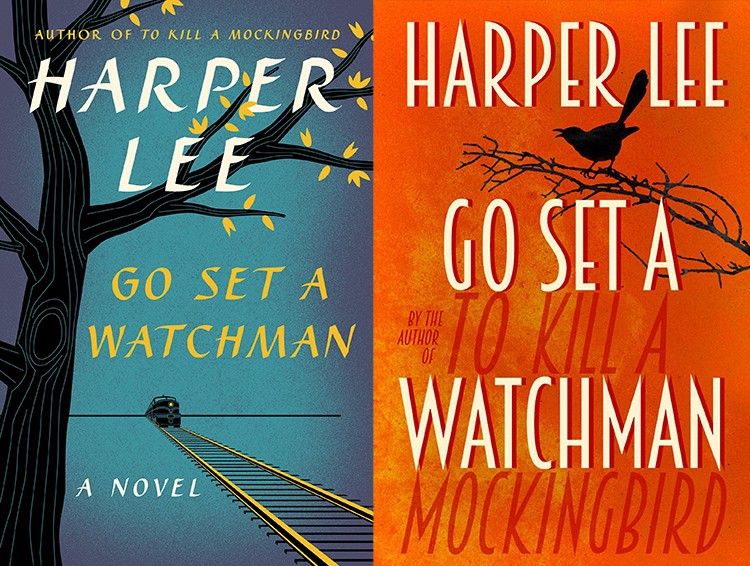
Go Set a Watchman Sells Over 1 Million in U.S., Dethrones E.L. James in U.K.

Despite a barrage of negative reviews, droves of loyal and enthusiastic readers are still purchasing Go Set a Watchman.

The New York Times reports the novel sold over 1.1 million copies in its first week; HarperCollins has 3.3 million copies currently circulating in print. And yet, it’s difficult to imagine anyone would be surprised by these large numbers. The buzz surrounding the novel’s release was louder than any other book this year. Sequels to beloved and influential novels are rarely (read: never) released 50+ years later, so novels rarely inspire this sort of large-scale media frenzy.

In the UK, The Guardian reports that Harper Lee’s Go Set a Watchman bumped E.L James’ Grey off its throne at the top of the UK book charts. Lee sold 168,455 print copies of her novel in five days, more than four times the number sold by Grey.

The LA Times explores the differences (and, somehow, the similarities) between 2015’s top-selling novels. Watchman investigates racism in the American South, while Grey focuses on erotic romance. Both novels, however, return to familiar characters while introducing new perspectives: Grey is told from Christian’s point of view, while Watchman propels Scout twenty years into the future.

I never thought those novels would appear in the same sentence. Surprises abound!

What Could Happen If We Did Things Right: An Interview With Kim Stanley Robinson, Author Of Aurora

Is Kim Stanley Robinson our greatest political writer? That was the provocative question posed recently by a critic in The New Yorker. Science fiction writers rarely get that kind of serious attention, but Robinson’s visionary experiments in imagining a more just society have always been part of his fictional universe. In fact, he got his Ph.D. in English studying under the renowned Marxist theorist Fredric Jameson. The idea of utopia may seem discredited in today’s world, but not to Robinson. He believes we need more utopian thinking to create a better future.

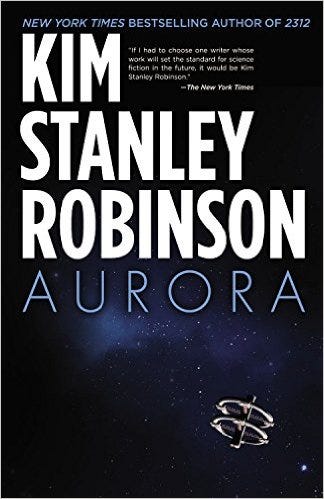
krs book cover

And the future is where he takes us in his new novel Aurora. Set in the 26th century, it’s the story of a space voyage to colonize planets outside our Solar System. Robinson writes in the tradition of “hard science fiction,” using only existing or plausible technology for his interstellar journey. As much as he geeks out on the mechanics of space travel, his real interest is how people would handle a very long voyage trapped inside a starship. His futuristic themes won’t surprise longtime fans of Robinson, who’s best known for his Mars trilogy, published in the 1990s. To read KSR is to wonder how our species might survive and even thrive in the centuries ahead.

The author stopped by my radio studio before giving the keynote speech at a local science fiction conference. We talked about the existential angst of life on a starship, the future of artificial intelligence and the aesthetics of space travel. Our conversation will air on Public Radio International’s To the Best of Our Knowledge. You can subscribe to the TTBOOK podcast here.

Steve Paulson: How would you describe the story in Aurora?

Kim Stanley Robinson: It’s the story of humanity trying to go to other star systems. This may be an ancient idea, but for sure it’s a 19th century idea. The Russian space scientist Tsiolkovsky said Earth is humanity’s cradle but you’re not meant to stay in your cradle forever. This idea has been part of science fiction ever since — that humanity will spread through the stars, or at least through this galaxy.

SP: It’s a long way to travel to another star.

KSR: It is a long way. And the idea of going to the stars is getting not easier, but more difficult. So I decided to explore the difficulties. I tried to think about whether it’s really possible at all, or if we’re condemned — if you want to put it that way — to stay in this Solar System.

SP: What star are your space voyagers trying to get to?

KSR: Tau Ceti, which has often been the destination for science fiction voyagers. Ursula Le Guin’s Dispossessed takes place around Tau Ceti, and so does Isaac Asimov’s The Naked Sun. It’s about 12 light-years away. We now know it has three or four big planets the size of a small Neptune or a large Earth. They’ve got the mass of about five Earths. That’s too heavy for humans to be on, but those planets could have moons about the size of Earth. So it becomes the nearest viable target. Alpha Centauri, which is just four light-years away, only has tiny planets that are closer than Mercury is to our sun, so they won’t be habitable.

SP: Your story is set 500 years into the future. It takes a long time to get to this star.

KSR: Yes. My working principle was, what would it really be like? So no hyperspace, no warp drive, no magical thing about what isn’t really going to happen to get us there. That means sub-lightyear speeds. So I postulated that we could get spaceships going to about one-tenth the speed of light, which is extraordinarily fast. Then the problem becomes slowing down. You have to carry enough fuel to slow yourself down if you’ve accelerated to that kind of speed. The mass of the decelerant fuel will be about 90% of the weight of your ship. As you’re approaching your target, you have to get back down to the speed at which you can orbit your destination. The physics of this is a huge problem.

SP: You’re talking about a multi-generational voyage that will take a couple hundred years. That’s a fascinating idea. The people who start out will be dead by the time the starship gets there.

KSR: I guessed it would take four or five generations — say, 200 years. This is not my original idea. The multi-generational starship is an old science fiction idea started by Robert Heinlein and there may even be earlier precursors. One always finds forgotten precursors for every science fiction idea. Heinlein wrote Universe around 1940, Brian Aldiss wrote a book called Starship in 1958, and Gene Wolfe wrote a very great starship narrative in the 1990s, The Book of the Long Sun. So it’s not an original idea to me; it’s sort of a sub-genre within science fiction.

SP: But the whole idea of a project that takes generations is something we don’t do anymore. People did that when they built the pyramids in Egypt or the great cathedrals in Europe. I can’t think of a current project that will take generations to complete.

So it turned into a bit of a prison novel.

KSR: You really have to think of it as a mobile island or a vast zoo. It isn’t even a project so much as a city that you’ve shot off into space, and when the city gets to its destination, the people unpack themselves into the new place. You’re right, it could be compared to building the cathedrals. And it’s interesting to think about the people born on the starship who didn’t make the choice to be there. So it turned into a bit of a prison novel.

SP: Because you’re trapped there. You’re in this confined space for your whole life.

KSR: And for two or three generations, you’re born on the ship and you die on the ship. You’re just in between the stars. So it’s very existential. There are some wonderful thought stimulants to thinking about a starship as a closed ecology.

SP: How big is the starship in your story?

KSR: There’s something like a hundred kilometers of interior space.

SP: So this is big!

KSR: Yeah, two rings. You could imagine them as cylinders that have been linked until they make a circle, so twelve cylinders per circle. You’ve got 24 cylinders and each has a different Earth ecology in it and each one of them is about five kilometers long. It’s pretty big, but you need that much space to be viable at all because you have to take along a Noah’s Ark worth of genetic material, or else it isn’t going to work.

SP: What do you have to bring along?

KSR: You would want as much of everything as you can bring, but you certainly need a big bacterial load. You need to bring along a lot of soil. You need a lot of what would be effectively unidentified bacteria; you just need a big hunk of earth. And then all the animals that you can fit that would survive. Each one of these cylinders would be like a little zoo or aviary.

SP: As you were imagining this voyage, which part was most interesting to you? Was it the science — trying to figure out technically how we could get there? Or was it the personal dynamics of how people would get along when they’re trapped in space for so long?

KSR: I think it would be the latter. I’m an English major. The wing of science fiction that’s discussed this idea has been the physics guys, the hard SF guys. They’ve been concerned with propulsion, navigation, with slowing down, with all the things you would use physics to comprehend. But I’ve been thinking about the problem ecologically, sociologically, psychologically. These elements haven’t been fully explored and you get a new story when you explore them. It’s a rather awful story, which leads to some peculiar narrative choices.

SP: Why is it awful?

KSR: Because they’re trapped and the spaceship is a trillion times smaller than Earth’s surface. Even though it’s big, it’s small. And we didn’t evolve to live in one of these things. It’s like you spend your whole life in a Motel Six.

SP: Put that way, it does sound pretty awful.

KSR: Better than a prison, but you can’t get out. You can’t choose to do something else. I don’t think we’re meant for that even though we live in rooms all the time in modern society. I think the reason people volunteer for things like Mars One is they’re thinking, “How is that different from my ordinary life? I sit in a room in front of my laptop all day long. If I’m going to Mars, it’s more interesting.”

SP: Mars One is the project that’s trying to engineer one-way trips to Mars. You know you’re not going to come back. Frankly, it sounds like a suicide mission, and yet tens of thousands of people have signed up for this mission.

KSR: Yes, but they’ve made a category error. Their imaginations have not managed to catch up to the situation. They are in some kind of boring life and they want excitement. Maybe they’re young, maybe they’re worried about their economic prospects, maybe they want something different. They imagine it would be exciting if they got to Mars. But it was Ralph Waldo Emerson who said travel is stupid; wherever you go, you’re still stuck with yourself. I went to the South Pole once. I was only there for a week and it was the most boring place in Antarctica because we couldn’t really leave the rooms without getting into space suits.

SP: Is extended space travel like going to Antarctica?

KSR: It’s the best analogy you can get, especially for Mars. You would get to a landscape that’s beautiful and sublime and scientifically interesting and mind-boggling. Antarctica is all those things and so would Mars be. But I notice that nobody in the United States cares about what the Antarcticans are doing every November and December. There are a couple thousand people down there having a blast. If the same thing happened on Mars, it would be like, “Oh, cool. Some scientists are doing cool things,” but then you go back to your real life and you don’t care.

SP: So even though you write about these long space voyages, you wouldn’t want to be part of one?

KSR: Not at all. But I’ve only written about long space voyages once — in this book, Aurora.

SP: You also wrote a whole series of books about Mars. You still have to get there.

KSR: But there’s an important distinction. You can get to Mars in a year’s travel and then live there your whole life. And you’re on a planet, which has gravity and landscape. You can terraform it. It’s like a gardening project or building a cathedral. I think terraforming Mars is viable. Going to the stars, however, is completely different because you would be traveling in a spaceship for several generations where you’re in a room, not on a planet. It’s been such a techie thing in science fiction. But people haven’t de-stranded those two ideas. They said, “Well, if we can go to Mars, we can go to Tau Ceti.” It doesn’t follow. It’s not the same kind of effort.

SP: Would it be interesting to travel just through our own Solar System?

KSR: Yes, this Solar System is our neighborhood. We can get around it in human time scales. We can visit the moons of Saturn. We can visit Triton, the moon of Neptune. There are hundreds of thousands of asteroids on which we could set up bases. The moons of all the big planets are great. The four big moons of Jupiter — we couldn’t be on Io because it’s too radioactive or too impacted by the radio waves of Jupiter itself — but by and large, the Solar System is fascinating.

SP: Yet I imagine a lot of people would say, “Yeah, there’s a lot of cool stuff out there, but it’s all dead.”

KSR: Well, we have questions about Mars, Europa, Ganymede and Enceladus, a moon of Saturn. Wherever there’s liquid water in the Solar System, it might be dead or alive. It might be bacterially alive. It might have life that started independently. It might be cousin life that was blasted off of Mars on meteorites and landed on Earth and other places. We don’t know yet. And if it is dead, it’s still beautiful and interesting, so these would be sites of scientific interest. Antarctica is pretty dead, but we still go there.

SP: I’ve heard it’s incredibly beautiful.

I think Earth is the one and only crucial place for humanity. It will always be our only home.

KSR: It’s very beautiful. I think if you’re standing on the surface of Europa, looking around the ice-scape and looking up at Saturn in the sky overhead, it’s also going to be beautiful. I’m not sure if it’s beautiful enough to drive a gigantic effort to get there. The robots going there now are already a tremendous exploration for humanity. The photos sent back to us are a gigantic gift and a beautiful thing to look at. So humans going there will always be a kind of research project that a few scientists do. I’m not saying that the rest of the Solar System is crucial to us. I think Earth is the one and only crucial place for humanity. It will always be our only home.

SP: I wonder if we would develop a different sense of beauty if we went out into the Solar System. When we think of natural beauty, we tend to think of gorgeous landscapes like mountains or deserts. But out in the Solar System, on another planet or a moon, would our experience of awe and wonder be different?

KSR: You can go back to the 18th century when mountains were not regarded as beautiful. Edmund Burke and the other philosophers talked about the sublime. So the beautiful has to do with shapeliness and symmetry and with the human face and figure. Through the Middle Ages, mountains were seen as horrible wastelands where God had forgotten what to do. Then in the Romantic period, they became sublime, where you have not quite beauty but a combination of beauty and terror. Your senses are telling you, “This is dangerous,” and your rational mind is saying, “No, I’m on a ledge, but I’ve got a railing. It looks dangerous, but it’s not.” You get this thrilling sensation that is not beauty but is the sublime. The Solar System is a very sublime place.

SP: Because you could die at any moment if your oxygen support system goes out.

KSR: Exactly. It’s like being in a submarine or even in scuba gear — the feeling of being meters under the surface, with a machine keeping you alive and bubbles going up, as you’re looking at a coral reef. That’s sublimity. There’s an element of terror that’s suppressed because your rational mind is saying it’s okay. When you fly in an airplane and look down 30,000 feet to the surface of the earth, that’s the feeling of the sublime, even if you’re looking down at a beautiful landscape. But people can’t bear to look because after a while you’re thinking, “Boy, this machine sure has to work.”

SP: If you think long and hard about this…

KSR: You might never fly again.

SP: One thing that’s so interesting about your novel Aurora is that most of it is narrated by the ship itself. What was the idea here?

KSR: I do like the idea that my narrators are also characters, that they’re not me. I’m not interested in myself. I like to tell other people’s stories, so I don’t do memoir. I do novels. And for three or four novels now, it’s been an important game to me to imagine the narrators’ voices being different from mine. So Shaman’s was the Third Wind, this mystical spirit that knew the Paleolithic inside and out. That wasn’t me. And Cartophilus, the time traveler, tells Galileo’s story.

…a novel is not a natural act. It’s an art form that’s been built up over centuries and doesn’t have a good algorithm.

In Aurora, it made sense for the ship to need really powerful artificial intelligence, like a quantum computer. And once you get to quantum computers, you’ve got processing speeds that are equal to the processing speeds of human brains. But the methodologies would be completely different. They’d be algorithms that we programmed. Maybe it wouldn’t have consciousness, but when you get that much processing speed, who’s to say what consciousness really is? So I made the narrator out of this starship’s AI system. And he — she, it — has been instructed by the chief engineer to keep a narrative account of the voyage. When you think about it, writing novels is strange. We can tell most stories to each other in about 500 words, so a novel is not a natural act. It’s an art form that’s been built up over centuries and doesn’t have a good algorithm.

SP: I recently interviewed Stephen Wolfram, the computer theorist and software developer, and asked if he thought some future computer could write a great novel. He said yes.

KSR: Wolfram’s very important in theorizing what computers can do because he’s made a breakdown of activities from the simple to the complex. And at full complexity, the human brain or any other thinking machine that can get to that fourth level of complexity should be able to do it.

SP: So in the future, you think a computer or artificial intelligence system could write a modern “Ulysses”?

KSR: Well, this is an interesting question. At that point you would need a quantum computer. It would need to read a whole bunch of novels and try to abstract the rules of storytelling and then give it a shot. In my novel, the first chapter the computer writes is 18th century literature. It’s what we would call “camera-eye point of view.” It doesn’t guess what people are thinking; how can it? It just reports what it sees like a Hemingway short story. As the novel goes on, chapter by chapter, the computer is recapitulating the history of the novel, and by the end of the last chapter narrated by the computer, you’re getting full-on stream of consciousness. It’s kind of like Ulysses or Virginia Woolf where you’re inside the mind, although it’s the mind of the computer itself. The last chapter is in a kind of “flow state” of the computer’s thinking.

SP: At that point, does the computer have emotions?

KSR: It wonders about that. The computer can’t be sure. Actually, we’re all trapped in our own consciousness. What are other people thinking? What are other people feeling? You have to work by analogy to your own internal states. The computer only has access to its own internal states.

SP: Does the future of AI and technology more generally excite you?

KSR: Yes, AI in particular. I used to scoff at it. I’m a recent convert to the idea that AI computing is interesting. Mainly, it’s just an adding machine that can go really, really fast. There are no internal states. They’re not thinking. However, quantum computers push it to a new level. It isn’t clear yet that we can actually make quantum computers, so this is the speculative part. It might be science fiction that completely falls apart. There was science fiction about easy space travel, but that’s not going to work. There was science fiction about all of us living 10,000 years. That might or might not work, but it’s way speculative. Quantum computing is still in that category because you get all the weirdness of quantum mechanics. There are certain algorithms that might take a classical computer 20 billion years, while a quantum computer would take 20 minutes. But those are for very particular tasks, like factoring a thousand-digit number. We don’t know yet whether more complex tasks will be something that a quantum computer can handle better than a regular computer. But the potential for stupendous processing power, like a human brain’s processing power, seems to be there.

SP: As a science fiction writer, do you have a particular mission to imagine what our future might be like? Is that part of your job?

KSR: Yes, I think that’s central to the job. What science fiction is good at is doing scenarios. Science fiction may never predict what is really going to happen in the future because that’s too hard. Strange things, contingent things happen that can’t be predicted, but we can see trajectories. And at this moment, we can see futures that are complete catastrophes where we cause a mass extinction event, we cook the planet, 90% of humanity dies because we run out of food or we think we’re going to run out of food and then we fight over it. In other words, complete catastrophe. On the other hand, there’s another scenario where we get hold of our technologies, our social systems and our sense of law and justice and we make a kind of utopia — a positive future where we’re sustainable over the long haul. We could live on Earth in a permaculture that’s beautiful. From this moment in history, both scenarios are completely conceivable.

SP: Yet if we look at popular culture, dystopian and apocalyptic stories are everywhere. We don’t see many positive visions of the future.

KSR: I’ve always been involved with the positive visions of the future, so I would stubbornly insist that science fiction in general, and my work in particular, is about what could happen if we did things right. But right now, dystopia is big. It’s good for movies because there are a lot of car crashes and things blowing up.

SP: Is it a problem that we have so many negative visions of the future?

Fear is a very intense and dramatic emotion. Hope is more fragile, but it’s very stubborn and persistent.

KSR: Dystopias express our fears and utopias express our hopes. Fear is a very intense and dramatic emotion. Hope is more fragile, but it’s very stubborn and persistent. Hope is inherent in us getting up and eating breakfast every day. In the 1950s young people were thinking, “I’m going to live on the moon. I will go to Neptune.” Today it’s The Hunger Games, which is a very important science fiction story. I like that it’s science fiction, not fantasy. It’s not Lord of the Rings or Harry Potter. It’s a very surrealistic and unsustainable future, but it’s a vision of the fears of young people. They’re pitting us against each other and we have to hang together because there’s a rich elite, an oligarchy, that’s simply eating our lives for their own entertainment. So there’s a profound psychological and emotional truth in The Hunger Games.

There’s a feeling of fear and political apprehension that late global capitalism is not fair. My Mars books — although they’re not as famous and haven’t been turned into movies — are quite popular because they’re saying we could make a decent and beautiful civilization. I’ve been noticing with great pleasure that my Mars trilogy is selling better now than it ever has.

SP: Does our society need positive visions of the future? Do we need people to create scenarios of how things could go well?

If science fiction doesn’t provide those stories, people find them somewhere else. So Steve Jobs is a science fiction story we want.

KSR: Oh, yes. Ever since Thomas More’s Utopia, we’ve always had it. Edward Bellamy wrote a book called Looking Backward: 2000–1887. The progressive political movement that changed things around the time of Teddy Roosevelt came out of this novel. When people had to reconstruct the world’s social order after World War II, they turned to H.G. Wells and A Modern Utopia and Men Like Gods. We always need utopias. These days, people are fascinated by Steve Jobs or Bill Gates. It’s like those geeky 1950s science fiction stories where a kid in his backyard makes a rocket that goes to the moon. Now it’s in his garage, where he makes a computer that changes everything. We love these stories because they’re hopeful and they suggest that we could seize history and change it for the better. If science fiction doesn’t provide those stories, people find them somewhere else. So Steve Jobs is a science fiction story we want.