Closer to the Ritual: Talking with Author Rivka Galchen

Rivka Galchen has been called everything from a scientific interpretive writer to the second coming of Pynchon. This stems partly from the measured brilliance of her novel, Atmospheric Disturbances, and short-story collection, American Innovations, which feature lived-in characters deceiving themselves in order to better navigate the world around them. In discussing her past work, her current project — Little Labors — and an in-development novel, I was able to lay some of those associations to rest for myself, and hopefully, for others. Galchen was kind enough to call me on a Saturday in early June after getting her baby down for a nap and wrapping up work on a top-secret article.

Eric Farwell: So, this article you were working on…

Rivka Galchen: It’s honestly so different from my other stuff that I’m embarrassed to bring it up to you.

EF: No, don’t be. Is it for the New Yorker or the Believer? I’m a big fan of your stuff in those magazines.

RG: No, no. It’s something completely else. It’ll be out soon enough though, so you can see it then.

EF: I understand. So, let’s start by talking about Little Labors. I admit that I couldn’t get a review copy, but understand, according to Amazon, that it’s an exploration of the small, with special attention to how imperial Japanese women were forced to write in kana, despite Chinese being the official language of politics in the Heian period, and how that gave rise to powerful and important works of literature.

RG: I wouldn’t say it’s specifically focused on Asian politics and culture at that time. It’s more that, in a way, kana is the old spirit of the book, if that makes any sense. The exploration of the small concerns babies in a lot of ways. It’s very much about babies- baby thoughts and mother writers. I will say that the form is similar to The Pillow Book, which was a sort of diary, but a really terse, funny diary that feels modern. It was written during the Heian period by Sei Shonagon, and it’s cool because she describes small things that were going on in the courts at the time, but cloaks them in this particular language. So, she’s taking on these major political moves at the time, but doing so in a way that was sort of a political move of its own.

EF: I was interested in whether you approach your non-fiction differently than your fiction, because there’s a methodology to both.

RG: Well, I’d say that when I’m working on non-fiction, it feels more controlled, whereas fiction is maybe less so. It sounds super cheesy, but I feel like I’m working on fiction each day, insomuch as I do my best to let ideas come naturally and parse through them later to see if there’s something there. In non-fiction, it’s more straightforward reporting, or talking to people I normally wouldn’t get to in order to develop a particular topic outward; it’s a different job than telling a story. Fiction, to me at least, has to occupy some space or go somewhere new. That’s what it’s best at. Non-fiction almost has an excess, a strong burden of information that causes it to have a lack of play.

EF: That’s interesting, because the thing I like about your fiction so much, especially your novel, is that it almost works as a small film. I was wondering if you ever feel like maybe your fiction is a response to other art forms, things you take in.

RG: Well, being a modern person, I definitely take in everything and metabolize it. I don’t think my work is ever a conscious response to anything else, but I think that, on some level, I’m picking up on different structures. I remember being 10 years old and taking modern dance and — this may sound silly — but it was the first time the structure was apparent to me, because of the physical embodiment of variation. Some kids at that age maybe could pick up on the fact that books had a certain structure, or cartoons, or whatever, but for me, dance was the first form that I really remember noticing the structural properties of.

EF: Structural properties definitely seem like something you’re interested in playing with and pushing against. In preparing to talk with you, I watched your Google Chat…

RG: Oh no. What did I say?

EF: Nothing weird or anything. You just mentioned that you remember watching ‘Three’s Company’ and wishing in some ways that there wasn’t a plot all of the time and that the characters could just hang out and tell jokes. So, in your work, and again in the novel, I was wondering if you were concerned with people “getting it”, the lack of constant plot movement. Because it seemed like there was a lot of different takes on it, and maybe not every critic understood that it best suited the journey of the characters.

RG: Hmm, I’m not sure. I don’t think of it like that, actually. I will say that I don’t like catching sight of myself, and so maybe I don’t pay a ton of attention to reviews. I get this a lot in class though, where students will have a particular take on a book and have a hard time immediately reconsidering that interpretation. When we do workshops, though, I always try to point out the same basic principle, that a novel or a collection works really well when two different subjects overlap and coalesce. It never crossed my mind that someone would “get it” exactly the same as I did, because it’s a different book for the writer than it is for the reader.

EF: Well, would you say then that you’re comfortable and happy with the final product being released, or would there be certain things needed for you to feel at ease about it?

It’s rough at first, but after a few years you become grateful that there’s no taking that version of your work back.

RG: With Atmospheric Disturbances, I wanted to take it back and change things. I remember that. Now though, I feel happy with it because it feels complete — not perfect- but it makes sense as a snapshot for who I was at that point in my life. It’s rough at first, but after a few years you become grateful that there’s no taking that version of your work back. At this point, I feel the same way about anything I’m working on or have put out. I’ve learned to be comfortable and to almost appreciate how much it represented me at that time.

EF: When you were working on Atmospheric Disturbances, how did you negotiate the lack of immediate plot providing fuel for the journey and creating momentum for the reader? In American Innovations?

RG: With the novel I remember feeling a lot of concern for velocity and movement. You know, short stories, since they’re not as long, feel slower and the reader can take more time, I think. A novel feels like it has to be read breathlessly, rushed-through because it’s longer. I was really aware of the structural moods, so it was important to me that I gave up some control to let the characters guide the story, rather than me guiding the characters. Otherwise, you know, the characters can become cliche and all sorts of terrible things can befall the project you’re working on. When I’d get stuck with something, I’d realize that something was missing from the story or characters — a sort of development, important information, contextual detail- and fill in accordingly. This also helped me to figure out where to put my plot points and how to move the action forward. It was like looking at two characters in an action scene and figuring out when the third fighter should enter.

EF: I think that approach helps to give your characters a lived-in sensibility. Whenever I began a story in American Innovations, I felt like I was always entering in the middle of the story, because the characters immediately seem to somehow come with fully developed stories and lives. It’s interesting that you have them graze up against this barrier of reality that threatens their personal fiction, and yet you never have them engage it really.

I’m interested in the pasts people come up with to avoid knowing about themselves.

RG: Well, a lot of the individuals I love are people who create a certain fiction for themselves and then set about navigating it to make them phenomenally effective in society. So I’m always interested in those moving parts, how there’s that sort of labor of not knowing something. I’m interested in the pasts people come up with to avoid knowing about themselves. I also think it’s important to allow a character to reveal themselves. I look to let the character walk me down their own path and fill in the missing aspects accordingly. I also really like it when the reader feels like they know something that the narrator doesn’t, like they’re superior but still in the dark. It creates these amazing, I guess you could call them rhyming sounds that the reader hears in their head as they make their way across the page.

EF: Right, but it’s interesting that you seem to set up your works as set pieces. What I mean by that is that reading your work, because the characters are built with strong core interiors, the chapters or stories feel in a way like they’re set pieces, almost like in a play.

RG: They’re true in the sense that “if” statements are true. “If” statements take them seriously and view them as rigorous. I like to view my characters as if they’re legitimate people. As far as feeling like they’re in a play or staged, I remember being interested in theatre in high school and taking this class where we had to write one act plays. Well, one kid came up with this play where it was just one chair in the middle of the stage and two people argued over it. It sounds maybe silly, but to this day I kind of feel a little, like, jealous that I didn’t come up with that. There’s a brilliance in the simplicity there. The hard work is front loaded and you can really let the scene surprise you.

EF: That’s interesting. I feel good about this so far, like maybe I’m asking you things you don’t normally get asked about?

RG: Well, I can tell you I’m glad you’re not asking me what it’s like to be a doctor.

EF: You get that a lot?

RG: Well, sometimes. I don’t think it should be seen as a reflection on the interviewer, but yeah, I think sometimes it’s human nature to see that I went to medical school and go “Oh, doctor. Got it.”

EF: So the story with that is…

RG: I have an MD, you can put that down.

EF: So then how did you navigate that, deciding to pursue writing in lieu of practicing with your degree?

It never felt like a natural habitat to me, being a writer…

RG: It was difficult. I knew that I wanted to write but was always slightly in a panic about that being an okay or acceptable thing to do professionally. Sometimes I find that it still feels like a silly thing to do, and I work hard to make sure it feels like an appropriate endeavor. It never felt like a natural habitat to me, being a writer, because I think that when you’re little you’re raised to see things a certain way, and I didn’t have artists around me to maybe model that it could be different. So while I’m grateful and love writing, I struggle with how I feel about it sometimes, my comfort level in a way.

EF: Do you ever worry about running out of ideas?

RG: No, but I get scared of never finishing anything. I have to make myself experience work like I’m going through a ritual. If I have routine, I find myself energized, or sometimes I’ll look to use that panic as a sort of energy source. Sometimes I feel like I’m being derailed, especially now with the baby, happily so, though! I think that’s good sometimes, because then I feel like I’m starting new, which feels weirdly like I can move through the work really fast because I’ve strangely been working on it that whole time, in a way.

EF: Are you working on anything new right now?

RG: I’m working on a novel.

EF: So are you then looking to change or push yourself in terms of your approach to structure or characterization or anything? Do you feel pressure like that?

RG: I feel almost as if I need to get closer to the ritual of that first novel. I used to teach at 10:30 and after class I’d walk over to this cafe. The walk was a good twenty or thirty minutes, which made it a good sort of spacey walk to think. I’m trying to remind myself that if I focus on the ritual and trust in it, then the work will be good.

EF: Do you notice anything though, about a difference in approach to the novel, however far into it you are?

Subject matter is kind of an illusion, and I’m trying to let go of it a little bit and to do something more true.

RG: I’ve been so influenced by a lot of people I love- Iria, Tawada, early Updike, his essays. Donald Antrim. I like that application of self to the logic of the work. I used to be open to subject matter and questions like “what’s the story about? Who are the characters?,” but now I’m trying hard to pay attention to sentence structure and how one sentence forces the second sentence to be something, and so on and so forth. I’m trying to let the story be more unpredictable and organic. Subject matter is kind of an illusion, and I’m trying to let go of it a little bit and to do something more true.

EF: Does the categorization of your work ever bother you? What I mean is, a lot of people I think look at what they perceive to be signifiers of your work and group you in with Pynchon, DeLillo, Borges. Do you feel at all influenced by them, or does it maybe annoy you that your work can’t just stand in review without those groupings?

RG: It’s not bothersome. I mean, I find it confusing when people think I’m doing some expository functional work, like I’m doing a literary sketch of the inside of an MRI or something, but categorization doesn’t bother me.

EF: So then when your novel came out and everyone thought the protagonist had…

RG: Capgras syndrome. Yeah. I naively thought that if I made him a psychologist it would circumvent that assumption, but it was obviously naive to think the reader would see it the same way as me, when it was so emotionally difficult and arduous in some ways to create it.

EF: I wanted to wrap up by discussing your work in magazines. I think for many people, The New Yorker is kind of the holy grail. I was curious if you wouldn’t mind explaining how that all occured.

RG: Sure. The Believer is very good at taking chances on writers with little to no list of writing credits. So they thankfully took a chance on me when I had nothing published. Then when I wrote for Harper’s about mitigating hurricanes, the piece had a lot of latitude to it; I was writing a sort of mix of science and memoir. Sandy Frazier at the New Yorker saw it and thought they should give me a shot. It was difficult though. I remember that I struggled with the first New Yorker piece on and off for like a year and a half. I’m so grateful for it all though. All of it led to my being a critic for Harper’s and learning how to pitch a story. I look back, and sometimes I’m in awe of how lucky I was.

University of Iowa Receives Epic Sci-Fi Collection

What’s vast, invaluable, and located in a Sioux Falls basement? Allen Lewis’s 17,500-volume science fiction collection.

Lewis’s library has outgrown its current lodgings, prompting the seventy-three-year-old to donate the collection to the University of Iowa. Comprising novels, fanzines and magazines (most of them signed first editions), the collection is worth approximately three-quarters of a million dollars.

It’s a coup for the U of I, quickly becoming the place to be for scholars of science fiction. Lewis’s library will be housed alongside that of James L. “Rusty” Hevelin, who just three years ago gifted his massive collection of sci-fi pulp zines and novels to the university.

Lewis has been a sci-fi fan since he was 12, but it was not until the late ’90s that he began the collection that would eventually achieve epic proportions. He insists that the genre, though by definition otherworldly, is fundamentally rooted in the here-and-now: “Fantasy and science fiction writers explore certain problems or areas within our society today and then expand them and put them in another location.”

A fitting philosophy to underpin the relocation of Lewis’ library — destined to boldly go where various famed collections have gone before.

(h/t io9)

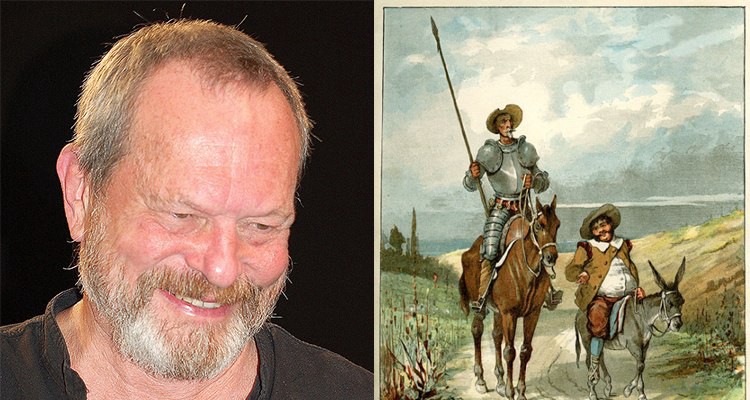
Terry Gilliam Makes Seventh Attempt at “Don Quixote” Movie

Gentlemen, start your windmills. Director (and Monty Python member) Terry Gilliam, the filmmaker behind such cult hits as Brazil and Twelve Monkeys, has signed a deal with Amazon Studios to direct The Man Who Killed Don Quixote, an adaptation of the Cervantes novel that will stream on Amazon following a brief theatrical release.

The film, slated to debut in May 2016, marks Gilliam’s seventh attempt to adapt Quixote; previous efforts include an ill-fated version starring Johnny Depp, canned shortly after going into production in 1998. Since then the project has metamorphosed from a time travel-fueled period piece to a modern adaptation. Gilliam told the Wrap, “I keep incorporating my own life into it and shifting it. The basic underlying premise of the version Johnny was involved in was that he actually was going to be transported back to the 17th century, and now it all takes place now, it’s contemporary. It’s more about how movies can damage people.”

John Hurt (Snowpiercer, Midnight Express) has signed on to play Quixote, and Jack O’Connell (Unbroken) will star as Toby, a Hollywood cynic who finds himself on his own quixotic quest — prompted by a run-in with a mysterious gypsy — to track down the Spanish village where he shot his student film.

Of his dream of bringing Quixote to the silver screen, Gilliam says: “It’s obsessive… desperate… pathetic… foolish. It’s this growth, this tumor that’s become part of my system that has to get out if I’m to survive.” For the sake of Gilliam’s sanity and Cervantes fans alike, one hopes that the seventh time will prove to be the charm.

ESSAY: Consumption by Elissa Washuta

What can colleges do about binge drinking?

Colleges can hold their students’ hair back. A super nice college can be a pal and keep breath mints on hand. Colleges can take their turns at DD, or better yet, they can let the bars creep up to the edge of campus, bordering hedge and brick with their welcoming perfume of cola, bleach, and on Mondays, putrefaction.

What can colleges do about binge drinking?

They can do shots. Shots. Shots; but not until after the game is complete, the stadium emptied, the students hoarse from shouting as one united family fuck the other team. Win or lose, if the rival is involved, the young ones will take to the streets and, when they really need to let out some steam, they’ll find furniture to burn, glass panes to smash, cars to flip. Excellence is everywhere: in every superhuman lift of private property, in every defiant challenge of a cop on a horse. Colleges would do well to bring a flask or two. These nights burn long. These games will be on the calendar many months in advance for ease of planning.

What can colleges do about binge drinking?

Plan more activities, like bingo. Make human sexuality discussion sections actually involve copulation. Eliminate MLA citation style and eliminate that entrance exam that is notorious for dashing all hopes of having a job and a house and a child that you can dress up like a little rich person.

Our blackout-speckled binges are the Neverland that keeps us from becoming the grown-ups who make memories and stitch futures to our feet. We will vomit every dream into the gutter outside the twenty-four-hour convenience store that sells the cigarettes whose smoke slips through our pink jellyfish lungs, never marking us because we have suspended ourselves in formaldehyde.

What can colleges do about binge drinking?

Colleges can watch their friend’s glass while she goes to check her makeup. Colleges can turn their students onto their sides before turning off the lights so they might not go out like Jimi, or maybe, actually, on second thought, Google “how not to choke on your own vomit” or “is my friend going to die from alcohol poisoning” and if the search results say it’s okay, colleges can leave her droopy body where it slumps, spit the sour night into the dorm sink, and push back out into the dark for more. They can shoot her a text in the morning to see whether she’s all right. If she’s not, colleges can say they did their best. They turned her on her side and everything, Googled “how to wake up a dead girl,” told her via email one time three years ago that consuming more than four drinks in two hours is considered binge drinking for females.

What can colleges do about binge drinking?

Drinking is so central to students’ expectations of college that they might build themselves new rumens to hold the swill they never dreamed they’d be able to put down — the tenth beer, the fifteenth, the pour through the funnel. Their throats widen with new gullets to usher in the upside-down torrent from the keg on the floor. Drinking is so fundamental to student life that a young man or woman may become slitted with gills so she might not drown.

When their campus clinic charges show up with a pancreas inflamed, lungs lubed with blood, or midday liquor breath across the pharmacy counter, colleges can make a big thing of it if they’re really trying to be magnets for drama, or they can tell their students it’s just gas from an oversized burrito, just a cold, or just part of growing up and send everyone away with a selection from a rainbow of Xeroxed pamphlets on escaping college alive.

They can make the student group with the keg of root beer on the lawn pour it out because it suggests problematic drinking behavior.

What can colleges do about binge drinking?

If they’re gonna be all uptight about it, colleges can open every beer can and pour the contents down the drain. They do it every now and then, swearing off the stuff, pretending it’s the piss-light liquid that flunked those classes, that burned the couches, that smashed windows, that said that shitty thing they’ll regret for a decade, that fucked that girl when she was so passed out her legs felt like they were corpse-limbs. They’re going to be so much better. Still, when game day arrives, colleges are back at it, pregaming at ten in the morning with a venti to-go cup of strong Irish coffee in their hand as they stumble through traffic toward the stadium for the tailgate.

They can let it continue because it is all we know: the elixir we pour on our brains after unpacking them from their boxes in our lonely dorms. When we sign up for English 101 and bare our arms for our meningitis vaccines, we learn that this time is about finding ourselves, about freedom, about hard work, about football, about date rape, and about the procurement, concealment, and consumption of alcohol. When resident assistants toss rooms, they can’t be confidants. When one hundred riot cops, armed and shielded, storm the college town center and beat a student with a metal baton, how could we see the police as anything but the student body’s enemy in war?

When our parents open their car doors and release us into these new dominions where our leaders urge us to be hungry and thirsty, what can we do?

I could do shots during mid-class breaks. I puked in the train station alone at night, puked on Pennsylvania Avenue, on Wisconsin Avenue, on Rhode Island Avenue. I consumed more alcohol calories than food calories. Months after graduation, I found myself on a couch with my skirt up, too wasted to do anything but try to talk the near-stranger out of it when he decided to break into me. I folded hangovers into my weekly routine. I went to the ER for excruciating stomach pain and came out with a diagnosis of alcohol-induced gastritis. Before long, an astringent mix of alcohol and prescription psychopharmaceuticals saturated my tissues so fully that I had become allergic to everything, nutrient-deficient, and so chronically dehydrated that even my eyeballs were evaporating. There was no tragic glamour, only slow rot. I turned toxic. I said and did things I regret and things I don’t remember.

College didn’t mold me into the teenager who chased caffeine pills with cherry NyQuil. College didn’t implant me with the terrifying, galloping want that made me suck down non-alcoholic beers at an off-campus bar while my fellow undergrads sipped their microbrews. Inside me somewhere, there was always a wound; outside me somewhere, there was always a party to drown out its weeping. I just had to choose the site of my self-poisoning and break my fast. College didn’t make me sick. College was the place where I learned to sidle up to a keg and call my despair community.

Years after I began failing myself during those early days of chugging Smirnoff Ice and trying to hold my piss so I wouldn’t break the seal, I decided I wanted to hear the full terror of my thoughts: the unbroken spool of dread, back-looping over every misstep, the forward-searching gaze that looks for threats ahead. To not put down ten whiskey-gingers is to practice nonviolence against my own thoughts. I cannot soften the grip on my neck that makes my tongue loll. But I can listen to the whisper and know that it has never been so mean that I should burn every living thing inside my skin.

In college, I did not yet know that my thoughts, even the ugly ones, are worth hearing. I couldn’t see that my future adulthood was worth growing up into.

My instruction taught me that life was hard but it could be worse — I could be pre-med. I learned that adults made the pain safe with a nightcap, an after-work brew or enough screwdrivers to make the ceiling the floor and the floor the pillow. College was snapped in half when a boy brought his riot to my insides. We were both sober that night; I soon learned to douse that long-open lesion with drink. By graduation there had been a sparkler lit and snuffed inside my brain. When psych meds’ long-tail effects failed to soothe me quickly enough, there was always what everyone else reached for first: drink. Drink. Drink.

I asked it to soothe me.

I asked it to unmake me.

I asked it to disembowel me.

When it fell short, I asked it to leave me, but there was no one to ask, because it was only fluid, and I was alone, ready to put my ear to my heart to listen for a beat.

Galactic and Confined: Restless Books’ A Planet For Rent and A Legend of the Future

Fiction written under an authoritarian or totalitarian government often dares readers to view the work as a critique of that society. This feeling is only accentuated when entering the realm of speculative fiction, where worlds can take on additional metaphorical trappings. Arkady and Boris Strugatsky’s Definitely Maybe, for instance, contains plenty of moments of absurdism-laced paranoia–but one could just as easily view the presence of voyeuristic entities monitoring the proceedings as a commentary on the pervasive fears that gripped the populace of the Soviet Union.

Two works of science fiction from Cuban authors, newly released in the United States by Restless Books, offer dueling perspectives on similar themes. The more recent of the two is written by Yoss, one of the few science fiction authors that looks as though his band could have opened for Slayer at any time in the past twenty years. A Planet For Rent (first published in 2001) initially looks like a collection of short stories set on the same futuristic Earth. Here, a group of advanced alien races have taken control of the planet, allowing limited self-government. Those limitations are wide-ranging, and the aliens’ (or, in the book’s parlance, xenoids’) penchant for wiping out entire populations and regions en masse (including all of Africa) doesn’t inspire much optimism in the populace.

Throughout A Planet For Rent, the sense of living in a society entirely subject to the whims of more powerful entities becomes pervasive. In “The Champions,” it becomes apparent that one of the few ways to escape Earth for a better life is through athletic prowess. The story pertains to a human team facing off in a game against a collection of xenoids from around the galaxy. For some, the result will be death or permanent injury; for others may find a way out of their predicament. As I worked on this piece, the Cuban national soccer team faced off in a friendly match against the New York Cosmos, and it was hard not to find the parallels between the real game and fictional one depicted in Yoss’s book.

What appears to be a series of vignettes written in a host of styles, from third-person narratives to monologues to interrogations, gradually comes together into something bigger. A character mentioned in passing in several other stories makes an appearance towards the end of the book, and a bond between an artist whose visceral work both terrifies and compels audiences and his xenoid patron takes on a very different dimension over time. This isn’t to say that it’s a seamless work: how shocked a reader will be by the image that closes one story may depend on their familiarity with the short stories of Octavia E. Butler. Leilah, the jaded-beyond-her-years narrator of “The Platinum Card, throws off the book’s balance between evocative science fiction and grittier descriptions of a shellshocked Earth. She’s world-weary and sexually precocious at a very young age, and while this aspect of her character might be intended to demonstrate the hellishness of the environment in which she was raised, it also prompts a general feeling of unease while reading it–that this particular subplot heads to places that the rest of the book isn’t quite equipped to deal with.

Agustín de Rojas’s A Legend of the Future, originally published in 1985, feels on the surface to be more traditional. The characters are explorers, venturing through the solar system when something goes horribly wrong, as tends to happen in stories like these. However, out of this archetypal setup comes something stranger: a subdued psychological drama enhanced by speculative elements about human psychology (fans of Joss Whedon’s TV show Dollhouse will find a couple of points of resonance) topped off with an overwhelming awareness of mortality.

There’s a moment in the novel’s prologue where one character waxes both ecstatic and expository about their destination, citing “that tiny cosmic pebble” and imparting a handful of scientific information, right before another character shushes him. And, later in the book, a character in a hallucinatory state is told an alternate (and false) reading of several of the events that have transpired, suggesting what a more traditional version of this novel might have looked like. Clearly de Rojas seems aware of the tropes associated with the genre.

The book’s title takes on a shifting meaning over the course of the book. Are the actions of the crew, forced to wrestle with an impossible situation and questions of their own survival and their own identities, the formation of the legend in question? Does it have to do with Isanusi, a character who, at the start of the book, is in a dreamlike situation that seems decidedly mythological in its setting? The book’s ending, in which the title takes on one more interpretation, satisfies on a thematic level and brings the complicated dynamics between the characters to a moving conclusion.

The backdrop of A Legend of the Future does feature global superpowers in a conflict both literal and ideological. It’s telling, however, that the main characters with which the reader interacts are separated from those conflicts by the vastness of space–and, in some cases, have to deal with the ways in which adapting to that conflict has left them altered on a fundamental level from their fellow humans. It’s a novel that, together with A Planet for Rent, shows the dizzying range of fantastical situations that can emerge from a ground-level view of ideological conflict’s aftereffects.

A Planet for Rent

by Yoss

Powells.com

A Legend of the Future

by Agustin De Rojas

Powells.com

INFOGRAPHIC: How Long It Takes Kids to Read Popular Books

If you enjoyed perusing “How Long Does It Take to Read Popular Books?” then you will likely enjoy this infographic, too. With Father’s Day approaching, this is a handy guide to sneaking in some bedtime stories. But even if you’re not a father (or a mother!), this infographic by Personal Creations triggers nostalgic reflections on some beloved childhood tales.

How Long it Takes Kids to Read Popular Books

TED WILSON REVIEWS THE WORLD: DONALD TRUMP

★★★☆☆

Hello and welcome to my week-by-week review of the world. Today I am reviewing Donald Trump.

You probably know Donald Trump as the world’s most successful billionaire. Not only does he have a lot of money and a pretty wife, he also has a sports car and his own TV show. I don’t have even one of those things. (I did have a pretty wife once.) Fans of Donald’s TV show were probably very excited to learn last week that he is also now a Presidential candidate!

I’m sure it’s a nervous time for Donald. Sure, he may seem confident on the outside, but on the inside he must be wondering about his future. If not elected President, it would be his first failure in life. For the sake of his self-esteem, I hope he wins. There’s a good chance he will, too, because not only does he have a lot of loyal fans, but historically, voters seem to favor white males, and Donald scores very high as one of those.

However, it’s unlikely he will win the dyslexia vote, as many people’s brains could mistakenly rearrange Donald’s name into any of the following unfortunate anagrams.

Dump Lardton
Dr. Tampon Lud
Old Damprunt
Don Tardlump
Mr. Adultpond
Mold Runtpad
Turdmop Land
Rump and Dolt

None of those are people I would vote for. It’s not too late for Donald to legally change his name to something more likable such as Andy Sugarplum or Billy Prizecake. If he wanted to really inspire confidence in voters, changing his name to Mr. President would likely garner many votes.

A lot of people make fun of Donald’s hair. I think it’s mean to make fun of someone because of their physical appearance. Some of us have bad hair days but Donald is the victim of several bad hair decades. Even with all his money, he can’t afford to get plastic surgery on his hair follicles because there is no such procedure. I asked my doctor. And yes, Donald could invest in a hat collection, but he shouldn’t have to deny who he is. I like that he stands proud, uninhibited by traits most people regard as flaws. In this new world, where a white woman can have the courage to pretend to be black, America could have its most courageous President in Donald Trump — a man who refuses to be change for anyone, because for himself, he’s perfect.

BEST FEATURE: His eyes. People get distracted by everything else happening on his head so they often overlook his beautiful eyes.
WORST FEATURE: Too many bodyguards. I’d love to get close enough to make friends but it’s not physically possible.

Please join me next week when I’ll be reviewing sunlight.

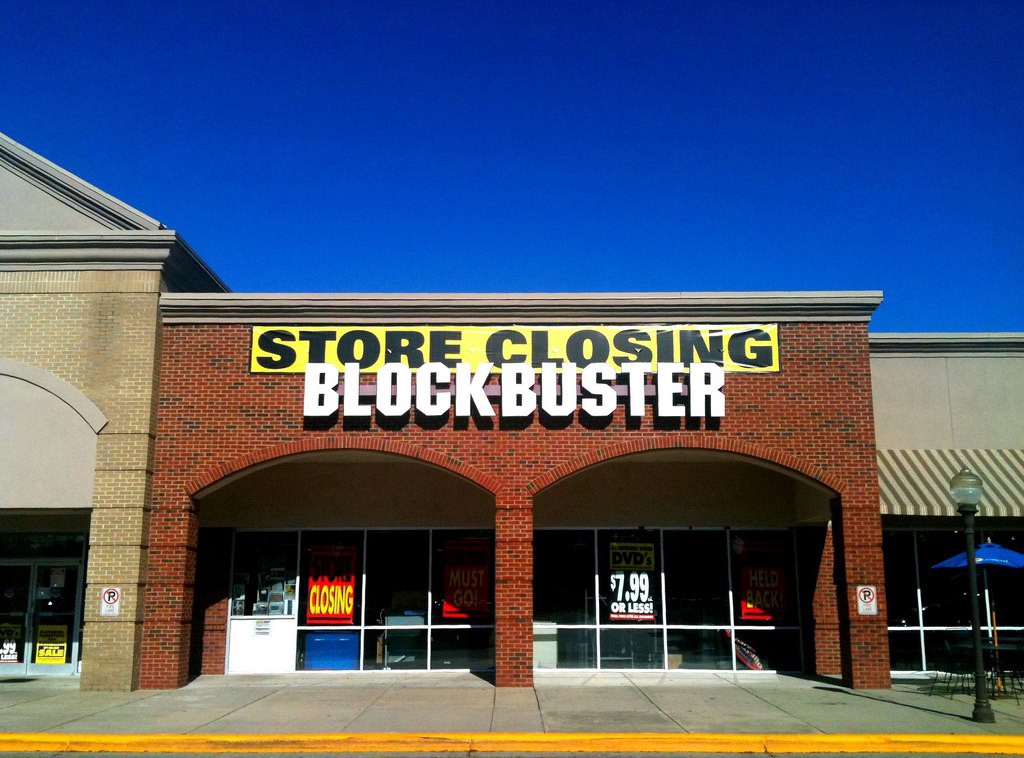
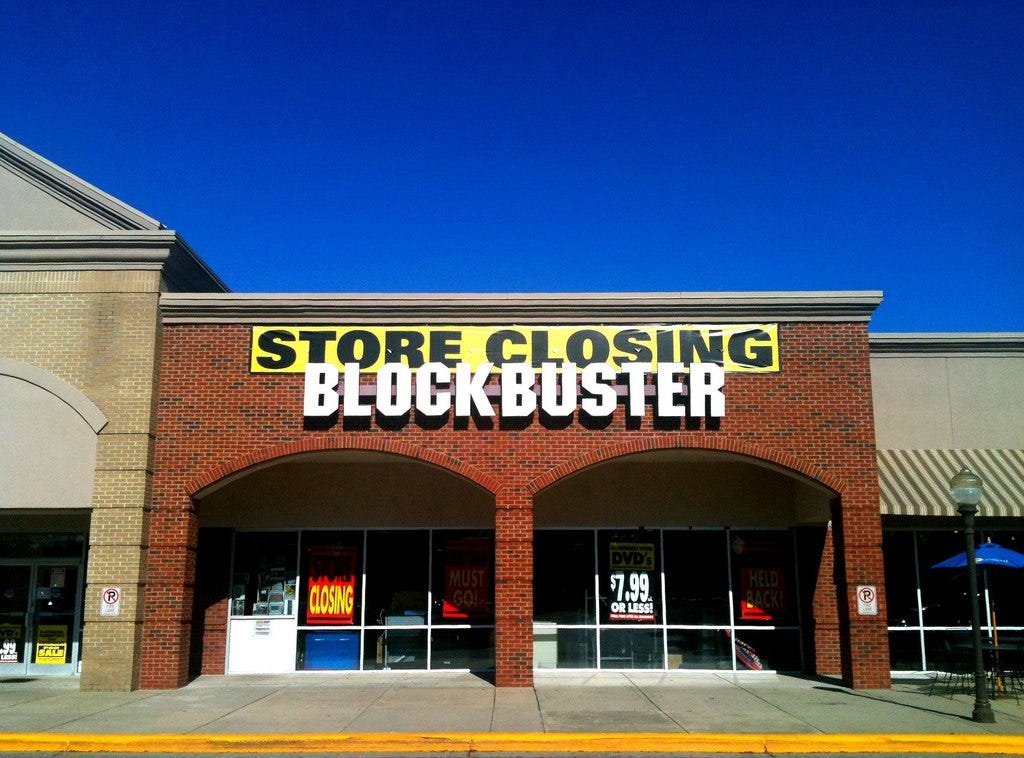
Bookstores Won’t Go the Way of Video Stores

by Jeremy Hawkins

How are bookstores and video stores similar?

I am probably asked that question more than anyone else in the known universe, because I work in a bookstore, and I also recently published a novel set in a struggling video store.

I have pat answers prepared. But it’s the subtext of the question I find most interesting. What people are really asking is, Isn’t it sad how bookstores are going the way of video stores, that is, off this mortal coil?

“Yes, it’s very sad,” I want to say. “Except it isn’t true.”

The similarities between the two industries are obvious. Both bookstores and video stores are retail businesses composed of shelves lined with stories of one variety or another. Some of those stories are real, some are commentary on the real, and some are completely made-up.

Both industries are staffed by zealous experts whose passion usually outweighs their paychecks, who take their reward from something other than cash-in-hand/possible career advancement/etc.

And both industries have experienced a recent-ish downturn due primarily to the evolution of technology, leading to a marked reduction in revenue.

And that, I believe, is where the similarities end.

For almost a decade I worked for a family-owned video store chain, VisArt Video in Chapel Hill and Durham, NC. I started working there in 2000, just after DVDs first came onto the market.

That time was, in many ways, the peak of the video store industry. You couldn’t not make money.

Remember those lines stretching through video stores on Friday and Saturday nights? Remember the annoying waitlist for hot new titles? The last time all that happened was 2002 or so, and I was the scruffy guy at the register. I was the guy calling you lickety-split when Legally Blonde was returned.

Of course video store business began dwindling quickly thereafter. Netflix, Redbox, DVR, TiVo, all the usual subjects. VisArt persevered longer than most. After all, we had an amazing selection — tens of thousands of titles — and a crazily devoted staff. Coming into VisArt was “an experience.” It’s where all your movie dreams came true.

But then, circa 2007, everything changed. Netflix streamed its first content. iTunes began providing full-length movies. YouTube went mainstream. And the first iPhone was released.

In the blink of an eye, the entire landscape of the entertainment business transformed.

We noble video store nerds saw the writing on the wall. With so many new ways of acquiring content, who would patronize their grungy local video store? Who would make that Herculean effort when movies and TV shows could be zapped directly to your hand or home?

It’s a simple equation: Technology changes, an industry dies.

Maybe it’s that simplicity that causes people to believe bookstores will follow the same path. Amazon and eBooks are new technologies, so it’s obvious that bookstores will ultimately fail, right?

But then there are all those zeitgeist-frustrating facts, widely reported, like that membership in the American Booksellers Association, a trade organization of independent booksellers, has gone up in each of the last five years. Which means that more bookstores are opening than closing. Period.

And take these circumstantial examples: Flyleaf Books in Chapel Hill, NC (where I now work) and Greenlight Bookstore in Brooklyn. Both stores opened in 2009, when the U.S. economy in general, and the bookstore industry in particular, were swirling in the toilet. Both Flyleaf and Greenlight are now profitable. Both are growing. Both have established themselves as cultural fixtures in their respective communities.

Both stores are here to stay.

And there’s this: A recent study showed that current college students (we’re talking literal millennials here) actually prefer reading print books over eBooks, claiming it helps them better retain knowledge.

If that factoid doesn’t blow your mind, then I suggest you read more books.

The truth is that, despite what you might have heard, people are still reading, and independent bookstores are doing rather well. Maybe not making a mint. Booksellers are still on edge, both financially and emotionally. We’re not poised to overtake Amazon anytime soon. But bookselling has proven to be a pretty darn robust industry. People are still buying books.

So what accounts for the discrepancy between the popular conception that bookstores will go the way of video stores, and the reality that they are not? Asked another way, why is everyone so quick to write bookstores’ obituary? What is this cultural obsession with obsoletism?

Perhaps it’s just in our bones — that technology always wins. We learn it as toddlers: we are trained, and have been for many generations, that “progress” is an unassailable good and that clinging to the past is naïve and pathetic. Thus we are programmed from the start to believe that technology is the biggest dog in every fight. Sure, John Henry defeats the steam-powered hammer. But what happens to him in the end? He dies of a massive coronary. Soul-scarring indoctrination complete.

From tall tales to Terminator (a movie, remember, where we all basically rooted for the evil robot), we’ve been inculcated to bow in supplication before new technology. To do otherwise is to be barred from the “Church of The New,” akin to being unhip, uncouth, unrighteous. And therein lies the social pressure I witness nearly every day at the bookstore — customers who love books, who gladly fork over their money to buy them, but who are certain that no one else in the world feels the same way.

Or perhaps it’s even simpler — perhaps we just enjoy narratives of tragic inevitability. This could be seen as cousin to that weird, culture-wide death wish that brings us back, over and over, to dystopian novels and movies. It is strange but true that we seem to find nothing so erotic as Armageddon.

In this perverse schema, the line of thinking is: Of course humanity annihilated itself in a nuclear holocaust. Figures. Or more to the purpose: Of course bookstores are going out of business. I saw that coming a mile away.

What I’m saying is, these and other biases are very likely clouding you judgment; I’m not claiming you want bookstores to close, only that you can be forgiven for having that misapprehension. Because based on the numbers, and based on the simple facts of their continued existence and current fiscal strength, bookstores have already been proven to enjoy some degree of safe harbor against the cyclone of technology that recently obliterated video stores.

So maybe just chill with the bookstore/video store comparisons.

I’ll conclude with a pithy and, I promise, entirely non-dystopian story:

On a beautiful spring day, a scruffy guy is working at an independent bookstore. Let’s call that bookstore Flyleaf Books, and let’s call that scruffy guy me.

A customer enters, staggers to the register, dons a pained expression, and whispers tragically, “So how’s business?”

As if I might collapse into hysterics if he spoke at full volume.

I smile. I tell the customer business is great. I tell him that more independent bookstores are opening than closing. I say that Flyleaf is here to stay. Of course he doesn’t believe me. Then he pity-purchases three trade paperbacks, secure that he’s done his virtuous, anachronistic duty.

A pity-purchase is a purchase, no matter how you slice it. We’ll take it.

But don’t worry.

Bookstores aren’t going anywhere.

“The Junker”: Fear and Fathers at the Fairgrounds

by Adam Resnick

As a child, I feared my father more than any creature on earth or in my dreams. There was never physical violence, just a relentless vibe of something very heavy in the air. You could feel it from the backseat of the car, or in the leaden silence at the dinner table. That he would kill everything in sight to protect his family was never in doubt, yet decoding and verifying his love was a mystifying puzzle that at times seemed impossible to crack.

By modern standards, the summer carnival sponsored each year by the Harrisburg Lions Club might not seem like much, but back when I was a kid, in the 1960s, it felt as if benevolent aliens had annexed Susquehanna Township and erected a magnificent kingdom of rust and glitter in the dead field behind the outboard motor store. Too young to attend the event alone in those early years, I had the strange pleasure of being escorted by my father. He took me because this is what kids do and his kid was going to have a good time, goddamn it.

Typically, the other fathers at the fair seemed to enjoy themselves as much as their kids, chucking baseballs at steel milk bottles, eating sno-cones, or allowing some drunk to guess their weight. Merv didn’t engage in things like that. To him, this was weak, silly behavior. Any adult male trying to squirt water into the mouth of a plastic clown deserved no respect and would surely suffer the wrath of a vicious world that preyed on fools.

He stalked the grounds two steps behind me like the Secret Service, keeping a sharp eye out for any sort of trouble that might enter my space, be it human, mechanical or otherworldly. There was very little talk. When I wanted to play a game, he’d nod and pay the guy running the booth, shooting him “the look” that delivered a simple message: The kid wins. To be on the business end of Merv’s glare was to get an instant education in the art of compliance. Soon I’d be walking off with an enormous rash-inducing stuffed monkey that journeyed to Harrisburg all the way from the Martian shores from Hong Kong. Not bad for popping one out of six balloons.

The severe, solemn fun continued: select rides that Merv deemed would not shear my head off, and more games of chance where the concept of chance had been eliminated. I was riding the lone black horse on the carousel (a wish predictably granted after hushed words were exchanged between my dad and the attendant) when I heard the strange thumps. They seemed to come from another part of the world and threw off the rhythm of the calliope. Even old Blackie looked spooked. My father’s face whirled past me at erratic intervals as the last blur of sunlight vanished somewhere beyond Sixth Street.

By the time I exited the ride the thumping had ceased and Merv told me it was getting late. For a split second, a request for “ten more minutes” crossed my mind, but I knew not to negotiate with him. Maybe he noticed a fleeting twitch in my eyebrows.

“Okay, what else?” he exhaled with a gust of cigarette smoke.

I led him toward a glowing rocket I saw in the distance as the mysterious noise returned. It was louder now; slow, deliberate, full of intent — more of a pound than a thud. I tried to follow it, grabbing my father’s hand, but it died off abruptly. We neared the rocket — which was just a tall, rocket-shaped hut that housed a small balding lady selling vaguely rocket-shaped Fudgsicles and other snacks unrelated to outer space. Soon she was offering me options for my sundae. Peanuts? Chocolate syrup? Marshmallow? Did we want one spoon or two? Merv had little patience for this sort of thing.

“Have you ever heard of the atomic bomb?” he inquired of the confused woman. “Well, the people who made it didn’t ask as many questions as you do.” The transaction was completed in silence.

I had almost finished my ice cream when it exploded again, so sharp and brazen I could feel it through my sneakers. I saw my father’s shoulders jump — he hated being surprised by loud noises. That’s when I knew it was real.

We both turned at the same time. Beyond the edge of the fair, in an empty corner of the field, sat a green pickup truck; motor running, high beams fixed, illuminating another car. Wordlessly, we stepped into the darkness as the dead straw beneath our feet crackled, making our way toward the headlights as they sliced through a drifting cloud of exhaust.

Pound!

3 HITS 25 CENTS the sign next to the old junker said. The car was a charred humpback relic from some past world I was glad not to have known. It looked like a collapsed elephant, graciously awaiting a paradise that would never come. A skinny frustrated teenager took his final swing, shook his head, and jumped off the roof. He returned the sledgehammer to a man wearing a cowboy hat and cautiously glanced at his buddies who laughed and hopped and held their bellies. The cowboy, making no attempt at humor, suggested he take up sewing. Another teen boy, shirtless despite the cool evening, slapped some coins into the cowboy’s hand as if they were old friends and bounded onto the hood. He did a little dance for his pals and then went to work on the dashboard through the gaping hole where a windshield had once protected the car’s occupants from weather and blood-feasting insects. Although energetic, the kid was dumb, and unable to cause any significant damage. The dashboard, having been the target of countless ambushes in the past, was free of instruments or anything remotely breakable. He did manage to expose a cottony looking substance that protruded through a tight seam in the metal, but his friends were unimpressed and responded accordingly. In defiance, he let loose with a spastic barrage on the car, which only caused the cowboy to whip off his hat and swat him on the ass. “Damn you, boy — can’t you count?” he hollered. That one played big with the crowd.

Those obnoxious aggressive teenagers, with their brash laughing voices — they reminded me of my older brothers. Boy, would I love to shut them up and bring a little peace to the planet, I thought. But I was a punk; barely six. I looked up at my father, the man who had refused me nothing since we arrived at the fair. But he shook his head “no.” Bashing a car with a sledgehammer was beneath his magnificent powers; an empty expression of rage without purpose. Kid stuff. “It’s getting late,” he reminded me.

We’d only made it a few steps before the thud. It was deep and booming. Behind us, a thick-waisted, bull-like man had taken a swing at the car to the delight of his crummy-looking children. My dad squinted, merely observing, as the man took a moment to remove his suit jacket. His tie was undone and sweat was already soaking through his shirt. He wiped his hands on his pants and picked up the sledgehammer again. Another commanding strike left a respectable crease in the driver’s door. Four more followed and the door was now cratered in the middle. His kids jumped up and down, embracing one another in a clump of buckteeth and lopsided Mohawks. Even the teenagers applauded. With a heaving chest and lungs sucking truck exhaust, the man passed the sledgehammer back to the cowboy. He’d gotten his fifty cents worth and was smart enough to know that the next swing might have embarrassed him. In his mind, he was stepping away in victory and even managed a trembling smirk as his diaphragm struggled to bring order to his thoracic cavity. Underneath the bull was just a fat guy with no moxie and no heart.

I was scrutinizing the little celebration going on in front of me when I felt a nudge. As always, Merv had been watching me. A rare half-smile came to his face and he winked.

The bull was sucking down a bottle of grape soda like it was medicine when my dad handed the cowboy a few bills. He grabbed the sledgehammer before it was even offered to him. Then he slowly walked around the car, gazing into its past. The sledgehammer was disrespectfully tucked under his arm like a cardboard mailing tube.

Satisfied with his inspection, he now gripped the sledgehammer. I recall hearing a whoosh, seeing a blur of movement, and the sound of a meteor hitting the earth. Merv had launched an attack on the driver’s side doorpost — the bar of steel that joins up with the windshield frame. The noise he created was unlike the other bangs and wallops in the field that night. This sounded like the end of the world. Like continents splitting apart. A chunk of chrome that survived countless fairs before this took flight and landed in the vicinity of the Fudgesicle rocket. Somewhere a teenage voice called out, “Damn!” Merv continued to pummel the doorpost until it V’d inward and caused the corner of the roof to list. Now he walked around to the opposite doorpost and beat it so mercilessly that the front grill and headlight sockets appeared to form a face that grimaced in agony. The teenagers, the bull, and the cowboy gazed on in silence. To cheer or even make a comment would be like whistling in church.

You could see the ridged outline of every muscle through his t-shirt. A history nobody wanted to learn was written in his eyes. The cowboy made no attempt to tally the hits as the assault went on — urgent, relentless, personal. (The whole time with a lit cigarette in his mouth!) He continued until the entire front section of the roof sagged. The doorposts, loyal supporters of the car’s structural integrity since it rolled off the assembly line, had finally clocked out. Then, in a very somber, almost reverent manner, Merv stepped onto the hood to finish what he started. He raised the sledgehammer, and began tapping out the dots and dashes.

POUND.

I love you.

POUND.

Do you read me?

POUND.

I love you.

When he was through, the roof sloped almost completely down to the dashboard. The open space that once held a windshield no longer existed. The junker was now a wreck, and its value as something to be beaten drifted off with the people exiting the fair. The cowboy slumped against the pickup truck and crooked his hat in a way that made his eyes disappear.

My father was barely winded as we walked out of the field. He rested his forearm on my shoulder and said, “Time to go home.”

***

Adam Resnick’s essay collection Will Not Attend will be available in paperback this July

Almosting a Joycean Listicle: 10 Books that Continue the Legacy of Ulysses

It frustrates me to see that a work of art as radical as Ulysses has been rendered so tame by time that even Mayor Nutter — and what a Joycean name that is! — participates in the annual Bloomsday celebration at the Rosenbach Museum here in Philadelphia. What was once transgressive is now pedestrian. Yes it’s wonderful that so many people across the globe get together to celebrate a book of all things, yes, yet I can’t help wondering why we insist on living in the past.

In keeping with James Joyce’s own love of lists, here’s a terribly subjective list of ten books published in this century that are in different ways as inventive as Ulysses was in 1922. These novels aren’t necessarily inspired by Ulysses, except insofar as it has affected every subsequent novel, but like Joyce’s masterpiece they challenge us in ways we never knew to expect. If nothing else, Bloomsday should remind us to pick up some books not despite their difficulty but because of it.

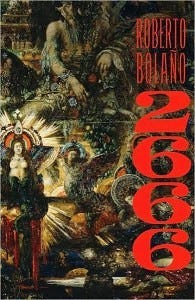
Roberto Bolano 2666

2666 by Roberto Bolaño

On the surface, the five sections of 2666 have little in common. They read like entirely separate novels and it’s possible that that’s how Bolaño wanted them published. But held together in one volume — written while the author awaited a liver transplant and released after his death — we are forced to find our own lines of thoughts and thematic connections.

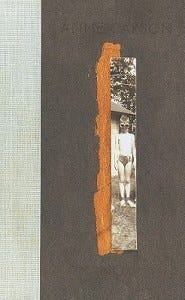
Nox by Anne Carson

NOX by Anne Carson

NOX serves as an epitaph for the author’s brother in the form of a book. The text fills one long document that we pull from a box like tissues at a funeral. The combination of imagery and poetry makes us rethink what a book can be and, by extension, what we can be. Maybe it’s not a “novel.” So what.

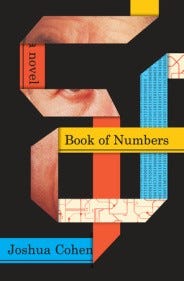
book of numbers joshua cohen

Book of Numbers by Joshua Cohen

There’s no escaping textual linearity in a bound novel unless we’re willing to skip around and choose our own order of adventure, but Book of Numbers manages to internalize the garden-of-forking-paths logic of the internet and use it in the service of a clever and enjoyable and ultimately old-fashioned story. Cohen’s latest novel seems to retell the entirety of Wikipedia the way Ulysses retold the Odyssey.

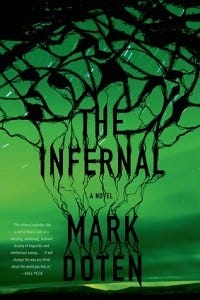
mark doten the infernal

The Infernal by Mark Doten

Doten’s debut novel mines the current war-on-terror headlines for stories that to any reasonable human would sound invented were they not all too real in their horror. It’s a book that understands that absurdity has become our dominant aesthetic; in participating in the absurd and interrogating it and ultimately embracing it, Doten also helps us see alternatives to it.

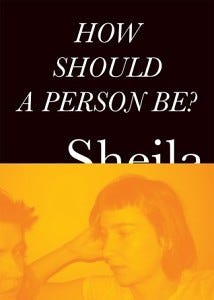
how should a person be sheila heti

How Should a Person Be? by Sheila Heti

The “Sheila Heti” who appears in How Should a Person Be? shouldn’t be confused with the flesh-and-blood Sheila Heti whose name appears on the cover any more than the object Magritte depicted in “The Treachery of Images” should be confused with a real, physical pipe. Yet for all the novels struggling these days to undermine the artifices of fiction, How Should a Person Be? is the one that feels most simultaneously real and unreal. It’s lovely and heartbreaking and then lovely some more.

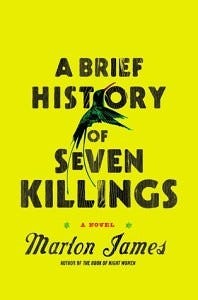
seven killings marlon james

A Brief History of Seven Killings by Marlon James

In this masterful novel, set mostly in Jamaica, James enlists an ensemble cast of memorable characters and channels their individual voices with such alacrity it’s possible to forget that there’s an author pulling the strings at all. It feels at times like the entire human experience, in all its glory and all its depravity, gets rendered bare on the page. To whatever extent Dublin is synonymous with Ulysses, you can count on there one day being Brief History walking tours of Kingston.

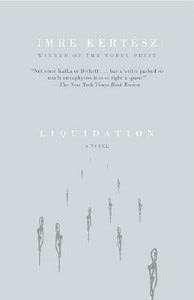
liquidation

Liquidation by Imre Kertész

The advertising agent Leopold Bloom was born in 1866 to a Hungarian Jewish father and an Irish Protestant mother. It’s conceivable that his father was been born around the time of Hungary’s 1848 uprising against the Austrian Empire. We cannot understand Bloom without some sense of the treatment of Europe’s Jewish population at the turn of the twentieth century. As Daniel Torday does in his recent and magnificent debut novel The Last Flight of Poxl West, the Hungarian Nobel laureate Imre Kertész shows us the ways in which that Ulysses-era fear mongering reached its awful nadir four decades later.

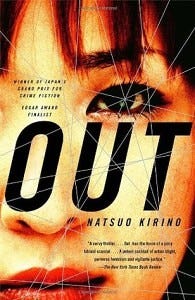
Out, Kirino

Out by Natsuo Kirino

It would be a shame if the well-deserved love heaped upon Oe and Murakami caused us to lose sight of the Japanese novelist Natsuo Kirino. Her novels, often categorized as crime fiction, challenge conventional gender roles and her homeland’s patriarchal institutions. That makes her genuinely dangerous to the status quo and Out in particular — in which a fed-up woman finally kills her husband — can inspire the kind of intellectual liberation we all so desperately need. It’s gruesome and wonderful. A hundred years ago, it would have been considered obscene.

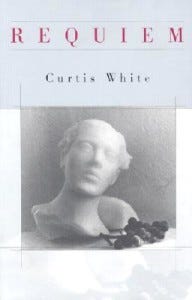
Requiem Curtis White

Requiem by Curtis White

Taking its inspiration in part from Mozart’s Requiem, White’s resplendent novel actually manages to be shocking in much the way I bet Ulysses was when it first appeared. The shock here — moral, sexual — serves the vital function of shaking us from our comfort zones. White isn’t telling us what to feel, only reminding us that we’re capable of feeling.

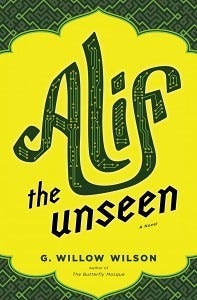
Alif the Unseen, Willow Wilson

Alif the Unseen by G. Willow Wilson

Here’s another one of those novels that both draws on some of the literary traditions codified by James Joyce and moves the conversation in exciting new directions. In particular, it asks us to look at the changing nature of humanness as we embody new digital technologies and at how those changes might inspire new ways of forging relationships across traditional theological boundaries.