I Am the “Other” in “Mother”

Out of Body by Kristina Kasparian

Wanda is the technician today. She asks Ethan and me to wait in the hallway until Margot is ready. We make ourselves small in the corner where they’ve wedged two chairs for situations like ours.

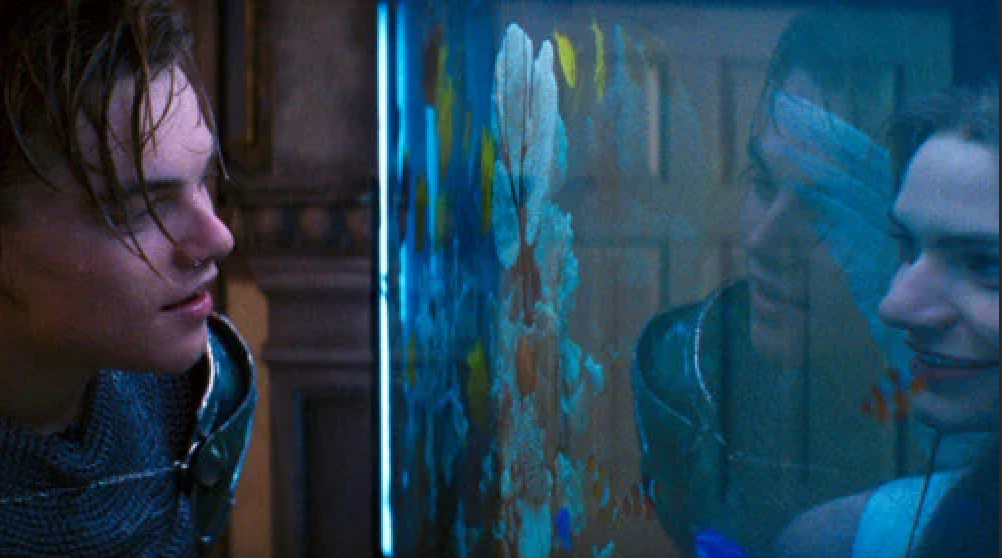
The corkboard is covered with photos of ecstatic couples embracing their newborns. I shift in my seat, struggling to imagine our picture. I test variation after variation of who would be in the middle, holding the baby. It should be Ethan. No, it would have to be Margot. She’d want it that way, and it’s only fair. It won’t be me. I can’t take credit for any of this—not the egg, nor the womb, and certainly not the instinct. I’ve come to hate these clinic corkboards. They’re a shrine to our losses and to my selfishness. These mothers are not selfish. They’ve proven their resilience and earned their place. They didn’t cop out like I did. They’d never hesitate to call themselves mom. I focus instead on the fish swishing in slow motion in the aquarium.

Ethan is calm now that Margot showed up. We both feared she’d changed the appointment date and left us in the dark. She’s been leaving a lot in the dark lately and, as we scramble with the bits and pieces she lets us in on, our vision of being a team in this has begun to dissolve. His hand is warm and steady on my knee. My gut is still churning. I have to remember she wants to be good at surrogacy. I have to remember to breathe.

The door flings open soon after we sit. The displaced air smells like sanitizer and fresh linen. Wanda ushers us in but is unsure where to place us.

“You could go in the hamper,” I tease Ethan. Oh, everything I say sounds so awkward and dumb. Out of all of us here, I am the one who should go in the hamper.

I feel the cold gel on my belly as Wanda squirts it onto Margot’s skin. My brain bridges the gap between our bodies, like a magic trick. I look at Margot for a second. She seems flushed today. Panting, almost. Wanda starts clicking buttons.

“Oh my!” Ethan squeals. He sounds like an old man when he’s excited.

“Wait.” I elbow him. “Don’t look yet.”

“Why not?” he whispers back.

“Because Margot can’t see.”

Wanda realizes and pushes the screen towards Margot.

The gel on Margot’s skin traces the bend of my ribcage and pools in the small of my back. As Wanda zooms in, milky wisps appear across a dark cosmos, but I can’t make sense of the rest. It’s not my disease I see this time—not one of the unruly masses that seed and bloom in my abdomen—but a face and limbs and a pulsing heart in a spacious, spotless womb.

I can barely look at Ethan. I’m afraid to see just how much he’s beaming. I’m afraid of how much he’ll hurt if all this slips through our fingers again. But mostly, I’m afraid this will make him the happiest he’s been in the twenty-two years that I’ve loved him. Unlike him, I’ve yet to come to terms with all the ways our new roommate will shake up our lives and love and dreams.

“The baby is very active,” Wanda says as she clicks and measures. “But very cooperative!”

Ethan looks pleased, as though these traits are sure to stick.

“It’s the latte,” I say, and Margot lets out a forgiving chuckle.

I smile at the sound of it, craving the ease of our early interactions. When we first met Margot, it felt like we’d hit the jackpot of a once-in-a-lifetime connection, but the tension between us has mounted over the last few weeks. Our best intentions and cautiously chosen words constantly fall short with her, our care somehow getting lost in translation in the haze of hormones. Her outbursts and withdrawals are triggered so abruptly, with little reprieve between episodes, leaving Ethan and me scrutinizing our texts to figure out exactly when we set her off, why we’re so bad at this, and how to make it right.

Margot is filming the screen, the way she does when we aren’t in town for these check-ups. I’m surprised she documents everything just as much for herself as for us, but of course she does. Why shouldn’t she? This is also her story—intertwined with ours, yet its own separate thread. I take it as a reassuring sign that she’s not detached from this pregnancy, that surrogacy is still a source of pride for her and not simply a business transaction.

‘During the pregnancy you’ll be a spectator.’

I notice I’m not filming or taking any pictures. I make a half-hearted reach for my backpack that I’ve wedged between an IV pole and a cabinet, worried that Margot will assume I don’t want this enough, that I’m ungrateful and unworthy of her womb. It’s just that I’m not used to being excited in medical settings. I’ve learned by now that all progress is fragile, and I’m praying our pieces won’t land on a space that sends us back to start. I don’t want to fiddle with my phone. I don’t want to miss an ounce of this moment that Ethan and I never expected to be wrapped in, this moment where my life is beginning and ending and standing still.

And, besides, if she’s recording, I don’t have to. I’ve grown used to following Margot’s lead. I’m hunched against the wall, but I know that’s where she wants me.

“During the pregnancy, you’ll be a spectator,” Margot warned us very early on, drawing the delicate boundary between her pregnancy and our child. This is our first surrogacy journey, but we are Margot’s third parents. We’d wanted an experienced surrogate, and that seems to come with being told how things are done. The rules of engagement are as she explains them to us. The agency we hired to match us doesn’t provide us with much support, aside from sending out annoying funnel emails and dispensing the funds we’ve put in their trust.

The trouble is that spectating is hard work when a history of medical neglect and grief have wired you to be protectively proactive. Spectating feels next to impossible when you are bursting with gratitude and guilt for having asked someone to be pregnant for you, to risk their health while you safeguard yours. Spectating seems absurd when you’ve displaced entire universes and gambled fortunes to create this reality where the stakes are unbearably high. Still, I’ve been trying hard to spectate, to make myself patient and compliant and calm, even though I’m yearning to be all in, to savor this unusual pregnancy in my own way.

Behind the irritating fabric of my face mask, I am breathing through my teeth. I glance at my grinning husband, who hovers over the ultrasound table no differently than if it had been my body, my belly, my baby. He’s not feeling as out of body as I am.

I’m staring dazedly at the white and the shadows, the moving inkblots, this body I’ll hold in my mom’s rocking chair in the thick of the night, and I’m swallowing hard, beckoning myself to feel anything but removed.

But I am the other in mother.

“Honey, I need you to put yourself back into the equation,” the counselor told me last week. “It’s not your egg, you’re not the one carrying the baby, and you’ve already lost so much of yourself and your career to this relentless illness. I need you to start taking up more space and getting your confidence back. Your needs matter as much as hers, please remember that.”

I was in my twenties when I found out my eggs were faulty, not because Ethan and I were trying to conceive, but because of the hot flashes and fatigue that had suddenly piled onto the searing pain and hemorrhaging that upended my days as an ambitious graduate student. Though I’d seen over a dozen doctors since my late teens, no one would name the illness that had been steadily dismantling my identity. The onslaught of these new symptoms only veered us further away from the mark; suddenly, we found ourselves discussing premature menopause and egg-freezing instead of getting to the bottom of my illness. At the time, menopause was even less on my radar than motherhood, yet we somehow found ourselves pulled into the rabbit hole of fertility treatments because doctors urged us to prioritize pregnancy. The high doses of IVF hormones only fueled the disease until I could no longer shower without vomiting or stand up after peeing. After repeated miscarriages, I pulled the plug on pregnancy to save myself. I was told I was too young to give up on my eggs and my uterus, that there was still more we could try to make a pregnancy stick. But after five surgeries in eight years to try to keep my finally-diagnosed illness at bay, I wasn’t willing to take that risk. As much as I’d have loved for Ethan to finally be a father, I didn’t want to be a mother at the cost of my body and mind. Surrogacy is our most tender compromise, a decision that felt liberating as soon as we’d made it.

Surrogacy is our most tender compromise.

But at some point along the way, Margot’s confidence began to chip away at my own, as though they belong to the same pie chart. I’ve been struggling to keep up with this acquiescent tango, this push and pull between showing support and giving her space. The moves change as soon as I learn them. I’ve been walking on eggshells and second-guessing my facts, erasing my wants just to keep the schedule, the trust, the peace. It feels like the least I can do in return for such an impossibly tall ask. After all, the doctor had given me the option to carry, and I chose not to take it. I chose to assign someone else that weight.

Now, my eyes on the screen, I think of how I might remember this moment when that face finally looks up at mine. I think of our donor, Bettina, who is somewhere going about her life, not knowing her egg has hatched inside Margot’s womb. I think of my grandmother and wonder when I’ll finally find the right words to tell her—in my heritage language that lacks all these controversial scientific terms—without dishonoring her vulnerable values and sacrifices. She raised me to do everything myself and to silently push through pain, and here I am outsourcing the very essence of what makes a woman worthy. I think of my teenage self and want to tell her we’re still ambivalent about motherhood, that we didn’t grow out of our reluctance like they’d promised we would, that we acquired a taste for asparagus and yellow gold and winter, but not for pregnancy. I think of when the door will slam on the words, “You’re not my mother!” and I wonder who, by definition, is: the one who reproduces, the one who births, or the one who soothes?

“Baby’s facing you now,” Wanda says to all of us as she presses and probes.

We all lean a little closer to the screen. The three of us are in this being’s gravitational pull—already, forever.

“Oh, hiiii!” Ethan exclaims, making Margot and me giggle.

Am I a fraud for being happy right now, when I’ve never craved kids in my kitchen? What kind of selfless mom will I be, if I’ve already put myself first? I’m sure I won’t be a natural at parenting like Ethan, but I’m curious about finding my own flow. Margot told me last month that I don’t have the faintest clue of the life that awaits me. On her bad days, she mocks my work and my slow mornings, tells me I’m in for a major reality check. I remind her—and myself—that living with a disabling illness has made me creative with my time and energy. I try not to let her rattle my faith in my adaptability, but she does. When I read her messages, I feel seasickness swell behind my sternum, yet it’s not from an embryo growing inside me.

Margot still hasn’t glanced in our direction. She’s propped herself up on her elbows and even her shoulders are turned away from us now; I can see the looped drawstring of her gown interrupting her hair’s strawy lines. We may as well not be in the room.

“Why would anyone choose to be a surrogate? What’s in it for her?” Our friends and family try to understand our arrangement. Their burning questions are also mine. I once told Ethan that I could understand murder, but not this. Margot says she grows babies well. She thrives on being needed and valued. Her happiest days are those where she receives compliments about any positive difference she makes and about the boys she’s contributed to the world. She fiercely defends surrogacy and educates unknowing or opposed minds who condemn the practice of renting a womb or buying a child. But, in recent weeks, as our involvement is kept to a minimum, I can’t help but wonder if she also likes the rush she gets from the power she holds, and whether it is reasonable for expert surrogates to feel this way. When we learn that our agency has been refunding expenses unrelated to surrogacy that are not in our contract, we feel we have no choice but to turn a blind eye to it all, partly because Margot often tells us she’s under financial stress as a single mom, and partly out of guilt from a culture that lauds surrogates as altruists and chides intended parents for being petty.

I’ve been thinking of how our dynamic may have been smoother if Ethan and I were a few time-zones away from Margot or if our hardships hadn’t programmed us to cling to every milestone. I think of all the people in online support groups whose need for a surrogate is more absolute—women born without a uterus, or women who gave up their uterus, or gay men. Maybe Margot would have felt more at home with one of them, where the roles are more clearly defined.

I’ve also wondered if it might have been easier if we’d remained strangers like with our egg donor, Bettina. We barely know anything about Bettina, only her medical history, basic personality traits, and the color of her eyes, hair, and skin. But surrogacy huddles you real close, real fast, and leaves no stone unturned. With Margot, we know what her weeknights look like, what her son cooks for supper, whether it rained during soccer practice, how her grandmother is doing. We know she’s a space optimizer and a note leaver and that she is unstoppably generous with the people she chooses to love. We’ve debated every opinion from abortion to cilantro. We know what pushes her buttons and how she pushes ours. It’s ironic, though, to know all this yet not have the slightest idea of how gracious the other will be in times of heightened stress.

I hope I am worthy of Margot’s sacrifices, of what she calls her pincushion butt after the countless injections of progesterone, of her six-hour drives each way to the clinic, and all that time away from her sons just so she could grow ours. But I secretly hope she’s worthy of our sacrifices, too.

When the ultrasound is done, the machine spits out a series of black-and-white photographs. Wanda grabs the roll of prints and tears it right in half. Three for Margot, three for us. This little white blob with a button nose is now safely tucked in each of our pockets.

Outside, squinting in the hot autumn sun, we catch up on our weekend plans on the curb, our voices tentative but possibly tender. We hug. In a few seconds, we’ll part. Margot has to rush back to her family, and we have to contend with this abstract concept of our baby growing somewhere far away from us.

In six months, it may hurt just as much for her to watch us walk away. Even the strongest threads look scraggly and strange when pulled apart from their weave.


Ours is the only car on the road, or at least, that’s what the fog has us thinking. We are pulled into the dreary haze by white ribbons of lane and snow. I never imagined my son would enter such a monochrome world.

I keep checking the ETA on the map, hoping we’ve timed our four-hour drive right, unsure of how fast or how slow delivery might be when it’s the fifth. Margot hasn’t opened our text in hours; she’s either sleeping, driving, delivering, or upset.

“You’re still okay without music?” Ethan asks.

“Mmhmm,” I nod, my eyes glued to the incrementally appearing ribbons.

The silence follows us into the maternity ward of the small-town hospital, where the hum of the cleaner’s floor zamboni is the only sound that reaches our ears for a long while. There are no beeping machines, no code blues or yellows or reds, no pages for doctors or patients. Occasionally, we hear sneakers shuffling past, a soft knock, a startling racket from the ice machine down the hall, and—finally—a muffled scream that culminates in sweet baby wails. This hospital makes delivery seem relaxing, at least for those who get to take their baby home.

Once, we hear, “We’re going to the O.R.!” Ethan and I look at each other with widened eyes, fearing it’s about Margot. The nurses have placed us in a sort of conference room to keep us out of the way. Margot wants to deliver alone, but we’ve been assured she’s agreed to have him brought to us right away. We aren’t told when she’s been induced or that the process has been delayed or much about her progress at all, to protect her privacy as the patient. I spend the wait staring at a box of luer lock syringes, and Ethan corrects some of his students’ exams. I don’t know how he can focus.

I don’t know how we’ll go on.

Now and then, we’re checked on by Sasha, a nurse whose eyes fill every time mine do. No one knows what to do to soothe us, and the social worker is not in on Christmas Day.

When Margot broke the news last week that his heartbeat had been gone for days, I was foolish enough to think we’d grieve together. Instead our trio collapsed like a house of cards. I’ve been desperate for more empathy from her all week, all trimester—something, anything, beyond information being relayed to us after the fact—but maybe that’s another impossibly tall ask. She dropped the bomb and retreated, keeping us out of the loop to block us from being here to say goodbye. The hospital didn’t even know it was a surrogacy pregnancy until we told them we were coming. I wish our lawyer would answer the phone.

Sometimes, the staff expresses their sympathy in stats:

“This is our first surrogacy loss in the seventeen years I’ve worked here.”

“After week twenty, the chance of a loss is actually lower than one percent.”

“It’s common for parents to choose not to see the stillborn, so there’s really no wrong decision here.”

I’m drowning in plain sight.

When evening falls and we’re told she still hasn’t delivered, it becomes clear we’re not driving home tonight. Sasha escorts us into a room at the end of the hallway so we can get some sleep. Margot and the c-section patient are in the only other occupied rooms. Margot’s door has a purple butterfly on it.

“You won’t forget about us in here, will you?” I ask. Understaffed big-city hospitals in our province have left their scars on us.

“No way,” Sasha laughs. “My shift ends in an hour, but I’ll introduce you to Lauren, the night nurse, before I leave.”

This is it: the closest I’ll ever get to being a new mom in a delivery room.

Ethan falls asleep a minute after I decide he needs the bed more than I do. I sit on what I don’t realize is a pull-out and peel one of the five clementines I’ve brought. I’m so stupid: I brought a muffin and a clementine for Margot and each of her two sons, in case they’d be here too, in case we’d be waiting together. I look around at the discordantly cheerful decor as my chewed-up nails dig into the acidic peel. This is it: the closest I’ll ever get to being a new mom in a delivery room. The first time I was in a maternity ward was nine Decembers ago, when we’d given IVF a try with my own measly eggs, and I’d ended up hospitalized for internal bleeding hours after the egg retrieval. The last time I was in a maternity ward was four years after that, when I miscarried our last viable embryo. Now Margot is miscarrying for me because I selfishly opted out, to protect myself from exactly this.

I put my hands over my ears. I swear, this silence is going to engulf me.

Ethan is on his side, his head slightly turned to the sky, like in a painting. I watch him breathe. I don’t know how he can.

The sudden break in the silence jostles us both awake. I scramble for my face mask and my glasses and to remember where I am and why my boots are on.

“She just delivered,” the doctor says, standing in front of us for the first time all day. I glance at my watch. Hours have passed—it’s one a.m. There are no sweet baby wails filling the hall.

“Is she okay?” Ethan asks.

“Yes, she’s fine.”

“Did she need surgery?” I fire next. Margot had been terrified about this possibility.

“No, everything came out. No tissue was left behind.”

Ethan asks what has been weighing on both our minds. “What was the cause?”

“I can’t tell.” The doctor shrugs his shoulders, and it makes me want to shake them. “There was nothing obvious I could see. We can send the fetus for testing. They can check the cord and the placenta and the development of the organs. It might tell us more.”

“Yes, we wanted to ask for that,” my voice croaks.

Asking for that involves signing a bunch of forms, including forms that list Margot as the mother and forms that transfer Margot’s motherness to me. We would have signed all of these same forms in a few months, on Mother’s Day weekend, together, while tulips pierced the dormant earth. A stillbirth is still a birth.

The extra forms we wouldn’t have had to sign—if the universe weren’t so sickeningly cruel—are the ones surveying where we stand on horrific things like an autopsy and a cremation and a memorial.

“What did you decide about seeing Baby?” Lauren, the nurse who replaced Sasha, puts her hand on mine. She briefed me earlier on what I might see, how discolored and deteriorated he might be.

“Yes, I still want to…”

“I don’t.” Ethan gets up to leave the room. “I have the last ultrasound so clear in my mind, and that’s what I want to remember.”

He leans into me before he goes. “Good luck,” he whispers. He knows I need to stare pain straight in the face and let it ravage me before any healing can ever begin. We are both fluent in grief, we just speak a different dialect of it.

When the nurses return to the room, my baby is in a large metal bowl covered with a sheet. I have to fight back nausea and the thought that I might never use my baking bowls again.

“Would you like to move to the bed?” Lauren points and I look over at it.

I bow my head and shake it. What I want to tell the nurses but don’t is that the bed is for real moms and their real babies, the ones who cuddle and cry and come home with them. The bed is for when the universe gives me a chance to finally get this right. Clearly, hope is a subscription you can never cancel, one you get billed for without informed consent.

Lauren brings him to me. Half-baked, lost forever. My mind crosses to a dark place where I imagine him suddenly gasping for air, changing his mind, sticking with us three. He can survive out of body, can’t he? He is scarlet, almost translucent. But it’s his slender fingers that shock me most, that remind me of how far we’d come. If it wasn’t meant to be, there’d been ample opportunity for it not to have been. A bad embryo, a failed transfer or two or three, Margot’s early blood clot or COVID infection. We could have not met her in the first place, or never signed the contract after our first conflict. But everything had worked, and in record time, for once. What was there to learn? Must there always be something to learn?

I stare at him, my little red frog. I already know I’ll never recover.

“Why’d you abandon us? Didn’t you want us? Did I take too long to decide I wanted you?” I want to wail these words and crack the eerie silence of this place. But my chest is too waterlogged, and I am sinking too fast to scream.

Lauren watches me watch him. “I can leave you alone with him for a few minutes,” she says.

When she starts backing away, I panic. “I don’t think I can…” I begin to howl, ugly and tired, folding in on myself with my clenched fists pressed against my empty belly, worried that Margot might hear, that she’ll resent my grief for burdening hers, the way she’d always lash out at us for adding to her stress and schedule.

“That’s absolutely okay.” Lauren gently tugs my baby away from me, and I sneak one last quick glance, already regretting cutting our time short, already wishing we’d said yes to cremating him.

I want him so bad, but differently. Not like this, not in the dead of winter. I want him warm against my chest, cooing and drooling and farting. I want him in the wee hours of the morning, before the robins stir awake. I want him hanging off me in the carrier, his face tucked under a yellow broad-rimmed hat as I dig my hands in cool soil and plant our abundant garden. I want him fiddling with his toes on the bed between us, intriguing our cat. I want him smooth and even and breathing, not this scary scarlet of stillness. I want him the way millions of people have somehow been able to have their babies without so much as a second thought. I want to tell him I’ve been waiting, that I cleared out so much space for him in my closet and drawers and heart.

I am hovering somewhere above this scene, ice-cold and see-through.

I can easily recall his knees and nose, but I have no information about his dimples or daydreams. How can I mourn someone I never even knew?

Ethan comes back in once I’m alone again. I remove my boots and lie on the bed, then eventually get cold and tuck myself in. There’s a clunky pad on the mattress that gets tied up in my calves every time I turn. This would be useful for my periods, I think. But this is for Margot and for mothers who deliver.

I wake up to the zamboni purring as it makes its way down the hall. The fog is back. Margot is gone. Her purple butterfly door is wide open, and someone is making her bed. They kept us apart from start to end. We didn’t see her, or half see her, or even overhear her. We’ll never meet again. I want to fall to my knees and scream at this colossal failure of ours. I imagine her driving, resolute, hopefully not bleeding. She’s free, yet we’re still here, bewildered and empty-handed. There’s no way she, or we, would try our foursome again. We’ll have to restart the long search for a surrogate and hope our holes won’t make us unlikeable.

How did we lose everything in half a heartbeat? Our son, seventy thousand dollars, our future, a friend. I want to wake up Ethan and tell him our life is over. I make some noise, and he comes to.

After more paperwork and more back-and-forth about whether or not we are parents, we leave. We walk past the Christmas tree trimmed with baby bonnets and birth photos—a red box of bereavement mementos tucked under Ethan’s arm—and let the fog haul us home.


I can feel my pulse just above my ankles. I’m surprised I’m alive.

My head is too buried in my pillow to even see outside. There’s no point in moving. My watch says it’s past ten, but I hide the evidence under covers. I can’t remember the last time I slept this much. Maybe after my first surgery. That was a january too—a slate wiped bare, much like this one. All I’ve found the energy to do is clean and declutter, as if to have control, as if he’s still coming.

The earth has gone flat, and I’m sliding off it fast, about to crash face-first.

“Five more minutes,” I lie to Ethan. He’s been up and about for who knows how long now. I’ve ignored coffee brewing and bacon sizzling and negotiations with a hungry cat. I’ve ignored my full bladder, which is starting to seize and cause a migraine.

“You can have seven minutes if you want,” I hear him say. I almost smile.

It’s been twelve days since the hospital. We’re at the cottage we rent from a stranger-turned-friend, on a tiny lake, cocooned by a vast forest that has become my confidante over the last four years. We come here once every six weeks to fill our lungs and journal pages. Nearly every one of our recent milestones has unfolded here, wrapped in the magic of loon calls and stormy sunsets. Now, the magic has no way to reach me—I am looking without seeing, and my heart has barricaded all its rooms. When I stare out at the trees, scouring the space between them for deer, I know I won’t see them—the animals keep their distance when they sense that I’m unwell.

I finally force myself into the shower. When the lavender foam flows past my navel, I think of Margot’s rounded belly and stretchmarks. I think of the umbilical cord. I almost envy them. I have no feedback from my body about this loss; it is unscathed, and I am unentitled to this grief.

A real mother would be entitled to know why her son died. The autopsy results are in, but we are not privy to them, though both our contract and the hospital paperwork state in black on white that the baby’s results are to come to us. We’re told they’ve discussed the findings with Margot, but she’s prevented staff at all levels from sharing them with us, and they comply because she is the patient. It’s unclear whether she is punishing us or concealing something. We fester without answers, discarded by doctors and nurses and counselors who have forgotten that we are the parents. I can’t sleep without being tormented by the same nightmare of Margot pushing all the air out of my chest with her hands and mine serving her coffee the next morning while I ask her if my music is too loud.

I wish it were the summer, when I wouldn’t have to feel the crushing weight of beginning a new year this way while scrolling through endless recaps and resolutions. This is a time for dreaming and anticipating, but I can do neither. Luckily, cell reception is spotty at best, so I can take a break from the internet for a while and from compulsively refreshing my email for results that won’t come.

At least in the winter, we can go two whole weeks without seeing another face out here. We can take a break from whispering thanks to everyone’s sorrys. They tell us they can’t imagine what we’re going through, but the truth is that we can’t imagine it either—we shake our heads in disbelief at least once an hour. “I’m lost,” I keep saying, then sobbing. I’m usually good at channeling pain into action when the universe slaps me hard across the jaw, but my life has just been emptied like an unzipped suitcase flipped over onto a bed.

When I manage to get dressed, Ethan and I take our daily walk through our favorite forest. We have to concentrate as we traipse. The snow is not deep, but there are a lot of fallen trees. Last spring, just before we matched with Margot, a tornado ripped through the forest, changing it forever. For three seasons, we couldn’t even enter—it was dangerously unstable. Being severed from my calming source hurt in a deeply disorienting way. Now, the path we knew with our eyes shut is playing tricks on us. How could something so entrenched in me have become so unrecognizable? As we crawl under fallen pines and trace wide berths around the messier trunks, we find ourselves unbearably unsure of the way. We stomp in the snow to make exaggerated footprints and lay down arrows made with branches to tell our future selves how to get out before we go any deeper. It’s always smart to have an exit plan.

Once we get through the tough bits, we walk quietly for kilometers. For hours, I focus on putting one foot in front of the other. Ethan walks ahead, stopping now and then to warn me of ice hiding beneath the surface or to hold branches away from my face as I duck through trees. My lips collect snow, wool, and tears. They’re not all from the cold.

As awful as these days have been, I know the apex of this grief is deferred. It’ll hurt way more in May, when the spring is utterly different than we planned, when friends who were pregnant alongside us get to bring their babies home. It’ll hurt more in July, when it’ll still be the two of us at the pool and the park. It’ll hurt next Christmas and forever, in the pauses between our sentences and the time it takes for our chests to refill after a fit of laughter. I’m no stranger to due dates deleted from my calendar, yet this grief is unlike all the others. We’ve been knocked out of orbit; what was so close will take an eternity to align with again, that is, if we ever muster the courage and finances to start over. I don’t believe in altruism anymore. The most benign personalities now plague me with doubt.

Every few minutes, I stop to let nature drown out the sound of us. I lean into the forest’s familiar embrace, though I have nothing to give back. I listen to starlings cackle and skinny trunks creak in the wind. The seasons will go on, whether or not I let joy back in.

I lie on my back in the snow. In my attempts to tolerate winter, this has become a tradition, but I didn’t expect to want to do it today. I stretch into a star and let the firm earth steady me. It’s as grounding as I’d hoped, like curling up against my mom’s chest as a toddler, like coming back home to my body. I watch the confetti swirl and the treetops sway. I need a sign, I tell my forest. I need magic to force my heart open a crack and show me that he’s not far and that we’ll be okay.

I get back on my feet and we pick up our pace; we can’t have the falling snow fill in our footsteps. Besides, it’s nearly three, and these days I’m only stable between noon and two.


As Ethan unloads the car, I open our mail. Half of the cards contain holiday wishes; the other half tell us we are not alone in our grief. Either way, I’m grateful for them.

I switch on all the lights and the lanterns, turn up the heat in all the rooms. I check on the plants. They look badly strained, but maybe not lost. I’m unsure of whether to water them, and how little or how much. I’ve become unsure of everything. The one in his room—the bonsai we adopted the day we chose his crib—is sprouting a new offshoot, its course clearly charted to the sun.

The end of this stark winter is intangible, but if the plants know where the light lives, I suppose I can look for it too.

8 Short Story Collections That Play with Time

From Star Trek to Dr. Who, our culture is rife with stories of time machines: contraptions capable of bouncing between eras, immersing us in how people lived way-back-when, and what the future might look like. 

Short story collections can be time machines, too. Without knobs or flux capacitors, they can zip us to pre-history, then the far future and back again. Authors can stretch and squish time like putty, helping readers to face hidden possibilities: How might our world be otherwise? What alternate paths might we have taken, and what are their dangers and opportunities?  

Octavia Butler, in her 2000 Essence essay “A Few Rules for Predicting the Future,” explains that her fiction about the future is informed by the past, “filled with repeating cycles of strength and weakness, wisdom and stupidity, empire and ashes. To study history is to study humanity. And to try to foretell the future without studying history is like trying to learn to read without bothering to learn the alphabet.”  When authors nudge us out of our own time period, they challenge our assumptions: about progress, permanence, legacy, even humanity. They ask: what are we here for in these brief lives?  Big stuff for short stories. 

Yet short fiction is as close as I’ve come to my own personal time machine. In my collection, The Man in the Banana TreesI write about 1493 and 2073 in the same story, from the perspective of the famous Unicorn Tapestries. Another story has a ghostly narrator, able from her unique perspective to overlay the past version of her beloved artist colony with its current reality as a corporate retreat. 

Similarly, these eight authors explore the past to interrogate our present and future. Within the same collections, they soar forward and backward to different eras, transporting us out of the comfortable and familiar. They distort time, stretch time, collapse time, and cycle through it like a deft dancer, revealing patterns and causes and questions and possibilities. 

Tender by Sofia Samatar

Tender highlights characters on the margins of history and the future, giving them voice and magic. Monsters, servants, reluctant cyborgs and determined artists live through time periods that could seem apocalyptic. One standout story “Ogres of East Africa,” is a “false text” taking the form of a compendium of ogres “catalogued by Alibhai M. Moosajee of Mombasa, February 1907.”  The story emerges in the margins of this text, in notes that Alibhai writes about his domineering “employer” and his subversive “informant,” Mary. Along the way the reader learns that the employer is an outsider, presumably white, who complains of the African environment, while Mary is a knowledgeable local who shares the stories of the ogres. As the story continues, the margins literally expand, growing longer than the entries in the catalogue.  In the margins, Alibhai begins to fall in love with Mary, and documents the plan the two share to use their knowledge of ogres to subvert their racist employer, lead him into danger, and escape to join the ogres themselves.  As Alibhai notes in the last marginal entry: “There will be no end to this catalogue.  The ogres are everywhere.” 

Jewel Box by E. Lily Yu

E. Lily Yu’s stunning speculative collection goes from fables about insect societies in small pre-industrial villages (“The Cartographer Wasps and the Anarchist Bees”), to a cyberpunk telling of the Orpheus and Eurydice myth (“Music for the Underworld”)  and near-farcical futures where a lavish wedding takes place against a backdrop of unfettered income inequality and climate disaster (“Green Glass: A Love Story”).  Yu writes deftly about politics, power, and fragile hope. No matter what time period a story is set in, tender characters are threatened by brutal forces. There’s a timelessness to the stories, suggesting that we have been here before, we’re repeating the same mistakes, trying desperately to break out of the cycles. “Three Variations on a Theme of Imperial Attire,” makes this cyclical retelling explicit: revising the folktale of “The Emperor’s New Clothes” in repeated iterations:”unnecessarily grim, you say? Unrealistic? Scenes this bloody no longer occur in the civilized world…There’s nothing for it but to try again.”

The Paper Menagerie by Ken Liu

Ken Liu’s marvelous The Paper Menagerie includes unlinked stories from across the past and into the future. Technology and fable flow into each other. Many stories deal with relationships between parents and children, or between generations. In “All The Flavors: A Tale of Guan Yu, The Chinese God of War, In America” a young girl in 1870s Idaho meets a Chinese-American storyteller who might be a god. “A Brief History of the Trans-Pacific Tunnel” imagines the construction of an undersea tunnel connecting Japan to the Western United States, as well as the abuses of the workers who dug the tunnel, and the burden of their buried stories. In “Good Hunting” a Chinese man and fox-spirit (hulijing) navigate colonial Hong Kong, combining supernatural abilities with industrial age technology to “hunt” those who oppress and threaten them:“She darted the streets of Hong Kong, free, feral, a hulijing built for this new age…I imagined her running along the tracks of the funicular railway, a tireless engine racing up, and up, toward the top of Victoria Peak, toward a future as full of magic as the past.”

There is a Rio Grande in Heaven by Ruben Reyes Jr

Ruben Reyes Jr.’s debut collection There is a Rio Grande in Heaven uses elastic time to tell surreal and speculative stories about the lives of first- and second-generation Central American immigrants to the US. In “The Salvadorian Slice of Mars,” near-future climate disaster has turned the tables on the 2020s power dynamics of borders: Central American nations control access to Mars, while American citizens are restricted and policed. Throughout the collection, short vignettes all titled “An Alternate History of El Salvador or Perhaps the World” play with time, memory and possibility.  In the first one, Columbus’ ships never land: “There is no war, no aftermath, no nation. No blood or sweat or singed skin in the dirt.” Memory, amnesia, and history are recurring themes. In “The Myth of the Self-Made Man,” Victor, a historian in the year 2175, sifts through documents in the National Archives looking for the secrets of a cyborg servant marketed by a “Hispanic business mogul” as part of the American dream.  As Victor digs deeper “every hour spent in the archive brings [him] a step closer to unearthing the truth of his ancestor’s anger: where it came from, whether it was justified, and how knowing his own history might empower him to reshape his future.” But, as this collection shows, time is full of forking paths, each leading to alternate possibilities: “the past is an ever-growing cavern, and even a lifetime of spelunking won’t reveal it all.”

At the Mouth of the River of Bees by Kij Johnson

Kij Johnson’s At the Mouth of the River of Bees showcases unlinked stories with humor and heart. Many are speculative, and in Johnson’s case that means both Kitsune (fox) fantasies set in Heian-era Japan, and post-Earth far-future science fiction. 

She takes on the voice of a seemingly 18th-century male author, in the style of Jonathan Swift or Laurence Stern’s Tristram Shandy: ostentatious and obtuse, in a story titled “My Wife Reincarnated as a Solitaire—Exposition on the Flaws in My Wife’s Character—The Nature of the Bird—The Possible Causes—Her Final Disposition.” The reader joyfully gets to piece together the real story of what has happened to the narrator’s wife, behind his ostentatious and obtuse ramblings. And right next to that is a dystopian future story about an “Empire Ship” and its inhabitants, opening with the lines: “We tell these tales, we who lived on the Ship. We do this so that our home planets and our time on the Ship will not be forgotten—so that we will not be forgotten.” It’s hard to imagine stories more disparate in setting and tone, and their boldness is exaggerated by reading them back-to-back. 

Two favorites of mine include stories that explicitly play with the concept of time: “The Horse Raiders,” set on a planet on which rotates so slowly that nomadic people cross the landscape while staying in the same dusky time of day, avoiding the too-hot sunlight, and “Names for Water” in which a engineering student is receiving phone calls from the future.

All the Names They Used for God by Anjali Sachdeva

Though the stories in this masterful collection couldn’t be more varied, there’s a sense that the wise and troubled characters are engaged in a single conversation across eras—a reminder of the vast power of a short story collection.  In 1667 we meet an aging John Milton collaborating with an actual angel to weave a rebellious thread into his Paradise Lost. That story, “Killer of Kings,” interweaves Milton’s boyhood with his old age. Time is slippery within the story as it is in the collection as a whole. In nine dense stories, Sachdeva tackles a near-future in which aliens are replacing humans’ hands, and the lives of Nigerian schoolgirls after being kidnapped by Boko Haram. Fabulism and fairy-tale logic show up in unexpected ways. As AM New York said about the collection, these stories “seem to float in time, untethered by commercial or cultural touchstones, making them feel eternal.” 

Boys, Beasts & Men by Sam J. Miller

The 2023 Locus Award Winner for Best Collection, Miller’s Boys, Beasts and Men challenges notions of masculinity and monstrosity. Often both horrifying and heartfelt, some stories depict a post-climate collapse future.  One standout story is “The Heat of Us: Notes Toward an Oral History,” a speculative work of historical fiction that literally re-writes the narrative to include more voices. Through various fictional perspectives, the cause of the fire at the Stonewall Uprising is revealed to be multipsionics, or collective psychic energy, of the shared anger, resistance, and joy of the queer patrons. As one character explains: 

“‘I think it’s happened lots of times, except we’re reading history the wrong way. We read it the way The Man wrote it, and when he was writing it, I bet he didn’t know what to do with multipsionics. But I’ve studied this shit. The Warsaw Ghetto Uprising happened on Passover, after all, and the Haitian Revolution began with a spontaneous uprising at a vodoun religious ceremony. When people come together to celebrate, that’s when they’re unstoppable.’”

The Caprices by Sabina Murray

The Caprices is less speculative than many of the time-traveling collections in this list, but no less inventive in how it bends and distorts time to enliven history. The majority of Murray’s stories are set during World War II in the Pacific. The final story, “Position,” propels the reader through centuries on Guam as famous historical incidents and figures flit by. Starting in 1521 when “Magellan sights the islands,” the story hop-skips to Amelia Earhart landing on Saipan: “Aviator. Wife. Writer. Woman. Does she also need to be a spy?” Murray accelerates and decelerates story-time: centuries fly by in a single sentence, before we lurch to a halt and a single, horrific scene is lingered on for pages. Murray manipulates time to illustrate war’s impacts on a place and its people. By the time the Enola Gay enters the pictures, readers are catapulting towards an ending that leaves me breathless, and has haunted me the fifteen years since I first read the story, an ending full of possibility and yearning. 

8 Gripping Novels Based on Real Murders

When I traveled to the Galápagos Islands, I went for the wildlife—specifically, for the penguins. At the time, the only human I’d associated with the islands was Charles Darwin. Then I learned about “The Galápagos Affair”—the bizarre human history of Floreana Island that gave new meaning to phrase survival of the fittest.

What happened was this: In 1929, two German lovers left their spouses in Berlin and started a new life on Floreana. They were joined on the island three years later by the Wittmers, another German couple, and their teenage child. The two families lived independently and harmoniously—until the arrival soon thereafter of a woman calling herself the Baroness, along with her two German lovers. 

Due to the Baroness’s mercenary habits, chaos ensued, and by 1934 the Baroness and one of her lovers had disappeared, and two of the German men were dead. To this day, the Baroness and her lover have never been seen again—and the other two deaths remain shrouded in mystery. 

I’d never written a novel inspired by historical events, but I felt this mystery needed to be solved—and the only way to do this would be through a work of fiction. As I wrote Floreana, I found it both challenging and encouraging to have very little source material, with little reliable evidence and no living humans from that time period to shed light on what happened. This gave me the freedom to imagine what might have happened and to create my own version of events, based on what I learned about the settlers and their lives in the Galápagos.

Likewise, the novels below are based on real murders, and, as fiction allows us to do, the books go beyond the tragic events to explore issues that often don’t make it into the news headlines: deeper insights into the lives of the victims, the survivors, and even the perpetrators. Whether historical or contemporary, these novels offer glimpses into true crimes by going beyond the incidents themselves and into the imaginations of their authors. 

Bright Young Women by Jessica Knoll

This novel, which recalls Ted Bundy’s horrific murders without ever naming him, opens with the killings at a Florida sorority house in 1978 and is told from the points of view of a surviving sorority president and the friend of a victim from the other side of the country. As the sorority president connects with the Seattle victim’s friend, the two seek answers and justice. Readers familiar with Bundy’s infamy will appreciate that this chilling story focuses on the victims and survivors, the bright young women who persevere—not on the unnamed “Defendant,” as he is called in the novel. 

The Perfect Nanny by Leïla Slimani, translated by Sam Taylor

First published in France as Chanson douce, Moroccan-born French author Leïla Slimani’s novel is both haunting and harrowing. Set in Paris, the novel evokes the real-life case of the New York Krim family, whose children were murdered by their nanny, who afterward attempted suicide. Translated from the French by Sam Taylor, the stark, austere prose makes Slimani’s novel all the more gripping—and unsettling—from the very first page.

The Murderess by Laurie Notaro

Laurie Notaro’s novel about Winnie Ruth Judd, known as “the Trunk Murderess,” opens on Judd trying to retrieve her oozing trunks from LA’s Union Station, where she abandons them as station porters discover they contain human remains. With empathy, meticulously researched context, and exquisite detail, Notaro’s novel reveals how Judd—a slight twenty-six-year-old who was a minister’s daughter and a doctor’s wife—reached the point at which she murdered her two closest friends.

We Need to Talk About Kevin by Lionel Shriver

Lionel Shriver’s epistolary novel is about a marriage, a family, a troubled child—and the horrific, Columbine-like murders he commits at his school. Winner of the 2005 Orange Prize, the novel takes a daringly close look at parenthood and family, with insight into the world of a mother reviled for her role in the tragedy. In her signature unflinching style, Shriver has created a compelling and wholly unique novel; while the crime that inspired the book may be familiar, the novel’s insights and twists are truly surprising.

Alias Grace by Margaret Atwood

In this historical novel, Margaret Atwood resurrects a crime that took place in 1843—the murders of Thomas Kinnear and his housekeeper, Nancy Montgomery, by two other employees, Grace Marks and James McDermott. After the murders, McDermott was hanged, and Marks was sentenced to life in prison. Atwood’s novel picks up here; in Alias Grace, Grace is released from prison to work in the prison governor’s home, and psychiatrist Simon Jordan begins meeting with her in an attempt to understand who she is, what led to the murders, and what her role in the crime really was. 

The Girls by Emma Cline

Set in the 1960s in Marin County, The Girls follows Evie Boyd as she enters a Charles Manson–like cult of (mostly) young women who are as lost as she is. Told from the perspective of an older, wiser Evie looking back on the summer when she was fourteen, The Girls reveals the angst and isolation that leads her into the dark and troubling world of sex, drugs and, eventually, murder. With strong parallels to the Sharon Tate murders, this novel is about secrets, family, and coming to terms with one’s past. 

In Cold Blood by Truman Capote

In Cold Blood is among the most well-known “nonfiction novels,” and while this work of literary journalism tells a true story, its publication in 1966 makes it among the first of its kind in the genre. The book portrays the 1959 murders of Herb, Bonnie, Nancy, and Kenyon Clutter at their farm in Holcomb, Kansas, by recent parolees Richard Hickock and Perry Smith, with all the tension, details, and context of a novel, and the book is both a murder mystery and courtroom drama.  

Murder on the Orient Express by Agatha Christie 

Belgian detective Hercule Poirot leads this cast of international characters who are not what they seem. Without revealing too much for (the few) readers who may not be familiar with this novel, the killer’s motive was inspired by the kidnapping and murder of Charles Lindbergh’s son in 1932. Christie included details of the real-life case, in which the Lindberghs’ child was kidnapped for ransom but murdered despite the family having paid—as well as details from her own journeys on the Orient Express, including one on which the train was delayed by weather—and the result is a classic, suspenseful locked-room mystery. 

Announcing the Best Book Cover of 2024

December marks the start of the holiday season and the return of one of our favorite year-end traditions: the annual best book cover tournament. Now in its fourth year, this contest is our way of recognizing and celebrating the talented designers behind the books. After all, the cover is the very first thing you see when you walk into a bookstore. These designs are more than just attractive; they help tell the story before the first page is even turned.

The contest unfolded through multiple rounds of voting on Instagram and X, with some unexpected twists along the way. Staff favorites like Crunch, Inconsolable Objects, and Mystery Lights were eliminated early on, while another staff favorite, Mouth, almost made it to the finals. The final two covers stood out for their originality and distinctiveness. One perfectly embodied the book’s title with innovative neon lettering, while the other intrigued with a pink mist enveloping the characters in a shroud of mystery, desire, and tragedy, every glance capturing a different mood and emotion. 

From 32 cover designs, here are the semi-finalists:

Above Us The Sea by Ania Card (design by Emma Ewbank) versus Mouth by Puloma Ghosh (design by Adriana Tonello, photograph by Suzanne Saroff).

The Manicurist’s Daughter by Susan Lieu (design by Julianna Lee) versus Ghostroots by Pemi Aguda (design by Sarahmay Wilkinson, art by Day Brierre).

From the Final Four, now we’re down to two crowd favorites:


The winner of Electric Lit’s 2024 Book Cover Tournament: The Manicurist’s Daughter by Susan Lieu, design by Julianna Lee.


We spoke to Julianna Lee, the designer of The Manicurist’s Daughter, about creating the book cover.

Electric Lit: Tell us about your design process for this book cover and what you wanted to convey through the artwork

Julianna Lee: My parents immigrated from Korea in the ’70s and owned a wholesale store in the Garment District of New York City, so this book deeply resonated with me. It also helped that I have manicurists in the family. I wanted to capture the entrepreneurial spirit of immigrants, who were denied access to white collar jobs in America, so built their own way of income. I also wanted to transform everyday, “ugly” iconography into something beautiful—since the beauty myth is a prevalent theme throughout the book. 

EL: Did you have any interesting false starts or rejected drafts you can share with us or tell us about?

I wanted to transform everyday, ‘ugly’ iconography into something beautiful.

JL: The neon sign was the first idea that came into my head. I experimented with other concepts, like strip mall buildings, makeup drips, and mirrors featuring marble busts, but none of them captured the same magic as the neon sign. However this comp didn’t even make it past the first round. Instead, I was asked to revise another comp featuring raining nail polish drips, however I didn’t think it communicated the subject matter well enough. Since I came to this project as a freelancer, I was not privy to the jacket meeting conversations. I was only informed that my ideas were all killed. Six months later, I was pleasantly surprised when the creative director reached out to me to let me know that Susan Lieu, the author, saw my nail salon sign comp and thought it was perfect. It was always my favorite too. 

EL: What’s your favorite book cover of 2024, besides your own?

JL: There were so many brilliant covers in this competition, so I’m truly honored that I made it this far. Rather than picking one cover for 2024, I want to use this opportunity to give a shout out to all those talented book cover designers that don’t get enough attention for their work that they deserve. Sometimes the assignments are too commercial or genre to be appreciated, but I know all dedication and thoughtfulness that goes into each one. I see you! 

Three Literary Translators Discuss Their Paths to Writing Their Debut Novels

Writing fiction itself might be (and often is) considered an act of translation: from experience to language, from emotion to logic, from chaos to legibility. Perhaps it is a mere coincidence, or a stroke of good luck, then that these three fall debut novelists selected for our craft series each have backgrounds in literary translation. However, I believe it’s more likely due to probability—the probability that an interest in language’s borders and bridges leads to an investment in the art of translating not only between cultures but translating what it means to be human and ephemeral, then transforming this into something that sounds like a story. 

Each of the three novels by our interviewed authors this fall revolve around desiderum, nostalgia, and characters who are reaching for the past at the same time as they reach for a future. They inevitably become caught, paralyzed, between the two. Although it’s not only time which these characters become trapped within but place as well: from a dorm in Vermont to a Skype scene of Brazil; from contemporary Brooklyn bars to a masked ball in 1930s Shanghai; and from Buenos Aires to Paris, Brussels, Tokyo, and the end of the world. These novels all cleverly and masterfully use craft to play with the faulty dimensions of geographic, linguistic, and temporal boundaries as somehow the circumferences of each slowly fade away. 

At last, our craft interview features the following writers who have published their debut novels in the U.S. this fall: Bruna Dantas Lobato, the author of Blue Light Hours; Mike Fu, the author of Masquerade; and Julia Kornberg, the author of Berlin Atomized. Lobato, Fu, and Kornberg spoke with me about the genesis of their projects, the excruciating infatuation stage of the first draft, and how their backgrounds of translating infused their experiences of writing their own novel.


Kyla D. Walker: Which came to you first for Blue Light Hours—the idea or the characters/voice?

Bruna Dantas Lobato: My two protagonists first came to me when I was a senior in college. I was homesick and struggling to keep in touch with my own mom in Brazil. I pictured this mother trying to catch a glimpse of her daughter’s life in the U.S. through Skype and the daughter tilting her computer screen to show her mother the view outside her window. Something about the glare of the window on the screen captured how little the mother knew about her daughter’s new life for me, how this mother would never be able to scratch its surface from where she was sitting. I could see them and hear them very clearly, and I kept writing about them, though I’d only realize this could maybe be a book a few years later, once I found a shape for their stories.

KW: Blue Light Hours has a stunning minimalistic tone and is written in gorgeous, spare prose with evocative emotions spilling across what remains unsaid between mother and daughter. What was it like writing the dialogue and the conversations between these two characters? Was it difficult to capture that yearning essence and absence on the page?

BDL: Thank you so much. I would often get a line of dialogue stuck in my head, then I’d pull at it until I got to the next line, then the next. It sometimes took me months to figure out how the conversation was meant to be structured or what it wanted to be about, but then when I got there the meaning didn’t always need to be spelled out. Their yearning was already there, soaking the language, and if I announced it too much, I only risked diffusing it. One of the main failings of video calls as a mode of connection for my characters is how everything needs to be said out loud, how the only way to keep each other company is through language, when in real life they could just spend time together without relaying it. They could sit in silence, chop vegetables, watch a movie. No amount of language can replace that.

KW: What was your favorite part of the writing process for this novel? How long did it take from start to finish?

BDL: It took me seven years to get to a finished draft, partly because it was so difficult to invent a form to contain this kind of immigrant story where the protagonist doesn’t just move forward in one direction, toward a new life of Americanness, but that also gestures back, toward home, toward her everchanging relationship to her own people. This was the hardest and also the most rewarding part of the process for me, rethinking the rules of craft that didn’t serve the story I was trying to tell. I spent a lot of those years wondering, What if my characters’ concerns aren’t obstacles meant to be overcome? What if their grief doesn’t reach a climax but accumulates instead? What if their pain can’t reach an end but is continuous? Is there room for a story like that, is there even a way to tell it as a novel?

KW: How has your background of being a literary translator affected your approach to writing fiction and this novel specifically?

BDL: It’s made me more confident as a writer, pushed me to think about narrative possibilities beyond American conventions, emboldened me to take risks. I’ve tried my hand at so many different voices, styles, genres, and modes of being through translation over the years. I love that I get to be a different kind of writer from time to time, that I get to spend time with another writer’s concerns. And then when I’d go back to my own novel, I’d feel like it was a place where I could ask the questions I hadn’t been able to explore anywhere else, a place to ask the questions that maybe only I could ask.


Kyla D. Walker: Did you write the novel with an outline or ending in mind?

Mike Fu: I had a vague sense of the major beats of the novel and some of the character dynamics, but didn’t work with anything as substantive as an outline. Both the beginning and end were a struggle in many ways; it took me multiple tries to figure out how to frame a story of this length. Even now, I’m not quite sure I stuck the landing—I certainly learned a lot, though.

As excruciating as the writing process itself was at times, it was equally pleasurable when the characters began to take on a life of their own. There were rare occasions when I could dive back in and coast on the dramatic momentum that had already formed on the page. It felt like a direct pipeline into my subconscious, and to see these wispy notions and images gradually cohere into something more solid was thrilling.

KW: Masquerade plays with time in its form and also speaks on the idea of experiencing time differently late at night. What was it like capturing this motion and mood on the page?

MF: There is often a sense of artifice in the nocturnal world that becomes most conspicuous in the early morning hours—doubly enhanced by solitude and sobriety, I’d say. I’m not much of a night owl these days, to tell the truth. But in writing this novel, I tapped into all these memories of wandering around the city at some ungodly hour. Everything seems so unnervingly still late at night; it’s like moving through a simulation.

You might stumble into the same atmosphere when you have to get up before sunrise, for an early morning flight, let’s say. The magic of long-haul international travel is something that still amazes me. We’ve been conditioned to think of it mostly as a wretched experience. But there’s something fantastic and surreal about the way time flows when you’re crossing all these invisible and arbitrary markers in the sky, over the ocean, en route to a destination thousands of miles away.

KW: What did revision look like?

MF: Revision was a hefty, exhausting, but ultimately exhilarating project. I only did one full sweep completely on my own, just a few months after completing my first draft, before starting to query agents. In retrospect, I wish I’d gotten more feedback and thought more seriously about a major structural overhaul at that early stage.

Luckily, I was able to connect with Heather Carr, my agent, who understood intuitively what I was trying to achieve, despite the messy sprawl of my manuscript. I should mention that the title of the novel, the content of the book-within-a-book, and some other narrative elements were of a completely different nature when I was querying.

Heather and I spent around ten months editing, going through four substantially different drafts that each had its own beginning and ending. I felt emboldened to dramatically shift the shape of the novel through our dialogue, and actually rewrote the characters and plot arc of the book-within-a-book several times. The bulk of Masquerade remained the same once I started working with Tin House, but my editor Elizabeth DeMeo helped me finesse the beats within and the conclusions of certain chapters. She also had an amazing eye and ear for picking up on specific words or locutions that I overused and helped me tighten up the whole manuscript.

It’s such an intensely intimate experience to collaborate with others on a project of this length, in terms of both word count and duration of time spent on it. I felt immensely privileged to have the likes of Heather and Elizabeth, among others, devoting generous amounts of time and energy to carefully reading (and prodding at) a world that had remained purely a solipsist affair until then.

KW: How has your background of being a literary translator affected your approach to writing fiction and this novel specifically?

I vacillated somewhat on how much to incorporate translation as part of the protagonist’s experience of the events in the novel, and ultimately dispensed with it, or reduced it to a minor plot point. In the few excerpts of the book-within-a-book that I share in Masquerade, I did try to parrot a certain kind of diction commonly seen in English translations of early 20th century Chinese literature. Yu Dafu’s Nights of Spring Fever, translated by Tang Sheng, Gladys Yang, and others—a story collection I read and loved long ago—was one inspiration. And certainly there were quite a few parts of this book-within-a-book where I thought carefully about how a character, scene, or line of dialogue might have been conveyed in Chinese, or expressly used a Chinese idiom that I glossed or “translated” into English.

I find it incredibly freeing to write in English. It’s my native language, though not my first, and the only one in which I feel confident in molding and manipulating sentences to this degree. Chinese is that much more laborious, and I am not at all as fluent or literate as I’d like to be. For me, translation is just a matter of being meticulous: shaving off a word here and there, reordering a set of clauses, deciding when it’s necessary to move toward less literal interpretations. And knowing how to ask for help, or where to look for help.

I lose that degree of meticulousness when writing my own in English, at least in the first draft. I just want to get it out, the basic shape of it. Thank God for editors!


Kyla D. Walker: What was the genesis/inspiration for Berlin Atomized?

Julia Kornberg: Initially, I conceived Berlin in the winter of 2016–2017, which was the South American summer. I was twenty years old at the time, was living in Buenos Aires, and I went on a backpacking trip that lasted for around two months. Maybe inspired by the displacement of traveling so precariously (couch surfing et al), I started to create short stories about a declassé family scattered all over the world, barely connected through time and space. I met a young man in Jerusalem on New Year’s Eve who had a very interesting life story, and he became a model for Mateo, whose chapter I wrote first. Then I started working backwards from there and integrating some of the places I visited and people I was meeting to the stories. By around March 2017 I had completed the collection, and I submitted it to a short story award. The judges were very graceful to give it an honorable mention, but they also remarked on the fact that it was more a novel than a collection of short stories. From there, I started polishing the book to turn it into a proper novel, making the “stories” into interlinked chapters, and that’s what eventually became Berlin

Something else that I think loomed at the horizon in Berlin, even though it hadn’t happened at the time, was my parents’ nasty divorce. In retrospect, I wrote a novel about a dismembering family and how their children strive to stay close to each other, which is sadly what happened upon my return to Argentina, in 2017: my father left my very urban family and moved to a gated community in the countryside, starting a new life with a new family and sort of disappearing from ours. So, I think there was a darkness starting to appear in family ties that I also took as an initial inspiration to Berlin, even though the Goldsteins’ experience is very, very different from mine.  

KW: Did you write the novel with a general outline or specific ending in mind?

JK: Usually when I write a long project, I only have a very faint idea of what the ending should look like. I knew that I wanted history to get grimmer and the Goldsteins’ lives less sheltered and isolated, and I knew I wanted their family to become more dismembered as time went on, but that was as far as I went. Then, as I wrote it, I was able to figure out more and more details—I usually have to actually put pen to paper in order to get a better idea of who these characters are and where they are going. If I make a scaffold of the novel, unless it’s a very loose one, I usually end up discarding it. 

KW: What was your favorite part of the writing process for Berlin Atomized? And how long did it take from start to finish?

JK: In a very specific way, writing a novel is like falling in love—everything you do or say, everything you see and the people you meet brings you back to your crush or, in the case of Berlin and other novels I’ve written, to what you’re writing. That’s a thrilling thing to feel—you’re like a sponge taking everything in, metabolizing it into your literature. Then, once you sober up, you have to start correcting, editing, and changing what your idiotic past self has done into something that makes sense. 

I would say that the infatuation period for Berlin, the original writing of the text, lasted about four months in 2016–17. Then I revised it once or twice over the years, until it came out in 2021. There were two other revisions for the translation, maybe three, until 2023. So, to be perfectly honest, I don’t know if the novel will ever be finished, or if I’ll keep revising, adding, and subtracting minor details until the end of time.

KW: How has your background of being a literary translator affected your approach to writing fiction and this novel specifically?

JK: I am not a literary translator at all, except for the casual essay translation here and there, but I have studied translation and work on it for my dissertation, so I’m fairly close to it conceptually and I have seen some of my favorite writers exercise it. That gave me and my translator Jack tremendous freedom—we know what some of the main problems of translation are, what people look for in a translation, how people have historically approached it, and we were able to work around it freely, feeling very little constraints. We don’t have a “sacred” vision of the original or of what translation should be, and the fact that I was involved in it and able to approve the changes or creative jumps in translation allowed for it to be a pretty heretic translation. It was a very playful, very fun process, perhaps also fueled by the fact that we are friends.

Life Outside Prison Has More Bars and Fewer Boundaries

An excerpt from Dogs and Wolves by Hervé Le Corre, translated by Howard Curtis

They’d released him an hour earlier than planned and since it was raining, he’d had to wait under a kind of bus shelter erected at the intersection, with the entrance of the prison behind him and the only landscape a cornfield on the other side of the road and the parking lot with its gates and its metal detectors and the comings and goings of the visitors, women, children, old people, mixed with the muffled slamming of car doors. He’d leaned out and seen the high walls that ran for nearly four hundred yards, and it had sent a nasty shiver down his spine and he’d sat down on the wooden bench set deep inside the shelter, so that he should see as little as possible, even though all these years he’d dreamed of surveying the whole of the horizon without the slightest obstacle. He had put his big overnight bag down at his feet. It was lumpy and bulging and weighed as much as a dead donkey because of the books he’d sent for during his imprisonment and which he’d been determined to take with him just as he would have taken loyal, loving pets.

He had time to smoke three cigarettes, listening to the rain abate and move away southward with a dull rumble as if a storm was coming. Suddenly, the clouds parted and the light appeared, throwing a glow like fake jewelry over the whole scene, alive with the sucking of tires on wet asphalt. He blinked in the blinding light and gazed at those glittering expanses with the awe of a child looking at a Christmas tree.

When he saw the car slow down and drive into the parking lot and slow down even more, he looked at his watch. He’d already been waiting more than an hour and he hadn’t felt the minutes pass. Time was like water that slipped through your hands and disappeared, unlike in prison, where every quarter of an hour stuck to your skin, sweaty and stifling and unhealthy. He watched the little red Renault come back out of the parking lot and stop. It was driven by a woman whose features he could barely make out behind the reflections on the windshield. He didn’t need her to flash her headlights to know that she’d come for him. He waved at her and stood up as the car crossed the street and pulled up in front of him.

He leaned down at the same time as the window was lowered and said “Hello” to a pair of very light blue or gray eyes. Very light. All he could see in the shade of the car’s interior was that washed-out phosphorescence. She smiled and leaned toward him. She wasn’t yet thirty.

“How are you?”

“Better now.”

With a broad gesture, he indicated the sky, the trees massed in the distance, lining the road, the dried-up fields. The light, and the heat beating down again. He opened the back door of the car and dropped his bag on the seat. He sat down next to the woman and held out his hand but she moved closer and pecked him on both cheeks. He loved the coolness of her lips on his skin. Something went through him, something rapid but deep, awakening tiny, buried pathways, hidden branches. It was almost painful. An oppressive sense of fulfillment.

“Isn’t Fabien here?”

The woman put her sunglasses back on and started the car.

“I’m Jessica.”

“Oh, I’m sorry. Franck.”

“I know.”

“Fabien told me a lot about you in his letters, I . . .”

He fell silent. Better that way. He’d have to get used to it again. Having normal conversations with people. Taking care what you said. Not like with the cops, or the other convicts, no. Just so as not to hurt people, not to rub them up the wrong way. 

“Fabien’s been in Spain for three weeks. He couldn’t put it off, it was urgent. I’ll tell you about it. He may be away for two or three more weeks, you never know with him.”

“What’s he doing in Spain?”

“Business. I’ll tell you later. Otherwise he’d have come himself, you can be sure of that. You’re his little brother, that’s what he always says: ‘My little brother.’”

She switched on the car radio, a station that played French singers, and she hummed along to their sentimental songs as if she was the only one in the car. As soon as they were on the highway, going in the direction of Bordeaux, she switched off the air conditioning and the radio and lowered her window and warm air came into the car with a violent, deafening rush. She didn’t say anything for a while. Franck was expecting questions about the slammer, what a shithole it was, he was ready to tell her the bare minimum because you never tell the whole truth about what happens in prison. About what you had to see and go through in there. He would have liked her to talk to him, because that would have given him a good reason to turn and look at her without having to ogle her out of the corner of his eye as he was doing now.

She was wearing a man’s shirt with the sleeves rolled up over her forearms. It was too big for her and reached down to the tops of her thighs, over a pair of shorts cut out of old jeans. Her legs were tanned, the skin glistened, and he told himself she must have put on a moisturizing cream and that if she hadn’t been Fabien’s wife he would have put his hand on that softness, even if it meant getting a slap. He constructed a whole porn script in his mind, a script so realistic, with the woman sitting just an inch or two from him, that it made his jeans feel too tight and he had to change position several times to relieve the pressure on his groin.

“You want to stop? There’s a service station over there.”

He gave a start because part of him took this for an invitation to prolong the fantasy that held him captive. A bumpy path, the shade of a tree, the girl shifting to the back seat, panties coming down, a hand moving up.

“Yeah, I’d like that.”

His voice hoarse, filled with embarrassment. He cleared his throat, mouth dry.

She put the turn signal on, a half-smile on her pretty mouth. Ironic or mocking. Or simply calm, relaxed. He didn’t know. He hadn’t thought about women’s smiles for a long time. The meanings they imply, the misinterpretations they give rise to.

“I need a coffee and a smoke,” she said.

She pushed her dark glasses back over her hair to look for a parking spot, squinting, bent forward slightly. She parked the car near a picnic table where a couple and three children were sitting in front of cardboard plates that the mother was filling with tomato salad while the father fiddled with his cell phone. The table was cluttered with sachets and bags, cans of soda, packages wrapped in aluminum foil, and the children were throwing their hands into this chaos to grab pieces of bread or paper cups that they held out to their mother for her to give them a drink.

Franck watched the man, who was indifferent to all this bustle, starting to talk on the phone then moving away to continue his conversation, and all you could see was his back, his bent neck, shrugging his shoulders from time to time, his free hand beating the air in front of him.

“Shall we go? Is this bringing back memories?”

Yes, vaguely, the road leading to vacations in Spain when he was nine or ten, when everything was still going well, before the shipwreck, the sandwiches he feasted on, bought in stores along the highway and quickly devoured standing by the car because his father didn’t like to stop, the games he and Fabien played on their consoles in the back seat. His big brother Fabien. Four years older. Who taught him all the tricks, always patient. And who later would take the blame whenever they did anything stupid. The blame and the blows. And the tears, too, which he wiped away with the back of his hand, panting, without a word, his father above him, yelling, fist raised. Fabien muttering insults at night in their room, buried beneath the sheets, cursing their father in a low voice, vowing to exact a terrible revenge one day.

The two brothers had never fought. Had hardly ever quarreled. They needed to support each other, the way you cling to someone or something in the current of a river gone crazy or in a wind that uproots trees. There weren’t many brothers like them in the world. That was what they’d told each other once on one of those endless nights. Screams, groans, obscene insults. Mom.


And there had been that day, the day it had happened, about four in the afternoon. Fabien running across the supermarket parking lot without turning, the bag full of money, Franck bouncing off the hood of a passing car, leg broken, the security guards lying on top of him.

He hadn’t talked despite all the pressure from the cops, all their blackmail, the advice he’d gotten from the court-appointed lawyer.

He hadn’t talked despite all the pressure from the cops, all their blackmail, the advice he’d gotten from the court-appointed lawyer.

He had a clean record. The gun was a fake gun, a copy of a Sig-Sauer, a starting pistol. But the bookkeeper, a father of three, had been left a tetraplegic after his fall down the stairs. The case had gone to court in the Gironde. Six years with no remission.

He hadn’t talked.


He got out of the car without saying anything in reply, and immediately the slamming of car doors, the calls, the coming and going of people, all that casualness of bare legs and short sleeves and dark glasses dazzled him and he lowered his head beneath the bright, harsh light the sun cast over it all.

Jessica was walking ahead without bothering about him, the strap of her bag pulling on the collar of her shirt and baring a shoulder with no bra strap over it. Franck caught up with her so as not to have the curves of her ass in front of his eyes, curves emphasized by her shorts, the line of her neck emerging from the askew collar, that nakedness that the clothes revealed or implied. They entered the vast hall, drowned in the noise of the customers and the muzak, freezing cold because of the air conditioning, and they staggered in the direction of the toilets through the groups massed in front of the coffee machines and the people standing around, waiting for someone, gazing at the road map of the region on the wall, or else busy on their phones.

Franck shut himself in a cubicle with a damp floor where the toilet bowl was still full of urine and toilet paper, and his excitement receded, faced with this filth saturated by the smell of rim blocks. He peed, quickly buttoned himself again, relieved, calm almost, then watched the toilet bowl clean itself in the din of the flush, his mind empty, no longer knowing where he was or why he was there. At the washstands, there were guys washing their hands, sprinkling water on their faces, looking at themselves in the mirror without seeing themselves or maybe without recognizing themselves. Some seemed in a daze after hours on the road, others rolled their shoulders like toughs. The noise of the hand driers was deafening and the swing door squeaked every time someone came in or went out. Franck rinsed his lowered eyes in the lukewarm water, refusing to see anything around him, scared by all this noise, then he left the place without turning back because that smell of men, that lack of privacy reminded him of prison, but without the raised voices and the shuffle of feet, the guys who made out like they didn’t give a fuck about anything.

He went to the freezer aisles and started looking at the sandwiches in their triangular packaging, and he salivated at the sight of the sliced white bread and the garnish and his stomach felt hollow and there was a painful lump in his throat because what he saw was worth more than any cooked meal, any pastry filled with cream or fruit. He made his choice, took a bottle of water, then went to pay for everything, trying to spot Jessica in the crowd. He looked in his wallet for the right change but couldn’t find the coins he needed and the cashier waited, looking away, stiff on her seat, sighing with impatience, and he felt stupid and clumsy, the way he had as a child, when he took out a ten-euro bill and the girl stuffed it in her cash drawer and without a word gave him his change with the same almost abrupt gesture. He saw Jessica through the glass doors in front of the entrance, smoking in the sun, a paper coffee cup in her hand.

“Where did you get to?”

“I was buying something.”

He showed her his sandwiches and unwrapped one and ate it in three mouthfuls. He pushed it all down with a gulp of cold water, and one of his back teeth rang with pain. Jessica looked at her watch and said it was time they left, they still had a way to go, and she walked away in the direction of the car, not bothering about him, as if she were alone. He followed her at a distance, finishing his snack, hardly chewing it, happy to stuff his mouth with it then swallow it down with the help of a little water. It was a greedy pleasure, the pleasure of a little boy fond of his food, a kind of animal satisfaction that quietly brought him back to this side of the world, to the blinding light flooding everything, the noise of the voices and the bustle of crowds of human beings rushing about in all directions, like flies on a windowpane, unable to understand that they can’t get through it. He couldn’t find words for the invisible walls of that prison. He only felt his own freedom lift his shoulders and soften his back, relieving it at last of the weight of those looks like bags filled with knives, and it seemed to him that he was walking with a lightness, a grace, maybe, that he had never felt, like a dancer pacing this overheated blacktop after a star with a stunning ass. He finished eating by the car while she smoked another cigarette. She didn’t say anything to him as she leaned on the car door, apparently engrossed by the sight of a group of fairly elderly tourists getting off a huge red bus, wearing caps and Bermuda shorts and brand-new sneakers, attempting a few stretching exercises as they walked stiffly toward the toilets and the shops.

In a corner of his field of vision he saw Jessica’s legs moving as she maneuvered the car back onto the highway, moving her legs up and down on the pedals like scissors, and the desire to slip his hand into the gap between those legs, or even to place his fingers on that brown skin, took hold of him again and forced him to keep his arms folded, and he tried to concentrate on the landscape or the traffic, eyeing the big sedans, the powerful 4×4s overtaking them at ninety miles an hour, or turning to look at the caravans and trailer homes dragging along at sixty and cursing them under his breath. As for her, she said nothing. Her face was suddenly impassive, inscrutable, with bitter lines at the corners of her lips, and behind the dark glasses her eyes were fixed straight ahead, unblinking, as if she were a disturbing figure in a wax museum. She might have been asleep, hypnotized by the ribbon of asphalt unreeling before them, the intermittent whiteness of the barricade tapes.

He wondered for a moment what he could have said or done for her to withdraw into that hostile silence, then he started daydreaming as he looked out at the landscape, imagining himself living in that brick farmhouse he glimpsed below the highway, or in that other one on a hillside, picturing himself walking at dawn amid the vines or in the grass wet with dew beside a deserted road. He began to dream of winter in that drab, dry, yellow landscape, without relief or depth because the shade had fled, never to be seen again. He sat down in a deep armchair, in front of a wood fire, a book on his knees while the icy blue light of a dying day faded beyond the window panes. He walked on frost-hardened earth early in the morning. This was the kind of image he had projected for himself in prison, lying on his cot and seeing the first light of dawn through the skylight. To watch the sun rise. To witness that miracle every day without any barrier—any wall, any window—between yourself and the silent clamor of everything emerging from the darkness.

Then she turned to him and threw a glance behind her. “Can you pass me my smokes? They’re in my bag.”

It was as if she’d suddenly came back to life. Her fingers were moving on the wheel, her lips half open as if she was starting to breathe again. He gave her a cigarette.

“Help yourself, if you want one.”

She lowered the window a little on her side, and he did the same, and they smoked in the whoosh of the hot air rushing in on them. Franck took the opportunity to speak, thinking that whatever he said would be drowned out in that vast tremor anyway.

“What kind of business is Fabien doing in Spain? He didn’t say anything about it in his last letter.”

“It was decided on quickly, last week. You know how he is, you’re his brother. He can be quite secretive, not always easy to deal with. One evening, he told me he was leaving the next morning to meet some guys in Valencia. And since he wanted to take advantage he told me he’d stay for at least three weeks because he has friends down there. That was all he’d tell me, there wasn’t even any point in arguing. He wanted to do something with that dough of yours that’s been lying around all this time. It was a suggestion from Serge, a Gypsy who’s a good friend of my father’s. That’s all he told me. I think right now, he’s probably sweet-talking girls on the beach, I’m not worried about him.”

“He just thought about using that money after five years? It’s about time. What’s he been doing all these years?”

“Odd jobs here and there. He used to help out this scrap metal merchant, the Gypsy I mentioned, then he found a job in Langon, night watchman in a logistics depot, they call it. Three nights a week, for crap pay. Anyway, right now, you can’t find anything. He’s a cook by trade, but he can’t stand the bosses anymore, and he’s not interested in lousy pay at the end of the month for long hours.” 

They hadn’t had time to count it. There had been at least fifty or sixty thousand euros in cash in the attaché case. Monday’s takings. Monday was a quiet day, and the courier came alone in an unmarked car. Franck had learned that over time, during the ten months he’d spent moving pallets around on his cart and making friends with a security guard named Amine, a huge black guy who swore he’d pull the job one Saturday night with pals of his. Franck had let him talk while they smoked a joint one evening after the depot closed. Other times, too, Amine had given him all the details and even suggested they should pull the job together. He’d shake his head after every drag as if the dope was blurring his neurons or his sight, then he would breathe out everything his lungs had been unable to absorb and close his eyes and laugh silently. Franck would merely smile and nod in agreement while Amine put together his plans, shaking and stamping like a sportsman just before the start of a race or coming on to the pitch. Franck didn’t trust him, that genial, talkative guy and his pre-rolled joints filled to the brim with hash he claimed came straight from Sierra Leone.

After leaving the highway at Langon, they drove along a country road that cut through a gloomy forest of pines whose dirty green tops glistened in the sun. At times, there were bare stretches of sand, blackish as if charred and overrun here and there by gray-green gorse. The heat was more intense here, dry and dusty, and an acrid smell of burned earth and resin infiltrated the car. Franck wondered how it was possible to live here, far from everything, and he took fright at this desert bristling with black trunks from which there occasionally emerged a round, dense thicket of tightly packed oaks, survivors on a battlefield planted with halberds.

He yearned for a town, its noise, its crowds, its girls especially, in summer skirts and tops loose over their breasts, he would have looked at all of them, peered at them, an unashamed voyeur, caressing and feeling that warm skin, that round softness with his eyes, not knowing how he would resist the desire to touch them in reality, to lift their skirts and slip his fingers between their thighs and stick in his tongue and the rest. The times he had jerked off on his stinking mattress, tormented by these images and the fantasies he fabricated, the cell suddenly invaded by holograms in flowery skirts pushing back the mass of their hair as they all know how to do with that quick, supple gesture. The times, shaken by the spasms of his wretched orgasm, he had sighed into the hollow of a warm, tanned shoulder only to find himself blowing with his mouth open into the questionable material of his pillow.

The times, shaken by the spasms of his wretched orgasm, he had sighed into the hollow of a warm, tanned shoulder only to find himself blowing with his mouth open into the questionable material of his pillow.

Jessica turned abruptly onto a dusty path, its ruts filled with pebbles and broken tiles, which led first past a thicket of oaks then past a parched meadow strewn with the wrecks of cars and rusty trailers and agricultural equipment—an ancient tractor, its faded hood baking in the heat with sad red patches, a harrow, its long tines overrun with bindweed—in the middle of which wild grass and yellow acacias thrived. There were tires, some burst, some piled up in the middle of the brambles. The sky was as white and blinding as molten metal, crushing these heaps of scrap iron.

When the car drew up in front of the house, something emerged from around a corner of the wall. It took Franck a second to realize that it was a dog. A dog such as he’d never seen, not even in movies or videos. Black, its coat smooth, its body bulging with muscles, its square head crowned by ears cut into points like two spearheads. Simply standing on its four legs, it pressed its muzzle against the half-lowered car window and Franck could hear its breathing and the deep growling that rolled in its mouth through bared chops and see up close its eyes fixed on him, protuberant, set in whitish circles where madness gleamed. It didn’t move, content to stare at him. It was waiting, quivering with an anger that ran beneath its skin like a fierce charge of electricity.

“Don’t open,” Jessica said. “Roll the window up. I’ll deal with him.”

She went around the car and grabbed the dog by the collar and pulled it toward her with some effort, yelling, “Quiet now, Goliath!” and hitting it on the head with the flat of her hand. When she let go of it after a while, the animal sat down, its big head at the level of Jessica’s stomach, looking up at her, ears lowered, blinking as if it was afraid of her.

“You can come out, he won’t hurt you. He’s always like that with people he doesn’t know.”

Franck tore himself from the car as if from an oven and sweat ran down his back and he mopped it with the material of his shirt. Jessica ordered the dog to lie down under an old bench next to the front door of the house and the animal obeyed but kept its head up and its eyes on Franck.

“When he’s gotten used to you, you’ll see, he’s quite docile. And besides, he’s a good guard dog. We’re safe with him here.”

She went inside and Franck followed her, making sure the dog wasn’t moving. His heavy bag was pulling on his arm and beating against his leg, giving him the lopsided, uncertain walk of someone who’s disabled.

“I’m here!” Jessica called out.

She had stopped at the foot of a staircase and was listening out. The chatter of a TV could be heard from somewhere in the house but nobody replied, nobody seemed to be there.

“What are those jerks doing?”

She waited a few more seconds then shrugged.

“Never mind. You’ll see them later. Come with me. We’ll go this way.”

She opened the door to the kitchen. The room was dark, the shutters half closed. The table hadn’t been cleared after lunch, the sink was full of dirty plates and greasy dishes, and the counter was cluttered with cans, empty sachets, and wine and beer bottles.

“Don’t mind the mess. My mom isn’t having a good day. I’ll see to it later.”

She took two beers from the refrigerator, piled up some plates that had been left on the table, and placed the cans on a corner of the oilcloth. With a sigh, she sat all the way back on a chair, stretched her legs, slipped her sandals from her feet, and wriggled her toes as she opened her can.

“Shit, it’s hot,” she said. “Don’t just stand there like that, sit down. Cheers.”

Franck sat down on the other side of the table. He could see nothing now but her tanned shoulders, the neckline of her shirt, the damp shadow between her breasts, glistening with sweat. She drank a long gulp then rolled the aluminum can over the insides of her thighs, slowly, closing her eyes. He drank, too, taking great swigs of the ice-cold beer, and felt the chill of it descend into his stomach and spread throughout his body, and gradually the oppression of the heat gave way to a bitter lucidity he couldn’t quite figure out. He no longer knew what he was doing here, in the chaos of this grimy kitchen, within reach of the perfect body of this girl lying back, abandoned, on her chair and cooling her thighs with a beer can. Amid the sickly-sweet odors of the filth surrounding them, he thought he could perceive also Jessica’s intimate scent, the perfume of her skin, the aromas of her secret folds.

In almost five years, how many times, driven almost crazy by that desperate desire, had he dreamed of a woman’s body so close, so available? He watched her as she lit a cigarette and blew the smoke out in front of her, staring vaguely at the window above the sink overflowing with dishes. She might have been alone, holding her beer between her outstretched legs, her eyes closed now, smoking slowly and flicking the ash onto the floor. He didn’t dare move, suddenly dreading to attract her attention, like a little boy who keeps quiet after a harsh reprimand. Then something moved to the right of his field of vision and he gave a start. There in the doorway stood a little girl, watching him gravely, questioning him with her dark eyes, a plastic racket in her hand.

Franck said hello in a low voice, trying to smile at her, but the girl didn’t react. Her face remained impassive, eyes still wide open with curiosity or perhaps anxiety, and it occurred to Franck that he didn’t know how to behave with children, how to talk to them or how to smile at them—but was he any better at dealing with adults, or people in general?

Jessica’s voice drew him back from these questions that had no answers. “Rachel, sweetie, aren’t you with Grandma?”

The little girl shook her head, then started twisting her black hair around her finger, one foot behind her, rocking on the tips of her toes as if she didn’t dare come into the room. Jessica threw her cigarette butt into her beer can then held out her arms to the little girl, who ran toward her and threw herself between her legs and huddled against her belly. From there, she continued to stare at Franck. Jessica stroked her forehead and kissed her hair, whispering to her that she was hot and that she should have washed herself, but the little girl seemed not to hear her, just kept examining the man who was looking at her from the other side of the table, embarrassed by his own forced smile.

“Do you want a drink?”

Rachel moved away from her mother’s knees and opened the refrigerator and took out a big bottle of soda, then stood with this burden in the middle of the room, looking around for a usable glass. Reluctantly, Jessica stood up with a sigh and opened a cupboard that was too high for the little girl and took down a glass and looked at it in the light from the window.

“Here you are, Missy. This one’s clean.”

Rachel put her glass down on a corner of the table and filled it and drank slowly, turned toward the window. When she had finished, she put the bottle back in the fridge, then went and rinsed her glass at the sink, standing on tiptoe to reach the faucet, and put the glass on the drain board in the middle of what was already there. Then she picked up her racket and left the room without saying a word. The door creaked slightly as it closed. 

Jessica had sat down again and lit another cigarette. She sighed some more, blowing the smoke out through her nose.

“She always has to have clean things. She never eats from someone else’s plate, not even mine, not even to have a taste, or with a fork that’s been used to serve. She always looks through glasses to make sure they’re clean. And then she has to put everything away, all the time. You should see her room! I don’t know where she gets all these habits from. I didn’t bring her up like that, like a princess, I mean. And her dad wasn’t the delicate kind. As far as I’m concerned, it’s good to be clean, I mean I don’t like living in a pigsty. But you’re not going to catch a fucking disease because you drink out of someone else’s glass, especially if they’re family, are you?”

She turned to Franck. She was puffing nervously on her cigarette, waving her hands in front of her.

“How old is she?”

“Eight. She’ll be nine in September.”

“She seems quiet. She’s like you.”

Jessica giggled. “She’s like me because she’s quiet? I don’t know who she gets that from either. We’re the nervous kind in this family . . . Well, maybe from her grandfather. He hasn’t always been like that, but he’s quieted down a lot now.” She stubbed out her cigarette in a plate. “Well, it’s been best for everyone.”

She got to her feet. She seemed impatient all of a sudden.

“Come on, let me show you where you’ll be staying.”

Franck followed her outside. Once again, she walked a few yards in front, without waiting for him. Inside a roughly built old shed, he saw a trailer raised up on cinder blocks, with a satellite dish on top. Jessica went inside and he hurried to join her there. She was leaning against the little stainless-steel sink and in the light coming in through the open Plexiglass windows at a low angle, all he could see were her legs and the gleam of her eyes, which made him think of those lagoons you see in photographs, more luminous than the sky. He put his bag down on a bench seat and watched her open the closets, run the water, show him where the clean sheets were, explaining that there was a little bathroom on the first floor of the house that he could use. Beneath that low ceiling, her muted voice came to him as if she had spoken in his ear and it seemed to him that this confined space was pushing them into an intimacy that almost embarrassed him. At any moment, he expected to see her undress, like someone making themselves comfortable at home, maybe keeping on only her panties, and come and go barefoot across the linoleum floor, putting away his things, then press herself against him and stick her tongue in his mouth and eagerly unbutton his jeans.

When she left the trailer, telling him to take his time and join them later behind the house because that was where her parents were—those two idiots must be having a nap, even though they were supposed to be keeping an eye on Rachel from the side of the pool—he felt relieved and hurried to stick his head under the faucet in the sink and splash water on his face. The water was warm at first then grew colder as it ran, so he drank it in great gulps until he couldn’t breathe.

He put away his few clothes in the chests, taking care to keep them well folded, then put his toiletries in the little cabinet. He stood for a moment looking at his toothbrush and his disposable razor, which he’d placed on the plastic shelf, and the bar of soap on the edge of the tiny washstand and the towel hanging from a chrome bar, like so many tangible signs of peace and freedom. Already, the silence, disturbed only by a purring in the distance, probably a tractor, was welcoming him into a kind of bubble that gradually adjusted itself to him like a new garment that becomes comfortable as soon as you put it on. He no longer had to watch his back in the mirror, dreading to see some randy bigshot or some crazy guy who might be hiding a knife in his towel loom up behind him. He no longer had to wait or to hurry through the enforced closeness, the touches, the nudges, the constant challenge of those bodies that were either threatening or tense with fear.

He left the toilet and felt a kind of well-being in his chest. The trailer was small, with a low ceiling. It looked like a doll’s house with that miniature washstand, that two-ring portable stove that would just about do for making tea on a campsite, but he felt the same tranquility as he had in his boyhood room, so long ago, once he had shut the door and left behind him, depending on the evening, his father’s cries of rage or else the yelling and slamming of doors or else his mother’s sobs as she sat on the steps in front of the door. He and his brother would wait for everything to quiet down, listening out for murmurs and groans in a tomblike silence, to come into the other’s room and slip into his bed and plot escapes, acts of revenge, scenarios of another life, far from here, far from everything.

He lay down on the bed, surrounded by the smell of clean sheets, and closed his eyes, thinking of Fabien and how they would party when he got back, before getting out of here and really starting to live. And then because this dump, with that monstrous dog, that girl who looked really hot, and that almost mute little girl, struck him as weird and dicey. Something in the air, like a lingering odor, the trace of an old stench that sometimes stopped you from breathing deeply. Nothing to do with prison. He couldn’t have said truly what he was feeling.

But here, in this hovel, he felt a little at home, alone, really alone, and very calm.

9 Novels That Capture the Complexity of Sisters 

In literature, the many forms of sister relationships have provided a vast ocean for authors to explore. Sisterhood produces both love and admiration, and jealousy and competition—feelings that are intrinsic to familial bonds. There’s an intimacy to sisterhood—when you grow up sharing a room or confessing your deepest secrets, so much common space, mentally and physically, fosters connections deeper than most friendships. Sisterhood follows you home; it’s a more monumental task to step away from a sister than a friend, and that creates an inevitable tension—whether it’s a fight over a borrowed shirt or a question of morals, a sense of duty to the greater family plays a role in maintaining the peace.

The sisters in my debut novel, Running Out of Air, were once an inseparable mountaineering duo. After Evelyn has an affair with Sophie’s husband, a seemingly uncrossable chasm forms between them. It takes a monumental opportunity—an invitation to summit a previously-unclimbed 8000-meter peak—to bring them physically close again. But forgiveness isn’t easy, even between sisters; perhaps pain is even greater when caused by a sibling.

In writing Running Out of Air, I understood that my fascination went beyond the mere portrayal of a troubled sister relationship—I was curious about the limits of forgiveness, how to apologize for causing devastation, and how two people with the same upbringing and passions can live drastically different lives. 

Sisterhood toes an intriguing line between familial obligation and built-in friendship—but unlike a friendship, you don’t play an active role in cultivating a sister. These nine books ask their own questions about sisterhood, depict the many kinds of conflict that arise between siblings, and reflect the compassion extended by family, even in extreme circumstances. 

Hello Beautiful by Ann Napolitano 

There is no shortage of sisters in Ann Napolitano’s Hello Beautiful. Four of them, to be exact: Julia, Sylvie, Cecelia, and Emeline. The Padavano sisters welcome William Waters, Julia’s college boyfriend, into their family, providing to him for the first time a sense of stability and familial love. But Julia views William as a project, a canvas upon which to paint the perfect husband, and his eventual struggle with his mental health tears their marriage apart. 

Instead, it is Sylvie who forms a relationship with William, a romance that will leave lasting ramifications on the family for generations to come. A homage to Little Women, Hello Beautiful explores themes of honesty, ambition, and grief. Though the focus remains on the complicated dynamics between William, Julia, and Sylvie, each Padavano sister has their own arc. 

My Sister, The Serial Killer by Oyinkan Braithwaite

It doesn’t get much more difficult than the relationship described in the title of My Sister, The Serial Killer by Oyinkan Braithwaite. Antisocial but efficient Korede works as a nurse and is used to covering for her beautiful, self-absorbed younger sister, Ayoola, who has a habit of murdering her boyfriends. When Ayoola begins courting a doctor at Korede’s hospital, who she herself is in love with, Korede questions how far she can go to protect her sibling. Braithwaite explores the competition and jealousy that arise between sisters—Korede can’t help coming to Ayoola’s rescue, even when she’s fighting deep resentment. Dark, tense, and morbidly funny, this fast-paced thriller set in Nigeria depicts just how far the bonds of sisterhood will stretch. 

Bear by Julia Philips

Written like a fairytale but set in our world, Bear by Julia Phillips is the story of two sisters, Sam and Elena, and the titular bear that haunts their Washington island home. Sam and Elena work low-paying jobs to support their dying mother, a life which they both dream of leaving when their mother passes. A bear turning up in their backyard is all the sign Sam needs to leave the island for good. But Elena, usually rational, is enthralled by the bear and divulges her encounters with it to Sam like a girl in love, despite the frequent warnings from a state wildlife official that approaching the bear is dangerous. 

The bear’s presence stokes the central conflict between the sisters—Sam’s insistence that it’s time to look for a new home, and Elena’s joy in finding small magic in their mundane, difficult lives—and causes their close relationship to unravel. The novel draws the reader, spellbound, into its shocking conclusion. 

The Vanishing Half by Brit Bennet 

Desiree and Stella, twin sisters, grow up to live very different lives. Both escape their small southern town of Mallard, but only Stella decides to pass as white and tells no one about her past, not even her husband. Years later, Desiree returns to Mallard with her daughter after leaving her abusive husband. Both sisters’ journeys ask the same question: is it possible to truly leave the past behind? 

Desiree never stops searching for Stella, but Stella is desperate to maintain her carefully-constructed front. Spanning several decades, and following both the twins and their children, The Vanishing Half by Brit Bennet incorporates themes from racism to motherhood to identity, with the complicated bond between two estranged sisters at its core. 

Everything Here is Beautiful by Mira T. Lee

Miranda and Lucia, the Chinese-American sisters at the heart of Everything Here is Beautiful, have strikingly different personalities. Miranda is older and more controlled; Lucia is wild and headstrong, brilliant at her best but affected by chronic mental illness. Miranda longs to help her younger sister, but Lucia resists treatment, insisting that she isn’t sick; this is simply her reality. The question of family loyalty arises when Miranda moves to Switzerland with her husband, and Lucia to Ecuador, putting both physical and emotional distance between them. How much must Miranda sacrifice to protect Lucia? 

Covering many years and told through alternating perspectives, including both sisters and Lucia’s partners, Mira T. Lee draws a fully-realized portrait of the sweeping effects of mental illness, both on the afflicted person and their loved ones. 

One Two Three by Laurie Frankel

Laurie Frankel’s fourth novel features two of my favorite things: sister stories and environmentalism. One Two Three is set in the town of Bourne, where contaminated water has left an aftermath of health issues and developmental disorders throughout the population. Though the threat of future chemical pollution unites triplet sisters Mab, Monday, and Mirabel, they have different ambitions and ways of navigating the world—not to mention that they’re sixteen, an age rife for disagreements. Told through all three sisters’ points of view, this novel tackles themes from environmental justice to disability representation to first crushes, with the intricate nature of sisterhood at its very center.

Once There Were Wolves by Charlotte McConaghy

In another novel that combines ecology and sisterhood, Charlotte McConaghy’s Once There Were Wolves takes us to Scotland with twin sisters Inti and Aggie. Inti is there to lead a team of biologists in reintroducing gray wolves to the Highlands, and also hopes to help her sister heal from the events that caused them to leave Alaska. Inti must contend with resistance from the locals, especially the farmers, who fear the wolves will decimate their livestock. Violence is a central player in this novel, both from people toward animals and between people themselves. Aggie’s pain, which Inti experiences through her mirror-touch synesthesia, is a constant hum in the background, complicating the sisters’ bond and playing into the story’s climax in unexpected ways.

Getaway by Zoje Stage

Part wilderness thriller, part sibling drama, Getaway by Zoje Stage explores the damaged relationship between sisters Imogen and Beck as they tackle a week-long, no-phones backpacking trip through the Grand Canyon with a friend, Tilda. Past tensions lead to arguments between both the sisters and Tilda, muddying what is supposed to be a healing vacation, a chance to discuss an event that caused a rift in their friendships. More than their relationships are at stake when they discover an unsettling, potentially dangerous man hiding out in the canyon. A suspenseful survivalist drama unfolds, combining a stunning setting with nail-biting tension. 

Notes on Your Sudden Disappearance by Alison Espach

The relationship between sisters Sally and Kathy is complicated for one major reason: Kathy is dead. Notes on Your Sudden Disappearance follows Sally, the younger sister, after a car accident takes Kathy’s life but leaves Sally and Kathy’s boyfriend, Billy, alive. A coming-of-age story that spans Sally’s teenage years to young adulthood, and tracks both how she is shaped by Kathy’s absence and her growing connection with Billy, the only person who seems to understand her pain. Losing Kathy affects every part of Sally’s life, though she retains her unique sense of humor while navigating her trauma. Alison Espach paints a vivid image of one family’s journey through grief, of love in unexpected places, and the impact of losing a sibling.

The Most Popular Banned Books in Florida

Growing up, book banning and burning held a strange place in my consciousness. They were part of a distant reality: a relic of the past to learn about in textbooks and a horror of alternate realities depicted in novels. Yet I also felt a powerful aversion to harming books in even the most insignificant ways. No writing in the margins or dog earring pages for me. In retrospect, I believe some corner of my mind picked up on the fact that it’s dangerous and unwise to treat books, even the awful ones, carelessly. If I had articulated it, I might have said that treating a book like trash has ripple effects that can lead to treating ideas, or even people, the same way.

That personal taboo feels uncomfortably prescient today. In one of the darker twists of our century, book banning has come back with a vengeance. In Florida, which PEN America has described as the epicenter of book banning in the US, almost a thousand books have been challenged and banned. All the bannings in Wisconsin, Iowa, and Texas combined—the three “runner up” states—don’t come close to Florida numbers. County by Florida county, school boards and private citizens have been empowered to remove the stories they don’t like from public circulation. Predictably, this has an outsized impact on vulnerable populations with narratives about race, sex, and gender being pulled from the shelves. There are schools where The Autobiography of Malcolm X and Letter from Birmingham Jail have been removed from the shelves. But it doesn’t stop there. Efforts have been made to ban Harry Potter and the Sorcerers Stone in Palm Beach County; Seminole County has banned Fight Club by Chuck Palahniuk; and Escambia County has pulled Merriam-Webster’s Dictionary for Students and The Guinness Book of World Records from the shelves. Clearly things are out of control.

Over the past year, Banned Books USA has stepped into this frenzied environment with a mission to make sure that no Florida resident is prevented from reading the books they want to read. Conceived and supported by Paul English and Joyce Linehan, in partnership with Bookshop.org and Electric Literature, Banned Books USA made over 900 banned and challenged titles available to all Florida residents. Anyone living in Florida could order a banned book for the cost of shipping via the Banned Books USA website, and as a result, nearly 1000 books were mailed to individuals from Pensacola to Key West.

Alongside this individual effort, Banned Books USA made targeted donations to sixteen Florida organizations that each chose up to 100 books from Banned Books USA’s list of titles. Gainesville’s Pride Community Center of North Central Florida received books for their LGBTQ+ community library; Read Aloud Florida received books to give away at their children’s storytelling series; and Leer para Crecer received books for their cross-cultural reading initiative, “Fiesta del Libro.” These are just a few of the groups that support Florida’s most vulnerable communities. Altogether, Banned Books USA donated 2,362 books, sponsored 14 events, and impacted the lives of thousands of Florida residents. Covering all of Banned Books USA’s giving, this is a list of the top 13 most requested titles.

Pride: The Story of Harvey Milk and the Rainbow Flag by Rob Sanders (Banned in the Palm Beach County School District)

The story of the Gay Pride Flag begins in 1978 when Harvey Milk, then an elected politician in San Francisco, asked his friend Gilbert Baker to create a flag to represent the gay community. This is a gorgeously illustrated celebration of the resulting creation, the rainbow flag, and the ongoing legacy of Milk and Baker’s vision of an inclusive, rainbow coalition. While Pride is the first book to make this story accessible to young readers, the beautiful, rainbow-infused palette will appeal to all readers.   

Anne Frank’s Diary: The Graphic Adaptation by Ari Folman (Banned in the Palm Beach County School District)

A reimagining of Anne Frank’s diary in the form of a graphic novel (a-la Maus), Ari Folman quotes Frank’s diary entries and then dramatizes them into scenes of the life that Frank describes living. She’s skiing in the alps with her family. She’s celebrating Hanukkah and Christmas with the nonchalance that characterized non-practicing, integrated Jewish households of the time. And she’s walking down streets festooned with photorealistic black and red swastikas. This adaptation shows reverence for the original while making Anne Frank’s story accessible to a new generation of readers.

Beloved by Toni Morrison (Banned in the Escambia County School District)

Some book bannings are so ludicrous one almost wants to laugh. Almost. Beloved won the 1988 Pulitzer Prize, was a National Book Award Finalist, and topped the New York Times list of best American fiction published between 1981 and 2006…and Toni Morrison won the 1993 Nobel Prize in Literature. Set in 1873 Ohio, Beloved is the story of Sethe, a formerly enslaved woman, laboring to build a life atop the traumas of her past. She has a home, a teenage daughter, work on a plantation, yet memories of the horror she escaped and the sacrifices she made to do so torment her. It’s a book about history and violence, love and cruelty, human nature, and the country we live in. Just imagine banning one of the undisputed great works of American literature. It’s already been done.  

The ABCs of Black History by Rio Cortez (Banned in the Miami-Dade School District School)

The ABCs of Black History is a poet’s introduction to Black history for children. More than its educational value (kids are going to learn about W.E.B Du Bois and Aretha Franklin) the book is an embracing call to young readers that they’re part of a community that cares about that. After all, the book begins, “A is for Anthem, a banner of song/that wraps us in hope, lets us know we belong.”

The 1619 Project: A New Origin Story created by Nikole Hannah-Jones (Banned in the Escambia County School District)

Before it was a book, The 1619 Project was a new way of viewing American history spearheaded by Hannah-Jones that evolved into a series of journalistic essays in the New York Times. Its radical proposition is to reconsider when the United States as we know it was founded. What if it wasn’t the signing of the Declaration of Independence or the Constitutional Conventions but rather a long overlooked event that happened a century and a half earlier when the first African slaves were brought to North America. As such, The 1619 Project asks us to consider that the United States was not founded on laws but on the slavery that preceded those laws. 

The Hill We Climb: An Inaugural Poem for the Country by Amanda Gorman (Banned in the Miami-Dade School District)

The Hill We Climb has a special, distinguished place in American literary history. It was written by America’s first Youth Poet Laureate on the express invitation of First Lady Jill Biden and recited at President Joe Biden’s 2020 inauguration. It’s a work of unity, resilience, and bravery. Gorman uplifts, preaches, and declares. She writes “The new dawn blooms as we free it. For there is always light. If only we’re brave enough to see it. If only we’re brave enough to be it.” She quotes the Bible and the runaway Broadway hit Hamilton. Gorman speaks of a “we” that, if the poem’s banning is anything to go on, is still waiting to be born.

Gender Queer: A Memoir by Maia Kobabe (Banned in the Manatee County School District)

A graphic memoir (as in, Gender Queer takes the graphic novel form and adapts it to the genre of memoir), this is a coming-of-age story that follows Kobabe on their journey through the perplexities of sex and gender towards the realization of being nonbinary. It has also been America’s most challenged book for three years running according to the American Library Association. 

And Tango Makes Three by Peter Parnell and Justin Richardson (Banned in the Escambia County School District)

The story of a penguin family that is made up of two male adults and their child, And Tango Makes Three is also the extraordinary story of how a book that introduces children to the modern reality of mixed and diverse families became a flash-point in national debates about civil rights, education, and inclusivity. Like Gender Queer, And Tango Makes Three has the dubious distinction of being one of the top 5 or 10 most challenged books of the past two decades. Challenges are nothing new for this book.

A Court of Thorns and Roses (Banned in the Clay County School District)

A hugely popular (think thirteen-million-copies-sold popular) fantasy series about a nineteen year old girl named Feyre who enters a magical faerie realm rife with conflict, these books have been banned across the country with at least one school district, ominously, using an AI-software to determine the fate of A Court of Thorns and Roses

To Kill a Mockingbird by Harper Lee (Banned in the Palm Beach County School District)

There aren’t many books that are more famous or celebrated than To Kill a Mockingbird. Generations of students have been raised on the Pulitzer Prize winning story of Atticus Finch defending the wrongfully accused Tom Robinson in a corrupt Alabama court. Even more have watched the Academy Award winning film with Gregory Peck’s portrayal of Atticus Finch being declared the greatest movie hero of the twentieth century. What do all these plaudits mean? Well, besides being on the money in my humble opinion, they show how deeply engrained this novel is in the cultural history of our country. It’s a touchstone. Yet, since its publication, To Kill a Mockingbird has been challenged on the basis of the harsh light it casts on everything from a discriminatory judicial system to a racist public. But its those facts that make To Kill a Mockingbird a necessary pill to swallow. 

All Are Welcome by Alexandra Penfold (Banned in the Florida School for the Deaf & the Blind)

This is a poetic children’s book about a school without bullying or prejudice, where everyone is welcome and included regardless of what they wear, where they come from, or who they are. Different cultures are celebrated, respected, and give rise to friendships rather than animosity. Personally, the warmth of its colors and the over-layed, collage-y feel of the illustrations make me think of Ezra Jack Keats’ and Snowy Day!

A Quick & Easy Guide to Queer & Trans Identities by Mady G (Banned in the Clay County School District)

Comic book illustrations meet the ins and outs of gender identity in this guide to the language, the experiences, and the obstacles that accompany being queer, gender nonconforming, and trans. In essence, A Quick & Easy Guide to Queer & Trans Identities is exactly what it says it is: it’s an educational book that uses form, style, and graphic design to make learning fun.  

The Invisible Life of Addie Larue by V. E. Schwab (Banned in the Clay County School District)

A fantasy about love, the meaning of life, and, above all, remembering and forgetting, The Invisible Life of Addie Larue follows an immortal French woman who’s been blessed and cursed by a deal with the devil. Addie will live forever, but no one will ever remember so much as her name. And that’s how life goes for the first 300-odd years until she meets someone who remembers her. Why is it banned? The book’s characters are diverse, there are queer relationships, and it features the devil. Apparently that’s enough for Clay County.

Queer-Owned Bookstores to Love and Support

For queer people, LGBT-owned bookstores function as more than just a space to buy books, they’re informal meeting places, resources hubs, and safe spaces. This is especially true in rural or politically conservative areas where being gay, trans, or non-gender conforming comes with a risk.

I’m lucky enough to have found solace and companionship in the haven of a queer bookshop: Still North Books & Bar in Hanover, New Hampshire. This woman-owned, queer-powered bookstore-café simultaneously functioned as my day job, community gathering hub, and artistic outlet when I needed those things most. Having a workplace where I knew sharing my pronouns and freely embracing my gender presentation would be safe was so valuable to me, and I made lifelong friends there. Queer-owned bookstores around the country offer a similar solace to their staff and patrons every day. The twelve businesses on this list represent just some of the fabulous queer-owned bookstores that are working hard to protect free speech and provide a refuge for LGBT patrons.

Bookends in Florence, Massachusetts

Tucked into the beautiful Pioneer Valley of western Massachusetts, this lesbian bookstore is strongly committed to sapphic authors, leftist action, and community care networks. Bookends boasts plentiful author events, a convenient “Lesbian A-Z” bookshelf, and seriously irresistible merchandise printed with store slogans. 

Left Bank Books in St. Louis, Missouri

This historical institution holds the title of the oldest and largest independent bookstore in St. Louis and has been proudly queer-owned since its founding in 1969. Left Bank offers a vast selection of themed book clubs to connect queer Missourans, including Gay Men’s Reading Group, Well-Read Black Girls, and Read the Resistance. The store also operates a 501c arm, The Left Bank Books Foundation, to promote literacy in the city and beyond. Browsers can expect to find a thoughtfully curated selection of diverse, justice-focused titles– and might even get to pet Orleans, the resident bookstore cat.

The Ripped Bodice in Los Angeles, California and Brooklyn, New York

The Ripped Bodice, the United States’ first dedicated romance bookstore, has been the subject of much buzz lately as romance novels gain a powerful foothold in the cultural conversation. The proudly woman- and queer-owned business has been thriving so much that it opened a second location in 2023, now supplying both coasts with love stories of all kinds. The Ripped Bodice also has adorable original merchandise that embraces pink and girly aesthetics.

Firestorm Books in Asheville, North Carolina

This self-proclaimed “anarchist community bookstore” has embraced a radical ethos and structure since its founding in 2008 as a queer feminist worker-owned collective. Their team strives to promote uniquely offbeat, local, and indie authors. In the wake of Hurricane Helene’s devastation in the western North Carolina area, Firestorm has contributed heavily to mutual aid disaster relief efforts, particularly by running a distribution hub for essential supplies. The store currently remains open in a limited capacity as the community recovers.

Loudmouth Books in Indianapolis, Indiana

In keeping with the tradition of authors owning indie bookstores, Loudmouth was founded in 2023 by Leah Johnson, the Stonewall Honor Book-winning author of You Should See Me in a Crown. As its name suggests, Loudmouth aims to defend free speech and combat book bans targeted at BIPOC and queer authors. The growing schedule of community events includes a romance novel book club, a monthly Sapphic Social, and frequent book signings with local Indiana authors. 

The Nonbinarian Bookstore & Book Bike in Brooklyn, New York

The Nonbinarian Book Bike, a mutual aid initiative founded in 2022, aspires to provide equitable access to queer stories for readers of all ages throughout Brooklyn. The newly opened brick-and-mortar storefront sells both new and used books written exclusively by queer authors, as well as providing free community resources. This trans-owned, volunteer-supported effort highlights the power of community-led initiatives to create unique queer sanctuaries.

Bookwoman in Austin, Texas

A pillar of the Austin literary scene, Bookwoman was founded to increase access to queer and feminist literature in Texas nearly fifty years ago. The store’s mission has expanded to emphasize justice for all marginalized groups, featuring shelves full of intersectional titles and an entire section dedicated to disability activism. The busy event calendar boasts book groups, monthly open mics, and events with touring authors—all hosted with Covid-conscious procedures.

Bishop & Wilde in Portland, Oregon

The ground floor of indie publisher Tin House harbors this magical little bookstore, painstakingly curated by queer writer Melissa L. Amstutz. Fiction, poetry, and nonfiction are for sale alongside vinyl records, plants, and knickknacks, with a focus on both hidden gems and buzzy current titles. Their gorgeous upstairs space hosts regular book clubs and readings with Tin House authors.

Common Ground Books in Tallahassee, Florida

As the only LGBT bookstore in North Florida, Common Ground fills a myriad of community needs. They stock banned, feminist, and queer books with a special focus on local authors. They host events like book clubs, clothing swaps, and movie nights to create a safe haven for local LGBT individuals. Last year, Common Ground even created a free, donation-based Gender Affirming Closet where anyone can access clothing, accessories, and toiletries. They act as a beacon of hope and a cherished space in an increasingly polarized state.

A Room of One’s Own in Madison, Wisconsin

Taking its name and its ethos from Virginia Woolf, this queer and trans-owned independent bookstore makes activism a priority. The store supports the nonprofit effort Wisconsin Books to Prisoners, fundraising to increase literature access in prisons, fighting censorship, and embodying an abolitionist spirit. A Room of One’s Own also makes time to center local LGBT creatives with its monthly queer & trans open mic. The owners are even opening a new space next door—the Reading Room—as a cozy spot for events and casual gatherings alike.

Unabridged Bookstore in Chicago, Illinois

Unabridged is a Chicago institution that has provided browsers with both queer literature and a safe community gathering place for over forty years. Owned by a team of true book lovers, the store emphasizes its personal recommendations, knowledgeable staff, and wide selection of fiction and poetry by LGBT authors.

Dog Eared Books in San Francisco, California

This haven for bookworms stocks new and used books in just about every genre imaginable on its floor-to-ceiling shelves, as well as zines and journals. Eclectic paintings by local artists adorn the store, and many of them are for sale. The friendly booksellers are great at recommending their favorite queer books in hyper-specific genre niches.

All She Wrote Books in Somerville, Massachusetts

Originating five years ago as a traveling pop-up bookshop, All She Wrote now has a sunny new brick-and-mortar space of its own in Somerville. The cozy bookstore bills itself as proudly queer, feminist, and intersectional, and it even hosts joint book clubs with Boston’s newly opened Dani’s Queer Bar. Customers love All She Wrote for its friendly staff, diverse book selection, and excellent personalized book recommendations.