If a Tsunami Comes, I Know Which Child I Would Save

Now the truth of the matter—and one has no eye for that in times of great peril, and only by a great effort even in times when danger is threatening—is that in reality the burrow does provide a considerable degree of security, but by no means enough, for is one ever free from anxieties inside it? -Franz Kafka, “The Burrow” Translated by Willa and Edwin Muir

There is no news in fear

but in the end it’s fear

that drowns you.

-Anne Sexton, “Imitations of Drowning”


At a small party two summers ago, I found myself sharing a deeply personal story to a group of near strangers. Someone mentioned Kathryn Schulz’s New Yorker article about the killer earthquake and tsunami slated to destroy the West Coast, and I relayed how, after the piece came out eight years earlier, I’d been terrified of spending the night in a tsunami inundation zone, but rather than let Schulz’s article dissuade me from attending a wedding to which I’d RSVPed (because surely that would have been crazy), instead, I studied evacuation routes and potential wave size. I examined maps showing the time it took for the ocean to retract, rise, and come to shore. Then I chose which of my two children I would pick up and carry in the minutes before the tsunami made landfall and which child I would abandon.

“I decided to leave the baby,” I said to a circle of startled faces. I forced a laugh. “She was only four months old, so it’s not like she’d even know what was happening.” 

In the tidal waters of Washington and Oregon are rooted ghost forests; near-spectral remains of an ancient coastline that dissolved when a 9.0 earthquake hit the area over three-hundred years ago. At high tide, you might not see the stumps, but then the moon’s weight tugs the water back, and there they are, rising out of the muck. 

When I disclosed my decision to leave the baby, I was only sharing an edge of the story, as if we were all in a boat just inches above a waterlogged forest, and I was pointing out the glint of the sun on the waves. Distraction only works internally for so long though, and while the others might have been focused on the sparkling sunlight, my mind had already wandered to what lay below the dappled surface, to the person I’d been when I swam those waters and how the decision to abandon my child was the thing that finally set me free. 

A few weeks after the party, I came across a posthumously published Kafka story about a paranoid rodent who obsessively digs and maintains his underground burrow against bloodthirsty intruders. The story, clocking in at thirty pages, is perseverating and claustrophobic, even for Kafka. As the burrow grows from a few simple tunnels into a complicated labyrinth, the animal is unwilling to stop working to make himself safer—his nightmare of attack alternately comforting and harmful. 

Only in the face of actual catastrophe, when safety is no longer possible, can anxiety finally be sated.

Most scholars think the story is unfinished because it ends in the middle of a sentence and because when the rodent hears what he eventually believes are the unmistakable sounds of a predator digging nearby, it doesn’t run for safety or attempt to mount an attack. Instead, it sits still, eats a snack, and daydreams about possible outcomes. In effect, it opts to do nothing but wait and see. To me, the ending feels complete. Anxiety exists as the hungry precursor to possible disaster, feeding on details and portents, always seeking to remind us of the unattainable nature of safety. Only in the face of actual catastrophe, when safety is no longer possible, can anxiety finally be sated.

I grew up on an island between Seattle and Tacoma where I played at a park built over silos that once contained nuclear-tipped missiles aimed at the Soviet Union. Much like Kafka’s rodent, I spent my youth in a state of constant mental preparedness. In the early 90s, I assumed the strike would come from Russia, but the nations I feared shifted with the news cycle, and my worries, similarly, evolved. Night after night I’d lie in bed, reading with a flashlight under the covers, wondering if the attack had begun and the very air I was breathing had already started to poison me. 

After 9/11—during which time I lived in a dorm four blocks from the World Trade Center—the country was briefly terrorized by envelopes of anthrax sent through the mail. Between the recent attacks and the anthrax, I felt vindicated. It’s like when a hypochondriac gets a cancer diagnosis or Kafka’s burrowing rodent finally hears the enemy lurking just underfoot—see, I knew I wasn’t making a big deal out of nothing. Confident my childhood nightmares were coming true, I carefully followed news of the anthrax poisonings, while selfishly hoping I’d receive the toxin next. “I just want to get it over with,” I told my roommates, “Before there’s a critical mass and they run out of drugs to treat it.” There I was, almost two decades before the advent of COVID-19, and already I was worried about the scarcity of proper medical resources. Needless to say, I never did receive an envelope containing anthrax, George Bush Jr. started another war, and I grew up. 

Ten years later, I was both a newlywed and an expectant mother. My husband and I had moved to a satellite city of Seoul near his father and extended family, where we’d both found jobs teaching in the public school system. Towards the end of my duties and seven-months pregnant, an air-raid siren went off followed by a crackly news report over the intercom. I didn’t know enough Korean to understand what was happening, but behind the announcer’s voice, I heard the distinct hum of low-flying planes. My students leapt under their desks, and I followed suit. Kim Jong-Il, had died the previous winter, and now it appeared his son was finally following through with the threats that issued reliably from the North.

As I hunched around my pregnant belly, I wondered if my husband was under his desk too, across the river in the little school where he taught. Maybe this is how we would die, the two of us and our unborn child—scant nobodies amongst the loss of millions. That was when I noticed my students were laughing and talking, pushing each other. One by one, they came out from under their desks even though the panicked announcement was still blaring.

“What’s happening?” I called.

The girl closest to me answered. “They do this every year.”

“This is a drill?”

She nodded. “Just practice.”

I’d read that some mothers who don’t feel an immediate connection take it to be a personal failing.

The baby was born in the middle of August via an emergency C-section while I was unconscious. When I woke up, I knew immediately I was not a natural mother—the kind who, upon holding her child for the first time, understands she’s never known true love before that moment. I’d read that some mothers who don’t feel an immediate connection take it to be a personal failing, that amidst the haze and exhaustion, the distance can become unbearable.  So I tried not to panic, and when I gazed upon my infant daughter, I focused on letting the newness of her be enough. I certainly wished her no ill will, but I was desperately counting on her good traits to emerge and eventually harden my watery love into something more significant. 

When she was four weeks old, we left Korea and moved to a tiny apartment in Seattle. I took seriously my role as expert Pacific Northwesterner, introducing my Brooklyn-raised husband to the normalcy of non-stop drizzle, the infamously cold reception newcomers often receive (coyly called the “Seattle Freeze”), and earthquake preparedness. 

“The ground is shaking!” I’d yell, and if he didn’t move, I’d yell it again, watching as it clicked, and he dramatically lunged under the dining table. My husband believed we were playing a game—albeit a strange one, not unlike foreplay. The drills reminded him that life wasn’t to be taken for granted, that we were in possession of living bodies, and so he always emerged from between the table legs grinning, showing pleasure at the mere fact of taking breath.

 Returning to the Pacific Northwest had caused earthquakes to metastasize in my mind from casual concern to ever-present threat. It didn’t help that my personal sphere had recently expanded to include two new people whose very presence eroded my ability to assume security. When it was just me, death seemed frightening but perhaps not the worst outcome as long as it was swift, but here was my hapless Brooklynite husband, my soft-skulled infant stranger—two beings for whom I was now responsible. That they might suffer because of my negligence to sufficiently prepare ate at me.

My preparation was similarly ever-present. Unemployed and depressed, I researched what to put into an earthquake kit, spent hours scrolling through message boards before selecting the most shelf-stable granola bars, the best first-aid supplies, one of those straws that turns contaminated water potable. Our kit quickly grew from a backpack to a backpack plus a large duffle bag. It contained everything I thought we might need. Diapers and flip flops, vitamins for the days of sodden and malnourished wasting, a kitchen knife too dull to properly cut tomatoes but which could certainly be used to stab an assailant when society fell and we were forced to travel, filthy and broken along the horrific new coastline in search of resources. 

Six months after we moved back to the U.S., my husband lost his job. We struggled with Medicaid, with parenting, with insufficient sleep, and through it all, the rain kept falling. Soon, it felt like moving to Seattle had been a colossal mistake; we were foolish to have tried to put down roots in this muddy and unstable ground. Perhaps we should go back to Korea where we might live under the unlikely threat of a North Korean attack, but at least we’d be gainfully employed. But we were too poor to move again, and besides, we’d been homesick for the U.S. when we were away. No—we would stay the course in Seattle, stick it out for another year, then plan our escape.

But before twelve months were out, I got a day job, and my husband got a night job. He enrolled in graduate school. There were sunny days. Our baby’s skull plates fused, and she learned to walk. I began to know her—to love her in earnest and without question. Eventually, we moved out of our tiny apartment and into a magnificent turn-of-the-century building on Capitol Hill. The tides, I thought, were turning.

Despite being a one-bedroom, our new apartment was palatial. It had gorgeously high ceilings and crown molding, and it was only two blocks from the school where I now taught. Best of all, it was significantly cheaper than every other rental on the market. But there were downsides: our daughter had to sleep in a walk-in closet, the windows were so thin it was impossible to stay warm enough in the winter or cool enough in the summer, and every so often, pieces of brick and marble façade came loose and fell to the sidewalk below. It goes without saying that the building had never been retrofitted for earthquakes, something Seattle had been pushing more urgently in recent years. 

It didn’t help that the school I worked at took earthquakes very seriously. Every year, they committed to a lengthy simulation during which students had to shelter in place while roving faculty pretended to shut off the gas supply and pry open elevator doors. I was assigned to Search and Rescue and was outfitted with a backpack that contained a walkie-talkie, duct tape, a crowbar, and a body bag. My task was to check every classroom, closet, and stairwell, then radio back to Incident Command if I discovered a child tagged with an index card detailing injuries. In those moments, it was all too easy to imagine my own child in their place, to see her lying prone on the floor, not marked by an index card but by an actual injury, a crushed leg or splintered jawbone. 

I started running drills with my toddler, showing her how to climb beneath her bed and close her eyes tight.

At home, I started running drills with my toddler, showing her how to climb beneath her bed and close her eyes tight. I asked my husband to anchor our heavy furniture to the walls. I checked and rechecked our emergency kit, discarding expired food and adding a tent and sleeping bags, sharpening the knife. Every night, I ran through what might happen the moment the earthquake hit. In the worst-case scenario, we’d be alive but trapped within earshot of each other. I imagined hearing my daughter’s cries but being unable to rescue her, imagined hours stretching to days, her cries growing weaker until I knew she was dead. In one scenario—the only one that gave me hope—my daughter would survive , but I’d be trapped beneath debris from the upper floors and unable to move. Nevertheless, following the sound of my voice, my nimble girl would crawl to me through tunnels in our newly pancaked apartment, and I’d sustain her, feeding her with my own blood. She could suckle this way, her little vampire mouth taking what it needed until I could give no more. Then, when I was dead, she’d be strong enough to leave me, escaping alive into the ruined dawn. 

I’m not being hyperbolic, not exaggerating my worries for comedic effect or shock value. These are things I actively considered, night after night after night. Many new parents are frightened by the sheer depths of their own protective instinct when they discover they have flash-fantasies of their children’s gory deaths. It’s why we move so quickly as we pull our children from sources of open flame, muscley-looking dogs, busy streets. But somewhere in my brain, this instinct got stuck and widened like the banks of an unruly river. Running through dire earthquake scenarios created a kind of spirograph in my grey matter; the darkest lines were the most well-travelled, etched in deep enough to form grooved paths I tumbled into so often I hardly realized when I was inside them again. 

Two years later our building was still standing, I learned I was pregnant again, and we enrolled our daughter in preschool. In addition to the rolls of paper towels, printer cartridges, and Expo markers we had to buy for communal classroom use, we were also instructed to prepare a personal earthquake kit for our daughter. Inside needed to be several days-worth of non-perishable food, water, a small toy to keep her distracted, and a note from us. The note, we were told, should be reassuring. I concocted a hundred different horrifying scenarios all entailing my daughter, huddled and bloody, gleaning what solace she could from my words as the city crumbled and life as she knew it was over.

I put in a little joke. I implored our daughter to be kind to those around her who might be afraid or maybe hurt. I ended by flat-out lying that her father and I were safe. If there was ever an earthquake significant enough for her to open my note, I knew my husband and I would be—if not dead—then horribly maimed. I knew this because my daughter’s school was a fifteen-minute walk from both our apartment and my job. If one of us couldn’t reach her after an earthquake, it was because we never would. 

Shortly after I dropped her off at preschool for the first time, our OBGYN called to tell me my recent scans indicated I had a condition in which the placenta grows over the mouth of the cervix instead of at the top of the uterus. I was told to come in for an emergency appointment as soon as possible.

“As your baby gets bigger,” the doctor told me a day later, “There’s a risk the placenta will tear without warning.”

“What happens then?” 

“You’ll hemorrhage at an unbelievably fast rate.”

“How fast are we talking?” 

“You could bleed out in five minutes. That almost never happens, but it’s likely the baby will need to be delivered early to avoid rupturing your placenta.”

“How early?”

“If you make it past thirty weeks, we’ll plan for a delivery a couple of weeks before your due date.”

“And if my placenta rips before that? How many weeks is considered viable for a fetus?” What I was really asking was the limitation of my maternal authority—how old the fetus could be before I lost the ability to advocate that she not be resuscitated.

“At twenty-five weeks, it’s our policy to do everything in our power to save the baby.”

My loss of control was complete—there was nothing I could do to keep the baby safe or to let her go if she came dangerously early. I did not manage myself well. I screamed at my husband, blamed him for how sad I felt, and every night, he seemed to stay at work longer and longer. I yelled at our daughter. Inside my uterus, a new child was growing, and the temporary organ I’d created to sustain her threatened to kill us both. Now it was all I could do to think of earthquakes, to attempt to latch onto the old familiar fear as the new one threatened to drown me. I was the rodent in the burrow, but instead of fortifying my walls and digging new escape routes, I was lost, tunneling in concentric circles downward. 

One Saturday, when my husband was working a double to try to earn a little money before the baby came, it was just me and my daughter alone in our huge apartment. I’d been trying to keep her busy with coloring books while I attempted to take a nap, but she’d grown bored.

“Mama,” she said, “let’s do an earthquake drill.” 

I wanted to explain that no amount of planning could save her from the ways I’d already harmed her.

I couldn’t bear to look at her in that moment—to see all my anxieties scratched into her like a network of scars. I wanted to explain that no amount of planning could save her from the ways I’d already harmed her, but what I said was, “OK.”  Then, I stood in the doorway of the walk-in closet and halfheartedly called out, “Earthquake,” watching as my clever child hid under her bed and shielded her eyes from flying glass. 

“You come under here too, Mama,” she said, but I shook my head. 

“I’ll be alright,” I lied. 

I stopped reading and instead binged old TV shows at night while my daughter slept. The days came and went, and my placenta got its act together. It climbed the side of my uterus like a lazy slug until, just a few weeks before my due date, I was officially in the clear. The baby was born in April. She was perfect and strong. She napped well and ate ferociously, but her entrance into our family marked a powerful desire for my own exit from it.

Given my family history and the general state of my mental health, I’d known I was at high risk for postpartum depression again, but the insidious nature of how it manifested this time was crushing. I became the infatuated mother I’d never been, but only for this second child—my love, it seemed, had just enough room for one, and it was precisely my intense and obliviating connection to the new baby that drove me to the precipice. 

Betrayed by my mind and body, my intuition told me it was my younger daughter who’d always been there, that the older was an unwanted interloper—a person I had to squint at to even recognize. I was devastated, left sobbing in the bathroom, questioning the last three and a half years of motherhood, questioning my own humanity. I didn’t even know this baby yet, and already she’d eclipsed everything else in my world. Still, my love for her was the most unshakeable thing in my life, and so I clung to it despite the destruction it wrought.

During my maternity leave, cobbled together from FMLA and unused sick days, I cried and watched TV and didn’t sleep. My fears about hemorrhaging and a baby damaged by early eviction from my womb were entirely replaced by the belief that I’d made a horrible mistake; women like me were never supposed to become parents. My guilt drove an overwhelming desire to leave and never return. Better the children grow up away from my malignant presence than with such a mother. My husband pushed me to go to therapy, but I was unable to begin the legwork. Instead, I spent hours on the Internet reading posts by people who were traumatized when their mothers abandoned them, and just as many about people who wished their mothers had done the right thing and left. 

There’s a lesser-known Hans Christian Andersen tale called, “Story of a Mother” about a woman who tries to rescue her son after Death has stolen him and planted him in a garden. By the time she reaches the boy, she’s sung herself hoarse, pricked her chest with thorns, given away both her eyes, and agreed to have her hair shorn, but before she can take her child, Death stops her. He returns her eyes then shows her two visions in a well. In one, an anonymous boy is cherished and joyful, his life a good one. In the other, he lives a miserable existence full of poverty and distress. Death tells the mother she can choose to take her son home, but she must first understand that his fate will be one of the two she has seen. Unable to risk the chance that her beloved son might lead a sorrowful life, she begs Death to ignore her earlier demands, asking him instead to take the boy onward. 

In those early days after my baby was born, it seemed my children would be doomed to live out the fates in Death’s well. If I stayed, my younger daughter would be happy, showered with love and affection while her sister withered, lonely in a corner. If I left, both girls might be damaged, but I felt certain the older one would still bear the brunt of it—she would be, after all, the one who could remember life before her mother had turned strange and run away. She might blame herself, or she might blame her sister for being born in the first place. If I could take out my own eyes and crawl into Death’s garden to spare my children, I would, but I was caught in a trap of my own making. 

I worked against every fiber of my being not to preference the baby. I let her cry while I attended to the needs of my preschooler first. I bought a face-paint kit and transformed my older daughter into a tiger, a dragon, a field of flowers. At night, though, when she was finally asleep, I looked upon her with shame. My efforts had been too paltry—thin and easy to see through. Surely she knew, deep down, that I was an imposter.

I was deep in the middle of figuring out how to house a preschooler and a newborn baby inside an Airstream.

Trying to take my mind off my inexcusable failings, I threw myself into planning for a wedding we were to attend in a couple of months. It was going to be held in a kitschy trailer park half a mile from the ocean, where all the guests were expected to spend the night in a cluster of vintage travel trailers. It would’ve been a charming idea if I didn’t feel like I was disintegrating as a person. As it was, I was deep in the middle of figuring out how to house a preschooler and a newborn baby inside an Airstream, where to purchase wedding outfits for our family of four, making sure I had enough diapers and absorbent breast pads to last through what was bound to be an exhausting weekend. 

Help came in the form of friends who owned a beach cabin just a few blocks from the venue and only yards from the Pacific. They offered to let us stay with them, and they also volunteered to watch the baby, freeing myself, my husband, and our older daughter to enjoy the evening’s festivities. It felt like a godsend—there we’d be, away from our regular routines, celebrating our friends, and best of all, we’d be a family of three again. The bride and groom had asked my daughter to walk their mothers down the aisle, and I leaned into the honor, using the impending occasion to reinforce how special and loved she was, telling her how wonderful it would be to see her in the ceremony. Soon, I’d built a great deal of fragile optimism around the event, hoping it would allow me to recognize my daughter for the first time in months.

A couple of weeks before the wedding, my world was forever altered when I found Kathryn Schulz’s article “The Really Big One” in The New Yorker. Schulz’s writing was detailed and terrifying, and reading it was like welcoming a chaotic old friend back into your life—the kind whose existence puts into perspective how insignificant your own failures are. 

The shaking from the Cascadia quake will set off landslides throughout the region—up to thirty thousand of them in Seattle alone, the city’s emergency-management office estimates. It will also induce a process called liquefaction, whereby seemingly solid ground starts behaving like a liquid, to the detriment of anything on top of it. Fifteen per cent of Seattle is built on liquefiable land, including seventeen day-care centers and the homes of some thirty-four thousand five hundred people. 

Schulz didn’t just poke into my existing fears, she knifed right through them and kept going, much of her article focusing on a twin horror: the cataclysmic tsunami that would sweep over the region once the shaking subsided. The waves, Schulz explains, would be the real killers, and depending on the depth of the earthquake, they’d wipe all the low-lying coastal towns off the map, the damage remaking the entire landscape between the Pacific Ocean and the Cascade Mountain Range. 

After reading, a great quiet settled over me as though I were already immersed in the ocean, as though my only options were to keep holding my breath or to open my mouth and let the water come rushing in. Everything I’d been numbed to over the past year when I fought a losing battle against my own mind split open into technicolor. 

It wasn’t as if my concerns about my ability to parent completely disappeared in the face of this new and seemingly unquenchable fear—the process of coming back to myself would take years—but at the time, it was a massive reprieve. Suddenly, I could see there were bigger things to worry about than my own parenting—things that would destroy life as we knew it. And best of all, these things weren’t just in my head. Here were experts openly panicking, telling me I wasn’t ready for what was coming, and there I was, swallowing every single word. 

I’d been two weeks late in discovering Schulz’s article, but in those two weeks, enough frightened readers had written to The New Yorker that Schulz also penned a follow-up piece with practical advice. I read the two articles within minutes of each other. In the second, Schulz writes:

If you are an out-of-towner planning to spend the night in the tsunami zone: don’t. Of the almost thirteen thousand people expected to die in the Cascadia event, one thousand will perish in the earthquake. The others will be killed by the tsunami—and they amount to nearly one in five people who are in the zone when the water arrives.

In preparation for the wedding, I found and examined FEMA maps and evacuation routes. The experts Schulz interviewed believed we’d have roughly fifteen minutes to escape, so I calculated how long it would take every citizen in the area plus another thousand or so vacationers to drive those routes should roads still be viable in the panicked moments post-earthquake as the waves built. Then, I calculated how quickly we could run to higher ground when the roads inevitably became clogged. 

Both my husband and I are reformed smokers. Neither of us played sports with any success or regularity in our youth or since then, so our ability to literally run for our lives was iffy. And this wasn’t even counting the children. Still, our kids were small; their weight wouldn’t be an imposition in our adrenalin-fueled dash to higher ground, would it? That’s when I remembered that the baby wouldn’t be with us for most of the night. In the event of a tsunami, it would take us precious minutes to reach her, minutes we wouldn’t have if we had any hope of saving either girl.

My baby had magically transformed from a force capable of consuming me, and back into a human baby.

The decision to leave her behind arrived with absolute clarity, no hand-wringing or second thoughts. It was as easy as giving away my eyes to secure a meeting with Death. In the split second it took to think about it, my baby had magically transformed from a force capable of consuming me, and back into a human baby. My older daughter, meanwhile, reverted to a person I’d known for years, a person I’d once held and marveled over, someone whose personality was curious and gentle and stubborn, and there was not a single particle of me that would ever consider leaving her if there was the possibility, no matter how slim, that I could still save her. My husband could come with us if he wanted, but I was going to pick up my older daughter and run. The choice was no choice at all. The baby, I’d leave to the sea. 

When he got home, I made my husband read the articles. I showed him the maps and the escape routes. He did not act like I’d lost my mind; he just met me where I was, perhaps realizing I was returning to myself after a long absence. He agreed to the plan, promised to stick with me so the two of us could pass our older daughter back and forth when we got tired. I’ve since asked him if he was only trying to ease my fears, but he always says he wasn’t, telling me, “It just made the most sense at the time.” 

The following weekend, we packed up the kids and drove to the wedding, passing signs denoting evacuation routes I’d already committed to memory. The night of the ceremony, we left our baby with our friends, and walked, as a family of three, onward. My husband and I watched our daughter escort the soon-to-be mothers-in-law down the aisle. We watched the kiss and took part in the dancing, and through it all, the ground did not open to swallow us whole. The ocean did not wash away the land and all of us who happened to be upon it, and I did not have to find out if, in that horrible moment between life and death, I really would’ve gone through with the plan, though I believe I would have. The worst had already happened: I’d lost my first daughter, not to an earthquake but within myself. Deciding to forfeit her sister was a price I was willing to pay. If I were Kafka’s rodent, I would’ve had two daughters. One, I’d have taken in my mouth and carried away, the other, I’d have left in her earthen bed, slumbering and unaware, a small sacrifice. 

In her first article, Schulz uses a metaphor of two hands—one edging under the other—to illustrate how the big one will come in the form of a massive release of mounting tectonic pressure. She says that when the obstruction preventing one plate from moving under another finally breaks,

The northwest edge of the continent, from California to Canada and the continental shelf to the Cascades, will drop by as much as six feet and rebound thirty to a hundred feet to the west—losing, within minutes, all the elevation and compression it has gained over centuries.

The path through motherhood, for me, has been something like this. I have not slipped into the role easily, and sometimes, I still get stuck, causing tremors as I try to keep moving forward. I’ve gotten used to these disruptions, though, and I’m better able to warn my family. Take cover, I might instruct, I’m not stable—the ground beneath me is shaking

My children spent a combined eight years in school before we moved away from Seattle to settle in Ann Arbor. That’s eight different emergency-kit notes they never had to open. When the kits came home every June, we created a holiday to mark the occasion. My older daughter called it “Nocturnal Night,” and in addition to playing boardgames and watching movies and staying up as late as they wanted, Nocturnal Night was also when the kids were allowed to consume their shelf-stable emergency snacks—a binge of squeeze pouches and protein bars and dried fruit. Before the festivities began, though, before I washed lunch boxes and shook sand from tiny backpacks, I always retrieved the notes I’d written—one to each girl. These we would not feast upon. These I cast, unopened, into the recycling bin. The act of reading them, just like the act of writing them, felt like bad luck. 

I like to think I’ve grown since the day I read Schulz’s article. I like to think I’ve overcome a lot of what made me fallible as a person and especially as a mother, but I feel I owe my children one last emergency-kit note, not in the event of a killer earthquake but in the event they should ever read this essay.

Girls,

I hope I will have loved you hard enough for this essay to be irrelevant in the way you look back on your childhoods and our time together, and still, I won’t lie and say I regret the choice I believed I was prepared to make, monstrous as it was. Up until that point, I’d been swimming in murky waters, scraping against barnacled stumps, my eyes burning from the brine—and I’m grateful that when I finally surfaced, there was something I could grab onto. If I’d never read that article, I likely would’ve abandoned you to your fates long before now, causing seismic waves of another kind because I would have believed I was the thing that would ultimately destroy you. 

If I thought it would do any good, I’d make you promise never to spend the night in a tsunami inundation zone again, especially not along the Cascadia Fault Line, but your lives are your own, and my hang-ups don’t have to become yours. And if either of you ever decides to get married or host some silly girls’ weekend in a travel trailer at the edge of the Pacific, I’ll swallow my fear to be there by your side if you’ll still have me. And if, in that distant future, we should ever find ourselves in the exact situation I feared when you were young, and the ocean pulls back leaving a stretch of uncovered shoreline and the deadly waves rise before us, I promise I’ll grab your hands tightly in my own, and in that moment, the three of us can decide whether to run or whether to face the wave together.
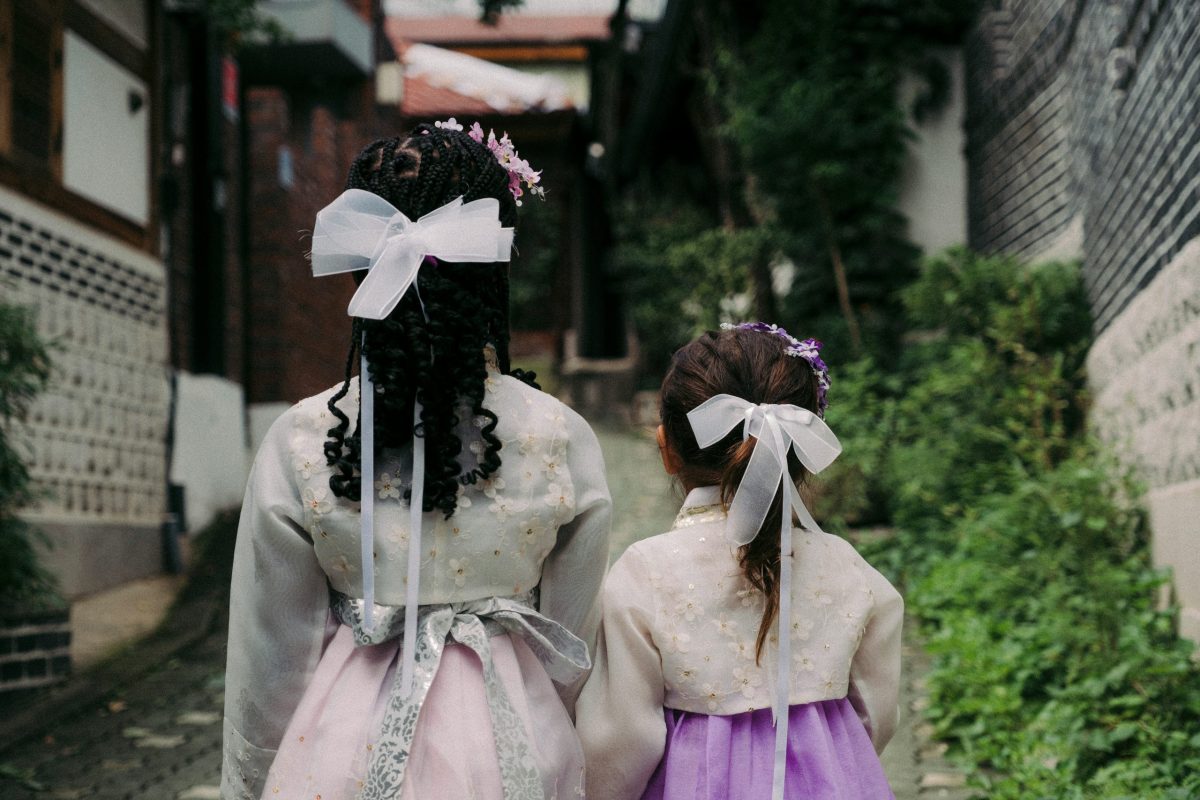
11 Powerful Coming-of-Age Stories Set in Korea

South Korea’s recent influence in the world economy, media, and culture has been nothing short of spectacular. South Korean author Han Kang won the 2024 Nobel Prize in Literature and other Korean American writers have also been recognized for their contributions. Chang-Rae Lee’s Native Speaker won the Pen/Hemingway Prize in 1996, Linda Sue Park’s The Single Shard was a Newbury Medal winner in 2002, and Min Jin Lee’s Pachinko was a finalist for the National Book Award in 2017. There is a growing demand for stories about Korea, and this list of coming-of-age stories set in Korea provides a peek into just a few that deserve to be read.

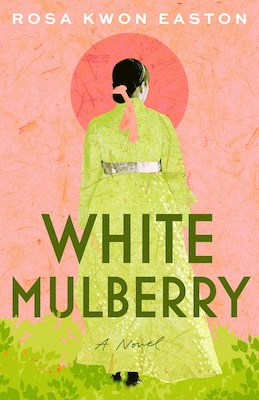
As a Korean American author of the debut novel, White Mulberry, I have been especially attracted to coming-of-age stories set in Korea that explore displacement, identity, belonging, and home at a unique time in history. These are the themes in my historical novel about a spirited Korean girl coming of age in 1930’s Japan-occupied Korea who goes to Japan in search of a better future, only to face racial persecution, heartbreaking loss, and a choice that will change her life—and the life of those she loves—forever. My protagonist’s personal journey is meaningful to me because it is based on the true story of my own grandmother. 

This reading list consists mostly of adult, coming-of-age books that have been written by Korean American authors in English over the last ten years. I have included two Korean novels in translation, and one that covers contemporary North Korea that was written in the mid-2000s. These stories capture the lives and minds of young characters who live in, leave, or return to Korea and whose roots and hearts are inextricably bound to the peninsula. 

Beasts of a Little Land by Juhea Kim

This poignant debut novel portrays a young girl who is sold by her family to a courtesan school in Korea during Japan’s colonization and becomes swept up in the Korean Independence Movement. The first scene of a hunter and a tiger is a gripping metaphor for the political tension and struggle against Japanese occupation that is depicted in the rest of the book. Kim’s second novel, City of Night Birds, is due out later this year. 

Skull Water by Heinz Insu Fenkl

Skull Water is a largely autobiographical novel about a conflicted, mixed-race teenager who returns to Korea from America in the 1970s and is torn between the world he left behind and his new home outside a U.S. military base in South Korea. After hearing a legend about water collected in a human skull that cures illnesses,Insu embarks on a journey to heal his ailing Big Uncle,  and along the way, he learns that magical spirits from the past have the potential to help the living. Structured using hexagrams from the I Ching, the ancient Chinese Book of Changes, that was a keen interest to his Big Uncle, Fenkl honors stories across time and a little-known period of South Korean history. Fenkl’s first autobiographical novel, Memories of My Ghost Brother, follows younger Insu as he grows up being haunted by the ghost figure of a secret half-brother and is another remarkable read.  

The Evening Hero by Marie Myung-Ok Lee

Lee paints a sweeping, often satirical, portrait of an aging immigrant doctor in the U.S. and the long-term effects of childhood trauma, war, and displacement on identity and belonging. Deeply researched and alternating between time periods, the novel shows that the present cannot be understood without the past. The coming-of-age story of Doctor Kwak is especially poignant as it follows the lives of two brothers who grow up without parents, country, and home and will never see each other again. It is only when Doctor Kwak returns to North Korea, where the brothers grew up, on a medical mission, is he able to make peace with the boy he once was and the childhood that was lost.

The Stone Home by Crystal Hana Kim

This propulsive and haunting coming-of-age novel, told through the perspectives of two teens who are taken to a reformatory center in South Korea in 1980, exposes a dark period of South Korean history. Inspired by true events, it tells the story of a group of young survivors of a state-sanctioned “rehabilitation” home for vagrant children and who, despite their horrific treatment, find one other and the courage to hope. A gripping novel, it questions our capacity for evil and challenges us to examine stories that have been silenced. Kim is the author of If You Leave Me, a critically acclaimed novel  about two ill-fated lovers in Korea in the years surrounding its civil war. 

The Liberators by E.J. Koh

Author of the acclaimed memoir The Magical Language of Others, E.J. Koh brings us a lyrical and poetic novel about a young woman and her search for meaning and hope as she leaves South Korea in 1980 at the height of a military dictatorship to carve a new home in America for herself and her young family. Insuk, a new mother, navigates a difficult relationship with her husband and mother-in-law, and finds herself in an illicit affair that will echo for generations to come. Koh eloquently examines whether we can ever be free of the memory and trauma of the past, and suggests that liberation comes not from governments, lands, and borders, but from creating and nourishing deep bonds between people.

The Kinship of Secrets by Eugenia Kim

Almost ten years following the publication of her moving coming-of-age novel The Calligrapher’s Daughter, Eugenia Kim brings another heartfelt story which follows two young Korean sisters who are separated by war, one staying in Korea and the other moving to America. Their parents believe the family will be reunited soon, but the Korean War breaks out and the daughter who remains in Korea grapples with the cruelty of war and its aftermath while the other grows up in American suburbia, leading vastly different lives. When they meet again in America, the teen sisters are confronted with cultural gaps that threaten to destroy their ties, but they ultimately learn that family secrets can protect, and kinship is forever.

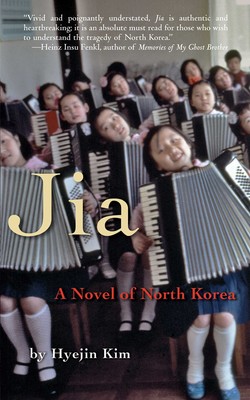
Jia: A Novel of North Korea by Hyejin Kim

Although written over 15 years ago and based on true events, this illuminating North Korea novel is the first to be published in the West.  A timeless coming of age story told from the point of view of an orphan whose skills as a dancer propels her to escape to China and forge her own future. Surviving floods, famine, and a harrowing escape across an ice-cold river, Jia arrives in China, only to live in a cave and be abducted and trafficked as a prostitute. She is saved by a Korean Chinese man and assumes a new identity but will forever be haunted by the tragedy of her homeland. 

My Brilliant Life by Ae-ran Kim, Translated by Chi-Young Kim

This contemporary novel, set in South Korea, is a tender, moving story of a boy born of teenage parents who has a rare genetic disorder that causes him to age rapidly. Told from the point of view of 16-year-old Areum, whose body is that of an 80-year-old man, we witness him writing his parents’ love story as a final gift to them, forming a unique friendship with an elderly neighbor, and coming to terms with his own deteriorating condition. At once humorous, heartwarming, and heart-wrenching, this book offers profound insight into what it’s like to grow up with a disability and find hope even in the briefest of lives.

Love in the Big City by Sang Young Park, Translated by Anton Hur

Longlisted for the International Booker Prize in 2022, this dazzling novel follows the life of a young gay man navigating friendships, family, and relationships against the backdrop of lonely, modern-day Seoul. Moving from his early twenties to thirties, the narrator befriends a girl who becomes his best friend and roommate, only to lose her when she chooses to marry. He enters into a series of relationships with men searching for love and connection but is left empty as he deals with his ill mother. Touching on themes of sexual identity, loss, and societal pressure, Sang Young Park’s English language debut provides a heart-thumping view of contemporary Seoul and a raw, intimate view into queer life in Korea.

Starry Field: A Memoir of Lost History by Margaret Juhae Lee

When debut author Margaret Juhae Lee set out to discover the legacy of her student revolutionary grandfather, what she didn’t expect to find was a reclamation of her own history beginning as a girl of ten visiting the homeland of her parents for the first time. Through decades of insightful research, interviews with her grandmother, and investigative journalism, Lee unearthed details of her grandfather’s imprisonment that exonerated him as a teenage Communist who defied Japan’s harsh colonial rule and rewrote all that the family knew about him. In beautiful prose, Lee also shares her personal journey of excavating the past to help gain greater understanding of herself and her own lost history.

The All-American by Joe Milan, Jr.

17-year-old Bucky, a Korean adoptee from Washington State, wants nothing more than to be a college football player. When a bureaucratic mistake forces him to be deported to South Korea, Bucky finds himself with a new Korean name, serving in the Korean military, and repaying the debts of his long-lost biological father. Through Bucky’s misadventures from an expat bar in Seoul to a remote island where he gets caught up with a crazed sergeant who still fights North Korean enemies, Milan has crafted a poignant, contemporary coming-of-age novel that explores identity, masculinity, and finding home.

Rosa Kwon Easton is the author of the debut novel White Mulberry, coming December 1, 2024, and Red Seal, the sequel, forthcoming in 2026. Easton is an Anaphora Writing Residency Fellow, a lawyer, and an elected trustee of the Palos Verdes Library District. Her work has been published in CRAFT Literary, StoryCenter.org, Writer’s Digest, and elsewhere. Born in Seoul, South Korea, she grew up in Los Angeles and lives with her husband and Maltipoo in sunny Southern California. For more information, visit www.rosakwoneaston.com. 

If Sylvia Plath Wrote “Wild Geese”

“Wild Geese” by Mary Oliver, as Rewritten by Sylvia Plath

I would not go snake-blind 
in the burning bore of sand,

would not parch and prostrate
to call you prophet.

You, who have bagged and tagged
and tracked my feathered heart

with your mad dumb science
back to your clutch?

I took my wings and turned to stone.
Not a good one, but I’m free.

My symmetries revert and spin.
X-ray cameras beam their rays through me

and I scatter. Anything can be a wing.
My transmutation, my right angles, my beating heart.

I will not subjugate myself to beauty.


Emily Dickinson’s “I’m Nobody” as Rewritten By T.S. Eliot

Because, once again, we lose our names
Once again we watch some turn to a series
of numbers, some to ash.
The mystic paraphrases the language of math.
We live in the failure of letters, and may yet.

We drink at the café, Aegina brings us coffee and stronger drinks.
Coffee and liquor metronome that guns will turn to bombs.
May the atoms that make us up bring us together again.

Prometheus shall never flee.
Let us hide in spark and shadow
lest our horror sell the war.
Prometheus shall never flee, but we will not be the ones
to tell the world. That is the domain for leaders among men;
great men must swallow their wounded voices.
The words they speak in war may be wasted,
syllables inside the night and fog.
Great men must speak that their voices transmit through the air.
Lord, we live between facelessness and fire.
Lord, show us your face now and take the fire from our shaking hands.
Lord, take our shaking hands.

Gift Ideas for Readers and Writers They’ll Actually Love

Shopping for others can be tough: you want a gift that conveys meaning, but also something people will actually use. As readers ourselves, we’ve been on the receiving end of those well-meaning, but ultimately uninspired gifts like bookmarks (which, let’s face it, are a bit boring) or clip-on reading lights (pretty impractical). 

That’s why we’ve taken it upon ourselves to curate a gift guide designed specifically for readers and writers. This list is packed with thoughtful, creative, and useful items that will truly resonate with the bookish—whether they’re diving into a new novel, writing their next great work, or looking to cozy up their reading experience. You won’t find any Barnes & Nobles bookmarks here—just hand-picked items that we love and whole-heartedly recommend.

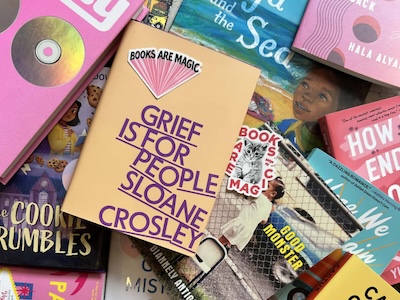
Image courtesy of Books are Magic

Books & Lit Mags Subscriptions

What better way to help the reader in your life curl up with a good book than via a subscription service that regularly mails them a new read? There are tons of book subscription programs on the market: CrateJoy gives used books a new life, Banned Books Box focuses on censored titles, and indie bookstore Books Are Magic’s Book Club offers the buzziest new literature.

For readers of print magazines, Journal of the Month delivers a curated selection of literary mags, offering a different publication to explore each time. It’s a great way to keep up with contemporary literature and for writers to scope out where they may want to submit. 

Candles That Smell Like Books and Libraries

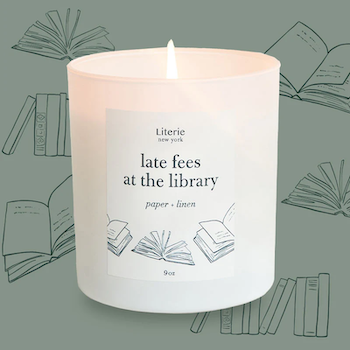
Is there anything more hygge than lighting a candle and settling in for a quiet evening reading by its soft glow? For those looking to evoke the mood of a warm, musty library, Smells Like Books’s Library candle has rich notes of saffron, teakwood, mahogany, leather, and oak. Prefer the comforting scent of old book pages? Paperback by Demeter Fragrance delivers with hints of violets and potpourri. Or try Homesick’s Book Club, which blends nutmeg, vanilla, amber, and sandalwood, for a sweet escape. If you’re looking to splurge, Byredo’s Bibliothèque captures “the velvety quality of the paper embodied in a touch of peach, plum and vanilla” with notes of patchouli. For minimalists, Literie’s Late Fees at the Library keeps it simple with clean notes of paper and linen, inspired by New York Public Libraries.

Baseball Caps

Minor Cannon’s Dead Authors collection is an assortment of embroidered dad caps pays homage to legendary writers like Lucia Berlin, Italo Calvino, Doris Lessing among others: “The writers in this collection were never part of the literary mainstream—rather, they were members of that marginal counter-tradition (or its descendants) who either critiqued modernity from within or pushed outward from its fissures.”

A Bath Tray for Reading

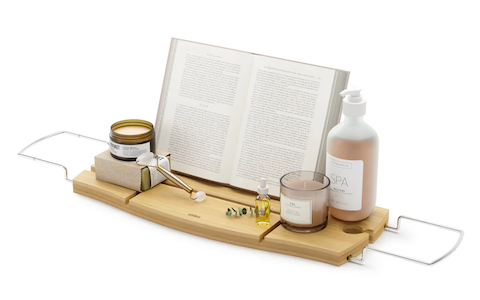
A reading tray that can be used in the bath is the perfect gift for self-care. This Umbra bamboo tray has a book stand and two different cup holders—one for a stemmed glass and one for a mug—so readers can drink max while they relax. This bath tray is adjustable,  so you don’t need to measure your friend’s tub before buying. 

Lap Desk

There comes a time when writing needs to go from the page to the laptop. Desks, while ergonomically friendly, aren’t the coziest of spaces. (Though personally, I live for the seasonal photos of poet Gabrielle Bates posts of her incredibly cozy workspace). Lap desks can help writers work from their favorite comfy chairs, couches, and even in bed. I personally keep mine under my nightstand so there’s no excuse not to do a little writing when I first wake up. 

A Cozy Blanket

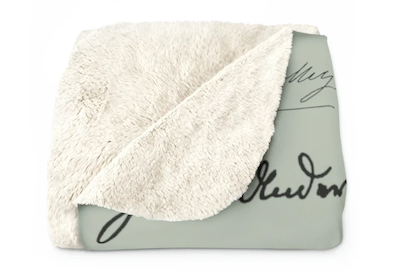
Perfect for snuggling on a cold winter’s day, this blanket from Etsy has a faux-fur backing and pale grey, fleece front that features the signatures of famous writers, Victor Hugo, Sylvia Plath, Rainer Maria Rilke, Toni Morrison and others. It’s a gift that will have the writer in your life dreaming of their own book signing. 

A Lock Box for Phones

It’s been a trying year and I’m sure plenty of us have spent hours hunched over the phone (hello, neck pain!) doom scrolling. A timed lockbox offers a practical solution for readers and writers looking to disconnect from the news and social media and refocus on the page. Mindsight’s timed lock box has three modes. The first locks your devices up for a set period of time and features a countdown, so you can see when you’ll get them back. The second locks the devices, but without the clock. Both of these modes allow the writer to set an override mode—so they can break in and get back to scrolling. With the third mode, the override code is gone. Writers can set it, forget it, and hopefully spend some quality time upping their word count. 

A Fancy Monogrammed Notebook

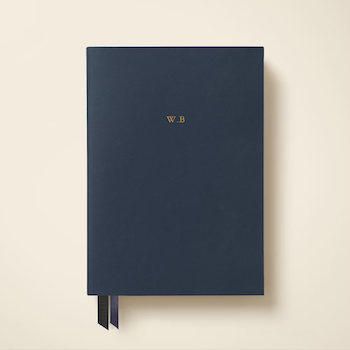
When I think about settling in for a writing session, materials matter—especially if I’m writing by hand. Leather notebooks, with their pebbled covers and earthy scent, feel nice to write in. This Papier notebook is customizable, so you can add the initials of the writer you’re gifting it to. And it comes with page markers, so writers know where they are in the notebook. 

A Literary Party Game

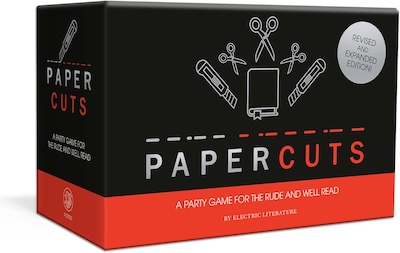
We might be a bit biased since we created it, but we truly believe Papercuts is the most fun and raucous party game for the well-read crowd. Picture a mash-up of Apples to Apples and Cards Against Humanity, but with a literary twist. As we like to say, Papercuts is the game Kurt Vonnegut, James Baldwin, and Virginia Woolf would play if they were locked in a room together with nothing to do but throw down cards. It’s all about witty literary zingers, and it’s guaranteed to get the laughs rolling.

Mugs

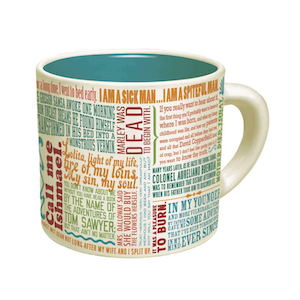
I know, I know, everyone has a shelf full of mugs. But I actually received this Greatest First Lines of Literature mug from Abracadabra as a gift (high school graduation, 2015) and it’s still a reliable favorite. The 14 ounce capacity makes it a perfect vessel for coffee and tea on days when I don’t want to leave my couch for a refill. And I do take it out and stare at it sometimes when I need inspiration for a strong opener.

Travel Mug

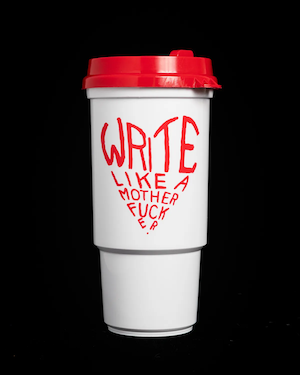
For an on-the-go option, we love this provocative travel tumbler from our friends at The Rumpus, which encourages writers to “Write Like a Motherfucker.” It also comes in the form of a mug. Or, if you’re looking for something cheeky, there’s the White Male Writer’s Tears Mug—a statement piece for any desk. 

A Literary Tea Blend

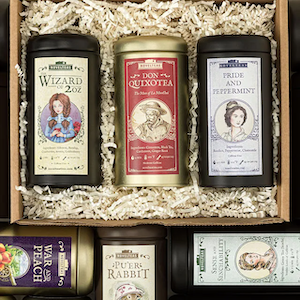
A mug needs something to fill it. These loose leaf blends from Uncommon Goods come with literary names like Don Quixotea and Pride and Peppermint. The line is called Novel Tea. Who doesn’t love a clever name? 

Literary Insults Poster

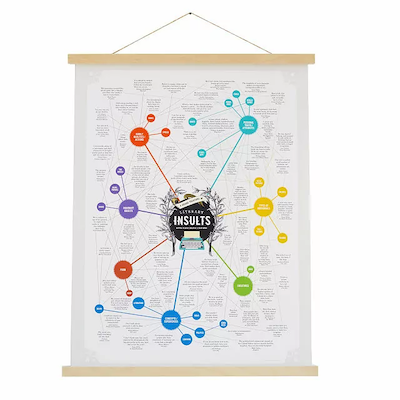
Insults might not seem like a thoughtful present. But they are good for a laugh. And when you’ve been sitting at your desk, fighting writer’s block and staring out at the vast, grey winter sky, sometimes you just need to glance at some wall art and chuckle. This Uncommon Goods poster features pithy lines like Shakespeare’s “the tartness of his face sours ripe grapes” or Oscar Wilde’s zinger, “he would stab his best friend for the sake of writing an epigram on his tombstone.” I know that last one sounds menacing, but I promise your writer friends won’t stab you if you gift them this. 

Tote Bags

Designed to invoke an old school library card—cue the nostalgia—this tote bag from Out of Print is the perfect accessory for traveling with a book. The reader/writer in your life is sure to appreciate it, especially since so many people will give them books that need toting. 

Book Sleeves

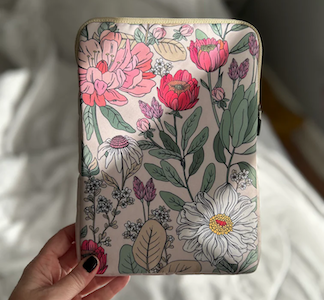
Speaking of traveling, readers know how much it sucks when a book cover gets bent or damaged. It’s convenient to toss a book into a tote or backpack, but it’s not always great for the book’s spine. Book sleeves, popular with readers on BookTok, are a trendy solution to that problem. Similar to a laptop sleeve, they protect books when readers need to put them in a bag. They’re a good way to protect any leather notebooks or reading diaries, too. These ones from Book Beau come in five different sizes and a number of cute prints.

Manuscript Consultation

For writers aiming to publish their book and seeking editorial guidance, Electric Literature offers personalized manuscript consults. Our team of editors provide detailed manuscript reviews, including comprehensive notes and a one-on-one video call. Open to writers at all stages of their journey.

13 Books by Indian Diaspora Authors You Should be Reading

When I was a ‘90s teen consuming literary novels and stories at a breakneck pace, I couldn’t have imagined that three decades later, there would be a glorious abundance of interesting fiction written by and about the Indian diaspora.

It’s perhaps because of today’s range of culturally grounded books that in my second short story collection, How We Know Our Time Travelers, I felt free not to make culture an element of narrative interest. As in my first collection, which often delved into dramas around identity—race, caste, and gender—the protagonists of the new book are Tamil Americans with both Christian and Hindu backgrounds. The far greater cultural force exerted in the book, is that of the West Coast, with its social and environmental particularities. 

For the last few years, I’ve been secretly gathering my list of diasporic authors I’d like to invite to a massive dosa fusion dinner party with bird’s eye chili drinks. I don’t know, really, if they’d all get along, but hey, a little friction could be a fun thing (and makes it more likely we’d all want to write about it)! The following books strike me for their imagination, observations, and inventive spirit—and often, their moving risks. Whoever says it’s all been done clearly hasn’t encountered these works.

Loot by Tania James

James is one of the best contemporary literary fiction authors in the Indian diaspora—every book she publishes is an event for me. In her latest, a fun historical novel and love story set across 65 years in eighteenth century India and Europe, she tells the story of a teenage woodcarver who is asked to build a tiger automaton for a sultan’s sons who’d been captured and returned by the British. It is to be “a gift of such grandeur and ferocity that it will silence all memory of the boys’ exile.” When the British attack and plunder Mysore, they seize the automaton and place it with other plundered art in a collection, the woodworker must go get it back. 

This is Salvaged by Vauhini Vara

One of the things that intrigues me most about Vauhini Vara’s stunning fiction is how intimately embodied it is, how unafraid it is of revealing all that is flawed or potentially unappealing about  human bodies. This collection of ten visceral, intelligent stories are tied together by questions of connection, family relationships, alienation, and grief in all its different permutations. Where Vara’s The Immortal King Rao contended primarily with algorithm-driven technology, which sometimes uses quantification and rules to predict, This is Salvaged pays more attention to characters’ potential for unpredictable and emotionally demanding action. 

I’m a Fan by Sheena Patel

Sheena Patel’s voice-driven debut—what a thrill. In what feels like a diary, a self-destructive young woman (who has a boyfriend) breathlessly reveals her sexual relationship with a toxic married white man and her obsession with one of his several other girlfriends. That girlfriend is an Instagram lifestyle influencer, and her careful social media curation involves expensive, tasteful things. The book involves not only an engaging, up-to-the-minute story but also an acidic critique of overconsumption, class, structural racism and patriarchy as filtered through online spaces. 

Circa by Devi Laskar

In this lyrical coming of age novel, which follows Laskar’s acclaimed The Atlas of Reds and Blues, a young Indian American teenager feels caught between the traditional Bengali culture inside her house and the culture of the American South outside its doors. She and her friends, a brother and sister, rebel in all kinds of ways, much to her parents’ disapproval. When a tragedy occurs on the cusp of adulthood, grief soaks into everything, altering the choices they make and the people they might otherwise have become. Told in second person, the narrative follows the evolution of the friends’ relationship.

A Small Sacrifice for an Enormous Happiness by Jai Chakrabarti

Jai Chakrabarti is a master of the realistic short story—I’ve been keeping an eye on his work ever since he was the 2015 A Public Space Emerging Writer Fellow. In these stories, he unfurls the vagaries of the human heart. A gay man confronts his lover’s wife with his longing to have a child. A woman wonders if her husband sees her as anything more than a caregiver. A married music teacher is attracted to a student in India. Brothers take an overnight bus to go become monks—one of them has abandoned his wife and child. And the beauty of Chakrabarti’s introspective sentences! Here’s one: “She was grateful for it now, that sublime feeling of one’s own silence.”

A New Race of Men From Heaven by Chaitali Sen

Sen is a versatile fiction writer who excels at conveying small but devastating moments in her characters’ lives. In this, her first collection of stories, which won the Mary McCarthy Prize in Short Fiction as judged by Danielle Evans, she writes of a baffled author who is lauded for a story he didn’t write, a couple whose different responses to a parent-teacher conference for their twins leads them to realize their deeper differences, a couple anxious that their neighbors are Trump supporters, and a young woman who discovers her mother was responsible for breaking up her father’s earlier marriage.

Mirror Made of Rain by Naheed Phiroze Patel

The narrator of Patel’s debut, which explores the clash of conservative tradition and modernity, is a young, upper middle class Parsi woman with a difficult relationship with her mother, who has mental health problems, and struggles around addiction and rape. The novel looks at trauma as an inheritance. Drawing an angry, self-destructive female narrator is a particularly fearless, taboo-breaking move for a diasporic author. The dark vigilance of an affluent, patriarchal Indian community—its exertion of control over young women by fomenting fear around their reputations, valuing that above all else—is finely drawn. 

How to Make Your Mother Cry by Sejal Shah

Reminiscent of Maxine Hong Kingston or Claudia Rankine’s hybrid work, Sejal Shah’s collection of 11 evocative linked stories is lovely and unusual—experimental without being showy. First-person stories about diasporic girlhood, young womanhood, and finding one’s way that frequently feel autobiographical are interspersed with images, ephemera, and letters. What is especially attention-getting here is the unusual poetic and impressionistic language. In one story that leaves a mark, “mary, staring at me” a girl massages cured sesame oil into the back of the narrator, whose “back twists into the treble clef.” This bold collection follows Shah’s more straightforward This Is One Way to Dance: Essays about Race, Place, and Belonging, and certain elements cross both.

The Way You Make Me Feel: Love in Black and Brown by Nina Sharma

This thoughtful memoir moves us through Sharma’s relationship with her husband Quincy, a Black man, and her parents’ anti-Blackness, which seems to soften as they get to know Quincy. Interleaved with relatable scenes of family life are relevant slices of Asian American history, summaries of caste’s import, and political discussion. Here, too, are glimpses into Sharma’s mental health struggles. Her courageous discussion around race, caste, and more quietly, mental illness, is astute and admirably frank—within many Indian American immigrant homes, these are taboo topics that everyone is expected to avoid.

The Lucky Ones by Zara Chowdhary

In 2002, when Chowdhary was 16 years old, living with her Muslim family in Ahmedabad, a city with a long history of religious violence, a train fire resulted in 58 deaths. The chief minister of the state at that time was Narendra Modi—India’s present-day prime minister, who has taken the country to nationalist intolerance, autocracy, and violent attacks on minorities such as Muslims. He cast the train fire as an Islamic terrorist act, triggering widespread violence. For three months, Hindu mobs turned against Muslim citizens, once friends and neighbors—looting, raping, and burning them alive. Chowdhary’s family, who are memorably sketched this memoir-cum-history stayed inside their apartment to stay alive. 

Quarterlife by Devika Rege

This is an absorbing and fascinatingly constructed debut. Wall Street consultant Naren comes home to Mumbai after Prime Minister Modi and his intolerant nationalist party take power and attempt to unmake what was a secular nation and we follow Naren, his brother Rohit, and Amanda, a white woman who has made it her mission to help Muslims in a slum. Most of the book occurs through fascinating, extended jostling blocks of opinionated, philosophical dialogue and debate about conditions in India including income inequality, caste, secularism, and the perceived need for unification of identity in an extremely heterogeneous country.   

Twilight Prisoners: The Rise of the Hindu Right and the Fall of India by Siddhartha Deb

This is the swift nonfiction book anyone who is interested in what’s happened to the India of their memories or imagination needs to read. Deb makes a smart, lucid, and pointed case for how the country descended into authoritarianism and religious fundamentalism after Modi and the BJP took control. Deb talks to minority people, jailed dissenters, the impoverished, scholars, and other writers—readers would do well to remember he’s well-positioned to report on and write about this partly because he’s not broadly under threat from censors. Earlier this year, Modi and the BJP unexpectedly lost seats across the country, but this book remains crucial to understanding conditions there, which also have something to say to America.

A Bomb Placed Close to the Heart by Nishant Batsha (forthcoming, July 2025)

Next summer, Batsha, author of Mother Ocean, Father Nation, returns with his second novel, set at the start of World War I—it’s one of my most anticipated. A Bengali revolutionary seeking material support to overthrow British rule and an idealistic graduate student, the daughter of an engineer working around the mines of the West, meet at Stanford, and find themselves of like minds about ideas regarded as radical. They cultivate a passionate romance amidst the heady protests of anticolonials and gatherings of anti-British activists, and intellectuals in Palo Alto and Berkeley. As the United States is pulled into the war, the climate becomes hostile to dissent, and the couple quickly marry and flee to an uncertain future in New York City, where the marriage is tested by their differing ambitions. Look out for this one!

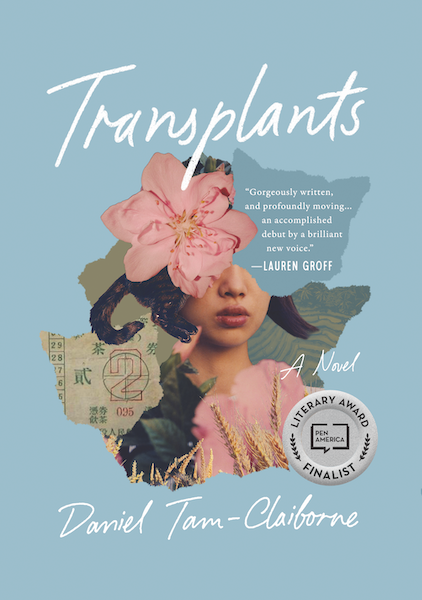
Exclusive Cover Reveal of “Transplants” by Daniel Tam-Claiborne

Electric Literature is pleased to reveal the cover of Transplants by Daniel Tam-Claiborne, which will be published by Regalo Press on May 13, 2025.

A harrowing and poignant novel following two young women in pursuit of kinship and self-discovery who yearn to survive in a world that doesn’t know where either of them belong. On a university campus in rural Qixian, Lin and Liz make an improbable pair: Lin, a Chinese student closer to her menagerie of pets than to her peers, and Liz, a Chinese American teacher grieving her mother’s sudden death. They’re each met with hostility—Lin by her classmates, who mock her for dating a white foreigner; Liz by her fellow English teachers, who exploit their privilege—and forge an unlikely friendship. After a startling betrayal that results in Lin’s expulsion, they swap places. Lin becomes convinced to pursue her degree at a community college near Liz’s Ohio hometown, while Liz searches for answers as to what drove her parents to leave China before she was born. But when a global catastrophe deepens the fissures between modern-day China and an increasingly fractured United States, Lin and Liz—far from home and estranged from themselves—are forced to confront both the familiar and the strange in each other. Unspooling over the course of a single extraordinary year in our not-yet-distant past and in small towns from Dandong to Deadwood, Transplants is a piercing story of migration, belonging, and the parts of ourselves that get lost in translation. Alternating between Liz and Lin’s perspectives, it is a lyrical and moving exploration of race, love, power, and freedom that illuminates the limits and possibilities of what can happen when we open ourselves to the unknown and reveals how even our fiercest differences may bring us closer than we might ever imagine.


Here is the cover, designed by Elisha Zepeda.

Author Daniel Tam-Claiborne: “The cover was going to be simple. A bilingual vintage encyclopedia for new immigrants to America. An anatomical woodcut of the heart from traditional Chinese medicine. A pair of lungs-turned-butterfly wings: a metaphor for survival and rebirth. Only, my heavy-handed suggestions were not translating well to the page (I’ve learned to never ask a writer about aesthetic design choices). My editorial team, which had patiently executed each of my failed visions, informed me that there was no time left for new directions.

On a lark, I went to social media. Unbeknownst to me, a burgeoning ecosystem of book cover designers was in full swing, perhaps none more eye-catching than Elisha Zepeda, whose process videos had already netted a devoted following. Determined not to repeat my previous mistake, my cold query to Elisha contained vanishingly little about the project save for the book’s summary. With a boldness that can only come with naivety and a turn-around deadline that would make anyone’s head spin, I figured I’d never hear back.

I was wrong. Not only did Elisha agree to mock-up a draft, but on the very first pass (which he modestly described as ‘throwing spaghetti on the wall’), he knocked it out of the park. I was immediately blown away by Elisha’s attention to detail. The collage approach was a brilliant way of rendering the novel’s diffuse subject matter. In addition to capturing the subtle textures of rural China and America, the image itself looks like the outline of a state or a province, another fitting touch for a book that centers so much on movement and migration. The underlying reality is actually more whimsical: the shape is derived from a layering of ‘cat head blobs,’ a subtle reference to a feline motif that I hadn’t even initially thought to include.

The blue hue feels hopeful, something that despite my own blinkered view of the world, remains true of my protagonists. Liz and Lin are the beating heart of this novel: two women whose lives intersect and supplant each other in myriad ways. Despite my initial reservations about having a female figure on the cover, what I perhaps love most about Elisha’s design is that it isn’t immediately legible whether the woman depicted is Lin or Liz (or even Liz’s mom). The idea of mutability that comes with the Chinese diasporic experience (the seemingly impenetrable distance between Chinese and Chinese American) is a central fascination of this novel, and one that this cover—in all its abstract and artistic splendor—pays incredible homage.”

Designer Elisha Zepeda: “Daniel sent me a synopsis and the manuscript, and after reading through that we both discussed similar literature Transplants could sit next to (Crying in H Mart, Severance, Pachinko, Past Lives…).

We wanted something that felt upmarket but approachable (my favorite genre to make covers for). I threw out the idea of a collage, which is my go-to solution for books that have a long list of themes and settings and elements. Trying to show all of those important parts may make the cover feel cluttered—but blending them into a collage tends to make it feel more cohesive and artistic.

I luckily found this wonderful photo of a woman’s face obscured by a flower. I leaned into that and asked Daniel for a list of key visuals/items. He provided an extensive list, and we landed on: a tea ticket, rice paddy, black cat, cat head shape, grain, and a peach blossom. That’s a lot of elements to place on a cover! But I think it landed somewhere really great. My favorite part is the cat legs resting perfectly in the shape of our character’s hair.”

Tell Me What Is Forbidden

“The Song of the Bow” by Bee Sacks

We watched the men outside. 

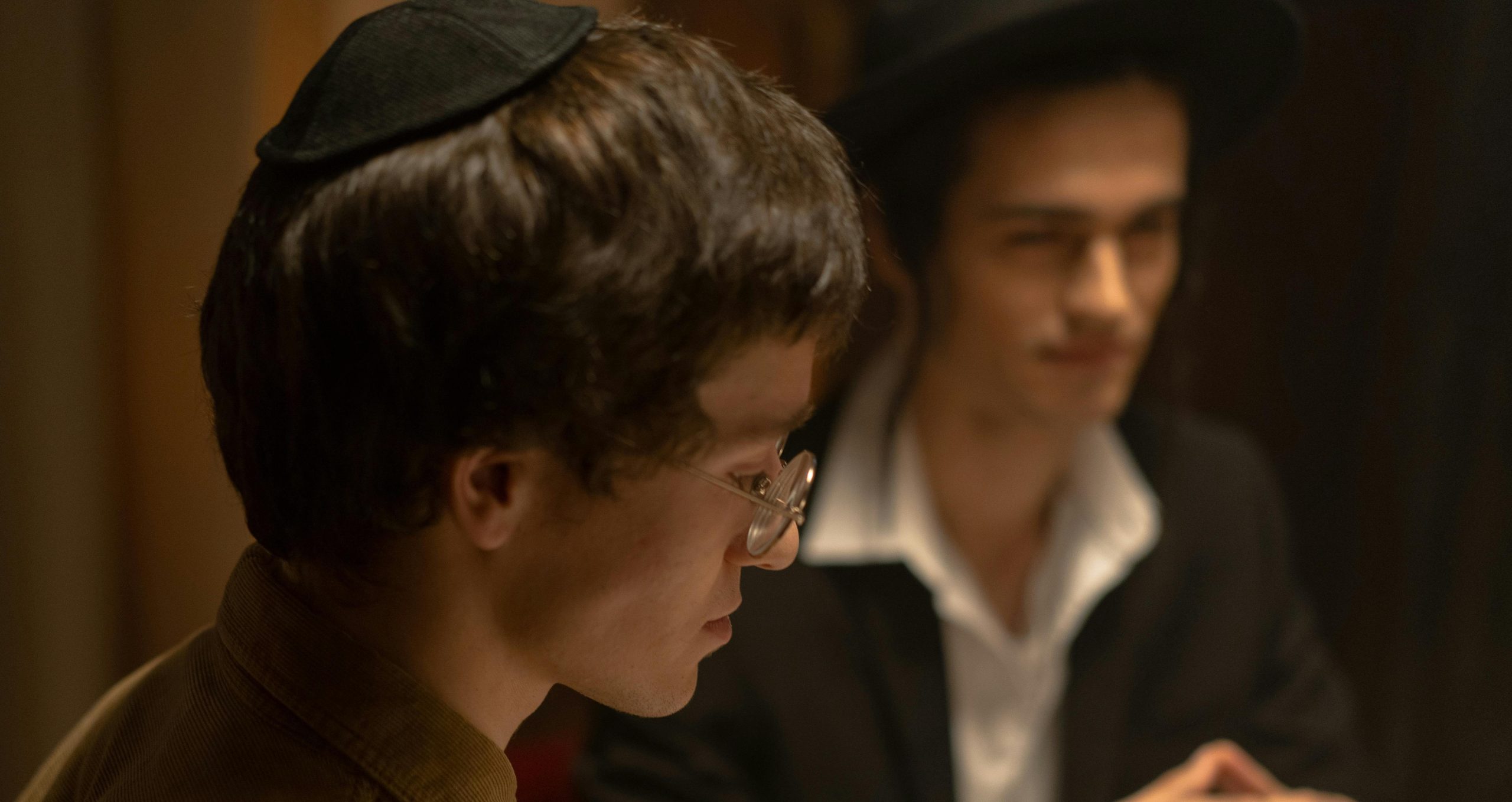
We watched them from our table in the coffee shop. My leg over yours, your chin on my shoulder, we drank precisely engineered cold brews and watched them, the two orthodox Jewish men—Haredim, you called them—in animated conversation on the other side of the avenue, the Jewish side. Two men dressed for an 18th-century Polish winter in the Brooklyn summer heat, all that trapped sunlight and no mature trees on our block. 

What could they be talking about? 

You and I both lived along the boundary between worlds. The subway ran above the street here. A generation ago, it divided the Jewish neighborhood from the Puerto Rican neighborhood, but now I guess you could say it divided the ungentrified from the gentrified. Sitting in the cafe on our side of the street, the block was almost like an aquarium. We watched the men in their peyos and knee socks, young girls in long skirts pushing baby strollers, women with cellphones tucked into their hair coverings, plastic bags blowing everywhere. So much plastic. For me, Jews like this had always been part of the scenery, like fruit carts or window cages or payday loan places or storefront churches. But to you, the lives of these Haredim were intelligible. I guess I mean, they were real to you.

“They are obsessed with separation,” you had explained. Now you had a new name and a growing mustache, but as a child you had learned Hebrew and worn long dresses that covered your knees and collarbones. Such a past life was part of your magic—who you were before you remade yourself completely.

We were in the unsustainable, obsessive stage of love. All night and into the day, our bodies found each other. Weekends were a kind of prison, the exhaustion of our desire, always needing to begin again, to touch you again, to feel you inside me again, to come again. We would sleep and wake and come together again as the subways rumbled above and below us. In between, we lay in the dark whispering about how hard we had tried to be girls. You’d gone to seminary; I’d been in a sorority. Now we were boys. 

We’d come to this cafe to stop having sex long enough to check our work emails. Tomorrow was Monday. Now, two Orthodox men stood on the corner outside a greengrocer. Or, I’d seen them as men. But the longer I watched, the younger they looked. The taller one had a wiry, patchy beard; the slighter one was fresh-faced with pink cheeks. They were hardly more than teenagers, I realized. What were they talking about so animatedly? The pink-cheeked one was laughing with a hand over his mouth; the bearded one looked away, maybe shyly. 

Behind us, a chic girl in unblemished workwear was ordering a coffee. 

“Do you think they’ve ever been on the internet?” I asked. 

“No.” Your newly sprouted beard rubbed on my bare shoulder. You were changing from the inside out. God, I loved you. I loved watching when you took your T shot right to your belly. I loved that you were braver than I was, ready to change completely. When I visited my parents, I wore my old clothes and used my old name. They paid my rent.

“What was it like to live like that?” I asked. “So set apart?”

“My family isn’t that religious,” you said with a touch of annoyance. “We were modern Orthodox.” 

You had told me that in your family, men and women do not touch anyone from the opposite sex who was not a spouse or an immediate blood relative. You told me on the sabbath they would not so much as flip a light switch. You told me everyone married young. It did not sound very modern to me, but I conceded. “No, I know you weren’t like that, but I’m just thinking about living in a world with so many rules, what that feels like.”

Could your girl-cousins touch you as you were now? As you had become? Or was that forbidden?

The two Jews in their black suits moved to the side to allow a pregnant woman to get by with her stroller. Her wig glimmered plastically. “Okay but does the shorter one have chaotic twink energy to you?” I asked. There really was something boyish and mischievous radiating off him. He held out his hand to the taller boy who hesitated. “Look! Look at that! Is that flirting?” 

They shook hands. 

“I heard about this one Chassidish rabbi who made a strange ruling,” you said. You were ignoring my comments but I still loved the way your voice curled into my ear. “He forbid the men in his yeshiva from shaking hands with each other.” 

“And that’s unusual?” 

“For sure. I mean, men and women who aren’t related never touch, but men to men? It’s totally bizarre to forbid this.” 

Outside, the men had not broken their grip. A long handshake, no? The pink-cheeked boy looked up at the taller one. I wished I could hear what he was saying.

You continued. “It’s like by creating the boundary, suddenly this totally normal act, just shaking hands with a friend, becomes like, illicit. Erotic even.”

“Are those two allowed to shake?” I asked.

I watched as they broke apart, the two Jewish men, turning to walk opposite directions. Why did that make me sad?

“Yeah for sure,” you said. “That ruling was totally fringe.” 

I turned to you, twisting around in my seat. “Are we allowed?” I put out my hand. “Or will we get in trouble?” 

You took my hand. 

“Imagine this being forbidden.” 

You rubbed a thumb over my knuckles. 

I remembered that place between below your ear that nearly sent you into convulsions of pleasure when I bit there softly. 


We fall back into your bed. After kissing and coming and kissing and coming we lay in damp sheets, feverish. There was a faint acridity in the air—your cat’s litter needed to be changed. The day was slipping away, had slipped away, was almost gone. Soon, it would be Monday. I needed something to hold on to. “How did they meet?” I asked, turning my head to face you. 

“How did who meet?” The hairs on your chin were longer than anywhere else on your face. They say it takes five years on T to grow a real beard.

“The Orthodox men, the ones who shook hands.” 

You laughed. “Right, the yeshiva boys.” Tracing my eyebrows now: “Let’s say they met in gan. You know what it is?” 

“No.” 

“Nursery school, actually it literally means ‘garden.’”

“They met in the garden.” 

“Licking honey off Hebrew letters.” 

“Really?” 

“Yeah, it’s part of how the boys learn to love Torah.” When you said the word torah your voice twanged into an unexpected diphthong. Toy-rah. It sounded Yiddish. Our fingers were entwined. “May learning be sweet in your mouth.” 

“Did you do that?”

“I told you, we weren’t Orthodox like that,” you said.

“Sorry.” Pause. “What are their names?” 

You brought our fingers to your lips. “Imagine this being forbidden.” 

Imagine. “What are their names?” I asked again.

“You choose.” 

“Jonathan and David.” 

You sounded a little too surprised when you laughed. “You know about King David?” 

“You think just because I’m not Jewish I’ve never read the Bible?” I said it incredulously, but what did I really remember from church? Drooping pantyhose, the wafer becoming gummy in my mouth.

“So you know about Jonathan and David.” 

“Yeah, I took a class in college on queering biblical narratives.”

You paused. Our past lives were foreign countries. 

“Jonathan and David,” I repeated.

“Okay, Yonatan and David.” The way you said the name David it sounded exotic. Davíd. “They met in gan.” 

“In the garden.” 

“Licking honey.” 

Our mouths drew closer and closer. Torah sweet like honey.


Obviously, we weren’t monogamous. It was the same for every one we knew except those few assimilated lesbian couples who cared about marriage equality. You and I had regular conversations about our respective needs and our capacities. It was almost empirical, the way we measured ourselves out. “Do you have the bandwidth to talk about some feelings of jealousy that are coming up for me?” You had a boyfriend who had a husband. For a while, I’d been sleeping with a cute trans dyke, but by that summer anyone who was not you felt like an attempt to distract myself from you. What do I mean? Maybe that my desires began to whittle down almost monotheistically to you. 

Every time you were on your phone, I tried not to think about who you were texting, what plans you were making. You were not mine. I had to remind myself again and again. I was not yours. Maybe I didn’t know how to belong to myself.


“Tell me a story.” You were on your phone in my bed. 

“Hm?” Not looking up.

“About the boys.” 

Another Friday after work. When the sun set it would be Shabbat, I had learned. But it was mid-June, and the sun was hours from setting.

I tried again, “David and Jonathan. What are they learning in school?” 

You put down your phone. “How old are they?” 

“Nine.” 

“By nine, they’re learning how to tell time.” 

“Time? In third grade?”

“Well yes, but—” 

“Is this a joke about literacy rates?” 

You rolled your eyes. “Will you just listen?” 

I waited. 

“For us, there was secular time and then there was religious time.”

“Religious time,” I repeated.

“Right, it sets the times to pray and stuff. Zmanim, the hours.” 

“Zmanim.” I wasn’t sure if I was saying it right. 

“There is no clock for zmanim.” You rolled onto your back, looking up at the ceiling. “The times aren’t fixed. They’re proportions of the day in sunlight.” 

“Is that how Muslims do it?” I had never imagined the day except in hours.

“I don’t know,” you admitted. 

“But you learned how to set prayer times?”

“No, girls don’t learn that. I just prayed when they told me to.” 

A whole other clock, a whole other calendar—the days and years divided into divine undertakings, set by the moon and sun. You had left that world, left Los Angeles, which apparently has Orthodox Jews, who knew. You left behind your old name in that world of plastic tablecloths and long-sleeved shirts worn under dresses and never ever, ever, singing in the presence of men. You left your old pronouns out west. You came east, lost time, found work. Now, we both had jobs that were remote and involved a lot of team messaging.

You left so much behind. But did you take the clocks with you? The internal clocks that correlate the day to God. Did you still think in the secret names I would eventually google? Shacharit, Mincha, Maariv


“Wait which one is which?” I asked. “One of them had evil twink energy.” Ruddy cheeks, boyish, fey. “Remember?” 

I watched your mouth when you laughed. “Amazing, okay, that’s David.” 

“So the tall one is Jonathan.” 

“Right.” 

“And they are learning to tell the zmanim.” 

“Good memory.” 

“It’s only been a week.” A week since you were last in my bed. I put my chin on your shoulder, looking at you while you looked at the ceiling. 

“Okay, so they are nine years old and their moreh is quizzing them.”

“A moreh is a teacher?”

“Yeah, he quizzes them, ‘From what time is it possible to recite the Shema? Dovi?’ That’s how he calls David. And David doesn’t know the answer because his parents are baal tshuvah.”

“Are what?”

“Like, born again maybe you’d say? Jews who weren’t raised Orthodox but became observant as adults. Often they end up being like, the most religious people of all but the way I’m imagining it, David hasn’t learned from his father about the zmanim yet. So he’s not sure how to answer the moreh’s question about how early you can pray.”

I did not grasp any of the specifics, but I got that the boys were being quizzed about religious time. “David doesn’t know the answer.” 

“Right. David is fidgeting. And Jonathan is noticing how much smaller David is, his delicacy.” 

“Oh, I like this.” 

“Well the moreh doesn’t. He’s annoyed, ‘Nu? Dovi?’ He’s a thin man in his twenties who feels this position is beneath him. David is so unsure when he guesses, ‘Maybe six?’” 

As far as I knew that might be correct.

“Which is like, an answer so wrong it shows that David didn’t even understand the moreh’s question, so the moreh is like, ‘Six? What are you? A goy? Or just a hole in my head?’ Everyone always laughed when our teachers used Yiddish. That meant they were really pissed. Anyway, everyone is laughing, whispering, not just about the moreh but about David and his parents and why he doesn’t know the zmanim. Their moreh slams his ruler down on his desk. The laughter stops.”

Were you imagining one of the boys as me and one as you? Or were they both you? That was probably it. They were both you: Jonathan and David, Yonathan and Dovi, versions of you if you’d been born a boy, I mean, a boy in a way that your family could recognize. Born a son. Would you have stayed? Would you be one of those yeshiva boys on the sidewalk, shaking hands in the sticky summer heat.

They were both you: Jonathan and David, Yonathan and Dovi, versions of you if you’d been born a boy, I mean, a boy in a way that your family could recognize. Born a son.

“Of all the boys, only Yonatan did not laugh at Dovi. Now the moreh turns to him. ‘Yoni? From when?’ Obviously Yonatan’s father showed him this part of Berakhot. He knows the answer: from the pre-dawn light in which it’s possible to recognize an acquaintance (or, some say, to differentiate the colors of the sky), until the end of the first fourth of the day.” 

“Did your dad teach you that?”

“What?” You looked startled. Maybe you’d forgotten I was there. “Oh, no, mostly I learned about modesty. Modesty and Shabbat.” 

I felt bad that I’d broken the spell of your story. “But Jonathan’s father has taught him.” 

“Yes, a father teaches his son.” 

“Does he answer the teacher’s question?” 

We were back in the boys’ classroom together. Cramped desks, posters of sages and martyrs hanging around the classroom. A serious little boy is hesitating to answer the question his teacher has asked. Jonathan knows that he is being used to ridicule David: when he gives the answer, it will confirm that David is stupid. David, whose face is tight with the effort of not crying.
“I forget,” Jonathan whispers. 

David looks at him in shock. Their eyes meet. An invisible thread is knotting between them as they hold out their hands for the moreh’s punitive ruler-smack. 

“Is this a love story?” I whispered. I hoped I sounded playful, careless. 

“Let’s find out,” you said as you rolled on top of me. 

I think we both knew that when the obsession faded, I’d be the one left in love. A familiar pattern: the more I wanted, the more you’d pull away, the harder I’d try, the farther you’d go, until we weren’t talking by winter. All of it happened and all of it was anticipatable. But for now it was summer, and we wanted to keep fucking.


David and Jonathan. Dovi and Yoni. One slight and smooth cheeked, one taller and more masc. Me and you or you and me or you and you.


When you were on dates with your partner and his husband—apparently sometimes you all went together—I forced myself not to text you. The three of you went away for the July Fourth weekend. “Boys Trip!” you called it, when you posted the beach photos online.

I was trying to live differently than my parents. I did not want to conflate love with possession; I wanted, in the parlance of the polyamory workbooks, to “cultivate abundance,” which we understood as having romance, love, and commitment beyond the nuclear family model. We were idealistic. Even back then I wondered if I was different than you in some fundamental way. For you, love was a community garden: a scrappy, anti-capitalist collective effort, yielding sweetness and green to be shared. What was love for me? A burning house. A sailor throwing his body against the jagged shoreline. What was love but that drive to lose yourself? Lose the self? An annihilation.


When will I see you again? I typed out as if to text you. I couldn’t send that. Too needy. I erased it, letter by letter. I typed, How was the fourth? No, too clingy. Erased. I tried again. Do the other boys tease David because his parents are—I paused to Google the spelling—baal tshevuah? My phone kept trying to correct “baal tshevuah” to “baby t-shirt.” Sent.

You didn’t reply immediately. I spent that day feeling insane. Checking my phone, promising myself I would not check it, then checking it again only to throw it across the room when everyone in the fucking world had texted me except you. I fell asleep anxiously in my rumpled bed, my phone under my pillow in case it buzzed with a text message from you, which eventually it did. 

Yeah, the other boys tease David because of his parents. Not Yoni, ofc. Yoni doesn’t tease David but also like doesn’t intervene when the other boys do. 

I could have wept from relief. You were there. You had not abandoned me, no, you were texting me back. Are they still in third grade? 

No, now they are in middle school and there is this little shit named Shmuly, and he’s like, My dad says baalat tshuvah girls are for practice, not marriage. 

I could see them. Yoni and Dovi, Jonathan and David. They were maybe eleven, eating chips from a kosher bodega after school. The other boy saying what he says to the group of boys but really, and everyone knows this, he is saying it to David. It is a provocation: Your mom doesn’t count. 

Shmuly’s such a little shit, I responded. What does David do? 

He doesn’t show that he’s embarrassed. He doesn’t give away his power. I read the words and felt almost indicted. When I had every held on to my power? There were more dots as you kept writing. He says, Your father should know better than to talk like that

Damn. 

Right? You were typing more so I waited. Yoni’s like whoa bc it’s something an adult would say.

Impressive. I could imagine the moment. This slight boy, short for his age and natural outsider, delivering a censure more powerful than any retaliatory insult. Yoni is watching. Is he thinking it? He must be: David and Goliath. 


Walking home from the train through the August heat, I felt great pity at the sight of harried Jewish women with their strollers. Pity for the life of diapers and kids, never learning math, heavy polyester clothes all summer. Pity for them, pity for you, what you had to survive. All of those rules, all of those boundaries, all of that restriction built around the empty grave of God. This is all made up! I wanted to shout when I saw them pouring out of services. I suppose I thought I was free.


“We should get up and do something,” I said. 

We lay in your rumpled bed, fan pointed directly at us, reality TV streaming from a laptop. Outside was bright as midday, but it was already 5pm on a Saturday. Were you like this with your other lovers? Slipping so quickly into something almost domestic? By late summer, you and I had begun to watch a lot more TV, dating shows mostly. In this one, contestants were kept apart for the first few episodes, separated by a wall, no touching, no seeing, just talking. “I feel like I already know you,” a woman said to a man, both of them lying on couches, invisible to each other. You watched them and I watched you. Somewhere else, your parents were praying or eating blessed food or even making love, which you told me was especially sacred on Shabbat. Once, this had been the jewel in your week—the day when the world to come was lived on earth. Everything special, everything separate. But for us, the day was fading unremarkably. 

“Do you think they’re Zionists?” I asked. The man was telling the woman about his parents’ divorce, they were both crying, touching the wall that hid them from each other.

You glanced at me. “I mean probably? Isn’t everyone on this show like evangelical?” It was you who’d explained to me about the millions of Christian Zionists and their eschatological fantasies.

“No, no, David and Yoni.” 

“Mm.” You understood now. I liked watching you think. “Yeah, but not in the way you’re imagining it.”

“How am I imagining it?”

“As a political stance, like having an opinion on abortion or unions.” The woman was telling the camera she was in love with the unseen man.

“Okay, so how do they think about it?” 

You hit space bar to pause the show. “They don’t think about it at all. It’s a belief so fundamental they don’t think of it as a belief.” You hesitated, looking for a word. 

“An axiom?” I offered. 

“An axiom, yes.” You looked from my eyes to my lips and back. I could see a filament of desire move through you. You liked words. “And that axiom is that the world is a series of divisions. Jewish and gentile, day and night, Shabbat and the rest of the week, Israel and the rest of the world.”

“I want them to be alone together, the boys. Could that happen?” 

“Sure, they could study Talmud together. Do you—

“—I know what the Talmud is.” I’d googled it. 

“Okay, well let’s say they’re fourteen, paired together to study the halakha, the rules of observing Chanukah.”

“At yeshiva?”

You laughed. “Very good, yeah, at yeshiva.” You closed your laptop. Gently, with your finger, you drew a line up my belly, over my sternum, stopping at the fragile center of my throat. My eyes fluttered closed. When your attention was on me, I felt like the only person in the world. 

“Yoni and David lean over open volumes in a low-ceilinged room with long tables and fluorescent lighting. All around them are other boys studying in pairs, whispering with their foreheads resting on their hands, and all the pages rustling. It’s winter, the room is cold.” Your finger gently circled the folds of my ear, sending tingles deep into my shoulders. I gasped. “They’re studying the Rambam, Sefer Z’manim.” I tried to hold on to the words. “The Book of Times,” you clarified, your fingertips following the sensation as it ran back down my body. You’d cut off your tits but I still had mine, which meant I felt everything as you ran your hand over the nub of my nipple. It felt so good I almost hated it. “Pay attention,” you whispered, “or I’ll stop.” 

I nodded vigorously. We both liked when you had power. 

“What book are they reading?” you asked, your voice teasing as you took your hand away from my body.

“The Times!” I exclaimed. 

I loved hearing the smile in your voice. “Close enough.” You traced down my stomach so, so slowly.

“The mitzvah requires one lamp be kindled in each and every house,” you said. “Yoni is sight-translating this sentence. ‘That is the minimum,’ he says, glancing over at David who nods.” Instead of dipping below my bellybutton, your fingers made their way back up my ribcage in slow swirls, like you were telling a story with your hands. “‘One who beautifies the mitzvah will light a lamp according to the number of people of the house’—but David interrupts to ask, ‘What’s that about a minyan?’” Your fingers were traveling down again. You are Yoni. You are Yoni and I am David. 

Yoni pauses, looking up at Dovi in confusion. “What minyan?” Maybe he has jumped ahead in the text? 

Dovi is embarrassed. He knows he is misunderstanding something, but not sure what. “ce-minyan habiyt,” he reads from the page in Hebrew. “So aren’t they talking about a minyan?” 

The clouds clear from Yoni’s understanding. “Ohh,” he says, “no, no, ‘ceminyan’ means relating to the number of.” 

You whispered in my ear, your fingers pausing at my hip bones in a way that made me thrust involuntarily. “Not one menorah for the whole household, but one menorah for each person. Does that make sense, David?” 

I nodded. 

“So ‘ceminyan’ here means something like, ‘for every’: one lamp for every person in the house,” Yoni continues. Dovi does not look up at him. Yoni fears he has been too harsh, or too condescending. He adds, “I understand why you thought that, about it meaning the men were being counted for a minyan.” 

“So it means like, the same number of,” Dovi says. 

Their classmate Shmuly walks by their table, tougher and less kind every year. Yoni waits until he has passed to say, “Yes, one menorah for each person in the house, the way we do it now,” Yoni says. Softly, patiently. He likes the feeling of helping David. “Look,” he points to the next line. “We know it’s not a minyan because Rambam says right here, Whether they are men or whether they are women, and obviously we don’t count women for a minyan.” 

“You’re so good at this,” Dovi says. 

Yoni feels a light flicker inside him. “Really?” 

“So good,” Dovi repeats. “I learn a lot from you.” 

The light in Yoni is growing, glowing through his skin as if he himself were a Chanukah lamp. 

I levitated under your hands as we become two boys.


Baby. 

Yeah?

I want them to be alone. 

Hm? 

David and Jonathan. I want them to be alone. 

You want the two yeshiva boys all alone? 

Yes please. 

Okay, how about they study Talmud somewhere, just the two of them. 

Yes, like a cafe? 

That’s impossible. But maybe at Yoni’s, in his father’s study. 

With the door closed.

Okay, with the door closed. 

Can they study something sexy? Is the Talmud sexy? 

Weirdly, it’s very sexy in certain places. These really charged interludes. Not stuff David and Yoni would study at school.

So what they are reading is forbidden?

Not exactly forbidden, no. It’s more like, there are parts of the Talmud that their teachers would emphasize—stuff about Jewish law. When is a meat dish rendered unkosher, what constitutes a violation of Shabbat, how to resolve a dispute involving property lines. More important than these contingencies themselves is the hermeneutic framework they develop.  

I like the way that sounds, hermeneutic framework. But when does it get sexy? 

Stop exoticizing them for one second and listen to me. 

Fine, fine. 

The Talmud is a conversation with many parts, all happening concurrently across time. And there are these stories woven in. Strange stuff. Burning mansions, walking trees, demons, ruins, ghosts, heretics, sleepwalkers. All of this, their teachers skip over. 

Because the stories are forbidden? 

No, just less important. When they are alone, Yoni and David study texts that are neither encouraged nor forbidden.

Sitting side by side. 

Yes, in Yoni’s father’s study, surrounded by brown leather volumes embossed in gold. My father has a room like that. 

The door is closed. 

Yes, and they are reading from Bava Metzia—

—Baba what? 

Just one of the volumes, but they are learning about a sage who was famous for being incredibly hot. 

Very funny.

I’m being serious. Rabbi Yochanan. The descriptions of him are ecstatic, like, You want to know the beauty of Rabbi Yochanan? Well listen up. He is a silver chalice overflowing with pomegranate seeds and rose petals, set in partial shade. A man without a beard. Beautiful. So beautiful that once he was bathing in the River Jordan, a bandit jumped in after him.

Does it really say this? In a religious text?

Yeah, your queering the bible class could never. But listen to what he says. So this highway robber type guy jumps in, one day the two of them will be study partners but this is all before. The bandit jumps in and says, You are as beautiful as any woman. 

This is so gay. 

The two men approach each other, wading through the River Jordan with coiled, tentative power.

David is touching Yoni’s wrist as he reads, excitedly, from the Talmud. 

One clothed, one naked.

Yoni is staring at David’s hand where it is gripping his wrist. 

  One hardened, the other smooth and unblemished as a girl. But better than a girl. Cleaner. 

Yoni is noticing how soft David’s hands are, how hairless the knuckles. 

The two men approach each other, wading through the River Jordan with coiled, tentative power.

The study door opens suddenly. 

What? No! It was just getting good.

The door opens and it’s Yoni’s mother, asking pointedly, Do you boys need anything? She’s taking in their bodies, their relative positions. Yoni sees her seeing how close he is sitting to David. Behind her, two sisters, watching.

Is it forbidden? 

Almost, but not yet. 


September was hotter than August that summer. I had air conditioning, which meant you came over to work from my place almost every day, even if you left in the evening to see someone else. Many nights when we each finished work—each signing off the app that tracked our productivity—we melted into my couch to watch the dating show with the wall between contestants. 

As the show progressed, the wall came down, and the paired-off contestants lived together to test compatibility. Every couple, every couple without exception, was nostalgic for the period of their romance before they had seen each other. “I want it to be how it was back then,” a bewildered man in sales said. “Back behind the wall.” They missed being separate. It was that boundary that created the erotic. 

When we first started imagining Yoni and David, I had pitied them. Now I wasn’t sure. Now I wondered if they wouldn’t pity me, my life without God, my world without boundaries, which is to say without meaning. Did you miss how clearly defined the world was in your old life? There is no meaning without definition, there is no definition without a boundary, there is no boundary without a wall. The word itself to define coming from the Latin for a boundary. What? Did you think you were the only one who knew dead languages? Not that you ever asked about where I came from, no matter how much I asked about you. We never spoke of my parents’ suburb, the Latin tutor and the horseback riding lessons. But what I wanted to know was this: When you live in a world defined by boundaries—between holy and the secular, between your people and all other people, between men and women, between men and men—is the potential for erotic everywhere? Is the world buzzing with terrible, consequential possibilities? Is that how it felt for Yoni and David, when their knees touched under the yeshiva table? What in my life would ever feel that profound? 

I wondered what Yoni and David were doing while we watched reality TV. They were studying Talmud, of course. They are seventeen. This year, the other boys in their class have begun to talk about what they’ll do when they graduate. Some will stay in Brooklyn to study, others will go to yeshiva in Jerusalem. Jocks like Shmuly might even go to an Orthodox mechina in the West Bank to study while serving in the IDF—guns under the yeshiva benches, praying in the ruins of ancient synagogues before beating Palestinian shepherds half to death. But not Yoni and David, no, they are lost in the secret life of letters, studying a Rabbinic commentary that imagines the alphabet itself speaking to God. 

Twelve years ago, Yoni and Dovi were licking honey off of Hebrew letters. Now, Dovi is sight-translating a midrash on Genesis. Yoni feels something like pride to see how capable Dovi has become. 

Dovi translates, “Then it says, ‘For twenty-six generations, the letter alif complained before the throne of the Holy One.’” Looking up. “Wait, where do you think her mouth is?”

Yoni frowns. “Whose mouth?” Just those words together make him embarrassed. 

Dovi’s eyes are mischievous. “The letter alif! Where is her mouth that she can speak to hashem?” 

Yoni rolls his eyes. “Keep reading.” 

“This is what she says,” Dovi says, suddenly shifting into a high and plaintive whine, “Master of the Universe, I am the first letter of the alphabet.” Softly, breathily, Dovi is voicing her complaint. “Why not begin Torah with me? Why that little slut, bes?” 

Dovi looks up at Yoni, clearly expecting him to laugh, but Yoni is frozen. Something is contracting deep, deep in his stomach at the sound of Dovi’s whine. 

How did I know this? You hadn’t told me about this text. We hadn’t imagined it together. It was nothing I had found online. But at some point, I could see them, Yoni and David. I could see them poring over a shared leather-bound volume, knees almost but not quite touching in a room with a door now left open—a new rule in Yoni’s house. Imagine this being forbidden

Yoni’s father’s study. Just before nightfall.

Dovi: Hold up your hand. 

Yoni: My hand is so much bigger.

Dovi: Yes.

Yoni: Like you’re a girl.

Dovi: Yes.

When Yoni’s palm brushes against Dovi’s palm, Yoni feels his nerves dance. He tries not to breathe too fast. Any second, his father might walk by or walk in. 


Fall came to our city, and with it that wind that says, Everything has been over for a long, long time. 

On the holiest day of the Jewish year, we ate bagel breakfast sandwiches while across the country, your family fasted and prayed. “Do you want to hear what they are reading?” you asked me. 

“Reading where?” 

“In synagogue.” 

“David and Yoni?”

“My parents.” 

“Of course.” We sat on my living room floor to stay closer to the cool air.

You intoned, “It is an abomination. To lie with your sister, to sacrifice your own children, to lie with a barn animal. It is an abomination. To lie with a man as you would a woman.” 

“That’s what you read on Yom Kippur?” 

“In the afternoon, yeah.” You paused. Sometimes, you seemed so far away—remembering something that would take too long to explain. 

“What are you thinking about?” I hoped I wasn’t annoying you.

“How everyone watches in a neighborhood like that. Everyone sees.”


In shul, the silver pointer travels overs the sacred scroll. Letters no man has ever touched by hand. So holy that it’s impure. Yoni is now seventeen, his body filled with impulses and secret currents. His eyes are closed. He sees David’s body as a text, silver yad across that narrow chest, no. It is an abomination. No. Yoni rests his forehead in his palm, aware of the women behind him who watch from the balcony, watch as the men pray. Rabbi of the World, Yoni says in his heart. Please tell me you did not make me like that, an abomination.


You were talking about moving in with your partner—the cis-man married to another cis-man. 

“Why with them?” I asked. Feeling stupid but needing to know why it wasn’t me. 

“We all get along so well,” you said, not really looking at me. “And also it just feels so good, like, that these gay guys see me as a guy.” 

“I see you as a guy.” 

“Right, but I mean…” 

But it didn’t count, not like the approval of men. 

I felt fate pressing down on me. Would it have been different had our love faced profound obstacles? When you get what you want, it dilutes, it ebbs away. When you can’t, it’s perfect forever. I began to feel envy for those men whom we imagined, men who could never be together because of watchful sisters, stern fathers, rigid communities, sacred clocks, lives oriented not toward pleasure but toward God. Maybe I wanted someone to strong-arm me through life—tell me what to wear and eat, tell me who to love. Then at least I could have someone other than myself to blame for my unhappiness. 


After Sukkot, the boys go back to yeshiva for senior year. Yoni’s father speaks to him on a quiet Shabbat afternoon. 

“You and David are close,” he says. Not a question. It’s just the two of them at the dining room table, reading after shul.  

“We study together, yes,” Yoni replies. We touch hands in your study. We put words in each other’s mouths.

Yoni’s father does not look up from his book. “Study at school.”


It happened so quickly: a conversation at that same stupid cafe. You told me in the measured, practiced way of people who live like us that you didn’t have “capacity” for another “partnership” at the moment, but you were here to “hold space” for my feelings. 

Over your shoulder, I watched the kosher greengrocer folding boxes. Like at the beginning, only now it was winter and nearly dark. Imagine this being forbidden

Then, I answered you in turn, that I “appreciated” you being “transparent” with me about your “bandwidth” even if I was disappointed that our “needs” did not “align.” This was the language of people who lived like us, no less claustrophobic than the secret language you’d left behind. We do what our words tell us to do.


Yoni explains about his father on the walk from school. “He needs his study during the day,” Yoni lies. For months, they have been walking this way together after school—walking to Yoni’s to study.

Dovi looks up at him, cheeks appling. “Should we study at your dining-room table?”

Yoni hesitates. “No I—” he looks away. “No, we can’t.” 

Dovi nods slowly. “Oh.”

Now, here they are, standing on a street corner in dying light. They must part ways at the greengrocer’s, each to the home of his parents. They must, but they linger. 

“Did you hear about the rabbi in Bnei Brak who forbids the bechorim from shaking hands?” David asks. His voice is teasing, but Yoni knows him well enough to detect a sadness.

Yoni plays along. “Forbids them from shaking whose hands?” He is not sure if this is a joke. Obviously, nobody shakes hands with women. 

“Men,” Dovi says. “He forbids men from shaking hands with other men.”  When he speaks, puffs of vapor hang in the air. 

They part to allow a girl pushing a stroller to pass, the infant in his heavy jacket sprawled out in his sleeping. Across the street is the secular coffee shop that they all know not to look at. A treyf place filled with treyf people and a Black Lives Matter flag. 

When the girl is out of earshot, Dovi speaks again. “The bechorim, they cannot shake hands with one another in this yeshiva.” 

“Can that be true?” How could that be true? Men forbidden from touching other men. Dangerous possibilities moved beneath the surface of that prohibition. He thinks of his father: Study at school. He didn’t say why.

Dovi’s smooth cheeks are flushed. Yoni can smell the salt of him on the cold air. Dovi holds out his right hand. “Imagine this being forbidden.”

Yoni hesitates. Neither of them wear gloves. He thinks of Rav Leikesh jumping into the river to wade toward Rabbi Yochanan. He thinks of Dovi voicing the letter alif with a plaintive lisp. He thinks of mother’s eyes traveling between their two bodies. Then, Yoni takes Dovi’s hand. They shake. Yoni’s hands are bigger. He savors the feeling of encasing Dovi, as if he knows himself better in this moment than in anyone before, but all he says is, “Your hands are cold.” 

For a moment, just for a moment, Yoni is watching himself from the cafe across the street. He is in that other world, living by his animalistic urges, living without purpose, living without time—not real time—watching two men in black suits shake hands as the greengrocer comes out with folded produce boxes, not looking up at Yoni and David because what is there to see? Just two bechorim shaking hands.

It happens so quickly. A first date in the popular hotel lobby, drinking iced water while the girl’s thick-ankled aunt sits nearby to chaperone, then a second date on a walk with all of their parents, and then they are engaged—Yoni and a painfully thin girl. Painfully thin, with bony hands and skin dry around the knuckles. 

It happens so quickly. 

Now, here is Yoni, feeling like a boy, playing the part of the groom on Purim. 

“Today, you will become whole,” his father tells him. 

His bride—how is this possible? how is this word, bride, possible?—his bride is elsewhere, praying psalms. Yoni is flanked by his father and her father. They are holding him up or are they holding him down or are they dragging him toward the chuppah, singing of the world and the world to come. 
Here she is, here is Yoni’s bride in her ill-fitting dress, a mother on either side, her face covered by the veil as thick as a polyester napkin. 

Yoni is dazed as she circles him. Flanked by older women, she circles him faceless. Where is Dovi? Not in the crowd. Where is Dovi? 

Had you stayed, this would have been you. You would have been the bride being offered. Here you are. Held up by your mother and his mother, gripping your arm to hold you up, to drag you in circles around Yoni who is me, who is waiting for you, who is shaking and praying.

You circle Yoni like the hills circle Jerusalem. This is what will make him a man. Your body will make him a man.

And me, what am I doing here? I do not belong here—fantasizing an alternate version of your life. 

I do not belong here, but here I am, crossing the street that divides my world from theirs. Walking past bakeries and toy stores, past packs of girls in dark swishing skirts and puffy black coats, past what I assume are synagogues but I don’t know everything with Hebrew writing on it looks like a synagogue to me. Walking with my cold hands balled in my pockets. Walking as if I knew where I was going. 

Here I am. I am the sickly bride and I am the absent lover and I am the helpless groom. That’s how dreams work, is it not? Everyone is an aspect of the dreamer. What I want more than love is a boundary that keeps love at arm’s length from me forever, so that I never have to lose anyone ever again, so that I can live in the moment before the veil is lifted, praying, Let it be Dovi. Just for a moment, just for one moment, please, let it be Dovi waiting under the veil with flushed cheeks. Before the cloth is lifted. Before all the possibilities narrow down to one. Before it’s too late. Let it be him. 

9 Books That Will Make You Reconsider Florida Stereotypes

My personal shorthand for describing the place I grew up—New Port Richey, Florida—is to say that the culture is defined by the absence of culture, but this isn’t quite true. To be more precise, it feels like there’s no culture because no culture has won the day, no way of being has outstripped the others for supremacy. There’s such varied competition when it comes to manners, customs, and values that the atmosphere remains a rich, even static of influences. This still holds true for parts of Florida like mine, and was even more true in the 90s, when Penalties of June, my new book, takes place—coastal Pasco and Hernando counties are not rural since no one farms, not urban by a long shot, not small-town charming like places in Mississippi, not suburban since people don’t drive to Tampa for work or possess the wherewithal to follow the fashion trends, gritty but not particularly blighted (except to some degree by meth and pills, like a lot of places), not ritzy, not even beachy. The Long Islanders act like Long Islanders. The Carolinians act like Carolinians. The Minnesotans like Minnesotans. The Cubans like Cubans.

For a writer like me who has always believed in a bit of random wantonness when it comes to plot, who wants characters to say things the reader could not have expected, who wants both the zany Florida-man brand of crime and the ruthless, efficient heights of organized crime, Florida has always seemed the American state with the most narrative latitude. Anything can happen. Anyone can be there. No religion or philosophy or commercial ambition seems unlikely.

When I was in high school, native Floridians were rare. It was, and largely still is, a state everyone moves to, rather than a state people have roots in. This self-selection regarding being Floridian causes, necessarily, an abundance of risk-takers, of escapees from other lives, of schemers and opportunists, of people in recovery from something, of people who believe the grass might be greener (it might be, if you keep the sprinklers pumping day and night)—in short, Florida is, decade after decade, flooded with a disproportionate glut of human beings who are not meek nor content nor predisposed to toe the line. 

Pratt, the main character of Penalties of June, grew naturally out of my home territory in that he has no roots—his parents are deceased and when he emerges from a stay in prison, he’s faced with starting his life over. He grew out of this place because he’s beset by contradictions: Bonne, the crime boss, is at once the person who helps him most and the person who puts him in the most danger; Kallie, his not-quite-old-flame, is everything beautiful in the world and also his greatest worry; the most morally sound of his acquaintances is a pawn shop owner, and the most devious is a detective. The only thing clear is that he’s going to have to do something bad in order to do any good.

The nine books I’ve selected comprise a dizzying tour of divergent Florida experiences and styles whose kinship, if they share any, is tied up in heat and crime and displacement and unpredictability.   

New Hope for the Dead, by Charles Willeford

I’m equally likely to run into someone who’s never heard of Charles Willeford as someone who says he’s their favorite crime writer. I chose this of the four Hoke Moseley novels because it’s the oddest. It breaks the conventions of the detective novel to a shocking degree, but it succeeds precisely because it breaks those expectations. In short, all the domestic and romantic strife Willeford puts Moseley through, all the bureaucratic mire, all the unglamorous random hassles—all these things, combined with countless idiosyncratic details that seem too random to make up, create the disconcerting feeling of real life (real, but much more interesting than yours).   

Their Eyes Were Watching God by Zora Neale Hurston

I was first introduced to this book in a dialogue class. Open at almost any page, and you see characters talking to other characters. Hurston was trained as an anthropologist, and has a great ear for accents and dialects (phonetic dialogue is rare enough these days that it might take readers a few pages to get used to it, but it’s worth it). The book was received coldly by critics upon its publication in 1937, mostly for reasons that have nothing to do with the quality of the book—for example, Richard Wright and other black writers and scholars thought Their Eyes Were Watching God wasn’t political or bitter enough. In later days, it became celebrated. The story is consistently entertaining, and when it’s sad it’s really sad. It’s the story of one woman’s coming-of-age through the narrative scaffolding of three marriages—the old husband she leaves, the rich husband she hates who dies on her, and the poor husband she loves who she’s forced to kill.  

Miami by Joan Didion

One of the best attempts made to untangle the knots that tied 1960s-1980s Miami to Washington and Havana and Moscow and Nicaragua. For those in exile, Miami was a place where paranoia couldn’t really exist; if you were involved with la lucha, somebody was out to get you. Didion’s reporting spans from dry congressional reports to poetic descriptions of the physical and spiritual atmosphere of the tropic metropolis. She takes on racial strife and cultural difference, from events as serious as the McDuffie Riots to the following amusing account of what Cubans thought of Americans: 

[They] never touched one another, nor did they argue. Americans did not share the attachment to family which characterized Cuban life. Americans did not share the attachment to patria that characterized Cuban life. Americans placed undue importance on being on time…they were by temperament “naïve,” a people who could live and die without ever understanding those nuances of conspiracy and allegiance on which, in the Cuban view, the world turned. 

Ninety-Two in the Shade by Thomas McGuane

This book is from a time (the early 70s) when literary zest and passion and abandon and individuality were valued as a commodity in themselves and considered well worth sacrificing clean plotlines and easy themes for. I’ll say this: this guy is a wizard in the tight spaces of sentences and a wizard in the commonplace darknesses of the human psyche. The book’s jacket (my edition anyway) quotes somebody named L.E. Sissman, who says it better than I can: “McGuane shares with Celine a genius for seeing the profuse, disparate materials of everyday life as a highly organized nightmare.” Literally, the book is about Thomas Skelton, a prodigal son come home to Key West to be a fishing guide, and his conflict with the already-established top guide Nichol Dance. More importantly, it’s about Skelton finding a way to stay sane despite the cultures of both America and the Keys deteriorating around him. 1

Breaking & Entering by Joy Williams

Joy Williams is my favorite writer. A dangerous writer to adopt as a model because she intentionally eschews overarching, suspenseful plotlines in favor of what she does so damn well, which is let interesting and peculiar characters be interesting and peculiar. She’s a writer to savor sentence-by-sentence—to really enjoy her, one has to surrender the comfort of knowing where the greater narrative is going. In B&E, Willie and Liberty are a young couple that keeps a roof over their heads by breaking into vacation homes while the rich owners are away. From the first page, a bit of Williams’ magic for making characters in no time: 

“Liberty and Willie saw the guard each morning. He was an old, lonely man, rather glossy and puffed up, his jaw puckered in and his chest puffed out like a child concentrating on making a muscle. He told Willie he had a cancer, but that grapefruit was curing it. He told Willie that they had wanted to cut again, but he had chosen grapefruit instead. He talked quite openly to Willie, as though they had been correspondents for years, just now meeting. Willie and Liberty must have reminded him of people he thought he knew, people who must’ve looked appropriate living in a million-dollar soaring cypress house on the beach.”

The Nickel Boys by Colson Whitehead  

Based on the true horror story of the Dozier School for Boys in the Florida panhandle, this is simply one of the best books I’ve read. An instant classic. It succeeds on every level a novel might—complex, compelling characters; vivid, charged setting; heart-wrenching plot; narrative inventiveness—and at the same time illuminates real historical events. For my money, it easily outshines Whitehead’s other Pulitzer-winning novel, The Underground Railroad. Elwood Curtis, the protagonist of The Nickel Boys, is one of the best drawn and most genuinely sympathetic main characters you’ll come across—the devastation you’ll feel at his (and all the boys at Nickel Academy) treatment is only magnified by the fact that the real place only closed down in 2011.

Alligator Gold by Janet Post

Cracker Westerns is a series focused on the cattle culture of the frontier days Florida is a jungly place to raise cattle, and so cows were constantly getting lost in the thick vegetation. The rough-mannered cowboys hired to extract them (who often went into business for themselves, corralling and overbranding the wayward livestock) were called crackers because of the extra-long whips they carried. (In later days, people started calling anyone born in Florida a ‘Florida cracker.’) These books are meant to be light entertainment—Alligator Gold features a secret trove of treasure and a villain named Snake—but as light entertainment goes, they’re some of the best around.  

Milk Blood Heat by Dantiel W. Moniz

If you grew up on the lower side of middle class in pre-smartphone Florida, the details and atmosphere in this collection will leave you stricken with their accuracy—the retention ponds; the juvenile delinquency at shopping malls; hopping from bare foot to bare foot on hot pavement. This book feels grounded in the real, the gritty, the physical, the desperately routine, and yet something big is always happening: suicide and miscarriage and cancer and violent muggings and eaten pets and the fetishizing of feet and threats delivered via handjob. Moniz’s greatest strength might be her ability to fully, sometimes shockingly inhabit the mindsets and attitudes of her usually female and often adolescent/teen protagonists—within a page, she can sink you completely and unquestionably into the psyche of her main character, and from there does with you what she wishes.

Everyday Psycho Killers: A History for Girls by Lucy Corin

This is a novel, but if it didn’t say that on the cover, you’d think it was an odd sort of memoir. Sometimes it’s an essay. Occasionally, a treatise on speculative neuroscience. You have to earn your readerly footing. At the beginning, the book hides its narrator—there’s a 1st person voice, but we don’t know who it’s attached to; a girl is spoken about in the 3rd person, and then we realize that girl is the 1st person narrator, a first-person narrator that imagines other people’s lives so fully that those characters sometimes get POV. Many of the described events (especially toward the beginning of the book) feel deliciously theoretical, and the timeline is mostly in order but that order feels incidental and unimportant. Amazingly, the narrative gymnastics never outstrip Corin’s intellectual agility, her uncanny talent for turning a seeming tangent into exactly the relevant passage you didn’t know you needed. The world of the novel feels both real and unreal, perhaps due to the larding of mythical and fairytale and historical references—Repunzel and Cinderella and the Venus de Milo; griffins and Egyptian gods and Joan of Arc; Anne Boleyn and the Grimm tales and eventually, yes, Leonard Lake and Jeffrey Dahmer and Danny Rolling. It’s Hollywood, Florida some thirty-five or forty years ago, described with familiar details—orange groves, last-gasp strip malls, white-out-sniffing—but also it’s Corin’s unique creation. 

  1. As a side dish, the short documentary All That Is Sacred chronicles the period when Key West was not yet the ordered vacation spot it is today, when it was crawling with ragged outcasts and drugged-fueled artists (Jim Harrison, Richard Brautigan, and Thomas McGuane among them) and when tarpon fishermen numbered in the tens rather than the hundreds.    ↩︎

Electric Lit’s Best Novels of 2024

One of the great joys of working for Electric Literature is the opportunity to celebrate the best books of the year. It seems that every year produces better and better books; or perhaps readers continue to fall more in love with reading. Or maybe two things, or many things, are true. Either way, what I know to be true is that every year, our most-loved novels are filled with extraordinary characters who soar into your hearts, burrowing into them, and remaining. They are original, unforgettable, un-put-downable, and we are lucky to have them.This year’s list features a number of well-known authors and their best-loved books, as well as remarkable debut authors, whose voices we will luxuriate in for years to come. These books wrapped themselves around us, warming and comforting us in a time of great turmoil. If you haven’t explored these novels, do so as soon as possible. You won’t be sorry, you’ll simply fall deeper in love—with reading, and with books. 

The novels included on this list were chosen by a vote from the EL community. Here are Electric Lit’s Top 5 novels of 2024, followed by the best novels of the year.

The Top 5 Novels of the Year:

Beautyland by Marie-Helene Bertino

How would an alien in Northeast Philly record observations of earth? Marie-Helene Bertino’s Beautyland contains a simple answer: using a fax machine she found discarded on the street. The story of Bertino’s third novel follows Adina, an alien, born on earth who is sent to record humanity’s happenings. The result is a tender, incisive reckoning with what it means to be human. 

Martyr! by Kaveh Akbar

Martyr-obsessed Cyrus Shams is haunted by a number of tragedies when we meet him, high and drunk, in the pages of Kaveh Akbar’s Martyr!. His father recently suffered a stroke and died. His mother was killed in the late 1980s, when the U.S, Navy shot down a flight she was on over the Persian Gulf. So, he decided to craft a book about historical martyrs and along the way discovers Orkideh, a terminally ill artist, who spurs questions about Cyrus’ mother. Short-listed for the National Book Award, the fresh family saga ask what it takes for life and death to be consequential. 

Housemates by Emma Copley Eisenberg

This multilayered sapphic road trip novel is a delightful surprise that plays with the themes of queer ancestry, embodiment, American politics, photography, and the artistic life. Bernie and Leah’s drive across Pennsylvania is inspired by a real-life historical trip taken by photographer Bernice Abbott and art critic Elizabeth McCausland, but Bernie and Leah are ultra-modern and grounded in the concerns of the frantic present. The characters’ journey toward both relational intimacy and artistic collaboration guides the trajectory of this enthralling debut novel.

The Storm We Made by Vanessa Chan

An international bestseller, Vanessa Chan’s incredibly gripping debut novel is set in World War II and follows Cecily, a Malayan housewife who agrees to act as a spy for a general that dreams of an “Asia for Asians.” When Cecily finds her nation crumbling years later, she does everything in her power to save them. This historical fiction novel effortlessly leaps through time and its central family’s perspectives to deliver a story of secrets and survival in times of tragedy.

City of Laughter by Temim Fruchter

A multi-generational family saga, City of Laughter centers on a Jewish woman, Shiva, whose family has been visited by a shapeshifting stranger over the course of 100 years. Shiva travels to Ropshitz, Poland, colloquially known as the “City of Laughter,” to learn more about her family secrets. The tale deftly moves between perspectives, capturing the family’s joy, shame and everything in between.

Electric Lit’s Additional Favorite Novels 

Colored Television by Danzy Senna 

After a decade of writing her supposedly groundbreaking second novel—what her husband calls a “mulatto War and Peace”—Jane’s efforts and expectations fall flat. In a bid of desperation, she turns to Hollywood, thinking it may be her way out of her precarious lifestyle as a novelist. Danzy Senna’s latest novel, Colored Television, is a hilarious and sharp take on the racial-industrial complex, ambition, and reinvention.

Memory Piece by Lisa Ko

Ko’s sophomore novel tracks three lifelong friends, roving from their 1980’s girlhood to their Y2K-era years in New York to their adulthood in the dystopian 2040’s. Though starkly different from one another, the women are brought together by their identities as outsiders who find comfort on the fringes. Refreshingly honest and driven by female-centric relationships, this novel digs into questions about documentation and survival at the edges of society.

James by Percival Everett

In his National Book Award winning novel, Percival Everett reimagines the (in)famous Adventures of Huckleberry Finn from the perspective of the enslaved Jim. When he hears he is going to be sold, and thus separated from his family, he escapes to an island to form a plan. While many of the same beats of Huckleberry Finn can be found, James brings the story into an entirely new light, showcasing Jim’s agency, compassion, and wits as he takes back control of his life.

Come and Get It by Kiley Reid

An RA aspires to buy a home. A visiting writer starts an affair with a student after secretly mining private conversations for a Money Diaries-esque column. A disgraced batton twirler tries to find community as a transfer student in a new state In her zany, sophomore novel, Kiley Ried skewers assumptions about race, class, and American university culture. 

Anita de Monte Laughs Last by Xochitl Gonzalez

The titular Anita de Monte is one of three narrators in Xochitl Gonzalez’s sophomore novel Anita de Monte Laughs Last. After de Monte is found dead in her apartment, her work as a conceptual artist is nearly forgotten until Raquel Toro, a graduate student in art history, begins uncovering her story.  

All Fours by Miranda July

The National Book Award finalist All Fours follows an unnamed artist as she seeks reinvention. Confronting middle age and menopause, she embarks on a journey of self discovery that forces her to reevaluate her ideas of family and intimacy. Described as frank, captivating, and irresistible, the novel reckons with what does (and doesn’t) change as we get older.

Worry by Alexandra Tanner

The magic of this novel lies in the hyperrealistic dynamic between sisters Jules and Poppy: their constant push and pull, their paradoxical desire for both personal space and intense closeness. Tanner’s prose has a unique, captivating beauty as she traces the sisters’ meandering journey through their twenties in New York City, shadowed by their overbearing mother and by the specter of the Internet.

The Coin by Yasmin Zaher

Our unnamed narrator has migrated from Palestine to New York City after the death of her parents, pursuing a semblance of the American dream. The narrator struggles against the hypnotic pull of capitalism but finds herself scheming with her situationship, a homeless man called Trenchcoat, to resell Birkin bags to the wealthy. The nonlinear, unraveling story of her movement through the city includes meditations on the environment, individualism, the body, and the accumulation of wealth. 

The Anthropologists by Aysegül Savas

The premise of The Anthropologists is simple: Asya, a documentary filmmaker, and her husband Manu, an employee of a nonprofit organization, search for apartments in a foreign country. Like so much of our daily lives, the moments that seem mundane are filled with profundity. The Anthropologists is a great love story about aging parents, romantic love, and what it means to call a place home. 

Cinema Love by Jiaming Tang

Jiaming Tang’s stunning debut novel is an engrossing portrait of gay men in rural China — and the women that marry them. Opening in a movie theater known for being a pickup spot for gay men in 1980s China, the novel tracks criss-crossed lovers as secret romances are exposed, and as desperate treks to America are taken. Cinema Love aches with tenderness and heart as it explores desire, immigration, grief, and survival.

Great Expectations by Vinson Cunningham

Vinson Cunningham, a former Obama campaign staffer, introduces us in his autofictive debut novel to David, a Black man (and Pip figure) working for an unnamed presidential Candidate who closely resembles Obama. Cunningham’s prose sparkles with energy and offers juicy tidbits about the less-than-glamorous reality of the campaign trail. The story raises resonant questions about privilege, the intersection of race and class, and authenticity in the political realm.

Rejection by Tony Tulathimutte

Longlisted for the National Book Award, Tony Tulathimutte’s Rejection is a novel-in-stories that satirizes the rejects of our world. Described as a modern classic, Tulathimutte is unrelenting as he explores the delusion and desire of our time through seven linked portraits. 

Malas by Marcela Fuentes

This generational saga set in the fictional Texas-Mexico border town of La Cienega traces a family curse from the 1940’s to the 1990’s. The driving voices of the braided narrative are two equally proud, obstinate women who address the injuries of the past and embrace their futures. Fuentes writes captivating dialogue and cinematic scenes that arrest the reader’s attention throughout this entertaining debut novel.

The American Daughters by Maurice Carlos Ruffin

Following the tale of a secret resistance helmed by Black women in pre-Civil War New Orleans, this gripping historical novel explores hope, resistance, and the triumphant power of community. After being separated from her mother, Ady—a sharp and curious enslaved woman—must embark on a journey toward liberation and self-discovery. Maurice Carlos Ruffin’s latest is riveting, inventive, and inspiring.

Wandering Stars by Tommy Orange

Wandering Stars, Tommy Orange’s follow up to There, There, begins with survivor of the 1864 Sand Creek massacre Jude Star. Star, who is part of the Cheyenne tribe,  is forced to learn English and assimilate into Christianity. The novel follows his descendants, eventually landing on the Red Feather family, familiar to readers from There, There. In the present day, the novel examines how the family copes with inherited trauma, addiction and the pains of assimilation.  

Intermezzo by Sally Rooney

Sally Rooney’s fourth novel follows brothers Peter and Ivan. A lawyer and a chess prodigy, respectively, the men are reeling from the loss of their father and Rooney deftly chronicles their misadventures in life and love. Peter is unable to choose between two women: one older, one younger. Ivan meets Margaret, an arts program director, and the two begin a secret relationship. 

The Extinction of Irena Rey by Jennifer Croft

This debut, from Booker Prize-winning translator Jennifer Croft, trodes on familiar material. The titular character Irena Rey brings eight translators to her home to translate one of her books. Then, she goes missing and a surprising, remarkable tale ensues. 

Broughtupsy by Christina Cooke

After the death of her younger brother, Akúa flies from Canada to Jamaica to spread his ashes, reconnect with her sister, and revisit significant locations from their childhood in Kingston. Akúa’s journey brings her to question her ethnic identity as a member of the Jamaican diaspora and as a lesbian pushing back against a restrictively religious family. Drifting across continents, Broughtupsy is at once a queer bildungsroman, a tale of displacement, and a tender family saga.

Exhibit by R. O. Kwon

If Jin doesn’t keep her old familial curse a secret, she risks losing everything she has. And yet, this doesn’t stop her from confiding in Lidija—a woman she’s found a sudden, intense connection to, and who helps her explore her deepest, most hidden desires. This hypnotic and sensual narrative is razor sharp as it explores rebirth, identity, pain, and pleasure. R.O. Kwon writes with an urgency like no other.

Devil Is Fine by John Vercher

Blurring the lines between tragedy and humor, past and present, John Vercher’s latest novel follows our biracial narrator as he inherits land from his estranged white grandfather. While he expected to resell the land, things take a turn when he discovers he is now the Black owner of what used to be a plantation, passed down for generations. With raw honesty and aplomb, Devil Is Fine dissects the relationship between legacy, memory, and destiny.

Cast Your Vote for the Best Book Cover of the Year

The holidays just got a whole lot more exciting—our fifth annual Book Cover Tournament kicks off on Monday! For an entire year, we’ve judged thousands and thousands of book covers, and the 32 designs below represent the very best. But in the end, there can only be one winner.

Now, it’s your turn to take the reins! Head over to our Twitter and Instagram Stories next week to cast your votes in the most aesthetic showdown of the year. Want to up the fun? Download the full bracket, predict your winners, and follow the drama as it unfolds.

Here’s how it works: 32 books, 16 pairs will face off in round one. Voting begins Monday for round one, Tuesday for round two, quarterfinals on Wednesday, semifinals on Thursday, and the grand finale on Friday.

Click to enlarge

Here are the best book covers of 2024:

Left: Design by Alicia Tatone, art by Shannon Cartier Lucy
Right: Design by Jaya Nicely, art by Zack Rosebrugh
Worry by Alexandra Tanner vs. But the Girl by Jessica Zhan Mei Yu

Left: Design by Chang Jae Lee, art by Choi Dahye
Right: Unknown
Table For One by Yun Ko-Eun, translated by Lizzie Buehler vs. House Is an Enigma by Emma Bolden

Left: Design by Christina Vang, photograph by Grace Sydney Pham
Right: Design by Philip Pascuzzo
Return of the Chinese Femme by Dorothy Chan vs. Tehrangeles by Porochista Khakpour

Left: Design and lettering by Nicolette Ceeback, art by Fabian Lavater
Right: Design by Julianna Lee
The Wedding People by Alison Espach vs. The Manicurist’s Daughter by Susan Lieu 

Right: Design by Lynn Buckley, art by Boucher
Left: Design by Kaitlin Kall
I’m Mostly Here to Enjoy Myself by Glynnis MacNicol vs. Thirst by Marina Yuszczuk, translated by Heather Cleary

Left: Design by Alban Fische, art by Alexandra Gallagher
Right: Design by Dinah Fried, artwork by Andrea Kowch
Inconsolable Objects by Nancy Miller Gomez vs. omnious music intensifying by Alexandra Teague

Left: Design by Sarahmay Wilkinson, art direction by Jaya Miceli
Right: Design by Sarahmay Wilkinson, art by Day Brierre
I Love Hearing Your Dreams by Matthew Zapruder vs. Ghostroots by Pemi Aguda

Left: Design by Milan Bozic
Right: Design by Arsh Raziuddinm, fabric pattern and photo by Zara Chowdhary
I’m a Fool to Want You by Camila Sosa Villada, translated by Kit Maude vs. The Lucky Ones by Zara Chowdhary

Left: Design by Sophie Harris
Right: Design by Luísa Dias
Crunch: An Ode to Crisps by Natalie Whittle vs. The Nightmare Box by Cynthia Gómez

Left: Design by Oliver Munday
Right: Design by Lynn Buckley, art by Damilola Opedun
The Life of Tu Fu by Eliot Weinberger vs. Ours by Phillip B. Williams

Left: Design by Zoe Norvell
Right: Design by unknown
Tartarus by Ty Chapman vs. A Window That Can Neither Open Nor Close by Lauren Russell

Left: Design by Emma Ewbank
Right: Design by Beth Steidle
Above Us The Sea by Ania Card vs. Mystery Lights by Lena Valencia

Left: Design by Jason Arias
Right: Design by Zak Tebbal
Love Novel by Ivana Sajko, translated by Mima Simic vs. The Black Utopians by Aaron Robertson

Left: Design by Zoe Norvell, art by Gérard Schlosser
Right: Design by Adriana Tonello, photograph by Suzanne Saroff
Misrecognition by Madison Newbound vs. Mouth by Puloma Ghosh

Left: Design by Richard Bravery, art by Kalejaye O. Tosin
Right: Design by Stephen Parker, art by Shannon Cartier Lucy
Blessings by Chukwuebuka Ibeh vs. Scaffolding by Lauren Elkin