Love isn’t always as straightforward as romantic movies and pop songs would have us believe. More often than not, love is complicated and encapsulates myriad emotions, like lust, sorrow, yearning, heartbreak, hopefulness, confusion and ecstasy. These 10 poems from LGBTQIA+ writers celebrate all types of love, no matter how complex.
This poem is a journey from feeling deflated by life’s hardships (“everything you’ve held dear / crumbles like burnt paper in your hands, / your throat filled with the silt of it”) to coming through the grief and the hard times, and still—against all odds—loving life. The poem compares the idea of life itself to an individual as the narrator decides at the end to fall in love with her life yet again:
Sometimes we all need a reminder to be gentler with ourselves. In this poem, the narrator cautions himself not to be afraid of himself or his past, while still acknowledging that “gunfire / is only the sound of people / trying to live a little longer, / and failing.” Ultimately, he reminds himself to look toward the future and not be bogged down with past experiences or worries. He reassures himself, “The most beautiful part of your body / is where it’s headed.” Even when life is difficult, looking toward the future can be the best kind of self-care.
We’ve all daydreamed about meet-cutes with celebrities and movie stars. In this bittersweet poem, the narrator imagines he’s “in bed with River Phoenix / chain-smoking and talking about the afterlife.” This poem gives the reader (as well as the narrator) a kinder ending to River Phoenix’s story—the star of the iconic queer film My Own Private Idaho passed away when he was only 23. In this version of his life, though, he’s lounging in bed with the besotted narrator removing his shirt and indulging in philosophical pillow talk.
This gorgeous poem from the 1800s describes why and how a woman falls in love with a courtesan as soon as she sees her. The narrator perfectly captures the idea of love (or lust) at first sight: “One smile from you when we meet, / And I become speechless and forget every word.” The giddiness of the enamored narrator glows throughout the poem, like when she tells the courtesan, “I want to possess you completely– / Your jade body / And your promised heart.” Even though the courtesan may “belong” to another, the narrator vows, “My dear, let me buy a red painted boat / And carry you away.”
This poem immediately drops readers into a mysterious rendezvous on a winter night:
“In a strange house,
a strange bed
in a strange town,
a very strange me
is waiting for you.”
As the narrator waits for his lover to arrive, he bemoans that “time’s cruel ability / to make one wait / is time’s reality.” There is no possible way to speed up time when he’s so eager to see his partner. The idea of stopping time and escaping from reality to indulge in nonstop love pulses throughout the poem. The narrator says, “I know / I will see you tonight… / We may never be found again!” and we imagine the two lovers cocooned together in a room without clocks.
A young British woman in New York City explores both the lovely and seedy parts of her new home while dealing with a broken heart. She’s overwhelmed by this unrequited love:
“when i see your face
or hear your name
i want to pass out
from love
from sadness
from shame
& from regret.”
Even the grimier parts of heartbreak are written beautifully in this poem as the narrator reveals the depths of her sorrow: “i drank bourbon & cried / for four nights solid soaking through my sheets / my t shirts & the mattress.” Even so, the narrator still feels tenderly toward the object of her affection; near the close of the poem, she promises, “i will love you / gently / the whole length / of my life.” She knows that some loves remain with us forever, even if they didn’t work out the way we wanted them to.
The narrator gets right to the point by beginning this poem, “I have been in love more times than one, / thank the Lord.” While many writers might wax poetic about one true love, the narrator here recognizes that people are capable of having more than one great love—especially when you meet beautiful people, “of which / there are so many.” There’s a coy nod to bisexuality or pansexuality as the narrator points out that when it comes to her lovers, “some of them were men and some were women.” She also notes her love for nature as she continues “and some—now carry my revelation with you— / were trees.” This all-encompassing poem celebrates both romantic love and love of Mother Earth.
This subtly erotic poem portrays the yearning that can grow from two people being apart. While waiting out the time before a romantic reunion, the narrator lets us in on her intimate activities: “I stoke my own tinder, make fire / of what’s left,” she says, going on to let her lover know, “Oh, I whisper your name / when I’m close.” The longing in this poem leaps off the page as the narrator dreams of everything from Jupiter’s moons to seagulls calling out over the sea while she waits for her lover to return. Near the end of the poem, the narrator lets us know that thankfully, the space between the couple will soon disappear: “Look, / I say into your mouth, your ear, / not near but soon.”
“I want to grow old with you,” this poem begins. A common sentiment, sure. But this poem does something new and follows up with the specificities of what love in old age might look like. The narrator imagines going to the supermarket with her partner:
“I’ll wait at register two in my green sweater
with threadbare elbows, smiling
because you’ve forgotten the bag of day-old pastries.”
She paints a picture of her partner, saying, “You’re a little confused / looking for me at the wrong register.” She acknowledges that they’ve both changed since their youth, but ultimately, the overarching feeling in this poem is joy at still being together after all those years, even delighting the cashiers; as the narrator notes, “We’re everyone’s favorite customers.”
The narrator goes for a bait and switch in the first line as she slyly reminds us, “But we never tire of them, do we?” We can’t get enough of love once we’ve experienced it, and we never truly grow tired of reading about other people’s experiences in their love poems. Love and its odes are delightfully inescapable. Soon the narrator hones in on how we really feel: “What we tire of is that we never tire of it. / How it guts us. How it fails, then reappears.” The undeniable hopefulness of love lives on, as do these love poems.
There is something particularly annoying about chaotic white girls, isn’t there. I say this as a recovering chaotic white girl myself. The heady cocktail of privilege and self-pity, the culturally approved beauty, the patriarchal casualty. During my harrowing yet transformative early weeks and months of early sobriety, I was compelled to read all the books in this problematic genre that I could get my hands on. It was research. It was work. It was also its own kind of addictive play: a morbid fascination.
My second novel Fruit of the Dead follows Cory Ansel, an 18-year-old contemporary Persephone, to the seductive underworld / private island of a super-wealthy pharmaceuticals CEO whose company manufactures a seductive (fictional) drug under whose addictive spell Cory soon falls. Unlike my heroine, I was not so into drugs. Pot was great until it made me paranoid, psychedelics transcendent until my mind betrayed me. Speed was merely useful as a remedy for hangover. My drug of choice was simple, stupefying alcohol. Your garden-variety daily drinker with a broken memory and unstable personal life, by the end I was having my first drink of the day alone at 10 a.m. I drank to wake up and to pass out at the end of another queasy, troubled day. I drank to be alone, to be with people, and to try to drown the shame of drunk faux pas. By the end, my drinking was not cute or fun and yet, like so many in early sobriety, I missed it badly; I was plagued by the delusion that it had made me glamorous. The earliest paragraph of Fruit of the Dead that I remember writing was a kind of elegy for the altered state. It appears now in the last third of the book, when Cory is drunk and tripping on her new favorite drug:
“Her brain is slow. Her eyelids and limbs are heavy. Blue night snuffs out sunset’s fire, and the leaves above her shiver in the moonlight, concealing then revealing the ancient blazing stars. Everything is breathing, everything whispering. Lying on her back on the grass, she thinks the allure of the drug and the drinks . . . is like the allure of a cave full of diamonds, a glorious, luxurious, protected place she can drawl deep into, out of the moonlight, out of reality. The air may be stale in there, the light false, but it is beautiful and she is beautiful, too, inside it—and completely, deliciously, fearfully alone.”
Here are nine novels and memoirs which live, in part, in that isolated cave of diamonds. Which interrogate, explicitly or implicitly, the thrilling, thorny intersection of whiteness, femaleness, and substance use/abuse. Though most of these books circle the painful issue of addiction, they are not all addiction narratives. A few arguably celebrate their characters’ trippy altered states, evoking their highs with densely poetic, psychedelic language. Additionally, they all feature white, female protagonists of varying degrees of economic and social privilege. The on-page transcendence of these girls and women alternately moves, transports, and vexes the reader, demanding: What are the stakes of substance-enabled escapism, when the would-be escape artist has led, by any objective measure, a pretty charmed life so far?
The godmother of all contemporary addiction memoirists, Mary Karr writes with a voice as compulsively readable as her story is painful. A recounting of the end of Karr’s marriage and the beginning of her sobriety, Lit begins with a prologue entitled “Open Letter To My Son” and nine inescapable words: “Any way I tell this story is a lie.” This book was one of the first addiction memoirs I consumed in early sobriety; I went on to become a joyful Mary Karr completist. If you haven’t yet had the pleasure of reading her work, Karr’s other books—Cherry, The Liars’ Club—are all equally wry, self-deprecating, and moving. N.b.: Beginning and aspiring memoirists, do yourselves a favor and read her book The Art of Memoir, staple of another genre, the writer on writing.
Now and then a recovering addict will use the phrase “God-shaped hole” to describe the gaping maw into which she used to pour her substance(s) of choice. Parsons’ protagonist Kit—who is, like a young Karr, a mother and Texan—walks through the world with a bleeding, aching hole shaped like her recently deceased addict sister. The book is not an addiction narrative so much as a grief narrative about a beloved addict—but to describe it that way undersells its conversational tone, its wit, its humor. It is funny, horny, psychedelic, sad. It hooked me with its gorgeous, trippy prose, then sank me with a moving, unexpected twist in its final chapter.
Liska Jacobs’s review of Cline’s 2023 novel in TheNew York Times Book Review noted the echoes therein of John Cheever’s famous short story about alcoholism, memory, and loss, “The Swimmer,” published in 1964. “Like Cheever’s short story,” Jacobs wrote, “Alex’s beachside journey is a kind of modern-day Homeric odyssey, doomed by the hero’s own self-erasure, but also by an essential imbalance of power.” Like Cheever’s Neddy Merrill, Cline’s protagonist Alex is a whim-driven, substance-abusing dilettante who is, on a deep level, unknown to herself, and whose journey across the Hamptons’ moneyed landscape leaves behind her a wake of destruction. It is Alex’s very femaleness however which defines her best—which at once supplies and undermines what power she has. As she uses the influence of sex and of her sex to gain access and to manipulate, she too is used, by the novel, to interrogate the inherent emptiness and reflectivity of young womanhood itself—or its performance.
Babitz’s collection of ten deceptively light, discursive essays about LA in the 1960s and 70s was published in 1977. Required reading for anybody curious about this genre, the book is pure hedonistic pleasure. Here are sex, drugs, and rock ‘n’ roll, peppered through with a laundry list of paramours and easily dropped names, including Jim Morrison, Paul and Ed Ruscha, and Marcel Duchamp, with whom she was famously photographed playing chess, nude, in 1963. Babitz is the iconic LA babe: pretty, witty, and restless. “I was impatient with ordinary sunsets,” she writes. “I was sure that somewhere a grandiose carnival was going on in the sky and I was missing it.”
This heartbreaking, delirious, voice-driven novel—by another Hollywood princess—was published in 1987. Through letters, journal entries, dialogues and monologues, it follows actress Suzanne Vale, just out of rehab after an overdose, in a slow, difficult, but always entertaining effort to piece her life back together. Reader be forewarned, however: in the novel, Suzanne’s conflicted relationship with her mother is far less central than in Mike Nichols’ delightful 1990 film adaptation of the novel, starring Meryl Streep and Shirley MacLaine. For a more candid, nonfictional look at Fisher’s relationship with her mother, actress Debbie Reynolds; father, singer Eddie Fisher; the relationship between Fisher and Elizabeth Taylor that broke up their marriage; Fisher’s drinking, stardom, and more, read her equally moving and irreverent 2009 memoir, Wishful Drinking.
Jia Tolentino wrote in 2018 that “Ottessa Moshfegh is easily the most interesting contemporary American writer on the subject of being alive when being alive feels terrible. She has a freaky and pure way of accessing existential alienation.” Moshfegh’s protagonists are famously unlikeable, and the narrator of her celebrated second novel is no exception. On a cocktail of real and invented drugs, “Neuroproxin, Maxiphenphen, Valdignore, Silencior, Seconol, Nembutal, Valium, Librium, Placydil, Noctec, Miltown,” she induces a yearlong chemical hibernation which slowly becomes a work of performance art. If she is awful, she is also, Moshfegh seems to joke, the perfect woman vis-à-vis our damaged culture: thin, blond, beautiful, and compulsively passive—indeed, usually unconscious.
Marnell is the paradigmatic millennial hot mess of the type that, I suspect, helped to inform Cline and Moshfegh’s protagonists. Her viral 2017 memoir begins in her Ritalin-fueled years at a New England prep school and follows her to New York in the early aughts, where her nights are wild, her days obsessive, an amphetamine-fueled rise through the ranks of the era’s favorite (defunct) fashion publications. Incidentally, as those who enjoy a bit of celeb gossip might know, Marnell is sober and working on a novel; it is into this project that she seems, these days, to be pouring all her dated glamor: “I type with my now hands to dress my vivacious ‘fictional’ character in crop tops, broken Tina Chow earrings, Jurassic Park ‘Clever Girl’ g-strings, and ab glitter before sending her out on the town to do things like hook up with the Florida-based white rapper Skiff-Skaff at a Times Square hotel,” she wrote in a recent Substack post. Meanwhile, “when I, Cat, finish writing every weekday, I . . . grab my Trader Joe’s tote bag before I leave the house; no one sees me except the stoners at the Third Avenue UPS Store when I make Amazon returns.”
If fast-paced rich-white-girl turn-of-the-millennium trash is what you crave, let Molly Jong-Fast be your Paris Hilton to Cat Marnell’s Nicole Richie. Though Jong-Fast’s semi-autobiographical novel came out in 2001, sixteen earlier than Marnell’s memoir, she is only four years older than Marnell, and their books take place during the same time period, more or less, in the same well-heeled, Sex and the City-era New York. Indeed, Jong-Fast—who is the daughter of novelist Erica Jong and author Jonathan Fast, and the granddaughter of writer Howard Fast—has said that Normal Girl was a kind of fictional response to the “memoir craze” of the time. The difference is that Jong-Fast’s novel is explicit social satire, while until recently Marnell lived and breathed the character of herself she also wrote.
I found Leslie Jamison’s hybrid, journalistic memoir The Recovering immensely meaningful in early sobriety. Gary Greenberg wrote of Jamison in his 2018 review of The Recovering in TheNew Yorker, “We perhaps have no writer better on the subject of psychic suffering and its consolations.” In addition to tracing the contours of Jamison’s own early recovery, this book tells the story of many other addicts, from the entirely anonymous to the famous and often literary (Carver, Cheever, Denis Johnson, John Berryman, Elizabeth Bishop). In so doing, her book explodes the genre of the navel-gazing addiction narrative from solo aria into a multitudinous chorus.
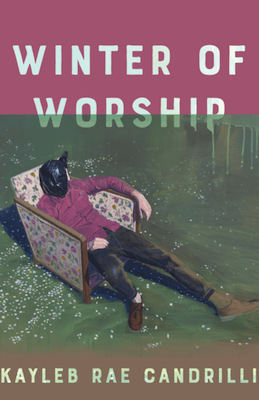
Kayleb Rae Candrilli’s poetry comes from a bedrock of resilience. From a hardscrabble childhood in rural Pennsylvania, as chronicled in the memoir-in-verse What Runs Over, Candrilli has emerged as a fearless voice on behalf of the trans community in particular.
Their new collection, Winter of Worship, extends the threads of community care to the landscape of Philadelphia’s downtown streets. The poems grieve: for friends lost to the opioid crisis, for youth lost to climate change and the pandemic, for queer history lost to the AIDS epidemic. Yet Candrilli sustains a current of hope underneath, finding connection in the smallest gestures of the everyday. They indulge in the healing power of recursive poetic forms, using the repetitions of ghazals and “Marble Runs” to transform their surroundings.
Kayleb Rae Candrilli and I connected via email to discuss invented forms, emotional chronology, bearing witness through grief, and their ever-queer lens.
Skylar Miklus: I want to begin by asking you about the structure of the collection. The way the poems are placed next to one another feels so intentional. Even though the order of poems isn’t chronological, I feel like I can trace a storyline through the book with a cyclical type of movement. Can you tell me more about the overarching logic of the collection, as you see it?
Kayleb Rae Candrilli: When writing Winter of Worship, I wanted to push back against the kneejerk instinct to order narrative poems chronologically. Instead, I was interested in trying to craft an “emotional chronology,” which had its own distinctive arc.
Since an emotional chronology was what I was after, I think that’s why there’s a two steps forward, one step back type of movement to the book, or that “cyclical movement” you reference. Our growth, our grief, our love, hardly ever is, or feels, linear.
Digging into the minutia a little more, I have a rather extensive way of choosing the book’s order. I start by making a word cloud of the entire document. Then, I pull keywords to use as stand ins for the book’s most prevalent themes (usually around six to ten themes). Each theme is assigned a color, and I tag the top of each poem with the three most important themes contained in the book (in descending order of importance). When I lay the color-coded pages on the floor, I am able to see where poems have been thematically clumped, or where I’ve abandoned one of the book’s central themes for too long.
SM: Just as the book overall seems to have a recursive logic, you also employ poetic forms that feature recursive repetitions, like the ghazal. This inclusion of received form seems like a change compared to your earlier books. What drew you toward the ghazal, or toward repetitive form in general?
KRC: I like to joke that I tend toward repetitive forms because it gives me a permission slip to use a (hopefully) good line twice. And though I mostly say that jokingly, there’s some truth to it. So much of my writing feels instructive, but rather than instructive to an audience, it is intended to be instructive to me.
I wanted to push back against the kneejerk instinct to order narrative poems chronologically… to craft an ’emotional chronology,’ which had its own distinctive arc.
When I sink into the recursive or repetitive, I am trying to write myself a kind of mantra or mantras. My poems are written toward the person I want to be, rather than a person that already exists. Hopefully, and I think often, I am able to catch up to the poems.
As for this recursiveness being a departure from previous work, it is certainly a departure from my first two collections (What Runs Over & All the Gay Saints). But in Water I Won’t Touch I rediscovered my love of form with a sestina and a heroic crown of sonnets. I don’t think I’m alone in turning to form for the ways in which constraints can free us. When I started my third book, Water I Won’t Touch, I felt very stuck in the voice and cadence of my previous collection. Turning to form was integral in prodding my poetic voice along.
SM: You invented a new form of repetitive poem in this book, the Marble Run. In the “Notes” at the back of the book, you write about the form’s movement being inspired by a Jacob’s Ladder. Do you want to elaborate at all about how you visualized this formal structure?
KRC: I mentioned the heroic crown in my third collection (titled “Transgender Heroic: All this Ridiculous Flesh”). When I was working on that poem, I thought a lot about the movement of a Jacob’s Ladder, how a single piece of the toy cascades down the ladder in such controlled chaos. The movement of that toy is so like the construction of a crown of sonnets, how the repeated lines fall and reappear throughout the poem.
Visualizations like this are often helpful in my practice—a kind of synesthetic habit that feels very natural to me. When I took to making my own form, I was interested in using another semi-antiquated children’s toy to visualize the poem’s movement. I knew I wanted the form to be recursive, repetitive, like mountain switchbacks—so the marble run was an obvious choice for me in the form’s development and in its naming.
SM: In addition to structure, the other element about this book that really jumps out to me is the sense of place. The terroir of Philadelphia is all over these pages. What does your city mean to you, and how do you see the relationship between placehood and poetics?
KRC: It’s strange to me to have written a book so set in or motivated by Philadelphia, rather than the more rural spaces of my childhood and adolescence. But I suppose that illuminates some of the distance growing between me and where I come from, even if the distance is only time.
As with every place I’ve lived and worked, I am thankful for the ways I’ve been radicalized by routine institutional and governmental failings, and thankful too for the ways in which I have been taught and retaught tenacity by the people who have lived in the space longer than I have. I’ve lived in Appalachia, the American south, and Philadelphia, and in all three disparate spaces the aforementioned pattern remains just the same. Whether surrounded by evergreens, kudzu, or concrete those in power would have us suffer, and those suffering display herculean strength they ought not have to display.
As for the relationship between placehood and poetics, it is so inextricable. I am the product of my environments, and my poetics are the product of my personhood. But perhaps even more important than that, grounding my body in space adds a layer of reality to the work that I hope is important to my readers. I am not just trans and alive, but I am trans and alive at 16th and Wharton in Philadelphia, trans and alive on Thurston Hollow Road in rural PA, on the Amtrak Crescent line cutting through Alabama.
SM: The publisher describes Winter of Worship as a “book of elegy,” but I see the story as somewhat more complicated than that–it’s about both loss and connection. I admire the way the elegies remember both friends and strangers (i.e., the victims of the 2016 Pulse shooting). How do you think about the relationship between the practice of poetry and the work of grieving? Do you see part of the work of poetry as bearing witness in some way?
KRC: I wonder if there’s not much that separates loss from connection. By which I mean I feel so much connection to my lost friends and family. I still have meaningful connections with all my dead, and as often as that may be painful it’s nourishing, too. I don’t know if I’m doing a very articulate job of describing the sensation, but hopefully that makes a bit of sense.
As with every place I’ve lived and worked, I am thankful for the ways I’ve been radicalized by routine institutional and governmental failings.
As for poetry being a part of the work of grieving, it certainly is for me. I think it’s worth harkening back to what I mentioned earlier, about writing myself instructive poems. The poem written is where I want to arrive in my grieving; the poem is my map to get there, rather than an illustration of where I am at the time of writing. Grief, for me, is the messiest and most unstructured emotion. A poem can provide the scaffolding to help hold me up.
I’ve always considered bearing witness to be a crucial prong of poetry. I fall in a long lineage of poets who feel the same. But I often wonder if witnessing, on its own, fulfills what is (or will be) asked of us as poets. I think a poem that witnesses and names can be a successful one. But perhaps the poet’s life should be one more of action. We’ve seen it, we’ve named it, now what? I suppose I’m mainly thinking through this for myself and trying to figure how I might be most useful to the world and those around me.
SM: With respect to connection, I was touched by what I read as a set of love poems to your partner in this book. I love how innately and effervescently queer they feel, without thinking of the cishetero audience. How do you feel about audience—is it something you’re thinking about while writing?
KRC: I have only ever considered my queer audience, I think. I am writing both for and to my queer readers. Nothing could be more of a failure to my intended audience of queers, than considering cishetero comfortability or aesthetics.
This isn’t meant to be alienating in the slightest; in fact, I think most cishetero readers of my work might appreciate that it isn’t written for them—as so much of art and the world is made with them in mind. If they’ve found my work, it’s because they want and perhaps need an experience outside of themselves. And of course, I am so grateful to any and everyone who spends some of their finite time on earth reading my poems. What an incalculable honor.
SM: Overall, it feels to me like this book is cherishing the community you have around you. I was affected by the reference in “Poem for the Start of a New Decade” to the support surrounding you during your top surgery recovery. How does your community influence your artistic practice?
KRC: The line I believe you’re referencing is, “Everyone I know / pitched in to help me remove my breasts / with a scalpel.” More than I think about how my community influences my artistic practice; I think about the ways in which it’s kept me alive to make art at all. It’s community that’s kept many of us alive. It will be community that keeps us alive moving into an even more uncertain future.
SM: To close, please feel free to tell me about any texts that felt like influences or part of the book’s lineage.
KRC: There’s so much music behind this book, especially music of a nostalgic ilk. I put together a playlist you can find here!
And I just wanted to shout out a few things I’ve been spending time with as of late! I’ve recently discovered Sophie Calle’s work, specifically True Stories and Suite Vénitienne. I am so entranced and captivated by her projects.
Gregory Halpern’s photo collection King, Queen, Knave knocked my socks off. And I’ve been doing a deep dive of Jim Jarmusch’s films lately. My favorites so far are Only Lovers Left Alive and Ghost Dog: The Way of the Samurai. Lastly, I am rereading the late Aziza (Z) Barnes’ i be, but i ain’t.
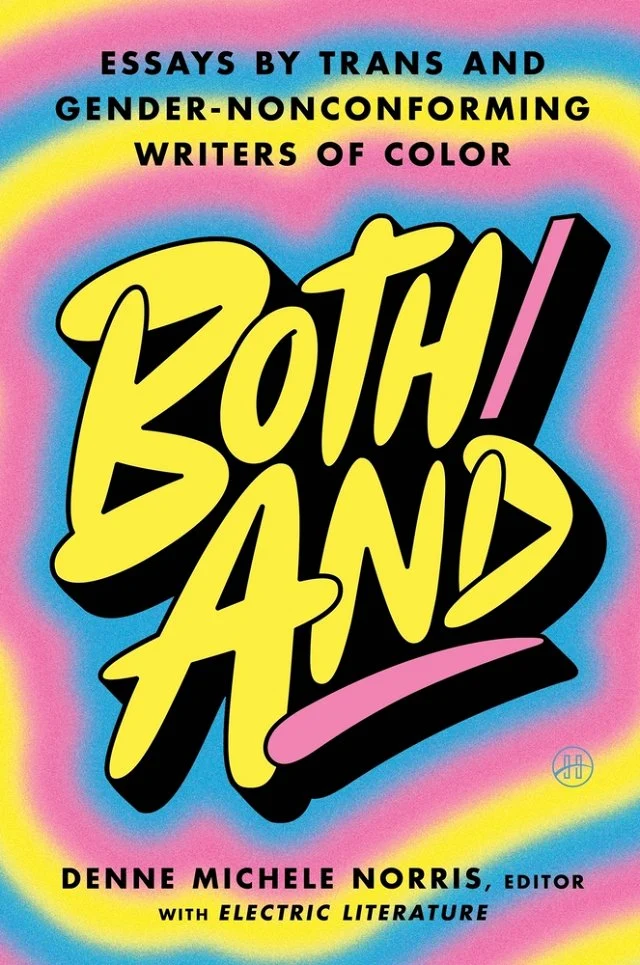
Electric Literature is pleased to reveal the cover of Both/And: Essays by Trans and Gender Nonconforming Writers of Color, edited by Denne Michele Norris, which will be published by HarperOne on August 12, 2025. You can pre-order your copy here.
From Denne Michele Norris and Electric Literature comes a vital anthology of essays by trans and gender-nonconforming writers of color, sharing stories of joy, heartbreak, rage, and self-discovery.
Featuring seventeen new essays—spanning writers, scientists, actors, activists, and drag queens—Both/And explores what it means to live as a trans person of color today.
Acclaimed authors Akwaeke Emezi, Tanaïs, and Meredith Talusan share their stories alongside activist and organizer Raquel Willis and RuPaul’s Drag Race star Peppermint, as well as a host of rising literary talent. Each story is told with honesty, authenticity, and beauty. A nonbinary molecular biologist has nightmares about their estranged father transitioning. A writer revisits a casual hookup that helped her discover her womanhood. And a woman vacations in Hawaii with her wife, where she gets in touch with the fire goddess within. These stories depict real trans lives from trans points of view, at a time when these perspectives are most urgent and valuable.
Inspired by Electric Literature’s groundbreaking series and edited by the first Black, openly trans editor-in-chief of a major literary publication, Both/And is a different kind of love letter, written by—and for—one of our most targeted communities.
Here is the cover, designed by Leandro Assis.
“Designing this cover was such a special experience,” says Assis. “Not just because I deeply relate to and support the theme, but because I felt truly honored to contribute something in my style. The texts are powerful, and they really inspired me. Visually, I wanted to create an immediate impact, incorporating the trans flag in an organic way, almost as if the title itself was spreading the message further and further.”
Norris agrees. “There are so many things I love about Leandro Assis’s cover, from its homage to the trans flag, to the shape and font of the text. It reminds me of a party, something bombastic, colorful, and memorable. Much like the book, it celebrates the fullness of our lives while at the same time centering joy, laughter, sensuality, and resilience.
“Under the new administration the queer community is under vicious attack—especially transgender folks,” Norris continues. “Though we’ve always known this might happen, it is now abundantly clear that there is a political movement intent on erasing our very existence. I was motivated to create this project because I wanted to elevate trans and gender nonconforming voices of color. Those of us who live in the crosshairs of these identities are particularly vulnerable. Both/And is a love letter to my community, and this cover is the perfect envelope. We are incredibly strong—certain of ourselves and of who we are in a world that wants to cast us aside. I am committed to centering our voices, and our stories, to ensure that we are never forgotten, never truly silenced. It’s especially meaningful to partner with Electric Literature for this project.”
Why Am I Still Attracted to White Men by Jeneé Skinner
While visiting a friend in Fort Collins, Colorado, I decided to go on a date. I’d been spending a fair amount of time on dating apps, avoiding my writing, and coping with the lackluster holidays by juggling a few conversations at a time. I matched with Patrick while visiting an art museum. Bald, beard, blue eyes, lean muscle, octopus tattoo streaming across his shoulder and back.
My friend Charlotte was more excited about the date than I was. How long have you been talking? Where’s he taking you? What outfits are you deciding between? Do you want to use some of my makeup?
While I admired her excitement, I didn’t quite match it. There were 8 outfits in my suitcase. I knew which I was wearing. Umber sweater dress, almond cardigan, thigh high socks. I didn’t expect much more than passing the time with decent conversation. I tried not to expect much from the apps. Most matches don’t respond, those who do don’t get past lukewarm surface level responses that peter off after a few days. Very few ever lead to a date. I was just feeling restless in my own skin. Being distracted felt like a rescue.
“You look beautiful,” Charlotte said, coming up behind me in the bathroom after I got dressed.
“You know I’m not good with compliments.”
She smirked. “Well, it’s yours whether you like it or not.”
Charlotte is pretty. Her style is a mix between slutty and 1950s beauty. Whenever I took a picture, she smiled perfectly on cue.
Later that evening, Charlotte’s boyfriend, Noah, came over to meet us. His handshake was firm, he limited eye contact to five seconds or less, looking away when I looked directly at him. We connected over anime and watched a few episodes of The Way of the Househusband. He ordered pizza. Charlotte, mindful of the time, checked in with me. “Are you nervous? Here are some of the places that are still open.”
Noah said the logical thing. “I’m surprised you’re going on a date since you live in Iowa.”
“It’s just for fun,” I said.
Charlotte concocted an imaginative rescue plan, offering up her boyfriend as a service—more joke than truth.
I planned to take an Uber to the dessert bar, but was nervous about getting in Patrick’s car afterward. I showed Noah and Charlotte pictures of him, told them his full name, and the type of car he had. Charlotte concocted an imaginative rescue plan, offering up her boyfriend as a service—more joke than truth.
“If you’re ever in a sketchy situation, Noah can come in and pretend to be your husband and whisk you away.”
Noah snorted. “Can you come up with something more realistic?”
I didn’t know what to say, so I said nothing. The show played in the background. Loofah, Charlotte’s cat, stretched out on the floor, curling and uncurling his tail. It wasn’t awkward. My face is usually stoic so I’m hard to read. I don’t remember how the conversation continued, only that it did. Noah’s response echoed inside me for far too long afterwards. Initially, I’d heard it as an insult. It wasn’t until over a year later that I realized that he was referring to Charlotte’s elaborate backup plan. I’d held onto a throwaway comment and let my own insecurities get the best of me.
As a black woman with prominent facial features, dreadlocks, a thicker body with broad shoulders, my romantic options are limited. Definitely different from Charlotte’s. Though she’s Latina, she passes for white. I’d previously brought this up, but she wasn’t conscious of what it meant, the privilege that was available to her.
When I first moved to the Midwest, I worried about being surrounded by whiteness and feeling invisible. It was further complicated by the fact that I was primarily attracted to white men. Perhaps because that’s who I was around more. The older I become, the less interested I am in being defined by my race. I saw my identity and interests as a human being outside of my race more as time went on. And as I moved away from home, finished grad school, and worked to advance my writing career, I knew that would impact the dating options that were available to me.
Back in the first few months of us meeting in Iowa, Charlotte and I had a picnic in the park where I voiced my concerns about dating.
“I just don’t know what’s available to me out here,” I said.
“That’s normal. Moving is a big transition” she responded.
“But who will see me?”
“I actually think you’re very attractive.”
I felt nothing after she said it. And it took me a few years to figure out why. Why when friends or platonic relationships tried to compliment my looks or character that it didn’t feel right to believe them. Eventually I realized my friendships didn’t hold me in the middle of the night, protect me from harm, or help me financially function. I want to be loved and touched and fucked. Most friendships don’t stretch that far.
As for the rest of the evening in Fort Collins, Patrick and I couldn’t get in the dessert bar without our covid cards so we went to Denny’s instead. Noah scoffed at this detail as I recounted the date later that night while we all hung out at a bar. “Not very original, dude.”
“Not everyone has a chance to plan the date like you did,” Charlotte said.
I asked about their first few dates, more so Charlotte would stop asking me about how things went with Patrick. Things went well enough. We hugged after he drove me home. But I knew a future was unlikely. I liked the fantasy of an attractive man with a decent job, who still believed in God and marriage taking an interest in me. I didn’t mention it to Charlotte, but I was also talking to a Nigerian engineer. We didn’t get a chance to meet while I was in Fort Collins, but he wanted to keep up our phone calls. Patrick unmatched me when he found out I was back in Iowa. I stayed in touch with the engineer for a bit while talking to a few local men. Over the next few months, one turned out to be married, another was my pen pal for 6 weeks until he finally ghosted the day we were supposed to meet, still another decided several months in that he wasn’t financially stable enough to be with a woman. Exhausted, disconnected, a desire to escape is all I felt at the end. It seemed cruel to keep up the charade, to myself or anyone else. The engineer in Fort Collins wanted to stay in touch, but I didn’t.
Charlotte had started dating two weeks after her breakup with her ex, Owen. She’d dated Owen both years of our grad program and lived with him the second year. I knew her pain as I went through the end of my own 2-year relationship the summer I moved to Iowa. I feared dying alone. Had to get used to sleeping by myself, abstaining from sex, grieving. For the first 3 months, I focused on writing my novel, but when I came up for air and remembered how lonely I was, I decided to go on dating apps. At first, I was excited to be picked. But I quickly learned how empty the process was.
Among the lessons and disappointments were several men. A white gay couple who had a fetish for slave master dynamics with black women. It remained virtual and eventually I left the chat, but I lingered in it far too long. Next was the cop, Nathan. Cold, handsome face, dead eyes. Mid-thirties and had only been in a series of situationships and one-night stands since college. He ended things after Christmas. I’m just not ready, he texted. Last was my rebound from the cop. A divorced Trump supporter. I wasn’t thinking.
I spent the winter in mourning, wanting to burn myself clean and new. Shame was my new lover as I watched Euphoria and skipped classes. I wanted Charlotte to avoid some of the damage and heartbreak I went through. I’d send her Instagram posts that’d been useful to mewith messages like: If you want to lighten your heart…Reveal your secrets. Release your shames. Free your resentments. Feel your pain.
But it was her void to fill. It led her to Noah. To this day, she’s still angry at Owen for mistreating her. When she first started seeing Noah, she asked me if I’d seen any life updates on Owen’s profile or heard from any of our friends still in the workshop.
“I need answers, Jeneé,” she said half-jokingly.
“Even if I had them to give, what would it change?” I asked.
“You don’t understand. He left so many things undone in me…”
“I’m your friend, not his. So I don’t know.”
The strongest memory I recall of Owen are American Spirit cigarettes tucked in his shirt pocket and the group dinner where he told me how much he loved Charlotte. “My home is with her,” he lied. I’ve seen enough of his social media to believe life has moved on. While they were still together, Charlotte only mentioned that she and Owen were going through hard times. I let her know she could stay with me if needed. After their breakup she revealed Owen screamed at her repeatedly towards the end, sometimes for more than an hour. It’s interesting how our desire to protect those we love, even as they continue to hurt us, contrasts with our desire to hurt them after they throw us away. When all we’re left with is pain and rage that needs somewhere to go once the love’s gone.
While there are threads of shared experiences between Charlotte and I, the fact remains that she found love again. As of now, I have not. There may be other various factors at work: Location, likeability, being a stable, functioning adult, shared values. But I can’t help but wonder if appearing to be a cute little white girl made a difference.
Of the marriages I’ve seen, most of them have been with non-black people. An article in Time magazine reported that black people are more likely to be single (59%) and that black women (62%) are the most likely to be single of any sector. I asked my Nana and uncle why this was.
“Most of us need therapy. Living in a trauma induced state makes it difficult to consider another person’s wellbeing,” my uncle responded.
Nana wrote, “Women and men, have lost their true identity and don’t have a clue about what they want and what they are willing to contribute to a healthy loving relationship.”
I found myself grappling with where I came from,. the relationships I’d seen. My life was dominated by women. My mother, Nana, my godmother Emery, my mentor Kalani. Single mothers, single women. Marriage was something I saw on tv or occasionally heard about from my teachers at school. My brother’s grandparents who babysat me in early childhood were married. My brother is married to his 2nd wife. Eventually my uncles got married. One has since divorced. My father just recently got divorced. Nana and her mother have both been widowed and never remarried. “Even if I wanted to, what options are there?” Nana remarked during one of my visits.
It was expected that I’d have sex, have children, and go to work, because those would follow me throughout life.
Marriage and domestic life weren’t a prison to me because they were never even presented as options. It was expected that I’d have sex, have children, and go to work, because those would follow me throughout life. Men were never mentioned because they never stayed, in life or in death. My mother didn’t even acknowledge dating for me. When I told her an early boyfriend proposed to me when I was 22, she chuckled and rolled her eyes. I guess she was right given that it didn’t last.
I come from a single teenage mother. She tried to commit suicide for the first time when she was pregnant with me. No one but God knew I was there. She called her best friend a dozen times before swallowing a handful of pills.
“I’d fallen in love for the first time. With your father. It was overwhelming,” she said.
My parents’ relationship was over before I had memory. Within 6 weeks of the first semester in college, my mom had gotten pregnant with me. Among the things that brought them together were Daisy Duke shorts, dad’s grill, and Faith Evans “Love Like This” (Fatman Scoop Remix).
My father didn’t learn what true love was until years later. The love of his life, my brother’s mother, died of an asthma attack on a winter’s day. Dad’s grief filled the Brooklyn brownstone as he remembered the mole above his beloved’s mouth.
He later married and divorced a woman in North Carolina. His kids weren’t included in his attempt at happily ever after. I’ve seen him a dozen times in my life. A familiar stranger whose smile I share. He’s tried to talk more than I have. Decent man, capable of laughter and kindness. He’s recently had a heart attack and stroke. Before that, his marriage was ending. He called me during both times. I could feel him reaching for a human connection, a woman’s touch. I was what was left. My father taught me about the men who marry so that they can be taken care of. After living as a nomad—once their mistakes and noncommittal lives catch up to them—a woman is expected to become their home.
There’s always surprise in his voice when I reveal wisdom that he didn’t teach me. I express empathy for him well, even genuinely feel it at times. But where was he when I needed it first? I used to wonder what my life would look like if he passed away. I quickly realized it would look the same. No holes, no tears, no pain, just a black dress and plane ride to New York for the funeral. How do you love someone who’s always been at a distance? I don’t know, but it’s there, made of obligation.
The love and honor my parents want from me is based on a dream. A dream where they gave more than they did, showed up for more than just my moments of success. I see my best traits in you, my worst traits in your brother, mom wrote to me my freshman year of college. But her best wasn’t reserved for parenting. She gave what came naturally, what made her feel good, what helped her escape, what didn’t question her, and allowed her emotions to roam. The food, the men, the money she struggled to manage.
This wasn’t the mother she came from. Sometimes I wonder why I wasn’t Nana’s daughter instead. “I would’ve been a housewife if I could have been,” she told me. I can see it in the way she cleans before the Sabbath, the scent of tea candles, and her zucchini bread recipe. I see parts of the woman I want to be.
Nana was the eldest of 5 siblings. A teen mother. Her father gave her an ultimatum: abort my mom or get married. “I loved him and would’ve married him anyway,” she assured me. I believe her because that belief formed the fabric of my mother and me.
16 years later, when mom grew pregnant with my older brother, Nana told her she was having the baby. No discussion. Several more years, when mom was pregnant again, she chose me. “I saw your heartbeat and that was it.” My father wanted her to get an abortion. He has no claim on me. He has no right to be mad at my mistakes or celebrate my successes when he’s been less than a ghost in my life. Ghosts haunt, hold memory, desire to disturb or be laid to rest. My father simply wasn’t there. The lessons I’ve learned, the few men who showed up and the living that formed me don’t belong to him. He was a part of my mother’s beginning, not mine.
“If you could do it all again, would you have married dad?” I asked, sitting across from her bed.
Mom didn’t look up from her phone. “No. I wanted to do things my way.”
Her answer didn’t involve me at all. There was no depth or memory to it. Memory of the lights going off. The gentle eviction from family friends. The tears that had nowhere to land but the steering wheel as she drove. Unpaid bills old enough to be my siblings, or when I was touched and she responded, “I wouldn’t have let my brother do that to me.”
It was about control, or rather, being out of it. I watched her chase death, both fast and slow. Pills were the fast way. The rest of life slowly decayed her bones. She preferred having a blurred sense of right and wrong to wade through when convenient. If she accepted help, that might mean she’d have to change or at least admit to her mistakes. She would have to learn to speak the language of others, one that included patience and compromise. It was easier to just be right, to believe her way was the same as survival.
I left home to form my own story, but I’m still figuring out community after years of solitude.
While my parents are in me, I have to remind myself that I’m not them. I left home to form my own story, but I’m still figuring out community after years of solitude.
Friends like Charlotte were practice for learning words again. How to speak outside of pain. I told her of my breakup, struggles with my mother, dating, depression, the past. She listened. I’ve seen her pain too and tried to soothe it. She posted online about Owen’s behavior in their relationship. I asked if she was okay.
“It sounds like you’re telling me I did something wrong.”
“I just want you to be able to heal and move on. Think of Noah.”
“My rage is helping me heal.”
“What about forgiveness?” I asked.
“What about it?” she shrugged.
Charlotte reminded me that while forgiveness is there, it’s not always useful. Some days I forgive my parents, other days I don’t. But I know I have to forgive them in order to be forgiven. When I do, I prove to myself that I have a future that doesn’t involve reliving the past. A future that belongs to me and that I might share with others.
When I moved to Arkansas, Nana told me “not to get too chummy with the neighbor”, a college-age white boy, after he came over to say hi.
Whiteness was usually handled with suspicion. “They won’t be able to relate to you. How could you ever trust how they see you?” my godmother asked one day at a coffee shop. She and my mother expressed concerns over me dating white men, as if I was being disloyal to my race and the continuation of its legacy.
“His relationship to God matters first. Everything else is secondary,” I responded.
They spoke as though no white man would ever see me as his equal and I’d constantly be undermined. I know the person they described exists. Everything from music to porn portrays black women animalistically, playing into tropes that are projected on us. But regardless of who I’m with, I just want to be a human being who’s loved. Love has been the hardest acceptance to find. I cannot always measure myself by blackness and other identities when I already struggle just to get out of bed.
There’s also an irony to my family’s warnings on the dangers of white men, when their own checkered love lives were laid out in front of us. Men, black or not, who reflected their low self-esteem. Cheaters, narcissists, deadbeats, manwhores who used and left the women with more burdens than before. How could they speak of the dangers of whiteness, but not the danger they brought home with them, let into their wombs, next to their children? My own father wasn’t around to claim, protect, or teach me. These women, whom I love, were defending an idea, not reality. Or at least, not mine.
The two men I loved were black. The first was a mentor who wore sweater vests and coached me through thunderstorms with my mother. The second shared my love/hate relationship with Lena Dunham’s Girls. Their pants were pulled up with belts, they cared about my art and were patient. They didn’t accuse me of sounding or acting white. They understood that being black was more than music, dialect, and fashion. My personality didn’t remove my skin or the family that I came from. One was a father-figure, the other a partner. Both were my lovers.
Most of the men who are attracted to me are black. It’s not surprising, but I feel indifferent to this fact. It doesn’t make me feel more secure to know I share physical features with certain men. Of course there are cultural implications that are assumed with race, and yet it’s not a one size fits all ideology. We don’t automatically share the same thoughts and experiences around race, history, and culture. There are an infinite number of ways for black people to view themselves and the world. Skin deep is not deep at all.
When I told this to Charlotte, it was like I’d begun speaking a different language. Having passed for white all her life, it wasn’t a concern for her.
“My sisters are all darker than me and resented me for my lighter complexion.”
I found it difficult to sympathize with her. Her family didn’t view her as betraying her race by dating white men. The men who sought her didn’t make assumptions about her based on how she looked. The inconvenience she experienced in childhood didn’t remove her privilege at present. I admit to the hypocrisy of minimizing the importance of race in my choosing a partner, while being defensive of the motives of white/white passing people in choosing theirs.
My biggest rule was that I couldn’t be with a man that looked like my brother.
My biggest rule was that I couldn’t be with a man that looked like my brother. A mixture of thug and bum. Heavy, tattoos, beady eyes, gapped teeth, scraggly beard. Lips darkened by cigarettes, crooked fingernails from biting. Aimless and ready to pull any woman from her goals or journey if she let him. When I see these features in other men, I’m reminded of what was taken from me, of the danger my mother protects because it reminds her of the home she came from. Childhood wounds in the shape of a father, a man who slipped into the role when it gave the most leverage and back out when it hurt the most.
Two years ago, I decided I couldn’t use my mother as a metric system for my life anymore. She and I aren’t special for our contradictions. Everyone has them. But she was the true first love of my life, the first pair of eyes through which I saw, and my first heartbreak. When I think I’ve gotten over her, I see her in a man, one that I want to help or to love me back, but instead must escape. I keep running from her and she keeps finding me in men who are beautiful broken mirrors. Even now, my mom messages me about living with her or at least Nana and grandmom to be closer to home. The familiar is seductive. Even if it threatens to shrink or kill off parts of you.
The love my mother has for men who take and leave—her father and mine, other lovers, her son—is a dangerous road. I’ve traveled it in my own way, carrying the spirit of rejection, reaching out to people who leave, trying to convince them of my goodness, being the person who stayed and endured what they became. The only reward in it was the lesson. In all of these people lay the spirit of my mother somewhere. Her temper, inconsistency, mania, stubbornness, selfishness, fear of commitment. Lust and distraction.
Once upon a time, I believed the years would look different on everyone. No one wants to believe that today is the same as 20 years’ worth of yesterdays. It takes courage to love someone as they are, to accept what changes and stays the same. I’ve fed off places to blame, especially my parents. I have to remind myself of what they’ve given me, the good things that sustain and mean me well. The grandchildren who need them.
My parents are the closest experience I’ve had to marriage. An old love, the kind that teaches me, that holds rocks that existed before and now next to me. Whether it’s quiet or dark, whether they’re held by glass or water, they only know how to be themselves. They age and erode along with me, their minerals and the history that formed them. I see in their streaks, smoothness and edges. The love moves though it doesn’t disappear.
In moving away from my mother, I was often moving away from the places and people who look like me. At times this surrounded me with whiteness. This wasn’t intentional, just the available option to support my education and writing. Since kindergarten, I was used to not fitting in. I was too quiet, I wore the wrong clothes, I had the wrong conversations, my breasts grew too quick, I sought attention with sex stories, I wrote letters to boys who refused me. Being one of the few black people around was just another thing to add to the list. For a time I did compare my lips, hair, skin, and body to white women, wondering if I was enough when I talked to my first white boy. But my insecurities had been there for years.
Now, I don’t have the energy to constantly hate myself. I’m now trying to maintain a body and self I can love, that doesn’t have to carry the burdens my family has. Failing teeth, pain in their joints, hips, insomnia, weak heart, weight that keeps them from moving. I see who I can become if I’m not careful. And for better or worse, I still want to be desired. Desired, loved, married and fucked, knowing full well the last can’t happen without the first. While I don’t run from my features, I do wonder how best to accentuate them. How to smile, to look in someone’s eyes without instantly looking down or away, how to manage my weight and muscle tone. To be healthy consistently in ways my mom wasn’t.
Yet society continues to become more distant and foreign. I don’t need to explain what dating has become. The vapid, noncommittal, unhealed, sex-obsessed, and transactional playground that the apps are. The longer I participate, the more convinced I am that I should’ve found my husband in the 90s, a time where love might still have been alive and not hidden under rocks and dead things. Parts of dating seem less about race and more about the culture we’re currently in. There’s nothing wrong with pursuing financial stability, purposeful careers, singlehood, friends for visiting comic bookstores. But what about our desires beyond those things?
I consider the areas of my life that still need work. Finish the book, get a regular job, continue therapy, learn to drive. The Christian and relationship podcasts that advise to focus on God and the person you want to become. I’ve concluded, as I’m sure most have, that much of the information and portrayals of living online aren’t real. Most working-class people who don’t take trips to Cabo will remain working class people who don’t go to Cabo. While there are healthier points at which to enter relationships, there’s never a perfect time. Many of the couples I know didn’t have a clean start. They’d just ended or were still in previous relationships, dated under a year before marriage, met at a funeral, etc.
Charlotte Lucas from Pride & Prejudice said it best. I’m 27 years old. I’ve no money and no prospects. I’m already a burden to my parents. And I’m frightened.
I’m 30, poor, depressed, and abstinent. My mother still pays my phone bill. I’m not able to keep up with this world, and yet I know I’m far from being the only one. At times it seems like it’d be easier to be content with sex and companionship, to not expect a man to be more than a friend or lover. I’ve tried. A man with green eyes and no future stopped by to pick up his glasses from my place. He was neither friend nor lover, only a distraction that I wished could be more. We started to watch an episode of The First 48 when he picked me up like I weighed no more than his dreams. When I stared at the blue inside his green eyes, it was easy to forget pain. His growl filled the pit of my stomach with such hunger that all I could do was bite him. His hands and smell were strong and I wanted them both to fill me deep enough to forgive him and forget my own shame. He was a whore and reminded me of my capacity to become one too. In bed, I remember that he wreaked of my mother, and that there’s a God. Neither the green-eyed man nor I had condoms and nor did several stores he went to, so we didn’t have sex. My choice. Hard not to believe it was a sign. Eventually the spell was broken, he was gone, my life was the same, and there was still writing to be done.
Women who are smarter, prettier, more capable than I am, are struggling to find someone.
Women who are smarter, prettier, more capable than I am, are struggling to find someone. And yes, black women do still struggle in ways that other races of women don’t. Black women and Asian men are chosen the least on dating apps. The tropes associated with black women – loud, angry, ignorant, promiscuous, baby mama, welfare queen, rebellious, rainbow weaves, fake lashes and nails, and of course twerking—portray us as a flavor to try at best, rather than a potential partner to share life with. There are those who count us out before ever getting to know us as individuals. Assumptions about cleanliness, intelligence, and politics were made just from my dreadlocks.
DEI efforts to diversify film casts (and shows created by Shonda Rhimes) are well-intended in showing interracial relationships, but as a black woman living in the Midwest, this hasn’t been my reality. White women are still prized first, then other non-black women, and then us. There are stereotypes attached to every race, but the ones attached to black women sometimes contribute to singleness, and the lack of solid family structures.
I find myself torn between this reality and the one where dating is harder for most people with limited time, energy, resources, and options. I struggle to find someone who isn’t trying to get the most of me for the least amount of effort. Many see the person on the other side of their screen as little more than a temporary distraction from boredom. Convenience has become a silent killer of intimacy. People want sex delivered to the door. “I want to get you pregnant,” one man told me. “I can bring snacks over,” said another. Everything has been commodified. Our bodies, emotions, stories, love, pain.
I’ve discovered how little a man’s pleasure can have to do with a woman’s. While men obsess over their orgasm, women are often just another way to jerk off, used as human toilets for male release and validation. Very little thought is put into connection or making a woman feel safe, desired, and valued, let alone pleasured. The orgasm gap between men and women has been well documented. There’s no concern for how it might break the woman, or disassociate both parties from their humanity over time. How much harder it is to pair bond and trust. That kind of sex was too traumatic to be pleasurable for me. I tried and it left me empty, praying for parts of myself that had been stolen from me to return. Society had nothing to do with it. The truth is that it’s not even about white men. It’s about finding where I’m loved. Nothing less will do.
I’m not owed marriage or romantic love. No one is responsible for giving me access to their body. There’s a great chance it’ll take years to find someone, or that I’ll remain single. There was a time when imagining myself alone was too painful to bear. Until I remembered that being with the wrong person is worse than being alone; that there’s family in friends and community beyond romance. I name my contradictions, the ways in which I play victim. The truth is that I want someone to commit to me, but I haven’t fully committed to myself.
As I write this I remember that this is where my love lies, the place where I am given back to myself.
The closest lovers I’ve had are God and art. Prayer is honesty and perspective, the bible is a study of human psychology, and the church after years of searching, is friendship. Poetry is the closest I come to sex, to body, to kiss, to warmth, to the perfect sized penis, to hugs, to running the palm of my hand over the heads of flowers. Poetry is like breath. As I write this I remember that this is where my love lies, the place where I am given back to myself. Even if it’s only for a few moments. Sometimes I make the sky my diary, screaming myself into the air as much as I need.
I can spend time pontificating on how my race, sexuality, childhood, and singleness are politicized, or I can finish my book, but I can’t have both at the same time.
Charlotte is engaged. “I’ll wear the dress you got me for my engagement party,” she tells me. I know it fits her perfectly. She’s invited me to be a bridesmaid. A Texan wedding. Snake queen, Steve Earle hits, BBQ, and whiskey. Many kinds of love exist and will show up on her wedding day, and I’m happy to be one such love. If I cry at her wedding, some of the tears will be for her, but some will also be for me.
My mother and I are going to a P!nk concert in a few weeks. I will singshout words. I will scream my teen years back into existence:
So raise your glass if you are wrong
In all the right ways
All my underdogs
We will never be never be, anything but loud
Other than that, there’ll be too much present for the rest of the past to show up. I will wear mom’s pink Nikes as if they’re my own and pray we both stay sane with each other all three days. But even if we don’t, I’ll love her all the same.
There are days ahead filled with purpose, mistakes, meals that I’ll cook for loved ones, lessons in my words and others that I’ll return to. There is life and death attached to my name and every woman I came from. There is dancing, people in different skins who I’ve yet to meet, dandelion tea, family and friends I choose and who choose me. There is a life waiting for me.
Like other peddlers of the macabre, I read the short story The Most Dangerous Game at an alarmingly young age, and it was the proverbial needle that pricked my fascination. In actuality, I’m not a huge game person except with Clue and Mafia because, well, who doesn’t want to try and solve (or get away with…) figurative murder? However, raise the stakes, add fear, or make it an escape room, and you have my attention (let’s not examine what that says about me, thanks).
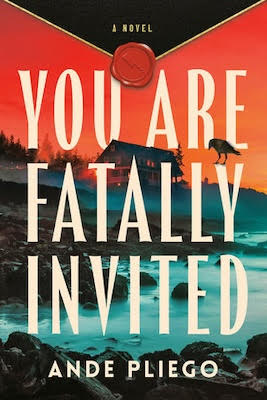
There’s a curious psychological element to something fun and innocent turning dark and dangerous, with panic and the stakes rising like a tide, where the only way through is to out-play the game or gamemaster—or change the rules. Great movies like The Game, Game Night, Jumanji, War Games, even The Menu nail this feeling beautifully. And so, while I was scheming up my first adult thriller, You Are Fatally Invited, I had the thought that if I enjoy stories about adrenaline-laced games, surely others might, too?
I primarily wanted You Are Fatally Invited to be fun, but also bone-deeply chilling, with a nice heap of the psychological—so my solution: games. In the story, murder mystery dinners, riddles, Clue, escape rooms, and even hints of Mafia take a lethal turn as J.R. Alastor, renowned anonymous author, forces six thriller authors to play his games. Everyone’s got a secret and each game peels back a layer, and the only way for the authors to survive the tropes so rampant in their own books is to confess.
But some secrets are worth dying to keep.
May I offer you a serving of books with similarly twisted games? Here are a few that capture that heart-in-your-throat sensation, and made my heart tap against my ribs:
After the passing of her beloved father, a young woman discovers that he owned a secret house in the Cayman Islands. Grappling with the realization that she might not truly know her father, the woman flies to the island to settle his estate… and discover what he was hiding in the luxury mansion overlooking the cliffs.
Completely unrelated, we also encounter an au-pair, Anna, who arrives ahead of her new employers at a certain mansion overlooking the cliffs. She can do as she likes while she waits for the family to arrive—except open the door with the blinking blue light.
Gee, what could be behind that door? It couldn’t be some sort of test, or… game, now, could it?
Nothing screams deadly games like a hide-and-seek competition in an abandoned amusement park—seriously, would anyone think everyone would make it out in one piece, or even two? Regardless, it’s all fun and games (literally) until the fourteen contestants realize there are guards stationed around the park’s perimeter… and they’re not allowed to leave. And as their number shrinks, the rest of the competitors realize they’re not just hiding from each other. Filled with hair-raising moments and a slow-burn rivals-to-friends dynamic, Hide is a fun, blood-spattered romp.
Kiersten White excels at psychological horror, and Mister Magic—her second adult book, which follows a children’s television show turned sinister—also warrants an honorable mention for this list.
This isolated, wintery thriller follows a husband and wife on a romantic getaway—only, ten years of secrets lie festering between them, and they quickly discover their every move is being stalked. Anniversary letters, foreshadowingly specific words of the year, and a slow-burn, creeping unease saturate the story. The couple has used the titular game as a way to settle disagreements and make decisions; only, some decisions shouldn’t be left to chance, should they? It’d sure be a shame if the game came back to bite them…
Also, this book ties with Alex Michaelides’ The Silent Patient for one of the best plot twists I’ve ever read. Like Alice Feeney does so brilliantly, I too aspire to make readers gape at the wall questioning everything they know.
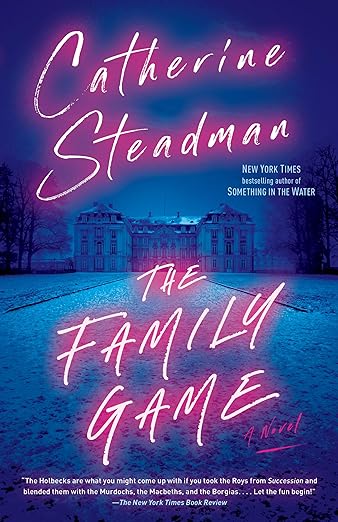
The Family Game by Catherine Steadman
Game: scavenger hunt, survive the in-laws-to-be (I propose that this be an official game)
Noticing a trend? For all your psychologically intense needs, Catherine Steadman has you covered. The Family Game follows a novelist who becomes engaged to the son of an extremely wealthy, extremely… family—and finds herself caught in their completely normal, benign family tradition: a dangerous game involving secrets, high stakes, and a not-at-all-terrifying Christmas Eve scavenger hunt. Initially a slow burn, the story snowballs as family tensions escalate and their cutthroat nature comes out to play. It is delightfully over-the-top, atmospheric, and teeming with clever, eccentric characters.
This delightfully dark little book brings such a smile to my face. As someone who grew up playing hide-and-seek in and out of wardrobes in IKEA, it’s a sheer delight to read about employees camping out overnight in a sentient IKEA—‘scuse me, ORSK—to try and figure out who (what) is trashing the store every night, leading them on a slightly… different type of hide-and-seek than the one I grew up playing. The book is also peppered with drawings of the furniture, complete with how-to-build instructions that become more and more sinister as the book goes on. Few people can wed horror and humor together like Grady Hendrix; IKEA veterans will nod knowingly at the pivotal (ha) use of a variant of the all-hallowed IKEA Allen wrench. It’s definitely not the darkest/goriest of Hendrix’s books, but it’s not for the (very) faint of heart.
Game: chess, scavenger hunts, word games, puzzle boxes, etcetera
Think Knives Out, but with so many more games, both physical and psychological. Homeless high school senior Avery Grambs—a ruthless chess champion with a knack for poker—is suddenly named heir to the fortune of one of the richest men in the world, a man she has never met, but whose fascination with games of all sorts is legendary. At the estate, Avery encounters the slighted former heirs: four brothers, each more clever than the last. Avery finds herself caught in a war of family members vying for the fortune and a killer seeking her more, shall we say, permanent removal.
But Avery is no one’s pawn.
The Inheritance Games is technically Young Adult, but its clever games and whip-smart plotting is sure to delight both YA and adult readers and has left fingerprints over most of the thrillers I write.
This sinister story follows three girls who grew up playing a game of pretend they called “The Goddess Game,” which comes to a screeching halt when one of the girls is viciously attacked in the forest. She survives, miraculously, and the testimony of the three girls puts the man—a serial killer—behind bars. The only problem? The girls didn’t tell the whole truth about what they saw.
Twenty years later, with the past catching up to them, they’re forced to remember what actually happened when they were children and must differentiate their fantastical game of pretend from reality. What Lies in the Woods is a razor-sharp cautionary tale of toxic friendship, the power of childhood imaginations, and how you probably shouldn’t play with a skeleton you find in the woods.
When we paired up, we always paired up together. History projects, and math exams, and charades by the fence after the bell rang. We weren’t the only girls in our friend group. It was like do and re. There were other notes, sure, but you couldn’t forget the first two.
She held my feet, her hands on top of my dirty Keds. Kneeling in front of me while I faced the ceiling, my elbows out like chicken wings and fingers cupping my ponytail. I waited for the whistle, the gym floor cold under my back.
And when it came, I pulled my stomach muscles in and curled. And curled. My breath left me every time I got to the top. Her eyes crossed on my first rep. She pressed down on my feet, and I felt myself push her away and give in as I completed the circuit again. Her tongue caught between her teeth when I pulled up again.
My stomach tightened. It was supposed to, though.
We’d done the chin-ups the class before, stood at the end of the line making up lies about presidents doing their own test. “Calvin Coolidge won the presidency because of his mile time,” I said.
“And Rutherford Hayes was stacked, like a log cabin.”
“The B stood for built. I read that.”
“Abraham Lincoln squatted the big blue ox,” she said.
“That was Paul Bunyan,” I said.
“They were lovers,” she said, and again, that peek of tongue between her lips, but suddenly it was my turn. I did a single pull-up and lost my will to continue. She hung like a wet towel from the bar until they told her she could get down. She never wanted to be seen failing. She quit games of chess halfway through when she saw the end game coming.
“I disappointed our founding fathers,” she said. “I’m a bad patriot.”
I finished my crunches, and we switched positions. Her laces were pink and ridged. From this spot, I could see the line of her gym shirt skimming against her shorts and a half-inch of skin there.
Once, when we had a sleepover, all of us, do and re and mi and sol, split a bag of Starbursts and dared each other to unwrap them with our tongues. Kissing practice. Sol said she didn’t need to practice on candy, and we gasped for breath, laughing. This boy, that boy. Their names circulated through our melody, breaking up the rhythm for a few weeks. We knew those boys were practice for something bigger. Starbursts were practice for something better, sweeter, we hoped.
All the sex appeal was hypothetical. The wrappers came out wet and waxy and partially torn. I couldn’t use my tongue well enough and resorted to my teeth, and I caught her watching me as I took the paper out between my lips like the worst ATM.
“Gross,” she said, but she smiled. “We should try cherry stems,” she said, but she turned to the room when she said it. “We should try cherries next time.”
Yes, next time, they sang. We sang.
I waited for the whistle.
What if she crunched up, and I took that tongue in my mouth. If I leaned over her knees and held her there, her back arched up in a vee and my ponytail a mess.
But the whistle blew, and she stayed flat, the only motion her stomach rising and falling.
The rest of the gym was waves of bodies moving. Heads coming up, going down, until I almost lost my own breath. My own stomach hurt watching her lie there. Lay there. I never knew the difference. It was one of those things where, no matter what I put, it felt right and wrong at the same time. I rewrote the sentence so I never had to use it.
Finally, her head tilted, the arch of her chin tipping toward me. Her glance rested on my face, but she didn’t raise her head from the gym floor. Instead, a slice of tongue appeared between her lips. Pink and soft and soft and pink, I watched until I felt like I needed to salute, to put my hand over my heart and pledge something I didn’t know yet how to give.
It was one of my first CDs, Green Day’s American Idiot, that had made me want a guitar.
I was 10 years old, and already dreaming of sold-out shows and Led Zeppelin tattoos (one of which did find its way to reality). My parents indulged, getting me a Fender Squier for my birthday that year. I strapped it on, plugged it in, turned on the distortion, and strummed. It felt like a tool in my hands, amplifying the volume of a feeling, like a way to shout to the heavens without looking nuts.
I realized pretty quickly that doing anything with it besides just making noises was going to take some work, so I started up guitar lessons with a plucky old bluesman named Robert and first learned “Smoke on the Water” (as one does), followed by Clapton riff after Clapton riff.
I recall impatience with the process, a disinterest in pentatonic scales and even the basics of rhythm, really. I wanted to skip to the part where I was sticking it to the man like Billie Joe Armstrong on tunes like “Holiday” and “American Idiot,” shouting at the people in power so loudly and with so much style that they couldn’t argue back.
I was still a long way from my high school days — which would find me playing a show with a powerviolence band at a communist bookstore in downtown Portland — but I had an eager ear for music with attitude from a young age, and I still find myself dipping into the throes of angsty punk rock on days when it feels like there’s nothing to do about it all but shout.
I had an eager ear for music with attitude from a young age.
American Idiot came at a time when I was really just discovering music and my own taste. And the eponymous opener felt like it was made in a lab for 10-year-old me — a banging kick drum and ripping guitar riff with an F-bomb in the first 20 seconds? Say no more.
The vocal highlights between heavier instrumentals made the song ripe for belting in my room, and the lyrics shaking a fist at an unseen authority were right up the alley of a kid entering his angsty years. Armstrong looked and sounded like a guy who did not go to bed on time.
Welcome to a new kind of tension All across the alienation Everything isn’t meant to be okay -“American Idiot”
The album’s lyrics felt like they encapsulated my preteen experience in suburban Portland — giving permission to feeling uncomfortable and not knowing why — while somehow also singing to everyone else across the country who felt like something was wrong they couldn’t put a finger on.
American Idiot was Green Day’s seventh album, a self-dubbed punk-rock opera about a trio of characters on surreal adventures through their own inner demons. Released in the thick of the Iraq war, it played like a middle finger to the state of American politics over a soundtrack of alternating distorted guitar riffs and lamentful ballads, telling a story of loss and dysfunction that stretched wider than just the war.
Years later, I admire how honestly these songs sing of the ever-frustrating complacency of being an American citizen — sitting on our hands and going about our day jobs while the political power we are supposed to have a say in pours money out of our communities and into bombing someone else’s.
As a kid, most of that went over my head.
I tried to pluck along on a guitar and understand what he was saying about the world I was growing up in. Lyrics about the financial boons of war and the twisted manipulation of patriotism felt like bite-sized moments of understanding. But the lyrics about being misunderstood and unheard, and the anger in those words — that felt visceral and relatable.
I fell asleep while watching Spike TV After ten cups of coffee and you’re still not here Dreamin’ of a song, but somethin’ went wrong And you can’t tell anyone ’cause no one’s here -“Homecoming”
Though as well as Green Day does adolescent anger on this album, I think the really indelible songwriting lies in some of its softer numbers.
One of the album’s most ubiquitous tracks, “Wake Me Up When September Ends,” written about the death of Armstrong’s father, expresses a desire to fast forward through grief. “Give Me Novacaine” sings of a similar yearning for numbness.
Time feels like an unpredictable tool on these songs, with Armstrong wielding and being threatened by it in equal parts throughout the album. It’s used to cope, justify emotion, or just skip the most painful parts entirely.
I can’t take this feeling anymore Drain the pressure from the swelling This sensation’s overwhelming Give me a long kiss goodnight And everything’ll be alright Tell me that I won’t feel a thing -“Give Me Novacaine”
At 10, those concepts felt like an emotional depth I couldn’t yet reach or understand, reading as novelty filler from a band I was looking to as a head-banging outlet for fighting the power (or at least yelling at it). For them to have such sad, vulnerable feelings in the same space felt strange.
But as I’ve grown, these are feelings I understand more with each passing year. I have learned intimately in the interim decades how natural it is that grief is intermingled with feelings of anger and confusion. And as my 20s have waned, I have found the concept of sleeping through the worst of things a more and more relatable concept.
For them to have such sad, vulnerable feelings in the same space felt strange.
Which tells us what makes this album, or any piece of music, stand up to the weathering of time: I have found that different parts of it speak to me as the years go by and I mature, but it has never felt irrelevant.
This music ages like a grudge, a testament to the timelessness of angst. Bands like Green Day, Paramore, and blink-182 continue to tour, decades removed from some of the high school drama they still sing about on the hits. And new young artists have followed in their footsteps — most notably and gracefully, Olivia Rodrigo.
In the multi-generational opera about the death of the American Dream and the forever tragedy of growing up, Green Day plays the uncle who is so cool that you almost start to believe him when his beer-driven tirades dip into political conspiracy. Meanwhile, Rodrigo plays the younger sister who is more talented and smarter than you ever were at that age, up to speed in equal parts on fashion and which senator voted to increase military spending last week.
There are incongruencies in the sounds of their respective eras, but it feels like Rodrigo has added a missing harmony to the lexicon of American angst. To hear her work in playlists alongside those who were angry and young before her is to create a more full symphony on the terrors of living in a place where it feels like you have no say — big or small, in love or war. Despite aging into it decades apart, Green Day and Rodrigo both speak to a society that is fundamentally dysfunctional, and just a hard fucking place to be an adolescent.
Rodrigo’s second LP, GUTS, tells the story of a woman growing up in 21st-century America, chock full of fuck-yous to the patriarchy and mourning of the lies we tell ourselves every day. Musically diverse, she alternates between an early 2000s pop punk sound and the morose lyrical songwriting that has swept folk and indie in the 2010s — somehow holding hands with the angry millennials and the resigned Gen-Zers simultaneously.
I first came upon Rodrigo when the video for “drivers license” was released in 2021. I was taken with the songwriting, but maybe even more wrapped up in the layers of her influences. I could hear Lorde in her instrumentation, a dash of Phoebe Bridgers’s wittiness in her lyrics, and — when her louder singles came out — Paramore’s Hayley Williams in her presence as a frontwoman. It felt like seeing the Power Rangers turn into that big mechanized dude made up of all the little robot bits.
For the first time, I felt like the musicians I listened to growing up were the influence rather than the influenced. The phenomenon was akin to the realization your parents are real people or watching the athletes you once idolized begin to retire — a definitive moment of aging.
It’s a strange feeling to watch someone younger than you pick up the pieces your generation left scattered around — be it music, politics or technology — and explore them with the kind of curiosity that breeds innovation. Watching Rodrigo’s sound and career progress almost reassures, one of those welcome signs that there is still work to be done but that not everything that came before was wrong, or meant to be forgotten.
And despite Rodrigo, having been born just a year before American Idiot was released, I hear Green Day in her work too.
She sings eloquently about the ways we lie to ourselves to get through the day, month, or year.
“all-american bitch” kicks off GUTS with the same fanfare as “American Idiot.” The melodic dissonance between the chorus and verses mirrors the tone of the lyrics — a cutting satire dripping with venom. It’s a boppy fuck-you (a sound becoming her decadent bread and butter) to a world that’s asking her to be more things than any one person is capable of.
When she sings “I got class and integrity, just like a goddamn Kennedy” you can feel the frustration seeping out of her pores. The tone is perfect for the song, the album, and for this moment. There’s more said in what you can tell she’s holding back than in what she actually sings — reinforced as the closing lyrics “I’m grateful all the time” are echoed in chaotic grace with a choral harmony singing “Grateful all the fucking time.”
GUTS tells the personal side of the macropolitical commentary of American Idiot, blasting the societal structure Rodrigo lives within as a woman, particularly at her age. She sings eloquently about the ways we lie to ourselves to get through the day, month, or year, and the faces we put on for others to get where we’re going — or just to feel safe.
And I am built like a mother and a total machine I feel for your every little issue, I know just what you mean And I make light of the darkness I’ve got sun in my motherfuckin’ pocket, best believe -“all-american bitch”
The album casts a wide net with universal stories of anger and sadness but, like in American Idiot, also a self-loathing that feels uniquely American and uniquely adolescent.
To sit fireside with Rodrigo as she spirals on songs like this is to vividly relive the everyday anxiety of being a teenager — wanting the world to fit more cleanly around you while not being able to pinpoint or articulate how to make that happen. She conveys the overwhelming hormonally charged chaos of that time of life in a way that anyone who has ever been sixteen years old should empathize with.
And I bought all the clothes that they told me to buy I chased some dumb ideal my whole fucking life And none of it matters, and none of it ends You just feel like shit over and over again -“pretty isn’t pretty”
The enduring hook in these albums is Rodrigo and Green Day’s ability to deftly conjure up simultaneous feelings of wistfulness and dread, from the first notes giving the listener a window back to what was at-once a simpler time but also a time that none of us would wish to relive.
Both artists ask us to look at the world through the eyes of someone just discovering how unfair it really is — before we got used to it and started to accept the status quo where it served us. Far removed from the grips of high school and the thick of adolescent angst, it’s easy to forget how jarring some of this was as a young person just starting to fend for themself. Should it really be this hard?
I now hear the same indignation in Rodrigo’s voice that I felt at her age.
To compare these albums, made nearly two decades apart, is to get a glimpse at a sameness we often forget in squabbles about which generation messed up more. There are plenty of people of all ages looking for change, but the benefit of youth is having the energy to be loud about it, to write about it, to sing songs about it that are heard on stages and speakers for decades to come. There is proof in your local record store that every generation has been pissed off enough about something to write a song about it — and if that is all that ties us together, it seems like a pretty good starting point.
Both American Idiot and GUTS came out in periods of social and political climate marked by doom, gloom, and a reasonable dose of existential dread. They represent the mood of an era that is starting to seem like forever — powerless rage coupled with the day-to-day slog of barely containing it.
I now hear the same indignation in Rodrigo’s voice that I felt at her age. I hear someone who watches a world they feel powerless to affect continuing on a crash-course trajectory that has been predetermined for decades. I hear someone who isn’t being listened to, as she closes GUTS with the heart-wrenching “teenage dream.”
When am I gonna stop being wise beyond my years and just start being wise? When am I gonna stop being a pretty young thing to guys? When am I gonna stop being great for my age and just start being good? -“teenage dream”
It’s the same indignation that equips Green Day to effortlessly pivot from songs about burning out to songs about war. I hear the frustration throughout American Idiot of someone finding themselves, and simultaneously finding out that the world around them doesn’t seem to care or want to listen. It’s a teenage masterpiece: there’s rage, there’s apathy, and there’s the beautifully youthful dream that the world will change before I do.
And there’s nothin’ wrong with me This is how I’m supposed to be In a land of make-believe That don’t believe in me -“Jesus of Suburbia”
My dad said once to my sister — 19 at the time — during the tumultuous summer of 2020 that he “remembered being young and angry,” in a way that suggested she’d grow out of it. And maybe it’s true that we get a little more tired with age, but I think we always carry some part of that adolescent angst with us: yearning for a better world but unsure where to start, pretending to be someone we aren’t just to get a foot in the door, angry at being misunderstood when no one was listening in the first place.
What is so compelling about a small-town mystery? These cosy, idyllic places seem more likely to be featured in a Hallmark movie than in an episode of Crime Junkie. Small communities, mom-and-pop stores, quirky traditions, and usually located far enough off the beaten track to make visitors feel like they’ve escaped the hustle and bustle of everyday life. Sounds like a dreamy weekend getaway with the girls, or the picturesque backdrop to a lovers’ retreat, right?
Of course, it’s exactly these things that make small towns the perfect setting for deliciously creepy mysteries or terribly wicked crimes—what better place to set a suspenseful story than in a remote location where the locals keep a close eye on newcomers, everyone knows each other’s business, and they’re all hiding a few unnerving customs and rituals?
In my debut novel, The Wolf Tree, the tiny island of Eilean Eadar isn’t appearing on any must staylists; thrown way off the west coast of Scotland, battered by storms and ravaged by the elements, and largely forgotten by the mainland, this island and its people know how harsh life can be—and how harsh they have to be to survive. But the outside world comes knocking when a local teenager is found dead at the base of the island’s decommissioned lighthouse—a landmark steeped in infamy due to the disappearance of its final three keepers more than a century earlier—and DIs Georgina Lennox and Richard Stewart are dispatched from Glasgow to investigate.In classic small-town suspense fashion, George and Richie must race against a ticking clock to discover what secrets lie beneath the rugged beauty of Eilean Eadar – and hopefully solve not one, but two mysteries.
Here are 7 suspenseful books set in small towns, because when everyone knows everyone, secrets are hard to keep, and trust becomes a dangerous game. These seemingly idyllic places—where gossip spreads like wildfire—are perfect breeding grounds for shocking betrayals, unexpected twists, and chilling revelations.
When twelve-year-old Esther vanishes on her walk home from school in a small, close-knit town in rural Australia, the community is thrust into a whirlwind of suspicion and sorrow. Detective Sergeant Sarah Michaels arrives to investigate during the hottest spring in decades, while Esther’s best friend, Ronnie, is determined to find her. And as the story unravels, it seems like everyone in town is hiding something about what really happened to Esther.
Former FBI agent Jack McBride relocates with his teenage son to Stillwater, Texas – an attempt to escape suspicions surrounding his wife’s disappearance. Expecting a quiet job as Chief of Police in a low-crime town, Jack instead finds himself investigating a staged murder-suicide and a decades-old skeleton, sparking the first crime wave in thirty years. He seeks help from a respected local with a scandalous past, and as they grow closer despite town disapproval, the pair uncover deep, interlinked secrets from both cases that have the potential to devastate the town.
After a brief stint in a psychiatric hospital, reporter Camille Preaker is handed a daunting assignment: she must return to her small hometown to report on the unsolved murder of a young girl and the disappearance of another. Camille hasn’t been home in years, and has had very little contact with her neurotic, hypochondriac mother and her enigmatic and beautiful thirteen-year-old half-sister. Staying in her old room in her family’s Victorian mansion, Camille must piece together her own psychological puzzle if she is to uncover the truth about what is happening to the young women in her home town.
Best friends Lucy and Savvy were once the shining stars of their small Texas town; but everything changed in an instant when Lucy was found wandering the streets covered in Savvy’s blood. Years later, and with no memory of that night and having started anew in LA, Lucy is drawn back home because a true crime podcast, Listen for the Lie, plans to investigate Savvy’s murder. With a charismatic host at the helm, Lucy must confront her past to uncover the truth about her friend’s death … even if it means discovering her own guilt.
In the drought-stricken Australian town of Riversend, a young priest’s shocking act of violence leaves five parishioners dead. A year later, journalist Martin Scarsden arrives to investigate the tragedy’s anniversary. As he delves into the town’s secrets, Martin discovers discrepancies in the accepted narrative and faces a new, sensational development that thrusts him into the national spotlight. Battling his own demons, Martin risks everything to uncover a darker, more complex truth, while powerful forces work to keep the town’s secrets buried.
Ten years after her best friend Corinne vanished without a trace, Nicolette Farrell returns to her rural hometown to care for her ailing father, only to find herself entangled in the unresolved mystery. The old investigation, which scrutinised Nic and her inner circle, resurfaces with new urgency when Annaleise, Nic’s younger neighbor and alibi from the night Corinne disappeared, also goes missing. Narrated in reverse from the day Annaleise vanishes, Nic’s quest to uncover the truth exposes startling revelations about her family, friends, and the real events of that fateful night a decade ago.
In the midst of a terrible drought in rural Australia, Federal Agent Aaron Falk is summoned to his hometown for the first time in decades to attend the funeral of his best friend, Luke. Two decades earlier, Luke provided Aaron with an alibi when Aaron was accused of a terrible crime. But now, more than one person knows that this alibi was a lie, and Luke is dead. With the help of a local detective, Aaron questions what really happened to Luke – which stirs up secrets that have haunted the community since Aaron left town.
Last year, burned out from going straight into a full-time lectureship after a pandemic PhD, I needed the kind of intellectual rest that only one thing brings: re-reading an old favorite novel. For me, that was Anne Bishop’s Black Jewels Trilogy, the fantasy series that got me through my teenage angst.
My dilapidated 2003 paperback omnibus edition sports an illustration of a black-scaled dragon on the cover. Going by this aesthetic, you would be forgiven for thinking it’s some classic Lord of the Rings-esque adventure fantasy. In reality, the generic design hides both an erotic and dark story – and I mean several-trigger-warnings dark. “Not for the faint of heart” according to several Amazon reviews, it is about a morally bankrupt, violent society; magic that can cost you your sanity if not channelled correctly through jewels; corrupt Queens and “their males” who dominate and terrify; and three anti-heroes who have vowed to serve the all-powerful Witch destined to set the realm to rights. There is a love story in there, but this series is hardly a romance: it’s about how, when sexuality is purely a matter of having power over others, we lose something central to being alive. The storyline embraces the dark and imperfect aspects of our interiorities as creative forces for good or ill.
Parallels have been drawn between the Black Jewels Trilogy (BJT) and the wildly popular A Court of Thorns and Roses (ACOTAR) by Sarah J. Maas, the latter of which is credited with inaugurating the current wave of Romantasy taking over the perfectly curated bookshelves of BookTok. In case you have been living under a rock, the five-book story follows Feyre Archeron, a mortal who becomes entangled in the world of the Fae when she accidentally kills one. In subsequent books, Feyre discovers her immense powers and faces various ancient threats with the help of the enigmatic, protective and frequently snarling MMC (male main character) Rhysand, a High Fae. I won’t rehash the similarities between its main male characters and those of the BJT, which can be found detailed on Reddit (the most blatant being the race of winged “Illyrians” in ACOTAR, who explicitly mirror the “Eyriens” in BJT). But what I do want to discuss is how surprisingly unlike one another these two series are, despite the surface parallels.
Taking the creative potential of the fantasy genre as an opportunity to reimagine how gender, the psyche, and ecology could work, the eroticism of BJT is deeply linked to the frightening yet seductive vulnerability of mind, body, and nature itself. Like all the best fantasy, it pairs the author’s own unique take on compelling storytelling with capturing truths about our own world in a new light. In ACOTAR, however, I found no such depths. Though I more or less enjoyed the series, this lack of complexity in the storyline and perfection of its protagonists made me at times lose track of what was happening. There is little character development throughout: Feyre is, impossibly, fierce yet soft, cunning yet moral, sexy yet innocent, self-assured yet self-sacrificing from the start. Rhysand enjoys some light BDSM and makes some dubious choices, but that alone isn’t enough to make him a layered character. I was, truth be told, a few pages into the fourth book before realising I’d accidentally skipped the third and had to go back.
I then moved on to Fourth Wingby Rebecca Yarros. At this point I was growing motivated by the prospect of better understanding what people in their late teens were reading, given many of the students in my university courses on postcolonial literature seemed to struggle with novel-length reading assignments. After all, my own love of YA and genre fiction had eventually led to three English degrees; I just wanted to know they were reading something that fed their imagination and their literacy(even if it wasn’t Chinua Achebe’s Things Fall Apart). But Fourth Wing, too, left me feeling underwhelmed by yet another too-perfect, all-powerful heroine; the constantly high-strung character interactions; love interests that are immediately obvious (largely through angry exchanges); and sexual tension that barely has time to unfold before being sated.
Surely supernatural worlds could give us greater freedom to experiment with how beauty, attraction, and desire could work.
Two authors does not a genre make, so I decided to give the five-book Romantasy series From Blood and Ash by Jennifer L. Armentrout a chance. This had an entertaining blend of known tropes around vampire and werewolf tales, but our male anti-hero is, once again, enigmatic, protective and snarling, and our heroine Poppy Balfour is, once again, a perfect blend of strong-yet-vulnerable – that is, a very socially acceptable kind of “feminine.” By now, I was also noticing the consistently “porcelain” complexion and blonde/red/chestnut hair of all our heroines, and the consistently olive/brown complexions and black hair of all our male leads. It’s difficult not to see parallels here with recent research findings on race and desirability (biracial men with medium skin tones are apparently found highly desirable by everyone, while Black women get the fewest responses on dating apps). Surely supernatural worlds could give us greater freedom to experiment with how beauty, attraction, and desire could work.
Fantasy – whether featuring the sub-genre qualifiers of ‘romantic,” “dark,” “high” or “young/new adult” – can certainly aim to be a fun read. But depth does not come at the expense of enjoyment; in fact, if “reading for fun” is about reading that which grips your imagination and steals you away from the mundane everyday, then a compelling level of human and world complexity is vital. On this, contemporary Romantasy is falling short of its Fantasy forerunners. Its author aside, there are nuggets of insight on how we deal with love and death inHarry Potterthat spoke to millions around the globe at the turn of the millennium. There was something particularly relatable about the brutal realpolitik of A Song of Ice and Firein a post-2008 financial crisis world, and the number of people shipping Galadriel/Sauron in The Rings of Power shows how Tolkien turned the question of evil in his Lord of the Rings universe way more interesting when he made it take the form of what we covet.
This matter of desire can drive depth in plot, character and world-building. When reading Romantasy, a focus on romance and sex is to be expected. But what my foray into BookTok Romantasy had done, I realized, was somehow give me both without morally, philosophically, politically and socially rich worlds around it and, in doing so, left me frustrated – and not in a toe-curling way. In addition to keeping to largely conventional markers of attractiveness for characters, there are only so many times the mechanics of heterosexual coupling can be described before it starts to become just another day. The reader encounters at least ten highly detailed sex scenes in ACOTAR, with some noting that the especially graphic nature of the fifth installment, A Court of Silver Flames, veers decidedly out of the parameters of YA. Fourth Wing has at least four detailed, long sex scenes packed into it, which might not feel like so many if the book wasn’t perpetually fixated on the build up to and transition between them. Amidst some incidental dragon-flying, there is snarling jealousy at the thought of the other having sex, will-they-won’t-they banter about having sex, and build up to possibly having sex later. And yet this over-focus on sex acts leaves very little room for the erotic.
According to BookToker delayjaye, one of the first things asked in comments under her book recommendation videos is, “is it spicy?” In BookTok parlance, “spice” level – sometimes indicated by one to five chilli pepper emojis – is an important factor in whether or not many will pick up a Romantasy novel. In “one chilli” books, delayjaye argues, “it’s the plot that really matters.” At three chillies, we are apparently still “adding a spark without overpowering the story” (A Court of Silver Flames falls under a mere three chillies, with 53 of its 768 pages being purely descriptive sex acts, not inclusive of any set-up or aftermath). Youtuber Honest Fiction, whose spice-ranking system goes from “Mild” to “FIRE,” describes the latter ranking as “more spice than story.” Erotica is an age-old genre, and it will always exist. The more interesting observation emerging here is that a reading culture has come about that does not question its self-designated division between “spice” and “story.” How did we end up with an x-axis in our heads that runs from “plot” on one end, to “hot” on the other, and never the twain shall meet?
A Goodreads forum titled “Just BookTok Stuff” reflects this new dichotomy. “I usually avoid books with sexual stuff. And if by chance I was reading a book that’s got sexual parts I’ll just skip it,” writes Rori. “I love books with spiceness [sic] because while clean books are precious, I feel like they’re not as realistic,” Alys counters. Another user called Cassidy writes “Tension > explicit spice,” in response to both the enthusiasts and the haters. This short but sweet comment actually comes close to hinting that when “plot” is deemed the opposite of “spice,” contemporary Romantasy can miss the wood for the trees.
To put compelling storytelling on one end of the spectrum and ‘spice’ on the other fundamentally misunderstands ‘plot’ as ‘everything but sex.’
Georges Bataille situates eroticism within a tension between the sacred and the profane, as a breaking of boundaries and taboos. For Jacques Lacan, eroticism in literature exposes the tension between desire and its fulfilment, often highlighting the perpetual deferral of satisfaction; a gap which, for Michel Foucault, is often shaped by regimes of power. Literary critics like Roland Barthes add that the literary erotic invites the reader to participate imaginatively, blurring the boundaries between text and self. Reading fiction upwards of 500-pages is an altogether different experiential choice than, say, watching a 3-minute porn clip, precisely because of these phenomenological, existential, political and aesthetic aspects to the erotic. These unfold only through the kind of contextualizationthat can occur when sexual desire (whether fulfilled or unfulfilled, “explicit spice” or just “tension”), experienced by imperfect beings, is narrativized within a wider world of social norms, taboos, systems, gender roles, and other hierarchies. Hot is only hot when surrounded by the context of what makes it hot.
Context, which must be fully realised even or perhaps especially in the Fantasy genre (given the reader’s initial unfamiliarity with the author’s imaginary world), turns fleeting sexual desire, which can evaporate with a single intrusive thought, into a sustained kind of eroticism that is bound up with a world and the stakes of that world. Context determines whether desire is transgressive, unexpected, long-delayed, unforeseen, forbidden, subversive, gratifying, comforting, exciting, fortuitous, refreshing, consoling, or thrilling, rather than a mere bodily urge fulfilled through mechanical acts one could describe for pages and pages. Let’s say I tell you to imagine a scene where an attractive man and an attractive woman (other genders and preferences are available) are getting it on. Then I give you the same but within conditions that make it totally unexpected, long-denied, or unlikely, and in some way directly in conflict to the individual goals of the characters or the realization of their storyline thus far. Do we really want him to jump her then and there, obstacles be damned, or to hold off until we are squirming with the dilemmas, good or bad, that delayed gratification shall visit upon both the story and the characters?
To put compelling storytelling on one end of the spectrum and “spice” on the other fundamentally misunderstands “plot” as “everything but sex.” This actually does a massive disservice even to readers who are expressly looking for “spice,” because it ignores the art of storytelling as a key aspect of erotic genres. Eroticism in literature lies in the interplay of absence and presence – what you gain and what you lose when you desire – which is why it is not interchangeable with a non-narrative, passive, and non-imaginative activity like watching a 3-minute porn clip. But nor does it emerge (just by virtue of being textual rather than audiovisual) when a sex act is merely transcribed onto paper.
Tension in plot is more than just a tool to defer sexual gratification. It serves to heighten stakes in storytelling, particularly when characters navigate social or moral boundaries. Certain Fantasy novels manage to integrate this tension effectively without relying on explicitness to evoke similar responses. Take Trudi Canavan’s The Black Magician Trilogy, for instance. The eventual romantic couple are, individually, characters we’ve known since the first few chapters of the entire trilogy. They have a minor association until the gradual building of tension through social, moral, and situational barriers brings about a mutual attraction that is so memorable because it breaks Bataille’s sacred-profane dichotomy of class structures, which frame their social roles. Their eventual union becomes not merely satisfying as an end to sexual tension, but a culmination of layered emotional and moral stakes. Similarly with Jacqueline Carey’s Phèdre Trilogy, where the protagonist must turn the vulnerability of desire into agency in a world where her social position calls for the use of pleasure as a tool for negotiation, political subversion, and survival. Carey’s lush prose and sensuous world-building invite the reader into an intimate engagement with the text, echoing Barthes’ idea of the literary erotic as a participatory experience beyond any sex acts that may or may not be explicitly described.
Eroticism risks objectification as it strives for mutual recognition, and risks the dissolution of the self as it seeks to incorporate that which is other, without arriving at the end of the erotic – total possession. As Bishop, Canavan, and Carey show, it doesn’t necessarily need to equal tension that is never sated. But it cannot be disconnected from the moral, political and ontological stakes of desire. A touch is just a touch, a body just a body, unless it is part of wider social and psychic challenges that imbue it with consequence. If Romantasy can let go of its “plot versus hot” divide, it might just smolder in its reader’s imagination long after the final page.
DON’T MISS OUT
Sign up for our newsletter to get submission announcements and stay on top of our best work.
YOUR INBOX IS LIT
Enjoy absorbing fiction from Recommended Reading on Mondays, strange, diverting work from The Commuter on Wednesdays, and a roundup of our best work of the week on Fridays. Personalize your subscription preferences here.