Exclusive Cover Reveal of “Transplants” by Daniel Tam-Claiborne

Electric Literature is pleased to reveal the cover of Transplants by Daniel Tam-Claiborne, which will be published by Regalo Press on May 13, 2025.

A harrowing and poignant novel following two young women in pursuit of kinship and self-discovery who yearn to survive in a world that doesn’t know where either of them belong. On a university campus in rural Qixian, Lin and Liz make an improbable pair: Lin, a Chinese student closer to her menagerie of pets than to her peers, and Liz, a Chinese American teacher grieving her mother’s sudden death. They’re each met with hostility—Lin by her classmates, who mock her for dating a white foreigner; Liz by her fellow English teachers, who exploit their privilege—and forge an unlikely friendship. After a startling betrayal that results in Lin’s expulsion, they swap places. Lin becomes convinced to pursue her degree at a community college near Liz’s Ohio hometown, while Liz searches for answers as to what drove her parents to leave China before she was born. But when a global catastrophe deepens the fissures between modern-day China and an increasingly fractured United States, Lin and Liz—far from home and estranged from themselves—are forced to confront both the familiar and the strange in each other. Unspooling over the course of a single extraordinary year in our not-yet-distant past and in small towns from Dandong to Deadwood, Transplants is a piercing story of migration, belonging, and the parts of ourselves that get lost in translation. Alternating between Liz and Lin’s perspectives, it is a lyrical and moving exploration of race, love, power, and freedom that illuminates the limits and possibilities of what can happen when we open ourselves to the unknown and reveals how even our fiercest differences may bring us closer than we might ever imagine.


Here is the cover, designed by Elisha Zepeda.

Author Daniel Tam-Claiborne: “The cover was going to be simple. A bilingual vintage encyclopedia for new immigrants to America. An anatomical woodcut of the heart from traditional Chinese medicine. A pair of lungs-turned-butterfly wings: a metaphor for survival and rebirth. Only, my heavy-handed suggestions were not translating well to the page (I’ve learned to never ask a writer about aesthetic design choices). My editorial team, which had patiently executed each of my failed visions, informed me that there was no time left for new directions.

On a lark, I went to social media. Unbeknownst to me, a burgeoning ecosystem of book cover designers was in full swing, perhaps none more eye-catching than Elisha Zepeda, whose process videos had already netted a devoted following. Determined not to repeat my previous mistake, my cold query to Elisha contained vanishingly little about the project save for the book’s summary. With a boldness that can only come with naivety and a turn-around deadline that would make anyone’s head spin, I figured I’d never hear back.

I was wrong. Not only did Elisha agree to mock-up a draft, but on the very first pass (which he modestly described as ‘throwing spaghetti on the wall’), he knocked it out of the park. I was immediately blown away by Elisha’s attention to detail. The collage approach was a brilliant way of rendering the novel’s diffuse subject matter. In addition to capturing the subtle textures of rural China and America, the image itself looks like the outline of a state or a province, another fitting touch for a book that centers so much on movement and migration. The underlying reality is actually more whimsical: the shape is derived from a layering of ‘cat head blobs,’ a subtle reference to a feline motif that I hadn’t even initially thought to include.

The blue hue feels hopeful, something that despite my own blinkered view of the world, remains true of my protagonists. Liz and Lin are the beating heart of this novel: two women whose lives intersect and supplant each other in myriad ways. Despite my initial reservations about having a female figure on the cover, what I perhaps love most about Elisha’s design is that it isn’t immediately legible whether the woman depicted is Lin or Liz (or even Liz’s mom). The idea of mutability that comes with the Chinese diasporic experience (the seemingly impenetrable distance between Chinese and Chinese American) is a central fascination of this novel, and one that this cover—in all its abstract and artistic splendor—pays incredible homage.”

Designer Elisha Zepeda: “Daniel sent me a synopsis and the manuscript, and after reading through that we both discussed similar literature Transplants could sit next to (Crying in H Mart, Severance, Pachinko, Past Lives…).

We wanted something that felt upmarket but approachable (my favorite genre to make covers for). I threw out the idea of a collage, which is my go-to solution for books that have a long list of themes and settings and elements. Trying to show all of those important parts may make the cover feel cluttered—but blending them into a collage tends to make it feel more cohesive and artistic.

I luckily found this wonderful photo of a woman’s face obscured by a flower. I leaned into that and asked Daniel for a list of key visuals/items. He provided an extensive list, and we landed on: a tea ticket, rice paddy, black cat, cat head shape, grain, and a peach blossom. That’s a lot of elements to place on a cover! But I think it landed somewhere really great. My favorite part is the cat legs resting perfectly in the shape of our character’s hair.”

Tell Me What Is Forbidden

“The Song of the Bow” by Bee Sacks

We watched the men outside. 

We watched them from our table in the coffee shop. My leg over yours, your chin on my shoulder, we drank precisely engineered cold brews and watched them, the two orthodox Jewish men—Haredim, you called them—in animated conversation on the other side of the avenue, the Jewish side. Two men dressed for an 18th-century Polish winter in the Brooklyn summer heat, all that trapped sunlight and no mature trees on our block. 

What could they be talking about? 

You and I both lived along the boundary between worlds. The subway ran above the street here. A generation ago, it divided the Jewish neighborhood from the Puerto Rican neighborhood, but now I guess you could say it divided the ungentrified from the gentrified. Sitting in the cafe on our side of the street, the block was almost like an aquarium. We watched the men in their peyos and knee socks, young girls in long skirts pushing baby strollers, women with cellphones tucked into their hair coverings, plastic bags blowing everywhere. So much plastic. For me, Jews like this had always been part of the scenery, like fruit carts or window cages or payday loan places or storefront churches. But to you, the lives of these Haredim were intelligible. I guess I mean, they were real to you.

“They are obsessed with separation,” you had explained. Now you had a new name and a growing mustache, but as a child you had learned Hebrew and worn long dresses that covered your knees and collarbones. Such a past life was part of your magic—who you were before you remade yourself completely.

We were in the unsustainable, obsessive stage of love. All night and into the day, our bodies found each other. Weekends were a kind of prison, the exhaustion of our desire, always needing to begin again, to touch you again, to feel you inside me again, to come again. We would sleep and wake and come together again as the subways rumbled above and below us. In between, we lay in the dark whispering about how hard we had tried to be girls. You’d gone to seminary; I’d been in a sorority. Now we were boys. 

We’d come to this cafe to stop having sex long enough to check our work emails. Tomorrow was Monday. Now, two Orthodox men stood on the corner outside a greengrocer. Or, I’d seen them as men. But the longer I watched, the younger they looked. The taller one had a wiry, patchy beard; the slighter one was fresh-faced with pink cheeks. They were hardly more than teenagers, I realized. What were they talking about so animatedly? The pink-cheeked one was laughing with a hand over his mouth; the bearded one looked away, maybe shyly. 

Behind us, a chic girl in unblemished workwear was ordering a coffee. 

“Do you think they’ve ever been on the internet?” I asked. 

“No.” Your newly sprouted beard rubbed on my bare shoulder. You were changing from the inside out. God, I loved you. I loved watching when you took your T shot right to your belly. I loved that you were braver than I was, ready to change completely. When I visited my parents, I wore my old clothes and used my old name. They paid my rent.

“What was it like to live like that?” I asked. “So set apart?”

“My family isn’t that religious,” you said with a touch of annoyance. “We were modern Orthodox.” 

You had told me that in your family, men and women do not touch anyone from the opposite sex who was not a spouse or an immediate blood relative. You told me on the sabbath they would not so much as flip a light switch. You told me everyone married young. It did not sound very modern to me, but I conceded. “No, I know you weren’t like that, but I’m just thinking about living in a world with so many rules, what that feels like.”

Could your girl-cousins touch you as you were now? As you had become? Or was that forbidden?

The two Jews in their black suits moved to the side to allow a pregnant woman to get by with her stroller. Her wig glimmered plastically. “Okay but does the shorter one have chaotic twink energy to you?” I asked. There really was something boyish and mischievous radiating off him. He held out his hand to the taller boy who hesitated. “Look! Look at that! Is that flirting?” 

They shook hands. 

“I heard about this one Chassidish rabbi who made a strange ruling,” you said. You were ignoring my comments but I still loved the way your voice curled into my ear. “He forbid the men in his yeshiva from shaking hands with each other.” 

“And that’s unusual?” 

“For sure. I mean, men and women who aren’t related never touch, but men to men? It’s totally bizarre to forbid this.” 

Outside, the men had not broken their grip. A long handshake, no? The pink-cheeked boy looked up at the taller one. I wished I could hear what he was saying.

You continued. “It’s like by creating the boundary, suddenly this totally normal act, just shaking hands with a friend, becomes like, illicit. Erotic even.”

“Are those two allowed to shake?” I asked.

I watched as they broke apart, the two Jewish men, turning to walk opposite directions. Why did that make me sad?

“Yeah for sure,” you said. “That ruling was totally fringe.” 

I turned to you, twisting around in my seat. “Are we allowed?” I put out my hand. “Or will we get in trouble?” 

You took my hand. 

“Imagine this being forbidden.” 

You rubbed a thumb over my knuckles. 

I remembered that place between below your ear that nearly sent you into convulsions of pleasure when I bit there softly. 


We fall back into your bed. After kissing and coming and kissing and coming we lay in damp sheets, feverish. There was a faint acridity in the air—your cat’s litter needed to be changed. The day was slipping away, had slipped away, was almost gone. Soon, it would be Monday. I needed something to hold on to. “How did they meet?” I asked, turning my head to face you. 

“How did who meet?” The hairs on your chin were longer than anywhere else on your face. They say it takes five years on T to grow a real beard.

“The Orthodox men, the ones who shook hands.” 

You laughed. “Right, the yeshiva boys.” Tracing my eyebrows now: “Let’s say they met in gan. You know what it is?” 

“No.” 

“Nursery school, actually it literally means ‘garden.’”

“They met in the garden.” 

“Licking honey off Hebrew letters.” 

“Really?” 

“Yeah, it’s part of how the boys learn to love Torah.” When you said the word torah your voice twanged into an unexpected diphthong. Toy-rah. It sounded Yiddish. Our fingers were entwined. “May learning be sweet in your mouth.” 

“Did you do that?”

“I told you, we weren’t Orthodox like that,” you said.

“Sorry.” Pause. “What are their names?” 

You brought our fingers to your lips. “Imagine this being forbidden.” 

Imagine. “What are their names?” I asked again.

“You choose.” 

“Jonathan and David.” 

You sounded a little too surprised when you laughed. “You know about King David?” 

“You think just because I’m not Jewish I’ve never read the Bible?” I said it incredulously, but what did I really remember from church? Drooping pantyhose, the wafer becoming gummy in my mouth.

“So you know about Jonathan and David.” 

“Yeah, I took a class in college on queering biblical narratives.”

You paused. Our past lives were foreign countries. 

“Jonathan and David,” I repeated.

“Okay, Yonatan and David.” The way you said the name David it sounded exotic. Davíd. “They met in gan.” 

“In the garden.” 

“Licking honey.” 

Our mouths drew closer and closer. Torah sweet like honey.


Obviously, we weren’t monogamous. It was the same for every one we knew except those few assimilated lesbian couples who cared about marriage equality. You and I had regular conversations about our respective needs and our capacities. It was almost empirical, the way we measured ourselves out. “Do you have the bandwidth to talk about some feelings of jealousy that are coming up for me?” You had a boyfriend who had a husband. For a while, I’d been sleeping with a cute trans dyke, but by that summer anyone who was not you felt like an attempt to distract myself from you. What do I mean? Maybe that my desires began to whittle down almost monotheistically to you. 

Every time you were on your phone, I tried not to think about who you were texting, what plans you were making. You were not mine. I had to remind myself again and again. I was not yours. Maybe I didn’t know how to belong to myself.


“Tell me a story.” You were on your phone in my bed. 

“Hm?” Not looking up.

“About the boys.” 

Another Friday after work. When the sun set it would be Shabbat, I had learned. But it was mid-June, and the sun was hours from setting.

I tried again, “David and Jonathan. What are they learning in school?” 

You put down your phone. “How old are they?” 

“Nine.” 

“By nine, they’re learning how to tell time.” 

“Time? In third grade?”

“Well yes, but—” 

“Is this a joke about literacy rates?” 

You rolled your eyes. “Will you just listen?” 

I waited. 

“For us, there was secular time and then there was religious time.”

“Religious time,” I repeated.

“Right, it sets the times to pray and stuff. Zmanim, the hours.” 

“Zmanim.” I wasn’t sure if I was saying it right. 

“There is no clock for zmanim.” You rolled onto your back, looking up at the ceiling. “The times aren’t fixed. They’re proportions of the day in sunlight.” 

“Is that how Muslims do it?” I had never imagined the day except in hours.

“I don’t know,” you admitted. 

“But you learned how to set prayer times?”

“No, girls don’t learn that. I just prayed when they told me to.” 

A whole other clock, a whole other calendar—the days and years divided into divine undertakings, set by the moon and sun. You had left that world, left Los Angeles, which apparently has Orthodox Jews, who knew. You left behind your old name in that world of plastic tablecloths and long-sleeved shirts worn under dresses and never ever, ever, singing in the presence of men. You left your old pronouns out west. You came east, lost time, found work. Now, we both had jobs that were remote and involved a lot of team messaging.

You left so much behind. But did you take the clocks with you? The internal clocks that correlate the day to God. Did you still think in the secret names I would eventually google? Shacharit, Mincha, Maariv


“Wait which one is which?” I asked. “One of them had evil twink energy.” Ruddy cheeks, boyish, fey. “Remember?” 

I watched your mouth when you laughed. “Amazing, okay, that’s David.” 

“So the tall one is Jonathan.” 

“Right.” 

“And they are learning to tell the zmanim.” 

“Good memory.” 

“It’s only been a week.” A week since you were last in my bed. I put my chin on your shoulder, looking at you while you looked at the ceiling. 

“Okay, so they are nine years old and their moreh is quizzing them.”

“A moreh is a teacher?”

“Yeah, he quizzes them, ‘From what time is it possible to recite the Shema? Dovi?’ That’s how he calls David. And David doesn’t know the answer because his parents are baal tshuvah.”

“Are what?”

“Like, born again maybe you’d say? Jews who weren’t raised Orthodox but became observant as adults. Often they end up being like, the most religious people of all but the way I’m imagining it, David hasn’t learned from his father about the zmanim yet. So he’s not sure how to answer the moreh’s question about how early you can pray.”

I did not grasp any of the specifics, but I got that the boys were being quizzed about religious time. “David doesn’t know the answer.” 

“Right. David is fidgeting. And Jonathan is noticing how much smaller David is, his delicacy.” 

“Oh, I like this.” 

“Well the moreh doesn’t. He’s annoyed, ‘Nu? Dovi?’ He’s a thin man in his twenties who feels this position is beneath him. David is so unsure when he guesses, ‘Maybe six?’” 

As far as I knew that might be correct.

“Which is like, an answer so wrong it shows that David didn’t even understand the moreh’s question, so the moreh is like, ‘Six? What are you? A goy? Or just a hole in my head?’ Everyone always laughed when our teachers used Yiddish. That meant they were really pissed. Anyway, everyone is laughing, whispering, not just about the moreh but about David and his parents and why he doesn’t know the zmanim. Their moreh slams his ruler down on his desk. The laughter stops.”

Were you imagining one of the boys as me and one as you? Or were they both you? That was probably it. They were both you: Jonathan and David, Yonathan and Dovi, versions of you if you’d been born a boy, I mean, a boy in a way that your family could recognize. Born a son. Would you have stayed? Would you be one of those yeshiva boys on the sidewalk, shaking hands in the sticky summer heat.

They were both you: Jonathan and David, Yonathan and Dovi, versions of you if you’d been born a boy, I mean, a boy in a way that your family could recognize. Born a son.

“Of all the boys, only Yonatan did not laugh at Dovi. Now the moreh turns to him. ‘Yoni? From when?’ Obviously Yonatan’s father showed him this part of Berakhot. He knows the answer: from the pre-dawn light in which it’s possible to recognize an acquaintance (or, some say, to differentiate the colors of the sky), until the end of the first fourth of the day.” 

“Did your dad teach you that?”

“What?” You looked startled. Maybe you’d forgotten I was there. “Oh, no, mostly I learned about modesty. Modesty and Shabbat.” 

I felt bad that I’d broken the spell of your story. “But Jonathan’s father has taught him.” 

“Yes, a father teaches his son.” 

“Does he answer the teacher’s question?” 

We were back in the boys’ classroom together. Cramped desks, posters of sages and martyrs hanging around the classroom. A serious little boy is hesitating to answer the question his teacher has asked. Jonathan knows that he is being used to ridicule David: when he gives the answer, it will confirm that David is stupid. David, whose face is tight with the effort of not crying.

“I forget,” Jonathan whispers. 

David looks at him in shock. Their eyes meet. An invisible thread is knotting between them as they hold out their hands for the moreh’s punitive ruler-smack. 

“Is this a love story?” I whispered. I hoped I sounded playful, careless. 

“Let’s find out,” you said as you rolled on top of me. 

I think we both knew that when the obsession faded, I’d be the one left in love. A familiar pattern: the more I wanted, the more you’d pull away, the harder I’d try, the farther you’d go, until we weren’t talking by winter. All of it happened and all of it was anticipatable. But for now it was summer, and we wanted to keep fucking.


David and Jonathan. Dovi and Yoni. One slight and smooth cheeked, one taller and more masc. Me and you or you and me or you and you.


When you were on dates with your partner and his husband—apparently sometimes you all went together—I forced myself not to text you. The three of you went away for the July Fourth weekend. “Boys Trip!” you called it, when you posted the beach photos online.

I was trying to live differently than my parents. I did not want to conflate love with possession; I wanted, in the parlance of the polyamory workbooks, to “cultivate abundance,” which we understood as having romance, love, and commitment beyond the nuclear family model. We were idealistic. Even back then I wondered if I was different than you in some fundamental way. For you, love was a community garden: a scrappy, anti-capitalist collective effort, yielding sweetness and green to be shared. What was love for me? A burning house. A sailor throwing his body against the jagged shoreline. What was love but that drive to lose yourself? Lose the self? An annihilation.


When will I see you again? I typed out as if to text you. I couldn’t send that. Too needy. I erased it, letter by letter. I typed, How was the fourth? No, too clingy. Erased. I tried again. Do the other boys tease David because his parents are—I paused to Google the spelling—baal tshevuah? My phone kept trying to correct “baal tshevuah” to “baby t-shirt.” Sent.

You didn’t reply immediately. I spent that day feeling insane. Checking my phone, promising myself I would not check it, then checking it again only to throw it across the room when everyone in the fucking world had texted me except you. I fell asleep anxiously in my rumpled bed, my phone under my pillow in case it buzzed with a text message from you, which eventually it did. 

Yeah, the other boys tease David because of his parents. Not Yoni, ofc. Yoni doesn’t tease David but also like doesn’t intervene when the other boys do. 

I could have wept from relief. You were there. You had not abandoned me, no, you were texting me back. Are they still in third grade? 

No, now they are in middle school and there is this little shit named Shmuly, and he’s like, My dad says baalat tshuvah girls are for practice, not marriage. 

I could see them. Yoni and Dovi, Jonathan and David. They were maybe eleven, eating chips from a kosher bodega after school. The other boy saying what he says to the group of boys but really, and everyone knows this, he is saying it to David. It is a provocation: Your mom doesn’t count. 

Shmuly’s such a little shit, I responded. What does David do? 

He doesn’t show that he’s embarrassed. He doesn’t give away his power. I read the words and felt almost indicted. When I had every held on to my power? There were more dots as you kept writing. He says, Your father should know better than to talk like that

Damn. 

Right? You were typing more so I waited. Yoni’s like whoa bc it’s something an adult would say.

Impressive. I could imagine the moment. This slight boy, short for his age and natural outsider, delivering a censure more powerful than any retaliatory insult. Yoni is watching. Is he thinking it? He must be: David and Goliath. 


Walking home from the train through the August heat, I felt great pity at the sight of harried Jewish women with their strollers. Pity for the life of diapers and kids, never learning math, heavy polyester clothes all summer. Pity for them, pity for you, what you had to survive. All of those rules, all of those boundaries, all of that restriction built around the empty grave of God. This is all made up! I wanted to shout when I saw them pouring out of services. I suppose I thought I was free.


“We should get up and do something,” I said. 

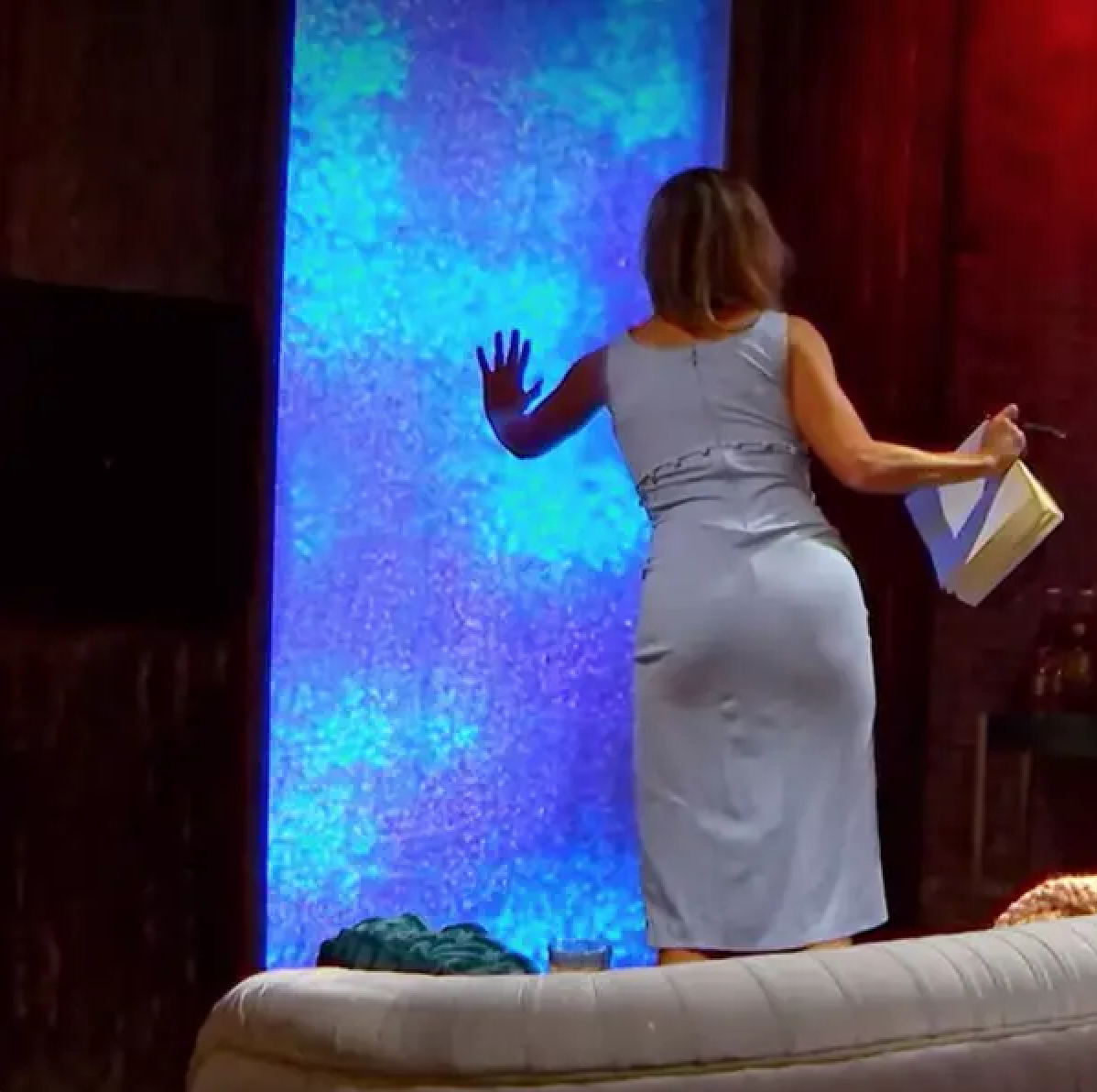
We lay in your rumpled bed, fan pointed directly at us, reality TV streaming from a laptop. Outside was bright as midday, but it was already 5pm on a Saturday. Were you like this with your other lovers? Slipping so quickly into something almost domestic? By late summer, you and I had begun to watch a lot more TV, dating shows mostly. In this one, contestants were kept apart for the first few episodes, separated by a wall, no touching, no seeing, just talking. “I feel like I already know you,” a woman said to a man, both of them lying on couches, invisible to each other. You watched them and I watched you. Somewhere else, your parents were praying or eating blessed food or even making love, which you told me was especially sacred on Shabbat. Once, this had been the jewel in your week—the day when the world to come was lived on earth. Everything special, everything separate. But for us, the day was fading unremarkably. 

“Do you think they’re Zionists?” I asked. The man was telling the woman about his parents’ divorce, they were both crying, touching the wall that hid them from each other.

You glanced at me. “I mean probably? Isn’t everyone on this show like evangelical?” It was you who’d explained to me about the millions of Christian Zionists and their eschatological fantasies.

“No, no, David and Yoni.” 

“Mm.” You understood now. I liked watching you think. “Yeah, but not in the way you’re imagining it.”

“How am I imagining it?”

“As a political stance, like having an opinion on abortion or unions.” The woman was telling the camera she was in love with the unseen man.

“Okay, so how do they think about it?” 

You hit space bar to pause the show. “They don’t think about it at all. It’s a belief so fundamental they don’t think of it as a belief.” You hesitated, looking for a word. 

“An axiom?” I offered. 

“An axiom, yes.” You looked from my eyes to my lips and back. I could see a filament of desire move through you. You liked words. “And that axiom is that the world is a series of divisions. Jewish and gentile, day and night, Shabbat and the rest of the week, Israel and the rest of the world.”

“I want them to be alone together, the boys. Could that happen?” 

“Sure, they could study Talmud together. Do you—

“—I know what the Talmud is.” I’d googled it. 

“Okay, well let’s say they’re fourteen, paired together to study the halakha, the rules of observing Chanukah.”

“At yeshiva?”

You laughed. “Very good, yeah, at yeshiva.” You closed your laptop. Gently, with your finger, you drew a line up my belly, over my sternum, stopping at the fragile center of my throat. My eyes fluttered closed. When your attention was on me, I felt like the only person in the world. 

“Yoni and David lean over open volumes in a low-ceilinged room with long tables and fluorescent lighting. All around them are other boys studying in pairs, whispering with their foreheads resting on their hands, and all the pages rustling. It’s winter, the room is cold.” Your finger gently circled the folds of my ear, sending tingles deep into my shoulders. I gasped. “They’re studying the Rambam, Sefer Z’manim.” I tried to hold on to the words. “The Book of Times,” you clarified, your fingertips following the sensation as it ran back down my body. You’d cut off your tits but I still had mine, which meant I felt everything as you ran your hand over the nub of my nipple. It felt so good I almost hated it. “Pay attention,” you whispered, “or I’ll stop.” 

I nodded vigorously. We both liked when you had power. 

“What book are they reading?” you asked, your voice teasing as you took your hand away from my body.

“The Times!” I exclaimed. 

I loved hearing the smile in your voice. “Close enough.” You traced down my stomach so, so slowly.

“The mitzvah requires one lamp be kindled in each and every house,” you said. “Yoni is sight-translating this sentence. ‘That is the minimum,’ he says, glancing over at David who nods.” Instead of dipping below my bellybutton, your fingers made their way back up my ribcage in slow swirls, like you were telling a story with your hands. “‘One who beautifies the mitzvah will light a lamp according to the number of people of the house’—but David interrupts to ask, ‘What’s that about a minyan?’” Your fingers were traveling down again. You are Yoni. You are Yoni and I am David. 

Yoni pauses, looking up at Dovi in confusion. “What minyan?” Maybe he has jumped ahead in the text? 

Dovi is embarrassed. He knows he is misunderstanding something, but not sure what. “ce-minyan habiyt,” he reads from the page in Hebrew. “So aren’t they talking about a minyan?” 

The clouds clear from Yoni’s understanding. “Ohh,” he says, “no, no, ‘ceminyan’ means relating to the number of.” 

You whispered in my ear, your fingers pausing at my hip bones in a way that made me thrust involuntarily. “Not one menorah for the whole household, but one menorah for each person. Does that make sense, David?” 

I nodded. 

“So ‘ceminyan’ here means something like, ‘for every’: one lamp for every person in the house,” Yoni continues. Dovi does not look up at him. Yoni fears he has been too harsh, or too condescending. He adds, “I understand why you thought that, about it meaning the men were being counted for a minyan.” 

“So it means like, the same number of,” Dovi says. 

Their classmate Shmuly walks by their table, tougher and less kind every year. Yoni waits until he has passed to say, “Yes, one menorah for each person in the house, the way we do it now,” Yoni says. Softly, patiently. He likes the feeling of helping David. “Look,” he points to the next line. “We know it’s not a minyan because Rambam says right here, Whether they are men or whether they are women, and obviously we don’t count women for a minyan.” 

“You’re so good at this,” Dovi says. 

Yoni feels a light flicker inside him. “Really?” 

“So good,” Dovi repeats. “I learn a lot from you.” 

The light in Yoni is growing, glowing through his skin as if he himself were a Chanukah lamp. 

I levitated under your hands as we become two boys.


Baby. 

Yeah?

I want them to be alone. 

Hm? 

David and Jonathan. I want them to be alone. 

You want the two yeshiva boys all alone? 

Yes please. 

Okay, how about they study Talmud somewhere, just the two of them. 

Yes, like a cafe? 

That’s impossible. But maybe at Yoni’s, in his father’s study. 

With the door closed.

Okay, with the door closed. 

Can they study something sexy? Is the Talmud sexy? 

Weirdly, it’s very sexy in certain places. These really charged interludes. Not stuff David and Yoni would study at school.

So what they are reading is forbidden?

Not exactly forbidden, no. It’s more like, there are parts of the Talmud that their teachers would emphasize—stuff about Jewish law. When is a meat dish rendered unkosher, what constitutes a violation of Shabbat, how to resolve a dispute involving property lines. More important than these contingencies themselves is the hermeneutic framework they develop.  

I like the way that sounds, hermeneutic framework. But when does it get sexy? 

Stop exoticizing them for one second and listen to me. 

Fine, fine. 

The Talmud is a conversation with many parts, all happening concurrently across time. And there are these stories woven in. Strange stuff. Burning mansions, walking trees, demons, ruins, ghosts, heretics, sleepwalkers. All of this, their teachers skip over. 

Because the stories are forbidden? 

No, just less important. When they are alone, Yoni and David study texts that are neither encouraged nor forbidden.

Sitting side by side. 

Yes, in Yoni’s father’s study, surrounded by brown leather volumes embossed in gold. My father has a room like that. 

The door is closed. 

Yes, and they are reading from Bava Metzia—

—Baba what? 

Just one of the volumes, but they are learning about a sage who was famous for being incredibly hot. 

Very funny.

I’m being serious. Rabbi Yochanan. The descriptions of him are ecstatic, like, You want to know the beauty of Rabbi Yochanan? Well listen up. He is a silver chalice overflowing with pomegranate seeds and rose petals, set in partial shade. A man without a beard. Beautiful. So beautiful that once he was bathing in the River Jordan, a bandit jumped in after him.

Does it really say this? In a religious text?

Yeah, your queering the bible class could never. But listen to what he says. So this highway robber type guy jumps in, one day the two of them will be study partners but this is all before. The bandit jumps in and says, You are as beautiful as any woman. 

This is so gay. 

The two men approach each other, wading through the River Jordan with coiled, tentative power.

David is touching Yoni’s wrist as he reads, excitedly, from the Talmud. 

One clothed, one naked.

Yoni is staring at David’s hand where it is gripping his wrist. 

  One hardened, the other smooth and unblemished as a girl. But better than a girl. Cleaner. 

Yoni is noticing how soft David’s hands are, how hairless the knuckles. 

The two men approach each other, wading through the River Jordan with coiled, tentative power.

The study door opens suddenly. 

What? No! It was just getting good.

The door opens and it’s Yoni’s mother, asking pointedly, Do you boys need anything? She’s taking in their bodies, their relative positions. Yoni sees her seeing how close he is sitting to David. Behind her, two sisters, watching.

Is it forbidden? 

Almost, but not yet. 


September was hotter than August that summer. I had air conditioning, which meant you came over to work from my place almost every day, even if you left in the evening to see someone else. Many nights when we each finished work—each signing off the app that tracked our productivity—we melted into my couch to watch the dating show with the wall between contestants. 

As the show progressed, the wall came down, and the paired-off contestants lived together to test compatibility. Every couple, every couple without exception, was nostalgic for the period of their romance before they had seen each other. “I want it to be how it was back then,” a bewildered man in sales said. “Back behind the wall.” They missed being separate. It was that boundary that created the erotic. 

When we first started imagining Yoni and David, I had pitied them. Now I wasn’t sure. Now I wondered if they wouldn’t pity me, my life without God, my world without boundaries, which is to say without meaning. Did you miss how clearly defined the world was in your old life? There is no meaning without definition, there is no definition without a boundary, there is no boundary without a wall. The word itself to define coming from the Latin for a boundary. What? Did you think you were the only one who knew dead languages? Not that you ever asked about where I came from, no matter how much I asked about you. We never spoke of my parents’ suburb, the Latin tutor and the horseback riding lessons. But what I wanted to know was this: When you live in a world defined by boundaries—between holy and the secular, between your people and all other people, between men and women, between men and men—is the potential for erotic everywhere? Is the world buzzing with terrible, consequential possibilities? Is that how it felt for Yoni and David, when their knees touched under the yeshiva table? What in my life would ever feel that profound? 

I wondered what Yoni and David were doing while we watched reality TV. They were studying Talmud, of course. They are seventeen. This year, the other boys in their class have begun to talk about what they’ll do when they graduate. Some will stay in Brooklyn to study, others will go to yeshiva in Jerusalem. Jocks like Shmuly might even go to an Orthodox mechina in the West Bank to study while serving in the IDF—guns under the yeshiva benches, praying in the ruins of ancient synagogues before beating Palestinian shepherds half to death. But not Yoni and David, no, they are lost in the secret life of letters, studying a Rabbinic commentary that imagines the alphabet itself speaking to God. 

Twelve years ago, Yoni and Dovi were licking honey off of Hebrew letters. Now, Dovi is sight-translating a midrash on Genesis. Yoni feels something like pride to see how capable Dovi has become. 

Dovi translates, “Then it says, ‘For twenty-six generations, the letter alif complained before the throne of the Holy One.’” Looking up. “Wait, where do you think her mouth is?”

Yoni frowns. “Whose mouth?” Just those words together make him embarrassed. 

Dovi’s eyes are mischievous. “The letter alif! Where is her mouth that she can speak to hashem?” 

Yoni rolls his eyes. “Keep reading.” 

“This is what she says,” Dovi says, suddenly shifting into a high and plaintive whine, “Master of the Universe, I am the first letter of the alphabet.” Softly, breathily, Dovi is voicing her complaint. “Why not begin Torah with me? Why that little slut, bes?” 

Dovi looks up at Yoni, clearly expecting him to laugh, but Yoni is frozen. Something is contracting deep, deep in his stomach at the sound of Dovi’s whine. 

How did I know this? You hadn’t told me about this text. We hadn’t imagined it together. It was nothing I had found online. But at some point, I could see them, Yoni and David. I could see them poring over a shared leather-bound volume, knees almost but not quite touching in a room with a door now left open—a new rule in Yoni’s house. Imagine this being forbidden


Yoni’s father’s study. Just before nightfall.

Dovi: Hold up your hand. 

Yoni: My hand is so much bigger.

Dovi: Yes.

Yoni: Like you’re a girl.

Dovi: Yes.

When Yoni’s palm brushes against Dovi’s palm, Yoni feels his nerves dance. He tries not to breathe too fast. Any second, his father might walk by or walk in. 


Fall came to our city, and with it that wind that says, Everything has been over for a long, long time. 

On the holiest day of the Jewish year, we ate bagel breakfast sandwiches while across the country, your family fasted and prayed. “Do you want to hear what they are reading?” you asked me. 

“Reading where?” 

“In synagogue.” 

“David and Yoni?”

“My parents.” 

“Of course.” We sat on my living room floor to stay closer to the cool air.

You intoned, “It is an abomination. To lie with your sister, to sacrifice your own children, to lie with a barn animal. It is an abomination. To lie with a man as you would a woman.” 

“That’s what you read on Yom Kippur?” 

“In the afternoon, yeah.” You paused. Sometimes, you seemed so far away—remembering something that would take too long to explain. 

“What are you thinking about?” I hoped I wasn’t annoying you.

“How everyone watches in a neighborhood like that. Everyone sees.”


In shul, the silver pointer travels overs the sacred scroll. Letters no man has ever touched by hand. So holy that it’s impure. Yoni is now seventeen, his body filled with impulses and secret currents. His eyes are closed. He sees David’s body as a text, silver yad across that narrow chest, no. It is an abomination. No. Yoni rests his forehead in his palm, aware of the women behind him who watch from the balcony, watch as the men pray. Rabbi of the World, Yoni says in his heart. Please tell me you did not make me like that, an abomination.


You were talking about moving in with your partner—the cis-man married to another cis-man. 

“Why with them?” I asked. Feeling stupid but needing to know why it wasn’t me. 

“We all get along so well,” you said, not really looking at me. “And also it just feels so good, like, that these gay guys see me as a guy.” 

“I see you as a guy.” 

“Right, but I mean…” 

But it didn’t count, not like the approval of men. 

I felt fate pressing down on me. Would it have been different had our love faced profound obstacles? When you get what you want, it dilutes, it ebbs away. When you can’t, it’s perfect forever. I began to feel envy for those men whom we imagined, men who could never be together because of watchful sisters, stern fathers, rigid communities, sacred clocks, lives oriented not toward pleasure but toward God. Maybe I wanted someone to strong-arm me through life—tell me what to wear and eat, tell me who to love. Then at least I could have someone other than myself to blame for my unhappiness. 


After Sukkot, the boys go back to yeshiva for senior year. Yoni’s father speaks to him on a quiet Shabbat afternoon. 

“You and David are close,” he says. Not a question. It’s just the two of them at the dining room table, reading after shul.  

“We study together, yes,” Yoni replies. We touch hands in your study. We put words in each other’s mouths.

Yoni’s father does not look up from his book. “Study at school.”


It happened so quickly: a conversation at that same stupid cafe. You told me in the measured, practiced way of people who live like us that you didn’t have “capacity” for another “partnership” at the moment, but you were here to “hold space” for my feelings. 

Over your shoulder, I watched the kosher greengrocer folding boxes. Like at the beginning, only now it was winter and nearly dark. Imagine this being forbidden

Then, I answered you in turn, that I “appreciated” you being “transparent” with me about your “bandwidth” even if I was disappointed that our “needs” did not “align.” This was the language of people who lived like us, no less claustrophobic than the secret language you’d left behind. We do what our words tell us to do.


Yoni explains about his father on the walk from school. “He needs his study during the day,” Yoni lies. For months, they have been walking this way together after school—walking to Yoni’s to study.

Dovi looks up at him, cheeks appling. “Should we study at your dining-room table?”

Yoni hesitates. “No I—” he looks away. “No, we can’t.” 

Dovi nods slowly. “Oh.”

Now, here they are, standing on a street corner in dying light. They must part ways at the greengrocer’s, each to the home of his parents. They must, but they linger. 

“Did you hear about the rabbi in Bnei Brak who forbids the bechorim from shaking hands?” David asks. His voice is teasing, but Yoni knows him well enough to detect a sadness.

Yoni plays along. “Forbids them from shaking whose hands?” He is not sure if this is a joke. Obviously, nobody shakes hands with women. 

“Men,” Dovi says. “He forbids men from shaking hands with other men.”  When he speaks, puffs of vapor hang in the air. 

They part to allow a girl pushing a stroller to pass, the infant in his heavy jacket sprawled out in his sleeping. Across the street is the secular coffee shop that they all know not to look at. A treyf place filled with treyf people and a Black Lives Matter flag. 

When the girl is out of earshot, Dovi speaks again. “The bechorim, they cannot shake hands with one another in this yeshiva.” 

“Can that be true?” How could that be true? Men forbidden from touching other men. Dangerous possibilities moved beneath the surface of that prohibition. He thinks of his father: Study at school. He didn’t say why.

Dovi’s smooth cheeks are flushed. Yoni can smell the salt of him on the cold air. Dovi holds out his right hand. “Imagine this being forbidden.”

Yoni hesitates. Neither of them wear gloves. He thinks of Rav Leikesh jumping into the river to wade toward Rabbi Yochanan. He thinks of Dovi voicing the letter alif with a plaintive lisp. He thinks of mother’s eyes traveling between their two bodies. Then, Yoni takes Dovi’s hand. They shake. Yoni’s hands are bigger. He savors the feeling of encasing Dovi, as if he knows himself better in this moment than in anyone before, but all he says is, “Your hands are cold.” 

For a moment, just for a moment, Yoni is watching himself from the cafe across the street. He is in that other world, living by his animalistic urges, living without purpose, living without time—not real time—watching two men in black suits shake hands as the greengrocer comes out with folded produce boxes, not looking up at Yoni and David because what is there to see? Just two bechorim shaking hands.

It happens so quickly. A first date in the popular hotel lobby, drinking iced water while the girl’s thick-ankled aunt sits nearby to chaperone, then a second date on a walk with all of their parents, and then they are engaged—Yoni and a painfully thin girl. Painfully thin, with bony hands and skin dry around the knuckles. 

It happens so quickly. 

Now, here is Yoni, feeling like a boy, playing the part of the groom on Purim. 

“Today, you will become whole,” his father tells him. 

His bride—how is this possible? how is this word, bride, possible?—his bride is elsewhere, praying psalms. Yoni is flanked by his father and her father. They are holding him up or are they holding him down or are they dragging him toward the chuppah, singing of the world and the world to come. 

Here she is, here is Yoni’s bride in her ill-fitting dress, a mother on either side, her face covered by the veil as thick as a polyester napkin. 

Yoni is dazed as she circles him. Flanked by older women, she circles him faceless. Where is Dovi? Not in the crowd. Where is Dovi? 

Had you stayed, this would have been you. You would have been the bride being offered. Here you are. Held up by your mother and his mother, gripping your arm to hold you up, to drag you in circles around Yoni who is me, who is waiting for you, who is shaking and praying.

You circle Yoni like the hills circle Jerusalem. This is what will make him a man. Your body will make him a man.

And me, what am I doing here? I do not belong here—fantasizing an alternate version of your life. 

I do not belong here, but here I am, crossing the street that divides my world from theirs. Walking past bakeries and toy stores, past packs of girls in dark swishing skirts and puffy black coats, past what I assume are synagogues but I don’t know everything with Hebrew writing on it looks like a synagogue to me. Walking with my cold hands balled in my pockets. Walking as if I knew where I was going. 

Here I am. I am the sickly bride and I am the absent lover and I am the helpless groom. That’s how dreams work, is it not? Everyone is an aspect of the dreamer. What I want more than love is a boundary that keeps love at arm’s length from me forever, so that I never have to lose anyone ever again, so that I can live in the moment before the veil is lifted, praying, Let it be Dovi. Just for a moment, just for one moment, please, let it be Dovi waiting under the veil with flushed cheeks. Before the cloth is lifted. Before all the possibilities narrow down to one. Before it’s too late. Let it be him. 

9 Books That Will Make You Reconsider Florida Stereotypes

My personal shorthand for describing the place I grew up—New Port Richey, Florida—is to say that the culture is defined by the absence of culture, but this isn’t quite true. To be more precise, it feels like there’s no culture because no culture has won the day, no way of being has outstripped the others for supremacy. There’s such varied competition when it comes to manners, customs, and values that the atmosphere remains a rich, even static of influences. This still holds true for parts of Florida like mine, and was even more true in the 90s, when Penalties of June, my new book, takes place—coastal Pasco and Hernando counties are not rural since no one farms, not urban by a long shot, not small-town charming like places in Mississippi, not suburban since people don’t drive to Tampa for work or possess the wherewithal to follow the fashion trends, gritty but not particularly blighted (except to some degree by meth and pills, like a lot of places), not ritzy, not even beachy. The Long Islanders act like Long Islanders. The Carolinians act like Carolinians. The Minnesotans like Minnesotans. The Cubans like Cubans.

For a writer like me who has always believed in a bit of random wantonness when it comes to plot, who wants characters to say things the reader could not have expected, who wants both the zany Florida-man brand of crime and the ruthless, efficient heights of organized crime, Florida has always seemed the American state with the most narrative latitude. Anything can happen. Anyone can be there. No religion or philosophy or commercial ambition seems unlikely.

When I was in high school, native Floridians were rare. It was, and largely still is, a state everyone moves to, rather than a state people have roots in. This self-selection regarding being Floridian causes, necessarily, an abundance of risk-takers, of escapees from other lives, of schemers and opportunists, of people in recovery from something, of people who believe the grass might be greener (it might be, if you keep the sprinklers pumping day and night)—in short, Florida is, decade after decade, flooded with a disproportionate glut of human beings who are not meek nor content nor predisposed to toe the line. 

Pratt, the main character of Penalties of June, grew naturally out of my home territory in that he has no roots—his parents are deceased and when he emerges from a stay in prison, he’s faced with starting his life over. He grew out of this place because he’s beset by contradictions: Bonne, the crime boss, is at once the person who helps him most and the person who puts him in the most danger; Kallie, his not-quite-old-flame, is everything beautiful in the world and also his greatest worry; the most morally sound of his acquaintances is a pawn shop owner, and the most devious is a detective. The only thing clear is that he’s going to have to do something bad in order to do any good.

The nine books I’ve selected comprise a dizzying tour of divergent Florida experiences and styles whose kinship, if they share any, is tied up in heat and crime and displacement and unpredictability.   

New Hope for the Dead, by Charles Willeford

I’m equally likely to run into someone who’s never heard of Charles Willeford as someone who says he’s their favorite crime writer. I chose this of the four Hoke Moseley novels because it’s the oddest. It breaks the conventions of the detective novel to a shocking degree, but it succeeds precisely because it breaks those expectations. In short, all the domestic and romantic strife Willeford puts Moseley through, all the bureaucratic mire, all the unglamorous random hassles—all these things, combined with countless idiosyncratic details that seem too random to make up, create the disconcerting feeling of real life (real, but much more interesting than yours).   

Their Eyes Were Watching God by Zora Neale Hurston

I was first introduced to this book in a dialogue class. Open at almost any page, and you see characters talking to other characters. Hurston was trained as an anthropologist, and has a great ear for accents and dialects (phonetic dialogue is rare enough these days that it might take readers a few pages to get used to it, but it’s worth it). The book was received coldly by critics upon its publication in 1937, mostly for reasons that have nothing to do with the quality of the book—for example, Richard Wright and other black writers and scholars thought Their Eyes Were Watching God wasn’t political or bitter enough. In later days, it became celebrated. The story is consistently entertaining, and when it’s sad it’s really sad. It’s the story of one woman’s coming-of-age through the narrative scaffolding of three marriages—the old husband she leaves, the rich husband she hates who dies on her, and the poor husband she loves who she’s forced to kill.  

Miami by Joan Didion

One of the best attempts made to untangle the knots that tied 1960s-1980s Miami to Washington and Havana and Moscow and Nicaragua. For those in exile, Miami was a place where paranoia couldn’t really exist; if you were involved with la lucha, somebody was out to get you. Didion’s reporting spans from dry congressional reports to poetic descriptions of the physical and spiritual atmosphere of the tropic metropolis. She takes on racial strife and cultural difference, from events as serious as the McDuffie Riots to the following amusing account of what Cubans thought of Americans: 

[They] never touched one another, nor did they argue. Americans did not share the attachment to family which characterized Cuban life. Americans did not share the attachment to patria that characterized Cuban life. Americans placed undue importance on being on time…they were by temperament “naïve,” a people who could live and die without ever understanding those nuances of conspiracy and allegiance on which, in the Cuban view, the world turned. 

Ninety-Two in the Shade by Thomas McGuane

This book is from a time (the early 70s) when literary zest and passion and abandon and individuality were valued as a commodity in themselves and considered well worth sacrificing clean plotlines and easy themes for. I’ll say this: this guy is a wizard in the tight spaces of sentences and a wizard in the commonplace darknesses of the human psyche. The book’s jacket (my edition anyway) quotes somebody named L.E. Sissman, who says it better than I can: “McGuane shares with Celine a genius for seeing the profuse, disparate materials of everyday life as a highly organized nightmare.” Literally, the book is about Thomas Skelton, a prodigal son come home to Key West to be a fishing guide, and his conflict with the already-established top guide Nichol Dance. More importantly, it’s about Skelton finding a way to stay sane despite the cultures of both America and the Keys deteriorating around him. 1

Breaking & Entering by Joy Williams

Joy Williams is my favorite writer. A dangerous writer to adopt as a model because she intentionally eschews overarching, suspenseful plotlines in favor of what she does so damn well, which is let interesting and peculiar characters be interesting and peculiar. She’s a writer to savor sentence-by-sentence—to really enjoy her, one has to surrender the comfort of knowing where the greater narrative is going. In B&E, Willie and Liberty are a young couple that keeps a roof over their heads by breaking into vacation homes while the rich owners are away. From the first page, a bit of Williams’ magic for making characters in no time: 

“Liberty and Willie saw the guard each morning. He was an old, lonely man, rather glossy and puffed up, his jaw puckered in and his chest puffed out like a child concentrating on making a muscle. He told Willie he had a cancer, but that grapefruit was curing it. He told Willie that they had wanted to cut again, but he had chosen grapefruit instead. He talked quite openly to Willie, as though they had been correspondents for years, just now meeting. Willie and Liberty must have reminded him of people he thought he knew, people who must’ve looked appropriate living in a million-dollar soaring cypress house on the beach.”

The Nickel Boys by Colson Whitehead  

Based on the true horror story of the Dozier School for Boys in the Florida panhandle, this is simply one of the best books I’ve read. An instant classic. It succeeds on every level a novel might—complex, compelling characters; vivid, charged setting; heart-wrenching plot; narrative inventiveness—and at the same time illuminates real historical events. For my money, it easily outshines Whitehead’s other Pulitzer-winning novel, The Underground Railroad. Elwood Curtis, the protagonist of The Nickel Boys, is one of the best drawn and most genuinely sympathetic main characters you’ll come across—the devastation you’ll feel at his (and all the boys at Nickel Academy) treatment is only magnified by the fact that the real place only closed down in 2011.

Alligator Gold by Janet Post

Cracker Westerns is a series focused on the cattle culture of the frontier days Florida is a jungly place to raise cattle, and so cows were constantly getting lost in the thick vegetation. The rough-mannered cowboys hired to extract them (who often went into business for themselves, corralling and overbranding the wayward livestock) were called crackers because of the extra-long whips they carried. (In later days, people started calling anyone born in Florida a ‘Florida cracker.’) These books are meant to be light entertainment—Alligator Gold features a secret trove of treasure and a villain named Snake—but as light entertainment goes, they’re some of the best around.  

Milk Blood Heat by Dantiel W. Moniz

If you grew up on the lower side of middle class in pre-smartphone Florida, the details and atmosphere in this collection will leave you stricken with their accuracy—the retention ponds; the juvenile delinquency at shopping malls; hopping from bare foot to bare foot on hot pavement. This book feels grounded in the real, the gritty, the physical, the desperately routine, and yet something big is always happening: suicide and miscarriage and cancer and violent muggings and eaten pets and the fetishizing of feet and threats delivered via handjob. Moniz’s greatest strength might be her ability to fully, sometimes shockingly inhabit the mindsets and attitudes of her usually female and often adolescent/teen protagonists—within a page, she can sink you completely and unquestionably into the psyche of her main character, and from there does with you what she wishes.

Everyday Psycho Killers: A History for Girls by Lucy Corin

This is a novel, but if it didn’t say that on the cover, you’d think it was an odd sort of memoir. Sometimes it’s an essay. Occasionally, a treatise on speculative neuroscience. You have to earn your readerly footing. At the beginning, the book hides its narrator—there’s a 1st person voice, but we don’t know who it’s attached to; a girl is spoken about in the 3rd person, and then we realize that girl is the 1st person narrator, a first-person narrator that imagines other people’s lives so fully that those characters sometimes get POV. Many of the described events (especially toward the beginning of the book) feel deliciously theoretical, and the timeline is mostly in order but that order feels incidental and unimportant. Amazingly, the narrative gymnastics never outstrip Corin’s intellectual agility, her uncanny talent for turning a seeming tangent into exactly the relevant passage you didn’t know you needed. The world of the novel feels both real and unreal, perhaps due to the larding of mythical and fairytale and historical references—Repunzel and Cinderella and the Venus de Milo; griffins and Egyptian gods and Joan of Arc; Anne Boleyn and the Grimm tales and eventually, yes, Leonard Lake and Jeffrey Dahmer and Danny Rolling. It’s Hollywood, Florida some thirty-five or forty years ago, described with familiar details—orange groves, last-gasp strip malls, white-out-sniffing—but also it’s Corin’s unique creation. 

  1. As a side dish, the short documentary All That Is Sacred chronicles the period when Key West was not yet the ordered vacation spot it is today, when it was crawling with ragged outcasts and drugged-fueled artists (Jim Harrison, Richard Brautigan, and Thomas McGuane among them) and when tarpon fishermen numbered in the tens rather than the hundreds.    ↩︎

Electric Lit’s Best Novels of 2024

One of the great joys of working for Electric Literature is the opportunity to celebrate the best books of the year. It seems that every year produces better and better books; or perhaps readers continue to fall more in love with reading. Or maybe two things, or many things, are true. Either way, what I know to be true is that every year, our most-loved novels are filled with extraordinary characters who soar into your hearts, burrowing into them, and remaining. They are original, unforgettable, un-put-downable, and we are lucky to have them.This year’s list features a number of well-known authors and their best-loved books, as well as remarkable debut authors, whose voices we will luxuriate in for years to come. These books wrapped themselves around us, warming and comforting us in a time of great turmoil. If you haven’t explored these novels, do so as soon as possible. You won’t be sorry, you’ll simply fall deeper in love—with reading, and with books. 

The novels included on this list were chosen by a vote from the EL community. Here are Electric Lit’s Top 5 novels of 2024, followed by the best novels of the year.

The Top 5 Novels of the Year:

Beautyland by Marie-Helene Bertino

How would an alien in Northeast Philly record observations of earth? Marie-Helene Bertino’s Beautyland contains a simple answer: using a fax machine she found discarded on the street. The story of Bertino’s third novel follows Adina, an alien, born on earth who is sent to record humanity’s happenings. The result is a tender, incisive reckoning with what it means to be human. 

Martyr! by Kaveh Akbar

Martyr-obsessed Cyrus Shams is haunted by a number of tragedies when we meet him, high and drunk, in the pages of Kaveh Akbar’s Martyr!. His father recently suffered a stroke and died. His mother was killed in the late 1980s, when the U.S, Navy shot down a flight she was on over the Persian Gulf. So, he decided to craft a book about historical martyrs and along the way discovers Orkideh, a terminally ill artist, who spurs questions about Cyrus’ mother. Short-listed for the National Book Award, the fresh family saga ask what it takes for life and death to be consequential. 

Housemates by Emma Copley Eisenberg

This multilayered sapphic road trip novel is a delightful surprise that plays with the themes of queer ancestry, embodiment, American politics, photography, and the artistic life. Bernie and Leah’s drive across Pennsylvania is inspired by a real-life historical trip taken by photographer Bernice Abbott and art critic Elizabeth McCausland, but Bernie and Leah are ultra-modern and grounded in the concerns of the frantic present. The characters’ journey toward both relational intimacy and artistic collaboration guides the trajectory of this enthralling debut novel.

The Storm We Made by Vanessa Chan

An international bestseller, Vanessa Chan’s incredibly gripping debut novel is set in World War II and follows Cecily, a Malayan housewife who agrees to act as a spy for a general that dreams of an “Asia for Asians.” When Cecily finds her nation crumbling years later, she does everything in her power to save them. This historical fiction novel effortlessly leaps through time and its central family’s perspectives to deliver a story of secrets and survival in times of tragedy.

City of Laughter by Temim Fruchter

A multi-generational family saga, City of Laughter centers on a Jewish woman, Shiva, whose family has been visited by a shapeshifting stranger over the course of 100 years. Shiva travels to Ropshitz, Poland, colloquially known as the “City of Laughter,” to learn more about her family secrets. The tale deftly moves between perspectives, capturing the family’s joy, shame and everything in between.

Electric Lit’s Additional Favorite Novels 

Colored Television by Danzy Senna 

After a decade of writing her supposedly groundbreaking second novel—what her husband calls a “mulatto War and Peace”—Jane’s efforts and expectations fall flat. In a bid of desperation, she turns to Hollywood, thinking it may be her way out of her precarious lifestyle as a novelist. Danzy Senna’s latest novel, Colored Television, is a hilarious and sharp take on the racial-industrial complex, ambition, and reinvention.

Memory Piece by Lisa Ko

Ko’s sophomore novel tracks three lifelong friends, roving from their 1980’s girlhood to their Y2K-era years in New York to their adulthood in the dystopian 2040’s. Though starkly different from one another, the women are brought together by their identities as outsiders who find comfort on the fringes. Refreshingly honest and driven by female-centric relationships, this novel digs into questions about documentation and survival at the edges of society.

James by Percival Everett

In his National Book Award winning novel, Percival Everett reimagines the (in)famous Adventures of Huckleberry Finn from the perspective of the enslaved Jim. When he hears he is going to be sold, and thus separated from his family, he escapes to an island to form a plan. While many of the same beats of Huckleberry Finn can be found, James brings the story into an entirely new light, showcasing Jim’s agency, compassion, and wits as he takes back control of his life.

Come and Get It by Kiley Reid

An RA aspires to buy a home. A visiting writer starts an affair with a student after secretly mining private conversations for a Money Diaries-esque column. A disgraced batton twirler tries to find community as a transfer student in a new state In her zany, sophomore novel, Kiley Ried skewers assumptions about race, class, and American university culture. 

Anita de Monte Laughs Last by Xochitl Gonzalez

The titular Anita de Monte is one of three narrators in Xochitl Gonzalez’s sophomore novel Anita de Monte Laughs Last. After de Monte is found dead in her apartment, her work as a conceptual artist is nearly forgotten until Raquel Toro, a graduate student in art history, begins uncovering her story.  

All Fours by Miranda July

The National Book Award finalist All Fours follows an unnamed artist as she seeks reinvention. Confronting middle age and menopause, she embarks on a journey of self discovery that forces her to reevaluate her ideas of family and intimacy. Described as frank, captivating, and irresistible, the novel reckons with what does (and doesn’t) change as we get older.

Worry by Alexandra Tanner

The magic of this novel lies in the hyperrealistic dynamic between sisters Jules and Poppy: their constant push and pull, their paradoxical desire for both personal space and intense closeness. Tanner’s prose has a unique, captivating beauty as she traces the sisters’ meandering journey through their twenties in New York City, shadowed by their overbearing mother and by the specter of the Internet.

The Coin by Yasmin Zaher

Our unnamed narrator has migrated from Palestine to New York City after the death of her parents, pursuing a semblance of the American dream. The narrator struggles against the hypnotic pull of capitalism but finds herself scheming with her situationship, a homeless man called Trenchcoat, to resell Birkin bags to the wealthy. The nonlinear, unraveling story of her movement through the city includes meditations on the environment, individualism, the body, and the accumulation of wealth. 

The Anthropologists by Aysegül Savas

The premise of The Anthropologists is simple: Asya, a documentary filmmaker, and her husband Manu, an employee of a nonprofit organization, search for apartments in a foreign country. Like so much of our daily lives, the moments that seem mundane are filled with profundity. The Anthropologists is a great love story about aging parents, romantic love, and what it means to call a place home. 

Cinema Love by Jiaming Tang

Jiaming Tang’s stunning debut novel is an engrossing portrait of gay men in rural China — and the women that marry them. Opening in a movie theater known for being a pickup spot for gay men in 1980s China, the novel tracks criss-crossed lovers as secret romances are exposed, and as desperate treks to America are taken. Cinema Love aches with tenderness and heart as it explores desire, immigration, grief, and survival.

Great Expectations by Vinson Cunningham

Vinson Cunningham, a former Obama campaign staffer, introduces us in his autofictive debut novel to David, a Black man (and Pip figure) working for an unnamed presidential Candidate who closely resembles Obama. Cunningham’s prose sparkles with energy and offers juicy tidbits about the less-than-glamorous reality of the campaign trail. The story raises resonant questions about privilege, the intersection of race and class, and authenticity in the political realm.

Rejection by Tony Tulathimutte

Longlisted for the National Book Award, Tony Tulathimutte’s Rejection is a novel-in-stories that satirizes the rejects of our world. Described as a modern classic, Tulathimutte is unrelenting as he explores the delusion and desire of our time through seven linked portraits. 

Malas by Marcela Fuentes

This generational saga set in the fictional Texas-Mexico border town of La Cienega traces a family curse from the 1940’s to the 1990’s. The driving voices of the braided narrative are two equally proud, obstinate women who address the injuries of the past and embrace their futures. Fuentes writes captivating dialogue and cinematic scenes that arrest the reader’s attention throughout this entertaining debut novel.

The American Daughters by Maurice Carlos Ruffin

Following the tale of a secret resistance helmed by Black women in pre-Civil War New Orleans, this gripping historical novel explores hope, resistance, and the triumphant power of community. After being separated from her mother, Ady—a sharp and curious enslaved woman—must embark on a journey toward liberation and self-discovery. Maurice Carlos Ruffin’s latest is riveting, inventive, and inspiring.

Wandering Stars by Tommy Orange

Wandering Stars, Tommy Orange’s follow up to There, There, begins with survivor of the 1864 Sand Creek massacre Jude Star. Star, who is part of the Cheyenne tribe,  is forced to learn English and assimilate into Christianity. The novel follows his descendants, eventually landing on the Red Feather family, familiar to readers from There, There. In the present day, the novel examines how the family copes with inherited trauma, addiction and the pains of assimilation.  

Intermezzo by Sally Rooney

Sally Rooney’s fourth novel follows brothers Peter and Ivan. A lawyer and a chess prodigy, respectively, the men are reeling from the loss of their father and Rooney deftly chronicles their misadventures in life and love. Peter is unable to choose between two women: one older, one younger. Ivan meets Margaret, an arts program director, and the two begin a secret relationship. 

The Extinction of Irena Rey by Jennifer Croft

This debut, from Booker Prize-winning translator Jennifer Croft, trodes on familiar material. The titular character Irena Rey brings eight translators to her home to translate one of her books. Then, she goes missing and a surprising, remarkable tale ensues. 

Broughtupsy by Christina Cooke

After the death of her younger brother, Akúa flies from Canada to Jamaica to spread his ashes, reconnect with her sister, and revisit significant locations from their childhood in Kingston. Akúa’s journey brings her to question her ethnic identity as a member of the Jamaican diaspora and as a lesbian pushing back against a restrictively religious family. Drifting across continents, Broughtupsy is at once a queer bildungsroman, a tale of displacement, and a tender family saga.

Exhibit by R. O. Kwon

If Jin doesn’t keep her old familial curse a secret, she risks losing everything she has. And yet, this doesn’t stop her from confiding in Lidija—a woman she’s found a sudden, intense connection to, and who helps her explore her deepest, most hidden desires. This hypnotic and sensual narrative is razor sharp as it explores rebirth, identity, pain, and pleasure. R.O. Kwon writes with an urgency like no other.

Devil Is Fine by John Vercher

Blurring the lines between tragedy and humor, past and present, John Vercher’s latest novel follows our biracial narrator as he inherits land from his estranged white grandfather. While he expected to resell the land, things take a turn when he discovers he is now the Black owner of what used to be a plantation, passed down for generations. With raw honesty and aplomb, Devil Is Fine dissects the relationship between legacy, memory, and destiny.

Cast Your Vote for the Best Book Cover of the Year

The holidays just got a whole lot more exciting—our fifth annual Book Cover Tournament kicks off on Monday! For an entire year, we’ve judged thousands and thousands of book covers, and the 32 designs below represent the very best. But in the end, there can only be one winner.

Now, it’s your turn to take the reins! Head over to our Twitter and Instagram Stories next week to cast your votes in the most aesthetic showdown of the year. Want to up the fun? Download the full bracket, predict your winners, and follow the drama as it unfolds.

Here’s how it works: 32 books, 16 pairs will face off in round one. Voting begins Monday for round one, Tuesday for round two, quarterfinals on Wednesday, semifinals on Thursday, and the grand finale on Friday.

Click to enlarge

Here are the best book covers of 2024:

Left: Design by Alicia Tatone, art by Shannon Cartier Lucy
Right: Design by Jaya Nicely, art by Zack Rosebrugh
Worry by Alexandra Tanner vs. But the Girl by Jessica Zhan Mei Yu

Left: Design by Chang Jae Lee, art by Choi Dahye
Right: Unknown
Table For One by Yun Ko-Eun, translated by Lizzie Buehler vs. House Is an Enigma by Emma Bolden

Left: Design by Christina Vang, photograph by Grace Sydney Pham
Right: Design by Philip Pascuzzo
Return of the Chinese Femme by Dorothy Chan vs. Tehrangeles by Porochista Khakpour

Left: Design and lettering by Nicolette Ceeback, art by Fabian Lavater
Right: Design by Julianna Lee
The Wedding People by Alison Espach vs. The Manicurist’s Daughter by Susan Lieu 

Right: Design by Lynn Buckley, art by Boucher
Left: Design by Kaitlin Kall
I’m Mostly Here to Enjoy Myself by Glynnis MacNicol vs. Thirst by Marina Yuszczuk, translated by Heather Cleary

Left: Design by Alban Fische, art by Alexandra Gallagher
Right: Design by Dinah Fried, artwork by Andrea Kowch
Inconsolable Objects by Nancy Miller Gomez vs. omnious music intensifying by Alexandra Teague

Left: Design by Sarahmay Wilkinson, art direction by Jaya Miceli
Right: Design by Sarahmay Wilkinson, art by Day Brierre
I Love Hearing Your Dreams by Matthew Zapruder vs. Ghostroots by Pemi Aguda

Left: Design by Milan Bozic
Right: Design by Arsh Raziuddinm, fabric pattern and photo by Zara Chowdhary
I’m a Fool to Want You by Camila Sosa Villada, translated by Kit Maude vs. The Lucky Ones by Zara Chowdhary

Left: Design by Sophie Harris
Right: Design by Luísa Dias
Crunch: An Ode to Crisps by Natalie Whittle vs. The Nightmare Box by Cynthia Gómez

Left: Design by Oliver Munday
Right: Design by Lynn Buckley, art by Damilola Opedun
The Life of Tu Fu by Eliot Weinberger vs. Ours by Phillip B. Williams

Left: Design by Zoe Norvell
Right: Design by unknown
Tartarus by Ty Chapman vs. A Window That Can Neither Open Nor Close by Lauren Russell

Left: Design by Emma Ewbank
Right: Design by Beth Steidle
Above Us The Sea by Ania Card vs. Mystery Lights by Lena Valencia

Left: Design by Jason Arias
Right: Design by Zak Tebbal
Love Novel by Ivana Sajko, translated by Mima Simic vs. The Black Utopians by Aaron Robertson

Left: Design by Zoe Norvell, art by Gérard Schlosser
Right: Design by Adriana Tonello, photograph by Suzanne Saroff
Misrecognition by Madison Newbound vs. Mouth by Puloma Ghosh

Left: Design by Richard Bravery, art by Kalejaye O. Tosin
Right: Design by Stephen Parker, art by Shannon Cartier Lucy
Blessings by Chukwuebuka Ibeh vs. Scaffolding by Lauren Elkin

Every Writer We’ve Published in 2024

Below is a list of the 475 writers Electric Literature has published so far in 2024. Every single one, from Aaron to two different Zoës.

We need to raise $25,000 by December 31, 2024 to keep Electric Literature going into next year, and we are almost there! Please help us down the homestretch by making a donation in honor of one of these writers. You will be prompted to add their name when you make your contribution. 


  • Aaron Hwang
  • Abbie Kiefer
  • Abby Manzella
  • Abi Daré
  • Adam Spiegelman
  • Addie Tsai
  • Adesiyan Oluwapelumi
  • Adrian Markle
  • Afton Montgomery
  • Aime Alley Card
  • Aimee Nezhukumatathil
  • AJ Bermudez
  • AJ Romriell
  • Ajibola Tolase
  • Al Favilla
  • Ala Fox
  • Alana B. Lytle
  • Alana Saab
  • Alastair Wong
  • Alex Burchfield
  • Alex DiFrancesco
  • Alexandra Dos Santos
  • Alexandra Middleton
  • Alexia Casale
  • Ali Shapiro
  • Alli Dyer
  • Allison Grace Myers
  • Ally Ang
  • Alysandra Dutton
  • Amanda Jayatissa
  • Amanda Montei
  • Amber McBride
  • Amelia Possanza
  • Amethyst Loscocco
  • Amy Chu
  • Amy E. Casey
  • Amy Halloran
  • Amy Key
  • Amy Lee Lillard
  • Amy Reading
  • Amy Reardon
  • Amy Stuber
  • Ananda Lima
  • Anita Felicelli
  • Andrea Carlisle
  • Andrea Lawlor
  • Angela Hui
  • Anna Montague
  • Annie Liontas
  • Anupa Otiv
  • April Yee
  • Arielle Burgdorf
  • Arielle Egozi
  • Asha Dore
  • Asha Thanki
  • Ashley Shew
  • Atsuhiro Yoshida
  • Aube Rey Lescure
  • Avitus B. Carle
  • Bareerah Ghani
  • Bee Sacks
  • Bekah Waalkes
  • Benjamin Schaefer
  • Bethany Ball
  • Billy Chew
  • Billy Lezra
  • Bleah Patterson
  • Bradley Sides
  • Brandi Wells
  • Brandon J. Choi
  • Brendan Gillen 
  • Bri Kane
  • Brian Asman
  • Brian Evenson
  • Brian Gresko
  • Brittany Rogers
  • Brittani Sonnenberg
  • C. Michelle Lindley
  • C.J. Spataro
  • Cally Fiedorek
  • Cameron Walker
  • Camille Bordas
  • Camille LeFevre
  • Carli Cutchin
  • Carole Burns
  • Caroline Beimford
  • Caroline Wolff
  • Carrie Mullins
  • Catherine Ricketts
  • C.B. Anderson
  • Ceillie Clark-Keane
  • Charles Jensen
  • Charley Burlock
  • Charlie Sorrenson
  • Chase Dearinger
  • Chris Campanioni
  • Chris Cander
  • Christ
  • Christina Cooke
  • Christina Lynch
  • Christine K. Flynn
  • Christine Ma-Kellams
  • Christopher Boucher
  • Claire Chee
  • Claire Kohda
  • Clare Beams
  • Claudia Guthrie
  • Coco Picard
  • Corey Farrenkopf
  • Corina Zappia
  • Courtney DuChene
  • Courtney Felle
  • Courtney Preiss
  • Crystal Hana Kim
  • Daniel Borzutzky
  • Daniel Khalastchi
  • Danny Goodman
  • Darlington Chibueze Anuonye
  • Darrin Doyle
  • Davon Loeb
  • Dawn Kurtagich
  • Dayna Mahannah
  • Declan Ryan
  • Deena ElGenaidi
  • Deirdre Sugiuchi
  • Diego Baez
  • Djuna Barnes
  • Domenico Starnone
  • Donna Hemans
  • Donyae Coles
  • Dorothy Chan
  • Dorsía Smith Silva
  • Douglas Westerbeke
  • E.K. Sathue
  • E.Y. Zhao
  • Eddie Ahn
  • Eduardo Martínez-Leyva
  • Eileen Chang
  • Ekaterina Suvorova
  • Ela Lee
  • Elaine U. Cho
  • Elba Iris Pérez
  • Elif Batuman
  • Elina Katrin
  • Eliza Browning
  • Elizabeth Endicott
  • Elizabeth Garver Jordan
  • Elizabeth O’Connor
  • Elizabeth Staple
  • Ella Dawson
  • Elwin Cotman
  • Emet North
  • Emily Berge
  • Emily Everett
  • Emily Hyland
  • Emily Mester
  • Emily Moore
  • Emily Schultz
  • Emily Usher
  • Emma Binder
  • Emma Copley Eisenberg
  • Eric Nguyen
  • Erica Berry
  • Erica Wright
  • Erika Howsare
  • Erika Morillo
  • Erin Lyndal Martin
  • Erin Vincent
  • Eryn Sunnolia
  • Esteban Ismael
  • Esther Hayes
  • Esther Kim
  • Eugenie Montague
  • Evan Hanczor
  • Felipe Franco Munhoz
  • Flávia Stefani
  • Francine Prose
  • Frankie Barnet
  • G.H. Yamauchi
  • Gail Mackenzie-Smith
  • Garrett Bucks
  • Genoveva Dimova
  • Gina Chung
  • Gina María Balibrera
  • Greg Mania
  • Hairol Ma
  • Hannah Gregory
  • Harriet Constable
  • Heather Lanier
  • Heidi Diehl
  • Heidi Reimer
  • Helen Anderson
  • Helen Benedict
  • Hervé Le Corre
  • Holly Baxter
  • İnci Atrek
  • Irene Katz Connelly
  • Iris Jamahl Dunkle
  • Ishi Robinson
  • Ivelisse Rodriguez
  • J.G. Lynas
  • J. Bonanni
  • J. Nicole Jones
  • J.S.
  • Jacqueline Alnes
  • Jae-Min Yoo
  • Jaeyeon Yoo
  • Jake Maynard
  • Jalen Giovanni Jones
  • Jami Attenberg
  • Jamie Harrison
  • Jan Edwards Hemming
  • Jane Flett
  • Janis Hubschman
  • Jared Jackson
  • Jeanne McWilliams Blasberg
  • Jeddie Sophronius
  • Jeff Bender
  • Jeffrey Hermann
  • Jeffrey Zuckerman
  • Jendi Reiter
  • Jeneé Skinner
  • Jenna Satterthwaite
  • Jennifer Case
  • Jennifer Kabat
  • Jennifer Stewart
  • Jenny Irish
  • Jenny Singer
  • Jess H. Gutierrez
  • Jessi Jezewska Stevens
  • Jessica Lynne
  • Jill Kolongowski
  • Jill Hammer
  • Jo Hamya
  • Jo Lou
  • Joanna Pearson
  • Joanna Wallace
  • Jody Hobbs Hesler
  • Joe Fassler
  • Joel H. Morris
  • John Brandon
  • John Copenhaver
  • John DiMenna
  • Jonathan Aprea
  • Jordan Hamel
  • Joselyn Takacs
  • Joss Lake
  • J.R. Ramakrishnan
  • Juhea Kim
  • Juli Min
  • Julia Kornberg
  • Julia McKenzie Munemo
  • Julia Phillips
  • Julia Ridley Smith
  • Julián Delgado Lopera
  • Julian Zabalbeascoa
  • Julie Cadman-Kim
  • Julie Heffernan
  • Julie Kliegman
  • Julie Leong 
  • Juliet Escoria
  • Juliet Grames
  • Jun Chou
  • Justin Hairston
  • K-Ming Chang
  • K.E. Semmel
  • K.T. Nguyen
  • Kaia Ball
  • Kaliane Bradley
  • Karen Heuler
  • Karen Outen
  • Kat Davis
  • Kat Tang
  • Kate Axelrod
  • Kate Brody
  • Kate Schnur 
  • Kate van der Borgh
  • Katherine Brabon
  • Kathleen Barber
  • Katie Kopajtic
  • Katie Lee Ellison
  • Katya Apekina
  • Kaveh Akbar
  • Kelly Hoover Greenway
  • Kim Drew Wright
  • Kim Liao
  • Kirby Chen Mages
  • Kirsten Elizabeth
  • Kit Frick
  • Kit Schluter
  • Kristen Millares Young
  • Kristen Perrin
  • Kristin Vukovic
  • Kristina Busch
  • Kristina Kasparian
  • Kristopher Jansma
  • Krys Malcolm Belc
  • Kuchenga Shenjé   
  • Kyla D. Walker
  • Ladane Nasseri
  • Lane Michael Stanley
  • Laura Buchwald
  • Laura Elizabeth Woollett
  • Laura Kolb
  • Laura M. Martin
  • Laura McNeal
  • Laura van den Berg
  • Lauren Aliza Green
  • Lauren Kuhl
  • Lauren Moseley
  • Leanne Toshiko Simpson
  • Ledia Xhoga
  • Lena Valencia
  • Lilliam Rivera
  • Lilli Sutton
  • Lily Meyer
  • Lim May Zhee
  • Lindsay Starck
  • Lisa Zhuang
  • Liv Albright
  • Liz DeGregorio
  • Liz Kerin
  • Liz Riggs
  • Lorrie Moore
  • Louisa Onomé
  • Lucie Shelly
  • Lucy Ashe
  • Lyndsay Rush
  • Lynn Schmeidler
  • Lynne Feeley
  • M.L. Rio
  • M.D. McIntyre
  • Maggie Cooper
  • Mandana Chaffa
  • Marguerite Sheffer
  • María Alejandra Barrios
  • Maria Robinson
  • Maria Santa Poggi
  • Mariah Stovall
  • Marian Crotty
  • Marie-Helene Bertino
  • Marina Leigh
  • Mario Giannone
  • Marisa Crawford
  • Marisa Siegel
  • Marisa Wright
  • Mark Bessen
  • Mary Heitkamp
  • Mary Jo Bang
  • Mary Jones
  • Maxie Dara
  • Maya Dobjensky
  • Meena Venkataramanan
  • Meg Seyler
  • Megan Nolan
  • Megan Pinto
  • Megan Staffel
  • Melissa Mogollon
  • Michael Colbert
  • Michael Imossan
  • Michael Jeffrey Lee
  • Michelle Hart
  • Midge Raymond
  • Miguel M. Morales 
  • Mikaella Clements 
  • Minna Dubin
  • Minrose Gwin
  • Molly Aitken
  • Molly Gott
  • Monique Laban
  • Morgan Leigh Davies
  • Morgan Parker
  • Myriam Lacroix
  • Nancy Miller Gomez
  • Nancy Reddy
  • Nataly Gruender
  • Natasha Varner
  • Neesha Powell-Ingabire
  • Neil Hilborn
  • Nicole Haroutunian
  • Nikki Volpicelli
  • Nina Lohman
  • Nitya Rayapati
  • Ofelia Brooks
  • Olivia Cheng
  • Olivia Parkes
  • Onjuli Datta
  • Pa N. Vue
  • Patricia Coral
  • Paulette Perhach
  • Phoebe McIntosh
  • Pritika Pradhan
  • R.L. Maizes
  • Rachael Marie Walker
  • Rachel Britton
  • Rachel Ephraim
  • Rachel León
  • Rachel Ranie Taube
  • Raennah Lorne
  • Rafael Frumkin
  • Rebecca J. Sanford
  • Rebecca Saltzman
  • Rhea Dhar
  • Richard King
  • Richard Scott Larson
  • Robert Stinner
  • Roohi Choudhry
  • Rosa Kwon Easton
  • Ruthvika Rao
  • Ryan Chapman
  • S.J. Naudé
  • Sadi Muktadir
  • Sadie Graham
  • Sadiya Ansari
  • Sam Cohen
  • Sam Dilling
  • Sandra Newman
  • Sara Daniele Rivera
  • Sarah Anjum Bari
  • Sarah Brooks
  • Sarah Carson
  • Sarah Feldbloom
  • Sarah Ghazal Ali
  • Sarah LaBrie
  • Sarah Marsh
  • Sarah Ruiz-Grossman
  • Sarah Tomlinson
  • Sari Fordham
  • Sasha taqwšəblu LaPointe
  • Sasha Vasilyuk
  • Scott Alexander Howard
  • Scott Cheshire
  • Scott Guild
  • Sean Gill
  • Sejal Shah
  • Seth Katz
  • Shalene Gupta
  • Shane Burley
  • Shastri Akella
  • Sheila Heti
  • Sheila Sundar
  • Shelby Hinte
  • Shelly Jay Shore
  • Shoshana Akabas
  • Shze-Hui Tjoa
  • Siân Hughes
  • Skylar Miklus
  • Sophia Li
  • Sophie Kim
  • Sorayya Khan
  • Stephanie Sylverne
  • Stephen Patrick Bell
  • Sue D. Gelber
  • Sue William Silverman
  • Summer Koester
  • Susan Perabo
  • Susanna Ashton
  • Taisiya Kogan
  • Tania De Rozario
  • Tania Pabón Acosta
  • Terria Smith
  • Thérèse Soukar Chehade
  • Thomas Dunn
  • Tim Bird
  • Toby Lloyd
  • Tochukwu Okafor
  • Tom Baragwanath
  • Tomás Q. Morín
  • Tommy Jenkins
  • Tyler Raso
  • Tyler Wetherall
  • Uche Okonkwo
  • Vanessa Lawrence
  • Vanessa Saunders
  • Vera Kachouh
  • Vincent Tolentino
  • Vivienne Germain
  • Walker Rutter-Bowman
  • Wen-yi Lee
  • Wendy Chen
  • Wendy J. Fox
  • Wes Blake
  • Willem Marx
  • William Albert Pagdatoon
  • William Lessard
  • Winshen Liu
  • Xinyue Huang
  • Yael van der Wouden
  • Yáng Shuāng-zǐ
  • Yukiko Tominaga
  • Zachary C. Solomon
  • Zen Ren
  • Zoë Bodzas
  • Zoë Eisenberg


These Doctors Don’t Know Anything

A Situation at Booth Memorial by Kate Schnur

It’s amazing how quickly you get used to thinking your mother may never wake up again. 

A week ago, my uncle woke me up from a post-dinner nap to tell me my mom had a stroke. We – my small collection of immediate family – assembled at NewYork-Presbyterian Queens, the hospital forever known to all Queens natives as Booth Memorial. We slept huddled in chairs, hoods over our heads, and listened to the ghost-like sounds of early early early morning news broadcasts while they ran tests and gave her scans; we were told in the actual morning that she would have a minimally invasive craniotomy that night. 

All I knew was that ‘minimally invasive’ did not sound like words that should go anywhere next to ‘craniotomy.’ 

No one really knew what would happen after that. All I knew was that “minimally invasive” did not sound like words that should go anywhere next to “craniotomy.” 


It’s a week later and the lobby is vibrating at 7 pm. Shift change. It’s begun to feel like I have never lived a life before Booth Memorial, always feeling vaguely nauseated, and with the expectation that every person wearing scrubs is coming to tell me that my worst fears have been confirmed: that this is how it will be forever. My family and I are waiting for some signs of “waking” – a word I have learned that has a spectrum of meanings and interpretations that you can collect while watching someone recover from a brain injury. 

But I can’t put off my job forever. So now, on this particular shift change, I’m balancing the thin paper cup of hospital coffee in the same hand that’s holding my cell phone; my wallet is shoved under my arm as I scan the seating outside the lobby cafe. On the connected shoulder, my school bag straps buckle under the weight of my laptop, its charger and extension cord, and the pile of still ungraded papers I carry with me at all times. My other arm is wrapped around the books I brought from home that I did not have time to shove back in my bag when we were ushered out of the ICU and I piled into the elevator with other patients’ attendants to find a place to kill an hour somewhere in the more public areas of the hospital. Draped over that same arm is also my puffy down coat that I use as a blanket. The revolving doors and picture windows do not insulate well against the New York March nights. 

This is my personal version of the copyrighted fitness routine that builds muscle through schlepping a collection of sundry, seemingly found, heavily weighted objects from one end of the room to the other. But instead of piles of tires, I weigh down my body with student writing I’ll never read, novels I’m teaching, and the monographs I need for dissertation research as I move through the six-mile triangle perimeter of my commute through the various neighborhoods of Flushing: from my childhood home, to the Queens College campus where I’ve taught for three years, and to Booth Memorial (or Queens-Pres, or whatever). 

I manage to find a table near a wall outlet – I depend on this time to charge my computer, since the outlets around my mother’s bed are, you know, generally spoken for. When I drop my belongings on the table and its surrounding chairs, I spill some coffee out of the pin-sized hole inexplicably located at the center of all disposable cup covers. I run back to the counter holding scratchy, one-ply napkins and flimsy plastic cutlery while still wearing my bag, not so much because I’m worried about the financial loss of a stolen computer, but more because I don’t know the last time I backed up the files of my long-abandoned dissertation chapters that I still call “in progress”. 

I settle at the table, organizing my papers into piles of priority, neatly stacking books on top of papers to protect them against the wind-suck of the revolving door, and – with some risk to the machine – I open my computer in the pocket of space still open. I untangle the charging cable and stretch it to the outlet. But the table is farther from the wall than I had originally thought and I can’t move it closer without disrupting the people sitting at the table next to mine.

I recognize them: a middle-aged woman and a man who has the same nose and looks a few years younger. They belong to the patient on the ventilator in the corner of the ICU room that is diagonally across from my mother. The woman, I presume the patient’s daughter, is at the hospital all day, every day. She usually wears the same yellow fleece hooded sweatshirt and unfitted jeans. Her hair is dyed light brown with untouched gray roots and is always tied into a frizzy ponytail with a dark green scrunchy. 

This is her hospital uniform. 

Everyone who takes the dayshift at someone’s sickbed has a hospital uniform. 

The base of mine is my formerly favorite jeans that have lost their luster and gained a hospital disinfectant smell I can’t wash out, my tops are an awkward layering of sleeveless tanks under long-sleeve t-shirts under sweatshirts under my winter coat and blanket scarf, so I’m ready for any permutation of hot or freezing in any part of the hospital. My hair is always tied back into a bun when it is out-of-the-shower wet, straight enough to force all of it into one hair tie. 

Though the rest of my family with “normal” jobs don’t make it back to the hospital until after night shift change, Yellow Sweatshirt’s companion – presumably her brother – comes at six, around an hour before. He always looks tired, but it’s the tired of a man who now has to go to the ICU after a days’ work. It’s not the same vacant expression of someone whose thinking is interrupted all day by the staccato rhythm of the sound of twenty respirators, that beep in temporary, often unnecessary alerts, in unsynced rhythm. He’s always wearing a dress-shirt and slacks, and I wonder how long he has to wear those clothes in this new workday schedule that includes nights in the ICU. 

At night, before my day at the ICU ends, I frequently catch Yellow Sweatshirt and her brother out of the corner of my eye, sitting with their mother. Unlike my own mother, theirs is mostly awake throughout the day, but she cannot speak because of her intubation. She wears the same puffy white mittens on her hands that my mother has on her left hand. The mittens are meant to keep the patient from pulling out their tubing.  They seem like their own form of torture independent of having machines breathing for you. 

I constantly find myself making assumptions like this about what it must be like to be a patient in the ICU. To find yourself with new disabilities, to live in (dis)harmony with the life-supporting technologies and prosthetics that the hospital provides. And then I constantly find myself realizing how ableist I sound, how clueless I am, and how much useless guilt I feel as a liberal scholar in an intensive care ward who has studied these questions of medical care in the safe sterility of the academy without ever having to live them myself.


My mother has only one glove because only her left hand is a threat to her intubation. The right hand is motionless next to her, and has been since her stroke. When I stare at it, I think sometimes that I see a finger move, the same way when I was a kid I would think I finally saw the picture embedded in a Magic Eye image after desperately staring at it for minutes. 

After this first week, I have grown tired of voicing these visions of reflexive wrist flicks and finger tremors out loud. Because while you’re worrying about whether your mother will ever wake up again, if she’ll talk again, if she’ll breathe on her own again, you also have to worry about constructing yourself as a reliable witness: a witness for the doctors who don’t spend hours at her bedside observing her every move, for the friends who call everyday and feel comforted in their own pessimism, and for the family members who need your observations to gel with their sense of medical expertise. 

My mother’s eyes are not open, but I’m sure she’s aware of the glove. She stretches her left arm across her body, trying to find leverage anywhere to pry the velcro open. 

I should note here that she never went for her tubing, just for the glove. 

Her attempts to get her glove off interrupt the cyclical movement of her left arm that started a few days after her surgery. Eyes closed and seemingly unresponsive to all stimuli except for the glove, she moves her left arm off the bed and draws it back in a straight line, until it arches and lands next to her head, forearm now resting on the pillow. She waits a minute and then lifts the arm again, bringing it in reverse motion back to her torso. She can repeat this motion for hours. It’s so casual, so graceful, and so bizarre that it seems like it must be purposeful, so repetitive it seems automated. 

Earlier today, before the shift change, I asked her nurse, Bernadette, if I could take the glove off.

“So long as you don’t let her pull out the works, honey.” 

I pulled her hand out from the netted glove, and I could feel the dampness in the fake woolen padding that supports the imprisoned palm. It smelled like sweat, dead skin, and rancid body lotion. I tried to turn the glove inside out to let it dry before I would have to put it back on my mother’s hand when I’m kicked out for shift change. The glove is meant to be cushy, but it is stiff as a board, and un-manipulatable. Admitting defeat, I left it on the nightstand next to her bed and tried to tent the opening so that the inside of the glove could air out. The material kept folding in on itself and – having spent too much time in the effort – I refused to give up. 

Finally satisfied that it would at least stay open for as long as it took me to turn back to my mother, I looked over to see her arm back at it. It was in mid-descent, heading back to the thin plastic hospital mattress. In mid-rise though, her hand stopped to feel the guardrail next to the bed. Her hand climbed up the metal fencing until it caught the fabric of my t-shirt. It moved around my belly, crawl-gliding up to the bottom of my ribcage and then back down to where my stomach met the railing. 

She continued that exploration for much of the afternoon. When I sat in a chair next to her, and my face was closer to the rail, her hand moved up and down my face, spreading across my mouth so I couldn’t breathe, grabbing my nose, cupping at the top of my forehead, grabbing at the ugly nineties-wide headband I was wearing to keep the hair that had curled out of my bun close to my head. She spent the day pawing at my face and stomach, once traveling up my body and grabbing my boob on the way to my face. 

I called her rude. She honked my nose and lowered her hand. 

I don’t know how – or whether – to assign this squeeze any meaning. What I think is agentive action, I’m later told, is no sign of anything at all. When one day I think she is making more conscious action, the next will follow with no seemingly deliberate movement, save for the constant sway of her left arm, but without its conscious exploring. I am comforted when her hand clasps my nose, but I don’t know if I have any right to be. 

When I was told to leave for shift change, the glove was still wet, despite my best efforts. 


Now, in the Booth Memorial lobby,  I become desperate to find a table that’s even closer to an outlet. I turn into the woman in the big plastic glasses hopelessly holding her charger’s extension cord, eyes combing the room for empty chairs and hidden outlets. I only have half an hour to restore my computer battery before I have to go back up to the ICU.  

“Miss! You can sit here!” 

I don’t realize he’s talking to me until the fourth “Miss” catches my attention. I turn around and I see Yellow Sweatshirt’s brother waving at me. Yellow Sweatshirt herself is pointing at the empty chair at the table. 

I’m terrible at talking to strangers. 

But I also really need the outlet. 

“I don’t want to bother you, and I have so much stuff with me.” I gesture with my head at my piles of books and papers on the table I had already claimed. 

“Nah, you’re fine! Bring it all over here!” 

I turn around to organize my piles into a slightly more draggable formation. Aware that they’re watching me, though, I panic and cram as much as I can carry into my bag so I need as little of their table as possible. A pile of loose paper is jutting out on a diagonal from the pouch of my bag, my wallet is just barely secure in a front pocket, and when I hook the bag under my shoulder the spines of two library books dig into the fleshy part of my tricep. Another file of papers is shoved loose into a folder and I drop that and another book on top of my laptop. The charger is now looped and bulging through the back of my bag and once I drop everything onto the table, I realize I left my cell phone behind. When I turn back after it, I see Yellow Sweatshirt’s brother picking my jacket off the floor. I’m not even sure it ever made its way onto a chair. 

At least I didn’t spill my coffee. 

Yellow Sweatshirt introduces herself as Yolanda and her brother as Jorge. Yolanda is a retired teacher – she recognizes me as a fellow traveler when she sees my loose papers and fancy grading pens – and Jorge runs a nonprofit formed in response to the most recent hurricane in Haiti. The lobby is too loud and his voice too soft and deep for me to hear the more detailed description of his work and I’m too nervous to ask him to clarify. 

They ask where I teach, what I teach, my research interests, and as usual, I give an answer that’s too long for polite conversation. 

In a hospital lobby.

When we’re each thinking about our respective mothers in the ICU.

And then there’s the awkward silence when we run out of out-of-hospital small talk, and we almost compulsorily transition to the in-hospital version that is in no way small and no one really wants to talk about. 

Yolanda breaks the silence. “Is that your mom?” Her head gestures back to the elevator bank we’ll all return to when we go back to the seventh floor in forty minutes. 

“Mhm. And you?”

“Yes.” A pause, and then Yolanda answers the follow-up question I didn’t ask. “She was actually here for a broken leg. On the fourth floor. And then…something happened. She couldn’t breathe. They intubated and moved her to the ICU.”

“And they don’t know what happened?” They both shake their heads. “Or what to do now?” 

Jorge adds, “They want to put in a trach; she’s been intubated for too long. But the doctor says that because of her age, once they do, it’ll be permanent. She won’t be strong enough for them to remove it. Ever.” 

I don’t know what to say. The finality is suffocating. “I’m so sorry.” I think longer, like there must be something else to say. But of course there isn’t. 

“We want to get a second opinion,” Yolanda adds. “There must be other answers out there.”

‘These doctors don’t know anything.’ 

I agree immediately, but I also don’t feel much hope for them. It’s true that I, too, don’t have much faith in Dr. Ramirez, the daytime ICU attending for our side of the room. But I also don’t have much faith in the state of geriatric intensive care in any other hospital across the country. I join them anyway in the usual chorus you hear among family members of hospital patients: “These doctors don’t know anything.” 

And I feel this. In this one week we’ve met four different doctors from four different specialties with four different predictions for how long it will take her to wake up and what we will find when she does. 

“She’ll wake up tomorrow and she’ll have full mobility back in six months,” her neurosurgeon told us the day of her surgery. Five days later and she’s still not awake. 

“She may never breathe again on her own,” Dr. Ramirez said last night, surprised it had never occurred to me. 

Because it hadn’t. She was breathing on her own when she was brought to the ER and was only intubated as a precaution against aspiration (doctor for choking on your own spit). I had spent nights thinking about whether she would be able to speak, to walk, to come home. But I had found comfort in her ability to breathe when she was in the emergency room. Like one certainty was ticked off the master list of unknowns. 

Tears streamed down my face with the weight of the unanswerable questions I had yet to consider. If this were any day before my mother’s stroke, I would have excused myself elegantly and found a private place to cry. 

But there is no privacy in this hospital. 

I learned this on the day of my mother’s surgery, the afternoon after her stroke. I could count on my hands the number of times I’ve seen my father cry that didn’t involve Holocaust documentaries. And when I walked in on him crying over my mother hours before the procedure, I couldn’t handle it. I was standing inside the doors of the ICU and turned back on my heels to go back out the same door I had just walked through. I found the floor’s one public bathroom and turned the handle. 

It didn’t budge. 

I pressed against the door again and it still wouldn’t move. I knew some poor person was in there and I didn’t care. I banged angrily on the door and shouted at the crappily laminated bathroom sign. 

I desperately searched for any corner out of the way, but the intensive care floor is cruelly open-concept. At the other side of the elevator bank is a nine-foot high plastic “7”. I ducked between the wall and the leg of the seven and sobbed. It was only once I was done that I had the presence of mind to realize I would have looked less conspicuous just crying on the floor in the middle of the family lounge, with everyone else. 

I tried the bathroom again and the knob turned. The lights inside were flickering; the walls and floor were the same gray tile and some of them were starting to peel off; the mirror hung at a slight angle like it was about to fall at any minute. I looked so hard into my own face that I couldn’t really see where my eyes were anymore, and the flickering lights made me seem like I was a side character about to die in a B-rated horror movie, or like I had become the monster myself, my pale skin already made to look sallower in the light now turned waxy and ghoulish, like it should signal my eventual decline into haunted barbarism. I sighed so hard that I felt my lungs rattle and my belly shake, and I thought to myself that I must remember how I look on this day, at this moment, because I may never again have the opportunity to know exactly what I look like when I’m scared shitless. 

I never cried in that bathroom or next to the “7” again. 

At this point, though, in the fishbowl of the Queens-Pres ICU, crying felt like sweating. It was something you’d rather not do in public, but was ultimately uncontrollable and relatively excusable. 

Ramirez disagreed, apparently. One could assume that he would be used to family tears as an ICU attending. Maybe it was my own lack of shame he found uncomfortable. He stood there for a few seconds watching my shoes before turning to the nurses’ station to grab a thin box of hospital tissues. The box was bright pink with purple trim and purple hearts. Nothing quite says Valentine’s Day like one-ply tissue paper. 

He didn’t even hand the box to me. He left it on the table at the foot of my mother’s bed where they leave the plastic water pitcher that’s standard across US hospitals. Returning his gaze to my shoes, he said, “For when you’re ready to clean yourself up,” and went back to the computer bank next to the door. 

These doctors don’t know anything.


“What happened to your mom?” Yolanda asks. 

“Stroke, last week.” 

“She hasn’t woken up yet?
I shake my head. 

“What are they saying?”

“Who knows? Everyone says something different.” 

And it really is everyone. It’s not just the doctors. It’s everyone. 

Everyone with Google access. Everyone with doctor friends. Everyone who sits next to a doctor on Saturday morning in synagogue. Everyone with PubMed credentials. 

We’re Jewish. Not to lean into stereotypes, but that’s…a lot of people. 

“The neurologist in my office says she should be awake by tomorrow,” my uncle says on the phone. 

“I’ve read a bunch of articles that suggest it should be another three days,” my sister writes over text. 

“The guy who sits next to me in shul says your mom will be just fine! But the man who sits on the other side of me says she should be dead already.” I admit this is fake, but if I had slipped it into the daily list of assurances and warnings I repeated to everyone who called, no one would call bullshit. 

“Your mother came to me in a dream and said she’s fine.” Lots of people called bullshit on this one: the dream of a friend from my mother’s hippie days, a friend she met thirty years ago in line in a natural foods grocery in Fresh Meadows. 

At first I judge myself for finding this last assurance to be the most comforting, but I eventually accept that if no one has answers, I’d rather go with the dream version of my mother than with a collection of MDs who put their name on a study published five years ago. Any version of my mother would probably know her body better than any doctor. And no version of my mother could tolerate being wrong. 

“These doctors don’t know anything,” Jorge says. 

“Well, they all seem pretty certain they do.” 

He laughs. “At least they’re confident.”

“We see you reading to your mom. It’s so sweet,” Yolanda says.  

“I don’t know. I’m hoping she’ll eventually wake up just so she can beg me to stop.” 

Yolanda laughs, not surprised to hear that Victorian literature is not unanimously popular with my students. 

“Our mom’s awake, but she can’t talk because of the intubation. We bought a white board, but it only came with one marker and it’s run out already.”

I sit up straight. Finally, after days of useless sitting, I have a purpose. 

“Do you want markers?”
They’re so taken aback by my enthusiasm that they don’t answer right away. But already I’m rifling through my bag. I’m not even looking where I put my hand, just shoving my arm further inside, pawing around until I feel the smooth, cool plastic of my pencil case.

I start pulling board markers out of the case and placing them side-by-side on the table. There are the colors that come in any small pack you can buy in the limited school supplies aisle of a pharmacy: red, green, and blue. Knowing how quickly they run out, and how quickly I lose them, I also invested in a “mega” pack this semester that included 24 markers with two shades of every color. I pull a pink and yellow out of the case.

“Don’t take the yellow. No one can ever see it. I’m really just taking it out now because I keep forgetting to throw it out.” 

They’re still staring at me, silent: confused, I assume, by my excitement. 

“No, we can’t take these,” Yolanda says, “you’ll need them.”

“No! Take them! I have loads!”

I then go on to search the random places I tuck away markers when I’m rushing out of class. The random, barely usable, tiny zipper pockets inside and outside my bag. My jacket pocket. The bottom of the chasm of my purse. Tucked in my copy of Wuthering Heights. I also feel the bulge of one digging into my thigh through the fabric of my jeans front pocket, but I opt to leave that one in there. There’s obviously a pile more sitting in a drawer in my office on campus. I’m sure if I just give myself a wiggle, markers will rain out of several orifices of my body. 

I teach literature. My skills are rarely useful to others, save for proofreading the odd email. Even now, the only reason I’m the one most often at my mother’s bedside is because I work within two miles of the hospital, and only have to literally be at work for six hours a week. I am my mother’s advocate purely by accident of circumstance. Being the only member of my family who actually knows how to use a semicolon does not seem to be a qualification for patient advocacy, nor does the ability to quote by heart semi-pornographic pamphlets from the 1920s. 

But I am leaking school supplies. 

My mother had a stroke. 

Their mother will probably never breathe on her own again.

But I have school supplies. 

I will always have school supplies. 

We make small talk about my classes for a few more minutes before my phone rings. The screen says “Dad,” and, seeing this, Yolanda says, “You take that, we’re going to go wait for the elevator,” and we all laugh because we know that in this hospital you need to give that elevator at least twelve minutes before it will come, stop, and have room for you to get in. 

They get up and I answer. Before I pick up, I already know the extent of the conversation. 

“Anything new to report?”

He knows the answer to this question before I open my mouth. He knows there’s nothing new because I would have called already if there was. When you talk five times a day, there generally isn’t anything new to report by its end.

Dad’s call is the first of the night as “The Men” descend on the hospital in the after-work hours. Last night, after I “cleaned myself up” for the sake of Dr. Ramirez, my uncle found me crying in the hallway and then told my husband, who’d joined five minutes later and saw my re-puffed eyes, “We just had a situation with your wife.” 

I’m a situation now.

What do they say about my mother when I’m not there to hear it?

Despite the slow elevator, we’re all back upstairs before rounds are over. Rounds should only take an hour, but usually go later. It’s a giant room with no privacy so it’s a HIPAA violation to have family present. But I also wonder if they’re worried family members would hear what their loved ones’ doctors actually think about their progress and prognosis. 

What do they say about my mother when I’m not there to hear it? 

I peek my head through the window to see if the doctors are still moving in one cohesive group from bed to bed like a school of tuna passing off information on new patients and updates on old ones, or if they’ve started flitting between patient beds and the nurses’ station. More often than not, I see them congregated by the bed next to the door, the last stop in the literal round they’re going to make that evening. I generally catch the eye of one of the nurses who signals to me with her fingers how many more minutes they need before letting people in. Tonight she holds up eight fingers.

I go to the lounge, which is packed with families eating dinner from the string of Chinese takeouts that line this part of Main Street. I sit on the floor next to the snack machines, wondering how many bags of McVitie’s salt and vinegar chips I can eat before I develop canker sores. By the end of my mother’s time in the ICU, I’ll find that the smell of hospital still permeates my nostrils every time I open a bag.

I can forgive my mother for a lot of things, but I can’t forgive her for ruining salt and vinegar potato chips.

I decide to forgo the chips for now, realizing that they won’t pair well with the coffee I’ve nursed past the point of tolerable coolness but now refuse to throw away. I look at the collection of chairs linked into a bench against the window across from me. There’s a family settled in them that I remember I saw crying next to a bed when I peeked through the windows of the CCU. 

It’s been a week, but it feels both as though I first entered this room an hour ago and also as though my life has always been this way. Time is an amorphous thing on the seventh floor of Queens Pres, which is fitting considering how many people who use this hospital are stuck in a neighborhood past when it was still called Booth Memorial. 

I’ll start to depend on the familiar faces in the ICU, especially after meeting Yolanda and Jorge. It’s not like we’re ICU buddies now. We won’t call across the aisle separating our mothers’ beds. We won’t sit together during shift changes after tonight. But we won’t just nod in recognition when we see each other, either. We will actually make eye contact and smile, and the more intentional, performative gestures make a difference.

The community of ICU patients will constantly rotate, and when I come in the morning and realize a face I’m used to seeing is no longer there, I’ll be too scared to ask where they went. But I will also feel jealous rage when I watch a patient transferred to a different floor, even though I know that nothing about recovery is linear. Leaving the ICU does not mean that you’re “healed,” just stable. 

Months later, my mother will ask me to tell her the story of what happened to her, of how she came to be in a rehabilitation facility in downtown Flushing. 

“You had a stroke. It was a hemorrhagic stroke on the left side of your brain. You had a minimally invasive craniotomy. You were in the ICU in Booth Memorial, and then you went to rehab in Glen Cove hospital. But then you had to go back to the ICU. And now you’re here.” 

Electric Lit’s Best Nonfiction of 2024

The last decade has seen exponential growth in the popularity and prominence of nonfiction writing, and 2024 has been no exception. Where the writer often previously turned their gaze inward, and applied an understanding of the self to the world, the last year has seen a seismic shift. Writers are facing the world head-on, and tuning inward only once they’ve gleaned what they need. Our most celebrated authors have written plainly, pleadingly, their work startlingly clear-eyed and honest, yet there’s an air of having gone deeper, of having peeled back a layer and exposed the raw nerve of a nation in turmoil. Our books are making the truthful connections that we often turn away from, reminding us that we are what we do, and therefore, that this is who we are. The books on this list are a revelation, and we hope you love them as we have loved them. 

The books included on this list were chosen by a vote from the EL community. Here are Electric Lit’s Top 5 nonfiction books of 2024, followed by the best nonfiction books of the year.

The Top 5 Nonfiction Books of the Year:

The Message by Ta-Nehisi Coates

In his national bestseller The Message, Ta-Nehisi Coates journeys to Senegal, South Carolina, and Palestine as he grapples with each places’ history as a site of conflict. Across three intertwining essays, Coates dissects the ways our destructive mythmaking reshapes our realities with sobering clarity.

Alphabetical Diaries by Sheila Heti

What happens when you take ten years of diaries and sort the sentences alphabetically? In her experimental new memoir Sheila Heti has done just that. The result is an electric anaphora that juxtaposes Heti’s thoughts — whether they originally occurred days or years apart — against one another. 

Who’s Afraid of Gender? by Judith Butler

In Who’s Afraid of Gender?, the globally renowned thinker Judith Butler examines how a fear of gender has fueled reactionary politics, and brought rise to an anti-gender movement. While interrogating the rise of authoritarian regimes and trans-exclusionary feminists, Butler’s intervention imagines new possibilities toward liberation that are as essential as they are timeless.

Woman of Interest: A Memoir by Tracy O’Neill

In her nonfiction debut, the novelist Tracy O’Neill recounts her search for her birth mother, who she suspects is dying in South Korea during the height of the COVID pandemic. This genre-bending memoir pulls from noir and mystery novel conventions to chart O’Neill’s quest toward her mother and herself. In our interview with the author, she discusses the memoir and her relationship with herself as a “character” in a book.

There’s Always This Year: On Basketball and Ascension by Hanif Abdurraqib

Taken at face value, Hanif Abdurraqib’s There’s Always This Year: On Basketball and Ascension is a book about basketball. But it’s also a story of grief, mortality, and what it means for a person, especially a Black man, to make it in this world. The National Book Awards Long-lister tracks  LeBron James via Ohio, where he was born a year apart from Abdurraqib and he considers his own literary ascent alongside James’ success. 

Electric Lit’s Additional Favorite Nonfiction Books

 A Map of Future Ruins: On Borders and Belonging by Lauren Markham

In A Map of Future Ruins: On Borders and Belonging, Lauren Markham blends reporting, memoir, and essay to interrogate how migration became a crime, and how nostalgia fuels the exclusion of migrants. Markham’s writing brings clarity to how long held myths about migration say as much about the past as they do the future.

Bone of the Bone: Essays on America by a Daughter of the Working Class by Sarah Smarsh

A first generation college student who grew up on a farm in Kansas, journalist Sarah Smarsh felt disillusioned and disconnected from many in her industry. Bone of the Bone, which collects her essays, reportage, and lyrical reflections, examines the key class divisions, the rural-urban divide, environmental crises and so much more. It’s a book that tackles the crux of America’s current political and cultural movement. 

Consent: A Memoir by Jill Ciment

Jill Ciment’s deftly written memoir accounts the love affair between herself and her painting teacher, which began when she was a teenager and while he already had a family of his own. The author revisits the power dynamics of her relationship, now reflecting with the further clarity provided to her in the aftermath of the #MeToo movement.

Didion and Babitz by Lili Anolik

Though her writing has long been celebrated, Joan Didion has largely been an enigmatic figure. In Didion and Babitz, Lili Anolik seeks to break Didion from this mystery. Using the fellow literary titan Eve Babitz’s letters as a gateway into Didion’s life, Anolik explores the two California writers’ complicated relationship.

First Love: Essays on Friendship by Lilly Dancyger

In First Love: Essays on Friendship considers the bonds between her friendships with other women as their own kind of great love. The essays in this collection are grounded in the personal — Dancyger’s own friendships and in particular her relationship with her murdered cousin take center stage — but the book also interrogates cultural assumptions about friendship.

Frighten the Horses by Oliver Radclyffe

Oliver Radclyffe’s memoir of mid-life transition is a coming of age story. Radclyffe examines the emotional stakes of transitioning and coming to terms with his gender identity as an adult, with children. His story of finding acceptance and self-love offers a fresh perspective on the  terrain of gender identity and exploration. 

I Heard Her Call My Name: A Memoir of Transition by Lucy Sante

Lucy Sante’s memoir documents her journey breaking out of her self-imposed “prison of denial,” in order to live out her life as a woman. As an immigrant from Belgium, born to conservative, working class parents, Sante only started to feel at home when she found the bohemians of New York City. I Heard Her Call My Name speaks to the trans journey with empathy, humor, and tenderness.

Lessons for Survival: Mothering Against “The Apocalypse” by Emily Raboteau

Emily Raboteau considers how we can parent responsibly in the face of climate crisis, pandemics, White Supremacist violence, and the other perilous challenges today’s parents have to navigate across 20 essays. These intersecting crises could make for a dispiriting read, but Emily Raboteau’s mix of personal narrative, reportage and photography captures the radical act of hope it takes to bring up children in today’s world. 

Memories of Distant Mountains by Orhan Pamuk; translated by Ekin Oklap

Combining his daily musings and paintings, Orhan Pamuk’s Memories of Distant Mountains offers a record of the artist’s practices. The result is an intimate look at the artist’s process, with reflections on what inspired his novels and his relationship to Turkey, where he grew up.

Sex with a Brain Injury: On Concussion and Recovery by Annie Liontas

After sustaining a concussion as a result of a bike accident and then another one less than a year later, Annie Liontas grappled with migraines, disorientation, memory loss and other symptoms of their brain injury for years. In Sex with a Brain Injury they combine personal experience with research and reportage to understand how brain injuries affect our daily lives and closest relationships

Splinters: Another Kind of Love Story by Leslie Jamison 

In a straightforward memoir, Leslie Jamison documents her divorce and her first years as a single mother. Much of the book centers on her love for her young daughter, who was 13 months old, at the time of the separation. The book is a testament to how people reassemble their lives and loves in the wake of loss. 

Survival Is a Promise: The Eternal Life of Audre Lorde by Alexis Pauline Gumbs

Through Survival Is a Promise: The Eternal Life of Audre Lorde, Alexis Pauline Gumbs offers fans of Lorde a deeper engagement with her life, essays, and often-overlooked poetry. As the first research to explore the full depth of Lorde’s manuscript archives, Gumbs reveals what we can learn from the ethics of the Black feminist lesbian warrior poet.

Ten Bridges I’ve Burnt: A Memoir in Verse by Brontez Purnell

In thirty-eight autobiographical pieces, Brontez Purnell combines levity with brutal honesty as he addresses topics such as loneliness, capitalism, Blackness, and the ethics of art. With aspects of poetry and performance art, this memoir in verse pushes the boundaries of what’s possible in literature.

The Long Run: A Creative Inquiry by Stacey D’Erasmo

“How do we keep doing this—making art?” Stacey D’Erasmo had already written for twenty years when she asked herself this question. In response, she interviewed older artists such as Valda Setterfield, Merce Cunningham, and Samuel R. Delany about their respective art-making journeys. As she makes connections between the great artists of our time, D’Erasmo finds what drives and shapes her most as a writer.

The Story Game by Shze-Hui Tjoa

In her debut The Story Game, Shze-Hui Tjoa documents the power of conversation. The memoir follows Hui, who tells stories of her life to her younger sister, Nin. This book-length conversation leads to her uncovering the lasting effects of complex-PTSD, and reveals how she eventually reconstructed her sense of self in its wake.

This American Ex-Wife: How I Ended My Marriage and Started My Life by Lyz Lenz

Lyz Lenz’s This American Ex-Wife steps onto the stage in a year when divorce memoirs are having a moment in 2024. There’s splashy, celebrity titles like “Men Have Called Her Crazy” by Anna Marie Tendler, ex-wife of comedian John Mulaney, and those by talented writers examining how their careers caused friction with their spouses (Leslie Jamison’s Splinters and Maggie Smith’s You Could Make This Place Beautiful, albeit published in 2023, fit into this category. Lenz’s unapologetic memoir-as-manifesto uses reportage, sociological research and popular culture to make the case that divorce can be powerful and empowering for women.

We’re Alone: Essays by Edwidge Danticat

What does it mean to be both alone and together? In We’re Alone Edwidge Danticat attempts to answer this question. Her essays consider her childhood, her relationship to Haiti, the Covid-19 pandemic, and the works of her writerly influences — Toni Morrison, Paule Marshall, Gabriel García Márquez, and James Baldwin. The resulting collection excavates territories — both physical and emotional — marred by colonialism and environmental catastrophe in an effort to understand what it means to persist. 

Whiskey Tender by Deborah Jackson Taffa

A National Book Awards shortlist pick, Whiskey Tender considers Deborah Jackson Taffa’s efforts to understand her own identity — a mixed tribe native girl, who was born in California and raised in New Mexico — alongside her family’s experiences with government institutions designed to strip Indigenous people of their culture. Her grandparents were sent to government-backed boarding schools. Her parents believed if she gave up her culture, land and values she could achieve the American Dream. This deft, weighty memoir considers the emotional consequences of colonialism through the lens of one family’s struggle. 

Wrong Is Not My Name by Erica N. Cardwell

Following the loss of her mother, Erica N. Cardwell turns to the art world — reading books, writing poetry, and viewing art from Black artists such as Blondell Cummings, Lorna Simpson, and Kara Walker — in order to come back to herself. Through poetic essays and lyrical stream-of-consciousness, Wrong Is Not My Name explores legacy, grief, and art’s ability to reclaim one’s life and livelihood. 

You Get What You Pay for: Essays by Morgan Parker

In her first essay collection, poet Morgan Parker turns her gaze toward herself. In a series of vulnerable essays she explores her own struggles with depression and loneliness within the context of what it would mean to create a society and culture that is truly safe for Black women.

Electric Lit’s Best Short Story Collections of 2024

It may come as no surprise that we absolutely love a good short story. When you sit down with an all-consuming piece of writing, whirl through it from beginning to end in one sitting, and come out the other side transformed in only a few pages—that experience is something like magic. 

Another experience that’s something like magic? Discovering a new writer you can’t wait to follow throughout their career. Combine both of those feelings, and you get this year’s best short story collections: every—yes, every—short story collection on our top five list this year was a debut, as were several of our honorable mentions. How lucky for all of us, because it means talented, exciting writers are entering the scene, and we can look forward to following them throughout the years. These books are master classes in the art of the short story, full of unputdownable writing that you won’t easily forget. We hope you love them as much as we did.

The books included on this list were chosen by a vote from the EL community. Here are Electric Lit’s Top 5 short story collections of 2024, followed by the best short story collections of the year.

The Top 5 Short Story Collections of the Year:

Green Frog by Gina Chung

This masterfully inventive collection weaves literary fiction, Korean folklore, and science fiction elements into deeply revelatory narratives that reframe how readers contemplate the human condition. Through explorations of Korean American womanhood, transformation, fate, and legacy, Gina Chung proves in this debut her mastery over thoughtful precision. Equal parts entertaining and emotionally riveting, these stories will stay with you long after you’ve read them. Find “Presence,” one of the brilliant stories from the collection, published in Recommended Reading.

Ghostroots by ‘Pemi Aguda

In the first story of Ghostroots, a woman wonders if she’s destined to perpetuate the same evils as her deceased grandmother, with whom she shares an uncanny resemblance. Setting the rest of the collection in motion, Aguda’s stories ask: are we fated to the violence passed down from our ancestors? Or is freedom from our generational ties possible? Through elegant prose that threads together the strange, the supernatural, and the ordinary, each story finds new ways to haunt you long after you’ve read them.

Mystery Lights by Lena Valencia

Through explorations of the supernatural and the mundane, Lena Valencia’s debut collection wrestles with the unsettling horrors of womanhood. As haunting as they are enlightening, these stories interrogate deception, self-deception, and existential dread against the backdrop of the Southwestern desert. Valencia’s tales exhibit subversion at its finest. Find our interview with the One Story managing editor about her collection here, as well as a story from the collection published in Recommended Reading.

Craft: Stories I Wrote for the Devil by Ananda Lima

This electrifying collection of interconnected stories opens on a young Brazilian writer who meets and sleeps with the Devil at a Halloween party. After their encounter, the writer keeps in touch with the Devil and writes him a series of haunted stories—the very same stories that make up the remaining pages of Craft. When unfolded, the layers of this frame narrative form an innovative, eclectic patchwork. Lima’s prose is at once claustrophobic and yet startlingly intimate, marking her impressive fiction debut.

Women! In! Peril! by Jessie Ren Marshall

Traversing through stories both speculative and realistic, Marshall’s debut collection interrogates queerness, Asian and Asian American identity, and womanhood through the lives of twelve women. Packed with wry humor and sharp social commentary, Marshall’s stories prove ferocious. Check out our interview with the author, where she discusses defying societal norms through Women! In! Peril!

Electric Lit’s Additional Favorite Short Story Collections

Beautiful Days: Stories by Zach Williams

This daring debut book ventures to lift the folds of reality and probe the depths of the surreal, the menacing, and the absurd. The understated precision of Zach Williams’ prose allows these stories to exist in a captivating liminal realm, hovering between a dream and a nightmare.

Bugsy & Other Stories by Rafael Frumkin

This collection of six longer stories examines themes of taboo, neurodiversity, and sexuality with a vibrant pen. Frumkin’s ability to stare directly at the strange and the subversive creates a whirlwind, mesmerizing reading journey into these surreal new worlds.

Choose This Now by Nicole Haroutunian

This genre-defying kaleidoscope of a book follows best friends Val and Tal—and the women that orbit around them—following a rattling incident at a Halloween party. Haroutunian’s witty, pulsating prose draws the reader into this beautifully rendered world.

Concerning the Future of Souls by Joy Williams

Joy Williams probes the depths of the surreal and the fleeting in this collection of ninety-nine bite-sized stories. Her fiction moves in associative, ungovernable leaps between topics as disparate as religion, psychoanalysis, art, and literature. Williams draws from her background as the daughter of a minister to craft the overarching narrative that corrals these fragments: the tale of Azrael, an angel who is ambivalent about his job collecting souls. Her prose is sparse, clear-eyed, and sharply observant, inviting the reader to immerse themselves in her fantastical micro-worlds.

Diversity Quota by Ranjan Adiga

Ranjan Adiga constructs unique narratives centered around the Nepali diaspora and characters who struggle toward upward mobility. Adiga blurs the line of the traditional immigrant narrative, questioning assumptions around race, class, and gender. His tightly focused style and expert plotting make each short story a treat to receive, even when immersed in uncomfortable themes.

I’ll Give You a Reason by Annell López

The stories in Annell López’s debut collection offer a rare sensitivity. While confronting the hard truths of Dominican immigrant life in Ironbound, Newark, López’s prose is simultaneously delicate and methodical. Through seventeen stories, López’s honesty inspires resilience in an unforgiving world.

A Kind of Madness by Uché Okonkwo

Okonkwo’s debut book showcases some of the best qualities of short fiction: immersive world-building, taut suspense, and endings that leave you questioning. Her stories pay close attention to the concerns of relationships of women and girls in modern-day Nigeria. The sparse but unflinching prose bears witness to Okonkwo’s masterful blending of African and western literary sensibilities. Her stories are tense from beginning to end, full of turmoil, and always deeply human.

Kurdistan +100: Stories from a Future State edited by Orsola Casagrande and Mustafa Gündoğdu

Republished in 2024 by Deep Vellum, Kurdistan +100: Stories from a Future State imagines a freer future for Kurds, one that sees independence as a possibility by 2046 — a century after Kurds last had independence through the Kurdish Republic of Mahabad. Exploring subjects such as eco-activism, drone warfare, and retroactive social justice, this anthology of stories writes against the boundaries of what’s possible.

Mouth by Puloma Ghosh

In her debut collection, Puloma Ghosh blurs the line between the real and the absurd to explore our most fanged and aching desires. Through contemplations on sexuality, the body, isolation, and longing, Ghosh’s stories blend genre and literary fiction in eleven eerie, yet elegant stories.

Neighbors and Other Stories by Diane Oliver

Diane Oliver, the author of Neighbors and Other Stories, died in 1966 at the age of 22. With the posthumous release of her collection, these stories explore race and racism in the mid twentieth century. Intimate, precise, and chilling, her stories prove timeless.

Ninetails: Nine Tales by Sally Wen Mao

Sally Wen Mao’s fierce collection reimagines the nine-tailed fox spirit of Asian folklore. With vibrant, lyrical prose, Ninetails inspires hope as its characters search for truth and belonging in a world so determined to be difficult.

Roman Stories by Jhumpa Lahiri, translated by Todd Portnowitz

Since Lahiri’s 2015 commitment to only writing in Italian, her short fiction has taken on a fresh, clear-eyed mode when translated into English. This collection is no different, circling its lens around Italian characters—often interlopers or migrants—who observe the world from a cool distance. These vignettes drip with delicacy and tension, an impressive display of Lahiri’s signature style.

Sad Grownups by Amy Stuber

In her debut collection, Amy Stuber writes toward hope in a world intent on taking it away. Confronting American consumerism, narrow versions of acceptability, and the worsening climate crisis, Stuber’s writing exhibits sensitivity, urgency, and care. With stories full of clarity and hilarity, the stories in Sad Grownups showcase the true strength of the short story form.

Sluts: Anthology edited by Michelle Tea

Edited by Michelle Tea, Sluts: Anthology is a multi-authored collection celebrating queer pleasure and connection. The anthology explores what it means to be sexually promiscuous in contemporary American culture, with cathartic entries from writers Gabrielle Korn, Jeremy Atherton Lin, Brontez Purnell, and many more.

Softie by Megan Howell

These striking, spunky, unforgettable short stories center around women and girls on the cusp of change, often just an arm’s reach away from some kind of freedom. Megan Howell has an unrelenting voice and constructs taut narratives that wind both reader and characters into a spiral of worry. Her debut collection is sure to both dazzle and haunt.

Some Soul to Keep: A Short Story Collection by J. California Cooper

The reissue of this little-known classic by J. California Cooper has been eagerly anticipated by her devotees since her passing in 2014. Cooper’s prose stylings are most often compared to other authors from the Black literary folk tradition like Zora Neale Hurston, but the tender closeness of her narration is uniquely Cooper. These five “long-short stories,” as Cooper calls them, pay intimate attention to the concerns of Black women in rural areas, especially their familial, romantic, and community ties.

A Sunny Place for Shady People by Mariana Enríquez, translated by Megan McDowell

The queen of short horror returns with her third story collection to be translated into English, giving us a return to her usual ghostly themes but with plenty of new tricks up her sleeve. Here, Enríquez shows off her knack for rendering body horror, her affinity for neo-noir aesthetics, and her empathy for the tragedies of the mundane.

There Is a Rio Grande in Heaven: Stories by Ruben Reyes Jr.

This slick, stylish debut traces a thread from El Salvador to the United States, interrogating the familial and migratory challenges of Salvadoran diaspora members. Reyes’s observant eye is piercing and unrelenting as he unfolds these poignant, sobering stories.

There Will Never Be Another Night Like This by John Salter

The protagonists of these stories are frequently spiraling out of control or breaking their own hearts, and always rendered in vibrant technicolor. John Salter has mastered the art of giving the reader just enough information and then upending his own carefully constructed world with a devastating revelation. The resulting collection has a fitful, roiling momentum that does not let up until the final page. Salter has a knack for realistic dialogue and a sharp eye for the tragedies of the everyday.

Your Utopia by Bora Chung, translated by Anton Hur

These fascinating, technology-soaked stories take readers to outer space, unrecognizable futures, and brand-new realms. Chung excavates the loneliness and grief at the heart of each imagined utopia with her singular narrative voice and astounding imagination.