It was October in Seattle and I had a date in the university district with a man from the internet. He was a writer and we agreed to meet in a bar to “talk about writing” and more to the point, see if we wanted to fuck. For me, though, it was either that or sleep in my car, so I’d already made up my mind.
He said he’d text me the name of the bar we were meeting at “around 9,” so I killed the time by driving around cramped college streets, smoking bowl after bowl of brown, dry marijuana I’d bought from a kid in front of McDonalds.
Just when the drugs had finally done their job and I was beginning to feel okay, even thrilled about an evening spent curled up alone in the back seat of my car, Jared finally came through with the text. He said, “Sorry, I got distracted drinking beers with my neighbor,” and I felt glad, because a drunk person wouldn’t have the wits to see me coming.
He walked up and I knew it was him by the DIY haircut and lost expression. “Do you want to go inside?” I wondered, but he wanted to buy a cigarette from one of the many sidewalk bums first, all of whom he seemed to know by name. We stood together unhappily outside the bar for several minutes, and he was so sullen that I wondered why he had wanted to go out with me in the first place.
Finally he said, “Sorry if I’m being weird. I got drunk.”
He was mean and had showed up to our first date smashed. “It’s cool,” I said. “I smoked the rest of my weed while I was waiting for you.”
“Thanks for not smoking it with me,” he said. Sarcastically.
It was a date, so I did that thing where you get the fella talking until he falls in love with himself and maybe throws you a bone in the glow. He’d moved here from somewhere in the Midwest ten years ago and never wanted to go back. He was all “Fuck paying for the bus,” and “Fuck going to college when you can learn everything yourself.”
“Your apartment,” I asked him. “Is it close by?”
“I’m working on a chapbook,” he said. He told me all the writers in Seattle were bullshit. He loved Charles Bukowski and the feeling of dirt under his fingernails. He didn’t ask what I liked to write about and I didn’t want to tell him. I told good jokes he didn’t laugh at. Once he looked at me hard and said, “Was that supposed to be funny?”
I turned my stool around and touched my knee against his. “My life is sort of complicated right now,” I said.
Jared picked up my drink and spit into it, set the glass down and then grinned at me. “You see that?” the action seemed to say. “This is what I think of women.”
In a flash, I realized what was happening. He was the belligerent asshole in my short story and I was the disappointing woman in his.
“I was going to finish that,” I said.
He said, “Let’s go back to my place. I have whiskey, we can drink for free.”
It was dark and raining. The streets were nothing but lights and wet blocks, but I felt good. I felt like my life was an adventure and here I was living it. He told me his apartment was only $400 a month and I said without thinking, “Give me the name of your landlord, I’m homeless.”
He took me up to the fourth floor and opened the door into a room the size of a utility closet with nothing inside but a typewriter, a pile of clothes and the half gone bottle of whiskey.
“You’re too drunk to drive home now,” he said. This was the part of his story where he tricked the girl into staying over. I imagined him so pleased with himself while he banged out the scene on his typewriter. He pulled me down onto the carpet and stuck his tongue in my mouth. We drank the whiskey. He said, “Let’s scrape your bowl for resin and go sit on the roof and smoke it.” We climbed onto the roof from his window. It was cold and wet. He lifted up my dress, pulled my underwear down and licked between my legs. It was clumsy and erotic. He seemed sweet for the first time and we fell asleep together on the hard floor with no penetration.
I woke up at dawn with a stiff back and didn’t recognize the boy lying next to me. He looked younger and crazier in the light of day. I saw his beer belly and it made me feel good.
The truth is that I had a boyfriend named Daniel, but we’d had a fight and I didn’t know if we were still together. He’d texted a wilted apology in the night — enough of one anyway that I decided it would be okay to come in through the broken side door early that morning and wait for him in his apartment.
Daniel was an older, shorter man with a good job and a nice wardrobe he hung meticulously on hangers: all of it gray, gray, gray. He loved himself a lot and thought other people were really nice. He wouldn’t let me move in and he didn’t care where I slept at night. There was so much not to like, but to be without him, I don’t know. I felt like the world might end.
I climbed into his bed with nothing but my dress on, my bra and underwear still balled up in my purse, and I slept under that sweet Egyptian cotton until he turned on the light and found me. We made up, with the understanding that I would still find my own place and not move in with him the way I’d been angling to.
“Blah blah blah,” he said. “We’ve only been dating for two months, after all.” Daniel crept his hand under my whore dress and slipped his cock inside of me before I had a chance to take a shower and wash the Jared off.
The next day I took the bus back to the U. District to look for apartments, but then I looked out the bus’s window and saw Jared standing on a street corner. I cursed my heart’s sick psychic gift for honing in on men who are better left lost. It didn’t stop me from getting off the bus and running after him.
“Oh, it’s you,” he said. He really was very mean.
“I texted you for your landlord’s number. You didn’t answer back.”
“Right,” he said. Then he thought of something that seemed to make him really happy. “Look at this,” he said, and pulled away his sweater at the neck to reveal a series of red welts along his collarbone. They looked like nerves painted on the skin with red dots. The welts made my heart beat fast. He said, “My building has bedbugs.” He showed me more bites on his belly and under his ribcage. He seemed super proud of them, and I couldn’t help but agree that it was a rich detail for our respective stories.
“You’re probably going to want to wash everything that came into contact with my place in scalding hot water,” he said. “Twice.”
I knew it was good advice but I didn’t want to do it. Daniel and I slept in the dirty sheets all week. I felt their tiny legs crawling up and down my skin, but when I touched them they were gone. A week later, I moved into a shitty basement studio where I slept next to the refrigerator on a mattress on the floor. There was no place for anything. My stuff piled on top of me like a bad dream; it was an impossible place to be happy. Not long after that, Daniel said my sadness weighed him down and we broke up for good.
The thing about bedbugs is, they don’t hibernate in pillows or burrow under your skin in waiting. They don’t do your bidding and they don’t mean anything. I had to face the facts: If the bugs hadn’t gotten Daniel yet, they never would.
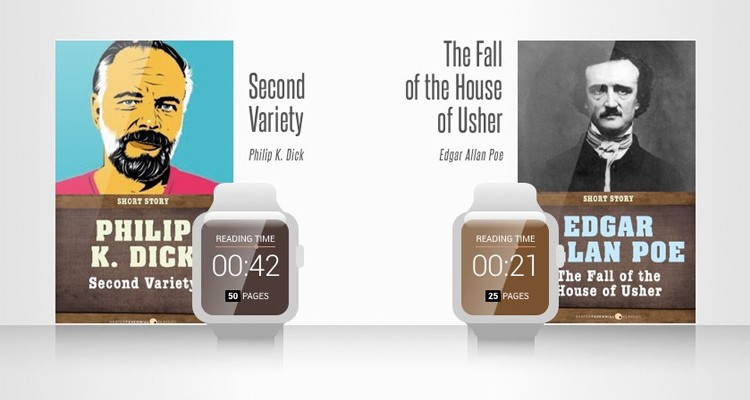
You think you don’t have time to read? Think again. There are plenty of awesome stories you can read in the time it takes to wait for the doctor or take the subway to work. This infographic, created by Ebook Friendly, lists 24 that you could literally read in 24 hours. Admittedly, many of these are closer to short stories than novellas or novels, but they are well worth your time. We can especially recommend Jim Shepard’s “Safety Tips for Living Alone” which was originally published here, in Electric Literature’s Recommended Reading!
Hello, and welcome to my week-by-week review of everything in the world. Today I am reviewing marriage.
Marriage is defined as when two people agree they love each other so much that they want to live in a house together, and probably don’t want to have sex with anyone else, at least not for a while. Some people practice what is called an open marriage, where they do get to have sex with other people. This arrangement is typically for people who have so much love to give, it can’t be contained to just one person. Examples include Bill Murray, Bill Cosby, Whoopi Goldberg, Princess Diana, and my neighbor Doug Vogelsang.
I only ever had a regular amount of love, so when I was married I practiced a more traditional marriage; the kind where we spent so much time with each other that our personalities began to bleed together and I couldn’t tell where I ended and where my wife began. She would finish my sentences before I even started speaking. A plate of food would arrive in front of me without me even knowing I was hungry. It was like there were two of me, but one was much more attentive to my needs than the other. It made kissing my wife kind of weird because it was like kissing myself. I was a pretty good kisser, it turns out.
Of course any marriage has good and bad times. In an ideal scenario they balance each other out, but sometimes the bad times are so bad that the couple needs to stop being married. When things are really good, nothing changes. The couple remains married and can’t get more married than before. Not unless before all the couple had was a Wicca ceremony.
Fortunately my wife and I only separated because she died, and they have laws against being married to a dead person. I spent a lot of my marriage secretly wondering who would go first. On the one hand, I hoped it was me, so I wouldn’t have to feel the pain of losing her. But at the same time, I wanted to spare her the pain of losing me by letting her go first. That’s the advantage of divorce — it makes marriage more like a TV show with a finite ending instead of getting cancelled without warning.
All in all, if you find the right partner, marriage is pretty great. Especially if that person is willing to clean your ears for you.
BEST FEATURE: Having someone to pluck the hairs from parts of your body you can’t reach. WORST FEATURE: Growing so close that you’re willing to fight over things you don’t even care about.
Please join me next week when I’ll be reviewing Mad Max.
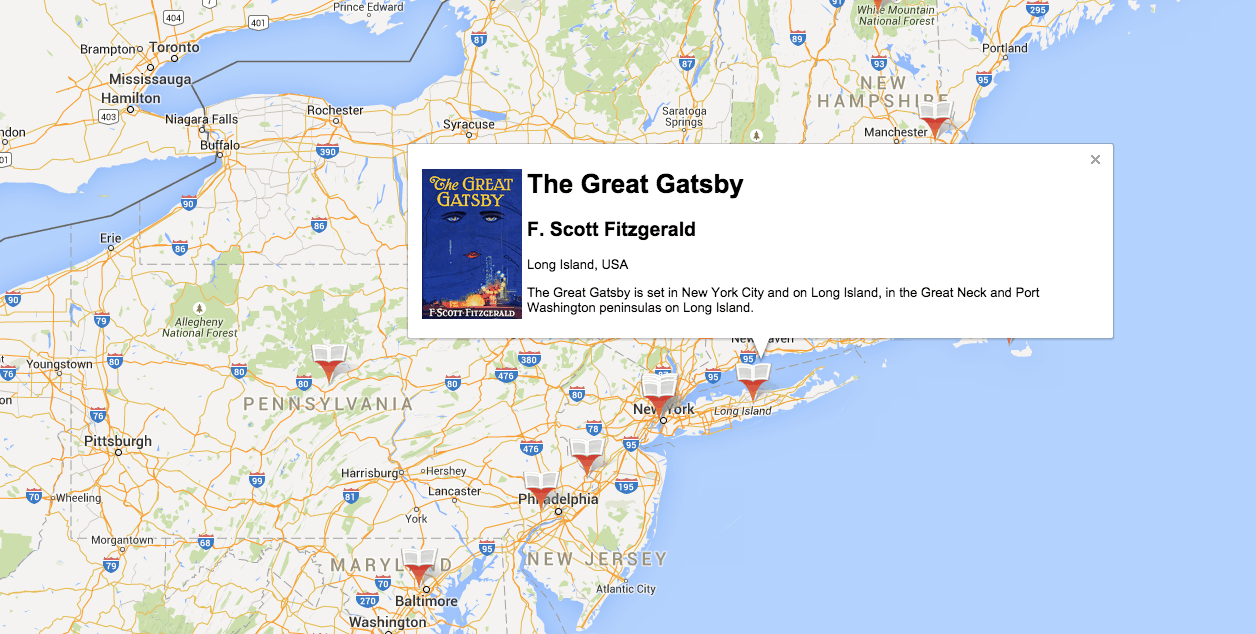
Have you ever wanted to visit the locations of your favorite books? If so, plotting your next literary vacation just got easier with this handy Google Maps mash-up by Lovereading.co.uk.
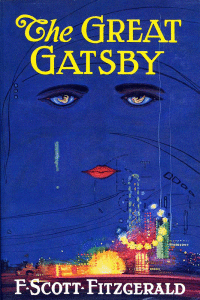
How about a road trip that starts getting nostalgic in New England with Louisa May Alcott’s Little Women, moves to getting creeped out in New Hampshire with Stephen King’s Doctor Sleep, then relives Arthur Miller’s The Crucible in Salem, Massachusetts, Jhumpa Lahiri’s The Lowland in Rhode Island, J. D. Salinger’s The Catcher in the Rye in Agerstown, Pennsylvania, before moving over to NYC to check out the restaurants in Bret Easton Ellis’s American Psycho. After that, you can swing over to Long Island to see the house that inspired The Great Gatsby… which just went on sale for a cool $3.9 million!
The map is hardly restricted to the North East though. Lovereading.co.uk has mapped books across the entire globe. Click around and explore it here.
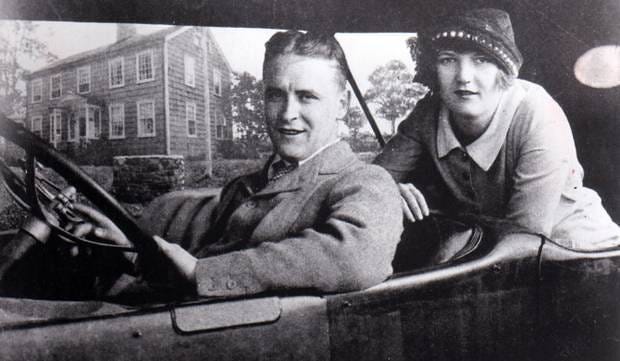
While it may not be possible to live inside of The Great Gatsby, you can now buy the house that F. Scott Fitzgerald wrote the novel in. Well, at least if you have $3.9 million to spare.
The 5,000-square-foot house is located in Great Necks Estates, about a 45 minute drive from Manhattan. F. Scott and his wife Zelda lived there in the early 1920s and it is where Fitzgerald is believed to have written his Great American Novel, The Great Gatsby. The novel of socialites and lavish parties was inspired by his own time going to lavish parties with socialites in Long Island, where the house is located.
The best track on Lucinda Williams’s album Sweet Old World is the song “Pineola,” which describes the funeral for a man who “shot himself with a .44.” Later in the song, Williams sings, “Born and raised in Pineola / His mama believed in the Pentecost / She got the preacher to say some words / So his soul wouldn’t get lost.” That soul belonged to the poet Frank Stanford. According to a New Yorker profile of Williams by Bill Buford, Williams and Stanford met in Fayetteville, Arkansas, in the spring of 1978, and the two had an affair that lasted until his suicide a few months later. Stanford was twenty-nine at the time, and though he had already published nine books of poetry, as well as his 15,000 line epic poem The Battlefield Where the Moon Says I Love You, he was working as a land surveyor. The details of his suicide are as mysterious as they are simple. Stanford was married to a painter named Ginny (Crouch) Stanford, and in addition to his many other flings, Williams among them, he was also having a long-term affair with the poet C.D. Wright (Stanford and Wright together ran the small press Lost Roads Publishers). One day in June of 1978, Stanford came home to find every philanderer’s nightmare: his wife and main mistress in the same room, untangling his web of lies. As Buford tells it, Stanford was so distraught that he drove to procure a pistol, and when he returned home, he went into the bedroom and shot himself.
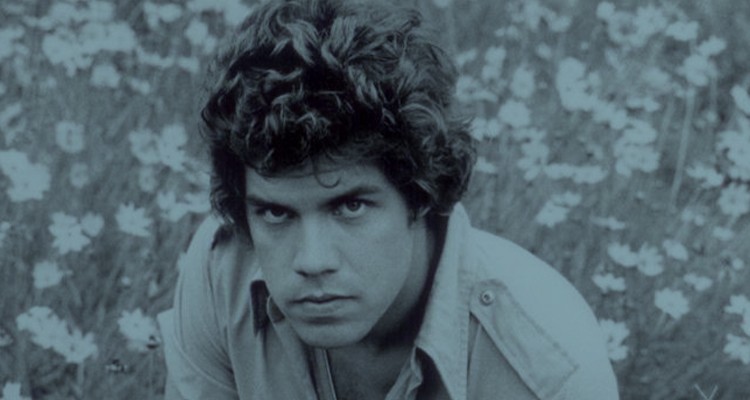
These Byronic details are central to the legend of Frank Stanford, and because there is no definitive biography, other such details — the time in a Mississippi orphanage, a childhood spent exploring the Delta with his adoptive father, the years moving from hotel room to motel room after dropping out of college — are left for his surviving lovers to share. The central motif of all these stories is Stanford’s good looks and charisma; Buford quotes the writer Ellen Gilchrist as saying of Stanford, “To know Frank then…was to see how Jesus got his followers. Everybody worshipped him.” The cover of What About This: Collected Poems of Frank Stanford, published by Copper Canyon Press, features a photograph sure to recruit Stanford more disciples: Stanford, with his curls and boyish features, is crouched in a field of wildflowers, holding a book. The photograph also shows Stanford dressed in jeans and a work shirt, which hints at how Stanford has long been portrayed in the history of American poetry — as a primitive. The poet Dean Young writes in his introduction to What About This: “Many of these poems seem as if they were written with a burned stick. With blood, in river mud.” But Dean Young also points out that Stanford’s swaggering poetry, a poetry that fights only heavyweight challengers such as death and love, stands as a much-needed contrast to our contemporary poetry, a poetry of “rigor and suspicion” that has “deadened the nerves and made poets fear the irrational.” Stanford’s poetry is an American poetry free of what Young calls “a long century of self-consciousness and irony.” What About This contains all ten of Stanford’s published collections, many of them until now out-of-print, as well as a selection of his unpublished manuscripts, an interview, a few prose selections, and snippets of A Battlefield Where the Moon Says I Love You. Taken together, these 745 pages represent an achievement matched only by Whitman’s Leaves of Grass in the history of American poetry.
In an interview with Irving Broughton, Stanford’s friend and champion, Stanford responds to a question about readers and critics not comprehending his work by saying, “If a person is quiet enough inside he might be able to catch on to what I’m trying to do in my poetry.” However, what makes this collection so remarkable are the feelings that even ten minutes spent dipping into Stanford’s world arouses in the reader, and none of those feelings are quiet. His poems are full of knives and water moccasins and blood; of dwarves and midgets and mysterious riders; of jukeboxes and picture-shows and whiskey. The one image that appears consistently in Stanford’s work is the moon. In a famous early poem “The Singing Knives,” the moon is “a dead man floating down the river.” Later in the same collection, Stanford writes, “The cloud passed over the moon / Like a turkey shutting its eye.” If early collections like The Singing Knives and Shade do suffer from a Rimbaud-like obsession with death, they still contain remarkable individual poems, particularly when Stanford shifts from the narrative to the lyric. The poem “Night Time” from Shade contains the stanza:
When I was twelve I had to
wash my mouth out with soap
for taking the deaf girl to the woods
and holding a lantern
under her dress
The young Stanford dealt with this tension between the narrative and lyric, between the allegorical and the personal, by simply keeping them separate in his early work, but by the time he reached his peak with the collections Field Talk and Constant Stranger, he had combined the two impulses into a unified voice by converting his own history into allegory, by making himself the star of his own myth. The poem “Spell” from Field Talk is a perfect example of this mature voice:
I aimed to get some of my blood
back from the Snow Lake mosquitoes
my belly was full of lemonade
and my hair had Wildroot on it
I took to the thicket at dawn
not knowing where I was from the man in the moon
there were trees with so much shade
you shivered
Likewise, in Constant Stranger we find the same narrative form of his early work, but here Stanford allows for moments of lyrical exuberance inside that form. In the poem “Blue Yodel of the Desperado,” he writes:
I wanted to ride down to where I come from
On an Appaloosa
And take you away for good
I wanted to tie your hands with my belt
And watch you stare at the campfire
In the mountains not saying a word
In the essay “With the Approach of the Oak the Axeman Quakes,” Stanford writes, “We go back to the poetry, the poet. I see a figure in a field. There is genuine moonlight shining on his crowbar. He is prying stumps out of his ground. Poetry busts guts.” This is the exact effect reading Stanford’s best work elicits: that of watching a poet wrench his own personal history into the world. And that work, that effort, just like the poetry it produced, makes the reader sweat.
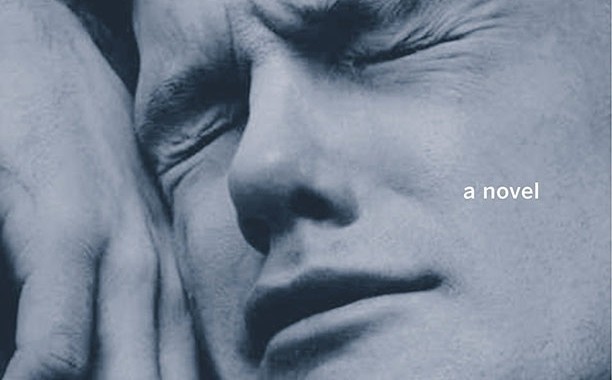
Hanya Yanagihara’s A Little Life is an unsparing novel that follows the lives of four college friends as they achieve the successes they once dreamed of and strived for. There is a fairy tale quality to the wealth and fame these men achieve, but like all fairy tales, there is an underlying darkness.
The darkness at the center of this novel emanates from Jude St. Francis, a successful lawyer by any measure, but a man who remains an enigma to friends and family nearly to the end. The reader bears witness to the aftermath of the childhood abuse Jude St. Francis suffered, and barely survived, with the understanding that the brutality of the witnessing cannot compare to the experience itself. Unable to heal himself, or be healed by others, Jude is a character that calls into question the redemptive narrative arc we too often expect from stories of trauma. Yanagihara would argue that this isn’t a story about trauma but about life. Either way, she asks the tough questions: how do we live, and why?
Yanagihara and I corresponded through e-mail over the course of a few weeks as she traveled in Sri Lanka, Hong Kong, and Japan. We discussed trigger warnings, empathy, the limits of psychology, and suicide.
Adalena Kavanagh: A Little Life centers on the friendships of four men, and your previous novel, The People in the Trees, also mainly centered around male characters. You have said that men often have a smaller emotional vocabulary than women do (an idea a female therapist also shared with me, coincidentally). Could you speak more about that and why you have chosen to write primarily about men?
Hanya Yanagihara: My best friend — who’s a man of tremendous depth of emotional perception and intelligence — disagrees with me somewhat on this point. But I do think that men, almost uniformly, no matter their race or cultural affiliations or religion or sexuality, are equipped with a far more limited emotional toolbox. Not endemically, perhaps — but there’s no society that I know of that encourages men to put words to the sort of feelings — much less encourages their expression of those feelings — that women get to take for granted. Maybe this is changing with younger men, but I sometimes listen to my male friends talk, and can understand that what they’re trying to communicate is fear, or shame, or vulnerability — even as I find it striking that they’re not even able to name those emotions, never mind discuss their specificities; they talk in contours, but not in depth. But in order to name emotions, you have to be taught to name them. It’s like that famous study of depression in Japan: the respondents self-identified a set of symptoms that here would be the means to diagnose them with clinical depression. There, it was merely a set of symptoms. I’m not saying this is bad or good; only that when it comes to matters of the self, and self-identity, society teaches you what’s allowable to feel and communicate.
I do think that men, almost uniformly, no matter their race or cultural affiliations or religion or sexuality, are equipped with a far more limited emotional toolbox.
As a writer, it’s a great gift — and an interesting challenge — to write about a group of people who are fundamentally limited in this way (and who happen to be half the world’s population). Male friendship, by which I mean a friendship between two men, is by its very nature different in scope and breadth than one between two women, or between a woman and a man. In The People in the Trees, one could argue — as I would — that the narrator, Perina, behaves the way he does in part out of a grotesque and misshapen interpretation of loneliness. I had intended him, in many ways, as a fundamentally naive character, one who allows himself to mistake perversion for love. In A Little Life, one of the things I most enjoyed exploring is how these men’s friendships, while close by anyone’s definition, are also built upon a mutual desire to not truly know too much. Again, I’m not saying that’s a bad or good thing — one needn’t confess everything to a friend to be known by him — but I do think that a friendship between two women (once again, for better or worse) is yoked by shared confessions.
The way Jude handles his past is meant to be particularly male as well. I don’t know a single woman who hasn’t at least worried at some point in her life — if only fleetingly — that she might be in sexual danger, that she might be preyed upon. It’s something we grow up knowing, because for many women (as history and mythology have taught us), it’s a real threat. Parents worry that their boys might be killed in an accident or in some act of violence; they worry their daughters might be raped. Plenty of males are preyed upon in the same way, of course, but there remains a certain and specific shame surrounding the subject. If you’re a woman and you’re sexually assaulted, it takes away nothing of your rights to womanhood — I don’t think men feel the same way.
AK: Regarding your character you say, “one could argue — as I would — that the narrator, Perina, behaves the way he does in part out of a grotesque and misshapen interpretation of loneliness.” This strikes me as a very empathetic treatment of a character that most would find it hard to have empathy for. Why treat those characters society would deem monsters with empathy at all?
HY: Well, from a literary perspective, you have to: if you’re a writer, you must be able to summon empathy for all your characters, even and especially the despicable ones. You needn’t like them, but you must respect them — even if you don’t respect every aspect of them. If not, that character becomes simply a catalog of his pathologies, and that’s a hollow character. Actually, that’s not even a character: it’s just a pastiche of bad behavior. I tried to keep this in mind in A Little Life when I wrote the characters who make Jude’s life so awful — Caleb and Brother Luke and Dr. Traylor. They were always much more complicated people to me than they are to him; he sees them one way, of course, and so he should. But I tried to make all of them a little mysterious to the reader, to suggest that there were other lives they led, that they were someone else entirely to the other people in their life. Caleb, especially, should come across as someone with nuance, with an unseen but suggested other persona: Jude is meeting him as an adult, and so even he’s able to see that the way Caleb behaves with him might not be the way he behaves with other people: he has a sister he’s close to; he has a job where he’s clearly respected; he finds a boyfriend after Jude. This, of course, is exactly what he fears: that Caleb’s behavior towards him is indicative less of the core of Caleb’s identity, and more a set of responses that’ve been inspired by Jude himself. (Because Jude encounters Brother Luke and Dr. Traylor as a child, he’s much less able to see who else they might be besides his abusers — and so too, therefore, the reader; in Jude’s childhood sections, I tried to tilt the semi-omniscience that informs his adult chapters to something more intimately his point of view, which is by necessity narrow and childlike. But I always knew they were someone else, that they had other lives, other interests, other qualities, or I wouldn’t have been able to write them authoritatively. One hopes, as a writer, that your readers can sense as well some of what you’re not saying about your characters, that one senses the totality of their conception.)
Once we start calling people monsters, we start sacrificing our sense of curiosity, our obligation to ask how they became that way.
In life, though — that is to say, not on the page — does everyone deserve empathy? Maybe not. I certainly wouldn’t argue that everyone deserves compassion; I think it’s a privilege you can lose. But I do think that everyone is much more complex and difficult to comprehend than their actions suggest. Once we start calling people monsters, we start sacrificing our sense of curiosity, our obligation to ask how they became that way, and why they did what they did: life, and certainly fiction writing, is about being endlessly fascinated by the human condition — naming someone a monster is lazy; it allows you to stop thinking and questioning.
AK: In your first novel, The People in the Trees, one of the characters is accused of sexually abusing a boy, and in A Little Life, the main character, Jude, suffers sexual abuse as a child and teenager. What drew you to this subject, and where do you see your work fitting into a cultural climate where trigger warnings are being debated on college campuses?
HY: I suppose I’m interested in the subject first, because the act of sexually abusing a child is the ultimate abuse of power. Second, I think it ruins people. Some in big ways, others in small ways. But it means that in the long road to defining oneself as a human, one must also negotiate around an enormous and often immovable rock.
As for trigger warnings: I’d never heard of this term before (it’s been a while since I was in college)! All I can say is that I think it’s very dangerous to isolate oneself from information or art or history or news because the subject is painful. I understand the instinct. But being a curious person — which I think is the ultimate goal of being alive — means allowing yourself to be intellectually and emotionally vulnerable as much and as often as you can. I’d argue that despite its cost, it’s the subjects that makes us the most uncomfortable that we have to challenge ourselves to brave more, not less, often. As regards sexual violence, well, were we to avoid that topic, it’d mean avoiding not only much of art, but also history itself: it’d mean avoiding the world. Much as I hope the reader is there in this book to bear witness to Jude’s life and his suffering, we equally owe it as humans to witness other humans’ suffering as well, and not turn away because it makes us uncomfortable.
AK: Those in favor of trigger warnings would argue that those who have been victims of trauma have the right to opt out of an experience that would further traumatize them. What would you say to a student who wanted to exercise their right to opt out of experiencing your book, if it was assigned in a class?
HY: I’d say we never really know how we’re going to react until we start reacting. To try to preemptively shield yourself from an experience — to say, in essence, this book is about something that I fear is going to really upset me, so I’d better protect myself by not exposing myself to it at all — is not only limiting, but also means you might be preventing yourself from experiencing something else, something you thought you never would, or never have. It also reduces art to a single topic, and to a single reaction: I would hate it if this book were dismissed as a book about abuse. Abuse is part of it. But I hope it’s also about other things as well. All books are. This is an obvious point, but no one book is about one thing (unless it’s a very boring book). The point of reading, especially fiction, is not to have confirmed what you already think or feel, but to make you think anew about what you already think or feel.
AK: Having known several women who have suffered sexual abuse, Jude’s psychology of self-loathing, shame, and tendency to blame himself for the abuse he suffered struck me as one of the most accurate portrayals of the mindset of an abused person I’ve read. Did you do any research to build this character? Was it difficult to write this material?
HY: No, I didn’t do any research; Jude came to me fully formed, and writing his sections were always the easiest. He’s a very consistent character — or is meant to be — which is, arguably, part of what dooms him.
AK: The way you reveal Jude’s childhood is relentless and seems to mirror Jude’s inability to forget what happened to him, despite the immense success he achieves in his life. In this way you resist the comfortable narrative arc of abuse followed by healing. Jude resists therapy, to the frustration of his friends and family (and this reader!), and one of the main questions the book seems to address is whether talk therapy works — what do you think the limits of therapy are?
HY: One of the things I wanted to do with this book is create a character who never gets better. And, relatedly, to explore this idea that there is a level of trauma from which a person simply can’t recover. I do believe that really, we can sustain only a finite amount of suffering. That amount varies from person to person and is different, sometimes wildly so, in nature; what might destroy one person may not another. So much of this book is about Jude’s hopefulness, his attempt to heal himself, and I hope that the narrative’s momentum and suspense comes from the reader’s growing recognition — and Jude’s — that he’s too damaged to ever truly be repaired, and that there’s a single inevitable ending for him.
One of the things that makes me most suspicious about the field is its insistence that life is always the answer.
This book is, obviously, a psychological book, but not one about psychology. I didn’t use psychological language, and I didn’t want to — nor encourage the reader to — diagnose Jude in clinical terms. As for the limits of therapy: I can’t speak to them, only that therapy, like any medical treatment, is finite in its ability to save and correct. I think of psychology the way I think of religion: a school of belief or thought that offers many, many people solace and answers; an invention that defines the way we view our fellow man and how we create social infrastructure; one that has inspired some of our greatest works of art and philosophy. But I don’t believe in it — talk therapy, I should specify — myself. One of the things that makes me most suspicious about the field is its insistence that life is always the answer. Every other medical specialty devoted to the care of the seriously ill recognizes that at some point, the doctor’s job is to help the patient die; that there are points at which death is preferable to life (that doesn’t mean every doctor will help you get there, of course. But almost every doctor of the critically sick understands the patient’s right to refuse treatment, to choose death over life). But psychology, and psychiatry, insists that life is the meaning of life, so to speak; that if one can’t be repaired, one can at least find a way to stay alive, to keep growing older.
Obviously, this is reductive, and many, many people think otherwise, including my own dearest friend. He argues that therapy shouldn’t be indicted as a dishonest profession simply because therapists won’t tell patients they can kill themselves. And that the therapist’s role is to make one’s life better, at least in some measure, through self-examination. But I’m not convinced. However: maybe there is in fact a therapist or psychiatrist out there, who thinks that life is, for some people, simply too difficult to keep pursuing; who will give a suicidal patient permission, as it were, to die.
AK: I never thought of psychology in this way, but I can see your point — it is a belief system, one that won’t “work” unless you believe that it does work. There are moments in the book when characters wonder if they had only pushed a little harder, if they had just asked the right questions, they could have helped Jude with his demons. I thought you had given readers a key or clue early on in the book when Jude’s social worker encourages him to talk about his experience of abuse but he is unable to. She says that if he doesn’t talk about it at that moment he never will. I was left feeling that because he had not processed his abuse early enough, he was unable to heal, but from what you are saying, that might have been a naïve interpretation on my part. Was that conscious on your part — to give the reader false hope that something could have been done if only it had been done early enough?
HY: I do think that there are moments in our lives in which the door opens, and you can make a choice to walk through it: that you can name what’s been unnameable, or that you have someone close to you whom you can truly trust to accompany you. I was talking about this with my friend, and he said that what he found so haunting about Jude’s story is that the reader can’t help but wonder what would’ve happened if he’d been psychologically helped — or more accepting of help — earlier, if he wasn’t left to interpret his life by himself; if he had been encouraged to take other lessons from it than the ones he does. I do think that Jude’s life would’ve ended the same way no matter what. But I also think that he could have had a happier, or at least less tortured, life as well.
But I also think there’s a point in which it becomes too late to help some people: that there’s a time past which the damage has calcified so completely that there’s no undoing it.
AK: You say, “But I’m not convinced. However: maybe there is in fact a therapist or psychiatrist out there, who thinks that life is, for some people, simply too difficult to keep pursuing; who will give a suicidal patient permission, as it were, to die.”
Just to push back a bit, you could also argue that the urge to suicide is a symptom of illness, and not a rational choice someone makes. What do you think of that argument?
HY: Sure, and in the West, that’s exactly what we think: that suicidal thought is a symptom of a sick, or at least troubled mind. But I do think that that’s something of a cultural and religious construct. In America, we think there’s something shameful about it; we react to suicides with something approaching rage: What was he thinking?; It’s the coward’s way out. But in Asia, suicide isn’t viewed in the same way. Or it wasn’t, for many years. Here, we associate suicide with despair. There, you might say that the cause can be, sometimes, culturally sanctioned. This is not to say suicide isn’t just as devastating and often perplexing in the East as it is in the West — only that I don’t think there’s a single way to consider its meaning.
AK: If you’ve been following the literary conversation over the last few years you might have noticed that women who write complex texts and characters are often asked about likable and unlikable characters, in a sometimes accusatory way, as if by writing complex characters they are being willfully difficult instead of merely being thoughtful writers. I think your answer, that to call someone a monster is lazy, is a good response to that line of questioning. That said, you yourself have said that there is a fairy tale quality to A Little Life. There is also allusion to Christianity in the text, often in a sinister way, since Jude’s first abuser is a monk. What was your inspiration for this, and what texts or mythologies are you alluding to?
HY: We think of fairy tales (and fables, and folk tales: I’ll lump these three in a group, though they’re quite distinct from one another) as very simple stories, and while narratively, most of them are indeed fairly linear and straightforward, the lessons they impart about the world and how it works are often more unpredictable than we credit them. Many others have written far more brilliantly about these types of stories than I ever could, but I will just say that there is, in a significant number of these stories — across cultures, across countries — a stubborn lack of redemption. Sometimes the good child is rewarded, and the bad witch punished, but just as often, they’re not: or what must be endured by the hero or heroine is so terrible, so grotesque, that happiness, usually in the form of marriage or a reunion, seems almost meaningless, an unsatisfying answer to outlandish feats of survival.
This book adheres to many of the conventions of the classic Western fairy tale: there’s a child in distress, who’s made to face challenges on his own. The era is suggested rather than named. There are no conventional parental figures, in particular mother figures. (Like many fairy tales, I hope this book is defined as much by its absences as its presences.) And yet, unlike a fairy tale, this book concerns itself more with the characters’ emotional response to these challenges and events than the circumstances themselves; I tried to meld the psychological specificity of a naturalistic contemporary novel with the suspended-time quality of a fable. Part of fairy tales’ lasting power is attributable to the fact that they never address their characters’ inner lives (a relatively modern literary concept, that); the particulars of the plot are generally far more important than the characters themselves. With A Little Life, I tried to do the opposite.
AK: It’s interesting to me that you would contrast a non-Western idea — that suicide is sometimes culturally sanctioned, as you say — with characters so clearly rooted in Western life and culture. There has been much talk about the lack of diversity in literature, meaning most books being published in America are by white writers, about white characters. Without calling attention to it, your book has several non-white main characters, which I think could serve as a model of how to write non-white characters without having the text be about capital R race. Was this is a conscious choice on your part?
You have to ask yourself: why am I making this person someone other than who I am, and who else are they to me besides their otherness?
HY: I think the only key to writing about characters who aren’t your race — or gender, or sexual orientation, or religion, for that matter — is not letting that otherness become the character’s defining trait. Race is part, a huge part, of who a character (or person) is, but where writers (and people) get into trouble — rightly — is by making race all of who that character is, as if “black” or “Asian” or “Jewish” or “white” comes with a certain and unchangeable set of characteristics. (By the way, yes, the book has several non-white characters, but the fact that it’s only them you singled out is telling: the universal “we” or “you” in a novel isn’t a white person — or at least, it’s not to me.) I can’t stand it when I’m reading a book and in comes a character who’s gay and I know that that character is therefore going to be sassy and snappy and deliver bitchy-but-wise pieces of romantic advice (this still pops up in fiction more than you might think; sometimes as broadly as I’ve described it, other times more subtly). You have to ask yourself: why am I making this person someone other than who I am, and who else are they to me besides their otherness? If that’s the only thing you can see of them, and the only thing you have determined about them, then chances are they’re not a character: they’re a symbol of your own discomfort. And symbols are boring to read.
AK: Oh, I don’t think white is the universal we or you, either, and I try to write against that. If I name the race of one character, I name the race of the white characters as well. This might be because I’m biracial Asian but I’d hope not. That said, as you stated, writing non-white or non-straight, or characters that are often “othered” by American culture, and publishing, is often done using stereotypes. I was pointing out how well you write these characters. Does it bother you to have these things pointed out? I have been uncomfortable with the term “diverse” books (it kind of makes my skin crawl), meaning books by non-white authors, and about non-white characters, but I’m not sure how else the publishing industry, and the literary community, can consciously promote these authors (with the best intentions of being inclusive, and not marginalizing writers) without using that sort of term. Do you have any suggestions?
HY: When I was in book publishing, now almost two decades ago, publishing houses marketed books by non-white writers (or gay writers) much more aggressively to a specific audience: books by Asian American authors were sent to Asian American magazines, books by gay authors to gay magazines, etc. Those were the days of identity culture at its most blunt and insistent.
These days, that happens far less often. Part of this is due to the splintering of the very idea of “identity culture,” a term that now sounds both quaint and so full of meaning as to be devoid of meaning altogether, and part of this is because what was once considered genre fiction (back when ethnicity was considered a publishing genre) has become so diffuse and complex in its content and practitioners that marketing to an imagined group of readers who you hope are united in their interests simply because of their race seems silly. I suppose the only thing a house can and should do when publishing a book by any kind of minority is to treat them as nothing more or less than a single representative of the American culture at large.
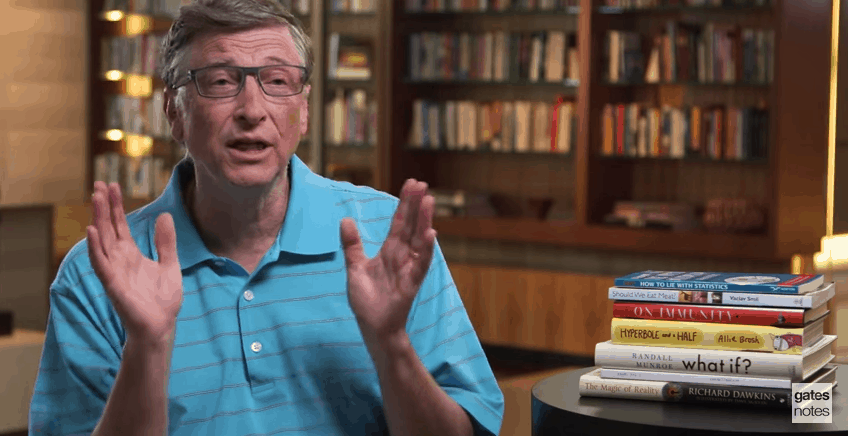
Looking for some summer reading? Microsoft co-founder and philanthropist Bill Gates has some suggestions for you! Over at this blog, Gates says: “Each of these books made me think or laugh or, in some cases, do both. I hope you find something to your liking here. And if it’s not summer where you live, this list will still be here six months from now…”
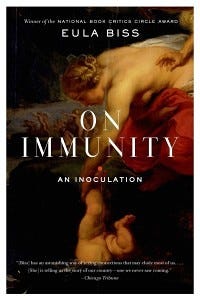
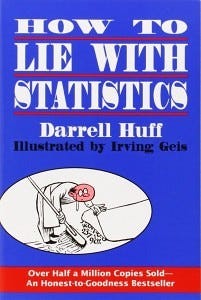
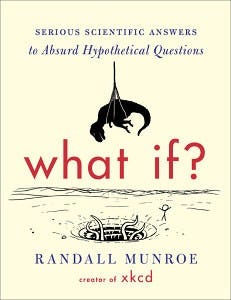
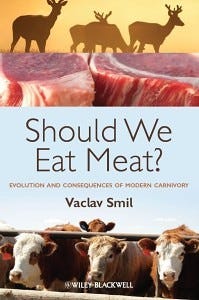
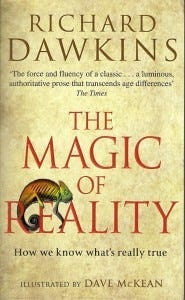
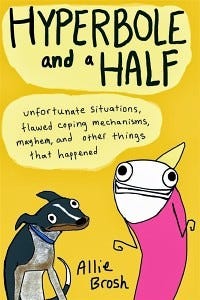
Watch the video of Gates talking about his picks above. Here are his six book picks (his seventh is the XKCD blog) in no particular order:
Sign up for our newsletter to get submission announcements and stay on top of our best work.
YOUR INBOX IS LIT
Enjoy strange, diverting work from The Commuter on Mondays, absorbing fiction from Recommended Reading on Wednesdays, and a roundup of our best work of the week on Fridays. Personalize your subscription preferences here.