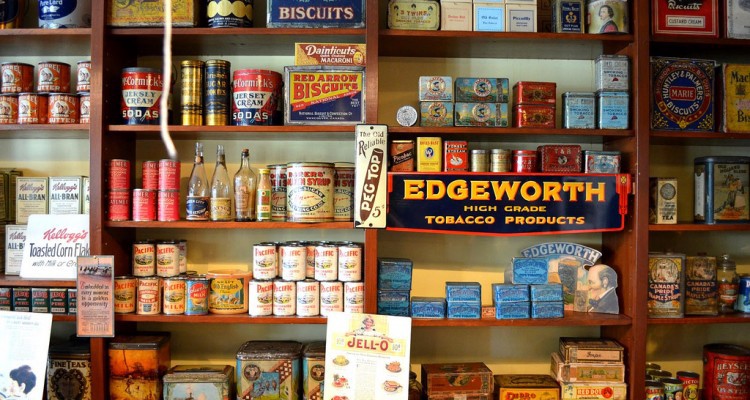
Here’s a traffic sign we can all agree to follow. Thursday a Los Angeles traffic sign was hacked to suggest everyone “read a fucking book.” The picture was taken by journalist Daina Beth Solomon.
Need a New Year resolution, maybe? "Read a f'n book" says #DTLA electronic street signpic.twitter.com/3iJhOsDg3X
The TMI spokeswoman said whomever did this would have had to physically break into the trailer-based sign. But she did acknowledge the possibility that it’s wi-fi enabled.
“It looks like it was hacked,” agreed Tina Backstrom of the L.A. Department of Transportation.
Electric Literature internships provide an in-depth introduction to digital publishing and the New York literary scene. Because we are a small, not-for-profit publisher, we provide unique opportunities for professional development and resume-building.
As an Electric Literature intern, you are encouraged to become involved in any aspect of our work that interests you. Sure, you’ll go to the post-office, but you’ll also do things like contribute to editorial decisions, interview authors, and attend cool literary events.
Responsibilities:
Read submissions and participate in editorial discussions
Comb the web and social media for breaking literary news
Knowledge of WordPress, Tumblr, and social media platforms
Familiarity with HTML
Basic understanding of Photoshop and inDesign
Firm grasp of grammar and spelling, with a hawkish attention to detail
The ideal candidate:
Has an educational background in literature or creative writing
Participates in the contemporary literary scene
Regularly reads literary magazines and literary websites (including but not limited to Recommended Reading and electricliterature.com)
Believes strongly in the Electric Literature mission: To amplify the power of storytelling with digital innovation
Is hard working, pays great attention to detail, and can work independently
Writes clearly and with personality
Has an eye for design and knows what images will grab reader’s attention
This is an unpaid, part time internship (10–20 hours/week), with opportunities for hire. Candidates must be able to come to our downtown Brooklyn office at least 3 days/week. We are happy to work with universities and MFA programs to provide course credit. This 5 month internship runs from the end of January through May (exact dates are flexible). To apply, please send a cover letter and resume to halimah@electricliterature.com by January 23, 2015.
There’s a certain brand of writing advice which puts forth the idea that the point of writing is to get on paper that which would otherwise be lost, would evanesce, but what if, like Megan Mayhew Bergman, your subject matter is precisely that: that which has been lost? The characters who inhabit the stories in Almost Famous Women — Bergman’s follow-up to her terrific debut collection, Birds of a Lesser Paradise — are driven to be remarkable and desperate to be known. They are willing to run the risks of living unconventionally, but still long for some kind of preservation. They have fraught desires that are so often in opposition with one another, and it’s at this point of friction that Bergman locates her stories: navigating the relationship between rebellion and remembrance, actualization and aberrance. She examines with virtuosity the knotty longing of these women — occasionally compromised by their own self-erasing reclusiveness, but more often subjected over time to historical revisionism and cultural amnesia. As deft and inventive a writer as she is — and she wows on every page of this collection, at the language level, especially — Bergman can’t resurrect these women, not truly. She knows she is working with what has already been lost. But what she can do, and what she does do ever so movingly here, is thoughtfully imagine herself into and out of history, sending us missives from that place, giving us a better sense of what it meant to be daring and assigning dignity to women whom history has denied it.
Bergman graciously took time to answer a few of my questions by email.
Vincent Scarpa: It might seem like a rather basic question, but I’m genuinely interested in how you came to write these stories. Did you start out intending to write toward a themed collection, or did the stories just begin to accrue and suggest one?
Megan Mayhew Bergman: If there’s anything I’m good at, it’s cultivating an obsession. I have a gritty work ethic, and can be very driven, but I also move very instinctually. So I didn’t consciously set out to write a themed collection, but I must have been moving toward it subconsciously. The stories were written over a five year span.
I actually tried very hard not to write this collection. I felt weird about writing historical fiction, moving in and out of factual data and letting my imagination take such liberties. But two things helped me move through that personal objection:
1) Most of these women had one biography, if that, some out of print, and were largely out of the public consciousness. There was so much unknown space in these women’s narratives that my imagination couldn’t help but seep into the gaps and expand, filling in the cracks.
2) Henry James, in his Art of Fiction essay, says that all novelists should have freedom. So I said to myself–look here, MMB. Don’t be puritanical. If you have damn good stories to tell, tell damn good stories.
VS: One of the things I find most moving and thoughtful about the collection is that, in choosing to resurrect these women, you’re not interested in drastically rewriting or revising or playing with them so much as simply imagining yourself into their interior landscapes and then writing outward from there. There are, of course, many creative liberties taken — “I did not stay inside the lines,”you write in your author’s note — but they’re taken in empathetic service of more closely getting at the truth of what it might have been like to be these women. I think there’s something to be said for the beauty and generosity of that practice — a certain admirable faithfulness, if not strictly to “the facts” — especially when one considers the kind of erasures and rewrites history has enacted on these and so many other women throughout history. I wonder if you could talk a bit about what you felt your duty was, then, in reviving these women and writing their stories. Was there a methodological framework you put yourself and the stories through or up against?
MMB: I taught a memoir class at Bennington College once, and we spent a lot of time talking about truth, and how it’s a concept writers of all genres circle, but it is in many ways an abstraction. There is very little written truth. It comes down to intention, I think, and I used that as a guiding principle. My intention was to honor the risks these women took to live outside of a traditional patriarchal arrangement, and, as you suggest, shed a wedge of light onto their interior landscapes. So, I did my damned academic best to honor their interior lives and the historical and personal events that shaped them–but I had no problem making up a probable girlfriend from scratch, and dropping her into the rocky orbit of one of these women.
Biographers are cautioned not to fall in love with their subjects, not to make heroes out of them–and that was important for me as well. I did not want to over-romanticize these women, or write a book with a feminist agenda in neon lights (okay, it’s more, say, fluorescent bathroom bulbs). I feel strongly that the writer’s agenda or theme should be secondary to the story itself.
A lot of these women were not traditionally likable characters–they abandoned families, churned through lovers, battled addictions, and some lived life with single-minded focus. Right now, I feel that short fiction is suited to carry these dangerous and “unlikeable” female protagonists. In many cases, short fiction is less bound to that commercial Female Likability Thing. Because, you know, less people read it. (I’m not getting off on that at all, believe me.)
VS: I know a great deal of research went into writing these stories, and I would guess that you came across far more information than you could ever use or the story could ever contain. Amy Bloom has this great line (that I’ll poorly paraphrase) about researching being analogous to walking through a garden: you can spend as much time there as you like, but it’s ill-advised to take more than a few flowers with you. Jim Shepard says something similar about not needing to know how to mountain climb in order to write a story about mountain-climbers, but needing to know enough to believably render a character who does. What was the information-gathering and filtering process for you in writing these stories? How did you go about deciding which were the right flowers to take with you? I’d imagine there’s some difficulty in disregarding what might be the most seductive or bizarre information in favor of including only the information necessary to texture the narrative.
MMB: Almost Famous Women, more than anything, represents my reading life. I love reading biographies and memoirs of fascinating, unusual women. My favorites include Francoise Gilot’s My Life With Picasso, Martha Graham’s Blood Memory, Beryl Markham’s West With the Night, Isak Dineson’s Out of Africa, and the biography of Edna St. Vincent Millay, Savage Beauty. Give me a woman who is out there gnashing her teeth at life, and I’m hooked.
So, I had been reading the books where the women in my book appeared as secondary characters for years before I decided to start writing their stories. In fact, I fought off writing this book for so long that some of the stories were nearly fully-formed in my head before I put pen to paper. I had to submit to the personal muse, really.
Here’s an example of a research “flower” I didn’t bring with me to the page–the doll Joe Carstairs took everywhere with her (on her motorcycle, in her boat, and to the grave)–Lord Tod Wadley. She bought expensive suits for him, photographed him…but I knew he would push the reader into WTF territory. But you have to read the Kate Summerscale biography of Joe Carstairs–The Queen of Whale Cay. It’s incredible.
VS: You write in your author’s note, “I wanted to explore the price paid for living dangerously…though I did not intend these stories to serve as cautionary tales.”What were the challenges — both on the story level and the global level — in dancing that dance? What pitfalls did you seek to avoid?
MMB: Early on in the construction of the book, I realized that a lot of these women died poor and alone. I didn’t want to undermine the strength of these women by writing stories that overtly cultivated the reader’s pity. I also didn’t want the book to be Almost Famous White and Straight Women.
I think many of these women were keenly aware that if they chased dreams instead of building families or setting up camp under the safety of a husband, they would face challenges later. There is a line in the book that underscores this idea: the world has not always been kind to its unusual women. I’d like to say that these women faced heightened risks for living authentically in a different era, but some of their stories still read as fresh and unusual even for contemporary culture.
Tiny Davis, a trumpeter featured in one of the stories, says something akin to this in a documentary: “Times won’t ready for us. Still ain’t.”
I’ve come to believe that we’re all navigating this risk/safety continuum for ourselves, too, or perhaps I’m skewed from moving among artists and dreamers. We want autonomy, the peak experiences, the peak feelings, the moments–however fleeting–of intense love, lust, achievement. And yet so many of us, myself included, dilute ourselves, temper our wanderlust, and make compromises in order to feel safe, or in order to just live. But we love reading about the people who don’t make compromises. I happen to love a good kick in the ass from history.
I’m not a fan of the moral filter in fiction. I don’t want to write about what we should think, feel, or do. I want to write about our ugly, exquisite humanity, our desperate inner selves navigating the world’s obstacles.
VS: Were their women whose stories didn’t make the final manuscript? Or women whose stories you wanted to write but, for whatever reason, found yourself unable to imagine a sustainable way into or out of?
MMB: Truthfully, I wanted to feature some female scientists, but I never got those stories off the ground (thankfully Amy Brill and Lily King have! Read The Movement of Stars and Euphoria!). I might find my way into the female scientist stories later — I’m particularly obsessed with Rachel Carson, as any good environmentalist should be. I have a background in anthropology and if I cared for complex math I would be a primatologist. But I don’t care for complex math, and so I’m here to write stories.
VS: How did you go about deciding which women to inhabit in first person as compared to third person? And what about the women — I’m thinking especially of Romaine Brooks (“Romaine Remains”) and Allegra Byron (“The Autobiography of Allegra Byron) — whom the reader comes to know indirectly, by way of an imagined character in their lives. What was the construction process there? It’s such a fascinating alternation of vantage point — and used so beautifully here. The Byron story left me weeping in a way short fiction hasn’t left me since I first read Laura van den Berg’s story “Antarctica.”
MMB: God, I love making people weep. No, really. Because I’m a weeper (you know what made me weep the other day? Charlie Bucket’s poverty and hope in the early minutes of Willy Wonka and the Chocolate Factory.) But weeping–it’s catharsis, evidence of narrative at work, and it means a story has been successful in some way. So I take your weeping as an extreme compliment.
Some of these women were hard to crack for me. Here’s why–most of them were naturally bold and intrepid. I have to give myself a pep talk in the shower to come off as bold, or listen to “Eye of the Tiger.” I’m sort of kidding–but some of the greatest work I’ve done in life is reminding myself of my value, finding a voice, finding confidence. I have it now, but man, I fought for it. With myself.
As for first versus third person–my first strategy is always to listen to the muse. That’s my fancy way of saying that I listen to the voices in my head. (You have them too, right?!) But usually the first line or two comes to me and offers the way into a story, and usually that spiritual moment tells me if a story is in first or third. If that sounds crazy, good. It is. I think writing is mostly hard, technical work, but I’d be lying to you if I said I didn’t work from the muse first.
VS: What’s next for you, now that Almost Famous Women is out in the world? You’re at work on a novel, yes?
MMB: I’ve been very good at throwing away novels lately. I’m after magic, not proficiency, and I don’t want to sell you an adequate book. I know what it’s like to have to stand behind your work. You have to LOVE it. So yeah. I am working on a novel. I have more ideas than time. My next personal mandate is to MAKE TIME.
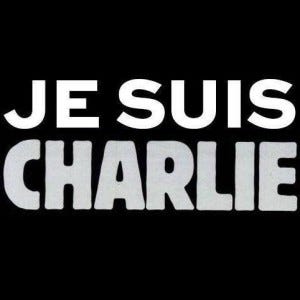
The offices of satirical French weekly Charlie Hebdowere horrifically attacked yesterday by masked gunmen. The attack killed 12 people, mostly staffers, and injured more. However, the surviving staff members have vowed to keep publishing and to increase the normal print run from 60,000 to 1 million next week. The Guardian reports:
Google said it would donate €250,000 (£195,000) to help support the publication from its press innovation fund; a further €250,000 was pledged by French newspaper publishers, to be taken by a donation tax, according to a report in Les Echos.
The two groups involved in the distribution of the papers will take no fee for next week’s issue.
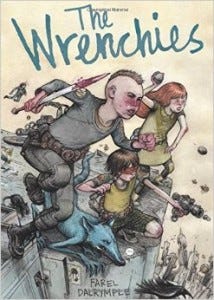
The first work of writer/artist Farel Dalrymple’s that I read was Pop Gun War, a magic realist graphic novel about a young boy with wings traversing a surreal city. Its storyline encompassed philosophical explorations, touring punk bands, and sinister dollmakers; it read like nothing I’d encountered before, and Dalrymple’s art seemed equally suited to the story’s fantastical and gritty elements. Dalrymple’s latest work as writer/artist is The Wrenchies, which takes the juxtapositions of Pop Gun War to an entirely different level.
The story begins with Orson and Sherwood, two brothers who encounter a sinister, vampiric being in a cave and embark on a career of monster-slaying. Their story, along the story of Hollis, a superhero-obsessed kid in the present day who occasionally encounters a ghost, and a group of children fighting demons in a distant future (those would be The Wrenchies of the title) all come together in a plot that’s both epic and idiosyncratic.
I caught up with Dalrymple via phone to discuss the origin of The Wrenchies, how the story developed, and some of his other projects.
I remember reading the short story that appeared in Meathaus that feels like an early version of The Wrenchies. Did you realize when you were writing that that it would lead to something much larger?
I don’t know if I knew when I was working on it, necessarily. But after I finished it, it was basically, “Yeah, I’m going to do something more with this.” I met an agent; I moved to Portland around the time that it was coming out, and she asked me if I was working on anything. She asked me if I was working on anything, and I said that I had this thing that had been in an anthology that I wanted to expand upon. It was a year or two before I actually started working on it.
What was the first point, from there, that you expanded on? Was it a continuation of that story, or showing a completely different dimension to the world?
Maybe adding the character of Hollis to the story? I’m not actually sure when exactly that got added. There were so many things that went into that–when I read the anthology, there was another story in there by this guy Tom Herpich, this really awesome cartoonist who works on Adventure Time and stuff now. He does his own comics, that are really great; I really liked his story. I was watching a lot of weird movies at the time, and I wanted to do all of these different things. I thought, “Oh, there’s this idea I have with these kids, and with this guy kind of seeing his future,” and all of this stuff that I wanted to put together in a hopefully interesting way. I don’t remember exactly what the one thing was; it just all kind of came together when I was constructing this idea for doing this graphic novel.
There are so many different layers and timeframes and worlds in the story; did you organize all of that beforehand?
I had to do a lot of organizing. Making timelines; at some point during the whole process, I had a whole bunch of notes pinned to a wall, and a sequence of pages that I was doing. I knew how the chapters were going to begin and end, and I knew how the book was going to end, but getting there sometimes required some problem-solving. Laying things out in a visual way so that I could figure out how to make it all work together, at least for me. I know that a lot of people probably won’t get all of the stuff going on, but I wanted to make sure that I really understood what was happening.
At some points, the narrative unfolds along the lines that a reader might expect; at others, characters might have horrible things happen to them offscreen, or major events will happen in passing. How did you decide which things would happen on- or off-panel?
That was a case-by-case basis. A lot of that was also me wanting to draw something I thought was cool. “Oh, I’m going to draw these gory bug-things coming out of this guy’s neck.” Other times, it depends on what I’m trying to do. If I’m trying to evoke a certain emotion or make someone think about something–not that I’m trying to be manipulative or anything, but if there’s a scene where I want a certain emotion to come across, I try to do that in different subtle ways. As un-subtle as a lot of that book is, I feel like there are a lot of parts in there where I’m trying to say something, and I don’t just want it to be about this one thing. I’d like it to provoke some thought and challenge some people. Some of the things that I’ve liked reading, growing up or as an adult, is stuff where it makes me think about it a lot. That’s what I enjoy. Sometimes, I just want to shut off and enjoy a ride. I guess that’s why I chose to do that in different manners or styles–having narration in some places, and in others, not even acknowledging what happened there. This could have taken place in a few years, or it could have been a few days.
Are there comics or books or movies that have inspired the same kind of emotions that you wanted to evoke with this?
There’s tons of stuff that I put in there; I even did an homage page to the television show The Prisoner. That was a big deal to me growing up. It’s weird, having all of this stuff that I liked as a kid in pop culture so much. A lot of people know about The Prisoner and The Warriors and Doctor Who and all that stuff that to me, as a little kid, was this weird and mysterious thing. It’s this faded memory. At some point, I got the DVDs when they came out; now, it’s just another thing for people to be nerdy about. Things like that show, and this movie that I mention a lot in regards to this book called Over the Edge. It’s a 1979 movie about these kids who riot at a school. I liked the way that these kids were…little kids, but they have crazy parties where they’re drunk and doing drugs and all sorts of stuff. They had this weird mix of little-kid fun and sounding like adults when they talked with one another.
The book The Chocolate War was a big deal to me growing up. The movie, too. I liked that movie a lot. There’s a bunch of comic books, too. I grew up reading Marvel Comics. John Buscema, stylistically; I feel like a lot of my storytelling comes from How to Draw Comics the Marvel Way. As far as the feeling I like to put in my work, I feel like it comes more from weird movies and young adult books and things like that.
The Wrenchies opens with Sherwood’s story, but it also shows how he’sless and less of a hero at various points in his life–he’s the hero of one story and the villain of another one, in some ways.
Sometimes, I get worried that people are going to read too much into something. There’s a lot of stuff that I put in that I feel like other writers and cartoonists have probably done better than me. That thing of a little kid, who says, “I can do anything I want to do! I can be a rock star, a movie star, a superhero.” It’s this kid who actually does all of that stuff, but as little kid he also sees himself having done all of this stuff, and he’s this loser, still. “Oh, I’m an asshole as an adult.” And he also has some weird stuff, my own anxiety that I used to have as a little kid about growing up and being the Antichrist.
I was raised really religious; I would think, “Oh no–what if that’s me?” It was this really weird, irrational fear. It’s not enough to have all the real fears in life as a little kid; let’s make up some weird thing for you to stress out about. I wanted him to be this superhero–a real superhero–and then a secret agent, but he’s also this human being, a tragic figure.
I was going to ask about that–Sherwood makes references to religion at a few places, and Hollis does as well. Did that come from the way that you were raised?
Oh yeah, totally. I was, like a lot of people, an evangelical-style Christian. It seemed like moving out of that as a grown man–I was in my twenties, my early twenties–and then going to school in New York… I’d been around the real world before, I’d had friends who weren’t Christians. It put everything in perspective. New York’s a weird place anyway; it made me realize that I was raised really strangely. Over the next few years–it’s kind of a cliche–I really thought about why I believed things that I believed. I love my mom, and she did the best she could, but it was kind of a strange upbringing, I feel like. It’s good material, a source of material for stories about little kids who like comic books and stuff like that.
Both in The Wrenchies and in Pop Gun War, you have these very sinister monks who show up at various points in the story. Was that also a nod to that, or more something for the visual?
That’s partly because I like the way it looks. One of the things that made me want to tell my own stories was reading The Brothers Karamazov. There’s this crazy monk character in there; I think he’s just in one scene in the beginning, where they talk about him. I remember being kind of excited about that; I don’t know why. I put him in Pop Gun War; he seemed like a good, weird villain. He doesn’t do anything terribly sinister; he just seems sort of scary. I remember, when I was living in New York, I would see weird scary dudes. It seemed fitting to have this weird… He doesn’t represent religion or anything like that. It’s more that he’s a tortured guy who does crappy things to people sometimes. This obnoxious person you don’t like.
You’ve done some work where you’re the artist working with another writer–most recently, Prophet. Does working on something with a writer have any effect on your own storytelling?
I’ve done it mostly because it’s a paying job, and it’s generally fun. Prophet has had its fun moments, and I love being a part of that group of artists. It’s exciting to do something like that. And if I do stuff for Marvel or DC, I’ll do a page or two pages, and it’s always the hardest thing in the world. Doing a commission for someone–”Oh, okay, I’m drawing Dr. Strange”–it takes forever. It’s a weird pressure; I don’t know what it is. Even as a kid, I liked drawing my own guys, my own characters, rather than drawing Spider-Man. I don’t think of it, myself; it just feels like a job. I like the work that I’ve done for other people, generally. I feel like it makes me a better artist: “How am I going to do this, rather than just being totally self-indulgent and drawing whatever I want to draw.”
The Wrenchies was a lot of hard work, for sure. It made me nuts a lot. But there wasn’t ever a feeling like I didn’t want to be working on it. I never felt like that. With every other kind of job where I’m working with a writer, even if it’s a really good story, there’s still that part of me that goes, “Dammit! I don’t want to be doing this right now!”
Do you have a sense of what the next story you want to tell is?
I’m doing two serialized projects. I’m pretty behind on one of them. I’m doing a story with a writer friend of mine–it’s going to be in Dark Horse Presents. I’ve only done eight pages of it so far, so I’ve got to get into high gear on that. I’m also doing a sequel to Pop Gun War, and that’s going to be run in Brandon Graham’s Image anthology called Island. I’m doing that in fifty-page installments. I’ve been working on that lately. That’s what I’ve been doing whenever I have a few hours.
When did you first end up moving in Portland? Does that have any effect on the work that you do, do you think?
I moved here seven, eight years ago. I was just finishing up Omega the Unknown; I did that for about a year after I moved here. I’ve been working on The Wrenchies the whole time, pretty much. But I did some other stuff; I did a young adult story that’s going to be coming out from Secret Acres next year. While I was working on The Wrenchies, I had to do other jobs whenever I could. I did a story with MK Reed, who’s a writer; it’s called Pale Fire, and it’s coming out next year from Secret Acres. I feel like my living in Portland definitely had an effect on how I drew that. It’s a black and white story, but there are a lot of scenes set outside with trees and highways and Volvos icing around town.
Is there a connection to the Nabokov novel?
I think she mentions it in the foreword. She made this as a mini-comic years back. Then, I basically just re-drew her comic. She mentions it in the foreword, that she was inspired to do this story, but it doesn’t really have anything to do with it. It’s mostly teenagers at a party, driving around in cars. Greg Means put that together, had me re-draw it and stuff. He has an imprint in town called Tugboat Press. I wouldn’t have even done that story if I hadn’t moved to town. There are so many artists and publishers in town; I feel like I got a lot of opportunities that I wouldn’t have if I lived somewhere else. Even New York. There’s a comic store here called Floating World Comics, and Jason, the proprietor, he’s put out work of mine. Zack Soto, who does the Study Group Comics website, lives here in town and had me start doing the It Will All Hurt strip that I’ve been doing for that. That wouldn’t have happened without my moving here. So yeah, moving to town has definitely helped shape the last few years of my career.
Earlier, you talked about how The Wrenchies let you put a number of disparate elements into the same story. Was there anything that you’d wanted to fit into there that you realized wouldn’t fit and needed to go into something else?
I have a lot of stuff that ended up on the cutting-room floor. I put them all in a file, and said, “I’m going to do something with this someday.” Some of it’s going to go in a sequel. Other stuff, I don’t know what I’m going to do with it yet. Especially towards the end, the Sherwood chapter–all of the stuff that I left out of there could be another book. Hopefully someday I’ll get to it.
This January, Electric Literature is launching Okey-Panky, an weekly online magazine of short, darkly comic, ironic, and experimental fiction, essay, poetry, and graphic narrative. Okey-Panky will publish something new every Monday morning, to confirm, at the start of each working week, your suspicion that life is strange, unfair, hilarious, and possibly meaningless. Like Electric Literature’s Recommended Reading, Okey-Panky will be powered by tumblr, making it easy for you to spread our grimly amusing weltanschauung hither and yon.
Please join us to celebrate with us tonight at The Counting Room in Brooklyn. There will be brief readings by Alice Bolin, Anne Gisleson, and J. Robert Lennon. And we will be serving a special “Okey-Panky” Cocktail designed by A.J. Rathbun, author of Dark Spirits: 200 Classy Concoctions Starring Bourbon, Brandy, Scotch, Whiskey, Rum and More. More info here.
Religion, a mediaeval form of unreason, when combined with modern weaponry becomes a real threat to our freedoms. This religious totalitarianism has caused a deadly mutation in the heart of Islam and we see the tragic consequences in Paris today. I stand with Charlie Hebdo, as we all must, to defend the art of satire, which has always been a force for liberty and against tyranny, dishonesty and stupidity. ‘Respect for religion’ has become a code phrase meaning ‘fear of religion.’ Religions, like all other ideas, deserve criticism, satire, and, yes, our fearless disrespect.
Beloved Japanese Haruki Murakami has never been the most public author, but this week he announced a new advice column called “Mr. Murakami’s place.” The column will let Murakami connect with his fans around the world. Questions will be taken in any language. The Japan Times reports that he is open to advice questions of any kind and “Murakami will also answer fans’ questions on his likes and dislikes — including cats, a favorite animal of his, and the Yakult Swallows, the Japanese baseball team he supports.”
Murakami will take questions through January and then answer them over the next few months. The website and submission process hasn’t been released yet. However, we can speculate that much of the advice will involve cooking pasta, petting cats, running, and listening to old jazz records.
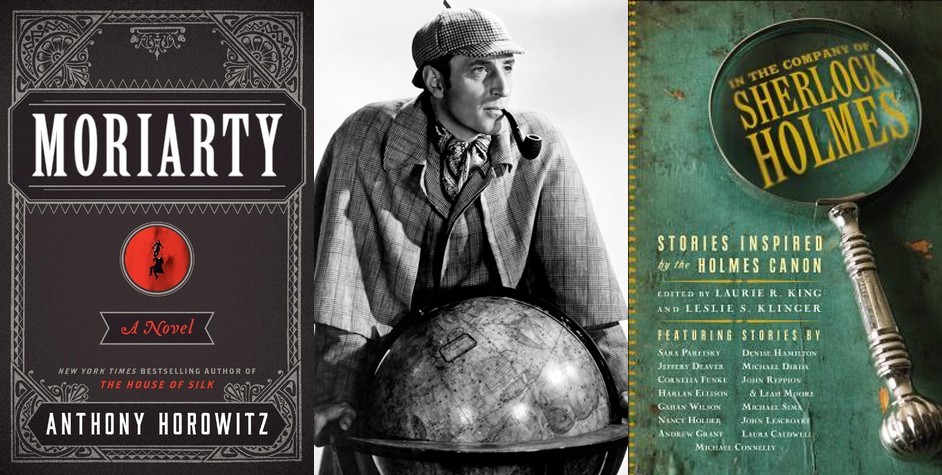
When Harry Potter and the Goblet of Fire was released at midnight in 2000, the manager of the bookstore I worked for in Phoenix, Arizona, screwed with the staff by reading some Potter fan-erotica over the loudspeaker before we opened the doors to the public. Fifteen years later, the term “fan fiction” is way more commonplace, but, if you want to get real, mainstream fan fiction has existed in the realm of another British literary stalwart — Sherlock Holmes — for about 100 years. Two recent releases — the novel Moriarty by Anthony Horowitz (HARPER) and the anthology In the Company of Sherlock Holmes edited by Leslie S. Klinger and Laurie R. King (PEAGUSUS) — are fascinating and opposing entries into wacky world of Sherlock Holmes pastiches.
Anyone who knows anything about Sherlock Holmes scholarship is aware of “the game”; the idea that Sherlock Holmes “scholars” (nerds) know the “truth” (fiction) that Holmes and Watson were real people and Sir Arthur Conan Doyle was merely John Watson’s literary front. If you read the footnotes in The New Annotated Sherlock Holmes (also edited by Klinger) and you failed to catch the stuff in the introduction about “the game,” you’ll think you’re going crazy since all the academic minutia proceeds from the a priori notion that one of the greatest fictional characters in the western canon was a real person. Even Harry Potter slash fic where Harry is having sex with Gandalf from Lord of the Rings, doesn’t go this far.
Still, regardless of the meta-fictional contexts in the fandom, you might be wondering how Sherlock Holmes stories not written by Doyle can legally exist at all. Well, they can because nearly all the canonical Sir Arthur Conan Doyle-penned Sherlock Holmes “books” (the five short story collections and four novels) are in the public domain, and have been for some time. That is, except for certain stories contained in The Case-Book of SherlockHolmes, which is because the original publication dates of the various collected stories vary from story to story. Everything published before 1923 is in the public domain in the U.S., and a few of the stories in Case-Book are right on the cusp. And while the estate of Sir Arthur Conan Doyle has been unsuccessful at extending copyrights of the stories and books, it was holding out for keeping the characters themselves out of the public domain; and was even charging licensing fees and threatening to block book sales if authors and editors (like Klinger and King) didn’t comply. But, very recently, the estate and its practices essentially lost to the fans.
You may have read that in the United States of America, Sherlock Holmes the character is officially in the public domain as of Fall 2014, which is 100% due to Leslie Klinger taking all of this to court. Both he and Laurie R. King are perhaps the biggest Sherlock Holmes fans on the planet. As mentioned, Klinger is responsible for the New Annotated Sherlock Holmes as well as numerous other Holmes-related texts. Meanwhile, among other things, Laurie R. King is the author of a series of Sherlock Holmes pastiches of her own about a character named Mary Russell who is, in her novels, Sherlock’s apprentice. (The first of these books was The Beekeeper’s Apprentice) These people aren’t out to hurt Sherlock Holmes at all. This new anthology is actually their second together (the first was 2011’s A Study in Sherlock ) but the book itself has taken on something of a larger significance since it represents above all; the triumph of Sherlock Holmes fans over the Doyle estate.
And yet, within the same month, there’s a novel called Moriarty released by popular writer Anthony Horowitz which is officially licensed and endorsed by the estate of Sir Arthur Conan Doyle. In sharp parallel to the King and Klinger anthology, this is also Horowitz’s second Sherlock Holmes novel — his first being House of Silk in 2011. Both Horowitz’s new book Moriarty and The House of Silk present new “adventures” that are asserted by the Doyle estate to be part of the “real” canon of Sherlock Holmes. Three years ago, noted reviewer Niall Alexander pointed out that the estate does this “at their own peril,” which to me is correct. The victory of Klinger and King in making sure Holmes himself is in the public domain is hardly the first proof that the fans of Sherlock Holmes own it more than the people creating or controlling it. The man himself — Sir Arthur Conan Doyle — infamously killed off Holmes in “The Final Problem,” calling Holmes a “brute.” People in England wore black armbands and even Doyle’s mom was pissed. The contentious relationship between the adoring public of Sherlock Holmes is analogous to how little credit the character himself wants to take the mysteries that he solves. Imagine how jerky Benedict Cumberbatch or Robert Downey Jr. or Jonny Lee Miller are as the character of Holmes, and in a sense that’s how Conan Doyle regarded his fans. (In season two of Sherlock, Cumberbatch even sneers when he uses the word fan.) The estate, while obviously “fans” of the stories, seem to have a similar adversarial attitude toward the “real” fans.
This isn’t to say that Anthony Horowtiz’s new novel Moriarty sucks and In the Company of Sherlock Holmes rocks. But instead that Horowitz’s novel has more baggage than a Holmes pastiche that is written for “fun.” Plus, these recent books can’t possibly represent a real cross-section of all the non-canon Sherlock Books out there. A Jack-the-Ripper style-killer kind of pops up in Moriarty, but another Sherlock Holmes expert and novelist — Lyndsay Faye — did that same thing (and better) in her Holmes novel Dust and Shadow a few years ago. Meanwhile, In the Company of Sherlock Holmes is an anthology of tons of different types of Sherlock Holmes stories, including entries from Michael Connely, Cornelia Funke, Jeffery Deaver, Harlan Ellison and many others. The best of these stories are like “By Another Name,” by Michael Dirda, in which a kind of marriage of “the game” and Conan Doyle’s real life is attempted in a way that is both witty and satisfying for the fan. If you don’t catch all the references in a story like this or “The Memoirs of Silver Blaze” by Michael Sims (which is told from the perspective of a Holmes-canon horse) you’re not meant to. In the Company of Sherlock Holmes even boasts a story called “Dr. Watson’s Casebook” by Andrew Grant, which retells The Hound of the Baskervilles as psudeo-Facebook updates. If you love Holmes the way I do, you’ll love it. If you’re a casual fan, you’ll probably think it’s as close to comprehensible as that erotic Harry Potter action.
Moriarty on the other hand is more welcoming to casual fans. It’s narrated by a stranger to the Holmes canon, a Pinkerton agent named Fredrick Chase who teams up with a minor canon character named Athenlney Jones. There are some big plot twists with these two, but suffice to say, if you’re not a HUGE aficionado, Moriarty is an easier, more accessible read than In the Company of Sherlock Holmes. It’s not dumbed-down for hardcore Sherlokians, at all, but maybe because its “official,” it tends to lack the super-fun zeal of what a Sherlock Holmes pastiches is capable of. Nicholas Meyer (most famous for directing Star Trek II: The Wrath of Khan) wrote three Sherlock Holmes pastiches back in the day, the first of which was called The Seven-Per-cent Solution (1974) In this (and Meyer’s other Holmes books) the footnote is used excessively to indicate where the author is playing “the game,” by writing as Watson. Meyer’s books also have fun with the time period by teaming Holmes up with Sigmund Freud in The Seven Per-Cent-Solution, with The Phantom of the Opera in The Canary Trainer, and with Oscar Wilde in The West End Horror. If you want your Holmes pastiches to be a little more colorful AND consistent with the Watson voice, Meyer’s pastiches, and Faye’s Dust and Shadow are probably closer to what fans want than the occasional blandness of Moriarty. This makes In the Company of SherlockHolmes something of a grab-bag, often very fun, but at turns confounding if you don’t know who they’re talking about.
In real life, Sir Arthur Conan Doyle created Professor James Moriarty merely as a plot contrivance to kill off Holmes. This means, any adaptation of the character Moriarty (including the recent TV versions, I won’t spoil anything from either Sherlock or Elementary here) are always better than the source material. And it’s there, where Horowitz’s novel succeeds; he takes Moriarty and the plot surrounding the master-criminal more seriously than Conan Doyle did. Which, in turn is where In the Company of Sherlock Holmes also succeeds, and all Holmes pastiche-writers from Lyndsay Faye to Nicholas Meyer, to yes, even Michael Chabon, are winners, too. They all love Holmes and his adventures way more than the man who created the great detective thought possible. Which, today, remains the biggest cultural mystery we’ll hopefully never get tired of investigating.
DON’T MISS OUT
Sign up for our newsletter to get submission announcements and stay on top of our best work.
YOUR INBOX IS LIT
Enjoy strange, diverting work from The Commuter on Mondays, absorbing fiction from Recommended Reading on Wednesdays, and a roundup of our best work of the week on Fridays. Personalize your subscription preferences here.