Cinematic Fiction and Prose Remade

As artistic disciplines go, narrative fiction and narrative cinema have had a considerable overlap over the years. That takes on forms that one might expect–high-profile films adapting novels for the screen, for instance–but it can also venture into spaces much more obscure. The influence between the two forms goes in both directions: John Dos Passos famously spoke of adapting Sergei Eisenstein’s theories of montage for the page, specifically in his novel Manhattan Transfer, and the ways in which Martin Scorsese’s adaptation of Edith Wharton’s The Age of Innocence weaves Wharton’s prose into the work as a whole is subtle yet resonant. The list of authors who have written for the screen–whether adapting their own work, the work of others, or creating something entirely new–is vast. But what happens when cinema itself is the inspiration for a work of fiction?

But what happens when cinema itself is the inspiration for a work of fiction?
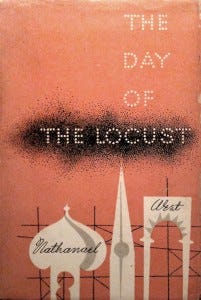
Day of the Locust

Sometimes, that inspiration can be historic in nature: the world of film as muse for a particular novel or story. Nathanael West’s The Day of the Locust looms large here, as the way that the film industry can both inspire and destroy fuels the action within it. More recently, a trio of novels have used various points in the history of the film industry as their settings. Matthew Specktor’s American Dream Machine and Steve Erickson’s Zeroville were largely set as the studio system receded in favor of a more experimental model in the 1960s and 1970s, with Specktor’s novel taking a more realistic approach and Erickson’s blending realism with occasional use of a kind of dream logic. Given that both are largely set behind the scenes, they play like shadow histories of seismic changes in the industry, blending real historical figures with fictional ones. Emma Straub’s Laura Lamont’s Life in Pictures is primarily set a few decades earlier, and follows the career of a young woman determined to seek stardom; it encompasses everything from the heyday of the studio system to the more hardscrabble conditions under which 50s B-movies were made. Its central themes are more about the way that art and creativity can evolve: the established codes of one decade can suddenly seem passé in the next.
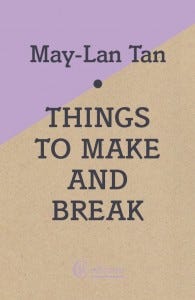
May-Lan Tan book cover

These are stories set in the history of one medium which use techniques and devices that only a different medium can utilize. There are other approaches to invoking the language of film through the language of prose, however. Among the most striking stories in May-Lan Tan’s fantastic collection Things to Make and Break is “Candy Glass,” which takes the film industry as its setting. The first thing that a reader will notice about it is its style: it’s written, at least in part, in screenplay format. Read on and what emerges is a hybrid style, one in which cinematic transitions and dialogue formatting are blended with first-person narration. It’s the sort of description that may look unwieldy when described, but works remarkably well on the page. In this case, the story’s setting helps: the narrator is an actress named Alexa who becomes romantically involved with her stand-in, a woman nicknamed “DC,” for “Driverless Car.” There are questions within the story concerning surfaces, concerning appearances, concerning storytelling, both on a large-scale level and centered around the stories that different characters tell about their lives, or plan to tell in the future. Before reading Tan’s story, I would not have expected something that incorporated screenplay-style elements into the mix to work; now, I’m convinced that they can, under the right circumstances.

There are elements of a similar device in MacDonald Harris’s 1982 novel Screenplay, due for reissue later this year. Screenplay initially begins in a realistic vein, focusing on a wealthy young man named Alys who lives in relative isolation following the deaths of his parents. Alys’s life is an alternately decadent and media-saturated one: he pursues pleasure while also taking in old films and music. The novel takes a surreal turn when he rents a room to an older man named Nesselrode, who speaks of having a connection (or having had a connection) to the film industry. Alys begins to notice things going missing; strangely, though, one of the items that’s vanished from his house seems to show up on screen in a decades-old silent film. Nesselrode eventually leads Alys through a gateway into the silent era of Hollywood–though there’s some ambiguity over whether this is the past or some strange other world. (Or if this stylized version of the past is the only way in which it can be perceived.) When in the past, Alys takes on a series of roles in silent films; when he and the other actors speak, the dialogue appears alone, in all-caps–essentially, the prose equivalent of the way dialogue was conveyed in a silent film. “THE WORKERS ARE STRIKING AGAIN, THEY SHOULD BE PUT DOWN RUTHLESSLY,” is uttered in a melodrama, for instance. It’s a striking touch, and one that emphasizes the unreality of the world to which Alys has traveled.
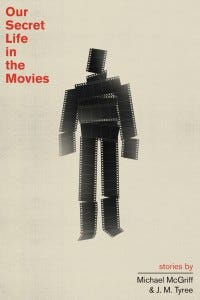
oursecretlife

Another take on expressionistic adaptations of film to prose can be found in Michael McGriff and J.M. Tyree’s collection Our Secret Life in the Movies. In an introduction, the authors speak of viewing numerous films daily, with a goal of taking in the entirety of the Criterion Collection in their watching. The collection that follows, then, contains a pair of stories inspired by dozens of films. Sometimes, the allusions are subtle: the story “Lottery” is inspired by Lynne Ramsey’s film Ratcatcher, and uses some of the same imagery at the service of a brief, haunting scene in a different setting. At others, there’s a more metatextual element: a reference in “Pulp Fiction” to “psychopaths in the novels of Jim Thompson” takes on an added edge if you notice the story’s inspiration: the film Coup de Torchon, which relocates Thompson’s novel Pop. 1280 to West Africa during the French colonial regime there. There are some similarities between the approach taken by McGriff and Tyree and that chosen by Tim Kinsella for his novel Let Go and Go On and On, which fuses the life of actress and photographer Laurie Bird with the characters that she played in a series of films in the 1970s. In his book, Bird’s own life and the characters she played in films like Two-Lane Blacktop and Cockfighter are all elements of the same biography–a psychedelic take on the same shared-universe territory that David Thomson employed in his novel Suspects.

Nicholas Rombes’s novel The Absolution of Roberto Acestes Laing opens with an epigraph from Sergei Eisenstein, but it stakes out a claim to stranger territory. (Disclosure: I have published fiction from Rombes, and he has published fiction of mine.) The title character is a film historian living in isolation; the narrator is a journalist who has sought him out, seeking information on a cache of films by notable directors–Michelangelo Antonioni, David Lynch, and Agnés Varda among them–that Laing allegedly destroyed in the 1990s. And so what follows is, essentially, a series of conversations between two people in which a series of nonexistent films are described, even as the demons of both speakers are slowly, subtly, coaxed to the surface.

This shouldn’t work, but it does. Perhaps it’s that the deconstructive elements of the novel echo another part of the world of cinema: between film school and film criticism, discussion is as much a part of cinema as images projected onto a screen. Rombes’s novel also echoes books on film that are told through dialogues: the landmark Hitchcock/Truffaut, and its spiritual descendant, Cameron Crowe’s Conversations With Wilder. It’s a surreal jolt, though: perhaps the oldest storytelling tradition being used to recap one of the youngest, and medium somewhere between the two in age capturing the whole thing. It’s a welcome versatility, and it’s another demonstration of the agility of prose to echo and deconstruct forms around it.

REVIEW: House of Coates by Brad Zellar

Broken. Busted. Lonely. How a disruption in socially-constructed rules of masculinity make a man no longer a man. I open with those words and that statement because of this: In the mixed-media novel, House of Coates, author Brad Zellar asks, “Have you ever had the feeling that there wasn’t a soul left on the planet that remembered your name or face or the sound of your laugh? That was a Lester question, and his answer was yes.”

Yes, because loneliness makes you helpless, makes you less of a man. So what is it like to be a “dude” who embodies an unaccepted form of masculinity? To be pushed to the margins of society, because you became a living example of loneliness? Let’s look at Zellar’s main character, that lonely man named Lester B. Morrison, to understand this:

“Something had happened to Lester once upon a time. A series of things, actually, that had the cumulative power of a cataclysm. That’s not always the way it is with broken men, but that’s the way it was with Lester. He seemed to have been born with what the Portuguese call saudade, a sort of eternal, metaphysical homesickness. He was lonely, but it wasn’t the loneliness of a man sitting around bored and waiting for someone to call. Lester had an instinctive understanding of the difference between apart and a part, and knew that the syllabic bridge that somehow made belonging out of be and longing was a linguistic deception that was nonetheless incapable of obliterating the terrifying distance between such puzzling and perilous words. The world is one sprawling racket of collaboration, and there are those who don’t carry the collaboration gene.”

Lester’s story of loneliness ultimately shows what happens to a fractured form of masculinity, how it matures as the pages are turned, growing from mere mention to a regular appearance, and eventually becoming a central character. Preceding Lester’s shift from out of the wings and into the center stage, spotlight ablaze, is a descriptive setting that incites the overarching theme of damaged gender expectations. Eventually, Lester emerges from that landscape and becomes loneliness embodied — a personified example of ostracized masculinity.

That’s Lester, and this is how Zellar brings life to him: by making language alive. Zellar’s inventive ways with words and craft techniques such as alliteration and metaphor, such as infusing the setting with emotions and using vivid imagery, House of Coates enlivens Lester and awakens that sense of isolation. Zellar also uses a bit of white space creates a stark tone, a type of hollowness. Brokenness and loneliness then ricochet throughout each sentence.

A feeling of movement within the setting is also key to this novel as Lester interacts with its desolation, “The poisons were making their way through two or three feet of snow and creating swirling scarves of steam in the freezing air.” The text also brings emotions to images; “Every house is a halfway house. Every adult is a vulnerable unit…Every dream has a giant eraser poised above it, just waiting to do its job.” House of Coates, in a way, becomes a testament to disappearing desires as it conveys how we interact with the intersection of language and empty space.

But there’s more. Two words: mixed media. Accompanying these language-born images are sixty-eight full-color photographs. Proceeding that previously quoted sentence about failed dreams, is a picture of a blue mattress shoved between a rock and a wall (interpretation: inaccessible comfort/crushed dreams), and another image of a descending blue stairway with a bare light bulb hanging above it (signifying bleak space). The photographer, Alec Soth, and Zellar’s story intermingle image and text to create the stark tone and vivid imagery that is the emotional core of this novel. The story echoes with loneliness and what it means to be fragmented. Shattered. Destroyed.

By using mixed media, the photographs bring an essential depth to Lester. Speaking about a dollhouse, Zellar says, [Lester] was drawn to that tiny and tidy little world. It looked so manageable, a refuge or sanctuary for the loneliness that was already growing in him…where he would be left entirely alone.” And then, as expected, a few pages later there is an out-of-focus picture of a dollhouse, its left side cut off so that a portion of it is not pictured. Through this dialogue between words and visual reflections, the theme of missing men reverberates throughout each photograph, each paragraph.

Ultimately, House of Coates isn’t about finding some cliché light at the end of a tunnel or a bare light bulb hanging at the bottom of a stairwell; it’s about “finding a way to live in the darkness.”

House of Coates

by Brad Zellar

Powells.com

Was 2014 the Year of the Debut?

Nearly a million books are published each year in the US by some estimates. Even if we trim that number down to just “literary books” (whatever that term means), there are thousands of books filling the shelves each year. As such, it can be a little silly to sum up an etire year of books in any way. And yet, years do seem to have flavors and different books become part of the conversation each time. So, at the risk of violating my own advice from two sentences ago, I’m going to suggest that 2014 might be the year of the debut.

Phil Klay

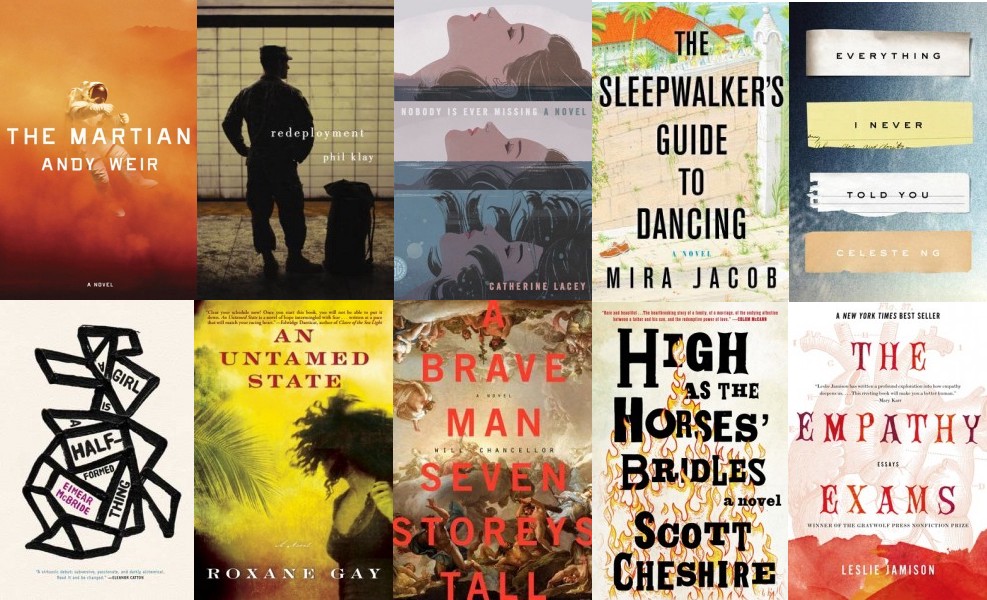
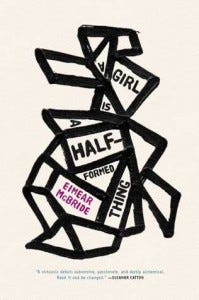
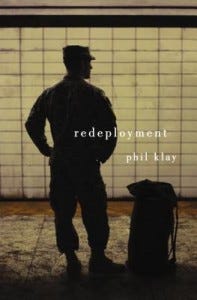
2014 was the year Phil Klay’s debut collection Redeployment won the National Book Award. It was the year Eimear McBride’s A Girl Is a Half-Formed Thing won a half-dozen awards. The year Andy Weir’s The Martian went from self-published debut to SF sensation (and winner of Goodreads choice award in Science Fiction).

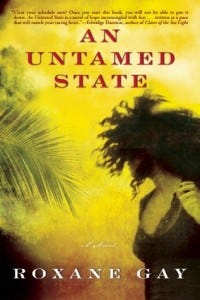
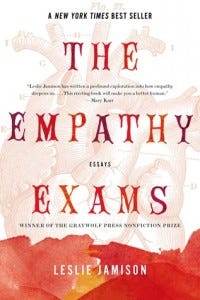
Then there are the books that were not technically first books published, but were the first books to break an author out into a large audience. Leslie Jamison had previously published a novel, but her debut essay collection The Empathy Exams became the rare indie press book to make a the New York Times Bestseller list. Roxane Gay published a short story collection in 2011, but her 2014 debut novel (An Untamed State) and debut essay collection (Bad Feminist) saw her rocket to household name status.

Denis Johnson Laughing Monsters

This is not to say that major established writers didn’t release great books. Marilynne Robinson’s Lila, Denis Johnson’s The Laughing Monsters, David Mitchell’s The Bone Clocks, and Haruki Murakami’s Colorless Tsukuru Tazaki and His Years of Pilgrimage, among others, all got great reviews. Still, those books didn’t dominate the conversation the way that novels from established writers often do. (Think of how the following books controlled the conversation in 2013: The Goldfinch, The Tenth of December, The Circle, Doctor Sleep, Bleeding Edge, and The Flamethrowers.) This year, new voices were making a disproportionate amount of the racket.

So I’m going to call it: 2014 was the year of debuts. If you don’t believe me, here is a (by no means complete!) list of stellar 2014 debuts for your perusal:

Celese Ng

Everything I Never Told You by Celeste Ng

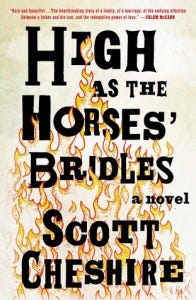
Scott Cheshire book

High as the Horses Bridles by Scott Cheshire

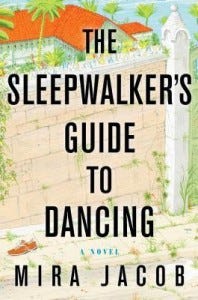
Mira Jacob book

The Sleepwalker’s Guide to Dancing by Mira Jacob

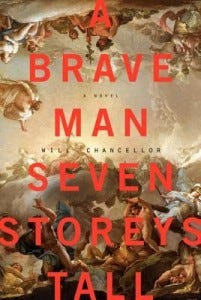
Will Chancellor

A Brave Man Seven Storeys Tall by Will Chancellor

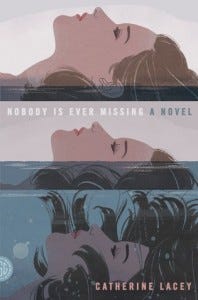
Catherine Lacey

Nobody Is Ever Missing by Catherine Lacey (our review)

Diane Cook book cover

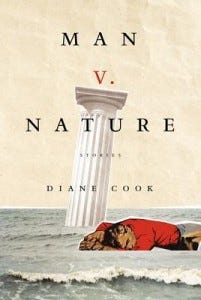
Man V. Nature by Diane Cook (read an excerpt)

lmb

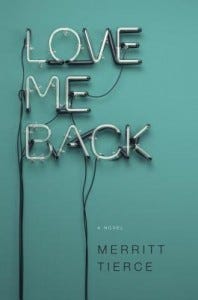
Love Me Back by Merritt Tierce

A replacement life

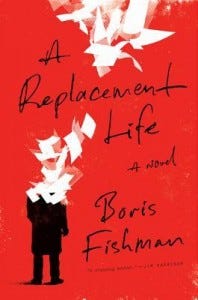
A Replacement Life by Boris Fishman

Saeed Jones book

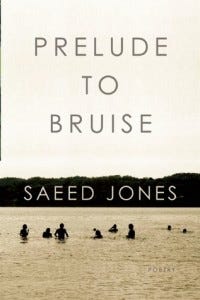
Prelude to Bruise by Saeed Jones

18518285

The Girls from Corona del Mar by Rufi Thorpe

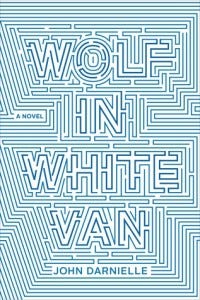
Wolf in White Van

Wolf in White Van by John Darnielle (our interview)

SH

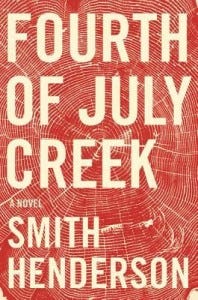
Fourth of July Creek by Smith Henderson

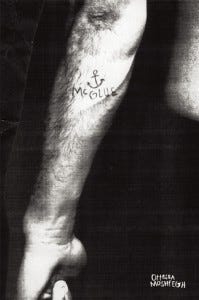
McGlue

McGlue by Ottessa Moshfegh

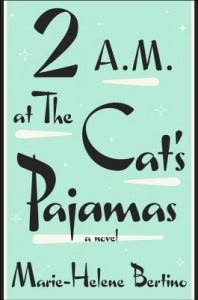
Marie Bertino

2 A.M. at The Cat’s Pajamas by Marie-Helene Bertino

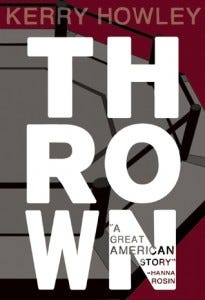
Thrown

Thrown by Kerry Howley

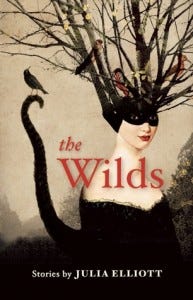
20763852

The Wilds by Julia Elliott

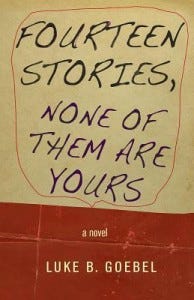
14stories

Fourteen Stories, None of Them Are Yours by Luke B Goebel (read an excerpt)

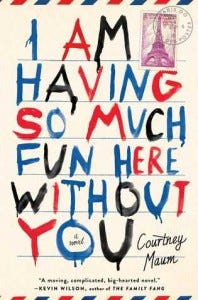
Courtney Maum

I Am Having So Much Fun Here Without You by Courtney Maum

atl

Preparation for the Next Life by Atticus Lish

D Foy

Made to Break by D. Foy

18404251

Cutting Teeth by Julia Fierro

osnos

Age of Ambition: Chasing Fortune, Truth, and Faith in the New China by Evan Osnos

18528065

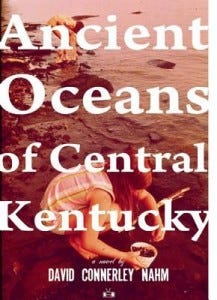
Ancient Oceans of Central Kentucky by David Connerley Nahm

YA

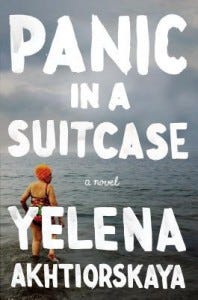
Panic in a Suitcase by Yelena Akhtiorskaya

22237292

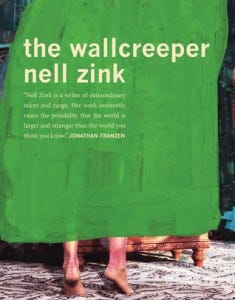
The Wallcreeper by Nell Zink

UTS

An Untamed State by Roxane Gay (read our interview)

TEE

The Empathy Exams by Leslie Jamison

McBride coffee house

A Girl Is a Half-Formed Thing by Eimear McBride

The Martian by Andy Weir

The Martian by Andy Weir

Phil Klay

Redeployment by Phil Klay (read an excerpt)

Safety Tips for Living Alone

by Jim Shepard, recommended by Joshua Ferris

Twenty-five years before Texas Tower No. 4 became one of the Air Force’s most unlikely achievements and most lethal peacetime disasters, marooning each of nineteen Air Force wives including Ellie Phelan, Betty Bakke, Edna Kovarick and Jeannette Laino in their own little stew pots of grief and recrimination, the six year-old Ellie thought of herself as forever stuck in Kansas: someone who would probably never see Chicago, never mind the Atlantic Ocean. Her grandfather wore his old brown duster whatever the weather, and when he rode in her father’s convertible always insisted on sitting dead center in the back seat with a hand on each side of the top to maintain the car’s balance on the road. This was back when the Army was running the Civilian Conservation Corps, the Navy exploring the Pole with Admiral Byrd, and the Air Corps still flying the mail in open cockpit biplanes. Gordon had reminded her of her grandfather, in a way that stirred her up and set her teeth on edge — she’d first noticed him when he’d stood on the Ferris wheel before the ride had begun to make sure another family’s toddlers had been adequately strapped in — and her first words to him when they’d been introduced had been “Who made you the Ferris Wheel Monitor?” And when he’d answered with a grin, “Isn’t it amazing how much guys like me pretend we know what we’re doing?” she’d been shocked by how exhilarating it had been to catch a glimpse of someone who saw the world the way she did.

She’d always been moved and appalled by the confidence that men like her grandfather and Gordon projected when it came to getting a handle on their situations. But like her grandfather he’d had a way of responding to her as if she would come around to the advantages of his caretaking, and she’d surprised herself by not saying no when after a few months of dating he’d asked her to marry him. That night she’d stood in her parents’ room in the dark, annoyed at her turmoil, and had switched on their bedside lamp and told them the news. And when they’d reacted with some of the same dismay that she felt, she’d found herself more and not less resolved to go ahead with the thing.

Her father had pointed out that as a service wife she’d see exotic places and her share of excitement, but she’d also never be able to put down roots or buy a house and year after year she’d get settled in one place and have to disrupt her life and move to another. Her children would be dragged from school to school. Her husband would never earn what he could outside of the service. And most of all, the Air Force would always come first, and if that seemed too hard for her, then she should back out now.

When her mother came into her bedroom a few nights later and asked if she really did know what she was getting herself into, Ellie said that she did. And when her mother scoffed at the idea that her Ellie would ever know why she did anything, Ellie said, “At least I understand that about myself,” and her mother answered “Well, what does that mean?” and Ellie said she didn’t want to talk about it any more.

“Now that we see that you’re not going to change your mind, we give up,” her father announced a few days later, and she didn’t respond to that, either. His final word on the subject was that he hoped that this Gordon understood just how selfish she could be. She lived with her parents for two more months before the wedding and it felt like they exchanged maybe ten words in total. Her mother’s mother came for a visit and didn’t congratulate Ellie on her news but did mention that the military was no place for a woman because the men drank too much and their wives had to raise their children in the unhealthiest climates. She offered as an example the Philippines, that sinkhole of malaria and vice.

They were married by a justice of the peace in Gordon’s childhood home in Pasadena, and her parents came all the way out for the ceremony and left before the reception. They left behind as a wedding present a card that read Take care and all best wishes. Mom. The following week Gordon was posted to a base in upstate New York and Ellie spent a baffled month alone with his parents and then took the Air Force Wives’ Special across the country: Los Angeles to Boston for one hundred and forty dollars, with stops everywhere from Fresno to Providence and seats as hard as benches and twenty infants and children in her compartment alone. The women traveling solo helped the mothers who were the most overwhelmed. Ellie spent the trip crawling under seats to retrieve crayons and shushing babies whose bottles were never the right temperature.

In upstate New York the place Gordon found for her while they waited for quarters on the base was the kind of rooming house that had ropes coiled beneath the bedroom windows instead of fire escapes. She had only her room to herself, with kitchen privileges. “At least it’s quiet,” he told her when he first saw it, and then asked a few days later if her nightly headaches were related to what he’d said about her room.

She was at least relieved that he mostly served his time on the base. Larry was born, and Gordon worked his way up to Captain, and when in 1957 he was offered the command of some kind of new offshore platform, he wanted to request another assignment — since what Air Force officer wanted to squat in a box over the ocean? — but he told Ellie that it was her decision, too. “You have a family, now,” she said. “I just want anything that keeps you closer.” “I wouldn’t get home any more often,” he told her. “And safer,” she said. So after sleeping on it he told her he’d take the command, though afterwards he was so disappointed that he wasn’t himself for weeks.

Read more…

“Safety Tips for Living Alone” is now available exclusively as a Kindle Single and in the App Store

An Amazon.com Book of the Month for December 2014

Electric Literature announces nominees for 2016 Pushcart Prize

by Ben Apatoff

Electric Literature’s Recommended Reading is pleased to announce our nominees for the upcoming Pushcart Prize. The anthology, which has been published every year since 1976 and honors “small presses” writers, featuring short stories, essays, poetry, novel excerpts and more. Our complete list of nominees is below, in alphabetical order by author:

  1. “Man V. Nature” by Diane Cook
  2. “Night Music” by Joe Fassler
  3. “Recovery Period” by Sasha Graybosch
  4. “The Answer” by Mary Morris
  5. “A Faded Sense” by Dina Nayeri
  6. “Here Lies Gerald” by Rob Travieso

Expect the Prize winners to be announced early next year, and learn more about the Pushcart Prize, including past winners and submission guidelines, here.

Star Wars Books to Read While Freaking Out About the Trailer for The Force Awakens

It’s been almost a full decade since there’s been an advanced trailer for a real Star Wars movie, and the new one for The Force Awakens sent a tremor in the Internet Force so strong that even people who don’t like Star Wars were rubbing their heads like Obi-Wan stressing out about exploding planets. Reading is a great way to calm down, so if you’ve got the Star Wars trailer playing non-stop in your brain (and on your phone) and if you want what to read something that will remind you of the Star Wars trailer, I’ve got you covered. I’ve picked a real-deal Star Wars book (or two) for each of the pivotal elements in the trailer for Star Wars Episode VII: The Force Awakens.

As a sort of primer to the list, here’s something everyone should probably know about Star Wars books: their role in how to think about Star Wars is confusing. Here’s the quick real talk. When George Lucas (the creator of Star Wars) was still in charge of Star Wars, his policy was this: nothing in the books or comics “counts.” After Lucas sold Star Wars off in 2012, and allowed the writing of these new movies to be someone other than him, a lot of people hoped that stuff from the 100s of books and comics could be incorporated into the new films, of which The Force Awakens, will be the first. Then, this year, the Lucas Story Group said that all the “Expanded Universe” (those books and comics) were all non-canon, but any new books and cartoons now are. The Internet made a big deal of this.

And yet, when we get real, historically, what the Story Group did isn’t any different than Lucas’s policy, just a little more political. These days, “real Star Wars” can have deniability over a novel plotline being canon or not, but there’s never been a real line in the Tatooine sand over canonicity, at all. In writing the screenplay for The Phantom Menace Lucas straight-up borrowed from Timothy Zahn’s Heir to the Empire novel by retroactively naming and depicting the planet Coruscant just as Zahn did in his Star Wars books. Because of his policy, Lucas wasn’t beholden to have the history of the planet be identical to the way Zahn described it, but he used the planet which — though living in his fictional universe — wasn’t his planet. There are countless other examples of Star Wars changing its story and drawing upon the novels and comic books to feed into the onscreen films and cartoons. And just because all these old books “aren’t canon,” doesn’t mean J.J. Abrams, Michael Ardnt, Lawrence Kasdan, Simon Kinberg, and whoever else wrote the script, won’t cherry-pick from stuff they like. Below are some of those possibilities.

Star Wars trailer

Stormtroopers With Real Identities

Mos Eisley book cover

The first person we see popping up in the trailer is John Boyega’s character, who appears to be a helmetless Stormtrooper. Of course, Boyega might only be disguised as a Stormtrooper, but a lot of the rumor mill seems to indicate he actually does work as a trooper. The idea that there were “real” people under the helmets and not clones is actually older than the idea that the Stormtroopers were clones. In a great anthology called Tales from the Mos Eisley Cantina, there’s a short story called “When the Desert Winds Turn,” by Doug Beason. This story is all about a Stormtrooper named Davin Felth and in it we learn Davin is one of the guys tracking down C-3PO and R2-D2 in the original movie. But, after a few revelations of what’s happened in Davin’s past, he realizes he doesn’t like the Empire, he hates it, and it’s up to him to become a good person. If John Boyega is playing a Stormtrooper turned good, it’s possible there’s a bit of mythological lineage connected to Davin Felth. Unrelated to stormtroopers,Tales from the Mos Eisley Cantina also rocks as it contains one of the few entries in Star Wars prose having to do with time travel: a story called “One Last Night in the Mos Eisley Cantina,” written by husband and wife sci-fi duo Judith and Garfield Reeves-Stevens.

Star Wars trailer shot

Solo/Skywalker Family Resemblance

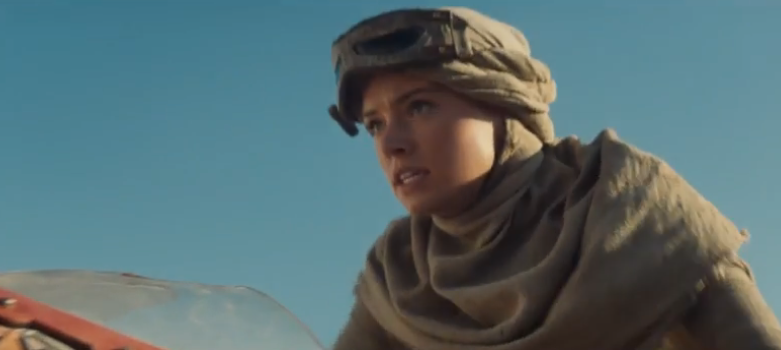
Daisy Ridley’s character is featured prominently in the trailer riding an awesome speeder, which the Internet seems to think is a popsicle stick. (I think it look like part of an old podracer that she’s retrofitted, but whatever.) While the rumored named of Ridley’s character is supposedly “Kira,” there’s no doubt that she looks like she’s part of Natalie Portman/Carrie Fisher’s family line. In the existing Star Wars novels, Leia and Han have twins: Jaina and Jacen. They’re both born in The Last Command by Timothy Zahn , but end up starring in their own book series called The Young Jedi Knights, by Kevin J. Anderson. Jaina Solo, ends up being the nicer person of the two, and Jacen, after several, several books, eventually turns to the Dark Side in a novel called Legacy of the Force: Sacrifice by Karen Traviss. (There are nine books alone in the Legacy of the Force series.) Some rumors have suggested Adam Driver is playing Han Solo’s son, and also that Driver is playing the villain, both would seem to check out with what we’ve seen the trailer, and read in these books — assuming the figure with the big-bad red lightsaber is Adam Driver.

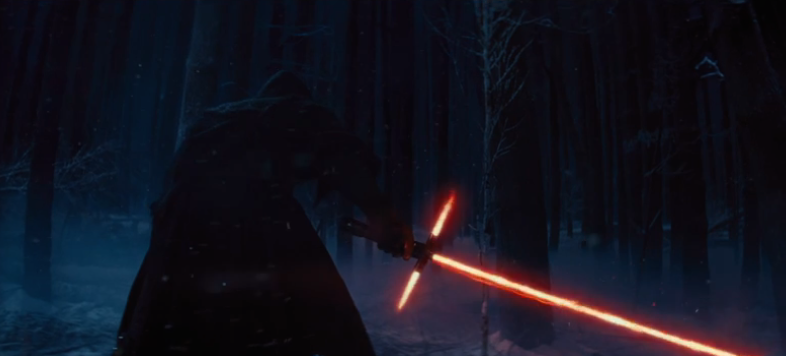
crossguard lightsaber

Crossguard Saber

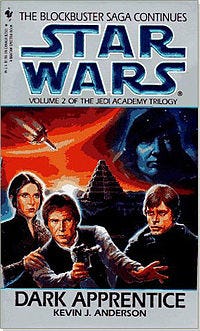
Dark Apprentice book cover

New Star Wars movies wouldn’t be new Star Wars movies if they didn’t really continue to screw with established ligthsaber rules. This tradition goes all the way back to Return of the Jedi, when Luke busted out a green lightsaber even though, at that point, we only thought red and blue were allowed. Then, in 1999, Darth Maul got a double-bladed staff thing, and by 2005 we had the faux-robotic-spider-jerk General Grievous wielding four sabers at once. Compared to the insanity of the prequels, the lightsaber in the new trailer is fairly tame. As many, many have pointed out already, it looks like it has a “crossguard” lightsaber section. Lots of lightsaber variants have popped up in Star Wars book and comic books, and in fact, double-bladed sabers existed in the Tales of Jedi comics series way before Darth Maul was around. Meanwhile, a lightsaber with a crossguard has been specifically seen in the Star Wars comic one-off Purge (primarily written by John Ostrander.) Here, a Jedi Knight named Robilo Darte has a little mini-lightsaber coming out of the handle of his lightsaber. Up until this crossguard seen in the new trailer, this is the only other depiction of this kind of lightsaber. BUT, an extra-long lightsaber was first described in the Kevin J. Anderson novel Dark Apprentice in which a guy named Gantoris made himself a dual-phase lightsaber.

xwings

Rogue Squadron

The return of the iconic X-Wing fighters made a lot of fans happy, though many are still wondering who that pilot might be! Oscar Isaac’s character is still totally unnamed at this point, but it seems likely he’s flying in some sort iteration of Rogue Squadron, the elite group fighter group which was born out of the few dudes who managed to survive fighting the first Death Star. In the Michael A. Stackpole and Aaron Allston X-Wing books, Rogue Squadron is depicted as being part of the New Republic, which might explain the blue stripes on these new X-Wings. (They’re not the Rebels after they win the war.) Something few have pointed out about these X-Wings: they don’t seem to have little droids sticking out of the backs of them! At least not ones we can see in the trailer! If that’s the case, it’s possible these are some of the special X-Wings from the novel The New Rebellion by Kristine Kathryn Rusch. Those ones also didn’t need a little droid in the back, though that ended up being a problem because of some tricky sabotage. As far as who Oscar Isaac’s character could be? There’s almost not one single person who doesn’t fly an X-Wing at some point in a Star Wars book or comic book, so, he could literally be anyone.

The Star Wars: The Force Awakens trailer may have given us more questions than answers, but for now, these books will be with you, always. As a general rule, these books can oddly be read by anyone with passing interest in Star Wars. If you don’t understand a particular plot detail, that’s okay. Even hardcore Star Wars fans don’t know everything going on in all of these books, movies, and holo-recordings. And that’s what makes the whole Star Wars thing so addicting. We’ll never totally understand it.
REVIEW: Our Secret Life in the Movies by Michael McGriff and J.M. Tyree

There’s an interesting conceit to Our Secret Life in the Movies: Michael McGriff and J. M. Tyree wrote this collection of short stories together as they worked their way through the Criterion Collection. The pair viewed each piece together, then they each wrote a piece inspired by the film. These stories are paired in Our Secret Life, without bylines, and listed by the source of their inspiration. “We all have a secret life in the movies,” they say, “in which the pictures seep through our dreams until fantasy and reality become hopelessly blurred. We are in the movies, and the movies are in us.”

What emerges over the course of Our Secret Life is unique and intimate. Because of their proximity, one narrative blends into the next. The duality of side-by-side chapters allows for a kind of cross-pollination that’s different than what an author can accomplish in a single, linear narrative. These are stories in conversation with each other. Not only does the reader connect one plot line to the next and begin to recognize threads of both story and prose style, but McGriff and Tyree want us to see how those two perspectives fit together.
This is not to say that Our Secret Life is easily classified as one type of short story collection. It’s a number of things, all at once. This is microfiction — 80 or so tiny pieces that stand alone, yet each story is connected like a linked collection or dual novel-in-stories. It’s also a mashup of images and recurring plot points, but the beauty of Our Secret Life lies in the delicacy of language the authors use when describing details of place and time. In “Supply and Demand,”inspired by Jennifer Baichwal’s Manufactured Landscapes, the narrator muses:

A snapshot taken before we moved out to the country shows my group of friends from the neighborhood, kids with missing teeth and bad futures: a heroin OD, a runaway, a drug dealer, an alcoholic, a settler in the West Bank. In the eastern section of the city, the stink of burnt pig sometimes wafted over from the Oscar Mayer plant. Bullies dangled kids over the befouled river from the bridge near the train tracks and mocked my orthopedic shoes. We had a green Ford Pinto, a car that news reports told us sometimes blew up in rear-end collisions. My mom worked late teaching Lamaze classes to supplement her welfare checks, so I generally took the city bus home by myself…

The voices in each story are distinctly American, and McGriff and Tyree each capture the essence of a decade. Despite the specificity of minutia, McGriff and Tyree write with intentional vagueness of plot that is a product of their structural choices. If the collection is read like a novel, pieces are intentionally left out. But even though we see these characters in the briefest of moments, the overall effect is a collage of regret for lost youth — the kind of nostalgia and sadness we feel for things having turned out not quite like we hoped.

Several ideas serve as touchstones throughout the fragmented narrative: High schools. Car crashes. Reaganomics. Drugs. Teenagers, specifically young men. Restrictive parenting. Working class families, each who seem to know only a piece of each other’s story, as in “Blatz,”inspired by Mon Oncle by Jacques Tati:

The next guy that moved into the apartment tipped over a candle in his sleep, and the firefighters destroyed two floors of the building with their hoses and axes putting out the fire. The owner would have been thrilled if the whole building burned down: more condos, break the grip of rent control. The super and his brother in the wheelchair and their sons and daughters and nieces and nephews, what about their fates? I wish everybody a boring life in the suburbs with a space-age metal toaster and a two-car garage with an automatic door…

The story about the candle surfaces in another story as a distant detail, a rumor. Many points of connection can be found within the short narratives, and keeping them anonymous means that the reader begins to think of them as two parts of the same whole. McGriff and Tyree weave something cohesive, something unified, from the loose ends of so many different film narratives. Sometimes the link between film and story is immediately clear. In other cases the title of the film simply sets the tone for the story that follows.

As Our Secret Life nears its end, its plot lines become less tangible and more surreal. In “The Man Who Married an Egg,”after Blade Runner, a man finds companionship in a brown egg. “By day she sits on the kitchen table in a stand made from a coat hanger. They listen to classical music on the radio and complain about the lack of twentieth century composers and the DJ’s droning, airy voice.” This is a lighthearted moment in a series of what are mostly heavy stories. But it doesn’t just function as a breather between more serious moments; it serves to highlight the gritty pedestrian nature of the rest of the collection.

It would be an interesting exercise to view each film and then read the story that inspired it, but I’m not sure it’s necessary. Nor is having viewed them all in order for the collection to make sense. Our Secret Life in the Movies is work seeded in another artistic realm, one that has something entirely unique to say, artful in its own right.

Our Secret Life in the Movies

by Michael McGriff and J.M. Tyree

Powells.com

President Obama’s Indie Bookstore Haul

To celebrate Small Business Saturday, President Obama and his daughters went to Politics & Prose and bought 17 books. You can watch a short video of their purchases above. The Obama family bought Richard Flanagan’s Booker winning novel, Jacqueline Woodson’s National Book Award winning “Brown Girl Dreaming,” the latest Denis Johnson novel, and three books in the epic animal fantasy Redwall series. Here is the entire list of books according to the White House:

  • “The Narrow Road to the Deep North” by Richard Flanagan
  • “The Laughing Monsters” by Denis Johnson
  • “All the Light We Cannot See” by Anthony Doerr
  • “Heart of Darkness” by Joseph Conrad
  • “Nora Webster” by Colm Toibin
  • “Being Mortal: Medicine and What Matters in the End” by Atul Gawande
  • “Junie B. Jones and a Little Monkey Business” by Barbara Park
  • “A Barnyard Collection: Click, Clack, Moo and More” by Doreen Cronin
  • “I Spy Sticker Book and Picture Riddles” by Jean Marzollo
  • “Nuts to You” by Lynn Rae Perkins
  • “Junie B. Jones and the Stupid Smelly Bus” by Barbara Park
  • “Brown Girl Dreaming” by Jacqueline Woodson
  • “Redwall” by Brian Jacques
  • “Mossflower” by Brian Jacques
  • “Mattimeo” by Brian Jacques
  • “Cartwheeling in Thunderstorms” by Katherine Rundell
  • “Age of Ambition: Chasing Fortune, Truth and Faith in the New China” by Evan Osnos