INFOGRAPHIC: How Long Does It Take to Read Popular Books?

Ever wondered how long it takes to read The Great Gatsby (2.62 hours) compared to Atlas Shrugged (31.22 hours)? If so, you’ll like this infographic by Personal Creations. It’s similar to an infographic that we made a few months ago comparing the word count of A Song of Ice and Fire to other novels. The times are based on a reading rate of 300 words per minute.

How Long Does it Take to Read

REVIEW: Fourteen Stories, None of Them Are Yours by Luke B. Goebel

“I feel the ink,” Luke B. Goebel writes toward the beginning of this terrific jalopy of a debut. He’s describing a medical procedure in the hospital; the ink is the dye IVed into him to uncover whatever’s wrong on his insides. It’s an apt analogy for what Goebel is doing throughout the entirety of the book. In Fourteen Stories, None of Them are Yours, the ink Goebel spills is diagnostic; lost loves and joys are his condition, language a way to self-medicate toward recovery.

We start with pain scales and flashbacks. First, the hospital bed, where our first person hero enjoys something like a deathbed catharsis, but in a scalpel-ly meticulous language to die for. He tells us of best lovers and best lost ones. We meet Catherine, the girlfriend, who left our hero for a European; Carl, the brother who passed away; the “old Indian Jew nut” teacher and proxy father figure who, in helping this narrator find a voice in his writing, guided him through his living.

There is little divide between life and writing for Goebel’s narrator. From the beginning of the book onward, ink, literally, is in his blood. But just as ink needs a page, Goebel’s heart needs a body to beat for. The book is most successful in the story-chapters that explore moments of remembered relationships.

We return again and again to Catherine, the lost love whose “name is like space and what there is unto itself that I saw out there.” Who is “a beauty full of brains and a good heart.” She leaves the narrator physically, for “a Spanish man named Manuelo who’d she met in Paris,” but by writing them he keeps the best moments alive. We see her losing half a tooth on their first date again. Naked in his bed again. Holding him again. When she leaves him again, we start over. We rewrite to relive.

Remembered alongside Catherine there is/was Carl, the older brother, whose early death is returned to over and over and leaves an absence as large as Catherine’s. Carl directs the narrator’s ink-filled heart to spew forth, even in reincarnating revisions:

…Neil Young was in the room over on the record wheel. (I hadn’t lost my brother, Carl, yet. Carl left us a few weeks ago. Over two months ago. (Over one year ago.) Carl is gone. Carl died in his bed. [Two years ago.] There isn’t any more Carl on this planet we are stuck to. Not here, in terms of a body, in terms of our living Carl. In terms of that Carl is my only brother. My older brother.

Life and nature work toward a balance; blood and ink, like water, take the shape of their container. Goebel’s heart takes us on manic trips through America with the heart-filling Jewely, a “part Husky (Dingo really)” companion. We go eagle feather-hunting for the old teacher in New York City: “My father (or not my father, but the great man I am speaking of as is he is my father).” And we take linguistic trips into the third person, even if not really: “It was time to play the cowboy. One got a ranch…One was he. (He was me, why pretend?) He (why say he again? I’ll tell you why: to give the “I” word a break.)”

His heart keeps pumping, the page keeps filling, we can’t stop reading. The book is above all new and unique. Goebel’s voice spills out as if he can’t control it, a kind of peyote trip on the page, but never does he cross the line in a way that leaves the reader feeling lost. For all the “crazy” (and actual peyote) in the book, you follow eagerly, hungrily, to find what’s next.

And that’s where the book’s few failures appear. The conflicting title of the book — “Fourteen stories, but a novel?” — betrays a kind of conflicting assemblage of the story-chapters. Three of these stick out as better suited to the former label than the latter. “Apache,” for instance, previously published in the Green Mountains Review, fits thematically in the book, but is outside the larger scope of the narrative heart (there is no Catherine, no Carl, no teacher, no Jewely). In this way, “Apache” feels more like a footnote to the larger novel, an aside that says, “Oh, since I’m telling you all this about writing, here’re some examples of other stories I wrote.”

Really, though, the pleasures of Fourteen Stories, None of Them Are Yours come so fast and frequent you’ll even overlook that there are, actually, only thirteen stories in the table of contents. That is, until the end, when our hero makes the point he’s been getting at all along: “Here’s the last story: Books are over. Don’t read a book, don’t read any book. Don’t read this book.” In other words, don’t read: write.

In other words, live.

Fourteen Stories, None of Them Are Yours

by Luke B. Goebel

Powells.com

“A Faded Sense” by Dina Nayeri

Recommended by Electric Literature

Original Fiction

Isaac sips scotch with slow winces and tells me you can use stomach fat to fill the hole left from excising a neck tumor. “That’s the simple part. I’d let a first year resident do it.” We sit at a table close to the door and every few minutes a chilly wind follows a customer into the bar. A dried-out lime wedge flung partway between us leaks a drop of gin onto the wood.

How much can a first year resident know? I used to tell my brother Kian that if you gave me five years with no distractions, I could do anything: surgery, rocket science, ice dancing. He sneered, a reaction I had counted on when I said it. “What happened to you?” he once asked me, all disdain and misplaced pity. He was a little drunk. “It’s like your arrogance and actual uselessness are wandering around in all that dark. When they finally bump into each other, you’ll probably commit suicide.”

He said that before Arash — of course. I’m supposed to do everyone the courtesy of forgetting. I only remember the one comment, and another, more recently, at Norooz dinner. Kian, after a few glasses: “You know why Sara dates so much? ’Cause when other people are alone, they get to be with a sane person.”

Since last summer, I go on dates for the stories, and to calm my panicky friends, but really just for the stories. I tell the men I’m divorced. The truth is that Arash died in a motorcycle accident on the NJ Turnpike the day after he told me he wanted to leave. He was rushing to a meeting with an author at Princeton when a rig in front of him had a blowout. He swerved to avoid the chunks of tire and hit something that sent him into the wheel of the truck. A witness said he flipped his bike four times. So, in a way, the awful conversation of the previous morning didn’t happen. He never stroked my chin with one hand, never massaged my palm and dropped his voice and said, “Sara joon, it’s perfectly possible for me to love you and to feel that our marriage isn’t working. Those two sentiments are possible for me.”

But, wherever Arash has gone, we both know that he did say those words, and so calling myself divorced seems more honest. I have a hundred ways of finding these men — through friends, online, in magazine articles about loss or illness or war. I ask them out, they always say yes, and we have a good time together. I found Isaac quoted in a piece on throat surgery.

The bartender plays strange music. After Laughter by Wendy René.

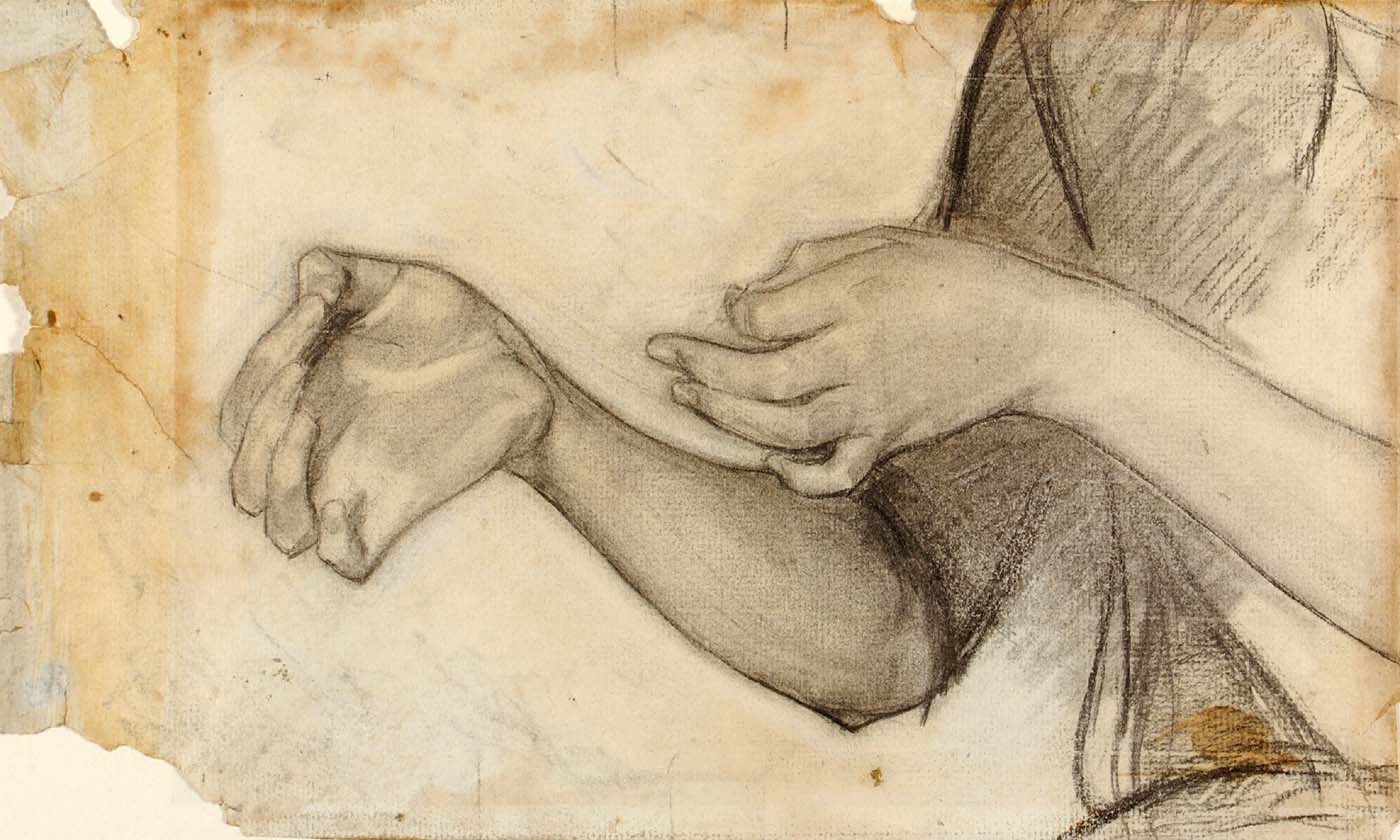
I rub my palms together, then against my bracelets. This morning I spent half an hour grinding my fingers into a bed of uncooked rice, turning the flesh into a tenderized ruin as I hunted for deeper sensation. Some days the numbness and false itching intensify and I have the urge to press sharp things into the pits of my cupped hands. To wrap my fingers around a cactus. To massage a bunch of pine needles. Once I joked that crucifixion might be pleasurable. Maman gasped. Kian laughed into his coffee mug. “Jesus, Sara. Stop making it a thing.”

Isaac has careful, elegant hands — they’re his livelihood.

Lately I’ve been pulling the bricks out of Arash’s office wall, one by one. It was a healing project at first — building a reading nook. But then I thought of our last trip together to the north of Iran, the watery rice fields and thick, wet mountainside foliage near the Caspian Sea. We spent a lot of time with our notebooks open in fish fry shacks, the ones set up on stilts just past the shore or on a pier. In the mornings we hunted stories that we offered to each other, like wedding sweets, over simple fish lunches seasoned by the salt in the open air. Dramatic sagas of love and sex made Arash laugh, so I investigated those while he did real work — interviewing ex-prisoners. All day long I spoke to fishermen’s wives who made up superstitions as they cooked. Wrinkled and bent, they delighted in pulling folksy gems out of the ether while the waves whooshed up and licked the windowsills of their fish shacks and the last filets went into the frying pan. A surprising lot of their wisdom had to do with stuffing things into cracks of walls for luck, for blessings, for warding off jinns. “For a passionate marriage, put jasmine and orange blossom in the wall every day.” “For the life to return to your poor hands, put chicken beaks and feet in the cracks.”

When I complained about my lot (his story was going to Harper’s and I was kicking it with grandmas), Arash said, Don’t judge the work you’re given, Sara joon. Just write the truth. Wishing back that moment, I change it so I don’t roll my eyes.

So now the office wall: it’s not some kind of magical thinking madness. I don’t have any delusions that he’ll come back hungry for material. I want to honor his cheesy Isfahani poet-boy philosophy. So I started typing up my callus hearted attempts at new love and stuffing them in the holes behind the bricks — for you, Arash joon. For a death filled with the truest stories. May you rest in eternal drama.

The best stories, Arash would say, aren’t complicated or grand. Forget about war and politics and death and suffering. Sure, those pay the bills, but for the good stuff, dig down to the bruised bones. The whine of sitting-room poetry, dusty drawings brushed with turmeric and crushed petals, two overplucked strings beside two broken ones. The last joyful noise in a crush of wailing.

I stare at my date, this good surgeon, his hopeful face, a little pocked and somehow reminiscent of an overdrawn cartoon mouse (I hate to mention Iranian noses), but eager, a kaleidoscope of expressions that make him beautiful. Who goes on a first date with hope anymore? How did he hang on to it after New York, after tumors and tsunamis and the Arab Spring… after cutting into his first corpse? Wounds are ugly. Doctors must crave to get away from them; Isaac probably doesn’t get that many nights off just to be drunk and happy.

“So then,” I say, hands gesturing, because isn’t it nice when you lose your own thread for a minute and peek at another part of the tapestry? “You put a slice of fat from the belly into the tumor hole.” Isaac nods and leans in. He seems a different kind of Iranian — rational and calm, and Jewish. I like it. “How do you know the tumor won’t grow back?” He shrugs playfully and touches the top of my hand. I let him. “Do you melt the fat first? And how much fat-slicing has a first year intern done already?” He laughs gently, privately, like he’s just seen a small sign on the table, a ladybug or some Persian script carved into the wood. I ask, “How big is the slice?”

What grotesque behavior — why do I always want to become these men? Why do I want to crawl not into their clothes, but into their skin?

And yet, slowly, his smile changes, it melts and drips past his lips and cheeks. The shy doctor is happy right now. I’ve made him happy with my silly questions. What I’m thinking is that I would’ve killed at his job — would’ve made a badass lady surgeon, the kind that makes jokes and strokes your nose as you’re slipping under.

Not that the written word is a thing to dabble in, or scoff at, or feel like you have to explain on blind dates. Truth and beauty, Arash would say. You and me, Sara joon, we’re in it for truth and beauty.

“I might go to Kabul,” I say, out of nowhere. “Next summer. Maybe to look for stories.” Then, because I feel like a fraud, aping my dead husband like a fake widow with no plan of her own, I add, “Not political stories like Arash wrote. I want to write about the hidden stuff. The stuff that gives people joy… Food, music, grandmothers.”

“What a cool life,” Isaac says. “Are you close to your grandmothers?” He doesn’t ask who Arash is.

Two hours into the blind date, I’m down to the ice in my third gin-and-tonic and trying to be purposeful about what I notice in Isaac’s face and mannerisms. He brags in an affected sort of way. Insecure asides like, “I’ve tended to lose interest every time the chase is over.” I’m tired. There’s no new story here. He fixes necks.

He says, “You know, a measure of beauty is the distance between the arch of the eyebrow and the brow bone. Yours is high, especially when you raise that one.”

“I’ll thank Uma the wax lady.” Why did I say that? Why do I ever say things?

Isaac’s lips curl in two places when he talks, a slow rolling like caterpillars waking. It’s strange and intensely sexy. He talks with (and about) his hands a lot. I would bet my meager fortune that he has moisturizer in his jacket pocket. I focus on the movement of his thumbs over mine. They’re very deliberate.

“Tell me about the scars,” Isaac says, out of nowhere.

It’s too late to hide them, and he’s still touching one of my fingers, so I tell him. I never have trouble sharing stories, even when I do have trouble, and then I tell them better. “People don’t usually notice,” I finish. I untangle my fingers from his and slip my hands down onto my lap. “They’re so faint now.”

He nods, “Scars are interesting. I have one on my jaw. See?” he lifts his chin.

I feel my charm draining. The bar smells strongly of grapefruit. “It’s time to go home,” I tell him. He pays for our drinks and says he’ll call. I pretend I don’t know that he’ll write in precisely four days, an email he’ll draft tonight and save. He seems incapable of writing two hours from now. Two hours from now, he’ll be carving up and negating all our best moments in his head — the truest ones that need no editing.

In the morning I call my brother, when I know he’ll be walking home from the gym, cheerful and not screening. I tell him about my night. He listens and listens, offering nothing. “Whatever feels right,” he says twice before I ask him what it is exactly that he’s judging about my story of Isaac the surgeon. He takes a moment. “I just think it’s lame and artificial to go out with people only because they’re Iranian.”

“I didn’t though,” I mutter. I want to add that this isn’t about Arash. It just comforts me to speak Persian. It makes me feel like I’m using my education — Persian is an advantage I should have been granted at birth, but instead won the hard way, a reward for study and hardship. Each syllable is savory and complex on the tongue, a new kind of nourishment, like morsels of food you’ve chopped and seasoned and cooked with your own hand, every spice and herb distinguishable to your palate. I want to tell Kian that speaking Farsi to men makes me feel something like love, and isn’t it a relief to feel love now and then? Love for the universe, for people as a whole rather than just one? Doesn’t it make the world open up, like a knife twisting open the hard shell of a chestnut? But I’m too embarrassed.

“Just go out on a real date,” he says. “Go out with a white lawyer.”

“I like the ones that can do something with their hands… a hard skill. I don’t know…” I stare at my own hands. Do I blame Kian for them? Yes, but…

“You mean, like you?” Ouch. He adds, in a kinder tone. “You’re being a snob.”

But once I restrung a rope of pearls in twenty minutes.

Once I pushed out a bead stuck in a toy train with a needle.

Once I fished an earring from behind the oven with a wire hanger.

When we were teenagers, on a summer trip to Tehran, Kian and I tried to restore a beat-up Toyota, not an unusual project in a country where everything is turning to junk, and I badly burned both my palms. It’s funny, a lifetime of mild punishment for a single bad instinct. Kian was fumbling over the engine — he’d taken a handful of lessons from a local mechanic. In the daytimes, if I was bored, I helped. The rod was missing, so he asked me to hold the hood open. When it got hot, I dropped it, then tripped trying to keep it from landing on his head. I fell onto my hands right on the scorching engine and, panicking, pressed down harder trying to lift myself. Kian wrapped my hands in a wet t-shirt; it stuck to my blisters when it was peeled back later at the hospital. The scars have diminished now — aside from the strange lines, the hardened, uneven skin — but for a month I lost all use and sensation in both my hands. During those weeks, I watched my mother wash basmati rice and bake cakes with her sisters, and for the first time I was jealous, terrified that I would never do anything so mundane. Now, it’s just a faded sense, like trying to appreciate silk through dish gloves, or the watery trickling music of a harp through a thick door. I’ve mostly forgotten it.

Kian is right. Since Arash asked for a divorce (and then died), I’ve only written a few stories — if you want to call that work.

I’m defeated, but I persist. “Can you be a snob against a white lawyer? How?”

“You’re a trade snob.” He laughs in that Kian way, eyes smiling (I know) as he climbs the dark staircase to his Lower East Side studio. I drop the argument. Before we hang up he says, his keys jingling in his door, “Just get your shit together, sis.”

Later I visit Maman’s cake shop on Bowery. I find her in the back, her hands positioned six inches apart on the plastic piping bag, fingers kneading, elbows locked at an angle, eyeglasses falling onto her nose. Her tiny body hovers over the modest cake like a craftsman over some enormous sculpture, squeezing out her rosettes with such care. When I tell her about my date, she says, “Is still so early.”

I get a break tonight. I’m hanging out with Andy, a gangly bass guitarist who tends bar on off nights. Often he shows up to wherever we’re going with cuts on his knuckles from broken glass, or drying scars slicing his unshaven chin. I don’t have to be smart for Andy. I don’t even have to get ready. I can just arrive at the bar wearing my day clothes, drink too much, eat fries, say stupid shit, and he’ll still fuck me with his eyes. He’s bought us tickets to a jazz band, a sit-down space with plastic wine glasses filled to the rim for five dollars.

Before we’ve exchanged three sentences, Andy kisses me on the steps leading down to the basement venue. It’s our first kiss. He’s standing on a step below me, his face close, so he just decides this is a good way to spend our time stuck in line. Other people linger above and below us on the steps, trapped there, watching us kiss. I imagine Isaac, his careful caterpillar lips, incapable of boldness. Somehow this knowledge thrills me; it electrifies Andy’s fingertips as they crawl down my spine.

I want to scratch my palms on his beard.

At the table, Andy sits on the couch side and pulls me beside him, roughly, by the elbow. He wraps me in both his arms like I’m his discarded coat, like he’s trying to fold me over. All through the set, he taps to the music on my thighs, on my belly, on my knees. Sometimes he tastes my earlobe when the beat is slow. Once in a while, his fingers follow the chords on my arms and legs; he slips his hand under my skirt and plucks the elastic of my underwear like strings, our own secret set. Even with my ignorance of jazz, I can feel that he’s following the song exactly. If I close my eyes, I have the strange experience of becoming the double bass.

When Andy likes a riff, he moans, “mmm hmmm,” as if co-signing every note. He applauds by clapping my thigh, then, as the music dies down, slides his free hand around my neck. The gesture feels like a violation, but I like it. The room is chilly and the bassist rests his hand on his instrument’s neck in exactly the same way.

A sudden, unwelcome memory of Arash’s hands on my cheeks rouses a wave of nausea to the spot Andy is gripping. I hurry to replace the image with Isaac’s tentative, precise fingers on mine, a thumb moving in circles, casually exploring my scars. Think of all that his fingers must know, given years of training: how to judge a shiver, a callous, a spot of heat. He is heightened in the same ways I’m dulled.

When the band takes a break, Andy stares into my eyes in an uncomfortable way, as if he thinks we’re in love. I glance around at the mostly college crowd. I want to chatter, to keep him from staring at me with all the expectation of a dim-witted child. “If there was a nuclear war, who do you think we’d need to rebuild the world?”

He squeezes my arms. He’s annoyed. “Artists,” he says without a thought.

“That’s dumb. I’m serious… who would be indispensable?”

He loosens his grip. “I am being serious. That’s my answer.”

“So you’re bleeding from an artery and you want a pianist or a cake designer or guy who makes bird sculptures? Come on, Andy.”

“Cake is food,” he says. “And I assume people still have souls?” His arms tense and I can feel him trying to decide whether to untangle from me. He doesn’t want to, but is insulted and thinks that he should, that another man would.

“Don’t be a priss, Andy. I’m too tired to deal with your shit.”

“My shit?” he says with mock indignation and pushes his hand roughly up my shirt. He pinches the flesh below my arm. “Can’t deal with my shit, says the lady.” He tickles me hard. “Well then… ”

I chug the rest of my wine and burp into my hand.

“Sexy,” he says — or something like that. Something that implies that I should want to be sexy for him. Men have all kinds of nerve. I am sleepy and content.

“Move over.” I force his arms back around my body so I can lie back against him. For the rest of the night, Andy’s hand is inside my shirt, tapping out the rhythm on the skin just below my breast, where I have a mole he seems to have discovered.

I only gained back about forty percent of the sensation in my hands, and even that took almost a year. This means that, even now, I find myself touching things without knowing. Sometimes I drop things, but not often. Most of what I’ve lost is fine touch: the detail on the face of a coin, the sensation of feathers, a kiss on the palm, the tickle of stubble. Some of these I was too young to know and so they’re lost from my collected experience. What should it feel like when I touch Andy’s face just after he’s shaved? And a day later? Often I press when I mean only to touch. I shake hands and pet animals too firmly. I check the water temperature in the shower with my wrists. But, as I grow older, fewer people notice. I’ve learned to temper my natural instincts to press and squeeze and scratch at my rough palms.

After the concert Andy holds my hand and we stand on the sidewalk near the Village Vanguard, checking our phones. Groups of tourists, NYU students, and music geeks hurry past us as we linger. I have an email from Isaac, sooner than I expected. He says last night was fun, asks me to dinner. “I knew he’d write,” I say out loud.

“You knew who’d write?” says Andy, glancing up from his phone.

“This doctor from last night.” Andy doesn’t drop my hand. Just smirks at me for a beat too long, trying to make me uncomfortable, then turns back to his phone. He has a specific way of holding my hand, gripping tightly, every square millimeter of skin compressed against skin. He never loosens up. Sometimes with our fingers interlaced, he rubs his palm in an aggressive circle against mine, or slips his thumb between our clutched hands and presses hard, drawing a long line. I told him about my accident the first day we met, when I was drinking alone at his bar shortly after Arash died. I’m not sure why I said it; maybe I knew there was nothing there.

What I never told him is this: Arash used to massage each of my palms with both thumbs — twenty minutes each. He would lock our intertwined fingers in place, using them as leverage as he worked his thumb hard across my lifeline.

At home I rub lotion onto my feet until I no longer feel the roughness in my heels, then I rub two more layers to cover the sixty percent. I fall asleep without brushing my teeth. I think about getting my shit together, what that would look like.

Isaac takes me to dinner at a bistro near NYU Medical Center, because he’s on call. His scrubs are in an overnight bag next to his chair. He can’t drink. But he orders white wine for me and we share mushroom pasta and roast chicken. He seems to have the instinct to care for people, which isn’t typical in men our age — by your mid-thirties, unless you have a family, you learn to care for yourself, to tune out all the other walking and talking receptacles of impulse and need.

Afterward, we walk to his apartment. He lingers on the steps to his walk-up and makes a show of checking his work phone, then inviting me upstairs as if the idea just occurred to him. “All clear,” he says, “I have no plans if you don’t.” Who makes plans after a dinner date? He suggests we make s’mores and tea, which is a sweet alternative to Andy’s Neanderthal ways, killing time in a box-office line.

Isaac has no kettle, surprising for an Iranian man (between us, Arash and I had three), so we watch the water boil in a pot, standing two feet from each other, arms crossed. Finally he takes my hand and pulls me closer, starts to kiss me. Everyone should have soft, rolling caterpillar lips like these — it should be the next step in human evolution. I articulate this in my mind hoping Arash can hear. Isaac turns off the water before it’s finished boiling. “I guess we’re not having tea,” I say.

He laughs. An easy, joyful laugh.

Stumbling through the apartment, he breaks my pearls. They scatter everywhere, a shower of bobbles that create a beautiful patter, like a hard rain or knuckles drumming on his hardwood floors. He stops, wanting to pick them up, but I lie and say they’re fake.

We make love in his tiny, brick-walled bedroom, where I discover he has habits I’ve never known. Maybe I haven’t been with enough men, or any good ones. He draws on my body with his fingers for a long time, objecting each time I move or speak. At first I feel strange, like I’m a collection of parts that he is examining. He caresses my cheeks with his face, though such plays at a deeper romance are hardly necessary at our age. He presses against me with his stomach, thighs, and chest, spreads my fingertips and kisses them. He brushes the pads of his fingers lightly against my stomach, then down toward my hipbone, and my own fingers seem to come alive. Isaac smiles as if he knew this strange connection between the nerves.

Later, when we are well into it, and he seems to have fallen on instinct, he grabs my wrist and pushes my hand down between us. Wrapping my fingers around himself as he slips halfway out, he whispers, “I want you to feel it with your hands.”

It seems cruel, now, after all that feigned romance.

I touch him, but all I feel is some wet heat, the faintest friction, and the familiar details of my own body against another. There’s no room between us to reposition my grip as he moves, but I want to try. Obviously there is something here that he wants me to experience. I wish so much to break through my own outer layer, to feel this moment gloveless, skinless — the way Isaac feels it. I close my eyes and struggle, trying to force my imagination to make up the difference. This isn’t the way I make love. It feels like a dissection. In the end, whatever mystical union I’m supposed to sense is covered in the same awful film that I’ve been unable to scrub away for two decades.

He isn’t stopping. His lips hover close to my ear and I fight the instinct to squeeze. For a moment I entertain it, this ugly impulse that overtakes me every time I come across something silky or textured or delicate — desperation to press. In my palm Isaac and I are nothing more than sterile objects, dead, like pieces of plastic sculpted to fit together.

Once I submerged my hands in a vat of Maman’s cake batter, kneading and praying to feel the goo between my fingers with the same intensity as I did when I thrust my hand in a vat of Vaseline at five years old.

Once I slapped Arash’s face on a dance floor, because I wanted to feel the sting on my fingers, that first layer of skin that I was missing.

Once I spent an hour with my fingers over a candle flame, hoping to burn away the invisible gloves.

Even now, I want to slap Isaac. My fingers itch for the contours of his face. Instead I shove him off and roll over, pulling the sheets toward me as I turn from his bewildered expression. I am helpless against the tears.

We end up having the tea, after all. Isaac doesn’t seem bothered. He wraps me in his plush white winter robe and we sit on the couch drinking Darjeeling with mint. He is the kind of man that drinks Darjeeling with mint after sex. This is a moment for a cigarette, bodies half hanging out of a window, a walnut cake and sweet tea with cardamom.

“Can I try something?” he asks, after two cups drunk in near silence.

“Hmm?” I say and rub my eyes. I’m ready to go home. “Sure.”

He slides toward me on the couch and takes my hand. He picks up one of my pearls from the coffee table, where we discarded the decimated string in the frenzy of an hour ago. “Grip this,” he says, and I do, though I’m dreading this exercise.

“How’s that feel?” he says.

I shrug. “It’s just a pearl.” I don’t tell him that I’ve done this a lot. I’ve clutched uncooked beans, buttons, pennies. Anything smaller than a bead disappears from my senses, as if dropped into a pit.

With his eyes fixed on my face, he must see my discomfort, the unshed tears, and yet he pries my hand open and places his thumb on the pearl. He rolls it back and forth across my palm, pressing down. “Now?”

I nod. Yes, now I know the pearl is there.

Isaac makes me close my eyes. He lets me hold my pearl in one hand, as if for comfort, as he tries different items on my other hand, different temperatures and textures and sizes — his keys, the head of a pen, an electric toothbrush, a still warm teabag, a jagged little African statue the size of a finger that sits on his bed stand. He asks me questions about them, becoming more and more intimate as he moves through the items. Sometimes he kisses my cheek. “Do you feel that, Sara joon?” I can’t identify most of them. I sense a change between us and I want to be alone.

If one day an apocalypse comes and I find myself in a ravaged world, my body will have many scars. Who will I need to survive?

When he’s finished, I drop my single pearl on the couch and step over the pieces of my ruined necklace, shiny pebbles digging into the soles of my feet in a pleasurable way. I dress as Isaac watches, sad but without objection. Before I leave, he wraps his arms around my waist and I touch his lips, trying to memorize them, the way they roll and move as if on their own. We don’t say many words.

I type up every detail of the sex with Isaac. I am truthful and thorough, describing every cold brush of a toe, every twitch, every misplaced whimper. A full account is what’s needed here. I staple the pages together, for Arash, and stuff them into a hole left by an excised brick. I pretend I’m filling a surgical hole with fat. Afterwards, I’m overcome with the joy of a finished job. Fuck you, Arash.
I call Maman and let her talk and talk. I don’t tell her about Isaac. When she asks if I ever went out with him again, I say, “It didn’t work out.” She doesn’t press on, but I add, “We didn’t connect… on books, or music, or in very many words.”

“That’s a shame,” she says, probably raising that one wayward eyebrow she has. “Those things are important.” Later, she sends me an email.

Sara joon,

It seems so much trying and hurting and, like scraping yourself too raw. Why you don’t manage your time and focus as wise as you used to do while you were growing up? I always have big visions for you and I keep believing them.

Time for grieving is over, I think.

Your hands are capable! And finding love, is not finished. Is amazing that even in any age there is somebody out there to love you. You just have to be doing your works and love comes along, out of wood boards.

Also, come for abandoned walnut cake. I save for you, minus one slice.

Love, Maman
I melt away the lump in my throat with a shot of whiskey, delete the message and go to sleep. I dream about the calloused grip on the neck of a double bass, the finer points of neck surgery, a necklace of real pearls.
It takes half a day for me to discover that my nose is chapped from Isaac’s beard. I put on a ratty t-shirt and dirty jeans to Andy’s place because his furniture smells like old towels. Actually, that’s not quite enough — his furniture smells like old towels straight out of a Chinatown fish locker. I take my willingness to go there as a sign that we’ve become friends, and that I will keep him for a while. Maybe he can replace Kian, who, on hearing about my idea to go to Kabul, said, “Jesus, get a job.”

His words didn’t sting; Kian is Kian. After my accident, he changed my bandages every day until we left Tehran. Then he never spoke about it again.

I have to take three trains, but Andy lets us eat cheeseburgers in his bed, and he makes us the kind of drinks that sell for sixteen dollars at his bar. Afterward, I just want to cuddle and sleep and watch an old movie and definitely not get inside the sheets. But Andy starts with the belt fiddling, and the ear tasting, and I have to constantly pat his hands away while making a show of being transported by kissing him — because he’s my friend and it’s cruel to kiss like you’re feeding the hungry.

After a few more tries to undo my belt, he takes my face in his enormous, warm hand and says, “Sara. Do you not want to see me again?”

He slides his hand to my neck, rubs his thumb in a circle just under my chin, a gesture that confuses my body somehow. “Stop it,” I say, pulling away. “We’re not going to end up together. You’re not any kind of ‘it’ for me. Do you understand that? I’m here because I want to be here.”

“That makes no sense,” he says. He touches my nostril, frowning at the chapped edges. He mutters, almost to himself. “You never make sense.”

I push him away from my frayed nose, but he returns to it, roughly. “We’re not forever,” I repeat, at the same time as he says, “Stop that.”

Then we’re both silent, both trying harder to be kind. He says, “So what?” He looks at my palm, rubbing the spaces between my fingers like a mother cleaning her baby’s feet. “One day I’ll tell my grandkids that a beautiful writer with fucked up hands used to let me kiss her and hold her and try to be her missing sense of touch.”

“Don’t say that shit.” I try to smile.

He gets his guitar, arranges some pillows under my head and behind his back. He sits on the opposite corner of the bed from me, leaning against the headboard, and starts to play. The bed is a cheap kind with springs that creak and respond to movement like dominoes. As Andy plucks the strings the bed moves in rhythm, the motion wavelike. I close my eyes, letting the vibrations of his cheap mattress lull and soothe me. He whispers, “If I can turn you on without touching you once, will you believe it’s totally unimportant? Compared to seeing, hearing… it’s a damn useless sense.” I laugh and throw a pillow at him. He keeps picking chords.

“Shut up, Andy,” I mumble. He moves on to a playful tune, then a slow surging melody, and I imagine that I’m in a lifeboat far out in the ocean, that I’m creating this music in my delirium, conjuring it to match the rolling of the waves.

Then I am inside the guitar, in the hollow body of it, a part of the music again.

I think of my graceless hands, Andy’s generous, musical ones, and Isaac’s gifted, delicate ones — all the many fires and pinpricks and stabs and caresses I’ve felt through other people’s efforts. Even after my hands calloused over. And then later my heart. Isn’t it a marvel how many of life’s sensations start far beyond the skin? I conjure all the palms that I’ve touched, the ones that have touched me, in my travels: withered or stained ones, strong or trembling ones, kind ones.

I’m almost asleep, my arm over my face, when I feel Andy’s breath. The music has stopped and he’s lying beside me, pumping a small white bottle. “Hold still,” he says, as he dabs lotion on my nose. I squirm. “Get that thing away from me.”

“Shut up and hold still,” he says. He dabs lotion around the chapped edges of my nose, then above my lips and on each spot that a day ago Isaac must have grazed.

“Want a cigarette?” I ask. I imagine Kabul again, traveling far away and finding stories, stringing them together like beads, like scattered pearls on a floor. This isn’t a moment for a cigarette, but we smoke anyway, and drink sweet tea, our bodies hanging out of his window. I take the time to remember Arash. I summon him to my heart again. “Andy?” I mumble.

“Hmm?” he says, resting his head on the windowsill.

“If there was nuclear war, who do you think we’d need to rebuild the world?”

What I want to know is, if the world ended, would we be able to rebuild without Arash? Without his stories? How can the world manage and continue on? I want Andy to tell me that what we would need is a team of low-wage laborers and some city planners, and a few engineers, carpenters, doctors, and architects. Arash can’t answer distress calls anymore. So we won’t need him, right?

Andy runs two fingers through my hair and works out a snag. Then he kisses my earlobe, takes a drag, and blows a long curl of smoke out into the empty street.

My cabdriver plays a CD of classical music. In a Russian accent, he tells me we’re listening to the first movement of Brahms’s first piano trio, written by a man who spent his life longing. The melody is hypnotic, and as I lean back and try to enter it, the driver points out details. Here you can hear the cellist breathe before he runs the bow — dead for three years and, just listen… one of his countless breaths, preserved forever. And here you can make out the slap of horsehair on string, left in the raw recording like a fishbone in a clean filet.

We listen for ten minutes and the driver relaxes as I’m drawn in. He claims to have spent time at the Paris conservatory. Fingers trained to play Rachmaninoff now turn the wheel toward my apartment on Essex Street. He seems perpetually delighted. Near the end, he offers to replay the part with the cellist’s faint breath…

He fumbles with the buttons on his external CD player, an old clunky thing.

In the backseat, I’m stricken. I remember the thing that drove Arash to dig for stories, the thing he searched for in his travels, in our travels — the whine of sitting-room poetry, two overplucked strings beside two broken ones, the last joyful noise in a crush of wailing. I can’t wait to get home. My fingers itch with a kind of purpose, for work, for solitude. Maybe it’s time to rouse my other senses. When I write about today for Arash’s wall, I will tell him about this middle-aged cab driver, with his uneven swirl of thinning blond hair, grinning as he turned back in his seat again and again. How he marveled, “You can hear the man’s breath.”

An Interactive Literary Genre Map

Penguin’s Book Country has created a pretty neat interactive genre map that you can explore here. The map is aimed at authors using Penguin’s Book Country publishing platform:

Editors, booksellers, and readers describe books by their literary categories, or genres. It’s how books are placed in stores and sold online. It’s how readers discover your book. As a writer, knowing your book’s category is essential to finding an audience. It’s like the country filled with people who love to read what you write. A country filled with writers just like you.

Click on a genre land and the site gives you an overview of the genre and lists classic works. In addition, some genres like Fantasy and Science Fiction are given a host of subgenres like “Weird Fiction” and “Cyberpunk.” The fact that the map is aimed at current self-publishing authors explains why YA is it’s own continent while genres like Gothic fiction don’t exist.

You can explore the whole map here.

Social Contracts and “the Cult of Likability”

by Nathan Pensky

There is a common complaint among book critics that takes aim at readers who judge a narrative to be poor, because they “didn’t like” one of the characters. A middle-schooler is forced to read “To Kill A Mockingbird” and says the book is no good, because “Scout is a brat.” A high-schooler has to read “Romeo and Juliet” and calls the play dumb, because “Mercutio is conceited.” These complaints make their way to the Internet, and critics swoon with disgust.

Claire Messud’s response during a 2013 interview offered such critics a sort of rallying cry. The interviewer asks Messud if she would want to be friends with the main character of her novel “The Woman Upstairs,” and Messud responds:

For heaven’s sake, what kind of question is that? Would you want to be friends with Humbert Humbert? Would you want to be friends with Mickey Sabbath? Saleem Sinai? Hamlet? Krapp? Oedipus? Oscar Wao? Antigone? Raskolnikov? Any of the characters in The Corrections? Any of the characters in Infinite Jest? Any of the characters in anything Pynchon has ever written? Or Martin Amis? Or Orhan Pamuk? Or Alice Munro, for that matter? If you’re reading to find friends, you’re in deep trouble. We read to find life, in all its possibilities. The relevant question isn’t “is this a potential friend for me?” but “is this character alive?”

No word on whether the interviewer ever recovered.

YA writer Frank Portman recently dubbed those cursed readers, the Cult of Likability. The Cult is as old as misreading itself, though no doubt more visible with the advent of the Internet.

But the argument, or should I say the loudness of the argument, against the Cult of Likability has always seemed strange to me. The argument is so obvious it hardly needs mentioning. A novel is not a scrapbook of cuddly personalities. Okay, point taken. Why get so bent out of shape about something so self-evident?

I agree with Emily Gould, when she said that “readers who find characters’ ‘likability’ to be a book’s paramount virtue inevitably fail to seem very likable themselves.” But I’d add that the writers and critics who rail against those readers are, themselves, at least as bad.

Zoe Heller, in the second half of this NY Times piece, comes closest to the truth.

When the novelist Claire Messud rebuked a reporter earlier this year, for asking if Messud would want to “be friends with” the protagonist of “The Woman Upstairs,” her latest book, I was among those who applauded. It’s always cheering to have someone stand up for the not-nice in literature. Messud’s citation of various mad, murderous or otherwise unpleasant literary characters who have managed, despite their moral handicaps, to enthrall readers, was apt and enjoyably furious.

I grew a little uneasy, though, when in subsequent Internet discussions a consensus seemed to emerge that caring at all about “likability” was an embarrassing solecism, committed only by low-rent writers and hopelessly naïve readers. This struck me — and strikes me still — as faux-highbrow nonsense.

If anything, Heller doesn’t go far enough in calling out these critics’ snobbishness. “Likability” isn’t merely a bad criterion to judge characters by. It’s a totally meaningless cultural term, the blankness of which shows itself most readily in protests against the Cult.

The reason “likability” smacks in the face of cultural critics is that “likability” is essentially a political, or social, distinction, a code word for in-groups. And being socially constructed, “likability” must refer to a given society of “those liked” who determine the rules of the club. Most arguments either for or against “likability” fall apart, because the term is too conditionally defined to serve either as a useful critical tool, or as a subject of criticism itself.

In a round-up by the New Yorker on the subject, Jonathan Franzen states succinctly “I hate likability.” Franzen compares likable characters with public officials chosen by voters based on their all-American good-natured attitude. Americans wanted to “have a beer with George Bush,” and thus they gave rise to eight years of his hateful Presidency.

The Franzen response is instructive. It shows that what Franzen means when he says he “hates likability” is that he, personally, hates certain behavior. “Likability,” to him, means “enjoying a pleasant feeling of trust and camaraderie independent of any other consideration.” But if you were to ask American voters who actually cared about issues, then Bush’s aw-shucks affability would have seemed, and in fact did seem for a great many people, very unlikable. Likability, then, is a measure of certain coded behavior. The question of “Would I have a beer with this candidate?” only matters to people who like beer.

Following Franzen’s metaphor to its conclusion, all Presidents would be subject to the same criticism. They became well-liked and were voted in. His illustration demonstrates that “likability” isn’t a qualitative attribute so much as a cultural agreement between certain players. “Like” is a transitive verb; one must like…something. And it’s a person’s reaction to that something, and how that reaction agrees or doesn’t agree with others in a community concerning that something, that defines whether or not a person is “likable.”

Citing “likability” as the sole virtue by which every literary character should be judged is, of course, ridiculous. And yet, in the same way that Franzen didn’t see that his definition of “likability” was dependent on social cues, critics of the Cult don’t seem to see the distinctly politic flavor of their positions. What I think such writers and critics really want isn’t for readers to stop caring about likability, but for them to like the right things.

One imagines the Cult of Likability best represented by a white, Suburban YA reader who is forced to read “Pride and Prejudice” for high school. But a member of the Cult could just as easily be a gay teenager living in a state where Marriage Equality laws haven’t been passed, who finds Elizabeth Bennett’s obsession with finding a husband, not merely shallow in the sense that the book’s satire is meant to convey, but utterly disorienting. Obviously the Suburbanite is wrong. But does that make the gay teenager just as wrong? Does the vitriol against the Cult of Likability work equally well for either example?

Accusations about writing unlikable characters have been lobbed at women authors much more frequently than male writers. The gender politics of the debate are impossible to ignore. Roxane Gay sums up that phenomena in her Buzzfeed essay “Not Here To Make Friends.” Gay argues powerfully that “unlikable” female characters are necessary to upset the patriarchy. But Gay’s essay also acknowledges that her definition of “unlikable” reflects “likability” in another sense.

What is “unlikable” for those who would rather be pretty and nice and make friends with other pretty, nice people becomes “likable” for those who, like Gay herself, would value self-affirmation above blending into the crowd. It isn’t just citing “likability” as an attribute to be undermined. It’s also making a value judgment about those for whom “likability” serves as a criterion for acceptance. Gay admits that she herself employs a similar criterion of likability for her own group, and draws attention to the fact that, as “likability” acts as a criterion dependent upon the group one is supposed to be blending with, it becomes a rather slippery tool to judge the critical analysis of a faceless, amorphous reader.

Why is likability even a question? Why are we so concerned with, whether in fact or fiction, someone is likable? Unlikable is a fluid designation that can be applied to any character who doesn’t behave in a way the reader finds palatable… That the question of likability even exists in literary conversations is odd. It implies we are engaging in a courtship. When characters are unlikable, they don’t meet our mutable, varying standards. Certainly, we can find kinship in fiction, but literary merit shouldn’t be dictated by whether or not we want to be friends or lovers with those about whom we read.

It’s no accident that the Cult seems to reveal itself clearest in Franzen’s and Gay’s thoughts, where those writers make explicit connection between “likability” and politics. But there’s a right and a wrong way to engage in talk concerning people who hold with different political, or social, views. Most critics don’t even consider that, even if they’re right, they might still be acting like snobs. Snobbery, after all, doesn’t happen when people are wrong. It’s being right in the wrong way.

Most protests against the Cult reinforce critical exclusivity. The way is narrow. Only the elect shall pass. For such prescriptivist critics, any art that employs representational aesthetics requires a sort of cultural agreement between artist and reader, a hard-won code. This cultural agreement is needed even if art means to undermine preconceived notions; one can’t undermine a notion that doesn’t yet exist. And with that received knowledge comes all sorts of attending emotions and ideas. It’s important to feel and think the right thing.

And that’s all proper and fine. Same as it ever was. It’s the flavor of this talk that irks, not the content. Critics of the Cult are right. But they rarely mention that great characters are neither “likable” nor “unlikable,” that “unlikability” functions according to the same coded rules as the dreaded “likability,” that if the temptation arises to use either adjective in describing a character, a better one would probably be “flat.”

REVIEW: Triangle by Hisaki Matsuura

Many great novels present extreme situations that confront a character with challenging questions. Hisaki Matsuura’s Triangle is ambitious enough of a novel to present situations too extreme for a character to endure and leave these questions to the reader.

Shun Otsuki is a recovered heroin addict described by more than one of the novel’s supporting characters–possibly facetiously–as an “intellectual.” Before he is convinced by his acquaintance Sugimoto to assist the mysterious Mr. Koyama with the production of a graphic experimental film, his day-to-day interests seem to extend no further than walking alone through Tokyo and lamenting his casual partner Hiroko’s inability to satisfy his sexual needs. Gradually, through Otsuki’s eyes, the reader observes the patterns of a world that is impersonal and uncompromising to the point of what appears to be sadism on the part of an unseen higher power.

As soon as Otsuki receives the slightest indication that he might be the target of conspiring malignant forces–his garden is deliberately vandalized–the reader is indoctrinated into Otsuki’s worldview, one dominated by narcissistic fears that extend to misanthropy:

Since my morning glories were ripped from their vines, that fear–the stifling fear that had plagued my junk withdrawal–had come back to stay twenty-four hours a day. It was a constant reminder that something that was not me could invade my body anytime, anywhere. Suddenly, the wall I’d built between myself and the world was punctured with holes, battered until thin, until it no longer served any real purpose, allowing evil spirits to come and go as they pleased, eating away at my insides.

Otsuki protects himself until he isolates himself for fear of becoming infected by a dark power beyond his own that will force him to succumb again to base impulses. This self-protection removes him from the rest of the world, leaving him antagonistic toward and suspicious of every external influence.

As the events the novel describes become more and more horrific, Otsuki becomes less and less able to decide whether he is the source of the horror himself or the horror has been imposed on him by the evil whims of others or the imperfect laws of nature. This conflict between the self and the external world is the subject of the novel. The reader never realizes whether Otsuki, still haunted by the demons that drove him to drug addiction in the first place, is hallucinating a world that is designed to hasten his destruction, or he has been targeted by criminals with twisted motives, or he is living in a world that is governed by abject disharmony.

Otsuki’s primary antagonist is Mr. Koyama, an elderly calligrapher who is either uncommonly wise or uncommonly arrogant. Koyama offers numerous high-flown monologues concerning the power of calligraphy to organize reality along distinct lines. He articulates repeatedly that human behavior and thought, like the mechanisms of language, adhere to predetermined rules that deny free will. The novel escalates in a way that forces Otsuki to confront the possibility that all of his actions are decided by a grand scheme that resembles the system of written language, and that humans can manipulate each other so that their behaviors perform certain functions like written characters.

The system according to which the novel and Otsuki’s world and experience are organized is represented by the symbol tomoe, an ideogram with a three-point spiral shape that represents harmony and stability in the universe. Koyama’s project from the beginning, it turns out, has been to describe the symbol sakasatomoe, or “fake tomoe,” a spiral that turns to the right instead of the left, like a three-point Nazi swastika. As Koyama describes the world that turns with the sakasatomoe, it is a perfect analog to Otsuki’s world:

Yes, sakasatomoe, you could call it that. A tomoe that keeps spiralling to the right. Normally, no such thing should exist. A circle that puts a crack in the order of this world and reverses time. A fake tomoe. If the tomoe spiral is the protector of good and stability in this world, the sakasatomoe is the bearer of evil and misfortunes, It completely defies providence. It is contradiction itself. The embodiment of impossibility. A monster.

After taking right turns throughout the novel (figuratively and literally) either on a whim or in pursuit of another guiding agent, Otsuki is destroyed by the notion that he is a servant of the sakasatomoe, and that his thoughts, his actions, and his experience will always force him to move and feel further out of step with nature’s proper patterns. Unfortunately, this notion does not answer the question of whether the sakasatomoe lives inside or around Otsuki, and after reading Triangle, the reader must as herself: do we suffer because our world is chaotic and cruel, or because we are chaotic and cruel ourselves?

Triangle

by Hisaki Matsuura

Powells.com

INTERVIEW: Jeff VanderMeer, author of the Southern Reach trilogy

by Matthew Rossi

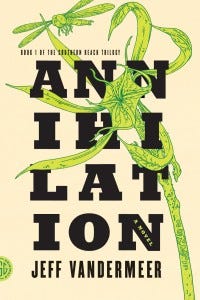
annihilation vandermeer

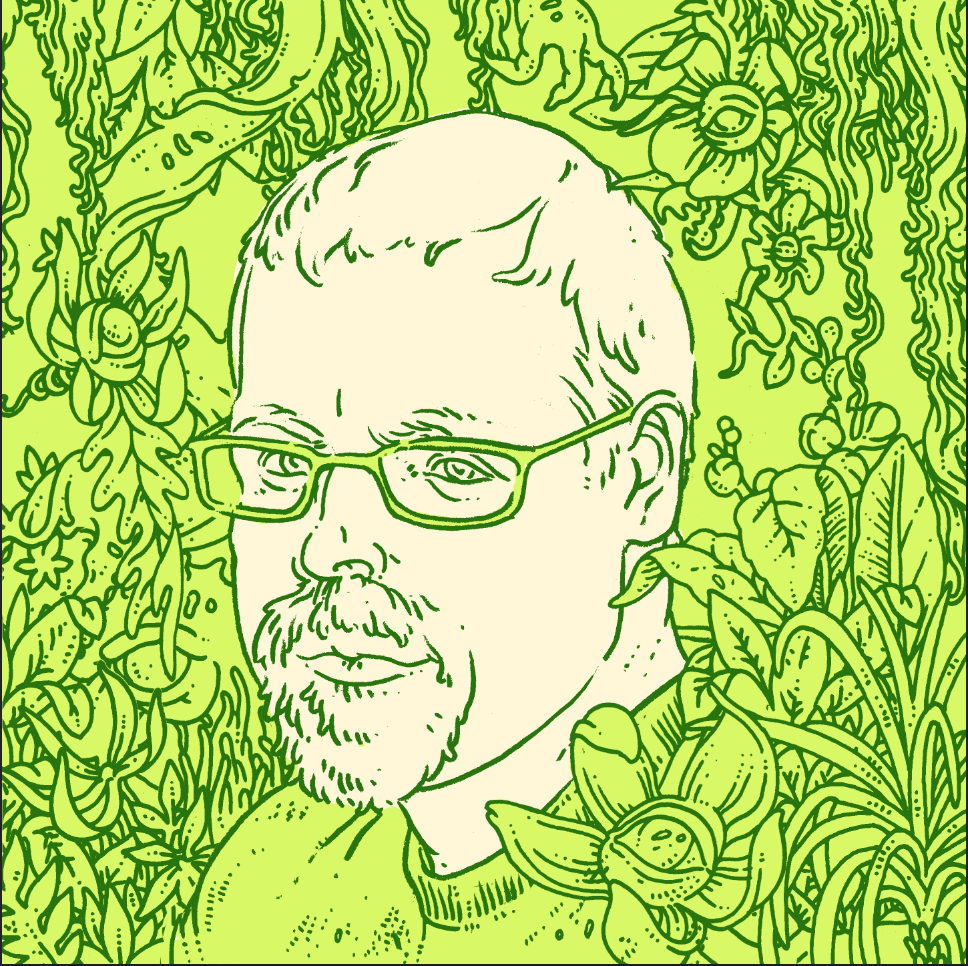
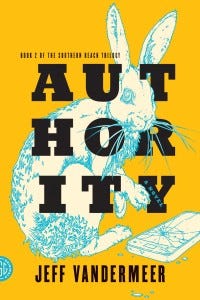
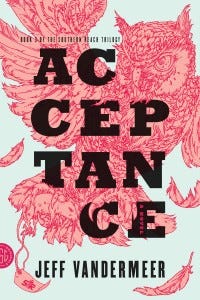
Known as much for his work as an editor and literary critic as for his fiction, Jeff VanderMeer has long been a champion of the New Weird movement and of breaking through the invisible borders between literature and genre. His most recent series, The Southern Reach Trilogy, explores the environmental and cultural consequences of a biocatastrophe in a place called Area X. The series is at turns a terrifying, hilarious, and philosophically profound look into the failure of people and institutions to respond to enormous tragedies. The final installment, Acceptance, was released by FSG on Saturday.

Matthew Rossi: The Southern Reach trilogy is the second of your trilogies I’ve had the pleasure of reading (the first being the Ambergris trilogy; full disclosure, I’m a fan). Reading the Southern Reach trilogy, I’m consistently struck by the way in which location becomes a living — often hostile — presence in your work. Certainly this is true of Area X, but the inscrutability of the Southern Reach building, the groupthink of its employees also sets up a kind of hostile, self-driven setting. What role did the setting play in conceiving of this trilogy? Do you think of it as a character, in the sense that it has mind and agency?

Jeff VanderMeer: There are a few different answers to that question. One concerns the real world as we know it. Our environment contains much that’s invisible to our senses that permeates the landscape — that actually permeates us as well. Microbial life, parasites, creatures in symbiosis, things that live in the air. Plants, too, are communicating one to another and insects through pheromones. There are latticeworks and cathedrals of conversation that we’re unable to “hear.” We have fairly primitive sensory data coming in on all of this, and this means we misunderstand our environment from the moment we’re born. If we sometimes feel a prickle on the edge of our senses it may be that some part of our reptile brain is experiencing a ghost of an echo of the complexity that truly surrounds us. So, that’s one answer.

Another answer is that landscape in fiction always comes to us through the character viewpoints. One person has heard gunfire so much it doesn’t really register in the same way that someone living by a highway doesn’t register the sounds of traffic at night. While another person does. Two people walk through a pristine wilderness. One notices the biting gnats and the mud and the ache in their knee. The other notices the night heron high on a branch and the way the pine forest transitions to swamp and a particular type of dragonfly.

A third answer, specific to these novels, is that when dealing with an Unknown, it is possible it may already be acting through those invisible interstices that you cannot sense and if so, then perhaps the landscape’s already spying on you.

It is worth noting that the biologist in Annihilation doesn’t see the natural environment as threatening at all. The clearest sight is the kind that understands that even when we think we are removed from the natural world that in fact we never have been and never will. I’d also point you to this short piece by Steven Shaviro, which reflects very accurately my own thoughts about environment and our place in it: http://www.shaviro.com/Blog/?p=1253

authority Vandermeer

MR: You’ve talked in previous interviews about using the trilogy to create an expanding lens. Between Annihilation and Authority that’s evident when you move outward from Area X to look at its impact on the community surrounding it. Was there a concern that in returning to Area X in Acceptance you’d risk narrowing that lens again or else be forced into a position of offering up too many direct answers to the mysteries you’ve set up?

JV: It would have been very easy to write three Annihilations that each pushed forward the narrative to various answers, but not very interesting to write and to some extent cynical. I was more interested in giving readers something different with each novel, and a different “trilogy” overall, too. So I did have some concerns about returning to Area X if I couldn’t offer something different, but it seemed to me that the perspective taken allowed for a return that was a departure from what had gone before. I definitely wanted to get the ratio of remaining questions to answers given right. Too many direct answers would’ve undermined the inquiries at the heart of the novels. But too few would seem like a cheat. So there are some direct answers and some that readers have to piece together. I will say that most everything is in there, in Acceptance, even if some is hidden a little bit. What I have to accept is that some readers will find too many answers and some readers too few. But that kind of comes with the territory in this case. Given the series is also exploring the idea of subjectivity and competing ideologies or narratives, that’s probably appropriate.

MR: It seems that a lot of what drives that complexity of that shifting lens is the way in which perspective floats with increasing readiness from book to book. How did the choice to shift perspectives in this way come about?

JV: It was always implicit in the idea of a widening lens. I’ve never been a fan of repeating the same scenes from different character points of view, except in a very limited way, because I find that boring as a reader. But the idea of advancing the plot while also exploring how your perception of a person/character changes as a result of seeing them from a different vantage point appealed quite a bit. The trick was to ensure that the character arcs by the end of Acceptance were complete and satisfying. You don’t want things to just seem to drift off into the ether.

MR: I was fascinated by your use of second person to tell the Director’s chapters in Acceptance. It struck me as a risky move, but the payoff is extraordinary. Can you comment on this?

JV: I use second person when I want to get close-in on a character point of view and third or first person doesn’t seem adequate or offers challenges that seem insurmountable. But also in the director’s case she frames the narrative and somehow second person seemed to fit that. I think second person is really misunderstood, possibly because in bad examples the writer is saying continually “You this/you that.” Just like first person shouldn’t be all I-I-I, second person requires you to be kind of subsumed in such a way that the reader finds it invisible after a while. I’ve used it twice before, once in a short story and once in my novel Veniss Underground. It may throw some readers out of the story, but for the rest, the payoff, as you indicate, can be very satisfying. In a sense, you join the director on her own expedition through all of the obstacles in her way, you identify with her more than if I’d used third or first person. There’s also an ethereal quality to second person, when you use it correctly, that seemed to fit the situation.

acceptance jeff vandermeer

MR: To a great extent it seems that Acceptance is a book that deals with memory and regret, where the other books exist much more in the immediate moment of the plot. Does this stem from any particular philosophy or approach you were working with?

JV: I was working from the idea that Nothing Will Be the Same Ever Again. I’m not a fan of things returning to status quo when it’s clear they can’t — it’s a cheat on the part of the writer, it’s saying “I’m going to take you out to the edge of the cliff, and we’re going to jump off the cliff, but half-way down there’ll be a net and in the end everything will be as it was before.” That’s ludicrous. That’s not real life, either. We survive things. We surmount them. But we’re not the same as we were before, and thus the world isn’t the same either. This isn’t either depressing or upbeat — that’s just how things are, and documenting that can be by measures harrowing, beautiful, uplifting, horrifying, and transcendent. We try, we keep trying, we can’t go on. We go on.

MR: In the introduction to The Weird anthology, Ann VanderMeer and you observe that the weird often exists as a sensation within a narrative more than a specific genre of writing. Can you elaborate on this distinction?

JV: There’s a worldview that exists in the margins, one that partakes of the surreal and a bit of the realistic, one you might call Kafkaesque in one mode in which it is found. It’s at times a tad absurdist and finds the world darkly absurd and tragi-comic. That comes with a sense of strangeness — finds even in the mundane traces of the uncanny. Whether through the elaborate rituals we let govern our lives or the abstract concepts — like money — that come to rule us…the human world is deeply weird. Weird fiction often riffs off of this even if it shows the reader, overtly some supernatural monster or other oddity. It’s saying, in effect, “I’m documenting something that doesn’t exist but I’m also telling you the world around us is stranger than you think.” That’s why it can be a sensation within a narrative. It’s imbuing the text with a viewpoint, immersing the text in that viewpoint, not just overlaying the peculiar in a plotted sense. It’s all the way down into the substrate — the subtext. You can’t really fake it.

MR: It occurs to me that this must have been a fairly quick writing process. Was there an advantage to knowing they would have a rapid release? Did it allow you greater freedom to conceive of them as a single object?

JV: I still really see them as three novels and I’ve been perplexed by those who have suggested these are one novel that’s been cut up into pieces. I suppose that’s in part because, to me, the story arcs of the main characters in each are self-contained within each novel. I suppose you could argue that Control’s story arc continues into Acceptance, but I always saw it as his role and Ghost Bird’s being reversed. Once Acceptance starts, he’s almost Ghost Control, there’s such a reversal of the power balance between the two.

What gave me the greatest freedom is knowing they were coming out from FSG Originals and that Sean McDonald was my editor. I can’t lie here — there are other scenarios I can think of where there would have been pressure to be more conventional. But having the support I had, and the kind of support was critical to being able to relax into writing these novels the way I wanted to write them. Sean’s developmental edit notes were also crucial. I’ve never had a better editor. I also had more total hours to work on these novels than ever before — just in fewer days than most times before. So mostly I pulled out a whole bag of tricks to gain perspective, to get to the same point of objectivity as I would have if I could have put, say, Authority, in a drawer for a month and then pulled it out and looked at it with fresh eyes. And sometimes, too, I used the intensity of needing to finish a scene or section by a specific date — channeled it into the prose. I’ve been a writer for over 30 years now and thankfully I’ve got lots of ways of tricking my brain into getting what I need out of it.

I’ve been a writer for over 30 years now and thankfully I’ve got lots of ways of tricking my brain into getting what I need out of it.

MR: Would you approach another project this way?

JV: That’s hard to say, because the next two or three novels are stand-alone and they’re very different from the Southern Reach trilogy. The process has been different every time, because I don’t like to repeat myself and I don’t like getting locked into one way of doing things — I want to be able to have a process that’s malleable to the situation, to what’s best for a particular novel. One thing I know for sure: If I start a novel and it doesn’t feel like the first time, like I know nothing, even if I know quite a lot about writing now, then I am suspicious. When I sit down to write a novel and it feels too familiar, I’ll know I’m beginning to repeat myself, and I’ll know I’ve entered the inevitable decaying orbit. But it hasn’t happened yet.

VIDEO: David Sedaris Gets Humbled on a Plane

by Ben Apatoff

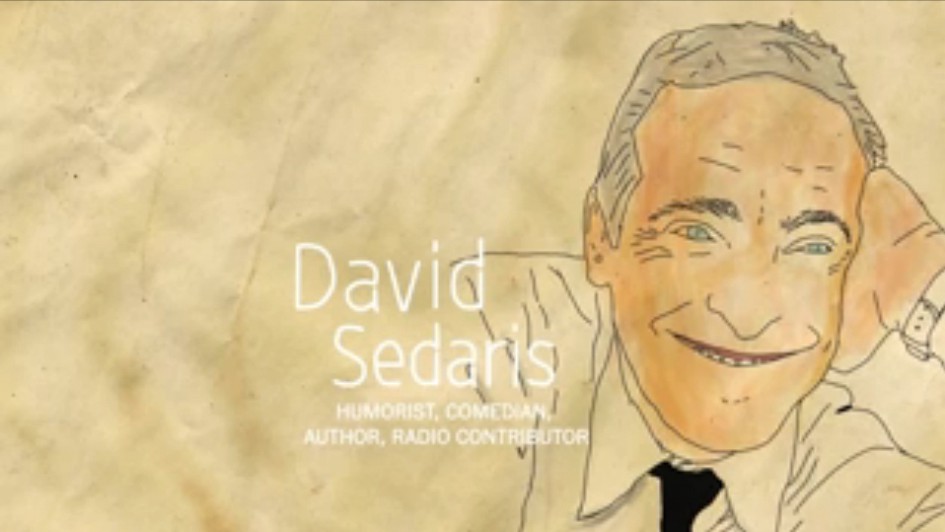
The Washington Post’s On Leadership video series has featured big names ranging from Iraqi women’s rights activist Suaad Allami to Starbucks CEO Howard Schultz, but for camera shy author David Sedaris, the series’ editors chose to animate the episode. Here the bestselling author and frequent New Yorker contributor recounts a plane ride experience to his boyfriend Hugh and receives a humbling lesson. As Sedaris notes:

“Someone said a while ago, you should always marry your conscience. And Hugh and I, my boyfriend, we’ve been together for 23 year years, so I didn’t marry my conscience, but I live with him. Hugh is a really decent person in ways that can be really, really irritating. I’m grateful for it though, because Hugh’s not the kind of person who would say ‘Oh, it’s OK to cheat’ or ‘Everybody steals a little something sometimes’ or ‘So what if you hurt that person’s feelings? They had it coming.’”

Tom Bissell on Trying to Edit William T. Vollmann

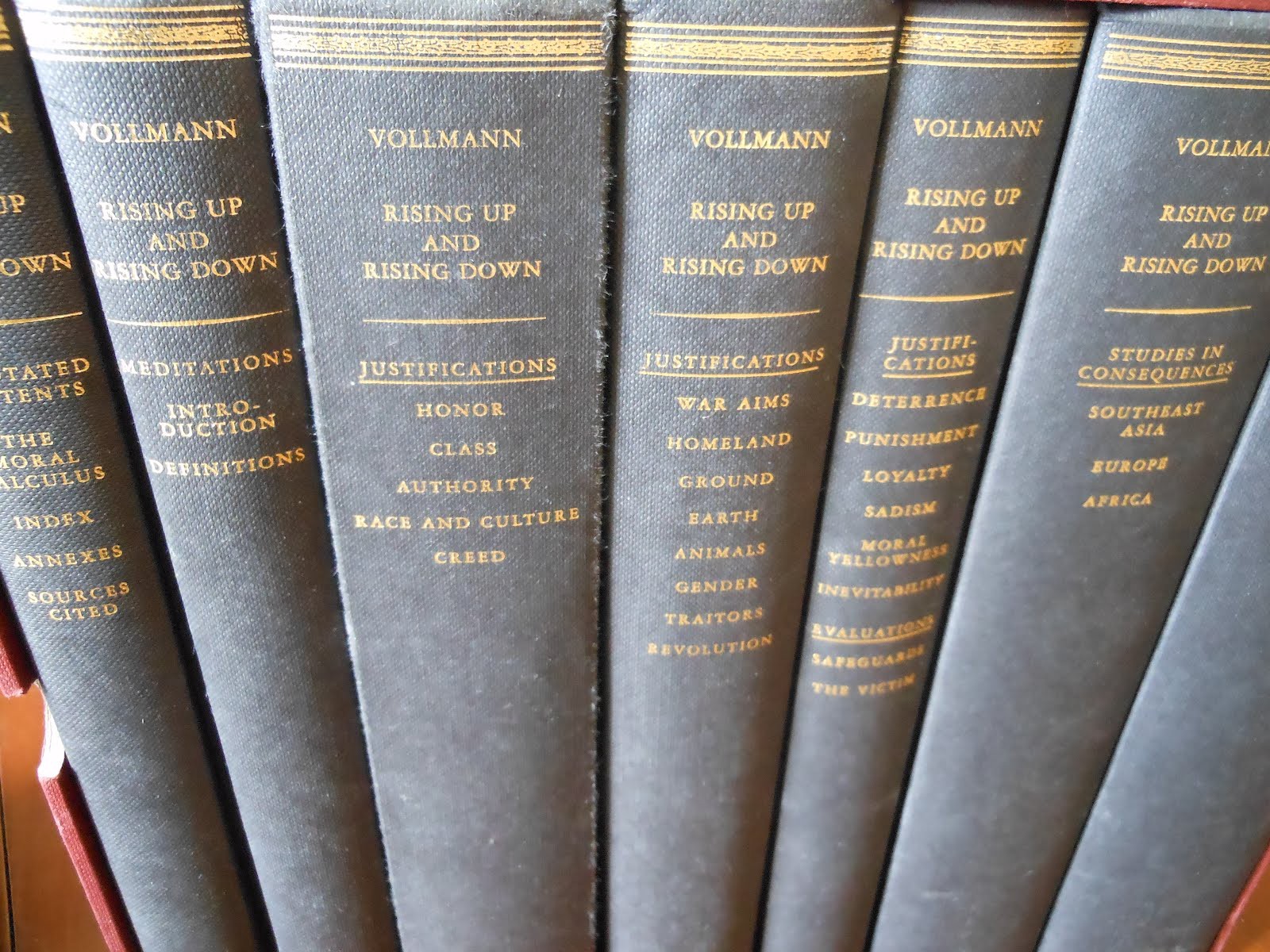
In the above video, author and editor Tom Bissell describes his failed attempts to edit William T. Vollmann’s epic work, Rising Up, Rising Down. Bissell wanted to cut 1,000 pages, but instead Vollmann had the work published in full as a beautiful seven-volume set from McSweeney’s.

Vollmann did later radically cut the book down in a single-volume abridged version for Ecco, saying the seven-volume work took “twenty-three years … The abridgment took me half an hour.”

Vollmann explained his decision to do an abridged version:

I did it for the money. In other words, I can’t pretend (although you may disagree) that a one-volume reduction is any improvement upon the full version. All the same, it’s not necessarily worse. For one thing, the possibility now exists that someone might read it.

(Video produced by the LA Review of Books.)

Alongside Napoleon: The Memoirs of Napoleon’s Own Valet

Louis Constant-Wairy

Louis Constant-Wairy

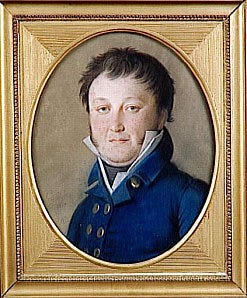
It was with surprise that I recently learned that there was such a thing as the memoirs of Louis Constant-Wairy, Napoleon’s valet, memoirs that begin right before the retreat from Russia, wherein the Kremlin explodes, crows fill a field over dead bodies, and horses push through rivers laced with ice and incur gashes upon their sides. Wounded soldiers at a waystation fleeing Moscow are described as being most troubled by the fact that “they had not been able, like the others, to light their camp-fires with the splendid furniture of the wealthy Muscovites,” and that this was “easy to see.”

As one would expect, though, it’s also a book of — how shall I put this? — somewhat devoted praise. No one cares as much as the Emperor. Oh, no. His carriage does not occasionally drive over wounded men, no; he looks after each man individually. “The Emperor was never upset, except at the sight of the suffering of others.” No one is cared about as much as the Emperor. Why else would soldiers cheer “Long Live The Emperor!” when Napoleon crosses an icy river on horseback in lieu of no readily built (let alone stable) bridge?

If only James Fenton were capable of time-travel and had moved straight from The Snap Revolution back to this; if only he had picked up a baffled W.G. Sebald puttering around in his Norfolk gardens in some sort of coughing Volvo and had started cordially interrogating the man about A Place in the Country tracing Napoleonism to Nazism while Sebald tried to figure out how to work the radio; if only they’d picked up Ryzard Kapuscinski, who would probably be expecting them, anyway; and if only they’d picked up Gabo, who would get into the car grumbling about some bastard still being alive. “Didn’t I kill him off in 1975?” And they’d drive through the French countryside, peering through the windows, flicking the occasional cigarette out onto the grass while waiting for — well, what, exactly?

A little later in the volume, Napoleon slanders Rome amongst company, calling it “a receptacle for the dregs of all nations … The women … are indolent, and show no zeal or activity for the ordinary business of life; in fact, theirs is the lazy effeminacy of Asia,” and it passes by without comment; then, Constant tells us, “after war, public buildings were what the Emperor most liked,” and as we quietly imagine the OKCupid profile (or 1970’s dating show, where “My turn-ons are war … and buildings” is delivered in an Andy Kaufman-styled voice), a letter from Napoleon speaks to how he wants “a little theatre, a small chapel, and, above all be very careful that there is no stagnant water about the place,” and — later still — he “began pulling [Constant’s] ears, which he always did when in a good humor.”

Which adds up to this (or so — right now — I think): it’s crazy that someone as obsessed with power as Lyndon Baines Johnson often reduced his narrative understanding of it to something as insultingly gnomic as “Power is where power goes,” and yet that’s what gets the oxygen. Not only is power is where power goes, but the oxygen of the story goes there, too, and that’s crazy. That’s absolutely crazy. And yet it keeps happening: it’s difficult not to look at Turkey and Erdogan, Putin and Russia, and what once was Ahmadinejad and Iran and become taken by the notion of how dexterity and the dexterity of grace fare beneath the hovering vacuum of power and the narratives seemingly store-housed by the person with that power. And it’s something that threatens to be a false dichotomy, sure — there will always be a Howard Zinn or a Studs Terkel or an Alan Lomax, sure — and “I saw history” biographies are useful, needed, and necessary. But it’s not enough. Dexterity must live. Grace must live. So we read about Napoleon, invent a car, and ask if anyone wants a ride.