SEPTEMBER MIX by Ana Carrete and Mike Bushnell

A MIXTAPE TO FALL IN LOVE TO

OH SO we don’t have WHY FI so this mixtape took us way longer than we thought it would. This is a rare collection of songs that we have attached memories to along the way. Some of them are more beautiful than others. Some are really dumb. We had to exclude some songs because they weren’t on Spotify or because they were censored. This list reminds me of some of the radio stations here in Austin. When trying to describe some radio stations while in the car, we used the same word to describe them: “eclectic”. We said it at the same time like they do in chick flicks where couples finish each other’s sentences and have the same reactions at the same time. Mike and I are living in a trill chick flick.

Hope you enjoy and actually listen to this mixtape. Thanks for your time. It’s good to make someone fall in love with you.

1. “Call Me Maybe” by Carley Rae Jepsen

MIKE: We listened to this song over and over again and danced to it with people we knew or were meeting for the first time — there are videos of this online. There is a picture of me doing a sneaky dance while Ana drank a beer, smiling. I believe I fell in love with Ana to this insane song.

ANA: I remember singing this song with Carolyn DeCarlo and Jackson Nieuwland. When I sang it I would look at you and relate to the song and felt dumb but okay cause we’d just met irl after four years of being online friends. “Where you think you’re going, baby?”

2. “The Beautiful People” by Marilyn Manson

MIKE: While attempting to woo Ana I tried to be cool and drink a lot. This backfired. We listened to ’90s songs including “The Beautiful People,” with beautiful people all night on my roof. Eventually I passed out hard. Literally. I fell asleep right where I sat and could not be moved until the next morning. Meanwhile Shaun Gannon took Ana to White Castle for the first time. I woke to the sun with no recollection of the night before. I was told they tried to wake me up many times. Def don’t remember that.

ANA: We listened to this song yesterday(?) while I made breakfast and you showered and maybe when we were at “Hot Topic” too. Dedicating this song to our friends. You look very handsome right now btw.

3. “Pu$$y” by Iggy Azalea

MIKE: I had never heard this song before Ana came to New York. We listened to it a number of times and I thought it was sexy. I would put it on to give a backdrop of sex when she was here, or later while Skyping I would send her the video. Embarrassed to admit that I thought it was a sneaky way of introducing sex into our conversations. Such a creep sometimes.

ANA: Sang this song and meant the lyrics and felt ridiculous. We drank and danced and I remember all our friends became addicted to this song.

4. “Rack City” by Tyga

MIKE: I think we made fun of this song. It is catchy and we probably listened to it 452 times over the first few months. Feel like we made fun of this song. I suggest making fun of this song by saying “hummus” instead of “Hunnids.”

ANA: Mike wrote a poem titled “oh so” and read it to me in his room before we had a reading at his rooftop and he quoted Tyga in it. He quoted “Make it Nasty” but we couldn’t find it on Spotify. They sound the same. We sang this with our friends and sang “hummus hummus” instead of “hunnids hunnids”.

5. UP! By LoveRance

ohsofront

NOTE: (Go buy OHSO)

ANA: I always thought that the censored radio version said “I beat the pizza up.”

MIKE: We made a song with Stephen Michael McDowell and peterBD called “I beat the pizza up.” This is another sexy song. It says “bouncing on a dick like a seesaw” and the chorus is “beat the pussy up.” Feel unsure of the value of these songs in a historical context, but they are very danceable and if you are courting, it can surface things that remain hidden when songs of a less sexual nature are playing.

6. “The Boy Is Mine” by Monica and Brandy

ANA: I just wanna let you know that he’s mine.

MIKE: I like this song in the mix because it signifies that Ana and I broke through courting and fell in love. I had never been happier (until I moved in with her) as I was when we first touched and talked and started dating. I felt like the luckiest man in the world, just like every other man that has fallen in love with the right heart/mind/body/head (she has the most perfect head).

7. “In The Beginning” by My Brightest Diamond

ANA: OH SO beautiful.

MIKE: I listen to a lot of female folk singers — listened to this song on the subway everyday and thought of Ana, and in the beginning of our love this song was 100 percent on point. Eventually I sent it to her and she listened to it and liked it, and I continued to listen to it and think our love was an earthquake and that the love of your life starts with an earthquake. Fuck you if you don’t believe that or try to deny it, you basic. Ana and I took a weird chance and waded through so much — this song will always take me back to before any of that, when we just wanted it and joined the unending hymn.

8. “Angels” by The xx

MIKE: Ana sent me this song and I was amazed that a song could describe exactly what I felt. I constantly was amazed Ana and I ended up together because I knew that everyone was in love with her, or at least I didn’t understand how they couldn’t be. She was an ideal to me, and she still is to this day. How are you not in love with her? You just haven’t spent enough time with her.

I used to loop this song and dance alone in my room thinking of her.

ANA: Mike sent me this song before the album came out and we fell in love with it so it is one of our songs. I pre-ordered this album so I could download this song and listen to it and would cry to this song frequently. Felt deeply moved and lucky to know what this band was talking about.

MIKE: Hahaha who knows who actually sent it to who

9. “Adorn” by Miguel

MIKE: We have the same name but his is in Spanish. I thought it meant something meaningful

ANA: Great timing to go get another beer.

MIKE: Ana went to get a beer.

But there was a time when Ana and I struggled to communicate and “Adorn” actually pushed us deeper in love and we became more open — it was a meaningful song we listened to about 400 times.

“Let my love adorn you”

Insanely meaningful to me for the rest of my life.

ANA: I’ve listened to this album thinking of you idk how many times ……

10. “3 Days” by Rhye

MIKE: This song reminds me of the first visit we had together when we had a very limited amount of time together — maybe a week. So it was like three days to sing this song, and when we sang it we said “bunny sheets” — Ana said that first — it was funny and I love her jokes.

I listened to it in transit to keep her close to my heart. (Via my ears).

ANA: “Got three days to feel each other.” We listened to this entire album a bunch and related to this song because this used to be long distance BUT NOT ANYMORE ✔✔✔

11. “American” by Lana Del Wine (sup Elaine)

ANA: You make me crazy you make me wild just like a baby you spin me round like a child

MIKE: Be young be dope be proud

12. “Acrobat” by Angel Olsen

MIKE: I sent this to Ana because she wrote a poem where she said she wanted to be my cat. It is too pretty. Angel knows how to write a love song that carries desire and long distance emotions. I would listen to it loud and dance around my room alone. Like kind of swaying and stepping around my room. Listen to the words closely here and be rewarded because the best poets writing today are female folk singers. Male folk singers try too hard. Fuck you Fleet Foxes.

13. “We Can’t Be Beat” by The Walkmen

ANA: Aren’t they male folk singers(?)

MIKE: When I was in high school I listened to the Walkmen a lot — one time — when visiting Ana — I played this song while in the shower and didn’t know the words but I was so happy I tried to sing along.

Nah, they’re pop or like, indie rock. You hear that electric groove?

ANA: He sang it and it was so sweet. I smiled a lot.

Nah, they’re male folk singers.

MIKE: You are always right.

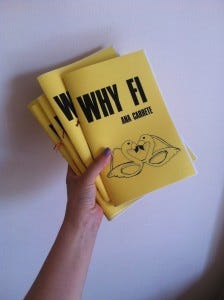
Why Fi by Ana Carrete

14. “Open” by Rhye

ANA: YASSSSSSSSS.

MIKE: Still wish they weren’t male folk singers

ANA: I’m a fool for your love

MIKE: I am truly a fool for her thighs, sighs and belly. (Go buy Why-Fi).

15. “The World is Yours” by Nas

MIKE: In 2012 on New Year’s Eve (Ana’s birthday) we went to go see Nas at Radio City Music Hall — the show was amazing and we were front row in the balcony. I can still see the entire night. It taught me what love was.

They gave us horns and hats and honestly the world is ours — always — just wait — we are plotting a takeover. Stacking capital to eventually destroy the current literary conventions and replace them with something more enlightened.

ANA: Best birthday ever.

16. “Lights On” by FKA twigs

ANA: Is this the last song?

MIKE: No.

I sent this song to Ana three days ago. Tonight while making the playlist we danced for 20 minutes to this song.

ANA: We “danced,” lol.

MIKE: I suggest “dancing” to this song.

17. “Rollin” by Limp Bizkit

MIKE: Hey babe this is the last song.

ANA: Great transition.

MIKE: I made fun of Fred Durst while Ana put on her make up yesterday — she thought I was being harsh until I put on this song and she understood where my Fred Durst impression came from — it consists of two word phrases in a high pitched whiney bitch ass voice.

“Hey now”

“Do now”

ANA: Mike sings this song and says Fred sounds like an old man. He thinks he’s doing an accurate impression but tbh idk….lol. It’s pretty sweet though and he does sound like that in this song but not in all of them.

MIKE: It is so on point. Like 100% accurate. I just did it and it was perfect. Couldn’t tell the difference between me and the song.

ANA: Let’s go to sleep now.

MIKE: Okay I gotta send this out first.

ANA: Keep rollin

MIKE: Keep Rollin Rollin Rollin Rollin

***

— Mike Bushnell and Ana Carrete live in Austin, TX. Go buy their books: OH SO, Traumahawk, Baby Babe, etc. Google them. Follow them on twitter.

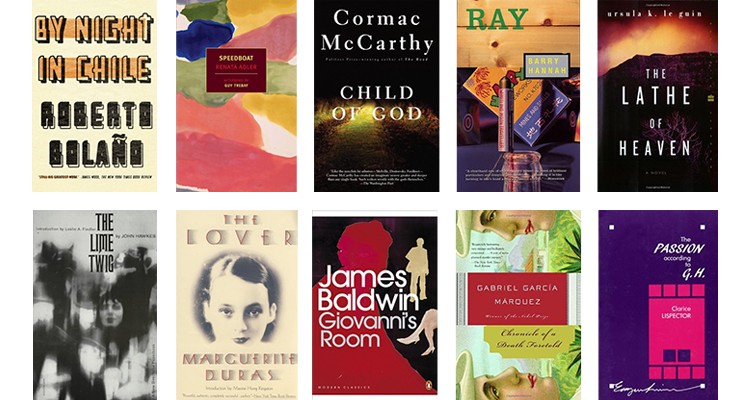
17 Brilliant Short Novels You Can Read in a Sitting

This week author Ian McEwan expressed his love of short novels, saying “very few [long] novels earn their length.” Certainly it seems like a novel has to be a minimum of 500 pages to win a major literary award these days, and many genre novels have ballooned to absurd sizes.

I love a good tome, but like McEwan many of my favorite novels are sharpened little gems. It’s immensely satisfying to finish a book in a single day, so in the spirit of celebrating quick reads here are some of my favorite short novels. I’ve tried to avoid the most obvious titles that are regularly assigned in school (The Stranger, Heart of Darkness, Mrs Dalloway, Of Mice and Men, Frankenstein, The Crying of Lot 49, etc.). Hopefully you’ll find some titles here you haven’t read before.

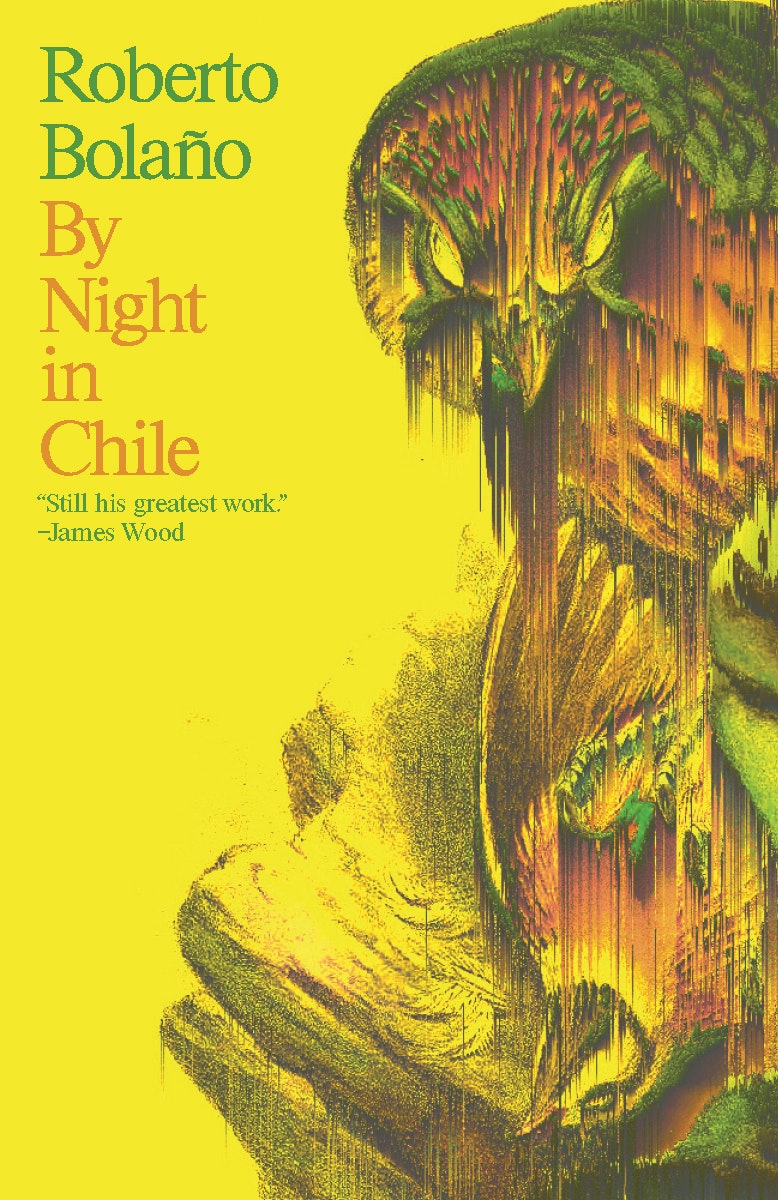
Image result for roberto bolano by night in chile

By Night in Chile by Roberto Bolaño

There’s a passage in Bolaño’s own great tome, 2666, attacking people who prefer “the perfect exercises of the great masters” to “the great, imperfect, torrential works, books that blaze paths into the unknown.” Admittedly, By Night in Chile is not quite on par with 2666, but it manages to be both a perfect exercise and a blazing path into the unknown.

Sleepless Nights

Sleepless Nights by Elizabeth Hardwick

A lyrical combination of memoir, fiction, hopes, dreams, and musings, Hardwick’s novel is as undefinable as it is brilliant.

Child of God by Cormac McCarthy

Child of God by Cormac McCarthy

Perhaps McCarthy’s second greatest novel, after the incomparable Blood Meridian, Child of God is an Appalachian nightmare written in gorgeously lush prose.

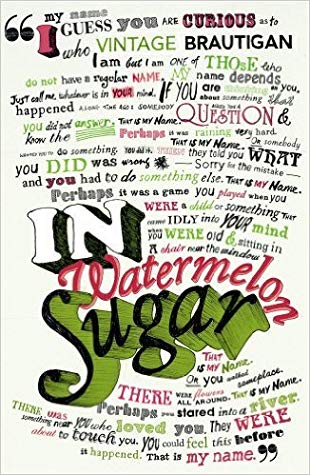
Image result for richard brautigan in watermelon sugar

In Watermelon Sugar by Richard Brautigan

Brautigan at his best and weirdest. This surreal novel is set in a commune named iDEATH where different colored watermelons provide building materials. A lot of modern indie fiction seems indebted to Brautigan’s unique combination of whimsy and sadness, but few if any match his power.

Image result for lathe of heaven ursula k le guin

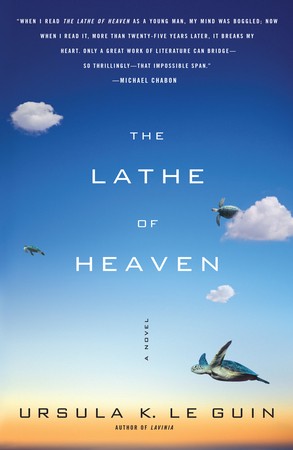
The Lathe of Heaven by Ursula K. Le Guin

This is one of the weirdest science fiction books you’ll ever read. Le Guin channels Philip K. Dick to tell the story of a man who can change reality with his dreams. We recently published an interview between Le Guin and Michael Cunningham that included a deal on an ebook version of The Lathe of Heaven, so grab it cheap.

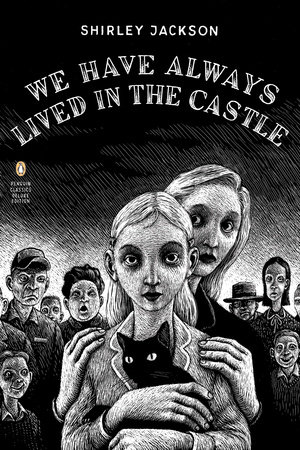
We Have Always Lived in the Castle by Shirley Jackson

We Have Always Lived in the Castle by Shirley Jackson

Of all the books I regularly recommend to people, Jackson’s masterpiece has the best track record. Every person I’ve recommended it to has adored it and recommended it to others. (I wrote a longer essay on the book for Flavorwire.)

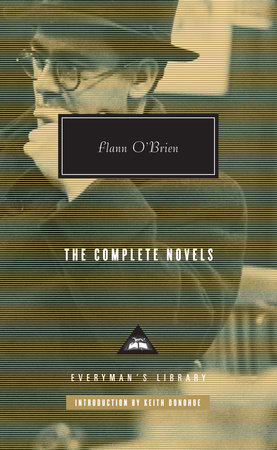
The Complete Novels of Flann O'Brien by Flann O'Brien

The Third Policeman by Flann O’Brien

One of the greatest novels of the 20th century, this underrated book is a wild roller coaster of dark comedy, surreal images, and just plain brilliant writing.

Jakob von Gunten

Jakob von Gunten by Robert Walser

Walser seems to be experience a well-deserved revival in recent years. If you haven’t read his joyous yet bizarre writings, Jakob von Gunten is the place to start.

Housekeeping

Housekeeping by Marilynne Robinson

Dreamy and completely beautiful, Robinson’s slim 1981 novel is frequently cited as one of the greatest American novels of the last 50 years. I agree.

The Loser

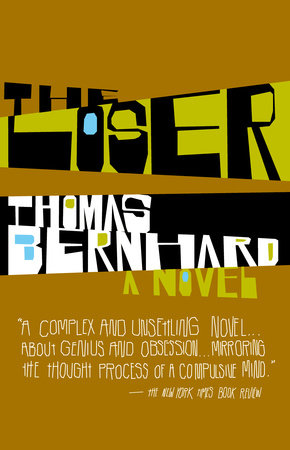
The Loser by Thomas Bernhard

If you are like me, there’s nothing you love as much as a witty grump. Bernhard’s novels take the form of acerbic rants, and The Loser is among the best of them.

The Lover by Marguerite Duras

The Lover by Marguerite Duras

Perhaps a nice antidote to The Loser’s anger and bitterness, The Lover is a beautiful and life-affirming short novel.

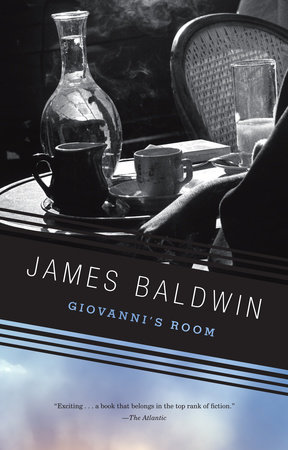
Giovanni's Room by James Baldwin

Giovanni’s Room by James Baldwin

James Baldwin’s second and perhaps best novel is a beautiful and moving story about a homosexual American man in Paris.

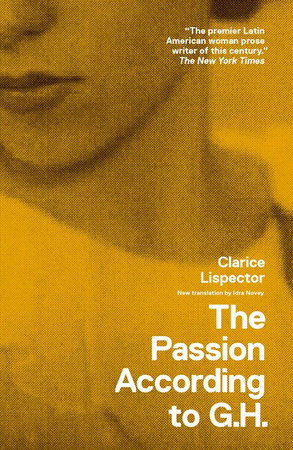
Image result for Clarice Lispector

The Passion According to G.H. by Clarice Lispector, translated by Idra Novey

Most people seem to read Lispector’s — also very short — novel The Hour of the Star and call it a day. However, her other novels are even stronger. The Passion is an energetic yet philosophical short novel that everyone should read.

The Lime Twig by John Hawkes

The Lime Twig by John Hawkes

A dark nightmare in the form of a crime novel, Hawkes explores terror through innovative prose. I only just read The Lime Twig this week and already feel happy recommending it.

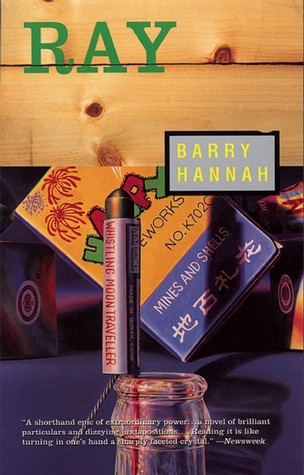
Barry Hannah

Ray by Barry Hannah

One of the greatest Southern American writers — which is saying something given that the region has given us O’Connor, Faulkner, Hurston, and more — Barry Hannah’s prose is acrobatic and addictive. Ray, his shortest novel, is a great starting place if you have never read him.

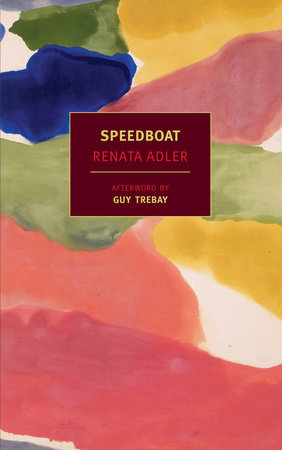
Speedboat by Renata Adler

Speedboat by Renata Adler

Everyone in the literary world seemed to be reading Adler last year when NYRB reissued her two classic novels. And with good reason. Adler is a one-of-a-kind genius whose revival is more than earned.

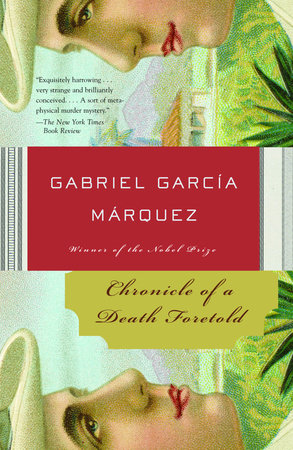
Chronicle of a Death Foretold by Gabriel García Márquez

Chronicle of a Death Foretold by Gabriel García Márquez

This taut murder mystery doesn’t have many of the magical realism trappings of Márquez’s large tomes, but it is just as engrossing.

The Unbitten Elbow

“The Unbitten Elbow”
by Sigizmund Krzhizhanovsky, translated by Joanne Turnbull

This whole story would have remained hidden under the starched cuff and sleeve of a jacket, if not for the Weekly Review. The Weekly Review came up with a questionnaire (Your favorite writer? Your average weekly earnings? Your goal in life?) and sent it out to all subscribers. Among the thousands of completed forms (the Review had a huge circulation), the sorters found one, Form No. 11111, which, wander as it would from sorter to sorter, could not be sorted: On Form No. 11111, opposite “Average Earnings,” the respondent had written “0,” and opposite “Goal in Life,” in clear round letters, “To bite my elbow.”

The form was forwarded for clarification to the secretary; from the secretary it went before the round, black-rimmed spectacles of the editor. The editor jabbed his call button, a messenger scurried in then scurried out — and a minute later the form, folded in four, had slipped into the pocket of a reporter who had also received these verbal instructions: “Talk to him in a slightly playful tone and try to get to the bottom of this. What is it, a symbol or romantic irony? Well, anyway, you know what to do…”

The reporter assumed a knowing expression and promptly set off to the address written on the bottom of the form.

A tram took him as far as the last suburban stop; then the zigzags of a narrow staircase led him at length up to an attic; finally, he knocked on a door and waited for an answer. None came. Another knock, more waiting — and the reporter gave the door a push. It swung open and before his eyes there appeared a penurious room, walls crawling with bedbugs, a table, and a wooden stove bench. On the table lay an unfastened cuff; on the stove bench lay a man, his arm bared and his mouth edging past the crook of his elbow.

Buried in his task, the man had not heard the knocks on the door or the steps on the stairs; only the intruder’s loud voice made him raise his head. The reporter noticed several scratches and bite marks on No. 11111’s arm, a few inches from the sharp elbow now pointed at him. Unable to bear the sight of blood, he turned away saying, “You seem to be in earnest. That is, I mean to say, there’s no symbolism here, is there?”

“None.”

“And I suppose romantic irony has nothing to do with it either.”

“Pure anachronism,” the elbow-eater muttered, and again pressed his mouth to the scratches and scars.

“Stop! Please stop!” the reporter cried, shutting his eyes. “When I’ve gone, you can go right ahead. But for now won’t you allow your mouth to give me a short interview? Tell me, when did you begin…?” And his pencil began scratching in his notebook.

When he had finished, the reporter went out the door only to come straight back in.

“Now listen,” he said, “trying to bite your own elbow’s all very well, but you know it can’t be done. No one has ever succeeded; every attempt has ended in a fiasco. Have you thought about that, you strange man?”

In reply, two glazed eyes glowering beneath knitted brows and a curt “Lo posible es para los tontos.

The clapped-shut notebook sprang open.

“Forgive me, I’m not a linguist. Would you mind…” But No. 11111, evidently unable to bear the separation any longer, had already reapplied his mouth to his badly bitten arm. Tearing his eyes and whole body away, the reporter sprinted down the zigzag stairs, hailed a taxi, and raced back to the office. The next issue of the Weekly Review ran an item with the headline: LO POSIBLE ES PARA LOS TONTOS.

Adopting a slightly playful tone, the piece described a naïve crackpot whose naïveté bordered on… On what, the Review did not say, ending instead with the pithy dictum of a forgotten Portuguese philosopher, intended to chasten and check all the sociopathic dreamers and fanatics searching in our realistic and sober century for the impossible and impracticable. This mysterious dictum, which doubled as the headline, was followed by a brief “Sapienti sat.

Random readers of the Weekly Review expressed interest in this bizarre story, two or three magazines reprinted it — but it would soon have been forgotten in memories and archives if not for the attack on the Weekly Review by the weightier Monthly Review. The next issue of that organ ran this item: WITHOUT A LEG TO STAND ON. The caustic author quoted the Weekly Review then went on to explain that the Portuguese dictum was in fact a Spanish proverb meaning: “The attainable is for fools.” To this the author appended a terse “et insapienti sat,” and to that short “sat” a bracketed “sic.”

After that the Weekly Review had no choice but to point out — in a very long article in the very next issue, fighting “sat” with “sat” — that not everyone is blessed with a sense of irony: Deserving of our pity was not this naïve attempt to do the undoable (all genius, after all, is naïve), not this fanatic of his own elbow, but that mercenary hireling, that creature in blinkers from the Monthly Review who, because he dealt solely with letters, understood everything literally.

Naturally, the Monthly Review was not going to take that lying down. Nor would the Weekly Review let its rival have the last word. In the bitter debate that ensued, the elbow fanatic came across as a cretin and a genius by turns, as a candidate now for a free bed in an insane asylum, now for a fortieth seat in the Academy of Sciences.

As a result, several hundred thousand readers of both reviews learned of No. 11111 and his attitude toward his elbow, but this debate did not excite much interest among a broader audience, especially given other, more compelling events at the time: Two earthquakes and one chess match — every day two rather stupid fellows sat down to sixty-four squares (one looked like a butcher, the other like a clerk in a chic shop) and somehow fellows and squares became the focus of all intellectual interests, needs, and expectations. Meanwhile, in his small square room, not unlike a chessboard square, with his elbow pulled up to his teeth, No. 11111 waited, wooden and inert like a dead chessman, to be put in play.

The first person to make the elbow-eater a serious offer was the manager of a suburban circus in search of new acts to enliven the show. He was an enterprising sort, and an old issue of the Review that happened to catch his eye decided the elbow-eater’s immediate fate. The poor devil refused at first, but when the showman pointed out that this was the only way for him to live by his elbow, and that a living wage would allow him to refine his method and improve his technique, the downcast crackpot mumbled something like “uh-huh.”

This act — billed as ELBOW vs. MAN! WILL HE OR WON’T HE BITE IT ? THREE TWO-MINUTE ROUNDS. REFEREE BELKS — was the finale. It followed the Lady with the Python, the Roman Gladiators, and the Flying Leap from Under the Dome. It went like this: With the orchestra playing a march, the man would stride into the ring with one arm bared, his face rouged, and the scars around his funny bone carefully powdered white. The orchestra would stop playing — and the contest would begin; the man’s teeth would sink into his forearm and begin edging toward his elbow, inch by inch, closer and closer.

“Bluffer, you won’t bite it!”

“Look! Look! I think he bit it.”

“No, he didn’t. So near and yet…”

The champion’s neck, veins bulging, would continue to strain and stretch, his bloodshot eyes would bore into his elbow as blood dripped from his bites onto the sand; the spectators, armed with binoculars, would turn frantic, jumping out of their seats, stamping their feet, climbing over barriers, hooting, whistling, and screaming:

“Grab it with your teeth!”

“Go on, get that elbow!”

“Come on, elbow, come on! Don’t give in!”

“No fair! They’re in cahoots!”

After three rounds, the referee would declare the elbow the winner. And no one suspected — not the referee, not the impresario, not the departing crowd — that the man with his elbow bared would soon trade this circus stage for the world stage, that instead of a sandy circle some twenty yards in diameter, he would have at his feet the earth’s entire orbital plane.

It began like this: The fashionable speaker Eustace Kint, who rose to fame through the ears of elderly but wealthy ladies, was taken by friends after a birthday lunch — by chance, on a lark — to the circus. A professional philosopher, Kint caught the elbow-eater’s metaphysical meaning right off the bat. The very next morning he sat down to write an article on “The Principles of Unbitability.”

Kint, who only a few years before had trumped the tired motto “Back to Kant” with his new and now wildly popular “Forward to Kint,” wrote with elegant ease and rhetorical flourishes. (He once remarked, to thunderous applause, that “philosophers, when speaking to people about the world, see the world, but they do not see that their listeners, located in that same world, five steps away from them, are bored to tears.”) After a vivid description of the man-versus-elbow contest, Kint generalized the fact and, hypostatizing it, dubbed this act “metaphysics in action.”

The philosopher’s thinking went like this: Any concept (Begriff, in the language of the great German metaphysicians) comes lexically and logically from greifen (to grasp, grip, bite). But any Begriff, when thought through to the end, turns into a Grenzbegriff, or boundary concept, that eludes comprehension and cannot be grasped by the mind, just as one’s elbow cannot be grasped by one’s teeth. “Furthermore,” Kint’s article continued, “in objectifying the unbitable outside, we arrive at the idea of the transcendent: Kant understood this too, but he did not understand that the transcendent is also immanent (manus — ‘hand,’ hence, also ‘elbow’); the immanent-transcendent is always in the ‘here,’ extremely close to the comprehending and almost part of the apperceiving apparatus, just as one’s elbow is almost within reach of one’s grasping jaws. But the elbow is ‘so near and yet so far,’ and the ‘thing-in-itself’ is in every self, yet ungraspable. Here we have an impassable almost,” Kint concluded, “an ‘almost’ personified by the man in the sideshow trying very hard to bite his own elbow. Alas, each new round inevitably ends in victory for the elbow: The man is defeated — the transcendent triumphs. Again and again — to bellows and whistles from the boorish crowd — we are treated to a crude but vividly modeled version of the age-old gnoseological drama. Go one, go all, hurry to the tragic sideshow and consider this most remarkable phenomenon; for a few coins you can have what cost the flower of humanity their lives.”

Kint’s tiny black type proved stronger than the huge red letters on circus posters. Crowds flocked to see the dirt-cheap metaphysical wonder. The elbow-eater’s act had to be moved from its suburban tent to a theater in the center of the city, where No. 11111 also began performing at universities. Kintists took to quoting and discussing the ideas of their teacher, who now expanded his article into a book: Elbowism: Premises and Conclusions. In its first year, it went through forty-three editions.

The number of elbowists was mushrooming. True, skeptics and anti-elbowists had also cropped up; an elderly professor tried to prove the antisocial nature of the elbowist movement, a throwback, he claimed, to Stirnerism, which would logically lead to solipsism, that is, to a philosophical dead end.

The movement also had more serious detractors. As a columnist named Tnik, speaking at a conference on problems of elbowism, put it: Even if the elbow-eater should finally manage to bite his own elbow, what difference would that make?

Tnik was hissed and hustled off the podium before he could finish. The poor wretch did not ask for the floor again.

Then there were the copycats and wannabes. One such self-promoter announced in print that on such-and-such a date at such-and-such a time he had succeeded in biting his elbow. A Verification Commission was immediately dispatched and the imposter exposed. Dogged by contempt and outrage, he soon committed suicide.

This incident only increased the renown of No. 11111; students at the universities where he performed followed him around, especially the girls. One of the loveliest — with the sad, shy eyes of a gazelle — obtained a private meeting with him so as to offer up her half-bared arms: “If you must, bite mine: It’s easier.”

But her eyes met two turbid blots hiding beneath black brows. In reply she heard: “Do not gore what is not yours.”

Whereupon the gloomy fanatic of his own elbow turned away, giving the girl to understand that the audience was over.

Nevertheless, No. 11111 remained the rage. A well-known wag construed the number 11111 to mean “the one-and-only five times over.” Men’s clothing stores began selling jackets with detachable elbow patches. Now a man might try to bite his elbow whenever and wherever, without removing his jacket. Many elbowist converts gave up drinking and smoking. Fashionable ladies began wearing high-necked, long-sleeved dresses with round cutouts at the elbows; they decorated their funny bones with elegant red appliqués imitating fresh bites and scratches. A venerable Hebraist, who had spent forty years studying the veritable dimensions of Solomon’s temple, now rejected his former conclusions: He said that the length of sixty cubits stated in the Bible should be understood as a symbol of the sixtyfold incomprehensibility of what is hidden behind the veil. A member of parliament in search of popularity drafted a bill to abolish the metric system in favor of that ancient, elbow-conscious measure: The cubit. And although the bill was ultimately defeated, while still under review it provoked brawls in the press and the corridors of power, not to mention two duels.

Embraced by the masses, elbowism became vulgarized and lost the strict philosophical aspect that Eustace Kint had attempted to give it. Scandal sheets, misinterpreting elbowist teachings, took to promoting it with slogans like ELBOW YOUR WAY TO THE TOP and RELY ON YOUR ELBOWS AND YOUR ELBOWS ALONE.

Soon this new way of thinking had become so widespread that the State, which counted No. 11111 a citizen, decided to use the elbow-eater for its own fiscal purposes. The opportunity promptly arose. Certain sporting publications had already begun printing daily bulletins on the half inches and quarter inches still separating the elbow-eater’s teeth from his elbow. Now a semiofficial government newspaper followed suit, running its bulletins on the next-to-last page with the trotting-race results, soccer scores, and stock market reports. Some time later, this same semiofficial paper ran a piece by a famous academician, a proponent of neo-Lamarckism. Proceeding from the assumption that the organs of a living organism evolve by means of practice, he concluded that the elbow was, in theory, bitable. Given a gradual stretching of the neck’s transversely striate muscular matter, this authority wrote, a systematic twisting of the forearm, etc… But then the logically impeccable Kint struck back with a blow for unbitability. The argument that ensued recalled Spencer’s with the dead Kant. The time was now ripe: A bankers’ trust (everyone knew its shareholders included government bigwigs and the country’s richest capitalists) sent out fliers announcing a Grand BTE (Bite That Elbow) Lottery to be held every Sunday. The trust promised to pay every ticket holder 11,111 monetary units to one (one!) as soon as the elbow-eater’s elbow was bitten.

The lottery was launched with much fanfare — jazz bands and iridescent Chinese lanterns. The wheels of fortune began spinning. The ticket ladies — their white teeth grinning in welcome as their bare, red-flecked elbows dove down into glass globes full of tickets — toiled from midday to midnight.

But ticket sales were slow at first. The idea of unbitability was too firmly ingrained in people’s minds. The ancient Lamarckist called on Kint, but Kint continued to find fault.

“The Lord God himself,” he said, “cannot arrange things so that two and two do not equal four, so that a man can bite his own elbow, and thought can go beyond the bounds of the boundary concept.”

The number of so-called bitableists who supported the lottery was, compared to that of unbitableists, insignificant and shrinking every day; lottery bonds were tumbling, depreciating to almost nothing. The voices of Kint and company — demanding that the names of the masterminds behind this swindle be revealed, that the cabinet resign, that reforms be instituted — sounded louder and louder. But then one night, Kint’s apartment was searched. In his desk investigators found a fat stack of lottery tickets. The warrant for his arrest was instantly revoked, the discovery made public, and by next day the stock price for tickets had begun to climb.

An avalanche, they say, may begin like this: A raven, perched high on a mountain peak, beats its wing against the snow, a clump of which goes sliding down the slope, gathering more and more snow as it goes; rocks and earth go crashing after it — debris and more debris — until the avalanche, goring and gouging the mountainside, has engulfed and flattened everything in its path. So then, a raven first beats its wing against the snow then turns its hunched back on the consequences, pulls the scales over its eyes, and goes to sleep; the avalanche’s roar wakes the bird; it pulls the scales from its eyes, straightens its back, and beats the other wing against the snow. The bitableists took the place of the unbitableists, and the river of events reversed itself, flowing from mouth to source. Jackets with detachable elbow patches were now to be seen only in rag-and-bone shops. Meanwhile No. 11111, that lottery-ticket wonder, that living guarantee of capital investment, went on public view. Thousands of people filed past the glass cage in which he labored day and night over his elbow. This buoyed hopes and increased ticket sales. As did the semiofficial bulletins, now on the front page in large type; every time they shaved off another fraction of an inch, tens of thousands more tickets were snapped up.

The elbow-eater’s determination — inspiring a universal belief in the attainability of the unattainable and swelling the ranks of bitableists — rattled even the stock market. Briefly. One day the fractions of an inch separating mouth from elbow so diminished (triggering yet another surge in ticket sales) that at a secret government meeting the ministers began to fret: What if the impossible were to happen and the elbow were to be bitten? To redeem even a tenth of all the tickets at the advertised rate of 11,111 to one, the finance minister warned, would leave the treasury in tatters. The bank trust president put it this way: “A tooth in his elbow would be a knife in our throat, revolution in the streets. But short of a miracle, that won’t happen. Remain calm.”

And indeed, starting the next day the fractions of an inch began to increase. The elbow-eater seemed to be losing ground to his triumphant elbow. Then something unexpected happened: The elbow-eater’s mouth, like a leech that has sucked its fill, let go the bloodied arm, and for an entire week the man in the glass cage, his glazed eyes fixed on the ground, did not renew his struggle.

The metal turnstiles by the cage turned faster and faster, thousands of anxious eyes streamed past the dephenomenoned phenomenon, the grumbling grew louder every day. Ticket sales stopped. Fearing unrest, the government increased police squads tenfold, while the banker’s trust increased the return on subscription tickets.

Special keepers assigned to No. 11111 tried to sic him on his own elbow (the way tamers encourage reluctant lions with steel prods), but he only snarled and turned sullenly away from the food he had grown to hate. The stiller the man in the glass cage became, the greater the commotion around him. And no one knows where it might all have led, if not for this: One day before dawn, when the guards and keepers, despairing of ever Getting elbow and man to fight again, took their eyes off No. 11111, he suddenly fell on his enemy. Behind his glazed gaze, some sort of thought process had evidently occurred over the past week, prompting a change in tactics. Now the elbow-eater, attacking his elbow from the rear, rushed straight for it — through the flesh in the crook of his arm. Hacking through the layers with his hooklike jaw, forcing his face deeper and deeper into the blood, he had nearly reached the inside of his elbow. But before that bony junction, as we know, comes the confluence of three arteries: Brachialis, radialis, and ulnaris. From this severed arterial knot, blood now began to gush and fountain, leaving the elbow-eater limp and lifeless. His teeth — so near his goal — unclenched, his arm unbent, and his hand dropped to the floor, followed by his whole body.

The keepers heard the noise and raced to the cage only to find their charge sprawled in a spreading pool of blood, stone-dead.

Insofar as the earth and the rotary presses continued to turn on their axes, the story of the man who wanted to bite his elbow does not end here. The story, but not the fairy tale: Here the two — Fairy Tale and Story — part ways. The Story steps — not for the first time — over the body and goes on, but the Fairy Tale is a superstitious old woman and afraid of bad omens. Please don’t blame her, don’t take it amiss.

We’re Co-Throwing a Party! September 15th in Brooklyn

Join hosts Electric Literature, Tumblr, PEN American Center, and BuzzFeed Books for the third annual Brooklyn Book Festival Opening Night Party.

Featuring MY STRUGGLE MadLibs with Kickstarter from 8–9PM, and music and dancing with Sammy Bananas from 9–11pm. Free drinks while they last! (Come early and stay late.)

This is an official Brooklyn Book Festival Bookends event.

Media sponsor Black Balloon Publishing.

Brooklyn Book Festival

REVIEW: Inappropriate Behavior by Murray Farish

The locales in Murray Farish’s delightful story collection are as diverse as they are memorable: places ranging from Norfolk, Virginia to Lubbock, Texas, St. Louis, Missouri to a steamship, where the first story opens, sailing from Le Havre, Louisiana to Paris, France in 1959. It is not that Farish has a likeness for brandishing his knowledge of time and geography, but that by altering these settings from one story to another, he shows how his characters can exist anywhere and that these, sometimes bizarre, settings are the effects of his characters’ complex behaviors. Characters in Inappropriate Behavior are prone to explode or, more appropriately, implode at any moment, their scurrying thoughts both precluding and giving into their settings. What emerges from the destruction are plot-heavy stories that don’t stop at emotional rumination, but invoke it by way of fast-paced narration and necessary gaps in logic.

The book’s first story “The Passage” imbues, a la Graham Greene, the pacing of Farish’s style. He introduces his main character, a young American man named Joe Bill, aboard the steamship Marion Lykes on his way to study in France. Joe Bill possesses a secret fascination of not revealing to the French crewmembers that he can understand their language. The ship is moving; time is also moving, but Joe Bill doesn’t indicate how quickly time passes. Instead, he fills his time with the company of a secondary character, his cabin mate Lee, who is reticent and demeaning toward him and who he comes to view as a ticking time bomb. The other guests aboard the ship are also skeptical of Lee­ — his solitude, impulsive outbursts, distrust for the American military and, in Joe Bill’s case, the journal he discovers Lee to be keeping, abound with Communist propaganda and Russian history.But for all the story’s political subversion and paranoia, it is one of communion between two people who represent different versions of America: Joe Bill, who tries to do right for his country (does he turn in Lee?) and Lee, who acknowledges what’s backwards and contradictory about America (he sees through Joe Bill’s secret linguistic game).

The narrative urgency with which Farish writes is maybe not so much a harkening back to simple storytelling but rather a way of revealing how life and human emotion are a logical pair: Life doesn’t stop simply because his characters want it to, because they have much to consider and reflect on amid growing tendencies, relationships, and common stumble blocks like money; instead, they end up having to play catch up and, in the compact stories that follow, we end up ambling along, unsure of whether they will make it at all. What are they trying to accomplish, though? The simple answer would be to live, but what does living entail? Does it mean suffering, trading scraps for glimmers of happiness and resolution? These characters aren’t interested in the endgame, only the journey that keeps them getting there, no matter how unrealized or banal it seems.

Farish’s flair of embedding intricate life questions within fast storytelling is catapulted by the reveal. Toward the beginning of “Mayflies,” the female narrator, an aging café employee who is both sexually frustrated and disappointed with her lot in life, tells us, “Four years ago my oldest boy, Ronnie, shot and killed my baby, Ford, with their father’s .38. It was ruled an accident. Ronnie’s nineteen now, somewhere in Iraq with the US Marine Corps. Ford will always be nine. That is evil.” This tragic reveal comes immediately after she tells of warding off advances from a younger coworker in the café’s bathroom, and just like that, Farish plunges into two narratives: One of her entangled relations with people in the café and one of great sadness that she has been trying to bury inside the past. The immediacy by which she tells of her engrained tragedy underscores her desperate want to move past it, to progress further along in the web that is having to get up and go to work, to live. Later, as if apologizing to herself, she says, “But that day in the park, when I cried for an hour in the warm sun and cool air, I knew it was different, and I still know it was different. I wasn’t crying for Ford and what happened to him. I was crying for me, and what had happened to me.”

On the surface, Murray Farish embodies the slim, compressed style of great short story writing (read: Denis Johnson, Amy Hempel, Robert Coover), but this tradition is pioneered by a deep appreciation for the senses­ — of how his characters talk, move, think, feel, love, and also how Farish, as writer, ushers forward these feelings and motivations. In “The Thing About Norfolk,” Farish writes, “So now the question becomes, did they eventually stop? They did not.” He is referring to a young couple that moves into an apartment building and insists on having sex in the kitchen, despite being able to see into a lit room where a teenage girl undresses herself. While at first they are ashamed (are these people, like so many others in the stories, predisposed to guilt?), the act eventually becomes second nature to them and they continue, their raging thoughts, hearts, and sexuality forging along in this cruel, absurd game. But there’s more: Farish laces narratives of their dog that bothers everyone in the apartment, their meddling academic careers, and a ghost story that all come together to staggering, dramatic effect.

Farish’s voice, though dark, is hysterically funny, and he succeeds in this absurdist manner by not swaying too much either way. “Lubbock Is Not a Place of the Spirit” imagines another future assassin, this time a college-age John Hinckley Jr., who composes sonnets to Jodie Foster, acts obsequious to his roommate (which unfolds with startling, metaphoric violence), and campaigns for Jimmy Carter while harboring thoughts that only Travis Bickle could think possible. Actually, as if a nod to himself, Farish repurposes Taxi Driver lines within the young man’s narration. It is not gimmick, but rather an astute connection through mediums, a characteristic that Farish has no trouble bearing in his storytelling. Indeed, the first lines of the story read: “I have thought on numerous occasions that the best thing to do about Clive is to kill him and then bury him out in the desert somewhere” because Clive knows “1. Allison is not really my girlfriend. 2. I’ve been telling my family that Allison is my girlfriend. 3. I have a series of pencil drawings of Allison in various poses. 4. I have written a series of love songs to Jodie Foster.” Just like in “The Thing About Norfolk,” this seemingly simple adoration story becomes an intricate fabric of historical imagination, violence, and absurdity. Farish allows the plot lines to bend and sway toward one another, enter in at times least suspected, and stay there long past we expect them to go.

The title story, last in the collection, circles back to the barely distant present, a Great Recession story that follows parents trying to make ends meet while caring for their young son, who has uncontrollable and incomprehensible trouble in school as he yells at teachers, classmates, and even himself. In its sweeping pages, Farish masterfully traces the unacknowledged psyche that comprised one of America’s, and the world’s, greatest financial disasters. The hyperactivity of mother and son contrasted by the father’s out-of-work, apathetic attitude benefits from Farish’s most simple storytelling of all the stories, as he creates a complete biographical portrait of a family and town that suffers from not being able to intelligently, and intelligibly, understand what is going on around them.

Inappropriate Behavior is the work of a writer who is replete with good stories. The fantastic and hilarious avenues they explore are his way of having fun with simple, often undervalued storytelling. In many ways, Farish is telling a joke about life that we all know to be true, so we have no choice but to hide our tears behind our squirming laughs.

Inappropriate Behavior

by Murray Farish

Powells.com

The Unseen or the Unspoken: Some Notes on Absence in Fiction

Every story that works gets the level of description that it needs. Which isn’t to say that the level of description needed for every successful story is the same; quite the opposite. In a 1988 interview with Joseph Mallia for BOMB, Paul Auster made the case against a certain kind of density in fiction, lest the result be “overwhelming the reader with so many details that he no longer has any air to breathe.” It’s a valuable lesson: enumerate too much, and prose can read like stage directions. Be too stark, however, and the effect can bypass a kind of pulp terseness and have the effect of an outline, something incomplete.

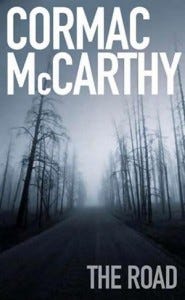
Cormac, The Road, cover
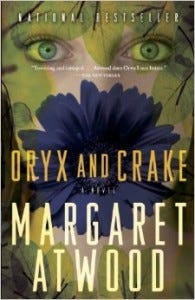
Atwood, Oryx and Crake

The way that details are revealed effectively in a narrative can vary wildly. Compare two books set after cataclysmic events have devastated Western civilization: Margaret Atwood’s Oryx & Crake and Cormac McCarthy’s The Road. Oryx & Crake is at once a post-apocalyptic novel and an investigation of how the world came to be this way; a literary requiem, or an autopsy, showing how genetic engineering and overly ambitious science laid the groundwork for the world’s unmaking. Cormac McCarthy’s The Road has an equally bleak setting: the world traversed by the father and son at the heart of the book is a hostile, terrifying place. Here, however, the reasons for this devastation are never explained. It’s of a piece with the scaled-back prose used to tell the story: a long flashback stating conclusively that The Road is set in the aftermath of nuclear war or volcanic eruptions or an alien invasion would upset the carefully-crafted balance that his stark prose establishes. Similarly, the interrogative mood and phantasmagorical imagery of Atwood’s novel would be ill-served by a pared-down approach to description. For Oryx & Crake, that level of detail, and the horrors it can evoke, is essential.

It’s a valuable lesson: enumerate too much, and prose can read like stage directions. Be too stark, however, and the effect can bypass a kind of pulp terseness and have the effect of an outline, something incomplete.

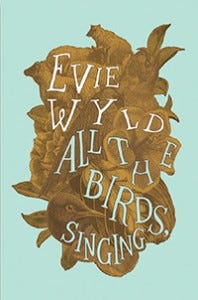
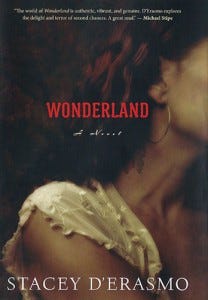
Questions of whether to be explicit or implicit have been on my mind a lot lately. Earlier this year, I worked on a piece looking at the work of fictional artists and the art-world experience of the writers who created them. It made me think a lot about the ways in which the levels of detail of one specific element of a novel can make that work succeed or fail. That in turn made me think of two novels released this year where a lack of detail about one essential element makes for a stronger reading experience. One of these novels is Stacey D’Erasmo’s Wonderland; the other is Evie Wyld’s All the Birds, Singing. Each is told in the first person; each blends a present-day narrative with flashbacks that reveal the narrator’s history. Wonderland’s structure is more dreamlike, while All the Birds, Singing’s is more regimented, though it may take a few chapters for the reader to get their bearings. In both books, the past looms large.

Evie Wyld cover

In the case of Wonderland’s Anna Brundage, that past involves being the child of artistic parents, of a burgeoning musical career, and of economic anxiety: now in her early forties, she has put her job working with children on hold in order to undertake a European tour, playing songs from acclaimed albums that have retained a cult audience. If Anna’s story is one of reconnecting with the outside world, that of Jake Whyte–protagonist of All the Birds, Singing–is one of isolation from it. As the novel opens, Jake lives alone, raising sheep on a small farm in an isolated part of Britain. Details emerge slowly about her past: she’s something of an outsider in this community, originally hailing from Australia. As more of her past is revealed, her reasons for distancing herself from the people around her become more and more understandable. But there’s a more pressing concern that she must wrangle with: the question of who or what has violently killed two of her sheep.

Each of these novels is told in broadly realistic terms. The world that they occupy in is a recognizable one. And yet one detail is left absent from each narrative. For Wonderland, it’s the style of music that Anna and her band play; for All the Birds, Singing, it’s the shape of whatever might be responsible for the killings.

Over the course of Wonderland, Anna slowly parcels out details of her past, some familial, some personal. We learn that she first found an audience as part of a group called Anna and The Squares, when she was in her twenties. Through one particular moment, D’Erasmo evokes a specific era, group dynamics, and the band’s dynamics.

Fact: we were all so wrapped up in one another that there wasn’t much room left over for an audience. Driving petulantly around the frayed, secondhand alternative zones of the East Coast in Vikram’s station wagon, all the equipment stuffed in the way-back, Daisy’s perfect cameo head on my shoulder, John riding shotgun, scribbling figures that never added up on his little pad. Fact: it was impossible. We were doomed from the start.

Later, we learn of her solo career, and an album called Whale, which made her artistic reputation:

Everyone agrees that it started with Whale, the new thing that everyone remembers so well. The sound waves spread out from that moment. Around the indie recording studios, I became, for a season, a verb. “Brundaging” meant tearing up the sound, erasing half of it, sending it skittering over the abyss, though no one was able to reproduce the way Jonah twirled his wrist over the drumhead, no one had his socks, so they were never able to copy that exquisitely muffled, glancing beat.

Wonderland novel cover

As befits a novel set on a tour, there are plenty of small details about life on the road. Each member of Anna’s new band has their own story; their dynamics, influences, and foibles all factor into the story being told. Similarly, Anna’s musical history shows up in vivid detail, including a sequence about the recording of Whale. Through the bands Anna encounters on tour in Europe, there’s also a sense of her artistic influence. What the reader doesn’t get is a description of what Anna’s music sounds like. We can infer it, from some of the descriptions of instruments, but there isn’t really a sense of what they might have sounded like. (Another impressive detail: they’re an American band touring Europe, which speaks volumes in and of itself.) And that makes sense, given the cult-like status her music holds for some. But that status becomes, in its own way, a kind of blank slate, allowing a reader to project, to summon up their own favorite cult band, be it Life Without Buildings or Olivia Tremor Control or The June Brides.

Leni Zumas cover

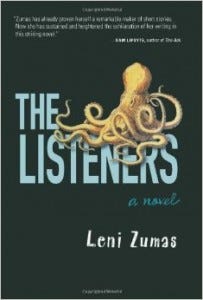
Compare this to approach to that of another accomplished novel that shares certain characteristics with D’Erasmo’s: Leni Zumas’s The Listeners. There, the central character is also a musician wrestling with her own memories after years of inactivity. However, her old band is more explicitly placed in a post-punk category, through the invocation of other groups and other scenes. Here, though, the music is in the background; Zumas’s narrator is, it transpires, wrestling with trauma from a host of sources. In The Listeners, the sound and the scene are concrete; it’s the dread and the guilt that are hauntingly shapeless.
All the Birds, Singing opens with the aftermath of violence. Its first sentence finds Jake arriving on the scene of something awful. “Another sheep, mangled and bled out, her innards not yet crusting and the vapors rising from her like a steamed pudding.” It’s both vivid and detailed, establishing that we’re in the presence of an observant narrator, one who takes careful notes of the horror and damage before her. Soon after, Jake goes to buy some vegetables, and sees another sign of mysterious violence: the windows of the farm’s greenhouse have been broken. When Jake asks the woman working there about the cause of the broken windows, the response she hears is less than reassuring: “Dad said to say the wind blew it in.”

The novel’s first chapter ends with the arrival of Jake’s neighbor Don. We learn certain things from their conversation: Jake has been living there for three years; even after three years, she remains isolated from the community around her. Eventually, the conversation turns to the dead animal before them, as Don examines the body. His observations grow more and more ominous; they could just as easily be setting up a horror novel.

“Mink might tear a sheep up, after she’s dead. Or a fox.” He lifted the ewe’s head to take a look at the eyes. “Eyes are gone,” he said; “could be something killed her and then everything else took their pickings.” He lifted the head higher and looked underneath where her ribs made a cave. He frowned. “But I’ve never seen anything round here flense an animal like that.”
Jake ponders the parties who might be responsible. Initially, she suspects a group of local teens; later, she wonders if an emotionally unsettled young man is the killer. Later still, Jake encounters something that is described only in absence and impossibility. Wyld describes an entity “pelting up the stairs, faster than his feet could fly, and light, like he had more than one set of legs…” That ambiguity is very intentional. In a recent interview with Guernica, Wyld commented on the reactions she’s received to the sheep killings, and to the novel’s ambiguity in general.

There’s this perception that I have the secret of what actually happened. But all I have to say is in the book. So it could be any number of things. It could be an actual large, weird hairy monster killing sheep. It’s lovely to me that people find their own ways through it.

Later in the same interview, she comments, “I think there’s over-telling sometimes, in fiction.” What is most striking, perhaps, in Wyld’s novel is the subtle control she exerts over the narrative. When necessary, things are minutely described; at other moments, a master class in ambiguity sets in, and it’s a balance that’s sustained all the way through to the pitch-perfect ending.

North American Lake Monsters

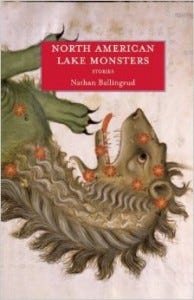
That blend of detailed horror and ominous ambiguity is echoed in stories in Nathan Ballingrud’s North American Lake Monsters. Where Wyld is cagey about the presence of the paranormal, Ballingrud pushes forward with it, then pulls the rug out from the reader by suggesting that the characters we encounter may not be the most reliable of witnesses. “Wild Acre” opens with three men waiting on a construction site, aiming to halt the vandalism that has befallen it. One of them, Jeremy, steps away from the house-in-progress, then sees something strange, and then sees his friends under attack by something “huge, befurred, dog-begotten.”

It’s the kind of opening that could launch an archetypal horror story: after a harrowing experience, a lone figure must avenge his friends by killing the monster responsible for their deaths. But that isn’t where Ballingrud goes with this; instead, he follows Jeremy’s slow psychological deterioration. For Jeremy, the horror is less the creature he witnessed and more the question of what he did or didn’t see, and what he did or didn’t do. Elsewhere in the collection, Ballingrud invokes more tangible horrors: a vampire hiding below a house, recuperating from the sun; the slowly decaying carcass of, yes, a lake monster. Ballingrud can certainly write the uncanny, but he also knows when to keep the monsters in the shadows, and when to prompt questions about whether the monster is there at all.

Each of these authors takes risks in the way they manage ambiguity. What’s notable about all of them is how weave it into their narrative: it’s one element among many at their disposal, and it’s judiciously used. Taken together, they allow for the creation of fiction with the best qualities of realism and ambiguity, even surrealism. It’s that balance, and that pacing, that keeps the reader unsettled, and lodges these stories in our memories.

Rewriting through Google Ads: Mimi Cabell and Jason Huff’s American Psycho

by Maru Pabón

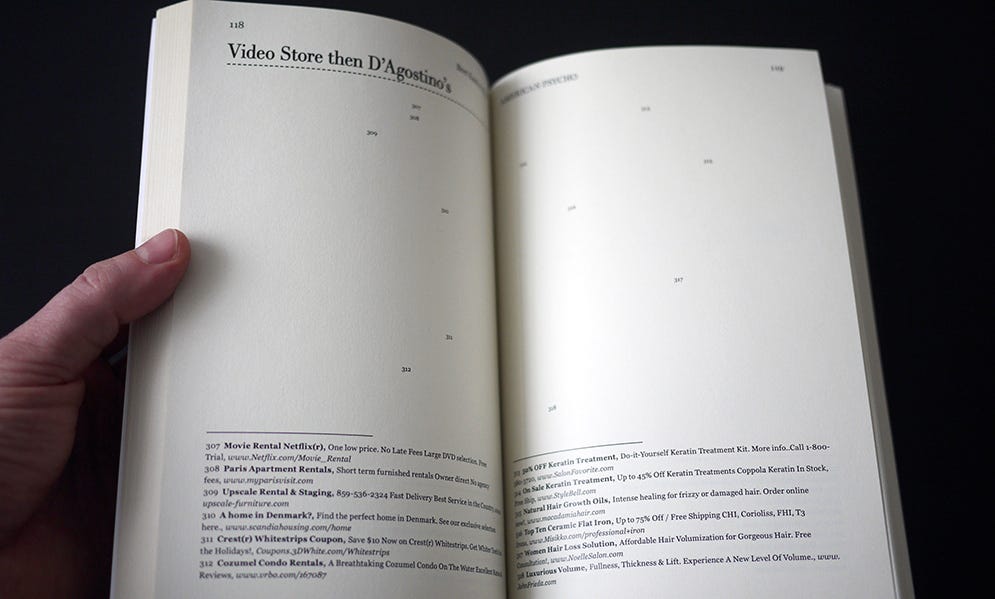
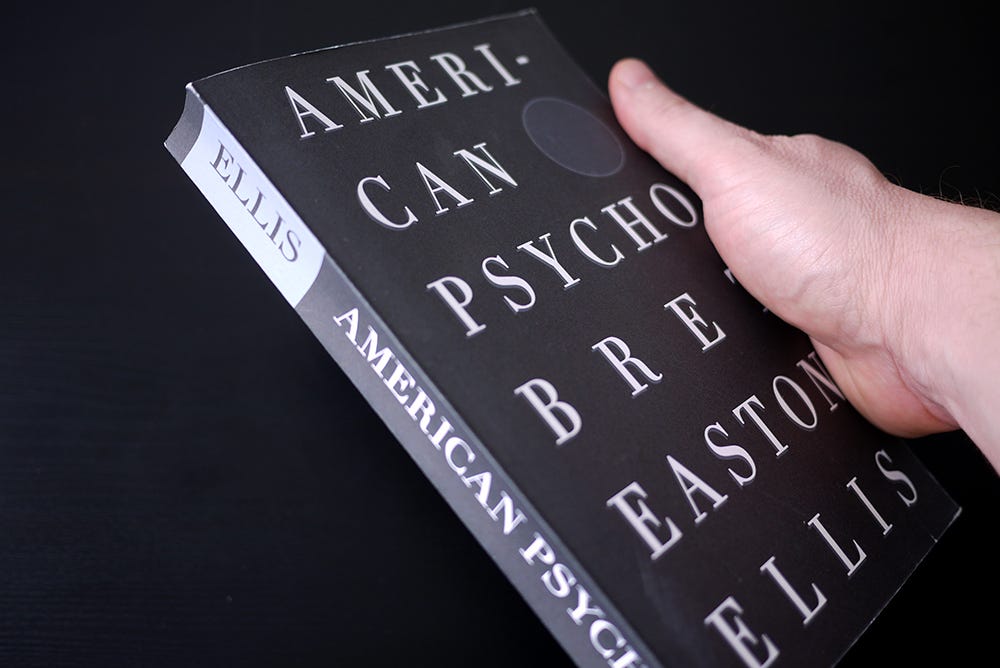
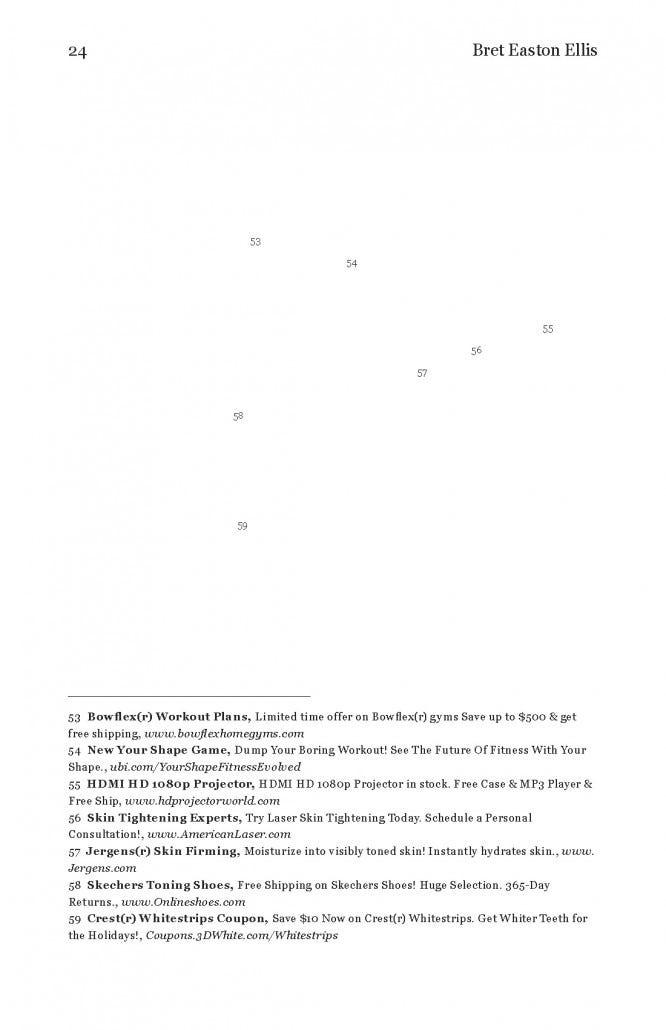
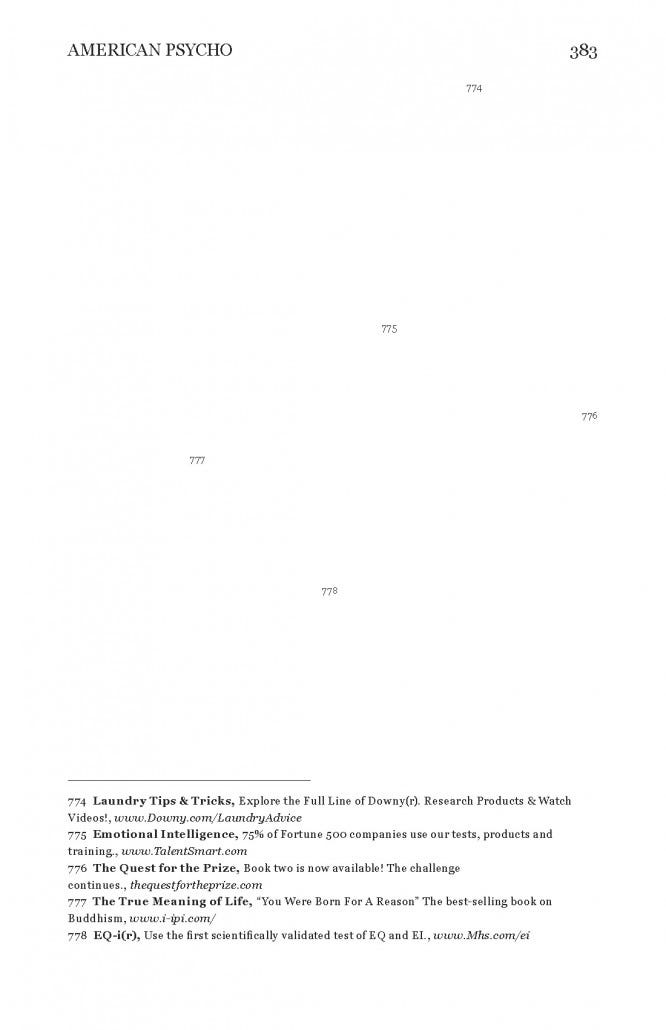
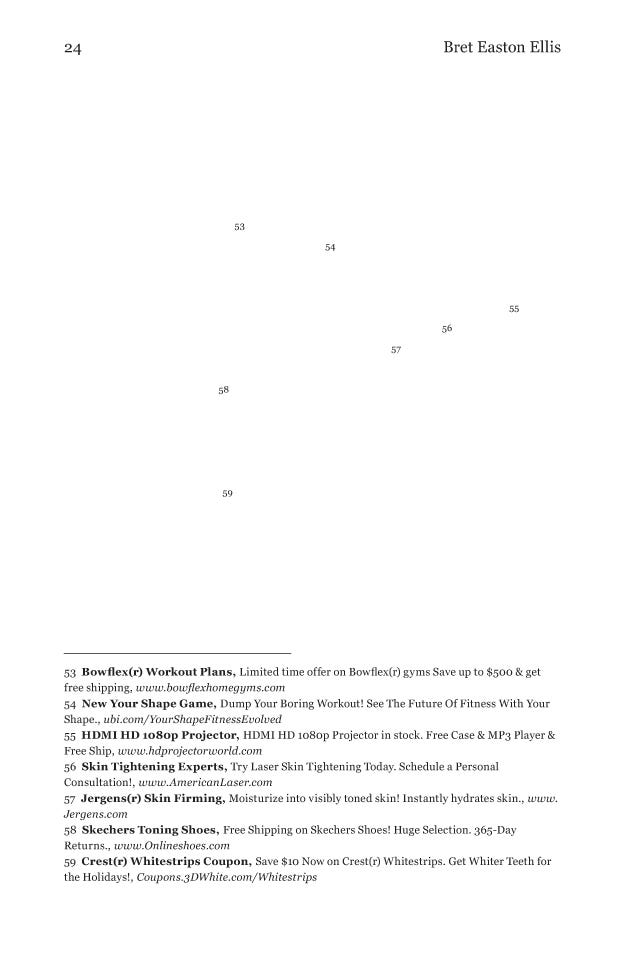
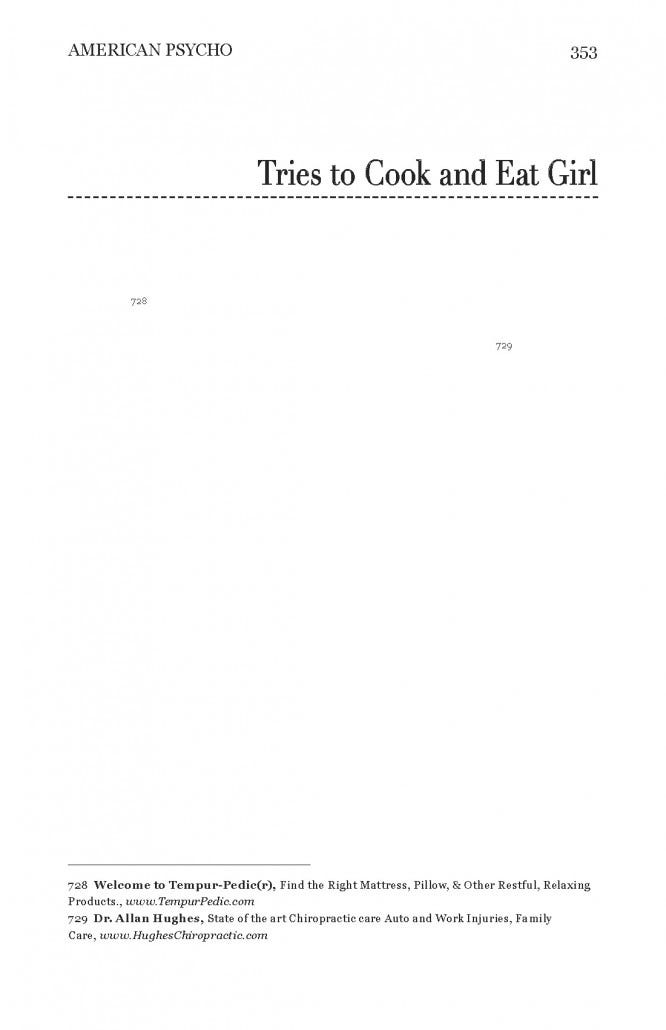
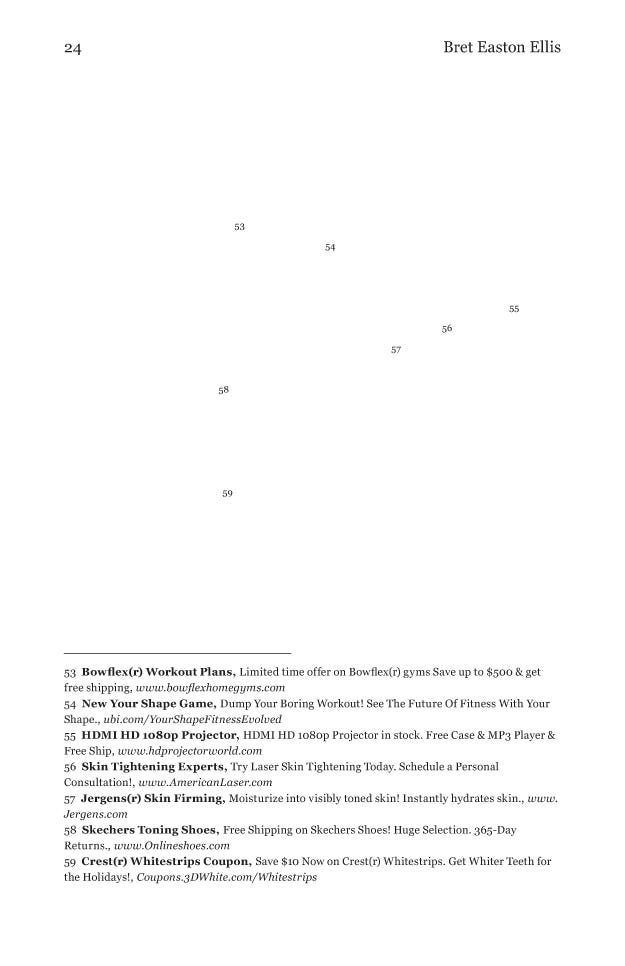
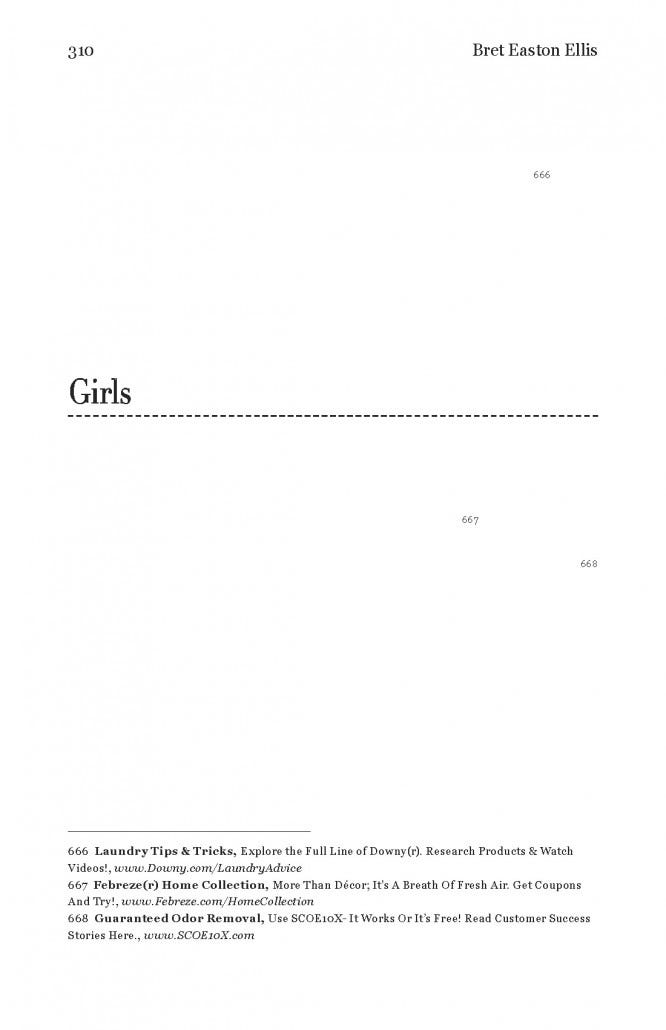
Mimi Cabell and Jason Huff, MFA graduates of the Rhode Island School of Design, have rewritten Bret Easton Ellis’s American Psycho by sending the novel to each other, page by page, and collecting the Google ads that appeared next to their e-mails. Their artist’s book may bear the same cover art and title as Easton Ellis’s novel, but its text is replaced by footnoted ads for a strange array of objects.

Cabell and Huff wanted to bring attention to how Google’s web crawlers read e-mails and pull up ads to match each message’s content. They were curious as to what Google would try to advertise when faced with the graphic violence of Easton Ellis’ novel, and the results range from Crest Whitestrips to Crate & Barrel furniture. As Cabell explains on her website, “In one scene, where first a dog and then a man are brutally murdered with a knife, Google supplied ample ads regarding knives and knife sharpeners. In another scene the ads disappeared altogether when the narrator makes a racial slur.”

In a way, this iteration of American Psycho is a product of two levels of hacking: Google’s infiltration of private correspondence plus the artists’ appropriation of the physical book. It’s a fascinating and unsettling object, a testament to the possibilities of combining digital aesthetics and the traditional book form.

The book is available for free as digital download, and you can check out more of Mimi Cambell and Jason Huff’s works here and here.

tumblr_miy8xxEX4D1s60o7vo1_1280
24
383
American-Psycho-Pages-30
page353
American-Psycho-Pages-30
310

August Fiction Prompts Culled from the News

Each month we gather some news headlines that are strange enough to be fiction. Here’s yet another batch of headlines to get your creative ideas flowing along with suggested genres.

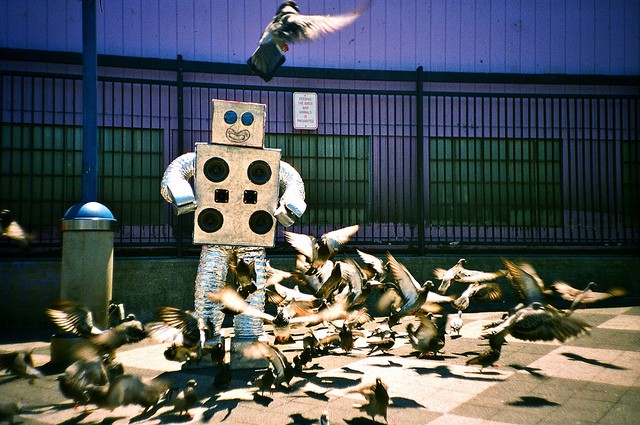
Eco-Dystorian SF: Realistic Robo-Hawks Designed to Fly Around and Terrorize Real Birds

Political Thriller: ISIS the Rock Band Mistaken for the Terrorist Group

Horror: Man Accused of Sticking Needles in Packaged Meat “For the Hell of It”

Even Scarier Horror: Cannibal restaurant ‘with roasted human heads on the menu’ shut down by police

Southern Gothic: Man Jailed For Drunk Driving With 100 Chickens in His SUV

K-Mart Realism: Man, 24, fined for pretending to be a GHOST by making ‘woooooooh’ noises and waving his arms about in cemetery

Postmodern: Pilot Loses Control Of Plane After His Artificial Arm Falls Off

Novel of Manners: Man Pours Beer over Tiger as London Zoo Lates Parties Get out of Hand

Superhero Noir: Iron Men, Elmo, and Spider-Man Arrested in Times Square

Photo by Doctor Popular. Prompts from July and June.

Media Frankenstein: As I Lay Dying

Salvage the Bones

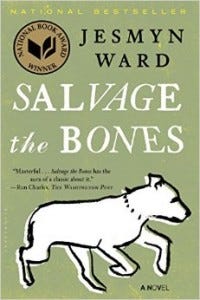
THE HEAD: Salvage The Bones by Jesmyn Ward (2011)

“After my 9th grade year, we read As I Lay Dying,” confides Esch, the 14-year-old pregnant narrator of Jesmyn Ward’s National Book Award-winning novel, Salvage the Bones, “and I made an A because I answered the hardest question right: Why does the young boy think his mother is a fish?” Esch speaks truer than she knows and not just because Esch’s mother is dead, like Vardaman’s mother in As I Lay Dying. To say that Ward’s story of a hardscrabble Delta family battening down in the path of Hurricane Katrina bears a resemblance to Faulkner’s 1930 modernist masterpiece of dirt-poor Mississippi sharecroppers on an odyssey to bury their dead matriarch is surely an understatement. The books are all but long lost siblings and both of them, poignantly, novels of blood — the kind that binds us each to each, the kind that spills from open wounds, “the wild blood [boiling] away” and “the terrible blood” “[shaping and coercing]” “to the forlorn echo of the dead word high in the air,” in Faulkner’s aggressively beautiful phrasing. In the opening pages of Salvage the Bones, watching puppies emerge from the “blooming” insides of her brother’s champion pitbull China, Esch is Faulkner’s Dewey Dell, who bides in the barn with the family milk-cow, hearing her “warm, sweet, stertorous, moaning.” Esch’s brother, tough guy Skeetah, who profits from China in fights to the death, is none other than Faulkner’s Jewel, coveting his rebel horse. Esch’s drunken dad is Anse; her little brother Junior is Vardaman Bundren; while Esch’s mother, dead herself, is misanthropic schoolmarm Addie, out of whose living absence the book coalesces, though Esch’s mother, unlike Addie, never speaks her fears aloud. Even Katrina, whose monstrous encroachment gets a stark, un-Faulknerian treatment by Ward, has its own corollary in As I Lay Dying in the river in flood that unseats Addie’s coffin. In most every respect, the Batistes are the Bundrens, except for the fact that they’re black and not white, and that their experience doesn’t emerge from the early 1900’s in rural Mississippi but the Gulf Coast, late August 2005, a tropical depression forming. The plots of the novels are outwardly different. Where As I Lay Dying suffuses a basic quest narrative with enough family intrigue and deceit to overflow the bounds of a Shakespearean tragedy, Salvage the Bones is more meditative, fraught with everyday struggle — though no less epic — and takes its course day by day in the two weeks leading up to Katrina. Esch flounders in an all-male world. Promiscuous with older boys, the Sally Brown to Skeetah’s Charlie in the dogfighting underground of Bois Savage Parish and not quite receiving blue-ribbon advice on the birds and the bees from her drunk, stressed-out father, she keeps her pregnancy a secret, hoping it will go away. Her mother’s loss is palpable, a wound in her that won’t stop bleeding. What’s more she died in childbirth while having Esch’s brother Junior, the last of four siblings that make up the family; Esch, it seems, is next in line. As Addie intones from beyond the grave in As I Lay Dying: “My father said that the reason for living is getting ready to stay dead… And now [my husband] has three children that are his and not mine. And then I get could ready to die.” In a Biblical turn befitting Salvage the Bones’ Southern Gothic lineage, Hurricane Katrina, arriving in the novel’s climax and in the last trimester of Esch’s pregnancy, becomes a terrible, Kali-like surrogate mother to Esch and her siblings and all the folk, really, unlucky enough to be caught in her path. Ward writes: “[Katrina] left us a dark Gulf and salt-burned land. She left us to learn to crawl. She left us to salvage. Katrina is the mother we will remember until the next mother with large, merciless hands, committed to blood, comes.” Just like the flooded river and later the burning barn in As I Lay Dying, Hurricane Katrina becomes a disaster of Biblical import that drives the Batistes, like the Bundrens before them, along the last line of their human defenses, exposing their anomie, testing their love. But Ward’s novel at last is more than a book-length allusion to As I Lay Dying with lyrical language and oversized themes. It bristles with M.O.’s unique to its author: poverty, race, empathy, womanhood, the political made personal and single-parent families, all come under Ward’s sharp eye; even and especially the region in which the book’s story is set, also a preoccupation of Faulkner’s. Indeed Ward’s sense of place in Salvage the Bones is so unbelievably rooted, yet occupied by characters so seemingly rootless it begins to embattle the mind of the reader. The American South reveals itself as the gorgeous, grotesque clusterfuck that it is — a motherless child muscled under the waves in order to be born anew.

Undertow movie

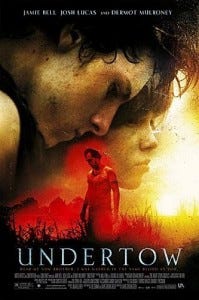
THE TORSO: Undertow dir. David Gordon Green (2004)

The absent mother in David Gordon Green’s Undertow is more starkly drawn than Mama Batiste, though her name, “Audrey,” spoken with beleaguered reverence by the sons and husband she has left behind, somewhat resembles Faulkner’s “Addie.” All her two boys Chris (Jamie Bell) and Tim (Devon Alan) remember of her is her perfume and the “little mustache” she wore, while her hard working straight-arrow of a husband, John (Dermot Mulroney), hasn’t had a free moment to mourn her passing between raising his sons and overseeing the running of their Georgia family farm. Initially similar to Ward’s novel in its painterly depiction of impoverished country living — though Terrence Malick’s Days of Heaven (1978)might be a more apt cinematic companion — Undertow soon lurches into Night of the Hunter-modewith the arrival of John’s nogoodnik ex-con brother Deel (played with lascivious glee by Josh Lucas), who keeps not-so-surreptitiously mentioning a hoard of old Mexican coins that Grandaddy Munn has hidden somewhere on the property. As soon as things go south with Deel (never a question of if, but when), Chris and Tim flee into wide-open country with the Mexican coins bundled up in a sock and their greasy and murderous uncle pursuing. The rest of the film is a chase narrative broken up by eccentric, poetic vignettes: a couple doing B-ball layups amid chicken coops in their unpaved driveway; a snaggletoothed shop-girl who chokes on her gum while flirting on the sly with Deel. But apart from its aura of dirty realism, the Biblical throwdown of brother on brother and of course the pronouncedly MIA mother, what Undertow most shares with As I Lay Dying is the chasm that separates all human beings, realized in the novel’s structure through first-person chapters that only crossover to highlight the gaps in their speakers’ desires, the unknowable babble of head-space not yours. Addie echoes these gaps in her posthumous chapter, mulling on her husband Anse: “Sometimes I would lie by him in the dark, hearing the land that was now of my blood and flesh, and I would think: Anse. Why Anse. Why are you Anse. I would think about his name until after a while I could see the word as a shape, a vessel, and I would watch him liquefy and flow into it like cold molasses flowing out of the darkness into the vessel, until the jar stood full and motionless: a significant shape profoundly without life like an empty door frame; and then I would find that I had forgotten the name of the jar.” Elder brother Chris expresses a similar existential-familial terror in voiceover as he and Tim hop a freight train, fleeing Deel: “I was thinking about dad, how he spoke to us, like he was afraid. When he looked me in the eye, sometimes, I believe he had no idea who I was. Or didn’t care. Who was this kid? How did he spring from me? I like the questions you ask yourself.” While Esch and Skeetah in Salvage the Bones are brutally mothered by Hurricane Katrina, Chris and Tim in Undertow are mothered by violence in the form of their psychotic Uncle Deel. That the culmination of this mothering or un-mothering, as it were, takes place outside of an orphan’s encampment in the woods of Georgia (a sort of Southern Gothic Never-Never-Land) is more than sufficient to underscore Gordon Green’s imputation that the South is a shifting and motherless place, home and hearth to so many, safe harbor for none. The baptism by blood at the end of the film is as powerful as anything from Flannery O’Connor; it recalls Faulkner’s flood, Jesmyn Ward’s hurricane — regeneration through destruction. At the risk of a SPOILER ALERT it’s worth noting that As I Lay Dying has a very bleak ending, whereas Salvage the Bones and Undertow are more forward-looking, more searching, more hopeful. Addie Bundren dies, stays dead; Ward and Gordon Green’s mothers reincarnate, renew. The American South is a barefooted orphan with crust in its eyes and a bloody, dark heart but that doesn’t mean someone still won’t adopt it, wipe its face off, teach it love.

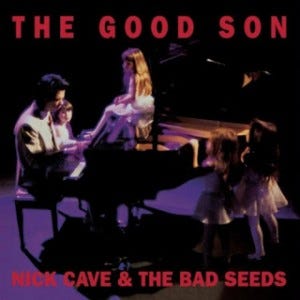
Nick Cave, the Good Son

THE LEGS: Nick Cave and the Bad Seeds’ The Good Son (1990)

In spite of the fact that he was born in Warracknabeal, Australia, singer-songwriter Nick Cave has always been preoccupied with the American South and its mythos of salvation and decay. Nowhere is this more apparent than on Nick Cave and the Bad Seeds’ first handful of studio albums, among them The Firstborn is Dead (1985), which begins with a crowing epic of river-flood called “Tupelo”; Your Funeral… My Trial (1986), which includes the Harry Crewes-esque funhouse dirge “The Carny”; and The Good Son (1990), perhaps the subtlest of all his forays into Southern Gothic, which, as per most of Nick Cave, isn’t very subtle at all. The author of the 1998 novel And the Ass Saw the Angel, itself composed in a pastiche southern dialect that recalls Boo Radley having an epileptic fit, Nick Cave spins a dark, elemental yarn on The Good Son that furthers Ward and Gordon Green’s notions of motherlessness brokered and redeemed through violence, illness, natural disaster and family struggle, all by way of Faulkner and his lineage. Indeed, The Good Son’s resemblance to the work of Faulkner, specifically, As I Lay Dying, seems as intentional in many ways as Salvage the Bones’. Just like in Faulkner’s novel, there is pilgrimage, Biblical flood, family struggle, existential floundering, grim levity mixed with inchoate grief. “The Hammer Song,” which describes a prodigal son’s flight from the woebegone land of his genesis — “And though I left quite quietly/ My father raged and raged/ And my mother wept” — might well apply to As I Lay Dying’s Jewel, who toils under his own steam and against his family’s wishes to buy a horse as arrogant and hardheaded as he is. Or take “The Weeping Song,” which could well be the stoic mourning call of eldest Bundren sibling Cash — “This is a weeping song/ A song in which to weep/ While all the men and women sleep/ This is a weeping song/ But I won’t be weeping long…” — who can no more express his devastation at the loss of his mother Addie than resist showing her, as she lies dying, the coffin he’s in the process of building her “on a bevel” so she can rest comfortably in it when her time arrives And yet it’s in the divergence of Nick Cave’s work from Ward and Gordon Green’s that its true power as part of the Southern Gothic diaspora emerges. Cave, an Australian, has always painted the American South with hyper-real, cartoonish strokes; clearly, he is well versed in its literary tradition — he described his own novel And the Ass Saw the Angel as “a comic novel in the manner of Flannery O’ Connor’s Wise Blood” — although a reverence for American Lit does not an American make. In The Good Son’s title track, Cave sings of a benighted young man not unlike Darl Bundren from As I Lay Dying with all the subtlety and originality of tent revival religion: “The good son has sat and often wept/ Beneath a malign star by which he’s kept/ And the night-time in which he’s wrapped/ Speaks of good and speaks of evil…” But such backwoods bombast works to Nick Cave’s advantage. His privileged perspective of an outsider looking in on the forlorn horror-show of the American South lends him unique insight, some might even say, authority. And the outsized absurdity of his caricatures, so different from Ward and Gordon Green’s dirty realism, brings him closer to what Flannery O’ Connor in her 1960 essay “Some Aspects of the Grotesque in Southern Fiction” calls “the strange skips and gaps” that “lean away from typical social patterns, toward mystery and the unexpected.” Even so if the South is essentially placeless, a condition of mind gussied up as a region, who is to say that Nick Cave can’t be Southern — a spitting, howling, storm-dark prophet? O’Connor goes on to write: “There is another reason in the Southern situation that makes for a tendency toward the grotesque and this is the prevalence of good Southern writers… The presence alone of Faulkner in our midst makes a great difference in what the writer can and cannot permit himself to do. Nobody wants his mule and wagon stalled on the same track the Dixie Limited is roaring down.” The South may be an orphaned place but what a bunch of foster parents: folk who stake their very lives to show it no better or worse than it is.

Alternative Cuts:

The Violent Bear It Away by Flannery O’ Connor (1960); Nick Cave and the Bad Seeds’ The First Born is Dead (1985); The Gift dir. Sam Raimi (2000) or The Apostle dir. Robert Duvall (1997)

Mud dir. Jeff Nichols (2013); Other Voices, Other Rooms by Truman Capote (1948); Bonnie Prince Billy’s I See a Darkness (1999)

His Hero is Gone’s Fifteen Counts of Arson (1996); Gummo dir. Harmony Korine (1997); The Orange Eats Creeps by Grace Krilanovich (2010)

The Neverending Story by Michael Ende (1979); The Arcade Fire’s Funeral (2004); Beasts of the Southern Wild dir. Benh Zeitlin (2012)

As I Lay Dying dir. James Franco (2013); Directing Herbert White: Poems by James Franco (2014); Daddy’s MotorCity (2012)

Previous MEDIA FRANKENSTEINS:

#1: Manmade Apocalypse

#2: Ghostbusters

#3: Surveillance

#4: College

In Two Weeks: Fundamentally Unreliable

Infinite Jest in Lego Form

Fans of massive postmodernist novels and/or Lego building blocks rejoice! A father and son duo has been translating Infinite Jest into Legos. On their website, Brickjest.com, they say:

Kevin Griffith, Professor of English at Capital University, and his son Sebastian first envisioned translating David Foster Wallace’s Infinite Jest into Legos after reading The Brick Bible, by Brendan Powell Smith. Wallace’s novel is probably the only contemporary text to offer a similar challenge to artists working in the medium of Lego.

May I suggest Lego Blood Meridian next?

According to The Guardian:

Picking which scenes to do, in a 1,079-page text, was something of a challenge, he says: Griffith would choose which he felt would work best, and then his son would tackle the toy brick reconstruction.

Here are a few samples from the 100 scenes, but fans will need to check out the entire thing.

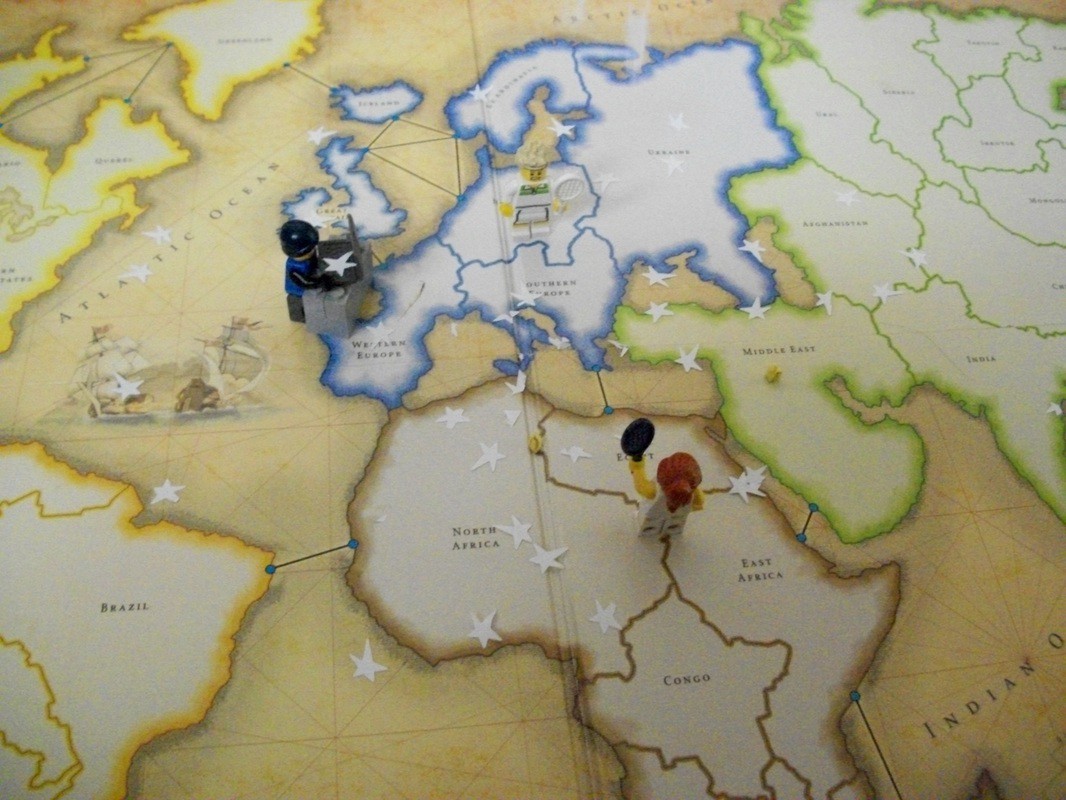
opening of infinite jest

P. 12. ‘I am not just a creatus, manufactured, conditioned, bred for a function.’ ‘Sweet mother of Christ,’ the Director says.

angel david foster wallace

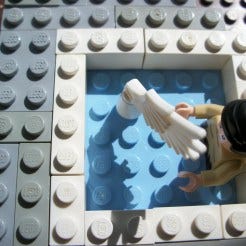
p. 44 And out of nowhere a bird had all of a sudden fallen into the Jacuzzi.

Feral hamsters

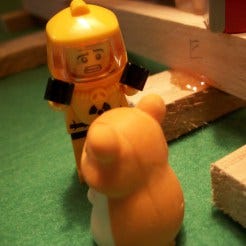
p. 93. Feral hamsters are not pets. They mean business.

Marathe Infinite Jest

p. 94. Marathe said: ‘. . . have I merely pretended to pretend to pretend to betray.’

Mario infinite jest

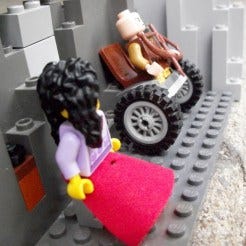
p. 125. At which point U.S.S. Millicent Kent stopped them . . . and crushed Mario’s large head to the area just below her breasts . . .

skull faces legos

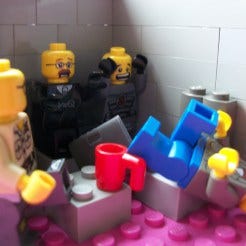
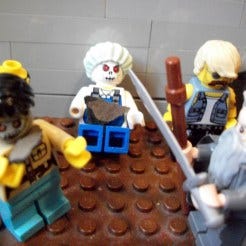
p. 138. The rock thing–which has become a grim bit of mythopoeia now trotted out to illustrate how cushy the present Ennet residents have it–was probably not as whacko as it seemed to Division of S.A.S., since many of the things veteran AA’s ask newcomers to do and believe seem not much less whacko than trying to chew feldspar.

Infinite Jest microwave

p. 251. ‘The packed foil was to preserve the vacuum in a space that got automatically evacuated as soon as the magnitron started oscillating and generating the microwave.’

lego jest

p. 295. After four weeks, Orin’s success at kicking big egg-shaped balls was way past anything he’d accomplished hitting little round ones.

Eschaton, lego infinite jest

p. 341 The snowfall makes everything look gauzy and terribly clear at the same time . . .