What justifies parental neglect — or even abandonment — of a child? Severe mental illness? Desperate circumstances of poverty or war? Most would make allowances in these cases, though even in such horrific environments many parents have loved and cared for their children.
What about a child hurt or abandoned in pursuit of literary achievement?
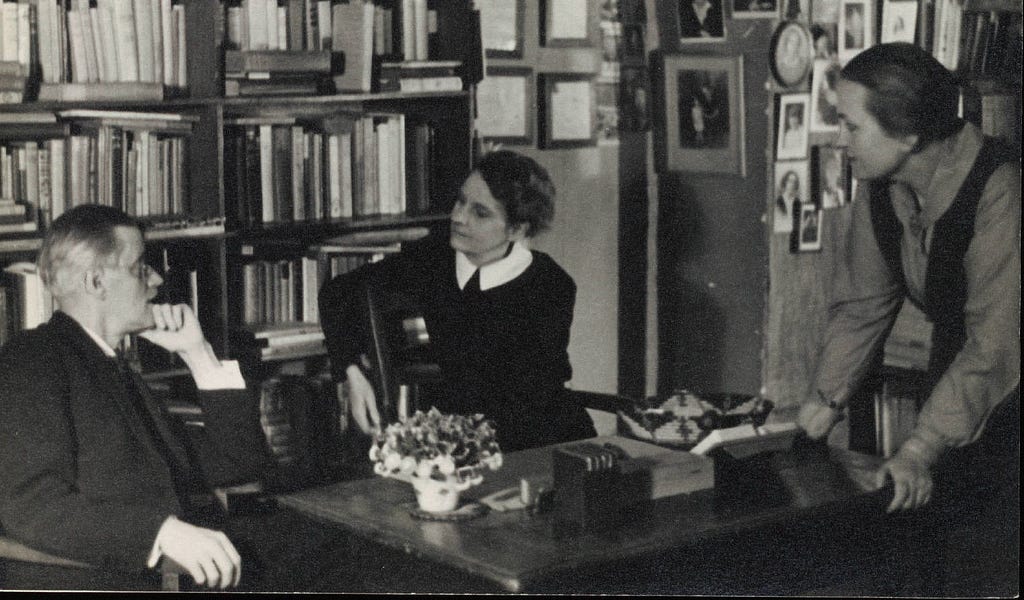
In the July 22 2013 issue of The New Yorker, critic James Wood reviewed recent books by the now-adult children of Saul Bellow, John Cheever, William Styron, and Bernard Malamud, posing the question, “Can a man or a woman fulfill a sacred devotion to thought, or music, or art, or literature, while fulfilling a proper devotion to spouse or children?” Wood’s answer is, amazingly, a categorical no.
“How, really,” Wood asks, “could the drama of paternity have competed with the drama of creativity?”
While the full callousness of that sentence sinks in, let’s consider the wider context. This is, after all, a long-standing challenge for those devoted to art, philosophy, or similar fields, the mastery of which clearly requires tremendous amounts of time and energy. For centuries a traditional solution has “worked,” more or less: Some underling handles domestic tasks, including the care of children. The “underlings” in question have pretty much always been either servants or wives, with an obvious societal conflation of the two. This was of course still true in the period Wood focuses on, which relegated wives to mere appendages in service to the “important” work of their artist-husbands. And of course many women-artists of the 50’s and 60’s were vilified if they even questioned commitment to parenting. This was, in part, what artists like Sylvia Plath struggled against, as seen in her plaint as a nineteen-year-old: “I am afraid of getting married. Spare me from cooking three meals a day — spare me from the relentless cage of routine and rote. I want to be free” — or in the image of her maternal self as “…cow-heavy and floral/In my Victorian nightgown…”
But we can’t accuse Wood of sexism, as the inclusion of women in the “sacred devotion” quote above makes clear. He seems, however, not to have thought this through, since his very “feminism” could lead, for instance, to writer/writer households in which both muse-bespelled parents neglect, ignore, or otherwise damage their offspring. (I don’t mean that feminism has led to neglect of children; I’ll let the reactionaries harp on that one, while most parents in the real world continue to do their best with the actual conditions of contemporary life). And note that Wood’s support of female equality is based, of course, on the value of fairness to an oppressed group — even while he’s happy enough to write off another even more vulnerable group. This alerts us to the reality that his overall argument is, to a large degree, simply dismissive of children. I can’t help thinking of the Kenyan proverb that when elephants fight, it’s the grass that suffers.
“How, really, could the drama of paternity have competed with the drama of creativity?” My God — how could it not? Human beings are continually wounded, even destroyed, by wretched parenting; if you don’t see drama in that, you’re not looking very hard. And I can’t accept “justifications” based on a perceived superiority of art over living, breathing children, with their aching need for committed parents. (Wood, by the way, is hardly alone in his view of artist-fathers; writer Allan Massie begins a 2012 piece with “Writers often make poor fathers…,” as if this sweeping (and sexist) generalization is merely a fact we must resign ourselves to).
In fact, a true vision of the overwhelming importance of parenting is one of the crucial ideas that should guide a parent. A mother or father is the sun in the sky of childhood; that relationship shapes the child in myriad ways, especially in the parental love that allows a child to grow in acceptance of self. Holding up “the holy centrality of writing” over the potential cost to the child works blatantly against this. At one point Wood even states that “…their fathers had literary existences that were religiously absorbing, selfishly independent” — apparently unaware of the irony of posing “religious” and “selfish” as equivalents, since most religions, of course, value altruism, particularly when applied to those who are most vulnerable. Like, say, children.
And since Wood evokes the sacred, the religious element here is worth further examination. A strange reaction to Wood’s essay, on a Christian site called Mockingbird.com, begins with a relevant anecdote: Faulkner’s supposed response, when his daughter asked him to give up drinking, that “Nobody remembers Shakespeare’s children.” But the unidentified writer goes on to make this astonishing (if only half-coherent) statement:
“God’s grace frees the writer/artist from having to justify himself enough for him to put down his pen/paintbrush and spend time loving his family. Likewise, God’s forgiveness allows the neglected children of narcissistic workaholics to accept their parents as human beings.”
I include this bizarre argument as an example of just how awful justifications based on the “sacred” can be. As a spiritual person myself, I believe that spirituality should involve thinking as well as the more mysterious workings of faith. Appealing to the sacred can easily become, after all, a convenient way to fuzz things over with some kind of ethereal glow. In any case, when sacred reality is used to justify direct injury to human beings, we don’t have spirituality; such an argument is, by definition, anti-religious.
Consider another point. Does Wood’s justification of harmful parenting apply to any committed artists, thinkers, etc., or only to those whose work ends up being great? He never really says. The overwhelming majority, of course, fall far short of greatness, no matter how hard they try. So by Wood’s reasoning we’d find ourselves defending such damage to children on the basis of mildly successful or even indifferent work. Most of us, I think, would recoil from that, especially if we witnessed this kind of family anguish up close. But the alternative doesn’t make sense either. If Wood means that only great artists can be excused for bad parenting, then we’re excusing them exclusively on the basis of talent, which is to say, on the luck of the draw. It’s equivalent to asserting, for example, that morality doesn’t apply to good-looking people.
I don’t mean to suggest that the parent-artist life is easy. I’m a creative writer myself, obsessed with my work, and I absolutely consider art a sacred pursuit. Since I’m also the father of three, that belief puts me through nine kinds of hell on a regular basis. But I also live in a world where children — God knows how many — are hurt, some of them terribly, on an equally regular basis. Yes, the artist’s work-life balance is hugely challenging. But when Wood concludes that “[p]erhaps the storyteller is especially ill suited for happy family life,” what I hear is an attempt to take artist-parents off the hook for the damage some inflict.
To me, though, the most harrowing part of the piece is Wood’s harshness toward Greg Bellow, son of novelist Saul, whose Saul Bellow’s Heart is, in Wood’s words, “a fake narrative of psychic closure.” (And Wood doesn’t even consider that the acceptance expressed by the other writers’ children may partly be an matter of making a virtue of a necessity).
When Greg was eight, his father announced he was divorcing Greg’s mother; anyone who knows children recognizes that this is a particularly vulnerable age for such a burden. Greg writes of the “sadness born of losing the parent who understood me best.” And even though he was supposed to see his father on a limited but regular basis, Saul was often lax about showing up, nor did he take any interest in Greg’s own children. Wood can’t believe that Greg “still displays an unconscious hostility toward his father’s writing” — but that’s hardly a surprising reaction on Greg’s part. Wood even brings up an early Bellow short story about a young father who “imagines the ‘curse’ of having a “dull son’ who disappoints him.” This is pouring salt into a wound. I don’t believe Wood meant it to hurt Greg Bellow. But then we often hurt each other based on elaborate justifications. And Wood’s emphasis on the huge difficulties writers face — an astute point which more people need to understand — illogically conflates the struggles of that life with some kind of pass when it comes to parental responsibility.
Equally surprising, Wood never even mentions one blazingly simple solution to the whole problem: If your sacred obsession requires so much of you — don’t have kids.
Art is a kind of Rilkean angel that visits the world, demanding immense, life-devouring devotion of those who serve it. But love and parental nurturance are sacred forces too, and in their absence innocent children are hurt, may well wither, grow bitter — or worse — and so add to all the great wrong and suffering in the world.
So what’s a writer to do? Find a way to make it work. Of course this double commitment will lead to conflicts and frustrations. But you can work harder, you can get creative with scheduling, you can fortify your heart with the good you’re working in your own family. I don’t think any genuine artist will ever be fully satisfied with the arrangement. But it’s long past time to reject justifications for neglect or abandonment. And it’s time to generally expect more of men, writers and otherwise.
The good news is that many male writers now exemplify the domestically-committed father, from Michael Chabon to Jason McBride to Dan Barden to Brian Gresko (with his female co-founder M.M. De Voe ) at PenParentis.org. Wood, on the other hand, despite admitting the relevant historical differences, seems to be stuck in the ‘50’s, a “golden age” built on the backs of children and wives, one dramatically out of step with changing gender roles today (which Adam Gopnik, with admirable civility and eloquence, pointed out during his podcast discussion with Wood). I can’t help thinking of V. S. Naipaul’s 2011 crackpot declaration that women writers are inferior because of their “sentimentality…[their] narrow view of the world.”
So is there something going on beneath the surface here? In his discussion with Gopnik, Wood makes what I consider a telling admission. As the conversation finishes, Gopnik, laughing, brings up the possibility of Wood’s and his own children writing about the two of them as fathers, saying that “hopefully” those portraits will be more positive. Wood replies, “My fear is almost the other way round, which is that I think — I hope — my children will write nice books about me — but I fear the cost will have been that we didn’t write good enough books.” Wood himself, we gather, is a loving father; after all, it’s a lot easier to justify shooting someone than to actually pull the trigger. But he seems almost to regret his good parenting because it dimmed his literary luster.
Gopnik, however, with a wonderful blend of urbanity and wisdom, replies, “Well, that’s baked into the cake.” Whether he means that it’s a matter of genetically-based ability or, more generally, that “some things just aren’t meant to be,” he’s suggested another glaring error in Wood’s argument: That artistic or intellectual greatness is, ultimately, a mysterious thing, and we can’t make our way to it through formulae, including the “selfish obsession” strategy Wood so confidently upholds.
Bellows, Cheever, Styron, Malamud: Those male artists’ “storm of assertion cleared a brutal path,” Wood writes, honest here, at least, about the brutality involved. “The history of that private destruction is briefly alluring, sometimes appalling,” he continues. “In two or three generations, that story will have faded from memory, outlived by what it enabled.”
In other words, there’s nothing wrong with sacrificing your child on the altar of art. No angel is coming to stay this Abraham’s hand. And Isaac’s young heart will be offered up. But that destruction will soon be forgotten, which makes it all right.
by Lauren Wallach, original fiction recommended by Electric Literature
If anyone asks me how many times I have moved in the last year, I am embarrassed. Five times. I don’t know why I keep moving, but there is always a concrete reason on the outside. Not everything needs an explanation. There might be inside reasons. But the outside reasons are all very reasonable.
I recently moved into a room with my cat, Theodore Valentine, in an apartment where another cat lives. The room has two doors; one big heavy one that leads outside to the main hallway, which I never use, and one flimsy wooden door that leads to the kitchen and the rest of the apartment. It’s a nice size and I try to pretend that the rest of the apartment isn’t there, that this is all there is, just my room and my cat. But then the other cat scrapes at the door. I get little notes on the kitchen counter.
Two windows face a parking lot — it’s a room with lots of sky and sun. I don’t have any curtains yet. The windows lead into the closet door mirrors, so it’s like a double sky and the room feels much bigger. There is a toilet attached to the room. Not a full bathroom, just this one toilet. The door has a peephole and a heavy metal latch that slides side to side. When I moved in I was told the peephole had a double-sided mirror in, so inside sees out, but outside sees itself.
One time I tried to look into the hallway but all I could see was a miniature representation of the apartment and my face. Had they installed the peephole incorrectly? I went into the hallway and peered into the peephole. At first it was the same experience as from the inside, my own reflection, a mirror. But as I looked further in I could see past my eye, into the apartment, into my room. I saw the toilet. Where I pee every morning and every night, where I go to do the things I don’t want anyone to see me doing, in front of the windows that have no curtains.
I described my room to Pablo in a story we wrote together, a “Co-lab” he called it. This was Pablo’s proposal to me after we hadn’t talked in almost a year: a writing collaboration. We were each to write two very short stories, and then put these four stories together, separately, but also as one. This was my first story to Pablo.
I liked describing my room to Pablo in our story because I began to feel like he knew my room. It made me feel less alone. As if I had a visitor already.
Around this time, soon after I moved in, a smell began. It came from the canal. Slowly everything became pumpkins. The smell was both the canal, a cool salty garbage wetness, and pumpkins. After my shower I would put on the pumpkin body butter. On my arms. My legs. By October there were pumpkins everywhere. We had an event at the bookstore, a book about pumpkins. The author left his bag of small pumpkins, which he said he’d be back to pick up. But he never came back. We spread out the pumpkins all over the store. One morning I found one small pumpkin that had been chewed and gnawed away. All the rumors about the rat were true. My coworkers had seen the rat, but I never had. I had only seen evidence: rat shit. But still, it wasn’t until the eating of the pumpkin that it became a reality to me. Perhaps I had thought, maybe it’s not shit. (I could deny shit that was very small, but I could not deny a chewed-up pumpkin.)
I had the most beautiful sky from my new room. Every room could be said to be “new” at some point, but I had only been here for a month and a half. It was still new. I hoped to not move for a long time. I enjoyed this room. The parking lot below. The hum of the massive water tank on top of an adjacent roof. I was on the top floor. I saw all the most beautiful cloud formations. The morning sunrise. Theodore Valentine and I watched it together. When it got dark I had one red curtain to cover one window. I decided that my room would no longer be new once I had a real visitor over. Then I could move.
I called it the “Co-lab” too, now. “I have an idea for the next Co-lab,” I wrote to him. “Co-lab!” Pablo exclaimed. We always got excited about the Co-lab. I told him we will take the pictures we’ve been sending to each other on our phones, and make a small book of them. We will write small stories next to each picture. Pablo said, “That’s a wonderful idea.” Though we continue to send each other photographs, we do not start any new stories.
The theme of the original Co-lab was “control.” Pablo suggested it. I added the idea of summer, as we were just leaving it behind. Summer control. Or control in the summer. My mind was blank. What control did I have? I grew cold, thinking summer was coming to an end. My black leggings were lost in the last move. I had nothing to wear. There was cat vomit on my blankets. I did not know whether it was from Theodore Valentine, or the roommates’ fat cat. I lived with a couple. (Theodore Valentine rarely threw up, so I had my suspicions.) I slept practically naked with a thin floral sheet. Soft cotton that is like silk, very expensive, but mine was just old. The oldest cotton sheets. White. Yellow flowers. So peaceful.
This apartment was in an area of Brooklyn that wasn’t entirely its own neighborhood, but was in between two other neighborhoods. One was the neighborhood I grew up in, and the other one was my future neighborhood, and where the bookstore was. I explained this move to people as having a “black cloak” lifted from me. Perhaps the cloak had been draped over my shoulders.
Men were reappearing in my life. I saw Paul on Court Street and we began to talk again. Paul had disappeared from my life many months ago after the subway argument. An argument that became my second Co-lab story.
There was a man I was seeing who always used to think that we were arguing when I thought we were just having a conversation. Why are we arguing? he’d ask while I basked in the glow of having just made a point. When we actually did argue it was on the subway. Like the conversations though, it couldn’t go on. Not here, he’d say, you’re drunk. I slid over two seats, as our acquaintances across were signaling us to move closer, and turned to see where he was. He was staring at the empty seat between us. It had strange scars and marks. Engravings. I couldn’t decide if they were grotesque or interesting. We both stared at the seat. He wouldn’t sit in it. And so we rode this way, the seat between us, until I got off at 14th Street.
He never remembered that subway seat incident. There are many things he doesn’t remember. More and more each day. I feel it is my mission to be his memory. Because it’s one thing to be alone and it’s quite another to be the only one who knows and not be alone. I think. I’ve estimated that he doesn’t remember about half the things that were said or that happened.
We were debating subjective vs. objective truth. Très classic. Because of his objection to objectivity, it didn’t matter that he didn’t remember. He believes in interpretations of moments and doesn’t trust my way of thinking.
His name was Paul, which I wouldn’t have mentioned, except it seems relevant.
The same name but in a different language. I had added the line: Something about him reminded me of you. In the final version, Pablo did not include this line.
Pablo’s two stories involved a cowboy and his sister. They were well written and funny, but there were certain things I wanted to know. That I wanted him to reveal about himself. For example, I wanted to know what his room was like. I wanted to be inside of it the way he had been inside of mine. I wanted someone to remind him of me. I wanted to know who he was thinking of. Pablo put our stories together and sent them back to me with a title: Tight Grip: Four Summer Stories. I didn’t know how I felt about Tight Grip as a title. I told him, I don’t know how I feel about this title. In fact, I didn’t know how I felt about the story at all. What was it even about anymore, this strange collage? I told him I think it needs to be longer. I told him it’s not finished yet. I told him that a new title, the right title will appear to us if we continue. Pablo told me that he could only conceive in small parts. We would not make it longer; we would not continue. I still wondered about the title.
When I lived on Court Street, after I had moved out of my father’s apartment, I could see inside a movie theater from the windows. I lived here in the winter only, and I particularly liked to see into the movie theater on very cold or snowy nights. I could never see an actual theater, only the hallway. The concession stands — popcorn, escalator, cardboard human-sized displays, people, outlines, shadows, figures. When I moved into this new room, I could still see bodies in a building. I was reminded of the theater and that image because it was becoming colder now and because once again I was across from a big building. This one wasn’t a theater. This one was a textile studio, a “center” they called it. You couldn’t tell it was a textile center from the windows I saw into. But when you walked by on the street, you could see the entire place full of looms.
There were other large buildings near here, which were more interesting to me than the textile center. There were many cheap hotels in this neighborhood, and a casket warehouse. Everyday I bicycled to work I passed the casket warehouse, right before the small bridge, next to the canal. I passed it in the afternoons on my way home, too, but their doors were shut, and I never noticed it — there were no obvious signs. In the mornings the gates were open. I would look inside and see rows and rows of caskets. Sometimes a casket would be on the street with a man by its side, wheeling it from or to a truck. It was a strange feeling to see all those new caskets. I found it ironic that just over on the other side of the canal there was an event space that held weddings. In the mornings the casket warehouse was open and the event space closed, and at night the wedding parties were happening, and the casket warehouse was closed. I would love to have my own event over the canal one day. (Once, many years ago, I danced on a small boat docked in this canal. Another time, I stood in the rain over the canal and heard a song from a wedding party, Wise men say, only fools… Once I took a photograph of the snow falling over the canal and saw a cat walking on the ledge and saw two ducks in the water. In the photograph there are no animals, only the snow, the water, the darkness.) I wrote in my diary about how I wanted a man from the casket warehouse to befriend me. It almost became a story. I wrote that the man’s name was Pablo and he became my new friend and replaced Pablo. So that there was no more Pablo. Only my new friend at the casket warehouse who would take me in and let me explore and we would go out for a drink. Soon after I wrote this, a man at the casket warehouse began speaking to me. Nothing intense. It wasn’t until it was much colder when this began to happen. He was all bundled up in a winter jacket and a scarf. He had an incredible smile that seemed like out of a movie. “Good morning young lady!” he would say to me. Or he would say, “Be careful on that ice!” Sometimes he would call out to me after I had already reached the bridge, “You have a good day now, young lady!” “Bye!” I would call back, waving. And he would wave from his distance. I enjoyed this interaction. He made me happy.
With time, the new apartment was not very good for me. The fat cat was always trying to get into my room. When I wouldn’t let it in it would scrape at my door. I found Theodore once with blood on his little white fur face hiding under the bed. After that I always kept my door shut. The cat would continue to scrape. This was a big, slow, fat cat. I liked this cat at first, but soon I did not like this cat. I realized in time it was not the cat I actually disliked, but the roommates, who left me strange notes insinuating that I was the reason the cats were not friends. “The cats have to become friends ASAP,” one note read soon after I moved in. It was an aggressive note. I knew I couldn’t stay there for very long.
I have a small porcelain clown with a cloth body, dressed in a silk green jester’s outfit. My brother gave me this clown a few years ago. He said it reminded him of me. I connect to clowns. Not big scary clowns. Subtle, small clowns. Like Gesolmina from Fellini’s La Strada. When I walk across the floor of my room the little bells on the clowns hat shake and chime, ring. For the longest time I didn’t know what the small ringing sound was. I was both happy and sad to find it was the clown in the end. Happy that I had gotten to the bottom of the mystery. Sad because, it was only the little clown.
This year Pablo wasn’t going to be anything for Halloween. He had recently moved back to Mexico City. He said he wouldn’t be going to any parties. He had been invited to a party in Brooklyn, which he could not attend (because he was in Mexico). A magazine’s birthday party. He asked me to go for him, and I went. Three times he asked if I was going. By the third, I felt it wasn’t so much a question, but a request. “So are you going to this party or not?” “Yes,” I said, “I will go.” We were talking in Gchat. He sent over a smiley face with sunglasses, which I took as a big deal. I had never seen Pablo send a smiley face of any sort before. I felt good to be going to the party for Pablo. The party was just another “literary party,” and I wouldn’t know anybody. But now that Pablo had asked me three times if I was going, and sent a smiley face with sunglasses, it was important. I love it when things begin to feel important. Especially when someone else is the one telling me it’s important. An importance I had not been aware of, floating around in the world.
I said, “Do you want me to go around and tell everyone how great you are?” He said, “I want you to wear a beard and tell everyone you’re me. AND tell them how great I am. AND get funding for my show.” “So you have a beard now?” “Yes,” he wrote, “Huge beard.”
There was a dance class I wanted to go to before the party; I knew I would be late. I wrote to Pablo, “Going to be late to the party, but ‘we’ will be there.” He said, “Tell the ladies of the magazine I say hello!” Pablo told me the show he created, a monologue, was about being lost and sad. This is also why he went back to Mexico. This is also why I have to be him tonight. Lost and sad. The ladies bothered me. “There won’t be men?” I asked. “There will be men…” and he said some other things, but I liked just this part. Maybe I would find someone tonight.
At the party I told people I’m Pablo. They looked at me with sly smiles and say, “What a cute Pablo.” I had a photograph taken of me with two paper chickens. Chickens were the theme. I wanted to send the photograph to Pablo, but I didn’t. I told him about the photograph. I sent him a photograph of the note I wrote on the big birthday card. It said: Pablo wishes he were here.
“Who will you be this year?” Pablo asked. It was almost Halloween. I told him I would be a variation of a Fellini character. He didn’t care that much for Fellini. He said he would give it another try. This reassured me. No matter how many times Pablo disappeared or was silent, he always had a way of reassuring me throughout time. In this instance, he said he would give Fellini another try. I was reassured.
On Halloween, I was not a variation of a character though. I was an actual character. I was Cabiria, from Nights of Cabiria. The movie is described like this: A waifish prostitute wanders the streets of Rome looking for true love but finds only heartbreak. Even though La Strada is my favorite movie, I decided I did not want to dress like a clown. I did not want to dress like Gesolmina, who is either wearing rags or a raggy clown outfit. I wanted to dress like Cabiria, and the truth is, I had the entire outfit already sitting in my closet. Just from life. I was only a little worried that I connected so thoroughly with these two characters who are both destitute and abused. Because they are also very strong and serve a higher purpose. They are connected to a higher order, to the under (or over) current. I know probably most people would not say they are strong characters because they get tricked by men. Their higher purpose is to expose something inside of a person. To be open. To break open. It can be found inside Gesolmina’s song that she plays on the trumpet. It’s the song that has no name. Nobody knows where it came from. It’s the song that reminds the Strong Man. Reminds him of her. Makes him remember. When he remembers her he inquires. When he inquires he learns she is dead. When he learns she is dead he can feel. He has let her in. Guilietta Masina has now become my favorite actress. With some research, I found out we were the same height, 5”2. She was married to Fellini, and this reassured me.
I am not a prostitute but one time I made money having men touch my feet. A foot fetish club. It was in the basement of a restaurant with hookahs that we could smoke for free. An experiment. I didn’t stay very long, and left after I had made the amount I had designated for myself. I found the experience disturbing. But I was glad I did it, as if I was always meant to carry around this sort of secret. It was disturbing to give someone pleasure and to feel none of that same sort of pleasure. But one time I sat next to a different sort of man who didn’t know what to do. I don’t think he had a real foot fetish. He put my legs in his lap and he touched my feet and we talked. I liked the feeling. To be touched.
I smiled to myself, inside, when Pablo told me he liked women’s shoes. He was upset when he found himself staring at the woman in front of him on line at the grocery store, admiring her shoes. I remembered when we met he admired my black Italian ballet flats.
“Do you believe in god the mother?” Two girls were standing in front of me on Court Street. I thought about it. “Yes,” I said. “Do you want to learn more?” they asked. “How would I learn more?” “Right here,” they said. “The Bible?” I asked. “In my bag,” she said. “Will you read me a quote?” I asked. “It will be two quotes,” the other said. “Two?” “Yes.” “Ok,” I said, “two.” They read me two quotes. The wife of a sheep. “Do you want to learn more?” They asked. I shook my head no. “Just remember,” one of them said, “this isn’t a coincidence that we stopped to tell you about god the mother. Everything has a reason.” I smiled as I walked away. Even though I didn’t believe I was meant to learn more from the Bible or from those girls, I liked what she said at the end.
Pablo sent me a shrine. This was the first photograph either of us sent each other. La Virgen de Guadalupe. The shrine is very colorful. Bright pink and many bright green plants including cacti. Guadalupe is on top of what looks like a small stone staircase that has water running down it, a small waterfall. A statue man bends on one knee to praise her. “Why did you send this to me?” I asked. “I don’t know,” Pablo said, “It’s a nice shrine.”
I spent two days preparing and shopping for my Halloween costume. They both were on days that I saw the therapist. One week, then the next. I had begun to see the therapist again. I can’t say my therapist because I did not feel like he was mine. I didn’t think he was the therapist for me. But because I knew the time and effort it would take to find another, and even then I might not connect to them either, I was temporarily still seeing this one. I had written him a letter several months back, explaining why I was ending our sessions. “It’s not your fault,” I wrote. “I think I need someone who is at least half a mystic.” In the last session he proposed that maybe he was more of a mystic than I thought. I despised him in that moment. I was continuously frustrated by him. But the more I was frustrated by him, the more I was able to connect to myself. I went in feeling doubtful and insecure about my decisions. He would say all the wrong things and ask all the wrong questions. I left so angry that I was able to believe in myself again. I was brought back to a deep place within myself, where not a single other person knows what is right or what is wrong. Not even psychology knows.
My father worked near where the therapist worked. We had a plan to meet for coffee before a session because I had left certain articles of clothing at his apartment, which I now needed. Two Thursdays in a row we did this. It felt like a permanent ritual, but it only lasted these two weeks. The first delivery was hats. These were my velvet hats. Many years ago I made hats. I used to sell them at the flea markets in Brooklyn, and at small boutiques. They came in black, purple, and crushed raspberry. Inside was lined with fleece, very warm. Sometimes I would attach a small antique pin to the side. I only needed one hat in particular, my favorite one, the one I used to wear, the black one with the gold pin. In the days proceeding our date to meet, my father kept telling me he could not find the black one. “I can only find a purple one and a wine-colored one,” he kept saying. “The black one has to be there!” I said. Each day, in the days proceeding, he would say, “Only purple and wine!” Finally I said, “Ok, bring whatever you can find.” “I’ll bring the purple and the wine,” he said.
I found him standing on a crowded street corner. 31st and Broadway. He was holding a bag with dark material peeping out from the top. When I reached him he handed me the bag. We stood still, face to face, while people rushed passed us on either side. A maze of people, we created a still center and did not move. I looked in. “The black one!” I exclaimed. “You found it!” “That’s the wine colored one,” he said. “No it’s not. It’s the black one,” I said. “It looks like wine to me,” he said. I suddenly saw that he was right. As I removed the hat from the bag, I saw its color had changed. It was no longer black, but had a purple-red tint.
The second delivery was on Halloween. The fur coat. My short, champagne colored fur coat, with the short sleeves and the pearls sewn into the collar. This was the coat that Cabiria wore. On this day, it was unusually warm. Sticky. Outside it started drizzling. I was wearing gold ballet slippers. I put my black scarf around my head to protect from the rain on my way to the subway. I walked over the canal and called my father. “Hi,” I said. “Hi,” he said. “Did you remember to bring the coat?” I asked. “What do you mean did I remember?” He sounded hurt. “I thought it would be funny if you forgot it, all this planning.” “How could I forget?” He said, “I couldn’t sleep because of this coat. I was up all night afraid I would forget.”
The canal was always so beautiful no matter when it was. Now it was green and dirty, and the rain fell lightly on it. “So where am I meeting you again?” he asked. “That café nearby, I forget the name, near 31s and Broadway.” “Right by Macy’s!” he exclaimed, suddenly very happy. It made him happy that it was by Macy’s, a place of the past, somewhere familiar, old timey, so familiar, like nothing ever changes sometimes.
At the café, my father told me about a story he read. It was a strange, dark story, where nothing good happens. My father smiled. “It reminded me of you,” he said. This made us both happy. In all the weeks my father and I haven’t seen each other, we were being connected through the darkness. In the story, there is a woman who works in a sanatorium. She begins to date the doctor, and the doctor falls in love with her and proposes. Just before they are to get married, he says he can’t go through with it, he fires her, gives her a ticket home, and that’s the end of it, the woman is left to wonder her entire life, why. “Isn’t that sort of thing always happening to you?” My father asked. “It is,” I said. My father typically does not like sad stories or movies. He only likes sad songs, but for everything else, he wants a happy ending. “Did you like the story?” I asked. “I like happy endings,” he said, “but,” he paused, “she reminded me of you.” “The writer or the main character?” I felt as if the difference between the two would change me. He paused, uncertain. “I guess both.”
Inside the coffee shop I sat with my two bags, one of hats, one of my usual things, and my father sat with his umbrella. It started to rain torrentially. I realized my favorite part about going to see the therapist was seeing my father before. I didn’t even like the therapist. But I liked seeing my father before.
It was dark by the time I got home. The air still moist and muggy. My hands full of bags. I had bought the perfect wig for Cabiria. I made my way up the stairs to my apartment. I put the key into the door but it would not open. The new bottom lock had been accidentally locked, though it was supposed to be left open. My key to this lock was inside my room, I had never attached it to my keychain. I looked around the dirty hallway. I looked over at the other door: the heavy door with the peephole leading to my room. I have those keys, I thought. I had those keys on my Betty Boop key chain. It’s the gambler Betty Boop. She sits on three dice and fans open a deck of playing cards. She also wears a crown. There were four keys to the peephole door, the door I had written about in our story. They were shiny and unused. I had opened the door when I moved in, and also when I inspected the peephole. But I had never opened it with a key. I looked at the door and looked down at the keys. I looked at them closely and saw, for the first time, that there were words on them. On all four, the same two words. Each key had written on it GRIP TIGHT. Pablo’s title reversed. But the same.
I sent Pablo a photograph of my hand holding the key so that GRIP TIGHT was visible. (Betty Boop was also visible.) This was the second photograph to Pablo. The first had been a photograph of my accordion, after he had sent me La Virgen de Guadalupe. I bought the accordion in the summer and learned two warm-up songs and only one real song: My Bonnie Lies Over The Ocean.
At first Pabo was unimpressed by the coincidence, “I don’t think much about those sorts of things, as you know.” On another day he sounded frightened, “What are we supposed to do with that?” On another day he teased me, “You get disillusioned a lot, don’t you?” And once, “You’re the first person I thought of.”
These are the questions I wanted to explore with Pablo: What does it mean that Pablo’s title was on my key. That my key had the words to the title Pablo chose. That he has the key to my “room,” a chamber of my mind. Or that I hold his key. But it’s my key. But his words. Reversed. Or that I have the key to open a door to a room in him. Or that I have the key but am locked out and can’t get there. That I only knew I had his words with me all along because I was locked out. Had I not been locked out. Or that I choose not to open that door. But I do. Or that he does not let me in. But it’s my room. I’m already there. I’m sitting inside it. I’m getting dressed. I’m changing.
On Halloween night someone said, “Love the blonde Betty Boop.” “I’m not her this year,” I said. Even though a lot of people consciously did not know Cabiria, they seemed to unconsciously know who I was. They knew I was someone specific, someone relatively meaningful.
I felt as though I had become Cabiria. I wished for a sexual experience that night but it didn’t happen. Yet even this fit with being Cabiria. (Even though she was a prostitute, she never actually had sex with anyone.) I had the short blonde wig. The old short fur jacket. I wore a long pencil skirt with very subtle sparkle to it. I had my homemade velvet top with a great amount of cleavage. I had makeup and deep red lipstick. I had five inch heeled platforms. They were outrageous and Cabiria would not have worn them. They were much too impractical. However, if she had them in her closet, on an excited night, maybe she would have.
After I dressed and had a small glass of vodka and vegetable juice, I left my apartment and went down the stairs. I brought my gold ballet slippers that I kept in my elephant purse, just in case. I first went into the restaurant below the apartment where one of the roommates waitressed. “Stop in so I can see your costume,” she had said. It wasn’t crowded, a few tables full. Everyone stared when I walked in, as if they knew I was a prostitute. They stared and hushed and looked away. Don’t they know it’s Halloween? I wondered. I walked to the end of the restaurant, walked back, I leaned on the bar, waiting for the bartender to notice me. A couple sitting at a table stared at me incredulously with that type of smile on their faces. “The bathroom’s there,” the man said with a smirk, pointing. “I’m not here for the bathroom,” I said. “I’m Cabiria.” I couldn’t tell if they understood my meaning. The bartender came over. I asked for my roommate; he said she left already.
I took to the street. Halfway up the block, just across from the Holiday Inn that plays music outside, like a little club where no one ever goes, right over a massive driveway for trucks to unload, I fell.
I felt myself go down in slow motion as the music played in the background. I fell to the right. Since it was in slow motion, I had time, a little time, to plan out how I would land. It felt like an eternity before I landed. That long extra distance because of those shoes.
The objects leftover from Halloween that I bought and never used, sitting in bags inside my apartment: small trumpet kazoo, wooden flute, black wings, sheer gold fabric, red flowers on gauzy red material (one flower I cut out and used, pinned to black skirt).
Pablo said once: “What is interesting is that there are no explanations as to why these two people are here, or anything about the context of where they are.” He was talking about us.
There is a concrete wall just before the canal, just before the bridge. Some artists drew stencils into the wall of little images and little scenes. A cluster of small ghosts. One that stood out to me, which I photographed, was a small painting-stencil of a woman dancing with a silhouetted faceless man. He is an outline filled in white. That is all. She is in full color, wearing a dress that falls off her shoulders, smiling at the imaginary person taking the imaginary picture. There is no person. There is no picture. There is only me watching the couple on the wall over the canal.
The therapist liked to pose questions to me like, “Why did you think things would be different this time?”
I had discovered an old dream in an old diary from years ago. The dream had predicted the future that already occurred. “Pablo was in one of my dreams last night,” I had written. “We were going to work on something together, a collaboration, and he wanted to meet again, he wanted to keep a dialogue going. I agreed of course, to have a dialogue…” When I told Pablo about this found dream he said, “Yes, we always know what’s in our subconscious.” “But it was yours,” I said. “We also know what’s in other’s subconscious’s.” “Really?” “Yes.”
Damn, I said. Ow. I looked around. Nobody had seen me. I saw people in the dark distance but no one was close. I saw a dark, brown-red wetness coat over my stockings. There was blood inside my hands. Damn these shoes. I took them off and put on the gold ballet slippers. I felt more like Cabiria being my normal height. I adjusted my wig.
There was music playing from the Holiday Inn across the street. I walked on and just a few feet from where I fell, an older woman passed by, looked at me, “Nice hair,” she said. I was shocked. I felt a surge of something positive again inside me. We looked into each other’s eyes. I nodded at her, she at me. It was suddenly as if nothing had happened. Nothing at all. I adjusted my wig. Everything would be ok. Yes. Everything was back to normal. But now the woman was gone. I was suddenly scared to be so close to the earth. Lightning strikes, maybe once, maybe twice.And it lights up the night. Oh, there was the music still. But where was Pablo? I smelled meat cooking. Hotel lights. Where was anyone.
Welcome back to the Critical Hit Awards for book reviews. This is a round-up, a recommended reading list, and — why not? — a terribly prestigious and coveted prize. Winners receive a bang-up gift from Field Notes, our beloved sponsor. Nominate your favorite recent review by tweeting it at @electriclit with the hashtag #criticalhit, or cast your vote in the comments section below.
Our guest judge is Janice Lee, Reviews Editor at HTMLGIANT and Executive Editor at ENTROPY.
Electric Literature: The book reviews that you edit at HTMLGIANT and ENTROPY cover a huge range of literary forms and writing styles. Is there any kind of book that “gives better review” — that lends itself to more exciting criticism?
Janice Lee: I think it’s definitely more about the perspective and engagement with a book, than it is about the book itself. Of course there are certain types of books I’m drawn to as a personal bias, but if someone’s got a really interesting and critical perspective on, say, Fifty Shades of Grey, that can make for a really interesting piece of cultural discourse. Reviews that are exciting are exciting because the reviewer is really going above and beyond on the minimum level of engagement. Whether it’s a personal, emotional, critical, philosophical, intellectual, theoretical, political, poetic, or technical take (or ideally some combination of the above), I’m excited to see the manifestation of someone’s relationship with a text.
Often the reviews that are most exciting to me actually end up saying more about the reviewer than the actual book.
That gets me excited. In my own criticism, I’ve strayed away from more critical and intellectual essay-like approaches, and my reviews often end up like mini-memoir pieces. They’re personal. Because if the book really had an impact on me, it made me feel something and I want to convey that relationship.
How often do you disagree with the final assessments in the reviews that you edit?
Probably pretty often. I mean if it’s matter of whether they liked or disliked the book, and I felt the opposite, sure that happens sometimes, but what’s more important to me is if the level of engagement is there, if it’s smart, if it’s genuine, if it’s interesting. Every relationship with a text is absolutely unique, and of course we have similar experiences sometimes. I don’t have to agree with the reviewer in their conclusions, but I do want to be able to empathize with them, and if the writing is solid and genuine, the empathy will be there despite differing opinions.
Two of the winning reviews you picked have great opening lines. Is there a difference between a great opening line for a book review and a great opening line for other types of writing?
Sure. I mean a great opening line is a great opening line, but when you sit down to read a book, there’s already some amount of commitment there. You’ve got the book in hand and you have the intention of following through.
Book reviews though, especially online, I think aren’t often read all the way through.
This is the reality of writing published online in general, so I think a great opening for a book review both serves to help a reader get engaged with a critical piece of writing, i.e. the review, and perhaps also interested in the subject of the review, i.e. the book.
Let’s say you read a book and hate it. Do you tell everyone it was terrible, or do you ignore it so it doesn’t get any more attention?
I usually tell people it was terrible. I might not write a review of it, or proclaim it loudly, but if it comes up, I’ll be honest. What I’m more adamant about spreading and telling everyone though is if I’ve read something incredible. The last time I remember that happening was when I read The Book of Monelle by Charles Schwob (Wakefield Press), newly translated by Kit Schluter. I told everyone I knew who was literate that they had to read this book. I believe in trying to spread more good things than bad. There’s a lot of bad and mediocre literature out there. I don’t feel the need to shout about it whenever I encounter something bleh. I’d rather use my energy in shouting about the really, really awesome stuff.
Opening with the question, “Have you ever killed anyone?”, Place’s reviews drags biography, poetics, morality, even excrement, into a review that reveals as much about the contextual narrative of the book as it does about the book’s content. As she says in the review, “Note that this has not been so much a poetry review as such to date, but a rather linear historical exegesis, and a complication of guilt,” calling into question notions of reading and the role of ethics in poetry. To me this review exemplifies the kind of contextualization, complication of subjectivity, and notification of a guilt that a great review ought to.
This review opens with the statement, “Having feelings is hard,” and indeed, the review proceeds to expand on the perceived role of flatness in Gonzalez’s poetry. I think the review really does a fantastic job of delving into the messiness of emotions but pulling at the importance of the intention and gesture behind the work, acknowledging too the significance of feelings in general, especially in criticism. Reviews, I think, tend to focus on overly intellectual readings, providing more history and theory surrounding the writing and avoiding the “feelings” a reader might have during and around the reading of the book. But I think the empathetic gesture is a crucial one.
To be perfectly honest and at risk of exposure, I will admit to you that this is not my favorite book. But this review exemplifies to me the kind of engagement — simultaneously intelligent, critical, and emotional — that I think great reviews ought to have. It opens up articulations, questions, themes in such a way as to become an incredibly well-written essay on its own, without simply existing as a “book review.” Milks even works the narrative of her own personal expectations surrounding the narrative of the book. An honest and generous meditation.
***
Congratulations to our winners! Please contact Brian Hurley to claim your Field Notes prize.
Read a good review lately? Nominate it for a Critical Hit Award by tweeting it at @electriclit with the hashtag #criticalhit or cast your vote in the comments section below.
***
– Janice Lee is the author of KEROTAKIS (Dog Horn Press, 2010), Daughter (Jaded Ibis, 2011), and Damnation (Penny-Ante Editions, 2013). She is Co-Editor of [out of nothing], Reviews Editor at HTMLGIANT, Editor of the new #RECURRENT Novel Series for Jaded Ibis Press, Executive Editor at Entropy, and Founder/CEO of POTG Design. (http://janicel.com)
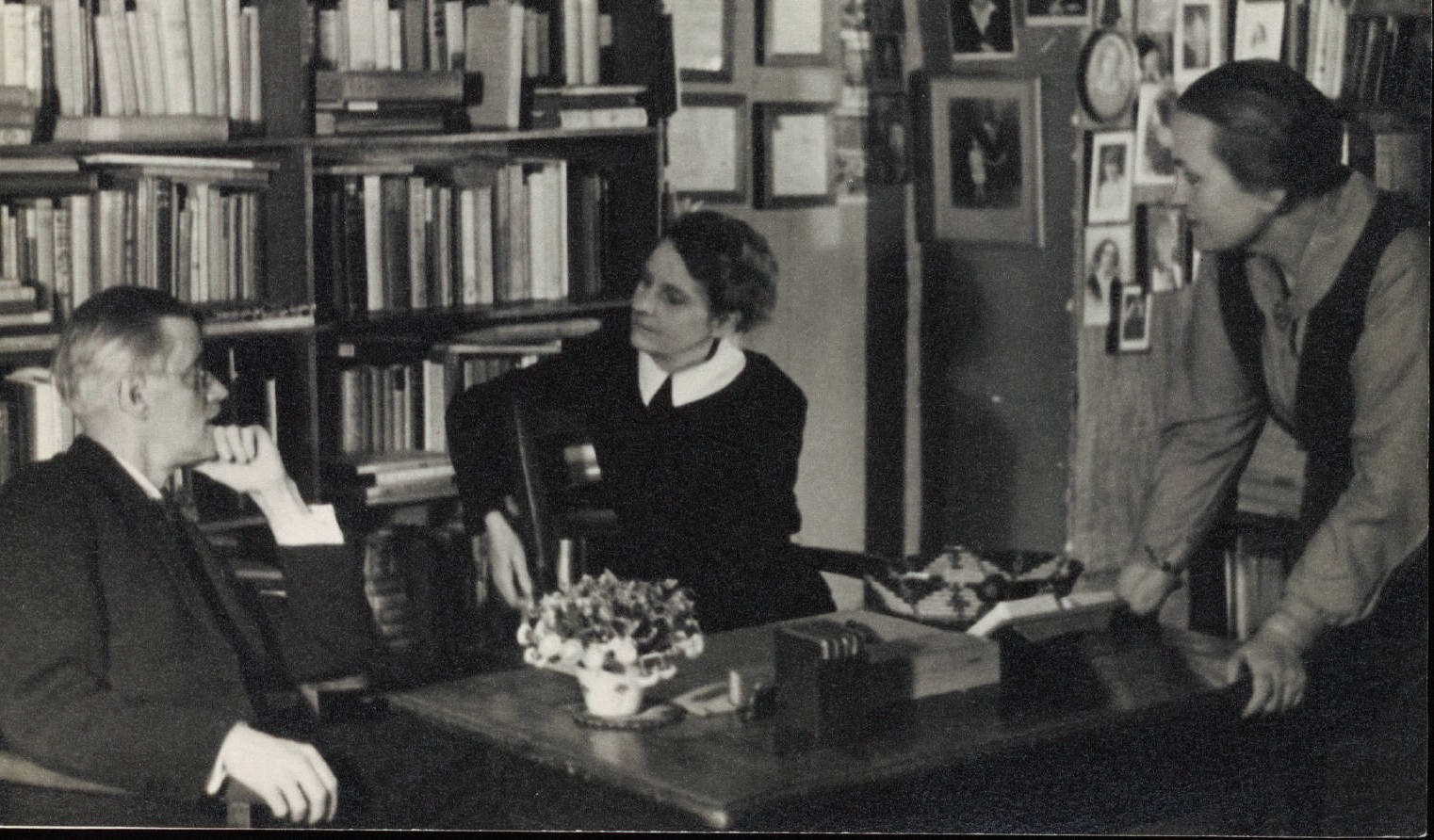
The last thing Gilbert Sorrentino did before he left California was sell his car. The novelist, a favorite of other writers if not the average American reader, called it the happiest day of his life: like many a native New Yorker, Sorrentino didn’t drive, not really. He had finally learned at the age of 52, the year before the born-and-bred Brooklynite and long-time Gothamite took a job teaching writing at Stanford. He stayed there 20 years, though his novels never lost their disparaging references to California, its culture and its weather. When he retired from teaching in 2002, he did something most people of his generation who left Brooklyn never did — he came back, back to Bay Ridge, the neighborhood where he’d grown up, the childhood setting that had occupied much of his literary imagination.
Most people who have heard of that guitar pick-shaped neighborhood in the southwest corner of Brooklyn know it as the setting of Saturday Night Fever, a series of disco boulevards cut with modest homes for Catholic families — an outdated conception akin to Williamsburg’s being a gritty industrial neighborhood. Maybe others know it’s now home to a strong Middle Eastern community, offering the best falafel south of Atlantic Avenue. But the one thing casual observers and even long-term residents would never associate it with is a literary pedigree.
Of course the borough at large has such a reputation, different neighborhoods boasting individual laureates: Williamsburg with Betty Smith and Daniel Fuchs; Boerum Hill, Paula Fox and Jonathan Lethem; Park Slope, Pete Hamill and Paul Auster; Brooklyn Heights, Truman Capote and Hart Crane. And so on. As the editors of a local literary magazineonce joked, it’s more notable nowadays for authors’ bios to proclaim that they don’t live in Brooklyn rather than that they do.
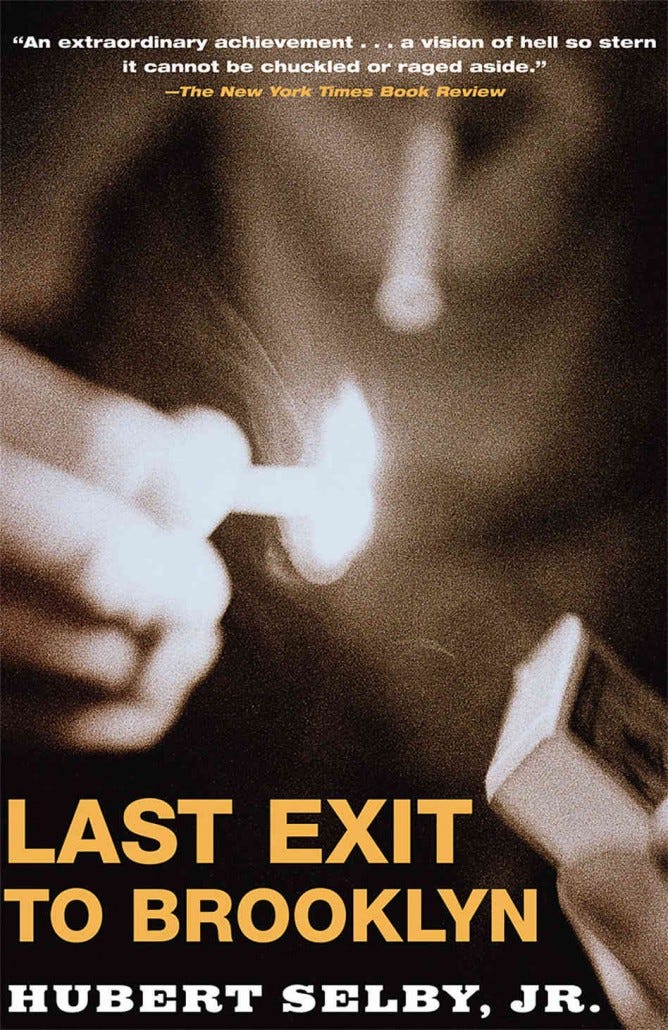
So who writes for Bay Ridge? The most hard-pressed might come up with Hubert Selby, Jr., who grew up there and rose to fame writing about its rough-and-tumble northern industrial annex; the author bio on the back of his debut, Last Exit to Brooklyn, boasts that he graduated from PS 102, an elementary school on Ridge Boulevard. Like many down-heeled families in the 20th century, his moved around: I’ve read he lived on 68th Street, that he lived on 72nd and Third. His still-notorious first novel is set on the outskirts of the neighborhood, near the Brooklyn Army Terminal, in the general vicinity of 57th Street and Second Avenue. (Today, we consider this Sunset Park, but back then — before the middle-income housing towers on 65th Street created in 1972 a feeling of stark neighborhood finitude — the borders of Bay Ridge were more nebulous, and certainly extended farther north.) Selby depicts a Bay Ridge in stark contrast to its present-day reputation as a nice place to raise a family: it’s packed with thugs, crooks, lowlives, preyed-upon transvestites — even factories! While humanizing those on society’s bottom rungs, Selby doesn’t romanticize them: it’s a brutal book full of beatings, rapes, domestic abuse, and sexual frustration manifest as rage and violence. If nothing else, it functions as a corrective to those who’d romanticize the years after the war, instead exposing the underbelly of the Eisenhower era.
Selby would publish several more novels during his life, most of them after he too moved to California — Los Angeles specifically, where he would teach writing at the University of Southern California before dying in 2004. He took to the state maybe in a way Sorrentino didn’t. None of his subsequent novels would be so essentially set in the old neighborhood, though some would be set in other parts of Brooklyn — like his other most famous book, Requiem for a Dream (1978) — or other parts of the city, like the poorly received The Willow Tree (1998), set in the South Bronx.
That’s in contrast to Sorrentino, who was Selby’s childhood friend and later also his colleague — the man to whom Selby would dedicate his lasting masterpiece. The first page of Last Exit to Brooklyn reads “To Gil” — his fellow PS 102 graduate. “My first memory of Gil was a tall, skinny kid with a crossed eye walking down 71st street going to school,” Selby wrote in 1981. After the war, Selby hung onto Sorrentino and his pals, bullshitting with them at the Royal Diner on Bay Ridge Avenue and in nearby bars, drinking beers after hours in parked cars. Sorrentino encouraged the chronically ill Selby to take up writing; because Sorrentino was then working at an editor at Grove Press — the notorious publishing company that also published the works of Henry Miller and other essential mid-20th century authors — he also edited Last Exit, and even wrote that bio on the back. (Sorrentino’s first editing assignment at Grove had been The Autobiography of Malcolm X.)
Sorrentino would eventually begin publishing his own work, both poetry and fiction. Pantheon published his second novel (and fifth book), Steelwork, in 1970. The cover of the first edition showed a stylized image of the street signs at the intersection of 68th Street and Fourth Avenue, the locus of Sorrentino’s Bay Ridge, which usually doesn’t extend farther than Senator to 72nd streets, Third to Fifth avenues. It’s confined in its own way, like Selby’s. (Gerald Howard, in a 2011 article in the Review of Contemporary Fiction, identified at least one address where Sorrentino grew up, between Fourth and Fifth avenues on Senator Street, a block between 67th and 68th streets named for Henry C. Murphy, the 19th-century Brooklyn mayor and state senator who once lived at the street’s west end, on an estate that’s now Owl’s Head Park.)
Steelwork’s main character, basically, is Bay Ridge — or at least Sorrentino’s corner of it. In dozens of short chapters, set from 1935 to 1951, he sketches out its denizens, people of all kinds — kids, drunks, workers, vets — most of whom share a commonality with Last Exit’s lowlives: they’re addicted to alcohol and tremendously sexually frustrated, fantasizing at home, at school, or on the corners about neighborhood girls, sometimes even cruising for men in the local parks. Many of these characters would reappear in later books.
Sorrentino would publish 18 novels, a story collection and a novella — plus eight volumes of poetry and another of criticism — repeatedly returning to the neighborhood. One of his late books, Little Casino (2002), like Steelwork, is made up of vignettes — in this case, 52, like a deck of cards — about the neighborhood, including a story in which a child is crushed by a scow when he hops off the 69th Street Pier. Crystal Vision (1981)is set almost entirely in a local candy store, its 78 vignettes — like a deck of Tarot cards — depicting a group of eccentric men as they meet daily to shoot the shit and share strange, Tarot card illustration-inspired stories. Red the Fiend (1995) relates the story of a boy growing up on 68th Street, where the horrifying abuse of a tyrannical grandmother turns him into a little monster. Aberration of Starlight (1980) picks up those characters — first introduced in Steelwork — a few years later on vacation in New Jersey, near Budd Lake, and though it’s not set in Brooklyn, there are plenty of nods to the neighborhood. We learn, for example, that the kid attends PS 170 — four blocks east from the author’s own alma mater.
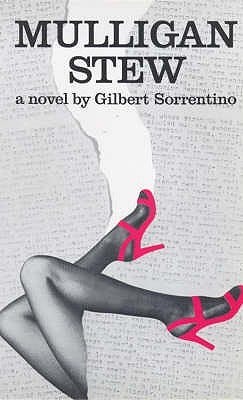
Gilbert Sorrentino is far from a household name, but he’s pretty well-known within literary circles; he has a reputation as a writer’s writer. Few of his books are like the others: he was constantly reinventing his style, which can be frustrating for critics; that might be why he never achieved the literary stardom he deserved. He’s known as a postmodernist, for an avant-garde style; his most popular book is Mulligan Stew, though it’s not even that popular: if you Google “mulligan stew,” the first page of results has several links to dog food but none to the novel. The New York Times Book Review described it in 1979 as “raising experiment to the level of high intellectual comedy… [a] neo-Joycean concoction [that] endlessly animates meaning’s comic self-contradictions.” It’s a funny novel, but not a light one. The Miami Herald called it “relentlessly bookish,” which I’m pretty sure was meant as a compliment. “He was the best French writer America had,” his friend and later-in-life publisher John O’Brien wrote in an email.
“He mined his Brooklyn boyhood in several novels… but the paramount subjects were innovative uses of language and structure,” read his Washington Post obit, though you could easily reverse that. His Brooklyn novels are structurally experimental, but they also adopt a realist style; they’re full of local detail and color. A chapter about movie theaters in Steelwork begins, “They went to the Alpine because it was there,” as true in 1941 as it is in 2014. In Crystal Vision, the characters argue, with hilariously excruciating specificity, about the names of the series of parks that stretch about a mile from Fort Hamilton Parkway to the shore:
You know the name of that park is not really Triangle Park, Irish Billy says. It’s really Leif Eriksson Park. I thought it was Owl’s Head Park, the Drummer says. No, Owl’s Head Park is the part of the park down by the Narrows, Irish Billy says. That’s Bliss Park, Cheech says. You’re all wrong, Professor Kooba says. The park from 8th Avenue down to Colonial Road is Leif Eriksson Park. Then, the little part of the park from Colonial down to the water is Owl’s Head Park. Triangle Park and Bliss Park are time-honored neighborhood names — not official names. The way I always call it, Big Mickey says, is this. From the water up to Colonial, Bliss Park. From Colonial to 4th Avenue, Leif Eriksson Park. From 4th to almost 5th Avenue, Triangle Park. Then just at 5th you have the softball field. Across the street from 5th to 6th, you have the playground and the big softball field. From 6th to 7th, that’s the 6th Avenue Park and from 7th to 8th, that’s the 8th Avenue Park or else you can call it the end of Leif Eriksson Park if you want.
There are copious such hyperlocal references: to Fontbonne girls, uniformed Catholic high-schoolers that have served as the object of many generations of adolescent male fantasy; to the hoity-toityness of people who live on Ridge Boulevard, the avenue that marks the start of the neighborhood’s tonier residential area; to obscure side streets, like Ridge Crest Terrace; and to a slew of mostly forgotten bars, since replaced by other bars, including Lento’s, Carroll’s, up on Fifth Avenue — whose sign was only recently taken down, though the space has been long-shuttered — the Melody Room, where the bank on the northeast corner of 72nd Street and Third is now, and Henry’s, on Fourth Avenue near the Bay Ridge Avenue subway station. (According to long-standing local apocrypha, the neighborhood holds a Guinness World Record for most bars per capita.)
These might float right over the heads of casual readers, but a familiarity with the neighborhood isn’t necessary for enjoying Sorrentino’s work. He’s a moving, smart, sincere, funny and inventive novelist, firmly principled and unforgiving of aesthetic bullshit. If he’s a “writer’s writer,” and Bay Ridge is not a neighborhood known for its writers, you can imagine his work has appealed mostly to people from elsewhere.
But there’s something tragic in that. Sorrentino died of lung cancer in Brooklyn in 2006; he remains widely uncelebrated in his own neighborhood, his own borough, despite the fact that so many of his books are set there, and he lived so much of his life there. The Fort Hamilton High School Alumni Association doesn’t list him in its Hall of Fame. The libraries don’t stock his books, and neither does the local bookstore. I spent 30 years in Bay Ridge as a bookish neighborhood enthusiast without ever hearing his name, until a poet mentioned it to me in passing at an open mic in a bar. Sorrentino gets one mention in Evan Hughes’s comprehensive and otherwise wonderful study, Literary Brooklyn — in passing, during the few pages dedicated to Selby.
Unlike Selby, who left and never looked back, Sorrentino returned, getting a co-op on Shore Road. One of his final interviews, with Gerald Howard for Bookforum, took place at the Bridgeview Diner, a 24-hour neighborhood institution “featuring several acres of faux marble and silvered mirrors,” as Howard wrote — a nice stroll from Sorrentino’s new digs.
The writer deserves a wider audience in general, but that needs to start in his hometown. We need to claim him as our own, keep his books — almost all of which are in print, thanks mostly to the Dalkey Archive Press — in stock at the Bookmark Shoppe and the Bay Ridge Library (on the same block as PS 102), talk about him when we talk about arts in the neighborhood, declare him our laureate emeritus. Because not only does his work speak deepest to us who understand its place better than any other reader, it also shows us that our own voices and stories, our own experiences of the neighborhood, are valid: something the residents of so many other neighborhoods have been told, but not us. (Admittedly, Sorrentino’s Bay Ridge is both familiar and foreign; it belongs to my grandparents. But we won’t get a Sorrentino for our own age until we accept the original.)
There was a time when if you wanted to make it, you had to leave Bay Ridge: Tony Manero’s driving his car across the Brooklyn Bridge at the end of Saturday Night Fever. And that goes for Brooklyn in general: the list of famous artists born in Brooklyn in the 20th century is impossibly long; the list of those who died here is not. But Sorrentino shows us that you can stay here, in mind if not always in body, and still create a powerful and meaningful body of work. It’s just harder to sell it to all those who underestimate the neighborhood and its residents — and our ability to produce respectable art. When Bay Ridge reclaims Sorrentino, it will reclaim itself.
[Editor’s note: Electric Literature’s weekly magazine, Recommended Reading, recently published Sorrentino’s short story “The Moon in Its Flight.” You can read it here.]
In Kate Zambreno’s Green Girl, the green girls are shopgirls, envious, young, unsure women who work behind counters in fancy department stores. Women who define themselves through the glittering images of movie stars and snippets of literature they’ve internalized before they’re mature enough to know who they want to be. These women are still navigating the world, learning to find themselves beneath their own skin. They sell clothes and perfume, disinterested, imagining what their pensive faces will look like to others. Kate Zambreno writes these green girls with ethereal beauty and gritty, sweaty reality. Green girls are fragile, hollow. They are trying to fill themselves.
The protagonist of Green Girl is Ruth, an American living in London and working for “Horrids” Department Store pushing “Desire” — the perfume of an American pop star. Ruth’s story is narrated by her dead mother, who watches from afar, interjecting with as much fascination as cruelty. But Zambreno uses subtle shifts in narration: at times it feels as though Ruth is talking in third person about herself, and other times it seems like a first person plural narrator. Though Ruth goes through a series of jobs and different shops and a series of men, she’s haunted by one man — “HIM” — from her past. Her actions are influenced by sadness as well as the tediousness and mundaneness of youth: When everyone says you are supposed to be living life to its fullest, but life leaves you used, slapped, raw. Green Girls becomes a meditation on the faces women wear as much as it is about Ruth herself. “Green girls and their costumes, their trying on of brazen identities.”
Ruth’s identity is defined by a hyper-awareness of what she looks like from the outside. While she often is referred to as dead inside, or demonstrates deep sadness, she is constantly aware of how others perceive her. “Sometimes she narrates her actions inside her head in third-person,” the narrator muses. “Does that make her a writer or a woman?” Ruth is not just concerned with writing, or narration, but a sense of her own image. Ruth’s mother interjects: “My hunger artist her art is herself she is fast fasting away she would like to disappear.” Ruth is the juxtaposition of both not wanting to be seen and wanting to be lauded for her perfection. She is the carefully calculated photo, the shapely curve of a body against negative space:
“She takes pictures in her mind. She stores them away for someday, these images, these experiences, to later document, once she has figured out why she did them in the first place. She watches the world, yet cannot yet articulate her role in it. She cannot fathom the depths. For now she writes dear diary entries in her childish hand dotted by exclamation points. What is it with young women and exclamation points and smiley faces! So afraid of appearing somber, always wanting to appear light and happy and sparkling, even when they are dying inside. Not ever being able to escape the mask that smiles. She wants to write, really write someday. But she is not fully formed. So she does not write. Not really. Unless attempting to live is a form of attempting to write.”
For Ruth, the idea of image or story is more powerful than reality. Almost as though something is more real in its captured form; images in her mind hold more weight than interaction with people. Her references are from classic films; classic heroines both define her sense of self and devalue it. “[Ruth and her roommate, Agnes] put on a show. The show that green girls know so well. Posing for the invisible eye. They wait for their photos still wet touch don’t touch Ruth is laughing in every frame drunk drunkener than drunk drunk Agnes is serious poised she knows how to pose for her picture she knows her good side.” Ruth “is the voyeur of herself.” She will never be the carefully cultivated woman she wants to become.
Pain plays an important role in Ruth’s life, almost as a way to make herself feel the world around her. Since her senses are sometimes dulled to what is inside, she is incapable of experiencing life unless it is in extremes. “The green girl needs to externalize her own suffering. This is how she will wear her grief. Or maybe she is just bored.” In all of her relationships she is a voyeur, experiencing her own life through numbness. She cuts off all her hair in a low moment, and still struggles to define the internal state that plagues her so:
“Is it masochistic? An act of self-flagellation. There is a finality to it. To cut off one’s breasts in one mean gesture. To surrender oneself to vague and distant eyes. To say, this is the new me. I have been born clean. See my face. I wipe the paint from the mouth of the pretty girl. Wipe the paint from your mouth. This is me. I have no shield of feathers to hide behind. I am ugly and true. I have cut off my lovely, my darling. Cut it off. Cut, cut, it off. I stand a monument to pain. I stand naked to this world. When Mia Farrow cut her hair off, Salvador Dali called it “mythical suicide.” What happens to a woman when the eyes are no longer on her? Is that in a way a tiny death? Or a sort of freedom? The locks shorn off. Is one unlocked? The rape of her locks.”
Even in this instance, she understands her own actions only by association with actions others have taken. She cuts off her hair because that is what extreme women do when they are sad. Her story is told through allusion. Mia Farrow. A quote by Dali. Even in painful extremes, she struggles to communicate her own experience. Cutting her hair is not enough to satisfy her longing, to help her understand the world. When she finally convinces her boyfriend to have sex with her, it doesn’t fulfill her sense of self or desire. She wants to hurt, to be used and torn to pieces in order to truly feel something.
“She did not desire to be loved and cherished and caressed. She desired a beast. Someone to destroy her. Her own Jack the Ripper. Her own serial killer. She did not want to make love. She wanted to be fucked — over and over again repeating her own disappearance.”
Internal states — loneliness, depression, yearning, etc. — are wholly unquantifiable to Ruth. So she looks for pain from the outside in order to give her experience meaning. She wants her outside ruined the same way the inside is wrecked — only then will she feel whole.
Ultimately this book asks questions of its reader; for what are these green girls if not figures we have created? We want to worship the slender, sculpted form of youth and we want to criticize its recklessness and naiveté. Ruth’s mother says, “[H]ow gorgeous I too find them, gorgeous and disgusting.” Zambreno’s novel touches this phenomenon so acutely. She manages to portray the externally desirable image Ruth and her ilk aspire to be, while showing Ruth for what she is: a human capable of sweat and blood and filth. Zambreno seems to ask what society’s responsibility is to these girls we’ve created. On the subway, “They push push against [Ruth]. It reaches a fever pitch. It is a crush. It is a circus. It is too much pressure. Leave me alone! She wants to beg. She hides behind sunglasses and hats and phony disguises. She is a train wreck. We gape at her. (Why don’t we try to save her?)” Ultimately, the message seems to be that we want to ogle, and we also want to condemn. These green girls are failing, and we stand by as they collapse.
“You speak like a green girl,” Polonius says to Ophelia in Hamlet (and in one of Zambreno’s quotes that open a chapter), “unsifted in such perilous circumstance.” Ruth is unsifted, and though Green Girl shows her in conflict, she stumbles. Zambreno touches on a subset of society — a girl, in particular — and makes her universal and individual at the same time. Ruth is all contrasts and costumes and limbs. Zambreno invites us in to her life as a voyeur, but we finish the book with the feeling that she is our own creation.
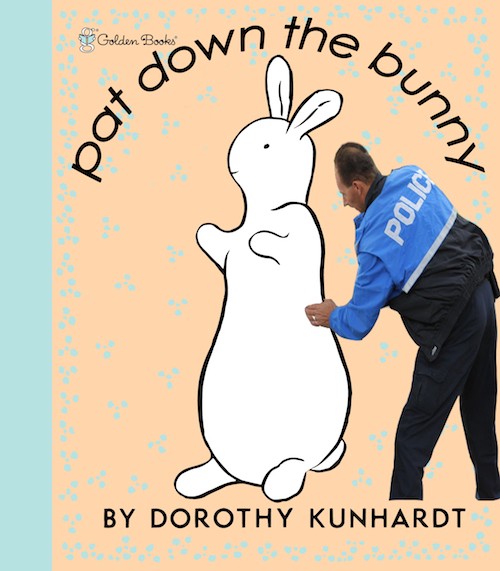
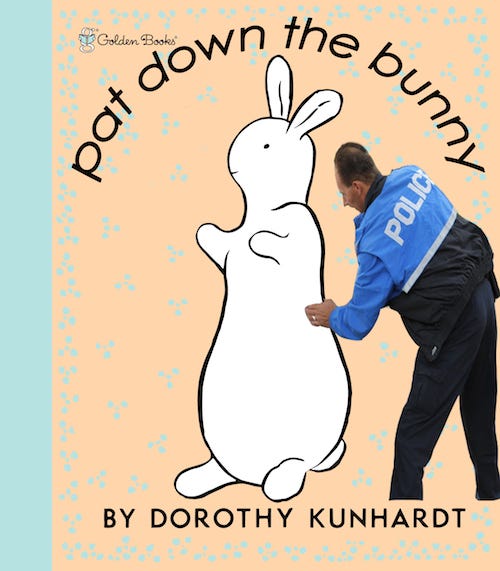
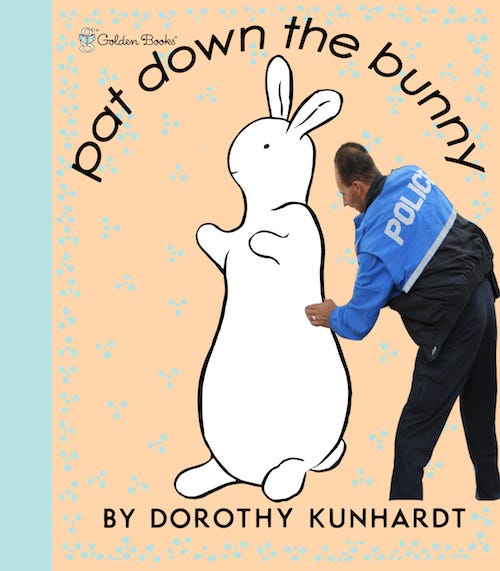
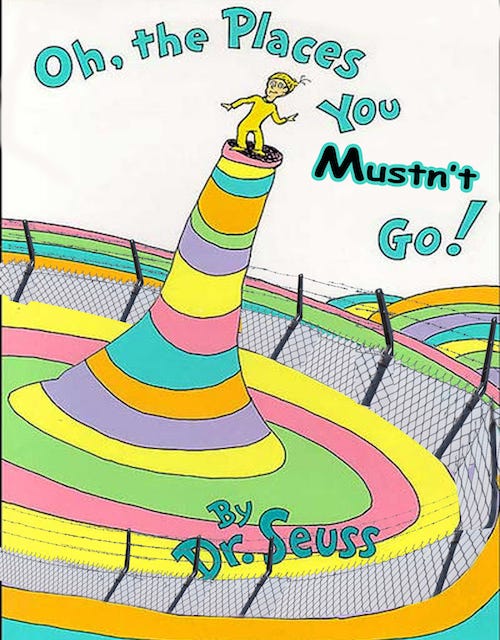
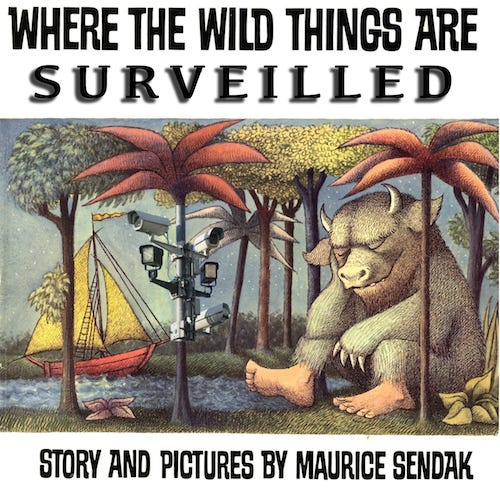
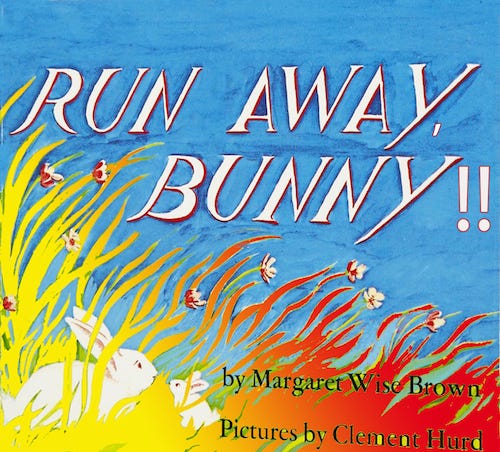
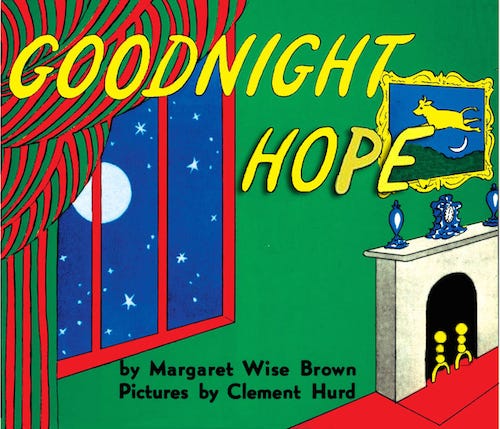
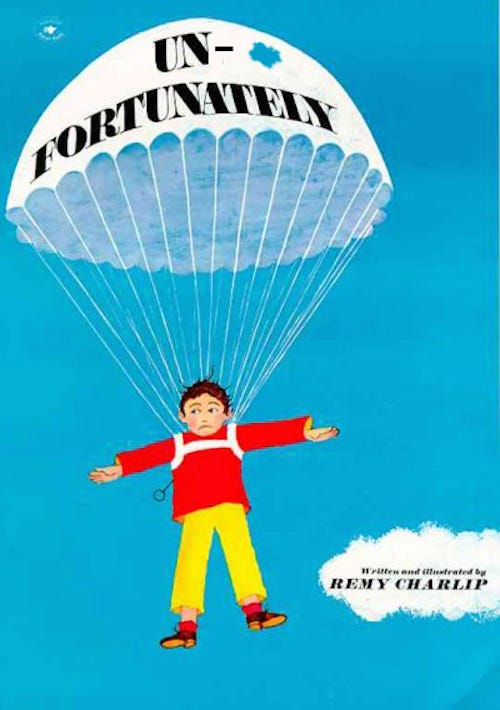
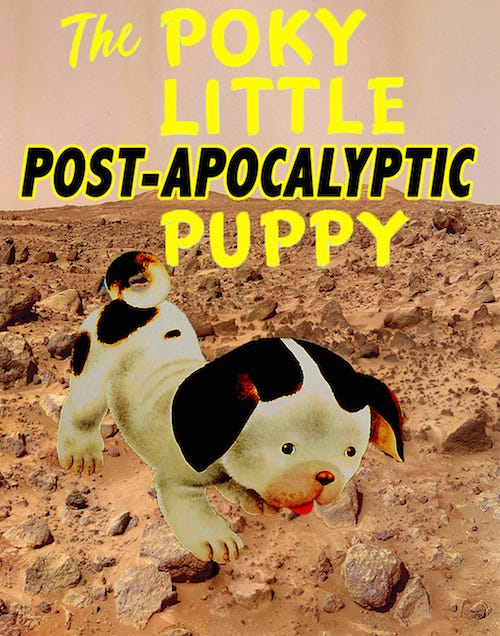
With world crises and drastic climate change ahead of us, it’s important that we prevent our young children from growing up with a false sense of security. Publishers have already cashed in on our impending doom, selling dystopian stories to teens and adults. Now they should target the toddler demographic by rebranding some classic picture books. Here are some suggested titles to prepare the next generation for the future.
The Amazon / Hachette contract negotiations took a surreal turn this morning when authors who have self-published through Amazon awoke to a long email about ebook pricing, George Orwell, and World War II. Although sent with the subject line “Important Kindle request” and directed to Kindle Direct Publishing authors, the email has nothing to do with the KDP program or with self-publishing ebooks in general. Instead, the email details Amazon’s view of the contract negotiations and ends by begging the thousands and thousands of people who have published through KDP to spam the CEO of Hachette’s email.
The email seems prompted by the upcoming Sunday New York Times ad taken out by 900 authors including Stephen King, Donna Tartt, Paul Auster, and many other household names. Most of the authors in the group are not published by Hachette, but express concern over Amazon’s negotiation tactics.
Here is the email in its entirety:
SUBJECT: Important Kindle request
Dear KDP Author,
Just ahead of World War II, there was a radical invention that shook the foundations of book publishing. It was the paperback book. This was a time when movie tickets cost 10 or 20 cents, and books cost $2.50. The new paperback cost 25 cents — it was ten times cheaper. Readers loved the paperback and millions of copies were sold in just the first year.
With it being so inexpensive and with so many more people able to afford to buy and read books, you would think the literary establishment of the day would have celebrated the invention of the paperback, yes? Nope. Instead, they dug in and circled the wagons. They believed low cost paperbacks would destroy literary culture and harm the industry (not to mention their own bank accounts). Many bookstores refused to stock them, and the early paperback publishers had to use unconventional methods of distribution — places like newsstands and drugstores. The famous author George Orwell came out publicly and said about the new paperback format, if “publishers had any sense, they would combine against them and suppress them.” Yes, George Orwell was suggesting collusion.
Well… history doesn’t repeat itself, but it does rhyme.
Fast forward to today, and it’s the e-book’s turn to be opposed by the literary establishment. Amazon and Hachette — a big US publisher and part of a $10 billion media conglomerate — are in the middle of a business dispute about e-books. We want lower e-book prices. Hachette does not. Many e-books are being released at $14.99 and even $19.99. That is unjustifiably high for an e-book. With an e-book, there’s no printing, no over-printing, no need to forecast, no returns, no lost sales due to out of stock, no warehousing costs, no transportation costs, and there is no secondary market — e-books cannot be resold as used books. E-books can and should be less expensive.
Perhaps channeling Orwell’s decades old suggestion, Hachette has already been caught illegally colluding with its competitors to raise e-book prices. So far those parties have paid $166 million in penalties and restitution. Colluding with its competitors to raise prices wasn’t only illegal, it was also highly disrespectful to Hachette’s readers.
The fact is many established incumbents in the industry have taken the position that lower e-book prices will “devalue books” and hurt “Arts and Letters.” They’re wrong. Just as paperbacks did not destroy book culture despite being ten times cheaper, neither will e-books. On the contrary, paperbacks ended up rejuvenating the book industry and making it stronger. The same will happen with e-books.
Many inside the echo-chamber of the industry often draw the box too small. They think books only compete against books. But in reality, books compete against mobile games, television, movies, Facebook, blogs, free news sites and more. If we want a healthy reading culture, we have to work hard to be sure books actually are competitive against these other media types, and a big part of that is working hard to make books less expensive.
Moreover, e-books are highly price elastic. This means that when the price goes down, customers buy much more. We’ve quantified the price elasticity of e-books from repeated measurements across many titles. For every copy an e-book would sell at $14.99, it would sell 1.74 copies if priced at $9.99. So, for example, if customers would buy 100,000 copies of a particular e-book at $14.99, then customers would buy 174,000 copies of that same e-book at $9.99. Total revenue at $14.99 would be $1,499,000. Total revenue at $9.99 is $1,738,000. The important thing to note here is that the lower price is good for all parties involved: the customer is paying 33% less and the author is getting a royalty check 16% larger and being read by an audience that’s 74% larger. The pie is simply bigger.
But when a thing has been done a certain way for a long time, resisting change can be a reflexive instinct, and the powerful interests of the status quo are hard to move. It was never in George Orwell’s interest to suppress paperback books — he was wrong about that.
And despite what some would have you believe, authors are not united on this issue. When the Authors Guild recently wrote on this, they titled their post: “Amazon-Hachette Debate Yields Diverse Opinions Among Authors” (the comments to this post are worth a read). A petition started by another group of authors and aimed at Hachette, titled “Stop Fighting Low Prices and Fair Wages,” garnered over 7,600 signatures. And there are myriad articles and posts, by authors and readers alike, supporting us in our effort to keep prices low and build a healthy reading culture. Author David Gaughran’s recent interview is another piece worth reading.
We recognize that writers reasonably want to be left out of a dispute between large companies. Some have suggested that we “just talk.” We tried that. Hachette spent three months stonewalling and only grudgingly began to even acknowledge our concerns when we took action to reduce sales of their titles in our store. Since then Amazon has made three separate offers to Hachette to take authors out of the middle. We first suggested that we (Amazon and Hachette) jointly make author royalties whole during the term of the dispute. Then we suggested that authors receive 100% of all sales of their titles until this dispute is resolved. Then we suggested that we would return to normal business operations if Amazon and Hachette’s normal share of revenue went to a literacy charity. But Hachette, and their parent company Lagardere, have quickly and repeatedly dismissed these offers even though e-books represent 1% of their revenues and they could easily agree to do so. They believe they get leverage from keeping their authors in the middle.
We will never give up our fight for reasonable e-book prices. We know making books more affordable is good for book culture. We’d like your help. Please email Hachette and copy us.
Hachette CEO, Michael Pietsch: MichaelPietsch@hbgusa.com
Copy us at: readers-united@amazon.com
Please consider including these points:
- We have noted your illegal collusion. Please stop working so hard to overcharge for ebooks. They can and should be less expensive. - Lowering e-book prices will help — not hurt — the reading culture, just like paperbacks did. - Stop using your authors as leverage and accept one of Amazon’s offers to take them out of the middle. - Especially if you’re an author yourself: Remind them that authors are not united on this issue.
Starting in September, the Association of Writers & Writing Programs will launch a three-month mentorship program that pairs established AWP members with young writers. The program will consist of six modules, each of which will provide a variety of questions to spur dialogue and creativity between mentor and mentee. Questions like which book would be the best to get me started? Do I really need to include this in my cover letter? What is the first step towards getting published? are just some of the topics to be covered.
Writer to Writer is currently accepting applications for both mentor positions and mentee slots. Mentors will receive a free one-year AWP membership, and the program is free of charge for mentees. This is really a unique opportunity to establish productive connections, so those interested should check out their website for more information and the application instructions.
I was working on a story recently when the influence of David Ohle became too overwhelming to continue. I was proud to have channeled a writer I admire, but I also felt compromised, like I’d taken his influence too far to see the story through as my own.
The fact that I hadn’t, and still haven’t, read Ohle didn’t temper this feeling. I was communicating the version of me that is drawn toward the Internet’s version of him. After years of consuming Ohle reviews, interviews, essays, blurbs, and Amazon book descriptions, whatever of him I’d absorbed was ready to come out.
Of course you don’t have to read an author’s work to have to deal with their influence. Major figures like Faulkner, Pynchon, Bolaño, and David Foster Wallace cast such a wide shadow that they’re a liability for every writer today. You can’t write except by writing against them, trying to get out from under, not least because even if you haven’t read them your potential readers have, so the risk of having failed to negotiate their influence is unavoidable.
But this is a pre-Internet phenomenon, determined by the massive dents these writers put in literary culture through their books and public personae. Ohle’s case is different. The pride I felt in having written the story that reminded me of him came from how far out there it was, like I’d traveled to the edge of my mind and looked over. My recoil at seeing his half-formed shape on the other side came from fearing that he’d already colonized this outpost without my understanding how, and thus perhaps that there was no virgin territory anywhere.
I first saw the name David Ohle in an online Brian Evenson interview and immediately started splashing around for more of him. I found out from Amazon (he doesn’t have a Wikipedia page) that his books include the cult classic Motorman (1972), the more recent semi-sequels The Age of Sinatra (2004) and The Pisstown Chaos (2008), and something called The Old Reactor,coming out from Dzanc this fall. Everything I gathered about these, and the author-image they conjure, bonded with something in me that I’ve come to call him.
I was drawn to the fact that he’d been an assistant to Burroughs and then gone basically unseen for decades, while Motorman was renowned but out of print. He’s had a renaissance recently, getting credit from a new generation of dark and Weird fiction writers for having fleshed out a dystopia that Amazon describes with phrases like “disease and forced-relocation,”“random vouchers of innocence,” “elective deformation,” and forcible “shifting,” whereby people are “separated from — and then randomly coupled with — one another.” These people have names like Stinkers, Jellyheads, Mr. Bunce, President Ratt, and Reverend Herman Hooker, “an American Divine.” When I let my mind wander to this world, I enthusiastically picture insectoid sex acts mashed up with El Topo style violence, mediated by semi-comedic American rituals and authoritarian cults.
Taking all of my Internet reading together, I’ve probably consumed as many words about Ohle’s body of work as that body actually contains. I’ve touched his stuff enough to have its residue in me, but haven’t yet culled the time and attention to go there for real, despite my sense that the world I’m working to develop in my fiction shares a map with his.
This is par for the course with Internet reading: it takes up my time without my setting that time aside for it, and fills me with images and thoughts that I don’t perceive going in, like radiation. When I read a book or watch a film, it’s usually after I’ve finished work for the day and am fueled by relief. I can then dedicate my attention fully to communing with someone else, making linear progress through a single text.
Internet reading, on the other hand, comes only before a work session, and it’s a part of the day I try to minimize while it tries to maximize itself. I open my laptop and open the document I want to work on, and then, in a trance, I drift online to float above my work until I’m ready to be in it. This kind of reading is always transitional, fueled by addictive repetition, guilt, fear, and the nervous patience of waiting for emails.
The mass of other people’s work that makes up my path through these Internet sessions is a space between the total openness of the outside world, where I’m one of billions, and the closed chamber where I’m alone with whatever I’m working on, sealed in with the Internet-blocking Freedom app as soon as I manage to activate it. It’s a warm and nutrient-rich bath between the beach of daily life and the cold, black water of actual writing.
I used to punish myself for the amount of time I spent like this, wishing I could just sit down at my laptop and start typing on cue. But lately, thinking about Ohle and dozens of others who have filtered into me in this way, I realize that this time, however inefficient, is crucial.
It’s an outgrowth of the hours I spent in the video store in my hometown in the 90s, when I was four through fourteen. I’d wander the aisles after school way before I was allowed to see anything over PG, and worship whatever looked most potent — Friday the 13th, Silence of the Lambs, Texas Chainsaw Massacre, Body Double, Reservoir Dogs, Natural Born Killers. I’d take down the cardboard boxes and sit on the floor with them, staring at the photos of bloody, burnt, dazed, or half-naked people on the back, and, above all, at the R rating (or, in the case of Wide Sargasso Sea, Henry and June, Showgirls, and Tokyo Decadence, NC-17, letters so powerful I had to close my eyes while whispering them). I’d try to imagine how these photos might come to life over the course of the film’s stated running time to produce a total vision so far beyond my grasp, like an afterlife.
These photos became source material for a pretend movie that has swollen into the inner grotesque that defines my thinking still. Lynch and Cronenberg were primary influences long before I’d seen their work or absorbed any cultural baggage about its import. I spent my childhood impersonating them in a kind of hero worship that was also my first inkling about how inner worlds can be let out and developed in reality.
The source of these videos’ power was their taboo. When I actually saw them at fifteen, I loved some and was bored by others, but none held the infinite allure they once did. Today, because of time pressure and distraction, Ohle’s Amazon page is taboo in a similar sense: with access to an obscene amount of media, the fantasy of working my way through all of it (of reading “everything I need to”) is both humiliating and erotic, like groveling before a master who beats me down every time I try to stand. So I obsess over a body of work like Ohle’s and dream of the day when I’ll be able to give myself to it and nothing else, just as I dream of creating something on that scale.
Until then, I churn through articles and read pieces of what others have to say, ruminating on all this pulp until my mind starts to write his books in lieu of reading them. Synopses become premises.
In these online minutes or hours, I drift along with my mouth open, absorbing whatever’s floating by, never chewing or even swallowing, just letting it all seep pre-chewed into me. The impurity of this content makes it far more consumable than anything pure, even a little bit of which is filling. This brine of Netflix and Amazon and iTunes, reviews and interviews, recaps and best-of lists and hostile and giddy comment threads, fills me with growths that are half-me and half-everyone. The basement of the video store, with its off-limits porn room hidden behind a door that was meant to look like a wall, was a primitive version of the same phenomenon.
Negotiating this kind of influence is not the same as taking on the giants of the culture I’m trying to find my place in, first stepping into and then crawling out of their shadows. Theirs is a rigorous, daytime influence. Ohle, who exists in shadow rather than casting one, exerts a less pure but perhaps even more profound influence over me, as it’s his residue, not Faulkner’s or Pynchon’s, that’s dripping from me when I finally get offline and down to work.
[DISCLAIMER: The post below involves Short Story Thursdays alone and is in no way affiliated with any pop-up ads or sidebars you may be presented with on this site also advertizing a free short story a week. If you like the shit below, emailing shutyourlazymouthandread@shortstorythursdays.com is the only way to join. It’s a super long email address, I know. Sorry. But I hope you like it. And I hope you do it. Thank you.]
Well hello there, you guys. My name is Jacob Tomsky and this, right here, is my final post on Electric Literature. I am here to pummel you into submission and coerce you to join my non-profit short story organization called Short Story Thursdays.
It basically takes wonderful classic literature and jams it right into an email for you, every Thursday morning. One short story a week. All classics. No garbage. With profane introductions by me. Who is me? Basically, no one.
I guess I done wrote that book real good or something.
But I run this non-profit, absolutely free short story service and if you have any more questions about that you can find information from these two sources:
2- This single-take video where I am sitting in my own apartment and just scriptlessly bullshitting about SST: Video Introduction
But I’ve been here for the past three weeks, presenting ocean fiction to everybody, like some kind of asshole. Because, recently, moronically, I took a freighter over the Atlantic Ocean, sailing all the way back home to America after a four-month absence. And so I have been sharing a bit about that experience and pairing it with classic short fiction about transatlantic travel.
At the start of the ten-day freighter trip, I was terrified and you can read that post and short story here. Then, for the second post, I was still definitely terrified out there in the middle of the ocean and you can see pictures of my fear and read that post and story here. Then, for the third post, I started to realize I was actually going to make it home, to the life I left behind. And it made me anxious.
Today is the conclusion. The container ship has crossed the whole Atlantic going goddamn 13 miles an hour with me on it, and just the crew. But I am clear of danger now. We are close to the outer lip of America’s east coast. A chopper could get out here and save me if something, like my appendix, exploded inside of my body.
Here is a picture of me on the bridge on one of the final days, pretty much certain I was going to make it home.
Why is it making me sad to think of that time? Returning home is always confusing to your heart. Returning home means returning to your troubles and your life and your shit apartment: Even constant fear of death seems better than that, I guess. And that leads me to this week’s final classic short story.
It’s by Willa Cather. Willa Cather is amazing. She wrote this story, “On the Gull’s Road,” in 1908. It’s about falling in love on a transatlantic steamer ship. Doomed love. The most fleshy kind. Honestly the first time I read this short story I almost cried, but I couldn’t cry because I was at work and I was only reading to make it look like I was working and nothing I have ever read or done at work, that was work-related, could possibly ever make me cry, so I didn’t cry at all I just forced one of my co-workers to read it. And that, pretty much that right there, this story, was the reason I started this organization. Because, though the man I handed it to wasn’t a reader, honestly he told me he’d never read a book all the way through in his life, not even in school; when I gave it to him, he walked away to read it and came back also sad about it, he came back opened up by literature, came back with his heart all stretched out and bruised a little and we talked about it and I thought to myself that maybe I should be making people do this? And that first reader also turned into one of SST’s most astute readers. I even asked him, after we both read this story, “Hey, what’s up with the title though? ‘On the Gull’s Road.’ What’s that about?” He looked at me like I was an idiot and said, in a heavy, born and raised in New York accent, “Damn, Jake, it’s the Gull’s Road. You know kid, like, the ocean? The Gull’s Road. Fuck. You’re an idiot. What’re we reading next though?”
I am an idiot. I have done so many stupid things in my life and hurt people and lost over and over again. But this project, starting Short Story Thursdays, is one of my best and favorite things. It makes me happy and I think it makes some other people happy too.
But I am an idiot. And once I was certain I was an idiot then I thought it best to make myself a useful idiot. Learn a skill or something. So this is my skill, I guess. Or at least it’s where I put all my idiotic energies. And I hope some of you guys on Electric Literature enjoyed this. I mean, if you didn’t enjoy it, then, probably, fuck you? Because I tried and you really can’t get mad at someone for trying to do something. So many people never try to do shit.
Those are the full-on idiots.
So I’ll go now, but you can email me at shutyourlazymouthandread@shortstorythursdays.com if you want to keep going with this and join the 4,000 other readers who also care about SST and we can laugh and get depressed and make jokes and bullshit and stretch our hearts out till there is room for more of everything inside of them like beauty and love and sadness.
I’ll put in a few more pictures before I go of the freighter sailing headlong into an American harbor, at sunrise, and then below that you’ll find the lovely Willa Cather story.
Thanks for giving this a chance and reading and I hope to hear from some of you.
Writing this shit made me all sad for some reason. Now I’m all sad.
It often happens that one or another of my friends stops before a red chalk drawing in my study and asks me where I ever found so lovely a creature. I have never told the story of that picture to any one, and the beautiful woman on the wall, until yesterday, in all these twenty years has spoken to no one but me. Yesterday a young painter, a countryman of mine, came to consult me on a matter of business, and upon seeing my drawing of Alexandra Ebbling, straightway forgot his errand. He examined the date upon the sketch and asked me, very earnestly, if I could tell him whether the lady were still living. When I answered him, he stepped back from the picture and said slowly:
“So long ago? She must have been very young. She was happy?”
“As to that, who can say — about any one of us?” I replied. “Out of all that is supposed to make for happiness, she had very little.”
We returned to the object of his visit, but when he bade me goodbye at the door his troubled gaze again went back to the drawing, and it was only by turning sharply about that he took his eyes away from her.
I went back to my study fire, and as the rain kept away less impetuous visitors, I had a long time in which to think of Mrs. Ebbling. I even got out the little box she gave me, which I had not opened for years, and when Mrs. Hemway brought my tea I had barely time to close the lid and defeat her disapproving gaze.
My young countryman’s perplexity, as he looked at Mrs. Ebbling, had recalled to me the delight and pain she gave me when I was of his years. I sat looking at her face and trying to see it through his eyes — freshly, as I saw it first upon the deck of the Germania, twenty years ago. Was it her loveliness, I often ask myself, or her loneliness, or her simplicity, or was it merely my own youth? Was her mystery only that of the mysterious North out of which she came? I still feel that she was very different from all the beautiful and brilliant women I have known; as the night is different from the day, or as the sea is different from the land. But this is our story, as it comes back to me.
For two years I had been studying Italian and working in the capacity of clerk to the American legation at Rome, and I was going home to secure my first consular appointment. Upon boarding my steamer at Genoa, I saw my luggage into my cabin and then started for a rapid circuit of the deck. Everything promised well. The boat was thinly peopled, even for a July crossing; the decks were roomy; the day was fine; the sea was blue; I was sure of my appointment, and, best of all, I was coming back to Italy. All these things were in my mind when I stopped sharply before a chaise longue placed sidewise near the stern. Its occupant was a woman, apparently ill, who lay with her eyes closed, and in her open arm was a chubby little red-haired girl, asleep. I can still remember that first glance at Mrs. Ebbling, and how I stopped as a wheel does when the band slips. Her splendid, vigorous body lay still and relaxed under the loose folds of her clothing, her white throat and arms and red-gold hair were drenched with sunlight. Such hair as it was: wayward as some kind of gleaming seaweed that curls and undulates with the tide. A moment gave me her face; the high cheek-bones, the thin cheeks, the gentle chin, arching back to a girlish throat, and the singular loveliness of the mouth. Even then it flashed through me that the mouth gave the whole face its peculiar beauty and distinction. It was proud and sad and tender, and strangely calm. The curve of the lips could not have been cut more cleanly with the most delicate instrument, and whatever shade of feeling passed over them seemed to partake of their exquisiteness.
But I am anticipating. While I stood stupidly staring (as if, at twenty-five, I had never before beheld a beautiful woman) the whistles broke into a hoarse scream, and the deck under us began to vibrate. The woman opened her eyes, and the little girl struggled into a sitting position, rolled out of her mother’s arm, and ran to the deck rail. After putting my chair near the stern, I went forward to see the gang-plank up and did not return until we were dragging out to sea at the end of a long tow-line.
The woman in the chaise longue was still alone. She lay there all day, looking at the sea. The little girl, Carin, played noisily about the deck. Occasionally she returned and struggled up into the chair, plunged her head, round and red as a little pumpkin, against her mother’s shoulder in an impetuous embrace, and then struggled down again with a lively flourishing of arms and legs. Her mother took such opportunities to pull up the child’s socks or to smooth the fiery little braids; her beautiful hands, rather large and very white, played about the riotous little girl with a quieting tenderness. Carin chattered away in Italian and kept asking for her father, only to be told that he was busy.
When any of the ship’s officers passed, they stopped for a word with my neighbor, and I heard the first mate address her as Mrs. Ebbling. When they spoke to her, she smiled appreciatively and answered in low, faltering Italian, but I fancied that she was glad when they passed on and left her to her fixed contemplation of the sea. Her eyes seemed to drink the color of it all day long, and after every interruption they went back to it. There was a kind of pleasure in watching her satisfaction, a kind of excitement in wondering what the water made her remember or forget. She seemed not to wish to talk to any one, but I knew I should like to hear whatever she might be thinking. One could catch some hint of her thoughts, I imagined, from the shadows that came and went across her lips, like the reflection of light clouds. She had a pile of books beside her, but she did not read, and neither could I. I gave up trying at last, and watched the sea, very conscious of her presence, almost of her thoughts. When the sun dropped low and shone in her face, I rose and asked if she would like me to move her chair. She smiled and thanked me, but said the sun was good for her. Her yellow-hazel eyes followed me for a moment and then went back to the sea.
After the first bugle sounded for dinner, a heavy man in uniform came up the deck and stood beside the chaise longue, looking down at its two occupants with a smile of satisfied possession. The breast of his trim coat was hidden by waves of soft blond beard, as long and heavy as a woman’s hair, which blew about his face in glittering profusion. He wore a large turquoise ring upon the thick hand that he rubbed good-humoredly over the little girl’s head. To her he spoke Italian, but he and his wife conversed in some Scandinavian tongue. He stood stroking his fine beard until the second bugle blew, then bent stiffly from his hips, like a soldier, and patted his wife’s hand as it lay on the arm of her chair. He hurried down the deck, taking stock of the passengers as he went, and stopped before a thin girl with frizzed hair and a lace coat, asking her a facetious question in thick English. They began to talk about Chicago and went below. Later I saw him at the head of his table in the dining room, the befrizzed Chicago lady on his left. They must have got a famous start at luncheon, for by the end of the dinner Ebbling was peeling figs for her and presenting them on the end of a fork.
The Doctor confided to me that Ebbling was the chief engineer and the dandy of the boat; but this time he would have to behave himself, for he had brought his sick wife along for the voyage. She had a bad heart valve, he added, and was in a serious way.
After dinner Ebbling disappeared, presumably to his engines, and at ten o’clock, when the stewardess came to put Mrs. Ebbling to bed, I helped her to rise from her chair, and the second mate ran up and supported her down to her cabin. About midnight I found the engineer in the card room, playing with the Doctor, an Italian naval officer, and the commodore of a Long Island yacht club. His face was even pinker than it had been at dinner, and his fine beard was full of smoke. I thought a long while about Ebbling and his wife before I went to sleep.
The next morning we tied up at Naples to take on our cargo, and I went on shore for the day. I did not, however, entirely escape the ubiquitous engineer, whom I saw lunching with the Long Island commodore at a hotel in the Santa Lucia. When I returned to the boat in the early evening, the passengers had gone down to dinner, and I found Mrs. Ebbling quite alone upon the deserted deck. I approached her and asked whether she had had a dull day. She looked up smiling and shook her head, as if her Italian had quite failed her. I saw that she was flushed with excitement, and her yellow eyes were shining like two clear topazes.
“Dull? Oh, no! I love to watch Naples from the sea, in this white heat. She has just lain there on her hillside among the vines and laughed for me all day long. I have been able to pick out many of the places I like best.”
I felt that she was really going to talk to me at last. She had turned to me frankly, as to an old acquaintance, and seemed not to be hiding from me anything of what she felt. I sat down in a glow of pleasure and excitement and asked her if she knew Naples well.
“Oh, yes! I lived there for a year after I was first married. My husband has a great many friends in Naples. But he was at sea most of the time, so I went about alone. Nothing helps one to know a city like that. I came first by sea, like this. Directly to Naples from Finmark, and I had never been South before.” Mrs. Ebbling stopped and looked over my shoulder. Then, with a quick, eager glance at me, she said abruptly: “It was like a baptism of fire. Nothing has ever been quite the same since. Imagine how this bay looked to a Finmark girl. It seemed like the overture to Italy.”
I laughed. “And then one goes up the country — song by song and wine by wine.”
Mrs. Ebbling sighed. “Ah, yes. It must be fine to follow it. I have never been away from the seaports myself. We live now in Genoa.”
The deck steward brought her tray, and I moved forward a little and stood by the rail. When I looked back, she smiled and nodded to let me know that she was not missing anything. I could feel her intentness as keenly as if she were standing beside me.
The sun had disappeared over the high ridge behind the city, and the stone pines stood black and flat against the fires of the afterglow. The lilac haze that hung over the long, lazy slopes of Vesuvius warmed with golden light, and films of blue vapor began to float down toward Baiae. The sky, the sea, and the city between them turned a shimmering violet, fading grayer as the lights began to glow like luminous pearls along the water-front, — the necklace of an irreclaimable queen. Behind me I heard a low exclamation; a slight, stifled sound, but it seemed the perfect vocalization of that weariness with which we at last let go of beauty, after we have held it until the senses are darkened. When I turned to her again, she seemed to have fallen asleep.
That night, as we were moving out to sea and the tail lights of Naples were winking across the widening stretch of black water, I helped Mrs. Ebbling to the foot of the stairway. She drew herself up from her chair with effort and leaned on me wearily. I could have carried her all night without fatigue.
“May I come and talk to you to-morrow?” I asked. She did not reply at once. “Like an old friend?” I added. She gave me her languid hand, and her mouth, set with the exertion of walking, softened altogether. “Grazia,” she murmured.
I returned to the deck and joined a group of my countrywomen, who, primed with inexhaustible information, were discussing the baseness of Renaissance art. They were intelligent and alert, and as they leaned forward in their deck chairs under the circle of light, their faces recalled to me Rembrandt’s picture of a clinical lecture. I heard them through, against my will, and then went to the stern to smoke and to see the last of the island lights. The sky had clouded over, and a soft, melancholy wind was rushing over the sea. I could not help thinking how disappointed I would be if rain should keep Mrs. Ebbling in her cabin to-morrow. My mind played constantly with her image. At one moment she was very clear and directly in front of me; the next she was far away. Whatever else I thought about, some part of my consciousness was busy with Mrs. Ebbling; hunting for her, finding her, losing her, then groping again. How was it that I was so conscious of whatever she might be feeling? that when she sat still behind me and watched the evening sky, I had had a sense of speed and change, almost of danger; and when she was tired and sighed, I had wished for night and loneliness.
II
Though when we are young we seldom think much about it, there is now and again a golden day when we feel a sudden, arrogant pride in our youth; in the lightness of our feet and the strength of our arms, in the warm fluid that courses so surely within us; when we are conscious of something powerful and mercurial in our breasts, which comes up wave after wave and leaves us irresponsible and free. All the next morning I felt this flow of life, which continually impelled me toward Mrs. Ebbling. After the merest greeting, however, I kept away. I found it pleasant to thwart myself, to measure myself against a current that was sure to carry me with it in the end. I was content to let her watch the sea — the sea that seemed now to have come into me, warm and soft, still and strong. I played shuffleboard with the Commodore, who was anxious to keep down his figure, and ran about the deck with the stout legs of the little pumpkin-colored Carin about my neck. It was not until the child was having her afternoon nap below that I at last came up and stood beside her mother.
“You are better to-day,” I exclaimed, looking down at her white gown. She colored unreasonably, and I laughed with a familiarity which she must have accepted as the mere foolish noise of happiness, or it would have seemed impertinent.
We talked at first of a hundred trivial things, and we watched the sea. The coast of Sardinia had lain to our port for some hours and would lie there for hours to come, now advancing in rocky promontories, now retreating behind blue bays. It was the naked south coast of the island, and though our course held very near the shore, not a village or habitation was visible; there was not even a goat-herd’s hut hidden away among the low pinkish sand hills. Pinkish sand hills and yellow head-lands; with dull-colored scrubby bushes massed about their bases and following the dried water-courses. A narrow strip of beach glistened like white paint between the purple sea and the umber rocks, and the whole island lay gleaming in the yellow sunshine and translucent air. Not a wave broke on that fringe of white sand, not the shadow of a cloud played across the bare hills. In the air about us, there was no sound but that of a vessel moving rapidly through absolutely still water. She seemed like some great sea-animal, swimming silently, her head well up. The sea before us was so rich and heavy and opaque that it might have been lapis lazuli. It was the blue of legend, simply; the color that satisfies the soul like sleep.
And it was of the sea we talked, for it was the substance of Mrs. Ebbling’s story. She seemed always to have been swept along by ocean streams, warm or cold, and to have hovered about the edge of great waters. She was born and had grown up in a little fishing town on the Arctic ocean. Her father was a doctor, a widower, who lived with his daughter and who divided his time between his books and his fishing rod. Her uncle was skipper on a coasting vessel, and with him she had made many trips along the Norwegian coast. But she was always reading and thinking about the blue seas of the South.
“There was a curious old woman in our village, Dame Ericson, who had been in Italy in her youth. She had gone to Rome to study art, and had copied a great many pictures there. She was well connected, but had little money, and as she grew older and poorer she sold her pictures one by one, until there was scarcely a well-to-do family in our district that did not own one of Dame Ericson’s paintings. But she brought home many other strange things; a little orange-tree which she cherished until the day of her death, and bits of colored marble, and sea shells and pieces of coral, and a thin flask full of water from the Mediterranean. When I was a little girl she used to show me her things and tell me about the South; about the coral fishers, and the pink islands, and the smoking mountains, and the old, underground Naples. I suppose the water in her flask was like any other, but it never seemed so to me. It looked so elastic and alive, that I used to think if one unsealed the bottle something penetrating and fruitful might leap out and work an enchantment over Finmark.”
Lars Ebbling, I learned, was one of her father’s friends. She could remember him from the time when she was a little girl and he a dashing young man who used to come home from the sea and make a stir in the village. After he got his promotion to an Atlantic liner and went South, she did not see him until the summer she was twenty, when he came home to marry her. That was five years ago. The little girl, Carin, was three. From her talk, one might have supposed that Ebbling was proprietor of the Mediterranean and its adjacent lands, and could have kept her away at his pleasure. Her own rights in him she seemed not to consider.
But we wasted very little time on Lars Ebbling. We talked, like two very young persons, of arms and men, of the sea beneath us and the shores it washed. We were carried a little beyond ourselves, for we were in the presence of the things of youth that never change; fleeing past them. To-morrow they would be gone, and no effort of will or memory could bring them back again. All about us was the sea of great adventure, and below us, caught somewhere in its gleaming meshes, were the bones of nations and navies . . . . . nations and navies that gave youth its hope and made life something more than a hunger of the bowels. The unpeopled Sardinian coast unfolded gently before us, like something left over out of a world that was gone; a place that might well have had no later news since the corn ships brought the tidings of Actium.
“I shall never go to Sardinia,” said Mrs. Ebbling. “It could not possibly be as beautiful as this.”
“Neither shall I,” I replied.
As I was going down to dinner that evening, I was stopped by Lars Ebbling, freshly brushed and scented, wearing a white uniform, and polished and glistening as one of his own engines. He smiled at me with his own kind of geniality. “You have been very kind to talk to my wife,” he explained. “It is very bad for her this trip that she speaks no English. I am indebted to you.”
I told him curtly that he was mistaken, but my acrimony made no impression upon his blandness. I felt that I should certainly strike the fellow if he stood there much longer, running his blue ring up and down his beard. I should probably have hated any man who was Mrs. Ebbling’s husband, but Ebbling made me sick.
III
The next day I began my drawing of Mrs. Ebbling. She seemed pleased and a little puzzled when I asked her to sit for me. It occurred to me that she had always been among dull people who took her looks as a matter of course, and that she was not at all sure that she was really beautiful. I can see now her quick, confused look of pleasure. I thought very little about the drawing then, except that the making of it gave me an opportunity to study her face; to look as long as I pleased into her yellow eyes, at the noble lines of her mouth, at her splendid, vigorous hair.
“We have a yellow vine at home,” I told her, “that is very like your hair. It seems to be growing while one looks at it, and it twines and tangles about itself and throws out little tendrils in the wind.”
“Has it any name?”
“We call it love vine.”
How little a thing could disconcert her!
As for me, nothing disconcerted me. I awoke every morning with a sense of speed and joy. At night I loved to hear the swish of the water rushing by. As fast as the pistons could carry us, as fast as the water could bear us, we were going forward to something delightful; to something together. When Mrs. Ebbling told me that she and her husband would be five days in the docks in New York and then return to Genoa, I was not disturbed, for I did not believe her. I came and went, and she sat still all day, watching the water. I heard an American lady say that she watched it like one who is going to die, but even that did not frighten me: I somehow felt that she had promised me to live.
All those long blue days when I sat beside her talking about Finmark and the sea, she must have known that I loved her. I sat with my hands idle on my knees and let the tide come up in me. It carried me so swiftly that, across the narrow space of deck between us, it must have swayed her, too, a little. I had no wish to disturb or distress her. If a little, a very little of it reached her, I was satisfied. If it drew her softly, but drew her, I wanted no more. Sometimes I could see that even the light pressure of my thoughts made her paler. One still evening, after a long talk, she whispered to me, “You must go and walk now, and — don’t think about me.” She had been held too long and too closely in my thoughts, and she begged me to release her for a little while. I went out into the bow and put her far away, at the sky line, with the faintest star, and thought of her gently across the water. When I went back to her, she was asleep.
But even in those first days I had my hours of misery. Why, for instance, should she have been born in Finmark, and why should Lars Ebbling have been her only door of escape? Why should she be silently taking leave of the world at the age when I was just beginning it, having had nothing, nothing of whatever is worth while?
She never talked about taking leave of things, and yet I sometimes felt that she was counting the sunsets. One yellow afternoon, when we were gliding between the shores of Spain and Africa, she spoke of her illness for the first time. I had got some magnolias at Gibraltar, and she wore a bunch of them in her girdle and the rest lay on her lap. She held the cool leaves against her cheek and fingered the white petals. “I can never,” she remarked, “get enough of the flowers of the South. They make me breathless, just as they did at first. Because of them I should like to live a long while — almost forever.”
I leaned forward and looked at her. “We could live almost forever if we had enough courage. It’s of our lives that we die. If we had the courage to change it all, to run away to some blue coast like that over there, we could live on and on, until we were tired.”
She smiled tolerantly and looked southward through half shut eyes. “I am afraid I should never have courage enough to go behind that mountain, at least. Look at it, it looks as if it hid horrible things.”
A sea mist, blown in from the Atlantic, began to mask the impassive African coast, and above the fog, the grey mountain peak took on the angry red of the sunset. It burned sullen and threatening until the dark land drew the night about her and settled back into the sea. We watched it sink, while under us, slowly but ever increasing, we felt the throb of the Atlantic come and go, the thrill of the vast, untamed waters of that lugubrious and passionate sea. I drew Mrs. Ebbling’s wraps about her and shut the magnolias under her cloak. When I left her, she slipped me one warm, white flower.
IV
From the Straits of Gibraltar we dropped into the abyss, and by morning we were rolling in the trough of a sea that drew us down and held us deep, shaking us gently back and forth until the timbers creaked, and then shooting us out on the crest of a swelling mountain. The water was bright and blue, but so cold that the breath of it penetrated one’s bones, as if the chill of the deep under-fathoms of the sea were being loosed upon us. There were not more than a dozen people upon the deck that morning, and Mrs. Ebbling was sheltered behind the stern, muffled in a sea jacket, with drops of moisture upon her long lashes and on her hair. When a shower of icy spray beat back over the deck rail, she took it gleefully.
“After all,” she insisted, “this is my own kind of water; the kind I was born in. This is first cousin to the Pole waters, and the sea we have left is only a kind of fairy tale. It’s like the burnt out volcanoes; its day is over. This is the real sea now, where the doings of the world go on.”
“It is not our reality, at any rate,” I answered.
“Oh, yes, it is! These are the waters that carry men to their work, and they will carry you to yours.”
I sat down and watched her hair grow more alive and iridescent in the moisture. “You are pleased to take an attitude,” I complained.
“No, I don’t love realities any more than another, but I admit them, all the same.”
“And who are you and I to define the realities?”
“Our minds define them clearly enough, yours and mine, everybody’s. Those are the lines we never cross, though we flee from the equator to the Pole. I have never really got out of Finmark, of course. I shall live and die in a fishing town on the Arctic ocean, and the blue seas and the pink islands are as much a dream as they ever were. All the same, I shall continue to dream them.”
The Gulf Stream gave us warm blue days again, but pale, like sad memories. The water had faded, and the thin, tepid sunshine made something tighten about one’s heart. The stars watched us coldly, and seemed always to be asking me what I was going to do. The advancing line on the chart, which at first had been mere foolishness, began to mean something, and the wind from the west brought disturbing fears and forebodings. I slept lightly, and all day I was restless and uncertain except when I was with Mrs. Ebbling. She quieted me as she did little Carin, and soothed me without saying anything, as she had done that evening at Naples when we watched the sunset. It seemed to me that every day her eyes grew more tender and her lips more calm. A kind of fortitude seemed to be gathering about her mouth, and I dreaded it. Yet when, in an involuntary glance, I put to her the question that tortured me, her eyes always met mine steadily, deep and gentle and full of reassurance. That I had my word at last, happened almost by accident.
On the second night out from shore there was the concert for the Sailors’ Orphanage, and Mrs. Ebbling dressed and went down to dinner for the first time, and sat on her husband’s right. I was not the only one who was glad to see her. Even the women were pleased. She wore a pale green gown, and she came up out of it regally white and gold. I was so proud that I blushed when any one spoke of her. After dinner she was standing by her deck-chair talking to her husband when people began to go below for the concert. She took up a long cloak and attempted to put it on. The wind blew the light thing about, and Ebbling chatted and smiled his public smile while she struggled with it. Suddenly his roving eye caught sight of the Chicago girl, who was having a similar difficulty with her draperies, and he pranced half the length of the deck to assist her. I had been watching from the rail, and when she was left alone I threw my cigar away and wrapped Mrs. Ebbling up roughly.
“Don’t go down,” I begged. “Stay up here. I want to talk to you.”
She hesitated a moment and looked at me thoughtfully. Then, with a sigh, she sat down. Every one hurried down to the saloon, and we were absolutely alone at last, behind the shelter of the stern, with the thick darkness all about us and a warm east wind rushing over the sea. I was too sore and angry to think. I leaned toward her, holding the arm of her chair with both hands, and began anywhere.
“You remember those two blue coasts out of Gibraltar? It shall be either one you choose, if you will come with me. I have not much money, but we shall get on somehow. There has got to be an end of this. We are neither one of us cowards, and this is humiliating, intolerable.”
She sat looking down at her hands, and I pulled her chair impatiently toward me.
“I felt,” she said at last, “that you were going to say something like this. You are sorry for me, and I don’t wish to be pitied. You think Ebbling neglects me, but you are mistaken. He has had his disappointments, too. He wants children and a gay, hospitable house, and he is tied to a sick woman who can not get on with people. He has more to complain of than I have, and yet he bears with me. I am grateful to him, and there is no more to be said.”
“Oh, isn’t there?” I cried, “and I?”
She laid her hand entreatingly upon my arm. “Ah, you! you! Don’t ask me to talk about that. You — “ Her fingers slipped down my coat sleeve to my hand and pressed it. I caught her two hands and held them, telling her I would never let them go.
“And you meant to leave me day after tomorrow, to say goodbye to me as you will to the other people on this boat? You meant to cut me adrift like this, with my heart on fire and all my life unspent in me?”
She sighed despondently. “I am willing to suffer — whatever I must suffer — to have had you,” she answered simply. “I was ill — and so lonely — and it came so quickly and quietly. Ah, don’t begrudge it to me! Do not leave me in bitterness. If I have been wrong, forgive me.” She bowed her head and pressed my fingers entreatingly. A warm tear splashed on my hand. It occurred to me that she bore my anger as she bore little Carin’s importunities, as she bore Ebbling. What a circle of pettiness she had about her! I fell back in my chair and my hands dropped at my side. I felt like a creature with its back broken. I asked her what she wished me to do.
“Don’t ask me,” she whispered. “There is nothing that we can do. I thought you knew that. You forget that — that I am too ill to begin my life over. Even if there were nothing else in the way, that would be enough. And that is what has made it all possible, our loving each other, I mean. If I were well, we couldn’t have had even this much. Don’t reproach me. Hasn’t it been at all pleasant to you to find me waiting for you every morning, to feel me thinking of you when you went to sleep? Every night I have watched the sea for you, as if it were mine and I had made it, and I have listened to the water rushing by you, full of sleep and youth and hope. And everything you had done or said during the day came back to me, and when I went to sleep it was only to feel you more. You see there was never any one else; I have never thought of any one in the dark but you.” She spoke pleadingly, and her voice had sunk so low that I could scarcely hear her.
“And yet you will do nothing,” I groaned. “You will dare nothing. You will give me nothing.”
“Don’t say that. When I leave you day after tomorrow, I shall have given you all my life. I can’t tell you how, but it is true. There is something in each of us that does not belong to the family or to society, not even to ourselves. Sometimes it is given in marriage, and sometimes it is given in love, but oftener it is never given at all. We have nothing to do with giving or withholding it. It is a wild thing that sings in us once and flies away and never comes back, and mine has flown to you. When one loves like that, it is enough, somehow. The other things can go if they must. That is why I can live without you, and die without you.”
I caught her hands and looked into her eyes that shone warm in the darkness. She shivered and whispered in a tone so different from any I ever heard from her before or afterward: “Do you grudge it to me? You are so young and strong, and you have everything before you. I shall have only a little while to want you in — and I could want you forever and not weary.” I kissed her hair, her cheeks, her lips, until her head fell forward on my shoulder and she put my face away with her soft, trembling fingers. She took my hand and held it close to her, in both her own. We sat silent, and the moments came and went, bringing us closer and closer, and the wind and water rushed by us, obliterating our tomorrows and all our yesterdays.
The next day Mrs. Ebbling kept her cabin, and I sat stupidly by her chair until dark, with the rugged little girl to keep me company, and an occasional nod from the engineer.
I saw Mrs. Ebbling again only for a few moments, when we were coming into the New York harbor. She wore a street dress and a hat, and these alone would have made her seem far away from me. She was very pale, and looked down when she spoke to me, as if she had been guilty of a wrong toward me. I have never been able to remember that interview without heartache and shame, but then I was too desperate to care about anything. I stood like a wooden post and let her approach me, let her speak to me, let her leave me. She came up to me as if it were a hard thing to do, and held out a little package, timidly, and her gloved hand shook as if she were afraid of me.
“I want to give you something,” she said. “You will not want it now, so I shall ask you to keep it until you hear from me. You gave me your address a long time ago, when you were making that drawing. Some day I shall write to you and ask you to open this. You must not come to tell me goodbye this morning, but I shall be watching you when you go ashore. Please don’t forget that.”
I took the little box mechanically and thanked her. I think my eyes must have filled, for she uttered an exclamation of pity, touched my sleeve quickly, and left me. It was one of those strange, low, musical exclamations which meant everything and nothing, like the one that had thrilled me that night at Naples, and it was the last sound I ever heard from her lips.
An hour later I went on shore, one of those who crowded over the gang-plank the moment it was lowered. But the next afternoon I wandered back to the docks and went on board the Germania. I asked for the engineer, and he came up in his shirt sleeves from the engine room. He was red and dishevelled, angry and voluble; his bright eye had a hard glint, and I did not once see his masterful smile. When he heard my inquiry he became profane. Mrs. Ebbling had sailed for Bremen on the Hobenstauffen that morning at eleven o’clock. She had decided to return by the northern route and pay a visit to her father in Finmark. She was in no condition to travel alone, he said. He evidently smarted under her extravagance. But who, he asked, with a blow of his fist on the rail, could stand between a woman and her whim? She had always been a wilful girl, and she had a doting father behind her. When she set her head with the wind, there was no holding her; she ought to have married the Arctic Ocean. I think Ebbling was still talking when I walked away.
I spent that winter in New York. My consular appointment hung fire (indeed, I did not pursue it with much enthusiasm), and I had a good many idle hours in which to think of Mrs. Ebbling. She had never mentioned the name of her father’s village, and somehow I could never quite bring myself to go to the docks when Ebbling’s boat was in and ask for news of her. More than once I made up my mind definitely to go to Finmark and take my chance at finding her; the shipping people would know where Ebbling came from. But I never went. I have often wondered why. When my resolve was made and my courage high, when I could almost feel myself approaching her, suddenly everything crumbled under me, and I fell back as I had done that night when I dropped her hands, after telling her, only a moment before, that I would never let them go.
In the twilight of a wet March day, when the gutters were running black outside and the Square was liquefying under crusts of dirty snow, the housekeeper brought me a damp letter which bore a blurred foreign postmark. It was from Niels Nannestad, who wrote that it was his sad duty to inform me that his daughter, Alexandra Ebbling, had died on the second day of February, in the twenty-sixth year of her age. Complying with her request, he inclosed a letter which she had written some days before her death.
I at last brought myself to break the seal of the second letter. It read thus:
“My Friend: —
You may open now the little package I gave you. May I ask you to keep it? I gave it to you because there is no one else who would care about it in just that way. Ever since I left you I have been thinking what it would be like to live a lifetime caring and being cared for like that. It was not the life I was meant to live, and yet, in a way, I have been living it ever since I first knew you.
“Of course you understand now why I could not go with you. I would have spoiled your life for you. Besides that, I was ill — and I was too proud to give you the shadow of myself. I had much to give you, if you had come earlier. As it was, I was ashamed. Vanity sometimes saves us when nothing else will, and mine saved you. Thank you for everything. I hold this to my heart, where I once held your hand. Alexandra.”
The dusk had thickened into night long before I got up from my chair and took the little box from its place in my desk drawer. I opened it and lifted out a thick coil, cut from where her hair grew thickest and brightest. It was tied firmly at one end, and when it fell over my arm it curled and clung about my sleeve like a living thing set free. How it gleamed, how it still gleams in the firelight! It was warm and softly scented under my lips, and stirred under my breath like seaweed in the tide. This, and a withered magnolia flower, and two pink sea shells; nothing more. And it was all twenty years ago!
DON’T MISS OUT
Sign up for our newsletter to get submission announcements and stay on top of our best work.
YOUR INBOX IS LIT
Enjoy strange, diverting work from The Commuter on Mondays, absorbing fiction from Recommended Reading on Wednesdays, and a roundup of our best work of the week on Fridays. Personalize your subscription preferences here.