Nuée Ardente

by Dolan Morgan, recommended by Aforementioned Press

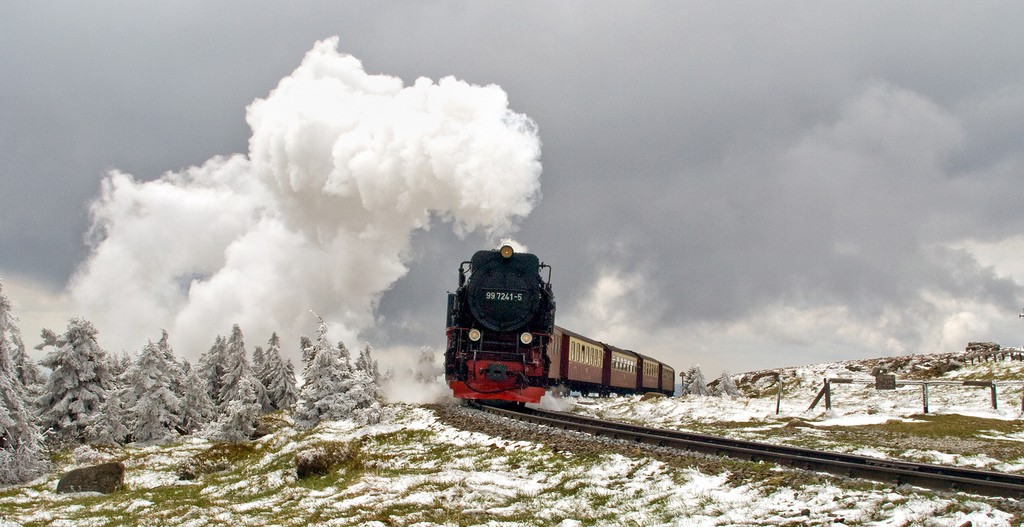
On the train ride north, I see an explosion in the distance. Black smoke rises into the afternoon sky, and I watch it out the window as the train speeds through tiny, blue-collar towns. The tower of smoke is like a building, a distant skyscraper that curves without care. The mountains beneath it seem almost uninhabited, covered in a thick rug of frosted pines. What’s happening over there, I wonder. A forest fire? An industrial accident? A dormant volcano that has suddenly awoken? The landscape is unfazed. Still, I imagine all the mountains bursting open like bottles of cheap champagne — pop, pop, pop — covering the northern New York countryside with molten rock, washing over small towns with magma and steam, trailing smoke across the Eastern seaboard. The whole area will come to a stop once the 60 mph pyroclastic wave rolls down the hillsides and into town, I think. Like Pompeii, everyone will be halted in their tracks — and no matter what they were doing, be it humiliating or heroic or mundane, it will all be frozen here in the upstate territories like an enormous carbon photograph stretching the length of the Catskills. Soon it might become a sort of solemn tourist attraction like that of the World Trade Center or Pearl Harbor. People will come to witness tragedy firsthand, to see everything as it was “that terrible day.” After a while, the shock and sadness of it all will most likely wear off, as if tragedy were just a perfume or cologne or bug spray you applied at the right moment, and people will come unabashed to look at all the privacies left behind and unguarded. No one will pay attention to its enormity, of course, or at least only pay it lip service, but everyone will string along their families to be voyeurs of the dead, standing their children in front of copulating corpses and taking photographs to be hung on the wall at home. At any given time, I realize, I probably would rather not have a volcanic plume rush over me and immortalize whatever it was I was doing at the moment. There are very few points in my life that I would choose to showcase as a tourist attraction, simply because most of the time I look like an idiot. Right now, for example: I’m slumped against the train window, my cheek stretched against the glass like putty. I probably resemble a puffer fish as it’s prepared by a chef to be eaten: confused and asphyxiated.

Yet I’m breathing and fairly cognizant. In an hour, the train will pull into Binghamton, where my sister will meet me at the station. She’ll be driving some beater that needs a screw driver shoved in the ignition to get it started, rust about to eat through the axles, and one window made of plastic garbage bags duct-taped gingerly to the frame. We’ll zip along dirt roads for an hour until we reach her trailer on the top of a hill where we will eat hot dogs with her children, surrounded by jars of everything from pickled cabbage to pickled nuts. It’s been years since I’ve seen her, but I know what to expect. And the years passed aren’t because of a falling out or any kind of drama at all; simply, we’ve been busy — or I have — or just as much, we’ve never been close enough to warrant the expensive commute between NYC and the Canadian border. She’s much older than me, a decade at least, and I sometimes have trouble seeing myself in her. She has said to our mother that we are oil and water, nothing alike and not worth comparing. It might be all we agree on, in fact. Really, everything else is so foreign to me, just as I imagine my life must be to her. The city, the noise, the fast pace — it’s nothing like what she has sought and found. And how she came to living out here in the backwoods of America, in the middle of nowhere? I can’t understand it. What does she find out here all alone? Maybe the cold: the area is known for its harsh winters — sometimes more than eight to ten feet of snowfall — which, unbelievably, leaves people even more removed than they already are from each other. I suppose, though, if you come for the isolation, then the winter snowdrifts aren’t all bad. Luckily for me, it’s November and that isn’t winter in my book. The train speeds onward, now curving around a lake and giving me a better view of the smoke. It appears that there might be another cloud rising, but I can’t tell if it’s just another part of the first. I haven’t heard any other explosions, but we are a great deal farther off by now as well.

The sound of the train rushing along the steel tracks is suddenly audible as a woman whom I had seen earlier boarding the train drags her bags through my car and into the next. I recognize her as someone I may have known or been associated with, if only slightly, maybe an old college classmate or subway rider. I know her, I think. Still, she is familiar, just as much, as the type of girl that exists as a ghost in my head, the woman who seems like some perfect ideal — but whose parts are strewn across the bodies of millions of women, some limbs and smiles here, some eyes or clothes over here, and attitudes and laughs over there. The platform woman’s snarly, sharp-toothed smile is a smile taken straight from the ghost’s blueprint. Her eyes and legs seem familiar too, as if they were somewhere inside me once, like a type of blood? No, that isn’t right, I think, but more as if I had already held them, looked into them. Dumbly, I am reminded of the women I’ve slept with, the women I’ve loved, rarely the same, as the train slows, pulling into another station along the way.

It must be a real small town, or at least a part of town that’s well removed, because there is nothing but field out my window and, in the distance, some hills. Somewhere in the field, I believe I see the traces of a lake underneath the layer of snow that has accumulated. It has fallen quickly, I note, taking out some unfinished work and laying it across the dining car table. This should get me through the next forty-five minutes, just about enough to hold me over until Binghamton. In another twenty minutes, though, we are still at the station and I’m pretty much done. I consider going over my work again or maybe asking someone what the holdup is, but instead I decide on trudging to the end of a book that I’ve been reading. After that, I’ll make some inquiries. I glance quickly at the smoke that seems now to be marked by red streaks? I can’t tell through the falling snow. The book ends badly and I put it back in my bag. Getting up from my seat, I feel achy all over. I stretch, lifting my arms into the air, and yawn. There are very few passengers in the dining car with me: a woman and her child a few booths ahead and an older man with a laptop closer to the back. Earlier, the child had stood up briefly and gawked out the window at the smoke. Minutes later, she was nibbling at her sleeve and playing some kind of game with her fingers.

I make my way toward the front of the train in search of an attendant or an operator or a conductor. Out the window, I try to get a glimpse of the station, but realize my car must be fairly far back because I don’t see the station at all. Where had I gotten onto the train, which car? I can’t remember. Here, passengers must have to get out from the first four or five cars, as is common at these smaller stops. I don’t find any authorities, though, just people sitting around, half asleep or reading the paper. I head back to my car, and from there, I move toward the back of the train. As I do so, I come to accept the fact that we aren’t at a station, really, but are in fact just sitting here, essentially in the middle of nowhere so far as I’m concerned. Now, I don’t have any appointments, my sister probably doesn’t even have a job, and — in general — time is not an issue for me, but I’m interested in getting some answers about what’s stopping us, if only to pass the time now that my book is finished. And who knows, I think, perhaps I will catch a glimpse of that ghost woman from the platform again. Yet, the only person I can find is the man minding the other food car at the far end of the train. He doesn’t have much to reveal. He says, “It all feels like a routine stop.” Can he tell by the way the engine rumbles beneath us? Can he sense something in the way we pulled to a stop? Do stops that aren’t routine bring a special feeling of unease, a tension in the air or thickness? I don’t ask him any of these things, but instead buy a two-dollar water. He assures me that we’ll probably be moving shortly.

He’s right too. After I get to my seat, get through about half of that bottle of water and idly peruse the transit safety pamphlets for a bit, the train does get moving — backwards. We are headed back toward the smoke, I think, and I envision all the trains across the country suddenly moving toward this central point and then rising upward with the plume. In fact, however, we only go about thirty feet before we stop again. Outside, the snow is fairly heavy, and in here the air is beginning to feel a bit stale, stuffy. I loosen my tie, unbutton my shirt a bit. Over the intercom, a man reports, “Due to a combination of a minor mechanical failure and inclement weather, the train cannot progress on its own. We are waiting for another engine to bring us the rest of the way, which should be here shortly.” The intercom clicks off. I think about the train being lugged along slowly through the woods and decide it best to call my sister, let her know that I’ll be late — not that I actually expected her to be on time, though. Actually, I debate whether or not I should say anything; maybe we would even get to the station at the same time if she doesn’t know I’ll be pulling in late. I think better of it though, take out my cell phone, and see that there’s no service. Of course not — we’re in the middle of nowhere. You don’t need a cell phone out here. There’s no one to call. I think about making phone calls to trees, to hills and rocks, or them calling me — long distance in the middle of the night, in need of money, sex, or drugs. My sister never calls my mother, really, or only very rarely. It is her special talent to be busy on birthdays, working on Christmas, sick on anniversaries. Another of her talents is lying.

In the same way that I often feel unnecessarily close to my family, or at least uncommonly, my sister is unprecedentedly absent and apart. It occurs to me that I don’t love her. Outside the window, I see a group of people walking into the field. One of them is the girl from the platform. I debate in my mind whether or not she is really someone I’ve ever met. I can only catch glimpses of her through the people mingling about — is she even my age? Or is she younger? As for that — how old is my ghost, my blueprint? Does she age? Or will she always stay the same, even as I grow older? Outside, the plume of smoke seems graceful almost to the point of motionlessness. It is hard to conceive of being farther from an imaginary woman who solely exists, or doesn’t, only in pieces and parts. In a moment, a train operator comes breezing through the car and tells us to take a breather outside if we’d like. Feeling cramped and stifled, I take him up on the offer. Who knows how long we’ll really be here, I think. Best to take the carrots as they’re given. I toss on my coat and gloves and head toward the end of the car. The door is open and a set of metal stairs has been lowered to make it easier to get out. A woman and her child follow after me. Outside, people smoke cigarettes alone. It’s apparent that no one on this train knows each other really, save for a few here and there. The snow is about six inches deep, and many of us have made our way underneath one of the few trees in the field, a large elm where some of the grass still shows.

In the distance the smoke still billows without any sign of stopping. I notice that, in fact, the black cloud is mingling with the grey ones above us. Somewhere nearby someone has a stove going, the familiar smell of burning wood wafting through the field. Through a train window, back in my car, I see the conductor talking with the older man who had been using the laptop. They seem to be arguing over something. The older man, shaking his head, gathers up his briefcase, puts on an old fedora and walks out into the snow with his jacket over his arm, annoyed or defeated. Despite the snow, it isn’t very cold. The woman’s child is running about without its jacket on. The kid is filthy, too, I notice. Had it been that filthy before? It must have been, I reason, because we’ve only been out here a few minutes and there’s nothing but fresh, white snow. I remember, when I was younger, my sister wiping dirt from my face with a thumb wetted with her own saliva. She does the same thing now for her own kids when the mood strikes her. Sometimes I see her wiping next to nothing away with her filthy thumbs as if out of nervous habit. It must be a type of new itch that parents get, just a feeling, something you have to respond to, rubbing your child’s face. The only way to explain the careful attention of her thumbs — in light of so much neglect and anger — is to call it genetic. I imagine the volcanic wave freezing her like that, one thumb stretching her daughter’s cheek into a pained grimace. Families would love that one, I think, would flock to it for the photo op.

A train attendant appears in the doorway of another car. He makes his way toward a larger group of passengers huddled under another tree. Whatever he is telling them gets a strong reaction. Someone actually stomps their foot. I feel for the attendant, who seems to be simply delivering a message, and think maybe these people, who are now looking almost threatening, should lay off him a bit. The attendant shakes his head, shrugs his shoulders, puts his hands up defensively, and then points in our direction. He reboards the train, leaving the people under the tree looking stunned. Will it be a longer wait perhaps? Probably very long by the looks of things. Great, I think. The train starts to move forward a bit, perhaps adjusting position for the new engine headed our way.

It seems to be picking up speed rather quickly, though, I think, and a few people are actually running after the train, trying to jump on while it gains speed. The conductors and attendants raise the stairs and close the doors quickly though, and the passengers can only run alongside it waving their hands. The train keeps going, some crew members looking blankly out the windows at us, and then it pulls around the bend. I am surprisingly thankful that none of them wave.

It doesn’t appear to be coming back. No one says anything. There’s not much to say. Some people from the other tree make their way toward my group. Once they arrive, the talking bursts out suddenly from almost everyone, a chorus of “What’s happening?” and “Where’s the train going?” and “What about our luggage?” and “What did they say over there?” A man who had run alongside the train speaks up, tells us that the conductor claimed the train had become too dangerous for passengers. A leak of some sort, gas, and that we couldn’t stay on the train any longer. The other engine would be here shortly, and our old train had to move in order to make room for it. There was only one set of tracks, I realize. We could pick up our luggage in Binghamton. The explanation makes just enough sense to keep us from acting out against the train company. Not that there is much we could do out here besides kick the railway ties a bit. Still, the conductor’s explanation, although unnerving and unsettling and unsatisfying, is not totally ridiculous. If there really was a gas leak, maybe it was best that the train leave us here out of harm’s way. What if it exploded? We were only feet from the tracks and would be blown to bits or torn apart by flying steel. Perhaps something similar had caused the smoke in the distance? Perhaps other people had been left in the snow as well. In any event, there isn’t much else we could do but accept it.

Now, all told, there are about twenty of us here, and a pretty pitiful lot at that. Not a group you’d want to have your back in a pit fight. I spot a man pulling out a cigarette and sidle up to him for a light. I don’t need one, really, but I feel like talking. He wears an old, tweed golfer’s cap and a long beige overcoat. He’s amiable enough, but not very talkative — and we stand about smoking for a bit before anyone says much of anything. Eventually though, he remarks, “I can just about see our luggage.”

I try to imagine it myself — being carted off the train and ushered to a special area of the station. “Do you think they’ll have a lot of paperwork to fill out when we go to get it back?” Puffing his cigarette, he grunts, “No, you’re not listening.” He points off toward some trees up the way. “I can just about see our luggage. My glasses are in my suitcase, though, so it’s a little tough, but I believe those’re our bags right over there.” I strain my eyes against the glare of the snow, but it appears he might be right. At least, there is a pile of suitcases and bags stacked up pell-mell just over a little hill. Whether or not they are ours is yet to be seen though. “My name’s Dan,” he says to me, offering a hand. He’s got a good shake, I think as I offer my name in exchange. Without discussion, we stomp out our cigarettes and start walking toward the baggage over the hill.

“You noticed that smoke?” I ask, our backs to the plume.

“What do you think?”

He’s right — of course he noticed it. “Yeah, well, you never know.”

“That’s true,” he says. “I guess you don’t. Still, I’ve seen the thing. It’s huge and reminds me of a wrestler.” He sparks up another cigarette. “What of it?”

“That’s it in a nutshell, really. What of it? I don’t know.”

“Well, I did a lot of wrestling in my high school days. College too, though I wasn’t as serious. I always thought I’d get more disciplined in university, but I was totally wrong.” He pats his belly, a paunch really. “I got this instead. Earned it just as much as someone might earn a medal.” He laughs at the thought of flesh as a prize. “But in high school, I was a pro. Top form. And I had a rule: wait for them to make the first move. There’s too many options otherwise. Worked every time.”

Peering quickly over my shoulder at the black cloud, I notice it’s gotten a bit bigger.

Dan seems to be finished talking. I mull over his anecdote a bit. “So… are you saying we wait till a tower of smoke ‘makes a move’?” It’s the best I can come up with.

“In so many words, sure.”

“What kind of ‘move’ are you expecting smoke to make?”

“You never really know until it happens with these things.” He puffs his cigarette resolutely. “Works every time, though.” He tries to blow a smoke ring, but fails. I don’t mention it — we’re just coming up on the luggage. The pile actually stretches up around the bend, thinning as it gets farther away. Lightly dusted in snow, the bags look lonely but somehow not out of place, like a peculiar but natural bed of rock. Sure enough, there’s my case and my bag underneath a large camping pack. Dan scoops one up as well, opens it and removes a set of glasses. Slipping them on, he says, “Much better,” and rubs his nose, leaving a dark streak. How did our luggage get so dirty so quickly, I wonder. Heading back to the others, we don’t say anything. Everyone goes into an uproar over the luggage, all sorts of shouts and worries and theories being tossed about, but no one mentions the smoke. A few men volunteer to go grab all the luggage and manage to do it in just two trips, remarkably. After a wave of frantic cell phone checking futilely rises and then breaks, we all wait patiently under the tree, getting colder. The woman rubs her child’s face with her thumb. She examines her fingers and then stands up: “It’s ash,” she says to no one in particular. I put my palm out and catch a few flakes of snow in my hand. I rub my fingers together, leaving a dark powder on the tips.

Eventually, the snow slows, but the ashes don’t, and soon it is only soot falling and blanketing the ground. It gets darker, colder. There is no sign of a train coming anytime soon, and at first, people talk to each other, but eventually we become quiet as if to save energy, and we just stand there silently next to our luggage. Occasionally, someone coughs. A younger man has the smart but depressing idea of making a fire. He gathers a crew of people to find dry kindling, wood. Soon there are a few fires going, everyone standing around one or the other to stay warm. Dan and I are at different fires. The woman from the platform is around the one closest to the tracks. At mine, the man next to me, an older guy, holds something out to everyone that he has caught in his hand. “Look,” he says. It’s a small piece of a document, burnt away down to the corner, but it is emblazoned with a corporate letterhead, a company’s name. None of us have heard of it before, but we can all imagine the type of building it must have come from.

While we wait, we take to examining the larger pieces of material that float down from the sky. They come in groups of similar things, like flocks of birds or schools of fish. We catch pieces of newspapers, mail, high school essays, town hall records, family photographs. It’s too dark to see the billowing smoke now, but we see a glow on the horizon, constant and red. I wonder if this is the first move — or if, when it does come, we will even recognize it. It’s possible that a first move has actually been made long ago and that we have missed it entirely. I take a peek at Dan across the field and wonder what his countermoves looked like in his high school days. I never wrestled, but I think I’m not unlike him. I’m not an initiator. I avoid conflict. Meanwhile, my sister gravitates toward it as if by magic. She exposed her children to the worst people she could find. Something drew her to locking her kids in their room to “play” while she watched television, drank, had sex for money. A magic gravity. Dan’s methods attract me, though, because they relieve responsibility. As together as I might seem — job, bills, education, all taken care of — I do avoid responsibility out of habit. I have only achieved it by trapping myself into it, by leaving myself no choice. I am reminded suddenly of a car accident I was in years ago. It was snowing then, too, like the ash falling here in the field. I remember realizing I had lost control of the car, and the serenity that followed. There was nothing to do but wait for the eighteen wheeler headed toward me to make the move. If I could, I’d live my whole life like that, I think.

“We’re going to the next station,” a young woman says, having approached us from another fire. “We’re going to find out what the hell is going on.” Through some of the smoke above, the moon glows, visible every now and then in the empty patches. I eye the girl from the platform, hoping she’ll come over here to tell us something too. I’ve been waiting for the ghost to make the first move for a long time, and I’m not about to change it now. “If anyone wants to come, feel free. We don’t know how far it is, but we’ll probably run into something either way, even if it isn’t a station.” A few people join the effort. I debate in my mind whether or not to go. As those who are leaving gather by the tracks, I see the platform girl pick up her things. I decide to believe that it’s no longer up to me. With no reason to walk in any other direction, we walk along the tracks. Most of us get tired. While we are setting up places to sleep, there is another explosion, to the north. It is louder and closer than the first, but still distant. Soon, smoke is rising there too. In the morning, our fires have dimmed, so we spend some time rekindling them. Before we get going, someone reads a book, another a magazine. One woman knits. Others check cell phones, but not frantically.

“There hasn’t been a plane in hours, all morning really,” someone remarks. There is an airport in a city not too far from here, I remember. We keep reading, knitting, sitting. I check my phone. Once everyone is ready, we get walking again. My sister is no doubt worried by now, my mother too. And of course, I am worried about them. Yet, I find myself unable to feel much tension at all. It’s calm here walking by the tracks, very still. The trees are quiet, disturbed only by clumps of snow falling off the branches above. It is a beautiful November morning, almost cloudless. In fact, it appears as if the smoke in the south is starting to slow, to weaken, which somehow disappoints me, I note. I don’t really want it to end, I think. The best part of my day is usually riding the train to work. I hate waking up and I don’t like the job, but in between there? It’s nice. It’s all taken care of. It’s comforting to be here on the edge of everything, really. There’s nothing to worry about. We can keep going like this.

When we were younger, my sister and I used to sit by the window during hurricanes and watch, waiting for something to happen. It’s one of my few fond memories of her because she left for New York at such a young age — sixteen. We were both fascinated by disaster, I guess. I remember it being almost erotic, the same sense of danger surrounding my feelings for the hurricane that would later be a part of crushes and secret looks at pornography. My sister’s disasters were sexual, too: when she came back, she was pregnant. She didn’t stay long. When she left again, she took a train — this train, the one I had taken. Our mother dropped her off at the station, let her go back to the man that had gotten her pregnant. From outside, while they waited for it to leave, she traced the words I love you on the window. My sister followed my mother’s finger on the other side of the glass. It is these things that remind me she is a person, I think, as our group comes up not on the next station, but a train. It is motionless, silent and leaning slightly into the curve it wraps around, tilted gently to the left. It is our train, of course — what else could it be? No others had gone by. The doors are wide open, the cars empty. They are cold, too, as if they had been like this for hours. We grab food from the bar car and keep moving. There are no footprints to follow, any and all long since covered by the snow and ash.

By noon, we arrive at the station. It is small, the parking lot made for no more than ten cars. We have to climb the maintenance access stairs to get up onto the platform that leads to the station doors because the way around to the front is blocked by fences. Inside the station, the ticket booth is empty. No one is waiting in the seats. The power is out, the televisions blank. I sit down and look out the window at the New York wilderness. I remember the last time I visited my sister, when I helped her move from one trailer to the next. The next day, I remember finding her in the morning, drinking coffee by herself, staring out the window, smoking a cigarette.

“This is my favorite,” she said. “Just sitting here alone, looking.” I looked out the window then, too. There was nothing out there, nothing particularly beautiful. Some dirty snow, a tractor, some sheet metal. Mud and half a bush. Maybe she saw something out there I couldn’t. I wonder about all the things she’s never told anyone, and as I look out the window now, most everyone else bustling around in search of some kind of clue, I imagine my sister staring out her own window, alone in a train station parking lot or at home, waiting.

I think: let the wave come now, 60 mph and silent. The platform girl walks by and I stop her. “Will you sit down here next to me?” I ask. She looks at me strangely, but does. I would too if someone asked. Up close, though, I see she can’t be older than sixteen.

We don’t say anything and I look out the window. No, now, I think. Do it now.

The Fundamentalist Reader — On Plotless Novels and the Meaning of Life

by Scott Cheshire

I discovered Aristotle’s Poetics during a biblical literature class, years ago, at Queens College, shortly after my professor declined to tell me if he believed in God. That same morning, the young man behind me asked why it is we no longer live for centuries like Adam, Noah, or Methuselah. The professor didn’t answer him, either. I bought a copy of Poetics that day, the same version as his: a Penguin Classics paperback, translator Matthew Heath, a painted illustration of the Globe Theater on the front cover, secondhand, from the QC Bookstore. The books that shape us often come with a story of discovery, perhaps suggesting, or so we like to think, a casual providence at work: it came along just when I needed it, and I had no idea. I suppose it’s no accident the Bible starts with a “genesis,” and ends in “revelation” because the beginning of our relationship to any good book ends in what that book reveals about ourselves. The best ones, the books that last, lay for us a path toward some personal epiphany. This isn’t news, of course. Aristotle drew up the blueprint, in Poetics, more than 2,300 years ago, wherein story (or “poetry,” for him, epic, comic, and tragic) requires, among other things, a beginning, a middle, an end; and that story is purposeful, formally functional, and always on a path toward telos, “the end,” toward meaning.

Sort of how space travel well beyond the stratosphere is still determined by our limits within it, Poetics set the rules novelists play against. For modern readers, the beginning, the middle, the end of a story no longer need be in that order, or even look familiar — but they are there. Telos, “the end,” meaning, remains central. It’s the way toward meaning, and the place of meaning, for writer, reader, and character. Lately, I’ve been giving lots of thought to why, in recent years, a particular kind of novel, what I think of as the “not knowing” novel, so resonates with me. Why am I attracted? Why are others palpably not? And why, it seems, are these novels attracted to me? People keep pressing them into my hands. Just a few months ago I was given by a friend, insistently, Jenny Offill’s Dept. of Speculation, because I simply had to read it, and I would absolutely love it, etc. My friend was right. Lots of white space, no clear “plot,” it read like a narrator thinking out loud, unaware I could hear every word. The reading experience was intimate, felt almost invasive on my part, like eavesdropping. It also felt familiar. I mean this as compliment. It sort of looked like Elizabeth Hardwick’s Sleepless Nights (also recommended by a friend), and reminded me, in parts, of Shelia Heti’s How Should a Person Be? Most of all, it brought to mind one of my favorite books: Montauk by Max Frisch. All of these books are intimate, and share a near shapeless close-to-the-bone rawness you don’t find very often in novels. But they also read like writers in search of self-knowledge, in search of meaning. They are books that do not yet “know.”

I then thought of my younger self and realized that version of me did not read books like these. In fact, nobody I knew, then, did, and aside from years alive on earth, what was the difference between “me” then and now?

Perhaps my attraction toward books that read like a writer “not knowing” comes from my religious fundamentalist rearing, a rebellious response, because it seems the longer I am away from the church — this also being a significant difference, I was raised in family of Jehovah’s Witnesses — for over twenty years now, the more radical becomes my taste in books. I do know the first time I encountered a writer poking up his head, out of the text, not because he “knew” (the essence of meta-fiction, really) but because he did not: it was thrilling. It was Kurt Vonnegut, in Slaughterhouse-Five, calling out, but not in name — “That was I. That was me. That was the author of this book” — once again disrupting the wonderfully melancholy contraption of that book’s plot, and sounding like a bewildered ghost trying to find his way home. Apparently, I liked this sort of thing. But why?

And so I revisited three books especially meaningful to me, not only in my reading and writing history, but during my extrication from the church — The Names by Don DeLillo, Gilead by Marilynn Robinson, and, of course, Montauk by Max Frisch. I re-read them, in that order, in order of discovery, to try and determine what it is and was about these books that remains so important to me. It was an experience increasingly intense and personal. If you can imagine a book as the lens through which a writer eyed the world, in search of meaning, The Names read like peering through a telescope, and Gilead a handheld magnifying glass. Reading Montauk, on the other hand, often felt like spying from the dark side of a two-way mirror. Telos was omnipresent. The search for meaning suffused every page. And that search belonged to Max the narrator, surely, but also Max the author, and somehow it was also mine.

It was 1991, and I was eighteen years old, still a Jehovah’s Witness, but religiously and spiritually confused. I bought a paperback copy of The Names at The Book and Record Nook, in Norcross, Georgia, the place where I discovered a strange and beautiful trinity: The Stooges, John Coltrane, and Don DeLillo. Having been raised in a fundamentalist Christian home, but also unaccountably attracted to art — the two are rarely paired without detriment to the fundamentalist sensibility — The Names pretty much rearranged my brain. Here was a thriller about language itself, its ability to control, and distort, not to mention a secret cult that paired the alphabet with a killing hammer. I was changed. But more than anything else, I was introduced to a very particular point of view, DeLillo’s take on the world. While the characters might not be, every novel is utterly “him,” reflecting a man in a room making meaning from all the chaos and violence surrounding us. Years later, I bought my first copy of Gilead, in Seal Beach, California, just blocks from my apartment, at a bookshop run by a sweet old man named Nathan. He had long gray hair, hanging down his back, in thin watery lines like strands of rope. We used to talk about faith, and what to do with all its bait and tackle after you no longer had use for it. Gilead was confounding, at first. Here was a book expressly written about the Christian faith, about God, Heaven, and all in the voice of a Protestant minister. I should have buried my copy in the sand — but no. I couldn’t put it down. I never really have. I came to understand that a novel about religion need not be a religious novel, and that the Big Questions are essentially the same for both camps. Plus there was the wise and weary voice of John Ames, who at times reminded me of my father: gentle, loving, probing, deeply curious about the physical world, occasionally irascible, but always questioning the “why” and “how” we are here. Ames is telos-driven; but so is Robinson. There is a distinct space between those voices, yes (Ames is a man, Robinson is not, etc.), but there is a quiet and quivering energy throughout the book, as if two attracted magnets were prevented from touching. It almost feels holy, maybe because it feels so human, so “her.” The separating space between Robinson’s two voices always threatens to collapse. As for Montaulk, I discovered it just a few years ago, and I was immediately entranced. The book seemed to be a search, it wanted to know about itself, and had no separating space at all.

Max Frisch is best known for his 1954 “debut” novel I’m Not Stiller, generally considered a masterpiece of 20th century German literature. It’s certainly the book of his most read in America, and it’s a brilliant comic novel obsessed with identity. Famously, the first line shouts: “I’m not Stiller!” Thou doth protest too much, we think, and the remaining 375 pages consist of one Mr. Jim White, imprisoned, claiming a case of mistaken identity; that he is not Mr. Stiller. The rest of the world, an ex-wife, co-workers, etc., insist that he is. In fact, all of Frisch’s work is identity-obsessed — from his actual debut published some sixteen years earlier, dismissed (a bit unfairly, I think) by Frisch as juvenilia, An Answer From the Silence, on through his three fascinating Tagebuchs (daybooks, or diaries), and the novels, Homo Faber, Gantenbein, Man in the Holocene, Bluebeard, and the sort of unclassifiable and magnificent Montauk. The plot of Montauk (translated by Geoffrey Skelton) is simple: a brief love affair between a man in his seventies and a much younger woman, it lasts but a single weekend. But if I may use Hemingway’s metaphor, that’s just the tip of a large and life-sized iceberg. Montauk is really about memory. In fact the opening lines that place us specifically in space and time — “A sign promising a view across the island: OVERLOOK. It was he who suggested stopping here;” and from page two: “MONTAUK / an Indian name applied to the Northern point of Long Island, one hundred and twenty miles from Manhattan. He could also name the date: 5/11/74” — belie the real plot and setting. To be more precise, Montauk is about an older man sitting at his desk, with pen and paper, trying to write the story of a love affair, but failing, ever falling away in memory. Or as Sven Birkerts puts it, Montauk is a “book of retrospect, yes, but not of passive retrospect.” The older man is Frisch himself. Although it’s not until after six pages of relatively straightforward third person storytelling that his “I” makes a jarring entrance.

Obviously she is as astonished as he that he is here now, standing beside her…

His flight is booked for Tuesday.

At first I thought she was just the camera girl usual on such occasions, suddenly crouching down and clicking, telling one how to sit, and then, just as one has at last forgotten her, clicking again, once, twice, three times, four times. But she had no camera.

In Montauk, telling and recovery are bedmates. The involuntary act of Frisch remembering how he met the woman disturbs what he’s writing about her. He eventually returns to third person — but not for twenty-seven more pages. And this only after the memory of that woman reminds him of his ex-wife, a recent “domestic failure,” other ex-wives, other broken loves, of his mother, and the fraught relationship he has with his daughter, plus a long digression on a close but troubled friendship with a man referred to as W:

I feel that my friendship with W. was basically a disaster for me, but that W. himself was in no way to blame. If I had been less submissive, the outcome would have been better — for him as well.

OVERLOOK:

…He realizes nobody knows where he is today, and that pleases him.

The book is filled with such switches in perspective. It wants to be both objective and subjective. It wants to be “now,” and “then” in time. “Literature cancels the moment, that is what it is for,” he writes. “Literature has another time…” Montauk wants to “know,” even as it imagines and remembers the “unknown.” The book embraces contradiction, attempting to exist in the in-between of memory and experience, of art and life, of meaning-making and just plain being. The book is alive.

If this sounds like some meta-fictional game, it’s not. Naming the narrator “Max” is not a device. It’s the opposite — there is no mask. He is naked. “It was a very personal book, which I wrote for myself,” Frisch once said of Montauk. “I did not know if I would ever publish it, and for awhile I thought I wouldn’t.” Plus the writing is always lucid and beautiful:

He leans against the wall, his back to the sea. She will approach over the deserted terrace, and he is prepared to be surprised, whatever she looks like, she comes up to him and is simply there. It is now midday. Everything is outside: a fluttering flag, a squat lighthouse, gulls, music from a transistor radio somewhere,

The gleaming metal on the distant parking lot, sun, wind —

Lynn is nearly 31.

And yet, all the while, Frisch is constantly probing, questioning himself. “Why this weekend in particular?” “Why am I telling all this? Who am I telling it to?” And who’s asking? It’s the “Max” of Montauk, yes, of course, but it’s also Max the writer, Max the ex-husband, Max the father, and he wants to know who he is, who he really is, who he has become, how he got here, and where on earth is he going? How many have I hurt? How will I die? And have I been a good man? The space between the two men has collapsed. And while these are fundamentally moral questions, they also happen to be the bread and butter of a religious search. A benevolent possession, we join Max on his, and so what meaning there is for Max becomes mine.

A writer sharing his name with a narrator also is not new. Consider Sheila Heti’s How Should a Person Be?, a “novel from life,” about a young woman named “Shelia Heti.” It’s a book I admire, and one that stylistically shares quite a bit with Montauk. Or consider Montaigne’s Essays of the sixteenth century, which might not be a “novel,” but neither is Montauk, strictly speaking. Frisch carefully subtitled most of his books — Homo Faber: A Report; Bluebeard: A Tale; An Answer From the Silence, Man in the Holocene, and Montauk: all of them subtitled A Story. The distinction is noteworthy. In German, the subtitle reads: Erzählung. According to a German friend of mine (a scholar and novelist), erzählung etymologically stems from erzählen (to tell a story orally) and is “defined” as a long prose text with no special requirements regarding structure. Montauk is certainly that, but so is How Should a Person Be?, and so is Montaigne’s Essays, which incidentally is the source of Montauk’s epigraph, ending like so: “…Thus reader, I am myself the matter of my book; you would be unreasonable to spend your leisure on so frivolous and vain a subject.” Frisch, like Montaigne, is being coy. But name-sharing here is not the point. It’s the loose clothing these books have in common, barely covering the body of a writer. Italo Calvino’s eponymous “everyman” Mr. Palomar, for instance, feels much more personal than any number of meta-named narrators. And Jenny Offill’s actual marriage is a fine one, according to interviews, and she has stated she’s certainly not the narrator of the amorphously beautiful Dept. of Speculation, a novel about the evolution and dissolution of a family. But the book nonetheless feels incredibly personal.

In some ways the “real” plot of Offill’s book feels like that of Frisch’s: someone sits down (at a desk? beside a crib?), and tries to make sense of a relationship, only to fall away, again, and again in memory. The book is the experience of that fall, and we look for meaning within it, as does the narrator of the book, as does Offill. Dept. of Speculation is a search, and it’s a shaped record of that search. It is not a book that “knows.” A more proper novel would have been insufficient, too parochial a medium:

My friend who teaches writing sometimes flips out when she is grading stories and types the same thing over and over again.

WHERE ARE WE IN TIME AND SPACE?

WHERE ARE WE IN TIME AND SPACE?

But what do I mean be a “proper” novel? If Aristotle’s telos is central to every story, then how are these books any different? And what does that difference even mean? Perhaps a better question: why is it novels that look like this, and work like this, have a harder time finding large amounts of readers?

There is the old saw that some writers, even some American writers, are simply more “European.” This usually means a writer’s work is less “plot-driven,” fewer things “happen,” and more often than not these are books that don’t sell extraordinarily well and are deemed commercially unsuccessful. The problem with this assumption is the sand on which it’s built. The literature most often classically associated with the “American imagination” — not the American market — is entirely telos-driven. A thirst for meaning is inherent in that voice. Think of Emerson, Whitman, Dickinson, Melville. Think of Henry James. Think of William James. All of them intensely personal writers, and all of them, it can also be said, were not particularly “religious.” This is not to say they were not preoccupied with faith, divinity, or transcendence. In fact, they all were, to some degree. But the work — the novels, stories, essays, poems, and lectures — was the conduit by which they considered the subject. The work did not “know”; it sought to know. This is the opposite of the religiously fundamentalist urge. The classically figured American imagination writes to better know a subject, to better know itself. The fundamentalist, and to some extant the very religious — a significant difference here being the degree to which a believer subscribes to a literalist reading of scripture — reads already having “known.” The difference is profound.

When I was a boy, pre-pubescent, I took the congregation stage several times. I gave sermons. This probably seems strange to outsiders, now, but within that world, it was not. I was just one of many young ministers. These were sermons based on dogma I already “knew,” which, in turn, was based on scripture I already “knew,” along with religious literature further confirming what I already “knew.” I recited those sermons to an audience, consisting mostly of people decades my senior, who all effectively “knew” the content of every possible sermon. I did this well into my teens, and sat for countless similar sermons delivered by men of all ages, from seven to seventy, all of equal “knowledge,” with respect, of course, to age appropriate vocabulary. We knew it all. I knew it all, and could have schooled the aging Mr. Frisch, when I was ten. I could have elucidated Heti, Offill, Calvino, and Montaigne, on any number of complicated subjects. I knew where we came from, why we are here, and what happens to us after we die. The meaning of life was easily digested, and always waiting ready, like a pill.

The difference between “American” and “European” writing is overly accentuated, I think. The difference depends, really, on why readers read fiction, why writers write, and the depth of a reader’s religious impulse, or how much a reader already “knows” or wants to know. This is not to say the religious do not read. Or write. Marilynne Robinson dispels both assertions, and is the religious ideal: a writer that is religious and does not “know,” not entirely, anyway. For Robinson there is mystery, and there has to be. From her essay “Imagination and Community”: “The locus of the human mystery is perception of the world. From it proceeds every thought, every art.” Relatedly, DeLillo says: “Writing is a concentrated form of thinking. I don’t know what I think about certain subjects, even today, until I sit down and try to write about them.” It seems appropriate his work, often a headlong search for transcendence, rarely delivers on epiphany. We get close. We reach. But we fail. The closing lines from The Names:

There was no answer that the living could give. Tongue tied! His fate was signed. He ran into the rainy distance, smaller and smaller. This was worse than a retched nightmare. It was the nightmare of real things, the fallen wonder of the world. [sic]

And from a recent interview with Jenny Offill: “One of the odd things about being a writer is that you never reach a point of certainty, a point of mastery where you can say, Right. Now I understand how this is done. That is why so many talented people stop writing. It’s hard to tolerate this not-knowing.”

The genius of Aristotle’s telos is how it allows for the entire spectrum of readers. It’s not how much we know that counts first, but the action: “Most important of all is the structure of the incidents. For Tragedy is an imitation, not of men, but of an action and of life, and life consists in action, and its end is a mode of action [translation H. S. Butcher].” Action, action, action — and thus we have Die Hard, The Terminator, and Dean Koontz. And thank goodness. But Aristotle follows with this: “Now character determines men’s qualities, but it is by their actions that they are happy or the reverse.” Character? Happy? The reverse? Now we’re talking humanity, ethics, morality. We’re talking about the real fundamentals. We’re talking how should a person be, and what is the meaning of my life? The less the writer knows the answer to that question, and the more comfortable they are collapsing the space between themselves and the characters in search of that answer, the less likely the extra-religious will read. Certainly, the fundamentalist will not. Frankly, there’s just no point.

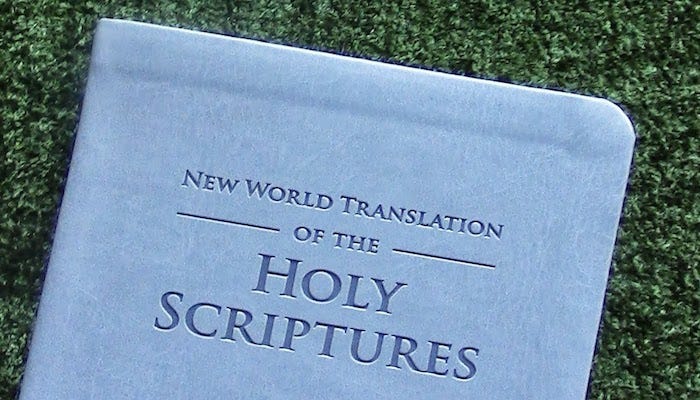
DeLillo’s take on writing, as “a concentrated form of thinking,” is also how I feel about reading. I read Karl Ove Knausgaard’s personal struggles to better grapple with my own. I read the fractured vignettes of Jean Toomer’s genre-mixing Cane to remind myself how so many voices live within us. I read the long and winding philosophical monologues of Javiar Marías to light the unlit halls of my own head. I read Teju Cole and Annie Dillard to become a better seer of the world, and to remind me that to read the physical world is to read your self. Frisch said about writing: “What shocks me is rather the discovery that I have been concealing my life from myself.” I read for that same shock. I read to undo what I think I know, and it’s a lifelong process. The real fear of the fundamentalist is letting go of their book, their only book, and to admit onto the stage other voices, other searches, other ways of meaning, variation, which is to say mystery and human error. The irony here is the Bible is in fact not a “book” at all, but a library. The term Bible, itself, means “holy books” (note the plural), and is comprised of 66 books so different the fundamentalist Christian must often spend a lifetime relentlessly insisting on their sameness and singularity of supreme vision and meaning. And they’re welcome to it. As a younger man I would have been uncomfortable admitting how closely run the paths of religion and literature. Now I embrace their shared mission, even as their ends can be totally contradictory. I still return to my copy of the Oxford Annotated Bible, as it helps me better understand Faulkner and countless others. Only, I wish more from the other path would do the same, and err toward mine, maybe even pick up some Frisch. They would certainly learn a thing two about themselves, and, maybe more important, about what it is to be other people. Incidentally, my first copy of Montauk was a gift, given to me by one of those rare friends you make as an adult. Alex and I were talking about the books that affected us most, the books that changed how we write and how we read and how we think. That next day, he gave me his copy of Montauk, the original American paperback, a painting of a lighthouse and the Long Island shore on the cover, published in 1976, its pages yellowed like a smoker’s teeth, a book not easy to come by. I politely declined, said I’d find my own. He insisted. He said, you have to read this, and he set it in my hands. It turned out to be the very thing I was looking for.

The Best Graphic Novels I’ve Ever Read

by Katya Ungerman

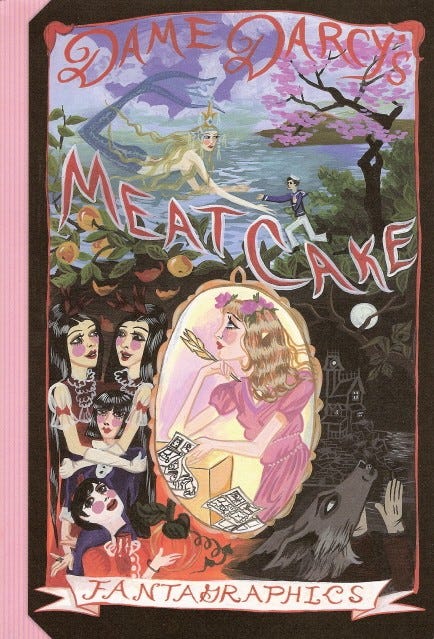
1. Meat Cake by Dame Darcy

Meatcake_Cover

While this one is technically a comic book, I had to include it on the list and I also had to make it number one. Meat Cake was my everything growing up: it informed the way I wrote stories, my own artwork was a complete and total rip off of Dame Darcy’s (culminating in a 2005 spinoff fanzine I made that I tried desperately to get included in Wikipedia), I named my pets after its universe’s strange inhabitants, and boy did I love Dame Darcy’s Paper Doll Fun.

The artwork is carefully drawn and rich in detail, with a distinct Victorian flavor — Dame Darcy’s trademark. Following characters like Strega Pez, a mute who speaks only through a Pez candy that comes out of a slit in her throat, Perfidia and Hindrance, Siamese twins who live in a hollowed out tree stump, and Friend the Girl, the only voice of reason and most normal girl of the entire bunch, Meat Cake is everything you’d want in…well, anything. It’s witchy, it’s whimsical, it’s replete with gothic imagery and not too unlike a Roald Dahl book or L. Frank Baum’s Oz series. It transports you to a fantastical — though, admittedly, slightly terrifying — world you’ll want to return to again and again. You can find the entire collection here.

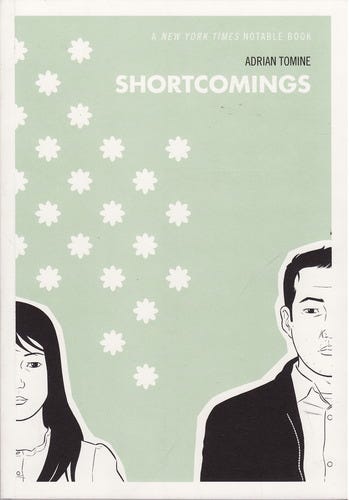
2. Shortcomings by Adrian Tomine

Shortcomings_Cover_Tomine

I discovered Shortcomings via a Korean boy named Lenny I met on Neopets. He lived an hour away from me. I was sixteen, he was seventeen — we secretly met up in a Barnes & Noble — I told my parents I was meeting a friend from school — and he bought me a copy of this book. I read it in one sitting. I didn’t know it at the time, but Shortcomings had been met with critical acclaim upon first being published and Adrian Tomine, its author, was heralded in The New York Times as the Philip Roth of graphic novelists. And yet…despite all of this attention, it wasn’t until a chance encounter in a screenwriting class something like six years later that I met another person who’d even heard of Shortcomings, let alone Tomine at all.

Shortcomings, the story of three young Asian Americans and the struggles they face as minorities,addressed things I had never dealt with, and looking back on it, Lenny’s gift was probably a veiled cue, an invitation for me to “check my privilege,” though that phrase wasn’t in our vernacular yet. Exploring the relationship between sexuality, status and what it means to be an Asian in the states, Shortcomings is something of an anthem — a must read for anyone, particularly Generation Y.

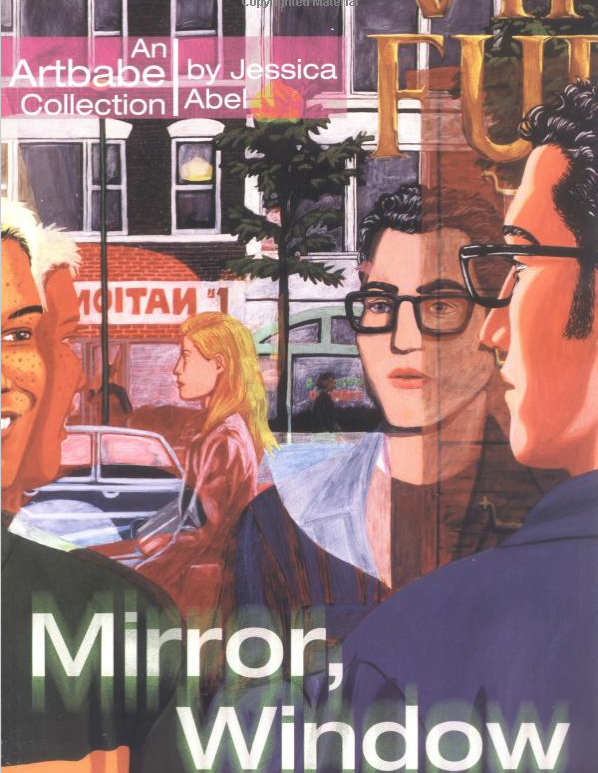
3. Mirror, Window by Jessica Abel

MirrorWindow_JessicaAbel

I’m always surprised when I don’t see Abel’s name in those Buzzfeed “Books to read after you graduate and feel like you have no idea what the hell you’re doing with your life” lists. And maybe it’s because graphic novels and comic books just don’t get a lot of press — at least, not in the same way novels do. I guess one might be able to make the argument that Abel is just speaking to a different generation, but we certainly have a 90’s nostalgia problem, so what gives, guys?

Mirror, Window, like much of Abel’s work, hones in on the lives of urban twentysomethings. But this isn’t an illustrated Girls, although I would confidently say it’s exactly what Girls is striving to be. Abel’s work is authentic in a way that someone writing outside of a bubble of privilege can be authentic; her presentation of her characters’ floundering does not come off as spoiled or self-indulgent, but instead, with sincerity.

4. My Brain Is Hanging Upside Down by David Heatley

MyBrainIsHangingUpsideDown_Heatley

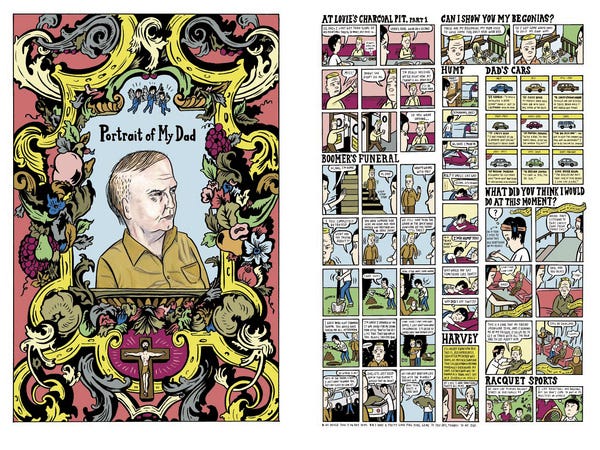
If you’re a writer or consumer of any kind of confessional writing — poetry, diary entries, fiction — you should read My Brain Is Hanging Upside Down. An autobiography in six parts (my favorite of those being “Black History,” a description of every encounter with a black person Heatley’s ever had), this graphic novel is, bar none, the best meditation of the self I have ever read. At once heart wrenching and hilarious, we are given a window into Heatley’s soul: his relationship with his parents, his relationship with his own subconscious, with his sexuality. While the artwork leans towards the crude side, the writing is honest. Its honesty doesn’t weigh it down either: it’s comprehensive, beautifully paced and masterfully written.

5. Jamilti and Other Stories by Rutu Modan

Jamilti_RutuModan

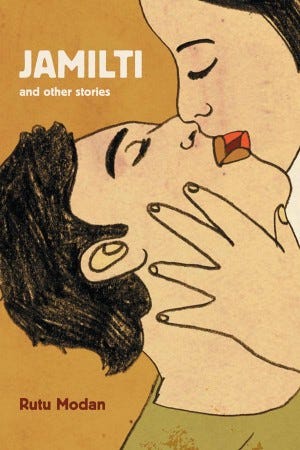
Most of us have probably read (or at least heard of) Rutu Modan’s Exit Wounds. It’s taught in small liberal arts colleges; it’s taken apart by the same kind of people who probably shamed you into buying Infinite Jest at one point. But Jamilti, Modan’s collection of short stories, is the superior work. Addressing everything from the political to the whimsical, Jamilti is the kind of work that you’ll read as quickly as your body is physically able to, and it will haunt you for the weeks following.

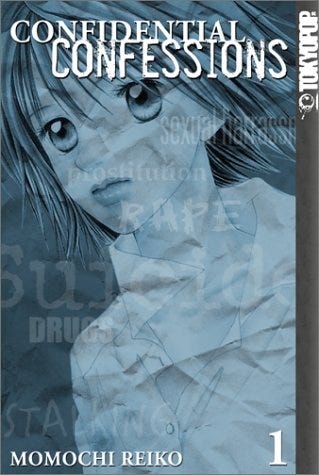
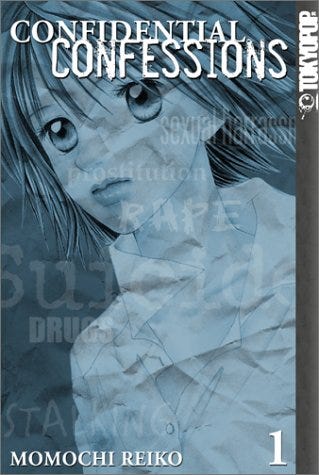
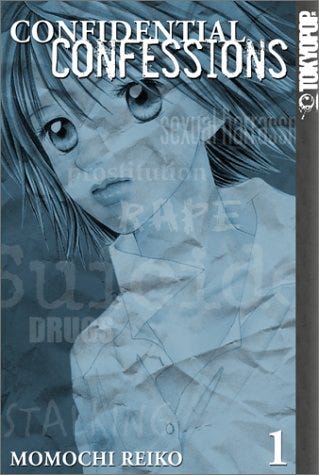
6. Confidential Confessions by Reiko Momochi

ConfidentialConfessions

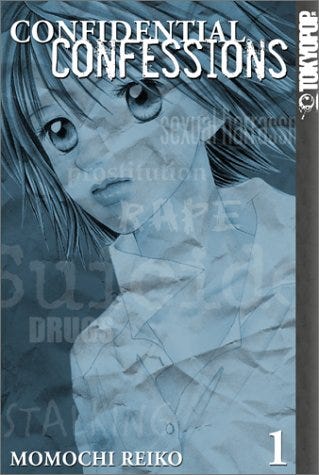
Okay, so, again, not a graphic novel per se. A manga series. Manga probably deserves a list unto itself, but it felt dirty not including this gem. I’m not sure how popular or well-known this series is and I read it a long time ago, but I give it airtime any time I get the chance. Each installment in the series is like a self-contained Lifetime drama and I love it. The stories are supposed to serve as cautionary tales, but instead, come off as kitschy after school specials — naturally, it was packaged as a “an honest exploration of the harsh reality’s of today’s youth,” and instead, you’re greeted with superficiality, fear mongering and things you can’t buy are real, even in Japan. But it’s too good. Once you start, you absolutely cannot stop. Plus, the art’s pretty good.

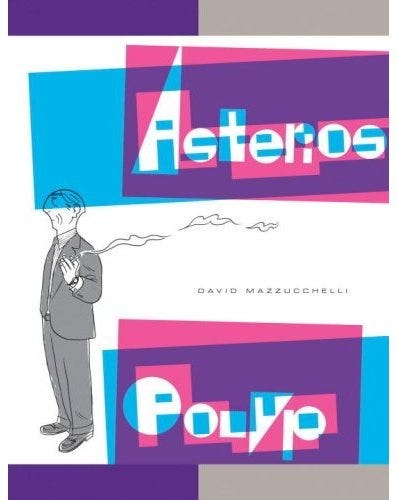
7. Asterios Polyp by David Mazzuchelli

AsteriosPolypBookCover

Asterios Polyp isn’t the kind of book you can read once and walk away from. It takes several reads — at least one of them under the guidance of someone with a robust education in literature. The title character is a fifty year old Greek architect who teaches at Cornell University. After a freak accident burns down his apartment, he leaves Ithaca on a bus and starts working as a mechanic in a nowhere American town. Woven into the story are scenes from his past and inner mind: his childhood, his troubled marriage, his dreams. The novel asks the question: Who are we and why? And like all great works, it doesn’t give us a succinct answer.

It’s no surprise that Asterios Polyp was the recipient of Los Angeles Times Book Prize and three Harvey Awards.

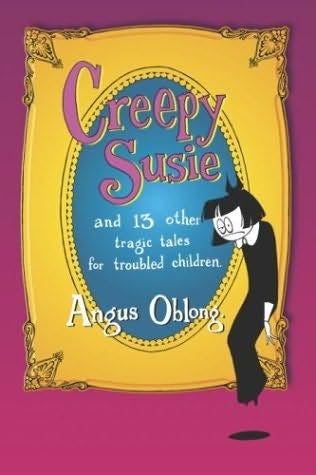
CreepySusie_Oblong

Bonus: Creepy Susie and Thirteen Other Tragic Tales For Troubled Children by Angus Oblong

This isn’t a comic. Or a graphic novel. Or manga. It’s just an illustrated storybook. But people should be reading it.If you didn’t watch The Oblongs during one of its two runs, you missed out. Like Tim Burton, Oblong does a beautiful job of marrying the preppy and the gothic: think Edward Gorey meets Whit Stillman’s Metropolitan, if you can… and if you can’t consider this collection of stories has titles like, “Emily Amputee,” and “Dick and Muffy.”

REVIEW: The Mustache He’s Always Wanted But Could Never Grow by Brian Alan Ellis

Brian Alan Ellis is one of those rare authors who understands that, in order to be memorable, short fiction should achieve a delicate balance between being a full narrative and making the reader feel like what’s being presented is only the tip of a very large iceberg. In The Mustache He’s Always Wanted but Could Never Grow, Ellis offers 21 short tales that are as hilarious as they are heartbreaking and focus on a wide-ranging cast of characters whose lives and minds are stuck, literally and metaphorically, in the gutter.

The stories in The Mustache He’s Always Wanted but Could Never Grow are about losers, boozers, perverts, schemers, wrestlers, depressed individuals, and folks who are perennially caught on the bottom rung of society. For these individuals, happiness, upward social mobility or love are inaccessible things, and the way they deal with that, along with the fact that they offer us a mirror to look at our own inadequacies, is what makes them interesting. These chronic masturbators, fetishists, blue collar slaves, and people who have lost their cat or television are shown without comment or judgment and Ellis treats them with respect, never romanticizing or making fun of their shortcomings. Instead, the author invites readers to take an honest look at the diversity of humanity and its wide range of imperfections.

The beauty of Ellis’s work is that it possesses an economy of language that allows him to deliver satisfying narratives in very few words. Half of these 21 stories start with a paragraph that could very well be considered a great piece of microfiction. The opening lines of “Drinking in Bed With Zadie” are a great example:

“We are kamikaze lovers. We spend the night drinking red wine from the bottle, shoving pills down each other’s throat. We take turns vomiting into the toilet during our cloudy attempts at lovemaking. We are, if anything, a train wreck of suicidal passion. Something cliché.”

The Mustache He’s Always Wanted but Could Never Grow is packed with eccentricity, but it never crosses into bizarro territory because the situations presented are strange but plausible. Instead of weirdness for the sake of weirdness, the author opted for a balance between wretchedness and hilarity and for brutal honesty as the underlying element of cohesion that brings the collection together. The result of this equation is tales like “Leftover Heels,”in which a pair of shoes an ex-girlfriend leaves behind is used by a lonely man for sexual purposes; “Lunch Lady,” a very short piece in which a husband lashes out from the sofa in reaction to his wife’s new hair do; or “Jerry’s TV,” a narrative in which a man contemplates his neighbor’s suffering at having lost his television and not being able to watch his favorite show’s finale:

“It sounds insane, but I considered having Jerry over at my place. Then I remembered: I don’t have cable. Also, my TV is busted. All it does is sit there, reflecting the image of its sorry son-of-a-bitch owner who could never fix a damn thing.”

In this short collection, which comes in at a very manageable 120 pages, despair is almost something tangible, the ugliness is unrelenting, and profanity abounds. However, one only needs to scratch that surface to see that a profound love for humanity in all its forms beats at the core of the collection, and that Ellis is inviting readers to question their prejudices:

“I mean, I’d rather be loved than hated…but I’d rather be hated than ignored. Hate is vital. And so is love. And what’s the point of living life if you don’t complain about it…if you don’t question it?”

Not every story in The Mustache He’s Always Wanted but Could Never Grow is memorable, but those that are allow the unpleasantness of the world, the nasty things other authors try to conceal, to come to the surface and enjoy some time in the spotlight. This unapologetic celebration of everything lowbrow might sound unpleasant, but Ellis’s humorous and very frank approach make it a beautiful, enjoyable thing.

The Mustache He’s Always Wanted But Could Never Grow: And Other Stories

by Brian Alan Ellis

Powells.com

Amazon vs. Hachette: A Reading List to Get You Caught Up

Unless you’ve been living under a rock that doesn’t have internet access, you’ve probably been hearing about the Amazon / Hachette contract negotiations. Normally, contract negotiations between two giant corporations don’t interest anyone. But for a host of reasons, from fears about the future of publishing to vocal authors (allied with both “sides”), the current negotiations are generating a lot of conversation in the news.

If you want to get caught up to speed, I’ve compiled some articles to catch you up to speed.

PLEASE NOTE: Despite how many on both “sides” of the issue talk, no one outside of Amazon and Hachette knows exactly what is being fought over. Amazon has claimed they are asking for all ebooks to be priced $9.99 or below, Hachette sources have leaked that Amazon is demanding giant “co-op fees,” and other reports have mentioned the possibility of enforced POD printing among other things. Contract negotiations also change, so some of the early reported terms may be off the table now. In short, remember that neither Hachette nor Amazon’s public PR efforts are likely giving the whole picture.

PRIMARY TEXTS:

Although normally an infamously tight-lipped company, Amazon has begun making major public statements about this dispute:

Amazon: Announcement Update re: Amazon/Hachette Business Interruption

“With an e-book, there’s no printing, no over-printing, no need to forecast, no returns, no lost sales due to out-of-stock, no warehousing costs, no transportation costs, and there is no secondary market — e-books cannot be resold as used books. E-books can be and should be less expensive.”

Amazon: Important Kindle request (emailed to all KDP authors)

“We will never give up our fight for reasonable e-book prices. We know making books more affordable is good for book culture. We’d like your help. Please email Hachette and copy us.”

Hachette has not said much publicly, but Hachette’s CEO did respond to Amazon’s call for KDP authors to email him:

“• We set our ebook prices far below corresponding print book prices, reflecting savings in manufacturing and shipping.
• More than 80% of the ebooks we publish are priced at $9.99 or lower.”

Author’s United is a group of over 900 authors — ranging from household names to midlist authors — who have spoken out publicly against Amazon’s tactics:

Author’s United: A Letter to Our Readers

“As writers — most of us not published by Hachette — we feel strongly that no bookseller should block the sale of books or otherwise prevent or discourage customers from ordering or receiving the books they want. It is not right for Amazon to single out a group of authors, who are not involved in the dispute, for selective retaliation. Moreover, by inconveniencing and misleading Earth’s most customer-centric company.

FURTHER READING:

Flavorwire gives an overview of what is going on:

Alison Herman: Everything Book Lovers Need to Know About Amazon vs. Hachette

“So, how have months of negotiations affected Hachette’s bottom line? The first half of 2014 has actually seen a 5.6 percent increase in HBG’s US sales relative to last year, so… not too badly, it would seem. Nonetheless, e-book sales have fallen, now making up 29 percent of adult book sales in the US versus 34 percent a year ago.”

Many have pointed out that Amazon completely misread Orwell in the aforementioned letter to KDP authors:

The Guardian: Orwell estate hits back at Amazon’s corporate ‘doublespeak’

“It’s clear that Orwell is praising the paperback, not arguing for its abolition,” wrote TechCrunch. “Only a fool or a businessman would twist that quote so completely. But that’s exactly what Amazon did and that’s horrible.”

Author Hugh Howey, one of Amazon’s most loyal defenders, was recently interviewed by Publisher’s Weekly:

Publisher’s Weekly: Four Questions for Hugh Howey

“Right now, I have aligned myself with Amazon, because their customer-centric philosophy has done more to encourage reading and drive this industry forward than any other single company on the planet. Many think I’m overstating the case to suggest this, or that I sound like a shill. I’m a lifelong reader, bookseller, critic, writer, and publisher.”

Authors John Scalzi and Chuck Wending have both had insightful commentary on the issue:

John Scalzi: Amazon Getting Increasingly Nervous

“But as a propaganda move, it’s puzzling. A domain like “ReadersUnited” implies, and would be more effective as, a grassroots reader initiative, or at the very least a subtle astroturf campaign meant to look like a grassroots reader initiative, rather than what it is, i.e., a bald attempt by Amazon to sway readers to its own financial benefit.”

John Scalzi: Amazon’s Latest Volley

“if Amazon is on the side of authors, why does their Kindle Direct boilerplate have language in it that says that Amazon may unilaterallychange the parameters of their agreement with authors? I don’t consider my publishers “on my side” any more than I consider Amazon “on my side” — they’re both entities I do business with — but at least my publisher cannot change my deal without my consent.”

Chuck Wendig: What Is An E-book Worth?

“An e-book costs nothing to make. But it costs everything to write — a story, after all, always costs yourself, or part of yourself. And an e-book costs a lot to edit. And design. And market. And of course the story must be procured and the author secured and all of these cost dollars and cents, or bitcoins, or dogecoins, or e-chits, or book-ducats. But of course, e-books cost nothing to make.”

Chuck Wendig: In Which Amazon Calls You To Defend the Realm

“First and most importantly, is anybody else tired of this? The Amazon-Hachette shit-show? It’s like watching two trucks crash into each other from in the middle of the collision. It’s like a game of chicken where nobody wins. (If anybody thinks I don’t have enough ‘balance’ here, I also think the NYT “900 Authors Are Standing Sadly By Their Sad Shacks Because Amazon Keeps Stealing Their Juice Boxes” article is half-a-bag-of-nonsense, too.”

Critic Laura Miller argues that self-published authors should actually be siding with Hachette in this battle:

Laura Miller: Amazon is not your best friend: Why self-published authors should side with Hachette

“As irksome as it may be for self-published authors to acknowledge, it’s in their best interests that traditional publishers like Hachette be allowed keep the prices of their e-books high. That’s on top of the uncomfortable reality that the emergence of a viable self-publishing community has been — contrary to what many self-published authors assert — a greatthing for traditional publishers. It provides a minor-league system where they can track the emergence of popular writers without having to risk any of their own resources in developing new authors’ careers.”

Author Lee Goldberg points out that while Amazon has a history of delaying or deleting books when in contract disputes, indie bookstores often refuse to stock Amazon imprint titles:

Lee Goldberg: My Letter to Douglas Preston

“You wrote in your ad: “As writers–most of us not published by Hachette–we feel strongly that no bookseller should block the sale of books or otherwise prevent or discourage customers from ordering or receiving the books they want.”

Does that same sentiment also apply to the brick-and-mortar bookstores, from big chains to indies, that refuse to stock paperback books from Amazon Publishing’s imprints Thomas & Mercer, 47North, Montlake, etc?”

Critic Carolyn Kellogg digs into Amazon’s math:

Carolyn Kellogg: What Amazon’s e-book numbers are and aren’t telling you

“Amazon’s statement is poorly phrased. It’s making a generalization about e-book prices, not claims about how a specific work of art will sell. Unless, in fact, it tested a specific work of art — information it has not revealed.

As Farhad Manjoo writes in the New York Times, “while it may be true that $9.99 is better than $14.99 in general, certain books might make the most money at $10.99, $11.99, $12.99 — or even $2.99.””

While Jake Kerr argues that Amazon’s position is not as strong as many assume:

Jake Kerr: Making Sense of Amazon-Hachette

“A key point that is almost universally missed outside of the tech world is that Amazon’s position in the ebook business is fragile. There is no greater chasm between author and Silicon Valley understanding than this. A very large percentage of authors feel that Amazon is in a commanding position in the ebook industry and that one of their goals is to create a monopoly position. While Amazon is in a commanding position, to think that monopoly is their goal illustrates a lack of understanding of Amazon’s relatively weak position.”

Forbes notes that Amazon is using the same tactics it used on Hachette with Disney:

Dorothy Pomerantz: With Disney Dispute, Has Amazon Gone Too Far?

“It’s not clear what’s at the heart of the dispute (Disney is not commenting and I’m waiting to hear back from Amazon). But it’s beginning to look like Amazon CEO Jeff Bezos is becoming increasingly belligerent in the pursuit of profit.”

Finally, here’s a lighter take on Amazon’s claims about price elasticity from Teddy Wayne in the New Yorker:

Teddy Wayne: Timmy and Pete Buy Some Books: A Short Film from Amazon

“TIMMY: I just bought one by my favorite book-length content creator, who has exponentially built up his fan base by asking his publisher to price his book at a reasonable $9.99. That guy must have so many groupies at his book readings held in hip night-life establishments and not in boring old book “stores”!”

UPDATE (08/18): The New York Times reports that over 1,000 German, Austrian, and Swiss authors have joined in protest against Amazon (who is using similar tactics against a German publisher that it is with Hachette and Disney):

“The writers, supported by several hundred artists and readers, have signed an open letter to Amazon, the online retailing giant, accusing it of manipulating its recommended reading lists and lying to customers about the availability of books as retaliation in a dispute over e-book prices.”

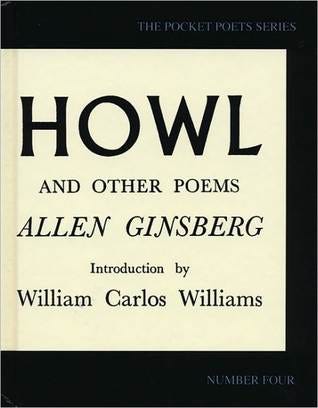
“Howl” in Italian

6295

“Howl” was first translated into Italian by Fernanda Pivano, who at her funeral in 2009 was called “Signora America, signora libertà, signorina anarchia.” She became famous over the course of her life partly for translating Hemingway (with whom — as with Allen — she became a good friend), Fitzgerald, Faulkner, Kerouac, Burroughs, David Foster Wallace, and more. As one online commenter put it, “We grew up literally drinking her translations, before even trying to understand the nimble English jargon used by Allen, Jack and the others.”

But that is not method. That is the “who,” not the “how,” and certainly not the “Howl.” Pivano’s correspondence with Allen Ginsberg in relation to the poem’s translation is instructive. In their letters, Ginsburg answers Pivano’s questions about “Kaddish” and other poems, describing his mother’s “paranoiac complains … used as surreal fragments”; defining cultural references (“Woody Woodpecker is an allied cartoon character, hero of a series of cartoon disasters in technicolor”); explaining how “the LSD poem” was “written at Stanford’s Mental Health Experimental Lab and I’d asked the doctor to bring me various things to look at while under state of drug — Gertrude Stein on phonograph, some Wagner records.”

This is all part of the inquiry that French poet and translator Yves Bonnefoy identified as essential to capturing the spirit or essence of a work in translation: You don’t want your car to take you to the supermarket and back; you want it to sail from the woods to a farm to a city to a beach clogged with kites and back again. So it is with language.

“Howl,” of course, begins:

I saw the best minds of my generation destroyed by madness,

starving
hysterical naked,
dragging themselves through the negro streets at dawn looking
for an angry
fix,
angelheaded hipsters burning for the ancient heavenly
connection to the

starry dynamo in the machinery of night

“Urlo,” the title of “Howl” in Pivano’s Italian collection Jukebox All’Idrogeno (and it seems to be out of print, too), is a scream or a shout that seems almost thrown and begins:
Ho visto le migliori menti della mia generazione

distrutte dalla pazzia, affamate nude isteriche,

trascinarsi per strade dei negri all’alba in cerca di droga rabbiosa,
hipsters dal capo d’angelo ardenti per l’antico contatto celeste con la dinamo stellata nel macchinario della notte

A rough translation back into English would read:

I saw the best minds of my generation

destroyed by madness, starving naked hysterical,
dragging themselves at morning through the negro streets angrily looking for a fix,
hipsters from the head of an angel burning for the ancient paradisical contact with the starry dynamo in the machinery of night.

There are details here worth pointing out: the first is “pazzia,” as in “madness,” though it also means “a mad scene.” Then there is the question as to why “starving hysterical naked” become “starving naked hysterical”; does there need to be greater rhythmic emphasis placed on hysteria when the poem is called “Urlo?” There is “looking for an angry fix” approximated as “rabbiosa di droga,” being so hooked on drugs that you’re rabid for them. There is “dal capo d’angelo” or “from the head of an angel,” and one wonders if a silent, implied verb would be appropriate here, i.e., “Plucked from the head of an angel?” “Who emerge from the head of an angel?”

It should also be said that it’s nice to see “stellata” and “notte” play off each other so, even if notte doesn’t constitute the entirety of the line.

While writing this, I’ve stumbled across phrases like “hipster aureolati” or “hipsters dal corpo d’angelo” (from the body of an angel) while wondering why a phrase like “hipster con la testa di un angelo” or “hipster celeste” is somehow comparatively better or insufficient.

As a reader and a writer, my immediate impression is to say, “Yes! Yes!” to some of these phrases, especially with “hipster aureolati,” which I love, but I double-checked with Agnese Peretto, who did very well on the Italian literary-reality show Masterpiece — which I wrote briefly about here — and she told me that “Aureolati è una parola troppo difficile per un italiano normale” — that is to say, that ‘aureolati’ is a difficult word for the average Italian, and that it would be “meglio” to go with “con la testa di un angelo.”

Sometimes the language slows Ginsburg’s rollicking verse down (think of the changing nature of ‘santo’ with lines like “Tutto è santo! tutti sono santi! dappertutto è santo! tutti i giorni sono nell’eternità! Ognuno è un angelo!”), but sometimes Italian and “Howl” is a wonderful fit wonderfully done, especially when you read lines like, “Santa la soprannaturale ultrabrillante intelligente gentilezza dell’animo!” (Holy the supernatural ultra bright intelligent kindness of the soul!)

Or — in other words — not only is Ginsberg with us in Rockland, but he’s with us in Rome, Tuscany, Firenze, Milan, Naples, Sicily, Palmero, Bologna, Florence, Venice, and one or two other places as well.

INTERVIEW: Lauren Wallach, author of “A Higher Purpose,” now on Recommended Reading

by Maru Pabón

In this week’s Recommended Reading, “A Higher Purpose,” author Lauren Wallach draws from her experiences growing up in Brooklyn, a belief in lived symbolism, and strong female characters from Fellini films. The result is a strikingly intimate story, which I had the chance to discuss with her via e-mail.

Maru Pabón: In “A Higher Purpose,” the unnamed narrator seems to be fixated on occurrences of doubling in her own life: the peephole mirror, her relationships with Pablo and Paul, the co-lab stories. Could you talk about this recurring motif of pairs or doubles?

Lauren Wallach: After thinking about this question for a few days, I mentioned to a friend that I have been “doubling” and what to make of that, how to explain it. He responded, “like fractal geometry.” I didn’t know anything about fractal geometry, so I watched a TED talk, which provided a very interesting cauliflower analogy: when you break off a piece of cauliflower you don’t get a piece of cauliflower, you have a little cauliflower. The fractal shape is rooted in something called “self-similarity” in which the shape is made of smaller copies of itself. The copies are similar to the whole: same shape but different size. Fractals appear in nature, in art, in music, and maybe in this story!

That fractal geometry explanation is there to say that the doubling occurred for me in life–who knows why–and I observed it. Coincidences and parts of life that naturally “double” are a great fascination to me. And so is the continuous forgetting and understanding that nothing is as it seems. For example, the idea of looking through a peephole only to see oneself; this is not logical, it’s some sort of mistake, and this is something that appears as a symbol from life. The idea of reflecting, doubling, without explanation. I believe that symbolism can exist in lived life just as it might in art or literature.

One of my new favorite children’s books is by a Zen Buddhist, and it’s called “Is Nothing Something?”

MP: Your writing style also makes use of this doubling by repeating words and phrases. What might the repetition signify?

LW: I do repeat words and phrases a lot. It’s not a conscious decision. When I edit, a lot of repetition gets cut out. But some things that are repeated need to remain, like anything else that feels necessary for the story. So I am not sure why. But if I were to psychoanalyze why, I could say that perhaps it’s out of an unconscious need to ritualize certain moments or ideas, sort of like a an incantation, as if the more something is reiterated, the truer it will become. Or, our memories and minds are constantly repeating words, phrases, faces. It could be a natural progression putting what’s in a mind into words on a page.

Hitchcock's_cameo_appearances._Rear_Window

MP: The story’s narrator often expresses a desire for someone to observe her or notice her. Do you feel there’s something about New York that brings out that desire to connect?

LW: I don’t think New York brings out a desire to connect more than any other place. I do think New York and certain other cities are unique in how one may be seen. It is very easy to be completely anonymous here. It’s also very easy to be seen in a place that is meant to be private. Sometimes, because of apartment/window proximity, it is very easy to see into someone’s home. You can see another person when they are completely alone, and they can see you when you are completely alone.

I think the narrator, on a certain level, has a sense of these differences. I think she would rather be seen through the messed up peephole in her room than have people stare at her in the restaurant on Halloween night.

MP: How did growing up in Brooklyn influence your writing?

LW: I’m not completely sure. I can think of one very specific story from my childhood in Brooklyn, involving a strange man that me and my friends called “The Comer”- a terrible name and not what it sounds like. He became a mythic figure for us. I was waiting for my friend one day on the stoop and no one was around and this man appeared and motioned with his finger for me to come towards him. Nothing happened though. We just stood like that for a little while, I pretended not to see him, even though we were just a few feet apart, and then eventually he wandered off. But he would always reappear. And my friends and I knew to look out for him. His presence evoked a lot of fear in me. When we’d see him we’d run away or if he was close or observe from a distance. Did Brooklyn cause me to become obsessed with writing about creepy, odd interactions? Maybe.

I do think topics that fascinate us are often themes that begin in our childhood. But as a child, my world was mostly within a few blocks radius. So more accurately I would say the block I lived on had an influence on my writing because of my experiences on that block.

MP: Why did you decide to reference in such detail the character of Cabiria from Nights of Cabiria?

giulietta_masina_stars_in_i_nights_of_cabiria_i__1_4db6801d36

LW: I was Cabiria for Halloween, and gave this moment to my narrator. Usually for Halloween I pick characters that I have an interest in and respect for. For Cabiria I have great love and respect. And I feel that is honored in writing about her and dressing as her. And again with the doubling, I had the outfit already, before I conceived of “becoming” her.

MP: Is that your favorite Fellini film? If so, when did you first watch it? Why is it important to you?

LW: It’s a close tie with La Strada. I love them both. I first watched Nights of Cabiria just about a year ago even though I had seen Fellini’s films years before. There are so many intricate reasons why this film is important to me and why I like it. One thing is I love contrasts in characters. Cabiria is a prostitute. And yet she longs for love. She also is more honest, loving, full hearted than anyone else in that movie. Bad things happen to her. Especially at the end. But she endures. She has this strange smile on her face and she is crying a little. Two scenes that stand out in my mind is 1. When she is hypnotized on stage at a magician’s performance and 2. When she is with a rich actor client and they go on the dance floor and she has a moment where she completely ignores him and does her own solo dance out of nowhere. She is always both honest and funny, completely herself. Cabiria’s pain feels meaningful. It’s what she endures for being able to be who she is, which is actually a gift.

MP: You teach a creative writing workshop for teenagers. Can you talk a bit about what that’s like? What is a piece of advice or caution that you often give to your students?

LW: The creative writing workshop for teenagers is a free workshop that I just began this summer at BookCourt. We meet once a week, and we might continue on into the school year. (They are wonderful writers.) The theme of the class this summer was “looking closely.” We’re exploring how the details from our memories and those around us can represent and reveal ourselves as writers. How the small details that you choose to give can allow the reader into the narrator’s mind. In our class we’ve already experienced quite a few moments where seemingly mundane details have emerged into something a bit more magical. There was one very hot day when only one of my students came to class. We both had never brought any food or drink of any sort to class, but on this day, we both had brought ginger ale for the other to drink. This was a powerful moment for both of us. And I think it was a great example. It’s being aware, being in tune. Once your mind is there anything can happen (on the page).

MP: What are you currently excited to be working on?

LW: I have been working on a collection of interconnected stories or linked passages that will take the form of a novella. I’m also beginning to embark on a variation of a horror story. The sort that stops short of the actual “horror.” (And yes it will involve lots of looking into windows…)

New Murakami Means a New Round of Murakami Bingo

This week saw the release of a new Haruki Murakami novel titled Colorless Tsukuru Tazaki and His Years of Pilgrimage. The novel is about “the remarkable story of Tsukuru Tazaki, a young man haunted by a great loss; of dreams and nightmares that have unintended consequences for the world around us; and of a journey into the past that is necessary to mend the present. It is a story of love, friendship, and heartbreak for the ages.”

The novel sounds a bit like a collection of Murakami cliches, which means it’s time to bust out your Murakami Bingo board (created by Grant Snider and available to purchase in his poster shop) and mark off as you read.

Murakami bingo comic

VIDEO: Author Lee Child Weighs in on Amazon

Author Lee Child (whose work was most famously adapted into the Tom Cruise film Jack Reacher) spoke out on the BCC about Amazon’s tactics. You can watch the video clip above.

The Book Seller reports that some self-published authors attacked Child for his comments with the blogger at The Passive Voice saying it was “interesting how little many of these big-selling trad pub authors understand about the book business.” Lee Child responded in the comments:

I get that it feels all smug and gnostic to say that authors like me understand little about the publishing business, but — with no due respect at all — it’s absurd. I have navigated through it for twenty years, in 99 global markets, learned from both success and failure, and I’m still vertical and still in print. By definition I was a debut, and then a midlister, and finally a bestseller. I’ve seen it all, and you’ve seen none of it. Again, with no respect at all, you’re full of it.