The night he tried to strangle his wife, Daniel Clay was in the process of buying a Slovakian goldmine. He was looking for far-flung investments. He’d considered an Argentine soccer team that was up for sale and a company that sold bottled water that they siphoned off the Lake Michigan aquifer. But the goldmine had, for various reasons (not the least of which was the current price of gold), the most appeal. Still he knew it was a long shot. He’d been under a lot of pressure at the hedge fund where he was partner. Things were going south. Still it was no reason to put your hands around the throat of the mother of your children and try to kill her in front of them.
He spent a night in jail. A very long, dark night of the soul that gave him time to sober up and consider his options. Janice wouldn’t have him back. She made that clear through a lawyer. She would drop the charges as long as he made no attempt to move home and did not fight for custody of their children. It wasn’t, after all, the first time he’d tried to kill her, but Janice was very firm. It was the last.
Daniel didn’t blame her. He’d been drinking a lot. He even kept a little flask in his desk at the office where he’d take a hit of whisky whenever his nerves got bad. And lately they’d been getting bad fairly often. The night in jail haunted him. The sounds that other prisoners made. Mostly drug addicts, moaning as they went into withdrawal. It was cold in the jail and the lights were on. They were bright and fluorescent and Daniel was awake the whole night. In the morning when he made bail, Janice’s lawyer was there to present him with the conditions of his release as well as what was required for him to see his children again. He had to quit drinking, take an anger management class, and do some form of therapy. She asked for three months of sobriety. And she wanted documentation.
He took a medical leave from work and joined AA. His sponsor, a guy named Pete who’d quit drinking after he’d climbed a tree butt-naked at his former best friend’s birthday party, was there every time he called. And Daniel called him often, sometimes twice a day. He picked Pete because it was obvious that his life had been a complete mess and he’d turned it around. “That I did,” Pete said when Daniel approached him. He also found an anger management class and a therapist who practiced dream therapy. Whenever Daniel woke up, he wrote down his dreams. “I saw a tree, crashing in a forest, and all the squirrels ran away.” In sessions the dream therapist interpreted these. “You are the tree…” When he made it to ten days of sobriety, he called Janice.
As she answered, he said, “Janice, it’s me. I was hoping we could talk. I haven’t had a drink in a while.”
“That’s nice, Daniel,” her voice so chilly it could frost glass. “I’m glad for you.”
He wasn’t sure what to say to her. It was as if they’d never met. “I’d like to see the kids.”
“Talk to my lawyer.”
“Look, Janice, I thought maybe we could…” but before he finished, she hung up.
He had no idea why he’d done the things he’d done. It was as if a different person had taken him over. Someone he didn’t know had set up house inside of his head. He sought explanations everywhere. In off-the-cuff comments that cab drivers made. “Happiness is a decision,” a driver from Bangladesh said. In fortune cookies, in Snapple bottle caps. He got one with his strawberry tea (which his sponsor suggested as a good substitute for daiquiris) that read: “The baby caribou can outrun its mother when it is three days old.” Was this a koan? Was it code? Daniel wanted to believe that it was some kind of sign.
After seventeen days of sobriety and one supervised visit with his children who didn’t seem to know how to smile any more, Daniel decided he wanted to get away. Pete was opposed. “You’ve got a system in place here, man. You have your routines.” But Daniel believed that his routines were portable. He had plenty of money and felt he may as well head south. “I’ll go to meetings there, I swear.” Pete had just shrugged, “It’s your call, man.”
Daniel didn’t understand why he drank until he blacked out or did drugs or at times engaged in pointless sex with sketchy women while traveling abroad. But he needed all of this in some form or other to get through the day. It made little sense. His mother had loved him. He’d made his peace with his father with whom he often disagreed, but the childhood arguments over sports teams or the theme of his bar mitzvah hardly constituted abuse.
It was his father who insisted he always call himself Daniel, never Dan. “’God is my judge,’ that’s what your name means,” his father told him, “and don’t ever forget it.” Beyond the insistence that he not use a nickname and that he recite his prayers until he turned thirteen, Daniel had had no childhood trauma. No divorce. Nothing to prove. His family accepted him, more or less, for who he was. Still he was driven. He drove himself to make money. He drove himself to be powerful and to be liked, though perhaps not necessarily loved. And now Daniel had driven himself right into the ground.
The night after he made the decision to go away he dreamt he was in a forest of bonsai. He gazed down at the treetops as if he were a giant. He had a watering can in hand and it was his job to water them, but didn’t know how much. He stood, paralyzed before the task. Leaves crinkled from thirst, but still he did nothing. In the morning he called his dream therapist who was now on retainer. “Your dreams are progressive. You are the trees. And you are the giant. You don’t know how to take care of yourself.”
Daniel made plans to fly down to Key West, relax, detox, get tan, clear his head, and then present himself once more to his wife and children in a state of contrition and relative health. He’d drink pineapple smoothies every day and swim for miles in the sea. After checking out hotels, he decided to rent a place. The hotels were expensive (not that that ever stopped him before, but he felt he should show Janice that he was at least trying to exercise restraint), and besides he liked to be able to cook for himself. And he didn’t want to be greeted by strangers — maids knocking on his door or desk clerks asking, “Is everything all right, Mr. Clay?”
He found a realtor named Sue who sent him some pictures of a few apartments. Most seemed small and cramped. Tiny cottages, painted pink and powder blue, with palm trees growing outback. Daniel didn’t think that Hemingway would live in a powder blue house, not that he was Hemingway, but he was manly in ways that Hemingway was, and he didn’t want a pastel cottage. He wanted something bigger, with scope, air, an eye on the world. She sent him some pictures of an apartment, owned by a prestigious pharmaceutical scion who rented it out from time to time to “quality people.” “This just came available,” Sue said.
From the virtual tour he took online he could see that the apartment had a spacious living room, dining room, a big open kitchen where Daniel imagined throwing alcohol-free parties, a master bedroom with French doors that opened on to a wide balcony with a view of the sea. It was located in a secluded spot called the Barracks, which had been used during the Truman years.
“This is perfect,” he said when he phoned her back.
He rented it for the next two weeks with an option to renew. “Stay as long as you like,” Sue told him. She overnighted to him a set of keys. Maybe, he thought, he’d convince Janice, if she’d relent, to come down with the kids for Presidents’ Week. Or just let them come alone. Whatever. Daniel felt that for the first time perhaps in years he had taken some control over his life. This was a start, he felt sure.
On the plane to Miami he struck up a conversation with the man sitting beside him. He was a biologist who was studying zombie bees. These are honeybees that are being infected by a parasitic fly that devours their brains. The way you can tell if they are infected is that the honeybees fly aimlessly, “on a flight to nowhere,” the biologist said, until they die.
In the layover in Miami, he took off his brown loafers and slipped on a pair of sandals, packed up his blue cashmere sweater and put on a pale cream short-sleeved shirt. At a rum bar in the airport he sipped an alcohol-free piña colada. On the flight to the Keys, he got a window seat. Below him stretched mangrove swamps and the warm blue water. When he got off the plane, he was greeted by a blast of hot air and the smell of the sea. A large sign indicated that he was about to enter the Republic of Conch and an airport official greeted him with “Welcome to Paradise.”
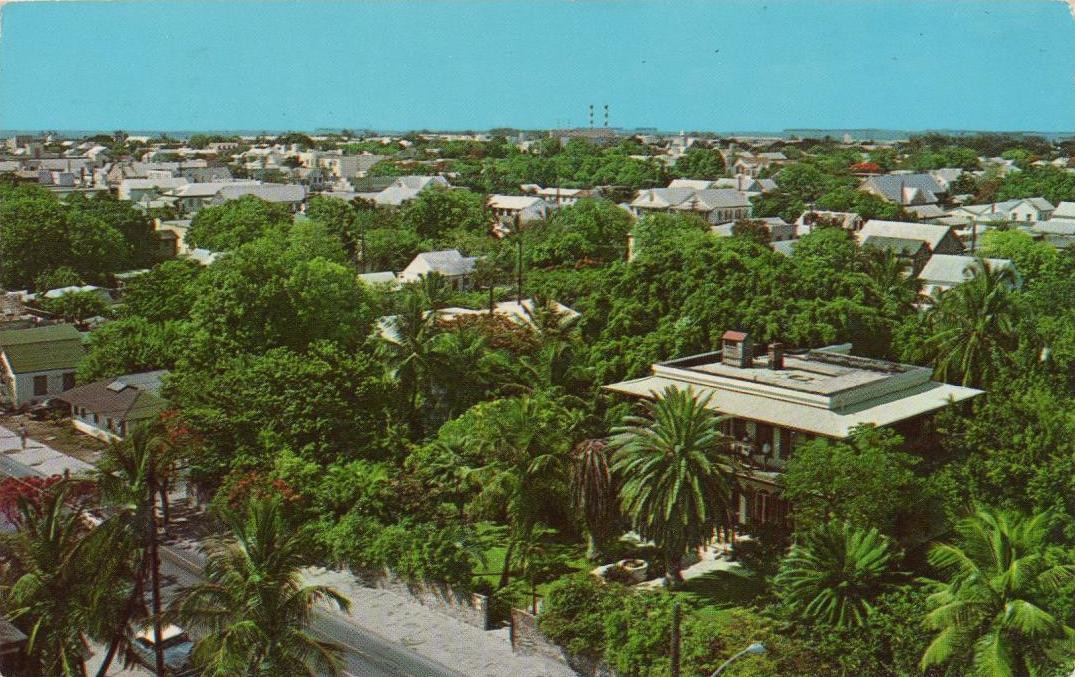
In the cab he rolled down his window. The air smelled of jasmine and the sea. Palm trees towered overhead. A great white heron glided by. The cab dropped him off at his place. His apartment was up a flight of stairs. The virtual tour didn’t do it justice. It was sprawling, filled with big comfy chairs, rattan rugs. It was all designed to look out on to the sea. From the kitchen he watched cruise ships — those floating cities — drift in and out of the harbor, not far from his apartment.
He was thirsty. He opened the fridge and found that Sue had stocked it with bottled water, orange juice, eggs, coffee, a loaf of bread, peanuts, and milk. She had placed binoculars and a book on Florida birds on a table near the door that opened on to the deck. These simple acts of kindness stirred him to the core. Daniel almost wept. This is so nice, he told himself. And it was beautiful. This was where he would get well.
He settled in. He opened drawers and put his underwear and T-shirts away. In the closet he hung up his slacks and one beige jacket. He lined up his shoes. He’d always been a neat, meticulous person — despite his bad habits — and he had a domestic side. He plugged in his laptop, but was determined not to check his email more than twice a day. He plugged in his phone. On the bed stand he placed his Kindle Fire that contained an entire library of the books he intended to read.
As the sun was setting, he sat on his deck, sipping a Virgin Mary with lots of lime. From the top deck of the SS Arcadia which had just docked across the harbor a football game was being broadcast. On an enormous screen the Giants were playing the Panthers. He used his binoculars to check the score. The Panthers were ahead by a field goal. Except for the cruise ships Daniel’s view was uninterrupted. He watched the sunset, then headed over to Duval for some coconut shrimp and to check out a drag queen show that was funnier than he thought it would be and not sad, and the piña coladas without rum were plentiful and satisfying.
It was after midnight when he wandered back, feeling almost drunk from the sea air, except he was sober. A gentle breeze blew through the palms, and frogs and crickets were chirping. Birds rustled the branches overhead. Perhaps tomorrow he’d begin a long letter to Janice that he’d hoped to write. It was Pete’s suggestion. His apology. “It’s good to write it down,” Pete told him, “even if you never send it.” Pete had written dozens of these letters over the years.
In the bedroom Daniel pulled back the cover and touched the crisp white sheets. He missed home. The ordinariness of family life. Kids doing homework at the kitchen table. Silly bathroom jokes at dinner that made everyone laugh. He missed Janice though he wasn’t sure he missed the actual person she was now. It seemed more as if he missed who she used to be. Who they used to be. Once they’d gone swing dancing and drank Old Fashioneds on a whim. For years they’d had a secret handshake and no one could crack the code. He had tried, from time to time, to revive what it was that had once sent them tumbling into bed, besides a few Scotches, and producing three wonderful kids. They’d gone on some recent getaways — to Bermuda, Paris for a long weekend, and things did improve until they returned to their apartment and to the rigor mortis that was their marriage.
For now he was alone, doing his penance. He’d like to share this room with someone else. But not yet. Not tonight. Tonight he was making peace with himself and the world. He opened the French doors wide. The sea breeze blew in. He had been sober almost three weeks, and he was finding that with his clarity of mind came a clarity of vision. The world was brighter, clearer. He crawled into the pure white sheets and fell soundly to sleep. He woke once in the middle of the night and saw lightning. Somewhere in the distance a storm brewed. Then the ocean lulled him back to sleep.
At daybreak the rumble of a motor entered his dreams. For a moment he thought someone was calling his name. He’d had this sensation before. A squeaky door, a strong wind, and he’d hear his name. Daniel, Daniel, the voice called. He woke slowly and determined that no one was calling to him. The noise was coming from outside. Some kind of an engine was running and his bedroom, with all its windows and French doors flung open, was filled with diesel fuel. “What the hell?”
He rose, padding to the doors. Stepping out on to his balcony in the crisp morning air, he saw that, not a hundred yards away, a generator had been set up. He was certain it wasn’t there the day before. It was large and red and chugging right below his apartment. Daniel stepped back inside. It wasn’t eight yet. Hopefully this was a temporary situation, the way the cruise ships that came and went with their loudspeakers and football games seemed to be.
He closed the windows. He could still hear the hum of the generator, but at least the smell of gasoline was dissipating. He’d go out for breakfast. Then, if the generator was still running when he returned, he’d find out how long it would be here. Perhaps some bargain could be struck.
He wandered over to Blue Heaven, which had gotten good reviews on Yelp. Sitting under a banyan tree, he ordered a spinach omelet with grits and fresh-squeezed orange juice that he savored as wild chickens scratched in the dust at his feet. He gazed up at the stage beneath an old water tower. It was said that Hemingway had boxed here. After breakfast he thought about going back to his place, maybe relaxing on the balcony and reading a book, but what if the generator was still churning away?
Passing a bike shop, he went in and rented an old Schwinn clunker. “God,” he said to the attendant, “I haven’t ridden one of these in years.” It was good enough to get him around. He’d go exploring. He felt like a boy again as he tooled down Duval, then cut over to the ocean. He followed the path along the sea. At Higgs Beach a group of homeless men clapped as a girl with dreads strummed a tune on the ukulele. Sunbathers danced in the sand while boys with sleeves of tattoos were engaged in a serious game of hacky sack.
The bike path widened and climbed until he was riding above the sea where he paused at the railing. Below large fish swam against old pilings. Stingrays darted back and forth. Settling on to a bench Daniel stared at the sunlight sparkling on the ripples of water. His body felt pliable as if it was made of rubber. Closing his eyes, he felt as if he could sleep. He was so used to being on a concoction of drugs and pills and alcohol to wake him up and calm him down. Now he found himself in a state of drowsiness. He had no compelling need to do anything except sit on this bench and stare at the waters and sailboats drifting by. This was what he’d come down here for. What he really wanted to do was sit on his balcony and do this.
But he couldn’t — at least not for now.
Even in this peaceful spot, all he could think about was the generator. Would it be off when he got home? Would the fumes float into his apartment or drift out to sea? As the sun was dipping towards the horizon, Daniel got on his bike and headed back. He stopped along the way at the only supermarket in town. The bike rack was in front of a massage parlor next door. A girl sat out front, smoking, on a plastic chair. She couldn’t have been more than eighteen and she wore a sequined dress that rode up high on her thighs. Daniel was tempted for a moment, and then shook his head. He could just hear Pete, telling him, “Don’t do anything you’ll regret later.” Instead he picked up some cold cuts, mayo, mustard, chips, and vitamin water drinks. He stuffed all of this into his bike basket and rode to the barracks. As he approached the building, he couldn’t hear the generator. Relieved, he trudged up the stairs.
It was dusk and quiet. He made himself a ham sandwich with cheese, and then sat on his deck, eating it and sipping vitamin water. Stars illumined the black night. Laughter came from the Carnival cruise ship that must have docked that afternoon. Somewhere a band played “Rhinestone Cowboy.”
It was just after seven when he woke, dripping from sweat, in the hot and stuffy room. He heard the motor, but he couldn’t smell the fuel. That was because his doors and windows were closed. But when he stepped outside he was greeted by a blast of diesel fumes. He turned on the central air conditioning and slipped back into bed, but he couldn’t sleep. He put on a pale blue cashmere sweater because of the chill. He made coffee and ate half a grapefruit at the kitchen table.
Then he decided that this was unbearable. He hadn’t come to Florida to be barricaded inside his apartment in a cashmere sweater. This was absurd. He’d have a talk with someone. He slipped into a pair of flip-flops and stormed downstairs. He followed the path between the arching palmettos that led to the beach. As he approached, the generator was so loud and the diesel so strong; if he didn’t know better, he’d think he was approaching an airstrip.
Two hippie boys, who looked as if they were just out of high school and had spent most of it smoking weed, were setting up a shed that appeared to be filled with tools, rope, and winches. Daniel poked his head inside. “Hey, guys.” At first they couldn’t hear him over the roar of the engine outside. Then one with long hair and a red bandana around his forehead looked up. “So,” Daniel asked, “what’s happening here?”
The boy gazed quizzically at Daniel. “Just setting up.” He spoke as if it was a question that any fool could answer, but Daniel shrugged. “For the regatta.”
“The regatta? What regatta?” Daniel’s feet were sinking into the sand, and he felt himself growing smaller.
“The Key West Regatta.” The boy turned back to help his friend who was coiling rope. “Happens every year. You know, sailboats.”
“Oh, okay. Sure.” He relaxed. A regatta. How noisy could sailboats be? “Hey, that’s cool.” It might be nice for a weekend to have colorful sailboats, cruising in and out of his harbor. It might even be restful. He envisioned himself, sitting with a Diet Coke, as the boats breezed by. He gave the boys a wave as if he was just wandering past.
As he headed back up the beach, his mood lifted. He recalled one of the lessons Pete tried to impart to him. “Things may be as bad as they seem, but usually they aren’t.” That afternoon he pedaled over to Hemingway’s house. He examined the desk where Papa wrote standing up, and stroked the six-toed cats named Mr. Bette Davis and Gregory Pecker. This was Key West after all. In the evening he went to the Coconut Lounge where he ordered a Virgin Mary at the bar. A blues combo was playing.
At the piano a black man in dark glasses set the tempo with hands the size of catcher’s gloves. He never looked down at the keys. Instead he seemed to be staring straight at Daniel. It was unnerving at first, but soon Daniel got used to it. Perhaps because he was sober, it seemed as if he could hear all the notes. He didn’t miss a moment. He smiled at the piano man. He nodded his head when the piano man did a whirling riff and clapped when he finished a mind-boggling solo.
At the end of the set the piano man stood up. He was as huge as his hands. Tall and sturdy yet he fumbled with the top of the keyboard. He stood still, not moving, though this time instead of looking at Daniel he was looking at the ceiling. Daniel was about to go up to him and shake his hand when the bass player took the piano man by the arm and led him through the maze of instruments, through the crowds, and to the bathroom. The piano man kept his hand out in front of him so he wouldn’t bump into tables or chairs.
That night as he was drifting off, Daniel was thinking about what it must be like to be blind. He would be frightened if he had to always trust people to tell you if the light had turned green or if there was a hole in the ground. But the piano player didn’t seem frightened at all. Still what if he didn’t have someone to take him by the arm? How could you get around then?
Just as he was falling asleep, something banged against his bed. Or it seemed to be banging. He put his hand on it, then his ear to the wall. “Oh, come on, baby,” he heard. “Come on. That’s right.” As the couple in the next apartment made love, with their headboard striking the wall, Daniel pulled his bed into the middle of the room, curled up, and tried to sleep.
What had he been dreaming? A woman beckoning to him? Was it Janice or someone he had yet to meet? He could see her long, brown hair, but not her face. Were those flippers she had for feet? He was floating towards her, almost reaching her, when a clang shattered his sleep. It was as if a lead pipe had been dropped beside his head. Daniel shot upright, and staggered to the window. There on the beach in front of his apartment a three-story crane was unloading cargo containers from the back of flatbed trucks. Daniel gazed out numbly. He had assumed that the boats for the regatta would sail into the harbor. He was actually looking forward to watching them sail in. But it appeared as if they were being delivered and assembled like something you’d order from Ikea.
As he was making his pot of decaf, cargo containers were being pried open with crowbars. Hull and the makings of boats appeared. He was surprised at how neatly they were packaged. Full-blown sailboats, all folded up, emerged from the containers. He reasoned that once the boats were unpacked and assembled, the containers would be taken away. But instead the giant crane plucked them up and lined them along the shore. “This isn’t possible,” Daniel said as he poured his coffee down the sink
He found the hippie boys, as he’d come to think of them, in the shed along with a couple of older men who appeared to be ship captains. “Ah, excuse me,” Daniel said. “I was just wondering.” They all turned and looked at him. “This regatta, it’s just for the weekend, right?”
The four men exchanged glances. “Oh, no,” the long-haired boy replied. “It goes on all week. Ten days.”
“But the generator. The noise?”
The guys just shrugged. “Sorry, Mister. But this happens every year. Somebody should’ve told you.”
Daniel nodded in agreement. “Yes,” he muttered, “somebody should have.” Stomping back upstairs, he called his realtor and left a message, asking that she phone him immediately. He said “immediately” with emphasis. But by ten in the morning as the mini-vans were arriving with dozens of what seemed to be college students, she still hadn’t called. The college students wore different colored uniforms. Some were all in blue. Another group was in black except for the trim around their colors. These, he assumed, were the crew. They were helping with the unpacking of the ships. Soon the hulls sat on boat trailers as the rigging and the masts began to go up. Now the generator was really churning away as crew members were shouting to one another through bullhorns.
At noon he slathered sunscreen on and tried to sit out on the deck, but between the generator and the shouts of the crews, there was no point. He stormed back in and phoned Sue again. He left another message — this one slightly more urgent sounding. He had gotten himself upset. For the first time in weeks he wanted a drink. He really wanted one. Probably he should find a meeting. He thought of calling Pete, but he channeled him instead. “Come home,” Pete would say. “If a door closes, break a window.”
Daniel made himself a ham and cheese sandwich and packed a large bath towel. Then he rode his bike over to Fort Zachary Taylor State Park. It wasn’t that far from the Barracks, and for the time being he left the beach with the generator and the crane and the cargo containers behind. The minute he entered the park it was quiet, and the breeze among the groves of pine trees was soothing. He rode until he found a spot right by the water. He put down a towel and took off his shirt. He sat for a while, staring out at the sea, then slowly munched his sandwich.
He took a deep breath. Daniel felt good. He’d lost weight — thanks to sobriety. His skin was tawny and he felt younger than his almost forty years. Nothing was perfect, but as he sat on the towel, gazing at the ocean, he was touched with a sense of renewal. It was warm in the sun and soon he lay down on the bath towel. Perhaps for the first time since he’d arrived in Key West he slept soundly. He woke to his cell phone ringing. “So how is it?” Sue asked.
“How’s what?”
“Well, the apartment. Is it what you expected?” She was cheerier than a human being with consciousness had a right to be.
“The apartment is fine, but did you know about the regatta?”
“The regatta? Oh, yes, they do it every year. It’s a big deal around here.”
“And did you know that they assemble the ships right in front of my apartment?”
Sue paused. “Well, yes, but I didn’t think it would be a problem.”
Daniel took a deep breath. Half a dozen jet skiers were careening towards the beach where he lay on his blanket. “And you didn’t think it might be a good idea to tell me it would be going on? So I could decide that for myself?”
“Most people enjoy it,” Sue said. “I’ve never had a complaint before.”
“Well, you have one now.”
Another pause. “If you’d like to move, I could try to find you something comparable…”
But here Daniel hesitated. He was complaining, yes, but he wasn’t sure that he wanted to move. Moving felt like a defeat. He needed to face his problems head on. Not run away as he’d always done. And it seemed like so much effort to pack everything up and go elsewhere. Besides there might just be another problem at the next place. Loud neighbors, mosquitoes, sewer gas. He didn’t have that here and at least the nights were quiet. Perhaps he could work around the noise. Become nocturnal? And perhaps the race itself, once it got underway, would be exciting. “I just wish I’d known before I moved in,” he said, and then he hung up.
For dinner he went down to the wharf where they served great pink shrimp. He sat at the bar and ordered a platter and a ginger ale. The bartender gave him a knowing nod and when Daniel was on his third ginger ale, the bartender leaned forward and said, “So you been to any meetings down here?” When Daniel looked surprise, he pointed to the ginger ale. “I can tell you where to go.”
Daniel shook his head. “I’m doing fine,” he said.
“Well, if you change your mind, I’m always here.”
Daniel nodded, a half-smile on his face. A woman sat down beside him. Her heels clicked on the barstool. Without looking at her he could tell that she was leggy and blond and smelled of roses. He wouldn’t mind talking to someone. He glanced her way. “Buy me a drink,” she said. “A Tom Collins.”
Daniel hesitated. He hadn’t ordered a drink for anyone since he got sober. But the whiff of her and those long, slender legs made him go ahead.
“Give the lady a Tom Collins,” he said to the bartender. Then he turned to his companion. “What’s your name?”
“Amber.” What is it, Daniel wondered, about women who are named Crystal, Tiffany, or Amber?
“So how long have you been down here?” Daniel asked.
“Just a few days. And you?”
“Oh, I’ve been here for a while.” As Amber reached for her drink, Daniel noted her firm biceps. The pronounced Adam’s apple. He felt the sudden urge, the desire almost, to wrap his fingers around the base of her throat. Instead he put a twenty down on the bar. “Sorry,” Daniel said, “I was just heading out.”
He took the long way home, trying to calm down as he contemplated the fact that the closest he’d come to intimate contact since “the incident,” as he now referred to the attack on his wife, was with an under-aged hooker and a transvestite. He would have to do better or stick with nothing at all. It was just past ten when he got home, but he was tired since he’d hardly slept the night before. He was anticipating being woken early.
Daniel closed all the doors and windows, put an extra blanket on the bed, and turned on the air conditioning full-blast. As he curled up under the covers, he heard once again that pulsing and the voices coming from the apartment next door. “Oh yeah, like that, baby.”
It had been a long time since he’d touched himself, but he felt the urge in his groin. He was growing stiff and hard and he put his hand on to himself. “Come on, baby,” a man’s voice said in the next room. “Do you like that?”
There was a soft murmuring, a groan. He thought about Janice, not her breasts, and not her cunt. But her neck. Like a swan. He recalled the pressure of his hands around her throat. How neatly they’d folded around her. The smoothness of her skin. The look of terror mixed with fury in her eyes. He was staring into the dark pit of those eyes as he came.
When he woke the next morning, he was greeted by silence. Lying in bed, he listened. Nothing. It was seven-thirty and, thus far, no noise. Perhaps a miracle had happened. Or a neutron bomb dropped. Whatever the cause he luxuriated in it. Then, as he stepped on to his balcony to take in a breath of fresh air, the generator began, spewing its fumes and noise pollution everywhere. By eight the beach was a hive of crew and riggers, calling out to one another with blow horns. He slipped back inside.
Though the room was both stuffy and cold, he didn’t dare open the windows. “I’m going to turn this into something positive,” Daniel said to himself. Again he thought of Pete. “When life hands you lemons, don’t buy orange juice and spike it with vodka.”
As he gazed out, an idea came to him. A solution began to emerge. It was so simple like any perfect equation. E=mc2. If they could string up a barrier, a tarp or something between the generator and his balcony, the problem would be resolved. A buffer zone. That’s what was needed. Daniel chuckled to himself. That’s what he’s always needed. Something to stand between him and the world.
In shorts and flip-flops Daniel headed to the beach. As he walked along the side of his building, he could barely hear the generator and, for a moment, he believed it was turned off, but as he came up to the beach, he heard it once more and he smelled it. The hippie boys were in the shed, helping riggers with their lines. They looked up at Daniel and he could tell that they had already dubbed him “Mr. Pain-in-the-Ass.” The long-haired boy gave his friend a nod, then stepped outside.
“Look…” Daniel began, “I’m only down here for a couple of weeks and that’s my balcony right there.” The young man gazed up. “I can’t even go outside.” He pointed to the generator.
“I see the problem,” the young man said.
“So I was thinking, I know you have to do your job and I’d like to have a vacation. I mean I’d like to sleep with the windows open, have a cup of coffee outside. So I was just wondering if maybe, somehow…” He was making this up as he went along — something Daniel was in fact rather good at. “I was wondering if you could rig up some kind of a tarp or something between me and the noise.”
The young man stared at Daniel blankly. He thinks I’m a nut job, Daniel thought, and I don’t care.
“If you have a problem, you should talk to Mr. Kaufman. He’s the one in charge of all the equipment.”
“Mr. Kaufman?”
“That’s right. John Kaufman. He’s the crane operator.”
A Jewish crane operator? Daniel shook his head. Sure why not?
The big yellow crane sat idle up the beach. If his kids were here, he’d make a joke. Call it T-Rex and pretend it was going to get them. Something stupid like that. It seemed that Mr. Kaufman hadn’t made it to work yet. Still Daniel headed up the beach to make certain. Walking towards the crane, he found himself in a maze of sailboats. There were dozens of them, all in various states of assembly and perched on their trailers. There were some with shiny beige hulls and others gleaming white, their masts towering. The rigging banged like chimes in the wind.
As he meandered among the rows of ships, he made note of their peculiar names. Almost like racehorses — a sport he was all too familiar with. There were the names that evoked the guilty pleasures such as Wicked and Bad Boy and My Other Wife. Some were puns like Tomato Sloop, Blew Bayou, and For Sail. And the occasional obscene such as Blow Job. Then there were the boats that evoked the free spirits of a life at sea. Gypsy Rover, Voyager, and Open Road.
He roamed among them, weaving in and out until he came to one with a pitch black hull. Some of her sails were black as well though the mainsail was a creamy beige. Her lines were clean — sleek and dark. She was classy though she also evoked those boats from his favorite adventure stories — the kind pirates might sail. Daniel looked up to see if she was flying the Jolly Roger. She seemed to be flying the flag of Sweden instead. Embossed on her stern in white, raised letters was her name. She was The Answer.
Daniel paused, taking this in. He could kind of understand most of the other names, but The Answer perplexed him. This boat was the answer to what? To tedium and misery? To loss and despair? Its simplicity irked him.
A man with a red scraggily beard was working on her top deck, checking her lines. “So this is The Answer?” Daniel shouted.
The man looked his way. “Yep, this is she.”
“So what’s the question?” Daniel replied, laughing at his own joke.
“You have no idea, Mister, how many people say that to me.” The man looked as if he was about to spit but he didn’t. Instead he turned back to his rigging.
“I’m sorry,” Daniel said. “I couldn’t resist.”
“They all say that too,” the man replied.
Daniel nodded, clearing his throat. “You don’t know Mr. Kaufman, do you?”
He pointed up the beach. “I think he went to check on something. He should be back soon. You need a crane operator?”
“Yes,” Daniel nodded. “In a manner of speaking, I guess I do. He glanced over at the boat. “That’s a nice ship you have,” Daniel said.
The man grinned. “She’s a classy one.”
“My name’s Daniel,” Daniel said.
“Ah, like the Apocalypse.” The man tipped his sailor’s cap. “I’m Bruce.”
Daniel gave him a wave as he headed up the beach in search of John Kaufman. If he could find him, Daniel believed that somehow everything would be all right. But the crane was still immobile. Heading back to his apartment he thought that perhaps he should phone, be professional about this. He checked the Yellow Pages for John Kaufman, crane operator. No luck. He called directory assistance. There was no listing for a crane operator named John Kaufman.
At lunch as he was munching on a sandwich, he got a call. He was hoping it was one of his kids, but it was Pete. “So how’re you doing down there?” Pete asked. “I haven’t heard from you in a while.” Daniel explained about the apartment and the generator and the regatta. He told the story of his mishaps in a way that made them both laugh. “So you found a meeting yet?”
Daniel didn’t hesitate. “Yep, been twice.” It was the first time he’d lied to Pete and it surprised him how badly it made him feel. He’d always been up front before. But Daniel didn’t know how to explain this. Just being down here, sipping coconut juice, riding his bicycle along the shore, going to the butterfly conservatory, it was almost as if he was going to meetings all day long. He was finding his own ways of healing. Except for the whole thing with the generator Daniel would have to say that things had been working out.
“That’s good to know, buddy. Give a shout sometime,” and they got off the phone.
John Kaufman was older than Daniel expected. For whatever reason he thought he’d be a younger man, but he was at least in his 60s with a shock of pure white hair. He listened carefully, leaning in as Daniel explained his problem. Perhaps, Daniel thought, he’s hard of hearing, but apparently John Kaufman was just concentrating. Daniel pointed to the generator and to his balcony and John Kaufman nodded. “I do see the problem,” he said, nodding in agreement. “Yes.”
“You do?” Daniel was relieved. He had the feeling that John Kaufman didn’t think Daniel was crazy the way the hippie boys did. He sensed that this man understood him.
“I’ll think of something,” John Kaufman said, leaving Daniel alone on the beach. He went upstairs to make lunch. As he made himself a salad, he could see more sailboats unloading. From the balcony he could see the crews arriving in school buses, dozens at a time. They went to their boats like soldiers about to deploy. This could be Normandy. The Gulf of Tonkin. Tomorrow was their big day. On the beach a kid was playing catch with his dog. Curious cyclists peddled by. A man set up his fishing rod on the beach. But Daniel could enjoy none of this.
He went inside and called Janice. He wasn’t sure why he was calling her or what it was he wanted to tell her. But he felt a sense of urgency as if he had something important to say. Some message he had to convey. But it was Sammy who answered the phone. “Daddy, Daddy,” his seven year-old voice blurted.
“How’s my big boy,” Daniel said, his eyes welling up. “How’s the best soccer goalie on the whole Junior East Side League?” And Sammy went on about all the potential goals he’d blocked. He doesn’t remember. He doesn’t remember that his father had tried to kill his mother. It was all behind him now. Children forgive. Children move on. “Is Mommy there?” Daniel interrupted Sammy’s monologue and the moment he did he regretted it.
Sammy hesitated, unsure of what he was expected to do. “Mommy said that if you called to say she wasn’t home.”
“Okay, buddy, I get it. No problem. I’m gonna come home and see you real soon.”
“I’ve got a game on Tuesday.”
Daniel wished he didn’t know this. He didn’t want to know this. “I’ll try and be there.”
“Cross your heart?”
“Hope to die.” Then he heard the hollow click of the phone on the other end.
It took him a moment to pull himself together. Had he just lied to his son? Or was there a chance he’d be home by Tuesday? Maybe he’d try. Certainly he’d call. He wanted a drink. He wanted to numb every neuron in his body. Instead he took a deep breath and sipped his decaf coffee. Breathe, he told himself. Just breathe.
That afternoon he stood in the relative quiet of his balcony, watching as The Answer was carving a smooth trough through the sea. Her sails caught the wind as she came about, heeling to port. Another turn, then over to starboard. She was doing a test run. Other boats were out as well, but his eyes were on The Answer until she sailed in. Then the crane lifted her from the water, as it did with each boat, putting her back onto her trailer as gently as a cat would do with her kittens.
An hour later Daniel took a walk along the beach as sails were being lowered and folded, rigging secured in preparation for the race. Bruce was on deck, cleaning the hull. “Hey, Bruce,” Daniel waved. “How’d she do today?”
“She’s in good shape. Just tidying her up.” He was swabbing down the sides. “Would you like to come on board?”
Daniel’s heart thumped against his chest. It was as if he was about to touch a woman he’d wanted to touch for a long time. “Yes, I’d like that a lot.”
“Well, then, climb on.” Bruce pointed to a small ladder and Daniel hoisted himself up. She swayed a little under his feet, and then settled down. “She’s beautiful,” Daniel said. And it was true. For a few barefoot summers his parents had rented a home on Fire Island and he and his brothers had gone to sailing camp one summer. He hadn’t given it a thought in years, but suddenly he found himself recalling the points of sail — close haul, close reach, beam reach. He knew a little about how to tack and heel and test the wind.
“How old is she?” Daniel asked, wondering if this was a proper thing to ask. Was it like asking the age of a woman?
“Oh, she’s got about ten years on her. She’s old for a racing boat, but they refitted her well. Her lines are perfect. She’s a classic.”
He ran his hand along her black hull. “She looks like a pirate’s ship,” Daniel laughed.
And Bruce laughed along with him. “That too.”
“What’s she worth?”
Bruce’s features pursed and shook his head. “I couldn’t tell you. She’s not mine. I just captain her.”
“Ballpark?”
Bruce scratched his red beard. “Oh, a couple hundred thousand, I’d guess. Why? You looking to buy a boat?”
“Maybe. I might be in the market for a boat.” Even as he said it, it seemed to Daniel as if it was so. He was in the market for a boat.
“Can I offer you a beer?” Bruce asked as he popped a cold one.
That popping sound, the fizzing noise. It would be so easy to have just one. “No thanks.” Daniel shook his head and made his way to the ladder. “I should get going.”
“Well, then,” Bruce gave him a wave of his calloused hands, “Another time.”
It was close to dusk when Daniel returned to the apartment. He poured himself a seltzer and lime and stood at the picture window. Looking out, he saw that the yellow crane was moving a cargo container. The crane plucked it up with its talons and was carrying it into the sky. The crane ground its gears as it reversed, and then dropped the container behind the generator. The buffer zone he’d asked for was being created. And suddenly he could barely hear a sound.
He grabbed the binoculars to get a better look. He couldn’t see the driver but he could read the name on the side of the crane. It read: “John Coffin. Owner and Operator.” Daniel shook his head, laughing. So his name was Coffin, not Kaufman. An easy mistake to make, especially if you come from New York. Definitely not a Jewish crane operator but rather something out of old New England. He’d remember to thank Mr. Coffin for his help.
Daniel slept like a baby until nine and then only woke to the loudspeaker, announcing that the Key West Regatta was about to begin. Raising his arms, he gave himself a thumbs’ up. He hadn’t heard a peep from the generator. Outside the judges were checking the wind and the boats had just received their course. A medley of sails bobbed up and down. Now they were jockeying for position, trying to get to the start line as quickly as they could. The Answer floated in the middle, calm and assured, with her dark hull gleaming, her sails unfurled, and crew standing by.
Daniel watch from the window in flannel pajama pants and a t-shirt, a cup of coffee and binoculars in hand as the first canon sounded the five-minute warning. The ships scurried toward the imaginary starting line that existed between a green buoy and the judges’ boat. They were missing one another by inches as they rushed to cross first and pull ahead. The three-minute canon sounded and the boats, mainsails taut, were catching the wind. Daniel went out on to the balcony. He couldn’t even hear the whir of the generator, now further muffled by the loudspeaker and music that poured from the boats.
Daniel noted the morning breeze. Not too strong, yet steady. He licked his finger and held it up into the air. Blowing from the southeast. A wind that would be good for sailing. He sipped his coffee, excited that the race that had disrupted his vacation was about to begin. The final canon sounded and the race was on. All the boats were heading west. Gypsy Rover took the lead with My Other Wife close behind. Rosebud tacked and Pourquois Pas? brought her boom around. Blow Job was nowhere to be seen. But his sights were set on The Answer. Her hull cut through the water like a giant sea creature, a serpent, almost slithering through the waves, her sails trim, as she zigzagged out of the harbor, away from the beach, and toward the open sea.
She grew smaller and smaller until she was almost nothing at all. Just a black speck like cinder on the horizon. He watched through the binoculars as she tacked and came around, now sailing back in his direction. It was as if she was sailing right to him, and there seemed to be a certain inevitability to the whole thing. That was when it came to him. It was as clear as anything had been in months. It was inevitable. Meant-to-be as his mother used to say. He understood the signs. Everything that had brought him here to this apartment, the generator, the regatta. He’d been on a blind date with destiny. It all made sense to him now.
He would buy The Answer. Surely she could be for sale. Surely there was a price that she could be sold for. Everything has its price, doesn’t it? He wasn’t entirely sure what benefit could come from purchasing a sailboat, especially one that required a crew, but hadn’t he once bought a racehorse named You Are My Sunshine that only ran well on a wet track? Something about his shoes and the track conditions. Daniel had never understood the issue of his racehorse and the shoes, but he did understand that some things are sound investments and some things are larks, and he had done distinctly better with the larks. He had, for example, bought several thousand shares of Piercing Pagoda before it became a hit in every suburban mall with teenagers who wanted belly button rings and safety pins through their eyebrows, and he’d made a fortune.
The Answer, Daniel realized, was the answer. That was why he’d come down to Key West and why he’d stayed in this very apartment during this very regatta. It was all part of the plan. A plan he hadn’t even recognized until now. Even a divine plan, perhaps. Now he’d understood that dream of a woman with fins for feet. It wasn’t about a woman. It was about a boat — even about this very boat. Boats are women who go to sea, aren’t they? What would his dream therapist say?
He’d buy her and take up sailing again. Maybe get his kids involved. It would be a great way to bring them all together again as a family. Maybe even Janice would see her way to forgive him. This was no racehorse after all. It had no investment value. It could not really be used for personal gain. For the first time in years Daniel would do something only because he wanted to. For the sheer pleasure of the thing itself. That was what had been missing for so long. That was the answer.
And it wasn’t a complete reach. He felt certain that, as with anything, like riding a bicycle, what little he knew about sailing would come back to him. It already was. You just had to remember how to tame the wind. It was as if he’d always been fighting against nature — his own in particular, as if he had some autoimmune condition. He’d always needed drugs to wake him and drugs to put him to sleep. He’d needed drugs to focus on his work and others to party. And now, suddenly, he was sober, and he didn’t want to fight nature anymore.
That was the thing about sailing. You don’t go in a straight line to your destination. You zigzag, you tack. You let nature carry you along instead of always trying to power through it. And that was what he did. At his work, at tennis. In bed. At anything he did. Now he was done with that. He was trusting. He was putting himself in nature’s hands.
That night he slept with his windows open and in the morning he barely heard a thing and the scent of gardenias, not diesel, filled his room. He was so proud of himself. So pleased of his solution. How he’d utilized cooperation. He was a real problem solver. That’s what people always said about him. He knew how to get to “yes.” The buffer worked. John Coffin and the regatta must do their work, and Daniel Clay must have his holiday.
During the day he watched the race, then rode his bike around the island in the late afternoon. When he returned, the sailboats were coming back into the harbor. Changing into a pair of chinos and a polo shirt, he headed out to find his boat with Bruce on her deck. Even from a distance he could see the black hull and the man with the red scraggily beard. “Can I come aboard?” Daniel asked, giving Bruce a wave.
Bruce nodded. “Sure, why not?”
Daniel climbed up the ladder, pausing to run his hands along her smooth wood trim. He patted her sides. The Answer was fit and steady. Solid. There was something about this ship that he could trust. “Bruce,” he paused, unsure if he should go on, and then he did, “Can you find out how much for her?”
“How much? Why?” Bruce squinted in the setting sun as he looked over at Daniel. “You want to buy her?”
Daniel nodded. “Yes. I do.” This was better than a goldmine or a racehorse or any of his other sketchy investments. It was something else. It was the opposite of an investment. It was a gift. A gift he’d give Janice and the kids and, in this way, he’d win them back. “I can write you a check… for the down payment at least.”
Bruce looked at him askance, shaking his head. “She’s not for sale.”
“The price doesn’t matter to me.”
Bruce frowned. “Well, it should.”
“Just tell me how much. You can remain her captain if you want. I’ll even pay you a salary. But I want this boat.”
“Why don’t you make an offer on Sunday’s Child? She’s for sale.”
“Because I don’t want Sunday’s Child. I want The Answer.”
The Answer was his peace offering. Janice had, after all, left a small window open for reconciliation. Hadn’t she said, when they last talked, something about how if he stayed sober for six months, they’d talk about things? It wasn’t as if she’d served him with divorce papers. And he had in his own way been missing her. Now suddenly the solutions to everything lay in this boat. The words to that song floated in his head. “Love is the answer.” He hadn’t quite grasped it until now.
“All right,” Bruce nodded. “Give me your cell number. I’ll see what I can do.”
That night he stopped in at the Coconut Lounge. That same bluesy jazz band was playing and the blind keyboardist was killing it, as his oldest, James, would say. Daniel sidled up to the bar and ordered a ginger ale. After the set he went up to the piano man, to shake his hand, and tell him how much he liked his playing, but before he said a word, the blind musician said, “Oh, you’re back again.” Daniel was confused. He couldn’t understand how this man could know he was here. “You were here once before, weren’t you?”
Daniel nodded, muttering “yes,” wondering if perhaps after all the man could see. But the man wasn’t looking at him. He seemed to be looking passed him as if he could see something further away — just not what was in front of his eyes. The musician clasped Daniel’s hand in a bone-crushing grip. “You take it easy now, pal,” the piano man said, his face growing somber. “You be careful now.”
His words sent a chill through Daniel because it sounded almost as if the blind man knew something that Daniel couldn’t possibly know. As if the blind man had literally seen right past him into some other time that hadn’t happened as yet. “Thanks, man,” Daniel said. He wanted to ask him if he’d seen something, but that seemed absurd. If Daniel was drunk, he would have asked him, but sober, he knew that the question made no sense. He was a blind man. How could he see?
By week’s end after dipping into a few assets that no one would miss, Daniel had the money for a down payment. Near dusk when the racing day was done he went to find Bruce. He had a check for twenty-five thousand dollars in his pocket, made out to cash, as the owner had requested. But The Answer wasn’t on shore where he usually found her. He walked up the beach, searching for her as if she were his lost dog. He saw her, floating a hundred yards off shore. It seemed that her race was over. Daniel gave a shout, and Bruce must have heard him because he got into the dinghy that was attached to the boat and made his way back to shore. “How’d she do?”
Bruce shrugged. “Well enough in her class.” Daniel nodded, then handed the check to Bruce who just shook his head. “I hope you know what you’re doing, buddy.”
“I can have the rest of it…” Daniel did a quick calculation. It might take more than a week. He had no idea how much Janice might have tied up their finances. “In a little while. Maybe next week.”
Bruce cocked his head as if he was. “Well, we should take her for a little test run, don’t you think? Like a car. A little whirl around the harbor?” Daniel pondered this. It did make sense if he was going to buy this boat that he should see how she sails.
“Sure,” Daniel said, “Let’s do it.”
He hopped into the dinghy as Bruce pushed off. The sea was smooth, almost glass-like and inky as they puttered across to where The Answer stood, waiting. The black of her hull blended with the gray of the waters and it was hard to tell where the boat ended and the sea began. They came to a halt and Bruce anchored the dinghy. He scrambled on to the boat. Then he extended a hand to Daniel and pulled him on board.
Without a word Bruce went to work, pulling up the sailboat’s anchor, untying the lines, one of which he handed to Daniel. “Hold this,” he said, “until I tell you to let go.” With rapid tugs, Bruce hoisted the mainsail, but kept her slack. He turned on the motor and took the wheel. Then he motioned to Daniel, “Let the line go now.” As he did, the sail unfurled.
They motored out of the harbor and Bruce shut the engine. He set the sail and a strong breeze caught it. Soon they were heading on to the open sea. She rode so smoothly it was as if they were skating. “Well, she’s steady,” Bruce said as he secured the rigging. “Let’s seal the deal. What’ll you have?” At first Daniel wasn’t sure what he meant, but he saw that Bruce was heading to the cooler. “I’m having a beer. A Harpoon ale?”
Daniel knew the answer to this question. It was always the same. I don’t drink. He’d rehearsed it dozens of times. Said it over and over even in his sleep. It was easy. Three short words. Nothing to it. But this was an occasion, wasn’t it? And he’d been sober now for what — over thirty-four days. He was surprised at how easily it had happened. He’d quit just like that. Really it was nothing compared to giving up cigarettes or cocaine for that matter. For Daniel booze had been the lesser of all his evils. “A beer would be great.”
The sun was setting as a gentle wind rocked the boat. His boat now. At least almost his. He heard the familiar sound of the bottle cap popping as Bruce handed him a cold one. Daniel took a swig. The taste of the beer stung his mouth the way smoke burned his lungs when he hadn’t inhaled in a long time. It was sharp as a knife and rippled through him. I’ll just have this one, Daniel told himself.
He settled down into the white plastic seat cushions. The air was so fresh and the beer so cold. It doesn’t get much better than this, Daniel thought as he lay back. The boat rolled up and down through the crests and troughs of the waves. As they sailed, the land receded and the wind picked up. The ship gathered speed, skimming the surface, and Daniel reached for another beer. He cradled it on his chest as he gazed up at the sky.
He must have drifted off for when he woke the motion had stopped and it was night. The boat was anchored back near the shore, the sails furled, and the dinghy was gone. Before he’d left, Bruce had stowed the empties neatly in a plastic bin. The boat pitched on the dark water. The lights of Key West were dim and the cruise ships silent so Daniel knew it must be late. In the cooler he found another bottle of ale. Popping it open he took it with him back to his seat. As he lay there, he recalled a dream he’d had as a child. In fact it was a dream he’d had a few times.
In it a small boy with a red bucket and shovel is playing in the sand. The rest of the dream is in black and white, but that bucket and shovel were bright red. The boy is playing with his back to the ocean as an enormous dark wave rises and is racing to the boy, almost about to engulf him, but just then Daniel always woke up. He wished he could share this with his dream therapist now. Daniel had always thought that this was a dream about his fears, but now he knows it was about his future. It was what the blind musician had seen over Daniel’s shoulder. It was where he’d been going all along.