Interviews
The 1990s Black Sitcom Was Both a Promise and a Trap
In A VERY SPECIAL EPISODE, Camille Acker satirizes a television era that offered the illusion of middle class safety while masking systemic harm
Camille Acker’s debut novel A Very Special Episode is part sinister satirical thriller, part laugh track. It’s like watching your favorite show and finding yourself inside an episode where every joke suddenly feels like life or death.
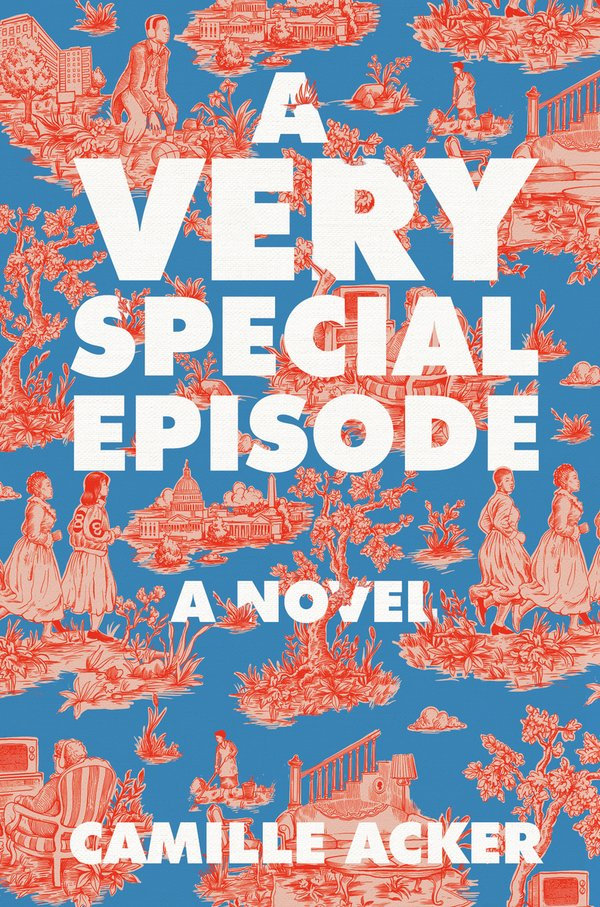
Set in Washington, DC, the story follows Nina Johnson, newly elected leader of The Tenth, a prestigious Black social organization founded by her ancestors after Emancipation. After wrestling The Tenth from her mother, Dolores, Nina pledges to bring the organization into the future: “It would definitely stay Black. Black, but better.” But when a wealthy white philanthropist offers a significant donation in exchange for Nina’s participation in a mysterious public health project at The Orchard—a former housing complex for Black families and the site of the recreation of Coolin’ Out with the Johnsons, a 1990s sitcom Nina loved—Nina is forced to choose between her generational aspirations (money and legacy) and her core values (protecting her people).
A Very Special Episode toys with the form of the sitcom, beginning with Nina participating in a minstrel show for Washington DC’s wealthiest Black citizens and concluding with a finale that includes trickery, some surprise villains, and group dancing. Between each chapter are intermezzos—little commercials—that give us the real people of The Orchard, those who have been displaced or exploited, the very individuals Nina and her friends (what is a sitcom if not “and friends”?) must endeavor to save. The book interrogates the neoliberalism brainwashing of ‘90s sitcom television and its effect on the Black American consciousness. The dialogue is delightfully witty and the narrative suspenseful, but what is truly very special is Acker’s ability to “save the guests, save ourselves, and save the race” by refusing to turn away from hard questions about inheritance, generational assurances, and what we mean by “value.”
Camille and I are friends in Philadelphia, where we spoke about ‘90s sitcoms, Black humor, and, in June Jordan’s words, what any of us is to do after what’s been done.
Interested in reading some of Camille Acker’s work? Check out her story “All the Things You’ll Never Do”
D/Annie Liontas: Your work often centers on the question of when Black people—especially Black women—can “finally stop performing and get free.” How does A Very Special Episode, in its own special way, take this on?
Camille Acker: The opening chapter of the novel is a literal performance by the main character, Nina. I envisioned that scene early on as this moment when I hope readers will laugh, cringe, and also begin to empathize with Nina. She has let the expectations of her family and her elite community craft so much of who she is in the world that she has very little that’s her own. The book becomes this journey of her uncovering not just the secrets of this nefarious organization, but also the secrets of her own history. She begins to ask questions she’s never asked before and consider who she is and who she wants to be. The process the reader goes through in that first chapter of laughter, shame, and empathy is also often the process we can go through to lead us to change. If you’re only ashamed of something, you may only bury it, but if you can laugh at it, see yourself tenderly, then you can begin to empathize, to understand, and then maybe you can actually address that thing and try to make it better.
DL: I love this idea that empathy, especially for oneself, can arise through humor. It seems that, for Nina, her self-reckoning necessarily begins with her relationship to her mother. At one point, she protests, “I’m not in a pageant contest, mother,” and her mother Delores replies, “We’re all in the running for something.” Her mother tells her she learned to survive “by the rules white people set, because they’re the ones who possess everything you want.” What is Delores desperate to give her children, and why must Nina break free of that kind of protection?
The process the reader goes through in that first chapter of laughter, shame, and empathy is also often the process we can go through to lead us to change.
CA: Ooof. I think that’s such a complicated question for Black parents especially. A good parent (maybe even the bad ones?) want better for their kids. Because of resource inequality, whiteness often correlates with “better.” As in, which school will have the newer facilities and the better teacher-to-student ratio? Which neighborhood will get police who respond with empathy instead of violence? Which homes will get higher real estate appraisals? So, middle class Black parents have often moved to suburbs or put their kids in schools which can help them achieve “better.” This was true of my own growing up, being in a planned community in Maryland called Columbia until I was eight, when we moved to DC. And then, when I was in DC, having to get what was called “special permission” to go to a high school on the other side of town that had programs and resources the high school only a few minutes away from me did not. Delores has sought out those experiences for Nina and indoctrinated Nina to seek out those experiences, in part because Delores herself didn’t have those economic privileges. The novel meets Nina at a moment when she is realizing all of that has been at a cost. I’m thinking here of the death of Nolan Wells, of that picture with him and his white friends. Proximity to whiteness, access to whiteness, can mean more money and more resources, but it does not come for free. There are real consequences to that proximity. Nina finally begins to tally that cost and starts to break away from it.
DL: Nina seems to grapple with such questions and incongruities as a child—if subconsciously—particularly when she watched Coolin’ Out with the Johnsons with her family. The sitcom at the heart of this novel was written “for a generation of Black kids sure that middle class contentment was well within reach.” What was your relationship to television growing up? As a young Black person shaped by media and television in the 1990s, how do you understand those influences and messaging now, and how it’s impacted an entire generation of Black thinkers and artists grappling with what success means?
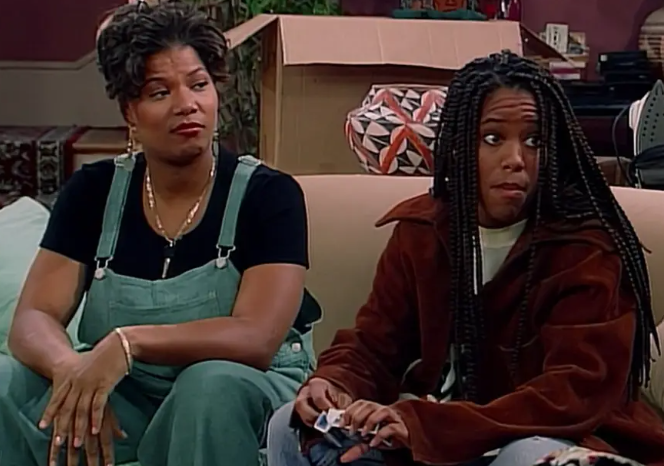
CA: I loved television when I was growing up, but a lot of how people talked about television then is how people talk about social media now. Television would rot your brain and lead you down the wrong life path that generally included drugs, sex, and violence. There was also a lot of worry about how bad your eyesight would get! In my house, the television was on a lot to watch sitcoms and the news. My family would watch the evening news while we ate dinner and then discuss what we saw. So, TV was both this influence on conceiving fictional worlds through scripted shows and the real world through the news. Black imagemaking ran the spectrum for me then, from shows like A Different World or Living Single that had the Black middle class at its center in nuanced ways to the waning years of The Cosby Show, which despite the heinousness of Bill Cosby, had an indelible effect on Black media. That show in many ways was meant to counter the images of Black people on the news, which were largely exploitative and anti-Black. As I got older, I could see that each of those kinds of shows were constructing narratives of what was right and what was wrong, of what was desirable and undesirable to be in the world. The news would largely tell me being Black was bad, and The Cosby Show said being a certain type of Black was bad. Both [of] those narratives can become scaffolding for people and disassembling them means divesting from a lot of how someone sees the world.
DL: The 1990s—a time after the civil rights movement but before Black Lives Matter—are the perfect historical context for this aspect of the book, when race is a far more muted topic in America and fodder for sitcoms. The brainwashing we see happening at The Orchard seems to parallel the brainwashing of ‘90s culture and media. Additionally, Nina and her two friends and sister, all Black women, are all cast as the same sitcom character, Tanya. What did this echoing—particularly regarding erasure—open up for you? How did it allow you to conduct expansive cultural criticism, particularly regarding racist white institutions and the inescapable trap of race and respectability politics?
Proximity to whiteness, access to whiteness, can mean more money and more resources, but it does not come for free.
CA: Even though it was a daunting (and electrifying) undertaking to think about building this world within a world, it also allowed me to play around with those larger cultural critiques on a more intimate scale. So, the media brainwashing can be encapsulated in the lines of one sitcom. The dangers of white supremacy can be seen through discrete abuses of power. Nina, her friends, and her sister can be used by the white power structure as interchangeable tools, in this case a character from a ‘90s TV show. The vastness of the universe can fill us with wonder and it can freeze us with dread. In political and cultural times like these, we know so much, but may feel we can do so little. This smaller scale, this life in miniature, allows the details to come into focus. Maybe a reader doesn’t know how to dismantle white supremacy, but they probably have an opinion about some of Nina’s choices, and that isn’t the philosophical place to end, but it is a place to begin.
DL: Can you speak to the structure for the commercial breaks and how they create space for the very people silenced by this system (and by white supremacy)?
CA: In earlier drafts of the novel, I didn’t have the commercial breaks. I’d joked with my agent at one point, why didn’t I just write a coming-of-age story for my first novel? Instead of only learning how to write a novel, I was also learning how to write a satire, learning how to deploy a high-concept plot, and learning how to manage 20-plus major and minor characters. So, those earlier rounds, I was getting the story down.
Once a later draft went to my agent and editor, I had that crucial time to be away from the work and just think about it. I knew by necessity in some ways, the dementia patients in the novel were silent and yes, silenced. I told a friend I felt like I was moving them around like furniture and she said, having visited her grandmother in an elder care facility, that was pretty accurate. Nina also doesn’t individuate them early on, doesn’t humanize them, and certainly that’s the goal of white supremacy, to other, to flatten, making it easier to do violence to people who have been disembodied. But, the novel would not do that. Then, it hit me, the chapters are “episodes” and for 1990s television that means there’s also commercial breaks. I could let those characters take over the narration from Nina. They could be given full life histories and still move the plot forward by giving some information about how they ended up at The Orchard.
Formally, I also liked this idea of interruption, of “breaking” the story, which I think again is pulling at the persistence of internal and external narratives. I like that the main plot of the novel is meant to be propulsive, to move, but then sometimes the novel makes the reader wait, makes the reader surface, and just like breaking the surface in water gives them a breath, a different thing to take in.
DL: This book, as much as it confronts complexities of racism and classism, is also a lot of fun, with memorable characters, costume changes, and a line-dance finale the reader won’t soon forget. Can you talk about writing humor, especially in dialogue?
All of the best things are both sacred and profane.
CA: As much as this novel was a hefty assignment, it was also a lot of fun to write. I could “hear” these characters really well once I got going, and they cracked me up. That comedic timing is deeply informed by my family, who are really smart, funny, and irreverent. My various crews of Black girlfriends, from college friends to my time living in New York, Chicago, and Philadelphia, who are all so quick-witted and sly with a joke. Humor is so foundational in Black culture. The ability to see the absurdity in all of these terrible systems is both a survival tactic and a common language. So, it was only natural for me as I was writing these characters to have them meet a dire situation with a bunch of jokes and an off-the-wall plan. I wanted the dialogue to be fast, even overlapping at times, to keep up the novel’s pace, but to also reveal the warmth and love between these characters even when they’re critiquing each other. What better way to reveal the intimacy between two people than to hear the jokes they make at the other’s expense? Sometimes I would amuse myself too much, and my agent even suggested I remove some of the jokes, and that was the right call. A good joke, like a good wine, needs to breathe a little.
DL: This is very much a cast of characters. Who is your favorite?
CA: I don’t know that I can pick a favorite, but if I ever found myself in a tough spot, Z would be pretty clutch. I love a foul-mouthed baddie.
Black people are deftly skilled at multiplicity, both/and is just a Tuesday, and that has enabled survival in the most dire of times, but it also makes us hilarious. Because what’s a good joke but finding the sweet spot of tragedy and joy? What’s the best food but a little bit of this and that? The best dance move, a really good kiss? All of the best things are both sacred and profane.
DL: Nina, forced to confront her own complicity and who she must be going forward, must face what feels to be an almost impossible question. You write, “Was it all minstrelsy? The show? Her in a corporate meeting? The entirety of her life? No matter how she attempted to best whiteness, earn more money, live in a nicer home, work in their organizations, chuckle at their jokes, it was always going to end up here, wasn’t it? Her fighting for her life.” As a Black woman living in America in 2026, you’re not only writing this, but you’re confronting it daily. I’m wondering—how does this book as a cultural artifact give you and your readers power in a system that disenfranchises Black voices?
I don’t think this book can give us power and I suppose that’s part of what the novel is asking. The corporate job, the home, the car, the respectable ways of being in the world cannot empower anyone. How do we even think about power? How have we constructed our lives around ideas of wielding power? I do hope though that the book can provide an opening for conversations, perhaps for thinking and ultimately rethinking. So many institutions and routinized ways of operating in this country are falling down around us. That is scary and deeply dangerous. It’s also, in my most hopeful frame of mind, an opportunity of reassessment and transformation. What haven’t we thought of, dreamed of, wondered about because we were too caught up in “before”? Or as June Jordan asked in her poem “It’s Hard to Keep a Clean Shirt Clean”: “What’s anyone of us to do about what’s done.”
DL: The last pages, as I told you, gave me a chill. What do you want readers to leave this book knowing, feeling, or asking?
CA: I want readers to be a little shook, honestly. I hope they look up from that last page with a touch of bewilderment in their eyes, transported and wild-eyed. What just happened? And then, I want one of the questions that came up for them while they were reading, about family expectations, about racial solidarity and cross-racial solidarity, about aspirations and assimilation, community building, lost loves, lost selves, I hope one of those things lingers for them.