Interviews
The Truth Really Will Set You Free in Deesha Philyaw’s Sexy Debut Novel
Scandal unravels a long buried secret, testing faith, friendship, and love in THE TRUE CONFESSIONS OF FIRST LADY FREEMAN
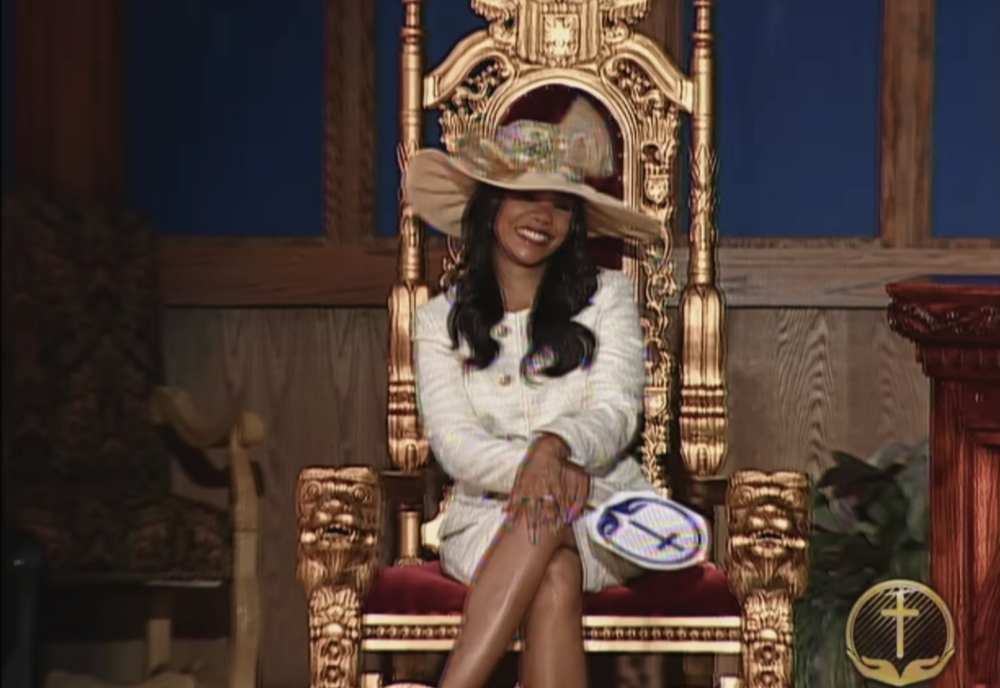
The moment I stepped into Deesha Philyaw’s apartment, she pressed four gorgeous golden bracelets into my hand. A gift. Then, we spread plates and napkins on the table and shared a meal punctuated by neck-bending laughter. Deesha went from being a mentor to a friend I look up to. She sure knows a few things about friendship. Her new novel, The True Confessions of First Lady Freeman, is proof of that. Don’t expect fluffy cuteness, though: This is a hysterically funny book. Filled with intrigue and amazing sex scenes, it’s also a page-turner.
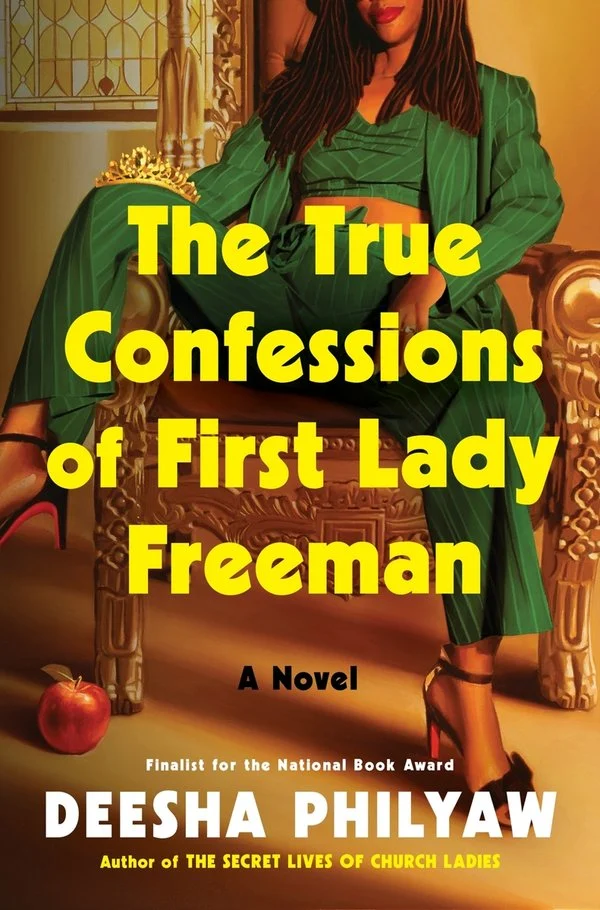
The novel follows Scharisse Freeman, who went from “rags-to-Rolex” by marrying a megachurch pastor. But below all the glow, she is rejected by the other pastor wives, known as First Ladies, and also by her childhood friend Petra. When Schar is invited to compete in the First Lady USA Pageant—her biggest dream—we think her luck will turn. Except that a secret from her past arises. A string of scandals and sub-scandals unfold, unleashing the other First Ladies’ meanness.
The more we know those women, though, the more we understand their bitchiness. Even if we don’t agree with it. The nuanced characters from Deesha’s short stories translate incredibly well to a longer form. (If you haven’t met those characters, add her collection The Secret Lives of Church Ladies to your TBR and thank me later.) Beyond the humor, the sex, and the plot twists, this novel captivated me for how it troubles the idea of truth. It reminded me that truth can hurt, or burden, or save—or it can be meaningless, depending on what people have already chosen to believe.
I discussed all that with Deesha in person, at her home in Miami. We also talked about generosity, queerness, and Bible passages that compare breasts to baby deer.
Flávia Monteiro: Let’s begin with Scharisse, the protagonist. We learn early on that she wants to belong. She also wants to compete: her dream is to win the pageant for First Lady USA. Can you talk about that friction between belonging and competing?
Deesha Philyaw: Scharisse has been proving herself for nearly 20 years—because of her background, of being from the wrong side of town, and not being accepted by the other First Ladies. The women’s rejection eroded her confidence. She wants to step back into her power. And what better way than to beat them at their own game, on all of these measures of Christian womanhood? To show them that she is not only as good as they are, but she is better.
And that came about as I was separating myself from Scharisse. Because initially she was not her own person—she was a lot like me. When I freed her up, she just started being the anti-me. I’m not competitive; never been. So I could live that vicariously through her.
FM: True, you’re a very generous person.
Culturally, in this country, women have been socialized to be competitive for things like men’s attention, or to look the best.
DP: You know, I don’t see other writers as competition. My closest people are a mutual admiration society. We’re cheering each other on. We’re sharing opportunities. That actually became a measure of friendship for me: Is this someone that can celebrate with me? And also a measure of me being a good friend: Am I checking on my friends? Am I celebrating them?
FM: Scharisse’s drive to compete, though, illustrates something I see in many female relationships. Belonging sometimes means competing. Do you see that too?
DP: Culturally, in this country, women have been socialized to be competitive for things like men’s attention, or to look the best. All those measures that misogyny and patriarchy tell us to aspire to. Very limited beauty standards, for example. Or how, to ascend in industry, you’re supposed to act like a man. You’re supposed to not have loyalties to other women. So when women buy into that, when they embody the oppressors’ behavior, they end up mistreating other women.
In this book, I wanted to be really intentional about those relationships between women. Initially, the book was very much about Schar’s marriage and whether it could withstand a scandal. But as time went on, I was less interested in that.
FM: Yes, the book is a lot about friendship.
DP: I actually think that our romantic relationships are not the most important for us as women. It’s really our women friends. But those relationships get neglected. Especially once we partner up romantically. So I wanted the friendship between Schar and Petra to be a throughline for the novel. We see Schar navigating the marriage, but also navigating that relationship with Petra and taking her for granted. And I do think that we take our women friends for granted. Our friendships can become casualties of our marriages. We think a lot about keeping our marriage vows and what we owe our partners, but we should be just as intentional, if not more, about how we show up for our friends.
FM: Let’s talk about Petra—Scharisse’s estranged childhood bestie. How did that character develop?
I had to think about the world I was building. And from the time I was young, I saw the hypocrisy of the church.
DP: Petra was there from the beginning. She was always the wise cracking, savvy, politically progressive character. At first, I liked her much better than I liked Schar. And Petra has always been queer. There was never an effort to fit this in. Her queerness is just a function of who she is. And I love that the queer relationship is the healthiest relationship in the book.
FM: Yet I love how even the antagonistic relationships in this novel have their beauty. We’re able to empathize with some of the nastiest characters. It’s a book with no full villains. Can you talk about that?
DP: My oldest daughter finished reading the book recently and she gave me the kind of review that means the world to me. She said, I like that none of the women are outright villains. They’re all operating under the same system. I wanted to show there’s a system at play, and it informs the decisions women make. In terms of how they see themselves, how they treat themselves and each other, what they tolerate in their marriages. For as long as they’ve been alive, generations of women they look to for guidance are saying, This is how you should be. There’s an expectation that women exist in service to institutions collectively and to men individually.
So, it was exciting that my daughter saw the system. She didn’t think I was giving these women a pass; she could see the nuance. Understanding the full context in which people make decisions matters.
FM: Did you go in thinking about that system?
DP: No, but as I was writing, I had to think about the world I was building. And from the time I was young, I saw the hypocrisy of the church. I grew up in places where the assistant pastor or deacon would run off with some teenage girl, and the conversation would be about how these girls are so fast, how the devil is always busy and coming for men of God. I grew up hearing that stuff. Even after I left the church—the church stays in the news, always because of some scandal, and it’s usually patriarchal and misogynistic in nature.
Schar sees the church and her husband as respectable. And they are—they have a great reputation. So it’s Petra, her friend, who says, Are you gonna challenge that system or are you gonna just be complicit with your silence?
FM: Yes, the silence. So many characters here are operating under guilt and shame. How are those dynamics important in the novel?
It’s timeless and therefore heartbreaking, that we are still talking about how women are viewed and how women are treated by other women.
DP: The church is obsessed with sex. Most of the “don’t do this,” and “don’t do that,” and the punishments, and the scandals are around sex. That’s also why we have so much sexual dysfunction.
There’s an organization called the Incarnation Institute for Sex and Faith. They train clergy people to have healthier interpretations of the Bible around sex. And train therapists about Christianity, so that they don’t ask their Christian clients to leave their faith at the door. The Institute distinguishes between faith and beliefs: you can address toxic and dysfunctional and misogynistic beliefs about sex without having to lose your faith. I got to do a training with them. And one of the things they talk about is the unholy Trinity: fear, shame, and guilt. When they introduced that, I could see it everywhere. The fear of hell, the fear of bringing shame upon yourself or your family, feeling guilty for things that are naturally part of being human like sexual desire or masturbation. So, it’s not possible for me to write a book about the Black Church without addressing that. I knew those things were going to show up.
FM: A few times in the book, you zoom out on a Bible quote to show how, in context, it changes meaning. Can you describe this device, and tell us how you came to it?
DP: Yes, so for example, when Schar’s husband is saying to their daughter, Honor your father and mother, the daughter claps back with the next verse: Ephesians 6:4 says, ‘Parents, do not exasperate your children.’
I think reading for context is such a good rule of thumb for the Bible. Sometimes what comes before or after a Bible quote can completely reveal how it’s been misrepresented or only partially represented. I remember those verses that were used to scare us, to guilt us, to shame us. Then when I read a different interpretation of them, or read the context around them, or read them in light of other scriptures, it was a whole different message. Writing the novel, I didn’t always know the exact quote, so I did a lot of research to make sure I got the language right. And then inevitably a verse would lead me to something else. It was a combination of research and of mining my own memories.
That became part of the satirical nature of the book. Especially Schar—I made her like a savant. She has this freakishly good memory, so she’s memorized all these verses of the Bible. She’s supposed to be so not like the other women, yet she could recite circles around them. And she’s besting churchfolk in their argument.
FM: That’s the case with Proverbs 31, right? It’s supposedly about a dedicated and industrious wife, but everyone skips the opening verses, in which a woman slut-shames another woman. And you made that a strong theme for Schar. Tell me about that.
DP: That’s not something I knew going into the book. I knew generally what it said, and that Schar would want to be the ultimate Proverbs 31 woman. So I read the whole thing to get context. And once I saw the verses at the beginning, there’s the slut-shaming. I thought, This is interesting. It opened up the story even broader for me, because I wanted Schar to talk about that. To bring something more to the conversation about Proverbs 31 than just telling women to be workhorses. I wanted to show how it ties to Schar’s story, all these centuries later. To all of us, all these centuries later. Because we’ve been doing this forever, the slut-shaming. It’s timeless and therefore heartbreaking, that we are still talking about how women are viewed and how women are treated by other women.
FM: So let’s get slutty. I appreciate how the book covers a wide range of sex: angry sex, sad sex, funny sex.
DP: Balcony sex.
FM: Balcony sex, right! Sex can also free or trap your characters. How did you navigate that double-edged sword?
It’s important because these words are being used to condemn people, to kill people; they have justified things like the Inquisition and slavery.
DP: I wanted to present sex in all of those complexities. For instance, how the church regards rape. What those of us in the culture, whether in or outside the church, consider to be rape. And then also sex as pleasure, because we’re never taught that in church. We hear those passages, like in song of Solomon, where her breasts are like does . . . The teaching around sex is not pleasure forward. It’s based in fear, shame, and guilt. So I wanted to have all of those things coexisting in the world of this book because they should coexist in each of us. The idea that we, as women, as people, can experience sexual harm. We can also perpetuate sexual harm. And we can also enjoy sex.
FM: You said your daughter read the book. How do you feel about her reading all the sex scenes her mother wrote?
DP: I mean, she’s 27. My other daughter is 22. At their current ages, I didn’t hesitate to share the book with them. And I’m not ashamed of having written it. I just don’t want to make them uncomfortable. But they also read Church Ladies by choice. So, once that happened, I didn’t hesitate to give them True Confessions. I mean, after they read “Eula,” the opening short story, there was nothing here that would shock them [laughs].
FM: You mentioned rape just now. No spoilers, but there’s a character who talks about rape in the book. Was it challenging to write about that?
DP: I had to get it right, without presenting sexual harm as anything other than what it is. I’m very thankful for my editor, Rakia Clark, for pressing me on some hard conversations around language. This character insists on using the word rape. But other characters in the book don’t exactly see it that way. They’re more comfortable with expressions like he was messing with her or he was wrong for that but—and it’s that but. It’s the church’s but. But he didn’t have to hold her down, he didn’t have to force himself. None of them deny it. But they want to somehow soften it. And we do that in the culture, too. Sadly, there are going to be people in the world, including readers, who object to the word rape. So, I needed to make it crystal clear why the character was going hard this way.
FM: Well, naming the hard things is definitely a signature Deesha move. Do you think truth can hide behind language?
DP: Oh my gosh. So, I think about the scene where Schar and her husband are battling with Bible quotes. And that’s how I think the Bible should be read, leaving room for these seeming contradictions. Which shows there are no simple answers. If we take any of the Bible verses out, in isolation, we can wield them like weapons to do harm, to do anything we want with them. Because truth is not just the literal words, but intentions, context, what came before, what came after. So when people say things like, Because the Bible says, we should ask what does it say exactly, and whose version, and what was the context and on and on. It’s important because these words are being used to condemn people, to kill people; they have justified things like the Inquisition and slavery. Words and language are not innocuous. They’re never neutral.
We’re in an era now where we’re developing more and more language. You’ll hear Gen X folks like myself saying, Gosh, we didn’t have the language for that. The Millennials and Gen Z have the language to decide that you are asexual or bisexual. And yet—and this is the bitch of it all—now we live in a culture that says truth doesn’t matter. So now we’ve got the language, we’ve got the words, we’ve got the meaning. But then we can have alternate facts, or we can have something like AI, where, yes, that is an image I am looking at, but it is not the truth. And it just makes me want to weep.
FM: There’s a sentence in the book: You can’t beat a sexy lie with an ugly truth. It sounds super current. Has the idea of truth changed over the 20 years you spent writing this novel?
DP: The 2006-me was interested in the way truth can be incredibly inconvenient, and that’s why people lie to protect. This is an old tale for the church. But Schar’s story happens pre-Trump: the book is set in 2010, 2011.
The biggest thing over the last 20 years is our government has become less and less truthful, less and less accountable. They’ve been lying to us all along, but it’s definitely more blatant now. Like, we can’t say that genocide is not genocide. Good faith starts with telling the truth about what you did.
I felt like the story I was writing was the reckoning I’d love to see happen in lots of churches. The reckoning is to tell the truth. But now, from the 30,000 foot view, it’s a reckoning I’d like to see happen in our country, in our world.