Steven Reigns and Sara Youngblood Gregory discuss generational memory, the queer dance floor, and why certain stories must be told
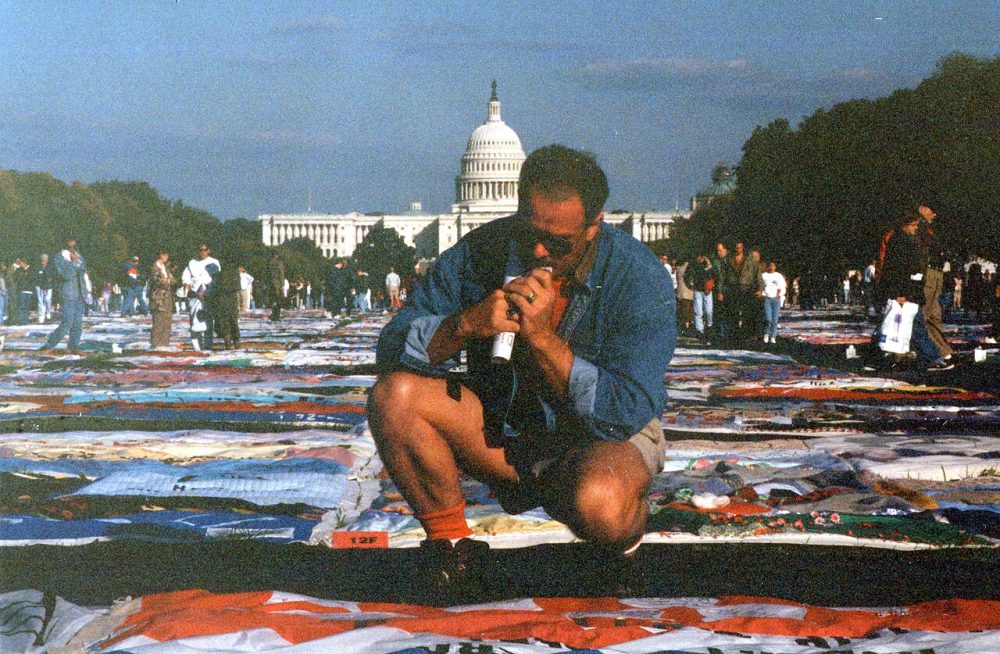
The AIDS Memorial Quilt Display on the National Mall in Washington DC Elvert Barnes, CC BY-SA 2.0, via Wikimedia Commons
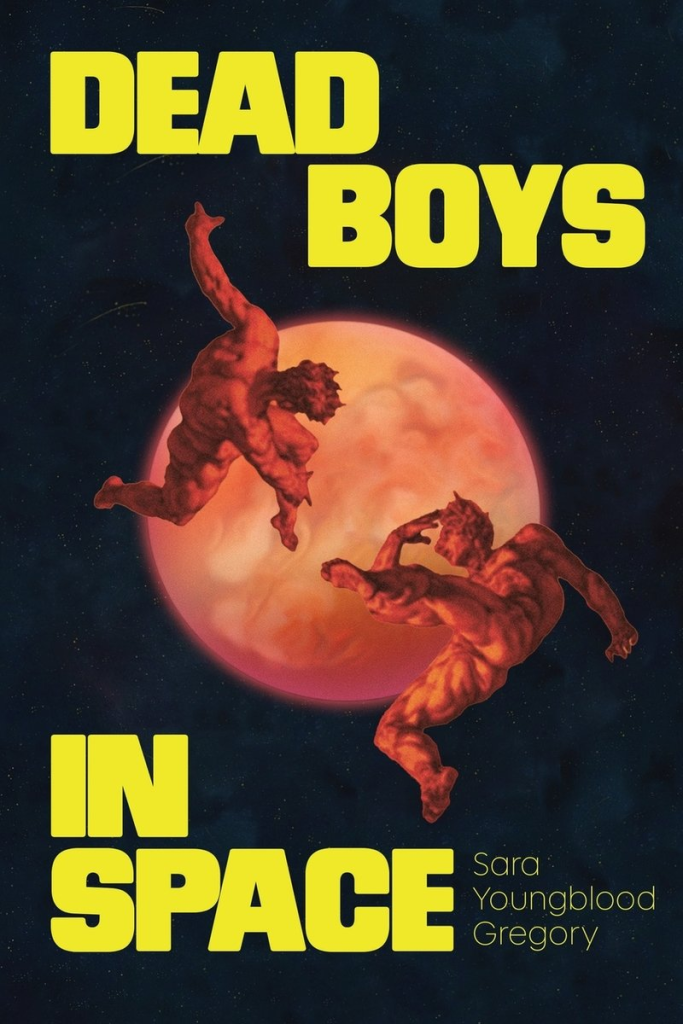
Steven Reigns and I had been emailing for months. As I prepared for the release of my debut poetry collection, writers and editors from multiple regions of the queer writing universe strongly encouraged me to reach out to Steven. This was partially due to the similarities in our work; Steven and I are both writing around queerness and AIDS. My collection DEAD BOYS IN SPACE uses speculation, sci-fi and space travel to think about the AIDS crisis, generational grief, memory, sex and sickness.
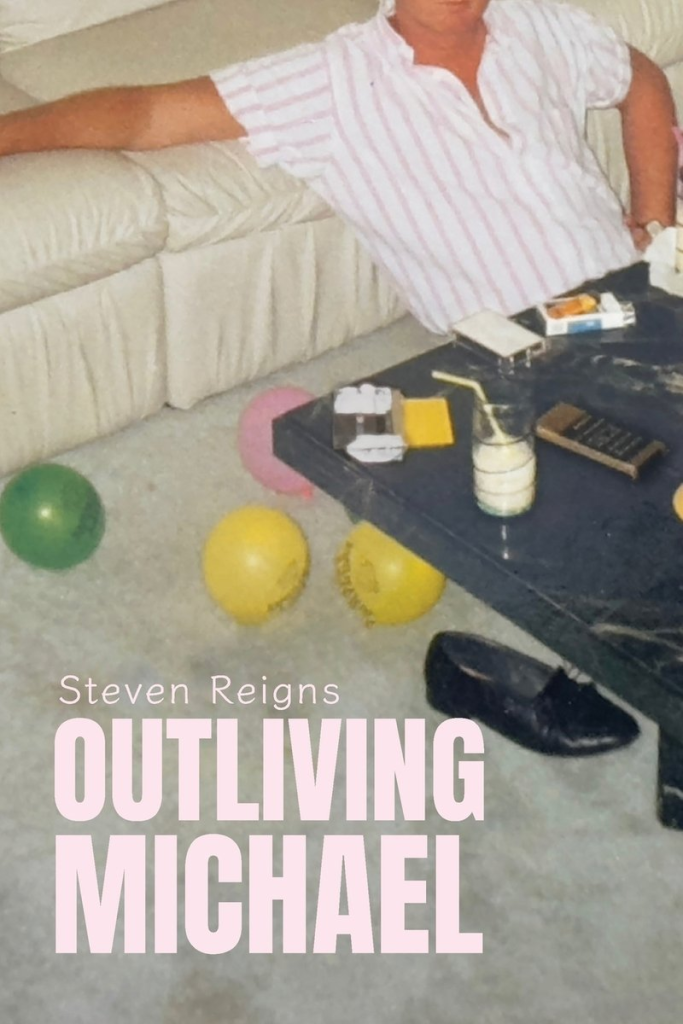
Meanwhile, Steven’s 2025 collection Outliving Michael is both memoir and memorial, and is written towards Steven’s close friend Michael Church, who died of AIDS in 2000. Now, of course, I’ve come to realize that people pushed me towards Steven because he is generous and warm, as well as talented and prolific.
So we emailed. I asked for advice and, more daringly, a very last-minute blurb. The conversation kept rolling and we dreamed up an interview to formally bring our words together. But I never expected to meet Steven in person, at least not any time soon. He was on the West Coast, where I essentially never venture, and I was in New York City. So you can imagine our mutual surprise and delight when we spotted each other at the Publishing Triangle Awards this month. Since 1989, the Publishing Triangle has championed and connected queer writers and publishers.
Afterward—and once again back on our prospective coast lines—Steven and I discussed how the AIDS crisis of the 80s and 90s has shaped our work and lives, generational memory and the beauty of the dance floor.
Sara Youngblood Gregory: I was so moved by Outliving Michael and there are so many moments of emotional and thematic overlap between our two works. Tell me how Outliving Michael came about.
Steven Reigns: The poems in Outliving Michael, like most of my work, came out of my trying to make sense of things. I realized I had lived longer than Michael, something I, for some reason, hadn’t thought possible. The poems were my reminiscing on his friendship and its lasting impact on my life. This book feels like a personal companion to my previous collection A Quilt for David. I spent over a decade researching and writing about a dentist who was accused of transmitting HIV to his patients. I didn’t know David and so, for the next book, I focused on and honored a best friend, Michael.
I actually have a similar question for you because I thought of it when I first had your book in my hands. DEAD BOYS IN SPACE is more than a meditation, the GRID series of poems is a perfect example. I imagine some of your poem’s creations were quite intense.
SYG: Oh, I’m glad the GRID poems stuck out to you. Those are a series of three poems in the collection, and they all follow the same format—literally a four by five grid on the page—and each column works to define or capture or snapshot the feeling of a specific word. Words like “bird,” or “mother,” or “apology.” You can read the poem straight down, or straight across, or I guess even go tic-tac-toe style.
I was writing in this confined form and all along that containment was already built into the history and language of AIDS and homosexuality.
– Sara Youngblood Gregory
Originally these three poems were pretty pastiche. I was playing around with the form of one of Franny Choi’s poems—I think it’s from Soft Science. I wrote some poems in this grid format, but they weren’t fully formed. Then a few years later, I was at the point where my heart was set on writing a manuscript fully dedicated to thinking about the AIDS crisis. I was reading a lot of different books about AIDS and I learned an early name for the virus: Gay-Related Immune Deficiency. GRID. There it was again. It was like lightning struck. It felt eerie, almost. Here I was writing in these small boxes and columns—in this confined form on the page—and all along that same containment was already and very explicitly built into the history and language of AIDS and homosexuality.
Now, as I ask you questions, I am thinking of your poem about working on a different interview for a different magazine. Michael had advice for you: Respond as if your soulmate will read it. Were you writing directly to Michael with your poems? Was he your soulmate?
SR: Not at all. In every reading, I stress I never had sex with Michael. We were friends. I’m not offended by the suggestion but what gets lost is the concept of nonsexual connection and friendship. Gay men, particularly in straight people’s imaginations, are wildly sexualized. It’s also an important point to stress because we don’t have as much art about friendship. I was probably 22 when Michael gave me that advice. At the time, I was overly romantic and believed in soulmates, in some cosmic connection with one other person.
SYG: Yeah that’s so true—the sexualization. I didn’t even think about it, though of course as a lesbian that sexualization certainly, and unfortunately, informs my own interactions with straight people and heterosexuality.
SR: Exactly! I think this imaginative sexualizing by straight people is why there’s so much discomfort with queers around children. Drag queens reading to children is scrutinized for that exact reason. The data far from suggests that queers are the issue. If facts were prioritized over fantasy, gun violence in schools would be the biggest conversation point, not drag queens with books.
SYG: It does feel particularly sharp that it’s drag queen with books that are under such fire. Plus all the queer book bans. They hate when school kids know us, and read about our lives and relationships on our own terms, which is what Outliving Michael does so well . . . It felt really clear to me when reading how grounded and how deep-running your friendship was, and also that it was firmly platonic, firmly a friendship. I do think sometimes about friends I’ve had and how strongly they’ve impacted me and how fated it’s felt. I can get a little bit woo-woo though. [Laughs]
SR: I’m not opposed to woo-woo. I have a poem in the book about me during an insufferable New Age phase and how Michael teased me about my seriousness. Did you have a reader or certain audience in mind?
SYG: Not at all. In my day-to-day as a freelance writer and journalist, I’m constantly thinking about the reader. What do they need to know? Do they have enough context? What’s the takeaway? But when I write creatively, the exact opposite is true—I don’t want to write for anyone, or with anyone in mind. I actually have to banish the people in my mind and the possibility that the work might one day be read by others. Otherwise, I feel distracted or self-conscious. Like someone is reading over my shoulder.
SR: Keeping one’s vision the primary focus in writing creates singular work. Writing with a committee in your head creates too much caution and fear of experimentation in disclosure or structure. What I want to do is create the best work I can. I’m asking readers for their time and attention. I’m not going to create fluff or phone anything in. I want to honor the time they’re giving the work.
SYG: In DEAD BOYS IN SPACE and Outliving Michael, nightlife, dancing, parties, sex and desire are strong throughlines. You mention a few times the feeling that the party would never end, the fear that the party was already ending, knowing and not knowing that AIDS “was already in the room.” Tell me about what it felt like to be young and gay during the AIDS crisis.
SR: I didn’t know gayness without the threat of death or sex without the threat of seroconversion. I was so young and gay and sexually active that I didn’t know any other way. I did know, even back then, how loaded and charged every moment was for me and my friends. It was only in 2010 when reading Alice Walker’s poetry book Hard Times Require Furious Dancing, that I reflected on all that time we spent on dancefloors and in beds. It was our release and shared expression of joy.
The times I’m referencing were before you were born and yet it has its own draw to you because you have a beautiful poem “The center of the universe is a small-town gay bar” where dancing and finding rhythm are part of it.
Gay men, particularly in straight people’s imaginations, are wildly sexualized.
– Steven Reigns
SYG: It is interesting. The durability of dance, the dance floor, how strongly so many people associate queerness with nightlife and music. There’s also a ton of dancing and music in Pamela Sneed’s Funeral Divaand Natalie Adler’s novel Waiting on a Friend.
In my poem, the speaker’s desire is focused on a single person—a butch lesbian to her femme—but that desire also goes in every other direction too, tossed around and toward all the other queer people around her. Not a sexual desire, but this broader erotic gesture towards these different generations of gay men, trans people, lesbians, homosexuals . . . For me, the dance floor is a place of reunification and memory and remembering. It is a chance to look around and wonder who should still be here, but isn’t, and who might still be here moving and sweating and laughing, just out of sight.
SR: Community is how we’ve survived. For many of us, the gay bar is the first place we encounter queer community and witness unabashed queer joy. The sacredness of queer clubs is hard to describe. It’s why there’s a mourning of clubs that close and another reason why the Pulse Massacre hit so deeply.
SYG: I was born in the late 90s so my coming of age as a lesbian was really in the late 2010s and early 2020s . . . You remember and have to live with those memories of the AIDS crisis, which I imagine is a blessing and a great grief. I don’t remember and have to live without those memories, which is a blessing and a great loss.
I want to ask you about memory—specifically generational memory. When I was writing DEAD BOYS IN SPACE a lot of my grief and frustration stemmed from my complete lack of memory. The inability to recall, to know, to learn and feel connected to the history of my people and the history of my family. What’s been lost and found between the generations “after” and “during” the AIDS crisis?
SR: I had a fake ID at age 16 and was befriending and having sex with men older than me. I had such an early exposure to it. I don’t see myself as active or engaged in the height of the crisis. Queer women played a big role during the AIDS crisis. This is sometimes under-represented by the media, the connections between LGBT people.
SYG: I think about this, too. Sometimes, I felt a little strange or self-conscious being a lesbian writing about AIDS when there’s such a strong association with gay men. But all women—trans, queer, cis, heterosexual—are bound up in the history and active, ongoing reality of HIV/AIDS . . . The main narrative I’ve heard, or been exposed to, is that lesbians were caregivers. For example, the San Diego Blood Sisters who organized blood drives to support people with AIDS. And that’s an incredibly powerful and important history to uplift. That solidarity. But when the story starts and ends there, it falls flat. There’s this mother-izing that happens.
Then and now there are active, reciprocal relationships with gay men full of solidarity and love and strife. Keiko Lane’s memoir Blood Loss is an example, so is Mattilda Bernstein Sycamore’s novel Terry Dactyl. . . I’ve been reading the anthology Sister and Brother all about gay men and gay women and their relationships. It was published in the 90s and I read an essay from Jewelle Gomez there. She mentions speaking at the Gay Pride rally in Central Park when the New York section of the AIDS quilt was dedicated and writes: “I think it is fitting that a womanly art—quilting— has come to embody a memorial instigated largely by gay men. When we try to discern what ‘gay’ culture is, it is often found in the combination of things that highlight an irony or a difficult truth.” There it is. The connection, the layers, how interwoven—quite literally—we are with one another.
SR: I love these books you’re mentioning. Sister and Brother has this incredible story “The Night Danny Was Raped” by Lucy Jane Bledsoe. It is a perfect literary example of storytelling, insight, compassion, and coming of age. I feel for Lucy because I mention that 1994 story to her every time I see her at conferences. That anthology is the only place it’s been published and that’s reason enough to get it.
What was fueling your pursuit in this collection?
SYG: A main pursuit of my collection was imagining and creating a world in which gay men did not die of AIDS, and instead were able to live in new worlds. I used sci-fi and speculation and space travel to do that. I didn’t fully realize what I was getting at until Bryan Borland, the editor of Assaracus: A Journal of Gay and Queer Poetry, put it to me simply: I wanted to re-arrange the universe around this generational absence. Around queer loss and joy and sex and anger.
So I was incredibly moved when I read the following from Outliving Michael:
Michael had feet in both worlds, yet now
he’s not in any world except my memories
and this writing—that is neither
Holleran not Sheindlin—but the compulsion
to write about him, honor him, memorialize him
is the only way I can give back an ounce
of what he gave to me.
Writing with a committee in your head creates too much caution and fear of experimentation.
– Steven Reigns
SR: Thank you. Grief causes such a strong nostalgia. We want the world we had with them to last forever. In some ways, I’ve captured Michael and our friendship. These ways I find satisfaction in, and I’m pleased more people get to know Michael because of my book. In other ways, no one can fully capture a person or relationship. There will always be a gap, some slippage. Since Michael’s impact was so great, attached to my appreciation for him is also a sense of debt. What I’m noticing in the excerpt you pulled of my poem, is the form.
I’m curious about the topography of your poems and the format. “BLOODSHIFT,” the GRID poems, and “If You Ask Me Why I Read Science Fiction” come to mind. This collection is experimental in many ways.
SYG: I love to play with format and form. I’m one of those people that never imagines their work will be read out loud, ever. [Laughs] That’s how I often end up with dramatic and strange poems like “BLOODSHIFT,” which uses long lines across the page and between words to force a feeling of submersion and depth and of going deeper and deeper underwater. Then with “If you ask me why I read science fiction” the idea was something windy and loose on the page, your eyes sort of move all over the page as you read, back and forth like a swing.
GRID was, as I mentioned, about containment. Later on in the collection, I sort of put this image on its head and draw parallels between cages, grids, and the look and beauty of quilt squares. Which also brings us back to the AIDS quilt.
SR: While you’re talking about that, can you say something about the structure of the book itself? It’s divided into four sections. How did you arrive at this format?
SYG: Structuring and ordering the poems was the hardest part of the manuscript. My editor, KMA from YesYes Books, and I went back and forth a lot. So there was a lot of re-ordering. But what always felt clear to me was the middle section—also called DEAD BOYS IN SPACE—as the creative and speculative center. That section is one long play that can be performed with a few people. It’s one of the only times I actively thought about the work being real aloud. It’s also where the sci-fi is most present, and the world building is the most concrete and specific.
I always meant for world building to be taken very seriously, at face value. It’s not metaphor. To me, the speaker really does live in a very real universe where her brother didn’t die of AIDS, but escaped the Earth, escaped forced displacement to the moon colony, and very much outwitted the United States government. Her grief is no less real because her brother isn’t dead. It isn’t even more complex. It’s just a different grief for a different, slightly more righteous world.
Take a break from the news
We publish your favorite authors—even the ones you haven't read yet. Get new fiction, essays, and poetry delivered to your inbox.
YOUR INBOX IS LIT
Enjoy absorbing fiction from Recommended Reading on Mondays, strange, diverting work from The Commuter on Wednesdays, and a roundup of our best work of the week on Fridays. Personalize your subscription preferences here.
Sign up for our newsletter to get submission announcements and stay on top of our best work.
YOUR INBOX IS LIT
Enjoy absorbing fiction from Recommended Reading on Mondays, strange, diverting work from The Commuter on Wednesdays, and a roundup of our best work of the week on Fridays. Personalize your subscription preferences here.
Thank You!
Manage Consent
To provide the best experiences, we use technologies like cookies to store and/or access device information. Consenting to these technologies will allow us to process data such as browsing behavior or unique IDs on this site. Not consenting or withdrawing consent, may adversely affect certain features and functions.
Functional
Always active
The technical storage or access is strictly necessary for the legitimate purpose of enabling the use of a specific service explicitly requested by the subscriber or user, or for the sole purpose of carrying out the transmission of a communication over an electronic communications network.
Preferences
The technical storage or access is necessary for the legitimate purpose of storing preferences that are not requested by the subscriber or user.
Statistics
The technical storage or access that is used exclusively for statistical purposes.The technical storage or access that is used exclusively for anonymous statistical purposes. Without a subpoena, voluntary compliance on the part of your Internet Service Provider, or additional records from a third party, information stored or retrieved for this purpose alone cannot usually be used to identify you.
Marketing
The technical storage or access is required to create user profiles to send advertising, or to track the user on a website or across several websites for similar marketing purposes.