Interviews
FIRST SUMMER Reminds Us That Teenage Relationships Never Fade Away
Ekin Oklap discusses the intensity of adolescence, antidotes to loneliness, and how early experiences shape our lives
Ekin Oklap is perhaps best known for her award-nominated translations, particularly of Nobel laureate Orhan Pamuk. But her debut novel, First Summer, showcases her own remarkable talent as a writer. It follows a teenage girl as she forms an intense bond with the enigmatic new girl who moves in across the street. During one hazy, languid summer, they spend their time together reading, lying in the yard, and trusting each other with their inner selves. Interspersed with brief asides detailing the adventures of a sci‑fi heroine central to their childhoods, the novel deftly captures a fragile moment in youth when fantasy and reality overlap, and how a first love can leave an enduring mark. As the narrator reflects toward the end of the novel, it is “a story of how I discovered friendship and love for the first time, then lost them both again.”
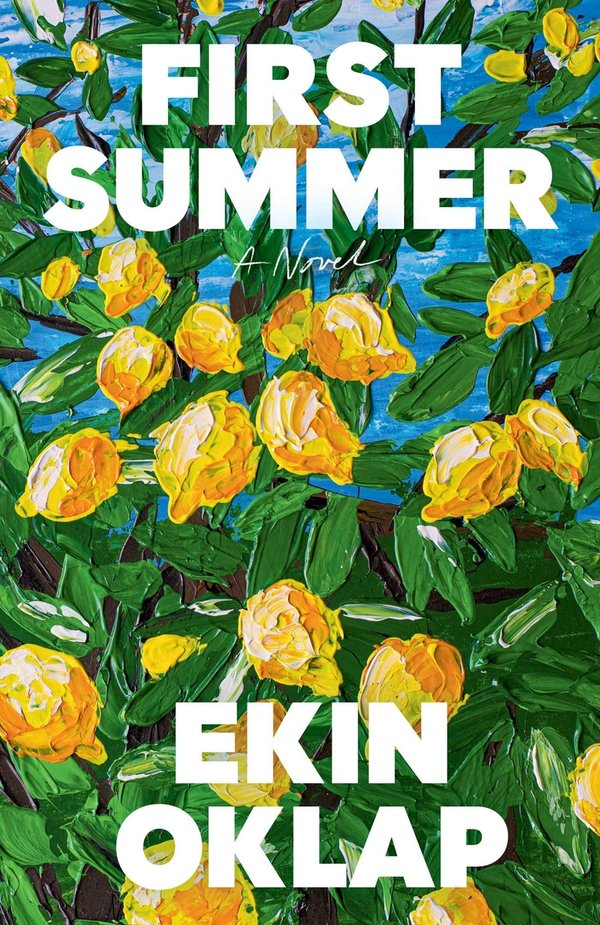
It’s a tale of a near-universal youthful experience: the way we trust others with the fullness of ourselves, fall deeply, experience heartbreak, and then, if we’re lucky, somehow find the courage to do it again. In detailing a fleeting relationship over the course of one summer with deep tenderness and sharp observations, Oklap reminds us that these moments will invariably shape us long after they’ve passed, becoming part of the story we tell about ourselves.
Oklap and I spoke about loneliness and the desire to be understood, achieving musicality in writing, and emotional frameworks developed in adolescence.
Marisa Wright: Early on in the book, when the narrator meets Clara, she realizes that she’s met a “mirror” of herself. As she describes it: “It is a rare and precious feeling to be able to share something with another person, something small and trivial or quite important, and to be held in their mind and understood in their heart, and feel not quite so alone, not quite so bewildered anymore.”
This novel captures the way a first love can make you feel so close as to be one with another person, like the first time someone really sees and understands you. At the same time, we also get the sense that some of this closeness is born out of an intense loneliness and isolation they each feel. What is the relationship between loneliness and the central relationship in the novel?
Ekin Oklap: I’m glad that sentence resonated with you. Loneliness can arise for many different reasons, but I think a significant part of loneliness is the feeling of not being understood. It’s a feeling like no one understands the way you think, your sense of humor, your fears, your hopes, or your dreams. To find someone who understands you can be an antidote to loneliness.
I think the kernel of deep friendship is being understood.
There’s a moment where the narrator describes trying to join a conversation at school. She sees other people talking and thinks, I’ll tell a story from my own life and become part of this conversation. But the response she gets is laughter. It may not even be malicious, but to her it feels like she’s shared something vulnerable, and instead of hearing, I understand that, she hears, That’s ridiculous. By contrast, when she finds this mirror-person in Clara, she can share those things and get the response she hopes for. That’s definitely at the heart of their connection.
To put it very plainly, it’s friendship. More than [with] romantic love, I think the kernel of deep friendship is being understood. Obviously, every friendship is different, but if I could be bold enough to advance a theory of friendship, I’d say that’s the core of it.
MW: The novel captures the intensity and self-consciousness of adolescence so vividly. How did you access the way teenage interiority feels both immediate and emotionally complex without imposing an adult perspective on it?
EO: The novel is written from memory. The narrator is an adult woman looking back on this summer, so inevitably, there is an adult perspective shaping the story. That perspective can impose meaning, identify patterns, and understand things that the teenager in the moment couldn’t necessarily see.
I think you’re asking how we reconnect with that mode of being when we’re no longer teenagers. I certainly wouldn’t want to be a teenager again.
MW: Ha, neither would I.
EO: Exactly. But adolescence is so intense that I don’t think it ever really leaves you. Just as developmental psychologists talk about early childhood shaping the rest of your life, I imagine adolescence does too.
The experience stays with you. The way life felt then colors the way you experience life as an adult. Hopefully, as adults, we acquire the ability to recognize why we’re reacting to something. We might think, This bothers me because it reminds me of something from when I was fifteen. But we’re still experiencing the feeling.
So while adolescence is far away chronologically, it’s also something you’re carrying with you all the time. It wasn’t easy to access while writing, but it was absolutely possible. I only had to reach back a little.
MW: Your sentences strike me as achieving a rare balance: They’re richly textured yet spare and concise. I imagine your experience as both a translator and a literary agent has something to do with that precision. How has translation influenced your own writing style and editorial process? Has it changed the way you think about language, rhythm, or economy on the page?
EO: What translation has definitely given me is a habit of thinking carefully about every single word. Though I imagine all authors do that. Translators simply get a great deal of practice.
Adolescence is so intense that I don’t think it ever really leaves you.
One thing translation has made me think about constantly is rhythm. I’ll give you a simple example. At one point, there was a sentence that ended with something like “vanished instantly.” Technically, that’s redundant. If something vanishes, it’s already instantaneous. There was a suggestion to remove “instantly.” But when I read the sentence aloud, I felt it needed one more word. The rhythm required it.
So a lot of the time I’m asking: Does this sound right? Does it sound like English? Does it read well? Do I like the way it sounds in my ear? Those are questions translators ask all the time, and they definitely carry into my own writing.
MW: It’s almost musicality. You know it when you hear it.
EO: Exactly. My own taste as a reader is for prose that feels like it’s carrying me along rather than requiring me to carry it. I want the writing to feel like an open gate that I can walk through.
MW: I’d love to talk about the science-fiction-like passages woven throughout the novel. It seemed to me that they function as a way of processing emotions that the characters can’t fully articulate. At the same time, it’s somewhat ambiguous where those stories are coming from. How do those interludes operate within the novel?
MW: I’m very glad you asked about those sections because I really enjoyed writing them. They’re definitely intended to mirror and parallel what is happening in the main narrative. That’s not accidental.
As for where they come from—who is imagining them, whether they’re written down, whether they exist only in someone’s mind—that ambiguity was deliberate. If you asked me for a definitive answer, I’m not sure I’d give one. It could be one of the characters. It could be both. It could be no one. It could simply be the author. My hope was that readers would arrive at different conclusions.
What I would say is that these sections are deeply connected to the themes of the novel. This may be the most autobiographical element of the book. Not because the novel itself is autobiographical, but because I’ve always used stories that way. As a child and teenager, I would reimagine stories I loved and construct elaborate alternative narratives in my head.
I remember accidentally watching a scary movie as a teenager and then being unable to sleep for a week. To comfort myself, I would invent stories in my head every night, building them scene by scene until I fell asleep. That idea—that stories can provide immediate comfort and a way of reshaping reality—feels very personal to me.
MW: That’s exactly how I read those sections. Not as an escape from reality, but as a tool for processing it.
EO: Absolutely. And going back to our earlier discussion about loneliness, stories can also offer a way out of loneliness. They can show that someone else—even a fictional someone—is experiencing what you’re experiencing.
Those characters may not be real people, but they’re real to you. They remind you that these feelings are not uniquely yours. Other people have felt them before and will feel them again. That’s part of what fiction can do.
MW: Summer feels almost like a character in the book; the novel opens with a description of the summer heat that makes it feel tangible. Obviously, summer is practical for coming-of-age stories because school is out of session, but summer also evokes desire and the possibility of transformation. What is it about summer that is so powerful when telling these kinds of stories?
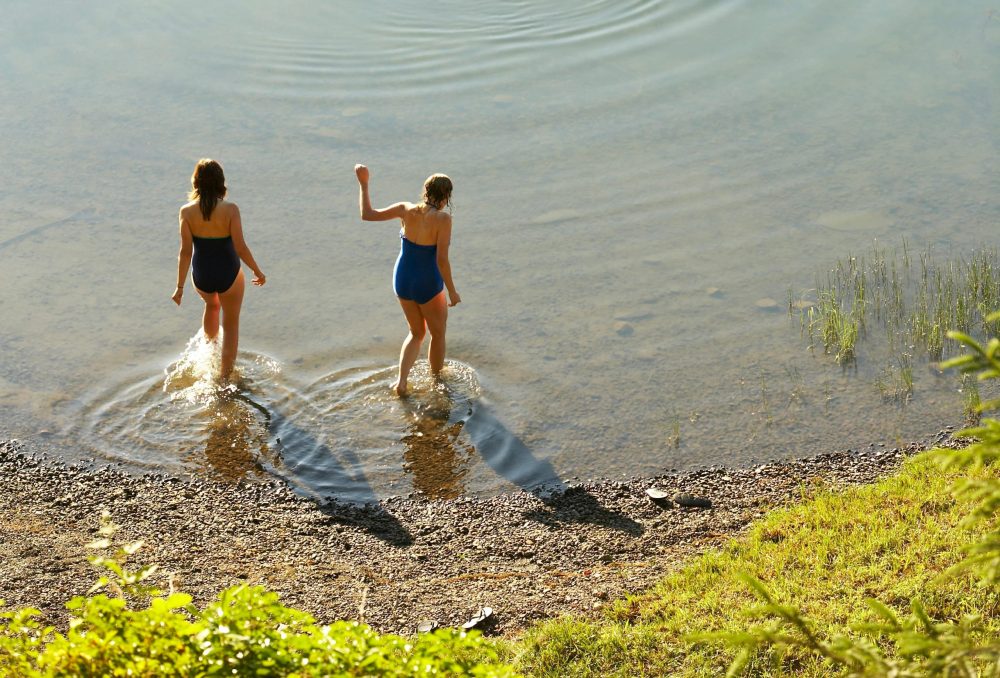
EO: That’s interesting. One obvious answer is practical, as you suggest. The other trope I embraced is the body of water. There’s a lake, and people swim in it in the novel.
When you’re swimming all summer, you’re not wearing your normal clothes. You’re in a liminal space between childhood and adulthood. There’s a transformation taking place. Many coming-of-age stories feature rivers, ponds, lakes, or oceans because water becomes a kind of space between one phase of life and another.
There’s also the sensory contrast: the oppressive heat, the cool water, the endless hours, the ice cream. Those physical sensations create opportunities to explore emotional sensations, too. My own summers were never this exciting, so perhaps there is something dreamlike about it as well.
MW: I also wanted to ask about Clara’s grandmother, Old Mrs. Dickey. She quietly accepts and perhaps even encourages the relationship between the narrator and Clara. We also learn that, as an older woman living independently, she is viewed as “not normal” in the community. There’s something important about the possibility she represents. Could you talk about her role and how you conceived of her?
EO: The idea partly comes from a childhood memory. My aunt used to run a restaurant on the Turkish Aegean coast, and nearby, there was an old woman who people claimed would chase children away with sticks or throw rocks at them. I never actually saw it happen, but she had become this legendary, scary old woman. So I started thinking: What if the scary old woman wasn’t scary at all?
Old Mrs. Dickey plays along with people’s expectations of her but never fully becomes the figure they’re imagining. The other thing I noticed, only much later, is that she’s a loving grandmother figure. I’ve been fortunate enough to have two grandmothers like that in my life. One passed away many years ago, and the other passed away very recently, just before the book came out [in Europe].
I want the writing to feel like an open gate that I can walk through.
Looking back, I can clearly see that those relationships were in my mind while I was writing. The idea of a grandmother who offers unconditional love, a home, and support without interference—that definitely came from my own life.
MW: One final question. Without giving too much away, I’d like to talk about the ending, which involves loss and, in some ways, grief. The narrator says that the difficult period that follows “has always been the benchmark against which I have measured periods of prolonged sorrow in my life.” That idea struck me because first love and first loss can remain with us forever. Do you think there is something uniquely enduring about the losses we experience when we’re young?
EO: It’s an interesting question. From a detached perspective, adolescence feels like a time when you have everything to lose. But in reality, it’s almost the opposite. You’re at the very beginning of your life. You haven’t yet built much. You’re still a child.
When something devastating happens, it feels like the end of the world. But it isn’t the end of the world. You still have your whole life ahead of you. There’s a mismatch between how it feels and what it is.
The narrator goes through what I would describe as a depressive period. Everything feels enormous. And yet life continues. School starts again. You go to math class. There’s something absurd about that contrast.
So I honestly don’t know whether losses experienced in youth are more impactful than losses experienced later in life. I think it depends on the loss. What I can say is that first experiences of profound sadness or depression are memorable because they can come as such a shock. You remember discovering that kind of darkness for the first time.
MW: That actually feels like a hopeful perspective. You may feel overwhelming loss in the moment, but there is still so much of life ahead of you.
EO: Exactly.