Electric Literature is pleased to reveal the cover for the essay collection We’re Alone by Edwidge Danticat, which will be published by Graywolf Press on Sep. 3, 2024. Preorder the book here.
Tracing a loose arc from Edwidge Danticat’s childhood to the COVID-19 pandemic and recent events in Haiti, the essays gathered in We’re Alone include personal narrative, reportage, and tributes to mentors and heroes such as Toni Morrison, Paule Marshall, Gabriel García Márquez, and James Baldwin that explore several abiding themes: environmental catastrophe, the traumas of colonialism, motherhood, and the complexities of resilience. From hurricanes to political violence, from her days as a new student at a Brooklyn elementary school knowing little English to her account of a shooting hoax at a Miami mall, Danticat has an extraordinary ability to move from the personal to the global and back again. Throughout, literature and art prove to be her reliable companions and guides in both tragedies and triumphs. Danticat is an irresistible presence on the page: full of heart, outrage, humor, clear thinking, and moral questioning, while reminding us of the possibilities of community. And so “we’re alone” is both a fearsome admission and an intimate invitation—we’re alone now, we can talk. We’re Alone is a book that asks us to think through some of the world’s intractable problems while deepening our understanding of one of the most significant novelists at work today.
Here is the cover, designed by Jeenee Lee, photograph by Widline Cadet.
Author Edwidge Danticat: “In 2021, I wrote a short essay about a series of photographs by the Haitian photographer Widline Cadet. Usually, when I write about photographs, I paste them to the wall across from my desk so that I’m always looking at them, even as I am working on other things. After the essay was published, Widline’s pictures remained on my office wall for a long time, especially the cover photograph ‘Seremoni Disparisyon #1 (Ritual [Dis]Appearance #1)’ (2019).
As I was working on this book, reworking some older essays and writing some new ones, I kept looking at this picture, hoping it might be the book’s cover one day. There is a lot of water in the book, from the Middle Passage to Miami hurricane flooding to a sea barge that carried toxic waste from Philadelphia all over the world and then dumped part of its dangerous cargo on a beach in Gonaïves, Haiti, in 1988. I couldn’t think of a better image for the cover of this book. The title of the collection is captured so well by this cover. The plurality of we, of course, negates aloneness. We might be alone, but at least we’re alone together. The photographs within the photograph are also a great reminder that even in our aloneness, there might be a few items, including some treasured amulets and, if we’re incredibly fortunate, other memory-evoking items, such as books and photographs, to keep us company.”
Designer Jeenee Lee: “The author chose an image by Widline Cadet that perfectly aligned with her book: a woman standing in still water, looking at pictures of youth, on a gray day. There is mystery, contemplation, and stories to be told. Alone, yet not alone. The visual artist Cadet is originally from Haiti, currently living in Los Angeles. My goal was to make the cover design reflective and minimal. The title is large and fills the sky, instead of being small and isolated. Even when you are by yourself, you carry your ancestors and your history with you, always.”
I knew where I was going but not how to get there, so I made several wrong turns on my way to the Castle Apartments. When I finally arrived, I got out of the car and had to shield my eyes from the sun. It was cold in the way that only a winter morning in the desert can be: an emptiness where you expect warmth. My presence on that otherwise empty street felt conspicuous. I was searching for a part of Tucson’s past, but to any observer I was just a loiterer casing the building. The Castle Apartments really do look like a castle, at least in the most reductive sense: battlements, turrets, towers, its name emblazoned in the curly script you might see at a Renaissance Faire. A shadowy form appeared in the window of a second-story unit. I watched them watch me walk across the road for a moment before they abruptly shuttered their blinds.
It was my first time home for Christmas in the two years since the pandemic had upended everything. I’d spent the early months confined to my Seattle home, but with my mind caught up in thinking about the other place I call home. Daily Zoom calls between my mom in Tucson and her eight close-knit siblings made them, in some ways, closer than ever. My aunts and uncles occasionally let me join these calls and I used the chance to record group oral history sessions, with me posing questions about our family’s past and them bickering over whose version of a memory was most correct. I loved listening to their stories, always have, but my historian brain also grew curious about the things that lay just beyond the periphery of their collective memory. How, I wondered, did our Tucson origins map against the city’s settler history? After months of research and writing in isolation, I was eager to find — and to sit with —the places I had spent so long thinking about. The Castle Apartments were first on my list, a landmark representing not only a forgotten moment in time, but also my own ancestral complicity in the too long history of Indigenous dispossession and genocide.
There was no water or sewage system, and residents relied on charity for everything from food to medical care.
Despite its royal airs, Castle Apartments is a remnant of tuberculosis — an ignoble disease that profoundly shaped the city’s history more than a century ago. This building was called the Whitwell Hospital and Sanitorium when it opened in 1906, and advertised itself as “a delightful home for those desiring rest and quiet.” It promised modern and fireproof living quarters, complete with steam heat and electrical light. Tuberculosis patients, initially, were not allowed. But it was only a matter of time. The building sat on the easternmost edge of a sprawling Tent City — or Tentville — which hordes of indigent tuberculosis patients had come to call home. In 1911, the hospital re-opened as the Tucson-Arizona Sanitarium and became the city’s first private facility dedicated to tuberculosis care and treatment. While convalescents inside the Sanitarium dined on gourmet meals, grown men and women, too sick to work, somnambulated in threadbare bathrobes and stockinged feet in the “canvas slum” just beyond the castle walls. Rustic structures of canvas and wood stretched as far as the eye could see. There was no water or sewage system, and residents relied on charity for everything from food to medical care. At night, the unlit streets fell into darkness and the sound of hacking coughs filled the air. In 1913, the Arizona Daily Star described Tent City as a place “where Armageddon goes on in continuous performance.” As one young resident later recalled: “It was truly a place of lost souls and lingering death. Sometimes life was too much to bear and a victim would end it. He was soon replaced by others who hoped for a cure in the dry air and bright sun of Arizona.”
Tuberculosis was not a new disease, but it was a particular menace and the leading cause of death through much of America’s pubescent nationhood. As the US expanded its imperial reach, nearly imploded in Civil War, abolished slavery, became the world’s “city upon a hill,” welcomed some immigrants and excluded many others, wrote Indigenous displacement into law, christened the era of Jim Crow, and traced skeletal rail lines across vast expanses of stolen land… tuberculosis was, body by body by body, quietly curbing the growth of the nation.
But while the body count grew, tuberculosis also helped fuel westward expansion. Those charged with guessing how to heal that wasting disease blamed the “impure atmospheres” found in East Coast urban spaces for incubating illness. In the absence of a cure, pseudoscience — and capitalistic enterprise — thrived.Doctors and business moguls joined forces in luring convalescents to plunder Tucson’s “treasures of health.”
An 1897 publication, Tucson as a Sanitarium: The Healthseeker’s Meca [sic] and the Invalid’s Paradise assured its readers that the Tucson “atmosphere is singularly clear tonic and dry.” Dr. A. W. Olcott, the vice president of the Arizona Medical Association in 1904, bolstered these claims, writing that Tucson winters “render pleasant an out-of-door life the entire year, and permit those suffering from lung and bronchial diseases daily exercise and life in the open air.” Another ad enticed East-coasters with verse: “Children of the Sun Live Here / Brown, sturdy, rosy-cheeked / growing into robust vigorous youths / Tucson’s children flourish like flowers.” None of the ads mentioned that this health-seeker haven was being built atop Tohono O’odham land, atop Yoeme land. That while Tucson signified a chance at survival to some, its original inhabitants were being forced into ever-dwindling reservations bordering its city limits.
Yet some alchemy of hope and desperation drove waves of migrants to seek the sunshine cure. To pack up their lives in Philadelphia, in Boston, in New York and to make new homes in “the land where winter never comes.” At the dawn of the 20th century, the Arizona Medical Association estimated that 70 percent of the state’s residents were infected with tuberculosis. These health-seeking migrants and their kin helped swell the territorial numbers to a size that warranted statehood, which was granted on Valentine’s Day, 1914.
On the surface, my decision to search for the Castle Apartments that morning was a random one. It was an anchor site, an address I could plug into my phone’s navigation system since nothing remained of the Tent City I was actually looking for. But now the Castle Apartments have become so much more to me — a monument to a part of the city’s past that had otherwise been largely forgotten, and a marker of how my own family’s history came to unfold in that place.
The doctors said this was his one shot at survival. The doctors said the sunshine would cure him.
I too am a descendent of lungers. Tuberculosis did not afflict any of my immediate ancestors, but they followed in the well-worn path of those who were. My uncle Bill, the oldest of my mom’s nine siblings, suffered severe asthma and chronic coughing fits as a child. He caught polio while visiting his grandparents in Yonkers one summer and his respiratory system couldn’t handle the stress. He was rushed to a hospital in August 1950, where the doctors said he needed to move to the desert. The doctors said this was his one shot at survival. The doctors said the sunshine would cure him.
Nine-year-old Bill was sent to board with a family in Tucson, a tenuous connection made by way of St. Ambrose Catholic Church. His parents and siblings stayed behind in Park Ridge, Illinois, packing up their lives and preparing for a permanent move Out West. During the long months away from his family, Bill was miserable. In a tear-stained letter to his mother he told her how “very, very lonesome” he was, and implored her to send one of his siblings to keep him company, and also a hat. He ended the note: “I cried while writing this letter. I am probably crying now too.”
When I look at a picture of Bill shortly after he arrived in Tucson, he’s not the bronzed or strapping youth that the city’s climate gurus promised could be raised there. He’s frail and his pants, clearly many sizes too big, are cinched in waves of fabric under his belt. He’s holding a football near a patch of dry grass in front of his foster family’s home. Trying, at least, to emulate the kind of All American Boy he was supposed to be. I also see in that photo the roots of my own settler story in this place.
Even after I arrived at my destination on that cold desert morning, I had to stare at Google Maps for a long time before I could grasp the vastness of the Tent City that once scrawled itself across the landscape around the Castle Apartments. I recited the boundary roads over and over, until it started to sound like a badly written poem:
Bordered on the north by East Lee Street,
On the south by East Speedway,
On the east by North Park Avenue,
On the west by North Stone Avenue.
It was about four square miles in a part of Tucson that was mostly desert scrub back then. Creosote. Cholla. Micah. Dust. More than a mile by foot to downtown. “A long way when one walked with only one lung,” observed a Tent City resident. But this boundary I was having so much trouble imagining wasn’t really a fixed one anyway. Tent City was amoebic in its growth: sprawling, haphazard, uncontained. If you were sick and poor and needed a place to slowly die, you came here and made a home on whatever patch of land you could find. And what’s a boundary anyway? A line drawn in the sand? Even a body that seems so fixed and firm is really just another porous vessel, susceptible to most of the things we wish to keep out: to pain, to parasite. To unspeakably worse.
My therapist likes to remind me that sometimes we don’t know our boundaries until they’ve been crossed. The same could be said, I suppose, for Tent City. Its ambiguous boundaries became most clear when disease spilled out over them. When an influx of health-seeking vets arrived after WWI, then secretary of Tucson’s Chamber of Commerce, Orville McPherson, noted with disdain: “You couldn’t walk down Stone Avenue in those days without passing someone with a terrible cough… it was dangerous because tuberculosis is contagious, but most of all it was pathetic.”
These experiments mostly involved collapsing or removing key parts of the patient’s body.
Tent City was bounded by time in a way that it wasn’t bounded by physical barriers. It appeared suddenly at the turn of the 19th century as the city’s tuberculosis population swelled. But soon those tents were replaced by roads and structures with less permeable borders. Sanitoriums meant to contain and cure the disease had sprouted up across the growing city and more were on their way: the Hotel Rest Sanatorium, Pima County Wing, Elks Hospital, St. Mary’s Round Hospital, Mercy Hospital, Oshrin, St. Luke’s, Hillcrest, Anson Sisters, San Xavier, South Pacific Hospital, a veterans’ hospital for all those unwell vets, and The House at Pooh Corners, “a boarding and convalescent home for children who spend the winters in Tucson.” Inside those walls, patients were subjected to ghastly sounding procedures: thoracoplasties, lung resections, lobectomies, pneumonectomies, nodulectomies, phrenic nerve crushes. These experiments mostly involved collapsing or removing key parts of the patient’s body, and those who were subjected to them were the lucky ones.
Tucson doctors and commerce enthusiasts continued to actively entice health-seekers through the 1950s and beyond, but hostilities grew hot when the wrong sort arrived. Poor, Black, Mexican, and Indigenous people who suffered from the disease were often blamed for their own illness, their humanity reduced to some insulting epithet: consumptive, indigent, lunger, shut-in, tubercular, case. According to the classist and racist logics of the time, they were innately unclean and prone to poor health, to have somehow orchestrated the unsanitary conditions in whatever underserved part of the city they had been crowded into. They were treated as nothing more than their disease. No longer a person, just a problem to solve.
Man-Building in the Sunshine Climate, a 1920s promotional booklet published by The Sunshine-Climate Club, devoted more than half its pages to assuring its target audience of worried white mothers that Indians could still be found in Arizona, but only the good ones — the “peaceable,” the “picturesque,” and the “primitive” ones. These fantasy Indians were rendered as two-dimensional cardboard cutouts whose crafts might add some color to a modern ranch style home, but whose “treacherous” ways were a thing of the distant past.
In reality, Indigenous people in Arizona were bearing the brunt of the health-seekers’ migration. The Phoenix Indian School — the state’s only off-reservation boarding school — just a few hours up Interstate 10, had been partially recrafted into a sanitorium to contend with the growing number of tuberculosis cases among Native youth. And in 1925, Indigenous inhabitants of Arizona were 17 times more likely to die of the disease than the general population.
Still, few in power gave any thought to how the influx of sick settlers might impact the people that had been there for generations before them. Worse yet, the doctor charged with treating tuberculosis in Southern Arizona in the middle of the 20th century, blamed Indigenous peoples for their inability to heal: “Our main problem with the Indians was not tuberculosis,” said Dr. Harold Kosanke, “because we had drugs in those days — but it was alcoholism and depression and disgust. They had no incentive to accomplish anything [including] getting well because they don’t work.”
Let’s sit with the irony of these violent words for a moment: while white settlers with tuberculosis were actively recruited to come to Arizona to heal, bringing disease and dispossession with them, members of the state’s 22 federally recognized tribes were blamed for their own illness and any challenge they faced in healing from it. Though it’s impossible to imagine that the eugenicist doctor who started calling tuberculosis “the white plague” in 1861 understood the barbed double entendre he’d created, its meaning lands heavily on me now.
For their part, Indigenous convalescents in mid-century Tucson were doing all they could to heal. Live-in patients at the Oshrin, a private hospital dedicated primarily to the treatment of Native tuberculosis patients, came from across the state in hopes that a respite in sunny Tucson would do them well. A 1965 roster lists patients from 13 Native Nations from across the state: Navajo, San Carlos Apache, White Mountain Apache, Yavapai Apache, Chemehuevi, Cocopah, Hopi, Mojave, Hualapai, Paiute, Papago and Pima (now Tohono O’odham and Akimel O’odham, respectively), and Yavapai.
This patient-produced monthly newsletter is thick with reports on patients past and present.
Their collective desire to heal is visible on the pages of Smoke Signals. This patient-produced monthly newsletter is thick with reports on patients past and present, with descriptions of cultural practices and kinship networks, with class offerings: typing, guitar, beading; with comics, drawings, jokes, word games, and reprints of Reader’s Digest-type syndicated columns. Patients also used those pages to urge each other to follow the healing protocols prescribed by the doctors, to resist the urge to leave and return home before they were fully well: “Don’t go now, keep fighting, and before you realize it, you will be walking out the front door with the good wishes of your doctor,” wrote a Navajo patient named Clinton Tsosie in 1965. And just like the Tucson promoters who lured East Coast consumptives to town, patients wrote out their desires in verse. Like this 1958 poem, “Navajo Goes Home,” by a patient named Emet Hopson:
Whitemans doctor says I need medicine,
The nurses give me streptomycin,
To help chase the T.B. germs away,
Maybe short, here, will be my stay.
I can help, with sleep, food and rest,
All very good, here, in “Wild West.”
With this fine Arizona weather,
Soon I will feel much better;
Fit and fine as a guitar’s tone,
When Mr. “Pillman” sends me home.
A Kodachrome photo album at the Arizona Historical Society features Oshrin patients of all ages carrying out their bathrobed lives as convalescents: Christmas celebrations, craft fairs, costumes, playing in rock and roll bands. A pocket-sized portrait of a young woman with freshly curled black hair is signed on the back with a message to her sweetie, reminding him “by good luck, I’m yours.” Together with Smoke Signals, these images show things that are too often glossed over when non-Native historians write about Indigenous history: signs of mutual aid, of laughter, of play, of melancholy, of deep concern for themselves and their communities, of love. I don’t mean to romanticize any of this. Like boarding schools, the Oshrin signified family separation, a disruption of traditional practices, a removal from homelands and sacred sites. But despite all this, Indigenous joy and Indigenous survival were happening too.
By the time my family joined Bill in Tucson in 1950, the city’s tuberculosis heyday was beginning to wane but the myth of the climate cure lived on. Bill’s parents, my grandparents, brought five more children with them and had four more after that. My grandparents “man-built” their ten children in that Arizona sunshine: Billy, Betsy, Dean, Nancy, Peter, Kathy, Ellen, Patti, Michael, Barbara. Tent City was by then the Feldman’s Neighborhood where neat rows of single-family houses belied little of the chaos and suffering that was there before. My family made their home about three miles north of what was once Tent City, and they passed over those grounds in their daily commute from home to jobs and classes at the University of Arizona. Decades later, I would walk, drive, bike, and run over that same ground long before I came to know anything of the history that unfolded there. I must have passed the Castle Apartments hundreds of times before it became the locus of memory that it is for me now.
My family wasn’t wealthy, but they were educated and they had gained some small-town political clout by way of New York’s notorious Tammany Hall. Irish Catholics who, in just a few generations of being in America, had leaned into their invented whiteness, stepped onto the social ladder, and climbed. They were the kinds of white or white-enough immigrants Tucson wanted to attract. They were also generous, affectionate, funny, and social justice-oriented people. My grandparents were lifelong leftists who participated in Tucson’s culture of radical hospitality, often welcoming passing activists and their children’s friends into their crowded home for a warm meal and a place to sleep. Their guests included the famous Catholic anarchist Ammon Hennessey and their saintly friend, Dorothy Day. When my grandmother Eileen died in 1990, a staff writer for the Tucson Citizen wrote that she was “a pioneer in efforts to feed the hungry and shelter the homeless in Tucson.”
We were the good whites, or at least that’s what I’ve always wanted to believe.
My heart swells with love and pride when I read this. We were the good whites, or at least that’s what I’ve always wanted to believe. But the binaries of good and bad don’t work so neatly when you’re a settler on occupied lands. When your health, your survival, your very being exists alongside so much suffering. Before, when I thought about disease and colonization, my mind would turn to smallpox blankets, to the sexual violence that spread venereal disease, to the livestock carrying virulent strains of illness that Indigenous peoples had no acquired resistance to. To things that were very distant from me and my closest ancestors.
I’ve spent the better part of the past decade researching and writing about settler colonialism, but it’s only now that I’ve had the courage to use those same words to grapple with my own family’s legacy. To look squarely at our settler entanglements and the harm they have done. It’s always been too much, too tender, too many feelings to potentially hurt. Too challenging to ask: What kinds of settler violence tether us to this place we call home? And harder yet to ask: What do we do about it? I still have more questions than answers, but what I do know is this: until we all quit trying to contort ourselves out of acknowledging our complicity in the ongoing creation of the settler state, there is no real healing to be had for any of us.
In grade school, the Five C’s of Arizona state history — Copper, Cattle, Cotton, Citrus, and Climate —were drilled into our impressionable brains. We blithely recited those sturdy pillars of words and came to know them as the foundation of our state history. But it turns out there were other, more important, C’s — like colonialism, capitalism, cancer, class hierarchy, and carceral states — that were never mentioned. And there were so many other letters we never quite got to, like “B” for Border Walls, “I” for Insatiable Growth, “N” for No Water, “V” for Valley Fever… I could go on. Arizona was not the paradise that the titans of wellness wanted us all to believe it to be. In fact, in 1981, the year I was born, Dr. John Erben debunked the sunshine cure altogether, calling it an “absolute myth.” “Arizona is not a climate,” he said, “but a philosophy.”
Now, late-stage Alzheimer’s has turned Bill’s mind soft and fluid. He sometimes remembers our names, but they’re like sparks untethered from any other reality. His brain is losing its ability to fire messages to his muscles. His throat can’t quite seem to swallow right, and his legs don’t always know how to move his body forward.
When I interviewed Bill on Zoom early on in the pandemic, he was a barely there shadow of the uncle I once knew. His laugh was thin and tinny, and there was a blankness where intelligent mischief once danced in his eyes. His wife, Kathy, and his eldest sister, Betsy, were on the call to help provide some scaffolding upon which he could pin his jumbled memories. I read him passages of things he wrote to his mother. He hardly remembered the polio, his time alone in Tucson, that tear-stained letter. He said he’d never heard of the Castle Apartments. He’s close to death now, and the sadness of it chokes me into silence.
I don’t want to be on the page, because part of me doesn’t want to be here at all.
As much as I’ve wanted to capture Bill’s story, I’ve resisted telling my own. Over multiple rounds of revisions, friends and mentors have urged me to write myself into this essay. I’ve refused (Who needs another white woman’s navel gazing anyway?), then complied, then erased myself again in subsequent drafts. As an academic I’ve been trained to hide behind the shield of my supposed objectivity and I’ve grown fond of the safety that such anonymity affords. Or maybe it’s the impulse I have as a white settler to erase my existence because of all the inherent harm that it conveys. I don’t have a death wish and I’m not a proponent of suicide, so I take relative comfort in my own literary erasure instead. I don’t want to be on the page, because part of me doesn’t want to be here at all.But I am here, and pretending otherwise isn’t going to undo the inherent harm of my settler presence.
There’s no ready-made map to help me get to what I’m looking for next: a way to tabulate the debts we owe, to acknowledge — and atone for — our complicity. But that’s not entirely true either. The pathways are there if you know to look. The Sogorea Te’ Land Trust, a Bay Area urban Indigenous women-led organization, dedicates itself to the practice of rematriation, to the returning of Indigenous lands to Indigenous peoples. They urge lost settlers like me to “consider your place in the lineage of this theft and how you might contribute to its healing, how you might reimagine your relationship to the land you are on.” They offer resources, readings, conversation guides, questions for reflection, land return success stories, an invitation to contact them for more information. But what more could we want, we’ve already taken so much. And I don’t even have to look across our own invented state lines to find answers. In Arizona, too, there are Indigenous-led movements for Land Rematriation, Seed Rematriation, Water Rematriation. These movements emerge from deep wells of lived experience, from Indigenous intellectual brilliance, from practices that predate us settlers by eons. Even just their names serve as valuable sign posts, and they all point to the same core demand: give it back.
So what’s stopping us? I’ve been timid about pushing these ideas into family conversations because I’m well aware of how self-righteous and sanctimonious I can be, how influenced I am by the zeitgeist of the very online left. It’s trendy, I know, to signal #landback sentiments, to offer up Native land acknowledgements at the start of every gathering, to liberally sprinkle toothless “decolonizations” into all we do. I don’t want to give anyone the impression that I think I have all the answers. I don’t. And when I talk to my family about all the bad things our whiteness has done to Native peoples and to this place we call home, it’s not news to them. They feel terrible about it. “It makes me sick,” says my mom, and I know exactly what she means. It’s a rotting feeling that I carry at the pit of my stomach too, sunk deeper by the sense of helplessness that usually comes with it. We do guilt well, but I’ve come to realize there is a sort of comfort in dwelling in that space too. I want us all to be dislodged from there, to be unsettled. To fight against the collective amnesia that settler memory likes to sow, and to take seriously the responsibility of repair. I worry that my family and other settlers like us will see this as a call out. It is, but it’s an invitation too.
As I drove away from the Castle Apartments, I passed by squat brick homes and dried out lawns filled with Christmas decorations looking sun-bleached and deflated as they readied for their season of disuse. The quiet normalcy of the neighborhood felt jarring in its casual disregard for all the history that had once happened there, and the urgency of what needs to be done next. But I could finally see it: the Tent City stretched across the horizon, convalescents lounging in that ceaseless sun, the living desert that was there before all that. I softened my gaze just enough to let the past bleed into the present, ever so briefly, but I’d like to think I saw a little of the future there too — a future where Indigenous peoples’ wellness matters as much to us as our own.
I’m going to admit something to all y’all: the best thing that has ever happened to me—becoming a mother—is also the absolute worst. When my daughter was born, I was unprepared for the overwhelming scope of motherhood, the endless fulfilling of needs, the simultaneous busy-ness and boredom, the crushing psychic pressure of being responsible for a new human being, and the stretch-marks that blessed my ever-expanding heart. I resented her and I adored her. My precious girl.
Undoubtedly, mother-daughter relationships are as varied in the Lone Star state as anywhere else on the planet, but in my experience, Texas moms are tough. Maybe because we have to be; a recent survey ranked Texas as one of the worst states for women in terms of economy and well-being, which is certainly nothing new.
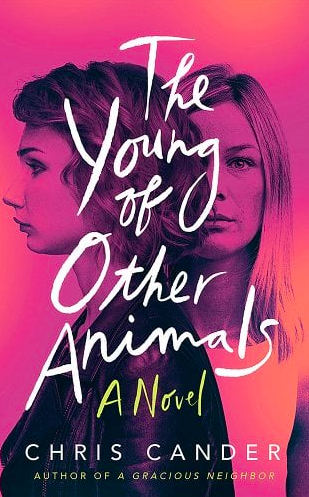
Texas mothers—like the land itself—can be flinty and intense, tempestuous and severe, even as we protect, nurture, and defend our babies. I’m fascinated by the varied ways the women in my life have approached motherhood, and how rarely they match the idealized depictions we grew up with on TV. Perhaps that’s why I prefer to write—and read—about strong women and their complicated, imperfect familial relationships. My latest, The Young of Other Animals, tells the story of Mayree and her daughter, Paula, whose tense proximity has grown more fraught following the death of Mayree’s husband. When Paula narrowly survives a violent assault, the two confront the shared traumas of their pasts, and attempt to save the relationship they hadn’t realized they’d lost.
Here are seven books about mothers and daughters in Texas that illuminate how we’re more likely to be one person’s shot of whiskey than everybody’s cup of tea.
This 1975 novel set in Houston is full of crisp prose and fascinatingly flawed characters. The story is centered on Aurora Greenway, an acerbic, eccentric Houstonian widow navigating life and a complicated relationship with her imminently practical daughter, Emma. For those readers who need their characters to be likable, this one—like most of the books on this list—might not be for you. Aurora is indeed often unlikeable, but at least she isn’t uninteresting. She is the sun of her own solar system, around which other characters—her daughter, her housekeeper, her string of male suitors—orbit. But it is her daughter who understands her the best, which seems to contrast the way Aurora feels about Emma, until at the most crucial moment, it doesn’t.
This light-hearted Bildungsroman tackles some heavy themes: inhabiting a human body that a mother is compelled to criticize, wanting to love and be loved, and living unabashedly alongside profound insecurities. Willowdean is a plus-sized, 16-year-old, Dolly Parton-loving Texan living with her former beauty queen mother who calls her, not insignificantly, Dumplin’. This is a positive coming-of-self story that taps right into one of Dolly’s famous quotes: “Find out who you are. And do it on purpose.”
For good reason, Parson’s debut short story collection was longlisted for both the National Book Award and the Story Prize. Primarily set in a semi-rural working-class Texas, these stories are full of sharp, empathetic observations about the gritty and mundane lives of ordinary people in various states of desire and deprivation, longing and loneliness. All twelve are masterful, but my favorite is “The Soft No.” Told from the perspective of a tween-age daughter, it’s a concise and stunning examination of the titular broken-down, soft-no mom, whose depression has trapped them both in a life filled with uncertainty. “Spirits up,” the narrator says, “she lets us dig through her purse and order a while pizza for everyone…Downswing is different: Mom unshowered in dark lipstick and baggy underwear, whimpering in the kitchen, stepping all over the groceries she ordered but won’t put away.”
Set against the backdrop of the American Civil War, this historical fiction is absolutely spellbinding. It tells the fictionalized story of the real Cathy Williams, a former slave and the only woman to ever serve with the legendary Buffalo Soldiers. Though she was born into servitude in America, her maternal grandmother had been an African warrior queen, and, in her words, “my mama never let me forget it.” When Cathy is taken from her plantation—and her mother—by Philip Sheridan of the Union Army and recruited to work as a cook’s assistant, she recalls what her mother told her: that she was never a slave but a captive whose warrior blood destined her escape from the enemy. To survive, Cathy poses as a man, becoming an outspoken, hardworking, unbreakable soldier posted at Fort Davis in West Texas. Although Cathy and her mother are separated for most of the book, I was compelled by the strength Cathy draws from her maternal heritage and her unwavering determination to someday be reunited with her mother.
“Where my panties at?” So begins the unforgettable journey of 16-year-old orphan Billy Beede, five months pregnant by a coffin salesman in 1960s Ector County, Texas. When Billy finds out her baby’s father is married, she heads west to visit her mother, Willa Mae’s coffin, and dig up the jewelry Willa Mae’s lesbian lover, Dill, claims to have buried her with. (Coincidentally, Dill—like Cathy in Daughter of a Daughter of a Queen, also presents as a man, which makes me think about the lengths women will go in order to survive misogynistic circumstances.) Billy claims to have no feelings for her “liar and cheat” of a mother, but as she finds herself replicating Willa Mae’s con-artist tricks, she realizes she’s likely to end up exactly like her. Parks, who won a Pulitzer Prize for her play Topdog/Underdog, is one of the most innovative storytellers I’ve read.
Fans of abduction thrillers will love Gentry’s story about a teenage girl who goes missing, only to reappear on the family doorstep eight years later. Anna, who wasn’t particularly emotive with her daughter before Julie’s kidnapping, struggles to connect with the woman who claims to be her missing child. She says, “You look at your daughter and it all comes back, every microsecond when you felt that twin surge of shame and fear, but this time it’s outside of you, happening to a body that feels like yours but doesn’t belong to you, so there’s no way to protect it.” This twisty tale, set in Houston, ventures into disquieting the territory of female inexperience and yearning, violence and family volatility.
This memoir is an absolute treasure: structured like a novel with a poet’s turn of phrase, and just enough embellishment to make a reader wonder if the title is a double entendre. I laughed out loud throughout this book, probably more than I should have. Karr’s cutting, gutting story, set in hot, gritty east Texas in the early 1960s, deals mostly with her middle childhood and her relationship with her undependable, substance-addicted parents. Much of her early life was spent trying to safeguard her mother, Charlie, from herself—and from the author and her sister. More than once, Charlie attempted some f’ed-up violence against Mary and her sister Lecia. Mary forgave her again and again, but this poignant reflection stuck with me: “Those other grown-ups were scared. Not only of my parents but of me. My wildness scared them. Plus, they guessed that I’d moved through houses darker than theirs. All my life I’d wanted to belong to their families, to draw my lunch bag from the simple light and order of their defrosted refrigerators.” Though Karr is sober now, I can’t help but want to pour us a couple of martinis and open up about life and trials as a woman growing up in the Lone Star state.
teach me how to girl

my fingers pale against your stomach
your boyfriend’s bike     jolts us toward
al-anṣariyyah mountains     in the distance
house lights flicker     like christmas
you find an old roof
you kiss a boy     and i watch
a stolen cousin     a lesson brewing

running beyond the borders
     of cannot

to live through the night i lie
to my father    to your father
we went on a joywalk    just the two of us

and we let loose

on a dry afternoon
marjuuha swings our girlbodies
you   show me how   to touch
forget the boys   the men
your fingers smell of oranges

zest against the grate
skin the rind
skin the pith
let me eat it
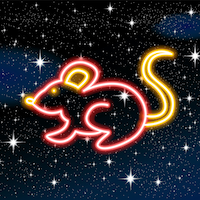
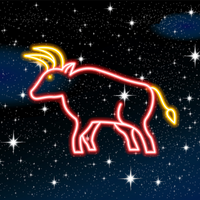
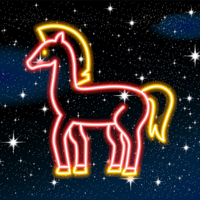
Every Lunar New Year, Chinese astrology welcomes a new animal into our lives, representing a new year, a new character, a new set of opportunities and challenges for art, writing, and life.
This year Lunar New Year is February 10, ringing in the Year of the Wood Dragon.
While the other eleven animals of the Chinese Zodiac are real creatures, the Dragon alone is extraordinary, a creature of the imagination, unbound from reality. An idea in its purest form, the Dragon can represent, be, and do almost anything.
Dreams loom large under the Dragon, and our visions for “what might be” take hold of us. Our imagined worlds become more vital, more urgent perhaps even than reality. Art takes on a life of its own that can energize or overwhelm.
Wood too, is an artist’s element. The first of the five Chinese elements, Wood represents new beginnings, a child’s mind. It is receptivity, curiosity, and an inexorable thrust towards being. When united with the Dragon it represents propulsive force, endless possibility, an explosive spring after a long winter. With the Wood Dragon our lives may seem to rush ahead of us, our minds not catching up until the Wood Snake arrives next year to contemplate how far we’ve come.
Here is a look into the kind of fortune the Dragon might portend for writers of every zodiac.
This year is a deluge of possibilities. Even as countless projects demand your attention, it is important to slow down and appreciate the little things. Indulge journal entries, pet projects, scenes that make you smile, and little treats.
With both the North Triangle and your Canopy Star (or Arts Star) coming into focus for you this year, you are at the height of your artistic powers. Dream big, and then split those dreams into concrete, manageable steps. It’s a year to move mountains, but the biggest gains start small.
This is a year diligence pays off. The ideas that have been percolating inside you are ready to come to fruition. All it takes is showing up each day. Consider setting a timer for the work you want to get done. Start small and manageable. The first fifteen minutes are the hardest, so start there. Once you complete them you may find yourself ready to tackle more.
When you find your stride don’t be afraid to take risks with your work. Make bold choices, take big swings, shoot for the moon. Cut scenes, upend storylines, push to publish. If you miss you can always pick yourself back up and keep on running.
Wood is the Tiger’s native element, particularly the bold variety expressed this year. When things are going well you will feel unstoppable, eager to make everything perfect. But being too inflexible can make minor setbacks feel like earth-shaking disasters.
It is okay for things to go wrong. When a problem feels unsolvable, consider this may be because the problem is bound to something central to your project. What may seem at first like a problem may actually be an extension of what makes your work unique. Perfection is an illusion, but texture gives you something to say.
As the year of the Water Rabbit ends and your Age Star passes, you are entering a new stage in your life. As we enter the Rabbit’s native element, it is a good time to clear out the old and make way for the new. A sense of curiosity and play is a good guide. What excites you? What do you want to learn, about a character, project, or genre? Follow those you trust. Teachers, friends, favorite authors, favorite books.
The Dragon and Rabbit are often said to clash, as the Rabbit’s tender heart is upset by the Dragon’s bluster. When you feel the world’s edges fit uneven against your own, pay attention to the discomfort. What does it say about the world, or about yourself? There is catharsis and genius alike in naming the little frictions that others overlook.
When a Zodiac reaches their own year, they are said to meet their Age Star again, and enter a new phase of their lives. It is a time of delicate transition, and yet Dragons have little desire to be delicate. Something big is on the horizon. Perhaps you are chasing a new idea, starting a new project, or are about to make a major breakthrough. Consolidate your gains as you make them. Back up your work and then make dramatic cuts and revisions without fear.
The Dragon is also their own Canopy Star. This year it may become easy to lose yourself in your work. Ride the momentum when it feels right, but don’t forget to check in with yourself. Do you need a rest? Food? Water? A friend? The body feeds the mind, and you’d be surprised how some inspiration strikes only when away from your desk.
A Wood year feeds the Snake’s hidden Fire element, and a curious mind can feed your passions. Take stock of all you have achieved. What in your life and process do you really value? Chasing a distant goal can be exciting, but it is how you live from day to day where sustainable happiness lies.
Decide what parts of your process make you feel whole and live by them. Is it working a specific amount, in a specific way, or in a certain location? Is it about an act of play, or justice, or discovery, or expression? How can you feed that which speaks to you? You cannot guarantee your destination, but you can make sure you approve of the journey.
High highs and low lows are the year’s theme. Don’t kick yourself for exhaustion, burnout, or slowing down. Writer’s block is not failure, it is process. Set clear boundaries between work and rest. Perhaps you only write before five pm, or never write on weekends. Setting these restrictions enshrines a time where you can be away from the desk without guilt, and incentivizes making the most of work hours when they arrive.
Don’t be afraid to have fun, waste time, see friends, watch a movie. Cultivating life away from the desk is necessary for life at the desk to be sustainable.
This year you may feel pressure from the people around you. Perhaps they are flourishing, achieving great things, and making you feel doubtful about your own decisions. Or perhaps they are struggling, and leaning on you for support. Remember that your first obligation is to yourself. Take stock of what relationships bring you joy, and which ones make you unhappy. You can decide what you feed, and what you let fall away.
People also make good inspiration if you pay attention. What little joys, little difficulties surround them. What makes these interactions potent? Unique? Universal? These nuances give writing the bite of the real.
As the Monkey and Dragon make two points of the Northern Triad, the Water element is potent for you this year. You may find yourself prepared to let things go. What paragraphs, scenes, character can you cut? Like pruning apples, cutting some lines will let those that remain grow sweeter. When in doubt cut, that way you can see what you miss.
The Northern Triad is also associated with the mind and the hidden. Take this time to trust your subconscious. Let your writing get weird, follow impulses, explore “vibes,” magical realism, scenes or symbols that feel right even if you couldn’t at first explain why. You might surprise yourself.
As the Rooster leaves behind a troublesome Rabbit year, they come into their own in the year of the Dragon.
When paired with the Dragon, the Rooster becomes the Phoenix, symbolic of royalty, femininity, and the sky. With the Dragon’s support the Rooster also creates an abundance of the Metal element. Fourth of the five Chinese elements, Metal is symbolic of division, definitions, boundaries, and management. You can chase this energy with attention to concept and detail. Do line edits. Do revision. Ask yourself, what is this scene, this chapter, this project, really about? You don’t have to answer right away – you might not know until a first draft is done, and maybe not even then. But If you can find the central question of your work, a second draft can be honed with a sharper cutting intent.
The Dragon and Dog stand on opposite ends of the Zodiac wheel in fierce opposition. The Dog is humble while the Dragon is grandiose. The Dog defends boundaries while the Dragon ignores them. In a Dragon year, the Dog’s interests in keeping the world comfortable, secure, and known will come under fire. Your writing may turn messy, spill over its boundaries, or go to raucous, uncomfortable places. Vulnerability and shame may be sources of worry.
Opposition years are a challenge by nature, but they are not inherently bad. Opposing animals have the most to gain if reconciled, representing a full spectrum of experience. If you can allow yourself to write work that embarrasses you, you free yourself from self-imposed shackles. Lean into it, and you might be surprised how many possibilities you did not allow yourself.
You’ve worked hard to arrive where you are today. Let that knowledge carry you forwards, that you’ve earned this, that you have achieved something. You may feel new ambitions stirring this year, desires for accolades or success that didn’t move you before. Hunger in moderation can be good. It is a thrill that can feed passion. Just don’t get so caught up in your goals you lose touch with the work itself and why it is meaningful to you.
If you feel yourself giving in to pressure or despair, take some time to unplug. Forget about the world, and remember what is for you. Write only for yourself. The world will still be there when you get back.
Cultural alienation is the feeling of being disconnected or estranged from one’s own culture or the culture in which one lives. While these stories traverse continents and cultures painting vivid portraits of characters grappling with displacement, loss, and the yearning to belong, each is a testament to the resilience of the human spirit. From navigating societal pressures to confronting historical wounds, generational trauma, or their own identity, these characters defy obstacles and forge their own paths to connection, self-discovery and acceptance.
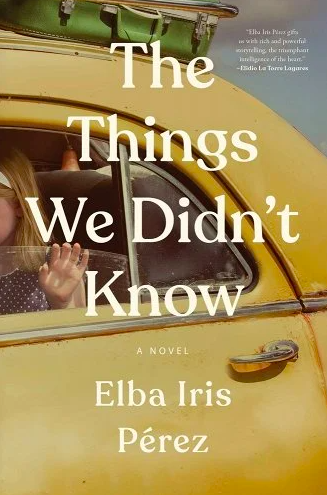
In my novel The Things We Didn’t Know, I portray the journey of Andrea, a young girl from Puerto Rico who moves to the United States. Andrea struggles to reconcile expectations coming from the diverse circles that shape our lives, ranging from school to the dynamics of a traditional Hispanic family living in the midst of an American community. Andrea walks an emotional tightrope—never feeling quite rooted, always adapting to ever-shifting social landscapes. These conflicts are not confined solely to the realm of cultural disparities. They resonate universally with anyone grappling with the displacement that requires us to form multiple layers of identity.
Here are 8 distinct voices explore cultural alienation and the search for belonging:
Chimamanda Ngozi Adichie’s Americanah is a compelling odyssey portraying the experience of Ifemelu, a Nigerian woman who migrates to the United States in pursuit of education and opportunities. Through her blogging, she addresses pressing issues such as cultural appropriation and the new set of racial dynamics she confronts. But when she returns to Nigeria, Ifemelu feels Americanized and questions her Nigerian identity. As Ifemelu navigates her own sense of self, Adichie offers a striking commentary on the struggles faced by immigrants, the complex nature of personal identity and the evolving landscape of race in today’s interconnected world.
Adichie explores the psychological and emotional burdens that come with alienation while confronting the persistent challenges posed by social expectations. Adichie’s narrative invites readers to reflect on the burden imposed by migration on the individual. This story is a testament to the quest for belonging in more than one place.
Between the lines of the romantic plot outlining T.J. Alexander’s Second Chances in New Port Stephen lies an exploration of overcoming alienation. Eli, a trans man returning to his hometown after a career downturn, faces double-sided estrangement. Not only does he grapple with the societal pressures and internalized doubts surrounding his identity, but he confronts the ghosts of his past in a family that still sees him through the lens of childhood photos lining the walls. This constant reminder of his pre-transition self leaves him feeling invisible.
When Eli runs into his high school sweetheart, Nick, now divorced and with a child, a new bond develops. While Nick grapples with his own societal expectations as an Asian man in a predominantly white community, the couple explore their shared history and a love that bridges the isolation caused by racism and transphobia. This story is a celebration of the power of human connection in the face of alienation. Eli and Nick’s journey leaves you with a renewed sense of hope and the belief that second chances, both personal and romantic, can lead to a brighter tomorrow.
Armando Lucas Correa’s The Night Travelers weaves together the intricate lives of its characters across time and continents, exploring the theme of overcoming generational alienation. The narrative unfolds with Ally’s clandestine interracial romance with Marcus in 1931 Berlin, amid the looming dangers of Nazi ideology. As Ally protects Lilith, her biracial daughter, the novel transforms the fear imposed by a hostile, racist society into a heartfelt narrative of motherhood and survival.
Decades later in Havana, Cuba, Lilith, who escaped Germany as the daughter of a Jewish couple, grapples with the loss of her mother and the shadows of her German heritage. This portrayal of her now even more complex identity accentuates the persistent challenges of alienation. The novel’s trajectory unfolds further when her daughter Nadine reveals a web of familial secrets in New York. Nadine’s journey becomes an example of breaking free from generational trauma and offers a glimmer of hope for future generations through education and self-identification.
In Edwidge Danticat’s Claire of the Sea Light, the delicate balance of beauty and heartache unfolds through the narrative of a seven-year-old girl, Claire Limyè Lanmè, who is aware that her father is trying to give her away. The story explores the alienation experienced by Claire until her disappearance, as her father seeks a better life for his daughter, after his wife’s death.
Danticat’s prose paints a beautiful shimmering coastal setting in Haiti in contrast to the vast distances that separate individuals within a community, capturing both the beauty of the landscape and the profound loneliness that can exist, even in a close-knit community. The novel portrays alienation as both an individual and collective reality and emphasizes the characters’ shared sense of being adrift in search of belonging in a country devastated by poverty and loss.
Reyna Grande’s memoir The Distance Between Us explores what happens when familial bonds are strained by physical and emotional distances. Against the backdrop of the Mexican American border, the narrative reveals the consequences of separation on Grande and her siblings after their parents’ migration to the United States. In Grande’s story, the estranging force of physical distance reduces the essence of familial ties to immeasurable alienation, yearning for connection, acceptance, and understanding amidst adversity. Cultural and linguistic disparities and a relentless struggle for belonging contribute to a heartbreaking sense of isolation throughout the narrative. Grande’s attempts to bridge the emotional chasm within her family becomes a central focus and a testament to the resilience of the human spirit. This memoir stands as a moving portrait of the hardships endured by immigrant families that explores separation, belonging, and the negative impact of distance on the human experience.
Xochitl Gonzalez’s Olga Dies Dreaming weaves a narrative that delves into the complexities of defining identity and belonging, family, and the liberation of Puerto Rico from colonialism with Olga Acevedo as its central figure. As Olga maneuvers the duality of her Puerto Rican heritage amidst the setting of New York City, she confronts the weight of familial and societal expectations.
Her mother Blanca, a radical who abandoned Olga and her brother Prieto to liberate Puerto Rico, only communicates through letters. Meanwhile, Prieto struggles to reconcile his homosexuality and political aspirations with the expectations of his family and community. When both Olga and Prieto reconsider their mother’s stance about Puerto Rico’s relationship with the United States, they examine their own identity and acknowledge a sense of belonging in the New York Puerto Rican community, dismantling the walls of alienation.
The novel transcends family drama as a social commentary exposing the hidden burdens of shame behind the lack of self-acceptance and the pervasive inequalities within American society. It stands as a testament to the resilience found in discovering one’s voice, breaking free from societal expectations, and embracing the beauty of living one’s unique identity and life.
Okwiri Oduor’s novel Things They Lost is a genre-defying journey that blends magical realism, family history, and the coming-of-age experience. Set in the fictional African town of Mapeli, the story follows twelve-year-old Ayosa as she unravels the haunting threads of her family’s legacy while she longs for her mother Nabumbo, who comes and goes leaving Ayosa alone in a generational home and extreme poverty.
The narrative intertwines beauty and generational trauma when, in her loneliness, Ayosa experiences memories of her ancestors, some of which are unbearably tortuous. Entrapped and lonely, Ayosa’s ability to communicate with spirits living in her attic becomes a bridge to understanding the profound influence of the past on her present. Through her experience we witness strong ancestral connections, female bonds, tortures, disappearances, and massacres that reveal a generational history of oppression and loss. The inclusion of magical realist elements portraying Ayosa’s ability makes this a compelling tale of self-discovery, finding one’s voice and offers the reader an unforgettable portrait of generational trauma.
On Earth We’re Briefly Gorgeous by Ocean Vuong delves into the layers of identity resulting after war trauma, and the Vietnamese immigrant experience. Little Dog, the resilient protagonist from Saigon, confronts bullying and rejection in the United States while navigating a life of poverty and the enduring impact the Vietnam War has on his family’s mental well-being. His tenacity to overcome obstacles and gain a positive sense of self radiates through the story. When his family is unable to communicate with the community around them, he takes on the role of family translator forging a connection between both cultures and generations. From then on, his decision to communicate through writing serves as an instrument for self-discovery, leading him to become the first in his family to break societal expectations and attend college, thereby disrupting their cycle of hardship.
Vuong’s poetic narrative interlaces the transformative power of love, underscoring the significance of being acknowledged and accepted. A pivotal moment in Little Dog’s life occurs during his coming out to his mother, where he not only asserts ownership over his life but embarks on a profound exploration of self. The novel portrays an unwavering spirit to persevere while keeping in mind the beauty and brevity of the human experience.
Of all the lies contemporary society runs on, the fiction of the meritocracy may be the most insidious and inescapable. Even those cynical about its promises have no choice but to place their trust in its precepts. If you’re born with the odds stacked against you—whether because of your class, race, gender, or place of origin—what can you do but hope that with enough studying, hard work, networking, and sheer optimism you’ll one day achieve deliverance? And what do you do when you realize the most may not be enough? What new story must you tell yourself then?
My debut novel, Ways and Means, centers on a lower-middle-class finance student who becomes embroiled in a nefarious scheme after he fails to land his dream job in investment banking, and as I was writing it I took inspiration from novels that take a skeptical view of our meritocratic fantasies. In each of these books, characters invariably come to one of two crushing realizations: 1) no matter what they do, they’ll never achieve the success they dreamed of, or 2) even if they do, it won’t bring them the happiness they expected. How these characters respond to that realization varies: some find alternate sources of sustenance and faith, others meet ruin, others simply truck on. But what unites these novels—and what makes them surprising—is that they manage to forge from this disappointment works of startling beauty.
Kapoor’s 2023 novel is billed as an Indian version of TheGodfather, and it offers much to support that comparison: corrupt clans and cronies, indomitable fathers and wayward sons, gruesome bloodshed. But the most trenchant of the novel’s multiple interwoven narratives is that of Ajay, an impoverished young man who becomes the chief servant to the scion of a wealthy crime family. Ajay is rewarded for his reliability and attentiveness with money and access to glamour he never dreamed of. But he soon discovers that the quality that makes him an ideal servant—his loyalty—also makes him an ideal candidate for another role: the fall guy for a wealthier person’s crime.
The End of Eddyby Édouard Louis, translated by Michael Lucey
Those who most ferociously latch on to the promises of the meritocracy are often those most desperate to leave home. That’s the case for the hero of Louis’s autobiographical debut novel, a queer coming-of-age novel set in rural France. Alienated from his community, with its traditional gender roles and idolatry of masculinity, the protagonist, Eddy, works to distinguish himself intellectually in hopes of fleeing to a more welcoming place. And though Eddy succeeds, Louis takes care to illustrate one of the crueler ironies of meritocratic salvation: no matter how far Eddy goes, he’ll never shake off his perverse longing for home, and no matter how much he might have earned his place in a new milieu, he’ll never feel entirely at home there either.
Smith’s novel follows four characters from a lower-middle-class neighborhood in northwest London as they make their way, romantically and professionally, through early adulthood. But it’s the character of Keisha (later she’ll go by Natalie) who occupies the largest portion of the story, inspires Smith’s most daring formal experiments, and illustrates most clearly the crushing alienations of meritocratic yearning. Trained as a lawyer, Natalie builds a life centered on following rules, impressing teachers and colleagues, and adhering to the rigid path of upward mobility: she believes, as Smith puts it, “life was a problem that could be solved by means of professionalization.” But the hollowness of this life eventually eats away at Natalie, driving her to seek out meaning and satisfaction in an increasingly desperate manner.
Millie, the protagonist of Halle Butler’s second novel, is an office temp in Chicago languishing just outside what in corporate America passes for the promised land: permanent, salaried employment. Her resentment—toward her circumstances, toward her colleagues, toward herself—fuels much of the novel’s lacerating inner monologue and telegraphs the hopelessness that even intelligent, capable people feel in our increasingly precarious economy. As Jia Tolentino wrote of the book’s narrator in the New Yorker: “Despite Millie’s acknowledgment that she might strive all her life without ever being happy or doing anything meaningful, striving nonetheless provides the entire grammar of her life.”
At the beginning of Rahman’s 2014 novel the unnamed narrator finds his old university friend, Zafar, in a shocking state. Zafar, once a banker and human rights lawyer, is now emaciated, bedraggled, and apparently broke. From there the book proceeds to tell the story of Zafar’s stunning rise—from poverty in rural Bangladesh to Oxbridge to Wall Street—and even more stunning fall. That story is one of enchantment followed by growing resentment and finally rage: at the ethical horrors of geopolitics and high finance, at the intransigency of a class and racial hierarchy that will never fully accommodate those perceived as outsiders, at the inability of intelligence and success to compensate for the traumas of early deprivation. “Childhood poverty,” Zafar says, “looms over one’s whole life.”
Buying into the promises of the meritocracy also means, for many, taking on a lot of debt. One such indentured dreamer is Jonathan Abernathy, the protagonist of McGhee’s debut novel. In hopes of paying off his staggering loans, Abernathy accepts a job auditing the dreams of American workers and scrubbing the ones liable to produce feelings—anxiety, sadness, longing—that will make them less productive. In this way Abernathy finds himself abetting the very capitalist system that has ground him down. McGhee’s book points to a brutal irony of our contemporary work culture: alleviating our own burdens often entails burdening those who, in another world, might be our class comrades-in-arms.
John Grisham’s 1991 novel may be the classic tale of meritocratic striving. It follows Mitch McDeere, a freshly graduated law student from inauspicious circumstances, as he joins a law firm in Memphis and slowly uncovers its dark secrets. Grisham lavishes attention on the glamorous perks of McDeere’s job to underscore a larger point: the people who lack a safety net, who desire success most desperately, are often the people who find it hardest to challenge wrongdoings in the institutions to which they’ve attached themselves. That McDeere does challenge them—and that he pilfers a vengeful fortune in the process—is part of what makes him an enduring hero.
1998. Lido Cineplex. Cold air, soft seats, the smell of popcorn. My friend Alice and I are both 17 years old and this is the quietest we’ve ever been together.
The audience too has been silent for the last ninety minutes. No whispers, no beeping pagers, no awkward laughter at inappropriate moments. The air is thick with tension. Even the walls are afraid to breathe.
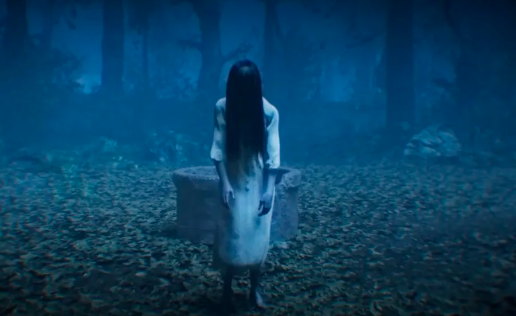
On-screen, a man’s television set switches itself on. Static-ridden footage of an old brick well appears. A woman slowly emerges from it, her waist-length hair black, wet, and shrouding her face. Her long white dress hangs off her disjointed frame. She pulls herself out of the well and makes her way towards the camera. She moves slowly, painfully, hobbling from so many broken bones. Her movements seem unnatural, wrong. The closer she gets to the inside of the screen, the more we’re unsure of how this will end. And then, when she is as close as she can get, she pushes herself through the television screen, into his living room.
It is clear he is going to die. The cinema erupts into screams.
That was the first time I met Sadako Yamamura. The day she found her way into that man’s living room, she found her way into my flesh. The movie ended at 1:00 a.m. Alice came out of the cinema shaking. During the film’s climax, she had rolled herself into a ball and used God’s name in vain a thousand different ways. My own terror, more silent, haunted me persistently for weeks after.
It’s not like I have no tolerance for horror. By the time I met Sadako, I’d gorged my fill of Freddy Kruegers and Chucky dolls—anything Hollywood had to offer that friends could sneak past Singapore censors. Horror, to me, was a subset of comedy—funny, but for all the wrong reasons: the blood that looked inevitably fake, the groan-inducing jump scares, the stop-motion effects that always felt a step out of sync. In fact, we’d ended up watching Hideo Nakata’s Ringu that night precisely because the comedy we’d been planning on seeing was sold out. Internet booking didn’t exist yet and as fate had it, all that was available was some obscure Japanese film that neither of us had heard of.
What I had anticipated when we booked those tickets were jump scares, over-the-top effects, and cheesy music. What I got instead were long silences, vague segues, and lots of unanswered questions. Like Sadako herself, this film did not care for lengthy explanations or audience expectations. The only thing left unambiguous was Sadako’s rage—murderous, indiscriminate, everlasting.
That night, Alice begged me to stay over at her house, as I’d done so many times before. There was a television in her bedroom and she needed company.
I would have, except the first person to die in this movie was a girl at a sleepover.
Sadako taught me that there are limits even to friendship.
A woman slowly emerges, her waist-length hair black, wet, and shrouding her face. She pulls herself out of the well and makes her way towards the camera.
The week after my first encounter with Sadako, I returned to the cinema to watch Ringu again, thinking it would alleviate my fear. In actuality, the only thing this second viewing did was bring my attention to all the terrifying details I’d missed before. Thinking that perhaps the third time would make it better, I returned yet again. With everything I’d missed now magnified, I was high on terror and had to live with the side effects of my bad decisions. Back home, I jumped every time the phone rang. I prickled at every sound that even vaguely resembled static. I avoided looking at reflective surfaces.
It should have been clear to me that there was something besides being a sucker for pain that kept drawing me back into the cinema. Some strange kinship I felt with Sadako. I’d understand in years to come that I’d been investigating my own fear, wanting to know what it was about her that filled me with terror in a way no other movie villain ever had. Even later in life, I would understand that this is where my fascination with monsters—how we create them, why we create them, how what we fear says something about who we are—surfaced into consciousness.
But it would take many a horror movie more for me to make that leap. For the time being, all I knew was that I was swearing off television.
Over two decades since its first release, Ringu arguably remains the film that launched Japanese horror cinema into the international spotlight, spawning one Hollywood remake after another. By the mid- 2000s, South Korean horror and Thai horror had followed suit, and it was through these films that I eventually found my way back to Sadako.
You see, Sadako was a trendsetter. In almost every Asian horror film that made it big after Ringu there lingered a female ghost with long black hair and a long white dress, lurking in some celluloid corner. But watch enough horror from across Asia and you’ll see an even deeper pattern emerge:
In Japan’s Ju-On, Kayako haunts the house in which she and her child were murdered by her husband. In South Korea’s Phone, a woman is haunted by the ghost of the mistress her husband has killed. In Singapore’s The Maid, a domestic worker murdered by her employers returns to avenge her death.
Women being killed. Women refusing to die.
Something kept drawing me back into the cinema. Some strange kinship I felt with Sadako.
I could not bring myself to watch Ringu again, but I plowed through many other films, looking for language for my obsession. And finally, it was Natre, the ghost from Thailand’s Shutter, that taught me why Sadako kept calling me back.
In Shutter, Natre, who disappeared from her college many years before, returns to haunt her ex-boyfriend, Tun, through his photography. She appears in his prints. She materializes in developing solution. She rises from his darkroom sink, which overflows with water. At this point, I have already sworn off television, and as I sit through Shutter, I am pretty sure I am never taking another photograph again.
However, towards the end of the film, something inside me shifts. It is revealed through a flashback that Natre died by suicide. She had been raped by a schoolmate while Tun stood by, watched, and took a photo of the ordeal with the camera she had given him for his birthday. The scene is merciless and I find myself sobbing, brutalized by the sheer reality of it. By the time this information is revealed to us, Natre’s ghost has already driven all the men involved to suicide, while Tun awaits the same fate.
In the film’s climax, Tun stands alone in his apartment, yelling at the air, demanding Natre reveal herself. He takes multiple photos of his empty room with a Polaroid camera, hoping she will appear in the photographs. He does it manically, ridden with anxiety, finally throwing the camera to the floor in frustration when she does not oblige.
It is then that we hear the click of the shutter. A photo emerges. He walks towards the camera, pulls out the picture, and alongside him, we watch it develop. In it, we see him standing. And on his shoulders, like the weight of guilt, sits Natre. Her arms engulf him in a lover’s embrace. He throws the camera to the floor again and struggles to get her off him. But she is persistent and won’t let go. The last we see of him, she is covering his eyes as he stumbles blind through the apartment, eventually tumbling off the ledge of his balcony.
This is where my fascination with monsters—how and why we create them, how what we fear says something about who we are—surfaced into consciousness.The audience screams, and I scream too. Except I find that I am screaming “Yes!” I realize immediately that I’ve changed sides. To me, this is not a plot twist—it is an exercise in victory. Natre, Sadako, all these women—they were victims, not villains. And they’d found a way to survive.
These stories weren’t about seeking revenge. They were about dispensing justice.
Watch enough horror from across Asia and you’ll see an even deeper pattern emerge: Women being killed. Women refusing to die.
Sadako, like her avenging counterparts, treads a thin line between agency and oppression. On the one hand, she is a powerful figure seeking justice on her own terms. On the other, she is only allowed agency in death. The narrative may not have been intended as commentary, but like all film and television, once it is out in the world, it is subject to the context of the world. Sadako is a woman, but also a monster—a heightened version of us dishing out punishment upon a world in which violence against women and people of all marginalized genders often goes unpunished.
This is how Sadako comes into her own: born with psychic powers that her family does not know how to handle. Her father pushes her into a well, leaving her there to die. She remains alive for seven days, hopeless, scared, angry enough for her rage to manifest as a curse, inscribing itself onto a videotape housed in a cabin nearby. The tape sits unmarked, waiting for someone to watch it. Watch it, and you will receive a phone call filled with static, and in seven days, you will die too. She will rise before you, wherever you are, and look upon you from between locks of matted hair. Her mere gaze will cause your heart to stop.
Sadako’s is a story of feminine rage but also a testimony to how that rage has withstood the test of time. Sadako may have crawled her way onscreen in the nineties, but in truth, she is a contemporary expression of a much older archetype. While Hideo Nakata’s Ringu is based on Koji Suzuki’s 1991 novel of the same name, the film’s visual portrayal of Sadako is a clear homage to Oiwa, the vengeful spirit from Yotsuya Kaiden, a famous Japanese ghost story. Written in 1825 as a Kabuki play, it has been restaged across decades, and adapted into film and puppetry numerous times over.
The most obvious allusions to Oiwa are found in two of Ringu’s key scenes. The first is the climax, in which Sadako crawls out of the television set. In Yotsuya Kaidan, Oiwa emerges from a lantern—another object illuminated from within—in a moment so iconic to Japanese storytelling, it has been immortalized in woodblock prints now considered indispensable to Japan’s cultural history.
The second is found in Sadako’s iconic murderous glare, characterized by the camera closing in on a single, bloodshot eye. This references the poison that Oiwa was given by her husband, which injured her left eye, causing it to droop.
These stories weren’t about seeking revenge. They were about dispensing justice.
I’ve always loved how Sadako took the source of Oiwa’s impairment and turned it into the center of her power—the bloodshot eye, still drooping, that can kill with a single glance.
There is always so much talk about the male gaze. Imagine if this was what happened every time the rest of us gazed back.
Like Sadako and all her on-screen sisters, the ghost of Oiwa is not alone in her mythology. Asia, despite its myriad diversity, is fraught, across borders, with feminine monstrosity.
In Indonesia, the Sundel Bolong’s sexual appetites in life result in her perpetual appetite in death. No matter what she eats, it falls out of her stomach through a hole in her back so that she is never full, always hungry, always wanting.
In Japan, the Ubume stands in the pouring rain, infant in arms. She asks you to help her carry her baby. Gallant, you take it, and she disappears. The baby gets heavier and heavier, until you are eventually crushed under its weight.
In India, the Churel tricks you into her lair. You don’t realize that her feet are turned backwards. So when you see her footprints, you run in the opposite direction. Eventually you see her, waiting for you, her teeth sharp, your life short.
In Singapore, we grew up with the Pontianak—the ghost of a woman who dies in childbirth and seeks out revenge in the afterlife. While she originates in Malaysia (and her sister, the Kuntilanak, in Indonesia), versions of her exist in numerous countries across the continent. These women all have different names, but share a broad origin story that is remarkably similar—death in childbirth. In the original folklore, the Pontianak is said to seek out pregnant women or virgin girls whose bodily fluids she consumes. Today, she seeks out men, walking the streets at night by herself. Her pale skin and long dark hair are the epitome of Asian beauty standards, and she seduces these men with ease before transforming into a long-clawed monster who digs into their stomachs and feasts on their insides.
Sadako treads a thin line between agency and oppression. She is a powerful figure seeking justice on her own terms, but she is only allowed agency in death.
I can’t help but notice that in the older stories, written by men, she comes across as a cautionary tale for women, but in newer permutations, written by women, she issues warnings for men to heed: This body is not yours. This flesh is not yours. Beauty not as invitation, but as warning.
Sadako’s cursed videotape comprises several images. These include distorted figures crawling from sea to shore, text that dances across the screen, a strange hooded, pointing figure.
But the image that lingers most in collective imagination is the scene of Sadako’s young mother, looking into a mirror and slowly combing her hair. As you watch her, she notices you. Her mouth curls into a slow, deliberate smile, and she turns to meet your gaze.
Hair—usually long, black, and unruly—is a common motif in Asian horror. It pours out of faucets in deep, dark waves. It descends from the ceiling like a noose. It clogs drains and pipes, blankets children in their sleep, floats limp in cups of tea.
Historically, and as in many other cultures, hair functioned as a mark of status in Japan. The higher in status you were, the more elaborately structured and adorned your hair was likely to be.
For women in particular, hair held additional meaning; it spoke of moral purity. While long and luxurious hair was the epitome of beauty, women seen in public with their hair down were perceived to have “loose” morals or to be “mentally unsound.” In her essay “It’s Alive: Disorderly and Dangerous Hair in Japanese Horror Cinema,” academic Colette Balmain mentions how in households where wives and mistresses lived together, it was believed that jealousy between women took shape in their hair at night, turning strands into serpents that attacked one another while the women themselves slept. Consequently, we might conclude that keeping one’s hair pinned meant keeping the peace. The only time it was culturally acceptable for a woman to have her hair down in front of others was during burial rituals, when she was dead.
Natre, Sadako, all these women—they were victims, not villains. And they’d found a way to survive.
The scene of hair being brushed in Sadako’s video is no accident. In Kabuki theater, extended scenes of hair brushing were once erotically charged. It was in fact an adaptation of Yotsuya Kaidan that became the first piece of Kabuki theater to interrogate this trope.
In the adaptation, Oiwa sits onstage, brushing her hair. But because she has been poisoned, it falls out as she brushes it. Beneath the stage, stagehands pile prop hair onto the floor in front of her from a trapdoor on the stage. Bit by bit, the pile grows thick and grotesque—an abject mass that appears seemingly out of nowhere.
In Ringu, Sadako’s hair too is iconic. It covers her face for most of the film, and is pushed back only when her remains are dug up from the well. When we see her bones emerge, a thick swelling of hair slips off the wet surface of her skull, and sinks into the sludge. Like the well water, it is perfect black—night, coal, sleep, expired stars.
One of Japan’s most famous wells is located on the periphery of Himeji Castle, where a young servant girl named Okiku is said to have lived and worked. In one version of the story, a samurai who was both besotted with and rejected by her, decided to get revenge for her lack of reciprocity. He hid one of the king’s plates, knowing she would be accused of theft and thrown into the dungeon.
Frantic with fear, she looked everywhere for that plate, never finding it. Seeing that she was ripe with desperation, the samurai offered to rescue her from her fate in exchange for her hand in marriage. Despite her despair, she rejected him again. Enraged, he stabbed her with his sword, and threw her body into the castle well.
The well, named after Okiku, still exists. Whether Okiku herself really did is a whole other story. What is tangibly undeniable though, is the hard mesh wire bound tight over the mouth of the well, preventing anyone from falling in.
And preventing anyone from crawling out.
This may come as a surprise, but while 1998’s Sadako pays homage to 1825’s Oiwa, Oiwa herself was based on a real woman of the same name who lived in the 1600s. She was not murdered, not killed by a man, and lived happily into old age her with loving samurai husband. How she inspired centuries of ghost stories about vengeful women remains unclear, but I decided I wanted to meet her anyway.
Oiwa has two homes—both are in Tokyo. One is her grave, where her body lays, housed in Myoko-ji temple. The other is a shrine where she is said to reside—it is built into the garden of an old house in Yotsuya.
I decide to make a pilgrimage to the latter. I’ve read that film and theater directors who remake Yotsuya Kaidan come here to ask permission first. The house-shrine sits amidst residential property, flanked by vibrant red and white banners, concrete sculptures, and welcoming signage. I pay the necessary respects—entering from the left and washing my hands—and approach the heart of the shrine. I place a coin in the offering box, and pull the rope that sounds the heavy brass bell three times.
Oiwa is not the first woman to be killed in a story, then worshipped in real life. And certainly not the first ghost provided with a house to occupy. Spirit houses such as these exist in Japan, Korea, Cambodia, Laos, Thailand, and Malaysia. They straddle various cultures and religions but are all created for the same purpose—to appease spirits that might otherwise cause trouble to the living.
I’m not sure what this says about the relationship between reverence and fear, demonization and deification. What it says about us as people, about how everything we destroy, we eventually worship. But as the deep thrum of the brass bell reverberates through the quiet neighborhood, I call into communion something larger than myself.
Maybe it is Oiwa. Maybe it is Sadako. Maybe it is every woman who has ever been beaten down, and emerged victorious. Maybe I am talking to all of these women. Maybe I am just talking to myself.
It’s been 25 years since Sadako and I first met, and our relationship has gone from strength to strength. I’ve rewatched the original Ringu, along with every sequel, prequel, spin-off, and remake. I’ve read the novel multiple times. I’ve dedicated poems, lectures, entire days to her. I believe I’ve also inherited a little bit of her attitude.
Alice never warmed up to her. Alice and I are no longer friends.
Sadako herself has gone through some changes. Since the demise of VHS, sequels find her emerging from laptop screens and airplane TVs—she refuses to be trapped in time. For a while, I worried that digital technology would submerge her into obsolescence, but she has proved time and again that she cannot be killed.
To survive, you must transform from victim to villain just like she did, and in doing so, must understand her pain.
I realize, of course, that I’ve yet to detail what happens after Sadako crawls out of that man’s television set. How she pours out of it like water from some leaking nightmare, limbs, dress, hair spread across living room floor. How the camera does close-ups on what it knows will repel you—the jagged movements of her broken body, the clumps of hair clinging to her face, the beds of her fingers where her nails used to be before she lost them clawing her way out of a well that became her tomb.
As the man trips over himself trying to escape, she straightens her body, rises above him, and with her famous glare, meets his gaze. Beneath her gaze, her eye the threshold to a grudge dark and unyielding, his heart stops. And when his body is found, his face is frozen in a perpetual scream—a message from beyond that cannot be wiped clean.
Unlike many of her contemporaries, Sadako does not target her revenge specifically at those who’ve wronged her. It is not limited to the small seaside town from which she came. Her wrath is indiscriminate, accusatory. It speaks of our complicity as silent witnesses to her death.
But more important, there is one way to escape her wrath. Even if you chance upon that video. Even if you happen to watch it.
In the twist that ends Ringu, we learn the caveat to Sadako’s curse. If you want to live, you must make a copy of the tape, pass it on to someone else, and make sure they watch it. One life for another, and you will be spared.
This is the loophole that Sadako gives freely. To survive, you must transform from victim to villain just like she did, and in doing so, must understand her pain.
Into a well of your own you go: Who’s the monster now?
An excerpt from Ordinary Human Failings by Megan Nolan
While Carmel was falling in love with Derek O’Toole, Richie was twenty-one and ready to begin his life. Somehow three years had passed since he had left school and to his surprise nobody had made him do anything since the day he walked out of his final exam. He hadn’t made a plan because he wanted to take the summer off to have a good time. When the summer ended he felt no more inclination to do anything than he had before it, so he allowed himself another year to decide on the next move.
In the interim he signed on to the dole and worked cash-in-hand in a few pubs around town when they needed someone for busy periods, and rented a box room in Ballybeg on an informal basis from the older brother of a girl he was seeing. After the girl broke up with him the brother threw him out, sick of his prodigious vomiting and foul-smelling 3 a.m. meals left hardening on the counter, leaving the single box of possessions on the front door step. Following this inconvenience he took the same approach to accommodation as he took to working, taking it up whenever it surfaced but not seeking it with any urgency. In between situations there was always Mayor’s Walk, which was tolerable so long as he used it only for sleep and stayed out of his father’s way as much as possible.
He didn’t know why he had expected an intervention, except that it seemed most everyone else he went to school with had one. Either they had made up their minds to study or train or become an apprentice or their parents had proposed a certain kind of job, in some cases even arranged the interview for them. A few moved far away which was a definitive enough action on its own without also needing a career. The ones who couldn’t find anything and went on the dole like him were making plans to try Dublin and London.
It was so tense in Mayor’s Walk in the final few years of school that all his focus was on the day he could leave and not be under anyone’s control any more, he had never seen beyond that. Nor had anyone broached the subject with him. After a substantial amount of time had passed, Rose would occasionally ask if he had any plans when he called in to the house. She always asked while making the tea or cooking, said it casually as though it was nothing to her either way.
The casualness was not unpleasant, or intended to convey indifference, but because of a natural gulf—an awkward absence of natural authority—that existed between she and Richie because they were not related by blood. This gulf varied in its depth over the years, sometimes feeling hardly present at all, but as he had reached his late teenage years it had shifted into a permanent state of significance, separating the two of them. This estrangement was prodded at and worsened by his father, who would call attention to it at any opportunity. If Rose gave some passing bit of advice, John would reflexively say, What would you know, you’re not his mother, and both Rose and Richie would be embarrassed into silence.
So Rose had not guided him as she surely would Carmel when she graduated. And his father had never brought the subject up except to remind him that when school ended he would be expected to pay rent if he stayed in the house.
His father had, to be fair, assumed a general, blanket stance of apathy toward employment as a concept, ever since he had been forcibly removed from the workforce by a catastrophic injury suffered in the factory before Richie was born. One arm had been crushed to near uselessness, and a network of damaged nerves caused him tolerable but constant discomfort. Perhaps it was because of this he could not bring himself to feign enthusiasm for Richie beginning his years as an employable man. Perhaps he liked to know that his son was of as little material value as he felt himself to be.
The year elapsed and still nothing happened to suggest a course of action. He was surprised that no event had had occurred to shape the future, but not unduly alarmed.
He had always drank with the resourceful enthusiasm of someone afraid it would be taken away at any moment, and he began to realize that was exactly what he had expected to happen—that a plan or circumstance would announce itself in his life to make the way he drank impossible.
He felt a sense of indignance when he began to notice slight physical signs of his abuse—around his nostrils threaded veins were becoming apparent, and the skin around his eyelids was often swollen and a livid corpse-like purple.
How was this possible, when he was only twenty?
His stomach, too, was suffering inordinately for what seemed to him only usual behavior. He shifted restlessly in his bed, the feeling of trapped air migrating around his guts and sometimes suddenly changing tack so that it felt as though it had settled dangerously in his chest.
He wondered could you have a heart attack from constipation and diarrhea, the tension creeping over his heart and around the back of his shoulders, a jagged and precarious net of pain which worsened with every breath he took, so that he could only take small shallow ones which did not move his body at all and he felt that he might lose consciousness.
It did sound worrying, he knew that, but he struggled to feel worried. He was with people every night of the week who drank the same way he did, what made him so different that he was going to die of it? When there was nobody obvious to hand, he walked down to the new clubhouse the bikers had started in a shed off Paddy Brown’s Road, calling themselves the Freewheelers. Of course he did not think yet about the fact that the rotation of people alternated through his own evenings which remained the same, their once-a-week sprees fitting in seamlessly to his full-time pursuit.
But still. Not to worry. Something would make itself known, he assumed, and he would make the most of the leisure now, seeing his friends as much as he liked, long hilarious nights around kitchen tables, the burst of euphoria that came with true, painful laughter was so extreme and powerful that it felt obviously to be the real point of life.
One afternoon in town when he was walking around with a bottle of Lucozade waiting for one of the lads to finish work and meet him, he passed a little store front being renovated in the Apple Market and asked the fellow painting the sign what was coming in.
An Italian restaurant, he said looking pleased. The man who bought it is moving down from Dublin, but he’s from Rome originally he told me.
Richie felt a rare stir of decisiveness and desire and asked if he knew were they looking for staff.
I’d say they must be, come back on Saturday when I’m finishing up and I’ll write down his phone number for you.
He thanked the fellow and walked on feeling warm, wonderful, the glow of volition inside him and rendering the evening ahead rich and meaningful.
Richie had his first shift at Mario’s three weeks later, the day before the grand opening.
Who’s Mario? he asked Bella, the daughter of the owner who was explaining the menu and feeding the new staff little samples in dinky paper cups then demanding they give her three adjectives to describe what they tasted.
Mario is nobody, she sighed, My father thought people would like that name better than any of ours. He’s been called Phil his whole life, which doesn’t exactly sing with Italian glamour.
Why not Bella’s? Richie asked her, this harried, pretty woman in her thirties not wearing a ring.
She laughed. Let’s just say I wasn’t the favored child until very recently, when I was the only one who would move down here to do this, she gestured around at the dangling fairy lights and fake plants they had just festooned the low ceiling with.
Do your brothers and sisters not have any interest in restaurants?
No. My sister is married and has young children to look after and my brothers are interested in having a lot of money and people knowing who they are. Maybe they would have wanted it if it was in Dublin or London or Rome but not down here, she said, and he felt mildly cut.
He didn’t like when people spoke about Waterford as though it wasn’t a real place. It made his lack of momentum feel darker than it usually did. She noticed him turn away and end his curiosity and touched him lightly on his shoulder.
I don’t mean to offend you. I like it just fine here. I think it suits me, and he smiled back at her, wanting to make her like it even more than she did, wanting for things to be a success and her to become the golden child of the family.
The waiters were all given white shirts and waistcoats and green aprons to wear because that was the usual get-up in Italy and he felt pleasure trying it on that evening. He had a room let for eight weeks in Merchant’s Quay and he thought after that he would have enough wages saved to find somewhere more settled, longer-term.
The menu was deliberately crowd-pleasing, almost everyone ordered pizzas and spaghetti bolognese and lasagne, but there was a slightly more challenging special every day which Richie enjoyed hearing about from Bella and tasting. He repeated with fondness her enthusiastic advocation for each one even to families who expressed their forceful disinterest toward him as he spoke, the ravioli filled with squash puree and walnut sauce, the squid and roasted red peppers, the gnocchi made with spinach and goat’s cheese.
Bella had a friend of hers come and help her paint a big mural on one wall of a bountiful table full of food and wine, surrounded by laughing friends touching glasses. Bella wasn’t as good a painter as her friend but Richie could see it was meaningful to her to be a part of it, and he enjoyed seeing the small sliver of tongue poking out of her mouth while she concentrated.
After the first week, having survived his first minor disasters, he began to feel that he was good at what he was doing and that it made sense of him as a person somehow. Bella appreciated him. One evening she came into the kitchen white-faced and said she had accidentally served meat to a man who claimed he was a lifelong vegetarian who had never endured the passing of flesh over his lips before.
Which one? asked Richie, immediately suspicious. She described him, Kevin, a pretentious and pretty boy Richie had gone to school with whose current passion was cultivating an air of long-haired mysticism. He scoffed. Tell him I saw him with his face in a bag of sausage and chips every Saturday night for five years, he told her.
She didn’t, but the knowledge made her laugh, and calmed her down.
Every night was like the beginning of a new play in which he held a peripheral but crucial role.
He was at ease moving around, fluid and intuitive. It was because it felt like a performance, he thought. Every night was like the beginning of a new play in which he held a peripheral but crucial role. There was something extremely soothing in the way he was simultaneously on show and necessarily discreet. It was a situation which addressed the discomfort of his life to this point, the dread of ever being a burden on others and the dread of nobody ever paying attention to him. His fear of other people receded in this specificity, where he had a role to fulfill and information to impart and receive and because he was playing a role he was able to respect himself more than he did at other times, straightening his back and making eye contact and smiling boldly.
Six weeks in, on a Friday evening after service ended he drank three large glasses of leftover wine with Bella and Luke, the nicest chef. He was a gregarious Frenchman who made up for being from the wrong romantic European country with the extravagant smacking sounds of enjoyment he made as he cooked, and a general enthusiasm for bringing new food to this place he had moved to for love and where he had been routinely appalled ever since by the sullenly ugly, limp meals on offer. The three of them gossiped about the other two waiting staff, Deirdre and Thomas, teenagers whom they suspected of recently beginning an affair.
Deirdre is always smiling now, have you noticed that? asked Bella, and it’s ever since we had the night out and the two of them went off together at the end of it.
Maybe she’s just smiling because she loves pasta so much, said Richie, and they laughed and he was pleased.
You love pasta so much, said Luke fondly, reaching over and pinching his cheek, you’re getting nice and fat now.
Hey! said Richie, but he had always enjoyed being teased with obvious affection and he didn’t mind it at all.
No, man, it’s a good thing, said Luke. You looked bad when you first started. Not joking, I asked her if she was sure you were going to keep turning up. But you’re doing so great. My best waiter, no mistakes.
Bella smiled at the two of them dopily, her low tolerance for alcohol sated by her share of the now-empty bottle.
I’m tired. Can you open up in the morning, Rich? Remember we have a birthday lunch booking at midday so get here by half-nine to set up, please. I’ll be here at eleven, and she slid the second set of keys over to him.
When Richie left it was only a little after midnight, and he was exultant in the fine weather and the warmth of his new friendships. He walked down onto the quay and felt his body to be stronger and more useful than before, and a dreamy liquidity beginning in his limbs from what he had drank. It was so lovely to be able to drink only a little bit, he thought. Working at the restaurant had been good for him in that way. He was busy trying to get it right and be present for Bella and the rest of them and hadn’t seen much of his usual crowd, hadn’t drank in that way for a few weeks now. This didn’t feel like a sacrifice because he had a drink with the restaurant staff most nights.
These evenings tended to end with one or more of them yawning compellingly, reminding the rest that they were gathered together because they had worked hard for a long time and that they would do so again tomorrow. There was drunkenness, but not the sort which caused physical intrusions the like of which had troubled him before he started to work there. All of this he reflected upon on his languid stroll, glad and surprised that something so significant could change without any enormous will or effort on his part. He had been right, perhaps, that it hadn’t been himself but only his circumstances which needed shifting. He was so pleased, in fact, so proud of the departure from his old way of being, that it occurred to him he could go and see the usual crowd right that moment, and have some more to drink with them.
He was, as it happened, passing the building where his friend Gary Clancy lived and had hosted drinking sessions every Friday night for the past year, and he stopped and stood outside of the door. He thought for a moment, doing a quick calculation and figured if he got to sleep by three he would be absolutely fine to get to the restaurant for half-nine. Young man, full of health, life, light. He could do anything, do it all.
He was buzzed upstairs and received with a rousing round of whooping and shouts of Here he is, the man himself!, a welcome phrase which had always struck Richie as almost unbearably cheering, that feeling of everyone being happy to see you, telling you the night had been lacking something before your arrival. Sitting around the kitchen table were Clancy and four other fellows he knew to varying degrees, boys he had been to school with, and one older man whom he knew only to see. The man was exotically named Lucien though he was a lifelong local and suspected of giving himself the title. He was also, Richie recalled vaguely, suspected of being gay because he lived alone with two cats and put care into his appearance. This suspicion was overlooked or forgiven though because the appearance he took care with was one of great ferocity, safety pins stuck into all manner of surfaces, and hair spiked into enormous threatening towers. In Camden maybe Lucien would have been nothing remarkable but here the dedication to an image as singular and unusual as this was regarded with a twisted respect. To stand out was so abhorrent and insane that someone who did it fully on purpose was accepted as a mad genius. Richie, who had always despaired of his every variance, could see that it almost didn’t matter what you were—so long as you swore yourself to it with total arrogant pride there was little anyone could do to use it against you.
Two yellow-blonde girls he didn’t know sat on an armchair, spilling limbs over each other and whispering privately, almost primly despite the bottles of sticky cider they were huddled round and the fags with dangling long ash in their hands, occasionally hooting with laughter. One of them looked up at him when he scraped out a chair to join the table, he nodded hello and in response she crossed her eyes very quickly and fully before returning to her conversation, which made him smile. He apologized for not having brought anything to drink.
Not at all, Richie boy, admonished Clancy, and drew out a new bottle of vodka and a two-liter of red lemonade, You probably left this here another time, anyway. Drink up. Where have you been the last while, we missed you.
He enjoyed hearing this, of course he did. He told them about the new job and that he’d been busy settling in, but he’d missed them too. He said this bashfully, but he liked that they were saying these things to each other, it made his being there alright. These were his friends. He tipped his cup toward the other lads and said, Nice to meet you, to Lucien, who winked his approval back as Richie downed his drink in one. They all cheered and a spark of celebration entered the room. Mark—a nice introspective guy who had been derisively nicknamed Dark Mark in school because of his thoughtfulness which sometimes appeared to be moodiness but really wasn’t, not in any bad way—Mark was having a baby with the girl he’d been with since third year in school. He had just found out a week before. They cheers-ed to that again, and Clancy asked him, How does that feel, are you shitting it?
Gary, said one of the girls sharply, so that Richie assumed she was Gary’s girlfriend and did not appreciate the implication that lifelong commitments were something to be avoided.
No, it’s grand, said Mark. It is scary, like, yeah, but I think it will be good craic. I’m one of four and I always thought I’d want the same as that, none of us were ever alone for five minutes but in a nice way, you know, feeling part of the gang.
And Richie thought no, he did not know, couldn’t imagine a feeling like that. He drank again, draining the second cup, feeling it burn into his chest cavity and the bubble of levity and pleasure travel further into his brain.
I’m proud of you Mark, I think you’ll be a smashing dad, said Lucien quietly. He stood up and put on a record, something loud and indecipherable and modern-sounding, exciting.
I don’t know, said Paul, one of the other lads from their year. Wasn’t it Mark who rang Mr Hutchinson that time and told him his son was dead?
There was a moment of quiet while they sorted through the past to clarify the memory and once they had they began to laugh, really, really laugh, until it felt like coming up on drugs and there was no way to escape it. Oh, oh, they cried, wiping tears from their eyes and throwing their heads back, shaking themselves to try and recover.
They had been eleven and it was April Fool’s Day. Their teacher Mr Hutchinson was a friend of one of their fathers, and it was decided for the prank that year they would get his phone number from the father’s address book and call him. Mark was the calmest of them and one of the funniest, so he was chosen, and they pooled their coins at the phone box and dialed the number. It was only as Mr Hutchinson answered that Mark realized they hadn’t actually planned for what to say if he answered, there was no script to follow. Desperately grasping in his mind for anything to fix on, he recalled that Mr Hutchinson had an adult son in Dublin.
Hello? Hello? said Mr Hutchinson.
Hello, sir, said Mark in a gruff disguise voice, and all the rest of them listening instantly dissolved into silent giggles, Mr Hutchinson?
Yes that’s me.
Mr Hutchinson . . . . Panic setting in now, needing to do something, make a big splash, impress everyone, Mr Hutchinson, I’m very sorry to tell you this but your son is dead. Up in Dublin. Your son died.
There was silence on the other end of the phone and surrounding him amongst the gawping faces of his friends. Then he heard a gasp down the line, and weak murmuring sound.
Oh, no, oh, Danny, no, no, please, no.
Mark’s eyes widened and he said in his ordinary voice, No, no, don’t worry Mr Hutchinson, it’s only an April Fool, don’t worry at all, please don’t worry, and slammed the phone down.
He spun round to look at the others, begging them with his eyes to tell him it was going to be okay and he was alright. Richie had his hand over his mouth and was shaking his head side to side involuntarily, trying to go back in time. There was a general sense of appalled shock. Then Paul and another boy had let out a few shrill sniggers, and then the whole lot of them had collapsed with hysterical disbelieving laughter, even Richie. He remembered how it had come flying out of him, out of the depths of his chest like a cough would, hacking and unstoppable. They laughed and laughed at the disgraceful absurdity of it, at how amazingly far Mark had overshot. They knew that it was a dreadful thing, and that they would soon pay for how bad it was, but for the moment they banged and thumped the phone box in their perverse glee, and it was a beautiful thing as well as an ugly one.
They laughed the same way now, ten years later and most of the same lads sitting around that kitchen table. When Richie met the eyes of another of them he started all over again. They reached out blindly for one another’s arms to squeeze for emphasis, and the physical sensation of happiness was so immense that Richie could hardly believe he had almost not come here tonight.
Near 4 a.m. there was an awareness that the drink would be gone before long, Clancy shaking the near-empty bottle as he poured from it.
We’re almost out, boys and girls, he said with a sigh. The room was dense with smoke and good feeling. Richie, could you get a bottle of something from the restaurant do you think?
Richie, vibrantly red in the face already, flushed further and exhaled in a conciliatory way. Ahh, he said, Ahh, I don’t think so. They take the stock all the time.
Clancy put his hand on his heart in a swooning gesture of offence. Of course they do, I’m not suggesting we rob the place, who do you take me for? We’ll get it back to them later today, I’m good for it. It might not be too often we’re all together like this, Mark about to reproduce and all.
It’s only because of this uncivilized country, said Lucien languidly, reclining on the armchair with one of the sleeping girls curled around his shoulders like an enormous drunk cat. When I was in Paris we went out to get bread when the bakeries opened at dawn and bought wine to drink while we queued for it. Only in Ireland do the government treat its people as too incompetent to decide what to do with their bodies.
Richie nodded forcefully despite thinking to himself that this was surely not a quite accurate summary of world politics.
All the same he had to admit that eating a lot of bread and drinking wine sounded an extremely appealing concept in this moment. Maybe there would be bread handy to take at Mario’s as well as wine. The inside of his chest felt hollow and acrid and he wanted to push something soft down his esophagus. He thought also of how good it would feel to have a whole bottle of cool white wine before him. Like vodka, white wine had a quality of bottomless enjoyment. Not only did he have infinite tolerance for consuming them, they also had the capacity to endlessly promise good cheer. So long as there was more of them there was more pleasure to be had. This promise was not exactly a false one. It was true that whatever way they interacted with his brain he could feel no worry or sadness so long as they kept him company. Enough beer made him full and grumpy and red wine made him fall asleep, but there had never so far in his life been a time when he had tired willingly of drinking vodka or white wine, stopping only because he couldn’t get any more.
Before long they had persuaded him that it wasn’t such a big production as he was making it, and they would have the bottles replaced by the end of the day. He did notice that they were bottles plural now rather than singular but this was to be expected. One bottle between them would be gone in a few minutes, if he was going to go all the way there he may as well pick up a few. They were good for it, they weren’t mean lads. For the most part they weren’t short of a few quid. He was only doing this because they couldn’t get it anywhere else.
I’ll come with you, said Lucien, standing and stretching. I need the walk.
A brief absurd flare of alarm as Richie thought of the rumors of him being gay or otherwise odd, then he scolded himself for being judgmental. The streets were empty but strewn with recently abandoned junk food which made him feel a moment of worry as he understood that the things they were doing had ended for the rest of the city.
The night is young, said Lucien, catching his eye and wriggling his brows enigmatically. He was quite handsome beneath the ghostly make-up, a strong big nose and a mouth which stretched so wide it made Richie think of the tragedy and comedy theatre masks.
Is it still night? Richie asked, and began doing the latest and what would turn out to be final set of calculations: If we get back by five I’ll stop drinking at seven and have a shower and then I’ll be fine to get back in to open up. He had stopped kidding himself about sleep now.
There’s no special rule that says it has to be dark when you have a drink, or light when you start work.
Who cares? said Lucien, You decide. All of the things you believe are fixed are just a matter of words. Call them something different and they change. It’s night if we want it to be, because whatever it is, it’s our own to spend. My old man used to obsess over the hours between 8 and 10 p.m., none of us or even my mam were allowed to talk to him then because he said it was the only part of his life that belonged to him. For years I had that too, I believed there was something special and sacred about night-time. And then I grew up a bit, got to see a few things, and I realized it was all a con and a trick to keep people like him in their place. In reality it can be night-time whenever you like—those things we like about night-time, we can have them whenever we like if we just decide to have them. There’s no special rule that says it has to be dark when you have a drink, or light when you start work. Good morning, goodnight, happy Christmas—who cares? Live how you want to, when you want to. That’s the trick.
He had linked Richie’s arm loosely as he spoke which made him feel nervous and luxurious with novelty. They arrived to the restaurant, Lucien singing Christmas songs beneath his breath, light irresistible mania. Richie opened the door and led them toward the storeroom where he picked up two bottles of white wine, feeling relieved by their slender familiar weight. Lucien was picking up more, turning something out of a bag and filling it with red wine.
I don’t think we should take that much, Richie said, mildly.
Relax, kid. It’s only because I don’t drink white wine, said Lucien and shrugged at the perfect and irrefutable logic he had employed.
Richie would not in the future remember a full narrative trajectory from this time onward, only moments and images and the feeling of time dipping in and out haphazardly. When he tried to recall the anxiety he must surely have felt, there was nothing, only smooth absence. For a while, later, this was the focus of his agony: that he couldn’t recall feeling even slightly bothered about what would in a matter of hours fill him with a degree and quantity of shame which he had never withstood before. The mystery of his missing anxiety plagued him in the aftermath, as though there was some moment of transition he could identify if he looked long enough, between the unfeeling person and the feeling one which followed. How could it be, he thought frantically, how could it be that the same situation hours apart could affect him with such wild difference?
But it was true, and there was no mystery to solve. There was no key moment, no switch flipped. He was not repressing a memory of secret panic which he had hidden from Lucien. Lucien had not threatened him with violence, or even with dislike. It was only that the time had come where feelings had ceased and mere sensation remained, and even sensation only at a remove, tickling some phantom limb. He had stood there while Lucien loaded up, and then wandered into the fridge and then the freezer for some reason, wanting something to eat, putting things on the ground, forgetting about them, rifling. One image he retained was of Lucien absurdly leaving the walk-in fridge with a large salami under each arm.
Then it was Lucien with two laden clanking bags of wine on the ground before him, but going back for one more he had seen in the fridge because, he said, it was already open so it would go to waste anyway if they didn’t have it. Out in the dining room as Richie groped for, dropped, and tried to find the keys, Lucien had stood before the mural which Bella and her friends had painted and laughed at it. He said something mildly disparaging, Richie remembered, though he did not remember exactly what—was it that it was bourgeois? Or boring? Or simply bad, badly rendered? The words were lost but he did remember Lucien uncorking the open bottle of red and pouring it into his hands and flicking it and throwing it at the mural, making some joke, Richie laughing at it, there being a feeling of harmless hyperactive fun. He could just about see the image of the mural with splatters of red wine splayed across it.
There was then an image of being back at Clancy’s kitchen table and drawing deeply on the bottle of white wine, which was not even cool as it had been in his thirsty imagination, ash everywhere, the burn in his lungs combined with the acid of the wine deeply satisfying. The girls had gone, he thought. Lucien was putting on more exciting music and was dancing, strutting around the room. Still a feeling of fun, of fuck-what-may-come. There was little concrete after that. Hanging over a toilet, almost-clear vomit. Reaching over and running the shower at full blast to mask the noise. Once he had got it all out, having a ridiculous thought that if they heard the shower run, they would wonder why he hadn’t had a shower. Putting his head under the shower to wet it and make sense of the fact the shower was running. Once he had done that, taking a tube of toothpaste and squirting it into his mouth, putting his mouth to the tap and mixing the two. Collapsing down beside the bath, brain blood pulsing. That for a few minutes and then running the cold tap and shoving his face beneath it. Roaring into the drain to clear his throat. Slapping his face with more water. Going back to the table feeling he had got one over on everyone there, as though they’d never have known what he was doing. Sensation of being annoying, sensation of being pushed into a corner, people laughing. And then nothing until the next day.
In the moment before waking his body was already laden with expansive dread, knowing more than he did. The top part of his chest was so heavy and dense with fright and sorrow that he felt sure he would scream. His pulse thumped disturbingly, erratically, and he put his hand to his throat to touch it, push it back inside of himself. There were too many bad things to think of and he told himself to be calm and slow but it was no use and he sat up on the couch where he lay and put his head in his hands and cried for a few moments. There were two bodies on the other side of the room but they were still and he didn’t wake them with his noises.
He needed to know what time it was but he also badly did not want to know. He would have chosen to remain in his brief suspension if it held any comfort at all or the possibility of returning to oblivious sleep but there was no way to move but forward now, the ignorance as excruciating as the truth would be. He turned on the radio to a low volume and waited until he heard what time it was, just after midday. Some of the worst of the alarm had left his body as soon as he knew how bad it was and that nothing could now be salvaged. The lunch party would be arriving, he thought. He hoped that when Bella had come in it had not been so bad that she would have to close for the whole day. He thought of her having to clean up after him. He thought about how much money it might be that he now owed to her. At least the others would help with that. They weren’t the worst, it wasn’t their fault. It was him. He was the one with the key, the one with that responsibility. She hadn’t given a key to Lucien, had she, only to him. He cringed to think of Lucien and their conversation, their chummy familiarity in the dead night. He wondered about the parts he didn’t remember.
He rubbed his thumb under his eyes and over his cheeks which he felt to be hot and with the small raised bumps beneath the surface which sometimes came. He knew there was no choice but to go there to the restaurant before he sobered up completely and lost his nerve and would hide from it forever. There were the keys to return and he would have to do that or else she would be frightened he would come back again that night and would need to get the locks changed. The idea of himself as a person to be frightened of was so wrong and obscene, and yet he had to credit it. He could imagine how she would feel after this, because it was how he felt too. He had never felt scared of himself before, that he was a suspect person who couldn’t be predicted. He had been sick in the gardens of his friends’ parents’ houses, and kissed girls he had wished he hadn’t, he had been embarrassed plenty, but he had never experienced this depth of shame and total bewilderment at his own actions. He couldn’t think about that now.
Around the corner from Mario’s he hesitated, and took the keys out of his pocket to hold them in his hand like a white flag, so that when she saw him she would know he wasn’t there to make any further trouble. Outside he winced at the window and shaded his eyes, lingering back in the gutter so as not to cause a scene. Elaine and Thomas were near the front by the pizza oven, the two teenage romantics he had been laughing about with Bella not that long ago. They stared at him, not with disgust exactly but with frank and indiscreet interest. Is that what sort of person you are?, their expressions seemed to say. Is that what people can be like?
Luke the chef crossed past them and came out of the door, shutting it firmly behind him.
You get out of here now, man, he told Richie.
No I know, I came because I still had the keys. Is Bella here, can you send her out so I can tell her how sorry I am? And that I’ll pay her for everything? He looked into the window again and saw that there were customers sitting down which gave him a small sense of relief, and he thought he saw Bella’s figure moving in the back.
She won’t want to see you. I’ll take the keys and I’ll make up the bill and make sure you get it. You spoiled a lot of produce too, so it will be a big bill.
Yes, said Richie, almost enjoying the feeling of endless self-loathing reverberating in his chest, glad to have some concrete unpayable debt to focus it on.
Why did you do that? Was it worth it for some party? We had something good between us here and you totally fucked it. There’s no point in begging her for your job by the way, I’ll quit before I let you work here again.
No, no, of course not. No, it wasn’t worth it, and, no, I wouldn’t ask for it back. I understand what I’ve done.
Do you? You really hurt her. This isn’t like some corporation where it doesn’t matter and what you do doesn’t affect anyone. It’s her family, and she decided to trust you. To them, it will be like she did this, like she lost the money.
I’ll pay the money back, said Richie.
Yeah, yeah, a quid a week for a hundred years? With what will you pay it back? How? He sneered, I’ll tell you something now, and it will be the last thing I ever say to you. You want to knock this on the head right now. Today. You don’t want to get into habits. You don’t want to be the old guys you see with piss dried into their pants sitting at the bar every day of their lives who people don’t want to sit near. You’re not cut out for it. Some people are, they can handle it and they can stop when they like to. I can tell by the look of you, you don’t have the energy to live and to keep behaving like this. It will be one or the other, and you don’t have too long to decide which it will be. You’re weak. Weak, weak, weak.
As he repeated this he touched Richie’s shoulder in a way that indicated solace, but then he turned back around and left him alone and that was as far as the comfort would extend, an appeal for Richie to see how weak he really was.
Before I immersed myself in the world of Mt. Everest’s climbers by writing a novel about them,Dixon, Descending, I was full of more judgment than understanding. When I asked friends their thoughts on what could compel someone to climb the world’s highest peak, we often came to the same conclusion: ego. It was a holier-than-thou kind of judgment, one too often echoed on blogs—“Who does this?”—or in newspapers—“Are mountain climbers selfish?” (New York Times, Opinion, April 27, 2019).
Perhaps we dismiss mountaineering’s dangers the way I always dismiss the danger of being eaten by a shark: I don’t swim. I particularly don’t swim in the ocean. That’s how I avoid being eaten by a shark. That’s how I avoid taking seriously the idea of being eaten by a shark. But I’ll never know what it is to rise on a wave, knowing my own graceful strokes can return me safely to shore. I’ll always be a bystander. Once, I stood at the edge of the Atlantic Ocean with a guy who said that when he looked out at the dark sea at night all he saw was death. I knew it would be our last date. Because the ocean’s unknowable vastness filled me with such awe.
I’ve come to feel that way about mountains. Rather, I’ve come to open myself to the enigma of mountain climbing. The idea terrified me, I’ll admit, and I found myself initially viewing the subject the way my long-ago date did: as a tale of the dying. In fact, mountain climbers face the thin veil between life and death. But how many of us live so fully as to skirt that edge? Mountain climbers do it willingly. Not because they want to die, I’ve been told, but because they are alive.
Through books and movies, we gain a close-up view of mountaineering in all its elation and harrowing detail without actually risking death. The best of these books delve into the “why” questions to give us more nuanced accounts of the triumphs and tragedies that so often go hand in hand in the mountains and in the lives of climbers.
Mountains of the Mind: The History of a Fascination by Robert MacFarlane
Mountains of the Mind: The History of a Fascination dives right into the “why” of climbing. Macfarlane excavates society’s attraction to mountains while telling both the historical story of the mountains’ pull and his own personal story of climbing. How, he posits, can the “the beauty and strangeness” of mountains supercede their dangers?
Four Against Everest by Woodrow Wilson Sayre
Woodrow Wilson Sayre, the grandson of President Woodrow Wilson, wrote of his near-fatal 1962 journey on Mt. Everest in Four Against Everest. Sayre said afterwards that he made the trip to show that mountain climbing could be achieved without high-priced expeditions and that success depends only on one’s own abilities, not on social standing or family reputation. Readers will decide whether his journey—during which he faced hunger, abandonment by porters, and a fall into a crevasse—proves his point.
The Mammoth Book of Eyewitness Everest edited by Jon E. Lewis
The Mammoth Book of Eyewitness Everest offers a compelling compendium of climbers’ detailed and often intimate stories, starting with a 1913 account of the first notions that Everest could be climbed, through the 1996 discovery of the remains of George Mallory, who had been lost in the first recognized summit attempt in 1924. Along the way, climbers from the 1960s, ’70s, and ’80s relate their experiences on the mountain.
In Fragile Edge: A Personal Portrait of Loss on Everest, Maria Coffey shares her perspective as the partner of mountaineer Joe Tasker. From her, we learn what it’s like to be left behind each time a partner leaves on a journey from which he may not return. Even when he does return, he is often changed by the mountain, left brooding and restless. When Joe’s dream of climbing Everest turns deadly, Maria must seek the path forward from regret and grief.
Everest: Reflections from the Top edited by Christine Gee, Garry Weare, and Margaret Gee
Everest: Reflections from the Top, a compilation of stories created to mark the 50th anniversary of Sir Edmund Hillary and Tenzing Norgay’s successful first summit of Everest, offers short but highly personal accounts by climbers. They note their motivations, triumphs, and moments of reckoning—Skip Horner writes, “We suffer alone up there.” This slim book more than any other contributed to my understanding of the “why” of Everest. Climber Doug Scott tells us that “by the time we were above Camp VI, Dougal Haston and I had climbed beyond ego… for a time, I was lifted up above my usual state, being more aware of all and everything.”
An integral part of the climbing experience for Western climbers involves their relationships with the Sherpas. In Life and Death on Mt. Everest: Sherpas and Himalayan Mountaineering, anthropologist Sherry B. Ortner lays bare the conundrums presented by Western dependence on Sherpa support in climbing Everest, and on the difficult choices facing the Sherpas who work for them. For instance, many Sherpas believe the mountain to be sacred and the very idea of climbing it violates their beliefs, yet they can earn nearly a year’s wages from one expedition. Are Sherpas ultimately exploited, or is the economic benefit to Sherpa families worth the risk? Can either Westerners or Sherpas fully “cross the cultural divide to form a mutually beneficial working relationship?”
Finally, you can find illumination about the drive to climb mountains and the dilemmas caused for those who must rescue them in a story much closer to home. Andy Hall’s Denali’s Howl is a page-turner with a unique perspective. It follows a 1969 expedition to North America’s highest peak: Denali to locals, Mt. McKinley to much of the country. The writer was the five-year-old son of the head of the park service charged with overseeing the climb as well as the search and rescue mission that ensued. Hall manages to give us fact and perspective without outright judgment. Still, he doesn’t shy away from entertaining questions about the responsibilities of the climbers as well as what can or should be done if they are in need of rescue.
DON’T MISS OUT
Sign up for our newsletter to get submission announcements and stay on top of our best work.
YOUR INBOX IS LIT
Enjoy strange, diverting work from The Commuter on Mondays, absorbing fiction from Recommended Reading on Wednesdays, and a roundup of our best work of the week on Fridays. Personalize your subscription preferences here.