8 Books that Explore the Power Dynamics of Love Triangles

Well-balanced partnerships of equal and mutual commitment among two parties, exchange positions of control with a seesaw’s regularity. One lifts as one descends, the other plops foreseeably downward, the process is repeated. To watch this tradeoff is like being a parent yawning at the playground perimeter.

How much more eye-catching, variable, and turbulent is a three-way exchange, in which allegiances and arrangements of power fluctuate dynamically—and not in a predictable pattern of ascent-descent, but kaleidoscopically, in all directions. Today, someone is the favored beloved, tomorrow the other is elected. Readers’ fixation on these rotating tensions speak to our deepest fears of abandonment and our zest for carnage.

Why a triangle necessarily? Why stop there? Three insiders is a suitable number and more than enough. Trying to follow a quartet becomes like watching people move around an airport: Complicated in bad ways, erratic and baffling. See Patrick Marber’s angsty Closer, an old-fashioned drama perpetuating the myth that love-is-suffering in a spectacular hurt-and-be-hurt pileup of affairs. As Goldilocks demonstrated, three participants is just right.

Is a love triangle necessarily unstable? Is it possible for all three participants to be on equal footing in a love triangle? Is someone always on the outs?

In my own personal life, I know a trio of very peaceable males who are engaged in a trilationship. While they claim that, despite the apparent nonconformity, the arrangement is in fact very conventional, and equally favorable for all involved—they have pointed out that there is still progress to be made in terms of mundane, material support for groupings of this sort. Even a king-size bed is small for three, and one partner often sleeps elsewhere.

One of my favorite contemporary explorations of the love triangle is Alfonso Cuarón’s 2001 film Y Tu Mamá También, a love story of self-discovery and burgeoning sexual freedom between two 17-year-old boys and an older woman, combined with the emerging liberties of a newly democratic Mexico. The sexual constellations between the trio shifts very naturally throughout the film to mean something different within any single scene: influence, transgression, and ultimately a scene of such honest connection that it implodes the relationship.

This shifting, prismatic rotation of allegiances is what attracts us readers to the love triangle again and again, and what makes writers continue to devise them. My debut novel, Alice Sadie Celine, is the story of a woman of immoderate appetites who falls in love with her daughter’s best friend. I wanted to show women in this way: hungry and curious. The triangle forces the three women to meet each other—and themselves—head-on, as mother and daughter, lovers, and friends in a way that a two-way thoroughfare simply wouldn’t permit.

Here are eight of the most inventive literary explorations of the love triangle. They are mostly novels, with one memoir in the mix.

Euphoria by Lily King

The story of brilliant young anthropologists—a trio of social, cultural, and intellectual sophisticates—doing fieldwork on location in New Guinea. This novel is inspired by the life of the vanguard anthropologist Margaret Mead, who famously emphasized cultural relativism, rejecting biological determinism in favor of cultural determinism, especially highlighting the social environment. When the young Mead stand-in and her husband commit to an ill-fated collaboration, a frenzied love affair blossoms under the foul stink of prewar ethnographical anthropology and colonialist fixations on possession and control.

Incendiaries by R. O. Kwon

In the wake of a paralyzing grief exacerbated by a yoke-like guilt, a young woman is caught between her painless, unostentatious college boyfriend and an extremist cult leader who begins to stand for belief itself. This slender novel explores the expediency of a youthful naïveté when carefully considered beliefs butt up against unexpected passions and asks what it means to truly commit: to politics, religion, or love.

Sacrificio by Ernesto Mestre-Reed

Bodies pile up in this historical reframing of a group of HIV-positive counterrevolutionaries who design a challenge to Fidel Castro’s horrific human rights abuses against a regime that targeted LGBTQ+ Cubans and Cubans with AIDS. Not the least of these bodily dissociations is a lover who becomes a brother—and subsequently, the brother of that brother. A portrait of a nation collapsing under the weight of oppression, the novel depicts Cuba in the post-Soviet 1990s. The Spanish language herein goes untranslated, further disorientation for the English-language reader. The narrative rushes with a fatalistic and cascading force between past and present. The torrents of revolution play out as terrorism and espionage roil. Food and sex provide rare respite from self-destruction, a love born of grief, and the shattered idealism that accompanies the dissolution of Socialist dreams.

Faces by Tove Ditlevsen

A novella of infidelity and insanity—or what happens when Gitte, Grete, and Gert fatefully intersect. Told in lacerating prose, this novel is drawn from the life of the author (best known for her memoir in three volumes, the Copenhagen Trilogy) and explores the nature and meaning of literary success. The narrator is witness to a triangle between the couple’s housekeeper Gitte and his prior lover Grete, who died by suicide. It is no accident that these names point toward and ultimately away from one another. The reader feels as driven to madness as the narrator is. This broth of delusions is offset by the glaringly tangible actuality of the psychiatric hospital setting in which the narrator is stationed.

Malina by Ingeborg Bachmann

If readers love an unstable triangle, how about one in which one participant may not even exist? In this fragmentary novel of female loss of identity under male dominance, an abstracted love triangle plays out, without the narrator ever convincing the reader of the participants’ definite existence. Who is Malina? The purpose of the novel seems to be that one can hold onto nothing, rendering even our own humanity simply allegorical.

Talking It Over by Julian Barnes

This London-based love triangle features newlyweds, and two pairs of friends, one old and one new; and uses revolving points of view to question the nature of purported veracity in any storytelling. Cruelty runs as an undercurrent beneath the characters’ quotidian concerns. A retelling of the film Jules et Jim, unusual for the fact that, like a swirling eddy, the characters are pulled into a love triangle not just once, but twice, as well as out of celluloid and into a postmodern context.

Machines Like Me by Ian McEwan

This alternate history, set in a 1982 in which the UK lost the Falklands War to Argentina, raises questions of human blunder and of machine consciousness. When Charlie Friend blows his inheritance on a new A.I. robot companion named Adam, the “ambulant laptop” begins to assert its own demands and withdrawals until the couple find it impossible to break free. The difficult situation results
in a push and pull that threatens to topple the couple’s domestic, and romantic equilibrium. Can a machine love? Perhaps more lingering: can we love a machine? Stakes heighten when a child enters the mix.

Also a Poet by Ada Calhoun

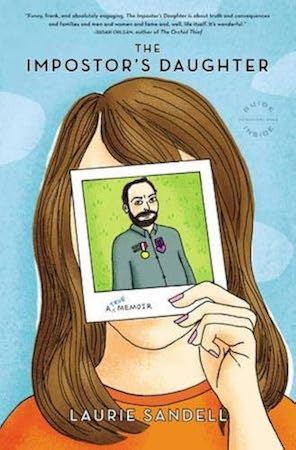
A memoir of a young heroine attempting the impossible task of competing for her father’s affections against a legend of exquisite literary renown. Ada Calhoun’s father, the great Peter Schjeldahl, attempted to write a novel of his hero, Frank O’Hara, and Calhoun picks up the mantle, attempting to complete it. In one sense, the Calhoun’s memoir reads like a question to be solved, as Calhoun inadvertently unravels a sense of her father, a parent who sought emotional distance in order to safeguard his creative efforts, as she reconstructs the life of the great poet. In another, a story of knotted affections between three creators. Whichever way you frame it, this memoir illuminates three artists’ pledges and obligations to work, artistry, and family; and complicates the ways in which we venerate our heroes.

Vacation Is No Escape From Her Sorry Husband

“Beyond Carthage” by Louise Kennedy

It had begun at dawn as they got off the plane, sparse plashes on the runway. By the time the coach deposited them at the Marhaba Aparthotel it was a slanted, dancing deluge. For three days they had been lying on their narrow beds, eating crisps and reading the guidebooks they should have read before the holiday was booked. From time to time they went to the balcony to examine the sky for a break in the clouds. Therese did not feel entitled to complain. Noreen had wanted to go to the Canary Islands, which according to Sky News were enjoying lows of 21 degrees Celsius. The same forecast assured them that the band of low pressure hanging over the northern tip of Africa would move off late on Tuesday. Their last night.

Therese had wanted to go somewhere exotic. To wander through a bazaar crammed with pyramids of heady spices, to drink amber‑hued mint tea from a gold‑painted glass. She had wanted to eat rich meats with her fingers while belly dancers and snake charmers whirled around her. She had wanted to go to Morocco or Egypt, but in her haste to get away had got mixed up. They were in Tunisia, not in a Berber village or by a Phoenician ruin, but in a purpose‑built concrete resort arranged around a new marina, as neat and airless as an architect’s model. Government‑controlled souvenir shops and blocky, modern cafés lined a promenade edged with palm trees still so tender they coiled in on themselves in the gales. To be fair, the Mediterranean was just a few yards away. They had seen it once, when a wave broke across the seawall and sent turbid water frothing over their shoes.

The waiter brought their cappuccinos. Noreen took out her phone and began scrolling through her messages. Therese left hers in her bag, so she wouldn’t be tempted to check again whether Donal had replied. She recognized the couple beside them from the flight. They were sitting in silence, their chairs turned to face the sea, shuffling coins around on their table. They flagged down the waiter and paid him. As he counted the money, the woman said, Every time you turn there’s one with a hand out. Young local men sat in clusters, smoking cigarettes and drinking shots of coffee. Some were with Dutch or German women who spoke English with heavy accents and traced smiley faces in the condensation on their beer glasses. There was clearly a want in them. What were they like, flirting with nineteen‑year‑olds they were old enough to have reared? And what could a boy like that see in a menopausal woman with bad highlights and a parched cleavage?

Noreen put her phone down and took a sip of her coffee.

Jesus, she said.

What’s wrong?

Mammy’s giving out about the Meals on Wheels. Says she won’t see a proper dinner till I’m back. The bowels will be trína chéile for the next fortnight. How are your lot?

Grand, said Therese. A stream of messages had come from Donal the previous evening. Enjoy, you deserve it. We miss you so much. He’d sent a video of a labradoodle playing the Moonlight Sonata on a baby grand, which was most unlike him. He’d even used emojis. Maybe he really was sorry. Therese sent him a curt inquiry about the school run, to which he still hadn’t replied. She kept her emojis to herself.

We need to find something to do later, said Noreen.

Will we have a look through the brochures?

I’ve looked already. All those places are outside, she said. It’s bucketing. And I’m choosing today. If there’s nothing else shaking I’m going on the piss.

The previous day, Therese had suggested they go to the market in the next town. They took a taxi to the medina and wandered through a network of gloomy alleyways.

They passed crates of small round turnips and radishes the size of tennis balls, bunches of mint and dill and savory. Butchers were selling merguez and chunks of sinewy goat from kiosks that didn’t have refrigeration. They saw no ceramics or leather goods or carpets, just tables laden with enamel saucepans and plastic utensils. When they emerged half an hour later, empty‑handed, their taxi driver was still there.

He’d better not charge us for waiting, said Noreen.

The man let out a sigh and started the meter. The resort is very new, very nice. Why do you go to old dirty places?

We want to go where the locals go, said Therese.

Local people do not have a choice.

Well? Noreen was saying. Do I get to choose or what?

Yeah, said Therese. You can choose.

They paid the bill and zipped themselves back into their damp fleeces. On the way out of the café, Noreen picked up a flyer and pushed it into her bag. They bent into the rain and ran back to the hotel.

In the room, they draped their wet things over a radiator. Noreen sat on her bed and took out the flyer. She read it front and back and handed it to Therese.

This might be nice, she said. On one side there was a photograph of a young woman draped from neck to knee in the whitest towel, slim legs slanted stiffly to one side, skin glistening. Her kohled eyes were looking up at the camera.

She was in a steamy room decorated with tiles in shades of turquoise and azure and gold. The price list for the Milk and Honey Hammam was on the other side. It’s not cheap, but there’s nothing to spend money on here, said Noreen. All I’ve bought is duty‑free.

It’s not the money. We should go on a trip. Maybe over toward Tunis.

I, said Noreen, wouldn’t be into that.

Can you not go to the spa by yourself?

I don’t want to go by myself! And you said I could choose.

It was Therese who had booked the wrong resort in the wrong country in the wrong season, after all. Oh, for God’s sake, she said. I’ll go if you come on a trip with me in the morning.

You’re on. She went down to the desk to book the total luxe package.

Therese took out her phone. Nothing. She didn’t want to talk to Donal, yet was annoyed by his silence. What was he at? Sending her cute videos and blushing emojis, then ignoring her.

Noreen came back and clapped her hands. They would be collected from the lobby at a quarter to three. She got two glasses from the bathroom and shook a bottle of rum at Therese, who prepared to explain again that drinking was a bad combination with the meds, that alcohol was a strong indicator for her strain of cancer. But she was tired of explaining, of denying herself. Feck it, she said. It’s not much fun being good all the time.

Noreen let out a whoop that was too big for the room. She poured two drinks, putting so little Coke in her own it looked like ginger ale. She shook salted almonds into a bowl and they brought their glasses out to the covered balcony. The storm billowed across the street below. Taxis, their lights blurred, deposited and collected holidaymakers, pulling off slowly and turning left in the direction of the promenade. Therese looked at Noreen. Grim, she said.

It’s not too bad.

You’re just being nice.

It’s great to get away.

Up to a point.

Noreen took their glasses inside to refill them. Maybe it wasn’t so bad. Better than looking at Donal for the week.

If we’re going to Tunis we might as well go the whole way. Beyond Carthage, said Therese.

I don’t even know where I am now. I thought we were going to Lanzarote.

It was an ancient city. The ruins are well preserved, and they’re a few miles after Tunis. Beyond them there’s a lovely village.

Therese got the guidebook and showed her a double‑page photograph. Whitewashed houses were built into a hillside so steep they seemed to overhang each other. Doors and windows and ironwork had been painted in shades of blue, and carpets of bougainvillea crept over walls and terraces. Blond tourists sat on sun‑bleached patios and looked out over the shimmering Bay of Tunis. Sidi Bou Said, she said.

It’s hard to believe it’s the same country, said Noreen.

A sudden gust caught some rain and threw it across the balcony. They went indoors.

Reception called to say their car had arrived. They weren’t ready. Therese didn’t have time to brush her teeth and her mouth was waxy from eating nuts. On the way down, Noreen answered everything Therese said with a loose laugh. When the lift doors opened, the few people who were sitting around the foyer were looking in their direction, Noreen’s guffaws clearly audible from a couple of floors away. A tall, slim man in jeans and a suit jacket was waiting by the desk. He said his name was Giuseppe. He brought them outside to his car, a model of Fiat Therese had never seen before. Noreen sat in the front beside him.

Loving the motor, she said.

Giuseppe put a plastic card in a slot and the dashboard lit up.

Buongiorno, said a deep electronic male voice.

Buongiorno yourself, said Noreen and slapped her thigh. Her movements had become expansive and inaccurate, and she knocked her elbow against the back of Giuseppe’s hand. The gold Rolex watch on his wrist was loose and made a tinny jangle.

Are you French, Giuseppe?

Italiano.

Very nice, said Noreen. Therese bit the inside of her cheeks to keep a laugh in. Noreen looked at her in the rearview mirror and stuck her tongue out.

Giuseppe braked hard when he needed to slow and took corners in third gear. When they got out, Therese put her hands on the roof of the car to steady herself. The flyer had shown a traditional bathhouse; they were outside the annex to an office block, a flat‑roofed concrete building with a row of high windows. Inside, they were greeted by a young woman wearing a white tunic and trousers, like a nurse’s uniform. She was heavily made up, her hair covered by a scarf. She led them into a changing room, gave them baskets for their belongings. She handed each of them a towel and a piece of turquoise tissue paper. Noreen unfolded hers. It was a pair of disposable knickers. She held them up in front of Therese’s face and tugged the elastic on the waistband in and out.

Ah here, said Therese.

They undressed with care, folding each garment as it was removed, placing it in the basket. The paper rustled beneath their towels as they wriggled into the surgical pants. Just as they were ready, Giuseppe came into the room. Therese looked around the walls and ceiling; he had come in so promptly she wondered had he been watching them on a monitor. She and Noreen stood side by side, their feet in white cotton slippers. Giuseppe stepped forward and tugged their towels away. It reminded Therese of a trick she had seen on TV when she was a child, involving a tablecloth and stacks of clattery china. Giuseppe looked at Therese’s body for a second longer than was polite. His removal of the towel was so flamboyant he would lose face by giving it back to her. Noreen crossed her arms over her breasts. They squashed out above and below, blue veined and creamy like Stilton.

Giuseppe looked at Therese’s body for a second longer than was polite.

He brought them into a steam‑filled room with wooden benches around the walls. Rain dashed the windows. Condensation ran down beige tiles. It was like the changing rooms in the public pool at home.

Relax, said Giuseppe, an instruction that filled Therese with anxiety. He left the room.

At first they sat facing each other, Noreen giving the floor a stellar smile. At least you’re thin, she said, without looking up. Then she stood. I’ll come over beside you, she said.

Therese’s moisturizer was trickling down her face and into her mouth. She could taste chemicals and salt. Noreen’s face was deeply flushed, her eyes pink streaked. It’s a bit mad, she said.

Just a bit.

Probably normal for here, though.

Therese didn’t think it was normal at all. Most of the local women covered their hair, wore long sleeves with loose trousers or ankle‑length skirts. She doubted many of them came to the Milk and Honey to be stripped nearly naked by Giuseppe. Noreen leaned back and closed her eyes, lids flickering like a child feigning sleep. Therese looked down at herself. Her right aureole was beginning to dimple, the nipple hardening. Sweat was coursing steadily now, over her throat, down along her sternum, collecting under her breasts. After months spent trying to keep them dry, they felt slimy and dank.

Giuseppe came back with fresh towels. Therese wound hers around herself. Noreen pushed her chin forward and puffed out a jet of rummy breath. She draped her towel over her arm and winked at Therese as they followed him into the next room. He took their towels again and ushered them under the showerheads that ran along one wall. The tepid water was bracing after the hot steam. A man came in, shorter and older than Giuseppe. He was barefoot and holding a tin bucket. He went at whatever was in it with a brush, eyes lowered. Giuseppe said something to him in Arabic. The man knelt beside Noreen. He flicked a clot of mud at her thigh and spread it outward, up and down, back and forth, until her haunch was covered.

Therese had an urge to flee but could only watch and wait. The man finished with Noreen and began to work on her. The mud was cold at first, then tight, the skin on her thighs and hips constricting as it dried. Her arms then, the brush skimming along the length of them and back. He twirled two fingers and she turned to face the wall. Long strokes now, the cloy of wet earth at the nape of her neck, in the elastic of the ludicrous turquoise knickers. Therese didn’t feel drunk anymore, just full of dread. She wanted to take the brush, smear herself in mud, cover her scars. Another twirl of his fingers and she could bear it no more.

No, she said. Thank you.

At first, when the tubes and drains had been removed, after the ragged blackened whorls had been shaved away, Therese had thought it looked pretty good. Clothed, her breasts looked better than ever; the left one had always been slightly bigger than the right and now they were the same size. She had refused a silicone implant. Even tooth whitening seemed unnatural to her, and she couldn’t bear the idea of a pouch of chemicals under her skin. The flesh to make a new breast had been taken from her abdomen, leaving a flat stomach and a pink groove that smiled from hip to hip. The reconstruction was a patchwork of flesh in different shades and textures, some run through with silvery stretch marks, some tanned, all tacked on to the milky shreds of what the surgeons left behind.

Noreen’s mud had dried to the dun‑gray of a wallowing mammal. It cracked when she bent an arm to scratch herself. The man ran the shower and hunched under the water with her, scrubbing at her with a loofah, limb by limb, torso back then front, brown droplets flaying his white clothes. When he was done, Noreen stood freshly pink and smiling.

It was Therese’s turn. Her scars grew bleary in the steam and splashing mud. Since the surgery she had thought about her skin differently, as though it was a fine veneer that mustn’t be scraped or tarnished. Now it felt raw, new. The man’s work was done. He bowed and backed away.

In the next room, an attempt had been made to temper the spartan buffness with candles and a diffuser that was panting sandalwood. Oud music was playing low in the background. Noreen claimed a massage table.

That sounds like sean-nós, she said. It’s shite.

Therese lay down. In private, she could face her body, her scars. Exposed like this she had to take on the reactions of other people, had to absorb their discomfort, their revulsion. She had only managed to attend counseling twice, as the weekly trip to Dublin wasn’t feasible. There was a support group in town, but she couldn’t bear the thought of sharing her feelings with friends of friends, women she knew to see. The breast nurse in the hospital had given her a booklet that she read until she had learned it by heart, ticking off the phases as they passed. Her cancer became old news. She hadn’t needed further treatment. She was still here.

Noreen shifted onto her side.

Are you all right, hun?

Fabulous.

Giuseppe came back in his shirtsleeves. He took off his cuff links; they were showy like his watch. Therese wondered at a boy his age in such a get‑ up, the impression he was crafting. He raised his arm and poured oil from a height as if he was partaking in a sacrament. Therese looked at the ceiling. She tried not to think about the slaps his hands made as he pummeled at the mounds and troughs of Noreen Foley’s body. She tried not to look but turned her head in time to see him clamp his palms over Noreen’s breasts and move them in a circular motion, more erotic than therapeutic.

It was a glorified brothel, with a clientele of desperate women. Giuseppe dressed as he did to appeal to golf widows from northern Europe, to women who found themselves single at an age when being alone made them feel ridiculous. He probably wasn’t even Italian. She and Noreen fitted right in.

Therese lay on her front with her face in the hole, her real breast flattened out and tingling at the graze of the towel, the new one a sturdy knot of flesh that felt nothing. He began at her tailbone and kneaded his way up to her shoulders. He hesitated then rolled her onto her back. The corner of her mouth was twitching.

Donal couldn’t stand to touch it. Once she had taken his finger and pressed it to the skin between the seams. He had forced a smile but pulled away when she placed it where the nipple used to be. Afterward he treated her to the full gamut of his foreplay repertoire, including a foray down below, which she didn’t even like. She doubted Donal much liked it either; he had stayed at the clean end when she was giving birth to the children.

A hard kaa sound then a slow inhalation came from the next table. Noreen had fallen asleep. Giuseppe held the almond‑scented oil above Therese’s scars, red lines like Biro marks, above the scraps of skin that held her heart in, some ribbed with silver, some tanned, all cut from her. She nodded.


Back in the hotel, Therese decided against a full shower, wanting to leave the oil on her body. She washed her hair over the bathroom basin. When she came out, Noreen was waiting with a drink. Therese took a sip. Her stomach heaved. Since the surgery, she had only been drunk once, on the night of the pink champagne. Noreen held her glass up.

Here’s to getting away. And to Geppetto and his wandering hands.

Giuseppe. And I can’t believe you just put me through that.

You loved it.

Feck off.

Thanks for coming with me. I go on holiday by myself no bother, but it’s nice not having to.

In the past Therese had pitied Noreen, the diet she started every Monday, the framed inspirational quotes she hung on her walls. Now she saw she had no right. Being alone wasn’t the worst thing. It’s great Donal doesn’t mind you going off by yourself, said Noreen.

Makes no odds to him. It’s during term time.

Dishy Donal.

He hadn’t put “dishy” in his profile. Cultured. Sensitive. Discreet. The three words her husband used to describe himself. To make other women want to fuck him.

They changed clothes and put on makeup. They took a taxi around the corner to a restaurant. It was quiet with warm lighting. Therese took the wine list from the waiter. She chose the most expensive white; she was in the habit now of wasting money, flaunting the silliness at Donal. He could hardly object.

She had discovered his purchase by accident. She rarely looked at their bank account. They didn’t have a big mortgage, and their salaries, after a slashing at the start of the downturn, had stabilized. There was even a little to spare, so neatly had they been living. Donal persuaded Therese to buy a new car. She wondered now if guilt had made him want to spoil her. Or perhaps it was a diversionary tactic, that she might not notice his five‑hundred‑euro transaction if other new payments were going out. But he had entered one extra digit on the car payment plan and the first installment had bounced. Therese saw the other payment and contacted Visa to report an error. The boy at the end of the phone asked her to hold while he checked. When he came back on he was tactful. Later, when she clicked on the site and found Donal’s profile, she replayed the conversation in her head and heard amusement in the boy’s voice. How stupid she must have sounded. There must be some mistake. No one from this house would be on a site like that.

Plates of food were carried past them to a table of local men, plump globe artichokes with a little pot of something on the side that smelled lemony, astringent. It wasn’t on the menu. The waiter recommended some traditional dishes. They both ordered a briq, a pouch of papery pastry filled with crab and egg. Noreen babbled ceaselessly, managing to finish her starter before Therese began hers, and drink most of the wine. Their couscous royale arrived. It was served in green and yellow pottery bowls, with a darkly spicy red paste on the side and a jug of broth. Noreen shook the empty bottle at the waiter. They were the only people in the room who were drinking alcohol. He brought two fresh glasses with the wine and asked who would like to taste.

Lob it in there, boss. We’ll soon tell you if there’s something wrong with it, said Noreen.

He was trying to be professional, but Noreen was pushing the clean glasses back at him. He poured wine from the new bottle into their greasy glasses and left it in the cooler. Noreen took a long drink. Jesus! she said so loudly the waiter rushed across the room.

Madame?

Mademoiselle. It’s rank.

I am so sorry. This is why I like to make the proper service.

Serv‑eece? she said. It has nothing to do with the serveece that you’re selling gone‑off wine.

I will bring another bottle.

Don’t bother, said Noreen. I’m sickened now.

The other diners had stopped talking. There was no need to speak to him like that, Therese hissed across the table at her. It was like dealing with a child. Not that Therese’s daughters would ever be so rude. Not in front of her, at any rate. Maybe they behaved badly when she wasn’t looking, like their father.

They paid the bill and hailed a taxi on the street. Noreen said they were going clubbing. End of. Therese could not even imagine what that might mean in Tunisia on a wet Tuesday in March. In the hotel foyer, they followed signs for Pepe’s Nite Club along a corridor. The place was huge and empty. The barman clapped his hands together.

What would the beautiful ladies like to drink tonight?

Therese asked for a Coke.

You’d be better off with something clean. Like vodka, said Noreen.

He gave them the cocktail list. It was full of misspelled sexual innuendo. Therese began to panic that Noreen would order her a drink with a pornographic name and leave her to claim it from the barman, so she went to a table and sat down. Noreen danced across the floor to her.

Therese began to panic that Noreen would order her a drink with a pornographic name and leave her to claim it from the barman.

This is a gas, isn’t it? she said.

The DJ left his box. He walked toward them, one hip swinging wide as he moved, as though one leg was shorter than the other.

Do you mind if I join you? he said.

Therese minded very much.

Feel free, said Noreen. She took off her cardigan, revealing a floral maxi dress. A necklace with her name on it was partly buried in her clothes, a gold NO flashing in the disco lights. Everything else about her said yes.

The barman brought a tray of drinks. Sex on the Beach for two, he said. His name was Kamal.

Noreen prattled away gamely. The weather was a nightmare, but you’d see worse at home. The local food was delicious, but the wine! The hammam was so relaxing. The men looked at each other.

We’re going on a trip tomorrow, said Noreen.

Oh? said Kamal.

To Carthage. And Sidi Bou Said.

The DJ said his name was Joe. The barman called him Youssef. He was twenty‑two. The lighting made him look older, defining his nose, shading his temple and jawline. He told Therese he had green eyes. She didn’t know where to look.

The cocktail was so sweet her teeth were tingling. Joe offered her a cigarette. She put one in her mouth and Noreen screaked. You shouldn’t be smoking.

No one should be smoking.

You really shouldn’t, said Noreen. Therese had cancer last year. She did great with the surgery. She had one of them off. No chemo, though. Very lucky.

Stop, said Therese. Joe sparked a lighter under the cigarette. The smoke tasted revolting.

Me and Therese used to work together, said Noreen. I had to take leave of absence to look after my mother. Daddy died last year. We had an annus horribilis. She pronounced it anus.

You fucking eejit, Therese said softly. Noreen began to laugh.

Joe went back to the DJ box. He put on a slow song. Noreen roared “unbreak my heart” when the chorus started. Kamal went back to the bar and sloshed the contents of the ice bucket into the sink.

I’d say that pair are looking for the bonk, said Noreen as the song faded out.

They couldn’t wait to get away from us.

Fuck them. C’mere, are you glad we did that today?

Not really. I wasn’t expecting to have to show the world my mutilation.

It was only me. And the wee man with the bucket. And I’m sure Geppetto has seen worse.

Thanks.

Seen it all, I mean.

Noreen lifted her glass to her lips. Some of the drink didn’t make it and dripped from her chin. She wiped the back of her hand across her mouth, leaving her cheek and knuckles glistering with lip gloss. I was so looking forward to this holiday, she said.

Me too, said Therese. It wasn’t true. She had come to annoy Donal. She had begun withholding from him, denying him, in the hope it would make him feel as wretched as she did. Pathetic, really. There wasn’t much point in withholding yourself from someone who didn’t want you. The afternoon had been bizarre. A scrawny youth dressed like an eighties Roger Moore had touched her new breast, groped it and rubbed it because she had paid him to. He had scarcely drizzled oil over her when she became tearful. The skin was numb and monstrous beneath his fingers. I’m afraid of hurting you, Donal had said to her. She hadn’t been able to tell him that there was no sensation. It was dead, like a hide. In the months that followed they grew shy with each other. She thought it would pass. Then the car payment bounced.

When he came home from work that night, she was waiting at the kitchen table. She had drunk the best part of a bottle of pink champagne, a get‑well present. Later she regretted her choice of drink. Whiskey or brandy would have given the proceedings some gravitas. The confrontation was exhilarating. She had found herself online too, she told him. Oh yes. She had gone online to find out why. Cosmopolitan told her it was meaningless, that loads of middle‑aged men watched porn and preferred sex with strangers. As she was reading, ads for sex toys and vibrators had flashed at her. And you know what? She might buy some, because it wasn’t up to much, in fairness, that side of it, when she had to squash him in because he was a bit wishy‑washy in that department. It was intoxicating, getting to say anything and everything she had ever wanted to say. And there was so much, wasn’t there, that you could say to someone who had given up their right to fight back? Someone who stood in front of you full of a shame you could hardly bear to behold, because you were full of shame yourself.

She had tried to calm down. In fairness, she said, she didn’t blame him. It must be so dreary being married to her at the best of times. And now, with her Frankenstein boob and sensible clothes. To be honest, she wouldn’t mind being ridden sideways by someone new, a young fella with a langer you could hang a coat on. But in fairness, in fucking fairness, she would be actually embarrassed to put herself out there. As for the words he used to describe himself. Ha! Cultured. Sensitive! Discreet? Such a laugh, she said. Only she didn’t feel like laughing because she didn’t think anything would ever be the same again, and even though he had only set up the account, and there was no activity on it, and she could see he had tried to close it, it was too late. He had wanted to go elsewhere and now he could fuck away off elsewhere and into the spare room, where he still slept.

Noreen finished her drink and crossed the empty dance floor in the direction of the toilets. Therese followed her. She was in a cubicle, the door jammed open by her backside. Therese held her hair out of her face until she had finished retching.

I’m fucking twisted.

Therese leaned over her and pressed the flusher. Come on. We haven’t far to go.

When they came out Joe was gone. Kamal jiggled a bunch of keys until they were through the door. Noreen reeled between the walls on the way to the room. At the sight of her bed, she hurtled onto it in her clothes. Therese covered her with a bedspread and left a glass of water on the locker beside her.

There was a rap at the door. Joe was in the corridor, wearing a leather jacket.

I didn’t say good night, he said. His eyes were green, all right.

After he left Therese went out on the balcony. It had stopped raining. The flooding on the asphalt had begun to drop and the wind was down. She sat for a long time and watched the deserted street, night fading to dawn. There was a text from Donal. The kids had got hold of his phone and sent those daft messages. Her poor girls. They had taken to coming into her bed in the mornings, asking why their father was in the other room. If there was anything more shameful than getting a knee ‑trembler off a young fella in a hotel corridor, it was the idea of her daughters trying to make things right.

She was showered and ready by eight. She read the train timetable once more, memorizing where to change for the other line that would bring them along the coast.

She shook Noreen’s shoulder. Shift yourself, she said. Our train’s at eight forty.

Noreen heaved onto her side. I’m in rag order. And I’ve enough of looking at ruins living with the mother.

Therese threw a sachet of Alka‑Seltzer at her. What’ll you do for the day?

I might go back to the hammam. See what the story is with that Geppetto fella.

Therese walked to the station. It was dull, but there was warmth in the sky that seemed to promise sunshine. She sat by a window, relieved to be in transit, rattling away from the resort. She changed at Tunis, taking a path through a dilapidated part of town and boarding a train at another station. Noreen would have hated it. After a few stops, apartment blocks and auto‑repair stores thinned to show glimpses of scrub‑covered dirt, flashes of sea. The carriage was full, a party of French students taking up the rest of the seats. When the train arrived at Carthage she let them get off ahead of her. She waited until they had joined the queues and walked to where she had a clear view of the pale green sea. The seam of cloud had begun to break up. Weak sunlight slanted across the stone. The ruins were laid out in front of her, pooled with rainwater that glittered like crystals of salt.

A Woman Escapes Her Marriage by Turning into a Forest

A woman turns into a forest. So begins Maru Ayase’s novel, The Forest Brims Over, translated into English by Haydn Trowell. Rui Nowatari is an (in)famous muse for her husband’s romance novels; one day, she swallows a handful of seeds and germinates. What follows is a layered exploration of what it means to create, and the gendered labor that goes into sustaining artistic creation. The Forest Brims Over is also a collection of multiple viewpoints, offering a broader look into Japan’s contemporary literary landscape.

Haydn Trowell’s translation lets the vivid nature imagery shine, juxtaposed against details of urban Japanese life. The Forest Brims Over wryly balances the mundane with the fantastical—Rui still worries about serving her husband’s editor coffee, even as she is sprouting from every pore on her body. With moments like this, Ayase’s novel shows how deeply engrained systems of gender inequity and exploitation are in our modern-day world. Yet, through alternative realities, it also gives us a glimmer of how things could shift.

Maru Ayase is the author of eighteen books; The Forest Brims Over is her first novel to be translated into English. Haydn Trowell is a literary translator of contemporary Japanese literature, such as Love at Six Thousand Degrees by Maki Kashimada.

This interview was translated by Haydn Trowell.


Jaeyeon Yoo: What drew you to this novel’s blend of nature-based surrealism and urban realism? Similarly, what inspired you to have Rui turn into a forest? Ovid’s Metamorphoses famously has women turning into trees, but here Rui transforms into an entire ecosystem, not just one singular object.

Maru Ayase: I’ve always enjoyed writing novels with a touch of fantasy. In my debut work, I depicted a world where people have different plants growing on their skin for each genealogical line. This was an attempt to visualize a person’s aging process or their relative distance from death though the use of plants and flowers. I use fantasy when I want to visualize some invisible facet of reality, such as people’s emotions, time, or their inner world, and deal with it in an easy-to-understand manner. In my novels and short stories, fantasy is a tool to depict reality in a way that brings it closer to our actual experiences.

The Forest Brims Over evolved from my interest in exploring the relationship between people who engage in expressive art and the subjects of their expression. As I mentioned, I like to use fantastical elements to visualize that which can’t be seen by the naked eye, so there was a smooth progression from the idea of a wife suffering within an unequal relationship to her becoming a plant in a water tank, thriving on emotions that are difficult to put in words.

JY: I found The Forest Brims Over to be an acute exploration of gender norms, but also a depiction of exploitation within the literary and publishing world. Could you talk more about how these two systems of inequity interact, for you?

MA: I think it’s important to pay attention to who’s creating gender norms, and whom they’re for. I’ve always felt that the “nice woman” stereotype that tends to pervade old Japanese novels—in which women are depicted as selfless, placing others before themselves, with a childlike innocence (or mystique), kind and reserved in public but sexy in private, existing primarily to affirm male characters—was always far removed from my own reality. I suspect that because the literary world in Japan has been male-dominated for so long, male writers have had more opportunities to create works featuring that kind of stereotype.

In Japan’s modern publishing industry, there have certainly been cases where male writers have published literary works about their own wives or close female relatives, withholding anything unfavorable about themselves, only to later be told that they’ve been party to an unequal relationship. Strictly speaking, there aren’t many male writers in Japan today who write personal novels about the women around them in the way that Nowatari does (though, of course, this doesn’t mean that misogyny has been eliminated). However, The Forest Brims Over doesn’t focus solely on the publishing world—rather, it’s an attempt to write, and through writing, to deconstruct the atmosphere of disregard for women that I have felt in Japan throughout my life.

JY: How do you view the role of the editor within these systems?

MA: Personally, I think an editor who can unite the streams of various works and weave them into a powerful current can have more influence on broader culture than individual authors. So I think editors should ask themselves, “Is this work, this expression, good for humanity? Is it something that might hurt certain groups due to hidden assumptions or prejudices?” Of course, it’s important for writers to consider these questions too, but I would like editors to act as reassuring gatekeepers, rigorously scrutinizing new works.

JY: The Forest Brims Over insightfully pointed out how gender norms also affect men and our expectations of literature—such as how Nowatari Tetsuya (Rui’s husband) is not content with his romance novels, as successful as they are. What do you see as the link between society’s expectations for genre and gender?

I think it’s important to pay attention to who’s creating gender norms, and whom they’re for.

MA: Society’s expectations when it comes to genre are more or less just broad assumptions. People often assume that certain genres are more geared for female readers and that others are more suited for men, but that kind of assumption only serves to crush newly budding works and deny us fresh, invigorating ideas. I wish they would go away. Whenever I find those kinds of assumptions within myself (and they’re absolutely there—they’re never completely absent, and I feel embarrassed each time stumble on one of them), I feel the need to carefully weed it out, reminding myself that the world isn’t quite so simple.

JY: What are your thoughts on loving flawed, even problematic art? I’m thinking of how much Nowatari’s debut novel meant to his young, female editor, for example.

MA: Not being able to recognize art that is flawed or problematic is something that makes me very uneasy as a reader. As an author, I am always concerned that I may one day be seen to have created flawed or problematic works due to ignorance or a lack of perspective. Sometimes, problems aren’t fully recognized until later eras. I think it can happen to anyone that one day, a work of art that you love suddenly turns out to be flawed or problematic. It can be a difficult thing to accept, but it’s important to take a step back and ask yourself if you’ve ever had any inklings about the work’s questionable elements, and what it was about the work that attracted you to it in the first place. I think one way to help yourself after discovering something like that about a work you loved is to continue contributing to society to prevent similar flaws and problems from repeating. This kind of perspective is only really possible for those who have had a close relationship with such works and issues. I know it’s difficult, but it’s important to remember that any work, no matter how wonderful it may seem, can have its own inherent flaws.

JY: Theorist Judith Butler describes gender as performative, a repetition constantly performed and enforced by society. I appreciated the range of characters in The Forest Brims Over; some overtly struggled with gendered expectations, while others seemed to find meaning and pleasure through performing their variously gendered roles. How do you see performance interacting with societal norms and artistic aspirations?

MA: I believe that social norms continue to exist because of the attitude that it has long been commonplace to label and categorize people, and because of the belief that norms can easily function as an axis for evaluating any discrepancy when competition arises within the categories created by those labels. Norms can be fun if they are successfully enacted, and painful when one fails to conform to them. That being said, they are only meaningful within their categories. Personally, I hope to one day see a society where categorization isn’t a prerequisite. However, I also understand that there are people who see things differently than I do, who consider those labels important parts of their own personal identities.

JY: Speaking of norms and expectations, Rui becomes “a character in a fable,” as the novelist’s editor describes—automatically equated with her character. Do you have more to say about our assumptions about the “muse” and fictional female characters?

The Forest Brims Over is an attempt to deconstruct the atmosphere of disregard for women that I have felt in Japan throughout my life.

MA: I believe that reality and art are mutually intertwined. First you have reality, and then, a little later, art is created to interpret it. The next generation grows up reading or watching said art, and in turn, creates the next reality. As a child, I remember making all kinds of subconscious judgments about how female characters are treated in works of fiction—like whether or not they are given power or wisdom, or what kind of image the author is trying to create for them—which ultimately led to me either liking or disliking particular characters and the works themselves. It’s scary to think that art is made up of all these inherited assumptions, but at the same time, I like to think that the strength of art lies in its ability to deconstruct those same norms and traditions.

JY: Yes, and The Forest Brims Over is extremely preoccupied with the life-altering forces of fiction. The novel’s last conversation is more of an impasse—neither Rui nor Nowatari is sure of how to make art within the cutthroat modern world. I was moved by the tenderness that Rui still has towards her husband, and her desire to not continue this territorial conversation around gender. Do you feel there might be alternatives to the cyclical systems of violence, competition, and misogyny?

MA: That is a very difficult question. One thing is certain: the joys of being in a relationship simply cannot arise from [these] cyclical systems. You can act all-powerful in a small community, such as in a family or a company, domineering over others, occupying every resource, oppressing everyone else—but you’ll always feel lonely. You may tell yourself that you aren’t lonely, but you are. The forest was an impasse, but it was fortunate that Nowatari and Rui were able to get across to each other in its depths, and that Nowatari was flexible enough to allow that conversation to take place. To me, that passage within the novel is a sort of prayer. Perhaps we can open up a different path when we have a greater awareness of value and gain—not just of “commercial success” or “power,” but of the joy of being in a relationship.


About the Translator

Haydn Trowell is an Australian literary translator of modern and contemporary Japanese fiction. His translations include Touring the Land of the Dead and Love at Six Thousand Degrees by Maki Kashimada, The Mud of a Century by Yuka Ishii, and The Rainbow by Yasunari Kawabata.

When the Museum of Memory Becomes a Haunted House

Jiordan Castle’s memoir-in-verse Disappearing Act follows the teen-version of herself as she lives through the arrest, court proceedings, and subsequent incarceration of her father while navigating the fraught years of the transition from girlhood to adolescence. Through mostly narrative poems‚ Castle invites us into her world as it’s changing faster than her mind can keep up.

The book’s dedication—”For me then, and for you now” —immediately signals to the reader a rare intimacy; that we will be led—sometimes smiling, sometimes wincing—into a moment in time not often shared beyond the performed facade of the nuclear family. Disappearing Act begins mid-story—following an FBI raid, Jiordan’s father’s suicide attempt, bad news from the attorney, Jiordan’s refuge with her best friend and their endless online personality quizzes (it being the early aughts)—the book progresses in a mostly chronological order.

In books about prison and “crime,” readers often desire—feel entitled to, even—grizzly details (look no further than the proliferation of true-crime podcasts and TV series). Castle deftly subverts this expectation: in Disappearing Act, we learn more context than content—her father’s mood swings; her mother’s torn support; her older sisters’ balancing of their own lives—though the reader does get a vague understanding that the father is guilty and the crime is money-related. This is not an attempt to hide or minimize the father’s actions, but is instead mimetic of a teenager toggling dizzyingly between an “adult,” “mature” perspective and the innocent confusion, sadness, anger, and helplessness of a young child.

Castle and I discussed her experience of crafting this book from painful memories; the role of the self in grand themes of “crime” and “punishment,” and how she navigated the personal and the secret when disclosing sensitive information.


Leigh Sugar: Disappearing Act is written in the voice of an early teenage you. What was it like writing the then-you, as the now-you?

Jiordan Castle: I have this sense of an inner child and a secret self when I write about myself, my life, no matter the when or the topic. To pull something not too grisly from True Detective, I think time, to me, probably is a flat circle. The person who lived this book is also the person who wrote it, but in time traveling through memory, I got to look at the character of myself as a kind of younger sister. I got to be generous and real and mean and thoughtful about the realities of coming of age in a way you can’t when you’re in it.

LS: That’s so interesting to me, because I realized recently I don’t have a strong connection to my inner child; I don’t really experience my life as continuous; it feels very disconnected. How did you get yourself in—and especially, out—of that inner-child/secret self headspace?

In time traveling through memory, I got to look at the character of myself as a kind of younger sister.

JC: For most of us, I think the hard-hearted memories live right at the surface. But that’s not all there is. I remember the funniest things, the sweet things. And when you’re a child, you’re feeling everything for the first time. Everything is, in some sense, the end of the world. And the beginning of a new one. I still feel that about that time, so it was easy enough for me to drop into character in a way and let myself feel the too-much-ness of that time. I remember presents and fights and how certain shirts looked and felt.

It also helped for me to create a playlist from that time in my life, and a playlist that’s more like what writing the book felt like to me. Having the two in conversation with each other is something special.

LS: What is different about this version than, say, a version for an “adult” audience?

JC: It’s so complicated because I do consider this book to be what I call “YA+” as if it’s for young adults and the dot dot dot of adults reconnecting with that version of themselves. Because this story still lives in me, I know it lives in other adults with similar experiences. The people I love talking to now, after readings, are teenagers who have a loved one in prison or have a friend who does, but also mother-daughter pairings. I find that so interesting. And it reminds me that maybe if we just allowed ourselves—and each other—to love what we love in earnest, without shame or bias, we would come to a place of more “we” than “I.” I’m looking for that “we” more and more these days.

I can’t ignore the fact though that if I had written, let’s say, a chronological, prose memoir looking back at the past in past tense—an adult lens on a teen experience—I would have a radically different book. I can’t say whether it would be better or worse (or whatever that means), but I do think it would pull me as the narrator further from the story I most wanted to convey.

LS: A bit off topic but… do the words “better” or “worse,” in terms of writing, mean anything to you? If so, what? If not, why?

JC: So, I used to fancy myself only a baker, but over the years I’ve felt more naturally like a cook. Sauce, salt, an imprecise, rolling boil — all of it easier and also less than what it takes for me to measure and trust the spice level in a cake. I like the rhythm I can get into in cooking, how I can be early or late with ingredients and still end up okay. It can resemble the picture in my mind or produce a new one. With baking, you forget the baking powder and it can be over, just like that. But you learn. Sometimes it’s good to go for the gold with a loaf of banana bread and know I nailed it because I paid attention, I abided by the rules of science. Other times, I like the madness of throwing things in a pot. Both are true for me as a writer.

Sometimes I needed to treat a haunted house like a museum.

I become a better writer (and cook!) by trying, by doing. I have bad writing, I have good writing. And it’s okay. The power and privilege of allowing ourselves both, all in service of art and sharing it, whether it’s just with ourselves or an audience. 

LS: Ok, back to memoir/memoir-esque related questions. How did you wrangle your mind to the place of deep memory in order to recall events and craft the narrative, especially when those memories were painful or traumatic?

JC: When I felt stuck in the murk or like a villain for writing the book at all, like a traitor to my original home team, I forced myself to think of the you I was writing for — that big picture of me then and you now. I needed this book to be in service of something bigger than myself, and sort of pinching myself awake to that realization over and over helped me focus when I got bogged down in the painful parts. Sometimes I needed to treat a haunted house like a museum. A sort of look but don’t touch mentality, to have a feeling or a memory, without letting it have me.

Much easier said than done though, and honestly, sometimes I just… you know, I ate a cupcake. I took a walk. I pet my dog. I hugged my husband. I called a friend. The book is a time capsule, not a live account of my feelings, but I had to remind myself of that. I still do.

LS: Did anybody discourage you from publishing this book, and how did you make your own decisions about what you’re “allowed” to write and share?

JC: Unless you’re a public figure, probably no one is going to ask you to write a memoir. Chances are you’re doing something that goes against, period. I’ve said before that every character in my story, my book and my life, is the main character in theirs. I wanted to treat them with respect, compassion, and nuance, but I’m only one lens. I’m only me. Trying and failing and trying again to walk that line is the best I could do.

But part of the reason Disappearing Act isn’t a novel instead is because I own this experience. I want to own this experience. I was lonely for people to share it with when I was young. If even one person reads my book and feels less alone or more known, a hint that there’s another side to the mountain they’re climbing, that’s enough. That’s my peace.

LS: Oof, the loneliness piece I very much relate to. You and I are both White Jewish women, and as such are not a demographic typically thought of when we discuss incarceration and related topics. I’m not sure what the question is here, but I wanted to name that reality, and all the privileges—and loneliness—that can come with it. Do you have any more thoughts about how your particular intersectional identities affected (and continue to affect) your experience with the criminal legal system?

JC: Yes! This is one of the many reasons I’m grateful to be talking to you about this. I hope to help people who aren’t having conversations about prison have conversations. And for young people affected by incarceration for the first time, with so little control, to have even one adult voice validating their experience. That’s something I can do from my niche position.

Time doesn’t heal all wounds. Sometimes it stuns you into silence.

For people of color, it’s always been exponentially easier to become incarcerated and stay that way. There’s too much to say here, but the socioeconomic breakdown, the poverty to prison pipeline, is very real—and also not my personal experience. I was lonely for peers with a family member in prison when I was young, and it’s not that thousands of them didn’t exist. It’s that we didn’t talk about it, didn’t have as much access to online communities like ours, and that the majority of kids with any such experience didn’t look like me. I want us to keep talking about that.

LS: What is (or has been) the hardest aspect of your experience to communicate in your writing?

JC: In this book, it’s probably how much love went into my family. Even when I hated us or we hated each other. I was young! Time doesn’t heal all wounds. Sometimes it stuns you into silence. Sometimes it gives you perspective. I was born into this pack of wolves and they were mine and I was theirs. Nothing erases that and, at least for me, nothing should. You write a book, you break a kind of code. I know that. It’s hard to communicate what that code consisted of and what it consists of now. I also think that a memoir really is a story, a past tense, a time capsule — and not a smoking gun, a live feed, or the world as I know it now.

7 Heart-Pounding Heist Novels

A great heist story features criminals we love to hate. While we disagree with their actions, a team of thieves is bound to bring drama and keep the pages turning.

This genre has been immortalized in classic films like the Ocean’s 11 series, but there is a bevy of fantastic novels that push the boundaries of what crime fiction and literature is and give us robbers with intricate schemes that tantalize readers with their exploits.

The books on this list range from classics to new literature, all in pursuit of the perfect heist like in my recent novel The Great Gimmelmans, which follows a family in the 1980s that lose all their money in the stock market crash and start robbing banks, kids and all, out of the only thing that hasn’t been repossessed, the family’s gas-guzzling RV.

Here are some other stellar heist tales to add to your collection.


The Getaway by Jim Thompson

A quintessential classic, The Getaway transcends a typical bank robbery novel. A chilling portrait of a heist gone awry without a romanticized getaway for its protagonists Doc and Carol, a charming criminal and a former librarian seduced into this depraved world. The elements of the heist become stripped away as Doc and Carol mix love with self-preservation and a hellish surprise ending that’s as twisted and cynical as all of Thompson’s novels. The original film with Steve McQueen is excellent too, but skip the remake.

Blacktop Wasteland by S. A. Cosby

Blacktop Wasteland sets up the career criminal who attempts one last job to position himself for financial freedom. Beauregard or “Bug,” a Black man in the rural south isn’t looking for a big score, but to pay for his child’s braces, keep his mother in a nursing home, and keep his auto shop alive. When he joins as a wheelman in a diamond heist, what follows is a breakneck, adrenaline ride, but also a searing rebuke of racism in the south and the opportunities Bug wants for his children that he was never able to have. Lyrical and heart-stopping, this book is a must for heist fans and fans of literature in general.

Portrait of a Thief by Grace D. Li

From a bank and diamond heist to the world of art, Portrait of a Thief follows Will, a Chinese-American senior at Harvard, as he assembles a crew to steal back five Chinese priceless sculptures looted from Beijing centuries ago. If they succeed, they walk away with fifty million dollars, but if they fail, they lose everything they’ve worked for and the chance to take back what colonialism has stolen. A thrilling, but also beautifully written and thoughtful critique of the enduring effects of colonialism.

Cherry by Nico Walker

In Cherry, we follow the empty and aimless narrator who starts off with a goal of casual sex and drugs before joining the army and coming home as an opioid addict. To fund his addict lifestyle, he robs banks. With stripped-down prose, the novel is bleakly comic and a takedown of how soldiers are discarded when they return home. Equally thrilling in parts while also giving a commentary on impoverished America, Cherry showcases the reality of American occupation abroad and the dangers of addiction.

Ballad of the Whiskey Robber by Julian Rubinstein

In the non-fiction Ballad of the Whiskey Robber, we follow Attila Ambrus, an anti-hero bank robber who is also a professional hockey player in Budapest. It’s bizarre and hysterical while touching on Hungary’s past and Europe during and after the fall of Communism. Attila is sympathized with and considered a hero for outwitting the corrupt Hungarian authorities. Rubinstein has brought to life a character whose travails veer from comical to heartbreaking. A larger-than-life true crime story you have to read to believe.

Canada by Richard Ford

Canada follows 15-year-old Dell Parsons, who must fend for himself after his parents are arrested for robbing a bank. He’s looking back in the present time on the calamitous events, which happened fifty years ago. “They were not the people to rob a bank,” Dell will say. The theme of the novel points out not how the criminals were affected, but their offspring. Making the arrest a defining moment in Dell’s life that set him down a path of destruction, Canada is a book about lament and despair that is spare and unflashy.

The Wheelman by Duane Swiercynski

A non-stop thrill ride that never lets up. The Wheelman follows Lennon, a mute Irish getaway driver who’s fallen in with a heist team that chooses the wrong bank to rob. Add in dirty cops and the Russian and Italian mobs through the streets of Philadelphia, and this classic noir is reminiscent of Dashiell Hammett. Lennon is like John Wick; knock him down and he gets right back up. The book is over-the-top with chapters that punch you in the throat, with sections opening with quotes from real-life crooks. A gem of a crime novel.

Which Looks Better, Hardcovers or Paperbacks?

An enduring battle between book lovers is that of hardcovers versus paperbacks. Ultimately, your preference might come down to many factors. Hardcover fans insist on the book’s durability and quality and being among the first to purchase a long-awaited release, while paperback lovers advocate for the cheaper price and lightweight design. But in addition to the price and release date, there’s another factor to consider: the cover design. To celebrate the paperback release of managing editor Alyssa Songsiridej’s debut novel Little Rabbit, we’re comparing the covers of 20 books with both hardcover and paperback editions from the past two years. We’re back with our Book Cover Contest series, in which we judge books by their covers based on our Instagram and Twitter poll results. 

The Employees by Olga Ravn

The Employees is the humorous story of a space voyage piloted by humans and humanoids alike that delivers a stinging critique of productivity culture. The hardcover edition leans into the sci-fi setting with its eye-catching design reminiscent of the cosmos, while the paperback version displays a nightmarish image of a water cooler overflowing with black liquid. Our voters decided on the satire of corporate culture.

WINNER: Paperback

Activities of Daily Living by Lisa Hsiao Chen

This debut novel from Lisa Hsiao Chen follows Alice, a Taiwanese immigrant who, while caring for her ailing alcoholic stepfather, becomes fascinated with the enigmatic 1980s downtown performance artist Tehching Hsieh. Both covers are inspired by Hsieh’s radical use of time: the hardcover features a repeating pattern of squares reminiscent of a calendar, while the paperback’s stretching gestural figures suggest the slower passage of Alice’s daily life. Ultimately, our readers preferred the fluidity and movement of the paperback cover.

WINNER: Paperback

Sarahland by Sam Cohen

In Sarahland, Sam Cohen imagines the wildly different lives of a cast of characters who all share the name Sarah. The bright pink and green of the hardcover edition’s background is offset by the gravitas of the black-and-white photograph of dolphins leaping out of the water. In contrast, the paperback version’s colorful cartoon objects suggest the multiplicity of lives and narratives within the collection. Our readers voted for the fun and eye-catching paperback cover that taps into the collection’s playful nature.

WINNER: Paperback

Small World by Jonathan Evison

Jonathan Evison’s Small World is an epic novel that chronicles 170 years of American national development from different points of view across space and time. The hardcover edition leans into the idea of westward expansion by featuring a path cutting through a wheat field under a bright blue sky. The paperback brings together the many lives and narrative perspectives within the novel through a collage of faces and natural landscapes connected by the transcontinental railroad. Our readers overwhelmingly preferred the vivid imagery of the paperback cover.

WINNER: Paperback

Four Treasures of the Sky by Jenny Tinghui Zhang

Four Treasures of the Sky is a dazzling historical fiction debut set against the backdrop of the 1880s Chinese Exclusion Act, following a heroine named Daiyu as she struggles to make her way in the American West. The hardcover features an abstract design of a fish leaping out of a swell of waves in the shape of a woman’s face, while the paperback leans into the historical setting with Daiyu’s face rising from the clouds above a Western town. Both covers suggest the theme of rising above difficult circumstances, but readers overwhelmingly voted for the hardcover design.

WINNER: Hardcover

The Marriage Portrait by Maggie O’Farrell

In The Marriage Portrait, Lucrezia, the third daughter of Cosimo de’ Medici, navigates the trials and tribulations of the Florentine court and the mysterious motives of her new husband. The hardcover is an adaptation of the eponymous marriage portrait, painted around 1560 and attributed to Bronzino or Alessandro Allori, overlaid with orange stripes to dramatically reveal Lucrezia’s face. The paperback cover is a colorful tangle of plants and animals inspired by the Medici menagerie and the fantastic creatures of the grotteschi decorations in Italian Renaissance palaces. Ultimately, our readers preferred the more mysterious and haunting hardcover edition, which conveys the novel’s theme of reclaiming women’s voices to uncover long-buried secrets.

WINNER: Hardcover

How Not to Drown in a Glass of Water by Angie Cruz

How Not to Drown in a Glass of Water tells the story of Cara, an immigrant from the Dominican Republic who faces unemployment during the Great Recession and struggles to begin a new career. The bright blue and yellow cover design of an abstract figure holding a glass of water contrasts sharply with the warmer, softer illustration of a woman’s upper body. Our readers preferred the more literal interpretation of the book’s title.

WINNER: Hardcover

The Confession of Copeland Cane by Keenan Norris

The Confession of Copeland Cane follows a Black teenager coming of age in East Oakland, California while struggling against the forces of surveillance and the police state. The hardcover image of a wall of colorful bricks was followed by a paperback edition featuring a painting of a young man gazing thoughtfully upwards. Our voters preferred the paperback version, which gives us a window into Copeland’s humanity.

WINNER: Paperback

I Hear You’re Rich by Diane Williams

This collection of 33 very short stories embodies Diane Williams’s mastery of strange, suggestive flash fiction. The hardcover edition, featuring a figure from classical mythology bedecked with a wreath of grapes indicating Dionysian wealth and excess, is perhaps more befitting to the collection’s title and triumphed over the paperback cover, a more simplistic black-and-white image of a bird.

WINNER: Hardcover

Groundskeeping by Lee Cole

Groundskeeping is the love story of Owen, an Appalachian groundskeeper with writing aspirations who takes a job at a small college, and Alma, the college’s Writer-in-Residence who comes from a successful family of Bosnian immigrants. The hardcover edition succinctly embodies the theme of connection across differences with an image of two intertwined leaves. The paperback is a pictorial representation of Owen’s groundskeeping work that hints at the central narrative, which our voters selected as their favorite.

Winner: Paperback

Checkout 19 by Claire-Louise Bennett

In Checkout 19, a woman revisits the small traumas and triumphs that have shaped her life to explore her personal history as a writer. The abstract shapes and vivid colors of the hardcover edition suggest this dizzying journey, while the paperback image of a woman’s head covered by a blanket might have seemed comparatively listless for voters, who chose the more energetic original design.

Winner: Hardcover

Little Rabbit by Alyssa Songsiridej

This debut novel from Electric Literature’s managing editor Alyssa Songsiridej follows the complex relationship between a young writer and an older choreographer she meets at an artists’ residency. Our readers preferred the hardcover edition of two kissing faces overlaid with gestural lines that suggest the fluidity of dance over the vivid colors of the paperback version.

Winner: Hardcover

The New Life by Tom Crewe

This debut novel is a reimagining of the lives of John Addington Symonds and Henry Havelock Ellis, two Victorian men who collaborated on one of the first medical texts about homosexuality. The contemplative black-and-white cover of two men gazing at a pond is overlaid with a rotated circular image which suggests an alternative mode of existence. The paperback edition, which our readers preferred, restores a sense of liveliness and interpersonal connection to this work of historical fiction.

Winner: Paperback

The Imposters by Tom Rachman

The Imposters is narrated by the obscure elderly Dutch novelist Dora Frenhofer, who decides in the midst of lockdown to come to terms with the complicated interpersonal relationships she’s had over the course of her life. Our readers preferred the hardcover’s stark gestural figure of a woman set against a background of watercolors over the paperback’s pictorial representation of silhouetted figures flying kites over a rosy urban skyline.

Winner: Hardcover

In Memoriam by Alice Winn

In Memoriam is a love story that follows World War I soldiers Gaunt and Ellwood from the idyllic grounds of their secluded English boarding school to the trenches and battlefields of war-torn Europe. The original hardcover edition features a dramatic black-and-white image of nighttime rockets exploding over no man’s land, but our voters favored the paperback cover’s warmer pastel-toned painting of a swimmer gazing contemplatively out to sea.

Winner: Paperback

The Black Period: On Personhood, Race and Origin by Hafizah Augustus Geter

This experimental memoir combines lyrical prose and criticism to narrate a poet’s origin story as the daughter of a Muslim Nigerian immigrant and an African American artist. Our readers narrowly selected the paperback edition featuring the author’s family photo, perhaps more fitting for the form of a memoir, over the hardcover’s eye-catching painting of a woman symbolically connecting to her roots.

Winner: Paperback

Joan Is Okay by Weike Wang

Joan is Okay narrates the story of a successful Chinese American doctor contending with the dual pressure of her high-stakes career and the cultural expectations of her mother, who returns to America to reconnect with her children after the death of Joan’s father. The funky font and vivid colors of the hardcover edition’s text triumphed over the cooler green tones and addition of a stethoscope that characterizes the paperback edition.

Winner: Hardcover

When I’m Gone, Look for Me in the East by Quan Barry

Both covers evoke the beauty of the natural landscape in this novel about a young monk named Chuluun and his identical twin Mun, who set out on a journey to find the reincarnation of a great lama across the sweeping Mongolian landscape. However, voters favored the bright print-like imagery of a sun, cloud and bird on the paperback edition over the more fluid abstract lines of the hardcover.

Winner: Paperback

Birnam Wood by Eleanor Catton

As expected, forest imagery features heavily in the cover design of this novel about the unexpected collaboration between the environmental activist and guerrilla gardener Mira and the enigmatic billionaire Robert. The stark and forbidding black-and-white hardcover edition with chalky sketches of trees was favored by voters over the more colorful paperback image of a green eye-like patch of conifers in the middle of a brown forest.

Winner: Hardcover

Fatty Fatty Boom Boom by Rabia Chaudry

Both covers utilize a pink and yellow color scheme, but the intricate design of the letters on the hardcover edition won over the plainer text and family photo accompanying the paperback cover. Rabia Chaudry’s memoir centers on her evolving relationship with food and body image growing up in a close-knit Pakistani immigrant family.

Winner: Hardcover

Sigrid Nunez Captures the Vulnerability of the Early Days of the Pandemic

“It was an uncertain spring,” begins The Vulnerables by Sigrid Nunez, which takes place during the peak of the Covid lockdown in New York. As the pandemic rages, a group is haphazardly forced to shelter in one Manhattan apartment together: a parrot without its owners, a young man estranged from his parents, and the narrator, who is an older female writer. 

In The Vulnerables, Nunez is back with her signature blend of wryness and poignant observation. Also in classic Nunez style, the book traverses between the narrator’s daily life, recollections of the past, and rigorous conversation with other literary works. Quoting Flannery O’Connor, the narrator states, “People without hope don’t write novels. I am writing a novel. Therefore I must have hope.” She tries to articulate her search for some form of hope and connection during the early days of the pandemic. By doing so, Nunez sheds light on what it means to be vulnerable, and of how humans find comfort during times of crisis. 

It was an honor to chat with Nunez over the phone; we talked about pandemic humor, the necessity of both memory and imagination in her writing, and her fascination with parrots. 


Jaeyeon Yoo: The Vulnerables really captured the surrealness and specificity of spring 2020 in New York City. What was it like to write about the pandemic, especially one that still has long repercussions and is active today?

Sigrid Nunez: It’s funny, because in 2010, I published this novel called Salvation City, which was about a flu pandemic. The way that happened is that it just was time to write a new novel and I had read something about Dr. Fauci saying it wasn’t a question of if, but of when. So, I kept thinking about this and that’s what most fiction is, right? You write a novel to answer a question, “What if?” I wrote about that, and I was always wondering what would happen, [thinking,] in my lifetime, there would be a pandemic. In a way, there was this eerie thing of having already written a so-called pandemic novel.

In the spring of 2020, I was having a lot of trouble writing—like everybody else was having trouble doing anything. I was teaching at Boston University at the time, and we were going to have our annual faculty reading by Zoom. I thought, ok, I need something to read. Then it came to my mind, “It was an uncertain spring.” I just kept writing about the way it was now, and then I thought about the flower names and so on. [Writing] felt strange, but everything did at that time. The strange was the normal. And it felt soothing, in the sense of being able to deal with it in some way. Also, I felt that many others were doing this—there were many blogs, there was so much online, there were people communicating through social media about the day-to-day experience of that spring. So, it made me feel not isolated. I felt exactly like everybody else; I’ve never been so in tune with the rest of the world! When I was writing in the midst of so much strangeness, I felt, “Everyone out there knows exactly what I feel right now.”

JY: That paradoxical feeling is so true of the pandemic. In terms of writing as a form of “dealing with it,” I think these past years have also been about trying to find a way to collectively mourn. The narrator of The Vulnerables talks about how mourning seems to be inextricably connected to writing. Could you speak more about the process of writing and the process of mourning, and perhaps how these may be intertwined? 

SN: Early in the novel, I do say something about “For whatever reason, why do I feel as though I’ve been in mourning my whole life?” And I don’t actually explicitly answer that [in the novel]. But I don’t mean it literally, in the sense that people are dying around me. So much of life is about losing things. As you get older, you lose all kinds of things—your parents or grandparents, friends, things that you could do, places that you can’t go back to. A lot of life is about loss. Not just about death; it’s about everything passing and you understanding that you’re included in that. It’s what time is: time is time passing, and time passing is life dying. There’s no escaping that. For all of us being in the midst of this pandemic, that intensified—even for people who didn’t lose close people or weren’t in the healthcare industry. 

JY: This feeling of loss is also something that comes up in the book’s form. The Vulnerables prioritizes what remains in the evocative, selective fragment of memory—not the whole. What about the phrase “I remember” and the fragment form is so powerful for you?

SN: [Joe] Brainard said that everything you remember has some kind of value, that it doesn’t matter how big or how actual the thing is. Whoever we are as individuals, so much of who you are is what you remember, and it doesn’t mean to remember it accurately. That’s the whole point, this narrative that you’re always writing about your own life. You remember your first memories, and then you remember elementary school, and so on. It’s a narrative that you make up about your own life. Some of it is true and some of it is absolutely not true. Some of it is self serving. Some of it is fantasy. You keep narrating that [narrative] to yourself your whole life, and a lot of that has to be wrong because memory is terribly fallible. But that’s not the point. The point is how and what you remember; this has so much to do with the personality and emotions that you have, the decisions that you make. It’s essential to our identity. That’s why we’re crushed when someone we love has dementia, because somebody could have a terrible illness and be suffering terribly, but they’re still themselves. With dementia, your mother looks right through you and has no idea who you are.

I think that collectively, we all do hold memory in the highest possible regard. It is something that you can’t really count on, though, and as time goes by—even if you don’t get dementia—you don’t remember certain things and that’s quite painful. And then other things that you do remember, are incredibly poignant. I also think that everybody shares a certain amount of nostalgia, and everybody should be aware that too much nostalgia is toxic. You know, because people have a tendency to think about the good old days that really weren’t such good old days. 

JY: Yes. It’s a question I have when watching my cat, of whether animals think in similar ways about self-narrative and memory. 

SN: We know that they remember things, because you take the dog somewhere, years later, and it remembers when it was here as a puppy and hid that thing under the sofa. They do just remember. It’s a complete mystery and there’s no way to ever know. I would love to, though. 

JY: On that note, I would love to talk about Eureka the parrot. I know a number of your previous novels focus on a domestic animal, and I was curious what drew you to the parrot—especially an animal that has an explicit ability to mimic human language. 

As you get older, you lose all kinds of things—your parents or grandparents, friends, things that you could do, places that you can’t go back to.

SN: I didn’t think a lot about it, [but] I find these kinds of birds—parrots, cockatoos, parakeets—to be endlessly fascinating. They are known to be so incredibly smart, and there’s also the way they look! They’re astonishingly beautiful. Then there’s the fact that they are dinosaurs. They’re that weird combination of extremely odd and unbelievably beautiful, so they have an alien aspect. And when they start talking—! I mean, it would be much less shocking and weird if a dog talked, because dogs are very human. And cats are so smart, so sharp in a certain way. If you need to talk to a cat and it would mimic you, I think that is much less strange than a bird doing it, you know? That’s like a snake or something talking. 

JY: What you just described about parrots makes me wonder if you had some encounter with them in your own life. I don’t think I’ve ever seen a parrot or bird of that type. 

SN: First of all, they always have these birds in zoos. I’ve known people who had them as pets, but right now I don’t know anybody who has such a bird. For a while, there was a store on Bleeker Street—I don’t know what they are now, maybe a restaurant—and you would walk in there and cover your ears. They had all these parrots, macaws, cockatoos, and cockatiels. Some of them were in cages, but many of them were on perches or tables. You could walk around, and they would jump on you. I used to hang out there. I wasn’t going to buy one, but I did love observing them. So, they were my neighbors for a while and then I don’t remember what happened to the store.

JY: Eureka the parrot introduces a lot of levity into the book. In general, I find humor to be another constant in your body of work. There’s a wryness and a humorous quality to the prose that I find very addictive. One character in The Vulnerables states outright that life is this mixture of “elegy plus comedy.” Is this type of tragicomic humor something you think about, when you write?

SN: It’s one of the reasons I have liked writing about animals, which I’ve done now four times. Including an animal character, even a minor character, is that inevitably—if you like animals, and most of us do—there’s going to be some warmth there, it’s built in. If I start writing out of my own observations about animals, there are two things that are going to happen. Some of it is going to be humorous, and some of it is going to be very poignant. 

There’s that. Even before the pandemic and the lockdown, there was the political situation, which is all [still] chaotic and frightening, not to mention the climate situation—what attitude can you have towards it all? It just struck me that elegy and comedy are the best ways to deal with life now. First of all, comedy is even more important than hope. Even more than hope will, it will get you through, and there is nothing that doesn’t have its comic side. It’s just so much part of the human experience, and if you don’t have some humor in your work, I think you’re leaving something essential out. And elegy because, even if everything turns out OK—we find a way to overcome the climate catastrophe, democracy doesn’t get destroyed, people do start treating each other, systemic racism doesn’t keep tearing us apart, and so on—even if these things could be at least ameliorated, if not ended, we are still in situation where we are saying goodbye to things. There are things we keep losing, natural habitats or wildlife, for example. There’s the mourning part [of life] that we were talking about. We have to address what we’re losing, what’s going away, what’s not going to be there anymore. So it’s both the elegiac attitude towards the changes that are happening in the world, and the droll attitude towards some of it. 

You know, the day after lockdown day number one, I remember I got something in my inbox: ”Make mine a quarantini.” Like a martini, right? It took less than 24 hours to come up with a joke. Now, I’ve heard many better jokes about the quarantine, but I thought that was hilarious and clever and absolutely wonderful. And then every day of the lockdown, it seems to me there was some kind of humor that was coming through social media. It was really very helpful. It helped people feel like they weren’t alone, because people weren’t just making jokes for themselves. It was all about sharing these jokes. 

JY: I loved the way you described a mode of writing in your book. The narrator calls it “fiction in the guise of autobiography.” In a previous interview, you talked about not shying away from the autobiographical; I want to draw the focus on the other half of the equation a bit and ask: What appeals to you about fiction

SN: That’s not just a good question, but the most important question. I like autofiction—there’s some terrific autofiction out there—but I’m not drawn to it as a writer. I’m not writing autofiction. I guess I could say that, since you read the first book, that is autofiction. That is obviously me, and there’s nothing in there that isn’t non-fiction. It could have been published as non-fiction.

But ever since I was a little kid, I’ve been obsessed with the idea of making things up. That’s why I wanted to be a writer. I read Dr. Seuss, and I thought, “Oh my god! You can have talking animals!” Children don’t write autofiction, as we know. I was a kid scribbling fairy tales. It was always the impossible. It was never realistic, and never the autobiographical.

One of my favorite writers is Charles Dickens, and what’s so great about him is his tremendous imagination. It couldn’t be greater. Everything I read that I thought was great was someone really using their imagination. What happened with me, from that first book, I found this hybrid form that worked for me. I could write in elements of autobiography, and I did like writing in the first person, although not everything I’ve written in the first person, but I wanted the freedom to make everything up. I’ve written about myself to some extent, but I don’t have the kind of life that would spark my imagination. That’s all there is. Fiction was being able to lie, to invent, to go kind of crazy with a very imaginative story. And that’s what I’ve done. In almost everything I’ve written, there is this autobiographical element, but the story that comes out of it is completely invented. There really is a divide. The events are invented, imagined. The reflections, the meditations on what’s happening—that is me. That is the author. When I’m talking about something I’ve read or how this makes me feel—those are completely true to me. There’s not a protagonist I’m projecting ideas onto that I don’t share. But the storytelling element, such as a friend of mine commits suicide and leaves me his Great Dane—that has never happened! Most of what I write is fiction. But I have a way of narrating that makes people approach it for autofiction. 

JY: Yes, that quote resonated with me because, when I write creatively, I can’t not lie.

SN: Exactly. It’s absolutely a true characteristic of a certain type of writer, maybe even most writers. That’s one of the reasons I could have never been a journalist. What’s essential in journalism is to stick to the facts. I wouldn’t know how to do that. I wouldn’t know how to not slant it. Any time I start writing something that is true, I don’t get to paragraph three before I’m lying. It’s just where it leads.  

This American Dream Tastes Like Government Cheese

Dear Irreverence,

We were raised on food stamps
that looked like British pounds

and dead-end jobs where bodies slung
over crates and cans and cam shafts

or pouches with pennies and coupons
and a giant magnet sign wearing the paint

off the car was just another insult.
This pepperoni’s here for you, America.

We wanna be poor. We wanna live off
the government, you say. Where in hell

does Mr. Government live, I say. Show me
the gated drive, let me buzz in a pizza

box filled with the greasy process that will take
his heart. That’s my message, America,

the poor don’t have to do a damn thing
to ruin your dreams. You’ll gnash the cheese

and constipate yourself. You’ll tell me
your work ethic deserves a Sandals vacation.

I hate to sweat. I hate humidity. We were raised
by swollen feet, the hemorrhages of little

numbers for the same hours on earth as you.
You think you’re traveling to an island getaway.

The palm trees fucking hate you. Remember that.
The sun will take your skin the same.


After Being Diagnosed With Celiac Disease

My wife must wash her lips
before kissing me: the poison

turns me into a balloon
on the couch for days:

a silhouette of wheat stalk
dangerous as the hammer

and sickle: disease
makes one melodramatic,

the weight grain adds to the blood:
I’ve been so heavy

with thoughts of death: the American
goldfinch perches on the window

sill, gazes at our family, asking
for water in this heatwave:

I’ve learned to complain frankly
to all the random experts:

family, friend, supposed foe: you
have no idea

what this body says to me
when I ignore it: I don’t understand

how one can mock pronouns
when we know so very little

of what happens within our own skin,
much less another’s.


I’m Obsessed with the Woman I Hate

If you are a person on social media, then my guess is you have at least one person you hate-follow—you know the type, the person you simultaneously envy and eye roll at every post. They are dating the person you want to date or wearing the clothes you want to wear or working the job you wish you had, and they are attractive and people like them, but also you think they are cringe in a way that you are certain other people must think they are cringe with their self-assuredness that their life is so worthy of posting about (and it must be, because people can’t stop liking and sharing and commenting on their posts even though you think what they post is rather dull—who really cares what they had for breakfast or where they buy their socks), and yet, you cannot stop following. Maybe you don’t follow them at all, but you watch them from the sidelines, committing the details of their public life to memory like the unnamed protagonist of Sheena Patel’s I’m a Fan. 

This is the premise of Sheena Patel’s debut novel I’m a Fan. Published in the UK in 2023 and recently printed in the U.S. by Graywolf Press, I’m a Fan is an unnamed protagonist’s account of her obsession with both a married man and the other woman he is romantically involved with. Written in short, non-linear chapters, the book is bingeable in the way that social media is bingeable. It is textured with descriptions of YouTube videos, Instagram grids, and the protagonist’s interiority. The protagonist is critical, impulsive, and brutally honest. I’m a Fan reads like a confessional of a chaotic woman and it is hard to look away. She engages with social media in a way that feels more inquisitive than the average user, noting how race and class construct influence and power. Despite her intelligent observations about the social and political structures of both the media and relationships she engages with, she doesn’t stop. She hungrily consumes information about the woman she hates and continues to yearn for the married man even as she wonders, “How does he fill my entire life and I am only a sliver of his?”

It is this—the yearning and the inability to give up that which torments you—that makes this protagonist so compelling. We can all repeat back healthy advice we’ve heard on repeat—don’t eat too much sugar, get 8 hours of sleep, limit your screen time, get rid of things that no longer serve you— but it is another thing altogether to follow said good advice, as the protagonist is astutely aware of:

“I wonder how so many intelligent women who claim to be for women’s stories and promoting women’s lives and women’s independence, can be so cut-throat and possessive over a man. In public we would all decry his behaviour, we would shout, dump him! to our friends. It’s so archaic and humiliating to realise nothing has changed despite all the rhetoric suggesting it has. We will still turn on each other.”

I spoke with Sheena Patel over email about hate follows, resisting the urge to be likable, and pushing the limits of what’s acceptable.


Shelby Hinte: I feel like a lot times “obsession” gets romanticized, especially in the arts (i.e. follow your obsession, lean into obsession, etc.), but in your novel, I’m a Fan, the thing I was most drawn to was the way you write about how people can be obsessed with things they don’t even fundamentally agree with or like. What drew you to writing about this particular side of obsession? 

Sheena Patel: I was interested in our behavior online and I asked my friends if they followed someone online who they didn’t follow, didn’t like, but sort of tracked, and most of them said yes they did. That’s interesting isn’t it? It’s not so much obsession as it is hate or envy, disdain and if this person is going to make you feel bad about your life, you will deride them in order to feel superior. 

SH: It’s interesting what you say about disdain/envy. The protagonist feels both of these things (I think) for “the woman [she] is obsessed with.” In large part, those feelings derive from the woman’s white privilege. The woman has a large social media following and the protagonist fixates on the woman’s ability to access expensive foods and artisan made goods in a way that she projects as being in touch with nature/art/community/etc. but the protagonist sees it as a status symbol—wellness and taste that is. This issue of class/race often gets overlooked when people talk about influencer culture. Why was it important for you to depict this dynamic? 

If this person is going to make you feel bad about your life, you will deride them in order to feel superior. 

SP: Because no one talks about it, and it seems so glaringly obvious, and Instagram is like school really where the popular girls float above us in their own world because they have boobs. They don’t attribute this to genetics or the luck of emerging hormones, they intrinsically believe they are more beautiful than everyone else. Instagram works the same way, influencers have more often than not been born into huge privilege—which is very photogenic and favours a visual medium like Insta and it makes the rest of us feel like shit. It’s the most modern archetype imaginable and very girl-world politics. I’m so beyond pleased I have made something for the gworls, of our hidden inner life.  

SH: The protagonist regularly relies on social media to get information about “the man [she] wants to be with” and “the woman [she] is obsessed with” which results in a fragmented understanding of the subjects she’s consumed by. The narrative she constructs around them is non-linear, partial, and sometimes wholly imagined. The novel itself sort of mirrors the fragmented experience of engaging with social media. Like scrolling on social media, the effect is that it’s hard to stop turning the pages (at least in my opinion). Can you share a little bit about your process for writing I’m a Fan

SP: I looked to the poetic structure and wrote as if they were scenes in a film. I also had no idea what I was doing. I collated images, screenshots, bits of YouTube videos I would transcribe, I watched documentaries and tried to inhale the world and spill it all out on the page. I wanted to connect this person to the world in some way, speak to now in a way I didn’t think was being addressed. I wanted to write a non-white character in a way that would push the limits of what was acceptable, I wanted her to be a terrible person, hard to love but sympathetic. I was in a dream state when I was writing and didn’t feel like I had much control. 

SH: How did you balance creating a character that was unlikeable but also sympathetic? What was that process like? 

SP: I wasn’t consciously doing anything. The only rule I had was that anything done to her she had to do to someone else and I had to keep the truth moving, so the reader was forever unsteady through the story and second guessing themselves. It was a very instinctual process so I don’t really know what it is I did. 

SH: Do you have any anxiety around creating an unlikable character? 

SP: I didn’t until it went to print and it was after I made the Observer list in 2022 so more eyes were on it than were originally going to be. I thought I was going to get cancelled. But then I thought, fuck it. If I get cancelled, so be it. I stand by what I made. 

SH: Why did you think you would get canceled for the book? 

I wanted to write a non-white character in a way that would push the limits of what was acceptable, I wanted her to be a terrible person, hard to love but sympathetic.

SP: I thought I’d be cancelled because the book goes after Brown creatives, women, liberals, she’s very hard to love, she’s having an affair. There are bitter things in the book that make it difficult, she’s intentionally unlikeable and violent and pathetic and right and wrong. I’d not seen a Brown woman depicted like that in literature so I was nervous. 

SH: What has the experience been like to see it so widely celebrated? 

SP: Incredible. What can I say? It’s been an utter dream. It has encountered people who don’t like it too and I have got thicker skin around that. I definitely made it to be loved or hated and it has fulfilled that.  

SH: I think this idea of canceling a writer for showing people in all their messy layers is such a concerning one. I saw you did an interview with Ottessa Moshfegh and not so long ago I read an interview where she said “art is being laden with this burden of having to always represent characters in a way that’s going to support whatever sociopolitical ideal is in fashion at the moment…” and I think about that a lot. What role do you think politics should play in fiction?

SP: I mean I half said that in jest, I didn’t mean it seriously but then I did fear it but also did it anyway. I wanted to push against what was “allowed.” I wanted politics to play a part in this and it’s important for artists to be politically engaged—or at least I like to. I’m not sure what your actual question is here though.

SH: I guess what I am interested in is that fear you mention. I read a lot of books where characters do “bad” things and there is this strong authorial hand that works to separate the writer from their character, as if to say “that’s not me”/”those aren’t my politics” or else there is a moralizing of the character. Your book felt unique to me in that the protagonist never apologizes for her existence—there is no moralizing. How do you push past the fear and just tell the story you are interested in telling?

SP: You just tell the story you want to tell and don’t worry about being liked. I’m an assistant director and was working on a show when I wrote my book. One of the storylines was that this character had Munchausen by proxy and I couldn’t stop watching the actor. I asked the director why is she so compelling to watch and he said because most actors want to be seen as good people so would play against it, play the doubt, but she doesn’t. It all makes sense to her, she’s not crazy, she’s sane. And that’s what I realised I had to do, to keep that focus. 

SH: I keep coming back to this section from I’m a Fan where the protagonist is thinking about the woman she is obsessed with and she thinks: 

“She says she has five jobs but when my dad had to work a second job at KFC to pay the mortgage, he didn’t tell us or anyone because there was no pride in having two jobs so why can she say she has five, unless she has none?”

I found that so relatable—like having multiple jobs as a need rather than a desire is somehow shame inducing. Over the years I’ve always worked in kitchens/bars in addition to writing/teaching, and there is a certain shame that floods me when a particular type of person catches me in an apron (usually a work colleague or former classmate). Why do you think needing to have multiple jobs, especially as an artist/writer, can produce this type of shame?

SP: It’s that “what’s bad if you do it when you’re poor, but good when you’re rich,” like having many jobs or speaking many languages. I’ve always worked many jobs and I guess it’s the type of job you have that can induce this feeling of shame. Working in a cafe/restaurant nearly killed me but then working as a runner, which is almost the same duties, made me happy.

SH: What is your relationship to work like? 

SP: I love working. I love being so busy I’m almost overwhelmed, I like being needed and being useful and of service. I like doing things that have meaning.

7 Dark and Unsettling Books by Korean Women Writers

Since the early aughts, the cultural phenomenon known as the Korean Wave has expanded from a tiny homegrown ripple to a global tsunami of trends and merchandise encompassing pop music, gaming, cosmetics, cuisine, film and TV, and literature. K-pop bands now top the music charts, kimchi and gochujang are sold in most supermarkets, and Gen-Z embraces the K-dramas I scoffed at my parents for watching, while movies and TV shows like Parasite and Squid Games garner major awards and attract large viewership. 

Korean representation in literature has emerged in a huge way as well, with women’s voices in recent years becoming predominant in books translated from Korean into English and also written in English by Korean American authors. I’ve noticed a bifurcation between the sunny innocence projected by K-pop and K-drama versus the gritty darkness, verging on noir and even horror, of movies like Parasite, Handmaiden, and Decision to Leave. Most of the books penned by Korean women also tend to be dark and unsettling. One reason for this, I believe, is the cultural pressure to maintain a harmonious appearance butting against the inner turmoil of that pressure to conform. 

The surge of feminist literature stems from the country’s rise in gender equality  movements in reaction both to #MeToo and the suffocating, centuries-long patriarchy of that society Like here in the U.S., Korean women are enraged and frustrated by oppressive societal norms and legislation that hold women back in life. Many of these author’s books, as well as those from their Korean American counterparts, reflect an existential longing for individual expression, gender equality, and solidarity with other women. 

My debut novel, Upcountry, centers around three women from vastly different socio-economic backgrounds whose lives intersect in the aftermath of the 2008 recession: April, a middle-aged, impoverished single mother of three; Claire, her childhood playmate and a Manhattan attorney; and Anna, a young Korean American member of a local religious cult. For different reasons, all three women are outsiders in their small Catskills community, connected through tragedy and the secrets contained in the house Claire buys from April in foreclosure. At its heart, the novel is about class, faith, and the workings of fate, but the resilience of these women is the scaffolding that frames their world. 

These books written by Korean women authors feature disquieting themes, complex characters, and narratives that articulate the inner lives of women in their unique interpretations:

Excavations by Hannah Michell

The disappearance of a beloved spouse after an accident is a torment few could fathom—but even worse would be to discover that spouse had a secret life. This is the horror that befalls Sae, a former journalist, when her engineer husband, Jae, goes missing after the collapse of a skyscraper in Seoul (inspired, no doubt, by the real-life Sampoong Department Store disaster in 1995), leaving her alone with their two small boys. As Sae searches for Jae and clues about his past, she encounters an old newspaper colleague, the madame of a prestigious room salon, and a thuggish executive from Taehan Group, the conglomerate responsible for the tower’s construction. The story skips back and forth in time: from 1992, when the tower collapses, to 1986 during the couple’s early days as student protesters, and then forward to 2016, as the dying elderly chairman of Taehan dictates his sanitized memoir. How these timeframes and characters fall into place isn’t a huge surprise—it’s less about whodunnit than why. The novel’s revelation, rather, is in its moving final chapters as we viscerally mourn the lives shattered through carelessness and grief in a conclusion that’s both an elegy and a scathing indictment of capitalism.

On the Origin of Species by Bo-Young Kim, translated by Sora Kim-Russell

It was the title and enigmatic cover depicting the top half of a female robot’s head that caught my attention. I’m glad it did—I’ve never read anything like it. Mystical and strange, this stunning collection is tonally reminiscent of the otherworldly, terrifying beauty of Stanley Kubrick’s cinematic masterpiece, 2001: A Space Odyssey. Comprised of seven longish stories, the standouts are the title story and its reprise where, long after the end of human civilization, robots inhabiting a frozen Earth begin to experiment with developing organic life, including new iterations of humans. This centuries-long process becomes a source of conflict, with some robots attributing godlike qualities to these new humans while others fear them as potential agents of their own extinction—a poignant mirroring of our own present-day fascination with and fear of AI. Kim’s references to science and technology never feel dry or academic; they’re simply tools of the language she uses in her imaginative exploration of human consciousness. 

Cursed Bunny by Bora Chung, translated by Anton Hur 

If you appreciate creepy stories mixing fables, folklore, sci-fi, and horror, then holy hell, do I have a book for you. This uncanny collection evokes primal terrors from childhood through tales about human greed, degradation, yearning, and retribution. But for all its darkness, there are moments of absurd humor, as in “The Head,” when a woman sees one protruding from the toilet and her husband says, essentially, “Eh. . .just leave it alone”—while “The Embodiment” pokes fun at the mechanics of Korean matchmaking. “Scar” is both chilling and heartbreaking, and even when Chung depicts horrific violence, as in the final scenes of  “Snare,” her images have a startling, unexpected beauty. These stories, though written in simple, direct prose, are also piercing allegories for the corrosive nature of patriarchy and capitalism. Once I started this strange, brilliant book, I could not put it down.

Violets by Kyung-Sook Shin, translated by Anton Hur

Originally published in Korea in 2001, the English edition of Violets, translated by Anton Hur and published by The Feminist Press in 2022, feels strikingly modern. A damaged young woman, San, aspires to be a writer but after several rejections, finds herself working instead in a flower shop. Her outgoing co-worker, Su-ae, whose uncle owns the shop, befriends her, and the two girls become roommates. San finds solace in their company and in her daily tasks, providing the stability she lacked in her traumatic childhood. But her fragile psyche is upended by two men—a flashy, aggressive customer and a flirtatious photographer on whom she fixates—and the story takes a sudden, dark turn. I found the novel most compelling in its nuanced portrayal of mental illness, which doesn’t always manifest in obvious ways. The tender friendship (and nascent romance) between San and Su-ae is also handled beautifully. Without giving away spoilers, the ending truly upset me, leaving me with mixed feelings about the whole. But I can’t deny that the quiet power of this novel lingered in my mind for a long time after. 

If I Had Your Face by Frances Cha

This gripping page-turner portrays five young women who struggle to lead meaningful lives in contemporary Seoul, where society judges harshly those without the privileges of wealth, status, education, or beauty. The latter, at least, can be obtained, though at great financial and physical cost. For Kyuri, who’s undergone several painful procedures, her beauty is her livelihood—she entertains businessmen at an exclusive room salon, while her friend Sujin aspires to do the same, scrambling to save money for her surgeries. Miho, an artist educated in New York, finds herself at odds when she returns to her home country; Ara, a hairstylist, carries a traumatic secret from her past that has rendered her mute; and Wonna, a slightly older, pregnant newlywed married to a man she does not love, frets about their precarious finances. Men impact their lives, as the culture dictates, but rarely in a positive way. Classism, sexism, and job insecurity press upon them all and while the novel ends in an earned moment of female solidarity, the teeming harsh world around them hasn’t changed.

Kim Jiyoung, Born 1982 by Cho Nam-Joo, translated by Jamie Chang

The cover’s surrealist portrait of a woman whose face is erased and supplanted by an arid landscape is an apt visual metaphor for this slim novella’s themes of female subjugation in South Korea. Kim Jiyoung is a wife and mother in her early thirties who, shortly after leaving her marketing job to have a baby, has a psychotic breakdown. When she starts speaking in the voices of other women, her alarmed husband sends her to a male psychiatrist for treatment. What unfolds is a documentation of her life under the thumb of patriarchy. Its short, straightforward sentences, often punctuated by footnotes citing instances of misogyny, connote a bureaucratic report of systemic institutional rot. While at times Cho’s message can feel didactic and heavy-handed, her depiction of the onset of Jiyoung’s psychosis is wonderfully bizarre and disturbing—and the novel’s conclusion has a satisfying, unexpected twist that’s all the more bitter for its irony.

Sonju by Wondra Chang

Sonju follows its titular character from her youth into middle age in the seminal years following WWII through the late ‘60s. Born into a privileged, class-conscious family in Seoul, Sonju is an idealistic young woman who hopes the end of war and Japanese occupation will allow her the freedom to pursue an education, career, and equal life partner. But her parents reject the young man she loves for his inferior social standing, forcing her instead to marry a stranger of “appropriate” status. Exiled to her husband’s faraway village, her life becomes increasingly unbearable through a series of tragic personal losses coinciding with the advent of the Korean War. When she finally leaves her loveless marriage, she is shunned by family and society and forced to survive on her own. Through this portrayal of one woman’s emancipation from the oppressive traditions she rejects, the novel draws parallels between her growing sense of autonomy and South Korea’s own trajectory of independence from Japan into a modern nation in its own right.