A woman turns into a forest. So begins Maru Ayase’s novel, The Forest Brims Over, translated into English by Haydn Trowell. Rui Nowatari is an (in)famous muse for her husband’s romance novels; one day, she swallows a handful of seeds and germinates. What follows is a layered exploration of what it means to create, and the gendered labor that goes into sustaining artistic creation. The Forest Brims Over is also a collection of multiple viewpoints, offering a broader look into Japan’s contemporary literary landscape.
Haydn Trowell’s translation lets the vivid nature imagery shine, juxtaposed against details of urban Japanese life. The Forest Brims Over wryly balances the mundane with the fantastical—Rui still worries about serving her husband’s editor coffee, even as she is sprouting from every pore on her body. With moments like this, Ayase’s novel shows how deeply engrained systems of gender inequity and exploitation are in our modern-day world. Yet, through alternative realities, it also gives us a glimmer of how things could shift.
Maru Ayase is the author of eighteen books; The Forest Brims Over is her first novel to be translated into English. Haydn Trowell is a literary translator of contemporary Japanese literature, such as Love at Six Thousand Degrees by Maki Kashimada.
This interview was translated by Haydn Trowell.
Jaeyeon Yoo: What drew you to this novel’s blend of nature-based surrealism and urban realism? Similarly, what inspired you to have Rui turn into a forest? Ovid’s Metamorphoses famously has women turning into trees, but here Rui transforms into an entire ecosystem, not just one singular object.
Maru Ayase: I’ve always enjoyed writing novels with a touch of fantasy. In my debut work, I depicted a world where people have different plants growing on their skin for each genealogical line. This was an attempt to visualize a person’s aging process or their relative distance from death though the use of plants and flowers. I use fantasy when I want to visualize some invisible facet of reality, such as people’s emotions, time, or their inner world, and deal with it in an easy-to-understand manner. In my novels and short stories, fantasy is a tool to depict reality in a way that brings it closer to our actual experiences.
The Forest Brims Over evolved from my interest in exploring the relationship between people who engage in expressive art and the subjects of their expression. As I mentioned, I like to use fantastical elements to visualize that which can’t be seen by the naked eye, so there was a smooth progression from the idea of a wife suffering within an unequal relationship to her becoming a plant in a water tank, thriving on emotions that are difficult to put in words.
JY: I found The Forest Brims Over to be an acute exploration of gender norms, but also a depiction of exploitation within the literary and publishing world. Could you talk more about how these two systems of inequity interact, for you?
MA: I think it’s important to pay attention to who’s creating gender norms, and whom they’re for. I’ve always felt that the “nice woman” stereotype that tends to pervade old Japanese novels—in which women are depicted as selfless, placing others before themselves, with a childlike innocence (or mystique), kind and reserved in public but sexy in private, existing primarily to affirm male characters—was always far removed from my own reality. I suspect that because the literary world in Japan has been male-dominated for so long, male writers have had more opportunities to create works featuring that kind of stereotype.
In Japan’s modern publishing industry, there have certainly been cases where male writers have published literary works about their own wives or close female relatives, withholding anything unfavorable about themselves, only to later be told that they’ve been party to an unequal relationship. Strictly speaking, there aren’t many male writers in Japan today who write personal novels about the women around them in the way that Nowatari does (though, of course, this doesn’t mean that misogyny has been eliminated). However, The Forest Brims Over doesn’t focus solely on the publishing world—rather, it’s an attempt to write, and through writing, to deconstruct the atmosphere of disregard for women that I have felt in Japan throughout my life.
JY: How do you view the role of the editor within these systems?
MA: Personally, I think an editor who can unite the streams of various works and weave them into a powerful current can have more influence on broader culture than individual authors. So I think editors should ask themselves, “Is this work, this expression, good for humanity? Is it something that might hurt certain groups due to hidden assumptions or prejudices?” Of course, it’s important for writers to consider these questions too, but I would like editors to act as reassuring gatekeepers, rigorously scrutinizing new works.
JY: The Forest Brims Over insightfully pointed out how gender norms also affect men and our expectations of literature—such as how Nowatari Tetsuya (Rui’s husband) is not content with his romance novels, as successful as they are. What do you see as the link between society’s expectations for genre and gender?
I think it’s important to pay attention to who’s creating gender norms, and whom they’re for.
MA: Society’s expectations when it comes to genre are more or less just broad assumptions. People often assume that certain genres are more geared for female readers and that others are more suited for men, but that kind of assumption only serves to crush newly budding works and deny us fresh, invigorating ideas. I wish they would go away. Whenever I find those kinds of assumptions within myself (and they’re absolutely there—they’re never completely absent, and I feel embarrassed each time stumble on one of them), I feel the need to carefully weed it out, reminding myself that the world isn’t quite so simple.
JY: What are your thoughts on loving flawed, even problematic art? I’m thinking of how much Nowatari’s debut novel meant to his young, female editor, for example.
MA: Not being able to recognize art that is flawed or problematic is something that makes me very uneasy as a reader. As an author, I am always concerned that I may one day be seen to have created flawed or problematic works due to ignorance or a lack of perspective. Sometimes, problems aren’t fully recognized until later eras. I think it can happen to anyone that one day, a work of art that you love suddenly turns out to be flawed or problematic. It can be a difficult thing to accept, but it’s important to take a step back and ask yourself if you’ve ever had any inklings about the work’s questionable elements, and what it was about the work that attracted you to it in the first place. I think one way to help yourself after discovering something like that about a work you loved is to continue contributing to society to prevent similar flaws and problems from repeating. This kind of perspective is only really possible for those who have had a close relationship with such works and issues. I know it’s difficult, but it’s important to remember that any work, no matter how wonderful it may seem, can have its own inherent flaws.
JY: Theorist Judith Butler describes gender as performative, a repetition constantly performed and enforced by society. I appreciated the range of characters in The Forest Brims Over; some overtly struggled with gendered expectations, while others seemed to find meaning and pleasure through performing their variously gendered roles. How do you see performance interacting with societal norms and artistic aspirations?
MA: I believe that social norms continue to exist because of the attitude that it has long been commonplace to label and categorize people, and because of the belief that norms can easily function as an axis for evaluating any discrepancy when competition arises within the categories created by those labels. Norms can be fun if they are successfully enacted, and painful when one fails to conform to them. That being said, they are only meaningful within their categories. Personally, I hope to one day see a society where categorization isn’t a prerequisite. However, I also understand that there are people who see things differently than I do, who consider those labels important parts of their own personal identities.
JY: Speaking of norms and expectations, Rui becomes “a character in a fable,” as the novelist’s editor describes—automatically equated with her character. Do you have more to say about our assumptions about the “muse” and fictional female characters?
The Forest Brims Over is an attempt to deconstruct the atmosphere of disregard for women that I have felt in Japan throughout my life.
MA: I believe that reality and art are mutually intertwined. First you have reality, and then, a little later, art is created to interpret it. The next generation grows up reading or watching said art, and in turn, creates the next reality. As a child, I remember making all kinds of subconscious judgments about how female characters are treated in works of fiction—like whether or not they are given power or wisdom, or what kind of image the author is trying to create for them—which ultimately led to me either liking or disliking particular characters and the works themselves. It’s scary to think that art is made up of all these inherited assumptions, but at the same time, I like to think that the strength of art lies in its ability to deconstruct those same norms and traditions.
JY: Yes, and The Forest Brims Over is extremely preoccupied with the life-altering forces of fiction. The novel’s last conversation is more of an impasse—neither Rui nor Nowatari is sure of how to make art within the cutthroat modern world. I was moved by the tenderness that Rui still has towards her husband, and her desire to not continue this territorial conversation around gender. Do you feel there might be alternatives to the cyclical systems of violence, competition, and misogyny?
MA: That is a very difficult question. One thing is certain: the joys of being in a relationship simply cannot arise from [these] cyclical systems. You can act all-powerful in a small community, such as in a family or a company, domineering over others, occupying every resource, oppressing everyone else—but you’ll always feel lonely. You may tell yourself that you aren’t lonely, but you are. The forest was an impasse, but it was fortunate that Nowatari and Rui were able to get across to each other in its depths, and that Nowatari was flexible enough to allow that conversation to take place. To me, that passage within the novel is a sort of prayer. Perhaps we can open up a different path when we have a greater awareness of value and gain—not just of “commercial success” or “power,” but of the joy of being in a relationship.
About the Translator
Haydn Trowell is an Australian literary translator of modern and contemporary Japanese fiction. His translations include Touring the Land of the Dead and Love at Six Thousand Degrees by Maki Kashimada, The Mud of a Century by Yuka Ishii, and The Rainbow by Yasunari Kawabata.
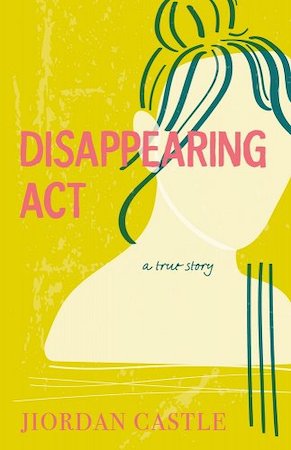
Jiordan Castle’s memoir-in-verse Disappearing Act follows the teen-version of herself as she lives through the arrest, court proceedings, and subsequent incarceration of her father while navigating the fraught years of the transition from girlhood to adolescence. Through mostly narrative poems‚ Castle invites us into her world as it’s changing faster than her mind can keep up.
The book’s dedication—”For me then, and for you now” —immediately signals to the reader a rare intimacy; that we will be led—sometimes smiling, sometimes wincing—into a moment in time not often shared beyond the performed facade of the nuclear family. Disappearing Act begins mid-story—following an FBI raid, Jiordan’s father’s suicide attempt, bad news from the attorney, Jiordan’s refuge with her best friend and their endless online personality quizzes (it being the early aughts)—the book progresses in a mostly chronological order.
In books about prison and “crime,” readers often desire—feel entitled to, even—grizzly details (look no further than the proliferation of true-crime podcasts and TV series). Castle deftly subverts this expectation: in Disappearing Act, we learn more context than content—her father’s mood swings; her mother’s torn support; her older sisters’ balancing of their own lives—though the reader does get a vague understanding that the father is guilty and the crime is money-related. This is not an attempt to hide or minimize the father’s actions, but is instead mimetic of a teenager toggling dizzyingly between an “adult,” “mature” perspective and the innocent confusion, sadness, anger, and helplessness of a young child.
Castle and I discussed her experience of crafting this book from painful memories; the role of the self in grand themes of “crime” and “punishment,” and how she navigated the personal and the secret when disclosing sensitive information.
Leigh Sugar: Disappearing Act is written in the voice of an early teenage you. What was it like writing the then-you, as the now-you?
Jiordan Castle: I have this sense of an inner child and a secret self when I write about myself, my life, no matter the when or the topic. To pull something not too grisly from True Detective, I think time, to me, probably is a flat circle. The person who lived this book is also the person who wrote it, but in time traveling through memory, I got to look at the character of myself as a kind of younger sister. I got to be generous and real and mean and thoughtful about the realities of coming of age in a way you can’t when you’re in it.
LS: That’s so interesting to me, because I realized recently I don’t have a strong connection to my inner child; I don’t really experience my life as continuous; it feels very disconnected. How did you get yourself in—and especially, out—of that inner-child/secret self headspace?
In time traveling through memory, I got to look at the character of myself as a kind of younger sister.
JC: For most of us, I think the hard-hearted memories live right at the surface. But that’s not all there is. I remember the funniest things, the sweet things. And when you’re a child, you’re feeling everything for the first time. Everything is, in some sense, the end of the world. And the beginning of a new one. I still feel that about that time, so it was easy enough for me to drop into character in a way and let myself feel the too-much-ness of that time. I remember presents and fights and how certain shirts looked and felt.
It also helped for me to create a playlist from that time in my life, and a playlist that’s more like what writing the book felt like to me. Having the two in conversation with each other is something special.
LS: What is different about this version than, say, a version for an “adult” audience?
JC: It’s so complicated because I do consider this book to be what I call “YA+” as if it’s for young adults and the dot dot dot of adults reconnecting with that version of themselves. Because this story still lives in me, I know it lives in other adults with similar experiences. The people I love talking to now, after readings, are teenagers who have a loved one in prison or have a friend who does, but also mother-daughter pairings. I find that so interesting. And it reminds me that maybe if we just allowed ourselves—and each other—to love what we love in earnest, without shame or bias, we would come to a place of more “we” than “I.” I’m looking for that “we” more and more these days.
I can’t ignore the fact though that if I had written, let’s say, a chronological, prose memoir looking back at the past in past tense—an adult lens on a teen experience—I would have a radically different book. I can’t say whether it would be better or worse (or whatever that means), but I do think it would pull me as the narrator further from the story I most wanted to convey.
LS: A bit off topic but… do the words “better” or “worse,” in terms of writing, mean anything to you? If so, what? If not, why?
JC: So, I used to fancy myself only a baker, but over the years I’ve felt more naturally like a cook. Sauce, salt, an imprecise, rolling boil — all of it easier and also less than what it takes for me to measure and trust the spice level in a cake. I like the rhythm I can get into in cooking, how I can be early or late with ingredients and still end up okay. It can resemble the picture in my mind or produce a new one. With baking, you forget the baking powder and it can be over, just like that. But you learn. Sometimes it’s good to go for the gold with a loaf of banana bread and know I nailed it because I paid attention, I abided by the rules of science. Other times, I like the madness of throwing things in a pot. Both are true for me as a writer.
Sometimes I needed to treat a haunted house like a museum.
I become a better writer (and cook!) by trying, by doing. I have bad writing, I have good writing. And it’s okay. The power and privilege of allowing ourselves both, all in service of art and sharing it, whether it’s just with ourselves or an audience.
LS:Ok, back to memoir/memoir-esque related questions. How did you wrangle your mind to the place of deep memory in order to recall events and craft the narrative, especially when those memories were painful or traumatic?
JC: When I felt stuck in the murk or like a villain for writing the book at all, like a traitor to my original home team, I forced myself to think of the you I was writing for — that big picture of me then and you now. I needed this book to be in service of something bigger than myself, and sort of pinching myself awake to that realization over and over helped me focus when I got bogged down in the painful parts. Sometimes I needed to treat a haunted house like a museum. A sort of look but don’t touch mentality, to have a feeling or a memory, without letting it have me.
Much easier said than done though, and honestly, sometimes I just… you know, I ate a cupcake. I took a walk. I pet my dog. I hugged my husband. I called a friend. The book is a time capsule, not a live account of my feelings, but I had to remind myself of that. I still do.
LS:Did anybody discourage you from publishing this book, and how did you make your own decisions about what you’re “allowed” to write and share?
JC: Unless you’re a public figure, probably no one is going to ask you to write a memoir. Chances are you’re doing something that goes against, period. I’ve said before that every character in my story, my book and my life, is the main character in theirs. I wanted to treat them with respect, compassion, and nuance, but I’m only one lens. I’m only me. Trying and failing and trying again to walk that line is the best I could do.
But part of the reason Disappearing Act isn’t a novel instead is because I own this experience. I want to own this experience. I was lonely for people to share it with when I was young. If even one person reads my book and feels less alone or more known, a hint that there’s another side to the mountain they’re climbing, that’s enough. That’s my peace.
LS: Oof, the loneliness piece I very much relate to. You and I are both White Jewish women, and as such are not a demographic typically thought of when we discuss incarceration and related topics. I’m not sure what the question is here, but I wanted to name that reality, and all the privileges—and loneliness—that can come with it. Do you have any more thoughts about how your particular intersectional identities affected (and continue to affect) your experience with the criminal legal system?
JC: Yes! This is one of the many reasons I’m grateful to be talking to you about this. I hope to help people who aren’t having conversations about prison have conversations. And for young people affected by incarceration for the first time, with so little control, to have even one adult voice validating their experience. That’s something I can do from my niche position.
Time doesn’t heal all wounds. Sometimes it stuns you into silence.
For people of color, it’s always been exponentially easier to become incarcerated and stay that way. There’s too much to say here, but the socioeconomic breakdown, the poverty to prison pipeline, is very real—and also not my personal experience. I was lonely for peers with a family member in prison when I was young, and it’s not that thousands of them didn’t exist. It’s that we didn’t talk about it, didn’t have as much access to online communities like ours, and that the majority of kids with any such experience didn’t look like me. I want us to keep talking about that.
LS: What is (or has been) the hardest aspect of your experience to communicate in your writing?
JC: In this book, it’s probably how much love went into my family. Even when I hated us or we hated each other. I was young! Time doesn’t heal all wounds. Sometimes it stuns you into silence. Sometimes it gives you perspective. I was born into this pack of wolves and they were mine and I was theirs. Nothing erases that and, at least for me, nothing should. You write a book, you break a kind of code. I know that. It’s hard to communicate what that code consisted of and what it consists of now. I also think that a memoir really is a story, a past tense, a time capsule — and not a smoking gun, a live feed, or the world as I know it now.
A great heist story features criminals we love to hate. While we disagree with their actions, a team of thieves is bound to bring drama and keep the pages turning.
This genre has been immortalized in classic films like the Ocean’s 11 series, but there is a bevy of fantastic novels that push the boundaries of what crime fiction and literature is and give us robbers with intricate schemes that tantalize readers with their exploits.
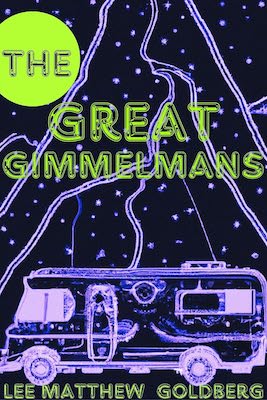
The books on this list range from classics to new literature, all in pursuit of the perfect heist like in my recent novel The Great Gimmelmans, which follows a family in the 1980s that lose all their money in the stock market crash and start robbing banks, kids and all, out of the only thing that hasn’t been repossessed, the family’s gas-guzzling RV.
Here are some other stellar heist tales to add to your collection.
A quintessential classic, The Getaway transcends a typical bank robbery novel. A chilling portrait of a heist gone awry without a romanticized getaway for its protagonists Doc and Carol, a charming criminal and a former librarian seduced into this depraved world. The elements of the heist become stripped away as Doc and Carol mix love with self-preservation and a hellish surprise ending that’s as twisted and cynical as all of Thompson’s novels. The original film with Steve McQueen is excellent too, but skip the remake.
Blacktop Wasteland sets up the career criminal who attempts one last job to position himself for financial freedom. Beauregard or “Bug,” a Black man in the rural south isn’t looking for a big score, but to pay for his child’s braces, keep his mother in a nursing home, and keep his auto shop alive. When he joins as a wheelman in a diamond heist, what follows is a breakneck, adrenaline ride, but also a searing rebuke of racism in the south and the opportunities Bug wants for his children that he was never able to have. Lyrical and heart-stopping, this book is a must for heist fans and fans of literature in general.
From a bank and diamond heist to the world of art, Portrait of a Thief follows Will, a Chinese-American senior at Harvard, as he assembles a crew to steal back five Chinese priceless sculptures looted from Beijing centuries ago. If they succeed, they walk away with fifty million dollars, but if they fail, they lose everything they’ve worked for and the chance to take back what colonialism has stolen. A thrilling, but also beautifully written and thoughtful critique of the enduring effects of colonialism.
In Cherry, we follow the empty and aimless narrator who starts off with a goal of casual sex and drugs before joining the army and coming home as an opioid addict. To fund his addict lifestyle, he robs banks. With stripped-down prose, the novel is bleakly comic and a takedown of how soldiers are discarded when they return home. Equally thrilling in parts while also giving a commentary on impoverished America, Cherry showcases the reality of American occupation abroad and the dangers of addiction.
In the non-fiction Ballad of the Whiskey Robber, we follow Attila Ambrus, an anti-hero bank robber who is also a professional hockey player in Budapest. It’s bizarre and hysterical while touching on Hungary’s past and Europe during and after the fall of Communism. Attila is sympathized with and considered a hero for outwitting the corrupt Hungarian authorities. Rubinstein has brought to life a character whose travails veer from comical to heartbreaking. A larger-than-life true crime story you have to read to believe.
Canada follows 15-year-old Dell Parsons, who must fend for himself after his parents are arrested for robbing a bank. He’s looking back in the present time on the calamitous events, which happened fifty years ago. “They were not the people to rob a bank,” Dell will say. The theme of the novel points out not how the criminals were affected, but their offspring. Making the arrest a defining moment in Dell’s life that set him down a path of destruction, Canada is a book about lament and despair that is spare and unflashy.
A non-stop thrill ride that never lets up. The Wheelman follows Lennon, a mute Irish getaway driver who’s fallen in with a heist team that chooses the wrong bank to rob. Add in dirty cops and the Russian and Italian mobs through the streets of Philadelphia, and this classic noir is reminiscent of Dashiell Hammett. Lennon is like John Wick; knock him down and he gets right back up. The book is over-the-top with chapters that punch you in the throat, with sections opening with quotes from real-life crooks. A gem of a crime novel.
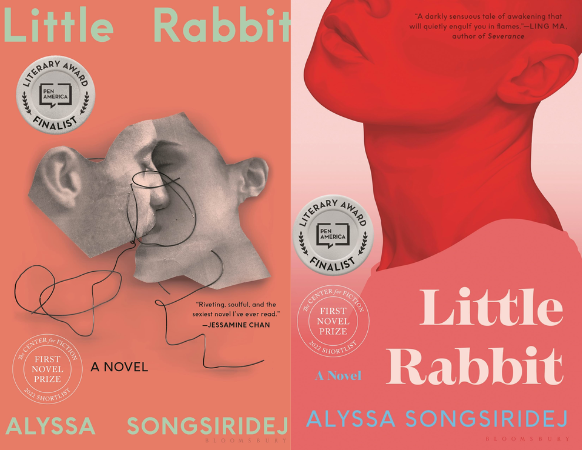
An enduring battle between book lovers is that of hardcovers versus paperbacks. Ultimately, your preference might come down to many factors. Hardcover fans insist on the book’s durability and quality and being among the first to purchase a long-awaited release, while paperback lovers advocate for the cheaper price and lightweight design. But in addition to the price and release date, there’s another factor to consider: the cover design. To celebrate the paperback release of managing editor Alyssa Songsiridej’s debut novel Little Rabbit, we’re comparing the covers of 20 books with both hardcover and paperback editions from the past two years. We’re back with our Book Cover Contest series, in which we judge books by their covers based on our Instagram and Twitter poll results.
The Employees is the humorous story of a space voyage piloted by humans and humanoids alike that delivers a stinging critique of productivity culture. The hardcover edition leans into the sci-fi setting with its eye-catching design reminiscent of the cosmos, while the paperback version displays a nightmarish image of a water cooler overflowing with black liquid. Our voters decided on the satire of corporate culture.
This debut novel from Lisa Hsiao Chen follows Alice, a Taiwanese immigrant who, while caring for her ailing alcoholic stepfather, becomes fascinated with the enigmatic 1980s downtown performance artist Tehching Hsieh. Both covers are inspired by Hsieh’s radical use of time: the hardcover features a repeating pattern of squares reminiscent of a calendar, while the paperback’s stretching gestural figures suggest the slower passage of Alice’s daily life. Ultimately, our readers preferred the fluidity and movement of the paperback cover.
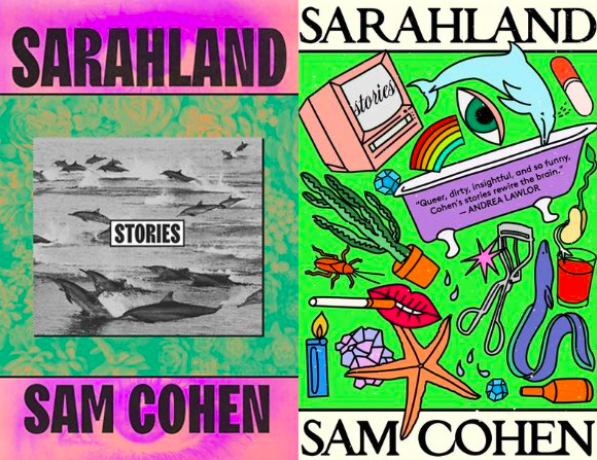
In Sarahland, Sam Cohen imagines the wildly different lives of a cast of characters who all share the name Sarah. The bright pink and green of the hardcover edition’s background is offset by the gravitas of the black-and-white photograph of dolphins leaping out of the water. In contrast, the paperback version’s colorful cartoon objects suggest the multiplicity of lives and narratives within the collection. Our readers voted for the fun and eye-catching paperback cover that taps into the collection’s playful nature.
Jonathan Evison’s Small World is an epic novel that chronicles 170 years of American national development from different points of view across space and time. The hardcover edition leans into the idea of westward expansion by featuring a path cutting through a wheat field under a bright blue sky. The paperback brings together the many lives and narrative perspectives within the novel through a collage of faces and natural landscapes connected by the transcontinental railroad. Our readers overwhelmingly preferred the vivid imagery of the paperback cover.
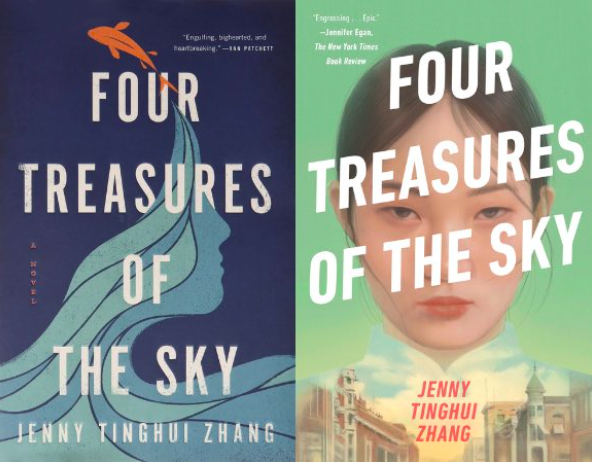
Four Treasures of the Sky is a dazzling historical fiction debut set against the backdrop of the 1880s Chinese Exclusion Act, following a heroine named Daiyu as she struggles to make her way in the American West. The hardcover features an abstract design of a fish leaping out of a swell of waves in the shape of a woman’s face, while the paperback leans into the historical setting with Daiyu’s face rising from the clouds above a Western town. Both covers suggest the theme of rising above difficult circumstances, but readers overwhelmingly voted for the hardcover design.
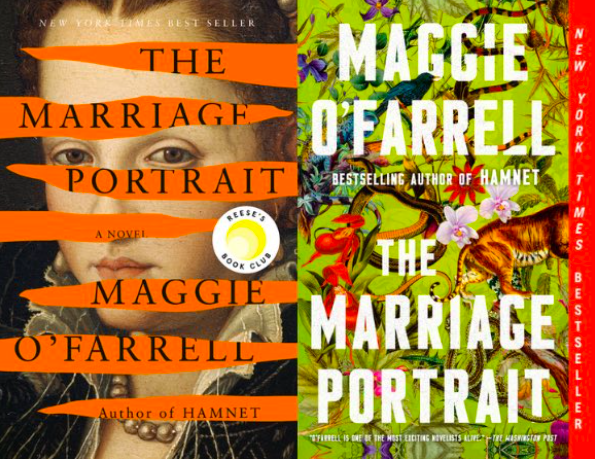
In The Marriage Portrait, Lucrezia, the third daughter of Cosimo de’ Medici, navigates the trials and tribulations of the Florentine court and the mysterious motives of her new husband. The hardcover is an adaptation of the eponymous marriage portrait, painted around 1560 and attributed to Bronzino or Alessandro Allori, overlaid with orange stripes to dramatically reveal Lucrezia’s face. The paperback cover is a colorful tangle of plants and animals inspired by the Medici menagerie and the fantastic creatures of the grotteschi decorations in Italian Renaissance palaces. Ultimately, our readers preferred the more mysterious and haunting hardcover edition, which conveys the novel’s theme of reclaiming women’s voices to uncover long-buried secrets.
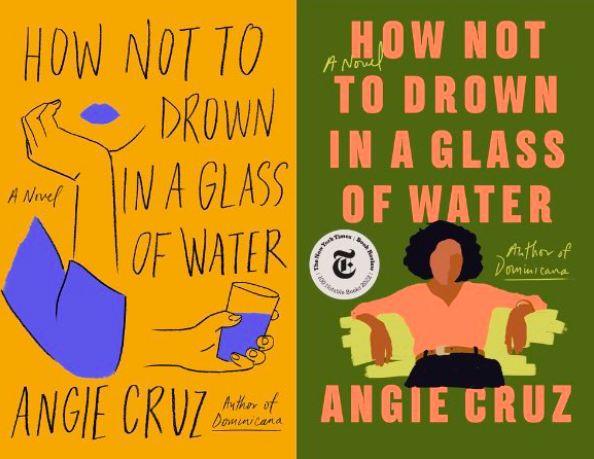
How Not to Drown in a Glass of Water tells the story of Cara, an immigrant from the Dominican Republic who faces unemployment during the Great Recession and struggles to begin a new career. The bright blue and yellow cover design of an abstract figure holding a glass of water contrasts sharply with the warmer, softer illustration of a woman’s upper body. Our readers preferred the more literal interpretation of the book’s title.
The Confession of Copeland Cane follows a Black teenager coming of age in East Oakland, California while struggling against the forces of surveillance and the police state. The hardcover image of a wall of colorful bricks was followed by a paperback edition featuring a painting of a young man gazing thoughtfully upwards. Our voters preferred the paperback version, which gives us a window into Copeland’s humanity.
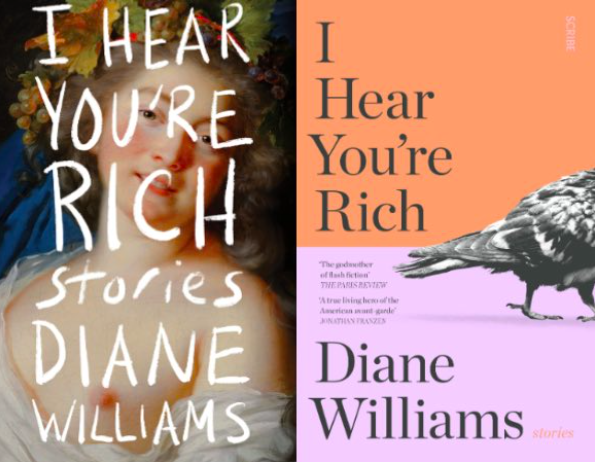
This collection of 33 very short stories embodies Diane Williams’s mastery of strange, suggestive flash fiction. The hardcover edition, featuring a figure from classical mythology bedecked with a wreath of grapes indicating Dionysian wealth and excess, is perhaps more befitting to the collection’s title and triumphed over the paperback cover, a more simplistic black-and-white image of a bird.
Groundskeeping is the love story of Owen, an Appalachian groundskeeper with writing aspirations who takes a job at a small college, and Alma, the college’s Writer-in-Residence who comes from a successful family of Bosnian immigrants. The hardcover edition succinctly embodies the theme of connection across differences with an image of two intertwined leaves. The paperback is a pictorial representation of Owen’s groundskeeping work that hints at the central narrative, which our voters selected as their favorite.
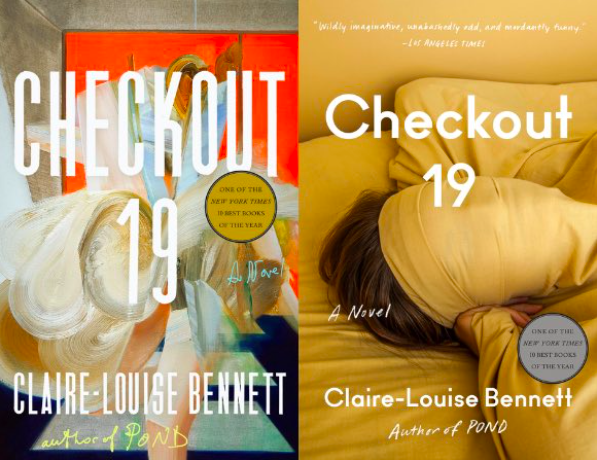
In Checkout 19, a woman revisits the small traumas and triumphs that have shaped her life to explore her personal history as a writer. The abstract shapes and vivid colors of the hardcover edition suggest this dizzying journey, while the paperback image of a woman’s head covered by a blanket might have seemed comparatively listless for voters, who chose the more energetic original design.
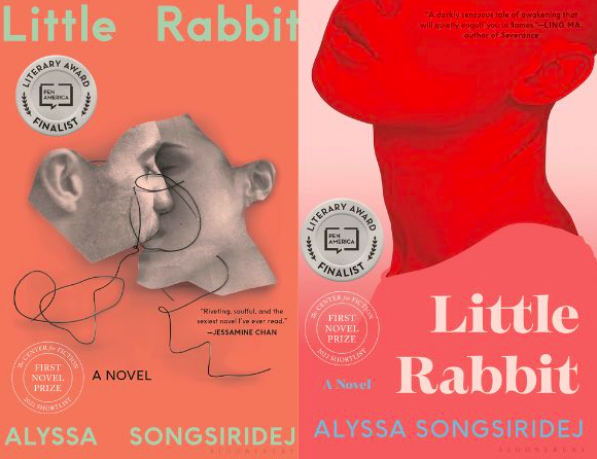
This debut novel from Electric Literature’s managing editor Alyssa Songsiridej follows the complex relationship between a young writer and an older choreographer she meets at an artists’ residency. Our readers preferred the hardcover edition of two kissing faces overlaid with gestural lines that suggest the fluidity of dance over the vivid colors of the paperback version.
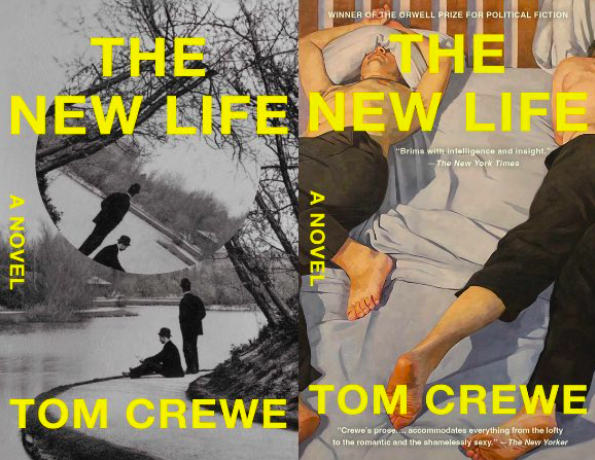
This debut novel is a reimagining of the lives of John Addington Symonds and Henry Havelock Ellis, two Victorian men who collaborated on one of the first medical texts about homosexuality. The contemplative black-and-white cover of two men gazing at a pond is overlaid with a rotated circular image which suggests an alternative mode of existence. The paperback edition, which our readers preferred, restores a sense of liveliness and interpersonal connection to this work of historical fiction.
The Imposters is narrated by the obscure elderly Dutch novelist Dora Frenhofer, who decides in the midst of lockdown to come to terms with the complicated interpersonal relationships she’s had over the course of her life. Our readers preferred the hardcover’s stark gestural figure of a woman set against a background of watercolors over the paperback’s pictorial representation of silhouetted figures flying kites over a rosy urban skyline.
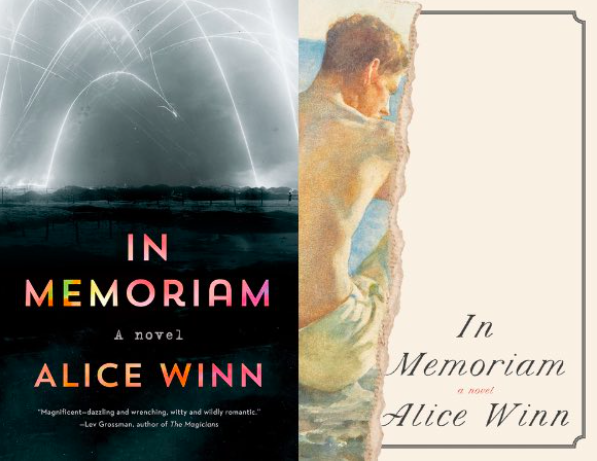
In Memoriam is a love story that follows World War I soldiers Gaunt and Ellwood from the idyllic grounds of their secluded English boarding school to the trenches and battlefields of war-torn Europe. The original hardcover edition features a dramatic black-and-white image of nighttime rockets exploding over no man’s land, but our voters favored the paperback cover’s warmer pastel-toned painting of a swimmer gazing contemplatively out to sea.
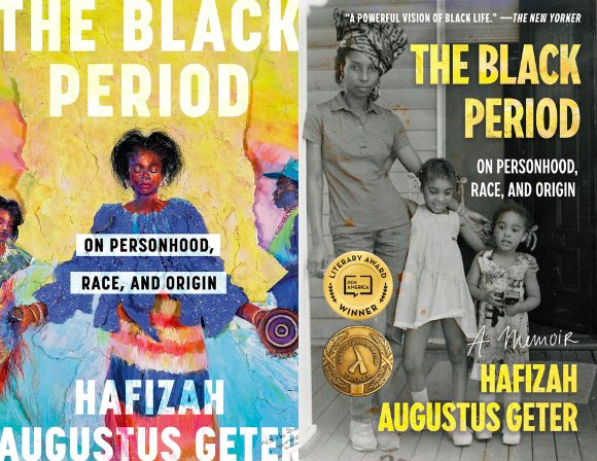
This experimental memoir combines lyrical prose and criticism to narrate a poet’s origin story as the daughter of a Muslim Nigerian immigrant and an African American artist. Our readers narrowly selected the paperback edition featuring the author’s family photo, perhaps more fitting for the form of a memoir, over the hardcover’s eye-catching painting of a woman symbolically connecting to her roots.
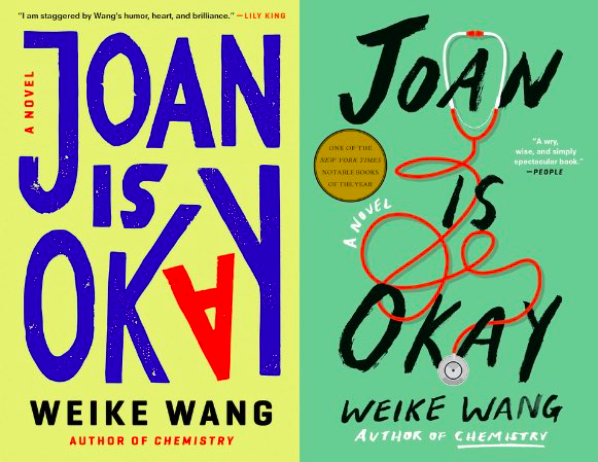
Joan is Okay narrates the story of a successful Chinese American doctor contending with the dual pressure of her high-stakes career and the cultural expectations of her mother, who returns to America to reconnect with her children after the death of Joan’s father. The funky font and vivid colors of the hardcover edition’s text triumphed over the cooler green tones and addition of a stethoscope that characterizes the paperback edition.
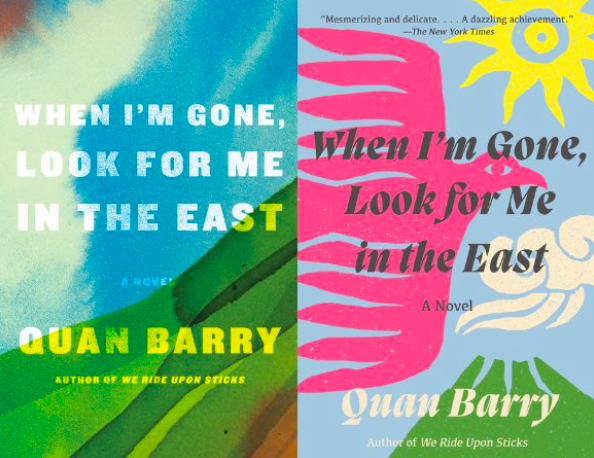
Both covers evoke the beauty of the natural landscape in this novel about a young monk named Chuluun and his identical twin Mun, who set out on a journey to find the reincarnation of a great lama across the sweeping Mongolian landscape. However, voters favored the bright print-like imagery of a sun, cloud and bird on the paperback edition over the more fluid abstract lines of the hardcover.
As expected, forest imagery features heavily in the cover design of this novel about the unexpected collaboration between the environmental activist and guerrilla gardener Mira and the enigmatic billionaire Robert. The stark and forbidding black-and-white hardcover edition with chalky sketches of trees was favored by voters over the more colorful paperback image of a green eye-like patch of conifers in the middle of a brown forest.
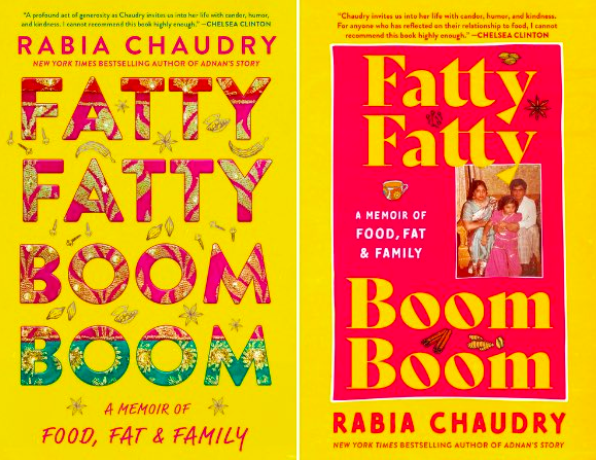
Both covers utilize a pink and yellow color scheme, but the intricate design of the letters on the hardcover edition won over the plainer text and family photo accompanying the paperback cover. Rabia Chaudry’s memoir centers on her evolving relationship with food and body image growing up in a close-knit Pakistani immigrant family.
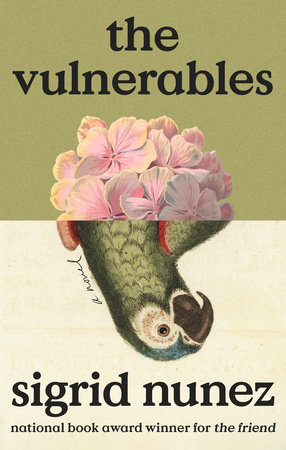
“It was an uncertain spring,” begins The Vulnerables by Sigrid Nunez, which takes place during the peak of the Covid lockdown in New York. As the pandemic rages, a group is haphazardly forced to shelter in one Manhattan apartment together: a parrot without its owners, a young man estranged from his parents, and the narrator, who is an older female writer.
In The Vulnerables,Nunez is back with her signature blend of wryness and poignant observation. Also in classic Nunez style, the book traverses between the narrator’s daily life, recollections of the past, and rigorous conversation with other literary works. Quoting Flannery O’Connor, the narrator states, “People without hope don’t write novels. I am writing a novel. Therefore I must have hope.” She tries to articulate her search for some form of hope and connection during the early days of the pandemic. By doing so, Nunez sheds light on what it means to be vulnerable, and of how humans find comfort during times of crisis.
It was an honor to chat with Nunez over the phone; we talked about pandemic humor, the necessity of both memory and imagination in her writing, and her fascination with parrots.
Jaeyeon Yoo: The Vulnerables really captured the surrealness and specificity of spring 2020 in New York City. What was it like to write about the pandemic, especially one that still has long repercussions and is active today?
Sigrid Nunez: It’s funny, because in 2010, I published this novel called Salvation City, which was about a flu pandemic. The way that happened is that it just was time to write a new novel and I had read something about Dr. Fauci saying it wasn’t a question of if, but of when. So, I kept thinking about this and that’s what most fiction is, right? You write a novel to answer a question, “What if?” I wrote about that, and I was always wondering what would happen, [thinking,] in my lifetime, there would be a pandemic. In a way, there was this eerie thing of having already written a so-called pandemic novel.
In the spring of 2020, I was having a lot of trouble writing—like everybody else was having trouble doing anything. I was teaching at Boston University at the time, and we were going to have our annual faculty reading by Zoom. I thought, ok, I need something to read. Then it came to my mind, “It was an uncertain spring.” I just kept writing about the way it was now, and then I thought about the flower names and so on. [Writing] felt strange, but everything did at that time. The strange was the normal. And it felt soothing, in the sense of being able to deal with it in some way. Also, I felt that many others were doing this—there were many blogs, there was so much online, there were people communicating through social media about the day-to-day experience of that spring. So, it made me feel not isolated. I felt exactly like everybody else; I’ve never been so in tune with the rest of the world! When I was writing in the midst of so much strangeness, I felt, “Everyone out there knows exactly what I feel right now.”
JY: That paradoxical feeling is so true of the pandemic. In terms of writing as a form of “dealing with it,” I think these past years have also been about trying to find a way to collectively mourn. The narrator of The Vulnerables talks about how mourning seems to be inextricably connected to writing. Could you speak more about the process of writing and the process of mourning, and perhaps how these may be intertwined?
SN: Early in the novel, I do say something about “For whatever reason, why do I feel as though I’ve been in mourning my whole life?” And I don’t actually explicitly answer that [in the novel]. But I don’t mean it literally, in the sense that people are dying around me. So much of life is about losing things. As you get older, you lose all kinds of things—your parents or grandparents, friends, things that you could do, places that you can’t go back to. A lot of life is about loss. Not just about death; it’s about everything passing and you understanding that you’re included in that. It’s what time is: time is time passing, and time passing is life dying. There’s no escaping that. For all of us being in the midst of this pandemic, that intensified—even for people who didn’t lose close people or weren’t in the healthcare industry.
JY: This feeling of loss is also something that comes up in the book’s form. The Vulnerables prioritizes what remains in the evocative, selective fragment of memory—not the whole. What about the phrase “I remember” and the fragment form is so powerful for you?
SN: [Joe] Brainard said that everything you remember has some kind of value, that it doesn’t matter how big or how actual the thing is. Whoever we are as individuals, so much of who you are is what you remember, and it doesn’t mean to remember it accurately. That’s the whole point, this narrative that you’re always writing about your own life. You remember your first memories, and then you remember elementary school, and so on. It’s a narrative that you make up about your own life. Some of it is true and some of it is absolutely not true. Some of it is self serving. Some of it is fantasy. You keep narrating that [narrative] to yourself your whole life, and a lot of that has to be wrong because memory is terribly fallible. But that’s not the point. The point is how and what you remember; this has so much to do with the personality and emotions that you have, the decisions that you make. It’s essential to our identity. That’s why we’re crushed when someone we love has dementia, because somebody could have a terrible illness and be suffering terribly, but they’re still themselves. With dementia, your mother looks right through you and has no idea who you are.
I think that collectively, we all do hold memory in the highest possible regard. It is something that you can’t really count on, though, and as time goes by—even if you don’t get dementia—you don’t remember certain things and that’s quite painful. And then other things that you do remember, are incredibly poignant. I also think that everybody shares a certain amount of nostalgia, and everybody should be aware that too much nostalgia is toxic. You know, because people have a tendency to think about the good old days that really weren’t such good old days.
JY: Yes. It’s a question I have when watching my cat, of whether animals think in similar ways about self-narrative and memory.
SN: We know that they remember things, because you take the dog somewhere, years later, and it remembers when it was here as a puppy and hid that thing under the sofa. They do just remember. It’s a complete mystery and there’s no way to ever know. I would love to, though.
JY: On that note, I would love to talk about Eureka the parrot. I know a number of your previous novels focus on a domestic animal, and I was curious what drew you to the parrot—especially an animal that has an explicit ability to mimic human language.
As you get older, you lose all kinds of things—your parents or grandparents, friends, things that you could do, places that you can’t go back to.
SN: I didn’t think a lot about it, [but] I find these kinds of birds—parrots, cockatoos, parakeets—to be endlessly fascinating. They are known to be so incredibly smart, and there’s also the way they look! They’re astonishingly beautiful. Then there’s the fact that they are dinosaurs. They’re that weird combination of extremely odd and unbelievably beautiful, so they have an alien aspect. And when they start talking—! I mean, it would be much less shocking and weird if a dog talked, because dogs are very human. And cats are so smart, so sharp in a certain way. If you need to talk to a cat and it would mimic you, I think that is much less strange than a bird doing it, you know? That’s like a snake or something talking.
JY: What you just described about parrots makes me wonder if you had some encounter with them in your own life. I don’t think I’ve ever seen a parrot or bird of that type.
SN: First of all, they always have these birds in zoos. I’ve known people who had them as pets, but right now I don’t know anybody who has such a bird. For a while, there was a store on Bleeker Street—I don’t know what they are now, maybe a restaurant—and you would walk in there and cover your ears. They had all these parrots, macaws, cockatoos, and cockatiels. Some of them were in cages, but many of them were on perches or tables. You could walk around, and they would jump on you. I used to hang out there. I wasn’t going to buy one, but I did love observing them. So, they were my neighbors for a while and then I don’t remember what happened to the store.
JY: Eureka the parrot introduces a lot of levity into the book. In general, I find humor to be another constant in your body of work. There’s a wryness and a humorous quality to the prose that I find very addictive. One character in The Vulnerables states outright that life is this mixture of “elegy plus comedy.” Is this type of tragicomic humor something you think about, when you write?
SN: It’s one of the reasons I have liked writing about animals, which I’ve done now four times. Including an animal character, even a minor character, is that inevitably—if you like animals, and most of us do—there’s going to be some warmth there, it’s built in. If I start writing out of my own observations about animals, there are two things that are going to happen. Some of it is going to be humorous, and some of it is going to be very poignant.
There’s that. Even before the pandemic and the lockdown, there was the political situation, which is all [still] chaotic and frightening, not to mention the climate situation—what attitude can you have towards it all? It just struck me that elegy and comedy are the best ways to deal with life now. First of all, comedy is even more important than hope. Even more than hope will, it will get you through, and there is nothing that doesn’t have its comic side. It’s just so much part of the human experience, and if you don’t have some humor in your work, I think you’re leaving something essential out. And elegy because, even if everything turns out OK—we find a way to overcome the climate catastrophe, democracy doesn’t get destroyed, people do start treating each other, systemic racism doesn’t keep tearing us apart, and so on—even if these things could be at least ameliorated, if not ended, we are still in situation where we are saying goodbye to things. There are things we keep losing, natural habitats or wildlife, for example. There’s the mourning part [of life] that we were talking about. We have to address what we’re losing, what’s going away, what’s not going to be there anymore. So it’s both the elegiac attitude towards the changes that are happening in the world, and the droll attitude towards some of it.
You know, the day after lockdown day number one, I remember I got something in my inbox: ”Make mine a quarantini.” Like a martini, right? It took less than 24 hours to come up with a joke. Now, I’ve heard many better jokes about the quarantine, but I thought that was hilarious and clever and absolutely wonderful. And then every day of the lockdown, it seems to me there was some kind of humor that was coming through social media. It was really very helpful. It helped people feel like they weren’t alone, because people weren’t just making jokes for themselves. It was all about sharing these jokes.
JY: I loved the way you described a mode of writing in your book. The narrator calls it “fiction in the guise of autobiography.” In a previous interview, you talked about not shying away from the autobiographical; I want to draw the focus on the other half of the equation a bit and ask: What appeals to you about fiction?
SN: That’s not just a good question, but the most important question. I like autofiction—there’s some terrific autofiction out there—but I’m not drawn to it as a writer. I’m not writing autofiction. I guess I could say that, since you read the first book, that is autofiction. That is obviously me, and there’s nothing in there that isn’t non-fiction. It could have been published as non-fiction.
But ever since I was a little kid, I’ve been obsessed with the idea of making things up. That’s why I wanted to be a writer. I read Dr. Seuss, and I thought, “Oh my god! You can have talking animals!” Children don’t write autofiction, as we know. I was a kid scribbling fairy tales. It was always the impossible. It was never realistic, and never the autobiographical.
One of my favorite writers is Charles Dickens, and what’s so great about him is his tremendous imagination. It couldn’t be greater. Everything I read that I thought was great was someone really using their imagination. What happened with me, from that first book, I found this hybrid form that worked for me. I could write in elements of autobiography, and I did like writing in the first person, although not everything I’ve written in the first person, but I wanted the freedom to make everything up. I’ve written about myself to some extent, but I don’t have the kind of life that would spark my imagination. That’s all there is. Fiction was being able to lie, to invent, to go kind of crazy with a very imaginative story. And that’s what I’ve done. In almost everything I’ve written, there is this autobiographical element, but the story that comes out of it is completely invented. There really is a divide. The events are invented, imagined. The reflections, the meditations on what’s happening—that is me. That is the author. When I’m talking about something I’ve read or how this makes me feel—those are completely true to me. There’s not a protagonist I’m projecting ideas onto that I don’t share. But the storytelling element, such as a friend of mine commits suicide and leaves me his Great Dane—that has never happened! Most of what I write is fiction. But I have a way of narrating that makes people approach it for autofiction.
JY: Yes, that quote resonated with me because, when I write creatively, I can’t not lie.
SN: Exactly. It’s absolutely a true characteristic of a certain type of writer, maybe even most writers. That’s one of the reasons I could have never been a journalist. What’s essential in journalism is to stick to the facts. I wouldn’t know how to do that. I wouldn’t know how to not slant it. Any time I start writing something that is true, I don’t get to paragraph three before I’m lying. It’s just where it leads.
We were raised on food stamps
that looked like British pounds

and dead-end jobs where bodies slung
over crates and cans and cam shafts

or pouches with pennies and coupons
and a giant magnet sign wearing the paint

off the car was just another insult.
This pepperoni’s here for you, America.

We wanna be poor. We wanna live off
the government, you say. Where in hell

does Mr. Government live, I say. Show me
the gated drive, let me buzz in a pizza

box filled with the greasy process that will take
his heart. That’s my message, America,

the poor don’t have to do a damn thing
to ruin your dreams. You’ll gnash the cheese

and constipate yourself. You’ll tell me
your work ethic deserves a Sandals vacation.

I hate to sweat. I hate humidity. We were raised
by swollen feet, the hemorrhages of little

numbers for the same hours on earth as you.
You think you’re traveling to an island getaway.

The palm trees fucking hate you. Remember that.
The sun will take your skin the same.
After Being Diagnosed With Celiac Disease
My wife must wash her lips
before kissing me: the poison

turns me into a balloon
on the couch for days:

a silhouette of wheat stalk
dangerous as the hammer

and sickle: disease
makes one melodramatic,

the weight grain adds to the blood:
I’ve been so heavy

with thoughts of death: the American
goldfinch perches on the window

sill, gazes at our family, asking
for water in this heatwave:

I’ve learned to complain frankly
to all the random experts:

family, friend, supposed foe: you
have no idea

what this body says to me
when I ignore it: I don’t understand

how one can mock pronouns
when we know so very little

of what happens within our own skin,
much less another’s.
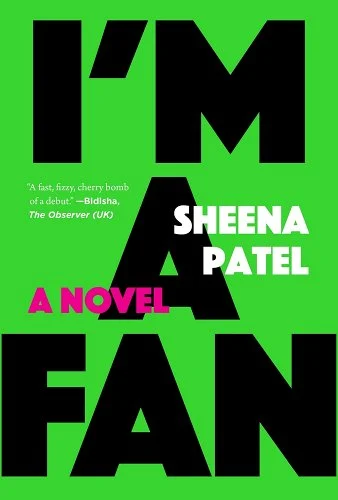
If you are a person on social media, then my guess is you have at least one person you hate-follow—you know the type, the person you simultaneously envy and eye roll at every post. They are dating the person you want to date or wearing the clothes you want to wear or working the job you wish you had, and they are attractive and people like them, but also you think they are cringe in a way that you are certain other people must think they are cringe with their self-assuredness that their life is so worthy of posting about (and it must be, because people can’t stop liking and sharing and commenting on their posts even though you think what they post is rather dull—who really cares what they had for breakfast or where they buy their socks), and yet, you cannot stop following. Maybe you don’t follow them at all, but you watch them from the sidelines, committing the details of their public life to memory like the unnamed protagonist of Sheena Patel’s I’m a Fan.
This is the premise of Sheena Patel’s debut novel I’m a Fan. Published in the UK in 2023 and recently printed in the U.S. by Graywolf Press, I’m a Fan is an unnamed protagonist’s account of her obsession with both a married man and the other woman he is romantically involved with. Written in short, non-linear chapters, the book is bingeable in the way that social media is bingeable. It is textured with descriptions of YouTube videos, Instagram grids, and the protagonist’s interiority. The protagonist is critical, impulsive, and brutally honest. I’m a Fan reads like a confessional of a chaotic woman and it is hard to look away. She engages with social media in a way that feels more inquisitive than the average user, noting how race and class construct influence and power. Despite her intelligent observations about the social and political structures of both the media and relationships she engages with, she doesn’t stop. She hungrily consumes information about the woman she hates and continues to yearn for the married man even as she wonders, “How does he fill my entire life and I am only a sliver of his?”
It is this—the yearning and the inability to give up that which torments you—that makes this protagonist so compelling. We can all repeat back healthy advice we’ve heard on repeat—don’t eat too much sugar, get 8 hours of sleep, limit your screen time, get rid of things that no longer serve you— but it is another thing altogether to follow said good advice, as the protagonist is astutely aware of:
“I wonder how so many intelligent women who claim to be for women’s stories and promoting women’s lives and women’s independence, can be so cut-throat and possessive over a man. In public we would all decry his behaviour, we would shout, dump him! to our friends. It’s so archaic and humiliating to realise nothing has changed despite all the rhetoric suggesting it has. We will still turn on each other.”
I spoke with Sheena Patel over email about hate follows, resisting the urge to be likable, and pushing the limits of what’s acceptable.
Shelby Hinte: I feel like a lot times “obsession” gets romanticized, especially in the arts (i.e. follow your obsession, lean into obsession, etc.), but in your novel, I’m a Fan, the thing I was most drawn to was the way you write about how people can be obsessed with things they don’t even fundamentally agree with or like. What drew you to writing about this particular side of obsession?
Sheena Patel: I was interested in our behavior online and I asked my friends if they followed someone online who they didn’t follow, didn’t like, but sort of tracked, and most of them said yes they did. That’s interesting isn’t it? It’s not so much obsession as it is hate or envy, disdain and if this person is going to make you feel bad about your life, you will deride them in order to feel superior.
SH: It’s interesting what you say about disdain/envy. The protagonist feels both of these things (I think) for “the woman [she] is obsessed with.” In large part, those feelings derive from the woman’s white privilege. The woman has a large social media following and the protagonist fixates on the woman’s ability to access expensive foods and artisan made goods in a way that she projects as being in touch with nature/art/community/etc. but the protagonist sees it as a status symbol—wellness and taste that is. This issue of class/race often gets overlooked when people talk about influencer culture. Why was it important for you to depict this dynamic?
If this person is going to make you feel bad about your life, you will deride them in order to feel superior.
SP: Because no one talks about it, and it seems so glaringly obvious, and Instagram is like school really where the popular girls float above us in their own world because they have boobs. They don’t attribute this to genetics or the luck of emerging hormones, they intrinsically believe they are more beautiful than everyone else. Instagram works the same way, influencers have more often than not been born into huge privilege—which is very photogenic and favours a visual medium like Insta and it makes the rest of us feel like shit. It’s the most modern archetype imaginable and very girl-world politics. I’m so beyond pleased I have made something for the gworls, of our hidden inner life.
SH: The protagonist regularly relies on social media to get information about “the man [she] wants to be with” and “the woman [she] is obsessed with” which results in a fragmented understanding of the subjects she’s consumed by. The narrative she constructs around them is non-linear, partial, and sometimes wholly imagined. The novel itself sort of mirrors the fragmented experience of engaging with social media. Like scrolling on social media, the effect is that it’s hard to stop turning the pages (at least in my opinion). Can you share a little bit about your process for writing I’m a Fan?
SP: I looked to the poetic structure and wrote as if they were scenes in a film. I also had no idea what I was doing. I collated images, screenshots, bits of YouTube videos I would transcribe, I watched documentaries and tried to inhale the world and spill it all out on the page. I wanted to connect this person to the world in some way, speak to now in a way I didn’t think was being addressed. I wanted to write a non-white character in a way that would push the limits of what was acceptable, I wanted her to be a terrible person, hard to love but sympathetic. I was in a dream state when I was writing and didn’t feel like I had much control.
SH: How did you balance creating a character that was unlikeable but also sympathetic? What was that process like?
SP: I wasn’t consciously doing anything. The only rule I had was that anything done to her she had to do to someone else and I had to keep the truth moving, so the reader was forever unsteady through the story and second guessing themselves. It was a very instinctual process so I don’t really know what it is I did.
SH: Do you have any anxiety around creating an unlikable character?
SP: I didn’t until it went to print and it was after I made the Observer list in 2022 so more eyes were on it than were originally going to be. I thought I was going to get cancelled. But then I thought, fuck it. If I get cancelled, so be it. I stand by what I made.
SH: Why did you think you would get canceled for the book?
I wanted to write a non-white character in a way that would push the limits of what was acceptable, I wanted her to be a terrible person, hard to love but sympathetic.
SP: I thought I’d be cancelled because the book goes after Brown creatives, women, liberals, she’s very hard to love, she’s having an affair. There are bitter things in the book that make it difficult, she’s intentionally unlikeable and violent and pathetic and right and wrong. I’d not seen a Brown woman depicted like that in literature so I was nervous.
SH: What has the experience been like to see it so widely celebrated?
SP: Incredible. What can I say? It’s been an utter dream. It has encountered people who don’t like it too and I have got thicker skin around that. I definitely made it to be loved or hated and it has fulfilled that.
SH: I think this idea of canceling a writer for showing people in all their messy layers is such a concerning one. I saw you did an interview with Ottessa Moshfegh and not so long ago I read an interview where she said “art is being laden with this burden of having to always represent characters in a way that’s going to support whatever sociopolitical ideal is in fashion at the moment…” and I think about that a lot. What role do you think politics should play in fiction?
SP: I mean I half said that in jest, I didn’t mean it seriously but then I did fear it but also did it anyway. I wanted to push against what was “allowed.” I wanted politics to play a part in this and it’s important for artists to be politically engaged—or at least I like to. I’m not sure what your actual question is here though.
SH: I guess what I am interested in is that fear you mention. I read a lot of books where characters do “bad” things and there is this strong authorial hand that works to separate the writer from their character, as if to say “that’s not me”/”those aren’t my politics” or else there is a moralizing of the character. Your book felt unique to me in that the protagonist never apologizes for her existence—there is no moralizing. How do you push past the fear and just tell the story you are interested in telling?
SP: You just tell the story you want to tell and don’t worry about being liked. I’m an assistant director and was working on a show when I wrote my book. One of the storylines was that this character had Munchausen by proxy and I couldn’t stop watching the actor. I asked the director why is she so compelling to watch and he said because most actors want to be seen as good people so would play against it, play the doubt, but she doesn’t. It all makes sense to her, she’s not crazy, she’s sane. And that’s what I realised I had to do, to keep that focus.
SH: I keep coming back to this section from I’m a Fan where the protagonist is thinking about the woman she is obsessed with and she thinks:
“She says she has five jobs but when my dad had to work a second job at KFC to pay the mortgage, he didn’t tell us or anyone because there was no pride in having two jobs so why can she say she has five, unless she has none?”
I found that so relatable—like having multiple jobs as a need rather than a desire is somehow shame inducing. Over the years I’ve always worked in kitchens/bars in addition to writing/teaching, and there is a certain shame that floods me when a particular type of person catches me in an apron (usually a work colleague or former classmate). Why do you think needing to have multiple jobs, especially as an artist/writer, can produce this type of shame?
SP: It’s that “what’s bad if you do it when you’re poor, but good when you’re rich,” like having many jobs or speaking many languages. I’ve always worked many jobs and I guess it’s the type of job you have that can induce this feeling of shame. Working in a cafe/restaurant nearly killed me but then working as a runner, which is almost the same duties, made me happy.
SH: What is your relationship to work like?
SP: I love working. I love being so busy I’m almost overwhelmed, I like being needed and being useful and of service. I like doing things that have meaning.
Since the early aughts, the cultural phenomenon known as the Korean Wave has expanded from a tiny homegrown ripple to a global tsunami of trends and merchandise encompassing pop music, gaming, cosmetics, cuisine, film and TV, and literature. K-pop bands now top the music charts, kimchi and gochujang are sold in most supermarkets, and Gen-Z embraces the K-dramas I scoffed at my parents for watching, while movies and TV shows like Parasite and Squid Games garner major awards and attract large viewership.
Korean representation in literature has emerged in a huge way as well, with women’s voices in recent years becoming predominant in books translated from Korean into English and also written in English by Korean American authors. I’ve noticed a bifurcation between the sunny innocence projected by K-pop and K-drama versus the gritty darkness, verging on noir and even horror, of movies like Parasite, Handmaiden, and Decision to Leave. Most of the books penned by Korean women also tend to be dark and unsettling. One reason for this, I believe, is the cultural pressure to maintain a harmonious appearance butting against the inner turmoil of that pressure to conform.
The surge of feminist literature stems from the country’s rise in gender equality movements in reaction both to #MeToo and the suffocating, centuries-long patriarchy of that society Like here in the U.S., Korean women are enraged and frustrated by oppressive societal norms and legislation that hold women back in life. Many of these author’s books, as well as those from their Korean American counterparts, reflect an existential longing for individual expression, gender equality, and solidarity with other women.
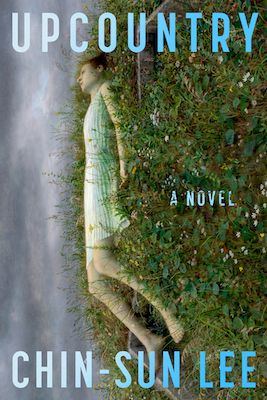
My debut novel, Upcountry, centers around three women from vastly different socio-economic backgrounds whose lives intersect in the aftermath of the 2008 recession: April, a middle-aged, impoverished single mother of three; Claire, her childhood playmate and a Manhattan attorney; and Anna, a young Korean American member of a local religious cult. For different reasons, all three women are outsiders in their small Catskills community, connected through tragedy and the secrets contained in the house Claire buys from April in foreclosure. At its heart, the novel is about class, faith, and the workings of fate, but the resilience of these women is the scaffolding that frames their world.
These books written by Korean women authors feature disquieting themes, complex characters, and narratives that articulate the inner lives of women in their unique interpretations:
The disappearance of a beloved spouse after an accident is a torment few could fathom—but even worse would be to discover that spouse had a secret life. This is the horror that befalls Sae, a former journalist, when her engineer husband, Jae, goes missing after the collapse of a skyscraper in Seoul (inspired, no doubt, by the real-life Sampoong Department Store disaster in 1995), leaving her alone with their two small boys. As Sae searches for Jae and clues about his past, she encounters an old newspaper colleague, the madame of a prestigious room salon, and a thuggish executive from Taehan Group, the conglomerate responsible for the tower’s construction. The story skips back and forth in time: from 1992, when the tower collapses, to 1986 during the couple’s early days as student protesters, and then forward to 2016, as the dying elderly chairman of Taehan dictates his sanitized memoir. How these timeframes and characters fall into place isn’t a huge surprise—it’s less about whodunnit than why. The novel’s revelation, rather, is in its moving final chapters as we viscerally mourn the lives shattered through carelessness and grief in a conclusion that’s both an elegy and a scathing indictment of capitalism.
It was the title and enigmatic cover depicting the top half of a female robot’s head that caught my attention. I’m glad it did—I’ve never read anything like it. Mystical and strange, this stunning collection is tonally reminiscent of the otherworldly, terrifying beauty of Stanley Kubrick’s cinematic masterpiece, 2001: A Space Odyssey. Comprised of seven longish stories, the standouts are the title story and its reprise where, long after the end of human civilization, robots inhabiting a frozen Earth begin to experiment with developing organic life, including new iterations of humans. This centuries-long process becomes a source of conflict, with some robots attributing godlike qualities to these new humans while others fear them as potential agents of their own extinction—a poignant mirroring of our own present-day fascination with and fear of AI. Kim’s references to science and technology never feel dry or academic; they’re simply tools of the language she uses in her imaginative exploration of human consciousness.
Cursed Bunnyby Bora Chung, translated by Anton Hur
If you appreciate creepy stories mixing fables, folklore, sci-fi, and horror, then holy hell, do I have a book for you. This uncanny collection evokes primal terrors from childhood through tales about human greed, degradation, yearning, and retribution. But for all its darkness, there are moments of absurd humor, as in “The Head,” when a woman sees one protruding from the toilet and her husband says, essentially, “Eh. . .just leave it alone”—while “The Embodiment” pokes fun at the mechanics of Korean matchmaking. “Scar” is both chilling and heartbreaking, and even when Chung depicts horrific violence, as in the final scenes of “Snare,” her images have a startling, unexpected beauty. These stories, though written in simple, direct prose, are also piercing allegories for the corrosive nature of patriarchy and capitalism. Once I started this strange, brilliant book, I could not put it down.
Violetsby Kyung-Sook Shin, translated by Anton Hur
Originally published in Korea in 2001, the English edition of Violets, translated by Anton Hur and published by The Feminist Press in 2022, feels strikingly modern. A damaged young woman, San, aspires to be a writer but after several rejections, finds herself working instead in a flower shop. Her outgoing co-worker, Su-ae, whose uncle owns the shop, befriends her, and the two girls become roommates. San finds solace in their company and in her daily tasks, providing the stability she lacked in her traumatic childhood. But her fragile psyche is upended by two men—a flashy, aggressive customer and a flirtatious photographer on whom she fixates—and the story takes a sudden, dark turn. I found the novel most compelling in its nuanced portrayal of mental illness, which doesn’t always manifest in obvious ways. The tender friendship (and nascent romance) between San and Su-ae is also handled beautifully. Without giving away spoilers, the ending truly upset me, leaving me with mixed feelings about the whole. But I can’t deny that the quiet power of this novel lingered in my mind for a long time after.
This gripping page-turner portrays five young women who struggle to lead meaningful lives in contemporary Seoul, where society judges harshly those without the privileges of wealth, status, education, or beauty. The latter, at least, can be obtained, though at great financial and physical cost. For Kyuri, who’s undergone several painful procedures, her beauty is her livelihood—she entertains businessmen at an exclusive room salon, while her friend Sujin aspires to do the same, scrambling to save money for her surgeries. Miho, an artist educated in New York, finds herself at odds when she returns to her home country; Ara, a hairstylist, carries a traumatic secret from her past that has rendered her mute; and Wonna, a slightly older, pregnant newlywed married to a man she does not love, frets about their precarious finances. Men impact their lives, as the culture dictates, but rarely in a positive way. Classism, sexism, and job insecurity press upon them all and while the novel ends in an earned moment of female solidarity, the teeming harsh world around them hasn’t changed.
The cover’s surrealist portrait of a woman whose face is erased and supplanted by an arid landscape is an apt visual metaphor for this slim novella’s themes of female subjugation in South Korea. Kim Jiyoung is a wife and mother in her early thirties who, shortly after leaving her marketing job to have a baby, has a psychotic breakdown. When she starts speaking in the voices of other women, her alarmed husband sends her to a male psychiatrist for treatment. What unfolds is a documentation of her life under the thumb of patriarchy. Its short, straightforward sentences, often punctuated by footnotes citing instances of misogyny, connote a bureaucratic report of systemic institutional rot. While at times Cho’s message can feel didactic and heavy-handed, her depiction of the onset of Jiyoung’s psychosis is wonderfully bizarre and disturbing—and the novel’s conclusion has a satisfying, unexpected twist that’s all the more bitter for its irony.
Sonju follows its titular character from her youth into middle age in the seminal years following WWII through the late ‘60s. Born into a privileged, class-conscious family in Seoul, Sonju is an idealistic young woman who hopes the end of war and Japanese occupation will allow her the freedom to pursue an education, career, and equal life partner. But her parents reject the young man she loves for his inferior social standing, forcing her instead to marry a stranger of “appropriate” status. Exiled to her husband’s faraway village, her life becomes increasingly unbearable through a series of tragic personal losses coinciding with the advent of the Korean War. When she finally leaves her loveless marriage, she is shunned by family and society and forced to survive on her own. Through this portrayal of one woman’s emancipation from the oppressive traditions she rejects, the novel draws parallels between her growing sense of autonomy and South Korea’s own trajectory of independence from Japan into a modern nation in its own right.
On March 20th, 2020, Animal Crossing: New Horizons was released. Just a few days after the majority of the world shut down, marking the beginning of the COVID-19 pandemic, millions of people fell into a virtual world in which sickness was not rampant and you could pay back the construction costs on your home at your own pace.
It felt like more people than ever were playing and talking about video games; it makes sense, then, that Critical Hits: Writers Playing Video Gameswas birthed from quarantine conversations. But, escapism and playing-in-isolation only scratches the surface of what the eighteen essays in this anthology take on. With refreshing diversity of both form and approach to thinking about games, each piece comes from a place of fact and understanding: video games are art, worthy of both our pleasure and our curiosity. To have comics and stunning personal narratives alongside thoroughly researched critical works makes sense—video games are vast and varied, and Critical Hits complements the enormity of the field.
I spoke with J. Robert Lennon and Carmen Maria Machado over Zoom and e-mail to talk about the crafting of the collection and their own relationships to video games.
Summer Farah: How did this project come together? How did you come to the topic of video games and the partnership with your co-editor?
Carmen Maria Machado: Early COVID, Graywolf was doing these very sweet little Zoom hangouts where we were all catching up. Just talking about what we were doing for our quarantine, stuff like that. For me, that was video games. John is also obviously a big video game person, so we were all kind of just talking about it. And my editor, Ethan, made some comment about it: “has there ever been a video game anthology? Writers writing about video games?“ And then at some point people started following up more earnestly. They told us, “Hey, we actually looked and like there isn’t really anything like it, would you guys wanna co-edit one?”
J. Robert Lennon: Yeah, I recall someone saying in the Zoom, “Maybe we should do an anthology, ha ha,” and us responding, “You totally should, ha ha.” And then before we knew it they were saying, “no, actually, you should do an anthology!” Ander Monson was also in on these conversations, too, and he was an obvious person to ask for an essay—his Predator piece was one of the first that came in. I’m grateful for the Wolves for running with this idea and trusting us to make it a reality.
SF: What was doing the preliminary work for the anthology like, especially as video game writing is a newer creative space?
CMM: I’ve edited anthologies before, but only ever in the capacity of a prize, or Best American Science Fiction Fantasy. But this was a totally different animal. So it involved a lot of us brainstorming a list of other writers we know who are big video game fans. We were also very purposeful about getting a wide representation in this book, not just of types of authors but types of gamers—there’s hardcore gamers, and then there’s casual gamers. (Personally, I feel like I’m somewhere in between.) We were curious what people would have to say about how games fit creatively in writers’ lives. How do video games fit into a creative practice—or, do they? Or is it just like, stress relief?
CMM: Could you speak to the choice of doing a curated anthology rather than putting out an open call?
JRL: An open call was definitely on the table, but there were so many writers who seemed like promising solicitations that we figured we should ask them first and see what happened. Personally, I expected that most the writers we contacted would say no, and we’d spend a lot of time reading through stuff from the call. But the response to our emails was overwhelming. There seemed to be a lot of pent-up desire to write about games, and the majority of people we asked gave us something great.
SF: Eleanor Henderson’s essay “The Great Indoorsmen” was one of my favorites, it was a really refreshing take. There are a lot of tired narratives about video games, unnuanced discussions that make me go, okay, what’s next? Were there narratives you were hoping to avoid or themes that people brought in that you were surprised by?
CMM: We said this early on, that the thing we wanted to avoid was the question of video games being art. They are art. We’re not debating that. “Are video games art?” is a question that reminds me of the literary-versus-genre question. And I fucking hate conversation, it makes me crazy. It’s such a non-issue, it feels exhausting to have it over and over again because it’s settled. Thinking of these things is like being on opposite sides combative of each other… It’s not interesting. It’s not useful. We assume video games are art. We know they are.
We were curious what people would have to say about how games fit creatively in writers’ lives.
JRL: Agree, I think the first person from the literary world who tried to settle that question was Tom Bissell, with his terrific book Extra Lives. That was in 2010. Since then I’ve talked with lots of writers about games, and everyone skips that subject—we all know they’re an important artistic form, and have influenced our writing. There are few faculty members in my academic department creating a scholarly literature about games, as well. That ship has sailed, we really wanted to jump into the next phase of the popular conversation.
SF: Do you feel like your relationship to games changed over the course of editing anthology?
CMM: Early on, we decided John would contribute a reprinted essay. And then [the team was like], do you want to do your own essay? Do you want to reprint something, or write a new thing? And I was like, I’ll do an intro. It’s fine. I had some small theories and ideas about gaming, but nothing I was really ready to develop into a full essay. I decided to take more of a survey approach; thinking back to my own life, my own childhood, my adolescence. It ended up being a deep dive into my own [history] and where certain games were pegged to event in my life. Like all media—like with a book or a movie an album—you might be like, oh yeah, I remember reading that during a bad breakup or whatever. So I used games as a way of organizing my life. It was an interesting feeling—really nostalgic and fun and sad.
JRL: With books and literature, I always felt like my impressions were part of a worldwide conversation. I read book reviews, I went to school, everyone around me was talking about books–there was an established literate culture to be a part of. My interest in games always felt more private, maybe because no one in authority ever rewarded me for talking about them. It was always more like, “Okay, John, that’s enough about Ms. Pac-Man.” Reading these essays made me feel, for the first time, like part of a community of people thinking and feeling things about the art form, and has made playing games seem more like a communal activity, even when I’m doing it alone. Now, when I kill twenty minutes in the Spiral Abyss in Genshin Impact, I’m thinking of Larissa! When I dip back into Red Dead, I’m thinking of Hanif.
SF: Are you interested in writing on games more in the future?
CMM: Oh yeah, for sure. I mean, honestly, to be able to work on a video game, writing for a game, is definitely a big goal.
JRL: Yeah, it’s funny that Carmen vaulted right over the question of writing about games to writing games themselves. I feel the same way—I’ve got a lot on my plate, but if somebody asked me to write a game I’d put everything aside to take a crack at it.
SF: Does the act of playing games contribute to your writing practice? I mean, I guess it can also hurt.
JRL: My last novel, Subdivision, was definitely a direct response to a few years spent reimmersing myself in games after a long drought. I absorbed a lot about how puzzle games and open-world games are structured, how a game defines the boundaries of its world and evokes emotion, what imaginative control a player or reader gets to have over the work. Subdivision is essentially a gamification of the concepts of trauma and loss. I’ve also retroactively realized how much the games of my youth influenced my earlier work, as well and more broadly made me think a lot about how many of my literary influences aren’t literature.
CMM: Sometimes, it’s like watching a movie or reading a book. It’s not quite exactly the same, but I am engaging with a narrative. Some games are more artistically stimulating than others. And sometimes I’m just playing a game that’s not very narratively interesting, but pleasurable in some other way. Sometimes they help with my practice, sometimes they don’t. But either way, I do really love playing them. I have to be careful not to fall into a hole. It’s easy to lose time.
SF: What kind of life do you hope for this anthology?
CMM: The crazy thing about being a writer—and also an editor—is that you just have no way of knowing what life a book will have. So I don’t know. I mean, I hope that gamers read it. I hope that people who aren’t gamers read it. I hope people teach it.
JRL: Game journalism for gamers has existed for decades, and game scholarship is an active and exciting field, but literary essays about gaming for a general readership have been kind of a subgenre without a home. Like, where else would you have put Nana’s essay processing his father’s death through Disco Elysium, or Elissa’s about playing The Last of Us while pondering the question of parenthood? It’s been a pleasure creating the space for these great writers to say things they might not otherwise have done.
SF: What are you playing right now?
CMM: Tears of the Kingdom. What’s the one that’s coming from Xbox everyone’s freaking out about–Starfield? I don’t own an Xbox, but this game looks really cool. I’m considering getting an Xbox.
JRL: Oh man, yes, my reward for finishing the novel draft I’m working on will be buying an Xbox and playing Starfield. It’s probably good that I won’t be done on launch day, though, I’ve been burned by Bethesda before! Best to chill until the bugs are gone. Since we started working on Critical Hits, I got a Steam Deck, and have been playing lots of little games by indie developers: Meredith Gran’s Perfect Tides, Lucas Pope’s Return of the Obra Dinn, Sam Barlow’s Immortality. Kind of a parallel anthology of small, great things.
Opening night and, as soon as they could get Leontes’s detachable sleeves Velcroed on—the adhesive tape was moist and mucky in the record June heat, not sticking to the tunic—the show would begin. The sun had risen each day that week angry and blinking, baking the asphalt. Alice, sweltering, was tucked away backstage, hidden in the narrow wings.
Sadie had once observed that Alice’s favorite part of acting was disappearing. Alice couldn’t deny this was true. This may have been why she loved coming in with clean hair and knowing someone else would take care of the rest. She would be provided the exact words to speak, down to the punctuation, and directed where to stand. Told which shoes to wear to become queen of Sicily. Alice liked to place herself in others’ hands. She liked how easy it was to slip into another life.
And slip into another life she had. A year and a half ago, ditching the Bay Area—and her family, and her best friend—for Hollywood, to pursue stardust dreams she was scarcely sure she had.
It had all started in second grade, when Alice had auditioned for the school play, Under the Sea, and landed a role! She’d played a cold-water sea urchin who lived in the Shallows, the underworld of King Neptune’s marvelous kingdom. It was considered an undesirable bit part. Alice couldn’t sit down or pee. All the classmates, mermaids and starfish, shunned the monstrous urchin. Alice had one line she did not understand, about being turned into uni. Still, having been cast, in a role, to her, life could not be improved upon.
Now, in LA, things were more complicated. Staring down the nothing, the zero, the black hole, the unmanifest, the 100-percent-pure potential, the no-thing. Submitting headshots online, not even landing auditions.
But Alice’s mind was peaceful. She was inclined toward the world, and liked participating with it, even if that meant auditioning for a role and being rejected. She had what she realized so many actors lacked. She believed she had a right to be in the room.
Evenings, she worked at the lustrous lobby restaurant of a radiantly white beachside luxury hotel, where $500 a night meant rattan everything, soft-grid cotton blankets in organic shades, and buckets of seashells under museum lighting.
She worked downstairs, in the more casual, beach-level dining hall—Pico Boulevard sloped as it dropped to the shore. Elevators opened straight onto the dining room, out of which merry children poured with harassed nannies. The skinny silver flower vases were always tipping over, the paper teapot handle covers always slipping off. But the job supplied Alice with a chance to be her most refined self. She switched on the waitress role, maintaining a straight face as she logged infants’ orders for Pellegrino, circling back to inquire apologetically whether Perrier would suffice. The nannies nodded, catching her eye. She was glad they did not know she, too, came from a modest dynasty.
Though she didn’t need to, Alice always had a job, whether or not she was suited for them. During school, she had worked retail, at a boutique first, then a cruelty-free “skin hair and body formulations” shop, but had been rightly suspected by the manager of extending most patrons her employee discount after failing to ring up every fourth item. What could Alice say? She was a giver. It was just her nature.
And last month, she had put her waitress role on hold to return to the sweltering East Bay for rehearsals and for the show tonight—to the Brackendale, a pocket-sized community playhouse. The theater was in the basement of a large, underused movieplex—the kind that were vanishing everywhere, with the advent of streaming, on their last legs—elaborate with elevators. Audience members occasionally overheard a burst of volume, the action upstairs, giving the quieter live plays downstairs the feeling of a second-tier show.
The theater was located, providentially, not ten minutes from the childhood home of her best friend, Sadie. And yet, stunningly, Sadie had bailed on attending, with the excuse of a pre-booked trip with her boyfriend. Alice felt sure she was being punished. Sadie had never forgiven Alice for moving to LA “Doesn’t it bother you, to be a make-believe person?” she had inquired when Alice planned to pursue acting. Los Angeles was a place where Sadie, with all her managing, counseling, and advocating, wasn’t. A place where Alice could reinvent herself. Not that she would. Just that she . . . could.
Perhaps for the best Sadie wasn’t here. Tonight’s show was off to an unsound start—Archidamus’s microphone level was set to a higher input than Camillo’s, so his voice thundered and boomed. Alice was aware of the sound operator taking penitent notes beside her; he’d have to recalibrate the mics’ volumes.
Rehearsals were one thing, but it was different tonight, the proceedings activated by the presence of the audience. There were particulars Alice hadn’t noticed before. The curtains were cheaply made: by no means velvet, not even velour. The sound operator had been munching Pringles before showtime and the can stood upright on the audio monitor beneath the call-board. His breath smelled of sour cream and onion. It was so hot the windows of the theater could fold and melt. Pity the audience. Alice hoped they’d be able to forgive it.
“Pardon,” a stagehand tech whispered, scooting past with a rack of polyester-fleece prop sheep.
Every mistake that night counted; any extension of the show’s three-week run would be provisional. Truth be told, there were still eight or ten lines in the play that Alice did not understand. She did not have the Folger edition many of her castmates had fluffed up with sticky tags. The edition gave a synopsis of every scene. Alice did not want to look as if she needed footnotes to digest something so handily absorbed that the entire audience broke into merriment before Leontes was even through with the line.
Why Alice didn’t just SparkNotes them she could not say. Hermione’s lines of dialogue were straightforward enough. That was the benefit of playing an openhanded character. No machinations, no dissembling wordplay, no complex, conflicting motivations.
Goodness was clear. Decency made sense.
Alice readied herself, positioning her velvet bodice with voluminous sleeves tight over her jeans. If the small details were sound, the rest would follow. She tried to summon regality. At her cue, she took a steadying breath and her place at center stage, beside her wrathful, insecure, and tyrannical husband. Hot, hot, the lights were. She felt her freckles flush. Her face, really: every inch was blanketed with them. Back one middle-school summer, at Fernwood summer camp, a hardy, indelicate girl—probably sensing the effect Alice had already even then over the male gender in general and specifically the one male she coveted—had accosted Alice in the dining hall, waving a napkin: “Oops. I thought you had mud on your face. I guess it’s just your freckles.” Mean, mean, girls were mean.
As a teenager Alice’s face had resolved into beauty—like a camera brought into focus. And Alice’s fate was set. Her fate: to be exquisite. Alice knew it, couldn’t help knowing—even as she knew it would have benefited her not to know. An innocence impossible to retain when she saw the facts plastered across the face of every person whose eyes she met.
A handful of lines later, Alice moved downstage left, to lay her hand on Polixenes’s elegant, ornamented arm, radiating heat under the embellishments. She squinted out at the shifting audience—only forty people, though it looked like an ocean. She was scanning for her best friend’s mother, who had come in her stead. Or who was supposed to have—though Alice had comped her ticket, she knew she was liable not to show.
As a renowned feminist, Celine was a woman who defined what women were. Gender was a construct, she alleged, smiling lopsidedly, daring someone to hold her to account. Bio-sex meant nothing. Simple as that.
Alice was surprised that someone who wrote about women’s solidarity could have such a complicated relationship with her own daughter. Sadie had shrugged when first introducing Alice to her mother. “Sometimes moms have charisma and sometimes they don’t.” Alice hadn’t known they could.
Tonight, Alice knew Celine would report back to Sadie. Sanford Meisner could be there, and his opinion would matter less.
Alice stammered, “I had thought, sir, to have held my peace . . .” But before her character could even get through her line, she was being hauled off for sins she had not committed. The play was a tragicomedy and Alice felt unsteadied by the shifts in tone, finding them difficult to track.
“Away with her!” Leontes shouted, in the low growl he had cultivated over the prior week of rehearsals. He paused for audience reaction. The king, undone by his mania, exiles his one true ally: “To prison! He who shall speak for her is afar off guilty but that he speaks.” This spoken more limply than in the prior four days of rehearsals, when he had still been full of freshly cast bravado, and before the heat wave had hit like an anvil.
Alice was always surprised at the ease with which acting came to her. She did not want to be a movie star. Really, she didn’t. She just wanted to stretch her sense of self. She wanted to get to know other people, within the comfort of her own person. The only hiccup was that, as Alice understood it, genuine artistic expression required suffering. “Raise the stakes,” Alice’s teacher had advised. This, Alice was not sure how to do. She had never, as a rule, sought out suffering, never been attracted to it.
“You gods,” Alice pleaded, as Hermione. Pregnant and powerless, she is imprisoned for a crime she has not committed. Another actress might lose patience with the character’s abiding, saintlike composure.
Before Alice knew it, her character had died of grief, then revived, and reunited with her daughter, her husband’s allegations having been proven unfounded. Alice wondered if, out in the audience, Celine was thinking of Sadie. Alice hurtled through the final scene, then the stage lights bumped off, a zero-count fade to black. Then the lights were up again for curtain call.
Bowing blindly, Alice’s eyes swept over the audience. There she was. Once you caught sight of her, it was hard to see anyone else. That slow, rebel grin, lopsided, kind of cowboy. Her effortless lean, inclining from her waist, still slender at forty-seven, her hair tightly curled and slightly ragged. Scowling and alone, she remained seated. In an unfriendly mood, then. Celine.
She was a big-league lesbian, a patron saint of the case for social construction. Celine was as close as a sex critic came to a household name. Rumor had it that she had once been piloting a one-seater plane when it crashed into Buchanan Field, and waltzed away from the wreckage without a scratch.
As a child, Alice’s favorite cartoon character was the Brain, a mouse scientist with a bulbous noggin to accommodate his outsized brain. That was what she thought smart looked like. Now she thought it looked like Celine. Celine looked like she had spent time at distant, clandestine coral-sand beaches, like she had just sauntered in from a day in the sun. She made it appear effortless, to change the world.
In the theater lobby, the king was encircled and laureled. Alice struggled through the clamorous crowd, in heat so sultry it could burst a ripe fruit. The air wavered. There was the stage manager, Darius, who during rehearsals had begun steering Alice, only Alice, into position onstage with his arm encircling her waist. She knew he wanted something from her. If she had not relocated down to Los Angeles, she might have tried to figure out what.
Alice’s eye found her. Celine loitered in the dim light of a portico under the exit sign, her hair aflame, perfectly backlit by the white LED signage. She was leaning casually against a column, her set brow keenly directed at the greenroom outlet, not knowing that Alice would come out the opposite side. Celine was leggy, five-eleven, with well-built shoulders. She struck Alice as solid, durable as a mountain. Mother and daughter bore little resemblance, except when they crossed swords. In those moments, you could mistake one voice for the other.
Alice waved like a windshield wiper, but Celine didn’t see. Alice shouldered through the crowd, sidestepping a few well-wishers.
She cleared her throat to attract Celine’s attention. She wiped her forehead.
Celine turned left, straightened, and patted her pockets. She had a particularly masculine way of inhabiting a space. A demonic, flaring hank of orange hair tumbled over her forehead.
Her words cut through the thickness of the air: “There you are, hey-hi.” Her voice was scratchy over the rising noise and she smelled spicy, like men’s red deodorant. Just like Sadie’s, her skin glowed, lunar. “Didn’t see you come out.”
They moved together toward the dormant concession area. It smelled of the coffee that had been poured out after intermission.
“You lived.”
“What?”
That askew mouth, tilting when Celine smiled. “In Shakespeare, the women reliably—” And she made a casual noose gesture over her neck.
A dark and glossy bouquet of exotic flowers, tied oddly with a raggedy ribbon, hung limp at her side, as though she were trying to keep it from Alice’s line of sight. Here’s flowers for you was a line in the play. Hot lavender, mints, savory, marjoram, the marigold. What was hot lavender? Alice liked the sound of it. Celine tucked the bouquet behind her further. “Sadie insisted I come.” The words seemed prickly on her tongue.
Alice would not let this get to her. This was no slap in the face. It was just Celine, waiting for this little ceremony to run its course. Alice was habituated to Celine’s oddity of manner. And yet, for her uniform lack of social grace, Celine felt uncomplicated to Alice. She was just the way she was. Alice vowed not to let this diminish her.
As a teenager, Alice had come across a feature spread promoting self-confidence in a monthly magazine. A sunny-haired girl perched on the front stoop of a brownstone, smiling hugely with her teeth.
So unlike the mean models you usually saw, with drawn faces and drained bodies.
Alice had decided, in that moment, that happy people were beautiful. Much of her fate seemed to have been decided just then. She was grateful to have come across that photo, on what must have been an impressionable day.
Alice had decided, in that moment, that happy people were beautiful.
“Rude of her not to come, you must be thinking,” Celine said, with deadly accuracy.
“That’s not true.”
What eyes Celine had. The better to eat you with. Celine’s tank top was road sign orange. Caution, her jacket said. Warning.Detour. “I’m sorry, have I said too much? I have a terrible habit of that.”
Alice searched Celine’s eyes to gauge which Alice she would prefer: the devotee or the disinterested. Alice suspected that her customary persona around Celine—quiet ghost gone unseen, veering clear of the friction between mother and daughter; occasionally trying to curry favor with household deeds, scouring the cast-iron pot and toting in the grocery haul—would not suit the occasion, that in this escalation of their proximity, something more was required of her.
“No, I’m glad you’re here.”
Celine’s eyes froze. Wrong, all wrong. In that family, they addressed one another with coolness and irony. “But I’m sorry if you had other things to do tonight—I mean, I’m sure you did.”
A little under two years prior, Alice had audited Celine’s Cal Berkeley class alongside Sadie—after a persistent campaign, she had talked her friend into it; convinced her that someday she’d regret not having seen what was said to be her mother’s best quality.
In the library, Alice had plucked Celine’s book of lesbian-feminist theory off the shelf. Sadie had been righteously indignant: “No big deal, just some casual reading by your best friend’s sworn enemy.” Alice had smiled to herself: Sadie and her mother shared a sense of drama. Sadie dismissed the major feminist text summarily: “It’s geurilla scholarship, derivative Paglia.” Once, while Celine and Sadie were squabbling in the kitchen, Alice had peeked into Celine’s office to admire the stack of pages on her desk, scrawled with handwriting black and perilous.
It made Alice sad, how unconscious Sadie was of her mother’s wonderful qualities of perception. Alice had been intoxicated by the book—Celine coming across, as Alice devoured the stream of saturated prose, like a friend Alice wished she had, an antidote to Sadie, the friend she did. The only way she could describe it was that she wanted to turn the text on its side, fry the text up, and eat it like a hamburger patty. The chapter on mother-love, “Nurturance and Tyranny,” was unapologetically about Sadie and managed to be, by turns, both razor-sharp and heartfelt.
The archaic myth of sexuality, Celine had written, is not just a façade but an overprotective armor against emancipation. A hard outer shell so that we feel the cold and the wind only in our private ocean, inside the conch shell in which we can hear the remote whisper of the self.
Alice should not have pointed out to her friend, the subject of the chapter, that it was like nothing else she had ever read. Sadie would not engage with the grist of the content, retorting only that Alice was impressed purely because it was the only book Alice had read that school year, focusing instead on having fun. It was not precisely true that Alice did not read. It was that she read the same books over the years, for comfort. She had an inclination for nice stories with nice endings. Pretty books with good morals: Louisa May Alcott and Laura Ingalls Wilder; stories of women facing a certain hardship and pulling through with aplomb. Each time she revisited, she saw something new.
Sadie read biographies and was interested in life in its most material terms.
Celine had come from Ohio, from nothing, her appetites propelling her like an engine. She was a hip, interesting person who had made her own way. Alice’s family was nothing like this. For the millionth time, Alice was struck by the dissimilitude. Alice had grown up in the upscale valley town of Moraga, where corn grew bearded with long blue silk. Though it was only twenty minutes by car, it was a different world. Alice felt a cramp of guilt at the thought. She had never been nearby without telling her mother, Hadley.
Seeming to decide something, Celine thrust her flowers at Alice, gripping the stalk far south, like the hilt of a sword. “Here.” Alice presumed she was meant to take them.
“These are from Sadie. Anthuriums. You’re supposed to snip the stems.” Celine rubbed the scar on her inner forearm. Alice nodded gamely. The flowers were scary: black-brown, plasticky vinyl, rubbery, with assaulting stamens. “Otherwise, they won’t drink.”
Darius’s eyes rippled in their direction, through the congested lobby, from the nucleus of his crowded circle. Alice knew he was holding out hope, one of these days, either during rehearsal or the run, for her to consent to an after-show drink. For once, she wished he would come over, spread his entourage’s chatter, and relieve Celine of her. If he’d asked for a drink right then, Alice would have said yes.
“That was nice of her.” Alice was a sucker for flowers. She had grown up with them. They did not seem frivolous to her, but essential. She breathed in deeply, the bloomy scent hitting deep in her belly. They probably were from Sadie. That would be like her, to go to the shop, select the flowers, wrap them, tie the ribbon, and drop them at Celine’s.
“Is your mother here?” Celine asked, a little sour. She had always been suspicious of Alice’s mother, mistrustful of Sadie’s open interest in her. Alice had vowed to invite her mother next week when the show’s kinks were ironed out. She suspected that Hadley thought, behind her façade, that her daughter was a nonstarter, like bread that wouldn’t rise. Not that Hadley, brisk and clarifying as sea air, inevitably halfway out the door before Alice could get a word in, would be idling, awaiting an invitation. She was used to hearing little from Alice.
“She doesn’t leave the house in this heat.” Alice tidied the scruffy ribbon on the bouquet. “It would be a whole situation.”
They stood there. Celine’s smell had softened. It was nice, actually, like spiced cloves mixed with sunny morning. When she still lived at home, Sadie had always hung both their sets of washed clothing outside to dry. She said it made the clothes last longer and made them smell of sunshine.
The bright light radiated from the popcorn vitrine and, in the clotted room, their two shadows merged into one. Alice was just wondering how to resuscitate the conversation when Celine shifted foot-to-foot. “You were really good.”
Alice gloated. She didn’t like approval. She loved it. She couldn’t live without it. It was why she lived.
Sidelong, Celine seemed to suppress something. “I mean that.” Her voice was shaky, not unkind.
“There was a prop flop. Did you notice?” Celine stared at Alice so that she had no recourse but to keep talking. “When the goatherd tripped on the tablecloth? And the whole feast came crashing down and Perdita stepped on a prop chicken, and it squeaked because it was a dog toy?”
“Fine, just a hiccup.”
“Was it all right, really?”
Together, they were gaining no ground, spinning wheels in gravel.
“I already said it was.” Celine hooked her jacket on her finger. “Sayonara.” And then, inexplicably, she paused, as if there were something more she wanted. She even leaned in for a brief, exhilarating moment before seeming to conclude the space between them was a gulf she would not breach. And then she turned heel, not offering so much as a handshake.
SATURDAY
Entering the relative cool of the theater the next afternoon, Alice could not help thinking about Celine’s awkward departure of the preceding night, and what it might mean. It drew Alice’s uneasy attention to the thing she hated most: upsetting others.
It was impossible to find a moment to call Sadie. Alice ducked into the scene dock, where the theater group kept set pieces—the cardboard pillars of the Sicilian court and the stuffed “exit-pursued-by-a-bear” bear—to call Sadie and ascertain how dismal Celine’s report had been. But as soon as she had settled in among the oversized chicken-wire-and-spray-foam enchanted oaks that signified pastoral Bohemia, she was called to makeup, where soft hands would layer foundation over the existing foundation Alice had not succeeded in removing the night before, and then Darius called her to the stage to rework a flawed bit of blocking.
The two best friends had not spoken since the week before, when Sadie had phoned just as Alice was leaving rehearsal, enlivened by an eccentric prospect. “Get ready for this,” Alice had said. “Someone in the show has a contact at Anaheim Disney. They’re casting for a new Cinderella. I’d ride in the parade, stroll around Fantasyland in PVC slippers, and sit at a banquet at the Royal Table. I don’t know if they actually serve dinner. What if it was actually fun, meeting kids and blowing kisses and strutting around in a sparkly hoop dress?” Sadie was deadpan. “Cinderella’s a blonde.”
“She wears a wig.”
“Get real, Alice. These are the things that ruin a career.”
Sadie saw the world with unclouded eyes, joyless but calm and cool as a lake.
“Natalie Portman was discovered at a pizza joint!”
“Stop shouting.” Alice could feel Sadie’s smile of veiled knowing, of always knowing better. “Don’t delude yourself. This is where your career and your substance of character go to die.”
Alice groaned inwardly. Anything less than Euripides or Ibsen was, according to both Sadie and Alice’s mothers, beneath a person of substance.
Sadie spoke drily. “Brain scans show actors have decreased brain activity in the regions that form a sense of self.”
“What is it about my acting that grates on you?” Alice asked, clicking her key fob and settling into her hatchback’s driver’s seat. Though her two-hour parking was up, she did not insert the key into the ignition. “You’re very hard on me.”
Alice tapped the steering wheel, ostensibly to the beat of the bubblegum pop song playing over her car stereo but really, she knew, to fill the silence. To the question What do you want to do? Alice had always wanted to reply, Can’t I just be?
“Listen.” Sadie sighed, softening slightly. “I think you’d make a great Cinderella. You’re so good with kids, you’re patient, and you’re beautiful, and it would be very like you to fall out of a shoe and leave it at an epic party. But not at a theme park. You’re better than that.”
The truth of Sadie’s tough counsel surfaced. She had softened, so Alice could, too. “You’re right. It would probably be depressing, and career suicide. How’s it going with Cormac?”
“Oh, god, horrible. I mean, he’s great. But I’m a nightmare.” “Clamshelling again? We should talk about why. Why you can’t be open with him.”
Alice made a noise of acknowledgment. “You know, we did emotional recall in rehearsal today—dredging up our own pain to access a character’s.”
“Dig up any bodies?”
“Maybe.”
Maybe was an understatement. Once Alice started on her insecurities it was like Night of the Living Dead.
Exhumed: Alice’s feeling that she was blank and passive, bare and undeveloped.
Disinterred: Alice was a shadow person, a raw hunk of clay waiting to be shaped, a canvas on which others could express themselves, a coloring-book page.
Resurrected: Alice was a perfectly acceptable outline who required another person—whoever she happened to come across—to add the substance.
Alice was a perfectly acceptable outline who required another person—whoever she happened to come across—to add the substance.
“Has anyone studied the psychological effects of all this?” Sadie asked.
Maybe this was why Alice allowed so many men access to her. Each one, substituting the prior, represented a chance at self-actualization, of shading her into completion. No wonder Celine had balked the night before.
These thoughts consumed Alice, back in the playhouse, and before she knew it, the show was on, and soon enough Camillo was saying, “Come, sir, away.” Lights out on Act II, ushering in the forty-minute stretch she was offstage, “imprisoned” by Leontes, possessed of a jealous rage, then dead.
Like a lizard into a wall, Alice slipped into the wings. Concealed for sixteen stage-years, Alice vowed to stay in character. She watched the mechanisms of the scene changes without seeing them, as if with a glass eye. Raise the front cloth, lower the tab. She peeked out at the blue-lit house.
Startled, she checked again.
Celine was in a similar seat as last night, if not the same one, shifting her weight in the cushioned folding chair, even wearing the same clothes, rumpled like she’d never gone home the night before. One could only imagine.
Alice hurtled through her performance, eyes fixed on Celine, herself transfixed among the assembled crowd. All the light was strange under the blue-white gels. Finally, Alice, as Hermione’s stock-still statue, thoroughly vindicated after enduring wrongful accusal, blinked into waking life, and the second act was concluded. Applause at curtain rolled over Alice like a wave. She raced offstage and bustled out of her costume, snagging it sidewise onto the hanger.
Turning from the rack, she saw that Darius had followed her into the clogged dressing room and was gawking, looking appalled as she swiped off her lashes. “I thought those were real!” He seemed wounded, as if she had deliberately misled him.
The costume designer snorted in Alice’s direction. “Isn’t that just like men?”
Alice, who did not like to generalize, swept around, gathering her belongings. Darius cornered her near the whirring fan. “Who was that woman last night?” he asked, bemused voice chirred by the blades. “My brother was seated next to her. He said she was rustling around the whole time, making noise fidgeting and slurping a soda.”
Alice had the sudden thought that perhaps Celine had come again because she felt bad about being rude the night before.
“I’m sorry.” Alice did not bother to remove her makeup. Her face, still contoured for the stage, was tight with a batter of foundation. She patted Darius’s arm on the way out. “Promise I’ll tell you later.”
Alice twitched. She had been watched, again, by Celine. She thought of texting Sadie to tell her that Celine came twice. Instead, she chased through the swarm of the exiting audience. Around her, the lobby erupted, but Celine wasn’t there.
SUNDAY
By the third night, Alice knew where to direct her attention. She fastened hot, agitated, steady eyes on Celine, who was present in the audience just the same as before, rooted in the same seat. From Alice’s marble pedestal, still as stone, something stirred inside her.
She focused on Celine the concentration of her performance. It was surely ill-considered and irresponsible. Celine had every right to rubberneck Alice—she was paying audience—but what right had Alice to return the thrill? Though she did not understand it, the charge of electricity was already ignited and, like a current, traveling a wire.
Around Alice, the stage lights deepened. She offered her performance to one single person. She even directed a condemnatory finger at Celine at, “Not guilty.” Alice’s costar, the king of the stage, attempted to regain her attention with an emphatic, effectless wheeze. No: tonight, the self-denying Hermione had a new focal point. Tonight, Hermione was having her fun.
After the bow, before house lights had a chance to rise and before Alice could wonder what she had done, she flew past her cast members, following the weak glow tape offstage into the wings.
The heat had risen, making Friday’s low nineties seem moderate in comparison.
The nominal back changing room was hot, despite the timeworn AC unit, and heavy with the scent of pickles and onions. “That was a penetrating performance,” a stagehand remarked, a little fearful. Alice felt a pinch in her stomach. “Anyone have a Tylenol?” No one did.
Her ardent performance had to have disconcerted the audience.
The heavy-chested costume designer was installed at the vanity mirror, at work on the hoagie sandwich she opened toward the conclusion of every performance. “This is delicious,” she said over the wax paper, “and profoundly hard to eat.”
Alice could not listen, kindled with the current that for the moment had no outlet. Her adhesive mink eyelashes stuck to her fingers. She wrangled with them, finally managing to flick them onto the vanity counter, coiled like dying caterpillars, rather than into their diminutive plastic case. The falsity of them dogged Alice suddenly, arousing in her a scorching antipathy. Why the ruse? Celine would never allow anyone to amend her. Why should Alice? Feeling emboldened, she flung her costume headlong over the hanging rack.
The costume designer swallowed hard. “Really?” She set down her sandwich. “You’re not going to hang that up?”
“I’m sorry.” Alice stepped into her street clothes, a fragile vintage housedress the color of a pale winter peach. Sadie said that Alice’s clothes always looked like they were about to fall off her body. Her heart sped along as she zipped up the side of the brittle, delicate dress. “In a rush.” She scooped up the mink lashes with a swipe of her finger and scraped them straight into the costume designer’s vinegary hands. Alice had taken such good care of them so far. She had been so meticulous. The costume designer looked up at her, aghast. Alice wished fleetingly that there were two of her. Sadie called it the Disease to Please; Alice hated to disappoint people.
Alice emerged into the still, languid heat and found Celine waiting at the front of the playhouse. She looked uncharacteristically small in her oversized white T-shirt, her button-down balled up in her hand. She leaned to one side, her smile wonky. She was wearing an edgy pair of high-top sneakers this time, kumquat and lime. She was lit by the adjacent street-level storefront, the crowd dispersing around her. Greeting Alice, Celine tugged at her earlobe. She mumbled something inaudible. Alice noticed her small breasts, all but nothing really, curved against her T-shirt.
“Some people are going out,” Alice said, her breath thin.
A car honked from the street, a ride anticipating its rider. Alice felt the world of concessions, the smells of coffee and popcorn, the anxieties of the play she was not sure she understood, fade.
Alice had begun to sweat. She pressed her fingers to her hot, doughy cheeks. Celine’s olive-colored eyes watched Alice’s fingers imprint her flushed skin.
“Don’t go,” Celine said, her smile off-center. Her eyes met Alice’s with a look that brought a warmth to the base of her stomach, a trailing, emptying feeling, like a drain. Alice felt something shift within her, substantial as Earth’s plates.
“All right.” Two words, easy enough to say. Then two more: “I won’t.”
Celine’s eyes brightened, lifted, then lowered with a forbidding finality. There seemed to be something they each wanted to say. The urge whispered through Alice. The lobby air was stifling, hot as a furnace. Five-blade ceiling fans spun pointlessly, far away at the room’s upper limits.
“Your place or mine,” Celine blurted out. It wasn’t a question; it was a certainty. The words evidently shocked Celine as she spoke them, the pull of a gun’s trigger disarming its operator.
Beneath Alice, the sun-warmed concrete seemed to slant upward. Sadie did not live, anymore, with Celine. Nonetheless, the place would be full of her. The answer came to Alice crisply. It was easy enough. Her Airbnb—attached to nothing, familiar to no one—was the only option. The street rippled. Feverish heat lifted from the asphalt. A police siren blipped, turning a corner. “Mine.”
DON’T MISS OUT
Sign up for our newsletter to get submission announcements and stay on top of our best work.
YOUR INBOX IS LIT
Enjoy strange, diverting work from The Commuter on Mondays, absorbing fiction from Recommended Reading on Wednesdays, and a roundup of our best work of the week on Fridays. Personalize your subscription preferences here.