16 New Books by Indigenous Authors You Should Be Reading

Encompassing a wide range of genres from historical fiction to fantasy to poetry to investigative journalism to memoir, this exciting abundance of books published in 2023 by emerging and acclaimed Native writers speak to the rich diversity of the Indigenous experience. From meditations on the lasting impact of climate change and the destructive legacy of Indian boarding schools, to coming of age memoirs and novels that interweave traditional mythology with elements of mystery and thriller, here are 16 new works by and about Native North American writers that should not be missed:

Sisters of the Lost Nation by Nick Medina

Growing up on a reservation, Anna Horn has always been aware of the weight of her tribe’s history. Besides the tourists crowding the casinos, there’s also the strange and sinister events haunting the reservation, including a spiritual entity from an ancient tribal myth that follows Anna everywhere. When girls on the reservation begin to disappear, including Anna’s own little sister, she becomes convinced the key to the mystery lies in her tribe’s ancestral legends. Merging thriller with mythological horror and Native American tribal myths, Nick Medina spins a gripping tale about the importance of remembering tradition while forging one’s own path.

Stealing by Margaret Verble

In the 1950s, Kit Crockett and her widowed father live on a small farm in the Midwest, where she befriends her new neighbor Bella. After finding herself at the center of a tragic crime, Kit is removed from her father’s custody at the age of twelve and becomes a ward of the court. Although her Cherokee family wants to raise her, she is instead sent to a religious boarding school, where she is subjected to abuse and religious indoctrination. Instead of giving in to her circumstances, Kit keeps a journal chronicling her experiences and plotting a way out. This eye-opening story was originally written in 2007, but didn’t find an audience until the Canadian First Nations boarding school scandal broke in 2021. With this renewed social context, Verble powerfully examines the impact of forced Christianity on Indigenous children who had their family, language, and culture brutally ripped away.

Swim Home to the Vanished by Brendan Shay Basham

After his little brother Kai disappears into a river, grief-stricken Damien abandons his small town and job as a line cook and finds refuge in a remote fishing village. The day he arrives, the town buries a young woman from their most powerful family. The woman’s mother Ana Maria offers Damien a place to stay and a job, but rumors soon start that he may have been involved in her daughter’s death. He also forges a connection with Marta, Ana Maria’s surviving daughter whose grief drives her desire for revenge. Damien soon finds himself caught in a power struggle between the brujas, one influenced by Diné creation stories and the Long Walk, or the forced removal of the Navajo from their land. Swim Home to the Vanished powerfully explores the lasting impact of grief and redemption by interweaving Diné history and traditional myths.

Life Is Not Useful by Ailton Krenak

Indigenous thinker and leader Ailton Krenak critiques the destruction of climate change, consumerism and colonialism in this powerful call to action. Examining how Brazil’s Indigenous people have survived despite centuries of oppression, Ailton meditates on the long-lasting threats to not only Indigenous populations but all of society from forces such as pandemics, the rise of right-wing political movements, and global warming. He questions the value of returning to normal when “normal” is “a vision of humanity divorced from nature, actively devastating the planet and digging deep trenches of inequality between people and societies.” Taking a stance against Western consumerism, he advocates for creating deep and meaningful change in our daily lives and forging a profound connection with the Earth.

A Council of Dolls by Mona Susan Power

A Council of Dolls interweaves the stories of three generations of Yanktonai Dakota women from the 19th century to today, explored through the dolls they carried. Cora is born in 1888 in the midst of the “Indian Wars” and removed to a brutal Indian boarding school across the country, where her beloved buckskin doll Winona is burned by her teachers. Lillian is born on her ancestral lands in 1925, and she too is forced into a school far from her home with only her sister Blanche and doll Mae for comfort. Born in Chicago in 1961, Sissy struggles with her difficult relationship with her mother but finds solace in a new Christmas present, a doll called Ethel who whispers her advice. Through this imaginative intergenerational storytelling, A Council of Dolls spotlights the lasting damage caused by Indigenous boarding schools and how Native people endured despite it all.

Removal Acts by Erin Marie Lynch

A haunting response to the 1863 Federal Act that banished the Dakota tribe from their ancestral lands, this debut collection powerfully explores the lasting effects of historical violence. Merging multimedia forms such as lyrics, family photos, primary documents, Internet searches, chronologies and sequences, these poems attempt to reckon with the government-sanctioned genocide of the Dakota people. Lynch interweaves the stories of two of her ancestors with her own recovery from bulimia to explore the twinned legacies of historical and self erasure. The result is a moving meditation on “removal” in its many forms that melds together the personal and historical to craft a testament to Indigenous resilience and survival in the face of eradication.

Never Whistle at Night: an Indigenous Dark Fiction Anthology edited by Shane Hawk and Theodore C. Van Alst, Jr.

Across many Indigenous legends, whistling at night can prompt evil spirits to appear and follow you home. Responding to these tribal myths, these original spooky tales introduce readers to creatures from Indigenous mythology, ghosts, curses, complex family histories, and desperate acts of vengeance. Introduced by Stephen Graham Jones, this collection gathers together a spine-chilling range of stories from many of the most exciting Indigenous literary voices, celebrating the power of Native imagination.

A Song Over Miskwaa Rapids by Linda Legarde Grover

Returning to the fictional Ojibwe reservation in northern Minnesota where she has set her previous novels, Linda LeGarde Grover tells the story of Margie Robineau, a woman fighting to defend her family’s land from a casino development while uncovering the buried secrets of Half-Dime Hill. When a rock is suddenly dislodged, the hill reveals not only an escape plan across the Canadian border but far more gruesome hidden secrets. For the people of Mozhay Point, the past is inextricably connected to the present, reinforced by a chorus of spirit women who spin tales combining family lore, history and mythology. In this intimate and suspenseful novel, Grover explores the complex evolving relationship between a place and the people who inhabit it.

Birding While Indian by Thomas C. Gannon

Birding While Indian traces Thomas C. Gannon’s childhood to the present day through reflections on birds he observed and recorded during his life as part-Lakota inhabitant of the Great Plains. Birding serves as a source of solace during Gannon’s traumatic experience in an Indian boarding school in South Dakota and colonialism’s erasure of native lands and peoples alike. Through bird watching, Gannon navigates his own exploration of his mixed identity while finding himself in nature and the words of Indigenous authors. More than a memoir, Birding While Indian is a rich reflection on one man’s journey to forge a relationship with the natural world.

Unbroken by Angela Sterritt

Once a Gitxsan teenager navigating life on the streets of British Columbia and documenting her experiences in her journal to survive, Angela Sterritt is an acclaimed journalist shedding light on the danger and violence facing Indigenous women and girls. In this breathtaking debut, Sterritt merges memoir and investigative journalism to not only reflect on her own backstory but carry out investigative reporting into cases of missing and murdered Indigenous women, demonstrating how colonialism and racism devalue their lives. Sterritt relied on her Indigenous community as her journey led her to college and finding her voice as an investigative journalist, and her empathy for victims and survivors drives her investigations into the lives of the missing women society often overlooks. Exposing racism and demanding accountability from the media and the public, Sterritt demonstrates the enduring strength of Indigenous women healing from the trauma of the past.

Thinning Blood by Leah Myers

Leah Myers, the last member of the Jamestown S’Klallam Tribe in her bloodline, pens an intimate memoir that excavates the stories of four generations of women in her family. Beginning with her great-grandmother, the last full-blooded Native member, she constructs her family’s totem pole, where a totem represents each woman: protective Bear, defiant Salmon, compassionate Hummingbird, and finally Raven. She weaves in personal anecdotes, tribal folktales, Native history and mythology to tell the wider story of how “her culture is being bleached out.” A reclamation of and testament to her Native identity, Thinning Blood is a powerful meditation on the importance of heritage and family ties.

Searching for Savanna by Mona Gable

In the summer of 2017 in Fargo, North Dakota, twenty-two-year-old Savanna LaFontaine-Greywind, who was eight months pregnant at the time, disappeared. A week later, police arrested her white upstairs neighbors after discovering them with her newborn baby girl, before finding her body floating in a nearby river. The horrifying crime drew renewed attention to the epidemic of sexual and physical violence encountered by Native women and girls. Searching for Savanna confronts this dehumanization of Indigenous women and the complicity of government inaction. Featuring personal testimony, interviews, and trial analysis, Searching for Savanna investigates these atrocities and the decades-long struggle by Indigenous activists for meaningful change.

And Then She Fell by Alicia Elliott

A young Indigenous woman, Alice, moves with her white husband Steve and baby daughter Dawn to a new home in Toronto, where she is the only Indigenous person in the neighborhood. Alice struggles to connect with Dawn after the recent loss of her own mother and spends her time hiding from her watchful neighbors instead of fulfilling her goal of writing a modern retelling of the Haudenosaunee creation story. As strange events begin happening, like hearing voices and her neighbors’ increasingly threatening behavior, Alice becomes convinced that finishing the creation story is the key to her and Dawn’s survival. And Then She Fell is an urgent and darkly funny exploration of inherited trauma, womanhood and false allyship that spirals toward an increasingly unpredictable and surreal ending.

A Grandmother Begins the Story by Michelle Porter

In this brilliant debut novel, five generations of Métis women tell the stories that will bring healing to their family and the land itself. Carter is a recently separated young mother on a quest to uncover the heritage she only learned about as a teenager. Her mother Allie is trying to make up for the lost years and protect Carter from her hurtful relationship with her own mother. Lucie wants her granddaughter Carter to help her join her ancestors in the Afterlife, and Geneviève aims to conquer her demons with the help of her lost sister. In the Afterlife, Mamé must disconnect herself from the last threads tethering her to the living so they can find their own way forward. Narrated by a diverse chorus of characters, this novel explores the importance of intergenerational connections and Indigenous storytelling.

Blood Sisters by Vanessa Lillie

Syd Walker is an archaeologist for the Bureau of Indian Affairs who protects Rhode Island’s indigenous past after escaping her hometown in rural Oklahoma. Haunted by a long-ago night of violence, Syd’s sister Emma Lou suddenly vanishes just as a skull is discovered near the former crime scene. Syd finally returns home, refusing to let her sister’s disappearance be ignored like the cases of so many missing Indigenous women. The deeper she digs, the more she discovers about cases of missing Indigenous women going back decades, forcing her to expose the darkness at the heart of the town’s history.

The Berry Pickers by Amanda Peters

In July 1962, a Mi’kmaq family from Nova Scotia arrives in Maine for the summer to pick blueberries. Just weeks later, their youngest child, four-year-old Ruthie, vanishes after she was last seen by her six-year-old brother Joe at the edge of the berry field. Joe will mourn his sister’s disappearance for years. In the meantime, a young girl named Norma grows up as the only child of two affluent, distant parents, where she is troubled by recurring dreams and visions she gradually comes to believe are memories. She spends decades trying to uncover her family secrets, eventually unraveling a fifty-year-old unsolved mystery. This powerful debut novel examines the search for truth in the face of trauma and the enduring nature of family love.


What You Should Be Reading This Fall According to Indie Booksellers

Fall is a huge release season for books. Indie bookstores across the country are jam packed with new titles, and every Tuesday, even more hit the shelves. It’s an exciting time for publishers, booksellers, and readers alike, but so many new books can also mean it’s hard to know where exactly to turn your attention. What lead titles live up to their hype? Who are the debut authors you won’t want to miss? Which literary novel will speak to your very specific brand of autumn ennui? There’s a lot to consider when it comes to fall reading, but luckily indie booksellers have read like mad and are here to provide some guidance via their thoughtful and thorough recommendations. 

From C Pam Zhang to Claire Keegan, epic marriage stories to dysfunctional horror, this roundup features books that indie booksellers around the U.S. cannot stop raving about. Amid a busy season of excellent releases, these new and forthcoming fiction titles stand out to booksellers as some of the most thought-provoking, moving, haunting, and gorgeously written books of fall. 

Land of Milk and Honey by C Pam Zhang

“This book is all appetite, dripping with pleasure. If you loved How Much of These Hills Is Gold, Zhang’s new novel will devour you whole. Our unnamed narrator, a chef in a world running out of food, takes a morally questionable job serving the global elite for the privilege of working in one of the few smog-free places left on Earth. Hot and queer and hungry, and the most decadent climate fiction you’ll ever read.” 

—Chelsea, P&T Knitwear in New York, New York

Wellness by Nathan Hill

“Not since My So-Called Life has an initial handhold had me as breathlessly giddy as that of Jack and Elizabeth in Nathan Hill’s Wellness. To dive into this phenomenal novel is to fall under the spell of its effervescent prose and effortless propulsion. An absolute marvel.”

—Joelle Herr, The Bookshop in Nashville, Tennessee

The Great Transition by Nick Fuller Googins

“This is easily one of the best and most important novels of the year. This debut novel shines with morally complex—but ultimately hopeful—examinations of humanity, environmentalism, capitalism, family and much more. Not only is this a smart and profound novel, but it’s quite the page turner as well.”

—Cameron Vanderwerf, Brookline Booksmith in Brookline, Massachusetts

Terrace Story by Hilary Leichter

“Rarely do I have visceral reactions to books: no passage has ever made me weep or gasp. (Yes, books have made me laugh, but we’re not counting laughter here.) Early on in Hilary Leichter’s second novel, though, when The Bad Thing in the plot happens, I jolted up from my seat, and my hand reflexively covered my mouth in incredulity. Even though, back in 2020, I’d read an excerpt that was published in Harpers and knew what was coming, the force of it still hit me like a shock. It takes immense skill to do that, and the rest was, as you can imagine, some of the most skillful writing I’ve read all year. So, I say to you, without reservation: Terrace Story is a perfect book. Best read on a terrace, of course, but must be read wherever you can and as soon as you can.” 

—Joe, P&T Knitwear in New York, New York

Touched by Walter Mosley

“An explosive, alternative science fiction novel that highlights the blurred lines between humanity and technology. The dialogue-heavy prose makes this a propulsive read that combines elements of classic L.A. noir with modern fantasy in a wonderful way. This novel is excitement at a higher level.”

—Stuart McCommon, Interabang Books in Dallas, Texas

Candelaria by Melissa Lozada-Oliva

“It gave me Jennifer’s Body meets Sisterhood of the Traveling Pants 2 (the movie) meets the Zombie Apocalypse meets my insane video chat with my cousins where everyone is talking over each other but we are all still listening to each other.”

—Rosa Hernandez, Third Place Books in Lake Forest Park, Washington 

We’re Safe When We’re Alone by Nghiem Tran

“A boy and his father inhabit a surreal, ghostly world in this unsettling novella. Son lives inside a mansion and becomes concerned with his Father’s newfound appreciation and love for the ghosts who inhabit the world, whom Son has always been taught to fear and distrust. At once a coming of age story, an exploration of grief, and a meditation on isolation and othering, We’re Safe When We’re Alone is a beautiful and haunting short work perfect for the shortening, moody days of fall.” 

—Annie Metcalf, Magers & Quinn in Minneapolis, Minnesota 

The Vaster Wilds by Lauren Groff

“A young woman, the servant and nanny of a preacher’s family, escapes their famine-ravaged outpost in precolonial America, and strikes out for the wilderness in hopes of finding help and salvation in a French camp in the North. In her sojourn she communes with Nature and God, and comes to realize, as she contemplates her years of loneliness and hardship, that she is in fact her own world. As Groff was able to do in Matrix, she gives us strong female characters who are spiritual, earthy, and brave and reveals their stories in nearly poetic language.”

—Brian Weiskopf, Interabang Books in Dallas, Texas.

Black Sheep by Rachel Harrison

“Rachel Harrison does it again with masterful characters in disturbing, ominous situations in this sinister, contemplative novel. Black Sheep is a hard-hitting story of a dysfunctional family and religious trauma, completely subverting your expectations in the most thrilling way. This is a perfect, cult-ish introduction to the horror genre, or something that can be analyzed and enjoyed by seasoned horror fans. Plus, it’s a great read for the cooler seasons!”

—Mallory Sutton, Bards Alley Bookshop in Vienna, Virginia 

Last to Leave the Room by Caitlin Starling

“As a huge fan of The Death of Jane Lawrence, I was very excited to read an ARC of Caitlin Starling’s Last to Leave the Room. It’s unnerving in a subtly creeping way, posing the question ‘who can you trust, if not yourself?’ in the most brutal way, and I loved it. Once you realize what the title means, it’s got its claws in you.”

—Alice Scott, Bards Alley Bookshop in Vienna, Virginia 

The Wizard of the Kremlin by Giuliano Da Empoli

“Based on Putin’s former political advisor, Vladislav Surkov, the fictional protagonist Vadim Baranov recounts his ascendance from the post-soviet era to the modern day regime. A scintillating, quick paced, narrative overview of the interior dynamics of the Kremlin. If you have been following the recent events in Russia, this will supplement your understanding greatly.” 

—Serge, P&T Knitwear in New York, New York

Day by Michael Cunningham

“Michael Cunningham’s first novel in nine years has the aura of the miraculous. A family drama that feels as expansive as an epic, a pandemic narrative that both captures and transcends its era, a tear-jerker that resists sentimentality, it works in so many ways that should be impossible yet, thanks to Cunningham’s seemingly effortless eloquence, are easy to take for granted. Day is a gift from a writer who should never be taken for granted.”

—Amy Woolsey, Bards Alley Bookshop in Vienna, Virginia

So Late in the Day by Claire Keegan

“In these slow-burning short stories, Claire Keegan excavates the casual misogyny lurking in everyday relationships, builds nearly unbearable tension, and unleashes the full force of her evocative writing. So Late in the Day is incredible.”

—Rachel Ford, The Bookshop in Nashville, Tennessee

When Grief Grows Gills

Imagine if the suffering chef of The Bear were physically becoming, well, a bear. Imagine if in his journey through grief, he landed in a kitchen of not only underdogs but a family of warring brujas. This comes close to the mythopoetic realm of Brendan Shay Basham’s debut novel, Swim Home to the Vanished, which plumbs depths of mourning—individual, communal, historical, environmental. 

When his younger brother disappears into the river, the protagonist Damien becomes convinced that he has transformed species—and now Damien himself is growing gills. 

“He thinks his brother turned into a fish,” Basham says. “In his grief, he thinks that he is also turning into a fish. His first bodily reaction is to go after him.”

Damien’s flight from his loss and claustrophobic life as a chef carries him through a mystical landscape until he lands in a coastal village dealing with ruptures of its own. This includes all-too-real threats like murder and the depletion of natural resources, as well as a matriarch who may collaborate with storms that could destroy them all.

I spoke with Basham by phone, calling from his family’s home in the woods near Gallup, New Mexico, about longing for home, the forced internment and migration of his Diné ancestors, and storytelling beyond categorization. 


Katie Moulton: Where did this story begin for you?

Brendan Shay Basham: On January 1, 2006, my little brother disappeared in an apparent suicide, and his body came ashore thirty days later after a big storm. This was during my final year of college, and just after I moved to Puerto Rico to run a restaurant and ended up staying, on and off for nine years. Cooking became my art. I would travel to different cities, work with different chefs, and come back with new ideas. Cooking became my outlet. I lost myself in that work. I wasn’t thinking about my brother or what I wished I was, which was a writer. In retrospect, I have no regrets. This is all part of the process of growth and really expanded my sensory vocabulary.

KM: Damien’s labor as a chef is a fraught role throughout this story, presented both as a Sisyphean torment to run from and a grounding force, even a saving grace. How did your deep experience working in kitchens find its way into the novel?

BSB: Working in a kitchen that long, you have so many thoughts to yourself, and you start to think sensorily. I have ADHD, which is just a way of perceiving. Running a kitchen is perfect: things going on the grill, throwing things in the fryer, in the oven, in the smoker, yelling at the dishwasher, meanwhile pumping out the most beautiful dishes I can think of. Even if they weren’t beautiful, they were definitely tasty. Fishermen come up to unload the fish, and I’m cutting open all these tunas and dorados. And while I’m covered in blood and guts, I’m thinking about blood and guts. 

The kitchen can be a lonely place, and lonely is cool when you’re not alone. I started researching this Welsh word hiraeth, which is similar to the Portuguese word saudade, which means a longing for a home that you can’t return to or that never existed in the first place. There’s no exact direct translation, but there’s this word in Navajo—Ché’nąą’. It’s said that that’s what the elders felt on the Long Walk. Longing for a home that can’t be recaptured. I got obsessed with home: What does home mean? And Damien is coming to terms with how much of home is internal. 

KM: The novel includes striking and shifting conceptions of grief, such as the idea of loss as dismemberment and that “re-membering” is an attempt to reassemble a body. How did you approach writing the experience of grief? 

BSB: When I started, I was writing about all these brujas, in these crazy voices, and I didn’t know where they were coming from. At a certain point it felt like I was speaking to the past. It wasn’t that I wasn’t coming to terms with the grief of my brother but the fact that my Native American upbringing had affected me so much. My great-grandfather was born on the Long Walk in 1864. He was a medicine man and died at 104 in 1968. I wish I had the chance to meet him.

I’m a poet, so everything was coming out as metaphor. When you mine the subconscious, the meaning starts speaking to you. It took some mining. I had such wonderful early mentors, Lidia Yuknavitch and Claire Vaye Watkins, and they’re all about writing from deep, deep-rooted systems that aren’t part of the dominant system today. There’s magic in the world, and we can’t control it. To get to it, we have to dig deep. For hope, you need despair. 

KM: In the novel you write, “The bees also transform, change. Abejas are brujas, brewing elixirs from regurgitated nectars. They metamorphose into adults; their mutations are encouraged. Their livelihood—their existence—depends on it.” In various traditions around the world, bees bridge the natural world and the afterlife, and bees must be notified of deaths and “put into mourning.” Bees are a recurring motif in the novel; Damien visits a “church of bees,” and he receives a gift of a jar of sleeping bees from a mystsical goatherd. What’s going on with the bees?

Working in a kitchen that long, you have so many thoughts to yourself, and you start to think sensorily.

BSB: Fun fact: Honeybees are not native to North America! There is this sense in the novel that all these characters are from the land, from nature, and their characteristics are defined by their surroundings, rather than imperialism. If you act like a wasp, for example, then you’re going to look for a tarantula to lay your eggs and drag it into a hole. I wanted characters to take on those elements. The bees are an empathetic character, like a chorus, which gives the reader a more objective view of this strange world. 

KM: Speaking of this “strange world,” Damien lands in a mysterious village, “a place for grieving,” where locals take on the characteristics of fish, caimans, wasps, and more, and where powerful humans seem to have a symbiotic partnership with greater natural forces. Can you expand on how the novel’s depiction of the relationship between human characters and the natural world? 

BSB: Reading The Poetics of Space, the phenomenology is similar to an Indigenous way of looking at the world, in which objects in space and time as we know them are defined by their relationship to the rest of the surrounding universe. I wanted to characterize nature as vengeful and angry and embodied, and some characters are more in tune with and directly affected by that anger than others. Thinking that we have any control or order is ultimately going to be our downfall.

KM: Can you talk about this novel as the story of a journey, and how the trajectory and your storytelling style might be connected to origin myths and histories of migration and displacement? 

BSB: This is Odysseus goes on The Road to a pow-wow. [Laughs] Except there’s no pow-wow.

Sometimes it’s difficult to separate myself from Damien. The character—and the person writing that character!—was cynical. Distrustful and unsure, insecure. In this journey, he is letting nature take him away and finds some solace in letting himself go. 

There’s magic in the world, and we can’t control it. To get to it, we have to dig deep.

I had to make choices about how to tell this story. I’m an autodidact and an interdisciplinary artist. In our imperialist world, we’re pressured to divide things up into these categories and genres. I’m not a big fan of conformity. I can see a spectrum and sometimes all at the same time. I included everything— Euripides mixed with how to properly fillet a red snapper or how to change a fryer—it’s the “kitchen sink method.” When you pay attention, the details start speaking to each other, and you realize it’s all one thing.

KM: One of the main characters, Paola, is described as an idiosyncratic “archivist,” collecting specimens from people, places, and moments and secreting them away. “What was once coping became compulsion.” Do you ever see yourself as a kind of archivist, and do you view narrativizing the past as a means of revivification?

BSB: Absolutely. I hate the term “collector of stories,” but I’m a listener. I have a wild imagination and my head in the clouds a lot. It’s a poetic way of looking at the world, at memories and knowledge. They become untruths every time we recall those memories. 

As my teachers say, A margin is a reservation. I wanted to fight against the common tropes of American indigenous literature—the sad, drunk Indian with PTSD, for example. Damien can be a drunk Indian in some ways, but that’s not necessarily the problem that needs to be “fixed.”

Leaving the restaurant business and going to the Institute of American Indian Arts MFA program fulfilled this lifelong dream of being part of another tribe—not just a tribe of artists and writers. I’ve realized that my primary audience is my fellow Native writers. It was like going back home and realizing this is a place where I don’t have to explain myself. 

I’m Still Unlearning Widespread Pathologies About My Race

Back in the ‘80s, crack was a boogeyman come to life. It played on the minds of neighborhood kids like bible stories, seeming to make real the supernatural myths of demonic possession from Sunday School. It could animate the body with strange ticking motions, or deplete users into life-sapped stupors. It obliterated one’s sense of hygiene, which we all worked to perfect during our morning ablutions, infesting one’s clothes with stains and holes and funk, one’s body with dirt and sweat and ash. It infiltrated our classrooms, the D.A.R.E. officer sent to camouflage the government’s divestment from our schools and communities in his foreboding tone, toting his case of samples meant to signal the impending choice we’d soon be forced to make; it invaded our after-school TV programs, your brain frying in a cast-iron skillet. Perhaps users weren’t deserving of our prepubescent ire–the glee from that schoolyard taunt, “Your mama’s on crack rock,” born mostly of our fear. But the effect of that fear lingered, even after the boogeyman had gone, leaving a haunting in its wake. 

You can hear it in the music. The Migos were still rapping about whipping up product well into the 2010s, long after the specter of the drug had dissipated from most Black neighborhoods. Throughout my life, the predominant soundtrack of my community, hip hop, has grown to seem both synonymous with the trade and ambivalent about its legacy, lionizing the production and sale of crack cocaine, and at times more demurely criticizing the federal government for its role in exacerbating the drugs’ deleterious effects. Before the crack scare, Black life seemed like a triumphal arc toward progress, communal uplift. “I came up on the we-shall-overcome tradition of noble struggle, soul and gospel music, positive images, and the conventional wisdom that civil rights would translate into racial salvation,” Nelson George wrote in the Village Voice in 1992. As the neighborhood tales I received as a child went, Black people in the ’80s had allowed themselves to be swept up by an insatiable appetite for pleasure and profit, or fallen victim to an innate tendency toward indigence, that only metastasized in the ’90s. In that same 1992 essay, George continued by writing, “Today I live in a time of goin’-for-mine materialism, secular beat consciousness, and a more diverse, fragmented, even postmodern Black community. The change was subtle, yet inexorable.” For this shift in communal identity, from honorable striving to equivocal profiteering, I nurtured a festering antipathy for many of the era’s relics–kingpins, OGs, street culture, ghettocentricity. 

Near the end of his new book When Crack was King, Donovan Ramsey issues a challenge to inhabitants of the same communities once ravaged by the War on Drugs. He says, “…it’s past time that we reconcile the crack epidemic with the rest of Black history and identity. We must take its measure, make meaning of it, and incorporate that meaning into the greater story of who we are.” Critiques of America’s response to the crack crisis extend at least back to the 90s, in titles like 1994’s Cracked Coverage by Jimmie Reeves and Richard Campbell, 1997’s Smoke and Mirrors: The War on Drugs and the Politics of Failure by Dan Baum, Crack in America by Craig Reinarman and Harry Levine, 2010’s The New Jim Crow by Michelle Alexander, and Donna Murch’s 2022 Assata Taught Me. But those insights took some time to reach me, a native son of a working class Black neighborhood, born in 1984. Only recently has the volume of this discourse on the legacy of the crack era grown loud enough to counter the impressions left on me, ideas about pathological Black tendencies that warped some part of my cultural self identity.

I nurtured a festering antipathy for many of the era’s relics–kingpins, OGs, street culture, ghettocentricity.

I’ve long puzzled over what made the ‘80s and ‘90s so difficult to forget. Perhaps it was the music. I’d long resented the shape hip hop had given Black manhood, the weight of  hypermasculinity America had forced Black men to shoulder. That silhouette had grown out of the gangsta rap years of the ’90s, an image and idea I as a gay Black man had felt excluded and menaced by throughout my teens and 20s. The Black masculinity I’d confronted and avoided most of my life grew out of that time. If there was something to diagnose about the burden of Blackness I’d inherited, it originated there.

But digging through the literature on America’s War on Drugs revealed a different boogeyman than the one I’d once feared. Whatever cynicism I carried for Black community was the residue of indoctrination taken in during those years, accepting the premise from a targeted and directed campaign of propaganda that a flagging sense of personal responsibility had engendered the drug firmament that had characterized Black life since my childhood. “The war on drugs…succeeded in defining social problems grounded on global transformations in late capitalism (deindustrialization, job migration, the vanishing ‘family wage’ of a vanishing manufacturing economy, the flexible exploitation of fragmented labor markets in a burgeoning service economy, the rise of transnational corporations, etc.) as individual moral problems that could be resolved by way of voluntary therapeutic treatment, compulsory drug testing, mandatory prison sentences, even the penalty of death,” Jimmie Reeves and Richard Campbell write in Cracked Coverage. Having come of age in a culture that valorized the meritorious industry of the individual, I’d been instructed by that same society to see drug abuse and the sale of narcotics as reprehensible self-abuse or the exploitation of that instinct for self-harm, both inborn features of Blackness, never looking to the larger scaffolding that all but predetermined the fates of would-be users and dealers alike.

Though thinking like Reeves and Campbell’s has been around since the early ’90s, it’s taken some time to reach its current decibel, loud enough to possibly determine the historical discourse around this moment in the history of Black America. “In terms of repression and resistance, it takes people and communities time to understand what is happening to them. Take the example of the modern civil rights movement: what became visible as the national civil rights movement emerged in the mid-1950s with Brown v. Board of Education. But the institutions and infrastructure for fighting that battle went back at least to the 1930s. Some would take it back to Reconstruction. There’s a similar dynamic going on with the carceral state,” historian Donna Murch told the Nation in 2022. “The way that we understand it now is very different. The level of criminalization and sensationalization and the definition of “monsters”—the language of ‘crack babies’ and ‘gang members’—were at the center of the spectacle of punishment, so much so that they occluded the enormous violence of the state. It takes time for people to figure out how to mount resistance to something that, at the time, they may not even recognize is happening. It’s very similar in the opioid crisis. Initially, these crises are understood as individual experiences, but to define them as a collective experience with culpable parties takes time.” As historians continue to work through the detritus of what until recently felt too close at hand to be deemed history, the War on Drugs has begun to feel like a third rail in the history of the struggle for racial justice in America, tantamount with Slavery and Jim Crow.


The writer Meng Jin recently wrote, “It is unnerving to know you are living in history. In the past decade, as words I’d first encountered in books erupted into my daily lexicon…then settled, with alarming speed, into the static of how things are, I have often felt dizzy and uncertain of how to live.” This sentiment comes close to describing how I felt in late summer of 2014. My fixation on the late ‘80s-early ‘90s had intensified, as if my mind were working to quell the feeling I had of being “hurled into the scary future.”

The War on Drugs has begun to feel like a third rail in the history of the struggle for racial justice.

By the time Michael Brown was killed in August 2014 in Ferguson, MO, I’d lived in Brooklyn for seven years. I was approaching my 30th birthday, passing the point where my Black maleness might have been viewed as threatening, though I’m not sure it ever was. Word of Eric Garner’s death had recently filtered through the news, so perhaps I was just blissfully naive on the point of Black masculinity ever becoming innocuous. Still, ascending from young Black manhood into Black manhood felt somewhat valedictory. Therefore, I remember finding it hard to empathize with the young brother, to summon what felt like the humane response, anger, toward overzealous policing throughout the country. 

I remember my first thought upon reading about Brown’s death being, “Well, he must’ve done something.” In that sort of Damn, what we done done now sort of way, that became a reflex for Black people watching the nightly news during my boyhood, whenever news of a shooting was relayed.

I also remember knowing how wrong that response was—that it didn’t align with who I’d been raised to be politically. Still, the inertia I experienced between the poles of those two thoughts meant that I mostly received the news sedately.

I’d grown comfortable criminalizing Blackness, maintaining my distance from the associations I myself made between Blackness and criminality. According to Jimmie Reeves and Richard Campbell, the government had worked to “convert the war on drugs into a political spectacle that depicted social problems grounded on economic transformations as individual moral or behavioral problems that could be remedied by simply embracing family values, modifying bad habits, policing mean streets, and incarcerating the fiendish ‘enemies within.’” Even with my vague perspective decrying racial injustice, I still made the facile associations between the appearance of Black men and their propensity for criminal behavior. I’d begun to do the work myself, of consigning the “enemies within” to their rightful places, prison or death.

I even remember waving off a colleague’s copy of Michelle Alexander’s The New Jim Crow around then. The book reminded me of something my father would have recommended (sure enough it was selected for discussion at my family’s biannual family reunion). I remember thinking I’d reached a point of racial justice fatigue. I’d grown cynical with calls for the need for oversight or reform, let alone abolition. Political activism felt fatiguing to me. Direct action required too much organization and negotiating with other people, and by then I’d settled into a comfortable identity as a thinker and writer. Any agitation from me would come from comfortably behind a desk or between the stacks of a library.


“Even now, many of the worst myths of the crack era continue to distort the image of Black communities,” Donovan Ramsey has said. Ramsey’s recent book, along with the work of the aforementioned scholars, has helped me begin the process of remaking the meaning of this period in Black America and incorporating it into the narrative of my life and that of the community I come from. I’ve begun reinterrogating the stubborn struggles of Black communities, re-learning how they aren’t self-inflicted, or part of a persistent pathology, but have a perceptible chain of cause and effect, with culpability often lying with the erosion of necessary social service programs, spurred by the classic American value of individualism that casts these services as undeserved or unnecessary handouts.

I also remember knowing how wrong that response was—that it didn’t align with who I’d been raised to be politically.

But Ramsey takes us beyond the established veneration our culture lends drug kingpins, instead choosing to focus on more pedestrian dealers like Shawn McCray. Of Shawn, Ramsey writes, “Shawn, like many guys who sold drugs during that period, did so to afford a basic middle-class life, not to get rich. Hustling filled the gap between the low-income lifestyle they were born into and the one they believed they deserved.” Having carried a lot of animosity for drug dealers and their outsized impact on Black male identity, this keyhole opened a new means of insight into the motivations of a Black teenager in the community at the time. 

Some of those young men from my own neighborhood are now old men. They’re fathers, OGs, old heads. And you discover that they surprise you, with their capacity to look you in the eye and smile, and love you beyond the exteriors they projected to the world decades ago. They’re lighter, some of them unburdened by fate—my late cousin Pago, who stayed with us in Little Rock for a few years, up from Texarkana, and Zeke, who didn’t make it past 14, and Terry Carroll, locked up on murder charges for 28 years and counting. Others by time—Jermaine and Courtney, and Rodney and Peemee and Jason from the Southend, and Arthur from Harlem—lightened of the pressure of wondering if they’ll survive the day, and whether or not there’ll be anything to bequeath you. Their presence is enough, better than the jewels or clothes or chains they used to believe the measure of their worth.

“What hasn’t yet happened…for most of contemporary African-America, is the emergence of voices that convey the relationship between, say, a homestanding Grandma Forbes and [her] drug dealing grandson Buddy…” Nelson George wrote of Compton, and of Black America in general, in the Village Voice in 1990. Perhaps we’ve begun fashioning those voices afterall, able to make sense of both their lives and legacies on the communities we all share.

9 Spooky Literary Short Story Collections

For a long time, I’ve described my writing as “spooky literary”—the term that seems closest to the pulse of this genre-muddling category I love so much. “Spooky literary” books have ghosts or monsters or werewolves, and they also have complex characters and gorgeous prose. They have moonlit swamps or dark New England woods or shadowy basements, and they ask troubling questions about what it means to be human. They might elicit fear or conjure an unsettling atmosphere, and they might make us reconsider our conception of what is monstrous or what it means to be haunted.

I’m a huge fan of both horror and literary fiction, but my favorite books live in the murky space between the two genres. My debut story collection, Here in the Night, has been classified by reviewers and list-makers as horror, literary fiction, speculative fiction, thriller/suspense, and ghost stories. Even I am not entirely sure how to fit the book into traditional labels—all those categories feel right. 

My other great reading love is the short story, so here are nine of my favorite spooky literary story collections, books that are best enjoyed on a stormy summer night or a late-October evening, when the shadows are just starting to stretch and the leaves are crackling outside.

Her Body and Other Parties by Carmen Maria Machado

This dark, feminist, brilliant book explores, with a fierceness and sharpness that is thrilling, the shame, desires, hungers, and complications associated with the female body. In the unforgettable stand-out story, “The Husband Stitch,” Machado retells the urban legend of the girl with the green ribbon tied around her neck from the perspective of the ill-fated wife. The collection also introduces readers to a writer slowly going mad at an artists’ colony, a metafictional account of dozens of fake Law and Order: SVU episodes, and an inventory of a queer woman’s lovers in a post-apocalyptic world. 

Get in Trouble by Kelly Link

I have been an avid Kelly Link fan for over a decade, and could have included any of her genre-bending books on this list. She is a wholly original writer, dedicated entirely to the short story form. The eight stories in Get in Trouble include a pretty terrifying ghost story that takes place on a spaceship, a tale about an Appalachian schoolgirl exploring a summer home full of magical and unpredictable creatures, and a tense domestic story about a gay couple on vacation, as they try to forget the medical horrors of their daughter’s premature birth. Link makes her enthralling short stories feel as large and spacious as novels. 

Revenge: Eleven Dark Tales by Yoko Ogawa; translated by Stephen Snyder 

This collection certainly isn’t horror, but it explores the darkness of humanity in stark, unassuming prose, placing unforgettable characters in suspenseful and unusual situations. My favorite story in the collection, “Old Mrs. J,” about a creepy widowed landlady who starts to grow carrots shaped like human hands, employs the uncanny with beautiful and understated precision. Another story introduces the reader to a museum that displays implements of torture; another is told by a lonely bag-maker tasked with making a pouch to fit the exposed heart of a nightclub singer; another describes the grief felt by a mother whose child suffocated in a junked refrigerator years earlier. The stories are linked in strange and tangential ways, with protagonists from one story making fleeting guest appearances in other stories. Each story is unpredictable, tightly structured, and powerful. 

Stay Awake by Dan Chaon

Like most of Chaon’s short fiction, the stories in Stay Awake focus on extraordinary moments in ordinary people’s lives. A recurring theme is how the past can haunt the present. In one story, a widower begins to find strange messages on scraps of paper everywhere she goes; in another, a father is distraught over his son’s night terrors and the memories of his own unforgivable behavior during a previous marriage; in another a man slowly begins to remember a shocking childhood trauma. The book includes my favorite contemporary ghost story, “The Farm. The Gold. The Lily-White Hands,” which is told from the perspective of a trio of Ouija board-obsessed sisters who were almost killed by their father when they were girls. As with all Chaon’s work, the prose in this collection is stunning, and each story comes to a startling and emotionally charged conclusion. 

Things We Lost in the Fire by Mariana Enriquez; translated by Megan McDowell 

Enriquez’s tremendous new novel, Our Share of the Night, is getting all the attention it deserves, but I first discovered her through this stunning collection of eerie tales. There are abandoned houses from which children never return, a poor out-of-the-way neighborhood in Buenos Aires that hides Lovecraftian horrors, a deeply disturbing tale about a social worker overstepping her bounds, and women who set themselves on fire to protest domestic violence. These stories are full of supernatural terrors, but they also interrogate the fraught history and culture of Argentina, and thoughtfully explore the constraints of womanhood and girlhood. 

The Beautiful Thing That Awaits Us All by Laird Barron

Every story in this collection of cosmic horror delivers something original and interesting. There are understated ghost stories, traditional weird tales with monstrous gods, a raucous noir-style narrative with a heavy dose of the supernatural, and a story set at a horror convention that looks smartly inward at the genre. Many of these stories take the reader into the deep, dark woods, from a logging camp to a devil’s favorite haunt to a cabin nestled in the forests of upper Washington state. Barron’s prose never draws too much attention to itself, but it is rich and beautiful, and he knows how to write some of the best opening and ending lines in contemporary fiction. 

The Ones That Got Away by Stephen Graham Jones

Stephen Graham Jones is acclaimed for his novels, but his superb short stories often fly under the radar. They are unsettling, grotesque, daring, inventive, and full of empathy. This collection is unambiguously horror, but its stories are just as likely to fill you with sorrow or longing as they are with fear. The characters are fully realized, complex, and rendered with great tenderness. I will caution: this is not a book for those who dislike discomfort; it has a story about blood-sucking ticks that still makes me squirm whenever I think about it.

Never Have I Ever by Isabel Yap

This fantastical collection draws inspiration from urban legends, Filipino folktales, and myth. There are so many wonderful and startlingly good stories in this book, but most memorable is the chilling and artfully told “Have You Heard the One About Anamaria Marquez?” which interlaces a narrative about students at a Catholic school putting on a haunted house with several versions of an urban legend that explains how a former student—known to haunt various parts of the school—died. The final story in the collection, “A Canticle for Lost Girls,” about three lifelong friends who once drew upon dark powers on an overnight class trip, is suspenseful and genuinely frightening, but it’s also an extraordinarily moving exploration of friendship and womanhood and trust, and it left me in tears. 

A Study in Ugliness & Outras Histórias by H. Pueyo

This collection of ten alluring speculative tales, presented in both Portuguese and English, has magical families, werewolves, merfolk who have been forcefully separated from their kin, a cat turned inside out, and a talking corpse. It also grapples with questions related to the brutality of colonial history in Latin America, what it’s like to navigate the aftermath of abuse, and the effects of intergenerational trauma. This is a whip-smart, mesmerizing, and challenging book that readers won’t quickly or easily forget.

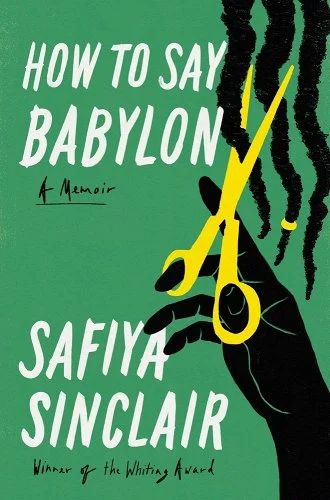
Safiya Sinclair’s Journey to Finding Her Own Power

Safiya Sinclair writes in her memoir How to Say Babylon, “The perfect daughter was nothing but a vessel for the man’s seed, unblemished clay waiting for Jah’s fingerprint.” The memoir, Sinclair’s first, is about her journey to shaping a future that isn’t limited by the idea of the perfect daughter or Rastafari’s tenets.

Raised in Jamaica in a strict Rastafari household under the watchful eye of a father obsessed with his daughters’ purity and keeping the corrupting influences of the Western world at bay, Sinclair knows the perfect daughter in her father’s eyes covers her body, treats it as Jah’s temple, remains obedient. At sixteen, a recent high school graduate, Sinclair is largely confined to her home with no direction or purpose and trapped by her father’s increasing paranoia and volatile behavior. 

Sinclair discovers poetry and her voice and with the discovery comes the growing understanding that she wants to determine the woman she will become without the patriarchal views of her father’s brand of Rastafari. But Sinclair’s rebellion, which grows slowly, comes at a steep cost.

Sinclair, a poet who has won a Whiting Award, the OCM Bocas Prize for Caribbean Poetry, and the American Academy of Arts and Letters Metcalf Award in Literature, writes with grace and a poet’s lyricism about a woman finding her voice and her purpose.

I spoke with Sinclair about the Rastafari culture that both strengthened her father and oppressed her and the burden of being the perfect daughter.


Donna Hemans: I don’t think Rastafari culture is largely understood either in Jamaica or outside of Jamaica. Matter of fact, I’m Jamaican and there’s so much I learned from your memoir. What’s one thing you most hope readers understand?

Safiya Sinclair: Most people have an idea of Rastafari that is broad, not very nuanced. I knew when I sat down to write the book that I would be tackling some of those stereotypes and widening the view. 

Most people think Rastafari defines Jamaica, but the Rastas are historically a persecuted minority in Jamaica. The government historically, would kick them out of their homes, their families would turn them away. They weren’t allowed to have jobs. They were forbidden from walking along the beach side when it was being developed for tourists. The nation wasn’t always very welcoming or accepting of them or the movement. We had a prime minister, Bustamante, in the ‘60s who said, “Bring all Rastas dead or alive.” And this led the army to go on a weekend-long rampage of pulling Rastas out of their homes, forcibly shaving them, cutting their dreadlocks. And the government didn’t really make amends for this atrocity until as recently as five years ago. And this wasn’t taught in schools either. When I sat down to write the book, I had to go back and learn my own history, learn how the founder of Rastafari, Leonard Howell—who founded the movement in 1930 when Jamaica was still under British colonial rule—had his compound raided by the government and burned to the ground because the movement itself is an anti-colonial movement. It’s founded on a dream of Black liberation, which they thought was dangerous. 

So Rastafari in Jamaica have always been on the fringes. They’ve been the pariahs, they’ve always found themselves at the other end of a gun or a baton or a heel. And all these policies that move against them are what they call Babylon. 

DH: One of the things that most fascinated me is the Rastafari push for liberty and freedom for Africans everywhere. Yet while your father talked about freedom from oppression, he created his own little world where he oppressed his own family. How do you reconcile the two?

SS: I’m not sure if I even reconcile the two. I think I’m still trying to come to terms with it. 

Most people think Rastafari defines Jamaica, but the Rastas are historically a persecuted minority in Jamaica.

When I traced the history of Rastafari and Howell’s movement, he had this idea of Black independence, of Jamaica being an independent Black nation, of Black liberation. And that all scattered to the wind when the government burned the compound to the ground and burned the movement to the ground. When the movement scattered, Rastas became very closed off from society and Rasta men in particular became the living God for their own households. And because there is no written tenet or scripture of Rastafari, each man could then just take what he wanted from the different tenets of Rastafari and basically make his own gospel in his own house. And so, I think that’s what happened with my family and my father. He kind of authored his own vision of Rastafari for himself and for us that didn’t always manifest itself in positive ways. 

DH: And yet he wasn’t always like that. What do you think contributed to the change in him?

SS: It must be a conflagration of many things: having daughters and being scared of this idea of them being corrupted or ruined or getting pregnant. He was really obsessed with my sisters and me not getting pregnant before we graduated high school, which I think was a direct response to his own mother, who became pregnant when she was a teenager. So he had this idea for a long time that that ruined her life. That’s one element of it—this tight control, which seemed always to me an irrational fear, which only extended to his daughters but not to his son. 

A lot of it was simply about just living in a postcolonial society in which he didn’t always feel like he had autonomy or agency. Home was a place where he felt he could have those things. As a Black man walking through a society where he felt that he wasn’t always seen or respected or as successful a reggae musician as he perhaps wanted to be. I think those things manifested themselves in the tightening control and the paranoia. 

DH: Your book touches on many themes—agency, liberation, womanhood, abuse, faith, purity—but there are four strong women who emerge from this period your memoir covers. And there are a few moments when you begin to see that there is another way of life. Can you talk about the moment that was most profound for you, that showed you could break free from your father’s hold?

SS: The moment came through poetry. I grew up in a household where my voice wasn’t always encouraged. My opinion was not encouraged or allowed. A lot of the cultivating of myself and my voice came through reading and writing poetry. When I started publishing my poems and people were actually paying attention to what I said for the very first time, I began to realize that there was a world out there and there was room for me to envision myself outside of the household, outside of Rastafari—a place where I felt like I was perishing. In poetry, I felt like I was thriving. And it was through poetry that I left home for the first time and went away to Spanish Town and to Kingston to go and study with the “old poet.” That was the first time I was away from my father and really began to nurture and care for my own thoughts even more.

DH: Sticking with this idea of womanhood and control, “empress” and “dawta” are terms of endearment, synonymous with girlfriend and wife. And any woman walking on any Jamaican road will likely hear it. But the terms carry more weight than that, don’t they?

I think the book talks to all women who are fighting for their own voice and who live in homes and countries where that’s being chipped away.

SS: It’s really the Madonnification of the women in the Rastafari household and this idea of being silent. Through your silence you are most pure, and through your humility you are most holy.  And so then you earn the honorifics of “empress” and “princess.” But if you think about it, a man calling his partner or his wife, his daughter what does that mean? It’s infantilization. So the term of endearment itself is an infantilization of the woman who has to be somehow less empowered than the man to be endearing. I had to reexamine a lot of these terms that were being used in the household and then when they’re used outside of the household, they’re also different. Inside the household and outside the household both names and honorifics carried different weight, but both of them were bending my back to make me smaller.

DH: What do you think it means to be the perfect daughter? Have you figured it out?

SS: No, I don’t think so. I don’t think anyone should be striving for that. You are whatever person you are. And it was hard growing up in a household where you felt like you had to be perfect and pure and humble. It always seemed that it was an unachievable goal. I think I’m still trying to process and get rid of this idea of perfection. It’s something that I still struggle with in aspects of my life because I grew up being socialized that way.

DH: In your early teens, you concluded that “I would never be his perfect Rasta daughter. I was too headstrong, too curious. Too much of myself, and not enough of him.” But it would take some time for you to sever ties. How did you know for sure that you were done trying to be the perfect daughter? 

SS: When I graduated, I felt like I’d done everything that was asked of me. And my life was in a bit of stasis. I was trying to get myself to college. I was trying to make something else of my life rather than just being a Rasta man’s wife and a Rasta man’s daughter, to define my future on my own terms. And I think the severing happened in the moment where my father said I was nothing but a Jezebel, and I would be nothing but a Jezebel because I don’t cook and clean. And in that moment, I said this is not how I ever want to be defined. My worth doesn’t rest on these things. 

I had to break this cycle. As I looked at my sisters who were in the same kind of stasis, I could see their lives ahead of them because it was the one I was living. I wanted to burn that story down and write a new one for myself. So that for me was definitely the moment when I knew I was done with being silent and done with making myself smaller. I knew who I was and who I wanted to be. And I was ready to do anything I needed to do to get there. 

DH: It was sometime before you sat down to write your memoir. Years earlier a professor suggested you weren’t ready. How did you know you were ready?

SS: That moment when I was in Charlottesville, I had just left home under really terrible circumstances and I was pretty sure I was never going to speak to my father again. He was right. I wasn’t ready. The hurt was still fresh. The wounds felt so deep. It seemed like the writing of the book would be a reaction because I was hurting and I didn’t want that. I wanted to feel objective enough to write the story because I knew writing the story meant I would have to understand my father and his childhood and his adolescence and why he chose Rastafari. I wasn’t there yet. I hadn’t processed everything. I wanted the book to be a positive act and not one born out of hurt. The moment I knew came to me through poetry. I gave a poetry reading at Calabash and it leads to a positive moment between me and my father that I didn’t think was possible. But when it happened I felt a release and I felt released. I felt okay, now I can write this story. 

DH: And did the current efforts to roll back autonomy and agency for women have anything to do with your determination of the right time?

SS: I think the book talks to all women who are fighting for their own voice and who live in homes and countries where that’s being chipped away and taken away. I grew up in a household like that, where if I followed what my father and other Rasta brethren would have wanted for me, I would not be here talking to you today. I wouldn’t have a voice, a sense of being. My worth would be defined in a completely different way. I can only hope that the book joins the conversation in a positive way. And might give them some kind of fire and power to know they are not alone and another world is possible.

Love Is a Stone That Won’t Sink

So Long, Oblivion

Like a dollar I am depreciating all the time.
Like a lighthouse throwing the net of my pretend moon 
on the predator shoreline. Like an invasive boar 
I have been known to root and roll in rain and dirt and roam.
Like the earth sometimes in love with turning away from all light 
though never really leaving. Like a beach I have wanted 
to spend years softening though not always wanting the footprints 
which to ghost crabs are craters. Like a paleontologist 
resisting always the impulse to ransack my skeletons  
for drumsticks, though here is the gong, here is the timpani 
like a bird bath full of absinthe before me. So so long 
oblivion with your small dreams of silence. I am going 
to the bank of myself with my pockets hanging out 
like two ruined countries, like two broken and gorgeous wings.

Carrying Stones

On the grassy slope leading up to the overpass, someone 
has spelled out LOVE in large, round stones, which is to say sometimes 
love is a gray and heavy work. My exit lets off 
at a cemetery. There too the trees are coming back 
into their leaves like bodies returning to themselves 
after long illness. I remember once catching a glimpse there
of a funeral—twelve suits and dresses, two black-clad children 
chasing each other and laughing through graves, which is what I want 
my love's work to resemble. So why end in a graveyard?
For those I love I will bake strawberry rhubarb pies,
muddle basil in gin and lime, cook pot roast and gumbo
and stay up after dark cleaning the kitchen so tomorrow
begins pristine. This life is little more than castaway stones
but I can carry stones. Where should we put them, what should we build?

For Viet Thanh Nguyen, Writing is an Act of Beauty and Justice

Memory is a tricky thing. For one, not everyone will have the same memory of the same event. For another, you can do so many things with it—you can forget it, you can suppress it, you can warp it (intentionally or unintentionally) and so on.

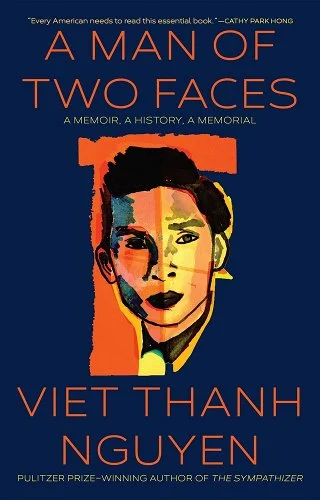
In his memoir, A Man of Two Faces, Viet Thanh Nguyen writes that his attempts at keeping a journal were “fitful and fragmented, written inconsistently over a few years in high school and college.” But if there are gaps in his memories, Nguyen is less interested in the missing content than the meaning of those gaps, both on a personal scale and a larger societal one.

A Man of Two Faces is at its core a memoir about the education of a refugee. Nguyen starts with his early days in the United States. But as Nguyen experiences the world as an Asian American, an academic, a writer, and, eventually, a father, he becomes attuned to the conditions and contradictions that make his life (im)possible—war, displacement, the American dream, and more.

The process affords him the opportunity to dissect his coming of age and to excavate his memories, particularly of his mother’s time in a psychiatric ward. The task is easier said than done. “You cared for this memory,” he writes, “but you never ask.”

The memoir is Nguyen’s opportunity to ask: What do we remember and what do we forget? If we forget, why do we forget and for whom are we forgetting? Ourselves? Our loved ones? Our country? And what about cultural memory, which is to say history?  

To me, memory is a stumbling block. To Nguyen, memory is fertile ground.

Over Zoom, Nguyen and I met to talk about the politics of remembering, the American discourse, and justice.


Eric Nguyen: You’re best known for your fiction and you’ve also written nonfiction but for an academic audience. This is your first memoir. Why a memoir this time around?

Viet Thanh Nguyen: Hopefully, it’s my last memoir too. Why a memoir? This time around, I did not set out to write a memoir. My editor suggested that I do a nonfiction book composed of various essays that I published over the last few years. But as I set out to compile those essays, I felt that it would be much more interesting to write a book with a cohesive narrative. 

I looked over all the many essays that I had written, but also the many speeches that I’d given over the last several years. As I toured the country, giving these talks to various audiences, the talks had taken on an increasingly autobiographical narrative about my life and the lives of my parents. The memoir aspect of those talks was interwoven with my takes on American culture and politics and the war in Vietnam and racism and colonialism and many other issues. So those talks along with the essays really then compelled me to feel that there was room for a book-length memoir, particularly because as I started to give those talks, I found myself exploring parts of my past that I had sealed off; I found myself shaken by what it was that I remembered. So, of course, as a writer, I felt that if I was being shaken by what I was recalling, this was a sign that I had to explore those things further.

EN: The problem with memoir is that it’s only as good as your memory. You write about forgetting memory, misremembering, the inability to remember, suppressing memory, the unwillingness to remember. How can memoirs deal with these issues?

VTN: I had read Vladimir Nabokov’s Speak, Memory, which is a great book. In reading that book, I felt that it was such a beautiful recreation of these times in Nabokov’s life as a young person. It was so streamlined of a narrative that I wondered how was he able to recreate in such great detail this distant period of his life. 

American culture wants us to dwell in our own guilt when the real guilt are the historical circumstances and the warfare that created our stories.

While I admired that seamlessness of his narrative, it was not something that I wanted to recreate for myself because I felt that a seamless recreation of my life and my parents’ lives, which would be the convention in American memoir, would actually be more fictional than nonfictional. I wanted to write a memoir that actually dealt with the shape of memory itself, or at least my memory. It is not linear, it is not whole.

It is fractured, it is fleeting. It jumps around. There are tatters and holes. If I were to attempt to fully fill in all of those holes, would I actually give myself and the reader a more accurate sense of my own life and my own past and my perception of it? Or would it be actually more fictional? Even if I did fill in those holes, would that illusion of wholeness actually be accurate or would the patching up of those holes only obscure more holes? I wanted to give in to the very texture of my own memory in the writing of the book.

EN: The same question could be asked about history in regards to society. We forget or disremember things, a kind of collective forgetfulness. What is often the case is that we misremember and we actively do. So how does a nation or society deal with this? How does the individual deal with this kind of societal misremembering?

VTN: I quote the poet William Carlos Williams from his book In the American Grain, where he describes American history as—in his words—”an orgy of blood.” I think most white Americans would be taken aback by that characterization of their country and their history. Other Americans not of white background might be more sympathetic to this idea that this country’s origins and history and present are soaked in blood. 

The United States is not unique in any way in the desire of the people who live here and who have come here to engage in selective memory about their history. 

Now, if you are one of the victors or descended from the victors, you have an investment in selective memory that would justify your existence as a conqueror or the descendant of conquerors. If you are not, let’s say you’re an immigrant or a refugee, the power of the mythology of the country you’ve come to is such that you can internalize that mythology so that you too engage in a selective remembering and forgetting because society is rewarding you for that.

The book takes on these larger questions of American history in the American dream, which is the most powerful mythology of all and which I characterize as a euphemism for settler colonialism. That’s the history that most Americans don’t want to remember or to recognize. For most refugees and immigrants, when we say we come here for the American dream, we are also saying we’re coming here to be a part of settler colonialism, whether we know it or not. The book connects the experiences of refugees and immigrants aspiring to the American dream to the very bloody history of this country, which also extends to the way that the United States has interacted with many of the countries from which refugees and immigrants come including, in my case, Vietnam.

Those of us who come here as refugees may not see any connection between our history as Vietnamese people and the history of this country outside of the war in Vietnam. But I recall how, when we first came to this country, my family and I, our settlement was in Fort Indiantown Gap in Pennsylvania, a state that, Benjamin Franklin said in 1752, was a state for white people and by white people he meant the English. Pennsylvania was a state where the white people there almost completely exterminated the indigenous peoples of the land on which I literally settled. What I put out in the book is that my parents bought their first house in Paxton Township in Harrisburg, PA, and the last remnants of the indigenous people, the Susquehannock, were massacred there in 1700 by the Paxton Boys, a white vigilante gang. Our arrival as refugees in the United States was compelled by the history of American warfare in Vietnam, in which American soldiers called the land around their fire bases “Indian country.” When we arrived in the United States, we were settled in a country that had been taken from indigenous peoples. That’s the orgy of blood that William Carlos Williams is referring to and that is part of the history that the book deals with.

EN: Your memoir is also the story of your parents and their experience during the war. Something that I can relate to is writing that story of one’s parents, especially, in my case, a child of refugees, someone who didn’t go through that refugee experience. You tell the story of your parents, specifically your mother’s story. What right do we have as writers to tell the stories that are not ours to tell the stories, that are our parents?

VTN: I have no right. None of us have the right to tell the stories of other people. This is the age-old dilemma of anyone who desires to write an autobiography or a memoir that incorporates the lives of others besides themselves. This is the age-old dilemma of the so-called refugee and immigrant story. When the child or grandchild of the refugees or the immigrants decide to tell the story of their parents or their grandparents; we have no right. Anybody who tells these kinds of stories has to grapple with the ethics, the aesthetics, and the politics of what it means to tell this story. 

There’s no getting around it. This book confronts that. It tells the story of my parents or part of the story of my parents. It tells about my mother’s going to a psychiatric hospital three times, a fact that my parents almost certainly would not want me to tell. Then it confronts what it means to say these things. I have no right. I have to live with that.

EN: Is it worth writing stories of one’s ancestors and parents, or would you say it’s an act of vanity, something you’re doing for yourself or your ego or your sense of self? 

VTN: I think I have to leave it up to readers to decide that. I will say that one of the reasons why the book is subtitled “A Memoir, A History, A Memorial” is that I did not want to treat this story purely as the story of my parents and myself, which is the standard pattern of the memoir, especially the memoir in the United States, especially the memoir of those who are classified as refugees or immigrants or others so-called minorities. In a way, we’re expected to write about our trauma, we’re expected to betray other people, we’re expected to betray our communities—but only our communities, only our parents.

This book is also about the betrayals of the countries in which my parents and myself have been involved. That’s why it’s also a history, and that, I think, is how I assuage my own feelings about the dilemma that you described: I don’t think this book is only about me; I think this book isn’t even only about my parents. 

We as a country are deeply allergic to communism since capitalism is our fundamental religion. But I reject all of those assumptions.

Part of the typical gesture of the immigrant or the refugee who writes the memoir of their parents, it’s to say, “Look at how astonishing my parents are, look at what they’ve accomplished,” as if my parents, their parents, our parents are unique. Part of the gesture of this book is to say, “Yes, my parents are unique as everyone’s parents are unique, but they’re also not unique.” 

My mother went to the psychiatric hospital three times. But why? Was her experience so radically different than that of so many other Asian women who became immigrants and refugees? And if we ask that question, then we have to ask all the other questions about why there was such a thing as an Asian Pacific Psychiatric Ward at the hospital where she went to, that there were so many Asian Pacific people in dire need of psychiatric assistance that there was a whole ward created for them.

One way to cope with the dilemma is to say, that is precisely what American culture wants us to feel, to dwell in our own guilt when the real guilt are the historical circumstances and the warfare that has created our stories. That’s what the book draws attention to.

EN: Given the political dimension of your book, you also write that perhaps writing can be an act of justice. How do you see writing doing that?

VTN: Writing, for me, is an act of beauty. It’s an act of power, it’s an act of mourning, and it’s an act of justice. It’s all those things at the same time. So yes, writing is fighting for me, and I want to use my writing politically.

However, I also want to write politically at the highest level of beauty. For me, these goals are not irreconcilable. I think in dominate American culture, there’s an allergy to the idea that art and politics can be expressed simultaneously, which is rooted in dominant American culture’s assumption that if you bring art into politics or vice versa, you must be a communist. We as a country are deeply allergic to communism since capitalism is our fundamental religion. But I reject all of those assumptions. This book is born from this idea that the person and the political and the artistic and art and justice can all be expressed simultaneously.

EN: You write about decolonizing writing. What does this look like to you?

VTN: Colonization is a globalizing and totalizing process, so decolonizing has to be a totalizing and globalizing process. Decolonizing writing, if it is removed from the general act of total decolonization, is not going to work. I think that’s part of the problem of the conversation around when people say, “Oh, how do we decolonize writing? Well, we’ll change aesthetics.” Yes, you have to change aesthetics, but you’re not going to decolonize writing until you actually decolonize everything else. That’s part of our problem and our challenge. You have to decolonize by understanding how aesthetic assumptions operate. 

For example, in the book, there’s a whole section of the book about immigrant writing where I talk about how, in fact, as an immigrant or a refugee or a so-called minority writer, one is expected to talk about American racism—but only within certain limits so that it’s totally expected that you’re going to tell what Anthony Veasna So calls the sob stories of immigrants. That’s our currency.

I don’t believe in being a voice for the voiceless. I believe in abolishing the conditions of voicelessness.

But you’re not expected to question the American Dream. Now, you could question it in the book, but you can’t question it as a dominant mythology that we can’t escape from, so that the typical immigrant memoir, for example, is going to show how terrible things were in the country of origin and how difficult it was for the immigrant in the United States. But in the end, lo and behold, we have the book. The book itself is proof of the success of the American Dream. Even if the book is critical of the American dream, if the author cannot see that in operation, then the author has not decolonized the aesthetics of their work. 

The dominant ideology of American society, which is a settler colonial society, infiltrates many kinds of aesthetic assumptions from the formal shape of one’s book to other things, such as translating orienting one’s book towards white readers or towards people who are not of one’s own community.

Beyond that, the impulse to accept the logics of settler colonialism as a writer manifest itself in seeing oneself as an individual writer. Now, every writer’s an individual writer. We all just write our books in our own minds. But I don’t think that I would’ve been the writer that I am if there hadn’t been more than a century’s worth of Asian American writers who had been writing before me. I see myself as part of a genealogy and a collective that’s been in operation since at least the 19th century. If you’re a writer who doesn’t see yourself as also part of a larger group, then you probably haven’t decolonized yourself.

If you’re a writer who aspires to be a voice for the voiceless, you have definitely not decolonized yourself because you don’t understand what Arundhati Roy said, that there was really no such thing as the voiceless; they are only the deliberately silenced or the preferably unheard. Any writer who doesn’t see that and thinks that their art is only a manifestation of their individual voice rather than their individual voice against the silencing of other people is still colonized. 

I don’t believe in being a voice for the voiceless. I believe in abolishing the conditions of voicelessness, which is really a gesture at this larger project of decolonization, which is about the abolition of all the structures of colonization, of which corporate publishing is only one component.

7 Craft Books to Help You Become a Better Writer

Craft is often thought of as the backbone of literature, the scientific and mathematical side of the creative process that examines an artist’s techniques. In prose, it often involves terms such as plot, pacing, point of view, characterization, scene-setting, structure, dialogue… It is the rational breakdown of those mechanisms that work behind the scenes in the stories we love and despise most—the ones we wish we’d written ourselves.

In literature, craft is fascinatingly unlike itself in any other subject. Instead of becoming more and more obvious as well as understood, it becomes subconscious, supposedly, once you’ve mastered it. But craft never ends. Even if it is turned on its head, that twist and distortion itself is a part of craft. It becomes a new and exciting way to design a story, to surprise a reader, to invent a structure that’s never been thought of before. This is the heart of craft and what the following seven books aim to describe each in their own unique way. 

The titles on this list are at the forefront of contemporary literature, engaging with experimental structures, rebelling against the canon, and carefully pointing out the ways in which our assumptions delude us. Whether you are an aspiring writer, a Pulitzer-Prize winning memoirist, or a curious reader, these books on craft will change you and the way you think about the world—as well as literature—within the complex confines of beauty and truth. 

Craft in the Real World: Rethinking Fiction Writing and Workshopping by Matthew Salesses

In Craft in the Real World, Matthew Salesses—bestselling author and Assistant Professor of Writing at Columbia University—breaks down the meaning and implications of craft in fiction, redefines its terms, and elaborates upon the history and “rules” of writing workshops in the U.S. since 1936. He argues that literature should not exist in a vacuum and that the “responsibilities of actual life” also belong in the realm of art. Through thought experiments, examples, and anecdotes, Salesses masterfully upends the framework of many MFA programs and the way many writers have been taught how to approach feedback, revision, and cultural expectations in their work. This book is a must-read—as it significantly addresses the issues that have plagued white-centric literature for far too long and proposes alternative ideas and methods that will revolutionize contemporary fiction today. 

“Craft is about who has the power to write stories, what stories are historicized and who historicizes them, who gets to write literature and who folklore, whose writing is important and to whom, in what context. This is the process of standardization… These standards must be challenged and disempowered.”

Body Work: The Radical Power of Personal Narrative by Melissa Febos

Body Work by Melissa Febos also goes against the tide of traditional craft books. In four essays, Febos beautifully gathers her own experiences, reflects upon what she’s learned from writing and from teaching, and analyzes specific examples from the historical canon while revolting against them through personal narratives. The award-winning essayist and University of Iowa Professor shows how navel-gazing and confession can still be moving without feeling overdone, especially for women who fear being cast out by a misogynistic bias in the industry. Febos encourages her readers to examine the assumptions they’ve inherited about writing, such as how to structure a sex scene, the scripts we follow in art and in life, and the true place for cruelty in literature.

Throughout the collection, Febos is unparalleled as she draws on the power of healing through art, makes philosophical arguments on the ethics of writing about real people, and shows just how deeply one must travel to eliminate the distance between the author and the nonfiction narrator. 

“Writer was the only role I could see myself occupying in society… It offered the gift of self-forgetting, a transcendence on the other side of which lay insight.”

Draft No. 4: On the Writing Process by John McPhee

For those of you seeking further guidance on writing nonfiction, John McPhee is a flashlight in a pitch dark theater. The Pulitzer-Prize winning author, retired Princeton professor, and staff writer on the New Yorker since 1965, collected his wisdom, advice, letters, and anecdotes in a book that goes beyond lessons on craft. In Draft No. 4, McPhee describes his decades-long experiences with editors, the New Yorker fact-checking department, the art of omission, the key to escape from writer’s block, how to unravel secrets from an interviewee, and much more. The book is comprehensive and eloquent and has been called the written version of McPhee’s creative nonfiction course, which he taught for over forty years at Princeton University. 

“Creative nonfiction is not making something up, but making the most of what you have.” 

How to Write an Autobiographical Novel: Essays by Alexander Chee

Alexander Chee’s manifesto on the beauty of crossed lines between reality and literature is not only for memoirists or nonfiction writers. As the title suggests, it is truly about the art of the novel and the way all stories penetrate, misremember, and influence truth. It is less a guide on how to write an autobiographical novel than it is an example of profound and life-changing essays in written form.

Chee’s essays examine how his identity as a Korean American developed and became hard to define while growing up, how he was shaped by reading fiction as much as by factual events and experiences, and also how identity is not a singular noun. Through the odd jobs, the headlines, the tragedies and comedies, and the elections of a lifetime, Chee writes. And with the essays in this collection, Chee also shows how being a Tarot-reader, bookseller, and cater-waiter for William F. Buckley can simultaneously support, inform, and expand the life of an artist who is also always an activist. 

“Something new is made from my memories and yours as you read this. It is not my memory, not yours, and it is born and walks the bridges and roads of your mind, as long as it can.”

Meander, Spiral, Explode: Design and Pattern in Narrative by Jane Alison

Jane Alison is a versatile and multi-talented artist, expanding beyond one genre—she’s the author of four novels and a memoir, a translator of Ovid, and a professor of creative writing at the University of Virginia. Meander, Spiral, Explode is her book on craft, and while it deals with specific canon examples and thinking about plot, structure, and pacing, it too is versatile and expansive—much like Alison herself. The book proposes a new way of framing our stories. Instead of the conventional narrative arc seen time and again in Western fiction, tracing back to Aristotle, Alison compares certain stories’ movements to paintings, music, gardens, houses, living creatures, oceans, and natural motion. She offers new and exciting ways of reading, writing, and designing stories while encouraging writers to experiment with the patterns that dictate fiction. 

“Visual elements such as texture, color, or symmetry can open windows and let us design as much as write. Text comes from texere, after all: to weave. Next, we can be conscious, deliberate, innovative, in the paths we carve through our words.”

About Writing by Samuel R. Delany

About Writing clocks in at about 432 pages. But trust me, by the end, you’re going to be wishing there were 432 more pages of Delany’s wisdom. The collection consists of letters, interviews, and essays encompassing a range of topics such as Delany’s philosophy of time, how to engage with the canon, whether to use flashbacks or not, how to build calluses against critics, the pleasure of language in science fiction, and so much more. Reading About Writing feels much like sitting by a fire, late into the night, listening to Delany spin tales about the writing life, the process, his youth in New York, and the truths he’s uncovered through it all. 

“The sign that the writer has internalized a model deeply enough to use it in writing is when he or she has encountered it enough times so that she or he no longer remembers it in terms of a specific example or a particular text, but experiences it, rather, as a force in the body…”

Bird by Bird by Anne Lamott

Last but not least is Anne Lamott’s instructional guide that could be used for writing motivation or, more generally, for life at any time. She begins the book by telling an anecdote about her brother who once procrastinated an ornithological research project until the night before, and her father’s response was to “take it bird by bird.” Lamott uses this philosophy to guide the reader through the process and pains of writing and how to view it not so much as a chore, a routine, or a block in one’s schedule, but rather as a spiritual exercise that satisfies and uplifts the soul. Her humor and biting sarcasm throughout the book is another reason to dive into it and to enjoy the pages, above all. 

“Because this business of becoming conscious, of being a writer, is ultimately about asking yourself, How alive am I willing to be?”

Jonathan Lethem Returns to Dean Street After Twenty Years With New Characters and More Crimes

When you hear the title Brooklyn Crime Novel, you might automatically think of genres involving mystery — whodunnit, noir, hardboiled, detective fiction, etc. — and plots driven by investigation. You might think of specific titles such as The Big Sleep, The Maltese Falcon, The Black Dahlia, The Feral Detective, Gun, With Occasional Music, and perhaps even Motherless Brooklyn. No one would fault you for imagining that Brooklyn Crime Novel exists in these universes. Maybe it does. But more likely, you’ll find that it belongs outside of these realms. The narration proves to be omniscient, prismatic, and perpetually evolving. The voice behind the novel immerses tourists and locals alike into the urban myths and overheard phone calls that pass between kids and parents, as well as the secrets that are unspoken for decades yet somehow known by all. Through a range of fictional scenes, vignettes, muggings, walks, dances, and late-night conversations, Lethem investigates the physical and cultural gentrification of Brooklyn along with the undercurrents of the racial and sexual politics that have always been there, pulsing in its streets throughout history.

Through the novel’s eclectic cast of characters — including a spoiled boy, a millionaire’s son, a mediator named C., an antiquarian kid, the board-game obsessed, a Brooklyn novelist, the Brazen Head Wheeze, hippies replaced by hipsters, movie stars, and the elusive narrator himself — we become absorbed into the past lives of a borough that has been eroded but not yet erased. 

Despite the kaleidoscope of characters within the novel, it is still Brooklyn that serves as the protagonist, and the propelling mystery at hand is: What happened to it? Returning to Dean Street after twenty years, Lethem brings with him a magnifying glass, profound retrospect, an open mind, and scintillating insight to find the true meaning of growing up — not just for the boys on the block, but for the city, for Brooklyn itself. 


Kyla Walker: How do you think about urban legends in terms of what to believe and what to disregard? And how did they influence you growing up and now as a writer?

Jonathan Lethem: The book is partly about how some things that occur are translated, often rather rapidly, into something that could be called an urban legend, but they become very charged because of the element of the real that’s hiding inside the legendary part of them. Maybe this also connects strongly to the idea of street knowledge, but also of tabloid culture… In the treatment of true things by tabloid culture, they become legendary, whether or not they’re being spoken of truthfully. There’s the emotional, mythic, and implicitly political—often quite terribly racist—energies attached to them that turn them iconographic or totemic or overcharged with resonances. And this process is definitely a part of this book. But also, what kids or teenagers say to each other and how wrong and right they are when they’re exchanging information. They’re not cynical tabloid reporters, but they also have a powerful mythic impulse that’s transforming things into the legends of the street. This was a world that I experienced intimately and participated in. So, one more layer is that this book was written not in a pretend innocence of my own involvement and complicity in creating images and ideas around New York City in the seventies and eighties. It was written instead as an act of open engagement, a confrontation with, and a curiosity about what it meant that I knew I was also a propagator of myth. 

KW: What was the catalyst that led to writing it at this moment?

Crime is fundamental in my perspective on how life exists.

JL: When I finished writing Fortress of Solitude in 2003 and then began answering questions about it in 2004, I would say and mean it that I was never going to want to write about that place again. I felt that I’d had my say, and there were aspects of what I’d done that were very satisfying, and others that might be puzzling or incomplete, but as an emotional journey, it was exhaustive and exhausting. I was done. I couldn’t imagine going back to it. People always ask writers, “Are you going to do something like this again?”

KW: Or a sequel…

JL: For so long, I would just lay that card on the table and say, “Oh, no, it’s someone else’s turn now. My utterance is complete.” I used to joke that it was the Fortress of Solitude listening tour because I would be made available in person, and I would say a certain number of things or read a little bit from the book. And then, I would start hearing this testimony coming back at me. “It was like this.” “It was like that.” Or “You got this wrong. You got this right.” Or “That’s me, that’s my brother. I know who that is, and here’s why.” “I can tell what you’re doing here.” In that sense, I was unconsciously beginning this process of conversations that I earlier described. I was already starting to research Brooklyn Crime Novel without having any idea that I would ever be writing it. Because all those voices, those post-publication Fortress of Solitude encounters on the listening tour, were the beginning of what I began to do very intentionally and with an enormous amount of desire and purpose. I acknowledged to myself in the last five years that I was going to write about Dean Street again. So, I was never off the Fortress of Solitude listening tour. It was the combination of my incredibly good luck at how that book was published and stuck around and the fact that it was adapted into a theater piece in New York City. A lot of people saw that which made them talk about it again and talk about it with me again. There’s also the fact of my own gregariousness, the fact that I’m not a shy person, and I do make contact with readers in many situations pretty readily. So, it was 20 years’ worth of conversation that led to Brooklyn Crime Novel.

And then, there was a pivot in the middle, which was the theater piece. When you make a story out of your own life and you throw it out into the world, it’s embarrassing and exalting in equal measure that anyone cares about these things that mean so much to you. It’s incredibly humbling too, but it felt like it was still in transmission for a long time, whether I attended to that or not. But when I went and saw the theater piece, it had been handed back to me in a strange way because musical theater is such a strange art form. There’s something uncanny in that form—turning stories into song, making characters and having them switch from spoken voices to singing, and then sometimes singing together in groups—it breaks into some kind of layer of emotional possibility… And it made me know how little I still understood about it all. You can write a 600-page book about a block, and you can turn out to still be only at the beginning of understanding what you feel, and why it’s so complicated for you. The musical shattered my certainties that just because I had typed for four years, I had figured everything out.

KW: That’s so interesting it was the musical that did that.

You can write a 600-page book about a block, and you can turn out to still be only at the beginning of understanding what you feel.

JL: It put me back at the starting line in a certain sense. Even then, I was still in denial that I was going to write about Dean Street again. But the funny thing about the musical was they also acted as if I was responsible for it. So, they put me on stage for a talk back to the theater audience at the opening night. Then the question came: “Will you ever write about Dean Street again?” And I started to haul out my usual, “No, no, no, I said it all. It’s done. Someone else’s turn.” Then, on stage in real time, I came up with a different answer, which I thought was a joke. I said, “Well, if I ever wrote about Dean Street again, I would do it from the point of view of a bunch of disgruntled characters who grew up on the street where someone wrote a very celebrated book and think that the novelist got it all totally wrong. And I would write a book about the people who think that Fortress of Solitude is a crock of shit.” So, there I was joking… And you can see where that joke led me.

KW: Definitely… You can feel the weight of all the different opinions and perspectives in the book. It was beautiful how it was done and came together. The metafictional aspect of it felt very Borgesian. I’m curious, how does it feel for you to read about Brooklyn by writers who you didn’t grow up with, or are part of a different generation? Does it feel like a different city you’re reading, or do you see resonances?

JL: Well, it is a different city. I’m not only 60 years old, but also, I have been living away from Brooklyn for almost 15 years now. But, even more than those two very important contexts, I am so overwhelmingly engaged with this memory palace—of what it was like in the ‘70s, ‘80s, and ‘90s—that I can’t see Brooklyn now with real clarity. It’s easy to be condescending about this and to say, “Oh, you think it gentrified from 2015 until now? Oh, that’s pretty funny…” But actually, of course it did. It kept going. It kept changing. And the book is an attempt to accept that I’m trapped in time. I’m a reporter from another planet at this point. If I have anything to offer, it’s that I’m a Rip Van Winkle character or an H.G. Wells’ time traveler who’s shaking his fist. 

KW: You’ve said in class before that you worked in bookstores throughout your twenties in Berkeley and San Francisco. How would you compare the bookstore culture/literary scene between San Francisco and New York after having experience in both?

JL: I did work in bookstores in New York City as a teenager. I worked in three or four before I’d even gone off to college, and I drew on that. There was a milieu of these kind of deep, arcane, cranky, irascible old guys still running bookstores that was very much like breaking into some green room where Borscht Belt comedians were still arguing about who had the better night on stage at some Catskills resort. It was like a magic carpet into that New York ethnic subculture—often Jewish or Greek—of a deeply irritable, knowledgeable but grubby subculture of secret codes and signals. It was still accessible a bit when I was a kid. It’s pretty much evaporated. But by the time I got to San Francisco and worked in bookstores, there were like four of those guys who’d moved West, and I worked for one of them. A great one: Moe Moskowitz. But this thing was moving quickly into the rearview mirror, and I accelerated that by going west, because there was less of it there to begin with.

KW: As someone who’s been a wide reader for so many years and a prolific writer, do you feel that fiction can be as transformative an experience as a real life event can?

JL: I’ve delivered so much of my life to this value system, and you used the key word. When I want someone to believe that I want them to read a book, not just that I have officially recommended it, I often use the word “experience”— meaning this part of your life when you’re reading this book is going to matter… But I do think also that prose fiction in the recent phase is under a certain pressure of skepticism and resistance that’s real. It doesn’t make any sense to ignore it. It’s a condition that seems remarkable to me that what I care about, like the coexistence of the past and the present, is still so vividly alive. People have joked, “Oh, the novel is always dead.” And the novel goes on living. Norman Mailer has this quip where someone said to him, “Is the novel dead?” And he said, “The novel will be at your funeral.” But with the present form of the novel, a lot of the new ones that work do so by injecting some degree of this resistance or skepticism into their bloodstream. Like a toxin. And then handling it. That’s what goes by the name “autofiction.” The Rachel Cusk variety and a number of other varieties. I think this is important. It’s not just to be thought of as a fashion or a phase. But this moment of this tension, put-upon resistance, or skepticism matters. And it matters partly because if you’re lining up the magic super villains of our present universe along with reactionary nostalgia, racism acknowledged and unacknowledged, the fascist longing for authoritarian clarity in a world of unclarity, then another villain in the last decade at least is narrative certainty. Stories that pretend they know everything and are totally absorbing and have every answer—those are causing enormous amounts of grief.

Storytellers are in a weird place because their gift is being openly, brazenly exploited for all kinds of monstrous purposes so storytelling that doesn’t stop and say, “Wow. Storytelling. What’s going on with this?” feels uncomfortable often now. Some people, without even completely noticing that they feel unsafe being fully absorbed in a seamless fictional space—a richly descriptive, all-encompassing fictional space. It isn’t just that readers’ attention spans are fragmented, and they happen to look at their phones and then they put the book down. Maybe also it makes them anxious to be so subsumed in a story… Maybe our stories are killing us. 

KW: Can we talk about the title? Brooklyn Crime Novel comes with a certain set of expectations when you open to the first page. How did the phrase come up and stick for you?

JL: That’s a good last question because there’s a definite story to this. So, the publishing mechanics of this book were that it was the second book of a two-book agreement. One was The Arrest, which was well defined and partly written, and the other was this gigantic intention that was very inchoate and hard to name. And there were no pages. Zero. There also wasn’t a title, but I knew it was about Brooklyn. When the contract came back to me and my agent, the contractual people had to put something in the description. There was no title so they’d written in “Brooklyn Crime Novel.” I’d said nothing about crime. I just said Brooklyn.

KW: No way.

JL: My agent flagged it. He was looking through the contract and said, “So, I know a bit about what you intend to do, and I’m not sure this description should go in the contract because you didn’t say it was going to be a crime novel.” At first, I was ticked. Who do they think I am? Just some guy who writes the same book over and over again. I’m not writing another Motherless Brooklyn. And then, it struck me as funny because at another level, the only thing every one of my books has in common is: there are crimes in them. It’s resolutely true. I grew up in a world of criminality. And I write about crime, whether I’m writing “crime novels” or not, let alone the three that can be called detective novels. Fortress of Solitude has murder in it. Lots of others have crimes that have statutes against them, crimes of the heart, and crimes of the soul. Even as whimsical a book as my romantic comedy You Don’t Love Me Yet, the plot actually hinges on a kidnapping. Albeit, of a kangaroo. Point is, I never fail to write about crime. For one second, I was indignant that they’d inked in these words, Brooklyn Crime Novel. Then, as the years passed and I was working towards this goal, the weird thing was that the insight this mistake caused me to make was that I had to accept that crime is fundamental in my perspective on how life exists. That insight became influential on the book. Suddenly I started to see everything in terms of crime.

One of the things that I realized I was annoyed about with Fortress of Solitude was that it divided the characters too much into crime: criminals, perpetrators, and victims. The truth is we were all doing crime. Even the most bullied, the most frightened, even the most put-upon worm of a kid crawling down the sidewalk was also doing vandalism and shoplifting. This insight started to dominate my thinking as I worked on this book—the sense in which every single person is this complicit participant and on both sides, they’re victim and perpetrator. But crime saturates the sense of the book and the sense of this world. And then, when it came time to give it a title, I couldn’t stop thinking about that phrase.