My mother was born and raised in Istanbul, then moved to the U.S. alone when she was twenty-four years old. Turkish, like many Middle Eastern ethnicities, is not white, nor is it part of a large minority group in the United States. It is a hazy, ambiguous ethnicity that feels stuck between two continents and two eras, mostly because it is. It is a country that on one side borders Syria, Iraq, and Iran; and on the other, Greece and Bulgaria. As a second-generation Turkish American, I’ve witnessed and felt the fear, confusion, and discrimination that my mother experienced throughout her half-life in the United States, especially post 9/11. I’ve watched, countless times, the way people’s faces change in line at the supermarket or the shopping mall when they hear her accent—one often immediately profiled as “Muslim” or the vague, fictitious term “Middle Eastern.” I later learned that “the Middle East” was a distinction coined in 1901 by a US Naval Officer and popularized by more white men during the First World War. In reality, the label is an amorphous, imaginary line simply drawn around a war-torn region with precious oil reserves. Giving it a name gave English-speaking men control over yet another thing and place they couldn’t understand.
Today, calling someone “Middle Eastern” instantly lumps them into a group of religions and nationalities which are worlds apart, yet the people that come from a certain set of countries in Eastern Europe, Western Asia, and North Africa do seem to share something: their arduous experiences of immigration and their children’s feeling of displacement, alienation, and loneliness while growing up in America.
In a small attempt to reclaim that fictitious border as something more than the stereotype of pita bread, hijabs, hummus, and Friday prayers, this is a list of eight novels that accurately and beautifully portray the complicated perspectives of American-identifying children of “Middle Eastern” immigrants. (They also, serendipitously, all happen to be written by women.)
During the summer of 2017, 20-year-old Sibel temporarily moves to Turkey to take care of her grandmother (who has recently been diagnosed with Parkinson’s) and to spend three undisturbed months studying for the MCAT. Her American boyfriend, Cooper, accompanies her, but soon their relationship is tested by Sibel’s family secrets, her mind-numbing headaches, the country’s political trauma, and her obsession with the ancient medical practice known as humorism. Halfway through the summer, Sibel finds herself the one needing to be taken care of by her family rather than the one taking care of them.
In The Four Humors, Mina Seçkin eloquently conveys the feeling of being caught between two countries and believing that you don’t belong in either. Throughout this compelling novel, she philosophically questions the ideas of conservative nationalism, the various ways to express female independence, and how much börek one can eat from their grandmother’s kitchen until they can no longer move.
Told through a multitude of perspectives, The Other Americans revolves around the aftermath of the death of Driss Guerraoui—father, husband, and Moroccan immigrant. His daughter Nora pauses her career as a jazz composer to return to her hometown in Mojave, California where she’d hoped she’d left for good. On the other hand, her mother, Maryam, yearns to return to her hometown in Morocco and is shaken by the hostility they face in America. Other characters emerge to tell their story, including a man named Efraín—who was a witness to Driss’s death but is afraid to speak up due to his undocumented status; Jeremy, an old friend of Nora’s and a recent Iraqi War veteran; Coleman, a detective trailing secrets; and Anderson, a neighbor trying to save his disintegrating family.
The novel contains a tapestry of voices, perspectives, faiths, upbringings, and accents which all come together to make sense of one tragedy. In a country where belonging is as much a mystery as the book’s central murder, Lalami masterfully integrates a family saga and a love story within the harsh realities of existing inside a foreign home on American soil.
The past ruthlessly confronts and distorts the present in this mesmerizing novel about Arezu, an Iranian American woman, who returns to Spain for the first time since living there as a teenager. During a summer on the cusp of adulthood, Arezu had expected to reunite with her father in Marbella, but when he never showed up, she instead began a haunting affair with an older Lebanese man. The passionate, mercurial, and traumatic encounter between the two (and its rippling effects) remain unforgettable for her. Twenty years later, Arezu is back with her Israeli American best friend to excavate the apartment where the affair first occurred along with the ghosts that stole her innocence. Weaving themes of Edward Said’s Orientalism with a modern-day Lolita in a narration reminiscent of the voices of Rachel Cusk and Marguerite Duras, this book tears you apart—while keeping you just intact enough to continue turning the next page.
This powerful debut by Etaf Rum explores the experience of Deya—an 18-year-old Palestinian American woman—as she prepares to choose a husband for her undesired arranged marriage. Her conservative grandparents push this tradition, even though it is 2008 and they live in Brooklyn, and Deya finds this particular inherited fate unjust and insufferable. The narratives of Deya’s mother and grandmother are also intertwined throughout the novel. Deya notices the oppressive patterns that repeat for all the women in her family. Until one day, something changes. Believing that her parents died in a car accident when she was a girl, Deya’s world is turned upside down when a stranger drops a note on their Brooklyn doorstep, unveiling long-held family secrets that betray everything she thought she knew.
Zaina Arafat’s stunning debut follows a “love-addicted” Palestinian American protagonist navigating life in Brooklyn. When she comes out to her traditional mother, she is faced with shame and the response, “You exist too much.” The young woman’s yearnings contrast with her religious and cultural upbringing and spill over into her art—until her reckless obsessions get her admitted into a treatment center called The Ledge, where she is forced to reconcile with her past and her present desires. Collecting vignettes from New York to Jordan, Lebanon, and Palestine, Arafat writes this restless and relatable character’s story into one that becomes unforgettable and extremely profound.
Betty, a queer Palestinian American woman living in the Pacific Northwest, has always been a miracle in her family. On the same day that her family’s soap factory in Nablus exploded in an air strike, Betty was stillborn but came back to life with permanent cobalt blue skin. Decades later, as a young woman, she’s faced with a life-altering decision: should she stay in the U.S. or follow the woman she loves (but in doing so continue her family’s burden of exile)? When Betty discovers her great-aunt’s notebooks, she thinks she might have found the answer, along with a pandora’s box of hidden feelings and confessions that span generations as much as continents.
This list wouldn’t be complete without The Idiot. Perhaps one of the most popular works with a recognizable Middle Eastern American narrator, Elif Batuman’s novel records Selin’s first year at Harvard University. Told in a vulnerable, philosophical, political, and diaristic voice, The Idiot follows a young and naive Turkish American protagonist as she navigates the historic halls of her dorm, learns as much Russian as possible, pines for an older Hungarian student who studies mathematics, exchanges emails with him (their version of modern-day love letters), and follows him across the world with the hope that he’ll finally confess his secret love for her.
Batuman’s sequel to The Idiot traces the older (but still naive) Selin during her sophomore year as she meets Ivan’s ex-girlfriends, attends dorm parties, investigates the mystery of her virginity, and travels across Turkey in the summertime, contemplating and conspiring against the ethical implications of becoming an artist.
Growing up in the early 1980s with an obstetrician-gynecologist mother, one would imagine that I would be well informed when it came to issues like puberty, reproduction, sex, and sexuality. Instead, I was quite sheltered and restricted when it came to these topics. As the child of Indian immigrant doctors, we didn’t talk about any of these issues, and it was tacitly understood that they were taboo and off limits. What’s even stranger is that my parents would talk to each other and their doctor friends about bodily medical issues — often in our midst — but didn’t talk to us, their children, openly about our own bodies. Since they were strict disciplinarians, I didn’t dare broach these subjects with them, despite burning with questions, struggling to understand myself and my body.
Thankfully, as a curious kid living in Queens, New York City, I was exposed to children and families different from my own, so I was aware that there was a lot I didn’t know. Girls in school would talk on the playground and in the lunchroom about boys they liked and about what happens between boys and girls when they like each other. But I wasn’t sure whether to believe them — what was true, what was made up?
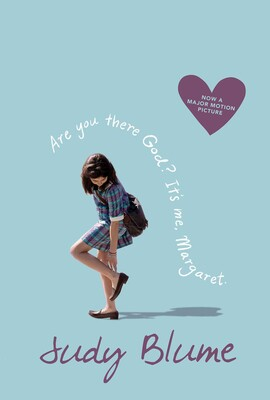
In 5th grade, one of my classmates brought in her copy of Judy Blume’s Are You There God? It’s Me, Margaret. Over lunch, we huddled around her as she read from pages of the book including a scene where Margaret, the eleven-year-old protagonist, and her friend Nancy talk about practicing kissing boys by kissing their pillows. We talked about which boys in our class were cute and which ones we had crushes on and wrote their names onto our paper fortuneteller games. Then she read from another scene where they talk about getting their period:
“What’s it feel like?”
“Mostly I don’t feel anything. Sometimes it feels like it’s dripping. It doesn’t hurt coming out – but I had some cramps last night.”
“Bad ones?” Janie asked.
“Not bad. Just different,” Gretchen said. “Lower down, and across my back.”
“Does it make you feel older?” I asked.
“Naturally,” Gretchen answered.
I was shocked and scared to learn that girls start bleeding once a month and wondered what it would be like but tried to act like I was in the know since the other girls seemed unphased except for scrunching up their noses exclaiming, “Eeewww!”
Unlike my older sister, I wasn’t much of a reader; most books that we were made to read in school were about people who were so unlike me, a brown girl, child of immigrants. Also, my parents were more interested in us reading “schoolbooks” — books we needed to study for school — rather than whiling away our time on “storybooks,” books we read for our own pleasure. Hearing the passages from Blume’s Are You There God? It’s Me, Margaret., I was amazed that there was a book written for kids that so openly portrayed topics like crushes and the changes that happen to girls’ bodies. And I knew I needed it. I asked my friend if I could borrow her copy of Are You There God? It’s Me, Margaret. for a few days, and she agreed. I smuggled the book home in my backpack, worried about what would happen to me if my parents ever discovered it. If they found it, I suppose I could tell them it was about a girl named Margaret who talks to God and is trying to understand religion (incidentally, this is true). My devoutly Hindu parents couldn’t fault me for reading about a girl seeking to be closer to God and religion.
Over the next few days, I read Are You There God? It’s Me, Margaret. surreptitiously in my bottom bunk bed before my parents came home from work. Through the story of Margaret and her friends, I came away with a better understanding of what to expect as I moved from being a child to a teenager. Although Margaret and I didn’t share an identity, as a ten-year-old short Indian American girl, I related to her bumpy journey from girlhood to womanhood and her quest to understand herself and her body. However, whereas Margaret’s parents were generally open and supportive of her as she transitioned to adolescence, I grew up in a house where I wasn’t empowered to broach topics that were crucial to my own personal development, like puberty and sex.
My devoutly Hindu parents couldn’t fault me for reading about a girl seeking to be closer to God and religion.
When I got to 6th grade, we were told that we would be covering reproduction the following week in science class; our teacher gave us a parental consent form that we had to get signed in order to attend. I heard boys around me saying, “Yeah! We’re going to learn about sex!” and girls giggling as we all stuffed the consent forms into our book bags. Meanwhile, I was panicking — how could I possibly ask my parents to sign a form that told them that I would be learning about sex? They would never let me. For the next week, I fretted about which would be more humiliating — having to ask my parents for permission to attend “sex class?” Or, being the only kid in my grade to have to spend “sex class” in the library? I decided the latter. For a moment, I considered forging their signature and even determined that my mother’s more straightforward signature would be easier. However, the possibility of getting in trouble for forging their signature scared me even more than asking them.
On the last possible day to submit my consent form, I shoved it in front of my father just as I was running out the door to catch the bus. He looked it over and yelled “You think you can give this to me at the last minute and I’ll sign it? I won’t!” Smarting from his scolding and dreading the humiliation of being the only kid spending “sex class” in the library, I grabbed my backpack and lunch and headed for the bus. Suddenly, my mother came to the door with the signed form in her hand. “Thank you,” I said. She didn’t respond but she had a bit of a smirk on her face.
“Sex class” turned out to be very sexless and much less captivating than Blume’s Are You There God? It’s Me, Margaret. Instead of learning about the impact of puberty on the lives of girls I could relate to, characters who felt like they were my own friends and frenemies, we got a lesson in reproduction with drawings of headless figures. But the upside was that I now understood the basics of puberty and the mechanics of reproduction. In contrast, when the girls in Margaret’s class watched a film about puberty, Margaret already knew the information because her mother had filled her in:
Nancy passed me a note. It said, Here we go — the big deal sex movie.
When I asked her about it she told me the PTA sponsors it and it’s called What Every Girl Should Know.
When I went home I told my mother, “We’re going to see a movie in school on Friday.”
“I know,” my mother said. “I got a letter in the mail. It’s about menstruation.”
“I already know all about that.”
“I know you know,” my mother said. “But it’s important for all the girls to see it in case their mothers haven’t told them the facts.”
“Oh.”
I couldn’t imagine having such a frank conversation with my own mother about menstruation despite the fact that she had these conversations with her patients every day. Blume’s book not only filled a void of crucial knowledge, it filled an even more crucial emotional void.
Just before 7th grade, we moved out of New York City and into the suburbs of Westchester andI found myself the new kid in a new school, much like Margaret at the beginning of the book. I remember my first day vividly. All I saw was a blur of green through the school bus window. More trees than I’d ever seen. The bus pulled up to the school and, instead of a single building, it was a sea of yet more green, dotted with several buildings connected by covered walkways. As a 7th grader — a very short one at that — I’d get to roam these halls alongside towering high school seniors. It was a huge change from the concrete schoolyards glittering with broken glass I was used to. Instead, this school seemed like it had leapt off the screen of Sixteen Candles, which I had finally watched in secret that past summer through the miracle of cable TV. Disoriented, I tried to decipher the campus map handed to me as I stepped into the main building.
I found myself the new kid in a new school, much like Margaret at the beginning of the book.
After some wrong turns, I made my way to my homeroom, which would also be my first period class, Health. At the end of a long hallway stood a beacon of shaggy blond curly hair hugging a broad, smiling face. “Seventh Grade Health with Mrs. Smith, right here!” Heaving a sigh of relief, I walked up to her and introduced myself. “Welcome,” she said, then looking at my cast, she asked, “how’d you do that?” “Monkey bars.” She gave me a sympathetic nod and told me to take any seat I liked.
After everyone arrived, Mrs. Smith re-shuffled us into alphabetical order, and once the buzzer for first period sounded, she seated herself on her desk. She beamed at us and told us how excited she was for us because we were taking such a big step, moving on from elementary school, being on the cusp of being teenagers, our bodies changing, forming crushes and falling in love for the first time. At the mention of our changing bodies and crushes, I stared at my desk and heard awkward giggles. “We’re going to get into all of that here in Health class because it’s important. It’s how you become who you’re meant to be.”
And with that, Mrs. Smith hopped off her desk telling us our first section would be about sex, because, as she explained, “Why leave the best stuff for last?” I remember feeling mortified but thankful that she didn’t make us get a signed permission slip for Sex Ed, like my 6th grade teacher had.
Mrs. Smith walked to the blackboard and in the center of it wrote down the word “urinate.” Our giggles grew louder but with a nervous edge. She turned to an unsuspecting boy and asked, “Do you urinate?” to which he awkwardly replied, “yes,” and she proceeded to ask a few more kids and once she gathered several concurring replies, most accompanied by eye rolls, she declared, “I urinate too. All of us do. And yet we’re so embarrassed to talk about it. It’s just a natural body function, an important one, like eating and sleeping. So why be embarrassed?” She had a point. I eased into my seat and allowed myself to look up from my desk.
Mrs. Smith returned to the blackboard and asked us to name all the different ways we use to say “urinate.” At first, we sat in silence. Then, a girl with a cool asymmetrical haircut, double ear piercings, and two Swatch watches on her wrist piped up with “pee pee.” “Good!” Mrs. Smith replied, and wrote it on the board. Some girls giggled as they chimed in with “tinkle,” “go number one,” and “powder my nose,” then some boys laughed as they offered up “piss,” “take a leak,” and “go to the john.”
The rare conversations in our home about bodily issues were often filled with medical jargon.
Mrs. Smith looked over at Tej, a quiet Sikh boy, who had remained calm even as the rest of us lost our composure, laughing and giggling. She asked Tej if there was a slang expression for urinating in his culture. I wondered what he’d say. I hadn’t raised my hand to volunteer any answers. The rare conversations in our home about bodily issues were often filled with medical jargon. And we certainly didn’t talk about sex or what goes on “down there,” unless there was a medical problem, and then talk turned to medication, surgery, and possible outcomes, which made me squeamish.
We referred to our bottoms as “boom booms;” we called going number one “hishi” and number two “kakoo.” My parents warned us to keep our “boom booms” clean, and to make sure to do “hishi” before we left the house. I realized I had no idea where any of these terms came from. Had they migrated with my parents from India, or were they a strange mashup of Indian and American cultures?
I waited for Tej’s response, determined to keep my own family’s terminology to myself. No need to invite a nickname as a new kid — Kavita “Kakoo” Das. He was pensive for a second, and then quietly replied, “su su.” As she added “su su” to the many other phrases that filled the blackboard, Mrs. Smith asked him where he thought this expression came from, to which Tej matter-of-factly replied, “I think it’s because of the sound it makes when it comes out.”
After a second’s hesitation, we all gave in to laughter — even Mrs. Smith, even Tej. We left our first class a little less uncomfortable talking about our bodies and the way they work. I cherished being in Mrs. Smith’s class and finally having an adult who would talk to my classmates and I openly and honestly about puberty and sex. Being in Mrs. Smith’s class was like having Judy Blume as a teacher and as if Are You There God? It’s Me, Margaret. had come to life and instead of reading about these issues, I was finally beginning to experience them.
A new job brought my father to suburban New Jersey, and my family ended up moving again, at the end of 7th grade. I was once again the new kid in a new school, and for the first time, I was one of the only nonwhite kids in my entire school. As a brown girl, I stood out from the sea of white girls carrying designer handbags and wearing brand name everything.
I’m determined to be the kind of mother who has open and honest conversations with my daughter.
I soon learned that the 8th grade boys loved to snap the bra straps of the 8th grade girls. They would take the seat behind us in class and pretend to pick something up off the floor and then reach out and snap the bra strap of the girl seated in front of them. I was terrified: I didn’t wear a bra yet. I would wager that I was the only girl in my 8th grade class who wasn’t yet wearing a bra. And, once again, it was because I couldn’t go to my mother to ask her to buy me one. I hadn’t developed much physically, but it was still high time, given that I was now thirteen and technically a teenager.
Desperate to not be found out and ridiculed by the 8th grade boys — and probably everyone else, given the way middle school rumors spread — I raided my sister’s underwear drawer and stole two of the smallest bras I could find. Every day I would leave the house wearing my undershirt under my clothes and then as soon as I got to school, I would run to the girls’ bathroom and change into one of the two bras I kept tucked in my schoolbag. And once home, I would change out of it and stash it away before my parents returned from work. Meanwhile, in Are You There God? It’s Me, Margaret., even though Margaret is a bit squeamish to ask her mother for a bra, she does and is met with support — both from her mother and her first training bra:
All through supper I thought about how I was going to tell my mother I wanted to wear a bra. I wondered why she hadn’t ever asked me if I wanted one, since she knew so much about being a girl.
When she came in to kiss me goodnight I said it. “I want to wear a bra.” Just like that — no beating around the bush.
My mother turned the bedroom light back on. “Margaret … how come?”
“I just do is all.” I hid under the covers so she couldn’t see my face
My mother took a deep breath. “Well, if you really want to we’ll have to go shopping on Saturday. Okay?”
“Okay.” I smiled.
A year later, when I was fourteen years old, I got my first period. Thanks to Judy Blume and Are You There God? It’s Me, Margaret., I was prepared and since I shared a bathroom with my older sister, I just helped myself to her sanitary pads. A few days later my mother mysteriously found out and decided to talk to me about it and show me how to use sanitary pads. Even as I listened, I felt embarrassed yet resentful. Her intervention was literally too little, too late.
Nearly forty years since I first read Judy Blume’s breakthrough Are You There God? It’s Me, Margaret., I’m now the forty-eight-year-old mom to a three-year-old daughter. I’m determined to be the kind of mother who has open and honest conversations with my daughter, the kind that says “ask me anything,” and actually means it. After growing up as a child who could count on two hands the books she read for pleasure, including Blume’s Are You There God? It’s Me, Margaret., I’m now an adult who loves books and has written two of them. My most recent book, Craft and Conscience: How to Write About Social Issues, is a writing guide on how to write about fraught social issues.
Re-reading Blume’s Are You There God? It’s Me, Margaret. now — first published almost fifty years ago — not only does the book hold up by today’s social standards, it strikes me as a masterclass on how to write honestly and compellingly about fraught and still-taboo subjects, like puberty and sex, for teens and tweens who are grappling with these issues as they transition from children to adolescents. It is a testament to Blume’s incredibly progressive view — decades ahead of its time — that young people deserve honest books written about their personal struggles with adolescence and identity, books that don’t pull punches when it comes to crushes, periods, training bras, first kisses, sex, generational conflict, and religion.
On April 21st, the documentary, Judy Blume Forever will be released; just a week later, the first adaptation of Are You There God? It’s Me, Margaret comes to the big screen on April 28th. Although criminally overdue by decades, perhaps there is no more perfect moment than now for spotlighting and celebrating the vast contributions of 85-year-old Judy Blume on young people’s literature and lives, especially given all that young people are facing today. For my part, I’m celebrating Blume’s pivotal role in creating a book that helped me, as a young girl with little access to crucial information, understand and navigate my way from childhood to adolescence, by stocking up and reading as many of her works as I can this year. As a young person of color who felt scared to read Blume’s books and had to read them in secret, I can speak to how crucial a book like Are You There God? It’s Me, Margaret. was to my personal development. And when she needs it I will make sure the book is tucked into my daughter’s bookshelves, waiting for her to discover it, and herself.
We live in an era of precarious conflict: highly-fragmented, hyper-connected, the world both smaller and painfully far apart, in combat geographically, and with our own bodies, from rogue cells to drone wars.
Evie Shockley’s suddenly we is a visually exciting, linguistically dynamic, and altogether thrilling shapeshifter of a collection that is both a response and antidote to these times. Beyond its experimental, polyphonic, modern architecture, at its core, it’s a nuanced and sensitive exploration of collective and individual identity, within the context of broader societal, historical and environmental obstacles.
Throughout the collection, there are multitudes and multiplicities, emphasizing the urgency of language now, and what it can and can’t encompass, yet the power of the collection is in the personal and intimate contemplations of voice, identity and agency. In “the lost track of time” she writes:
“i’ve measured out my life in package
deliveries and what’s in bloom. the time is now
thirteen boxes past peonies. if you can locate my
whenabouts on a calendar, come get me. i don’t
know where i’m going, but i need a ride.”
suddenly we offers readers that necessary ride, and this collection underscores why Shockley was recently named the winner of the Poetry Society of America’s 2023 Shelley Memorial Award which “recognizes poetic genius.” I spoke with Shockley over email about what it is to be human, and seek humanity in these in-between times, through verse and vision.
Mandana Chaffa: Might you talk about the genesis of these poems, a number of which speak to or engage with other creators? Who and what guided you through the process of interlacing them?
Evie Shockley: With the exception of the series of poems in “the beauties: third dimension,” each poem had its own genesis in one of the myriad occasions, ideas, and emotions that constitute the vast territory I (we) have traversed in the past six years. To even gesture towards it—the international #BlackLivesMatter protests following the murder of George Floyd, the multiple signs of US democracy’s frailty, the unfolding of the coronavirus pandemic, the increasing numbers of mass shootings, and the further evidence of climate change, along with all the sometimes encouraging and sometimes horrifying ways that people and institutions have responded to such events—is to remind myself of how difficult it often was finding the energy to write, let alone discovering the forms that could carry what my poems needed to carry.
MC:Many of these pieces point to forced societal roles that imprison the individual into a tight container, in poems that break through traditional forms, underscoring the friction of form and content.
From “can’t unsee”:
“a woman is innocent until proven
angry. a man is innocent until
he fits the profile. a child is innocent until she sees her mother or father in cuffs. can’t unsee…”
This idea of innocence, individually and collectively (and who gets to define that), is a thread that runs through the collection. There’s the personal aspect (and elsewhere you reframe the lost innocence of Eve gorgeously). And of course, the political power structures that commit harm and (mis)use language to their own ends, stealing one’s innocence, one’s individual Eden.
Language is both tool and terrain in this racialized ‘loss’ (theft) of innocence.
ES: Indeed. Others more eloquent than I am have talked about the seemingly instinctive need of the powerful to grasp the garment of innocence and wrap it around them like a shield. The US could not simply be the victim of the 9/11 attacks on the World Trade Center; it had to be an innocent victim, as though it had played no role in creating the conditions that made its financial epicenter a target. Or, for an example that I take up explicitly in the book, the US government and many of this country’s people seemed desperate to locate the blame for the pandemic on people or causes that were outside our national boundaries or that, if within the US, could be othered, alien-ated, as the spike in anti-Asian violence made manifest. By the same token, innocence is denied—rhetorically, ideologically—to the disempowered, as I highlight in the lines you quoted. When activists or scholars call attention to the criminalization of Blackness and Black people in the US (and many other places), they are pointing to the way we are denied the presumption of innocence, time and again, in the courts and in the court of public opinion. Language is both tool and terrain in this racialized “loss” (theft) of innocence.
MC:Similarly, I feel so much hope in this collection’s embrace of the “we.” Many works of literature are first or second-person narratives, but we, that is of the populace, of the movement, of a forward motion: we the people,we will get to the promised land, we are the world. Of course, the other side of that “we” is we the mob, we the unquestioning masses, but there’s a deep sense of connection in many of these poems. So much motion: evolving, or turning, throughout the collection.From the poem “perched”:
“…i poise
in copper-colored tension, intent on
manifesting my soul in the discouraging world.
i am
black and becoming.”
ES: One of my main interests in the book is how our understanding of ourselves as individuals interacts with, informs, limits, or opens up the ways we imagine ourselves in relation to others—groups of others. The poem “perched” is an important one for signaling this interest, if quietly, in ways that are suggestive for lots of other poems in the book. Like so many poems in the African American tradition, it uses what some have called “the i that means we,” which allows an individual experience to stand in for a widely shared or generic Black experience. The poem is ekphrastic, thus its i is plural in a more specific sense: it is the young girl figured in the sculpture, “Blue Bird”; it is something I imagine or sense in the experience or emotional repertoire of the sculptor, Alison Saar; and it’s some aspect of myself.
Moreover, the sculpture itself, which appears on the book cover, seems at first to be of a single figure but includes as well the blue bird that gives the piece its name. What kinds of connection between the girl and the bird does the sculpture enable us to envision? The poem suggests one or two of many. Other points of possible connection are animated, I hope, by the invocation of the “world” in which this i (these i’s, we) must “become.” What the book makes a space for thinking about are all the things that play a role in shaping who an individual may see herself in community with or in solidarity with: the tiny personal or large historical events, the emotional openings or obstructions, the largely random or carefully cultivated interpersonal encounters, and so forth. The title is partly tongue-in-cheek, in that only rarely does one’s sense of collective belonging or connection with others happen “suddenly.” The major social formations (divisions) we are living with today—racial, national, religious, economic, regional, etc.—have been building / being built for a long time. In many of these poems I’m wondering, pondering, how we can make our actions today the pre-history of new or different forms of collectivity.
MC: There are so many layers in the collection, including lush poems like “fruitful,” in which “you grow my garden no you are / the whole of it” followed by a verdant list of nature’s glory in which “here, i become my best self, i exist / at peace with birds and bees, no knowledge / is denied me”. This poem is followed by “dive in” which is an equally sumptuous engagement with desire and intimacy.
Both in terms of content and craft, how did such a range of poems come about? Do you find yourself writing in sections, as it were? Or is the personal and political so entwined in your aesthetic that you’re writing about a range of themes, multiple styles, all the time?
And perhaps more philosophically, how do we embrace our personal selves and desires, with the political demands of being a human being at this time? How does the heightened awareness and immediacy of reactions co-exist with the being of human being, which runs on a completely different temporality?
One of my main interests in the book is how our understanding of ourselves as individuals interacts with the ways we imagine ourselves in relation to others.
ES: One thing your question suggests to me, regarding range and stylistic variety, is that this is the flip side of the “unruliness” or “uncategorizable-ness”. That is, the heterogeneity I used to fear was a failing—or used to fear would be seen as a flaw—in my work, might actually be one of its strengths. Because I write poems, not books of poetry, I don’t approach the page with any sense that what I write today must be “like” what I wrote yesterday. I try to avoid my default modes and attune myself closely to what the ideas, language, or feelings giving rise to a poem seem to want to become. The decision about what poems speak to each other enough to co-exist generatively in a collection comes later. But I’m always pushing myself to think about my experiences as holistically as possible. The tools I’ve amassed as a literary scholar steeped in Black feminist thought, the Black radical tradition, and oppositional poetics, among other analytical approaches—prepare me to bring critical, intersectional, associative thinking to my daily life, as well as to the structures and language I use in writing poems. Unfortunately, that doesn’t mean I’ve figured out how to balance or reconcile all the demands of my being (as a person with insistent bodily needs and messy, complex emotional desires) with all my political commitments. Rather than attempting to offer sage advice or one-size-fits-all pronouncements, I’ll just say I try to keep my wits and my tools about me, and use them in making the most ethical choices I can in the moment. Half of the battle is recognizing when such a choice is before me.
MC:The collection starts with the visual and verbal vista of “alma’s arkestral vision (or, farther out)”: the “we” that is created by multiple “you”s and the lone, but necessary “me” that closes the link and makes it complete. It ends with the remarkable poem “les milles” which I’ve already referred to, which starts with this indented couplet, and ends with the one that I’ve posted right below it:
“there is no poem unless i we can find the courage to speak
[…]
there is no poem unless you we can find the courage to hear.”
What’s in the middle is a moving, painful contemplation about how we find it hard to move on from history, or learn from it, “map the territory of the human, / with arrows pointing in every / direction : some leading from / you, some leading to you.”
I’m especially taken with the bookends of the first and last poems of the collection (as well as the central passages within the last poem). We live in a time that calls for great courage, though perhaps it always takes immense courage to maintain one’s humanity. I keep returning to how you entwine the lowercase and capital P of politics (and person); it feels deeply connected to many of the poetic voices of the ’60s and ’70s, yet is entirely of the moment, as you ask: “must every place-name on earth / be a shorthand for violence / on a map of grief”?
ES: Perhaps the reason the political and the personal are always intertwined in my poems is because I gain and hone my politics in community: through exchanging ideas, reading others’ arguments, learning about experiences that inform people’s commitments and critiques. I also fuel my motivation in community; insofar as I know nothing I do alone is going to create change of the magnitude needed, it’s (inter)actions with like-minded/open-minded people that inspire me to keep working to envision and engender a world that is fundamentally just and nurturing for all life (not only some humans, not only humans). Collectivities that we’ve had thrust upon us but have reshaped to serve simultaneously as our spaces of refuge, in the context of this money-driven, power-hungry world, will have to be exchanged for the collectivity that our shared planetary existence constitutes. But how on earth (pun intended!) do we get from here to there? On what terms can we forge the new solidarities that will make relinquishing our current racial, gendered, ethnic, national, class-based, religious, species-based forms of belonging (and division) even thinkable? suddenly we begins with the dream and ends with the current reality. That may seem counterintuitive or even pessimistic, but it’s not intended to be. Like good poems so often do, I hope readers will find that the book’s ending propels them back to the beginning, to re-read “alma’s arkestral vision” with a fuller sense of its stakes and a readiness to work towards the greater collectivity it imagines.
Writing addressed to a specific “you” generates an effect unlike the electricity of classic second-person narratives. Instead of a jolt, direct-address writing delivers a subtler charge, like opening someone else’s mail or overhearing one end of an emotionally raw monologue.
While draftingThe Skin and Its Girl, I found myself adrift in a storyline that spans 200 years across Palestine and the United States. My first-person narrator seemed inexplicably omniscient, and she was immune to revisions that tried to reel her in. In the final revision that changed everything, I placed my narrator at a gravestone and had her address the entire thing to her deceased aunt, who’d kept an important secret from the family.
As a device, a narrator who addresses a single, stable “you” creates an anchoring through-line. And as a rhetorical move, it felt intuitive—able to embrace all the worlds orbiting in the galaxy of this novel, and to contain sprawling tendrils in an intimate message.
Although capable of becoming an almost-invisible device, direct address turns up everywhere—in fiction and nonfiction, classics and contemporary books. In many of these, it enables a more powerful kind of communication, revealing a layer of the narrator’s self that can only make sense when hauled out a little ways and offered in the direction of someone beloved. Its intimacy presents the reader with an affective challenge: the conceit is that the narrator needs to tell their story to a specific listener because that person is the only one capable of understanding, yet in “overhearing,” the reader is invited not just to be a voyeur, but to crack open the narrator’s isolation.
I love this tacit challenge, love that it holds the door open for us to empathize anyway, to imagine another life, another city, another history; to enter into a form of community. These eight writer-narrators all step into a space of new power, and as they reckon with that power to shape a story through artifice, they each choose a listener who knows the stakes and who will keep them as honest as they know how to be.
“You better not never tell nobody but God.” With this opening line, the novel sets out its basic terms: young Celie, burdened with two pregnancies by incest, narrates from a culturally imposed silence. We soon figure out that every chapter consists of one letter from Celie to God, elevating the act of storytelling to a kind of prayer.
Across the novel, however, this initial format undergoes some (ahem) meaningful adjustments. Without spoiling it for folks who have yet to experience this classic, I’ll say that Celie addresses only chapters in the novel’s first half to God. Most of the second half, however, is addressed to her beloved-but-absent sister Nettie. (And some of the novel’s middle chapters are physical letters Celie receives, the only true epistolary material.) Celie’s dynamic relationship—to silence, to her imagined listener, to her sexuality, and to her own power as an uneducated Black woman enduring life in a violently patriarchal South—is, for me, the novel’s most electrifying structural choice. Communicating to God and then to absent Nettie allows Celie to be entirely honest about her life. She doesn’t need to alter what she says in order to protect or appease an in-the-flesh listener.
The Color Purple continues to be an influential text, in part because of the ways it uses both form and content to express skepticism toward the overwhelmingly white, heterosexual, masculine literary landscape it entered in 1982. Walker models a different set of authorial choices that shift power to her main character, giving Celie not only something that must be said, but also the force of an oral storytelling tradition, which doesn’t tell stories to thin air; there is always a listener. Like so many of the other novels on this list, Celie’s two listeners are individually and specifically capable of bearing witness to her pain, yet also safely distant from her: they are listeners-in-stasis, with limited power to steer the story’s events. This passivity is not weakness. On the contrary, it is as powerful and significant as holding open a door that might otherwise have shut the narrator in silence.
Bastašić’s debut novel was first published as Uhvati zeca in2018, and after winning the 2020 EU Prize for Literature, she translated it from the Serbian for its 2021 publication in English. Obsessed with reflections and doubles, the novel uses direct-address narration as the writer-protagonist Sara tells her side of the story to the addressee: her estranged childhood friend, Lejla.
Many years after the Bosnian war, Sara has emigrated to Dublin and is living with her Irish partner, pursuing literary ambitions, when Lejla calls out of the blue. Lejla’s brother, missing since the beginning of the war, is in Vienna and Lejla needs someone to drive her there from Mostar, Bosnia. It’s a bizarre favor after so many years of silence, and the resulting road trip with Lejla—who is both predictably maddening and maddeningly elusive to Sara’s first-person narrator—opens up their youth, fraught risky sexual situations, and the male gaze. Meanwhile, they are also pulled down into sharply differing versions of the events that drove them apart, centering on Sara’s police-chief father in the Serbian Christian stronghold town, and the efforts of Lejla’s Muslim family to efface their identity after her brother’s disappearance.
The narrator’s direct address is unstable, referring to Lejla as you in the childhood story but as she in the present-day road trip. The intentional wobble offers a way of exploring femininity, sexuality, and violence as it is experienced along the intimate, convoluted lines of an entangled friendship, and it also seems aware of how easily Lejla’s side of the story might shatter Sara’s own version. Acknowledging this tricky hall of mirrors, Catch the Rabbit draws from Lewis Carroll’s Alice in Wonderland, and without ever pressing the novel’s conflict themes too hard, it instead captures their fragile dynamic indirectly, in gentle but insistent fairytale undertones that put me in mind of Barbara Comyns’s The Juniper Tree.
Split between two direct-address storylines, this novel alternates between contemporary Brooklyn and a historical narrative footed in Ottoman Syria. As bird artist Laila Z builds a life in 1930s America, she keeps a diary of unsent letters to a woman she had loved in Syria. Almost a century later, second-generation Nadir discovers the journal in a condemned building. Laila’s letters are interleaved with his own story, which he narrates to his mother’s ghost as he struggles to come out to his friends and surviving family as nonbinary.
Both narrators are linked by their search of an apocryphal bird, Geronticus simurghus. As Laila writes about her adventures in the wilderness beyond Dearborn, where she hopes to make a sketch and prove the bird’s existence, we learn in the present-day Brooklyn storyline that Nadir’s ornithologist mother met with a fatal accident while protecting the building where she was convinced the bird was nesting. After her death, Nadir becomes intent on finding the lost Laila Z illustration of the species, setting up a structure in which these two storylines embrace the search for both the bird and its image; its living existence and its representation in the scientific record.
Like Nadir’s ornithologist mother, Joukhadar is driven by gaps in the record; he aims to add queer and transmasculine lives to America’s historical and literary archives. Direct address allows both of his queer storylines to span the gap between life and death, old world and new, and the gender binary, enlivening and embroidering the space between. That action of speaking across a mystery also parallels an important movement in the story’s content, the idea of transmigration: the east-to-west journey of Syrian immigrants to America and the migration pattern of a rare bird. This is the novel’s cardinal movement, and it trains us to identify a similar pattern in the narration itself—not only Nadir’s movement across the gender spectrum, but the voice of each character speaking to a distant listener, sounding out the shape of gorgeously wild terrain.
In The Friend, we overhear a meditation addressed to the narrator’s writing mentor known for philandering with his students, who has recently died of suicide. She is part of a prickly intellectual crowd that brims with opinions about the literary world and vocation, but her focus is newly consumed by heartbreak. Also there is the mentor’s grieving Great Dane, Apollo, whom she adopts and bonds with. Like his Olympian namesake, he brings some light into her darkness, opening her attention to the substance of her love for a dog and her dead friend, as well as to the ethical dimensions of adapting real life to fiction.
As with many of the others on this list, The Friend’s narrator is a writer, bringing a keen consciousness for the universe of storytelling. She shares summaries of other stories and films, rumors and factoids she’s heard, conversations, and also nods to the form and archetypes of a fairytale. In other words: for this narrator, writing without awareness of an audience is impossible—and writing about someone’s suffering is treacherous ground too. Talking about would center only the speaker’s experience and risk flattening her mentor’s death into just something that happened, mere fodder for a new manuscript. Yet the narrator instead talks to him, implying she still has business with him, opening a place big enough for the grief necessary to buoy this novel. It makes her grief both more credible and accessible to the reader, even while the text leans into its metafictional layers.
Addressing absence is a powerful way to use this kind of “you” storytelling. The novel thrives in the one-way space where the narrator speaks without hope of getting an answer. As much a meditation on the act of turning a person into a subject, Nunez explores the shadow play of ego across others’ experience, and what it illuminates about our own feeling.
Lebanese American author Rabih Alameddine, winner of the 2019 Dos Passos Prize, approaches his sixth novel from an intriguing distance: the writer is the you, and the first-person narrator, Dr. Mina, is writing his novel for him.
The situation is this. An unnamed writer has traveled to Lesbos to help the Syrian refugees there, but even after two years on his therapist’s couch, he still finds himself unequal to the task of telling “the refugee story.” Consequently, his character becomes the novel’s you, a lurker at the edges of his own project. Meanwhile, the true storyteller is Dr. Mina, a Lebanese American like the writer, and a trans woman surgeon who witnessed the same horrors on Lesbos. She says at the outset, “I’m writing now. I’ll tell your tale and mine,” and as she immerses herself in the crisis, she often addresses the writer directly to talk about what he cannot, equipped with a perspective he does not have.
The narrative finds all sorts of layers on which to explore the distance between doubles. The immigrant’s split identity is a big one—unable to inhabit one’s full identity in either Lebanon or America. So is the shadow of Mina’s boyhood, the person her family recognizes haunting the true self they will not. Dr. Mina ruminates too on the slippery motivations of Western volunteers in a crisis zone, and her own position as a volunteer who feels more at home among the refugees than among her fellow helpers. Even Lesbos itself is charged with the instability of being a borderland between one difficult place and another.
Alameddine’s wry humor can flip to a tragic tone on a dime, ideal in this war-zone novel that is in search of an elusive “right” perspective for interrogating our species at its best and murderous worst. Besides being a device for one queer character to speak to another about a shared experience of marginality, direct address activates this essential distance between two realities, just as a telescope requires the distance between its two lenses in order to see anything at all.
When searching for perspective on difficult material, direct address can also be aimed at a past self. This memoir’s “house” is a haunted one, referring to the years when the author was the victim of an abusive relationship. She and her girlfriend were writers getting their MFAs, and Machado’s approach to the material is arresting and vivid, full of interplay between the content and the process of writing about it. Central to both layers is a warping instability—of self-boundaries in the story, and the chimeric quality that arises from the different genres and literary tropes Machado selects for each chapter: “Dream House as Noir,” “Dream House as Choose Your Own Adventure®.” In these, she allows the container to shape the material, mimicking the uncanny and often-terrifying quality of not being in full possession of oneself.
Our guide through this haunted house is Machado-the-narrator, the I who brings not just hindsight but cultural knowledge to the page. But it’s a you we’re following, the victimized past self: “[Y]ou are this house’s ghost.” Direct address creates both distance and compassion for oneself, a way of both closing off a series of painful events and holding open communication with a younger self.
I’ll admit to an obsession with self-aware queer writing, the kind that is an active participant in its own creation, skeptical of its authority yet blazing with a refusal to remain silent. The approach also highlights the truth that narrating the story of one’s own victimization is hard not only because it’s so personal but also because telling a trauma story means gaining the ability to be one’s own narrator, and for many queer people, it is often for the first time.
Direct address lights up other kinds of memoir too, even ones whose intended listener is still alive and certain to read the text. In this situation, Laymon addresses Heavy to his mother, a Mississippi intellectual committed to Black liberation. It’s a risky and deeply ambivalent text, for he also writes as a son who was beaten “for not being perfect,” for not measuring up to her standards of speech and conduct that were meant to help him survive a life in a nation with a “brutal desire for black suffering.”
“I wrote this book to you because, even though we harmed each other as American parents and children tend to do, you did everything you could to make sure the nation and our state did not harm their most vulnerable children.”
The project involves not writing “a lie.” Instead, Laymon writes through the body. He tells the story of being an obese kid and later an anorexic writing professor, marking time by his weight and age; of being an obsessive eater and then a compulsive exerciser. His experience with sexual trauma in childhood, his feminism, and his development as a writer parallels his mother’s own compulsions and the larger story of a family whose fierce intellectual drives are weighted against self-destructive tendencies.
Intentionally, however, the narrative keeps a firm elbow against a tokenized reading. Laymon’s repetition and syntax have an oratorial quality that hums with the intensity of speaking directly into one ear, resolved not to do “that old black work of pandering and lying to folk who pay us to pander and lie to them every day.” The telling lives between one body and another: such as in the thick alliteration that tugs at the mouth as it grazes over the book’s plosive repetitions. In the sound is a staccato plea for his mother to pay attention, to remember where they’ve been, to stay awake, to not forget the painful past in the same way America repeatedly forgets all its sins.
In Vuong’s best-selling debut, the narrator, Little Dog, addresses this hybrid novel-memoir to his mother, a Vietnamese manicurist in Hartford. Because she is illiterate, the pairing creates a charged space containing both safety and confession as Little Dog recounts a working-class upbringing inflected by trauma, his mother’s survival of the Vietnam War, and his first gay relationship.
As an esoteric fusion of story and craft, the novel opens the overhearing reader to the range of language. This is a narrator who is concerned that the word laughter is trapped inside the word slaughter; one who, in most of the novel’s 70 instances of the word word ties language somehow to the body, to the physical world. It shines among these other works in the direct-address family, and yet it’s also an interesting counterexample to this list. We believe Little Dog addresses the narrative to his mother because she has the history to understand his hurts. Her illiteracy isn’t her fault, but at the same time, Little Dog has an adept hand in his own story’s composition.
The choice to embed his communication to her in a text replete with sophisticated literary techniques underscores, for me, how class markers can result in mutual difficulty. As one of the few people in a working-class family to attend college, I’ve at times gone back home and felt the dangers of this slow erosion of context from around conversations. Here, Little Dog’s barriers to being understood by his mother rise alongside the cultural and linguistic ones they faced as immigrants to Hartford. As a result, sometimes the eavesdropping literary audience gains an edge over the speaker’s intended listener, reversing the “a story only you would understand” dynamic. No single human listener can understand the whole story.
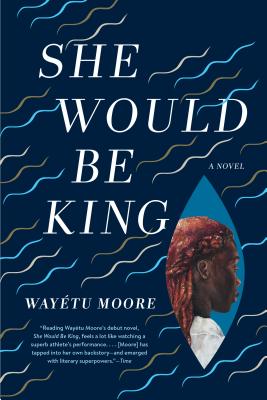
In Wayétu Moore’s novel She Would Be King, a mysterious power draws three extraordinary people together, as “Alike spirits separated at great distances will always be bound to meet, even if only once; kindred souls will always collide; and strings of coincidences are never what they appear to be on the surface, but instead are the mask of God.” June is bullet-proof, with superhuman strength; Norman may, under the right circumstances, disappear into thin air. Lastly, a strikingly beautiful, cursed “witch” named Gbessa (pronounced “Bessa”) cannot die because she possesses the power of life. Traveling alongside a ghost, who periodically summons or urges on the protagonists, the story journeys to Virginia, Jamaica, and finally the colony of Monrovia, culminating in the foundation of the nation of Liberia. But what is freedom, the novel asks, in a world built by colonization and enslavement, maintained through institutionalized racism and patriarchal control?
She Would Be King is an odyssey of friendship, love, and suffering, set against the backdrop of a country’s painful birth. Exploring the overlap of racism, sexism, and classism, the novel weaves magic with its language, juxtaposing the poetic and spiritual perspective of the integral, omnipresent supernatural against colonized Christian “reality.”
This recipe is easy to execute, though it requires a little patience and forethought. In honor of fufu, sweet potato-infused vodka serves as the base. Fufu is a ubiquitous, varied, and starchy staple that accompanies soups and stews in West Africa and beyond, a comfort food shared with June and Norman at a pivotal moment. The mild, aromatic vodka is combined with sour tamarind and smooth coconut water, a reference to June and Norman’s meeting in the jungle, where they eat fresh tamarinds, catch fish, and collect coconuts to drink, or to use as cups. Likewise, Norman falls for a captivating and ill-fated villager who smells deliciously like fresh coconut and mint. Coconut also honors the Maroon women and their nets made from coconut leaves.Mango syrup is included for the mangoes enjoyed by the wealthy families in Gbessa’s village. In a time of danger and uncertainty, Gbessa’s mother nourishes her with cooked fish, rice, and ripe mangoes.
This booktail is presented against a split backdrop: reflective blue and sparkling gold, which complement the book’s abstract and dynamic cover. On the left, a blue mirage mimics an ocean horizon, the overall effect conjuring a beach on a distant shore, complete with craggy rock cliffs. In contrast, the flat yet textured gold on the right evokes riches, royalty, and magic. The cocktail appears in front of the book, atop a mirrored base. It’s served in a tall, icy glass, garnished with fresh mint and a blue patterned paper straw. Scattered about are pops of yellow and orange–marigolds for Norman’s mother and the “untamed yellows” present throughout the novel.
She Would Be King
Ingredients
Vodka
2 large sweet potatoes
2 oz sweet potato-infused vodka
1 oz coconut water
1.5 oz mango syrup
2 tsp tamarind paste
Mint garnish
Instructions
Wash, peel, and cut the sweet potatoes into large chunks. Place in a large jar and fill with vodka, until the potatoes are submerged. Seal and shake, then set in a cool, dry place for 4-5 weeks. Shake the jar once a day. The vodka will turn a light golden color. Once the liquor is ready, add all liquid ingredients to a shaker, along with a large ice cube. Agitate vigorously for about 20 seconds, then strain into a tall glass filled halfway with crushed ice. Garnish with fresh mint.
Some of the best moments of my life have been spent in libraries, first as a patron, later as a librarian, and I have witnessed firsthand how hard the past few decades have been on libraries. As America has continued to dismantle its social safety net, libraries have been forced to pivot from being a resource for all things books to also functioning as community centers for those in need. Today’s librarians don’t just lead storytimes or maintain collections, they’re also first responders on the front lines with their own personal safety at risk. The demands of the job necessitate that library staff, particularly those serving in high-poverty communities, serve as combination mental health counselors, social workers, security guards, first responders, and babysitters while putting their personal safety at risk.
The American Library Association (ALA) is a non-profit organization that advocates for and supports libraries, library workers, and the right to read. Their mission is “to provide leadership for the development, promotion and improvement of library and information services and the profession of librarianship in order to enhance learning and ensure access to information for all.”
According to the ALA, American libraries are facing an unprecedented wave of censorship, with 2022 having the highest demands of book bans on record. The vast majority of the challenged books were written by or about individuals whose voices have been traditionally excluded from the national conversation, members of the LGBTQIA+ community and people of color.
I spoke recently with the president of the ALA, Lessa Kanani’opua Pelayo-Lozada, about how to take a stand against book bans, how the ALA is working to support all patrons and library staff, and how the American public can support our libraries.
Deirdre Sugiuchi: I was a school librarian for many years. In 2019, before I left the profession, I had my first challenge. It was a precursor to the mass challenges brought forth by parents’ rights group Moms for Liberty (which officially formed in 2021), but it was very much part of a coordinated effort to ban books, in my case specifically targeting a book featuring a trans protagonist. Can you discuss the recent unprecedented rise in censorship and how ALA is working to address these book bans?
Lessa Kanani’opua Pelayo-Lozada: These are organized efforts. These groups are issuing templates of letters to write to libraries. They’re issuing lists of books to ban. Our response is to get as organized as they are, to make sure that our libraries and library workers are prepared for book challenges, with strong collection development policies, as well as knowing what resources are available to them, such as ALA’s office of intellectual freedom, which can provide one on one advice and support, whether it’s legal, financial, or political.
We also have our Unite Against Book Bans campaign, which we are asking everyone who believes in the freedom to read to sign, because we cannot, as library workers, do it alone. We have to have the public who is against book challenges to sign on with us and write letters to their editors, to their board of library trustees, to their school boards, emphasizing the positive impact that access to the books that are being challenged provide to their communities, to their personal lives, to their children’s lives, and to continue speaking out and educating their friends and family to the value of having access to ideas that we may not even agree with.
We know also that it is a vocal minority that is pro-book challenges. In March 2022, ALA did a survey of folks across party lines— Republican, Democrat, Independent, red, blue, everywhere in between— and found that 71% of voters opposed book bans. We again know that these are organized attempts. There’s lots of different groups— you mentioned Moms for Liberty. There’s Americans for Prosperity, No Left Turn in Education, these folks have chapters popping up everywhere. Sometimes they’re not even actual parents concerned for their children’s wellbeing who are putting forth these challenges. They are just people who are caught up in this morality and this notion that they want to have power and control over how other families live their lives and raise their children.
DS: Last night I read about a library in Texas whose board would rather close the library and fire the library staff instead of including works reflecting the lives and experiences of LGBTQIA+ and BIPOC persons. I’m on the board of a literacy organization here in Georgia, Books for Keeps, which distributes twelve free books to kids every year. The children choose their own books. One county told us not to come if we wouldn’t censor our distribution list. I was raised Christian nationalist, I’m very familiar with the mindset, and I don’t think the public at large is taking these efforts to ban books seriously.
Our library workers are working very often in underfunded and sometimes unsafe conditions.
LP: I also think that people don’t understand the power of their voice. If we write letters, if we make these calls to our legislators, if we demand that we have access to these books— these are elected officials, these people technically have to listen to us. We can speak out with our votes, which we should also do. But we can speak out in a myriad of different ways. And we have to, because it’s fine for a family to determine what their family reads, but it is not okay for them to determine what another family reads or has access to.
The Texas defunding that you’re referring to is just one example. The state of Missouri is trying to get rid of all state funding towards public libraries right now, because of the public backlash, and so we just have to remain vigilant in this fight and we have to all be in it together.
DS: Related to this, several states, including in Georgia, where I live, and Montana, have proposed bills which would fine and jail librarians for distributing books which people find obscene. Can you discuss the role of this proposed legislation and how it weakens libraries?
LP: The goal is to dismantle public institutions that promote education and access to information. Because they know that libraries are trusted institutions, that we work with parents to find the right books for their families, and that we don’t force upon any particular ideals or opinions, because we are trained to not do that—that is not our job, that is not our position—but this is the way that they will continue to have power over individuals, to erase the individuals that they don’t want to be members of their society, who have ideas that they don’t want their children to have access to, despite the research. We know that just because children read something or have access to something does not mean that they will start believing that or go to do that particular thing. I read a lot of murder mysteries— I’m not going to commit any murders.
I think that it’s really important for us to understand the political game that they are trying to play. It is a very dangerous one, because people’s lives are at stake. We know that LGBTQIA+ youth who can see themselves reflected in books and movies will have a lower chance of self-harm, so when they restrict access to these materials, they are erasing identities and people and that becomes harmful to those individuals as well as harmful to their own children, because they are not able to develop skills of empathy. They are not able to understand why someone else may love a different type of lifestyle, and ultimately they are not able to be good community members and productive members of the larger society that we all live in, no matter how hard they try to deny that.
LP: I have not read Overdue. Our library workers are working very often in underfunded and sometimes unsafe conditions. They don’t have the resources that they need to be able to do their jobs effectively.
In the ALA-Allied Professional Association, what we’re really trying to look at is how, at the national level, we can support library workers in their home institutions. We can’t take the place of their administrations, but we can help to empower library workers, whether it’s that they need to organize, whether they need an advocacy plan for funding their library, and promoting that funding, whether they need advice and help on working in unsafe situations, and what their options are for that, like what training looks like for the library worker to be able to handle that, but also what setting boundaries looks like, and what we are and are not allowed to do within our institutions. Just because we’re a public space doesn’t mean that we’re a free-for-all for every type of behavior, right? It has to be behavior focused. We have to make sure that we are consistent in enforcing our policies and our procedures, and consistent in making sure that our library workers work in safe spaces, and that if they are not, that they have the resources that they need.
It’s something that is very close to my heart, having worked in a number of different communities. I worked in a community where we were on lockdown once a week, where we would just have to shut the whole library down and be inside.
It’s on all of us to make sure that our libraries are funded and to advocate for them as well. It’s a community effort.Also, because libraries now are often a replacement for so many social services, it also speaks to the dismantling of our social safety nets, and of our mental health resources. We are now the catch all for all of that. We need to speak out to stop having those cuts at all of those different levels and make sure that every part of our social fabric is fully funded.
DS: You were the first chair of the Office for Diversity, Literacy, and Outreach Services. Can you discuss the function of the library in marginalized communities? Are there specific ways that ALA wants to address the needs of marginalized patrons?
LP: We have moved from a model of equal library services and we are trying to get one of equitable library services and inclusive library services, to recognize that people are coming from different places and backgrounds and that we really have to be able to develop one on one relationships with our patrons to understand their needs. We know we can guess their needs based on some demographic information as well as the communities that they live in, but we really have to make sure that we are looking at the full intersectionality of our patrons and our communities to be able to best serve them.
Some of the ways that we are supporting that work is by putting out things like a DEI scorecard for libraries to be able to understand where they are in their equity, diversity, and inclusion journey and to understand how they support their staff, but also how they support their communities and what types of programming is available. We also provide grants. There’s one called Great Stories Club and it focuses on book clubs for teens and adults with a variety of different topics and backgrounds.
Through programming and through professional development, we are making sure that our library workers today understand that equity, diversity, and inclusion is a core value to our work and our profession. We are no longer the segregated classist libraries that were essentially founded by a misogynistic, anti-semitic man, Melvil Dewey. Recognizing, to be quite frank, how far we have come from that, but also recognizing how far we still have to go.
DS: When I was a school librarian I worked in a Title I school. Most of my kids were Black and brown. In my district, only two of the librarians did not identify as white, a trend that is reflected nationally— in 2020, 83% of librarians identified as white, as did 76% of library workers. Do you have any initiatives in ALA to diversify the library staff?
It’s on all of us to make sure that our libraries are funded and to advocate for them as well. It’s a community effort.
LP: The primary initiative that we have is called the Spectrum Scholarship Program. It provides library school students with tuition support, as well as leadership development. They have a cohort every year of folks who are working in libraries already and going through library school, folks who are one or two years into their program, with tools and education on how to survive, to be quite frank, in a predominantly white institution, but also how to be proactive with diversifying the field and sharing that. It is a small program. The number of individuals (with) a 50-60% acceptance ratio.
I was not a spectrum scholar. I was not accepted into the program. But there are also other supporting factors to help diversify and to help support librarians of color through ALA affiliates like the National Association of Librarians of Color, which I came up through, and the Asian-Pacific American Librarians Association, which also have mentoring programs and support for individuals who are going to library school and through every stage of their career.
Through ALA’s programming and offerings in our professional development, there are a lot of programs and classes on how individuals can be allies, how they can assess their libraries to make sure that they are inclusive environments, not just to the community but also to staff. Because there’s also a retention issue, right? There may be an increase in folks who are going through library school, but who are we having stay? The retention issue is across the board right now in libraries, regardless of race, ethnicity, and class background for the variety of factors that we have talked about today. But also, it’s exceptionally difficult sometimes for people of color when they are the only ones in their library. They may not be able to be seen and heard and to give feedback. We’re continuing to work and look at different ways to support library workers of color and to continue diversifying the institution, but a lot of it is on the local level. It’s all very cultural. It has to start from day one and it has to start from administrations.
DS: What do you envision as the future of libraries? Where do you see us headed?
LP: We are going to continue being responsive to our communities. We’re going to continue working our best to be proactive. The core thing that we need to really focus on is preparation for ourselves, right? It’s really difficult to predict the future, as we saw, when the pandemic hit us, but what we can do is prepare for many different outcomes and prepare ourselves for change management, and prepare ourselves to know that nothing is going to stay the same forever, and to get our institutions ready for that change, whatever it is, or whatever it may look like.
We are going to continue thriving, we’re going to continue being trusted community centers, and places for our most vulnerable to go to and to feel safe in, regardless of book challenges—we know that the majority of people still trust us and love us. We just have to mobilize those voices to speak as loud and clear as those who oppose us.
London has served as the setting for many a novel—the backdrop to tales of scrappy orphans and drunk, dancing thirty-somethings, of marmalade-adoring bears and magical nannies. It’s also, of course, the setting for so many love stories.
Not quite as romantic as Paris, nor as hustle-and-bustle-y as New York, London sits somewhere in the middle, a charming city with grit, a gritty city with charm. And its greatest love stories often walk a similar tightrope. Sure, some feature the type of happily-ever-after in which the music swells and crescendos at the end; but, like its own identity and character, the majority of London’s love stories are constructed from a combination of toughness and tenderness, of joy and complications. They capture the beauty of falling in love, of course, but they also capture the reclaimed power that comes—sometimes—with falling out of it.
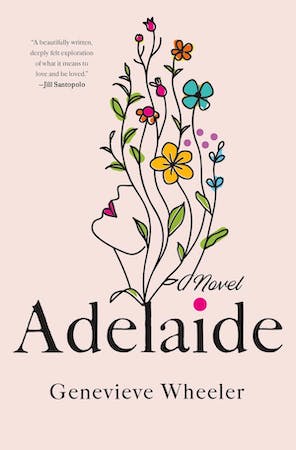
It’s a balance I’d like to think my own novel, Adelaide, has struck. Set in London, it details the rise and fall of a torrid and toxic relationship between the titular Adelaide Williams and a foppish-haired, emotionally unavailable Englishman named Rory Hughes—a relationship Adelaide eventually (and somewhat disastrously) exits, choosing instead to put herself first. Toeing the line between commercial and literary fiction, Adelaide, like London, hopefully balances light with dark—something so many brilliant writers, and their London-based novels, have done before.
This reading list features seven books that strike a similar balance—each telling its own version of what it means to fall in and out of love in the British capital.
I’ve heard other writers describe Dolly Alderton as a millennial Nora Ephron—big shoes to fill, surely, but if anyone can wear them with confidence, it’s Dolly. And Ghosts, her debut novel, is a shining illustration of why.
It follows Nina Dean, a food writer in her early thirties living in north London, as she navigates the shifting nature of a number of relationships: with friends, with parents, with ex-boyfriends, and one, notably, with a beguiling man named Max. Alderton brilliantly captures the twists and turns of modern dating—the joy of late-night dancing, the distress of being ghosted—with sharp humor as well as big-hearted tenderness. An Ephron-esque talent, no doubt.
Maame by Jessica George is predominantly a coming-of-age story about 26-year-old Maddie Wright, but it’s speckled with romantic adventures (and entanglements) throughout. George tackles everything from the magic of first kisses to the hellish nature of apps (including the fetishization and microaggressions to which Black women are far too often subjected) to the challenges of dating while grieving with unparalleled grace and wit, painting a painfully accurate portrait of one young woman’s love life in London.
An exploration of love, language, and identity, A Concise Chinese-English Dictionary For Lovers details the adventures of Zhuang—or, simply ‘Z,’ as she becomes known (it’s difficult for the English to pronounce her full name)—a Chinese student who’s just arrived in London. Cleverly written in “broken” English, we read as Z enters into an affair with an older Englishman, experiencing infatuation and culture shock in equal measure.
When Hornby’s 1995 novel High Fidelity opens, Rob Fleming—a 35-year-old record shop owner in London – is reflecting on his ‘all time, top five most memorable split-ups’ (his most recent split—from a woman named Laura – doesn’t make the list). We then join Rob as he revisits these past relationships, attempting to understand what’s led him to a rather lonesome present.
Like most of Hornby’s work, it’s full of charisma and self-effacing humor, seeking to understand the very nature of what it means to love and be loved.
A slow-burn, contemporary romance, One Day In December tells several love stories over several years in London—each one messy and complicated in its own unique way. At its center, though, is the relationship between Laurie and Jack—two strangers who lock eyes through a misty bus window one day in December (as the title implies)—and the ways in which fate thrusts them together and tears them apart.
Named for the bustling street in east London, Brick Lane is a novel about an arranged marriage between Nazneen, a new immigrant, and Chanu, a middle-aged man living in London (on Brick Lane, naturally). After moving from Bangladesh and eventually building a family with Chanu, Nazneen begins an extramarital affair with a younger man, and drama, understandably, ensues. The book grapples with themes like motherhood, loyalty, and—of course—the meaning of love, all through the lens of Nazneen’s relationship with herself and with others.
A light-hearted romantic comedy, The Flatshare follows flatmates Tiffy and Leon, who share an apartment, but—due to conflicting work schedules (Leon is a night nurse, while Tiffy is in publishing)—have never actually met. It’s quirky and hopeful—a romp of a read—but it also addresses the challenges that come with haunting, lingering past relationships and gaslighting behavior, proving that even the happiest of ever afters aren’t free of trials.
Before you were born, your spirit lived at home with us. We were close—a bond that could never break. Played patty cakes and breathed in stardust. Traveled on comets and surrendered to freedom. Unfortunately, you had to go to that big house to receive your placement on Earth. We never knew why an individual was chosen, where they were going, or when they would return, but we trusted that it was your time. Every piece built up to your big moment. After you did the necessary readings and rituals, we had a big party to celebrate your new flesh. On the day of your departure, the Lord of Heaven assigned you the Orisa, who would walk with and support you. You would not remember their name, but you would remember the sensation of their love. Ifá blessed your destiny as you were cut open from your mother’s womb and thrust into the light.
Life is really about those isolated moments that explode. Big as microelements that created the universe. Small, like when you’re dreaming, lost in your subconscious, and you have a life-changing epiphany. One night three years ago, I woke up from a dream, my heart racing. Before I opened my eyes, my subconscious shouted, I want to be on estrogen!
I was sleeping in my nephews’ room at my sister’s condo. To my left, her boys together were sleeping in the adjacent bed, wrapped around their plushies and blankets—quiet enough that I heard their gentle snoring and the ceiling fan, but it couldn’t stop the heat trapped in my body.
My internalized transphobia was steadfast like a fortress, and I masked it, claiming I didn’t care how I presented.
Before that estrogen dream, I had no urge to transition physically and was comfortable not using gender-affirming treatment. My male-presenting performance was familiar; embodying femininity was dangerous. I’ll look stupid in a dress, my legs are too hairy for that, my skin’s terrible; I’ll never look like a woman. My internalized transphobia was steadfast like a fortress, and I masked it, claiming I didn’t care how I presented. It turns out my fortress was made of sand; before I realized it, rushing water surrounded me and pulled me into the current. Naked, I saw my body for who she wanted to be.
It’s true that I didn’t know I wanted to be a trans woman until that dream, but it’s also true that she was always inside of me.
The reality for my Black trans sisters is fucked up and will continue to be so. The consistent violence leaves too many wounds. Not all of us can remain resilient and brush off the critics. Sometimes the critiques puncture our strengths. I feared the potential bruises from visibly transitioning: family members looking at me with confusion or disgust, the shame they would express, and the loneliness of standing in my truth. It takes so much to live freely. On a good day, I know how I need to take care of myself, but on the days when my depression, anxiety, and anger smother me? Shit.
The ancestors created a tradition that helped them feel connected to God; their descendants adapted it and brought in new elements, especially to live through the atrocities of enslavement. We can access those same tools to thrive. One is Isese (Ee-shay-shay), the Yoruba tradition, philosophy, religion, and way of being that God sent various Orisa to help us. I’ve experienced immense healing as a devotee during my gender transition. My spiritual work has transformed my emotional well-being, allowing me to take a leap of faith.
It’s true that I recently became an Orisa devotee, but it’s also true to say that the Orisa was always inside me.
In the spring of 2020, I developed a long-distance relationship with my partner, Johnny, who lived over 700 miles away in Atlanta. We met on Instagram when he saw me on a mutual friend’s story. We joked that if it wasn’t for the quarantine, we wouldn’t have given each other the time. The spark that ignited our love was my comment on the colorful beads he wore in one of their photos. Johnny later revealed himself to be an Orisa practitioner. I had questions.
I knew I was queer when the priest denounced queerness as a sin, and I felt doomed.
I came into the tradition because I love hearing stories about Black deities. My family didn’t tell me the fables of our Dominican heritage. More concerned with making and saving money, my elders wanted me to be the best student possible and very macho—the markers of masculine success. Our folklore began with our uprooting, moving to the US, hoping to escape Island poverty. They sacrificed their home so that, God willing, I would build a prosperous one here. I relied on my Catholic upbringing to teach me about good and evil.I knew I was queer when the priest denounced queerness as a sin, and I felt doomed. I flogged myself with shame to discipline my desires. But my flesh couldn’t contain what bubbled underneath; punishing myself did not bring me closer to God. I left the church when I went to college and wandered into New Age spirituality, studying astrology, Tarot cards, and chakras.
Those New Age practices grounded me, but listening to Johnny waxing poetics about Orisa brought me deep-rooted joy. Above all, he emphasized that Isese stood on Iwa Pele, the ethics of developing a gentle character, and connecting to your bespoke destiny. I felt aligned—like drinking water after being thirsty for so long—and my spirit felt compelled to learn more. Talking about our spiritual beliefs opened our hearts to feel safe with each other. Our daily acts of care brought us closer together: facetiming late at night, sending affirmations, and processing our past relationships—the good, the bad, and the ugly. We made it work because we chose to love. I am grateful Johnny supported me during a rocky post-grad transition. I fought for my life to live out my authentic self.
I share my journey to encourage my sisters to include African-based traditions in their healing practices. The three years since practicing Isese, I’ve moved to the South, landed my first job, and started transitioning, including gender-affirming hormone therapy! Let me be clear: I am not advocating we stop visiting our mental and physical professionals. But why can’t we get consultations from a (credible and trustworthy) Orisa priest? It can help us mend our weary souls and balance our health, mind, and soul.
She listened as I cried about feeling lost, wanting to fly outside my flesh.
2
The summer of 2020. I had just graduated from Williams College but was surviving off unemployment. I lived between my sister’s in Newburgh and my mother’s apartment in West Harlem. While applying for jobs, I wrote, read, babysat my nephews, and practiced my divination skills with my Tarot cards. I preferred my sister’s because I loved the quiet of Newburgh, where I heard my intuition. I regularly walked to the waterfront and talked with the Hudson River. She listened as I cried about feeling lost, wanting to fly outside my flesh. Seeing the river traveling between the Hudson Valley, I wondered when I would flow to a new destination.
That estrogen dream proved I still had some growing to do, but I didn’t feel safe doing it in New York. The city held too much of my past. My mother’s eyes struck me, and her words wounded me. She prayed for my salvation, believing I hung out with “demons.” In a way, she saw the darkness around me.
When the pandemic began, I asked myself a few question: How much more time do I have left? Am I wasting the little time I have? On top of that, my critical self-talk convinced me I was not enough and paralyzed me from taking action. Estrogen will make me crazier and more emotional—why do I want to take it when I’m already a mess?
The obvious choice, for my peace, was to stay with my sister. But she didn’t have much space for me. Sharing a room with the boys had adorable moments, but I sacrificed my privacy. I remember doing yoga in the room; the boys took it as an invitation to jump on me. They were joyful, but I was irritable. Another time, I tried to put an ancestor shrine in the kids’ room—just a white sheet, a glass of water, and a white candle—but my sister wanted me to take it down. She was worried for the boys’ safety. She asserted that they could break the glass and hurt themselves, but under her statement, I knew she was uncomfortable. We compromised that I would put it inside a dusty cabinet in the living room. Only when everyone was asleep could I pray in front of the shrine.
That fall, I visited Johnny in Atlanta. By then, we had been dating for five months, and I’d taken two trips to Atlanta. They took me to a local Ile to get my first Orisareading. My future godmother said: be ready for a change, be kind to women, and be careful with whom I share my light and, to observe these messages, pray to my Ori, my spiritual essence from Heaven.
I imagined what I might gain. A place to wear whatever I want, go wherever I want, eat whatever I want.
I talked with Johnny about my frustrations at home, and they offered refuge at their place until I figured my shit out. Leave New York, my homeland? With no job and living off the money from my unemployment benefits? To live with a person who had known for less than a year? The decision weighed on me until I imagined what I might gain. A place to wear whatever I want, go wherever I want, eat whatever I want. I would miss my family, but a new life in a new city was exciting. I decided to take that leap of faith.
Johnny and I drove to New York (it was their idea) to pick up my things, planning to spend Christmas with my family. The plan was working great—my sister supported my decision and felt comfortable with Johnny, the boys loved him (I was jealous when they gave him more attention than me), we cooked dinner for them, and when we needed a break, we took drives to the waterfront and prayed to the river—until it was almost Christmas time. My mom had never come to Newburgh, and she didn’t want to meet Johnny; her choice reeked of prejudice. I never told her my moving-out plans, knowing she would disapprove, so instead, I said that my “friend” and I were staying for Christmas and then going to Atlanta for New Year’s. Still, she disapproved of me not celebrating the new year with the family.
We were supposed to celebrate Christmas at my mom’s, but when my sister told me at the last minute that Johnny wasn’t welcome, it was a blow to the chest. When will Mami accept us? Accept me? But I felt obligated to greet her. Johnny somberly understood and offered to stay in the car. Assuming it would be a quick hi-and-bye, I left them in their car and promised to bring a plate of food.
When I told her I wanted to be a writer, she made me vow that I would write her memoir, an honor I didn’t appreciate at the moment.
I entered a chaotic scene: my sister cleaning the whole apartment, removing the plates from cupboards to wipe the shelves, clearing out cabinets filled with old memories and broken electronics we no longer used (but never threw away), mopping the floors, the kids were screeching over their new gifts. I assumed my sister’s cleaning was a distraction because our mom was stressing her out—maybe about Johnny and me. She urged me to stay and help clean. I was pissed. It wasn’t right to leave Johnny alone, but I obliged, thinking the faster I did this, the quicker I could go.
My mom lay on the couch talking with my tía Gladys. She gave me the phone to say Merry Christmas to her. My tía had been sick for the last year, in and out of the hospital for a kidney infection. She asked me, “You remember my promise?”
“Yes, tía,” I said, remembering when I told her I wanted to be a writer, she made me vow that I would write her memoir, an honor I didn’t appreciate at the moment. She was the first person in my family who supported my writing. I told her I loved her and returned the phone to my mom; that would be the last time I talked with my tía.
Two hours later, I returned to the car with a cold plate of food. Johnny looked broken, upset to spend Christmas in cold isolation. They started the car and drove away. I wished I could’ve cried, but instead, I shut down.
3
Johnny and their Morehouse brethren lived in an apartment complex in Marietta, a 35-minute drive from Atlanta. I was not used to living around forests and disgustedly-excessive mansions. The state hung onto its chattel slavery legacy: a residentíal community named Plantations Place, another apartment complex called Power Ferry Plantation, and more. The buildings near us housed many South Asian families; the kids would frolic in the parking lot every day after school, to the drivers’ frustration, and their parents flocked up and down in small groups. Black families lived in tiny clusters, like the middle-aged gay couple who put up colorful holiday decorations.
Freed from engaging with my family, I focused on self-care: journaling, meditating, divining, doing yoga, working out with Johnny at a nearby gym, and praying in front of their Orisa shrine. I went to thrift stores and brought dresses for the first time; I started using she/they pronouns. Johnny and I built an ancestral shrine proudly displayed in our room. I hoped that committing to small daily acts would lead to peace.
The chaos inside you is louder in a place of stillness. My critical voice believed I was an imposter: I made a mistake leaving New York. I ain’t doing shit here. I don’t belong here. I’m using Johnny to run away from my problems. Can I be feminine? Can estrogen change my body? I don’t have the income or insurance to cover the costs; put myself in debt for what? I saw myself naked in the mirror and saw my beard, broad shoulders, and tall body and was disappointed.
I saw myself naked in the mirror and saw my beard, broad shoulders, and tall body and was disappointed.
Johnny and I had bad fights based on small misunderstandings, but we projected old anger and insecurities into the argument. I voiced the doubt I was feeling inside, and that triggered Johnny. “Do you want to go back to New York?” Johnny asked me one night; in his tender eyes, I saw panic.
I assured them I did not: “This is my home.”
I prayed to my Ori, as my godmother instructed me. I expressed gratitude for waking up another day. Invisible hands caressed me, letting me know I was not alone. I changed how I spoke to myself, shifting my perspective from “I” to “We/You.” I dug deep into the shadows of my soul to find affirmation. In my journal, I wrote: You’re writing this as a reparation for your inner child. She deserves a space to feel and be, and that’s beautiful.We are proud and love you so much.
The biggest charm of Marietta was its nature trails. The Chattahoochee River (coyly called ChattaCoochie) snakes through the land, and my enclave was near many of her streams. One day, walking through the forest, I needed to clear my head. After doing my self-care routines, I felt so small and in the dark. I ain’t worth shit; people younger than me are living my dream and making hella money and I’m stuck in the middle of nowhere. That’s when I came upon the Chattahoochee’s main tributary, Sope Creek. Hearing the water rushing over stones spurred me to sob. I kneeled on the sandy bank and prayed for the water to hold the emotions I couldn’t anymore. I cried like never before, and I surrendered.
You will be ok—we’re here, the water confirmed.
When the weather warmed, I regularly hiked to find peace. I sat on top of rocks that resembled prehistoric eggs and journaled to God. During times of uncertainty—like when I received rejections from jobs, literary magazines, and creative fellowships—I sat by the creek to remind myself that I am a storyteller. I witnessed my soul’s sensations as I listened to the water, teaching me how to mother myself. To show gratitude, I gave her offerings of fruits, honey, and songs of praise.
Johnny suggested I communicate with my mom, reminding me that a tenet in Isese was honoring your mother. My sister and I talked on and off but rarely mentioned our mom. “You know how she is,” she persisted, not wanting to get in the middle of our feud. I don’t wanna hear her talk shit. But she’s your mother–don’t let her anger stop us from giving her love.
Begrudgingly, I called her. She picked me up while working in her taxi; I said, “Hi, Ma,” and she replied, “I am? I didn’t know I had a son.” She never asked about Johnny; when she did, she ranted about how I took advantage of their generosity. She asked when I would return to the City; I gave vague responses. I stopped the conversation before we both got heated and tried the next week again.
What brought us together was God. “God is with me,” I reasoned after she said that I was going against God’s wishes. She and I had different definitions of God—my God is queer, and hers is conservative—but our God was compassionate. One Sunday morning, she talked about her favorite Bible passage, “Before you leave to go anywhere, say Pslams 91.” She credits that verse for protecting her in her 20-plus years of taxi driving. I read the first lines: “…I will say of the Lord, ‘He is my refuge and my fortress, my God, in whom I trust.’”
“Aha—that’s it, son,” she laughed. From there, reaching out to her on Sundays morphed into our ritual. She would ask me if I went to church, and, knowing that I attended an Orisa service, I said yes. Is it worth improving my relationship with my mom if she always sees me as her son? Have faith that the work you’re putting in will heal.
Later that April, I serendipitously got a remote job at an NYC-based non-profit. The Executive Director, who remembered when I was a student of the program, offered me a remote position to assist in writing communications and grants. I had a salary and health insurance; I could afford gender-affirming hormone therapy and take the essential steps to be myself!
But the blessing of the new opportunity tormented me. At night, it was difficult to go to sleep. I couldn’t stop thinking about the rookie mistakes I made during the day. I misspelled a student’s name in a press release and, devastated, earnestly wanted to kill myself. Remember, you’re still new and have a lot to learn. It’s ok to make mistakes. But damn, why am I fucking up so much!
More cracks appeared, and I was overwhelmed with simply caring for myself.
In the morning, I woke up irritable. I gotta work, so I can have a place to live, shit to eat, and not be an absolute failure. I can’t do the shit I want. Praying to my Ori momentarily centered me until I fell into despair again. On the weekends, I recharged as much as possible, rarely communicating with my friends; two days were never enough. More cracks appeared, and I was overwhelmed with simply caring for myself. Improve my health, maintain a job, plan for my future, grieve the violence we endure, and more.Had done my self-care routine, done the readings and rituals. Ended the feud with my mom. Got a damn job and health insurance. What else can I do?
Later that week, I returned to the Ile to get another reading to clarify what I needed to do. I was prepared for the reading to reveal a hidden enemy preventing me from succeeding. I was surprised when Orisa said they wanted me to take it easy. My godmother advised me to focus on rest and joy because I lacked them most. They were right; I wasn’t sleeping well and shunned myself from the world to manage my imposter syndrome and perfectionism. Immediately, I thought, Am I taking my life too seriously?
4
The autumn leaves changing color reminded me to be mindful of how my life changed. Johnny and I moved from Marietta; our new apartment building bordered Bankhead and Buckhead, with gentrification demolishing the landscape. No more strolls to the creek. In its stead, Marietta Boulevard sprawled for miles, new constructions on either side. Black and Brown men in hard hats hammered away while their white bosses lollygagged to the side. There was a small creek nearby, but it smelled like sewage. Detached from nature, my roots needed more nourishment to survive.
I finally understood I might be a part of the problem.
Johnny recommended that I see a therapist. We had just had another fight, and Johnny pointed out the repetition of my patterns that had fueled the fire: not communicating my emotions, shutting down, and becoming passive-aggressive. I finally understood I might be a part of the problem. I started the arduous process of finding a new therapist and reviewed dozens of websites and reviews.
I found an available therapist who did virtual sessions. In our session, I cried, “The pressure to succeed is killing me.” On the screen, the room’s darkness engulfed me; a small light shined through the shades. She was adamant that I take a medical leave from work to start antidepressants: “Your serotonin levels are imbalanced, and the best way to address it is to begin an SSRI treatment.” Take pills? I don’t need to be medicated. That’ll fuck with my head. Then: What else have you got to lose? Do you want to continue feeling shitty? I took her advice, took off from work, and scheduled an appointment with a psychiatric nurse practitioner. The nurse diagnosed me with PTSD and put me on Prozac and Quetiapine. I was worried about the stigma of taking them, but my therapist advised me not to attach too much to the label and instead focus on healing. No more shame, no more shame, no more shame, I said as I ingested the pills.
The medication helped immensely. My mood swings lessened, and the critical thoughts didn’t feel so powerful. I could see myself clearer now that the dark clouds were gone. You see, don’t you feel better? Things were looking up; my concentration during work improved, the foundation between Johnny and me strengthened, and I planned to visit my mom and tía Gladys during the Holidays (I would go alone to avoid what happened last Christmas).
Johnny and I were heading to a gathering with their friends when my sister called me. I heard my mom wailing in the background. My sister managed to say that tía Gladys had passed away. The night she transitioned, she told the family around her to ensure I kept my promise. We later learned that a bullet from a past shooting—a jealous lover—caused her illness.
Before leaving, I told my therapist that I feared going to New York while transitioning. She said, “You are going to say goodbye to your aunt. Prioritize caring for yourself and avoid anyone shaming you for who you are.” To say goodbye, I decided to write my tía a letter to express what I wished I said.
We talked briefly about nothing; the elephants in the room couldn’t be named.
I arrived at my mom’s apartment, but she wasn’t there. Knowing she couldn’t handle seeing the sibling she saw as another daughter in a casket, she stayed with the kids upstate. My sister was drunk and watching television on the couch at my mom’s. We talked briefly about nothing; the elephants in the room couldn’t be named. She wants to be alone, and you need rest for tomorrow. I headed to bed early and spent the rest of the night writing the letter and praying for peace.
For the wake, I wore an outfit I bought from the women’s section and put on my heeled boots. My sister also put a lot of time into her look, even dying her hair this gorgeous brown color. We both agreed to look our best for our tía, who always complimented us on how good we looked at family functions.
A quiet trip except for the sound of our heels, my sister and I entered the funeral home and greeted people separately. Ok, we’re on our own, but we’ll be fine. I didn’t recognize most of the people there. Male cousins I hadn’t seen in years tried to dap me up, but I went in for a hug instead. Some relatives complimented my looks and were glad to see me. But I dissociated to withstand heaviness; I couldn’t share my emotions, so I hid them. Wanting to give her the letter, I asked my sister to go with me and support me, but she wouldn’t go. She had fear in her eyes. A very sweet cousin offered to be by my side. I kneeled on the rail and took in what I saw: puffy, yellow skin, eyes closed, deep red lipstick, and arms crossed. It was my tía for sure, but her spiritual essence was gone. I placed the letter by her hands. Head down, I forgot where I was for a moment until my cousin helped me to stand. The rest of the service moved on, but I wasn’t there. My sister and I took the train back to Harlem with nothing to say to each other. The next day, we went to the burial and watched the casket be lowered. I held my sister’s shoulder as we walked to the gaping hole and threw our roses.
Afterward, she drove us to Newburgh, where my mom lay on the couch in her pajamas, watching television; she hadn’t showered in days. I kissed her on the cheek. She looked at me: “Hi, son.” For the first time in a long time, I saw myself in her. I got on the couch with her and watched television while she and my sister gossiped about who was and wasn’t at the burial.
We had managed to survive, but to thrive? We carried too many wounds.
The rest of the time in New York, I processed all that had happened. I returned to the Hudson waterfront and meditated on the misery and traumas my family had endured: extreme poverty, racism, domestic violence, unjustified arrests, alcoholism, exploitative and oppressive governments, etc. We had managed to survive, but to thrive? We carried too many wounds.
I tried to envision how tía Gladys survived the worst moment of her life. If the bullet had been an inch closer, she could have died. After the shooting, she became paraplegic and had to change everything she had known. I imagined she wanted to give up, but she continued to conjure joy. She was always there for me, even when I wasn’t aware of it. When my mom talked bullshit about me moving to Atlanta, my tía defended my need for space, I would later learn. The love she showed me grew into the love I later gave myself. I wish I could’ve told her about my transition; she would have supported me.
My tía transitioned into Heaven, where she was embraced and welcomed home, while I got back on a plane to Atlanta. Looking out of the window at the pearly-white clouds, I felt stable. You’re transitioning into the person you’re meant to be.
A year later, I was naked on the table as the wax specialist ripped off my old hair and dead cells. I realized it was time to start hormones, to have a new beginning. My faith showed me that I could stand in my truth. I researched and talked around to find the best way to start. Thanks to the people at FOLX Health, I spoke with a knowledgeable clinician and received my estrogen and testosterone blockers within two weeks.
It is wild to think of how my body will change, but I know I am not alone. I have my ancestors, the cleansing water, the community of my chosen family who has my back, my John, my Ori, and more. We are here with you, don’t forget us.
We will lead you home
Before you arrive, we will sing your name
When you come home, we embrace you
Before you left Earth
We knew where you would go
This essay, by Leo D. Martinez, is the fifth in Electric Literature’s new series, Both/And, centering the voices of transgender and gender nonconforming writers of color. These essays publish every Thursday all the way through June for Pride Month. To learn more about the series and to read previous installments, click here.
As LGBTQ+ literature continues to evolve and incorporate more diverse experiences into the canon, it’s such an interesting time for romances featuring bisexual leads. There are f/f stories, m/m stories, stories with nonbinary leads and love interests, and, of course, m/f, the often overlooked branch of the bisexual tree. And with that widely varied combination of romantic pairings comes the ever-complex experience of being attracted to more than one gender and how society reacts to every such combination.
When I set out to write Sizzle Reel, which features a bisexual protagonist exploring her journey in not only finding love and community but unpacking her own internal biases and comphet lens, there was already a growing goldmine of romance titles for me to learn from.
These characters in these novels range from bisexual protagonists who go through the world at ease with their queer-presenting relationships, to them struggling against comphet in their first visibly queer relationship, or exploring erasure in hetero-passing relationships with either one or both people identifying as bi. Every experience comes with its unique challenges and privileges and every book below showcases a wonderful love story that goes beyond the traditional straight romance.
Ben is humiliated when his brutal rejection by longtime friend and crush Adam goes viral. He never wants to see Adam ever again, so he escapes to his grandmother’s Californian beach house to nurse his heartbreak and prepare for the baking show he’s been accepted to. His grandmother is celebrating her 80th birthday with a series of parties and the musician she’d hired for all of the events is… Adam. As much as Ben wants to avoid Adam, neither can deny the intensity of their chemistry. With all of Kae’s signature heart and steam combined with the sweetest bisexual baker boy falling for a pan musician, this book is everything.
When recent divorcee Dahlia joins a cooking show in London, she wasn’t expecting to fall for her “nonbinary-and-announced-their-pronouns-on-national-tv” competitor. The competition heats up and their love is put to the test. A heartwarming and sexy rom-com.
Last Christmas, Portland transplant Ellie had a whirlwind night of love with a hot female stranger. This Christmas, she agrees to be her friend’s fake fiancée and join his family for a holiday weekend in the mountains only to learn that the girl who broke her heart last Christmas is her friend’s sister… and there may still be some sexual tension between them. Wacky hijinks make for a fabulous holiday romance.
The last thing college senior Cassie needs is to find out the hot older woman she had a one night stand with on Parents’ Weekend is her friend’s divorced mother. But as her friend starts inviting her to more, well, family events, Cassie and Erin can’t stay away from each other as they try to keep their secret from blowing up both their lives. Hilarious, very scintillating, this book about the unlikely pairing of a 20-something player and a “recently-divorced-from-a-man-now-what” older woman is bisexual chaos in the absolute best way.
Bookkeeper Lauren and her happy-go-lucky coworker Asa are tasked to increase the revenue at a holiday-themed tourist destination. Their rivalry causes sparks to fly as they realize they must team up to save their little winter wonderland. Complex characters, a wonderfully kitschy setting, and perfect m/f with a bi love interest rep makes this book a winner.
Designer Astrid is asked to fix up a historic inn in her small town. She sees it as the perfect distraction from her breakup from her fiancé… only for feelings to emerge as she butts heads with the owner’s granddaughter who is the lead carpenter. A wonderful entry into the “I left a man and now I’m going to experience love with a woman” canon.
When Armenian American Nar’s mom gets involved in her love live, Nars is determined to make one of the Armenian men work. But Nar’s growing attraction to her wingwoman Erebuni complicates things. A beautiful exploration of how culture and familial expectations intersect with sexual identity.
A young woman’s restaurant starts to struggle financially and she must work together with her celebrity head chef to rescue the business, even as a connection builds and explodes between them. As emotional as it is steamy and romantic, this book soars as it follows a woman coming into her bisexuality later in life.
After Garland’s marriage crashes and burns, she agrees to go with her sister to an adult summer camp—only to meet the man she had a premonition about years ago. So, she decides it’s a sign that they’re meant to be together, even as she finds herself drawn to his vibrant sister. A pitch perfect “I divorced a man now what” novel that’s equal parts a journey of self-discovery and a swoony gay love story.
DON’T MISS OUT
Sign up for our newsletter to get submission announcements and stay on top of our best work.
YOUR INBOX IS LIT
Enjoy strange, diverting work from The Commuter on Mondays, absorbing fiction from Recommended Reading on Wednesdays, and a roundup of our best work of the week on Fridays. Personalize your subscription preferences here.