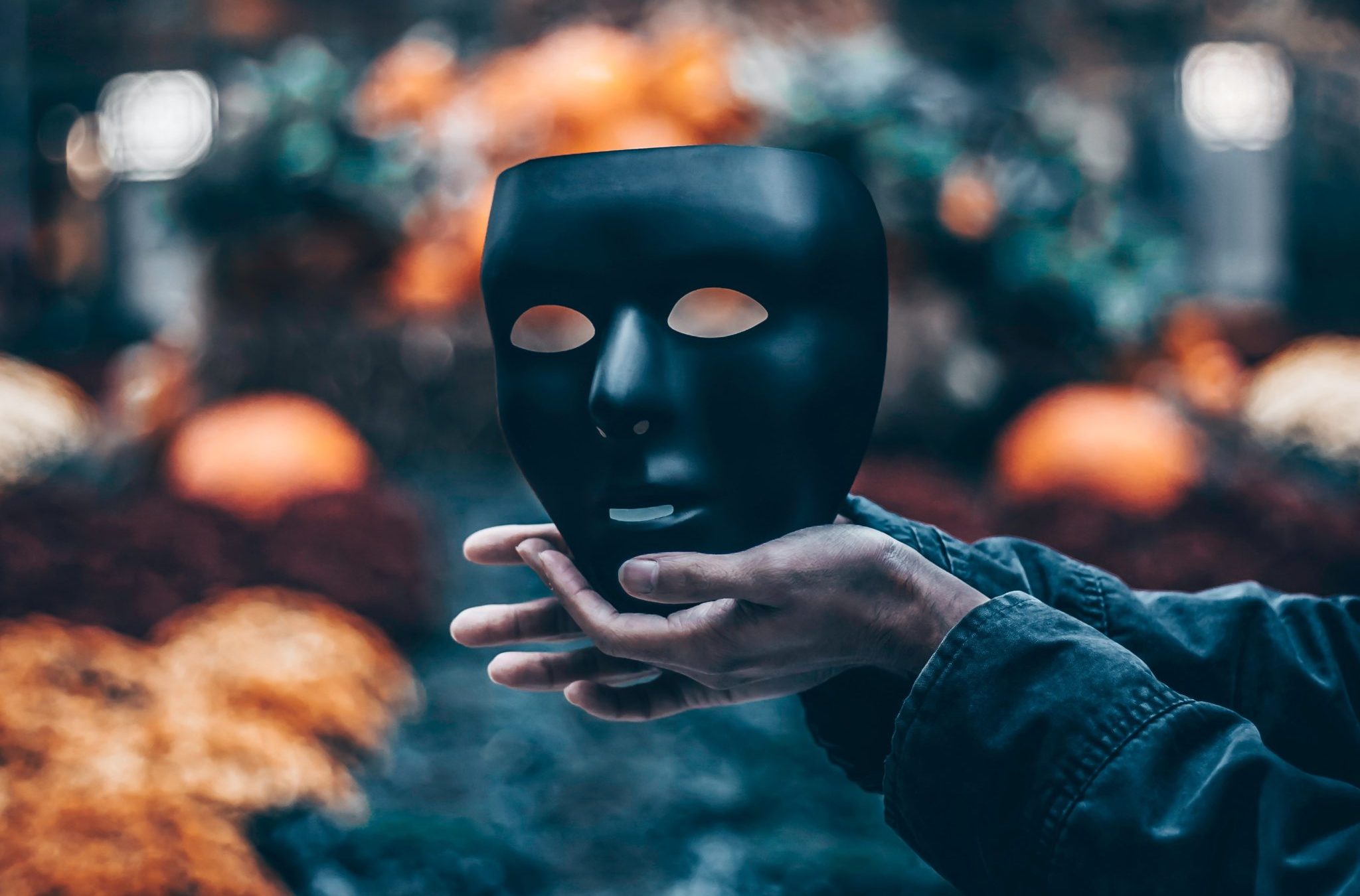
In A Touch of Moonlight by Yaffa S. Santos, Larimar Cintrón is a successful 34 year-old brand manager at a growing chain of bakeries in NYC. She’s also a devoted Dominican daughter who lives in the same building as her parents, a punk fan, avid foodie… and a magical being known as a ciguapa. Larimar appears human most of the time, until the full moon rises. Then her rizos go straight, covering her body in a robe of tresses, down to her inverted feet. Too fast for the human eye to see, she runs heels-first through the night. But her identity as a ciguapa is only one of the secrets Larimar is keeping from Ray, a sweet, gentlemanly owner of a local bakery who’s as delicious as his pastries, and likewise irresistible. Surely dating a ciguapa is unimaginable, but Larimar’s second, much more human secret may be the one that’s unforgivable.
Punctuated with actual recipes for some of the treats Larimar and a cast of lovingly nosy friends and family enjoy throughout this book, A Touch of Moonlight is a romance rooted in a search for belonging and self-acceptance. Though Larimar is not the only ciguapa in the family, to find her place in the world, she has to look deeper within herself, and at her history: “The ciguapas had taken her home. […] This knowledge was a bracing tonic for her spirits. It gave her roots, and she needed roots to soar.”
It’s only fitting for this booktail to borrow from some of the rich spices and flavors found in the array of mouth-watering pastries and baked goods described within this novel, including boozy cupcakes: black spiced rum honors Chocolate Espresso Rum-Infused cupcakes, Pumpkin-Spiced Rum cupcakes, plus rum on the rocks on Nochebuena, and last but not least, the rum-soaked macarons served at a very special occasion. Meanwhile, the honey in mamajuana inspired the honey chamomile ginger syrup that defines this drink. Chamomile can be found in Chamomile Lemon cupcakes with honey buttercream, while bestie Brynn mixes ginger in her hot toddy, and Borrachitos uses ginger in the bakery’s Dominican Hot Chocolate-Inspired Cupcakes. Ginger also makes an appearance in Larimar’s own Bourbon Spice Naked Cake with Edible Flowers. Finally, the frozen coconut water references Ray’s coconetes and Larimar-inspired cupcakes, and CoconutArroz Con Dulce cupcakes.
A deceptively simple yet strong cocktail—for a woman for whom “alcohol was like water”—with notes of coffee and spice, the sweetness of the rum and syrup are well balanced by the neutralizing frozen coconut water. The booktail is presented on a liquid mirrored base for ciguapas’ penchant for water, while the two-toned background sparkling with the day/night bling of a city symbolizes Larimar’s human and supernatural aspects. A white moon crosses both sides, hanging over the drink, mirrored in the ridged sphere of coconut ice in the glass. The glass is garnished with a candied hibiscus flower, a rare and wild-looking treat.
A Touch of Moonlight
Ingredients
2 oz black spiced rum
1 oz honey chamomile ginger syrup (see recipe)
Coconut water ice
Instructions
First, freeze the coconut water in an ice mold of your choosing, preferably a large square, sphere, or diamond shape. Meanwhile, prepare the syrup. Once cool, add to a mixing glass filled halfway with ice, along with the rum. Stir until well-chilled, then strain into a rocks glass. Add the coconut ice.
Honey Chamomile Ginger Syrup
Ingredients
1 1/2 cup water
3/4 cup honey
4 chamomile tea bags
About 2-inches of fresh ginger, peeled and chopped into small pieces
Instructions
Mix the honey, ginger, and water in a small saucepan over medium heat.
Bring to a gentle boil, then lower heat and let simmer for 10 minutes, stirring occasionally.
Remove from heat and add the tea bags to the pot.
Steep until cool, then discard the tea and ginger. Store in a glass bottle or jar and keep refrigerated.
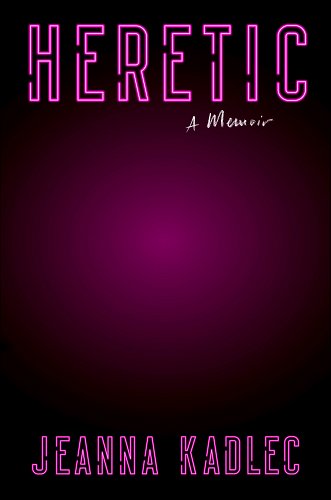
The memoir Heretic opens with Jeanna Kadlec boarding a bus to the Middlesex County Courthouse in Massachusetts, where she is filing for divorce against her husband, an Evangelical Christian, and pastor’s son to boot. Kadlec is twenty-five and exhausted from the labor of suppressing her queerness. But, as a lifelong believer, she knows the consequences of straying. Already, she’s been chastised by her husband for her ambition, shamed by other women in the church for her clothing and curves, and pressured by herself to repent for the wrath she feels toward a pack of boys who assaulted her at a youth group hayride (because boys are permitted sexual transgressions, after all). Kadlec also knows her future if she stays. The reality for many women and queer people in conservative Christian communities is complete sublimation.
Running parallel to Kadlec’s personal narrative are well-researched historical and political nonfiction threads that contextualize Kadlec’s experience of the church, and provide readers unfamiliar with Evangelicalism a foundational understanding—a timely effort given our current political landscape. In sharing her trajectory from devout believer to heretic reborn into queer joy, Kadlec offers a hopeful roadmap for the future, both for ex-Evangelicals and for anyone looking to leave religious fundamentalism behind.
I spoke with Kadlec over Google Meet about the Evangelical groundwork for overturning Roe, biblical womanhood, and Kadlec’s utilization of tarot to get in touch with her intuition.
Melanie Pierce:This book has the potential to reach at least two audiences: former Evangelicals like me, who are excited to see our experiences reflected, and outsiders unfamiliar with the Evangelical framework, who are possibly looking to learn more about it now, with the rise of Trump and the fall of Roe. How did you decide on this research-intensive, hybrid approach to your memoir, and who were you writing the book for?
Jeanna Kadlec: I was writing the book as a hybrid memoir before I realized I was writing a hybrid memoir. The way that I write personal narrative is the way that I think—really, I’m just making my thought process legible for the reader. In a lot of hybrid memoir, especially by queer writers, we’re not trying to claim to be the sole authority of our own ideas. Obviously I’m the authority on my own lived experience, but if I’m going to situate myself within the context of growing up Evangelical, I’m not going to use my experience as the end all be all.
My impulse as a person and as an ex-academic is to do historical research. I don’t know that I could write what people consider to be a straightforward memoir that doesn’t incorporate other threads. This is what I love to read, and it’s what I love to write.
Honestly, you perfectly picked up on the audiences that I had in mind when I was writing. My ideal readers, first and foremost, were younger versions of myself, which is to say ex-Evangelical queer people who were coming out of the church. You can narrow that to folks who are also Midwestern, or who also grew up in working-class homes. But ex-Evangelical queers are certainly my most targeted audience. My hope for the book was that it would find the readers who it was supposed to find, the people like us. But as is evident by the fact that I stopped [in the memoir] to explain virtually everything to do with the church: it’s meant to be user-friendly for people who grew up in other parts of Christianity, or in other religions, or with no religion at all, who are curious or angry about the impacts that this one very hardline faith has on their everyday life in this country.
MP: Right. Heretic is timely because the white conservative Evangelical framework has permeated America’s political landscape to such an extent, it’s hard to unravel where Evangelicalism ends and the government begins. For example, you cite a 2020 Pew Research study that found that half of Americans think the Bible should influence US law—far more than the population of white Evangelicals.
This is a complex question that you wrote an entire book to answer, but to give readers a taste: can you describe some of the ways that the average American experiences the efforts of Evangelicals “pressing on their life,” as you write?
My ideal readers, first and foremost, were younger versions of myself, ex-Evangelical queer people who were coming out of the church.
JK: I’ve been living on the East Coast for almost 10 years now, basically the entirety of my post-college adult life. These places, culturally speaking, are not saturated by Evangelicalism in the way that the towns that I grew up in the Midwest are, where even if folks are not attending a church, the biblical literacy, the awareness of cultural Evangelical phenomena, is so high. I was staggered by how many people I knew out here, who I was in community with—wonderful folks, incredibly smart folks, queer folks, but who were mostly from the coasts—were not aware of how much of our culture is directly based in Evangelicalism. Not just the stuff that’s explicitly anti-choice, but where that comes from with purity culture. School dress codes, for example, are profoundly connected to the church. Those are profoundly connected to segregated schools. Who was pushing segregated schools in the mid-20th century, long after Brown v. Board? It was Republicans; it was Evangelicals. So many contemporary social issues, things to do with “protecting children,” you trace it back and it goes back to Evangelicals, almost always. It’s astonishing to me how much folks don’t recognize the church’s influence. Even Evangelicals, right? There was so much that ended up in the book that I didn’t know when I was still in the church. So I can’t harp on folks too hard who aren’t in the church.
We’re at a point right now that seems so extreme, a crisis point. But really, all of this is based on Evangelical priorities, on the foundational ideology of Evangelicals and Republicans (at this point, they’re virtually interchangeable). [They] have been laying the groundwork for decades.
MP:There’s this thread in the book about the values that growing up Evangelical instilled in you, like the importance of community and nourishing your soul, the power of the communal sacred, and—to get really specific—how exegesis, or close reading of the Bible, gave you a foundation for textual analysis in your English classes in college. How important was it to you to knit these lessons that you learned from Evangelicalism together with unpacking your religious trauma?
JK: I don’t know that it was conscious, though hearing it framed that way, I would absolutely call those positive experiences and lessons from the church. My ability to look back and to see what was good about the experience is the result of time and healing. Those were very important and profound experiences I had within my faith that helped lay a foundation for things that I came to value. It’s impossible for me to talk about my love of literature without the church. It’s impossible for me to talk about why community is important to me without talking about the church. Certainly there were times in my past when I was more fresh out of those experiences, when I tried to excise those things, but I’m far enough out of it at this point that I can take the holistic view.
MP: Biblical womanhood is an important subject in Heretic. You talk about the Evangelical ideology of male headship and the lack of power that women and queer folks have over their own bodies. I’m assuming you were in the final stages of publication with Heretic as Roe fell. What was that like for you?
JK: We were in third or fourth pass. It happened in time for us to adjust some language, but it didn’t really have an impact. It’s still an undercurrent—[I write] about the lack of sexual agency, the way that women and queer folks are conditioned to not trust themselves, and to not believe that you can make decisions for yourself, for your body, for your health, without the input of a parent or husband or pastor or an authority that is not you. The next logical step is to go to reproductive health.
We’re at a point right now that seems so extreme, a crisis point. But really, all of this is based… on the foundational ideology of Evangelicals and Republicans.
How it was for me: it was actually very strange, and I’ve talked with other ex-Evangelicals about this. My girlfriend is also ex-Evangelical. I was just numb. I feel like for those of us who grew up in this, this has always been the plan, this is always what they said they would do, and then it happened. And I was like, “Well, they did it.” And my girlfriend was like, “Yep, they did.” They’ve been saying they were going to do it, and there were so many folks that didn’t fucking believe that it was ever going to happen, and who still don’t take it seriously. I have so many issues with the church—obviously! I wrote a whole book about it! But at least they tell you exactly what their plan is. A lot of my rage in the months since has been, quite honestly, for folks who continue to dismiss the seriousness of it, like folks on the left, and establishment Democrats of course.
MP: Part of this memoir narrates your former marriage to an Evangelical man. A factor that drew you to him was that he claimed to want a partnership of equals, and he wasn’t interested in your submission, so you expected to have a marriage that was godly but differed from rigid gender roles. But then, early in your marriage, he seems to have a problem with your ambition, and he tells you in this chilling scene at the kitchen table, “You’re not an individual, you’re my wife.” What was it like to revisit that time in your life and probe it so thoroughly for the book?
JK: This book has had a number of different iterations over the years, and the scenes with him that made it into this final version are the ones that have made it through every version of the book. So at this point, the arc that is my marriage, and the scenes that I have chosen with him, are very distilled, and I have been sitting with that arc for a very, very long time. The emotional rawness feels pretty distant. What you’re describing, how chilling it is—I’m like, “Oh, I guess that is chilling. I guess that was bad.” And it is. I had to bring all the walls down to write it, and then I put them all right back up.
MP: You write about how the teaching of original sin instilled a deep sense of shame in you, and how believers are trained to actively disconnect from and distrust their bodies and desires, because those bodies and desires are rooted in original sin. Evangelicals are not only denied the agency to make their own decisions, but they’ve also been programmed to shut down their intuition.
Can you talk more about your shift from prayer journaling to your tarot and journaling practice, and utilizing tarot as a tool to tap back into your intuition and feed your spirit?
JK: I’m a lifelong journaler. My earliest ones are from when I was 10 or 12 years old. I still have a lot of these childhood journals, and they stop being a record of my days and turn into constant talking to God when I’m a teenager. It clearly coincides, in my mind, with when I started getting policed by other women in the church for what I was wearing and started to get the talks about purity culture and how sinful we all are, how sinful our bodies are. Those coincide with my journal diving into constantly talking to God, which is to say constantly checking in with God and being like, “I want to do this. Is this okay?” Eventually, I realized I had this incredible journaling practice but I didn’t really know how to record my days or how to articulate my desires if I wasn’t using God as an interlocutor, if I wasn’t checking in with someone. If there wasn’t that arbitrary authority in my life, how did I know if I was doing it right?
Tarot essentially provided me with a structure to help me get through that really messy valley. I knew that I could write my way through it, but I needed a structure to get me to the other side. Tarot came in as a helpful tool to do that. It’s really like the art of close reading. That’s what I was doing in the beginning. The spiritual part of tarot for me came a little bit later. In the beginning, it was just me using the cards to give a structure to the journaling. It was like playing twenty questions with myself, figuring out what I want.
MP: As a follow up to that: what advice do you have for those coming from religious fundamentalist backgrounds who are interested in alternative spirituality and finding meaning in other rituals?
JK: I don’t know that I would give advice in the form of, like, here are specific tools, because the tools aren’t necessarily going to get someone there. For me, tarot was helpful because it jump-started my way back into an existing practice. It was helping me unlock why journaling felt so stuck for me. It was helping me get back in touch with myself, redirecting that conversation with myself back to, “Oh, I can want things. Oh, I can just talk and God doesn’t have to be here.” Which sounds so basic but if you’ve been in the church—
MP: That’s a radical notion, really.
JK: Yes, that’s radical! You can just want things and not have to check if they’re godly or not! So it was helpful for me for that reason. If folks are curious—they’re leaving the church, leaving organized religion of any kind that’s conservative and harmful, or that just isn’t good for you—and wanting to explore stuff, I would recommend journaling, or at least would recommend having a little session with yourself where you really sit and write or think or voice memo or drive around in the car and talk to yourself, to really think about what you’re looking for. Is it the connection to the divine that you’re missing? Is it that you miss Bible study, reading something and rigorously studying it? Do you miss community? Do you miss singing with other people? Not that it has to be framed in terms of what you miss, but that spiritual practice, however harmful it was, did feed something for you, and what aspect of that can you explore in terms of bringing it in? I think the more helpful thing is looking at the specific need that you’re looking to fill. All of those things are spiritual, and all of those things are holy, so think about which things you crave and which actually really nourish you. There are paths, modalities, different traditions and tools that you could institute, and different kinds of gatherings for any and all of those things.
How do you discuss something so intimate and uncomfortable as finding a spouse, without laughing or crying or cringing in embarrassment or fear? How do you talk about it without using the L-word? As in Luck. As in, you can plan and strategize as much as you want to, you can prepare as if you’re preparing for battle, you can organize and plan for all contingencies. There is still a certain amount of luck involved.
More on that later.
Frequently it is a different L-word. As in Laugh. It’s a laughing matter — as in when you see it on TV or the silver screen, you end up laughing at either the future groom or the bride, or perhaps both, for all of the misunderstandings and all of the foibles. Sometimes you’re laughing out of relief: As in “Thank god that isn’t happening to me.” Sometimes you’re laughing in recognition: “Been there, done that!”
Perhaps it’s not just two people getting married but two families and two communities coming together.
There is a romantic presumption of happily ever after, of marital bliss. There are the underlying assumptions that maybe your family does know what’s best for you, that perhaps it’s not just two people getting married but two families and two communities coming together. Perhaps it shouldn’t be left to the young and inexperienced to figure out for themselves. Think We Are Lady Parts. Think Indian Matchmaking.
Then there’s the comedy of errors when the groom or bride deviates from the chosen path that is meant to make us laugh, to ease the cringing and the uncomfortable moments. Think of Kumail Nanjiani in The Big Sick or Nia Vardalos in My Big Fat Greek Wedding.
But in real life, arranged marriage is no joke.
(I will not directly discuss child marriage because this essay is supposed to be funny and there is nothing funny about the practice that in 2022 is alive and well in 44 states in the U.S. and all around the world regardless of border or boundary.)
(Because patriarchy.)
(Because misogyny.)
It is an accepted practice around the world. Most of the time, in my experience with my family and friends and acquaintances, marriages are arranged with good intentions.
Still, India and the subcontinent remain in the news — so much violence and oppression against women.
In India, where my ancestral family originates, it is complicated. Here is a nation famous for worshiping female deities such as Durga and Kali, tongues out, weapons in hand. And India had its first female prime minister, Indira Gandhi, decades before the purported democratic ideal, The United States, fielded Kamala D. Harris to the nation’s second highest position. Still, India and the subcontinent remain in the news — so much violence and oppression against women. Child marriage, yes, but also dowry deaths and female infanticide and sexual assault.
But I digress, again.
Arranged marriage ultimately becomes something borne out of a visual medium: think picture brides. Someone posing, unsmiling, that is supposed to symbolize a potential bride or groom’s merits and seriousness. There are many stories and books about that concept — famously, Chitra Banerjee Divakaruni’s short story collection, Arranged Marriage, and The Buddha In The Attic by Julie Otsuka which vividly depicts the lives of Japanese picture brides emigrating to the United States and making their way in the years before World War II. Kiran Desai’s debut novel, Hullabaloo In The Guava Orchard, has one of the best descriptions of the expectations of and for a daughter-in-law that I’ve ever read, and I chuckle every time I have a moment to revisit it.
For as long as I can remember the dominant American culture has looked upon arranged marriage in eastern cultures or non-English speaking parts of the world as something backward or something that was to be treated as abusive or suspicious. Of course everything in the world is a circle/cycle and there are now healthy numbers of Americans on eHarmony or Matchdotcom or something similar trying out a more modern version of arrangement and the institution of marriage.
My family and my husband’s family hail from similar backgrounds. We are both academic brats, children of college professors. In fact we were both raised in the U.S., Bengali in origin — and our parents are friends. Yes, we were introduced but as we are fond of saying, “We got married despite our parents and not because of them.”
You can’t look to the future unless you know where you come from.
That was the nutshell of our arranged marriage story, our “sommondo” from thirty-plus years ago — More later.
Now, I offer origin stories. You can’t look to the future unless you know where you come from —
On my Baba’s side, there are three important moments:
My dad’s paternal aunt was the first female police inspector in Kolkata, and she chose not to marry (how I longed to be a fly on that wall and learn how that came about).
My dad’s maternal aunt Khuku Roychowdhury, died following a violent dispute at the hands of her mother-in-law, as depicted in my recently published novel, Circa.
And my paternal grandmother, Kalyani (whom we lovingly called Rani-Ma), was married at 13, and had her first baby at 15. When my grandfather died at age 42 of leukemia, my Rani-Ma was a widow at the age of 31 with seven kids to feed.
On my Ma’s side, I have the visual aids to accompany these stories:
My great grandmother was married off at 9, in India, and went to live with her in-laws a couple of years later. Her husband was a widower at 22 with a toddler. My great-grandmother had my grandmother at 12. I have my grandmother’s, my didima’s, summondo photo. She is 13, thin in her sari and embroidered blouse, somber.
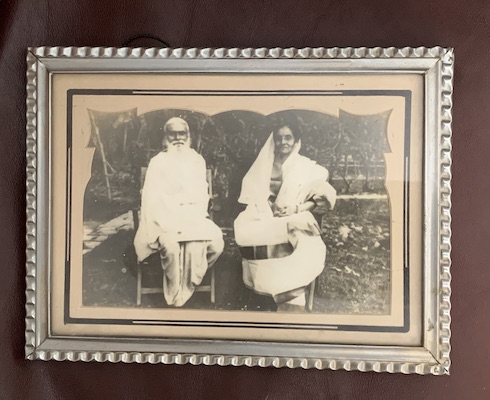
I have a photo of my mom’s grandparents from 1970 when I was four years old — my great grandfather is a very old man with a white beard and my great grandmother is still young, her hair a long rope of jet black. By the time this photo is taken my mother is around 30 and has been married for seven years — and has little ‘ole me in tow.
I also have a photo of my grandmother and her mother standing side by side when my grandmother is a new bride at 14 and her mother is a grand old mother-in-law at 27. They could be sisters (not pictured).
I know I’m lucky I have these photographs – not everyone does.
Like one set of parents in Circa, my mom’s dad and my dad’s mom grew up in the same village.
My parents and my in-laws were born and brought up in India. Just like one set of parents in Circa, my mom’s dad and my dad’s mom grew up in the same village and each family moved away. After a prolonged absence, they ran into each other in Kolkata on a Monday in August 1963 and by that Friday, my future mother and father met each other as they married. (My mom likes to recount how much she threw up from the moment she was told she was marrying, on Tuesday, until she actually got married on Friday).
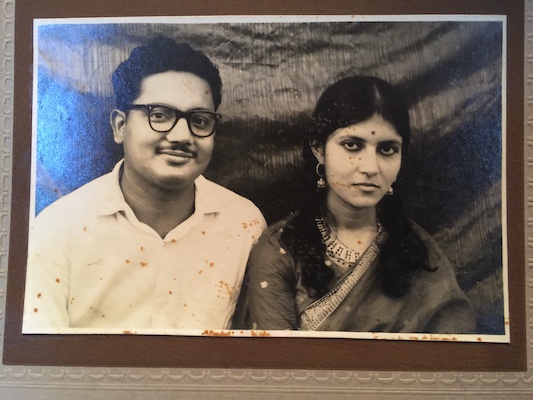
I have a photo of my parents shortly after they married. My future dad looks affable. My future mom looks like she’s about to shoot lava out of her eyes ☺. (Next year, they will celebrate 60 years of marriage, so I guess their parents chose….wisely.)
My mom became part of my dad’s family, in a joint family living situation for the first year ( i.e. she moved into a house that accommodated mom, sisters and brothers, uncles and aunts, cousins – all under one roof). My parents left for the United States in 1964, ostensibly so my dad could work as a visiting professor, first at UC Berkeley and the UNC, and then go home. But then the economic opportunities and the children came along. They remained, became American citizens.
Meanwhile, my in-laws cheated a little in the arranged marriage department: They each happened to be graduate students at the University of Illinois where they met during a social function. 1958. My late father-in-law earned his PhD in physics before my mother-in-law finished her PhD in mathematics (one of the first Indian women to earn a PhD in the U.S.) and went back to India. He played coy for two years, rejecting many a summondo, until my husband’s mother returned home with PhD in hand, and then both families were told that they had met and wished to marry.
They married in 1962, my future husband was born a year later and then they returned to the United States permanently in late 1964 or early 1965. They were both at UNC for a short time before taking permanent faculty positions at Clemson University. But no one on this side of the Indian Ocean really knew their marriage story until recently (thirty years after we lost my father-in-law to lung cancer). From the outside it was a huge coincidence that they both earned graduate degrees and happened to have an arranged marriage.
What I really want to impart is the frozen nature of time.
Nudge nudge. Wink wink.
What I really want to impart is the frozen nature of time. As in, the minute our parents left India, India froze in time for them. India and its cultural norms and its expectations remained firmly stagnant. 1960s. Of course, they heard stories of, (shock, horror) infidelity, separation and divorce. But they were few and practically non-existent next to the stories that our families watched weekdays on “As The World Turns” and “Guiding Light.” And that soap opera loving culture has permeated into the group consciousness of immigrants, especially in my extended family. Things that were deemed “American” were deemed worthy of suspicion, that Americans allowed another L-word to guide them: Love.
But I digress.
I suppose everyone’s stories are similar in a way but also vastly different. Arranged marriage is similar for everyone in the hopes that you don’t end up with someone truly awful, and that you end up building a life together based on trust and affection. But all paths are vastly different because of the intersections of different life experiences. Still I must say at least the children of the 60s that I grew up with truly did try to buy into their parents expectations and keep the peace and keep the cultural continuity going. We may have tweaked a bit here and there but genuinely we tried to balance our family’s hopes with our own. Most of my peers had some modified form of arrangement, most of them had negotiated hard for the ability to say no. I don’t know what it’s like nowadays, and I don’t have any interest in finding out. I have children but I wouldn’t be caught dead trying to arrange so much as a coffee date much less a spouse ☺.
There is a gender gap here. Women still have it much worse than men. Ultimately we still live in the patriarchy no matter what. So if a man doesn’t like the proposed arrangement for whatever reason, his ability to say no has a higher success rate than a woman’s ability to decline. I had horror stories in my summondo experience — one of them is in Circa, fictionalized version to be certain but its origins are in real life. I remember fighting back and pointing out obvious flaws in the potential grooms. I remember negotiating with my parents, and garnering veto power. My husband’s stories are very funny and I think encapsulates all of the hopes, expectations, regrets and misunderstandings that come with this seemingly interminable process (after all, when you’re in your 20s, everything seems interminable).
I remember negotiating with my parents, and garnering veto power.
In this way my husband and I are truly lucky. We had parents who cared deeply, and we both had some sort of veto power and when we finally were introduced (well re-introduced, apparently we played together as kids the same way my mom’s dad and my dad’s mom were friends long ago), we were veterans of the summondo process.
My summondo story has a postscript. A few years after we were married I was in graduate school and I had to write a short story on short notice. Flummoxed by the deadline I called my husband. It was in the pre-cell-phone, pre-internet days and I held the receiver between my shoulder and ear and typed his answers as I recalled some of the details of some of the stories he told me. I typed and asked questions, prompted details about some of the moments where the introduction went south (there was the time he and his father fell asleep on the couch after a big lunch and his father was caught snoring…there was the time the potential bride wouldn’t speak to him except to say she thought Sylvester Stallone and Rambo were the best…).
The club—seafoam green, on the insistence of a long-since-vanquished investor—thrums with the buzz of a thousand bees. Bass as buzz. Flirtation as buzz. Crane-necked/half-verified celebrity as buzz. Neon sign reading EXCEPTION AS RULE, hot pink and glittering, as buzz.
Amy visited a bee farm once, in youth, on a middle school field trip. The bees were endless. A woman in a netted helmet pulled a full-on honeycomb out of a box. Amy had not realized, prior to this, that a honeycomb was a thing outside of cereal.
Mrs. Parker couldn’t be blamed, of course. Twenty-eight children is a lot, and when two of the twenty-eight overturned a beehive while she was watching the other twenty-six, there was an eruption of screams. Bees were everywhere. Children scattered and fell like bullets from a sawed-off barrel. But Amy stood perfectly still. She’d been stung thirty times, the doctors said. Amy’s mother was a livid wreck, suspicious of the round number thirty. She spat on the tile floor of Saint Francis Memorial and made it known.
All Amy remembers is the sound.
But the buzz was nothing compared to this.
There’s another neon sign, in the ladies’ room, that reads NATURE IS INVENTION. There are a thousand images on the web—Amy’s seen a few of them—with women beneath the sign: lips malbec-red and bronze and coral and pretty-in-pink and blue and once really blue, though the last of these was resolved with an ambulance out the back and, later, a modest settlement.
Anyway, Amy is, as it turns out, allergic to bees.
The ceiling of the club is a lattice of pipes, all leading to nowhere. Technically, there’s one pipe that matters, a fat ventilatory pipe, and someone—presumably the same ousted club investor with an affinity for seafoam green—had the bright idea to build a maze of thin nowhere-pipes, faux infrastructure-as-artwork, around it. The sound in the club drifts up and rockets around the pipes like a pinball, echoing back down as a tantrum of sound, a rearranged mist of inside jokes and pick-up lines descending damply below.
Amy slouches at the rail over section 4, half-lit by the vintage banker’s lamp on the hostess stand. Viewed from below, she is one of eight silhouettes, each seeping into the other in an undulating caterpillar of hair and skin. If lit from the front, they’d look like a calendar from 1994, a strappy, inconvenient mass of breasts and hips mediated by hourglass middles. Latexy leather, delicate chains accentuating décolettés, metallic strings dripping between tits, glitter-laced lotion slick on the same collarbones over and over and over.
To Amy’s right there are Mel, Elise, Indica (whose real name is Gladys, after her grandmother, but who’s experienced a 26 percent increase in tips since opting for Indica), and Arielle. To her left are Iris, Lane, and Bérènice. This is the last moment of fidgeting, of sleepiness, of normalcy (costumes notwithstanding) before the door is broken down by the thrum that’s already audible, little-black-dress-clad clubgoers and hedgefunders like orcs, hungry for the press of bodies and Belvedere, swan-shaped ice buckets and sparklers in the offing. Enthusiasm like a horizon leaking toward the doors.
“Happy birthday,” says Indica. And the party begins.
Beneath the canopy of superfluous piping is a crowd, whirring and eddying. Nestled at varying heights are the tables, geodelike slabs over zebra-skin rugs that everyone’s pretty sure (but not completely sure) are fake.
Tonight it’s the same crew of Germans from last week, give or take a couple, smacking one another and guffawing, their Stemar boots pressed flat on the floor, knees wide, oblivious to the angle of their own suit-clad crotches, slouched and electric with self-congratulation. There’s a twenty-one-year-old birthday party, bankrolled by someone’s father’s last name, then the next. A table of athletes—basketball players, Amy is pretty sure, from their shape and the profusion of rare-edition Air Force Ones. That dimpled actor from that new show, network, who hasn’t figured out how to spend the money yet. The Donner Party, which has to be a joke, except that it isn’t. A handful of bachelorettes, faces and skin shellacked with wealth, their bodies painted with variants on the same lacquer-sheen dress in emerald, gold, sapphire blue, with straps in functionless configurations around the collar, leaving little indents revealing the extent of their tans.
At the table of athletes, Elise is seated in one of their laps, the second-to-main one. The main one is famously married, recently forced by a slew of magazine covers into a season of chastity, or at least a period in which girls who look like Elise don’t publicly sit in his lap. There’s a bet, to see if she can coax them into another $10K, and she’ll win, though the causality of Elise’s presence is strictly conjectural. There’s always another $10K. When the spend lands, Amy helps Iris and Bérènice haul a Nebuchadnezzar of Cristal to the table. Sparklers crackle, casting a hazy, orange strobe of smoke and light, spectacular but contained, like the bombing of a distant village watched on TV.
The girls stay to serve the champagne, and are invited to help consume it. Amy sits on the arm of the slick leather sofa, one gangling leg draped over the other, an unrecognized hand resting lightly, politely on the small of her back.
Amy’s always preferred the athletes, sensing in their entrances and exits an aura of inspection, as though they dipped in and out of existence when watched and unwatched. They belonged to the tightly assessing gazes, the guessings at strength and weight, the paper-doll conjectures of how they’d look in various poses, in and out of clothes. Graceful and drenched in magic. Mel tracks the news, business, and sports, and often gawks, half-lit by her phone screen, at the figures—who earned what, whose contract just got pushed to which mil—but Amy is unfazed. To be owned that way, she thinks, to belong so thoroughly to the long look and the calculating half smile, they deserve every penny.
To be owned that way, she thinks, to belong so thoroughly to the long look and the calculating half smile, they deserve every penny.
The Donner Party, who turned out to be a team of lawyers, has ordered appetizers brought in from off-site. Amy helps Lane retrieve them from the back serving station, where they’ve been extracted from their nondescript delivery boxes and artfully plated. The china dishware is freckled with translucent pink droplets of blood. Steak tartare.
“Morons,” says Lane, balancing a string of plates on her slender forearms, a holdover from a past life at a steak restaurant.
It’s something, Amy thinks, the circumstances under which eating blood is accepted.
Following the childhood incident at Halford Honey Farms, Amy had become enthralled by bees. She’d checked books out from the library, squandered ink from the slow-moving Canon on color printouts of various species, URLs with Apis koschevnikovi and Apis cerana faint in the corners of the pages. She tucked the printouts and trivia, meticulously handwritten, into a folder, which she studied while her mother cooed over her, dabbing Neosporin in thirty places, wincing as though it were her own flesh.
Amy had learned—and announced, folded glumly in the empty tub—that the venom from a honeybee is more lethal than cobra venom by volume. That it’s also used as a treatment for high blood pressure and arthritis.
Amy’s mother was not listening, more concerned with the obviation of scars, propping a first aid booklet open with her knee on the bathroom tile.
“All worker bees are female. Did you know?” said Amy.
“Of course,” said Amy’s mother, although she didn’t.
“They never sleep.”
Amy’s mother dabbed three buttons of hydrocortisone onto a trio of red lumps just above Amy’s knee.
“The buzzing,” said Amy, “it’s their wings. Flapping over two hundred times a minute.”
Amy’s mother angled her neck beneath Amy’s outstretched arm, slathering vitamin E on a patch of puckering skin near the armpit.
“They all died,” said Amy.
“Who died?”
“The bees,” said Amy. “When they stung me.”
Her mother flinched at a particularly prominent sting, nestled in the skin between Amy’s nose and mouth, which she seemed to instinctively know would leave a scar.
“Good,” she said.
In the VIP lounge, a guest has insisted upon celebrating some event with dessert-based nyotaimori, and this request has apparently been indulged. A woman with cropped black bangs lies fully nude on a length of table, her body lined with truffles, blackberries, French silk chocolate shavings, dollops of mousse. Shards of brûlée like broken stained glass. Mini cheesecakes.
“It’s your birthday?” Mel edges past the velour-roped stanchion, past Amy, with a tray of tittering champagne flutes. “Indica said.”
“Yeah.”
“Happy happy.” Then: “Emilio’s, after.”
Amy nods and wavers at the entrance, a chilled bottle turning warm in her grip. Inside, a parade of suit-clad men hangs jocularly around the table, laughing in a tight spectrum of tenor bravado, making a show of ignoring the confection-strewn model, affecting ease. They perk up at the advent of glassware, of Mel. Someone they know what to do with.
Amy marvels at their unnecessary layers: suit jackets, ties, tie pins, pocket squares. She is herself a palate of minimalism, straps and strips of cloth, as little as possible.
In the course of most service professions, running into someone you know is inevitable. Tonight it’s Kevin, a former classmate, one year ahead, the voice of the morning announcements in the same regime in which Amy served as student council vice president, a sinecure befitting her social rank at age twelve. He recognizes Amy before she recognizes him, which is to be expected. So much more of her is showing.
He catches her by the wrist and looks into her eyes. “You look fucking wild!” he announces, already loose. “You aged the hell out of your ugly duckling phase.” Amy’s heard it called that before, her “ugly duckling phase,” but it had never been that. She had simply been tall and thin in a way that scared people.
Kevin is sweaty and wet-eyed, a doughier iteration of his middle school self. He’s a doctor now, he’s saying, though Amy has not asked.
“Of what?” she says.
“What of what?”
“A doctor of what?”
Kevin laughs. “Of medicine.”
“What specifically?”
The table glows with mixers, ordered but untouched, lit from below and gleaming like traffic lights. Kevin swallows a mouthful of whiskey, his thick, pallid hand a hamburger bun around the glass.
“Podiatry,” he says. Then, brutely: “No one dies on my table.”
“Mine either.”
Kevin laughs at this, loves this. “Fuck you,” he says joshingly, then, “It’s better money than you think.”
“Good for you,” she says, and from the shift in Kevin’s expression, he must know that she makes what he makes.
Mel has been steered, gamely, toward the dessert table. A liaison of sorts. She is laughing, mouth ecstatically overwide, chin angled in poses of catalog flirtation. At the coaxing of the group, she bends at the waist, hands clasped behind her back, and eats a blackberry, nested in a dollop of whipped cream, from the model’s ribcage. As she rights herself, tonguing her lips and laughing, there are hands on her arms and waist, knuckles riddled with hair, wrists heavy with watches.
A man gestures for Amy, and when he does, the champagne in his other hand sloshes over Mel’s collarbone, drizzling over the curve of her chest toward the low angle of her push-up bra. He motions toward Mel with the ebullient theatrics of a gameshow host.
“Lick it off,” he says.
Amy and Mel laugh, together, a flicker of eye contact conveying the humor of a dark inside joke. They’re already in the car, on the way to somewhere else, counting the money.
With the fearful awe of a zoogoer, Kevin watches, glassy-eyed and enthralled, as Amy licks the champagne from Mel’s breast.
“We knew each other in middle school,” Amy hears Kevin say, his voice soggy and unmodulated, the wrong volume for the room. “Amy’s a freak.” The cohort laughs, variants of disbelief and you-lucky-dog, misinterpreting his gist. “She used to carry a two-liter bottle of Coke around school. With a bee in it.” The laughter is loud, confused, writhing around the pipes and crashing back down like a mash of confetti.
Amy wants, in this moment, to drag her hand through the stripes of custard, the freckles of nonpareils. She wants to dig pebble-hard sprinkles from beneath her nails. She wants to bite the strawberry straight from the woman’s mouth and not even eat the whole thing.
Over a weekend, after the scar above her mouth had only partly healed, Amy had tracked down a patch of black-eyed Susans, which she had swiftly ascertained to be a hangout for bees. She had read, in her exhaustive research, that bees are attracted to caffeine, so she had arrived with a nearly drained two-liter bottle of Coca-Cola, dark liquid splashing around the four-leaf clover of plastic at the base. She had sat on the ground and planted the bottle within the cluster of flowers as a trap.
There was no way of knowing how much time had passed, but when a bee zoomed through the little portal of the bottleneck, Amy was thrilled. She screwed on the cap and watched, mesmerized, as the bee darted toward the pool of soda, proboscis outstretched, jointed legs dipping in and out of wetness. She panicked, struck with the thought that the bee might drown, and poured out the bulk of the soda, careful not to let the bee escape, then hurried home, where she offered more soda through a dropper, watchful and restrained.
She must have known the bee would die, but having seen how casual bees were with their own lives, was undeterred.
She slept to the hum of its wings, better than any idling TV set, the THWAP THWAP THWAP of its bullet of a body against the plastic. She marveled at its fur, so like the down of a baby chick, the glossy bulbs of its eyes. She wondered, fleetingly, whether it missed its hive or was content with its solitary fortune.
On Monday, the bee was still alive, so she took the bottle to school. This defined her for a little while, in the way that minor eccentricities do. It was close enough to scientific experimentation that the teachers allowed it. The bee lived for days, blitzed on a diet of high fructose corn syrup, caramel color, phosphoric acid, and caffeine.
On Wednesday, in study hall, she watched it die, whirring and slamming its body against the frame of the bottle, its wings invisible except when motionless, etched by light and shadow, defined by external conditions alone. Someone hummed “Taps,” making mouth sounds like a kazoo.
It died in a haze of ecstasy, she imagines, buzzed to oblivion, unaware of its own fate until the final instant.
Amy leaves the flaccid, uninhabited shape of her costume strung over a hanger on a rack populated by similar ghosts, all destined for dry-cleaning and resurrection. She sloughs off sections of makeup, replaces them. Borrows a lip color that doesn’t remind her of anything. Puts on her own clothes. In the glow of the vanity mirrors, she looks resplendent, godlike even. Anyone would.
She crosses beneath a lesser member of the constellation of neon lights—YOU ARE ALIVE in foxfire green—at the service entrance, the outside world like a train that’s left without her. She gets in a nondescript car, Mel’s car, basic and black, its costs all auxiliary: parking, parking tickets, title, and insurance. The inside is lavish with odd touches: cherry-red Audi seat covers, although the car is not an Audi; vitamins like candy in the ashtray; a tampon, clean and frayed, dangling from the rearview mirror like a lucky rabbit’s foot.
In the moment before Mel switches on the ignition, there’s a rift of silence like the vacant racetrack of space between songs on a record. The radio kicks on and the moment is past.
Emilio’s is more of a recurring party than a place, effervescent celebrations of nothing on a routine cadence. Emilio is often absent, which Amy suspects to be a half-witted attempt at Gatsbyesque mystique, although she’s met Emilio, everyone has, so she’s not sure what the point is.
She knows already what will happen at the party.
She’ll meet someone. Someone who’s someone. They’ll drink something, smoke something. He’ll recognize youth on her like a cloak, damp with the impulse to wring it out, knowing it won’t last. The party will drink to her health, her birthday, as though they wouldn’t drink otherwise. She’ll circle back to a half joint on the roof. Will wake at his place after a half hour of sleep, tiptoe to the foyer (he has a foyer), where a series of portraits hang. The portraits are of royal pets. Greyhounds, Persian blues, a leopard. All staring dead-eyed into the camera. All tamed.
Her favorite photograph is of a bleak-looking bull terrier, Dotty, the dotted, uninventively named pet of Princess Anne of Edinburgh, accused of canicide and attempted puericide, who even in studio photography looks like it’s plotting a murder. She imagines blood around the puckered pink of the snout, flecks of skin beneath the well-trimmed nails. Her second favorite is a series of Windsor goats, framed individually in the style of high school graduates or confirmands, each respectfully ovalled in mahogany, all in full military regalia. There is something at once farcical and noble about them, she thinks, posing effortlessly, outranking humans.
He—her date, presently half asleep at a wayward angle in his infinity-thread-count sheets—is important, she supposes. He is important for moments at a time, all the time, and if you string enough discrete packets together you get light. You get importance.
When he wakes up, dragging a Henley over his forgettable torso, there’s something like guilt around him, like a stench. “You’re so pretty,” he says. “Beautiful.”
“Thank you.”
“I know a guy,” he says, and the way he says it sounds like an apology. Like he’d like her to remember him fondly. “A photographer. He’s good. Really good.”
“Thanks.” Amy is always thanking people.
There is breakfast and, at the doorway, a goodbye kiss mashed between the corners of their mouths, the angle of an avoidable car crash.
The air hangs densely between them. There is breakfast and, at the doorway, a goodbye kiss mashed between the corners of their mouths, the angle of an avoidable car crash. Amy will call him in a day or two, committed to the bit. The pretense that they really like each other. That this is not just the things they have, reputation and youth, a one-for-one exchange.
Amy has read about Elizabeth Báthory de Ecsed, the Hungarian countess who lured young women from neighboring villages to work her estate, convinced she could stay young by bathing in their blood. In the winters, she would strip them naked and leave them in the fields to freeze. In the summers, she would strip them naked and drizzle them with honey from her own apiary, letting the insects eat their skin.
In the interstitial spaces, alongside the garment rack or at the back serving station, the girls talk about their futures. Iris is working on a lingerie line. Indica aims to invest in real estate. Bérènice will travel. Elise is going to NYU in the fall, although she may delay a semester with an eye toward paying for the whole thing up front. They talk about the money like it’s money and nothing else, as though no other cost will have been exacted.
Amy wants only to be elsewhere. Just last week, when she came across a website featuring derelict castles for sale, she fell in love with a fifteenth-century fortress in the Lleida region of Spain, as tall and thin and impenetrable as any building she has ever seen. Although she does not and will never own this place, she arranges to have her mail forwarded there. Since all her bills and payments are electronic—she has not opened a piece of hardcopy mail in years—the stakes of this whim are low, but she delights in the thought of her credit card offers and coupons trekked up the cobblestone path. She is thrilled by the automated email: “Congratulations on your move!”
Amy only needs one day off from the club but requests three.
The photographer’s studio is whiter than any room she’s ever been in. There are needlessly exposed pipes tendrilling their way across the ceiling, and she feels at home.
“I love this,” the photographer is saying. “I love it; it’s madness.” His thumb is on her chin, a finger stroking the half-dimpled skin at the crease between her nose and mouth. “Not quite a beauty mark, is it?” he’s saying. His voice is fictional British, Yale British. “You were born with it?”
“It’s not a beauty mark,” says Amy. “It’s a bee sting scar.”
The man is deciding, clearly, whether this is more or less magical. He looks at her closely, then stalks toward the slick bay of lighting and camera equipment and yells something vile at the camera operator. Although they’re out of earshot, Amy recognizes the squeamish certainty, the shrinking relief of knowing, at last, what someone expects of you.
It’s all about the scar now, the photographer is saying. She can’t hear him but she can tell. The way the lights are shifting, the puzzled, stoic loyalty of the makeup artist who re-dabs her face.
I found my history classes in school to be mind-numbingly dull: just memorization of dates and battles, kings and presidents. Conspicuously missing from the pages of my textbooks were women. To make up for this, I turned to novels, where I found heroines who too often were tormented, passive, wringing their hands over a man. Or they were witches, victims. Few of the heroines rebelled, and when they did, they suffered. Most of these tales were authored by men, written as though the women in them deserved their fates.
My novel, Gilded Mountain, makes use of a real-life troublemaker, newspaper editor Sylvia Smith, who, in the early 1900s, printed a paper in the small mountain town of Marble, Colorado. She was an advocate of labor unions and women’s suffrage in an age when women could not vote, and she had not one kind word to say about Big Business. She excoriated the marble-stone company that dominated the town, saying it was nothing but a stock-selling scheme to dupe investors. For her daring articles, she was arrested, jailed, and thrown out of town, her press destroyed—a perfect example of how the women’s side of the story is often erased.
An abundant new crop of literary historical novels also feature heroines who are no shrinking violets, taking chances as they flout authority and accepted norms, transgressions for which they are branded as troublemakers. These eleven novels challenge notions of how women lived in the past. Their authors have given us voices we have not heard before. These stories are riveting, and without a doubt, important.
The Great San Francisco Fire of 1906 is the dramatic catalyst for this vivid novel pulsing with action. As a child, Vera is sent by her powerful mother, Madame Rose, to live with foster parents. Madame Rose runs a brothel, and wants a different life for her daughter. When the catastrophic fire destroys most of the city, both women show their crafty resourcefulness and strength. Teenage Vera comes to understand that, in her scheming and hunger to live, she is more like her mother than she knew; but unlike her mother in her capacity to love and care for others. Edgarian shows San Francisco in all its teeming, seamy, broken glory. Vera mourns her losses and carries on, and the city staggers after the disaster, beginning to heal. Opportunists move in, corrupt city officials among them. Beautifully written, with real-life historical characters—opera star Enrico Caruso for one—threaded through the story, Vera is a novel of resurrection and yearning, as a young woman searches for her mother and for family among her “fellow scrappers.”
Christina Baker Kline’s The Exiles is a captivating novel set during the violent colonization of Australia in the 19th century, featuring a trio of courageous women as resilient witnesses to its catastrophic cruelty. Evangeline is a naïve London governess, falsely accused of theft by her employer (who has sordid motivations for doing so). When she is sentenced to 14 years in a penal colony and sent to Tasmania on a fetid convict transport, she is thrown together with Hazel, a midwife who has also been exiled for theft. They arrive in Van Dieman’s land, territory stolen from Aboriginal people. Many of these Aboriginal people have been relocated by force, including young Mathinna, an orphan adopted by the governor of the penal colony. Each of these exiled women find their own way to thwart imperious authorities, and in the kindness they show each other, they find a way to survive and persevere. The story wears Kline’s fascinating research lightly, and the prose is rich with precise and beautiful imagery (including, for example, “sleek as a wombat in a formfitting tuxedo,” and “yellow as a yolk in a cast-iron sky”). This ambitious, powerful story is wide-ranging in its curiosity and compassion. The Exiles is both heartbreaking and uplifting.
As a child in pre-civil war Brooklyn, the watchful Libertie observes her mother, a doctor, minister to the sick. She believes her mother’s power to be so strong that she has raised a man from the dead. The man in question was shipped north to escape slavery, and Libertie witnesses his release from the casket he’d hidden in to escape. Themes of freedom and healing—of community and family—infuse this novel, as Libertie engineers her own form of escape. Her mother’s character is based on an actual doctor, Susan Smith McKinney Steward, the first Black female doctor in New York State. Libertie follows in her mother’s footsteps, until circumstances—and love—send her to Haiti. Her life and times are rendered in lush prose, and I read Libertie with a consuming admiration for Greenidge’s sentences (“She answers with a crack of her knuckles”) and turns of phrase (“that jostling year”). This novel revives lost history with great detail, emotion, and soaring imagination.
Though The Pull of the Stars is set in 1918 London during the flu pandemic, it is not strictly a “pandemic” novel, but rather a story of women’s agency and compassion. Set in a hospital, 29-year-old midwife Julia Power must cope with the short-staffed ward where pregnant flu patients are sent to prevent them from infecting others. She works alongside Bridie Sweeney, a nurse raised in an orphanage, and the brilliant Dr. Kathleen Lynn, who is wanted by the police on the suspicion of taking part in Ireland’s Sinn Fein uprising. Worked to the bone, these women, risk infection and do their heroic best to deliver infants even as the mothers sicken. Donaghue’s tender and graphic descriptions of these laboring mothers—one who must deliver her 12th child, another who was herself abandoned at birth, a third so extremely young and uninformed that she expects a baby to be born from her navel—are tender and vivid. The pages turn quickly as the story follows these tired and tireless women on their rounds, and through their love affairs and lives outside the hospital, where the Great War rages on. Written before the COVID-19 pandemic, parallels to our own plague years abound, with some characters pinning their hopes on fake cures peddled by quacks. The Pull of the Stars immerses us in a long-ago time and place, rendered with beautiful specificity.
This gorgeous novel takes inspiration from “Migrant Mother,” a famous Depression-era photograph by Dorothea Lange. Marisa Silver weaves a luminous portrait of that era, filtered through the perspective of our own as the story cuts back and forth between the past and the present. Three main characters drive the narrative. The first is Vera Dare, a photographer loosely drawn from details of Dorothea Lange’s life. The second, and most sympathetic, is Mary Coin, the eventual subject of a famous Vera Dare portrait. Of Cherokee descent, Mary Coin is the destitute mother of seven children who endures the Dust Bowl years. When Vera photographs Mary in a migrant workers camp, the resulting picture changes both of their lives. In the present day, a professor, Walker Dodge, digs into history’s dusty corners and reveals secrets about the famous picture’s subject and photographer. Written in beautiful sentences, the novel maps a landscape of hardship and dreams. Mary Coin gives the migrant mother—and “Migrant Mother”—not just a human face, but a body, mind, and soul.
Mary Beth Keane gives a human face and a nuanced life to the woman history branded as “Typhoid Mary.” Fever tells the story of Mary Mallon, a cook in early 1900s New York, an Irish immigrant striving to make a good life with a fellow immigrant, her troubled paramour. When fever becomes epidemic in the city, Mary shows no symptoms, but people in the households she cooks for get sick, and some even die. Dr. George Soper, of the city’s health department, tracks the source of the fever epidemic to Mary and her cooking, and develops the theory of the “asymptomatic carrier” of disease. In 1907, Mary is quarantined for three years on North Brother Island in the East River. Angry and unrepentant, Mary defies orders not to go back to work as a cook upon her release. Because people around her have sickened and died, Dr. Soper soon finds her cooking again in a hospital kitchen. This time, Mary is sentenced to quarantine for the rest of her life. She’s a headstrong character, and her willful ignorance of the harm she causes, and what little remorse she shows, is sympathetically rendered by Mary Beth Keane in a medical detective story that is clear-eyed about the consequences of disregarding science. Ever-asymptomatic, Mary is tested relentlessly and blames her plight on prejudice against Irish immigrants. Her fierce resistance makes her a spirited protagonist. The novel paints a vibrant portrait of New York in a difficult time, and echoes eerily in our present, when a fever of another kind has swept the world, and many—like Mary Mallon—have refused the efforts of health officials to control it, with disastrous effects.
Laura Bridgman was celebrated in the 1800s because she was the first deaf-blind person to acquire the use of language, fifty years before Helen Keller. But it was her wit and ferocity that marked her as extraordinary. She stunned large audiences with displays of her knowledge and abilities: sewing, housekeeping, and writing letters and poems. Her fame and accomplishments were credited to the teaching of the brilliant Dr. Samuel Gridley Howe, founder of the Perkins Institute in Boston, where Laura—blind and deaf from scarlet fever since the age of two—was taken at age seven. The novel weaves together Bridgman’s story with that of Howe and his wife, the poet, suffragist, and abolitionist Julia Ward Howe. Laura is mischievous and sometimes violently temperamental. Dr. Howe dictates what she may eat and read, and when she is disobedient, he punishes her by gloving her hands, thereby depriving her of her only method of communication. And yet, she musters a profound courage and makes a life at Perkins. Elkins gives full throat to Laura’s strong voice. What Is Visible illuminates the historical willful ignorance of men, and women’s struggles to be seen and heard. Laura Bridgman’s important story has been hiding in plain sight for more than 100 years, and Kimberly Elkins resurrects her to the narrative of American history in all her remarkable, fully human complexity.
In this monumental work, Ailey Pearl Garfield is a sharp-eyed, insatiably curious, brilliant, and hot-blooded young woman determined to understand everything about her warm, complicated family. Honorée Fannone Jeffers crafts a sweeping tale about the long roots of love, resilience, sorrow, and defiance that trace back through generations. Ailey begins exploring stories about her ancestors in the fictional town of Chicasetta, Georgia, and the novel moves back and forth from a 1733 village of Creek people, to “the city” in the present-day North. As she grows up, she learns from—and about—her elders, falls in and out of love, and recounts the struggles and triumphs of parents and grandparents, siblings, aunts, and uncles. Jeffers, a poet, writes gorgeous prose that is by turns funny and searing, poignant and pointed. Storylines provoke heartbreak and outrage. “Her heart drained,” Jeffers writes, of jealousy. And readers’ hearts, too, may drain reading the fates of Ailey’s forebears and contemporaries, before they’re replenished with laughter at the family’s antics, and the wisecracks of people who use humor as a survival tool. This novel doesn’t just fill in holes of American history; it adds and restores many missing chapters, which Jeffers has created out of research and the whole cloth of imagination. The story compels and informs through this long and absorbing tale. Love Songs was voted one of the ten best books of 2021, by The Washington Post and The New York Times, and was a National Book Award Nominee.
In 1660s Amsterdam, Ester Velasquez, a brilliant young Portuguese Jewish emigrant who has fled anti-Semitic violence, becomes a scribe for a blind rabbi, at a time when many women were kept illiterate. Ester’s work prompts her to ask dangerous and heretical questions about the nature of God, humanity, and the universe. Her story is woven into another from contemporary London, one in which a secret stash of Jewish theological papers written in Portuguese and Hebrew is discovered sealed in a wall. Historian Helen Watt sets out to discover the identity of the scholar who wrote these astonishing documents, racing another academic in the hunt for the truth. Kadish tells the stories of these women in fascinating detail, creating a novel that enriches history and renders visible what has been purposely obliterated: the courage and rebellion of women in the 17th century.
A fingersmith is a petty thief. Orphan Sue Trinder has grown up in a makeshift family of light-fingered crooks. When a con man proposes that Sue help him seduce a wealthy heiress and abscond with her fortune, Sue eagerly leaves the den of thieves that is her home, becoming a lady’s maid to the wealthy heiress Maud Lilly. But Sue and Maud find a deep attraction, one that confounds the best-laid, double-crossing plans. This Dickensian tale is a rip-roaring romance with head-spinning plot twists and intrigue. The dialogue crackles and the pages turn fast; vibrant characters and villains abound, and the prose is erotically charged with lines like, “An eye of marble would have swiveled in its socket to gaze as I did.” The removal of a glove, a glance, and a description of a mouth as being like, “an itch, a splinter,” all serve as teasing markers leading the reader to a thrilling conclusion.
Nell is a brilliant anthropologist, her mind afire with ideas about human nature, and her life unshackled from the fetters of proper English society. She and her husband Fen are at work studying communities in the jungles along a river in New Guinea when they encounter fellow anthropologist Andrew Bankson. Bankson is smitten with Nell, and trouble soon arrives in the form of professional competitiveness and romantic jealousy. Still, though, the trio continue their research with a passion that King describes in gorgeous detail. Never heavy-handed, the prose is lush and gorgeous, the plot pulsing with forward momentum. The novel is drawn from true stories and the lives of anthropologists Margaret Mead, her husband Reo Fortune, and Gregory Bateson, whom Mead later married. Euphoria borrows from and reimagines their lives in a profound story of creative, intellectual, and romantic ferment.
In August 2011, 19-year-old Mac Miller headlined Boston Urban Music Festival, a free show at City Hall Plaza outside Boston’s Government Center. It was the summer going into my sophomore year of high school. From a distance, I imagined how the festival would go down: my classmates smuggling booze in flattened Poland Springs water bottles, loosening their limbs against the summer heat. They would sing along to upbeat lyrics about haters and hoes, and afterwards, in the warm haze of post-concert exhaustion, they would performatively recall their exploits, the fun they’d had. I say from a distance, because I hadn’t gone. I wasn’t cool enough and my parents were unlikely to be convinced that a concert the size of a third of my hometown was a good idea. Back then, my Vietnamese parents possessed a general suspicion of American pop culture and the unknowable extent of its power over the young. They had been warned that if they weren’t careful, it could snatch up their babies, strip us of our mother tongue. From there, who knew what could happen? Normally, I would have pushed back, called them old fashioned. But with Mac Miller, I didn’t bother. I didn’t like his music anyway.
No matter how unfair and untrue, Mac Miller was, to me, an agent of some unnamed force set out to perpetuate and widen a gap I imagined was between me and the male attention I craved. He was a white boy who rapped about smoking weed, partying, and getting head. (“I just wanna ride, ride through the city in a Cutlass” he raps in his 2011 song regretfully titled “Donald Trump.” “Find a big butt bitch, somewhere get my nuts kissed.”) I was a gawky Asian kid who bemoaned the death of romance. With vocabulary freshly gleaned from mainstream feminism, I broadly rejected his lyrics on the basis that they were “misogynist” and “objectifying.” Sexism offered me a convenient argument onto which I could map my objection. Now thinking about it more deeply, I can’t in good conscience say that that was really why I didn’t like his music. In truth, what bothered me wasn’t the content of his albums, but how easily the white kids around me could seethemselves in it. I resented the idea that they found license from his words to be carefree and cool, while I felt pinned to my lanky body, trapped in what felt like a perpetual state of non-adulthood.
The mutual relatability between artist and audience can’t be untangled from Mac Miller’s and my classmates’ suburban whiteness (“If you don’t know, I’m from the ‘Burgh” Mac announces in “Kool Aid & Frozen Pizza”), and my resentment couldn’t be untangled from my being Asian. As a rapper, Mac Miller was working within a Black genre. Early on in his career, his lyrics kept to an uninspiring set of topics: getting high, getting rich, and partying—a move that nestled him into the sub-genre of “frat rap.” As a reward for staying in this lane, critics considered him “bland” but “harmless”—conditions that might have actually sparked his initial rise to fame. Conceding, even highlighting his whiteness (“Everything good, I’m white boy awesome / Up all night, Johnny Carson”) might have seemed necessary to Mac Miller at the time, but I can’t know that for sure. What I do know is that it made me painfully aware of my Asianness.
I didn’t want to be white, but I wanted what I thought whiteness ensured: independence, desirability.
At fifteen, it felt like everything new was tunneling toward me all at once. I made a terrible show of pretending I’d seen and heard it all before. Secretly, I regarded my peers with a mixture of admiration and envy. Here were kids who had learned to wield their bodies in ways worthy of popular lyrics. I wanted that. I wanted to be wanted, but I saw no way to bridge the gap between my experience and that of the music, no possible entry point into a world that was all around me but somehow still beyond my reach. That’s why I couldn’t stand Mac Miller’s music. Not so much because it didn’t live up to my feminist ideals, or because I thought it was artistically bereft, or any explanation that might have had a chance of holding up against intellectual scrutiny. I was insecure. I wanted bigger boobs and a bigger ass, something that seemed visibly at odds with my genetics. I didn’t want to be white, but I wanted what I thought whiteness ensured: independence, desirability.
My righteousness, as it turned out, thrived on the begrudged acceptance that among the boys I had grown up with, I would forever be seen as unsexual. A friend, maybe even a pretty one if they meditated on my face long enough. But not hot or sexy or like that. This too, I blamed on race. Growing up, “you’re pretty for an Asian” was meant to be a compliment. That I was not completely unattractive as an Asian girl seemed to be something of a marvel, not a given. The idea that Asian women are hypersexualized—a problem that has made it into mainstream conversation in recent years—is not something I encountered until college. (Though the two ideas may seem contradictory, I am asking you to trust that several things can be true at once.)
And then the boy I liked liked me back. Funny how quickly I traded in my righteousness for being wanted! How to explain it? To be desired—to feel chosen—felt like being freed, at last, from the burden of keeping all that love to myself. And from under all that weight, I emerged light, new. I could sense myself moving through the world differently, the way I assumed my friends had moved all along. If you have never felt that way before, then such a description can sound sentimental and untrue. But if you have—if you’ve ever found yourself in the dark mess of girlhood—then you know, or perhaps can empathize.
L was, in some ways, just like me. He had an insecurity I recognized, the anxiousness of a kid just coming into their body. I met him in tenth grade geometry class where the seats were arranged in alphabetical order, except that another student had a hard time seeing the board, so our teacher changed L’s seat from the front of the classroom toward the back, next to me. Later, we would return to that moment, cite it as kismet. In the beginning, to bypass having to talk about ourselves, we roasted our classmates. We nitpicked grammar. It was a clumsy way of flirting, but I hadn’t yet become the kind of person who could not find joy in anything less than clever. I was delighted by the tiniest, most tentative of gestures as if they were electric. We exchanged typos we saw on posters, Facebook, white boards, and turned them into inside jokes. Then one day, L pointed out the word “its” in class, thinking that the possessive form needed an apostrophe. I told him that the current spelling was indeed correct, but his mistake—which so plainly revealed his earnestness—endeared him to me completely. Up until that point, it had not occurred to me that he was trying to impress me—that he did not regularly find amusement in grammar, and was otherwise unlikely to send text messages in complete sentences. Even now, thinking of that time, I feel a pang of loss knowing we will never be those wide-eyed, willing kids again.
It was a clumsy way of flirting, but I hadn’t yet become the kind of person who could not find joy in anything less than clever.
Unlike me though, L was white. He had parents who let him stay out late, do all the teenage things I wasn’t allowed to do. For our first date, my cousin had to cover for me while L and I rode the train into the city for sandwiches and mac and cheese, something he apparently could do with friends on the regular. On weekends, L partied with our classmates. Going out was routine to him, rather than the result of elaborate planning and lying—like it seemed was necessary for me to go anywhere after school hours. We started dating, but it wasn’t long before those old feelings of resentment and jealousy crept back up. I coveted his freedom, his ease. In the back of my mind, it was no surprise that he listened to Mac Miller.
In some ways, it was a classic on-and-off relationship. Over the next eight years, L and I would start and stop again: through college, through my first adult job, through his move to New York. When I picture the relationship as a timeline, it looks vaguely like morse code, a series of dots and dashes but without any of the clean logic. It felt like we were never on the same page, worried that being together held us back, worried that not being together meant we were doomed to feel that loss forever. Part of that could easily be attributed to our age. It was the 2010s. We were later millennials who could have dating apps and social media not just as tools, but as extensions of ourselves. The paradox of choice, not just in partners, but entire lives was always there, picking at our peace. But part of me and L’s incompatibility, too, I believed, was race. You just don’t get it, I’d cry after trying to explain why Certain Things were a Big Deal. People of color with white friends know what I’m talking about. By the end of those conversations I sometimes worried I had become tedious, and I blamed him for reducing me to the no-fun nagging girlfriend archetype instead of the carefree twenty-something I felt entitled to being. Naturally, this frustration bled into the rest of our relationship.
I had not gotten over that base insecurity I felt when all those white kids from school went to the Mac Miller concert. Between me and L, tensions over race distilled into the simplest, most humiliating form of objection: envy. I was suspicious of L’s love for me, worried that his version of greener pastures was a white girl conjured from the aesthetic of Mac Miller lyrics: pretty, dressed in short shorts, blowing smoke rings at the camera. This girl was laid back, probably enjoyed giving head always, and was unlikely to bring up discussions of race—because why would she? Sometimes she was imagined, but sometimes some version of her was real, a flesh and blood person L dated or hooked up with that I could run into in real life and compare myself to on Instagram. Either way, her right to his love seemed enshrined. Privately, I regarded my body as a mass of exertion and effort, and I thought him loving it would require the same. At some point, I just didn’t want to try so hard anymore. I needed a reason to give up.
I was suspicious of L’s love for me, worried that his version of greener pastures was a white girl conjured from the aesthetic of Mac Miller lyrics.
Towards the end, I decided L would never get me, not fully, because I was Asian and he was white. I began to point out this inadequacy to him every chance I got. I was cruel in my relentlessness, in my insistence that there was no remedy for us. If we stayed together, I thought, this would be the permanent state of affairs. “You think life is so simple,” Ida, a Black woman says to her white lover, Vivaldo in James Baldwin’s Another Country. “I always think of you as being a very nice boy who doesn’t know what the score is, who’ll maybe never find out. And I don’t want to be the one to teach you.” In Baldwin’s words I felt seen. I shared if not in Ida’s suffering (life—this country—was far crueler to her than me), then in some of her grief, her rage. White men! I thought, reading the passage again and again. During some of the most fraught times in the relationship, I grasped for Baldwin’s words and felt less alone. But feeling seen could never be the whole of my healing. Soon, I learned, I would need to do the seeing, too.
Mac Miller released Swimming in 2018, just months before his death from an accidental overdose. The entire album is oppressive—a drawn out exploration of a tortured headspace. I could not stop listening to it. I played it over and over. The album’s soundscape is sparse—a punctuating bass drum that resembles a heartbeat or gulps of air, instruments flowing in and out like distinct, but often unfinished thoughts. The lyrics were clear, delivered in Mac’s depressed baritone. I wanted to stay there forever. Every minute that passed filled me with a sense that I was beginning to grasp something vital that had eluded me for so long. In the music, I could see the boy I once tried to love into some self-projected version of wholeness. I had wanted L to see he was white, really see it, as if all that looking could compound over time to make up for all the ways he would never know me. Here’s the thing I’ve realized, which I should maybe have known all along: insisting L didn’t understand me had never made him understand me better.
Swimming’s penultimate song, “2009” opens with a whole minute of mournful strings underlined with soft piano keys. Yet, the lyrics tell a story of not lament but resignation: “Now every day I wake up and breathe / I don’t have it all but that’s alright with me.” On one of the last days I went to see L in New York, I no longer had it in me to fight. I remember laying there, next to him, fitting my face into the space between his neck and shoulder, waiting for the rhythm of our breathing to fall in sync. For a long time afterwards, I felt adrift. Race stopped being a sufficient answer for why it didn’t work out. I was still in a lot of pain, feeling my way around the dark for closure. Then I listened to “2009” and something clicked. Finally, I stopped my pursuit of answers to just listen. Right there, in songs written by a total stranger, was the pain I imagined L had tried to express but could not articulate. It was like walking to meet his hurt up close. He too, I realized, must have been tired. How had I not seen that before?
From Swimming I worked backwards and forwards, tracing the jagged timeline of our relationship, stopping any time the music seemed to fill the space of my questions. We can’t talk about Mac Miller and romantic love without talking about The Divine Feminine. The album came out in 2016 during my last year of college and I had heard some songs in passing at parties (e.g. “God is Fair, Sexy, Nasty” ft. Kendrick Lamar, “Dang!” ft. anderson.Paak). Taken out of context, some of it can seem gratuitous. The album is filled with sexually explicit lyrics riding along undercurrents of funk and jazz. But when I finally listened to the album in full years after its initial release, the sex struck me as honest, vulnerable. In “Soulmate,” for example, around the second verse, after the lyrics and cacophony of instruments have had time to layer into a blanket of sound that presses down on you, the volume of the instruments dip, leaving only the quiet hum of a synthesizer. Then Mac sings, “Why don’t you call my name?” It feels like a punch to the throat. The first time I heard it, I recognized the hurt behind it immediately. There are arguably other lyrics in the album that are more poetic, more formally accomplished. But the simplicity of that line gets me. In it you can hear how the artist has been stripped of the sounds and clever wordplay that have kept him afloat up until that point. I think of Hanif Abdurraqib’s observation of such moments: “[Along] the landscape of silence, any sound that interrupts can be percussive.” At the end of the day, there is no way to make pretty a question like “why don’t you love me anymore?”
At the end of the day, there is no way to make pretty a question like ‘why don’t you love me anymore?’
Maybe the reason I keep going back to that part, why it rings so true, is because the artist never tries to pretend that this love is so pure that it is divorced from the intimacies of the body. “It’s like you forgot my face,” he goes on to say in the next line. “I just wanna taste of everything you made of.” Here, love does not exist in the abstract, and neither does its loss. If you let yourself feel it, taste it, then you are consenting to the potential loss of that physicality. If a lover has ever pushed you away, turned from your touch, you know there is nothing quite like that initial jolt of hurt and confusion.
But perhaps you have also done the pushing away, as I have. I remember thinking a lot about race while L and I were together, about the dark sides of racialized desire. We had inherited a political and historical legacy we had no control over. It was not in my nature to leave it well enough alone as much as I imagine he wanted me to. The result was that I was often sad and angry. In those moments, L, perhaps sensing my upset but unable to read my mind, reached out. It is a reasonable thing to do when someone you care about is noticeably in pain. But in those moments, I had no desire to be touched. I would flinch, pull away. His hurt had only made me more angry then, but I could not articulate to him, or myself why. Now, when I listen to the desperation in Mac Miller’s songs, it seems so obvious. (“Your love is not too kind / to me” in “ROS,” or “Cause every time she’s sad I can’t console her no more” in “I’m Not Real.”) For me, listening to those songs was like seeing my pain in the other person, and to recognize their pain as not unlike my own. To begin to reckon with the fact that I could cause as much hurt as I endured. And only then, from that place of seeing, could I begin to heal.
That our tastes and opinions change as we grow older is an accepted condition of life. That Mac Miller evolved as an artist is a credit to him and has already been explored extensively by music critics and journalists. His stretch beyond “frat rap” to more mature, songful sounds that come out in The Divine Feminine, Swimming, and his posthumous album Circles speaks to his talent and potential. In becoming less universal, less “pop” he’d struck something real for me. So was the change that happened in Mac Miller’s music between 2011 and 2021 a matter of simple artistic evolution? Couldn’t I just say that I didn’t vibe with his sounds in 2011, but am into the feel of the last three albums?
Recently, I was on my way to teach English to a classroom of undergrads. It’s the kind of thing I put into words when I need to remind myself I am an adult, that someone has entrusted me with molding the minds of a bunch of 18 year-olds. On the bus, “The Spins” streamed through my bluetooth headphones. On top of a bouncy beat, an 18 year-old Mac Miller catalogs the things he would like to have: “A jacuzzi, a theater . . . / A couple whips and lots of fancy things.” I suddenly became aware of my facial muscles behind my cloth mask, their tiny neurons flickering underneath my skin. In the next line, Mac pivots to address the guy whose girl he just had sex with. In what can only be described as an awkwardly hypermasculine flex, he proclaims, “we fuckin’, then you cuddlin’ . . . ’Cause she kiss you with the mouth / She gave me head with my concussion.” I shifted my face gracelessly like I was swishing mouthwash, reluctant at first to give the muscles over to my most immediate reaction. Then I laughed out loud, utterly charmed. The sheer ridiculousness of the lines! The profound innocence and bravado of youth! And suddenly I was glad—relieved—that Mac Miller got to live out this version of his life before everything: before the height of his fame, his heartbreak, his death.
Sometimes I want to rewrite the narrative of me and L’s relationship. “Oh you know,” I would say with a casual wave of my hand. “We were kids. It was stupid.” It is tempting to minimize the pain, to chalk it all up to childish ignorance. Regardless of how true Mac Miller’s music might have felt to me, I can’t help but consider the possibility that I’ve pinned the sentiment behind his lyrics onto a person I haven’t known in years. Ultimately, did this make my painstaking analyses of the music, of the relationship, nothing more than a projection? If so, what to make of the trial and error of my healing? The way it felt inexplicable from the songs I listened to on repeat?
“So long as we exalt artists as beautiful liars or as the world’s most profound truth-tellers, we remain locked in a moralistic paradigm that doesn’t even begin to engage art’s most exciting provinces,” writes the poet Maggie Nelson.I’d often wondered what counted as those “most exciting provinces.” What were the conditions that made art meaningful? What gave music that fleeting, intangible feeling of finally arriving at your destination in a dream only to wake up soon after? I suspect it must have something to do with the way a song can pull apart the familiar routes of our minds, forcing us to zoom out and reconsider—to pause—so that upon our return we may find ourselves whole.
Now, I think of a line from The Divine Feminine’s opener, “Congratulations”: “Puppy love ain’t what it was darling / Feelings that we had were so alarming” and another from “Woods” in Circles, “It’s us versus time, the door is closing / So far beyond all our control.” And I realize that even though I never want to feel that hurt again, even though I have long accepted that the end of that relationship was necessary and in both of our best interests—indeed, that I had to grow up—I am grateful for it. Its existence and aftermath shaped me. Chapters end, love morphs, and in the depths of our suffering we want to ask why? Why does it have to end? Change? Hurt? Sometimes I imagine my younger self asking me these questions. I think about how I would respond to her. I picture taking her hand and letting her grieve. Then I would say, “Sit. Listen.” And then all around us, the music would answer.
It’s impossible to create a cohesive linear narrative out of chronic illness. There often isn’t an identifiable starting point, and there is even less often an identifiable stopping point. There are, instead, waves that rise and fall with each episode, each flare, each day spent trying to keep one’s head above water while pain tries to drown you.
This is the challenge I faced when writing my memoir, The Tiger and the Cage: A Memoir of a Body in Crisis. How do I craft a narrative around a story that has no ending? How do I describe this indescribable, strange, impossibly individual, internal experience? The only way I could find was to move to the exterior: to see what happened to the life lived by the body, my body, when it was in pain. There is no place, no small inch of your life that illness does not touch. It decimates friendships, destroys your idea of who you are and want to be; it sets every dream you have on fire and doesn’t even leave ashes behind. It takes and it takes. But it gives, too.
Chronic illness changes the way that you focus. The smallest things—a perfectly-shaped ice cube, the red-lit numbers on an alarm clock—become the most important. You cling to the shreds of your life with all you have. You learn new ways to love the people who stay with you, who hand you glasses of water and aspirins and cold washcloths, who text you Doge memes and terrible jokes about Hobbits, who are present even when it seems like absence is the only thing you have left. A life lived in illness is evidence of everything at its most terrible and strange and beautiful and yes, even its most hilarious, as anyone who’s had a catheter around a house cat knows. It’s a life that can still be joyful—and maybe even more often, because dear God, how deeply you learn to acknowledge and appreciate those joys.
I’m not saying that dealing with chronic illness is a good thing. That would be crazy. What I am saying is that sometimes the only way to keep yourself from going crazy is to reshape the way you think about illness: This is when I learned to appreciate my parents. This is when I learned that ice on the back of your neck can keep you from barfing. This is when I learned to love Saltines. I am not always good at this. Sometimes it’s hard for me to think of anything else but pain. It’s then that I turn to other people’s words, if not for comfort, then perspective. The books themselves, these beautiful structures built out of words, stand as a monument to someone’s survival, a testament that says I have survived, and right now, you’re surviving, too.
There’s a certain level of guilt, for me at least, that exists in relationships when you’re a person with a chronic illness. I rarely talk about it, but it is not rare for me to feel like any kind of relationship with me is a burden on the other person. This book offers one of the best depictions of the myriad complexities of love and friendship from both sides. After a car wreck in childhood leaves him with severe life-long injuries, Sam throws himself into video games and, later, work as a distraction from what’s happening to his body—a tactic with which I am very familiar. The book follows the way that Sam’s obsession with work as well as his self-isolation (and sometimes self-sabotage) often does more harm than good, especially when it comes to his relationships with his friends and collaborators, Marx and Sadie. But this is also a book about healing, both in terms of Sam’s mind and body and in terms of his friendships, and it left me with a kind of hope I haven’t felt in years.
When Mike Scalise was 24, he went to the emergency room for a severe headache—that wasn’t a headache at all. It was, instead, an as-yet-undiagnosed tumor in his pituitary gland: a tumor that had just burst. Scalise’s book will bring you to tears and to laughter, and from the first word to the last, it’s an unflinchingly honest depiction of what it’s like to deal with a sudden medical emergency and with the chronic hormonal condition (acromegaly) Scalise must learn to navigate in its wake. In his passages about Andre the Giant, who also lived with acromegaly, Scalise examines how celebrity and popular culture can shape a person’s perception of an illness—which, of course, shapes perception of the person with the illness, even when that person is your self.
I think of this as a hybrid memoir because of the ways Beasley examines the larger cultural context around an illness: in her case, food allergies so severe that something as innocuous as a birthday cake could, in fact, kill her by inducing anaphylactic shock. On one hand, the context is external, as Beasley explores the history of allergies as well as the ways that science, culture, and even religion determine how allergies are viewed. On the other, the context is extremely personal, as Beasley shows how her allergies affect all the decisions in her life, from how she has to place an order at a restaurant to whether or not she should have children.
This devastating and ultimately indescribably book examines the ways in which our culture fragments to the point of incapability of human life. It is partly a powerful critique on the isolating nature of American culture and the connection—or, rather, disconnection—between the individual and the whole, seen through the lens of clinical depression. It is also an exploration of the breakdown of the very concept of community and the push against connection and towards the building of barriers in American culture. But it is also a book that offers hope in the form of the clarity art can bring, sounding a clarion call for the reader to recognize, honor, and care for others.
As a college student, Manguso faced a sudden health crisis that left her paralyzed. Eventually, she is diagnosed with Chronic Idiopathic Demyelinating Polyradiculoneuropathy, a rare autoimmune disorder in which the immune system attacks the myelin sheaths around a person’s nerve cells. As her “plasma was filled with an antibody that destroyed peripheral nerve cells,” she must undergo painful four-hour-long procedures to clean her blood. Both the disease and the treatment decimate Manguso’s life and force her to put her education on hold. In brief but beautifully powerful essays, Manguso presents a frank recounting of what it’s like to live with illness, eschewing traditional structure as well as the metaphors we use to soften the way we talk about disease, redefining the very way illness is perceived even as her own illness forces her to redefine the parameters of her own life.
As devastating as it is to deal with chronic pain and illness as an adult, as a child, it’s unimaginable. What I love about this book is that Jac, the narrator, finds a way to accept the unimaginable through her imagination. A haunted house appears on an empty lot at the dead end of a street just as Jac approaches the fifth anniversary of her cancer diagnosis—and begins experiencing symptoms she fears means her cancer has returned. Though written for a middle-grade audience, Ally Malineko’s writing is so moving and skillful that I found myself in tears at the end. Following Jac as she finds her way out of the haunted house helped me come to grips with my own fears and feelings about chronic illness and how it had affected my family and friends.
This collaborative poetry collection is a testament to something we don’t often see in illness narratives: a friendship that thrives, not despite of but almost because of illness. Through epistolary poems written to each other, Molly McCully Brown and Susannah Nevison share with each other the ways they’ve learned to navigate chronic illness and pain, co-creating both a testament to their friendship and a map of survival that, as a reader, I felt very lucky to hold in my hands.
Here’s the thing with chronic pain and illness: sometimes, there is no resolution because there is no cure. In these extraordinary essays, Sonya Huber explores this fact through form as well as content. The essays are often experimental, deviating from the traditional inverted checkmark shape of a narrative to borrow structures with which anyone who’s dealt with chronic pain is very familiar: numbered lists, symptom scales, daily records, and short bursts of scenes. Huber’s experimentation with form allows the experience of pain on the page in raw and honest ways, offering the reader a visceral portrait of what it’s like to deal with pain you know may never end.
I was never good at Tetris.

I watch you move the L block,
turn it so it fits with I.

You don’t know I know
you’re trying to arrange memories
into an order that makes them disappear.

After the desert,
after the new scrap metal,
after we miraculously walk away,
       after we gather our things
the next day from a towing company
in a town with the name of a cartoon cat.
After months adjusting our spines.

You flinch when a car comes at our side,
before it rests at a stop.

I understand. The memories
like new blocks set before you
wondering where to put them,
how to turn them to fit comfortably
in your brain. They appear unexpectedly—
a peripheral glint of metal,
a sudden stop startles you.

I feel I should’ve been able
to out steer the inevitable.

I often wonder what would’ve happened
if you were driving—how you would’ve
reacted when that speeding car came.

You remind me alive
is the best scenario.

I watch you build with precision
ensuring nothing stacks too high

& isn’t that the key—
we keep everything just below the surface.
Miss the Forest for the Trees
The green brained ball is a horse apple,
my mother tells me. There are still many things I cannot name.

I age into unknowing. Older, less blazing eyed,
wonder is microscopic. But grief—

crystalline and innumerable—
shines everywhere.

Like the park I spent my youth in,
I have become a manicured wilderness.

A new bridge & paved paths,
the bordering forest now opens

as if calling me in. So I go.
Stories warn us to be wary

of the forest’s invitation
but once I heard a lion’s yawn

through low cedar trees
& I answered that call too.

We return to what we know
even if it’s become unfamiliar.

As I walk between thinned trees
I find a shelter made from their felled companions.

Sometimes I mistake shelter for the trees.
Sometimes I wonder if you understand me at all.
Narrated by a young white man who identifies as a Black African, Harry Sylvester Bird adopts a layered approach to racial identity as a contested arena of desire, power, and belonging. The titular protagonist’s self-identification as a Black African, and his appropriation of Black American and African cultures, exposes the race privilege and misplaced victimhood that underlie the apparent sympathies of white liberalism. At the same time, the novel’s exploration of Harry’s perspective produces a degree of sympathy for him, and an understanding of the effects of the racism, xenophobia, and paranoia of his family, which reflects the social and political dysfunctions of contemporary American society.
A Nigerian-born writer who has lived in the U.S. since the age of ten, Chinelo Okparanta brings sharp and critical insight to her depictions of the diverse impulses and conflicts that exist within individuals as well as cultures. Her debut short story collection Happiness, Like Waterexplored the lives of lesbian women in Nigeria, and the experiences of Nigerian immigrants in the U.S., among other themes. Her debut novel, Under the Udala Trees traced the history of Nigeria during and after the Biafran Civil War through the life of a young girl coming to terms with her sexuality. In Harry Sylvester Bird, she traces the transformations in Harry’s racial identity as he journeys from his home in Pennsylvania to Manhattan and then to Ghana, where he ironically reverts to aspects of his identity as a white man.
I spoke with Chinelo Okparanta over email about writing from a white man’s point of view and the role of well-meaning white liberalism in perpetuating racial prejudice.
Pritika Pradhan: Harry Sylvester Bird is narrated from a complex and layered point of view, that of a young white man who identifies as a Black African. What inspired you to create this character, and to narrate the book in his voice?
Chinelo Okparanta: In 2016, I was teaching a seminar at Columbia University about the ethics of writing other cultures in fiction. We read books such as Memoirs of a Geisha, The Help, The Confessions of Nat Turner, and more. We discussed why some books appeared to succeed and why others did not.
Later that year, and in the years that followed, I was living in a somewhat rural part of Pennsylvania where I had to endure quite a lot of racial discrimination, both very overt and also covert. I’ve endured racial discrimination throughout my three plus decades in the United States, but these were the years beginning in 2016, and the racial discrimination and microaggressions I was finding myself facing were far more blatant and overwhelming than I had ever experienced before. Very basic things to which some outsiders might say “No way! That didn’t happen!” I began interrogating those fascinating behaviors. If we were in fact a more racially aware society, then why were such basic acts of racism still happening? But of course, I knew that with all my thinking and theorizing and rationalizing, I could never enter the minds of these people to truly understand where they were coming from.
In all of that thinking and scrutinizing, the character of Harry arrived to me, and I decided to write about these acts through him. Many Black and immigrant readers have now read the novel and said, “Oh yeah this happened to me too! And that happened to me too!” Some of the white readers have overwhelmingly said things like, “No way! That’s a caricature!” I believe identification with the novel depends on the reader’s life experiences and what backgrounds they are coming from. If you ask a certain group of people, you’ll see that while some of the behaviors in the novel are supposedly caricature-like, they are also based on reality and are more rampant than we might like to believe. These acts of racism are still alive and well.
PP: What challenges and insights did you experience in constructing and entering Harry’s perspective?
CO: In approaching the novel, I was aware that I could not truly know a white person’s voice or write from an actual white person’s background or POV, so I was grateful when the character of Harry presented himself to me, first satirically, and then, as a person who identified as a Black African. Being a believer in the power of satire to inspire social reform, and being myself an actual Black African, I knew I could work with those two elements, so I chose to follow those two callings. Racial discrimination, microaggressions, and the way they are received by people like me are where the heart of the novel lies, and not necessarily in the fact of Harry’s original whiteness.
Harry also arrived to me with a Nigerian girlfriend, and as a Nigerian, I knew that I could do something with her character in ways that also informed his character. Harry is a satirical conglomeration of many of the types of racial insensitivities and flat-out discriminative acts that some well-meaning white Americans continue to commit, even in their apparent allyship.
If we were in fact a more racially aware society, then why were such basic acts of racism still happening?
Some readers have mentioned that at times the novel feels more borderline realistic than satirical, and I would agree, because it should! As overblown as some might find Harry’s (and his parents’) character(s) to be, I will say that their behaviors are very much based on behaviors I observed repeatedly in people enough to actually write about them, so this is a testament to the fact that we are far from a post-racial society, and a testament also to the fact that racism has reached almost satirical heights in this country! Though I understand why some would like to believe this not so, and would like to avoid the topic altogether (And, actually, I would love to avoid the topic too! But sadly, I have to live it on a daily basis.) In a sense, even when you try, you can’t even make up this stuff! All of us POC and immigrants have experienced an overwhelming number of Harry’s (and his parents’) mistreatments. And, if the spot-on nature of the book makes us uncomfortable (which I venture to say that it does for some; all effective satire should stir discomfort in the group to which the satire applies), then it’s worth it to sit with that discomfort and probe it and ask ourselves what we are going to do about it.
Which is all just to say that Harry Sylvester Bird is a sort of social experiment. Beyond the surface story that follows Harry on his journey from youth to adulthood, we might do well to ask ourselves some other important questions. For instance, what is the role of racial power in writing other cultures? Who gets away with it? Who gets rewarded for it? Who gets supported when they do it? Who doesn’t? Who gets the space to experiment in literature? Who gets to be essentially told to “stay in their lane”? What happens when a Black woman attempts to do in literature what many other (primarily white) Westerners have done in the past?
But then again, Harry Sylvester Bird is not fundamentally an appropriation novel. It is a purposeful interrogation of it. It is a questioning. It is a book that holds up a mirror to us, not just as an American society, but also as a global society. More than the above, it is a book that presents to us a snapshot of where we were in society at a very particular point in time. There’s a reason that the novel begins in 2016. As I said earlier, that year was when, at least in my experience of things, these acts of racism began to be so rampant that they were almost satirical, so blatant and overwhelming. Perhaps it was just a side effect of the Trump era? No way to be sure. But sadly, the novel is not a happy reflection of our society. It wasn’t pleasurable to write, and it won’t be pleasurable for some of us to read. And yet, perhaps the book can be an impetus for us to do better. It could be an impetus to ask ourselves: In what ways are we actually committing the offenses that we imagine ourselves above committing? In what ways are we in fact metaphorically like Harry?
PP: On the surface, Harry is a liberal who is painfully aware of racial prejudice, and yet he remains oblivious to his own race privilege in claiming the identity of a Black African. Could you tell us what this reveals about the role of well-meaning white liberalism in perpetuating racial prejudice?
CO: Harry is a character who simply speaks to the fact that sometimes awareness is not enough. All the theoretical and academic and factual knowledge is not enough. We can read books, give lectures, listen to lectures on important topics from now to Kingdom come. We can recite the knowledge gained from these in an almost verbatim, intellectual manner. But if we are fundamentally unable to apply any useful information gained and learned in our daily lives and relationships, then nothing changes. We can also get stuck defending ourselves even when we see the truth. We can also deny the reality of who we are because that reality is unpleasant or is not in line with how we would like to see ourselves. We are all guilty of this. I, too, am a work in progress. With Harry, and for many out there, awareness is simply not enough.
PP: Some of the book’s most provocative passages depict Harry’s aestheticization, even fetishization, of the beauty of “the darkest man” he met in Tanzania. What do Blackness and Africanness represent to Harry? What is at stake in him, a white American, in taking on the identity of a person of color, and of a continent of which he has limited understanding?
What is the role of racial power in writing other cultures? Who gets away with it? Who gets rewarded for it? Who gets supported when they do it? Who doesn’t?
CO: Harry is a product of his upbringing, a child of severely racist parents. He has essentially been abused by them, and one of those areas of abuse that he endures is their racism. Because, of course, we damage our children by bringing them up in a racist and hateful environment. And so, Harry’s flawed solution is to run away from whiteness altogether. It would appear that he simply sees Africanness and Blackness as an escape from his abusive past, and as a path to being a better person. He also appears to see his vehement acceptance and support of Blacks and Africans as a kind of reparation for the historical racial injustices as well as for his parents’ racial abuses toward that specific demographic of people.
But as you’ve rightly said, he has very limited understanding of racial issues and of the history of the continent as a whole, which is evident in much of his travels in Tanzania, and yet, the astonishing fact is that he actually believes himself to have this knowledge. He spouts out factual information about the history of slavery in Tanzania, he can tell you much about the animals on the safari. By the time he gets to Ghana, it becomes clear how much he really doesn’t know. And yet, he doesn’t exactly come to terms with this lack of knowledge. He still believes himself to be well-informed about a history and a people he doesn’t really know. This is essentially what makes him a problematic character: He repeatedly centers himself in the whole race discussion even as he is supposedly trying to be a good ally. The use of Harry’s POV for the novel is a direct commentary on this character flaw. Harry is definitely an empathetic character, but his is the kind of empathy that is so misguided that it winds up centering itself in the struggle.
PP: For all his professed detestation of his parents’ prejudices, Harry finds himself longing for them —ironically following his ill-fated trip to Ghana to embrace his supposed Black African identity. How did visiting Ghana and exploring the site of slavery affect his self-identification and force him to confront his whiteness?
CO: A trip to the Cape Coast Castle (dungeon) will force anybody with a conscience to mull over the weight of such a terrible historical atrocity. Harry, in a sense, comes face to face with his white self when he visits the dungeon. He is so shaken by the visit that he resorts to tears. But again, like many who visit such sites, they are shaken while they are at the site, but in the days and weeks and years that follow, some simply return to their default mentality, to their old selves. For Harry, there is something very superficial—and performative—about his allyship with “the Black Africans.” He wants to be an ally, but he doesn’t know how—and so, he resorts to these performative methods. And yet, Harry is fundamentally just another human being, so his behavior is not very much unlike the behaviors of many of us: He resorts to familiarity after all the performance fails to get him the desired results, even if he very well knows that what is familiar is not always good. His seeking of “comfort in familiarity” is what causes him to long for his parents. But then he also moves beyond that longing. It is, for him, a temporary longing. He actively seeks, instead, to follow Maryam. If there is one to follow in his quest for a better self, apparently, she is it. He is, very clearly, a young man in crisis.
PP: Towards the end, the novel stretches into the future in 2026, with Harry setting out to win back Maryam’s love even as he fears reverting to his parents’ behavior. How did these contradictory impulses shape his retrospective narrative and his growing, though incomplete, self-recognition? What effect might they have on his future journey?
CO: Harry’s contradictory impulses simply show the difficulty of climbing out of the influence of one’s upbringing and one’s past. He is, at least, sometimes aware enough to question himself and look back on his motives and to see where he might have made the wrong decision, but by the end of the novel, he is still on that journey to coming to terms with his true self. He has spent his whole life trying to escape his parents, his town, his past. But in a sense, in finally admitting that he might be becoming a version of his parents—becoming like people he so adamantly fought to be unlike—he is finally taking the first steps to confronting his true self. It seems counterintuitive, but perhaps that admission will help him to move forward more honestly. It’s the small light at the end of the tunnel for the novel. Confronting himself honestly as the de facto offspring of his parents might be the “truth” he needs to finally begin to truly free himself from further perpetuating his terrible, racist past. Who knows. He is also able to see that the Transracial Anon class is essentially a hoax by the end, and he leaves, so perhaps that recognition will also help to free him from the performative nature of his allyship and set him on a less superficial path to allyship moving forward. Again, who knows. Only time will tell.
I’m seeking representation for my [300,000-word rhyming memoir / novel-in-grocery-coupons / famous literary graves calendar**] which is a cross between [Maid and Green Eggs and Ham / a bag of Halloween candy and that novel-in-texts you just sold / an apple watch and a mortuary pamphlet]. I was referred to you by [my cousin, who babysits your three incorr—admirably independent children / a writer you represented until you discovered his historical novel was actually The Diary of Anais Nin / Stephen King, if by referred you mean escorted off his property by security]. I thought of you for said [memoir / novel / calendar] because [I once saw someone who looked like you reading Angela’s Ashes in the Strand / you represent authors? / given the direction of publishing, I figured you’d get excited about something featuring famous authors, even dead ones].
Slogging away in this hair shirt they call a profession for fifteen years, I’ve racked up some impressive publishing credentials: [My work has appeared in the literary magazines Wish We Could Pay You and About To Fold and are forthcoming (I think) in Didn’t We Ghost You? and on my memaw’s PC / Last time I was querying, my prose poem “Shoot Me Now” went viral on TikTok / My Writer Affirmation Calendar sold out after Christo used the entire run to wrap a bookstore in an installation titled, “Despair”].
(Describe your memoir’s arc here. If it has no arc, use lyrics to an Adele song.)/(Describe your novel’s plot here. If it has no plot—wait, your MFA cost more than the Hope Diamond, and your novel has no plot?) /(Describe calendar images here. There’s no way you’ll be able to license those photos, but first things first.)
I look forward to hearing from you [in a few years when technology changes have rendered my manuscript file inaccessible / after I’ve given up and painstakingly published the book in a series of sand paintings / Is tomorrow good for you? I’ve canceled all my appointments and await your call]. Below, I have pasted [the first ten verses / a bunch of coupons (still good at most Super Targets) / last month, just ignore my ovulation schedule]. I know the likelihood is that [the last time you checked this email account was 2015 / you’ve switched from agenting to a more lucrative career as a farrier / you’re looking for books you have a hope of actually selling], but should you desire further materials, I would be happy send the entire manuscript via [drunk texts / Instacart delivery / a file form you specifically said not to use].
Yours truly,
A Desperate Querying Writer
*From the people who brought you the Desperate Writer Novel Template, the Desperate Writer Novel Synopsis Template, and the Overwhelmed Agent Rejection Letter Template. Purchase all three and receive the book How To Stage a Writer Intervention for free.
**I’m also working on a Graves of Obscure Writers Desk Calendar and an Urns of Writers Who Never Published at All Wall Calendar.
DON’T MISS OUT
Sign up for our newsletter to get submission announcements and stay on top of our best work.
YOUR INBOX IS LIT
Enjoy strange, diverting work from The Commuter on Mondays, absorbing fiction from Recommended Reading on Wednesdays, and a roundup of our best work of the week on Fridays. Personalize your subscription preferences here.